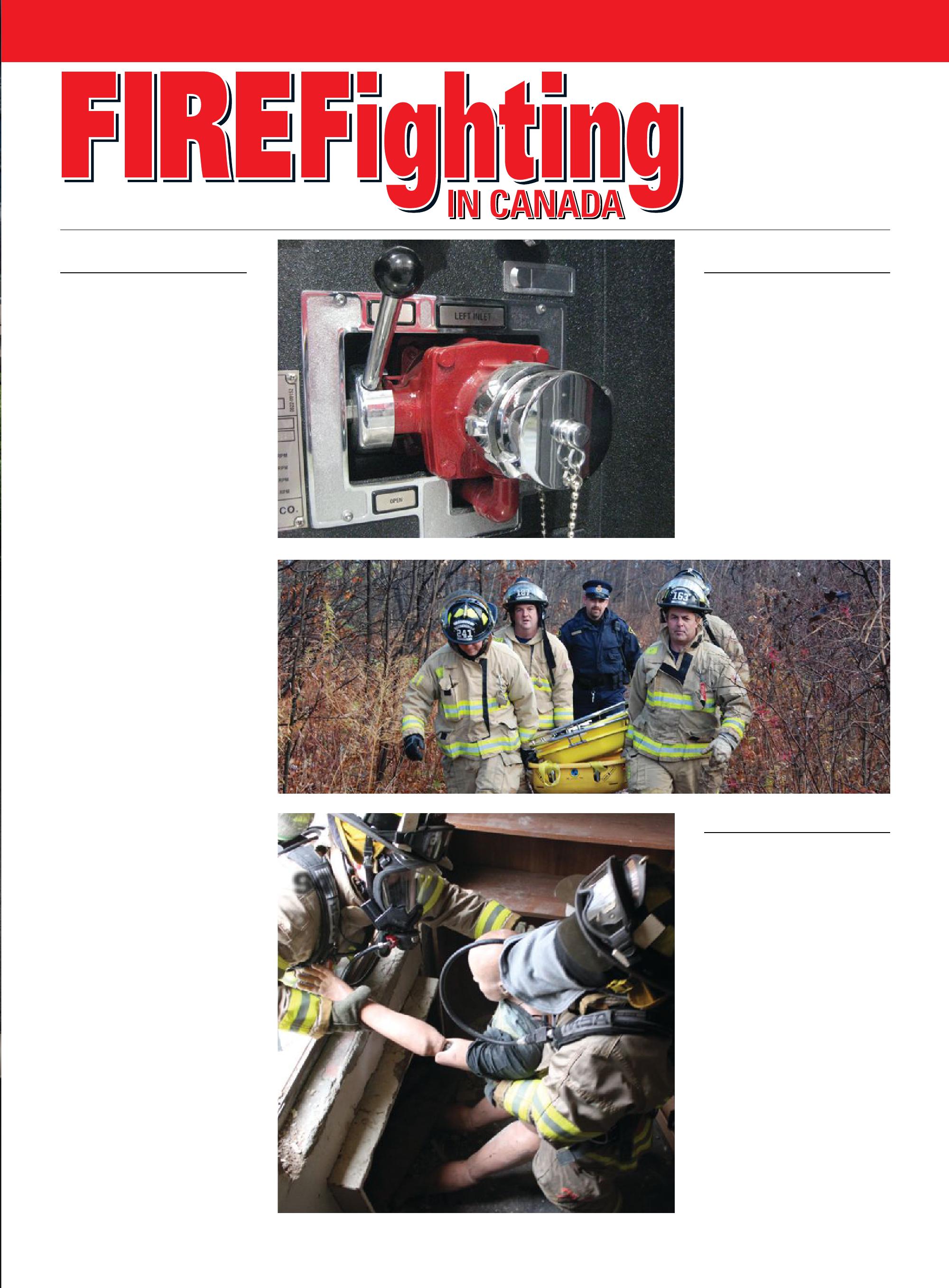
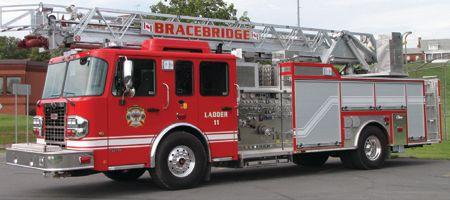
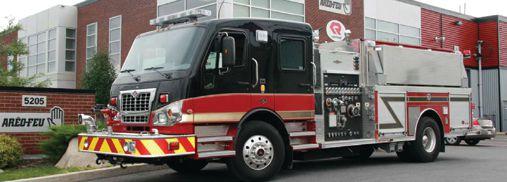
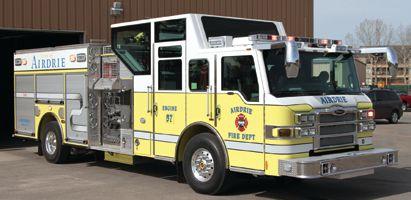
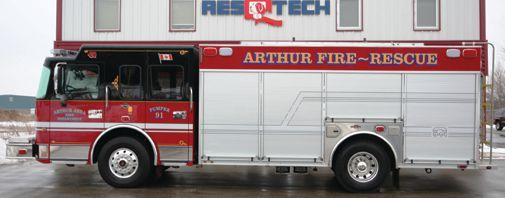
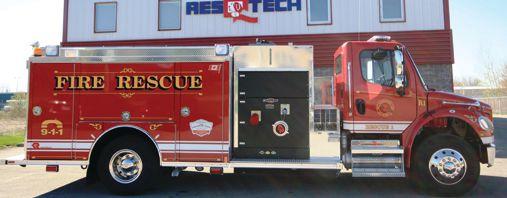
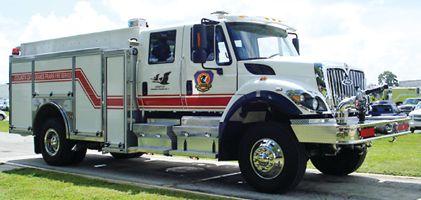
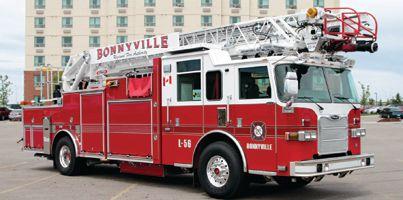
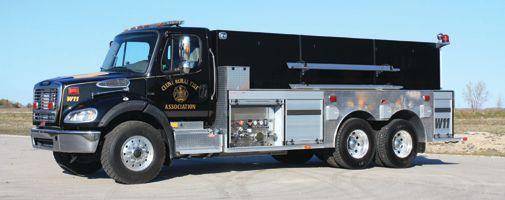
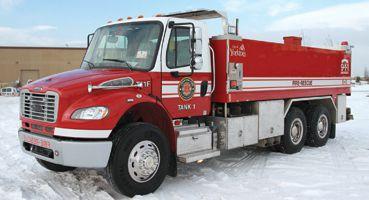
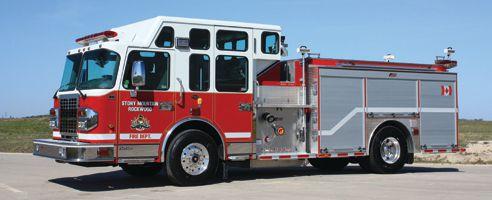
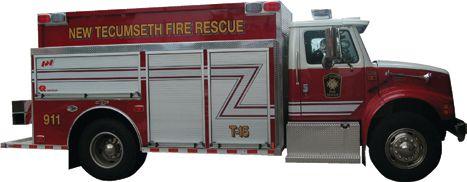
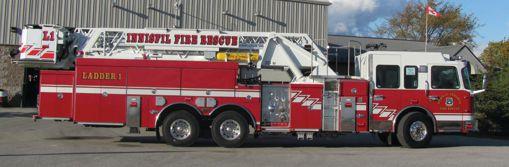
Manufacturers and departments need to co-operate to ensure proper instruction on apparatuses. By Peter Sells. 28 UNIFIED INTEGRATION
Andy Glynn reports on an Ontario region that takes a multiagency approach to large-scale emergencies.
32 KEEPING TRACK
Project to explore national database for fire statistics. By Len Garis and Karin Mark.
36 BEEN THERE, DONE THAT Longtime Chief Dave Fields highlights incident management as most positive change during his lengthy fire-service career. By Laura King.
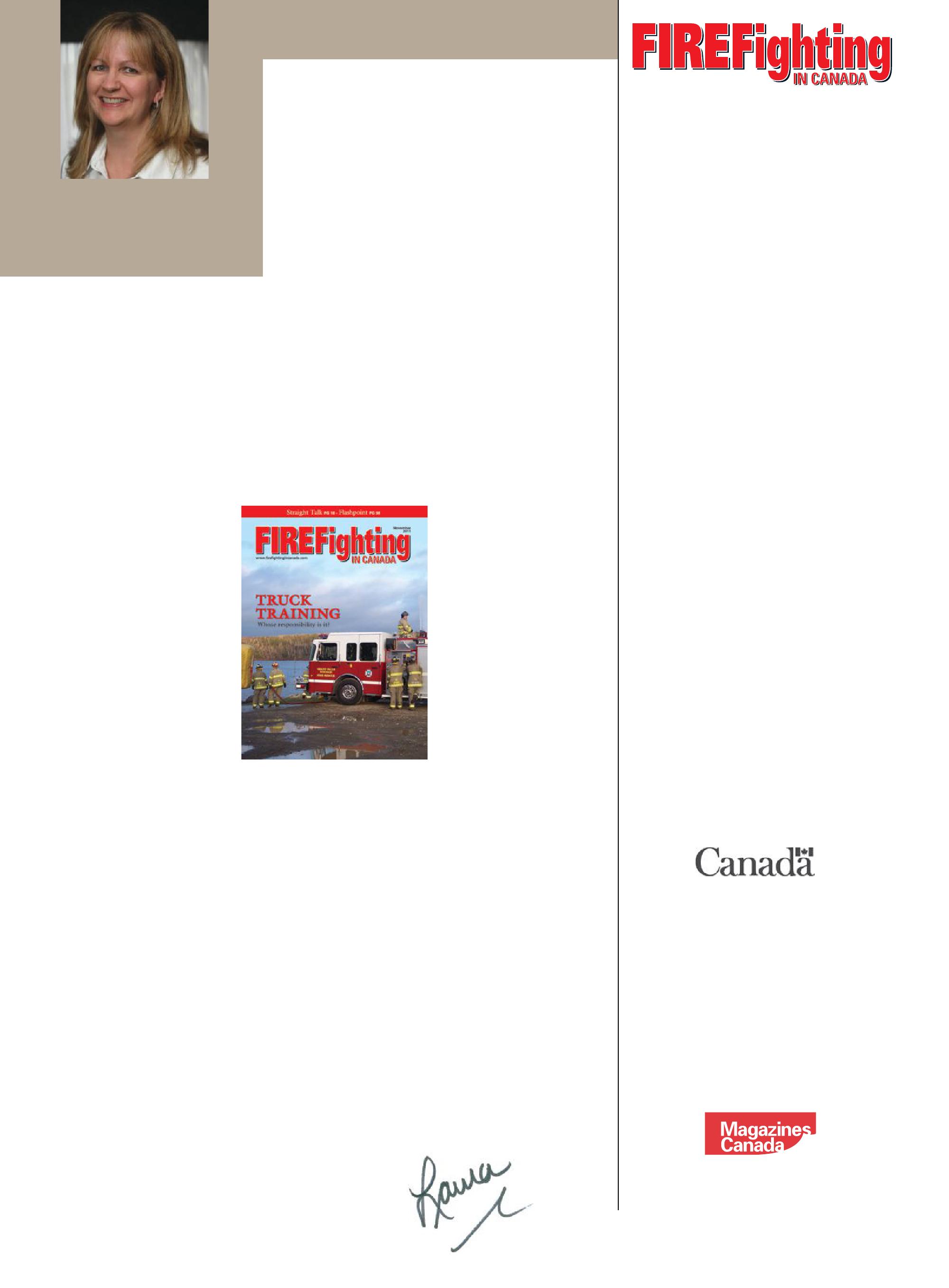
By La UR a K I n G Editor lking@annexweb.com
comment
Making the numbers count
Iwas trying to come up with an anecdote to illustrate the fact that the fire service is not going to convince Ottawa it needs federal support until MPs have a clearer picture of the country’s departments: Would you give your child money for a field trip without first seeing the supporting documentation from the school? Would you pay 100 per cent up front for home renovations and risk the contractor not completing the job? Didn’t think so.
So why, then, has the fire service expected Ottawa to take its word that there are 25-year-old apparatuses in use in Canadian fire departments from coast to coast to coast, that departments – particularly volunteer departments – need funding for fire prevention, and that firefighters do a whole lot more than respond to fires.
Chaput’s research paper on the issue for the CAFC, released earlier this year, combined with Garis’s academic connections, have resulted in a year-long project under which fire-service agencies and stakeholders will be consulted about Canada’s first national fire-statistics database. The database project is funded by a $149,000 grant from the Canadian Police Research Centre (ironic?).
While the data may be used to present valid arguments to Ottawa about the need for federal funding, more importantly, it can be used for resource deployment, to construct business cases for fire-code amendments or to identify service gaps, ultimately resulting in greater safety.
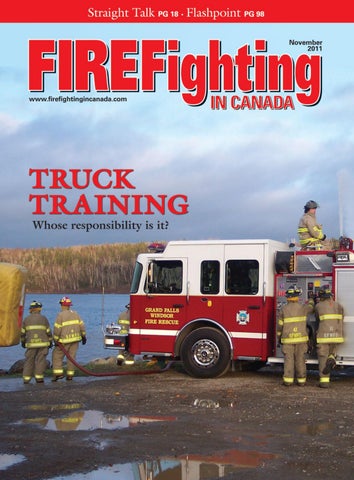
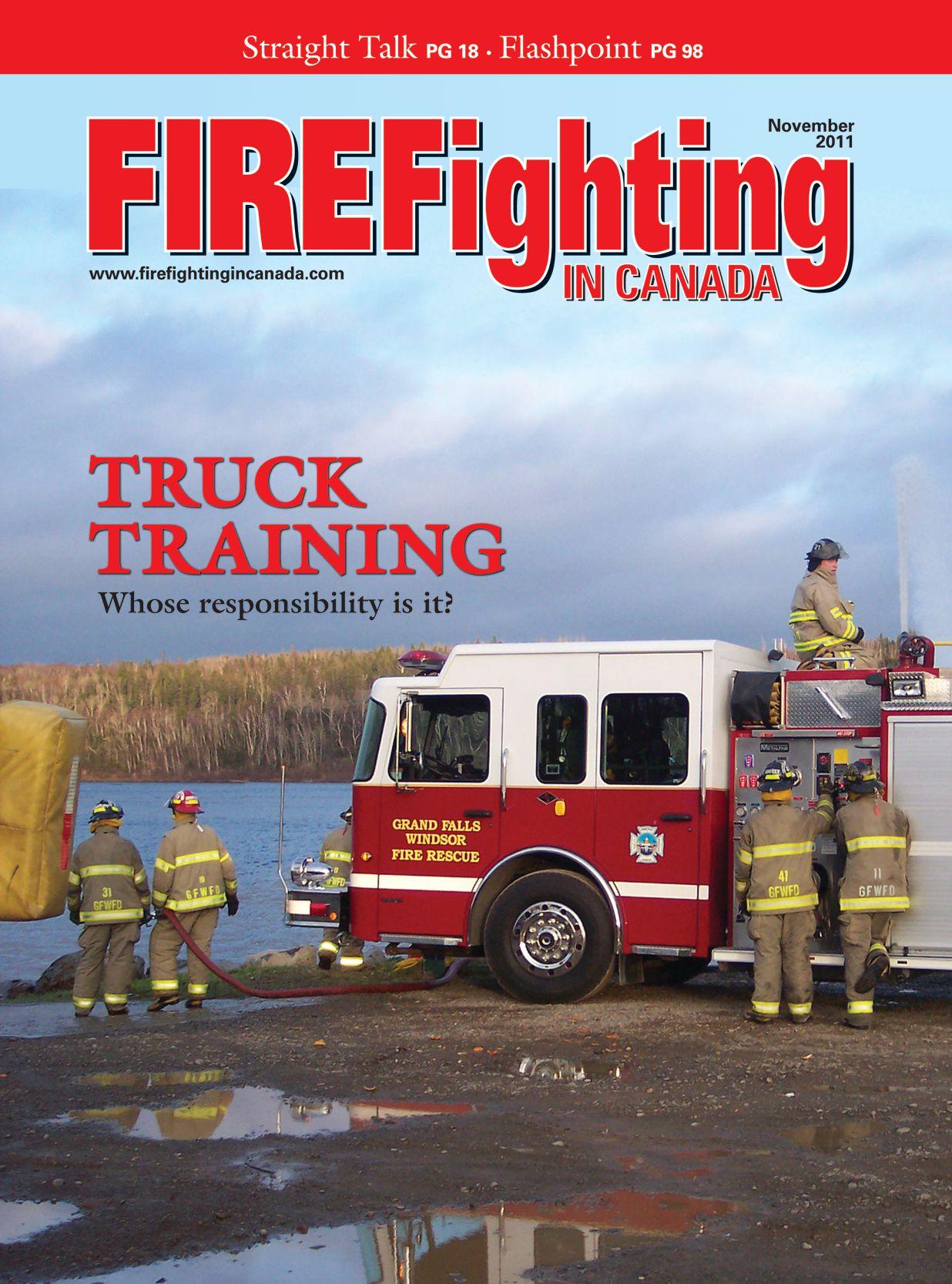
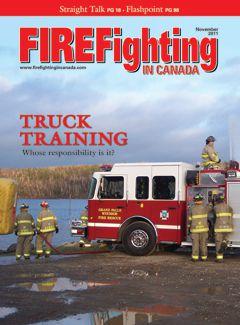
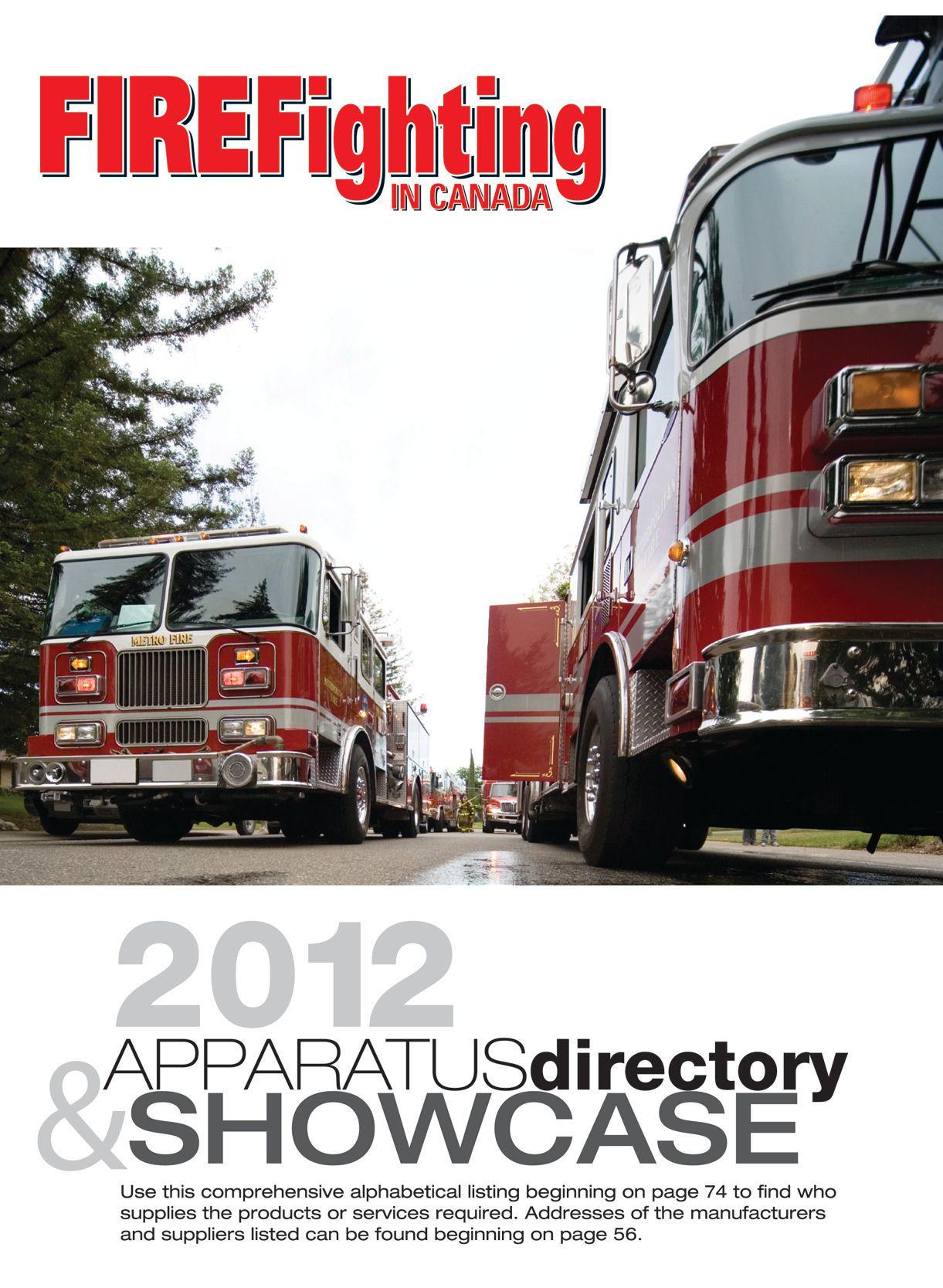
ON THE COVER
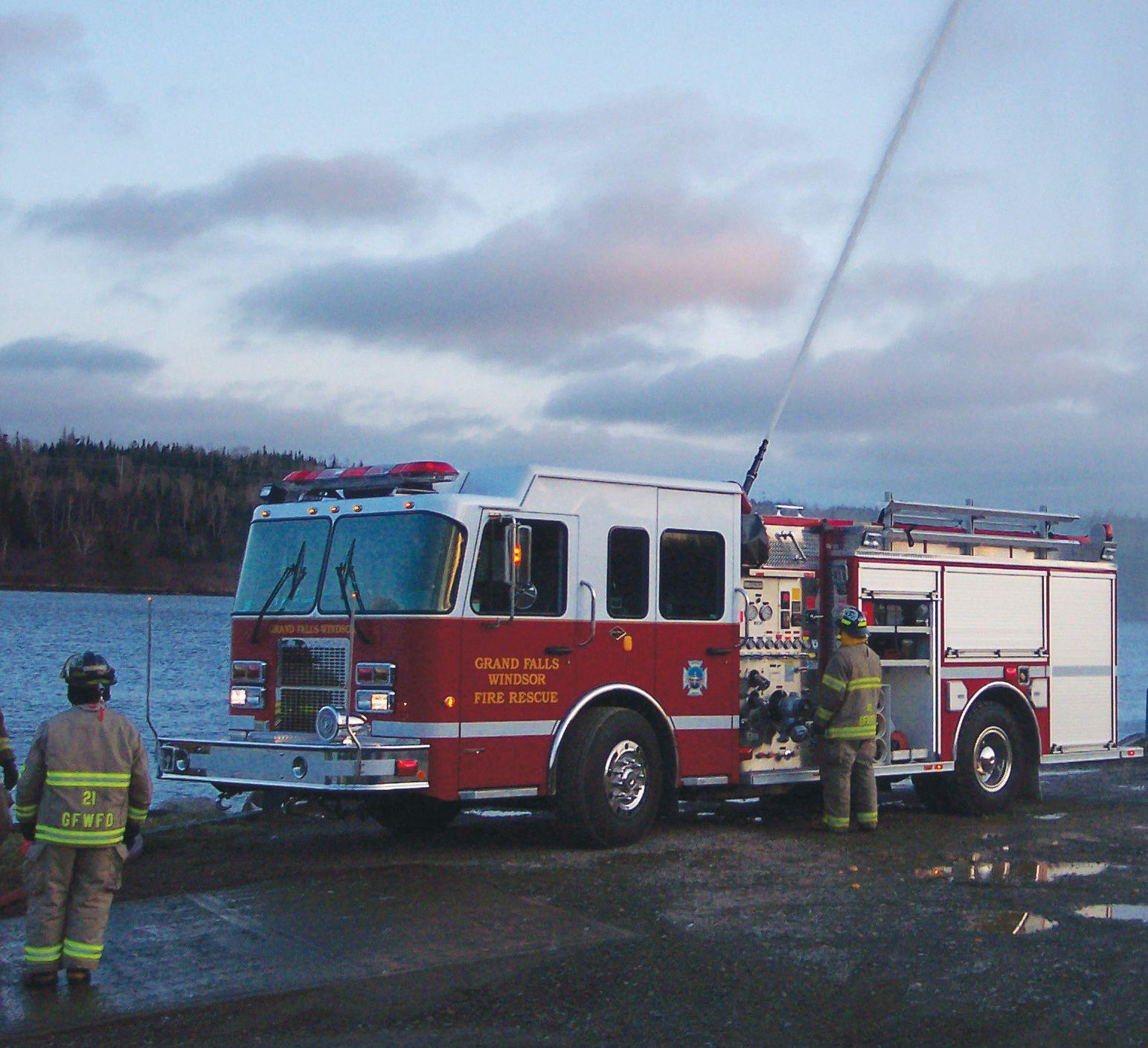
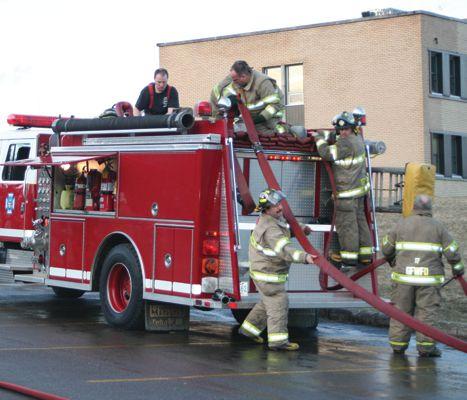
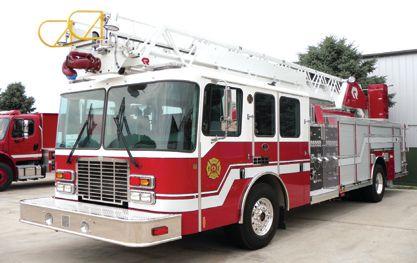
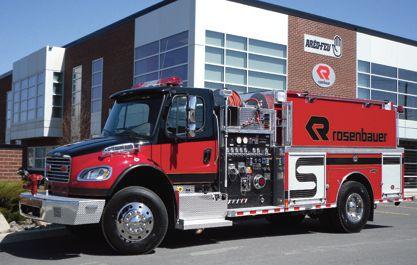
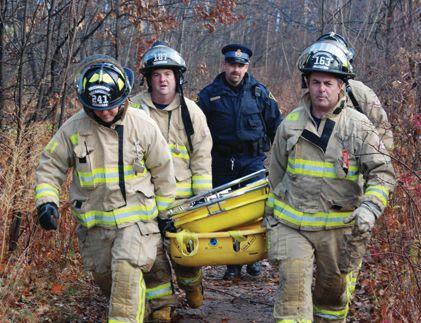
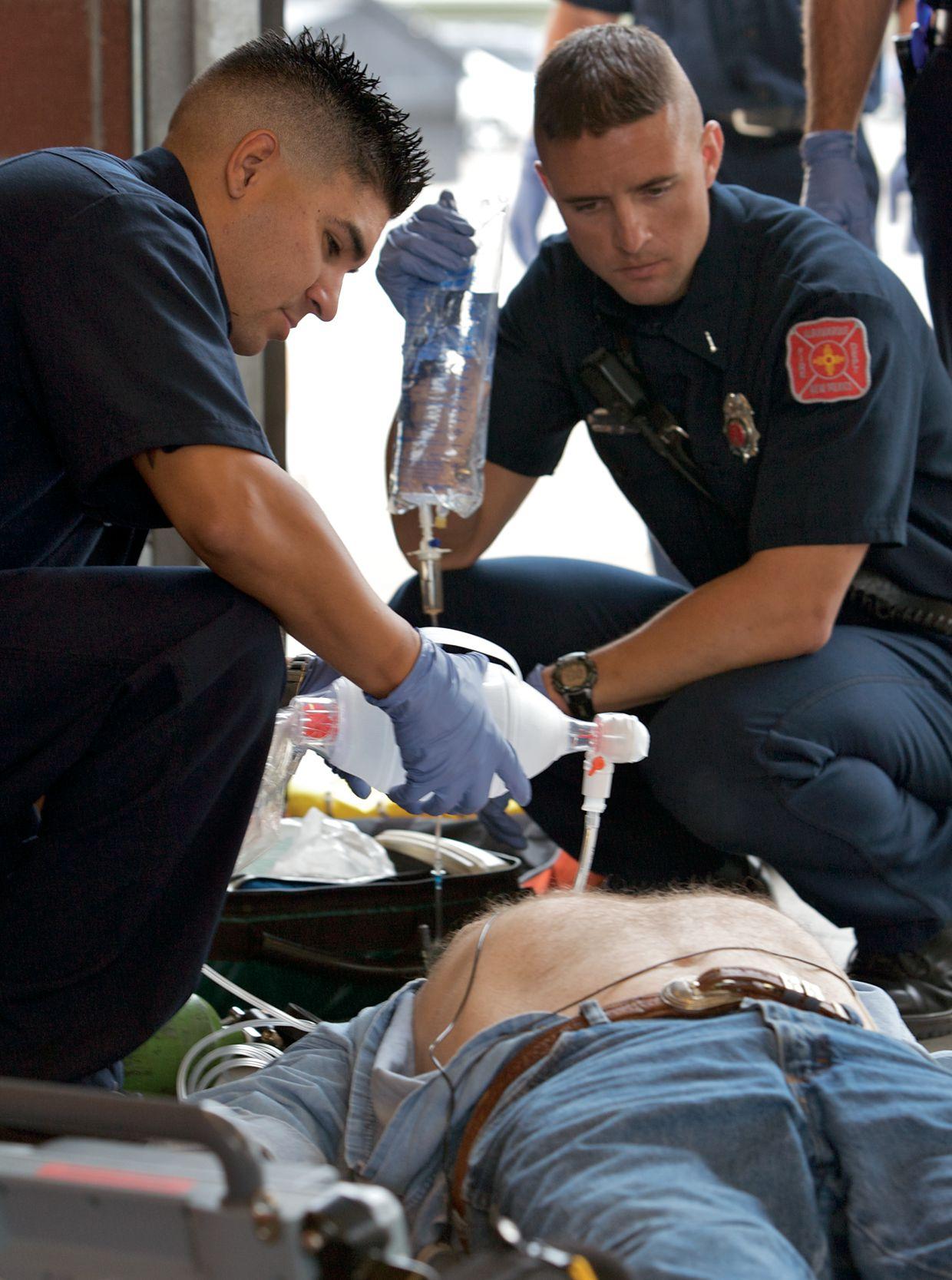
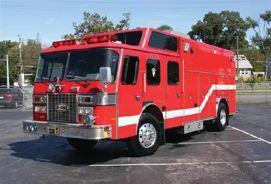
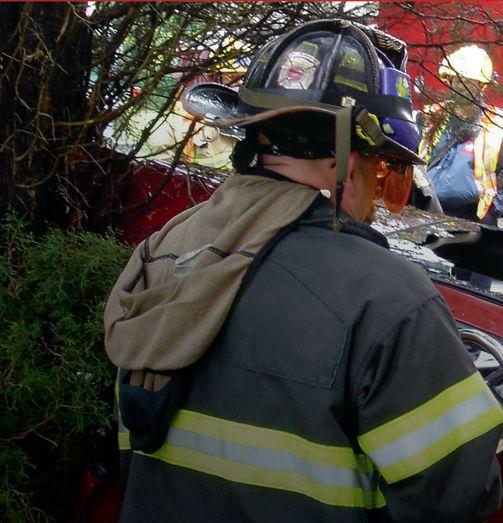
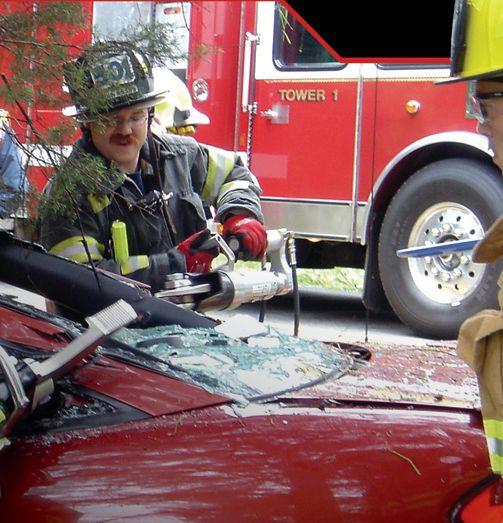
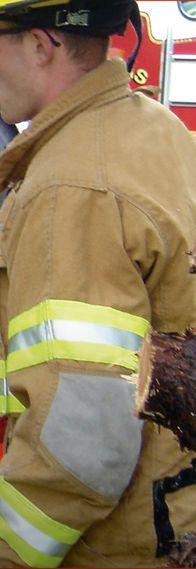
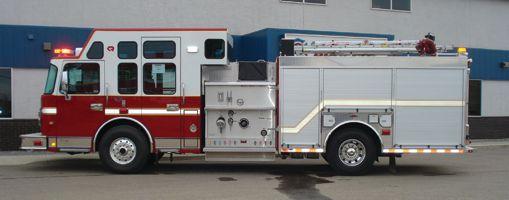
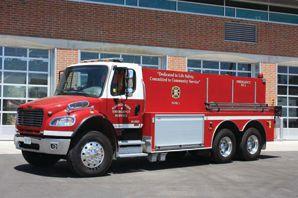
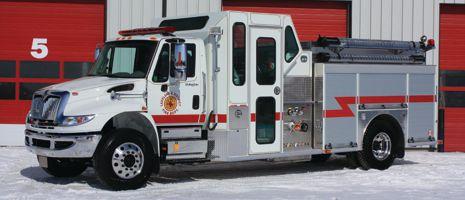
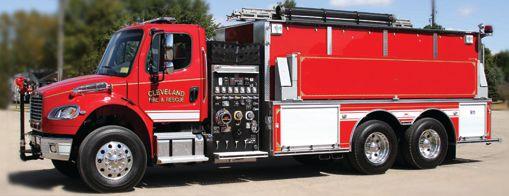
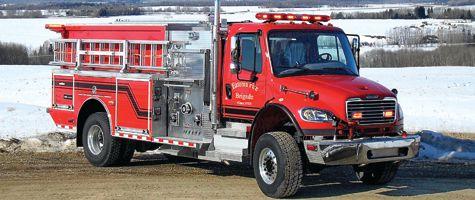
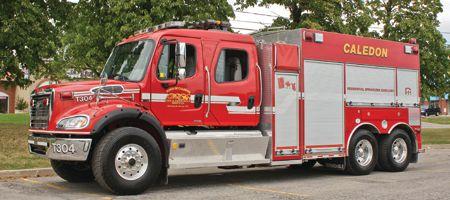
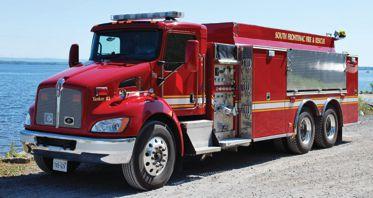
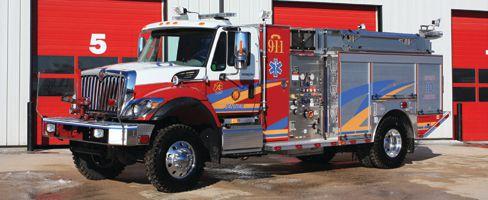
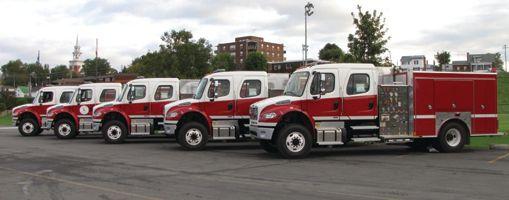
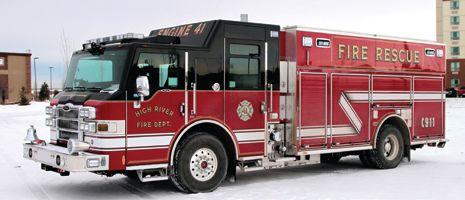
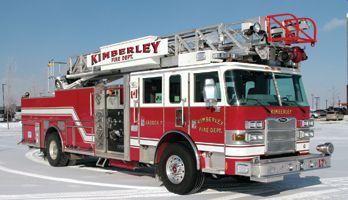
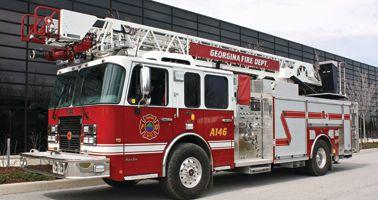
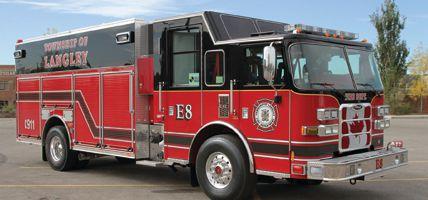
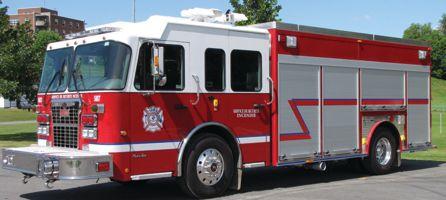
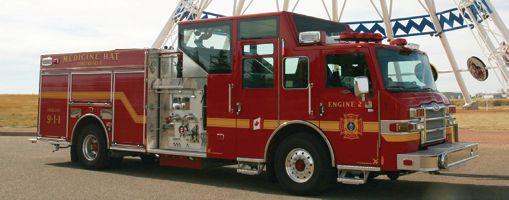
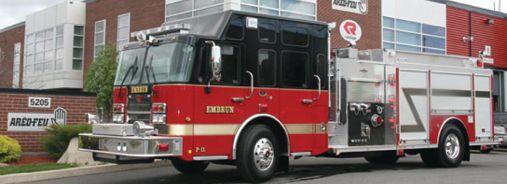
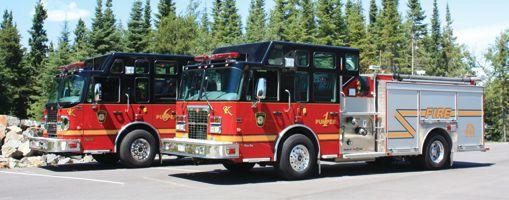
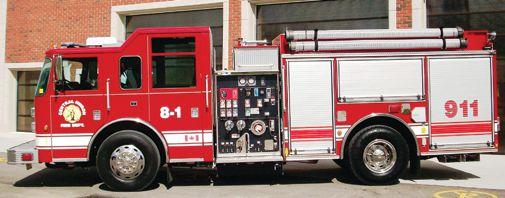
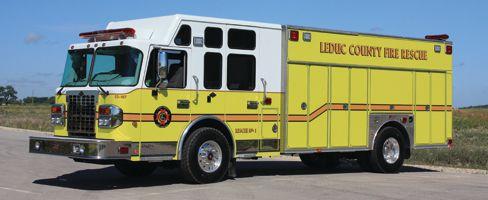
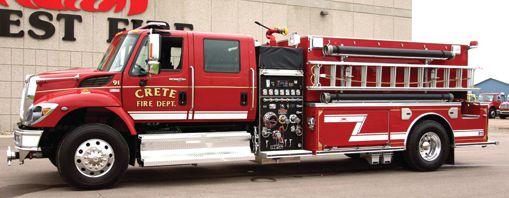
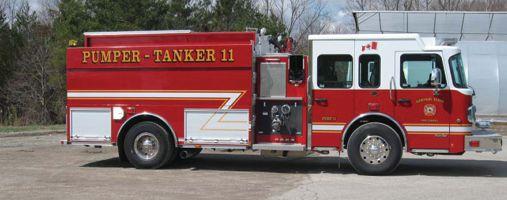
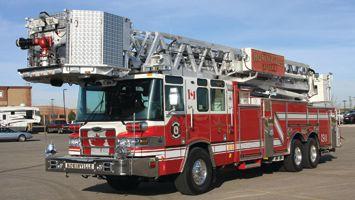
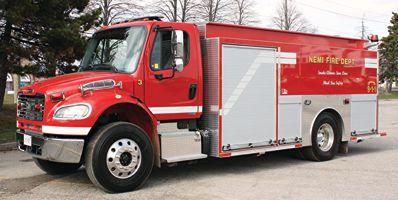
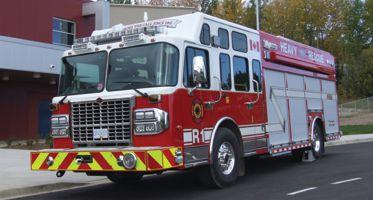
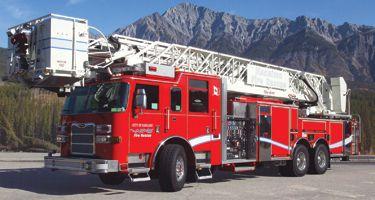
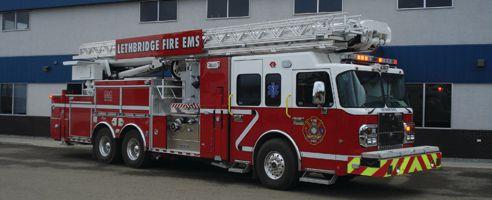
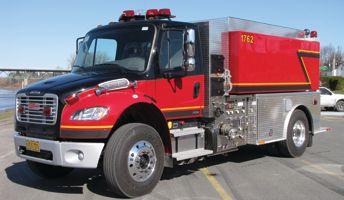
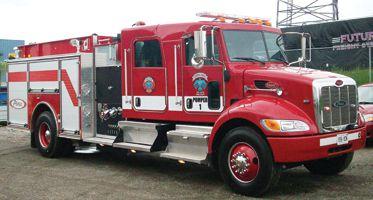
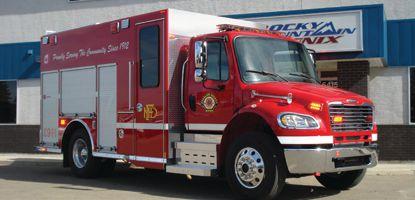
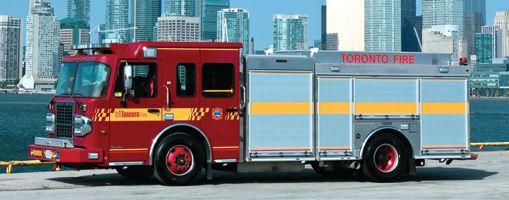
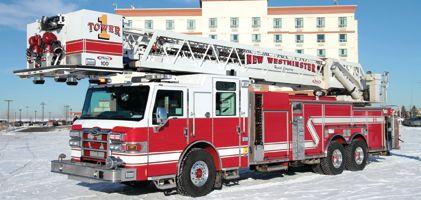
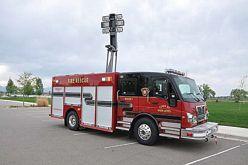
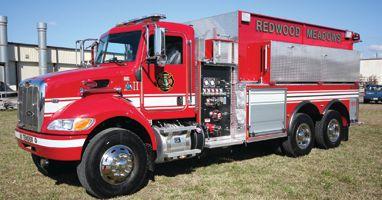
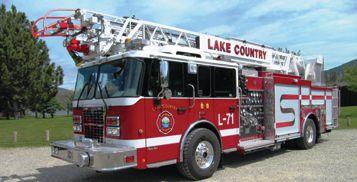
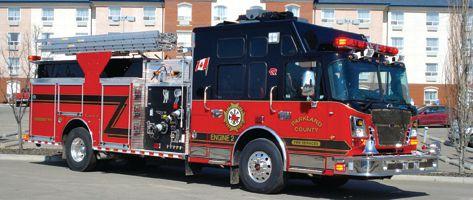
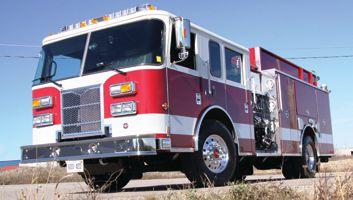
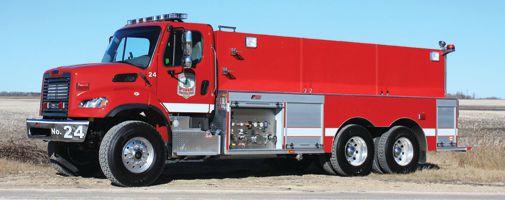
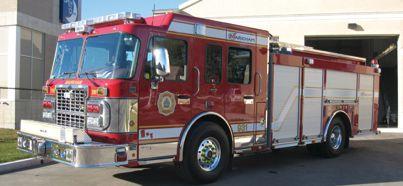
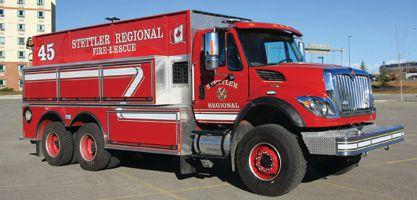
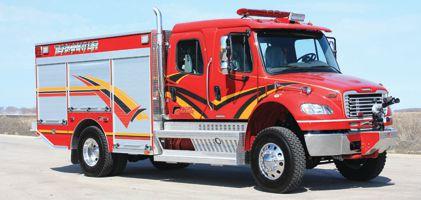
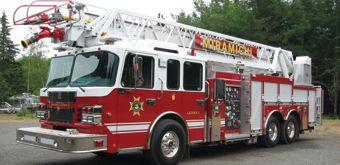
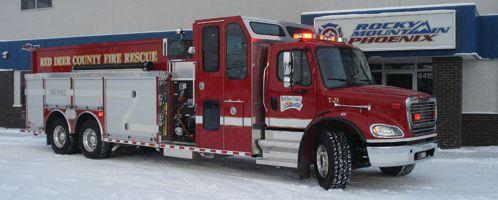
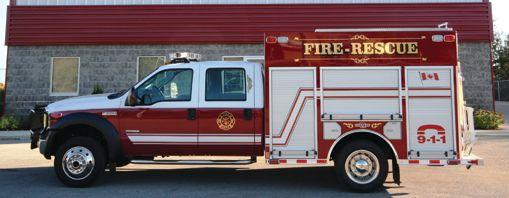
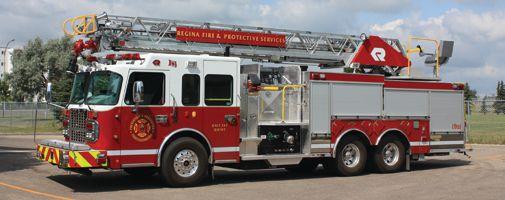
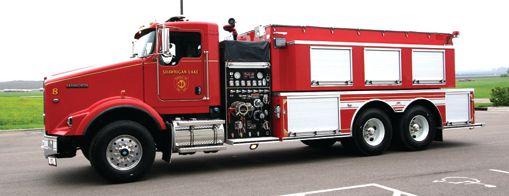
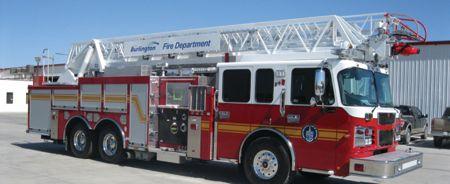
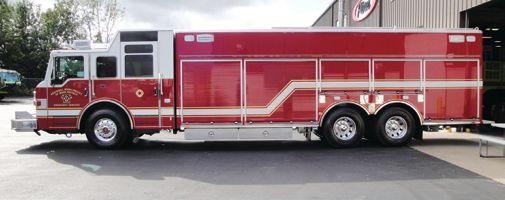
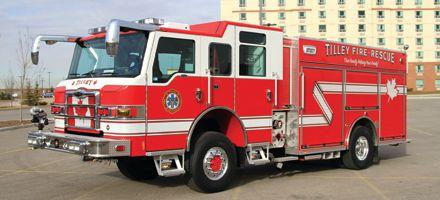
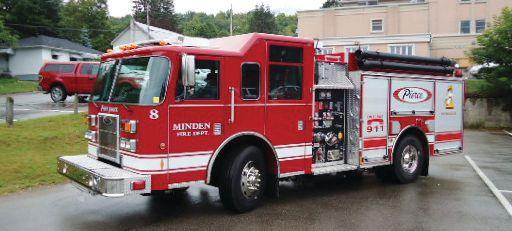
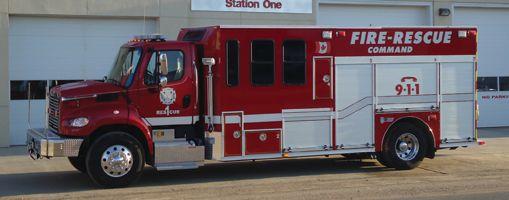
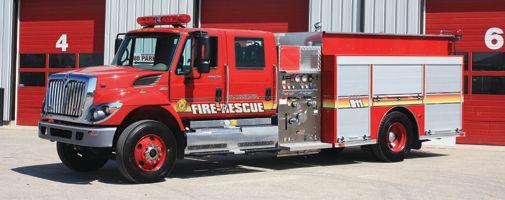
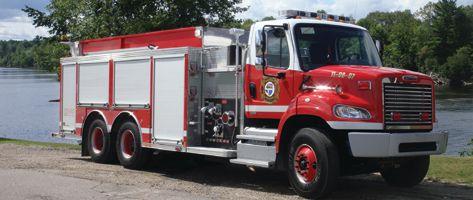
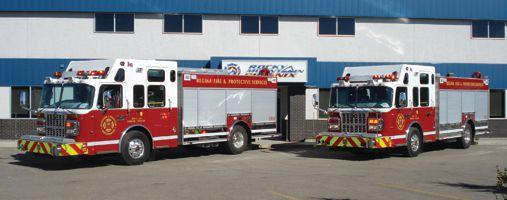
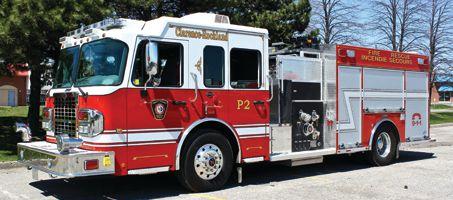
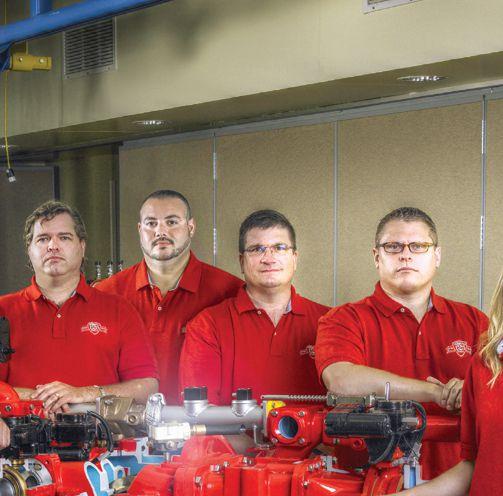
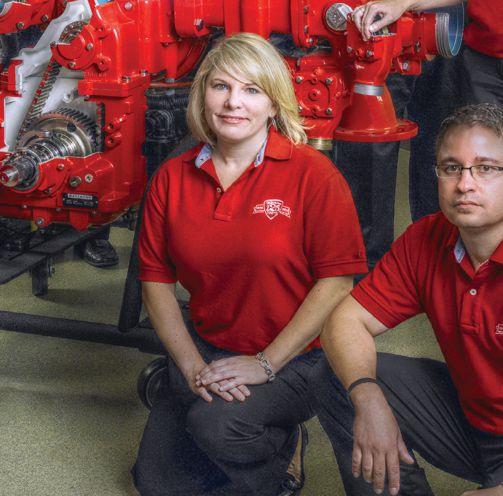
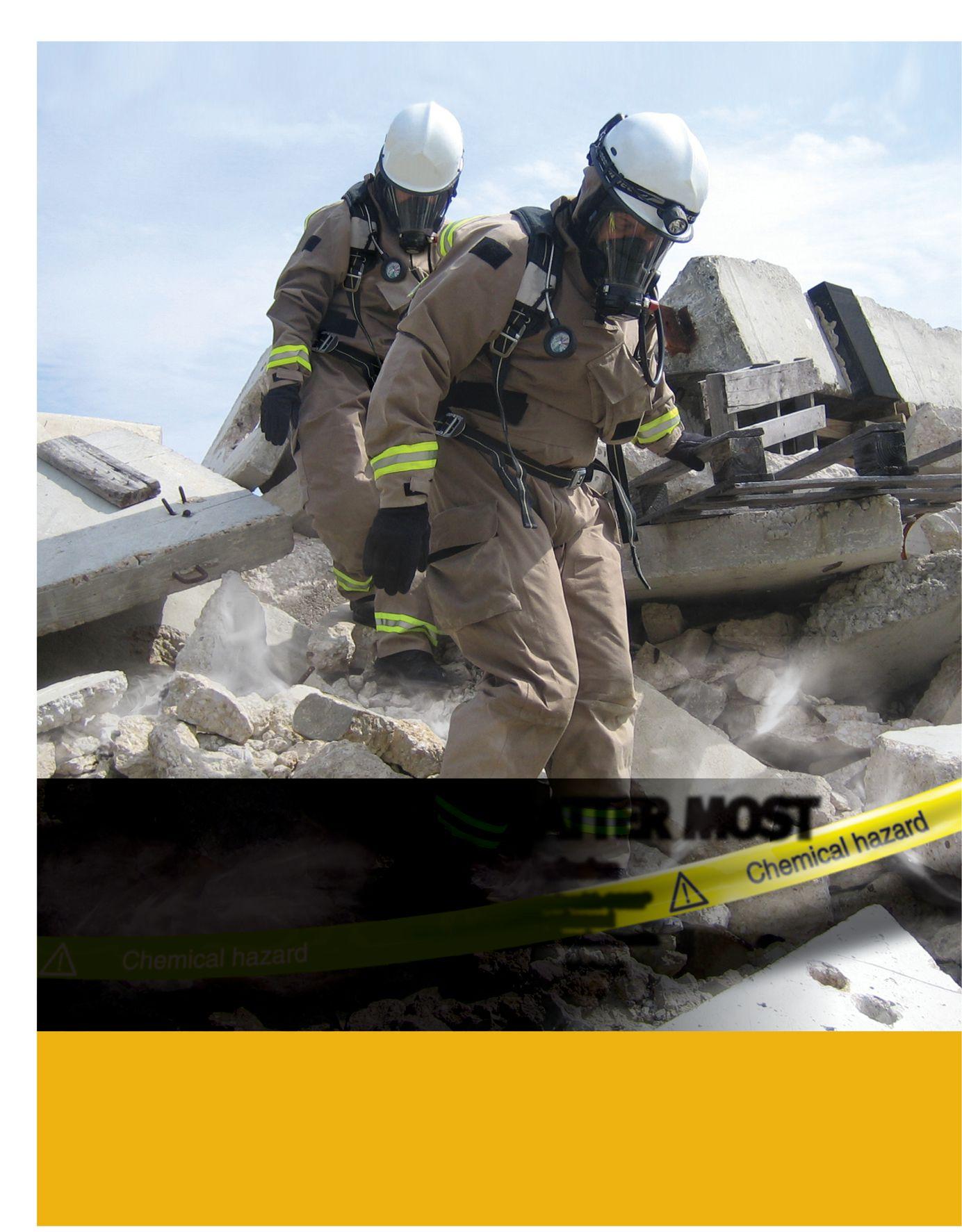
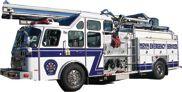
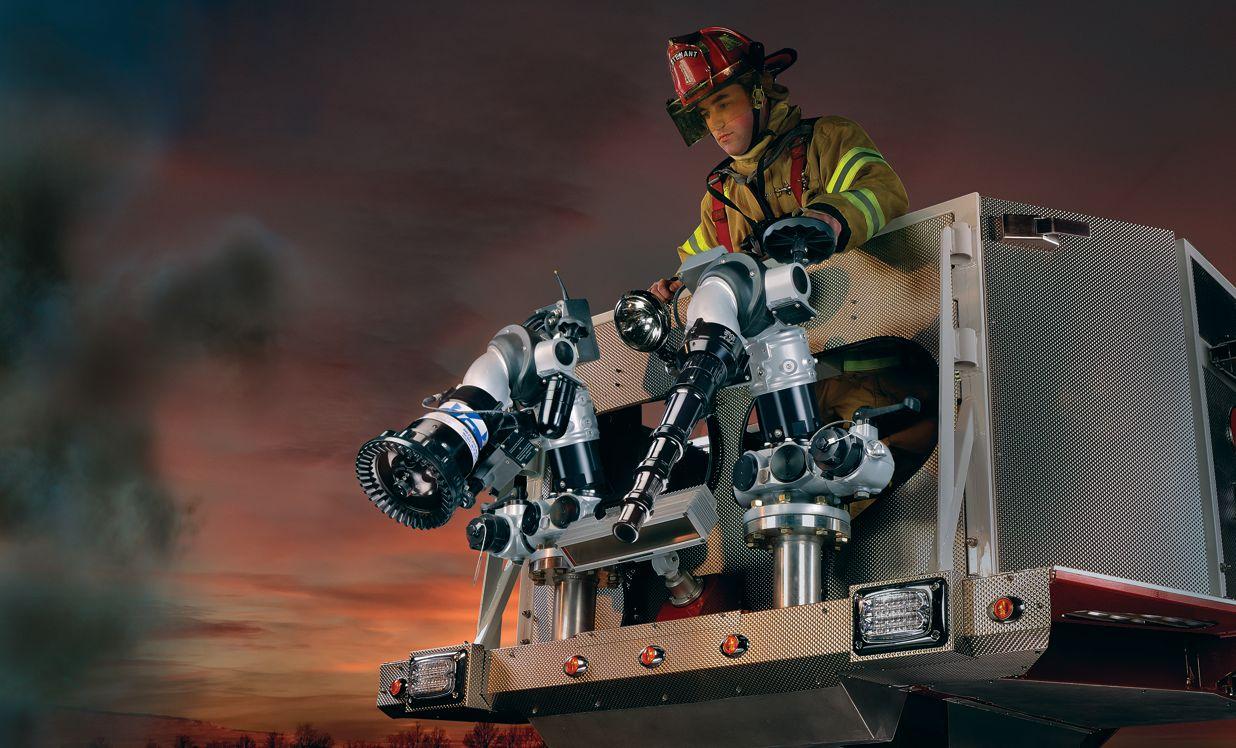
Truck training should be formalized and negotiated with the manufacturer. See story page 10.
Now, after considerable discussion about a national fire advisor and much consultation by provincial fire chiefs associations and the CAFC about how to work with Ottawa, some fire-service leaders have started thinking outside the box but inside the parameters that MPs, ministries and standing committees need in order to better understand what’s going on.
People like Rhéaume Chaput, the fire chief in Belleville, Ont., and chair of the CAFC’s fire and life safety committee, and Len Garis, the chief in Surrey, B.C., and president of the Fire Chiefs Association of B.C., are among numerous key fire-service personnel who have been researching and strategizing to determine how best to build a database that would help Ottawa understand the magnitude and response capabilities of the Canadian fire service, and help the fire service better plan, prepare, budget and evolve.
I get e-mails almost weekly from students, fire officers and media looking for the numbers of fires, fire fatalities, fire departments and firefighters in Canada. The numbers are impossible to find. Fire marshals’ offices keeps their own incident data but the statistics are not centralized. The Canadian Council of Fire Marshals and Fire Commissioners has fire-loss stats on its website – from 2008.
As Sean Tracey said in Chaput’s research paper and in our story on page 32, “One of the biggest challenges [in] effecting change in fire safety is the lack of reliable fire statistics . . . The lack of national fire statistics in Canada may be hindering the fire services’ abilities to address emerging trends and issues.”
When the CAFC comes calling and wants your input on this worthy endeavour, be sure to respond.
PRESIDEnt MiKE FrEDEriCKS mfredericks@annexweb.com
PuBLiCATiOn MAiL AGrEEMEnT #40065710 rETurn unDELiVErABLE CAnADiAn ADDrESSES TO CirCuLATiOn DEPT.
P.O. Box 530, SiMCOE, On n3Y 4n5 e-mail: lmorrison@annexweb.com
Printed in Canada iSSn 0015–2595
CIRCULatIon
e-mail: lmorrison@annexweb.com
Tel: 866-790-6070 ext. 206
Fax: 877-624-1940
Mail: P.O. Box 530 Simcoe, On n3Y 4n5
SUBSCRIPtIon RatES
Canada – 1 Year - $24.00 (with GST $25.20, with HST/QST $27.12) (GST - #867172652rT0001)
uSA – 1 Year $40.00 uSD
We acknowledge the financial support of the Government of Canada through the Canada Periodical Fund (CPF) for our publishing activities.
Occasionally, Fire Fighting in Canada will mail information on behalf of industry-related groups whose products and services we believe may be of interest to you. if you prefer not to receive this information, please contact our circulation department in any of the four ways listed above.
All advertising is subject to the publisher’s approval. Such approval does not imply any endorsement of the products or services advertised. Publisher reserves the right to refuse advertising that does not meet the standards of the publication. www.firefightingincanada.com
Photo by Vince MacKenzie
statIontostatIon
across canada: Regional news briefs
Defibrillators donated in memory of Listowel firefighters
Fire service and hydro join to serve community
Nelson, B.C. – Nelson Fire & Rescue Services in British Columbia is partnering with local hydro authorities to better serve landlords and protect residents and firefighters.
The fire department, along with FortisBC PowerSense and Nelson Hydro, is upgrading exit lights during its annual fire inspections of more than 1,000 commercial buildings, Nelson
Fire Chief Simon Grypma said in a press release.
Canadian fire chiefs have been talking at their annual provincial conferences about creating partnerships with local business, provincial bodies and non-traditional organizations to better serve their municipalities and constituents. Nelson’s partnership with FortisBC and Nelson Hydro is “a natural fit that not only ben-
the brass pole
promotions & appointments
nICK DELmonICo was appointed in July to the position of fire chief for the City of Port Coquitlam in British Columbia. Delmonico was most recently employed as the deputy fire chief with the City of Vancouver.
GEnE tHomPSon became fire chief and community emergency management co-ordinator
in July with the Deep river Fire Department in Ontario.
JEFF mCCoRmICK became fire chief in Brantford, Ont., on July 1. He was recruited in 1986, promoted to captain in 1997 and became deputy chief in May 2010.
PaUL HUtt was appointed chief of the Kemptville Fire Department in Ontario on Aug. 1. Hutt has more than 18 years of experience in fire services.
efits public safety, but also helps businesses reduce electric use,” Grypma said.
He added that on-site inspections provide building owners with a report on the fire-safety status and the safety of the building occupants. Businesses still using traditional incandescent lamps in exit lights qualify for free LED exit lights from FortisBC.
JEFF LamBERt is the new fire chief for the Victoria Fire Department in British Columbia. He most recently served as fire chief for the City of Port Moody for more than five years, and prior to that was fire chief in Fort St. John and chief fire prevention officer for the District of Powell river.
DaVID RoSSItER assumed the position of fire marshal for the province of Prince Edward island on Aug. 1. He has more
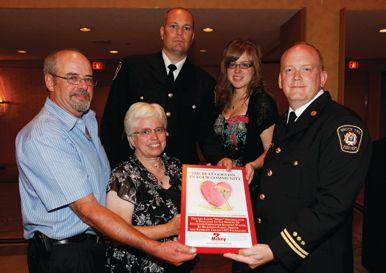
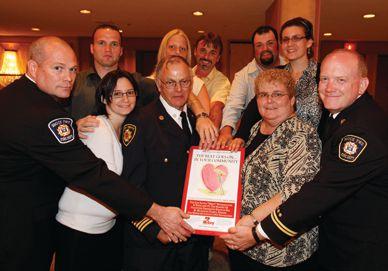
Listowel, Ont. – The families of Listowel firefighters Raymond Walter and Kenneth Rea were on hand during a presentation of defibrillators to the North Perth Fire Department in in September. The defibrillators were donated by the Mikey Network, Canada 911 Ride and the Brock Township Fire Department (Sunderland, Cannington and Beaverton Fire Fighters Association). Rea and Walter were firefighters in Listowel, Ont., who died in the line of duty March 17 during a dollar-store fire.
Upgrading the lamp with the upgrade kit makes sure that exit light is in good working order for years to come.
As part of the inspections, the department distributes information about other FortisBC PowerSense programs for small businesses, such as free walk-through energy audits and incentives for building upgrades.
than 25 years of experience with the island fire service, including serving as chief of the St. Peter’s Fire Department for 12 years at the provincial fire marshal’s office, and for more than two years as deputy fire marshal.
Members of Raymond Walter’s family, with firefighter Scott Granahan (back) and Capt. Wayne Ward, fire prevention officer from the Brock Township Fire Department.
Members of Kenneth Rea’s family, with firefighter Scott Granahan (front left), Capt. Wayne Ward, fire prevention officer (front right), and District Chief Ross Robertson from the North Perth Fire Department.
Region celebrates decade with no time lost to injuries
Prince Edward County, Ont.
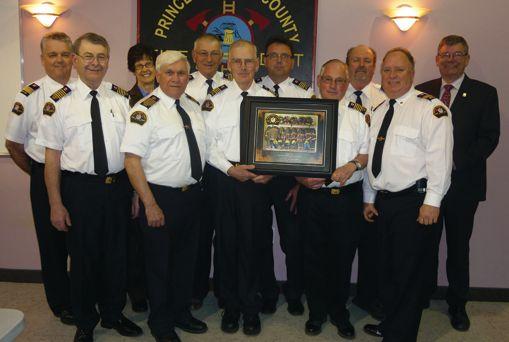
– The Prince Edward County Fire Department in Ontario marked a health and safety milestone on Nov. 28, 2010 – 10 years with no loss-time injuries. To recognize this accomplishment, at the district chiefs meeting on April 28, the Prince Edward County Fire Department presented its seven district chiefs with framed pictures to hang in their stations.
The engraving on the bottom of the print reads: Thank you to all Prince Edward County firefighters for working and training safely to achieve 10 years no loss time injuries, November 28, 2000November 28, 2010.
The Prince Edward County Fire Department responds to about 600 calls a year, on top of the regular training that is delivered in the seven fire districts.
The Prince Edward County Fire Department recognizes 10 years with no loss-time injuries: (back row, left) Fire Chief Scott Manlow, Susan Turnbull, commissioner of corporate services and finance, district chiefs Ken Haight, Rob Manlow and George Storms, and Mayor Peter Mertens; (front row, left) district chiefs Glendon Walker, Roger Flower, Peter Cole and Lee Knight, and Deputy Fire Chief Robert Rutter.
Dryden issues student survival challenge
Dryden, Ont. – On May 13, fine-art students from Pinewood Public School in Dryden, Ont., were challenged by Emergency Management Ontario (EMO) and the City of Dryden Fire Service to participate in the Emergency Preparedness Student Survival Challenge. Twenty-nine students from Pinewood School and one nineyear-old from New Prospect School accepted the challenge. Students were given bags donated by EMO and essential supplies from the City of Dryden Fire Service. The students brought non-perishable goods, sleeping supplies and toiletries from home and bottled water was donated by a local grocery store. These were the only items used for the night.
The school was in a lockdown mode, due to a mock train derailment with an unknown poisonous gas leak that caused the hydro to go out and started a small wildfire. Students were registered through the Red Cross, as they would be in a real event, and were given cots on which to sleep. After all students were registered, the Red Cross delivered a hands-on presentation on basic first aid and splinting. The students were then divided into groups and attended nine different presentations for three hours. The presenters taught the students the importance of emergency planning and stressed that they should have a plan for their homes. Child Care Resources taught the stu-
dents how to assist those with special needs, and what they might face in an emergency.
The students participated in presentations from the Office of the Fire Marshal, EMO, City of Dryden Fire Service, the Ontario Ministry of Natural Resources – Dryden District, Child Care Resources, the Dryden Amateur Radio Club, Hydro One, the City of Dryden Police Service and the Ontario Provincial Police.
All students were shown the importance that communication plays in emergencies through the Amateur Radio Club. The students talked to people in other areas of the country through the radio and texted people from the Toronto area. Dryden
Municipal Telephone System donated phones for the students to use.
The students were then shown a two-hour documentary of recent violent weather events in North America. Students had the opportunity to share positive aspects of the evening and lessons learned with the media.
Reagan Breeze, the emergency/education officer with the City of Dryden Fire Service, has put out a friendly challenge to other communities to take part in this worthwhile educational event and hopes to challenge another province. If interested, please e-mail rbreeze@dryden.ca to set up a friendly challenge.
–Reagan Breeze
BRUCE montonE is the new fire chief in Windsor, Ont. He is a 30-year firefighting veteran and spent the last nine years serving as deputy fire chief in Ottawa.
retirements
BoB CooK, the fire chief in Burnaby, B.C., retired June 30 after spending his entire 36-year career with the department. He started with the Burnaby Fire Department in 1975 and steadily rose through the ranks before
taking the top job in 2007.
GaRy LaGERQUISt, deputy fire chief of Brampton Fire and Emergency Services in Ontario, retired July 31. He started with Brampton in 1978 and was promoted to deputy chief in 2008, spending his entire 33.5-year career with Brampton.
DaVE FIELDS, fire chief in Windsor, Ont., retired Aug. 31 after 44 years with the fire service. He was a firefighter in Windsor from
1967 until 1981. He moved to the Ontario Office of the Fire Marshal, where he served as regional supervisor until 1989, before working as the deputy chief at the nepean Fire Department. in 1994 he returned to Windsor as chief.
KEn EDEn, fire chief in niagaraon-the-Lake, Ont., retired Sept. 16 after eight years at the helm of the department. Eden joined the department in May 2003 after more than 20 years working for fire services in nova Scotia,
new Brunswick and Ontario.
last alarm
KEn Day, fire chief in LaSalle, Ont., died July 22. He began his fire-service career with the ilderton Fire Department in 1982 and left the amalgamated municipality of Middlesex Centre as district chief in October of 2001 to accept the deputy chief’s position in LaSalle. Day was appointed fire chief of LaSalle Fire Service in August of 2008.
statIontostatIon
across canada: Regional news briefs
Former Kahnawake chief receives lifetime achievement award
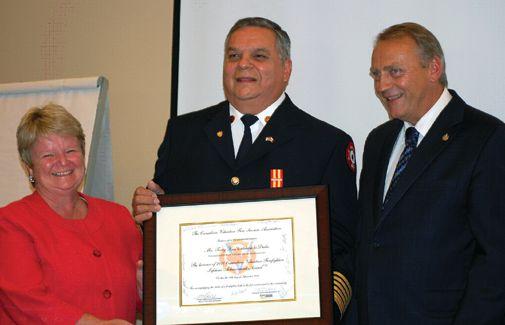
Kahnawake First Nation, Que. – Terry Diabo, retired volunteer fire chief of the Kahnawake First Nation in Quebec, has been awarded the prestigious Canadian Volunteer Fire Services Association’s 2011 Lifetime Achievement Award.
At the time of his nomination, Diabo had just retired as volunteer fire chief, completing 40 years service with the Kahnawake Volunteer Fire Brigade and other fire departments, in addition to many contributions to the various
other organizations throughout the Mohawk Reserve. In 2007, the Canadian Association of Fire Chiefs chose Diabo as its volunteer fire chief of the year.
During Diabo’s fire-service career, he was elected first president of the Canadian Aboriginal Firefighters Association and served in that position for 10 years.
The presentation took place in Ottawa on Sept. 10 at the Canadian Volunteer Fire Services Association’s annual general meeting.
Burn camp receives war canoes to build team spirit
Haliburton Highlands, Ont. –During a lifetime, some events stand out enough to be ingrained in our memories forever – it might be your first date, getting your first car, watching Sid score the gamewinning goal at the Vancouver Olympics or remembering where you were on 9-11. This summer, I added another event to my list – a trip to Camp Bucko in the Haliburton Highlands in Ontario.
The burn camp for kids is supported in part by the Women’s Auxiliary of the Ontario Association of Fire Chiefs. It was through this group, and the work of the late Nancy Sinclair, that Mark Prendergast of M&L Supply received a request for war canoes for the camp. These types of canoes would allow full cabins of campers to be together on the water as a team, rather than being in an individual kayak or paired in a regular canoe.
And so it was that Mark and I travelled to the camp on
a Sunday to deliver a 24-foot war canoe. Meanwhile, another canoe of almost the same size was making its way south from the Scott canoe factory in New Liskeard with Fire Chief Pat Underhill.
We were invited to lunch with the campers and they turned out to be a loud, joyful group of kids. Many were returning campers and some had come back to be counsellors after being campers. Other counsellors are firefighters who donated a week of their holidays to be at the camp.
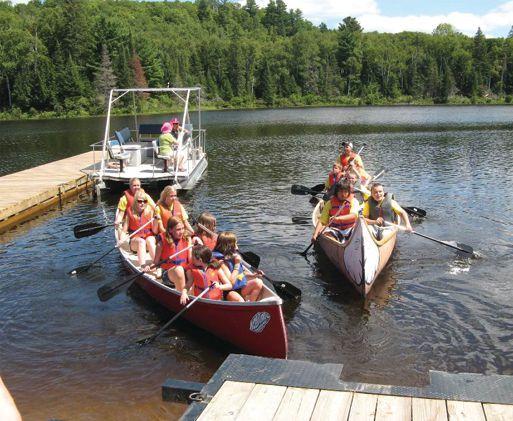
After lunch, two cabins – one boys and one girls –were rounded up to the boat launch and helped launch the two newest additions to the camp. The campers posed in the canoes for pictures and then it was off on a lap around the lake. Meanwhile, we got a tour of the camp and all its amenities.
So what was the highlight of the day? There were so many: meeting Jeremy, who does keepsake carvings for the
kids who fish – a new design every year; meeting Dennis from Atlanta, who comes here to learn more about specialty camps so he can take that knowledge back and apply it to the camps he helps to organize; hearing about the fire departments from all across Ontario that shuttle the kids to
the camp and then back home without fanfare; watching the feather stencils being applied to the front of the canoes as a lasting memory to Nancy.
Mostly, though, it was about the kids who can put their scars aside for a week to be kids. They are the true heroes.
–Randy Vilneff
Gail Shea, minister of national revenue (left), and John Duncan, minister of aboriginal affairs and northern development, presented the CVFSA Lifetime Achievement Award to Terry Diabo (centre), on Sept. 10.
Camp Bucko campers test out the two war canoes donated by M&L Supply and the Scott canoe factory.
Photo by r andy
Vilne FF
truck training
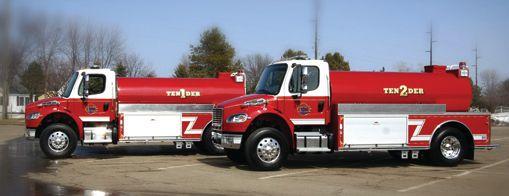
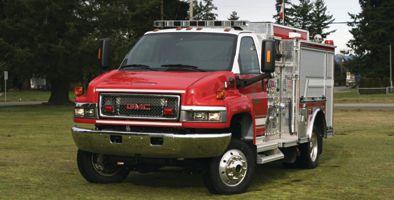
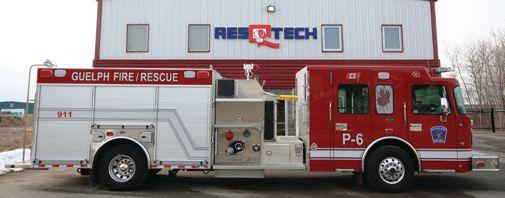
Manufacturers, departments need to co-operate to ensure proper instruction on apparatuses
By Peter SellS
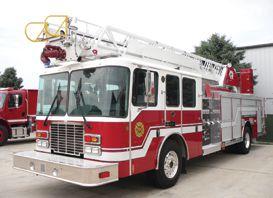
as a new training officer in the early 1990s, I was tasked with training firefighters on a newly purchased aerial ladder apparatus, and told to hurry up and get it done.
As soon as I had access to the truck, out I went with the manufacturer’s manual to get familiar with the controls and features. Working my way through the supporting and levelling process, I learned that this apparatus had two limit switches on each outrigger (eight switches in total) to confirm that each outrigger was fully extended laterally and bearing weight. This is a common feature now, of course. Without all eight switches properly closed, the ladder could not be lifted out of the bed. Can you guess how I found this out?
That’s right, I couldn’t get the ladder to move. One or more of the limit switches wasn’t working. There was an override deadman button (intended for those situations in which full outrigger deployment is not possible in emergency situations) that allowed me to get the ladder out of the bed and run it through its full range of operation. Now I was faced with a dilemma: should I bow to the time pressure and use the override during training, until the problem could be fixed?
Fire departments should work training plans for new apparatuses into the contract with the manufacturer and determine what kind of training will be included – train-the-trainer programs or direct training of all personnel.
In good conscience, I couldn’t do that. You play like you practise, and if I minimized the importance of properly supporting and levelling the apparatus then there was a good chance that the override switch would be used at an incident out of convenience rather than out of necessity.
I refused to do the training until the apparatus was in proper working order, and frankly, I wondered how we could have taken delivery of the rig without someone discovering the problem. We had flown two mechanics to Nebraska to drive the truck back to Toronto. Why not include a training officer, and take advantage of his experience and perspective?
More and more, fire departments are including training specifications for new apparatuses and equipment in purchasing contracts. When departments buy bunker gear, the deal generally includes supply, maintenance, cleaning, repair and replace-
ment for a specific period of time. Among the services requested in such a one-stopshopping solution could be the training and education of firefighters in the safe and effective use and care of bunker suits.
Given the complexities of today’s apparatus, this strategic approach can, and should, apply to contracts for new trucks. Departments need to understand what specifications they should include in negotiations with apparatus manufacturers, and they need to ensure that the manufacturers can meet those expectations.
Doug Burgin is the district chief for operations training for Toronto Fire Services. Over the last nine years, Burgin has been responsible for putting into service probably more fire apparatuses than anyone else in Canada.
“Simply handing over the keys to a new rig is no longer an option,” Burgin says. “Even highly experienced firefighters need specific training – in the cab, on the road and at the pump panel and/or aerial controls. The department is ultimately responsible for ensuring that the firefighters can operate their new apparatus safely and effectively.”
Options for achieving this are direct training or train-the-trainer programs.
DIRECT TRAINING
Training has been described as the transfer of knowledge and skills with a resulting change in behaviour (or performance). The most straightforward method of achieving this transfer of knowledge is to have the apparatus’s original equipment manufacturer (OEM) or distributor provide the training directly to the end users (firefighters). This may be the most appropriate model for small fire departments in rural or developing communities. The new apparatus may be the first aerial, foam pumper or decontamination trailer of its type in the community, and the fire department may not have anyone on staff with the technical expertise required to conduct the training.
Even if the type of apparatus is not new to the department, there likely have been many technical advances and innovations since the last pumper was purchased. Manufacturer’s representatives would be up to speed on the digital flow meters, anti-lock brake systems and other features that would not have been present on the 25-year-old apparatus that is being replaced.
Chris Dennis has been the chief mechanical officer for the City of Vaughan Fire and Rescue Service (VFRS) in Ontario for nine years. With every apparatus delivery, VFRS
Photos by Vince MacKenzie
Systems
Your Single Source of Water Supply
Durable Rubber Covered LDH Hose 4” or 5”, Meets N F PA 1961 C all: 800-420-4673 or on the web @ Kochek com
requests a demonstration by somebody who knows all the functions.
“With all the new advanced electronics and fail-safes built into the truck, who better to train our people than the manufacturer?” Dennis says. “They invented the rig, they engineered the rig, they hand-built the rig and, at the end of the day, if our mechanic is unable to diagnose a problem with the rig, who better to call than the people that gave it life in the first place?”
If having the training provided directly by the manufacturer is the most appropriate model for your department, make sure you are as careful and specific about the training services to be provided as you are about the technical aspects of the tender.
Burgin has plenty of experience in curriculum design for apparatus training. For the direct training model, he suggests that the specifications clearly indicate the number of personnel to be trained. Although it is necessary to consider the hours of training for budgetary and logistical reasons, avoid the trap of equating the quality of a training program with the time spent. List the skills that the learners will be required to demonstrate. Specify how the learners are to be evaluated. If you are mandated to have your personnel certified to a specific standard, ensure that the trainer has the necessary qualifications to provide that certification.
“A technician off the assembly floor may be excellent at that job,” says Burgin, “but that does not automatically mean that he will be a proficient or skilled instructor. The idea is to pass along the technical and operational expertise to the firefighters.”
Any apparatus manufacturer that doesn’t directly employ qualified training staff can easily subcontract for the required expertise to satisfy the terms of your tender. Don’t be satisfied with having a manufacturer’s representative demonstrate the operation of the truck with two dozen people watching and then print up certificates of attendance.
“Proper training involves firefighters actually demonstrating back to the instructor that they can perform the hands-on skills required to operate the apparatus, and the instructor signing them off on a skill sheet or other training record document,” Burgin says. “Then, those records have to be properly filed and maintained. Simply having a skilled technician demonstrate the features of a truck does not constitute a training program.”
TRAIN THE TRAINER
For fire departments with qualified instructors on staff, a more efficient model for achieving the transfer of skills to the end users may be to specify that the manufacturer provide a train-the-trainer or instruc-
tor training course. One advantage of this model is that many firefighters can be trained within the department’s normal shift schedules without having to make special arrangements around the availability of a manufacturer’s representative. Also, the department will have the ongoing benefit of the expertise gained by its own instructor(s).
For a train-the-trainer course to be of maximum benefit, the participants should already have a solid background in adult education and skills training.
It almost goes without saying, but Dennis expects the vendor’s demo trainer to know the operations of the apparatus from a firefighter’s perspective.
“It would be ideal for them to be a firefighter themselves so they have an idea what could be expected when questions are asked. What can this truck do? What was it designed for? If it can be related back from somebody who has been there/done that, it will be easier for the firefighters to accept the training.”
Obviously, the train-the-trainer course should ensure that participants gain all of the technical skills that they will transfer to the end users. However, a common shortcoming of train-the-trainer courses is that they do not go any further than that. To ensure that your training personnel will gain maximum benefit from such a course, it should be specified that they be provided with instructional materials such as audio-visual media, lesson plans and skills checklists for use in firefighter training. If certification of end users is desired, there should be a provision in the contract that the train-the-trainer participants be qualified to issue certificates. If the required signing authority cannot be delegated, the fire department should ensure that the manufacturer can provide certification with appropriate documentation from qualified instructors.
INSTRUCTIONAl SUPPORT
A general rule is that as the size of a fire department increases, the job functions of staff personnel become more specialized. A small- to medium-sized composite fire department may have a deputy chief who is responsible for apparatus purchases as well as the training of firefighters. A large metro department may have dozens of training officers, including one or more dedicated to apparatus training. Regardless, getting the instructors involved in the process as early as possible is always a good idea. This may even involve instructor participation in the preconstruction and pre-delivery visits to the vendor. Dennis has bought a lot of trucks and speaks to this idea.
Storz Elbows
Forged Storz Couplings and Hose
Valves
Storz Wrenches
Hydrant Converters
51K Manifold
Tr y our S2T Storz / Thread Dr y Lube
Couplings that work seamlessly ever y time, the most reliable in the industr y STAN DAR D - Forged 6 0 61-T6, low profile aluminum Storz heads with stainless steel locking trigger Meets and e xceeds all N F PA standards and is proudly made in the U S A
Storz Adapters
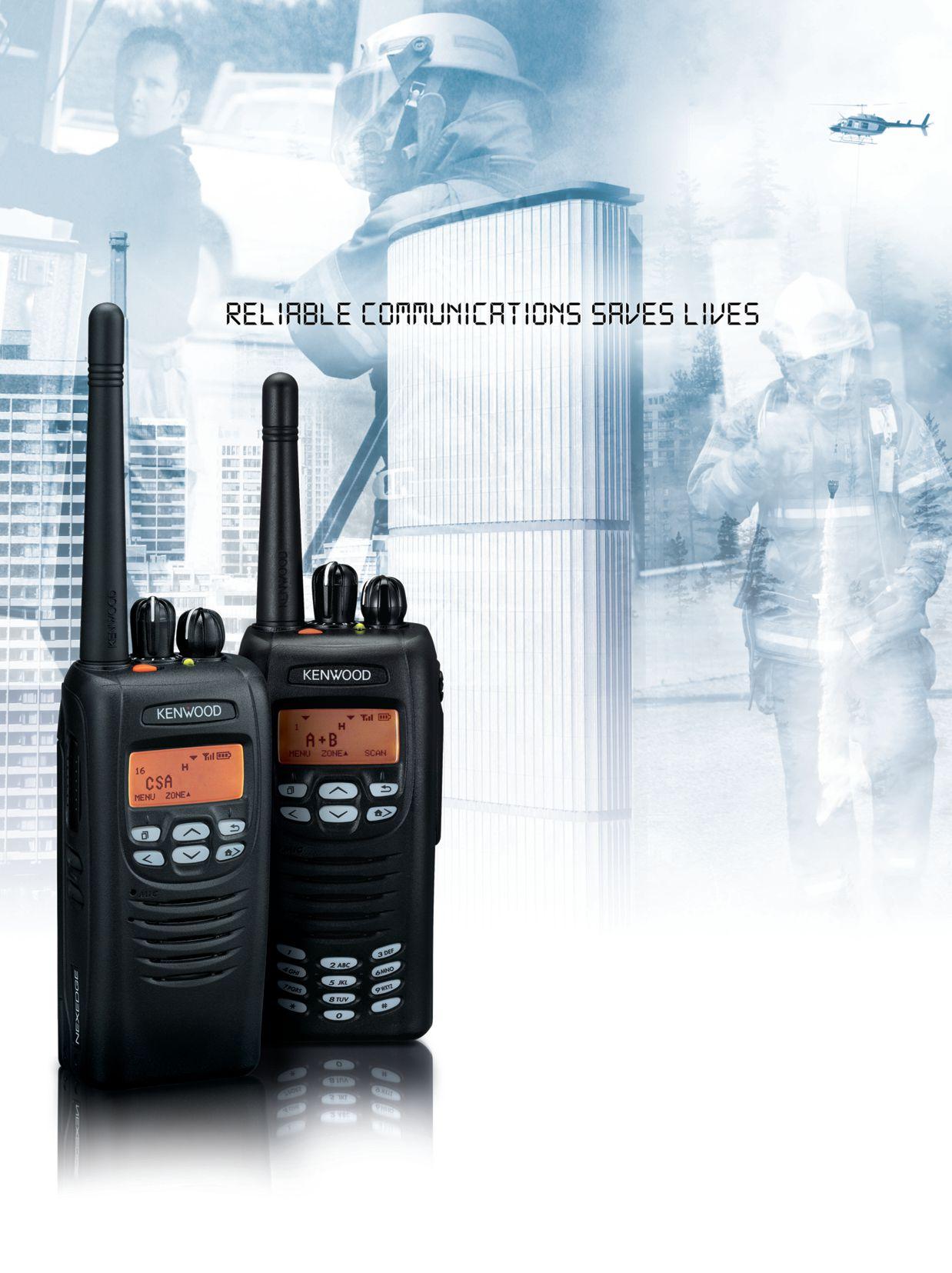
NEXEDGE® is designed to provide advanced communication solutions to meet the needs of private enterprises and public sectors CSA Certified for Class I, Division 1, Groups A, B, C, and D: Class II, Division 1, Groups E, F and G: Class III, Division 1: Class I, Division 2, Groups A, B, C, and D
Advanced features, extended coverage, strong security and 12 5 / 6 25 kHz compatibility with a maximum of 2 watts are just some of the benefits of adopting NEXEDGE® for advanced digital communications
Forcible egress
By ED BROUWER
this month, we will look at forcible egress as we continue to focus on firefighter assist and survival tactics (FAST). There are several topics that fall under the heading of forcible egress, but here we will look at breaching an interior wall.
The tactics described below are to be considered survival tools. It is hoped that these tactics will not be implemented but should the need arise, we must be prepared to act quickly and effectively.
Whether full time or paid on-call, fire personnel routinely conduct operations that put them in dangerous situations. Falling through burned-out floors or becoming entangled in the debris of a ceiling collapse are real and constant threats.
INTERIOR WAll BREACHING
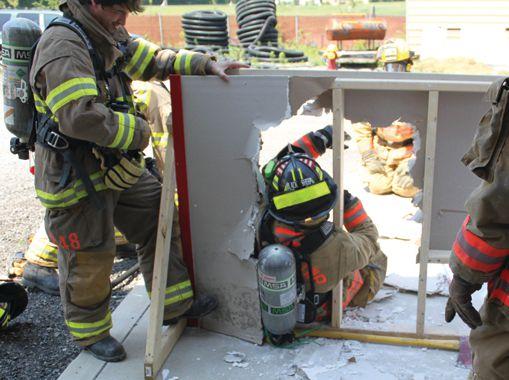
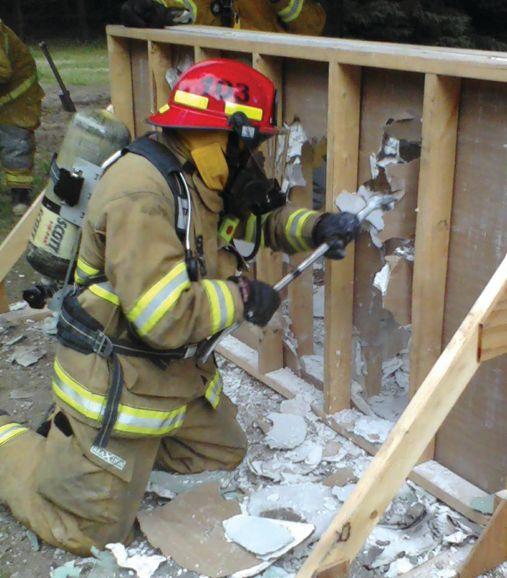
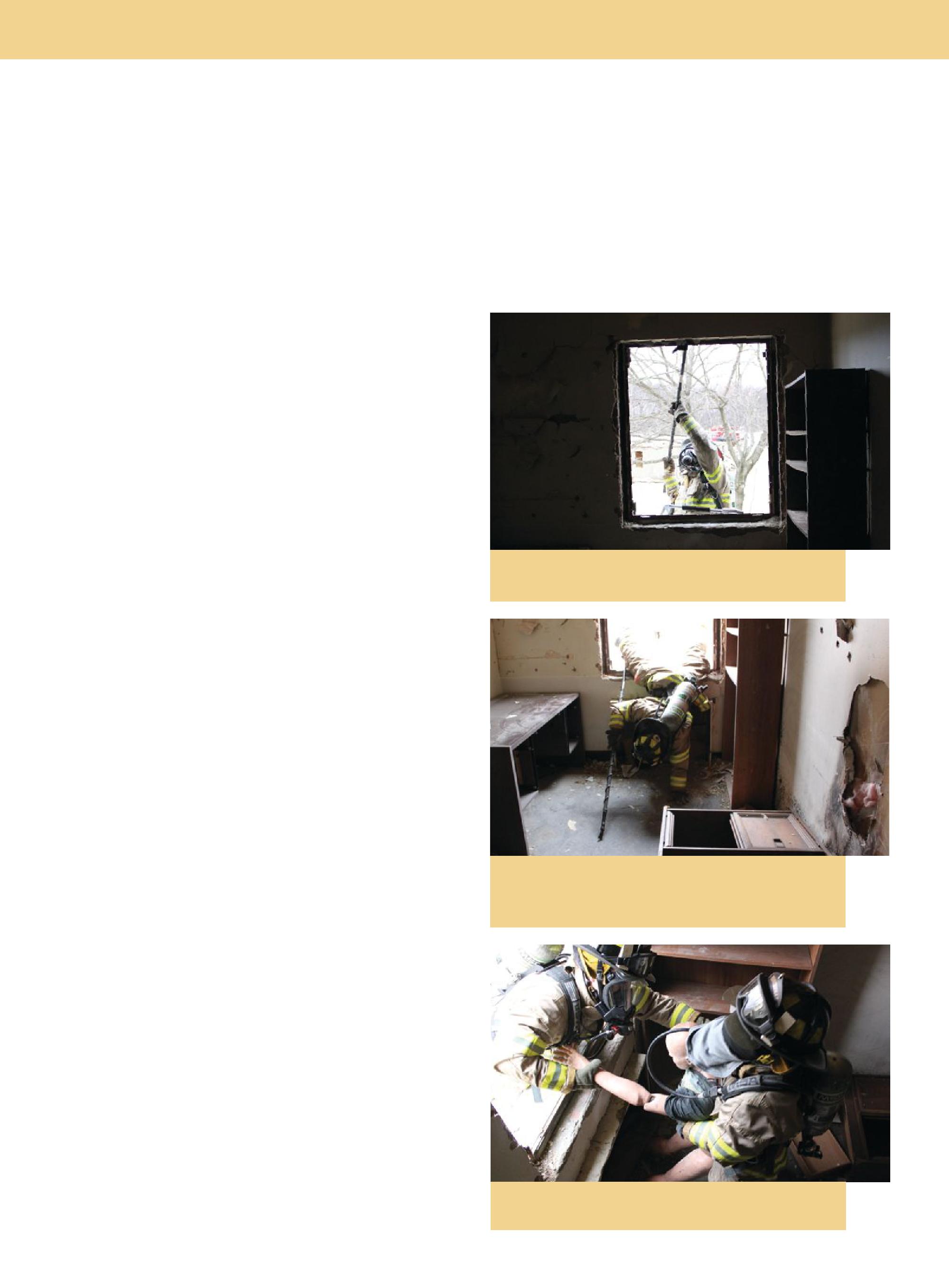
If a door or window cannot be located, firefighters can breach an interior wall to escape immediate danger. This involves making an opening in a wall constructed of drywall and wood studding. Unfortunately, this tactic is often overlooked by firefighters who cannot find their way out of an area.
The steps are relatively simple:
1. Locate wall studding.
2. Locate space between studs.
3. Remove drywall (sheetrock) and check conditions.
4. Move through passageway.
What we are actually doing is making a passageway through the normal framing in a structure. Once the hole has been made and it is deemed safe to enter, the firefighter manoeuvres between the studs. There are a variety of techniques; however, I will describe the one I have seen most easily performed. Please note that every effort should be made to complete this technique without removing the SCBA backpack or dislodging the face seal.
This procedure is done on your hands and knees and completed without the use of any tools. We do this for two reasons: 1) The fire environment may not allow you to stand, and 2) you may have lost your tools in the firefight. Always inform the incident commander of your situation and your plan to make a forcible egress.
1. Size up the area to pass through. Look for a place on the wall that is void of electrical outlets and plumbing fixtures.
2. Locate space between studs. Sound the wall with your gloved fist. Once you have located the entry point, sit down facing the wall and place your foot flat on the wall. Draw your leg back and lightly kick the drywall with your boot heel. Use one foot and do not kick through the wall; just make a purchase point in the drywall. If you have a partner, he or she can support your back as you are kicking.
3. Remove drywall and check conditions. Once the purchase point has been made, simply pull the drywall material towards you with your gloved hands. Make the hole as wide as the two studs and as high as your head (remember, you and your partner are still on your hands and knees). Now that the outer layer of drywall has been removed, check to see if there is insulation in
Every effort should be made to complete this technique without removing the
Above: Breaching an interior wall involves making an opening in a wall constructed of drywall and wood studding.
Below:
SCBA backpack or dislodging the face seal.
Photos
tRaInER’Scorner
the void; if so, it could be an exterior wall or a garage wall. Although it may be more difficult to breach, you can still inform the incident commander that you are on an exterior wall and you can kick or pound against it to help RIT locate you. If there is no insulation between the walls, check for wiring or plumbing. If all clear, sit down once more and kick a hole into the other room. Make this hole large enough to look through. Proceed only if the area you are entering is safer than where you are presently. Please remember this is a last-ditch effort – life or death. Once you decide to proceed through, sound the floor, look left, look right and do not forget to look up.
4. Move through the passageway. Inform your partner of the conditions, decide together to proceed and inform the incident commander of your decision. At this point, there are a number of procedures you may use to manipulate yourself and your BA through the hole – for the most part, the steps are safe and will work. However, going to low profile, or even removing the BA to push in front of you takes away precious time, of which you have so little. Not only does it take time to go into low profile, but it takes even more time to re-don your BA. Many firefighters do not take adequate care in re-donning; bunched up bunker gear, and loose straps can impede survival and rescue. We recommend and practise a simple cross-over method. Do not remove or low-profile your BA. Stay on your hands and knees, crawl up to the hole, place your shoulders squarely against the two studs and reach your left arm through the hole, placing your hand flat on the floor directly in front of your right shoulder. Do the opposite with your right arm, crossing under the left arm as you do this. This stance causes your shoulders to drop right through the hole. Crawl forward and drop your left hip. Once you slip your left side through the hole, drop your right hip and crawl through. It is as easy as that; no re-donning, no facemask jarring, no real effort, and above all, no time loss. Once pass-through is complete, inform the incident commander of your success and look for a safe egress.
PRACTICE DRIll
A wall breach simulator can be made at very little cost. If you need a plan, e-mail me and I’ll get the info to you ASAP.
Objective: Firefighters, wearing full PPE (SCBA), shall demonstrate the procedure for breaching an interior frame wall.
1. Don full PPE, size up the wall and choose an appropriate place to make a breach, watching for electrical and plumbing obstacles.
2. Sound the wall with a gloved fist to locate studs.
3. Sit in front of place chosen to breach. Your partner should support your back while you prepare to boot (one foot, heel of boot) through the drywall.
4. Once drywall has been broken, remove excess material to reveal studs.
5. Look into the opening before committing yourself.
6. Sound the floor and look left, right and up. Once it is pronounced safe to enter, inform incident command.
7. Staying on your hands and knees, enter the opening one shoulder at a time (crossing one arm over the other), following with one hip at a time.
8. Help your partner through the opening and inform incident command.
Self-rescue techniques must be practised over and over again in order for them to prevail in a crisis situation. Repetitive training may well be the only way to break the panic that robs us of our ability to rationally think our way out of trouble. The more survival tools (options) we give our firefighters, the greater their chances of going home after the call.
“Victory loves preparation,” an inscription on a pistol in the movie The Mechanic, really fits the preceding statements regarding repetitive training. We must train our firefighters as if their lives depended on our training!
Whether full time or paid on-call, we have not devoted enough attention to rescuing ourselves, and too often the results have been tragic. Until next time, stay safe.
Ed Brouwer is the chief instructor for Canwest Fire in Osoyoos, B.C., and Greenwood Fire and Rescue. The 21-year veteran of the fire service is also a fire warden with the B.C. Ministry of Forests, a Wildland Urban Interface fire suppression instructor/evaluator and a fire-service chaplain. Contact Ed at ed@thefire.ca
-WAYNE, ASSISTANT CHIEF, NCFD
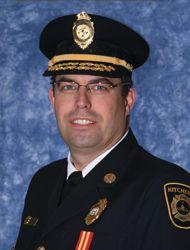
By tI m B ECKE tt Fire Chief Kitchener, o nt.
IThe fire-paramedic conundrum
am writing this at the Canadian Association of Fire Chiefs conference in Calgary, where former Toronto Argonauts coach Mike “Pinball” Clemons has just finished talking about playing the game and playing it for the team. He spoke of Damon Allen’s words to the Argos just prior to the 2004 Grey Cup game against the B.C. Lions: Allen went around the room and told individual players that he plays the game for them. The meaning behind this is that a team isn’t about you, rather it’s about the members of your team. Move this analogy to the emergency-service field: we play for each other and, more importantly, we play for the communities we serve.
In Ontario, there’s a battle heating up between the firefighter and paramedic unions over who does what best. In Toronto, there have been heated exchanges through social media in the argument over which service should respond to which types of calls.
Although I love to see people and organizations with passion for what they do – and both sides definitely have passion – I become concerned when the passion clouds the picture. Both unions claim to represent the professionals who care about the public and reason that, therefore, their members should be the ones in attendance at medical calls.
The unions are publicly airing their laundry, which appears to be self-serving. Frankly, I don’t think the public cares who gets to a call first, or at all. People just want qualified personnel to assist them with their needs, and they want them there quickly. Both sides state that they are professionals, and there is no doubt that both are good at what they do.
But back to Pinball’s message. The passion of the firefighter and paramedic organizations is distorting the messages. Both groups are so focused on their own roles and needs that they are not looking at what the public really needs and what the organizations need.
claim that you can’t put a cost on public safety, but in reality, we do, because there is not an endless amount of money. If we had endless cash flow we would have fire and paramedic stations on every corner.
We will always need paramedics and we will always need firefighters. History has shown that firefighters were used to help improve medical responses to emergencies. The EMS sector has done a great job improving its responses and skill set, and is a well-trained medical profession.
History also shows that response times continue to increase, not because of the medics but because of the system – offloading delays, dispatching controls and ministry guidelines. Fire response is declining due to stronger code enforcement and fire-prevention activities. And, finally, history also shows that the costs to fund these services are high and continue to grow, and within the current economical climate, are unsustainable.
Both organizations want to do what is best for citizens and patients, but airing their frustrations in public doesn’t show that. The Ontario Association of Fire Chiefs and the Association of Municipal Emergency Medical Services of Ontario have taken on
Both groups are so focused on their own roles and needs that they are not looking at what the public really needs and what the organizations need.
This is a time when fire and EMS need to be working together more than ever, and, as I have said in past columns, both need to check their egos at the door and do what is right for the patient. This public bickering appears to be about protecting empires; this protectionist approach will only create separation and animosity and, perhaps, result in a decline in customer service.
So what’s the answer? This is a provincial issue in Ontario but it is likely to spread to other parts of the country. Organizations need to come together and look at who is doing what, how organizations can make a difference, and what this will cost taxpayers. Some will
Tim Beckett is the fire chief in Kitchener, Ont., and the president of the Ontario Association of Fire Chiefs. Contact him at Tim.Beckett@ Kitchener.ca
the task of looking at the system to determine the roles of both professions, and the importance of both organizations within the system. We want to ensure that the public is the main focus – the main focus in response, the main focus in service delivery and the main focus in fiscal responsibility. We want to ensure that everyone is looking at things from a factual and evidence-based approach. And we want to ensure that we are working as a team, not as individuals. We have checked our egos at the door in order to serve the public and the professions.
I challenge you to look at the way you work and to remember who you are doing this for. Firefighters have a role to play in medical calls; paramedics have a higher skill set. The focus needs to be on how we can work together to better service the public. Doing the right thing is not always the popular thing.
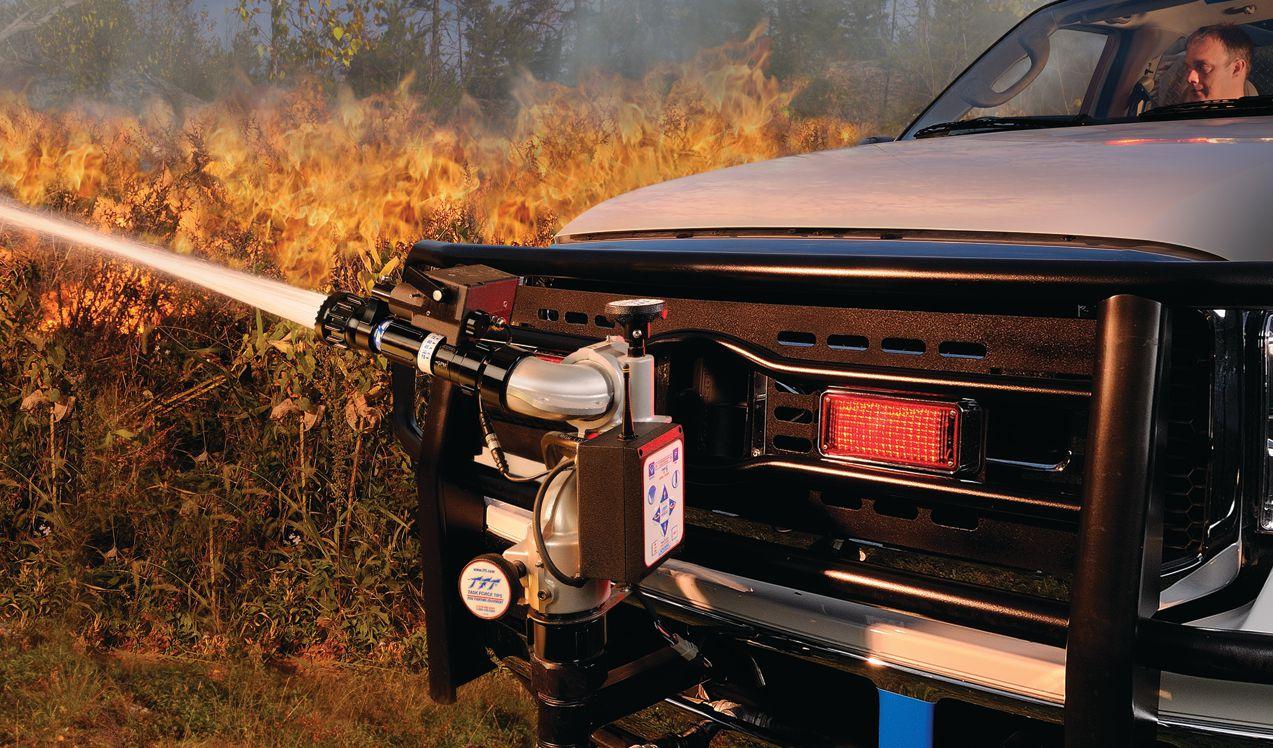
Attack Wildfires from the Safety of Your Cab…
The remotely controlled Tornado Monitor from Task Force Tips lets your crew manage initial attack operations while never leaving the protection of the fire apparatus cab.
The Tornado integrates a handheld joy stick monitor and valve controller, quick connect fittings, and exclusive water saving Smart Stream nozzle technology.
To learn more about how you can provide maximum performance and safety to limited staff during wildfire operations, contact your local TFT dealer today
tRUCKtech Pump primer
By CHRIS DENNIS
so, fall is upon us, hockey is on TV and, WAIT . . . wrong magazine.
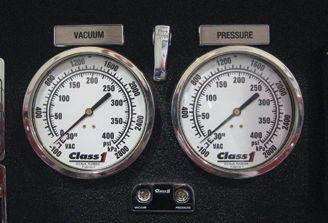
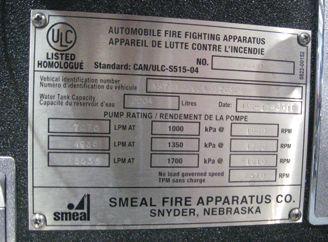
Now that I am back on track, we can talk about fire pumps. We are going to go over fire-truck pump maintenance and knowing the importance of the ULC plate.
A pump is a device used to move fluids. There are many forms of pumps. For our purposes, we will reference centrifugal pumps, the most common type of pump on commercial and custom fire trucks. Some examples of pump builders are Waterous, Darley and Hale. The concept is simple . . . water goes in one end and out the other.
The definition of a centrifugal pump (by Wikipedia) is a rotodynamic pump that uses a rotating impeller to create flow by the addition of kinetic energy to a fluid.
Centrifugal pumps are commonly used to move liquids through piping. The fluid enters the pump impeller (eye) along or near to the rotating axis and is accelerated by the impeller, flowing radically outward into a diffuser or volute chamber, from where it exits into the downstream piping (discharge). Centrifugal pumps are used for large discharge through smaller areas. They are generally driven by an internal combustion engine or electric motor.
Centrifugal pumps can consist of more than one impeller in a casing. Every design has a specific purpose. The maintenance is virtually the same on a single impeller (single stage) as it is on two impellers (dual stage). If the water source with which you are working is static or pressurized, the pumps should be back-flushed after every event. At times, rural fire fighting requires firefighters to draw from streams, ponds or lakes – not exactly clean sources of water. You will encounter sediment, weeds, sand and anything else that grows or swims in one of these bodies of water. Back-flushing – flushing the pump, discharges and intakes, as well as removing any onboard water that may have been transferred into booster tanks – is a must. When you back-flush, you go from the highest discharge and push fresh water back through the pump to its intakes. All screens and the steamer ports, if capped or equipped with master intake valves, must be removed or opened. This includes all smaller intakes as well. Once completed and reassembled, the fire pump can be engaged and fresh water can again run from intake to discharge. Back-flushing will dislodge any loose items that may have snuck past the screens and will move out any sand particles. Sand or sediment is a bad thing. Move enough high-pressure water and sand mix, and you will create an amazing cutting tool capable of going through steel and concrete. This would be great if that’s what you needed to do, but for our purposes, we only need to move water . . . quickly!
I mentioned earlier that the water enters the eye of the impeller and is moved outward at a high rate of speed through the impeller into the housing or volute. It is here that the shape of the pump housing changes and becomes smaller and narrower where the water is discharged out to piping. The impeller spins by an area in the housing called the stripper edge. This is the leading edge out to the discharge piping. If this stripper edge is degraded by sand blasting, the pump is no longer able to create the pressures or litres per minute for which
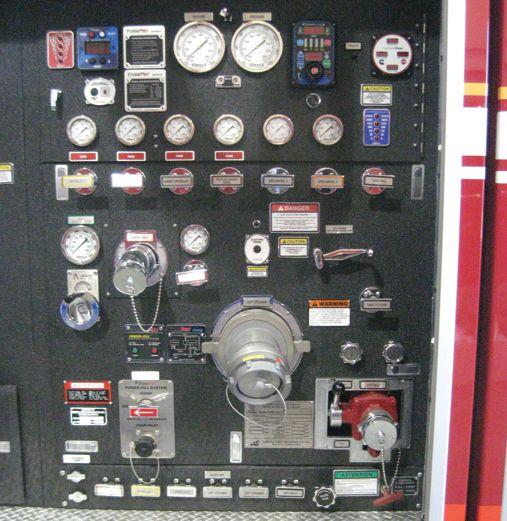
Photo 1: Your department may specify differently, but keep this easy rule in mind when trying to navigate a truck’s pump panel: anything below the master intake port or steamer is an intake, and anything above is a discharge port. Pre-connects are a given.
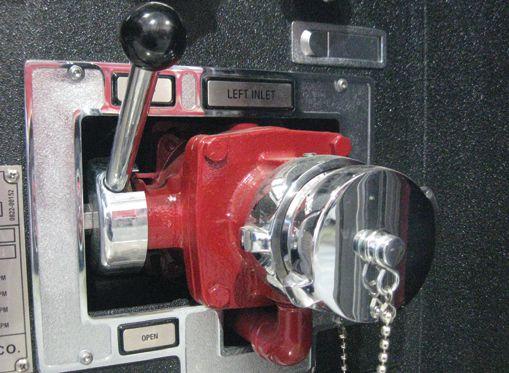
Photo 2: Clean the threaded areas of the intake with liquid soap. Soap will lubricate the ball bearings inside the swivel, flushing and washing away dirt.
Photos by c hris d ennis
tRUCKtech
it was first designed. We now have a fire pump that does not meet or pass a pump test.
A simple way to eliminate this early wear is to back-flush the pump every time it is used. Pressurized sources, such as fire hydrants, usually contain water from the city grid. This water is treated and is usually free of all pond stuff, but that doesn’t mean that these pumps are exempt from back-flushing. Steel pipes will cause sediment and rust, and the fire department is not the sole user of these hydrants. Anyone who has been there before has left some residue, which builds up over time and has to be cleaned out. Older townships may find that their hydrants are still supplied via clay pipes, which break down over time.
Fire pumps are equipped with intakes and discharge ports. The pump panel can be a very busy piece of real estate on a fire truck (see photo 1 on page 22). Your fire department may specify otherwise, but keep this simple rule in mind: anything below the master intake port or steamer is an intake. Anything above is a discharge port. Preconnects are a given.
Each intake has a valve of some kind that opens and closes and is usually mounted close to the back side of the pump panel. The threaded areas of the intakes are a female coupling with a swivel. Use liquid soap to clean the threads. The soap will make its way into the swivel and will help to lubricate the ball bearings inside. This way, the water will always flush the swivel and help to wash away dirt (see photo 2 on page 22).
Lube with liquid detergent and the cycle continues. This also holds true for the internal function. Squirt small amounts of liquid detergent into the valve area to help wash away debris and to lubricate. If this is done after every event, or once a week during the operational pump test, these items will last a lot longer. Do the same to the discharges and they will not let you down when you are called to duty.
MECHANICAl RElIEF VAlVES
So now I am dating a few of us. Some readers may not be familiar with mechanical relief valves. Relief valves are used in most pumping systems to prevent excess pressures caused by changes in the conditions under which the system is operating. There are many kinds of relief valves and they function in different ways, depending on the type of pump, the characteristics of the pump driver (engine or motor, for example), and the operating conditions. Our relief valve is a pilot-operated valve used with a centrifugal pump driven by an engine or motor. Any or all discharge lines may be shut off without the knowledge of the pump operator (in other words, to relieve valves used on fire department pumpers). If we could not control pressure (pressure means net pump pressure, or the difference between discharge pressure and intake pressure), the end of the hose line not yet shut down would receive all the pressure built up in the system, creating an unsafe situation for the firefighter operating the hose.
The relief valve operation is the same no matter which brand of relief valve your department uses. One of the worst things firefighters can do is leave the valve in its last pre-set position. There is a spring inside, and if the value is left to sit in one spot too long, the spring will weaken and the valve will stick. The relief valve must be exercised, not only to see if the light works, but also to be sure it is operating properly. A certified pump operator will be able to determine if the valve is working correctly by checking the pressures on the discharge master gauge (see photo 3 on page 86).
If the open or closed bulbs were burned out, how would you know the relief valve is working? A veteran pump operator will tell you by the sound, but with all the noise from radio traffic and engines running, a
Continued on page 86
By SEan t R a CE y Canadian Regional m anager, n FPa
aCanada plays catchup on electric-car safety
year ago, I reported that the NFPA was launching a website featuring materials for teaching first responders how to deal with electrical vehicle (EV) incidents. Now, we can proudly state that the objectives have been met and the training is proceeding ahead of schedule – in the United States. Training in Canada still needs a funding source.
The need for this type of training for first responders has been well substantiated by the NFPA. The NFPA has hosted two electricalvehicle safety summits in conjunction with the Society of Automobile Engineers International. These summits provided a forum through which all relevant individuals, organizations and agencies contributed to the development of action plans regarding the codes and standards necessary to effectively address safety as it relates to electrified vehicles and their infrastructures.
In addition, the NFPA facilitated 17 fire-service focus groups to identify the need for the training and its components. The necessity of the training is not being questioned in the United States. The NFPA has also struck partnerships with all major stakeholders in the development of the training, and has been commissioned by several manufacturers to development their emergency-response guides.
The NFPA website www.evsafetytraining.org has been launched, and, as of Sept. 1, was fully operational. All the deliverable targets have been met on time or ahead of schedule. The NFPA is being approached by other countries to develop similar platforms for their first responders. A train-the-trainer course is being run out of a number of cities across the United States, and course materials – including a full curriculum – are being made available to all through $4.4 million in funding from the U.S. Department of Energy. The website has the following tools available: downloadable emergency-response guides for most electrical and hybrid vehicles and dates for the train-the trainer conferences being rolled out in each state.
‘‘
funded project undertaken by a steering committee of stakeholders to provide strategic direction to ensure the development and adoption of electronic vehicles in Canada. The training program was to be developed over a two-year period starting in 2012, but this is a significant undertaking and no funding sources have been identified.
In Canada, the responsibility to support the training does not fall to one department but touches a number of federal jurisdictions, including public safety, environment and transportation. In addition, licensing and emergency services on highways is a provincial responsibility. So, after an initial inquiry to office of the Minister of the Environment, and a presentation to Public Safety Minister Vic Toews, we are still without a dance partner.
The initial meeting with Public Safety Canada was to point out the need for the project and to request guidance on how to approach the federal government – essentially to solicit a champion for this cause within the federal cabinet. Federal funds are being solicited because the promotion of EV technology is a federal initiative. If this initiative were left to each province to roll out, it would be inconsistently applied across Canada. Also, a portion of the funding for the project is to translate the material into French – a high cost and a necessity. There is precedent for federal funding for this type of training in Ottawa’s sup-
If this initiative were left to each province to roll out, it would be inconsistently applied across Canada.
’’
port of the IAFF initiative for CBRNE training across Canada.
Unfortunately, despite repeated requests, the training cannot be made available to Canadians, as the program was developed with U.S. Department of Energy grant funds. The funding guidelines prohibit the training from being made available to other countries.
Despite these restrictions, the NFPA has partnered with Red River College in Winnipeg (the electrical vehicle technology experts in Canada) to develop a concept for the Canadian training. The project would Canadianize the U.S. materials by adapting the messaging for any Canadian-specific content and make it available in English and French. The Canadian version of the training program was set out in the Electric Vehicle Technology Roadmap for Canada, a federally
Sean Tracey, P.Eng., MIFireE, is the Canadian regional manager of the National Fire Protection Association International and formerly the Canadian Armed Forces fire marshal. Contact him at stracey@nfpa.org
On a side note, it is my opinion this is one of the many national initiatives that would benefit from having a national fire advisor through whom the fire service could approach government departments. The roll out of EV programs and the gap analysis performed for the federal government had not even identified any training needs until the NFPA identified these one year ago, and this was by chance more than anything.
To date, the NFPA has approached the Canadian Association of Fire Chiefs and Canadian Council of Fire Marshals and Fire Commissioners to solicit their support in approaching the federal government. The Canadian Association of Chiefs of Police and EMS Chiefs of Canada have also been approached for their support.
The next step is for stakeholders to express their need for the training to Public Safety Canada, and, hopefully, the training will be rolled out without much further delay.
unified integration
by
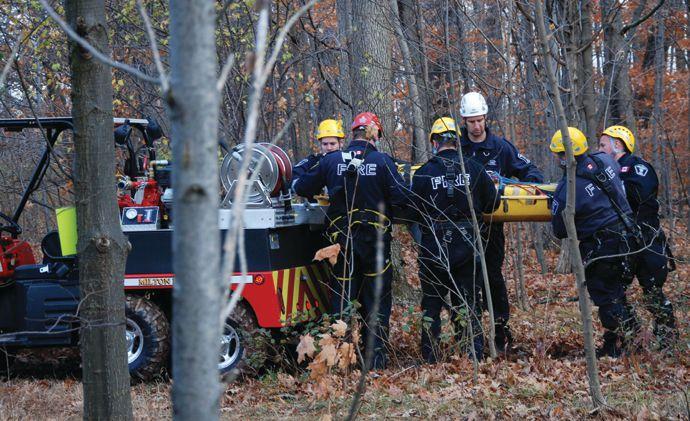
top : The Joint Emergency Services Operational Advisory Group (JESOAG) in Halton Region, Ont., produces effective protocols for jointly managing the response to events. A field exercise in the fall of 2010 brought together all participating agencies.
A multi-agency approach to large-scale emergencies
By Andy Glynn
It has been said that the whole is greater than the sum of its parts. Nothing could be more accurate when defining a multi-agency approach to large-scale emergencies.
Silos is a term often used when explaining how the three emergency services interact during responses to major incidents. Most of us know that there is a more efficient and more effective response – and, perhaps, a better outcome – to any event if we all work better together. However, it is not often that a truly unified approach happens at the incident site.
Even when there is some informal communication among agencies on the scene, the tendency is for each of us to migrate back to working within our own silos.
In Halton Region in southwestern Ontario, which encompasses Burlington, Oakville, Milton and Halton Hills, we learned a valuable lesson from an incident
in the late 1990s that forced the three emergency services to consider how to unify and integrate at emergency scenes. The outcome was a coroner’s inquest recommended that:
The combined emergency services (EMS, fire and police) in each community participate in an annual workshop to promote teamwork at emergency scenes, including understanding of the role of each agency and the importance of communications between agencies, at different types of emergencies.
The region was tasked with bringing together police, fire and EMS to improve the ability to manage emergencies. The Joint Emergency Services Operational Advisory Group (JESOAG) was formed and is today a very active organization that produces effective protocols for jointly managing the response to events. The group comprises
Photos
a ndy Glynn
Halton Region Mutual-Aid Plan and Program provided the co-ordination and protocol for the region’s four fire departments and their responses to the incident during the field exercise.
deputy chiefs from police, EMS and the four Halton Region fire departments. It also includes the local division commander from the Ontario Provincial Police, bringing the complement to seven members.
JESOAG mission:
To improve operational excellence through communications, understanding each other’s roles and responsibilities and teamwork
The group has come a long way since the coroner’s recommendation was imposed. In 2010, JESOAG identified a priority to develop, implement and exercise a unified command (UC) protocol. What started as a simple project turned into a major undertaking for the group.
When development of the protocol began, we realized that while there are unique differences among the three agencies, none is more obvious than terminology. Another major factor was that the premise of unified command requires each of us to understand and have a working knowledge of the incident management system (IMS).
The IMS component is what started the discussion, especially across each agency, which led to difficulty completing the protocol. All three agencies came to the table viewing IMS differently or having implemented it within the rank and file using a slightly different methodology. Although we all agreed that the principle of IMS is the same across the board, the terminology became the sticking point.
In order for the JESOAG to come to consensus, we needed to identify an IMS process that was generic enough to be applied across the three agencies and, optimally, within a provincial and federal framework.
Emergency Management Ontario’s IMS program was being integrated into the province at the time and, after reviewing the EMO document, we identified this as the model for our use. The document provided standardized terminology and could easily be integrated into the foundation of our UC model.
For the UC protocol to be accepted and for it to become part of the day-to-day operations, senior staff in each agency were required to attend and complete the necessary training. The training was organized into a two-day workshop offered several times around the region.
A couple of factors were critical for the group to be confident it could ensure the successful outcome of the workshops. First, the facilitation had to be shared by the seven members of JESOAG. Secondly, the workshop location needed to rotate and be hosted by each municipality and by the region (police and EMS). This provided a unified, integrated delivery and, ultimately, contributed to the successful outcome of each workshop.
It was agreed that these workshops were an excellent opportunity to bring together senior staff and that, in order to make the best use of everyone’s time, everyone needed to complete a prerequisite course. The provincial IMS level 100 course is a computer-based program and was identified as an appropriate prerequisite for all workshop participants. On Day 1, the IMS level 200 was delivered, along with the exam. The Day 2 content included a review of incident action plans, a review of each agency’s resources, an overview of the fire mutual-aid system, a presentation and a review of the UC protocol. The session concluded with a complex table-top exercise.
Photo by a ndy Glynn
To date, almost 100 of the most senior police, fire and EMS staff in the region have completed the workshops and have been recognized with certificates from the province. And, in the spirit of true unified integration, several representatives from the Ministry of Transport, the Hamilton Port Authority and emergency management officials attended and completed the workshops.
To my knowledge, these workshops are the first of their kind in Canada involving a local approach to building multi-agency relationships, breaking down silos and providing a unified response to emergencies.
However, no successful program would be complete without testing the participants’ knowledge out in the field.
For JESOAG to truly measure the success of the workshops, a field exercise was planned for the fall of 2010. This exercise needed to be complex enough to ensure that all four fire departments would be involved, along with regional and provincial police and EMS. In addition, the site had to be in a remote area where it would not draw many onlookers or media. Limiting access was important because this was the first attempt in the region at such a complex, multi-agency, multi-jurisdictional exercise.
The exercise became two-pronged, with one part involving the field component and the other involving the activation and exercising of the municipal Emergency Operations Centre (EOC). The EOC operated as though it were an actual emergency and received real-time feeds from the field.
The scenario was a simulated plane crash into a provincial park in the Town of Oakville. The plane was carrying between 30 and 40 passengers and crew. The park is in a remote area and has very steep declines to a river. This being the case, several passengers from the plane ended up over the cliffs and required rescue. Others became walking wounded and were lost in the dense bush; the remainder were in various forms of medical distress.
Essentially, the scenario included lowangle rough-terrain rescues for the fire departments, mass casualties for EMS, and wilderness search and rescue for the police.
As all the agencies converged on the site, it was critical that UC be set up early and a visible command post identified. One of the early challenges was managing the large number of emergency vehicles and personnel that arrived simultaneously and ended up on a narrow road close to the crash site. This blocked access to the site for necessary staff and equipment. However, with UC functioning, personnel were able to discuss an immediate solution and resolve the convergence issue.
The Halton Region Mutual-Aid Plan and Program provided the co-ordination
and protocol for the region’s four fire departments and their responses to the incident. The departments’ arrivals on scene were staged 30 minutes apart to simulate real time and to allow the fire commander to assign each department its tactical responsibilities. A forward-operations officer was assigned and delegated tasks that involved all four departments performing low-grade rescues from various locations over the steep cliffs. It was essential that the rescues be co-ordinated among the departments; therefore, safety was a critical factor while the rescues were being performed.
As the rescues were completed, the patients were transported to a forward triage area using all-terrain vehicles specifically designed to move non-ambulatory patients. EMS assessed the patients, provided a triage tag at the site, and then continued to do assessments in the forward triage area.
Interaction and communication among the agencies in the field was another critical element for the successful outcome to the exercise: fire personnel performed the rough-terrain rescues; EMS triaged; and police located the walking wounded. All this needed to be co-ordinated, especially due to the fact that the fire departments, using the ATVs, needed to assist by transporting equipment in to the site and moving patients out of the rough terrain and back to a central area.
Integrating the three agencies through unified command is difficult: it requires the right people with a common goal dedicated to making the process work. The lack of communication interoperability at the tactical level forced all communication up through the UC, which overloaded the command post. However, this was handled very effectively during the exercise by the use of incident action plans (IAP).
It was very refreshing to see the three agencies work so well together. The workshops and the exercise clearly established the fact that when the right people with similar goals come together, great things can happen.
After spending 14 years as a firefighter in a municipal department, Andy Glynn joined the Office of the Fire Marshal, where he served as an instructor, program specialist and acting manager of the OFM’s Emergency Management and Response Unit. In 2006, he became a deputy fire chief with the Town of Oakville, where he has held responsibility for training, fire prevention and professional development. He also acts as community emergency management coordinator. Andy is a certified Fire Protection Engineering Technologist. Contact him at aglynn@oakville.ca
keeping Project to explore national database for fire statistics – finally
tr a ck
fire-service agencies and stakeholders across Canada will be consulted in the spring as part of research for the country’s first national fire statistics database.
The Canadian Association of Fire Chiefs (CAFC) has launched a year-long project to explore the development of a web-based database of fire statistics that would be available to fire departments and organizations across Canada. The National Fire Incident Database project was funded by a $149,500 grant from the Canadian Police Research Centre, a federal program administered by the Defence Research & Development Canada - Centre for Security Science (DRDC-CSS).
According to CAFC President Rob Simonds, the project is essential to enhance the operational effectiveness of Canadian fire services.
“By collecting and analyzing fire data, the database will provide fire services the information they need to effectively target their resources, operate more efficiently and increase their fire-prevention capacity. Ultimately, that means safer communities.”
Canada lacks a national system for collecting fire statistics, which are important for identifying ways to reduce the impact of fire, according to the 2011 research paper Can We Develop National Canadian Fire Statistics for Emergency Planning by Rhéaume Chaput, the fire chief in Belleville, Ont., and chair of the CAFC’s fire and life safety committee.
“One of the biggest challenges [in] effecting change in fire safety is the lack of reliable fire statistics,” the paper quotes NFPA Canadian regional manager Sean Tracey as saying. “The use of statistics in developing mitigation strategies and emergency planning requires relevant, complete, and accurate data. The lack of national fire statistics in Canada may be hindering the fire services’ abilities to address emerging trends and issues.”
Data collected through the database could be used by fire departments to strategically deploy their resources, or to amend building codes in response to fire trends. For example, national statistics could be
By len GArIS And KArIn MArK
Canada needs a national fire database to keep track of fire statistics, from structure fires to fatalities.
used to build a business case for changing the national building code to require more sprinkler systems in residences.
On a local level, a fire department could compare its own fire statistics to those of its region or province to identify gaps in service and plan where to apply future resources. Initiatives such as these would help reduce fires, property damage, injury and death.
“It’s important from a local, provincial
and national perspective that we have good, robust data to formulate decisions for the future,” said Len Garis, fire chief for the City of Surrey and president of the Fire Chiefs’ Association of B.C., and the CAFC’s representative on the research project.
“Canadian fire services have difficulty accessing timely and accurate data now because we have nothing in place to collect and distribute data on a widespread basis.”
LIFEPAK 15 + LUCAS Perfect Partners
Perfect partners work together to create the best possible outcome for their patient. They support each other without duplicating effort. Designed based on years of partnership with EMS, the LIFEPAK® 15 monitor/defibrillator and the LUCAS™ 2 chest compression system work together to support your team in managing cardiac arrests. LUCAS 2 is designed to provide continuous, uninterrupted compressions while helping to reduce scene complexity. The 15 provides the power of 360J, plus the most advanced monitoring parameters available. Both are designed to be easy to understand and use by trained care providers. For more information, visit www.physio-control.com.
The project will outline the scope for a national system, including types of data to be collected, hardware and software, partner roles and contributions, funding sources, and resources required to set up and maintain the system. The findings will be the basis for justifying the investment in a national database, establishing greater funding support, and pursuing contracting to create the database.
The need for reliable fire data is widely recognized – for example, this spring the International Association of Fire Fighters, the International Association of Fire Chiefs and other fire service stakeholders participated in a symposium to identify a path to a national fire data system in the U.S.
“The International Association of Fire Fighters has often been vocal in calling for a national office for fire service statistics in Canada, and we see this as a positive development,” said IAFF General President Harold Schaitberger.
“We strongly believe that comprehensive data collection and analysis leading to national fire statistics, and the issuance of an annual report that is made available to all fire service stakeholders, would be a tremendous advance for public and for firefighter safety in Canada.”
British Columbia’s University of the Fraser Valley (UFV) is co-ordinating the project research and consultation on behalf of the CAFC. Working with Garis to manage the research team is Dr. Darryl Plecas, director of the Centre for Criminal Justice Research for the UFV’s School of Criminology and Criminal Justice. Noted criminology researcher Paul Maxim, associate vice-president of research at Wilfrid Laurier University in Ontario, will conduct the research.
Consultation in the spring with fire services across the country will include regional round-table meetings with local fire officials and other stakeholders, along with other methods designed to obtain input from the broad spectrum of Canadian fire-service members.
The research team will also investigate existing public and private Canadian data management systems, such as FDM software, the Canadian Police Information Centre, the Province of British Columbia’s provincial data collection approach, and the Canadian fire commissioners’ standard for reporting fire incidents.
International best practices and other countries’ national databases will also be reviewed to determine what they might have to offer within the Canadian context. These include the United States’ National Fire Incident Reporting System – which is maintained by the Office of Homeland Security – and the United Kingdom’s Fire
and Resilience: Incident Recording System, which is maintained by the Home Office.
“We don’t want to reinvent the wheel,” Maxim said. “My suspicion is there may be some systems out there that, with some tweaking, could be the core of a national system.”
A key focus of the research will be ensuring the proposed database will meet the needs of Canadian fire services. The consultation and research will identify what data systems are in use across Canada and why, and what urban and rural fire agencies in different parts of the country would need and expect from a national system.
“At the end of the day, if the individual departments and regions aren’t behind this, it’s not going to work,” Maxim said. “We’re hoping to do a major consultation across the country to try to gauge the amount of buy-in, what they are hoping to get out of it, and what is the gap between what they have now and what they would like. Obviously not everyone’s ideal can be met. But we’re looking to close that gap.”
The CAFC submitted its funding proposal to the Canadian Police Research Centre in late 2010 and received approval in 2011.
DRDC Executive Director Steve Palmer said the project is a good fit with the DRDC-CSS’ mandate, in that the data gathered will help Canadian fire services prevent fires and spare Canadians from their devastating effects.
“We recognize the tremendous value in the development of a national fire incident capability as it will generate an evidencebased approach for decision making, which will help improve the efficiency and effectiveness of fire services,” Palmer said.
“At the end of the day, this project will help the responder community save lives, reduce injuries and work more efficiently, and have tools they can use to help plan their future.”
Information and updates about the National Fire Incident Database research project, including consultation opportunities, will be posted on the Canadian Association of Fire Chiefs website, www. cafc.ca. Questions about the project may also be directed to Len Garis, lwgaris@ surrey.ca.
Len Garis is the fire chief for the City of Surrey, British Columbia, an adjunct professor in the School of Criminology and Criminal Justice at the University of the Fraser Valley, and president of the Fire Chiefs’ Association of British Columbia.
Karin Mark is a former newspaper reporter who writes for publications and corporate clients in Greater Vancouver, B.C.
been there, done that
longtime
chief dave Fields highlights incident management as key change during fire-service career
Editor’s note: Windsor, Ont., Fire Chief Dave Fields retired at the end of August after 44 years in the fire service, many of them as a leader and mentor. Fire Fighting in Canada editor Laura King recently spoke with Fields about the changes and challenges he has experienced, the 24-hour shift, interoperability, combined fire and EMS, and his vision for the future of the fire service.
QIn your 44 years in the fire service, what was the most significant change you experienced that affects the way firefighters do their jobs?
AThe people that I’ve had in my life, the opportunities, the things I got to do in my career, all over the world . . . I’m like a little boy, I’ve forgotten about some of it, but there’s absolutely no question: the introduction of IMS [incident management system]. Firefighters call it ICS from the mom-and-pop stuff that Bruno [Alan Brunacini] taught us about, but for delivery, safety, performance, everything – there’s no doubt in my mind.
When you come up with a system that manages chaos, and how others relate to it – because a lot of civilians don’t relate to it – they understand span of control because in their business people can only handle so much. It’s basically applying a management system to a chaotic situation. We’ve always responded, we’ve also thrown water on fire, but to have that system in place has reduced injuries and deaths in the fire service.
A lot of fire chiefs in Ontario are also the emergency managers for their municipalities. Depending on the size of the municipalities – I’ve enjoyed that opportunity but I think my job is big enough without it – I don’t have enough help. When I go home at night, do I worry? Not so much about the fire stuff – but I can’t give 110 per cent in both jobs. We’re realists in this public-safety stuff, so it’s not if, it’s when, and it’s going to come back and bite us.
I’ve seen IMS in Ontario through EMO [Emergency Management Ontario] with the new doctrine, rolling out the online courses, and one thing that Windsor did, and it’s very unique so far – when Windsor got involved with the intelligent community process, we did a partnership with academia and got more involved with universities and our college, and we bought into a piece of software called WebEOC, and so that brought IMS through an IT process into the emergency ops centre. So we went from manual style to a piece of software that assists you in logging and chronicling events, and what’s happening at the EOC, and in partnership with the university [of Windsor] and the County of Essex. Emergencies don’t know borders, and now we’re linked with Fusionpoint in the U.S. in Detroit and Michigan, and I think we’re the first border town to have that.
We did an exercise yesterday on the river – and we were linked with the EOCs in the U.S., so if you want to talk about interoperabil-
ity – we do have challenges. But from an emergency-ops perspective, we’ve got it, and it has forced others in other services to get to know IMS, and it has forced others in other agencies to get to know IMS, because you can’t operate it without IMS. So, the electronic aspect and the IT aspect got more people to buy into it, and especially the young people – they love it! I see the worth of this – from my perspective I just want to get ’er done. I know we have to communicate and report after, and this is a great way of doing it.
AQWhat in the fire service still needs to be done/changed?
I’m really worried about the cost of public-safety services, and their survival. And a lot of people are worried about that. Yes, fire is an important service – firefighters get a lot of attention, the public has a lot of respect – but not just fire; police and EMS too.
Our budgets are largely for staff, our operating budgets are mainly for salaries; the arbitration system that we have is not responsive from a regional perspective. When we went through this most recent economic downturn and Windsor was the hardest hit Canadian community, there was no recognition of that by the union. We don’t have local bargaining. If you give it to Toronto, everybody’s getting it. If you give it to the OPP, then everybody’s getting it. . . . It’s irresponsible today.
There are differences in costs of living – the cost of living in
Dave Fields, who retired as fire chief in Windsor, Ont., in August after 44 years on the job, worries about the future of the fire service given attitudes about 24-hour shifts and combined fire/EMS.
Offering: A 2 course certificate in incident command for experienced incident commanders. Please contact our office for more information.
Are you looking to take on more responsibility in your Department? Trying to round out your technical ability with leadership skills? Preparing to advance your career?
At Dalhousie University we offer a three course program, the “Certificate in Fire Service Leadership” to career and volunteer fire officers. The 3 courses Station Officer: Dealing with People, Station Officer: Dealing with New Operations and The Environment of the Fire Station are all offered in each of our 3 terms, September, January and April. The program can be completed in one year.
For more information and a program brochure please contact:
Gwen Doary, Program Manager
Dalhousie University Fire Management Certificate Programs
You will also find the information in our brochures or at the following internet address: Web site: www.continuinged.dal.ca
dalhousiehenson ffic nov11.indd 1
Windsor is much different than it is in Toronto – and that’s not taken into consideration.
Arbitrators reflect previous trends; they don’t make trends. . . . I’m not saying that police officers and firefighters and paramedics should be poorly paid. They respond to the real world, they just don’t live in it.
The other issue that I’m worried about – we’re costly, what can we do about that? We need to be more productive from a fire-protection basis, and I think we can be; however, the shifts hurt that, particularly in Ontario – and Windsor has always been on [the 24-hour] shift, but they work more hours. There was a saw-off – Windsor has a 48-hour work week and the others were 42 – and when the other municipalities tried to be nice and try out [the 24-hour shift], they got nothing for it.
When [the work weeks] were 72 or 56 hours, you had to have those long shifts in order to incorporate those hours. As the number of hours per week got back down to where most normal people work – it’s archaic today to keep a 24-hour shift. We have highly qualified nurses working 12-hour shifts – they couldn’t work 24. You can’t be more productive on a 24-hour shift. The firefighters need to look at need rather than greed and help the community at the same time; it needs to be a win-win – it can’t be just about you.
The shifts need to change, and part-time needs to come in to help us reduce our costs. That will protect firefighters’ jobs, not hurt their jobs. It’s just not realistic when every other walk of life has seasonal or part-time workers, and [the unions] say you can’t have that in fire or police.
I think you appeal to their sense of fair play and survival; if you don’t start thinking about some of these things the municipalities will have no alternative but to reduce the level of service.
We can’t afford it. We can only have the level of protection that we can afford, and we’re getting to the point of un-affordability. So if we put our heads around some of those things and increase our productivity and embrace some part-time component to decrease overtime . . .
It’s time to stop hiding from this. Yes, [the fire service] has public support, but if you don’t do something about what’s near and dear to the public, because they want your protection. . . . You have great jobs, great benefits, great pension plans, but we’re going to have to come to grips with costs and those are some of the ways to do it, or we’re going to take trucks out of service and everybody loses with that. You’re seeing this in the United States, and Canada will no longer be able to avoid that.
QIs there a need for a national fire advisor in Ottawa?
AYes. Yes. Yes.
At the federal level they can’t change because they keep coming out with doctrine that doesn’t include the fire service, and they say, “Oops, forgot again.” It’s no different than 2001 now; we still have issues, and today I can still drive onto the Ambassador Bridge without any inspection, and do a dastardly deed if I so desire . . .
Let’s get into perimeter protection. We’re not asking for money, we’re just asking for a voice at the front end to consult and collaborate. When you hire consultants they always tell you to do that.
A number of years ago I heard about silos, and they have to come down. Yesterday, I was involved with 68 agencies from both sides of the border, Canada and the U.S. –locally we have interoperability – but I have an 800-megahertz radio and they have an 800-megahertz radio and we still can’t talk because the U.S. sold part of that spectrum away and the international channels aren’t available any more.
At the federal level, fire needs a voice –call it a liaison or whatever you want – but in the better public interest it’s still required. It’s always more successful to start at the top and push it down.
There’s another part of the problem –when you have a service that’s 70 per cent volunteer, how do you take it seriously? Rural Ontario and rural Canada needs this. It’s just recently that we got any full-time chiefs with any fire education at all, and knowledge of codes and standards, but it still causes government not to take you seriously. It waters down what the urban has to do. We love what they do, and we’ve fought for the tax break and presumptive legislation [for volunteer firefighters], and I’m not saying that we should do away with [the volunteer fire service] – it’s a vital service – but you can’t diminish the needs of the urban sector because the urban sector has some huge needs that need to be addressed.
QYou’ve had some challenges toward the end of your career in Windsor –a serious injury to a firefighter after a fall from a truck, a sexual harassment case in the department, an 87-vehicle major pileup in dense fog on the 401 in 1999 that killed eight and injured 33 people. What did you learn from dealing with those issues? What did the department learn?
AMy challenges started off in 1967 with the Detroit riots . . .
I started off in my career very early – I joined on July 3, 1967, and on July 27,
Continued on page 44
By t om D E So RC y Fire Chief, Hope, B.C.
GVoLUntEERVIsIon
The fire service through the social-media lens
rowing up in this profession (and in the public eye in general, through my previous work in media), I’ve become well aware of optics and the way people perceive things. My interpretation may not be accurate, but no matter what we do, people seem to see what they want to see without much consideration for the facts. The advent of social media has meant that our actions, or perceived actions, are out there for public consumption faster than ever before.
The world has eyes and people are watching our every move. For example, the vehicle fire your department may have attended on a major highway is posted on Facebook or YouTube long before you get back to the hall. For some, the first reaction may be that someone is out there trying to catch a member of your department doing something wrong. But what about catching us doing something right?
Part of my regimen after a call is to go online and monitor what has been said or posted about our activities. Good tools and equipment in the hands of people who know how to use them should be shown off. I’m not looking to see if we did anything wrong, but to see how we came across on the air, so to speak.
Further to that, I make a point of regularly tapping into social media. There is a valuable network of local information and situational awareness in the palm of my hand that comes in very handy. Don’t think for a minute I have a lot of time to converse with people online all day; rather I’ve turned to tools such as a social media dashboard to stay on top of what is being said or posted about us, our community, and the fire service in general. This puts me in a better position to react or respond, if required, to any external, or even internal, issues.
A dashboard is a tool that consolidates all your social media accounts and pages so that you can monitor them all at once. It comes in handy should you use your social media in another way – to promote fire safety, make public announcements or publicize your calls as they happen. Analytical types can even track their messaging to see how effective it is.
tion from the right people. You think you’re not being monitored? It’s being done – trust me – and re-posted as it happens, with often a dose of opinion thrown in.
I can recall the time I responded to a helicopter crash, long before smart phones or social media. As I started up my truck the radio news came on and over the air was a bulletin that a helicopter had crashed in Hope. The first crews weren’t even on seen yet and it was already breaking news. Today, it’s not unheard of to be en route to calls that show up on my BlackBerry long before I arrive at the scene; all the more reason to control the message and tell the world exactly what we’re up to.
Obviously, getting word out through social media is not the first thing you do on the way to a call, but my point is that we should stop worrying about the way people look at us and start worrying that our message is not being seen or heard, not to mention accurate.
We have a choice to be reactive or proactive and I prefer the latter. Messaging is the key and the old school always taught us, it’s not what we say but the way we say it. I suggest that today it’s the opposite: in the social media world, how is not the issue, rather it’s what you say, and often in 140 characters or fewer.
today, it’s not unheard of to be en route to calls that show up on my BlackBerry long before I arrive at the scene . . .
Still, there are still those in the fire world who maintain a certain level of secrecy about their calls, and yes, there are calls that warrant secrecy. But when radio-scanning accounts are telling people what you’re up to anyway, the public may as well get the correct informa-
Tom DeSorcy became the first paid firefighter in his hometown of Hope, B.C., when he became fire chief in 2000. Originally a radio broadcaster, Tom’s voice could be heard in the early 1990s across Canada as one of the hosts of Country Coast to Coast. DeSorcy is married with two children, aged 27 and 19, and enjoys curling and golf. He is also very active with the Fire Chiefs’ Association of B.C., and chairs the communications and conference committees. E-mail Tom at TDeSorcy@hope.ca
I’ve written before about marketing your fire department. In the marketing world, there is nothing bigger than a brand – a simple shape of a product container or a logo that is recognized the world over. I believe there is no bigger brand than that of the fire service; we are a marketer’s dream. If we sold soft drinks, we’d surely make millions. But we’re not in that business. We promote public safety, community pride and professionalism. It shouldn’t be that hard to sell, should it?
Remember, ladies and gentlemen, you are judged by your actions – we all are, but public-service professionals are judged even more so than people in other professions. You can go about your life in this service trying to hide from the spotlight or you can take the opportunity to step into it now and again. Will you be criticized? Sure you will. There are people in this world who make it their business to knock what we do, but until they see things through our eyes they’ll never have the true picture.
Pumper, tanker, aerial, rescue, commercial, custom, the choices don’t end there. There’s also multiple chassis, configurations and options to choose from. The quality, performance, and service that goes beyond the delivery date are always included.
From adapters and wyes to aerial and wildland apparatus, WFR has the equipment you need.
FIRE-RESCUE
TILLEY
New Westminster Fire Dept.
New Westminster, BC
Fire Chief Tim Armstrong
Tilley & Region Fire Rescue Tilley, AB
Fire Chief Patrick Fabian
Stettler Regional Fire & Rescue Stettler, AB
Fire Chief Mark Dennis
Township of Langley Langley, BC Fire Chief Stephen Gamble
County of Grande Prairie Grande Prairie, AB
Fire Chief Everett Cooke
Rural Municipality of Wood Buffalo Fort McMurray, AB Fire Chief Brian Makey
BEEN THERE, DONE THAT
Continued from page 38
1967, a civil disturbance took place in Detroit and the neat thing about that – I still have a picture of my chief of the day, Harold Coxon, who went over with our trucks to the riots and did CPR on a firefighter (Detroit had three firefighters killed). . . . In 1849 the Detroit Fire Department had come over [to Windsor] on a ferry and saved Windsor from destruction [in the Great Fire of Windsor]; Windsor was a village at that time and they had a speaking trumpet made – an ornate one – and donated it to the Detroit Fire Department, and gave it to the chief and said thank you so much . . .
So that’s been in the [Detroit firefighters] museum. After the riots in 1967, after Windsor went over for mutual aid for five days, the Detroit Fire Department, ceremonially, handed the trumpet back to the chief in the middle of the Ambassador Bridge, and said, “You’ve earned it back . . .” We didn’t take it back, because it was a gift . . .
I have that picture in my office, along with the commendation from the city of Detroit. We’re a border town. It’s been like that ever since.
As for other significant events, yes, the 87-car pile-up on the 401 . . . I still have a hard time speaking of that without crying. It was totally significant in my life. I have so much respect for all the services that came together. I was [supposed to be] on vacation and Fire Chief Bob Stone in Maidstone Township, who I knew personally, called me – in the middle of the fog – he said, “David, I don’t know where I’m at, but I’m in the middle of hell. Send me everything you have.” And I said, “Get off it, Bob,” and I thought, “I got him this time, I’m not falling for this.”
onspot ffic feb08.pdf 1 22/07/10 10:36 AM
He ended up being the incident commander and thank God because he was a seasoned veteran. It was a horrible thing but we all
came together – every service in the region was involved. It was an amazing event when you see how it was administered, but in the end it was very traumatic because you had to see people die and there was nothing you could do about it and you almost felt guilty because you wanted to die with them.
We had 9-11, power outages . . . no shortage of events. And sometimes it’s not the big ones – people say, “What are you going to do [after retirement], Dave?” My family and friends have been collateral damage to this career for 44 years. But it’s time for my family and my friends now. Because on so many occasions – Christmas dinners or no Christmas dinners – or in the middle of some of the funniest things . . . sometimes it’s not good to say, “Honey, I’ve got to go,” and no woman wants to be No. 2. Any woman who has stuck it out for an entire career has my respect and admiration.
There were tons of lessons. Zero tolerance, first of all – at that time [of the firefighter accident] we were exempt from seatbelt safety. We had already issued an order to the firefighters that despite that, you are ordered to wear a seatbelt. We tried to take a proactive approach. I learned later that apparatus seatbelts were not good; they didn’t incorporate well with the firefighters’ gear. A bit of me buried my head in the sand . . . get in the truck, get to the scene.
So, what I learned from that was that I went out and spoke to our firefighters and went right across the country, and that was part of the healing process for me, and I needed to get the word out because I didn’t want them to go through what I went through. It’s tough love, but I am not ever going to look at another wife or kid and say I wish I had done something different. I’m tired of looking at crying eyes and wishing I had been tougher, so I’m going to be tough, and I’m doing it because I love you.
Continued on page 88
By Ly LE Q U an Fire Chief Waterloo, o nt.
WHow to prepare for the big promotion
hile getting ready for my new position with Waterloo Fire Rescue in Ontario, I received a timely bit of advice from a friend who recommended that I read a couple of books to help with my transition. I got so much out of these books that I want to share the lessons learned with you. Both books are geared to help you gain control when taking on a new job or a new promotion and also to understand what to worry about and what not to worry about. The First 90 Days, written by Michael Watkins (2003), definitely helped me adjust to my new role as the fire chief for Waterloo Fire Rescue. Don’t Sweat the Small Stuff, by Richard Carlson (1997), helped me put things into perspective by learning how to relax.
There is a well-known axiom that the president of the United States is judged by the first 100 days in office. Watkins’ book suggests that you really have only 90 days to make the impression that you want. Believe me, no matter how prepared you think you are, there is much to learn. After years of being a deputy chief with a similarly sized department and the fire chief of a volunteer fire department, I thought I had all the angles covered, but I found the learning curve to be quite steep in my new position. The information in Watkins’ book helped to make the transition a lot less complicated.
Some of the helpful hints found in this book relate to the challenges that you could face as someone who was hired from outside of the organization (as opposed to being someone who was promoted from within). In fact, as noted in the book, those coming to a new organization have a higher rate of failure because of such factors as:
• Not being familiar with the organizational structure and the informal networks;
• Not being familiar with the corporate culture;
• As a new arrival to the organization, people don’t know you, so you have to build your credibility;
situation(s) accurately and clarify challenges and opportunities.
4. Secure early wins. Within the first few weeks you need to identify opportunities to build personal credibility.
5. Negotiate success. Learn how to build a productive environment with your new team.
6. Achieve alignment. How will you develop the systems and skill bases necessary to realize your strategic intent?
7. Build your team. Are you inheriting a team or will you have to build your own?
8. Create coalitions. Identify those who support you right away.
9. Keep your balance. The right advice and counsel network is an indispensable resource.
10. Expedite everyone. You need to help everyone in your organization.
As noted by the author, this book is based on a proactive approach; it doesn’t subscribe to the concept that a new leader should be left to sink or swim.
The second book, which I believe to be a companion to the first, is Don’t Sweat the Small Stuff
After you have learned about charting your 90-day path to success in your new job, the next step is learning not to sweat the small stuff.
After you have learned about charting your 90-day path to success in your new job, the next step is learning not to sweat the small stuff. ‘‘ ’’
• If the organization has a tradition of hiring from within, then as a new hire (from outside of the organization), there may be resentment and an adjustment period.
To help you overcome some of these obstacles, Watkins’ book provides in-depth advice to aid you in developing a road map for your 90-day plan. The chapters address the following key issues:
1. Promote yourself. Make the mental break from your old job and prepare to take charge in the new one.
2. Accelerate your learning. As the new boss, you need to climb that learning curve as quickly as you can in your new organization.
3. Match strategy to situation. You need to diagnose the
Lyle Quan is the fire chief of Waterloo Fire Rescue in Ontario. He has a business degree in emergency services and a degree in adult education. Lyle is an associate instructor for the Ontario Fire College, Lakeland College and Dalhousie University. E-mail Lyle at thequans@sympatico.ca
This book is a great tool for helping you to understand this simple but effective concept.
Carlson’s book will definitely help you to put things into perspective by teaching you how to look at your problems as challenges and learning opportunities. The numerous suggestions in this book helped me to remember that we can do only one thing at a time, and that we need to let others take control of things once in a while. Trust in others and let them have the opportunity to do what is right.
The points the author provides seem almost too simplistic, but for me they were a wake-up call and a reminder that listening to gut feelings and the recommendations of others is a giant step toward building teams, learning how to relax and not agonizing over everything that comes your way.
This book by Carlson is one that you will want to keep close by as a constant reference and a positive reminder of how to keep things in perspective.
iN stoCk ANd AvAilABle foR immediate
RoseNBAueR smARt CAB
Commercial Side Mount Pumper with Rosenbauer’s Smart Cab body. The 1500 GPM Darley pump is tucked under the crew area seating for a compact package. Pump and Roll capable. The Smart Cab features integrated swing out cab steps on the crew doors, SCBA crew seating for three, indirect red and white LED interior lighting, and an extremely quiet climate controlled area for your crew! Whelen LED warning light package with a 295 series siren. 350 HP Freightliner chassis.
RoseNBAueR mAveRiCk
Commercial Side Mount Pumper-Tanker featuring Rosenbauer’s Maverick integrate body and pump house. This Maverick carries 1250 Imperial Gallons and a Rosenbauer 4000 LPM normalhigh pressure pump. Pump and Roll capable with high pressure front bumper turret high pressure booster reel in the rear, and a flip down portable tank carrier on the side. Cable driven lever banks for easy, smooth, and accurate valve controls for the pump operator. 360 degree Chevron striping to make yourself as obvious as possible. Great for blocking a traffic lane! Federal Signal LED warning light package and dual control panel PA-300R siren. 330 HP Freightliner chassis.
RoseNBAueR top mouNt eNClosed (tme) pumpeR
Commercial Top Mount Enclosed Pumper with a Darley 1050 Imperial Gallon per minute split shaft pump. This apparatus carries 800 Imperial Gallons of water and 30 Gallons of foam for an onboard FoamPro 2001 system. Cable driven lever banks for easy, smooth, and accurate valve controls for the pump operator. A dust sealed and heated crew area to keep your fire fighters out of the elements. SCBA crew seating for four. Dual arm hydraulic ladder rack. Federal Signal LED warning light package and dual control panel PA-300R siren. 350 HP Freightliner chassis.
Continued from page
“To send a select few to the vendor can be a slight morale issue,” he says. “Let’s face it, the fire chief or deputy, as well as maybe a firefighter member of the apparatus specification committee, get to go to the pre-construction, pre-paint and then final visits, sometimes out of the country. It would boost morale if the people responsible for training were also involved. None of this is free, of course. If the vendor’s trainer came to the fire department and trained the people on their turf and with their new truck, the only cost would be the trainer’s expenses and some overtime if the training is done off shift. But for a larger department, the numbers of trainees would make that impossible.”
If the extent of the department’s requirements for training support is to specify that training manuals and associated support media be provided by the manufacturer, make sure that the instructors have the manuals and media in plenty of time to integrate them into existing lesson plans and schedules. All training materials are not created equal. Often, the same manual or DVD that the manufacturer uses as a sales tool is put forward for intended use as a training aid. Likewise, technical service manuals intended for mechanics may have some content that will be of use to instructors, but that does not make them training manuals.
In Vaughan, Dennis’ normal practice is to have a trainer representing the OEM through the selling dealer come to Vaughan and train VFRS training officers on the operational side of the equipment, followed by another day for the mechanical staff on maintenance and new technology. The quality of training materials is equally important.
“All materials supplied to us have been first class. An operational
edition is given to the training division and a mechanical edition is given to the mechanical division. Both would be in written and CD format. The two divisions then get together and determine what is best, depending on the complexity of the apparatus, to get the correct training out to the firefighters.”
It should be specified in the tender documents that training manuals and support materials such as lesson plans or skills checklists be included with the purchase of new apparatuses. Apparatus training has even entered the digital age. Dennis advises that some manufacturers offer Internet training now in conference form.
Burgin has also made use of online training with TFS’s in-house learning management system.
“There’s no better way to get the theoretical portion of apparatus training out to hundreds of firefighters. They come to the practical sessions much better prepared and ready to get to work.”
(For more about online learning, see Peter Sells’ FlashPoint column at the back of this issue.)
ONE-STOP SHOPPING
There is more to putting a new fire truck on the street than writing technical specs and applying decals. Fire departments are spending huge amounts on apparatuses each year, and have the right to expect maximum value for the taxpayers’ money. Ongoing technical service and product support over the life of the asset can be as important as price in determining the value of a capital purchase. The inclusion of training and education of end users in apparatus specifications should likewise be considered as a value-added contract feature.
By W ILLI am E LLI ott
t Fire fighting and the Canadian military
he Canadian military and the fire service share a proud history dating back to the First World War. Today, Canadian Forces (CF) bases boast full-time fire departments, safeguarding assets and infrastructure that represent a significant portion of Canada’s investment in national sovereignty and defence. These highly trained professionals entail both Department of National Defence (DND) civilian firefighters and Canadian Forces military members.
More than 570 military firefighters, consisting of regular force and primary reservists, and more than 500 DND civilian firefighters, serve their country on CF air wings, bases, ships and deployed operations. This ranks the DND/CF Fire Service among the largest fire departments in the country, responding to more than 10,000 calls annually. The fire service provides emergency response to multiple incidents, including aircraft rescue and fire fighting (ARFF), structural protection, rescue, emergency medical response (EMR), and hazmat response. Typical ARFF responses vary from in-flight emergencies, such as smoke in cockpits, engine malfunctions or, in the worst case, actual crashes. Fortunately, major structural fires are less common due to the DND/ CF’s outstanding fire prevention program. Like civilian departments, EMR calls are far too common and account for a large number of the overall responses. Many of our firefighters supplement their experience by joining local volunteer departments, especially in rural areas, where these departments enjoy the benefits of the military firefighters’ unique skills. In addition to these core responses, DND civilian firefighters deal with area-specific hazards such as response to ships in dockyards and ammunition and range hazards at army bases.
For military operations, there are more than 80 CF firefighters serving aboard 17 of Her Majesty’s Canadian ships, providing both helicopter ARFF protection and shipboard fire fighting. There are also numerous coast-to-coast locations, where CF firefighters serve as fire prevention and engineering subject matter experts. CF firefighters also deploy in support of CF operations, both domestically and abroad. Ten CF firefighters are deployed in Afghanistan, providing camp fire protection and response as well as rescue outside the camp. Within 48 hours of the earthquake in Haiti, the CF’s response, Op Hestia, deployed 15 personnel to perform urban search and rescue, as well as an additional six to provide ARFF and fire protection at the CF airhead. During the Winter Olympics, 29 firefighters were stationed in the B.C. interior, in support of Olympic security, the largest CF firefighter deployment undertaken since the Second World War.
Canadian Forces Fire Marshal, Lt.-Col. Pat Bouffard. He and his staff, based at Ottawa’s Department of National Defence headquarters, provide policy direction, fire engineering and prevention services, compliance audits, support to deployed operations, and develop specifications for standardized equipment and vehicle procurement, such as the newly acquired fleet of ARFF E-One Titans and Fort Garry pumpers.
DND/CF firefighters receive their training at the Canadian Forces Fire and Chemical, Biological, Radiological, Nuclear (CBRN) Academy (CFFCA) at CFB Borden, Ont. The Academy’s fire-training squadron provides instruction from basic firefighting skills to managing a complex, multi-level response. The apprentice course covers the basics of fire fighting, including driving and operating structural and ARFF apparatuses – all combined, over 151 training days. It includes difficult rescue and hazmat ops level training and EMR certification. After a minimum of 18 months in a fire hall completing their onthe-job-experience packages, personnel are eligible to return for the 104-day journeyman course, to confirm and refine their skills. The supervisor course takes 80 days and concentrates on the command and control aspects of fire fighting while leading a team on an interior attack and running a scene from the outside. Finally, the 25-daymanager level is for senior personnel, preparing them for a deputy fire chief position, both administratively and operationally.
Training at all levels encompasses structural, difficult rescue and
Many of our firefighters supplement their experience by joining local volunteer departments . . .
DND/CF firefighters fall under the functional leadership of the
WO Elliott is a 20-year member of the Canadian Forces with 18 years of firefighting experience, having served as a camp fire chief in the Middle East and aboard HMCS Toronto in the Persian Gulf. He is currently a senior instructor at the Canadian Forces Fire and CBRN Academy (CFFCA).
ARFF practical scenarios in an expansive outdoor training area, with the exception of the simulator-based manager course. The training area, aptly referred to as Disaster Village, includes three structural towers, three hydrocarbon burning ARFF aircraft mockups, a confined-space rescue maze and a number of derailed freight and tanker train cars. Other course content includes numerous classroom hours on fire inspection codes and reference material, various types of fitted suppression systems and wildland fire fighting. CFFCA also offers specialty courses.
Although in most locations DND/CF firefighters do not typically experience the call volume of an average city department, paying homage to a successful fire-prevention and education program, both DND civilian and CF military firefighters encounter a variety of unique challenges found only in the military environment. The learning process continues throughout their careers, coupled with a wide range of experiences and unique skills that provide for successful interactions between DND/CF firefighters and local fire departments.
MANUFACTURERS’ DIRECTORY
A.J. STONE COMPANY LTD.
141 bentworth Ave., toronto, on m6A 1p6
tel: 416-785-3752
fax: 416-781-2827
toll free: 1-800-205-3473
e-mail: firesafety@ajstone.com
website: www.ajstone.com
bill stone, debbie stone, mike stone, Joyce, tyler, rob
A.J. stone co. ltd. has proudly served the needs of the fire/rescue and first responder services of canada since 1972, featuring quality products, knowledgeable sales reps, and training support. A.J. stone supplies equipment from msA, tnt rescue, paratech rescue, Akron, Kochek, Angus fire, marsars ice/Water rescue, innotex bunker gear, pro-tech gloves, Airboss, e s safety systems, cet and much more. We service what we sell!
steve robertson, p eng., director of canadian sales and business development cell phone: 519-670-4564
district managers: eastern canada - normand gareau; central canada - ray thompson; Western canada - Jeff french; director of canadian sales, steve robertson, srobertson@akronbrass.com
ARÉO-FEU/AREO-FIRE LTD.
AIR TECHNOLOGY SOLUTIONS CANADA INC.
251 Queen st. s., ste. 512, mississauga, on l5m 1l7
tel: 905-826-6682
fax: 866-511-6904
toll free: 1-866-735-1480
e-mail: info@airmation.ca
website: www.airmation.ca
randall Weber, vp marketing & sales, canada Air technology solutions is dedicated to our clients, offering updated, timely, full service indoor Air Quality (iAQ) solutions. Air quality concerns are mitigated using a unique combination of professional indoor air quality assessment coupled with solutions. off the shelf or customized site specific air cleaning equipment is available to resolve iAQ issues. our technical experts review client requirements and budgetary availability. the finest appropriate air cleaning systems are provided. Air technology solutions is a leader in diesel exhaust remediation. building and facility managers, business owners, contractors, architects, and engineers have been working with Air technology solutions since 1986 to resolve iAQ needs. employee and personnel safety and health are key issues. breathing safe air in the workplace is of utmost importance.We provide global customized solutions to control contaminants, pollutants and odours in your facility. We look forward to servicing your requirements.
head office: 5205 J.A. bombardier longueuil, Qc J3Z 1g4 tel: 450-651-2240 ext. 111 fax: 450-651-1970
Joël Jobm, 514-603-2389, (eastern + central ontario), daniel Kyrodrin, (inside sales), daniel renaud (sales director)
committed to meeting our customers’ needs, we are proud to offer a wide range of top-of-the-line tools, clothing and accessories for fire fighting and emergency intervention. for over 40 years, we have continued to add new, high-quality products so that you can find everything you require under one roof. new toll free line for the province of ontario: 1-866426-9991.
repair services on: scbA, gas detection, portable pump, pumper trucks, aerial ladder, etc.
Authorized parts and service center for: hale, Waterous, darley, Koehler
major product lines: msA, cet fire pump, KocheK, red heAd, AWg, proteK, nAfh, supervAc, leAder fAn, res-Q-JAcK, streAmlight, ergodYne, mustAng, frc, foAmpro, nAutic & Art innoteX (eastern ontario), sAles, rosborough boAt, supervAc, Koehler bright stAr, hAle, WAterous
ASPHODEL FIRE TRUCKS LTD.
1525 county rd. 42, norwood, on K0l 2v0
tel: 705-639-2052
fax: 705-639-2992
toll free: 1-877-639-2052
e-mail: sales@aftl.ca
website: www.aftl.ca
Jeff mcniece, paul bitten, sales
We build pumpers, tankers, rescues, rapid response and mini-pumper vehicles designed for need, built for your budget. custom manufacturing of quality emergency and specialty vehicles for police, fire, ems and industry. “if you can dream it up - we can build it”
C.E. NIEHOFF & CO.
2021 lee st., evanston, il 60202
tel: 847-866-6030
fax: 847-492-1242
e-mail: sales@ceniehoff.com
website: www.ceniehoff.com
pete sremac, market manager c e niehoff & co. manufactures brushless alternators made specifically for the severest applications. its models are designed with a wide range of output capabilities and a variety of market specific features. the high efficiency of our design requires less engine horsepower to produce the high output required in the emergency vehicle market.
Built on a Spartan Gladiator chassis and powered by a Detroit Series 60 515-hp engine and an Allison 4000 EVS transmission, this unit features a Waterous CSU 7,000-lpm pump, a Waterous Eclipse CAFS, a Waterous Advantus 3 foam system, a poly 2,500-litre water tank, a Rosenbauer Lo-Pro ladder rack, a fully multiplexed electrical system and a Command Light traffic flow board.
DEPARTMENT: Calgary Fire Department, Alberta
Tanker – SAFETEk EMERgENcy VEHIcLES/DANkO
This unit features a 3,000-gallon poly water tank and Waterous 3030 LE pump with a 23-hp Kubota diesel engine. The unit is provided with a rear Newton 10-inch dump valve and side rack with a 3,000-gallon portable tank. The chassis is a Freightliner M2 with a Cummins ISC 330-hp engine. The front axle is rated at 16,000 pounds and the rear axle at 40,000 pounds.
DEPARTMENT: Barrie Fire Department, Ontario
on a Spartan Metro Star MFD chassis and powered by a Cummins ISL-9 400-hp engine with an Allison 3000 EVS transmission, this aerial features a Hale QMAX 17523L 1,750-gpm pump, a polypropylene 500-ig gallon water tank, a VMUX Electrical Multiplex system and a rear-mounted 75-foot galvanized steel ladder.
DEPARTMENT: Bracebridge Fire Department, Ontario
Built on a Cummins ISC 350-hp engine and powered by an Allison 3000 EVS transmission, this unit features a Hale portable pump and a POLY-Elliptical Tanker-pumper 3,500-gallon water tank, a rear 10-inch newton stainless steel dump valve, a Bowie pump and LED warning lights.
DEPARTMENT: Athabasca County Fire Department, British Columbia
Built on a Spartan Furion chassis and powered by a Cummins ISC 360-hp diesel engine and an Allison 3000 EVS transmission, this Centurion series pumper/tanker features a Rosenbauer NH 55 (pump-and-roll and normal/hi-pressure), 1,050-igpm pump, a Rosenbauer Fix-Mix foam system and a 1,500-ig water tank with a rear-swivel dump chute. Other options include Whelen LED warning and telescopic lights, electric portable tank rack, electric overhead ground ladder and pike poles rack and 12 SCBA compartments over wheel wells.
DEPARTMENT: 2010 Aréo-Feu Demo
This top-mount enclosed pumper is built on a Velocity chassis and is powered by a Cummins ISL 450-hp engine with a 2,000-gpm Waterous pump and a Husky foam system.
DEPARTMENT: Airdrie Fire Department, Alberta
on a Spartan Metro Star MFD
with a 10-inch
is
by a Cummins ISC 360-hp Engine and an Allison 3000 EVS transmission. It features a Waterous S100D/C20 1,250-gpm pump, a 1,000-gallon water tank, a 30-gallon foam tank, a Foam Pro 2001 foam system, power foam fill, hydraulic hosebed covers and a Command Light Knight 2 light tower.
DEPARTMENT: Arthur Fire Department, Ontario
This unit is built on an International 4400 chassis and is powered by a MaxxForce 330-hp engine and an Allison 3000 EVS transmission. It features a Darley LDM1250 topmount enclosed pump, a co-poly 800-ig water tank, a FoamPro 1600 foam system and a 5,000-watt generator.
DEPARTMENT: Christopher Lake, Saskatchewan
Built
Built
custom chassis
raised roof, this unit
powered
C-MAX
FIRE SOLUTIONS
3044 sawmill rd., st. Jacobs, on n0b 2n0
tel: 519-664-3796
fax: 519-664-3624
e-mail: fireinfo@c-max.ca
website: www.c-max.ca
clare Weber, president; Kathy brookes, sales & service
canadian family owned and operated business that offers a higher standard of service and sales for all your fire Apparatus needs. c-max fire solutions offers 24 hour service from evt technicians with fully stocked service trucks. We offer pump testing and repairs to all makes and models. We offer ground ladder testing as per nfpA 1932. We are also ontario’s factory sales and service centre for Kme fire Apparatus.
CANADIAN SAFETY EQUIPMENT INC.
2465 cawthra rd., unit 114, mississauga, on l5A 3p2
tel: 905-949-2741
fax: 905-272-1866
toll free: 1-800-265-0182
e-mail: info@cdnsafety.com website: www.cdnsafety.com ross humphry, rory hunt, scott gamble, chris hamilton, chris moore
We supply scbA’s, thermal cameras, Auto extrication, cAf systems, fall protection, bunker gear, fire hose, communications equipment, nozzles, fittings, hazmat suits, ventilation fans, gas detectors, confined space rescue equipment, high Angle rescue equipment, boots and gloves. everything for fire fighting and confined space rescue.
Accept only the bestportable pumps, skid units, cAfs, foam trailer, glider Kit, Water tank, brush truck and fire Apparatus. A century of engineering for the bravest!
We are a canadian based company and we manufacture a full line of fire apparatus which includes aerial ladders, pumpers, tankers, rescue units and vacuum tankers. We provide parts and other related products.
call 1-800-665-4900 for all your “hurst’’ extrication needs! service, sales and training. hme fire trucks now available - see www.firetrucks.com proudly serving those Who serve others
COMMAND LIGHT
1303 e. 11th st., loveland, co 80537
fax: 970-667-4296
toll free: 1-800-797-7974
e-mail: info@commandlight.com
website: www.commandlight.com
mike Anderson
command light manufactures elevating, lighting towers that have been tested to -40º and to 90 mph wind. command light . . . see what you’ve been missing.
DARCH FIRE
9-402 harmony rd., Ayr, on n0b 1e0
tel: 519-622-6110
fax: 519-622-7705
toll free: 1-800-254-2049
e-mail: sales@darchfire.com
website: www.darchfire.com
John darch, susan miller, todd finnie darch fire is the premier supplier of fire and emergency vehicles, equipment and service in ontario. darch fire represents the manufacturing leaders in the fires/rescue marketplace including pierce manufacturing, holmatro, Akron, Key fire hose, gear grid bunker gear racking, chemguard foam plus many, many more. the parts department at darch fire has all of the everyday as well as hard to find parts you need to keep your fire apparatus in top form. darch fire’s service professionals are ready to assist you with all of your service and maintenance needs including pump testing and scheduled fleet service.
This tanker/pumper is built on a Freightliner M2-106 chassis and powered by a Cummins ISC 350-hp engine and an Allison 3000 EVS transmission. It features a Darley PSP 1250 pump, a polypropylene T-style 3,000-gallon water tank, a 3,000-gallon portable tank with fully enclosed power-assisted tip down carrier and a power-assisted tip down ladder.
DEPARTMENT: Cleveland Fire Department, Minnesota
Built on a Freightliner M2 chassis and powered by a Cummins ISC 300-hp engine and an Allison 3000 EVS transmission, this unit includes a Waterous CXYC 1,250-gpm pump, a 1,000-gallon water tank and a Command Light Shadow RT light tower.
DEPARTMENT: Chippewas of Nawash Fire Department, Ontario
Built on an Arrow XT chassis and powered by a Cummins ISL 450-hp engine, this unit features a 75-foot industrial foam ladder, a 2,000-gpm Hale pump and a Husky foam system.
DEPARTMENT: Bonnyville Regional Fire Authority, Alberta
This tanker is built on a Freightliner M2 112 chassis and is powered by a DD13 410-hp engine and an Allison 3000 EVS transmission. It is equipped with a Hale Side Kick 500 side-mount pump and a co-poly 2,500-ig water tank.
DEPARTMENT: Cluny Fire Department, Alberta
on a
generator, two cord reels,
a
on
EVS
a
NH40 4,000-lpm pump, a FoamPro 1600, Rosenbauer FixMix foam system, a manual swing-down ladder rack and a poly 1,000-ig water tank. Other options include a remote front monitor, booster reel and ground sweep nozzles.
DEPARTMENT: C.E.N. Fire Protection Association, Saskatchewan
Built on a Serius cab and chassis with Cummins ISM 500-hp diesel engine and an Allison EVS 4000 transmission, other features of this aerial include a Waterous CSUC20 2000-gpm pump, a 480 (U.S.)-gallon water tank, a 20 (U.S.)-gallon foam system, ergonomic hose load (EHL) for firefighter safety, full complement of ground ladders, ULC-certified aerial, Weldon V-Mux multiplexed electrical system with dual Vista displays, an Onan Hydraulic generator and an Akron electric/remote monitor with stow feature.
DEPARTMENT: Burlington Fire Department, Ontario
This 4x4 responder pumper is build on an International chassis. DEPARTMENT: County of Grande Prairie, Alberta
Built
Freightliner chassis and powered by a Cummins ISC 330-hp engine and an Allison 3000
transmission, this unit features
Rosenbauer
This rescue unit, built on a Pierce Impel chassis, is powered by a Cummins ISL 425-hp engine and an Allison transmission. This heavy rescue features a bumper-mounted winch with additional receivers on each side of the truck, PTO
an air cylinder fill station, roll out trays, shelves and tool boards,
retractable awning
the passenger side and hatch compartments on the roof. Other options include a WillBurt NightScan light, a PTO generator and high-intensity LED scene lights.
DEPARTMENT: Bradford West Gwillimbury Fire, Ontario
design & manufacture custom fire pumpers, rescues, tankers, aerials, haz-mat, air-lighting units, minis, ems & police support vehicles & equipment. collision and restoration estimates, complete on-site vehicle collision and restoration, large custom paint shop. Apparatus repairs and mto certification. spartan dealer, freightliner, sterling, international, Kenworth, peterbilt, mack, ford, general motors chassis. sales. service and parts for hale, darley and Waterous pumps. extensive parts inventory. sales and repairs of all makes of emergency lighting, hose, nozzles and fire related equipment. friendly, courteous and knowledgeable one stop shopping for fire apparatus and related equipment since 1975.
sandi davis-John draeger tubes detect over 500 different gases. our gas Analyzer cms combines high accuracy with simplicity and flexibility. portable and fixed gas detection are available for many toxic and combustible gases. draeger’s respiratory line ranges from half mask cartridge respirators to s c b.A.s. We also specialize in confined space training trailer, the live fire training systems, the swede survival flashover systems and submarine escape devices.
E.S.
SAFETY SYSTEMS INC.
960 myrtle rd. W., Ashburn, on l0b 1A0
tel: 905-655-1168
fax: 905-655-9149
e-mail: info@es-safetysystems.com website: www.es-safetysystems.com rick denike
• Developer of the SafeTsystem. A complete compressed air cylinder storage and handling system for scbA cylinders and o2 cylinders. providing safe, secure, apparatus and station storage, as well as providing safe, efficient manual handling capabilities.
• Canadian Manufacturers Representative for Reverse control. the safest backing system available, providing direct communication between your apparatus driver and their spotter.
• Canadian Manufacturers Representative for the luminite. the portable, inflatable emergency scene light tower.
• Canadian Manufacturers Representative for the click-mate. the universal scbA thread adaptor for compressor fill stations.
• Canadian Manufacturers Representative for the Air bandit. Wildland firefighting filter bandana for quick and comfortable respiratory protection.
E-ONE, INC.
1601 s.W. 37th Ave., ocala, fl 34474
tel: 352-237-1122
fax: 352-237-1151
e-mail: info@e-one.com website: www.e-one.com
cAnAdiAn deAlers carrier emergency equipment 6 edmondson st., brantford, on n3t 5n3
phone: 519-752-5431
territory: ontario, Atlantic provinces
first truck specialty vehicles
18688 96th Ave., surrey, bc v4n 3p9
phone: 604-888-1424
territory: british columbia, Alberta, Yukon, northwest territories
bill lowry, director of sales; greg rivers, sales eastway emergency vehicles designs and manufactures fire Apparatus for both major urban centers and small volunteer fire departments. each unit is built with the same attention to detail, ensuring quality, strength and durability. complete product lines of pumpers, tankers, rescue, Wildland and hazmat vehicles is available. design work is done using 3d solid modeling. All manufacturing is done at our ottawa facility. used fire trucks are available, each with factory certification and warranty. collision repairs and refurbs are performed with quick turn around, thus minimizing vehicle down time. financing is available with competitive rates and flexible payment terms. eastway emergency vehicles is proud to be celebrating 42 years as a 100% canadian family owned and operated business.
fantraxx manufactures a specialty line of air moving products for use by fire departments, utility companies and related industries. fantraxx products include positive pressure blowers, utility fans, confined space ventilators and related equipment.
Built on a Freightliner M2-112 chassis and powered by a Detroit Diesel 415-hp DD13 engine and an Allison 4000 EVS transmission, this unit includes a 500-gpm pump, a FoamPro 2001 foam system, a poly 2,500-ig water tank, an aluminum body, a Command Light and a Honda generator.
DEPARTMENT: Caledon Fire Department, Ontario
Built on a Spartan Metro Star chassis and powered by a Cummins ISL 400-hp engine and an Allison 3000 EVS transmission, features of this pumper include a Waterous S100 rear-mount 7,000-lpm pump, a FoamPro 2002 foam system, a poly 750-ig water tank, a Rosenbauer Lo-Pro ladder rack, wheelwell SCBA storage and an EZ-Climb ladder.
DEPARTMENT: Cochrane Fire Services, Alberta
These two 18-foot heavy rescue units are built on Spartan Gladiator LFD 10-foot RR cab/chassis and powered by a Cummins ISL 425-hp engine and Allison 3000 EVS transmission. The 3/16” formed aluminum walk-around body features four 1,000-pound trays, six 400-pound slideout trays, two 250-pound out/down trays, six tool boards, custom tool mounting, two electric reels, one LP air reel (connected to one ASME bottle), four CORE hydraulic reels, six FRC 1,000-watt side- and rear-mounted floodlights, one Command Light CL615-2MH/BL and a TFB V5 flow board.
DEPARTMENT: Calgary Fire Department, Alberta
Built on a Kenworth chassis and powered by a Paccar PX-8 380-hp engine and an Allison 3000 EVS six-speed transmission, this unit features a Hale MBP 1,000-gpm pump, a semi-elliptical 5/16 water tank 20,500-ig water tank and a fully formed and fabricated body.
DEPARTMENT: Township of South Frontenac, Ontario
Built on an International 7400 4x4 chassis and powered by a MaxxForce 300-hp engine and an Allison 3500 EVS transmission, this pumper features a Waterous CSPA1000 side-mount pump, a co-poly 1,000-ig water tank, a FoamPro 2002 foam system and an engineering compartment.
DEPARTMENT: Cypress County Fire Rescue, Alberta
DEPARTMENT: High
Built on a Freightliner M2-106 4x4 chassis and powered by a Cummins ISC 330-hp engine and Allison 3000 EVS transmission, this pumper features a Snuffer 750-140 750-gpm pump, a 700-ig tank and a Foam Pro 2001 foam system.
DEPARTMENT: Kativik Regional Government, Quebec
Built on a Freightliner M2 4x4 chassis and powered by a Cummins ISC 380-hp engine and an Allison 3000 EVS transmission, this unit features a 15-kilowatt generator with a 6,000-watt Command Light tower.
DEPARTMENT: Dalum Fire Department, Alberta
Built on a Velocity chassis and powered by a Cummins 450-hp engine, this pumper features a 1,500-gpm PUC pump and a Husky foam system.
River Fire Department, Alberta
FDM SOFTWARE
113 - 949 West 3rd st., north vancouver, bc v7p 3p7
tel: 604-986-9941
fax: 604-986-7130
toll free: 1-800-986-9941
e-mail: info@fdmsoft.com
website: www.fdmsoft.com
lynne boucher, Acct. mgr.
customizable, integrated & reliable software solutions that improve your agency’s responsiveness enhance operability and accelerate communications that saves lives. fdm’s fully integrated computer Aided dispatch, records management and gis Analyst solutions provide your agency with the tools to effectively manage day-to-day operations. With over 20 years experience and 120 installations serving hundreds of jurisdictions throughout north America, fdm software is a market leader in fire/ems enterprise solutions.
FIREHALL.COM
po box 530, 105 donly dr. s., simcoe, on n3Y 4n5
fax: 1-888-404-1129
toll free: 1-888-599-2228 ext. 253
e-mail: cconnolly@annexweb.com
website: www.firehall.com
catherine connolly, Advertising manager firehall.com provides an excellent forum for exchange among firefighters and others involved in the fire service. Advertising options include banner ads and e-blasts. We offer extensive exposure to the rank and file.
FSI® NORTH AMERICA, A Division of Fire Safety International Inc.®
311 Abbe rd., sheffield lake, oh 44054
tel: 440-949-2400
fax: 440-949-2900
e-mail: sales@fsinorth.com
website: www.fsinorth.com
mark conron, phil graham
full line supplier of mobile, portable & fixed hazmat decon showers, shelters, field hospitals, surge capacity systems and accessories. Also offer rescue boats, ppv fans, and ems supplies such as the fsi transporter disposable backboards, triage tape, fsi medical ‘field cots’ and mortuary supplies. Ask us about our new line of “blast mitigation” products.
FIRST TRUCK CENTRE
18688 96th Ave., surrey, bc v4n 3p9
tel: 604-888-1424
fax: 604-888-7693
toll free: 1-888-882-8530
e-mail: jerry.gallant@firsttruck.ca
website: www.firsttruck.ca
Jerry gallant
FIRE FIGHTING IN CANADA/ CANADIAN FIREFIGHTER/EMS QUARTERLY
po box 530, 105 donly dr. s., simcoe, on n3Y 4n5
tel: 519-429-5178
fax: 888-404-1129
toll free: 1-888-599-2228 ext. 252
e-mail: fire@annexweb.com
website: www.firefightingincanada.com
publisher, martin mcAnulty
Advertising manager, catherine connolly editor, laura King
Firehall BookStore,
a division of Annex Business Media
po box 530, 105 donly drive s., simcoe, on n3Y 4n5
tel: 519-429-3006
fax: 1-877-624-1940
toll free: 1-877-267-3473
e-mail: bookstore@annexweb.com
website: www.annexbookstore.com
becky Atkinson
canadian distributors for nfpA, ifstA, pennwell, brady and Action training products.
first truck centre is your dealer for e-one fire apparatus for bc, Ab, nWt and Yukon. We offer the full line of emergency vehicles and parts and service.
GEORGIAN FIREGEAR SERVICE
28 currie st., unit 1, barrie, on l4m 5n4
tel: 705-737-1796
fax: 705-737-4265
toll free: 1-888-834-7343
e-mail: firegearservice@rogers.com
website: www.georgianfiregear.ca manager
15 years of quality nfpA 1851 compliant bunker gear maintenance in central ontario. factory trained and/ or approved by all major bunker gear manufacturers. computerized tracking and reports available. fully verified for all fabrics and moisture barriers under 2008 version of nfpA 1851.
FORT GARRY FIRE TRUCKS LTD.
2521 inkster blvd., Winnipeg, mb r3c 2e6
tel: 204-594-3473
fax: 204-694-3230
toll free: 1-800-565-3473 ext. 3471
e-mail: bnash@fgft.ca website: www.fgft.com
brian nash
fort garry fire trucks offers a complete line of Quality fire Apparatus, including pumpers, tankers, rescues and Aerial ladders.
problem: Your current turnout gear restricts your performance. it’s physiology. When you move your arms to work in front of you or raise them up to work above you, you need more length across your back and more length under your arms or else your movements will be restricted. our AXtion™ back with full-length expansion pleats and AXtion™ sleeve with pleats and darts on the front and back of each sleeve allows unrestricted movement with or without an scbA and produces minimum coat rise when you reach up. globe firefighter suits - turning out the world’s best.
Built on an Arrow XT chassis, this 75-foot aluminum ladder aerial is powered by a Detroit S60 500-hp engine with a 2,000-gpm Waterous pump and features a FoamPro 1600 foam system.
DEPARTMENT: Kimberley Fire Department, British Columbia
This unit is built on a Freightliner M2-106V chassis and is powered by a Cummins ISC 380-hp diesel engine and an Allison 3000 EVS transmission. It features a Rosenbauer NH 55 (pump-and-roll and normal/high-pressure), 1,050-igpm pump, a Rosenbauer Fix-Mix foam system for high-pressure lines with a 20-gallon foam tank, a Rosenbauer E-Z Foam system for normal pressure lines, a 1,500-ig poly water tank with a rear-swivel dump chute, all Whelen LED warning lights and telescopic lights, electric portable tank rack, 12 SCBA compartments over wheel wells, electric overhead ground ladder and pike poles rack.
DEPARTMENT: 2012 stock unit
CB2D 250gpm top-mount pump, a galvanized 1,000-ig water tank, an Aquis 2.5 foam system and a compressed-air foam system.
DEPARTMENT: Department of National Defence
Built on a Spartan Metro Star chassis and powered by a Cummins IS1 2007 Emissions 425-hp engine and an Allison 3000 EVS transmission, this aerial features a Hale 1,250gpm pump, a 500-gallon poly water tank, a 75-foot aerial ladder, an aluminum body and a Harrison generator.
DEPARTMENT: Georgina Fire Department, Ontario
Constructed of 3/16” formed aluminum and built on a Spartan Gladiator EMFD 24-inch RR cab/chassis, this 26-foot-high unit features both a walk-around and walk-in body. It is powered by a Detroit Series 60 515-hp engine and an Allison 4000 EVS transmission. Included is rear awning, adjustable shelving, SCBA storage (40 eight-inch bottles), folding chair storage, folding table storage, two electric cable reels, one HP air reel, four 1,000-watt side-mounted flood lights and two 8,000-watt Command Light CL615-2MH/BL towers.
DEPARTMENT: Calgary Fire Department, Alberta
Built on a Spartan Metro Star MFD custom chassis with a 10-inch raised roof, this unit is powered by a Cummins ISL 400-hp engine and an Allison 3000 EVS transmission. Other features include a Waterous CXPA single-stage 1,050-igpm pump, a 1500-gallon water tank, three Electric Newton 10-inch dumps, hydraulic hosebed covers, enclosed hard suction and pike pole mounting, wheel well SCBA bottle storage and Whelen LED emergency lighting.
DEPARTMENT: East Gwillimbury Fire Department, Ontario
Built on a HME 1871W chassis and powered by a Cummins ISL 400-hp engine and an Allison 3000 EVS transmission, this unit features a Rosenbauer NH40 4,000-lpm pup, a FoamPro 2001, Rosenbauer FixMix foam system, a poly 1,500-ig water tank, and a Rosenbauer Lo-Pro ladder rack. Other options include a 7.5-kilowatt Onan generator and a Will-Burt light tower.
DEPARTMENT: Gull Lake Fire District, Saskatchewan
This PUC pumper is built on an Arrow XT chassis and features a 1,500-gpm PUC pump.
DEPARTMENT: Township of Langley, British Columbia
Built on an International 7400 4x4 chassis and powered by a MaxxForce 330-hp engine and an Allison 3000 EVS transmission, this unit is equipped with a Waterous
HANNAY REELS INC.
553 state route 143, Westerlo, nY 12193
tel: 518-797-3791
fax: 518-797-3259
toll
free: 1-877-467-3357
e-mail: reels@hannay.com
website: www.hannay.com
edward rash, marketing/sales manager
reliable firefighting and rescue reels designed and built to exacting standards and efficient use of apparatus space. there are hannay reels for all large or small diameter hose, for breathing air, hydraulic, water and foam. hannay power cable and grounding reels provide safety and quality professional equipment. With worldwide acceptance in the fire/ rescue profession hannay has a reel to meet your needs.
HASTINGS BRASS FOUNDRY LTD.
236 clark dr., vancouver, bc v5l 3h3
tel: 604-253-2811
fax: 604-253-3133
toll free: 1-800-653-2811
e-mail: hasbra@telus.net
website: www.hasbra.com
robert Worner
hAsbrA firefighting eQuipment - serving the firefighting community through Quality distributors since 1916. iso 9001-2000
HOTSHOT FIRE TRUCKS LTD.
po box 2728, stony plain, Ab t7Z 1Y2
tel: 780-823-0063
e-mail: hotshotfire@xplornet.com
website: www.hotshotfiretrucks.com
gary hovdebo
manufacturer of hotshot fire trucks service and repair shop for all makes of fire truck pumpers. mobile service, repair, testing and consulting in Western canada and territories. Agents and tech support for firedos foam systems.
JORDAIR COMPRESSORS INC.
101-7950 huston rd., delta, bc v4g 1c2
tel: 604-940-8101
fax: 604-940-8131
toll free: 1-800-940-8101
e-mail: info@jordair.ca
website: www.jordair.ca
sean rowand
exclusive bauer agent for canada. Jordair products set the industry standard in safety and reliability. factory certified Jordair/bauer training course offered. nfpA 1901 fill systems. iso 9001-2000.
JUNKYARD DOG INDUSTRIES
440 horsham rd., stes. 4 & 5, horsham, pA 19044
tel: 267-803-1440
fax: 267-803-1447
toll free: 1-800-574-8228
e-mail: jydinfo@cavtel.net
website: www.junkyarddogindustries.com
John K. evans/ susan franke
“Keeping it simple” - Junkyard dog industries Zstrut and Xtend rescue strut systems and the sideWinder rescue stabilization Jack are the easiest and most affordable products used by rescuers worldwide. see our line of fire, rescue and ems products online including equipment bags or find your local dealer.
K&D PRATT GROUP INC.
55 Akerley blvd., burnside park, dartmouth, ns b3b 1m3
tel: 902-468-1955
fax: 902-468-6756
toll free: 1-800-567-1955
e-mail: peter.cardoulis@kdpratt.com or gary.bolt@kdpratt.com
newfoundland – 126 glencoe dr., mount pearl, nl A1n 4p7
tel: 709-722-5690 toll free: 1-800-563-9595
contact: Wade parsons, peter cardoulis e-mail: peter.cardoulis@kdpratt.com
K&d pratt represents numerous manufacturers and suppliers operating in all facets of the fire industry and delivers products, services and training that meet the needs of industrial, municipal and offshore clients in many varied and diverse situations. the products available include:
• Municipal and Industrial Fire Response Vehicles
• Self-Contained Breathing Apparatus – Supply and certified repair
• Workplace Preparation Products
• Fire Fighting and Rescue Equipment
• Municipal and Industrial Fire Hose
• Forest Fire Fighting Equipment
• Breathing Air Compressors
• Interior HoseCabinets and Accessories
• Complete Line of Fire Fighting Protective Equipment
• Engineered and Pre-Engineered Fire Control System design and installation fully supported with our on-site technical and services division.
KENWOOD ELECTRONICS CANADA INC.
6070 Kestrel rd., mississauga, on l5t 1s8
tel: 905-670-7211
fax: 905-670-7248
e-mail: mbutler@kenwood.ca
website: www.kenwood.ca
mike butler, marketing Associate
Kenwood provides mission critical and comprehensive radio communication solutions to government, public safety and commercial enterprises. A worldwide provider of mobile and portable transceivers and custom turnkey systems in Analog and digital (including neXedge and p25) formats.
This unit, built on an International 7500 4x4 chassis and powered by a MaxxForce 330-hp engine and an Allison 3000 EVS transmission, features a Darley PSP 1,250 side-mount pump, a co-poly 800-ig water tank, a FoamPro 2001 Foam system and a compressed-air foam system.
DEPARTMENT: East Wellington Volunteer Fire Department, British Columbia
rescue – cARL
Built on a Spartan Metro Star MFD (10-inch raised roof) chassis with an 18-foot aluminum body, this rescue unit is powered by a Cummins ISC 360-hp engine and an Allison 3000 EVS transmission. Features include a VMUX Electrical Multiplex system, a Will-Burt Nightscan light tower, an Onan 15,000-watt hydraulic generator, a 14-foot electric awning and two 200-foot Hannay cable reels.
DEPARTMENT: Rigaud Fire Department, Quebec
cusTom driVer Training uniT – SAFETEk EMERgENcy VEHIcLES/SVI
Constructed on a Spartan Gladiator LFD 24-inch RR cab chassis, this unit features a Cummins ISL 425HP engine with an Allison EVS 3000 transmission. It has 12-inch seating for eight people. Included are two eight-kilowatt Onan diesel generators and roof-mounted air conditioners.
DEPARTMENT: Calgary Fire Department, Alberta
a 10-inch
is powered by a Cummins ISM 500-hp engine and an Allison 3000 EVS transmission and features a Hale Q-FLO 1,250 pump, a 600-gallon water tank, a Foam Pro 2001
and an electric Elkhart
DEPARTMENT: City of Guelph Fire Department, Ontario
This truck is built on a Spartan Gladiator LFD 24-inch RR cab/chassis and powered by a Detroit Series 60 515-hp engine and an Allison EVP transmission. Other features include a 26-foot-long, 3/16” formed aluminum walk-around body, fender SCBA storage, Command Light TFB V5 and a Command Light CL615-2MH/BL light tower.
DEPARTMENT: Calgary Fire Department, Alberta
This top-mount enclosed pumper is built on a Velocity chassis.
DEPARTMENT: Medicine Hat Fire Rescue, Alberta
Built on a Spartan Metro Star chassis and powered by a Cummins ISC 360-hp diesel engine, this Centurion series unit features a Rosenbauer NH 55 (pump-and-roll and normal/ high pressure) 1,050-igpm pump, an 80-igpm midship pump, a top-mount pump panel, a Rosenbauer Fix-Mix for high-pressure line foam system with a 20-gallon foam tank, an 800-ig poly water tank, rear compartments for ground ladders and pike poles, six SCBA compartments over wheel wells, all Whelen LED warning and telescopic lights and a Q2B siren.
DEPARTMENT: Municipality of Embrun, Ontario
cusTom pumper – FORT gARRy FIRE TRuckS
Powered by a Cummins ISC 380-hp engine and an Allison 3000 EVS transmission, this custom pumper is built on a Spartan Metro Star chassis and features a Waterous CS1250 top-mount enclosed pump, a co-poly 800-ig tank, a FoamPro 2001 foam system and a TFT Hurricane 12-volt monitor.
DEPARTMENT: City of Kenora Fire and Emergency Services, Ontario
This unit is built on a Spartan Gladiator ELFD custom chassis, complete with
raised roof. It
foam system, a 40-gallon foam tank, driver and officer vista screens, hydraulic hosebed covers, 200-foot electric cord reel
Vulcan monitor.
KIDDE CANADA INC. – Angus Fire Division
340 four valley dr., vaughan, on l4K 5Z1
tel: 905-695-6060
fax: 905-660-4670
toll free: 1-800-667-0423
website: www.kiddecanada.com
contact us: Western canada sales – gary darling ext 6261 (gary.darling@kiddecanada.com), ontario, manitoba & Atlantic sales – Jeremy laviolette ext 6075 (Jeremy.laviolette@kiddecanada.com), Quebec sales – marcel demers ext 6264 (marcel.demers@kiddecanada.com), business support and information – mike calderone ext 6070 (mike.calderone@kiddecanada.com), inside sales & customer service – barry coldwell ext 6245 (barry.coldwell@kiddecanada,com).
the legacy of Angus fire goes back over 200 years. tradition, combined with innovation has allowed Angus to become the world leader in the manufacture of fire fighting equipment. canada’s first choice in high quality hoses and foam products, the Angus fire brand offers performance second-to-none, while Kidde canada’s sales and technical support team ensure the legendary Angus fire service level is maintained to the highest industry standards.
KOCHEK CO., INC.
3131 Autumn hill cres., burlington, on l7m 1Z3
tel: 416-948-6124
fax: 905-592-1999
cell: 416-948-6124
e-mail: lkenyon@kochek.com
website: www.kochek.com
laura Kenyon, regional sales manager At Kochek, we take pride in manufacturing only the finest quality strainers, fittings, adapters, suction hose systems and other specialty equipment to meet a wide variety of water transfer needs. our canadian warehouse is now well stocked to expedite shipments across the country. laura Kenyon looks forward to the opportunity to assist your industry or fire department in protecting the lives and homes in your community. for more information about Kochek products contact laura and please remember to check our website regularly for new information being added to help you in your fight against fires.
LAFLEUR INDUSTRIES INC.
2359, boul. fiset, sorel-tracy, Qc J3p 5K2
tel: 450-743-3918
fax: 450-743-3906
e-mail: thibault@industrieslafleur.com
website: www.industrieslafleur.com
pierre thibault rescue units.rescue trucks.command posts-mobile.
M&L SUPPLY
14935 county rd., 2, po box 269, ingleside, on K0c 1m0
tel: 1-866-445-3473
fax: 613-537-9449
toll free: 1-866-445-3473
e-mail: markp@mnlsupply.com
website: www.mnlsupply.com
mark prendergast, president
At m&l supply, fire & safety, we pride ourselves in being able to offer our customers top quality products and exceptional customer service. We are a team of 9 sales representatives knowledgeable about the equipment we sell and experienced in their use in real life situations.As part of our commitment to customer service, m&l supply is proud to offer 5 certified technicians and 3 service trailers for the service and repair of Amkus extrication equipment and task force tips nozzles, cutters edge, bullard, snap tite, chemguard, honeywell as well as sales and service for scott Airpaks®. We are also pleased to provide quantitative fit testing to assist departments in meeting the requirements of their individual respiratory protection programs. check us out on the web at www. mnlsupply.com and find out what we can do for you. You fight WhAt everYone feArs, We supplY the tools
MIDWEST FIRE
po box 524, 901 commerce rd., luverne, mn 56156
tel: 507-283-9141
toll free: 1-800-344-2059
e-mail: tlmwf@iw.net
website: www.midwestfire.com
tom leckband
midwest fire specializes in manufacturing tankers (tenders) and tanker-pumpers for fire departments world-wide. We are based in luverne, mn - the heart of the midwest and north America. since 1987, we’ve been in the business of serving one specific purpose: moving water for fire fighters like you. We don’t claim to be all things to all people, but we are proud of the reputation we’ve built by our commitment to being the best in everything that we do. midwest fire – We specialize in moving water.
MINE SAFETY APPLIANCES COMPANY
5535 eglinton Ave. W., ste. 222, toronto, on m9c 5K5
tel: 416-620-2533
fax: 416-620-9697
toll free: 1-800-msA-2222
e-mail: info@msanet.com website: www.msafire.com
Kerin sparks
With its wide range of industry leading scbAs, cairns helmets and thermal imaging cameras, msA has been meeting the needs of firefighters and first responders for more than half a century and now serves more than one million firefighters and emergency responders in north America.
NFPA
c/o Annex bookstore, po box 530, 105 donly dr. s., simcoe, on n3Y 4n5
tel: 519-429-3006
fax: 1-877-624-1940
toll free: 1-877-267-3473
e-mail: bookstore@annexweb.com
website: www.annexbookstore.com
becky Atkinson
NICHOLSON MECHANICAL LTD.
2b - 33790 industrial Ave., Abbotsford, bc v2s 7t9
tel: 780-818-1620
fax: 604-850-5062
toll free: 1-877-432-7286
e-mail: mike@nmlonline.ca
website: www.nicholsonmechanical.com
brett chessa, mike Zygmunt
milnor’s gear guardian Washer is made specifically for firefighter’s turnout gear. commercial laundry equipment sales, service, parts, remanufactured equipment and laundry design.
Built on a Pierce Saber chassis, this unit is powered by a Cummins ISL 400-hp engine and an Allison transmission. It features a Waterous 1,250-gpm pump, a Husky 3 foam system and a 1,000-gallon water tank. Other options include a Honda generator, a swing-out tool board and foam auto fill/drafting capabilities.
DEPARTMENT: Central Huron Fire, Ontario
This unit is built on a Spartan Metro Star chassis and is powered by a Cummins ISL 400-hp engine and an Allison 3000 EVS transmission. It is equipped with a 25-kilowatt generator with two 6,000-watt Command Light towers.
DEPARTMENT: Leduc Fire Services, Alberta
Built on an International 7400 chassis and powered by a MaxxForce DT 300-hp engine and an Allison 3000 EVS transmission, this unit also features a Darley PSP 1250 pump, a polypropylene T-style 2,000-gallon water tank, a hose-bed, monitor, a 2,100-gallon portable tank and LED warning lights.
DEPARTMENT: Crete Fire & Rescue, Nebraska
Built on a Spartan Metro Star MFD custom chassis with a 10-inch raised roof, this unit is powered by a Cummins ISL 380-hp diesel engine with an Allison 3000 series automatic transmission. This unit is equipped with a Hale Q-PAK pump and 1,800-gallon poly water tank. In addition, the truck is provided with an Akron 3433 monitor and 1757 turbo nozzle. This unit is also equipped with a 10-inch rear dump and 2500-gallon folding tank.
DEPARTMENT: Central Elgin Fire Department, Ontario
This unit is built on a Spartan Gladiator chassis and powered by a Cat C13 485-hp engine and an Allison 4000 EVS transmission. Features include a Hale QMAX 1,250-igpm pump, a poly 370-ig water tank, a Roenbauer 51-foot Roadrunner elevated water tower and a GreenStar Idle Reduction System.
DEPARTMENT: Kelowna Fire Department, British Columbia
Calgary Fire Department is in the process of receiving eight new Smeal 32-metre heavyduty rear-mount aerials with ladder tip creeper controls constructed on Spartan Gladiator LFD chassis with a five-inch raised roof. Each truck features a 22,000-pound front axle and 58,000-pound rear axle with Raydan air suspension. The engine is a Detroit Diesel 515-hp DDec S60. Pumps are Waterous CMUS 2250 two stage. Tanks are 500-ig with a 30-ig foam cell. Each truck has a Smeal ergonomic hose load for enhanced firefighter safety and is equipped with a six-kilowatt Onan hydraulic generator.
DEPARTMENT: Calgary Fire Department, Alberta
This unit is built on a Spartan Metro Star chassis and is powered by a Cummins 2007 Emissions ISC 360-hp engine and an Allison 3000 EVS transmission. It features a Waterous 1,500-gpm pump, a FoamPro 2001 foam system, a poly 600-gallon water tank and an aluminum body. Other options include a Will-Burt Command Light and a Harrison generator.
DEPARTMENT: Kincardine Fire Department, Ontario
Built on a Quantum chassis with a Detroit S60 515-hp engine, this aerial features a 100-foot aluminum platform, a 2,000-gpm Waterous pump and a Husky foam system.
DEPARTMENT: Morinville Fire Department, Alberta
OMNI PROVINCIAL ELECTRONICS (ONT.) INC.
1211 gorham st., unit 3, newmarket, on l3Y 8Y3
tel: 905-830-1200
fax: 905-830-1280
toll free: 1-866-780-6792
e-mail: ron-omni@rogers.com ron st. eve
canadian distributors of
• Critical Message Management Systems and hardware
• Station Alerting
• Pagers, Paging Systems & Accessories
• Mobile & Portable Two-way Radios
• Vehicular Repeaters
• Vehicular Tracking (AVL)
• Base Stations, Repeaters, Systems & Accessories
• RF Communications Loggers
• Synchronized Clocks
• Mobile Digital Video Recorders
• Wireless Radio Headsets
• Mobile Data Terminals
• Text to Speech & LED signs
• Mobile, Portable and Base Station Antennas
• RF Cable & Connectors.
ONSPOT OF NORTH AMERICA, INC.
555 lordship blvd., stratford, ct 06615-7124
tel: 203-377-0777
fax: 203-380-0441
toll free: 1-800-766-7768
e-mail: onspot@onspot.com website: www.onspot.com
patrick d freyer, president this system permanently fastens to the vehicle’s rear suspension and allows the operator to engage and disengage tire chains at the flip of a dashboard switch without stopping, to enhance traction and braking in forward or reverse.
ONTARIO FIRE TRUCK INC.
1397 old hwy. 99, dundas, on l9h 5e3
tel: 905-628-3324, cell: 905-577-3471
fax: 905-627-0521
toll free: 1-800-474-6698
e-mail: sales@ontariofiretruck.com
website: www.ontariofiretruck.com
Wayne robillard, earl lewis, Jason lewis, Jacqueline robillard
ontario fire truck inc. is ontario’s first choice for fire Apparatus service & sales. We are your first and only call for fire Apparatus service, sales & testing! We offer you the finest repairs in the industry; we offer a 24 hour, 7 days a week service. All of our service staff is fully licensed class “A” & “t” both provincially and evt certified. We are fully insured and have over 30 years experience combined to provide the best service at your location. our fully stocked mobile service trucks travel all over ontario! Why take your truck anywhere, we come to you for both service and testing! “You’re test site or our mobile pump test trailer” our sales staff has over 60 years combined experience in the fire industry, we offer only the finest fire apparatus, and our company believes only the best will do! We are the authorized sales and service company for many fire apparatus and equipment companies. “the bitterness of poor quality remains, long after the sweetness of low price is forgotten”
POWERFLARE CORP.
6475 camden Ave., ste. 103, san Jose, cA 95120
tel: 408-323-2379
fax: 408-268-5431
toll free: 1-877-256-6907
e-mail: tom@pfdistributioncenter.com
website: www.pfdistributioncenter.com
tom richards, vice president, distribution services portable led emergency lights. 10 user selectable flash patterns. rugged, waterproof, floats, can be run over. led’s - red, blue, red/blue combination, amber, red/amber combination, green, white, infrared. battery or rechargeable versions. Weight - 7 ounces. used by hundreds of fire departments in the u s. and around the world.
READY RACK BY GROVES INCORPORATED
818 trakk lane, Woodstock, il 60098
tel: 815-337-9780
fax: 815-338-8640
toll free: 1-800-991-2120
e-mail: sales@groves.com
website: www.readyrack.com
John groves
manufacturers of turnout gear storage systems, hose storage racks and scbA storage and transportation systems, sling link mast rescue products.
PIERCE MANUFACTURING
po box 2017, Appleton, Wi 54912-2017
tel: 920-832-3231
fax: 920-832-3084
website: www.piercemfg.com
pierce manufacturing inc., an oshkosh corporation (nYse: osK) company, is the leading north American manufacturer of custom fire apparatus. products include custom and commercial pumpers, aerials, rescue trucks, wildland trucks, mini-pumpers, elliptical tankers, and homeland security apparatus. in addition, pierce designs its own foam systems and was the first company to introduce frontal airbags and the side roll protection™ system to fire apparatus. to learn more about pierce, visit http://www.piercemfg.com
RESQTECH SYSTEMS INC.
189 bysham park dr., Woodstock, on n4t 1p1
tel: 519-539-0645
fax: 519-539-0646
toll free: 1-800-363-7370
e-mail: resqtech@resqtech.com
website: www.resqtech.com
brian innis
resQtech systems inc has been serving satisfied customers in the fire industry since 1985, offering a complete line of fire apparatus and fire fighting equipment. As the ontario rosenbauer dealer, resQtech has a large selection of custom fire apparatus available for your next purchase including: pumpers, rescues, hazmat, platforms, Aerials and specialized vehicles. resQtech is the exclusive dealer of interspiro scbA, phoschek foam, Junkyard dog stabilization struts, ram fan ppv fans and is the master dealer for elkhart brass products in ontario. A variety of other products are available at resQtech, including but not limited to, helmets, bunker gear, portable and hand lights, hose, foam, nozzles, monitors , mounting brackets and much more. utilizing 26 years of knowledge and experience in the fire industry, resQtech is able to provide its customers with a complete line of firefighting solutions that meet their every need.
Built on Freightliner M2-106 chassis and powered by Cummins ISC 300-hp engines and Allison 3000 EVS transmissions, these two units are equipped with Hale HP 300X portable pumps, POLY-Elliptical Tanker-Pumper 2,000-gallon water tanks, rear curb, rear street and rear 10-inch Newton Dumps, a 2,100-gallon portable tank and LED warning lights.
DEPARTMENT: Jackson Fire Department, Minnesota
This quick-attack midi-pumper is built on a GMC TC5500 4x4 chassis, powered by a Duramax 6.6-litre, 330-hp diesel and Allison automatic transmission. This unit is equipped with a Waterous CPK-2 pump and Waterous 250-100 CAFS, 400-gallon poly water tank and 30-gallon foam cell.
DEPARTMENT: Half Moon Bay, British Columbia
This unit is built on a Spartan Gladiator ELFD custom chassis, complete with a 10-inch raised roof. It is powered by a Cummins ISM 500-hp engine and an Allison 3000 EVS transmission and features a Hale Q-FLO 1,250 pump, a 600-gallon water tank, a Foam Pro 2001 Foam System, a 40-gallon foam tank, driver and officer vista screens, hydraulic hosebed covers, 200-foot electric cord reel and an electric Elkhart Vulcan monitor.
DEPARTMENT: City of Guelph Fire Department, Ontario
This SVI heavy rescue unit is built on a Spartan Gladiator ELFD 20”RR cab/chassis with a Cummins ISL 450-hp engine and an Allison 3000 EVS transmission. It features a 20-foot-long 3/16-inch formed aluminum walk-around body, a Tri-max 60 CAFS unit and an 8,000-watt Command Light. Also included is an Eagle Sidewinder two-position SCBA fill station with three ASME air storage cylinders.
DEPARTMENT: Fort Nelson Fire Department, British Columbia
Built on an Arrow XT chassis and powered by a Cummins ISM 500-hp engine, this Sky-Arm aerial features a 2,000-gpm Waterous pump and a Husky foam system.
DEPARTMENT: Nanaimo Fire Rescue, British Columbia
This unit, built on a
DEPARTMENT: Lethbridge Fire and EMS, Alberta
DEPARTMENT: Saint-Armand, Quebec
Spartan Gladiator chassis and powered by a Cat C13 525-hp engine and an Allison 4000 EVS transmission, includes a Hale 8FG 1,750-igpm pump, a FoamPro 2002 foam system, a poly 300-gallon water tank and a Rosenbauer T-Rex 115-foot articulating platform. Other features include Service4Fire, target control and a heated operator seat.
Built on a Freightliner M2-106 chassis and powered by a Cummins ISC 330-hp engine and an Allison 3000 EVS transmission, this unit features a CET portable 550-gpm pump, a 1,800-ig poly water tank, an aluminum body with additional options including an enclosed ladder and portable water tank storage.
DEPARTMENT: North Eastern Manitoulin Islands Fire Department, Ontario
This tanker is built on a Freightliner M2-106 chassis and is powered by a Cummins ISC 300-hp engine with an Allison 3000 EVS transmission. The unit features a Darley PSP PTO pump, a polyproplyene wet side 1,700-ig water tank and a VMUX Electrical Multiplex system.
ROCKY MOUNTAIN PHOENIX
head office: 6415 golden West Ave., red deer, Ab t4p 3X2
tel: 403-347-7045
fax: 403-347-7049
toll free: 1-800-494-4210
e-mail: info@rockymountainphoenix.com
website: www.rockymountainphoenix.com
rocky mountain phoenix is a leader in the supply of vehicle solutions, products and services to the emergency response and fire combat industry.
SAFEDESIGN APPAREL LTD.
34 torlake cres., toronto, on m8Z 1b3
tel: 416-253-9122
fax: 416-253-0437
toll free: 1-877-253-9122
e-mail: sales@safedesign.com
website: www.safedesign.com
don King, vice-president/sales specialists in firefighters protective clothing. complete line of thermal protective ppe globe firefighters suits, shelby ‘firewall’ gloves, globe ems lifeline, black diamond footwear, pgi cobra hoods & Wildland clothing, Workrite stationwear, firefighters helmets, cairns protective clothing. globe footgear, globe usAr clothing/tech rescue.
• Exclusive Dealer Network Coast to Coast.
ROCKY MOUNTAIN PHOENIX
103-2285 Queen st., Abbotsford, bc v2t 6t3
tel: 604-864-7303
fax: 604-864-4938
toll free: 1-888-815-0500
e-mail: info@rockymountainphoenix.com
website: www.rockymountainphoenix.com
Your complete source for msA scbA, thermal imaging, protective clothing, suppression tools and equipment. visit our online catalogue at www. rockymountainphoenix.com
RUD CHAIN INC.
840 n. 20th Ave., hiawatha, iA 52233
tel: 319-294-0001
fax: 319-294-0003
toll free: 1-800-553-7993
e-mail: steve.blood@rudchain.com
website: www.rudchain.com
steve blood, rotogrip product manager rud chain, inc. manufactures rotogrip® Automatic snow chain system, especially suited for emergency vehicles. rotogrip® features a proven universal mounting system designed for a wide range of vehicles and suspensions, providing excellent traction on snow and icy roads in forward and reverse, at low speeds (up to 30-mph). the driver can engage the tire chains with just a flip-of-a-switch.
serving canada’s emergency services coast to coast With A complete line of fire, rescue, Ambulance and specialty emergency vehicles for fire, ems and police Agencies.
contact: Justin neate (nb/pe) - 506-261-5876; Joe o’reilly (nl) - 709-572-4309; John dunbar (ns) - 902-890-8637.
scott scbA sales and service, snap-tite hose, elkhart brass firefighting equipment, starfield-lion clothing, isg thermal imaging cameras, last chance rescue filters, Zoll defibrilators, super vac ventilation equipment, tuff bult cAfs, marsars ice/Water rescue equipment.
SEATS CANADA INC.
1800 bonhill rd., mississauga, on l5t 1c8
tel: 905-364-5843
fax: 905-364-7822
e-mail: seatsinfo@seatscanada.com
website: www.seatscanada.com hasan mohammed
We offer a complete line of quality emergency vehicle seating for driver, officer, crew, wall mount and jump seats. engineered for comfort and safety, these seats have easy exit flip-up split headrest and are manufactured in a wide variety of covering material.
Built on a Freightliner M2-112 chassis and powered by a Detroit Diesel DD13 370-hp engine and an Allison 300 EVS transmission, this Firestar series wet side tanker features a Darley 420-igpm ULC-tested pump, a 2,500-ig poly water tank with rear-swivel dump chute and a rear compartment for portable tank and hard-suction hoses.
DEPARTMENT: Municipalité Lac Ste-Marie, Quebec
This unit is built on a Spartan Metro Star chassis and powered by a Cummins ISC 380-hp engine and an Allison 3000 EVS transmission. It features a Hale QFLO sidemount pump, a co-poly 1,000-ig water tank, a FoamPro 2001 foam system and a TFT Hurricane 12-volt monitor.
DEPARTMENT: Morris Fire Department, Manitoba
Powered by a Paccar 350-hp engine and an Allison transmission, this rescue pumper is built on a Peterbilt chassis and is equipped with a Waterous 1,250-gpm pump, a 1,000-gallon water tank and a Husky 3 foam system. This truck features lots of compartment space, shelving, trays and tool boards.
DEPARTMENT: Chippewas of the Thames First Nation Fire Department, Ontario
on a
and
by a
Built on a Spartan Metro Star chassis and powered by a Cummins ISL 400-hp engine and an Allison 3000 EVS transmission, this unit features a Hale 2,000-gpm pump, a 600-gallon poly water tank and a stainless steel body.
DEPARTMENT: Toronto Fire Services, Ontaro
Built on a Velocity chassis with a 100-foot platform, this unit is powered by a Detroit S60 515-hp engine and includes a 2,250-gpm Hale pump and a Husky foam system.
DEPARTMENT: New Westminster Fire Department, British Columbia
Built on a Spartan Furion cab/chassis and powered by a Cummins ISC 360-hp engine and an Allison 3000 EVP transmission, this unit features a Command Light 8,000-watt light tower.
DEPARTMENT: High Level Fire Department, Alberta
and an
a
a
DEPARTMENT: Redwood Meadows Fire Department, Alberta
Built
Freightliner chassis
powered
Cummins ISC 300-hp engine
Allison 3000 EVS transmission, this walk-in rescue unit features
side walk-in crew area with EZ-Gress steps, assorted roll-out trays and shelves, a command desk, roof compartments and a Will-Burt light tower.
DEPARTMENT: Munson Fire Department, Alberta
This dry-side tanker is built on a Peterbilt chassis and is powered by a 380-hp Paccar engine. The unit features
1,000-gpm Hale pump and a 3,000-gallon tank.
SECURITRIM 2002 INC.
9200 - 5 ave., ville saint-georges, Qc g5Y 2A9
tel: 418-226-4961
fax: 418-221-6147
toll free: 1-888-666-4961
e-mail: info@securitrim.ca
website: www.securitrim.com
david russell
securitrim 2002 is a specialized supplier of both 3m and reflexite microprismatic reflective sheeting for commercial and emergency vehicle graphics. brighter graphics enhance motorist safety and is now mandated by law for fire apparatus. securitrim 2002 is marketing
RCHEKpoints
for installation over diamond checker plate. microprismatic custom made one piece pre-striping is now available in easy to install sheets, excellent for full rear coverage.
save 30% to 60% on your scbA cylinder costs! sci sells scbA and high capacity cascades cylinders directly to fire departments through our dealer network. departments can save up to 60% by purchasing cylinders in this manner. sci has sold over 3 million cylinders in 33 years with Zero field service failures and no recalls. only sci can claim this stellar safety record. if you are tired of paying too much for spare & replacement cylinders, contact sci
robert hosselet, national sales manager; francesca solano, marketing & merchandising co-ordinator; rosanne Kalenuik, Administrative manager; scott coleman, regional sales mgr., Western canada. fire fighter and emergency responder protective clothing:
• Proudly Canadian made
• Compliant with NFPA, CGSB standards for firefighter clothing
We build:
* bunker gear
* fire retardant station clothing
* coveralls
* Wildland fire fighting garments and much more for information on availability or to obtain our full-line catalogue, please contact us today at 1-800-473-5553
rod carringer, vp of sales and marketing; Jim menkee, national sales mgr.; brian podsiadlik, cdn. mgr.
We go the extra mile to give you personalized service that is second to none. technical assistance is available when you need it, from knowledgeable staff with many years of fire service experience. our helpful sales staff stands ready to assist you, whether it’s simply to accept your order, quote pricing, or to answer your questions. if it’s service or repair parts that you need, our service department will help you get to the root of your problem and offer the best solution to meet your needs with 24 hour turn around on all equipment sent back for service. providing the best service to our customers is not just a goal, it’s our way of doing business every day here at task force tips.please contact our local authorized distributor for all your fire suppression needs: K & d pratt, ltd. (maritime and Atlantic) 800-563-9595; Abc fire and safety (Winnipeg, mb) 800-665-1250 ; boivin & gauvin inc. (l’Ancienne-lorette, Qc) 800-463-1590; m & l fire & safety (ingleside, on) 886-445-3473 ; superior safety (thunder bay, on) 800-465-6822; Wholesale fire & rescue (bc, Ab, sK, Yt, nWt, nt) 800-561-0400
TRAVERSE RESCUE
755 the Queensway, unit 8, mississauga, on l4Y 4c5
traverse rescue specializes in designing, engineering and manufacturing rescue devices. We are dedicated to responding to the needs of our customers by offering only the highest quality iso9001-2000 rescue solutions to facilitate the most efficient operation in the field and ensure the safety of the rescuer and the patient. our association with the ferno group of companies guaranteees our customers the same high standards and unprecedented customer service practiced by every affiliate.
UNIFOAM COMPANY LIMITED
5746 finch Ave., unit 2, scarborough, on m1b 5r2
tel: 416-335-0514
fax: 416-335-0515
e-mail: unifoam@total.net
website: www.total.net/~unifoam
george vestergom Jr.
manufacture and development of fire fighting foams - Alcohol resistant, Afff, class A, training foams as well as Wetting Agents, foam control Agents and fluorosurfactants.
WATEROUS COMPANY
125 hardman Ave. s., south st. paul, mn 55075
tel: 651-450-5000
fax: 651-450-5090
e-mail: pumpsales@waterousco.com
website: www.waterousco.com
Jay rought (central sales mgr.); Jim fazekas (national sales mgr.); gregg geske manufacturer of fire pumps and compressed air foam systems.
This 23-metre, single-axle heavy-duty aerial is built on a Spartan Metro Star MFD custom chassis and is powered by a Cummins ISL 400-hp diesel engine with Allison 3000 series automatic transmission. This unit is equipped with a Waterous CSU20, 1500-gpm fire pump, 400-gallon poly water tank and 20-gallon foam cell. The front axle is Meritor MFS20 rated at 21,500 pounds and the rear axle is a Meritor rated at 31,500 pounds. An Onan eight-kilowatt hydraulic generator is provided.
DEPARTMENT: Lake Country Fire Department, British Columbia
This pumper is built on a Spartan Gladiator chassis and powered by a Cummins ISL 450-hp engine and an Allison 3000 EVS transmission. It features a Waterous CSU 8,000-lpm pump, a Waterous Eclipse CAFS, a FoamPro 2002 foam system, a poly 1,000-ig water tank, a Rosenbauer Lo-Pro ladder rack and a 10-kilowatt Onan Hydraulic generator.
DEPARTMENT: Parkland County Fire Services, Alberta
Built on a Velocity chassis, this PUC Sky-Arm aerial is powered by a Cummins ISM 500-hp engine with a 1,500-gpm PUC pump.
DEPARTMENT: Saskatoon Fire & Protective Services, Saskatchewan
is built on
Built on a Spartan Metro Star ELFD chassis complete with a 10-inch raised roof, this unit features a Cummins ISL 400-hp engine, an Allison EVS 3000 transmission, a Waterous CSUC20 6000-lpm pump, a Foam Pro 2001 foam system, a 30-gallon foam tank, a 400-gallon water tank, a 200-foot electric cord reel, an aerial control seat, a six-kilowatt Smart Power generator, remote-controlled aerial/ladder and an electric remote Elkhart Scorpion RF monitor.
DEPARTMENT: Hanover Fire Department, Ontario
This pumper is built on a Pierce Saber chassis and powered by a Cummins 360-hp engine and an Allison transmission. Featuring lots of storage space for bunker gear and more, this pumper is equipped with a Hale 1,250-gpm pump and a 750-gallon water tank.
DEPARTMENT: Gravenhurst Fire Department, Ontario
This unit, built on a Freightliner M2 chassis and powered by a Cummins ISC 380-hp engine and an Allison 3000 EVS transmission, is equipped with a Hale Side Kick 500 side-mount pump and a co-poly 2,500-ig water tank.
DEPARTMENT: Saskatoon Fire and Protective Services, Saskatchewan
DEPARTMENT: Markham Fire and Emergency Services, Ontario
This unit
an International 4400 chassis and powered by a MaxxForce DT 300-hp engine and an Allison 3000 EVS transmission. Other features include a Hale HP 50 side-mount pump, a a polypropylene T-style 2,000-gallon water tank, a 2,100-gallon portable tank, LED warning lights, rear curb, rear street and rear 10-inch Newton Dumps.
DEPARTMENT: Northeast Nelson Fire Protection District, Kentucky
This custom rescue pumper is built on a Spartan LFD custom chassis with a 10-inch raised roof, powered by a Detroit Series 60 455-hp diesel engine with an Allison 4000 series automatic transmission. This unit is equipped with a Hale Q-MAX 2250 pump and 500-gallon poly water tank, Foam Pro 2002 system and 25-gallon foam cell. The front axle is 20,000 pounds and the rear axle is 27,000 pounds. A Harrison Hydraulic, 10-kilowatt, “Stealth” MCR generator powers a Knight Light KL475, 4,500-watt light tower and dual Hannay electric cord reels.
WFR WHOLESALE FIRE & RESCUE LTD.
8030, 11500-35th st., s e., calgary, Ab t2Z 3W4
tel: 403-279-0400
fax: 403-279-0549
toll free: 1-800-561-0400
toll free fax: 1-888-279-1966
e-mail: inquiries@wfrfire.com
website: www.wfrfire.com
James gibson, mark richardson
Wfr is a stocking warehouse distributor as well as a manufacturer of a complete line of fire and rescue equipment, supplying Western canadian fire departments with a full line of equipment for all their needs. We are the exclusive distributor of the pierce line of fire trucks for Western canada.
ZIAMATIC CORP. (ZICO)
10 West college Ave., po box 337, Yardley, pA 19067-8337
tel: 215-493-3618
fax: 1-866-493-1401
toll free: 1-800-711-3473
e-mail: sales@ziamatic.com
website: www.ziamatic.com
mike Adams, vice president - sales
Ziamatic corp. (Zico) was founded in 1958 with the intention of providing the men and women of the fire services industry with products that make their profession safer and easier. over 50 years later Zico remains a leader in scbA bracket and ladder rack technology.
APPARATUS DIRECTORY RESTRICTIONS ON USE
All informAtion contained in this apparatus directory, both product and company listings, is for the exclusive use of the purchaser and is to be used solely by the purchaser. none of the information included in this directory may be used to create, in whole or in part, any mailing list or other data compilation, in written or electronic form, that is to be sold or otherwise distributed to any third party. the purchaser may not include directory information as part of their own marketing materials. failure to comply with these restrictions will constitute violations both of this agreement and the copyright laws of canada. purchase and use of this directory constitute acceptance of the restrictions set forth herein. Although Fire Fighting In Canada magazine makes every effort to ensure the accuracy of information contained in this directory, it must rely on others over whom it has no control for certain information. purchaser acknowledges that Fire Fighting In Canada magazine and its publishers cannot and do not guarantee or warrant that the information in the directory is complete, correct or current. Additions or corrections are invited at any time. for more information on appearing in a future edition of the directory, please contact the publisher at 1-888-599-2228 ext. 252. W
ADAPTERS
A.J. stone
Aréo-fire
c-max
canadian safety eqpt.
darch fire dependable
eastway emergency fort garry
hastings brass
K&d pratt
Kidde canada - Angus fire
Kochek co., inc.
m&l supply
ontario fire
resQtech systems
rocky mountain phoenix
safetek emergency safety source
task force tips
Wfr Wholesale
AERIAL REPAIRS
Aréo-fire
c-max
carl thibault emergency
cet fire pumps
darch fire dependable
e-one, inc.
eastway emergency
fort garry
ontario fire
resQtech systems
rocky mountain phoenix
safetek emergency
Wfr Wholesale
AERIAL TESTING
Aréo-fire
c-max
cet fire pumps dependable fort garry
K&d pratt
resQtech systems
rocky mountain phoenix
safetek emergency
Wfr Wholesale
AERIALS
A.J. stone
Aréo-fire c-max
carl thibault emergency cet fire pumps
darch fire dependable
e-one, inc.
eastway emergency first truck centre
fort garry
K&d pratt
ontario fire pierce manufacturing
resQtech systems
rocky mountain phoenix
safetek emergency safety source
Wfr Wholesale
AIRPORT CRASH TRUCKS dependable
e-one, inc.
eastway emergency first truck centre
hotshot fire trucks
K&d pratt
ontario fire
resQtech systems
rocky mountain phoenix
safetek emergency safety source
ALTERNATORS
A.J. stone
c e niehoff & co.
c-max
darch fire
ontario fire
rocky mountain phoenix
safetek emergency
AMBULANCES
darch fire
dependable
first truck centre
K&d pratt
ontario fire
resQtech systems
rocky mountain phoenix
safetek emergency
Ziamatic corp. (Zico)
AXLES
c-max
darch fire
dependable
fort garry
m&l supply
ontario fire
rocky mountain phoenix
safetek emergency
BACK-UP ALARMS
A.J. stone
c-max
darch fire dependable
eastway emergency
fort garry
K&d pratt
ontario fire
resQtech systems
rocky mountain phoenix
safetek emergency safety source
Wfr Wholesale
BATTERIES
A.J. stone
darch fire
omni
ontario fire safetek emergency safety source
BELLS
c-max
darch fire dependable eastway emergency fort garry
K&d pratt
ontario fire
resQtech systems
rocky mountain phoenix safety source
BOATS
A.J. stone canadian safety eqpt.
fsi n.A.
m&l supply
ontario fire
rocky mountain phoenix safety source
BRAKES
c-max
darch fire
fort garry
ontario fire
BRUSH TRUCKS
A.J. stone
Asphodel fire trucks
cet fire pumps
darch fire dependable
eastway emergency
first truck centre
fort garry
K&d pratt
ontario fire
resQtech systems
rocky mountain phoenix
safetek emergency safety source
Wfr Wholesale
Ziamatic corp. (Zico)
BUNKER GEAR
canadian safety eqpt.
georgian firegear
globe mfg.
m&l supply
resQtech systems
rocky mountain phoenix
safedesign Apparel
safety source
starfield - lion
Wfr Wholesale
CARGO SLIDES/TRAYS
darch fire
eastway emergency
ontario fire
resQtech systems
rocky mountain phoenix
safetek emergency
This dry-side tanker is built on an International chassis and powered by a Maxxforce 430-hp engine. Other features include a 1,000-gpm Waterous pump, a Husky foam system, and a pump and pump-operators panel located inside of the driver-side front compartment.
DEPARTMENT: Stettler Regional Fire Rescue, Alberta
Built on a Freightliner M2 chassis and powered by a Cummins ISC 350-hp engine and an Allison 3000 EVS transmission, this unit is equipped with a Darley PSRH 1,250 rearmount pump, a co-poly 1,000-ig water tank, a FoamPro 2002HP foam system and a high-pressure pump.
DEPARTMENT: Sparwood Fire Department, British Columbia
This aerial is built on a Spartan Gladiator chassis and is powered by a Cummins ISX 500-hp engine and an Allison 4000 EVS transmission. It features a Hale 2,000-gpm pump, a 300-gallon poly water tank, a stainless steel body, a 100-foot platform and a Harrison generator.
DEPARTMENT: Belleville Fire Department, Ontario
This Centurion series unit is built on a Freightliner M2-106 chassis and is powered by a Cummins ISC 330-hp diesel engine and an Allison 3000 EVS transmission. It features a Rosenbauer NH 55 (pump-and-roll and normal/high-pressure) 1,050-igpm pump and an 80-igpm midship pump, a high-pressure hose real, a Rosenbauer Fix-Mix foam system with 20-gallon foam tank for high-pressure lines, a Foam Pro 2001 foam system for normal pressure lines and a 1,500-ig poly water tank with rear-swivel dump chute. Other features include a manual ground ladder and pike poles rack, six SCBA compartments over wheel wells and all Code 3 warning lights.
DEPARTMENT: Municipalité Lac Ste-Marie
Two Smeal 32-metre heavy-duty aerials were built on Spartan Gladiator MFD custom chassis and are powered by Cummins ISM 500-hp diesel engines with Allison 4000 series automatic transmissions. This unit is equipped with a Waterous CSUC10, 2,000-gpm fire pump, 480-gallon poly water tank and 20-gallon foam cell. The front axle is Meritor MFS20 rated at 21,500 pounds and the rear axle is a Meritor model RT-52-185 rated at 54,000 pounds. An Onan 10-kilowatt hydraulic generator is provided. This truck features a Smeal ergonomic hose load for added firefighter safety.
DEPARTMENT: Miramichi Fire Department, New Brunswick
This unit is built on a Freightliner chassis and powered by a Mercedes MBE-4000 410-hp engine and Allison 4000 EVS transmission. Other features include a Waterous CSU 6000-lpm pump, a FoamPro 2002 dual-tank foam system, a poly 2,500-ig water tank, a rear-access ladder tunnel and a Honda
DEPARTMENT: Red Deer County
generator.
Fire Department, Alberta
Built on a Ford F550 chassis and powered by a Ford 300-hp engine, this rescue unit features lots of storage capabilities, a transverse roll out tray, tool boards, a 12-volt LED Will-Burt Nightscan light tower, LED warning lights and scene lights.
DEPARTMENT: Loyalist Township, Ontario
Built on a Ford F550 four-door with a diesel engine and automatic transmission, this unit features a Rosenbauer ultra high-pressure foam system, 6,500-watt Raven enginemounted generator, 4,500-watt Command Light tower, 12,000-pound Warn Winch complete with brush guard, 200-foot electric reel, Backboard and Stokes basket storage and a Rosenbauer EZ-Climb Ladder (rear).
CASES – WATERPROOF
A.J. stone
canadian safety eqpt.
darch fire
m&l supply
ontario fire
resQtech systems
rocky mountain phoenix safety source
CHASSIS
A.J. stone
Asphodel fire trucks
c-max
darch fire dependable
eastway emergency
first truck centre
fort garry
ontario fire
resQtech systems
rocky mountain phoenix
safetek emergency
Wfr Wholesale
CO2 SYSTEMS
K&d pratt
Kidde canada - Angus fire
m&l supply
resQtech systems
COMMAND POSTS –MOBILE
Aréo-fire
Asphodel fire trucks
canadian safety eqpt.
darch fire dependable
eastway emergency
first truck centre
fort garry
fsi n.A.
K&d pratt
lafleur industries
ontario fire
resQtech systems
rocky mountain phoenix
safetek emergency safety source
Wfr Wholesale
COMMUNICATIONS
EQUIPMENT – ON-BOARD
Aréo-fire
Asphodel fire trucks
canadian safety eqpt.
K&d pratt
Kenwood electronics
mine safety Appliances
omni
ontario fire
resQtech systems
rocky mountain phoenix
safetek emergency safety source
Wfr Wholesale
COMPARTMENT DOORS
Asphodel fire trucks
c-max
darch fire dependable
eastway emergency
fort garry
K&d pratt
ontario fire
resQtech systems
rocky mountain phoenix
safetek emergency
safety source
Wfr Wholesale
COMPARTMENT FLOORING
A.J. stone
Aréo-fire
Asphodel fire trucks c-max
darch fire dependable
eastway emergency fort garry
K&d pratt
ontario fire
resQtech systems
rocky mountain phoenix
safetek emergency safety source
COMPARTMENT LIGHTING
c-max
canadian safety eqpt. darch fire dependable
eastway emergency ontario fire
resQtech systems
rocky mountain phoenix
safetek emergency safety source
COMPRESSED
AIR
FOAM SYSTEMS
A.J. stone
Aréo-fire
Asphodel fire trucks c-max
canadian safety eqpt. carl thibault emergency cet fire pumps darch fire dependable
eastway emergency
first truck centre fort garry
K&d pratt
m&l supply ontario fire
resQtech systems
rocky mountain phoenix
safetek emergency safety source
Waterous
Wfr Wholesale
COMPRESSORS
A.J. stone
Aréo-fire c-max
canadian safety eqpt. darch fire dependable
draeger canada
eastway emergency Jordair compressors
K&d pratt
m&l supply ontario fire
resQtech systems
rocky mountain phoenix
safetek emergency safety source
structural composite industries
Wfr Wholesale
COMPUTER MOUNTS
darch fire dependable
m&l supply ontario fire
resQtech systems
rocky mountain phoenix
safetek emergency
Wfr Wholesale
COMPUTER SOFTWARE
fdm software
m&l supply
omni
ontario fire
Wfr Wholesale
COMPUTERS
– APPARATUS MOUNTED
ontario fire
resQtech systems
rocky mountain phoenix
safetek emergency
Wfr Wholesale
CONSULTING
– VEHICLE INSPECTION
Asphodel fire trucks
c-max
ontario fire
resQtech systems
rocky mountain phoenix
safetek emergency
CORROSION CONTROL
Asphodel fire trucks
c-max
fort garry
resQtech systems
CRIBBING
A.J. stone
Asphodel fire trucks
c-max
canadian safety eqpt.
darch fire
dependable
JunkYard dog industries
K&d pratt
m&l supply
ontario fire
resQtech systems
rocky mountain phoenix
safety source
Wfr Wholesale
DECK MATTING
A.J. stone
Asphodel fire trucks
c-max
darch fire dependable
eastway emergency
fort garry
K&d pratt
m&l supply
ontario fire
resQtech systems
rocky mountain phoenix
safetek emergency
safety source
Wfr Wholesale
DECK MONITORS
A.J. stone
Akron brass company
Asphodel fire trucks
c-max
canadian safety eqpt.
darch fire dependable
eastway emergency
fort garry
K&d pratt
m&l supply
ontario fire
resQtech systems
rocky mountain phoenix
safetek emergency
safety source
task force tips
Wfr Wholesale
DECONTAMINATION SYSTEMS
A.J. stone
Asphodel fire trucks
canadian safety eqpt. darch fire
fsi n.A.
K&d pratt
Kidde canada - Angus fire
m&l supply nicholson mechanical resQtech systems
rocky mountain phoenix
safetek emergency safety source
DETECTION SYSTEMS
canadian safety eqpt. draeger canada
K&d pratt
m&l supply resQtech systems safety source
DOCK LIGHTS
A.J. stone canadian safety eqpt. fort garry
K&d pratt
m&l supply ontario fire safetek emergency safety source
DRY CHEMICAL SYSTEMS
A.J. stone canadian safety eqpt. fort garry
K&d pratt
Kidde canada - Angus fire
m&l supply ontario fire resQtech systems
rocky mountain phoenix
Wfr Wholesale
DUMP VALVES
A.J. stone
Aréo-fire
Asphodel fire trucks c-max canadian safety eqpt. darch fire dependable eastway emergency fort garry
K&d pratt m&l supply ontario fire resQtech systems
Built on a Spartan Gladiator chassis and powered by a Cummins ISM 500-hp engine and an Allison 4000 EVS transmission, this 78-foot Viper aerial model features a Waterous S100 7,000-lpm pump, a Waterous Eclipse CAFS, a FoamPro 2002 foam system and a poly 500-ig water tank. Other options include an aerial command seat.
DEPARTMENT: Regina Fire Department, Saskatchewan
This unit is built on a Kenworth T-800 chassis and powered by a Pacca ISX15 500-hp engine and an Allison 4500 EVS transmission. The unit features a polypropylene T-style 3,000-gallon water tank and a Darley 1,500-gpm pump and Darley portable pump, a rear 10-inch Newton stainless steel swivel dump, integrated polypropylene high sides and LED warning lights.
DEPARTMENT: Shawnigan Lake Volunteer Fire Department, British Columbia
Built on a Spartan Gladiator MFD custom chassis, this 32-metre heavy duty aerial is powered by a Detroit Series 60 500-hp diesel engine with Allison 4000 series automatic transmission. This unit is equipped with a Hale Q-MAX 2250-gpm fire pump, a 500-gallon poly water tank, Foam Pro 2002 and a 20-gallon foam cell. The front axle is Meritor MFS20 rated at 21,500 pounds and the rear axle is a Meritor rated at 31,500 pounds. A Harrison eight-kilowatt hydraulic generator is provided.
DEPARTMENT: Burlington Fire Department, Ontario
heavy-duty,
This 4x4 PUC pumper is built on a Velocity chassis and powered by a Cummins ISL 425-hp engine. The unit features a 1,500-gpm PUC pump and a Husky foam system.
DEPARTMENT: Tilley & Region Fire Rescue, Alberta
This unit, built on a Pierce Saber chassis and powered by a Cummins ISL 425-hp engine and an Allison transmission, features a Foam Pro foam system, a 1,000-gallon water tank, a Waterous 1,250-gpm pump, telescopic scene lights, SCBA cylinder storage and a traffic advisor.
DEPARTMENT: Minden Hills Fire Department, Ontario
DEPARTMENT: St. Paul, Alberta
portable
and
all
DEPARTMENT: Municipalité de Low, Quebec
Built on a Freightliner M2 chassis and powered by a Cummins ISC 330-hp engine and an Allison 3000 EVS transmission, this unit is equipped with a 25-kilowatt generator with a 6,000-watt Command Light tower.
This
non-walk-in rescue unit was built on a Velocity chassis. DEPARTMENT: Rural Municipality of Wood Buffalo, Alberta
This unit, built on a Freightliner M2-106 chassis and powered by a Cummins ISC 330-hp diesel engine, features a Darlery 420-igpm pump and a 1,600-ig poly tank with rear-swivel dump chute. Other features include rear compartments for
tank
hard-suction hoses and
Code 3 LED warning lights.
c-max
canadian safety eqpt.
darch fire dependable
eastway emergency
fort garry
K&d pratt
m&l supply
ontario fire
resQtech systems
rocky mountain phoenix
safetek emergency safety source
Wfr Wholesale
FOAM SYSTEMS
A.J. stone
Aréo-fire
Asphodel fire trucks
c-max
canadian safety eqpt.
cet fire pumps
darch fire dependable
eastway emergency
fort garry
hotshot fire trucks
K&d pratt
Kidde canada - Angus fire
m&l supply
ontario fire
pierce manufacturing
resQtech systems
rocky mountain phoenix
safetek emergency
safety source
unifoam co.
Waterous
Wfr Wholesale
FRAME REPAIRS
c-max dependable
eastway emergency
fort garry
m&l supply
FUEL ADDITIVES
ontario fire
GENERATOR GOVERNOR SYSTEMS
canadian safety eqpt. dependable
eastway emergency
K&d pratt
m&l supply
ontario fire
resQtech systems
safetek emergency
GENERATORS
A.J. stone
Asphodel fire trucks
canadian safety eqpt.
darch fire dependable
eastway emergency fort garry
K&d pratt
m&l supply
ontario fire
resQtech systems
rocky mountain phoenix
safetek emergency safety source
Wfr Wholesale
GROUND LADDER INSPECTIONS
c-max
cet fire pumps dependable
K&d pratt
m&l supply
rocky mountain phoenix
safetek emergency safety source
Wfr Wholesale
HAZARDOUS MATERIALS UNITS
Aréo-fire
Asphodel fire trucks
darch fire dependable
eastway emergency
K&d pratt
m&l supply ontario fire powerflare
resQtech systems
rocky mountain phoenix
safetek emergency safety source
Wfr Wholesale
HEADSETS
A.J. stone
Asphodel fire trucks canadian safety eqpt. darch fire
Built on an International 7400 chassis and powered by a MaxxForce 300-hp engine and an Allison 3000 EVS transmission, this pumper features a Hale QFLO 1,250 side-mount pump and a co-poly 800-ig water tank.
DEPARTMENT: Ste Rose du Lac, Manitoba
Built on a Freightliner M2-106V chassis and powred by a Cummins ISC 380-hp diesel engin, this unit features a Hale DSD 1,050-igpm midship pump, a 2,000-ig poly tank with rear-swivel dump chute, 16 SCBA compartments over wheel wells and all Whelen LED warning lights.
DEPARTMENT: Municipalité de Mansfield-et-Pontefract, Quebec
Built on a Freightliner chassis and powered by a Cummins ISC 330-hp engine, this dry-side tanker features a Darley PTO 500-gpm pump and a 2,500-gallon tank.
DEPARTMENT: Yorkton Fire Department, Saskatchewan
This unit is built on an International 4900 Chassis and features an Allison MD-3060 transmission, a 1,500-gallon water tank, a Rosenbauer swivel dump, an EZ-Climb ladder and portable through-the-tank storage.
DEPARTMENT: New Tecumseth Fire Department, Ontario
This Smeal 100-foot (30-metre) heavy-duty mid-mount aerial is constructed on a Spartan Gladiator cab and chassis with Cummins ISM 500-hp diesel engine and an Allison EVS 4000 transmission. Other features include a Waterous CSUD20 2,000-gpm pump, a 300 (U.S.)-gallon water tank, a 40 (U.S.)-gallon foam system, a 10-inch raised roof on cab, full complement of ground ladders, a Weldon V-Mux multiplexed electrical system with dual Vista displays, a ULC-certified aerial, an Onan Hydraulic generator and an Akron electric/remote monitor with stow feature.
DEPARTMENT: Innisfil Fire Rescue, Ontario
This pumper is built on a Spartan Gladiator chassis and powered by a Cummins ISM 500-hp engine and an Allison 4000 EVS transmission. Featuring a Waterous S100 rear-mount 7,000-lpm pump, a Waterous Eclipse CAFS, a FoamPro 2002
DEPARTMENT: Regina Fire Department, Saskatchewan
DEPARTMENT:
foam system and a poly 500-ig water tank, other options include a Smart Power six-kilowatt hydraulic generator and Rosenbauer compartment safe steps.
This unit is built on a Spartan Metro Star chassis and is powered by a Cummins ISL9 450-hp engine and an Allison 3000 EVS transmission. It features a Darley LDM1250 top-mount enclosed pump, a co-poly 800-ig water tank, a FoamPro 2001 foam system and a TFT Hurricane 12-volt monitor.
DEPARTMENT: Stony Mountain Fire Department, Manitoba
Built on a Freightliner M2-106 chassis and powered by a Cummins ISC 350-hp engine and an Allison 3000 EVS transmission, this tanker/pumper features a Darley LSP 750 pump, a POLY-Elliptical Tanker-Pumper 3,000-gallon water tank, rear curb, rear street and rear 10-inch Newton Dumps and LED warning lights.
Williams Rural Fire Protection District, Oregon
safetek emergency safety source
task force tips
Wfr Wholesale
N.D.T. INSPECTIONS
c-max
cet fire pumps
rocky mountain phoenix safetek emergency
NOZZLES
A.J. stone
Akron brass company
Asphodel fire trucks
canadian safety eqpt.
darch fire dependable
eastway emergency
hastings brass
m&l supply
ontario fire
resQtech systems
rocky mountain phoenix safety source task force tips
Asphodel fire trucks c-max darch fire dependable eastway emergency fort garry
K&d pratt
m&l supply ontario fire
resQtech systems
rocky mountain phoenix safetek emergency
safety source
Wfr Wholesale
SALVAGE TRUCKS
Asphodel fire trucks
darch fire dependable
eastway emergency fort garry
K&d pratt
ontario fire
resQtech systems
rocky mountain phoenix
safetek emergency
Wfr Wholesale
SAWS
A.J. stone
canadian safety eqpt. darch fire
eastway emergency
m&l supply
resQtech systems
rocky mountain phoenix
safety source
Wfr Wholesale
SCBA BRACKETS
A.J. stone
Aréo-fire
Asphodel fire trucks
c-max
canadian safety eqpt. darch fire dependable
draeger canada
e s safety systems
eastway emergency fort garry
K&d pratt
m&l supply ontario fire
resQtech systems
rocky mountain phoenix safetek emergency
safety source
Wfr Wholesale
Ziamatic corp. (Zico)
SEATING
A.J. stone
Aréo-fire
Asphodel fire trucks c-max
canadian safety eqpt. darch fire dependable
eastway emergency fort garry
K&d pratt
m&l supply
ontario fire
resQtech systems
rocky mountain phoenix safetek emergency
safety source seats canada
Wfr Wholesale
Ziamatic corp. (Zico)
SIRENS
A.J. stone
Aréo-fire
Asphodel fire trucks
c-max
canadian safety eqpt. darch fire dependable
eastway emergency fort garry
K&d pratt
m&l supply
ontario fire
Built on an HME 1871 chassis and powered by a Cummins ISL 400-hp diesel engine and an Allison 3000 EVS transmission, this rear-mounted 75-foot quint aerial features a Darley PSM 1,250-igpm midship pump, a 320-ig poly water tank, rear ground ladders and pike poles compartment, four SCBA compartments over wheel wells and all Code 3 LED warning lights.
DEPARTMENT: Municipalité de Ste-Martine, Quebec
Built on a Freightliner M2-106 chassis and powered by a Cummins ISC 300-hp engine and an Allison 300 EVS transmission, this unit features a Darley HM 500 pump, a POLYElliptical Tanker 2000-gallon tank, rear curb, rear street and rear 10-inch Newton Dumps, a 2,100-gallon portable tank and LED warning lights.
DEPARTMENT: Yorkshire Fire District, New York
This unit is built on a Ford F450 4x4 chassis and has a 6.8-litre engine and an auto fivespeed transmission. It features a Darley AGH 150 pump, a co-poly 250-ig water tank, a FRC-ATP foam system and a dry chemical system.
DEPARTMENT: United Arab Emirates
This unit is built on a Spartan Metro Star chassis and is powered by a Cummins ISC 330-hp engine and an Allison 3000 EVS transmission. It is equipped with a Hale 1,500-gpm pump, a Hale Foamlogix foam system, a 750-gallon poly water tank, a KL475 Command Light and a SmartPower generator.
DEPARTMENT: Clarence-Rockland Fire Department, Ontario
Built on a Spartan Metro Star chassis and powered by a Cummins ISC 380-hp engine and an Allison 3000 EVS transmission, this unit features a Hale QMAX 1500 top-mount enclosed pump, a co-poly 800-ig water tank, a FoamPro 2002 foam system and a TFT Hurricane 12-volt monitor.
DEPARTMENT: Thompson Fire & Emergency Services, Manitoba
This Raptor aerial is built on a Spartan Gladiator chassis and powered by a Cummins ISM 500-hp engine and an Allison 4000 EVS transmission. It features a Waterous S100 1,250-igpm pump, a poly 500-gallon water tank, a Rosenbauer Raptor 102-foot High Performance Aerial, a fully multiplexed electrical system and a Command Light traffic flow board.
DEPARTMENT: Victoria Fire Department, British Columbia
Built on a Spartan Metro Star MFD custom chassis with a 10-inch raised roof, this unit is powered by a Cummins ISL 400-hp engine and an Allison 3000 EVS transmission. Features include a Waterous CSUC10 single-stage 1,500-gpm pump, a 625-gallon water tank, a 50-gallon foam tank, a FoamPro 2001 foam system, hydraulic hosebed covers, a Vulcan RF monitor, a 15-kilowatt Smart Power generator and a Command Light Knight light tower.
DEPARTMENT: New Tecumseth Fire Department, Ontario
Built on a Pierce Saber chassis and powered by a Cummins 370-hp engine and an Allison transmission, this rescue pumper includes a Hale 1,250-igpm pump, a Husky 3 foam system, a 1,000-gallon water tank and loads of storage space, roll-out trays, shelves and tool boards.
DEPARTMENT: North Dumfries Township Fire, Ontario
resQtech systems
rocky mountain phoenix
safetek emergency safety source
Wfr Wholesale
SKID UNITS
A.J. stone
Aréo-fire
Asphodel fire trucks
c-max
cet fire pumps
darch fire dependable e-one, inc.
eastway emergency first truck centre
fort garry
K&d pratt
m&l supply
ontario fire
resQtech systems
rocky mountain phoenix
safetek emergency safety source
Wfr Wholesale
SPEAKERS
A.J. stone
Asphodel fire trucks
c-max
darch fire
dependable
eastway emergency
fort garry
K&d pratt
m&l supply
omni
ontario fire
resQtech systems
rocky mountain phoenix
safetek emergency safety source
Wfr Wholesale
SPEAKERS – EARLY
WARNING SYSTEMS
darch fire
K&d pratt
m&l supply
ontario fire
resQtech systems
rocky mountain phoenix
safetek emergency
Wfr Wholesale
STEP CHOCKS
A.J. stone
Aréo-fire
Asphodel fire trucks
c-max
canadian safety eqpt.
darch fire
dependable
fort garry
JunkYard dog industries
K&d pratt
m&l supply
ontario fire
resQtech systems
rocky mountain phoenix
safetek emergency safety source
Wfr Wholesale
STOP & GO LIGHTS
Aréo-fire
Asphodel fire trucks
canadian safety eqpt. darch fire
ontario fire
resQtech systems
rocky mountain phoenix
safetek emergency
Wfr Wholesale
STRAINERS
A.J. stone
Aréo-fire
Asphodel fire trucks
c-max
canadian safety eqpt.
darch fire dependable
eastway emergency
fort garry
hastings brass
K&d pratt
Kidde canada - Angus fire
Kochek co., inc.
m&l supply
ontario fire
resQtech systems
rocky mountain phoenix
safetek emergency safety source task force tips
Wfr Wholesale
Ziamatic corp. (Zico)
TANKERS
A.J. stone
Asphodel fire trucks carl thibault emergency cet fire pumps
darch fire dependable e-one, inc.
eastway emergency first truck centre fort garry
hotshot fire trucks
K&d pratt
m&l supply midwest fire ontario fire pierce manufacturing resQtech systems
rocky mountain phoenix safetek emergency safety source task force tips
Waterous
Wfr Wholesale
VEHICLE ACCESSORIES
A.J. stone
Aréo-fire
Asphodel fire trucks c-max
darch fire dependable e s safety systems
eastway emergency first truck centre fort garry
K&d pratt
ontario fire resQtech systems
rocky mountain phoenix rud chain inc.
safetek emergency safety source
Wfr Wholesale
Ziamatic corp. (Zico)
VEHICLE CONSOLES
Asphodel fire trucks
c-max
darch fire
resQtech systems
rocky mountain phoenix
safetek emergency
Wfr Wholesale
VEHICLE UPFITTING
Asphodel fire trucks
c-max
darch fire
dependable
hotshot fire trucks
m&l supply
ontario fire
resQtech systems
rocky mountain phoenix
safetek emergency
Wfr Wholesale
WATER/FOAM AIRCRAFT
Aréo-fire
dependable
K&d pratt
m&l supply ontario fire
resQtech systems
rocky mountain phoenix
safetek emergency safety source
WELDERS
c-max
eastway emergency
resQtech systems
WHEEL CHOCKS
A.J. stone
Aréo-fire
Asphodel fire trucks
c-max
canadian safety eqpt. darch fire
dependable
eastway emergency
fort garry
hastings brass
JunkYard dog industries
K&d pratt
Kochek co., inc.
m&l supply ontario fire
resQtech systems
rocky mountain phoenix
safetek emergency safety source
Wfr Wholesale
Ziamatic corp. (Zico)
WINCHES
A.J. stone
Asphodel fire trucks
c-max
darch fire dependable
eastway emergency fort garry
K&d pratt
m&l supply
ontario fire
resQtech systems
rocky mountain phoenix
safetek emergency
Wfr Wholesale
c-max
dependable
K&d pratt
eastway emergency
fort garry
K&d pratt
canadian safety eqpt.
darch fire
dependable
fort garry
ontario fire
This unit is built on a Spartan Gladiator chassis and is powered by a Caterpillar C13 525-hp engine and an Allison 4000 EVS transmission. It includes a Waterous 1,500-gpm pump, a Waterous foam system, a 750-gallon poly water tank, a stainless steel body and a low rear hosebed.
DEPARTMENT: Orillia Fire Department, Ontario
indusTrial pumper – DARcH/PIERcE MANuFAcTuRINg
Built on a Freightliner chassis and powered by a Caterpillar 410-hp engine and an Allison transmission, this heavy-duty industrial pumper features a Hale 1,500-gpm pump, a Husky 30 foam system and a 750-gallon water tank. Other features include a 10-kilowatt generator powering a Will-Burt Nightscan light tower, cord reel and receptacles.
DEPARTMENT: U.S. Steel facility, Nanticoke, Ontario
This unit is built on a used HME chassis and a Hackney aluminum body. It features an interior cab command/research centre, painted roll-up doors, SCBA slide-out storage rack, 11 SCBA storage, Speedi-Dri Wheelwell Dispenser, an electronic-controlled curbside awning, Whelen LED emergency lighting, upper roof compartments, a traffic advisor, a back-up camera, an electronic multiplexed body and a 20-kilowatt PTO generator.
DEPARTMENT: Town of Oakville Fire Department, Ontario
B y L ES Ka RPLUK
Fire Chief, Prince a lbert, Sask. an D
Ly LE Q U an Fire Chief, Waterloo, o nt.
mExplaining the essence of fire-service leadership
any of our columns have attempted to offer sage advice on topics such as building partnerships, creating a positive culture within your organization and leading by example. But when we talk about leadership, do you know what the true essence of leadership is all about? Better yet, what is your definition of leadership?
We posed this question to other chief officers and received some interesting responses:
• Leadership is when people do what you tell them to do.
• Leadership is gaining the trust of others and demonstrating that you have earned that trust.
• Leadership is not asking others to do something that you wouldn’t do yourself.
• It’s leading by example and earning it every day.
• Leadership is when others are willing to give you the power to lead them; it’s not about how much gold you have on your shoulders.
• Leadership is about having a vision and convincing others to buy into that so it can become a reality.
While we agree with all of these statements, we know that the actual essence of leadership may differ somewhat for all of us. We further suggest that it’s what you feel you need to do based on your previous teachings and beliefs that determines your actions as a leader.
Think about which role models come to mind when you think about those who emulate your concept of leadership. Do you think of people like Colin Powell, Alan Brunacini, Rick Hillier, Stephen Harper or someone who works with you? Think for a minute about what those individuals stand for and why their actions are important in shaping the way you want to lead.
this type of environment. The real essence of leadership is taking all you have learned and passing it on to those who aspire to be leaders.
When the unwritten expectations of each party in the relationship are broken, leadership becomes challenging. Breaking this psychological contract usually results in conflict. During these challenging times, the descriptions of leadership could include:
• Leadership is an emotional challenge every day.
• It’s painful to be a leader.
• Leadership is lonely and unrewarding.
• Leadership is about being kicked in the gut.
All leaders face challenges in their careers and this is when leadership takes on the greatest importance.
As Winston Churchill stated in one of his darkest times during the Second World War, “I have nothing to offer but blood, toil, tears and sweat.” We learned from Churchill that we must not forget our humanness, our desire to fight for what is right (not to fight because it’s a fight) and to do the best we can, given the circumstances. In other words, never give up just because you are facing dark and dismal circumstances.
People will still disagree with you, even if you are doing what is
t he real essence of leadership is taking all that you have learned and passing it on to those who aspire to be leaders.
Part of your job as a leader is to go beyond simply leading your team to the next level. Leadership is also about challenging team members to take the lead once in a while and to demonstrate that they know the pathway to the next level. By communicating with your team members, you are showing them the way, thus using one of your greatest strengths – the talents of your team.
True leadership is the ability to teach others to lead in good times and bad. It’s easy to lead when things are going well and members of the department are functioning as a team. Almost anyone can lead in
Les Karpluk is the fire chief of the Prince Albert Fire Department in Saskatchewan. Lyle Quan is the fire chief of the Waterloo Fire Department in Ontario. Both are graduates of the Lakeland College Bachelor of Business in Emergency Services program and Dalhousie University’s Fire Administration program. E-mail Les at l.karpluk@ sasktel.net or Lyle at thequans@sympatico.ca
right and for the right reasons. However, knowing that your decisionmaking process is ethically sound and morally defensible can give you confidence that you are demonstrating solid leadership skills.
In our columns, we continually put forward ideas to help fireservice leaders be better prepared for the good times and the bad. Keeping up with leadership and motivational theories and conflictmanagement skills is a never-ending task and an essential component in the leadership journey. The challenge is to determine what you believe is the true essence of leadership and to create your own definition of leadership.
We’ll leave you with one final question to ponder. If you were to leave your organization today, what legacy would you leave with your team members? Would they cheer because you are finally leaving the building, or would they cheer because you have left them with a true feeling of self-worth and the necessary tools to continue to lead the organization? Your answer requires a true self-analysis and lots of reflection.
Continued from page 24
visual inspection of the gauges will never let you down. Pump training for firefighters and technicians is important; it is not just putting the water on the fire – it is doing this safely and effectively without hurting firefighters or damaging equipment, and knowing if your fire pump is working to its potential. The relief valve needs to be exercised – fully open, fully closed, turned on and turned off, light bulbs on and off, screens removed and clean – so that when this safety item is required to do its job, there is no question that it’s going to work properly.
Electronic pressure governors (EPGs) have replaced mechanical relief valves. They do all the work for you. If hose-line pressures change unexpectedly, the EPG will communicate with the engine ECU (computer) by increasing or decreasing engine revolutions per minute. The only maintenance they require is making sure the engine monitoring functions and all related lights for interlocks work, as well as being able to switch from revolutions per minute (r.p.m.) to pressure modes.
If your pump is equipped with push/ pull/open/close valves, hand-wheels open/ close valves or electronic open/close valves, be sure they are always kept clean and free of dirt, especially with open or enclosed pump panels in the winter.
PUMP PANEl AND UlC PlATE
ULC plates are found on apparatuses with fire pumps and are located on the pump panel (see photo 4). The ULC plate is a certification that tells your fire department that the fire truck built by the vendor meets all Canadian standards and all the guidelines set out by NFPA 1901. This plate tells the pump operator what the fire pump was tested at from a draft at three metres of lift to achieve maximum flow rates at 100 per cent of the pump’s operating rated capacity.
The plate also lists the vehicle identification number, the inspection and compliance date, litres per minute (lpm), kilopascals (kPa), and the r.p.m. at which the engine operates.
The ULC plate has a set of constants on it: 1,000 kPa, 1,350 kPa and 1,700 kPa. These pressures do not change; they are the pressures at which the pump should be tested from a draft.
We’ll look at an 8,000-lpm centrifugal pump. At three metres of lift, this pump should produce 7,070 lpm at 1,000 kPa and 1,666 r.p.m. The next increment is 4,936 lpm at 1,350 kPa and 1,790 r.p.m.; and the last increment is 3,535 lpm at 1,700 kPa at 1,910 r.p.m. This information is based on actual pump numbers when it was tested.
I have seen many cases in which, when tested, the litres-per-minute value is a round number – not exact as this plate shows. This, too, is OK. The plate can help as the pump gets older. A pump operator can be the first line of defence for the repair technician. When flowing large amounts of water, the pump operator – using the ULC plate as a guideline – can tell if the engine is working harder to flow the same amounts of water. For example, this 7070-lpm pump is working at 1,000 kPa at 1,666 r.p.m. It
has worked this well for some time. Then, the pump operator notices that the engine r.p.m. are running much higher in order to produce the same litres per minute at 1,000 kPa. This information can be forwarded through the chain of command and dealt with long before a failure occurs.
The ULC plate is also a guideline for pump testing. When testing is done and the fire pump fails (as it will not reach the numbers to which it was specified and built), a couple of things can be done. The pump can be repaired as needed. If all that’s required is a pump packing or a valve, then economically, it is better to repair. If internal functions are worn out and not critical, the pump can be re-rated and the ULC plate can be reissued with new ratings. The new ratings will vary with each department and their needs.
I have determined over the years that the pumps are not always to blame. In some cases, pump operators need to be re-educated. As technology changes, training divisions must adapt to provide pertinent and current training. Firefighters train to the max when a new automotive extrication technique comes about, or a new tool is purchased to make the job quicker, safer and more effective. That same standard should be applied to pump operation. When a new truck goes into service, every platoon is trained on the apparatus and its functions. There is nothing the driver or pump operator (engineer) has not been trained on. To stay current and effective on fire pumps, some general preventive maintenance will keep our staff safe, our community well protected and our equipment on the road longer.
Check back in December for my column on aerial preventive maintenance for everyone from the front-line firefighter to the front-line emergency vehicle technician.
Chris Dennis is the chief mechanical officer for Vaughan Fire & Rescue Service in Ontario. Contact him at Chris.Dennis@vaughan.ca
Photo 4: The ULC plate, located on the pump panel, tells your fire department that the truck meets all Canadian standards and all the guidelines set out by NFPA 1901.
Photo 3: A certified pump operator can check the pressures of the discharge master gauge to determine if the valve is working correctly.
Photos by c hris d ennis
And the other things I’ve learned, and it’s a message to the service: we’re the only service that I know of that are so under-managed in the sense that we don’t have enough people out of the bargaining unit to manage the business. Captains and district chiefs – from an operational perspective they do a good job when you get to the scene, but they really don’t see themselves as managers or leaders – they eat, live and sleep together, and they could be more effective at helping the fire service have fewer problems.
So, zero tolerance from the fire chief, no question, but we probably need more help at having systems out of the bargaining unit that can enforce things; 300 people and two people out of the bargaining unit to manage that business – oh my goodness.
So, we need more people out of the bargaining unit and zero tolerance, but you need to talk to them and explain why you’re doing things. I made them a deal: the first one I charge for a safety infraction, when your committee deals with it, I want your wife and kids to attend the meeting because they’re going to be on my side – they want you to come home; I want you to come home.
QFire-service leaders, particularly in Ontario, are being held to a higher standard than ever by the Ministry of Labour, for training and firefighter safety. Is this a deterrent to those considering becoming officers or is it a reasonable expectation?
AI think they’re right, I think it’s a reasonable expectation; however, they have to look at the fact of what I just said: the fire chief doesn’t have direct control over his operations on a day-to-day basis – it’s those other fire officers that are in the same bargaining unit, so they either grow up and try to be part of the management team and
stay in the bargaining unit and raise the bar, or some of those positions need to be taken out. The Ministry of Labour has a job to do, but the fire chief needs more help managing because no matter what they do, even if they’re not there, I’m accountable.
QWas there a defining moment in your career – the “career” fire or incident?
AWhen I left Windsor in 1981 and joined the Office of the Fire Marshal, I ended up getting elected to OPSEU [Ontario Public Service Employees Union] and took eight years to get a grievance before the management board of cabinet, and it was one of the highest settlements OPSEU ever had. I fought for parity with police advisor and, at that time, it brought the fire-service advisor equal to the pay of the Toronto platoon chief. The final settlement came out in 1989.
A defining moment? Here I am in a service – and I love this service; I was a Type-A personality – I wanted to do more. And the system held me back. They weren’t going to change the system for me, so I went. The day I got hired [by the OFM] I had to compete with 84 people for that job – that gave me more self worth – I got to go work with some of the best people. Al Dupuis was the head of the fire board at that time, and I have not met a more visionary person . . . the provincial auto extrication program, hazmat. We’ve got CRBN today. Where did that start? In Ontario, at the OFM. He was such a visionary and he surrounded himself with the best that he could and he gave them the tools to do their jobs. He was prolific with supplying education.
Sid Oxenham was the assistant fire marshal at the time. He did
Continued on page 92
AFTC can design a custom apparatus to meet your department’s most rigorous demand. Manufacturing 100% formed bodies, unlike custom extrusions, offers strength, durability and true customization.
WE arE thE BUILDErS yoU havE trUStED
“Arnprior Fire Trucks brings decades of building experience to the table. Our team is entirely staffed with talent that learned the trade with Almonte firetrucks and then Seagrave,” said David Watson, CEO of the parent company Plaintree Systems Inc.
Under the Plaintree umbrella, Arnprior Firetrucks has access to ISO level production management, dramatically increased buying power and the latest in CNC Laser cutters, breaks, shears, welding equipment and a brand new state-of-the-art 70 foot paint booth.
Under new management we will service your department with the same dedication that you are accustomed to.
We guarantee customer service, open, honest communication at every step and a price that your department can work with. New Delivery! Township of South Frontenac Fire Chief Rick Chesebrough
Every structural seam is fully welded
Semi-elliptical tanks are the tried and true way of constructing a tanker. The tank is built in such a way that the body is welded directly to the tank and the rear of the side compartments form to the shape of the tank.
Custom made tank sizes & 20 year pro-rated warranty!
By E. DaVID Ho DGI n S
Leading by example, behaving by choice
colleagues, our profession faces a very real and serious challenge. This challenge, if not addressed soon, will have a damaging long-term impact on emergency public-safety services and personnel. The once strong-and-resolute reputation of those working in Canada’s uniformed services is going down the proverbial toilet.
I say this based on real-life examples and feedback from individuals working within fire/rescue, paramedic, police, emergency-management and military organizations, as well as the public. The public’s opinion of uniformed personnel (and the services they provide) is becoming increasingly negative.
We want to believe that people continue to revere their uniformed protectors unconditionally and envision emergency-services personnel as heroes waiting to ride to the rescue. Unfortunately, based on our proud tradition of service excellence, too many emergency-services personnel believe they can do nothing to harm their good reputations. These folks are taking the public’s longstanding respect for granted. The truth is that today, taxpayers are extremely concerned as they hear and read the many reports in the media about incompetence and objectionable actions by the men and women in uniform. They continue to smile and say nice things to our face, but these individuals are talking more openly about the inappropriate and criminal-like behaviour of their one-time protectors and superheroes. Elected and senioradministrative officials are included in the group that is questioning the dubious actions and the culture of entitlement that has become prevalent within emergency public-safety and military organizations.
We are very quick to openly criticize media organizations when they focus on and report negative happenings within our organizations. I can’t count the number of times I have heard complaints that the media are always looking for the bad news and seldom report the good news. There is a simple fix to this challenge, folks. If we act respectfully and responsibly and at all times behave in a way that makes mother proud, there will not be any bad news for the media to report.
ever they want because they are in charge. Several recently published reports include examples of senior officials being charged with theft, fudging of expense accounts, inappropriate sexual conduct, unacceptable use of drugs and alcohol both on and off the job, and abuse of their rank with respect to accepting perks and special treatment offered by private-sector companies. It’s a fact that several fire and police chiefs and senior members of the military have lost their jobs recently for improper behaviour.
One recent government report, published in part in the media, was an exposé regarding senior military incompetence in the oversight of millions of dollars in approved budget monies for critical-defence projects. It seems that these managers simply decided that the nobodymoves-nobody-gets-hurt approach was acceptable, and the monies went unspent to the detriment of the rank and file, the country, and the citizens they are sworn to serve. The fact that some of these managers are retiring and landing very senior positions within governments is alarming.
What about the staff serving within emergency and military organizations? Are leaders setting the appropriate example? It’s OK for the crew, while in uniform, to go for a coffee, and it’s OK to park the department vehicle in front of the local coffee shop and sit at an outdoor table while enjoying a cup. It’s not OK to sit in the chair,
It’s not OK to sit in the chair, feet-on-the-table, while projecting a look-at-me-I’m-special attitude.
Those who study organizational behaviour in public-sector services blame the noticeable cultural shift within emergency and military organizations on the actions of the senior leaders. These analysts report that the incompetent and improper actions of these individuals have a direct influence on the behaviour of the members – the rank and file.
Based on media reports and recent studies, it appears that some in positions of authority have stopped doing what’s right and responsible and stopped acting in a morally respectful and legal manner, only to adopt a culture of entitlement, feeling as though they can do what-
E. David Hodgins has served with fire, rescue and emergency-management organizations at the provincial and municipal levels during his 34-year career. Contact him at e.david.hodgins@shaw.ca
feet-on-the-table, while projecting a look-at-me-I’m-special attitude. This sends a message to the public that with the uniform comes a prima-donna mentality. And what’s the real reason behind the infamous firefighter calendars? Are these half-dressed macho men really doing this for the local charity or for the attention? I think I know the answer, but what truly matters is what the public thinks. You may be surprised by the answer.
I will never forget the words of a now retired and esteemed senior provincial bureaucrat. He would say civil servants must act in a responsible, accountable and respectful manner or governments will lose their moral authority to govern. What are you doing to ensure this does not happen within your services?
This column is dedicated to a true professional and dear friend, Ted Bochan, deputy fire chief with the City of Lethbridge, Alta. Ted always did the right thing. May he rest in peace.
BEEN THERE, DONE THAT
Continued from page 88
more to teach me leadership; and here’s the other value I got – I wasn’t any brighter than any other individual on this planet, but when you go across Ontario and you see this service from a wider perspective, your vision gets wider, you’re dealing with NFPA and metro chiefs from 22 countries in the world, and local people don’t get a chance to see and do that, so I got an exposure at a very young age that most people wouldn’t, and then I was very fortunate to work with some of the best leaders, and the office was involved with some of the best programs – grants for auto extrication, regional schools that went out and taught this – and I got to be a part of this.
It developed me and gave me tools that I could apply later to be deputy chief in Nepean. I just had to get off the road, I had a baby late in life, so settling down for me would be being a deputy chief in Nepean – it got me off the road.
Then, I had the opportunity in 1994 to come home, and Windsor was home, and at that time my parents were in the later years in their lives, and to have the ability to come home and be with my parents at that time meant all the world to me.
I love Windsor and Essex County – it’s the warmest place in Canada. It’s surrounded by water, so I can have my boat, and we have the best corn and tomatoes ever produced in Canada. What’s not to love? Windsor is such a small town – everybody wants to know the fire chief and everybody knows who you are. In a big city you don’t get that. It’s not an ego thing. You just feel more a part of the community. Going downtown for lunch today I didn’t go in the front door of the restaurant, I had to go to the back door and see the owner, Louis, cutting vegetables and I had to go in and say hi.
The media: a lot of fire chiefs quake, but I’ve got a relationship with the media here and they would never throw me under the bus . . .
QWhat changes/additions do you hope to see in the Canadian fire service in the next 10 years?
AWe need to be more productive in a good way. We need the change the hours to help us be more productive, and I think through public education – I said IMS was the most significant change but right behind that is public education, which has put people back in charge of their own safety. I don’t think people understand that when the 911 system came out we said, “Don’t worry about your safety, just call us.” You’re in charge of your safety; don’t call me unless you need me. Public education has to get stronger.
I still believe in the U.S. model of EMS and fire being integrated. And why I say that is that many years ago, we were the rescue service. We had two doctors assigned to the fire department; I’m not trying to demean anyone – it’s an important service. The public doesn’t care what colour truck you show up in. The ambulance service was designed to transport patients. Fire was designed as an intervention service – quickly intervene and stop it from getting worse. Police investigate but not often are they there to stop something. Fire was designed to quickly intervene and stop the situation from getting worse. So, put those skills there, and you can’t help but win, and the transportation service can come later.
Do we have to do things differently in order to do that? Yes we do. Forget the culture. We have to be a little bit more inventive; nobody’s going to lose their job over it – we might lose some managers – you still need the paramedics and firefighters, you just get better service. And the jobs we’re not good at – if the job we’re doing isn’t really a preventative or intervention aspect, maybe we need to give that up to somebody who can do it better. Let’s look at what we do and see how efficient and effective we are.
If I’m good and I’m cost effective, then I’m going to be around.
WHEN MINUTES MATTER
Respond faster and remain focused on the mission
Certified to
L ear n m or e about pr oduc t s f eat ur ing G or e’s innov at i ve C hemB io f abr ic s at ww w.G or e C hempak .com in applications for Technical Rescue, HazMat, Reconnaissance, and Rapid Intervention Teams.
BaCKtoBaSICS
Vent, enter and search
By MARK VAN DER FEyST
In the last couple of issues we looked at ventilation. One tactic for quick ventilation of structures is vent, enter and search, or VES. Unlike positive-pressure attack with positive-pressure fans (Back to Basics, June 2011), which is a fairly new innovation, VES has been around for at least 20 years. VES was developed and proven by the FDNY, but has become popular only in the last five years. VES is a successful method of efficiently ventilating a portion of a structure to quickly search for victims, as was proven on camera on May 7, 2002, in Fairborn, Ohio. On that day, firefighter Bob Swick and Deputy Chief Scott Lewis rescued baby Chelsea from her bedroom using VES. The video, which is very emotional and intense, shows Swick entering the room via a ground ladder (ventilating the room) and emerging moments later with baby Chelsea. The infant was treated and released from hospital a week later.
VES is practised primarily by truck companies that arrive first on the scene. If you do not have truck companies in your fire department, first-arriving units can practise VES with two firefighters, a ground ladder and hand tools. VES is used mostly for rescues from residential buildings – either one or two storeys – but can be adapted for multiple-storey buildings, such as condominiums.
VES is a good way to rapidly enter a room, do a quick search for life, get out and move on to the next room if necessary. VES is not a primary search of a structure; it is confined to one room and one room only. The risk with VES is that there is no hoseline accompanying the firefighters who make entry. Because of this, newer firefighters are not prime candidates for VES tactics. VES is reserved for senior, experienced firefighters who have the ability to read the building and the fire conditions, know building construction and understand fire behaviour. VES works well when firefighters know there are viable victims inside the structure. This viability factor rests on a few key points, such as:
• Witness reports from family members or neighbours
Either the family members or neighbours were inside with the trapped individuals, or they saw the fire start, and can identify the exact location of a person left inside.
• Fire conditions
Conditions will indicate whether victims can survive.
• Time of day
The time of the fire can help firefighters determine whether there are potential victims inside.
• Occupancy type
The type of structure – a single-family home or a duplex, for example – will help firefighters determine the approximate number of people inside.
At least two firefighters – but no more than three – are needed for VES, along with a ground ladder (for second-storey window access), a flashlight, a radio, a roof hook or pike pole (five to six feet long) and a Halligan. Having more than three firefighters involved in this process can cause confusion, but a team of four firefighters could become two teams of two and could be more effective by searching two rooms at once.
The first step in VES is to break and vent the window (see photo 1).
Photo 1: Breaking and venting the window is the first step of VES and allows all of the smoke and hot gases to leave the room.
Photos by Mar K V an der Feyst
Photo 2: After checking the floor area below the window, the firefighter should enter, using the rook or pike pole to stay low to the ground.
Photo 3: After finding the victim, remove him or her from the building by the same window through which the firefighter entered.
EXTINGUISHER[ TRAINING
WHY NOT TRAIN WHERE FIRES MIGHT ACTUALLY OCCUR?
The BullsEye™ digital fire extinguisher training system provides hands-on training that is realistic, interactive and safe for every member of your team. Rechargeable laser-driven extinguishers eliminate the cost and lost productivity associated
with traditional training methods. Train more people in less time with BullEx. Visit bullexsafety.com and see why thousands of departments around the world are using BullEx systems.
This can be done with the tip of the ladder, or by climbing up and breaking the window with hand tools. This allows all of the hot gases and smoke to vent through the window. The time period for this first step varies. Using the ladder tip to break the window takes longer than using hand tools, because the firefighter will be at the base of the ladder breaking the window, donning the SCBA facepiece and going on air, then climbing up with the hand tools to make entry. The time it takes to don the SCBA facepiece dictates how much time there will be for venting. If firefighters choose to be on the ladder and break the window with hand tools, they will have to wait a few moments to allow for ventilation. Some instructors teach students to don the SCBA facepiece at this point while waiting to make entry. This allows sufficient time for ventilation to occur.
The second step is to enter into the room. First, firefighters need to sweep the area immediately below the window. A sweeping motion is encouraged rather than pounding the floor, because the victim could be on the floor underneath the window. Once the floor area below the window has been checked, the firefighter can enter. It is important to stay low and avoid being up in the heat layer of the room. Using the rook or pike pole as a sliding ramp is an option, as shown in photo 2. Once inside the room, it is essential to close the room door. The firefighter can do this by putting his head sideways to the floor to see under the smoke and identify the door location, then heading directly to it, or by going left or right along the wall. Once at the door, a quick check into the hallway for victims should be conducted. When the doorway is cleared, the door needs to be shut, as this prevents the fire from travelling quickly into the room. An open window will draw the fire toward it.
The third step is to search the room. This is accomplished by doing a left-hand or right-hand search. The search will not take much time, as it is of just one room. Rooms in second-storey, single-family dwellings, are, on average, 10 by 10 feet square. Once the victim has been found, he should be removed out the same window the firefighter came in (see photo 3). Once the victim is out of the structure, it is time for the firefighter to exit as well.
VES is not a tactic to be tried for the first time on the fire ground. It must be practised repeatedly. VES must flow with ease and not to be a trial-and-error process when a life is at stake.
Mark van der Feyst is a 12-year veteran of the fire service. He works for the City of Woodstock Fire Department in Ontario. E-mail him at Mark@FireStarTraining.com
By PE t ER SELLS
Buck up, buckle up, and
be a
leader
Iwas giving a demonstration of the Toronto Fire Academy’s then-new propane-fuelled burn house to a group of fire buffs from Buffalo, N.Y. I placed my helmet and gloves on the ground against a wall and went inside to set the controls. Coming back outside, I bent down to pick up my gear. An older member of the group, seated nearby in a wheelchair with a blanket around his legs, grumbled out to me, “Ya hurt yer back, didn’t ya?” A bit taken by surprise, I replied, “Yeah, about a year ago, but it’s OK now.” “No, it’s not. I’m a retired fire department doctor. I know a back injury when I see one.” “Well, I’d like to tell you a heroic story, but I did this lifting my briefcase out of the backseat of my car.” He said, “You can do that one lifting up a telephone.”
Although I got a real kick out of that conversation, I tend to remember it every couple of years just after I stand up, step sideways, reach for a can of soup off a store shelf, or take whatever action that precipitates a lower back spasm and puts me through two or three days of stiffness and hobbling. The topic of the month is fire apparatus, so let’s look at a couple of safe apparatus behaviours that might prevent you from joining me in the Naproxen line at the drug store.
When I first injured my back, I was bent over trying to lift a moderately heavy object with my arm fully extended. “Poink!” I don’t know if it was actually audible. I do know that if I was designing a fire apparatus, I wouldn’t mount a rack for a portable generator in an upper compartment. Modern apparatus design includes planning what equipment goes where. Heavy items that are intended to be carried by one person should be low and easily reachable without bending and extension. Roll-out racks are great for making tools accessible; the same principle applies to heavier items designed to be carried by two or more firefighters. Hydraulic movable ladder racks are a great example of ergonomic design to limit the potential for injury. Proper distribution of equipment can also help your apparatus from suffering the mechanical equivalent of a back spasm, by limiting stresses on the chassis.
by facing the apparatus the firefighter’s boot is able to make the fullest possible contact with the step. Their weight is on the ball of the foot instead of the heel.
“Apparatus should always be at a complete stop when firefighters are mounting or dismounting,” Ross says. “Yes, you are responding to emergencies, but you are going to be getting on and off of fire apparatus thousands of times over your career. Make sure each step you take is taken safely.”
The quintessential safe apparatus behaviour is the fastening of seatbelts. This is easy so I won’t belabour the point. I did a quick review of the website of the International First Responder Seatbelt Pledge. There are only five Canadian departments listed and two of them, Mnjikaning Fire Rescue Service and Chippewas of Rama Fire Rescue Service, are the same department before and after a name change. So, just four out of 3,500 Canadian fire departments have pledged to be 100 per cent seatbelt compliant.
One of the most valuable uses of any type of fire apparatus on the scene of an incident on a roadway is as a shield to protect firefighters and other emergency responders from passing traffic. Tactics have been developed for the placement of fire apparatus in response to numerous instances of emergency responders being severely injured or killed at the scene of a collision or vehicle fire. Training of all emer-
So, just four out of 3,500 Canadian fire departments have pledged to be 100 per cent seatbelt compliant.
Another safe apparatus behaviour is the three-point mount/dismount to avoid back and ankle injuries. David Ross, chief health and safety officer for Toronto Fire Services, recommends a technique in which firefighters maintain three points of contact at all times with handrails and steps, while climbing on or off of an apparatus, until they are either fully aboard or fully on the ground.
“Firefighters should always face the apparatus when mounting or dismounting.” says Ross. “Apparatus steps often have no back plate, so
Retired District Chief Peter Sells writes, speaks and consults on fire-service management and professional development across North America and internationally. He holds a B.Sc. from the University of Toronto and an MBA from the University of Windsor. E-mail Peter at peter. nivonuvo@gmail.com
gency responders in the safe tactical positioning of apparatus and the adoption of this practice can save the lives of firefighters, EMTs and law enforcement personnel. The safety of our people at the (considerable) expense of a big shiny new fire truck is a bargain.
Safe apparatus behaviours start with safety-minded leadership. If the captain wants the truck washed, the truck gets washed. If the captain says it’s time to do station maintenance, thve floor gets mopped. In a paramilitary organization like the fire service, whatever the boss says, goes. What, then, should the captain do to foster safe apparatus behaviours? It is incumbent on all fire officers to exercise diligence and discipline to ensure compliance by all members of their crews with seatbelt regulations and all other safety rules. It is equally important that fire officers lead by example, fasten their own seatbelts and use the three-point mount/dismount. Whether the firefighters are complying because the captain said so, or because the behaviour has become ingrained, the result is the same – the firefighters are safer.
Less Weight, Less Cost, More Flow…
When combined with the Monsoon manual and remote control monitors, TFT’s VUM, Valve Under Monitor, not only reduces overall aerial weight and cost, but dramatically improves monitor flows while integrating a unique discharge manifold.
The package incorporates high-flowing stainless shutoff valves, configurable discharge outlets, and high flowing monitors for the ideal aerial design.
To learn more about how you can integrate these amazing new capabilities into your apparatus, contact your local TFT dealer today.