KICK ASH
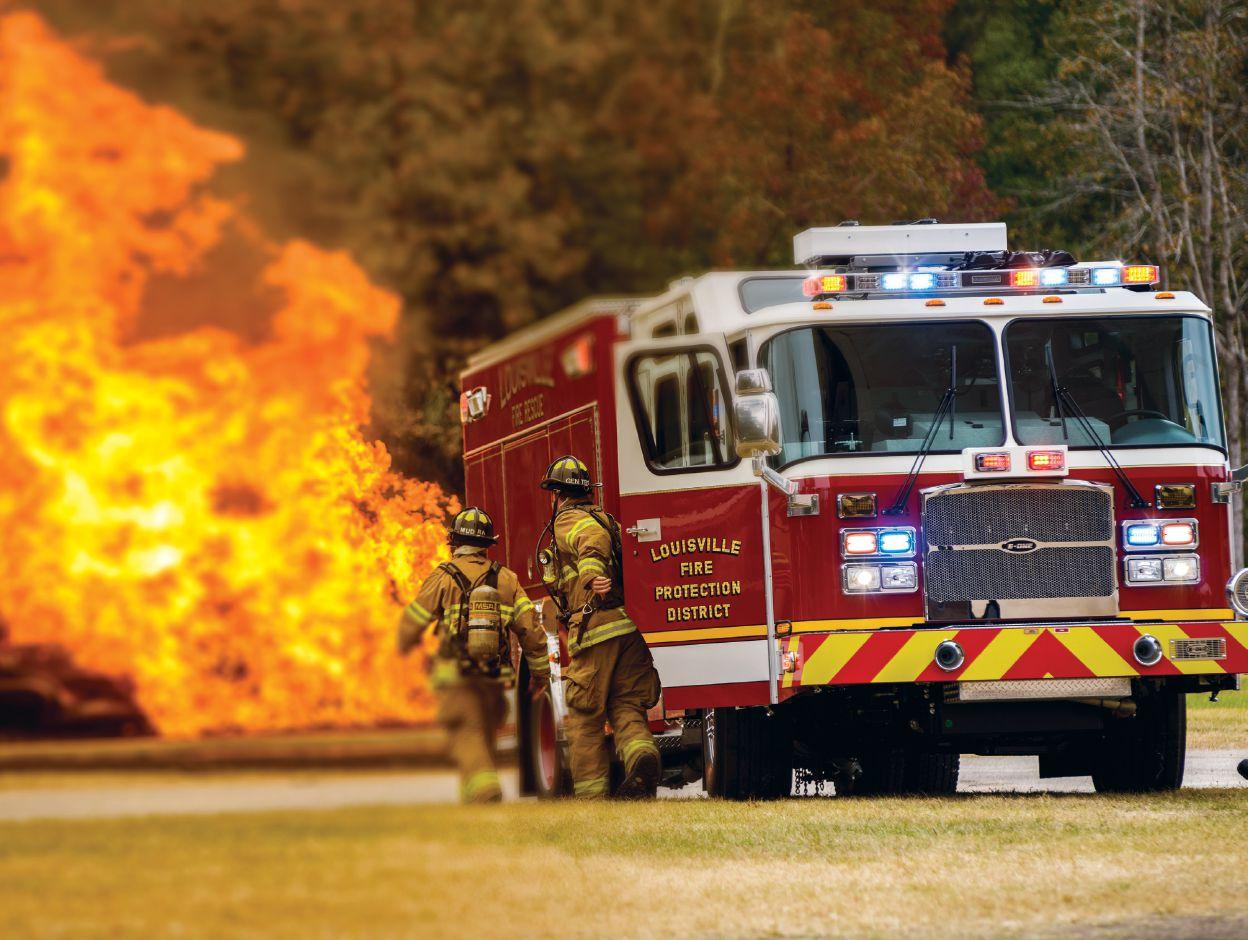

Our eMAX. Your crew. Fire is quickly reduced to ash.
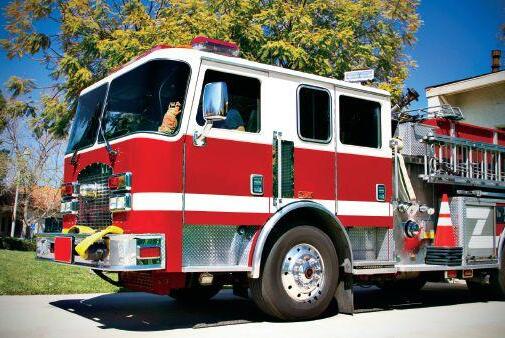
Our unique pump location and apparatus configuration offers low, pre-connected handlines for maximum accessibility, a shorter wheel base for maximum maneuverability and up to 586 cubic feet of storage space to maximize your fire and rescue equipment needs. Now available on custom and commercial cabs, our eMAX pumpers are designed to help you kick some serious ash.


eMAX Pumper
10
SITUATIONAL AWARENESS
Flawed situational awareness is a leading factor in first-responder close calls and casualties. As Richard Gasaway writes, the problem is complicated by the fact that most first responders know very little about situational awareness, how they develop it, how they lose it and how to get it back once it has been lost.
34 THE POLITICS OF FIRE/EMS
In the 20-plus years during which Ontario fire departments have provided formal tiered response, the EMS system has undergone significant change. As Rob Grimwood explains, the focus has shifted from patient care and first-responder training to the ownership of these calls and whether fire should respond.
42
ATTACK STRATEGY
Ryan Pennington has studied hoarding fires for two years and recommends that firefighters attack from the sides and use size-up skills to influence tactical decisions.
54
PATIO PROBLEMS
Fires that start outside, on patios or decks of multi-family buildings, take longer to detect, cause more damage, and require more resources to extinguish than other types of blazes, according to research by the University of the Fraser Valley. By Len Garis, Joe Clare and Karin Mark.
By L AURA K ING Editor lking@annexweb.com
W comment
Planes, training, and auto-ex
e were putting the final touches on this issue on Sunday, April 7, just before I left for Peace River, Alta., to cover, participate in, and present at the 2013 Northwest Fire Conference and training session.
It had been a newsy weekend for fire –not the kind we like. The funeral for four members of the Dunsmuir family killed in a house fire in East Gwillimbury, Ont., was on the Friday; a 53-year-old fire captain in Philadelphia was killed in a multi-alarm blaze at a retail/residential complex on the Saturday night.
While those tragedies made headlines, what struck me as I scrolled through Twitter dozens of times that weekend, was the volume of training happening in fire halls across North America.
If you follow Schreiner on Twitter (@comoxfire) you know that he is passionate about training and giving back. Indeed, Schreiner was the Canadian Association of Fire Chiefs career chief of the year in 2010, even before he started the stop-bad tour.
Watch for Schreiner in the fall issues of Fire Fighting in Canada
South of the border, Ryan Pennington (see page 42) was teaching a class on hoarding fires to 34 students at the Wyoming County Fire Department in Pineville, West Virginia – bizarrely, the department had a heavy contents fire that evening. That class brought the number of firefighters who had heard Pennington’s hoarding message to 299 in the first few months of 2013.
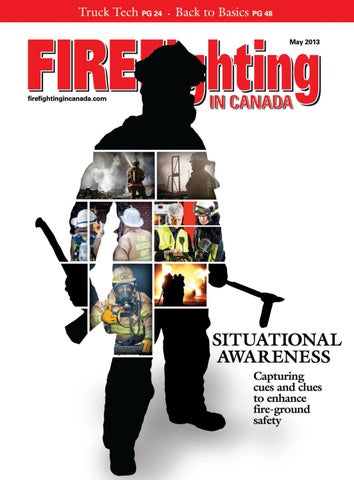
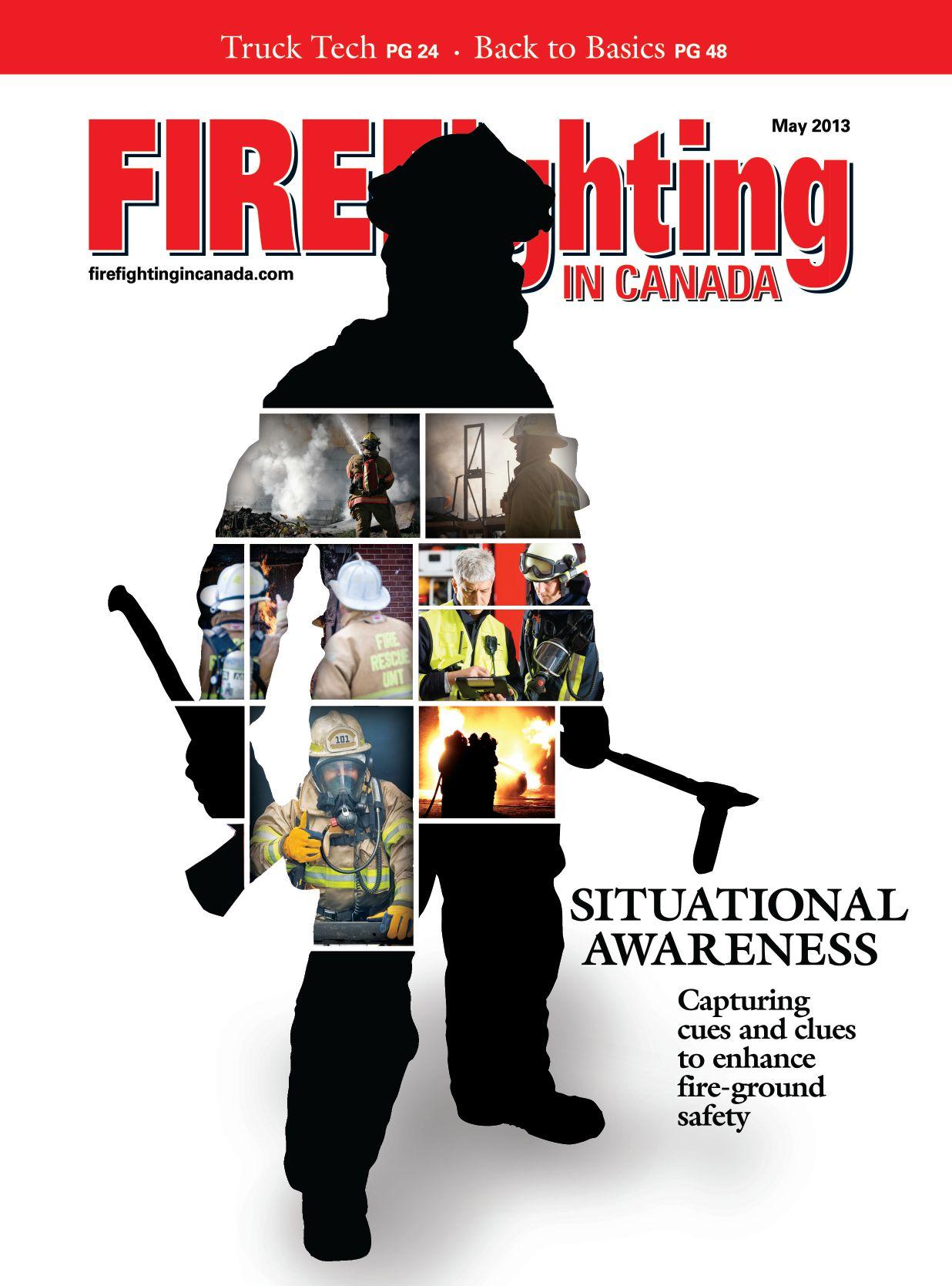
ON THE COvER
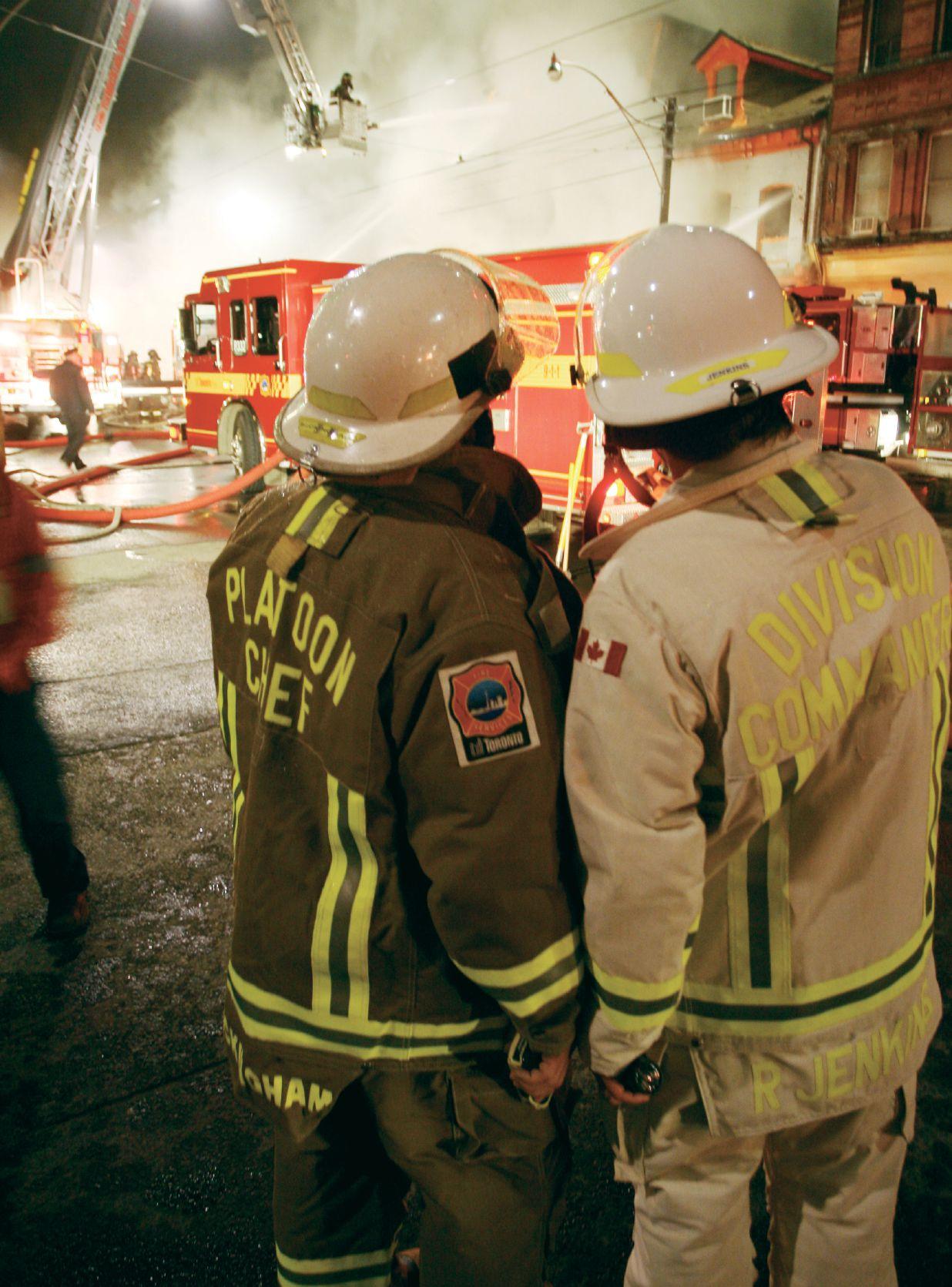
Understanding situational awareness is critical to good fire-ground management. See story page 10.
Gord Schreiner, the fire chief in Comox, B.C., was in Atlantic Canada that weekend doing his stop bad road show on safe and effective scene management for hundreds of mostly volunteer firefighters in Newfoundland, New Brunswick, Prince Edward Island and Nova Scotia.
In its first foray into regional training, the Maritime Fire Chiefs Association brought Schreiner to the east coast for a whirlwind of a week that started in Grand Falls-Windsor, N.L., and spanned seven stops in four provinces in 10 days.
Before 7 a.m. on the Sunday, Schreiner tweeted, “#stopbad Atlantic tour, five of 10 presentations done, 270 students. Halifax today. Safe n effective scene management is making a difference.”
As Schreiner told CBC Newfoundland and Labrador, his mission is to stop the bad things from happening on the fire ground.
And Rich Gasaway was in Indiana sharing his situational awareness message (see page 10) with firefighters there; the stop in Louisville was one of 56 in April and May. (Pennington and Gasaway will be at FDIC Atlantic in Wolfville, N.S., in June.)
Meantime, fire chiefs in Saskatchewan were in the midst of their annual conference that weekend, and FDIC in Indianapolis was just around the corner.
Back to Peace River. The four-day conference combined Drager’s Live Fire Training Tour (LiFTT) with classroom sessions (my How Tweet it is presentation on media coverage of Elliot Lake) and hands-on training, with Canadian Firefighter extrication writer Randy Schmitz, among others.
It was, I know, just one of many training sessions in Canadian fire halls that weekend. I’ll let you know how it went.
ESTABLISHED 1957
May 2013 VOL. 57 NO. 3
EDITOR LAURA KInG lking@annexweb.com 289-259-8077
ASSISTANT EDITOR OLIVIA D’ORAzIO odorazio@annexweb.com 905-713-4338
EDITOR EMERITUS DOn GLEnDInnInG
ADVERTISING MANAGER CATHERInE COnnOLLY cconnolly@annexweb.com 888-599-2228 ext. 253
SALES ASSISTANT BARB COMER bcomer@annexweb.com 519-429-5176 888-599-2228 ext. 235
MEDIA DESIGNER GERRY WIEBE gwiebe@annexweb.com
GROUP PUBLISHER MARTIn MCAnULTY fire@annexweb.com
PRESIDENT MIKE FREDERICKS mfredericks@annexweb.com
PUBLICATIOn MAIL AGREEMEnT #40065710 RETURn UnDELIVERABLE CAnADIAn ADDRESSES TO CIRCULATIOn DEPT.
P.O. Box 530, SIMCOE, On n3Y 4n5
e-mail: subscribe@firefightingincanada.ca Printed in Canada ISSn 0015–2595
CIRCULATION
e-mail: subscribe@firefightingincanada.ca
Tel: 866-790-6070 ext. 206
Fax: 877-624-1940
Mail: P.O. Box 530 Simcoe, On n3Y 4n5
SUBSCRIPTION RATES
Canada – 1 Year - $24.00
(with GST $25.20, with HST/QST $27.12) (GST - #867172652RT0001)
USA – 1 Year $40.00 USD
We acknowledge the financial support of the Government of Canada through the Canada Periodical Fund of the Department of Canadian Heritage.
Occasionally, Fire Fighting in Canada will mail information on behalf of industry-related groups whose products and services we believe may be of interest to you. If you prefer not to receive this information, please contact our circulation department in any of the four ways listed above.
no part of the editorial content of this publication may be reprinted without the publisher’s written permission ©2013 Annex Publishing and Printing Inc. All rights reserved. Opinions expressed in this magazine are not necessarily those of the editor or the publisher. no liability is assumed for errors or omissions.
All advertising is subject to the publisher’s approval. Such approval does not imply any endorsement of the products or services advertised. Publisher reserves the right to refuse advertising that does not meet the standards of the publication.
www.firefightingincanada.com



statIontostatIon
across canada: Regional news briefs
Essex Fire Department opens new energy-efficient station
The new, 1,007-square-metre (10,845-square-foot) fire station in Essex, Ont., was built with energy efficiency and environmental impact in mind.
The station, which cost $3.5 million to build, is located in the urban region of the town and houses 26 volunteer firefighters. It replaces the department’s old urban station, which was built in the 1920s.
“[The old station] served the community very well, but it was outdated,” explained Fire Chief Ed Pillon.
“[The new station] will allow the department to have a more efficient operation,” Pillon continued. “It will allow us to serve the community to the utmost with a good response, and public education and public safety being of the utmost importance.”
The station features myriad energy-efficient fixtures, including low-consumption water fixtures, high-efficiency
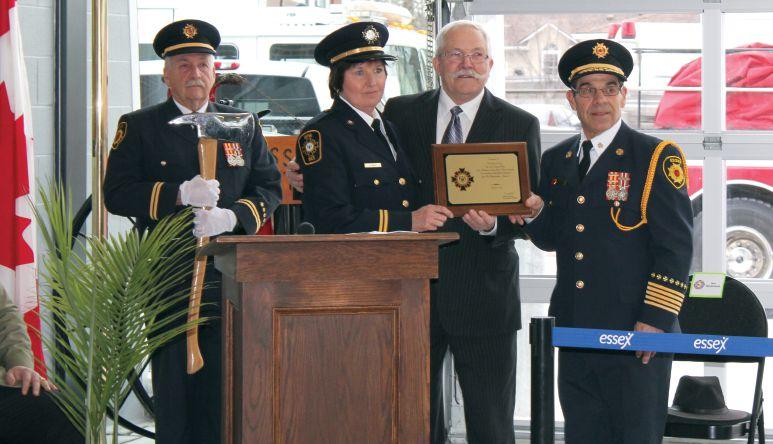
Nelly Green of the Ontario Office of the Fire Marshal (second from left) presents Essex Mayor Ron McDermott (second from right) and Fire Chief Ed Pillon (right) with a plaque recognizing the grand opening of the new Essex fire station on Feb. 21. Firefighter Randy Kaufmann (left) holds a ceremonial axe.
windows and rooftop units, energy-recovery ventilation units, and interior and exterior LED lights with motion sensors for a decreased environmental impact.
The new hall, which also houses the town’s EMS divi-
the brass pole:
sion, is completely accessible, and is sprinklered throughout. Its drive-through apparatus bay can fit four fire vehicles and two ambulance trucks.
The facility will also serve as the emergency operations centre for the municipality, as
it has the visual-aid and phone systems required to meet provincial demands.
“It will be a great benefit to the community,” Pillon said. “The municipality can be very proud.”
– Olivia D’Orazio
DARBy ALLEN has accepted the position of fire chief for the Regional Emergency Services in Wood Buffalo, Alta. Allen, who started his fire-service career in England in 1983, joined the Wood Buffalo department in 2009, after spending 15 years with the Calgary Fire Department.
BRIAN STAUTH has been appointed fire chief of the Medicine Hat Fire Services in Alberta. Stauth began his firefighting career as a volunteer in Bow Island, Alta., before joining the Medicine Hat department in 1994. He was promoted to deputy chief of administration in 2008, and deputy chief of operations in 2010.
TONy BAVOTA has been named fire chief for the Burlington Fire Department in
retirements
DANA PITTS retired March 15. Pitts, who was a deputy fire chief at the time of his retirement, spent all 35 years of his service with the Sarnia promotions & appointments
Ontario. Bavota, who has 18 years of experience in the fire service, has been a deputy chief since 2009. He succeeds Shayne Mintz, who left the department in April 2012 to become assistant deputy fire marshal.
Expo offers tips and expertise to firefighter hopefuls
Firefighter hopefuls should arrive early for interviews, dress properly, and be confident, according to fire officers who spoke at the 2013 Career Expo, hosted by Fire Fighting in Canada in Toronto on Feb. 23.
Chief Mike Figliola and Deputy Chief Dwayne MacIntosh of the Greater Toronto Airports Authority (GTAA) told participants that they look for future leaders when they interview firefighter candidates.
“There’s nothing better than finishing one interview early and opening the door and seeing that the next person is already there,” MacIntosh said. “Dress appropriately – no jeans . . . And be confident.”
“This is your opportunity,” Figliola added.
The expo was held at the
Fire and Emergency Services Training Institute (FESTI), which is the training centre for the GTAA’s Toronto Pearson Fire Department. Throughout the day, participants were offered tours of the FESTI building and grounds, including the burn tower, the confined-space rescue area, the hazmat training site and the auto extrication area.
Hosted by firefighter and BecomingAFirefighter.com
founder Kory Pearn, the event was the first of four expos scheduled for 2013; the second and third expos were held in April in Calgary and Edmonton. At the Toronto expo, more than 60 participants, at various levels of the recruitment process, were encouraged by speakers to learn everything they can about the fire departments
to which they want to apply, do practice interviews and be mentally and physically fit.
Pearn opened the sold-out event with an overview of the firefighter recruitment process, from the necessary qualifications to how to stand out from other candidates. Pearn tackled topics such as career changes – candidates with work experience often have a broader scope of useful skills – and whether or not age is a factor in the hiring
process (it’s not, he said).
The day wrapped up with a panel discussion that gave participants a chance to ask questions of Pearn, the chiefs and firefighters.
For more information on the fourth firefighter career expo in Wolfville, N.S., in June, or to view the photo gallery from the Toronto event, visit www.
firefightingincanada.com
– Olivia D’Orazio
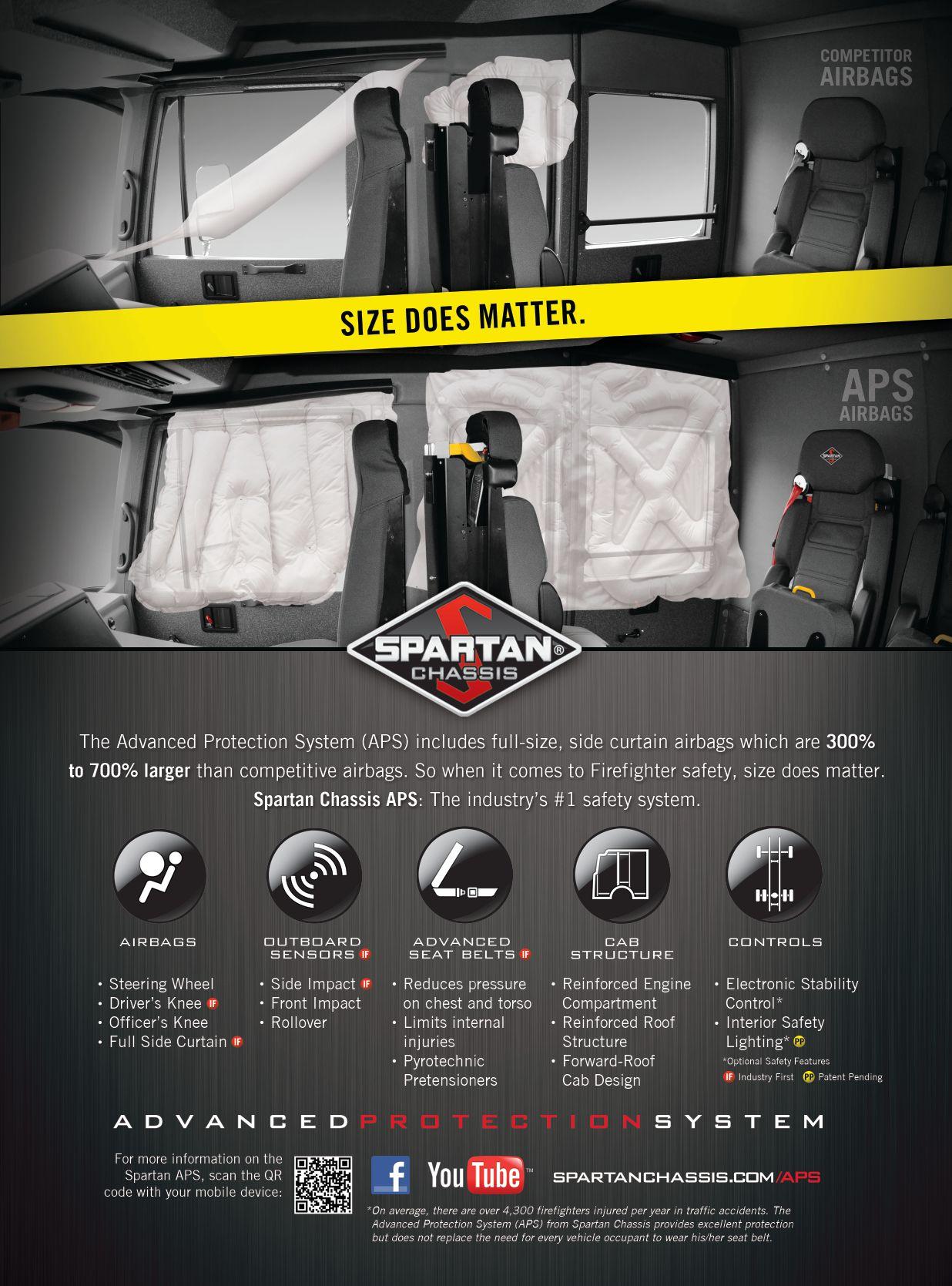
Dependable’s Pino Natale earns Spartan honour
Canadian fire-truck builder Pino Natale of Dependable Emergency Vehicles has been named Spartan Emergency Response Vehicles’ 2012 salesperson of the year.
Dependable is the largest Spartan dealer in Canada, representing about two-thirds of the country.
“Pino Natale’s attention
to detail is something we have all taken notice of at Spartan ERV,” Dennis Schneider, the company’s president, said in a press release.
A volunteer firefighter for the past 12 years, Natale says he applies his experiences in the hall to the design of trucks for his clients.
“Extensive training and constant fire-industry exposure has helped me to better understand and meet the needs of our potential and current customers,” Natale said.
In 2012, Natale sold 42 Spartan units, including five to the Bruce Power nuclear generator in Tiverton, Ont.
Bruce Power Fire Chief Brian Cumming says his experience with Natale is always positive.
“I’ve worked with Pino for many years and I’ve watched him go to where he worked on the shop floor to his current position,” he said.
“He’s very understanding and he goes to great lengths to help the customer.”
Fire Rescue Services in Ontario. He joined the department in 1977 and was appointed deputy chief in 2006.
last alarm
JOHN MAVITy died Jan. 30 after a brave battle with cancer.
Mavity, 57, was a firefighter with the Stratford Fire Department in Ontario for more than 27 years, rising to the rank of lieutenant. His death is considered a line-ofduty death.
LEO AMO JR., a retired lieutenant with the Gananoque Fire Service in Ontario, died Dec. 21. Amo joined the Gananoque department in 1960, and spent all 38 years of his service there. He retired in January 1998.
GARy REID died suddenly on Feb. 17. Reid was a captain with Howe Island Fire and Rescue in Ontario, a position he held for many years.
RICHARD FREEMAN, a volunteer lieutenant with the
Pleasantville and District Fire Department in nova Scotia, died Oct. 25 after a brave battle with cancer. Freeman, 59, served 30 years with the Pleasantville department and rose through the ranks to safety officer, captain and lieutenant.
TOM KERR, a retired fire chief, died Jan. 16. Kerr, 85, joined the Weyburn Fire
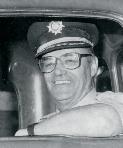
Department in Saskatchewan in 1956 and was appointed fire chief in 1959. He retired in June 1988 after 32 years of service.
JACK CRONK died suddenly on Feb. 17. Cronk, 67, served with the Township of Stone Mills Fire Department in Enterprise, Ont., for 27 years, as a firefighter, captain and chief fire prevention officer. He was also a past president of the Kingston, Frontenac, Lennox and Addington MutualAid Association.
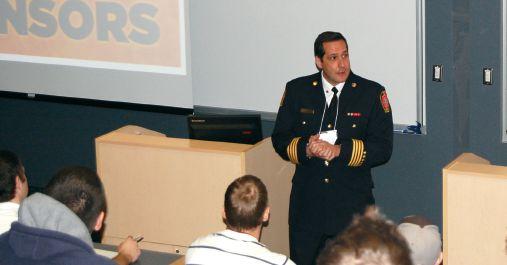
Dwayne MacIntosh, deputy fire chief for the Greater Toronto Airports Authority, welcomes participants to the Toronto career expo on Feb. 23.
br I gade ne W s: From stations across Canada statIontostatIon

The yELLOWHEAD FIRE DEPARTMENT in Alberta, under Chief Cory Chegwyn, took delivery in November of a Hub Fire Engines & Apparatus-built bush truck. Built on a Ford F550 crew cab chassis, and powered by a six-speed automatic transmission and a 6.7-litre diesel engine, the truck is equipped with a CET Wild CAFS system, a 250-gallon co-poly water tank, a Warn grill guard and an M12000 winch.
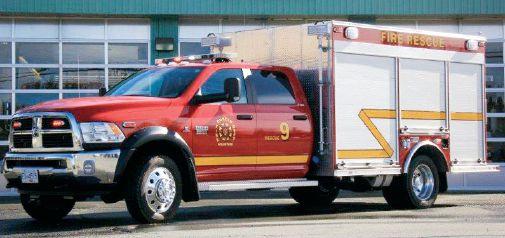
The DUNCAN FIRE DEPARTMENT in British Columbia, under Chief Mick McKinlay, took delivery in February of a Fort Garry Fire Trucks-built rescue truck. Built on a Dodge Ram 5500 chassis, and powered by a six-speed automatic transmission and a Cummins 6.7-litre diesel engine, the truck is equipped with Holmatro hydraulic core connections, a 95000Ti Warn winch and FRC Spectra LED floodlights.
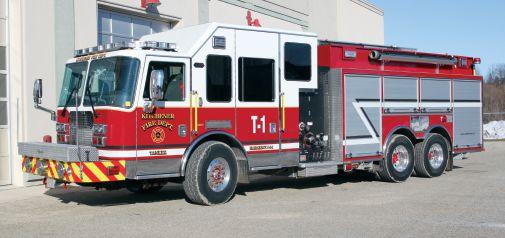
The KITCHENER FIRE DEPARTMENT in Ontario, under Chief Tim Beckett, took delivery in March of a KME-built tanker from Metz Fire & Rescue. Built on a Predator chassis, and powered by an Allison 3000 EVS transmission and a MaxxForce 450-hp engine, the truck is equipped with a Hale Q-Flo Plus 1,050-gpm pump, a FoamPro 2002 foam system and a 2,500-gallon UPF water tank.
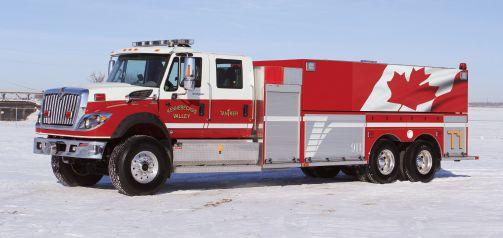
The KENNEBECASIS VALLEy FIRE DEPARTMENT in New Brunswick, under Deputy Chief Dan McCoy, took delivery in March of a Fort Garry Fire Trucks-built tanker. Built on an International 7600 chassis, and powered by an Allison 4000 EVS transmission and a MaxxForce 410-hp engine, the truck is equipped with a Hale Q-Pak 1000 pump, a 2,450-gallon pro-poly water tank, a Federal Q2B siren, rear and side cameras, an internal ladder and portable tank storage.
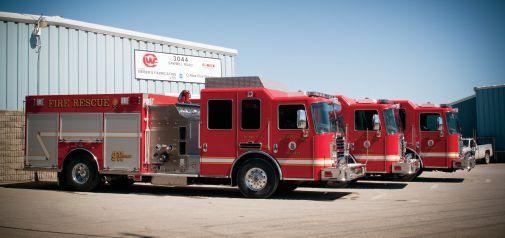
The HALDIMAND COUNTy FIRE DEPARTMENT in Ontario, under Chief Rob Grimwood, took delivery in April of a KME-built pumper from Metz Fire & Rescue. Built on a Panther 100 MFD chassis, and powered by an Allison 3000 EVS transmission and a Cummins ISL 400-hp engine, the truck is equipped with a Hale Q-Max 1,500-gpm pump, a 1,000-gallon UPF water tank, an Onan 6,000-watt generator and a Command Light KL450 light tower.
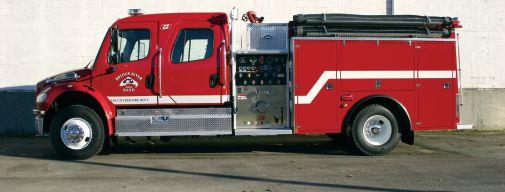
The BRIDGE RIVER BAND VOLUNTEER FIRE DEPARTMENT in British Columbia, under Chief Terry Clifford, took delivery in March of a Hub Fire Engines & Equipment-built pumper. Built on a Freightliner M2 chassis, and powered by an Allison 3000 EVS transmission and a Cummins ISC 300-hp engine, the truck is equipped with a Hale Q-Pak 840-gpm pump, a FoamPro 1600 foam system, a 700-gallon co-poly water tank, a Whelen LED light package, a Honda EU3000 generator and Extendalite push up lights.







sItuatIonal

aWareness
Capturing cues and clues to enhance fire-ground safety
By RiChaRd Gasaway
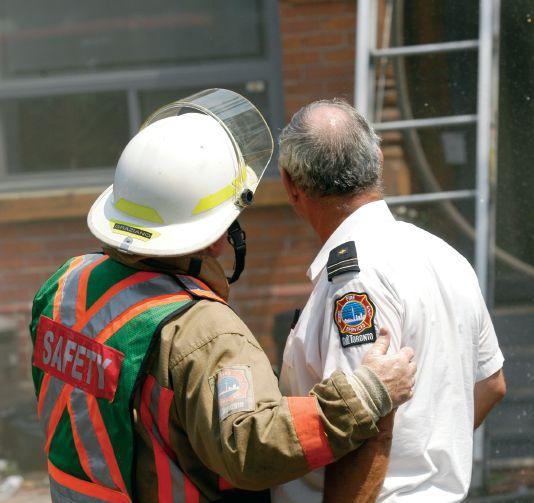
Situational awareness is the ability of first responders to capture cues and clues from what is happening around them, then being able to put those clues and cues together to mean something, and predicting future events as a result of what has been captured and the meaning given to it. Many first responders struggle to explain what situational awareness is, how situational awareness is lost and what can be done to keep it intact.
flawed situational awareness is one of the leading contributing factors in first-responder close calls and casualties. Complicating this problem is the fact that most first responders know very little about situational awareness, how they develop it, how they lose it and how to get it back once they have lost it.
Basic first-responder training programs – for that matter, most officer training programs – do not teach situational awareness (SA). The programs that do address SA typically dedicate only a small amount of time to it, and most instructors are underprepared to speak to the complexities of the topic.
The situational awareness-related issues cited in casualty reports often include inadequate initial and ongoing size-ups, failure to continuously evaluate risks versus benefits during the entire operation, ineffective communication of incident conditions, and failure to recognize hazards.
When asked, many first responders struggle to explain what it means to have SA. Even worse, many responders struggle to explain how SA is lost and what can be done to keep it intact. In general, there is a lack of awareness . . . about awareness. How ironic.
Let’s start by discussing what SA is. After that, you’ll be in a better position to understand how situational awareness can be established, maintained, impacted, lost, and regained. I have heard several people offer simplistic definitions of situational awareness, which in some ways, capture the essence of the concept, yet do not do it justice. For example, I have heard SA described as paying attention, or where perception and reality meet. I can’t argue with those definitions, but what do they really mean? To help you understand situational awareness in a meaningful way, I turn to the work of Dr. Mica Endsley, the founder and president of SA Technologies (www.satechnologies.com). Endsley has written more than 200 academic articles and several textbooks on issues related to situational awareness. Endsley defines situational awareness as a perception of elements in the environment within a volume of time and space, the comprehension of their meaning, and the projection of their status into the near future.
Situational awareness the ability of first responders to capture cues and clues (think of gathering up jigsaw puzzle pieces) from what is happening around them, then being able to put those clues and cues together to mean something (think of assembling some of the puzzle pieces to start forming a picture), and being able to predict future events as a result of what has been captured and the meaning given to it (think of looking at a partially completed jigsaw puzzle and making predictions about what the completed picture will look like).
Endsley’s research discovered that there are three levels of situation awareness. Level 1 is the perception phase – responders capture the cues and clues. Level 2 is the comprehension phase –responders put those cues and clues together to mean something. Level 3 is the projection phase – responders predict future events based on the picture formed in levels 1 and 2.
It is important to understand these steps; for example, failing to
Photos by John r iddell
capture the right cues and clues will impact your ability to grasp what is happening and this, in turn, will impact your ability to predict what is going to happen next. Chances are pretty good that you have read an after-action report or watched a fire scene video in which something went wrong and said to yourself, “How could they not see this coming?” or perhaps you thought to yourself, “That could never happen to me.”
remember only seven (+/- two) unrelated pieces of information. Stress may reduce that number to five.
For more information, call your local Globe dealer or Safedesign.
British c olum B ia and a l B erta Guillevin
Coquitlam, British Columbia 800-667-3362
Calgary, Alberta 800-661-9227
Campbell River, British Columbia 250-287-2186
Edmonton, Alberta 800-222-6473
Fort St. John, British Columbia 250-785-3375
Kamloops, British Columbia 250-374-0044
Prince George, British Columbia 250-960-4300
Trail, British Columbia 250-364-2526
Que B ec H.Q. Distribution
LaSalle, Quebec 800-905-0821
Boivin & Gauvin
Saint-Laurent, Quebec 418-872-6552
a tlantic Provinces K&D Pratt Ltd.
St. John’s, Newfoundland 800-563-9595
Dartmouth, Nova Scotia 800-567-1955
m anito B a and s askatchewan Trak Ventures
204-724-2281
877-253-9122 www.safedesign.com
First of all, it is easy to read casualty reports or watch incident videos and become angry because what you see coming may appear to be obvious. Well, it wasn’t obvious to the responders operating at the incident at which something was about to go wrong. Keep in mind that no responders ever go to an incident thinking, “I’m going to lose my situational awareness on this call, make some bad decisions, and jeopardize my safety and the safety of other firefighters.” Yet it happens – a lot!
Most of the time the responders don’t see the problem coming until it’s too late. Maybe at the moment when the tragedy occurred they were doing the same thing, the same way they had done it for years. And because they had never experienced even so much as a minor close-call event, they didn’t see anything wrong with what they were doing. Maybe the responders thought they had good situational awareness. Then, it happened . . . a catastrophic casualty. The loss of situational awareness can afflict any first responder and impact decision making, and there may be no warning signs at all.
Issues relating to flawed SA and its impact on decision making have been studied in a number of professions in which decisions are made in dynamic, fast-paced, ever-changing, high-risk environments. Extensive research has been done to understand SA among military battleground commanders, airline pilots (especially when something has gone wrong and the flight is in jeopardy), and surgical teams. From this research has come some very important lessons from which first responders can learn. These include:
• A responder with poor SA can still make a good decision, if only by luck.
• A decision made with good SA can still have a bad outcome.
• Maintaining SA requires a physical, mental and emotional commitment to paying attention.
• What to pay attention to is not always obvious.
• A first responder’s attention is drawn away by things that are loud, bright, moving, or in close proximity to the responder (moving toward him or her).
• Responders rarely realize they are losing their SA until it is too late.
• Responders (in fact, all humans) can
Unfortunately, most first responders simply do not know what they need to know about SA, how it is developed, how it is maintained, how it is lost, or how to get it back once it is lost. That was the position I was in just seven years ago. Then, in 2004, I went back to school to earn a doctor of philosophy degree. In that journey, I was provided with a wonderful opportunity to conduct original research on first-responder SA and high-stress, high-consequence decision making. I was stunned to learn what I didn’t know about these topics after serving as a firefighter, company officer and fire chief for 25 years.
I was also frustrated and angry because no one had ever taught me these important lessons. I couldn’t understand how I didn’t know this stuff already. I had taken no less than a dozen strategy and tactics, incident command, and officer-development classes throughout my career. Yet here I was, seeing for the first time that some important lessons had evaded me. It was a sobering experience.
BARRIERS
The purpose of my research was to answer a very simple, yet perplexing, question. For many years I had read casualty reports and close-call reports. While doing so, I kept asking how responders could not have seen the problem coming? There seemed to be so many clues, signs, symptoms and indicators that the incident was going to end in a disaster. It was as if the responders were blind and, in some cases, deaf to the things happening around them.
Early on, when I would come across these cases, I would find myself passing judgment on those operating at the incident. I found myself making up excuses for them – lack of training, lack of experience, lack of staffing, lack of equipment, incompetency, etc. It got so that I was pretty good at categorizing each incident into a convenient, easily justifiable category. But it still did not answer the question: How could they not see it coming?
So that was among the questions my research would seek to understand. In the process, I uncovered barriers to situational awareness. Simply stated, a barrier is something that prevents the formation of SA, causes SA to erode or prevents eroded SA from re-forming once it has been lost. When I started on this journey, I had no idea how many barriers there would be. I thought there might be 15 or 20.
Boy, was I wrong. Twenty turned to 40, then 60, then 80, then 100. When I was finished, there were 116 barriers on the list.
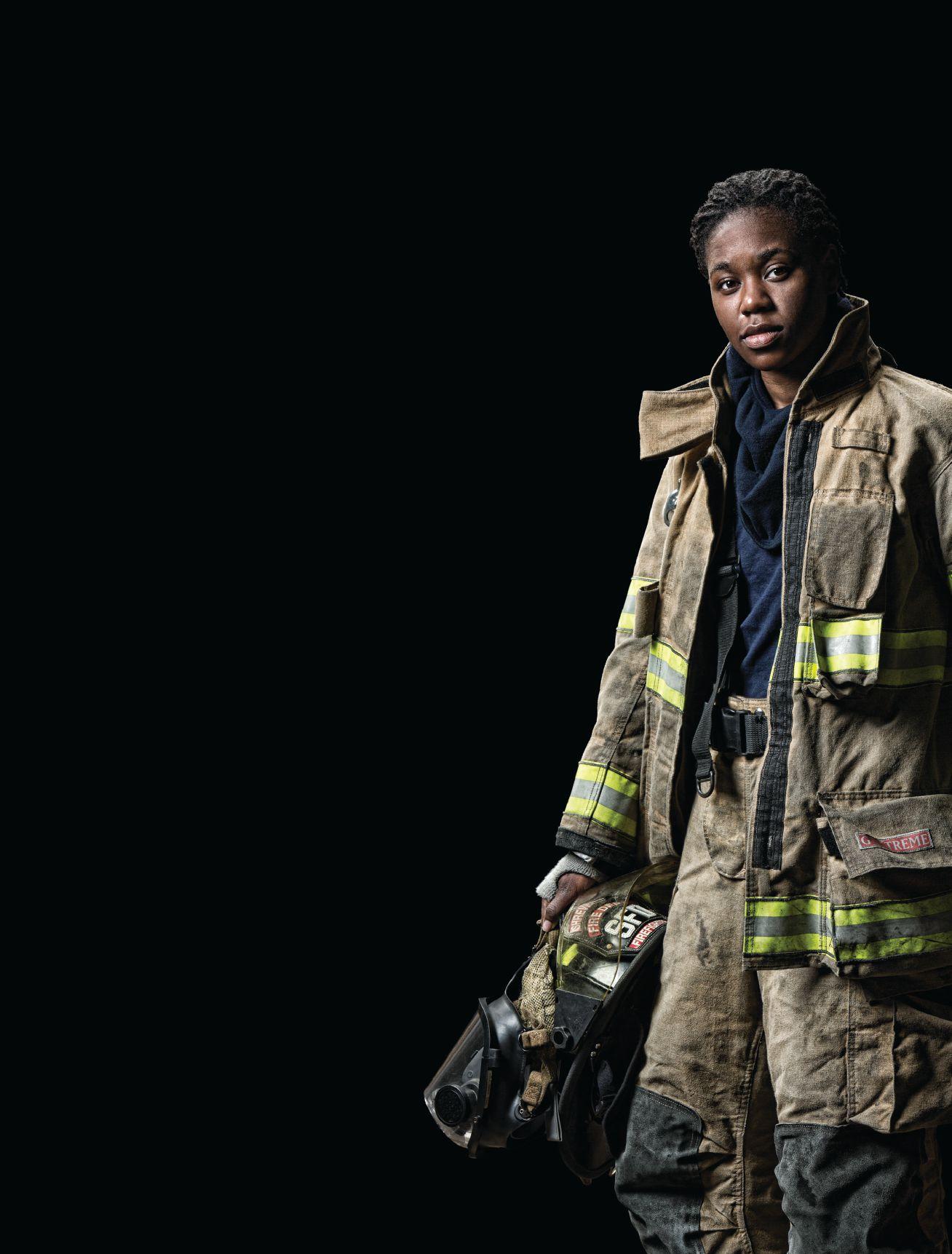


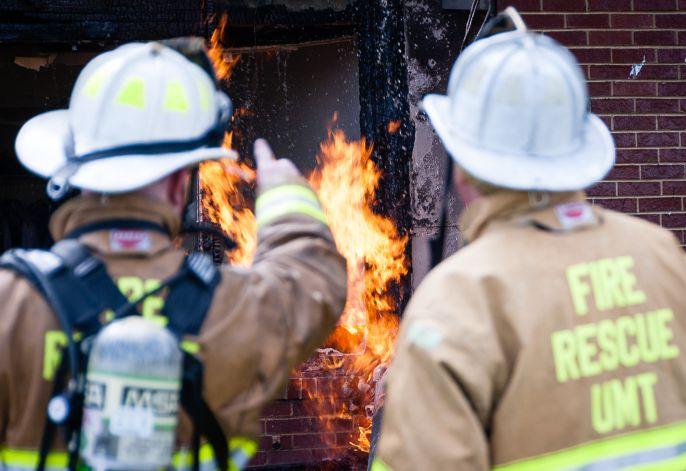
I was stunned. With so many ways our SA could be impacted, how could we ever get it right? It was at that moment I had an epiphany: after 25 years in the fire service and with more than 20 years’ experience as a company officer and incident commander, I realized I had not been a good company officer and fire-ground commander – I had been a lucky company officer and fire-ground commander. When it came to understanding the barriers to situational awareness, I had been the incompetent one. It scared me.
Through an exhaustive search of the literature, coupled with interviews conducted with expert-level fire-ground commanders, I have amassed this extensive list of SA barriers. As I assembled this list, similar barriers were grouped together, resulting in 12 categories of SA barriers:
1. Staffing;
2. Communications;
3. Data/information management;
4. Physical and mental stress;
5. Workload management;
6. Attention management;
7. Mission/goals;
8. Mental models;
9. Human factors;
10. Command location;
11. Command support;
12. Team/crew performance.
Each of these categories contains a list of barriers. For example, in the staffing category, there are potential barriers to responder SA that can arise from understaffing, overstaffing, unpredictable staffing, quality of staffing, response-time delays, lack of experience, and inadequately trained personnel.
In the communications category, there are potential barriers to responder SA from issues with verbal and non-verbal communication, progress/update reports, misinterpreted words or phrases, an incomplete
communications loop, missed radio communications, radio equipment problems, non-compatible radio equipment, use of multiple radio channels, too much radio traffic, and crews unwilling or unable to communicate by radio.
As you can see, the list of potential SA barriers is rather extensive. While there is not enough space to list and discuss each of them here, I will share the most important lessons I learned from my interviews with first responders about how their SA was impacted.
The decisions made by first responders impact the safety of fellow responders as well as the outcome of the event. But responders are human and, thus, are subject to limitations and errors. The fire ground is a dynamic, complex decision-making environment that is critically dependent on forming and maintaining strong SA.
There seem to be several identifiable factors that impact responder situational awareness.
• The first factor is incomplete size-ups and, more specifically, failing to read the smoke and fire conditions, failing to assess building construction and the deterioration of the component of construction, and failing to conduct a realistic assessment of savable lives (or what some might call completing a survivability profile).
• Second, responders are underestimating the speed at which the incident is progressing. This can cause a responder to get behind in the incident and apply strategies and tactics that are not appropriate because the incident has progressed beyond their plan.
• Third, responders are overestimating their own abilities as well as the abilities of their fellow crew members. This is happening for several reasons,
including not having enough personnel assembled to get the job done, and the assemblage of personnel who lack the training or experience to be efficient and effective at the assignments they are given.
• Fourth, responders are stressed from a sense of obligation to be tactically aggressive. This pressure may come from the organization’s culture or from upset customers who have unrealistic expectations of what the fire department could or should be doing to mitigate their emergency. This can lead to pressure to perform heroically and cause responders to take excessive risks, despite a high level of awareness of the dangers present in the situation.
• Last, responders struggle because they are focused on the wrong things, or they try to split their attention among too many tasks. This is a big mistake. The human brain cannot multi-task when it comes to paying attention. Some responders think they’re good at multi-tasking when, in fact, they are not multi-tasking at all. They can give their attention to only one task at a time. Think of it this way: on your personal computer, open up an e-mail window and a word processing document. Now, multi-task by typing an e-mail and a sentence on the document at the same time. It can’t be done. You can go from one to the other and back but it simply is not possible to complete both tasks at the same time. The same is true for paying attention. You alternate your attention between tasks – back and forth – but you cannot multi-task. The brain cannot do it.
BEST PRACTICES
The research I conducted identified an extensive list of best practices to help first responders develop and maintain situation awareness. Here are 10 of those best practices.
1. Responders must capture and process critical cues and clues to predict future events
As a responder conducts a size-up (e.g., at a residential dwelling fire) there are dozens, perhaps hundreds, of cues and clues that can indicate what is happening and help responders make accurate predictions about future events. Based on the findings in the literature and the input from experts who participated in my research, the most pertinent cues and clues at a residential dwelling fire may include:
• An evaluation of smoke and fire conditions;
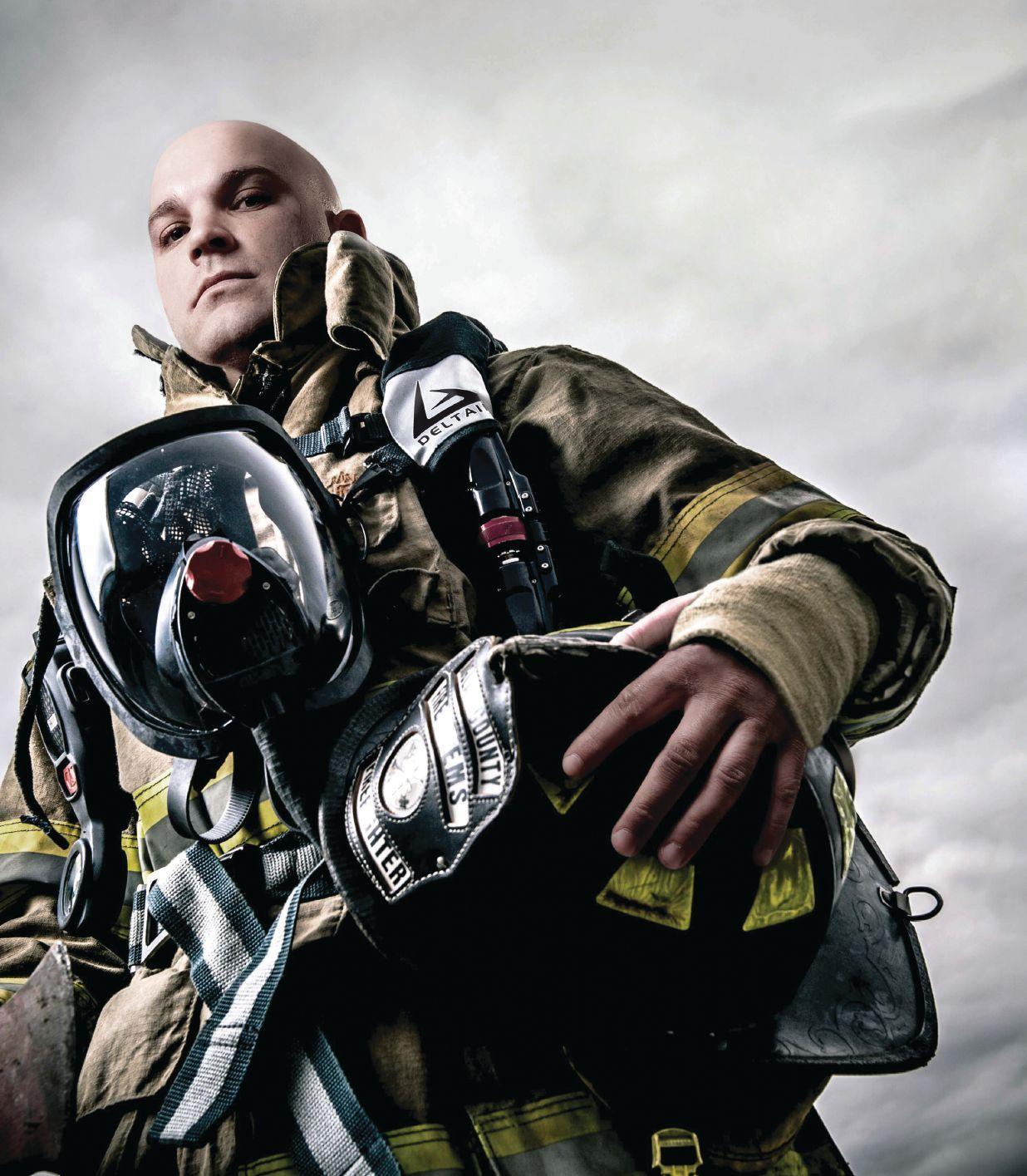

Barriers to situational awareness include staffing, communications, physical and mental stress, workload management and others.




Introducing Deltair SCBA for Firefighters from Avon Protection
Trust the SCBA that delivers an unprecedented level of reliability, durability, and ease of use to America’s firefighters. Deltair represents the first truly innovative breathing system in decades, from the recognized global market leader in respiratory protection systems technology. Deltair is the result of thousands of hours of field research with firefighters throughout the country, and exceeds all new industry standards.

Single-source 6 C-Cell battery pack enables and extends power management for the entire SCBA electronics system.
Voice amplification system maximizes speech clarity while reducing breathing noise.
Optically correct double curve visor provides the best field of view of any firefighting mask.

Integrated AirSwitch™ technology allows you to alternate between fresh air and cylinder, extending your service time.
With



• Consideration of the construction and level of decomposition of the structure;
• The speed at which the incident is moving;
• A realistic assessment of savable lives in the IDLH environment.
2. Responders should set the strategy and tactics based on available resources
Staffing issues were significant factors that caused responders concern and potentially impacted their SA. The expert responders I interviewed recommended conducting continual assessments of the scene until sufficient staffing (e.g., based on quantity, quality, training and experience) arrives on the scene. The experts cautioned against setting a strategy and committing to tactics until the proper quantity and quality of personnel are present to accomplish the tasks.
3. Responders should develop and maintain a big-picture focus of the incident scene
Repeatedly, the expert responders I interviewed noted that they were impacted when their attention was narrowed because they focused on one area of an incident scene, or on one task being performed. The experts recommended developing and maintaining a big-picture focus on the incident by developing meta-awareness, a conscious awareness of the larger incident scene and purposeful avoidance of narrowing attention to one task or one area of the scene.
4. The person in charge (i.e., incident commander) should not perform hands-on duties
The expert incident commanders I interviewed frequently noted that among the most insidious ways their awareness is impacted
is when they performed hands-on fire-ground duties and, consequently, this caused them to overlook critical cues and clues and lose track of the speed at which the incident was changing. Expert commanders recommended displaying self-restraint by avoiding the temptation to be drawn into performing non-command tasks (i.e., pulling/advancing hose lines, setting fans or ladders, connecting hose to a fire hydrant, or serving as the pump operator).
5. Responders cannot listen to and comprehend multiple conversations simultaneously
The responders I interviewed described multiple scenarios during which their SA had been impacted because they missed important radio messages from commanders or other responders operating on the emergency scene. This was especially problematic when the radio messages were transmitted from crews operating in hazardous environments. Responders rightfully noted that it was almost impossible to listen to and comprehend simultaneous messages, be they from multiple radio channels or during face-to-face communications. The experts recommended giving priority attention to the radio messages of responders operating in hazardous environments. This may be facilitated by operating on a single operational channel or by assigning someone to monitor radio traffic of crews operating in hazardous environments.
6. The incident commander should be far enough back from the incident to see the big picture
The expert commanders I interviewed were split in their opinions on the best place to run command. Some said they preferred to be outside a vehicle, in the front yard or standing on the street where, they noted, they benefited from being able to use all of their senses to capture cues and clues on the scene. Other incident

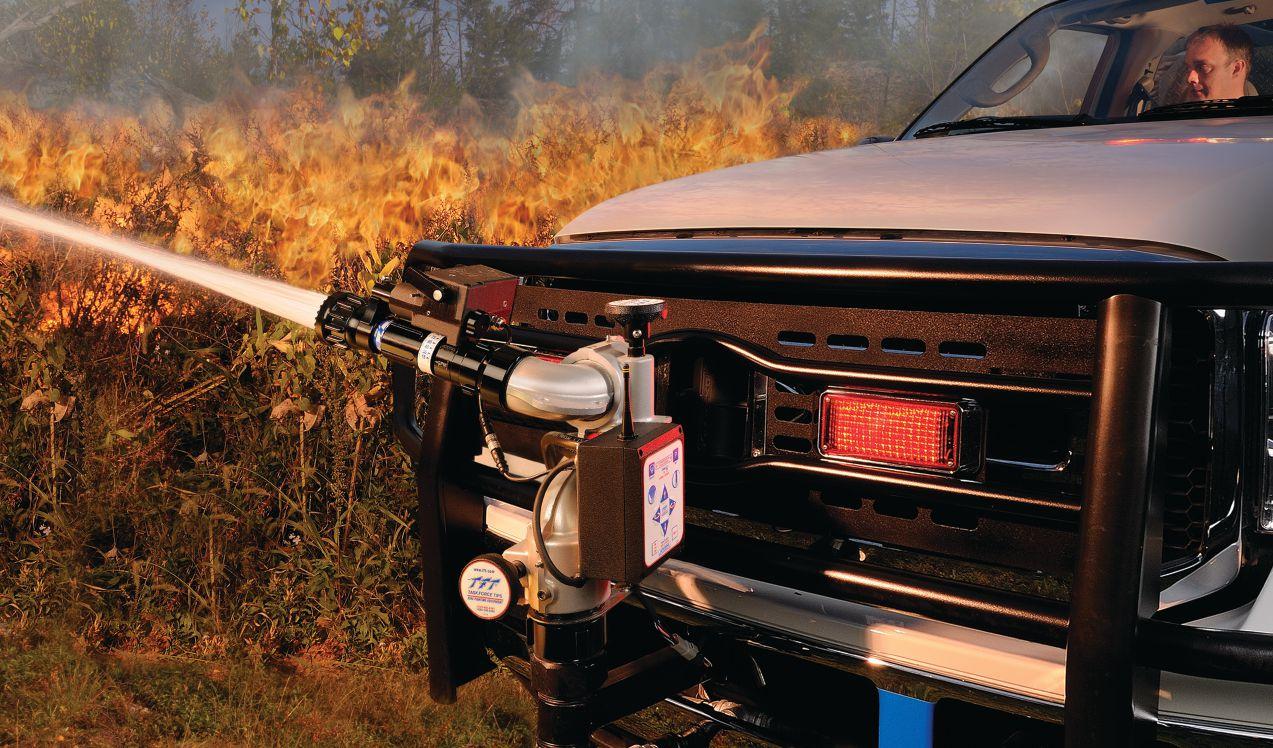
Attack Wildfires from the Safety of Your Cab…
The remotely controlled Tornado Monitor from Task Force Tips lets your crew manage initial attack operations while never leaving the protection of the fire apparatus cab.
The Tornado integrates a handheld joy stick monitor and valve controller, quick connect fittings, and exclusive water saving Smart Stream nozzle technology.
To learn more about how you can provide maximum performance and safety to limited staff during wildfire operations, contact your local TFT dealer today
commanders said they preferred to be located in a vehicle where they described the environment as calmly and free of distractions and interruptions as possible. The one universal recommendation from all the commanders, regardless of where their command location started, was that when the incident became complex or they were being overwhelmed, they preferred to be remotely located. Every commander interviewed said that under extremely stressful conditions, he or she had retreated to the sanctity of a vehicle (or other remote location). The commanders also stressed the importance of completing a thorough size-up including a 360 walk-around prior to assuming a position that is physically out of the action.
7. Responders should take steps to control distractions and interruptions
Responders spoke frequently about how distractions and interruptions impact their SA. Commanders of residential dwelling fires noted that police officers, occupants, neighbours, bystanders, utility company workers and other firefighters offering unsolicited advice were among the culprits that distracted their attention away from the big picture. Responders are also distracted by noises (e.g., sirens, air horns, engines, tools, screaming and yelling). The experts recommend a degree of self-discipline to stay on task, and a willingness to tell those wishing to speak face to face to refrain from interrupting the responder who is listening to radio traffic from personnel who may be operating in high-hazard environments. For incident commanders, the experts recommended being located out of sight of those who might distract their attention.
8. Responders (including commanders) should manage their span of control
The experts noted that it was easy to become overwhelmed if they had to perform too many command roles, process too much information, listen to multiple radio channels, and/or complete a size-up while focusing on the safety of the personnel deploying in the fire fight. The experts said that assigning subordinate command duties (e.g., safety, staging and operations) was essential to keep the incident commander from being overloaded. The experts spoke favourably of assigning a person to serve as an aide, noting the aide can free the incident commander’s mental capacity to concentrate on the most important aspects of the fire-ground operations. The experts also noted that the presence of a senior advisor to help the incident commander with the delegation of duties was very beneficial. The
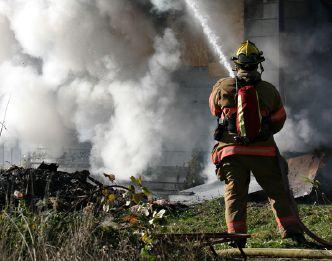
Experts say the reduction in actual fires impacts the ability of responders to develop and maintain skills. This is why it is so important to conduct realistic training scenarios, which help responders develop the ability to make good decisions under stress.
experts felt that the use of a unified command, where ranking officers from all agencies involved are physically located together, facilitated an efficient distribution of duties and a sharing of knowledge that enhances commander SA.
9. The incident commander must establish and maintain a strong command presence
The experts noted it was important to establish a strong command presence by displaying confidence and focused leadership at the incident scene. The experts also said that in order to accomplish this, it was essential to display emotional self-control (e.g., controlling excitement, frustration, anger, etc.), especially during the most stressful periods of an incident. The experts noted their behavior and demeanour oftentimes sets up the incident for success or failure because crews react based on the behaviour and demeanour of the commander.
The experts also noted that it was very important to control the action of crews, ensuring that personnel do not engage in independent goal setting (freelancing) and that commanders know where personnel are operating and what they are doing at all times. The experts also said it is very important to be clear, concise, articulate and confident when giving orders. Furthermore, they were strong advocates of the need to
be consciously aware of the passage of time on the emergency scene, noting the commander may be the only one with access to a watch or clock to mark and keep track of time.
10.
Responders should accelerate their expertise
The experts spoke openly about a general reduction in the number of residential dwelling fires over the past 20 years. The reduction in actual fires impacts the ability of responders to develop and maintain skills. The experts said this is why it is so important to conduct realistic training, noting that challenging real-life training scenarios help to develop responder skills and enhance a responder’s ability to make good decisions under stress. They strongly recommended the use of simulations, as well as using case studies and watching video clips of fire incidents, which are readily available on the Internet. They were also strong advocates of using close-call reports to accelerate learning based on the mistakes of others. They also spoke favourably of the valuable lessons that can be learned from line-of-duty death investigation reports. Performing post-incident evaluations after each emergency was another way the experts recommended to identify potential issues and to reinforce the application of best practices. Finally, the experts recommended that developing supervisors and incident commanders be paired with mentors who can provide coaching and feedback so the novice supervisor/commander can learn from mistakes, even if the outcome of the error was not a close-call or casualty incident.
In high-stress emergency settings, failing to capture critical incident cues and clues, failing to comprehend those cues and clues as meaningful, and failing to use that meaning to project future events, is the recipe for close-call and catastrophic events on the fire ground. The foundation for good decision making lies in the ability to develop and maintain strong situational awareness, so you can see the bad things coming in time to change the outcome.
Dr. Richard B. Gasaway joined the fire service in 1979 and has worked for six emergency services agencies including serving as a career fire chief for 20 years. Chief Gasaway’s doctoral research is focused on the neuroscience of decision making under stress and the barriers that impact situational awareness. Chief Gasaway has authored four books on the topic: Situational Awareness Volumes 1 & 2, Situational Awareness for Emergency Response, and Fireground Command Decision Making. He has also created three DVD series to improve first-responder safety: Mental Management of Emergencies: Improving situational awareness and decision making under stress, Fifty Ways to Kill a First Responder: Understanding 50 barriers that impact situational awareness, and Training for Failure: Why some first responder training must change. Contact Gasaway at rich@richgasaway.com and follow him on Twitter at @SAMatters
TRAINER’Scorner
The importance of initial reports
By ED BROUWER
during our department’s rookie training, I was scheduled to address the chapter on communications and alarms. Sometimes, while you are doing those ordinary, everyday tasks, you stumble onto something that works so well that you just have to share it. But before I do, here is a bit of background. The complete rundown on communications and alarms can be found in the Canadian Firefighter’s Handbook (chapter three, pages 42 to 70). I transferred all of this to a PowerPoint presentation and added video and audio clips (some humorous YouTube videos are great to add, including German Coast Guard Trainee and Family Guy – Over). I also included several slides depicting burning buildings to use in dealing with arrival reports, also known as initial or on-scene reports.
It was these few slides regarding arrival reports that caught the interest of our firefighters. So much so, in fact, that at the following practice, we skipped right through the 40-plus pages on communications and alarms to the two small paragraphs pertaining to arrival reports. We spent the whole practice doing arrival reports. The interaction was very enthusiastic and it was a very beneficial exercise. Sometimes keeping things simple is the best course of action.
The first radio report to dispatch is known as the arrival report. It is made by the first-arriving fire officer, while he or she is still in the apparatus.
This is a what-you-see-through-the-windshield incident report. To be effective, this report needs to be clear, concise and relevant.
The report should include on-scene confirmation, incident location, building construction, fire conditions and the establishment of command. It should also include any and all obvious hazards, such as downed power lines, critical exposures, visible propane tanks, or any other critical safety information.
The on-scene report indicates that command is established and confirms the location of the emergency. There may be times when the initial address given is wrong and the first-arriving officer can correct that in this arrival report. Accurately determining the incident location can affect arrival routes of other responders and apparatus placement.
The first-arriving officer should identify the fire building’s construction type. This gives the other responding units an idea of what actions they can expect to perform, based on the type of fire behaviour common with that construction style.
The first-arriving officer plays a vital role at the front end of fire-ground operations.
The initial report, although it may be a 30-second investment, pays huge organizational dividends, leading to more efficient and safer outcomes.
There are no do-over options. If the initial incident commander (IC) doesn’t spend the few seconds required to organize the initial attack, it is going to take a whole lot longer to play catch-up.
The IC also has the option of changing the response mode of responding resources. If he gets on scene with no visible smoke or
The initial report describes what the first-arriving officer sees through the windshield of the apparatus. To be effective, this report needs to be clear, concise and relevant.
fire, he can choose to have other responders stand down or continue on in Code Two, which indicates a non-emergency situation.
Several years ago, we were the second unit out to a multiple vehicle pileup. Most of us were in our quiet place wondering what we would see when we arrived. Was it one of our neighbours or a family member? I remember the audible sigh of relief that came when we heard:
“Kelowna Dispatch – Rescue 51”
“Go ahead Rescue 51”
“Rescue 51 on scene of a multiple MVI – no extrication required. Engine 51, go Code Two.”
This type of notification is an extremely important safety issue for those departments that still respond to incidents in their personal vehicles.
When describing conditions, the first-arriving officer should paint a clear picture for incoming units. How much smoke and/or fire do you have? Where, specifically, is the fire? This mental image you are painting can be useful to incoming units.
Consider: “We have heavy black smoke showing from the first floor, Alpha/Bravo corner,” versus “We have a fire at 1123 Main St.” The second statement does not tell us a lot, if anything, that we didn’t already know. The point of the arrival report is to tell responders something that they don’t already know. If you need to describe something, use a common reference – “The grass fire is the size of a football field,” is a much better description than “the grass fire is the size of my backyard.” Don’t laugh: that was an actual description given to dispatch by one of our neighbouring departments.
It may help to let dispatch and the other responders know what operational mode you are starting out in – offensive, defensive,

investigative or rescue.
There is also an opportunity to get help coming right away; the arrival report can include a request for a second or third page, mutual aid, hazmat, forestry, the RCMP, environmental health and safety or utilities. It is easier to cancel a request than to get it last minute.
The notification that “command is going mobile,” lets everyone know that the IC is doing a more detailed size-up and that a more detailed report is coming.
Good on-scene reports don›t just happen. The worst place to learn how to give an onscene report is in front of a burning building. Keep in mind that the initial on-scene report should be short, sweet and to the point. The more these arrival reports are practised, the better they will become; they will be shorter while conveying more critical information.
Although there are only two small paragraphs dedicated to arrival reports in the chapters relating to communications and alarms in the Firefighter’s Handbook, this is where most successful outcomes are achieved. The first five minutes really are worth the next two hours.
The following is a copy of our arrival report cheat sheet. These are printed on index cards and placed on the sun visors of each unit.
TO DISPATCH: [Unit] arrived at [address]
We have a: [What you see through the windshield]
Structure type: Residential/ commercial; construction material; number of storeys
Fire involvement: Flame showing/not showing; vented
Smoke: Heavy/light; colour
What do I need?
Third page; EHS; RCMP; mutual aid; utilities
Who am I? [Incident location]; command established
What am I doing? [Going mobile]
For our practice, I prepared multiple PowerPoint slides showing scenes of structure fires, MVIs, and even a few buildings with no fire or smoke showing. Each slide had a local address typed at the bottom. Our members were seated in a semi-circle facing the screen onto which I projected these
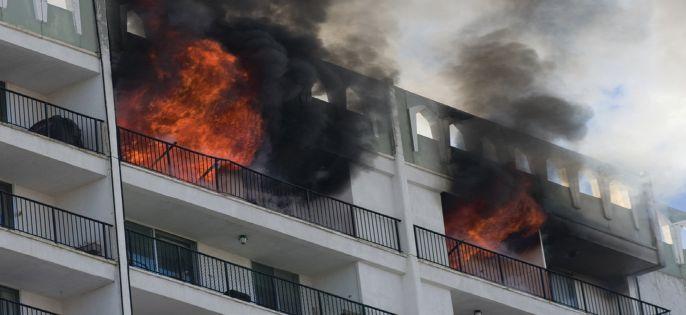
pictures. As each slide came up, firefighters (taking turns) pretended to be the firstarriving officer. The picture was what they saw through the windshield of their unit. We then asked the firefighters to use the handheld radio to deliver an arrival report to our in-house dispatch.
This became an effective brainstorming session. There was a lot of interaction that led to discussions on fire behavior, fire suppression tactics and strategies, firefighter safety and observation skills. After all, any practice night you can’t sleep through is a good one!
There is more to this topic, but this is certainly a good start. I hope this information will help your members give solid arrival reports that lead to successful fire operations.
Stay safe, and please remember to train like lives depend on it, because they do.

Ed Brouwer is the chief instructor for Canwest Fire in Osoyoos, B.C., and Greenwood Fire and Rescue. The 21-year veteran of the fire service is also a fire warden with the B.C. Ministry of Forests, a Wildland Urban Interface fire suppression instructor/evaluator and a fire-service chaplain. Contact Ed at aka-opa@hotmail.com





TRUCKtech
Why fire trucks break down
By CHRIS DENNIS
the training division of the Vaughan Fire Rescue Service provides driver training and pump operator certifications for all of its firefighters. During the last pump course, one of our training officers asked for an emergency vehicle technician (EVT) to attend the training to check and report on a water leak from the pump with which they were training. The truck in this case is a 2002 Spartan 17-metre aerial with a Waterous 6,000-litre-per-minute (LPM) pump. It was determined that the truck was leaking water from the pump packing area. The technician also picked up on a tinny rattling noise while in pump gear.
We removed the truck as a training vehicle until we could get a handle on what was leaking and what was causing the noise. In the shop, we raised the truck and engaged the pump.
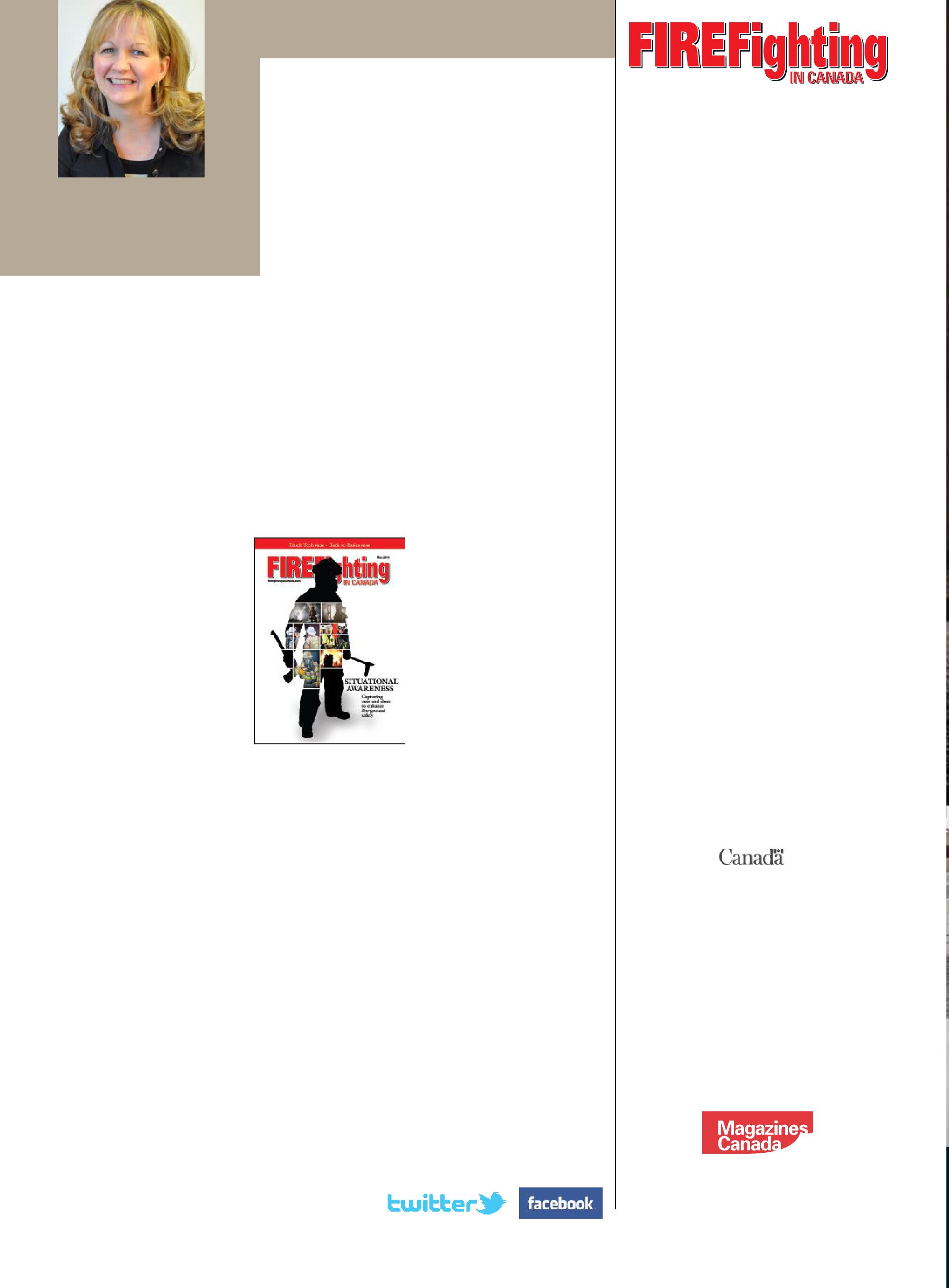
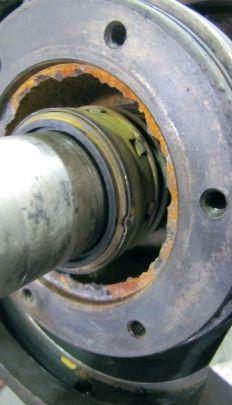
The input and output shaft seals in this pump are mechanical seals. Any drastic change in temperature will damage these seals. Each end of the shaft, as it exits the pump, goes through a seal or packing assembly inside a unit we call the stuffer box. We found that the front mechanical seal in the stuffer box was badly leaking, and quickly saw that the seal had shattered (see photo 1).
The stuffer box got its name a long time ago, as it was once stuffed full of grease, before eventually becoming the product we have today. This sealing area keeps water inside the pump and keeps air out. Because the shaft typically spins at road speed, it needs to be cooled. The friction buildup in the shaft-to-seal area of our truck was immense.
In the early days of the stuffer box, the grease would melt and ooze out. It was the job of a firefighter to repack this stuffer box with more grease so that the water would stay in the pump. Sometimes even horse hair and grease mixed together would be stuffed into this area to keep the water in. The cooling down of this area became a problem until someone figured that if the stuffer box was drilled so that the water could get to the packing before it overheated, it might stop the seals from burning away. It worked. I am not sure in what century this was discovered, but I have worked on a 1919 American LeFrance pumper ladder and the fire pump looked the same then as it does today – only the pumps today are bigger.
So, this brings us to our overheated pump. You might wonder how, in this day and age, a fire pump can overheat, especially when water is our main source of cooling and extinguishing a heated source.
Imagine you’re drafting a large volume of water from a pond or other source, and the incident commander asks for more water. You check the ULC plate for flow ratings and then check the gauges (for more information on the ULC plate and the pump panel, see my column in the November 2011 issue of Fire Fighting in Canada). However, when drafting, the compound intake gauge is the only gauge able to read either negative or positive pressure. In a draft, we are reading negative pressure with a minimum of -55 centimetres (-22 inches) of vacuum at the maximum-rated flow of the pump. This means that, if we go below these numbers, the pump is no longer able to bring in the appropriate volume of water to get through the eye of the impeller, or rotor, and out the discharge side to the hose lines. We have put to a higher demand on the pump in
inlet pipe
steamer port horns
steamer port
1
A mechanical pump shaft seal in a stuffer box, pictured here, is much like a glass – if you heat it then hit it with cold water, it will shatter.
shattered mechanical pump shaft seal
stuffer box
2
discharge pipes
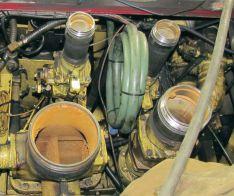
This photo shows the steamer port and horns, and the inlet and discharge pipes. Firefighters should become familiar with these parts of a fire pump so that they can recognize when a pump might be broken.
3
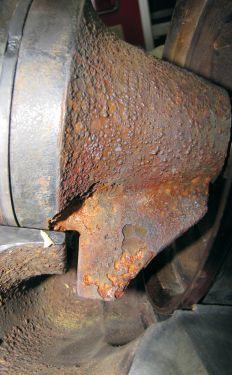
Heavy rust conditions have caused extensive damage to the rudder’s leading edge. This damage can eventually cause the rudders to break off and then move into the pump.
rudder
leading edge
spalling erosion
PHOTO
PHOTO
PHOTO

order to move more water. All we are doing is building more pressure, though we are not moving volumes of water. So, as this is happening, heat is being generated at the intake side of the pump – so much so that, at 100 C (212 F), the water starts to boil. As we try to overwork the pump, it gets hotter, turning water droplets at the intake side into steam. According to Wikipedia, the pressure on the liquid causes the formation and then the immediate implosion of cavities, or tiny bubbles, in the liquid. When this happens, you can hear what sounds like marbles rattling around. This is called cavitation. Temperatures are well over 93 C (200 F) when this process is occurring. Now we have overheating.
This all comes back to a better understanding of what’s happening inside the truck. Our training division trains our pump operators on this process. But, if you don’t know, ask. If you’re still not sure, ask again; and, if it still doesn’t sink in, go back to the basics and start over.
At this point, you have been flowing water for some time. You have heard this noise but thought nothing of it. You remembered that the pump cooler valve should be opened and when you reached past the intake steamer port you could feel the heat off of the steamer connection (see photo 2).
This is an important area to be checking during any pumping evolution. It tells a story. If the steamer connection is getting too hot, it means that the water is boiling and causing damage. If this is the case, open the cooler and, when you return to the pump panel, recheck the ULC plate and the gauges, and you may determine that your pump is running at -38 centimetres (-15 inches) of vacuum and is cavitating. A lot of heat has been created and the pump cannot keep up with the demand. So, you notify command that you would like to cut back by 200 kilopascals (kPa) to be more effective. Command will
Duo-Safety Ladder Corp.
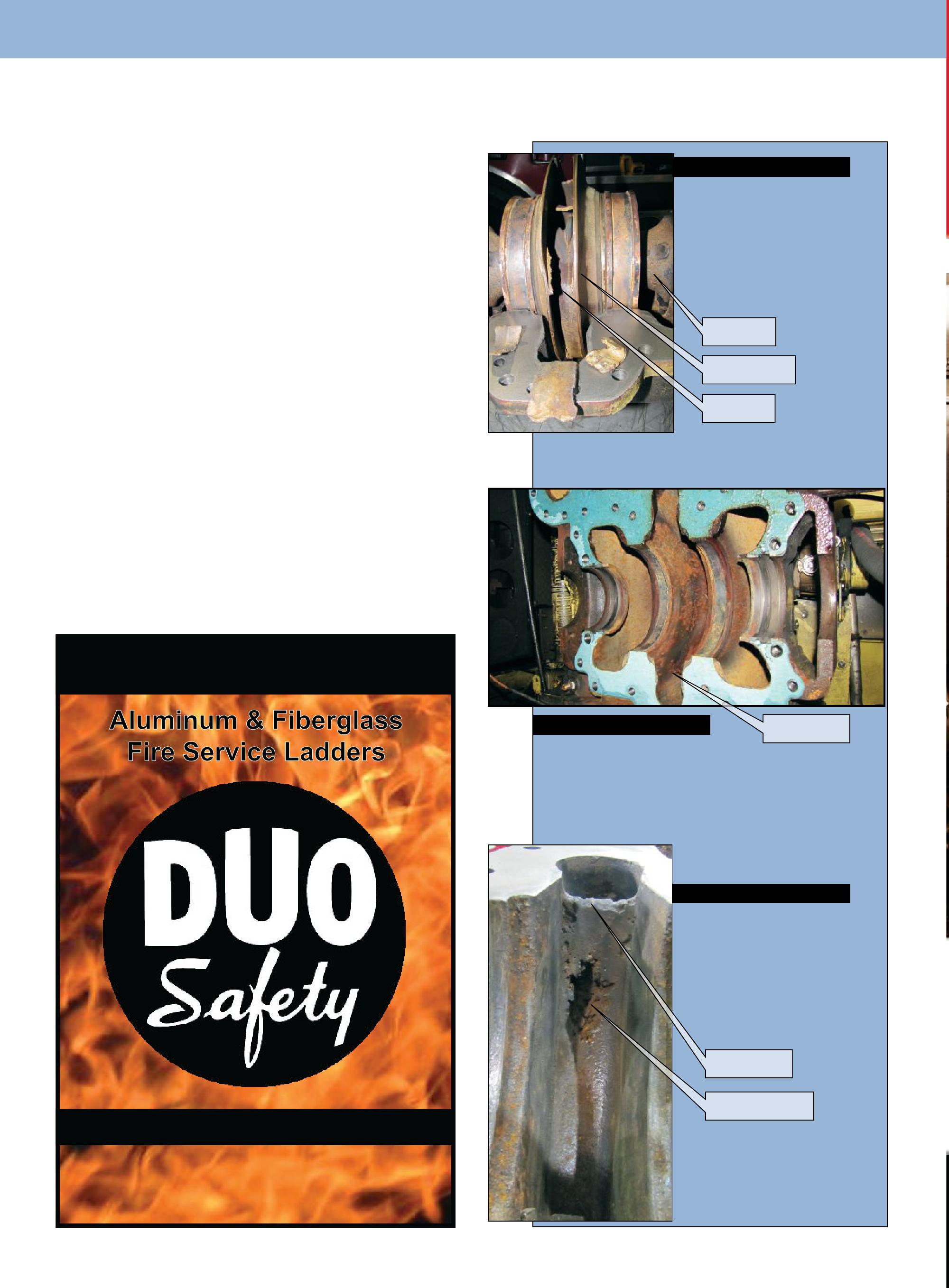
Spalling occurs when a porous material heats to an extreme temperature. The air in the material expands, causing the material – in this case the stripper edge – to break away.
The stripper edge of this pump housing has broken away. This was likely caused by spalling.
PHOTO 5
PHOTO 6
This photo shows the discharge side of the impeller. These three small pieces broke off of the impeller (notice the jagged edge from where they were torn) and migrated into the pump.
PHOTO 4
KOC H E K® LDH Water Systems
Storz Couplings
• Forged Storz Couplings 4”, 5” and 6”
• Durable QUANTUM® hard coat and MICRALOX® micro-crystalline anodizing
• Sure grip 3-piece collar for tight secure fit
• Stainless steel locking trigger
• High visibility recessed reflective tape available
Storz Hydrant Converters
• Forged 6 0 61-T6 Aluminum
• High Visibility Reflective Tape (colors)
• Recessed groove protects reflective tape
• Laser engraving on the cap front with your choice of coatings
M
I
C R ALOX Micro- Crystalline
A patented process, will extend the life of your aluminum parts up to 10 Times compared to conventional aluminum anodic coatings; more effectively resists salt, and chemical corrosion and attack Meets mill spec 8 625 type 3 class 2
QUANTU M Hardcoat Color
• High quality durable hardcoat
• Vibrant anodized color
• Great for color coding
2
NATU R AL Hardcoat
• High quality durable hardcoat
• Most often specified by design and manufacturing engineers
IN THEWatchroom
■ PELICAN
RELEASES TWO NEW
REMOTE LIGHTING SYSTEMS
Pelican Products Inc. has released two new remote area lighting systems – the 9460RS RALS and the 9470RS RALS. Users can control the run time and intensity of the light with a key chain remote control from as far away as 18.3 metres (60 feet). The devices are multi-terrain versions of the company’s previous line of remote lighting systems and provide an ecologically responsible alternative to wasteful generator-powered lights.
The 9460RS RALS features two swiveling telescope masts, which each extend to nearly two metres (six feet). It is powered by LED lights that radiate to up to 6,000 lumens and offers up to seven hours of peak brightness. The 9470RS RALS, meanwhile, features 24 LED lights mounted on four 1.8-metre (six-foot) towers. Each head is powered by a 12-volt rechargeable battery, offering a peak output of 12,000 lumens.
For more information, please visit www.pelicanprogear.com.
■ LENTRY LIGHTING SYSTEMS NOW AvAILABLE WITH LEDS
Lentry Light Systems, by Ventry Solutions, has made its all-terrain generator lights available with LEDs.
The LEDs offer 20,000 lumens of both spot and flood light at once. The device offers 120 volts at just two Amps and 240 watts, and can power up to five telescoping LEDs at once. The light tower height ranges from 4.5 feet to 13 feet, fully extended. The unit has a rugged design and features heat-resistant handles and the lights, which instantly turn on at full intensity, are rated for 50,000 hours (or 5.7 years) of continuous use. For more information, please visit www.ventry.com.
■ KUSSMAUL RELEASES UNIvERSAL TIMER
Kussmaul Electronics has released TIMER-X, its new universal timer, which can be operated in any of three modes: delayon pull-in mode (DOPI), delay-on drop-out mode (DODO) or cycle-timer relay mode.
The timer – which can easily be set in the field –uses a simple switch system for precise settings that range from one second to 99 hours. A 30-Amp relay switch can function on AC or DC loads, while the timer’s output relay provides normally open and normally closed contacts. A red LED light indicates when the relay is energized. The device also comes with a three-year warranty. For more information, visit www.kussmaul.com.
CAFS TeChnology PerFeCTed.

CAFS has always been considered an inexact science. Not anymore. Using revolutionary foam generator technology for an engineered flow, ONE STEP ™ CAFSystem gives you predictably perfect foam, attack, after attack, after attack. Because the water, foam and air are mixed internally – and not in the hose line – it remains perfectly uniform from discharge to nozzle to fire. No separation. No wasted concentrate. No lost water. ONE STEP ™ CAFSystem – not another CAFS option, – it’s CAFS technology perfected.

TRUCKtech
Continued from page 26
likely approve the request, so you throttle back, do the adjustments and instantly the pump cools down and begins to draw in the right amount of cool water.
But, what happens when you boil something and hit it or quench it with cold water? If you were to take a glass and heat it until it is over the boiling point, then instantly hit it with cold water, the odds are that the glass would shatter. A mechanical pump shaft seal in a stuffer box is much like the glass – if you heat it then hit it with cold water, it will shatter (see photo 1).
OvERHEATING A PUMP
Listed below are a few things that can contribute to the overheating of a pump, which leads to the pump’s failure:
• running the pump dry of water with the static tank closed to the pump
• running the pump dry of water with the pressurized source intake valve closed
• recirculating water faster than what the tank-to-pump valve can achieve (a.k.a. cavitation)
• recirculating water for long periods of time at excessive revolutions-per-minute (RPM) rates
• dead-heading the pump (i.e., when the water is under extreme pressure but cannot go anywhere, so the pressure inside the pump builds)
• cavitation during drafting operations
Keep in mind that, when a mechanical seal leaks water, it will not assist in the draft. Atmospheric pressure within the pump housing is evacuated when the primer is pulled. The water in the suction pipe is pushed up into the pump as the atmospheric pressure outside the pump is now greater than it is inside the pump. Creating a watertight seal in the plumbing, the pipe is then able to pick up that water and draw it into the pump. If the seal is damaged and vented to atmosphere pressure levels, the pump will never create enough of a vacuum to draw the water. See NFPA 1911 for specs of recommended water drip and manufacturer recommended drip rates.
The Waterous pump we are working on has a failed mechanical seal due to overheating. The seal shattered when cold water was introduced. We determined that the pump will not prime since the seal is broken, and we still hear a noise. It’s time for failure analysis: we want to pull on the primer to see how many centimetres of vacuum we can pull down and for how long it will hold (refer to the NFPA 1911 pump test specs). This will tell us if a valve is leaking.
Remove all the caps, one at a time, and listen to the ports. It was at this time that we found a piece of brass in the end of a 65-millimetre discharge valve on the officer’s side. This is not good. We removed the large steamer caps on both sides, as well as the ionic screens. Both screens, as well as the attached screen fins, showed signs of erosion. The screen, in addition to stopping debris, also breaks the stream and takes the static charge out of the water. The static charge can cause a galvanic reaction between dissimilar metals and, in turn, cause corrosion. When you are doing pump checks, be sure to remove these screens and check their backsides – this is where they first erode. When they become weak, they stop less debris and the fins can easily break away when hit. Our technician looked inside the steamer port horns (see photo 2) and down to the impeller. We used a snake scope with a digital viewing monitor so we could see inside the pump. By moving the scope from side to side, you will be able to see not only the eye of the impeller but also the stuffer boxes at both ends, as well as their rudders (see photo 3). You can see by the photos that the rudders are missing some of their leading edges. When inspecting a pump, these
are items that can break away and then move into the pump. We then removed the drain plug in the bottom of the impeller housing; this gave us a direct view of the discharge side of the impeller, which was missing most of its fins (see photo 4).
The stripper edge of the pump housing, or casing, was broken away (see photo 5). This is the side of the impeller out of which the water flows. The water is squeezed into this area, creating the high pressure needed to move the water. When you place your thumb over the edge of your garden hose, you create a narrow opening that backs the water up in the hose (or, in this case, the fire pump), creating large amounts of pressure and coming out with great velocity. With this portion blocked, the pump’s performance is immensely affected. How did this happen? We had already found that the pump was overheating and we believe that cavitations were causing this. Well, this truck would have to have been drafting its whole life and been pumped poorly the whole time, and, even then, this might not have happened.
This truck has been in a couple of different fire stations in its day, however, all with hydrant sources and very few non-hydrant areas. You can see the porous areas in photos 3 and 6 where castiron products had been taken away. It is evident on both the intake and discharge sides of the pump. Forensic findings determined that this pump had been overheated on many occasions. When you put excessive heat to concrete, it pops and breaks away. This is called spalling (see photo 6). The same thing has happened to the cast-iron products. I am not a metal expert, but, like concrete, cast iron is made with many dissimilar products, usually iron, carbon and silicon. These products, when mixed together, never perfectly interlock, so there remains an air gap. When the air is superheated, it expands, pushing against the solid product, forcing it away. It then pops out and breaks away. This is what happened to the stripper edge of our pump. It is one of the thinnest areas of the pump and is often under the most stress. So, if you heat it until spalling occurs, the thinner areas will break away. The stripper edge broke off and fell into the discharge side, causing a catastrophic failure when it jammed itself up with the fins and the casting.
This process of heating the pump can be corrected. See the previous list regarding the causes of overheating.
Instruct your pump operators and remind yourself to:
1. Be sure to open the tank-to-pump valve.
2. When hooked to a pressurized source, open the intake valve all the way (like a hydrant).
3. Listen when recirculating from the pump to the tank. You can outpump the tank-to-pump valve, just like cavitating.
4. When recirculating the water, be sure to monitor the steamer connection for heat buildup. Give the water a place to go other than back into the tank.
5. If no water is flowing, be sure that the pump does not stay deadheaded for long periods of time. Give the water a place to go, but do it safely. You don’t need ice buildup in your work area or more water damage inside the property you have just protected.
6. When drafting, pay close attention to compound gauges and do not go below suggested pump ratings.
Water is the best means of keeping the pumps cool. Remember to add a fresh source of water into the pump gradually. Give the water a place to go so that it does not overflow. During the colder months of the year, throw a second line off into the ditch or away from your work area and allow the pump to move some water out.
Be safe always and remember, rubber side down.
Chris Dennis is the chief mechanical officer for Vaughan Fire & Rescue Services in Ontario. He can be reached at Chris.Dennis@vaughan.ca
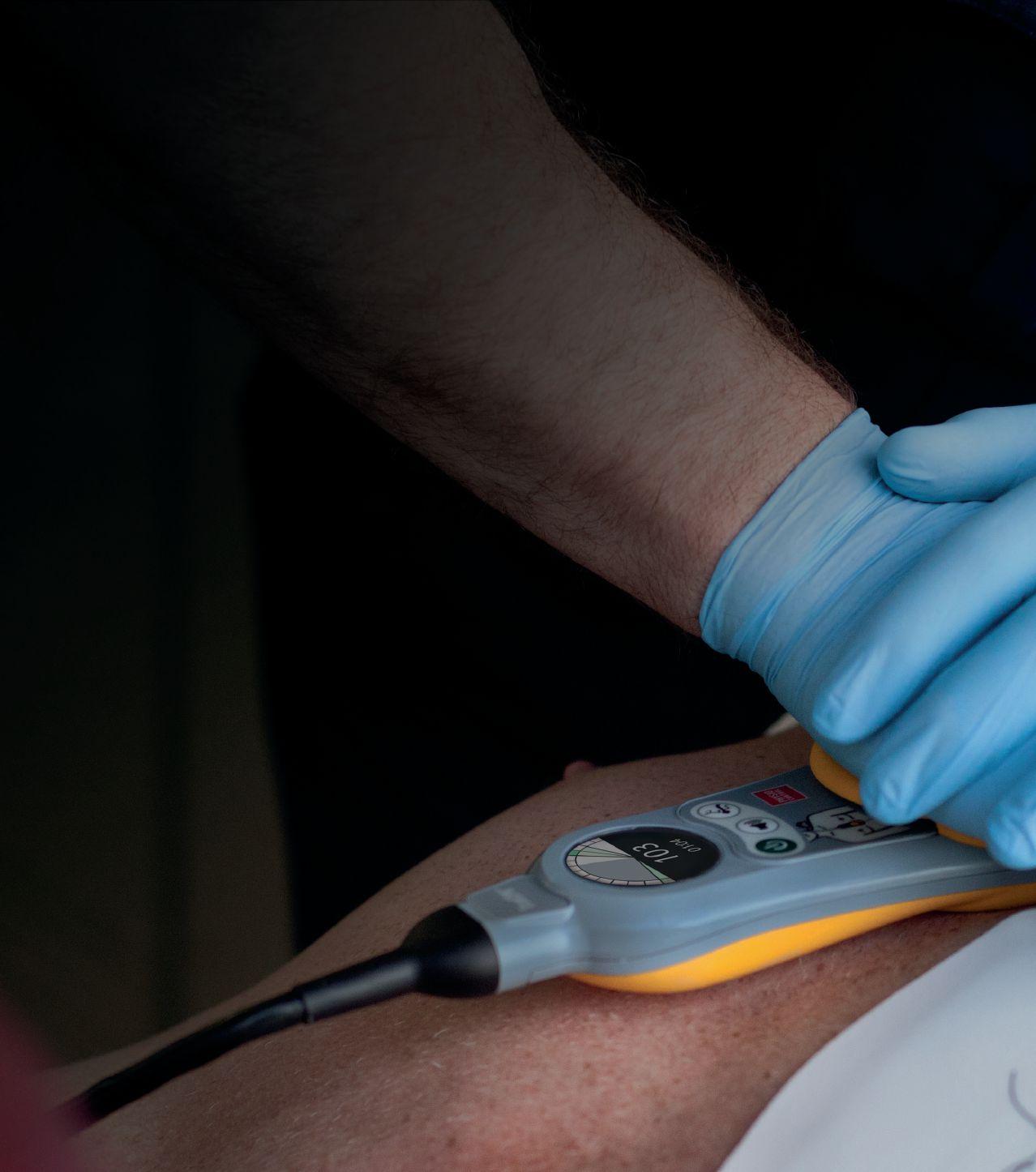
The responsive emergency team delivers exceptional CPR
And they choose Physio-Control to help make it happen.
Today’s responsive emergency team is always looking to elevate the level of care they deliver, and they rely on evidence and data to get them there. With the CPR Solution from Physio-Control, they have the science-based, guidelines-consistent tools they need to respond better to patients—and the demands of constant performance improvement.
Optimize manual CPR performance and quality through true depth measurement even on soft surfaces, in addition to guidelines-consistent rate, recoil and pause feedback. Only available in Canada.
Provide uninterrupted hands-free compressions at Guidelines-recommended rate and depth, while ensuring personnel safety during transport.
The LIFEPAK 15 monitor/defibrillator with capnography and CPR Metronome provides effective rate control and true physiological measurement of CPR performance.
The rugged LIFEPAK 1000 defibrillator features cprMAX™ Technology which minimizes CPR interruptions by allowing compressions to continue during AED charging.
comprehensive
VEHICLES
Canada’s Leading Provider of Fire Apparatus, Emergency Vehicles, Equipment and Service
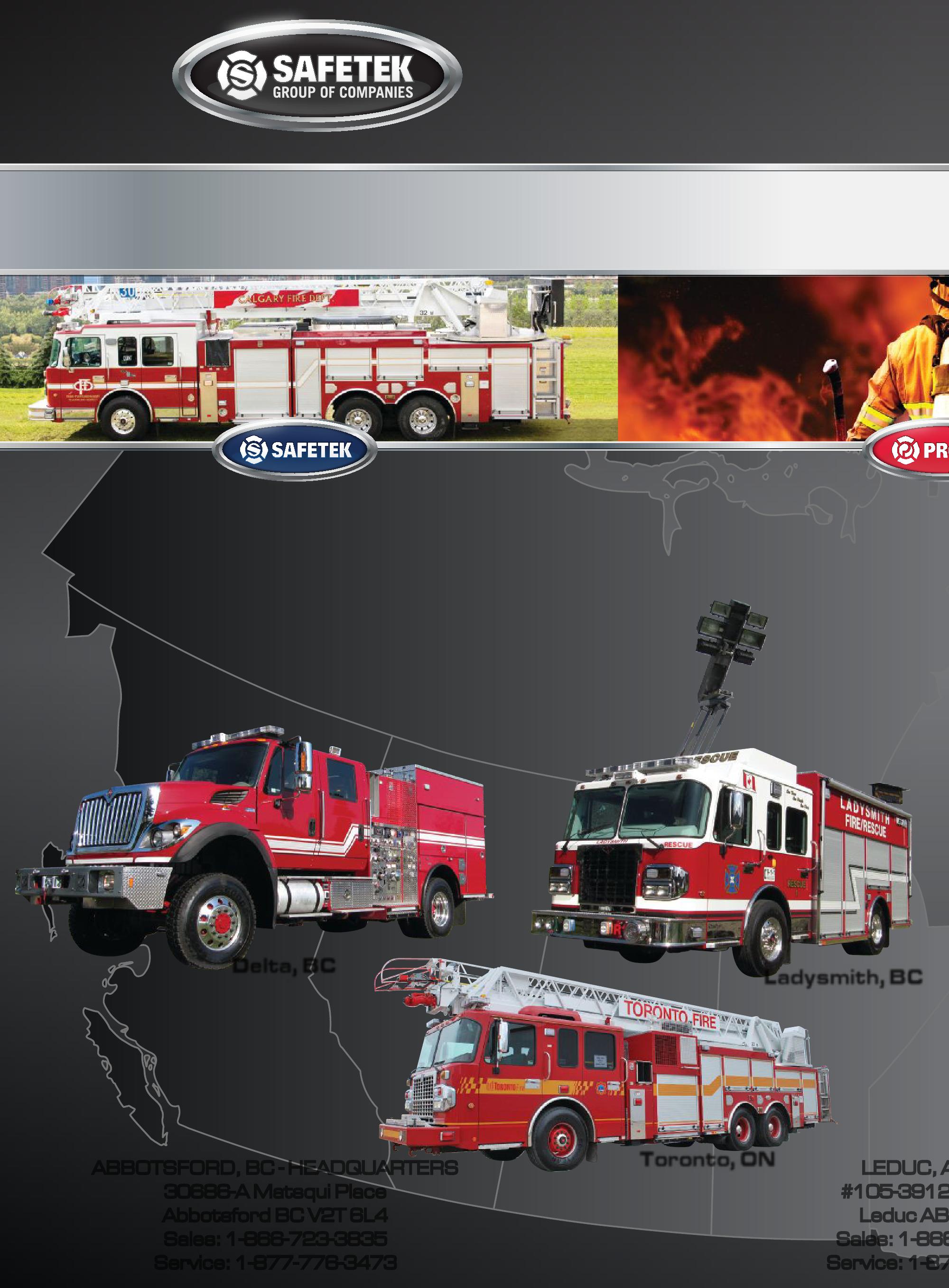
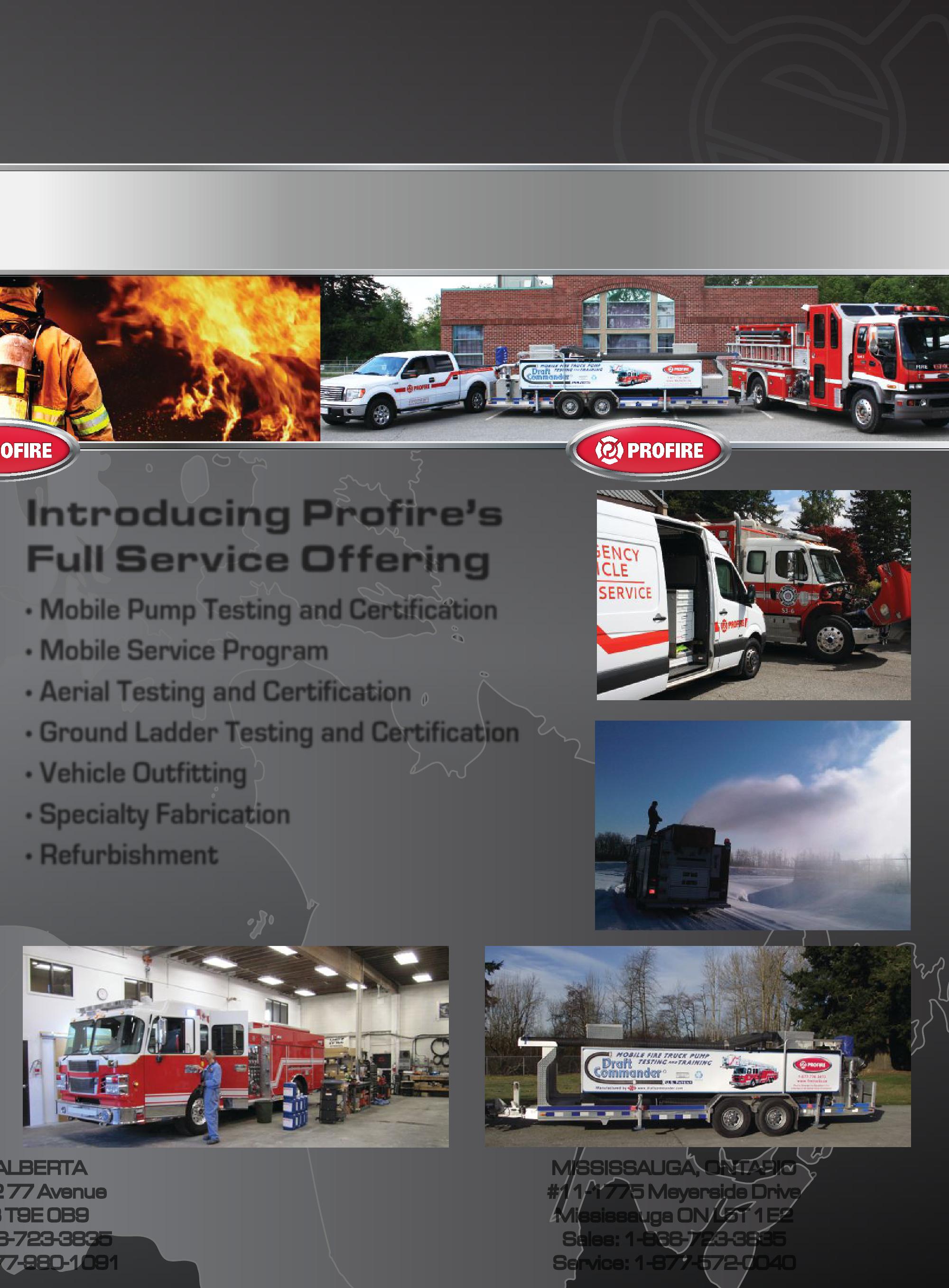
Safetek Emergency Vehicles and Profire Emergency Equipment are the primary members of the Safetek Group of Companies. Safetek has sales and support staff in offices in British Columbia, Alberta, and Ontario. Profire is responsible for handling all of the Group’s Emergency Equipment, Parts, Service & Warranty activities in the same locations. The Safetek Group of Companies employs over 30 people from Coast to Coast including 11 Emergency Vehicle Technicians [EVT]. Working closely with Safetek, Profire is the authorized parts and service centre for Smeal Fire Apparatus Co., SVI Trucks, Spartan Chassis and American LaFrance.
ABBOTSFORD, BC - HEADQUARTERS
ABBOTSFORD, BC - HEADQUARTERS
30686-A Matsqui Place
30686-A Matsqui Place
Abbotsford BC V2T 6L4
Abbotsford BC V2T 6L4
Sales: 1-866-723-3835
Sales: 1-866-723-3835
Service: 1-877-776-3473
Service: 1-877-776-3473
1-866-723-3835
1-877-980-1091
the politics of fire/ems
Photos by John r iddell
how Ontario has lost its focus on training and patient care and has been drawn into a debate over ownership of medical calls
By ROB GRimwOOd
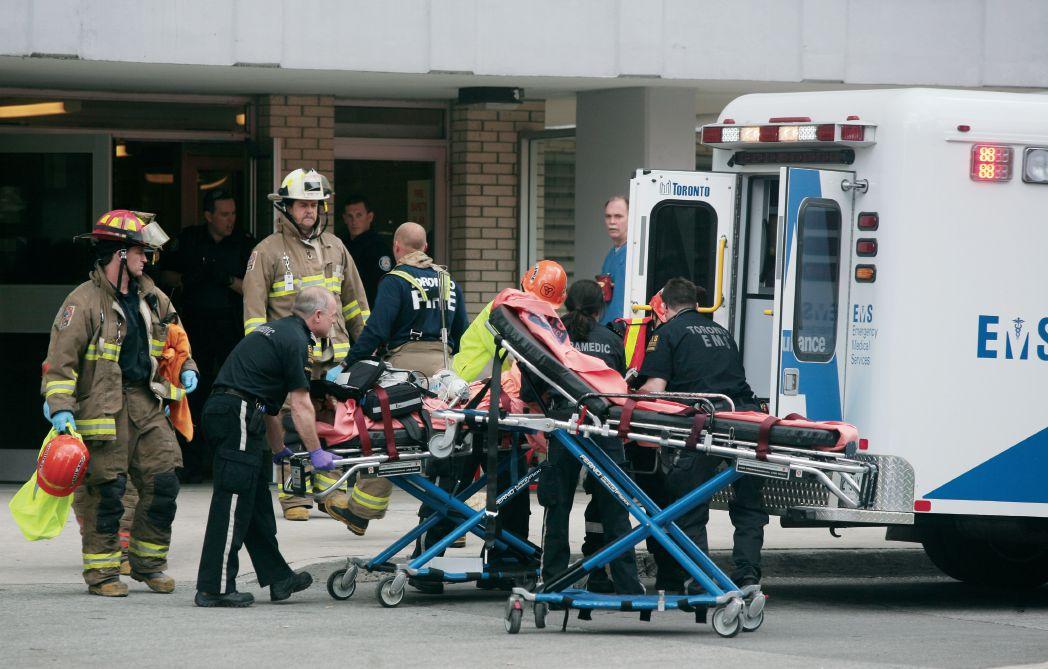
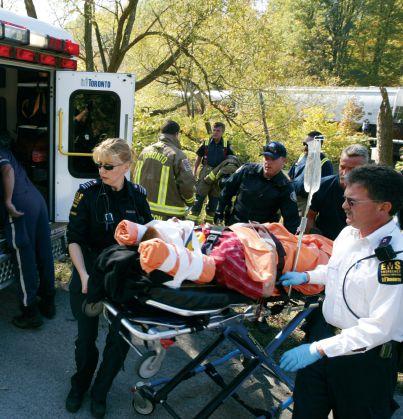
top : Firefighters and paramedics are expected to work closely together in tight quarters, stressful circumstances and under demanding timelines, yet they seldom (if ever) have any opportunity to practise working together as a team.
r I ght: Fire and EMS providers should make management of tiered response a bigger priority and implement programs that will help both agencies provide topnotch patient care.
In recent years, there has been a lot of discussion about the role of the fire department in pre-hospital care. Although responding to medical emergencies is nothing new to the fire service, in Ontario the formalizing of this service through tiered-response agreements was put into place in the mid-1990s in advance of the Ontario Pre-hospital Advanced Life Support (OPALS) study. In the early days of tiered response, the focus of the program was solely on the patients and how best to provide quick and effective response. In many jurisdictions, the firefighters accepted this newly expanded role with reluctance, not entirely sure of the potential benefits of the program and some-
what unsure of their roles in the system.
In the 20-plus years during which Ontario fire departments have been providing formal tiered response, the entire EMS system has undergone significant change. In that time, responsibility for ambulance service has been downloaded by the province to upper- and single-tier municipalities, thousands of advanced-care paramedics have been trained, the training and responsibility of primary-care paramedics have been significantly expanded, and municipalities have improved EMS services by adding more resources. Also in that time, fire departments have continued to provide tiered response to EMS calls in accordance with their local agreements.

Interestingly, in recent years, the focus discussion has fundamentally shifted to the ownership of these calls and whether (or when) the fire department should respond. This focus on ownership is completely different from the initial discussions that dominated the early days of tiered response, when the issue was what training firefighters should receive, what equipment they should carry, and how they could best be used to benefit the patient.
It is my opinion that, in recent years, we have got too far away from discussing the operations of tiered response and spent too much time lobbying the political structure of the program. In my experience, as both a firefighter and a paramedic, I still frequently notice too many operational gaps. The firefighters and paramedics both respond to calls with the best intentions and the patient in mind, but too often it continues to be a response from two completely separate teams. These two teams are expected to work closely together in tight quarters, stressful circumstances and under demanding timelines, yet they seldom (if ever) have any opportunity to practise working together as a team.
I have witnessed hundreds of calls at which firefighters and paramedics are working toward a common goal but have little or no understanding of each other’s training, equipment, skills or protocols. Even more damaging, I have witnessed dozens of calls at which it is clear that this lack of teamwork creates significant confusion or dissention at the scene. This typically happens when firefighters and paramedics are not clear on each other’s roles and poor communication quickly leads to conflict. Unfortunately, there has been a great deal of effort recently by both fire and EMS lobbying government on the importance of tiered response programs and arguing about the “ownership” of these calls, but how much effort is being put forth to ensure that the programs actually work?
One would think the knowledge that medical calls make up between 40 per cent and 60 per cent of a typical fire department’s call volume, and that the fire department is tiered to between 10 and 20 per cent of an EMS service’s calls, would lead both agencies to make the management of tiered-response programs a bigger priority.
In my department, there has been a concerted effort to ensure that the tieredresponse program the public receives is the focus of ongoing planning and development. The first step taken was to very clearly identify which calls warranted fire department tiered response. This was accomplished by conducting a six-month trial during which all tiered response call data was tracked.
The data that was collected included:
• the call type;
• the time the 911 call was received at the
ambulance dispatch centre;
• the time the call was received at the fire dispatch centre (and therefore the time it took to transfer the calls between dispatch centres);
• the ambulance response time;
• the fire department response time;
• what care the fire department provided (when it arrived first);
• and a review of the ambulance call report to determine the patient outcome and attempt to quantify the benefit of having the fire department on the call.
The six-month data was evaluated in an effort to determine which emergency medical calls would benefit from fire-department response. While there are people who would advocate sending the fire department to all ambulance calls that are prioritized as emergencies, the vast majority of these calls are not actually life-threatening emergencies and fire-department response is not required. It is worth the effort for each program to determine which calls actually warrant tiered response, as sending extra resources to calls that do not require them is not an effective or efficient use of resources and can actually harm the effectiveness of managing calls by sending too many emergency responders to a call.
The result of our data analysis was the determination that it was beneficial to automatically tier the fire department to all cardiac-arrest calls but not to tier fire to other selected calls (unconscious patients, cardiac chest pain, difficulty breathing) unless the ambulance was delayed for longer than 12 minutes. This is fairly similar to how other tiered-response systems are set up, but other systems seem to set the ambulance delay criteria (five minutes, eight minutes, 10 minutes, etc.) without any evidence to indicate which delay parameter is the most effective. Implementing a system without analyzing the effectiveness of the response often results in a system in which the fire department regularly arrives after the ambulance and is of little value on the call. By taking the time to measure response times and set the proper delay criteria, the instances of the fire department arriving after the ambulance are significantly reduced or eliminated. This will pay immediate dividends as responding firefighters will no longer face so many “cleared by ambulance on arrival” calls.
Once the data analysis was completed and the tiered-response criteria changed to an evidence-based model, my department then developed a tiered-response committee consisting of firefighters and paramedics (and fire and EMS management supervisors). Being a single-tier municipality in which fire and EMS are under one chief, this was easier logistically than it would have been in tiered municipalities, but I would encourage other

areas to consider this as an option as its benefits are worth the logistical challenges.
The purpose of the tiered-response committee is to bring firefighters and paramedics to the same table to discuss the training and equipment the firefighters have (or need), discuss the operations of the program (assess how things are functioning at calls), plan joint training opportunities, and debrief and resolve any issues that occur at calls. This committee provides all firefighters and paramedics with a means to resolve any issues that occur, which is of great benefit. In many areas of Ontario, unresolved issues continue to linger and threaten to harm the relationship between firefighters and paramedics because there is no formal means to discuss them. As with most issues, effective communication is the key to success and the formation of a joint committee will achieve this objective.
It is important for the committee to develop tiered-response program policies that provide clarity to firefighters and paramedics about each other’s role and function at tiered-response calls. The next step should be to re-evaluate the patient-care training that firefighters receive and the patient-care equipment that they carry. There are several options for firefighter patient-care training, ranging from basic first aid through emergency first responder. This training can be done by outside agencies or in-house instructors. It is important that each fire department evaluate its own needs and determine what level of training is appropriate. Evaluating the number of medical calls to which a fire department responds, and how often it arrives first, and discussing these calls at a joint fire/EMS tiered-response committee, will likely make it fairly clear what level of training is most appropriate.
Most importantly, selecting the level of training must be done properly – in accordance with certification guidelines – and it must be maintained. Once a level of training is determined, the patient-care equipment should be evaluated to ensure that the firefighters have all of the equipment they are expected to use and, conversely, that they are not carrying equipment they are not properly trained to use.
Some of the other key tiered-response planning and development initiatives my department has found successful include:
• Firefighter ride-outs Firefighters provide patient care while awaiting the arrival of paramedics, assist paramedics with patient care once they arrive and are sometimes expected to accompany paramedics to the hospital in the ambulance. While the first role (providing care while awaiting paramedics) can be practised during regular training, the next two (assisting paramedics with care and
accompanying them to hospital) are difficult to simulate. It is for this reason there is so much value in inviting firefighters to participate in ride-along shifts where they ride third with a crew of paramedics. There is great value in this program as it allows firefighters and paramedics to become familiar and comfortable with each other, allows firefighters to become comfortable with the paramedics’ equipment and protocols and exposes the firefighters to more medical calls and patient care than they may regularly get.
• Ambulance visits Similar to the firefighter ride-outs, having a program where paramedics and an ambulance are available to attend the fire stations for training is of great value. This exposes the firefighters and paramedics to each other outside of being on calls and makes them more comfortable working together. Functionally, this also serves as an excellent method of familiarizing firefighters with paramedic equipment and the layout of the ambulance.
• Joint training Another way to improve the working relationship and communication between firefighters and paramedics is to encourage joint training whenever possible. Some examples of this that have been successful in my department have been including firefighters in EMS multi-casualty incident training, including paramedics in fire department auto extrication training and including both firefighters and paramedics in critical incident stress management training (and the formation of a CISM peer support team).
Whether your department is a large urban fire department with full-time firefighters and the potential of running thousands of medical assistance calls, or a small, rural fire department that would only occasionally back up the ambulance, it is important to have an effective tiered-response program. Unfortunately, the recent focus has been too much about the ownership of medical emergencies and not enough about how to effectively develop a tiered response program and effectively deliver this important service to the public.
Rob Grimwood is the manager of emergency services/ fire chief for Haldimald County, Ont. Prior to coming to Haldimand County, Rob was a firefighter with the Toronto Fire Services, a volunteer firefighter/officer with the Niagara-on-the-Lake Fire Department, and a paramedic with the Regional Municipality of Niagara. Contact him at rgrimwood@haldimandcounty.on.ca
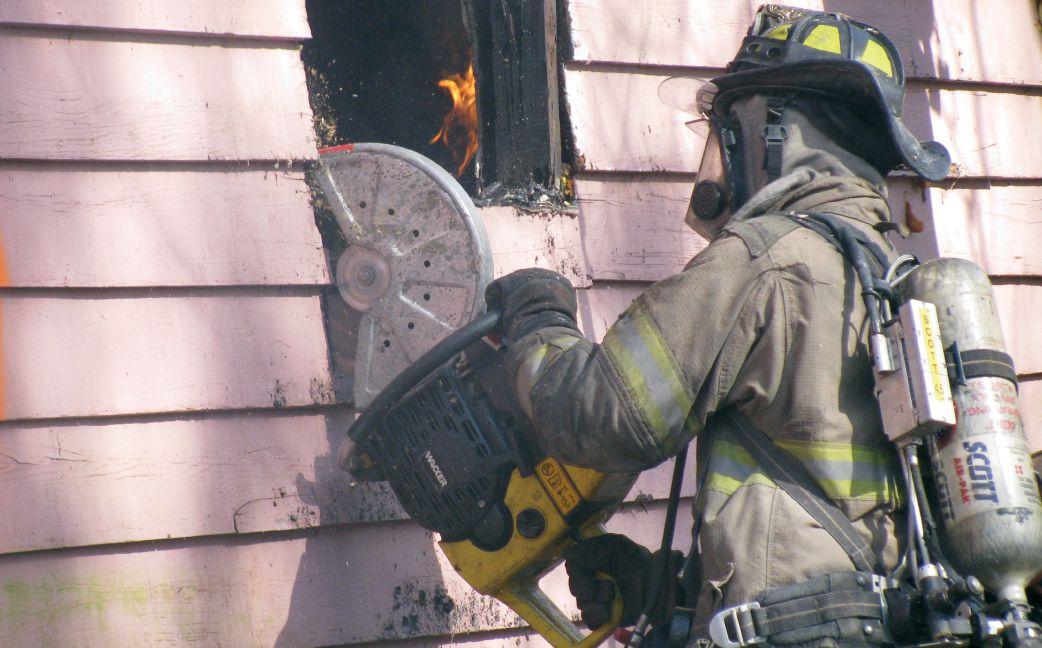
attack strategy
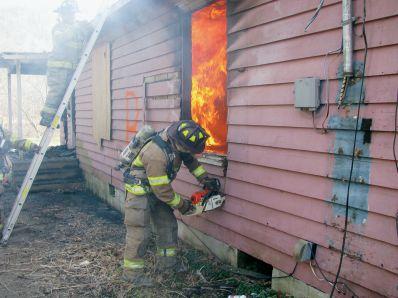
Fighting from the sides increases safety, provides assessment opportunity in hoarding situations
By Ryan PenninGtOn
top : In hoarding or heavy content conditions, primary entrances and exits may be blocked by belongings and firefighters may have to make a window into a door to gain access.
r I ght: Performing a windowsill removal in a hoarding situation gives firefighters a point of entry to make a push to the seat of the fire, and provides an exit for trapped occupants.
as I sit and listen for the 100th time to the recording of the Toronto Fire Services response to the hoarding fire on the 20th floor of 200 Wellesley St. in September 2010, one thing stands out: firefighters could not attack from the sides.
Over the past two years, during which I have taken on the topic of fighting fires in hoarding conditions, one glaring similarity comes out every time I reach out to a fire department to learn from its experiences: the firefighters attacked from the sides. In the case of Wellesley Street – which was the worst hoarding fire in Canada – firefighters simply could not access the unit of origin from the sides given its location on an upper floor of the building. (See the December
2010 issue of Fire Fighting in Canada and the October 2011 issue of Canadian Firefighter and EMS Quarterly – at www. firefightingincanada.com – for more on the Wellesley Street fire.)
Attacking from the sides offers firefighters a safer environment, provides for more entry and exit points, and allows firefighters to make an assessment of the interior conditions before committing firefighters to the interior. Let’s take a look at this common attack strategy when it comes to dealing with fires in hoarding conditions.
Since the days of Homer and Langley Collyer in Manhattan – they were the first real documented hoarders, eccentric brothers who were found dead in March 1947 among the 140 tons of collected items in their Harlem home – the fire service has
Photos













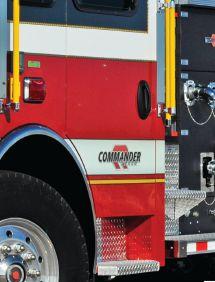
been dealing with the problem and challenges of hoarding. The reach of this disorder is being felt worldwide. Compulsive hoarding disorder crosses all borders, races, and income levels. It can affect people in your district the same as it did in Manhattan in the 1940s. One advantage today is the availability of information; a new awareness of this problem has been brought to the world by television shows that document the struggles of people who are affected by hoarding.
SAFER ENvIRONMENTS
Using your size-up skills to identify hoarding conditions can and should influence a first-arriving officer’s tactical decisions. Cues and clues such as cluttered front yards, blocked windows and doorways, collections of belongings in the backyards, and piles of debris inside vehicles can help to establish that you are facing hoarding conditions, or heavy-content environments.
Using the term heavy content indicates numerous things to the crews on scene and those responding to the fire. First, it will put everyone in a defensive mindset since they understand that the structure is overloaded and at risk of collapse before the first drop of water is sprayed. Second, it is a politically correct way of sharing the message that hoarding conditions are present.
Patients with compulsive hoarding disorder have deeply rooted emotional connections to belongings that have no apparent value to you and me; being respectful and mindful of their situations is an important precaution, as it has been documented that the deep compulsion can lead to a psychiatric emergency if the terms hoarder or hoarding are used. Terms such as pack rat or trash house are even worse.
Once you have discovered heavy content, and before committing crews to the interior, you should consider a few safety observations that can be made from the outside. If you can access the room of involvement and quickly knock down the fire, you may be able to use the reduction in air flow to your advantage. Darkening down the fire from the outside is a highly controversial and often-debated tactic that needs to be used when dealing with heavy-content fires. Ironically, this tactic will need to be adjusted if you receive a report of occupants trapped inside, as the steam that may increase the effectiveness of your side attack may just as easily eliminate their potential for survival.
ALLOW FOR MORE ENTRY AND ExIT POINTS
Another common characteristic of hoarding conditions is the multiple blocked means of entry and egress. As the collection of belongings begins to take over the home, windows, doorways and stairwells will become blocked, creating challenges to exiting occupants and entering firefighters. These challenges can be overwhelming, especially to firefighters trying to make a rescue or advance on the fire.
In hoarding conditions, occupants may no longer use the primary front and back doors for entry, as these may be blocked by belongings. Multiple cases have been documented in which occupants have used windows, garage doors, and even portable ladders to make entry into their cluttered world. The right point of entry for firefighters may not be the front or rear door; it may be necessary to make a window into a doorway to access the heavily cluttered interior. Performing this windowsill removal and beginning to pull belongings out of the way can serve two purposes: it can allow firefighters access inside, to make a push toward the perceived seat of the fire; and it can allow occupants or firefighters entering the house another way out if the conditions deteriorate. That said, opening these exterior points allows for increased horizontal ventilation and should never be done behind an advancing crew. Any task that can allow a sudden rush of air should be co-ordinated with command and interior crews.
ALLOW AN INTERIOR ASSESSMENT
Upon arriving at a reported structure fire, first-arriving command always does a 360- degree size-up. Noticing cluttered conditions, the officer should add another 20 degrees and look inside the occupant’s vehicle to identify possible hoarding conditions. While this practice is
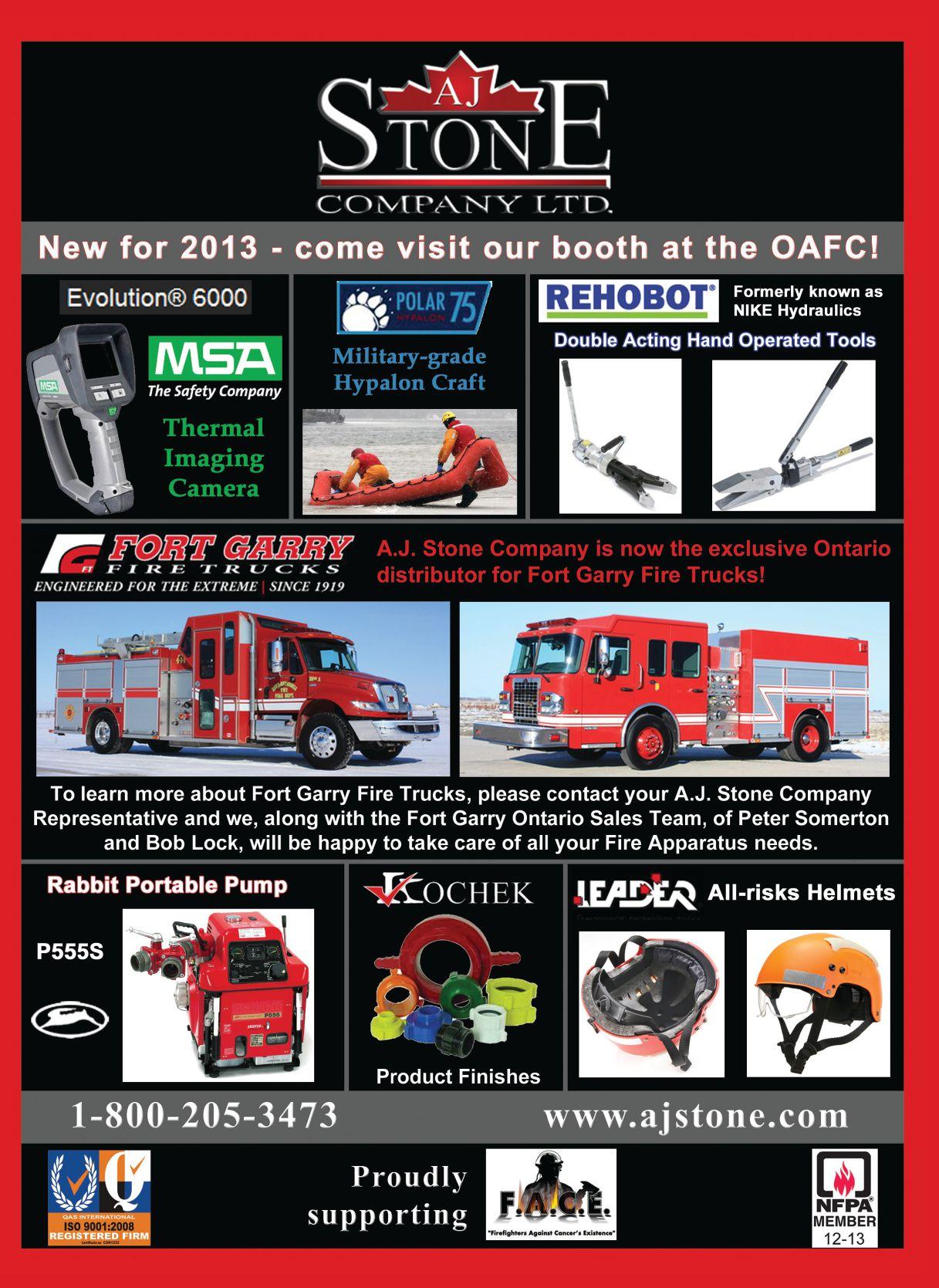
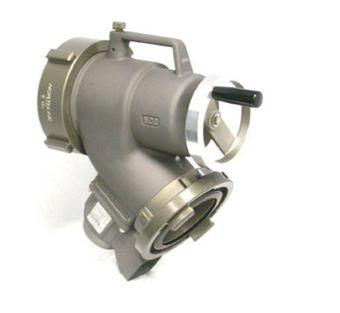
6350-5 Netherhart Road, Mississauga, Ontario CA L5T 1B8 Phone: (800) 786-9697 • Fax: (905) 564-8822 info@northlinecplgs.com www.northlinecplgs.com


not proven, it can raise a level of suspicion that a heavy-content environment is present. Another benefit of this 380-degree size-up and attacking from the side is the ability to assess how bad the hoarding conditions are in the interior. This assessment can lead to the decision to make a push on the interior or remain on the exterior and choose a defensive operation from the beginning.
Once there is suspicion of a hoarding situation, firefighters, commanders, and company offers should use a scale to rate the severity of hoarding. This scale should be on a one to five level, with five being a no-entry fire. This scale can help officers to determine the point at which the risk of interior attack is too high. For example, if there is more than one blocked means of entry, and belongings are stacked to the ceiling in more than one room, you would assign a value of five on the scale. This would automatically set the operation to a defensive mode and limit the attempts at rescue, as the risk-a-lot-to-save-a-life principle may not be applicable because of the extreme risk, and could be the hardest decision that fireground officers have to make. Using the scale should not overtake logical fire-ground size-up but should supplement it to identify the challenging environment when hoarding is found.
ATTACK STRATEGIES
Now that you have determined that a heavy-content environment is present, you have removed one or more windowsills, it’s time to go in or stay out. This decision should be based on the above considerations; let’s start with every firefighter’s favourite – interior attack. If you have chosen to make an interior push from the sides, you should be prepared for the battle ahead. Heavy-content environments offer many challenges that crews should be expecting. From falling debris to narrowed goat paths, interior crew size needs to be increased from the traditional one or two firefighters to help deal with the added workload. When advancing on the fire, interior crews should always be looking out for the increased chance of flashover or backdraft depending on the compression of belongings. Defensive attack is another, safer, strategy used when dealing with heavy-content fires. While a defensive attack is often less favoured by firefighters, in heavy-content environments it should be at the forefront of the firefighting strategy. Once you choose to attack from the outside using the sides, you will need to set up master streams and handlines in positions so that you can direct streams above the hoarding level. Trying to penetrate deeply inside a pile of belongings this big can be challenging. By directing hose streams above the belongings, you will allow the water to absorb the heat and rain down on the most likely part that is burning, the top layer. Think of a rolled up newspaper: does the middle burn or does the outside layer? The main safety consideration for this attack is the need to remain outside the collapse zone. Staying back 1.5 times the height of the building will reduce the chance of firefighters being hurt or killed if the structure fails.
Hoarding fires are not normal bread-and-butter fires; they are complex fires with multiple variables that need consideration before attack strategies are determined. Not committing your firefighters to the interior when hoarding conditions are present will bring your firefighters home safely. Can an interior attack be made in heavy hoarding conditions? Yes. But attacking from the sides may be the wiser decision to ensure that everyone goes home.
Ryan Pennington is a firefighter/paramedic for the Charleston Fire Department in Charleston, W.V. He is assigned to Station 8 and is part of the West Virginia Task Force 1 USAR team. Ryan has more than 15 years of combined fire, rescue and EMS experience. He started with a local volunteer department and continued through EMS to spend five years as a critical care paramedic. Ryan transferred to the career fire service in 2003 and has worked for the City of Charleston since 2007. He is currently a WV State Instructor 2, a hazmat technician, and a certified Fire Officer 2. He is very involved teaching EMS and firefighter safety across North America.
BACKtoBASICS
Safe ground operations for air ambulance calls
BY MARK vAN DER FEYST
on Feb. 24, at about 10:30 a.m., we responded to a call for a vehicle accident. Updated information provided en route informed us that a vehicle had collided with a train at a land railway crossing. Once on scene, we confirmed that a single vehicle was involved with the train. The vehicle had been hit very hard, causing it to bounce off of a few rail cars about 12 metres (40 feet) down the rail line, before resting on the rail-line embankment with a portion of the vehicle under the rail car.
Any motor vehicle accident will have fluids leaking from the vehicles involved. A spark or other source of ignition can lead to a fire. As such, a hoseline was pulled off the apparatus and charged so that, in the case of a sudden fire, responding crew members would have ready access to water protection. This particular vehicle accident had plenty of gasoline, diesel and other car fluids on the ground around where personnel were working. Extrication equipment was also removed from the fire apparatus and placed at a staging area near the vehicle.
Inside the vehicle was a lone occupant in the driver’s seat who had sustained visible facial and head trauma. Upon their arrival, the paramedics and site supervisor conducted an assessment to determine the extent and nature of the driver’s injuries. Because the vehicle collided with the train at a high speed, serious internal injuries were suspected; this prompted EMS to request an air ambulance to respond to the scene (see photo 1).
No matter where you are in Canada, or what type or size of fire department you work for, there is a good chance that you could have an air ambulance respond to and land at your scene. When this occurs, there are some important safety considerations that need to be implemented to keep everyone safe on scene.
The air ambulance service trains regularly with the fire service to ensure that fire personnel are familiar with the protocols for helicopter landing and that first responders are comfortable working around an air ambulance. It might be a good idea to contact the air ambulance provider in your region to set up training time as part of your annual training plan.
When it arrives, the air ambulance will conduct its own scene survey, which will involve a low circular flight pattern over the incident scene. This survey is done to make sure the landing zone is the appropriate size, that there are no immediate hazards in the vicinity (such as electrical wires) and also to let everyone know that the air ambulance is going to land soon. An appropriate landing zone should measure 45.7 metres by 45.7 metres (150 feet by 150 feet). The ground needs to be solid – asphalt pavement or a concrete roadway – so that the helicopter will not sink into it when it lands. If the helicopter pilot determines that the landing zone is not adequate, he or she will choose an area that is.
The pilot will be in constant communication with a landing-zone
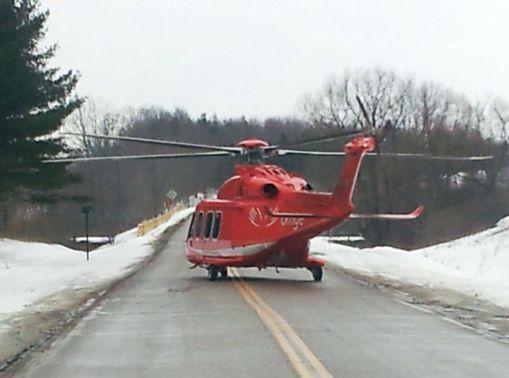
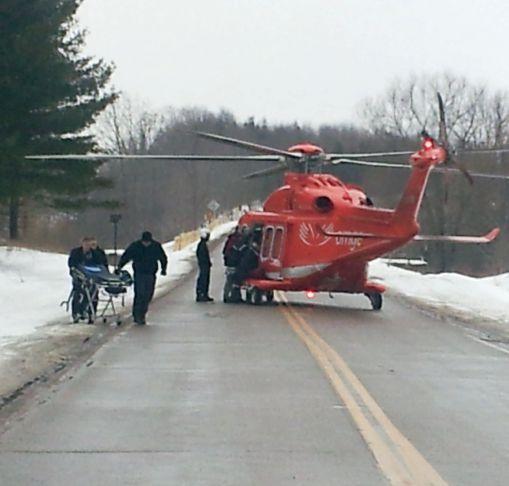
Photo 1: In February, a vehicle collided with a train at a high speed in southwestern Ontario. The lone occupant of the vehicle was suspected of having serious internal injuries; this prompted EMS to request an air ambulance to respond to the scene.
Photo 2: An air ambulance crew member, pictured here in a white flight helmet, will ensure that it is safe to approach the helicopter, and will escort rescuers to and from the helicopter.
Photos courtesy of r . Kienselo KK er


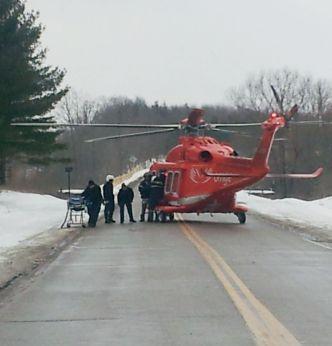
sonnel had to turn away momentarily to prevent flying snow particles from entering their eyes. The same downwash effect is produced when the helicopter takes off.
It is also a good idea to implement a safety zone around the helicopter. When the helicopter is landing and on the ground, a safe distance of 61 metres (200 feet) is recommended for all personnel and 45.7 metres (150 feet) for vehicles. This safe distance needs to be maintained until you are directed to approach the helicopter by the pilot or a crew member. If you need to approach the helicopter, keep a direct line of sight with the pilot and make sure that he or she sees you.
officer prior to landing. The landing-zone officer can be any firefighter, police officer or EMS personnel. If you are chosen for this task, be sure to communicate clearly and effectively with the pilot. You will need to identify yourself as the landingzone officer so that the pilot will know with whom he or she is speaking. Give the pilot precise directions to the landing zone and any of your observations as the pilot is landing the air ambulance so that he or she knows exactly what to expect on the ground. Observations can include landmarks around the landing area, overhead hazards and wind direction.
Before the helicopter lands, all loose debris needs to be secured or it can become a projectile; this includes any uncharged hoselines, extraction equipment that has been taken off of the fire apparatus and any other small objects. Any projectile can easily cause injury to responding personnel on the ground, as well as cause mechanical damage to the helicopter’s engine if debris is sucked into the engine’s intakes.
When the helicopter is landing, there will be downwash produced by the rotors. The downwash can produce winds as fast as 160 kilometres per hour (100 miles per hour), blowing anything in their path. Eye protection needs to be worn. Case in point: At our accident scene, when the helicopter was landing, the downwash produced a whiteout condition. All per-

Mark van der
If you are assisting EMS with the transfer of the patient to the helicopter, an air ambulance crew member will escort you to the helicopter. In photo 2, you can see the crew member in the white flight helmet. He or she will ensure that it is safe to approach the helicopter, and will escort you to the helicopter and then direct you away from the helicopter when it comes time to leave.
In photo 3, you can see two EMS personnel moving away from the helicopter. Notice how they are positioned: they are hunched down while walking under the canopy of the rotating blades. The blades of the helicopter are the most dangerous part for any approaching personnel.
Once on the ground, the pilot will sometimes keep the helicopter’s engine running and the blades spinning at an idle speed so the helicopter can quickly depart. When this is the case, you will need to protect your head by staying low when approaching the helicopter.
Always approach the helicopter directly from the sides – not along the tail portion. The rear and front areas are the most dangerous zones for two reasons: first, because the pilot cannot see you from the rear, where there is also a spinning tail rotor, and second, because the blades in the front are tilted forward, which does not leave much space in which to approach.
More information about helicopter safety can be obtained from your local air ambulance provider. It will sometimes even offer practical training to personnel so that they can become comfortable and confident when working around a helicopter.
is a 14-year veteran of the fire service. He works for the City of Woodstock Fire Department in Ontario. Mark instructs in Canada, the United States and India and is a local-level suppression instructor for the Pennsylvania State Fire Academy and an instructor for the Justice Institute of B.C. Email Mark at Mark@FireStarTraining.com
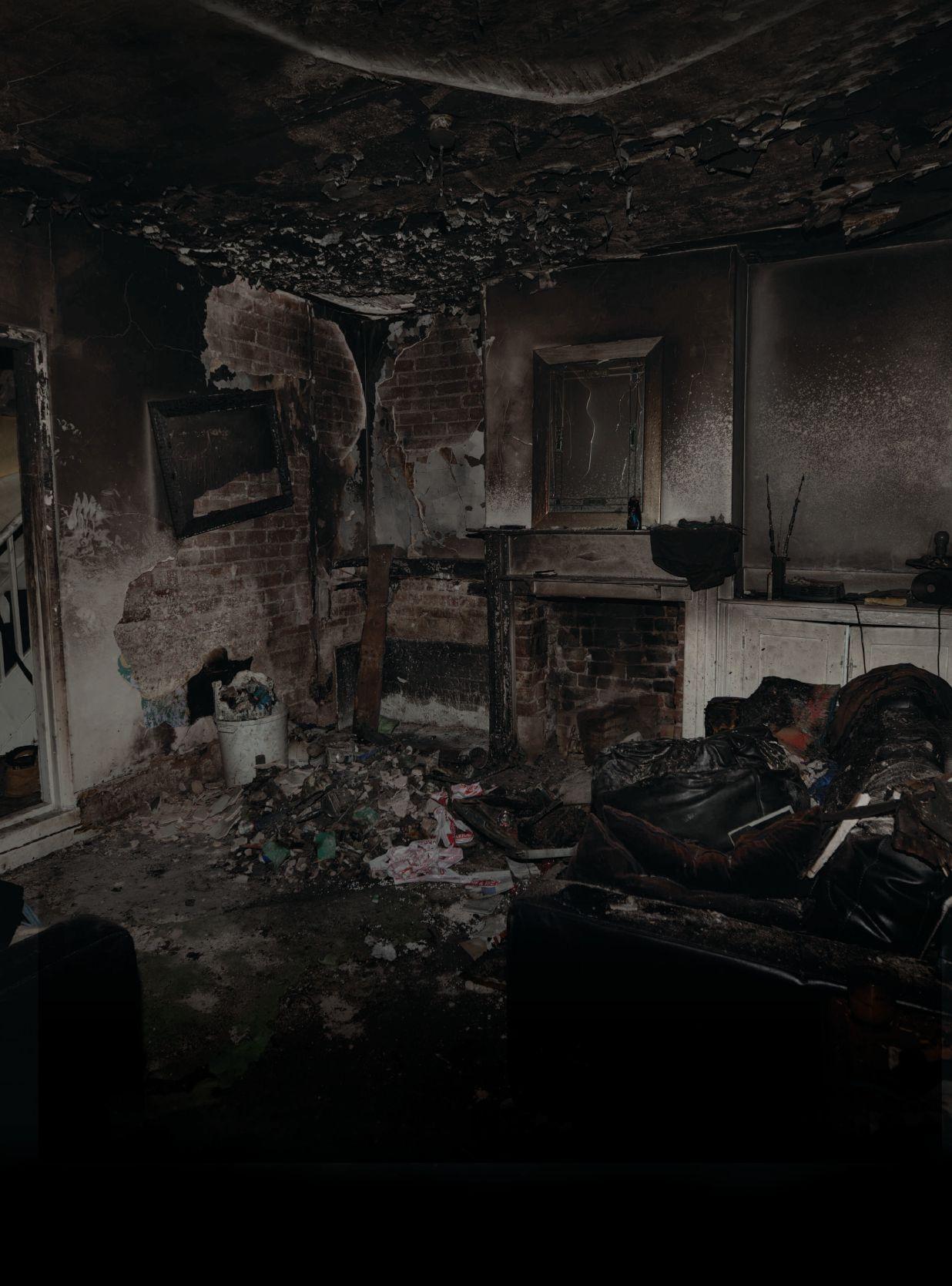
Photo 3: EMS personnel are hunched down while walking under the canopy of the rotating blades, which are the most serious hazard for approaching personnel.
Feyst
B) Here.
A) Here.
Introducing the world’s most advanced Thermal Imaging Camera – the EVOLUTION® 6000. Take the guesswork out of fighting fires. Hot spots remain:
C) Here.
D) All of the above.



By K EVIN F OSTER Fire Chief, Midland, Ont.
p
STRAIGHTtalK
Upholding the integrity of the fire service
rofessional is a term that can be widely interpreted. Many occupations are referred to as professional because of the level of trust, confidentiality, training or certification required. Professional can mean a person who delivers a high quality of work, or a specialization. And it can indicate the socio-economic organization of individuals.
Certainly, the fire service falls within the scope of several of those definitions of professionalism, so I definitely believe that firefighters should be considered professionals. Being considered a professional comes with expectations that affect all firefighters – career, part-time, and volunteer, including chief officers right through to the rank and file. The fire service strives not only to achieve these expectations, but to exceed them. We are, after all, a service that responds to individuals when they are at their times of greatest need, and it is primarily that for which the fire service is admired by the public.
Under the watchful eyes of taxpayers, municipal budgets are being scrutinized for value. Municipal services are being studied to ensure that the community needs them and that they are delivered efficiently and cost effectively. Emergency services are no exception to these detailed analyses. Now, more than ever before, any perceived laissez-faire attitude, sense of entitlement or improper activity has the potential for disastrous fallout.
In order to maintain the high level of public respect for our profession that has developed among the citizens we serve, we must be extra vigilant to do and say the right things. The dominance of social media continues to astound me; I admit a reluctant acceptance of social media rather than a warm embrace. Almost everyone has some type of electronic device that can record in one form or another, and almost instantly share it with everyone in the world. Public satisfaction goes further than just emergency response and calendars: we must be prepared to demonstrate professionalism all the time, not just whenever it is most convenient; that means in the station, at a publiceducation detail or an emergency scene.
maintain a high standard of personal conduct and, voila. Remember why you chose to be a part of the fire-service family: most likely you chose it because of your desire to help others. If you chose it for other reasons it’s time to re-evaluate.
The conduct of one can have a detrimental impact on the reputations of many; when that happens, it is imperative that the actions be rectified. Addressing the matter with the individual is the responsibility of everyone. Activities on the fire ground or around the fire station should never be perceived as an inconvenience. Do you find your fellow firefighters more focused on their iPhones and BlackBerrys than on station duties? I have to admit there are times when I find myself doing just that and sometimes it takes a colleague to bring back perspective. But, truly, professionalism is more than just being aware that there are inopportune times to check the techno-gadget on your hip.
Have you ever heard a firefighter complain that his gloves were damaged and he couldn’t get a new pair, then, when he does receive new ones, he leaves them in his pockets instead of wearing them at the next call? Or what about the firefighter who says his bunker gear isn’t that dirty, because he has bought into the stereotype that having dirty gear means hero firefighter and thus impresses people? Health-
. . . any perceived laissez-faire attitude, sense of entitlement or improper activity has the potential for disastrous fallout. ‘‘ ’’
Damaging the integrity and honour of the profession can happen faster than we ever dreamed imaginable. We spend countless hours building respect while attending community events and participating in fundraisers, and the glamour associated with emergency response can be lost in an instant through a smartphone flash or video. Protecting our integrity and honour isn’t really all that difficult;
Kevin Foster is in his 25th year in the fire service, having begun as a volunteer firefighter in East Gwillimbury in 1987. Foster was appointed to his current position as the chief with the Midland Fire Department in November 2001 and is Midland’s community emergency management co-ordinator. Foster is president of the Ontario Association of Fire Chiefs. Contact him at kfoster@midland.ca and follow him on twitter at @midlanddfsem
and-safety proponents have gone to great lengths to conduct research and educate the fire service on the affects of contaminated PPE. Dirty gear should be washed at a proper facility, not the local laundromat. This also means that just because you have been out all night at that long call, you don’t wear your gear into the pizza place. If something is important then show it is important, all the time. Looking cool in your gear is not synonymous with professionalism.
Equally important to personal conduct is the use of language. Speak of the public with compassion and respect and we will receive compassion and respect in return. Fire-station speak doesn’t belong on the incident scene, and today it isn’t even acceptable for the fire station. Friendly joking to one may be offensive to another.
The public trust is a fragile thing and perhaps today more so than at any other point in time, those who provide service to the public find themselves under heavy scrutiny. We must take care to protect the public’s view of the service by upholding the professional image we have put together rather than just taking it for granted.
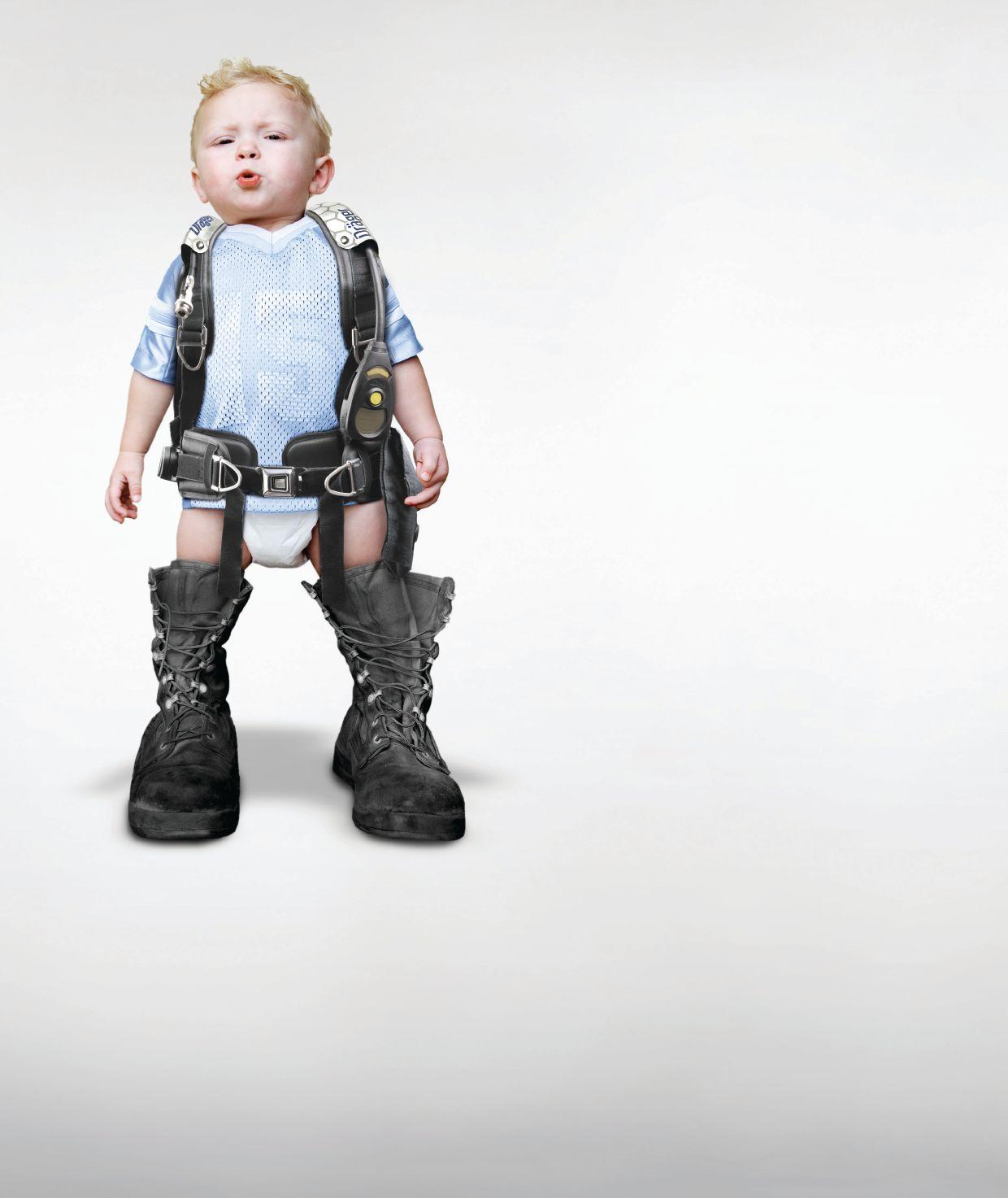
Whatever your needs, Dräger has an SCBA in its portfolio that truly satisfies them. With the expansion of our Sentinel product line—which now includes lightweight, fully integrated, cost-effective options — our SCBA portfolio now allows you to mix and match harness solutions with PASS systems in a way that perfectly suits your department. It’s German engineering at its best. If you’ve been stuck with solutions that offer too much or not enough, Dräger is ready to outfit you with equipment that’s just right. Options that fit your
Options that fit your budget today and tomorrow.
Whatever your needs, Dräger has an SCBA in its portfolio that truly satisfies them. With the expansion of our Sentinel product line—which now includes lightweight, fully integrated, cost-effective options—our SCBA portfolio now allows you to mix and match harness solutions with PASS systems in a way that perfectly suits your department. It’s German engineering at its best. If you’ve been stuck with solutions that offer too much or not enough, Dräger is ready to outfit you with equipment that’s just right. for more information visit www.draeger.com/scba
for more information visit www.draeger.com/pssseries
patio problems
Outside fires take longer to detect, cause more damage, and need extra resources to extinguish
By Len GaRis, JOe CLaRe and KaRin maRK
top : Damage from fires that start outside has been found to be 2.4 times greater than the average loss associated with multi-family building fires. Fires that start outside also require more resources to extinguish and are four times more likely to spread to other properties.
fire prevention efforts often focus on interior hazards, but new research from the University of the Fraser Valley suggests the exterior of multi-family buildings deserves equal attention.
Released in January by the university’s Centre for Public Safety and Criminal Justice Research, Fires that Commence on Balconies of Multi-Residential Buildings: The Importance of an External Fire Area of Origin for Residential Fire Outcomes, examined 2,638 fires in multi-family buildings reported to the Office of the Fire Commissioner in British Columbia from 2006 to 2011.
The study found that 255 of these fires (9.7 per cent) originated outside – on a balcony or street-level patio, courtyard or terrace – and damage from outside fires was 2.4 times greater than the average loss associated
with multi-family building fires. While there was no difference in the frequency of injury for outside fires compared to other multi-family fires, the data revealed that outside fires were:
• Less likely to activate a smoke alarm and more likely to require detection by sight or smell;
• More likely to require fire department involvement;
• Less likely to burn out on their own, be controlled by removal or shutoff of the full source, or be controlled by sprinklers;
• More likely to extend to the building and beyond.
THE PROBLEM
Propane tanks to fuel barbecues are commonly stored on balconies and patios of multi-family buildings, often along with other items such as bicycles, cardboard boxes

and furniture. This means that most residents of multi-family properties live within a few metres of a dangerous combination of ignition sources (barbecue or candles) and fuel sources (propane, stored items, cladding and wooden building elements) – in either their own outdoor spaces or those of neighbours.
Delays in detecting outside fires significantly add to the hazard. Outside fires are 5.5 times less likely to be detected by a smoke alarm than other multi-family house fires, and are also 1.4 times more likely to require detection by sight or smell. This means that outside fires that occur when people are typically asleep, or not home or using their outdoor spaces, may have the opportunity to become more entrenched by the time they are detected.
Because of these delays in detection, outside fires tend to require more resources in order to be extinguished. Fires that start outside of buildings are 1.5 times more likely to require the fire department to apply water, and 1.5 times more likely to be controlled by makeshift firefighting aids. Outside fires were also 3.3 times less likely to have burned out on their own, 5.4 times more likely to have been controlled by removal or shutoff of the fuel source, and 3.5 times less likely to have been controlled by a sprinkler system.
The detection delay also contributes to the spread of fires that start outside, which were 1.9 times more likely to extend to the building than other multi-family fires, and 4.1 times more likely to spread beyond the property where the fire started.
FINDING SOLUTIONS
The additional risk associated with outside fires reveal the shortcomings of typical multi-family building fire-protection systems.
In part, these may be addressed by provincial building codes. For example, the British Columbia Building Code now requires sprinklers on balconies (to additional code levels required under NFPA 13), fire-resistant exterior cladding, and additional fire separations in roof areas, while the Alberta Building Code requires balcony sprinklers and improved exterior cladding for low-rise wood-frame buildings. Similar changes are being considered in Ontario for wood-frame buildings.
The study also suggested that, in light of the fire-safety implications of outside fires, the recreational use of propane and storage of other potential fuel sources on multi-family balconies and patios needs to be rethought. For fire prevention purposes, consideration should be given to:
• Prohibiting storage in these areas;
• Developing strategies for earlier detection of outside fires;
• Extending sprinkler detection to cover these areas, where possible. Whichever combination of techniques is selected, a systems approach is required – one that involves building residents, managers/ owners, built-in fire protection strategies and the fire service, while also considering costs, legitimate uses of the outdoor spaces, and storage requirements in multi-family buildings.
The full study can be downloaded from the University of the Fraser Valley, Centre for Public Safety and Criminal Justice Research website, http://www.ufv.ca/media/assets/criminology/Balcony-Fires.pdf.
Len Garis is the fire chief for the City of Surrey, B.C., an adjunct professor in the School of Criminology and Criminal Justice at the University of the Fraser Valley, and a member of the Institute of Canadian Urban Research Studies (ICURS), Simon Fraser University.
Dr. Joe Clare, the strategic planning analyst for the Surrey Fire Service is an associate professor in the Crime Research Centre, University of Western Australia, and a member of the Institute of Canadian Urban Research Studies, Simon Fraser University. He has experience in Australia and Canada in conducting, operations-focused research with emergency first responders.
Karin Mark is a former newspaper reporter who writes for publications and corporate clients in Metro Vancouver, B.C.
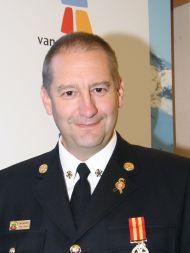
By T OM D E S ORC y Fire Chief, Hope, B.C.
mVOLUNTEERVIsIon
Being professional without saying a word
y colleagues will understand when I say that there are some real characters out there. We’ve all encountered what I like to call coffee-shop critics – those who believe that they are always right, and have an opinion on everything from the weather to the fire department.
If you’re new to public life, the seemingly endless barrage of criticism that seems to come our way can be hard to take at first, but understand that if you stay the course and treat people as you wish to be treated, good karma will eventually come back to you. As I deal with people on a day-to-day basis, I’m often reminded of a story.
A number of years ago, I was at a social function during the holiday season, one of those events where people stand around and make small talk about the season, the weather and life in general. The crowd was a professional group, mostly made up of business people and community leaders in our small town.
One conversation I had with a woman there was somewhat typical. As the discussion turned to occupation, I quickly realized that she wasn’t from around Hope, B.C. I mean, everyone knows me, right? As it turned out, she was from the city and when she found out that I was a firefighter, not to mention the fire chief, well, that’s where it all began.
First, I had to deal with the small-townversus-big-town emergency services discussion, and what I thought would lead into a “mustbe-tough-to-do-what-you-people-do” revelation on her part. That’s not quite the way it went. Apparently, this person didn’t have a lot of respect for volunteers. Well, maybe that’s not the right term. I’m sure she respected volunteers, she just didn’t want them to respond to any emergencies that she might have, preferring to deal with “professionals,” should they be required.
i
same league as our brothers and sisters in the bigger communities.
As I moved away from that conversation, I kept repeating to myself that golden rule: treat people the way you would like them to treat you. It may not work right away, but it will work out in the end.
As I look back on this story – where it went from here and how predictable it turned out to be – it makes me smile. You see, a day or two after this conversation, we had a little snowstorm blow through. Thick, wet snow was falling on the freeway just west of town and there were crashes and fender-benders everywhere. One collision involved an SUV that went off the road and into the median. Paramedics responded along with fire and rescue (which are separate agencies here, but that’s another story for another day). With the weather the way it was and due to my proximity at the time, I was able to reach the scene right behind the ambulance.
We actually had two vehicles involved in separate incidents and the paramedics asked me to assist in checking people out. Injuries were minor and rescue wasn’t required; however, as I approached the SUV, who should be sitting inside with a cut on her forehead? You guessed it: my friend from the party.
’ve come to the simple resolve that no matter how boorish [the vocal minority] can be, i ’ll still be there to save them should they need it. . . ‘‘ ’’
At this point, you can imagine the bruises on my tongue as I’m biting it, but, taking the high road, I graciously point to the fact that while smaller communities could afford to fund full-time career firefighters, the paid on-call staff were as well trained and as “professional” as any in our country. Of course, that didn’t wash and there was no convincing this person that we were even in the
Tom DeSorcy became the first paid firefighter in his hometown of Hope, B.C., when he became fire chief in 2000. Originally a radio broadcaster, Tom’s voice could be heard in the early 1990s across Canada as one of the hosts of Country Coast to Coast. DeSorcy is married with two children and enjoys curling and golf. He is also very active with the Fire Chiefs’ Association of B.C as communications director and conference committee chair. Email Tom at TDeSorcy@hope.ca and follow him on Twitter at @HopeFireDept
Now, you can imagine what went through my mind: retorts like “fancy meeting you here” or “would you like my assistance or would you prefer to wait for a ‘professional?’ ” Instead, that darned training kicked in and I spoke a cordial greeting of, “Are you OK?” My one satisfaction was in hoping that she recognized me and that I was able to demonstrate that small-town responders can help you, all without me having to say a word.
I guess I was able to prove a point, albeit in an unfortunate way, but that’s how it happens. After many years of dealing with the vocal minority, those aforementioned coffee shop experts who could supposedly run any fire department anywhere, I’ve come to the simple resolve that no matter how boorish these people can be, I’ll still be there to save them should they need it; I’ve done it countless times over the years – just like anyone on a career department.

B y L ES K ARPLUK
Fire Chief, Prince Albert, Sask.
AND
Ly LE Q UAN
Fire Chief, Waterloo, Ont.
WLEADERSHIPforum
Passing the torch to future leaders
e have written several columns related to succession planning and mentoring, but we fear that some chief officers still don’t understand or embrace what we are trying to promote (and practise) in our departments, which is the concept of passing the leadership torch to up-and-coming leaders. Whether or not we want to accept the fact that the fire service is not doing a great job of succession planning, the day will come when we retire, and today we must decide what we want our legacy to be.
The fire service is known as an organization whose members pride themselves in the service they provide for their communities, yet when it comes to creating an internal climate of support for developing leaders, there are still some bumps in the road; indeed, the road to leadership/management is narrow and few choose it. In the career departments, is this a union-versus-management issue or it is because we, the managers, don’t want to let go of the reins because this could be interpreted as a sign of weakness? In the volunteer departments, is availability of time, or lack thereof, an excuse for failing to plan for the future?
As leaders, we must understand that before we can pass the torch, we must work with those in our organization who have the demonstrated talent and desire to continue leading the organization. Call this mentoring, succession planning, leading by example or whatever the buzzword is for the day; it comes down to nurturing the raw talent we see in our staff and giving them the tools and opportunities to hone those skills. A great way to nurture that talent is to assign projects that challenge future leaders, forcing them outside of their comfort zones and leading them to new levels of personal development. This isn’t complicated and we do it when we introduce new training topics, so we are already familiar with the concept of challenging our people to grow.
leader, but to keep things simple, we define servant leaders as those who strive to serve the needs of individuals and the organization by putting their needs behind those of the organization and placing those of staff and the organization first. Servant leaders also listen carefully to others and help to build the community or organization by creating a vision that everyone can share and support because they feel they have a vested interest in its outcome – they have ownership.
If we as leaders are unable to demonstrate and share both a long- and short-term vision with our staff, then how can we expect them to want to join us and help lead the way? Sometimes, the easiest thing we can do as leaders is look back to our formative years as fledgling firefighters and future officers, and critically analyze what made us pursue the position that we presently occupy. Was it money, was it having greater control over the department’s operations or was it the opportunity to make a difference?
It is up to us to ensure that the right people are placed in the right positions to secure the fire department’s future and to ensure that the department continues to meet the needs of our staff and the communities we serve. We have prided ourselves on writing about topics that are relative to our profession and there is no doubt that preparing our future leaders is a fundamental issue facing the fire service.
we must work with those in our organization who have the demonstrated talent and desire to continue leading the organization. ‘‘ ’’
Another great way to accomplish this is by letting go of the reins and becoming a servant leader. Servant leadership is a very powerful leadership tool that helps to promote the transitioning of power and positions. There are numerous definitions of a servant


Les Karpluk is the fire chief of the Prince Albert Fire Department in Saskatchewan. Lyle Quan is the fire chief of Waterloo Fire Rescue in Ontario. Both are graduates of the Lakeland College Bachelor of Business in Emergency Services program and Dalhousie University’s Fire Service Leadership and Administration program. Contact Les at l.karpluk@sasktel.net and Lyle at lyle. quan@waterloo.ca. Follow Les on twitter at @GenesisLes and Lyle at @LyleQuan
So, our challenge to you chief officers is this: do something. It doesn’t matter how big or small – all that matters is that you move forward with some kind of initiative in this leadership/mentoring endeavour. Focus on leaving the department better than you found it. Yet, at the same time, understand that you are not alone in this challenge; you have your network of friends and fire chiefs who have walked down this path and can help guide and support you. Most importantly, if you look hard enough, you will discover that you have talented people within your organization who are simply waiting for the opportunity to demonstrate their ability to lead.
Do not ignore the importance of this subject; otherwise, your legacy may not be what you envisioned. Don’t be the person who is applauded for leaving the room; be the person who earns the applause for doing what is right before leaving the room – and that should be passing the leadership torch to the next generation.
2013 NATIONAL SuppLIerS dIrecTOry
AIR TECHNOLOGY SOLUTIONS CANADA INC.
A.J. STONE COMPANY LTD.
141 Bentworth Ave., Toronto, ON M6A 1P6
Tel: 416-785-3752
Fax: 416-781-2827
Toll Free: 1-800-205-3473
e-mail: firesafety@ajstone.com website: www.ajstone.com
Joyce, Tyler, Dan, Robin A.J. Stone Co. Ltd. has proudly served the needs of the Fire/Rescue and First Responder Services of Canada since 1972, featuring quality products, knowledgeable sales reps, and training support.
A.J. Stone supplies equipment from MSA, TNT Rescue, Paratech Rescue, Akron, Kochek, Angus Fire, Marsars Ice/Water Rescue, Innotex Bunker Gear, Pro-Tech Gloves, E.S. Safety Systems, CET, Fort Garry Fire Trucks, and much more. We service what we sell!
Serving All of Canada
ACTION MEALS INC.
47 Faircrest Blvd., Kingston, ON K7L 4V1
Tel: 613-546-4567
Fax: 613-546-5031
e-mail: info@actionmeals.com website: www.actionmeals.com
Mark Hutchings
Self-Heating Action Meals® - nutritious MRE meals for isolated responders. The lightweight kit contains pre-cooked meal + heater, providing hot food in minutes without matches, fire, stove, electricity. A favorite for use at Emergencies or Fires. Serving All of Canada
251 Queen St. S., Ste. 512, Mississauga, ON L5M 1L7
Tel: 905-826-6682
Fax: 866-511-6904
Toll Free: 1-866-735-1480
e-mail: info@airmation.ca
website: www.airmation.ca
Randall Weber, VP Marketing & Sales, Canada
Air Technology Solutions is dedicated to our Clients, offering updated, timely, full service Indoor Air Quality (IAQ) solutions. Air quality concerns are mitigated using a unique combination of professional indoor air quality assessment coupled with solutions. Off the shelf or customized site specific air cleaning equipment is available to resolve IAQ issues. Our technical experts review client requirements and budgetary availability. The finest appropriate air cleaning systems are provided. Air Technology Solutions is a leader in Diesel Exhaust Remediation. Building and facility managers, business owners, contractors, architects, and engineers have been working with Air Technology Solutions since 1986 to resolve IAQ needs. Employee and personnel safety and health are key issues. Breathing safe air in the workplace is of utmost importance. We provide global customized solutions to control contaminants, pollutants and odours in your facility. We look forward to servicing your requirements.
Serving All of Canada
ARÉO-FEU/AREO-FIRE LTD.
Head Office: 5205 J.A. Bombardier Longueuil, QC J3Z 1G4
Tel: 450-651-2240
Fax: 450-651-1970
e-mail: info@areo-fire.com
website: www.areo-fire.com
Dominic Miller (Technical support for fire trucks and sales of Rosenbauer trucks & Daniel Renaud (Sales Director)
Committed to meeting our customers’ needs, we are proud to offer a wide range of top-of-the-line tools, clothing and accessories for fire fighting and emergency interventions and fire truck. For almost 50 years, we have continued to add new, high-quality products so that you can find everything you require under one roof.
New online purchasing website at www.aero-fire.com Repair services on: SCBA, extrication tools, gas detection, portable pump, pumper trucks, aerial ladder, etc.
Authorized parts and service center for: Hale, Waterous, Darley, KOEHLER
Major product lines: MSA, HURST, CET FIRE PUMP, KOCHEK, RED HEAD, AWG, PROTEK, NAFH, GROUPE LEADER, MAXXERA, RES-Q-JACK, STREAMLIGHT, ERGODYNE, MUSTANG, FRC, FOAMPRO, NAUTIC & ART, INNOTEX, ROSBOROUGH BOAT, KOEHLER BRIGHT STAR, HALE, WATEROUS.
Areo-Fire now has a Canadian distribution network which supplies products such as Cosmas fire boots, Leader Group products (FANS, SEARCH & RESCUE, TRAINING), Acton fire boots, Protek Nozzles, Rabbit P-555 portable pump and Maxxera’s hose reel and unroller.
Serving ON, QC, NB
CANADA = BC (British Columbia), AB (Alberta), SK (Saskatchewan), MB (Manitoba), ON (Ontario), QC (Quebec), PE (Prince Edward Island), NL (Newfoundland & Labrador), NB (New Brunswick), NS (Nova Scotia), NT (Northwest Territories), NU (Nunavut), YT (Yukon)
ASPHODEL FIRE TRUCKS LTD.
1525 County Rd. 42, Norwood, ON K0L 2V0
Tel: 705-639-2052
Fax: 705-639-2992
Toll Free: 1-877-639-2052
e-mail: sales@aftl.ca website: www.aftl.ca
Jeff McNiece, Paul Bitten, Sales
We build pumpers, tankers, rescues, rapid response and mini-pumper vehicles designed for need, built for your budget. Custom manufacturing of quality emergency and specialty vehicles for police, fire, EMS and industry. “If you can dream it up - we can build it” Serving All of Canada
BECOMING A FIREFIGHTER
PO Box 530, 105 Donly Drive S., Simcoe, ON N3Y 4N5
Tel: 519-429-3966
Fax: 1-866-810-8111
Toll Free: 1-888-599-2228 ext. 235
e-mail: bcomer@annexweb.com website: www.becomingafirefighter.com Barb Comer, Sales Assistant
C-MAX FIRE SOLUTIONS
3044 Sawmill Rd., St. Jacobs, ON N0B 2N0
Tel: 519-664-3796
Fax: 519-664-3624
e-mail: fireinfo@c-max.ca website: www.c-max.ca
Kathy Brookes, Sales & Service
Canadian family owned and operated business that offers a higher standard of service and sales for all your Fire Apparatus needs. C-Max Fire Solutions offers 24 Hour service from EVT Technicians with fully stocked service trucks. We offer Pump testing and repairs to all makes and models. We offer ground ladder testing as per NFPA 1932. We are also Ontario’s Factory Sales and Service Centre for KME Fire Apparatus.
Serving ON
CANADIAN SAFETY EQUIPMENT INC.
2465 Cawthra Rd., Unit 114, Mississauga, ON L5A 3P2
Tel: 905-949-2741
Fax: 905-272-1866
Toll Free: 1-800-265-0182
e-mail: info@cdnsafety.com website: www.cdnsafety.com
2013 NATIONAL SuppLIerS dIrecTOry
CIRCLE D LIGHTS
Natale Machine & Tool Company, Inc.
339 13th Street, Carlstadt, NJ 07072USA
Phone: 201-933-5500
Toll Free: 1-800-883-8382
Fax: 201-933-8146
website: www.circle-d.com
Ross Humphry, Nick Desmier, Scott Gamble, Chris Hamilton, Chris Moore, Steve Shelton
We supply SCBA’s, Thermal Cameras, Auto Extrication, CAF Systems, Fall Protection, Bunker Gear, Fire Hose, Communications Equipment, Nozzles, Fittings, Hazmat Suits, Ventilation Fans, Gas Detectors, Confined Space Rescue Equipment, High Angle Rescue Equipment, Boots and Gloves. Everything for Fire Fighting and Confined Space Rescue.
Serving All of Canada
CARL THIBAULT FIRE TRUCKS
38 Thibault (Street), Box 540, Pierreville, QC J0G 1J0
Tel: 450-568-7020
Fax: 450-568-3049
e-mail: info@thibaultfiretrucks.com
website: www.thibaultfiretrucks.com
Carl Thibault, Maricarl Thibault
We are a Canadian based company and we manufacture a full line of fire apparatus which includes aerial ladders, pumpers, tankers, rescue units and vacuum tankers. We provide parts and other related products.
Serving All of Canada
CET FIRE PUMPS MFG.
75, rue Hector, C.P. 90, Pierreville, QC J0G 1J0
Tel: 450-568-2719
Fax: 450-568-2613
Toll Free: 1-888-844-2285
e-mail: sales@fire-pump.com
website: www.fire-pump.com
Stephan Thibault
Accept Only The Best
Portable Pumps, Skid Units, CAFS, Foam Trailer, Glider Kit, Water Tank, Brush Truck and Fire Apparatus.
A Century of Engineering for the Bravest!
Serving All of Canada
CUTTERS EDGE
PO Box 846, 3855 23rd Street, Baker City, OR 97814
Tel: 541-524-9999
Fax: 541-524-9996
Toll Free: 1-800-433-3716
e-mail: info@cuttersedge.com website: www.cuttersedge.com
For over 65 years, Circle D Lights has been manufacturing rugged, portable and permanent mount fixtures that are weather proof, as well as corrosion and shock resistant. Our units are constructed of heavy- wall cast aluminum alloy housing with stainless steel hardware and patented, double cushioned spring mounted sockets. Resilient ring rim gaskets hold lamps tightly and protect the housing from dirt and moisture. In further responsiveness to the fire industry, our Powerbox junction box is not only designed to combine strength and ease of use by fast-paced emergency and disaster teams, but can also be ordered in various configurations according to individualized preferences. Our remote power distribution box meets the 2009 NFPA 1901: Standard for Automotive Fire Apparatus, and like all Circle D Products, is listed by Underwriters’ Laboratories throughout Canada and the United States where they are widely utilized among professional and volunteer fire departments. Our high standards have earned Circle D Lights a strong reputation for dependability, innovation and safety.
Serving All of Canada
CSE INCENDIE ET SÉCURITÉ
5990 Vanden Abeele, St. Laurent, QC H4S 1R9
Tel: 514-737-2280
Fax: 514-737-2751
Toll Free: 1-866-737-2280
e-mail: info@cseis.com website: www.cseis.com
Henry Paintin
We supply SCBAs, Thermal Imaging Cameras, Auto Extrication Tools, CAF Systems foam, Bunker Gear, Fire Hose and accessories, nozzles, fall protection communications equipment, fittings, hazmat suits, ventilation fans, rescue saws, ice and water rescue gear, high angle rescue gear, boots, helmets and gloves.
Serving All of Canada
Thomas Ruzich
Manufacturers of NEXT GENERATION TECHNOLOGY MULTI-CUT® Fire Rescue Saw with BULLET® Chain, H1 Series Rotary Rescue Saw with choice of Black Diamond and Black Star Diamond Blades and CE94 Concrete Cutting Chainsaw with Diamond Chain. Fully equipped Field Kits are available for all 3 models.
Serving BC, AB, SK, MB, ON, QC, NB and NS
DIXON NORTHLINE
6350-4/5 Netherhart Road, Mississauga, ON L5T 1B8
Tel: 905-564-5680
Fax: 905-564-8822
Toll Free: 1-800-786-9697
e-mail: dlester@dixonvalve.com website: www.dixonvalve.com
Dean Lester
Dixon Valve is a world leader in manufacturing with stocking locations worldwide. We have now combined our Aluminum Northline product line with our Brass Powhatan product line and are proud to issue the new Dixon Fire 2012 Catalogue. Please contact a Northline sales representative at 1-800-786-9697 to have a new catalogue sent to you. As always, we value your commitment supporting a Canadian based manufacturer and look forward to working with you.
Serving All of Canada
DARCH FIRE
9-402 Harmony Rd., Ayr, ON N0B 1E0
Tel: 519-622-6110
Fax: 519-622-7705
Toll Free: 1-800-254-2049
e-mail: sales@darchfire.com website: www.darchfire.com
John Darch, Susan Miller, Todd Finnie
The goal at Darch is to provide the best fire and first responder vehicles, equipment and services so that emergency service personnel can work safely and protect the citizens of their communities.
Darch is the Ontario dealer for Pierce Manufacturing, Holmatro, Draeger, Gear Grid, Chemguard, Key Fire Hose, Supervac, Akron, Trimax plus many more.
The parts department at Darch has all of the everyday as well as hard to find parts that you need to keep your emergency vehicle in top form. Darch’s service professionals are ready to assist you with all of your maintenance and service needs including pump testing and scheduled fleet service.
Serving ON
DRAGER SAFETY CANADA LTD.
7555 Danbro Cres., Mississauga, ON L5N 6P9
Tel: 905-821-8988
Fax: 905-821-2565
Toll Free: 1-877-372-4371
e-mail: sandi.davis-john@draeger.com website: www.draeger.ca
Sandi Davis John
Draeger Tubes detect over 500 different gases. Our gas Analyzer CMS combines high accuracy with simplicity and flexibility. Portable and fixed gas detection are available for many toxic and combustible gases. Draeger’s respiratory line ranges from half mask cartridge respirators to S.C.B.A.’s. We also specialize in Confined Space Training Trailer, the Live Fire Training Systems, the Swede Survival Flashover Systems and Submarine Escape Devices.
Serving All of Canada
2013 NATIONAL SuppLIerS dIrecTOry
DEPENDABLE EMERGENCY VEHICLES
275 Clarence St., Brampton, ON L6W 3R3
Tel: 905-453-6724
Fax: 905-453-7716
Toll Free: 1-800-268-0871
e-mail: sales@dependable.ca website: www.dependable.ca Pino Natale
Design & manufacture custom fire pumpers, rescues, tankers, aerials, haz-mat, air-lighting units, minis, EMS & police support vehicles & equipment. Collision and restoration estimates, complete on-site vehicle collision and restoration, large custom paint shop. Apparatus repairs and MTO certification. Spartan Dealer, Freightliner, Sterling, International, Kenworth, Peterbilt, Mack, Ford, General Motors chassis. Sales. Service and parts for Hale, Darley and Waterous pumps. Extensive parts inventory. Sales and repairs of all makes of Emergency lighting, hose, nozzles and fire related equipment. Friendly, courteous and knowledgeable one stop shopping for fire apparatus and related equipment since 1975.
CANADIAN DEALER FOR:
E-ONE, INC.
1601 S.W. 37th Ave., Ocala, FL 34474
Tel: 352-237-1122
Fax: 352-237-1151
e-mail: info@e-one.com
website: www.e-one.com
CANADIAN DEALERS
Carrier Emergency Equipment
6 Edmondson St., Brantford, ON N3T
5N3 Phone: 519-752-5431
Territory: Ontario, Atlantic Provinces
First Truck Specialty Vehicles
18688 96th Avenue
Surrey, BC V4N 3P9
Phone: 604-888-1424
Territory: British Columbia, Alberta, Yukon, Northwest Territories
Techno Feu Apparatus Maintenance
105 Marie-Victorin, St. Francois-Du-Lac, PQ J0G 1M0 Phone: 450-568-2777
Territory: Quebec
Serving All of Canada
Spartan ERV, A Spartan Company 907 7th Avenue North, Brandon, SD 57005
Tel: 605-582-4000 Fax: 605-582-4001 website: www.crimson-fire.com
Serving All of Canada
EASTWAY EMERGENCY VEHICLES
7 Industrial Ave., Carleton Place, ON K7C 3V7
Tel: 613-257-8197
Fax: 613-226-8517
Toll Free: 1-888-571-6842
e-mail: grivers@eastway911.com
website: www.eastway911.com
Bill Lowry, Director of Sales; Greg Rivers, Sales
Eastway Emergency Vehicles designs and manufactures Fire Apparatus for major urban centers to small volunteer Fire Departments. Each truck is built with the same attention to detail, ensuring quality, strength and durability. Complete product lines of Pumpers, Tankers, Rescues, Wildlands and HazMat vehicles are available. Design work is completed with 3D modeling to ensure the tightest tolerances. All manufacturing is completed at our Carleton Place Ontario facility. Used fire trucks are available, each with factory certification and warranty. Collision repairs and refurbs are performed with quick turnaround time, thus minimizing vehicle downtime. Financing is available with competitive rates and flexible payment terms. Short term and long term leasing also available.
Eastway is proudly Canadian and celebrating 45 years as a 100% family owned and operated business. Built by Canadians, for Canadians. Serving All of Canada
FDM SOFTWARE
113 - 949 West 3rd St., North Vancouver, BC V7P 3P7
Tel: 604-986-9941
Fax: 604-986-7130
Toll Free: 1-800-986-9941
e-mail: sales@fdmsoft.com
website: www.fdmsoftware.com
Lynne Boucher, Acct. Mgr. FDM Software helps Heroes to the rescue – and after: Our fully integrated CAD, RMS, and GIS Analyst solutions give First Responders immediate access to shared data.
Seamless access to critical information such as best route and hazmat details makes for a faster, more comprehensive response. Reporting is simplified with easy to use reporting tools plus real-time dashboarding and Business Intelligence technology. Our scalable solutions are cost effective, our implementation and support is second to none – and we have 23 years proven experience in over 400 North American jurisdictions.
Serving All of Canada
FIREHALL BOOKSTORE
PO Box 530, 105 Donly Drive S., Simcoe, ON N3Y 4N5
Tel: 519-429-3006
Fax: 1-877-624-1940
Toll Free: 1-877-267-3473
e-mail:
firehallbookstore@annexweb.com website: www.firehallbookstore.com
Becky Atkinson
Canadian distributors for education and training products.
Product lines include NFPA, IFSTA, PennWell, Brady, Action Training, Emergency Film Group & Jones & Bartlett.
Serving All of Canada
FIRE FIGHTING IN CANADA/ CANADIAN FIREFIGHTER/EMS QUARTERLY
PO Box 530, 105 Donly Dr. S., Simcoe, ON N3Y 4N5
Tel: 519-429-5178
Fax: 888-404-1129
Toll Free: 1-888-599-2228 ext. 252
e-mail: fire@annexweb.com website: www.firefightingincanada.com
Publisher, Martin McAnulty
Advertising Manager, Catherine Connolly
Editor, Laura King
Serving All of Canada
FIREHALL.COM
PO Box 530, 105 Donly Dr. S., Simcoe, ON N3Y 4N5
Fax: 1-888-404-1129
Toll Free: 1-888-599-2228 Ext. 253
e-mail: cconnolly@annexweb.com website: www.firehall.com
Catherine Connolly, Advertising Manager
Firehall.com provides an excellent forum for exchange among firefighters and others involved in the fire service.
Advertising options include banner ads and e-blasts and offer extensive exposure to the rank and file.
FIRESERVICE MANAGEMENT LTD.
34 Torlake Cres., Toronto, ON M8Z 1B3
Tel: 416-251-3552
Fax: 416-253-0437
Toll Free: 1-888-731-7377
e-mail: tanja@fireservicemanagement.com website: www.fireservicemanagement.com
Peter Hill, Tanja Wleklinski
Canada’s Premier facility dedicated exclusively to providing the best in bunker gear cleaning, assessing, decontamination and repair. NFPA 1851:2008 compliant, ISO 9001: 2008 registered, ETL verified for all fabric repairs and all moisture barrier repairs. Locations: Calgary, Toronto, Detroit. Serving All of Canada
2013 NATIONAL SuppLIerS dIrecTOry

FISHER’S REGALIA & UNIFORM ACCOUTREMENTS CO. LTD.
1 King St., Unit 8, Barrie, ON L4N 6B5
Tel: 705-720-2294
Fax: 705-720-2274
Toll Free: 1-877-898-5362
e-mail: enquiries@fishersregalia.com website: www.fishersregalia.com
Yvonne Fisher-Tulloch
Custom fit dress uniforms and everything that goes with them. Shop On-Line at www.fishersregalia.com
Proudly serving those who serve for 38 years.
Serving All of Canada

FOOTAGE TOOLS INC.
1-54 Audia Crt., Vaughan, ON L4K 3N4
Tel: 905-695-9900
Fax: 905-695-8874
Toll Free: 1-888-737-3668
e-mail: df@footage.ca
website: www.footagetools.com
Dan Ferguson, President
Footage Tools is a distributor for Champion Rescue Tools, Sava Air Lift Bags and Hazmat Products, HJR Autobrace2 System and Packexe Smash.
Serving All of Canada
FORT
GARRY FIRE TRUCKS LTD.
53 Bergen Cutoff Rd., Winnipeg, MB R3C 2E6
Tel: 204-594-3473
Fax: 204-694-3230
Toll Free: 1-800-565-3473
e-mail: bnash@fgft.ca website: www.fgft.com
Brian Nash- National Sales Manager Fort Garry Fire Trucks offers a complete line of Quality Fire Apparatus, including Pumpers, Tankers, Rescues and Aerial Ladders.
Serving All of Canada
FP2 (Ingenious Software)
1423 Park St., Nelson, BC V1L 2H7
Tel: 250-352-9495
Fax: 206-350-7750
Toll Free: 1-866-352-9495
e-mail: fp2@fp2.ca
website: www.fp2.ca
Jeremy Murphy, Douglas Farquharson
FP2 is powerful, flexible and reasonably-priced. Modular design covers every aspect of Fire Department administration, including Dispatch, Scheduling, Attendance and much more. Our unique Compensation Reports can even do payroll for you!
Serving All of Canada

FSI® NORTH AMERICA, A Division of Fire Safety International Inc.®
311 Abbe Road, Sheffield Lake, OH 44054
Tel: 440-949-2400
Fax: 440-949-2900
e-mail: sales@fsinorth.com website: www.fsinorth.com
Mark Conron, Phil Graham
Full line supplier of mobile, portable & fixed hazmat decon showers, shelters, field hospitals, surge capacity systems and accessories. Also offer rescue boats, PPV fans, and EMS supplies such as the FSI Transporter Disposable Backboards, triage tape, FSI medical ‘Field Cots’ and mortuary supplies.
Serving All of Canada

GLOBE MANUFACTURING COMPANY, LLC
37 Loudon Rd., Pittsfield, NH 03263
Tel: 603-435-8323
Fax: 603-435-6388
Toll Free: 1-800-232-8323
e-mail: info@globefiresuits.com website: www.globefiresuits.com
Stephanie McQuade
Problem: Your current turnout gear restricts your performance. It’s physiology. When you move your arms to work in front of you or raise them up to work above you, you need more length across your back and more length under your arms or else your movements will be restricted. Our AXTION™ back with full-length expansion pleats and AXTION™ sleeve with pleats and darts on the front and back of each sleeve allows unrestricted movement with or without an SCBA and produces minimum coat rise when you reach up. Globe Firefighter SuitsTurning out the world’s best. Serving All of Canada
HASTINGS BRASS FOUNDRY LTD.
236 Clark Dr., Vancouver, BC V5L 3H3
Tel: 604-253-2811
Fax: 604-253-3133
e-mail: hasbra@telus.net website: www.hasbra.com
Robert Worner, Sales Mgr. HASBRA FIREFIGHTING EQUIPMENT - Serving the Firefighting Community Through Quality Distributors Since 1916. ISO 9001-2008
Serving All of Canada
HUB FIRE ENGINES & EQUIPMENT LTD.
PO Box 10, 3175 McCallum Rd., Abbotsford, BC V2T 6Z4
Tel: 604-859-3124
Fax: 604-859-5821
Toll Free: 1-888-611-2896
e-mail: info@hubfire.com
website: www.hubfire.com
Sales: Harvey Goodwin Parts: Linda Welsh
Canada’s oldest fire apparatus manufacturer with a full parts facility and on site mobile service.
Serving All of Canada

INNOTEX®
275 Gouin St., PO Box 2980, Richmond, QC J0B 2H0
Tel: 819-826-5971
Fax: 819-826-5195
Toll Free: 1-888-821-3121
e-mail: mike.mondoux@innotex.ca
website: www.innotex.ca
Mike Mondoux
INNOTEX® INC. is a North American leader in the development, manufacturing and distribution of high quality Firefighter Suits. INNOTEX®; Protection Through Innovation™. Serving All of Canada
2013 NATIONAL SuppLIerS dIrecTOry

KIDDE CANADA INC.
– Angus Fire Division
340 Four Valley Drive, Vaughan, ON L4K 5Z1
Tel: 905-695-6060
Fax: 905-660-4670
Toll Free: 1-800-667-0423 website: www.kiddecanada.com
Contact Us: Western Canada Sales –Gary Darling ext 6261 (Gary.Darling@kiddecanada.com), Ontario, Manitoba & Atlantic Sales –Jeremy Laviolette ext 6075 (Jeremy.Laviolette@kiddecanada.com), Quebec Sales –Marcel Demers ext 6264 (Marcel.Demers@kiddecanada.com), Business Support and Information –Mike Calderone ext 6070 (Mike.Calderone@kiddecanada.com), Inside Sales & Customer Service –Barry Coldwell ext 6245 (Barry.Coldwell@kiddecanada,com).
The legacy of Angus Fire goes back over 200 years. Tradition, combined with innovation has allowed Angus to become the world leader in the manufacture of fire fighting equipment. Canada’s first choice in high quality hoses and foam products, the Angus Fire brand offers performance secondto-none, while Kidde Canada’s sales and technical support team ensure the legendary Angus Fire service level is maintained to the highest industry standards.
Serving All of Canada

KOCHEK CO., INC.
3131 Autumn Hill Crescent, Burlington, ON L7M 1Z3
Tel: 416-948-6124
Fax: 905-592-1999
Cell: 416-948-6124
e-mail: lkenyon@kochek.com
website: www.kochek.com
Laura Kenyon, Regional Sales Manager
At Kochek, we take pride in manufacturing only the finest quality strainers, fittings, adapters, suction hose systems and other specialty equipment to meet a wide variety of water transfer needs. Our Canadian warehouse is now well stocked to expedite shipments across the country. Laura Kenyon looks forward to the opportunity to assist your industry or fire department in protecting the lives and homes in your community. For more information about Kochek products contact Laura and please remember to check our website regularly for new information being added to help you in your fight against fires.
Serving All of Canada
M&L SUPPLY
14935 County Road 2, PO Box 269, Ingleside, ON K0C 1M0
Tel: 1-866-445-3473
Fax: 613-537-9449
Toll Free: 1-866-445-3473
e-mail: markp@mnlsupply.com website: www.mnlsupply.com
Mark Prendergast, President
KNOX COMPANY
1601 W. Deer Valley Rd., Phoenix, AZ 85027
Tel: 623-687-2300
Fax: 623-687-2283
Toll Free: 1-800-552-5669
e-mail: info@knoxbox.com website: www.knoxbox.com
The KNOX-BOX Rapid Entry System is a complete emergency access system operated with a high security master key. Fire departments in North America have been depending on Knox key boxes, vaults, cabinets, key switches and padlocks since 1975. Other products include locking FDC plugs and caps for protecting water based fire protection systems.
HOW CAN WE HELP MAKE YOUR JOB
EASIER CHIEF?
How’s this - 10 Sales People (combined sales backgrounds of 185 years, as well as combined firefighting backgrounds of 315 years).
When equipment is damaged in hostile environments we have 4 Factory
Certified Technicians (combined service background of 49 years, combined Firefighter background of 102 years) to get you up and running.
CHIEF ARE YOU STILL THINKING?
Serving ON, PE, NL, NB and NS
METZ FIRE AND RESCUE
3-304 Stone Rd. W., Guelph ON N1G 4W4
Tel: 519-763-9955
Fax: 519-763-6682
e-mail: john@metzfirerescue.com
website: www.metzfirerescue.com
John Metz
Canadian dealer for KME Fire
Apparatus. Specializing in custom and commercial pumpers, aerial, rescue, tankers and wildland units.
Serving All of Canada

MIDWEST FIRE
PO Box 524, 901 Commerce Road, Luverne, MN 56156
Tel: 507-283-9141
Fax: 507-293-9142
Toll Free: 1-800-344-2059
e-mail: bjmwf@iw.net
website: www.MidwestFire.com
Brett Jensen
Midwest Fire specializes in manufacturing Tankers (Tenders) and Tanker-Pumpers for fire departments world-wide. We are based in Luverne, MN - the heart of the midwest and North America. Since 1987, we’ve been in the business of serving one specific purpose: MOVING water for Fire Fighters like you. We don’t claim to be all things to all people, but we are proud of the reputation we’ve built by our commitment to being the best in everything that we do.
Midwest Fire – We specialize in MOVING water.
Serving All of Canada

MSA – The Safety Company 5535 Eglinton Ave. W., Ste. 222, Toronto, ON M9C 5K5
Tel: 416-620-2533
Fax: 416-620-9697
Toll Free: 1-800-672-2222
e-mail: info@msanet.com
website: www.MSAsafety.com
Sean Donovan, Marketing Manager - Canada
With its wide range of industry leading SCBA’s, Cairns Helmets and Thermal Imaging cameras, MSA has been meeting the needs of firefighters and first responders for more than half a century and now serves more than one million firefighters and emergency responders in North America.
Serving All of Canada
NFPA
c/o Firehall BookStore, PO Box 530, 105 Donly Dr. S., Simcoe, ON N3Y 4N5
Fax: 1-877-624-1940
Toll Free: 1-877-267-FIRE (3473)
e-mail:
firehallbookstore@annexweb.com
website: www.firehallbookstore.com
Canadian distributor for NFPA products.
Serving All of Canada


OMNI PROVINCIAL ELECTRONICS (ONT.) INC.
1211 Gorham Street, Unit 3, Newmarket, ON L3Y 8Y3
Tel: 905-830-1200
Fax: 905-830-1280
Toll Free: 1-866-780-6792
e-mail: ron-omni@rogers.com
Ron St. Eve
Canadian Distributors of
• Critical Message Management Systems and Hardware
• Station Alerting
• Pagers, Paging Systems & Accessories
• Mobile & Portable Two-way Radios
• Vehicular Repeaters
• Vehicular Tracking (AVL)
• Base Stations, Repeaters, Systems & Accessories
• RF Communications Loggers
• Synchronized Clocks
• Mobile Digital Video Recorders
• Wireless Radio Headsets
• Mobile Data Terminals
• Text to Speech & LED signs
• Mobile, Portable and Base Station Antennas
• RF Cable & Connectors.
Serving All of Canada
2013 NATIONAL SuppLIerS dIrecTOry
Service: 1-877-776-3473
LEDUC, ALBERTA #105-3912 77 Avenue, Leduc, AB T9E 0B9
Sales: 1-866-723-3835
Service: 1-877-980-1091
ONSPOT AUTOMATIC TIRE CHAINS
555 Lordship Blvd., Stratford, CT 06615-7124
Tel: 203-377-0777
Fax: 203-380-0441
Toll Free: 1-800-766-7768
e-mail: onspot@onspot.com website: www.onspot.com
Patrick D. Freyer, President
This system permanently fastens to the vehicle’s rear suspension and allows the operator to engage and disengage tire chains at the flip of a dashboard switch without stopping, to enhance traction and braking in forward or reverse.
Serving All of Canada
PHYSIO-CONTROL
CANADA SALES LTD.
7111 Syntex Dr., 3rd Fl., Mississauga, ON L5N 8C3
Fax: 866-430-6115
Toll Free: 1-800-895-5896
e-mail: info.canada@physio-control.com website: www.physio-control.com
Jay Mitchosky, Marketing Mgr.
For more than 50 years Physio-Control, Inc., maker of renowned LIFEPAK® defibrillators, has been developing technologies and designing devices that are legendary among first response professionals, clinical care providers and citizens everywhere. Our defibrillators set the standard upon which an entire industry was built. For more information, please call 1-800-895-5896, e-mail info.canada@physio-control.com or go to www.physio-control.com.
Serving All of Canada
RESQTECH SYSTEMS INC.
189 Bysham Park Drive, Woodstock, ON N4T 1P1
Tel: 519-539-0645
Fax: 519-539-0646
Toll Free: 1-800-363-7370
e-mail: resqtech@resqtech.com
website: www.resqtech.com
Brian Innis
ResQtech Systems Inc has been serving satisfied customers in the fire industry since 1985, offering a complete line of fire apparatus and fire fighting equipment. As the Ontario Rosenbauer Dealer, ResQtech has a large selection of custom fire apparatus available for your next purchase including: Pumpers, Rescues, Hazmat, Platforms, Aerials and Specialized Vehicles. ResQTech is the exclusive dealer of Interspiro SCBA, Phoschek Foam, Junkyard Dog Stabilization Struts, Ram Fan PPV Fans and is the master dealer for Elkhart Brass Products in Ontario. A variety of other products are available at ResQtech, including but not limited to, helmets, bunker gear, portable and hand lights, hose, foam, nozzles, monitors , mounting brackets and much more. Utilizing 26 years of knowledge and experience in the fire industry, ResQtech is able to provide its customers with a complete line of firefighting solutions that meet their every need.
Serving All of Canada
Head Office: 6415 Golden West Ave., Red Deer, AB T4P 3X2
Tel: 403-347-7045
Fax: 403-347-7049
Toll Free: 1-800-494-4210
e-mail: info@rockymountainphoenix.com website: www.rockymountainphoenix.com
BRANCHES:
103-2285 Queen St., Abbotsford, BC V2T 6T3
Tel: 604-864-7303
Fax: 604-864-4938
Toll Free: 1-888-815-0500
320 Logan Rd., Bridgewater, NS B4V 3J8
Tel: 902-298-0415
Rocky Mountain Phoenix is a leader in the supply of vehicle solutions, products and services to the emergency response and fire combat industry. Your complete source for MSA SCBA, Thermal Imaging, Protective Clothing, Suppression Tools and Equipment. Visit our online catalogue at www. rockymountainphoenix.com
Serving All of Canada
SAFETEK GROUP OF COMPANIES
30686A Matsqui Place, Abbotsford, BC V2T 6L4
Tel: 1-866-723-3835
Fax: 604-850-2397
Toll Free: 1-866-723-3835
e-mail: sales@firetrucks.ca website: www.firetrucks.ca
John Witt, President
MISSISSAUGA, ONTARIO #11-1775 Meyerside Dr., Mississauga, ON L5T 1E2
Sales: 1-866-723-3835
Service: 1-877-572-0040
Serving All of Canada
Safetek is Canada’s leading provider of firefighting and rescue apparatus. For more than twenty years, the Canadian fire service has come to count on Safetek as their source of high quality emergency service apparatus. This includes Smeal engines and aerials, SVI rescue and special operations vehicles, Danko tankers and wildland units and Green Acres commercial pumpers and tankers. Safetek has a complete range of products from quick attack units and mobile water supply trucks to sophisticated rescue pumpers and aerial devices.
SAFEDESIGN APPAREL LTD.
34 Torlake Crescent, Toronto, ON M8Z 1B3
Tel: 416-253-9122
Fax: 416-253-0437
Toll Free: 1-877-253-9122
e-mail: sales@safedesign.com website: www.safedesign.com
Don King, Vice-President/Sales Specialists in Firefighters Protective Clothing. Complete line of Thermal Protective PPE. Globe Firefighters Suits, Shelby ‘Firewall’ Gloves, Globe EMS Lifeline, Black Diamond Footwear, PGI Cobra Hoods & Wildland Clothing, Workrite Stationwear, Firefighters Helmets, Cairns Protective Clothing. Globe Footgear, Globe USAR Clothing/ Tech Rescue, Topps Safety Apparel, Stationwear. • Exclusive Dealer Network Coast to Coast.
Serving All of Canada
Profire Emergency Equipment Inc. is a member of the Safetek Group of Companies and responsible for handling all of the Group’s equipment sales, parts, service and warranty activities from Coast to Coast. Profire has the experience and expertise to handle all of your parts, service, warranty as well as annual pump and aerial test inspection requirements. Supporting the Canadian Fire Service for over 25 years, Profire is headquartered in Abbotsford, BC and has additional service facilities in Leduc, AB and Mississauga, ON, providing both mobile and in-house service. The company employs over 20 people from Coast to Coast including 11 Emergency Vehicle Technicians (EVT). Working closely with Safetek, Profire is the authorized parts and service centre for Smeal Fire Apparatus Co., SVI Trucks, Spartan Motors and American Lafrance. In addition, Safetek has fully qualified sub-contracted service support in Manitoba, Nova Scotia and New Brunswick.
ABBOTSFORD, BC - HEADQUARTERS
30686-A Matsqui Place, Abbotsford, BC V2T 6L4
Sales: 1-866-723-3835
SEATS CANADA INC.
1800 Bonhill Road, Mississauga, ON L5T 1C8
Tel: 905-364-5843
Fax: 905-364-7822
e-mail: seatsinfo@seatscanada.com website: www.seatscanada.com
Hasan Mohammed
We offer a complete line of quality Emergency Vehicle seating for driver, officer, crew, wall mount and jump seats. Engineered for comfort and safety, these seats have easy exit flip-up split headrest and are manufactured in a wide variety of covering material.
Serving All of Canada
ROCKY MOUNTAIN PHOENIX
2013 NATIONAL SuppLIerS dIrecTOry

SECURITRIM 2002 INC.
9200 - 5 ave.,
Ville Saint-Georges, QC G5Y 2A9
Tel: 418-226-4961
Fax: 418-221-6147
Toll Free: 1-888-666-4961
e-mail: info@securitrim.ca website: www.securitrim.com
David Russell
Securitrim 2002 is a specialized supplier of both 3M and Reflexite microprismatic reflective sheeting for commercial and emergency vehicle graphics. Brighter graphics enhance motorist safety and is now mandated by law for Fire apparatus. Securitrim 2002 is marketing
RCHEKpoints
for installation over diamond checker plate. Microprismatic custom made one piece pre-striping is now available in easy to install sheets, excellent for full rear coverage.
Serving All of Canada
SPECTRUM NASCO
150 Pony Drive,
Newmarket, ON L3Y 7B6
Tel: 905-898-0031 Ext. 4918
Fax: 905-898-0035
Toll Free: 1-800-668-0600 Ext. 4918
e-mail: shaywood@spectrumed.com
website:
www.healthcare.spectrum-nasco.ca
Stacey Haywood, Health Care
Catalogue Director
Spectrum Nasco is pleased to provide Firefighters with quality training aides for the important work that you do. We manufacture high quality manikins for use in simulation, from Rescue Randy, to water rescue manikins to the new high functioning SMART (Scenario-Based Medically Advanced Resuscitation Trainer) STAT manikin that can run completely wireless through a battery pack in the leg. The trainer runs the scenarios through a pocket PC and can run up to 6 manikins at one time. The SMART STAT is economically priced and is approximately one third of the price of comparable manikins on the market. Please contact Stacey Haywood for more information.
Serving All of Canada
STARFIELD - LION COMPANY
23 Benton Road, Toronto, ON M6M 3G2
Tel: 416-789-4354
SMITHS DETECTION
7030 Century Ave., Mississauga, ON L5N 2V8
Tel: 905-817-5990
Fax: 905-817-5992
e-mail: canada@smithsdetection.com website: www.smithsdetection.com
Martin Hanna, 613-882-6565
Smiths Detection leads the global military and emergency response marketplace with specialized chemical, biological, radiological, nuclear and explosive (CBRNE) detection and protection solutions. Our advanced and accurate trusted solutions enable armed forces and responders to mitigate incidents with confidence as they seek to reduce risks and minimize potential losses associated with growing CBRNE threats.
Serving All of Canada
Fax: 416-789-5475
Toll Free: 1-800-473-5553
e-mail:
infostarfield-lion@lionprotects.com
website: www.starfieldlion.com
Robert Hosselet, National Sales Manager; Francesca Solano, Marketing & Merchandising Co-ordinator; Rosanne Kalenuik, Administrative Manager; Scott Coleman, Regional Sales Mgr., Western Canada.
Fire Fighter and Emergency Responder
Protective Clothing:
• Proudly Canadian made
• Compliant with NFPA, CGSB standards for firefighter clothing
We build:
* Bunker Gear
* Fire Retardant Station Clothing
* Coveralls
* Wildland Fire Fighting Garments and much more
For information on availability or to obtain our full-line catalogue, please contact us today at 1-800-473-5553
Serving All of Canada
SUTPHEN CORPORATION
PO Box 158, Amlin, OH 43002
Tel: 800-848-5860
Fax: 614-889-0874
Toll Free: 1-800-726-7030
e-mail: djs@sutphen.com website: www.sutphen.com
Dan Sutphen
Manufacturer of Aerial Platforms, Aerial Ladders, Pumpers and Rescue Trucks, Used Aerial Platforms and New Custom Chassis.
Serving All of Canada
VFIS
145 Wellington Street W., 8th Floor, Toronto, ON M5J 1H8
Fax: 416-596-4067
Toll Free: 1-800-461-8347
website: www.vfis.com
Kip Cosgrove, Canadian Regional Manager
VFIS is Canada’s largest insurer of Accident & Sickness coverage. We have been protecting Canada’s Heroes since 1991. We have the most comprehensive coverage in Canada.
Serving All of Canada
TASK FORCE TIPS, INC.
3701 Innovation Way, Valparaiso, IN 46383-9327
Tel: 219-462-6161
Fax: 219-464-7155
Toll Free: 1-800-348-2686
e-mail: sales@tft.com
website: www.tft.com
Rod Carringer, VP of Sales and Marketing; Jim Menkee, National Sales Mgr.; Brian Podsiadlik, Cdn. Mgr.
Please contact our local authorized Distributor for all your fire suppression needs:
K & D Pratt, Ltd. (Maritime and Atlantic) 800-563-9595; ABC Fire and Safety (Winnipeg, MB) 800-665-1250 ; Boivin & Gauvin Inc. (L’Ancienne-Lorette, QC) 800-463-1590; M & L Fire & Safety (Ingleside, ON) 886-445-3473 ; Superior Safety (Thunder Bay, ON) 800-4656822; Wholesale Fire & Rescue (BC, AB, SK, YT, NWT, NT) 800-561-0400
We go the extra mile to give you personalized service that is second to none. Technical assistance is available when you need it, from knowledgeable staff with many years of fire service experience. Our helpful sales staff stands ready to assist you, whether it’s simply to accept your order, quote pricing, or to answer your questions. If it’s service or repair parts that you need, our service department will help you get to the root of your problem and offer the best solution to meet your needs with 24 hour turn around on all equipment sent back for service.
Providing the best service to our customers is not just a goal, it’s our way of doing business every day here at Task Force Tips.
Serving All of Canada
WATEROUS COMPANY
125 Hardman Ave. S., South St. Paul, MN 55075
Tel: 651-450-5000
Fax: 651-450-5090
e-mail: pumpsales@waterousco.com
website: www.waterousco.com
Jim Fazekas, National Sales Mgr., USA and Canada
Waterous leads the way in the fire pump suppression industry. With bold new products that will change the way we fight fires. With a full range of fire pumps, foam and CAFSystems, Portable Pumps and Pump Modules, Waterous has the fire fighting solution for any type of fire.
Serving All of Canada
WFR WHOLESALE FIRE & RESCUE LTD.
8030, 11500-35th Street S.E., Calgary, AB T2Z 3W4
Tel: 403-279-0400
Fax: 403-279-0549
Toll Free: 1-800-561-0400
Toll Free Fax: 1-888-279-1966
e-mail: inquiries@wfrfire.com website: www.wfrfire.com
James Gibson, Mark Richardson, Mathew Conte
WFR is a stocking warehouse distributor as well as a manufacturer of a complete line of fire and rescue equipment, supplying Western Canadian fire departments with a full line of equipment for all their needs. We are the exclusive distributor of the Pierce line of fire trucks for Western Canada.
Serving BC, AB, SK, MB, NT, NU and YT

•
•
•
•
•
•
•
•
•
•
•
• Provide input into product design where goods or services must be tailored to suit client’s needs.
• Develop presentations, reports and proposals that will illustrate the benefits of the goods and services the company is offering.
• Follow-up with clients and provide ongoing after sales support.
• Stay updated with respect to industry product knowledge.
• Submit data and management reports on time.




Skills:
•
•
•
•
•
•
•
•
•





By PETER SELLS
A tale of two scales (or more bang for the buck?)
In researching this column, I came across a paper published in 2012 by the Institute on Municipal Finance and Governance of the Munk School of Global Affairs at the University of Toronto. The paper Economies of Scale in Fire and Police Services in Ontario, by PhD candidate Adam Found, set forth to determine what size municipality, received fire and police services at the lowest cost for its size.
Found ran a very detailed statistical analysis using data for the years 2005 through 2008. His results suggest that “the lowest fire costs are achieved by medium-sized towns and large townships, where the population is about 20,000 residents.”
The political/organizational appetite for a study such as this is well understood across the Canadian fire service. All governments have been under constant pressure to create efficiencies, whether through service reductions or amalgamations/consolidations. Between 1995 and 2001, successive Ontario governments passed legislation that led to the amalgamation of hundreds of municipalities. As stated by Found, the over-arching assumptions were that fewer and larger municipalities would reduce municipal bureaucracy and inefficiency, realize cost savings from economies of scale, and provide clear lines of accountability by capturing costs and benefits within the same jurisdiction.
Found has described the economies of scale very well with respect to costs, but what of benefits? I believe that there is a false assumption that economies of scale are the same as efficiencies of scale. We all want more bang for the buck. Economies of scale deliver for fewer bucks. Efficiencies of scale deliver more bang. In other words, bucks are the input into the municipal machine; bang is the output.
The only specific output measures mentioned by Found are average response time and emergency calls per household. However, my attention was drawn to his note that “more emergency calls per household and lower response times will represent higher service levels delivered.”
preferences for lower insurance premiums. Still, there is no doubt that faster response comes at a price.
It is the statement that “more emergency calls per household will represent higher service levels” that I call into question. A fire department isn’t better simply because it is busier; in fact, I would suggest the opposite.
Found also states his assumption that “full-time fire departments are better able to deliver public education and fire prevention services compared with volunteer fire departments.” I don’t think that the assumption is necessarily true of all full-time or all volunteer fire departments, but as a general statement about services provided by better-funded larger versus lesser-funded smaller organizations, I will agree with it in principle. However, there is a tendency in performance measurement to confuse activity with results. It is inconsistent to describe a fire department that is better able to deliver public-education and fire-prevention services as desirable and also describe more emergency calls per household as a higher level of service. Logically, better fire-prevention or public-education services should result in fewer fires and therefore fewer emergency calls. Found’s study was very well constructed, but needed to have deeper fire-service perspective and a broader scope.
Logically, better fire-prevention or public-education services should result in fewer fires and therefore fewer emergency calls. ‘‘ ’’
Let’s take those assessments one at a time. Found notes elsewhere in the paper that “if residents with strong preferences for low emergency response times tend to live in large cities, higher fire service costs would be observed for larger municipalities.” I would tend to characterize those residents, or at least the small subset of them who actually base their choice of residence on fire protection, as those with strong
Retired District Chief Peter Sells writes, speaks and consults on fire service management and professional development across North America and internationally. He holds a B.Sc. from the University of Toronto and an MBA from the University of Windsor. He sits on the advisory council of the Institution of Fire Engineers, Canada branch. Peter is president of NivoNuvo Consulting, Inc, specializing in fire-service management. Contact him at peter.nivonuvo@gmail.com and follow him on Twitter at @NivoNuvo
With access to historical data only, I crunched some numbers to see if I could determine what size municipality gets the most effective outputs (more bang). Working with data for 144 fire departments, covering 92 per cent of Ontario’s population, I determined that, with respect to the average annual number of structure fires per capita, there is a general efficiency of scale as population increases, with the minimum (best bang) at two million residents. The average annual number of fire injuries per capita was essentially flat across the board, with an extremely slight efficiency as population increased. Finally, correcting for the greatly divergent property values across Ontario, the estimated structural fire loss per $100,000 of property assessment was analyzed, with the best bang being indicated for a population of 1.25 million.
Conclusion? Just like when buying a car, a computer or a freeagent defenceman, when it comes to fire service you can shop on price or you can shop on performance.
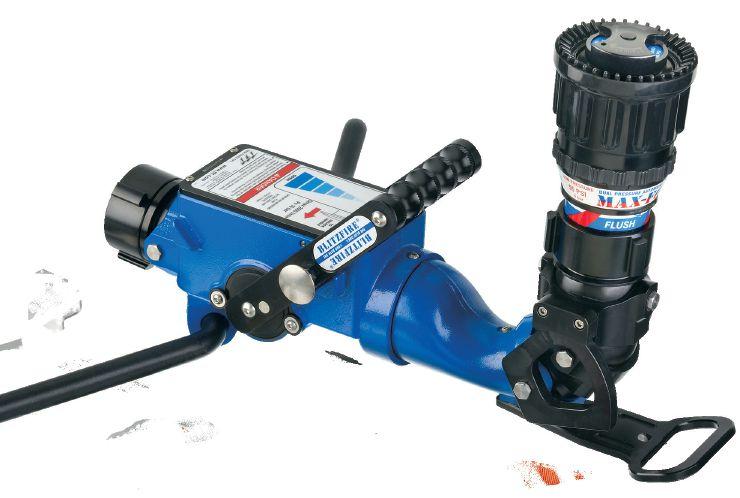
The New blitzfire HE