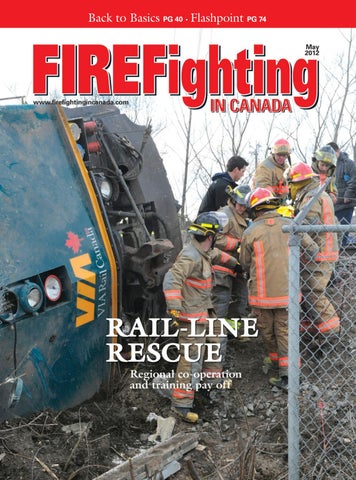
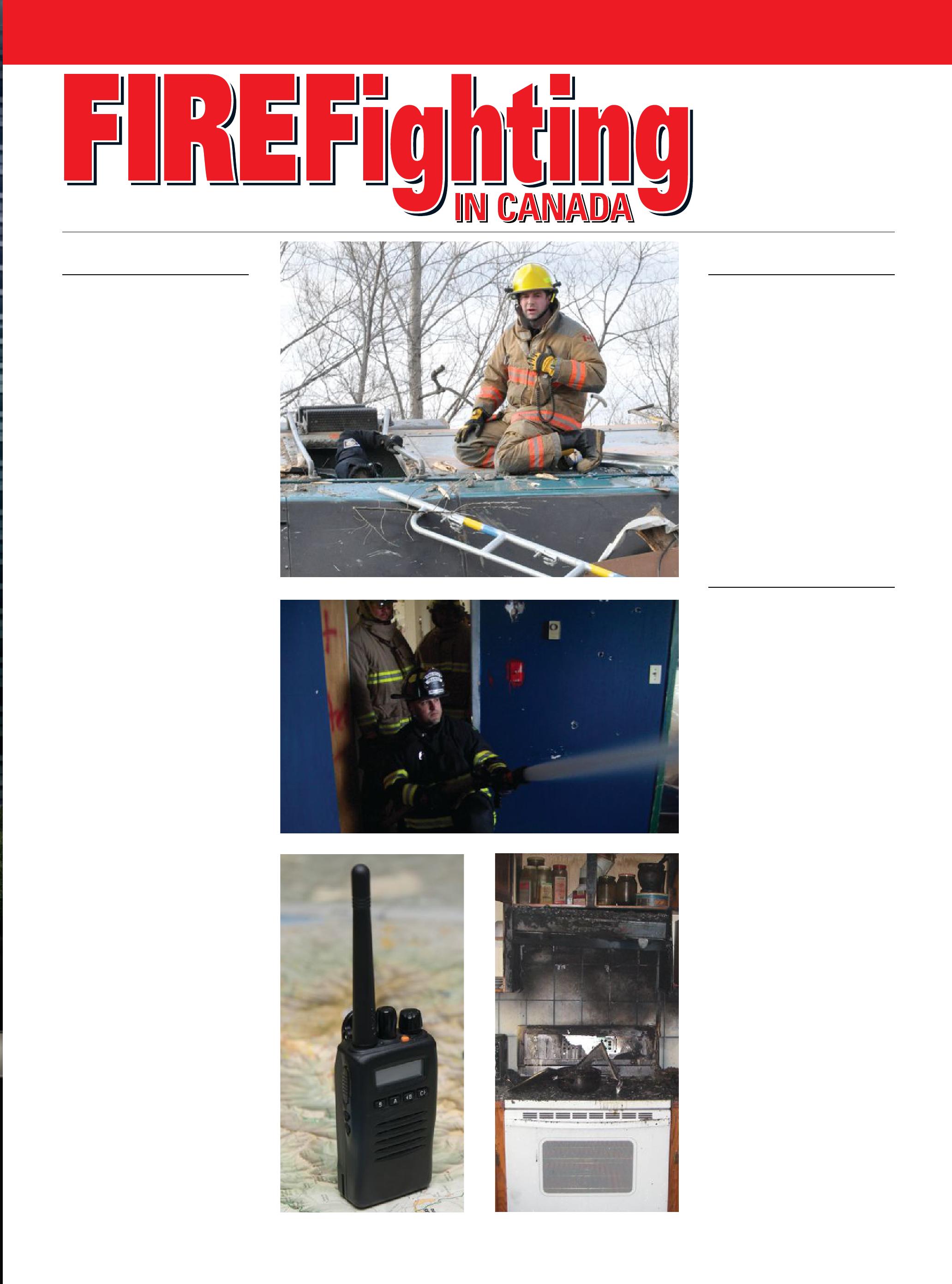
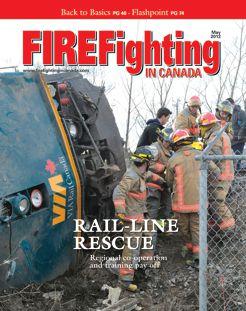
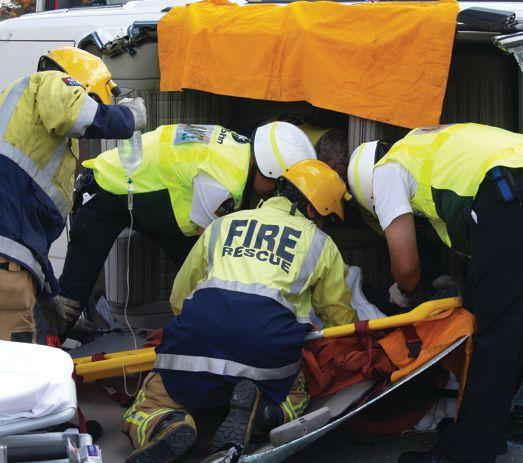
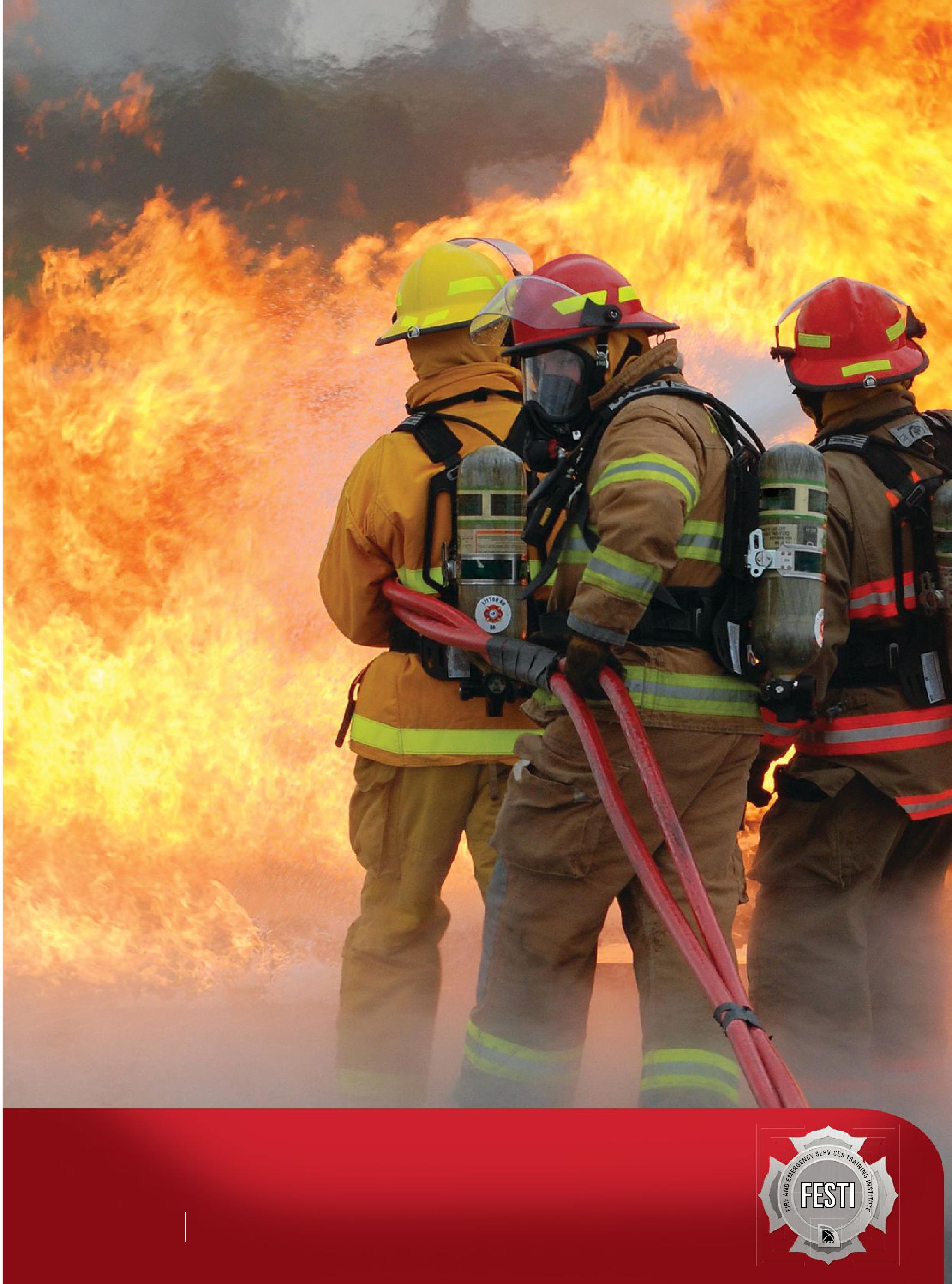
As Laura King reports, knowing fellow responders and use of sectoring made for a seamless response to the Feb. 26 Via derailment in Burlington, Ont.
DISPATCH DILEMMA
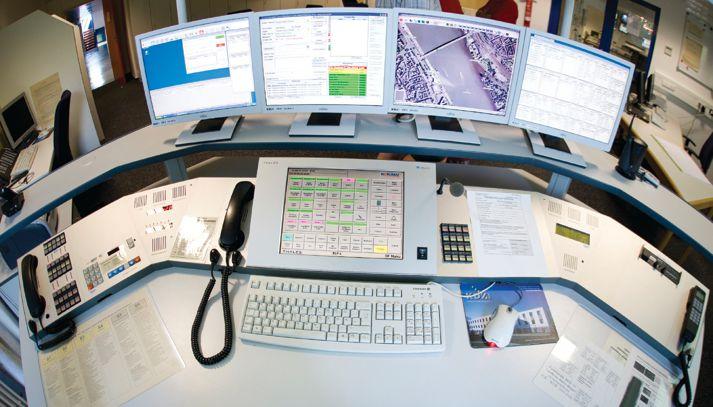
Fire dispatch is something that, perhaps, is taken for granted. As Peter Sells reports, more Canadian departments are experiencing dispatch difficulties.
TALK, AND MORE TALK
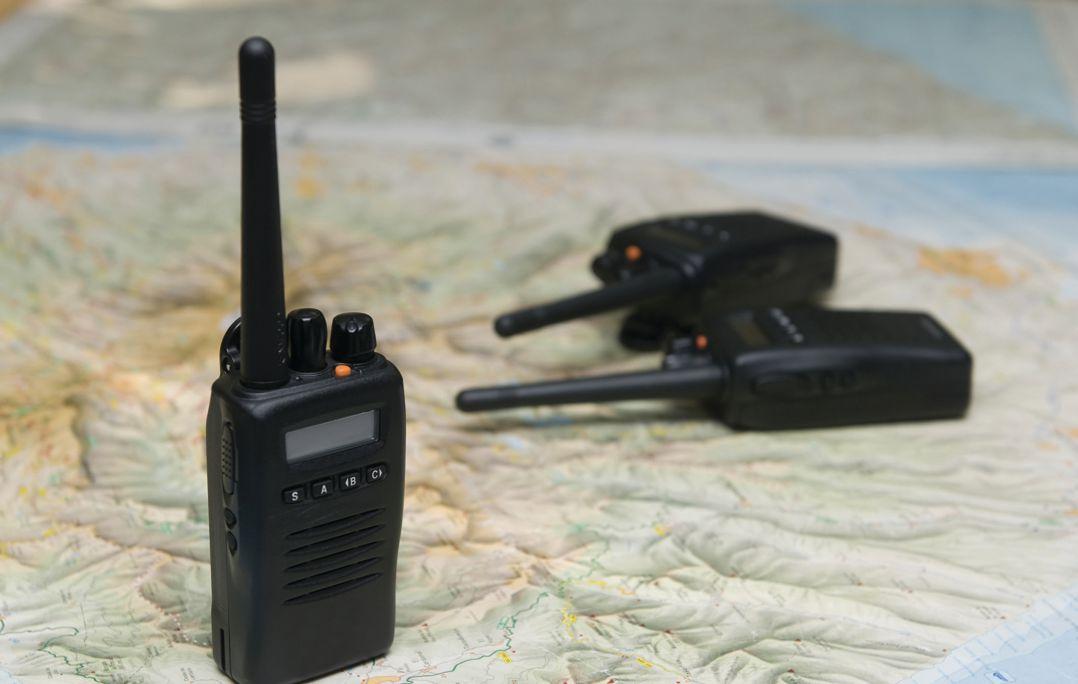
Heads of first-responder organizations are trying to develop multiservice radio networks to support emergency workers but issues such as training, coverage and protocols are complicating things. By
Stefan Dubowski
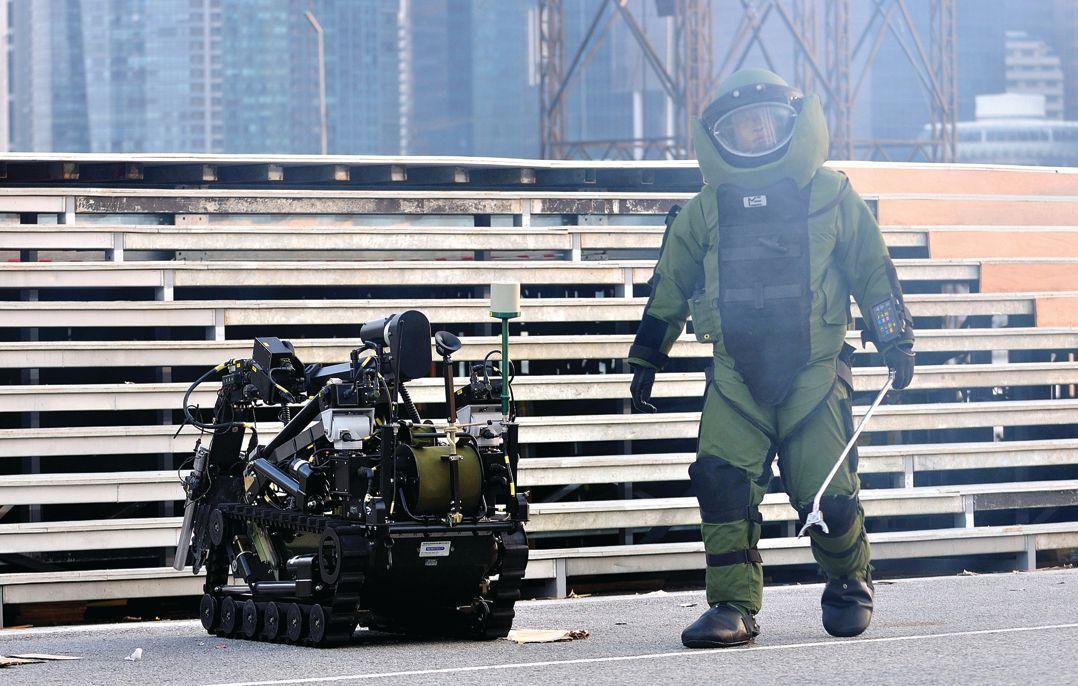
As Barry Bouwsema reports, the Canadian Centre for Security Science and Public Safety Canada are co-operating to provide science and technology services for national public safety and security.
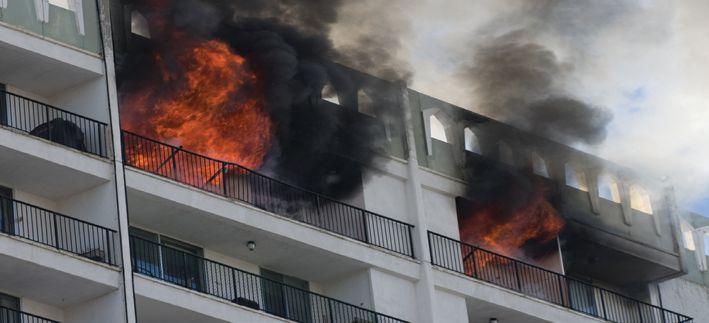
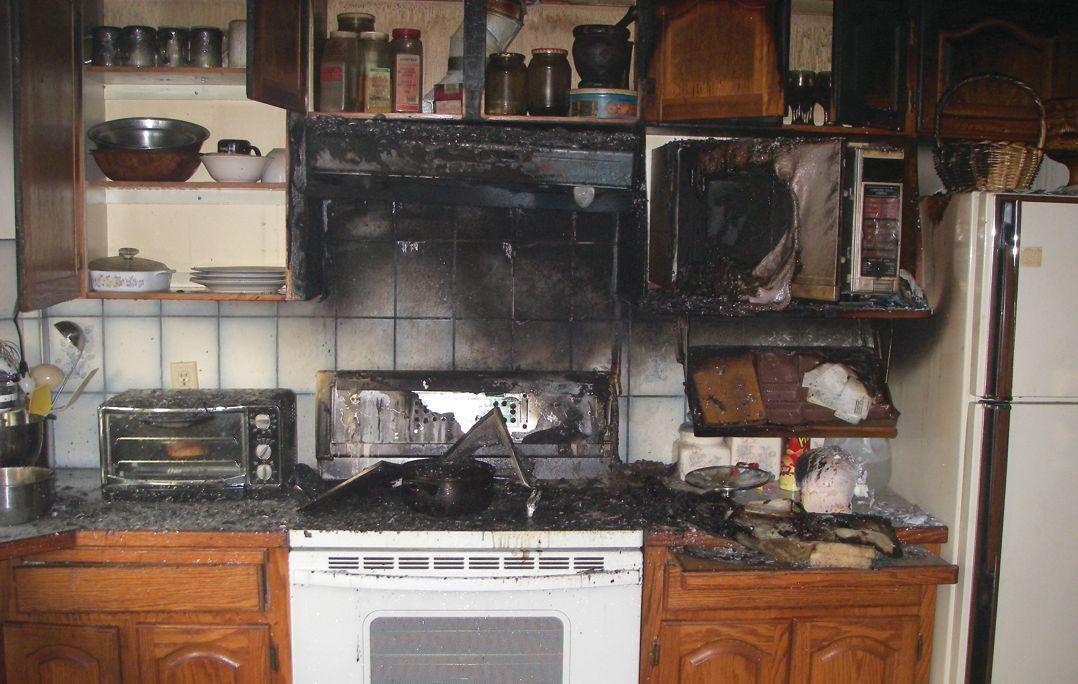
With cooking among the leading causes of residential structure fires, departments need to rethink their approaches to prevention.
By Martin Sunderland
By L AURA K ING Editor lking@annexweb.com
Voicing opinions
m comment
agazine editors have a word we use a lot when we talk about content: voices.
Voices in a magazine are just like voices you hear at a community town hall or a weeknight training session at your fire hall. They are voices you listen to for a reason. At Fire Fighting in Canada, we try to amplify voices worth hearing. Our many voices – columnists, writers, and instructors – are here because they have perspectives we think are worth our readers’ time.
This month we have added three important new voices to Fire Fighting in Canada, and all three bring considerable horsepower to our existing roster.
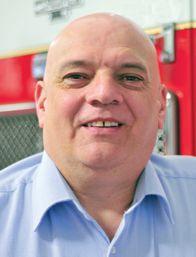
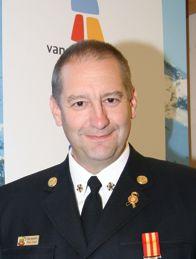
Kevin Foster is the fire chief in Midland, Ont., first vice-president of the Ontario Association of Fire Chiefs (he may be OAFC president by the time you read this!), and an astute observer of politics, policies and processes.
replace that of outgoing OAFC president Tim Beckett, whose Straight Talk column has been widely heralded by fire-service leaders across the country. Kevin is a long-time member of the OAFC executive and knows the challenges of funding, training, regionalization, and much more.
PRESIDENT MiKE FrEDEriCKS mfredericks@annexweb.com
ON THE COvER
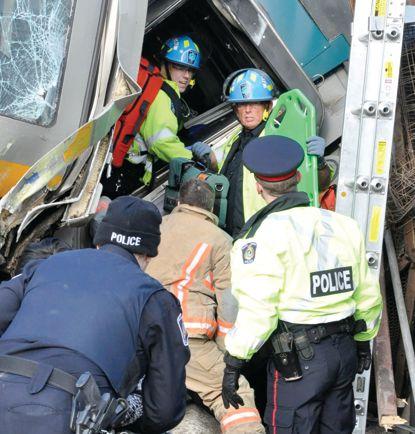
Firefighters and other first responders in Burlington, Ont., help an injured passenger after a Via train derailed on Feb. 26. See story page 10. Photo by David ritchie
Tom Bremner is the fire chief in Salt Spring Island, B.C., and one of the most passionate advocates for change I have encountered.
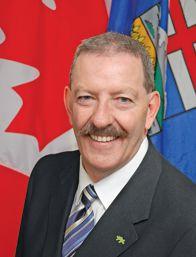
And Richard Boyes is the former fire chief in my home town, Oakville, Ont., (and Sarnia, Ont., before that), a past president of the OAFC and, perhaps, the most plugged-in fire service leader in the country. (Richard is still heavily involved in the fire service through the Canadian Governmental Committee of FEMA/FEMSA).
My expectation and hope is that this trio will confront the hard realities of the fire service and provoke debate in your fire halls and among political leaders.
As Kevin takes over the leadership of the OAFC, his voice (here anyway!) will
Tom brings an important western perspective to the magazine (although he’s a transplanted Bluenoser!). Having lived in western Canada, I know that co-operation is an important shared community value and I was not surprised that Tom kicked off his tenure with FFIC by writing about partnerships, networking and outreach. Richard brings the point of view of a fire-service leader who was an ultimate insider and now is on the outside looking at issues from a new vantage point. Without a vested interest to protect or promote, Richard brings an unencumbered perspective to the path forward for the Canadian fire service.
It is my view that all three columns will be required reading for fire-service leaders. These three voices will tackle the complex ways that politics intersect with the jobs and goals of fire-service leaders, and offer fresh thinking about progressive leadership. Why is it important to work together? If you are municipally funded, why build federal networks?
The fire service has important issues to discuss and debate. My role is to find ways to bring balance and voice to those issues from people with experience and credibility. I am proud to welcome Kevin, Tom and Richard and I hope readers will engage with them through our website and social media forum. After all, you have a voice, too.
PuBLiCATiOn MAiL AgrEEMEnT #40065710 rETurn unDELiVErABLE CAnADiAn ADDrESSES TO CirCuLATiOn DEPT.
P.O. Box 530, SiMCOE, On n3Y 4n5
e-mail: subscribe@firefightingincanada.com
Printed in Canada iSSn 0015–2595
CIRCULATION
e-mail: subscribe@firefightingincanada.com
Tel: 866-790-6070 ext. 206
Fax: 877-624-1940
Mail: P.O. Box 530 Simcoe, On n3Y 4n5
SUBSCRIPTION RATES
Canada – 1 Year - $24.00
(with gST $25.20, with HST/QST $27.12) (gST - #867172652rT0001)
uSA – 1 Year $40.00 uSD
We acknowledge the financial support of the Government of Canada through the Canada Periodical Fund (CPF) for our publishing activities.
Occasionally, Fire Fighting in Canada will mail information on behalf of industry-related groups whose products and services we believe may be of interest to you. if you prefer not to receive this information, please contact our circulation department in any of the four ways listed above.
All advertising is subject to the publisher’s approval. Such approval does not imply any endorsement of the products or services advertised. Publisher reserves the right to refuse advertising that does not meet the standards of the publication. www.firefightingincanada.com
statIontostatIon
across canada: Regional news briefs Department creates BlackBerry app for tactical pre-plans
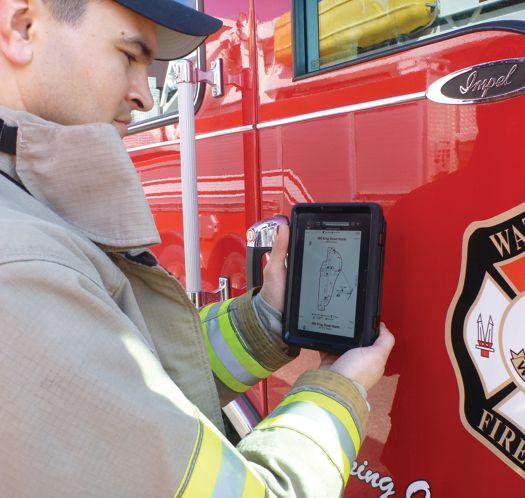
Firefighters in Waterloo, Ont., are using the small format Playbook tablet to enhance their operations with an app developed by one of their own. While one might think that being home to Research In Motion (RIM), makers of the Blackberry and Playbook, might have proved to be advantageous, the application was actually developed by a firefighter without any tech support from technology giant RIM.
“We have several hundred tactical pre-plans that heretofore were kept in a paper format in binders in all of our response units and command vehicles, but while these were useful to command staff outside the building, firefighters on the 10th floor of an apartment building were hampered by not having these at their fingertips,” says Larry Brassard, Waterloo Fire Rescue’s deputy chief of emergency operations.
“We started out by transitioning all of our mobile mapping needs to the Playbook earlier this year in a joint effort with our G.I.S. staff, and then one day, the firefighter working on
the project developed a way to place an icon on the touch screen of the map displayed on the Playbook, and voila, the tactical pre-plans came to life as an image,” says Brassard. “He then linked the pre-plan to the ERG with another touch where hazardous materials were documented as part of the pre-plan.
We’re now able to put our preplans in the hands of our firefighters right inside a building, a tremendous enhancement in terms of firefighter safety.”
The Playbook was chosen because of its compact size, readability and, of course, the relationship of the community to RIM. The Playbooks have been added to every front-line apparatus and all company officers carry full mapping compliments and full tactical pre-plans right in their pockets on every run. The department has also loaded all of its SOP and SOGs and a number of other documents to the tablet, and development is underway on a fillable form for apparatus checks that will allow drivers to electronically file daily truck inspections.
the brass pole
promotions & appointments
STEVE ROBINSON was promoted to assistant chief of
the Surrey Fire Service in British Columbia on nov. 26. Steve is a certified instructor in specialty rescue and has extensive knowledge of radio and communication systems.
GERRy SABOURIN is the new deputy fire chief in Timmins, Ont. He was hired as full-time firefighter with the Timmins service in 1988 and has acted as the chief training officer. Prior to that, he served as a volunteer with the fire department.
Firefighters in Waterloo, Ont., the home of BlackBerry maker Research in Motion, are using BlackBerry Playbooks to view maps and tactical pre-plans.
“The potential for other apps is almost endless and staff are submitting suggestions weekly for new apps that will ultimately make them more efficient at their jobs, ensure that the department is addressing the ever increasing need for documentation, and
JAMES SMITH was appointed fire chief of the Municipal District of Foothills Fire Department in Alberta on Oct. 24. Having spent the last six years as deputy fire chief in Okotoks,
most importantly, will keep our firefighters safe,” said Brassard. Departments looking for more information on using the Playbook or other tablets, and creating apps, can contact Larry Brassard at larry.brassard@waterloo.ca.
Alta., Smith brings 17 years of experience to the department.
GENE RICHARD, acting captain with the Brock Township Fire Department in Ontario, was promoted to captain on Jan. 1.
retirements
KEN KELLy retired May 31 after 24 years as chief of the Yarmouth Fire Department in nova Scotia. He joined the volunteer fire department in Sackville in the
Photo courtesy Waterloo Fire r escue
Waterloo appeals to tech-savvy community
Waterloo Fire Rescue in Ontario is displaying QR codes on all of its apparatuses as a way to reach out to a tech-savvy community that includes about 50,000 university and community college students who make the city their home during the school year.
“QR codes are everywhere now, advertising, magazines, bill boards, so we thought, why not our trucks,” says Larry Brassard, deputy chief of emergency operations for the career department that serves 120,000 residents in south-western Ontario.
A QR code – abbreviated from Quick Response Code –is the trademark for a type of matrix barcode (or two-dimensional code) first designed for
the automotive industry. More recently, the system has become popular outside of the industry due to its fast readability and large storage capacity compared to standard UPC barcodes. The code consists of black modules arranged in a square pattern on a white background. Today, the QR codes are used over a much wider range of applications, including commercial tracking, entertainment and transport ticketing, product/loyalty marketing and in-store product labeling. The codes can also be used for marketing purposes by connecting consumers directly with a particular website (or component thereof). In Waterloo’s case, the code will “take” the user directly
Fort Erie celebrates milestone
For the Fort Erie Fire Department in Ontario, it all started on June 4, 1862, after what was known as the big fire. The blaze, which almost destroyed the village of Fort Erie, started at Johnson’s Tavern, which was a gambling hall that held boxing matches. In the aftermath, residents organized the first fire-protection company in town, Fort Erie Fire Company No. 1.
That 1862 fire rolled down Queen Street to Niagara Street, along Niagara Street to Forsythe Street, and up Forsythe Street, destroying everything in its path. The
cause was never determined.
The Buffalo Fire Department, across the Canada-U.S. border, commandeered ferry boats and brought over fire equipment and men to fight the blaze. The fee was $1.50 to feed six men, $3 for four men to act as watchmen and protect the village from looters, and $2 to for two citizens for their help extinguishing the fire.
A bucket brigade was organized following the fire. There is a blank in the records from that time until 1909, when Lou Douglas was elected fire chief by the 16-man brigade.
to the fire departments website.
“Anyone with a handheld device such as a BlackBerry with a code reader app can instantaneously access our website where they can find information about our department, fire safety information even emergency preparedness info,” adds Brassard. “This is just another way we’re reaching out to our community in an effort to connect with our ratepayers”.
The city is also undergoing a comprehensive redesign of its website to make it more accessible and appealing to a vibrant and diverse university community.
Home to both the University of Waterloo and Wilfrid Laurier University as well as Conestoga
College, the City of Waterloo’s fire department comprises 128 staff working out of four fire stations. In 2011, Waterloo Fire Rescue responded to 4,411 calls for service.
For more information on how to make QR codes work for your department, contact Larry Brassard at larry.brassard@ waterloo.ca
early 1970s and was the first paid chief in Yarmouth.
BOB WARRINGTON, deputy chief, retired from Oshawa Fire Services in Ontario in January after more than 35 years of service.
WILLIAM STEWART retired April 30 after a 40-year fire fighting career. He has spent the last nine years as chief of Toronto Fire Services and has presented at chiefs conferences and other
educational seminars on the magnitude and challenges of the September 2010 Wellesley Street fire, a six-alarm, wind-driven blaze during which more than 1,000 people were evacuated from a housing complex.
last alarm
DAVID LEBLANC, retired fire chief of the Yarmouth Fire Department in nova Scotia, died Dec. 28 at the age of 79. He was a volunteer firefighter with
In the fall of 1910, a bell was put on top of the town hall to call the firefighters, and a gong was added to the fire wagon.
Fort Erie invites firefighters from across the country to celebrate its 150th anniversary on
the St. george Company and was promoted to captain and then fire chief in 1974.
PAUL NELSON, 21, a volunteer firefighter with the nipissing Township Fire Department in Ontario, died as a result of a car accident en route to a fire call on Dec. 27.
RICHARD TURGEON, deputy chief of operations at Toronto Pearson international Airport, Fire & Emergency Services,
June 9 at 119 Bertie St. for a full day of events including speakers from both sides of the border, music, kids’ activities and, of course, lots and lots of food!
-Bill Troupe, Fort Erie Fire Department
died Dec. 30 at the age of 47.
WAyNE FLEURy, 50, died Jan. 6. Fleury was a 15-year firefighting veteran for the Chatham-Kent Fire Service. He started his career at Station 17 Merlin before moving and transferring to Station 18 Blenheim.
LAWRENCE BOUDREAU, 63, died Feb. 7. He was a deputy chief and medical fire responder with the Salmon river Fire Department in nova Scotia.
statIontostatIon
br I gade news: From stations across Canada
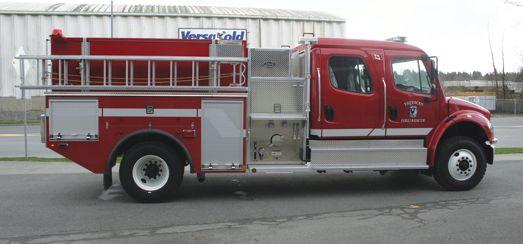
TSq’ESCEN FIRE RESCUE in British Columbia, under Chief Martin Dixon, took delivery in April of a Hub Fire Engines & Equipmentbuilt pumper. Built on a Freightliner M2 chassis and powered by an Allison 3500 EVS transmission and a Cummins ISC 300-hp engine, the truck is equipped with a Hale QPAK 100 840 IGPM pump, a Foam Pro 1600 foam system, a 500 IG co-poly water tank, Whelen light package and Hub Custom SCBA storage.
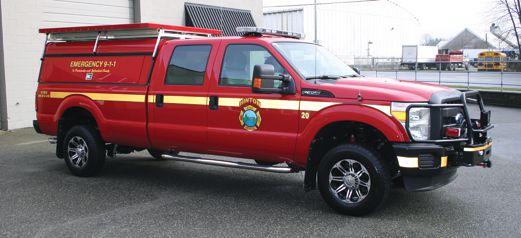
HINTON FIRE RESCUE in Alberta, under Chief Peter Ensor, took delivery in February of a Hub Fire Engines & Equipment-built command unit. Built on a Ford F350 4X4 chassis and powered by a six-speed automatic transmission and a 6.2-litre EFI V8 engine, the truck is equipped with a Whelen light package, Warn M8000 portable winch, a Havis Shield lap top pedestal and a Hub Custom add-a-room vinyl enclosure.
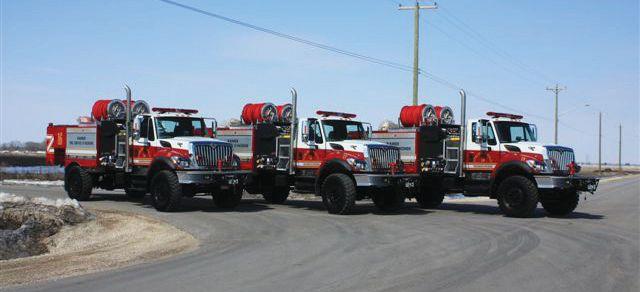
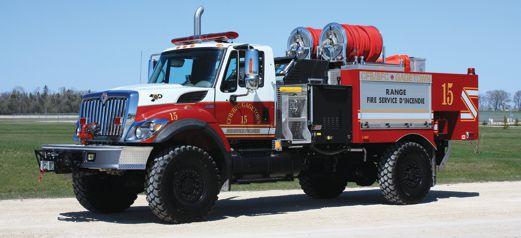
CFB SHILO located in Manitoba, under deputy Fire Chief Martin Haller, took delivery in July of six Fort Garry Fire Trucks-built range firefighting vehicles. Built on International 7400 4X4 chassis and powered by Allison 3000 EVS transmissions and MaxxForce 9 330hp engines, the trucks are equipped with Waterous CPD-2 pumps, 1,000 IG CoreTen steel water tanks, Waterous Aquis 1.5 foam systems, Federal Signal LED light packages, Amdor H20 ground lighting, Waterous Crossmount CAFS with 60-hp engines and Warm M12,000-pound winches with dual F&R receivers.
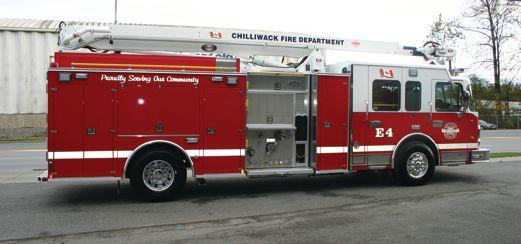
THE CHILLIWACK FIRE DEPARTMENT in British Columbia, under Chief Richard Ryall, took delivery in March of a Hub Fire Engines & Equipment-built pumper. Built on a Spartan Metro Star chassis and powered by an Allison 3000 EVS transmission and a Cummins ISL 9 450-hp engine, the truck is equipped with a Hale QMAX 175 1,500 IGPM pump, Foam Pro 2002 foam system, 500 IG co-poly water tank, Whelen light package and a Honda EM 5000 generator.
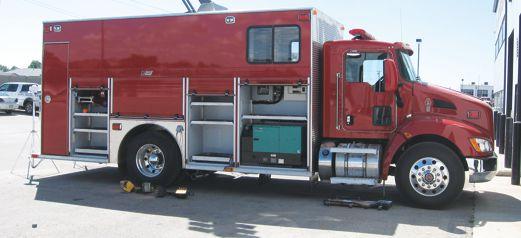
SOUTH FRONTENAC FIRE AND RESCUE in Sydenham, Ont. under Chief Rick Cheesborough, took delivery in August of a Fort Garry Fire Trucks-built rescue unit. Built on a Kenworth T370 chassis and powered by an Allison 3000 EVS transmission and Paccar PX-8 300-hp engine, the truck is equipped with an 18-foot walk-in rescue body and is manufactured from Saltwater marine grade aluminum.
CFB GAGETOWN in New Brunswick, under deputy Fire Chief Kevin Feeny, took delivery in July of three Fort Garry Fire Trucks-built Range Fire Fighting vehicles. Built on International 700 4X4 chassis and powered by Allison 3000 EVS transmissions and MaxxForce 9 330-hp engines, the trucks are equipped with Waterous CPD-2 pumps, 1,000 IG CoreTen steel water tanks, Waterous Aquis 1.5 foam systems, F.S. LED light packages, Federal Signal backup cameras, Waterous Crossmount CAFS with Perkins 60-hp engines and Warn M 12,000 lbs. winches with Dual F & R receivers.
TSq’ESCEN FIRE RESCUE
HINTON FIRE RESCUE
CFB SHILO
CHILLIWACK FIRE DEPARTMENT
SOUTH FRONTENAC FIRE AND RESCUE
CFB GAGETOWN
rail-line rescue
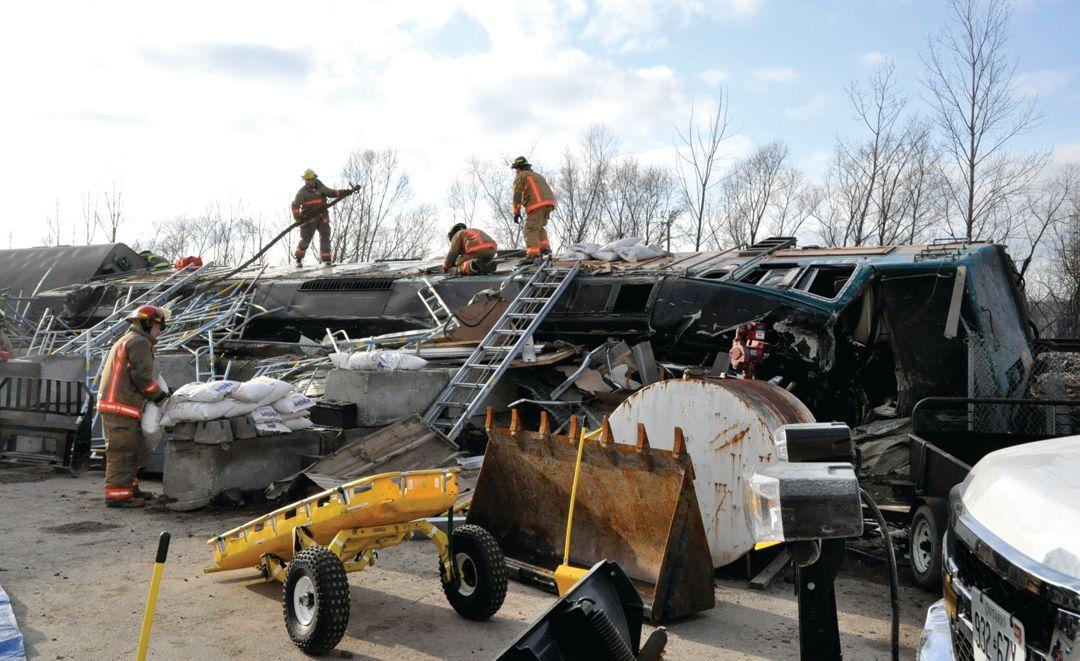
top : Firefighters work to mop up some diesel spilled in the locomotive of the Via train that derailed in Burlington, Ont., on Feb. 26.
I nset: Co-operation among rescue personnel was seamless thanks to training and a regional program through which responders have worked together.
by
Regional co-operation and training pay off for Halton Region in response to Via derailment
By LAURA KING
reflecting on the events that unravelled on one of the busiest stretches of railway in Canada on a sunny Sunday afternoon, Chief Shayne Mintz of the Burlington Fire Department was justifiably proud of his firefighters and yet conflicted by his reaction.
Chief Mintz was moved by the enormity of the accident – three men died in the carnage of flipped rail cars. But in densely populated southern Ontario, it could have been far worse.
“It was a tragic event, there’s no doubt about it,” said Mintz. “But if someone had to say, you guys are going to have a train derailment but I’m going to let
you pick where it’s going to happen, we couldn’t have picked a better spot.”
He listed the simple facts that kept the Feb. 26 incident from becoming a larger catastrophe.
“The weather, the location, the type of train – it was a five-car train and it only had one and a half cars full of passengers – so, it’s a bizarre thing to say, and I’m not trivializing it at all because three people lost their lives – but if it had happened half a kilometre down track, the cars would have been piled into the back of the Fortinos [grocery store] and the Ikea,” he said.
“Or if it had happened further in the other direction it would have had rail cars resting on backyards and pools.”
Photos
Davi D r itchie
None of those things happened, but the events of that day still tested the training of not just Burlington’s firefighters, but also many of Halton Region’s emergency responders.
In a series of interviews, some of the participants pieced together the successful response and the lessons learned. * * *
Acting Capt. Kim Bevington’s crew from Station 3 was the second team of firefighters on scene of the Via derailment on Feb. 26. En route, in the pumper, Bevington saw uninjured passengers disembarking and walking down the tracks, suitcases in hand; it was a bizarre and surreal vision, she recalled a few weeks later.
The level rail crossing was easily accessible for apparatus and rescuers. Just two of the train’s five passenger cars were in use, and all firefighters and officers heading to the King Road location adjusted their thinking when it became clear that the call – initially a hazmat – was, instead, a rescue operation, and, later, a recovery.
As crews arrived within three minutes from Stations 1, 3 and 6, they were assigned tasks by incident commander and platoon chief Ross Monteith, whose methodical evaluation of the needs at hand and sectoring of the scene led to what Montieth’s superior officers called a meticulous and smoothly run operation.
Despite a quick and effective response by police, fire and EMS, and impeccable co-operation among all agencies due to strong working relationships through the Halton Region’s Joint Emergency Services Operational Advisory Group (JESOAG), Chief Mintz says Burlington Fire learned some lessons that day about the power of the press on a quiet Sunday afternoon when a train derailment in suburban (southern Ontario) made international headlines.
THE RESPONSE
Via Rail train No. 92 started its journey in Niagara Falls and was making its way through Burlington eastbound toward Toronto. At about 3:28 p.m., at the crossing at King Road where 19 cars left the tracks in 2008, something went wrong and the engine and five passenger cars derailed (a class action lawsuit has been filed).
The fire department’s initial response was 15 staff; that number rose to 43 as the need for more ladders and other equipment increased, and with a shift change at supper time. Burlington is a
composite department, so volunteer firefighters were paged out of Station 1.
Police and EMS were already on scene when the first fire crews arrived. EMS superintendent Tom Stirling was on site, and two Ornge helicopters had been summoned. Stirling co-ordinated the EMS response of 13 ambulances from Halton Region and the City of Hamilton, and the transport of 32 patients to three hospitals. Burlington’s Roads, Parks and Maintenance department brought barricades. Halton Regional Police brought their command post and a public information officer – a resource who turned out to be indispensable; the police tactical group preserved the scene overnight before the Transportation Safety Board investigation began. The Ontario Provincial Police contained the perimeter.
Burlington Fire led the rescue effort for about 90 minutes.
“At that point, if you were to listen to air traffic, you would hear IC Ross Monteith asking for second and third walk through of rail cars to make sure they were totally emptied out,” said Deputy Chief Tony Bavota.
“We were really in two operational modes that day. One was rescue and the other one was recovery. About 90 minutes in we moved from a rescue mode into a recovery mode.”
Although rescuers were challenged by the locomotive’s heavy-gauge steel, they were able to confirm fairly quickly that there were three deceased, says Monteith.
“The coroner arrived quickly . . . so we went to recovery mode from rescue mode and were able to slow down and make sure our people were not at risk.
The response from other agencies willing to help was impressive, Deputy Chief Bavota says.
“We had offers of assistance from all kinds of allied agencies and partners –Hamilton Fire, Oakville Fire, Emergency Management Ontario, the fire marshal’s office, and police had been contacted by the provincial HUSAR team as well. Ross Monteith placed a call for a diesel spill through our spills protocol – there was some diesel that leaked out of locomotive.
“The reports that we got from our officers who were on scene were that there was very little need for verbal communication among the three agencies on scene, but everyone worked together really well. Really it was an all-hands-ondeck movement to get these passengers out of these rail cars.”
THE SCENE
Essentially, with just a bit of leaking diesel that was contained, no other hazmat issues, and serious but not life-threatening injuries to passengers, the operation was similar to a large-scale motor-vehicle collision. The objective was to extricate passengers and get them to EMS for care.
“It was really a large-scale vehicle rescue,” said firefighter Paul Keyes, who was stationed at the flipped-over locomotive, helping to locate the three Via employees.
“We were working together so well with the other responders because that’s what we do every day, it was just on a larger scale, and working in sectors made it easier for command, dealing with three sector officers rather than 25 firefighters.”
Capt. Tim Dowd was at one end of a passenger car, helping to get people out.
“It made it much easier for everyone to take direction under that type of command structure,” he said.
Early reports indicated that there were 75 passengers on the train but there was confusion over numbers. Monteith had connected with the purser, who had only 45 tickets (presumably not all tickets from passengers who had just boarded in Aldershot had been accounted for) and some people had self-evacuated the train without reporting to rescuers. A fourth Via employee, riding in an empty passenger car, had the manifest and was instrumental in helping to contact Via personnel. She confirmed that there were two engineers and a trainee in the locomotive.
Monteith advises rescuers in similar circumstances to quickly connect with anyone on scene from the company, and collect business cards for follow-up information.
Deputy Chief Dave Beatty was also stationed near the overturned locomotive and describes the scene.
“Our crews were on site within three minutes; we did a scene survey to make sure they weren’t walking into anything more tragic or hazardous,” he says.
“And then seeing the rail cars on their sides . . . We had people entering the train from the rear and doing a sweep forward; you can imagine the train is on its side so we’re having to go in through a side window, get people up and out through side windows . . . You have to be careful you’re not doing further damage when you’re breaking glass. We were laddering windows; one or two people had to be basketed out; those were the kinds of challenges that our people faced.”
Elevated tracks and debris picked up by the locomotive when it derailed and skidded complicated access for rescuers.
“It was like a like a plow,” says firefighter Keyes. “Guardrail, barbed-wire fence, stone from a landscape place, there was quite a pile of debris.
“We could confirm one fatality fairly early on, but it was difficult to access the car. We started to co-ordinate the removal; we would direct someone to get rid of this chunk of stuff, then we’d listen and use the thermal imaging camera to be able to tell there was no one in certain places; we were looking for shirtsleeves and boots. The engineers had personal effects in the cab so once you find something you had to confirm whether it was a personal item or part of a person . . . ”
There was some concern about the locomotive’s stability – “It has a lot of weight behind it,” says Keyes. The train had come to rest against big, concrete blocks near the landscape company and they provided more stability than rescuers could have created. “Without those blocks the locomotive would have been on its side,” Keyes said.
Acting Capt. Bevington, who was at the opposite end of the same passenger car as Dowd, says crews were focused on their tasks.
“We were almost in the bubble where we were,” she says. “We went straight into that train and didn’t come out until everyone was out. All the [crew] knew was we were in this car helping people get out; it wasn’t until we were clear of that car and were preparing to leave that we realized the magnitude . . .”
That speaks to the effectiveness of sectoring, says Monteith.
“They helped get people out and they were looking after them; we were giving people tasks and they were doing them over and over again.”
Keyes says the calm demeanour of the responders, led by Monteith’s steady command, gave passengers confidence in the rescue operation.
“People were calling for help and if we’re in an excited state then it transcends to them,” he said. “It comes down to a good IC handing out assignments.”
Bevington agrees. “We just applied our training to this incident.”
L ESSONS LEARNED
Communication 1: Know your counterparts
Through the Halton Region’s joint emergency group, about 80 senior emer-
gency services personnel had been taught IMS 100 and 200 and unified command, and had participated in a mock-disaster exercise. (See Fire Fighting in Canada November 2011, Unified Integration, A multi-agency approach to large-scale emergencies )
“I think the strength of the training that day was the relationships,” says Deputy Chief Bavota. “We know our counterparts by name so it was very clear who to talk to when you required different resources.”
Chief Mintz credits the JESOAG group for the smooth rescue and recovery operation.
“Every one of the command officers that was in the command post – we knew them and they knew us by first name,” he said.
“That works really well to keep things under control and well organized. You need to ger along with the other agencies because you don’t want to be figuring that out on the scene. There are always outside issues and people driving agendas.”
Continued on page 64
By R ICHARD B O y ES
The flawed mantra of doing more with less
am pleased to be writing for Fire Fighting in Canada on issues facing the Canadian fire service. Having spent more than 38 years in the fire service, and being involved in many issues locally and nationally, I’ve developed some thoughts and opinions on many fire-service subjects. The intent of this column is to address the issues, problems and challenges that the fire service faces.
Having left active duty in the fire service last June, I have found that my point of view has changed as I start to look in from the outside. Although I am still involved with committees and associations, I now see things from a different perspective. I have been fortunate to spend time in both the volunteer and full-time fire services, so some columns will address issues that affect all of the fire service; others will focus on just part of the fire service. Let’s get started.
By the time you read this, most fire departments will have had their annual budgets approved, but as municipalities face ever-pressing financial pressures, very few fire services will have escaped a budget cut or reduction. Reductions are not new to the fire service. I think back to one of my first budgets in the 1980s. The message from council that year was one of restraint and that all municipal departments were to keep their budget requests to five per cent or less. We would love to have that budget directive today! As financial pressures grew, we all went through the zero-per-cent years, and we continued to reduce our operating and capital budgets to meet the requests of council, but few departments, if any, reduced the level of service. We just did more with less –and this became the popular fire-service saying.
to set policy to provide services to the municipality. The fire chief implements policy; that is his/her job.
Here is the question: When things go wrong at a fire scene, auto extrication or as part of any other service that you are authorized to provide, who is blamed? If you answered council, you may be right; if you answered the fire chief, you may be right. So who is it?
The answer is that it should be council. Why? Because the fire chief, in exercising his/her duties, has duly informed council in writing that the level of service cannot be maintained with the current level of funding. Therefore, council will have revised its service-delivery policy, and communicated it to the ratepayers and the fire department. If the fire chief has not informed council of a problem with the delivery of approved services due to a lack of resources – be it staff and/or equipment – the fire chief will be the person who will be held responsible.
The days of the fire chief being blameless because he/she was just trying to help are gone. If a firefighter is hurt or killed and it can be attributed to lack of training and/or equipment, or there is a large property loss due to lack of equipment and/or
Fire services just make do, but now we have reached a breaking point. ‘‘ ’’
Why the history lesson? It is apparent that Canadian fire services have followed the directions of council very well, and that their budgets have contracted or, at least, have not grown at the proper rate to allow for delivery of all services that councils have approved. Fire services just make do, but now we have reached a breaking point. Many fire chiefs I have spoken to are working very hard to continue to provide the approved levels of service with fewer resources. Herein lies the problem: Who is responsible for the delivery of services? Of course, we know it is council; councillors are elected
Richard Boyes is chair of the Canadian Governmental Committee, a past president of the Ontario Association of Fire Chiefs and the former fire chief in Oakville, Ont., and Sarnia, Ont. He is an instructor for the CAFC/OAFC Beyond Helmets and Hoses leadership program. Contact him at rboyes_5@sympatico.ca
staff and the fire chief has not properly informed council of this problem, he/she will be blamed. If you think it cannot happen to you, think again. It is happening right now to far too many fire departments/fire chiefs than I care to mention.
The fire service needs to recognize that it cannot keep doing everything for everybody with limited funding and/or resources. It is the duty of the fire-service leaders to inform their councils that there are limits to the way municipal fire services are provided when funding has been reduced. The municipality answers to the ratepayers, and the fire chief answers to council.
Make sure you or your fire department has informed council of the fire department’s limitations in the delivery of fire services.
I know it is not in our makeup to do this but consider the alternative. At least that is my point of view.
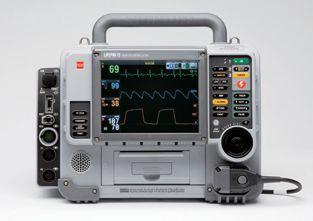
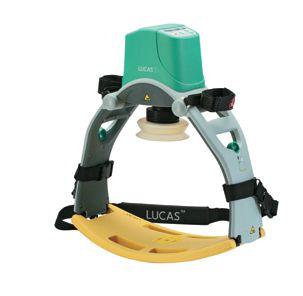
LIFEPAK 15 + LUCAS Perfect Partners
Perfect partners work together to create the best possible outcome for their patient. They support each other without duplicating effort. Designed based on years of partnership with EMS, the LIFEPAK® 15 monitor/defibrillator and the LUCAS ® chest compression system work together to support your team in managing cardiac arrests. LUCAS is designed to provide continuous, uninterrupted compressions while helping to reduce scene complexity. The 15 provides the power of 360J, plus the most advanced monitoring parameters available. Both are designed to be easy to understand and use by trained care providers. For more information, visit www.physio-control.com.
By T IM B EEBE
SPONTANEOUScombustIon
Up the proverbial money tree
psala duty officer, call dispatch.”
The message, crackling over my pager, signified something out of the ordinary. If it were a fire, a vehicle crash or other “normal” emergency, they would have just dispatched us. I picked up the phone and dialed the Central Ambulance Communication Centre (CACC).
“Hi, what’s up?”
“A cat in a tree,” the dispatcher said, stifling a giggle.
“A cat? We don’t do cats,” I said in a firm, I-mean-business tone.
“I know you don’t, but the caller is an older gentleman who can’t climb a ladder, and says the cat is his only family, and it’s getting dark and . . . could you just go take a look?”
Upsala Fire Department wasn’t particularly busy, so I agreed to go, even though my good friend Frank (who has refused more than his share of feline rescues), maintains that he’s never seen a cat skeleton in a tree. While en route, I discussed this singular conundrum with the officer who accompanied me. Why does an acrophobic cat climb trees in the first place? Odd as that may be, a sizeable portion of the fire service is in a similarly peculiar predicament.
A hundred years ago, fire departments were virtually non-existent in most places outside urban centres. Gradually over the years, the service grew, and climbed the tree of public expectations, offering more and better services to more of the population. It spread to the point that even a small village like Upsala, Ont., has acquired a pumper, a tanker, and a rescue, staffed by a hardy band of volunteers.
Upsala Fire Department is a microscopic snapshot of the evolution of fire fighting. Our first mechanized firefighting equipment was a portable pump package, received with coats, long boots, and training, compliments of the Office of the Fire Marshal. Over the years we acquired more apparatus and equipment to better meet the needs of our community. With each new acquisition, our service capabilities increased, and the metaphoric cat inched higher up the tree of public expectation. The crowning glory was a set of heavy hydraulic extrication tools, enabling us to service the highway on either side of the village, and shorten the hour-long trip that our neighbouring departments made for vehicle rescue.
Having clawed our way up, though, we had no intention of coming down.
Taking a look at the bigger picture, the fire service across Canada faces a diverse array of problems, including insufficient funding, inadequate training, and recruitment crises. From Nunavut to Nanaimo, however, all are unified by the fact that the service we provide was built on a support base, which, at best, is fading and, at worst, has ceased to exist. Big departments like Toronto are not exempt. Last year Toronto Fire Services was told to slash its budget by 10 per cent. The very survival of some small departments has been threatened.
The logical thing to do when a public service is in trouble is to appeal to those who control the money. Over the past few years, fire-service leaders across the country have knocked on politicians’ doors, sent emails, made phone calls, and set up meetings to lobby for help. In fairness, some of our elected officials have championed the cause and have made a positive impact – such as the volunteer firefighter tax credit – but the prevailing view of those who hold the purse strings is that we are yet another cat in another funding tree that will probably figure out its own way down if ignored long enough.
The logical thing to do when a public service is in trouble is to appeal to those who control the money.
The problem is that they are right. When support is cut, we work out a way to make do with less. The flip side of the coin is that making do often involves responding with fewer people, or squeezing more life out of outdated equipment. The potential harm of such measures outweighs any advantage.
Reaching a pinnacle is one thing. Staying there is another. The forest industry faltered, jobs were lost, and people moved away. The public still needed the level of service that we had so bravely achieved, but our volunteer pool had dwindled by 30 per cent.
Tim Beebe was the fire chief in Upsala, Ont., for 15 years, and now manages the pre-service firefighter program at Confederation College in Thunder Bay, Ont. Contact him at tim.beebe@sympatico.ca and check out his blog at www.beebewitzblog.blogspot.com
The other problem is that we are not perceived by the federal and provincial purse string holders as being their cat. Again, they are not entirely wrong. The origins of most fire departments lie with local people who wanted to protect their homes and families, not with government-created institutions.
Like the acrophobic cat that we rescued that day, the fire service is reluctant to climb down from the high level of service it now provides – and it should be. We worked hard to get there. We are in danger, however, of having our ladder of support hauled away to rescue more important cats. A hundred years from now, I wonder if our great-grandkids will find only the skeleton of today’s fire service in the tree of public service.
d ispatch dilemma
Fire departments across Ontario are challenged to balance cost, control and business continuity
By PeTeR SeLLS
top : Fire chiefs say there is little interoperability among departments in terms of communications, which creates a serious threat to firefighter safety on the fire ground when mutual aid is activated and several fire departments are working together on the same incident. Co-ordination, they say, becomes extremely difficult when you can’t communicate.
It must have been an eerie feeling. A colleague was the last one to leave the former Toronto Fire Department dispatch room when the current Toronto Fire Services Communications Centre was opened just a little over 10 years ago. As he turned out the lights and closed the door, he realized that the room had been continuously occupied 24/7 for decades, and he was the last man out. Fire dispatch is something that, perhaps, is taken for granted; someone is in control –there is always a voice on the other end of this radio or telephone . . . isn’t there?
* * *
Business continuity is not something that readily comes to mind in the emer-
gency services: we were here yesterday, we are here today and we will be here tomorrow. We may be forgiven for thinking that business continuity is a concern exclusive to the private sector, but we would be wrong. In part, we would be wrong because we may be confusing business continuity with disaster recovery or emergency management. Those concepts are more closely related to the normal operation of a fire, police or EMS department, but they are only a subset of business continuity. Built on a foundation of standards, policies, guidelines and procedures, business continuity consists of all activities performed daily to maintain service, consistency and recoverability.
We would also be wrong to assume that our organizations, or parts thereof, are not subject to the same life cycle as a private sector business – birth, growth, decay, death. Just such a reality check hit the Hanover, Ont., Police Service in February 2012. The loss of a dispatch contract for West Grey Police made the continuity of the Hanover Communications Centre financially untenable. When the town’s police services board voted to disband the centre at the end of 2012, it eliminated nine positions (six full time and three part time) and left the remaining customers searching for new service providers. Quoted in the Owen Sound Sun Times, Bob White, Hanover’s deputy mayor and chair of the Hanover Police Services Board, said, “It was a very difficult decision to make, but we were going to be in a position, because of the loss of one of our largest customers and the revenue from them, that we just couldn’t justify staying in business. The expenses were escalating fairly fast and the revenue was declining.”
Although the Hanover Communications Centre will come to the end of its life cycle shortly after the Mayan calendar does likewise, more than 20 fire departments across Grey, Bruce, Wellington, Huron and Perth counties – as well as two police services – must ensure their business continuity. Fortunately, the board had acted responsibly and all parties have adequate time to react to the change. Hanover Police will contract with the Owen Sound Police Services communications centre beginning in 2013. At present, three communications centres (Owen Sound, Barrie and Tillsonburg) are competing for the stranded fire contracts. Ripley-Huron Fire Chief Doug Martyn expressed concerns about the cost of infrastructure to connect to dispatch centres that are much further away. The fire chiefs of the affected departments will discuss moving to one centre in order to get the best deal. “The more people that go to any one of the three options, the cheaper the rates,” he said.
In 2009, the Brighton Fire Department in Ontario didn’t have the luxuries of time or choice. The private-sector paging company with which it had contracted made a business decision to get out of the fire-dispatch game, and Brighton Fire had just a few short months to react. The nearby Port Hope Police Service did not have the capacity in its communications centre to take on another fire department. After searching around for another provider among neighbouring emergency services, Brighton Fire eventually contracted with another private paging company about 75 kilometres away in Peterborough, Ont. Brighton’s decision brings us to the concept of an emergency service’s control over its own processes. The Trent Hills Fire
Department, in Ontario’s Northumberland County – the same county as Brighton – contracts with the same Peterborough company. Tim Blake, fire chief of the CampbellfordSeymour station within Trent Hills, explained the pros and cons of using a private sector dispatch service.
“The main problem with private dispatch is consistency; with the low wages, operators come and go quite frequently,” he said “But the operators that have been with the company for several years become accustomed to fire department operations and radio procedures. Overall, our dispatch is and has been reliable and professional for the most part, considering the dollars we are investing.”
The desired alternative for Trent Hills and Brighton would be a Northumberland County fire dispatch centre. The county fire co-ordinator is Cobourg Fire Chief Al Mann. In 2010, Mann asked every municipal council and the county council to endorse a study on a “purpose-built, centralized fire dispatch centre”. At a cost estimated at upwards of $2 million, a new county system would eliminate black holes in fire radio coverage and paging transmissions, address various local difficulties with dispatching fire personnel, and alleviate channel congestion.
“The system would give fire calls the priority they should have,” said Mann at that time. When I followed up with him in March 2012, he expressed cautious optimism that a central fire dispatch can be realized in Northumberland County in the near future, although he has no expectations that it will be a dedicated service.
“I expect that if it does happen the service will be provided by Cobourg Police. While the preference would be a dedicated central fire dispatch, realistically it probably won’t happen due to cost.
“The current situation is not acceptable,” Mann said. “There is little interoperability between the fire departments in terms of communications, which creates a serious threat to firefighter safety on the fire ground when mutual aid is activated and several fire departments are working together on the same incident. Co-ordination of resources becomes extremely difficult when you can’t communicate.”
Blake agrees that a dedicated county fire dispatch centre would eliminate the problems associated with a private-sector provider operating at a distance.
“With a full-time, dedicated fire dispatch,” he said, “operators would become familiar with each department’s tendencies in radio transmission.”
However, Blake also pointed out that cost would be a major concern to municipalities, with the addition of full-time wages, benefits, buildings and equipment.
If costs are a concern at the municipal or county levels, would an upper-tier government solution be a viable alternative? Generally, policing in Canada is provided by the RCMP or a provincial police force, unless a community has the resources and political will to establish a local police service. EMS is typically handled by each province’s ministry of health, unless a municipality or region establishes an EMS system under the provincial umbrella, with dispatch integrated into a system of regional communication centres. It would seem to be a logical alternative, then, for fire communications in Ontario to be regionalized under a provincial system to provide dispatch service to smaller communities. Such a system would address two of our three concerns: business continuity (since the province is not likely to close up shop and move to Mexico at 3 a.m.); and control (since the people taking the calls would be professional fire communicators). But what about fiscal realities?
New Brunswick already has an integrated radio and dispatch system. The NB 911 Bureau receives calls through seven Public Safety Answering Points (PSAPs) around the province, and transfers them to the appropriate emergency service (police, fire, ambulance or poison control.) A plan for a digital upgrade to integrate all three Maritime provinces’ radio systems, which had been announced in May 2010, was scrapped in February on the basis of cost (estimated at more than $100 million). The Canadian Press quoted Christian Couturier, New Brunswick’s chief information officer, saying, “It would be hard to say that cost isn’t a factor, but it’s one factor in amongst many others.’’ Couturier is confident that safety would not be compromised by maintaining the current New Brunswick system. “The system is not going to go away, we’re very committed to make sure it’s maintained,’’ he said, “It’s just not going to transition into this (regional) architecture.’’
Regardless of finances, anything other than fire dispatch directly from the PSAP – for example a police communications centre that answers 911 calls and dispatches firefighters – has another hidden cost. The NFPA 1221 Standard for the Installation, Maintenance, and Use of Emergency Services Communications Systems, defines alarm handling time as the time interval from the receipt of the alarm at the primary PSAP until the beginning of the transmittal of the response information via voice or electronic means to emergency response facilities or the emergency response units in the field. Alarm handling time consists of alarm transfer time (the time interval from the receipt of the emergency alarm at the PSAP until the alarm is first received at the communication centre),
Why can Canada not institute a system of three emergency numbers - say 911 for police, 912 for fire and 913 for EMS?
alarm answering time (the time interval that begins when the alarm is received at the communication centre and ends when the alarm is acknowledged at the communication centre), and alarm processing time (the time interval from when the alarm is acknowledged at the communication centre until response information begins to be transmitted). Any system in which the PSAP must transfer a call will incur an alarm transfer time.
A 2010 study of Toronto Fire Services’ communications system estimated the average transfer time from the Toronto Police 911 centre at 32 seconds, with a 95th percentile of 63 seconds. NFPA 1221 mandates a 95th percentile alarm transfer time of 30 seconds. So the reality, using the Toronto numbers, is that any system in which calls are transferred to fire dispatch from another PSAP will cause a delay in the initiation of that dispatch, and that delay may be 30 seconds to more than a minute. That delay represents a hidden cost in terms of the potential effectiveness of a fire/rescue response – one further minute for a fire to grow, one further minute for an accident victim to bleed or be without oxygen.
For EMS calls transferred to fire dispatch from an EMS communications centre, the transfer time may be several minutes as the EMS communicators work through the required medical questioning protocols with the caller. Two possible solutions to this extended delay would be fire-based EMS or simultaneous dispatch of fire and EMS for medical responses. In March, Deb Matthews, Ontario’s minister of health and long-term care, announced the launch of the pilots for an early-adopters program, under which fire and EMS will receive notification simultaneously in the event of an emergency call for medical assistance, and will provide seamless delivery of these vital services. EMS
operators at these sites will have a real-time view of ambulance locations, allowing them to make more informed decisions about what services are needed. The pilot sites are Kitchener, Mississauga, Barrie and Guelph. The Ontario government commitment to this program is more than $4.3 million over the next five years.
Even with simultaneous notification of fire and EMS, if the primary PSAP is a 911 centre operated by a police service, there will be an alarm transfer time. In North America, we have become used to our system of calling 911 for any emergency, just as Britons are accustomed to calling 999 and continental Europeans are accustomed to calling 112. There are other systems, with many countries using three separate numbers for police, fire and EMS. Examples include India (100, 101, 102), Saudi Arabia (999, 998, 997), and Mexico (066, 068, 065).
So why can Canada not institute a system of three emergency numbers – let’s say 911 for police, 912 for fire and 913 for EMS? If the local EMS is provided by a fire service large enough to maintain its own fire/EMS dispatch centre, then both 912 and 913 would ring through to the same centre. Any fire or EMS calls to 911 could continue to be re-routed as per the current practice, providing service continuity as society adapts to the change. As more fire and EMS calls are diverted from the 911 stream, the removal of the initial call-taking and transfer times from the overall dispatch process would result in firefighters and medics arriving on scene between 30 seconds and 60 seconds sooner.
Such change may seem drastic, and the cost would not be insignificant, but fire and EMS would have full control over their dispatch processes, and centralized or regionalized governmental ownership would ensure business continuity.
High Volume Fire Flows Done Safely…
With a flow rating of 1250 gpm in portable operation, the TFT
Crossfire monitor integrates the exclusive Safe-Tak safety shutoff system to prevent unintentional movement.
The monitor’s compact and lightweight design includes stainless spring steel legs with carbide tips for maximum stability, and a visual attachment indicator for additional security.
To learn more about how you can provide maximum flows and improved crew safety during initial attack operations, contact your local TFT dealer today.
Crossfire Portable Monitor
TRAINER’Scorner Surviving post-traumatic stress
By ED BROUwER
This four-part series is intended to provide information. It is not to be used to diagnose or as a cure of any kind. If you or someone you know is thought to be suffering from post-traumatic stress disorder (PTSD), seek professional help immediately.
You’ve just left the hall, your shift has finally ended and you are on your way home. You are stopped for a red light. You close your eyes for a moment as Paint it Black by the Rolling Stones plays on the radio. Just then you hear “beep!” Half in a daze, you lift your foot off the brake and begin to roll through the intersection, only to realize the light is still red. “What?” Once again the driver behind you blows his horn – beep, beep! You look up, but the light hasn’t changed. You look in the mirror and say, “Idiot, it’s a red light.” Beep, beep, beep! You give a glare that could stop a charging rhino and mutter, “Are you out of your freakin’ mind? One more time, buddy! Just one more . . . ” Beep, beep! “You gotta be kidding me! Really? Really?” Beep, beep! You slam the selector into park as you jump out of your car and storm toward the driver behind you – who happens to be grinning like a fool. You reach in through the window, grab the guy by the shirt, pull him halfway out, and yell, “What do you want?!” The now fearful driver stutters, “Your . . . your . . . your bumper sticker says, honk if you love firefighters!” Stunned, you look at your bumper, then you realize you are standing in the middle of the street, holding up traffic with the light now green. You smile sheepishly as you notice for the first time the three wide-eyed seniors in the back seat. It isn’t until you are back in your vehicle that you realize you have something in your hands. Funny, you think. It looks a lot like a clerical collar.
Reactions like this are not normal – you do know that, right? Joking aside, we are going to take a look at what is labelled the silent killer: post-traumatic stress disorder. I realize that reading about this type of subject is as exciting as watching paint dry, but I urge you to reconsider. I will do my best to make it an easy read, just four short columns that may even save your life.
Canada has had its fair share of high-profile fires in recent years and we all know that being a firefighter is considered one of the most dangerous and stressful occupations. Recent studies have indicated that fighting fires puts a tremendous strain on cardiac systems. In the past 20 years, heart attacks have accounted for about 50 per cent of on-the-job firefighter fatalities.
Just when you’d think things couldn’t get much worse for firefighters, out comes a study on PTSD and critical incident stress, or CIS.
It has been reported that fire departments across Canada are seeing an increase in PTSD symptoms among firefighters. I’m not sure if there is an actual increase or if it just seems that way because we are beginning discuss the problem openly.
PTSD is one of several anxiety disorders that affect one in 10 people, making it the most common mental-health problem, according to the Canadian Mental Health Association.
With the advancement of fire-prevention technology, fire departments are responding to fewer fire calls. However, these
The trauma and stress associated with long-duration or mass-casualty incidents, or those involving children, is often left unchecked; PTSD is the most common mental-health challenge among Canadians.
same fire departments are now receiving more non-fire emergency calls. When our department became first responders, our motorvehicle incident (MVI) and medical callouts outnumbered our fire calls 15 to one.
But, it wasn’t just the increase in call volume; it was the fact that we were now usually the first on the scene of fatal MVIs, suicides, farm accidents, multiple fatality landslides and even homicides.
When I joined the fire service it was to put the wet stuff on the red stuff. We never worried about being exposed to the dangers of communicable diseases such as hepatitis or AIDS. Seldom, if ever, were we affected by the intense reactions of citizens who lost a loved one at a call to which we responded. There was enough on our plates with the toxic gases from fire. Now, as first responders, we have the added responsibility of treating critically injured victims, which, in itself, can be a source of further trauma.
I can tell you this: the pictures in my mind that I could do without seldom come from an actual fire. One MVI early in my career has stayed with me. I lay beside a man who was pinned from the waist down by his flipped-over, loaded semi-truck; we talked as calmly as two guys having a coffee. Yet I knew the whole time that as soon we freed him, he would bleed out. The end of my 20minute friendship was a mad dash down the centre line of the highway with him on the stretcher headed for the medevac helicopter. The strobe lights caused the scene to pulsate as a dozen portable lights illuminated the path between the paramedics, firefighters, RCMP and myriad news crews.
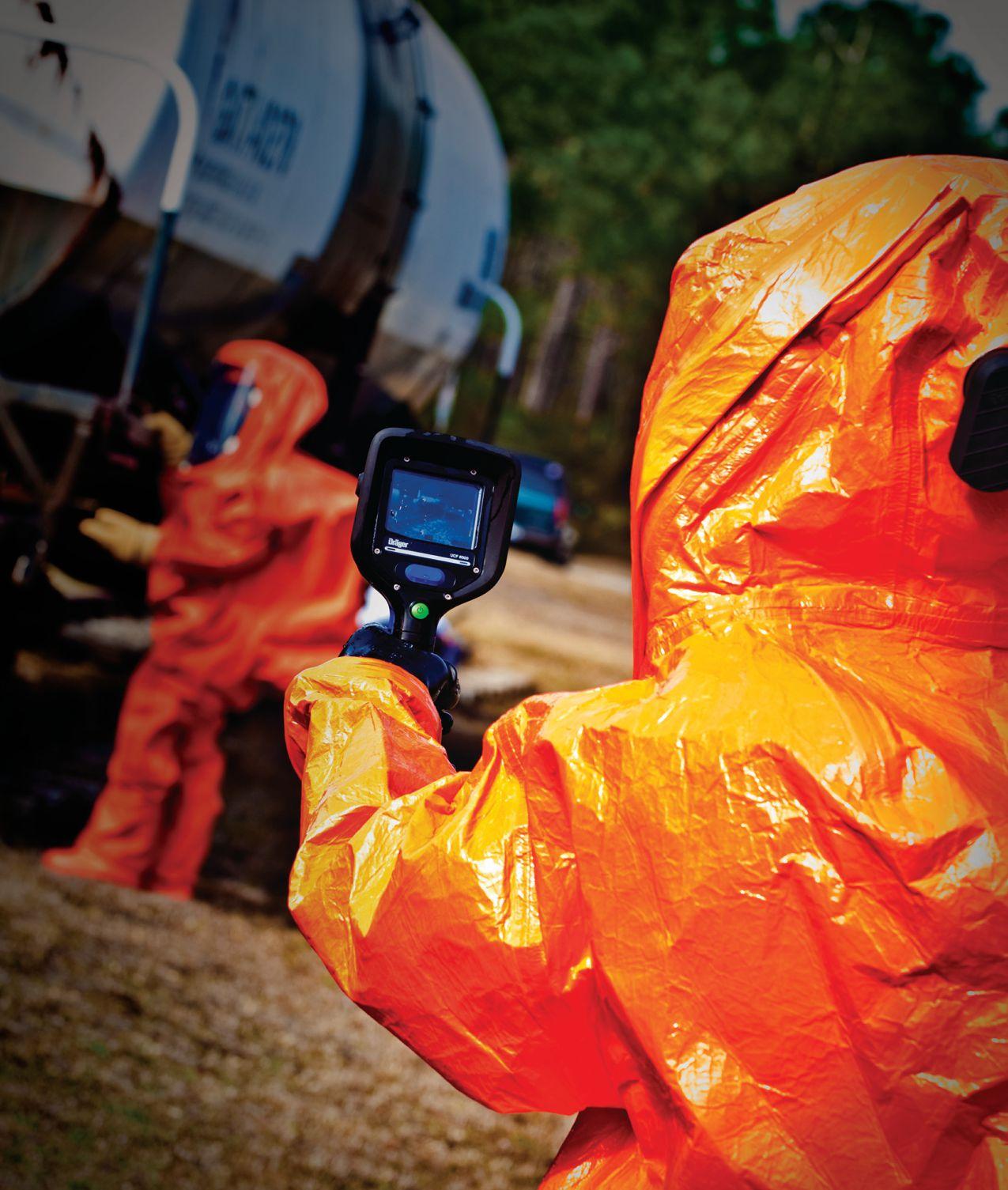
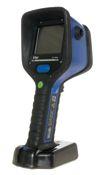
Introducing a new level of clarity — the Dräger UCF 6000.
During a size-up, you shouldn’t have to shade the screen to see it clearly. The adaptive brightness sensor on the Dräger UCF 6000 illuminates the screen outside to negate glare and dims it in the dark so as not to blind the operator. The camera’s extended dynamic range helps the user identify people, and ultra-fast shuttering presents a continuously updated image. The lightweight, rugged design lets you search areas quickly and safely with one hand and direct your team with an integrated laser pointer. How is that for a bright idea?
KOCHEK® LDH and Rural Systems Your Single Source of Water Supply
He died before we even loaded him. I really can’t explain what I felt – it was a mixed bag of emotions. I became angry, so angry in fact that I threw my helmet at a reporter trying too hard to get a picture of my now-dead friend.
Two days later, I tracked down the number of the driver’s family. I will never regret making that call – it was a very important step in the healing process for his wife and kids, and, yes, for me as well. It validated for me what we as firefighters do.
Studies have found that firefighters generally reported that medical emergencies and gruesome motor vehicle incidents were the most upsetting types of calls that they received.
Statistics provided by Veterans Affairs Canada stated more than 1,700 Mounties were receiving PTSD pensions, up from 1,437 in 2010. Consider this: it is understood that our national police force and military members may suffer from this disorder, but what about firefighters, who regularly attend critical incidents?
Firefighters, paramedics and EMTs are routinely exposed to horrific scenes involving death and injury. Traumatic incidents occur on the fire ground, in motor vehicle incidents, at hazmat incidents and in other situations. These already traumatic events are even more horrifying if they involve the deaths of children. Many of us have comforted parents and family members at the back of the pumper, using the apparatus to shelter them from viewing the mangled wreckage that was their teenager’s car.
More horrific yet, when you arrive first on scene of a reported MVI with fatalities, you recognize the mangled wreckage as belonging to a family member. That realization comes like a slow-motion slide show being played out through the windshield of the rescue unit.
In the state of horror, your thoughts, feelings and actions uncouple. That may be why we refer to such states as wigged out, losing your mind, becoming unglued or becoming unhinged. In that state of feeling externally disconnected from reality, and internally from your prior normal self, horror leads to feeling vulnerable. Feeling vulnerable is a very unstable emotion, and unless something intervenes to make it go away, it quickly can escalate to feeling that the next blow will shatter you. This triggers the feeling of terror. Then, terror internally moves very quickly into panic, and then panic pushes you to fight or flight.
These horrific scenes are not easily released by mind, body or spirit.
In an article titled, “Firefighters’ PTSD at dangerous levels”, published in the APA Monitor in 1995, T. DeAngelis said the “rate for diagnosable PTSD among firefighters was 16.5 percent, compared to a one percent to three percent rate for the general population
– about one percent higher than PTSD rates of Vietnam veterans . . . .”
Although line-of-duty deaths are not that common an occurrence in the Canadian fire service, it takes just one LODD to change a department forever. In some LODD cases there is a very real chance of survivor’s guilt: the survivors often ask, “How is it that I survived when others more worthy than me didn’t?”
Survivor’s guilt is based on the harshest of realities – the death of comrades and the struggle of the survivor to live. Often the survivor has had to compromise himself or the life of someone else in order to live. The guilt that such an act invokes – guilt over simply surviving – may eventually end in selfdestructive behaviour by the survivor.
Sept. 9, 2011: Few people were aware that Jack Slivinski Jr., a member of Philadelphia’s elite fire-rescue squad, had been quietly drowning in survivor’s guilt in the seven years since his supervisor suffered fatal burns after racing into a collapsing building to rescue Slivinski Jr. and another firefighter, unaware they’d both got out. It is now believed that Slivinski’s suicide was the tragic result of PTSD because he felt responsible for the death of Lt. Derrick Harvey, 45.
You might ask why no one at the department noticed that Jack was suffering from PTSD. It’s a good question, but although PTSD is diagnosed by symptoms, it takes a professional who knows PTSD to distinguish this disorder from other disorders.
Those with PTSD usually can’t tell you that they have the disorder, unless they have been diagnosed and are in therapy. It’s not like having a cold or the flu; they may or may not remember the traumatic event. They may deny outright that they are having a problem, other than the day-to-day life stresses.
Fire officers should be trained to identify the factors leading to stress and know the steps to solving these concerns through group interaction strategies.
In a nutshell, PTSD results from exposure to a stressful event or a series of events that overwhelm normal coping responses. The issue before us is something we must start talking about! As long as we are silent about PTSD, it will gain power and control of Canadian fire services. I hope that awareness will be the first step to victory for us.
Ed Brouwer is the chief instructor for Canwest Fire in Osoyoos, B.C., and Greenwood Fire and Rescue. The 21-year veteran of the fire service is also a fire warden with the B.C. Ministry of Forests, a Wildland Urban Interface fire suppression instructor/evaluator and a fire-service chaplain. Contact Ed at aka-opa@hotmail.com
talk, and more talk...
Regional issues such as training, protocols and coverage hinder radio-network interoperability
By STeFAN DUBOwSKI
top : Although police, fire and EMS groups are working to improve interoperability, and Ottawa has committed a portion of the 700 MHz spectrum to emergency responders, local issues, including cost, are complicating the issue.
It was the sort of test no one would have wanted to take.
Nonetheless, the riots after the Stanley Cup hockey game in Vancouver in 2011 gave fire, police and emergency medical services (EMS) the opportunity to find out if their interoperable radio network was up to snuff.
Mike Webb, vice-president of technology services with Emergency Communications for southwest British Columbia (E-Comm 911), outlined this trial by fire during the Fifth Canadian Public Safety Interoperability Workshop in Ottawa in December. Speaking to heads of first-responder organizations,
Webb and others from across the country offered updates on efforts to develop multi-service radio networks to support emergency workers and ensure agencies communicate effectively.
wEST COAST
Thankfully the multi-service network did the job on June 15, 2011, when the riot broke out following the Vancouver Canucks’ loss to the Boston Bruins on the Canucks’ turf. Webb said fire, police, and EMS personnel were able to connect with each other to co-ordinate their responses. It was a far cry better than the situation some 17 years earlier, when another riot broke out after the
Stanley Cup game. Back in 1994, there was no interoperable radio network, making it more difficult for first responders to co-ordinate their responses, Webb said.
The incident in 2011 also highlighted gaps in the system, however. For instance, operating procedures need to be perfected, Webb said, explaining that organizations have to build certain details into their response plans, such as standardized channels for talkgroups.
Webb said E-Comm 911 now has about half of the area’s firefighting organizations on the Harris Corp. EDACS ProVoice trunking system, initially installed in 2001 and expanded just last year to cover the Fraser Valley. Other firefighting teams haven’t joined the network yet for various reasons, he said. Some find it too expensive; others aren’t convinced of the benefits. E-Comm hopes to increase the number of fire services on the network.
E-Comm 911 is also looking to the future. By 2015, the current network will no longer be supported by the manufacturer, Webb said. The plan is to find a new platform that will last at least 15 years. It should be scalable, enabling E-Comm 911 to expand the network to cover the entire province. It should support over-the-air re-keying for remote channel encryption, and it should provide over-the-air programming for remote radio configuration.
Particularly for firefighters, E-Comm seeks radios that offer good voice quality in noisy environments, and that work well in conjunction with personal protective equipment. “In many cases that means making the radios as small as possible,” Webb said, explaining that the smaller the radio is, the less it interferes with PPE.
E AST COAST
While the Maritime Radio Communications Initiative (MRCI) seemed well underway when Terry Canning made his presentation at the interoperability workshop late last year, a lot has changed since then. Whereas Canning, the provincial interoperability co-ordinator for public safety and field communications with the Province of Nova Scotia, explained back then that the MRCI had finally closed its request for proposal (RFP) for a new panMaritime provinces mobile radio system in October, the initiative experienced a setback in February.
As of Feb. 10, the RFP has been cancelled. Canning said via email that the official word is that “the provinces have decided to withdraw this RFP. We’re currently not in a position to discuss details around the decision, or what comes next, but that will happen in due course.”
Originally issued in August 2010 and expected to close later that year, the RFP was extended a few times as the provinces and prospective bidders exchanged information and fine-tuned the technical details. During the interoperability workshop, Canning said two proponents were bidding on the project that aimed to have New Brunswick, Nova Scotia, and Prince Edward Island use the same system, designed to improve interoperability among police, fire, EMS and others across the region.
Canning said the system implementation was expected to be substantially complete by mid-2015, but in a follow-up interview, he said that time frame may be unrealistic. He explained that Nova Scotia has a contract with Bell Mobility for its own in-province multi-service system; the contract is slated to end in May 2015, but the province might now need to extend it to account for the MRCI delay.
Canning said it isn’t clear exactly how the three provinces will proceed, although he said they’re expected to continue cooperating in the development and management of public safety and public works communications services. For example, he said, it’s likely they will continue to comment jointly on regulatory issues, share infrastructure in border areas and look for other opportunities to extend interoperability across provincial borders.
He said that one of the lessons learned from building Nova Scotia’s current inprovince interoperable communications network is the importance of documenting processes. Nova Scotia originally didn’t put a lot of effort into documenting the user-operational aspects of its network and only recently started collecting user-agency procedures, particularly in the area of interoperability. Canning advised other jurisdictions creating multi-service networks to document their interoperability plans from the beginning.
For its part, Nova Scotia has designated a provincial interoperability coordinator to lead an interoperability advisory council, which is tasked with advising on fleetmap planning, training, talkgroup naming conventions, user-priority levels, and potential use of 700 MHz broadband spectrum.
P RAIRIES
By the end of 2010 there were more than 400 agencies using the multiservice SaskPower/RCMP network in Saskatchewan, said John Leitch, strategic manager of the Provincial Public Safety
Continued on page
capability-based planning
Assessment through benchmarking ensures that service-level gaps in CBRNe response are found and addressed
By BARRy BOUwSeMA
top : The consolidated risk assessment is an integral component of the new CRTI (CBRNE Research Technology Initiative) Science and Technology investment model and is used to identify and assess threats and corresponding risks across all mission areas of prevent, prepare, respond, and recover.
In a post-911 world the fire officer is faced with the routine fire calls, hazmat spills, and now, an increased potential for a chemical, biological, radiological, nuclear, and explosive (CBRNE) event. The threat of a terrorist attack needs to be considered by all front line first responders. If this a concern for you, read on.
To help you, the Canadian Centre for Security Science has developed new methodology in risk assessments, built on best practices in the emergency-management community. The Canadian Centre for Security Science is participating in a joint endeavour with Public Safety Canada to provide science and technology ser-
vices for national public safety and security. Through this initiative, future trends and threats are identified, and support and services are provided for all-hazards vulnerability and risk assessment, technology forecasting and operational analysis.
For the fire officer, this research allows for the co-ordination and implementation of fire-suppression operations, which include the following tasks:
• assessing the scene
• assigning resources
• establishing an incident-command system (ICS) consistent with the command system used by the authority having jurisdiction (AHJ)
• communicating the status of the situation
• requesting additional resources
• establishing a safe perimeter
• evacuating persons in danger
• rescuing trapped victims
• conducting fire suppression
• determining the cause of the fire(s)
• ensuring the area is left in a safe condition.
This capability further includes support necessary to prepare the community and reduce vulnerabilities in the event of a major event.
Routinely, at fire scenes, the first unit to arrive initiates the ICS, assesses the incident scene, communicates the situation, and requests appropriate resources including any necessary mutual aid or cross-discipline support. Firefighting activities are conducted safely and fire hazards and environmental concerns are contained, controlled, extinguished, and investigated, and the incident is managed in accordance with emergency-response plans and procedures. Many of these activities already occur on fire grounds all over Canada; what capability-based planning (CBP) provides is the mechanism to monitor whether benchmarks are being met and resources and capabilities are adequate for the task at hand. If not, CBP provides a means to quantitatively prove that a gap in service level exists that needs to be addressed.
The consolidated risk assessment (CRA) process as one of the first steps in the CBP methodology can be used to quantify risk and help direct your department’s future investment strategies. The CRA is an integral component of the new CRTI (CBRNE Research Technology Initiative) Science and Technology investment model and is used to identify and assess threats and cor-
Surreyfiresafety jul09CFF.pdf 1 25/01/10 1:34 PM
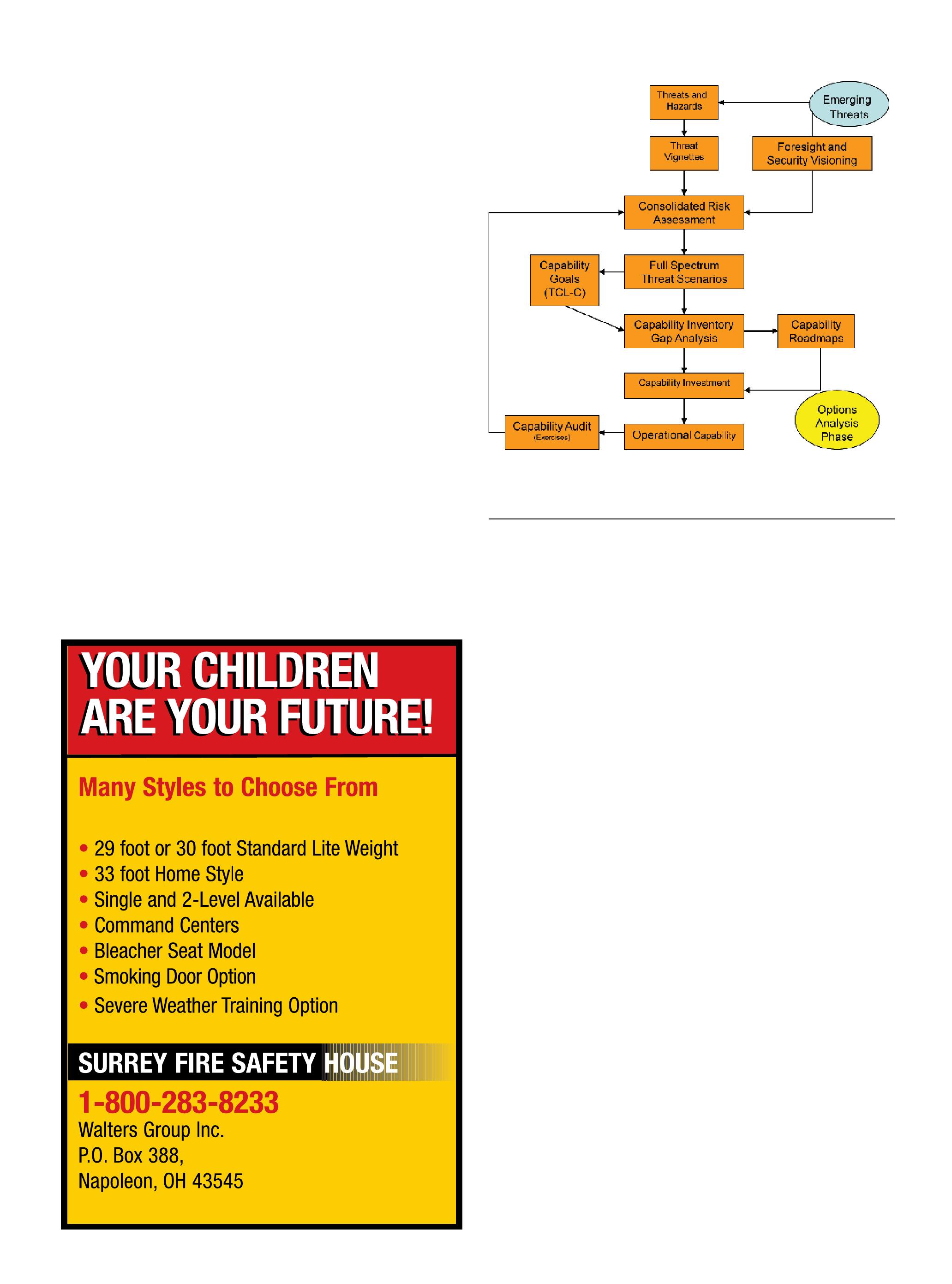
The capability-based planning model
responding risks across all mission areas of prevent, prepare, respond, and recover. This style of risk-assessment template is used for assessing the risk associated with threat scenarios across five categories that cover all hazards: terrorism, intentional, accidental, technological, and natural. The combination of these threat categories into a common framework is increasingly beneficial as assessments proceed from a national to a local level. The CRA is a process that engages experts from law enforcement, intelligence, first-responder communities and emergencyplanning stakeholders, to name just a few. The process builds consensus on vulnerabilities, threat issues, and their associated risks. The following objectives are integral to the CRA process as it pertains to the CRTI:
• To provide a measure of risks that may be used to study corresponding gaps;
• To provide a sense of immediacy and prioritization for addressing existing and potential threats and corresponding gaps;
• To serve as a key indicator in the formulation of science and technology investment priorities;
• To serve as a planning and investment priority setting method.
The CRA process focuses on threats and hazards for your organization and/or region. Following the CRA step, a fullspectrum scenario is developed to provide a context against which to measure the level of capability and provide a basis for developing goals against which the organizational capabilities are assessed. A capability inventory gap analysis is then conducted to identify gaps between the risks to the organization/region and the capability to respond to the risk. These identified gaps in the missions of prevent, prepare, respond, and recover are closed using the options analysis phase, in which plans are developed to correct the identified deficiencies. The CBP process focuses on systems and multiple services capability versus single-service silos; CBP connects the capabilities to strategic requirements for problem mitigation. The CBP risk model identifies performance gaps
BACKtoBASICS
Hydraulic ventilation primer
BY MARK vAN DER FEYST
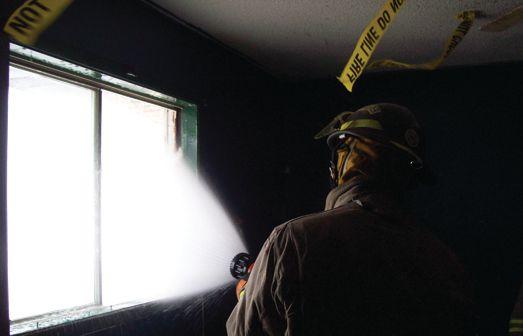
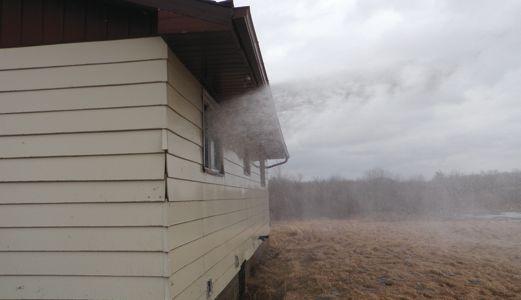
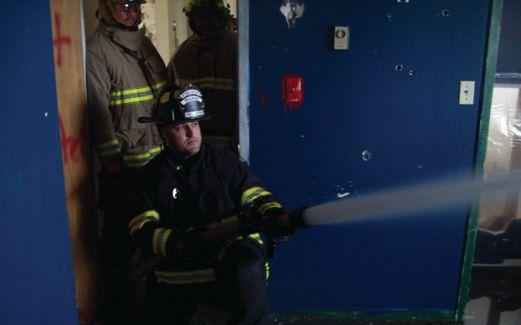
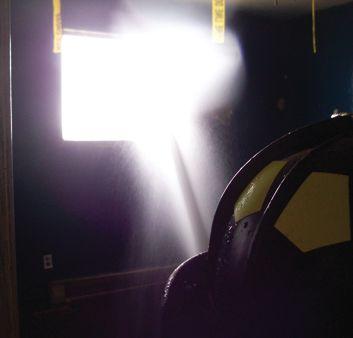
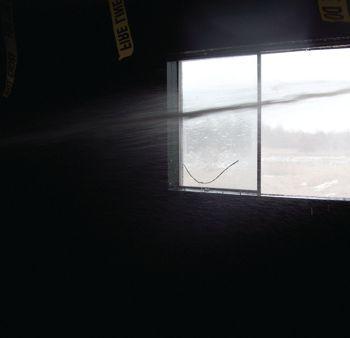
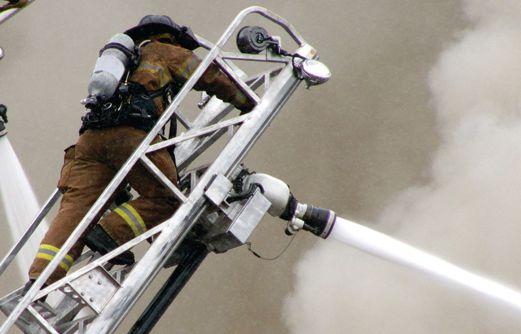
for the past few months, we have been looking at different aspects of ventilation. Most ventilation tasks, with the exception of hydraulic ventilation, fall under truck company operations. Hydraulic ventilation is performed by the engine company as part of its fire-suppression duties, and can be done by by any fire department that conducts interior suppression activities. Hydraulic ventilation is an effective and quick means of ventilating a room. Ventilation is the process of removing smoke and hot gases and replacing them with fresh air. Hydraulic ventilation accomplishes this with just a two-person team operating a hand line.
Whenever a hoseline is used to flow water from a nozzle, air currents are created by the moving water. The air-current volume created is about equal to, if not greater than, the amount of air volume created by a positive-pressure fan. This is a vast amount of air being created by the nozzle, which is used to the advantage of firefighters; the air draws out the smoke and hot gases from a room to the outside of the structure.
Hydraulic ventilation works best in small spaces, such as bedrooms, bathrooms, kitchens and dens. Ventilation of larger areas, such as a great room or open-concept living area, may need assistance from a positive-pressure fan, or from vertical ventilation. Hydraulic ventilation will help in the larger areas, but it may take more time to notice the effects in bigger spaces versus the smaller rooms in which immediate changes are noticeable.
To conduct hydraulic ventilation, an opening to the outside must be used, such as a window or a doorway. Windows are the most common openings in rooms such as bathrooms and bedrooms. The window must be taken out to provide an exit path for the smoke and hot gases. The nozzle must be located within two feet of the window. As you can see in photo 1, the firefighter is standing about two feet back from the window. From this position, the firefighter is ready to flow water from the nozzle in a fog pattern that will cover 85 to 90 per cent of the window opening. This means that the fog pattern should be just touching all four sides of the interior frame of the window. On the outside, the water pattern will carry on expelling all the byproducts of fire, as seen in photo 2.
In photo 1, the firefighter is standing in front of the window, which is not the desired position. It is important to remember that firefighters can block the vent openings by standing in doorways or in front of windows. In this case, the firefighter blocks parts of the ventilation path. Firefighters should be on their knees when conducting this operation. Also, bear in mind that this room just had a fire in it that was suppressed using the nozzle stream, and will be very hot; standing up may not be tolerable.
Notice in photo 1 the caution tape hanging down from the ceiling; this was placed to show the effects of hydraulic ventilation. The air current will pull the caution tape toward the window, if the ventilation is being conducted correctly.
Photos by Mark van D er Feyst
Photo 1: Stand about two feet away from a window when performing hydraulic ventilation, but be careful not to block the path of ventilation.
Photo 2: Using a fog pattern during hydraulic ventilation helps to expel the byproducts of fire.
Photo 3: A firefighter demonstrates how to ventilate a room from the corner, which offers some thermal protection.
How often do firefighters get within two feet of the window to perform hydraulic ventilation? Most often firefighters are farther back. In photo 3, a firefighter demonstrates how to attack the fire in a room from the doorway. Being at the doorway provides some thermal protection, as firefighters can use the wall to shield themselves from the heat while they apply their water streams. The distance from a doorway to a window will be greater than two feet – usually between eight and 10 feet. Being farther back from the window requires an adjustment to the technique.
As mentioned, moving water creates air currents, similar to those created when using a positive-pressure fan. With a distance greater than two feet from a window and a fog pattern of 85 to 90 per cent of the window opening being maintained, the opposite effect is being created – a positive-pressure fan effect that pushes the smoke and hot gases towards the window area, and eventually back onto firefighters. This happens because of the cone of air that is created by the nozzle and the fog pattern. The farther back from the window the firefighter and nozzle are, the bigger the cone of air becomes. Eventually, the cone of air will reach the window, but it will be larger than the window opening. It will push the smoke and hot gases off the wall beside, above and below the window, and allow them to travel back toward the suppression team.
To prevent this from occurring, the nozzle pattern needs to be changed to a narrow fog, or even a straight stream, from a wide fog. The stream selected to accomplish hydraulic ventilation is almost a straight stream (see photos 4 and 5). The air currents are still being created and will expel the smoke and hot gases.
This negates having to adjust the nozzle pattern from a straight stream to a wide fog when trying to ventilate immediately after fire knockdown. This also shows that a smooth-bore nozzle will accomplish the same outcome as an automatic combination nozzle. You can see in photo 5 that the caution tape at the top is being pulled toward the window with an almost straight stream.
Locating the window in the room can also be accomplished by using the nozzle stream. Instead of sending a crew member into the hot environment to locate the window, firefighters can spray water along the wall in a straight stream. The change in the sound of the water bouncing off the wall, and then off the glass, is the indicator that the firefighters have found the window. A good stream of water flowing at the required pressure and flow will break the window from the safety of the doorway.
The glass will be hot from the fire and, with cold water being applied, will break even more easily. Another tip is to use the light from the fire to visually locate the window before knocking down the fire.
Mark van der Feyst is a 12-year veteran of the fire service. He currently works for the City of Woodstock Fire Department in Ontario. Mark is an international instructor teaching in Canada, the United States and India. He is a local-level suppression instructor for the Pennsylvania State Fire Academy, an instructor for the Justice Institute of British Columbia and a professor of fire science at Lambton College. E-mail him at Mark@ FireStarTraining.com
Photo 4: When conducting hydraulic ventilation from the back of a room, using a straight stream is optimal both for ventilation and for locating the window.
Photo 5: A straight stream can accomplish the same effect as a wide fog pattern, as indicated by the direction of the tape on the ceiling.
By K EVIN F OSTER Fire Chief Midland, Ont.
tSTRAIGHTtalk
Managing the bumps on the road to success
he shortest distance between two points is a straight line. When thinking of setting and reaching goals, it is rare to achieve them through a straight-line approach. Take, for example, a sprinter running 100 metres. The finish line may be the achievement, but the goal – to get there faster than anyone else – is a result of countless hours of training, which led to achievements in other competitions over time, before finally accomplishing the ultimate goal. Sometimes there are competitions during which lessons are learned but goals are not achieved.
The fire service is highly skilled, professional, and passionate. Generally, though, it is not patient. We regularly find ourselves frustrated by the glacial speed of politics. Current economic times have exacerbated the frustration, as the focus on fiscal conservatism has further constrained progress that comes with any type of financial implications for municipal councils or provincial ministries. So, what are we to do? Sit and sulk? Throw temper tantrums? Feel free to give it a try and let me know how it works out . . .
The current state of the economy, as I see it, has not slammed the doors of opportunity shut on the fire service, but has let the doors close gently on our collective foot, because of the work we have done and the relationships we have built. So, let’s not fall back into obscurity and be seen as complainers; our foot is still firmly in the door. How can we get all the way back in?
Several months ago, a trusted colleague wrote in this publication about lobbying as a strategy for moving fire-service issues forward. He said, “Show up and make friends, and when you’re done, show up again and make more friends.” This strategy has proven fruitful for many fire services across this country. Perhaps it is of value to recap some of the fire service’s major successes: the volunteer firefighter tax credit (Canada); firefighter workplace presumptive illness coverage (all provinces except Newfoundland and Labrador); provincial funding for fire apparatuses (Newfoundland and Labrador); fire sprinkler requirements (Ontario). Like the world-class sprinter who has improved with training and practice, these successes have come with hard work and some less-successful initiatives.
tackle issues that still require work.
So, get back out there and make friends with the new political and staff faces at the local, provincial and national levels. It is imperative that we become knowledgeable about different ideologies that these influencers may have, and the fiscal challenges that they may seek to overcome. Where there are familiar faces, we need to re-acquaint them with our issues and areas of concern. This will help to define or refine your approach to an issue.
One of the more difficult challenges is to prioritize the issues. Unfortunately, the multitude of factors that demonstrates the diversity of the fire service are the same factors that drive the divisiveness in our ranks, and this makes it even more difficult to determine which issues to embrace.
Typically, the individuals who we want to act in a desired fashion – politicians or agencies – are able to play us off of each other because fire-service groups are unable to agree on a preferred outcome, or the path to achieving it even if we do agree on an outcome. Overcoming that challenge is step one.
So, pick the issues that are winners for all, and save the more contentious matters for another time. Doing this will probably limit
Now is the time to build and nurture partnerships and create coalitions. ‘‘ ’’
It is far from my intent to suggest that we rest on our laurels; actually, I hope that reflecting on these achievements gives us the energy to build on them. Our work is not done; we have more races to run and more training to do. In my view, now that the times are a changin’ (or maybe they have already changed), we must step back, refocus and reenergize. Hopefully, the successes listed above will help us feel better about what we have achieved, and will rejuvenate us so we’re ready to
Kevin Foster is the fire chief in Midland, Ont., and the first vice-president of the Ontario Association of Fire Chiefs. Contact him at kfoster@ midland.ca
the number of topics. Don’t discard the other issues, because they are important; it’s just that perhaps this isn’t the right time to fight those major battles.
As you work through the factors that influence the decision about which issues to tackle, you may find that you elect to proceed with those that are not the most pressing or influential. The opportunity to capture smaller wins may be the key that unlocks the door to the bigger victory when times are better. Now is the time to build and nurture partnerships and create coalitions.
Prepare to deliver your key messages time and time again to all who will listen – perhaps not even to those you are trying to influence, rather maybe to those who simply ask questions and will then deliver your message to someone else, who may ask the question that will lead to the actions you’re after.
Yes, it’s more like a twisty, 42-kilometre marathon than a 100metre sprint, but medals are awarded for that event too.
l Smar t wireless technology prevents cross-pairing
l Enhanced buddy light placement
l Simple integration
l Lower profile and lighter weight MSA FireHawk® M7 Air Masks with FireHawk M7 I-HUD
Learn more about the new I-HUD System. w w w.msanet.com/ I H U D
burning issues
Advocates recommend cooking up a national kitchen-fire strategy
By MARTIN SUNDeRLAND
top : Fire departments need to change their fire-prevention messages to target specific groups at risk from kitchen fires, including seniors, new Canadians and children.
kitchen fires continue to be a major concern. They represent the single most common cause of reported residential structure fires in British Columbia, in other Canadian provinces and in the United States. According to the BC Office of the Fire Commissioner, ovens and stoves caused about 35 per cent of reported fires in 2009 and 40 per cent in 2010. NFPA (National Fire Protection Association) numbers for the U.S. gathered from 2005-2009 show a similar trend at 42 per cent.
These numbers do not accurately represent the true gravity of the problem, as many close calls are never reported. When residents are able to successfully extinguish a stove or
oven fire, they typically do not call the fire department.
The dilemma facing fire departments is how to significantly reduce the number of cooking fires occurring in our communities. This goal will be achieved only by understanding the root causes of these fires and then creating effective and comprehensive fire-prevention programs specifically designed to address them.
The principal causes of cooking fires include:
• unattended cooking
• grease buildup on stove or oven
• combustibles stored on or near stovetop
• improper use of cooking appliances
Leading the Evolution of Training.
BullEx has evolved into the world leader of re training systems through a commitment to building the best tools possible, so that every evolution counts.
Now as part of the Lion group, we have a greater insight into rst responder readiness enabling us to build the tools you need to accomplish your training objectives.
We are re prevention education trailers, reghting training tools, re extinguisher training systems, and hazmat training tools. We are Total Training
BullEx has evolved. Training has evolved. Join the Evolution.
• contact of clothing with element or burner.
Unattended cooking is by far the greatest problem but it is also the most difficult fire cause to prevent. Why do people leave the stove? There are a number of reasons including distractions (phone calls, children, television), forgetfulness, fatigue, substance abuse and others. These human factors involve behaviours that may be difficult, if not impossible to change. They are also present in groups whose cognitive abilities may be impaired by age, mental ability or circumstances.
In order to address these diverse groups, we need to have an educational strategy aimed specifically at each one, instead of the generic messaging that the fire service has traditionally employed with limited success. Developing these strategies requires gaining knowledge and understanding of each group’s needs, issues, learning styles and level of comprehension. This will be best accomplished by forming partnerships with agencies that deal with these groups regularly. Then, we can develop lesson plans and resources that are relevant and appropriate. For example, seniors dealing with memory loss might be encouraged to use a reminder device every time they turn on the stove. This, along with other messages, could be delivered through home-care workers, seniors’ associations and strata organizations.
Once an effective curriculum and lesson plan has been created, fire-prevention educators should consider a train-the-trainer approach to maximize the reach of their messaging.
Consideration must also be given to cooking practices brought to Canada from other countries. For example, open-fire cooking – a practice employed indoors in some areas where homes are built from limited combustible materials such as mud brick and soil floors – would not be suitable in a wood-framed residential structure. Propane burning appliances are often used indoors in countries where there is no electricity or natural gas supply, but in a typically wellinsulated and sealed Canadian home pose a serious risk of fire or carbon-monoxide poisoning.
We need to reach out to our diverse multicultural population with suggestions for adapting traditional cooking methods to ensure their safety. The fire service needs to raise awareness of the differences in construction methods and their implications. These lessons will need to be made available in multiple languages and delivered through organizations best suited to reaching each distinct cultural population group.
We have traditionally focused most of our educational efforts on the very young with messages such as Don’t play with lighters or matches, Stop, drop and roll, and Get out and stay out. While these messages remain important, we need to understand that children are now cooking, often unsupervised, at an early age. We need to bring safe cooking messages into the schools. Working with our school districts, we should consider developing kitchen-safety programs for the 10- to 12-year-old age group. This program could be packaged and delivered by classroom teachers, probably with an online component.
We need to develop key messages for children and parents. These messages should promote such concepts as never leaving a stove unattended, keeping small children one metre away from hot things, and steam-burn hazards from microwave ovens.
While we would like to prevent all cooking fires, it is unrealistic to hope for more than a reduction in numbers. On the other hand, if we acknowledge that we will never stop all kitchen fires, we can also focus on strategies and methods for mitigating those fires as effectively as possible to reduce their severity.
The most obvious step toward accomplishing this goal is a continued push to encourage early fire detection through the use of smoke alarms. High-risk groups should be identified and assisted through homeinspection programs, free smoke-alarm supply and installation, and ongoing promotion and education. Novel ideas to remind citi-
zens about regular testing of smoke alarms should be considered, such as working with schools and media to issue a reminder at the beginning of every month.
Research conducted by the NFPA shows that despite decades of education, many people still do not know how to extinguish a stove fire safely. We should take a close look at our methods for teaching the Put a lid on it message, and consider new delivery models. Province-wide or even national media campaigns should be developed.
As a final resort, we should be encouraging the design and manufacture of residential stove fire-suppression systems. While some programs already exist, they are expensive. If these systems were more affordable, it would be easier to convince home owners, care providers and even builders to offer them as an option, particularly in homes of high-risk residents. When combined with an electrical or gas shut-off interlock, these systems should substantially reduce the property losses, injuries and fatalities associated with cooking fires.
All these recommendations come with one drawback – cost. Most fire departments are hard pressed to find sufficient money to expand fire-prevention mandates. In fact, prevention divisions in some jurisdictions are being trimmed, and their priority is often focused on inspections and investigations.
We need to realize that public fire education is a long-term investment that will yield considerable financial gains within a few years. By investing in effective and comprehensive cooking-safety programs in our communities, we will eventually save money on suppression calls. We will also save the huge additional social and emotional cost that comes with every incident.
Funding alternatives for these types of programs do exist. We should begin looking outside our departmental budgets for the money needed to create educational resources, videos, packaging and marketing of safety messages. Our first approach would be to co-produce this program among several fire departments; each would contribute dollars or in-kind services where possible. Additional money could be raised by applying for grants. These come from organizations such as the NFPA, community foundations, insurance companies and government.
Local service clubs such as Lions, Rotary and Kinsmen often make money available for community projects.
With a collaborative approach, our fire services have the ability to be world leaders in innovative fire-safety education and develop real, working solutions to the kitchen-fire problem. We can do this.
Martin Sunderland is a fire inspector in Abbotsford, B.C. Contact him at msunderland@abbotsford.ca
OUR SCHOOL ALSO HAS FIRE DRILLS. 850ºF FIRE DRILLS.
Our Pre-Service Firefighter Training Program is taught by the best firefighters of today, for the best firefighters of tomorrow. That’s why half of our firefighting course is hands-on training. The other half is the essentials you need to be the greatest. Talk to us about our intense firefighting program. APPLY TODAY www.festi.ca
B y L ES K ARPLUK Fire Chief, Prince Albert, Sask. AND Ly LE qUAN Fire Chief, Waterloo, Ont.
tMay the force be with you LEADERSHIPforum
o continue with our theme of surviving the chaos in today’s fire service, let’s discuss how other leaders have dealt with and survived chaotic times.
We have, in a light-hearted way, titled this column May the force be with you. The Star Wars fans among you will understand that there is a good force and a bad force, and that sometimes the bad force can be very strong. Indeed, sometimes the negative force can be overwhelming; it can eat you up and spit you out if you let it, so it’s crucial that you hold true to the open and honest leadership qualities in which you believe.
One of the keys to ensuring that your leadership remains a positive experience is to find a mentor. In much the same way as Luke Skywalker found Yoda, you need to find someone to guide you through rough times; someone who can energize you when you need a boost. At the same time, you must accept that, as a leader, some days will be better than others. It’s so important to remember that all leaders experience these challenges.
There is a familiar saying that what doesn’t kill you, makes you stronger. Let’s hope you never have to test that bit of wisdom. Rest assured that whoever you choose as a mentor has experienced all the ups and downs that you are likely to encounter; which is, of course, why good mentors are able to provide sage wisdom. We guarantee that not every decision made by your mentor was the right one; the point is that those we choose to emulate have learned from their experiences, put them into the memory bank of hard knocks and moved on. Those encounters and the information gleaned from them are now there to draw upon and apply when required.
If this is the situation, then your days as a leader are numbered; no matter how much you are liked by your staff, eventually they will become disillusioned by the fact that you won’t make a decision. Remember, even a bad decision is better than making no decision at all. Don’t get tangled up trying to review and analyze everything to that never-ending degree; this is sometimes referred to as paralysis through analysis. Don’t let that happen to you; it’s a career killer.
Pause for a moment and ask yourself the following questions:
• What do I want to stand for?
• What are my reasons for being in this position?
• What do I want to accomplish during my time as a leader?
• How do I share that vision with my team?
If you have demonstrated a true level of professionalism, have shown that you are an honest and reputable individual, and you openly admit when you make a mistake, then you are on the right track. All you have to do is think back to a situation when someone you know made a mistake (leader or not) and how you felt when that person openly admitted to it and asked
If you make mistakes, do yourself a favour and learn from them . . . ‘‘ ’’
If you make mistakes, do yourself a favour and learn from them; take the good from every experience and move on. Don’t be disillusioned by the fantasy that you won’t make mistakes. If you don’t make the odd mistake then two things are happening;
• you are not making decisions of significant value to your organization, or
• you are avoiding conflict at all cost by relying on others to make your decisions.
Les Karpluk is the fire chief of the Prince Albert Fire Department in Saskatchewan. Lyle Quan is the fire chief of the Waterloo Fire Department in Ontario. Both are graduates of the Lakeland College Bachelor of Business in Emergency Services program and Dalhousie University’s Fire Administration program. E-mail Les at l.karpluk@ sasktel.net or Lyle at thequans@sympatico.ca
for support to make it better. Didn’t that instil a higher level of confidence and trust (from you) and make you want to help? Now, think about how you felt when a person made a mistake and looked for every excuse in the book to shed responsibility for the error. Did your level of confidence in that person increase or decline? Did you really want to help them?
Leadership doesn’t mean you are always right; leadership means you stand for what you believe in, and that you believe in doing the right things for your people, not because its expected of you – because it’s the only thing to do.
Every department has a Darth Vader among its ranks who wants to create dark days for the organization. There will be good times and there will be bad times, but when you take on the role of a leader, remember that you have people who want to help you (there are many Yodas) and want to see you succeed. Seek Yoda and the force and grow. Never give up!
Telecommunications Network (PPSTN), under the Ministry of Corrections, Public Safety and Policing.
Fire departments, the Canada Border Services Agency, emergency medical services, police and other public-safety organizations use the interoperable network, which affords inter-agency communication. The cities of Regina and Saskatoon have their own separate networks, however, and although the province-wide system supports interoperability on a technical level, stakeholders need to hammer out details such as talkgroup protocols before practical interoperability is a reality, Leitch said.
Organizations are coming together to address that issue in the Saskatchewan Interoperability Interest Group, which aims to tackle barriers to practical interoperation. The group includes the Saskatchewan Association of Chiefs of Police, Regina Fire Chief Rick McCullogh, Saskatoon Fire Deputy Chief Dan Paulsen, the
Saskatchewan Association of Fire Chiefs, the RCMP, and other representatives of public-safety groups, Leitch said.
Saskatchewan also has a user committee that aims to address issues that users might have with the network or with the radio equipment. It’s relatively new, however, and it will take some time for the group’s members to connect with the end users to understand the problems and bring them to the attention of the user group executive, Leitch said.
For 2012, priorities include improved interoperability training and assessing the state of the network, he said. While the system provides good provincial coverage, there are some gaps.
The No. 1 issue for end users has to do with portable radio coverage. With their smaller batteries, portables don’t have as broad a range as mobile in-vehicle units do, and they don’t connect to the network as readily. In some cases, the discrepancy puts first responders in difficult situations. For instance, if firefighters are trying to help a driver whose vehicle is upside down in a ditch off the road, they may discover that their portables are out of range when they’re beside the vehicle, and in order to communicate with dispatch, they have to make their way back to the truck and its more powerful radio. That hinders efficient operations, Leitch explained.
He said the way the network is managed helps to ensure stakeholder co-operation. Each organization involved in building the system – the RCMP, the province, and SaskPower – is responsible for specific pieces (technology, physical infrastructure, and electricity and the fibre-optic network, respectively). That means money never needs to change hands among the stakeholders, Lietch said, reducing the likelihood of arguments over who should pay for what.
BECAUSE WHAT’S INSIDE MATTERS.
CROSSTECH® Black Moisture Barrier
• The new industry leader among moisture barriers
• Enhanced durability – proven in the laboratory and in the field
• 3.5-year limited warranty for easy NFPA 1851 compliance
3-Layer Moisture Barrier
• The most rugged durability
• Exceptional resistance to flex and abrasion damage
• Backed by a 5-year limited warranty
• Exceptional combination of performance and value
• Excellent choice for budgetary challenges
• Backed by a 3-year product support program
CROSSTECH® and GORE® moisture barriers serve the industry’s range of performance and durability needs, helping to satisfy all of your thermal stability, breathability, and protection expectations. They achieve performance measures beyond those required by NFPA 1971, are backed by industry-leading warranties and support programs, and are Oeko-Tex® Standard 100 certified.*
Equip your team with a field-proven moisture barrier that meets your department’s specific needs. *A
By SE AN TRACE y Canadian Regional Manager, NFPA
tNFPAImpact
Understanding the risks of photovoltaic cells
he Canada Mortgage and Housing Corp. reports that installation of photovoltaic (PV), or solar, cells has been growing at a rate of 30 per cent, and this trend will likely continue as the price of electricity continues to rise. It is likely that these systems will be installed increasingly in residential buildings. This will increase the risk to firefighters, as the solar cells will introduce new hazards, requiring a re-evaluation of fire-ground tactics as we learn more about these cells and the dangers they present.
An article in the March 2012 edition of Fire Risk Management said that in Germany, “there are cases where fire departments have refused to tackle a fire at a building with PV solar panels because insurance companies have withdrawn their personal-injury insurance for firefighters if they put water on a building installed with panels.” The article also raises concerns about post-fire re-ignition. If the lessons from Germany are accurate, then it behoves us to learn from these and broadcast safe practices. This may also be one more example where the Canadian building codes need to consider firefighter safety.
A recently built home in my neighbourhood looks from the street from like any other new structure. From the back of the home, an array of PV cells is visible (at night the cells might not be apparent on size-up unless you notice the extra electrical panels). In this case, the panels and all associated electrical units will be live until you reach the isolator switches. As a responding firefighter, do your tactics change? In your size-up, would you have noted the presence of PVs? The hazard-marking system found in Annex Q of the NFPA 1 fire code would provide a means to identify unique hazards such as a PV system.
of PV systems, if they are exposed to flame, they can release known carcinogens such as cadmium and other highly toxic byproducts. Operations should consider the requirements to evacuate downwind populations in the event of fire. Also of concern is the fact that PV materials may not be readily identifiable following a fire, so added precautions may be necessary. As well, fire-damaged PV panels, when re-energized in daylight, may create electrical shorts and reignite. The NFPA report identifies several basic tenets for firefighters as well as for incident commanders that should be incorporated. In Canada, the Canadian Standards Association (CSA) plans to release its F900 guideline on the installation of rooftop PV units in the spring for public comment. The review will provide an opportunity for all interested parties to review the final-draft guideline and provide feedback for the guideline development process. Publication of the CSA F900 guideline is scheduled for the late summer/early fall. This is intended to also consider fire responder concerns. The technical committee developing this guideline includes representa-
As well, fire-damaged PV panels, when re-energized in daylight, may create electrical shorts and re-ignite.
NFPA’s Fire Protection Research Foundation in May 2010 published a report entitled Fire Fighter Safety and Response for Solar Power Systems. This is available for download from the NFPA website at www.nfpa.org. The report states that, “the goal of this project has been to assemble and widely disseminate core principle and best practice information for firefighters, fire ground incident commanders, and other emergency first responders to assist in their decision making process at emergencies involving solar power systems on buildings. Methods used include collecting information and data from a wide range of credible sources, along with a one-day workshop of applicable subject matter experts that have provided their review and evaluation on the topic.”
The report highlights many unique hazards, in addition to the shock hazard of these systems. Due to the nature of the components
Sean Tracey, P.Eng., MIFireE, is the Canadian regional manager of the National Fire Protection Association International and formerly the Canadian Armed Forces fire marshal. Contact him at stracey@nfpa.org
tion from the Ontario Office of the Fire Marshal. A copy of the NFPA Research Foundation report has been forwarded to the committee, and the NFPA will reference the public comments that we submit. One concern is that this will be a guideline document only, and not enforceable. This is a potential concern because, as the NFPA report points out, many systems do not meet safety standards – in France one in three installed PV systems is not meeting safety standards. We cannot count on proper installation, therefore we need to ensure we have proper training programs and standard operating procedures (SOP) and standards, objectives, and goals (SOGs) in place.
PVs are here to stay and are becoming more prevalent in newhome construction, as well as in retrofits. The fire service needs the proper awareness and training to address these risks. The NFPA Fire Protection Research Foundation report is a good starting point with source materials for in-house training. Hopefully the CSA standard will consider the fire service safety concerns in the planned installation guide.
By T OM B REMNER
CHANGEagent
Who in the fire service can make a difference?
who can really make a difference?
• Each individual member
• Leaders / managers
• Community
• The Canadian Association of Fire Chiefs
• Provincial fire service agencies
• Unions
• Levels of government
• Others?
Can we get better at this? Yes, we can. Look around; start thinking, and using diversity to your advantage.
At times, does it seem like, internally, we are doing more damage than good to our mission and vision-statement goals?
When we sit back and take a refreshing break from the everyday turmoil and frustrations in our fire departments, do we really understand how tangled the fire service has become? Or are we too worried about personal gain?
The most encouraging part of the twenty-first century fire service has been the willingness to start communicating with each other, and to our communities, about partnerships, visions, and understandings, and the sharing of real-time information concerning today’s challenges.
No longer should it be acceptable for us in the fire service to live or operate within an outdated bubble. We have too many lives, communities and outside pressures at stake not to modernize.
Does this mean we all can have or get what we want as individuals? No. It means we have to be creative, disciplined, and aware of our communities’ challenges and our personal challenges.
of the options fire-service leaders can use to make a difference – to promote morale among staff and promote the department in your community. No matter what is tried or considered, the most important thing is to understand your target outcomes, what needs to be accomplished, and what or who might make a difference.
Some would say that having a solid business plan in place would help but, who knows what really might be the best approach? You? Your team? Your community? Speaking up can be nerve racking at times, but do it anyhow for the best of all involved.
No one person wins the war, but one person leading and organizing the team can win the battle. So, no matter how you choose to structure your plan to move forward, keeping current and on top of things within today’s complex fire-service environment is important. Leaders need to be leaders, managers need to be managers, members need to know the roles that they play, and understand the issues as part of a broader political framework than just being a firefighter. Understanding the difference between leading and managing, know-
No one person wins the war, but one person leading and organizing the team can win the battle. ‘‘ ’’
Look around and take the time to understand how far the Canadian fire service has come, and how much more we need to do. There has been a wonderful development in networking locally, provincially and nationally. This enhancement, over the last decade, has truly resulted in some huge steps forward in recognition, funding, partnerships, communications and structure. In our service – from the smallest to the largest departments – we are starting to witness change that is leading to improvements to our longstanding traditions of self destruction, power struggles, chiefs-know-everything attitudes, male domination and non-diversity: we’ve seen better-educated firefighters, officers and chiefs; union enhancements; and a recognition that we need to sell our service, promote our safety needs, practice what we preach and become united as one group.
Working agreements, partnerships, diversity, public relations, media campaigns, and health and wellness programs are just a few
Tom Bremner is the fire chief for Salt Spring Island, B.C. Contact him at tbremner@saltspringfire.com
ing the process, and understanding your role are good first steps.
Choosing a method for dealing with all that happens around us can be overwhelming. Still, with all the fears, challenges and unhappy people inside and outside the fire service, we can make a difference by opening up to change, moving beyond past dislikes, listening to others, facing realities and, most of all, trying different methods, ideas or systems that just might bring you and your organization very positive outcomes.
Keeping it simple and communicating with the people who need to know is a positive component. Helping each other is real mutual aid, in the finest terms, no matter if it’s at an emergency scene or around the station. Move beyond the past, challenge yourself and see what just might happen. Remember, in Canada there are far more smaller communities than larger ones. In the past, we always noted building and rebuilding, starting from the smallest to the biggest, but in this day and age it might be better to look at it the other way around.
So, who really can make a difference?
For your cleaning, decontamination, inspection, testing, repair and record keeping of your firefighter’s protective clothing... we have you covered!
• 24/7 access to Firetrack®, the online data base that provides you with complete details of your C&M Program with FSM. We do the work for you!
• ETL Verified
• ISO 9001 Registered
• Fast turnaround Ontario (toronto) 1-888-731-7377
Western canada (calgary) 1-403-279-5095
Quebec (Montreal) 1-514-312-3708
Mid-West USa (Detroit, Mi) 1-866-877-6688
By T OM D E S ORC y Fire chief Hope, B.C.
hVOLUNTEERVIsIon
Communicating our mission, 366 days a year
ere we are, well into a new year, but not just any new year: it’s one of those years that every volunteer firefighter may come to dread, the one time every four years when you are on call for that one extra day. Twenty-four seven, three hundred and sixty . . . six. Take a breath: you’ll need it for that one extra day of standing by to protect your community from harm. Frankly, I’m surprised this hasn’t become a trending topic. Somebody produce a T-shirt – quickly, please!
All kidding aside, there has been a lot of discussion lately about volunteer firefighter availability. First off, I was happy to hear of the inclusion of on-call hours as part of the volunteer tax credit and, as you read this, those of you who pack a pager all day, every day, have likely well surpassed the 200-hour quota and then some – even sooner this year with the extra day, I might add.
Beyond that issue, I recently read with interest an article that begged the question, “What happens when no one shows up?” How about those days when you can’t leave your job at that moment or when you are out of town for the day? Have you ever sat at home caring for your small child and listened to a working structure fire on the radio? Personally, that was 20 years ago, and I soon learned to turn off the pager in those cases. But it’s true; as a chief officer, it’s the worst feeling in the world to hear a page and not get a response. The opposite is also true – when the call comes and the airways are full of responding units it’s music to my ears. Thus is the life of the volunteer fire service, something that, frankly, we’ve been used to for years, but do our customers realize this?
Well, for some it’s a shocking reality that they’re just not used to. Sadly, this was brought to light this past January as I joined more than 1,100 uniforms in attendance at a line of duty service in Enderby, B.C.
asked how it became like this – how did we “arrive at this state”, with volunteer firefighters protecting our communities?
My first reaction to that was simple: How did we arrive here? Wait a second; this is the way it has always been. We didn’t just arrive; we’ve been around for a long time and have been serving our communities better than in the early days of riding the tailboards of fire engines, thanks to vast improvements in training and equipment. Welcome to 80 per cent of Canada’s fire service.
Actually, a comment like this only serves as a reminder of the perception of emergency services, in that, if you live in a larger centre, it’s a paid occupation. Obviously, for some, the concept of such an essential service being done by people who may not always be available is foreign and, frankly, a little bit surprising.
Add to that surprise the realization that fire protection is not universal, and the fact that there are areas in Canada where there is no coverage. I noted to the interviewer that a community can choose to provide whatever fire protection it wishes for its taxpayers. It can pave the streets with gold if it so chooses. We all know that’s not going to happen, but do the math: have a fully paid or volunteer fire depart-
Does your community know what your department does and what your members sacrifice? ‘‘ ’’
Out of that tragic event, I not only got a huge feeling of pride in the respect and support from our brothers and sisters in the fire family, but there was a realization of how we, in the volunteer/paid-on-call world, are perceived by, dare I say, the outside world.
For this event, I was called upon to assist the Enderby Volunteer Fire Department as its media liaison and, as such, did numerous interviews on radio and television. Prior to one live radio interview, I was
Tom DeSorcy became the first paid firefighter in his hometown of Hope, B.C., when he became fire chief in 2000. Originally a radio broadcaster, Tom’s voice could be heard in the early 1990s across Canada as one of the hosts of Country Coast to Coast. DeSorcy is married with two children, aged 27 and 19, and enjoys curling and golf. He is also very active with the Fire Chiefs’ Association of B.C., and chairs the communications and conference committees. E-mail Tom at TDeSorcy@hope.ca
ment or none at all. It’s a local decision, plain and simple, and obviously it’s one that is often taken for granted.
So, what is the solution? Or is there a problem? The only problem I see is one I’ve written about before: communication. Does your community know what your department does and what your members sacrifice? I’m sure that in communities where the fire officers are regular followers of Fire Fighting in Canada, the citizens understand the system (because countless columnists have written about the importance of ensuring that taxpayers get it), but maybe it’s time we expand that horizon and tell everyone else.
That’s exactly the message I tried to convey in Enderby. While the job description for a volunteer firefighter is no different than that of a career firefighter, it is often more difficult, simply because volunteers don’t do the job all the time.
To those of us who pack a pager 24/7, and 366 days this year, hats off to you. Rest assured you’ll get a break, next year.
The abuser-pay approach to emergency response
for most people, it will come as no surprise that emergency-response organizations including police, paramedics, fire and search and rescue are dealing with considerable budget cuts. There is just not enough money to go around, and based on global and national financial troubles, things are not going to get better anytime soon. Despite fiscal constraints, essential public safety services are expected to carry on delivering effective, efficient and quality emergency life-saving aid. Further, these emergency services are duty-bound to do so in a timely manner. Any failures within the response system usually results in a huge public chorus of disapproval. Go figure! So, what can we do differently to address this challenge? I now sit at the council table as a municipal elected official, and my passion for ensuring that emergency responders are resourced to meet their mandates continues. A solution is for fire department and other emergency organization leaders to recommend provincial or territorial legislation, as well as local bylaws, to allow for cost recovery for emergencies beyond the basic – the abuser-pay approach.
With resources being stretched to their limits and emergency systems struggling to deliver even basic services, there is an unrealistic demand being placed on responders, who expected to respond to widely divergent emergencies beyond what, for lack of a better term, is often referred to as routine. Unfortunately, many of these events that are outside of the norm occur mostly because off illadvised behaviours – I am talking about the questionable actions of the so called risk-takers, those who like to live on the edge. Tragically, many of these individuals have gone past the edge and will never return. These are the individuals who believe the laws, regulations and rules are meant for lesser folk and not for them. These individuals, while skiing, ignore the out-of-bounds signage and roped-off areas meant to protect them from avalanches and unsafe slopes. They refuse to wear protective gear while engaged in sporting activities because the cool people don’t need protection. They drink and drive because they are special and therefore immune from anything bad happening.
pays the bill? Right, you and I, the taxpayer. It’s time to rethink this flawed and unsustainable practice. The abuser-pay approach requires these risk takers cover the life-saving costs for their foolish behaviour. If individuals can’t afford to pay for the cost of a rescue, then they should not become involved in stupid activities. Or perhaps, some people are just special and can afford to buy insurance that will allow them to take gratuitous risks. Great. Then they won’t mind paying for the sizeable costs involved in responding to their needs and providing rescue services.
Maybe fire departments should develop a menu for the provision of emergency services. On one side, there could be a list of all the services that are available to citizens for no additional fees or charges. This list might include a response to a legitimate medical emergency, or a fire caused by a faulty appliance, or to a motor vehicle collision when no booze or drugs are involved. On the other side would be a list of emergency-response services that come with a charge beyond what is paid for as part of one’s annual municipal tax bill. These could include responding to pick up a climber off the side of a mountain because he/she was not
If individuals can’t afford to pay for the cost of a rescue, then they should not become involved in stupid activities. ‘‘ ’’
Every day, somewhere in Canada, the media report an emergency event whereby these individuals get themselves into serious, life-threatening situations that requires them to be rescued. And who hustles lights and sirens to save them? Right, the local, underfunded and over-stretched emergency responders. And who
E. David Hodgins has served with fire, rescue and emergencymanagement organizations at the provincial and municipal levels during his 34-year career. Contact him at e.david.hodgins@shaw.ca
trained, equipped or prepared and got stuck at 5,000 feet. Another legitimate charge would be for responding to the fire that started because someone got drunk and decided to cook fries on the stove top and the grease ignited and spread to engulf the home. Or for the fire that started because John Doe fell asleep with a lit cigarette in hand. How about paying the police each time they respond to a malfunctioning security alarm because the owner refuses to do the maintenance necessary to keep the system operating properly? And I am sure your emergency system’s leadership team can come up with many more potential cost-recovery ideas.
Apart from the tremendously expensive cost of responding to emergencies, real or caused by stupidity, is the very serious reality that the men and women stepping up to respond put their lives on the line. When someone does something foolish, many lives are put at risk. Perhaps having to pay up for ill-advised actions will reduce the number of these preventable incidents.
E. D AVID H ODGINS
and generates a performance-management framework to address the shortage of resources in a cost-effective manner. The CBP process allows risk to be evaluated from a quantitative-assessment approach, which allows for ranking and scalability. It applies sound research methods in the assessment of risk. The ranking process allows for prioritization of investment in deciding how the identified capability gaps should be filled, to minimize or eliminate the threats to the community.
The capability inventory gap analysis step involves the use of target capability lists. Specifically for the firefighting and hazmat first responder community, the target capabilities of onsite incident management, fire incident response, CBRNE and hazardous-materials response and decontamination are addressed by the capability-based planning process. The use of these target capabilities during the CBP process gives a clear understanding of assets and capabilities that the region has for response to a potential threat, such as a fire/hazmat incident. The CBP process also helps to determine the best solutions for closing capability gaps, and provides a method for measuring the effectiveness of the risk-reduction investment. The use of the CBP process and the associated target capabilities allows for a common language to share task assignments across professions, and a common system to conduct capability inventories and gap analyses for their cities, regions, or provinces. For example, having a common understanding with your mutual-aid partners during a large-scale event is critical to a successful outcome; this is where the CBP process can help your service.
The CBP process is an emerging trend in emergency manage-
ment for Canada. This methodology enables first-responder organizations to better prepare and execute a co-ordinated response to incidents within their jurisdiction, as better science will lead to better decision making for first-responder organizations that need to deal with emergencies involving fire, hazmat, or CBRNE calls.
For more information visit http://www.cdn-cpb.org
Heavy Duty Solar Charging Systems
By M IKE B UR z EK
Don’t forget the farm; first-response in agriculture INDUSTRyoutlook
It is not often that emergency personnel are called to rural farm settings, nor do first responders have the necessary knowledge of agricultural operations or what they may be up against in a worst-case scenario. But one thing is certain: most farm accidents are serious, and can involve multiple casualties. Even a moderate-size dairy or pork farm can present significant challenges to emergency crews. For starters, the types of hazards can be very different and quite complex; response times are longer, creating logistical nightmares; even the physical structures themselves can be hazardous due to their age and types of construction materials. Other challenges include the severity of the accidents, availability of water sources, potentially toxic environments, limited resources, language barriers, and a general lack of preparedness at the farm.
So, how can emergency crews prepare themselves to co-ordinate an effective response to serious farm accidents or disasters? More importantly, how can relationships between farm owners and local first responders be fostered to enhance emergency services?
Understanding the day-to-day operations and circumstances unique to the agricultural sector is absolutely vital. This includes knowledge of equipment, layout of buildings, number of workers on location, and, of course, the types of hazards specific to the operation. Pre-planning is also helpful; a site map and safety plan are useful in any emergency situation. And, a good way to adequately prepare both the farm and local first responders? Organize emergency drills or exercises: these practices will go a long way in facilitating an effective response and earning the respect of the farmers.
Considering that the safety of responders is always the No. 1 priority, a thorough knowledge of and appreciation for the hazards at a typical farm is important. For example, many large operations have hazardous or confined spaces, which may not be labeled as such. Knowledge of these high-risk areas can prepare first responders in case unique tactical strategies have to be deployed. Hazardous environments could include oxygen deficiency, fire, explosion, or toxicity. Gases such as ammonia, hydrogen sulfide, carbon monoxide, and/or methane can also be present. For responders, this means careful planning, monitoring equipment, and full turn-out gear.
emergency personnel in these situations. Tractor rollovers can result in fatal crush injuries or entrapment; machine entanglements will also require special extrication procedures – a lot of extra work that will use up precious time.
Other types of accidents may involve engulfment and subsequent suffocation in silos or grain bins, drowning or near drowning in manure pits, electrocution, falls from heights, and toxic exposure. Additionally, just to make things even more interesting, the accident may involve more than one victim. Adequate training in this area will help responders prepare physically and mentally for these scenarios.
Other challenges can be just as problematic. In most cases, farms have limited resources. First responders therefore must ensure they are adequately equipped for just about any type of incident, and local services can assist farmers with a list of suitable tools or equipment for emergencies, most of which the average farmer will likely have on hand: pry bars, hydraulic jacks, support timbers, or pumps can and should be readily available.
Language barriers may also present unanticipated problems. Many farm workers are seasonal employees, immigrants trying to make a new start. For them, English is a second language, and they may have difficulty communicating, especially in an emergency situation.
By far, the most critical component for emergency-response servic-
By far, the most critical component for emergency-response services is the ability to build relationships.
The very nature of the accidents or scope of the disaster in an agricultural setting can pose significant problems and further complicate a response. Education about the types of injuries will further prepare
Mike Burzek is the director of public protection and safety for the B.C. Oil and Gas Commission. He has more than 20 years of experience in emergency response and public safety, including nine years as a paramedic. He teaches courses, including fire suppression, emergency management and confined-space rescue. He lives in Dawson Creek, B.C., and can be reached at Mike.Burzek@bcogc.ca
es is the ability to build relationships. A liaison with local farm owners and employees will provide great learning opportunities for all parties. An excellent way to accomplish this is to conduct emergency exercises or drills in an agricultural setting. By actively participating in the exercise, the farm owner and employees will have a deeper appreciation for the work emergency responders do; and the responders will improve their skill sets. More importantly, the information sharing will go a long way in fostering a culture of safety at the farm by demonstrating the importance of accident prevention. During the debrief, discussion should focus on what went well and what areas need improvement.
Building and improving relationships will have positive results. Knowing and understanding agricultural operations and their unique hazards can save lives. Anticipating the challenges of limited resources and potential language or communication difficulties is essential. And practise, practise, practise; the tried and true method of emergency preparedness. A little bit of this, a little bit of that goes a long way!
RAIL-LINE RESCUE
Continued from page 12
Communication 2: Managing the media
Responding agencies decided early on that police would handle the media, using a trained public information officer.
“He did a pretty decent job of keeping the media away from where the recovery was taking place,” Chief Mintz says, “recognizing that we wanted to respect the dignity of the individuals that were in that rail car.”
Still, there were challenges.
Five media choppers were in the air overhead snapping aerial shots of the scene (indeed, Chief Mintz’s first reaction when he arrived and heard the buzz of multiple helicopters was the realization that if the news choppers happened to bump into one another, things would go from bad to worse).
CNN was calling – it was a quiet Sunday afternoon with little or nothing else newsworthy happening (the Daytona 500 had been postponed due to weather) – along with The Canadian Press, Associated Press, CTV, CBC, Global, the local TV stations and the newspapers, and reports of fatalities had got out.
Chief Mintz says a better co-ordinated communication protocol with city officials would have been ideal.
“What I’d like to see is a well-regulated, media-release process where our communicators aren’t going to release information over the phone,” he said.
“One of the lessons learned is getting our crisis communication team up and running as quickly as possible. The helicopters in the sky do mean something, so our local communications / public relations manager – we got her engaged, but that probably didn’t happen until 6 p.m. One thing we have been trying to do is make sure we’re aligned with corporate standards.”
Deputy Chief Jeff Weber says even Burlington’s dispatch centre was getting calls from CNN and other international media as the 6 p.m. news hour approached.
: 877 963 4966
“We were getting inundated with calls from media, and protocol was to push that back to media relations phone numbers that were provided,” he said. “But it gets difficult when media is prying. We’re not used to getting calls from CNN and New York and they’re very aggressive in asking their questions.”
There was a minor glitch on the Monday after the derailment when Via
and TSB held a press conference but did not inform Burlington city officials.
“I happened to be with the city manager at the time,” says Mintz, “and he asked me to go to the site – the last thing you want to do is show up in uniform because reporters will approach anybody in uniform for information . . . It’s really media relations 101: if they keep coming with questions, stick with your key messages and just keep answering every one of their questions with those key messages.”
Communication 3:
Corporate co-operation
Keeping the mayor, the CAO or city manager, councillors and even provincial and federal politicians informed in any large-scale emergency is critical. Excluding them makes them look uninformed in the eyes of their constituents.
Chief Mintz opted not to request the emergency operations centre be opened or ask the city to declare an emergency. In retrospect, he says, further involving city officials may have been wise.
“Even if the situation is under control – from our perspective everything was cool, however, the city manager and general managers had an interest in playing a role – so even though it wasn’t an emergency in our minds it was in theirs.”
Ideally, Mintz says, he would have called a standby activation, which essentially puts personnel on alert that a situation could develop into a larger-scale emergency.
“That probably would have worked out a lot better,” he says. “In the overall assessment of things it wasn’t an emergency for us in the fire service, although it looked very dramatic.”
Mintz recognizes that reporting to politicians can be very challenging for fire officials whose first priority is to ensure safety, so he offers some advice to make sure your department effectively fulfils this role. “If you don’t like it and you’re not good at it, you might want to find somebody who does like it and who is good at it,” he says. “Be aware of what [the politicians’ and bureaucrats’] sensitivities are, and support them however you can. How are they looking at this thing and what lenses are they looking through? Be sensitive to that, and know at the command level what’s important to the people you report to.”
2012 NATIONAL SuppLIerS dIrecTOry
A.J. STONE COMPANY LTD.
141 Bentworth Ave., Toronto, ON M6A 1P6
Tel: 416-785-3752
Fax: 416-781-2827
Toll Free: 1-800-205-3473
e-mail: firesafety@ajstone.com
website: www.ajstone.com
Joyce, Tyler A.J. Stone Co. Ltd. has proudly served the needs of the Fire/ Rescue and First Responder Services of Canada since 1972, featuring quality products, knowledgeable sales reps, and training support. A.J. Stone supplies equipment from MSA, TNT Rescue, Paratech Rescue, Akron, Kochek, Angus Fire, Marsars Ice/Water Rescue, Innotex Bunker Gear, Pro-Tech Gloves, E.S. Safety Systems, CET and much more. We service what we sell!
Serving All of Canada
AIR TECHNOLOGY SOLUTIONS
CANADA INC.
251 Queen St. S., Ste. 512, Mississauga, ON L5M 1L7
Self-Heating Action Meals® - nutritious meals for isolated responders. The lightweight kit contains pre-cooked meal + heater, providing hot food in minutes without matches, fire, stove, electricity. A favorite for Emergencies or Fires.
Serving All of Canada
Air Technology Solutions is dedicated to our Clients, offering updated, timely, full service Indoor Air Quality (IAQ) solutions. Air quality concerns are mitigated using a unique combination of professional indoor air quality assessment coupled with solutions. Off the shelf or customized site specific air cleaning equipment is available to resolve IAQ issues. Our technical experts review client requirements and budgetary availability. The finest appropriate air cleaning systems are provided. Air Technology Solutions is a leader in Diesel Exhaust Remediation. Building and facility managers, business owners, contractors, architects, and engineers have been working with Air Technology Solutions since 1986 to resolve IAQ needs. Employee and personnel safety and health are key issues. Breathing safe air in the workplace is of utmost importance. We provide global customized solutions to control contaminants, pollutants and odours in your facility. We look forward to servicing your requirements.
Serving All of Canada
Alliance Fire and Rescue provides personal protective products that meet the needs of fire fighters and first responders. We are the exclusive supplier of Pacific Helmets of New Zealand in the USA and Canada. Canadian Safety Equipment is the approved distributor in Canada.
Serving All of Canada
ASPHODEL FIRE TRUCKS LTD.
1525 County Rd. 42, Norwood, ON K0L 2V0
Tel: 705-639-2052
Fax: 705-639-2992
Toll Free: 1-877-639-2052
e-mail: sales@aftl.ca
website: www.aftl.ca
Jeff McNiece, Paul Bitten, Sales
We build pumpers, tankers, rescues, rapid response and mini-pumper vehicles designed for need, built for your budget. Custom manufacturing of quality emergency and specialty vehicles for police, fire, EMS and industry. “If you can dream it up - we can build it”
Serving All of Canada
ARÉO-FEU/AREO-FIRE LTD.
Head Office: 5205 J.A. Bombardier Longueuil, QC J3Z 1G4
Daniel Kyrodrin, (Inside Sales), Daniel Renaud (Sales Director) Committed to meeting our customers’ needs, we are proud to offer a wide range of top-of-the-line tools, clothing and accessories for fire fighting and emergency intervention. For over 40 years, we have continued to add new, high-quality products so that you can find everything you require under one roof. New toll free line for the province of Ontario: 1-866-426-9991
Repair services on: SCBA, gas detection, portable pump, pumper trucks, aerial ladder, etc. Authorized parts and service center for: Hale, Waterous, Darley, KOEHLER
Major product lines: CET FIRE PUMP, KOCHEK, RED HEAD, AWG, PROTEK, NAFH, SUPERVAC, LEADER FAN, RES-Q-JACK, STREAMLIGHT, ERGODYNE, MUSTANG, FRC, FOAMPRO, NAUTIC & ART. INNOTEX (Eastern Ontario), SALES, ROSBOROUGH BOAT, SUPERVAC, KOEHLER BRIGHT STAR, HALE, WATEROUS.
Serving ON, QC, NB
C-MAX FIRE SOLUTIONS
3044 Sawmill Rd., St. Jacobs, ON N0B 2N0
Tel: 519-664-3796
Fax: 519-664-3624
e-mail: fireinfo@c-max.ca website: www.c-max.ca
Kathy Brookes, Sales & Service
Canadian family owned and operated business that offers a higher standard of service and sales for all your Fire Apparatus needs. C-Max Fire Solutions offers 24 Hour service from EVT Technicians with fully stocked service trucks. We offer Pump testing and repairs to all makes and models. We offer ground ladder testing as per NFPA 1932. We are also Ontario’s Factory Sales and Service Centre for KME Fire Apparatus.
Serving ON
CANADA = BC (British Columbia), AB (Alberta), SK (Saskatchewan), MB (Manitoba), ON (Ontario), QC (Quebec), PE (Prince Edward Island), NL (Newfoundland & Labrador), NB (New Brunswick), NS (Nova Scotia), NT (Northwest Territories), NU (Nunavut), YT (Yukon)
2012 NATIONAL SuppLIerS dIrecTOry
CANADIAN SAFETY EQUIPMENT INC.
2465 Cawthra Rd., Unit 114, Mississauga, ON L5A 3P2
Ross Humphry, Nick Desmier, Scott Gamble, Chris Hamilton, Chris Moore
We supply SCBA’s, Thermal Cameras, Auto Extrication, CAF Systems, Fall Protection, Bunker Gear, Fire Hose, Communications Equipment, Nozzles, Fittings, Hazmat Suits, Ventilation Fans, Gas Detectors, Confined Space Rescue Equipment, High Angle Rescue Equipment, Boots and Gloves. Everything for Fire Fighting and Confined Space Rescue.
We are a Canadian based company and we manufacture a full line of fire apparatus which includes aerial ladders, pumpers, tankers, rescue units and vacuum tankers. We provide parts and other related products.
Serving All of Canada
CET FIRE PUMPS MFG.
75, rue Hector, C.P. 90, Pierreville, QC J0G 1J0
Tel: 450-568-2719
Fax: 450-568-2613
Toll Free: 1-888-844-2285
e-mail: al@fire-pump.com
website: www.fire-pump.com
Al Gelinas
Accept Only The Best Portable Pumps, Skid Units, CAFS, Foam Trailer, Glider Kit, Water Tank, Brush Truck and Fire Apparatus. A Century of Engineering for the Bravest!
Rescue Saw with patented BULLET Chain, Concrete Cutting Chainsaw with Diamond Chain and a Rotary Rescue Saw with choice of Black Diamond Blade, the Longest Lasting Diamond Blade or The Black Star Diamond Blade, the Fastest Cutting Diamond Blade Available.
Serving BC, AB, SK, MB, ON, QC, NB and NS
DARCH FIRE
9-402 Harmony Rd., Ayr, ON N0B 1E0
Tel: 519-622-6110
Fax: 519-622-7705
Toll Free: 1-800-254-2049
e-mail: sales@darchfire.com
website: www.darchfire.com
John Darch, Susan Miller, Todd Finnie
The goal at Darch is to provide the best fire and first responder vehicles, equipment and services so that emergency service personnel can work safely and protect the citizens of their communities. Darch is the Ontario dealer for Pierce Manufacturing, Holmatro, Draeger, Gear Grid, Chemguard, Key Fire Hose, Supervac, Akron, Trimax plus many more. The parts department at Darch has all of the everyday as well as hard to find parts that you need to keep your emergency vehicle in top form. Darch’s service professionals are ready to assist you with all of your maintenance and service needs including pump testing and scheduled fleet service.
Design & manufacture custom fire pumpers, rescues, tankers, aerials, haz-mat, air-lighting units, minis, EMS & police support vehicles & equipment. Collision and restoration estimates, complete on-site vehicle collision and restoration, large custom paint shop. Apparatus repairs and MTO certification. Spartan Dealer, Freightliner, Sterling, International, Kenworth, Peterbilt, Mack, Ford, General Motors chassis. Sales. Service and parts for Hale, Darley and Waterous pumps. Extensive parts inventory. Sales and repairs of all makes of Emergency lighting, hose, nozzles and fire related equipment. Friendly, courteous and knowledgeable one stop shopping for fire apparatus and related equipment since 1975.
Dixon Valve is a world leader in manufacturing with stocking locations worldwide. We have now combined our Aluminum Northline product line with our Brass Powhatan product line and are proud to issue the new Dixon Fire 2012 Catalogue. Please contact a Northline sales representative at 1-800-786-9697 to have a new catalogue sent to you. As always, we value your commitment supporting a Canadian based manufacturer and look forward to working with you.
Serving All of Canada
CRIMSON FIRE, A Spartan Company 907 7th Avenue North, Brandon, SD 57005
Tel: 605-582-4000
Fax: 605-582-4001 website: www.crimson-fire.com Serving All of Canada
Draeger Tubes detect over 500 different gases. Our gas Analyzer CMS combines high accuracy with simplicity and flexibility. Portable and fixed gas detection are available for many toxic and combustible gases. Draeger’s respiratory line ranges from half mask cartridge respirators to S.C.B.A.’s. We also specialize in Confined Space Training Trailer, the Live Fire Training Systems, the Swede Survival Flashover Systems and Submarine Escape Devices.
Serving All of Canada
2012 NATIONAL SuppLIerS dIrecTOry
E-ONE, INC.
1601 S.W. 37th Ave.,
Ocala, FL 34474
Tel: 352-237-1122
Fax: 352-237-1151
e-mail: info@e-one.com
website: www.e-one.com
CANADIAN DEALERS
Carrier Emergency Equipment
6 Edmondson St.,
Brantford, ON N3T 5N3
Phone: 519-752-5431
Territory: Ontario, Atlantic Provinces First Truck Specialty Vehicles
18688 96th AvenueSurrey, BC V4N 3P9
Phone: 604-888-1424
Territory: British Columbia, Alberta, Yukon, Northwest Territories
Techno Feu Apparatus Maintenance
105 Marie-Victorin
St. Francois-Du-Lac, PQ J0G 1M0
Phone: 450-568-2777
Territory: Quebec
Serving All of Canada
EASTWAY EMERGENCY VEHICLES
7 Industrial Ave.,
Carleton Place, ON K7C 3V7
Tel: 613-257-8197
Fax: 613-226-8517
Toll Free: 1-888-571-6842
e-mail: grivers@eastway911.com
website: www.eastway911.com
Bill Lowry, Director of Sales; Greg Rivers, Sales
Eastway Emergency Vehicles designs and manufactures Fire Apparatus for both major urban centers and small volunteer Fire Departments. Each unit is built with the same attention to detail, ensuring quality, strength and durability. Complete product lines of Pumpers, Tankers, Rescue, Wildland and HazMat vehicles is available. Design work is done using 3D Solid modeling. All manufacturing is done at our Ottawa facility. Used fire trucks are available, each with factory certification and warranty. Collision repairs and refurbs are performed with quick turn around, thus minimizing vehicle down time. Financing is available with competitive rates and flexible payment terms. Eastway Emergency Vehicles is proud to be celebrating 42 years as a 100% Canadian family owned and operated business.
Serving All of Canada
FDM SOFTWARE
113 - 949 West 3rd St., North Vancouver, BC V7P 3P7
Tel: 604-986-9941
Fax: 604-986-7130
Toll Free: 1-800-986-9941
e-mail: info@fdmsoft.com
website: www.fdmsoft.com
Lynne Boucher, Acct. Mgr. FDM Software helps Heroes to the rescue – and after: Our fully integrated CAD, RMS, and GIS Analyst solutions give First Responders immediate access to shared data.Seamless access to critical information such as best route and hazmat details makes for a faster, more comprehensive response. Reporting after the fact is simplified with easy to use reporting tools plus real-time dash boarding and business intelligence technology. Finally, our scalable solutions are cost effective, our implementation and support is second to none – and we have more than 20 years proven experience in more than 400 North American jurisdictions.
Serving All of Canada
FIRE FIGHTING IN CANADA/ CANADIAN FIREFIGHTER/EMS QUARTERLY
Firehall.com provides an excellent forum for exchange among firefighters and others involved in the fire service. Advertising options include banner ads and e-blasts and offer extensive exposure to the rank and file.
Canada’s Premier facility dedicated exclusively to providing the best in bunker gear cleaning, assessing, decontamination and repair. NFPA 1851:2008 compliant, ISO 9001: 2008 registered, ETL verified for all fabric repairs and all moisture barrier repairs. Locations: Calgary, Toronto, Detroit, Montreal.
Custom fit dress uniforms and everything that goes with them. Shop On-Line at www.fishersregalia.com
Proudly serving those who serve for 37 years.
FORT GARRY FIRE TRUCKS LTD.
2521 Inkster Blvd., Winnipeg, MB R3C 2E6
Tel: 204-594-3473
Fax: 204-694-3230
Toll Free: 1-800-565-3473
e-mail: bnash@fgft.ca website: www.fgft.com
Brian Nash
Fort Garry Fire Trucks offers a complete line of Quality Fire Apparatus, including Pumpers, Tankers, Rescues and Aerial Ladders.
Serving All of Canada
FP2 (Ingenious Software) 1423 Park St., Nelson, BC V1L 2H7
Tel: 250-352-9495
Fax: 206-350-7750
Toll Free: 1-866-352-9495
e-mail: fp2@fp2.ca website: www.fp2.ca
Jeremy Murphy
Manage your Department with FP2. FP2 is used daily by hundreds of Canadian departments. Easy to use, powerful and flexible – and FP2 has great client support. Make your life easier at an affordable price that won’t break your budget! You’ll wonder how you lived without it. Get FP2 and go home early for a change.
Serving All of Canada
FSI® NORTH AMERICA, A Division of Fire Safety International Inc.® 311 Abbe Rd., Sheffield Lake, OH 44054
Full line supplier of mobile, portable & fixed hazmat decon showers, shelters, field hospitals, surge capacity systems and accessories. Also offer rescue boats, PPV fans, and EMS supplies such as the FSI Transporter Disposable Backboards, triage tape, FSI medical ‘Field Cots’ and mortuary supplies. Ask us about our new line of “Blast Mitigation” products.
Problem: Your current turnout gear restricts your performance. It’s physiology. When you move your arms to work in front of you or raise them up to work above you, you need more length across your back and more length under your arms or else your movements will be restricted. Our AXTION™ back with full-length expansion pleats and AXTION™ sleeve with pleats and darts on the front and back of each sleeve allows unrestricted movement with or without an SCBA and produces minimum coat rise when you reach up. Globe Firefighter SuitsTurning out the world’s best. Serving All of Canada
JORDAIR COMPRESSORS INC.
101-7950 Huston Rd., Delta, BC V4G 1C2
Tel: 604-940-8101
Fax: 604-940-8131
Toll Free: 1-800-940-8101
e-mail: info@jordair.ca website: www.jordair.ca
Sean Rowand
Jordair is an ISO 9001-2008 accredited company founded in 1971 for the production of compression systems. Jordair offers a diverse range of standard and engineered compressed air and gas systems for specialized applications. Proudly Canadian, Jordair has supplied over 5,000 breathing air and gas compressors to a variety of Canadian and global clients. Jordair is the exclusive Canadian agent for Bauer Kompressoren GmbH of Munich, Germany. Jordair products set the industry standard in safety and reliability. Jordair/Bauer compressor systems are the number one choice for the Fire Departments, Diving and the Military in Canada.
Serving All of Canada
HASTINGS BRASS FOUNDRY LTD.
236 Clark Dr., Vancouver, BC V5L 3H3
Tel: 604-253-2811
Fax: 604-253-3133
Toll Free: 1-800-653-2811
e-mail: hasbra@telus.net website: www.hasbra.com
Robert Worner
HASBRA FIREFIGHTING EQUIPMENT
- Serving the Firefighting Community Through Quality Distributors Since 1916. ISO 9001-2000 Serving All of Canada
The JIBC is a world leader in education and training. Renowned for our handson, simulation-based educational approach, we offer a range of courses and programs, ranging from fire fighter pre-employment training to a Bachelors Degree in Fire and Safety Studies.
INNOTEX® INC. is a North American leader in the development, manufacturing and distribution of high quality Firefighter Suits. INNOTEX®; Protection Through Innovation™. Serving All of Canada
Contact Us: Western Canada Sales –Gary Darling ext 6261 (Gary.Darling@kiddecanada.com), Ontario, Manitoba & Atlantic Sales –Jeremy Laviolette ext 6075 (Jeremy.Laviolette@kiddecanada.com), Quebec Sales – Marcel Demers ext 6264 (Marcel.Demers@kiddecanada.com), Business Support and Information –Mike Calderone ext 6070 (Mike.Calderone@kiddecanada.com), Inside Sales & Customer Service –Barry Coldwell ext 6245 (Barry.Coldwell@kiddecanada,com).
The legacy of Angus Fire goes back over 200 years. Tradition, combined with innovation has allowed Angus to become the world leader in the manufacture of fire fighting equipment. Canada’s first choice in high quality hoses and foam products, the Angus Fire brand offers performance secondto-none, while Kidde Canada’s sales and technical support team ensure the legendary Angus Fire service level is maintained to the highest industry standards.
Serving All of Canada
KME
One Industrial Complex, Nesquehoning, PA 18240-1499
KME is a true sole source manufacturer of a full range of custom apparatus. We’ve grown to be the largest privately owned fire truck manufacturer in the nation by meeting the needs of departments worldwide with a wide range of cab and body configurations. KME offers over 300 custom cab styles, a wide range of commercial chassis, and fire bodies constructed from aluminum, galvannealed steel or stainless. KME is the leader in custom design for pumpers, rescues, tankers, wildland, and the largest family of aerials in the fire service. Serving All of Canada
KNOX COMPANY
1601 W. Deer Valley Rd., Phoenix, AZ 85027
Tel: 623-687-2300
Fax: 623-687-2283
Toll Free: 1-800-552-5669
e-mail: info@knoxbox.com website: www.knoxbox.com
Cynthia Jones, Mktg. Communications Mgr.
The KNOX-BOX Rapid Entry System is a complete emergency access system operated with a high security master key. Fire departments in North America have been depending on Knox key boxes, vaults, cabinets, key switches and padlocks since 1975. Other products include locking FDC plugs and caps for protecting water based fire protection systems.
KOCHEK CO., INC.
3131 Autumn Hill Cres., Burlington, ON L7M 1Z3
Tel: 416-948-6124
Fax: 905-592-1999
Cell: 416-948-6124
e-mail: lkenyon@kochek.com
website: www.kochek.com
Laura Kenyon, Regional Sales Manager At Kochek, we take pride in manufacturing only the finest quality strainers, fittings, adapters, suction hose systems and other specialty equipment to meet a wide variety of water transfer needs. Our Canadian warehouse is now well stocked to expedite shipments across the country. Laura Kenyon looks forward to the opportunity to assist your industry or fire department in protecting the lives and homes in your community. For more information about Kochek products contact Laura and please remember to check our website regularly for new information being added to help you in your fight against fires.
Serving All of Canada
2012 NATIONAL SuppLIerS dIrecTOry
LAFLEUR INDUSTRIES INC.
2359, Boul. Fiset, Sorel-Tracy, QC J3P 5K2
Tel: 450-743-3918
Fax: 450-743-3906
e-mail: thibault@industrieslafleur.com
website: www.industrieslafleur.com
Pierre Thibault Rescue units.Rescue trucks.Command Posts-mobile.
Serving All of Canada
M&L SUPPLY
14935 County Road 2, PO Box 269, Ingleside, ON K0C 1M0
121 Ilsley Ave., Unit 4A, Dartmouth, NS B3B 1S4 e-mail: sales@micmacfs.com OR info@safetysourceltd.com website: www.micmacfs.com OR www.safetysourceltd.com
NFPA
c/o Annex BookStore, PO Box 530, 105 Donly Dr. S., Simcoe, ON N3Y 4N5
Tel: 519-429-3006
Fax: 1-877-624-1940
LEVITT-SAFETY LIMITED,
2872 Bristol Circle, Oakville, ON L6H 5T5
Tel: 905-829-3668
Fax: 905-829-2919
Toll Free: 1-888-453-8488
website: www.levitt-safety.com
Levitt-Safety has over 75 years of experience and expertise in the fire and safety industry. We offer a wide variety of products and services emphasizing our unwavering commitment to the protection of fire fighters. Depend on us to ensure your department stays safe and efficient.
Canadian dealer for KME Fire Apparatus. Specializing in custom and commercial pumpers, aerial, rescue, tankers and wildland units.
Serving All of Canada
At M&L Supply, Fire & Safety, we pride ourselves in being able to offer our customers top quality products and exceptional customer service. We are a team of 9 Sales Representatives knowledgeable about the equipment we sell and experienced in their use in real life situations. As part of our commitment to customer service, M&L Supply is proud to offer 5 certified technicians and 3 service trailers for the service and repair of Amkus Extrication Equipment and Task Force
Tips Nozzles, Cutters Edge, Bullard, Snap Tite, Chemguard, Honeywell as well as sales and service for Scott AirPaks®. We are also pleased to provide quantitative fit testing to assist departments in meeting the requirements of their individual respiratory protection programs. Check us out on the web at www.mnlsupply. com and find out what we can do for you. YOU FIGHT WHAT EVERYONE FEARS, WE SUPPLY THE TOOLS
Serving ON, PE, NL, NB and NS
MIDWEST FIRE
PO Box 524, 901 Commerce Rd., Luverne, MN 56156
Tel: 507-283-9141
Fax: 507-293-9142
Toll Free: 1-800-344-2059
e-mail: bjmwf@iw.net
website: www.MidwestFire.com
Brett Jensen
Midwest Fire specializes in manufacturing Tankers (Tenders) and Tanker-Pumpers for fire departments world-wide. We are based in Luverne, MN - the heart of the midwest and North America. Since 1987, we’ve been in the business of serving one specific purpose: MOVING water for Fire Fighters like you. We don’t claim to be all things to all people, but we are proud of the reputation we’ve built by our commitment to being the best in everything that we do. Midwest Fire –We specialize in MOVING water. Serving All of Canada
Sales contacts: Scott Weatherston, Ross Henderson, Kevin Arsenault, Roland LeBlanc, Justin Neate, John Dunbar, Doug Wilson, Shannon Phillips, Dwayne Young, Paul Campbell, Henk Engels, Steve Rogers, Andre Grandmaison, Steve Collette, Denis Ward, Jim Peddle, Matt Reid.Service tech contacts: Trent MacLean, Marc Gautreau, Dennis Pitts, John Dunbar. New Brunswick Office - 518 St Mary’s Street, Unit 1, Fredericton, NB E3A 8H5 Newfoundland Office - 1124 Topsail Road, Mount Pearl, NL A1N 5E7
Toll Free: Nova Scotia Head office1-800-667-3030
Toll Free: New Brunswick Office
- 1-800-561-1995
Toll Free: Newfoundland Office1-888-941-6224
The combined forces of the “Old” Micmac Fire and the “Old” Safety Source have come together to create the “NEW” Micmac Fire & Safety Source Ltd with over 50 years distributing fire & safety products to all of Atlantic Canada fire, safety, and emergency medical customers. Distributors for Scott Health, Bullard, Holmatro, Angus, Snap-Tite, Starfield-Lion, Honeywell, ISG Thermal Imaging, Streamlight, Super Vac, and a multitude of other high quality suppliers. Serving All of Canada
MSA – The Safety Company 5535 Eglinton Ave. W., Ste. 222, Toronto, ON M9C 5K5
With its wide range of industry leading SCBA’s, Cairns Helmets and Thermal Imaging cameras, MSA has been meeting the needs of firefighters and first responders for more than half a century and now serves more than one million firefighters and emergency responders in North America. Serving All of Canada
2B - 33790 Industrial Ave., Abbotsford, BC V2S 7T9
Tel: 780-818-1620
Fax: 604-850-5062
Toll Free: 1-877-432-7286
e-mail: mike@nmlonline.ca
website: www.nicholsonmechanical.com
Brett Chessa, Mike Zygmunt Milnor’s Gear Guardian Washer is made specifically for firefighter’s turnout gear. Commercial Laundry Equipment Sales, Service, Parts, Remanufactured Equipment and Laundry Design.
Serving BC, AB, SK, MB, NT and YT
ONSPOT OF NORTH AMERICA, INC.
555 Lordship Blvd., Stratford, CT 06615-7124
Tel: 203-377-0777
Fax: 203-380-0441
Toll Free: 1-800-766-7768
e-mail: onspot@onspot.com website: www.onspot.com
Patrick D. Freyer, President
This system permanently fastens to the vehicle’s rear suspension and allows the operator to engage and disengage tire chains at the flip of a dashboard switch without stopping, to enhance traction and braking in forward or reverse.
Serving All of Canada
2012 NATIONAL SuppLIerS dIrecTOry
PHYSIO-CONTROL
CANADA SALES LTD.
99 Hereford St., Brampton, ON L6Y 0R3
Fax: 1-866-430-6115
Toll Free: 1-888-879-0977
website: www.physio-control.com
For more than 50 years Physio-Control, Inc., maker of renowned LIFEPAK® defibrillators, has been developing technologies and designing devices that are legendary among first response professionals, clinical care providers and citizens everywhere. Our defibrillators set the standard upon which an entire industry was built. From the beginning, our product development was customer-driven. It still is. With over 650,000 LIFEPAK® external defibrillators in operation worldwide, Physio-Control is the global leader in external defibrillation. For more information, please call 1-888-8790977, e-mail lifepakcanada@medtronic. com or go to www.physio-control.com. Serving All of Canada
PPE SOLUTIONS
INC
Bunker Gear & More!
PPE SOLUTIONS INC.
1585 Josephine Dr., Val Caron, ON P3N 1N2
Fax: 1-877-999-0316
Toll Free: 1-888-999-0316
e-mail: info@PPES.ca website: www.PPES.ca
Daryl Kretzschmar; Steve Proctor, Kevin Lochner, Helen Kelly, George Valade A Leading Provider of Protective Apparel and Equipment to the Ontario Fire Service.Browse, Order or Request a Price Quote Online at www.PPES.ca Serving ON
Mike Rogers, National Operations Manager; Carey Hildebrandt, National Parts Sales
Profire Emergency Equipment Inc. is a member of the Safetek Group of Companies and responsible for handling all of the Group’s parts, service & warranty activities. Supporting the Canadian Fire Service for over 25 years, Profire is headquartered in Abbotsford, BC and has additional service facilities in Leduc, AB and Mississauga, ON. The company employs over 20 people from Coast to Coast including 11 Emergency Vehicle Technicians (EVT). Working closely with Safetek, Profire is the authorized parts and service centre for Smeal Fire Apparatus Co., Super Vacuum Mfg. Co., Spartan Motors and American LaFrance. Profire specializes in providing time critical shop and mobile service throughout BC, Alberta and Ontario for all makes and models of fire apparatus. This includes accident repairs, aerial ladder structural testing & repairs, fire pump testing & repairs, electrical testing & repairs and the general diagnosis, precision tuning and calibration of specialized, complex instrumentation and systems. Profire also provides fire departments throughout Canada with an expertise in identifying and sourcing complex and difficult to find parts and equipment in an extremely time sensitive environment. The company also manufactures small to medium sized emergency vehicles (i.e. Rescue Trucks, Quick Attack Pumpers and Water Tankers) in addition to the customization of light duty specialty vehicles (i.e. Medical and Battalion Chief Pickup Trucks). Profire also engages in customized manufacturing (i.e. shelves, cabinets, trays and mounting brackets), outfitting (i.e. tool mounting, lighting, data and communication installations & upgrades) and the complete refurbishment of emergency vehicles of all types.
Serving All of Canada
REALTIME TECHNOLOGY GROUP/ XTRACK
5800 Ambler Dr., Ste. 102, Mississauga, ON L4W 4J4
Tel: 905-625-9907
Fax: 888-811-2758
Toll Free: 1-888-640-8975
e-mail: info@xtrack.com
website: www.xtrack.com
John Strang
The XTrack Accountability and Inventory System is a package that will provide you with everything you need to bring electronic accountability and traceability to your personnel, training, and inventory items. Using a handheld mobile computer/laptop, XTrack integrates the power of bar code technology into the accountability process. XTrack has more functionality than ever, incorporating Personnel Accountability, On-Scene Equipment Tracking, Personnel Training Attendance and Inventory Control into one complete package connected to both a laptop and online reporting.
Serving All of Canada
RESQTECH SYSTEMS INC.
189 Bysham Park Dr., Woodstock, ON N4T 1P1
Tel: 519-539-0645
Fax: 519-539-0646
Toll Free: 1-800-363-7370
e-mail: resqtech@resqtech.com
website: www.resqtech.com
Brian Innis
ResQtech Systems Inc has been serving satisfied customers in the fire industry since 1985, offering a complete line of fire apparatus and fire fighting equipment. As the Ontario Rosenbauer Dealer, ResQtech has a large selection of custom fire apparatus available for your next purchase including: Pumpers, Rescues, Hazmat, Platforms, Aerials and Specialized Vehicles. ResQTech is the exclusive dealer of Interspiro SCBA, Phoschek Foam, Junkyard Dog Stabilization Struts, Ram Fan PPV Fans and is the master dealer for Elkhart Brass Products in Ontario. A variety of other products are available at ResQtech, including but not limited to, helmets, bunker gear, portable and hand lights, hose, foam, nozzles, monitors , mounting brackets and much more. Utilizing 26 years of knowledge and experience in the fire industry, ResQtech is able to provide its customers with a complete line of firefighting solutions that meet their every need.
John Witt, President; Ken Potter, National Sales Manager
Safetek is Canada’s leading provider of firefighting and rescue apparatus. For more than twenty years, the Canadian fire service has come to count on Safetek as their source of high quality emergency service apparatus. This includes Smeal engines and aerials, SVI rescue and special operations vehicles, Danko tankers and wildland units and Green Acres commercial pumpers and tankers. Safetek has a complete range of products from quick attack units and mobile water supply trucks to sophisticated rescue pumpers and aerial devices. Safetek, in partnership with Profire Emergency Equipment Inc., is capable of meeting all of your after sales needs from Coast to Coast. Profire, a member of the Safetek Group of Companies, has the experience and expertise to handle all of your parts, service and warranty requirements. Safetek and Profire staff will work side by side to ensure your needs are seamlessly handled quickly and professionally. Profire’s main service facility in Abbotsford, BC has been expanded to better meet your needs and new service facilities with EVT certified technicians have been opened in Leduc, AB and Mississauga, ON to provide both mobile and in-house service. In addition, Safetek has fully qualified sub-contracted service support in Manitoba, Nova Scotia and New Brunswick
Serving All of Canada
2012 NATIONAL SuppLIerS dIrecTOry
SEATS CANADA INC.
1800 Bonhill Rd., Mississauga, ON L5T 1C8
Tel: 905-364-5843
Fax: 905-364-7822
e-mail: seatsinfo@seatscanada.com
website: www.seatscanada.com
Hasan Mohammed
We offer a complete line of quality Emergency Vehicle seating for driver, officer, crew, wall mount and jump seats. Engineered for comfort and safety, these seats have easy exit flip-up split headrest and are manufactured in a wide variety of covering material.
Serving All of Canada
SECURITRIM 2002 INC.
9200 - 5 ave.,
Ville Saint-Georges, QC G5Y 2A9
Tel: 418-226-4961
Fax: 418-221-6147
Toll Free: 1-888-666-4961
e-mail: info@securitrim.ca
website: www.securitrim.com
David Russell
Securitrim 2002 is a specialized supplier of both 3M and Reflexite microprismatic reflective sheeting for commercial and emergency vehicle graphics. Brighter graphics enhance motorist safety and is now mandated by law for Fire apparatus. Securitrim 2002 is marketing
RCHEKpoints
for installation over diamond checker plate. Microprismatic custom made one piece pre-striping is now available in easy to install sheets, excellent for full rear coverage.
Serving All of Canada
SPECTRUM NASCO
150 Pony Dr., Newmarket, ON L3Y 7B6
Tel: 905-898-0031 Ext. 4918
Fax: 905-898-0035
Toll Free: 1-800-668-0600 Ext. 4918
e-mail: shaywood@spectrumed.com
website:
www.healthcare.spectrum-nasco.ca
Stacey Haywood, Health Care
Catalogue Director
Spectrum Nasco is pleased to provide Firefighters with quality training aides for the important work that you do. We manufacture high quality manikins for use in simulation, from Rescue Randy, to water rescue manikins to the new high functioning SMART (Scenario-Based Medically Advanced Resuscitation Trainer) STAT manikin that can run completely wireless through a battery pack in the leg. The trainer runs the scenarios through a pocket PC and can run up to 6 manikins at one time. The SMART STAT is economically priced and is approximately one third of the price of comparable manikins on the market. Please contact Stacey Haywood for more information.
Serving All of Canada
TASK FORCE TIPS, INC.
3701 Innovation Way, Valparaiso, IN 46383-9327
Tel: 219-462-6161
Fax: 219-464-7155
Toll Free: 1-800-348-2686
e-mail: sales@tft.com
website: www.tft.com
Rod Carringer, VP of Sales and Marketing; Jim Menkee, National Sales Mgr.; Brian Podsiadlik, Cdn. Mgr.
We go the extra mile to give you personalized service that is second to none. Technical assistance is available when you need it, from knowledgeable staff with many years of fire service experience. Our helpful sales staff stands ready to assist you, whether it’s simply to accept your order, quote pricing, or to answer your questions. If it’s service or repair parts that you need, our service department will help you get to the root of your problem and offer the best solution to meet your needs with 24 hour turn around on all equipment sent back for service. Providing the best service to our customers is not just a goal, it’s our way of doing business every day here at Task Force Tips. Please contact our local authorized Distributor for all your fire suppression needs:
W.S. DARLEY & CO.
325 Spring Lake Dr., Itasca, IL 60143
Tel: 630-735-3500
Fax: 708-345-8993
Toll Free: 1-800-323-0244
e-mail: sales@darley.com website: www.darley.com
Paul Darley, CEO; James Long, VP; Jim E. Darley, National Sales Mgr.; Michael Whitlaw, Eqpt. Sales
Since 1908, Darley has been dedicated to serving the World’s Fire and Emergency Services. We offer a wide range of quality products and services through progressive design, manufacturing and distribution. Darley was recently awarded major contracts by the Department of Defense to provide our forces with fire fighting, rescue and special operational equipment. Darley builds Fire Trucks, Fire Pumps and distributes Fire and Emergency Equipment through our catalog and www.edarley.com. Serving All of Canada
Robert Hosselet, National Sales Manager; Francesca Solano, Marketing & Merchandising Co-ordinator; Rosanne Kalenuik, Administrative Manager; Scott Coleman, Regional Sales Mgr., Western Canada.
Fire Fighter and Emergency Responder
Protective Clothing:
• Proudly Canadian made
• Compliant with NFPA, CGSB standards for firefighter clothing
We build:
* Bunker Gear
* Fire Retardant Station Clothing
* Coveralls
* Wildland Fire Fighting Garments and much more
For information on availability or to obtain our full-line catalogue, please contact us today at 1-800-473-5553
Serving All of Canada
K & D Pratt, Ltd. (Maritime and Atlantic) 800-563-9595; ABC Fire and Safety (Winnipeg, MB) 800-665-1250; Boivin & Gauvin Inc. (L’Ancienne-Lorette, QC) 800-463-1590; M & L Fire & Safety (Ingleside, ON) 886-445-3473 ; Superior Safety (Thunder Bay, ON) 800-465-6822; Wholesale Fire & Rescue (BC, AB, SK, YT, NWT, NT) 800-561-0400
Serving All of Canada
VFIS
145 Wellington St. W., 8th Floor, Toronto, ON M5J 1H8
Fax: 416-596-4067
Toll Free: 1-800-461-8347 website: www.vfis.com
Kip Cosgrove, Canadian Regional Manager
VFIS is Canada’s largest insurer of Accident & Sickness coverage. We have been protecting Canada’s Heroes since 1991. We have the most comprehensive coverage in Canada.
Jay Rought (Central Sales Mgr.); Jim Fazekas (National Sales Mgr.); Gregg Geske (CAFS and Foam Product Manager). Manufacturer of fire pumps and compressed air foam systems. Serving All of Canada
Are you a good candidate to take on a secondary career as one of our Ontario representatives? Visit www.PPES.ca today for additional details.
A Unique Environmental Fundraising Idea! Make money for your Department or favourite Charity by collecting Electronic Waste. Contact Al Harris at aharris@targetrecycling.com for more information.
SPECIALTIES
By PETER SELLS
A pre-plan for our retirement years
about 30 years ago, I had a summer job at a chemical plant as an assistant in the maintenance shop. Most of the time, I would be cleaning or painting anything that didn’t move, but sometimes I would be a second pair of hands for one of the mechanics or technicians, and I learned a lot in those months, especially from Louis. He was probably the slowest-moving person I have ever known. Glaciers could pass this guy. He worked deliberately and expertly and then strolled back to the shop when he was done. But when I was flat on my back, twisted underneath a tank, holding a wrench for what seemed like forever, he would talk; to himself, mostly, but I was in earshot.
One day, he told me all about a novel he was writing. I wanted to read it. The story was funny, irreverent, and unfortunately written in Louis’s native Hungarian. He told me, “It’s important to leave something behind when you go.”
That single nugget was worth more than all the technical experience I gained in the two summers I spent at that plant. I have reflected on it often over the years. Aside from the direct example of creating a lasting literary work (such as a textbook, a field guide, or this magazine column), I have been struck by the parallels in life to which Louis’s advice applies. We all leave something behind, each time we perform our firefighting and rescue duties. As officers and instructors, the training, coaching and mentoring we do every day leaves a lasting impression on our team members. But we are all citizens and family members first, and firefighters second. What is the legacy that we leave behind for our society and our loved ones?
These thoughts were among the many I had to sort out when I was planning my early retirement. The key issue was whether I wanted to play it safe, work another six years and guarantee myself an indexed monthly pension, or take the commuted value of my pension as a lump sum to invest as I saw fit and start to live and work on my own terms. I chose door No. 2. The regular route is safe and secure, but as I explained it to my friends, if I got hit by a bus a few months after my retirement, my wife would get only two-thirds of my pension; and if she got hit by the same bus, the kids would get squat. Instead, I have it all tucked away with no intention of touching it until age 70. It is all mine, and it will be part of my estate one day.
Aside from financial considerations, I wanted to retire while I was still young enough to pursue a second career. I’m still figuring out what I want to be when I grow up. For now, entrepreneurism is the challenge and the fun that had been missing for a long time. Think of it as personal succession planning – except that what is being prepared is the next situation for the person, not the next person for the situation. Imagine the life you want in20 or 30 years, and start preparing for it now. Is your pension going to be
‘‘ w hat is the legacy that we leave behind for our society and our loved ones?
I remember discussing retirement, many years ago, with a close friend and colleague. It was in the immediate context of the news of the death of a retired firefighter we both had known well, who had retired only the previous year. My friend said, “I’m tired of going to retirement parties and then marching at the same guy’s funeral 18 month later.” I am certain that many of you can relate to that. Of course, none of us knows when the grim reaper will come calling, but there is a difference between hoping for a long, healthy retirement and planning for it, both personally and financially. What are we leaving behind?
Retired District Chief Peter Sells writes, speaks and consults on fire service management and professional development across North America and internationally. He holds a B.Sc. from the University of Toronto and an MBA from the University of Windsor. He sits on the advisory councils of the Ontario Fire College and the Institution of Fire Engineers, Canada branch. Contact him at peter.nivonuvo@gmail.com
’’
your only source of income? Will your mortgage and other debts be cleared by the time you hang up your helmet? What will you be doing with your time? Don’t wait until your first Monday morning as a retired firefighter to figure these things out.
This whole maudlin subject came up because history has repeated itself. A firefighter I knew retired just a few months ago, moved to cottage country to start his new life, and got hit by a minivan last week. He worked his whole career, the good and the bad, and cashed pension checks that you could count on one hand. A safe, secure retirement comes to an untimely end. Ironically, and so sadly, his wife had been struck and killed by a train a few years ago. Any plans that had been made, any dreams that were about to come true, any as yet unfulfilled legacy – all lost in an instant. Rest in peace, Rick.
So ask yourselves, what will you leave behind?
Initial Attack Done Safely With Limited Staff…
With a flow rating up to 500 gpm, the TFT Blitzfire Portable Monitor integrates an exclusive safety shutoff system that prevents unintentional movement during critical fireground operations.
The monitor’s compact and lightweight design offers a low attack angle and exclusive side valve for complete nozzle man flow control.
To learn more about how you can provide maximum performance and safety to limited staff during initial attack operations, contact your local TFT dealer today.