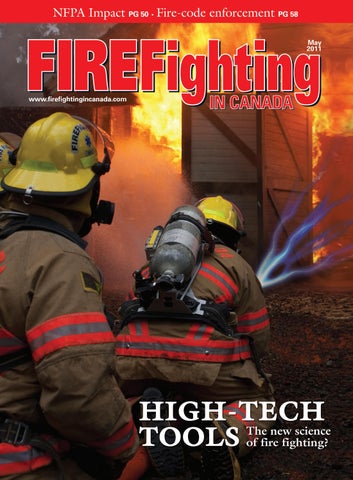
There’s a reason firefighters have been dumping water on fires for centuries – it works: wet stuff on red stuff, as the cliché says. Researching electrical pulses – as scientists at Harvard are doing – for a new application in the war on fire is great. But maybe the future of fire technology lies in finding more efficient ways to improve old practices. By Laura King
21
FDIC SHOWCASE
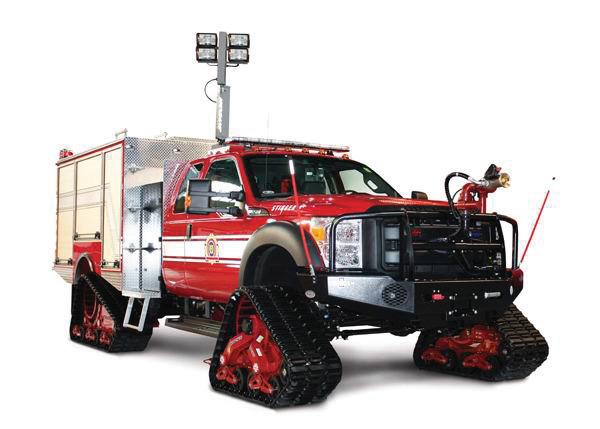
From the Darley Stinger to accountability in a box and Oshkosh’s all-wheel drive fitted with Mattracks rubber tracks that turn a truck into an ATV, visitors to FDIC in Indianapolis were wowed by new products and innovations. By James Careless.
22
NECESSITY LEADS TO ACCREDITATION
A British Columbia fire department struggled to protect its community for years. As Deputy Chief Gerald Basten reports, with just half the town on municipal water, the department was forced to put its heads and hands together to come up with a solution.
58
FIRE-CODE ENFORCEMENT
After years of unnecessary and preventable fire deaths, the fire service is beginning to realize that complacency about fire-code violations is unacceptable. Jim Jessop, deputy chief with the Niagara Falls Fire Department in Ontario, reports.
BY LAURA KING Editor
lking@annexweb.com
TNot everyone goes home COMMENT
ragedy is a harsh teacher.
I was in Nova Scotia on the March Break when I got an e-mail alert saying two firefighters in Listowel, Ont., had died on duty while in a burning dollar store.
I had three immediate thoughts.
First, did the two firefighters have children, or grandchildren, home from school on the break who might be nearby? In a week that’s all about families, this tragedy seemed even more profound.
Second, I had driven through Listowel last fall on the way back from speaking at a mutualaid meeting. The coffee shop in the gas station was closed for the night but the owner boiled me some water and found a tea bag – typical of the good people of Listowel.
And third, Billy Goldfeder’s presentation about dollar-store fires.
He says there were 15 fires in dollar stores the United States between 2006 and 2009.
“Dollar stores and similar types of commercial occupancies should be considered as a target hazard that presents a significant threat to firefighters,” Hartin says on the website.
Using electricity to put out fires is possible but not necessarily practical. See story page 10.
Goldfeder, keeper of The Secret List of firefighter close calls, injuries and fatalities, detests dollar stores. Not because they sell cheap goods that burn quickly and give off toxic fumes, but because of the risks those types of retail operations pose to firefighters.
Goldfeder, in his Not Everyone Goes Home presentations about firefighter safety, incorporates the results of NIOSH reports on firefighter fatalities. A search of the NIOSH database shows several dollarstore fires in the last decade, including a 2003 fire in Memphis, Tenn., in which two 39-year-old firefighters died, and a 2009 fire in Chicago. Both fires started in the roofs of the buildings, as is believed to have been the case in Listowel.
Ed Hartin, a U.S.-based fire-service instructor and the operator of CFTBUS.com (Compartment Fire Behavior Training), is equally leery of dollar stores.
“These types of stores are generally in an enclosed building . . . with high ceilings and a cockloft or other ceiling void space. In addition, this type of store contains a large fuel load comprised predominantly of synthetic fuel with a high heat of combustion (think high energy) and potential for extremely rapid fire development.”
A couple of weeks after the funerals for Ken Rae and Ray Walter of the North Perth Fire Department in Listowel, I was in Ilderton, Ont., to hear Battalion Chief John Salka of the FDNY talk about his experience on 9-11. With the Listowel line-of-duty deaths still achingly fresh, talk of the 342 FDNY firefighters who died in the 9-11 attacks hit home for the 250 firefighters who sat rapt while Salka told story after story of Sept. 11, 2001.
Messages from people like Goldfeder and Salka make firefighters’ jobs safer. As tragic as it is, so it will be with the lessons from Listowel. Whatever comes of the investigation, the deaths of Rae and Walter are not in vain.
PRODUCTION ARTIST KELLI KRAMER kkramer@annexweb.com
GROUP PUBLISHER MARTIN MCANULTY fire@annexweb.com
PRESIDENT MIKE FREDERICKS mfredericks@annexweb.com
PUBLICATION MAIL AGREEMENT #40065710
RETURN UNDELIVERABLE CANADIAN ADDRESSES TO CIRCULATION DEPT.
P.O. Box 530, SIMCOE, ON N3Y 4N5 e-mail: lmorrison@annexweb.com
Printed in Canada ISSN 0015–2595
CIRCULATION e-mail: lmorrison@annexweb.com
Tel: 866-790-6070 ext. 206
Fax: 877-624-1940
Mail: P.O. Box 530 Simcoe, ON N3Y 4N5
SUBSCRIPTION RATES
Canada – 1 Year - $24.00 (with GST $25.20, with HST/QST $27.12) (GST - #867172652RT0001)
USA – 1 Year $40.00 USD
We acknowledge the financial support of the Government of Canada through the Canada Periodical Fund (CPF) for our publishing activities.
Occasionally, Fire Fighting in Canada will mail information on behalf of industry-related groups whose products and services we believe may be of interest to you. If you prefer not to receive this information, please contact our circulation department in any of the four ways listed above.
All advertising is subject to the publisher’s approval. Such approval does not imply any endorsement of the products or services advertised. Publisher reserves the right to refuse advertising that does not meet the standards of the publication. www.firefightingincanada.com
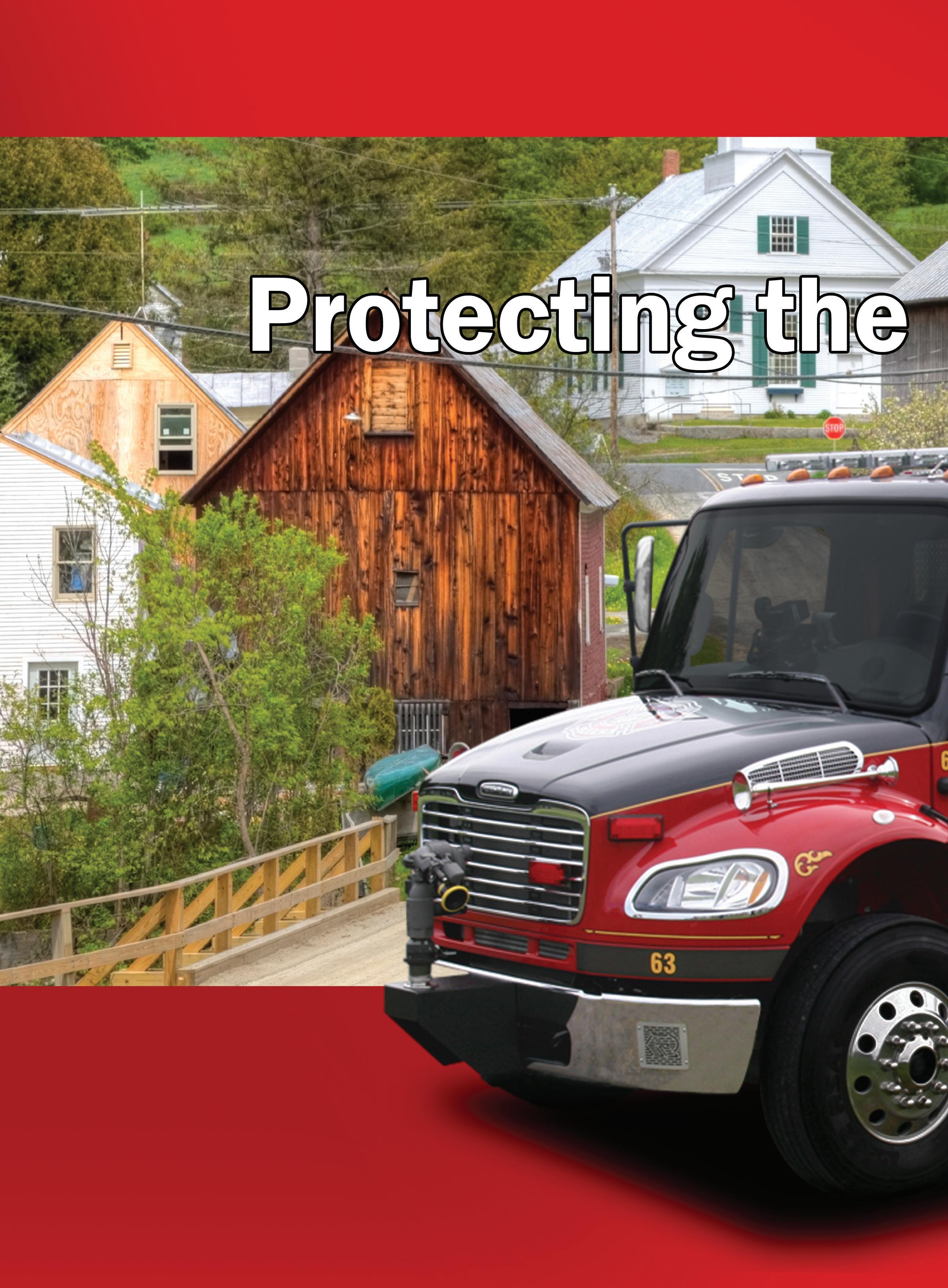
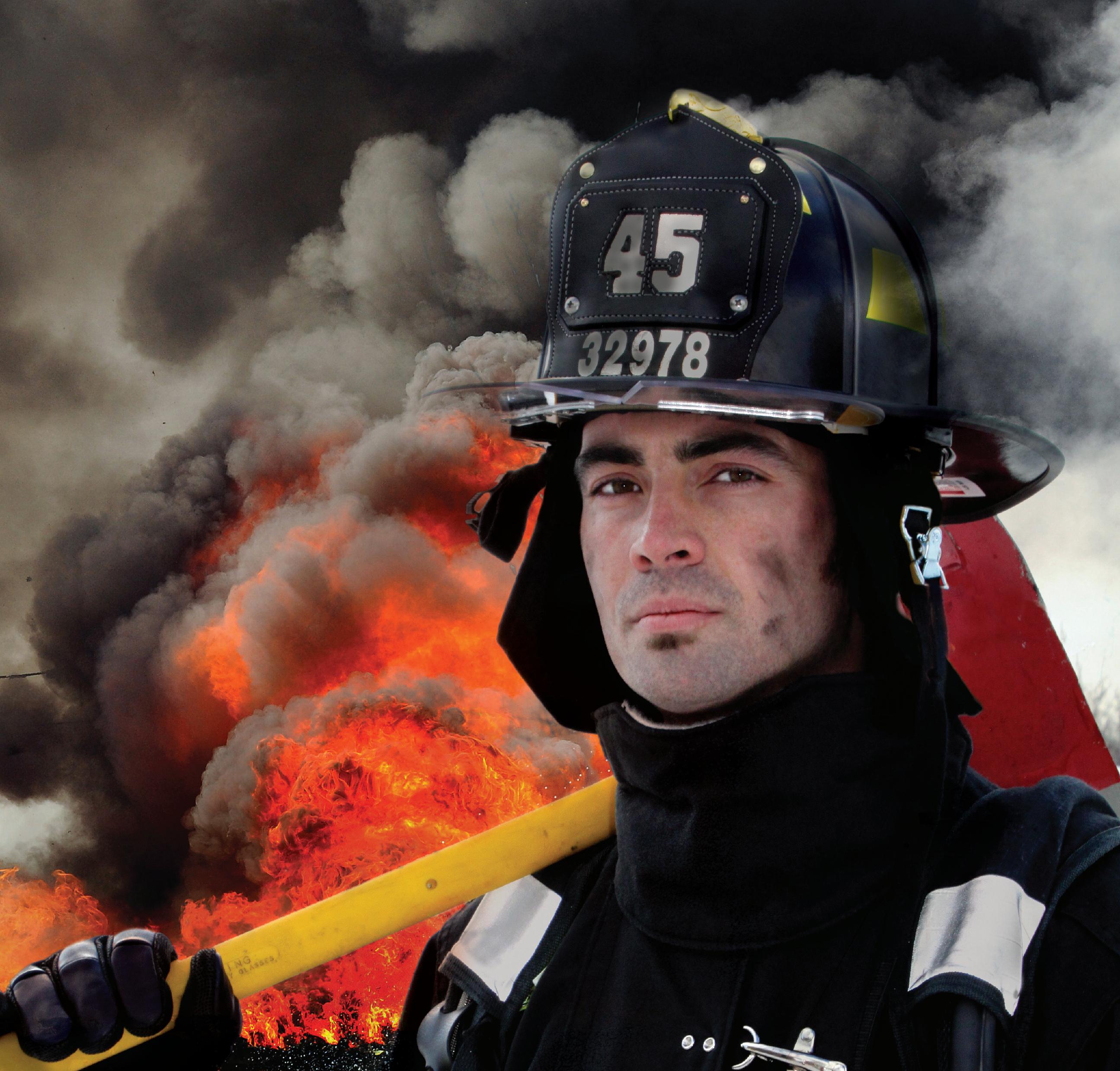
ON THE COVER
PHOTO ILLUSTRATION
STATIONtoSTATION
ACROSS CANADA: Regional news briefs
Chief thanks brotherhood for support for fallen firefighters
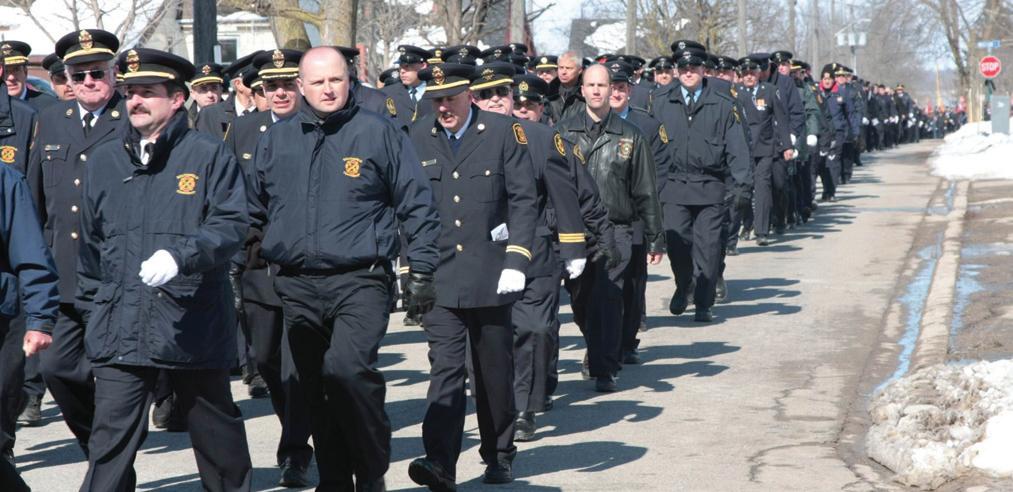
Firefighters and townspeople stood shoulder to shoulder along the streets of Listowel, Ont., on March 24 to honour firefighters Kenneth Rae and Ray Walter.
Firefighters came from every corner of Ontario and beyond to honour the pair, who died while searching for possible trapped shoppers in a retail store that caught fire.
The funeral was private and brought life to a standstill in the small town. Police and paramedics joined the firefighters as they circled Listowel Memorial Arena and filled the parking lot.
The firefighters’ caskets, draped in Canadian flags,
were carried into the arena by firefighters for the 90-minute service. Family, friends, local firefighters and dignitaries squeezed into the small venue while other firefighters and media stood outside. Ontario Premier Dalton McGuinty and Listowel Mayor Julie Behrns spoke at the service.
Both volunteer firefighters were remembered as valiant men whose who loved their families, their communities and the fire service.
Rae and Walter were members of the North Perth Fire Department, which sent this message to Fire Fighting in Canada:
“On behalf of Fire Chief
Ray Walter, who died in the line of duty.
Edward Smith of the North Perth Fire Department and his fellow firefighters, we wish to sincerely send out gratitude to all the fire services that assisted us and provided condolences, not only across our own country of Canada, but also other countries near and far. The show of brotherhood and sisterhood will be forever close to our hearts.”
Eastway acquires Seagrave assets in Ontario
Eastway Emergency Vehicles has acquired assets from Seagrave Fire Apparatus Company, including a firetruck manufacturing plant in Carleton Place, Ont., manufacturing equipment and a large quantity of inventory.
The 25,000-square foot facil-
ity is equipped with manufacturing and assembly areas, several service bays, a 65-foot-long drive-through paint booth and sales and engineering offices.
The building is situated on seven acres of serviced industrial land, should future expansion be required.
THE BRASS POLE:
Promotions & Appointments
RANDY SINASAC has been appointed chief of the Amherstburg Fire Department in Ontario. Sinasac took over from Chief Richard Murray, who retired Feb. 11. Sinasac, who was the deputy chief, joined Amherstburg as a volunteer in 1989. He became deputy chief in August 1999. JIM OUELLETTE is the new deputy chief in
Amherstburg. He joined the department in 1970 when he was 18 years old and has been a captain for the last 20 years.
MIKE MOLLOY became chief of the Meaford Fire Department in Ontario on Sept. 30, replacing former chief Steve Nickels, who retired after almost 25 years as the municipality’s first full-time fire chief. Molloy is a 16-year veteran of the fire department, and before becoming chief, he served as the municipality’s fire prevention
“Everything goes full circle,” said Eastway president Neil Greene. “My father first bought this building in the ’80s and fire trucks have been produced there ever since, first by Almonte Fire Trucks and then by Seagrave.”
“This acquisition helps solidify our position as the
and training officer. He is also an instructor with the Ontario Fire College in Gravenhurst.
FRANK SHEPPARD is the new fire chief and emergency management co-ordinator with Fort Frances Fire and Rescue Service in Ontario. Sheppard had been acting chief since Gerry Armstrong retired at the end of 2010. Sheppard has been with Fort Frances Fire and Rescue Service for 25 years. He is certified as a company officer, fire
pre-eminent Canadian manufacturer of high quality custom built fire apparatus. We have been making fire trucks for over 40 years under the Eastway and Almonte banners.”
Eastway was scheduled to begin manufacturing at the Carleton Place facility on April 1.
prevention officer and training officer.
In conjunction with the expansion of Brampton Fire and Emergency Services in Ontario, RYAN AGARD, JARED NEWCOMBE, RALPH FERRARI, DARRYL PETERSON and BRUCE TRIBE have been promoted to captain. “We congratulate them on their hard work and are looking forward to their continued devotion to keeping the people of Brampton safe,” said Phillip
BY ROB EVANS
More than 3,400 firefighters paid tribute to fallen firefighters Ken Rae and
PHOTO
JIBC grads make a difference to firefighters in El Salvador
When David Chung heard about One World Scholarships, the graduate of the Justice Institute of B.C.’s career firefighter preemployment program couldn’t pass up the opportunity. The scholarships enable four graduates to deploy with Firefighters Without Borders Canada to El Salvador to learn how fire and safety services are delivered in a developing country and to help to train local firefighters.
Chung – along with Caleb Fraser, Darrell Verstraete and Mark Williams – applied for and received the scholarships, funded by the Irving K. Barber British Columbia Scholarship Society in partnership with the Victoria Foundation. The three-week trip turned out to be a remarkable journey.
After arriving in the port
town of La Libertad in January, the four plunged into a rigorous schedule of Spanish lessons, fitness instruction and visits to all 17 fire stations in El Salvador, where they trained and attended calls with members of the Cuerpo de Bomberos de El Salvador (CBES) – El Salvador’s national fire service.
On one particularly eventful day, the four rode the fire truck to calls to an orphanage, a house fire and a body recovery. For 26-year-old Chung, who lives in Sooke, B.C., it was an eye-opening experience. He saw first-hand that the Bomberos had little access to modern equipment. “It was clear that they do not have the same resources as in Canada, but their ability to be resourceful is unmatched,” says Chung.
One of the group’s main
assignments was to complete a needs assessment survey of the CBES. Brian Hutchinson, president of Firefighters Without Borders Canada, led the deployment and supervised the work on the needs assessment.
Alongside the deployment team – which included members of the Vancouver, Surrey and Coquitlam fire departments – the One World Scholarship recipients took part in a live fire training
exercise in San Salvador. Chung says a highlight of the trip was the connections with the Bomberos. “At fire halls we went to, we kept hearing the phrase ‘Mi casa, es su casa’, which means ‘My house is your house.’ There is definitely a sense of family in the fire service, and being shown this hospitality in El Salvador further confirmed that I have chosen the right career.” - Brian Hutchinson
Comedy on Fire fundraiser aids Newfoundland brigade
Harbour Grace, N.L. – Standup comedian John Sheehan has been a volunteer firefighter in Harbour Grace, N.L., for just three years but he knows that volunteer departments have little in the way of operating budgets and rely on fundraising.
Sheehan had an idea – a comedy show to draw a crowd. Would it work? Would people come? And so, Comedy on Fire was born – a stand-up
comedy show with proceeds to go to the Harbour Grace Volunteer Fire Brigade.
Sheehan rounded up three of his comedian friends and set March 11 as the night for Comedy on Fire. Tickets were printed and posters were pinned up; word spread like wildfire.
MC and comedian Lisa Baker’s house burned down when she was seven.
Neighbours and firefighters believed that Baker was in the residence, and volunteer firefighters entered the house to search for her. Baker has never forgotten their concern. Joining her were comedians Steve Coombs from St. John’s and Colin Hollett from Burin. All performers gave freely of their time, not even accepting gas money.
More than 200 tickets were
sold for the event, at $20 each. Along with raffle sales, a total of $4,500 was raised.
Fire Chief Ray Verge said, “It was John’s hard work and efforts in organizing that made Comedy on Fire a huge success. A big thank-you to the people who came out to support the venture and show support for John and the Harbour Grace Volunteer Fire Brigade.” - Robert Lynch
Shuster, fire/life-safety education officer at Brampton Fire and Emergency Services.
Retirements
ROB DODGE, the fire chief at the McNab-Braeside fire department in Ontario, resigned as township fire chief effective Jan. 31. Dodge has been a firefighter for 26 years and spent the last four years as chief of the volunteer department. Dodge is unsure whether he’ll remain with the department as
a firefighter but plans to spend more time with his family.
RICHARD MURRAY, chief of the Amherstburg Fire Department in Ontario, has retired after 45 years with the department, the last 20 of which have been as chief. Murray served his last day as chief on Feb. 11 and will miss his second family.
ROBERT ORR, a former member of the Truro Fire Department
in Nova Scotia, died Dec. 8. Orr was 67 and was living in Woodstock, N.B. Before joining the fire service, Orr was a member of the Canadian Forces. He worked in Truro from the early 1970s until the mid-1980s in several capacities, including as firefighter engineer and fire inspector, before joining the fire marshal’s office.
WALTER BAGGS died Dec. 11 at the Carbonear General Hospital in Newfoundland at
age 88. Baggs was a member of the Bay Roberts Volunteer Fire Department for 45 years and served as chief for 36 years.
TERRY LAYDEN died suddenly at his residence on Jan. 1, at age 46. Layden was serving his second term as secretary for the Victoria Volunteer Fire Department in Newfoundland. He had held every executive position in the department other than chief.
Donated bunker gear from Canada hangs at the ready in La Union, El Salvador.
PHOTO BY BRIAN HUTCHINSON
STATIONtoSTATION
BRIGADE NEWS: From stations across Canada
KENORA FIRE & EMERGENCY SERVICES in Ontario, under Chief Warren Brinkman, took delivery in March of a Fort Garry Fire Trucks-built pumper. Built on a Spartan Metro Star chassis and powered by an Allison 3000 EVS transmission and a Cummins ISC 380-hp engine, the truck is equipped with a Waterous CS1250 1,050-IGPM pump, an 800-IG co-poly water tank and a Foam Pro 2001 Class A/B foam system.
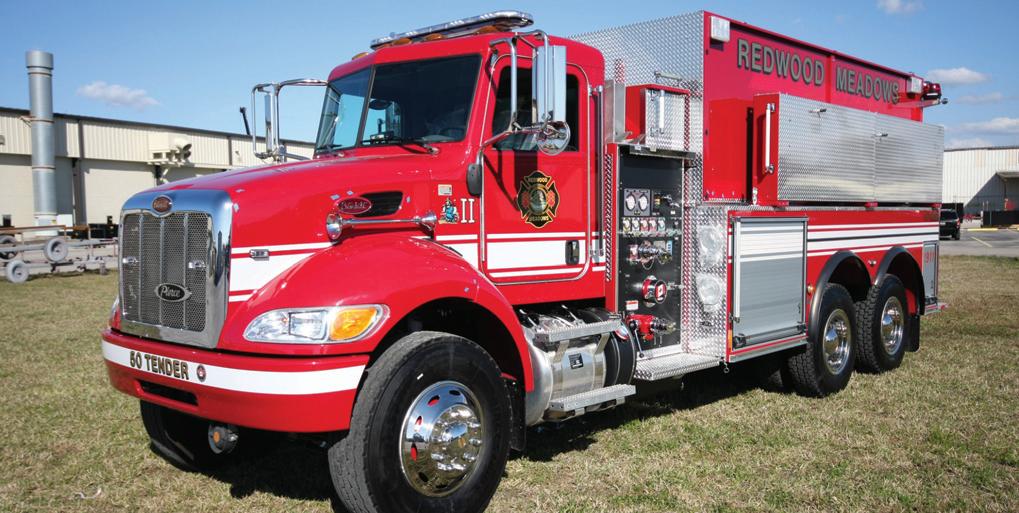
The REDWOOD MEADOWS FIRE DEPARTMENT in Alberta, under Chief Ed Bowen, took delivery in March of a Pierce Manufacturing-built tanker from Wholesale Fire & Rescue. Built on a Peterbilt chassis and powered by an Allison 3000 EVS transmission and a Paccar 8 380-hp engine, the truck is equipped with a Hale 840-IGPM pump, a 2,500-IG co-poly water tank, two portable tank racks and On-Spot chains.
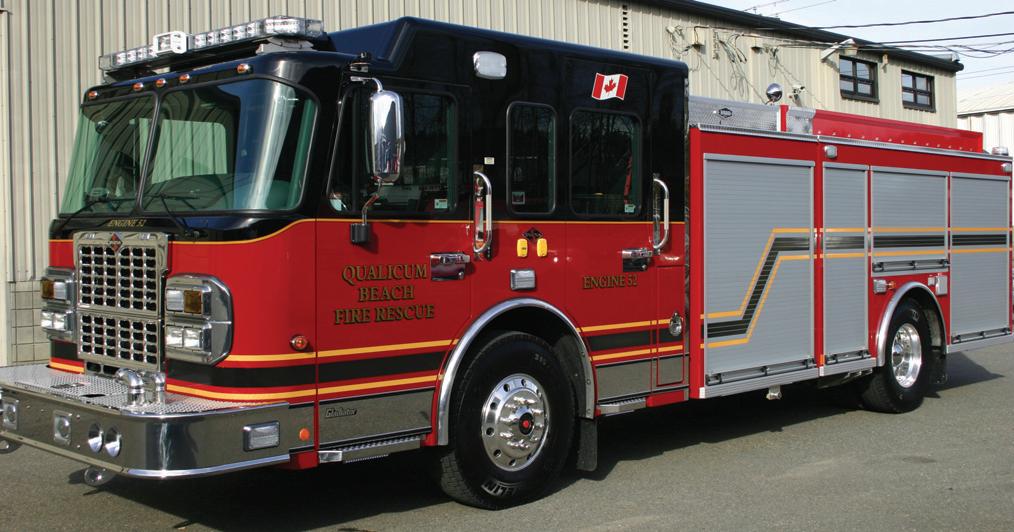
QUALICUM BEACH FIRE RESCUE in British Columbia, under Chief Daryl Kohse, took delivery in March of a Hub Fire Engines & Equipment-built pumper. Built on a Spartan Gladiator chassis and powered by an Allison 3000 EVS transmission and a Caterpiller C9 425-hp engine, the truck is equipped with a Waterous CSU 1,750IGPM pump, Waterous Advantus 6 foam system, 750-IG co-poly water tank, Whelen LED light package, Smart Power 8kW hydraulic generator, Waterous foam refill system, Command Light light tower and Akron Deck Master Monitor with Electric Extender.
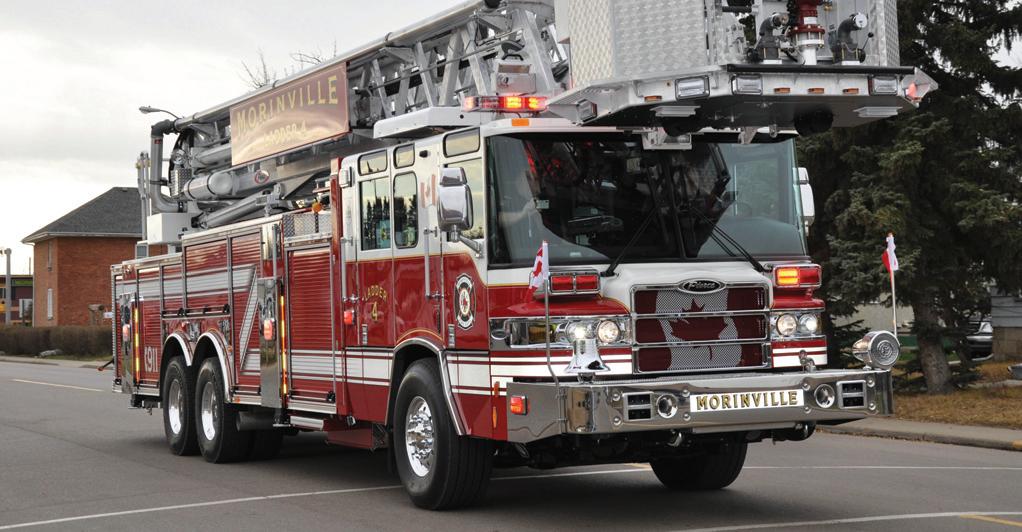
The MORINVILLE FIRE DEPARTMENT in Alberta, under Chief Ron Cust, took delivery in February of a Pierce Manufacturing-built 100-foot aerial platform from Wholesale Fire & Rescue. Built on a Pierce Quantum chassis, the quint features a Pierce 100-foot aerial platform, a TAK-4 independent front suspension, a 2,000-IGPM pump, Husky 12 foam system with 30-IG foam cell, LED scene lights and seating for six.
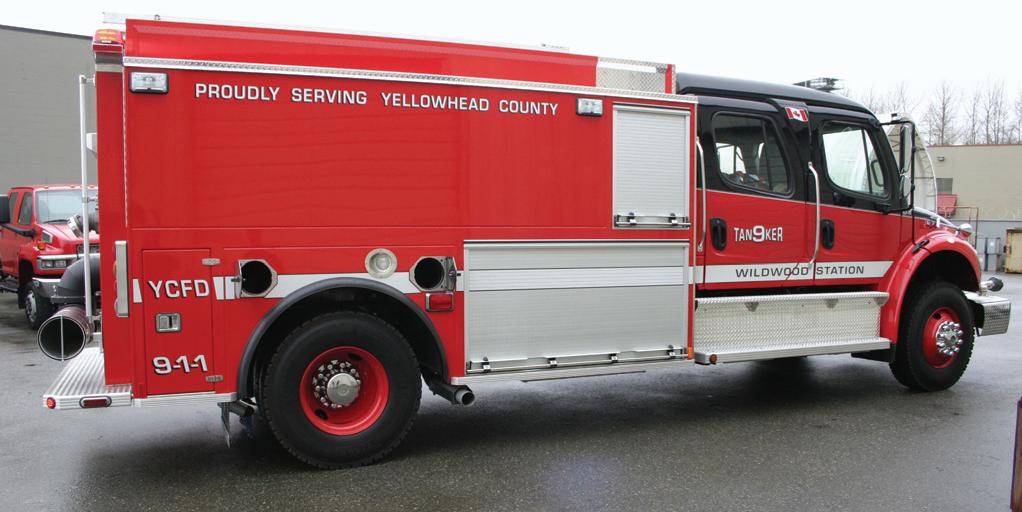
The YELLOWHEAD COUNTY FIRE DEPARTMENT in Alberta, under Chief Cory Chegwyn, took delivery in March of a Hub Fire Engines & Equipment-built tanker. Built on a Freightliner M2 106 chassis and powered by an Allison 3000 EVS transmission and a Cummins ISC 330-hp engine, the truck is equipped with a Hale AP50 420-IGPM pump, a 1,700-IG co-poly water tank, Zico Port a Tank storage, Whelen Light package and a vehicle data recorder with seat sensor.
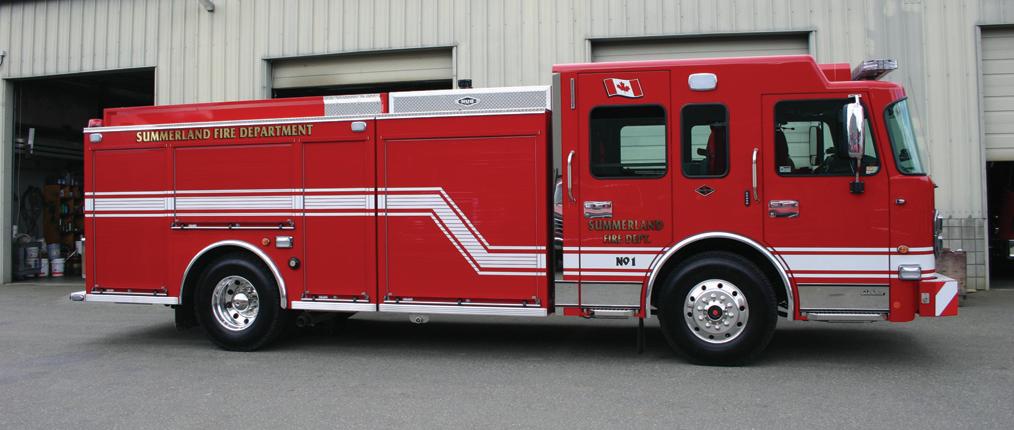
The SUMMERLAND FIRE DEPARTMENT in British Columbia, under Chief Glenn Noble, took delivery in March of a Hub Fire Engines & Equipment-built pumper. Built on a Spartan Gladiator chassis and powered by an Allison 3000 EVS transmission and a Cummins ISL 425-hp engine, the truck is equipped with a Waterous CSUC10C 1,750-IGPM pump, Foam Pro 2002 foam system, 650-IG co-poly water tank, FireCom intercom system, Command Light light tower, TFT Hurricane Monitor and Extenda-Gun and a Whelen Light package.
KENORA FIRE & EMERGENCY SERVICES
YELLOWHEAD COUNTY FIRE DEPARTMENT
MORINVILLE FIRE DEPARTMENT
REDWOOD MEADOWS FIRE DEPARTMENT
SUMMERLAND FIRE DEPARTMENT
QUALICUM BEACH FIRE RESCUE
HIGH-TE C
C H TOOLS
Will it always be wet stuff on red stuff?
By LAURA KING
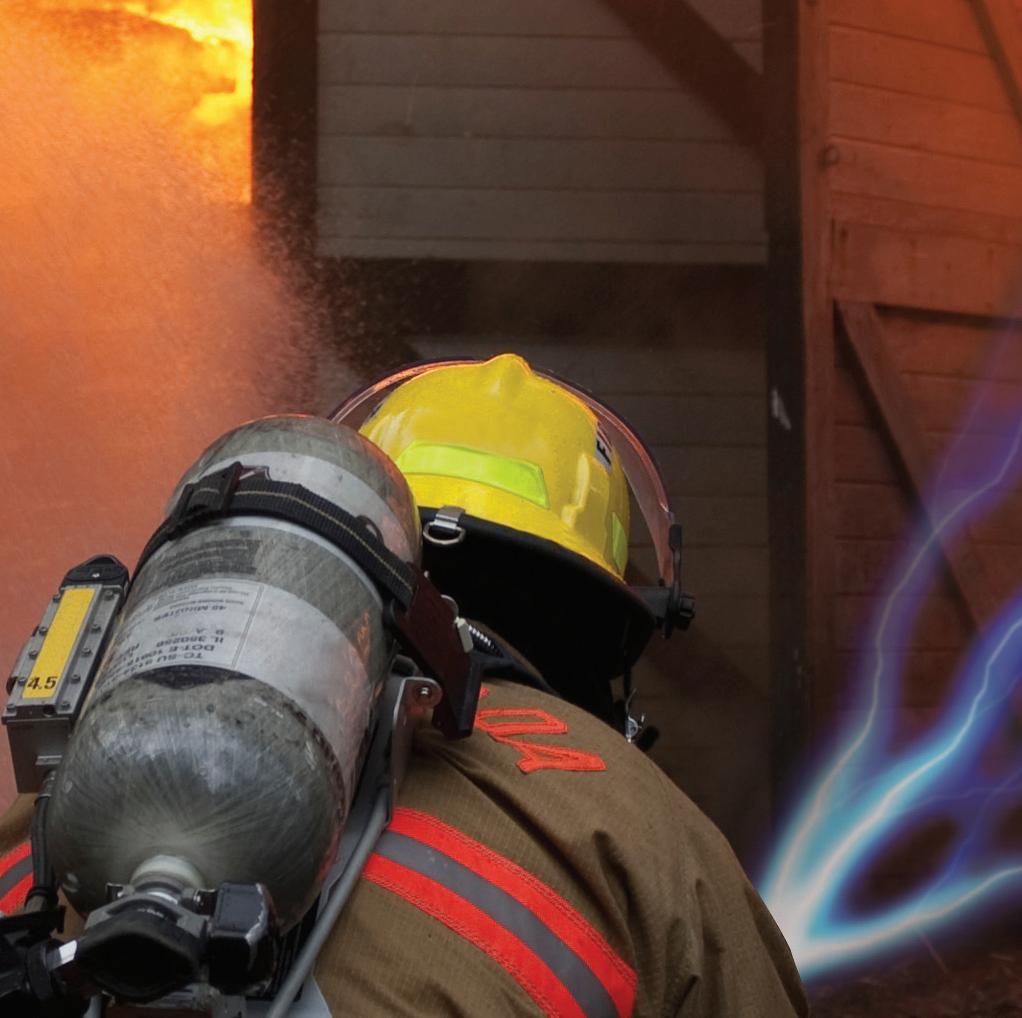
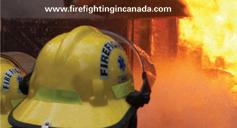
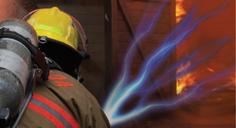
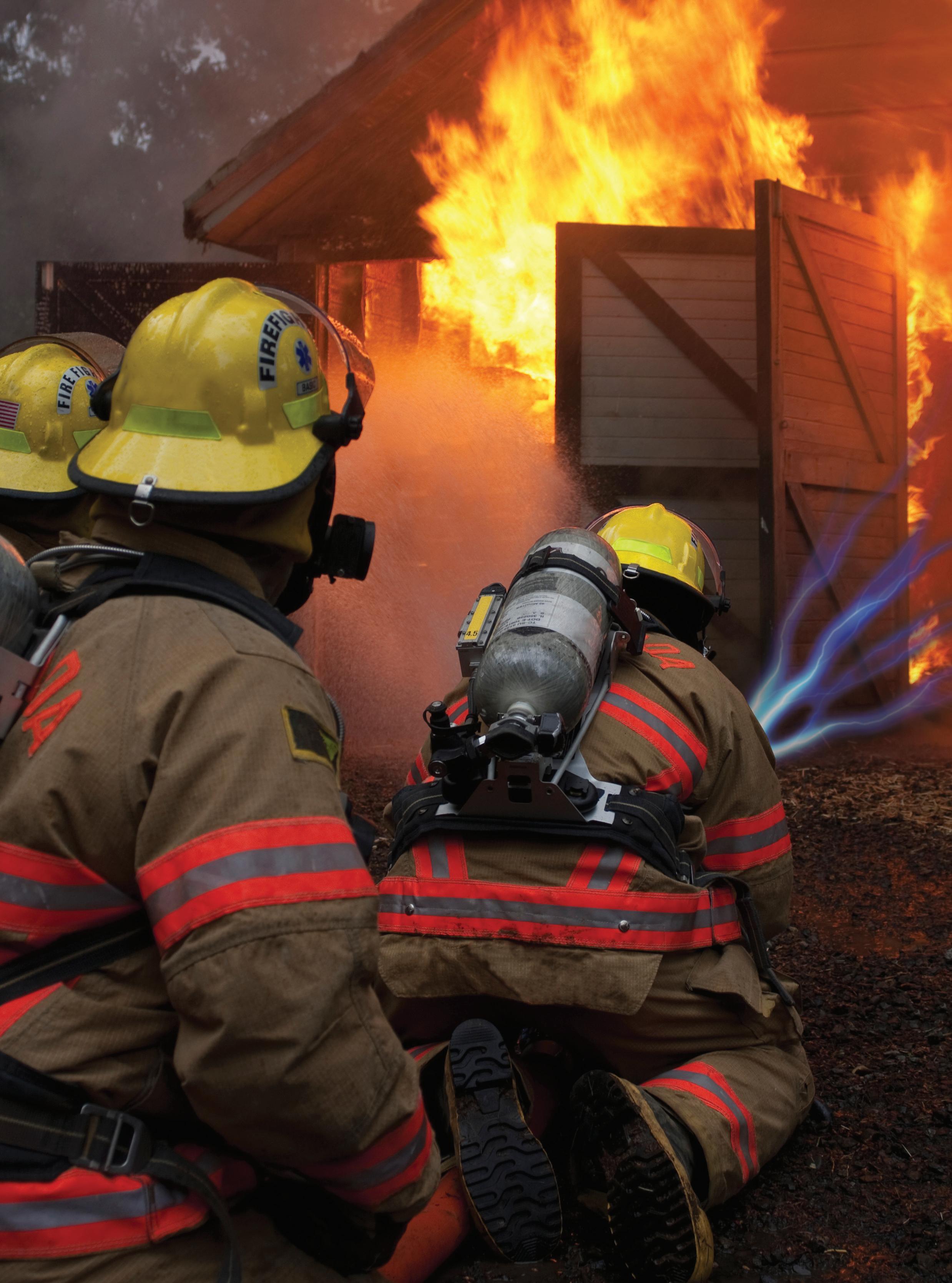
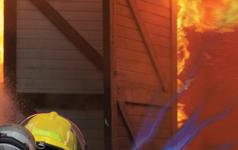
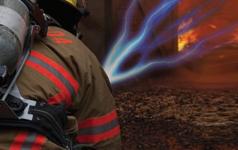
LEFT: This photo illustration depicts electricity being used to extinguish flames through electrical bending, a process Harvard scientists say might be useful for firefighters who need to get into buildings, or get trapped people out of burning buildings.
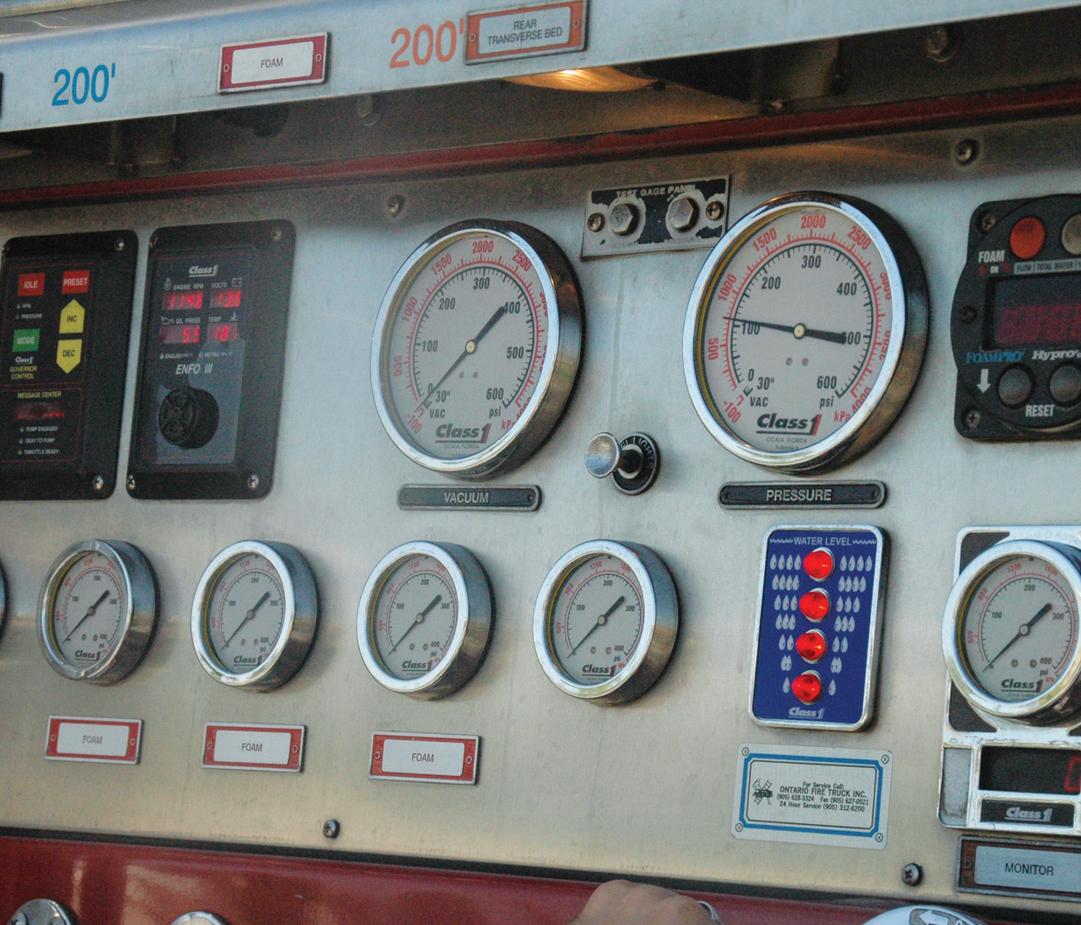
ABOVE: The invention of the mechanical pump is probably the most significant advancement in fire fighting, says the curator of the Nova Scotia Firefighter’s Museum.
Sometimes technological breakthroughs are revolutionary – such as the development of the Internet and the personal computer. More often, they involve taking familiar things and making them better. Forty years ago, few people imagined wireless phones on every hip and households abandoning landlines, or 500 channels of satellite television, or online banking, or iTunes.
But not all innovations are good ones. The world is taking a hard look at nuclear energy safety in the wake of the disaster in Japan in March. And fruit-flavoured potato chips? Betamax? Gone, but not missed.
The fire service is no different. Smart people do research in labs and universities on different types of fires, challenges created by fires and better ways to extinguish fires. Below are three dispatches from the research front. As a subtext to these innovations, consider that maybe for the fire service, the path to new technology is found by going back to basics. There’s a reason firefighters have been dumping water on fires for centuries – it works: wet stuff on red stuff, as the fire-service cliché says.
Researching electrical pulses – as scientists at Harvard are doing –for a new application in the war on fire is great. But in the absence of a eureka moment that radically changes the way firefighters fight fire, maybe the future of fire technology lies in finding more efficient ways to improve old practices.
In late March, just after 24,000 North American firefighters had tested dozens of new products and checked out displays of firefighting technology at FDIC in Indianapolis, a story crossed the wires about something called electrical bending.
The technology is not new – scientists have known for 200 years that electricity can manipulate small flames – but its potential use in firefighting is only now being explored.
Harvard scientists unveiled their electrical-bending research at a meeting of the American Chemical Society (ACS) in Florida on March 27. The scientists built a wand connected to a 600-watt amplifier – similar to one that powers a car stereo – that directs beams of electricity toward an open flame. From a certain distance, the scientists were able to extinguish the flame over and over again.
On its website, the ACS explains the potential use of electricalbending technology in fire fighting.
“A curtain of flame halts firefighters trying to rescue a family inside a burning home,” the ACS said in a press release. “One with a special backpack steps to the front, points a wand at the flame, and shoots a beam of electricity that opens a path through the flame for the others to pass and lead the family to safety.
“Scientists . . . described a discovery that could underpin a new genre of fire-fighting devices, including sprinkler systems that suppress fires not with water, but with zaps of electric current, without soaking and irreparably damaging the contents of a home, business, or other structure.”
The Harvard scientists said electricity can manipulate flames, causing them to bend, twist, turn and flicker, and it can even extinguish fires. But so far there has been little research on the phenomenon.
PHOTO BY LAURA KING
Harvard’s Ludovico Cademartiri said the technology could be particularly useful for fighting fires in small places such as armoured trucks, planes, and submarines.
He explained that carbon particles, or soot, generated during combustion are easily charged, and once charged they respond to electric fields in ways that affect the stability of the flame. If that stability is shaken hard enough, the flame collapses.
The website Hypervocal.com noted, tongue in cheek, that none of the news reports about the electrical bending presentation discussed potential downsides of the technology, “you know, electrical pulses being blasted willy nilly, or what would happen if the Jackass gang got their hands on it.”
It all sounds a bit Harry Potter-esque. And, after eons of putting water on fire, it might be tough for some in the fire service to get their heads around the concept of using electricity to fight flames – not to mention the cost of introducing this sort of technology to the fire service, and training people to use it.
Indeed, the scientists said the electrical-bending process is complex and isn’t very well understood, which isn’t overly reassuring.
Still, with aerosol suppression devices becoming more popular for extinguishing certain types of fires (basement fires in particular) and with lightweight construction reducing the window of opportunity for firefighters to enter buildings, blogs and science websites pontificated about whether electrical-bending technology might be worth a look.
As Hypervocal.com noted: “Firefighting technology has changed greatly over the last century. There are flame-retardant materials, oxygen tanks, newer containment techniques and fire suppressant foams, to name but a few of the improvements that have helped save the lives of firefighters.
“In many ways, however, even with the newer technology, fighting
a raging fire still boils down to the same methods of our Roman ancestors: dump massive amounts of water onto the fire. It ain’t elegant, but if it works why change it?”
Good point, but the website Popsci.com came up with some seemingly sensible reasons to consider electrical bending.
“Electrical bending can suppress or extinguish flames without flooding buildings or tapping a vast source of water,” it rationalized.
Popsci.com noted that while the Harvard experiments involved a 600-watt amplifier, the researchers said they could achieve similar effects with one-tenth the wattage. “That means a wave blaster could be pared down into a handheld unit or one carried on the back,” it said.
“And that could allow firefighters to open a path in a wall of flame in order to get inside (or out of) a burning building, or open a passage of escape for people trapped inside. The technology could even be built into ceiling-mounted fixtures like the sprinklers, saving entire buildings from getting drenched when a fire breaks out in one small corner.”
David Darby, curator of the Nova Scotia Firefighters Museum, says electrical-bending technology sounds far-fetched but it piqued his interest as an innovation that could potentially revolutionize the fire service, similar to the invention of steam pumpers in the early 1900s.
“The technology in the steam pumpers was amazing to draft the water and pump it on a fire,” Darby said in an interview. He said the switch to mechanical pumpers from hand pumpers was probably the most important change the fire service has experienced.
While there have since been technological improvements in the fire service, Darby said the basics of fire fighting haven’t changed.
“Basically you put water on the fire and the fire goes out,” he said. “Mind you, how they do that is improving, with bigger pumps, and
Continued on page 44
BY TIM BECKETT Fire chief Kitchener, Ont.
ASTRAIGHTTALK
Embracing regionalization for a sustainable fire service
s I sat on Family Day considering a topic for this column, my mind wandered to my father. My dad, Ken Beckett, the fire chief in East Gwillimbury, Ont. (a town about 60 kilometres north of Toronto), is being recognized for 50 years in the fire service. Having been a volunteer firefighter and then the first full-time firefighter in Markham, Ont., Dad moved through the ranks and retired 35 years later as the fire chief. Retirement was short-lived, as he soon became the first fire chief for East Gwillimbury, helping to bring three independent fire stations under one administration. I am proud of my father’s accomplishments. He has been a great mentor in my life and my career. In 50 years, he has seen great change.
This leads me to the nature of my column: change – or, the need to change. We all know the phrase – 200 years of tradition unimpeded by progress. Let’s look back: we have put the horses out to pasture and the petch coats and rubber boots on the shelves; firefighters wear self-contained breathing apparatuses and ride inside the trucks, not on the tailboards. We have seen plenty of change with respect to technology and equipment but we have failed to change our thinking. On the chance that I will upset many in the profession, I write this with the utmost respect to all the men and women who serve their communities.
“If you are not willing to accept change, then perhaps it is time for you to pack it in.” I heard this comment from a training officer when we were introducing the incident-command program. There was apprehension and many put up a fight. We continued, despite the challenges. Think about not having an incident-command system today because some were resistant to change; we would likely be in violation of labour-code safety legislation, and firefighter and public safety would be jeopardized. This change was embraced and today we don’t think twice about having an incident-management system.
Regional fire services will eliminate duplication; they will strengthen service delivery and save money for municipalities. Fire prevention and public education will be standardized; training will be consistent; and fire stations can be properly positioned, and not hampered by boundaries.
A mentor of mine once said, “You can take control and create your own future, or you can wait and someone will create it for you.” The costs of emergency services continue to increase; if we don’t start to make changes, others will make these changes for us.
Fire and EMS departments continue to work in silos, both looking to improve response standards, both increasing staffing to meet demands, and both watching their budgets skyrocket. Why are we not looking at meshing the two services? I’m not advocating a fire-service takeover of EMS; this is about using all resources to ensure the best emergency service to the public. It’s about checking egos at the doors and ending the protection of empires. We, as leaders, owe it to our communities to protect taxpayers, yet we can barely enter into discussions on these issues because we can’t easily accept change.
Change is upon us: health and safety regulation changes; equipment changes; training changes; generational changes;
How many hazmat teams, water rescue boats or aerials are needed in a region, when the reality is that they are not often used? ‘‘ ’’
So, why can’t we embrace regional fire services – fire services responding to public need regardless of boundaries and politics; regional departments that share resources to meet the demands of their communities, without duplication? How many hazmat teams, rescue boats or aerials are needed in a region, when the reality is that they are not often used? In Ontario in the early ’70s, the government created regions and counties. Police forces became the responsibility of regional governments. Towns lost their police departments despite opposition by labour, politicians and the public. Fast-forward 40 years and imagine individual police departments in each town. Change has proven to be for the better.
Tim Beckett is the fire chief in Kitchener, Ont., and the president of the Ontario Association of Fire Chiefs. Contact him at Tim.Beckett@ Kitchener.ca
and – one change that’s often overlooked – societal changes. Ask yourself if the fire department is appreciated and respected by the public. Your answer is probably yes. Now ask yourself if the public supports us. During economic downturns, citizens change or lose jobs and take pay cuts. Some find it hard to survive, yet emergency service budgets and wages continue to increase at a higher rate than others in the public sector. In the United States, firefighters are losing jobs and stations are closing. People are not balking at the station closings, the longer response times or the reduced services; they are accepting these changes as the new norm.
Change is important to be successful. The fire service has been successful but we need to make – or accept – greater change.
As my greatest mentor said, in his wisdom: “This isn’t the same fire service that your father started with. Accept and embrace change, and challenge those who resist it. It is upon us, and it is inevitable.”
BY LES KARPLUK Fire chief, Prince Albert, Sask. AND LYLE QUAN Fire chief, Waterloo, Ont.
OLEADERSHIPFORUM
Creating partnerships with unexpected allies
ur last few columns have focused on reframing your future, promoting a positive culture and building relationships in your fire departments. These concepts are critical because they help to identify strengths, weaknesses and responsibilities regarding people, management and succession planning.
Now we want to touch on the value of creating and building partnerships – not just within the department, but with other organizations and communities.
Building partnerships is more than just creating a larger pool of contacts; it’s about expanding your support network. Creating this network allows you to draw on the experiences and skills of others and removes the one-dimensional mindset in which the fire service tends to become immersed. We must think outside the box: instead of wondering who we can partner with, we should ask what organizations would benefit from relationships with the fire service and search out these organizations. For example, why not ask a local lumberyard to sponsor a fire-prevention program for elementary schoolchildren or have the Lions Club help promote fire safety? Why not ask an auto dealer or other local business to sponsor a fire-related youth program?
To ensure that your department supplies the best service for the community and the best development opportunities for your people, you must have a variety of options to draw upon. That’s where partnerships come into play; they allow departments to make continuous improvements through shared information and resources. They also offer possible training opportunities that may not exist without those partnerships. We all know we live in a time of lean finances and resources, and the fire service is expected to find creative ways to meet community needs. This is why depositing into your community account is essential; that is, it helps to make the community a safer place to live, work and raise families. Creating partnerships in the community enhances the department’s role and its image.
neighbouring departments is smart business. Mutual-aid partners can identify their strengths and weaknesses so that all members of a mutual-aid group can provide a well-rounded and cost-effective level of service. Think about a partnership with your public works department to work together on trench-rescue incidents. Is it out of the question to have the public works department take a leading role in trench rescue? We need to get rid of egos and seek partnerships to keep our communities safe.
Leadership is about blazing new trails, demonstrating creativity and being able to adapt to changing demands. Leaders striving to develop partnerships may face opposition from other municipal departments looking for bigger pieces of the budget and that’s where partnerships can pay dividends (by being cost effective). Good partnerships create synergies that benefit every organization involved. Therefore, the overall performance of the partnership is higher than that of the single entity.
Mukesh Ambani, an Indian business magnate, compared partnerships to centipedes: when all the legs work together, there is a strong organizational structure; but if one or two legs do not work, you should still be able to depend on the partnerships that you have
Good partnerships create synergies that benefit every organization involved. ‘‘ ’’
Another way to build and capitalize on partnerships is to focus on what your department does best and look for partnerships to fill the gaps. For example, fire departments are proficient in fire suppression, auto extrication and medical-related incidents, but many don’t get much training or practice in hazardous materials response, confined-space rescues and water rescues. Securing mutual aid with
Les Karpluk is the fire chief of the Prince Albert Fire Department in Saskatchewan.
Lyle Quan is the fire chief of the Waterloo Fire Department in Ontario. Both are graduates of the Lakeland College Bachelor of Business in Emergency Services program and Dalhousie University’s Fire Administration program.
built on the other legs. Partnerships create a strong foundation in your quest to serve your community and your staff.
Future leaders need to be skilled at managing partnerships and the relationships that develop out of them. Qualities such as integrity, vision and self-confidence will be essential, but building partnerships is becoming a requirement, not an option, for future leaders. Search out these partnerships – you may be surprised at who is waiting to team up with the fire department. Even if some of the partnerships don’t prove to be beneficial to all the organizations involved, you can at least say you’ve tried.
The fire service has made great strides in the past couple of decades. We are proud of our traditions but today’s leaders understand that we live in a world very different from that of our ancestors. Visionary leaders will continue to expand their department’s image in the community. Embrace partnerships and reap the benefits.
New 2186 MULTI-CUTTM Rescue Saw
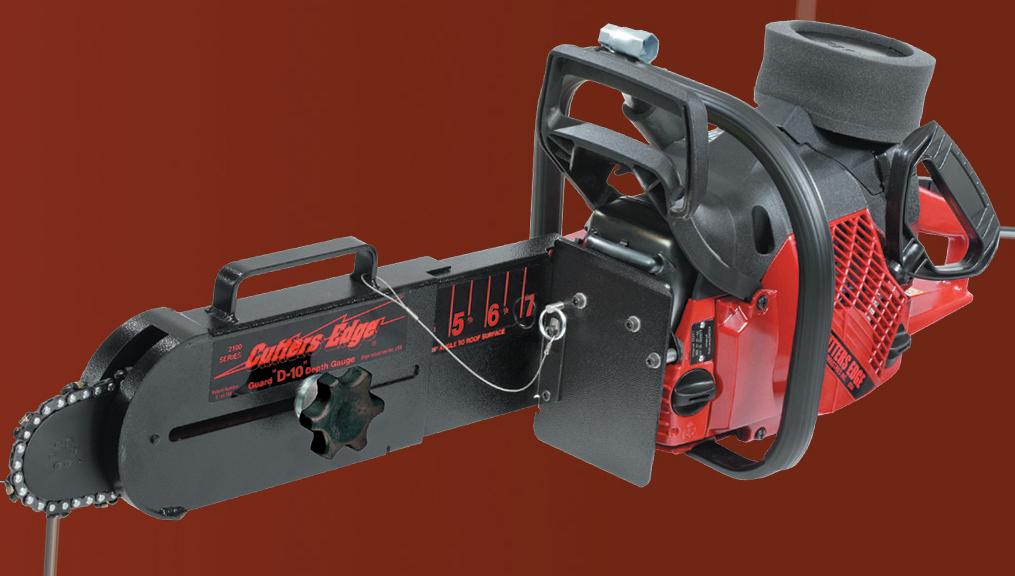
The “Next Generation” Technology of Cutters Edge Rescue Saws are here and are designed and built to deliver 100% reliable, high performance cutting in the most demanding and extreme conditions encountered by Fire and Rescue Professionals.
With more power than any other Fire Rescue chainsaw available and up to a 24" bar and the D-10 Guard/Depth Gauge for safety, speed and ease of use. Equipped with the BULLET® Chain that cuts safer, faster and longer than any other carbide chain made.
a se.
New Gas Powered Concrete Rescue Saw
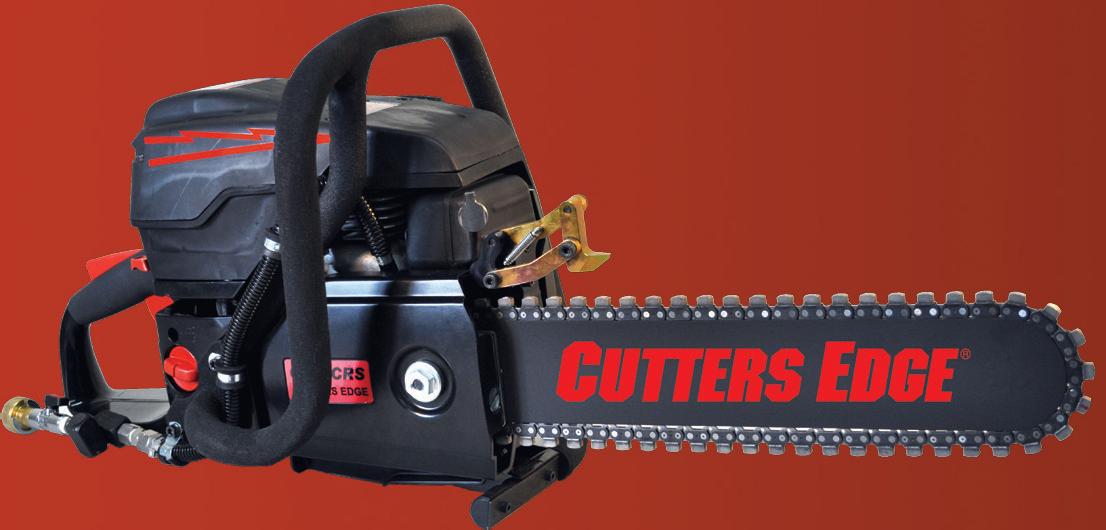
The New CE94CRS Gasoline Powered Concrete Cutting Chainsaw cuts reinforced concrete up to 16-inches thick and cuts it up to 40% Faster with the new CE7COI™ Diamond Chain that features diamond cutting segments on every chain link –up to 30% more diamond cutting surface area in contact with the concrete being cut.
New Rotary Rescue Saw
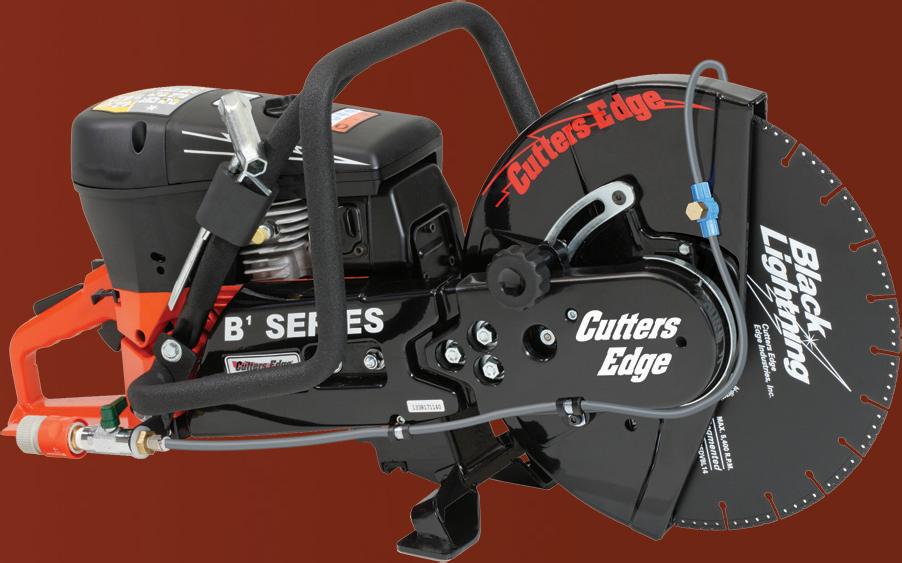
The CE807R Rotary Rescue Saw has a new, more powerful 80.7cc engine and a non-slip rubber Full-Wrap Handle for all position cutting. A new 4-Stage Air Filtration System, incorporating a High Performance K&N Filter as its third stage assures outstanding performance in all cutting conditions. Fully-equipped Sawing Kit is available plus Black Lightning and Black Star Diamond Cutting Blades.
EYES IN THE SKY FOR ICs
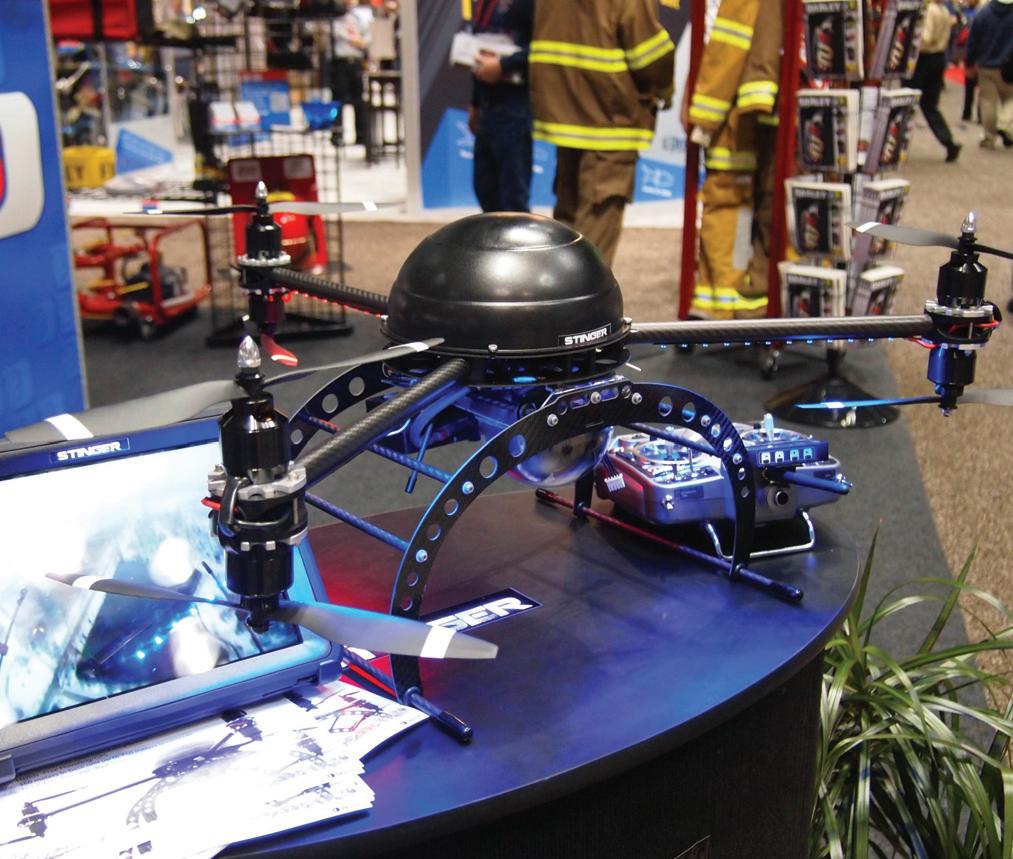
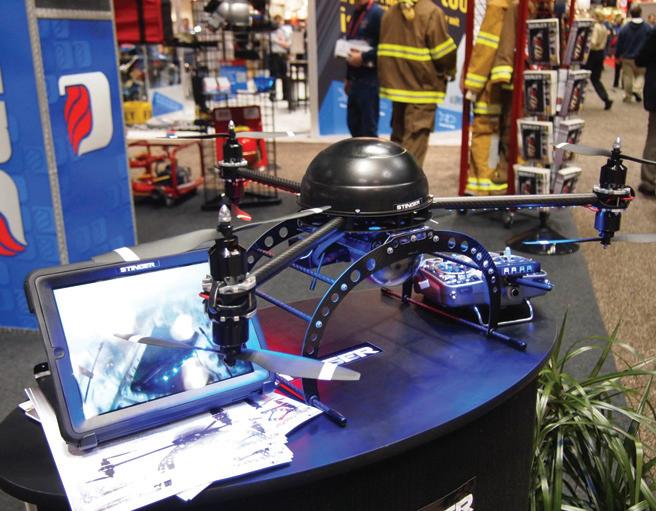
The Darley Stinger is a flying, remotely controlled video camera platform. Equipped with six helicopter-style propellers, this lightweight unit transmits video back to its controller and/or command post. The Stinger provides incident commanders with an overview of a scene and gives them access to areas that are too dangerous for firefighters to approach. The Stinger can fly for between 15 and 40 minutes (depending on payload), has the ability to measure thermal and radiation data and is as easy to fly as any remotely controlled consumer helicopter. For details visit www.darley.com.
ACCOUNTABILITY IN A BOX
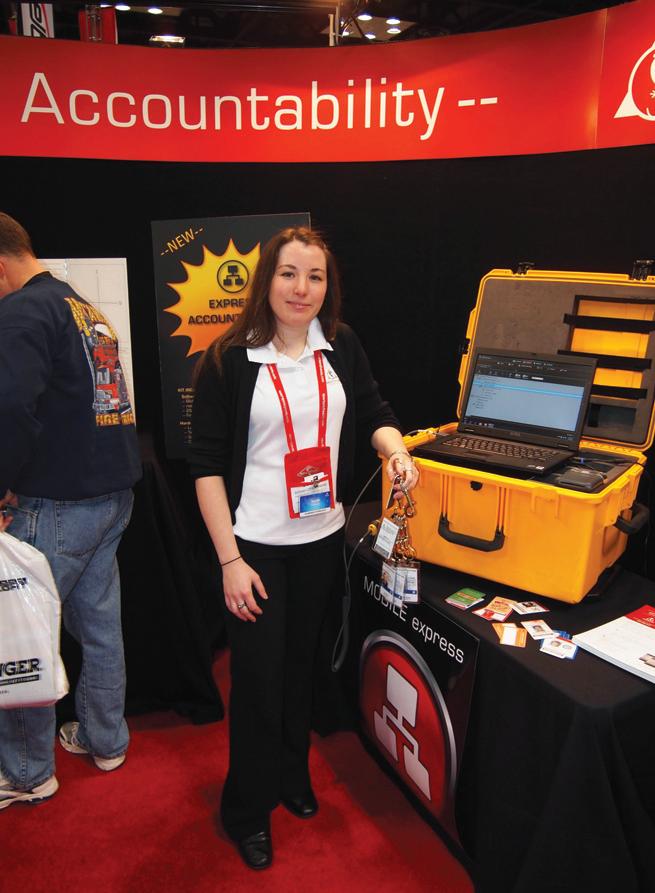
Salamander Technologies’ Express Accountability Kit lets incident commanders accredit and track personnel at the scene. Packed into a rugged yellow plastic transport case, the kit comes with a laptop computer, radio frequency identification card reader and a bar-code reader. Visit www.salamandertechnologies.com for more information.
CUTTERS THAT GO WHERE YOU DO
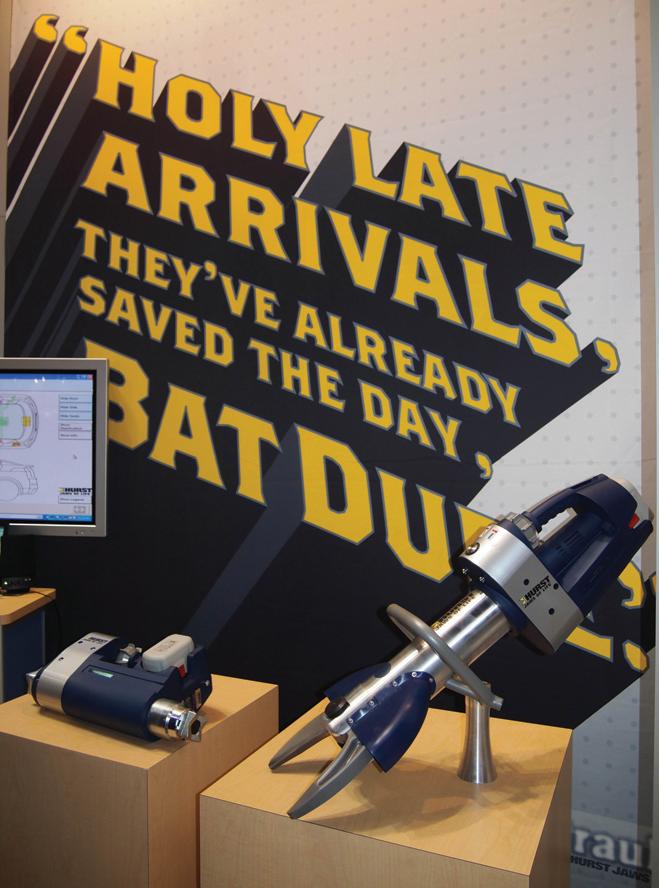
Hurst’s Jaws of Life’s eDRAULIC battery powered cutters, spreaders and saws offer
portable cutting power for firefighters. These units run on batteries, allowing firefighters to cut through automotive steel far away from the truck. For more information visit www.jawsoflife.com.
NO POWER, NO PROBLEM
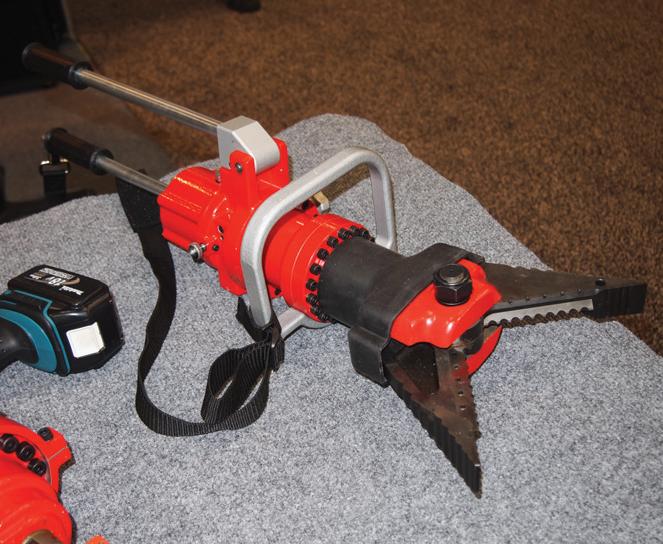
When power-cutting is not an option, Ogura’s MCT-250 hand-pumped manual combi-tool serves as a cutter or spreader with a maximum cutting force of 33,024 pounds at its center and 62,947 pounds at its notch. For more information, visit www.ogurarescuetools.com/mct250.html.
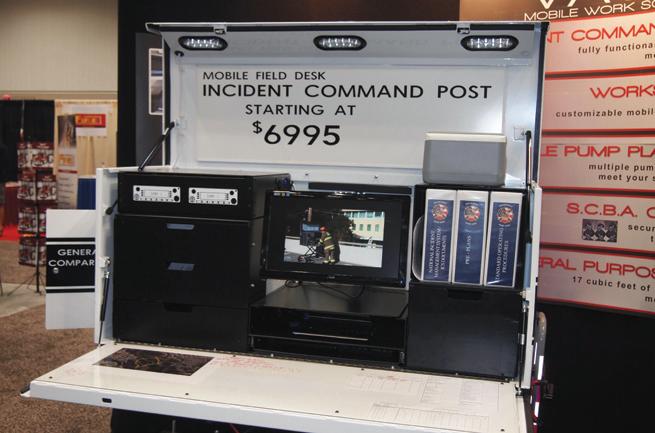
COMMAND ON A BUDGET
Continued on page 48
Rescue 42’s Vault Incident Command Post is a wheeled, steel container that
Necessity leads to
accreditation
B.C. department uses ingenuity and muscle to attain FUS rating
By GERALD BASTEN
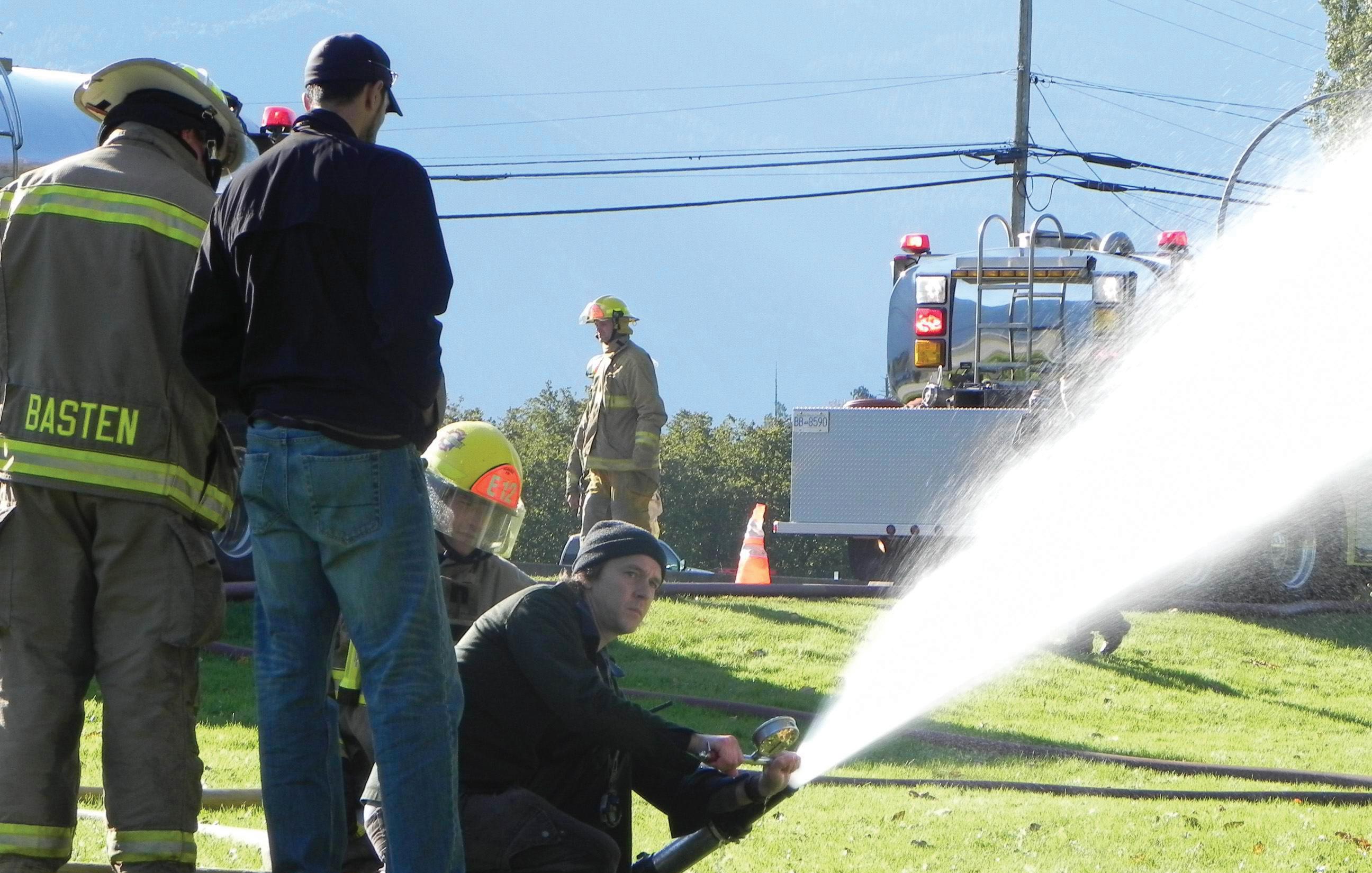
Firefighters from Agassiz and Popkum, B.C., used largediameter hose lay delivered up to 600 metres from an accredited water source to protect residents whose homes are not on municipal water.
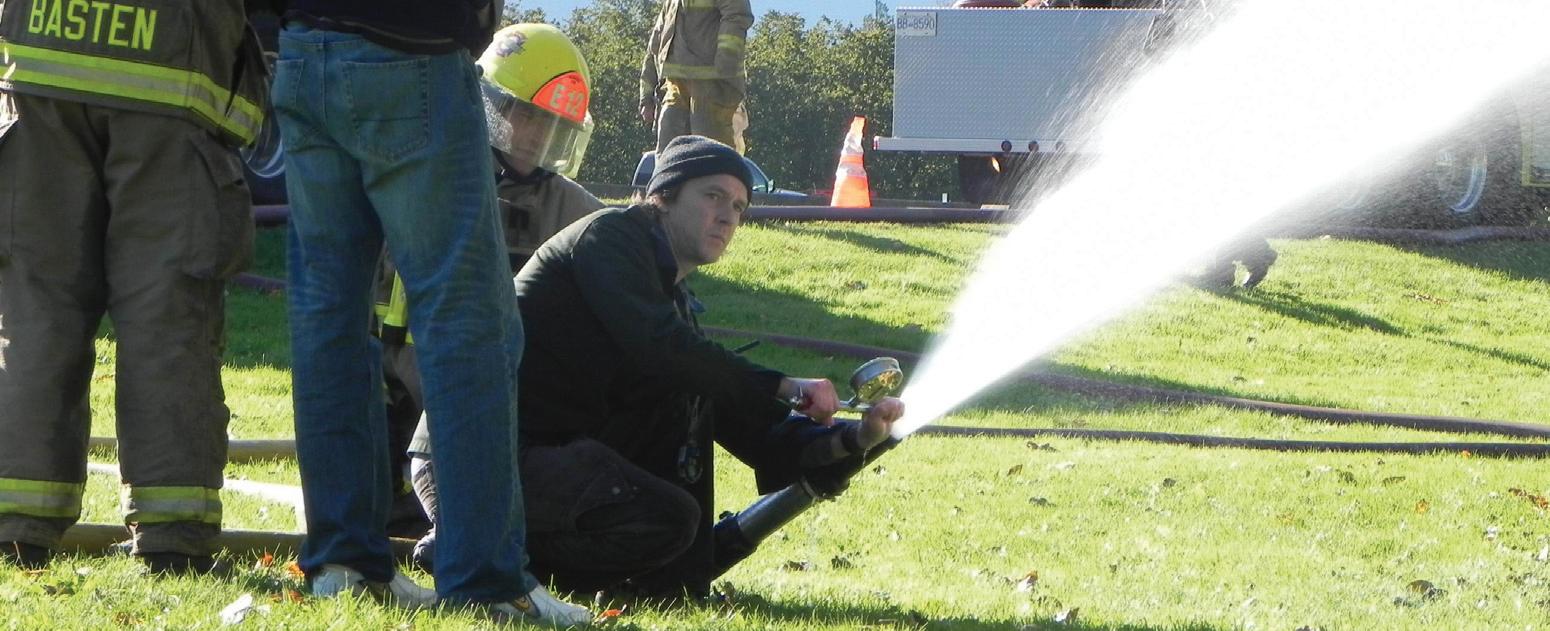
For years, the Agassiz Fire Department in British Columbia struggled to protect its residents. With just half of the town on municipal water, Agassiz’s single fire station used ingenuity and a fair bit of muscle to become the first Canadian department to receive the Fire Underwriters Survey accreditation for alternative water supplies using large diameter hose lay (LDHL) delivered up to 600 metres from an accredited water source.
Using two engines and one tender from the Agassiz Fire Department, supported with one engine and one tender from neighbouring Popkum Fire Department, Agassiz’s firefighters were able to deploy 600 metres
of four-inch LDH, flow 265 imperial gallons per minute (ipgm), from a ground monitor within five minutes, and boost the discharge pressure to 500 ipgm within 10 minutes. Although this doesn’t quite meet the hydrant-protection rating, it is the next best designation, and is far better than the fire-department only designation.
As early as the mid 1960s, fire hydrants were installed in strategic locations throughout Agassiz to support firefighting efforts and help meet insurance regulations, so affordable rates could be offered to citizens. The hydrants were not connected to any positive pressure water system; they were simply six-inch casings, drilled down 30 to 60 feet, or until good water volume was reached. The
hydrants, or well heads, proved to be very labour intensive and accelerated wear on pumps and related equipment. Fine sand and silt was being drawn up and run through the pump and valves causing expensive repair issues. Through time, the hydrants were used less and less, and were eventually replaced with tender shuttles. In 2005, a community water system was introduced into the town, bringing fresh, clean, regulated water for domestic use, as well as a pressurized fire-hydrant system. Unfortunately, there was only enough funding to complete half of the town. While this measure was better than nothing, it left half the town without proper fire-hydrant protection, which, in time, led insurance brokers to focus on and levy dramatic rate increases.
At that point, the Agassiz Fire Department developed a plan to use a four-inch diameter hose lay from the nearest pressurized fire hydrant to encompass all properties within 600 metres. The plan was presented to the Fire Underwriters Survey and approved in principle, pending successful demonstration and timed tests. Over a couple of months, a plan was developed using information from municipal utilities regarding water-main infrastructure, available equipment and resources, friction loss and flow calculations, and training required to become proficient. All the hose required was pressured tested and inspected. Hose loads on the engines were adjusted to allow for a 300-metre compliment of fourinch LDH. Firefighters trained week after week to fine tune operations and develop the most efficient methods to reach the goals. Joint training sessions with the Popkum Fire Department were initiated. Finally, a plan was set in stone and a standard operating guideline was written.
The first-in engine would stop and tag the nearest hydrant with a two-inch line, and two 2.5-inch gate valves. The engine would lay 300 metres of supply line and then continue on to the incident. The secondin engine would respond directly to the incident, lay 300 metres of fourinch supply line back to where the first engine’s line ended, and begin to relay pump to boost pressure lost due to friction. When the tender arrives on scene, it supplements the attack engine until the hydrant supply is secured and able to deliver the required volumes. The Popkum engine is directed to the hydrant to connect to the two gate valves and steamer port, and boost the water supply at the source. The Popkum tender works in conjunction with the Agassiz tender, maintaining a water cushion in case flow requirements increase and additional water is required.
On Oct. 23, 2010, Sunjeeve Sodi from Fire Underwriters Survey came to witness a practise run of the procedure. After meeting with Agassiz’s chief and company officers to ensure all key points were understood and could be met, the demonstration began. Once the scenario was complete and all the objectives met, a debriefing followed to identify areas of concern. Sodi worked with the fire departments to tweak the plan to reach maximum efficiency. The test was done for the final time the following weekend and recorded. The test was a resounding success and is now an important part of the Agassiz Fire Deparatment’s suppression tactics. The joint effort and working relationship between the FUS and the department was second to none.
In a letter addressing alternative water supplies. Michael Currie, the Fire Underwriters Survey director for Western Canada, says; “The Agassiz Fire Department, within the District of Kent in British Columbia, under the leadership of Fire Chief Wayne Dyer, have adapted their training and equipment specifically to receive this accreditation, and are congratulated as the first community to receive accreditation for alternative water supplies using Large Diameter Hose Lay (LDHL) in Canada.”
The Agassiz Fire Department comprises one career fire chief and 30 paid on-call firefighters. It operates two engines, one heavy rescue, one four-by-four light rescue, one 3,200-imperial gallon tender, one utility/air squad and one duty chief truck, out of one fire hall, serving a population of more than 5,000 people over 259 square kilometers. The department responds to approximately 275 emergency runs a year.
Gerald Basten is the deputy chief of the Agassiz Fire Department. Contact him at deputychiefbasten@shaw.ca or 604-796-2614.
BY E. DAVID HODGINS
C FROM THE HIP
What you do is not important
most senior bureaucrats will do whatever they need to do to keep the political boss happy. And a happy politician is one who is getting the vote. Once we accept this, we will be better positioned and better able to market emergency services and secure the resources needed to meet our basic mandates. And who requires us to meet identified mandates in the first place?
olleagues, it’s time for some serious reflection and straight talk. We need to discuss the sad state of affairs related to public life-safety and emergency management services at all levels of government. You may have heard that I retired in September. I am now well positioned to speak and write more candidly about what’s really happening in our services. I plan to confront legislators and other senior decision makers through speaking engagements and through my writing. These individuals need to be held accountable for their lack of support, inaction and poor decisions that have seriously and negatively impacted public life-safety services. We need to talk about what’s amiss within our organizations and, more importantly, how to fix it. There is a lot to do as we seek to bring fire, search-and-rescue and emergency management services to a satisfactory level. This need holds true at all levels of community and government.
I have enjoyed a fantastic career, met some amazing people and gained significant insight into the system. The hard reality is that most emergency service organizations are a kilometre wide and a millimetre deep. This is because, to outsiders, what we do is not important. Don’t get me wrong; our skills are absolutely critical when bad stuff happens. However, the statistics show that bad stuff happens less than five per cent of the time. So, as we go about asking for more in our traditional ways, we are considered a huge pain in the neck. Yes, governments throw a few scraps our way every once in a while to keep us quiet, but mostly they believe we are whining and looking for more control and bigger and better toys.
How many of you are forced to raise money through boot drives and raffles to deliver emergency response services? It has been my experience that, except for the larger municipalities, most of you operate mainly based on some form of fundraising. Have you ever heard of a public works department selling muffins to build or fix roads, or recreation department staff going door to door to businesses begging for money to buy a new Zamboni? Not likely! Let’s not kid ourselves; this is our reality. Why? Because it’s all about the vote. Most politicians will do whatever it takes to get the vote and
The politicians and senior bureaucrats.
Not all elected officials or senior bureaucrats deliberately ignore our needs, but these folks tend to run in packs, and what the pack wants, the pack gets. When there is a public demand for more health care, education, policing, or ice time at the local rink, guess what wins?
Public demand influences the decisions made by elected officials and senior bureaucrats. If we have any hope of getting the legislators and other decision makers on side, it will happen predominantly through the public, because they hold the trump card – the vote. Yet, the fact is that most voters have no idea where fire, search-and-rescue and emergency management services come from or how we get to them in their time of need.
I am continually amazed at just how little people know about the who, what and how of emergency services. This is true especially of the travelling public – individuals who are on a road trip or out for a weekend in the wilderness will tell you that if an emergency occurs, they would simply call 911 and within a few minutes the big red truck or search team would be on scene to save them. Little do they know, there are vast areas with no 911 services and a response could take an hour or more. When they are informed of the huge gaps in service that exist, they are shocked and usually ask how the politicians could let this happen. Politicians will ensure legislation, regulations, bylaws and policies are in place to make sure they get the vote. To achieve success, we need to figure out how to effectively and ethically influence those who control and those who receive the votes.
E. David Hodgins has served with fire, rescue and emergency management organizations at the provincial and municipal levels during his 34-year career. Contact him at e.david. hodgins@shaw.ca
TRUCKTECH
Freezing your assets
By CHRIS DENNIS
According to Wikipedia, cryogenics is the study of the production of temperature below -150 C (-238 F) and the behaviour of materials at those temperatures. You may wonder how this topic relates to fire apparatuses. Give me your attention for a few minutes and I will explain how your department can benefit, as mine has, from applying cryogenics to your fleet. Before I do this, I’ll explain the cryogenics process in terms everyone can understand.
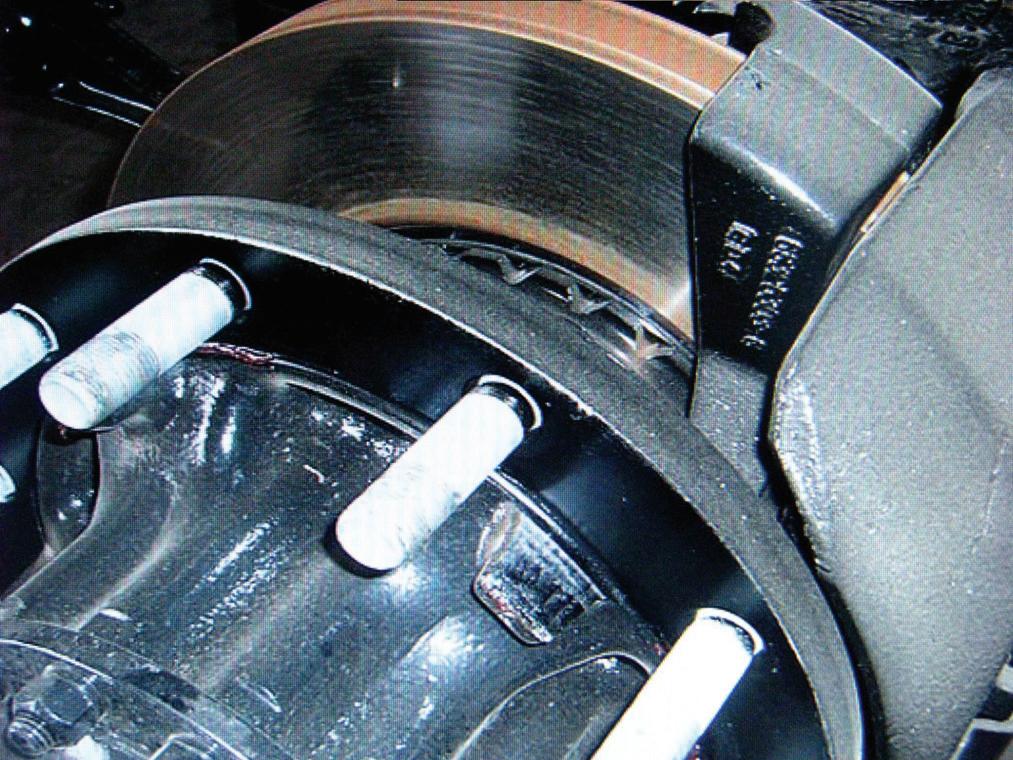
Cryogenics is a phenomenon created by lowering the temperature of a metal in a controlled environment. For our purposes, this is done with liquid nitrogen. This process increases the molecular structure of the object and causes the metal to become stronger and more durable; this will save your municipality money on parts and labour and it makes your tools, engines, transmissions and brake parts last longer. And, your department will save precious downtime; less time and energy will be spent on the continuous, labour-intensive process of dismantling and reassembling these items. Using cryogenics in your department also reduces the physical wear and tear on the technicians who do these repairs. Cryogenics makes fire trucks stop more quickly; it makes cutting blades last longer; and, by far, it makes the business we are in safer.
I now must take a moment and thank Bob Kay, chief mechanical officer of the City of Hamilton Fire Department in Ontario. Bob first began an in-depth study of this process in 2001 on fire trucks and ambulances. Some of the graphs below are from studies Bob did and shared with me when I started asking questions way back then.
In 2005, at a mechanical seminar at the Ontario Fire College in Gravenhurst, Ont., a company called Industrial Cryogenics Enterprises (ICE) did a presentation for fire department and fleetmechanical technicians responsible for specialty tools and these sophisticated pieces of equipment we so fondly look after for the fire departments we represent and serve. ICE representatives told us how they would put a brake drum or a brake rotor in a vessel no bigger than a dishwasher and, through a process they created, drop the temperature of these items to -459.67 F, or 273.15 C, using liquid nitrogen. (My first thought was of a sci-fi movie in which the characters would deep freeze an alien and wake it up many years later, only to find out something had happened during the deep freeze and the alien was now a threat – as if it wasn’t before!) In 2005 Vaughan Fire Rescue began to cryogenically treat brake parts first, then, shortly thereafter, we started to treat anything else we felt would benefit from this process.
Metal items – let’s use a brake rotor as an example – is put into a chamber and cooled with liquid nitrogen for 20 to 24 hours to bring it down to about -320 F. ICE keeps its cooling and reheating times secret, as this is the make-or-break part of cryogenic treatment; the weight of an item determines how long this cooling process takes. The cost for the cryogenic treatment is about $1.65 to $1.70 per pound. ICE tells me that timelines are the secret ingredient. Once the part has soaked in
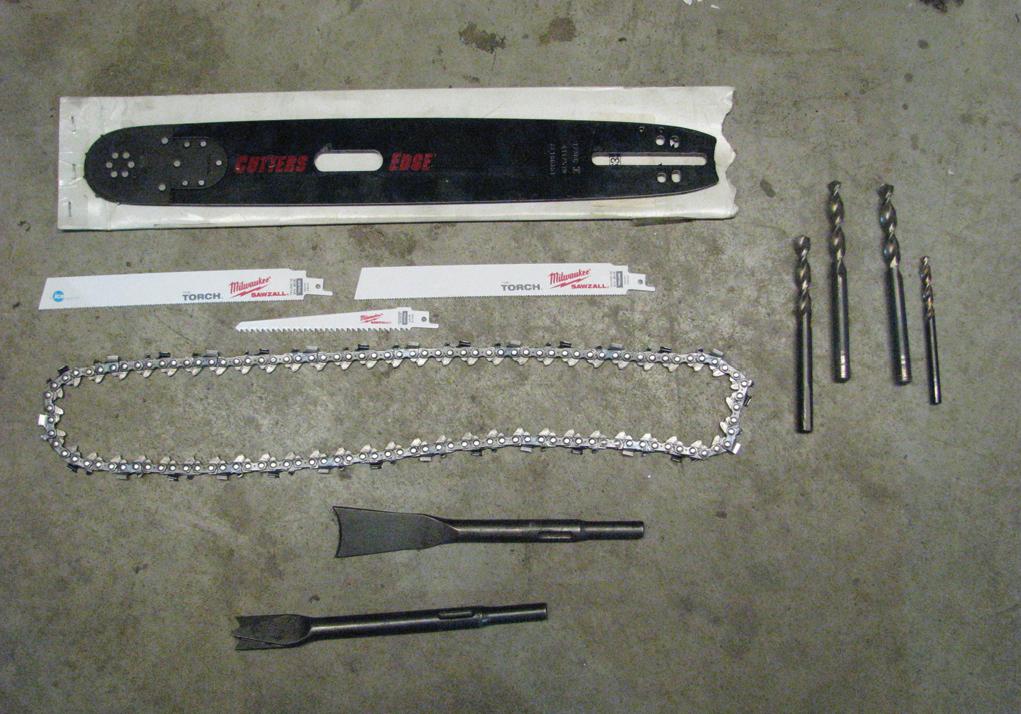
Chainsaw blades, auto extrication tools and axe heads will all perform better, last longer and be safer if they are treated cryogenically.
the deep freeze for the particular amount of time, it is time to warm up the part. This is done naturally, and, at some point, the part is heated up again mechanically, for a specific amount of time, to lock the molecules into the spots to which they have moved.
The metal item being treated can be made in many different ways – for our purposes we will assume a liquid-poured-intoa-moulded-shape technique. When this liquid is poured and
Formula 1 and Indy race car engine builders as well as Harley Davidson motorcycle engine builders are using cryogenics in the engine overhaul process.
PHOTOS BY CHRIS DENNIS
TRUCKTECH
cooled, the molecules in the metal do not evenly spread out. Before treatment, the molecules are grouped tightly together. After being cryo-treated, the molecules are more evenly spread apart. Think of a group of people (molecules) huddled together on a cold day to keep warm. When that group separates, allowing more space among them (molecules), heat is lost in the voids. When cryo-treated steel is superheated through friction, with the molecules not so close together anymore, the steel cools quickly and more evenly and does not allow for hot spots to be created in the steel. (These hot spots come from superheated areas where the molecules are close together, or even touching; when the molecules are unable to cool separately, harder areas are created in the steel this can cause brake pedal pulsations and or steel to crack.)
The cryogenic processes will produce considerably longer wear life for almost any tool or dynamic part subject to friction or abrasion. Formula 1 and Indy racecar engine builders, and Harley Davidson motorcycle engine builders, use cryogenics in the engine-overhaul process. Turbochargers are designed and built to handle extremely high temperatures from exhaust and engine oils, as well as the heat produced from friction created from spinning at such high rpm. A reciprocating engine part also creates friction heat, causing engine parts to deteriorate quickly. Treat these components cryogenically so that the heat is evenly distributed and they will cool more quickly and last longer.
In my own fleet, I have an 8.3-litre diesel engine in a customcab fire truck. This truck was an emergency purchase and not a
spec-built truck. It was not equipped with a transmission retarder or built-in engine brake. It did come with an exhaust brake installed just after the turbo charger. The exhaust-brake function works well to slow the engine but not without causing early turbo failure. When this occurs, the exhaust brake, when engaged, drops a trap door down into the exhaust pipe with which it is in line, sort of like a potato in the tail pipe. This dramatically slows the exhaust gas as it escapes through the tail pipe, and in turn, the exhaust gas backs up into the turbocharger, super heating it again and slowing down the turbo charger and the engine. This hot exhaust gas and heat, created from friction slowing the compressor tip fan in the turbo, prematurely takes out the centre bearing of the tip fan, causing the turbo to fail early. We at the mechanical division of Vaughan Fire and Rescue Service decided that if Indy car turbo chargers are treated through cryogenics to withstand friction and heat, we could do the same to our turbo. Cryo-treating the turbo changes the metal by realigning the molecules, and this allows this superheated turbo to self-cool more quickly and to last longer. If the turbo lasts, the truck will stay in service longer and I will save the city money by not replacing an expensive engine part long before its time. We will also save on brake parts, as the brakes won’t have to work so hard to slow the vehicle when the turbo begins to fail. So far, it has proven to be a good decision: a turbo charger that was once replaced yearly has now lasted four years.
Remember what we said about metal molecules being realigned? This is the part of the process that results in a huge
TRUCKTECH
cost saving from not having to replace brake parts that have been overheated; you’ll also notice an increased stopping distance, which is achieved because the heat dissipates more quickly, which makes braking more effective and safer. At Vaughan Fire and Rescue Service, we treat brake rotors and drums as well as hold-down kits wedges, pins, s-cams, slack adjusters and springs.
Through cryogenics, brake rotors last longer with little or no brake-pedal pulse, and breaking distance is reduced by not compromising the friction material or boiling brake fluid, thanks to treated metals.
Graph 1 above shows the improvement in stopping distance of a 63,000-pound, Class 8 fire truck with air brakes.
Not only do the parts last longer, but the overall safe stopping distance has improved. If heat can be move away quicker, friction material stays cooler and reacts better. Brake failure will occur when brake components reach 760 F.
In one experiment to test effectiveness after cryogenic treatment, ambulance rotor temperatures were measured with a heat-sensing gun after three critical injury panic stops from 20 miles per hour, both untreated and treated (see graph 2, above).
Not only was there a difference in temperature of the brake parts, but the
hydraulic brake fluid was no longer boiled, meaning better stopping without brakepedal fade. Brake-pedal fade occurs when brake fluid surpasses its boiling point and can no longer effectively apply hydraulically controlled components. When boiled, the fluid within the brake fluid releases gases, causing spongy braking, as unlike fluids are not compressible.
When you take out a new or freshly sharpened drill bit and begin drilling into the project you are working on, how long does it take before the bit tip is overheated and blue in colour? Metal on metal under pressure creates friction and heat. When you cryo-treat the drill bit, the heat is moved away and the bit lasts longer, resulting in less chance of the bit breaking due to heat stress. Chainsaw blades, auto extrication tools and axe heads will all perform better, last longer and be safer. It’s win-win situation.
In an already unpredictable business, cryogenics has proven to make parts last longer, save the municipality time and money, and keep our drivers, crews and technicians safer.
Chris Dennis is the chief mechanical officer for Vaughan Fire and Rescue Service in Ontario. Contact him at Chris.Dennis@ vaughan.ca
BACKtoBASICS
Vertical ventilation, part 2
BY MARK VAN DER FEYST
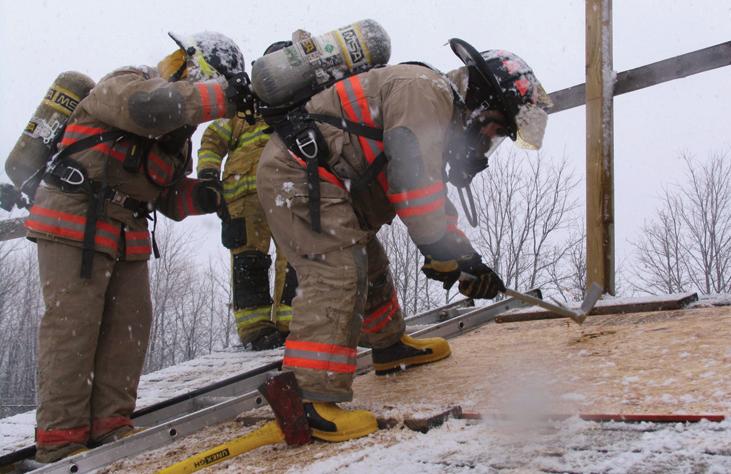
Vertical ventilation is an effective way to remove the products of combustion quickly and efficiently. Going to the roof to make a vertical vent is dangerous but the payoff is the quick removal of hot gases and smoke, and the injection of fresh air. Firefighters can make many types of vents; the roof style will help firefighters decide which type of vent is appropriate. The louvred or hinged cut is the most common type of vent; it uses the nailed sheeting resting on the roof trusses as a hinge point for the vent.
As discussed in the March issue, firefighters cutting a vent need to use the roof ladder to provide adequate slip protection and to evenly distribute weight. The roof ladder serves as a staging area for the tools needed for the task. Placing tools on the roof ladder ensures that firefighters can locate them easily and quickly. Once the roof ladder is in place, ensure that the roof hooks are snug against the peak of the roof and will not slip off when the ladder is stepped on.
Before stepping off the ground ladder and onto the roof ladder, it is vital that the firefighters sound the roof with a hand tool to ensure that it can support weight. A weakened roof (one that feels spongy or sounds hollow) should be avoided. Use some force when sounding the roof – little taps will tell you nothing about the condition of the roof.
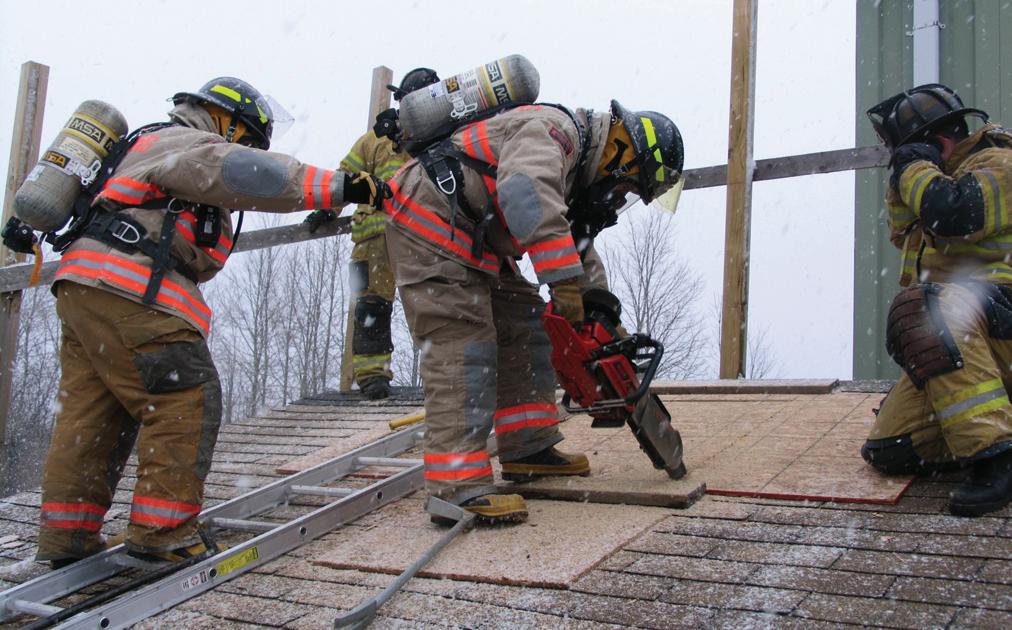
Once you are on the roof, stage all your equipment on the ladder. As you make your way up the roof ladder and into position to make the vent, keep sounding the roof with the hand tool. Once in position, one firefighter can make a support step on the roof, using the Halligan bar or the pick-head axe as shown in photo 1. This allows the firefighter to step off the roof ladder to make cuts without compromising safety. The hand tool spiked into the roof prevents your foot from slipping.
One firefighter can now take a roof hook or a pike pole and start sounding the joists. The edge of the pike pole or roof hook can be used to scribe lines to mark out the locations of the roof joists. This allows the firefighter with the chainsaw to avoid cutting through the roof joist as he is making the vent (some chainsaws have depth gauges to help you avoid cutting through the roof joists). Cutting the joists will weaken the roof and increase the possibility of a partial roof collapse.
Once the joist lines are marked, the firefighter with the chainsaw can begin to cut. Four cuts need to be made for a louvred vent. The first cut is the farthest cut away from you, parallel with the roof joists. This cut should be in the middle of two joists. Start the cuts away from you (see photo 2) and work back toward the roof ladder so you aren’t trapping yourself or standing on a weakened roof with heavy smoke or fire coming out. In photo 2, notice how the chainsaw is not in line with the firefighter’s foot – this is standard practice to avoid accidental injury. Always keep your feet out of the cutting path of the chainsaw. After you have made the cut and the chainsaw has been pulled out of the roof, roll your hand forward to engage the chain break. This prevents the chain from spinning freely and cutting or catching someone’s gear or body part. When setting up for the next cut, place the chainsaw in the proper position on the roof, then disengage the chain break.
The second firefighter must help the cutting firefighter navigate his way through the cut and warn him if he’s too close to the edge. The guiding firefighter must look at the surrounding area for changes
Photo 1: Once in position, the firefighter can make a support step on the roof, using the Halligan bar or the pick-head axe.
PHOTOS BY CRYSTAL JOHNS
Photo 2: Notice how the chainsaw is not in line with the firefighter’s foot – this is standard practice to avoid accidental injury.
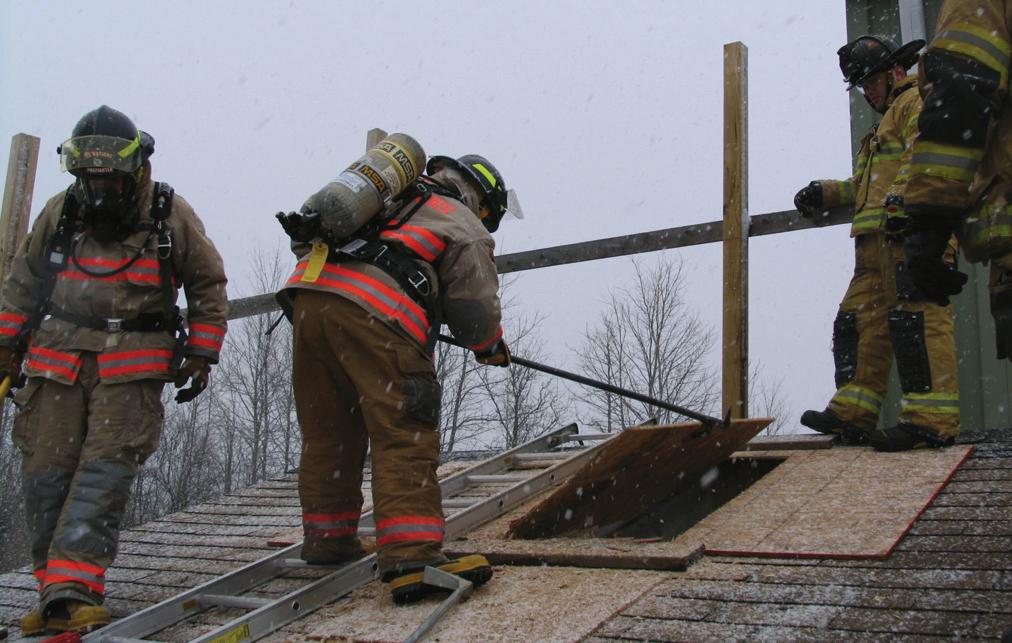
Photo 3: The second firefighter can take the roof hook or pike pole and hinge the vent.
BACKtoBASICS
Photo 4: The Halligan bar is being used to cut the roof hole. The wider surface of the back of the adz end of the Halligan allows for better cutting and prevents binding in the roof.
Specify Below)
in conditions. He can also communicate with the cutting firefighter by tapping him to get his attention or to have him stop cutting. Verbal communication does not work, especially when a chainsaw is being used at full throttle.
The rest of the cuts can be made in any order as long as the last cut is parallel with the roof ladder. At this point, the four sides should be cut and the cutting firefighter should have both feet back on the roof ladder. Be sure to intersect the cuts at each corner well beyond the cut lines to produce a cross at each corner. This creates a free-moving louvre and prevents catching one of the corners because it was not cut through all the way.
The second firefighter can now take the roof hook or pike pole and hinge the vent, as seen in photo 3. Once the hole is hinged on its axis, the ceiling below needs to be removed to allow any smoke and hot gases to exit. Start plunging the roof hook or pike pole at the farthest point away and work your way back to the roof ladder. You do not want to be trapped between the roof ladder and the fire as smoke and heat start to pour from the hole. Once the hole has been made and the ceiling below has been punctured all the way through, it is time to get off the roof.
If the chainsaw malfunctions on the roof, hand tools are there to allow you to complete the task. The axe is the best tool for this, but it can create some problems, as the blade will bind with the roof material as you chop your way through. To alleviate this problem, you can use your hand tools in an unorthodox manner. As shown in photo 4, the Halligan bar is being used to cut the roof hole. The wider surface of the back of the adz end of the Halligan allows for better cutting and prevents binding in the roof. The same is true for a flat-head axe. The back of the axe will cut better and more quickly than the blade part. The drawback is that the axe blade is facing you as you are cutting. Take caution with this and control your swings.
Mark van der Feyst is a 12-year veteran of the fire service who currently works for the City of Woodstock Fire Department in Ontario. E-mail him at Mark@FireStarTraining.com
BY TRENT ELYEA Fire chief Collingwood, Ont.
MGUESTCOLUMN
Sharing the loss with Listowel
ost of us know what it’s like to drive the same route every day, or drive a long distance, and all of a sudden realize we have arrived at our destination but aren’t sure how we got there. Life is like that – we drive on autopilot. Sometimes the drives are short; sometimes the drives are long.
But every now and again, something rattles us out of the trance. I think we were all recently rattled out life’s day-today trance as we watched in horror while the events unfolded at a fire in a dollar store in Listowel, Ont., and two volunteer firefighters lost their lives. Those of us who have been at this firefighting game for a long time know there will be ramifications from these line-of-duty deaths – perhaps new SOPs or guidelines, perhaps a hard look at the role firefighters play in their communities. Each and every one of us lost a small piece of ourselves again that day, as we have so many times before –we hurt and our lives were changed because of an incident that will affect us in so many ways.
As I get older I look at things differently. I have been a firefighter for 28 years and have seen a multitude of changes. When I started, we wore petch coats and rode on the back of the truck to a call. We had the old positive/ demand breathing apparatus that we wore only when we had to. The fire service was a militarized organization with rank and structure and everyone did what they were told: we cleaned the stations and we cleaned the trucks – they were a reflection of who we were. When the chief or deputy came into the station, people stood up. Fire fighting was not just a job; it was a lifestyle.
of firefighters, young and old and of all ranks, and any sense of entitlement that I thought was permeating the fire service disappeared; rather there was simply an astounding number of professionals paying their respects to comrades who lost their lives serving their community. It was truly a magnificent sight.
The mind is like a filing cabinet. We all have things filed away, and sometimes, certain emotions are triggered by factors such as sounds or smells. In our occupation, we all have memories stored in those filing cabinets. When something triggers a memory, it pops out and we deal with it all over again. You might as well hand me a box of Kleenex every time I hear bagpipes play Amazing Grace . For some reason, the haunting sound of a lone bagpipe brings out deep emotion. I think it is because of what it stands for in our business; we know the significance of the pipes. In Listowel on that March afternoon, I stood across from a Mountie in full dress, who locked eyes with me as the bagpipes started. Our eyes stayed locked as the pallbearers walked past with the first casket, followed by the family. I held my emotional ground, but I could see the Mountie wavering. When the pipes started for the second
As I stood there in Listowel, I looked back at a sea of black hats that stretched as far as I could see. ‘‘ ’’
For some reason, when I was waiting to march in Listowel on the day of the funeral for firefighters Ken Rae and Ray Walter, all those of those things entered my mind – possibly because I’ve seen myriad changes and I was disheartened with what I thought was happening in the fire service today. We seem to have lost that drive and passion that used to encompass the fire service. As I stood there in Listowel, I looked back at a sea of black hats that stretched as far as I could see; I never did see the end of the line. Suddenly, all of what I thought, was not: there were thousands
Trent Elyea is the fire chief in Colllingwood, Ont. He started as a volunteer firefighter in Collingwood, Ont., in 1982, moved to Clarington, Ont., where he was promoted to captain, then became deputy chief, and chief, in Orillia, Ont., before moving back to Collingwood. He is a certified fire and explosive investigator, a Level 3 certified municipal manage, fire service executive, and the community emergency management co-ordinator.
casket and family, the Mountie won: eyes locked, two complete strangers had tears running down their faces while the casket of a fallen brother went past. I will likely never see that Mountie again, but for that moment, we shared the pain of a loss of a family member, someone we had never met but for whom we had heavy hearts. We had never known the families and had never had the pleasure of seeing them all together, yet we hurt. That is what we are supposed to do. That is who we are . . .
We are one of the thousands who marched or stood in the cold.
We are one of the thousands who bowed our heads.
We are one of the thousands who saluted the hearses carrying the caskets.
We are one of a brotherhood that lost a little piece of itself that day.
That is what we do.
The fire helmet that started it all... and the tradition lives on with
and
that firefighters have trusted for generations. Join the celebration at www.msanet.com/cairns175.
Continued from page
how firefighters are trained to do that is improving.”
As for electrical bending, blogger and Fire Chief Adam K. Thiel of Alexandria, Va., is skeptical and his online comments bear repeating.
“For literally hundreds of years, firefighters have been charged with putting the wet stuff on the red stuff. Just imagine how our strategy and tactics might change if we didn’t have to carry water on board our engines, pumpers, tankers and tenders; or worry about establishing a reliable supply from hydrants and static water sources?
“The technology . . . was used to extinguish a very small fire under controlled conditions, but the underlying principles certainly seem scalable to larger events if a delivery mechanism can be devised. (Maybe 22nd-century fire engines will carry generators instead of water tanks?)
“The bigger issue is the role of technology in modern fire suppression. Although we have much better equipment, apparatus, and training than our predecessors, the basic aim of fire fighting hasn’t changed in centuries.
“Can you think of anything else that’s been done (essentially) the same way, for that long?”
* * *
Meanwhile, as most North American firefighters are aware, scientists in Worcester, Mass., have been working for a decade to make a better locator device for downed firefighters.
We all know the story of the Worcester Cold Storage Warehouse fire in which six firefighters died. In December 1999, the six became lost in a vacant, windowless warehouse that flashed over.
Now a team at Worcester Polytechnic Institute (WPI) is looking to commercialize a personal locator device and other safety equipment. The locator was demonstrated for scientists and others in August at WPI’s annual conference on indoor location tracking for rescue workers.
More recently, a November story in the Worcester Telegram & Gazette quoted WPI’s David Cyganski, a professor of electrical and computer engineering and a member of the team developing the Precision Personnel Locator for First Responders. After a presentation to members of a tech group, Cyganski told the newspaper that a piece of rescue equipment the WPI team has been developing is being tested by a private company to see if it meets the company’s standards for commercialization. He declined to say more about the equipment or identify the company, but said there could be an announcement shortly.
Cyganski said the WPI team is also developing a sensor that would alert fire officials to flashover conditions, as well as telemetry equipment worn by firefighters that would transmit vital signs to a computer, alerting officials if any are reaching critical stress levels.
The locator devices would transmit data to receivers placed around the building or on fire trucks, with a command staff monitoring the data on a laptop computer.
Although the locator technology has not advanced to commercialization, in the most recent tests (conducted with firefighters searching multi-storey buildings wearing masks that obscure their vision) rescuers found lost victims before using up a bottle of air.
We’ll give the last word on firefighting technology – or the challenges thereof – to Capt. Mike McKenna, chair of the NFPA 1971 task group on gloves.
In an article on FireRescue1.com, McKenna notes that recent media attention to The Glove Corp.’s Blaze Fighter structural gloves raises questions about what’s practical and appropriate in the trade-off between thermal protection and dexterity in structural gloves.
McKenna wonders if glove manufacturers are at their technological limit to provide higher dexterity while maintaining thermal protection.
“What if the fire service has ‘demanded’ itself into a corner?” McKenna asks.
He notes that in his 32 years of service, glove dexterity has always been a complaint but never a problem.
“Then,” he says, “a few years ago, tighter-fitting structural gloves with new, stretchy textiles and thinner leather were introduced. Firefighters now had a taste of improved dexterity, and the market exploded.
“Firefighters were searching for and purchasing these new, more dexterous gloves, but with them came some faint whispers of hot hands.”
Sure enough, McKenna says, manufacturers had a new market for structure gloves and new designs began arriving, combining new fabrics with exotic leathers, offering more dexterity. And dexterity became a “problem”. “What if the fire service was and is asking too much from their gloves, given the technology currently available?” McKenna asks. “What are the most important functions that need to be met by structure gloves? The job hasn’t really changed too much over the past few years — do our gloves really need to?”
As all firefighters know, and as McKenna points out, certain tasks, such as changing the channels on a radio, are challenging while wearing structural firefighting gloves.
“Is the fire service willing to lower the bar on thermal protection for better dexterity, and deal with hot hands and burns?” he asks.
McKenna says the fire service needs to determine whether it is ready and willing to educate its members about thermal saturation and limitations of gloves.
“If more instruction is given on the limitations of PPE, especially gloves, there’s a chance we would see fewer burn injuries,” he says.
“Certainly having improved dexterity and thermal protection is a worthy and admirable goal, and it may be achievable. But for now, we need to be confident that it’s not realistic given current technologies before adopting new products en masse. We must ask ourselves where the line between thermal protection and dexterity falls, and be prepared to accept that we may not be able to have both.”
See our FDIC Showcase of new products and innovations on page 21.
BY TOM DESORCY Fire chief, Hope, B.C.
TGaining clout through your fire-service family
his past hockey season, I was particularly interested in the NHL all-star game and the picking of the two teams. Watching these million-dollar athletes choosing sides in a glorified game of pickup hockey took me back to the days of ball hockey in the street and reminded me of our true desire: not to get paid to play hockey one day, but to belong. Hasn’t that always been our biggest goal? Everyone who participated in our street league just wanted to be accepted by someone, or something, and being part of a group or organization gave us all a sense of that. We really didn’t care which team we played on – the fact that someone chose us was validation – and when we joined an organized team, the act of belonging extended beyond the game; people soon came to know we were a part of that group.
Today, as a career chief of a volunteer fire department, I know I belong to a special group – a family, if you will, and a fraternity that I have realized is much bigger than I first imagined. The numbers speak for themselves, and most everywhere we go in Canada, we find a fire department in one shape or form. Have you ever stopped for a moment and thought beyond the similarities that we all share, that we all belong to the same organization? As a chief fire officer, you have something in common with every fire department in Canada.
My colleague in this space, Chief Vince MacKenzie, recently wrote about affiliation, in particular, with the Canadian Association of Fire Chiefs (CAFC). My revelation came some 11 years ago when I joined the Fire Chiefs’ Association of B.C. (FCABC). I soon came to realize that membership in an industry association, for lack of a better term, was more than just a feeling of belonging. It immediately tied me into a network of fire chiefs and fire departments across the province, a network of people with the same challenges, issues and concerns I had in my small community, no matter their size or call volume. It was, and still is, amazing how alike we are.
N.L. I then took the next step and attended Fire Rescue Canada in Saint John, N.B., in September. Again, what could I get out of this national gathering of fire chiefs that would benefit me in small-town British Columbia? Well, let me tell you – from the first moment at the opening ceremonies, the overwhelming sense of belonging emerged. From the people I met to the sessions I attended, I immediately realized that my department and I had a relevant reason to be involved. What I had come to understand at a provincial level soon made incredible sense at the federal level, and I felt like a long-lost cousin at a family reunion, meeting the family I never really knew for the first time.
I’m not here to pound the drum of one association over another. For many departments, association membership varies, from the volunteer firefighter associations across the country, to smaller gatherings of peers in more regionally or locally based organizations. The point of the matter is simple: being involved not only takes you outside of your little world, but gives you an entire new network of resources to draw upon, and you soon realize that you’re not alone at what you do. In
My message is simple: you need to be connected with the rest of your fire family. ‘‘ ’’
My second revelation came last year when I joined the CAFC. Again, I felt that that what happens in Hope, B.C., is of really no relevance to Guelph, Ont., or Grand Falls-Windsor,
Tom DeSorcy became the first paid firefighter in his hometown of Hope, B.C., when he became fire chief in 2000. Originally a radio broadcaster, Tom’s voice could be heard in the early 1990s across Canada as one of the hosts of Country Coast to Coast. DeSorcy is married with two children, aged 27 and 19, and enjoys curling and golf. He is also very active with the Fire Chiefs’ Association of B.C., and chairs the communications and conference committees.
fact, many a fire-service organization is carrying the torch of change on your behalf, and an organized lobby holds a bigger and brighter torch than yours would be if you were to go it alone. I would hazard a guess that many a local government has called upon its fire department to effect change at a higher level, be it the provincial or federal legislatures. When you come to understand that a recognized and respected voice is there already, you immediately have clout and credibility because you belong.
My message is simple: you need to be connected with the rest of your fire family. How do you do that? Start small, with your neighbouring departments; search out peer associations in your area and research the provincial and national associations that are available to you. Most of all, never think for a moment that you don’t belong, because you do. Those loud voices just may become a little louder once you join the choir.
Continued from page 21
has room for a mobile workstation, radio interoperability bridge, printers, chargers and any other devices that firefighters need on scene. Power comes from a builtin Honda generator. Roll the vault up to a trailer hitch, use its handle to jack it onto the hitch, then bring the wheels up – it’s a trailer box that doesn’t require a license plate. Check out www.rescue42.com for more details.
CABLE PROVIDES PATH THROUGH SMOKE
Firefighters can get lost in dark, smokefilled buildings. Lumiflex’s Rescue Cablelight can solve this problem. It is a glowing cable that provides rescuers with a clear, lighted path into and out of dark locations and can hold up to 480 pounds. The Rescue Cablelight is waterproof, rugged, heat resistant to 385 degrees, and can be set to a flash cycle to let responders know to evacuate the scene immediately. Visit www.rescuecablelight.com for more information.
SCENE LIGHTING THAT’S LIGHTWEIGHT
There are times when firefighters can’t take truckbased lights where they need them.
Ventry Solutions’ Lentry system combines reliable, and lightweight Honda gasoline generators with metal frames and removable high-intensity lights. Just haul one to the
Every second counts...
ask for
Newton Kwik-Dump Valves
scene – they can be taken apart to reduce carrying weight – set it up, and you’ve got unattended light for up to 12 hours. For more information, visit www.ventry.com.
RUBBER KNOBS MAKE MATS NON-SLIP
Inflatable rubber mats are a great way to lift vehicles off victims, but they can slip.
Continued on page 52
contact
BY SEAN TRACEY Canadian Regional Manager, NFPA
TCodes need amending to ensure safety
he capabilities of local fire services need to be taken into consideration during the building-approval process. Municipalities that fail to consider fire-service capabilities when approving new construction projects put fire services and the communities they protect in potentially liable positions. Indeed, under the National Building Code, buildings may be constructed that fire departments cannot successfully defend in a fire. I often speak of this issue in NFPA training sessions for the fire service: just because the building code says you can build it doesn’t mean you should. Provincial fire regulations need to be amended and a risk analysis needs to be added to the approval process for new buildings, and local fire officials needs to sign off on this.
The National Building Code and, by extension, the provincial versions, do not implicitly state the minimum capabilities of local fire services. The assumption in the codes is that there is adequate fire-department response capability but the code falls short in defining this. The problem this creates is evident in a number of areas: what about building-to-building separations? Can I build a six-storey structure when there is no aerial device in the community? What about water supplies for fire fighting? Building codes are silent on these issues and, therefore, the implication is that anything can be built. The assumption is that local development bylaws, if present, can restrict certain types of properties from being built. In provinces such as British Columbia, Alberta and Ontario, where such bylaws exist, this is not possible. One option for the fire service is to approve the building’s fire-safety plan, but this won’t happen until after the structure is built and occupied, and thus will occur too late in the process to make a difference.
fication that the local fire department has the manpower, equipment and skills to protect the building in question is necessary. If the fire department cannot adequately protect the building, the developer must re-evaluate the project. This may mean adding fire-safety features, such as sprinklers, or reducing the height or area of the building when these types of measures may not be required by the building code.
Recently, the Office of the Fire Marshal in Ontario introduced a guideline called Operational Planning: An Official Guide to Matching Operational Deployment to Risk. This is a potentially a good starting point for evaluating new construction against risks. This guideline sets out a critical task matrix based on low, moderate, high and extreme risk. Within each of these risk categories, there are lower and upper risk levels based on the numbers of responding firefighters. For example, a building that is deemed to be a moderate risk may require a response of between 16 and 43 firefighters. Using this tool during the building-approval process, we can see that if a developer were seeking a permit for a six-storey, combustible apartment building with sprinklers (a moderaterisk property), the fire department would need to respond with a
Just because the building code says you can build it doesn’t mean you should. ‘‘ ’’
From my experience, close co-operation between the building inspection community and the fire service is essential but it is not mandatory. These relationships vary from city to city and are often a reflection of the personalities involved and the respect, or lack thereof, for their leadership. When local development bylaws prohibit certain construction projects, building proponents tend to pressure municipal councillors to approve the project anyway.
The problem is that many building and development officials feel that building codes remain their domain and, by extension, so do the necessary approvals. Just because the building code says we can build certain structures doesn’t mean we should. A simple veri-
Sean Tracey, P.Eng., MIFireE, is the Canadian regional manager of the National Fire Protection Association International and formerly the Canadian Armed Forces fire marshal. Contact him at stracey@nfpa.org
minimum of 16 firefighters. But what happens if the community does not have 16 firefighters or an aerial device? Other factors should be considered for the building, for example, a reduction in height or non-combustible construction.
So, what should be done? The best way to effect this is to amend provincial fire regulations to require the preparation of fire risk assessments (considering the capabilities of the local fire department on new construction projects) as a requirement for building approval. This engages the fire service early in the approval process and helps to reduce potential liabilities a community may face. Once a risk assessment has been completed for one class of properties, future projects can be simply verified against this initial risk assessment. If new or higher risks are identified, then a more detailed review is needed.
Just because we can build it doesn’t mean we should.
FDIC SHOWCASE
Continued from page 48
Savatech’s inflatable mats stay flat even when inflated. The mats have rubber knobs built into their surfaces to provide more anti-slip friction when stacked on top of each other. For details see www.savatrade.com.
EYES ON THE FIRE GROUND
Dräger’s UCF6000 thermal imager comes with a builtin laser pointer so users can direct other firefighters to what is being seen on the imager’s displays. The UCF6000 also has a freeze-frame button. Point the imager around a corner, push and hold the button, and then bring it back: you can see what the imager saw, without having to move your body in the way of potential danger. Check out www.draeger.com for more information.
STINGER WOWS
FDIC CROWD
Delegates to FDIC 2011 in Indianapolis were impressed by Oshkosh’s Stinger Q4.
This is a four-by-four all-wheel drive fitted with Mattracks rubber tracks, which turn the truck into a true ATV, as if there is a miniature tank attached to where each tire should be. For details visit www.oshkoshairport.com.
TNT Rescue’s Echo 6.5 extrication tool pump has a computer that monitors its
operations and its connections. As a result, the Echo 6.5 can tell which tools are being used and can run two extrication tools simultaneously. Visit www.tntrescue.com for more information.
RESCUE-ABLE, INFLATABLE, PORTABLE
If your department’s duties include water rescue, then you may want to take a look at NRS Rescue’s inflatable river rescue board.
Without air, it folds into a small package, but blow it up, and this rescue board turns into a full-sized floating surface that measures 26 inches wide by 56 inches long by four inches thick. For more details visit www.nrsrescue.com.
- by James Careless
SMART PUMP
TRAINER’SCORNER
Hazardous materials 101
By ED BROUWER
If your department deals with hazardous material, a copy of the Emergency Response Guidebook , or ERG, is an invaluable resource. The ERG was developed jointly by Transport Canada (TC), the U.S. Department of Transportation (DOT) and the Secretariat of Transport and Communications of Mexico (SCT), with the collaboration of CIQUIME (Centro de Informaciòn Quìmica para Emergencias) of Argentina, for use by firefighters, police and other emergency personnel who may be the first to arrive at the scene of a transportation incident involving dangerous goods.
This guidebook is primarily designed for use at a dangerousgoods incident on a highway or railroad. It was developed to help first responders quickly identify the specific or generic hazards of the material(s) involved in the incident. This is important for protecting first responders and the public during the initial response phase of a hazmat incident. This guidebook can help responders make initial decisions when they arrive at a dangerous-goods incident. The guidebook should not be considered a substitute for emergency response training, knowledge or sound judgment. There may be limited value in its application at fixed facilities.
The ERG has several colour-coded sections. White pages provide directions, emergency phone numbers, general information and guidance. The yellow section lists chemicals based on their four-digit United Nations (UN) guide numbers. The blue section lists chemicals in alphabetical order (a way to get the four-digit UN number and the guide page number). Pages in the orange section – the guide pages – provide emergency chemical information, actions to take, personal protective equipment guidelines, fireextinguishing material recommendations and isolation/evacuation distances. The green section provides distances for isolation and protective action (evacuation and shelter-in-place distances) for chemicals that are gases or will travel as gases, and a list of waterreactive chemicals that will give off toxic gases when they get wet.
The ERG includes sections on shipping documents, hazard zones for TIH substances, safety precautions, a hazard classification system, hazard identification codes displayed on some intermodal containers, pipeline transportation, protective clothing and criminal/terrorist use of chemical/biological/radiological agents.
The section that is of most interest to us as firefighters is Fire and Spill Control (pages 350-351 of the 2008 edition).
Labels and placards provide information through several identifiers including the colour of the placard, a numbering system for hazardous classes, symbols denoting the level of danger and the UN number. Placards are diamond-shaped signs that display hazardous-material information for emergency responders, railroad employees and others. Bulk containers transporting hazardous materials are required by Transport Canada to be placarded. These placards are 10.8 inches by 10.8 inches and sit on the point at a 45-degree angle. Labels are like placards for most classes of hazardous materials, only smaller in size; they are attached to non-
Labels and placards provide information through several identifiers including the colour of the placard, a numbering system for hazardous classes, symbols denoting the level of danger and the fourdigit United Nations number.
bulk containers or packages of hazardous materials. Labels are four inches by four inches and are diamond shaped. Red placards or labels mean the product is flammable. Green indicates a non-flammable material. Yellow indicates an oxidizer and blue indicates dangerous when wet. White
A 100% Improvement In Water Supply Operations…
TFT’s Oasis Hydrant Assist Valve is the perfect choice for dramatic water supply improvements when used with poorly performing hydrants, long rural water delivery relays, or small diameter hose operations.
The revolutionary computer designed waterway provides maximum performance with minimal friction loss. And, its rugged, lightweight and compact design allows for easy deployment and hookup with a
To learn more about dramatically improving your water supply operations, contact your local TFT dealer today.
Mid-Force
Oasis Hydrant Valve with 5” Storz Connections
TRAINER’SCORNER
indicates an inhalation hazard and poison, and black/white indicates corrosive (acid and caustic). Red/white indicates a flammable solid or spontaneously combustible product, depending on the colour pattern on placard. White and yellow indicates radiation or a radioactive product. Orange means the product or material is explosive. White with black stripes indicates miscellaneous hazardous materials.
The second indicator (the number in the bottom corner of the diamond) refers to the hazard classes used internationally and by the Canadian DOT. There are nine classes of hazardous materials:
Class 1 - explosives (six sub-classes)
Class 2 – gases (flammable, non-flammable, non-toxic, inhalation hazard/poison)
Class 3 – flammable (liquids, combustible liquids)
Class 4 – flammable (solids, spontaneously combustible/ dangerous-when-wet material)
Class 5 – oxidizers and organic peroxides
Class 6 – toxic and infectious substances
Class 7 – radioactive materials
Class 8 – corrosives
Class 9 – miscellaneous hazardous
The third indicator is the symbol in the upper corner of the diamond. This indicates combustion, radiation, oxidizers, compressed gas, destruction of materials and skin by corrosives, explosives, or poisons (illustrated by a skull and cross bones).
The fourth item on a placard is the four-digit UN number
used for the hazardous material contained in the container. There are hundreds of four-digit numbers used, from 1001 (acetylene) to 9279 (hydrogen, absorbed in metal hydride). In some cases, the number is specific to a chemical, and in other cases it reflects a variety of hazardous materials.
Note: In some cases placards will give the real name of the chemical instead of using the four-digit UN number, or will describe the hazard (flammable, inhalation hazard, radioactive) and not list the chemical name or four-digit number.
Placards from other countries are often found in Canada and may contain different words than North American placards.
Some containers or tank cars may have placards without the four-digit UN number, but will have an orange panel with the UN number on it. The orange panel is another way to legally post the four-digit chemical UN number on the container. You will commonly see the orange panel on molten sulphur-filled tank cars.
Placards are required to be posted on all four sides of a bulk container (rail car, truck, intermodal container). Besides tank cars and intermodal containers, hazardous materials are transported in box cars, covered hoppers, gondolas, and on flat cars. There may be more than one placard on the side of a container but only one is necessary.
Bulk containers with less than one placard per side (if only one placard is needed for the chemical), are subject to a citation(s)
Continued on page 66
Chief Kelvin Cochrane “Striving
Paul Patterson “Getting
& “Cutting
Paul LeSage “Building
Fire-code enforcement
Ending complacency about violations
is key to saving more lives
By JIM JESSOP
Niagara Falls Deputy Chief Jim Jessop says charging landlords who fail to comply with fire codes is a necessary step to reduce fire fatalities and improve life safety for firefighters and others.
“Ultimately, burning buildings and their occupants live or die according to code and it is very difficult for us to outperform that reality.”
-Alan
Brunacini Sr., June 2008
That statement from Phoenix Fire Chief Alan Brunacini was a precursor to the change slowly occurring in the Canadian fire service: after years of unnecessary and preventable fire deaths, the fire service is beginning to recognize the critical role that the enforcement of fire and building codes plays in the safety of the public and responding firefighters.
The movement toward enforcing the requirements of the Ontario Fire Code – and, ultimately, other provincial fire codes – dates back more than 25 years. As former Ontario fire marshal Pat Burke said in his quest to strengthen code enforcement, the fire service and others need to become “intolerant to code violations that can immediately impact the life safety of building occupants and the safety of firefighters during operations.”
The Report of the Public Inquiry into Fire Safety In Highrise Buildings, released in 1983 by the Hon. John Webber, noted the failure to enforce the fire code as an impediment to “the ability of firefighters to engage successfully in suppression and
rescue.” Webber identified “inadequate inspections” and “improper functioning of fire-safety equipment such as emergency power, fire alarms and fire pumps” as conditions that can exacerbate fire situations and increase the risk faced by firefighters. Similarly, Webber noted “reluctance by the fire service at large to enforce the Ontario Fire Code.”
The report recommended, among other things, that “the Ontario Fire Code should be more actively enforced, and the courts should impose substantially increased penalties for breaches of the Ontario Fire Code.”
Regrettably, 25 years later, the majority of the fire service, according to statistics from the Ministry of the Attorney General, has not heeded those recommendations.
Although most of these judicial decisions and inquests have happened in Ontario, all Canadian fire departments should heed the decisions of Canada’s high court and the recommendations of the National Institute for Occupational Safety and Health (NIOSH) reports described below to ensure life safety for occupants and firefighters.
In 2002, the City of Niagara Falls, Ont., adopted a zero-tolerance approach
to violations of the Ontario Fire Code that have an immediate impact on life safety and firefighter safety – smoke alarms, fire alarm systems, sprinkler systems, locked exits, emergency power systems, vacant buildings not secured against unauthorized entry –for three reasons.
1. PUBLIC SAFETY
Albert Einstein defined insanity as doing the same thing over and over again and expecting different results. This describes the approach taken by the fire service, which has repeatedly granted time for compliance and hands out smoke alarms to the same building owners over and over again. People do not treat preventable fire deaths with the same outrage as they do, for example, deaths resulting from drinking and driving; the fire service must shoulder considerable blame for this public apathy. Jim Lee, administrative assistant to the general secretary-treasurer of the International Association of Fire Fighters, described this seemingly universal state of mind bluntly in June 2008.
“If a person staggers out of a bar and walks home, and lights up a deep fryer on the stove and the house burns down, and that kills a child, it’s called an accident and people hold a fundraiser for the person,” Lee said.
Indeed, the death of a child in a fire where smoke alarms were not operating or installed does not elicit the same outcry for punishment as the death of a child killed by a drunk driver. If the goal of the fire service is public safety, then fire departments and fire officials have to adopt the same philosophy and attitude with respect to smoke alarms and other code violations that have an immediate impact on life safety as police forces and society have adopted with respect to drinking and driving, seatbelts and aggressive driving.
Can a training dummy panic? The Extrication SmartDummy can. With an integrated microphone and continuous or sound-activated message playback, the SmartDummy is capable of creating a realistic victim response to a life threatening emergency. Challenge your rescue
vehicle entrapment, large area search or rapid intervention. To see the SmartDummies in action, check out our videos at www.bullexsafety.com.
A review of the findings of the coroner’s inquest into the worst multi-fatal fire in Canada in the last 25 years confirms this need for code enforcement. On Dec. 23, 1989, 10 people died in a rooming house known as the Rupert Hotel in downtown Toronto. Although the cause of death for the 10 people was listed as smoke inhalation, the circumstances surrounding the deaths are grim.
“In addition to the actual lighting of the newspaper, there are other circumstances that have to be considered,” the coroner’s inquest said. “The fire alarm was dismantled, the building had a history of non-compliance with regards to the fire code, including retrofit, lack of fire extinguishers, accessibility of fire escapes and exits, lack of fire separations, lack of closures on doors . . .”
In March 2004, the National Fallen Fire Fighters Foundation in the United States hosted a firefighter life-safety summit to address the need for change in the fire service. Through this summit, a document entitled 16 Firefighter Life Safety Initiatives was developed to ensure that everyone goes home. The document, among other initiatives, stresses the need to:
Define and advocate the need for a cultural change within the fire service relating to safety, incorporating leadership, management, supervision, accountability and personal responsibility.
Strengthen advocacy for the enforcement of codes and the installation of home fire sprinklers.
A review of NIOSH reports involving firefighter fatalities and critical injuries over the last 20 years reveals a disturbing trend that has been given short shrift by all members of the fire service; failing to enforce the code directly contributes to firefighter fatalities and injuries.
Here are summaries of a few of the NIOSH reports that support this position.
Pennsylvania – March 2004
A fire at a church killed two firefighters and critically injured 29 firefighters.
The subsequent NIOSH investigation made the following recommendation: “Municipalities should enforce current building codes to improve the safety of the occupants and firefighters.”
New York – January 2005
A fire at a four-storey apartment building killed one firefighter and critically injured four firefighters. The subsequent NIOSH investigation made the following recommendation: “Building owners should follow current building codes for the safety of occupants and firefighters.”
Charleston, S.C. – August 2007
A fire at a sofa store killed nine firefighters. The subsequent NIOSH investigation recommended:
At a minimum, all state and local jurisdictions adopt a building and fire code based upon one of the model codes, covering new and existing high fuel-load mercantile occupancies, and update local codes as the model codes are revised. “If current model codes had been adopted and applied retroactively to high fuel-load mercantile occupancies, the model codes would have required the Sofa Super Store’s main showroom and warehouse be sprinklered.”
All state and local jurisdictions implement aggressive and effective fire inspection and enforcement programs. “Effective
inspections and enforcement of the 2006 model building and fire codes available at the time of the Sofa Store fire would have required the door and walls of the showrooms and warehouse to be upgraded or would have required sprinklers to be installed. Either of those measures would go a long way to toward preventing similar tragedies in the future.”
3. LEGAL LIABILITY
Fire officials who fail to discharge their duties place their municipalities in positions of liability and at risk of lawsuits.
The courts have been consistent over the last 20 years in decisions against municipalities in civil torts involving municipal inspectors who fail to exercise the standard of care that would be expected of an ordinary, reasonable and prudent inspector in the same circumstances. The Supreme Court of Canada, in two cases, Nielsen v. Kamloops and Ingles v. Tutkaluk, outlined the test to which municipalities will be judged when determining and apportioning liability for municipal inspections. This excerpt from Ingles v. Tutkaluk outlines these principles:
“Once it is determined that an inspection has occurred at the operational level,
and thus that the public actor owes a duty of care to all who might be injured by a negligent inspection, a traditional negligence analysis will be applied. To avoid liability, the government agency must exercise the standard of care in its inspection that would be expected of an ordinary, reasonable and prudent person in the same circumstances. Recently, in Ryan v. Victoria, supra, at para. 28, Major J. reaffirmed that the measure of what is reasonable in the circumstances will depend on a variety of factors, including the likelihood of a known or foreseeable harm, the gravity of that harm and the burden or cost which would be incurred to prevent the injury.”
A case involving the Town of Parry Sound, Ont., is an example of a lower court – the Ontario Court of Justice –applying these principles involving a civil action brought against a municipal fire department.
In Smith v. Jacklin, the municipality advised the owner that the building had violated various provisions of the Ontario Fire Code, including the failure to provide a second exit from the second and third floors. The tenant could not evacuate the building because of a fire. The tenant suffered second-degree burns to 30 per cent of his body and spent 41 days in the hospital.
In its judgment, the court said: “The defendant municipality owed a duty to the plaintiff and his co-tenants to enforce the provisions of the Ontario Fire Code, as did the owner himself. Such a failure contributed to the plaintiff’s injuries and the municipality was therefore liable.”
The Niagara Falls Fire Service no longer tolerates a culture that reinforces complacent attitudes and the subconscious acceptance of unnecessary lifesafety risks to firefighters responding to buildings in the municipality. Indeed, it does not expose its firefighters to unacceptable risk by permitting owners to violate the fire code.
The fire service has to be more proactive in its approach to ensuring life safety in the buildings of Canadian municipalities and become less tolerant of those who would thumb their noses at lifesafety requirements.
Jim Jessop is a deputy chief with the Niagara Falls Fire Department. He holds an honours BA from the University of Western Ontario. Jim is completing his masters in public administration at the University of Western Ontario and is enrolled in the executive fire officer program at the United States Fire Administration.
TRAINER’S CORNER
Continued from page 56
from transportation inspection/enforcement agencies. Some chemicals require more than one placard because they have been identified as having more than one hazard.
Tank cars must be placarded when they are loaded with hazardous materials. Tank cars that are emptied must still be placarded until they are washed or cleaned out, so that all traces of the hazardous materials are removed.
Empty tank cars with some product left in them are known as residue tank cars. Residue tank cars may have as much as three per cent of their original contents in them but are listed as empty on the train docket. Therefore, it’s difficult to tell if tank cars are full, half full or almost empty because they are all placarded the same way. This is where a check of the compression of the springs on the trucks may help. At one time, placards could be turned around in their holders to show the back side, on which the word residue was written, but those are mostly gone now.
An Internet search shows that the ERG is available for free use, 24 hours a day, in English, French and Spanish. The ERG online is easy to use, fully interactive and includes colour-coded sections similar to the original hard-copy guidebook. In addition, the application includes a search tool that enables rapid retrieval of emergency response information for a given product name or product identification number (PIN).
I was impressed with the recent addition of a free, downloadable PC version of the 2008 ERG. This version includes all three languages in a single application.
I suggest you spend some time online and check out the features that could help you as a trainer. There is a powerful searching tool for retrieval of multiple PINs and product names, or you can search for all products referenced by a given guide number. The site includes a history window, which tracks previously accessed information. This feature enables you to efficiently return to your prior search results for quick retrieval of ERG information. Response information for specific gases or vapours that are toxic inhalation hazards and that are released when certain materials are spilled into water is also accessible from this window. It may help to talk to your local carriers about what types of products you are likely to encounter in your fire-protection district; carriers have been known to give training officers placards to use for training.
I was very pleased to find an excellent PowerPoint presentation for training available free of charge on Canutec’s website. The Emergency Response Guidebook Training Package is available in HTML and Microsoft Office PowerPoint format. These presentations are made available to any user/trainer of the ERG. Permission is given to use and modify the presentations if needed. Contact Canutec at 613-992-4624 or canutec@tc.gc.ca.
In case of emergency, dial 613-996-6666, 24 hours a day, seven days a week or *666 (Canada only) on a cellular phone. In a non-emergency situation, please call the information line at 613-992-4624, also available 24 hours a day, seven days a week, or e-mail canutec@tc.gc.ca
Until next time, stay safe, and please train as if lives depend on it, because they do.
Note: Correction: References in the March issue of Trainer’s Corner to NFPA standards should have read 8.5.1 and 8.5.2.
Ed Brouwer is the chief instructor for Canwest Fire in Osoyoos, B.C., and the training officer for West Boundary Highway Rescue. The 19-year veteran of the fire service is also a fire warden with the B.C. Ministry of Forests, a wildland interface fire suppression instructor/evaluator and a fire-service chaplain. Contact Ed at ed@thefire.ca
Offering: A 2 course certificate in incident command for experienced incident commanders. Please contact our office for more information.
Are you looking to take on more responsibility in your Department? Trying to round out your technical ability with leadership skills? Preparing to advance your career?
At Dalhousie University we offer a three course program, the “Certificate in Fire Service Leadership” to career and volunteer fire officers. The 3 courses Station Officer: Dealing with People, Station Officer: Dealing with New Operations and The Environment of the Fire Station are all offered in each of our 3 terms, September, January and April. The program can be completed in one year.
For more information and a program brochure please contact:
Gwen Doary, Program Manager
Dalhousie University Fire Management Certificate Programs 1459 LeMarchant Street, Suite 2201, Halifax NS B3H 3P8 CANADA
Gwen.Doary@Dal.Ca
You will also find the information in our brochures or at the following internet address: Web site: http://collegeofcontinuinged.dal.ca
Bill Stone, Debbie Stone, Mike Stone, Joyce, Tyler, Rob
A.J. Stone Co. Ltd. has proudly served the needs of the Fire/Rescue and First Responder Services of Canada since 1972, featuring quality products, knowledgeable sales reps, and training support. A.J. Stone supplies equipment from MSA, TNT Rescue, Paratech Rescue, Akron, Kochek, Angus Fire, Marsars Ice/Water Rescue, Innotex Bunker Gear, Pro-Tech Gloves, Airboss, Luminite, E.S. Safety Systems, CET and much more. We service what we sell!
Self-Heating Action Meals® - nutritious meals for isolated responders. The lightweight kit contains pre-cooked meal + heater, providing hot food in minutes without matches, fire, stove, electricity. A favorite for Emergencies or Fires.
Serving All of Canada
AIR TECHNOLOGY SOLUTIONS
CANADA INC.
251 Queen St. S., Ste. 512, Mississauga, ON L5M 1L7
Air Technology Solutions is dedicated to our Clients, offering updated, timely, full service Indoor Air Quality (IAQ) solutions. Air quality concerns are mitigated using a unique combination of professional indoor air quality assessment coupled with solutions. Off the shelf or customized site specific air cleaning equipment is available to resolve IAQ issues. Our technical experts review client requirements and budgetary availability. The finest appropriate air cleaning systems are provided. Air Technology Solutions is a leader in Diesel Exhaust Remediation. Building and facility managers, business owners, contractors, architects, and engineers have been working with Air Technology Solutions since 1986 to resolve IAQ needs.
Employee and personnel safety and health are key issues. Breathing safe air in the workplace is of utmost importance.We provide global customized solutions to control contaminants, pollutants and odours in your facility. We look forward to servicing your requirements.
Pierre Bernier, Sales Mgr. AirBoss-Defense “Ultimate Protection Mission”AirBoss-Defense is specialized in the design and manufacture of Fire Fighter boots and CBRN protective handwear, footwear and gas masks. Besides being the only Canadian manufacturer of rubber Fire Fighter boots, AirBoss-Defense is also proud to supply Defense Forces and First Responders Worldwide.
Serving All of Canada
ARÉO-FEU/AREO-FIRE LTD.
Head Office: 5205 J.A. Bombardier Longueuil, QC J3Z 1G4
Tim Rafter, 613-662-3253, (Eastern + Central Ontario), Daniel Kyrodrin, (Inside Sales), Joel Jobin (Sales Director)
Committed to meeting our customers’ needs, we are proud to offer a wide range of top-of-the-line tools, clothing and accessories for fire fighting and emergency intervention. For over 40 years, we have continued to add new, high-quality products so that you can find everything you require under one roof.New toll free line for the province of Ontario: 1-866-426-9991Repair services on: SCBA, gas detection, portable pump, pumper trucks, aerial ladder, etc. Authorized parts and service center for: Hale, Waterous, Darley, KOEHLER. Major product lines: MSA, CET FIRE PUMP, KOCHEK, RED HEAD, AWG, PROTEK, NAFH, SUPERVAC, LEADER FAN, RES-Q-JACK, STREAMLIGHT, ERGODYNE, MUSTANG, FRC, FOAMPRO, NAUTIC & ART. INNOTEX (Eastern Ontario), SALES, ROSBOROUGH BOAT, SUPERVAC, KOEHLER BRIGHT STAR, HALE, WATEROUS.
Serving ON, QC, NB
ASPHODEL FIRE TRUCKS LTD. 1525 County Rd. 42, Norwood, ON K0L 2V0
Tel: 705-639-2052 Fax: 705-639-2992
Toll Free: 1-877-639-2052
e-mail: sales@aftl.ca
website: www.aftl.ca
Jeff McNiece, Paul Bitten, Sales
We build pumpers, tankers, rescues, rapid response and mini-pumper vehicles designed for need, built for your budget. Custom manufacturing of quality emergency and specialty vehicles for police, fire, EMS and industry. “If you can dream it up - we can build it”
Serving All of Canada
BIERNAT FIRE INC 1080 34e Ave., Lasalle, QC H8P 3A2
Tel: 514-595-1142 Fax: 514-595-0511
Toll Free: 1-866-595-1142
e-mail: mbiernat@ican.net
Mark Biernat, President Fire Research Corp. - www.fireresearch.com
FoamPro - www.foampro.com
Darley Pumps - www.darley.com
Will-Burt - www.will-burt.com
Trident - www.tridentdirect.com
PhosChek - www.phoschek.com
Thuemling - www.thuemling.com
AWG - Fittings - www.awg-fire.com
NewMar - www.newmarpower.com
SmartPower - www.smartpower.com
Serving All of Canada
2011 NATIONAL SUPPLIERS DIRECTORY
C-MAX FIRE SOLUTIONS
3044 Sawmill Rd., St. Jacobs, ON N0B 2N0
Tel: 519-664-3796 Fax: 519-664-3624
e-mail: fireinfo@c-max.ca
website: www.c-max.ca
Clare Weber, President; Kathy Falkenberg, Sales & Service
Canadian family owned and operated business that offers a higher standard of service and sales for all your Fire Apparatus needs. C-Max Fire Solutions offers 24 Hour service from EVT Technicians with fully stocked service trucks. We offer Pump testing and repairs to all makes and models. We offer ground ladder testing as per NFPA 1932. We are also Ontario’s Factory Sales and Service Centre for KME Fire Apparatus.
Serving ON
CANADIAN SAFETY EQUIPMENT INC.
2465 Cawthra Rd., Unit 114, Mississauga, ON L5A 3P2
Ross Humphry, Rory Hunt, Steve Rittenhouse, Scott Gamble, Chris Hamilton, Chris Moore
We supply SCBA’s, Thermal Cameras, Auto Extrication, CAF Systems, Fall Protection, Bunker Gear, Fire Hose, Communications Equipment, Nozzles, Fittings, Hazmat Suits, Ventilation Fans, Gas Detectors, Confined Space Rescue Equipment, High Angle Rescue Equipment, Boots and Gloves. Everything for Fire Fighting and Confined Space Rescue.
We are a Canadian based company and we manufacture a full line of fire apparatus which includes aerial ladders, pumpers, tankers, rescue units and vacuum tankers. We provide parts and other related products.
Serving All of Canada
CET FIRE PUMPS MFG.
75, rue Hector, C.P. 90, Pierreville, QC J0G 1J0
Tel: 450-568-2719 Fax: 450-568-2613
Toll Free: 1-888-844-2285
e-mail: al@fire-pump.com
website: www.fire-pump.com
Al Gelinas
Accept Only The BestPortable Pumps, Skid Units, CAFS, Foam Trailer, Glider Kit, Water Tank, Brush Truck and Fire Apparatus.A Century of Engineering for the Bravest!
Serving All of Canada
CUTTERS EDGE
PO Box 846, 3855 23rd Street, Baker City, OR 97814
Tel: 541-524-9999 Fax: 541-524-9996
Toll Free: 1-800-433-3716
e-mail: info@cuttersedge.com
website: www.cuttersedge.com
Thomas Ruzich
Manufacturers of The MULTI-CUT Fire Rescue Saw with patented BULLET Chain, Concrete Cutting Chainsaw with Diamond Chain and a Rotary Rescue Saw with choice of Black Star Diamond Blade, the Longest Lasting Diamond Blade or The Black Lightning Blade, the Fastest Cutting Diamond Blade Available.
Design & manufacture custom fire pumpers, rescues, tankers, aerials, haz-mat, air-lighting units, minis, EMS & police support vehicles & equipment. Collision and restoration estimates, complete on-site vehicle collision and restoration, large custom paint shop. Apparatus repairs and MTO certification. Spartan Dealer, Freightliner, Sterling, International, Kenworth, Peterbilt, Mack, Ford, General Motors chassis. Sales. Service and parts for Hale, Darley and Waterous pumps. Extensive parts inventory. Sales and repairs of all makes of Emergency lighting, hose, nozzles and fire related equipment. Friendly, courteous and knowledgeable one stop shopping for fire apparatus and related equipment since 1975.
CANADIAN DEALER FOR:
CRIMSON FIRE, A Spartan Company 907 7th Avenue North, Brandon, SD 57005
Tel: 605-582-4000 Fax: 605-582-4001 website: www.crimson-fire.com Serving All of Canada
John Darch, Susan Miller, Todd Finnie Darch Fire is the premier supplier of fire and emergency vehicles, equipment and service in Ontario. Darch Fire represents the manufacturing leaders in the fires/rescue marketplace including Pierce Manufacturing, Holmatro, Akron, Key Fire Hose, Gear Grid bunker gear racking, Chemguard Foam plus many, many more. The parts department at Darch Fire has all of the everyday as well as hard to find parts you need to keep your fire apparatus in top form. Darch Fire’s service professionals are ready to assist you with all of your service and maintenance needs.
Serving ON
DuPONT PERSONAL PROTECTION PO Box 2200, Streetsville, Mississauga, ON L5M 2H3
Tel: 905-821-5858
Toll Free: 1-800-387-2122
e-mail:
Information@personalprotection.dupont.ca
Lorne Strachan
For over 40 years, DuPont has been committed to helping protect firefighters with Nomex® and Kevlar® brand fibres. Our commitment continues with Tychem® ThermoPro, a chemical and flame resistant garment, and our work related to breathable chem/bio membranes.
®/™ Registered trademark/trademark of E.I. du Pont de Nemours and Company. DuPont Canada is a licensee.
Serving All of Canada
2011 NATIONAL SUPPLIERS DIRECTORY
E-ONE, INC.
1601 S.W. 37th Ave., Ocala, FL 34474
Tel: 352-237-1122 Fax: 352-237-1151
e-mail: info@e-one.com website: www.e-one.com
CANADIAN DEALERS
Carrier Emergency Equipment
6 Edmondson St., Brantford, ON N3T 5N3
Phone: 519-752-5431
Territory: Ontario, Atlantic Provinces First Truck Specialty Vehicles 18688 96th Avenue, Surrey, BC V4N 3P9
Phone: 604-888-1424
Territory: British Columbia, Alberta, Yukon, Northwest Territory Techno Feu Apparatus Maintenance 105 Marie-Victorin St. Francois-Du-Lac, PQ J0G 1M0
Phone: 450-568-2777
Territory: Quebec
Serving All of Canada
FDM SOFTWARE
113 - 949 West 3rd St.,
North Vancouver, BC V7P 3P7
Tel: 604-986-9941 Fax: 604-986-7130
Toll Free: 1-800-986-9941
e-mail: info@fdmsoft.com website: www.fdmsoft.com
Lynne Boucher
With over 20 years experience and 120 installations serving hundreds of jurisdictions throughout North America, FDM Software is a market leader in Fire/EMS enterprise solutions. The company provides powerful and flexible Records Management (RMS), Computer-Aided Dispatch (CAD), mapping and analysis solutions that help save lives and protect property across the continent.The FDM advantage is that our solutions are entirely customizable to meet your agency’s business requirements. You get the best of both worlds with a complete “off-the-shelf” application and the option to modify everything from the structure and the appearance to the behavior of the software. Based in North Vancouver, BC, FDM also has offices in Ontario, Canada and Missouri, Utah and Washington State, USA.
Serving All of Canada
FIRE FIGHTING IN CANADA/ CANADIAN FIREFIGHTER/ EMS QUARTERLY
Canada’s Premier facility dedicated exclusively to providing the best in bunker gear cleaning, assessing, decontamination and repair. NFPA 1851:2008 compliant, ISO 9001: 2000 registered, ETL verified for all fabric repairs and all moisture barrier repairs. Locations: Calgary, Toronto, Detroit, Montreal.
Serving All of Canada
Firehall BookStore, a division of Annex Publishing & Printing Inc.
PO Box 530, 105 Donly Drive S., Simcoe, ON N3Y 4N5
Fantraxx manufactures a specialty line of air moving products for use by fire departments, utility companies and related industries. Fantraxx products include positive pressure blowers, utility fans, confined space ventilators and related equipment.
Janie Green, Marketing Coordinator. Fire Engineering Books & Videos, a division of PennWell Corp., is your leading source for fire service training materials. We publish a variety of books and videos in areas including Strategy & Tactics, Management, Career Advancement, Technical Rescue, Training, Risk Management, and more. We also produce videos and DVDs to enhance your training. Quantity discounts available.
Firehall.com provides an excellent forum for exchange among firefighters and others involved in the fire service. Advertising options include banner ads and e-blasts and offer extensive exposure to the rank and file.
A. Medical Bags – First Responder, Airway Management, Oxygen, Backpacks. Features: Bags totally washable for bloodborne pathogen in minutes. Toughest bags with life cycles up to 15 years.
B. Firefighter Bags – Turnout Gear, RIT, SCBA, HiRise Hose, Hydrant Tool Bags. More products on our website - visit www.firetechmfg.com
Custom fit dress uniforms and everything that goes with them. Shop On-Line at www.fishersregalia.com
Proudly serving those who serve for 36 years.
Serving All of Canada
FORT GARRY FIRE TRUCKS LTD.
2521 Inkster Blvd., Winnipeg, MB R3C 2E6
Tel: 204-594-3473 Fax: 204-694-3230
Toll Free: 1-800-565-3473 Ext. 3471
e-mail: bnash@fgft.ca website: www.fgft.com
Brian Nash
Fort Garry Fire Trucks offers a complete line of Quality Fire Apparatus, including Pumpers, Tankers, Rescues and Aerial Ladders.
Serving All of Canada
FP2 (Ingenious Software)
1423 Park St., Nelson, BC V1L 2H7
250-352-9495
206-350-7750
Toll Free: 1-866-352-9495
e-mail: fp2@fp2.ca
website: www.fp2.ca
Jeremy Murphy
FP2 is powerful, flexible, cost-effective software that can manage every aspect of your Department.Integrated reports, accessible user interface and responsive client support make your life easier.Affordable price that won’t break your budget!FP2 comes standard with the incident reporting tools appropriate to your province, lots of end-user customization tools and a complete service/support package.You’ll wonder how you lived without it, and go home early for a change.Ask us about the New FP2 today!
Serving All of Canada
FSI® NORTH AMERICA, A Division of Fire Safety International Inc.®
311 Abbe Road,
Sheffield Lake, OH 44054
Tel: 440-949-2400 Fax: 440-949-2900
e-mail: sales@fsinorth.com
website: www.fsinorth.com
Mark Conron, Phil Graham
Full line supplier of mobile, portable & fixed hazmat decon showers, shelters, field hospitals, surge capacity systems and accessories. Also offer rescue boats, PPV fans, and EMS supplies such as the FSI Transporter Disposable Backboards, triage tape, FSI medical ‘Field Cots’ and mortuary supplies. Ask us about our new line of “Blast Mitigation” products.
Serving All of Canada
GLOBE MANUFACTURING COMPANY, LLC
37 Loudon Rd., Pittsfield, NH 03263
Tel: 603-435-8323 Fax: 603-435-6388
Toll Free: 1-800-232-8323
e-mail: info@globefiresuits.com
website: www.globefiresuits.com
Stephanie McQuade
Problem: Your current turnout gear restricts your performance. It’s physiology. When you move your arms to work in front of you or raise them up to work above you, you need more length across your back and more length under your arms or else your movements will be restricted. Our AXTION™ back with full-length expansion pleats and AXTION™ sleeve with pleats and darts on the front and back of each sleeve allows unrestricted movement with or without an SCBA and produces minimum coat rise when you reach up. Globe Firefighter SuitsTurning out the world’s best. Serving All of Canada
HASTINGS BRASS FOUNDRY LTD.
236 Clark Dr., Vancouver, BC V5L 3H3
Tel: 604-253-2811 Fax: 604-253-3133
Toll Free: 1-800-653-2811
e-mail: hasbra@telus.net
website: www.hasbra.com
Robert Worner
HASBRA FIREFIGHTING EQUIPMENT
- Serving the Firefighting Community Through Quality Distributors Since 1916. ISO 9001-2000 Serving All of Canada
INNOTEX® INC. is a North American leader in the development, manufacturing and distribution of high quality Firefighter Suits. INNOTEX®; Protection Through Innovation™. Serving All of Canada
JUSTICE INSTITUTE OF BRITISH COLUMBIA – Fire & Safety Division 715 McBride Blvd., New Westminster, BC V3L 5T4 Tel: 604-528-5590 Fax: 604-528-5660
The JIBC is a world leader in education and training. Renowned for our handson, simulation-based educational approach, we offer a range of courses and programs, ranging from fire fighter pre-employment training to a Bachelors Degree in Fire and Safety Studies. Serving All of Canada
KIDDE CANADA INC.
– Angus Fire Division 340 Four Valley Drive, Vaughan, ON L4K 5Z1 Tel: 905-695-6060 Fax: 905-660-4670 Toll Free: 1-800-667-0423 website: www.kiddecanada.com Contact Us: Western Canada Sales – Gary Darling ext 6261 (Gary.Darling@kiddecanada.com), Ontario, Manitoba & Atlantic Sales – Jeremy Laviolette ext 6075 (Jeremy.Laviolette@kiddecanada.com), Quebec Sales – Marcel Demers ext 6264 (Marcel.Demers@kiddecanada.com), Business Support and Information – Mike Calderone ext 6070 (Mike.Calderone@kiddecanada.com), Inside Sales & Customer Service – Barry Coldwell ext 6245 (Barry.Coldwell@kiddecanada,com). The legacy of Angus Fire goes back over 200 years. Tradition, combined with innovation has allowed Angus to become the world leader in the manufacture of fire fighting equipment. Canada’s first choice in high quality hoses and foam products, the Angus Fire brand offers performance secondto-none, while Kidde Canada’s sales and technical support team ensure the legendary Angus Fire service level is maintained to the highest industry standards.
Serving All of Canada
KOCHEK
CO., INC.
3131 Autumn Hill Crescent, Burlington, ON L7M 1Z3 Tel: 416-948-6124 Fax: 905-592-1999 Cell: 416-948-6124
Laura Kenyon, Regional Sales Manager At Kochek, we take pride in manufacturing only the finest quality strainers, fittings, adapters, suction hose systems and other specialty equipment to meet a wide variety of water transfer needs. Our Canadian warehouse is now well stocked to expedite shipments across the country. Laura Kenyon looks forward to the opportunity to assist your industry or fire department in protecting the lives and homes in your community. For more information about Kochek products contact Laura and please remember to check our website regularly for new information being added to help you in your fight against fires.
Serving All of Canada
2011 NATIONAL SUPPLIERS DIRECTORY
LAMBTON COLLEGE FIRE AND EMERGENCY RESPONSE TRAINING CENTRE
technician, technician refresher, tank car specialist levels
MEDTRONIC OF CANADA LTD.
99 Hereford St., Brampton, ON L6Y 0R3
Fax: 1-866-430-6115
Toll Free: 1-888-879-0977
website: www.physio-control.com
For more than 50 years Physio-Control, Inc., maker of renowned LIFEPAK® defibrillators, has been developing technologies and designing devices that are legendary among first response professionals, clinical care providers and citizens everywhere. Our defibrillators set the standard upon which an entire industry was built. From the beginning, our product development was customer-driven. It still is. With over 650,000 LIFEPAK® external defibrillators in operation worldwide, Physio-Control is the global leader in external defibrillation.
At M&L Supply, Fire & Safety, we pride ourselves in being able to offer our customers top quality products and exceptional customer service. We are a team of 9 Sales Representatives knowledgeable about the equipment we sell and experienced in their use in real life situations.As part of our commitment to customer service, M&L Supply is proud to offer 5 certified technicians and 3 service trailers for the service and repair of Amkus Extrication Equipment and Task Force Tips Nozzles, Cutters Edge, Bullard, Snap Tite, Chemguard, Honeywell as well as sales and service for Scott AirPaks®. We are also pleased to provide quantitative fit testing to assist departments in meeting the requirements of their individual respiratory protection programs. Check us out on the web at www.mnlsupply. com and find out what we can do for you.YOU FIGHT WHAT EVERYONE FEARS, WE SUPPLY THE TOOLS
Serving ON, PE, NL, NB and NS
For more information, please call 1-888-879-0977, e-mail lifepakcanada@medtronic.com or go to www.physio-control.com.
Serving All of Canada
METALFAB LTD.
847 Central St., Centreville, NB E7K 2E8
Tel: 506-276-4551 Fax: 506-276-3648
Toll Free: 1-800-561-0012
e-mail:
rastacey@metalfabfiretrucks.com
website: www.metalfabfiretrucks.com
Ryan A. Stacey, CET, Sales & Marketing Manager
Manufacturer of Fire Department pumpers, tankers and rescue vehicles. Serving All of Canada and the Northern New England states. Serving All of Canada
METZ FIRE AND RESCUE
3-304 Stone Rd. W., Guelph ON N1G 4W4
Tel: 519-763-9955 Fax: 519-763-6682
e-mail: john@metzfirerescue.com
website: www.metzfirerescue.com
John Metz
Canadian dealer for KME Fire Apparatus. Specializing in custom and commercial pumpers, aerial, rescue, tankers and wildland units.
Serving All of Canada
Paul Campbell, Government of Canada Inside/Outside Sales; Roland LeBlanc, Walter Wilson, Outside Sales, NS; Emile O’Brien, Andre Grandmaison, Carla & Jim Brown, Outside Sales, NB; Steve Collette, Outside Sales, PE, NS; Dwayne Young, Doug Wilson, Inside Sales; Henk Engels, Steve Rogers, Pierce Fire Apparatus Specialists; Bernie Ryan, Shipping/ Receiving; Denis Ward, Branch Mgr., NL; Jim Peddle, Inside/Outside Sales, NL; Trent Powell, NL; Trent MacLean, Andre Grandmaison, Sales & Service Specialists for Holmatro & Scott Health & Safety for NS, NB, PE.
Micmac Fire & Safety Ltd. has been located in Burnside Industrial Park in Dartmouth, Nova Scotia since 1984. We provide products to Fire Departments, Hazmat Teams, Government, EMS and Police Departments, etc. We presently have a staff of over 20 people and service all of Atlantic Canada. Most of our knowledgeable representatives have over 25 years experience in the Fire & Safety business.
Serving All of Canada
MIDWEST FIRE
PO Box 524, 901 Commerce Road, Luverne, MN 56156
Tel: 507-283-9141
Toll Free: 1-800-344-2059
e-mail: tlmwf@iw.net website: www.MidwestFire.com
Tom Leckband
Midwest Fire specializes in manufacturing Tankers (Tenders) and Tanker-Pumpers for fire departments world-wide. We are based in Luverne, MN - the heart of the midwest and North America. Since 1987, we’ve been in the business of serving one specific purpose: MOVING water for Fire Fighters like you. We don’t claim to be all things to all people, but we are proud of the reputation we’ve built by our commitment to being the best in everything that we do. Midwest Fire –We specialize in MOVING water.
Serving All of Canada
Kerin Sparks
Established in 1914, MSA is a global leader in the development, manufacture and supply of sophisticated safety products that protect people’s health and safety. Sophisticated safety products typically integrate any combination of electronics, mechanical systems and advanced materials to protect users against hazardous or lifethreatening situations. The company’s comprehensive line of products is used by workers around the world in the fire service, homeland security, construction and other industries, as well as the military. Principal products include self-contained breathing apparatus, gas masks, gas detection instruments, head protection, respirators and thermal imaging cameras. The company also provides a broad range of consumer and contractor safety products through retail channels. These products are marketed and sold under the MSA Safety Works brand. MSA has annual sales of approximately $914 million, manufacturing operations throughout the United States and Europe, and more than 40 international locations. Additional information is available on the company’s Website at www.msanet.com.
Serving All of Canada
NFPA
c/o Annex BookStore, PO Box 530, 105 Donly Dr. S., Simcoe, ON N3Y 4N5
2B - 33790 Industrial Ave., Abbotsford, BC V2S 7T9
Tel: 780-818-1620 Fax: 604-850-5062
Toll Free: 1-877-432-7286
e-mail: mike@nmlonline.ca
website: www.nicholsonmechanical.com
Brett Chessa, Mike Zygmunt Milnor’s Gear Guardian Washer is made specifically for firefighter’s turnout gear. Commercial Laundry Equipment Sales, Service, Parts, Remanufactured Equipment and Laundry Design. Serving BC, AB, SK, MB, NT and YT
NORTHLINE COUPLING SYSTEMS
6350-4/5 Netherhart Road, Mississauga, ON L5T 1B8
Fax: 905-564-8822
Toll Free: 1-800-786-9697
e-mail: info@northlinecplgs.com
website: www.northlinecplgs.com
Dean Lester
Northline’s strong core of experienced people will respond to customer needs and understand the market that we provide our product to. Northline is a Canadian based manufacturing facility offering: LDH hardware, suction hose, strainers, Storz adapters, threaded fittings and dry fire hydrant products. Please contact us with questions that you may have. We value your commitment to Northline products and look forward to working with you.
Wayne Robillard, Earl Lewis, Jason Lewis, Jacqueline Robillard
Ontario Fire Truck Inc. is Ontario’s first choice for Fire Apparatus Service & Sales. We are your first and only call for Fire Apparatus Service, Sales & Testing! We offer you the finest repairs in the industry; we offer a 24 hour, 7 days a week service. All of our service staff is fully licensed Class “A” & “T” both provincially and EVT certified. We are fully insured and have over 30 years experience combined to provide the best service at your location. Our fully stocked mobile service trucks travel all over Ontario! Why take your truck anywhere, we come to you for both Service and Testing! “You’re Test Site or Our Mobile Pump Test Trailer” Our Sales staff has over 60 years combined experience in the fire industry, we offer only the finest fire apparatus, and Our Company believes only the best will do! We are the authorized sales and Service Company for many fire apparatus and equipment companies. “The bitterness of poor quality remains, long after the sweetness of low price is forgotten”
Serving All of Canada
RESCOM
214 Bruce Ave., Kincardine, ON N2Z 2P3
Tel: 519-396-8555 Fax: 519-396-4045
Toll Free: 1-800-665-2740
e-mail: sales@rescom.ca website: www.rescom.ca
Tom Walters
Distributor of the Special Electronics & Designs Inc. line of Intrinsically Safe communication equipment for Fire/Rescue, Confined Space, Hazmat, and Industry. Headsets, Vehicle Communications, Rescue Communication Systems with NFPA Compliant Safety/Communications
Daryl Kretzschmar; Steve Proctor, Kevin Lochner, Helen Kelly, George Valade
A Leading Provider of Protective Apparel and Equipment to the Ontario Fire Service.Browse, Order or Request a Price Quote Online at www.PPES.ca
Serving ON
ResQtech’s mission from the outset has been to provide QUALITY products to the fire industry backed by QUALITY people providing QUALITY service. Utilizing 22 years of knowledge and experience in the fire industry, ResQtech is able to provide its customers with a complete line of firefighting solutions that meet their every need.
Rud Chain, Inc. manufactures ROTOGRIP® Automatic Snow Chain System, especially suited for emergency vehicles. ROTOGRIP® features a proven universal mounting system designed for a wide range of vehicles and suspensions, providing excellent traction on snow and icy roads in forward and reverse, at low speeds (up to 30-mph). The driver can engage the tire chains with just a flip-of-a-switch.
Safetek Emergency Vehicles specializes in Emergency vehicle service, maintenance, electrical installations, apparatus refurbishment, custom fabrication, and much more. We service all makes and models of fire and emergency apparatus.Our EVT certified technicians are trained and equipped to handle any repairs, maintenance, and refurb projects that you need, and our experienced crews work with a focus on both speed and quality; Meaning that your apparatus spends less time in repair, and more time in front-line service.
Serving Canada’s Emergency Services Coast To Coast With A Complete Line Of Fire, Rescue, Ambulance and Specialty Emergency Vehicles For Fire, EMS and Police Agencies.
WESTERN CANADA: 30686-A Matsqui Place, Abbotsford, BC V2T 6L4
Tel: 604-504-4590 Fax: 604-850-2397
Contact: John Witt (President);
EASTERN CANADA:
1775 Meyerside Dr., Units 11 & 12, Mississauga, ON L5T 1E2
We offer a complete line of quality Emergency Vehicle seating for driver, officer, crew, wall mount and jump seats. Engineered for comfort and safety, these seats have easy exit flip-up split headrest and are manufactured in a wide variety of covering material. Serving All of Canada
SECURITRIM 2002 INC.
129 25, 46th Ave., Ville de SaintGeorges, QC G5Y 5B9
Securitrim 2002 is a specialized supplier of both 3M and Reflexite microprismatic reflective sheeting for commercial and emergency vehicle graphics. Brighter graphics enhance motorist safety and is now mandated by law for Fire apparatus. Securitrim 2002 is marketing
RCHEKpoints
for installation over diamond checker plate. Microprismatic custom made one piece pre-striping is now available in easy to install sheets, excellent for full rear coverage.
Serving All of Canada
SPECTRUM NASCO
150 Pony Drive, Newmarket, ON L3Y 7B6
Tel: 905-898-0031 Fax: 905-898-0035
Toll Free: 1-800-668-0600
e-mail: shaywood@spectrumed.com
website: www.spectrumed.com
Stacey Haywood, Health Care Catalogue Director
Spectrum Nasco is pleased to provide Firefighters with quality training aides for the important work that you do. We manufacture high quality manikins for use in simulation, from Rescue Randy, to water rescue manikins to the new high functioning SMART (Scenario-Based Medically Advanced Resuscitation Trainer) STAT manikin that can run completely wireless through a battery pack in the leg. The trainer runs the scenarios through a pocket PC and can run up to 6 manikins at one time. The SMART STAT is economically priced and is approximately one third of the price of comparable manikins on the market. Please contact Stacey Haywood for more information.
STC Footwear is a Canadian Manufacturer of NFPA 1971 2007 Edition Structural leather fire fighting boots. Our boots are made in Montreal. They exceed CSA Grade One toe, plate and ESR standards as well as meet the latest NFPA standard. They use Crosstech fabric and the latest Vibram Fire & Ice soles as well as non-metallic puncture proof midsoles. We have recently introduced an EMS boot meeting NFPA 1999. This style uses Crosstech blood borne pathogen membrane and the latest Vibram Fire & Ice sole.
Serving All of Canada
2011 NATIONAL SUPPLIERS DIRECTORY
TASK FORCE TIPS, INC
3701 Innovation Way, Valparaiso, IN 46383-9327
Tel: 219-462-6161 Fax: 219-464-7155
Toll Free: 1-800-348-2686
e-mail: sales@tft.com
website: www.tft.com
Rod Carringer, VP of Sales and Marketing; Jim Menkee, National Sales Mgr.; Brian Podsiadlik, Cdn. Mgr.
We go the extra mile to give you personalized service that is second to none. Technical assistance is available when you need it, from knowledgeable staff with many years of fire service experience. Our helpful sales staff stands ready to assist you, whether it’s simply to accept your order, quote pricing, or to answer your questions. If it’s service or repair parts that you need, our service department will help you get to the root of your problem and offer the best solution to meet your needs with 24 hour turn around on all equipment sent back for service. Providing the best service to our customers is not just a goal, it’s our way of doing business every day here at Task Force Tips. Please contact our local authorized Distributor for all your fire suppression needs:
K & D Pratt, Ltd. (Maritime and Atlantic) 800-563-9595; ABC Fire and Safety (Winnipeg, MB) 800-665-1250 ; Boivin & Gauvin Inc. (L’AncienneLorette, QC) 800-463-1590; M & L Fire & Safety (Ingleside, ON) 886-445-3473 ; Superior Safety (Thunder Bay, ON) 800-465-6822; Wholesale Fire & Rescue (BC, AB, SK, YT, NWT, NT) 800-561-0400
Serving All of Canada
UNIFOAM COMPANY LIMITED
5746 Finch Ave., Unit 2, Scarborough, ON M1B 5R2
Tel: 416-335-0514 Fax: 416-335-0515
e-mail: unifoam@total.net
website: www.total.net/~unifoam
George Vestergom Jr.
Manufacture and development of fire fighting foams - Alcohol Resistant, AFFF, Class A, Training Foams as well as Wetting Agents, Foam Control Agents and Fluorosurfactants.
Serving All of Canada
145 Wellington Street W., 8th Floor, Toronto, ON M5J 1H8
Fax: 416-596-4067
Toll Free: 1-800-461-8347
website: www.vfis.com
Kip Cosgrove, Canadian Regional Manager
VFIS is Canada’s largest insurer of Accident & Sickness coverage. We have been protecting Canada’s Heroes since 1991. We have the most comprehensive coverage in Canada.
Paul Darley, CEO; James Long, VP; Jim E. Darley, National Sales Mgr.; Michael Whitlaw, Eqpt. Sales
Complete source for firefighting pumps and equipment. 336 page color catalog featuring turnout gear, hose, nozzles, pumps, EMS, tools and much, much more. Shop online at www.edarley.com
Manufacturer of fire pumps and compressed air foam systems. Serving All of Canada
VFIS
BY PETER SELLS
I Happiness is a worn glove FLASHPOINT
n August 1995, Bill Manning, the editor of Fire Engineering magazine in the United States, took a big risk. The magazine’s cover traditionally featured a fire-scene photo, with a brief description of the photo on the table of contents page. Manning would regularly receive comments from readers criticizing the photos, usually pointing out safety violations. The catch-22 for Manning was that the photos had to be of real, uncontrolled, live-fire scenes, yet the magazine had a philosophy of and responsibility for fire-scene safety. To make the point that any real fire scene involves inherently chaotic elements and that complete safety is an ideal that can be approached but never achieved, Manning went out on an editorial limb. The issue featured a completely white cover with the Fire Engineering logo in subdued grey across the top, described as “the perfectly safe fire scene.” The cover immediately brought to mind the Beatles eponymously titled 1968 album, which is better known as The White Album .
We all have a responsibility for fire-scene safety, and we all know that we have it. Legislation across Canada places responsibility on the worker, the supervisor and the employer for compliance with health and safety regulations. I’m not going to quibble over whether volunteer/paid-on-call/part-time firefighters are employees in this context. We all know that we are accountable for the proper wearing and use of the personal protective equipment supplied by our fire departments, yet we continue to hear of and see basic safety violations regularly.
While reading reports of the tragic fire in Listowel, Ont., in March, I came across a photo on the Toronto Star ’s website that was taken in the aftermath of the roof collapse that claimed the lives of two firefighters. One firefighter is shown handling a hose and another is about to enter the building. Neither firefighter is wearing gloves. If you think I am being nitpicky here, or that half of what I say in this column is meaningless, consider that I say it just to reach you with a message – often, a message of prudence. If you think that this scene is of small-town volunteer firefighters and that it does not represent the common safety practices of the Canadian fire service, consider that Canada’s largest fire service was recently cited for exactly this violation by its provincial Ministry of Labour after a firefighter received serious burns to his hands. Not to minimize
that injury, but there are worse things than blisters on your fingers, fatal things that can be easily prevented by simply wearing your personal protective equipment.
It doesn’t matter whether the firefighter is a volunteer who had to leave his barrow in the marketplace, or a career firefighter who was just in the kitchen with the rest of the crew, clutching their forks and knives to eat their bacon and eggs on Sunday morning. It doesn’t matter if the firefighter just flew in from Miami Beach and didn’t get to bed last night. It doesn’t matter if the local fair was at the community centre attached to the fire hall, and just a few hours ago the firefighter was in the next room at the hoedown. The reality is that firefighters will be called to duty when they haven’t slept a wink and their minds are on the blink. The reality is that there is someone at home listening for your footsteps coming up the drive . . . You know the rest of the lyrics – you don’t want me to write them out for you, do you?
It is not important that there are people like me who are critical of poor safety behaviours on the fire ground. What is important is that it is your job, your officer’s job and your chief’s job to correct these behaviours. If you are under the mistaken impression that no one will be watching you perform your job
We all have a responsibility for fire-scene safety, and we all know that we have it. ‘‘ ’’
Retired District Chief Peter Sells writes, speaks and consults on fireservice management and professional development across North America and internationally. He holds a B.Sc. from the University of Toronto and an MBA from the University of Windsor.
as you do it in the road, think again. However big you think you are, you’ll get yours yet. You might not feel it now, but when the pain cuts through you’re gonna know – and how. I make no apologies for any of the transgressions that I bring to light in this column. In 19 years as a training officer and chief training officer, my job often felt like fixing a hole in the ocean. If anyone’s got a real solution to the constant problem of unnecessary fireground injuries, well, you know, we’d all love to see the plan. I think that what is making me crazy is that we all are in love with our jobs but we’re lazy. The training is there, the regulations are there and the personal protective equipment is there. Come on lets make it easy; help yourself to a bit of what is all around you.
We will be better; we will be better just as soon as we are able. We may wait a lonely lifetime, but Bill Manning’s vision of the perfectly safe fire scene will have its moment to arise. With every mistake we must surely be learning.
A Protective Foam Blanket
in Less than 60 Seconds…
TFT’s compact PRO/pak foam injection and application system is the ideal choice for rapid vapor suppression with any Class A, AFFF or Alcohol Resistant foam concentrate.
Offering nozzle choices for low or medium expansion finished foam, the PRO/pak operates at low inlet pressures, is easily flushed, and provides injection ratios from 0.1% to 6%.
To learn more about how you can improve and simplify your foam operations, contact your local TFT dealer today.