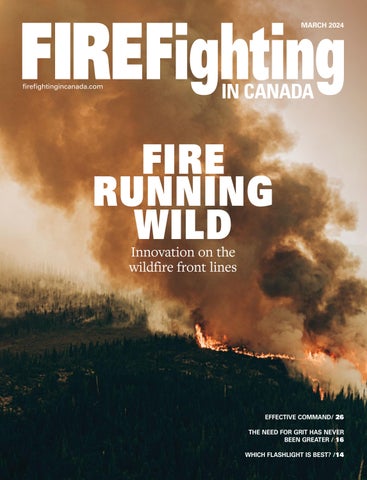
FIRE RUNNING WILD
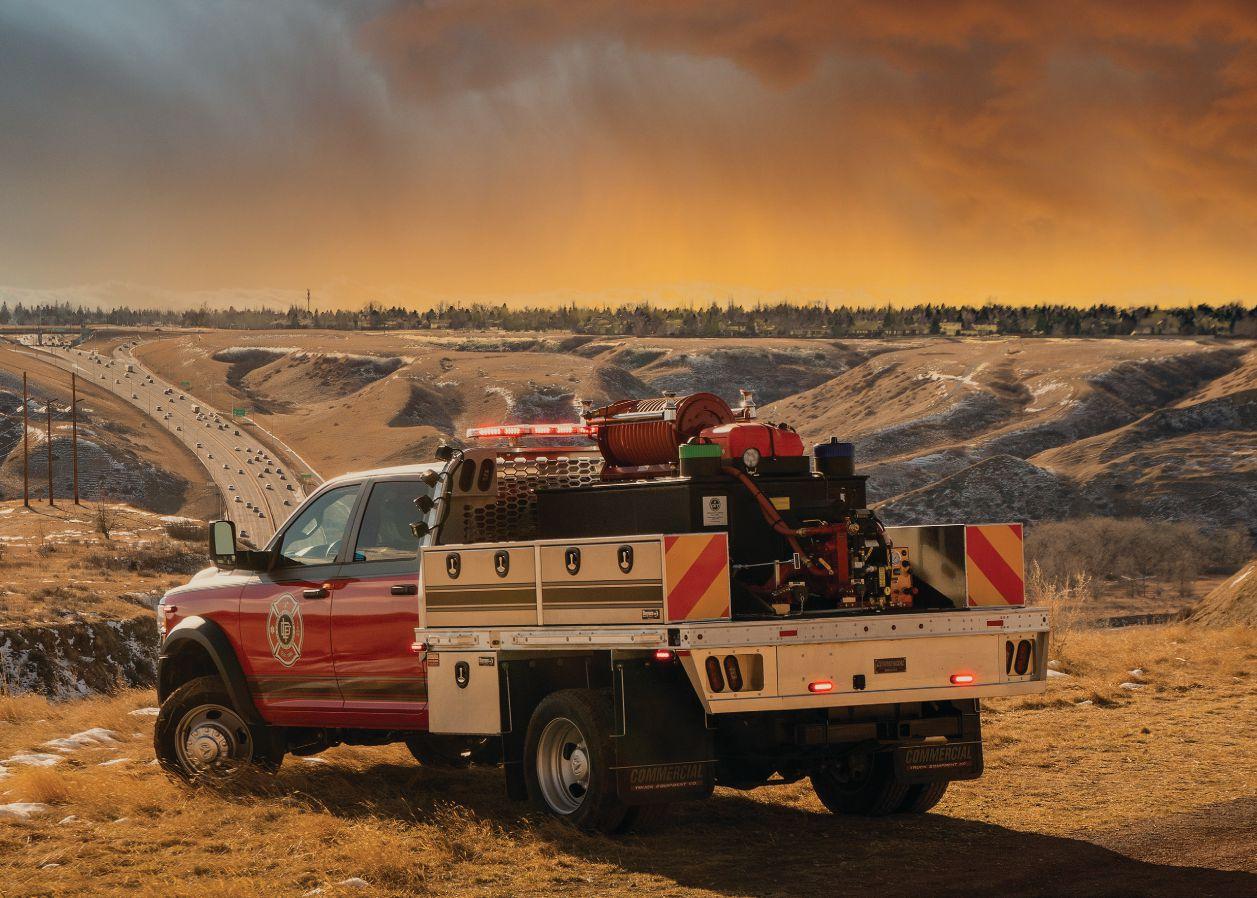
STOCK UNITS AVAILABLE FOR 2024 WILDFIRE SEASON
The FireLine Quick Attack series of vehicles, Commercial Emergency Equipment’s fully custom, in-house engineered and built Type 5 & 6 wildland apparatus have been deployed, tested, and validated in Canada’s most demanding wildland, WUI, and backcountry environments. With an exceptionally low cost of entry, 300 USG Type 6 and 400 USG Type 5 configurations, and mid-2024 deliveries available, FireLine Quick Attack vehicles are an unmatched value for Canadian-built and Canadian-supported wildland apparatus.
CLASSIFICATION NFPA 1900 Wildland Type 5&6 Compliant
PUMP CET/Honda 2.5” Wildland Pump - Pump and Roll Capable
REEL 150’ 1” Electric-Return Booster Reel
TANK/FOAM CET Poly, 300/400 USG - 10G Foam Cell, Scotty ATP Proportioning
LIGHTING Whelen CenCom Core/WeCanX, Dynamic Variable Intensity
CHASSIS Ford F-450 4x4 Crew Cab, RAM 4500 Crew Cab
BODY All-Aluminum, Flat Deck Style - Removable Skid for Seasonal Re-Tasking
COMPARTMENTS 47 or 79 cu. ft. All-Aluminum, Side Mounted and Underslung
PRO MODEL FEATURES 400USG Tank Size, Additional Compartments, Custom Centre Console, Rear Deck Hose Reel Location
ADDITIONAL OPTIONS AVAILABLE Super Single Conversion, Remote Bumper Monitor, Traffic Advisor, Scene Lighting, and more.
INSIDE
FEATURES
10 FIRE RUNNING WILD
Wildfires are changing in frequency, scope and intensity. What innovations and technology are driving the future of response?
By Laura Aiken
26 DEVELOPING OFFICERS EFFECTIVELY
How the UK’s Effective Command program’s foray into Ontario is helping departments better understand decision making and foster improved incident command.
By Laura Aiken
COLUMNS DEPARTMENTS
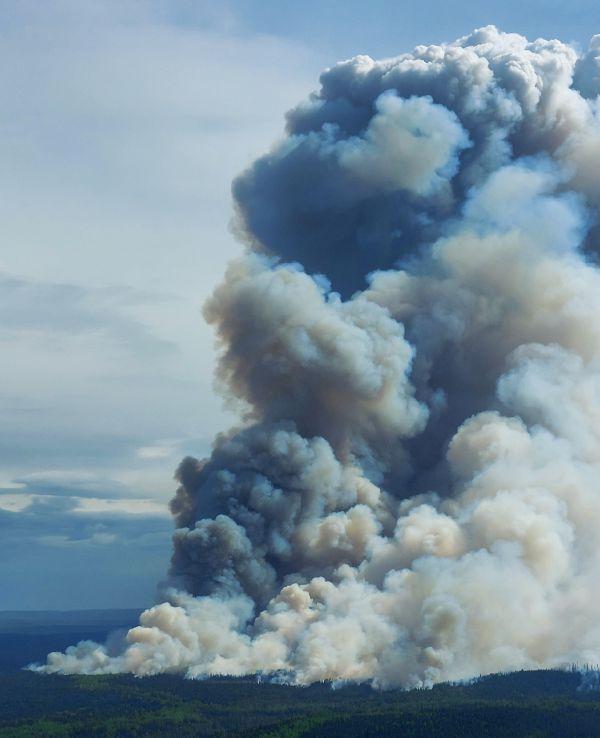

Will AI be the big game changer?
The human race has a long history of using technology to its advantage and demise. There is nothing homeo-sapiens-made without its dark side. We invented wheels, a crucial mechanism in our modernization; wheels some of us also use to run one another over in. We split atoms like the smarty-pants mammals we are… and look how that turned out. Rarely is the full scope of a technology’s impact recognized at its unfurling — only its potential and the business case drives the sale to society. We wouldn’t have technological progress without an element of willful blindness.
Artificial intelligence (AI) is the latest technology wearing a lacy veil of promise and peril. The potential for abuse is exponential in its ability to fool us and create illusion where we seek truth. For all it’s potential, I predict there will be danger and disaster beyond our predictive abilities. There always are. Social media seemed so innocuous to many at its onset, but its impacts are being recognized and studied more now. The New York Times
published a new investigation examining how childhood is being reshaped, for girls in particular, with some kids earning six figure incomes off monthly subscriptions to their images. An internal study at Meta (Facebook and Instagram’s parent company) found “that 500,000 child Instagram accounts had “inappropriate interactions every day”, court records show.”
Using social media as an example of utility alongside detriment, AI has this same capacity to cause harms, and its development is moving at the speed of money, not the deliberate pace of legislation and rational debate.
For the fire service, AI will drive the autonomous vehicles and complex data systems that can contribute to improved wildfire detection and response. AI will facilitate data sets to better public education and create sophisticated training opportunities. In the fight against wildfires, the ability to accurately predict and analyze the fire can be vastly improved by tapping the abilities of AI. Early warning systems
VOLUNTEER FIREFIGHTERS in Canada make up 89,000 personnel, down from 126,000 in 2016, reported the Canadian Association of Fire Chiefs.
THE 1ST ELECTRIC
fire truck, a Rosenbauer RTX, arrived in Vancouver in December 2023, making it the first city in the country to receive one.
RECOMMENDATIONS FOR IMPLEMENTING CHANGE
A recent report from the National Indigenous Fire Safety Council concluded that a risk-based strategy to prioritize installation of home and life safety systems – including smoke alarms, carbon monoxide alarms and residential sprinklers – in high-risk First Nations communities is needed.
of the Calgary Fire Department’s total 2023 annual call volume was made up of MEDICAL CALLS, which represent more than all other types of calls combined, reported the City of Calgary.
are the name of the game, and AI could be a game changer for wildfire response. Operating, of course, in concert with the bright minds and hard-working humans responding.
It’s unclear what the potential abuses of AI are in the fire sector. There are clear reasons to pursue its potential, and much to be had in the way of promises. Perhaps the peril will be in what illusions it can create about people, not in its ability to collect data and behave as an all-star executive assistant. There is an X factor to solve that only time can shed insight on, but there is always a benefit to theorizing what could go wrong, a skill the fire service has much expertise in, and would be wise to apply as AI drives technologies and innovations to the front door of your department, response and ultimately, your life.
LAURA AIKEN Editor laiken@annexbusinessmedia.com
Forest fire suppression costs over the last decade in Canada have ranged from about $800 million to $1.5 billion per year, reported Natural Resources Canada. The Fighting and Managing Wildfires in a Changing Climate program – Equipment Fund is expected to provide $256 million over five years to support equipment procurement.
47 %
55 % of residential structure fires in Hamilton, Ont. in 2023 happened in residences without operational smoke detectors, city data shows.



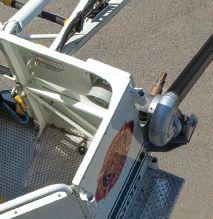
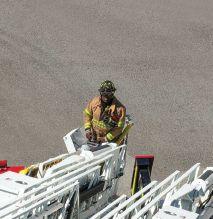
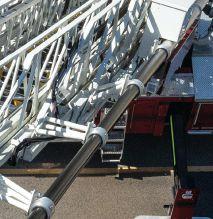

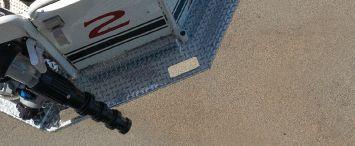






STATION TO STATION
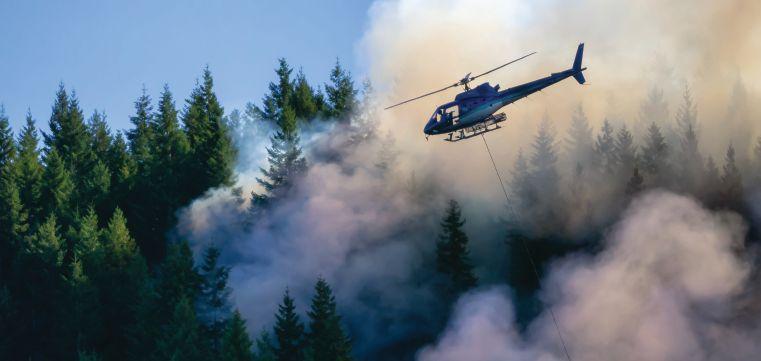
B.C. boosts investment in wildfire aviation fleet and equipment
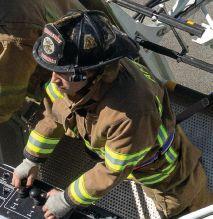
B.C. is upgrading and expanding its fire fighting aviation and ground equipment.
Nearly $16 million has been invested in pumps, fire camp equipment, safety gear, and medical and hygiene equipment to provide broader response capabilities.
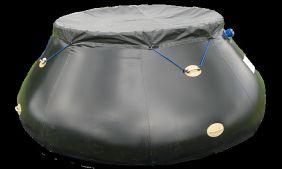
Additional investments have been made in two mass water-delivery systems, that can be used for fire suppression and flood operations. Upgrades are being made to fire fighting equipment and fire camp infrastructure.
This year, BC Wildfire Service will continue to upgrade its existing aviation fleet to include additional plane and helicopter agreements, with a focus on a diverse and a modern set of aircraft suited for B.C.’s vast and challenging terrain, the province said in a press release.
The agency will also continue to trial night-vision technology used by aviation crews to survey and support fire suppression during nighttime operations.
Existing aviation fleet includes the air tanker and skimmer groups, light to heavy lift helicopters, and parattack jumpships, located at more than 14 bases around the province.
Aviation and ground gear is getting a boost in the latest round of wildfire investment.
Ottawa approves converting volunteers to casual employees, new fines for false fire alarms
The city of Ottawa is converting rural firefighters’ employment status from volunteers to casual employees.
This will give them access to enhanced compensation, recognize their role as emergency responders, and help retain skilled rural firefighters to uphold response time standards, the city of Ottawa said in a press release.
As casual employees, rural firefighters will be eligible to receive pension and benefits through the Ontario Municipal Employees Retirement System, the Canada Pension Plan and Employment Insurance, as well as vacation pay.
The city also approved a fee for false fire alarms caused by equipment malfunction or negligence.
The fee will only apply at commercial, institutional, industrial or multiresidential properties, and it will not apply to alarms outside the control of the owner, such as those caused by accidents, weather or vandalism.
There will be no fee for the first false alarm, but the second one in a calendar year will cost $500, $1,000 for a third false fire alarm, and $1,500 for any subsequent false alarms.
The new rules start July 1.
FFIC hosts 5th annual virtual summit on strengthening volunteerism
Fire Fighting in Canada hosted its fifth annual virtual summit on Feb. 21 with the theme of recruitment, retention and succession.
In the opening session, Shaminda Perera, Volunteer Canada’s knowledge, practice and learning lead, discussed the state of volunteerism across the country, sharing data from a 2018 Statistics Canada survey on giving, volunteering and participating that showed declining volunteer numbers. Perera said the pandemic further contributed to the drop in volunteer numbers.
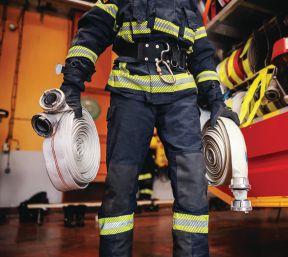
Specifically in the fire fighting sector, recent data collected for the Canadian Association of Fire Chiefs’ (CAFC) 2023 Great Canadian Fire Census estimates nearly 9,500 volunteer firefighters left the fire sector. Between 2016 and 2023, the number of volunteer firefighters dropped from 126,000 to 89,000.
“The pandemic gave an opportunity for organizations to really look at their existing volunteer engagement strategies and to revise and enhance it if it needs to be revised and enhanced,” Perera said, leading the conversation towards the topic of how fire departments in Canada can strengthen volunteer engagement by using the volunteer engagement cycle. Each of the four stages in the cycle
RECRUITMENT · RETENTION · SUCCESSION
— plan, engage, support, and recognize — offer opportunities for fire leaders to strategically approach how they engage with potential volunteers. Practical steps for volunteer management include having a strategic focus and a data-driven engagement approach that fosters a collective impact and designs meaningful experiences for new recruits is how fire departments can build credibility and drive impact.
North Frontenac Fire Chief Eric Korhonen shared in the second session how he is working to address the volunteer challenges he faces using community-based strategies. One of the things his department did in 2018 was change the way firefighters at different stations were interacting and the way they train together. Korhonen also worked with council to implement a tiered hourly wage system.
Since then, the department continues to build on those initial strategies. It also provides the mandatory level of certification and the opportunity for continuing education. In terms of retention, Korhonen said the focus is still on continuing education and hiring internally.
Rounding off the event, audience members watched a special Volunteer Vision edition of Fire Fighting in Canada: The Podcast with Volunteer Vision co-authors Ret. Fire Chief Tom DeSorcy and Fire Chief Vince MacKenzie, who discussed the state of the volunteer fire service, CAFC census data, how the volunteer fire service has changed over the years, and the need for more federal support. They also touched on the importance of fire associations and recruitment and retention.
Fire Fighting in Canada would like to thank gold sponsors Nederman and Vector Solutions, and bronze sponsor Air Technology Solutions, for their support of a timely conversation on volunteerism.
THE FIRE HALL BULLETIN
PROMOTIONS & APPOINTMENTS

DWIGHT SEYMOUR is Kelowna, B.C.’s new fire chief. He joined the department in 2021 as assistant chief of training and prevention. In 2022, he was promoted to deputy chief of operations.

ROB NICHOL is the new fire chief of the Saint John Fire Department. Nichol was hired in 1997 as a firefighter and was promoted to division chief of training and special operations in 2017. Two years later he was appointed deputy chief.

Fire Chief KENT READMAN is joining Loyalist Township in Ontario after serving as fire chief for the municipalities of Huron East and North Huron. Readman an adjunct instructor and evaluator for NFPA courses offered at training centres in Ontario and serves on the board of directors for the Ontario Association of Fire Chiefs.

LESLIE KENNY is the new interim fire chief for the Holyrood Fire Department in Newfoundland and Labrador. She started her career as a firefighter in 1999 and began volunteering for Holyrood in 2018.

MARK KRAHN has been promoted to deputy chief of Altona Rhineland Emergency Services in Manitoba. He has served in the fire service for more than 25 years and previously held the role of assistant chief.

The City of Oshawa in Ontario appointed KEN WHETHAM as its newest deputy fire chief of professional development, emergency management, and administrative support. He has more than 25 years of leadership and emergency services experience.

PHIL WEST is the new deputy chief of the St. Marys Fire Department in Ontario. West joined the department as a fire-
fighter in 1995, becoming a lieutenant in 2019 and a captain in 2022. He is the recipient of the 20-year Fire Services Exemplary Service Medal and the 25-year Ontario Fire Services Long Service Medal.
RETIREMENTS

Deputy Fire Chief KEVIN EDWARDS retired after serving on the St. Marys Fire Department in Ontario for 23 years. He joined the department as a firefighter in 2001. He was promoted to captain in 2014 and became deputy chief in 2022. Edwards is a recipient of the 20-year Fire Services Exemplary Service Medal.

Saint John Fire Chief KEVIN CLIFFORD is retiring after 44 years of service. He is a third-generation firefighter whose grandfather was a fire chief and whose father spent his fire fighting career on Saint John’s east side. He was hired as a firefighter at the age of 19 and became the city’s chief in 2012.

Fire Chief FRED STEPHENSON retired after nearly 40 years of service with Loyalist Township Emergency Services in Ontario. He began as a volunteer firefighter in 1986 and accepted a full-time role in 1995. He was promoted to deputy chief in 2012. He became the fire chief in 2016.

Deputy Chief BARRY FRIESEN is retiring after more than 30 years with Altona Rhineland Emergency Services in Manitoba. He started his career as a firefighter in 1991.
LAST ALARM

Ret. Assistant Fire Chief WAYNE ASHTON died on Jan. 17. He served with the Espanola Fire Department in Ontario for 50 years as a volunteer, retiring in 2022. Ashton was a mentor in the fire service and a guard for the Ontario Provincial Police, a private investigator, a process server and a grocery store manager. He loved the outdoors, specifically hunting and fishing.
STATION TO STATION
CLOCKWISE:
Belleville Fire & Emergency Services, Telkwa Fire Rescue Department, Hanna Fire Department, Norwich Fire Service, Mill Bay Fire Department, La Ronge Regional Fire Department
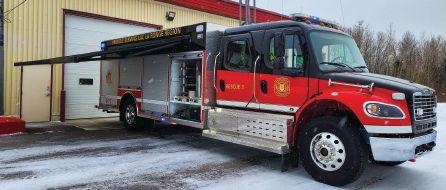
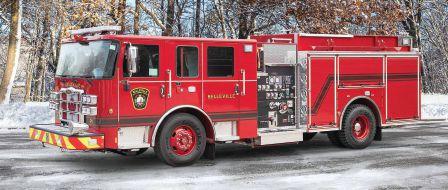
1. BELLEVILLE FIRE & EMERGENCY SERVICES
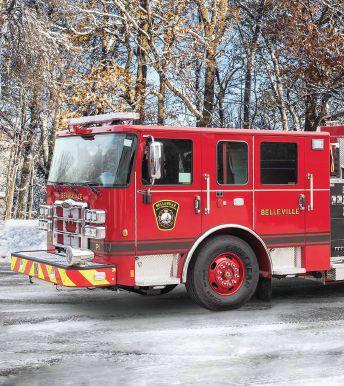
Ontario’s Belleville Fire & Emergency Services took delivery of a pumper from Commercial Emergency Equipment. Manufactured on a Pierce Enforcer chassis with a Cummins L9 450 HP engine and an Allison 3000 EVS transmission, the pumper features a Waterous CS 1250 GPM pump, and an EMS Compartment in the cab. The six-seater pumper is equipped with a 19-inch extended front bumper with a trashline and UPF Plastics 750 G tank.
2.
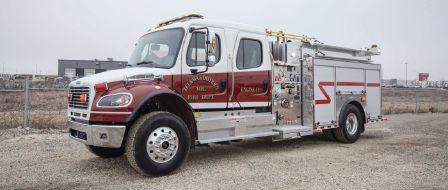
TELKWA FIRE RESCUE DEPARTMENT
Telkwa Fire Rescue Department in British Columbia took delivery of an MXV pumper from Fort Garry Fire Trucks. Manufactured on a Freightliner chassis, this pumper is equipped with a Waterous CX 1250 GPM midship pump, Zico hydraulic ladder rack, FoamPro 1600 class A foam injection system, side operator control panel, storage for five SCBA bottles, Whelen warning light package, Amdor roll-up compartment doors, and a CoPoly 1000 IG tank.
1 2 3 4
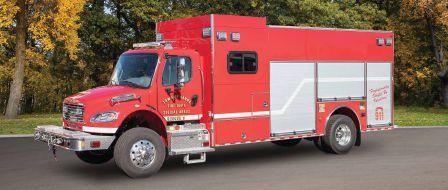
3. LA RONGE REGIONAL FIRE DEPARTMENT
La Ronge Regional Fire Department in Saskatchewan took delivery of a Rosenbauer rescue from Rocky Mountain Phoenix. Manufactured on a Freightliner chassis with a Cummins L9 360 HP engine and an Allison 3000 EVS transmission, this rescue is equipped with transverse compartments, Command light tower, FireTech scene lighting package, Whelen warning lighting package, winch receivers, roof coffin compartments, a traffic adviser, cascade system and a 50 G fuel tank.
4.
HANNA FIRE DEPARTMENT
Alberta’s Hanna Fire Department in took delivery of a walk-in rescue from Commercial Emergency Equipment. Manufactured on a Freightliner chassis with a Cummins L9 360 HP engine and an Allison 3000 EVS transmission, the truck features a Pierce Encore body, hard-wired electrical system, and an Onan PTO-driven 25 kW generator.
5.
MILL BAY FIRE DEPARTMENT
Mill Bay Fire Department in
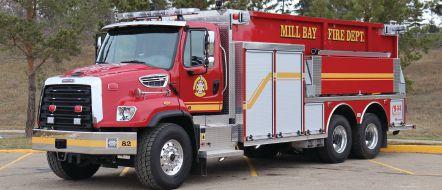
British Columbia took delivery of a Rosenbauer tanker from Rocky Mountain Phoenix. Manufactured on a Freightliner chassis with a Cummins X12 500 HP engine and an Allison 4500 EVS transmission, this tanker features a Waterous CXVK 1250 GPM PTO driven fire pump, antilock brake system, enhanced stability control, cruise control, pump and roll capability, water tank level lights, Federal Signal warning lights package, and a 3000 IG tank.
6.
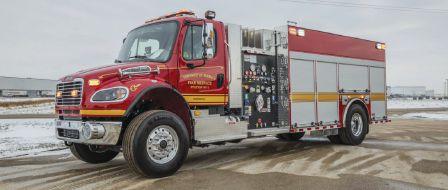
NORWICH FIRE SERVICE
Norwich Fire Service in Ontario took delivery of a pumper tanker from Fort Garry Fire Trucks. Manufactured on a Freightliner chassis with a Cummins L9 360 HP engine and an Allison 3000 EVS transmission, this truck comes with a Waterous CXPA 1250 GPM PTO-driven pump, FoamPro 2001 class A system, Zico hydraulic portable tank rack with 1750 IG porta-tank, backup camera, Newton stainless steel telescoping dump chute with 180° swivel, storage for four SCBA bottles, and a Whelen warning light package.

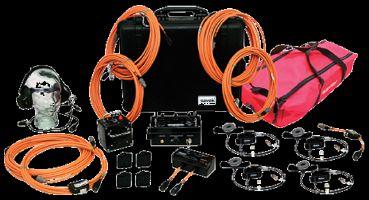
Savox HardlineRescueKit 1 with Power Talk Box is ourbest selling technical rescue confinedspacekit Itis designed for simultaneous, two-way voicecommunications between the rescuers and the victim Rescuers use it where traditional radios fail or when hands-free, securedcommunicationsare required
Attendants communicate with entrantsand monitor their safety The backup team canalso listen tothe entrants’ rescue and be ready to relieve them
Thepower talk box is a portable intercom system that is droppeddown the holebefore entry to determine a victim’scondition
The whole systemandaccessoriesare waterproof The rugged molded fiberglass enclosures,allexternalknobs,andsignalcables with their military connectorsare impervious to a wide range of acids,alkalis, fuels, and other corrosivechemicals including Skydrol All of the above coupled with a highest level of intrinsic safeapproval is why youcan trustthem with your life

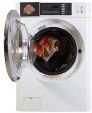
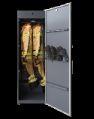

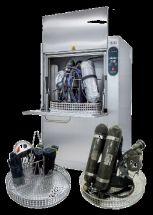
The Solo SCBA Decon/Washing machine was designed and built for one purpose only…to protect Fire Fighters from Cancer causing agents found in the Smoke and residue left on their SCBAs. As an added bonus it can clean Gloves, Boots and Helmets. In addition, it substantially lowers the time spent decontaminating firefighter equipment. The SOLO is the only SCBA decon machine that meets both NFPA and CSA standards.

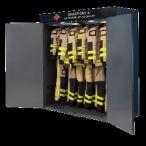
NFPA approved Soft install Gear Extractors and Driers


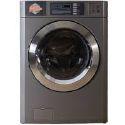

ü REDUCED HEALTH RISK
ü SAVES TIME 2/PKS IN 8 MIN ü EASY TO USE
Qualified by MSA, SCOTT, DRAEGER & INTERSPIRO for cleaning their SCBAs.




WASH/DECON TWO SCBAs

In 8 minutes. Also cleans, boots, gloves Aand helmets.



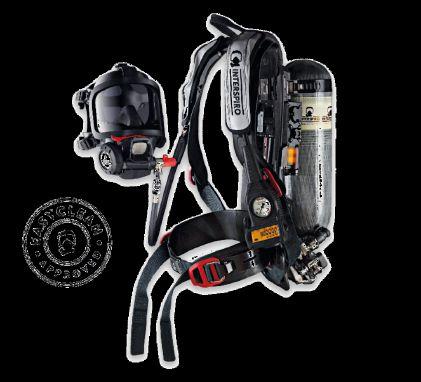
CANADIAN SAFETY EQUIPMENT IS PROUD TO BE A DISTRIBUTOR FOR THE INTERSPIRO RESPIRATORY PROTECTION LINE. THEIR STATE OF THE ART S9 INCURVE IS ONE OF THE MOST COMFORTABLE SCBAs YOU WILL EVER WEAR.
GIVE US A CALL AT 0182 OR EMAIL US AT INFO@CDNSAFETY. COM






- HOSE RACKS & DRIERS BOTTLE STORAGE GEAR EXTRACTORS & DRIERS


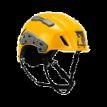
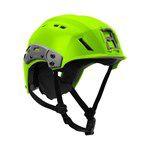
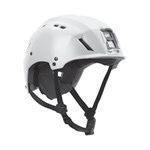
SEARCH ANDRESCUE TECHNICIANSTURNTOTEAM WENDY FORFULLY INTEGRATED HEADBORNE SYSTEMS ALLOWING THEMTO EFFICIENTLY AND EFFECTIVELY MOVE ANDCOMMUNICATE
•First purpose-built search and rescue helmet to provide accessory mounting capabilities while meeting key industrial and mountaineering performance standards.
•Optimized for use with night vision devices with an integrated machined aluminum NVG shroud insert*.
•Includes a 4-point CAM FIT™ Retention System with a chin cup for optimal stability.
•BOA® Fit System dials in precise fit adjustment while providing single-handed quick release.
•Comes standard with two vent covers to prevent objects and debris from entering the crown vents of the helmet.
No company has a richer history in respiratory protection than Interspiro. Their innovations have become industry standards, time and time again.
AVAILABLE IN SINGLE OR THREE
By Laura Aiken
FIRE ON THE RUN
How technology and innovation are changing wildfire response
Who doesn’t love a good record-breaker?
Basketball star LeBron James recently became the first NBA player to hit 40,000 points, near simultaneous with NCAA star Caitlin Clark breaking the points record, male or female, for college basketball. These are the best kind of broken records. Rarely repeated and very inspiring. We need these.
But not all records are made to be broken. We could do without the ones wildfires and climate are absolutely smashing.
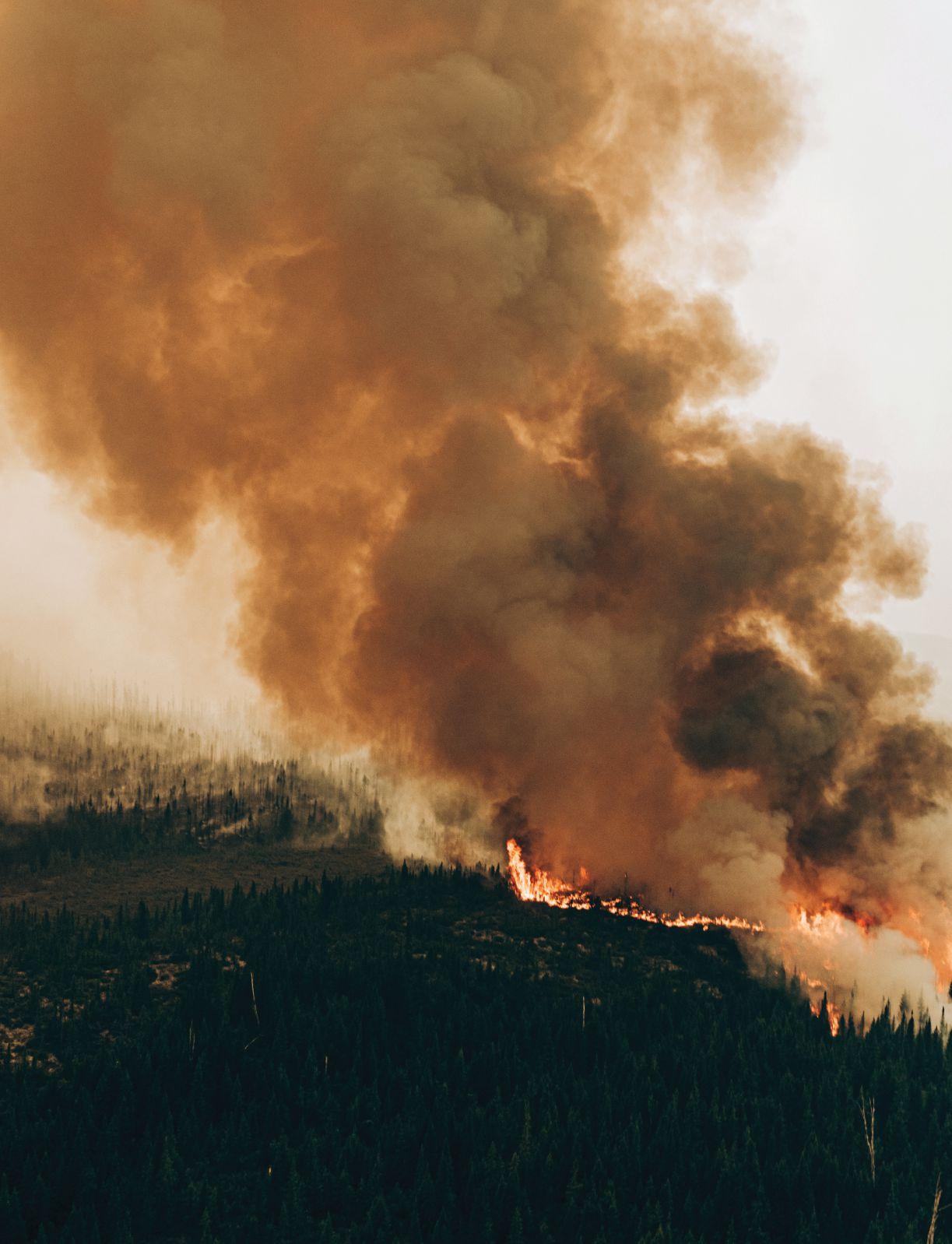
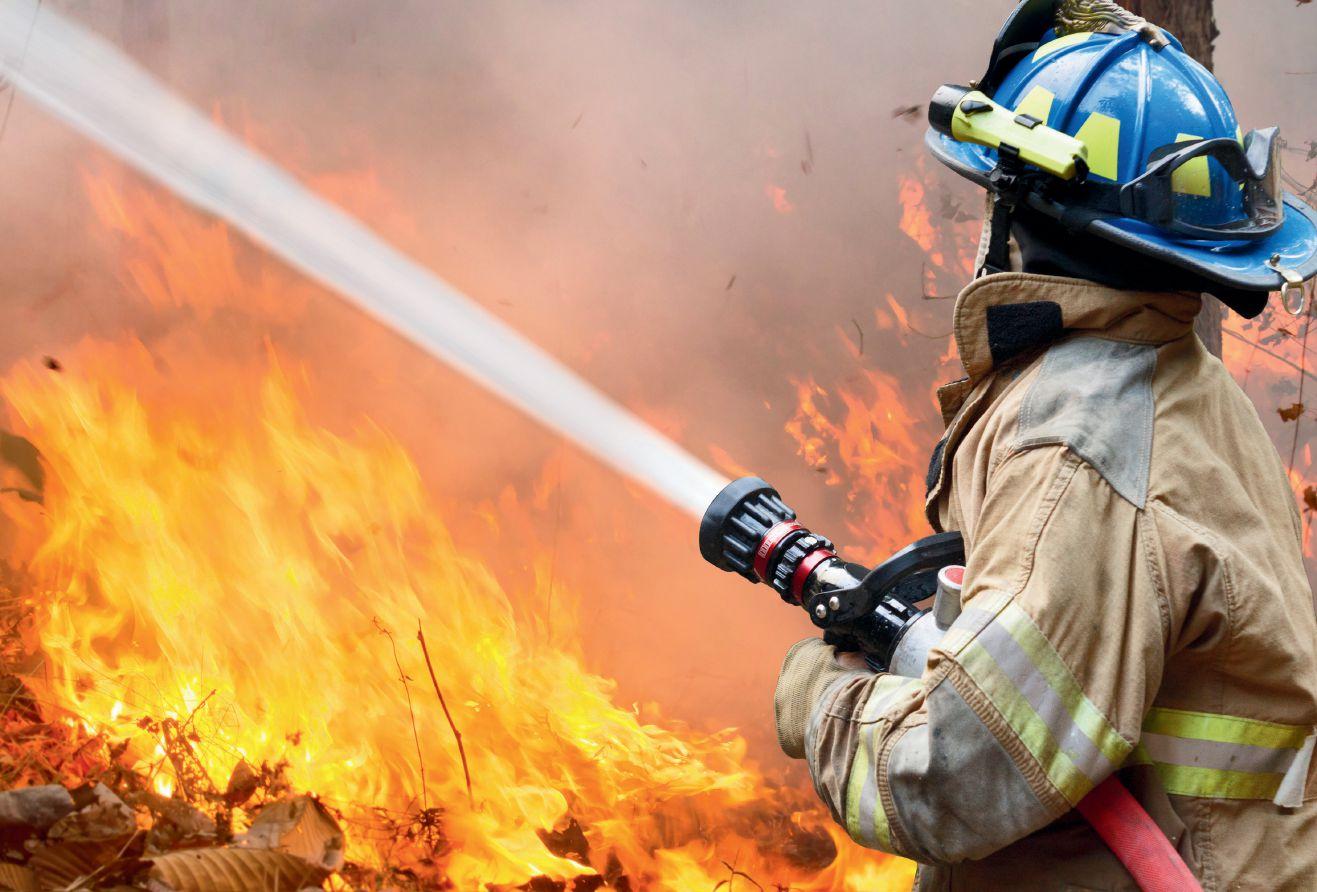
In Canada, about 2.5 million hectares burn during an average wildfire season. Around 18.5 million scorched in 2023. This totality about the size of Greece doubled the record set in 1989, reported Natural Resources Canada. Just from June 1 to 25, more land was lit up in southern Quebec than the cumulative hectares burned over the last 20 years. Canada also hit a milestone by having its warmest May to July in over 80 years, “breaking previous national temperature records for the two-month period by 0.8°C,” reported the federal government. Quebec lost nearly 4.5 million hectares. British Columbia set records with its 2.84 million hectares lost and the province was under a state of emergency for 28 days. Ontario’s 441,000 hectares nearly tripled the 10-year average. Alberta lost over two million hectares and declared a state of emergency by May 6. Nova Scotia battled the burning of over 25,000 hectares, a record breaker on the eastern seaboard. The Northwest Territories experienced their worst season on record, one that forced almost 70 per cent of their population to evacuate over the summer. All across Canada; wildfires reached for the record-breaking stars. But these are numbers. Things we can
BELOW In Canada, about 2.5 million hectares burn during an average wildfire season. Around 18.5 million scorched in 2023.
quantify, discuss fairly abstractly. The emotional toll of fire fighting, evacuations, lost homes, lives disrupted and tragically fallen firefighters is unquantifiable.
RESOURCES AND THE ROLE OF TECHNOLOGY
Before examining how technology is impacting the frontlines and forecasting, let’s highlight what kind of people-power was pulled in for 2023. In Quebec, The Society for the Protection of Forests against Fire (SOPFEU) tallied 2,360 additional bodies battling the fires in June and July; exemplifying globalization in action: 343 from France, 500 from the U.S., 140 from Portugal, 140 from South Korea, 100 from Spain and a boosted domestic effort of about 1,000 troops from the Canadian Armed Forces and 140 from other agencies.
The Canadian Interagency Forest Fire Centre Inc. (CIFFC) spent 120 consecutive days at the highest National Preparedness Level, NPL5, reported the International Association of Wildland Fire, who summarized Canada’s partnerships beyond the U.S, Australia, New Zealand, South Africa, Mexico and Costa Rica agreements that were in place before 2023. In the summer of 2023 Natural Resources Canada negotiated an arrangement with Portugal and the CIFFC created interim agreements with Chile, France, Spain, South Korea and Brazil. Dated July 26, the CIFFC’s personnel mobilized graph, which shows the cumulative number of bodies categorized by initial attack firefighters,
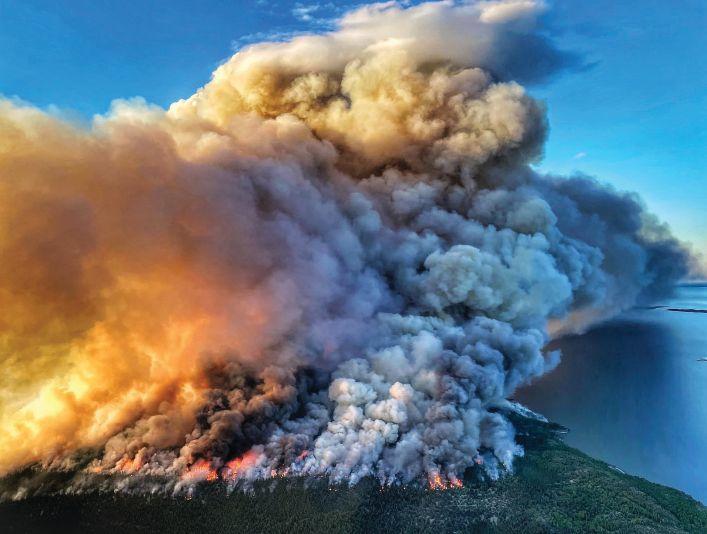
PHOTO: TYLER PELKE
sustained action firefighters and overhead positions, “mobilized to date for the current year vs. total number of personnel mobilized annually since 1982,” shows highs in the low 3000s until you get to 2023 and the number hits 5,185.
People power is the most vital resource on the wildfire front. Millions are being poured into technology, but innovation is also to be seen in boots on the ground.
Brian Hutchinson, who at the time of his interview with Fire Fighting in Canada was fire chief for the District of North Vancouver Fire Rescue Services but moved on March 1 to start a new position with BC Wildfire Service as the superintendent of provincial operations – fire services, shared an observation on task forces happening in his province.
“One of the things that I’ve really noticed — one of the things that’s actually really innovative and it has really only started to pick up a little bit — is some of the regions in the province have started to pre-identify and
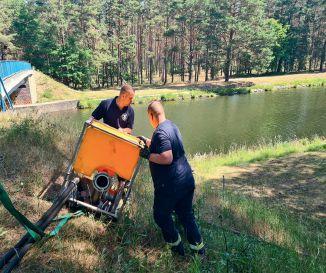

Pre-identified task forces are cropping up in B.C. that aid in efficient deployment.
pre-assemble response-based task forces, particularly in some of the areas where you have a large number of communities spread out over a wide area.”
This means that there if there is an incident in the region, there is a pre-identified task force comprised of the estimated need for engines and tenders that saves calling around to the nieghbouring departments to see what’s available. Instead, the request can be put in to “dispatch task force 1,” and that task force is assembled and deployed.
“I think we’re going to see more and more of that,” said Hutchinson. “That’s certainly a model that that is used throughout California in terms of how they call up and deploy resources. But what is really cool about this, is that it’s the regional areas that are doing this themselves, that are recognizing the risk, recognizing the need, and they’re being able to deploy those task forces both in support of each other and in support of the provincial efforts.”
When there is a pre-assembled task force, it is likely they know each and train together, a huge operational benefit and great resource for BC Wildfire when they are reaching out…and fortunately, people are being aided by some pretty cool innovations.”
One such cool innovation comes in the form of multipurpose engines that address the wildland urban interface. Hutchinson shared his sentiments on the unique capabilities of Safetek Profire’s Wildland 3, which North Vancouver acquired. During his tenure as the fire chief
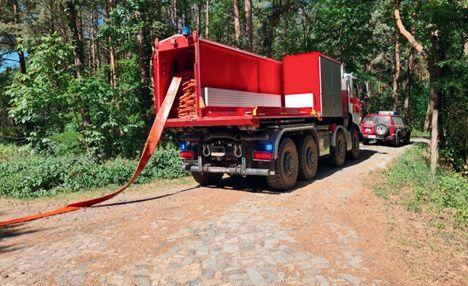


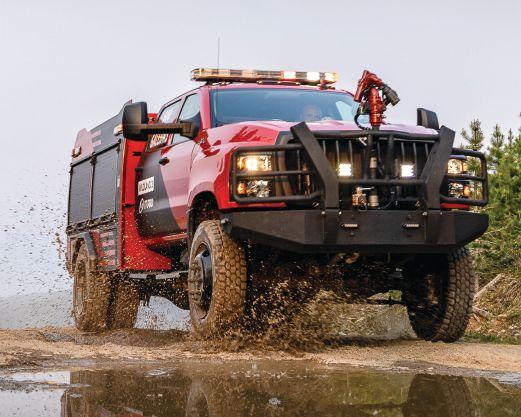
in North Vancouver, Hutchinson was looking for a Type 3 capacity — one that holds a large volume of water for organic material or things like a car or home that catches fire when the wildfire creeps. North Vancouver’s terroir involves a lot of steep terrain and narrow windy roads that limit maneuverability. There are areas in the jurisdiction with limited or no fire hydrant access. The Wildland 3 caught his eye as a hybrid of capacities by meeting all the standards of a traditional Type 3 engine while offering the maneuverability and lightness that a traditional Type 6 brings. “It was really innovative for us in blending all those pieces together.”
The Wildland 3 can be deployed as a first-in unit for a structure fire, as it has both the SCBA and large tank of water to get fire fighting operations underway.
BME Fire Trucks, represented in Canada by Commercial Emergency Equipment, offers a WUI engine in the Bighorn, whose redesign will be on display at FDIC. Matt Stocker, national sales manager for BME, shared details. The engine offers versatility as both a structural and wildland response vehicle with a full complement of ladders, a 1000 to 1500 GPM mid-ship pump, 750 G tank with a 1000 G tank coming soon, options for a single or two stage pump, deck gun or front bumper monitor options, foam system, 4-wheel drive, and aluminum body with tubular construction.
Rosenbauer has a WUI pumper on the market in the Timberwolf that meets the requirements of a Type 1 and a Type 3 with a 1000 GPM multi-stage pump.
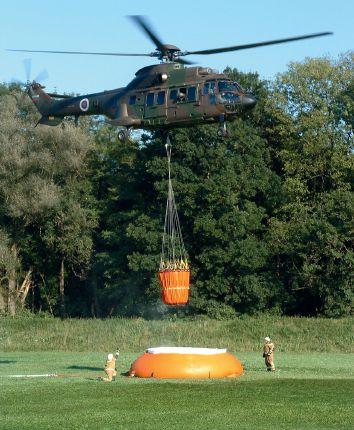
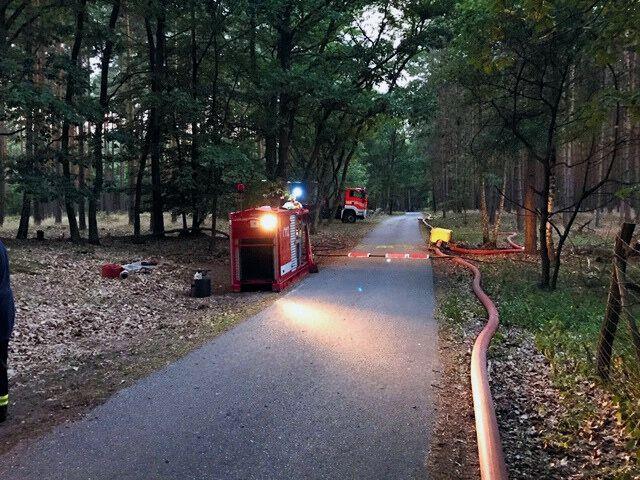
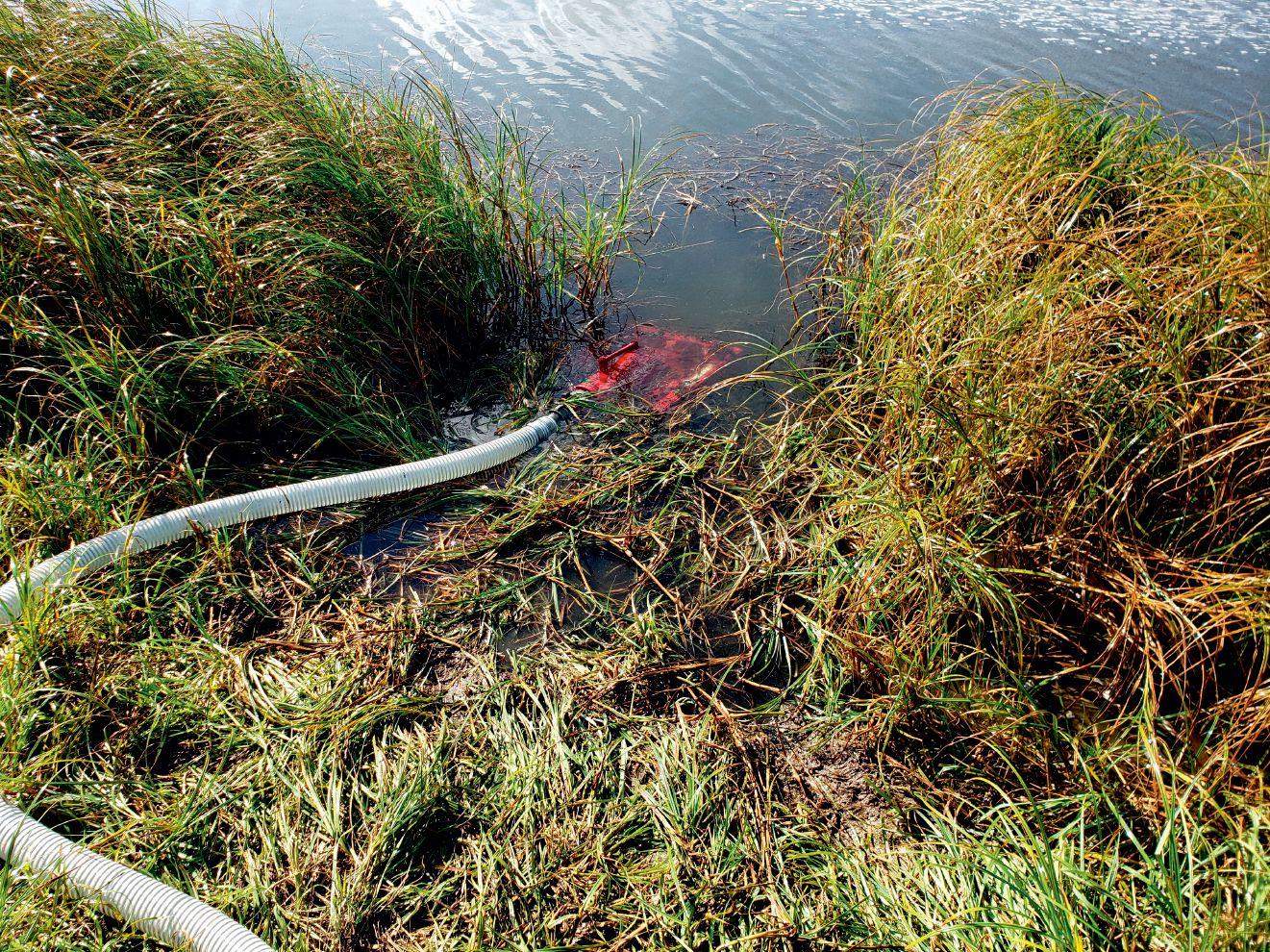
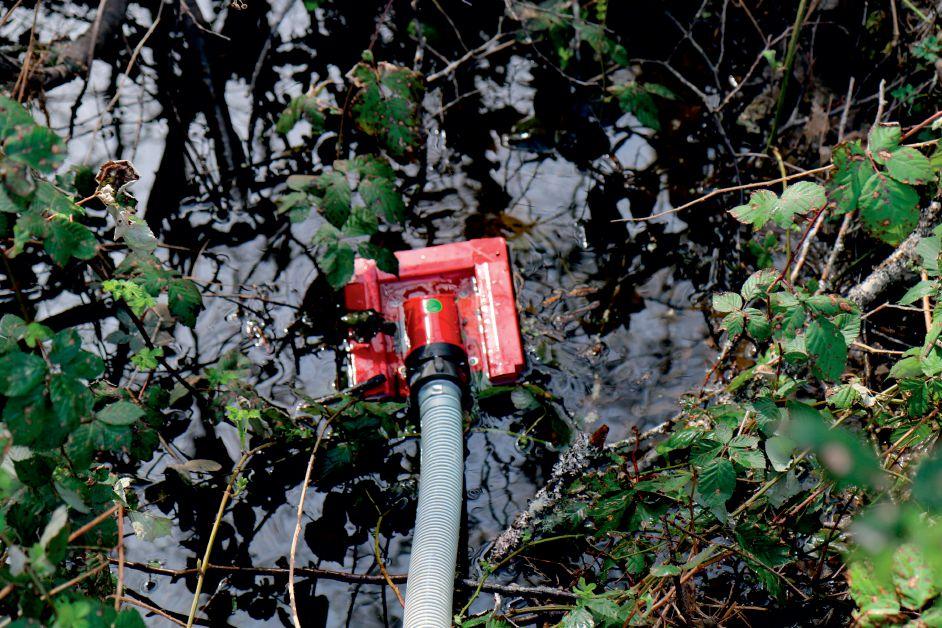
Fire engine innovations are rising to meet demands for versatility, and pump technology is evolving to address the need to tap and move large amounts of water. Hutchinson noticed the focus on moving mass water picking up in 2021 in B.C. with the recognition of how water supply could be negatively impacted via wildland or post-disaster setting. The North Vancouver department invested in two HydroSub units from Hytrans Systems. These units are powerful mobile pump systems to harness the supply of water in rivers, lakes and oceans. The hydraulically driven submersible pump is designed to provide quick access to open water, even if it is over a kilometre away, and without losing steam as it pumps over long distances.
Gord Parker, structure protection specialist with BC Wildfire Service, observed that these systems are becoming a key component of response in light of the recognition that the domestic water system is simply not always robust enough. And you really don’t want to run out of water in a WUI environment.
“We want to keep things foolproof,” said Parker.
ABOVE The standards of a Type 3 in a redesigned Type 6 form – multipurpose WUI vehicles like the Wildland 3 are attracting attention for their hybrid versatility.
The province has Trident pump systems, said Parker, which move about 750 gallons a minute with the power to go around a mile from point A to point B.
“Large volume is also about ground storage tanks,” said Parker. “We are constantly looking at ways of moving and storing water.” Tanks systems are becoming more prominent. There is also investigation occurring to verify if less water can be used and when a sprinkler system can be as effective.
Hutchinson said he has seen structure protection units grow in prominence for urban departments. These are trailers roughly 20 feet long and equipped with enough sprinklers, pumps and bladders to do sprinkler protection for about 35 homes as a defense mechanism when you are predicting the fire is going to impact the community. Set up the sprinklers about a half hour or hour before the fire is expected to begin its impact. This creates a humidity bubble, and when the fire is in the trees or moving forward quickly, it pushes against this humidity bubble, and the humidity bubble will push the fire to the ground where it’s then easier to manage, as well as casts less embers, Hutchinson explained.
And, of course, the foreseeable frontier in wildfire operations includes intelligence tech. When queried as to what else he sees on the horizon, Parker noted drones for tracking and unmanned aerial autonomous vehicles that can drop retardants. Early detection sensors, like those made by the German company Dryad Networks, were trialled by Cal Fire last year. Dryad developed a solar powered gas sensor designed to “smell” a fire before it erupts. These ultra-early detection systems use long-range wide area networks to communicate with a satellite and the 4G LTE connection built into it.
It’s all pretty slick and impressive gadgetry, but no one innovation or technique saves the day. The continued development of the FireSmart program in Canada is critical to wildfire preparedness. Prescriptive and Indigenous cultural burning are both practices Parker thinks we’ll see more of.
No one piece of technology or innovation will work magic on our new reality of hotter, faster, more intense and frequent wildfires, that by all accounts seem very likely to continue. The magic is in the fire service that works together to harness them.
BACK TO BASICS
By Mark van der Feyst
Mark van der Feyst has been in the fire service since 1999 and is currently a firefighter with the FGFD. Contact him at Mark@ FireStarTraining.com.
Which flashlight is best?
Which flashlight is the best one to carry and use? This is the question that many firefighters ask and have varying opinions about – some good opinions and some not-so-good. Regardless of where you stand and which one you want to use, every firefighter needs to carry at least one flashlight, if not two of them. That is my opinion, and I will explain why and which ones I recommend.
The first type of flashlight that is available is pictured in photo 1. This is a helmet mounted type of light. It is designed to be small and compact, but with a powerful beam of light. There are various versions of these types of helmet lights, some are a little bigger in length, some are designed to sit above the helmet brim, some sit well below the brim, some are going to be mounted on the front of the helmet wrapped around and below the helmet leather front.
The lights that are mounted on the sides, above or below the brim are a target for entanglements. It does not take much to entangle a firefighter in a residential structure, and these little devices are prime for getting caught. Even though they are not a permanent fixture of the helmet, it will still create a snag hazard and cause the firefighter undue stress.
These little lights are going to be light in weight, but they will still create an unbalance in the weight distribution of the helmet. The ones that are mounted on the front with the battery packs in the rear add more weight overall to the helmet. Another drawback to these types of lights is the position the lights are in – right at eye level. Who enjoys getting high beams in their eyes when someone is speaking to you with this light turned on? They blind people when speaking
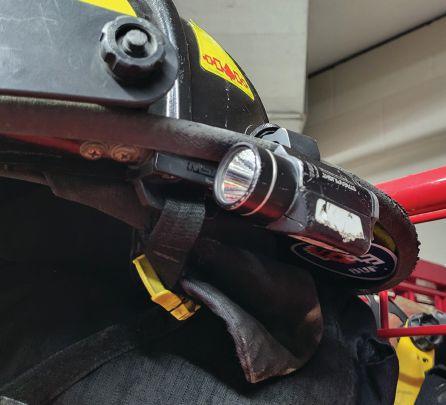
Photo 1
A helmet light designed to be small and compact, but with a powerful beam of light.
Photo 2
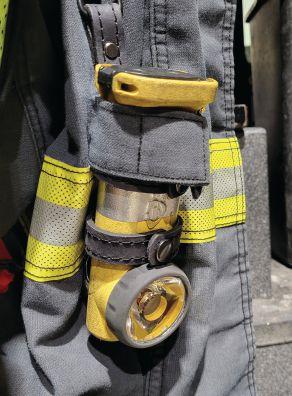
A traditional rightangle flashlight positioned upside down to offer a better advantage of being seen.
Photo 3
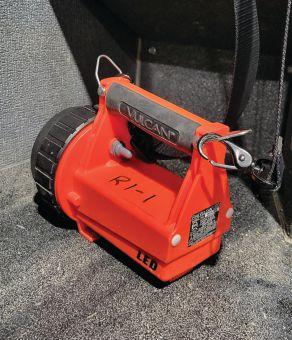
A box light is a traditional flashlight that is designed primarily for searching.
to them. Seeing as they are eye level, when working in a zero or limited visibility environment, if you are looking down at the ground, the light is only going to illuminate the area where your eyes are looking – which is not going to be that far. In essence, these lights are not that beneficial to the firefighter.
The second type is pictured in photo 2. This type of light is a traditional right-angle flashlight. In the photo, the flashlight is positioned upside down to offer the firefighter a better advantage of being seen, to use the beam of light to aim low on the ground in front of the firefighter and reduce the position of where it sits on the front of the jacket for better comfort. The light does not have to be positioned like this and can be positioned upright if desired.
This type of flashlight is considered to be a personal light designed for personal safety and alerting others for help. This type of flashlight is not considered a search flashlight, just like the first helmet light. When a firefighter finds themselves in trouble, such as when they are lost, trapped, or injured, and they need to call for help, this type of flashlight can be used to summon help. It is bright enough and big enough to be noticed by others and the battery run time will be longer than that of a helmet light. Due to the location of the light on the jacket, it is easier for the firefighter to grab and use when calling for help.
The right-angle flashlight can be used for searching but it is limited in mobility as it is attached to the front of the jacket. It has a limited range of motion with its positioning. The one type of flashlight that every firefighter needs to carry is a right-angled flashlight.
which make them brighter, and also lithium-ion battery powered which makes them lighter to carry. Some firefighters will attach the box light to a ladder belt worn around the waist of the firefighter, with others using the shoulder strap and others clipping it right to the SCBA waist belt. Regardless, it is located low on the firefighter where it is needed and
will not blind you when speaking to other people.
So, which flashlight is the best to use? it is going to be the box light coupled with the right-angled flashlight. These two lights will serve the firefighter’s best interest in their survival, and also for the occupant’s survival to be located and rescued.
The third type is pictured in photo 3. This type of light is a box light. The box light is a traditional flashlight and is designed primarily for searching. The light can be carried over the shoulder on the outside of the jacket and under the SCBA, resting the flashlight on the side of the hip. It can be either on the left or right side of the hip depending upon the preference of the firefighter.
The box light is large enough to cast a bright beam in the environment of the search. The searching firefighter can maneuver the flashlight to any position they need it to illuminate the area of the search without impeding their progress or not being able to reach it due to its location – tucked away high on the coat like the right-angled flashlight.
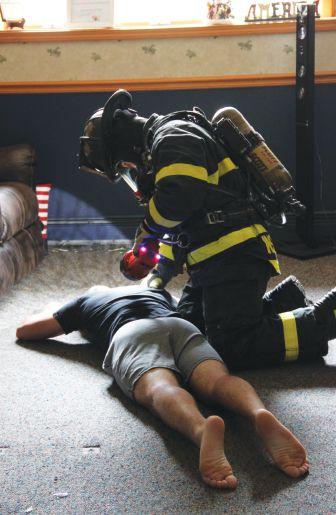
In photo 4, an example of the box light is shown in terms of how it can be used to locate, confirm, and check for other occupants. The firefighter can easily locate the box light, move it around as needed to illuminate the area around and underneath the occupant. The box light is truly a search light.
The box light comes in a variety of sizes and styles. Now, most are LED models
Photo 4
An example of how the box light can be used to locate, confirm, and check for other occupants.
LEADERSHIP FORUM
By Chris Harrow, Director of Fire Services, Town of Minto and Township of Wellington North
The need for grit has never been greater
Perseverance is defined in the Webster dictionary as the “continued effort to do or achieve something despite difficulties, failure, or opposition.” This term has become vital to the success of any leader in the world we live in, which can be extremely stressful and taxing on an individual trying to do the right thing, once one is able to find out what the right thing is.
Persevere through the noise to push the right change to the finish line.
With the prevalence of fake news and many different beliefs amongst peers and friends, it can be extremely difficult to figure out what the right thing is. We have never been so divided as a society on a plethora of issues and ideals. The purpose of the article is not to begin a moral debate, but to shed light on how difficult it is becoming for leaders to stay the course and persevere through work that is changing the way we do things in the fire service.
Current experience shows us we are working in a society defaulting to a negative opinion when confronted with change or different methods of thinking. The backlash leaders are facing is more severe than it normally was in the past. All of this is requiring leaders to grow even “thicker” skin.
In recent conversations with many peers, hesitancy or flat-out refusal to change is not occurring in silos. The trust they have had as leaders in the past is not at the same level currently in the industry they work in. More is required to convince co-workers that the proposed change is good for the
organization and even necessary to survive moving forward. Leaders must continually persevere to implement change they know is good and necessary.
Routine decisions that are not so simple anymore can add new stress to a leader by lengthening their day and the work needed to be completed for normal day-to-day activities. All of this adds to the backlog of work needed to be completed with even less time available. Frustration can easily creep in and hamper your ability to persevere through adversity. Leaders need to keep striving for what is best for their organizations. Nothing satisfies naysayers more than seeing a process slow down or even forgotten about.
Social media makes it easier than ever to be able to disagree with an opinion. It’s simple to quickly type a negative message or a disagreement in social media without much recourse. It is also easy to find information that backs up your opinion no matter how far-fetched it may be. All of this adds to the hurdles a leader must jump through to achieve the outcome they are looking for. It also tests a leader’s fortitude to stick to their opinion and know what they are trying to accomplish is the right thing to do. Persevere through the noise to push the right change to the finish line.
Many techniques are available to help a leader drown out the noise and continue to persevere through the negativity. Meditation, breathing techniques or other calming methods to help clear
Chris Harrow is the director of fire services for the Town of Minto and Township of Wellington North in Ontario. He can be reached at c.harrow@mintofiredept.on.ca.
your mind to assist in pushing on. There are other simpler techniques like perspective. Looking at a situation and convincing yourself that there are many other people in worse situations or comparing it to the reality that you have your health and at the end of the day, it is only work. It will always be there tomorrow and you can continue to deal with the situation then.
Whatever works for you, find the technique that helps you persevere. I try all the time to find perspective and convince myself it is only a job and at the end of the day, I still get to go home to a fantastic family. Take some time and allow yourself an opportunity to gain that perspective you need in your life so you can be at your best as often as possible. The one known is that you are going to face adversity each day. It seems it is much easier to complain than to throw a compliment the way of those you work with.
The current era is the perfect storm. Fire departments, because of the significant increases in costs for equipment, trucks and all else Fire, is requiring its leaders to change the way things are done. Changes to services provided, and altering equipment or trucks purchased all are necessary to manage the budget money available. Couple this with how easy it is for co-workers to disagree or erect roadblocks when that change is proposed, and being a leader has never been harder.
Persevering through the adversity is important for leaders because we, as leaders, know where we have to go and what is needed for our industry to thrive. There is nothing more exciting and rewarding then seeing the success of a project or a group you work with. Remember that feeling and have those around you remember what it feels like to accomplish their goals. Eventually surrounding yourself with enough people who push to persevere and believe in your abilities will push past those who choose to not believe. You will earn your well-deserved stripes for accomplishing what you believe in.

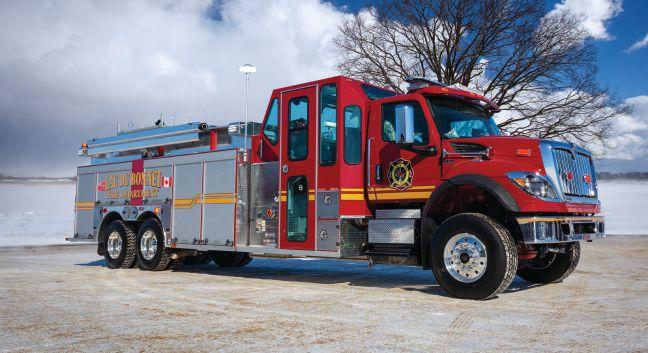
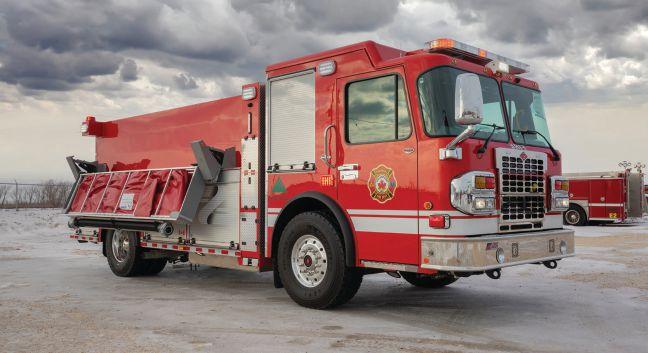
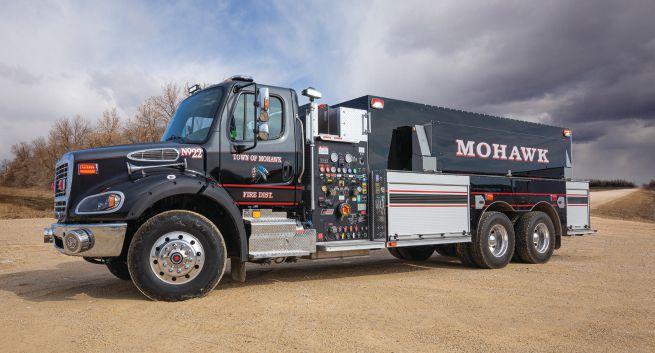
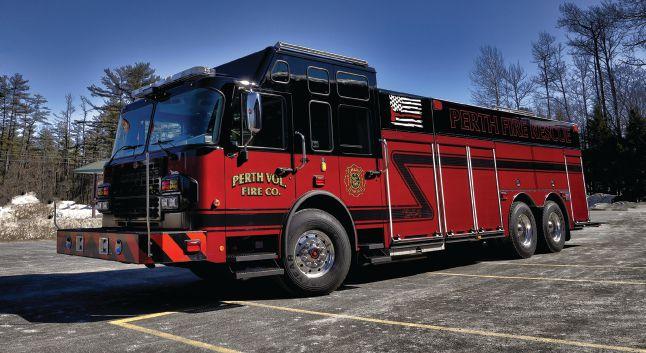

Our fire tankers/tenders and pumper tankers/tenders are engineered for the harshest road conditions and environments in the world featuring a full-framed 6061- T6 aluminum extruded sub-frame utilizing 5083 saltwater marine-grade aluminum compartments. We offer over 12,000 custom options to choose from giving our customers a unique fire apparatus that is One Tough Truck and fits their fire department’s needs serving their communities for many years to come.
DESIGNED BY YOU, BUILT WITH CONFIDENCE
• Full-Framed 6061- T6 Aluminum Extruded Sub-Frame Utilizing 5083 Saltwater Marine-Grade Aluminum Compartments
• All Chassis Options Available
• Darley, Waterous, or Hale Pumps
• 180 Degree Swivel Rear Dump Chute
• Adjustable Compartment Shelves
• Roll-up or Pan Compartment Doors
• 1200 to 3500 I.G. Co-Poly Tanks
• Undercoated Body
• LED Lighting
• ULC or NFPA Tested and Certified
OPTIONS AVAILABLE
• Side Control or Cross Control
• 3-Man or 4-Man Enclosed Control
• Top Mount Enclosed (TME)Custom Chassis
• Rooftop Monitor Options
• SCBA Brackets and/or Trays
• Portable Pump Options
• Roll-out and/or Tip Down Trays
• Electric Side and Rear Dump Chutes
• Tank Pocket Storage Options for Ladders or Portable Tank
• Electric Fold Down Ladder Rack
• Hydraulic Portable Tank Brackets
• Back-up Camera
TRAINER’S CORNER
By Ed Brouwer
Ed Brouwer is the chief instructor for Canwest Fire in Osoyoos, B.C., a retired deputy chief training officer, fire warden, WUI instructor and ordained disaster-response chaplain. Contact aka-opa@hotmail.com.
Mastering arrival reports
In most volunteer/paid-on-call departments, rookie training is well underway. By now you have likely completed communications and alarms. Pretty boring stuff, especially when that new recruit is itching to get to the fire behaviour portion.
Years ago, I transferred the information regarding communications and alarms found in the “Canadian
Firefighter’s Handbook” and the “IFSTA Essentials of Firefighting Manual”, to PowerPoint. During our first presentation, I noticed the firefighters’ interest peaked when I showed the last few slides. At first, I thought it was because the end was near. But no, it was the few lines about arrival reports that hooked the attention of the rookies and our veterans

(we trained together).
If you have been training for any length of time, you realize just how important it is to find those often-rare points of engagement. So, at the following practice I skipped right through the 40-plus pages on communications and alarms to the two small paragraphs pertaining to arrival reports, aka initial reports.
We spent the whole practice doing arrival reports. Yes “doing.” I turned a written description into a hands-on training session. The interaction was very enthusiastic.
It was quite simple really. But before you present this to your members, you must ensure you thoroughly understand what an arrival report is.
Key #1: The first radio report to dispatch is known as the arrival report. The first arriving fire officer makes it, while he or she is still in the apparatus.
This is a “through the windshield” incident report. To be effective, this report needs to be clear, concise, and relevant.
It should include: “On scene” confirmation, incident location, building construction, fire conditions and the establishment of command. It

should also include all obvious hazards, such as downed power lines, critical exposures, visible propane tanks, or any other critical safety information.
Key #2: “On scene” indicates that command has been established and confirms the location of the emergency.
There may be times when the address given is wrong and the first first-arriving officer can correct that. Accurately determining the incident location can affect arrival routes of other responders and apparatus placement. Occupancies that are well known to all the incident responders should be simply identified by name.
Key #3: The first-arriving officer should identify the fire building’s construction type. This gives the other responding units an idea of what actions they can expect to perform based on the differences of fire behaviour in that construction style.
The first arriving officer plays a very vital role at the front end of fire ground operations.
Key #4: The initial report although it may be all of a 30-second time investment, pays huge organizational dividends, leading to more efficient and safer outcomes.
There are no “do over” options. If the initial IC does not spend the few seconds required to organize the initial attack it is going to take a whole lot longer to play catch up.
Key #5: The IC also has the option of changing the response mode of responding resources. If he gets on scene with “nothing showing,” he can choose to have other responders Stand Down or continue in Code Two. Several years ago, we were
the second unit out to a multi ple vehicle pile-up. Most of us were in our quiet place won dering what we would arrive at. Was it one of our neighbours or a family member? I remember the audible sigh of relief that came when we heard that our rescue unit was on scene of a multiple MVI, and that no extri cation was required. Dispatch told us to continue Code Two.
Note: This type of notifi cation is extremely important for those departments that still respond to incidents in their personal vehicles.
Key #6: When describing conditions, the first arriving officer should paint a clear pic ture for incoming units. How much smoke and/or fire do you have?
Where specifically is the fire? This mental image you are painting can be useful to incom ing units.
Consider: “We have heavy black smoke showing from the first floor, Alpha/ Bravo corner.” Or “We have a fire at 1123 Main Street.” The second statement tells us little if anything that we did not already know. And that is the point of the arrival report — to tell us something that we do not already know.
It may help to let dispatch and the other responders know what operational mode you are starting out in — offensive, defensive, investigative, or rescue.
There is also an opportunity to get help coming right away, the arrival report can include a request for a second/third page, mutual aid, hazmat, forestry, RCMP, EHS, or utilities. It is easier to cancel a request then to get it last minute.
Key #7: Establishing command lets everyone know who

TRAINER’S CORNER
By Ed Brouwer
is in charge (command can be transferred as the incident evolves). The first arriving officer is the IC until further notice. Command is described by location not firefighter’s name, so if your incident was located at 83 Maple Ave. you would say, “Maple Ave. Command established.”
Key #8: Now that your 30-second through the windshield report is complete, it is time to do a more detailed size-up. You must get out of the apparatus to do that, so you notify dispatch that you are going mobile. The notification that “command is going mobile,” lets every-

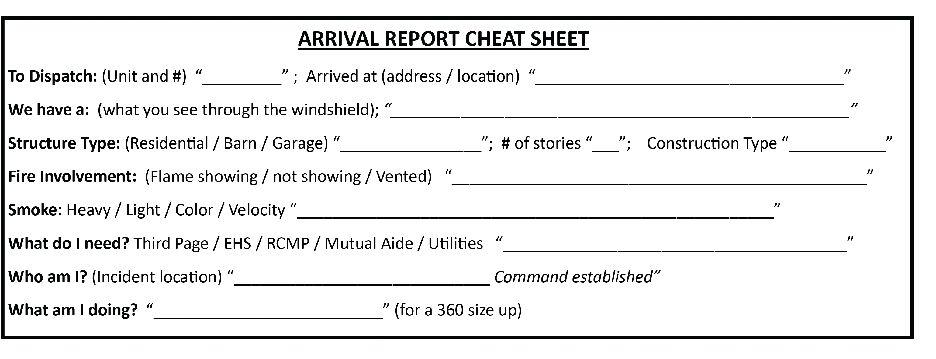
LEFT This Arrival Report “cheat sheet ”is printed on index cards and placed on the sun visors in each unit.
one know the IC is doing a more detailed size-up and that a more detailed report is coming.
Good on scene reports don’t just happen. The worst place to learn how to give an on-scene report is in front of a burning building. Do keep in mind that the initial on scene report should be short, sweet and to the point.
The more these arrival reports are practiced, the better they will become (getting shorter while conveying more critical information).
Although there are only two small paragraphs dedicated to arrival reports in the chapters relating to communications and alarms, this is where most successful outcomes are achieved. The first five minutes sets the stage for the next five hours.
In the image accompanying this article, you’ll see a copy of our arrival report “cheat sheet.” This is printed on index cards and placed on the sun visors in each unit.
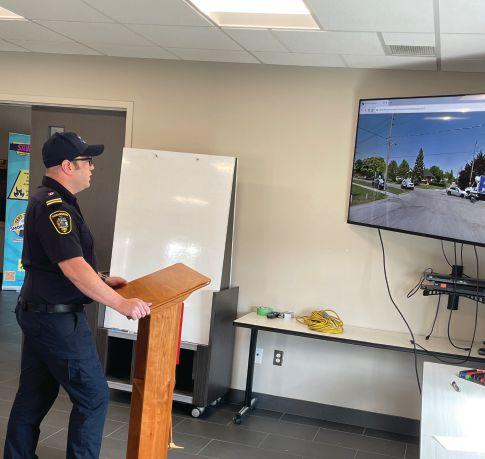
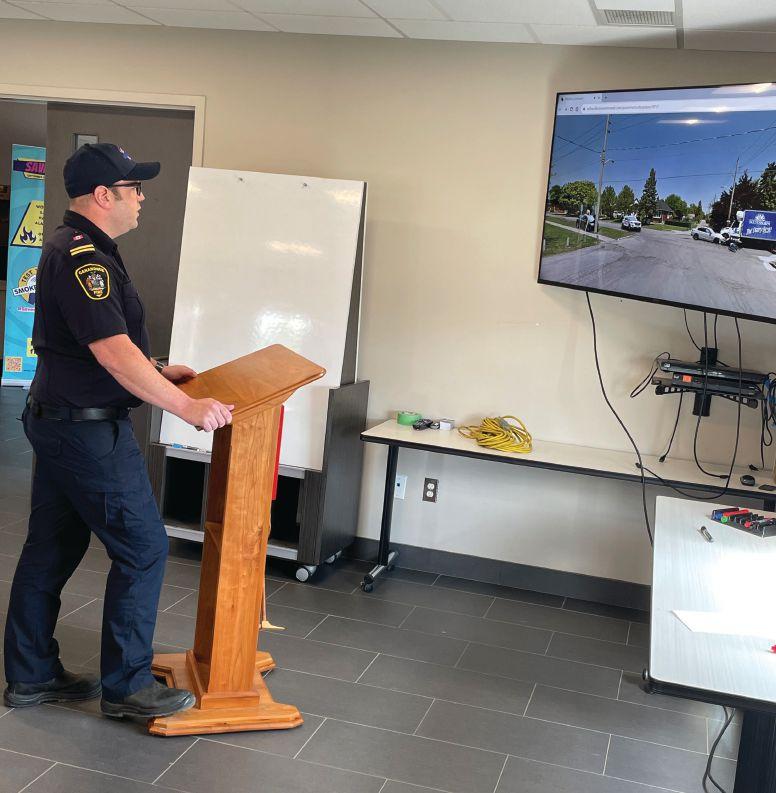
For our practice I prepared multiple PowerPoint slides showing scenes of structure fires, MVIs, and even a few buildings with no fire or smoke showing. Each slide had a local address typed at the bottom. Our members, each with arrival report “cheat sheets,” were seated in a semi-circle facing the screen where I projected these pictures. As a slide came up firefighters (taking turns) were to pretend to be the first arriving officer.
The picture was what they saw through the windshield of their unit. We then asked them to use the handheld radio to report to our “in house” dispatch an arrival report.
Point of interest: When I showed a picture of several first responder units (RCMP, EHS) parked on the side of the road, no visible fire, smoke or MVI, the firefighter giving the report stalled. He started to describe what “he thought was going on,” but then gave up.
This provided a profitable brainstorming session. There was lots of interaction that led to discussions on fire behaviour, fire suppression tactics and strategies, firefighter safety and observation skills. There is a bit more to this topic, but this is certainly a good start. I hope this info will help your members give solid arrival reports that lead to successful fire operations. I encourage you to practice, practice and practice doing arrival reports – do it until it becomes a habit. In the meantime, please stay safe, and remember to train like lives depend on it, because it does. 4-9-4 Ed
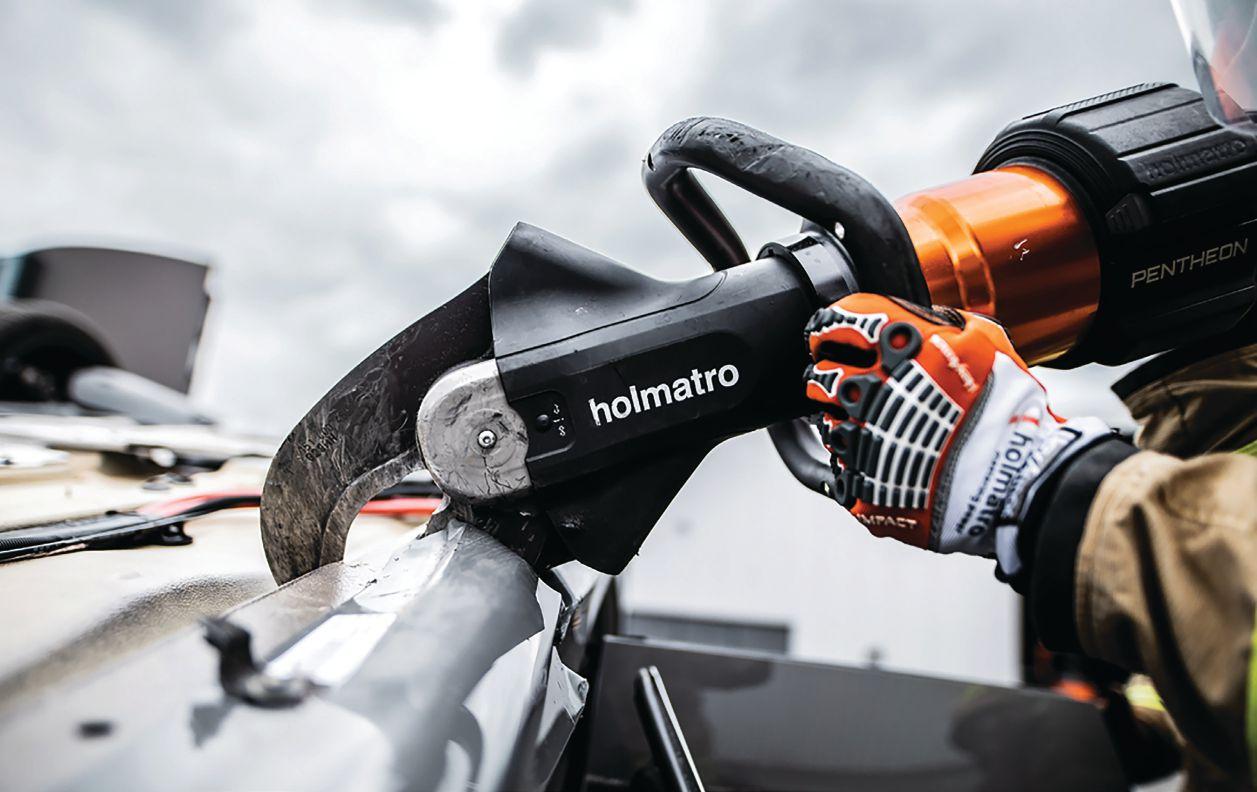


Pentheon PCU 50 Cutter
STOPBAD
By Gord Schreiner, Fire Chief, Comox, B.C.
Firefighter safety is our No. 1 job
We need our firefighters to be well-trained and passionate about doing things right.
Someone recently asked me what I thought the most important part of my job was. I had a few answers: Making good decisions; training our firefighters; firefighter safety. Then they asked me to zero in on one choice. I quickly responded that my No. 1 job is firefighter safety. Everything I do is related to this very important issue, whether it is attending a council budget meeting, developing an operational guideline, developing and scheduling training, mentoring, pre-planning, or responding, it is all related to the overall safety of our firefighters. Of course, we also need good equipment, solid facilities and great leaders. We need our firefighters to be well-trained and passionate about doing things right. My main job is to ensure this all happens and continues to happen.
I was asked to expand on how I keep our firefighters safe. First and foremost, our firefighters must be well-trained. Constant and effective training is the best way to achieve this. Train several times per week and use your daily incidents as opportunities to train. In our department, it is not unusual for us to do a short training drill after returning from a false alarm call. Our firefighters are already on the rig so we might as well have them put on SCBA, stretch a line, or raise a ladder. If your firefighters do not know what to do if their SCBA fails, then you need to teach them this. This is one of my questions when I meet new
firefighters who say they are trained: Do you know how to self-rescue and rescue your partner?
Dry wall breach, Denver drill, window bailouts, though the floor drill, drags, and carries are all part of our regular training. If they don’t know these simple life saving steps, then they are not trained properly in my book. The best firefighters know what to do, when to do it and what not to do. We stress that every member of our fire department is a safety officer. They must be constantly looking out for themselves and their teammates.
Safety includes encouraging and supporting firefighter health and wellness, physically and mentally. Some of the ideas that work well in our department have been to offer our firefighters free access to our community owned fitness centre alongside our own fire station fitness centre. We offer fitness events for our firefighters to attend. We own two mountain bikes and two stand-up paddle boards that our firefighters can borrow. When we eat at the fire station, we try to maintain healthy choices. We have our own garden to grow some of the foods we use for meals.
The fire service is evolving quickly with a lot more emphasis on safety. Personal protective equipment (PPE) has improved. We have issued two hoods and two pairs of gloves and have invested in spare gear so our firefighters do not have to wear dirty PPE. We have also installed saunas
Gord Schreiner is the fire chief in Comox, B.C. and manages the Comox Fire Training Centre. He has spent 48 years in the fire service and delivered presentations all over Canada. For more info, contact: firehall@comox.ca.
to help our firefighters detox after an incident or training. We added an SCBA decon unit. We added carbon monoxide (CO) detectors to every first aid bag carried on our rigs to monitor for CO on-scene as part of our cancer awareness and reduction program. We upgraded our helmets and issued all our firefighters leather boots to enhance safety. We continue to add thermal imaging cameras (TICs) to our rigs. Our goal is to have a TIC for every team involved in an incident.
We also added rehab equipment to our rigs. Every one of our fire department vehicles carries oxygen and AEDs. While we can use these for our citizens, they are mainly there for our firefighter safety. We take the blood pressure of our firefighters in rehab and before each training session.
The safe operation of our vehicles is expected by everyone. Firefighters who do not follow the driving rules do not drive and are likely to be released from the department. We have added many design features into our newer apparatus to enhance safety. Our newest rig has a built in misting system to help cool our firefighters when working near the rig or changing cylinders. Our rigs now have pre-connected hose lines that can be deployed from the rig without the firefighter stepping up onto the side steps. We added fold down steps to the rear of the apparatus to make the transition from ground to tailboard safer and hydraulic ladder racks that lower the ladders to a safe height for the firefighters to use. We are carrying additional respiratory protection (N95, full face respiratory, and SCBA) for our drivers.
It is important to enhance your pre-plans so firefighters have important information regarding the incident they are responding to. Increase fire prevention activities to try to reduce the number of serious fires in your community. Any time we respond we are exposed to risk. Less responses, less risks.
Challenge the leaders of your department to grow and stress that firefighter safety is their No. 1 job too.
waterax.com
By David Moseley
EXPANDING THE firehall library
Noteworthy reads on need to know topics
While many people now turn to podcasts and social media, books remain powerful tools for developing ourselves and our members. Recently we expanded our firehall library beyond the traditional technical books to include resources on mental health and the Truth and Reconciliation Commission’s Call to Action 57.
There are many ways to promote and support the mental health of firefighters. One easy inexpensive way is to develop a mental health library. While some may be dismissive of “self-help” books, we encourage a more open-minded approach to what some mental health professionals refer to as “psychoeducation”. In a broad sense, many books deal with well-being, such as those by Brené Brown, or The Book of Joy by the Dali Lama and Desmond Tutu. Some may be more specific, and a popular topic is trauma. What Happened to You by Bruce Perry and Oprah Winfrey, and Trauma the Invisible Epidemic by Paul Conti are two books I found easy to read. While more challenging reads, The Body Keeps the Score by Bessel Van Der Kolk and The Myth of Normal by Gabor Maté and Daniel Maté, are excellent books addressing trauma. Two worthwhile books that address dealing with adversity are Option B by Sheryl Sandberg and Adam Grant, and When Things Fall Apart by Pema Chodron. Some less obvious topics related to mental health are sexuality and sleep. Come as You Are by Emily Nagoski explores sexuality and in the process dispels some myths. The Sleep Solution by Chris Winter is, somewhat surprisingly, the most popular book in our firehall library.

ABOVE Recently we decided to expand our firehall library in a couple of directions beyond the traditional technical books to include resources on mental health and the Truth and Reconciliation Commission’s Call to Action 57.
There is an obvious link between mental health, trauma, and our relationship with Indigenous people in Canada. To improve this relationship, the Truth and Reconciliation Commission produced 94 Calls to Action. Call to Action 57 reads: “We call upon federal, provincial, territorial, and municipal governments to provide education to public servants on the history of Aboriginal peoples, including the history and legacy of residential schools, the United Nations Declaration on the Rights of Indigenous Peoples, Treaties and Aboriginal rights, Indigenous law, and AboriginalCrown relations. This will require skills-based training in intercultural competency, conflict resolution, human rights, and anti-racism.”
Reading is a key way to better understand the truth of colonization in Canada, and without truth there can be no reconciliation. This reading can be very uncomfortable at times. It is not enjoyable to feel anger directed at you as a white settler, or to read graphic accounts of the rape of children. In facing the truth, we can expect some discomfort. Despite the heaviness of the subjects addressed, there is no shortage of humour on hand. The books of Richard Wagamese (One Indian Life, for example) and Thomas King (The Inconvenient Indian) alone could probably fill your library. Other authors include Dawn Dumont (Nobody Cries at Bingo and Glass Beads), Michelle Good (Five Little Indians), Tanya Talaga (Seven Fallen Feathers and All Our Relations), Wab Kinew (The Reason You Walk), and many more. There are two books I found particularly impactful that are under 200 pages: 21 Things You May Not Know About the Indian Act by Bob Joseph struck me as an objective book that deals that sets the context and help to dispel some myths. My Decade at Old Sun, My Lifetime of Hell by Arthur Bear Chief is a heart wrenching personal account of the abuse experienced at a residential school and its resulting lifelong impact. An awful and yet wonderful read, Bear Chief demonstrates incredible courage and resiliency. These two books combined speak effectively to our minds and our hearts. In addition to these books, there is the Calls to Action booklet of the Truth and Reconciliation Commission.
Both the subject matter and specific books listed here are just suggestions, they are in no way comprehensive or complete. Additional reading recommendations are welcome. While reading alone is not enough to achieve robust mental health or truth and reconciliation in Canada, it can provide a positive, achievable step in those directions.
David Moseley is a forest officer with the Government of Alberta, and officer with Lac La Biche County Fire Rescue in Alberta, focused on operations. His other areas of interest include instructing, CISM and wildfire investigation. Contact him at david.moseley@gov.ab.ca.
PHOTO: DAVID MOSELEY
By Laura Aiken
DEVELOPING officers effectively
A unique approach to assessing incident command
Assessing the skillset of incident command and officer development in Ontario has a new partner in training.
Effective Command, an online incident command training tool with origins in the UK, is being rolled out in the province with the endorsement and support of the Ontario Association of Fire Chiefs (OAFC) and Ontario Fire Administration Inc. (OFAI).
Katherine Lamb founded Effective Command in the UK in 2015 as a behavioural marker framework to bridge the gap between academic research and fire service application. Lamb’s background is in the fire service and as a research scientist with a PhD.
The program is now being used by 95 per cent of UK fire departments to train, assess and record competence, she said.
“The three buzzwords I like to focus on are assertive, effective and safe,” said Lamb. “That’s what you’re striving to develop in your officers.”
She first presented the program to the OAFC at their 2022 annual general meeting.
“Off the back of that there’s been an incredible amount of energy, and impetus regarding command training, dedicated training to support officer development, and improving organizational efficiencies throughout Ontario,” said Lamb.
Following the initial presentation in 2022, the program was modified to address differences in UK and Canadian approaches to things like staffing and certain aspects of
ABOVE Innisfil Fire Rescue Service RTC hosted an instructor training certification course.
response. Differences aside, the program essence remains the same: “Develop the thinking firefighter who then becomes the thinking incident commander,” said Lamb. The thinking commander is articulated as one who can effectively deal with the unexpected.
Fundamentally, Effective Command assesses how the individual applies skill and technical knowledge, rather than scoring on the ability to remember procedural steps via memory. Understanding why someone makes the decision they did is a foundational aspect of how the evaluation.
Brent Thomas, fire chief for Innisfil/Bradford West Gwillimbury Fire and Rescue Service and board director for the OAFC, concurs with Lamb that the approach of Effective Command deviates from the memory-based testing that has been standard in Ontario. There is nothing
wrong with this approach, said Thomas, but he said the ability to score well on a memory test doesn’t always correlate with the ability to command a scene. The feedback that follows the simulated scenario used for assessment will truly underscore the strengths and, in a constructive manner, the weaknesses of one’s performance, said Thomas. This leads to the development of a personal training plan that identifies areas where further development is needed. From the chief’s perspective, the scope broadens to show if all officers in the department need assistance in a particular area, which could highlight the need for an operational guideline or additional instruction.
Thomas said he also appreciates the hard data and KPIs that come with the program as it provides justification for allocating budget to an area of training.
The OAFC’s training and education committee is looking at developing a standardized officer development program that will support the Effective Command assessment tool, said Thomas. This standardized officer development approach would support Ontario’s strong mutual aid system.
HOW THE PROGRAM WORKS
The team delivering the evaluation generates a simulated scenario in which the candidate being assessed is in the role of commander. The simulation requires managing the scene, doing the 360 around the building if applicable,
sending in radio report briefs, etc. The scenario comes to an end with the appropriate transfer of command to a platoon or district chief. The candidate then receives in-depth feedback on their performance from the assessor, and since it’s subjective, the assessor must be qualified to do so. Assessors become qualified by partaking in a 5-day instructor course that equips them with the knowledge to roll out the program in their department. With this type of practical assessment, as opposed to chiefly theory based, and it being newer to the Canadian fire service’s incident command training, Lamb strongly recommends the instructor training come first.
A recent course attendee had this to say: “It’s like no other training I’ve taken before. Best tool at our disposal for improvement across ALL organizational levels”
A key part of the feedback is a shift past passing judgement alone to a probing into the “why” of each decision, which is asked at each step of the review.
“This is a unique program, not like we’ve had in Ontario before and we haven’t had anything that gathers data or probes the reasoning behind the why decisions were made,” said Thomas.
From there, a decision-making rationale can be determined, as can an unveiling of the real gaps in understanding, as opposed to potentially dealing with a scenario by knowing a list of what to do.


“The three buzzwords I like to focus on are assertive, effective and safe,” said Lamb. “That’s what you’re striving to develop in your officers.”
“When something happens that is unexpected at an incident or there’s a dilemma to solve, they’ve got the skills to be able to step outside the box to manage the situation because you’ve equipped them with it [through Effective Command],” said Lamb.
The assessment has 72 points, the results of which are aggregated into an electronic database. Lamb noted that this data is helpful under cases of liability where a structure has been lost or there is an investigation, because the chief is able to provide evidence everyone was properly trained with the right skill sets to be making decisions at the scene. Lamb recommends training occur quarterly for officers as a minimum, using resources in the toolkit, and that assessment is periodic (tailored to the organization), but suggested as every three years. The program includes an annual subscription for the organization.
Jeremy Inglis, deputy chief with Central York Fire Services and treasurer for the OAFC board, has done Effective Command evalua-
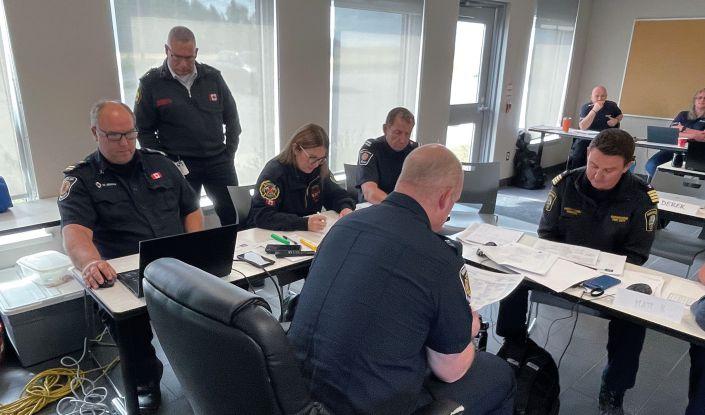
ABOVE The Effective Command assessment has 72 points and the results bundle in a database.
tion with the Burlington, Ont., fire department. He said the program goes beyond competent officer development to identify gaps in policy and procedure.
“It’s that verification training,” he said, adding that he realized the evaluation was part of risk assessment for the department. “You don’t know what you don’t know and the worst time to find that out is during an incident when you need to know. This gives you the opportunity.”
Effective Command also allows for the running of complex scenarios, like train derailments or large hazmat incidents, and is scalable for all size of departments. The program is accredited through multiple professional bodies and academic institutions.
Upcoming instructor courses in Ontario can be found through the OAFC and an association member rate has been established.








YOUR HEADQUARTERS
TRAINING & PUBLIC EDUCATION MATERIALS
Principles of Heavy Vehicle Extrication, 1st Edition
$111.00 | Item #36709
Provides rescue personnel with an understanding of the current challenges, techniques, skills and equipment available for the safe and effective extrication of victims trapped in heavy vehicles and in passenger vehicles involved in heavy vehicle incidents. This manual includes job performance requirements from NFPA 1006, Std. for Technical Rescue Personnel Professional Qualifications, 2021 Edition. Because NFPA 1006, divides heavy and passenger vehicle extrication disciplines into two separate chapters, IFSTA® has now also addressed these topics in two manuals.
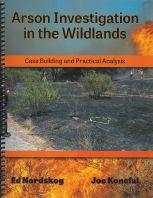
Arson Investigation in the Wildlands
$58.50 | Item #0578774862
Wildland arson cases are most often solved by mimicking these successful methods used daily by homicide detectives. This book by two veteran arson investigators with hundreds of successful prosecutions between them re-affirms time-tested investigative techniques, using the “right” resources, and mixing in new technology and profiling techniques. There are also chapters on analysis and profiling, and case preparation for court.
The Professional Volunteer Fire Department
$53.45 | Item #1593705879
This new book by Tom Merrill highlights the importance of developing and upholding a professional reputation in the firefighting community, regardless of whether one is a paid or volunteer firefighter. Merrill emphasizes that professionalism is not tied to a paycheck but is instead defined by attitude, appearance, competency, commitment, and dedication. Endorsed by several Chiefs, this book is regarded as a must-read for all volunteer firefighters.




VOLUNTEER VISION
By Tom DeSorcy, (Ret.) Fire Chief, Hope, B.C.
KNOW YOUR CUSTOMER
Volunteer firefighters bring a lot of extra skills to the game. When you consider that every volunteer fire department is made up of many walks of life, from business owners to educators and tradespeople, there is no shortage of talents to draw from. When I ask the question, “do you know your people,” the answer should be “of course I do.”
For example, take the businessperson that owns a retail store. Chances are they know their customers, or at least they should. Is it safe to say that every person that comes in their store is not only going to buy something, but knows exactly what they are looking for? Probably not.
A new recruit comes into the firehall and no matter what they bring to the table in terms of life experience or profession, can we assume they just want to be a firefighter? What if their life experience is limited by the fact they are young people that are learning a trade. Maybe this is that trade they are pursuing? Do you treat them any different?
Consider these differences in terms of generations, where the types X, Y, Z are relatively recent conversations. Can anyone tell me where we are now? I don’t recall using the term Baby Boomer in the fire hall, but then again, I could be wrong. No matter how long we’ve been doing it, we can’t assume that everyone
feels the same way when it comes to the fire service. They are in our store, and we need to treat them accordingly.
Not only do people not feel the same way, but they may also not have the same priorities in life or learn in the same manner. This has been proven and has forced many a training officer to adapt and rethink their training methods. The lessons of fire fighting haven’t changed but the way people, especially young people, accept and are taught those lessons, has and I applaud those that have recognized and adjusted to this.
This brings me to the challenges of recruitment and retention. First off what is your definition of recruitment? For some it’s the indoctrination and training of new members to the fire department. For others it
may be the enticement or selling of the fire service simply to get people to join. What if you think about prospective members as customers. Do we wait until they come into our store, or do we go out there and find them? Once accepted, should we then treat them like the a morning radio show repeating itself to a transient audience, and simply go through the motions to get them on a pager? I don’t think so.
Recruitment and retention should go hand in hand. There is a sales aspect to the fire service. In fact, every time we go out on a call we are selling this service. Like an advertiser on a morning radio show, this is our audience — the people that we are responding to or those that see us providing service to people in need. Our brand speaks for itself and doesn’t need a lot of selling.
Simply by continuing to do our job in a positive and professional manner, interested individuals want to be a part of it all. We are like a radio advertiser. Everyone is a prospective customer and you just never know when they’re tuning in, but if you are consistent in your approach they will be reached.
There was a time when it was difficult to give any of our recruits what they wanted. Essentially, we had customers that wanted to buy our product but we didn’t have enough stock. We couldn’t deliver. Today all that has changed. With standardized service levels and a growing reputation for quality, it’s not only an easy sell but our customers feel comfortable and are essentially part of the business as it were. Sounds strange when it comes to the fire service, but it’s an analogy that makes sense.
If you feel the need to sell the department then look to the newest members. They are the ones that can spread the word. Give them a good experience from the beginning and the word will get out. Dare I say we need to treat this next generation of firefighters as the influencers that they are? We need present and future leaders, but we also need the first followers. Today’s consumers share good and bad experiences. Make sure their experience with the fire department worth sharing.
Tom DeSorcy joined the fire service in 1983 and became the first paid firefighter in his hometown of Hope, B.C., when he became fire chief in 2000, retiring in 2023. E-mail Tom at tdesorcy@telus.net media.
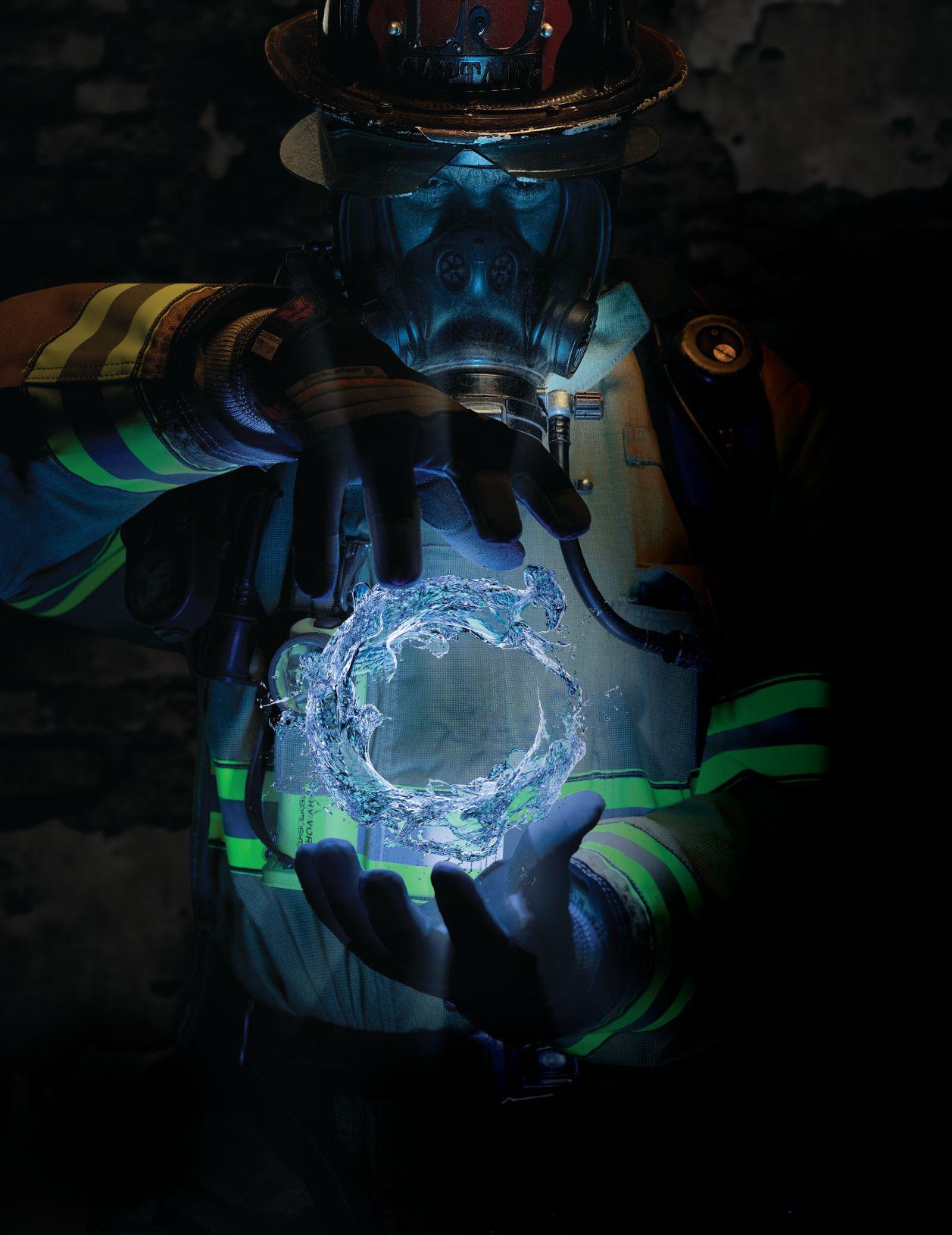
It’s chemical. It’s inorganic.
It’s tasteless, odorless, colorless, and it’s vital for most forms of life.
It’s water, and it does a number on fire. Imagine if you could command it, manipulate it to your will.
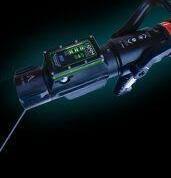
Control water with ease.

How imposing would you be? With just a nozzle in your hands, you could charge the line and see its status. You’d be Poseidonesque unleashing your fury on the flames.








ARFF IN STOCK.
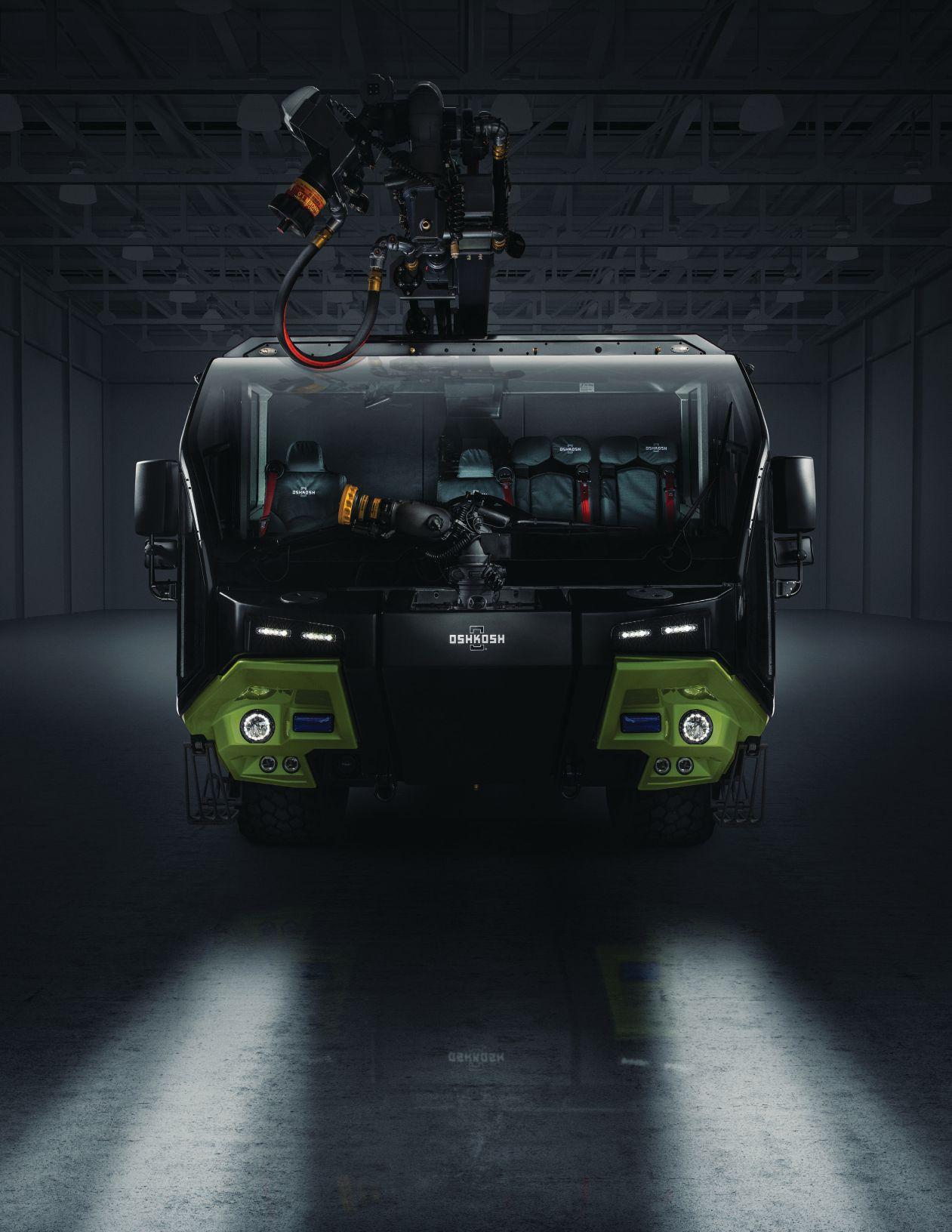
Commercial Emergency Equipment is the only Apparatus Dealer in Canada that stocks Aircraft Rescue and Fire Fighting Vehicles. Contact Commercial today to inquire about in-stock, immediate-delivery and build-to-order accelerateddelivery Oshkosh Airport Products Gen 3 Striker ARFF Vehicles.