An overview of wildfire, climate change and its impacts on the fire service. This article is based on the UN’s “Spreading like Wildfire” report.
By Laura Aiken
16
LARRY WATKINSON
In conversation with Penticton’s fire chief and champion of wildfire training, mitigation and climate change adaptation.
By Kaitlin Secord
34
PARENTING RESILIENCY IN OUR FIRST RESPONDER CHILDREN
As first responder families we are in challenging times and our first responder children are feeling the impact.
By Kimberly Williamson
BY LAURA AIKEN Editor laiken@annexbusinessmedia.com
T
COMMENT
Weathering disaster
hough Canada has fared reasonably well through the pandemic, there is significant healing to be done by communities and between individuals who may have dismissed their commonalities in favour of their strong opinions. Canada cannot afford any further divisions any more than the rest of the world can with warnings about how severe the threat of irreversible seismic shifts to our planet are.
The United Nations’ Intergovernmental Panel on Climate Change published a detailed assessment on the science at the end of February and the impacts are happening faster and are more severe than predicted. As aptly noted in the report by Inger Andersen, the UN’s environment programme director: “Climate change isn’t lurking around the corner waiting to pounce. It’s already upon us, raining down blows on billions of people.”
many of Canada’s fire chiefs. Managing a longer-term event with community-wide consequences is becoming more common. The need to prepare and pool resources — to work together — was emphasized time and again throughout the event.
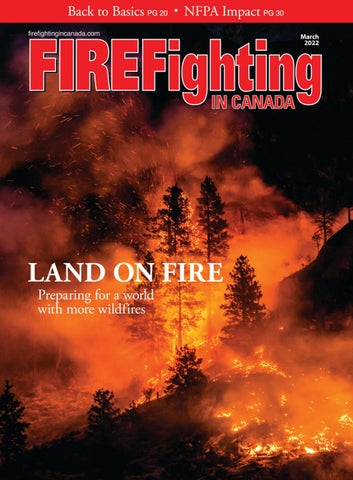
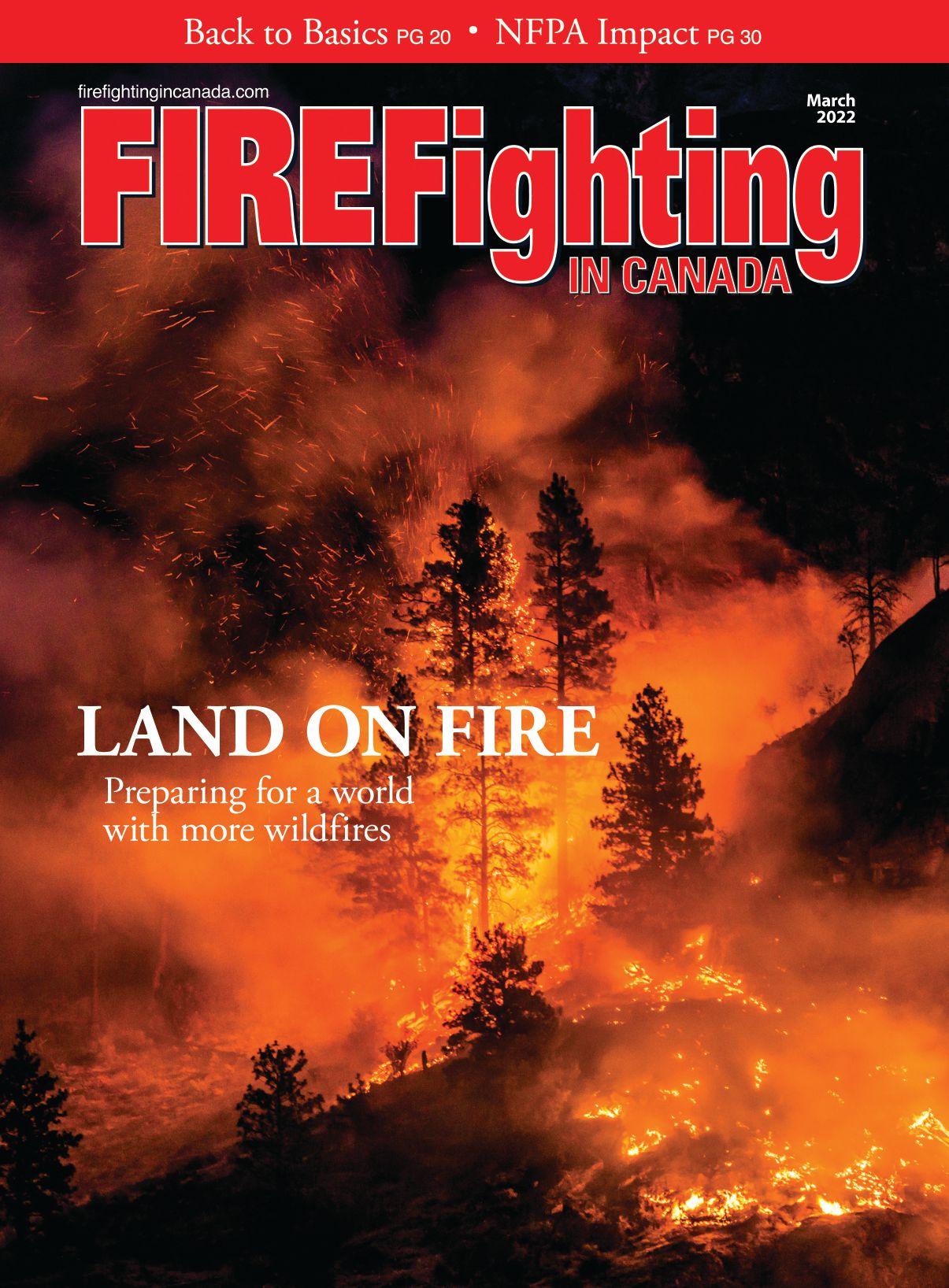
ON THE COVER
Throughout the pandemic, we have heard political leaders say that they are “listening to the science” in terms of their response. Listening to the science on climate change is like tuning into a dystopian, apocalyptic audiobook. It’s terrifying. But face it we must and will. For the fire service, listening to the science means paying attention to the potential risks in your community and putting concentrated effort towards helping your community and department be prepared.
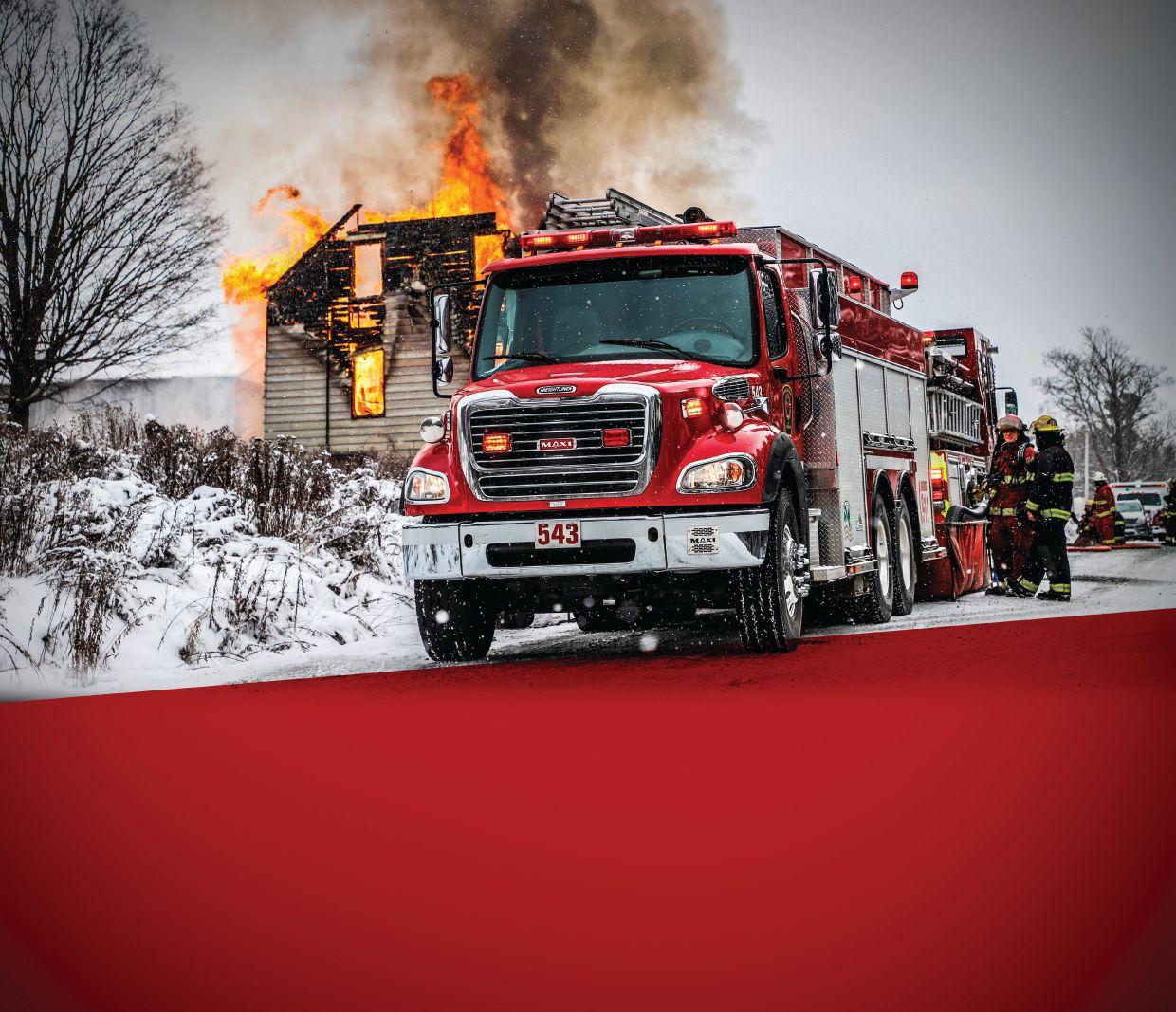
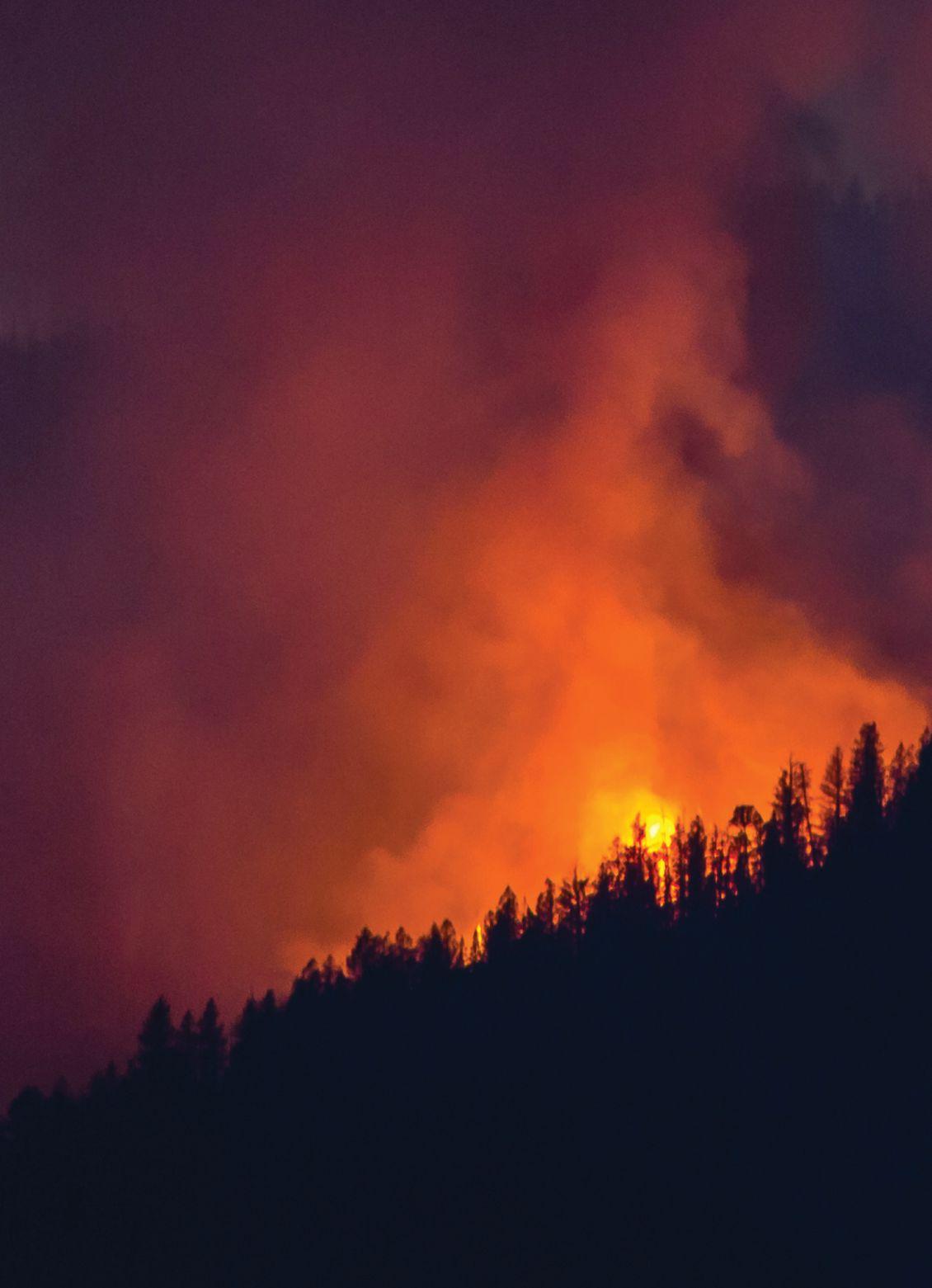
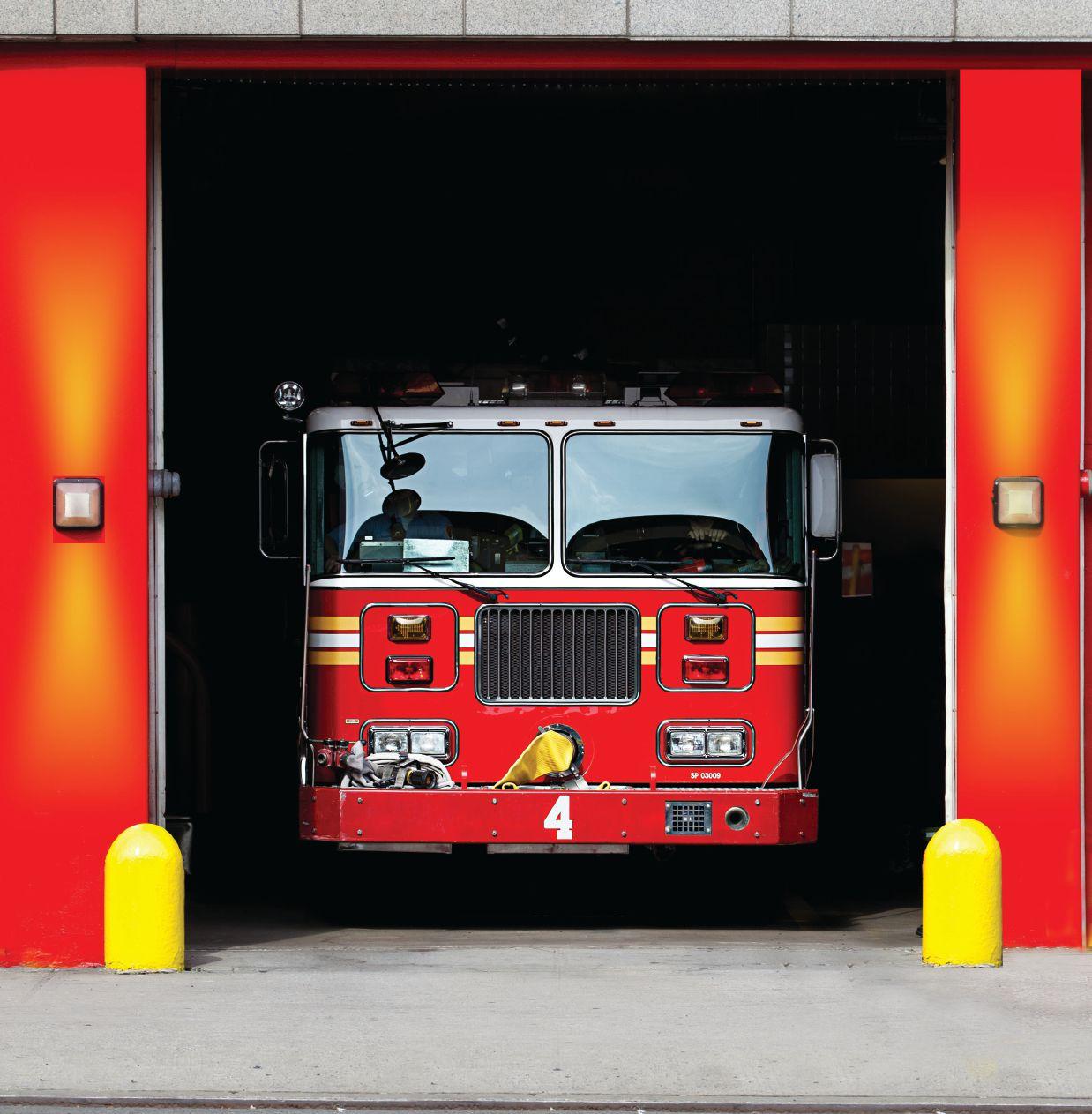
This image was supplied by Mike Biden, who captures many fire images alongside the Penticton fire department in B.C. For the cover story, turn to page 10.
And, in a more direct quote from the report for the fire service: “Difficult choices will have to be made. Which fires do we just let burn because we don’t have enough equipment to go around?” said Linda Mearns, National Center for Atmospheric Research climate scientist and reviewer for the report’s chapter on North America.
Fire Fighting in Canada themed its 2022 Virtual Summit around climate change. Registration doubled from the previous year and attendees hailed from around the globe. Whether it’s wildfires, floods, extreme snow, extreme winds, or catastrophic heat, preparing for and leading the response to these climate events is a top concern for
Canada’s fire service can and should partake in environmentally responsible actions and be models of leadership in this regard, but ultimately the mitigation of this global crisis requires global leadership. Should there be a weak and uncooridanted effort at the reins, the fire service are surely to be the ones on the frontlines of this failure.
ESTABLISHED 1957 MARCH 2022 VOL. 66 NO. 2
Reader Service
Print and digital subscription inquiries or changes, please contact Beata Olechnowicz, Audience Development Manager
Tel: (416) 510-5182
Fax: (416) 510-6875
Email: bolechnowicz@annexbusinessmedia.com
Mail: 111 Gordon Baker Rd., Suite 400, Toronto, ON M2H 3R1
EDITOR LAURA AIKEN laiken@annexbusinessmedia.com 416-522-1595
Occasionally, Fire Fighting in Canada will mail information on behalf of industry-related groups whose products and services we believe may be of interest to you. If you prefer not to receive this information, please contact our circulation department in any of the four ways listed above.
All advertising is subject to the publisher’s approval. Such approval does not imply any endorsement of the products or services advertised. Publisher reserves the right to refuse advertising that does not meet the standards of the publication.
PHOTO: MIKE BIDEN
STATIONtoSTATION
ACROSS CANADA: Regional news briefs
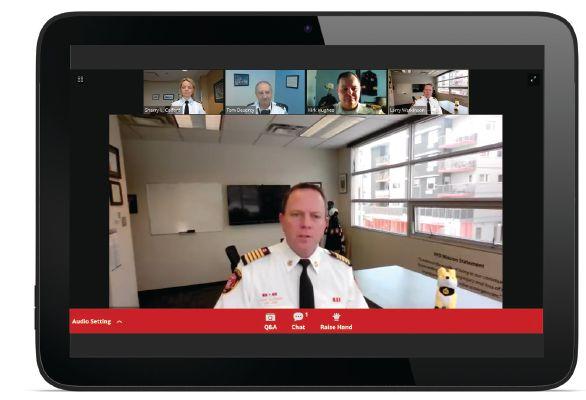
Fire Fighting in Canada’s 2022 Virtual Summit focused on climate change
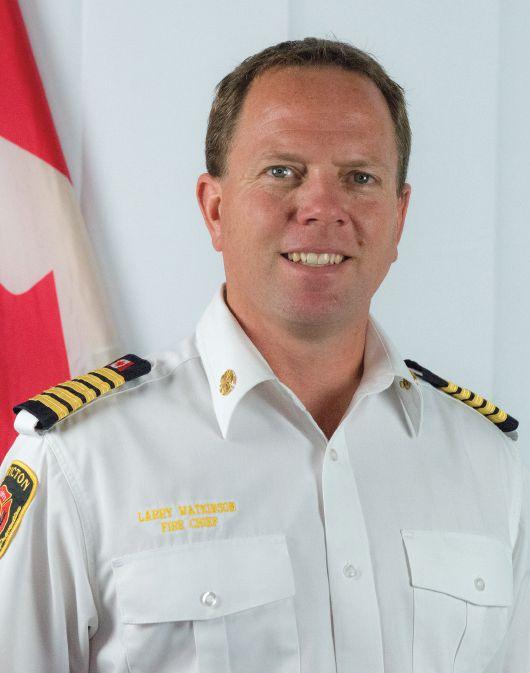
Chiefs L-R: Sherry Colford, Tom DeSorcy, Kirk Hughes and Larry Watkinson
Fire fighting personnel from Canada and beyond gathered to hear the challenges and solutions Canadian fire departments are facing when it comes to preparing for and responding to climate change at this year’s Fire Fighting in Canada Virtual Summit. Held on Feb. 24, the event featured three live and three sponsored presentations.
The first panel was on the topic of emergency preparedness and extreme weather. Fire Chief Tom DeSorcy of Hope, B.C., moderated the panel discussion between himself and fire chiefs Kirk Hughes of Vermilion County, Alta., Larry Watkinson of
THE FIRE HALL BULLETIN
Promotions & appointments
JEFF BECKWITH was promoted from deputy chief to fire chief for the city of Prince Rupert, B.C. Beckwith has been with the Prince Rupert Fire Department for 23 years and was originally promoted to deputy chief in 2009. Prior, he was a volunteer firefighter in Pender Harbour for three years.
MATT RICHARDSON is the new deputy fire chief for Welland Fire and Emergency Services. Richardson has 10 years of experience in the service, starting his career as a volunteer firefighter with the Fort Erie fire department before filling the role of fire prevention officer. He joined Welland in 2018 in the same fire prevention role before being appointed as director.
Penticton, B.C., and Sherry L. Colford of St. John’s Regional Fire Department. The discussion centered around developing response plans, managing resources and preparing your department and community to do their part in the face of weather events.
The group discussed the importance of mutual aid partners when it comes to handling natural disasters. Hughes asked, “Why handle disasters individually when you can handle them together and build resources?”
DeSorcy noted that what happens outside of your community, is likely to impact inside of your community and asked the other panellists what it is that they do to try and mitigate the risks associated with climate disasters. The number one answer? Be prepared.
Watkinson shared that in Penticton they have identified specific weather events that are most common to their region, namely wildfires and heat domes, and have specific plans prepared for these incidents. He notes that while having all-hazards plans in place are important, it is equally as important to adapt those plans to things you know regularly impact your community.
Colford noted that no one can be a subject expert in everything and it’s key to ask for aid when you need it. St. John’s Regional Fire Department is on Newfoundland and Labrador’s emergency operational list, which gives them access to meteorologist reports. These reports help them to watch weather patterns as far as a year ahead.
Colford also noted that your department is only as strong as the community you serve. Providing information, tools and
PAUL HUTT has been promoted to fire chief of the Ottawa Fire Service. Hutt has 28 years of experience, starting as a volunteer firefighter in Ottawa. In 2011, he was the director of emergency services and fire chief in North Grenville, Ont. He returned to Ottawa in 2016 and served as deputy chief of urban operations until his most recent promotion.
DOUG BURGIN was promoted to fire chief for Essa Township fire department in Ontario. Burgin has 36 years of experience in the service. He started with the Essa department in 2001 as a captain/ training officer before being promoted to platoon chief in 2006, and deputy chief in 2013.
PHOTO: KAITLIN SECORD, GRAPHIC: FREEPIK
planning to help them be prepared will allow for crews to focus on mitigating risk without interruption.
Hughes spoke of ensuring support for response teams and their families. There is a lot of concern for how weather events will impact the community, and firefighters are a part of that community.
The general consensus from the panellists is that learning how to streamline resources, and be prepared ahead of time, to the best of your abilities, will help the fire service adapt to climate change.
Scott Davis, the manager of Emergency Management and Continuity of Operations at Western University and director of the International Association of Emergency Managers (IAEM)Canada Council, gave a presentation on incident command and decision making during large scale events.
Davis’ presentation focused on five key factors of response and decision making: organizational readiness, planning and training, situational awareness, response and recovery and lessons identified. He used the example of the 2020 Fort McMurry flood to show the timeline of decisions and response.
Davis encouraged four key things to happen before an event: understand what is coming, evaluate the potential risks (risk matrix), have a pre-incident plan prepared and identify who each section of the incident command teams will be reporting to.
Understanding what is going on ahead of the event will give your department time to call on experts, and to better understand the best ways to dealing with the incoming event.
Your pre-incident plan will act as a baseline for response, and will help prevent confusion as to who is doing what and who is reporting to who. It will also allow time to establish social service programs.
Using a risk matrix, which is evaluating potential risk, and their hierarchy will help in establishing and providing the community with community emergency management plan. This plan will help the community do their part so emergency response can be focused on helping vulnerable bodies. During the Fort McMurray flood, first responders used a pre-established vulnerable persons registry to account for and help to get those who need assistance to safety.
Davis said there were three major takeaways from the Fort McMurray flood in 2020, namely, understanding hazard and impact, establishing and maintaining lines of communication and
making sure every one on the response team understands their role.
The final presentation of the day was from Fire Chief Jeff Weber of the Cornwall Fire Department in Ontario. Weber spoke on managing expectations with council, community and industry with an additional focus on the collaboration between agencies.
Weber explained that the effects of emergencies on communities is, obviously, incredibly disruptive and it continues to be disruptive if there is not effective communication between agencies as to how to deal with them. Being realistic, anticipating problems, accepting different perspectives and understanding boundaries are all things that need to be considered when managing expectations. Being realistic will help to keep frustration levels down. Weber said to consider the size of the event, what a typical budget would be and to communicate your needs based on what is in the realm of possibility.
Anticipating problems is something emergency responders have to do, said Weber. Consider what has gone wrong before, and anticipate that it could go wrong again. Having a baseline idea of how to fix these problems will help you to minimize further damage.
Accept and engage with different perspectives and understand boundaries, recommended Weber. A willingness to see things differently will not only provide your department with more information, it will also help you to establish good lines of communication. While communicating with communities and other departments can be a great help, it is important to establish secure lines of communication, and to be clear with what can and cannot be shared.
Weber reiterated a point that was common throughout the summit: don’t be afraid to ask for help. Whether in mutual aid, in your own department or from the communities you serve, emergency response impacts us all, so we should all play a role in its mitigation.
The day also features three sponsored presentations: Vector Solutions on training solutions, DLAN emergency software and FireRein, makers of the 100 per cent biodegradable Eco-Gel.
The Fire Fighting in Canada Virtual Summit offered a number of takeaways to help the fire service to understand its challenges and develop its response to the ongoing threats created by climate change.
Retirements
In February, MICHAEL VILNEFF retired from his role as fire chief with the Cobourg fire department in Ontario after 25 years of service. Vilneff was promoted from deputy chief to chief in 2013. He was awarded the Fire Services Exemplary Service Medal in 2000 and First Bar in 2011.
Fire Chief TIM BLAKE of Ontario’s Trent Hills Fire Department announced his intent to retire later this year. Blake began his career as a volunteer firefighter in 1988, and was appointed the municipality of Trent Hills first full-time chief in 2012. He has served as the volunteer fire chief since 2001.
Fire Chief JIM CISAR retired from his position with Alberta’s Cowley Fire Department in December 2021, after 30 years of service. He served on the disaster services committee and volunteered for decades with the service before serving as chief.
Last Alarm
Fire Chief (Ret.) FRED BOISVERT passed away on Feb. 6. Boisvert was the fire chief for Augusta Fire Rescue in Ontario from 1978 and served in this capacity until he retired in 2001. He was the fifth fire chief in Augusta and a member of the department for over 40 years.
BY CHRIS HARROW Director of Fire Services
Town
of Minto and Township of Wellington North
LLEADERSHIPFORUM
Know your municipality
ike other fire service leaders, my career has taken many different paths. My experiences are not drastically different than others leading their services, but some of the lessons I’ve learned are unique. Having the ability to experience other job areas and understand their responsibilities can be a huge part of a leader’s development. A leader who takes the time to learn the responsibilities of other areas of the municipality can improve their leadership abilities in their own department.
Are you a leader who has made the effort to know their peers in various areas of the municipality they work in? Fire departments can still have a tendency to operate in their own silos, oblivious to what is occurring in other areas. We push forward not knowing the direction the municipality wants to go in or the strategic pathways they are undertaking. It takes time to understand; time we don’t always have in our day. However, achieving that level of understanding and cooperation can make the advancement of the department you work for much easier in the end.
I was able to spend over a year working as a fire chief and as the CAO for our small municipality. To say the experience taught me a lot is a huge understatement. The ability to understand how other municipal departments work and the mandates they operate under helped make me a better leader for the FD. The ability to work more closely with other departments only benefited us in the end and made the municipality stronger.
The years moving forward are going to be difficult for a variety of reasons. It is looking like budget dollars will be harder to come by in the next few years. The cost of the pandemic and the increasing costs of operations will contribute to departments having to do more with less. Cooperation with all departments will increase in importance as we progress. Leaders will need to step up and create new methods to continue with efficient operations.
order to maintain the status quo we are used to. Leaders are thinking outside of the box more than ever to survive in the new landscape.
Cooperating with other fire departments and forming various partnerships to continue to move departments closer together is very important for the future of the fire service. Equally important is creating partnerships with other departments within your own municipality. Many departments sit on development team meetings or emergency measures meetings with other municipal departments. The next step is to take it further and expand conversations to other areas of mutual benefits for each department. Finding common ground you can work on together will greatly help your department in the end.
It is becoming more common that fire service leaders are finding spots at senior management meetings in municipalities, and with that recognition comes many responsibilities.
One of the big responsibilities is acting like part of the team, from the fire chief to the probationary firefighter. All members of the department need to work with other departments in the municipality to show that we are team players. By having the entire department work on building those relationships with the other departments in the munic-
The ability to understand how other municipal departments work and the mandates they operate under helped me be a better leader for the FD. ‘‘ ’’
Municipal leaders have some difficult decisions to make moving forward. A new fire truck over a new road, more staff for fire departments versus more staff to keep the water operating systems operating. Municipalities are struggling to keep up with the demands on infrastructure and growth-related programs within their areas. We, as fire department leaders, are facing difficult decisions moving forward in
Chris Harrow is the director of fire services for the Town of Minto and Township of Wellington North in Ontario. He is a graduate from fire programs at Lakeland College and Dalhousie University and holds a graduate certificate in Advanced Care Paramedics from Conestoga College. He can be reached at c.harrow@mintofiredept.on.ca.
ipality, it will make the fire chief’s job at the senior management table easier. It will also pay off when something is needed at a scene from public works, or the roads crews are needed to assist closing a road. It makes for a better work environment all around.
The opportunities that present themselves by working with the other senior managers are numerous. The time we are entering in municipal finance is probably going to be tougher than the past decade. This will require sharing of resources, creative purchasing and adjusting long term purchasing plans. Leaders are going to have to step up and find new ways of doing business.
We will need to continue raising our level of professionalism and cooperation with allied departments. With increased respect comes greater responsibility. Let’s all work together to keep and exceed the this respect.
CUSTOM-OUTFITTED TRUCKS BUILT SINCE 1983 TO THE VERY HIGHEST STANDARDS – YOURS !
Each Canadian fire department faces its own unique operational challenges. Our customer experience is centered around listening to those opportunities and sharing our rich and diverse repertoire of solutions. Relying on our experienced team of technical advisors and on-staff firefighters, MAXIMETAL can help you take your truck from a brain-storm of ideas to your ideal in-service piece of equipment, proudly built in Canada. Our satisfied departments range from the smallest fire halls to some of North America’s largest fleets. Visit our web site today and contact us to begin planning your next fire apparatus.
A FEW OF OUR INNOVATIVE SOLUTIONS:
Photo : Jean-Simon Hubert
Land ON FIRE
Wildfires are growing in intensity and scope across the globe. The full extent of interplaying factors includes the biologically innate, but climate change, land use and population change are significant contributors. By 2100 the number of wildfires could rise by 50 per cent, and governments are unprepared for wildfires that burn for weeks over thousands of square kilometres with the ability to potentially impact millions, says a new report from the United Nations.
The UN Environment Programme and GRID-Arendal released “Spreading Like Wildfire: The Rising Threat of Extraordinary Landscape Fires” in late February. The 126-page rapid response assessment brought together the knowledge of over 50 experts from research institutions, government agencies and international organizations worldwide.
For the purposes of this report, the authors defined wildfire as “an unusual or extraordinary free-burning vegetation fire which may be started maliciously, accidently, or through natural means, that negatively influences social, economic, or environmental values.”
In a review of 116 articles written since 2013 on climate change and fire, the report found a robust consensus that climate change is escalating the probability of fires in many regions (Smith et al. 2020). This will also create longer fire seasons. Global warming is creating the hot, dry, windy, conditions that fire events favour. The year 2020 tied 2016 (helped along by El Niño) as the hottest year in recorded history. Vegetation that wouldn’t normally burn, such as rainforests, permafrost and peat swamps, are drying up and going up in flames. The report found wildfires happening on every continent except Antarctica.
Wildfires are on the rise across the world
By LAURA AIKEN
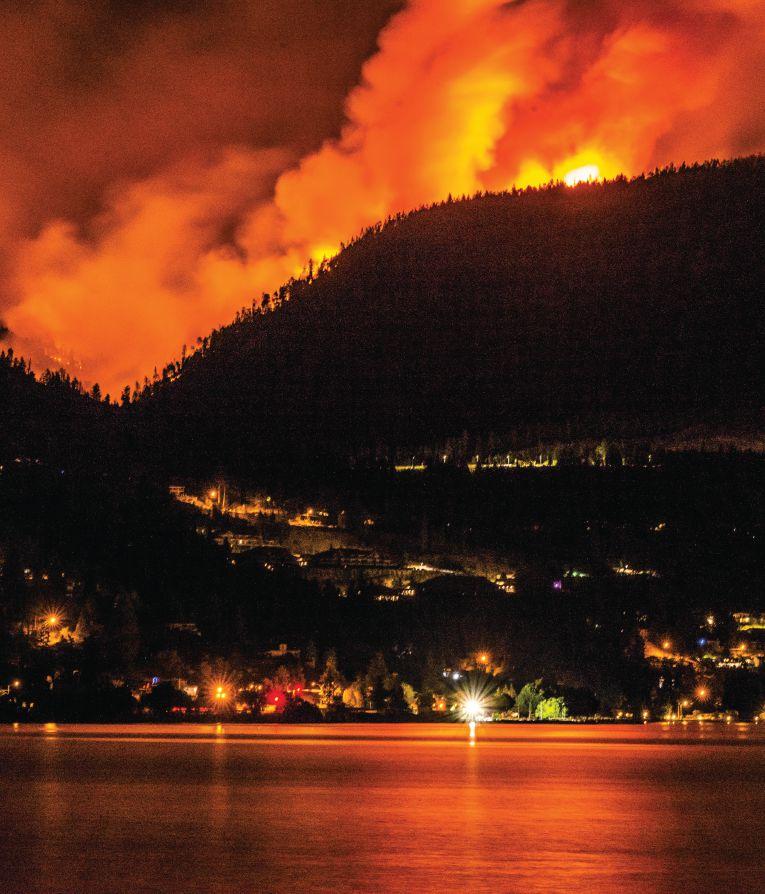
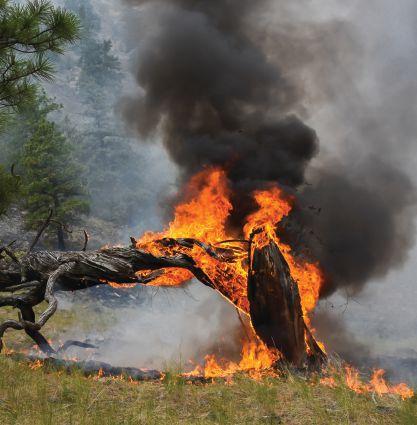
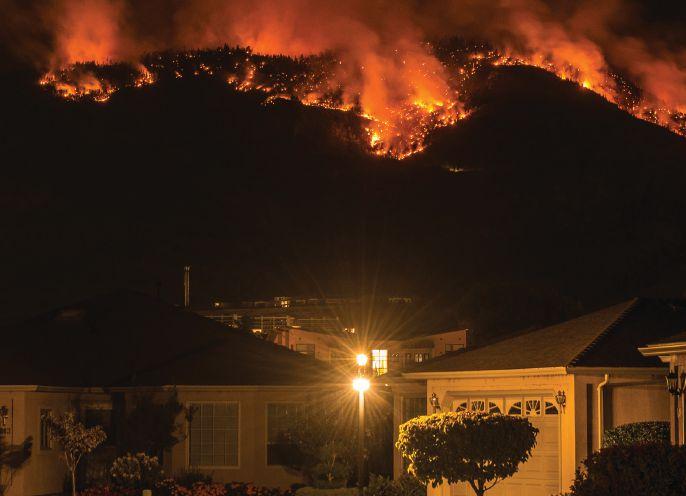
TOP: Climate change, land use and population change are significant contributors to the increase in wildfires.
RIGHT: Global warming is creating the hot, dry, windy, conditions that fire events favour.
OUR PLANET AND OUR WELL-BEING
Wildfires release large amounts of CO2 into the atmosphere, a negative addition to the global carbon cycle that makes it harder to slow rising temperatures. For example, peatlands, which are now burning, store 30 per cent of the total soil carbon globally though they make up only three per cent of the world’s surface. In 2020 in the Arctic, home of permafrost peatlands, fires were “responsible for releasing 0.244 Gt CO2 into the atmosphere, which is 35 per cent more than the previous year, which also set records (Witze 2020).”
The tremendous toll on wildlife, biodiversity and vegetation loss seems incalculable and could be expediting extinctions. Out of control fires in Pantanal, the largest tropical wetland in Latin America, wrecked nearly a third of this biodiversity hotspot and there are fears it may never recover, noted the report. There is also the consideration of challenges with water scarcity and pollutants after high severity fires.
Wildfire smoke is, of course, quite hazardous to human health. The report referenced a recent study from The Lancet linking wildfire smoke exposure to more than 30,000 deaths across 43 countries. Firefighters are at particular risk because of their proximity to the event and the strenuous conditions under which they work.
THE RECOMMENDATIONS
For policy makers, the assessment recommends an audit of all wildfire costs and a rebalancing of the budget to make greater investments in planning, prevention and recovery.
“Countries may consider rebalancing investments by up to one per cent for planning, 32 per cent for prevention, 13 per cent for preparedness, 34 per cent for response, and up to 20 per cent for recovery,” wrote the authors. Sums in Canada on annual national expenditure for wildland fire management were reported to range between $500 million and $1 billion, to the tune of a $120 million increase per decade since the 1970s (Hope et al. 2016; Stocks and Martell 2016).
Further to this: “Without a complete shift in our standard operating practice in many parts of the world we will continue with politically motivated decisions (public opinion in many places favours putting out fires at all costs) that currently dominate wildfire management. Moving wildfire management from an automatic fire exclusion response to allow more adaptive management of fire in the landscape where appropriate could, in some regions, have multiple benefits across the breadth of social, economic, and ecological concerns (Otero and Nielsen 2017; Thompson et al. 2018; Moreira et al. 2020). Despite the tendency to focus on fighting fires, in many situations, prevention (in the form of reducing the probability of wildfires breaking out), and mitigation activities (reducing the potential impact of wildfires when they do occur) are more likely to offer opportunities for long-term, cost-effective reduction of wildfire disasters (Multihazard Mitigation Council 2018).”
A second step put forward by the report is to learn from others. Be proactive, share data to improve analysis and forecasting, and gather best practices from others’ experiences around the world. Research shows that the input of Indigenous leaders and women in disaster risk management is critical for solutions that work. Regional and international cooperation was described as one of the biggest potential solutions to lessen the fire risk before occur-
rence and to rebuild better after.
Building on this is the advocation for a stronger unilateral response through the UN system. Though wildfires are now primarily treated as a national responsibility, the report notes that fires do not respect national borders and the development of an international standard for wildfires would assist international cooperation in wildfire prone regions.
Improving firefighter safety was a key recommendation, considering the risks of smoke inhalations, dangerous entrapments like burn-overs, and the need for overall rest, hydration, and nutrition. The authors also viewed international standards as a way to improve overall firefighter safety.
The report also looked at integrated wildfire management as being holistically key to adapting to the current and prospective outlook for wildfires around the world. This integrated approach “consists of five interlinked and often overlapping phases: review and analysis, risk reduction, readiness, response, and recovery (the 5Rs) (also known as PPPRR: planning and prevention, preparedness, response, and recovery).”
While prescribed/planned burns or other mitigation techniques can lower the intensity of a wildfire in addition to traditional ways of land management that support maintaining values and biodiversity, it was noted these techniques are not without risks such as decreased air quality and unintended consequences. The authors recognize and support the “inclusion of Indigenous and traditional fire knowledge within government policy, practice, and programmes can have multiple benefits (e.g., vegetation management, cultural, spiritual, social, economic, health and
www.plymovent.com
In close proximity: evacuation panning and safe shelters are part of living with wildfires
well-being benefits, and political-self-determination).”
Communities can better prepare for a wildfire by identifying critical assets that need protection, such as hospitals, and knowing their risk factors and possible alternatives if these critical assets are compromised during a wildfire. Evacuation planning and safe shelters are part of living with wildfires. Additionally, the report calls attention to gathering data that can shed light on gender differences. Men and women have unique approaches when it comes to come risk perception and decision-making. Everyone in the community needs to share a long-term vision of how to live with fire, the report says, and there is an increased need for timely details on wildfire threats. Rapid, effective initial attack is paramount in high-risk regions. This means having trained firefighters at the ready.
Wildfires are a global challenge and
developed countries like Canada and the U.S. generally have well-focused suppression strategies and resources. The report notes that developing countries have fewer resources and lack fire detection technologies.
This UN report is a first of its kind from UN Environment Programme and GRID-
The Beast
Breaking the boundaries of reach
Arendal. To prevent fires, authors call for a combination of data and science-based monitoring systems with indigenous knowledge and for a stronger regional and international cooperation.
The authors conclude: “We must learn to live with fire.” Time for the world to come together to adapt to the new reality.
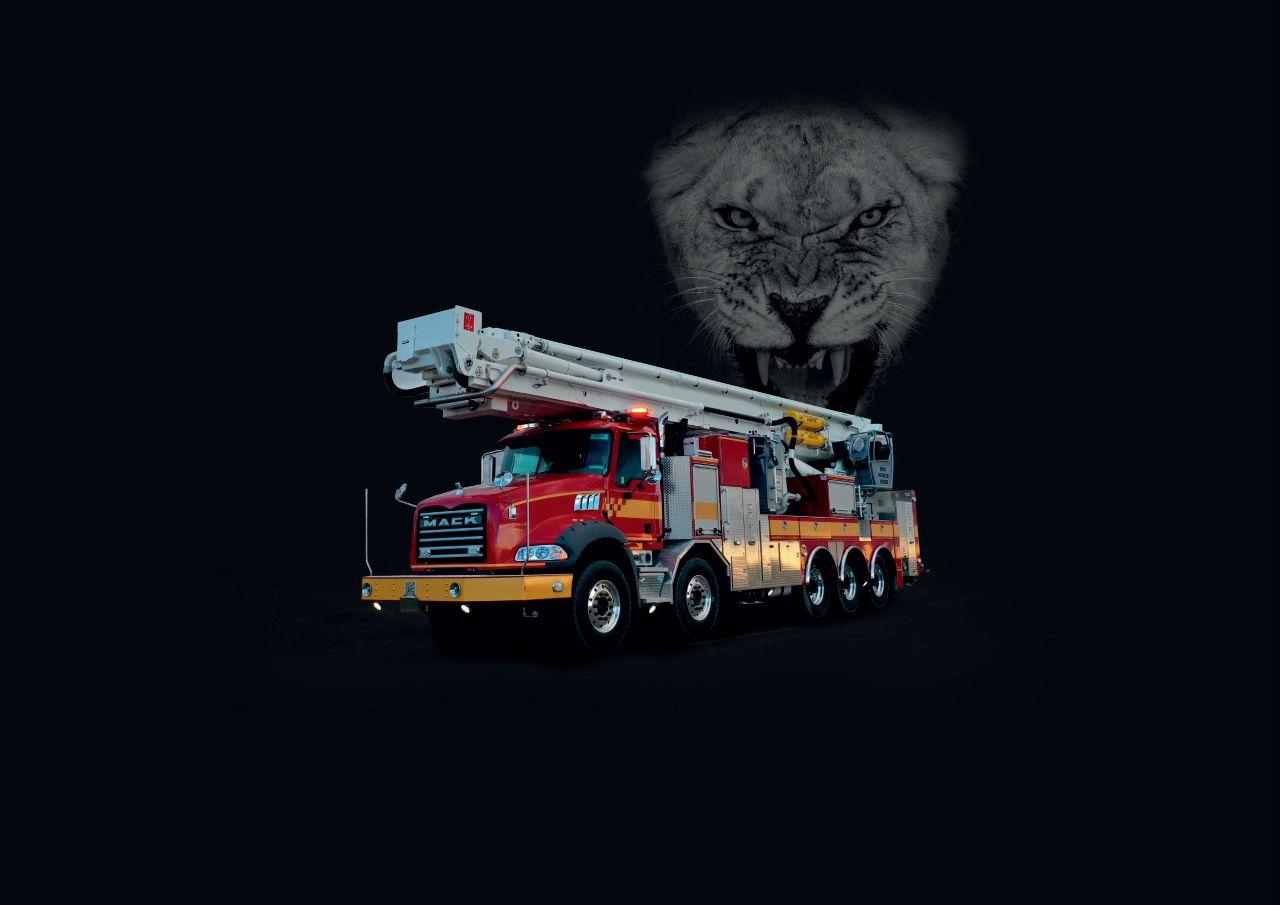
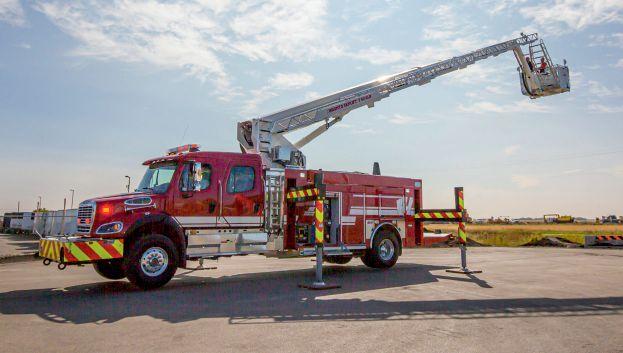
North America’s tallest articulated aerial platform enables you to break the boundaries of reach. Execute unparalleled high-rise operations with a 20-story vertical reach of 230ft, a built-in waterway, and a spacious rescue platform equipped with everything you need. Fight fires and save lives from nine floors higher than ever before. Release The Beast, break the boundaries of reach. brontoskylift.com
BY GORD SCHREINER Fire Chief Comox, B.C.
ISTOPBAD
Pivoting has made us a better fire department
f this past two years have taught us anything, it’s that we must be adaptable and ready to pivot at a moment’s notice.
The fire service is unlike many other businesses. While we faced many of the same challenges and restrictions as others during the pandemic, we needed to continue to maintain our vital services.
We faced lockdowns of fire stations and training centres, which increased our stressors and our ability to engage with our citizens. Our fire prevention activities suffered, responses became even more difficult, and our supply chain was disrupted.
Many of us were challenged by human resource issues like shortages of trained staff, quarantines, stress, and lack of training time.
We needed to constantly pivot.
These challenges brought us together and forced us to come up with new solutions. And pivoting our training made us train better. How do we maintain the training of over 50 members when we can only meet in smaller groups or not meet at all?
We, like many others, did a lot of video calls at the beginning of the pandemic. Senior members were tasked with developing lesson plans and presenting to our group. Dozens of topics were developed and presented and have been archived for use again when needed. These were well received by our members but it’s impossible to be a video-only firefighter. Firefighters must get out and get hands-on training to keep their skills sharp.
One of our best solutions (pivots) included changing our practice night format from one night per week to three nights and one morning per week. Rather than have a large weekly group practice, we now offer four, two hour practices per week and we ask our members to attend at least four of these per month. Many attend a lot more.
• More drivers get to drive rigs out more often.
• Platoons have better access to props and buildings at our training centre.
• Our members now have more flexibility as to what night to attend so they can better fit in their home and work life. This has opened the door to new members who, in the past, could not attend our single weekly evening practice.
• Many of our officers really like this new format as they have more opportunity to lead.
• Our three full-time, chief officers rotate each week.
• The additional morning practice allowed even more flexibility and more options to keep your training up.
• Our training attendance percentages improved, which was surprising during the pandemic.
For the times we didn’t feel comfortable holding in-person platoon practice nights, we pivoted to rapid individual drills (RIDS). RIDs were designed to be completed individually on their own time. We developed about 20 of these, and they take 10 to 15 minutes each. Members were asked to come to the station (by themselves or with a
‘‘ ’’
The fire service is unlike many other businesses. While we faced many of the same challenges during the pandemic, we needed to continue to maintain our vital services.
This has worked extremely well for us. We found many benefits to the smaller groups, some of which include:
• We now have crews at our station three nights and one morning per week, which provides quicker responses from our paid-on call department should we get a call.
• These smaller groups have a better choice of equipment as they have access to the entire fleet.
Gord Schreiner joined the fire service in 1975 and is a full-time fire chief in Comox, B.C., where he also manages the Comox Fire Training Centre. He has delivered countless presentations in fire stations all over Canada and is available to assist your department in many areas. For more information please contact: Chief Gord Schreiner, firehall@ comox.ca.
partner) and complete two or more of these (RIDs). Firefighters would then electronically submit a training record and a selfie to our training officer who would update the firefighter’s training record. They would also get one hour of paid-on call paid for every three RIDS they completed. The intent was to allow them to keep their skills sharp. RIDs include SCBA, AED, using PPV, tying knots and more.
When we could, we also offered larger group practices using our whole training yard and running a larger scale scenario (staging, RIT, etc.)
We have increased the speed of producing our own in-house training videos that our members can watch from home. These are shared by email and also placed on our web page.
These things have worked so well, we plan on keeping them. Pivoting has made us a better fire department.
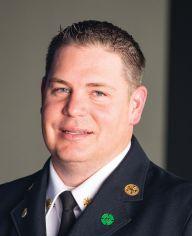
Larry Watkinson
Penticton’s fire chief on training, wildfire prepardness and and the joys of the role
By KAITLIN SECORD
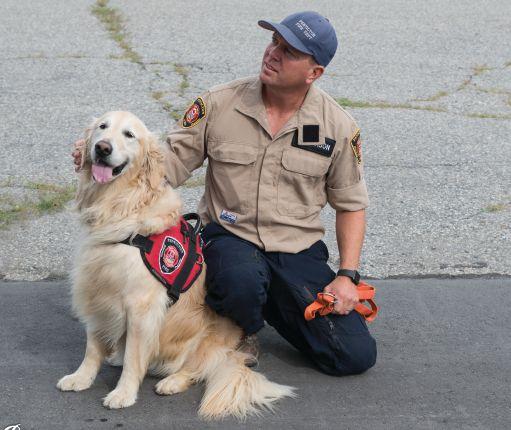
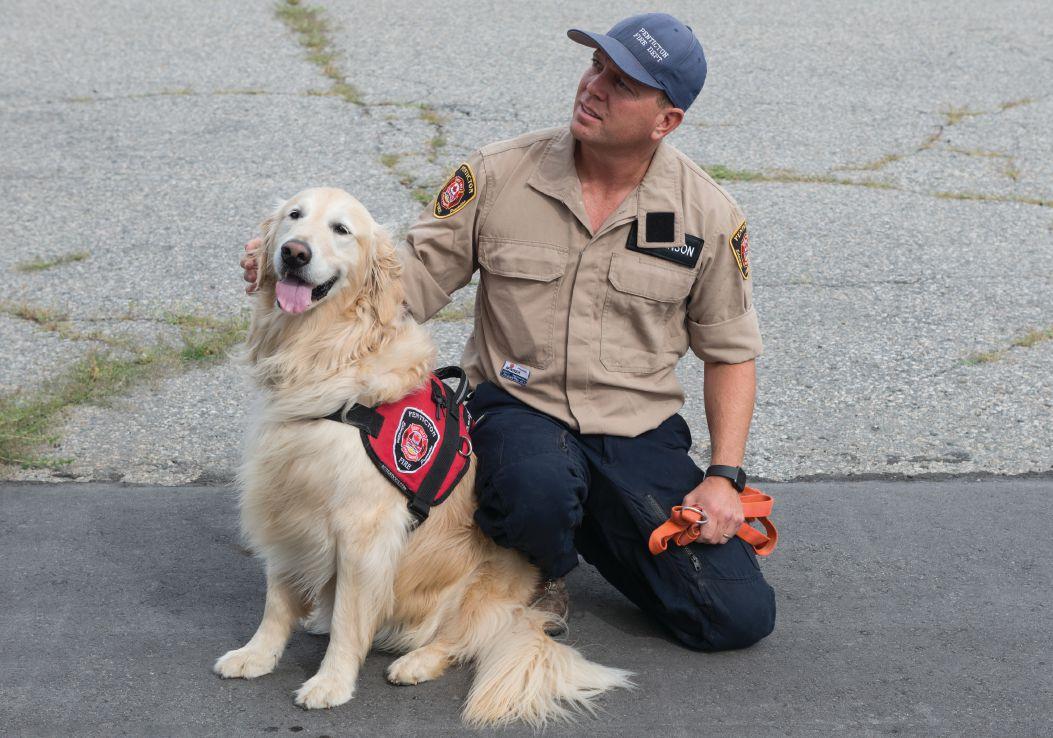
TOP Watkinson and his trained disaster dog were deployed to Nepal in 2013 and 2015 and to the Bahamas in 2019 for search and rescue.
Born and raised in Kelowna, B.C., Penticton Fire Chief Larry Watkinson has always loved the outdoors. Who would have guessed that his love for hitting the slopes would have led to such a fulfilling and exciting career in the fire service?
As an Okanagan kid, Watkinson spent summers on the lake and winters on the ski slopes. After high school, he started working in construction but found that was never really his calling.
“I was much more fascinated by that kind of energetic, outdoor lifestyle,” said Watkinson. “I was recruited by Big White Fire Department as a ski patroller and I was immediately hooked. But it wasn’t
until David Matteucci, the fire chief at Big White at the time, approached me in 1999 and said — why don’t you think about joining the volunteer fire department up here? — that I really considered fire as a career path.”
Watkinson went to the Vermilion Fire Academy in Alberta, starting his firefighter training in 2000. He returned to Big White as a volunteer firefighter and was promoted to a chief officer’s rank in 2003 that made him responsible for operations and training.
This promotion is what would lead Watkinson to help develop the Work Experience Program (WEP).
The Work Experience Program, or WEP, is a program that helps prospective fire-
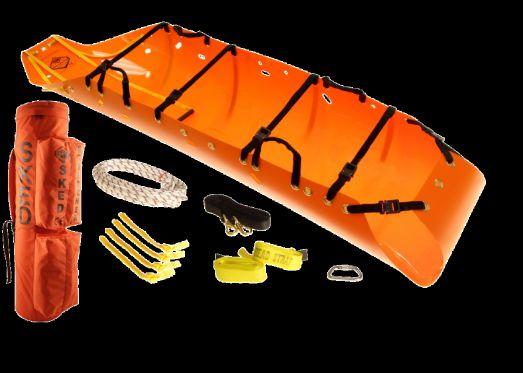
The original and still the best rescue stretcher for confined space, high angle or technical rescue and traditional land based applications. The Sked stretcher is a revolutionary design which provides outstanding patient protection and security.
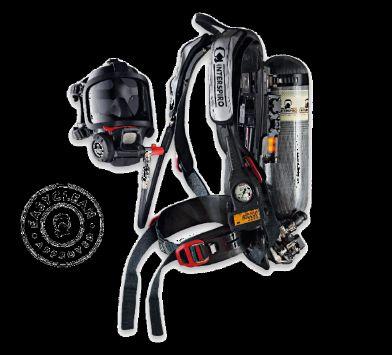
CANADIAN SAFETY EQUIPMENT IS PROUD TO BE A DISTRIBUTOR FOR THE INTERSPIRO RESPIRATORY PROTECTION LINE. THEIR STATE OF THE ART S9 INCURVE IS ONE OF THE MOST COMFORTABLE SCBAs YOU WILL EVER WEAR.
GIVE US A CALL AT 0182 OR EMAIL US AT INFO@CDNSAFETY. COM
No company has a richer history in respiratory protection than Interspiro. Their innovations have become industry standards, time and time again.
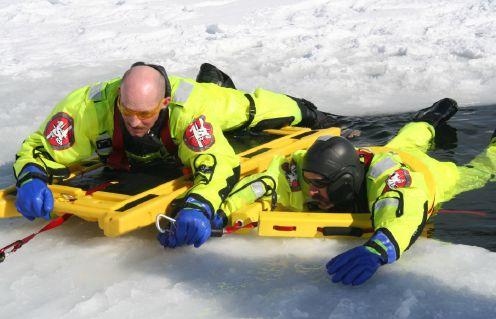
SLED WITH ICE RUNNERS RESCUE POLE
TETHER LINE WITH REEL and more…. IN HAUL / OUT HAUL RAPID TRANSIT SLED KITS
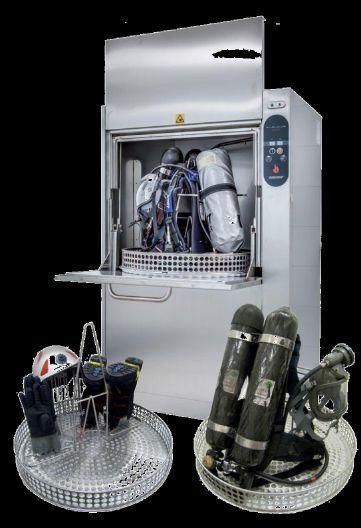
The Solo SCBA Decon/Washing machine was designed and built for one purpose only…to protect Fire Fighters from Cancer causing agents found in the Smoke and residue left on their SCBAs. As an added bonus it can clean Gloves, Boots and Helmets. In addition to the safety factor, it substantially lowers the time spent decontaminating firefighter equipment.
Qualified by MSA and INTERSPIRO for cleaning the G1 and S9 SCBAs.
IN ONE HOUR YOU CAN CLEAN/DECON: -14 SCBAs W/MASKS and CYLINDERS
REDUCED HEALTH RISK SAVES TIME 2/PKS IN 8 MIN EASY TO USE
IN ONE HOUR YOU CAN CLEAN/DECON:
• 30 HELMETS
• 60 PAIRS OF GLOVES
• 20 PAIRS OF BOOTS
• Double the above numbers with the second rack.
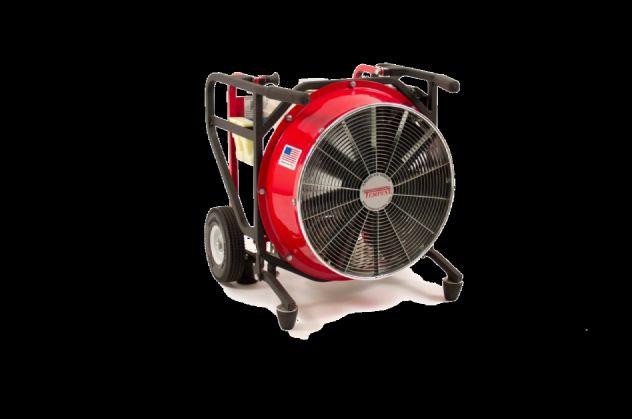
Low Power use. Minimal moving parts. Low maintenance costs
fighters enhance their skillset using on-the-job training. While responding to emergencies, their skills, knowledge and experience grow in preparation of advancing towards a career in fire fighting.
Watkinson explained that the idea came about because “Big White, which is a ski resort village, is transient. To have qualified firefighters there for a 10-month period, to develop their skill sets, and give them some exposure to living and working in a fire station to the likes of a career fire department, sets them up to have some skills and examples to help them get through the interviewing and hiring process in other larger municipalities.”
The program is now over 20 years old and still has an 80 per cent hiring rate, said Watkinson.
“Hearing colleagues of mine from across the country say that they’ve hired a WEP guy makes me proud that I had a major part in creating a program that helped the service grow and made it accessible to every station across the nation.”
Fire fighting is a trade, one where you live and work with the same people for the majority of your career. The need to be adaptable is as important as understanding the ins and outs of fire suppression. Being adaptable is a skill that needs to be experienced, and training like the Work Experience Program helps young recruits to do that. Teaching them how to adapt before they’re even involved with a department will help to set the future of the fire service up for success.
Watkinson left Big White Fire Department in 2006 with a great sense of pride for what he had created and an eagerness to continue supporting and innovating training in the fire service.
He continued on to the Justice Institute of British Columbia training centre, where he was chief of training for the firefighter recruit program.
Shortly after, he moved on to the District of Mission, where he went through the ranks as assistant chief, deputy chief and spent his last three years there as fire chief.
Watkinson’s time with the District of Mission was one of growth for himself and his canine companion, Sam.
A colleague of Watkinson’s, who was with the Burnaby Fire Department as a canine handler, approached him about training his newest puppy as a disaster dog. After doing some research and learning more about what it entailed, Watkinson decided it was something he was interested in taking on.
After a number of years, his dog Sam was trained and qualified to do live scent and cadaver searches with the Burnaby Fire Department Urban Search and Rescue Team. The duo was deployed to Nepal in 2013 and 2015 and to the Bahamas in 2019.
Watkinson describes the experience as one of the most rewarding of his career.
“There is something about going on those kinds of deployments with a team of professionals that are volunteering to help out internationally; it’s a very intense but special experience. I don’t think that it’s uncommon for people in our industry to want to be active and outdoors and contributing to a community. But the self-gratification is a big element too, and I think that’s sometimes forgotten upon us as first responders. Feeling good about what you do daily, and recognizing the impact that you’ve made in some way is, for me, one of the most satisfying elements to the job.”
For Watkinson, this feel-good element is part of what drives him forward to continue building these unique skills sets, and a part of what keeps him in-check with himself and his role.
Watkinson came to the Penticton Fire Department as fire chief in 2016, where he continues to better the service.
Watkinson developed a new wildfire prepardness and response plan for the city of Penticton in 2017
“That’s a part of the privilege of being in this role of fire chief. You have the flexibility and momentum to test out new approaches and see how what you’re learning, whether from your staff or from other departments, is helping to better the service,” said Watkinson.
Watkinson used this flexibility to develop a new wildfire preparedness and response plan for the city of Penticton in 2017.
“The plan identifies a step-by-step approach on what to do when wildfires come into our communities. The pre-incident plan for our community took three years to create since its all geo-references and utilizes GIS mapping that helps identify everything, from pinch points to accessibility to water, even down to what keys open which gate.”
The purpose of this plan is simple, and may seem obvious: to inform firefighters on the fire ground. By having everything laid out in a cohesive and comprehensive plan, it can be given to anyone responding to the event within moments.
The plan proved to be hugely successful in last year’s wildfire season. Watkinson was deployed from June to September to assist in managing wildfire teams of over 300 people. Everyone who was deployed came home without any long-term injuries, the damage to equipment was minimal and communities were protected.
Penticton has also invested a significant amount into fire fighting operations. The department has built their own structure protection units and wide-spread wet lines with sprinkler systems to help protect communities.
“I’m very proud to be a part of the fire service, and of my role within it...when I leave this organization and retire, I want to be able to feel good about what I did to improve the industry, whether it’s the people I worked with directly or someone across the nation.”
BACKtoBASICS
Rescue ready
BY MARK VAN DER FEYST
The number one fire ground priority is to save lives. All fire departments in North America strive to meet this priority in the interest of the public they serve. Firefighters push themselves to their limits to save the life of a complete stranger. The rescue process begins by being in a readied state for the call of action.
What does it mean to be rescue ready? It refers to a readied state that the firefighter and company officer are in so that they can respond effectively and efficiently to the call and the rescue. There are four key areas that every firefighter and company officer can look at in examination of whether they are rescue ready.
IN THE STATION
I have always said that being rescue ready starts right in the station. A good place to look and examine is with the culture of the fire department. Is there a culture within the department both in the upper ranks and lower ranks that lends to being in a readied state? The focus should be on developing rescue plans, establishing or revising SOGs or SOPs on rescue operations, equipping the staff with the best apparatus and equipment, and training personnel on the key points of basic rescue operations as well as how to size up any situation especially for the rescue operation.
Establishing or revising current SOGs or SOPs is also another way to become rescue ready within the station. These documents
need to be a living document where they are proven in training and then revised to reflect needed changes. Every firefighter needs to be involved with this process.
Developing rescue plans is also a good avenue to pursue in relation to the SOGs or SOPs that exist on the rescue operation. These defined plans can form part of the guidance or procedure spelled out and will also clearly give direction on what to do based upon the size up.
ON THE APPARATUS
Fire apparatus is the second area that can be addressed to become rescue ready. This usually involves setting up hand tools on the apparatus for quick and easy access for any rescue operation. It also involves utilizing compartment space effectively and placing certain tools on the right side of the apparatus.
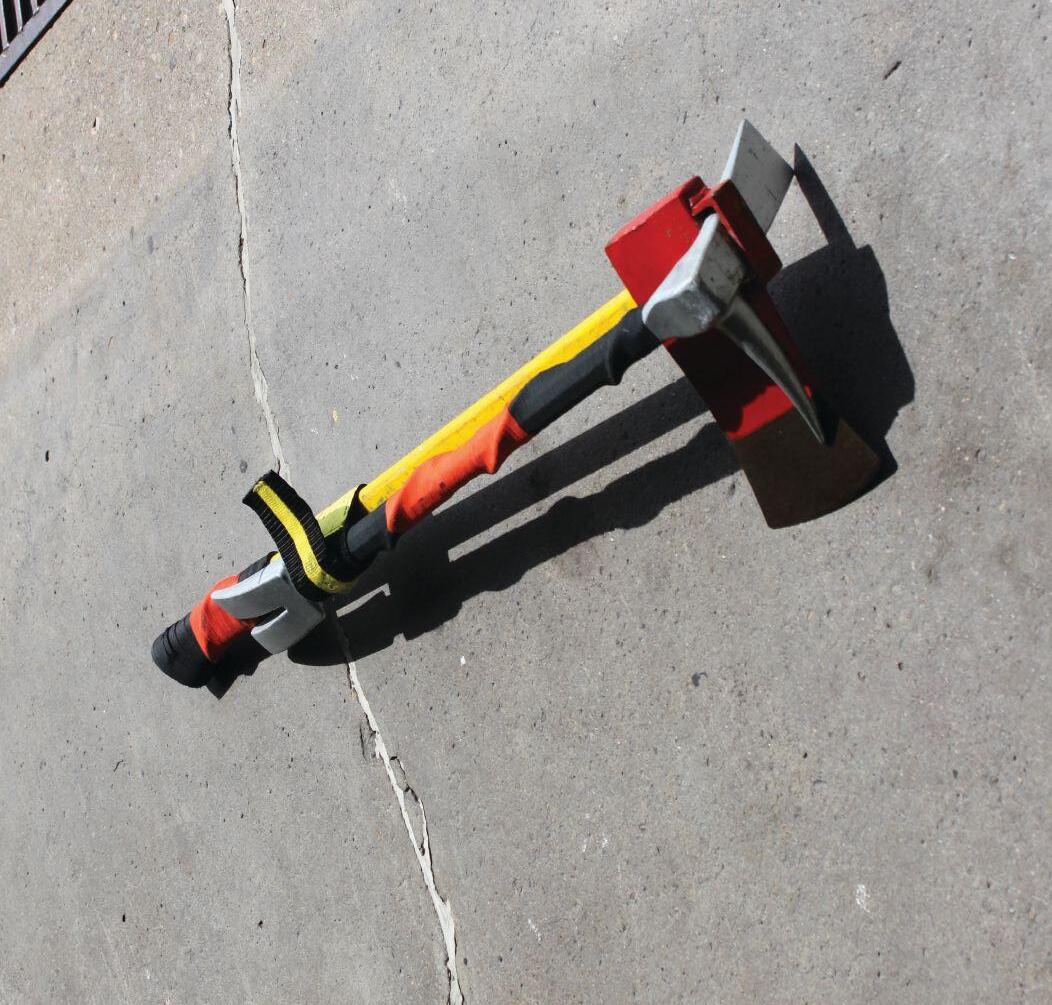
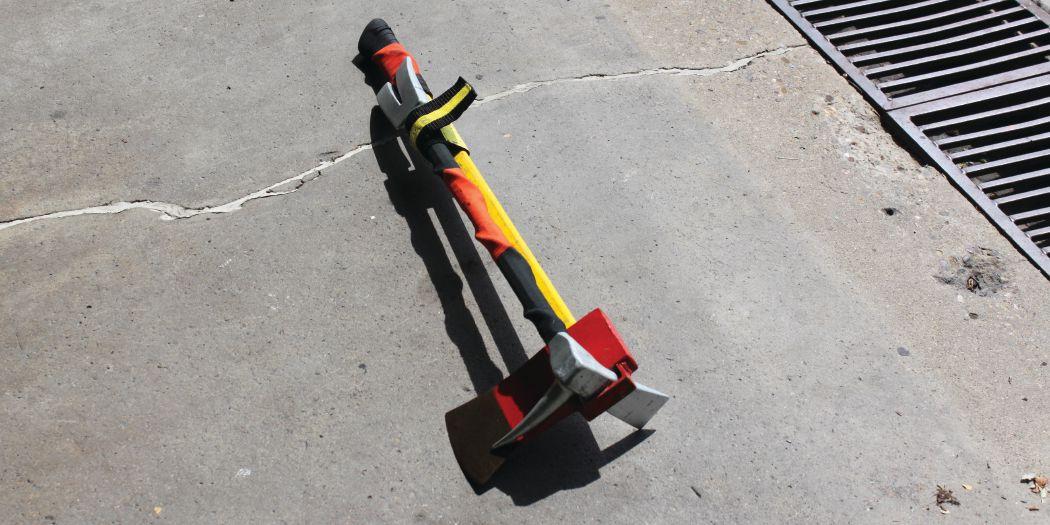
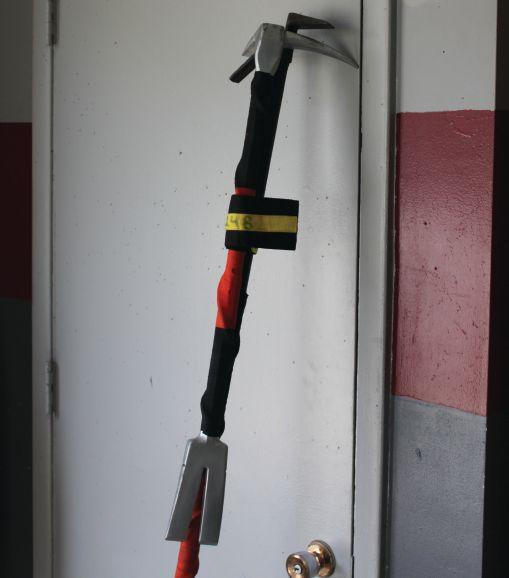
There is also the aspect of combat ready tools. This is where the fire department can have certain tool combinations pre-made or pre-arranged and then placed in a spot on the apparatus that can be quickly grabbed. Combinations like the halligan and the axe (photo 1) or the haligan and the roof hook (photo 2) are examples of this. There are many different tool variations that can be pre-arranged ahead of time.
Having pre-arranged seating assignments is also a good idea to help quicken the rescue operation. Every seat has a specified job func-
Photo 1: The combination of the halligan and the axe can help quicken a rescue
tion that is standard, no matter who is sitting in it. This cuts down the time and decision-making ability on who will do what, instead allowing firefighters to react based upon their assigned function.
TRAINING REQUIREMENTS
Training is where we can prove things. We can prove whether certain tactics will work well for certain departments, we can prove who can and who cannot do certain job functions, we can prove skill deficiencies and we can also prove gaps in service levels.
One great way to perform the proving ground is with scenario-based training. By conducting scenarios, it allows for a team approach in tackling a certain problem and opens the doors for creativity in trying to find a solution. It also helps to relate the skills being taught or reinforced to a real-life situation where things may not have gone as planned.
Key skills needed for rescue can also be practiced and maintained so that proficiency and mastery are achieved for every firefighter. It will also help build up the confidence level of each firefighter and strengthen the unity between the team. Training can be a great morale booster.
SIZE-UP INFORMATION
The last key area that can be examined is with our size-up skills. This is a vast area with different aspects that need to be considered. One area is knowing your response district and the types of residential buildings that comprise it. Knowing the common construction types, the common layouts, the average age of the homes and so on will help with creating different rescue profiles. By having these different profiles, the firefighter and company officer can gauge ahead of time what exactly they are dealing with and when the call comes in, they will have a better understanding of where they are going and what they are getting into.
Another factor that can be added into the equation of knowing the area is with the demographics. Knowing who in terms of average age, type of population – for example, seniors or students — will help with creating a rescue profile. This can be accomplished by searching for this information from local government or from just observing
the response district.
Other aspects of the size-up is with knowing common locations of where fire victims are found within the residential structure. They are usually found in exit areas such as windows or doors, on the stairs, and in the hallways, or in their beds depending upon the time of day. Knowing these common locations helps with knowing where to begin the search, which tactic to use and ultimately helps achieve an effective rescue.
Being rescue ready is not just a matter of checking in at the beginning of your shift or just responding to the call. It is a matter of continued and evolving information gathering and preparation that makes one rescue ready.
Mark van der Feyst has been in the fire service since 1999 and is currently a firefighter with the FGFD. He is an international instructor teaching in Canada, the United States, FDIC and India. Contact him at Mark@FireStarTraining.com.
Photo 2: Combinations like the halligan and the roof hook can be pre-made for ease of use
■ SOTI LAUNCHES SOTI XSIGHT DIAGNOSTIC SOLUTION
SOTI’s new SOTI XSight is a new diagnostic intelligence solution for mobile device fleets. SOTI XSight was designed to enable rapid resolution of app and mobile device issues with the aim of improving performance and reducing costs. Available as a cloud or on-premise solution, SOTI XSight is integrated with SOTI MobiControl, extending traditional Enterprise Mobility Management (EMM) capabilities with deep
IN THEWATCHROOM
analytics, advanced diagnostics and complete management of devices in the field. SOTI XSight core functionalities include operational intelligence, advanced diagnostics, automated monitoring and incident management.
■ BULLARD INTRODUCES LIGHTWEIGHT UST-LW FIRE HELMET
The UST-LW helmet features a fiberglass composite material which
reduces helmet weight by up to 10 oz, depending on specific configuration. This reduction in weight has been achieved while aiming to maintaining high standards of safety, toughness, and protection. In addition to its reduced weight, Bullard’s USTLW fire helmet includes a cotton ratchet cover, which has been developed with both durability and cleanability in mind. The helmet is being offered in a range of matte colours. Bullard UST/USTM fire helmets are equipped with the U-Fit system, offering 36 custom comfort settings, and meet and exceed NFPA 1971.
■ HURST JAWS OF LIFE LAUNCHES EDRAULIC 3.0 EXTRICATION TOOL LINE
HURST Jaws of Life has introduced eDRAULIC 3.0 (E3), a revamped version of the eDRAULIC Watertight Extrication Tool (EWXT).The eDRAULIC 3.0 is operational in both fresh and salt water, and now features a smart dashboard display that provides operators with real-time feedback on tool status.In addition to E3’s smart dashboard, E3’s new turbo function adds increased user-controlled speed, and a brushless DC electrical motor to help with efficiency and performance, an ergonomic design, and LED lights.
■
BRONTO SKYLIFT’S HIGHRISE RANGE GETS A NEW CONTROL SYSTEM
Bronto Skylift’s flagship products are highrise HLA-range aerial platforms for the truck-mounted aerial sector. These aerials all feature the Bronto+ control system. The HLA-range has featured a third generation Bronto3+, and has been upgraded to the latest and most advanced control system, the fifth generation Bronto5+. For operators, this means faster levelling, easier control of working lights, light groups and cage load, bigger displays with better visibility (even in sunlight), easier navigation, more chassis information available on screens, integrated help texts and quick manuals, as well as resistive touch screens. For the fire fighting sector, there is also an integrated fire pump screen with improved possibilities to operate the pump.
The apparatus technician and mentorship
By CHRIS DENNIS
Irecently became a member on Facebook. Not to go down the rabbit hole, but if I wanted to stay connected to my kids, grandkids, events, etc., Facebook was the way. It seemed that my friends and family were more “in the know” than I was because “the know” was posted on Facebook. Like the internet, it appears there is not much you can’t find or see these days. This includes good and bad information and an interpretation of many.
Since becoming a member on Facebook, I have also joined a couple of fire department apparatus repair groups. At first, I thought most of what I was seeing was American and there would be no comparison. Oh my, was I wrong. One thing I have learned in this walk-through-life of mine, is to always keep an open mind. Keep your eyes and ears wide open and mouth shut until you have something good to say. The fire department apparatus repair techs and EVTs (emergency vehicle technicians) in the U.S. deal with the exact same politics, repair issues, parts purchasing problems, parts inventory asset management and need to keep up with latest technology and manage the
fleet, as well as being the silent unsung heros that keeps these fire vehicles going. A tip of my toolbox lid to all of you. Keep up the great work at keeping your municipalities safe by getting the operations staff to the incident safely with the best maintained fleet for the emergency services.
One problem that has been coming for some time is the shortage of repair technicians and the lack of techs wanting to step up to take the reins to be the senior officer in charge the foreman or service manager.
In Canada, the lack of techs and succession is a huge problem. We need to be mentoring those that are already employed to become the future leaders in our trade. This is not as easy as going to your toolbox and looking for that specialty tool you purchased. This is about going into that toolbox, be it a desk or a large metal box with drawers on wheels, and finding that life-long day-in-and-day-out custom made tool you learned how to build from mentors before you. Succession planning is something
we don’t necessarily do well at in the mechanical repair field in general.
We apprentice under one or more techs until they are licensed. There is an EVT certification offered in fleet management (see evtcc. org) with a Level 1 and Level 2 EVT certification you can enroll in. This takes between three to seven years depending on your career path. During that time, you’ll think you knew it all. The mechanics I apprenticed under were old school knuckle draggers. They were not afraid to call you out and make you do it again. There were no worries about hurting somebody’s feelings or HR getting a complaint of bullying. It was the former culture and I have, and still do, work alongside some of the best fire truck repair technicians in the business, students of the hard knocks school of mechanics. A take the bull by the horns approach. Do what is needed quickly and effectively the first time. Be proud and honoured to be of service in this amazing career. I have been honoured to visit and meet many fire truck techs in my career from all over the world. I have read about and listened to many instructors at international conferences. I have taken courses after work online and courses offered by the City to make myself a better manager and team leader. Coaching happened in and out of class. I have been blessed with being both an instructor and guest speaker at conferences over the years. When I travel on vacation, I make a point to go see what the local fire department uses for equipment and compare. How much better are these guys than we are? I like to take the good away and make mine better. This is the knowledge you can’t buy or read in a magazine or a book. You can bring this back and share with your group, feeding them bits so that
maybe they do the same one day. Knowledge grows by being in the trenches, doing the leg work, asking questions and paying attention. Being involved outside the shop will assist the learning process. It will assist those wanting to be the future senior officers to become leaders in this service to bring forward new ideas and innovations.
The new generation of techs are certainly not less skilled because they are growing in a time of a different way of doing things. It’s guys and gals like me who have been on and off the bench for a long, long time that must adjust and still get the message across.
For those of you that play sports, you have been trained by a coach, a person who has “been there and done that”. You study old plays. You study other teams or teammates. You make mental notes and apply what works for you to become the best at your craft.
This industry is no different. A great thing about the fire service is that most fire chiefs have been that top player. The fire chief did not get where they are without learning a few things, making mistakes and learning a bit more. Fire chiefs need to listen to their people and create one cohesive unit, like a large Olympic team. The difference is that our Olympic team is going into competition everyday, so we always need to train and learn to stay ahead and be the best
The internal dynamics of any fire department is rank and structure. We have an ORG chart that starts with the fire chief and trickles down to specific ranks and divisions. You all know what those ranks and divisions are within your own departments. They might be laid out a bit different, but they are all doing the same function. In those divisions, senior people in charge of that unit. More rank and structure. From the newest recruit in any department to the most senior
TECHTALK
officer, there are people that have been put in charge in between to make the system work effectively. At the end of the day, it’s designed to create a well-oiled machine. The brand-new recruit, like the new apprentice mechanic, is eager and excited to get started. But don’t just sit back and figure those early learners will know what to do. Without training and mentoring they will trip and fall or possibly worse. With help, they will trip and fall but the ouch will not be so bad as they have been prepared for it.
When I look to the bigger fire departments around our department in Vaughan, Ont., I see Toronto as this huge machine with multiple mechanics trucks service bays and senior leaders. I see rank and structure and promotional routines within the mechanical division. The same can be said about Brampton or Mississauga fire departments. These departments have a program that promotes people to be better to want to excel to become a leader. Programs that continuously send their mechanics out for training on new technology or on how to be a better leader. Programs that are in no way even remotely close to the main business of a fire department, but what they we do every day: fix fire trucks. These programs must be embraced and put into play within your fire department. This really only pertains to dedicated fire department apparatus divisions, but this is where all technicians who work on fire trucks or ladders and swings can dig in and learn and want to be better than.
I remember when I was interviewed for my job so many years ago by the best group of senior fire leaders I have ever worked for,
and I was asked this last question: If we hire you what will stop you from moving onto another fire department? The answer came from within. I said, chief when you first started, you rode the tail board marred in water, salt, good and bad weather and the fear that maybe you might fall off. You held on tight because you were told by an old timer not that it would hurt if you fell off, but you will miss out on the action because we won’t stop to pick up until after. You moved up to the hydrant seat, the hose jockey, and the can man, and it was then you started training and showing the next tail board firefighter purely by example. From there you became the pump operator, the ladder operator, the engineer, until eventually you became the acting captain, the captain and one day you made it to deputy chief and then fire chief. All the way, you showed others how it’s done and shared what you learned with any who wanted to listen. I did the same thing cleaning tools and benches; doing the dirty jobs because I loved it. This helped to shape me to be the senior technician I am today. The only way you can get to this interview was to trip and fall, to learn from those ahead of me, and to be able to keep advancing. I ended with letting them know that I wouldn’t let them down. I was grateful to even be at this part of the process to think that I had enough to strike your interest and give me a chance. The rest is history. I have worked and been trained and schooled by many more since that day. I learn every day and keep an open mind.
CONTINUED ON PAGE 32
BY TINA SARYEDDINE Executive Director
Canadian Association of Fire Chiefs
FFire and emergency recommendations for the federal budget
ive years ago, Fort McMurray was the largest fire in history from an insurance perspective. In the past 1,000 days, four events have exceeded it, in both cost and magnitude” said Chief Keven Lefebvre, CAFC board member, citing information from the Insurance Bureau of Canada. To believe that the fire service of the past will meet the human, social and financial needs of the future would be a serious mistake. This was the key message in our recommendation to the federal government in response to the Minister of Finance’s “Let’s Talk Budget 2022” consultation.
In this article, we’ll provide you with some specifics, but you can find the actual submission at cafc.ca, as well as our ‘Ten Tips for MPs’, which covers other issues like the importance of sprinklers in new residential construction.
1. Invest $2.8 billion in a Federal Emergency Management Agency (FEMA) with $7.5 million dedicated to a Canadian equivalent of the US Fire Administration. We’ve recommended that the federal government consider an entity similar to the US Fire Administration, which provides fire departments with support for training, fire prevention and public education, operations management and safety, data publications and a library, and grants and funding. This body could also ensure that fire and emergency related issues across departments are interconnected substantively and interface with the fire service nationally. Finally, fire department support for messaging could help to moderate the impact on compliance of jurisdictionally appropriate variation, viewed by the public as discretionary.
2. Provide $250 million for a modernized version of the former Joint Emergency Preparedness Program (JEPP). While it’s not uncommon for many departments to start with no budget and simply raise funds for training and equipment, this is not going to work in the face of increased climate emergencies and innovation. We’ve asked the government to reinstate the former Joint Emergency Preparedness Program (JEPP) to enhance national preparedness and response capability for all types of emergencies. Providing funding on a cost-shared basis, it covered municipal emergency plans.
country in preparation for a First Ministers Meeting on wildfire. While the full slate of recommendations will be made public shortly, a key recommendation is for the federal government to ensure that standards, training and funding are in place, so that firefighters located in municipal departments can deploy for short periods of time where needed and yet, be active and trained in fire departments for other climate emergencies in other seasons.
4. Resolve definition issues in the volunteer firefighter tax credit and raise its amount from $3,000 to $10,000 to retain more volunteer firefighters. We’re asking the federal government to support MP Gord Johns private members Bill to increase the tax credit from $3,000 to $10,000 and to update the definition so that volunteer firefighter don’t face paperwork or audit issues.
5. Support the Indigenous Fire Marshall Service and a National Fire Protection Act, encourage bands to implement fire protection bylaws on reserves and resolve barriers to enforcing the National Building Codes on Indigenous Territories. Working closely with the National Indigenous Fire safety Council and the Aboriginal Firefighters Association of Canada, we are asking the federal gov-
To believe that the fire service of the past will meet the human, social and financial needs of the future would be a serious mistake. ‘‘ ’’
ernment to ensure the successful operation of the Indigenous Fire Marshall Service, to encourage and assist band leaders in implementing fire protection bylaws, to resolve issues that preclude the enforcement of the national building code and to support the development of a Fire Protection Act.
3. Provide training, funding, standards, and deployment arrangements so that individuals working in local fire departments can be deployed for wildfire emergencies. The CAFC recently had the privilege to work with fire chiefs in some of the wildfire stricken areas of our
Tina Saryeddine, PhD, MHA, CHE, is the executive director of the Canadian Association of Fire Chiefs and an adjunct faculty at the Telfer School of Management, University of Ottawa.
6. Invest $1.4 million for a ‘train the trainer’ model of awareness training, ensuring that the funds are used to scale existing training. The CAFC has been on the record with a request to building capacity that ensures all firefighters receive mental health awareness training. No one should go out into the field without this basic training. We’ve also asked for a first responder crisis prevention line.
In closing, the federal government receives thousands of recommendations for the federal budget. What’s important is to be on the record and to keep working at the issues. This is what we do.
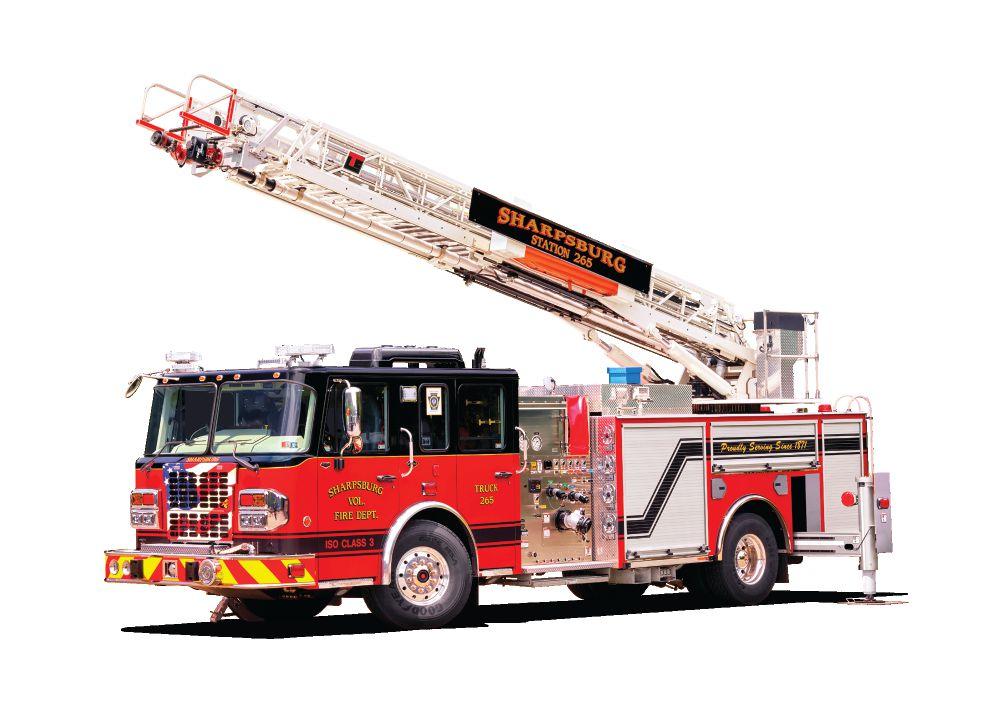
With strategic specialization and flexible solutions, Spartan ER is a proud full-line manufacturer of fire apparatus built on Spartan Fire Chassis—with expertise in aerials and steel ladders. Spartan ER intentionally engineers and builds on the legacies that firefighters trust. With their ergonomic innovations and interdisciplinary collaboration, Spartan ER offers fire crews only the best of the best. Discover how Spartan ER puts first responders first. Visit spartaner.com
BY LAURA KING NFPA Regional Director Canada
INFPAIMPACT
It’s time to embrace the first line of defence
t was a pretty remarkable Twitter post – Ontario Fire Marshal Jon Pegg, on Jan. 28, pleading with followers and anyone else who happened upon his short video to be vigilant; to install and maintain smoke alarms. In the first 27 days of January, 17 people died in home fires in Ontario, among them, three children on a First Nation, and three young brothers in a townhouse fire in Brampton.Even after Pegg posted his video, there were four more fatalities – 21 in the first month of 2022. That number seemed alarmingly high, but a year earlier, in January 2021, there were 22 reported fire deaths in Ontario.
Observationally, when fire fatalities occur, vulnerable people are often involved, and smoke alarms are often not functioning. In 2016, 2020 and 2021 there were more than 100 fire fatalities in Ontario. In other years between 2011 and 2019, there were between 70 and 95 fire fatalities. In 2021 there were 124 fire fatalities.
With technology, and robust codes and standards, why is this happening? There are many reasons; a couple stand out.
One, few jurisdictions have adopted the most recent codes and standards, which include smoke alarms in all bedrooms and sprinklers in single family dwellings. Two, behaviour change, which is the root of public education, and which is what we’re asking people to do by installing and maintaining smoke alarms and developing a home escape plan, is complex.
Indeed, behaviour change is a significant physiological and sociological challenge that requires those advocating for change to have skill, knowledge, a long-term commitment, tools, budgets, and community partnerships to work with groups such as low-income families, Indigenous people, older adults who live alone, busy families with young children, and single parents.
Why don’t we run ads on YouTube? Why aren’t there promotions for working smoke alarms at grocery check outs? Why aren’t we working with banks to include fire-safety messages in apps?
We’re stymied by the system and structure, because fire is a municipal responsibility and no single fire department has the budget or manpower to do the things mentioned above (but regions could work together), and because some chief officers are of the mindset that an inspector is of more value than a trained fire and life-safety educator,. Yet, most fatalities happen in homes, where inspectors play a minimal role.
The most important part of community risk reduction (NFPA 1300) is partnerships with organizations that can reach populations to which fire services lack access. To have a better-informed public (a key component of the NFPA Fire and Life Safety Ecosystem), we need more active fire and life-safety educators. Lots of fire departments train operations crews to NFPA 1035, fire and life safety educator, but often are unable to provide the next steps, teaching crews to work with target audiences. We need to go places we don’t normally go: door to door, talking to people face to face. It’s not easy. There are
If we don’t change the way we “do” public education, the numbers of fatalities won’t change. ‘‘ ’’
I often lament the fact that we’re all on Twitter patting each other on the back for our fire-prevention and public-education messaging (me included). Are we reaching the public and target audiences identified in community risk assessments? You all know the definition of insanity: doing the same thing over and over and expecting a different result.
Most Ontario, and Canadian, fire departments have zero to two fire and life safety educators (save Toronto and the other large, career departments). If we don’t change the way we “do” public education, the numbers of fatalities, the failures to maintain smoke and CO alarms, won’t change.
Laura King is the NFPA’s regional director for Canada. Contact her about codes and standards, and public education, at lking@nfpa.org and follow her on Twitter @LauraKingNFPA.
challenges with the application of manpower, unions, timing, logistics, and privacy.
Research shows that one-on-one conversations (from six feet away, behind masks if necessary) with people about their safety has a significant impact, far more so than a tweet or link on a website. Pegg’s plea was to the public, to be vigilant, to change their behaviour about fire safety and working smoke alarms. And although the tweet was picked up by news outlets seen by lots of Ontarians, every fire and life safety educator knows that behaviour change is not that simple.
My plea is to municipalities, AHJs and fire departments. Invest in the first line of defence, train everyone to NFPA 1035, work with associations and get more resources into vulnerable neighbourhoods, grocery stores, hair salons, arenas, parks, gyms, more coffee shops (Ontario has a fabulous partnership with Tim Hortons), soccer fields, dance studios, restaurants, corner stores, knock on doors, and break down barriers to change.Those actions will make a difference. Our Twitter posts, not so much.
TECHTALK
The future of the fire service is 100 per cent the people coming up from behind. The time you take today to mentor the future fire truck chief mechanical officer will be paid back with nothing more than being the outsider now looking in. But with your ego and pride in check, say to yourself: “Not only did I help build this department to where it is today in my division, but I have shown those up and coming what I did good and bad. I showed you the systems we work with every day. The people you answer to. The business proposals and future plans and ideas you had. How to sell what you want to the senior management team.” How do you get somebody to understand the mechanical side of this business when they have no idea? You have to teach how to speak in terms that can be understood. To be able to relate what you are trying to get across in terms the person can understand and relate too. Not to be ungrateful or speak badly about anybody or anything. The journey for the operational firefighter, fire prevention and communications personnel is understood. Not enough is known by the fire service about the mechanical trade to prepare the next person. It’s just assumed the person is doing a good job. Leave them alone, don’t ask questions or try to understand, and when the time comes the next person will do the same.
I make it a point whenever possible to engage my entire staff to participate in a decision. I encourage ideas. I give credit where credit is due. Even if I have to be the bad guy, I help my staff to under-
stand why and not leave the door closed. I learned from those that also have a “my way or the highway” approach. Those that enforce “don’t ask questions, do as I say.” I too brought some of those traits to this CMO job because that is all I knew. The workplace has changed. With this, we have to change or move on. Change does not come easy to many, but if you are not close minded, you too will understand, cope and lead by example. Those that say nothing are never heard and ignored. Those that speak up will listen and be heard.
Keep the entire department engaged. Encourage growth and advancement. Create positions within your divisions so that the staff have something to stive for, to be better at. Showing somebody how, when and why, means you want them to be part of not just a part.
My information and opinions are my own. The information imparted here are what I see and hear and operate by. Succession planning is not only for operational divisions but for all divisions. Treat the entire fire department staff with the same amount of respect and discipline and the rewards will be well worth the efforts.
Remember, stay safe my friends. Rubber side down.
Chris Dennis is the chief mechanical officer for Vaughan Fire & Rescue Service in Ontario. He can be reached at Chris.Dennis@vaughan.ca.
Parenting resiliency in our first responder children
As first responder families we are in challenging times and our first responder children are feeling the impact
By KIMBERLY WILLIAMSON
As first responder families, we are in challenging times and our first responder children are feeling the impact. Grief, stress and anxiety are some of the main emotions I hear from our first responder children and our first responder families right now in my clinical and coaching practice.
In these challenging times of uncertainty, it’s essential we take care of our own emotional and mental health so we can be there to hold, support and help our children process what is happening around them.
Co-regulation is being with our children when they are having big emotions and not acting in ways we approve, such as yelling or throwing things. It is being able to stay with our children — holding space for them with a calming presence. Responding to our children in a warm and comforting manner in the moment of their big emotions and behaviours. It means we give our children a safe place to process their thoughts, feelings and behaviours, while in relationship with us. While I do not believe in time outs for children, I do believe in time outs for parents.
In my online program, we discuss strategies to develop emotional literacy, our ability to understand, express and manage our emotions, in our first responder family. It starts with an awareness of what we are feeling, giving ourselves permission to create space to feel and process, rather than acting out on the ones we love, snapping at our chil-
dren or being irritable with our spouse. In paying attention to what we are feeling and experiencing in our bodies, we can notice when we are starting to get stressed. Signs could be breathing rapidly, holding our breath, clenching our fists, muscle tension, hot in our face or a knot in our stomach. Our body gives off signals similar to our car flashing the indicator light when we are running out of gas.
Paying attention to our stress signals empowers us to choose to take ourselves to a time out, to calm our central nervous system, before we turn into Hulk mode. We can choose a calming, nurturing and soothing activity to reduce our
stress such as going outside on the deck to do deep breathing in the fresh air, listening to calming music, jumping on the trampoline, chopping firewood or having a warm bath.
Right now, maybe you’re feeling stressed, thrown into a new world of homeschooling, one you didn’t choose, feeling overwhelmed keeping up with this one more thing added to your already overflowing plate. Maybe you worry about doing it ‘right’ and your child falling behind.
Truth bomb: The most important thing your children need right now is to be in an emotionally safe home with connected, calm, loving parents. Bigger
Making space for big feelings in our children involves parenting from a place of emotional literacy within ourselves.
truth: Our children can’t learn well without it and we cannot perform as well at work when we are dysregulated.
It is physiologically difficult to focus, retain and learn information when we are stressed.
One of my all-time favourite quotes is by Hank Smiths: “Thinking of a child as behaving badly disposes you to think of punishment. Thinking of a child as struggling to handle something difficult encourages you to help them through their distress.”
As parents, we have a responsibility to self-regulate before we can co-regulate with our children. Our children need us to co-regulate with them before they can learn to self soothe themselves.
Oh, and if you have already lost it and flipped your lid at least once today, it’s okay, we are human! Dust yourself off, take some deep breaths and try again! You got this. If you are interested in extra support for you to meet your first responder family’s wellness and resiliency goals, the First Responder Family Wellness Center is offering individual online coaching sessions, so consider
booking a free consultation at kimberlywilliamsonrsw.janeapp.com.
* This is an abridged version of the article originally published on the First Responder Family Wellness Center blog. Read the full version at www.firstresponderfamilywell -
Kimberly Williamson is the founder and CEO of First Responder Family Wellness Center. Contact her at kim@firstresponderfamilywellnesscenter.com.
Parents need to self-regulate before being able to co-regulate with thier children.
BY TOM DESORCY Fire Chief Hope, B.C.
MVOLUNTEERVISION
Raise your game
any have heard me say that “it’s always fun to practice, but you like to play a game once in a while.” So, in keeping with the sports reference, how is yours? Your game, that is. Is it at the level you want it to be or is there room to move up? I would hazard a guess and say there’s always room.
I have spent the last 22 years in a leadership position with the same fire department, bringing it from three organizations into one, and watching as generational change helped create the service that we have today. I’m happy to report that I’ve seen our game go in the right direction.
The idea around raising one’s game is all about change. A topic that for some is difficult to undertake. However, if it’s positive and for the better, then it can easily become game changing.
The one thing I’ve found when you up your game to another level is that there is no room to go down. Climb up another rung and that’s where you stay. In fact, there really is only one direction and that’s up. Start to do something more in your fire service response and it becomes the norm, especially if it makes you better.
Granted, like many small-town fire departments, we are simply not able to do it all. Over the years, however, we have grown and gradually added skills, putting ourselves in a position to play at a higher level. In the beginning, I quickly realized that the members needed to drive that change. I simply just had to be there with support and resources as necessity is often the road map to change. Recognizing as well that necessity may be the talent, but execution really is the skill.
with a request for change. We set up the training and protocols and began to license our members as medical first responders. We gradually added more equipment and training, and our ability to make a difference increased along the way. It wasn’t about adding more to our plate, we simply made ourselves better and, in turn, raised our game.
Another example was when we created a weight room in one of our fire halls. Believe it or not, there is still a generation out there in the community that looks upon the addition as if it were a gym in a fancy hotel. Truth be known, we took a room with a pool table and social space and turned it into a workout space. The obvious positives are physical fitness and mental wellbeing of our members. The extra is the fact that people are often at the hall for workouts and ready to respond.
Communities grow and levels of service grows along with it. Once you and your team recognize the need for change, it makes it that much easier. Proof is justification and you will find out that the smallest of alterations can make a huge difference. Think of the time you got rid of the 1970s turnout gear and joined the 21st century with new stuff. That memory reminded me of the time when, as a minor hockey player, we received our first team jerseys. Was that ever a big day. We
Proof is justification and you will find out that the smallest of alterations can make a huge difference.
A prime example for us from an operational perspective is the fact that historically our department has not always been involved in medical first response. Trying early on to move in that direction turned into a “I didn’t sign up for this” moment. As time and members moved on, we did, however, begin responding to public assists with the paramedic service until one time a routine assist became more serious and our people were simply unable to help out any further, as it was outside our scope of practice. This turned out to be the tipping point.
The members felt as though their hands were tied and came to me
Tom DeSorcy became the first paid firefighter in his hometown of Hope, B.C., when he became fire chief in 2000. Originally a radio broadcaster, Tom’s voice could be heard in the early 1990s across Canada as one of the hosts of Country Coast to Coast. Tom is very active with the Fire Chiefs’ Association of British Columbia as communications director and conference committee chair. Contact Tom at TDeSorcy@hope.ca and follow him on Twitter at @HopeFireDept.
may not have realized it at the time but it raised our game.
Handing over the wheel that drives the need to change does make your job easier. The fire chief doesn’t always have to come across as the idea person or the one that always looks for a better way. Obviously, we all know you do, but it’s an easier sell when those better ways come from within. The good leaders bring those ideas to the forefront.
Changing or more importantly, raising your game is simple and with little improvements you can easily step it up a notch. It doesn’t take monumental or drastic moves to create game changing results. Even with a little out of the box thinking, improvements can and will come. The key to change is the recognition and appreciation of what it does or, more importantly, what it can do for your department. From morale, to response and service provision, change helps keep your team in the win column.
Supply chain slowing your fleet updates? Lost a truck in an accident? Don’t wait two years for your new fire apparatus. Commercial Emergency Equipment has Canada’s largest selection of in-stock fire apparatus with 80+ Pierce and MaxiMetal Tankers, Pumpers, and Aerials available in Canada & the US for immediate delivery. Commercial also has a complete catalog of used and lease-return trucks available. Contact an Apparatus Specialist at Commercial Emergency Equipment today to discuss your next truck.