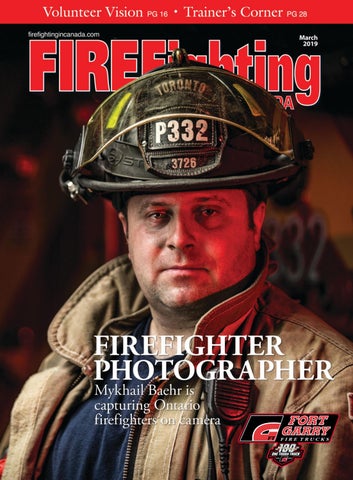
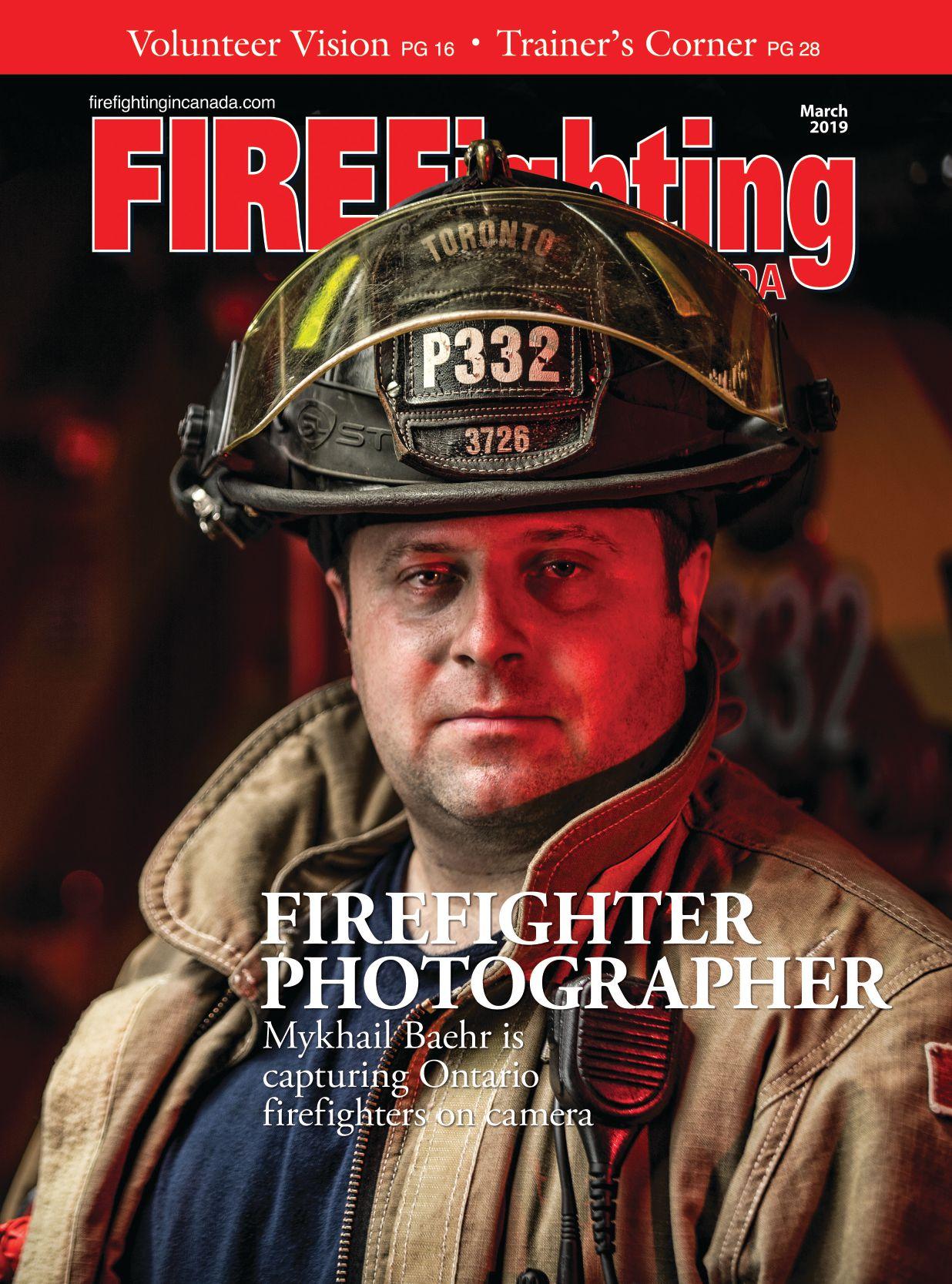
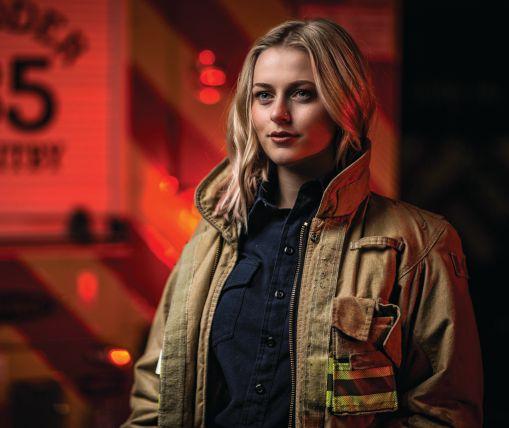
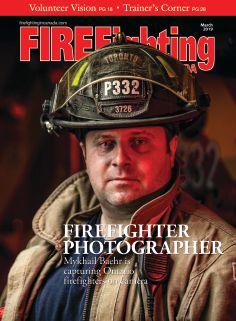
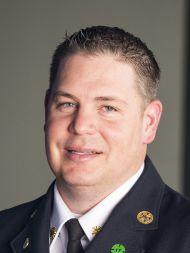
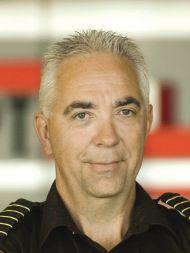
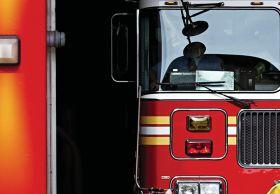
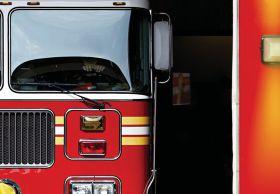
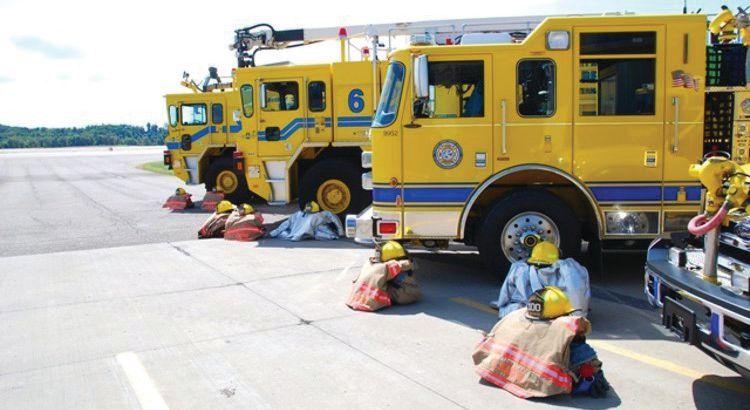
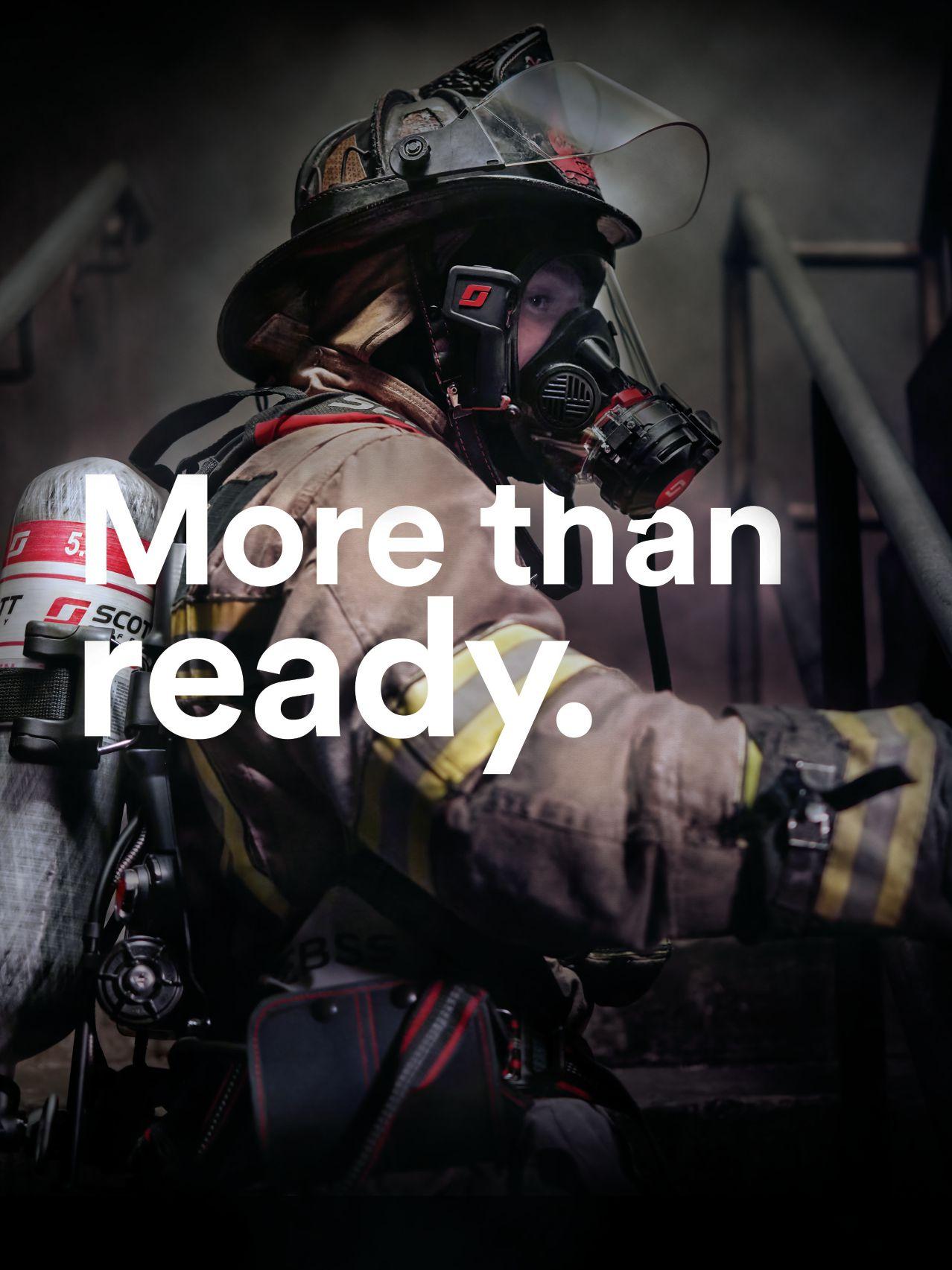
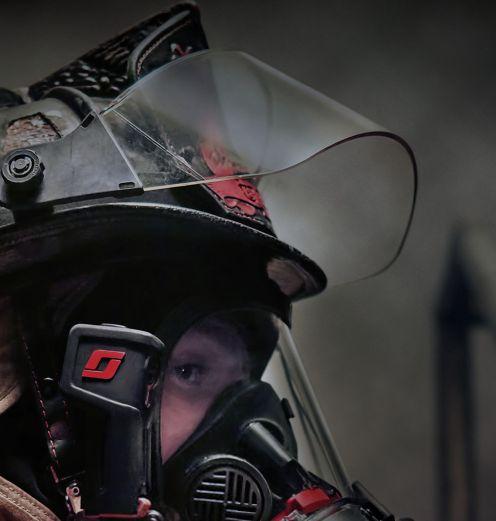
Mykhail Baehr, who serves on the Toronto Fire Services team, has managed to combine his firefighting career with his passion of photography. He visits fire halls and departments on his own time, shooting individual portraits of crew members and group shots
14
OAFC LABOUR RELATIONS SEMINAR
Fire service leaders and HR personnel attended the Ontario Association of Fire Chiefs labour relations seminar in Toronto on Jan. 23 and 24 to get a rundown on the latest legal and bargaining developments and lay of the land on a variety of subjects.
18 SWITCHING SIDES
When Peter Simpson was CEO of the country’s two largest homebuilding industry associations he was against requiring sprinklers in new homes. Now that he’s a firefighter, he’s changed his point of view.
BY GRANT CAMERON Editor gcameron@annexbusinessmedia.com
E
COMMENT
Preventing wildfire tragedies
verybody, it seems, has an opinion on how to stop wildfires.
U.S. President Donald Trump famously weighed in last year, suggesting that California should copy Finland in raking forest floors to prevent them.
But let’s not go there.
In this column, I’d like to write about some intelligent recommendations that were put forth by a team of researchers at the University of Calgary Schulich School of Engineering.
Wildfires are part of life in Canada. Always have been. Always will be.
Last season was an exceptionally busy year, especially for wildland firefighters in Ontario and British Columbia.
Ontario experienced one of its busiest fire seasons in the province’s history, with more than 1,000 wildland fires.
Association of Fire Chiefs. It made a number of recommendations on how such fires can be stopped or slowed.
The team found destruction of many buildings in Fort McMurray and Slave Lake could have been predicted based on the nearness of trees and vegetation to residential neighbourhoods.
ON THE COVER
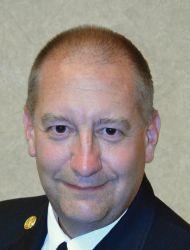
Mykhail Baehr of the Toronto Fire Service has managed to combine his firefighting career with his passion of photography. He visits fire halls and departments to shoot portraits. See story on page 8.
B.C also had a tough year. It was the second worst in the province’s history, with fires burning more than 9,450 square kilometres of land.
The question, then, is how do we prevent wildfires from spreading and causing devastation to communities?
Researchers at Schulich believe they have an answer.
The team used spatial satellite images to study the devastating 2016 wildfire in Fort McMurray and a 2011 fire in Slave Lake that resulted in evacuation of 15,000 residents.
Purpose was to determine how civic design and planning can fuel or prevent the spread of wildfires.
The study was sponsored by the Canadian
Researchers also determined that buffer zones around the communities were vulnerable because there was forested area within them.
The study concluded there needs to be more wide, open spaces around communities to prevent catastrophic wildfires.
According to the study, placing ring roads, and schools or businesses with large parking lots near wooded areas on the edge of a town would act as a firebreak and prevent the spread of wildfires.
By the same token, stands of trees and bushes left in buffer zones for aesthetics is a bad idea in areas that are prone to forest fires.
Seems logical to me. Forty per cent of Canada is covered in trees and an average of 7,000 fires burn 2.5 million hectares of land across the country each year. If humans are going to reside in areas prone to wildfires, we have to come up with a safeguard.
The recommendations from the recent study might not be a cure-all for the problem, but they’re certainly a start.
ESTABLISHED 1957 MARCH 2019 VOL. 63 NO. 2
EDITOR GRANT CAMERON gcameron@annexbusinessmedia.com 416-522-1595
Occasionally, Fire Fighting in Canada will mail information on behalf of industry-related groups whose products and services we believe may be of interest to you. If you prefer not to receive this information, please contact our circulation department in any of the four ways listed above.
All advertising is subject to the publisher’s approval. Such approval does not imply any endorsement of the products or services advertised. Publisher reserves the right to refuse advertising that does not meet the standards of the publication. www.firefightingincanada.com
PHOTO BY MYKHAIL BAEHR
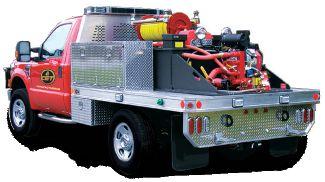
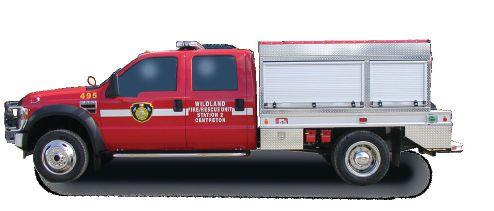
NO HYDRANTS, NO PROBLEM
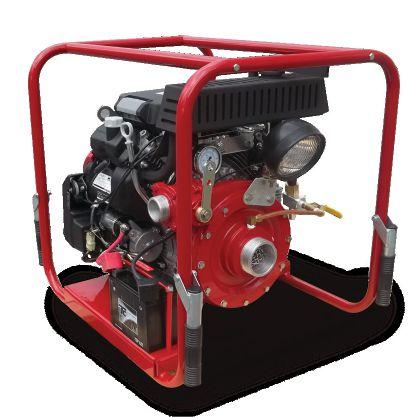
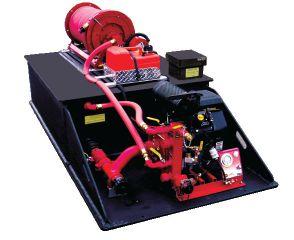
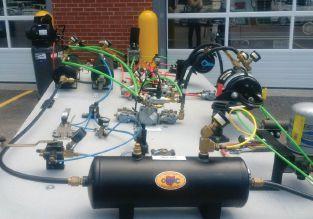
CET manufactures portable pumps, skid units, brush trucks and more to allow fire departments to Adapt, Improvise & Extinguish fire in almost any scenario where hydrants are scarce and static water resources maybe all you have to work with. CET- Providing fire ground solutions since 1908.
1
Portable Pumps (PFP-20hp-HND-MR Shown)
50+ models to choose from for both fire attack & resupply operations from static water sources like lakes, rivers, ponds and pools
Arrives Completely pre-assembled, pre-plumbed, pre-wired and pre-tested ! Simply mount to your chassis, connect electrical and go fight fire!
Brush Trucks (Custom Built)
Solid/Affordable/Practical
STATIONtoSTATION
ACROSS CANADA: Regional news briefs
Diversity champ says fire service needs to be more inclusive
Diversity and inclusion are popular buzz words these days. But could the fire service benefit from a more varied and multifarious rank and file?
The answer, according to Michael Bach, founder and CEO of the Canadian Centre for Diversity and Inclusion, is a resounding yes.
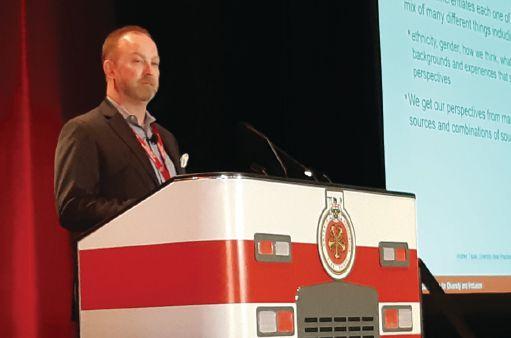
He told those at an Ontario Association of Fire Chiefs (OAFC) labour relations seminar in Toronto, Ont., on Jan. 23 that there is a strong business case to be made for having a more inclusive fire service.
“This is something we need to be focused on every day,” he said during a morning presentation at the seminar. Bach, a nationally and internationally recognized thought leader and expert in the fields, noted that Canada’s workforce is changing with more women and myriad cultures, yet most fire service leaders are still white males.
He said research has shown that organizations with high diversity are more engaged with their communities, so it makes sense for fire departments to reflect the diverse nature of the workforce.
“You need to choose to be a diversity champion,” he said. “You need to be a change agent. You need to wake up and say, ‘We want to make this a different place to work.’”
Bach outlined how the fire service can become more inclusive, one way being for leaders to look at their departments through a “diversity lens” to determine if there are policies that prevent diversity.
That, he noted, includes being willing to receive some honest feedback from others.
To make a workforce more inclusive, Bach suggested that fire service leaders do some self-reflecting and become aware of their own biases.
THE BRASS POLE
Promotions & appointments
In October 2018, DAVE BURNS was promoted to the position of assistant fire chief with the Surrey Fire Service in British Columbia. Dave has worked as a suppression firefighter with Surrey Fire for more than 29 years and
previously held the rank of captain. He was the union vice president for 10 years and has been very involved in developing the wellness and peer support initiatives both within his department and with the union. Burns brings a wide variety of experience and skills to his new position and will support the efforts and progressive direction of the Surrey Fire Service into the future.
Michael Bach, founder and CEO of the Canadian Centre for Diversity and Inclusion, led a session aimed at making the business case for a more inclusive fire service.
“We’re all biased,” he said. “There’s no way to avoid it. That’s how our brains work. In order to have an inclusive workforce you have to be aware of your own biases.”
Bach said people tend to have internal, external, organizational and global dimensions that affect how they view the world, and therefore automatically slot
Kingston Fire and Rescue captain KEVIN WELSH is the Town of Renfrew, Ont.’s, new fire chief. He was chosen from a field of 25 candidates. Renfrew town council agreed to hire Welsh, who has been with Kingston Fire and Rescue for the past 24 years. He said he’s looking forward to working with the “incredible team” in Renfrew.
people into groups based on just one characteristic.
To overcome that, Bach said, fire service leaders need to frame their perceptions and accept that they do have biases and view people differently.
“You need to surround yourself with difference because that’s how you’ll learn about difference.”
– Grant Cameron
Agassiz, British Columbia firefighter MICHAEL VAN LAERHOVEN will be filling the role that was vacated recently by Gerald Basten. Basten had become the fire chief after Wayne Dyer retired in December 2018. Van Laerhoven will be responsible for emergency management and fire protection services for the District of Kent, Seabird Island and Harrison Hot Springs.
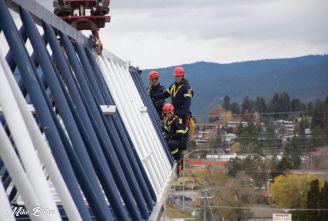
High angle rescue team holds practice on tower crane
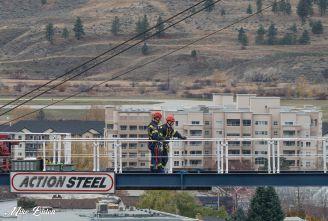
The high angle rescue team of the Penticton, B.C., Fire Department held its annual tower crane practice in November 2018. Training took place on a permanently installed crane in the metal yard of Action Steel, a local business.
The team trained for the rescue of a person from, on, or within a crane structure.
The rescue could be anyone from a crane operator with a medical emergency or an unauthorized thrill-seeker.
The construction industry in Penticton has been very busy in recent years which has sparked an increase in crane sites around the city.
During the training, rescue scenarios are performed on a number of areas on the crane.
“We train on the jib, the outside of the
mast and within the climber’s frame so that we can be ready for different types of incidents,” said Jay Johnson, high angle team member.
The high angle rescue members go over brake shutoffs and general parts and pieces
of the tower crane.
“It’s part of our job to be familiar with the different types of cranes within our response jurisdiction,” said Johnson.
There are 12 Penticton firefighters on the high angle rescue team.
– Penticton Fire Department
P.E.I. extends presumptive coverage to firefighters, fire inspectors
Prince Edward Island firefighters and fire inspectors now have presumptive coverage for specific types of cancer and heart injuries as a result of amendments to the Workers Compensation Act that took effect Jan. 1.
“This coverage will offer much needed care to many firefighters who may encounter serious health problems resulting from the valuable work they did to protect their communities,” said Stuart Affleck, chair of the Workers Compensation Board. “The legislative and regulatory changes ensure that if a firefighter or fire inspector develops
specific diseases or heart injury, it will be presumed that it is work-related.”
Eligible firefighters include fire inspectors and full-time, part-time and volunteer firefighters who are members of a fire department or brigade.
The presumptive coverage is based on the following principles:
• Specified injuries or diseases are presumed to be work-related.
• Presumption would apply to firefighters who experience a heart injury (such as heart attack, cardiac arrest or arrhythmia) within 24 hours of responding to an emergency.
• Presumption would apply to specific types of cancers, provided the firefighter had been exposed to the hazards of a fire over the minimum cumulative period of employment.
The following cancers are included in the presumption: brain, bladder, colorectal, esophageal, leukemia, lung, kidney, non-Hodgkin, testicular, ureter, breast, multiple myeloma, prostate and skin. For primary-site lung cancer, the presumption applies only if the firefighter has been a non-smoker for 10 consecutive years prior to the initial diagnosis.
– Canadian Occupational Safety
MICHAEL HILLIARD has been a firefighter for 28 years and was recently named chief of the Albert Bridge Volunteer Fire Department in Nova Scotia. Hilliard is taking over from Jasmin Collins, a teacher who has been with the department for 18 years and served as chief for 10. Collins, the first female fire chief in the Cape Breton Regional Municipality, is taking a leave of absence to complete
a master’s degree. Hilliard said it was a “team effort” to figure out who would fill her shoes.
Hilliard is looking forward to his new position.
Retirements
Orillia, Ont., Fire Chief RALPH DOMINELLI is retiring after 33 years in the fire
services. His retirement will be effective April 30, 2019. Dominelli started his career as a volunteer firefighter with the City of Orllia in 1986. After a short time with the Toronto Fire Service, he returned to Orillia as a full-time firefighter for the City of Orillia in 1993.
Rising through the ranks, he has served the City of Orillia as a lieutenant, captain, deputy fire chief and fire chief. He became fire chief in 2008.
Brandon Fire & Emergency Services Chief BRENT DANE retired on Feb. 1, 2019. Dane began his career with the City of Brandon in Manitoba as a probationary firefighter in 1983 and spent 18 years moving up the supervisory ranks of the department. Dane became the department’s deputy fire chief in 2001. He became fire chief of the department in 2005.
Penticton, B.C., is seeing an increase in crane sites around the city so crane training has become more important.
There are 12 firefighters on Penticton, B.C.’s high angle rescue team.
Firefighter Photographer
Portraits capture stories and personal experiences
of those within the fire service
By JAYSON KOBLUN
Finding a career that pays the bills and fulfills your passion at the same time can prove difficult. Mykhail Baehr has managed to combine two; fire fighting and photography.
Baehr, or “Bear” as he prefers, was born and raised in Toronto. He serves on the Toronto Fire Services team and calls himself an amateur photographer. Bear started a project that he refers to as his Firefighter Portrait Series. On his own time, this fire-
fighter/photographer visits fire halls and departments, shooting individual portraits of crew members and group shots of those willing to participate in the project.
“One of my favourite parts of the project so far has been seeing the character that it pulls out of an individual when I’m working with them. Everyone has a different story to tell and their own unique experiences within the fire service and I’m trying to get that across on camera.”
Bear says the look on a firefighter’s face
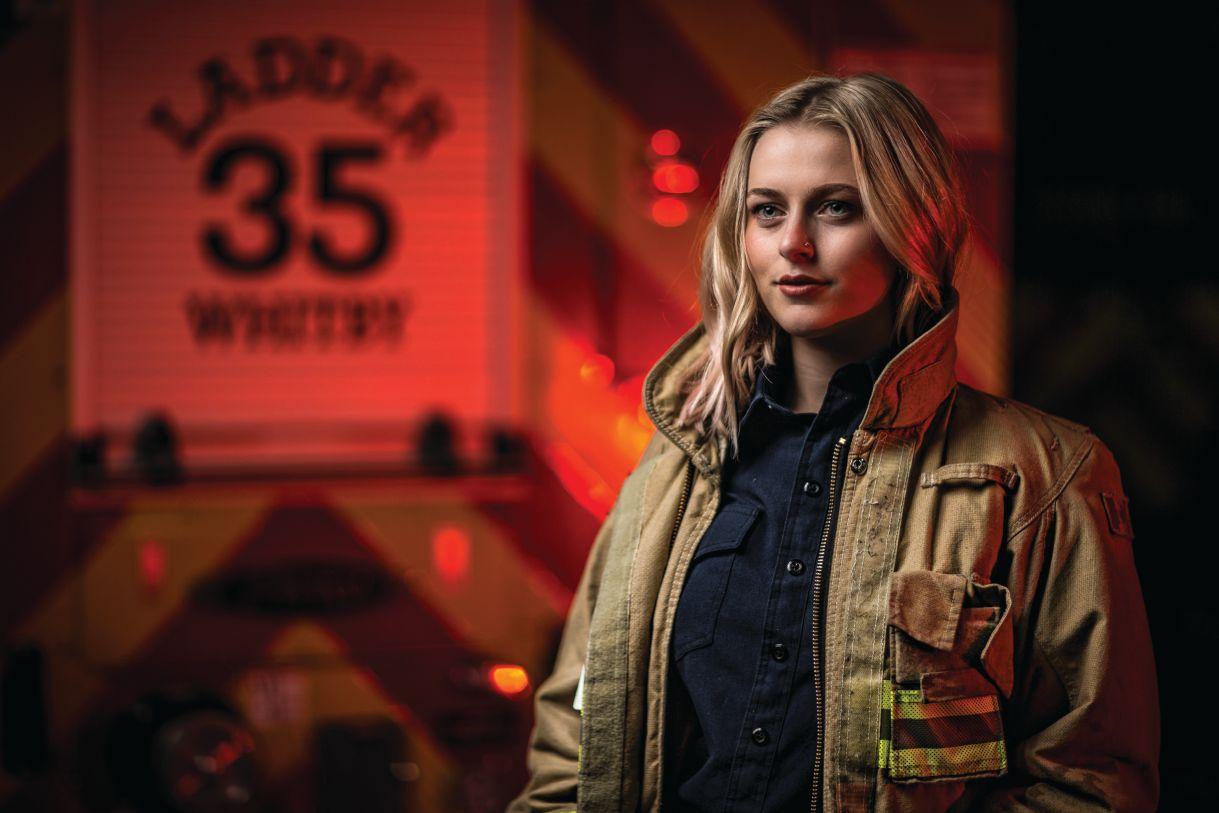
TOP Jacqueline Mowat of Whitby Fire & Emergency Services
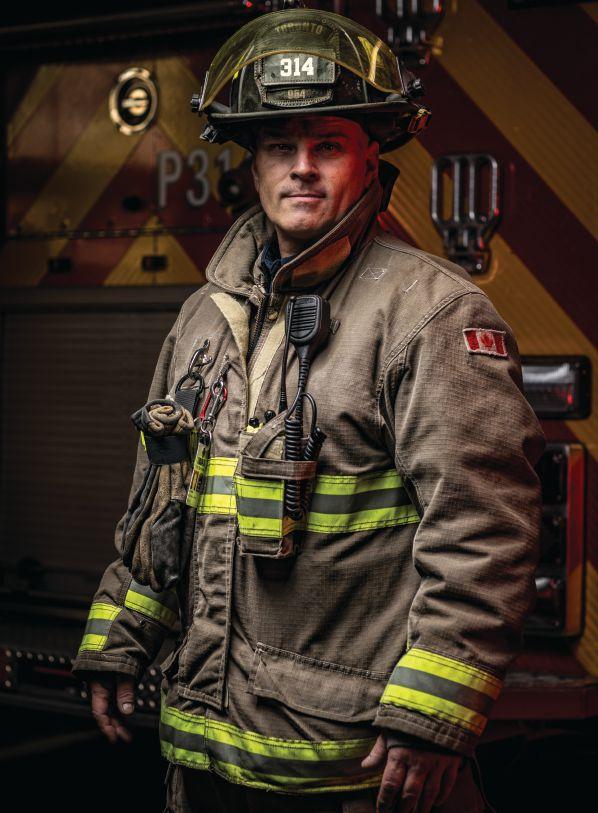
OPPOSITE Rob Fitzgerald of Toronto Fire Services
is very telling about that individual and you can almost get a feel for what they have gone through in their life and career.
“I love seeing how different life experiences translate into a portrait. You don’t quite know what you’re going to get. Sometimes I look at the roll afterwards and I think, “Man, it looks like this guy has fought the beast several times in his life.’”
Bear takes the firefighter’s comfort to heart and does what he can to gauge his or her comfort level in different poses. He wants to make sure the firefighter is coming across as natural as possible.
“I take a few photos of them smiling, then not smiling, then facing the left and then the right. I really try to allow the firefighter to just be themselves,” he says. “Some people look artificial when they’re smiling and some people just look way more authentic and themselves when they aren’t. Some have this natural smirk or smile that’s just a part of their story – some don’t. Some firefighters come across as stoic, battle-scarred soldiers and that represents them well. Whatever tells their story best is what I want to capture.”
The project started about a year and a half ago. One of Bear’s department chiefs, who knew he was into photography, asked him to take portrait shots of another firefighter who was retiring as a retirement gift. The chief and retiree were good friends and the chief wanted to give the retiree a gift to remember.
“The first portraits I shot were of a firefighter who was retiring after working in the industry for more than 30 years. From there, the project really began to grow and take off as people really liked how the first portraits turned out,” says Bear.
The Firefighter Portrait Series is not Bear’s first photography gig. He has shot firefighter calendars before and has played with lifestyle and wildlife shoots. Over time, Bear developed a skill for using different lighting techniques that create the perfect environment and mood for his fire hall settings.
“I started playing around with different types of lights and found I was creating a really cool effect on the firefighters I was shooting. So, I became a lot more curious and confident and creative in the project and been having a lot of fun with it.
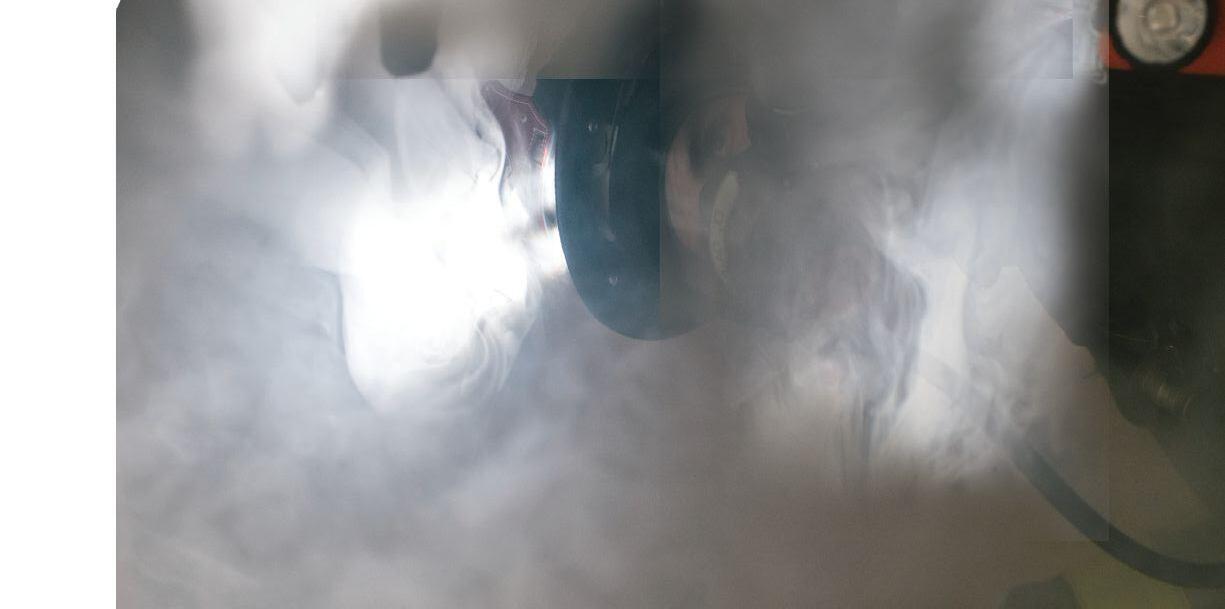
“I’m purposefully trying to make you not focus on the background. I want you to notice and care for the firefighter right off the bat. I try to have the background and environment just gently lit so it’s a part of the photo, but not the first impression. So, I keep it dim for that reason. I like dark and mysterious, heavy shadows and dramatic lighting. I use a lot of red because that’s often the colour at an emergency scene and it is relatable and memorable to the service.”
Bear says the idea behind the project is to showcase the men and women of the fire service. Career, volunteer, chief, it doesn’t matter.
He says the project started with the Toronto department because he already knew it well. But he has branched out more and more lately, shooting portraits and crews in Whitby, Ont., and other places in southern Ontario.
“I’m starting to get requests from departments farther away now and I am really excited about that. I want to do more departments in Ontario and I even hope to take this project to other provinces and the U.S. eventually. Right now, I’m getting the project out there and hoping more firefighters and departments show interest.”
Gathering interest doesn’t seem to be a problem for Bear and he credits a lot of that to his influence on social media, specifically Instagram, a photo- and video-sharing social networking service that works best on mobile devices.
“Instagram is giving me a lot of exposure. I think Instagram is great for this portrait series because the service is all about photos and imag-
es. Not much room for words or links. It’s a community of people who use it to mostly look at photos. It’s perfect for what I’m doing. A lot of firefighters and departments follow me online and like my photos. Or, they message me through the app and we start talking. If they’re interested then they ask me out to their department for a shoot.”
Bear didn’t start the portrait project for the money. He hopes he can take what he is passionate about and create something unique for the fire service to be proud of.
“If I’m just doing the portraits I usually ask the department to compensate me for my mileage or to buy me some food or drink for the length of the shoot. I’m not doing the portraits solely for money. This started out of a passion of mine and I love to do it.”
While Bear does portraits for the love of the art, he does sell various packages that departments can purchase. His packages include portraits, shots of the department, the hall, trucks, individual firefighter gear and larger-scale planned and developed shoots. The easiest place to reach him or check out his packages is to follow him on Instagram by searching his social media handle: @myschabear.
As a long-term goal, Bear says he isn’t sure what he wants to do with the project but does know he wants to see it in some form of print.
“A short-term goal of mine is to take the portrait series farther than just near and around Toronto. But long-term, I was thinking, ‘What am I going to do with these photos?’ I wasn’t sure how to get the material out in a meaningful way and I was thinking I should turn it into a coffee table book.”
Bear sees the coffee table book simply including the photos.
“No names, no descriptions, just great photography that tells its own story of the faces behind the fire service. Can’t say for sure how it might look yet, or if that’s even the medium I would decide to go with, but it’s something I’ve thought about for sure.”
STATIONtoSTATION
BRIGADE NEWS: From departments across Canada
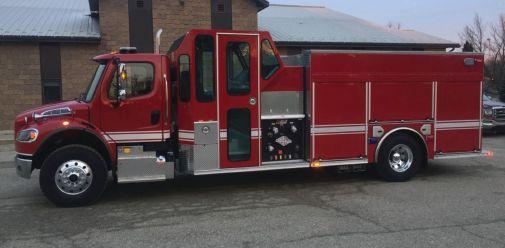
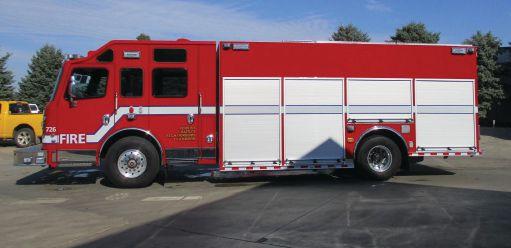
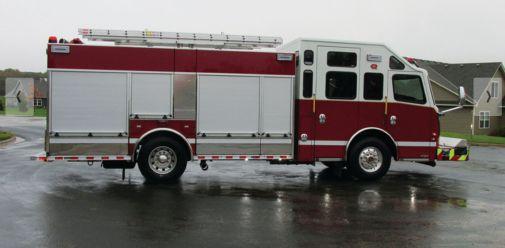
The fire department in the Township of East Zorra, Tavistock, Ont., took delivery of a pumper from Fort Garry Fire Trucks. The pumper has a freightliner M2-106 2-door chassis and is constructed from Alum 5083 (Salt Water Marine grade). Other features: enclosed 4-man Crown Pump house with HVAC, Hale QFLO 1250 with Akron valves, Federal Signal emergency warning light package, Amdor roll-up doors with drip trays, Knight Command light with FRC Spectra lamp heads, Federal Signal back up camera.
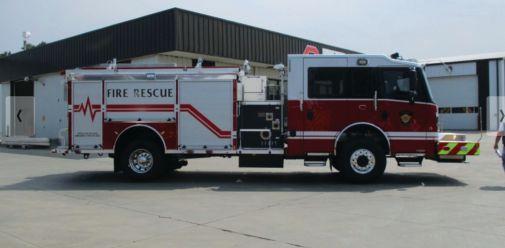
The Cree Nation of Nemaska, Que., took delivery of a new custom top mount pump pumper from Rosenbauer America. The truck has a Cummins 450-hp engine and an RBM Commander chassis. It is single axle, has a top mount pump and the pump model is NH55.
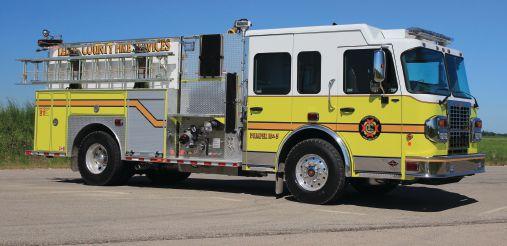
Leduc County in central Alberta took delivery of a new pumper from Fort Garry Fire Trucks. It has a Spartan Metro Star chassis and Cummins L9 380-hp engine with an Allison EVS 3000 transmission. It is a side and rear MXV pumper and is constructed of 5083 aluminum. The pump is a Darley PSP 1250 USGOM/1050 IGPM. Other features: MXV Body with Amdor roll-up doors and FGFT pan doors, Spartan Metro Star MFD 10-inch raised roof, Zico electric ladder.
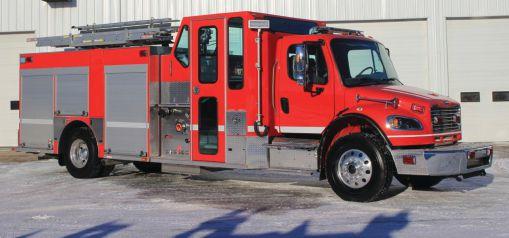
Fort Garry Fire Trucks recently delivered a pumper to the Red Deer County fire department in Alberta. The pumper has a freightliner M2-106 2-door chassis and is constructed from Alum 5083 (Salt Water Marine grade). Other features: enclosed 4-man Crown Pump house with heating, Hale DSD 1250 with Elkhart valves, TFT Hurricane Monitor, Warn Winch, Federal Signal emergency warning light package, FRC Spectra push up lights, Amdor roll-up doors, Zico overhead ladder rack.
Fire
Services
The Regina Fire Department in Saskatchewan took delivery of a brand new rear mount pumper from Rosenbauer America. The pump was manufactured by Waterous and has a Cummins 450-hp engine and sits on an RBM Commander chassis. The pumper is single axle. generator.
Edmonton
Rescue
in Alberta received delivery of a new custom chassis non-walk-in rescue truck from Rosenbauer. Features: FX body, Cummins 450-hp engine, RBM Commander chassis, single axle.
CREE NATION
TAVISTOCK
LEDUC
RED DEER COUNTY
EDMONTON
REGINA
BY CHRIS HARROW Fire chief Minto, Ont.
ELEADERSHIPFORUM
Avoiding the pitfalls of an online presence
very day we see people walking around with a device in their hands. Whether it is a phone or tablet, people are more connected than ever.
Many fire-service leaders have adapted quite well at communicating online. However, many have fallen into the traps of having an online presence. Leadership traits can not be forgotten when leading through your online persona.
Used properly, your online presence can be a very valuable leadership tool. Used improperly, it can sink your career in a hurry.
Many fire-service leaders have extensive online presences. They are constantly communicating with the public and their firefighters, offering leadership advice and firefighting knowledge.
I have learned many things following different feeds online. However, I have also seen a lot of missteps and traps leaders have fallen into. These traps can quickly undo years of work building up your image. Below are some of the common traps leaders fall into communicating online.
Embellishing: Many leaders portray things they or their department have accomplished or methods they utilize, even though they don’t. Stretching the truth or stating items that are not true will be discovered in a hurry. With so many familiar people following your social media feeds, there is no hiding the truth. Too many leaders stray from the truth, causing many of their firefighters to immediately lose respect for them. Firefighters know what happens and what doesn’t. They will respect you for bragging about their programs and their accomplishments. They will also be very disappointed in telling the world about items they know are not true about their department. Leaders need to be careful to not create an ideal department that is perfect in every way, when in reality their department is far from perfect.
forward. A leader is always seen as a professional even when they are posting late on a Saturday night. A good rule of thumb, if you are on your fourth glass of wine, don’t go online.
Opinionated: As mentioned previously, you are always a professional in the fire station and online. If you would not go around the office stating your opinions on politics or current events, then don’t do it online either. Your online persona is an extension of your professional career. It doesn’t matter if you view your Twitter feed or blog as personal. Your persona is all one. Imagine my partner in this column, Toronto Fire Services Chief Matthew Pegg expressing personal, controversial opinions on his Twitter feed. The citizens of Toronto take what he says at all times as his professional opinion. There is no differentiating between personal and professional.
Too much: Whether you blog, tweet or Snapchat, too much posting will deter people from wanting to read your material. A specific post getting your point across is more effective than repeating point after point. Readers do not want to spend time scrolling through post after post by the same person. Most social media sites were designed for quick, to-the-point information for readers.
Used properly, your online presence can be a very valuable leadership tool.
Grammar Errors: More than other people, leaders are held to a higher standard online and in their normal writing. A huge mistake seen online are posts containing spelling or grammar mistakes. Leaders need to ensure they are constantly editing and proofreading all of their posts. When reaching out to your readers on a higher level, you need to have it correct. Your points and thoughts can be drastically diminished if your post contains errors. Every leader should re-read and check their spelling and grammar before allowing the post to go
Chris Harrow is the fire chief in Minto, Ont. He is a graduate from fire programs at Lakeland College and Dalhousie University and holds a graduate certificate in Advanced Care Paramedics from Conestoga College. He can be reached at c.harrow@mintofiredept.on.ca.
Many leaders get wrapped up in conversations or challenging respondents online, frustrating other readers. Readers don’t want to spend time scrolling through comments and opinions. A good leader states his or her point and leaves the reader thinking about his or her views on the topic.
Being a leader online is a newer concept to the fire service. There are a lot of great leaders whom firefighters respect and look forward to seeing their next post. Unfortunately, there are a few online personas who fall into one of the traps I’ve mentioned here and do more damage to themselves and their departments.
You must take your reputation online as serious as you do in person. The biggest difference is that a mistake online will be seen by hundreds, if not thousands, and is almost impossible to correct. Remember, you are a leader 100 per cent of the time.
WE INNOVATE EVERY DAY. e-one.com
25% INCREASE OVER INDUSTRY STANDARDS. THAT’S E-ONE STANDARDS.
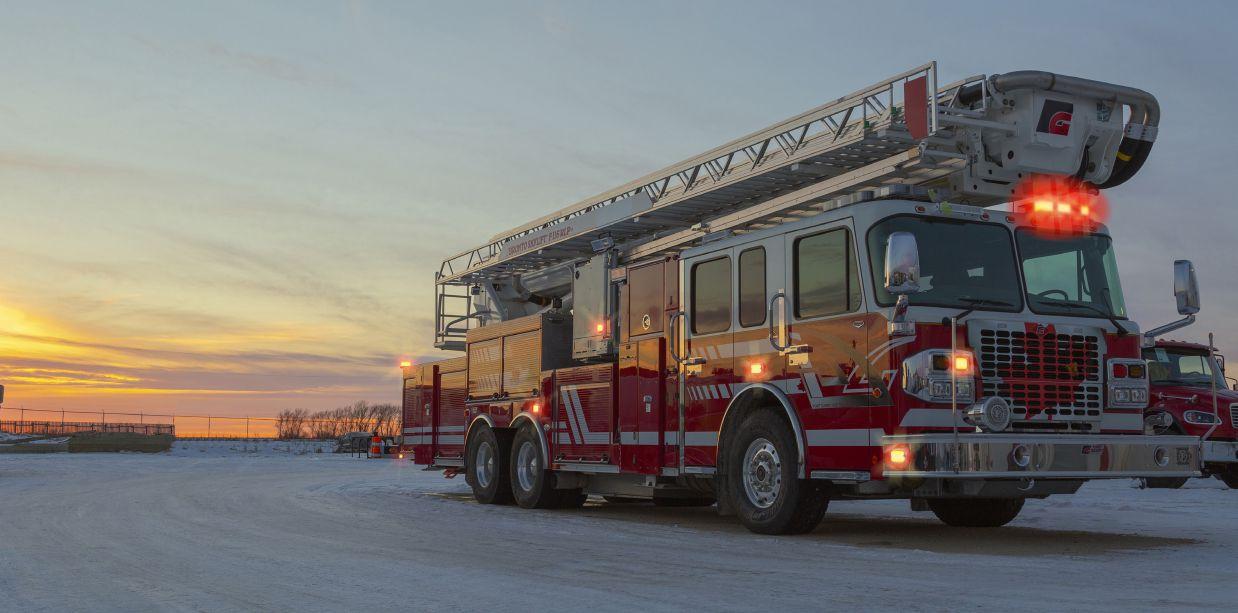
The E-ONE HP 100 Platform looks like a rock solid beast. And it acts like one too. This aerial, with a 2.5 to 1 structural safety factor is 25% stronger than NFPA requires. But the HP 100 Platform isn’t just a powerhouse, it’s also versatile. With crisscross under-slung outriggers that deploy to a tight 15’6” spread, the HP 100 Platform can go where other aerials can’t. Whatever the job calls for, the E-ONE HP 100 Platform is up to the task! For more info, please visit: e-one-aerials.com/hp-100-platform-truck
1305 LB PLATFORM CAPACITY
WELDED EXTRUDED ALUMINUM LADDER ANGLED CORNERS AND PERIMETER STEP
2.5 TO 1 STRUCTURAL SAFETY FACTOR CRISSCROSS UNDER-SLUNG OUTRIGGERS DEPLOY IN UNDER 45 SECONDS
ROCK SOLID STABILITY EVEN WITH ALL TIRES OFF THE GROUND STRONGEST CAB IN THE INDUSTRY
RESCUE STYLE COMPARTMENTS
INTEGRAL TORQUE BOX CHASSIS
OAFC Labour Relations Seminar
Fire chiefs gather to hear updates on PTSD treatment and myriad other subjects
By GRANT CAMERON
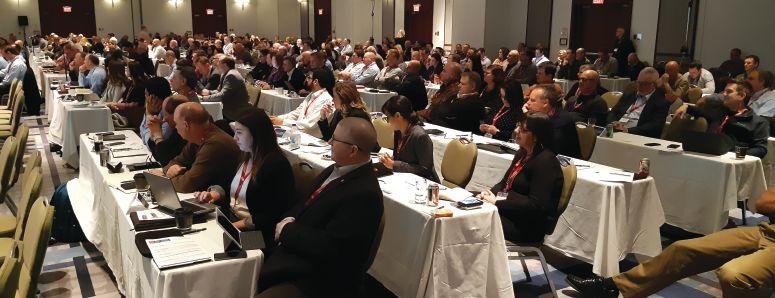
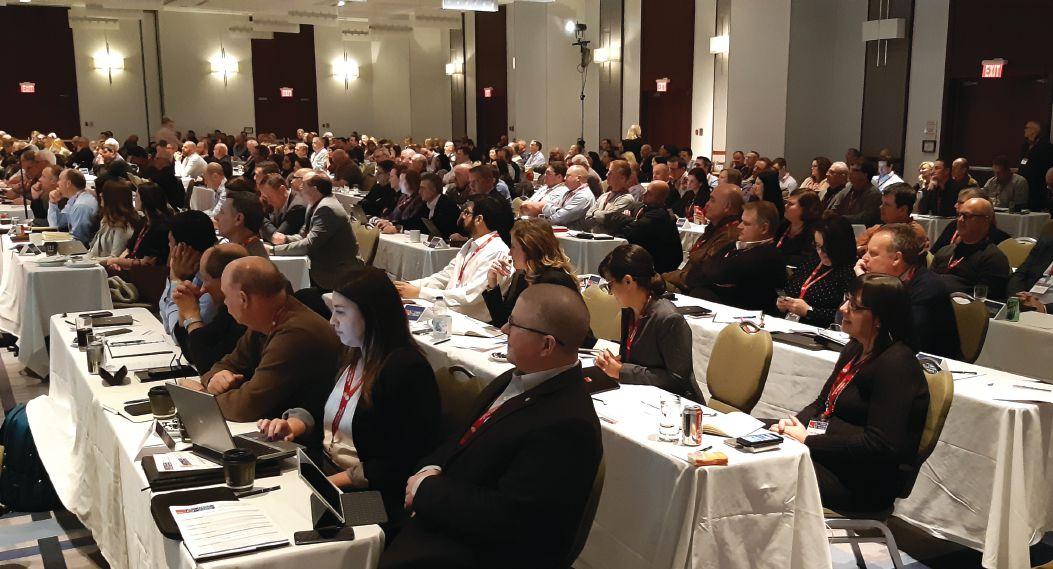
Hundreds of fire service leaders and human resources personnel gathered at an Ontario Association of Fire Chiefs (OAFC) labour relations seminar in Toronto, Ont., on Jan. 23 and 24 to get a rundown on the latest legal and bargaining developments and lay of the land on a variety of subjects.
The annual seminar, presented in partnership with labour and employment law firm Hicks Morley, featured presentations on diversity and inclusion, the #MeToo movement, new directions in PTSD treatment, cannabis in the workplace and how to accommodate pregnant firefighters.
The event, at the downtown Hilton, kicked off with a presentation on new directions in PTSD prevention and treatment of public safety personnel by Dr. Margaret McKinnon, research chair in mental health and trauma at the Guelph, Ont.-based Homewood Research Institute, an organization dedicated to research designed to evaluate and transform mental health and addiction services.
McKinnon said she was excited to be at the seminar and talk to fire chiefs about PTSD because there’s a lot of hope surrounding treatment of the dysfunction in public safety personnel.
“I want to deliver a message of hope around PTSD and let you know that people can return to work and they can recover,” she said.
While strides are being made into treatment to help people like firefighters recover from PTSD, McKinnon cautioned there are still hurdles to overcome and professionals
must continue their efforts, as it’s estimated that about 10 per cent of first responders worldwide are affected by the disorder.
“People can definitely get better from PTSD,” she said. “But I want to add to that message of hope that there’s also a lot of work to do.
“We do a good job, but we need to do a better job.”
Michael Bach, founder and CEO of the Canadian Centre for Diversity and Inclusion which helps employers with the issues, led a session aimed at making the business case
I want to deliver a message of hope around PTSD and let you know that people can return to work and they can recover. ‘‘ ’’
for a more inclusive fire service.
He said diversity and inclusion are “buzz words” used by politicians almost daily, but society and the fire service still have work to do.
The 2016 census, he noted, showed that women make up 49 per cent of the workforce, yet only four per cent of the fire service is female, and most of the leaders are white males.
Bach outlined how the fire service can become more inclusive, one way being for leaders to look at their organizations through a “diversity lens” to determine if there are barriers or policies that prevent diversity and inclusivity.
Communications strategist Karen Gordon of Gordon Strategy, and Lauri Reesor, a partner at Hicks Morley, led a session on the MeToo movement and out-
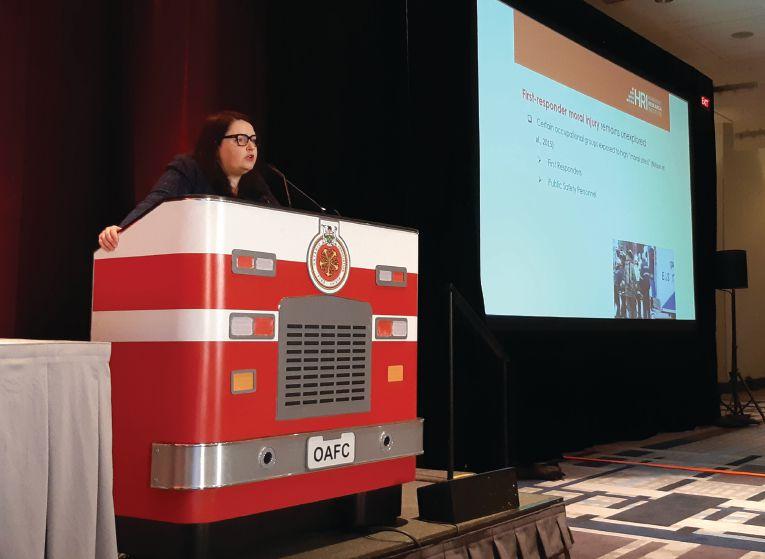
Dr. Margaret McKinnon, research chair in mental health and trauma at the Guelph, Ont.-based Homewood Research Institute, spoke about PTSD at the conference.
lined steps fire chiefs should take to make the workplace culture more proactive on gender issues and protect themselves from harassment complaints.
They offered some practical tips, explained pitfalls to avoid and also why it’s important to bring in a team of legal and communications professionals to craft a response if a harassment claim is filed.
Gordon said MeToo allegations are serious business and the speed at which things move via social media after a charge is levied is terrifying for people and organizations that are in the crosshairs.
In law, people are innocent until they’re proven guilty, she noted, but that’s not always the case with a MeToo allegation.
“It’s a stark reality we’re living in now.”
Reesor said MeToo allegations can take on a life of their own and, if a charge is levied against a fire department, it’s not only the municipality, but also the fire chief that will end up in the hot seat.
She warned that harassment can include a single incident and problems could arise from a “wolf whistle” directed at a female employee at work to pictures of naked women posted in a male’s locker.
She noted that the intention of the person who’s accused doesn’t matter, as the legal question is merely whether it happened.
“It’s really important to nip this stuff in the bud,” she said.
A panel of experts discussed cannabis in the workplace, talked about misconceptions
surrounding the drug and explained the new federal law that came into effect last October making recreational use of cannabis legal in Canada, although it’s up to each province how to regulate matters.
The panel consisted of Hicks Morley partner Maureen Quinlan and law firm associate Jacqueline Luksha, Dr. Melissa Snider-Adler, chief medical review officer at DriverCheck, a provider of medical testing and assessments for workplaces, and Tom Wilson, program consultant at DriverCheck.
Snider-Adler told the audience that cannabis affects people differently and significant cognitive impairment from the drug can last for weeks. She also noted that workers should not be allowed to perform dangerous work or work on safety-sensitive jobsites if they’ve used cannabis 48 hours earlier.
Wilson spoke to the obvious signs of cannabis use like red eyes and lack of motivation by an employee. He also said the drug can lead to increased appetite and have a cumulative effect over time.
Wilson said fire departments should have policies in place that clearly outline the rules of cannabis use for firefighters.
A session on how to accommodate pregnant firefighters was presented by Hicks Morley labour and employment lawyer Carolyn Kay.
She explained that departments must accommodate a pregnant firefighter and failure to conduct a comprehensive search for
solutions can give rise to liability.
She said a pregnant firefighter must also be prepared to offer solutions and accept reasonable accommodation proposals.
Kay said fire departments can consider how to modify a job or change the work environment for the employee and, if it can’t, should look at other positions within the fire service that might be appropriate.
Also at the seminar:
• An update on bargaining was provided by Hicks Morley labour and employment lawyers Julia Nanos and Stephanie Jeronimo. They reviewed the settlements and interest arbitration awards in the fire sector over the last year.
• Mark Mason and Paul Schwartzman, labour and employment lawyers at Hicks Morley, reviewed the latest legal developments and issues facing municipalities and employers.
• A session on PTSD and chronic mental stress was presented by Hicks Morley lawyer Mariana Kamenetsky, who reviewed and explained various policies and steps employers can take.
• A meet-the-arbitrator session was presented by Paula Knopf, an arbitrator and mediator who has been active in labour relations and dispute resolution in the public and private sectors since 1980. The session was moderated by lawyer Jeronimo of Hicks Morley.
Fire chiefs and HR personnel attended the Ontario Association of Fire Chiefs labour relations seminar in Toronto on Jan. 23 and 24.
BY TOM DESORCY
Fire chief, Hope, B.C.
FVOLUNTEERVISION
Fire leaders should think outside the box
ollowing a presentation I did in Ottawa at Fire Rescue Canada last September, I learned a lot about the topic of “out-of-area response,” or the fact that an area without response at all, is something new to many.
For this session I was honoured to be joined by Mark Miller, executive producer of the television show “Highway Thru Hell” which is filmed in our area.
The idea for the presentation came following a multi-casualty incident that occurred in February 2018 on the Coquihalla Highway, involving several commercial trucks, private vehicles and two passenger buses. All in all, some 130 patients were extricated, triaged and transported to a warming centre in Hope.
The idea to bring Mark into the presentation came when we learned that a towing company, along with a camera crew for the show, were among the first on scene.
Our presentation focused on the highway itself, the origination of the show and the incident itself. Primarily, I spoke on the topic of “out of area response” in that we, along with two neighbouring departments, search and rescue, paramedics and police attended.
For the fire departments, this was new to us, as we were called into a location that wasn’t ours.
For those that reside next to an unprotected area, how easy is it for you to leave? What would it take for you to actually deploy outside of your boundaries?
In our community back in the day, we had three fire departments a stone’s throw from each other, yet they were very reluctant to take their trucks outside their area.
Most of the reasons for not leaving a jurisdiction are the legal ones – bylaws that say you need permission of your town manager or elected officials. But, to me, those days are gone. Our bylaw gives this authority to the fire chief or designate, enabling decisions to be made in a timely fashion.
Back to the aforementioned multi-casualty event. We identified, in post-incident debriefs, that there was a lack of Incident Command on scene, a reason I attribute to everyone showing up in an area they didn’t normally respond to and looking for a green vest to report to. Truly, this was a horrendous scene in treacherous conditions that resulted in not one fatality.
This out-of-area response, however, did soon come into our area, as we dealt with those 130 patients at a local high school where a secondary triage was set up.
Coincidently around all of this, our community was just in the process of planning a “Code Orange” exercise with our local hospital that involved the same scenario.
I suppose what I’m speaking about also centres around change or doing something that isn’t normal. Don’t you think it’s time to
‘‘ ’’
As more and more new members come into your halls, find ways to instill new ideas in them in place of the same old stuff.
Today my message is simple. If you have the capacity to protect those you are supposed to, along with the legal authority to do so, is leaving your community an issue? When the incident just outside of town has the potential to move into your town, doesn’t it make sense? I think of the vehicle fire in August that moves into the wildland and then threatens your community as a result, or the commercial vehicle incident that may dump hazardous materials into a river that is upstream from town.
Tom DeSorcy became the first paid firefighter in his hometown of Hope, B.C., when he became fire chief in 2000. Originally a radio broadcaster, Tom’s voice could be heard in the early 1990s across Canada as one of the hosts of Country Coast to Coast. Tom is very active with the Fire Chiefs’ Association of B.C as communications director and conference committee chair. Contact Tom at TDeSorcy@hope.ca and follow him on Twitter at @HopeFireDept.
consider the “new normal” the fact that building materials today mean house fires burn faster and hotter with more dangerous chemicals being produced, or that weather events have become more extreme?
Expect the unexpected and prepare to adapt. There, in fact, is the key – the ability to adapt and change with the times and also accept that what you’ve seen once is something that you’re likely to see again.
Here in B.C., summer and provincial states of emergency have been the norm the last two years. Are smoke-filled skies going to be a regular part of our summer air from now on?
Creating change is one thing, but reacting or adapting to change is another.
As more and more new members come into your halls, find ways to instill new ideas in them in place of the same old stuff. Don’t just think outside of the box, burn the box and create something new.
Switching Sides
How a homebuilding-industry-executive-turnedfirefighter became an advocate for sprinklers
By PETER SIMPSON
When I was CEO of the country’s two largest homebuilding industry associations –first in Toronto, then Vancouver – part of my job was to meet regularly with mayors, councillors and senior building officials.
If the issue of including automatic fire sprinklers in one- and two-family dwellings and manufactured homes surfaced, I would attend council meetings and butt heads with senior fire officials who supported sprinklers.
I expressed the long-held industry position that requiring sprinklers in new homes imposed an unnecessary financial burden on builders and homebuyers, and a smoke alarm was the only effective life-safety device.
Well, I was wrong. Embarrassingly wrong, really.
Never did I – nor anyone who knows me, for that matter – ever imagine me writing this next sentence: Automatic fire sprinkler systems save lives, protect property and preserve the environment.
What changed my mind on this issue was a simple change of lifestyle. Upon retirement, my wife and I moved to Nova Scotia’s South Shore, where I looked for something meaningful to occupy my free time.
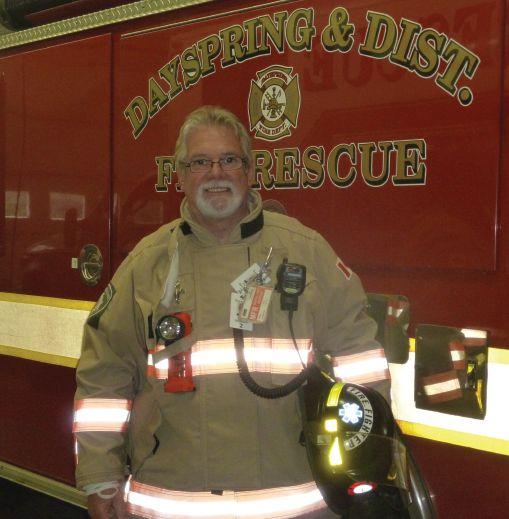
In September 2013, I joined the Dayspring & District Fire Department as a raw rookie, and took advantage of every opportunity to develop knowledge and skills as a firefighter and medical first responder, both in the classroom and during practical and often rigorous hands-on training sessions.
At the time of this writing, I have participated at more than 480 emergency scenes. I realize that’s a small number compared to the emergencies career firefighters would deal with during the same period, but it’s a lot for a guy who wore a suit to the office every day, and once thought the letters SCBA stood for South Carolina Builders’ Association.
During my short time with the fire service I have grown to appreciate the firefighters’ dedication, expertise and service to their communities, at all hours of the day and night, and during all weather conditions.
Returning to the fire hall following a challenging structure fire can be a sombre experience, a real eye-opener for me. Invariably, my fellow firefighters sit silent, exhausted, sweaty, dirty, some with their heads bowed.
I am truly in awe of their fire-ground skills, professionalism, camaraderie and willingness to put themselves at risk to help people they don’t even know. That’s a commitment most folks don’t fully understand.
A few years ago, I was a speaker at a fire sprinkler summit organized by the Ontario Association of Fire Chiefs, then later spoke at a similar event presented by the Fire Chiefs Association of B.C.
I explained to attendees at the two well-attended events how the transition from building industry executive to firefighter and medical first responder had significantly influenced my position on sprinklers.
We live in a technologically advanced world, where the pace of change over the
A home protected by an automatic sprinkler system is like having a firefighter on scene, knocking down the fire.
past decade or so is far greater than all the changes that occurred in the past half century. It seems every day the world is introduced to something new, more efficient, or way cooler than yesterday.
Yet a cost-effective system designed to save lives and protect property, and whose technology, appearance and performance are continually refined, still has its naysayers. Frankly, it boggles the mind.
There have been many changes in how homes are built. Modern construction, and the contents of homes today, include many synthetic materials, vinyls, glues, resins, laminates and the like.
All that material ignites easily, burns quickly and produces toxic off-gassing that exposes firefighters to potentially deadly carcinogens.
Incident commanders are understandably hesitant to send firefighters onto a roof if fire has reached the attic. Metal gussets often separate from trusses, leaving roofs unstable and dangerous.
Homes in today’s small-lot subdivisions are sited closely together. Flames can easily jump from one structure to the next.
Likely all readers of this magazine are chillingly familiar with flashover, a condition where a fire’s energy is suddenly radiated back to a room’s contents to produce a rapid rise in temperature and simultaneous ignition, an indication that the fire has grown to its fully developed stage.
Well, 20 years ago, flashover occurred in about 21 minutes. In today’s new homes, flashover can occur in under three minutes. And loss of life can occur well before that stage in the fire’s progression.
So, time is crucial. A home protected by an automatic sprinkler system is like having a firefighter on scene, knocking down the fire, before the first truck has even left the fire hall. Typical response time for a suppression crew is about 10 minutes, whereas a
sprinkler head can extinguish a fire in under 90 seconds.
The Home Fire Sprinkler Coalition of Canada offers these myth-dispelling facts:
1. Only the sprinkler head closest to the fire will activate, not all the heads in the house.
2. Sprinklers discharge water at a rate of about 25 gallons a minute, while a fire hose will discharge water at a rate of 250 gallons a minute.
3. In a home fire, residents have less than three minutes to escape.
4. Sprinkler-protected homes can qualify for discounts on insurance.
Sprinklers do not eliminate firefighters, who must respond to every fire call, sprinklers or no sprinklers. However, firefighters face a much safer environment when they arrive at a structure where sprinklers have been activated. And, family photos and heir-
looms might be wet, but not lost forever in a fully involved fire.
Recent findings from the National Fire Protection Association (NFPA) underscore how sprinklers can reduce the risk of death or injury from fire.
According to the NFPA’s “U.S. Experience with Sprinklers” report, the civilian death rate was 81 per cent lower in homes with sprinklers than in homes without them, and the average firefighter injury rate was nearly 80 per cent lower when sprinklers were present during fires.
Moreover, when sprinklers were present, fires were kept to the room of origin 97 per cent of the time, and the home fire death rate was 90 per cent lower when fire sprinklers and hardwired smoke alarms were present. By comparison, the death rate was only 18 per cent lower when battery-powered smoke alarms were present, but automatic extinguishing systems were not in use.
A wealth of Canadian research is also available, including compelling reports co-authored by Surrey Fire Chief Len Garis. The Canadian Association of Fire Chiefs, led this year by Edmonton Fire Chief Ken Block, also offers data in support of sprinklers. So, of course, does the Canadian Automatic Sprinkler Association.
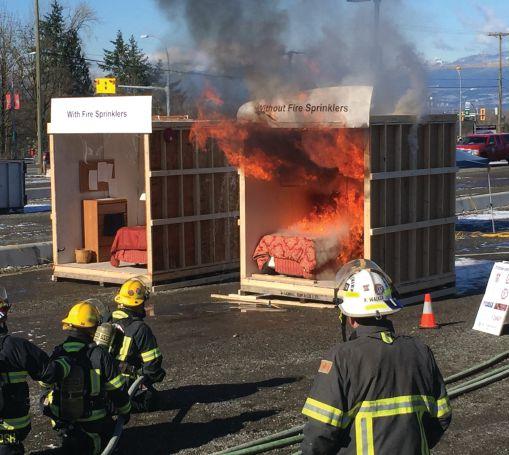
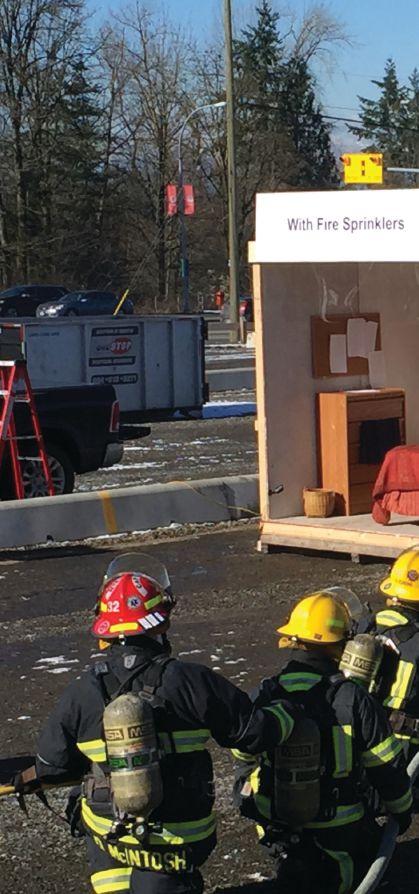
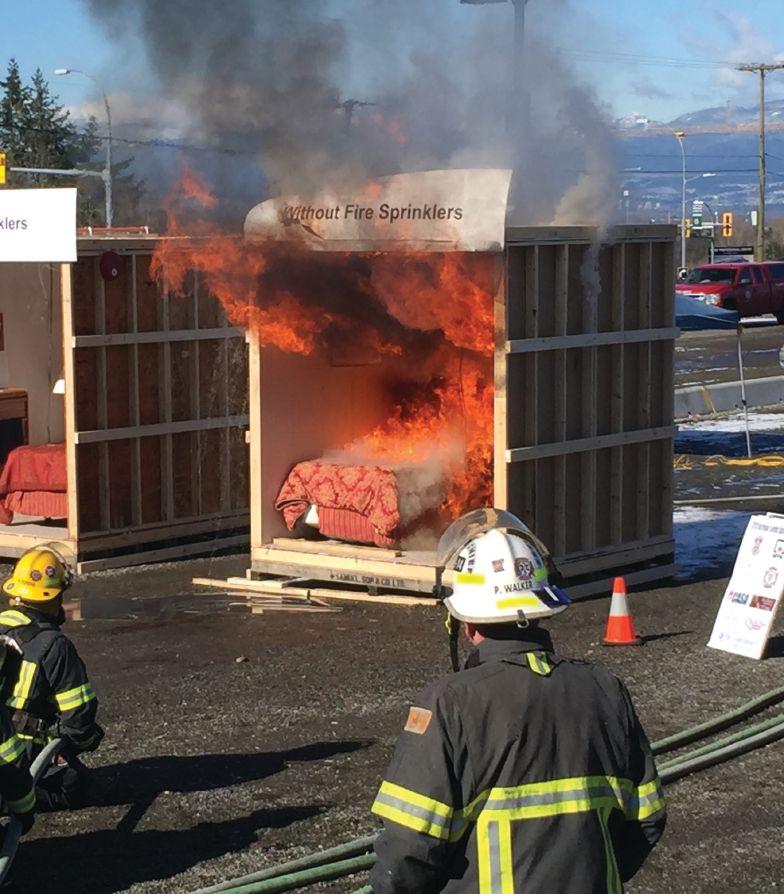
Those in the fire service know the value of demonstrating side-by-side burns. One module contains no sprinkler, while the other, built with exactly the same fire load, is equipped with a solitary sprinkler head.
I witnessed my first demo at the Home and Family Sprinkler Summit in Langley, B.C. A suppression crew with a charged line was in position while the unprotected module was set ablaze. Five minutes later the crew knocked down the flames. The temperature in that module reached 800 degrees centigrade before the fire was extinguished.
Ninety seconds after the second module was set on fire, the sprinkler head had done its job. The temperature in the sprinkler-protected module reached only 40 degrees centigrade. You can’t argue with science.
Homebuilders deal with a wide range of development charges, levies, fees and taxes imposed by all levels of government. Municipalities can help to mitigate the additional cost of sprinklers by finding cost efficiencies in current development and building requirements, or offer other incentives to builders.
Education and awareness are key to spreading the word about the benefits of a sprinkler system.
An exercise was conducted at the Home and Family Sprinkler Summit in Langley, B.C., recently which demonstrated the benefits of automatic sprinklers in new homes.
A prominent Vancouver-area builder and long-time friend was forced by municipal regulation to install sprinkler systems in his homes. He grumbled about how the extra cost would affect his sales.
When the bylaw came into effect, rather than fretting about it, the builder amended his marketing strategy
A savvy businessman whose company has won numerous national and international housing awards, he seized the opportunity to market sprinklers as an included safety feature in all his homes, and ensured his sales staff understood how sprinklers worked and how to promote them to prospective homebuyers.
On his extensive feature summary is a section entitled, “Safe and Sound.” Right at the top of the list of 12 highlighted safety features is “fully sprinklered fire-protection system.”
Why can’t more builders be as proactive? And, buyers need to look beyond the granite countertops, coffered ceilings and Shaker cabinets and realize sprinkler systems might one day save their lives and the lives of their children. Three thousand dollars for a sprinkler system (single-detached dwelling) buys a lot of peace of mind.
Sadly, a year ago, four structure fires on the South Shore resulted in the deaths of seven people, including four young children. Since then there have been 16 more deaths in Nova Scotia, including eight children
Enough is enough. Individuals and organizations with skin in the game on this issue need to engage in meaningful dialogue on the science-proved, life-saving advantages of automatic fire sprinklers.
We owe it to families who have lost precious loved ones in house fires, and to the dedicated firefighters who don’t give a second thought to placing themselves at risk in the service of their communities.
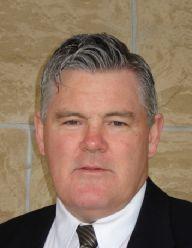
As President and CEO of the Greater Vancouver Home Builders’ Association, Peter Simpson lobbied municipal politicians to resist mandating fire sprinklers in new homes. Now retired and a firefighter and medical first responder in rural Nova Scotia, Peter has become an advocate for sprinklers. Contact him at peter_simpson@hotmail.com.
Peter Simpson once held the position that sprinklers weren’t necessary in new homes. Now, as a firefighter and medical first responder in rural Nova Scotia, he is an advocate for them.
TRUCKTECH EVTs are the unsung heroes
By CHRIS DENNIS
Hello all. I want to inform you a little bit about the Emergency Vehicle Technician, or EVT program. An EVT technician is someone who performs specialized automotive work repairs on emergency vehicles.
These consist of fire trucks, apparatus equipment, fire department automotive vehicles, ambulances, police cars and airport emergency apparatus and equipment.
Across Canada, the technician will have gone to a community college of trades to acquire the appropriate mechanic’s certificates. In Ontario, the classes are 310s automotive and 310T heavy truck. These mechanic licenses are recognized across Canada. The highest level is a Red Seal technician known as master mechanic. This licence allows the technician to work anywhere in Canada that a mechanical licence is required without further testing.
In the United States, the education typically consists of a multiyear vocational or community college program in automotive and heavy truck repair. In the U.S., an ASE (Automotive Service Excellence) certification program is also a certificate held in high esteem.
Exams offer three levels of emergency vehicle technician certification in four areas. These include fire apparatus technician, ambulance technician, airport rescue apparatus technician and law enforcement vehicle technician. Once studies are complete, exams are written in all applicable tracks and, if passed, they are supported with a certificate. The EVT certifications are voluntary unless otherwise discussed by employer.
The EVT program was first established in the U.S. in 1988. It was sponsored by the International Association of Fire Chiefs (IAFC).
The firefighter is required, through continuous education and training throughout his or her career, to stay up to date with new techniques and requirements – be it life safety or property. The IAFC decided to elevate the standards of the emergency repair mechanics who fix the rigs. The IAFC wanted to provide recognition for education and additional training performed by the emergency repair technician. The IAFC no longer oversees the emergency repair program.
The following are my views and my views only. The mechanics and repair technicians are often neglected or overlooked. We are the unsung heroes behind the scenes, the silent partner of the emergency services. We are the men and woman who keep the rigs safe and ready to respond so that firefighters and other emergency personnel can do what they have been trained to do.
This starts with decontaminating the trucks after a fire to general repair and maintenance. As I said, we, too, require continuous training and upgrading of our repair skills with the rapidly changing technology in emergency apparatus.
So, the same kind of recognition became a requirement then accepted under the National Fire Protection Association (NFPA).
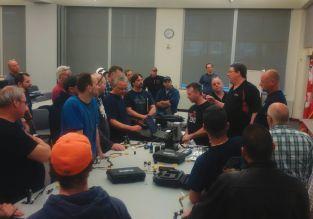
EVT training in the classroom.
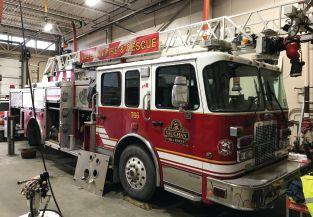
A Vaughan Fire & Rescue Services truck undergoing annual maintenance.
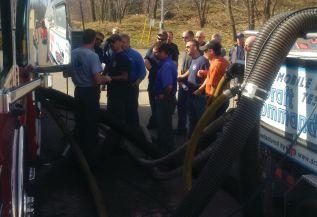
EVT pump test training at the Ontario Fire College.
EVT air brake training board.
EVT tower platform operational training.
TRUCKTECH
With this, came the EVT certification commission. This would, and has helped, with the highest standards in fire apparatus repair protocols, but only in the U.S. The emergency service has always ensured that response and rescue personnel are trained and certified to appropriate levels based on “accepted standards,” such as the NFPA standards for firefighters and fire officers.
A great deal of emphasis is placed on maintaining the condition of the apparatus and equipment used by these personnel. But what about the people who maintain and repair the vehicles and equipment? What level of training have they received to keep a sophisticated piece of machinery in proper operating order?
I can’t speak for all provinces, but I do know there are only a handful of certified EVTs across Canada. The bulk of these folks are in the eastern and western parts of Canada, with small pockets across the province. I mentioned earlier that the provincial licence that Canadian mechanics carry allows us to repair, maintain and certify any piece of equipment that our certification outlines under the Ministry of Transportation in that province.
When I first got into mechanics, I worked in small auto shops, heavy equipment shops, and body shops then settled into a heavy truck shop. My mechanic’s licence allowed me to move to these places and permitted me to work on these vehicles with the vehicle certifications I had schooled and trained for in Ontario.
The EVT program in Ontario is large in numbers. We meet once a year at the Ontario Fire College in Gravenhurst, Ont. You can find us on the web at www.evtao.ca.
On Oct. 4, 2013, the NFPA announced that Ontario would transition from the Ontario Fire Services standards to the NFPA Pro-Qualm standards in 2014. Ontario firefighters would be able to achieve National Board Services professional qualifications/certifications that meet the requirements of NFPA.
After that, many fire departments across Ontario began the transition, including Vaughan Fire Rescue Services. With this standard being an NFPA guideline, the question came up: Will the EVT component of NFPA become mandatory then at some point and time? The Emergency Vehicle Technicians Association Ontario (EVTAO) has been asking this question since the inception of the standard of October 2013. Technicians not holding EVT certificates in Ontario will be mandated, at some point and time, to begin the EVT program.
Since the mechanic licence in Ontario and Canada allows us to work on everything and anything that falls under the specific certification, do we need to follow the NFPA track for EVTs? Again, this could not be answered. It has been reported that the provincial government will be eliminating mandatory firefighting training certification regulations as per NFPA. This again brings up the question about mandatory training in the EVT program.
Let me just say this: How many times have you taken that very expensive fire truck that you painstakingly spent days and weeks designing to a specialist to meet or exceed some part of the NFPA 1901 standard? NFPA 1901 Standard for Automotive Fire Apparatus defines the requirements for new automotive fire apparatus and trailers designed to be used under emergency conditions to transport personnel and equipment and to support the suppression of fires and mitigation of other hazardous situations.
So, a rig may go to a repair shop, only to find that the mechanics
working on the rig are not familiar with the fire truck, let alone how to raise a ladder or even a cab. This can hold true for both custom and commercial vehicles.
Maybe your department, be it full-time or volunteer, have heavy equipment mechanics on staff and can do the repairs in-house or in the municipal fleet garage. It could be a money-saver, but also a liability issue if a repair was not done to an engineered standard. You may take your truck to an outside repair shop. But, check to see that they hold an EVT certificate in addition to their Canadian automotive certification. NFPA 1911 is the Inspection, Maintenance, Testing, and Retirement of In-service Emergency Vehicles, and a great resource.
Most recently, across the border, the Fire Department Safety Officers Association (FDSOA) is partnering with Canadian mechanics to provide training in a joint venture in the U.S. The FDSOA supports the EVT program wholeheartedly.
Vaughan Fire Rescue Services has supported my attendance at these training conferences, as they include an apparatus symposium that is purely based on apparatus repair, safety and maintenance as the EVTAO does now in Ontario.
I have been involved in hands-on fire pump repair classes, aerial maintenance classes and had the opportunity to conduct a presentation around the F1 track of the EVT program. If you have an opportunity to send a tech to the EVTAO week in Ontario in the spring, it will be well worth it. If you are a fire chief or deputy that specifically looks after your fleet, even indirectly, you may want to attend.
If your province provides mechanical fire apparatus training shops, send everyone you can. If you want to see how the EVT track does it in the U.S. check out www.evtcc.org as well as www.fdsoa.org.
Should the NFPA standard of October 2014 be reintroduced we will be ready and hold the highest standard. It will separate the fire apparatus repair technician provincially as a special entity and a necessity to repair all fire-apparatus equipment related to our business.
By following the repair outlines and guidelines set out in the NFPA standards, our fire department rigs will be held in the highest regard and hard to challenge in the event of any issues that may arise. This will separate the standard mechanics licence, making it difficult for just anybody to correctly repair and maintain a fire fleet.
This, too, may become a standard within the bargaining units for future hires to solidify a position as apparatus repair technician. It could help to save money on new hires. The EVT certification, as well as provincial licence, could possibly be hired at a different pay scale. The internal 310T and 310s tech may want to add to their licenses by engaging in the EVT track. Again, this is only my view.
For more information on how to become a Level I, II, or Master EVT Certified Technician, go to the EVT website at www.evtcc.org.
With this ever-changing direction of the fire service and the call for transparency, I feel the public deserves the best it can get – not only from the firefighters on the front line, but the unsung heroes, the silent partners, the women and men behind the scenes that keep this equipment rolling safely and with a standard and a guideline that we all follow.
Remember, stay safe my friends and keep the rubber side down.
Chris Dennis is the chief mechanical officer for Vaughan Fire & Rescue Service in Ontario. He can be reached at Chris.Dennis@ vaughan.ca.
BY GORD SCHREINER
Fire chief, Comox, B.C.
ASTOPBAD
Sacrifices are required to excel as a firefighter
re you a t-shirt firefighter or a real firefighter (this includes officers and chiefs)?
Do you take being in the fire service seriously?
Once you let people know you are a firefighter, you’d better be prepared to back it up.
Wearing a fire t-shirt or putting a firefighter plate or decal on your vehicle may indicate you are a firefighter, but it doesn’t mean you know the job.
While it might be hard to tell by looking, it is easy to tell once the tones drop or by observing your daily actions.
The way you perform as a firefighter, the way you drive, the way you talk, the way you act, will all demonstrate how good of a firefighter you are.
Real firefighters are trained, ready to respond and operate safely. Being a real firefighter is a lifelong journey. It requires a huge commitment, dedication and hard work. You must constantly prepare and train. There is no ceiling and you are never done training. When you finish one training program there is always another one to do next.
Unfortunately, there are some out there that think that once they put on the t-shirt they are good to go and know it all. Some think because they have been a firefighter for a few years they know it all. These types of firefighters are dangerous.
Real firefighters are constantly training and preparing themselves for the next incident. They are constantly studying, researching and training.
Real firefighters are fit, both physically and mentally.
new firefighters, “Don’t tell me, show me.” Show me that you want to be here, show me that you take this commitment seriously, show me that you care.
Some can’t make the commitment that is needed, especially for a new firefighter.
I can tell very quickly by talking or watching firefighters train how serious they are about this business.
Many young firefighters dream of a fire-service career, but won’t back up that dream with ongoing, dedicated hard work. Many struggle with passing a simple test because of lack of commitment, but are quick to purchase the newest t-shirt.
If you are not excelling as a recruit in a smaller volunteer or paid, on-call fire station, chances are very high you will not get a second look for a career fire-service job.
To become good at anything, you need to make sacrifices. To become a good firefighter you must make sacrifices.
You do not need to sacrifice your family time, your regular job or your health. You do need to sacrifice your “fun” time. You may have to give up some of your social life, some of your game time and some
Many young firefighters dream of a fire-service career, but won’t back up that dream with ongoing, dedicated hard work. ‘‘ ’’
Real firefighters are honest, ethical, socially responsible and nice. They do more than is expected or required of them. They pay it forward. This is not a menu. You can not pick and choose. You should have all of these traits.
I have been in the fire service for more than 40 years and am still constantly learning and improving.
I get to see a lot of new firefighters every year. Give them a t-shirt and you see them light up, excited and proud. However, I am quick to tell them they must earn that t-shirt and earn it every day for the rest of their careers (career or volunteer).
Some talk the talk, but can’t walk the walk. I am always saying to
Gord Schreiner joined the fire service in 1975 and is a full-time fire chief in Comox, B.C., where he also manages the Comox Fire Training Centre. Contact him at firehall@comox.ca and follow him on Twitter at @comoxfire.
of your sports time. You need to reconsider how you spend your free time. Do not waste your free time.
Real firefighters know their job, their equipment, their community, other real firefighters and are always ready to respond. They also represent themselves and their department well.
To become a real firefighter, hang out with other real firefighters. Don’t hang out with t-shirt firefighters.
Also, get yourself at least one good fire-service mentor and listen. Being a t-shirt or real firefighter can be contagious in your department.
Do all you can to make sure your department is full of real firefighters.
Remember, this job can kill you.
Learn everything you can and be great at it.
TRAINER’SCORNER
Transparency about secondary trauma
By ED BROUWER
As the years have slipped by, and Fire Fighting in Canada has gone through a half dozen editors, I wonder if readers still know the reason behind Trainer’s Corner. This column was birthed in 2001 after a conversation with Jim Haley, the magazine’s editor at that time, with the intent to help other volunteer training officers.
At the time, I was the training officer for Joe Rich Volunteer Fire Department (B.C.) and shared with Jim the difficulties of putting together a credible and effective training program as a volunteer.
Trying to juggle family, employment and life around volunteering in the fire department is one thing, but having to research, study and prepare 40-some-odd training sessions a year was a bit overwhelming. I was never one for just reading out of the, “How to be a firefighter books,” while members sat around a table, or worse yet, making each member read two paragraphs out loud.
I successfully met the B.C. Fire Fighter Standard (Justice Institute of B.C.) in 1998 and achieved NFPA 1001 certification in 2003. I am proud of my accreditations, as I am sure you are of yours, but they don’t automatically make you an instructor.
We didn’t have the Internet then in the same way we have it today. Research for training sessions was done through reading books, magazines, investigation reports and networking with other trainers.
I was fortunate to have a few friends in the fire service that encouraged me to take courses on fire service instructor as well as training and instruction courses. Being part of B.C.’s First Responder Program, as an instructor and evaluator, was a huge help in learning how to instruct. All that information was at one time or another shared through Trainer’s Corner.
Trainer’s Corner has always been written in the first person, and for most of these 18 years I have concluded with, “Train like lives depend on it, because they do.” This is in reference to your members, not the general public. I am passionate (some say driven) by firefighter safety. It has been well said, “An unguarded strength becomes a double weakness.”
I made a mistake early in my career, in that I spent hours poring over firefighter fatality reports. It started when I was asked to speak at several 9/11 memorial services. And then, in 2003, we (B.C. Wildfire Service) lost three firefighters (Ian, Eric and Ben) as we fought the fire dragon in an unprecedented urban interface wildfire year. I had the honour of speaking with their families and later took part in what I believe was the first LODD ceremony held by B.C. Forestry.
And on March 29, 2004, Clearwater volunteer firefighter Chad Schapansky (23) lost his life in an abandoned building fire. It was those three events that pushed me into using firefighter fatality reports to base our training on.
My sons and I developed a hands-on training program we called SOO-HOT; Saving Our Own Hands On Training. Trainer’s Corner has featured many articles about saving our own and always been a strong proponent of hands-on training.
I have tried to keep you, the reader, aware of LODD events in honour of those who died in hopes we can learn from their sacrifice.
Trainer’s Corner archives contain articles on LODD fire incidents such as the 1987 Kitchener Horticultural Technologies fire, where 23 out of 69 firefighters who responded to that blaze developed cancer or Parkinson’s disease. I think of Captain Ed Stahley (54), and firefighter Dave Ferrede
(32) often. They were the first to die. Since then, 13 Kitchener firefighters have died, all but three of them with occupational cancer. Seven of the 10 firefighters who died of cancer fought the Horticultural Technologies blaze.
And there was the 1993 Warwick, Que., propane tank explosion which took the lives of four members of the Warwick Volunteer Fire Department; Raymond Michaud (52), Raynald Dion (39), René Desharnais (36) and Martin Desrosiers (31).
I have been honoured to speak at several fire chief conferences as well as the FDIC Atlantic. One of my main themes was, “Calling A Mayday,” and inevitably it included the deadliest firefighter disaster in the U.S. since the Sept. 11 attacks, the 2007 Sofa Super Store fire in Charleston, South Carolina. I was affected more by my research into the nine LODDs than any other presentation I have brought forward.
My research brought me face to face with these firefighters who have become known as the Charleston 9 – Mulkey (34), Hutchinson (Billy 48), Kelsey (42), Thompson (27), Drayton (Earl 56), French (27), Baity (Brad 37), Benke (49) and Champaign (46). Their years of service ranged from one and a half years (French) to 30 years (Hutchinson).
I discovered that six of the nine firefighters never called for help, and that one had no radio. Ladder 5 Capt. Kelsey’s last transmission was three minutes after arriving on scene. He did not bring his portable radio with him when he entered the building. Eleven minutes after arriving, Capt. Hutchinson made his last radio transmission. Capt. Benke’s last transmission (no audible) was 21:18 minutes into the fire, followed immediately by Thompson’s audible call for
help at 21:20: “This is Thompson. We need some help … .” At that same time, Mulkey made his last transmission (system watch activation, no audio). Within two minutes, Drayton’s last transmission (no audio) was recorded.
Only one firefighter (French) actually called a Mayday at 23:13 and activated his emergency alarm at 25:33 and 29:04. French’s Mayday was not heard on the fire ground. I get a cold chill thinking of him calling for help not once but three times and no one responding. The communications centre immediately notified the IC when the firefighter’s emergency button was activated. Yet, six minutes waiting, hoping and praying for a response to the call for help, was to no avail.
I use the word praying, and I will now share with you something that I have
carried in the slideshow of my mind for over a decade. Nineteen minutes into the call, the transcripts clearly show firefighter Champaign calling, “Which way out?” A few seconds later, “Which way out?” then, “Everybody out.” One minute later, “We need some help out.” Several seconds later, “Firefighter needs some help out … lost connection with the hose.” Then, possibly, “I’m in the building.” Another transmission was inaudible.
Then we read that Car 5, in response to another transmission, says to dispatch, “We have the man out.” Champaign is heard saying, “What? Can you hear me dispatch?” Thirty seconds later, French calls a Mayday.
There is an unknown transmission of a firefighter saying, “I love you.” You hear a PASS going off in the background. Then, Champaign says, “In Jesus’ name … .” He is praying on the radio – no one is responding to him.
There are three more transmissions from Champaign, no audible – one just breathing. Twenty-eight minutes and 21 seconds into the call marked the last transmission for Champaign. Eight minutes of calling out for help, 10 calls for help, nine keyed mics, one last breath and no one came to his rescue. No one even acknowledged hearing him, yet it is right there in the transcripts.
The first PASS was heard in less than eight minutes of arriving on scene. The last PASS was heard 59 minutes into the incident. A PASS is heard in the background of 52 transmissions.
During the period firefighters were attempting to call for assistance, the following radio traffic was recorded:
– Car 1 called for more pressure in the supply line from Engine 12 to Engine 10.
– Car 1 called for Engine 3 to respond to the fire scene and lay a line to Ladder 5.
– Car 2 called for manpower to assist with the civilian rescue operation.
– Car 5 reported that the trapped employee had been rescued.
– Car 2 called for EMS to respond for the rescued employee.
– Engineer 11 advised that he was charging the two-and-a-half-inch line.
– Engineer 16 called for traffic control on Savannah Highway
The only individual who understood and reacted to the urgent radio messages was an off-duty battalion chief (Car 303) who was on-route to the scene in his privately-owned vehicle. He heard the radio traffic on his
Secondary trauma can be incurred when an individual is exposed to people who have been traumatized themselves.
BY LAURA KING NFPA pub-ed rep, Canada
BNFPAIMPACT
Public education is first line of defence
ack in mid-2017, when I was editor of this magazine, NFPA regional director Shayne Mintz sent me an email asking if I could put word out to my contacts about a new pub-ed position for Canada.
Those of you who have participated in NFPA workshops in the last 18 months know the rest of this story: I read the job description, called Shayne, and told him I didn’t want to share the email because … I wanted the job!
I loved every minute of my 10 years as editor of Fire Fighting in Canada, but having an opportunity to make a difference and potentially help fire departments save lives was a logical next step.
As the NFPA’s public-education representative for Canada, it’s my job to help fire departments develop and strengthen the first line of defence. It sounds easy, working with schools or community groups and explaining why everyone needs smoke alarms and escape plans and CO detectors, and … . But often I ask folks what they or their departments do for public education. Often the answer is, “We go into the schools,” or “We do Fire Prevention Week.”
“Great,” I reply. “What is your plan when you go to the schools? What messages do you want your audiences to hear?” Often, this results in an awkward moment, because the answer is often, “We’ve just always done it.” Sound familiar? What’s more, often folks are using outdated messages and resources.
Like everything else in fire, public education and that first line of defence require planning, accountability and training. As municipal councils demand justification for every dollar spent, understanding the risks in your communities and targeting your pub-ed messaging directly to the audiences affected by those risks, is the next logical step.
Public education is about modifying behaviour. People need a reason to change, and they need to understand why we want them to do something different.
We want you to go into the schools and we want you to do Fire Prevention Week. But we want to make sure your messages are accurate, your teaching methods are effective, and you have all the tools you need to do a great job.
So, how can we help? First, there are a ton of free resources on the NFPA website that you or your department can access at no cost. Go to www.napa.org, click on public education, and navigate your way through the programs, videos, and activities.
Second, we are developing a standard – NFPA 1300 – to help you complete a community risk assessment to identify your target areas.
Third, our messaging guide – at https://www.nfpa.org/PublicEducation/Resources/Educational-messaging – is a bible of sorts for your entire department. Download it. It’s free!
Fourth, we have a full-time person in Canada (that’s me) to work with you to help you develop programs and messaging.
And, lastly, we offer training on all that and more ¬ for volunteer
Like everything else in fire, public education and that first line of defence require planning, accountability and training. ‘‘ ’’
In Regina, cooking fires are an issue. Cooking, of course, is a leading cause of fires in every province and territory. So, the pub-ed folks in Regina – my remarkable colleagues Angela Prawzick and Candace Giblett, along with researchers from the University of Regina – had crew captains survey people involved in cooking-fire calls. The data shows trends based on demographics and culture. But the research also revealed that generic messages – look while you cook or stand by your pan – resonate only with people who look and speak the way we do. For new Canadians, who have a higher risk of experiencing a cooking fire/incident, the messages need to be more specific, in clear language, with step-by-step instructions.
Laura King is the NFPA public-education representative for Canada. Contact her at canadacrr@nfpa.org
and career firefighters, fire-prevention officers, fire- and life-safety educators, and community groups.
In Canada, we do a good job of fire prevention and public education. We need to maintain that momentum, embrace technology and stay current.
In Canada, we have few civilian fire fatalities (compared to the United States), very few firefighter fatalities, and our provincial and territorial offices of the fire marshals and fire commissioners are committed to fire prevention and public education.
Each of those offices has an NFPA rep who can help you find the resources I’ve mentioned, or set up training on myriad public education topics. A reminder that the resources, and the training, are free! Email me to find out who your provincial/territorial rep is, or ask me about any of the resources or training.
Changing the CULTURE
What best describes the daily practices of your firefighters?
Are your crews wolfing down spaghetti dinners by the plateful and spending their downtime on the station couches watching the next Netflix original series?
Are they actively engaged in their communities, leading by example, utilizing their spare time for self-improvement (whether it be mental or physical) and planning crew dinners that will best support their performance in operational settings?
These two extremes are behaviours that are learned. They have been founded by traditions that are set within a service or particular fire hall or crew. It is such behaviours that define the “culture” within your fire service. Not only do you as a fire administrator see the cultural norm, but these traditions are portrayed to the public and influence the perception of how your service engages with its employees and the public at large. Are you ready to make a cultural overhaul in your organization?
Fire culture has been evolving over the last decade and strides are being made, but department administrators may be missing key tools and supports that are required to make lasting change. In recent years, it is evident that fitness and mental health are important initiatives that are being embraced by many departments across Canada.
Are these programs being established as reactionary to increased work injury rates, cardiovascular disease risk, deterioration of mental health or presumptive legislation? No matter the reason, if lasting change (i.e. a cultural shift) is going to be achieved, there needs to be several fundamental steps followed. These fundamentals apply to both smaller volunteer departments and large career service.
Six steps fire chiefs can take to improve firefighter performance
By DR. LOWELL GREIB
TOP Participation in events like a community stair-climb challenge promotes activity and shows the importance of fitness in a fire department.
RIGHT High-intensity tactical training that simulates fire operations is a good way to challenge mental and physical boundaries.
DON. DOFF. WASH. REPEAT. LESS SHRINKAGE. MORE FILTRATION.
CERTIFIED TO NFPA 1971, 2018 EDITION
Proprietary PGI Gold FR Fabric
Excellent heat, flame and thermal resistance with superior tensile and tear strength for longer wear life. Easy to wash/dry with extremely low shrinkage after repeated launderings. Attractive gold color easily detects soiling to signal cleaning.
Hear the Difference
Unlike laminated PTFE barrier hoods, BarriAire™ Gold Hoods are quiet and allow unrestricted hearing. Laminated PTFE hoods are loud and make a crackling noise with virtually every movement, adversely affecting communication and situational awareness.
ID Label
FR label facilitates tracking and identification through barcoding, sequential numbering and personalization.
Stronger Stitching
Quilted with CRAQ SPUN® AR Teijinconex® thread which has twice the strength of typical meta-aramid thread. Quilting stabilizes and enhances particulate barrier durability.
Particulate Blocking Power
Lightweight inner layer of DuPont™ Nomex® Nano Flex fabric inhibits penetration of harmful contaminates and carcinogenic particulates between 0.1 and 1.0 microns. Averages 95%-98% particulate filtration efficiency that actually improves with repeated launderings.
Exclusive DWR Finish
Outer shell has durable water repellent finish for superior soil and water repellency with outstanding stain-release performance. Reduces build-up of toxic residue that is easily absorbed by non-treated fabrics and allows hood to dry 2x-3x faster.
Exceptional Breathability and Comfort
Unlike PTFE particulate barrier hoods, which have virtually no air permeability and lock in air, PGI’s BarriAire™ Gold Hoods have excellent breathability, reducing the potential for heat stress while pulling moisture away from the skin to the outer shell where it can evaporate keeping you drier.
* Before washing, hood averaged 96% filtration efficiency. After 100 laundering cycles, filtration efficiency increased to 98.4%. Data available upon request.
Schematically, as more attention is put on each category in the building blocks of performance, a greater “overlap” is achieved, which equates to improved performance.
■ STEP 1 - UNDERSTANDING WHAT
FIREFGHTER PERFORMANCE IS
Before a shift in behaviour is possible, it is necessary to have vision as to what your primary, long-term objectives are. In working with occupational and high-performance athletes for over a decade, three key and fundamental building blocks that define performance have been identified. The degree in which each of these areas are focused upon defines the ability for an athlete (in your case, firefighter) to perform. The three areas are as follows: training, fueling, rest/ recovery. Schematically, as more attention is put on each category, a greater “overlap” is achieved, which equates to improved performance.
Challenge 1 - Identify areas in your personal behaviour that fall into the fundamental building blocks (fueling, training, and rest/recovery) that could be improved.
■ STEP
2 - UNDERSTANDING YOUR CURRENT FIREFIGHTER CULTURE
In order to develop a strategic plan for corporate cultural change, it is imperative to have a good understanding of your current culture. This should include identifying perceptions and attitudes as well as foundational metrics that define what each firefighter does. Generating pooled data helps you better understand where your current department baseline is. In the corporate world,
this is referred to as market research and is fundamentally important to understand the consumer (in your case, your firefighters). This information drives communications, marketing and promotion that influences how the consumer perceives and interacts with a product or brand. When you view yourself as this corporate entity, you are “selling” health to your firefighters.
Challenge 2 - Do you have a thorough understanding of your department as a whole? The squeaky wheel sometimes gets the grease and can change perception of administration. Are your perceptions substantiated by data?
■ STEP 3 - EVALUATE YOUR DEPARTMENT’S CURRENT ANALYTICS AND DEFINE METRICS OF SUCCESS
Defining the current state of your department through data evaluation is important in defining the efficacy of change. What are the key analytics that will define the success of a firefighter performance program? Do you want to positively influence human resources? If so, current recruitment information is vital for success. Understanding the qualities of personnel attracted to your department may be important information. This can be gathered (both quantitatively and qualitatively) by reviewing new recruit human resource profiles or doing intake interviews. If a cultural change is going to occur, a positive influence on the perception
of job satisfaction may also be something that is important to evaluate. A key challenge in a volunteer-based department is retention of firefighters. How long is the average “career” of your volunteers? Are there certain intrinsic characteristics that will help improve longevity? Injury data is also of importance in a performance program and should be part of risk management programming. What is the cost associated with training a firefighter? Perhaps a measurement of success is increasing the longevity of a firefighter and decreasing the necessity of recruitment and training of new firefighters (a significant expense to volunteer services). No matter the metrics chosen, they need to be the guide for longer-term success.
Challenge 3 - When was the last time that you did a departmental review to evaluate key statistical data that can influence firefighter programming implementation?
■ STEP 4 - MAP OUT YOUR LONG-TERM STRATEGY
Now that you have effectively identified your current culture and identified baseline analytics, the fun begins. The key performance markers in training, fueling and rest/ recovery can now be accurately defined. Identifying how messaging can be delivered to personnel to allow for positive and consistent reinforcement is helpful. It is, at this point, important for a department to remember that it is investing in its firefighters for a significant period of time.
Behavioural change is a slow process and requires consistent communication and reinforcement. Those of us with children and pets know the importance and benefits of reinforcing the same message over and over again. It is this consistency and using a variety of medium that will breathe life into a cultural change. Budgets for long-term programming can vary dramatically. With increased investment, change should be expected faster. This said, all budgets can make a difference over time. The number of strategic goals may need to be modified to ensure that success indicators are not diluted.
Challenge 4 - Has firefighter performance been part of your long-term departmental strategic planning?
‘‘ ’’
Showing support for cultural change through your own behaviours speaks volumes about how important the shift is to the department.
■ STEP 5 - INITIATE
With strategy working in your favour, you are poised for success. Long-term planning allows you to proceed with confidence that cultural change will occur. As an administrator of your department, it is relatively easy to give verbal assent. Beyond taking a leadership role in planning and initiation, it is extremely important that you, yourself adopt the principles that you are being a proponent of. Showing support for cultural change through your own behaviours speaks volumes about how important the shift is to the department.
Challenge 5 - Do you uphold the values and display actions that you would want your firefighters to embrace?
■ STEP 6 - EVALUATE SUCCESS
After a predefined period of time, it is important to determine if the needle has shifted. This can be done through both quantitative and qualitative evaluation in a similar manner to mapping out your initial strategy. This new data not only defines your success, but allows you to re-evaluate the current status of your department and establish new goals and
objectives moving forward.
By following these steps and engaging professionals who can help you enhance your efficacy in planning, statistical analysis and communications, you are poised to improve performance in your department. By focusing on firefighter performance, specifically, you
will improve job satisfaction while simultaneously mitigating some key health risks that are inherent to the profession.
Not only are global improvements on firefighter health achievable, but you will start optimizing operational performance by having better prepared personnel.
Dr. Lowell Greib MSc, ND, CISSN, is the president of The SportLab - Muskoka’s first athlete-focused Sport Therapy Clinic. He consults with fire services on strategic planning and implementation of performance improvement programming of the occupational athletes. He holds academic positions in Canada, the U.S and Caribbean, where he teaches methodology to improve athlete performance. Contact Dr. Greib at lowell@thesportlab.ca.
BACKtoBASICS
Personal protective equipment should always be combat ready
BY MARK VAN DER FEYST
Last month, we looked at the factor of not inspecting our PPE and the consequences that results from the absence of it. This absence leads into the complacency factor that prevails in the fire station and on the fire ground.
We are going to continue our look at our PPE and complacency with the factor of our PPE being readied to go, or, in other words, combat ready.
The term “combat ready” is a term that we use to denote how our PPE should always be – in a readied state. This term is not new to the fire service, nor was it coined by the fire service. This term has been adopted into the fire service from the military.
When we look at the different types of fire department organizations – full time, part time, composite or volunteer – we can apply this term in different ways to accommodate the operational mode.
So why the readied state for our PPE? It comes down to a matter of time. We need to be efficient and effective with everything that we do, and this includes our response times. Time starts ticking against us the moment that a person needing help calls 911, then it is answered by 911, directed to the appropriate party (police, fire or EMS), then sent off to the fire station for dispatch.
Our response time starts when the tones are activated for us to respond – this includes the time from when the tone goes off, to it being acknowledged, to the crew getting dressed and ready to go, to the fire truck leaving the station and then arriving on scene. We can shave off precious seconds with the time it takes to get dressed and ready to leave on the truck. This is where being combat ready comes into play with our PPE.
In the photo at the top right, we can see an example of not being combat ready. The person who owns this gear decided to roll the dice with respect to a call coming that day. It was reported that this individual came to work that morning, dropped the gear bag behind the truck he or she was assigned to, and left it there for the entire shift. To really set the example, this was the officer of the truck. As apparent as this example is, it hits the message home that our PPE needs to be in a readied state, not in a relaxed state.
So what areas can we examine to see how we can increase our getting-ready time with our PPE? On the full/part-time staffed departments, it can start with our pants and boots.
As you can see in the photo to the right, second down, the firefighter has boots and pants stacked by the truck where he or she is sitting or riding. The pants and boots are ready for quick donning by having the boots completely exposed at the top. The flash hood is also positioned for quick donning, as it seems to be the first step
The person who owned this gear decided to roll the dice with respect to a call coming that day.
PHOTOS BY MARK VAN DER FEYST
The firefighter who owned this gear had boots and pants stacked by the truck so they could be donned quickly and easily.
Pants and boots have been readied in various spots on the tarmac by firefighters at this airport fire department.
that needs to be performed to get dressed. Notice that the boots are outside of the truck and on the floor. When they are inside the truck, it will add a few more seconds to get them out.
In the photo on the previous page, third down, you can see both the pants and boots readied in various spots on the tarmac in relation to where each person is assigned to. In addition to the flash hood, the helmet of each firefighter is also positioned on top of the boots. You will also notice that all the firefighters have their jackets also positioned by the boots and pants. Some of the jackets pictured are ARFF PPE with a silver outer shell, with the others being regular structural firefighting gear. This airport fire department is in a readied state for response.
In the photo above, we can see the inside of the fire truck and one example of how we can set up our other pieces of equipment for readiness. With the portable radio, you can see how it is set in the radio strap and laid around the bottom seat cushion for donning. This seems to be a sequential pattern of donning before the SCBA goes on the firefighter.
The SCBA has also been readied by having the facepiece attached to the actual SCBA and the shoulder straps positioned for receivership. The SCBA needs to be readied by having all the straps extended for easier donning. The shoulder straps can then be opened up and wrapped around the head/shoulder portion of the seat to maintain their openness for the firefighter to don when seated. If it is equipped with a sliding lumbar pad, it too needs to be adjusted for the firefighter based upon his or her height. Notice also how the firefighter has the helmet positioned right by the seat for quick access and donning.
In a volunteer fire department, the same principles can be applied. Some departments do have duty crews that are responsible for every call that comes in that night or day – so this would allow the firefighter to position his or her gear by the truck inside the station. If the department does not have assigned duty nights, then the gear locker is where the firefighter wants to focus on to organize and make it ready for quick access. The SCBA on the trucks can still be readied as described above, but without the facepiece, unless the department shares the facepieces. If that’s the case, they can then be attached to the SCBA.
As mundane as this sounds, these small steps that can be taken ahead of time will save seconds down the road. It will allow us to be efficient with our operations, starting with our response times.
Mark van der Feyst has been a member of the fire service since 1999 and is a full-time firefighter in Ontario. Mark teaches in Canada, United States and India, and is a FDIC instructor. He is the lead author of the Residential Fire Rescue book. Contact Mark at Mark@FireStarTraining.com.
It’s also important to set up equipment inside the fire truck so it can be donned in a sequential pattern.
A Primer on CISM Evolution
Critical Incident Stress Management is arguably the industry standard for first responders
By DAVID MOSELEY
Critical Incident Stress Management (CISM) has evolved. CISM is a multi-faceted system designed to reduce the impact of operational stress, arguably the industry standard for first responders.
As we know in the fire service, change is not always easy. To help facilitate this change, it may be useful to look at how some peer providers (including myself) went astray in delivery, where we want to be, and how to get there in a positive manner.
That CISM has evolved is probably no news flash to many of you, yet having submitted a series of articles in 2017, I feel compelled to revisit the subject. As with those articles, I have to start by saying I am
no mental health professional, not a CISM instructor, nor speaking on behalf of any organization. I have been providing (and receiving) peer support, including CISM, for over a decade, within both a large government wildfire organization and a small, relatively isolated, volunteer fire department.
If you are fortunate enough to be part of a well-organized and up-to-date CISM team, you have my admiration and maybe a bit of envy too. If your team is just starting out, or working hard to catch up like mine, you may find this information useful.
Rather than say CISM has evolved, it may be more accurate to say that it is the correct application, not the system itself, that has largely changed. CISM can be compared to the Incident Command System. Both are
ABOVE Firefighters with Lac La Biche County Fire Rescue in Alberta.
Need Better Coverage, Lower Costs and Faster Dispatch?
You run an analog alerting network with old pagers that barely receive anymore. You’re tired of your pager repair and replacement budget being spent too fast. You’re frustrated with the long delay of your voice dispatch. If any of these statements apply to you, you should definitely consider the s.QUAD Voice – you will certainly be amazed. Contact us for details of our 50th anniversary Pager-Trade-In Program. www.swissphone.ca
excellent systems. However, both have suffered from widespread misapplication, users not following the rules.
Why is that? While excellent systems, I don’t think they are simple or largely intuitive. Not unnecessarily so, but you could say they are complex. Systems like this require consistent, comprehensive training and good support to be successful, as well as a commitment from users to abide by the rules, rather than adopt to their specific circumstances.
In the past, group intervention training focused on defusing and debriefing, often exclusively and not in full context. Then set loose alone to deliver this, many blurred the lines between the two, particularly, I believe, when it came to following timelines and involving a mental health professional.
There were also problems with properly identifying groups and segregating based on exposure. There was certainly a lack of support and inadequate follow-up with peer providers. There was pressure to perform from both managers and firefighters, as well as peers themselves, in their desire to help.
Using their can-do attitude, some filled in the gaps, but not necessarily correctly. This in no way apportions blame. I think, at the time organizations thought, “Okay, we sent them on the course, they have the tools, that box is checked.” I hope now that we know better than to think it’s that simple.
If the past saw an overuse of debriefing, where we want to be is understanding and utilizing the full array of CISM interventions, as well as complimentary and supporting resources. I like the term intervention, understanding it doesn’t mean intervening to fix things, but intervening to develop and encourage normal coping mechanisms, before, during and after an incident.
If these normal coping mechanisms are being effective, we should stand back. If they are being overwhelmed and not working, it is time for professional intervention beyond CISM. We should aim to develop those normal coping mechanisms before the incident, and engage them when an incident occurs.
An important part of every CISM intervention is the educational component of recognizing signs and symptoms of a stress reaction, learning common coping strategies, and knowing how to access further resources if needed. It only makes sense to arm firefighters with this information before an incident occurs. If this knowledge is used to handle routine trauma, it will likely be ingrained for the more severe trauma and
An important part of every CISM intervention is the educational component of recognizing signs and symptoms of a stress reaction.
’’
further intervention may not be needed.
I won’t list all possible CISM interventions here, but it is worth noting one-onone interventions and Crisis Management Briefings (informational group intervention where participants are not asked to speak) are both very versatile and likely to be utilized more commonly than debriefings. They can accommodate mixed (heterogeneous) groups with varying levels of exposure. They don’t demand the immediacy of a defusing. Nor do they require evidence of group dysfunction or the mental health professional involvement of a debriefing. Both can be used as a means of assessment to determine if there is need for further intervention.
When we say we are shifting to utilizing the full list of interventions, that still includes interactive group defusing and debriefings. Remember where we may have gone astray and follow the group intervention rules. Here are four commonly broken rules:
1. The group must have experienced the same level of exposure to the incident.
2. The group must be homogeneous, group dynamic and member relationships must exist.
3. Defusing must be done early, within eight hours of event.
4. Debriefings require the participation of a CISM-trained mental health professional. CISM interventions don’t exist in isolation. A group of people doing the same job does not in itself make a team. Working in the wilderness this way is, in part, what allowed many of us to go astray. Teams require organization, structure and direction.
A course every few years is not enough. While in the past support was lacking, things have changed and improved. We have support on an international (International Critical Incident Stress Foundation, icisf. org), national (Canadian Critical Incident Stress Foundation, www.ccisf.info) and, in many cases, provincial or regional level. What we have to realize is that, while these resources are there, utilizing them to establish and maintain a robust CISM program takes work and commitment.
I believe we need to be careful how this shift in focus is communicated. If you’ve been working in isolation, using in good faith the training you were provided, receiving accolades from peers and managers, it can be tough to hear you’re doing it wrong. Handled improperly, this can create division, dissent, and lead to freelancing.
Let’s always remember that we catch more flies with honey than vinegar. Even if they’ve been making mistakes, established peer members bring a lot to the table and should be leaders in adapting, rather than seen as broken. If they’ve been successful in the past, chances are they have good communication and active listening skills, that core understanding of recognizing stress signs and symptoms and encouraging normal coping strategies, and perhaps most importantly the trust and confidence of their peers.
If, like me, you’re a peer who has made mistakes, you have a responsibility to bring yourself up to date. I had my group intervention training in 2008, and it doesn’t expire, so I thought I just needed my individual training. But after taking that, it became clear that I really should do the group training again.
A good instructor will explain the current focus of CISM so that it makes sense and foster student buy-in. If you have both individual and group intervention training from the past, refresher training is also available online.
Mistakes have been made applying CISM, but a clearer path has been laid out through updated training and improved support. Let’s utilize this, along with the skill and experience of established peers, to continue using CISM to support firefighters in their challenging work.
David Moseley is a forest officer with Alberta Agriculture and Forestry, and an officer with Lac La Biche County Fire Rescue in Alberta, focused on operations. His other areas of interest include instructing, CISM and wildfire investigation. Contact him at David.moseley@gov.ab.ca.
It’s the feeling you have when you can trust your protective equipment to perform day in and day out—and it’s what you can expect from 3M™ Scott™ Fire & Safety Products. We are improving and innovating new ways to help protect you, so you can get the job done and help get everyone home safely.