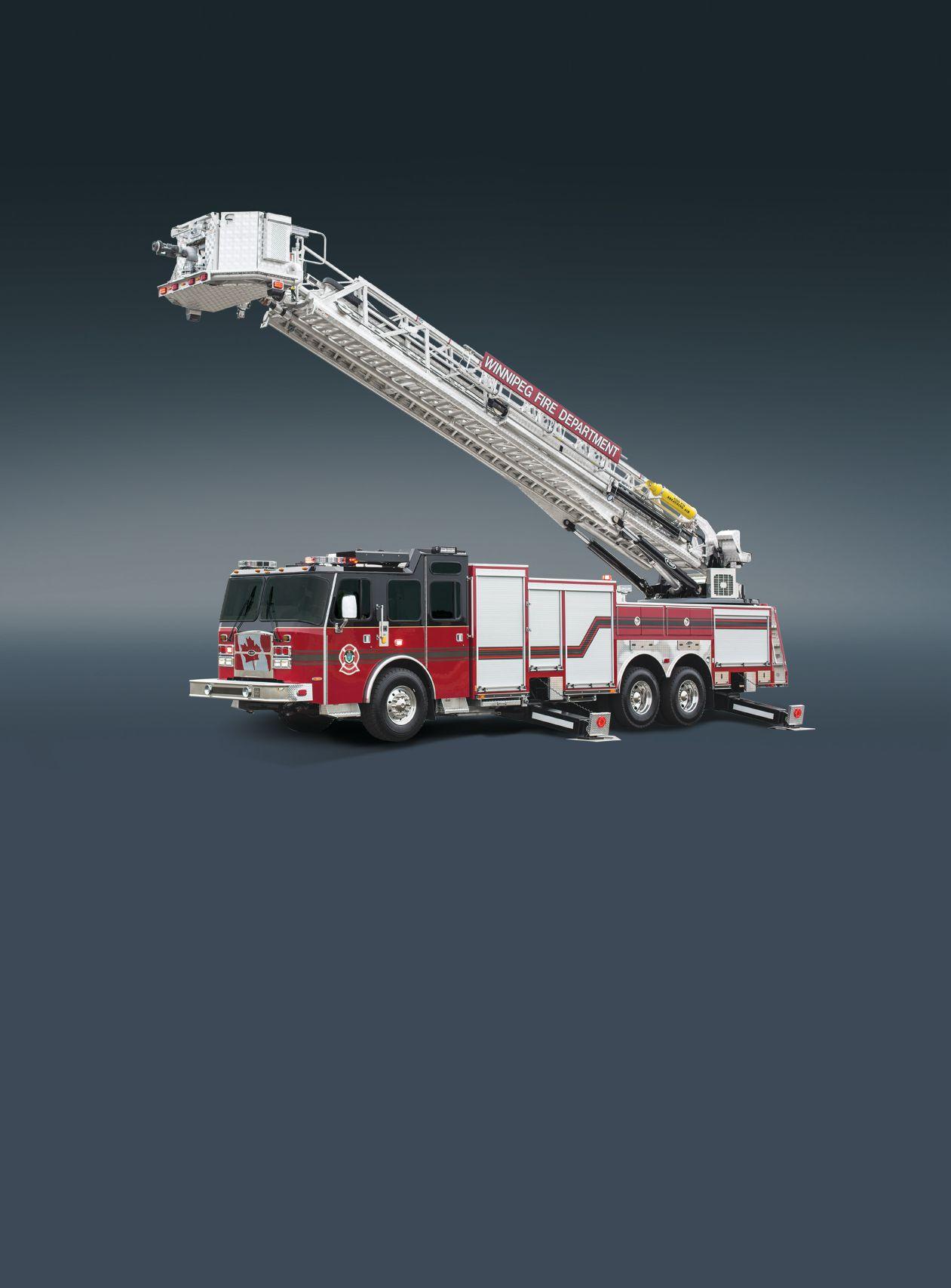
Parapet ladder bracket, three position stokes receiver and rappelling package with lower rear wall anchor points to increase the rescue capability of the platform.
1305 LB DRY PLATFORM CAPACITY
The HP 100 Platform has a rated load of 1000 lbs of firefighters and 305 lbs of equipment.
PLATFORM CONFIGURATION
Angled front corners and perimeter step provides easier access to structures. Available with single or dual monitors flowing up to 2000 GPM.
STRONGEST CAB IN THE INDUSTRY
Keep your crew safe with the cab that withstands over 5x the static roof load and over twice the frontal impact required by NFPA.
25% STRONGER
The 2.5 to 1 structural safety factor exceeds NFPA minimum requirements by 25%, which means 25% greater assurance in the integrity of the apparatus.
UNMATCHED STABILITY
Rock solid stability, even when tested to one and a half times the rated load over the front with tires off the ground.
INTEGRAL TORQUE BOX CHASSIS
A unique design that combines the chassis frame and aerial torque box to provide a low center of gravity and a solid foundation.
WHAT DO YOU CALL A 25% INCREASE OVER INDUSTRY STANDARDS?
MORE STORAGE SPACE Rescue style compartments on each side and up to 182’ of ground ladder storage with tank and pump.
JACK DEPLOYMENT IN UNDER 45 SECONDS When time is vital and space is limited, the crisscross under-slung outriggers deploy to only 15’6” spread in under 45 seconds.
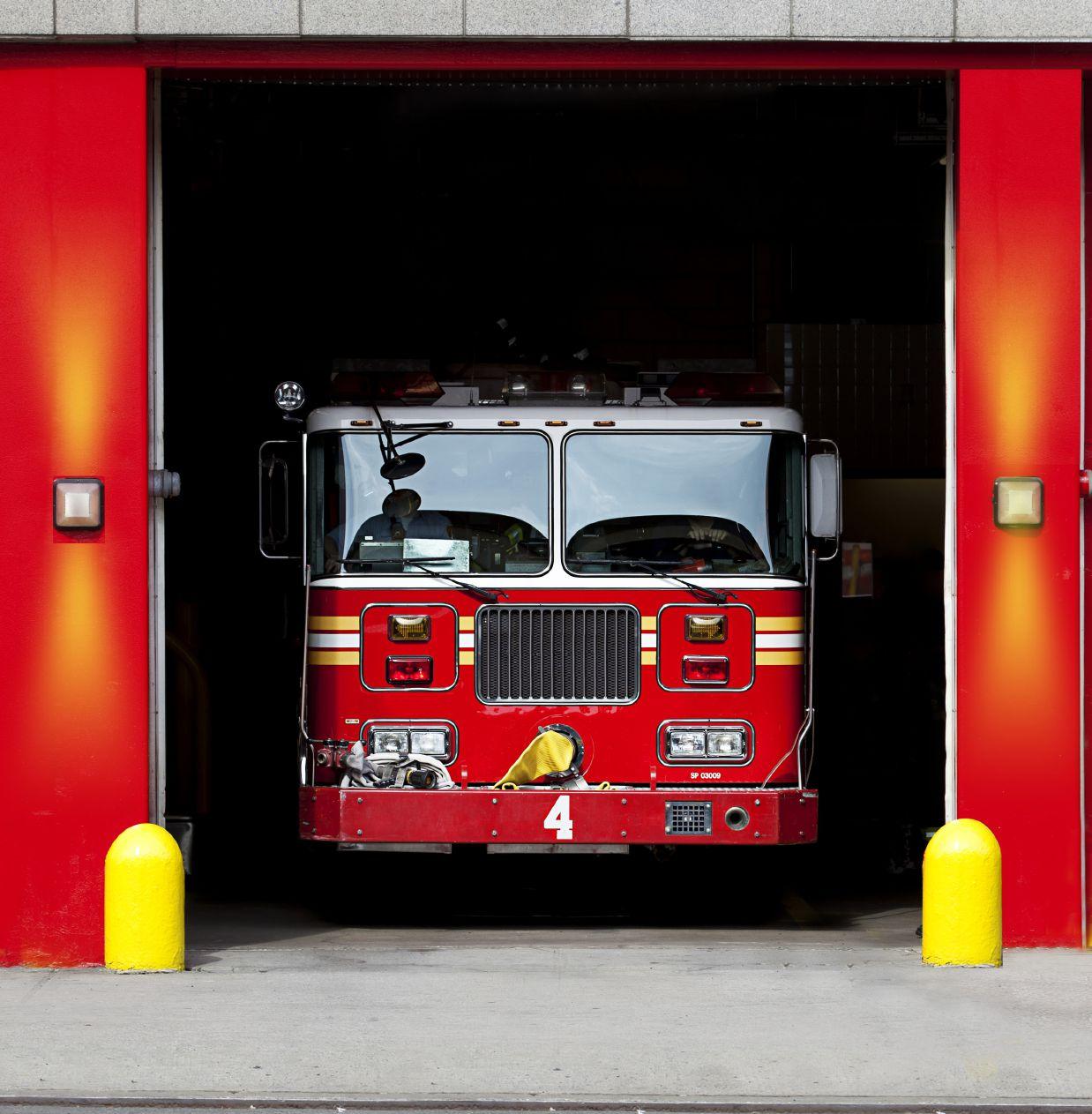
The E-ONE HP 100 Platform looks like a rock solid beast. And it acts like one too. This aerial, with a 2.5 to 1 structural safety factor is 25% stronger than NFPA requires. But the HP 100 Platform isn’t just a powerhouse, it’s also versatile. With crisscross under-slung outriggers that deploy to a tight 15’6” spread, the HP 100 Platform can go where other aerials can’t. Whatever the job calls for, the E-ONE HP 100 Platform is up to the task!
10
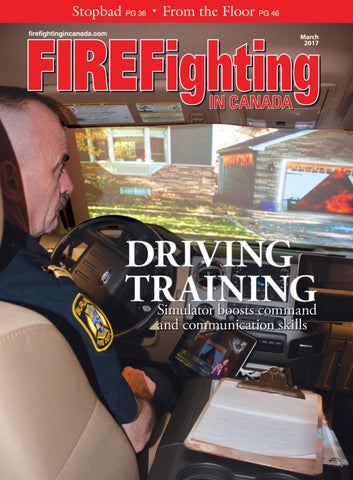
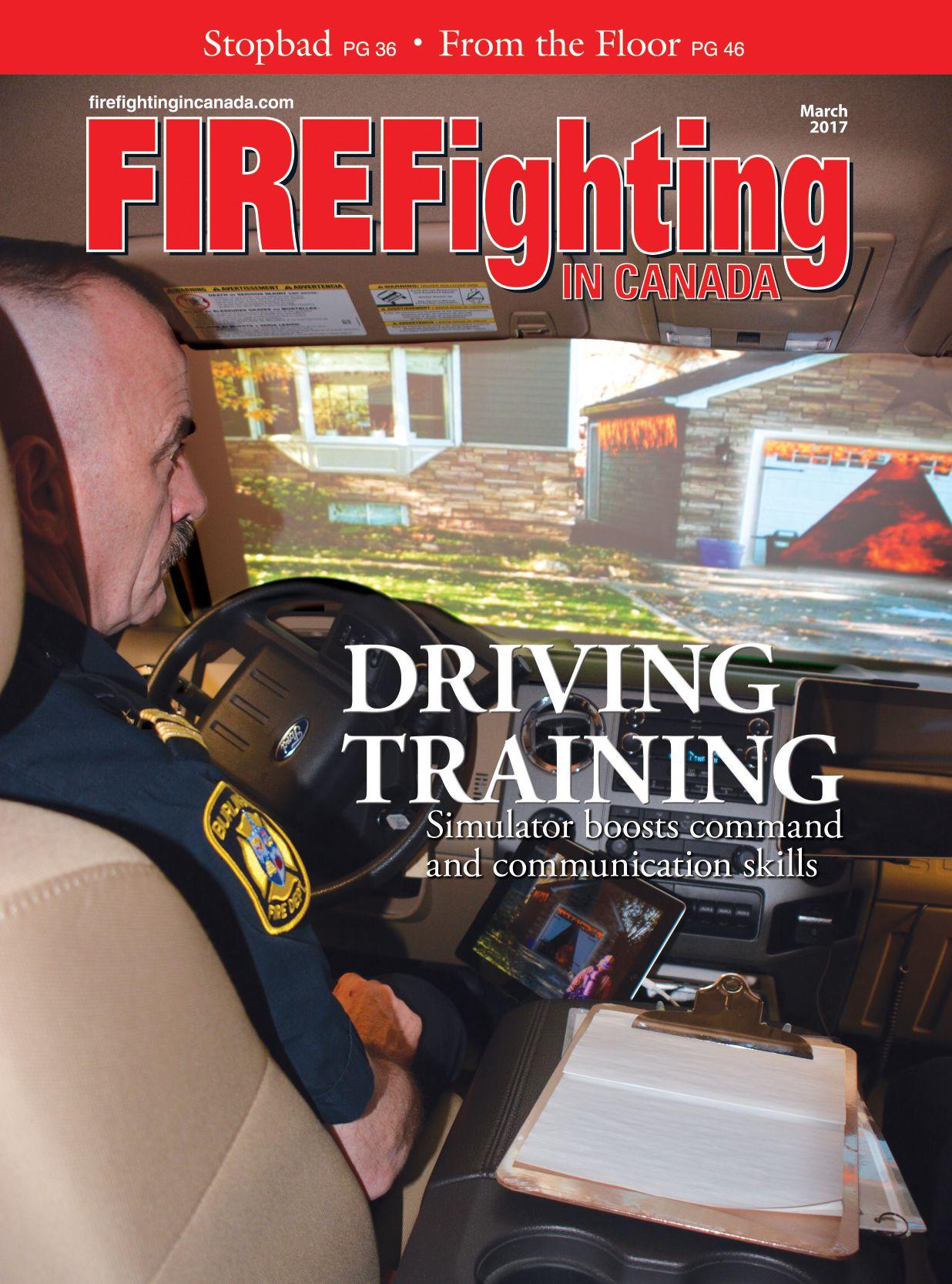
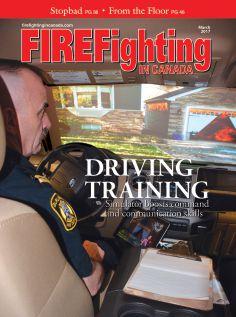
DRIVING TRAINING
The full-size Ford F350 cab in the second-floor training room at the Burlington Fire Department in Ontario causes passers-by to do a double take. As Laura King writes, the command simulator – the first of its kind in Canada – is helping officers develop communication skills and hone incident-command acumen.
16
STRESS MANAGEMENT
Not all critical incident stress management programs are equal. David Moseley had the privilege to work on four CISM teams, and understands that certain practices and protocols enhance the program for both instructors and participants. If your department is looking to adopt a CISM program, Moseley offers some considerations.
30
TIMBER TOWER
When assistant deputy chief Ray Bryant heard about construction of the world’s tallest wood building in the world in Vancouver, his reaction was predictable. “I thought it was an insane idea,” Bryant said. As Len Garis and Karin Mark write, an understanding of the compartmentstyle construction changed Bryant’s mind and he now considers the student residence building extremely safe.
38 CANADIAN ASSOCIATION OF FIRE CHIEFS
BY LAURA KING Editor lking@annexweb.com
I COMMENT
The first, best line of defence
n the first 31 days of this year, 11 people died in house fires in Ontario – four more than in January 2016. The numbers just happen to be in my in box, courtesy of the Office of the Fire Marshal. As tempting as it is to be critical of that agency’s lack of fire-prevention messaging – there was nary a word after eight people died in two separate fires in December – the lack of effective fire-safety public education is hardly exclusive to Canada’s most populous province.
The problem is national. As of Feb. 9, there had been fire fatalities in Saint Clet, Que., Regina and Glenside, Sask., East Walton, N.S., Edmonton, New Annan, P.E.I., and Stephenville, N.L. A toddler died in Vancouver on Jan. 5 after a space heater started a fire; the home had no working smoke alarms. There was a fire fatality in a Toronto community housing building on Feb. 10 – another 12 people were sent to hospital.
you, too, have tools when you need them. The trick is getting the messages out to everyone else.
As much as there is talk about the importance of first two lines of defence – fire prevention/public education and standards/ enforcement – those messages are drowning in the buckets of witty, entertaining, humourous, edgy news and entertainment content delivered everyday to smart phones and computer screens.
See story page 10.
The fire department in London, Ont., in February pleaded with people to stay in their kitchens while cooking, after a rash of fires; a discarded cigarette caused a house fire in Saskatoon. Firefightingincanada.com lists multiple barn fires, apartment fires, house fires, strip-mall fires, restaurant fires, fires in seniors homes – most, if not all, preventable.
While our focus at Fire Fighting in Canada is on training, we have, over the last 18 months, developed a stable of public-education and fire-prevention writers and in 2017 we’ll give them all the space they need to get their messages out to you, their fire-department colleagues, so that
In the same way reporters who covered the U.S. election campaign thought they were doing their jobs and reporting on public opinion but failed to consider the grassroots, fire-prevention tends to reach traditional demographics despite best intentions to expand audiences.
Failure to fund and create adequate messaging, of course – and simple human error – means there will continue to be preventable fires, which means there will continue to be a need for training, and we’ll continue to write about techniques and tools.
But in the absence of resources and the skills development necessary to teach fire-prevention and public-education specialists how to compete with CNN, Buzzfeed, and Instagram, and with an increase in fire fatalities in the first month of the year in Ontario, we’re committed to helping you help your communities.
Watch our website, our pages, and our social media feeds.
ESTABLISHED 1957 MARCH 2017 VOL. 61 NO. 2
EDITOR LAURA KING lking@annexweb.com 289-259-8077
NATIONAL SALES MANAGER ADAM SZPAKOWSKI aszpakowski@annexweb.com 289-221-6605
RETURN UNDELIVERABLE CANADIAN ADDRESSES TO CIRCULATION DEPT.
P.O. Box 530, SIMCOE, ON N3Y 4N5
e-mail: subscribe@firefightingincanada.com
Printed in Canada ISSN 0015–2595
CIRCULATION
e-mail: lmalicdem@annexbizmedia.com
Tel: 416-510-5187
Fax: 416-510-6875
Mail: 80 Valleybrook Drive, Toronto, ON, M3B 2S9
SUBSCRIPTION RATES
Canada – 1 Year - $24.50
(with GST $25.73, with HST/QST $27.69) (GST - #867172652RT0001)
USA – 1 Year $42.95 USD
We acknowledge the [financial] support of the Government of Canada.
Occasionally, Fire Fighting in Canada will mail information on behalf of industry-related groups whose products and services we believe may be of interest to you. If you prefer not to receive this information, please contact our circulation department in any of the four ways listed above.
All advertising is subject to the publisher’s approval. Such approval does not imply any endorsement of the products or services advertised. Publisher reserves the right to refuse advertising that does not meet the standards of the publication. www.firefightingincanada.com
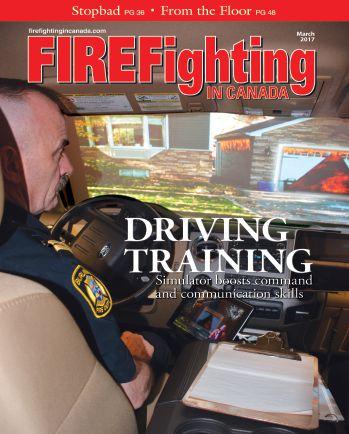
ON THE COVER
A command simulator in Burlington, Ont., helps officers develop communication skills.
PHOTO BY LAURA KING
STATIONtoSTATION
ACROSS CANADA: Regional news briefs
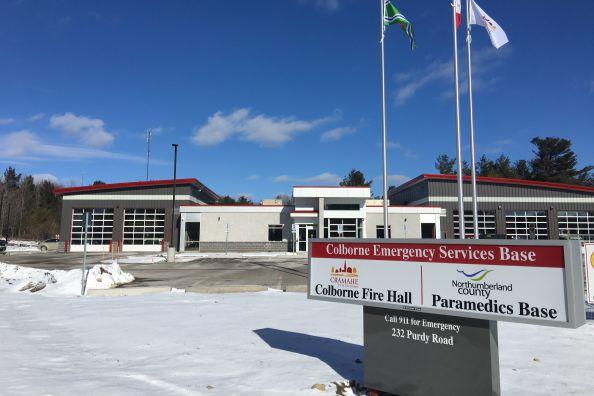
New fire and paramedic station improves safety
The $3.4 million Township of Cramahe emergency services base in Colborne, Ont., houses fire and paramedic services.
Opening a new fire station is a career highlight for many fire chiefs.
For Brandon Northrup, fire chief for the Township of Cramahe in southwestern Ontario, the Jan. 25 opening of the $3.4 million Colborne Emergency Services Base was the pinnacle of his commitment to firefighter
safety.
The station opening coincided with the launch of a new digital radio system, a much-needed improvement.
“One of the highlights is the digital repeater and antenna located on the privately owned tower,” Northrup said. “This project was completed near the end of 2016 and greatly assists
THE BRASS POLE
Promotions & appointments
TONY BAVOTA moved Feb. 6 to Toronto Fire Services as deputy chief, overseeing two divisions – communications technology accreditation, and analytics and decision support. Bavota had been chief in Burlington, Ont., since 2013, having
been promoted from deputy. Bavota has a master’s degree in public administration, an economics degree, and certificates in labour relations and leadership training. Bavota’s graduate work focused on fire-service succession planning.
DAN THURMAN was named deputy chief in Collingwood, Ont., in January, taking over from Ross Parr, who was promoted to
in the health and safety of the fire service here in Cramahe Township.
“Prior, we operated off the county analog system. Our communications went from very poor to outstanding with the addition of this new system.”
The station, home to Cramahe firefighters and Northumberland County paramedics, is the first new build between Northumberland County and a lower-tier municipality for emergency services, Northrup said.
Both Northrup and paramedic Chief Bill Detlor have moved their offices to the new building in Colborne, just south of Highway 401.
The 12,203 square-foot building is constructed to post-disaster specifications and includes a full kitchen, a 20-foot by 30-foot training room that doubles at the
emergency operations centre, and lots of natural light.
As is typical in a volunteer firefighting community, firefighters contributed to the project: a 20-foot by 20-foot fitness centre was entirely funded by the Cramahe Firefighters Association. All firefighters from the Colborne and Castleton stations have individual lockers for use of gym facilities.
For Northrup, the move has mitigated other safety issues: the old fire station was located within half a kilometre of a rail line, a concern in the event of a derailment.
A 1931 Ford pumper is located in the front vestibule of the building, reminding firefighters and visitors of the department’s proud heritage.
The township has planned an official opening ceremony for the Colborne Emergency Services Base in the spring.
- Laura King
chief. Thurman was a volunteer firefighter in Collingwood for 20 years, and has been a captain since 2010.
ROSS PARR became chief in Collingwood, Ont., in January after Trent Elyea retired. Parr had been deputy chief for eight years. Parr has more than 30 years of firefighting experience, having worked for 25 years in Orillia before moving to Collingwood.
The Town of Caledon, Ont., named DARRYL BAILEY as chief in January. Bailey had been acting chief since Dave Forfar retired in September. Bailey has been with Caledon Fire & Emergency Services since 2003; he became deputy chief in 2012.
DOUG GOODINGS returned to Ontario in February as deputy
PHOTO COURTESY TOWNSHIP OF CRAMAHE
Departments combine resources to create rescue service
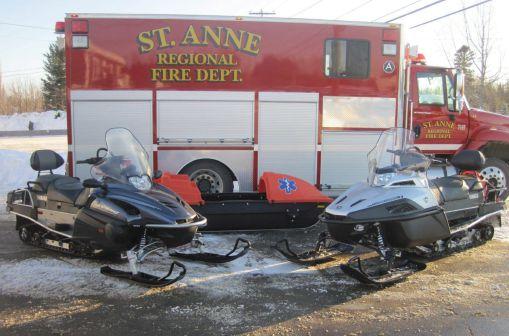
The St. Anne Regional & Robertville Regional volunteer fire departments in New Brunswick have joined together as mutual-aid partners to provide remote rescue services to those who enjoy outdoors adventures in the areas.
Having been mutual-aid partners for many years in fire fighting and other nonfire related rescue services, the two departments noticed gaps in designated response services in remote areas.
The tourism industry in northeastern New Brunswick very optimistically promotes the winter season to snowmobilers, using the phrase “white gold” to describe the region’s snowy trails.
The area offers a firstclass riding experience for snowmobilers and draws
enthusiasts from all over the Maritimes and beyond. But there had been no defined agency to respond to those in need on trails that are inaccessible by emergency vehicles.
Over the past few years, the St. Anne and Robertville fire departments put together a fleet of three 4x4 pick-ups, three snowmobiles, two side by side UTVs (one with tracks), a rescue sled, and a snow-bulance. Both agencies also carry on board a full compliment of Holamtro heavy hydraulic rescue tools, and low-angle rope-rescue gear. Most of this equipment has been purchased through fundraising efforts by both departments.
In addition, the two departments have trained hard to certify almost 40
rescue team to help snowmobilers who visit the region.
firefighters in remote rescue 1 and 2.
Thanks to sponsors, donors, and advisory committee members, local government partners and firefighters, those who visit the region to experience the
trails and hospitality know that when they need rescue services, firefighters will arrive fully trained and fully equipped.
-Deputy Chief Quentin McGrath, St. Anne Regional Fire Department
Barrie firefighters first in Ontario to carry naloxone
No one signs up to be a firefighter to respond to drug-addicted patients overdosing on opioids. But with fentanyl use spreading east across the country, firefighters in British Columbia, Alberta, Saskatchewan, Manitoba and, now, Ontario, are responding to opioid-overdose calls and carrying naloxone on their trucks.
In January, Barrie Fire Rescue Service became the first department in Ontario to provide its firefighters with naloxone, the opioid-overdose reversing drug. The Alberta government said Feb. 8 that it will provide naloxone kits to first responders and
the public – at no cost. And Regina Fire Chief Ernie Polsom said Feb. 9 that firefighters will be trained to administer naloxone. Saskatoon firefighters began carrying naloxone in January.
Calgary Fire Chief Steve Dongworth said in early February that in the six weeks that firefighters had been carrying naloxone the drug had been administered 45 times.
Firefighters in British Columbia have been carrying naloxone for months.
–
Laura King
chief in Windsor after a stint at the Missouri State Fire Marshal’s Office. Goodings resigned from the Ontario Office of the Fire Marshal in 2015 to move south. Goodings heads Windsor’s training and fire-rescue divisions, and oversees emergency operations and staff development.
Longtime Niagara-on-theLake volunteer firefighter ROB
GRIMWOOD went back to his roots on Feb. 6, as fire chief. Grimwood had been the fulltime chief in nearby Haldimand County for nine years while volunteering as a district chief in Niagara-on-the-Lake.
BRIAN ELLSWORTH returned in January to Richmond Hill Fire and Emergency Services in Ontario as a deputy chief, after serving nine years as
chief in Milton. Ellsworth had been deputy chief Richmond Hill before moving to Milton in 2008.
RETIREMENTS
BOB FOSTER has been a firefighter for 40 years; now he’s going to spend time hunting and fishing. Foster retired March 1 – his 60th birthday –after five years as chief of the
Merrickville Fire Department in Ontario; he also worked for 34 years with Ottawa Fire Services.
Chief DAVID SPARLING retires March 31 from the Fire Department of North Huron in Ontario and is going to work with Cowbell Brewery. Sparling has been a firefighter for 25 years; he was promoted to deputy in 2010 and to chief in 2013.
Two regional fire departments in northeastern New Brunswick have pooled resources to create an off-road
STATIONtoSTATION
BRIGADE NEWS: From departments across Canada
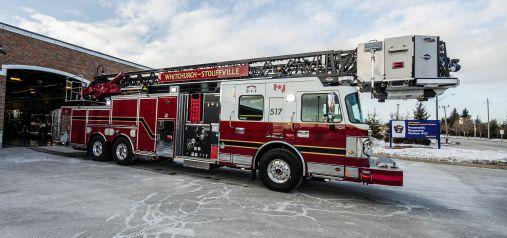
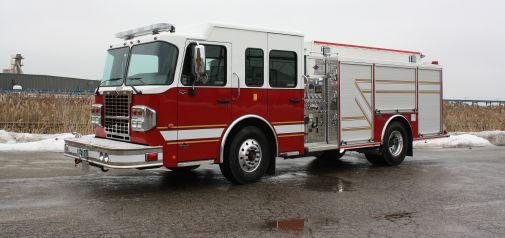
Whitchurch-Stoufville Fire & Emergency Services took delivery in January of a Spartan ERV Gladiator 30-metre (100-foot) platform with a 10-inch raised roof and a six-passenger cab. Purchased through Dependable Emergency Vehicles, the rear-mount quint has a Cummins 550-hp engine and Allison 4000EVS transmission, a 6,000 l/m Waterous pump, a 500-gallon water tank and is equipped with Whelen emergency and scene lighting.
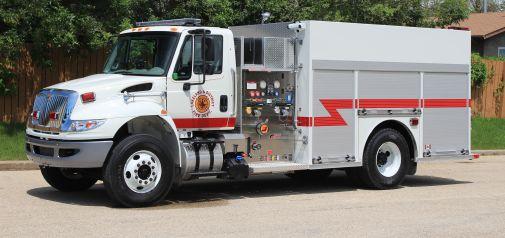
The Lakeland District Volunteer Department in Saskatchewan received its new Fort Garry Fire Trucks-built pumper on July 5. Built on an International 4400 chassis with a Navistar N9 300hp engine and an Allison 3000 EVS transmission, the truck has a side-control pump panel, a Hale RSD 1000 pump, and a Pro-Poly 1,000-ig tank.
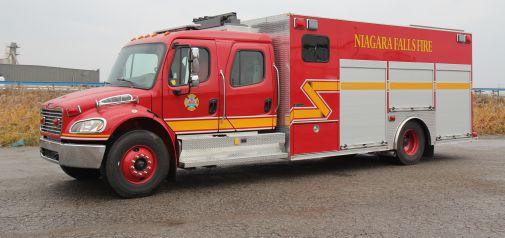
The Niagara Falls Fire Department in Ontario received its new rescue truck from Dependable Emergency Vehicles in November. Built on a 2016 Freightliner M2-106 chassis with a Cummings ISL9 350-hp engine and an Allision 3000EVS transmission, the four-seat, walk-in truck has a 15-kw Onan generator, Command Light Knight SL408 with six LED heads, and a Hurst Simo hydraulic pump with two electric cord reels.
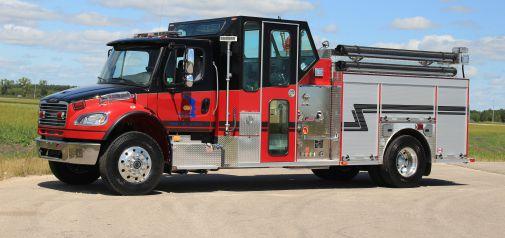
The English River First Nation Volunteer Fire Department in Saskatchewan took delivery of its first pumper on Aug. 22. The truck was built by Fort Garry Fire Trucks on a Freightliner M2 chassis with a Cummins ISL 350-hp engine, an Allison 3000 EVS transmission with an enclosed top-control pump panel, a Hale DSD 1250 pump, a Pro-Poly 1000-ig tank and a Foam Pro 2001 system.
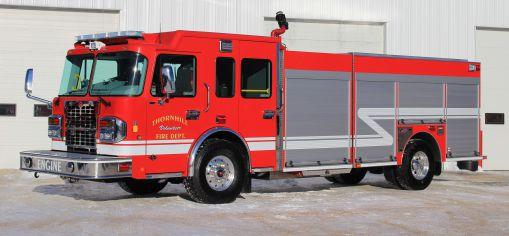
On Jan. 29, the Thornhill Fire Department in B.C. took delivery of a pumper built by Fort Garry Fire Trucks on a Spartan MetroStar chassis with a Cummins ISL9 380-hp engine and an Allison 3000 EVS transmission. The truck has a Waterous CSU 2000 pump, a Pro-Poly 800-ig tank, a Waterous Advantus 6 with CAFS and an Akron Deck Master 12V monitor with wireless remote.
Gander Fire Rescue in Newfoundland, under Chief Paul Fudge, took delivery in February of a pumper-rescue. The truck, built by Dependable Emergency Vehicles on a 2017 Spartan Metro Star-X medium four-door chassis with a 10-inch raised roof, has a Cummings ISL9 380-hp engine, an Allison 3000EVS transmission, a Hale DSD 1,250-gpm pump, a Foampro 2001 system and a 3000-watt inverter.
LAKELAND DISTRICT VOLUNTEER DEPARTMENT
WHITCHURCH-STOUFVILLE FIRE & EMERGENCY SERVICES
NIAGARA FALLS FIRE DEPARTMENT
ENGLISH RIVER FIRST NATION VOLUNTEER FIRE DEPARTMENT
THORNHILL FIRE DEPARTMENT
GANDER FIRE RESCUE
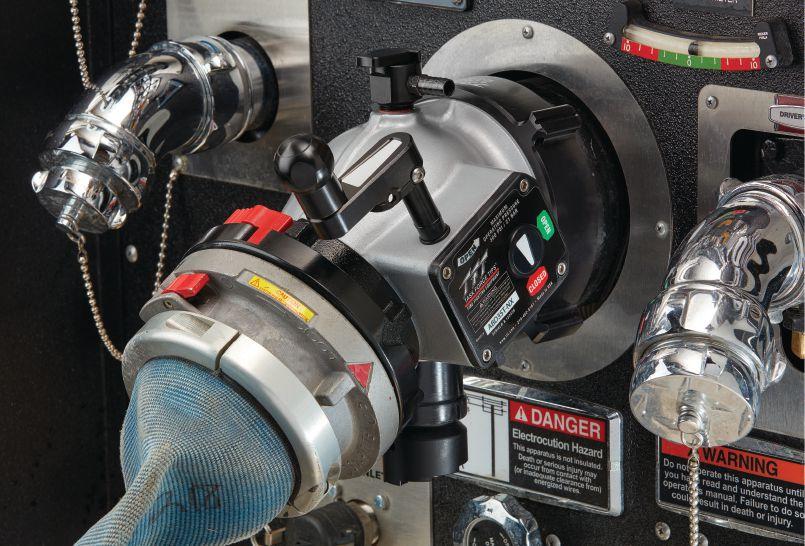
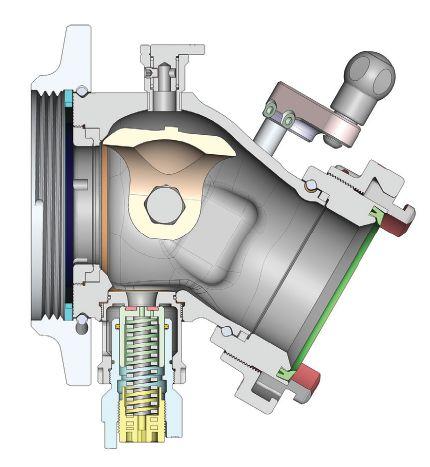
Low Profile, High Volume, Low Loss...
The 92.7mm Engineered High Performance Flow Path Produces Less Than 0.4bar Loss at 4732 l/min
• Integrated Adjustable Pressure Relief Valve Provides Fast Reacting High Volume Protection from Water Hammers in the Hose lines
• At 272mm This Valve Has The Lowest Profile of Any Intake Valve
• At Only 7.9kg This Design is the Lightest Low Profile Intake Valve Ever Produced
DRIVING
TRAINING
Command simulator allows officers to practise ICS, run incidents and develop communication skills and acumen
By LAURA KING
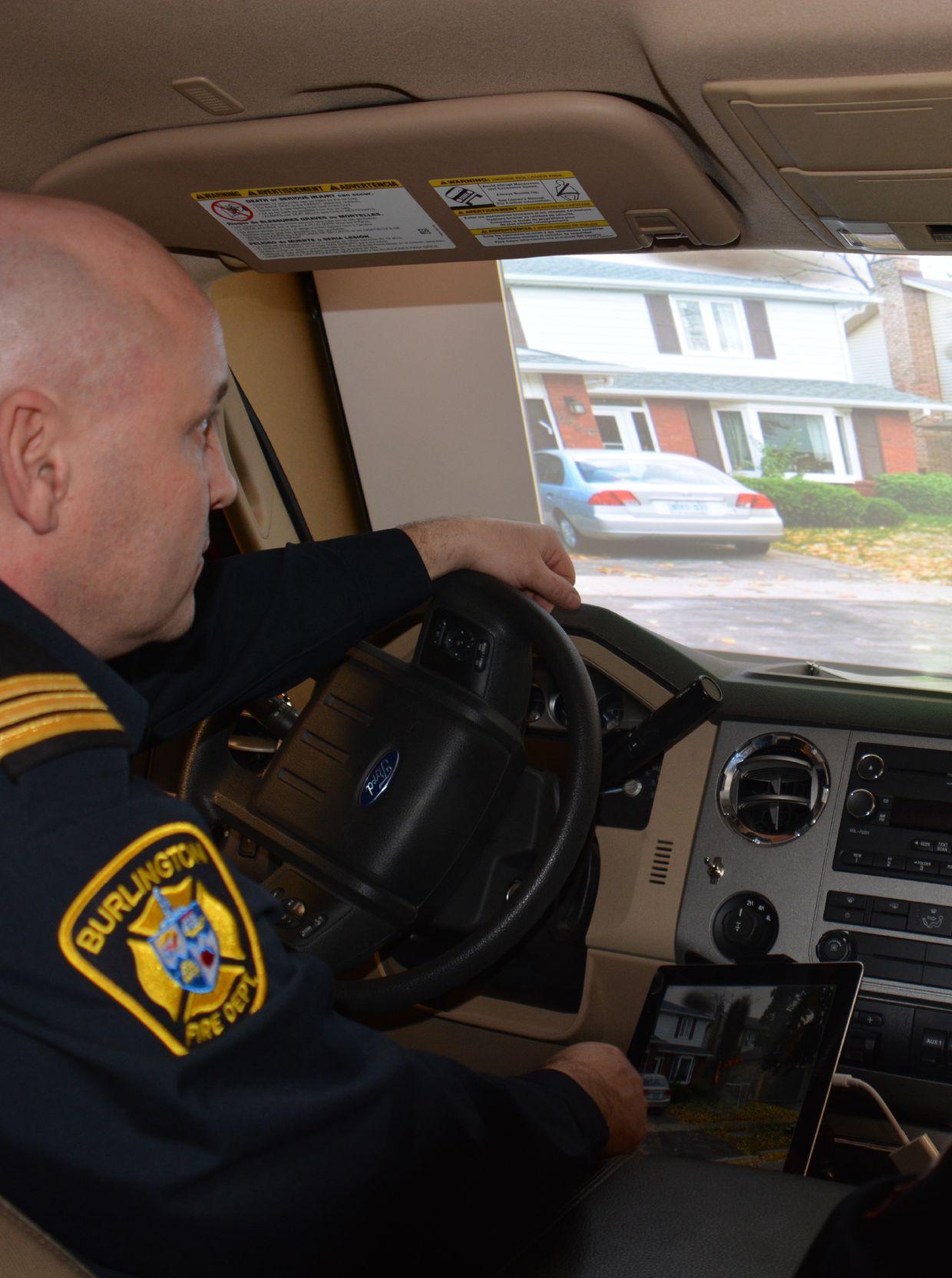
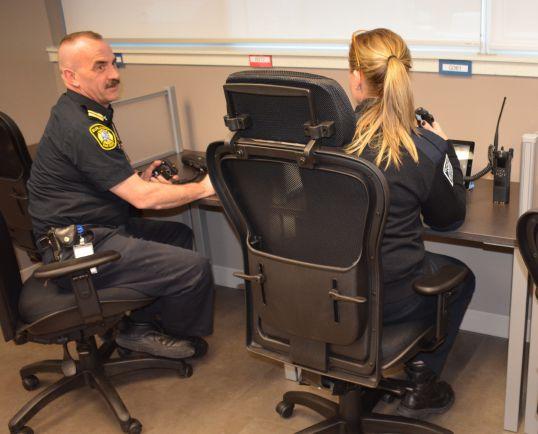
LEFT The command simulator at the Burlington Fire Department in Ontario is available to officers to develop communication skills, decisionmaking and confidence using the incident command system.
ABOVE Up to eight officers can participate in incidentcommand training using radios and work stations in conjunction with the simulator.
Acting Capt. Amanda Smyth sits in the front passenger seat, listening to the dispatcher confirm an alarm activation. Quickly and authoritatively, Smyth responds, ticking off boxes in her head.
“Go ahead with the information,” Smyth says to dispatch, then acknowledges receipt of the address and map page as the driver pulls over. Smyth locates the address in the map book, confirms the location with the driver, updates the crew, indicates the level of PPE required, and ensures everyone is belted in before proceeding to the address.
The call – which turns out to be a residential gas-line break – is an exercise using a command simulator developed by the Burlington Fire Department in Ontario to help officers hone communication skills.
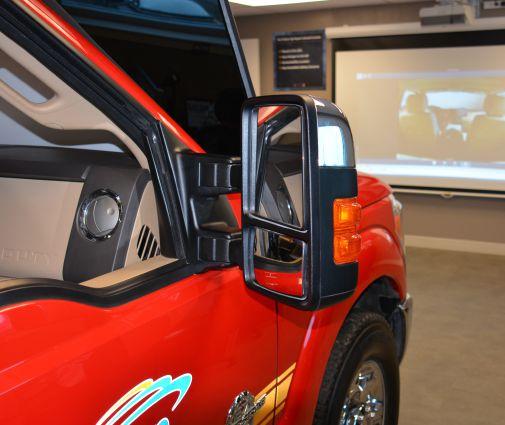
“I believe in training as you work,” said acting platoon chief Mark Eales, standing beside a full-sized Ford F350 cab in a room on the second floor of Burlington’s newly renovated fire headquarters.
The cab is equipped with an iPad on which the driver/trainer runs incident-command scenarios, some developed using photographs and video of local buildings. The goal is to ensure all Burlington officers are familiar with the five classes of buildings in their districts and can run the scenarios with confidence and authority.
In other words, said Eales, “so it becomes rote.”
At a demonstration in late January, training supervisor David Meehan acted as the dispatcher, reading from a prepared script as Smyth responded. Once a training schedule is set, dispatchers will participate in the scenarios which, Meehan said, will help everyone feel more comfortable and improve communication.
The simulator has three purposes: for individual use to help officers practice decision-making and getting their tongues around the radio-speak; for large groups of up to eight officers to run incidentcommand scenarios; and for promotional preparation and testing.
An audio-video system projects scenarios onto the vehicle’s windshield, which is actually a large screen. The trainer/driver controls the images through the in-cab iPad – showing the Alpha, Bravo, Charlie and Delta sides of the building, for example, as the dispatcher and captain work through the necessary protocols.
“What we’re looking for as we put our firefighters through these scenarios is that they can appropriately meet the benchmarks that we follow on almost every single call,” Meehan said.
“So the first thing we’re looking for is the appropriate and correct action for receiving the call en route,” Meehan said. “That includes having the driver pull over so that the officer can receive the information in a timely fashion and a safe fashion without causing extra delay – for example, you want the driver to pull over and stop as the officer writes down the address, because the call could be behind you, or you could blow by an intersection that you need.”
The next step for the officer is to properly brief and give directions to the crew; in the scenario, crew members were required to exit the vehicle and don bunker gear. The officer must locate the address in
PHOTOS BY LAURA KING
the mapping system, give instructions to the driver, and once the vehicle has started moving, report en route, reading back the information so the dispatcher can confirm that there were no errors or omissions. In the scenario, crew members notice smoke en route.
“What was an alarm activation is a fire,” Meehan said. “We’re making sure the officer takes appropriate action – to upgrade to full alarm.”
Once on scene, the officer does a verbal size-up or SHOP – size, height, occupancy, and problem – followed by initial actions and direction to the crew, and gives the name and location of command.
“Once that’s complete,” Meehan said, “the officer will conduct a 360 of the structure. After that, the officer works the incident, with timely and appropriate assignments of incoming vehicles while addressing tactical priorities of life safety, fire control and property conservation.”
Firefighters in the first training session, in November, were hesitant. “But we ran scenario after scenario, and by the end of the week it was just flowing,” said Eales, the acting platoon chief.
Up to eight officers can be in the training room at individual work stations that mimic fire-ground positioning, acting as sector officers operating under ICS – essentially a table-top exercise done electronically.
All movement and conversation is recorded, so participants can review their responses and note areas for improvement. For promotional tests, evaluators in an ante-room can hear and see the scenario on screens.
“Officers have the ability to take home the scenarios and review their performance,” Meehan said. “They can show their staff or run through it in their heads and recognize ‘OK, I was thinking that but I didn’t actually say it.’ If you don’t say it out loud you don’t get it out over the radio.”
For Smyth, a new acting captain, the simulator provides opportunities for realistic training.“For young officers, we just don’t get exposure to many fires,” Smyth said.
Meehan said ideally all platoon chiefs and captains will bring crews into the simulator once a month and go through scenarios.
“Our goal is that the platoon chief will bring fire officers in and run through simulations, but we also want the officers to bring their crews in so we can teach the crews the different things to look for; we want them to be aware of time of day and month – so as an example, in the preamble to the alarm activation simulation, it is mid-September on a Thursday at 2 o’clock, so that tells us that kids are in school and it’s possible there’s no one home.”
Burlington Chief Tony Bavota, who in February moved to Toronto Fire Services as a deputy chief – saw a similar prop in Wayne Township, Ind., a couple of years ago and planted the seed with officers.
“They made it come to life from a concept,” Bavota said, noting that the prop allows officers to practice communicating new standard operating guidelines on transitional attack and vent, enter, search.
The simulator was installed (via crane) while part of the station roof was removed during renovations in late 2016. The F350 was supplied by Ford. The cost – a $30,000 projection system (including the specialized, in-cab lens) , $7,000 for radios and $13,000 for furnishings – were partially covered by a federal grant for training.
In Burlington, a department of 170 full-time suppression firefighters and 60 volunteers at eight stations, all officers must be capable of operating one level up: captains as platoon chiefs, platoon chiefs as district chiefs. Practising scenarios, listening to commands, and repeating turns of phrase so they become second nature helps to instill confidence.
“It’s another tool in the mentoring process,” Smyth said.
Nuances, Eales, said, are learned and committed to memory in the simulation room. Simple things, like remembering to do a seat-belt check after pulling over en route to a call to – something easily forgotten in the heat of the moment – is critical and can be learned with practice.
BY MATT PEGG Fire chief Toronto, Ont.
YLEADERSHIPFORUM
Boldly going outside your comfort zone
ou know that sick feeling in the pit of your stomach, the sweaty palms and the voice in the back of your head asking you if you are sure that you know what you are doing? The not-so-quiet desire to run away and head straight back to where you came from? Me too. These are but a few of the symptoms that occur when we are outside our comfort zones.
We all prefer to be comfortable. Although some leaders are very good at envisioning, implementing and driving change, as people we all tend to crave the familiar and to gravitate toward that which we know to be safe. Even change junkies have comfort zones and often what makes them sweat is standing still.
The Merriam-Webster online dictionary defines comfort zone as “the level at which one functions with ease and familiarity.” Functioning with ease and familiarity as a leader is both outstanding and desired, but not when we intend to learn, develop and grow.
I have heard world-renowned success coach Anthony Robbins explain that “If you do what you’ve always done, you’ll get what you’ve always gotten.” I completely agree with Robbins: it is simply not possible to achieve new and great things, nor to take our results to the next level, unless and until we are willing to push ourselves outside our personal comfort zones. In fact, I will go so far as to suggest that this is the only true way to learn.
I do not believe I have ever met a truly successful person who has not repeatedly thrust himself or herself well outside of the personal comfort zone. The highest-performance people are those who are willing to dive into unknown territory, at the expense of their personal comfort, for the purposes of learning and growing.
Growth and perspective are gained by consciously and intentionally trading familiarity, routine and easy for new roles and challenges that push you to a place you have never been. Accountability and responsibility will test your ability to change, learn, lead and adapt. Developmental opportunities enable you to identify what you don’t know and force you to recognize and acknowledge where your weaknesses lie; only then can you find ways to turn those weaknesses into strengths.
Preparing for and learning to be a leader is a long and difficult road. A well-respected fire chief once explained to me that strong steel can only be made by repeatedly subjecting good steel stock to high levels of heat. Each time the steel is heated, it gets stronger. Regardless of whether you are a company officer leading a crew, a senior officer leading a division or platoon, or the fire chief leading your department, leadership works the same way: the more we subject ourselves to challenging situations, the stronger leaders we become.
If we are serious about achieving success as fire-service leaders, we must first acknowledge what will be required to succeed. Do not
The highest-performance people are those who are willing to dive into unknown territory . . . ‘‘ ’’
Leaders experience the very same feelings as anyone else. Intentionally thrusting yourself outside your comfort zone and into a completely new task, role, position, truck, crew, shift, station or department can be extremely difficult, challenging and stressful.
Leaders have the challenge of having to learn not only new tasks and procedures, but they must learn about new people, new cultures and new environments as they continue to develop and progress.
So why would anyone want to intentionally trade the known and familiar for the unknowns, risks and stresses associated with a new role, team or environment? The very best leaders have learned that this is the only place they grow and develop.
Matthew Pegg is acting chief with Toronto Fire Services, Contact Pegg at matthew.pegg@toronto.ca
shy away from new projects or teams – look for them. Do not sit quietly in a corner hoping you will not be noticed – get out there and be willing to try. We simply can’t fool ourselves into thinking we have all the skills necessary to succeed – we must test ourselves. Volunteer for a committee, lead a team, take a course, research and author a report, deliver an important presentation. Most importantly, identify and admit your weaknesses and then seek out the coaching you need to turn them into strengths.
The public expectation of today’s fire-service leaders is rapidly increasing. Fire department service levels will be assessed on value proposition and return on investment. Leadership decisions will be judged on visible impact and validated result.
Are we prepared to leave our comfort zones to obtain the skills, experience and perspective that tomorrow’s fire services will demand? Our success will depend on it.
STRESS MANAGEMENT
Essential elements of a successful program
By DAVID MOSELEY
Not all critical incident stress management (CISM) programs are equal. Having had the privilege to work on four CISM teams, it is clear that certain practices and protocols enhance the program for both facilitators and participants. If your department is looking to adopt a CISM program, here are some considerations.
■ TRAINING
Most CISM programs are based on twoday crisis intervention courses affiliated with the International Critical Incident Stress Foundation. Some programs offer annual one-day refresher courses, during which facilitators hone and improve their skills through role play; this improves delivery and instills confidence, which is reassuring to those who receive the service.
All department members, not just peer supporters, should be trained in CISM awareness. Awareness training ensures that everyone can describe critical incident stress and knows that CISM procedures are in place. Essentially, awareness training is a defusing or debriefing but minus the exploration stage of CISM, since it is generic and proactive. Done effectively, awareness training can speed up and smooth out subsequent defusings and debriefings. If the introduction and information are already familiar to firefighters, effort and time is freed up to focus on the exploration stage of the CISM process.
Once firefighters are familiar with critical incident stress, they can recognize symptoms and regularly use the coping skills. Officers with awareness training
Ensuring that CISM facilitators receive annual refresher courses to help develop their skills is an important consideration when choosing a program.
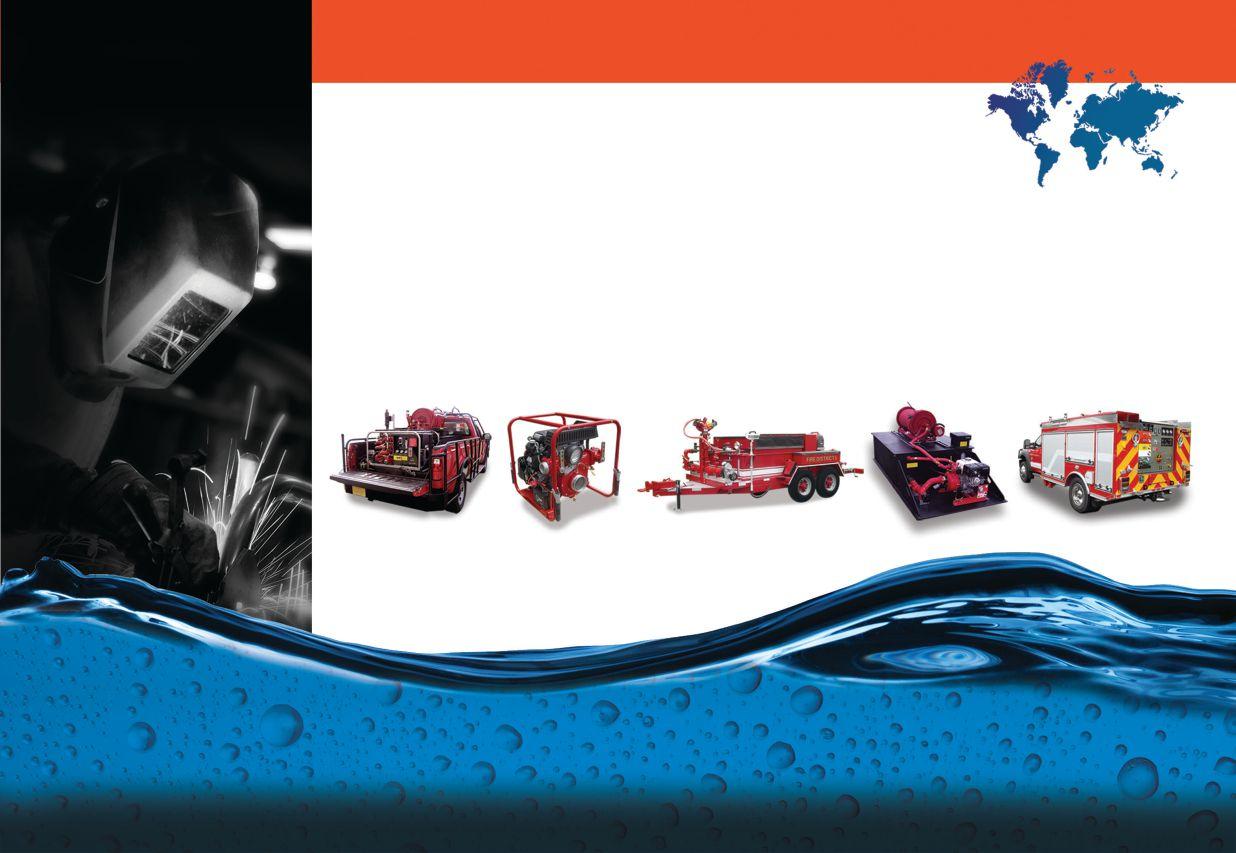
crafts·man·ship /kraf(t)smən’SHip/ noun
l skill in a particular craft
l the quality of design and work shown in something made by hand; artistry
Foam Trailers
Portable Pumps
CAFS
Skid Units
Brush Trucks
will be better prepared to recognize when CISM may be needed, and all department members will be more likely to accept a resource which with they are familiar. Awareness level information can also be provided to municipal officials, elected representatives and firefighters’ families, since it is not incident specific. What may be perceived as a lack of support by council or spouses for those experiencing critical incident stress may stem simply from a lack of understanding.
■ MENTORING
Mentoring support is also important, and fortunately CISM delivery lends itself well to mentoring. Normally, there is more than one CISM facilitator in a session – often a newer instructor and a mentor. For the newer instructor to gain confidence, it’s a good idea to let that person lead the session and have the mentor fill in an gaps at the end of each segment; this system – rather than having both facilitators present portions of the program – allows the newer instructor to relax without worrying he or she will miss something important.
■ COMMUNICATION
Building team cohesion is equally critical to ensure that CISM leaders are aware of changes and developments. Because some CISM groups are spread over large geographical areas, members may not know each other, and call outs for CISM support may be infrequent; a newsletter is an effective way to communicate updates and training tips.
■ SKILLS
The most important component of a CISM group are the people. Certain technical skills and character traits are required to be an effective peer supporter. Much of the refresher training focuses on improving active listening skills, which are already used by fire supervisors, instructors, and investigators. Peer supporters must be respected and trusted by their colleagues and known for empathy and caring. Nothing shuts down a defusing or debriefing faster than a lack of sincerity.
■ PARTICIPATION
Good CISM happens when responses are initiated. Eliciting responses takes some skill and training. Simply asking a firefighter if he or she is OK is the first step, but when it is clear that an incident has had an
impact on the crew, a defusing should be scheduled and offices must be aware of next steps. Participation is always optional, but if an officer regularly initiates responses for crews, instead of doing so only on request, firefighters will be more comfortable talking about their reactions to calls and will overcome any perceived stigma, or fear they’re being needy, and will be more likely to participate in defusings.
■ REFERRALS
While there is more to CISM than defusings and debriefings, it is rare for other components to be utilized by peers, rather it is common practice that professional help be made available to firefighters who need it, generally through employee and family assistance programs. In the absence of EAPs, firefighters should be directed to provincial mental health helplines, or family doctors.
■ TEAM BUY-IN
The final key component to successful CISM group is buy-in from management and members. With more awareness of the importance of good mental health, the incidence of post-traumatic stress and first-responder suicides, and direction from provincial or municipal governments to institute mental-wellness programs, there is likely to be little resistance. However, member buy-in will be affected by the quality of the program provided. Nothing succeeds like success, word of a poor CISM program will spread quickly.
An ideal CISM program provides annual refresher training, sends a quarterly newsletter, is regularly utilized, is backed up by an EAP, communicates its existence and process to all members of the organization, and has members attend and present at CISM workshops. A good CISM program is something all firefighters deserve.
***
Part 1 in this series appeared in the February issue of Fire Fighting in Canada and is available online at www.firefightingincanada.com; click hot topics/health and wellness.
David Moseley is a forest officer with Alberta Agriculture and Forestry, and lead training officer with Lac La Biche County Fire Rescue in Alberta, focused on operations; other areas of interest include instructing, CISM, and wildfire investigation. Contact him at david.moseley@gov.ab.ca
BY DAVE BALDING Fire chief, Golden, B.C.
LFIRELINES
Refine your department’s recruitment process
ike many areas, our community of 4,000 residents is incredibly well served by a fire department that comprises committed volunteers; I am the only career member. Although our members are paid-on call, they truly are volunteers in terms of the time and talent they donate to Golden Fire Rescue.
Attracting new members to volunteer or paid-on call fire departments is becoming a greater challenge: the obstacles to recruitment are numerous, yet appear to be consistent regardless of location or the size of the community being served. There are increased demands on parents and a general waning in volunteerism across all sectors.
Despite these challenges, I maintain our recruiting processes must be more structured and demanding than ever. We rightly expect peak performance from our existing members, and I believe we owe it to them, to our departments and to the public we serve to bring in the highest calibre new members possible.
Gone are the days when an applicant can show up on a practice night, have a set of turnout gear issued and respond to a callout that evening. The first step in our process, which is documented, is to meet with the recruit, who likely knows little about the fire department, fire service, our expectations and what’s in it for him or her. I use this opportunity to ensure the must-haves are met – factors such as residency and availability. This meeting is also my first step in making the candidate aware of the expectations, such as physical fitness, competence, commitment and attendance: I make it very clear that the fire department will, at times, take all the time a new member has, and then some.
and its needs.
Recruiting should take place in advance of an identified need for personnel. Our department experienced some attrition in 2016, and when we put the word out that were accepting applications, we had reasonable success; I’m convinced it was because we did some things right ahead of time. Promoting your organization plays a role in recruiting. If your department is quietly doing good things in the fire hall and simply responding to emergency incidents, you are doing your department a disservice. For example, our members train in the community away from the fire hall at every opportunity; this gives our members familiarity with different parts of our area and it gets us out into the public eye. What better way to boast about how we do what we do than to let folks watch us in action? We do everything we can to maintain a positive image of an organization people would want to become a part of; shiny trucks, participation in public events, and creating awareness around successful responses. Strong leadership is critical to recruiting; it creates a vibrant, forward-moving department and people notice this. Training is another aspect of the department that is evident to the
Recruiting should take place in advance of an identified need for personnel. ‘‘ ’’
Experienced members from other jurisdictions are a blessing; they typically come with valuable training. The initial meeting with these candidates becomes more exploratory – a chance to assess their adaptability and share some of our local practices. An application form and joining package is then provided, which includes several thresholds the new member must meet. A subsequent, more in-depth interview is then conducted. Selecting the right people to join your firefighting team is far easier than having to get rid of a member who has proven to be a bad fit due to a lax intake process. There is no cookie-cutter approach to engaging new personnel; use what works for your department, fine tune your process, try new systems, but above all, ensure you have a recruiting strategy that suits your department
Dave Balding joined the fire service in 1985 and is now fire chief in Golden, B.C. Contact Dave at david.balding@golden.ca and follow him on Twitter at @FireChiefDaveB
public. A well led, highly trained department with a great image is sure to attract more interest than the alternative.
The culture of the fire service, and our individual departments, plays a massive role in attracting new members. Ironically, the public perception of who we are and what we do can work against our desire to find new members. Hollywood creates the illusion of us as selfless heroes who do things truly unheard of in the real firefighting world. There is also a perception that the fire department is a closed, or exclusive, club. These myths can only be dispelled by us, whether via word of mouth or various media platforms.
Attracting and evaluating new members is more work than in the past. Recruiting members to join our fast-moving, highly trained firefighting organizations is now much more than putting up a help wanted sign. It is also time very well invested.
BY TOM DESORCY
Fire chief, Hope, B.C.
IVOLUNTEERVISION
Cultivate change and reap rewards
f you’re new to this column, you won’t know about my theory of moss and grass. Allow me a refresher: the same way a small section of moss can ruin an otherwise pristine lawn, your fire hall can be damaged by a couple of people who don’t fit in, who don’t like the direction in which you’re heading, and who threaten to overtake the rest of the members if left unchecked.
The first reaction is to attack and remediate the invasion, often throwing all your energy and resources at one or two people when, like the moss on your lawn, you can simply ignore the moss and feed the strong and healthy grass around it; soon the moss is overtaken by the strong, healthy grass, and will simply go away on its own. I have been feeding the grass for years now and while I have to trim it back now and again, for the most part, I leave it to grow and strengthen day by day.
I started on this journey as a fire chief in 1999 and, looking back, I’m happy with some of the growth I’ve seen, but it has taken time. The fire department is like a property without landscaping – leave it alone and it will be overgrown with weeds but properly planted and maintained, with good direction and guidance, it will flourish.
Time can be your best friend. Many things can’t be fixed overnight, rather they need time to grow and develop. This is particularly true with change – a little at a time with a common goal in mind and you will soon see the benefits of your actions. In smaller volunteer departments, change is not often needed. You’ve had the same members for years and there is really no need to be different. For many, change, when it is needed, is often big or controversial.
elephant one bite at a time.
I feel that tomorrow is something a lot of people can’t envision; something that is just too far away. When I think back to our fire department in the ’80s I don’t think there was really a tomorrow. Everything we did was for today. We drove the trucks, went to fires and that was it. When a truck didn’t run anymore we begged our council for money to buy a new one.
When I started in this position I came in cold. I knew nothing about fire-service administration, yet I set up an apparatus replacement schedule with money put aside annually for new trucks. We were fortunate that with our amalgamation, two of the three departments had set up reserve accounts for this purpose but unfortunately, most of our vehicles were the same age, so we had to take this on one bite at a time.
At first, the thought of purchasing a fire truck was overwhelming, a once-in-a-lifetime event; no way did I expect to be involved in the purchase of six trucks since 1996. The first one that I helped purchase, as a volunteer firefighter, is soon due for replacement. Granted, in a small community, that new truck is still going to be
Leadership in any profession is about nurturing those around you and helping them to grow. ‘‘ ’’
Allow me to make a suggestion (or plant a seed): you’ve heard people say not to implement change just for the sake of doing so, however there may be some benefit in doing just that. Just remember that whatever you lay down today becomes the foundation for tomorrow and the smallest alteration now could be the catalyst for that. Major changes all at once are hard to take but small changes are easier to accept. As the saying goes, eat an
Tom DeSorcy became the first paid firefighter in his hometown of Hope, B.C., when he became fire chief in 2000. Originally a radio broadcaster, Tom’s voice could be heard in the early 1990s across Canada as one of the hosts of Country Coast to Coast. Tom is active with the Fire Chiefs’ Association of B.C. as communications director and conference committee chair. Email Tom at TDeSorcy@hope.ca and follow him on Twitter at @HopeFireDept
a big deal but if it’s scheduled and planned, it won’t come as a surprise.
Amalgamation forced us to change, and, looking back, it’s the best thing that’s ever happened. This is what I encourage chiefs of smaller departments to do. Envision tomorrow. In your mind, things may be running smoothly, with everything going the way it should. In that case there has never been a more perfect time to gaze into the future.
Like the old-growth forest, the trees may be tall and stronger than ever but you still plant seedlings nearby. You will need new trees one day and it’s important to break ground now. Running a fire hall can be like a garden. I’m not a gardener by any means, but around the fire hall you might say we have a bumper crop: seeds have been planted and we are poised to reap the harvest.
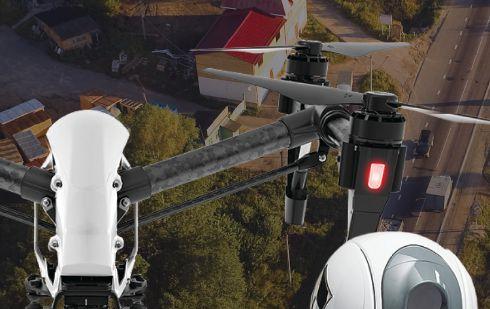
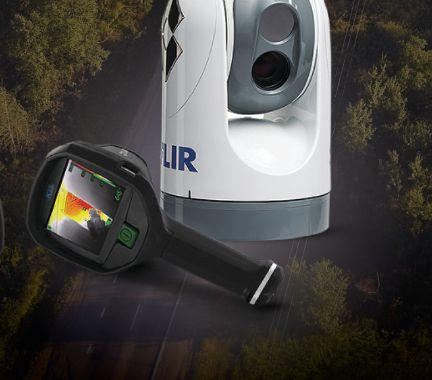
FROM BOOTS ON THE GROUND TO EYE IN THE SKY, WE’VE GOT YOUR BACK.
FLIR’s wide range of TICs can help you identify hot spots from a variety of distances – making safety the top priority. Learn more at FLIR.ca/fire
BUY ANY 4 FLIR K SERIES TICS, GET A FLIR K2 FOR FREE. A $ 1,350 VALUE!
®
FEATURED PRODUCTS:
· FLIR K2 THERMAL IMAGING CAMERA
· FLIR K33 & 53 THERMAL IMAGING CAMERA
· FLIR KF6 AERIAL APPARATUS
FIXED-MOUNTED THERMAL IMAGING CAMERAS
· FLIR M-SERIES PAN-TILT-ZOOM TICs FOR ARFF, HAZMAT & ALL EMERGENCY VEHICLES
· FLIR AERIAL FIRST RESPONDER KITS
TRAINER’SCORNER
Lessons learned the hard way
By ED BROUWER
This year marks the thirtieth anniversary of the Horticultural Technologies fire in Kitchener, Ont. (March 1987). It is in memory of the emergency responders who lost their health and later their lives in this horrific industrial fire incident I present this month’s column. First, a word of thanks to a young Kitchener firefighter, Timothy Ritchie, who reminded me of the anniversary.
■ BACKGROUND
A one-storey, 1,784-square-metre, concrete-block building, manufacturing oasis floral foam, a hard foam-like substance used to hold floral arrangements in place and keep them moist.
The manufacturing process involved the use of phenol formaldehyde resin, Freon gas and phenol sulfonic acid.
■ FIRE INCIDENT
At 13:03, on March 6, 1987, the Kitchener Fire Department (KFD) responded to a fire at Horticultural Technologies.
Upon arrival, the first pumper – commanded by Capt. Edward (John) Stahley – reported the fire had almost entirely consumed the interior of the manufacturing area of the structure and was about to break through the roof.
For more than an hour, firefighters battled the fire, unaware what chemicals were present. It took the plant manager an hour to arrive with a list of the chemicals in the building. Unfortunately, the manager did not provide much useful information, other than to explain that the operation manufactured items for the floral industry, primarily something called oasis floral foam.
Firefighters managed to prevent the drums of phenol sulfonic acid from exploding by cooling them with water.
The fire progressed; through the night, multiple alarms were called. All but two units in the city were committed to the fire.
Smoke and fumes forced the evacuation of about 12 employees from a nearby trucking company.
The Ontario Office of the Fire Marshal reported that there were no significant injuries that resulted from the fire at the time, other than Capt. Ed Stahley, who attended a hospital emergency room for an examination because he had turned a greenish colour. According to various reports about the fire, the green dye used in the manufacturing of the oasis foam caused Stahley to take on a green tinge. He was given a clean bill of health at that time.
I had the privilege of speaking recently with firefighter Mark Stahley (Ed Stahley’s son), who was in his second year with KFD at the time of the fire. Mark and his dad passed each other as the first shift changed; neither had any idea of the life-changing
A plant that manufactured foam for use in floral arrangements burned in March 1987; several responding Kitchener, Ont., firefighters developed cancer.
effects the fire would have on them and their department.
■ THE FALLEN
Mark told me his dad had started his career with Kitchener Fire Department on March 6, 1961, and 26 years later, March 6, 1987, was the beginning of the end of his career.
And here is that tragic story; it didn’t take long before the firefighters who attended the Horticultural Technologies fire began to die.
The first to die was firefighter Dave Ferrede. Dave was a fitness and health nut. He was often teased for eating nuts and berries. He was an avid cyclist, driving his bike through the winter using studded tires. Ferrede, along with many other KFD members, played hockey in the Southern Ontario Firefighters Hockey League. Kitchener had a team in the C division, which was pretty competitive. In April 1989, in a divisional title game near the end of the third period, Dave scored the winning goal, locking
up the division title. Two weeks later, Dave, 32, went on sick leave and was subsequently diagnosed with primary liver cancer. He died within six weeks.
Dave was the first to die but tragically not the last. He was followed by Capt. John Edward Stahley who, after being diagnosed with primary liver cancer, died in July 1990 at age 57.
During the summer of 1989, Sgt. Lloyd MacKillop of the Waterloo Regional Police Service, who had been the supervising police officer at the fire, developed cancer. He died in May 1990 at age 48.
Firefighter John Divo, who was the local union president, was diagnosed with terminal cancer in his lungs and spine. He died in April 1990 at age 46.
Firefighter Henry Lecreux was diagnosed with Parkinson’s disease. He died in February 1993 at age 52.
The following spring, William Misselbrook, who was the day-shift platoon chief at the fire, died of liver cancer. He was 64.
Several other firefighters who attended the blaze have skin cancers, prostate cancer, Parkinson’s disease and many other health problems.
Information gained from the website for firefighters with Parkinson’s disease showed that 23 of the 69 firefighters called to the blaze have either cancer or Parkinson’s disease. The site also reports that two Kitchener firefighters, a Waterloo Regional Police constable, and a female paramedic all fathered or gave birth to children with birth defects after their attendance at the fire.
■ THE LEGACY
I asked Mark Stahely if there was something he would like to say to you who are reading this. He replied, “I feel firefighters are still taking too many chances. Needlessly aggressively attacking a fire when no lives are at stake and realistically little chance of saving the building.
“I’ve seen too often firefighters letting curiosity get the best of them and wandering through fire scenes they don’t need to be in. Remember, most cancers are caused by
the cumulative effect. The more you expose yourself or those you command, the greater chance of illness. This is a deadly career, be smart and stay safe.”
I usually save my amens for Sunday, but amen Mark. Good advice for all of us. By the way, Mark suffered a stroke within 10 years of the fire in 1987; he was told his toxin levels were 10 times normal.
Brothers and sisters, so many of these brave men and women were never honoured with a line-of-duty-death ceremony, dying without any form of recognition worthy of their sacrifices, quietly struggling through their cancers and strokes and Parkinson’s disease, without support or recognition. Far too many firefighters are dying shortly after retirement from complications they incurred on the fire ground 10 to 20 years prior.
We will never be able to repay these firefighters for their sacrifices, but we can honour them by remembering them. We can honour them by learning from their deaths how to stay alive. We can honour them by raising awareness levels to the grave dangers of exterior operations.
Please allow me to forego my usual closing and present you with a different challenge: stop what you are doing, close your eyes and take a moment of silent reflection in honour of those who have gone on before us – if not for them, for their families, because although the incident and the subsequent deaths were years ago, I am sure for them it all seems like yesterday.
Rest in peace brothers and sisters.
Ed Brouwer is the chief instructor for Canwest Fire in Osoyoos, B.C., and training officer for Greenwood Fire and Rescue. He is also a fire warden with the B.C. Ministry of Forests, a wildland urban interface fire-suppression instructor/evaluator and an ordained disaster-response chaplain. Ed has written Trainer’s Corner for 16 of his 28 years in the fire service. Contact Ed at
Timber TOWER
When assistant deputy fire chief Ray Bryant heard about construction of the tallest wood building in the world in Vancouver, his reaction was predictable.
“I thought it was an insane idea,” Bryant said.
But once Bryant learned more about the compartment-style construction of the student residence at the University of British Columbia, his opinion changed.
“I couldn’t believe how safe it is,” he said.
The 18-storey wood building, known as Brock Commons Tallwood House, stands 53 metres and is the largest mass timberhybrid building in the world. The building consists of 17 storeys of mass timber atop a one-storey concrete base, with two concrete cores running the full height for elevators, stairs and service conduits.
The hybrid system includes prefabricated five-ply panels of cross-laminated timber (CLT) and glue-laminated timber (glulam) columns with steel connectors, encapsulated in gypsum board and topped by a steel and metal roof. The exterior is clad in decorative wood fibre high-pressure laminate panels.
The residence opens in the spring; it will house 404 students in 272 studios and 33 four-bedroom units.
Because the building exceeds the sixstorey limit for wood construction in the British Columbia Building Code, the project required a site specific regulation to be approved under B.C.’s Building Act. The regulation includes fire and seismic standards exceeding those for steel or concrete buildings, and restricts the building’s uses to primary residential, with limited assembly occupancies on the concrete first storey (for
At 18 storeys, Brock Commons Tallwood House – a residence building at the University of Britsh Columbia – is the tallest wood building in the world, measuring 53 metres.
Tallest wood building boasts top fire-safety measures
By LEN GARIS and KARIN MARK
The structure’s compartmental design ensures that fires are contained and will burn out rather than spread.
example, a student lounge is permitted, but not a restaurant or retail store).
Fire safety is also built into the project through the natural fire resistance of mass timber. The building’s 169-millimetre-thick CLT panels, used for the floors, were constructed with five layers of dimensional lumber oriented at right angles to one another and then bonded together. Glulam, used in the columns, is also composed of bonded dimensional lumber, with the grain running parallel to the beam’s length.
A demonstration fire in Quebec in a compartment built with CLT panels showed that even with peak temperatures of 1,100 C, the fire was contained to the compartment and burned itself out in two hours, except for some glowing coals.
Additionally, three layers of 5/8-inch fire-rated gypsum board covers every mass wood ceiling and column surface on the storeys with the living units of Brock Commons, while a layer of concrete topping covers the floors. The structural components of the student residence achieve a two-hour-plus fire rating (six storeys would require only a onehour rating). Fire spread will be minimized by the building’s highly compartmentalized design and the lack of combustible concealed spaces. The building is fully sprinklered and has a backup water and electrical supply.
Building code and fire engineering specialist Andrew Harmsworth, one of the project consultants, said at a recent workshop that the extremely conservative fire-safety approach was intended to deal with not only real risk, but also the perception of risk.
“The building had to be equal or better than a non-combustible building, and I’m satisfied it
is,” Harmsworth said at a timber pre-fabrication construction workshop held at UBC in November by the Canadian Wood Council’s Wood WORKS! program.
In addition, the prefab building method meant the construction site was clean, there was little hot work, and the structure and envelope went up quickly – just 66 days, an average of two storeys per week.
Vancouver Fire and Rescue Services (VFRS) management was introduced to the project early and was involved in the initial approval process. After the site specific regulation was in place, assistant chief and fire protection engineer Rick Cheung was tasked with co-ordinating the project’s construction fire safety plan.
While that work was in progress, word of the project spread through the rank and file and was met with varying degrees of concern – in part because of the assumption that Brock Commons would be the same stick-built construction as midrise wood-frame buildings, and would put firefighter lives needlessly at risk.
“There was fear and misunderstanding among the firefighters,” said acting training officer Martin Rusticus. “We knew we needed to address those concerns.”
Cheung, Rusticus and others involved in staff training developed a presentation that was shown at the department’s fall captains meetings in November. The presentation was then captured in an e-learn video that was made required viewing for all VFRS members (http://cjr.ufv.ca/videos/).
Following the training sessions and video, Rusticus said, there is a greater understanding that “because of the built-in safety measures, it’s actually
Elements of a construction fire-safety plan
Creating a robust construction fire safety plan for the world’s tallest mass timber-hybrid building was a priority for Vancouver Fire and Rescue Services.
Plan approval was required before construction could begin, as is the case with midrise wood-frame buildings in Vancouver. Measures included:
• Special attention to ensure standpipes were installed progressively during construction. Per the BCBuilding Code and Vancouver fire bylaw, functioning standpipe and hose valves were required no more than one storey below the level under construction.
• The contractor was required to provide an air or water gauge at the fire department connection point to ensure the system is ready for use. Positive pressure in the gauge will indicate that the piping system is closed, with no open valve or missing fitting. These gauges are also required for mid-rise wood-frame construction in Vancouver.
• Although the stairs are encased in concrete, temporary fire doors with a latching mechanism were required to be installed progressively as the building rose.
• An on-site 24-7 security presence was required, with roving security after hours. Cameras were not permitted as a substitute.
• A site attendant was required to ensure compliance with the plan.
• Hot-work permits were required for the limited hot work that took place.
safer than some of the other projects.”
Others from VFRS are equally impressed with the redundancies of the fire safety measures and the cleanliness of the construction site due to the prefab methods.
“They’ve sealed every floor and every compartment,” said chief training officer Chuck Stanford. “If a fire does start somewhere, it will not spread beyond the compartment.”
Bryant, the department’s assistant chief of community safety, agreed.
“I would call this extremely safe from a fire perspective,” he said. “It’s a very safe building, once completed.”
And, Bryant said, during construction, because of the use of mass timber, the building was certainly safer than a stick-built structure.
But what about after the building is occupied?
Assistant Chief Scott Morrison, who leads the department’s captains meetings, said a common concern he heard was the potential for interior changes that could compromise the building’s fire safety.
“It’s tough keeping track of wheth er [occupants] will do poke-throughs and change things on the inside,” Morrison said. “That’s the concern, moving forward – that it
keeps its integrity.”
Building changes undertaken without proper permits is a common problem in many cities, Morrison said.
“That’s why we’re still in business – human error, that kind of thing.”
In terms of fire safety inspections, Bryant said Brock Commons will be inspected annually and treated like any other fully sprinklered highrise.
Like other new buildings, Bryant said, the most intense focus will be the first few years,
wood construction. From a fire standpoint alone, the building’s fire-resistant materials, sprinklers and layering of fire-protection systems will make Brock Commons one of the safest buildings in the city.”
The Brock Commons project reflects a heightening interest in wood construction in Canada and around the world.
In 2009, B.C. was the first province in Canada to allow for residential wood-frame buildings of up to six storeys (up from four). Quebec followed suit in 2013, and Ontario
Having a comprehensive construction fire safety plan and fire department sign-off is critical . . .
Michael Giroux said the Brock Commons project will send an important message about both the safety of mass timber in highrise applications, and the differences between light wood construction and mass timber.
“It’s really de-risking the opportunity so high rise wood buildings can be replicated in other areas,” Giroux said. “Through research and now real-time application, I think Brock Commons shows equivalence in code compliance for these buildings when compared to the safety of others. Not only that, but the design team went out of its way to ensure the safety mechanisms are doubled or even tripled.”
The ultra-conservative approach to fire protection taken with Brock Commons, such as three layers of gypsum board and the backup water system, may help ease concerns about this type of construction, but research shows that typical fire-safety systems already offer superior protection, regardless of building material.
A 2016 study of 42,700 residential fires in British Columbia between 1988 and 2015 conducted by the University of the Fraser Valley showed that most fire deaths happened in buildings without adequate fire-safety measures. The study examined all residential occupancy types and found that 85.4 per cent of the 512 fire fatalities occurred in buildings without working sprinklers and smoke alarms. The study further found that buildings with working sprinklers and smoke alarms required less fire department intervention (22.4 per cent versus 54.8 per cent), and had more instances of the fire being contained to the room of origin (92 per cent versus 59.7 per cent).
This compounds the results of a 2014 UFV research study that demonstrated that woodframe buildings are as safe as steel or concrete buildings, once fire-safety systems are in place. “Fire Outcomes in Residential Fires by Construction Type,” examined almost 12,000 building fires reported in British Columbia between 2008 and 2013 and found no deaths from fires in buildings with working sprinklers and smoke alarms – regardless of construction type – and similar injury rates. Fire spread was also remarkably similar, with most fires in all construction types being confined to the room of origin.
In Canada, tall mass-timber buildings
require special permitting, such as Brock Commons site specific regulation, but that is expected to change in the near future. For example, encapsulated mass wood timber construction of up to 12 storeys is being considered for the 2020 National Building Code.
Giroux said the hybrid approach taken with Brock Commons – blending concrete, steel and mass-timber elements – helps reduce the perception of risk while successfully demonstrating the potential of wood in construction.
The project “opens up a world of opportunity for 12 storeys or less because people will have seen it as being de-risked,” Giroux said.
With Brock Commons set to open, VFRS shared some of the lessons learned during the project’s construction stage.
Stanford, the chief training officer, advises departments that are facing tall-wood projects to get their training in place as early as possible.
“We could have done it earlier,” Stanford said. “Having got ahead of it might have quelled a lot of fears. After you see the video and how it’s built and the fire safety measures, you have a much higher level of comfort.”
Having a comprehensive construction fire safety plan and fire department sign-off is critical, to ensure site protection and alleviate concerns, said Cheung.
Bryant noted that a good working relationship with the developer and site personnel makes enforcement of the fire-safety plan provisions easier.
“Get involved early and work with the developers,” he said. “We inspected the building regularly and watched them build it, and even got to know them on a first-name basis. It helped.”
Len Garis is the fire chief for the City of Surrey, B.C., an adjunct professor in the School of Criminology and Criminal Justice and an associate to the Centre for Social Research at the University of the Fraser Valley, a member of the affiliated research faculty at John Jay College of Criminal Justice in New York, and a faculty member of the Institute of Canadian Urban Research Studies at Simon Fraser University. Contact him at LWGaris@surrey.ca
Karin Mark, based in Metro Vancouver, is a former award-winning newspaper reporter who writes for publications and corporate clients and provides graphic design and other communications services.
BY GORD SCHREINER Fire chief, Comox, B.C.
LPractice night in Canada
ike many kids who grew up in Canada, hockey was a big part of my life (and still is). I started playing when I was five years old and played for almost 50 years. When I joined the fire service, I noticed similarities between a hockey team and a fire-service team, from pride to hard work, fun, and the desire to become a better team. Hockey night in Canada is part of our culture. In many mid-size to small towns, so is fire practice night.
A few years ago I had the honour to coach my two sons, who were playing hockey at the midget rep level. Once I got into coaching, the similarities between a hockey team and a fire-department team became even more apparent to me, especially when I started to develop and plan hockey practices. Each hockey practice had to be very carefully planned to ensure the best use of the limited ice time (training time). The practices needed to include individual as well as team development time while ensuring a high level of safety for everyone. I have often used the same format to develop fire practices; if I showed up at the rink without a written practice plan, the practice session would not be very productive and the team would not develop or be ready for the next game. I spent hours researching and planning my hockey practices. I thought about past games to see what we needed to improve. I went to watch successful teams practice to see what they were doing. I learned that the most successful hockey teams were the ones that had the best practices. We need to do the same in the fire service. Check in with other fire departments to see what they are doing and steal their best ideas. Train with them.
STOPBAD
or knot tying. From there, we moved into line drills (line rushes, breakouts); again, same in the fire service, except our drills might be stretching a line or throwing a ladder. Then, we worked on some special-teams drills (power plays, penalty kills); same in the fire service, except these drills might be vent, enter, search, or auto ex. With the assistance of additional coaches, we might have worked on more individual skills such as goaltending or face-offs; same as in the fire service, except these individual skills might be driver/pump operator, coaching a new incident command or incident-safety officer.
If hockey practice went well we finished with a scrimmage, allowing team members to use their combined skills. If the practice didn’t go so well, we continued to work on areas that needed improvement. For our fire service practices, the scrimmage would be a scenario or two that encompassed many of the things we had practiced. At the end of the practice we meet to discuss what went well and what needed improvement. We also discuss any safety issues including communications, personal equipment and rehab. After the hockey practice I would make adjustments to my practice plan and put it away to be used later, maybe even next year. You can do this with your
Check in with other fire departments to see what they are doing and steal their best ideas. Train with them.
I would show up at the rink well before the scheduled start time of practice to ensure I was ready to deliver my planned practice and that I had the necessary resources to run my practice. We need to do the same in the fire service. Show up early.
Before a typical hockey practice, I met with the other coaches to assign tasks. We need to do the same in the fire service. We then had a team meeting to discuss the goals and objectives of the hockey practice with an emphasis on training hard but safely. The best fire practices start the same way and include a tail-board safety talk. The hockey practice started with some warm-up drills to get the mind and body ready. We need to do the same in the fire service.
Next we did some individual skills such as skating and shooting; same for fire practice, only these drills might be donning and doffing,
Gord Schreiner joined the fire service in 1975 and is a full-time fire chief in Comox, B.C. Contact him at firehall@comox.ca and follow him on Twitter at @comoxfire
’’
fire practices – design a solid practice plan and save it for future use.
The next time you are tasked with putting together a great fire practice, think about it in terms of a hockey practice. Just like a fire, do not show up to deliver a fire practice without a plan: it will not go well and your department will suffer. The best departments train hard using well-structured and meaningful practice plans.
One big difference between hockey and the fire service is that in the hockey world we would know our schedule and opponent, whereas in the fire world we do not know when our next event will be or type of incident to which we will be called. Furthermore, in the fire world, if we do not play well, we are exposed to great personal risk.
Remember, a hockey coach is a lot like a fire-service leader; poor leadership equals a poor team. Our team manager is our local government and our fans are our citizens.
Practice hard and often and get ready for your next big game!
A pathway to collaboration
By KEN BLOCK
From an organizational, strategic perspective, 2016 could well be remembered as a significant year in the history of the Canadian Association of Fire Chiefs. A working group consisting of the president, executive director and a director of the CAFC as well as the chair and three provincial presidents representing the national advisory council (NAC) of the CAFC gathered in Ottawa with a consultant to review, revise and ultimately draft an updated new vision and mission statement for our CAFC. Work was also initiated on developing the framework of a new strategic operational plan intended to assist the board of directors in identifying, prioritizing and executing issues deemed relevant to our new CAFC vision and mission.
The draft document was later further reviewed and tweaked by the entire CAFC board of directors and national advisory council members. The new CAFC vision of “uniting Canada’s fire-service leaders” with the mission of connecting Canada’s provincial, territorial and allied associations and external stakeholders for the advancement of public and firefighter safety was born.
At the working-group level, priority was placed on the importance of the relationship between our board of directors and our national advisory council. A previous restructuring of the CAFC executive and board of directors made necessary by changes to the federal not-for-profit legislation resulted in a much smaller board of directors and saw the creation of the national advisory council. A significant, unintended consequence of the restructure was a perceived loss of continuity between the NAC and the board, and it was identified that this needed to be addressed. The new vision, mission and strategic plan was seen as a major step in the right direction.
Having had the privilege to be elected president at the 2016 conference and AGM in St. John’s, and having had the honour of serving as chair of the NAC for the previous two years, I believe the opportunity exists to collectively work toward a much-improved alignment and integration of both groups.
It was deemed important by the working groups that the CAFC not, in any way, be perceived as being in competition with our provincial, territorial and allied associations, but rather to have a mandate to support them where possible on issues
Le chemin de la collaboration
Par KEN BLOCK
D’un point de vue organisationnel et stratégique, on pourrait fort bien se remémorer l’année 2016 comme un jalon dans l’histoire de l’Association canadienne des chefs de pompier. En compagnie d’un expert-conseil, un groupe de travail constitué du président, du directeur général et d’un directeur de l’ACCP, du président du Conseil consultatif national (CCN) et de trois présidents provinciaux s’est réuni à Ottawa pour examiner, revoir et ultimement rédiger une vision et un énoncé de mission actualisés pour l’ACCP. Des travaux ont également été entrepris pour élaborer le cadre d’un nouveau plan opérationnel stratégique destiné à épauler le Conseil d’administration au moment d’identifier, de prioriser et de mettre à exécution les questions jugées pertinentes pour ces dites vision et mission.
Le document provisoire fut ensuite révisé et peaufiné par l’ensemble du Conseil d’administration de l’ACCP et les membres du Conseil consultatif national. Ainsi naquit notre nouvelle vision, à savoir « Unir les forces vives de la Sécurité Incendie au Canada » et notre mission visant à lier les associations provinciales/territoriales/de même opinion et tous les intervenants externes pour l’amélioration de la sécurité du public et des pompiers.
Les groupes de travail ont accordé la priorité à l’importance de la relation entre notre Conseil d’administration et notre Conseil consultatif national. La restructuration antérieure du Comité exécutif et du Conseil d’administration de l’ACCP, rendue nécessaire suite aux modifications ayant été apportées à la Loi canadienne sur les organisations à but non lucratif, a donné lieu à un Conseil d’administration beaucoup plus restreint et à la mise sur pied du Conseil consultatif national. Une conséquence importante non voulue de ceci fut la perte perçue de la continuité entre le CCN et le Conseil d’administration. Il a été déterminé qu’il fallait y remédier. Les nouvelles vision, mission et plan stratégique ont été perçus comme un pas important dans la bonne voie.
Ayant eu le privilège d’être élu président lors de la Conférence et de l’AGA de 2016, à St. John’s, et ayant eu l’honneur d’assumer la présidence du CCN pendant les deux années précédentes, il me semble qu’on peut collectivement travailler à l’harmonisation et à l’intégration des deux groupes.
Les groupes de travail ont jugé important que l’ACCP ne soit perçue en aucune façon comme étant en concurrence avec nos associations provinciales, territoriales et alliées. Dans la mesure du possible, son mandat devrait plutôt être de les appuyer sur des questions jugées de portée nationale pour les services d’incendie.
determined to be of national importance to the fire service.
Our new board of directors is unanimous in its resolve to work toward the goal of integration and collaboration with our NAC members.
The priorities of advancing the firefighter mental wellness, Answer the Call, national fire incident database and transportation of dangerous goods initiatives resonate with fire-service leaders across our country. Advocating for the inclusion of firefighter safety as an objective of the National Model Building Code and the creation of a type of secretariat or national fire advisor position to evaluate data with the purpose of researching for trends within the aboriginal, territorial and provincial regions of Canada’s fire service have also been identified as national issues of importance. With our new vision, mission and strategic plan guiding us, there is much work to do and many priorities are being addressed in parallel with the posting and filling of our vacant executive director position, furthering our relationships with federal elected officials, the pipeline industry within Canada, and the International Association of Fire Chiefs. These ongoing files important to our members are all being actively worked on and advanced.
The key to the future sustainability and success of our Canadian Association of Fire Chiefs is 100 per cent dependent upon the alignment, integration, partnership and engagement among our board of directors, the national advisory council, and members of their associations.
The way forward will see our board regularly engage the NAC seeking the provincial, territorial and allied association perspective, feedback and recommendations on national fire-service issues that have been identified and brought forward for consideration; therein lies our greatest opportunity.
As we can all attest, success in the fire service is dependent on teamwork, and it is my belief that the CAFC board of directors and national advisory council working together under the guidance of our new vision, mission and fundamentally sound strategic plan will be a force to be reckoned with as we engage in the important role of advancing fire-service priorities of national interest across Canada.
Only time will tell, however, it is my belief that the opportunity exists for 2016 to indeed be remembered as the beginning of a more strategically focused Canadian Association of Fire Chiefs effectively aligned and integrated with our national advisory council partners, working toward our common goal of advancing fire-service priorities identified to be national in scope from coast to coast to coast.
Ken Block is the fire chief in Edmonton and president of the CAFC. Contact him at ken.block@edmonton.ca
Notre nouveau Conseil d’administration est unanime dans sa détermination à travailler à l’intégration et à la collaboration avec nos membres du CCN.
Les priorités en ce qui concerne l’amélioration de la santé mentale des pompiers, « Répondre à l’appel », la base de données nationales sur les incendies et les initiatives relatives au transport des marchandises dangereuses résonnent chez les dirigeants des services d’incendie de tout le pays. Favoriser l’inclusion de la sécurité des pompiers au Code modèle national du bâtiment et la création d’un secrétariat ou d’un poste de conseiller national chargé d’évaluer les données afin de cerner les tendances dans les services d’incendie des régions autochtones, territoriales et provinciales au Canada ont également été identifiées comme représentant des enjeux nationaux substantiels. Nos nouvelles vision, mission et plan stratégique nous guideront. Mais, il reste beaucoup de priorités à traiter, parallèlement à la recherche d’un directeur général pour combler le poste présentement vacant, afin de renforcer nos relations avec les élus fédéraux, avec l’industrie pipelinière au Canada et avec l’International Association of Fire Chiefs. Nous sommes à l’œuvre pour faire progresser ces dossiers permanents, importants pour nos membres.
La clé de la pérennité et des prochaines réussites de l’Association canadienne des chefs de pompier dépend entièrement de l’harmonisation, de l’intégration, du partenariat et de l’engagement de notre Conseil d’administration, du Conseil consultatif national et des membres de leurs associations.
En allant de l’avant, notre Conseil d’administration engagera régulièrement le CCN en sollicitant le point de vue, les commentaires et les recommandations des associations provinciales, territoriales et alliées sur les questions relatives aux services d’incendie nationaux qui ont été identifiées et présentées pour examen. C’est là notre plus grande opportunité.
Comme nous pouvons tous en témoigner, le succès des services d’incendie repose sur le travail d’équipe. Je suis convaincu que le Conseil d’administration et le Conseil consultatif national de l’ACCP réunis sous la direction de nos nouvelles vision, mission et plan stratégique fondamentalement solide seront une force dont il faudra tenir compte alors que nous nous préparons à jouer un rôle important dans l’avancement des priorités des services d’incendie d’intérêt national.
Seul le temps saura le dire. Cependant, je crois que l’on se remémorera effectivement l’année 2016 comme le début d’une Association canadienne des chefs de pompier plus stratégiquement alignée et intégrée à notre objectif commun visant à faire progresser les priorités des services d’incendie ayant été identifiées comme étant de portée nationale, d’un océan à l’autre.
Ken Block est chef de pompier à Edmonton et président de l’ACCP. Vous pouvez communiquer avec lui à ken.block@edmonton.ca
Mental health identified as priority La santé mentale est une priorité
By KEN MCMULLEN Par KEN MCMULLEN
Over the last several years, the recognition of the importance of psychological health and safety in the fire service and all emergency services has risen to the point at which there is consensus that it is a top priority. Many fire, police and emergency-medical services across Canada have taken steps to increase awareness of the issue and have created plans to address the risk that the nature of these professions poses to emergency responders. The Canadian Association of Fire Chiefs (CAFC) has taken steps on behalf of all fire services, and the Calgary Fire Department is implementing a multi-faceted mental-wellness model that may serve as a model for other departments.
The consensus that it is time to act was demonstrated in September 2015 when the CAFC and the International Association of Fire Fighters (IAFF) convened the inaugural meeting of the firefighter mental-wellness advisory group to discuss the need to address the mental health of Canadian firefighters. The meeting was attended by representatives of the CAFC board of directors and national advisory council, the IAFF, the Council of Canadian Fire Marshals and Fire Commissioners, the Mental Health Commission of Canada, and staff from CAFC, IAFF and the Calgary Fire Department. The result was the “National Firefighters’ Mental Wellness Roadmap Strategy,” a long-term initiative to identify the tools required to support the fire service in the recognition, prevention, intervention and treatment of mental-health issues facing firefighters in Canada. This work has begun, with a research agenda encompassing policy, the spectrum of prevention, intervention and follow-up, and the gaps in research and data collection related to firefighter mental health.
As this work proceeds, many fire services across Canada have begun initiatives to address the mental well-being of their members; some have adopted one or more educational programs while others have created programs tailored to their specific needs. While there are a variety of initiatives
Au cours des dernières années, reconnaître l’importance de la santé psychologique et de la sécurité dans les services d’incendie et d’urgence a atteint un point tel qu’il a bien fallu admettre qu’il s’agissait d’une priorité absolue. De nombreux services d’incendie, de police et médicaux d’urgence à travers le Canada ont pris des mesures pour mieux sensibiliser la population à ces questions et ils ont dressé des plans pour remédier au risque que la nature de ces professions pose aux premiers répondants. L’Association canadienne des chefs de pompier (ACCP) a pris des dispositions pour le compte de tous les services d’incendie et le Service d’incendie de Calgary a mis en œuvre un modèle multi-facettes de bienêtre mental qui peut servir d’exemple à d’autres services.
En septembre 2015, un consensus mettait en évidence la nécessité d’agir lorsque l’ACCP et l’International Association of Fire Fighters (IAFF) ont convoqué la réunion inaugurale du Groupe consultatif du mieux-être mental des chefs de pompier pour discuter de la nécessité d’aborder la question de la santé mentale des pompiers canadiens. Des représentants du Conseil d’administration et du Conseil consultatif national de l’ACCP, de l’IAFF, du Conseil canadien des directeurs provinciaux et des commissaires d’incendie ainsi que des membres du personnel de l’ACCP, de l’IAFF et du Service d’incendie de Calgary y assistaient.
Cette rencontre a donné lieu à la « Stratégie sur le carnet de route sur la santé mentale des pompiers », une initiative à long terme pour pouvoir identifier les outils nécessaires pour soutenir les efforts des services d’incendie dans le domaine de la reconnaissance, de la prévention, de l’intervention et du traitement des troubles de santé mentale auxquels sont confrontés les pompiers du Canada. Ces travaux sont en cours, avec un programme de recherche couvrant la politique, le spectre de la prévention, de l’intervention et du suivi ainsi que les lacunes dans la recherche et la collecte des données liées à la santé mentale des pompiers.
Au fil de ces exercices, plusieurs services d’incendie canadiens ont lancé des initiatives visant à remédier au bien-être mental de leurs membres. Certains ont adopté un ou plusieurs programmes éducatifs tandis que d’autres ont créé des programmes adaptés à leurs besoins spécifiques. Bien que diverses initiatives soient en cours, choisies pour pourvoir aux besoins et aux ressources des différentes organisations, le Service d’incendie de Calgary a élaboré une stratégie de trois ans en matière de santé et de
underway, chosen to meet the needs and resources of different organizations, the Calgary Fire Department has developed a three-year psychological health and safety strategy.
In 2015, the department committed to work toward alignment with the voluntary workplace psychological health and safety standard, CAN/CSA Z1003-13/BNQ9700803/2013 (the standard). The standard is designed to encourage organizations to apply the same rigour to psychological health and safety that they do to physical health and safety.
Like the CAFC, Calgary’s first step was research consisting of four components:
• an audit of existing policies, procedures and resources that support psychological health and safety;
• a search for current knowledge about mental illness and injury in firefighters;
• an employee survey (Guarding Minds at Work) to determine perception of psychological health and safety;
• adaptation and piloting of a mental-health literacy and resiliency training program, Road to Mental Readiness (R2MR).
For those of us who confront trauma as a regular part of our work life, the risk is likely to be higher. ‘‘ ’’
The audit included both Calgary Fire Departmentspecific and City of Calgary policies related to psychological health and safety and a variety of resources available to staff through the City of Calgary’s employee and family assistance program, the Calgary Fire Department Wellness Centre, and the community at large. This list is extensive but still allowed us to identify areas for improvement.
The existing knowledge about mental health, injury and illness specific to the profession of fire fighting is limited but the information about these concerns in the general Canadian population demonstrates that it is a significant issue. Given the highly stressful nature of the firefighter’s job, we proceeded with the assumption that they are at least as vulnerable, and probably more so, than members of the general population.
The employee survey used, Guarding Minds at Work (GM@W) is a Canadian tool developed by researchers at
sécurité psychologiques.
En 2015, le service s’est engagé à s’harmoniser à la norme de santé et de sécurité psychologique volontaire au travail, la CAN/CSA Z100313/BNQ9700-803/2013 (la norme). Celle-ci vise à inciter les organismes à appliquer la même rigueur à la santé et à la sécurité psychologiques que celle qu’ils apportent à la santé et à la sécurité physiques.
À l’instar de l’ACCP, la première étape de Calgary était une recherche consistant en quatre composantes, soit :
• Une vérification des politiques, des procédures et des ressources existantes qui soutiennent la santé et la sécurité psychologiques.
• Une recherche des connaissances actuelles sur les maladies mentales et les blessures chez les pompiers.
• Une enquête menée auprès des employés (Protégeons la santé mentale au travail) pour déterminer la perception en ce qui a trait à la santé et à la sécurité psychologiques.
• Une adaptation et un programme pilote de formation et de familiarisation à la santé mentale intitulé « Le carnet de route sur la santé mentale ».
La vérification portait sur les politiques propres au Service d’incendie de Calgary et à la ville de Calgary en matière de santé et de sécurité psychologiques ainsi que diverses ressources offertes au personnel par l’entremise du programme d’aide aux employés et à la famille de la ville de Calgary, du Calgary Fire Department Wellness Centre et de l’ensemble de la communauté. Quoique vaste, cette liste nous a permis de cerner les domaines à améliorer.
Les connaissances actuelles sur la santé mentale, les blessures et les maladies propres aux pompiers sont limitées. Mais, l’information à ce sujet au sein de la population canadienne en général est preuve qu’il s’agit d’une question substantielle. Étant donné la nature très stressante du travail de pompier, nous avons supposé qu’ils étaient au moins aussi vulnérables, sinon plus, que l’ensemble de la population.
L’enquête menée auprès des employés « Protégeons la santé mentale au travail » (GM@W) est un outil canadien mis au point par des chercheurs du Centre de recherche appliquée en santé mentale et en toxicomanie. Il est conçu autour de 13 facteurs qui influent sur la santé et la sécurité psychologiques en milieu de travail, qui font également partie de la structure de la norme. Nous nous sommes servis des résultats de cette enquête (complétée par 25 % du personnel) pour établir nos principales priorités.
Le projet pilote et l’évaluation du « Carnet de route sur la santé mentale » ont fait ressortir quatre éléments importants, soit :
• Les pompiers estiment avoir grandement besoin d’éducation personnalisée sur ce sujet.
• La plupart des pompiers considèrent que c’est une question importante. Mais, ils ne savent pas grand-chose sur le sujet ou sur la façon de se procurer de l’aide.
• Au sein du Service d’incendie de Calgary, les membres en uniforme
Fire departments across Canada, including Mississauga (shown) and Calgary, have adopted the Road to Mental Readiness program for officers and firefighters.
the Centre for Applied Research in Mental Health and Addiction. It is formed around 13 factors that influence psychological health and safety in the workplace, which are also part of the structure of the standard. We used the results of this survey (completed by 25 per cent of staff) to set our first priorities.
The pilot and evaluation of the R2MR program demonstrated four important things:
• firefighters feel strongly that they need education on this topic that is very customized to them;
• most firefighters consider this an important topic but know little about it or how to access help;
• in the Calgary Fire Department, the uniformed members preferred to take this training only with other uniformed members;
• given the lean operating conditions in which we work, a highly flexible delivery model is necessary.
The next step was to take all of the information from our research and develop a short-term strategic plan to the end of 2018. The plan is structured around the standard and includes training, communication, policy, and collaboration across divisions such as occupational health and safety, disability management and human resources.
Les services d’incendie partout au Canada, y compris Mississauga (comme le montre la photo) et Calgary, ont adopté l’initiative sur le Carnet de route sur la santé mentale, à l’intention des commandants et des pompiers.
préféraient suivre cette formation uniquement avec leurs pairs.
• Compte tenu des piètres conditions d’opération dans lesquelles nous évoluons, un modèle de livraison très souple est nécessaire.
La prochaine étape consistait à recueillir toutes les informations issues de notre recherche et d’élaborer un plan stratégique à court terme, jusqu’à la fin de 2018. Ce dernier est structuré autour de la norme et comprend la formation, la communication, les politiques et la collaboration entre les divisions sur des enjeux comme la santé et la sécurité au travail, la gestion du handicap et les ressources humaines.
Nous en sommes à la phase de mise en œuvre. L’année prochaine, nous :
• Dispenserons la formation sur « Le carnet de route sur la santé mentale » à tous les membres des services.
• Collaborerons avec nos homologues municipaux pour identifier une formation pilote à l’intention des membres qui ne portent pas l’uniforme et pour jeter les jalons d’un changement délibéré vers une culture qui soutient la santé et la sécurité psychologiques.
• Travaillerons avec le Service d’incendie de Calgary pour trouver des occasions de collaborer et de se soutenir mutuellement pour bâtir et renforcer un milieu de travail sain et sécuritaire sur le plan psychologique.
• Continuerons d’améliorer la gestion du stress lié aux incidents
PHOTO BY LAURA KING
We are now in the implementation phase. Over the next year we will:
• deliver the R2MR training to all members of the floor;
• work with our city counterparts to identify and pilot training for non-uniform staff and to lay the groundwork for a deliberate shift to a culture that supports psychological health and safety;
• work across Calgary Fire Department divisions to find opportunities to collaborate and support each other to build and reinforce a psychologically healthy and safe workplace;
• continue to improve the delivery of critical incident stress management where required;
• support the IAFF Local 255 as it launches a peer-support program;
• participate in awareness/education events such as suicide prevention and anti-bullying;
• continue to reach out to other fire services to share what we have learned, benefit from their experiences and look for opportunities to work together.
The Calgary Fire Department is fortunate to be a largecity firefighting organization and, the economic realities of public service notwithstanding, has access to financial resources that smaller departments do not. Calgary also has the advantage of having an experienced health promotion professional, Nancy Snowball, to lead our psychological health and safety strategy. For the many organizations that do not have the budget to do this work in-house, the work undertaken by the CAFC on behalf of all Canadian fire services is critical. The gaps in support for firefighter psychological health is not something that can be fixed with one education program, one campaign or one policy – it requires a long-term strategy for cultural change and continuous improvement.
The statistics are familiar: one in five Canadians will experience a mental health issue this year. Over our lifetimes, nearly half of us will face such a challenge, according to the Centre for Addiction and Mental Health. For those of us who confront trauma as a regular part of our work life, the risk is likely to be higher. The good news is that we can all do something about it. Just as with physical health and safety, it is everyone’s responsibility to be vigilant, to look out for each other and to make sure we are part of the solution, every day.
Ken McMullen is an assistant deputy chief with the Calgary Fire Department. Contact him at ken.mcmullen@calgary.ca
critiques, au besoin.
• Appuierons la section locale 255 de l’IAFF alors qu’elle lance un programme de soutien par les pairs.
• Participerons à des activités de sensibilisation et d’éducation telles que la prévention du suicide et la lutte contre l’intimidation.
• Communiquerons avec d’autres services d’incendie pour partager ce que nous avons appris, pour profiter de leurs expériences et pour chercher des occasions de travailler ensemble.
Le Service d’incendie de Calgary a la chance d’être une organisation de lutte contre les incendies de grande envergure. Malgré les réalités économiques de la fonction publique, il a accès à des ressources financières dont les services plus petits ne peuvent pas se prévaloir. Calgary a aussi l’avantage d’avoir une professionnelle expérimentée en promotion de la santé en la personne de Nancy Snowball pour diriger sa stratégie en matière de santé et de sécurité psychologiques. Quant aux nombreuses organisations qui ne disposent pas du budget pour s’acquitter de cette tâche à l’interne, les travaux entrepris par l’ACCP au nom de tous les services d’incendie canadiens sont critiques. Les lacunes dans la prise en charge de la santé psychologique des pompiers ne peuvent pas être corrigées dans le cadre d’un seul programme de sensibilisation, d’une seule campagne ou d’une seule politique. Il faut une stratégie à long terme pour un changement culturel et pour une amélioration continue.
En ce qui concerne ceux d’entre nous pour qui faire face au trauma est un élément régulier de notre travail, le risque est probablement plus élevé. ‘‘ ’’
Les statistiques sont familières : un Canadien sur cinq éprouvera un problème de santé mentale cette année. Selon le Centre de toxicomanie et de santé mentale, au cours de notre vie, près de la moitié d’entre nous devront relever un tel défi. En ce qui concerne ceux d’entre nous pour qui faire face au trauma est un élément régulier de notre travail, le risque est probablement plus élevé. La bonne nouvelle est que nous pouvons tous agir. Tout comme en ce qui a trait à la santé et à la sécurité physiques, il relève de chacun d’entre nous d’être vigilant, de veiller l’un sur l’autre et de nous assurer que nous faisons partie de la solution, tous les jours.
Ken McMullen est sous-chef adjoint du Service d’incendie de Calgary. Vous pouvez communiquer avec lui à ken.mcmullen@calgary.ca
Planning strategically Planifier, stratégie en tête
By JOHN MCKEARNEY
In September 2016, delegates to the Canadian Association of Fire Chiefs (CAFC) annual general meeting in Newfoundland approved a new strategic plan that sets a new direction and vision for the association.
“Uniting Canada’s fire-service leaders” and “connecting Canada’s provincial, territorial and allied associations and external stakeholders for the advancement of public and firefighter safety” echoes the commitment from the CAFC board of directors to be the voice of Canada’s fire service through inclusive partnerships and strategic leadership at a national level, including as a trusted advisor to the federal government.
The strategic plan identifies four themes or pillars that guide the board of directors and the associations in business and leadership decisions: governance; leader engagement and development; partner/stakeholder relations; and advocacy.
Through governance, the roles and responsibilities of the board of directors, the national advisory council and the executive director and staff are stated and appropriately executed, the CAFC’s committees are supported and focused on key areas, and there is a succession process in place for the president and board positions. Key policies, processes and procedures are in place to guide effective decision making, planning and implementation of programs.
Through leader engagement and development, the CAFC will execute on a broader vision by connecting stakeholders and working closely with the national advisory council to ensure members are served by and feel connected to both the CAFC and the respective provincial and territorial associations. Membership servicing is defined as those issues that meet the national needs of the membership.
Through partner/stakeholder relationships, the CAFC will continue to be the go-to subject-matter expert for public safety for industry and government on issues of national relevance. Through the national advisory council, the CAFC is a conduit to the fire-service subject-matter experts, and we will facilitate inter-regional communications on fire-service issues.
Through advocacy, the CAFC and national advisory council will speak for the Canadian fire service on matters that promote and improve public and firefighter safety. As a trusted advisor
EPar JOHN MCKEARNEY
n septembre 2016, les délégués à l’Assemblée générale annuelle de l’Association canadienne des chefs de pompier (ACCP) qui se tenait à Terre-Neuve ont approuvé un plan stratégique définissant une nouvelle orientation et une nouvelle vision pour l’Association.
« Unir les forces vives de la Sécurité Incendie au Canada » et « Lier les associations provinciales/territoriales/de même opinion et tous les intervenants externes pour l’amélioration de la sécurité du public et des pompiers » font écho à l’engagement pris par le Conseil d’administration de l’ACCP en ce qui concerne être la voix du service d’incendie canadien par le biais de partenariats inclusifs et de leadership stratégique au niveau national, y compris comme conseiller de confiance auprès du gouvernement fédéral.
Le plan stratégique identifie quatre thèmes ou piliers devant guider le Conseil d’administration et les associations dans la prise de décision d’affaires et de leadership, à savoir la gouvernance, l’engagement et le développement des dirigeants, les relations avec les partenaires et les parties prenantes et le plaidoyer.
Par l’entremise de la gouvernance, les rôles et responsabilités du Conseil d’administration, du Conseil consultatif national, du directeur général et des membres du personnel sont énoncés et mis à exécution convenablement. Les comités de l’ACCP sont soutenus et axés sur les domaines substantiels et un processus de succession quant au président et aux postes au Conseil d’administration est en place. Les principales politiques, processus et procédures sont instaurés pour guider la prise de décision, la planification et la mise en œuvre efficace des programmes.
Grâce à l’engagement et au développement des dirigeants, l’ACCP mettra à exécution une vision plus large en reliant les parties prenantes et en travaillant en étroite collaboration avec le Conseil consultatif national pour servir les membres et pour renforcer leur sentiment d’appartenance à l’ACCP et à leurs associations provinciales et territoriales respectives. Les services aux membres sont définis comme étant ceux qui répondent aux besoins nationaux de l’effectif.
Par le biais des relations avec les partenaires et les parties prenantes, l’ACCP continuera d’être l’expert de l’industrie et du gouvernement en matière de sécurité publique et de questions d’intérêt national. Par l’entremise du Conseil consultatif national, l’ACCP fait fonction de voie d’accès aux experts en matière de lutte contre les incendies et elle facilitera les communications interrégionales sur les questions connexes.
Grâce au plaidoyer, l’ACCP et le Conseil consultatif national abor-
to the federal government, the CAFC will advocate for issues to be on the platforms of Canada’s political parties, and through sustainable research capacity and clear performance measures, the CAFC will develop a long-term advocacy plan.
What will be different with the new strategic plan? The CAFC is better aligned with the provinces through the national advisory council on member services and programs, reducing overlap and duplication. The CAFC will stop trying to be everything for everyone and will focus on addressing strategic national issues such as the national fire incident database, the Answer the Call recruitment and retention program, a national mental-wellness initiative, and the executive chief fire officer program. The role of the national advisory council is clearer and focuses on raising issues of national scope or multiple regions, and on providing advice to the CAFC board.
The CAFC will provide leadership in determining what is needed nationally to unite fire-service leaders in the goal of public safety. Through research, advocacy and partnerships, the CAFC will influence national regulations and standards, and focus on engaging and developing leaders of tomorrow.
The CAFC has begun the search for an executive director. The membership has identified the member-services priorities for 2017, which include implementing the executive chief fire officer designation, which blends experience, education and accomplishments into a recognized designation.
Answer the Call is a fire-service program designed to recruit and train quality individuals who desire to provide leadership and commitment in their communities. The program is easily tailored to fit the culture of community fire services and honours the incredible contributions provided by volunteer and paid on-call fire-service professionals across our country.
The national fire incident database will give confidence in the research and data used to make fire-service decisions. This level of data consistency and robustness will enable and ensure that Canadian fire services are learning and using tested assumptions to support public-safety investment decisions.
The CAFC’s mental-health national strategy initiative will provide much-needed focus on firefighter/first responder well-being, dealing with the impacts of occupational stressors. Through the implementation of a sound national mental-health strategy, fire-service professionals will learn self-care and how to support and address the citizens they serve who may be dealing with mental-health issues. Most important, firefighters will have tools and knowledge to recognize the impacts of occupational stress on themselves and their co-workers.
This strategic plan will position the CAFC’s executive, its board, the national advisory council, and its members to think nationally, inspire regionally and be effective locally.
John McKearney is the fire chief in Vancouver. Contact him at john.mckearney@vancouver.ca
deront, au nom des services d’incendie canadiens, les questions qui favorisent et qui améliorent la sécurité publique et celle des pompiers. En tant que conseiller de confiance du gouvernement fédéral, l’ACCP insistera pour que ces dites questions soient incluses aux plates-formes des partis politiques du Canada. Forte d’une capacité de recherche durable et de mesures de rendement claires, l’ACCP élaborera un plan de plaidoyer à long terme.
En quoi le nouveau plan stratégique sera-t-il différent? Par le biais du Conseil consultatif national et des services et programmes à l’intention des membres, l’ACCP sera mieux alignée avec les provinces ce qui réduira le chevauchement et les duplications. L’ACCP cessera d’essayer d’être tout pour tout le monde et se concentrera sur les questions stratégiques nationales comme la base de données nationale sur les incendies, le programme de recrutement et de rétention « Répondre à l’appel », l’initiative nationale sur la santé mentale et le programme à l’intention des chefs de direction d’état-major. Le rôle du Conseil consultatif national est plus clair et vise à soulever des questions de portée nationale ou multirégionale, et à aviser le Conseil d’administration de l’ACCP.
L’ACCP jouera un rôle prédominant dans la détermination de ce qui est nécessaire à l’échelle nationale pour rallier les responsables des services d’incendie à l’objectif de sécurité publique. Par le biais de la recherche, du plaidoyer et des partenariats, l’ACCP influencera les règlementations et les normes nationales et se concentrera sur l’engagement et le développement des dirigeants de demain.
L’ACCP a entamé sa recherche d’un directeur général chargé. L’effectif a déterminé les services aux membres prioritaires pour 2017, notamment la mise à exécution de la désignation de chef de direction d’état-major qui allie l’expérience, l’éducation et les réalisations à une désignation reconnue à laquelle les chefs de pompier, les gestionnaires municipaux et les élus peuvent s’attendre comme marque de qualité des dirigeants des services d’incendie.
« Répondre à l’appel » est un programme bien fondé conçu pour recruter et former des personnes de qualité désireuses de fournir un leadership et de s’engager au sein de leurs communautés. Il peut facilement être adapté à la culture des services d’incendie communautaires canadiens et il rend hommage aux incroyables contributions des bénévoles et des professionnels des services d’incendie rémunérés, sur appel, partout au pays.
La base de données nationale sur les incendies donnera lieu à la confiance dans la recherche et dans les données utilisées lors de la prise de décision au niveau macro. Ce niveau de cohésion et de robustesse permettra aux services d’incendie canadiens d’apprendre et d’utiliser des hypothèses testées pour étayer les décisions d’investissement en matière de sécurité publique.
La stratégie nationale en matière de santé mentale de l’ACCP se penchera davantage sur le mieux-être des pompiers et des premiers répondants et les effets des facteurs de stress professionnel.
Grâce à la mise en œuvre d’une stratégie nationale en matière de santé mentale saine, les pompiers sauront s’occuper d’eux-mêmes et ils seront en mesure de venir en aide aux citoyens éprouvant des problèmes de santé mentale..
Ce nouveau plan stratégique place le Comité exécutif de l’ACCP, son Conseil d’administration, le Conseil consultatif national et ses membres en état de réfléchir à l’échelle nationale, d’inspirer au niveau régional et d’être efficace au palier local.
BY JAY SHAW Deputy chief, Winnipeg
AFROMTHEFLOOR
Enough, already about leadership
re you tired of firefighter leadership discussions, blogs, social-media posts and conference sessions? Tired of being told you need to manage better, lead better, lead more and build your teams more effectively? How about all of those top-five lists? The seven best tactics? Top 10 things to do? And, finally, three secrets to better leadership? I’m confused about leadership but there are a few things I have figured out that I believe are paramount. Leadership can’t solely be obtained from reading books; it’s never as simple as we may think it is, and there is no difference between fire-service leadership and whatever you define as personal or business leadership. It’s complicated, and we will step in, trample on it and do it wrong from time to time, as I have learned from personal experience.
I’m not a leadership expert, and I would guess that there are few in the fire service, because we don’t really have a strong conceptual knowledge of the subject. The problem is that leadership is such a vast topic it gets tied to too many sub-topics. If she was a better leader the team would perform better at RIT drills – nope, that’s a training function. If he had the guts to lead us into the building we would have put the fire out – no sir, that’s a confidence and skill issue. If our officer was a better leader we’d have people wearing the proper uniform – wrong again, that’s most likely a discipline and compliance issue.
If you want to learn about leadership, don’t read about fire-service leadership until after you have read or educated yourself from a few different viewpoints. According to Ivy League research, Fortune 500 companies and those who are actually experts, the concept is a simple: we lead people, and we manage things. This is a simplistic lens through which to start your journey; I won’t tell you how to do it because I’m on the journey myself and am currently looking for the answer.
fewer leadership articles if we focused on developing strong character traits in our firefighters and defining how certain actions demonstrate the character traits we want to build in individuals – for example, honesty is doing ABC, integrity is defined by when and how you do XYZ. Stop trying to point out leadership traits and focus on character.
Authority is a tricky concept. You have a job, and work for a supervisor, officer, or chief. This job is a privilege not a right, and inside of your job you have entitlements such as pay, benefits, holidays and pensions that you receive for performing your assigned duties. Your authority to direct work, and responsibility to adhere to the work directed is written at the highest level of your government’s structure. This goes past the chief, as he or she has a boss too. It is OK to tell someone what to do and how to do it if given the authority. We need to give back the proper authority to the right individuals at the proper levels within the organization to lead our people and manage the assigned tasks. We have stripped away our officers’ authority and ability to discipline and make corrective action; even worse, we choose not to use this authority when we
The fire service really should focus on two concepts that are most often confused with leadership: character and authority. ‘‘ ’’
The fire service really should focus on two concepts that are most often confused with leadership: character and authority. A person’s character is most commonly confused with leadership because, in the absence of a working definition, we often describe leadership by the void it creates when it is not there. It is blatantly obvious when someone is not leading, and we know this because of a lack of any one of many character traits. We would need far
Jay Shaw is a firefighter and primary-care paramedic with the City of Winnipeg, and an independent education and training consultant focusing on leadership, management, emergency preparedness and communication skills. jayshaw@mymts.net @firecollege
have it, because we don’t want to be that guy who becomes a jerk for doing the job. You have to have and exhibit strong character to be able to properly use and assert your authority. As Spiderman’s uncle says, “with great power comes great responsibility.”
So, can we please stop writing and blogging about leading from within or inspiring others to reach their potential, because emotional self-connection and personal growth, while important, are not what leadership truly is. Clearly outline the character traits you want developed in your firefighters and how they can be demonstrated as action in your service, and give those with great character the authority and support to do the job properly by managing the day-to-day tasks and work. If any of this is confusing or you feel it is off the mark, that’s good! This makes you normal and a student of one of the most confusing topics the fire service has ever tried to explore.
XT SERIES
The Bullard XT Series Gives You More Innovative Features: