Fire-service tradition dictated that if you hung around long enough you would eventually be the chief. Not only does this no longer apply, but it was a bad practice, writes Denis Pilon. Succession planning starts from the moment firefighters are hired.
16
LESSONS LEARNED FROM ELLIOT LAKE
Fire Fighting in Canada editor
Laura King interviewed Elliot Lake Fire Chief Paul Officer on Oct. 15, the day Commissioner Paul Belanger’s report on the inquiry into the collapse of Algo Centre mall – and the emergency response to the incident – was released.
25 PURCHASING POWER
Three Vancouver fire departments teamed up in an apparatuspurchasing co-op that they say has allowed them to save manpower and money, as well as purchase engines that are built to the same specification – one that works for all three. By Maria Church
BY LAURA KING Editor lking@annexweb.com
W
COMMENT
Talking, listening, learning
e didn’t make a conscious decision to write more about first-responder mental health, it just happened.
People came to us – bloggers Bruce Lacillade and Rob Martin who write Stand Down and Fit for Duty on our website and complement Jennifer Grigg’s powerful stories in her Dispatches blog and column, and Keith Stecko, the fire chief in Smithers, B.C., whose piece on page 46 looks at critical incidents through his decades of fire, paramedic and armed forces experience.
All three new writers explore aspects of first-responder mental health from different perspectives, and while there may be some repetition in their messages – you are not alone, you are not weak, start talking, end the stigma – we want to make sure we reach everyone from firefighter candidates to chiefs, so we’re glad to provide insight from people in different stages of their fire-service careers.
fire-service leaders to implement programs to deal with critical incidents and PTSD. (You can read their columns on our website under hot topics/health and safety.)
Why focus on mental health now? Because people are talking, and when people talk, change happens. It’s hard to know whether the statistics Global News and the Tema Conter Memorial Foundation have reported about first-responder suicides – four in January and 34 since the end of April –are an anomaly or if we’re more aware and counting.
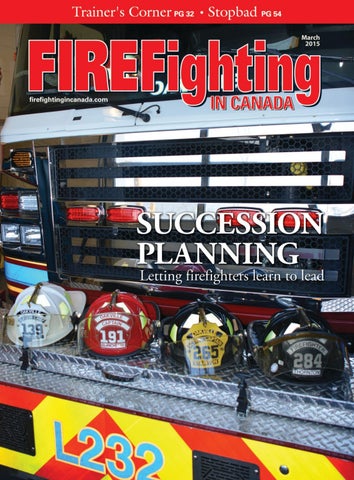
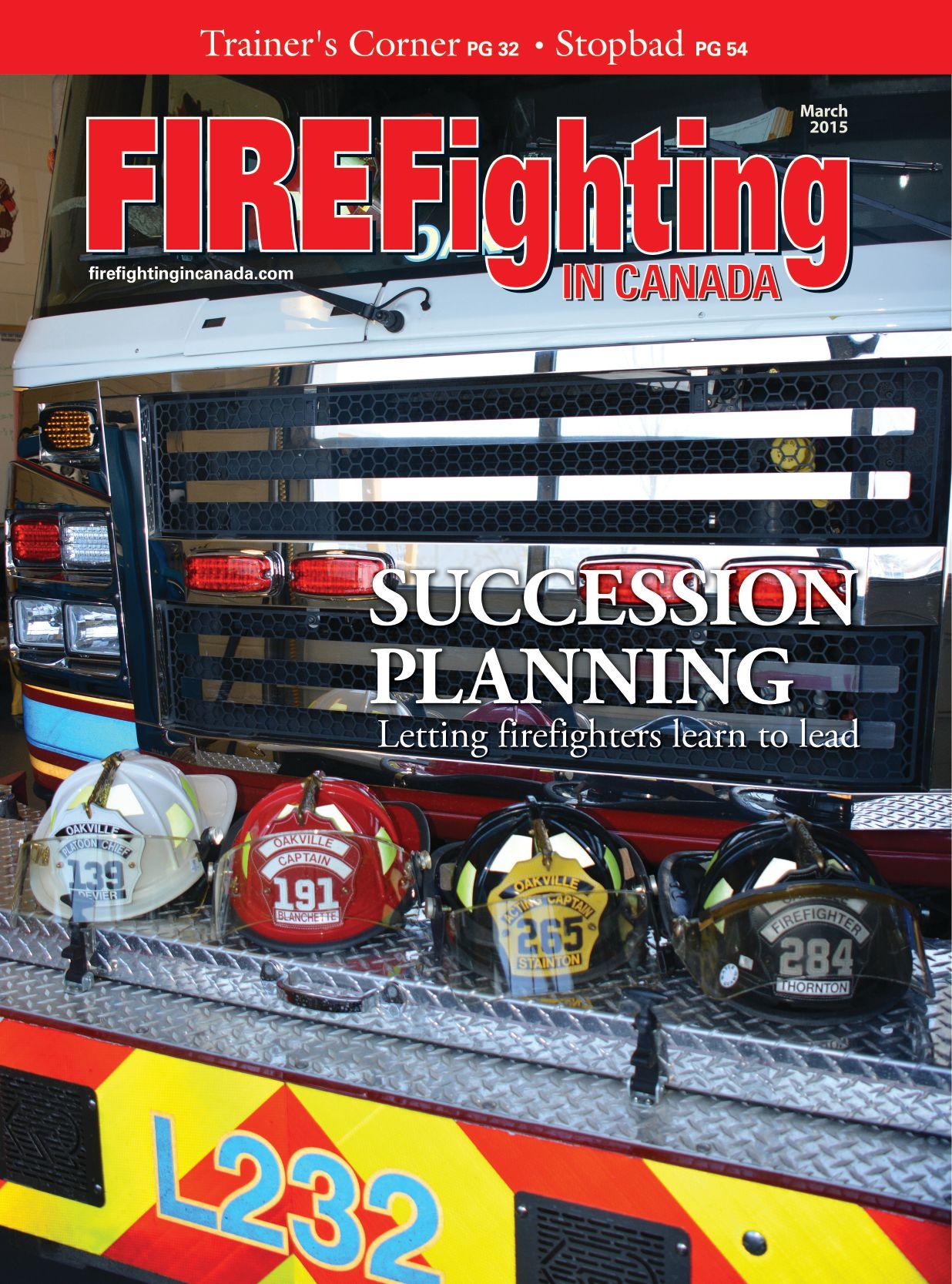
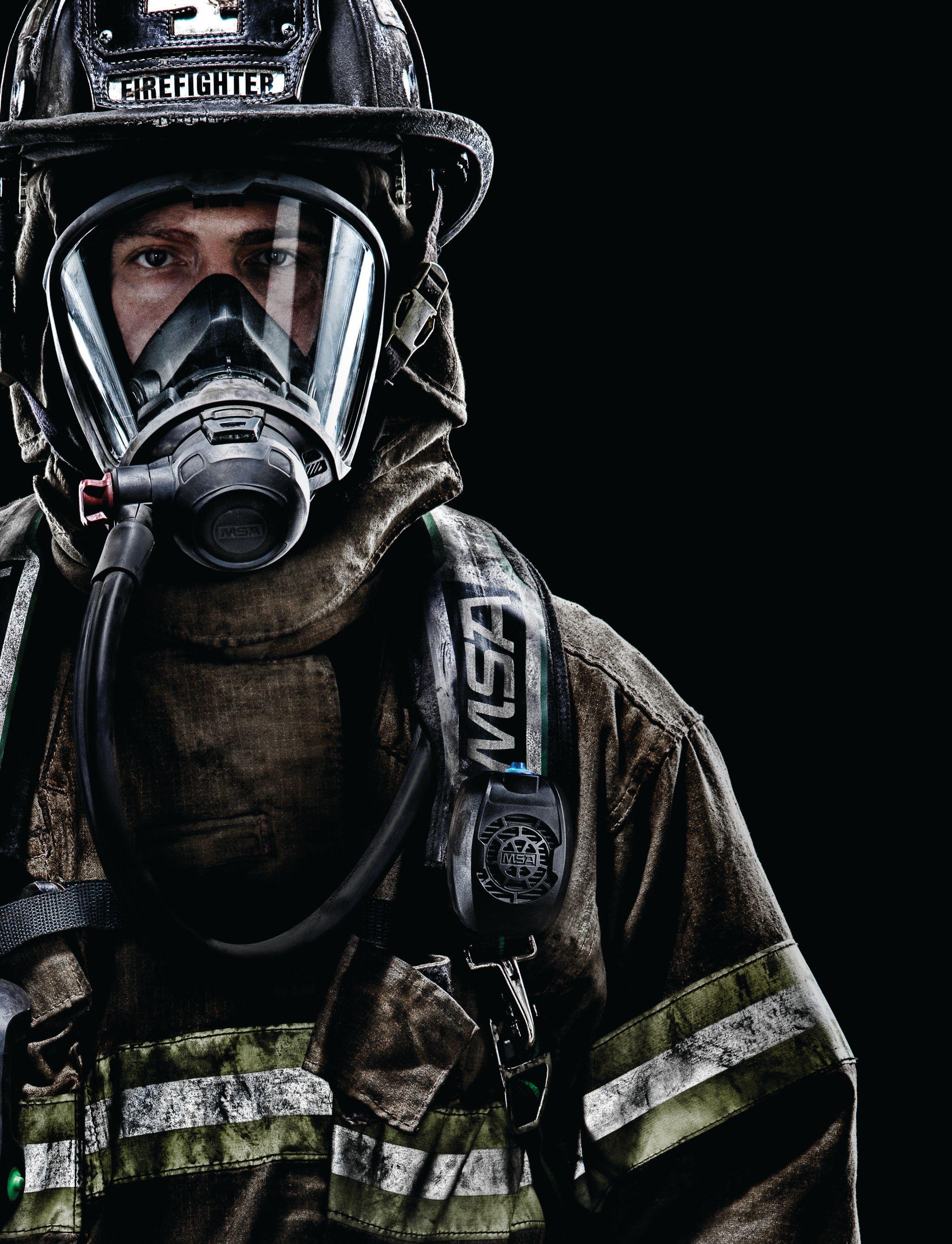
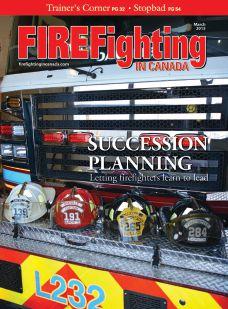
ON THE COVER Succession planning – or programming – starts the moment firefighters are hired. See story page 10.
All have impressive backgrounds. Lacillade is a former firefighter and fire inspector; he’s ex U.S. military and a chaplain. Martin is a fire captain and a yoga instructor with extensive training in critical-incident stress debriefing. Chief Stecko is an ALS paramedic with armed forces experience.
Grigg, of course – a longtime contributor – is a volunteer firefighter who has recounted her experiences with depression and post-traumatic stress and whose writing has elicited thanks and comments from firefighters from across the country.
Some of our other contributors have written passionately about the need for
I first heard an emergency responder talk about PTSD in 2011 at the Tema Conter conference. Jim Bremner, a retired Toronto police officer, shot and killed a man during a hostage-taking in 1999.
Bremner’s book, Crack in the Armour details his descent into PTSD and the subsequent drinking and consideration of suicide. I was baffled by the fact that no counselling had been offered to Bremner.
We’ve come a long way. By now you know that Bell’s fourth Let’s Talk day on Jan. 28 raised more than $6 million for mental-health awareness and programs; a chunk of that will go to first responders. Everyone’s talking. Everyone’s listening. No one’s judging. All you have to do is ask.
ESTABLISHED 1957 March 2015 VOL. 59 NO. 2
EDITOR LAURA KING lking@annexweb.com 289-259-8077
ASSISTANT EDITOR MARIA CHURCH mchurch@annexweb.com 519-429-5184
PRESIDENT MIKE FREDERICKS mfredericks@annexweb.com
PUBLICATION MAIL AGREEMENT #40065710
RETURN UNDELIVERABLE CANADIAN ADDRESSES TO CIRCULATION DEPT.
P.O. Box 530, SIMCOE, ON N3Y 4N5
e-mail: subscribe@firefightingincanada.com
Printed in Canada ISSN 0015–2595
CIRCULATION
e-mail: subscribe@firefightingincanada.com
Tel: 866-790-6070 ext. 206
Fax: 877-624-1940
Mail: P.O. Box 530 Simcoe, ON N3Y 4N5
SUBSCRIPTION RATES
Canada – 1 Year - $24.00 (with GST $25.20, with HST/QST $27.12) (GST - #867172652RT0001)
USA – 1 Year $40.00 USD
We acknowledge the [financial] support of the Government of Canada.
Occasionally, Fire Fighting in Canada will mail information on behalf of industry-related groups whose products and services we believe may be of interest to you. If you prefer not to receive this information, please contact our circulation department in any of the four ways listed above.
All advertising is subject to the publisher’s approval. Such approval does not imply any endorsement of the products or services advertised. Publisher reserves the right to refuse advertising that does not meet the standards of the publication. www.firefightingincanada.com
PHOTO BY LAURA KING
STATIONtoSTATION
ACROSS CANADA: Regional news briefs
Barrie Fire saves money with temporary training facility
Barrie Fire and Emergency Service spends thousands in overtime and rental fees to train its firefighters in centres such as CFB Borden, pictured.
Firefighters with Barrie Fire and Emergency Service in Ontario will soon be training with live fire – at home.
The City of Barrie council approved in January a five-year lease of land owned by Innisfil Hydro to be used as a temporary training site for Barrie’s 144 firefighters, at a cost of
about $7,500 a year.
That price tag, Barrie Deputy Chief Bill Boyes says, is a fraction of what the department forks out each year in overtime and rental rates to send its firefighters to training centres elsewhere.
“We figure it’s around $10,000 in overtime just for
THE BRASS POLE
Promotions & Appointments
JON REHILL was appointed fire chief for the City of Kitchener Fire Department in Ontario on Jan. 12. Rehill began his career as a firefighter in Cambridge, Ont., and was a deputy chief there before moving to Kitchener.
Rehill filled the position that had been held by an interim chief since July 20 when Chief Tim Beckett moved to Mississauga Fire & Emergency Services.
MARIO PERINI and SCOTT
SIERSMAS have been appointed deputy chiefs with the Town of Whitby Fire and Emergency Services in Ontario. Perini started in the fire service
the staff; plus we have to rent the facility, which is $1,000 to $2,500 a day,” Boyes said.
Cost aside, the department’s decision to build a temporary training facility stems from a coroner’s inquest into the 2002 death of Barrie firefighter Bill Wilkins. The inquest recommended more live-fire training opportunities for firefighters across the province.
“We just need somewhere that’s close so that we can do it. This will make it easy to get firefighters there on a regular basis and cycle crews through,” Boyes said.
Barrie Fire plans to purchase portable training props for its temporary site, such as sea containers stacked and used for live-fire exercises, as well as trench rescue equipment; many of these will eventually complement a permanent training facility, which is planned for construction in the next five to seven years.
Firefighters from neigh-
bouring department Innisfil Fire and Rescue Service will also have access to the temporary training site 20 days of the year.
“It’s huge for us,” said Innisfil Chief Jon Pegg on behalf of Innisfil’s 17 full-time and 96 volunteer firefighters.
“Like everybody in the fire service, it’s tough to find live-fire training time so the fact that we have it in our own back yard is fantastic.”
Barrie Fire also plans to rent the facility out to neighbouring departments in Simcoe County.
While the department originally hoped to include a driving track on the temporary site, a condition of the lease was that the land be returned back to the hydro company as close as possible to its original state.
The temporary site is expected to be operational for a number of training activities by the summer.
– Maria Church
as an investigator with the Office of the Fire Marshal and Emergency Management; he was appointed to Whitby on Nov. 17 and is in charge of fire prevention, assets and communication. Siersmas has been a firefighter in Whitby for 25 years; he was promoted to deputy chief from chief training officer on Oct. 1 and is responsible for operations and training.
BILL BOYES was appointed deputy chief for Barrie Fire and Emergency Services in Ontario on Nov. 18. Boyes, formerly a captain with Brampton Fire and Emergency Services, has been in fire for 13 years; he is completing a PhD in human resources management, which supplements his master’s degree in public
PHOTO COURTESY BARRIE FIRE
Firefighters curl for kids
Pat Hayter first heard about Camp Bucko when he was a student at the Toronto Fire Academy.
“It sounded like something I could be involved in, just being with the kids and that,” Hayter said at the Toronto Fire Celtic Society bonspiel on Feb. 5.
Twenty four teams – 21 from Toronto Fire Service and three from Pickering Fire Services – curled at the Whitby Curling Club to raise money for Camp Bucko (Burn Camp for Kids in Ontario).
Hayter organized the first bonspiel two years ago; other departments helped by doing carwashes and breakfasts.
Hayter and others had raised more than $26,000 over a couple of years. This year’s total is $16,177.73.
“The camp is 100 per cent volunteer,” Hayter said, “The kids don’t pay a cent.”
There are camp weeks for kids older than seven, and family weeks for younger kids.
“Camp Bucko is a very special place,” Hayter said in a Facebook post on the Camp Bucko Curling page after the bonspiel. “From our total funds raised, you have just paid for roughly 10 kids to come to camp.”
Dozens of silent auction items and prizes for winners, runners up and the best- (or
BY
worst-, depending on your sartorial perspective) dressed team were donated by fire-service suppliers and supporters.
Hayter has volunteered at Camp Bucko and at other burn camps for kids. His
enthusiasm and passion are widely respected among his colleagues, who clamour to get a spot in the bonspiel.
As one Facebook friend put it, “Patty, you’re a gem.”
– Laura King
Thunder Bay launches suicide alertness program
Not talking about it isn’t working! As part of a commitment to provide recommended and current practices for health and wellness, Thunder Bay Fire Rescue (TBFR) recently introduced training aimed at breaking down stigmas that will provide personnel with the tools to make themselves, their families and the public safer.
Administered by LivingWorks Education Inc. –a Calgary-based suicide-
prevention training company (www.livingworks.net) –
SafeTALK is a program that prepares firefighters to identify people with thoughts of suicide and connect them to first-aid resources. Delivered over multiple sessions, the goal of TBFR is to have our 213 full-time staff trained.
SafeTALK will become a mandatory component of TBFR’s recruit firefighter training program.
TBFR personnel will be
better able to move beyond tendencies to miss, dismiss or avoid suicide; they will also be trained to be able to better identify and to connect a person with thoughts of suicide to an intervention caregiver.
In a manner that cultivates a culture in which vulnerability is not seen as a weakness, TBFR is taking a proactive role by training and educating staff on topics such as suicide prevention, critical-incident stress management (CISM)
and post-traumatic stress disorder (PTSD). We believe that SafeTalk is the first important step in this process.
TBFR takes the view that SafeTALK training is to suicide what CPR training is to heart attacks. Firefighters do what it takes to save lives and make our communities safer. We are now providing our staff with tools to keep themselves, their families, friends and others safe.
– Deputy Chief Greg Hankkio
policy and administration, and bachelor’s degree in public management.
RICK ARNEL and RICK MALOTT have been appointed chief and deputy chief respectively for Essex Fire and Rescue
Services in Ontario. Arnel, formerly the assistant chief for the Chatham-Kent Fire Department, serves as the second vice-president for the Ontario Association of Fire Chiefs; he began his role as chief of Essex on Jan. 5. Malott, who served as a volunteer firefighter in Amherstburg, Ont., before moving to Essex in 2011, was promoted to deputy on May 5.
PAUL GROENEVELD is the new chief for Norwich Fire Service in Ontario. Groeneveld’s appointment as chief was announced on Jan. 13, and marks his return to the township for which he has previously served; he is the former chief for the Township of Malahide, Ont.
Retirements
ED PILLON, chief of Essex Fire and Rescue Services in Ontario, retired in December after a 45-year career in fire. Pillon joined the fire service in Malden Township, Ont., in 1968. He moved to Harrow, Ont., in 1974 and was named fire chief for the amalgamated Essex department in 2004.
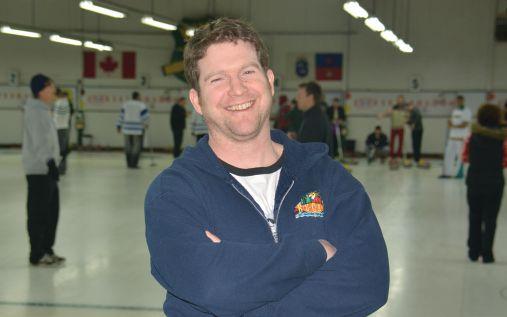
Toronto firefighter Pat Hayter is a driving force behind fundraising for Camp Bucko, Ontario’s burn camp for kids.
PHOTO
LAURA KING
STATIONtoSTATION
BRIGADE NEWS: From stations across Canada
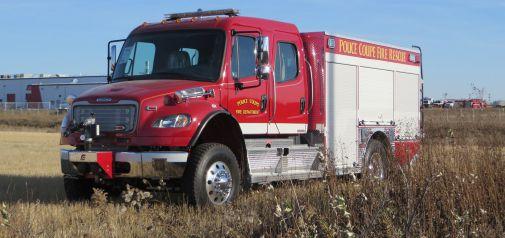
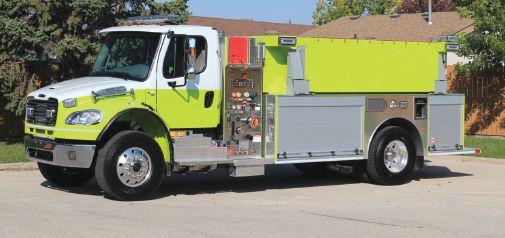
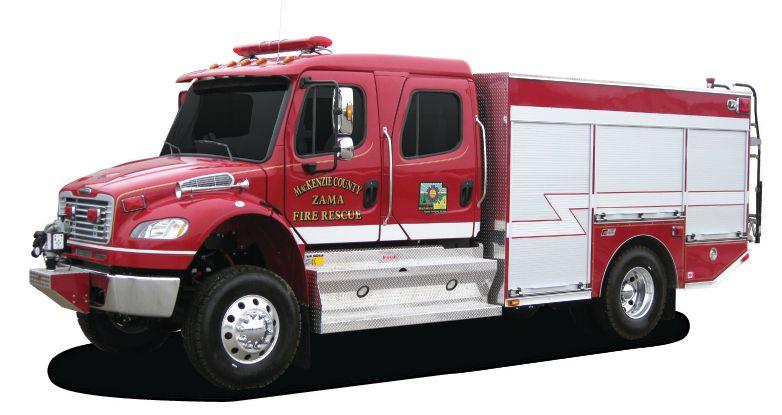
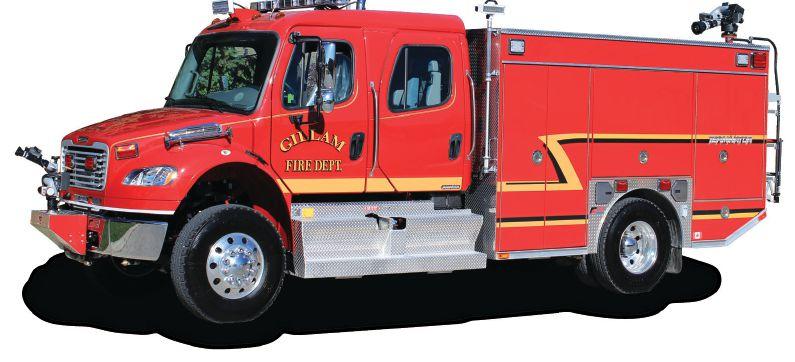
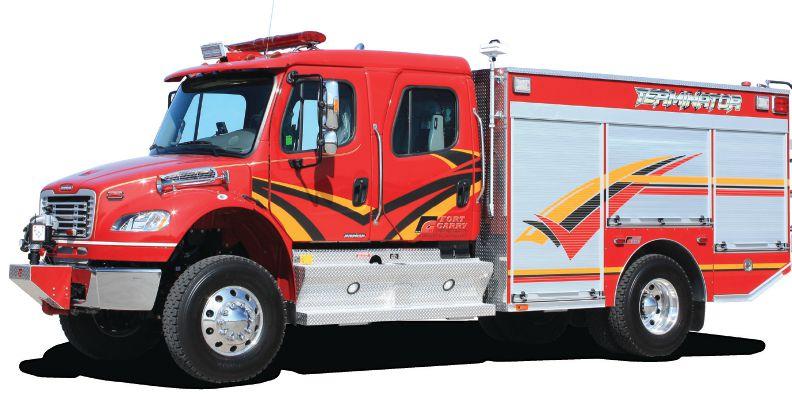
The Pouce Coupe Fire Department in British Columbia, under Fire Chief Chris Cleave, took delivery in November of a Fort Garry Fire Trucks-built pumper. Built on Freightliner M20106 4X4 chassis and powered by an Allison 3000 EVS transmission and a Cummins ISL 350-hp engine, the truck is equipped with a 1,000-gallon poly water tank, a Darley high-pressure 1,250-gpm pump, a Foam Pro 2002 system, a TFT Tornado HP turret, Akron hose reel, FRC LED scene lights, a Federal Smart Siren and KZCO valve controllers.
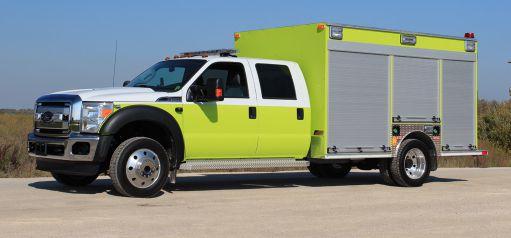
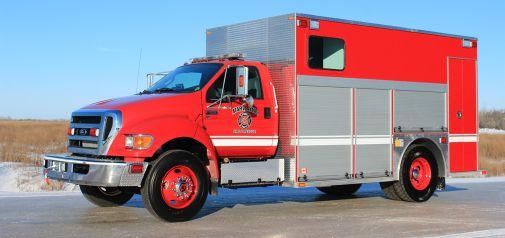
The Milford and District Emergency Services in Nova Scotia, under Fire Chief Ralph Wardrope, took delivery in November of a Fort Garry Fire Trucks-built rescue. Built on a Ford F-550 4X4 chassis and powered by a six-speed automatic transmission and a 6.7-litre 300-hp engine, the truck is equipped with four Bostrom SCBA seats, and a Federal Signal camera system.
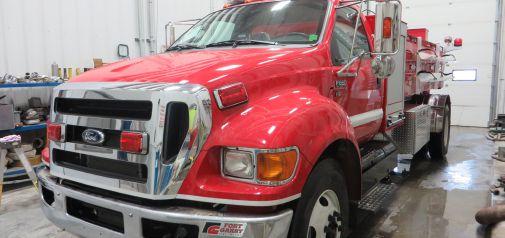
County of Two Hills Fire Department, under Fire Chief Brad Straty, took delivery in December of a Fort Garry Fire Trucks-built tanker. Built on a Ford F-650 chassis and powered by a 362-hp 6.8-litre Triton V10 engine and a six-speed transmission, the truck is equipped with a side control/portable pump, a 20-hp CET, and a galvanized steel 1,350-gallon water tank.
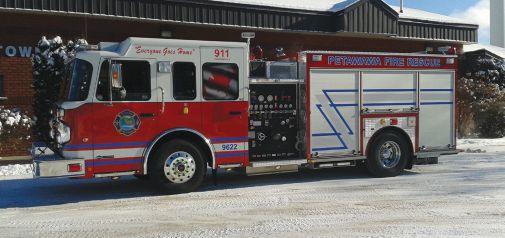
The Town of Petawawa Fire Department in Ontario, under Fire Chief Steve Knott, took delivery in December of a Carl Thibault Fire Trucks-built pumper. Built on a Spartan Metrostar chassis and powered by a 380-hp Cummins ISL9 engine and an Allison Gen IV-E model EVS 3000, the truck is equipped with a 1000-gallon Ultra Poly water tank, a 1,050-igpm HALE QMAX pump, LED scene and compartment lighting, Battalion 911 seats, a VMUX unit and backup camera.
Marwayne Fire and Rescue Department in Alberta, under Fire Chief Ron Miskie, took delivery in January of a Fort Garry Fire Trucks-built rescue. Built on a Ford F-650 chassis and powered by a 362-hp 6.8-litre Triton V10 engine and a six-speed transmission, the truck is equipped with a Tundra 2500 invertor, FRC LED 900Q65 Scene lights, and a warn winch.
The Milford and District Emergency Services in Nova Scotia, under Fire Chief Ralph Wardrope, took delivery in November of a Fort Garry Fire Trucks-built tanker. Built on a Freightliner M2 106 chassis and powered by an Allison 3000 EVS transmission and a ISL 350-hp engine, the truck is equipped with a 835-gpm Hale PTO pump, a 1,500-gallon Pro Poly tank, and Zico SCBA storage.
MILFORD AND DISTRICT EMERGENCY SERVICES
POUCE COUPE FIRE DEPARTMENT
MILFORD AND DISTRICT EMERGENCY SERVICES
TOWN OF PETAWAWA FIRE DEPARTMENT
MARWAYNE
COUNTY OF TWO HILLS FIRE DEPARTMENT
TRUST THE INDUSTRY’S FIRST NFPA 2013 COMPLIANT SCBA. In the seven months since receiving NFPA 2013 Edition approvals, Scott has worked tirelessly to deliver the NFPA 2013 approved Air-Pak SCBA to departments in all 10 provinces and all 50 states, meeting the needs of firefighters and first responders throughout Canada and the US. Because at the end of the day, you need the right equipment at the right time.
FOLLOW THE LEADER. VISIT LEADEROFTHEPAK.COM 30,000 AIR-PAKS SHIPPED. 600
Succession programming
Firefighters must learn to lead and officers must provide opportunities
By DENIS PILON
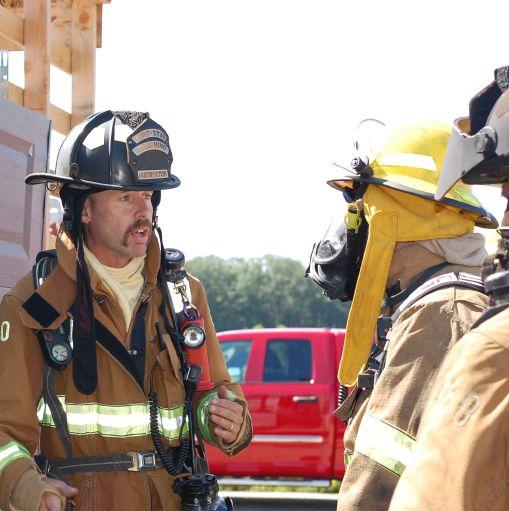
Talk of succession planning in the fire service often elicits a lot of blank stares. There is considerable confusion about succession planning – what is it, how to do it, and even where to get information about it. Succession planning is often misunderstood by senior managers and entry-level employees. Fire-service tradition dictated that if you hung around long enough you would eventually be the chief. Not only does this no longer apply, but it was a bad practice and is almost entirely responsible for fire being perceived as the outsider in municipal senior-management circles.
In most municipal departments, the senior-management team is made up of people with degrees in administration, engineering, finance, recreation, municipal planning or some other discipline, and many of these are at the master’s level or higher. In the fire service, the senior leaders are often the most experienced firefighters; although this is changing, more needs to be done to prepare our future leaders.
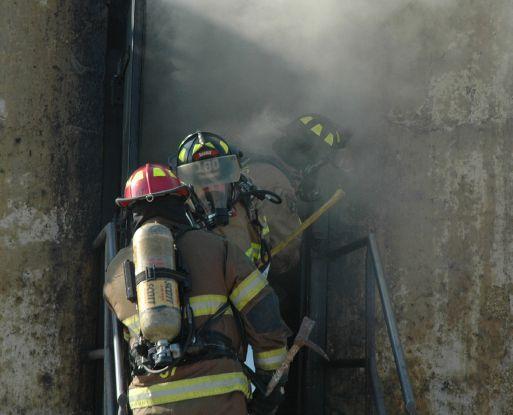
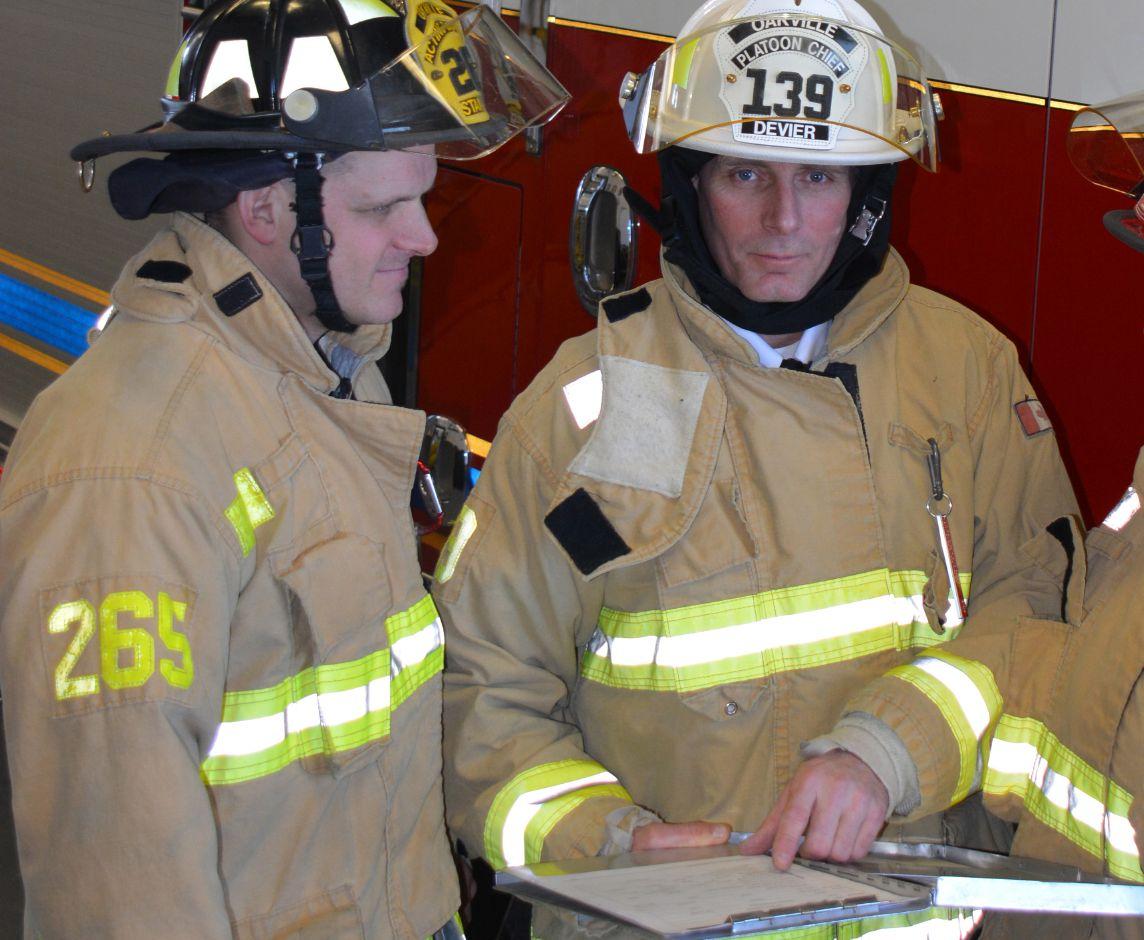
ABOVE A succession program is inclusive and includes everyone in the department, not just those who have been around for a while.
So what is succession planning and how is it done? Let’s first address what succession planning is not: it is not supplementing the pension of senior employees during their final years because they have put in years of good service; it is not a reward for long service or good service; it is not about hand-picking your successor. Some of this confusion can be attributed to the term succession planning, which often leaves chiefs thinking they should plan who will succeed them when they leave. I prefer the term succession program as it is more holistic and applies to all members of the organization, not just a select few.
I remember conducting an interview with a new hire a number of years ago and when asked what his goal in the fire service was he replied, “To sit in your chair.” I hired him. I am often asked why I would
hire someone who wants my job. My answer is that I know I won’t be here forever, and someone needs to take over when I leave. A succession program needs to start at the initial interview with entry-level candidates. The sooner you identify those who aspire to higher positions, the sooner you can start to support them.
Succession programs are about creating opportunities for members of the organization to advance to senior positions. These opportunities must be applied fairly and consistently throughout the organization. This is sometimes very hard to do as we all bring certain biases to the table and we like or dislike certain members of the department based on past or current events; this cannot be allowed to cloud the program or it will not work. Everyone must be given the opportunity to progress; the selection process will allow the cream to rise to the top.
Most fire departments have good succession programs in place for the lower ranks. There are courses and standards set for promotion to the next position, everyone is given the opportunity to complete the training, and the selection process allows the higher-quality candidates to move into the next positions. This works great up to the rank of captain, and even to the battalion-chief (or platoon-chief) level, but the system seems to break down beyond that.
What’s the solution? First, it’s important to identify what the job of fire chief really includes and determine the qualifications needed to do the job properly. Then, identify the programs that will meet the needs of the position and offer these programs to the senior members of the department – this may range from Fire Officer IV to a master’s degree, depending on the size of the department. The courses required to attain the necessary level of management or leadership skills must be made available during individuals’ careers so that when the time comes to replace the chief, there are a number of trained and qualified candidates available to compete for the position.
A succession program won’t have a formal list of steps you must take to reach the top, but more of a direction pointing to the top. Regularly read the ads for chief-officer positions to see what requirements municipalities seek in their new chiefs. Get a handle on the disciplines in which municipalities want their
PHOTO BY LAURA KING
chief officers to have degrees. Start offering courses that lead to these degrees – start at the certificate level and move to diplomas, then degrees. Make these courses available to everyone – those who don’t make chief will have more to offer the department and will be a major asset over time.
Education, though important, is not enough. Your people need time to practice their skills in real-life situations under supervision. This is the mentoring phase, which many chief officers find difficult. Too many senior managers use the excuse that “it is quicker to just do it myself.” That may be true once, but the next time and the time after that it puts a great drain on your time if you haven’t taught someone else how to do the required tasks. Chief officers need to assign the jobs, and then get out of the way. Be available to assist if needed, but don’t step in to do it. The chief’s job is to observe, guide, correct and assist as needed. It is quite possible that your expectations won’t be met the first time, but with guidance, they will be met in the future and you will have a new resource at your fingertips. It is also possible that your expectations will be exceeded.
The requirement to pay a competitive salary to management employees is probably the most challenging aspect to developing a succession program; unfortunately, in many cases, it is also out of your hands. Management salaries have become a major issue for fire departments in areas that have removed indexing of out-of-scope salaries –salaries of those not included in the bargaining
unit. This has closed the gap between the salaries of the highest-level unionized employees and the low-end salaries of the non-unionized employees to the point at which it makes little economic sense for a member to leave the floor to take a management position that may be less than secure in terms of one’s career. The situation can only be solved by the fire chief negotiating a salary agreement with the municipality that will survive his or her retirement.
Part of a good successful succession program is mandatory vacation time for you – the chief. I have known numerous senior managers who have retired with five to six months of vacation saved up. I know of many situations in which municipalities have had to force their senior managers to take their vacations or have paid them out. Paying out vacation does no good for anybody. Vacation has two benefits in a succession plan; first, it provides you with the opportunity to get away from the pressures of the job – to relax and unwind. This time away is very important for any manager. The other benefit of vacations is just as important; your senior employees are forced to take control of the whole operation and make the decisions you would normally make, without your input or oversight. Your staff must take responsibility for these decisions, and you will likely be surprised by how consistent their decisions are with yours.
To ensure that your staff members make these decisions, turn off your phone, leave it in your hotel room, and, if you want to follow your emails so you know what is
happening, read them, but do not reply to them; you are on vacation. Give your staff the opportunity to lead, choose, decide and take control of the department. Let it be theirs while you are away.
Finally, get your proteges involved in the associations that represent the fire service provincially, nationally and internationally. At association events, these potential successors will make contacts with whom they can share and gain knowledge, learn how issues are solved in other departments and find a shoulder to cry on when things go bad. Remember, you are not alone; numerous people have gone through the same situations in other municipalities and they are more than willing to help you. Over the years I have learned more from peers than from any book or classroom.
It is a wonderful feeling when you set people free and watch what they can accomplish. That is the true purpose of a succession program — letting people learn and improve on what you have done in the past.
One of the greatest pleasures in life is watching young people grow into the leaders of the future. The purpose of a succession program is to support that growth.
Denis Pilon is the chief of the Swift Current Fire Department in Saskatchewan and is the chair of the CAFC’s resolutions, bylaws and constitution committee. Contact him at d.pilon@swiftcurrent.ca and follow him on Twitter at @DMPilon
A good succession program includes time off for the chief so that senior employees can step up. Decisions made in a chief’s absence generally mirror those he or she would have made.
PHOTO BY LAURA KING
BY DOUGLAS TENNANT Fire chief, Deep River, Ont.
ILEADERBOARD
Think before you tweet –a lesson on social media
did it twice the other day and I liked it. It was easy, somewhat fun and I did it in private, but I did not follow through; I hit the delete button and went back to work. I couldn’t follow through because one of my father’s adages – he served in the fire service for 40 years – screamed in my head while I composed the tweet: if you can’t say anything positive about someone then don’t say anything at all. So I hit the delete button. There’s a similar saying when it comes to snail mail; write the nasty letter, then put it in your desk drawer for a day and see if you still want to send it the next morning.
Social media is a powerful, instant and non-retrievable tool in our work and personal spheres. It is relatively easy and usually gratifying to tweet and post our thoughts, pictures and comments to the world. We know who sees our messages when they like them or retweet them, but perhaps just as importantly, we don’t know who is monitoring and seeing our messages. Indeed, we all have to realize that our on-duty and off-duty posts are subject to review, and can be tracked, searched and viewed by anyone, anywhere.
Social media is not a new forum. Facebook posts were being liked more than 10 years ago. Tweets were being retweeted eight years ago. There are now firefighters in the service who have never mailed a stamped envelope with a letter inside. In this digital age, it is easy to say or upload something we probably would not say or show to our grandmothers or our children. I’m not the ethics police or a behavioural consultant, but it seems to me that there should be more awareness of the proper use of social media among those in the fire hall. That awareness starts at the top and goes all the way down to the newest recruit.
information during an emergency. Fire-service leaders can also use social media as a tool to get their messages out to duty crews. (This reminds me of the monthly VHS department-update videos some chiefs used to send out just a few short years ago, but I digress.)
Alternatively, social media can be harmful to a firefighter or a fire chief when it’s used inappropriately either on or off duty. Joseph Cohen-Lyons wrote in a November 2011 article published by the Public Sector Digest, that an inappropriate use of social media by employees is when the message “impacts the legitimate interests of their employer and affects their ability to perform their functions as public sector employees.”
Yes, you have freedom of expression, but if you think that what you say on social media is private and no one else’s business, you may want to think again. In November, an arbitrator upheld the dismissal of a Toronto firefighter because his off-duty Twitter comments were determined to be a serious misconduct. In this case, the firefighter was identifiable as a member of the Toronto fire service.
Using social media can be a fun and easy way to get an official fire-service message or personal thought out to the rest of the world,
. . . we all have to realize that our on-duty and off-duty posts are subject to review. ‘‘ ’’
The foremost aspect of your social media awareness starts with knowing whether your local government or fire service has a policy on the use of social media. Ensure you understand what the policy means to you and how it applies to you as a firefighter. Does it apply to you off duty? Are you sure? How does your provincial freedom-of-information law apply to what you post as an on-duty member of the fire department? You may think your conversation is private, however, it may become a part of the public record and your comments may actually be the property of the city/ town. Be careful not to use social media to post information about an emergency to which you are responding and/or investigating.
Social media is a powerful tool for the fire service to use to disseminate timely messages to the public about fire safety, or important
Doug Tennant is the fire chief in Deep River, Ont. Contact Doug at dougietennant@gmail.com
but with such power comes much responsibility related to its use.
According to the Toronto labour law firm Hicks Morley (www. hicksmorley.com), firefighters (full time or volunteer), need to be aware that:
• it is the responsibility of firefighters of all ranks who use social media to understand the risks of usage, regardless of whether they think the comments are private;
• that firefighters, as civil servants, may be held to a higher standard than other workers; and
• that the employer may/should have a social media policy that governs firefighters’ social-media behaviour.
Share this information with your team, and remember, around the fire hall, at the fire department fish fry or while on social media – you lead as you are.
Lessons learned from Elliot Lake
Fire chief finds closure in mall-collapse report that vindicates department
QFire Fighting in Canada editor Laura King interviewed Elliot Lake Fire Chief Paul Officer on Oct. 15, the day Commissioner Paul Belanger’s report on the inquiry into the collapse of Algo Centre mall – and the emergency response to the incident – was released.
Part II of the report, on the emergency response, contains 34 recommendations from a more manageable – but mandatory – incident management system, to interoperability, but also praises the Elliot Lake Fire Department’s response to the collapse on June 23, 2012, in which two women were killed.
Chief Officer and captains Darren Connors and John Thomas testified during the seven-month inquiry in 2013.
Responses from government departments and agencies to the commission’s recommendations are due by Oct. 15 this year.
Commissioner Paul Belanger’s report is favourable to the Elliot Lake Fire Department, and the commissioner had good things to say about the response. What is your take on the report?
AI’m happy to see that our firefighters received the recognition that they deserve. There was a lot of effort put in on that day. They did risk their lives when they first went in and I’m happy to see that recognized.
LEFT The Elliot Lake Fire Department and Chief Paul Officer were commended in Commissioner Paul Belanger’s report into the response to the collapse of the Algo Centre mall on June 23, 2012. Officer says the biggest lesson learned from the incident, and which is recommended in the report, is to have a scribe to take notes during major incidents. ABOVE Officer and his department members endured a lengthy inquiry into the emergency response to the mall collapse.
QOne of the criticisms during the inquiry was the lack of a written incident action plan; the commissioner, however, says the department did everything right. Is that vindication?
AI think to a certain extent [it’s validation that we did things right]. Of course you can always learn from things. [Commissioner Belanger] did say in his report that although there was no written incident action plan he did feel that there was a plan formulated in the minds of the various commanders and myself, and I think that’s quite true.
Writing things down at the time . . . I had a scribe, but putting up a white board might have helped to clarify things so that if somebody comes on – I won’t say for a shift change because there really wasn’t one – that could potentially help in identifying the whole organizational chart.
Q
There was considerable discussion during the inquiry about the incident management system and the fact that there were some communication challenges among the various responding agencies. The commissioner has recommended mandatory IMS, and we know the Ontario Office of the Fire Marshal is reviewing the provincial system; is it broken and does it need to be fixed?
AEven during the inquiry I had a real concern that the commissioner would make recommendations or changes to incident [management]. I can’t speak for the OPP on their training, or EMS, but I do know the fire incident command works, and I had a real issue that they might end up playing with that going forward with something that doesn’t work.
I think [the commissioner’s] part in those recommendations is making sure we’re all on the same page – that all agencies are on the same page, that we’re all trained to the same standards, share the same terminology, and, of course, everybody works for a united goal.
Q The commissioner’s remarks are pretty scathing in some regards, particularly in terms of the provincial emergency management system. What’s your take on all of that? What needs to be reviewed and how do you create something that works for everybody?
AThat’s the problem with the diversity in the province, I mean, it should be able to [work for everyone]. IMS is scalable, and if everyone is speaking the same language there shouldn’t be a problem.
I think what [the commissioner] was referring to is the silos among the different agencies; he did identify in the report that
PHOTOS BY LAURA KING
- Elliot Lake Fire Chief Paul Officer ‘‘ ’’
I think probably the lesson for my officers is the note-taking and the detail that is required.
there are definitely silos and we need to take those down and all go for the same common goal.
QWhat do you do differently in your department now than before June 23, 2012?
AI think probably the lesson for my officers is the note-taking and the detail that’s required. I’m seeing more detail in their reports and we haven’t had another major incident, but I think everyone sees the value in having a scribe at a big incident – that’s one thing I did pretty much immediately and I’m thankful that I thought to do it because it was something that really helped. When I finally sat down to write [my] notes . . . with the scribe’s notes and the recordings, I was able to piece everything together.
I think we were a pretty tight-knit bunch before [the incident] and probably, if anything, it has made us more tight. I think everyone is also more concerned about our health and safety; obviously if a firefighter goes down it changes the whole focus of what you’re there for, so that seems to be a little more prevalent as well.
As for what ends up happening with the recommendations, we always knew there would be issues on a major call with radio communications and I think that was identified by the commissioner, that there are silos there, and that’s going to be a very difficult one to get over [because of potential costs involved].
AQWhat about the effect of the incident and the inquiry on your members?
We’re still monitoring folks; we have a few who have had some issues. Of course, we offered our employee-assistance program and my door is always open, and I go out of my way to talk to those individuals and tell them they’re not alone. I probably feel a lot of the same things that they do, so talking about it and getting it out there is a big help, so we’ll continue to do that.
Q You were a building inspector before you were a fire chief. When you take into consideration the whole report today, how do you feel about it and how do you move on?
A Well the whole report took in 30 or 35 years; the way I look at that, everybody had a couple of pieces of a big puzzle and now we can see the big picture and that’s where the recommendations come from and hopefully that will stop anything like this from happening again.
Q Does the report provide closure for your department?
A I was hoping that it would. I was looking forward to the report and finally putting this behind us. It has been a daily thing and, of course, you’re still trying to do your daily duties and serve your municipality and the citizens. It has been a difficult couple of years.
Q You are speaking over the next while to chief officers at conferences across Ontario about your experience. What will you tell them?
A
Well, obviously these events can happen anywhere. I’ve said it before: Elliot Lake should be a fire chief’s dream location, and we still had an event like this. I will probably do a quick summary on the conditions; one of the things I’m the most proud of – at one point I think we had close to 400 people on scene, and we ended up, in those conditions, with just three minor injuries (a shoulder injury, a minor cut hand and a minor ankle sprain), so with the conditions that we dealt with and the fatigue, I’m pretty proud of that fact because we could so easily have had some pretty serious injuries, if not deaths. I’ll reinforce the note-taking, and some of the recommendations I’d like to see that were put forth by the commission. I tend to agree with the Ontario Association of Fire Chiefs [which recommended to the commissioner] that a support team for the smaller town fire chiefs is a good idea, and
KOC H E K BIG Water Strainers
I see that’s a recommendation and it’s one I would like to see happen. It has been very challenging and very difficult on the department and the community as a whole and it can happen anywhere, there’s no two ways about it.
QThe role of the Ministry of Labour (MOL) at a rescue was unclear to many on the scene, including MOL inspectors and engineers. The province made clear in its submission to the commissioner that the MOL can, indeed, shut down a rescue if workers are at risk – although that didn’t happen here. Is the role of the MOL now clear to the fire service and is there something more that fire should be doing to make that clear to its members?
AI believe it is clear that they have the right to be there; it does cause concern, depending on the capacity in which they are there. If they are there to work in conjunction with the incident commander, then I don’t think I would have so much concern with it. But I do believe – and I think it was mentioned in the commissioner’s report, and I would have the same problem with it – that a MOL presence does tend to make you re-think your decisions, look over your shoulder; you don’t have time to second-guess your decisions and I don’t think I’m alone in that. Right across the province it could be an issue.
Obviously they have the right, so maybe there can be some kind of accommodation between the fire service and the MOL. There are certain things that would be of great value – for example, having access to provincial engineers. When [the collapse] took place we were unable to secure the services of an engineer; those folks work for the province and if we call and ask, they can come, so that would be quite nice.
QYou testified that you didn’t know about the OPP’s search and rescue team, UCRT. UCRT was praised by the commissioner in his report for its quick response, and the Toronto HUSAR team was, in fact, criticized for its slower response – it took them six hours to deploy and then, of course, they had to get to Elliot Lake from Toronto. The commissioner is recommending that the teams work together and he has called for the reinstatement of federal funding for HUSAR, which is unlikely to happen.
Some Elliot Lake residents asked today for a team specifically for northern Ontario,
which we know is not financially feasible. I don’t see a solution in the recommendations. Do you?
AI don’t either and I’m not sure where they’re going to go with that. The idea would be that they work under one set of rules; that they work together. If UCRT remains on its own, as its own entity, the two teams still would need to work and train together.
One thing I would like to see, if UCRT is that quick and capable, it would definitely have been a benefit to have their planning chief and their commander come up [to Elliot Lake] so that we could get ahead on things.
They’ve got to work together; if it’s UCRT that’s the light team and if they’re coming up and making provisions, so you have a planning chief and you start formulating an incident-action plan, and all of the sudden the heavy team comes up and they don’t like that plan, well you’ve just wasted a whole bunch of time, so one way or the other they’ve got to get that together.
QWhat are you going to do now in your department? Are you going to look at the recommendations and discuss them? How do you bring that closure?
AI think we’ll probably afford everyone an opportunity to review the recommendations, and it will give me an opportunity to thank everyone again for the job that they did.
If there’s anything that we can learn from the report that we can implement immediately, we will.
I think that, manpower permitting, if we can have a scribe for the incident commander – one thing we did learn that was somewhat unfair to someone like [Capt.] John Thomas was that when he replaced me [on scene as incident commander], the scribe came with me; that individual should have had a scribe as well. That would have helped when it was time to recall notes.
One step we’ve taken and I’ve informed council and my boss – the CAO – about is that the fire chief in [nearby] Blind River –if we have another event – will come up as support. Say if there’s was a fire event and I can’t even break away and get to council or the EOC, he will be that person, and I’m a radio call away if there’s any further information that’s needed. We’ve implemented that and I’ll do the same for his community. We have made some changes.
More Power... More Torque ... Better Fuel Efficiency
More Power... More Torque ... Better Fuel Efficiency
75% Less Emissions
75% Less Emissions
The new Dual-Air intake engine technology significantly improves overall cutting performance and meets all Air Quality Control standards at the same time.
MULTI-CUT® Fire Rescue Saw
New 2100 Series includes two engine sizes: 70.7cc and 87.9cc. Each engine is designed for use with Cutters Edge Carbide
Tipped BULLET Chain® to cut the widest range of materials found at fireground and rescue scenes.
MULTI-CUT® H Series Rotary Rescue Saw
New H Series is engineered and powered to work harder and operate longer in the most extreme fire and rescue conditions anywhere.
The new technology engine is available in three sizes: 74cc, 94cc and 119cc. The Cutters Edge Black Star and Black Diamond Blades offer long cutting life and high speed cutting of virtually all materials.
The new BULLET BLADE TM will be available soon.
CE94 Concrete Cutting Rescue Chainsaw
A new technology 94cc engine and a new style Diamond chain cuts reinforced concrete up to 16-inches thick. Features a lighter weight power head and full-wrap handle for high performance concrete cutting in any position.
All Cutters Edge NEXT GENERATION TECHNOLOGY Fire Rescue Saws are available in fully-equipped Field Kits designed for Rescue Cutting anywhere.
Contact Your Local Cutters Edge DealerSee New Engine Technology Video Now
WESTERN CANADA
WFR Wholesale Fire & Rescue Ltd. Calgary AB - Ph 403-279-0400
1-800-561-0400
Web: www.wfrfire.com
QUEBEC Areo-Fire 5205 J-Armand Bombardier
Longueuil QC, J3Z 1G4
1-800-469-1963
E-Mail: info@areo-feu.com
NEW BRUNSWICK
Micmac Fire & Safety Source 518 St. Mary's Street, Unit 1 Fredericton, NB E3A 8H5
1-800-561-1995 or (506) 453-1995
E-Mail: r.henderson@mmfss.ca
NEWFOUNDLAND
Medical West Supplies 13 Rowsell St., Corner Brook, NF
Vancouver departments collaborate in apparatus buying co-op
By MARIA CHURCH
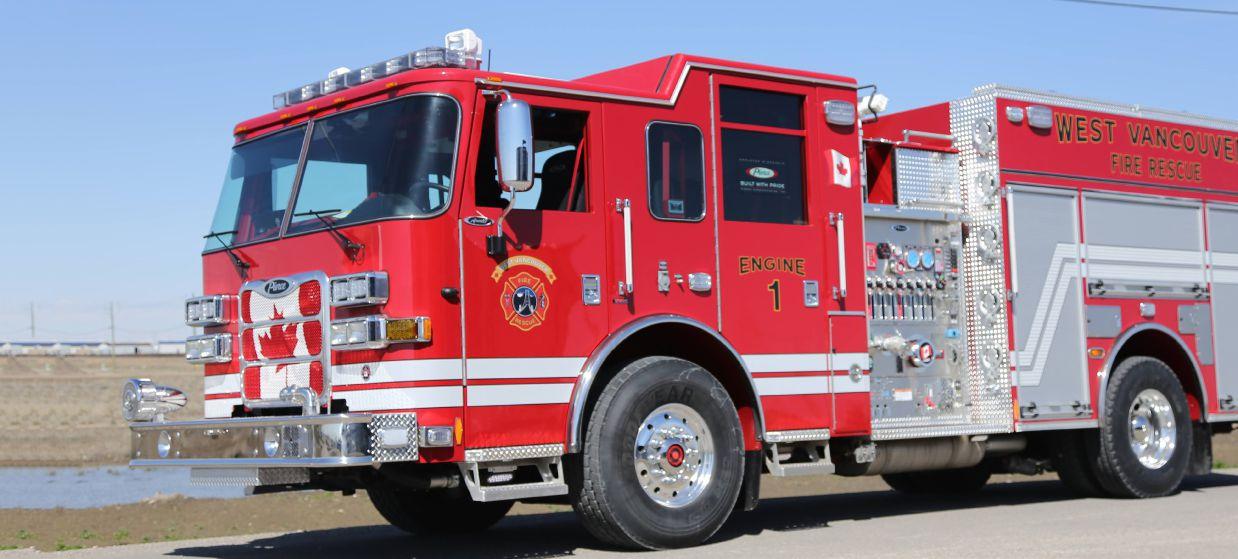
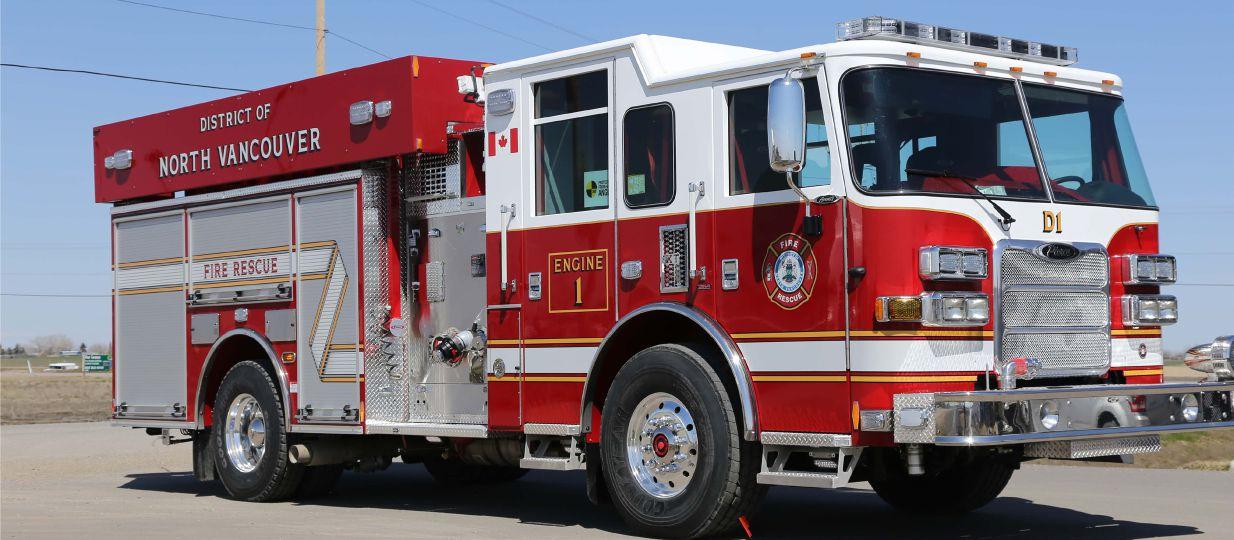
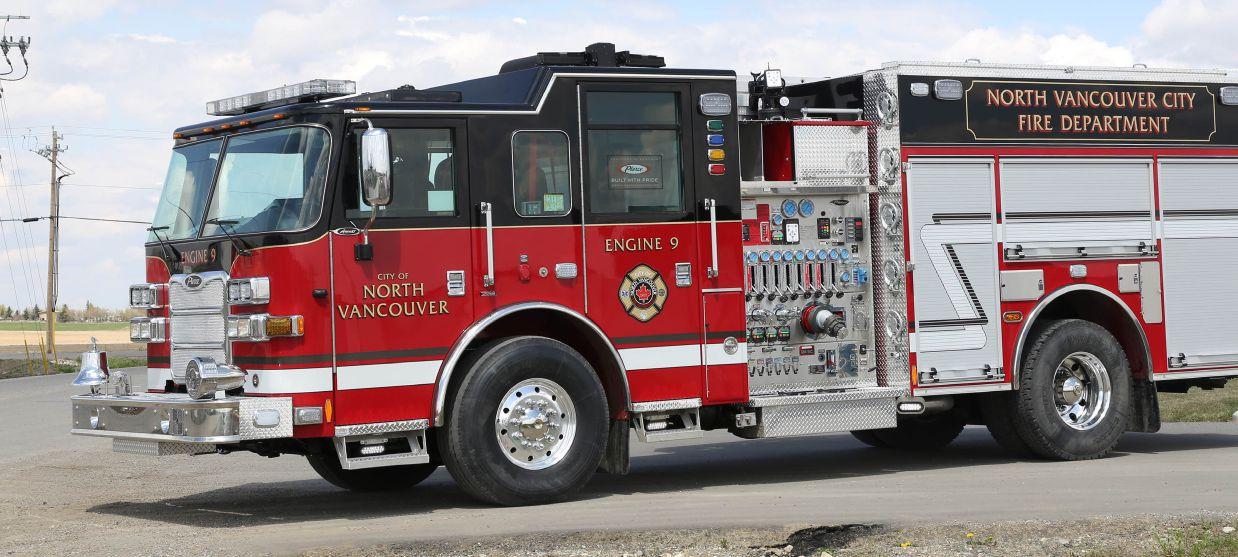
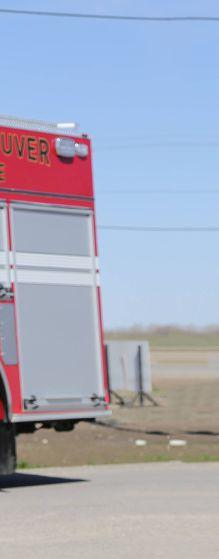
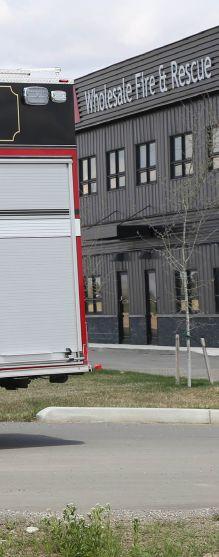
LEFT Three brand-new engines, all built to the same specifications, arrived on Vancouver’s North Shore last year thanks to an apparatuspurchasing co-op formed by three separate departments.
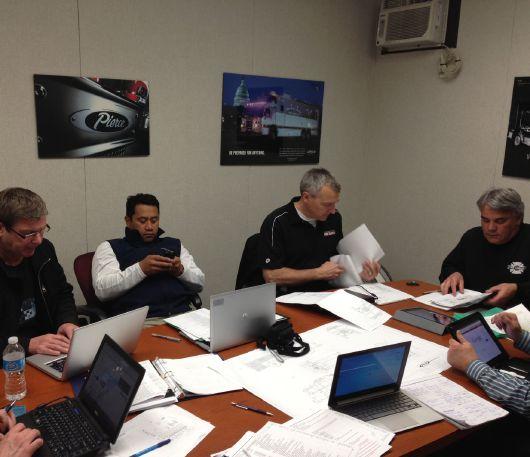
ABOVE The co-op, made up of at least one chief or mechanic from each department, met several times over the course of three years.
On Vancouver’s North Shore, three neighbouring fire departments have successfully combined their apparatus-purchasing power, and it is saving them manpower and money.
In early 2013, the City of North Vancouver, the District of North Vancouver, and the District of West Vancouver fire departments formed a large-equipment purchasing co-op. Last summer, the co-op acquired three brand-new engines from Pierce Manufacturing Inc., built to identical specifications.
The beauty of the new trucks, say all three departments’ fire chiefs, is that they were selected through a collaborative process.
“It’s just such a great example of how much we can achieve together,” said Chief Dan Pistilli with the City of North Vancouver, who was the lead chief officer for the purchasing co-op.
It took months of discussions and late-night meetings, but working together, Pistilli, representatives from all three departments and the dealer were able to find an engine specification that was the right fit for all of them.
COMING TOGETHER
Chief Victor Penman of the District of North Vancouver Fire and Rescue Services said co-operative purchasing was a long-time coming for the three departments.
“Our departments are side by side by side,” Penman said. “We have always, over the years, worked fairly closely together, but there was always a bit of a silo and always a bit of redundancy and probably a lot of opportunities where we could have been working closer together.”
Recognizing that need, the three municipalities jointly funded a consultant to complete a co-operative-services study. The resulting 2010 report recommended – among other things – that the municipalities consider purchasing large equipment together.
“We chose to focus our energy on the purchasing co-op,” Penman said. Over the next three years, the co-op was formed with representatives from each department: Pistilli and the captain mechanic from the City of North Vancouver, the assistant chief and a mechanic from West Vancouver, and the assistant chief from the District of North Vancouver. Purchasing managers from each department were brought in at times to handle the business side of the transactions, including the request for proposals, the review of submissions and the interviews with short-listed dealers.
In February 2013 – after many group meetings and a rigorous process of scoring proposals – a five-year multi-purchase contract was awarded to Wholesale Fire & Rescue Ltd. (WFR).
Jumping right in, the co-op determined that the first purchase would be new engines and in early 2014, three Pierce Arrow XT pumpers rolled out of the manufacturer’s Wisconsin plant and headed to Vancouver’s North Shore. The Pierce trucks are powered by 500-horse power Detroit Diesel engines, and are equipped with
7,571-litres per minute (2,000-gallon per minute) single-stage pumps, 1,514-litre (400-gallon) water tanks, Husky 3 single-agent foam systems, Command Zone electronics systems, and a full complement of ground ladders. The pumpers have 25.4-centimetre (10-inch) raised-roof cabs, Pierce’s TAK-4 independent front suspensions, Pierce PSV seating for five firefighters, heated remote-control mirrors, and automatic tire-chain systems.
The three trucks have only minor differences or additions, such as tweaked hosebed layouts for specific hoseloads, or electric versus manual controls depending on the department’s budget. The City of North Vancouver’s pumper is also built with a 7,571-litres per minute (2,000-gallon per minute) TFT Monsoon deck gun.
The identical engines are only distinguishable because of paint jobs, which are in keeping with departments’ colour schemes.
PERKS OF A PURCHASING CO-OP
One of the most valuable benefits from the purchasing co-op, Penman said, is confidence that the trucks that were acquired are the result of three departments’ collective
experience of reliability and performance.
“All departments,” he said, “have a picture in their mind as to what the perfect fire truck is for them based on their own experiences. But when we got the three departments together and all that expertise in the room, we came up with a super spec.”
Another benefit of the co-op is the combined buying power, which, thanks to the dealer’s negotiations, resulted in cost savings from the manufacturer. Penman also noted efficiencies in terms of staff time dedicated to the specification process.
“If we had done it individually, there would have been three times as many resources involved,” Penman said. Having the best minds in the room together to create a uniform “super” truck saves each department from allocating resources to individual review committees to determine what apparatus works for them.
A benefit for firefighters on the ground – and one of the original goals of the purchasing co-op – is uniformity of equipment, said Fire Chief Jim Cook of the District of West Vancouver.
The idea, he said, is that during an incident when more than one department
responds, all firefighters on the scene are familiar with and can operate the equipment, including the apparatuses.
“If firefighter A from one municipality was asked to go get equipment off another’s, he would be familiar with its location,” Cook said. As well, incident commanders from each department can make snap decisions based on knowledge of what the neighbouring department’s truck is carrying.
Because of proximity and blurred jurisdictions, multiple departments respond to calls near boundaries. All three trucks have been in service since summer and have had time to prove their worth on scene.
“We’ve had many occasions where those new front-line engines have been in service at those calls together – in some cases all three – and the advantages are simply evident,” Cook said.
COMPROMISE IS NECESSARY
Benefits aside, Pistilli acknowledged that the co-op’s decision-making process was difficult at times when a department was forced to give up a desired specification. Individual budgets also complicated the process, as the Continued on page 40
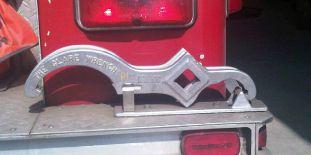
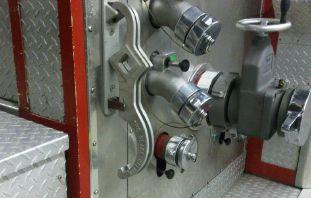
COMBINATION WRENCH
• Fits Standard Rocker Lug Hose ends from 1/1/2” (38mm) thru 4” (100mm)
• Mounts on the side of the Truck or inside a compartment
• Holds one or two wrenches
• Each wrench is securely held independently by a stainless steel spring clip
• Weight: 10 oz.
• 5” mounting hole centres for 3/8” bolts
THE CLARE WRENCH - Do E s THE W o R k of 3 WRENCHE s!
■ Internal Ladder & Suction Hose Storage
■ 1000 IMP/1200 US Gallon Copoly Tank
■ Heated Pump Compartments
■ Gear Box Rise (For better driveline angle)
■ Freightliner Chassis
■ Aluminum Body (5083 Salt Water Marine Grade)
■ 20 Year Body Warranty
■ Darley PTO Rear Mount 1050 IMP/1250 US Gallon Pump
■ Grass Nozzles Option
■ Foam System Options
■ 12V Bumper Turret w/ Joystick Option
■ 100’ Hose Reel Under Cab Option
■ Aluminum Body (5052 Fresh Water Marine Grade)
■ 10 Year Body Warranty
■ High Side Compartments
■ Aluminum Extruded Rub Rails
■ Amdor Roll Up Doors
■ Two Speedlay Hose Beds
■ Short Wheelbase
■ Side Control Pump House
■ 800 IMP/960 US Gallon Water Tank
■ Foam System Options
■ Freightliner or International Chassis
■ Wildland Option
BY ELIAS MARKOU
A firefighter’s guide to detoxification – Part 1
Spend an hour online reading wellness websites and popular blogs and you will quickly learn that detox and cleansing are the new buzzwords around health. Google detox, and you will be surprised by the diversity of the people talking about how they can help you improve your body by simply doing a three- to 28-day food fast or juice cleanse. These detox programs can be dangerous if they are delivered by poorly trained or untrained practitioners. As well, programs online are often sold as one size fits all, which can be harmful if you are a smaller person taking medicines intended for someone larger. I think there is tremendous value in a regular detoxification program for firefighters, but I believe it has to be safe and effective and there definitely has to be solid science behind the process.
By far the most frequently asked question in my medical practice is about detoxification or cleansing. Patients ask me how I can help them clean their bodies using a detoxification program. To clarify, we are talking about how the average Joe can remove toxins, restore bodily function and feel rejuvenated. To truly understand the detoxification process in firefighters’ bodies, we need to first explore toxic exposure in the fire service.
We often forget how toxic this planet really is. Since the Second World War, there have been close to 80,000 man-made chemicals created in labs. After completing your morning routine of showering, shaving, moisturizing, applying after-shave lotion and brushing your teeth, you have exposed yourself to, on average, 35 toxic chemicals, of which five are carcinogenic. And all of that happens before you put on your bunker gear and race towards a burning building that is spewing out a cocktail of hazardous chemical substances.
effect on the human body. In my experience treating firefighters, they always remember the one fire that affected their health the most.
According to the International Association of Fire Fighters Presumptive Health Initiative (http://www.iaff.org/hs/phi/), scientific evidence demonstrates that firefighters are at an increased risk of heart disease, lung disease, infectious exposure and cancer. We can assume that chemical exposure is a large reason for the increased risk. Studies looking at toxic chemical exposures also make direct links to other health conditions such as thyroid disease, diabetes, neurological conditions, and auto-immune conditions, to mention a few.
The fire service takes some necessary precautions by asking firefighters to wear their SCBAs and other PPE during the entire fire operation in order to reduce their chemical exposure. As well, the frequent cleaning of PPE is taken very seriously, especially after large fires. Science tells us the majority of toxic chemicals are fat soluble, which allows them to make their way through the skin into the bloodstream if a firefighter is exposed to contaminated bunker gear.
Environmental monitoring or bio-monitoring as a form of exposure testing is on the horizon and will likely become a very important
By far the most frequently asked question in my medical practice is about detoxification or cleansing. ‘‘ ’’
A firefighter’s greatest risk of chemical exposure occurs during fires or hazmat calls, during which he or she can be exposed to chemicals by skin contact or by inhalation. A multitude of chemicals are released from the combustion of building materials and building contents. Perfluorinated compounds and polychlorinated dioxins are two very common chemicals released from walls, fabric, wiring, equipment, furniture, paint and carpets, and are extremely hazardous not to mention potentially deadly.
While one exposure does not mean contraction of cancer, disease or illness, a 25-year career filled with hundreds of fire calls and hundreds situations with potentially hazardous chemicals can and does have an
Elias Markou is in private practice in Mississauga, Ont., and is the chief medical officer for the Halton Hills Fire Department. Contact him at drmarkou@mypurebalance.ca
way for firefighters to monitor their health in the future. A quick visit to the IAFF website and you will come across newly posted information on bio-monitoring. Bio-monitoring is the term for testing urine, blood, saliva and stool for toxic chemicals to determine chemical exposure and bio-accumulation. Bio-accumulation is the build-up of heavy metals and chemicals in the human body. While the presence of chemicals does not mean you have a diagnosed condition, we know from a number of studies that toxins have the ability to stress the body, and long-term chemical presence can lead to chronic conditions.
The human body has an amazing ability and capacity to detoxify and eliminate most if not all toxic chemicals over time. From scientific studies, we now know how to help the body remove these chemical toxins, and we will explore how this is done in Part 2 of this firefighter detoxification series in May.
Strategies to engage students TRAINER’SCORNER
BY ED BROUWER
All training officers face the same basic challenge: they have to find a way to actively engage students in the learning process. And since firefighter training is ongoing, training officers constantly have to deal with this particular issue.
Take a hard, brutally honest look back at your last year’s training program. Did it go as you expected? Was it successful? Did you get any feedback (good or bad)? Don’t ask yourself if you could you have done better, because we can always do better. But was there something you tried that worked particularly well, or something that you should never do again? The main question is: were your instructing methods and topics effective?
Training officers have a great influence (good or bad) on their departments. Being an effective trainer takes real dedication. Even after 20-plus years of instructing, I still average two to three hours of prep time for each training hour I put in on any given practice night.
Along with providing a safe and positive training environment, training officers have many training objectives to cover. It is easy to get burned out – even for superhero trainers. My advice is to get some help; find your Robin or Tonto.
GET STUDENTS INVOLVED
Over the years I have noticed that people learn more and retain more if they are more actively involved in the learning process. However, getting firefighters – especially veterans – to engage in the training process can be difficult to say the least. We all know of veteran firefighters who step to the back of the classroom (especially during demos) and disengage from the lesson. Worse yet is when two or three firefighters group together to chat it up or critique you as you train.
The following are proven engagement techniques.
• Ask a veteran firefighter to help you prepare and present a training lesson. Be sure to give the veteran a copy of the training objectives or any other relevant material several weeks in advance. (Not everyone is comfortable flying by the seat of his or her pants.)
• Institute a big-brother system by pairing up a veteran with a younger firefighter, and then divide them into teams to deal with training scenarios.
Learning is optimized when students are actively engaged in learning. There is an oft-quoted chart (found through web searches for learning styles) that is cited by learning experts as a solid guide for those who teach. The chart states that we remember:
• 10 per cent of what we read (taking turns reading training material)
• 20 per cent of what we hear (lecture)
• 30 per cent of what we see (video)
Training officers have a great influence over their trainees. Firefighters will, in a very short time, reflect the trainer’s attitude regarding safety, respect, zeal for knowledge and professionalism in the fire service.
Getting firefighters to engage in training sessions, especially during lectures, is difficult. Consider using the rule of 10 and one: for every 10 minutes of lecture, give students two minutes of discussion.
PHOTO BY OLIVIA D’ORAZIO
PHOTO BY MARIA CHURCH
• 50 per cent of what we both see and hear (PowerPoint with a lecture)
• 70 per cent of what we have discussed with others (brainstorming)
• 80 per cent of what we have experienced personally (hands on)
• 95 per cent of what we teach someone else (helping instruct) Keep this in mind as your prepare for training night.
Gender can play a part in the learning style. If you listen to parents interact with their children, you are more likely to hear a mom say, “Listen to me, and I will tell you how to do this.” Whereas a dad is more likely to say, “Watch me, and I will show you how to do this.” Find a balance between spoken instructions and demonstration. The three-Ds system (describe, demonstrate, do) seems to work well.
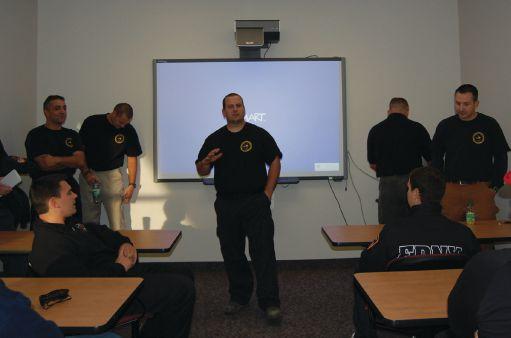
PowerPoint can be an effective teaching tool to engage students in learning, if it is used properly. PowerPoint appeals to visual learners and can be a good way to organize a presentation. However, it is easy to misuse PowerPoint. Reading from the slides (especially if you turn your back to the students) is the easiest way to kill students’ attention. With PowerPoint, less is more. Resist the temptation to cram as much information as you can onto one slide. Instead, the words on a slide should be visible from the most distant point in the classroom.
Most learning happens during a discussion of the topic, not from reading the words on a slide. Rely on the discussion to flesh out key points. (You can read more tips for classroom instructors in Chris Davison-Vanderburg’s article “Instructions for instructors” in Fire Fighting in Canada’s February issue.)
ATTITUDE ADJUSTMENT
One area of instructing that is far too often over looked is the teacher’s attitude. As the training officer, you have a great influence over your trainees. They will, in a very short time, reflect your attitude regarding safety, respect, zeal for knowledge and professionalism in the fire service. When you meet the training officer, you meet the department; simple as that.
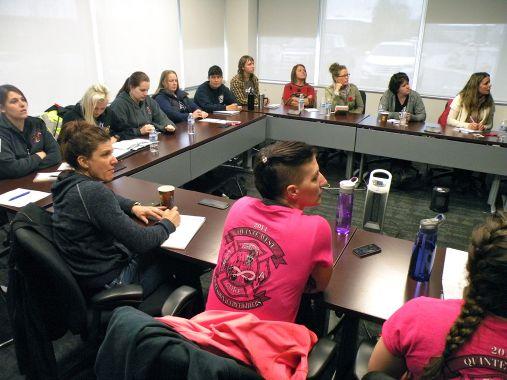
Encourage discussion during training sessions by providing a positive environment for all students who participate. This can be difficult, but remember, nothing shuts down a group discussion
like the words, “No that is wrong.” Give firefighters opportunities to correct or add to the information presented. Above all, do not make them look bad in front of their peers.
Here are some positive examples:
• Thanks . . . does anyone want to add to that?
• Interesting point . . . what do the rest of you think?
• Good start. Let’s hear some more ideas.
Consider using the rule of 10 and two: for every 10 minutes of
PowerPoint appeals to visual learners and can be a good way to organize a presentation, but resist the temptation to cram slides with information. With PowerPoint, less is more.
Especially in a large-group setting, it is important a training officer creates a positive environment in which firefighters can participate. Use encouraging phrases to keep a discussion going.
PHOTO BY OLIVIA D’ORAZIO
PHOTO BY OLIVIA D’ORAZIO
lecture, students should have at least two minutes to talk to each other about what is being presented. It is important for students to interact with the material in order to retain the information and become engaged in learning.
USE INCENTIVES
It is paramount that training officers continually strive for excellence. Set the bar high and your students will reach for it and respect you for thinking highly of them.
Look for ways to show you acknowledge students’ positive progress. One way we at Greenwood Fire Rescue do that is by giving in-house certifications. Each Greenwood firefighter receives a department training-program certificate. These are mounted in picture frames and hung on the training-room wall. As candidates successfully complete our training sessions they are awarded a coloured seal, which is affixed over that particular topic.
Because this is an ongoing program, each firefighter sees his or her progress within a short time. For example, our first-quarter training session (January to March) covers safety and communications, PPE, SCBA and fire behaviour. Each topic has an exam and evaluation component. In this quarter, there are five basic topics, so in three months firefighters could earn five seals.
The potential for a seal every three weeks is a great learning motivator; this simple acknowledgement has a very positive influence. The certification program is also a great asset for when you are making up future training schedules, and aids in your required record keeping.
ENCOURAGEMENT GOES A LONG WAY
Every once in a while you will meet firefighters who are hungry for knowledge. They are unusually keen about one area of the fire service (fire behaviour, arson investigation, or suppression, for example). What a privilege to be able to nurture interests and mentor those firefighters to reach their full potential.
I encourage you to help firefighters discover insight into their key topics. Give your students access to your books, videos and internet resources; sign them up for extra training sessions. Do whatever you can with your budget and resources to satisfy their hunger.
Howard Hendricks, a professor at Dallas Theological Seminary, wrote, “Knowledge that is self-discovered is stored in the deepest part of the mind and remains the longest in the memory.” Who knows, you may be training future leaders in the Canadian fire service; or at least your department’s future training officer. Every firefighter has the potential to become an instructor, and the best thing an old firefighter can teach a young firefighter is to become an old firefighter.
As always, stay safe and keep training as if lives depend on it, because they do.
Ed Brouwer is the chief instructor for Canwest Fire in Osoyoos, B.C., and training officer for Greenwood Fire and Rescue. He is also a fire warden with the B.C. Ministry of Forests, a wildland urban interface fire-suppression instructor/evaluator and an ordained disaster-response chaplain. Ed has written the Trainers Corner for 13 of his 26 years in the fire service. Contact Ed at ebrouwer@canwestfire.org
We are pleased to announce that we will once again be holding the “Ladders Up for the Foundation” online auction and event in 2015. Over the last 2 years, we have raised over $56,000 for the Canadian Fallen Firefighters Foundation. Last year and this year, every dollar raised will go to fund education bursaries for the children of fallen firefighters. Stay tuned to the website, www.laddersup.ca for more information on the auction. To find out how you can donate items for the auction or get involved with Ladders Up, please contact Mark Prendergast markp@mnlsupply.com, 866 445 3473 or Kip Cosgrove kcosgrove@vfiscanada.com, 800 461 8347 . We look forward to seeing you at the event!
BY TOM DESORCY Fire chief, Hope, B.C.
IVOLUNTEERVISION
Paddling hard to maintain balance
t was just a matter of time before this column lent itself to a wildlife analogy – at least considering the two animals that write it. (Sorry Vince, I couldn’t resist.) I’d like to share some thoughts on leadership and public perception in relation to the animal kingdom. Do I detect an eyebrow or two being raised at this point?
You might think leadership is analogous to the behaviour of a stately lion or another dominant animal but no, this is a leadership analogy based on a duck. That’s right, the lowly, mild-mannered waterfowl that populate lakes and waterways. While you might think I’m a little daffy (pardon the pun), I’m quite serious. Allow me to explain.
The way we, as chief officers and leaders in our community, present ourselves in the public eye is paramount to the trust that others have in us and in our abilities. Staying positive no matter the situation and projecting an air of control carries chief officers a long way with the public, the media and your firefighters.
As with a lot of fire chiefs in volunteer departments, I don’t have any staff. My office is in the municipal hall so I frequently interact with people who don’t work directly for me. Being in a small community, I take on more roles than just that of the fire chief; I manage our website, do administration and voice narration for our phone system, and act as an tech liaison for computer troubles, all the while maintaining a host of Twitter feeds and Facebook pages.
Often I take it upon myself to inject a positive attitude to my work environment. If someone is having a bad day, I only turn it up a notch. My first thought is “Sorry but you’re not bringing me down,” but in reality I’m just trying to demonstrate perspective. One of my frequent lines is “And how many people died as a result of this incident?” That kind of brings those turning molehills into mountains down to earth. Perspective quickly turns into the realization that things are being blown out of proportion and, hopefully, the rest of the person’s day goes a lot more smoothly.
Here’s where the duck comes in. To me, having an air of confidence and control shows balance in your world; a duck is literally living life in the balance whenever it is floating on the water. Many of you have probably heard this: the part of the duck you see on top of the water – the calm, cool collected version – is how people see you and what you project to the outside world. What happens on the inside, or in the duck’s case, below the waterline, is not quite as serene. Upon closer inspection, two webbed feet are paddling like mad, adjusting and correcting, propelling and slowing down, unbeknownst to onlookers.
Can you see the comparison now? On the outside, everything is running smoothly yet underneath there is work going on to keep things balanced. Unlike a comparison to treading water, in which case most of a person’s body is below the waterline – thus giving meaning to the phrase keeping your head above water – a duck isn’t paddling to avoid sinking. A duck can coast or it can propel forward, and either way, nobody knows what’s going on underneath. Is the comparison of leadership to a duck starting to make sense yet?
What we, as chief officers, face daily takes a toll on us. Whether
Staying positive no matter the situation and projecting an air of control carries chief officers a long way . . . ‘‘ ’’
This example illustrates my attitude toward most things. Don’t get me wrong, there is a time and place to show emotion and concern, but if what is going on inside me doesn’t concern those around me, then I won’t bring it up – especially if it would bring them down.
Tom DeSorcy became the first paid firefighter in his hometown of Hope, B.C., when he became fire chief in 2000. Tom is also very active with the Fire Chiefs’ Association of B.C. as a communications director and conference committee chair. Email Tom at TDeSorcy@hope.ca and follow him on Twitter at @HopeFireDept
you get paid to be an officer or it is something you do on the side while running your family business, the job never gets easier. People in authority, from politicians to professional athletes, are well versed at projecting confidence or concern as required; to me, successful leaders are those who do this well.
Find your own personal balance and be as positive as you can because while one person’s worst day may be our every day, our worst day is no one else’s, nor should it be. Instead, show strength and confidence for the benefit of those around you.
Many of us work and live in smaller communities and we are very public people. While not all of us wear a uniform all the time, people still know who we are and what we represent. I know that it is tough to always be on, and my hat is off to all of you who accept that responsibility and don’t try to duck out of it while you keep on paddling.
BY KEVIN FOSTER Fire chief, Midland, Ont.
ISTRAIGHTTALK
Compromising for the greater good
think everyone has seen the humorous pictures with anecdotes on social media platforms or email inboxes. Usually I glance at them and move on, but recently one stood out: a leader speaking to a group of followers asks “Who wants change?” and everyone raises their hands. In the next frame, the leader asks “Who wants to change?” Not surprisingly, there isn’t a hand in the air.
Change tends to be interpreted negatively, however, the only way to move forward is to change. In fact, failing to change often yields negative results for those who try to remain static while everything changes around them.
For the fire service, simple co-operation and co-ordination with other municipal departments or agencies that serve the same group of customers can be an effective way to incorporate positive change.
When fire-service managers fail to co-operate with other municipal departments, managers of those departments, and our customers –the public – tend to think we are protecting our turf. No longer is it unique for municipal managers to co-operate with other city departments or even outside agencies. To collaborate and search for effective cost saving and service-enhancement opportunities means the fire department must compromise, but not necessarily concede. Chiefs need to be prepared to communicate solutions to fire department challenges and include some ideas that may have been presented by other municipal departments. This approach also gives fire-service leaders the opportunity to present successful fire department ideas, strategies and successes to municipal colleagues and can result in respect and support from municipal leaders.
valley more gentle than the one before it. Times of rest help us to adjust to the new normal and provide the opportunity to prepare the organization and its members for the next climb. Use the valleys to reflect on where your organization and you have been. Cherish accomplishments, even those that may have been short-lived; they may have shown the way to the new normal. Use these situations to analyze how or why an initiative wasn’t as successful as anticipated; look for opportunities to take further actions that may result in a more successful implementation of a new or revised program or idea. Keep an open mind about what opportunities exist.
Most departments are now long past the do-more-with-less attitude that has plagued the fire service for years; in fact, most are at the point of doing less with less. Perhaps the best-case scenario now is to find things that can be done differently so that fire departments can more efficiently maintain or improve service and safety in our communities and for firefighters. If that were the case, there would be hands in the air when the question “Who wants to change?” is asked, because change necessitates doing something differently, not just waiting on others while the fire service maintains the status quo.
No longer is it unique to co-operate with other municipal departments or agencies.
Dynamic, sustainable organizations must remain active and engaged in their realms. Organizations that resist change will become extinct. There is a choice; guide it or ride it. Our industry leaders have the opportunity to lay the foundation today for the fire service they believe is appropriate for tomorrow. A commitment to think openly and have a vision can lead to a positive future for the fire service; remaining passive will lead to extinction. Although municipal fire services are generally cherished community organizations, they will not live on forever if fire-service leaders choose to maintain the status quo because other service providers – public and private – offer more economical options.
Progress is not a continual slope upward, rather it is a series of peaks and valleys with each peak giving way to a plateau, and each
Kevin Foster is the fire chief and emergency management co-ordinator in Midland, Ont. Contact him at kfoster@midland.ca and follow him on Twitter at @midlanddfsem
’’
Opportunities and examples of change are vast; many are spoken about at fire-service conferences, workshops and seminars. Some of the simplest and most easily implemented ideas are often right there in front of us, created and implemented by people we deal with every day, including our peers in other municipal departments. Don’t be afraid to embrace some of their ideas. Although an idea may come from outside the fire service, it may be adapted with great success.
Fire service leaders are not always required to be the change champions but there are times when it is appropriate to be the coach, cheerleader or even, perhaps, the naysayer. In each of those roles, you could inspire someone else to present a new idea. Co-operation and co-ordination with other municipal departments will improve efficiency and effectiveness of the fire service with the goal of ensuring a strong and sustainable fire-protection system in the community.
Continued from page 26
final design had to agree with three municipal budget constraints.
“Coming into it, prepare to make some adjustments to potentially your equipment needs and the size of the vehicle,” he said. Each department in the co-op had to compromise to some degree; for one it was agreeing to a larger size of truck than expected, for another, the truck was a bit smaller.
“Have an open mind,” Pistilli said; finding common ground is worth sacrificing the idea of a perfect apparatus.
DEALER APPROVED, CONDITIONALLY
For WFR president Hiba Hodges, the Vancouver purchasing co-op was the first of its kind she has dealt with, and the only successful one of which she has heard.
Hodges handled the co-op sale personally and said the benefits certainly made it worthwhile. The dynamic of having three departments at the table replaced the “Why?” aspect of her job, she said.
“I usually have to be the one that’s asking why – ‘Why do you want to do it that way?’ – to figure out if it’s really the right option or not,” she said. “[Working with the co-op], I didn’t have to do any of the questioning, because they were questioning each other.”
But, Hodges cautioned, a co-op didn’t necessarily mean less work for her or the departments. In fact, having three opinions in the same room was a challenge for her as a dealer, she said.
“It is very different to cater to three departments. Even though they were very similar, we really had to find the right option and
customization features that would meet all three,” she said. That meant many hours of discussion in order to find the right match.
At the same time, the three opinions were valuable, Hodges said. If each of the Vancouver trucks was purchased through a separate process, she would have missed the bigger picture of what engine works for all three.
Hodges said she would recommend other departments form purchasing co-ops, but only under certain conditions. The departments involved must be willing to come to the table and compromise, which is not always possible, she said.
“The difference with this group is that they were all in agreement to standardize to a certain point,” Hodges said. “They have to have the same mindset in terms of what they want to achieve. The reason it worked in this case is because they all were willing to adjust their SOPs, their way of doing things.”
CO-OPERATION GROWING
Over the last three years the three Vancouver departments have grown closer in terms of overall co-operation, Cook said. For years they have taken part in joint training exercises, and discussions about aligning standard operating guidelines are ongoing, he said.
“This is just the start,” Cook said. “Our councils have been clear in giving us direction, to say, ‘Listen, you need to share where it seems reasonable.’ We’ve kind of pushed that envelope.”
With the first major purchase a huge success, Pistilli said, the departments are confident in making more joint purchases in the future.
“It really went so well and it’s something amazing to be a part of,” he said.
BY LES KARPLUK AND LYLE QUAN
WLEADERSHIPFORUM
Principles to help good leaders lead
e are going to identify four basic principles that will help current and future leaders grow and achieve excellence.
The principle of change surmises that change is a part of life and achieving excellence as a leader means that you become comfortable with change and accept the fact that without change there can be no progress. This is an important principle because, for the most part, people are not comfortable with change, but when leadership excellence is being pursued (and it should be), leaders must venture into the unknown with faith, and believe they will figure out things along the way and succeed.
The principle of belief may seem to have religious undertones, but that is not what we mean here. The principle of belief is based on the belief in oneself; leaders must believe in their abilities and skills. Leaders must believe they can make a positive difference in their departments. Without belief, an individual is simply going through the motions, and when tough times come (and we guarantee they will) the leadership foundation will already be weak and the leader will not survive the turbulent times.
Leaders will face challenges and there may be times when they make poor decisions. Poor decisions can impact leadership ability; if a leader believes that he or she failed by making a poor decision, a powerful message of self-failure tends to rattle around in that leader’s brain. The principle of belief simply redirects a leader’s thinking to focus on abilities and skills and to learn from a mistake and move on. Belief is a key factor in whether a leader succeeds, so we highly recommend that everyone understand the simplicity of this principle.
so leaders can be successful in today’s dynamic fire service.
The principle of exceeding expectations is based on the belief that life favours those who do just that – exceed expectations. Give more than you expect to receive and you shall be the benefactor. Michelangelo said, “The greater danger for most of us is not that our aim is too high and we miss it, but that it is too low and we reach it.”
Never forget that actions have consequences. Strive to always exceed expectations because the more good work you do for others and your community, the more success you will achieve.
Author John Maxwell said, “If you want to be a big-picture thinker, you will have to go against the flow of the world. Society wants to keep people in boxes. Most people are married mentally to the status quo. They want what was, not what can be. They seek safety and simple answers. To think big-picture, you need to give yourself permission to go a different way, to break new ground, to find new worlds to conquer. And when your world does get bigger, you need to celebrate. Never forget there is more out there in the world than what you’ve experienced.”
Leaders must give themselves permission to exceed expectations and understand that leadership is more than leading within the station walls.
Leaders need to expand their minds so they can excel in their craft.
’’
The principle of growth means that the path to leadership success is directly connected to commitment and growth. Today’s fire service requires firefighters who are not afraid to learn about the profession and the expectations placed upon fire-service leaders.
We all know that complacency can lead to tragic events; the same applies to leadership complacency. Let’s be perfectly clear – complacency does not occur overnight, it happens over time because of poor habits.
Growth comes from reading magazine articles, blogs and at least one leadership book a month. Leaders need to expand their minds so they can excel in their craft. The principle of growth must be understood
Les Karpluk is the retired fire chief of the Prince Albert Fire Department in Saskatchewan. Lyle Quan is the retired fire chief of Waterloo Fire Rescue in Ontario. Contact Les at Genesis2020solutions@sasktel.net and Lyle at lpqsolutions@bell.net. Follow Les on Twitter at @GenesisLes and Lyle at @LyleQuan
We have recommended in past columns the importance of having a mentor. Identify the characteristics, skills and vision of the mentor you seek and go find the right person. Mentorrship is an opportunity to learn from those you respect and want to model yourself after. It’s also a future opportunity for you to take the skills you’ve learned and become a mentor for others. There is no greater satisfaction than to be able to share (your knowledge and experience) with others to watch them grow.
The principles identified here have been borne out of our experiences as fire-service leaders. As you grow as leaders, you will find that your experiences will bring forth principles that will help you in your journey. More importantly, these principles must be shared so others can learn and grow.
BY KEITH STECKO Fire chief, Smithers, B.C.
ISAFEHARBOUR
Understanding firefighters’ stress
ts 2:30 a.m. and you wake up in a cold sweat. You have an impending feeling that everything around you is falling apart: reality, as you know it, seems to be fragmented; random thoughts run through your head; you are unable to concentrate on any one thought; you are trying to get a grip on why you are feeling this way . . . you keep asking yourself in your head, “Why is this happening?” Your heart is racing; you have feelings of hyper-vigilance. There may be smells, or images such as movies that play over in your head. This is shaking you straight through to your very core. And this is not the first time this has happened to you.
You think to yourself “Wait a minute, this is not who I am. Why is this happening? I am strong and this does not happen to me.”
If this sounds familiar, you may have experienced the psychological and physiological reactions to a critical incident.
The most important thing you need to understand is that you are not broken or damaged goods. In fact, you are having a normal reaction to an abnormal event.
First thing’s first: my perspective on critical-incident stress is based on my training as a peer de-briefer and experience with people in both the fire service and the armed forces. It’s important that first responders understand the emotional response to a critical incident and learn emotional resiliency strategies from individual and organizational perspectives.
One of the things that separates firefighters from civilians is training – copious amounts of training; endless training – and for good reason. Further, there are several outcomes that training provides; one of those outcomes is expected behaviour in a given circumstance. However, no amount of training prepares emergency responders for the bad things they will encounter many, many times over the course of their careers. Simulations and full-scale exercises pale in comparison to what responders experience come game day.
any situation faced by emergency responders that causes a disruption or distressing change in their physical or psychological functioning. There are unusually strong emotions attached to critical incidents that have the potential to interfere with a person’s ability to function either at the scene or away from it.
Critical incidents produce characteristic sets of psychological and physiological reactions or symptoms in all people, including emergency-service personnel. Typical symptoms of critical-incident stress include restlessness, irritability, excessive fatigue, sleep disturbances, anxiety, suspiciousness, startle reactions, depression, moodiness, muscle tremors, difficulty concentrating, nightmares, vomiting, and diarrhea.
The physical and emotional symptoms that develop as part of a stress response are normal, but have the potential to become dangerous to the responder if they become prolonged. Researchers have also concluded that future incidents (even those that are more “normal”) can be enough to trigger a stress response. Prolonged stress saps energy and leaves the person vulnerable to illness. Under certain conditions, responders may have the potential for life-long after-effects. Symptoms are especially destructive when a person denies their
Critical incidents cannot be predicted, nor can critical-incident stress be prevented. ‘‘ ’’
So, what is a critical incident? In essence, a critical incident is any event that significantly overpowers a person’s coping methods, such as a sudden death or a line-of-duty death. A critical incident is also
Keith Stecko is the fire chief and emergency program co-ordinator in Smithers, B.C. He joined the fire service in 1986 as a firefighter/ paramedic level 2 advanced life support, served in the Canadian Armed Forces, and is a graduate of the Lakeland College bachelor of business in emergency services program and the public administration program from Camosun College. Contact Keith at kstecko@smithers.ca and follow him on Twitter at @KeithStecko
presence or misinterprets the stress responses as something going wrong with him or her.
The severity of reactions depends on factors related to the incident, such as suddenness, intensity, duration, available social support, severity and nature of the event, and factors related to the person. These include past experience, personal loss, perception of threat, personal coping abilities, degree of personal danger, the present circumstance of the person’s life, behaviour of others, role and level of responsibility.
Critical incidents cannot be predicted, nor can critical-incident stress be prevented. However, you can increase your resistance by being healthy. In Part 2 of this series in May, we will discuss strategies to become more resilient and what the organization – the municipality or your department – can do. Until then, take care of yourself. As for me, I am off to a yoga class.
Keeping safe on roadways BACKtoBASICS
BY MARK VAN DER FEYST
The presence of other moving vehicles makes emergency-response operations on roadways and highways extremely dangerous for the crews on scene. Firefighters have been injured and killed by distracted or intoxicated drivers while responding to motor-vehicle collisions or other emergencies on highways.
In Ontario, the Fire Service Advisory Committee on Occupational Health and Safety issued a Highway Traffic Control guidance note in 2003 that seeks to protect firefighters on highways and roadways. The guidance note recommends, among other things, that departments use apparatuses or other available municipal vehicles to block traffic at collision scenes. The committee also recommends that responding firefighters:
1. Never trust the traffic
2. Wear high-visibility reflective vests
3. Reduce motorist vision impairment by turning off headlights that face approaching traffic
4. Use traffic cones and flares whenever possible
5. Leave red emergency lights on in accordance with the Ontario Highway Traffic Act
Most fire departments in Ontario, as well as other provinces and territories, will send two fire trucks to emergencies on roadways and, on an as-need basis, use one apparatus to block or divert traffic. This is referred to in Ontario as a blocker truck, and is positioned a ways back from the incident (roughly 30 meters or 100 feet) to provide an isolation zone for the work area. The blocker truck acts as a barricade between the incident work area and the collision scene. The truck is positioned at a 45-degree angle in order to deflect traffic around the incident scene. In some situations, the blocker truck may be required to block off the entire roadway and force traffic to come to a complete stop.
Creating space between the blocker truck and the work area also allows for ambulances, police cars and other fire trucks to pull in and away from the traffic. When the incident is located at an intersection, the blocker truck is positioned in order to direct traffic around the scene while still providing protection for emergency workers. More than one blocker truck may be required, depending on the size of intersection. Police can help by directing traffic.
Public works or roads-department vehicles, if available, are beneficial when dealing with a prolonged incident. These large trucks are often outfitted with rear-collision bumper systems and warning lights, and with traffic-direction indicator lights that are able to warn the oncoming vehicles of the need to slow down and merge either left or right. The indicator lights are valuable, particularly when the incident occurs on a high-speed highway.
Most fire trucks have high-visibility reflective chevron markings on the back (see photos 1 and 2), as well as traffic-direction
Most engines are outfitted with high-visibility reflective chevron markings on the rear of the truck to draw the eye of potentially distracted drivers on roadways.
Older trucks were built with subtle reflective stripes, but they are much harder to see in both day and night.
PHOTO BY JIM HART
PHOTO BY BRAEDAN MACKENZIE
indicator light bars. These two safety devices are proven assets for the protection of firefighters on roadways; they get the attention of drivers and warn them that there is a situation ahead.
If a department does not have access to a second fire truck to use as a blocker truck, then firefighters should use flares and cones to direct traffic during a roadway incident. High visibility is key on roadways and not all traffic cones are built as such. A good way to achieve high visibility is to combine traffic cones with strobe lights or other flashing-light devices.
To determine where cones or flares are placed on the roadway in relation to the incident, firefighters should follow suggested guidelines or local regulations, which are based on the speed limits of specified roadways. In Ontario, the advisory committee recommends that traffic cones not be deployed on highways with speed limits greater than 90 kilometres per hour. (See figure 1 for recommended starting points for traffic cones or flares.)
Another way to maintain high visibility on the roadway is to ensure each firefighter wears a high-visibility vest. High-visibility vests are designed with colours that can be seen from a distance, typically bright yellow or green with reflective striping.
Most structural firefighting protective gear is not adequately outfitted with enough reflective stripping to meet the Canadian Standards Association (CSA) standard Z96-09 for high-visibility safety
apparel. Refer to this standard to see what the requirements are for adequate protection. Adding a high-visibility traffic vest will help your department meet the CSA standard. Parking the fire apparatus too close to the edge of the roadway or too close to the emergency scene can hinder the team’s ability to operate. When the roadway has a steep drop on the shoulder, parking the apparatus too close to the edge will limit accessibility to the equipment on that one side. If the truck is parked too close to the scene, it can become a part of the scene.
Be sure to park the fire truck in a spot that allows adequate access for firefighters to all equipment on all sides, and also provides enough protection to the crew without being too far or too close. All personnel should exit the fire truck on the side facing away from the traffic. This means the rear crew members and the officer should exit out of only one door. The driver’s side of the fire truck usually faces traffic so the driver must be diligent when exiting.
Mark van der Feyst has been in the fire service since 1999 and is a full-time firefighter in Ontario. Mark teaches in Canada, the United States and India. He is a local-level suppression instructor for the Pennsylvania State Fire Academy and an instructor for the Justice Institute of BC. He is also the lead Author of Pennwell’s Residential Fire Rescue book. Email Mark at Mark@FireStarTraining.com
Figure 1: When placing cones or flares out on the roadway, firefighters should follow applicable local regulations, or use these recommended starting points for traffic cones or flares.
BY MIKE BURZEK
INDUSTRIALOUTLOOK
Learning from past wildfire responses
In Western Canada, the collaboration among industry stakeholders, first responders and government agencies during last summer’s wildfire season was remarkable. Information and resource sharing, situation updates, timely and effective communication, and a lot of plain old hard work provided the necessary tools to get us through a crazy summer. During that time, there were record-sized fires in British Columbia’s Tumbler Ridge and Moberly Lake to Mt. McAllister, and the entire community of Hudson’s Hope, B.C., was evacuated. However, there were also some valuable lessons learned about the hazards first responders typically encounter when responding to emergencies near industrial activities.
Pipeline crossings, specifically in rural areas, are one of the most important topics to address for emergency response personnel. Under federal and/or provincial regulations, oil and gas companies that own and operate pipelines are required to monitor, and in many cases prevent, heavy equipment from crossing pipeline right of ways. There are many reasons for this. First, the depth of pipelines varies due to factors including farm activities stripping away layers of soil, hot ground/ surface fires, flooding and erosion. And secondly, companies spend a lot of time and resources identifying and mapping pipeline crossings. Nothing is more frustrating to the owner/operator of a high-volume pipeline than seeing that heavy equipment impacted a section of pipe – especially when a designated crossing was close by. Always check with the pipeline company prior to mobilizing heavy equipment.
Knowing what the pipelines contain is also critical. Information about the specific products will help determine safe distances for setting up temporary camps, staging areas and incident-command posts. Always verify with the pipeline company what distance should be maintained from the hazard area, which is generally referred to as the emergency planning zone (EPZ). The radius of an EPZ depends on the product being transported, the operating pressure and the liquid/gas volume. Pipeline companies will gladly share product information and emergency protocols with emergency-response personnel. Understanding this information ensures everyone is aware of the potential hazards as well as the do’s and don’ts.
works hard to reduce the storage of flammable materials during the fire season, the potential fire/explosive hazard is always present. Tank sizes vary, but it is important that fire departments confirm with the local company the contents of the tanks and the volumes. This information is usually found in the wildfire-mitigation plan for the area.
Having up-to-date emergency contact information for industry stakeholders in a given operating area is vital. Company personnel change frequently, which presents communication challenges for everyone. Creating a real-time and accurate list for single points of contact within organizations avoids unnecessary time delays in pushing the critical information to those who need it most.
Industry stakeholders also need updated contact information for local emergency services, response agencies and government authorities. A great information-sharing mechanism was created and co-ordinated by Emergency Management BC in Prince George last summer. Interagency and industry conference calls were set up to provide wildfire-situation updates, weather forecasts, fire impacts and much more. Participants were able to get fast, accurate information. By opening up the phone lines, industry stakeholders could then use the most current
Having up-to-date emergency contact information for industry stakeholders in a given operating area is vital. ‘‘ ’’
The oil and gas industry has numerous sites at which large volumes of hydrocarbons are stored in tank farms. And even though industry
Mike Burzek is the senior HSE co-ordinator for Progress Energy Canada Ltd. He has 26 years of experience in emergency response and public safety. He lives in Fort St. John, B.C., and can be reached at mcburzek@gmail.com
information to prepare for wildfire threats.
Mapping proved to be another challenge with respect to the wildfires. However, industry has many geographic-information-system (GIS) resources available to ensure pipelines, roads, bridges, water sources, work camp locations and other important landmarks are clearly identified on the maps used by response personnel. In fact, most emergency-response plans have updated maps. The maps help responders quickly prioritize their actions and tasks; for example, the structural protection of a large work camp would likely take priority over a pipeline. On the other hand, protecting a bridge may take precedent, depending on the access and egress.
Any time we can learn lessons from our past experiences demonstrates a willingness to continually improve response systems, processes, methods and tools.
NEWPRODUCTS
HOLMATRO ADDS ECO WHISPER MODE TO PUMPS
Holmatro has created a new function to minimize noise and fuel consumption on three of its Spider pump models. Called the ECO whisper mode, the function allows the pump’s engine to slip into a low idle speed while it’s not being operated; the pump will continue to run quietly and efficiently until it’s needed again. The ECO whisper mode is currently equipped in three new Spider range petrol pumps, and conversion sets are available to retrofit existing equivalent pumps. Learn more at www.holmatro. com/en
HOLMATRO UNVEILS NEW HOSE REEL DESIGN
Holmatro has launched a new series of hose reels, designed with its CORE technology duel-hose system in mind. The new reels are equipped with soft-grip foldable handles for hose winding, which fold out and lock in one easy step, and fold in again to save space in rescue vehicles. The reels also feature brake systems that prevent accidental unwinding of the hoses. The new hose reels are available on select Spider Range pump models, or can be bought separately with single or double hose reels. For more information, visit www.holmatro.com/en/ vehicle-rescue/nieuws/266-new-hose-reeldesign-by-holmatro.html
BULLARD LAUNCHES NEW SERIES OF THERMAL IMAGERS
Bullard has unveiled its latest series of thermal imagers called the X Factor series. The imagers are equipped with state-of-theart infrared engine technology and image-
processing techniques. The series includes the Eclipse LDX, T3X, and X. The Eclipse LDX runs at 60-Hertz image update rate, and includes a new LCD display that increases brightness and improves contrast, which allows firefighter to see more clearly in thick smoke and direct sunlight. For more information, visit www.bullard.com
PECO INTRODUCES BRUSH BLAZER UNIT
Manufacturer PECO Inc. offers a solution for firefighters looking to easily clear brush for firebreaks with its Brush Blazer. Built as the ideal size between smaller-scale lawn unites and large, commercial forestry attachments, the Brush Blazer is available with a 28- or 27-hp engine, and can tackle trees up to 10 centimetres (four inches) in diameter. The unit has easy-to-use controls with two levers for speed and steering, and is transportable on a standard trailer or pickup truck bed. Learn more at www.pecobrushcutters. com//?ref=brushblazer.com
HOLMATRO ADDS PUMP OPTIONS TO SPIDER RANGE
Holmatro has added two new pumps, the Trio and the Quattro, to its Spider Range. With large oil contents, both pumps can operate three or four rescue tools at the same time, and multiple tools successively. The pumps feature soft-grip handles, integrated dip sticks, and optional LED lighting. All Spider Range pumps come standard with CORE technology, which is a high-pressure hose inside of a low-pressure hose. Learn more at www.holmatro.com/en
BY GORD SCHREINER Fire chief, Comox, B.C.
ISTOPBAD
Ethics – one strike and you’re out
t is with mixed emotions that I start my 40th year in the fire service. On the one hand, I am so proud of the fire service in many ways. The service impacts many lives in a positive way. Over the years, I have met a lot of great people and I have made many lifelong friends. I am pleased with what I have accomplished to date. I love the fire service.
On the other hand, I am embarrassed by the very few bad apples that are out there in the fire service. Over the past few months, there have been a number of stories about chief officers behaving inappropriately. I, like many others, strongly believe that good leadership is vital to a healthy organization. If leaders of the organization are behaving poorly, the negative effects ripple through the entire organization. Some of these chiefs were bad characters to begin with and should never have been promoted. With this in mind, we, as chief officers, need to do our part to ensure that young staff members are taught the importance of ethics. We need to let them know that inappropriate behaviour is not accepted in our organizations.
Unfortunately, there have been so many stories lately about chief officers behaving badly that I think we could start a reality series titled Chiefs gone bad! There would be a lot of content. The episodes would include stories of chief officers making racist remarks, drinking and driving, drinking in public vehicles or at their fire stations, drug use, misuse of public vehicles, misuse of public funds, receiving gifts for spending public funds, inappropriate relationships, conflicts of interest, chief officers with fake degrees, chief officers with little to no formal training . . . need I go on?
But with the reach of social media, stories are now shared much easier and faster than before. Make a mistake in the morning and it is possible that millions of people will know about it before the end of the day.
I know chief officers are just regular people, but we should still expect them to behave properly. As a chief officer, you have a duty to act appropriately. When you accept a position as a chief officer you have an obligation to be honest and ethical; anything less is unacceptable. If you can’t do this, get out now.
While 99 per cent of the chief officers out there are doing the right things right, the small percentage of bad chiefs are making us all look bad. One of the most important things in your life should be your reputation and the reputation of the organization you represent. Good or bad, your reputation is known by the people around you. You are accountable for yourself, no one else is. Do what is right and you should have no worries; do wrong and you could lose your job and your good reputation very quickly.
I believe all fire-service members can be a part of the solution by letting others know if their behaviour is unacceptable. (It would
. . . all fire-service members can be a part of the solution by letting others know if their behaviour is unacceptable. ‘‘ ’’
Poor behaviour such as this is totally unacceptable; it’s shameful and gives the entire fire service a black eye. It is hard to believe these things happen. One would hope only the best would be promoted to chief-officer levels in the first place. If this is the fire service’s best, we had better get a handle on this situation quickly before it is too late and the reputation of the entire fire service suffers.
The problem of individuals’ behaviour affecting the reputation of the fire service, or any other profession, has been around forever.
Gord Schreiner joined the fire service in 1975 and is a full-time fire chief in Comox, B.C., where he also manages the Comox Fire Training Centre. He is a structural protection specialist with the Office of the Fire Commissioner and worked at the 2010 Winter Olympics as a venue commander. Contact him at firehall@comox.ca and follow him on Twitter at @comoxfire
be nice if they could figure this out by themselves, but sadly, many can’t). Tell them their poor behaviour (and bad reputation) hurts us all. Annual surveys show that the fire service is one of the most trusted professions; this will surely change if we do not take the necessary steps to address this problem. It is time to clean house.
There are a lot of great people in the fire service who are ready to step up and make a positive difference. Let’s call bad apples out and let them know that their inappropriate behaviours are unacceptable. By doing so, you might help them correct their careers before it is too late, and you will help us all continue to make the fire service better; you may even help save lives.
I have a reputation of speaking up and saying what is on my mind and I plan to continue to do this until I retire in a few years. If I think something is wrong, I will say so. I ask that you do the same.
Technology that saves lives
Tired of replacing batteries every year?
Tired of those late-night low battery chirps?
Look for Kidde Worry-Free Alarms
Battery never needs changing for the 10-year life of the alarm
Carbon Monoxide (CO) Alarms are now the law in Ontario
Required near all sleeping areas for every homeowner that has an attached garage, furnace, wood or gas fireplace, water heater or gas burning appliances
A CO alarm is the only way to detect deadly CO gas – you can’t see, smell or taste carbon monoxide.
When buying a CO alarm, consider an alarm with a continuous digital display that will show you if lower levels of CO are detected so you can take action before higher, more serious levels are reached.