KICK ASH
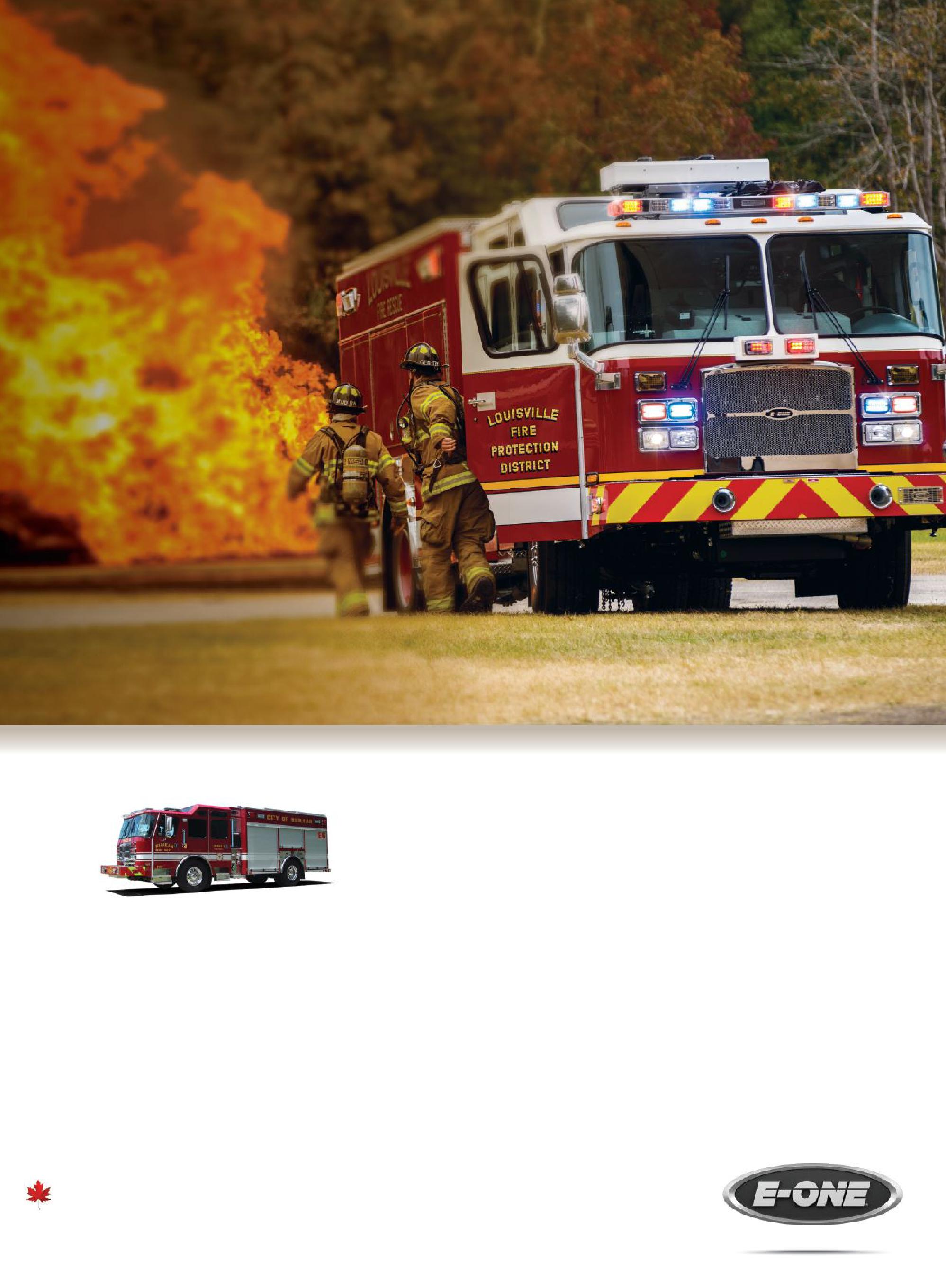
Our eMAX. Your crew. Fire is quickly reduced to ash.
Our unique pump location and apparatus configuration offers low, pre-connected handlines for maximum accessibility, a shorter wheel base for maximum maneuverability and up to 586 cubic feet of storage space to maximize your fire and rescue equipment needs. Now available on custom and commercial cabs, our eMAX pumpers are designed to help you kick some serious ash
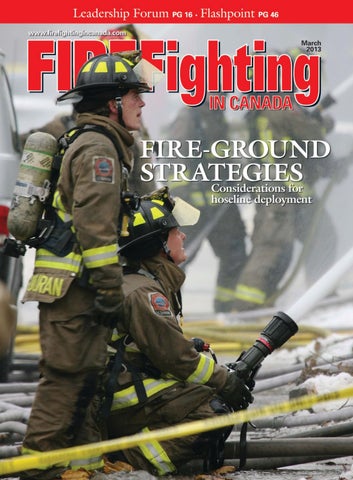
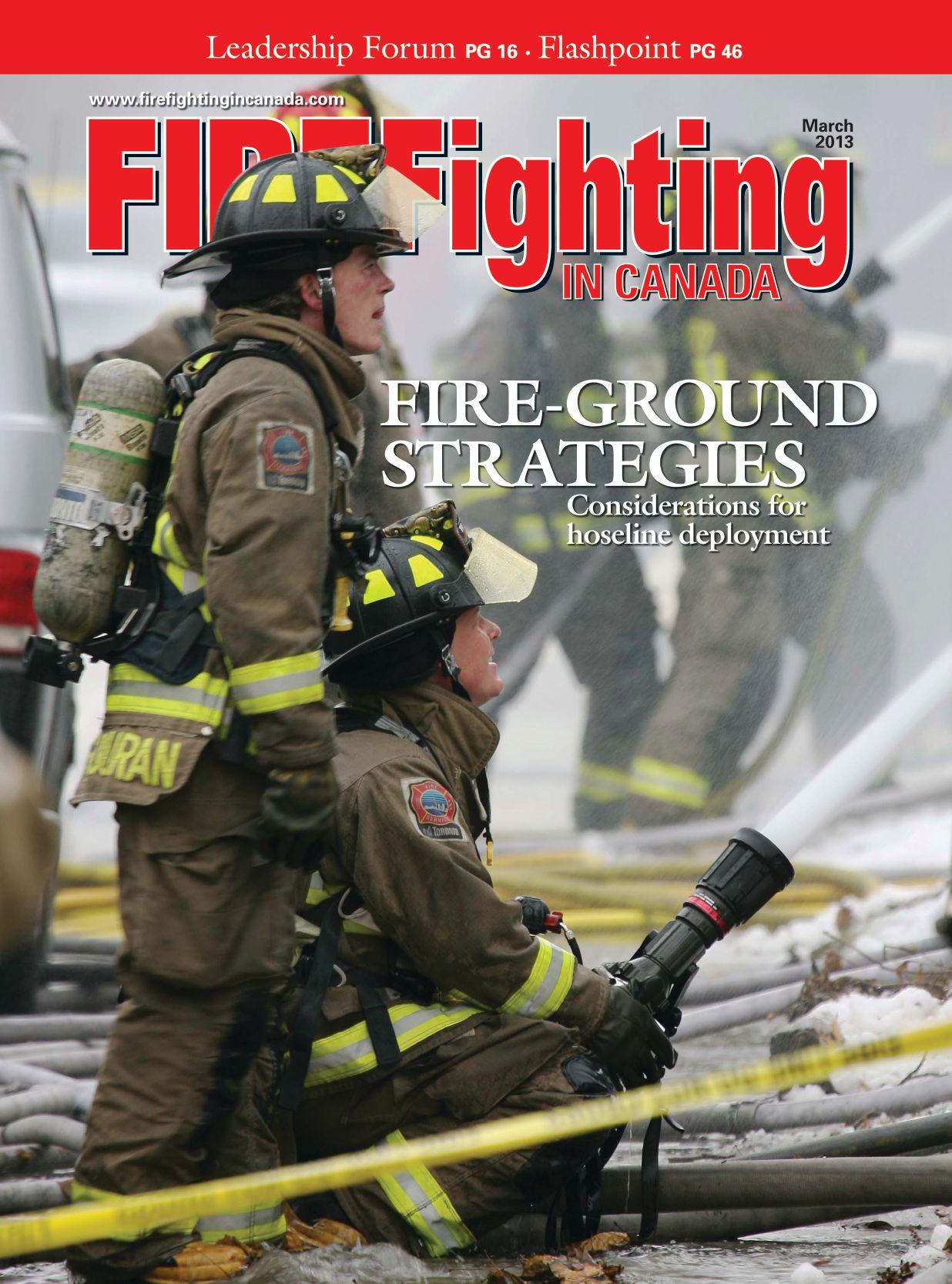
FIRE-GROUND STRATEGIES
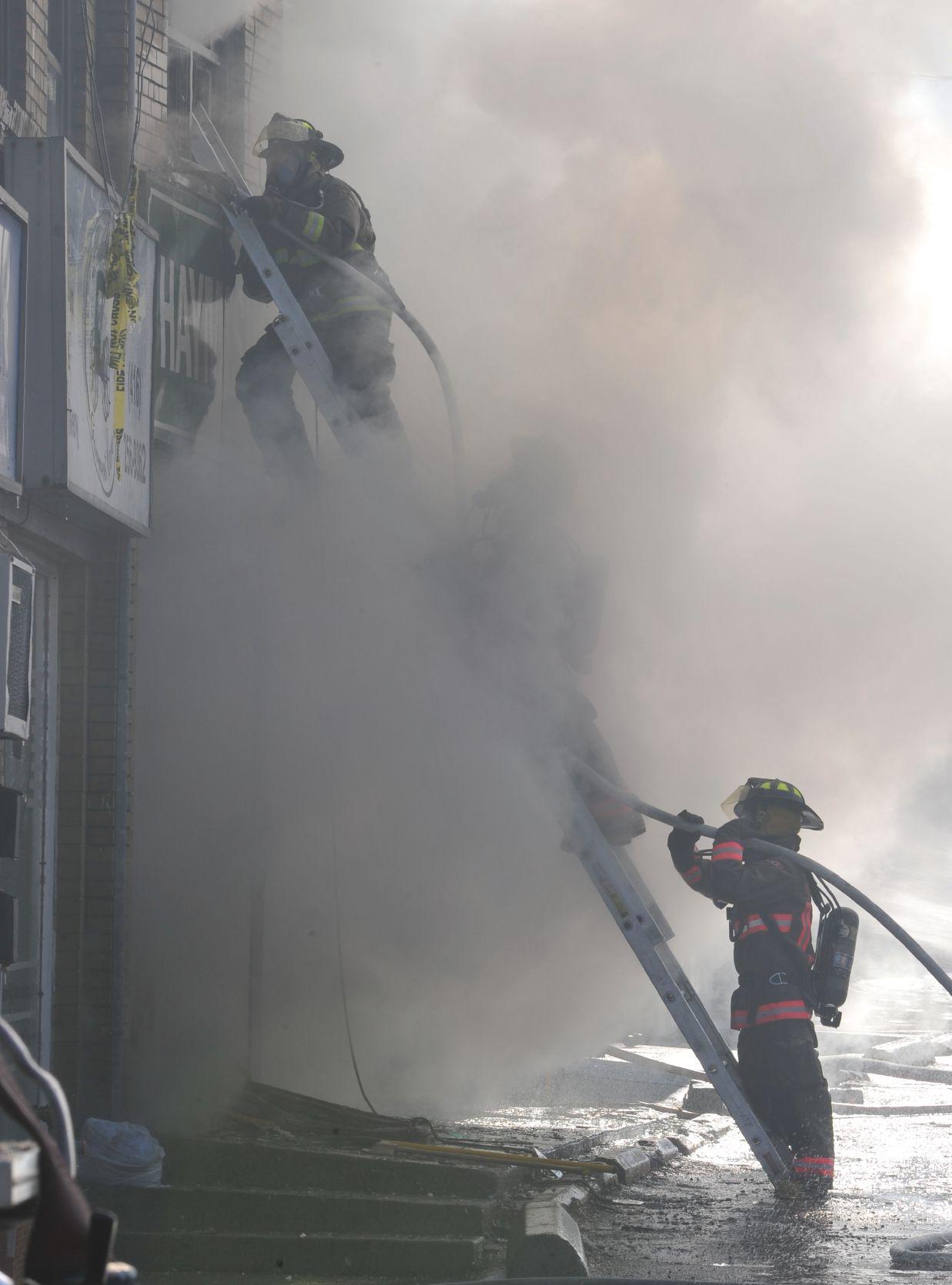
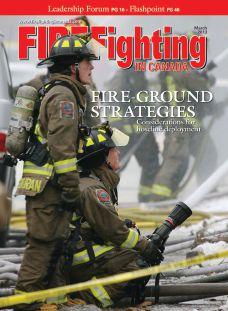
As Ryan Pennington explains, firefighters need to think about who, what, when, where and why when considering hoseline deployment at an incident. Knowing who’s arriving next, what type of construction is involved, when the water supply will be established, where the first line should be placed and why certain methods of attack work in certain circumstances ensures that good decisions are made.
32
THE SCIENCE OF FIRE
Despite the decrease in structure fires in North America, the rate at which firefighters are being killed from structural collapse and rapid-fire progression is increasing. There is plenty of research being done to help the fire service understand how to prevent firefighter injuries and deaths in this era of lightweight construction and synthetic contents. Ian Bolton looks at who’s researching what and how the results can save lives.
BY LAURA KING Editor lking@annexweb.com
I
COMMENT
How tweet it is, or
is it?
f you follow us on Twitter (@ fireincanada) you will know that there is a tightly knit firefighting community in the Twittersphere that includes fire-service leaders from across Canada and the United States.
That’s how I met – virtually, mind you – Ryan Pennington, who many of you will know as the Views-from-the-Jumpseat guy. Pennington writes a blog at www.viewsfromthejumpseat.com and contributes to our American counterpart, Firehouse. And now, Pennington is writing for a Canuck audience as a guest contributor/columnist with Fire Fighting in Canada and Canadian Firefighter and EMS Quarterly. Pennington, like his mentor Rich Gasaway (@ SAMatters) is a social-media machine – as of Feb. 11, Pennington had 18,595 tweets and 2,877 followers. His passion is educating firefighters about hoarding, and he’s among the best at engaging Twitter followers in conversations about firefighter safety.
tional awareness programs. Besides FDIC Atlantic, Gasaway is speaking at the Fire Chiefs Association of B.C. conference in May. Watch for Gasaway in the spring issues of our magazines.
Meantime, to introduce Pennington to a Canadian audience, we’ve made his take on the five Ws of hoseline operations our cover story (see page 10).
The piece isn’t controversial or issue-oriented, rather it’s good, old-fashioned training advice from an experienced firefighter/paramedic.
Still with Twitter, as I wrote this I was preparing presentations for three events, all of which focused on social media.
ESTABLISHED 1957 March 2013 VOL. 57 NO. 2
EDITOR LAURA KING lking@annexweb.com 289-259-8077
ASSISTANT EDITOR OLIVIA D’ORAZIO odorazio@annexweb.com 905-713-4338
EDITOR EMERITUS DON GLENDINNING
ADVERTISING MANAGER CATHERINE CONNOLLY cconnolly@annexweb.com 888-599-2228 ext. 253
SALES ASSISTANT BARB COMER bcomer@annexweb.com 519-429-5176 888-599-2228 ext. 235
MEDIA DESIGNER EMILY SUN esun@annexweb.com
GROUP PUBLISHER MARTIN MCANULTY fire@annexweb.com
PRESIDENT MIKE FREDERICKS mfredericks@annexweb.com
PUBLICATION MAIL AGREEMENT #40065710
PAP Registration #8885
RETURN UNDELIVERABLE CANADIAN ADDRESSES TO CIRCULATION DEPT.
P.O. Box 530, SIMCOE, ON N3Y 4N5 e-mail: subscribe@firefightingincanada.ca
Printed in Canada ISSN 0015–2595
CIRCULATION e-mail: subscribe@firefightingincanada.ca
Tel: 866-790-6070 ext. 206
Fax: 877-624-1940
Mail: P.O. Box 530 Simcoe, ON N3Y 4N5
Knowing what resources are available is key to making choices about hoseline deployment. See story page 10.
Both Pennington (www.viewsfromthejumpseat.com) and Gasaway (www.richgasaway.com, www.SAMatters.com) are speaking at FDIC Atlantic in Wolfville, N.S., June 7-9 and will be treated to a day at the Nova Scotia Firefighters School courtesy of fellow Cape Bretoner John Cunningham (@ NSFireSchool), in beautiful Waverly, N.S. I will meet Pennington and Gasaway in Halifax and will be thrilled to host them in my home province for a weekend of fire training and Maritime hospitality.
Gasaway spoke at the Canadian Association of Fire Chiefs conference in September and I sat down with him to talk about writing for our magazines and engaging more Canadians in his situa-
The first, for the pre-service students at Conestoga College in Kitchener, Ont., was meant to explain how and why reporters do what they do and why it’s crucial to get out in front of an incident in this era of citizen journalists.
The other two, one for a symposium at York University on March 8 and the other for a presentation at the 2013 Northwest Fire Conference in Peace River, Alta., in April, look at media coverage of the Elliot Lake mall collapse – the good, the bad and, unfortunately, the ugly.
No matter what you think of Twitter, it’s crucial that all first-response agencies understand how it affects what they do.
If you’re not on Twitter, start by following us and Pennington and Gasaway and Cunningham and all our writers – their Twitter handles are in their bios.
Enjoy the banter, but as with everything you do, use common sense and trust your instincts.
SUBSCRIPTION RATES
Canada – 1 Year - $24.00 (with GST $25.20, with HST/QST $27.12) (GST - #867172652RT0001)
USA – 1 Year $40.00 USD
We acknowledge the financial support of the Government of Canada through the Canada Periodical Fund (CPF) for our publishing activities.
Occasionally, Fire Fighting in Canada will mail information on behalf of industry-related groups whose products and services we believe may be of interest to you. If you prefer not to receive this information, please contact our circulation department in any of the four ways listed above.
No part of the editorial content of this publication may be reprinted without the publisher’s written permission ©2012 Annex Publishing and Printing Inc. All rights reserved. Opinions expressed in this magazine are not necessarily those of the editor or the publisher. No liability is assumed for errors or omissions.
All advertising is subject to the publisher’s approval. Such approval does not imply any endorsement of the products or services advertised. Publisher reserves the right to refuse advertising that does not meet the standards of the publication.
www.firefightingincanada.com
PHOTO BY JOHN RIDDELL


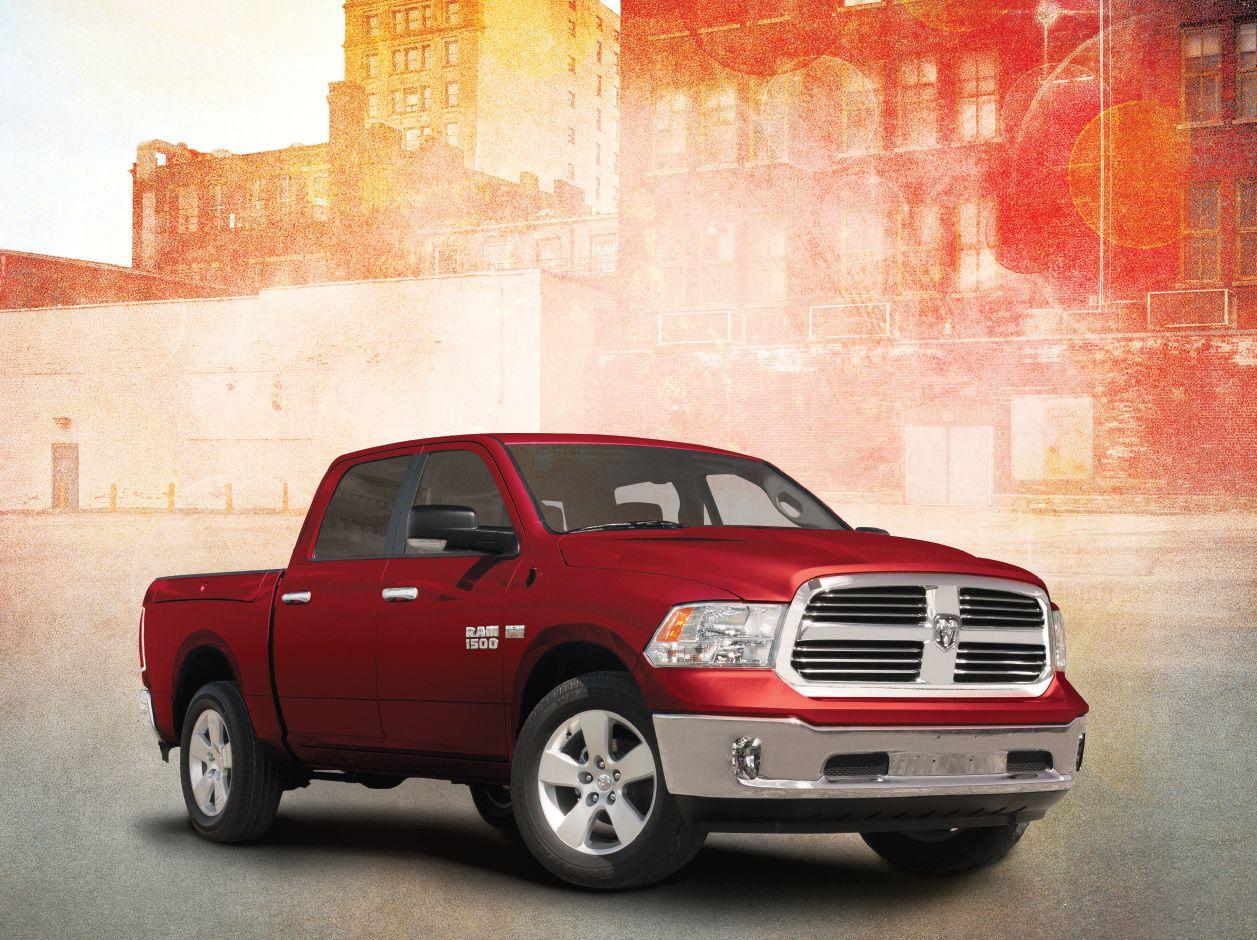
The all-new 2013 Ram 1500 Special Service* Vehicle, built for Firefighters, EMS and First Responders, is well equipped for duty. The 2013 Motor Trend Truck of the Year is also Canada’s longest-lasting» and most fuel efficient full-size pickup¤, making it a great addition to any department. With 395 HP, 407 lb-ft of torque, Electronic Control System including All-Speed Traction Control, Hill Start Assist and Ready Alert Breaking, it’s the perfect partner for any situation. The Motor Trend Truck Of The Year is ready for duty

2013 Ram 1500 SLT with SLT Décor Group shown.
STATIONtoSTATION
ACROSS CANADA: Regional news briefs
Orford firefighters launch recognition program
The Orford Firefighters’ Association in Ontario has come up with a unique and dignified way to honour members who have died.
The Firefighter Memorial Recognition Program recognizes the service of deceased members to the community, and allows families to participate in a new fire-department tradition.
The program was launched in October, with an informal ceremony in honour of the township’s first firefighter, Stanley “Spike” McPhail. McPhail was hired as fire chief in 1938, just five days after the councils for the Village of Highgate and the Township of Orford signed a fire protection agreement.
One of McPhail’s first orders as chief was the purchase of a 1938 GMC pumper, which the department has fully restored.
“We wanted to try something different to honour those who have served us in the past,” explains firefighter Larry Garside. “We thought this would be a very good program.”
In addition to a ceremony for each of Orford’s deceased firefighters, a small brass plaque that can be displayed on the members’ headstones will be presented to the families. Each name will also be added to a memorial plaque that is on display at the department’s head station.
The department intends to honour 45 deceased members;
most are buried in Ontario, although some are in final resting places as far away as British Columbia. Garside says the families of the former members have been very helpful in tracking them down.
“The families have responded very well,” he says. “We’ve had a lot of support from them.”
Garside says the program is intended to be permanent, honouring both past members of the department and the current ones – though hopefully many years down the line.
“It will go on as long as the organization is in effect,” he says. “It [will extend] well into the future.”
– Olivia D’Orazio
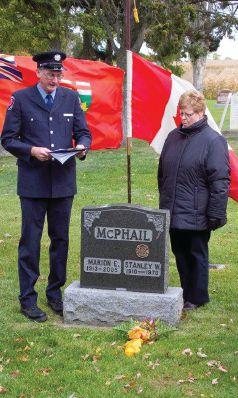
Firefighter Larry Garside leads an informal ceremony in honour of Stanley McPhail, the Orford Fire Department’s first fire chief. McPhail’s daughter, Audrey, attended the ceremony to represent the family.
CAFC names Halifax native as new executive director
The Canadian Association of Fire Chiefs has named a new executive director who has a background in consulting and managing national organizations.
The CAFC said in an e-mail to members on Feb. 13 that the appointment of Halifax native John-Paul Cody-Cox was effective Feb. 25. Cody-Cox succeeds
THE BRASS POLE:
Promotions & Appointments
IAN BAIKIE is the new fire chief for the Campbell River Fire Service in British Columbia. Baikie joined the department as an auxiliary firefighter in 1985, before becoming a career firefighter four years later. He had served as acting fire chief since September 2012, after the resignation of Chief Dean Spry.
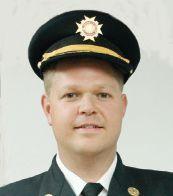
SHAWN EDWARDS has been appointed fire chief for the Howick Township Fire Department in Howick, Ont. Edwards has more than nine years of service, including six
former executive director Don Warden, who retired in October 2011.
Cody-Cox was president/owner of Momentum Consulting Strategies, an
years as a captain with the West Grey Fire Service.
DOUGLAS HARKES has been promoted to deputy fire chief for the Howick Township Fire Department in Howick, Ont. Harkes previously served as a captain with the Wingham and Area fire department, before moving to the Howick department, where he recently celebrated more than 20 years of service.
Ottawa-based firm that works primarily with national sports organizations. He was previously the CEO of Speed Skating Canada and the executive director of Volleyball Canada.
Retirements
FRED McLENNAN, principal of the Ontario Fire College, retired Dec. 31 after almost 14 years with the Ontario Office of the Fire Marshal. McLennan spent more than 30 years in a community college environment as a professor and administrator, and was the second-longest serving principal in the history of the Ontario Fire College.
Loyalist Township opens efficient new station
The Loyalist Township Emergency Services in Ontario opened the doors to its new Amherstview station in November. The new, stateof-the-art station replaces the original Amherstview fire hall, which hadn’t had significant upgrades since it was built more than 40 years ago.
“Our old station was built in 1964, and we virtually outgrew it, as far as size and staffing goes,” explained Fire Chief Wayne Calver.
“The other thing that was a hindrance was that a recreation complex came to be built around the station. So getting volunteers out of the station in an emergency became a problem with congestion, especially during the spring and summer months.”
The project was first introduced in the township’s 2004
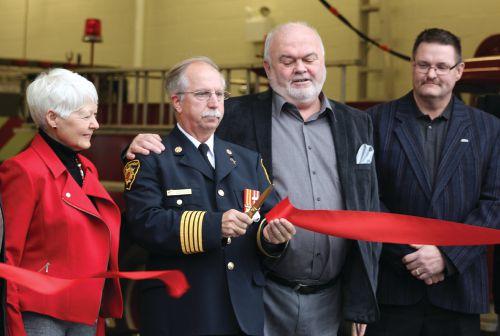
Wayne Calver cuts
budget. After various revisions, the department broke ground in November 2011 and the station was completed a year later, on its $2.34 million budget.
At 930 square metres (10,000 square feet), the new station is significantly larger
than the old building. It has more storage for firefighters’ bunker gear and a proper area to clean and maintain SCBA equipment, Calver said. The new station has a kitchen area, a training room and separate accommodations for female
firefighters, such as showers and bathrooms.
A 1962 International pumper – one of the first pieces of equipment that the department bought – is also housed at the Amherstview station, serving as a piece of the department’s history.
The station’s drive-through truck bay can fit up to six vehicles, and the main building, which has a large communications space, also acts as a back-up emergency operations centre and a back-up IT centre for the municipality.
The station was also built with the township’s future development in mind.
“This station will be the station that first houses career firefighters,” Calver said. “But we’re looking at many years down the road.”
– Olivia D’Orazio
New truck replaces brigade’s three outdated vehicles
The Harbour Grace Volunteer Fire Brigade in Newfoundland has acquired a new emergency response vehicle that replaces three of the brigade’s oldest trucks. The 2012 Crimson rescue engine cost about $360,000. The cost was shared between the town and the provincial government.
The truck has an automatic transmission and features a built-in Hale foam system,
a 1,250-gallon pump, an 850-gallon polytank, a Class A foam system and a 10-kilowatt Harrison hydraulic generator. At the push of a button, the vehicle deploys chains around its tires. Three vertical lockers provide an abundance of storage. All of these features sit on an eight-person Spartan Force chassis, with a Cummins 380-horsepower engine.
“In responding to calls for
Last Alarm
HECTOR BABIN died Nov. 15 after a lengthy and feisty battle with cancer. Babin became chief of the Eel Brook and Districts Fire Department in Nova Scotia in 1989.
DALE CLINTON, 39, died Nov. 16 after a fall from construction equipment. Clinton was a firefighter with the Saint John Fire Department in New Brunswick, and was secretary of the Saint John chapter of the IAFF.
STEVE GREENWOOD died Nov. 24. Greenwood, a 26-year member of the White River Volunteer Fire Department in Ontario, was 48 years old.
MARK O’CONNOR, a volunteer firefighter with the Lincoln Fire Department in Lincoln, Ont., died suddenly on Dec. 26. O’Connor was a 13-year veteran of the department.
assistance, we would have to dispatch three vehicles,” said Brigade Chief Ray Verge. “Now we can do it all with just the one.”
The brigade retired its utility van and sent the rescue truck that used to house its extrication equipment to the Town of Harbour Grace to be used a utility truck. The pumper truck was sold to the Bell Island Volunteer Fire Department in
Bell Island, N.L. Changes had to be made to the fire-hall entrance to accommodate the new truck. Again, under a cost-sharing plan between the Town of Harbour Grace and the provincial government, $20,000 was used to buy new doors and refit the openings to the fire hall to make room for the bigger truck.
– Robert Lynch
Retired firefighter, JAMES LANDRY died Dec. 7. Landry, who was 83, joined the Bathurst Fire Department in New Brunswick in 1966, and proudly served his community for 28 years.
JOHN SEMPLE, retired captain for the Toronto Fire Services, died Dec. 2. John was a member of the Toronto Fire Services Pipes and Drums, and a member of the Highland Creek branch.
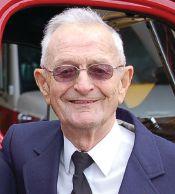
DON LYNDE, retired fire chief, died Dec. 30. Lynde, who was 88 years old, was the first fire chief for the Pickering Fire Department in Ontario. He held that position for 32 years.
Chief
the ribbon for the Amherstview station with (left) CAO Diane Pearce, Mayor Bill Lowry and councillor Jim Hegadorn.
STATIONtoSTATION
BRIGADE NEWS: From stations across Canada
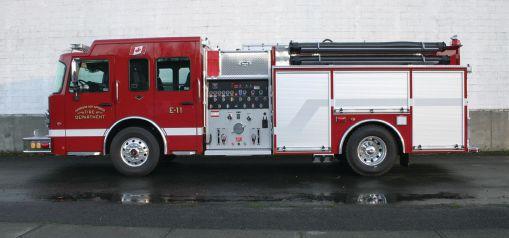
THE HARRISON HOT SPRINGS FIRE DEPARTMENT in British Columbia, under Fire Chief Don Lebossiere, took delivery in December of a Hub Fire Engines & Equipment-built pumper. Built on a Spartan Force chassis and powered by an Allison 3000 EVS transmission and a Cummins ISC 380-hp engine, the truck is equipped with a Hale Q-Flo 1,050-gpm pump, a 1,000-gallon co-poly water tank, a FoamPro foam system, a Whelen LED light package, a Honda EM 5000 generator and Havis Magnafire push-up lights.
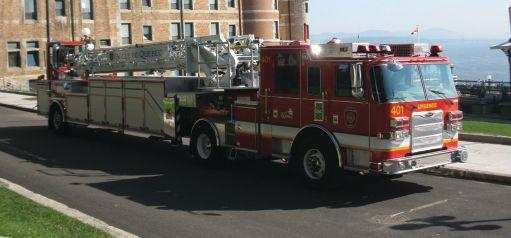
THE QUEBEC CITY FIRE DEPARTMENT in Quebec, under Fire Chief Richard Poitras, took delivery in February from L’Arsenal of a Pierce Manufacturing-built aerial. Built on a Pierce Arrow chassis and powered by an Allison 4000 EVS transmission and a Detroit Diesel 500-hp engine, the truck is equipped with a 100-foot ladder, an Onan 10-kilowatt hydraulic generator and a Pierce Command Zone.
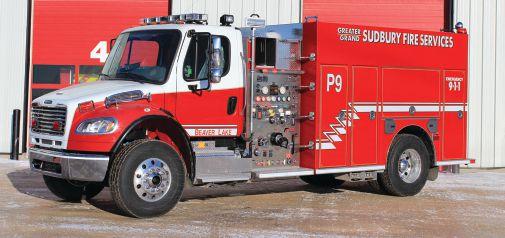
THE GREATER SUDBURY FIRE SERVICES in Ontario, under Fire Chief Russell van der Jagt, took delivery in January of a Fort Garry Fire Trucks-built pumper/tanker. Built on a Freightliner M2-106 chassis and powered by an Allison 3000 EVS transmission and a Cummins ISC 330-hp engine, the truck is equipped with a Hale Q-Max 1,050-gpm pump, a 1,000-gallon pro-poly water tank and a FoamPro foam system.
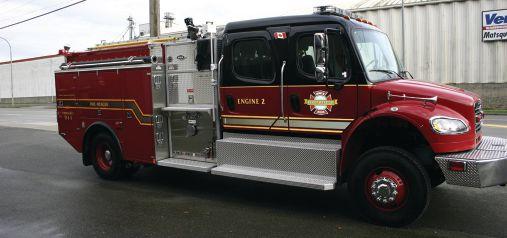
THE DISTRICT OF MISSION FIRE/RESCUE SERVICES in British Columbia, under Fire Chief Ian Fitzpatrick, took delivery in November of a Hub Fire Engines & Equipment-built pumper. Built on a Freightliner M2-106 chassis and powered by an Allison 3000 EVS transmission and a Cummins ISC 350-hp engine, the truck is equipped with a Hale Q-Pak 840-gpm pump, a FoamPro foam system, a 900-gallon co-poly water tank, a Warn portable winch, a TFT Tornado monitor and a Weldon data recorder.
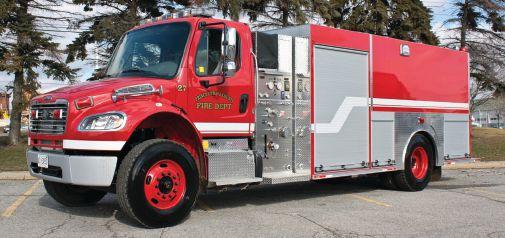
THE PRINCE EDWARD COUNTY FIRE DEPARTMENT in Ontario, under Fire Chief Scott Manlow, took delivery in January of a Dependable Emergency Vehicles-built tanker. Built on a Freightliner M2-106 chassis and powered by an Allison 3000 EVS transmission and a Cummins ISC 330-hp engine, the truck is equipped with a Hale 500-gpm pump, a 1,750-gallon ultra-poly water tank and a Whelen LED light package.
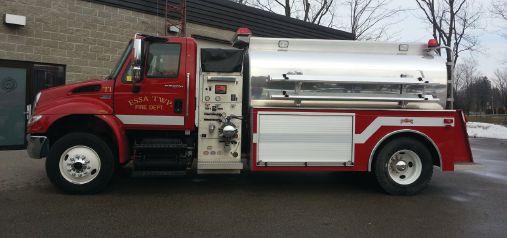
THE TOWNSHIP OF ESSA FIRE DEPARTMENT in Ontario, under Fire Chief Paul Macdonald, took delivery in December of a BK-built tanker. Built on an International DuraStar 4400 chassis and powered by a MaxxForce 330-hp engine and an Allison EVS transmission, the tanker is equipped with a Darley 500-gpm pump, an Amthor 1,500-gallon stainless steel water tank, a 10-inch Newton dump valve and 2.5-inch and four-inch direct tank crash fill ports.
HARRISON HOT SPRINGS FIRE DEPARTMENT
GREATER SUDBURY FIRE SERVICES
PRINCE EDWARD COUNTY FIRE DEPARTMENT
DISTRICT OF MISSION FIRE/RESCUE SERVICES
Remotely Control Your Water Supply…
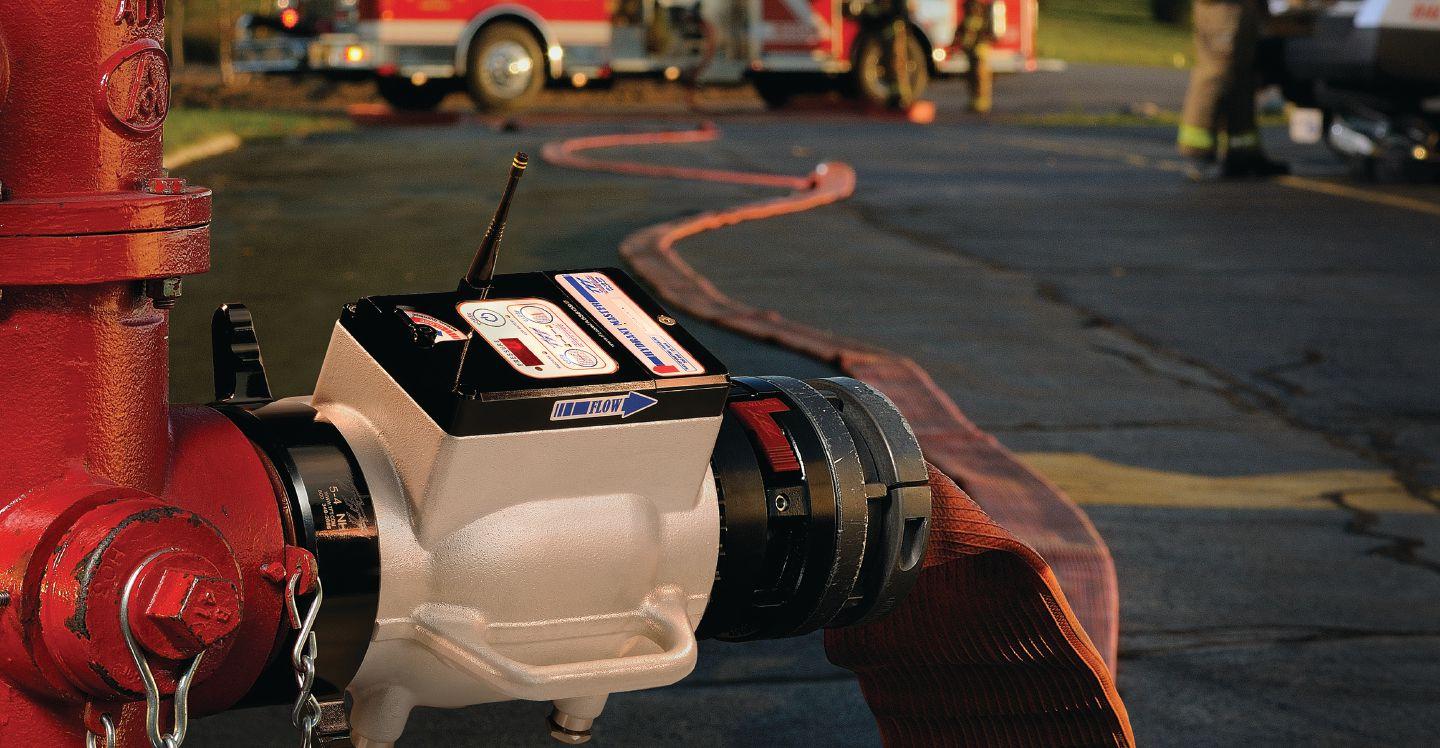
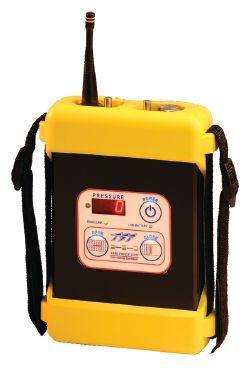
Maximize the effectiveness of your crews with TFT’s Hydrant Master remotely controlled hydrant valve. Integrating reliable 900 MHz communications, pre-programmed slow open and close operations, and a digital pressure display at the pumper, this valve is the perfect tool for any pump operator establishing a hydrant water flow operation with limited staffing.
To learn more about how you can improve both effectiveness and safety during initial attack operations, contact your local TFT dealer today.
FIRE-GROUND STRATEGIES

FIRE-GROUND STRATEGIES
Considerations for hoseline deployment
By RYAN PENNINGTON
The most important consideration in hoseline operations is to know who is responding and their training levels.
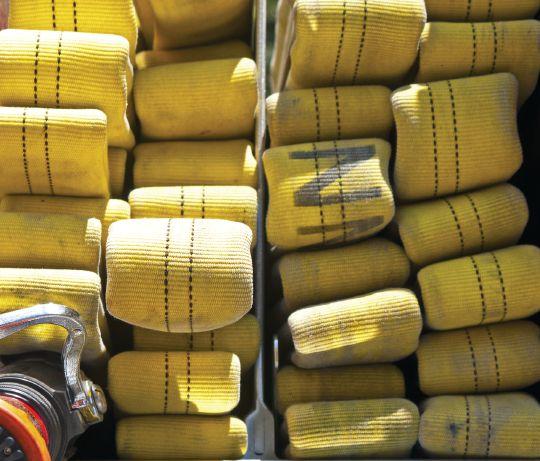
Other than protecting life, extinguishing fire is the top priority of firefighters at any fire call; this requires the responding engine, quint, ladder truck, or whatever water-carrying vehicle you have, in order to place hoselines into service and advance on the fire.
A crew of firefighters should looked like a well-oiled set of pistons firing in unison as we arrive, estimate, and carry out the fire attack. This task should be shared with all firefighters as we strive for the perfect stretch. Being the leader of a crew making the hoseline deployment can be difficult; our jobs as backwards-riding, streetlevel firefighters should be to lessen the load of the decision makers by having the knowledge and discipline to function under their command and make the stretch.
Let’s take a look at the five Ws of hoseline responsibility and how they are shared with the entire crew to put out the fire as quickly and efficiently as possible.
WHO
With today’s staffing issues, the first W of hoseline operations – Who is responding to the fire? – is the most important. First-arriving crews should have an idea of the number of expected responding units and their training levels. Establishing the number of firefighters, apparatuses and supervisors can help firefighters select the appropriate hoselines.
An officer needs to make crew assignments based on staffing levels and the abilities of the firefighters. For example, a 64 millimetre (two-and-one-half-inch) hoseline requires more technique and manpower to deploy and manoeuvre than a smaller hose. Choosing this option – rather than a more manageable 45 millimetre (oneand-three-quarter-inch) hoseline – with an inexperienced crew, could cause a delay in initial knockdown.
Firefighters also need to establish who will be deploying the first handline and understand what is expected of that firefighter. Officers should be specific in their direction: “Captain to firefighter: Pull the front crosslay and advance to the side C doorway and wait for me.” This will ensure that there is no question or confusion about the direction; it is the firefighter’s job to confirm that he or she has received this message and can perform the task that has been requested.
WHAT
The what of hoseline deployment depends on many variables. From fire growth and spread, to the type of construction, everyone on the
PHOTO BY JOHN RIDDELL
WHEN
When to deploy which hoseline can be complicated, depending on staffing and your type of response area. When is your seconddue arriving and when is your water supply going to be established are two questions that should be answered before hoselines are selected. If you know your second due is just minutes behind, you may choose to proceed to the fire without laying out your supply line in order to make a quicker first attack, and to allow access for the truck company. This can narrow your choices of hoselines, as you will have a limited amount of water, depending on tank size.
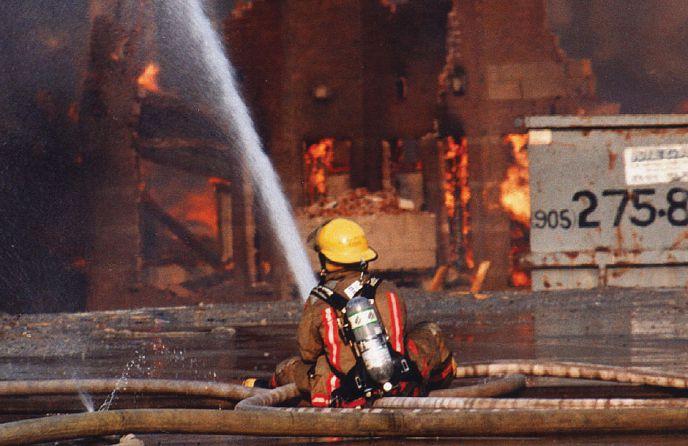
fire ground should understand which line is the most appropriate.
Chief John Smoot of Teays Valley, W.V., who repeated the famous line, “That fire doesn’t match that hose,” always comes to mind when discussing hoseline selection; the quote came from a firefighter on a second-arriving engine who noticed an
“outgunned” first engine that was fighting a large, well-involved structure with the smaller, 45 millimetre (one-and-threequarter-inch) attack line. There is a point at which the fire is too large to contain with these smaller lines; it’s our job to recognize and understand the point at which larger lines should be used.
Established response times of all companies should have been pre-planned for all areas in your district. When estimating arrival times, you should also account for variables such as apparatus accidents or road closures. Establishing good communication routes is key to determining when to select hoselines. Here’s an example of good communication in establishing when to lay hoeslines: “Engine 1 to Engine 2, we are going fast attack; please lay into Engine 1.” “Received, Engine 2, ETA of five minutes.”
WHERE
Now that we are on scene and we know who we have responding and when the next


The what of hoseline deployment depends on everything from fire growth and spread to the type of construction. The larger the fire, the larger the hoseline should be.
PHOTO BY JOHN RIDDELL

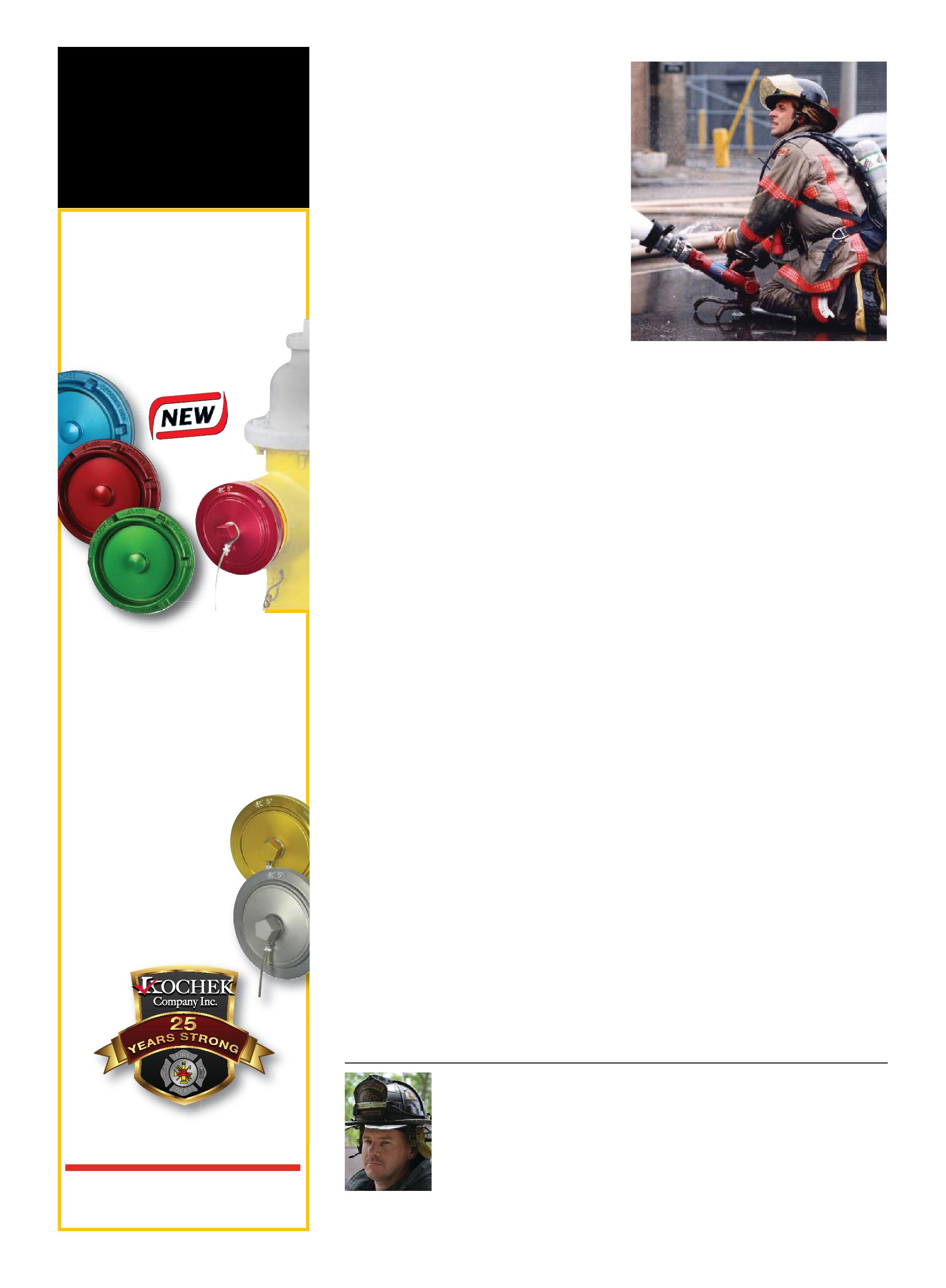
KOC H E K® COM PANY EXC LUSIVE
Protect your connections with the best patented coatings,
M I C R ALOX Micro- Crystalline
MICRALOX a patented process, will extend the life of your aluminum parts up to 10 Times compared to conventional aluminum anodic coatings; more effectively resists salt, and chemical corrosion and attack
15,000 hrs of salt spray without any degradation to finish compared to standard anodic coatings
Meets mill spec 8625 type 3 class 2
QUANTU M Hardcoat Color
• High quality durable hardcoat
• Vibrant anodized color
• Great for color coding
Meets
NATU R AL Hardcoat
• High quality durable hardcoat
• Most often specified by design and manufacturing engineers
crew will be here, it’s time to attack the fire. Deciding where the first hoseline should be placed can be a complex decision with many variables. First and foremost, our job is to protect life. If we have received reports of people trapped, the first hoseline should go to protect escape routes. From stairwells to uninvolved rooms, placing the hoseline to hold back the fire will give occupants time to make their escape; this should be the first priority.
Once crews have determined that there are no trapped occupants, it’s time to choose the attack point of entry. Advancing from the unburned side of the structure to the burned side has long been the accepted method, but a point of warning: today’s fires burn hotter due to the solidified petroleum products that produce a thicker, more flammable smoke. Advancing through this smoke should be done with caution as you continue to watch for the signs of flashover. Don’t be afraid to make a quick hit through a window or doorway to darken down the fire and reduce the chance of flashover. While this tactic has been controversial, it makes for a safer attack as crews are at less risk.
If you arrive to find a well-involved structure, the hoselines may need to go toward exposures. If the building of fire origin is beyond saving, it’s time to contain the fire to one building, not two or three. This option means firefighters can use larger, less maneuverable streams. Pulling the 64 millimetre (two-and-a-half-inch) hose can prove to be the best option due to the fire’s growth and the ability of one firefighter to place it into service and control it.
WHY
Understanding why we do what we do is very important to this jumpseat-riding firefighter. I believe that understanding why we choose a certain type of hoseline or tactic can drive home the point to all of us. Why did you choose the larger hose? Why did you choose to advance on the stairwell? Why did you choose to protect exposures? These are questions that should be asked after the fire.
There is a method to our madness in the fire service; we should strive to learn it from day one to day 1,000. If a house is beyond saving, our priority goes to exposures; if we have occupants trapped, we protect their escape routes. Why we attack from the
All departments should review the why of hoseline deployment: why certain types of hoselines are used, why to advance on stairwells, why to to protect exposures and why to attack from the unburned sides.
unburned sides should be reviewed with all levels of firefighters in our departments. We choose to attack from the unburned side because we don’t want to push the fire in to unburned side.
REVIEW THE WS
Understanding the five Ws of hoseline placement should be learned, trained and drilled by all levels of firefighters. Placing a hoseline in service to attack a fire is the primary goal of all firefighters. Being able to select and deploy the attack line is the responsibility of street-level firefighters, officers, and even chief officers should be aware of this necessary skill.
A few reminders about hoselines: our fitness is dynamic and it changes for better or worse. Repetition is key in a successful hoseline stretch. Everyone should practice it, just in case you are the first arriving and need to perform this task, including chief officers. Just because you could perform to a certain level many years ago doesn’t mean that your skills are still sharp.
The five Ws can be a great tool as you arrive on the scene of a fire. Reviewing the Ws will make for a better-prepared crew and can be the beginning of officer training for the street-level firefighter. Review, train and drill on this street-level skill; it will keep us all jumpseat ready.
Ryan Pennington is a firefighter/paramedic for the Charleston Fire Department in Charleston, W.V. He is assigned to Station 8 and is part of the West Virginia Task Force 1 USAR team. Ryan has more than 15 years of combined fire, rescue and EMS experience. he started with a local volunteer department and continued through EMS to spend five years as a critical care paramedic. Ryan transferred to the career fire service in 2003 and has worked for the City of Charleston since 2007. He is currently a WV State Instructor 2, a hazmat technician, and a certified Fire Officer 2. He is very involved teaching EMS and firefighter safety across North America. Contact him at ryan33@suddenlink.net and follow him at twitter @Jumpseatviews.
BY
PHOTO
JOHN RIDDELL
Born bold.

If you’ve always been a fighter, only Dräger will do.
Dräger equipment isn’t for everyone. It’s for people who have expected nothing but the best of themselves from the very beginning. When expectations are this high, only optimum fire equipment can rise to the occasion. Dräger makes equipment bold achievers can have confidence in. Our integrated portfolio revolutionizes firefighting technology with streamlined components that work together as one. The result: power to perform at your personal best. GO IN


BY LES KARPLUK
Fire Chief, Prince Albert, Sask. AND LYLE QUAN Fire Chief, Waterloo, Ont.
PLEADERSHIPFORUM
Earning respect through teamwork
eter Parker said, “With great power comes great responsibility. Yes, folks, great power does indeed come with great responsibility and this must be etched in the minds of up-andcoming leaders. It takes a long while to become a good leader, and knowing your duties and the expectations of your people will give you more insight into what it takes to become a respected one. We have put together four keys to becoming a good leader. Understanding these lessons will help any individual become a respected leader.
LESSON ONE – FOSTER A TRUSTING ENVIRONMENT
Any team has the potential to be dysfunctional; people are human, imperfect and make mistakes. It takes courage to guide the team and foster a trusting environment. The probability of team dysfunction increases when trust is absent from the leader-follower relationship. In his book, The Speed of Trust, Stephen Covey notes that, without trust, everything slows down. In other words, if you don’t trust your co-workers, you are more apt to evaluate the situation before moving ahead. This causes the wheels of any project to move more slowly, whereas if you trust your teammates, then you will accept the idea or concept and run with it. Whether you are a new fire chief or have just taken on the role of an acting captain, trust is the foundation that you must build and build on.
LESSON TWO – LEADERS ARE CREATED
One of the most dangerous myths is that leaders are born and not made. Let’s make sure we clear the air by unequivocally stating that this is not true. Leaders are made, rather than born. There is no doubt that some people seem to be natural leaders and come by it honestly, but even these natural-born leaders have taken the time to learn about the tools of the trade. There is little doubt that the provision of technical training for staff has become a priority in our profession, no matter what level you are at in your leadership quest. This is encouraging, yet, we have a long way to go in providing the prized leadership training that develops leaders within our stations. Today’s leaders must embrace continuous training and education, and a desire to improve their competencies. For up-and-coming leaders, it is imperative to recognize that leadership is a journey and


the arrival at the destination should never actually occur. When you feel you have arrived and have become the leader, be ready for your followers to abandon you faster than rats on a sinking ship. Why? Because when you give off that know-it-all aura, you demonstrate an arrogance that can only spell disaster for you and your team.
LESSON THREE - ACCOUNTABILITY
Placing personal popularity ahead of holding people accountable is a sure way to lose respect. Newbie officers can be uncomfortable holding subordinates accountable, and may create excuses to avoid those awkward situations. That little voice in the back of their minds may be chanting, “Don’t jeopardize this friendship,” but we want to reinforce a statement made by Stephen Covey: “Accountability breeds response-ability.” Understand and recognize that placing personal popularity above accountability can lead to leadership failure. We have all heard the walk-the-talk saying, but do you truly understand what it means? It means that you are holding yourself accountable as much as you are others. This will give rise to respect and support from your people and produce a positive environment in which everyone understands that all members of the team are accountable to one another.
LESSON FOUR – ALWAYS BUILD ON THE STRENGTHS
Just as we train our firefighters to do the job of fire fighting safely
One of the most dangerous myths is that leaders are born and not made.
’’
and effectively, so we must also build upon the leadership lessons that are taught and learned. Everyone has something to offer, and it’s up to you as a leader to identify this strength and to use it, or to at least identify that not everyone is a good fit for every team. Identify the strengths of all your team members and find that fit so the organization benefits from it.
Les Karpluk is the fire chief of the Prince Albert Fire Department in Saskatchewan. Lyle Quan is the fire chief of Waterloo Fire Rescue in Ontario. Both are graduates of the Lakeland College Bachelor of Business in Emergency Services program and Dalhousie University’s Fire Service Leadership and Administration program. Contact Les at l.karpluk@sasktel.net and follow him on twitter at @GenesisLes. Contact Lyle at lyle.quan@waterloo.ca and follow him on twitter at @LyleQuan.
Our superhero, Spiderman, said, “The choice to lead an ordinary life is no longer an option,” and we clearly believe this is true for those desiring to be leaders in the fire service. This is not to say that we have to be a superhero like Spiderman, but it does mean that you need to expect more from yourself before you can expect more of others.
One thing that we have seen in our 30-plus years in the fire service is that leadership and teamwork go hand in hand. When one part of the equation falters, so does the other. Pay attention to both parts, remember these four lessons of leadership, and earn your place on the team every day.
TRAINER’SCORNER
Appreciating the dangers of lightweight construction
By ED BROUWER
How much do you know about modern building construction? Modern, or lightweight, construction generally comprises either wood-frame or steel building materials; generally, the roof and/or floor supporting systems are made of these lightweight, prefabricated elements.
Wooden I-beams used extensively in today’s wood-frame construction are typically made of particleboard and dimension lumber, formed into the I-beam shape; they are often finger-jointed and glued together to extend the length of the beams.
In 2003, the Ontario Fire Service Advisory Committee – a group that advises the Ministry of Labour on occupational health and safety issues – drew up a guidance note on unprotected lightweight building construction. In Ontario, guidance notes offer advice and recommendations to fire departments; guidance notes are not mandatory but are drafted with input from the fire service and are generally accepted and adopted by fire departments.
The two-page guidance note on lightweight construction was revised in 2011; it talks about firefighter fatalities and injuries that were the result of rapid structural failure, and states that “buildings constructed using lightweight materials that are not sufficiently protected by sprinklers or effective non-combustible structural protection systems may collapse much sooner than expected and without the warning signs that are commonly present in fires that involve legacy construction.”
The guidance note says that incident commanders should:
• Consider the type of construction, the presence of protective sprinkler systems, and to what extent the structure may have been damaged by fire before initiating firefighting efforts, and continually evaluate the risks during operations in buildings that contain unprotected lightweight construction;
• Assume that unprotected lightweight construction is present, if unable to determine the type of construction in a building involved in fire;
• Consider employing defensive fire attack strategies where no threat to human life exists within buildings that contain unprotected lightweight construction.
Lightweight construction is not new; in fact, I chose this topic to ensure that we don’t become complacent about it. One of the earliest accounts of multiple line-of-duty deaths attributed to lightweight construction was on Nov. 21, 1968, when the bowstring truss roof of Yingling Chevrolet in Wichita, Kan., suddenly collapsed on the firefighters inside, trapping them under tons of burning debris and twisted steel. Fire Chief Tom McGaughey (on the night of his 36th wedding anniversary), Chief Inspector Merle Wells and firefighters Dale Mishler and Jimmy Austin were killed six minutes after arriving on scene.
Training officers should review the special hazards associated
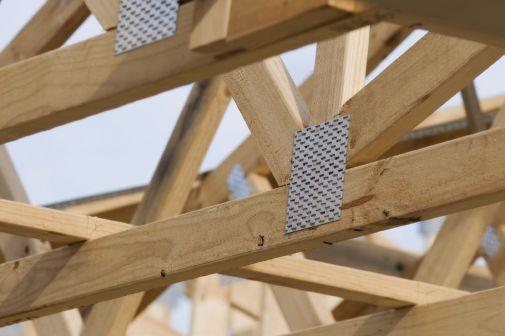
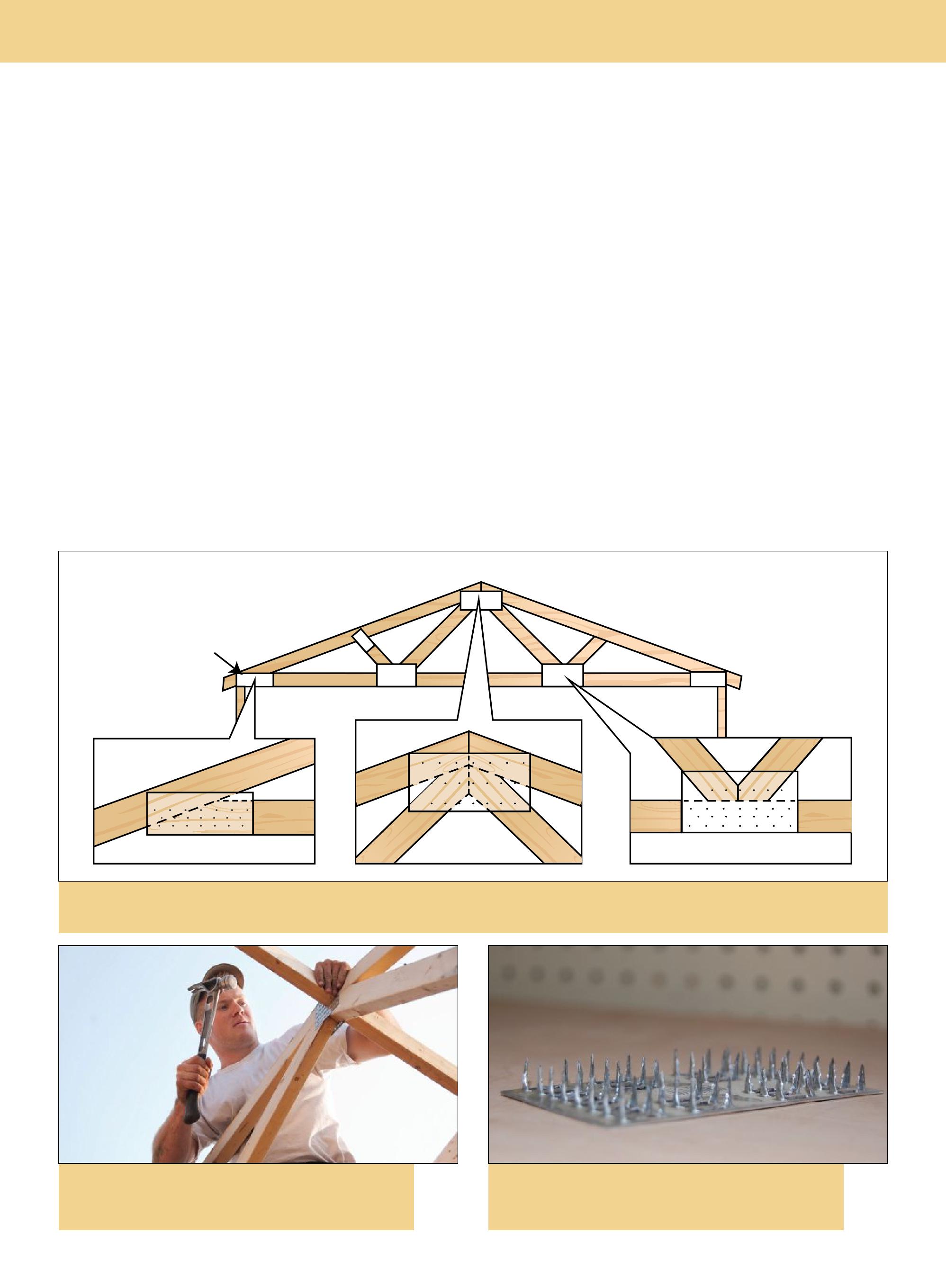
Photo 1: Many wooden truss systems use sheet metal surface fasteners, or metal gusset plates, to fasten the top and bottom chords to the webbing. Under fire conditions, these can quickly fail with no warning.
with buildings built with unprotected lightweight construction. Our firefighters must be made aware of the likelihood of an early, unpredictable collapse.
Pre-fire awareness can save lives. Teach your members about lightweight construction (see photo 2), including trusses, gluelaminated beams, I-joists, structural composite lumber, structural insulated panels and wood structural panels that are replacing dimensional lumber in many applications.
Review the basics – wooden I-beams are notorious for rapid fire spread and early catastrophic failure in as little as four minutes of fire involvement. Most wooden truss systems use sheet metal surface fasteners, or metal gusset plates, to fasten the top and bottom cords to the webbing (see photo 1). Under fire conditions these can quickly fail with no warning.
Structural collapse is a serious threat; please do not put your crew in even more danger by being unaware of the risks. In a report on lightweight construction in April, CBC News noted what most in the fire service already knew: that “pre-engineered floor joists, made from wood chips and glue, burn twice as fast as traditional wooden joists and can suddenly collapse from beneath the first responders.”
Fire Chief Tim Beckett of the Kitchener Fire Department in Ontario told CBC that “traditional floor joists burn in 15 minutes. Pre-engineered joists do so in approximately six.”
The report also quoted Barry Malmsten, the now-retired executive director of the Ontario Association of Fire Chiefs, who said, “the joists have changed the way firefighters attack a fire and rescue

Very Few Things Survive an Inferno
Our mission is to make sure you’re one of them. The flames build. The smoke thickens. People are fleeing. But not you! You push forward; ready to do battle. It goes against natural human instinct. But then again, firefighters are a unique breed. For your infinite courage and selfless dedication, we salute you. But more importantly, we do everything we can to ensure you make it home. We’re MSA and we’re a different breed ourselves. We design and produce products that keep you safe, so that at the end of each and every shift, YOU go home to what really matters most.
We take our mission very seriously. That’s why we provide firefighters with the most advanced equipment available: Evolution® Thermal Imaging Cameras; Cairns® Helmets; FireHawk® Air Masks; and ALTAIR® portable gas detectors. MSA employees work relentlessly to protect not only Firefighters, but any worker who needs protection. MSA will be there so that EVERYONE goes home.













people from burning homes . . . some departments have stopped entering the front doors of newer burning homes to rescue people and attack fires. Instead, they choose to rescue people through windows, using ladders.”
Lakeshore, Ont., Fire Chief Don Williamson told CBC that the joists don’t even have to be on fire to be considered dangerous. High heat melts the glue that holds the wood together and makes it unstable. (You can see the CBC story at http://www.cbc.ca/news/canada/windsor/story/2012/04/13/wdr-firefighters-floor-joists.html)
There is much concern about lightweight construction, mainly from the fire service. Apparently the fact that firefighters enter structures while others flee is not properly recognized in the rules that govern residential construction.
The following is an excerpt from the IAFF Canada Legislative Fact Sheet 2012, entitled The Need to Recognize Fire Fighter Safety in the National Building Code.
When the IAFF expressed concern about the omission of fire fighter safety as an objective of the National Building Code, we were invited to use the existing code amendment process to pursue the goal of having fire fighter safety added as a core objective, so that we and other stakeholders could advocate specific code amendments, such as floor performance, that are directly linked to fire fighter safety. The IAFF submitted this as a formal code change request in April 2010. Like previous IAFF submissions, it was not acknowledged by the CCBFC [Canadian Commission on Building and Fire Codes]. In early
2011, after repeated inquiries about the status of the submission, the IAFF was advised that the request had been rejected without further consultation at a closed meeting of the CCBFC in December 2010, with the surprising rationale that existing code language referring to “building occupants” was meant to include first responders as well.
This position ignores the reality that, while most building occupants will be able to exit a burning structure after fire is detected, fire fighters are subsequently expected to have the ability to enter the structure to perform search and rescue of anyone who may be trapped, and to provide aggressive interior attack in order to save family possessions and limit property damage. This is the level of protection the public expects and deserves. And, as Canada’s population ages and the number of Canadians with disabilities increases, so will the need for fire fighters to perform interior search and rescue.
The Ontario guidance note says, “Firefighters should use extreme caution when operating on or under an unprotected lightweight truss roof or floor and firefighters should evacuate as soon as it is determined that the unprotected trusses are exposed to fire.”
Now, back to our question: How much do you know about modern building construction? Test your knowledge with this quick quiz.
1. Define a lightweight wood truss.
2. In how many minutes can a lightweight wood truss collapse during a fire?
Continued on page 28
Photo 2: This illustration depicts the elements in the lightweight construction of a roof. Without the proper safety mechanisms in place, these elements tend to fail quickly in a fire, leading to early collapse.
Roof beams are often assembled on site. Rough handling can cause the metal gusset plate to pull away from the wood, further weakening the roof.

BY TOM BREMNER Fire chief, Salt Spring Island, B.C.
WCHANGEAGENT
Rebuilding broken relationships
hat do paramilitary-style operations mean within Canada’s fire-rescue services if everyone wants his or her own way?
Let’s take a moment to reflect on the mission of the fireemergency service from coast to coast to coast. It seems, in many cases, that the paramilitary objectives we have followed or aimed towards for decades have flown out the window and changed, in some cases for the better and other cases for the worse. How many times have you witnessed disrespect, up or down the chain of command, in your halls? Respect and trust must flow in both directions, regularly, not just once in a while or for personal gain. We need to fully recognize the many partnerships among the various levels in our departments that make up today’s fire and emergency services.
Even kids know when they are treated disrespectfully, so why do we disrespect each other as adults and, more importantly, why do we tolerate it? Why is there turmoil in our stations? Is it really that hard to figure out why this happens, or do we just turn a blind eye to it until the tension in our workplaces piles up deeply enough that it affects our personal worlds and finally explodes? In most cases, we know the answer: this workplace stress is a result of myriad events, activities and circumstances.
Those who write about leadership for this magazine have talked extensively about communication as the key to effectively managing the individuals and teams in our fire halls. Consider these questions and whether throwing them out on the table might lead to positive discussion in your department: Why are there so many power struggles in our fire halls? Is communicating with each other really that tough? Are we involved in the fire-emergency services to protect the public and be team members, or have individual personalities and jealously taken over? Is there a more advanced functional structure that we need to adopt so that we can work together better? How do we regain respect, trust and communication in our departments? How do we ensure that positive efforts and energies will be extended or offered by all? Can we create a healthier workplace through improved physical and psychological approaches? Maybe healthier bodies and minds would produce fewer problems?
reviews, demands, attacks, budget cuts and outcries. It’s up to us to help ourselves. We need to be aware of public perception while being prepared to listen and accept responsibility for the negative culture we’ve created by understanding how we need to change in order to create the structure we need to survive and provide firefighter safety and public safety.
When was last time that the members in your department sat around the table and were open and honest with each other without an agenda? If the history of such meetings shows mistrust or disrespect, then maybe it’s time for all sides to reflect and consider how individuals and groups can refocus on the common goal of firefighter and public safety. No person or group can fix this without being part of a team.
In some situations, change will be very difficult; however, in other cases, it might just be enhanced by a united approach to make things better and get back to some of the principle governance items we have lost or forgotten. It’s very easy to stray from the common good when individual or self-intended processes get in the way. I suggest there is no better way to improve firefighter safety and public safety
We need to be aware of public perception while being prepared to listen and accept responsibility for the negative culture we’ve created . . .
than by working together on a united approach that is well respected and committed to a workable structure from the bottom to the top, and vise versa, within Canadian fire and emergency services.
Looking from the outside in at the fire service as a young firefighter, everything seemed wonderful and energizing. Now, looking from the inside out, things have changed personally and professionally, and there are components of discontent.
Mindsets, personal attitudes and refocusing on the provision of service must be the priorities for change. Has the “me” mindset created more problems? Have internal issues spiralled too far for recovery? Blame can be levied at all levels and in all directions. The public, over the last few years, has become more aware of our internal issues, which results in more services being targeted by public
Tom Bremner is the fire chief for Salt Spring Island, B.C. Contact him at tbremner@saltspringfire.com
How and why does this happen? How can we let ourselves get caught up in this less-than-positive mindset? Who can change this ? We can, as individuals, leaders and organizations.
This change occurs only when leadership steps up to the plate, openly dealing with the known challenges and problems, not in a dictator’s process, but in a healthy, positive leadership structure; communicating, processing and involving the positive team participants.
Change can be very positive experience when done professionally, respectfully and collectively.

TRAINER’S CORNER
Continued from page 22
3. Flames will spread more rapidly in a concealed ceiling space containing parallel cord lightweight wood trusses than they will in the concealed ceiling space containing solid wood beams. Explain why.
4. What is the major design defect of lightweight wood trusses?
5. List three ways a sheet metal surface fastener can come loose from a lightweight wood truss.
6. What is the main concern of the fire service about the danger of lightweight wood trusses?
7. In any structural element, what is the critical area subject to collapse?
8. True or False:
a. The V-shaped nailing points on a metal gusset penetrate one inch.
b. Three wood truss members can be held together by one sheet metal surface fastener.
c. The sheet metal surface fastener is sometimes called a gusset plate or gang nail.
d. The lightweight wood truss is assembled at the construction site.
e. The surface fastener can pull away from the wood truss if dropped or handled roughly.
f. When exposed to heat, the sheet metal surface faster warps, curls up and pulls away from the truss.
g. A roof or a floor constructed of lightweight wood trusses can be expected to collapse during the fire more quickly than a roof or floor constructed on solid joists.
h. The lightweight wood truss structural support fails when the sheet metal surface fasteners fail.
i. A lightweight wood truss allows fire to spread inside a concealed space along the length of the truss, but temporarily blocks the fire spread perpendicular to the truss.
j. Defensive standard operating procedures based upon the 10-minute collapse potential

of lightweight wood trusses are necessary safeguards for fire operations.
Firefighters are injured and die in structures mainly due to the fact that they lack understanding and respect regarding the danger of collapse. It is of the utmost importance that you keep your training up to date. Present your firefighters with accurate and relevant information regarding lightweight construction. Until next time, continue training like lives depend on it.
RESOURCES:
• www.cdc.gov/niosh/docs/2005132/#4 – NIOSH offers this useful site about preventing injuries and deaths due to truss system failures
• Collapse of Burning Buildings by Vincent Dunn (used with permission)
ANSWERS:
1. A lightweight wood truss contains wood members, often two 2 x 4s connected by sheet metal surface fasteners.
2. 10 minutes.
3. When flames and heat enter a concealed ceiling space containing a parallel cord lightweight wood truss, they can spread simultaneously across the length of the truss and perpendicularly through the web members. In a concealed ceiling space containing solid wood beams, the spread of flame and heat in a direction perpendicular to a solid beam will be blocked.
4. The penetration depth of the nailing points.
5. Heat can warp the sheet metal surface connector. Rough handling during transportation can loosen it. Corrosion caused by trapped moisture can weaken it.
6. The sheet metal surface fastener.
7. The point of connection.
8. a. False
b. True
c. True
d. False
e. True
f. True
g. True
h. True
i. False
j. True
Ed Brouwer is the chief instructor for Canwest Fire in Osoyoos, B.C., and Greenwood Fire and Rescue. The 21-year veteran of the fire service is also a fire warden with the B.C. Ministry of Forests, a Wildland Urban Interface fire suppression instructor/evaluator and a fire-service chaplain. Contact Ed at aka-opa@hotmail.com.

BY VINCE MACKENZIE Fire Chief
Grand Falls-Windsor, N.L.
IVOLUNTEERVISION
The hallowed halls of Canada’s fire service
n the United States, Americans refer to fire houses, but here in Canada the words fire hall are more common for buildings in which it all happens for us.
Fire halls come in various forms; some are modest, unassuming buildings while others can be great monuments of esthetic pride and symbolism in their towns and villages. One thing most fire halls across our country share is the familiar scent of the apparatus bays; it must be the combination of machinery, vehicles, rubber hose, stale smoke and concrete floors. For me, that fire-hall smell is perfume to my soul; it is our fragrance, the scent of service. The public may not share the same passion for that scent as I do, but for firefighters, it is one thing that links all fire halls nationwide, large or small, volunteer or career.
Fire halls have a knack for becoming bustles of activity in the blink of an eye – they are just a horn blast or pager tone away from becoming the focal point of all things important at that time; the walls and the doors of a building that often sit idle are quickly invaded and suddenly filled with the highest level of noisy, urgent and important activity.
I grew up a son of a dedicated, long-time volunteer firefighter; I was a fire brat, a kid who admired everything about the fire hall and the equipment contained in it. The building stood as the protector of all that surrounded it. What impressed me the most about the hall was the people who worked out of it; as a boy, I admired each and every one of them and I was proud to say I knew them all personally. They were more than Dad’s friends; they were firefighters, and, to a boy of young age, they could do no wrong. Exposure to a variety of personalities, and never-ending opinions on everything from fire fighting to local politics, family, current events and history, has unquestionably formed my values and beliefs.
halls are the backbones of the communities they serve, along with churches and service groups. Community service groups such as Lions and Kinsmen have experienced steady declines in membership; some of their buildings have closed and many service clubs have turned to hotels and fire halls for their meetings.
So, what is the meaning in all this for you? This column is not about buildings; it is a testimonial to all of you who serve in them, my salute to the men and women who regularly cross the thresholds of their local fire halls and are a special breed. After all these years, I am more impressed now than ever by those who take on duties that most people today would not dare to allow to interrupt their personal lives.
I have seen volunteer firefighters through many lenses, from boyhood admiration to a proud comrade in arms. Now, I enjoy the vantage point of a fire chief and long-time provincial association executive. I have had the opportunity to observe volunteer firefighters from many different perspectives; I was even once a humbled recipient of service when I experienced a house fire of my own.
Sometimes, as a volunteer firefighter, you may question your desire to serve, or feel that negative energy drag you down. I know it gets very hard to do this job at times – especially during Canadian winters – and it would be easier to walk away.
In last month’s Volunteer Vision, my co-columnist Tom DeSorcy
When tragedy strikes a community, the fire hall often becomes the safe haven – a place of refuge.
’’
In small-town Canada, the fire hall often becomes the social centre, hosting functions that range from parties and banquets to weekly card games and exercise classes, and town-hall meetings. When tragedy strikes a community, the fire hall often becomes the safe haven – a place of refuge. I have witnessed this countless times, locally and nationally, and it was highlighted again during the horrible multiple shooting at the Sandy Hook Elementary School in Newtown, Conn.
It is no wonder that many consider the activity level within a fire hall to be a barometer of a town’s economic and social success, and, consequently, an indicator of community spirit. Many volunteer fire
Vince MacKenzie is the fire chief in Grand Falls-Windsor, N.L. He is the president of the Newfoundland and Labrador Association of Fire Service and a director of the Canadian Association of Fire Chiefs. E-mail him at firechief@grandfallswindsor.com and follow him on Twitter at @FirechiefVince
wrote about issues surrounding recruitment and retention and his new perspective on what volunteers derive from giving their time and energy to the fire service. We both started as volunteers and are both now career chiefs of volunteer departments. I think that having been longtime volunteers defines us as fire chiefs and makes us better because we understand that sense of duty. I admire, support and advocate for my department’s volunteers, as does my colleague, who I think may have sold himself a little short in his humility.
You are indeed a rare breed, and you inspired me to take the time to express my deepest pride in you. Watching the news in the United States about the shooting of volunteer firefighters, and reading the stories in this magazine and at www.firefightingincanada. com about lawsuits and Ministry of Labour charges and budget cuts, has made me appreciate even more the men and women of the Canadian fire service. Please stay the course and encourage others to follow. Our future depends on you.
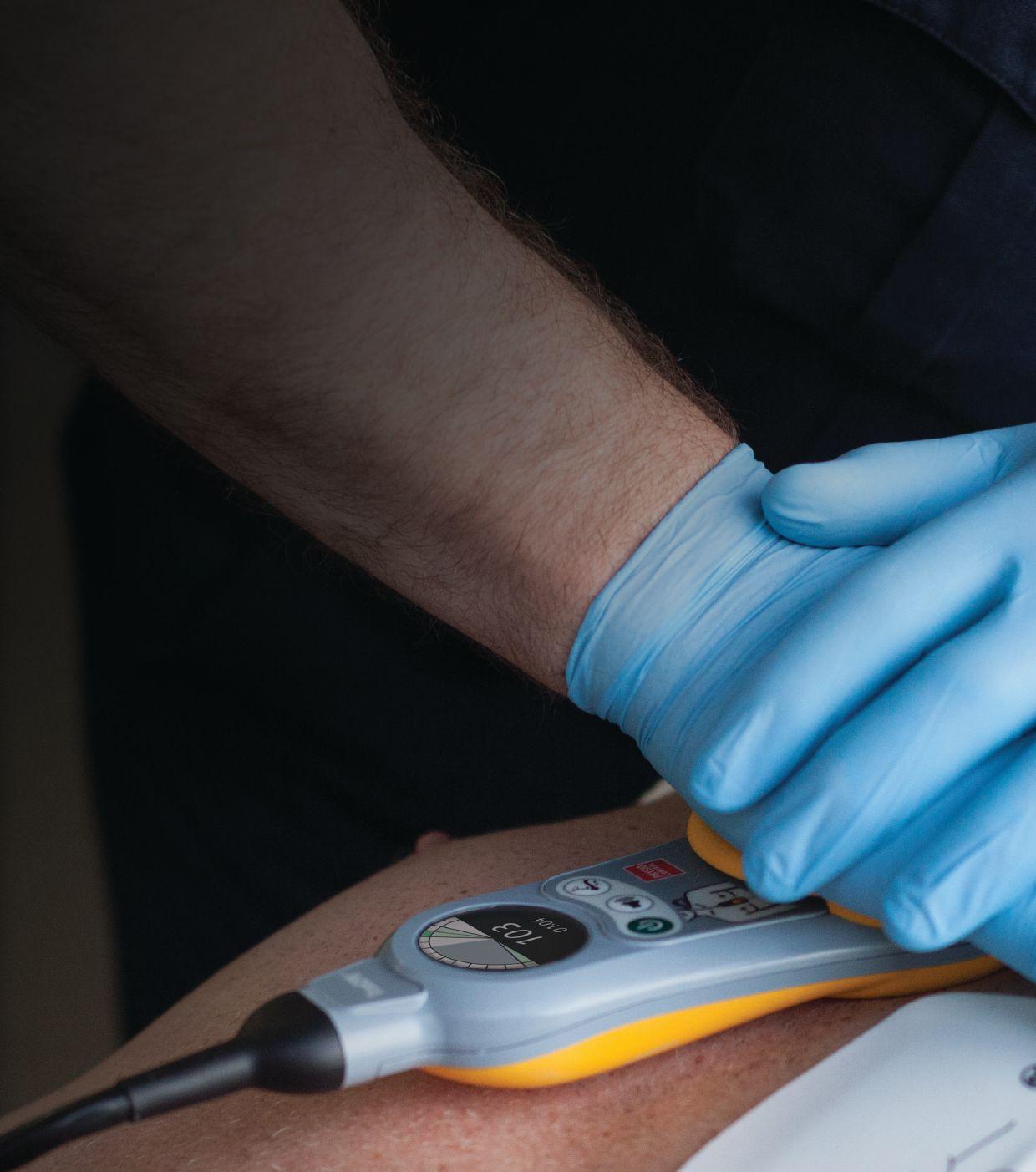
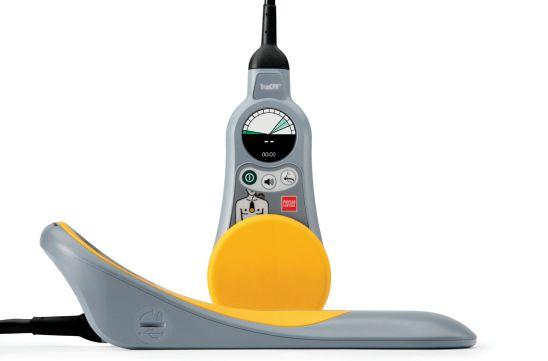
Better outcomes demand exceptional CPR
The science of fire
Studies and experiments that improve firefighter safety and well-being
By IAN BOLTON

TOP Research such as that conducted by NIST and other agencies on the flashover time for legacy and modern spaces is helping firefighters better understand the higher risks associated with today’s fires.
The rate at which firefighters are being killed (per fire) in North America as a result of structural collapse and rapidfire progress has risen steadily over the last few decades. This disturbing trend should inspire us to not only understand the factors that have caused this increase, but also to endeavour to correct it.
The first step in understanding how to affect this change is to recognize that the working environment for firefighters is dramatically different than it was years ago. As firefighters know, and as Chicago District Chief Peter Van Dorpe told the United States Senate appropriations com-
mittee in July during a hearing on the effectiveness of furniture flammability standards and flame-retardant chemicals, “We are making homes larger, building them with fewer [structural] components, and then filling them with more air and more fuel than ever before. From a firefighter’s perspective, this is a recipe for disaster for both the fire service and the public we have sworn to serve and protect.”
Van Dorpe pointed out the need for change. “We need to understand all these things coming together, and how that’s impacting the fire fight and what we need to do differently.”
Fortunately, the North American fire service has an abundance of resources that
BECAUSE WHAT’S INSIDE MATTERS.
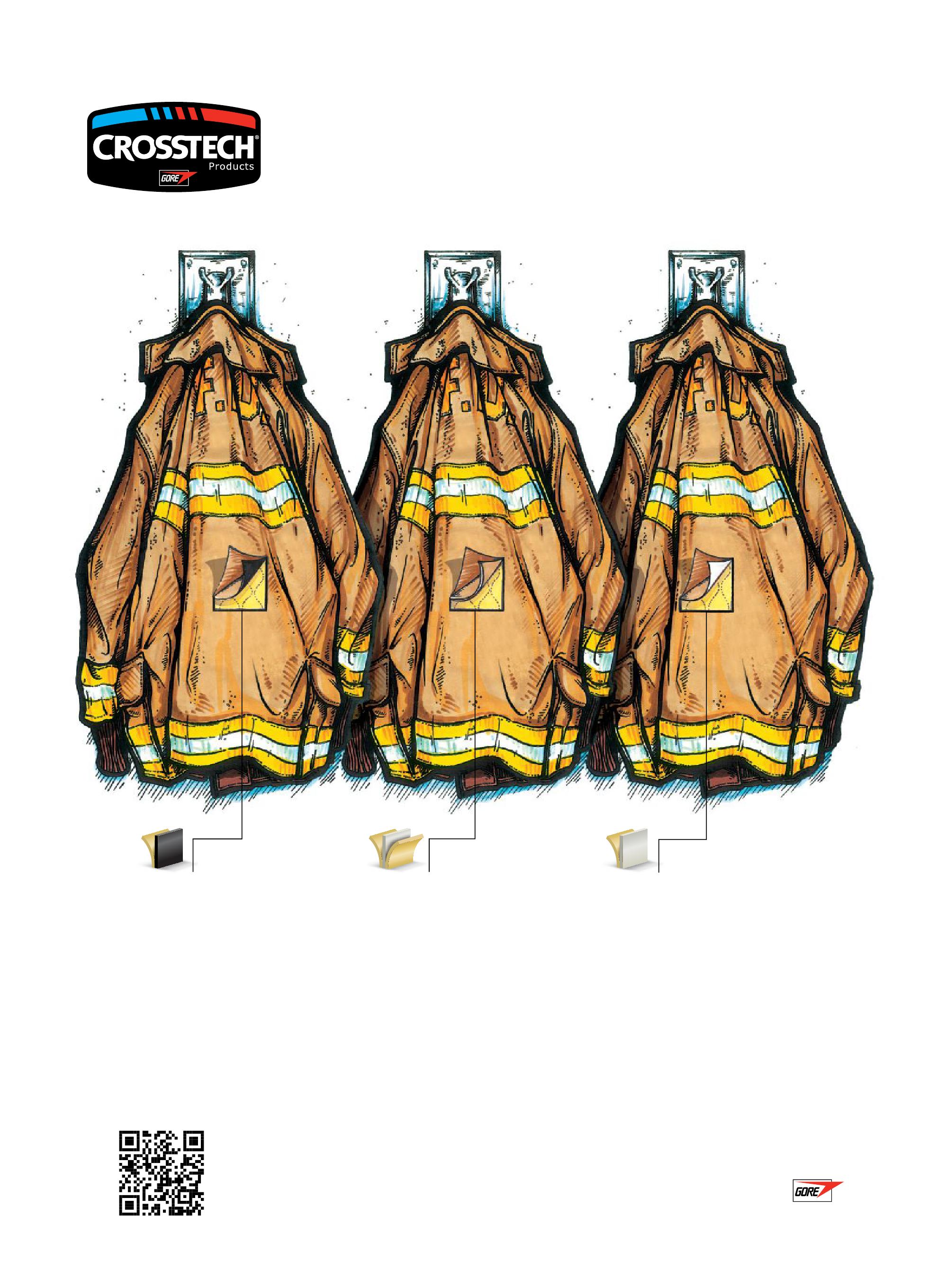
CROSSTECH® Black Moisture Barrier
• The new industry leader among moisture barriers
• Enhanced durability – proven in the laboratory and in the field
• 3.5-year limited warranty for easy NFPA 1851 compliance
CROSSTECH® 3-Layer Moisture Barrier
• The most rugged durability
• Exceptional resistance to flex and abrasion damage
• Backed by a 5-year limited warranty
GORE® RT7100 Moisture Barrier
• Exceptional combination of performance and value
• Excellent choice for budgetary challenges
• Backed by a 3-year product support program
CROSSTECH® and GORE® moisture barriers serve the industry’s range of performance and durability needs, helping to satisfy all of your thermal stability, breathability, and protection expectations. They achieve performance measures beyond those required by NFPA 1971, are backed by industry-leading warranties and support programs, and are Oeko-Tex ® Standard 100 certified.*
Equip your team with a field-proven moisture barrier that meets your department’s specific needs. *A
are helping us understand our increasingly dangerous working environment and, presumably, leading us toward improved operational safety.
FIRE RESEARCH
Organizations such as the National Research Council of Canada (NRC), the National Institute of Standards and Technology (NIST) and Underwriters Laborites (UL) have been preforming incredibly valuable fire service-related research over the last 10 years or more.
“We’re not doing research for the fire
department; we’re doing research with the fire department,” says Dan Madryzkowski, lead fire research engineer of the firefighting technical group at NIST.
This philosophy of developing working partnerships among fire researchers and North American fire services is widely shared among NIST, the NRC and UL and has been very successful.
Peter McBride, division chief of safety and innovation for Ottawa Fire Services, says there is a lack of so-called fire literacy in the fire service that must be addressed to save firefighter lives.

“There is a growing need to involve other partners to conduct research on critical fire literacy issues that affect firefighters and to broaden the understanding of fire literacy,” McBride said in an interview.
“Fire literacy is a common problem among fire services around the world. Simply put, many of the procedures followed by firefighters are based more on traditional practices than on the actual nature of fire and the evidence gained by scientific research into fire behaviour. While the professionalism, skill and instinct of firefighters are often able to mitigate the risks associated with this situation, there are many cases where training that lacks scientific basis puts firefighters at great risk.”
WIND-DRIVEN FIRES
In one of the first major studies to be recognized by fire departments, NIST, with the assistance of the Fire Department of New York (FDNY) and the Chicago Fire Department, focused on the effect of natural wind and the true danger it poses on the fire ground.
In December 1998, three FDNY firefighters were killed in the line of duty while performing a search on the tenth floor of a so-called fireproof highrise, with exterior winds of almost 50 kilometres per hour (km/h). Wind effects, while not previously quantitatively studied to this degree, proved to be extremely influential to fire behaviour and presented a great risk to firefighters.
“These experiments demonstrated the extreme thermal conditions that can be generated by a simple room-and-contents fire, and how these conditions can be extended along a flow path within a real structure when wind and an open vent are present,” NIST says in its report, called Firefighting Tactics Under Wind Driven Fire Conditions (http://fire.nist.gov/bfrlpubs/fire09/art015.html).
This study was conducted in the context of highrise buildings but it holds important messages that all fire departments should examine and the findings are relevant to all structure fires in which wind conditions are present.
LEGACY VERSUS MODERN
With the financial support from a United States Department of Homeland Security firefighter grant program, fire engineers at UL in Northbrook, Ill., have been able to do various groundbreaking studies with the fire service. UL has examined in great detail the effect of fires on engineered lumber, basement fires, numerous ventilation studies, as well as the flammability of modern furniture, and UL videos have been widely used by fire-prevention and

public-education officers across Canada and the United States to drive home the point about smoke alarms and escape plans.
In one such experiment, UL demonstrated the true impact modern home furnishings are having on fire behavior, when two identical living rooms were constructed for test burns. The first was furnished only with legacy furnishings, which contained only natural products such as wools and cottons, similar to furnishing that would have been found in homes in the 1970s. The second was furnished with modern furnishings, constructed of mostly synthetic products, similar to most homes found today. The results were both staggering and eye opening. While the legacy room reached flashover in a time of 29:25, the modern room reached flashover in just 3:40.
VENTILATION
The most recent project on which UL, NIST and the FDNY collaborated in July, may have the largest impact on the fire service. The project, which challenged many conventional procedures and fire-ground tactics, tested both traditional and non-traditional tactics for six days in acquired structures.
Although the official report has not yet been officially released, early observations by some members of the FDNY are already causing fire officials to re-evaluate the way they have been performing ventilation during fires.
“Fires are consuming all the oxygen in a building and when we ventilate a building we’re causing a ventilation-induced flashover, and that impacts the safety of our firefighter,” says Robert Maynes, deputy assistant chief for the FDNY.
“This is a great opportunity to find out what happens at nonfireproof fires and hopefully save firefighters lives in the future.”
But the critical impact of oxygen on a developing fire is not the only traditional belief that is being shaken by this study. While focusing directly on the application of water from the outside, the long-serving belief held by some departments that this is a dangerous tactic was also confronted, and results were unexpected by many firefighters with the FDNY. Conversely, to fire engineers, the results only went to further confirm their results from previous studies regarding the myth of pushing fire.
“Everyone thought you could never put water into a window from the outside because you’re going to push the fire into the structure,” says Steve Kerber, a fire engineer with UL, who also has 13 years’ experience working as a firefighter and officer.
“We’ve done upwards of 100 tests in different structures, with different-sized fires, with different hose streams, with different lines, with different flows, and we are yet to push fire into a structure. [Conditions] get better every single time. Every time the temperatures in the entire structure go down.”
CANUCK CONTRIBUTION
The National Research Council of Canada (NRC) also has strong history of fire service-related testing and continues today.
In 2002, the NRC explored European techniques of cooling fire gases during interior operations and subsequently released the report, Review of Three Dimensional (3D) Water Fog Techniques for Firefighting.
Similar to NIST and UL with their challenge to some of our historical practices, this report from the NRC found our traditional methods of gas cooling may not be as effective as we thought.
“Compared to traditional straight stream or narrow fog techniques, both experimental and analytical results show that proper use of a 3D water fog technique can have a better cooling effectiveness, generate less steam and lead to less disruption of the thermal balance in the smoke layer by using short discharges, fine droplets and wide spray angle,” the NRC Report went on to state.
“[With the 3D technique,] the smoke temperature was quickly
We are very pleased to once again be holding the “Ladders Up for the Foundation” online auction and event in 2013. Last year, with the help of our many generous sponsors, we were able to raise over $26,000 for the Canadian Fallen Firefighters Foundation memorial, which was unveiled September 9th, 2012. This year’s event will be bigger and better. All of the funds raised from this year’s event will go to the education fund for the children of our fallen firefighters. Stay tuned to the website www.laddersup.ca for details. To donate product or find out how you can get involved call Mark Prendergast (866) 445-3473 or markp@mnlsupply.com or Kip Cosgrove (800) 461-8347 or kcosgrove@vfiscanada.com.
The National Research Council in Ottawa is working with Ottawa Fire Services and other groups to develop a Canadian firefighting research group.
reduced by 200 to 250 C and then continued to cool. With the straight stream tactic, the overhead temperatures were reduced initially but quickly returned to their original level.”
Today, the NRC continues to assist Canadian fire services with research and development. Recently, with the assistance of Ottawa Fire Services, the NRC has been working to develop the Canadian

Firefighters must train in new techniques to adapt to new materials and new environments, says Underwriters Laboratories.
firefighting research group. This new group, which will include fire service members from across the country, will focus on:
1. Evaluating new firefighting tactics and equipment during live fire experiments.
2. Assessing health hazards posed by new building materials and techniques.
3. Developing more realistic firefighting training aids.
With its first inaugural meeting planned for the near future, the new Canadian firefighting research group has the potential to greatly affect the ways in which we go about our daily operational duties.
MOVING FORWARD
While fire is a chemical and physical reaction, historically the North American fire service has not used or listened to science. Instead, we tend to rely heavily on tradition and experience, and continue to do things because that’s the way they’ve always been done, but adapting to challenges is critical.
“For a firefighter, it’s extremely important that you continue to innovate your tactics,” says Steve Kerber of Underwriters Laboratories.
“If you keep using old tactics for a new fire environment, then it’s probably not the most effective thing to do.”
FOR FURTHER INFORMATION, VISIT:
http://www.ul.com/fireservice
http://www.fire.nist.gov
http://www.nrc-cnrc.gc.ca
Ian Bolton has been active in the fire service for 10 years. While working in Australia he achieved instructor level certification in Compartment Fire Behaviour Training (CFBT) and tactical ventilation, and has received advanced training in fire behaviour and ventilation from the Swedish Civil Contingencies Agency in Revinge, Sweden. Ian works as a firefighter and lead fire behaviour instructor for the District of North Vancouver Fire and Rescue Service. He is also studying fire dynamics in preparation for exams with Institute of Fire Engineers. Contact Ian at ian.bolton@firedynamics.ca
•
•
•
•
•
•
•
•
•
•
•
BACKtoBASICS
A by-the-book elevator rescue
BY MARK VAN DER FEYST
On Dec. 8, the Woodstock Fire Department (WFD) in Ontario responded to a call for people trapped in an elevator. There was no other information about the entrapment given to responding crews. The elevator, located in a five-storey seniors’ residence, was the only elevator servicing the building.
The first apparatus arrived on scene and met with the building superintendent to ascertain more information about the entrapment. At the same time as the other two trucks arrived on scene, another call regarding an automatic alarm was received for the same building.
With the two calls happening at once, two crews were created to deal with each call. The first-arriving crew dealt with the elevator entrapment, while the crews from the other two arriving units dealt with the automatic alarm. The elevator company was called in for its service expertise, with an estimated time of arrival of between one and two hours.
The elevator crew grabbed the elevator rescue equipment, which included a lock-out tag-out box, a flashlight, elevator keys to open the doors, and portable radios for communication. Two crew members from the elevator rescue team went to the third floor, where the elevator was stopped, while the other two crew members – including the officer– went up to the elevator mechanical room.
On the third floor, crew members approached the elevator door. They banged on the elevator door with their hands, before making verbal contact with the occupants. Right away, the occupants were asked whether anyone had any medical problems; this was to ascertain whether there was an immediate need for removal. All three occupants replied that they were OK. The elevator shaft door was opened up using the elevator keys, which are intended for the small circular hole at the top of the door. Once that door was opened, the elevator door was opened. Both doors were kept open by using two door wedges, or chocks, as seen in photos 1 and 2.
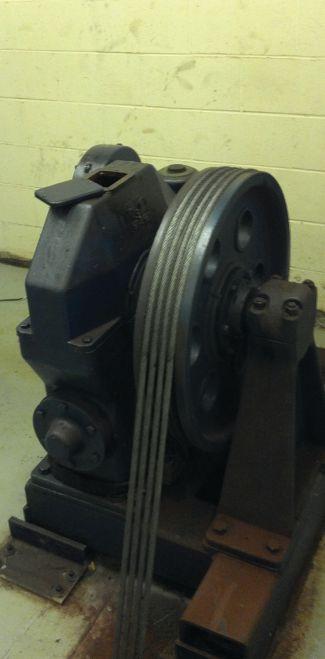
As you can see in photo 1, the elevator was stopped between the third and fourth floors. There was a small space of only about two-and-a-half feet available through which rescuers could reach the occupants. All occupants were told to stay in the elevator for their safety until we were certain it was safe to remove them. At the same time, firefighters who had gone to the elevator mechanical discovered a small amount of smoke inside. The smoke detector inside the room had been activated. The motor that operates the elevator had overheated due to a mechanical fault and had shut down, locking the elevator in the position found on the third floor (see photo 3).
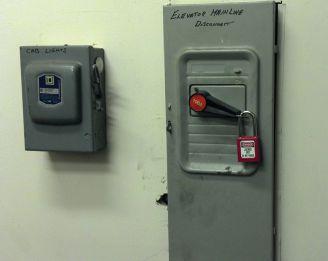
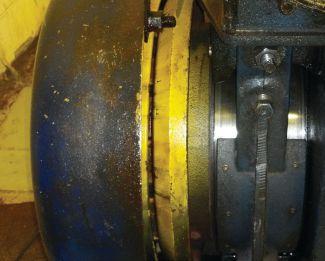
The crew assigned to the elevator mechanical room was locked out of the main power supply to the elevator, as seen in photo 4. The officer held the key to the padlock. The elevator’s brakes were checked to make sure that they had locked and were holding the elevator in place. A sheet of paper was used to see if there was any space between the brake pad and the brake drum. The brake pad is the blue square in the middle of photo 5, resting against the shiny steel. The brakes were set and locked in place.
Once all safety systems were in place and had been verified by
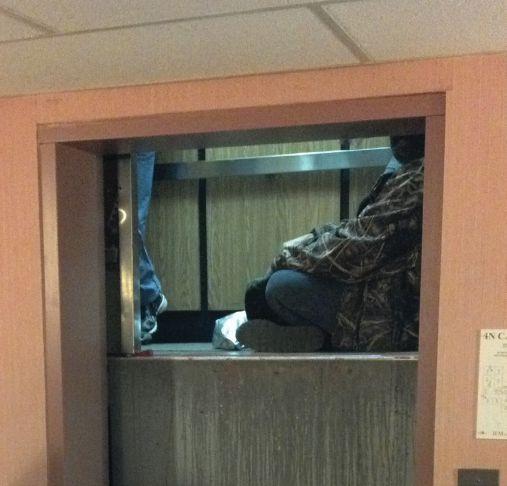
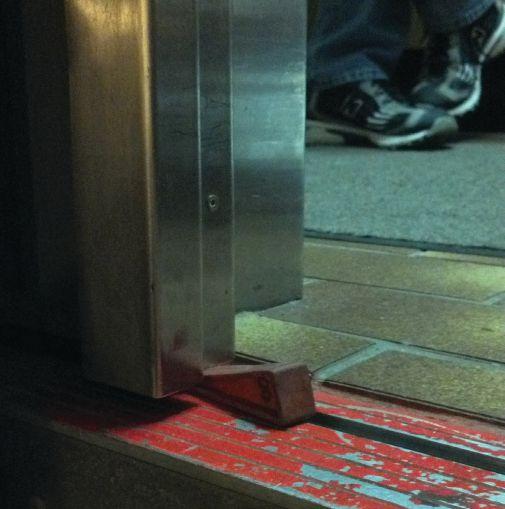
Photo 1: The elevator was stuck between the third and fourth floors, with only a two-and-a-half-foot space through which firefighters could reach occupants.
PHOTOS BY MARK VAN DER FEYST
Photo 2: Door wedges, or chocks, were used to hold both the elevator door and shaft door open.
the officer, and also by WFD’s elevatorrescue instructor, the decision was made to remove the occupants from the elevator. The three occupants were removed from the elevator one at a time without any injury.
The elevator was placed out of service and the padlock was kept in place until the technician from the elevator company arrived. Once the technician arrived, the padlock was removed and replaced.
Although this call was a technical rescue, mixed with a general response call (for the automatic alarm), the situation was handled using basic tactics: establishing communication with the occupants inside the elevator; determining any medical attention that may be needed; locking out the main power supply to the elevator; and communicating all actions between the crews. Having a person trained in eleva-

tor rescue made a big difference and will help any crew better execute this type of operation.
Opening the elevator doors is part of the technical-rescue operation. This process can vary, depending on what type of access is available for the fire department or elevator technicians. This particular elevator door had a small hole at the top for the elevator key to open the shaft door. The WFD had trained on that type of elevator door at another facility a few weeks before this incident and this training helped firefighters successfully complete this rescue. Crews had practised opening the door using the various types of elevator keys to see which one worked best. The training, which had also familiarized crews with that type of mechanical operation, paid off as crews were able to quickly open the elevator doors and free the trapped residents.
Mark van der Feyst is a 14-year veteran of the fire service and works for the City of Woodstock Fire Department in Ontario. Mark instructs in Canada, the United States and India and is a local-level suppression instructor for the Pennsylvania State Fire Academy and an instructor for the Justice Institute of B.C. E-mail Mark at Mark@FireStarTraining.com
Photo 3: The motor used to operate the elevator overheated due to a mechanical fault and shut down, locking the elevator between floors.
Photo 4: The crew assigned to the elevator mechanical room was locked out of the main power supply to the elevator.
Photo 5: A sheet of paper was slipped between the brake pads (the blue square) and the brake drum (the silver steel) to ensure that the brakes were set and locked in place.
IN THEWATCHROOM
■ RITRON RELEASES SERIES OF ERGONOMIC PORTABLE RADIOS
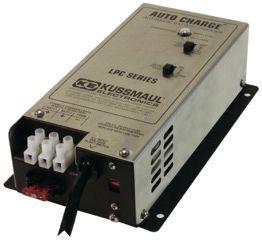
A new seven-Amp battery charger for emergency vehicles from Kussmaul Electronics is lightweight and offers three-step charging, including bulk, absorption and float, and poses no interference with radios or other mobile devices. The device comes with a three-year warranty. For more information, visit www.kussmaul.com.
■ EVENT MODULE OFFERS CONTINUOUS MONITORING AND PORTABILITY
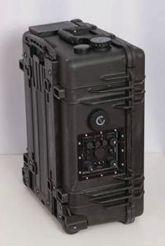
Environics’ latest chemical, biological, radiological and nuclear (CBRN) event module provides continuous monitoring in a compact, portable package. The device features detectors for chemical warfare agents (CWA) and toxic industrial chemical (TIC) gasses and vapours using the company’s ChemPro detection engine. A Geiger-Muller gamma radiation detector provides continuous detection of radiation threats, while biological threats are tested by the particle sizing and fluorescence technique. For details, see www.EnvironicsUSA.com.
■ E-ONE RELEASES TRACK LIGHTING FOR AERIAL LADDERS
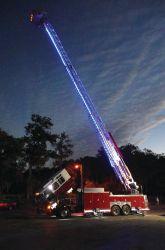
E-ONE has made track lighting available for all of its new and used aerial ladders. The LED track lights, which are available in red, blue or amber, increase visibility on aerial ladder walkways, making climbing safer during nighttime operations. Lighting is available on one or both sides of the aerial walkway. Existing E-ONE ladders can be retrofitted with the new lighting technology. For more information, visit www.E-ONE.com.
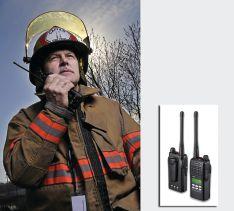
Ritron has released its PT series of portable radios. The two-way radios are small and were designed with ergonomics in mind, fitting comfortably in one’s hand. The narrow frequency channel stems make for clearer communication with less interference. The radios are also tested to withstand temperatures up to 432 C (810 F), as well as humidity, shock and vibrations. For more information, visit www.ritron.com.
■ PANASONIC REVEALS SEMIRUGGED CONVERTIBLE TABLET

Panasonic’s Toughbook C2, a semirugged convertible tablet PC, is the first Toughbook model that is optimized for the new Microsoft Windows 8 Pro operating system. The computer is outfitted with an Intel Core processor and can handle a 30-inch drop to six sides and a 12-inch drop to 26 sides. The C2 has a spill-resistant keyboard, and a strong battery offers about 11 hours of continuous use. For details, visit www.toughbook.com.
■ BULLEX LAUNCHES FLASHFIRE TRAINING SYSTEM
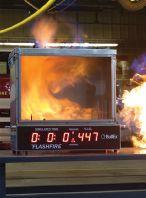
BullEx has launched its FlashFire training system, which is designed to demonstrate flashovers, backdrafts and gas explosions. The bench-top unit combines theoretical and practical training for a hands-on tool that allows users to train first responders, employees or the general public about these situations, how to prevent them and how to respond in the event of one. For more information about the FlashFire system, visit www.bullex.com.
■ HANSEN RELEASES NEW BACK-LIT ANTI-SLIP GRAB
RAIL
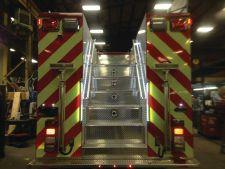
Hansen International has announced a new back-lit anti-slip grab rail for fire and emergency vehicles. The rail, which is compliant to NFPA 1901 standards for lighting safety, is available in custom lengths up to 3.7 metres (12 feet) and can be used with Hansen SC3 stanchions. For more information, visit www.hansenint.com.
■ ARGUS RELEASES SIMPLE TIC
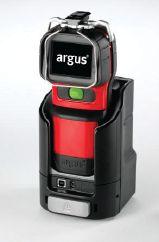
Argus Thermal Imaging has released a small and easy-to-use thermal imaging camera (TIC). The device, which features a simple on/off power button with a start-up time of less than five seconds, is lightweight and requires minimal training and maintenance. An internal memory card can store up to 1,000 images, which can be easily downloaded to a computer. The TIC also offers tri-mode sensitivity, recognizing temperature variations as high as 1,000 C and as low as -40 C. The device is priced at about half that of larger, traditional TICs. For more information, visit www. argusdirect.com.






■ AMKUS COMPACT SPREADERS TAKE UP LESS SPACE
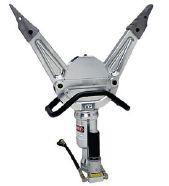
At fewer than 76 centimetres (30 inches) in length, Amkus Rescue Systems’ new AMK24 spreader is compact, creating more free space in the truck, without sacrificing power at the scene. The rescue tool is also lightweight, at just 16.8 kilograms (37 pounds). The device features push-button pins for easy tip removal, eliminating the possibility of lost pins in the field. The valve placement and ergonomic handle create a balanced design for simple positioning and operation. For more information, visit www.amkus.com.
■ DELTA FIRE OFFERS HIGH-CAPACITY MOBILE FOAM STATION
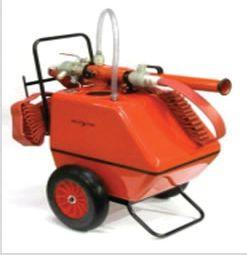
Delta Fire has released a high-capacity mobile foam station for high-risk scenarios, such as oil storage and loading terminals, paint and solvent stores, and boiler and engine rooms. The station is ergonomically designed for rapid, one-person deployment. The station, which features a 130-litre tank, is compatible with all types of foam concentrate and can run for more than 20 minutes, providing a foam output of more than 34,000 litres. For more information, visit www.deltafire.co.uk.




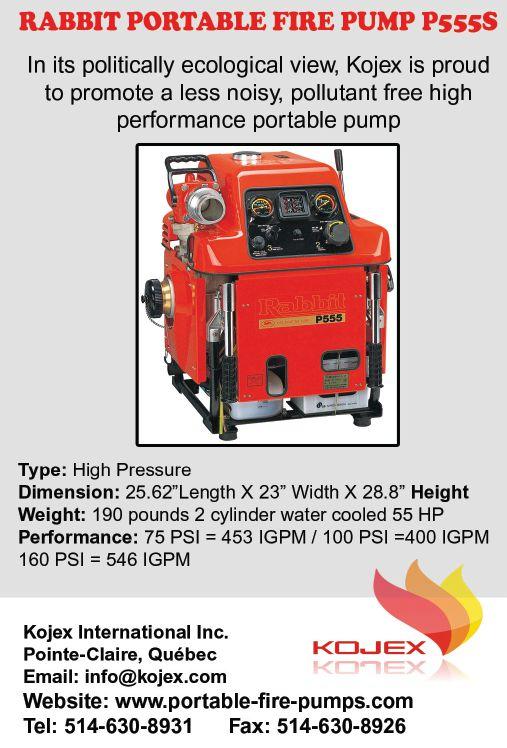











BY PETER SELLS
Control in the face of chaos
Iwould like to thank readers who responded to my blog at www.firefightingincanada.com in January and to my Flashpoint column in the February issue of Fire Fighting in Canada, as I continue to explore the phenomenon of firefighters being ambushed by sniper fire.
Despite past incidents of this type, some of which I described in the February column, there is not a lot of information available that is specifically applicable. What is available relates almost exclusively to fire-department response to mass-casualty incidents, or to incidents of known weapons fire or other violent acts. Those are, of course, valid topics of discussion, involving inter-agency cooperation and co-ordinated joint operations, but are not the same as an unanticipated sniper attack.
As I wrote this column, I was at JFK International Airport, named after a young president who succumbed to an ambush. One of the favourite targets for the conspiracy theorists is the fact that immediately after the first bullet passed through the president’s throat, the driver of the car slowed down in response to Mrs. Kennedy’s screams for help. The theory goes that this was to allow Lee Harvey Oswald, or the CIA, a second clear head shot. Supporters of this version of events say it appears that the driver violated the accepted tactic of an official limousine speeding away at the first indication of trouble. Unfortunately for the proponents, the theory falls apart on this same point; that driving tactic was instituted in response to the circumstances of that president’s murder.
Therein lies the task ahead: what tactics do we develop to protect present and future firefighters from the snipers’ sights? I propose that we apply the hierarchy of controls as we would to any other health and safety problem.
FLASHPOINT
kind of toy gun that Wile E. Coyote uses, with a little flag that says “Bang!” that pops out of the barrel. Then, those fanatics who insist on owning guns with high-capacity magazines full of little “Bang!” flags would finally see how silly they look to the rest of us.
Administratively, we could decide that we will not send firefighters to any calls, or past a defined proximity to any calls, involving weapons; but that would work only for incidents of known or suspected violence. If we knew it were going to be an ambush, it wouldn’t be an ambush, would it?
Engineering controls consist of physically separating the worker from the hazard, through isolation, enclosure, or some other mechanical fashion such that there is no possibility of contact or contamination. We can’t physically isolate the firefighter from the fire ground unless and until someone develops remote-controlled firefighting robots.
Personal Protective Equipment (PPE) is the control of last resort. PPE is the choice when we have admitted or conceded that we will place workers directly in harm’s way with an accepted and regulated method of protection to mitigate the harm they may face.
The fire chief in Hemet, Ohio, where firefighters were issued
What tactics do we develop to protect present and future firefighters from the snipers’ sights? ‘‘ ’’
Elimination is not a viable option, unfortunately. The idea of a society without civilian ownership of firearms is completely unrealistic, however desirable it may be (sorry, hunters and target shooters, but this is an opinion column and that happens to be my opinion).
Substitution, the second most desirable control strategy, is likewise not possible, although it would be fun to try it. We could substitute paintball airguns in place of firearms, or, even better, the
Retired District Chief Peter Sells writes, speaks and consults on fire service management and professional development across North America and internationally. He holds a B.Sc. from the University of Toronto and an MBA from the University of Windsor. He sits on the advisory council of the Institution of Fire Engineers, Canada branch. Peter is president of NivoNuvo Consulting, Inc, specializing in fire-service management. Contact him at peter.nivonuvo@gmail.com and follow him on Twitter at @NivoNuvo.
body armour in 2008, was quoted in the Press-Enterprise newspaper in California, as saying, “It would be too much weight if we had to put vests on every day.” So the vests are worn only a handful of times each year, rendering it unlikely that they would be effective in a sniper attack.
So are we out of options? I don’t think so, but we are left with choices to make. We need to develop, in partnership with law enforcement, a comprehensive set of conditions or circumstances under which firefighters will immediately withdraw or stage at a safe distance, and a complete education program for firefighters and incident commanders for rapid recognition of those conditions and circumstances. If this looks like some sort of hybrid responsive administrative control, that’s essentially what it is.
I’m not sure that the regular rules apply here, unless we are so afraid that we simply can’t do our jobs.
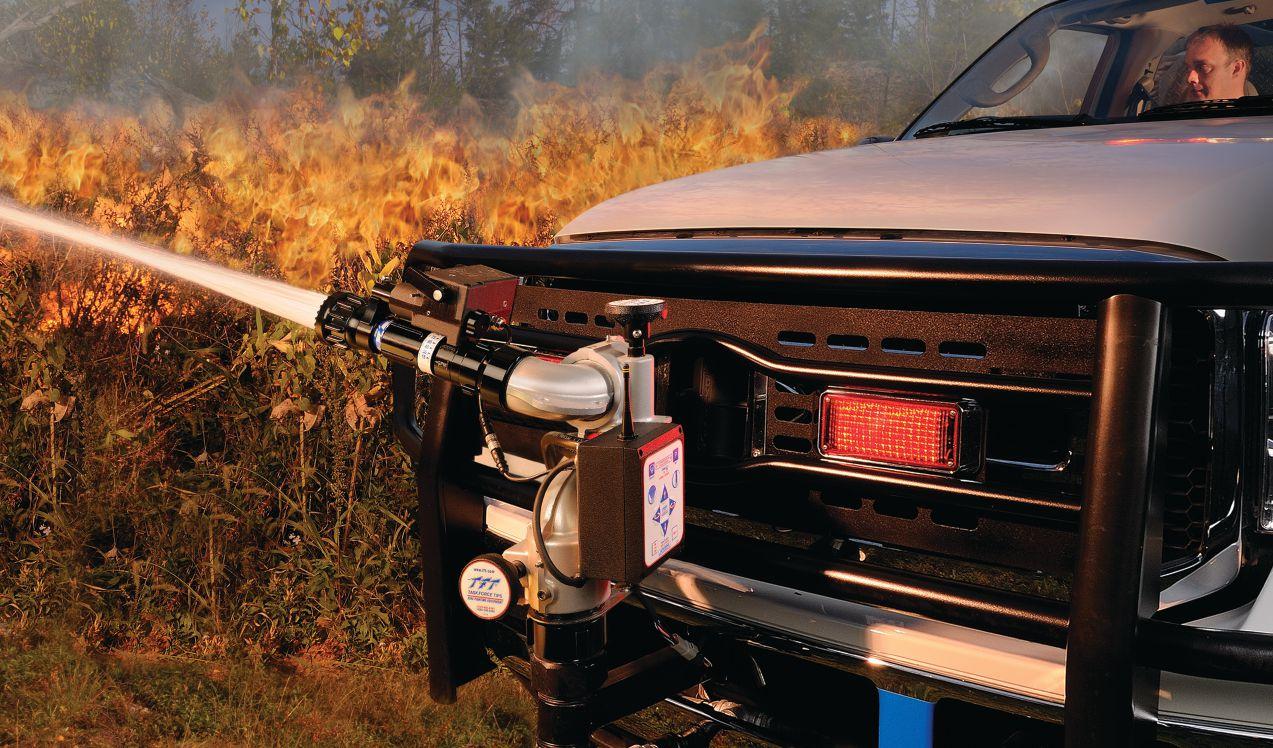
Attack Wildfires from the Safety of Your Cab…
The remotely controlled Tornado Monitor from Task Force Tips lets your crew manage initial attack operations while never leaving the protection of the fire apparatus cab.
The Tornado integrates a handheld joy stick monitor and valve controller, quick connect fittings, and exclusive water saving Smart Stream nozzle technology.
To learn more about how you can provide maximum performance and safety to limited staff during wildfire operations, contact your local TFT dealer today