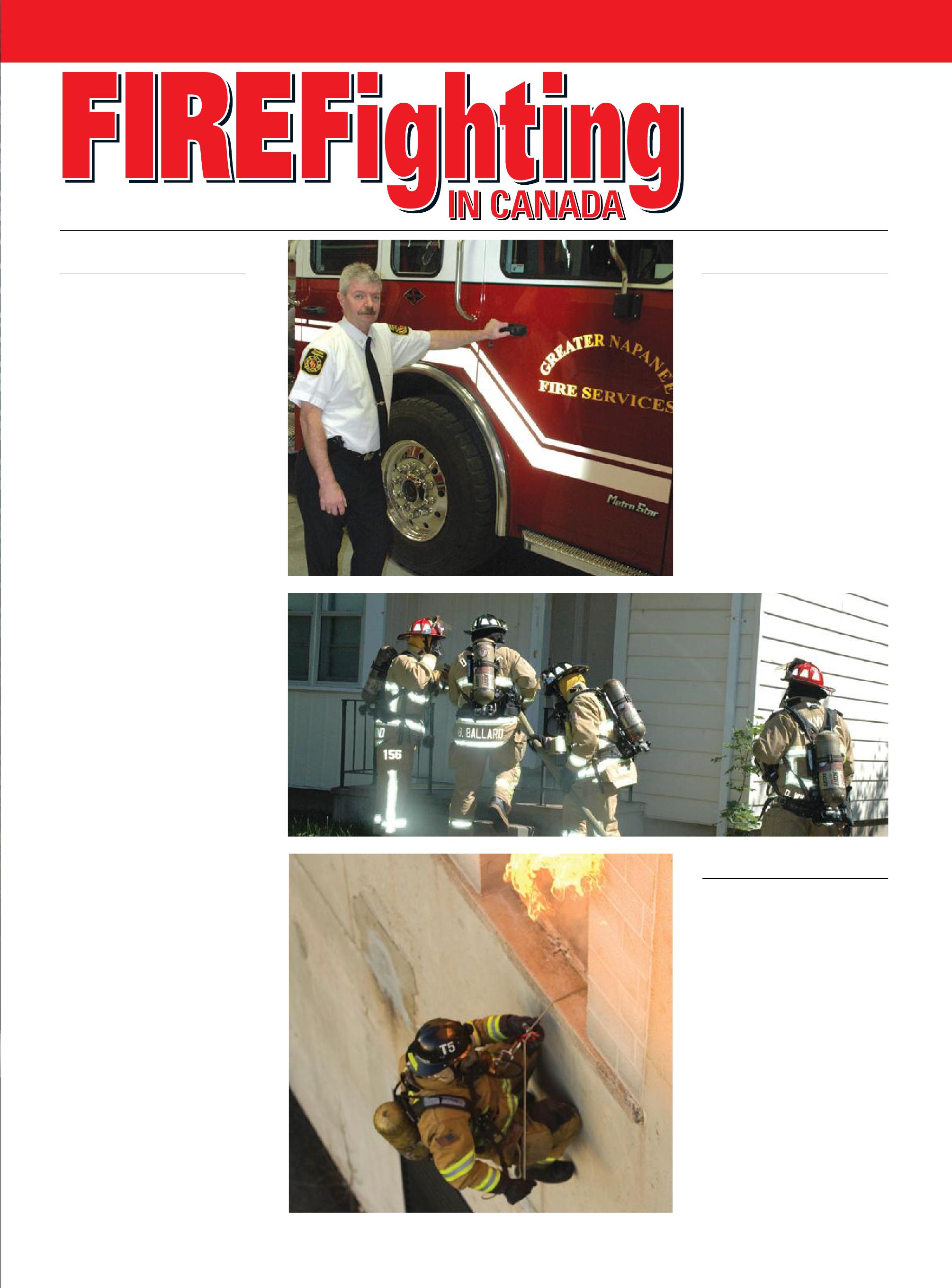
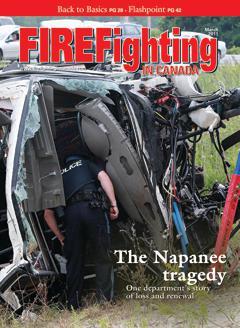
Members of the Greater Napanee Fire Department have experienced profound tragedy and loss that challenged the department’s resilience but not its spirit. Deputy Chief Ian Shetler tells the story of the weekend in August that Napanee firefighters will never forget, and the lessons learned. Laura King reports.
18 BLACK SUNDAY
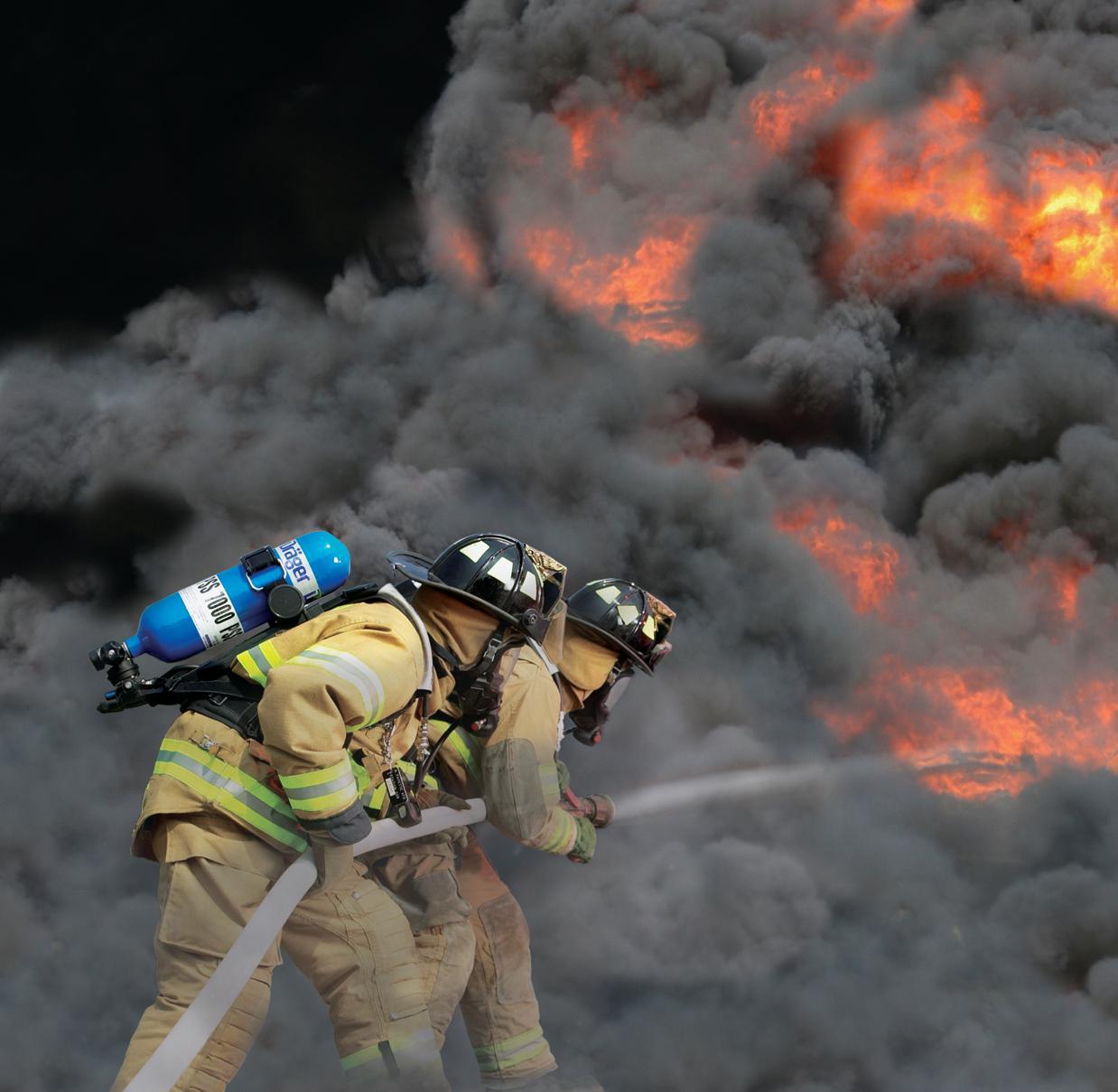
The North American fire service has been slowly incorporating firefighter self-rescue devices into comprehensive training programs. Jeff Cool is one of six FDNY firefighters forced to jump more than six metres to escape flashover-like conditions in a Bronx apartment building on Jan. 23, 2005. Cool talks to Winnipeg firefighter Jay Shaw about the need for firefighter self-rescue devices.
32 SUPPRESSION
ASSESSMENT
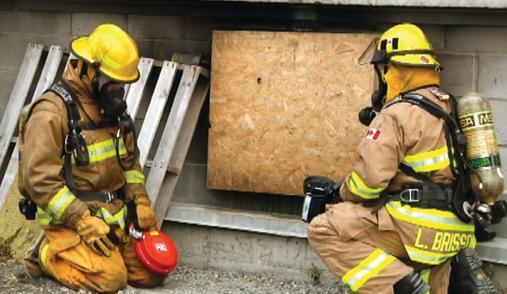
A recent study evaluated the use of aerosol suppression technology and the risks involved with its use. As Sean Tracey reports, researchers looked at the impact of using an aerosol fire suppressant agent on fire growth, and the actions of the firefighting team, in four scenarios.
34
STYLE SENSE
Ever get frustrated when the person you’re e-mailing puts smiley faces and flowery quotations on messages when you just want to get to the point? Bill and Barb Johnston explain how to make the most of phone and e-mail communication.
BY LAURA KING Editor lking@annexweb.com
N
COMMENT
Small town with a big heart
apanee is like a lot of places in Canada. It’s an eastern Ontario town, a cozy place where it seems everyone knows the fire chief, small-town values matter, people worry about the declining fortunes of the Ottawa Senators, and they are button-bursting proud to be the home of pop sensation Avril Lavigne.
They don’t envy the big city – they embrace the small town they love.
Sadly the residents and, more particularly, the fire service in Napanee learned in August that tragedy strikes random targets with cruel ferocity.
Just weeks after losing Fire Chief George Hanmore to cancer, two collisions in the same weekend devastated the small department’s ranks and tragically took the life of the wife of a veteran volunteer.
The collisions left the town reeling and the fire service to confront challenges that were never contemplated in an evening training session.
Like the cliché says, hindsight is 20-20 and some of the lessons outlined in our story may seem obvious. But it is also true that fate favours the prepared mind, so it’s hard to imagine that Canadian fire departments don’t need to review procedures, planning and processes.
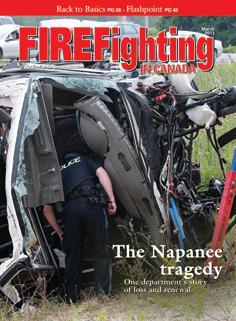
ON THE COVER
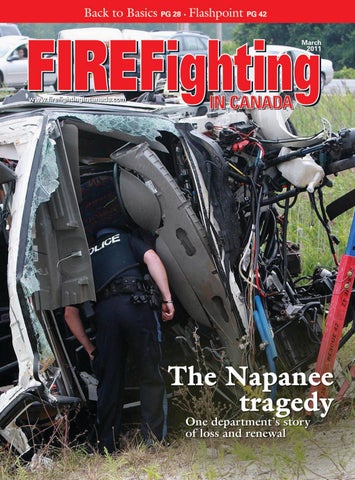
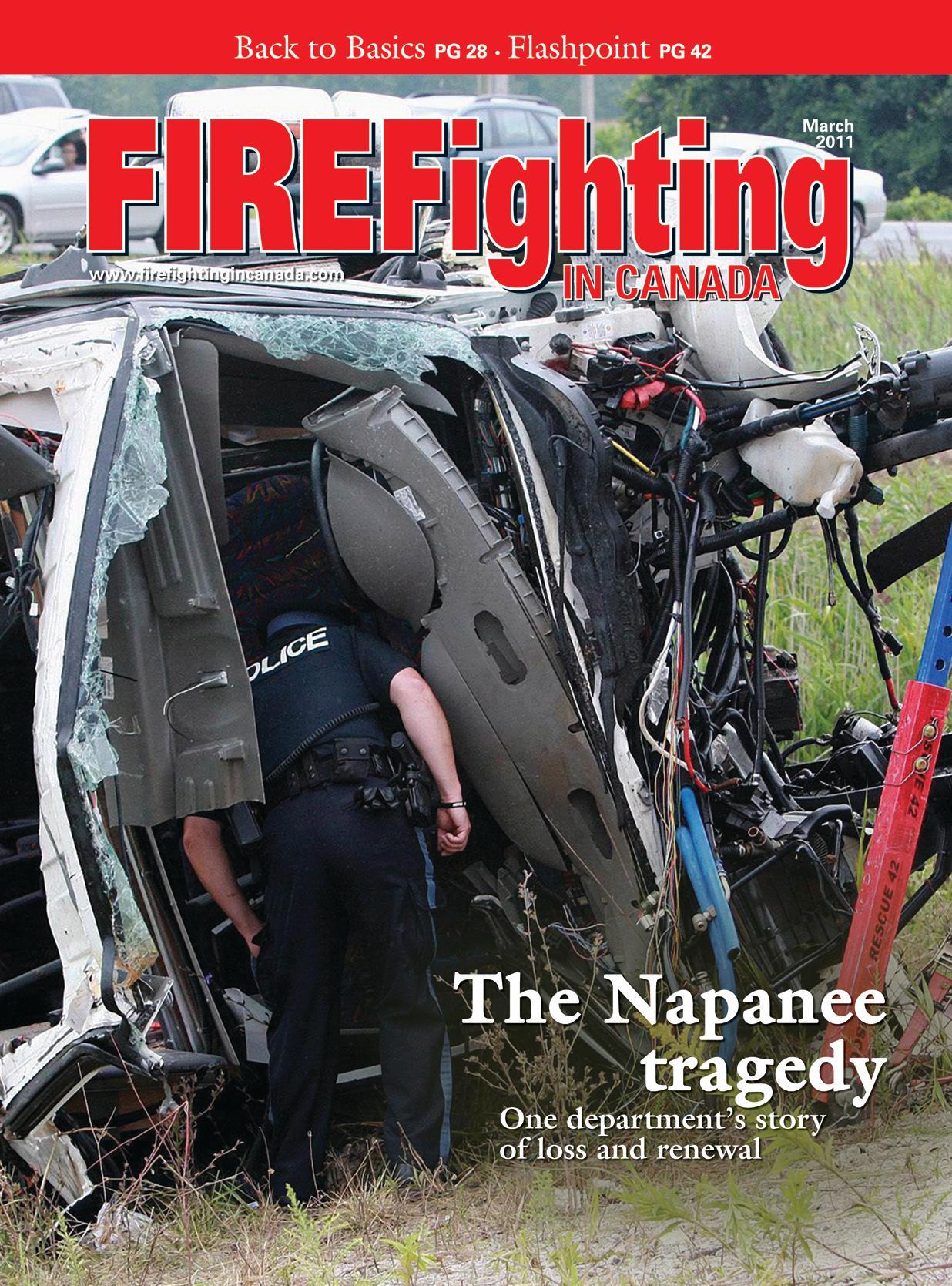
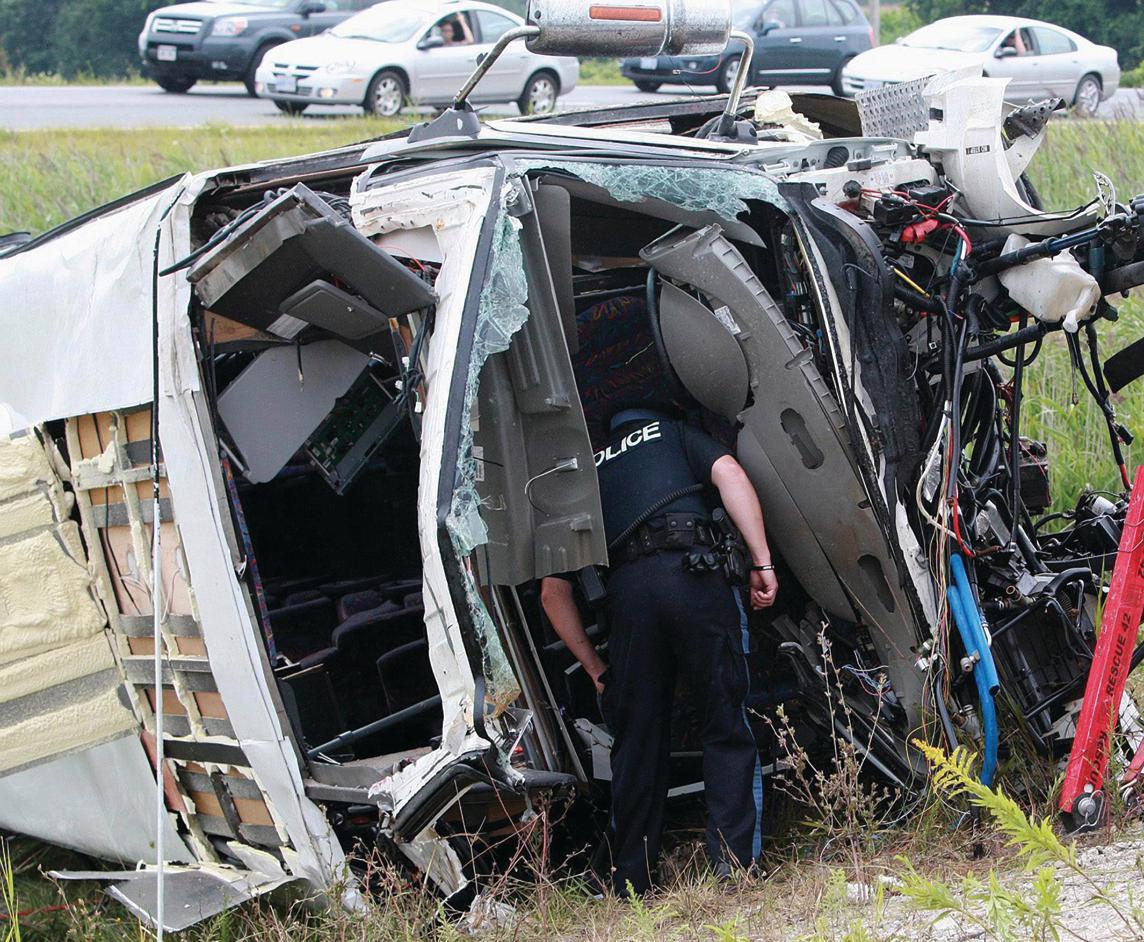
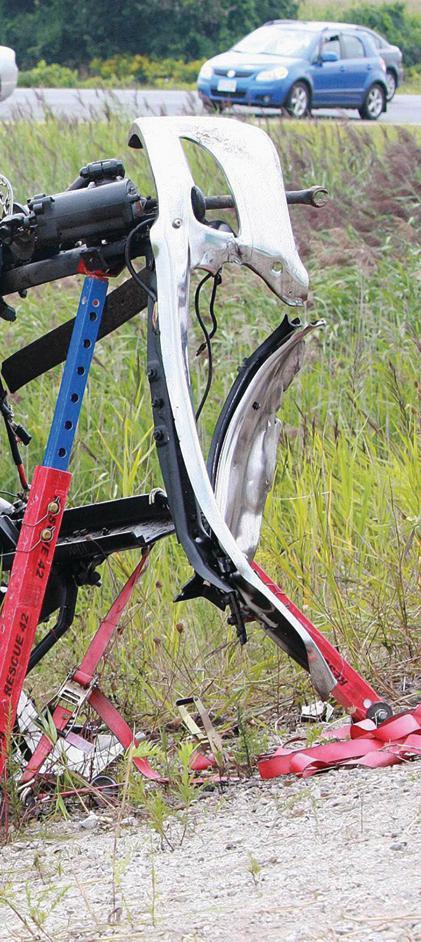
A police officer inspects the wreckage of a bus in which several Napanee firefighters and family members were injured and the wife of a firefighter was killed. See story page 10.
Our cover story on page 10 revisits the circumstances of that weekend in a way that I hope will be viewed constructively in Napanee and helpful elsewhere.
Life lessons are often the offspring of cruel experiences: a child learns to respect a closing door once his fingers get caught in a jam; a teen driver learns to check the rear-view mirror after backing into another car. And the fire service in Napanee learned a host of lessons from that awful August weekend that the town will likely never forget. The lessons were learned in Napanee but they apply everywhere else and that’s why we’re sharing them here.
When I grew up in Cape Breton we spent summers camped out by the ocean in the Cape Breton Highlands National Park. More than once that park has been ravaged by fate, whether wind storms or forest fires or spruce budworms killing the forests. Yet without fail, the park renewed itself after each calamity and is as popular a destination now for my family as it was for me as a child decades ago. Napanee is well along in the renewal process. Having been there I have little doubt that the town, its citizens, and its fire service – bent, but nowhere near broken – will move forward armed with the strength of its people and the lessons learned from tragedy.
On a personal note, I want to thank Deputy Chief Ian Shetler of the Greater Napanee Fire Department for being so generous with his time as this story was researched. Napanee is small but its people are 100 per cent big league.
PRODUCTION ARTIST KRISTA MISENER kmisener@annexweb.com
GROUP PUBLISHER MARTIN MCANULTY fire@annexweb.com
PRESIDENT MIKE FREDERICKS mfredericks@annexweb.com
PUBLICATION MAIL AGREEMENT #40065710
PAP Registration #8885 RETURN UNDELIVERABLE CANADIAN ADDRESSES TO CIRCULATION DEPT.
P.O. Box 530, SIMCOE, ON N3Y 4N5 e-mail: lmorrison@annexweb.com
Printed in Canada ISSN 0015–2595
CIRCULATION e-mail: lmorrison@annexweb.com
Tel: 866-790-6070 ext. 206
Fax: 877-624-1940
Mail: P.O. Box 530 Simcoe, ON N3Y 4N5
SUBSCRIPTION RATES
Canada – 1 Year - $24.00
(with GST $25.20, with HST/QST $27.12) (GST - #867172652RT0001)
USA – 1 Year $40.00 USD
We acknowledge the financial support of the Government of Canada through the Canada Periodical Fund (CPF) for our publish ing activities.
Occasionally, Fire Fighting in Canada will mail information on behalf of industry-related groups whose products and services we believe may be of interest to you. If you prefer not to receive this information, please contact our circulation department in any of the four ways listed above.
All advertising is subject to the publisher’s approval. Such approval does not imply any endorsement of the products or services advertised. Publisher reserves the right to refuse advertising that does not meet the standards of the publication. www.firefightingincanada.com
PHOTO BY DAVE CHIDLEY, THE CANADIAN PRESS
STATIONtoSTATION
ACROSS CANADA: Regional news briefs
Firefighters recognized for saving colleague
Early on the morning on Dec. 15, Rob Wilson, a 23-year veteran with the Midland Fire Department in Ontario, was completing the night shift when he collapsed at the fire station.
Captains Peter Grigg and Jim Ironside, and firefighters Chris Petit and Doug Ward witnessed the incident and quickly grabbed life-saving equipment, called 911 and went to work on their coworker and friend.
The firefighters revived Wilson, who regained con-
sciousness and was speaking by the time paramedics arrived.
Wilson was transported to Georgian Bay General Hospital in Midland and then transferred to Southlake Regional Health Centre in Newmarket for an emergency cardiac procedure.
Chief Foster says the quick actions of those around Wilson saved his life.
Wilson and Chief Kevin Foster presented the four members with pins and certificates of appreciation on Jan. 24.
-Stefanie Wallace
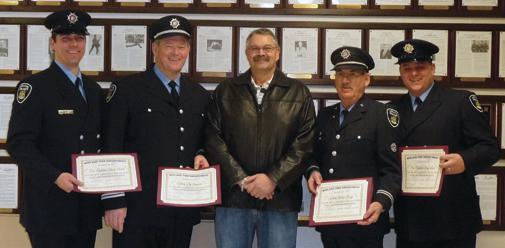
Chief Kevin Foster (not pictured) and veteran firefighter Rob Wilson (centre) presented (l-r) firefighter Chris Petit, captains Jim Ironside and Peter Grigg, and firefighter Doug Ward with certificates of appreciation and pins on Jan. 24, after their quick actions saved Wilson’s life when he collapsed at the fire station.
Outgoing Newfoundland chief leaves legacy
Harbour Grace, N.L. – Harbour Grace Volunteer Fire Brigade Chief Sonia Williams declined a nomination for chief at the brigade’s annual general meeting in November, citing family concerns. Williams’ father, Fred Williams, a lifetime member of the fire brigade, is battling cancer.
“The decision not to accept the nomination for chief was a necessary one – difficult, especially knowing the support
shown to me by the membership – but I hope all concerned understand my thinking,” Williams said.
During Williams’ five years as chief, the brigade enjoyed improvements to dayto-day operations including an extention to the fire hall and a new roof, plus improvements to equipment, apparatuses and dispatch.
On the training side, the
THE BRASS POLE
Promotions & Appointments
ROBERT SIMONDS became the chief in Hamilton, Ont., on March 14, after 13 years as deputy chief and chief in Saint John, N.B. Simonds is president of the Canadian Association of Fire Chiefs and in 2010 was the only Canadian fire chief to receive a Harvard Fellowship to attend the John F. Kennedy School of Government in
Cambridge, Mass. Simonds has been active in the Maritime Association of Fire Chiefs and the New Brunswick Association of Fire Chiefs and was instrumental in the intro-
brigade now boasts certified high-angle rescue and ice-water rescue instructors and equipment to enhance these specialties.
As for PPE, the purchase of 14 bunker suits that meet NFPA standards was the beginning of a replacement plan for all of the brigade’s bunker gear. And, the brigade has introduced a rapid intervention team.
Under Williams’ direction,
duction of presumptive cancer legislation in New Brunswick.
TADEUSZ (TED) WIECLAWEK is the new Fire Marshal of Ontario. Wieclawek takes over from Pat Burke, who retired in November. Wieclawek joined the Office of the Fire Marshal in 1992 and has held various positions including program specialist, risk assessment and municipal review section, and operations manager, fire protection services. Most recently,
the brigade now wears new uniforms similar to those of most Canadian departments. The arrival of a 2011 pickup/ utility truck rounds just a partial list of the many improvements made by Chief Williams. Williams’ successor, Ray Verge, said in an interview that “no other chief put the time into [the position] like she did. Williams is a tough act to follow.”
-Robert Lynch
he was the assistant deputy fire marshal, fire protection services. Wieclawek was an integral part of the policy and legislative development of the Fire Protection and Prevention Act, 1997.
TERRY GERVAIS is the new chief of the Greater Napanee Fire & Emergency Services Department. Gervais comes from Ottawa, where he was the sector chief for Ottawa Fire Services for the past
Everyday Heroes tour kicks off at North Bay show
Promises are a recurring theme in Dave Carroll’s life. As a musician, Carroll experienced one broken promise after another in a battle against United Airlines when a baggage attendant broke his guitar. As a volunteer firefighter, those broken promises led Carroll to realize the importance of the promise that he and so many other first responders make to their communities: when you call them, they will come.
Now, Carroll, who gained notoriety and exposure with his United Breaks Guitars trilogy that went viral on YouTube, is celebrating that promise with his song, Everyday Heroes (www.911song.com), and the
Everyday Heroes tour across Canada and the United States. The tour kicks off April 1 in North Bay, Ont., at the Northeastern Fire Education Conference and trade show. Fire Fighting in Canada and Firehall.com are have partnered with Carroll to promote the tour and its goals.
The Everyday Heroes tribute events are meant to gather residents to share Carroll’s message and honour the community’s first responders – fire, police, EMS and dispatch. “It would be nice to have all four elements in the room, where one’s not being given more credit over the other,” Carroll says.
Dave Carroll, a singer, songwriter and volunteer firefighter, is touring across North American to pay tribute to first responders for keeping the promises they make to the communities they serve.
Carroll’s manager, Brent Sansom, says the goal is to do 100 Everyday Heroes tributes across Canada and the United
States to bring together first responders, community organizations and charities.
The video for Everyday Heroes was shot in May 2010 and features firefighters (including Carroll’s brother Don) and apparatuses from Halifax Regional Fire and Emergency. “They really stepped up to make the video authentic,” Carroll says.
Departments interested in hosting an Everyday Heroes tribute event can visit www.911song.com or contact Brent Sansom at brent@ davecarrollmusic.com or Gilles Gauthier at gilles@davecarrollmusic.com
- Stefanie Wallace
New Stirling-Rawdon department houses police, fire, EOC
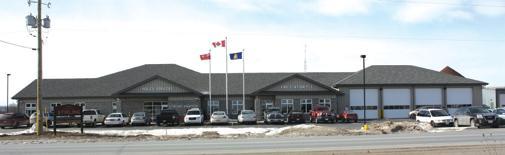
Stirling-Rawdon Fire Chief Gene Thompson practises what he preaches. The new Stirling-Rawdon fire and emergency services building, which officially opened on Feb. 19, is fully sprinklered with a twostage alarm system.
“I have heard this is one of the first fire stations to be protected by sprinklers in Ontario,” Thompson said. “We can’t preach if we don’t practice.”
The building houses fire, police and Stirling-Rawdon’s primary emergency operations
centre and has a full power backup generator and smart boards.
The Stirling-Rawdon Fire Department responds to about 175 calls a year from two stations with one pumper, one pumper tanker, one rescue and one water source vehicle at Station 1 in Stirling, and a pumper, tanker and rescue at Station 2 in Springbrook.
Stirling-Rawdon has 38 volunteers – 18 firefighters and one deputy in each station –and a full-time chief.
The new $3-million building was funded equally by all three
levels of government through infrastructure stimulus money. Besides the station opening, department members celebrated the receipt of three JEPP grants:
• $38,793.91 toward a
10 years. Gervais has more than 30 years of experience in fire services, beginning in 1980 as a volunteer firefighter for the former Kingston Township. He has served as a career firefighter, a volunteer deputy chief and a full-time fire chief. Gervais replaces IAN SHETLER, who has served as acting fire chief since the death of Chief George Hanmore in May. JOHN KOENIG has been named assistant fire chief for the Greater Napanee
department. He was previously the training officer.
Last Alarm
TERC Canada vice-chairman
BILL DAVIES died Feb. 5. Davies ran Collision Safety Institute Canada Ltd, which is involved in the training, investigation and support of vehicles equipped with supplementary restraint systems and crash data recorders. Davies retired after 30 years with General
Motors, as manager of product and warranty litigation and engineering group manager for field performance assessment. Davies had been actively involved in the training of fire rescue and first responder personnel since 1993. He had written for Fire Fighting in Canada’s brother publication, Canadian Firefighter and EMS Quarterly, on new vehicle technology.
WILLIAM DORAN, a former chief and lifetime member of
• $10,000 for a new emergency generator
• $6,112 for new EOC tables, chairs, printers and a smart board.
-Laura King
the Harbour Grace Volunteer Fire Brigade, died Sept. 1. Doran was a volunteer firefighter for 20 years, from 1969 until 1989, and served as chief from 1977 until 1981. He was chair of the Santa Claus parade committee and was chief when the brigade welcomed its ladies auxiliary and its junior brigade into the membership. When he retired, Doran joined the brigade’s Top of the Ladder Club and continued to be involved in fundraisers and other events.
The new $3-million emergency services building in Stirling-Rawdon, Ont., was funded equally by the three levels of government.
PHOTO COURTESY STEVE RICHARD
STATIONtoSTATION
BRIGADE NEWS: From stations across Canada
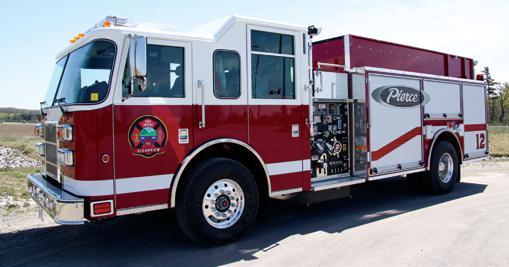
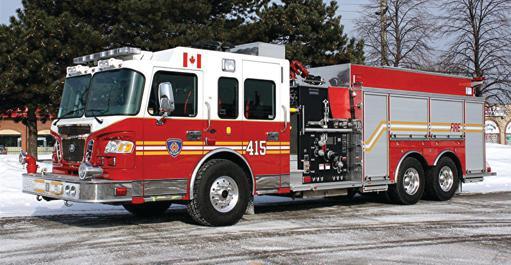
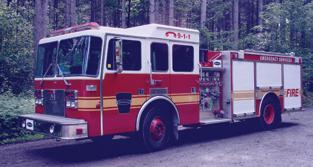
The CLEARVIEW TOWNSHIP FIRE DEPARTMENT in Ontario, under Chief Bob McKean, took delivery from Darch Fire in June of a Pierce-built pumper-tanker. Built on a Pierce Contender chassis and powered by an Allison transmission and a Cummins ISL 425-hp engine, the truck is equipped with a Waterous 1,250-IGPM pump, a Husky 12 foam system, an 1,800-IG co-poly water tank and Amdor compartment lights.
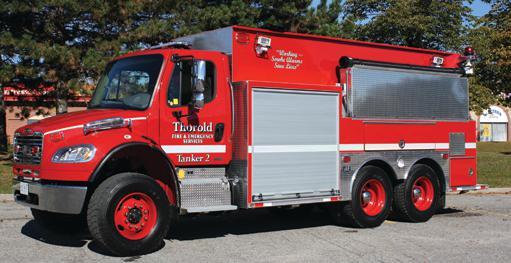
The THOROLD FIRE DEPARTMENT in Ontario, under Chief C.H. Halliday, took delivery in October of a Dependable Emergency Vehicles-built tanker. Built on a Freightliner M2-106 chassis and powered by an Allison 3000 EVS transmission and a Cummins ISC 350-hp engine, the tanker is equipped with a CET 18-hp portable pump, a 2,5000 IG co-poly water tank, electric telescoping chutes, 1,500 IG portable tank drop down, Amdor roll-up doors and a Whelen Light package.
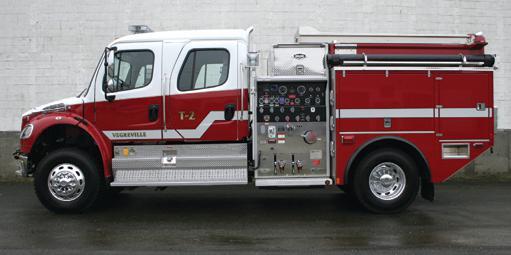
The COUNTY OF MINBURN-VEGREVILLE FIRE DEPARTMENT in Alberta,
delivery in January of
a Hub Fire Engines & Equipment-built pumper. Built on a Freightliner M2 chassis and powered by an Allison 3000 EVS transmission and a Cummins ISC 330-hp engine, the pumper is equipped with a Waterous 1000-1000p 840-IGPM pump and CAFS compressor, a Foam Pro 2001 foam system, a 700-IG co-poly water tank, Whelen Light package, Hannay hose reel, Elkhart Side Winder EXM electric monitor, Honda Eu 3000 generator and a 500-W Extendalite.
The OROMOCTO FIRE DEPARTMENT in New Brunswick, under Chief Jody Price, took delivery from Dependable Emergency Vehicles in January of a Crimson Fire Inc.-built pumper. Built on a Spartan Gladiator chassis and powered by an Allison 3000 EVS transmission and a Cummins ISL 425-hp engine, the truck is equipped with a Waterous CSU 1,250 IGPM pump, a HyproFoam Pro 2002 foam system, a 1,500 IG co-poly water tank, Harrison 15kw generator, Whelen Light package, Akron monitor and nozzles, Weldon VMUX Spartan multiplex systems, 1,500-IG Husky portable tank and a Zico ladder access system.
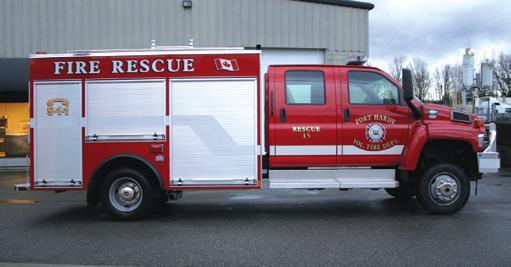
The PORT HARDY VOLUNTEER FIRE DEPARTMENT in British Columbia, under Deputy Chief Schell Nickerson, took delivery in January of a Hub Fire Engines & Equipment-built rescue unit. Built on a GMC C5550 four-wheel drive chassis and powered by an Allison 1000 EVS transmission and a Duramax 6.6L 330-hp diesel engine, the truck is equipped with a 250 IG co-poly water tank, a Whelen Light package, OnSpot tire chains, Bostrom SCBA seats, a Warn winch, PAC Cylinder Mate SCBE storage, Zico Quic ladder, Smart Power hydraulic generator and a Command Light light tower.
under Chief Ross Warren, took
PORT HARDY VOLUNTEER FIRE DEPARTMENT
COUNTY OF MINBURN-VEGREVILLE FIRE DEPARTMENT
OROMOCTO FIRE DEPARTMENT
THOROLD FIRE DEPARTMENT
CLEARVIEW TOWNSHIP FIRE DEPARTMENT
The Napanee tragedy
One department’s story of loss and renewal
By LAURA KING
Ian Shetler remembers Saturday, Aug. 21, as the beginning of the weekend from hell – two days that would lead members of the Greater Napanee Fire Department through events that would shake them to the core.
A day earlier, the department had responded to a medical call to save the life of the child of one of its volunteer firefighters. The incident would later add to the department’s grief and turmoil.
Shetler was the acting fire chief, having taken over from George Hanmore in November 2009. Hanmore had worked with Shetler until a week before he succumbed to cancer in May 2010.
At about 4:30 p.m. on Aug. 21, Shetler got a call from dispatch; it was the beginning of a series of tragic and life-changing events. Five of Napanee’s volunteer firefighters travelling home from a FireFit competition in Windsor, Ont., had been in a collision – their van had been struck by an out-of-control car, shoved across the median into oncoming traffic, then struck by a tractor trailer. Details were sketchy but there were injuries; two firefighters were in serious condition.
LEFT: A police officer examines the wreckage of the bus that was carrying four of five injured Napanee firefighters back home after their van was struck the day before on Highway 401. The firefighters’ relatives travelled by bus to London, Ont., to retrieve them from hospital and were heading back to Napanee when the bus left Highway 401.
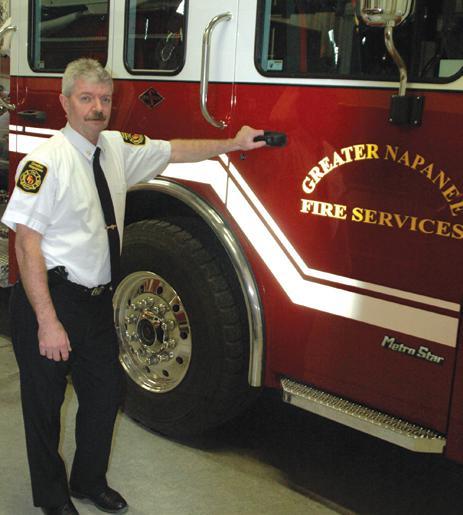
ABOVE: Deputy Chief Ian Shetler says that among the numerous lessons learned from the two crashes are succession planning and dealing with the emotional pain first.
“I was notified immediately and given details you never want to hear as a fire chief,” Shetler said. Shetler immediately contacted CAO Ray Callery. After scrambling to determine the status and location of the injured firefighters (who were taken to four different hospitals), Shetler and Callery arranged for a bus to transport families to London. Shetler went on the bus; his partner, Lori Shurtleff, went with him to offer support and comfort. Acting Deputy Chief David Peterson would look after things in Napanee, along with CAO Callery. The bus left Napanee at 9 p.m.
Day 2 of that horrific weekend –Sunday, Aug. 22 – would be worse. At about 5:20 that morning the bus carrying four of the five injured firefighters and six others back to Napanee veered off Highway 401 near Woodstock, Ont., killing the wife of one firefighter and injuring most others, some seriously.
The recovery and renewal process has
taken months and has produced numerous lessons.
Greater Napanee is a composite department with 10 full-time staff and about 60 volunteers in three stations. It responds to between 400 and 450 calls a year. It is responsible for about 20 kilometres of Highway 401. Like in most small towns, everyone in Napanee – population 15,000 – knows everyone else.
Everyone knew Napanee Fire Chief George Hanmore and residents were shocked when he died just six months after the cancer diagnosis.
Shetler admits that the period after Hanmore’s death was difficult emotionally and professionally; the two were close –Hanmore was just 56 – and Shetler had to scramble to figure out Hanmore’s recordkeeping and computer-filing systems and get up to speed about the town’s policies and expectations.
Lesson No. 1: Have a succession plan and share information with as many people in the department as possible. Bring next-in-line personnel to council sessions and meetings with staff. Develop a consistent filing system that is understood by key personnel.
A volunteer recruitment drive in Napanee had been put on hold when Hanmore got sick. Firefighters Dave Goodfellow, Kevin Duncan, Dan Matthieu, Joe Reid and Al Hatton were among the department’s most reliable volunteers. Four of the five were seriously injured in the collisions.
“We had started a recruitment drive and George started to get sick,” Shetler said over lunch in Napanee in November. “When he died, everything ground to a halt. It took a while longer than we initially thought it would to get reorganized, then we had the crash, so everything stopped again.”
Dave Goodfellow, whose wife Darlene perished in the bus crash, sustained four fractured vertebrae and broke six ribs, his sternum and collarbone. Kevin Duncan broke six ribs and had three cracked vertebrae. Dan Matthieu broke his right ankle and fractured his L2 and L3. Joe Reid’s right eye was damaged. Only Al Hatton, who was ejected from the bus in the crash (he told the Kingston Whig-Standard that the bus rolled five times), was unscathed.
Acting Chief Shetler sustained lacerations to his neck and soft tissue damage to his lower spine and neck, along with nerve damage (for which he’s still having
PHOTO BY BY DAVE CHIDLEY, THE CANADIAN PRESS
PHOTO BY LAURA KING
physiotherapy, much to his frustration). His partner broke her back, five ribs, her left scapula, cheekbone, jaw and nose. Other family members and councillor Bill Pierson (the department’s former deputy chief, who opted to travel to London with the families) were seriously injured.
Lesson No. 2: Plan ahead and have back-up recruits and other personnel. Napanee lost four of its volunteer firefighters for several weeks. Shetler was out 12 days while Shurtleff underwent multiple surgeries. Shetler now recognizes that he should have taken time off and let others – who were not injured or as emotionally overwhelmed – worry about the department. (On Shetler’s first day home from London, he and other department members attended the funeral for the child they had tried to save on the Friday before the accidents.) In the absence of available or trained personnel, Napanee CAO Ray Callery brought in Ottawa Sector Chief Terry Gervais to lead the department for six weeks while its injured members recovered.
The bus landed in a ditch so deep that passing cars couldn’t see it. Shetler doesn’t remember much; he was disoriented from a concussion and didn’t realize the extent of his injuries. He knew he needed to take control but his phone was lost in the crash so he couldn’t contact people (he couldn’t remember his home phone number, let alone those of city personnel); he couldn’t immediately ascertain where the injured passengers had been taken; and he was frantic because he knew Shurtleff had been seriously injured.
Lesson No. 3: Keep an up-to-date contacts database (spend money if you have to) and back it up in an easily retrievable location. At the time of the incident, Napanee used cellphones rather than BlackBerrys, with no way to synch contact lists to computers. In addition, have multiple emergency contacts for each department member and keep them current. (Shetler notes that all the emergency contacts for five firefighters involved in the initial collision were on the bus and involved in the second collision. “Who do you contact?”, he asks rhetorically.)
Within hours of the crash, the media descended on Napanee, burrowing into the Facebook pages of firefighters’ children to glean information, and knocking on doors of families who didn’t yet know about the second crash. Reporters staked out hospitals; one intrepid scribe waited for Shetler to take a smoke break and then hurled questions at him.
Lesson No. 4: Designate one spokesperson for all department incidents. Ensure everyone knows who this person is and how to re-direct media requests. Provide a standard wording for all personnel to use to direct reporters to the proper authority. Napanee Mayor Gord Schermerhorn was the designated spokesperson after the bus crash, with information being filtered to him through CAO Callery and Shetler. Most importantly, send one consistent message.
With Napanee’s acting chief and four key volunteers out of commission, the town activated its emergency operations plan. “This was a peace-time emergency,” Shetler said. Once the emergency plan was activated, “everything unfolded a littler easier,” from having people to answer phones and proper handling of the media to having support for families.
Lesson No. 5: Have an up-to-date and accurate emergency plan and test it often.
By Christmas, all the firefighters had returned to their day jobs and three of the five had returned to the department. New recruits were on stream – three at each of the three stations. Support for the families – particularly the Goodfellow family, whose three daughters lost their mother – was constant. Offers of money were too numerous to count. The generosity of the community and the fire service was overwhelming, yet challenging to manage.
Continued on page 38
BY VINCE MACKENZIE Fire chief Grand Falls-Windsor, N.L.
IStaying out of the social media spotlight
n today’s world image is everything. Organizations, corporations, governments and even fire departments hold their values out to the public for support. Everyone has a message, so marketing has to be a staple of any successful organization. Caring about how those associated with the fire service perceive us is an important aspect of any well-functioning volunteer fire department.
The good reputation of the fire service is invaluable to us. The public holds firefighters in high esteem and the trust placed by our citizens in the fire service puts us in the top three of all professions. When we joined the fire service our future image came pre-packaged, handed down by those who served before us. We volunteered because we valued the way society trusts firefighters and the pride that is associated with that. This image of fire fighting is what continues to motivate us. The volunteer fire service typically attracts those who have an interest in serving with honour, distinction and pride. As volunteer firefighters today, we hold that reputation dearly to our hearts.
Now, we live in a world of speedy information due to social media. Even traditional news services scan personal Facebook pages for information, and that means firefighters have to pay closer attention to their activities. Managing the reputations of our fire departments is becoming more important than ever, as the actions of its members – both on and off duty – can severely impact the good public relations we have worked so hard to establish and maintain. Management of the reputation of your fire department has always been everyone’s responsibility, from chief to rookie. Pride and passion have driven us but we need to reevaluate the way we do things.
One would think that personal comments placed on a member’s Facebook page, or a tweet from a cellphone, wouldn’t have that great an impact. But when a comment is accompanied by a member’s photo in your fire department’s uniform, or with your department’s crest as a profile logo, these comments can take on a new context for the public. This is where our reputation becomes so important.
the membership of the organization and, in some cases, the entire fire service, can unjustly suffer.
We are all aware that once labelled as firefighters we should wear that title proudly. Any one of us can see that pride in our caches of t-shirts; indeed, we wear that pride every day in our regular lives. So, even if an incident involves another fire department in another region, the way news travels in today’s world, the image of the entire fire service can take a hit.
There is an unwritten code of ethics in the fire service. With the seeming decline in morals over the last few decades, a more liberal society, and the exercising of the freedoms we all enjoy, firefighters continue to be trusted to do the right thing. Answering our calls and conducting our daily duties means we have people’s lives, their dignity and their worldly possessions in our hands from time to time.
When the ethics of the actions of someone in your department get called into question, or when a firefighter engages in activities that are immoral, offensive, discriminatory or criminal, the rest of the organization is often left to pick up the pieces. Fire departments have enough challenges to recruitment and retention; for a department to suddenly face undue injury to its reputation compounds
One would think that personal comments placed on a member’s Facebook page, or a tweet from a cellphone, wouldn’t have that great an impact. ‘‘ ’’
this problem.
Sometimes the illegal, selfish, distasteful or reckless action of one or several individuals in the fire service has a severe impact on the well-earned reputation of the fire department. Recently, the media has been littered with reports and headlines about volunteer firefighters being accused of this or that, or charged with something or another. When headlines and the accompanying stories hit the media,
Vince MacKenzie is the fire chief in Grand Falls-Windsor, N.L. He is the president of the Newfoundland and Labrador Association of Fire Service, the second vice president of the Maritime Fire Chiefs Association and a director of the Canadian Association of Fire Chiefs. E-mail him at firechief@grandfallswindsor.com
Whether your department adopts written policies on social media or chooses not to indulge in the personal lives of its members from an organizational standpoint, there’s a fine line between what is acceptable and what is not. The bottom line for every member of the fire service is to at least be fully aware that in today’s world, where news of any firefighter’s actions can move at the speed of light, those actions can affect the department’s reputation positively and negatively. So, all members should consider how to conduct themselves with that in mind – on duty, off duty, online and offline. That’s a tall order from an organization for which you volunteer.
Managing the reputation of an organization is a skill which we all will need to sharpen. Managing reputation has always been a part of the fire service, but with these new media that allow news to travel even more quickly, a fresh approach in reputation management may warrant consideration.
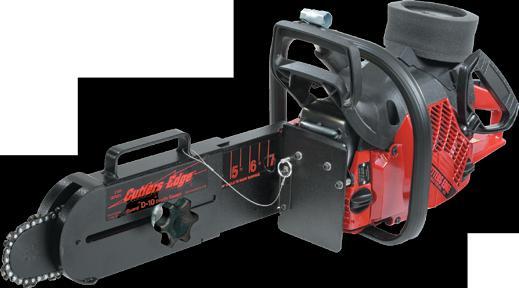
SIZE MATTERS ! New 2186 MULTI-CUTTM
With more power than any other Fire Rescue chainsaw available and up to a 24" bar and the D-10 Guard/Depth Gauge for safety, speed and ease of use. Equipped with the BULLET® Chain that cuts safer, faster and longer than any other carbide chain made.
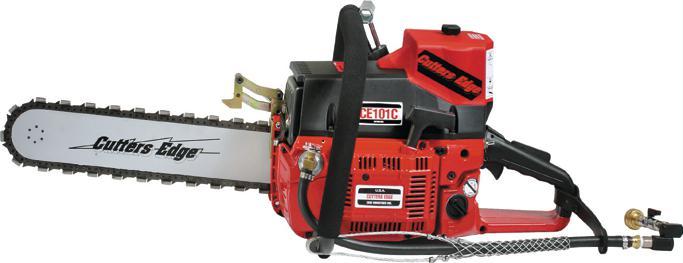
Gas Powered Concrete Rescue Saw
Cuts reinforced concrete up to 16-inches thick in minutes with the GCP SealPro® Diamond Chain and powerful 101cc engine. It’s fully portable, operates in any position and just one water hose needed for dust-free cutting in rescue situations.
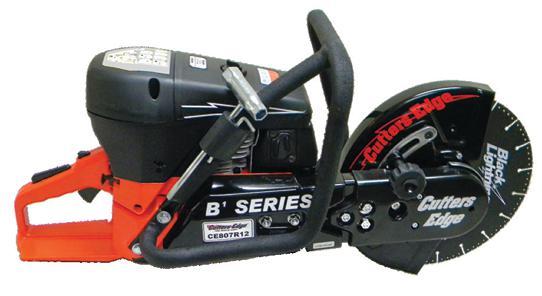
The New Generation Rotary Saw is Here !
Rotary Rescue Saw
The CE807R Rotary Rescue Saw has a new, more powerful 80.7cc engine and a non-slip rubber Full-Wrap Handle for all position cutting. A new 4-Stage Air Filtration System, incorporating a High Performance K&N Filter as its third stage assures outstanding performance in all cutting conditions. Fully-equipped Sawing Kit is available plus Black Lightning and Black Star Diamond Cutting Blades.
Black Sunday
Departments adopt self-rescue technology after close calls
By JAY SHAW
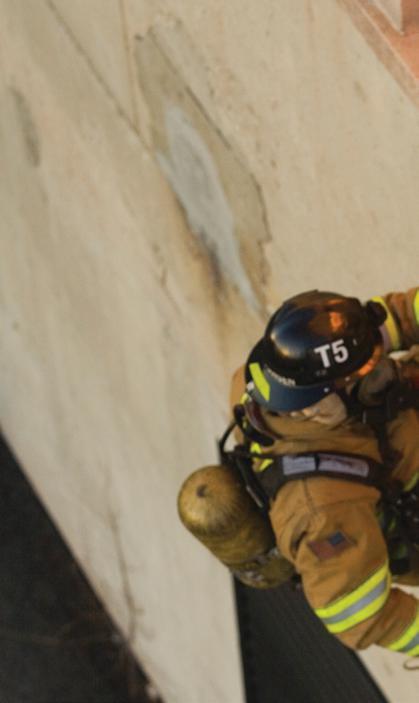
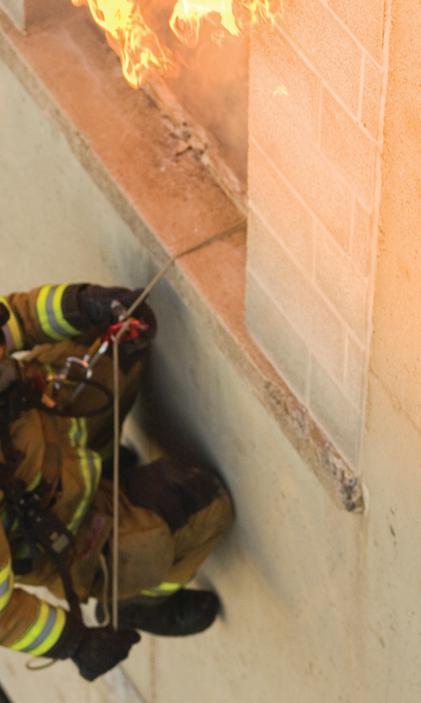
TOP: The FDNY worked with Petzl to create a descent-control device similar to one used by climbers following Black Sunday. The system, which includes a descender, a 15-metre heat- and abrasion-resistant rope, a connector, and a steel anchor hook, underwent vigourous testing to ensure it would meet strict performance criteria.
It’s Dec. 2, 2010. The Nassau Veterans Memorial Coliseum in Long Island, N.Y., is filled with fans taking in a hockey game: Rangers versus Islanders. Early in the first period, retired FDNY firefighter Jeff Cool takes a deep breath; he knows the next three hours will be challenging as he tries to get comfortable. The two-hour drive into Long Island with his two sons and a fellow firefighter was difficult enough. Shifting in his seat occasionally, Cool tries to find a spot that allows him to focus on the game and his boys. Cool, 43, has met some of his favourite Rangers over the last few years; he’s had some time on his hands since his retirement on Jan. 23, 2005.
Cool didn’t win the lottery or invent some moneymaking formula, and he certainly didn’t go willingly. He was forced out – literally. The event that precipitated his surprise retirement is now known to the fire service as Black Sunday. It’s the only time in
the history of the FDNY that two separate incidents caused line-of-duty deaths on the same day; the lives of three firefighters were lost and four other firefighters were severely injured. Cool was one of six FDNY firefighters who were forced to jump more than 12 metres to escape flashover-like fire conditions in a Bronx tenement apartment. Lt. Curtis Meyran and firefighter John Bellew were killed. Firefighter Richard Sclafani was killed in a Brooklyn basement fire the same day. Cool and firefighter Joseph Dibernardo shared a rope that is now credited with helping to save their lives. Dibernardo used his body to anchor Cool, who was able to slide down three or so metres before falling the rest of the way to a concrete landing. Dibernardo tied the rope to a baby gate and tried to get out, but he, too, fell, and lay semi-conscious in the back lane until he was rescued? Rangers are up 2-0 early in the first period. Cool shifts in his seat
When firefighters are blocked from escape routes, the decision is always going to be to bail. Cool describes those fleeting seconds before he jumped: “You at least have a shot at living if you jump; you just can’t stay in that kind of heat. Joey said, ‘You go, you got a wife and kids,’ and he tried to anchor me with his body. The rope was thin, I slid down a bit, but the heat was exhausting. You can’t hang on.”
Cool does not clearly remember all the details after he hit the concrete. His injuries were so severe he required 13 surgeries. “I broke both my shoulders in multiple places, fractured 13 ribs, fractured my skull in two
places, broke L-2 to L-5 in my back. I had a flail chest, compartment syndrome of the abdominal cavity, several burns, but my most severe injury would be shattering my pelvis in three places; it was like broken glass tearing through both my femoral arteries. I was literally bleeding like a stuck pig. As fast as they would pump blood in me, it was coming out. I would take 72 products of blood before all the bleeding was stopped.” Islanders score, but the Rangers still lead 2-1
The North American fire service has been slowly looking into incorporating firefighter self-rescue devices into comprehensive training programs, as the types of
Just the touch of a button...
Our Newton Kwik-Dump Valve, Model 1070 Valve with 5018 Auto Chute (shown) can be electrically or air operated. Just the touch of a button empties your tanker, and gets you on your way - FAST! Contact us for more information. Brochures and CD-ROMs available. ...empties your tanker safely. No need for two-man crews, you don’t even have to leave your truck!
situations that Cool describes are not new. Generally, firefighters stuff their pockets with small tools, wedges, webbing and rope – all items that they have found might be useful when trapped or in a perilous situation. After Black Sunday, the FDNY spent thousands of man hours and countless dollars to test and design a lightweight and easy-to-use system.
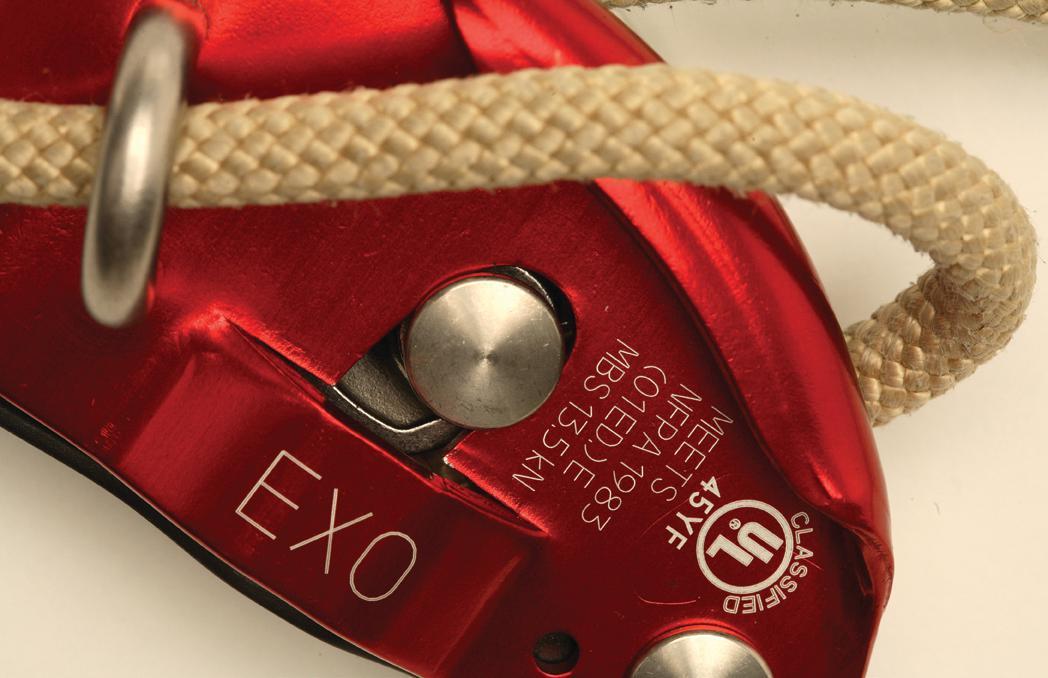
The FDNY decided to work with Petzl to create a descent-control device that would meet strict performance specifications defined through a rigorous testing protocol. The Petzl EXO descender is a modified version of a proven belay/rappel device used by climbers around the world for 20 years. This descender, along with a 15 metre heat- and abrasion-resistant rope, a connector, and a steel anchor hook, makes up the FDNY Personal Safety System. The system is attached to each firefighter’s harness via a carry bag, and is available for use at a moment’s notice. With proper training, a firefighter can deploy the EXO system and bail out of an elevated area in as few as 15 seconds.
Here in Canada, the firefighter selfrescue message has been less aggressively promoted, but is just as needed, as both Winnipeg and Ottawa have had incidents at which these types of devices may have fostered a different outcome. In fact, Ottawa fire Capt. Peter Hunt, who writes for Canadian Firefighter and EMS Quarterly, sang the praises of self-rescue devices in his July 2009 Fire IQ column.
Michel Goulet, Petzl America professional division manager, has been involved with the EXO project since day 1. Goulet
Petzl’s self-rescue system is attached to each firefighter’s harness via a carry bag, and can be deployed for use in as few as 15 seconds.
and his team of Canadian and American firefighter field experts and training partners have created a train-the-trainer program to ensure proper instruction is provided before the system is issued to fire departments. Goulet and his team ran a three-day program in Winnipeg.
Winnipeg Fire Paramedic Service is the first large Canadian department to implement the EXO personal escape system in its firefighter self-rescue program.
“As experts in rope access and vertical rescue, Petzl has become aware of the need for bailout systems to be carried by firefighters who respond to emergencies in multi-level dwellings,” says Goulet. “The EXO system provides a firefighter with a rapid means of escape through unconventional exit points; it has already proven itself as a viable solution, both in firefighting and military applications.”
No one will argue the need to make interior fire fighting safer, as all too often, a rapidly changing fire event ends with a hospital visit.
The Islanders are up 3-2 and Cool’s mind is completely immersed in the hockey game. For the next two periods, he escapes; finally, no pain, no nightmares. Cheering and screaming for Sean Avery and his beloved Rangers with his sons, Jeff and Dylan, Cool feels alive and empowered.
“Today, I am basically a stay-at-home dad who enjoys spending my time with my family,” he says. “I love coaching hockey
and enjoy the smell of the rink as much as I enjoyed the smell of a good fire. I just don’t want this to happen to anyone else, ever. We spend thousands of dollars sending firefighters into burning buildings to save life and property. Why can’t we spend a few more bucks on a personal safety system for a firefighter, so when and if he becomes trapped, he is not faced with, ‘Do I jump and hope for the best, or do I stay here and die in the fire?’ ”
Cool occasionally lectures across the United States about Black Sunday and the need for personal safety systems. He still requires counselling and therapy and will
never truly be the same. But tonight he’s just one of the guys – a husband, father, firefighter and hockey fan. Rangers win, 6-5
Jay Shaw is a nine-year member of the Winnipeg Fire Paramedic Service and has more than 15 years of experience in health and emergency services. Shaw has worked in hospital emergency rooms, rural ambulance services and with the Canadian Forces fire service. A lifelong learner, Shaw is completing graduate studies in disaster and emergency management at Royal Roads University and has a strong passion for collaborative disaster and fire service research. Contact him at jjrg@mts.net
NON-STOP SMOKE GENERATION.
DON’T STOP TO TAKE A BREAK. NEITHER DO BULLEX SMOKE GENERATORS.
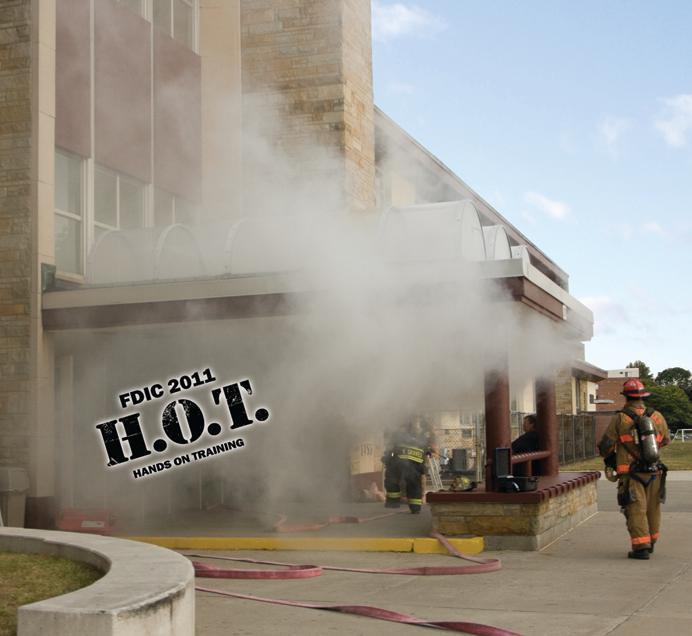
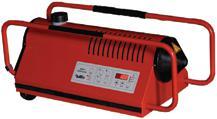
BullEx Smoke Generators were designed with one goal in mind: to create the most realistic fire training smoke possible. BullEx Smoke Generators fill your training environment with dense heavy smoke in minutes, without recharging or reheating. High volumes of smoke with minimal residue allow you to stage full scale incidents you may face in high-risk buildings in your community. Train to ensure that everyone goes home. See our Smoke Generators in action during FDIC H.O.T. Evolutions, March 21–22.
Actual smoke produced by one SG6000 Smoke Generator.
PHOTO COURTESY PETZL
TRAINER’SCORNER Recommendations for survival
By ED BROUWER
Survival is the only benchmark of success for a firefighter. The No. 1 key to survival is to keep the fire dragon on a short leash (under control). Although this may sound simple, it is becoming increasingly more difficult to contain a fire to one room in newly constructed buildings.
Controlling the fire is of paramount importance in a mayday situation. Keeping the fire dragon on a short leash is perhaps the largest contributing factor to a successful firefighter rescue. We dare not let go of that leash while performing a rescue; if we do, the fire dragon will take ownership of the fire ground. Your operating guidelines should dictate that the rapid intervention team be deployed to focus on the rescue while other firefighters continue their suppression efforts. This will accomplish two important things. First, it will protect the searchand-rescue operation. Secondly, it will give firefighters something to do toward the rescue effort. If this second objective is not available, firefighters will take things into their own hands in an effort to save their fellow firefighter. This leads to chaos and confusion on the fire ground, and most certainly, more victims.
There are a number of reasons for losing control of a fire over which we have very little control, including poor construction, fast-moving fire, severe weather and large fire load. There are reasons for losing control that we can and should address, such as inadequate training, poor PPE, poor suppression tactics, poor communications, lack of manpower and equipment breakdowns (if due to poor upkeep). And yes, sometimes things just go wrong.
The following case studies may help to keep the fire dragon on a short leash. We will look at fire behaviour and building construction. These issues may be familiar to many of you, but as the saying goes, it’s what you learn after you know it all that’s important.
The need to understand fire behaviour never stops. Being able to read smoke can save a firefighter’s life. At the very least, firefighters should be able to recognize the indicators of backdraft, flashover and rollover. When establishing your training calendar, consider matching up fire behaviour training with building construction. Take a tour of your fire protection area. Note the different building types, and, if you have permission, do a walk-through during the different stages of construction in new buildings. Pre-plan for those buildings that give you that cold shiver. Point out any and all firefighter safety concerns.
Do your members know about wooden I-beams (developed 40 years ago and also known as TJI joists or silent floor joists)? They’re lightweight, inexpensive, very strong and used in newer homes everywhere. They’re a perfectly good building material and nothing to be concerned about, unless they catch fire. Then, they can be killers.
Traditional two-by-10 joists can fail in just over 12 minutes, while a wooden I-beam (12-inch) joist can fail in 10 minutes when exposed to the identical fire and dead load tests. A two-minute difference may not sound like much, but to a firefighter in trouble, two minutes can mean the difference between life and death.
Whenever a firefighter fatality occurs, the National Institute of Occupational Safety and Health conducts an investigation into the cause of death. Its task is not to find fault or penalize individuals or jurisdic-
tions, but to render recommendations that are made public. The intent of these investigations is to create a learning process so the fire service as a whole can learn from these events. All reports are available on the NIOSH website at www.cdc.gov/niosh. Here are some examples.
■ REPORT #F2006-26
Summary: On Aug. 13, 2006, a 55-year-old male career fire engineer (the victim) died and another firefighter was injured after falling through the floor at a residential structure fire. The two had arrived in their ambulance and helped the first-due engine attach a five-inch supply line at approximately 12:27 hours. The engine company was conducting a fast attack on a suspected basement fire, while the ladder company conducted horizontal ventilation. The ambulance crew had advanced to the front of the structure when the incident commander requested they conduct a primary
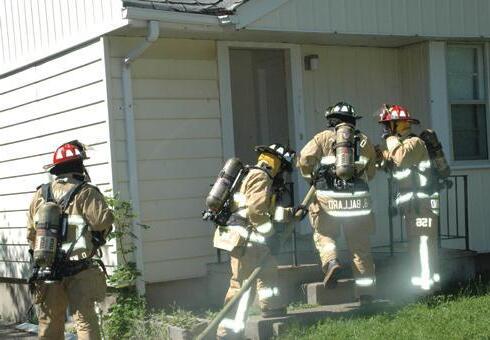
Ongoing education is the only way to ensure the safety of firefighters on the fire ground.
PHOTOS BY LAURA KING
TRAINER’SCORNER
search. The two proceeded to conduct a lefthand search at approximately 12:34 hours. They took a couple of steps to the left, just inside the front door, to conduct a quick sweep. Visibility was near zero with minimal heat conditions. Because of the smoke conditions, they kneeled, sounded the ceramic tile floor, and took one crawling step while on their knees. They heard a large crack just before the floor gave way, sending them into the basement. The basement area exploded into a fireball when the floor collapsed. The fire engineer fell into the room of origin while the firefighter fell on the other side of a basement door into a hallway. The firefighter eventually crawled out of a basement window. The victim’s body was recovered the next day.
■ TYPE OF CONSTRUCTION
The structure, built in 1999, was a twostorey, single-family residence of ordinary construction. The floors of the structure involved in this incident consisted of a lightweight wooden parallel-chord truss system and engineered wooden I-beams.
■ RECOMMENDATIONS
Ensure firefighters are trained to recognize the danger of operating above a fire and identify buildings constructed with trusses. Also, consider modifying the current building codes to require that lightweight trusses be protected with a fire barrier on both the top and bottom.
■ REPORT #F2005-09
Summary: On Feb. 19, 2005, a 39-year-old career fire captain (the victim) died after being trapped by the partial collapse of the roof of a vacant one-storey wood frame dwelling. The house was abandoned and known by residents in the area to be a crack house at the time of the incident. The victim was the captain on the first-arriving engine crew, which was assigned to perform a fast attack, take a hoseline into the house, locate the seat of the fire and begin extinguishment. The onestorey wooden ranch-style house was built in the 1950s and additional rooms had been added at the rear. Crews could see fire venting through the roof at the rear of the house. The captain and a firefighter advanced the initial attack line through the front entrance and made their way toward the rear of the house. Visibility was good in the front of the house but conditions quickly changed as they advanced. The fast-attack crew had just begun to direct water onto the burning ceiling in the kitchen and den areas when the roof at the rear of the structure (over the additions) collapsed, trapping the captain under burning debris. The collapse pushed fire toward the
front of the house, quickly igniting carbon and suspended dust particles and combustible gases in the air. This combination sent a fireball rolling toward the front of the structure. Prior to the time of the collapse, two other crews had entered through the front entrance. The rapidly deteriorating conditions following the collapse quickly exposed the other crews to fire, and five firefighters received burns requiring medical attention.
■ TYPE OF CONSTRUCTION
The structure was a one-storey, wood frame, ranch-style house that was originally constructed in the 1950s. The house was stick built over a pier and beam foundation.
■ RECOMMENDATIONS
Ensure the incident commander continuously evaluates the risk versus gain when determining whether the fire suppression operation will be offensive or defensive.
Do whatever it takes to get your firefighters to connect fire behaviour with building construction.
You can demonstrate the dangers first hand. Get a four-foot piece of silent floor truss, and a four-foot traditional floor joist (two-by-10). Set them up on two sawhorses, and use two propane blowtorches to apply flame to the underside of each. Consider the differences in their reaction to the flame.
Today’s fires are burning hotter because of the BTUs released by the increasing use of petroleum-based products and thermoplastics. Insulation materials used to conserve energy allow the fire to retain heat and reach flashover in a shorter time frame. The use of unprotected lightweight structural components and engineered fast growth lumber are more susceptible to the effects of today’s hotter fires.
I hope we learn from these case studies. May no firefighter’s ghost say his training let him down. It is becoming more difficult to control the fire dragon. Only by the continued education of our greatest resource, the firefighter, will we be successful. Until next time, keep your head up, stay safe and remember to train like their lives depend on it, because they do.
Ed Brouwer is the chief instructor for Canwest Fire in Osoyoos, B.C., and the training officer for West Boundary Highway Rescue. The 19-year veteran of the fire service is also a fire warden with the B.C. Ministry of Forests, a wildland interface fire suppression instructor/evaluator and a fire-service chaplain. Contact Ed at ed@thefire.ca
YOUR TRAINING CONTINUES HERE
BY LES KARPLUK Fire Chief, Prince Albert, Sask. AND LYLE QUAN Fire Chief, Waterloo, Ont.
WLEADERSHIPFORUM
Managing the rampant sense of entitlement
e hoped our December column about the sense of entitlement among younger firefighters would spark some discussion. We’ve received feedback from readers so we know that this sentiment among newer firefighters is an issue. So, how do chiefs and officers handle the challenges and frustrations that come with this generational divide between young go-getters and experienced firefighters?
Most senior firefighters have considerable life and on-the-job experience while today’s younger firefighters possess more theoretical education. Problems occur when younger firefighters who have knowledge, skills and abilities gained through formal education – which the senior firefighters may not possess – think their degrees or diplomas outweigh the life and work experience of the senior firefighters. The younger firefighters fail to respect the veterans and their years of on-the-job training. This can lead to situations in which younger firefighters discount the advice and instruction given to them by senior staff, which can result in safety concerns during training and on the fire ground. In fact, this creates tension and disharmony in the station.
Issues such as communication, compensation, reward systems, work hours and work-place expectations are often viewed differently by different generations. The solution to the challenges that arise from these differences of opinion is not a one-step process, rather it may be a lengthy exercise in which all parties must work together to get the desired results.
All department members can influence change, so getting everyone on side is crucial to repair the usversus-them mentality that may exist between senior staff and younger members. First, chiefs need to work with officers and veteran firefighters to help them understand the perspective of the younger firefighters. A common value among all generations is the desire for respect but each generation defines respect differently. For example, an officer asks a firefighter to carry out a station duty and is asked why. Sometimes, the hidden message from the younger firefighter is “why the hell should I do that”; other times the message isn’t hidden at all but is a straightforward question with merit.
will let senior officers and firefighters know that you respect their experience and want to work with them to solve problems.
Younger firefighters have been programmed to challenge the status quo and ask why things are done a certain way. The standard answer – because that’s the way it’s always been done – doesn’t work for this younger generation. Sometimes, explaining the history behind a method or practice, or explaining the sacrifices made by others to establish various practices and procedures, can make a difference. For some of our predecessors, PPE consisted of handme-downs and boots two sizes too big. Today’s firefighters need to value the efforts required to fight for the funding to buy PPE; a simple history lesson might help to alleviate the entitlement principle.
Ignoring advice from a senior firefighter can lead to serious consequences or injury. Senior firefighters understand the hierarchical structure of the fire service. Some younger members tend to view senior staff as old soldiers who need to retire. These situations are great opportunities to link senior officers with younger members for coaching and mentoring. Senior firefighters are the foundation on which chiefs can build a high-performance culture; they understand how our business is conducted according to solid principles and values.
Younger firefighters have been programmed to challenge the status quo and ask why things are done a certain way. ‘‘ ’’
But when officers are constantly asked why, frustration grows and productivity slows. That’s the point at which the chief needs to meet with officers and veteran firefighters to solicit ideas about how to get the message across to the younger firefighters that there are methods and valid reasons behind department policies and procedures. This
Les Karpluk is the fire chief of the Prince Albert Fire Department in Saskatchewan.
Lyle Quan is the fire chief of the Waterloo Fire Department in Ontario. Both are graduates of the Lakeland College Bachelor of Business in Emergency Services program and Dalhousie University’s Fire Administration program.
The challenge is to convince the younger members of the values that our profession holds in high esteem. One way to eliminate these barriers to success is to create committees with a mandate to increase communication, harmony and relationships within the station. Giving senior firefighters formal leadership roles provides them with an opportunity to facilitate and guide discussions. Younger firefighters can be given formal recording roles on those committees. The second time the committee meets, reverse the roles and have the younger member lead the discussion. The intent is to give both generations a chance to lead. The fire chief must identify the scope of the committee but should not take any leadership role.
In the first few paragraphs of this column we noted that initiating this change and adopting the positive culture can be a lengthy process, but the alternative is stagnation, conflict and low morale and that’s unacceptable. We will offer further insight and recommendations in future columns.
A Breath of Fresh Air
Celebrating 35 Years of Supplying Compressor Systems to Canadian Fire Departments
JORDAIR TECHNOLOGY: The new “FILL-KAT” (tm) linier filling station provides perfect SCBA filling profiles at any fill rate. Unlike the orifice system the fill rate is perfectly controlled at the desired rate over the complete fill. This method is the safest and least stressful to the cylinder and provides the coolest possible fill. Please contract the factory or your Jordair distributor for full information on linier filling of SCBA cylinders.
Offering: A 2 course certificate in incident command for experienced incident commanders. Please contact our office for more information.
Are you looking to take on more responsibility in your Department? Trying to round out your technical ability with leadership skills? Preparing to advance your career?
At Dalhousie University we offer a three course program, the “Certificate in Fire Service Leadership” to career and volunteer fire officers. The 3 courses Station Officer: Dealing with People, Station Officer: Dealing with New Operations and The Environment of the Fire Station are all offered in each of our 3 terms, September, January and April. The program can be completed in one year. For more information and a program brochure please contact:
Gwen Doary, Program Manager
Dalhousie University Fire Management Certificate Programs 1459 LeMarchant Street, Suite 2201, Halifax NS B3H 3P8 CANADA
You will also find the information in our brochures or at the following internet address: Web site: http://collegeofcontinuinged.dal.ca
Jordair Compressors Inc. 101-7950 Huston Road
Delta, B.C., V4G 1C2
Tel: 604-940-8101 Fax: 604-940-8131
Web site: www.jordair.ca
BACKtoBASICS Vertical ventilation
By MARK VAN DER FEYST
In February, we focused on ventilating a structure by removing the windows. Most fire departments use this method of ventilation. Vertical ventilation is another common type of ventilation but its popularity is waning because of the risks it poses to firefighters.
Vertical ventilation is a quick way to remove hot gases and smoke from the upper portions of a structure. Because heat rises naturally, all the smoke and hot gases will travel to the highest point in the structure. Allowing the smoke and hot gases to escape through a vertical opening results in better visibility for firefighters and a lower temperature inside the structure. Vertical ventilation also prevents horizontal fire spread and helps to clear smoke from public hallways and stairways.
But vertical ventilation is dangerous. In some cases, firefighters have fallen through the roof while trying to ventilate and now the fire service is reconsidering the need to be on top of the structure. There are many videos available that show tests being conducted on different types of roof materials and the time it takes for a roof to fail under load. The City of Phoenix Fire Department, along with the National Institute for Occupational Safety and Health, conducted some of these tests using two test mannequins standing on the roof of a structure on fire. It did not take long for the roof to fail and for the test mannequins to fall through. The time varied depending on the type of roof materials being tested. A YouTube search will yield several videos demonstrating the quick failure rate of lightweight trusses.
Roofing materials used today are designed to be lightweight and to span greater distances. While this lightweight technology provides advantages for builders, it is a great disadvantage to the fire service because the lightweight material fails much more quickly than traditional materials. A common time frame established for failure of a lightweight truss is between five and 15 minutes under fire conditions. This is not much time for fire departments to cut a hole for vertical ventilation.
Using existing openings found on rooftops is a benefit to any vertical ventilation operation and aids in quick ventilation. Skylights, scuttle hatches, HVAC equipment, stairway doors that exit to the roof and vertical vent pipes are some common openings found on rooftops. All these items are a good starting point for opening up the building to remove smoke and hot gas.
Cutting a hole in the roof is the best way to quickly achieve ventilation. Sometimes a series of holes is needed to ventilate effectively. Before firefighters head to the roof to cut a hole, a few things must be considered:
• Where is the fire located?
• We want to cut the hole directly above the fire.
• How big is the fire?
• We may need to cut more than one hole.
• What operations are underway and where are they located?
• We do not want to interfere with any interior or exterior operations.
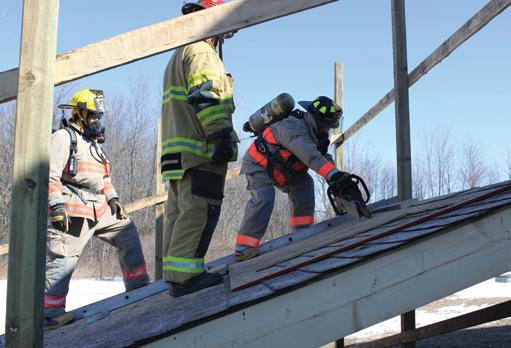
Working on a roof ladder to make a cut can be awkward, and overreaching makes the job even more difficult. Here, a firefighter starts to make the initial cut and his arms are fully extended. It’s OK to step off the roof ladder to make cuts.
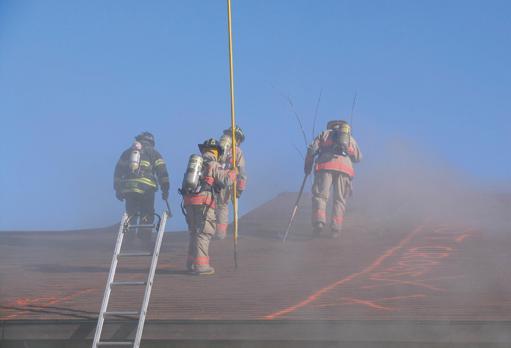
The span of the roof is too long for a roof ladder so firefighters must rely on the size-up, the sounding of the roof and reports from the interior crews about how the fire is progressing to ensure it is safe to be on the roof.
• Is the fire already breaching the roof?
• If we see flames breaching through the roof, the roof will not support the weight of a firefighter or firefighters and will fail.
A combination of hand tools and power tools is generally used to cut a vertical opening. Hand tools include an axe – both pick head and flat head – a Halligan, pike pole, roof hook, sledge-
PHOTOS BY MARK VAN DER FEYST
Cutting a hole in the roof is the best way to achieve ventilation quickly.
hammer and others such as the TNT five-in-one tool. Rotary saws or chainsaws are generally the power tools of choice; both are gasoline-powered and require clean air to operate, as the clean air mixes with the fuel for internal combustion. One drawback with power tools is that they will not work properly and will sometimes stall if there is too much smoke exiting the structure. It is a good idea to bring both hand tools and a power tool up to the roof; the hand tools will serve as a backup to the power tools.
Another item to consider is the roof ladder. The roof ladder is designed to dissipate the weight of a firefighter along the roof. A roof ladder will only work if the top portion with the hooks is at the top of the roof ridge and the butt end of the ladder is hanging over the edge of the eaves of the roof. These two points of contact ensure the roof ladder is supported on the most structurally sound portions of the roof. If a roof ladder is shorter than the roof span, it will not be as effective as there will be no structural support. A roof ladder is not always required for conducting vertical ventilation. It will depend upon the conditions presented and the type of roof.
Working on a roof ladder to make the cut can be difficult and awkward. Overreaching to make cuts makes the job much more difficult. In photo 1, a firefighter is starting to make the initial cut and his arms are fully extended. There is nothing wrong with stepping off the roof ladder to make your cuts. Sound the roof with a hand tool or with your foot – if it sounds structurally strong, step off the roof ladder. If the roof is not safe, then you should not be up there anyway.
When making multiple holes in the roof, moving the roof ladder into position every time, from one spot to the next, may not be convenient. In photo 2, the span of the roof is too long for a roof ladder to be used. Here, the firefighters need to rely on the size-up of the conditions, the sounding of the roof and reports from the interior crews about how the fire is progressing to ensure that it is safe to be there.
Next time, we will look at different cuts and some tips on how to conduct vertical ventilation more easily using some common hand tools.
Mark van der Feyst is a 12-year veteran of the fire service. He currently works for the City of Woodstock Fire Department in Ontario.
Mark is an international instructor teaching in Canada, the United States and India. He is a local level suppression instructor for the Pennsylvania State Fire Academy, an instructor for the Justice Institute of British Columbia and a professor of fire science at Lambton College. E-mail him at Mark@ FireStarTraining.com
Fire Hero®xtreme
enGineered like no other boot in the world
Secura Liner never pulls out or wrinkles up All new sole with superior grip to keep your footing in wet or icy conditions
Bring this ad to receive a free FIRE HERO® backpack (limited to the first 200 visitors Sunday and Monday only) and for special discount on the FIRE HERO® XTREME purchased during the show.
BY SEAN TRACEY Canadian Regional Manager, NFPA
ACode process needs update and overhaul
January incident in Toronto at which two firefighters were injured combating a vacant building fire highlights some of the fundamental differences between the Canadian-model fire code and the NFPA fire code developmental process. Under the NFPA code process, the fire service plays a key role in the development of an open and accountable code that respects the role of firefighters in society. The NFPA code has been referred to as the fire code for the fire service.
According to an NFPA fact sheet, vacant-building fires account for about 4,500 firefighter injuries a year in the United States. Just six per cent of all reported structure fires are in vacant buildings, but they account for 13 per cent of firefighter injuries. Although these numbers may not be large, vacant-building fires represent a significant threat to firefighters and surrounding properties. Between1998 and 2007, vacant-building fires resulted in 15 firefighter fatalities in the United States. A recent NIOSH study discusses vacant structures and recommends pre-planning precautions.
Under Canada’s National Fire Code (NFC), the only requirement for a vacant building is for the property to be secured against unauthorized entry. Under the NFPA’s fire code (which has been used in Prince Edward Island for more than 30 years), the authority having jurisdiction (AHJ) requires that all combustibles be removed from the structure. In addition, the AHJ can require that all fire-protection systems be maintained and in service. This is essential if the vacant property is located in a dense, downtown-core area, thus posing a possible risk to adjoining or exposed structures. Inactive firedetection systems and suppression systems can significantly hinder fire-department efforts to contain fires in vacant buildings, thus exposing the surrounding urban properties to significant risk. Without working fire-detection and fire-suppression systems, firefighters are at greater risk, as fires can be more challenging than indicated.
The differences between the NFC and NFPA codes prompted me to submit a change proposal to the Canadian Code Centre in 2001 for the 2005 National Fire Code.
The change proposal called for a new provision that would require the development of a close-up plan for approval by the AHJ. This plan would address the protective measures that would remain in effect for structures that pose a significant exposure risk to other properties in the community. Costs to maintain minimum protective measures could be levied from the building owners or trustees. In exceptional cases, the city could bear responsibility for these costs by adding them to outstanding taxes owed on the property. Alternative procedures could be established with the AHJ in cases where costs or other conditions make such a plan prohibitive.
The code-change proposal was never acknowledged or brought before the technical committees (that we know of) and no response was provided on its status. This highlights the lack of transparency and accountability of the Canadian building and fire code system. The process used to write these codes does not even meet the requirements of the Standards Council of Canada, and therefore, the codes cannot even be deemed to be Canadian
Under Canada’s National Fire Code, the only requirement for a vacant building is for the property to be secured against unauthorized entry. ‘‘ ’’
National Standards.
Without specific fire code provisions, there is little recourse for the fire service to demand that these systems be kept in service, except through a bylaw. In my opinion, this deficiency highlights the lower level of importance placed on the fire code by Canadian code writers. It also reflects the fact that protection of firefighters is not a requirement of the Canadian building and fire codes – something we are trying to change.
Sean Tracey, P.Eng., MIFireE, is the Canadian regional manager of the National Fire Protection Association International and formerly the Canadian Armed Forces fire marshal. Contact him at stracey@nfpa.org
This is not the case in the NFPA code. Under the NFPA code process, any comment received would have been sent to the committee and voted on. All results would have been published in the public domain. This is not so in Canada and this should change.
The Canadian building and fire code system fails to meet the needs of the Canadian fire service. It is neither transparent nor accountable.
We need a fire code that empowers the fire service and authorities having jurisdiction to impose requirements that will safeguard them.
Changes that will help to safeguard firefighters and communities from risks posed by vacant buildings would be a start. How many close calls or firefighter lives will it take for this change to happen?
Suppression assessment
Aerosol product effective but reduces visibility
By SEAN TRACEY
Basement fires present a significant risk to firefighters attempting interior attack. In a recent Canadian Police Research Centre (CPRC)-funded project, the use of aerosol suppression technology was evaluated to determine if these risks could be reduced. The project was ideal for CPRC as its mandate was to harness science and technology knowledge to strengthen police, fire and emergency medical services across Canada through research, development of standards, product evaluation, technology transfer, science and technology advocacy, and by providing expertise in this field. Additionally, the use of aerosol suppression technology in basement fires has not been sufficiently documented under controlled conditions, even though it has been effectively deployed in numerous fire saves across North America.
In this project, completed in October, researchers evaluated the impact of using an aerosol fire suppressant agent on fire growth, and the actions of the firefighting team, in four scenarios involving simulated basement fires.
When responding to basement fires, personnel are often required to enter dwellings from the floor above the fire and then proceed down a stairwell while being exposed to the superheated gases. Personnel must attempt entry into the basement area as soon as possible to prevent the rapid growth and spread of the fire. The longer the delay, the greater the potential damage to floor systems. Alternatively, crews could use ventilation, but this introduces the risk of providing oxygen (thus feeding the fire growth). It was therefore proposed that aerosol suppressant agents could be deployed while the attack team is preparing for entry. Anecdotal reports and manufacturers’ data show that aerosol devices can rapidly knock down Class A and Class B fires. This may have the effect of stopping further fire spread and reducing temperatures; therefore, the aerosol devices will have the same or better effectiveness than ventilation. Use of the devices may reduce property damage and reduce the risk of personal injury to the firefighters. What has not been reported is the potential impact that employing the technology may have on firefighting operations.
The objective of the CPRC project was to measure the effectiveness of an aerosol suppressant agent in a basement fire scenario and then to evaluate the impact that use of the agent may have on suppression operations. A review of fire-service literature found many fire fatality related reports that outlined the need to improve safety; however, no reports were found on the use of aerosol technology in this high-risk environment. This research project was intended to produce data for further evaluation of the effectiveness of aerosol suppression technology in extinguishing basement fires and to produce an optimal deployment procedure for the technology.
BY
Aerosol devices work through a chemical reaction. A portable device generates a large quantity of salts and oxides of alkali and alkaline metals in an aerosol form. The aerosol is discharged from a canister as a hot white smoke, which will then disperse throughout the fire compartment. The particles generated are approximately one micron in size, and because of this small size, the particles will remain airborne in the compartment for up to 50 minutes. The small size of the particles allows them to be drawn on thermal currents into the seat of the fire, where they bond with free radicals and interrupt the chain reaction that sustains the fire. The heat in the room provides the needed energy to fuel this chemical reaction. This should result in a significant drop in the fire compartment temperature. Because these small particles can remain airborne for up to 50 minutes, there is a significant reduction in any potential for the fire to reignite. The aerosol product has been assessed by manufacturers and has been determined not to be hazardous to humans; however, the product is an irritant and therefore should it be avoided. In this project, the evaluations were conducted by ARA Safety and the device used was its ARA Fit Pro™.
The Fire and Emergency Services Training Institute (FESTI) at Toronto’s Pearson Airport was chosen as the site for the evaluation. Its world-class facilities include a recently updated live-fire training structure. This structure provided accessible basement areas, meaning evaluations could be replicated without significant modifications. Additionally, the setup at FESTI meant that the safety protocols identified in NFPA 1403: Standard on Live Fire Training Evolutions for safety on the fire ground could be closely followed. The structure is non-combustible, so there was no risk of collapse. FESTI had participated in past evaluations: its officers were extremely accommodating and ensured that the project was completed successfully. FESTI staff acted as the interior attack team.
Unbiased reporting and a peer review process were important requirements of the CPRC for the project. To conduct the peer review, Barry Colledge, a professional engineer with fire-service
Firefighters prepare to use aerosol suppression technology during testing at the Fire and Emergency Services Training Institute at Pearson International Airport in Toronto. The experiment showed that aerosol suppression technology may reduce the risk to firefighters entering a basement fire.
PHOTO
SEAN TRACEY
Understanding how others process your e-mails and phone conversations and why you might need to change
Style sense D Dominance
By BARB AND BILL JOHNSTON
In the September issue of Fire Fighting in Canada, we outlined the four instinctive human behaviours that make up the D.I.S.C. pattern:
D – Dominant (outgoing and task oriented)
I – Instinctive (outgoing and people oriented)
S – Steady (reserved and people oriented)
C – Cautious (reserved and task oriented)
In November, we offered tips for dealing with people face to face, from fellow firefighters to the mayor and council members. Now, we’ll look at how to (or how not to) deal with the four personality types when doing business over the phone and by e-mail, starting with the dominant – or D – personality type.
■ CALLING A D-TYPE PERSONALITY
• When you call a D-type personality, your verbal tones should be firm and direct. These types of people are bottom-line thinkers who do not like to waste time.
• Ask if you’re catching the person at a good time. D-type personalities do not like to be interrupted; if the person says it is a bad time, call back.
• Give your information and get to the point quickly.
• If a decision is necessary, always offer choices within boundaries that work for you. This is crucial when talking to someone with a D-type personality – these types of people like to feel in control of the situation.
• Be aware that D-type personalities may challenge you from the start. This is normal, as the greatest fear of D-type personalities is to be taken advantage of. Be careful not to slip into an argumentative or defensive voice in response to this challenging tone. Do not let these types of people pull you into a tit-for-tat discussion. Remain professional and stick to delivering your message. Your goal is get your message across, not to enter into a debate.
■ E-MAILING A D-TYPE PERSONALITY
• It is not necessary to say hi or start your e-mail with a nice, introductory line. D-type people like you to get to the point – hit the bottom line as quickly as you can and expect a bottom-line response. D-type people are not being rude; they are just focused on getting the task done.
• Do not copy D-type people on any unnecessary e-mails. If they need to know, they will ask. D-type people dislike anything that wastes their time.
■ E-MAIL TIPS FOR D-TYPES
• When you send an e-mail, do not soften your e-mail message too much.
• Be careful not to make your message too abrupt or you risk the chance of coming across as angry. It is difficult to have good communication with people when they believe that you are upset with them. (And yes, D types, this does often happen – others just don’t tell you.)
• Not everyone processes at the speed of light (as Ds tend to do). Reserved style personalities need time to think before sending a response.
• Provide reasonable deadlines for a response and practise patience.
■
IF YOU ARE A D-TYPE PERSONALITY
• Be aware of your often demanding and challenging voice tones. Work to soften and relax your approach so that you become relatable to 100 per cent of your co-workers and contacts. Most people will not do business with people they do not like.
• Listen, listen, listen! Always hear what others are saying before you hurry ahead with your own agenda and decisions. You may be right, but if you don’t get buy-in to your ideas, what’s the point? True communication is about meeting the needs of others, not just your own.
People with I-type personalities are outgoing, people oriented and like some chitchat.
■ CALLING AN I-TYPE PERSONALITY
• Your voice should be friendly and upbeat. Be sure to speak fairly quickly and sound excited about why you are calling.
• As silly as its sounds, always smile when talking on the phone with an I-style. I-type personalities are happy people and will hear your message more clearly when you sound happy too.
• Do not be too direct or make the call seem rushed. Be sure to listen to at least a bit of this person’s latest story – there will always be a story!
KOCHEK® LDH Systems Your Single Source of Water Supply
• I-type people generally prefer faceto-face or phone communication over e-mail as they are social beings and love the personal interaction.
• Since I-type personalities tend not to hear all the details of your communication, it is a good idea to follow up with an e-mail outlining the discussed information.
■ IF YOU ARE AN I-TYPE PERSONALITY
• Respect other people’s time and try to save your stories for later. If you must tell a story, keep it very short. It’s nice to be important but it’s more important to be nice (and considerate by listening and then speaking).
• Although you prefer to speak off the cuff, it is a great idea to have an outline of what you want to say before you make the call. This will help you to stay focused on your reason for the call and it will be a great timesaver for both parties.
■
E-MAILING AN I-TYPE PERSONALITY
Take the time to begin your message with a warm and fuzzy comment. E-mails that come across as too direct and cold may cause I-type personalities to think that you are angry – not a good way to open communication.
I-types love to see punctuation and enthusiasm when they read e-mails. Question marks and exclamation marks can help to soften the message and the appearance of your e-mail. If this seems unnecessary or frivolous, remember that you are trying to speak the language of the I-type personality, not your language. You want your message to be received. I-types like fun, so the happier your e-mail seems, the more responsive the I-type personality will be. But don’t be surprised if I-type people pop in to see you with an answer after getting your e-mail. I-type people prefer face-to-face or phone communication over e-mail because they are social beings and love the personal interaction.
■ E-MAIL TIPS FOR I-TYPES
Save the animations and fancy backgrounds for party invitations and leave them out of work e-mails (unless, of course, you are sending to another I-style personality). Most people prefer if you kept e-mails simple and straightforward. For your message to be heard, remember to speak in the personality language of others, not your own style.
E-mail is not the best method for sharing stories and jokes. People are bombarded with e-mails every day and most personality styles find it frustrating to spend hours going through e-mails that seem to have no
To get the most out of a phone request, determine the personality type of the person you are calling and adjust your demeanour according to the D.I.S.C. pattern of personality types.
relevance. Try practising restraint when it comes to sending out funny e-mails.
■ CALLING AN S-TYPE PERSONALITY
When you call a reserved and people-oriented S-type personality, it is important to keep your voice tones warm, friendly and reassuring. This can often be accomplished by lowering your volume and slowing down your speech.
• You can depend on an S-type personality to be a good listener, but these types of people may be reluctant to share their feelings with you. Be sure to ask how they feel about what you have said and then patiently wait for an answer. If you are task-oriented, resist the temptation to ask S-type personalities what they think. S-types tend to think in feelings first, logic second. Instead, ask how the person feels about the issue/concern. S types are usually happy to give feedback when asked, unless something in your voice makes them feel pressured, at which point they may just agree with anything you have said. It is only later on, through others, that you may find out how an S-type person really feels. An S-type personality dislikes confrontation and will avoid it at all costs.
• At the end of the conversation, be sure to let an S-type personality know how much you appreciate the time he or she has spent talking to you. Never try this with a D-type personality –they honestly don’t care if you appreciate them – they really just want you to get to that bottom line.
■ IF YOU ARE AN S-TYPE PERSONALITY
• Speak a little more quickly and loudly than you normally would when
Storz Elbows
Forged Storz Couplings and Hose
Valves
Storz Wrenches
Hydrant Converters
51K Manifold
Thread Dr y Lube
Storz Adapters
on the telephone. This makes you sound confident about why you are calling. People tend to follow and listen to people who are confident.
• Work on moving past your natural fear of having your ideas rejected. Have confidence that your ideas have value and believe that people want to hear from you because no one has better people skills or is a better listener than you.
■
E-MAILING AN S-TYPE PERSONALITY
Keep your e-mails warm and kind. This can be accomplished by using a friendly opening statement, such as, “Hope you are having a nice day.” S-types are supportive and will always want to do whatever you ask of them. The more they feel appreciated, the better your communication will be with them. An abrupt, demanding e-mail will shut down these types of people and will elicit little response. Be aware that an S-type might not give you an immediate response. S types like to process and will sometimes procrastinate. If it is important to receive a reply right away, let S types know how much it would help others if they could respond immediately. Say thank you at the end of your e-mail. S-types are always polite and like you to be too.
■
E-MAIL TIPS FOR S-TYPES
When you send emails to the D-type and C-type personality styles, keep them short and to the point. These task-oriented people like you to be as factual as possible. Being friendly and kind is so natural for you that sometimes you forget that the language of other styles is much more direct. If their e-mails seem brusque, it’s because those individuals are usually speaking in their own personality languages. It is not because they are unhappy with you or do not appreciate you.
■
CALLING A C-TYPE PERSONALITY
C-type personalities are reserved and taskoriented. When you phone these types of people, your voice tones should be matter of fact and not overly excited.
• Be sure to slow down and not rush the conversation. Give the C-type person time to respond without interrupting.
• Be brief and to the point – this is definitely not the time for stories. Tell the person why you are calling right at the beginning.
• Expect questions – C-types will always have them.
• Resist the temptation to answer every question on the phone. If you keep answering, C types will keep
asking. If there are further questions, ask that the questions be put into an e-mail and sent to you. This will be more efficient for both of you.
■ IF YOU ARE A C-TYPE PERSONALITY
• As you get focused on the task, you can sound cold over the phone. Keep a small mirror by the phone to remind yourself to smile (It may sound strange but a smile truly does come through the phone lines!). Learning to smile talk will make you a No. 1 communicator.
Try to keep the bulk of the information until you can meet face to face. If this is not possible, send the most important details through e-mail. Not everyone is as focused on details as you are. With phone communication, detailed information is often missed.
■ E-MAILING A C-TYPE PERSONALITY
Keep it simple and straightforward and provide as much detail as possible. Be crystal clear in your expectations. Even when you are sure you were very specific, don’t be surprised when a C-style personality sends an e-mail back with further questions. They will always seek more information.
A C style will definitely need time to think before responding. It is a good idea to let these types of people know when you need to hear back from them; always try to give them as much time as possible to process. E-mail is instant communication but C types are not instant thinkers.
C types like things to be right. Therefore, it is wise to spell check your e-mail before sending it and to avoid using short forms (such as u r rite) – C-types will shudder at that one!
■ E-MAIL TIPS FOR C-TYPES
• Since it’s easy to sound cold, be sure to include a warm greeting line at the beginning of your e-mails. While information is important, true communication happens only when people feel that they matter. Communication rules have changed and many people use short forms (LOL). While misspelled words and short forms may rub you the wrong way, they do not reduce the significance of the message. Learn to overlook the mistakes and get to the heart of the matter for communication to really work.
Bill and Barb Johnston own and manage
The Centre For Applied Human Dynamics (www.dynamics4u.com). They have written two books, Vacation Without Frustration and DISCover Your Communication Style. E-mail them at bjohnston@dynamics4u.com
Continued from page 12
Lesson No. 6: Appoint an arms-length person to deal with offers of help. Charge that person with determining needs and managing donations. Set up formal avenues for donations such as trust funds.
Several of the injured still require care but Napanee’s resources are limited. “We were all going to the same physiotherapist,” Shetler said. “That wasn’t a good situation.”
In a presentation on the impact of the incidents on the department, Shetler, CAO Callery and Sector Chief Gervais said emotional issues must be the priority. They noted that mental-health programs in many communities are strained and a large-scale incident requires a rapid response. In addition, the fatalities of a child and the wife of a firefighter meant that the department’s responsibilities extended to the wives, children and girlfriends of the Napanee firefighters. Support is ongoing.
Lesson No. 7: Know your community’s resources and plan for emergencies. Develop lists of resources in nearby municipalities and bring in those resources when necessary.
In their own words, Shetler, Callery and Gervais noted the following in their presentation:
• Accept all offers of help and ask for help; pride won’t get you through an incident like this but help will.
• Surround yourself with people who care as much as you do.
• Treat every day as a learning experience; when things like this happen to a small community, you will learn things you thought you already knew.
• Train as much as you can for this type of event.
• Listen and pay close attention to the people involved – stress shows up in many ways, often long after the event.
• Have faith in your capabilities.
• The little things we do at scenes matter; for example, picking up ID, phones and papers.
Shortly after Shetler was interviewed for Fire Fighting in Canada, he and Shurtleff took a much-needed vacation, during which he proposed; they’ve set a July 16 wedding date.
On Feb. 11, the Greater Napanee Fire Department named Terry Gervais as chief and Training Officer John Koenig as assistant chief. Shetler has resumed his duties as deputy chief so he can take time for himself and his soon-to-be wife.
The bus driver has been charged with failure to drive in a marked lane and failure to maintain a daily log.
“The broken bones and bruises will eventually heal and the scars from this will, in time, fade but will never be forgotten,” Shetler says. “If you believe the unthinkable can never happen to you or your department, think again. Prepare now.”
Windsor
London
Woodstock
Napanee
Families of Napanee, Ont., firefighters injured in a collision on Highway 401 near London were hurt in a second collision near Woodstock.
Continued from page 32
experience, was called in from Morrison Herschfield’s Calgary office and Richmond Hill Fire Chief Steve Kraft represented the Ontario Association of Fire Chiefs. In addition to overseeing the evaluation, Colledge and Kraft reviewed the study report and the resulting protocol that was developed.
Four separate evaluations were performed. A standard fire intended to reflect the fuel loading in a typical Canadian, single-family dwelling was used in each case. The scenario included a three-seat sofa with polyurethane cushions, two wooden pallets and straw. The evaluations included:
entry personnel to find and extinguish the fire. A thermal imaging camera was essential for entry personnel. One area of concern was the potential impact of the aerosol product on the bunker gear, SCBA and other components, but no negative impact or comments on the protective ensemble were reported.
❑ Other (Please Specify Below)
# OF STATiONS iN YOur DePT
YOu Are:
❑ Fire Chief ❑ Deputy Chief
❑ Training Officer ❑ Government Personnel
❑ Firefighter ❑ Fire Protection Officer
❑ Mfr./Dist. ❑ Libraries/Education
❑ Other (Please Specify Below)
YOu Are: ❑ Volunteer ❑ Part-Time Paid
Full-Time
• Evaluation 1 – no aerosol suppressant.
• Evaluation 2 – the deployment of the aerosol device into the fire compartment.
• Evaluation 3 – the deployment of the aerosol device into a compartment remote from the fire.
• Evaluation 4 – the deployment of the aerosol device into a compartment remote from the fire, windows opened, and the use of positive pressure ventilation at the entry door.
The aerosol product was used in a basement with a greater volume than the rated capacity of the product for extinguishment of Class A fires. Regardless, when the aerosol was used, it had a marked impact on the temperature in the fire compartment. Within one minute, the temperature in the fire compartment dropped from a high of 552 C to approximately 165 C. But this came at a cost. Visibility was significantly reduced throughout the fire floor. Even though the responding personnel were intimately familiar with the training structure, they had difficulty negotiating the structure and stairs and finding the fire. Personnel reported not being able to see their hands or feet, and, in some cases, the fire itself. This was evidenced in the extra time it took the
One of the project’s deliverables was the production of a deployment protocol. In compiling this document, several National Institute for Occupational Safety and Health firefighter fatality reports for basement fires were reviewed and the applicable NIOSH recommendations were included. Some of the recommendations to reduce risks to personnel when aerosol devices are deployed are:
• Only personnel who have undertaken the manufacturer’s required training should be authorized to deploy these devices.
• The incident commander (IC), after a thorough size-up of the fire, should determine if the device should be deployed.
• The IC should authorize entry into the structure only after the device has been activated for at least one minute.
• Entry personnel including rapid intervention team personnel should have a thermal imaging camera.
• Entry personnel should be equipped with radios and regularly report fire conditions back to the IC.
The use of aerosol suppression technology may, in certain cases, reduce the risk to firefighters entering a basement fire. Under certain conditions, the IC may make a decision to deploy one or more of these devices prior to interior attack. A protocol has been developed for use of aerosol suppressant agents that may help reduce the risk to firefighters. However, the technology has some limitations, such as the significantly decreased visibility that can limit the effectiveness of first responders when entering the structure.
One area of concern was the potential impact of the aerosol product on the bunker gear, SCBA and other components, but no negative impact or comments on the PPE were reported.
PHOTO BY SEAN TRACEY
BY PETER SELLS
I Having the courage to do the job
have a very good friend with whom I don’t play golf as often as we would like. When we do play we have a great time but he doesn’t play very much (not that I claim to be anything other than a hacker) and I always have to remind him of some basic rules and points of etiquette. He grounds his club behind the ball when playing out of a bunker, for example. Sometimes, after he putts, he walks straight forward to his ball or to the hole without regard for the putting lines of others. No big deal, really, but if you get paired with a couple of strangers who take the game more seriously there could be some awkward moments. So, I take a moment and explain the rule in question, then we have time in the cart to go over it if we need to. The nature of our friendship and mutual trust allows us to give advice and correct mistakes as they crop up in our lives.
Without that trust and confidence to address undesired behaviours, no development will occur. This is a hallmark of true friendship and the essence of supervision and leadership.
Undesired behaviours in a fire-service context could be exhibited on scene, with tasks being performed incorrectly or in an unsafe manner. These are usually quickly identified, corrected and reinforced with a drill session if necessary. In a command context, most officers are comfortable and confident in the power of their ranks and make the required calls. However, command is just one aspect of an officer’s job and, actually, is among the least difficult functions of leadership.
The undesired behaviours that show up in the firehall, classroom or office are problematic for many new, inexperienced or underdeveloped officers.
but courage in the face of danger and courage to act upon a behavioural issue are two different things.
Typically, officer-development programs focus on the delivery of emergency service and tasks in immediate support of that mission (staffing, paperwork, equipment/apparatus/station maintenance).
As a result of that development, experience and practice, officers have the confidence to face their fire ground duties. This is necessary, of course, but time and effort must be dedicated to the development of officers’ skills regarding our most important resources – our people.
Fire conferences are full of presentations with titles such as Is the boss still one of the boys, or So you’ve been promoted – now what? The fact that such titles show up in conference programs is evidence that there is a skill deficit when it comes to supervision and leadership. Some of the teaching points from these talks are:
• The buck stops with you – if there is a problem to be fixed, you are responsible to fix it. Your department has policies to deal with an assortment of issues (harassment, performance assessment, attendance management, progressive discipline), or at least it should have. It is up to you to know your responsibilities under those policies and to act on them.
Courage comes from confidence that you have the ability to tackle a problem and win.
’’
The TV room is full of warm bodies yet the station duties haven’t been completed. Certain instructors miss important points in their lessons, do not use time efficiently or put their personal views ahead of the department’s policies. The blue language or inappropriate behaviour in the inspectors’ office causes issues with civilian staff or the public. I’m sure you have some specific examples.
Unlike barking an order to fix an incorrect hose lay, dealing with some of these behaviours requires insight, tact, discretion and courage. There are lots of reasons why undesired, non-emergency workplace behaviours go uncorrected but it comes down to the last of the requirements I just listed – courage.
It may seem sacrilegious to suggest that fire officers lack courage,
Retired District Chief Peter Sells writes, speaks and consults on fireservice management and professional development across North America and internationally. He holds a B.Sc. from the University of Toronto and an MBA from the University of Windsor.
• If you ignore it, it will get worse – you don’t have the luxury of time or avoidance. In fact, a pattern of non-action may feature as part of some later corrective legal action that will be embarrassing, expensive and painful for all concerned.
• Walk the talk – I hate that hackneyed phrase but it expresses the concept well. You are an officer, so dress like one, speak like one and act like one. Slovenly appearance, a potty mouth and a lackadaisical manner will not inspire your team to perform like professionals.
Courage comes from confidence that you have the ability to tackle a problem and win. Seek opportunities to develop such confidence until you are as courageous talking one on one with a team member to correct a thorny problem as you are on the fire ground. And remember to repair your ball marks on the green. It’s considered polite.