
this must be your notebook.
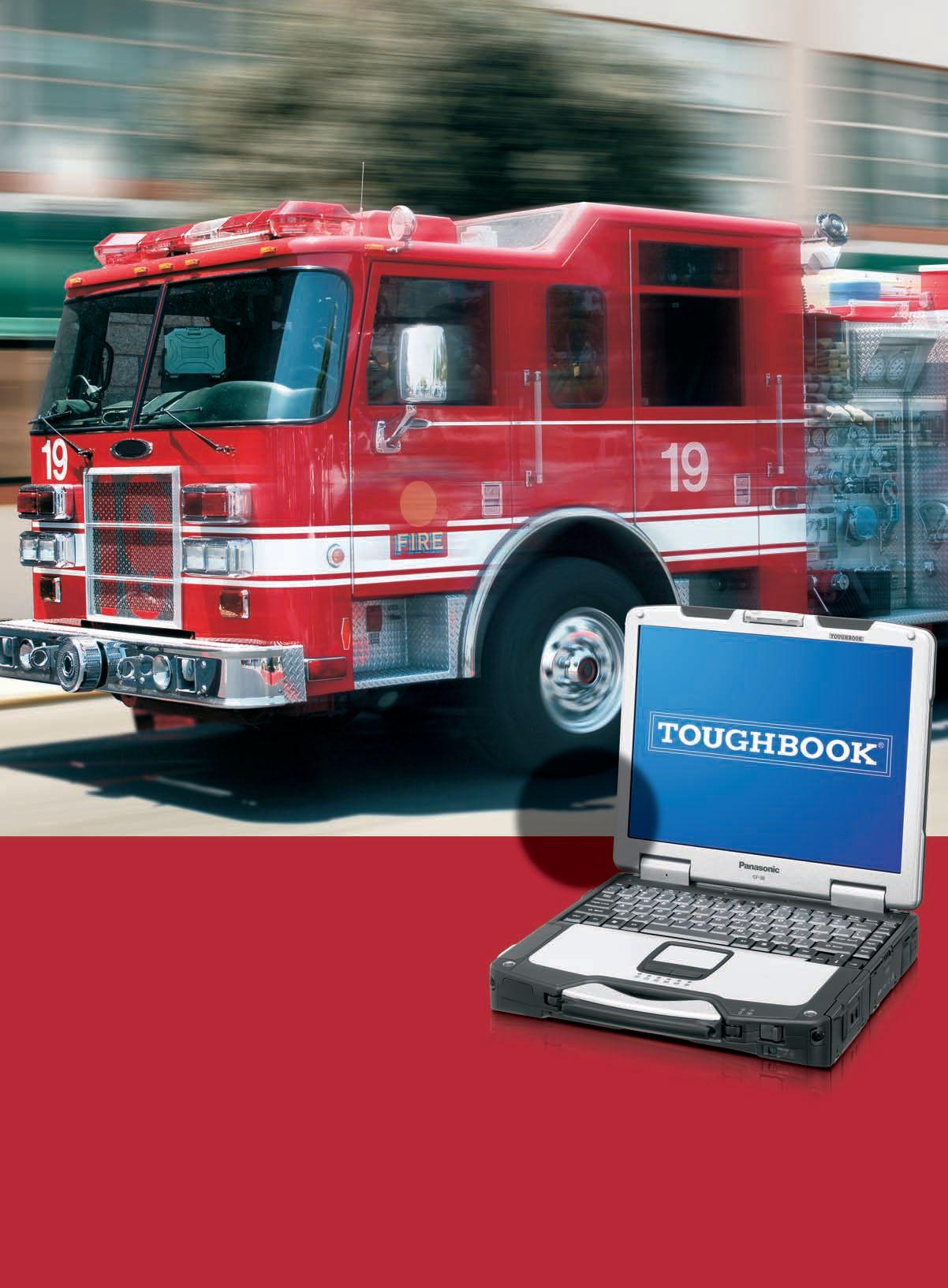
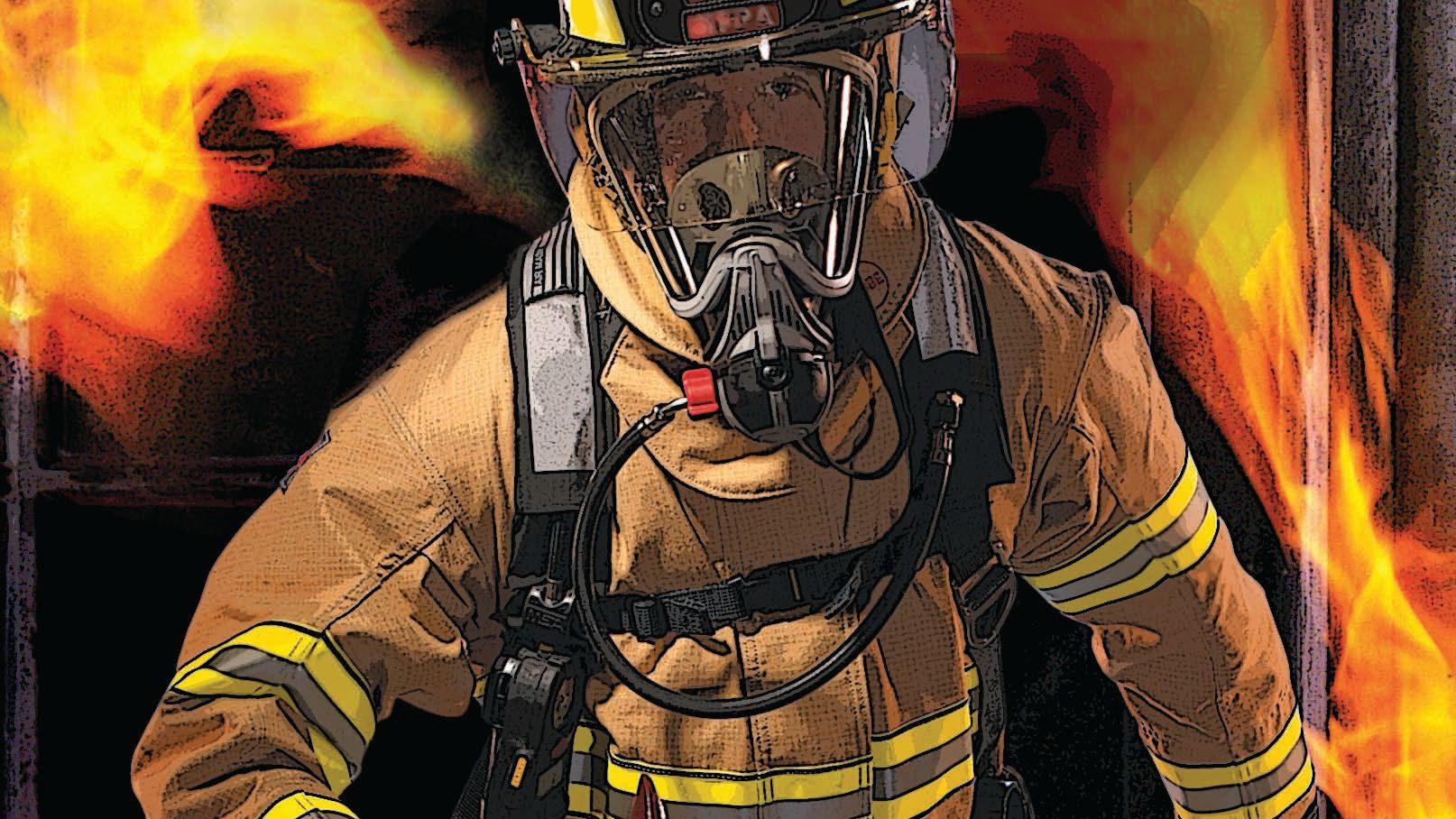
Youhave enough fires to put out. Your equipment shouldn’t be one of them. That’s why you partner with a company that’sup to the challenge. Panasonic Toughbook notebooks are built to exceed military standards, withstanding the rigors of in-vehicle mounting and in-field use.Equally important is the fact that we work closely with your team to ensurethat every Toughbook PC has the software and technological enhancements to get the job done.Lives,after all,are in your hands. It’sgood to knowthe right technology is in your vehicle.
TOUGHBOOK CF-30
■ Genuine Windows®
XP Professional
■ Intel® Core™ Duo
■ MIL-STD-810F Compliant
■ Shock-mounted HDD
■ Moisture and dust resistant
■ Magnesium alloy case
■ 13.3" screen;1000 Nit brightness
■ Optional fingerprint scanner
■ Wide Area Wireless
■ Bluetooth® v2.0
■ GPS capable
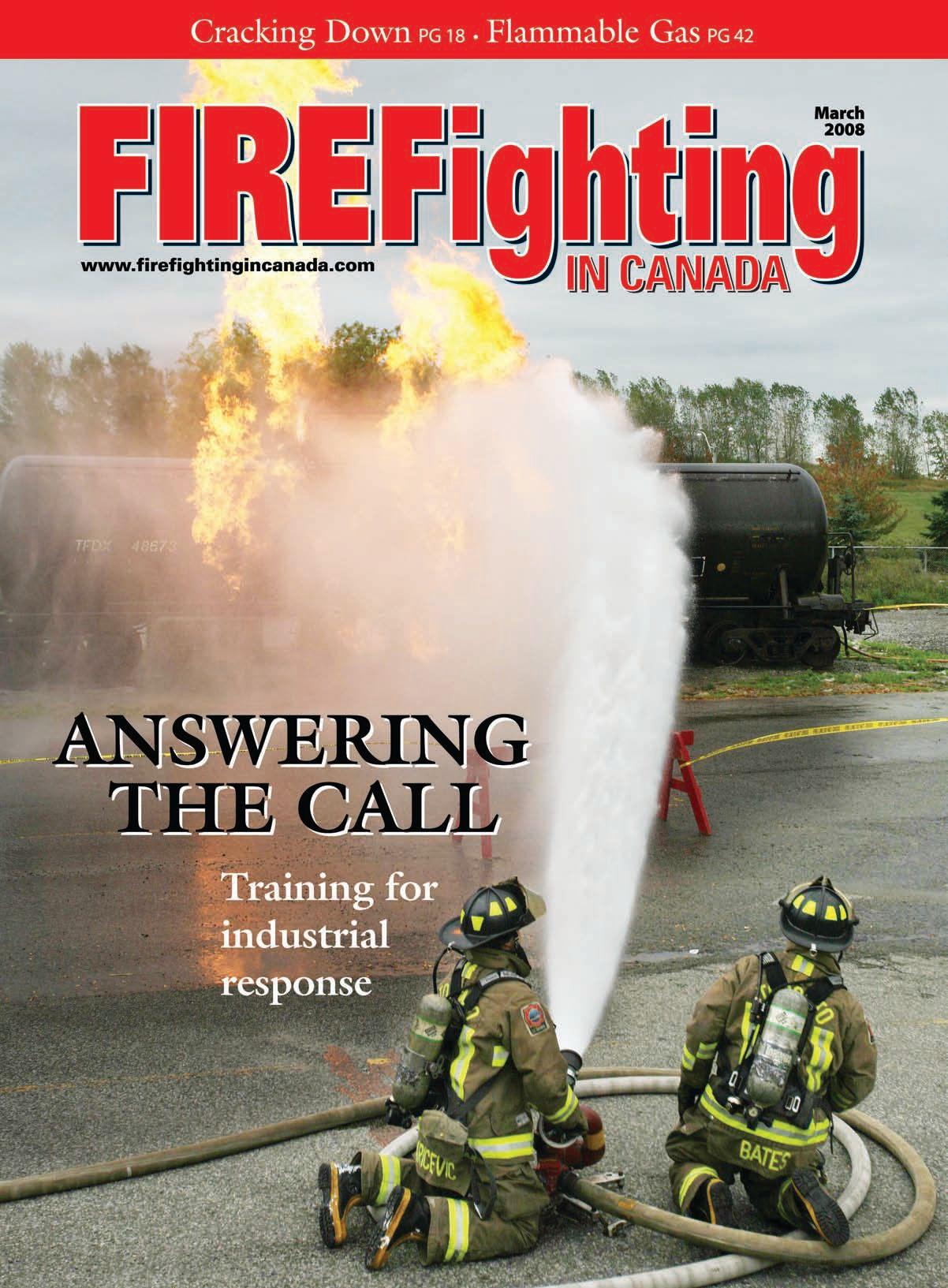
THE CALL TRAINING FOR INDUSTRIAL RESPONSE
Writer James Careless talks to industrial firefighting experts, who provide tips and best practices for fighting blazes at plants or manufacturing facilities Their best advice? It’s no big secret: pre-plans
As B C writer Karin Mark reports, it was a classic case of: “Be careful what you wish for ” In 2006, Surrey, B C , successfully lobbied the province to get access to hydro consumption data to help it identify potential marijuana grow operations In came the data –mountains of it The process has since been streamlined using new software and is highly successful.
A fire in May 2007 gutted a 96-year-old wooden home near Saint John, N B , but training and well-rehearsed procedures helped to keep the incident under control Andrew Sanojca reports on the lessons learned by the Musquash Fire Department
Steve Sorensen reports on the quick actions of firefighters in Sooke, B.C., who were called in October 2005 to a propane leak at a gas station. Good training and attention to detail prevented what could have been a major incident

Wouldn’t you rather have a fire truck that didn’t handle like a fire truck? At E-ONE, we engineered the HP 100 Platform to ensure you have the handling you need when you need it. As the torque box design limits flex, criss-cross underslung jacks and an aluminum aerial construction result in a lower center of gravity and superior performance. And with G4™ (our electronic stability control system) and our industry-inspired independent front suspension, you get unmatched control and confidence around every corner.
Find a safer way at Control-Better.com



hortly before sitting down to write this editorial on a Monday in late Februar y I posted several news stories on the front page of our firefightingincanada com website, all involving significant structural fires in the previous few days.
The largest was a massive blaze in Toronto that gutted most of a city block of heritage buildings. Another stor y was about seniors in Winnipeg being evacuated from a lowrise complex after workers using a torch started a fire There was a also a report of a house fire in Winnipeg, in which a firefighter and an occupant of the home were injured Other stories included a house fire in Toronto that killed a father and two children, a blaze in Calgar y that damaged several buildings, a fatal fire in Mississauga, Ont , that homicide investigators were looking into, another Winnipeg fire in that razed stores and apartments, and the rescue of a woman from a burning building in St. John’s.
features Brigade News and incident reports Stay tuned
We promised an update on the two-hatter issue in Orangeville, Ont. At last word, Orangeville Fire Department officials were inter viewing candidates for 12 positions to replace volunteers who were forced out late last year over the twohatter issue
Winter weekends seem to be particularly busy for firefighters with innumerable fires and car accidents
What appears consistent is the immediate and capable response of the fire ser vice to hundreds of calls in hundreds of communities ever y day
Our website, which highlights fire-ser vice news, features several web-exclusive columns and our front page is a testament to the training, discipline and commitment of Canada’s firefighters
We’d love to post your stories (even a few sentences or a couple of paragraphs) and photos from your department’s experiences on our site Send them in and we’ll get them online.
Going for ward, we hope to add pages to our site, including our popular magazine
The department is hiring seven or eight people to replace the seven volunteer firefighters who left their positions in October after their union warned that they could lose their fulltime jobs with other departments
Orangeville had filed a grievance against the union and the issue was on hold awaiting the appointment of an arbitrator
A similar debate is happening in nearby Innisfil, Ont., with a grievance scheduled to be heard in the summer.
It was interesting putting together this month’s cover stor y (page 14) on tips for industrial firefighting Surprisingly, we had some trouble finding people to inter view, partially due to time constraints and our deadlines, but also because, as Sean Tracey reports in his NFPA Impact column on page 30, industrial brigades often operate under the radar
Coincidentally, we received a great incident report (see page 40) for this month’s issue from Deputy Chief Steve Sorensen in Sooke, B C , about a propane leak and his department’s quick and thorough response to it – a perfect lesson in how training municipal firefighters for industrial accidents pays off.
ESTABLISHED 1957 March 2008 VOL 52 NO 2
EDITOR LAURA KING lking@annexweb com 905-847-9743
EDITOR EMERITUS DON GLENDINNING
ADVERTISING MANAGER HOPE WILIAMSON hwilliamson@annexweb com 800-265-2827 ext 253
PUBLISHER MARTIN MCANULTY fire@annexweb com 1-519-429-5178 800-265-2827 ext 252
PRODUCTION ARTIST GERRY WIEBE gwiebe@annexweb com
VP/GROUP PUBLISHER DIANE KLEER dkleer@annexweb com
PRESIDENT MIKE FREDERICKS mfredericks@annexweb com
PUBLICATION MAIL AGREEMENT #40065710
PAP Registration #8885
RETURN UNDELIVERABLE CANADIAN ADDRESSES TO CIRCULATION DEPT
P O Box 530, SIMCOE, ON N3Y 4N5 email: sbrady@annexweb com
Periodical Postage Paid at Buffalo NY USPS 007-276, ISSN 0015-2595 Published eight times per year (Feb March May June, Aug , Sep , Nov , Dec ) by Annex Publishing & Printing Inc
U S Office of Publication c/of DDM Direct com, 1223 William St Buffalo NY 14240 U S Postmaster send address change to P O Box Niagara Falls Ny 14304
Printed in Canada ISSN 0015–2595
CIRCULATION
e-mail: sbrady@annexweb com
Tel: 866-790-6070 ext 206
Fax: 877-624-1940
Mail: P O Box 530 Simcoe, ON N3Y 4N5
SUBSCRIPTION RATES
Canada – 1 Year - $25 44
(includes GST - #867172652RT0001)
USA – 1 Year $50 00
We acknowledge the financial support of the Government of Canada, through the Publications Assistance Program and the Canada Magazine Fund, toward our mailing and editorial cost Nous reconnaissons l aide financiere accordee par le gouvernement du Canada pour nos coults d envoie postal et nos coutl redactionnels par l’entremise du Programme d’aide aux publications et du Fonds du Canda pour les magazines

From time to time, we at Fire Fighting In Canada make our subscription list available to reputable companies and organizations whose products and services we believe may be of interest to you If you do not want your name to be made available, contact our circulation department in any of the four ways listed above
No part of the editorial content of this publication may be reprinted without the publisher’s written permission @2008 Annex Publishing & Printing Inc All rights reserved Opinions expressed in this magazine are not necessarily those of the editor or the publisher No liability is assumed for errors or omissions
All advertising is subject to the publisher s approval Such approval does not imply any endorsement of the products or services advertised Publisher reserves the right to refuse advertising that does not meet the standards of the publication
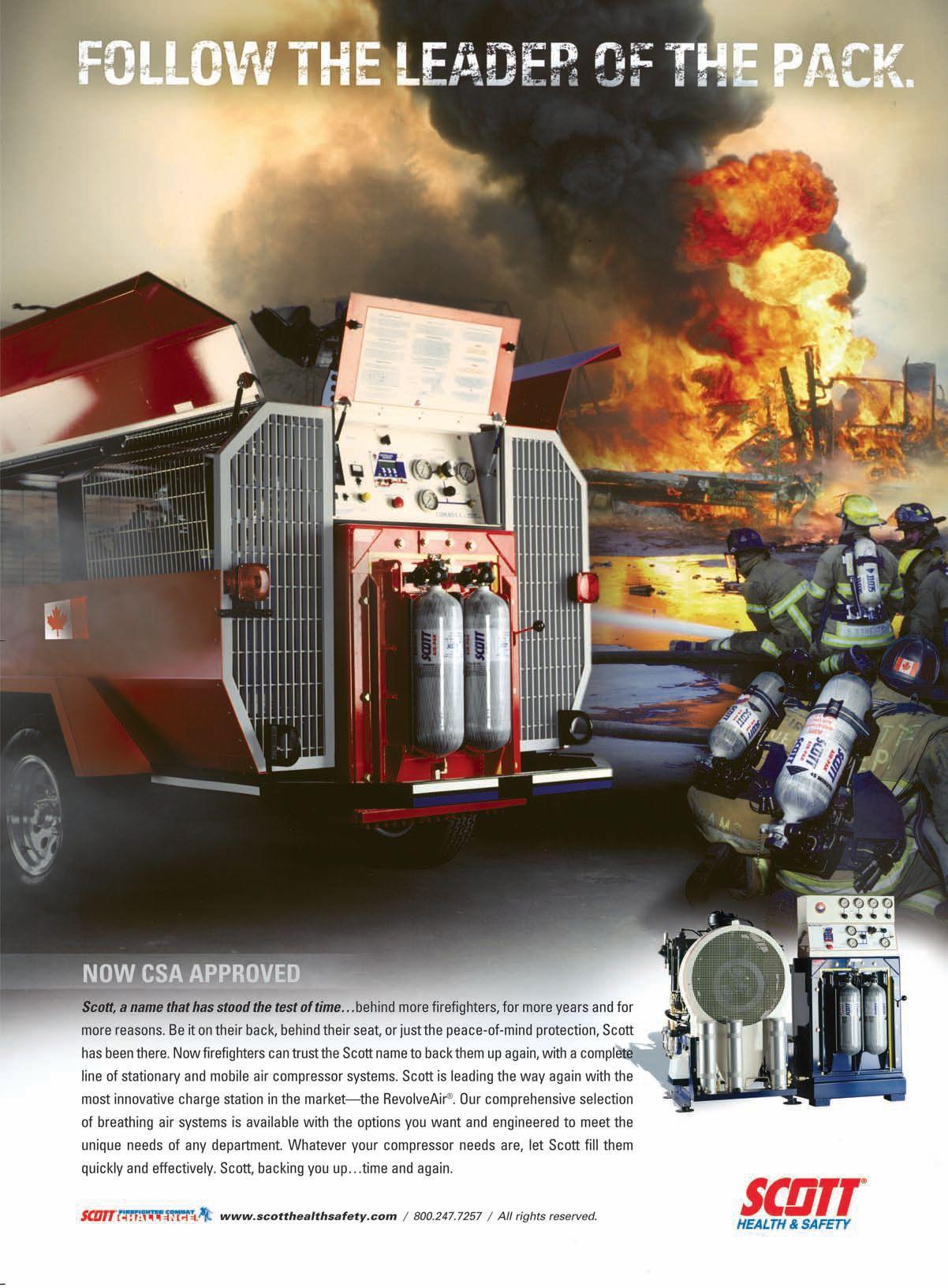
Firefighters in St John’s responded to a helicopter crash near one of the city’s busiest thoroughfares on Jan 10
Both pilots of the Universal AS 350 A-star chopper were aler t and conscious after the crash but were taken to hospital.
According to repor ts, eye witnesses saw the tail of the helicopter go up into the air as the craft disappeared into the
woods The pilots, who were experienced and were on a annual training flight, repor ted an engine failure or loss of power moments before losing communications contact
Rescue crews were surprised to find the helicopter had landed upright and was resting on its landing gear.
The Transpor tation Safety Board of Canada is investigating the cause of the crash.
- By Rober t L ynch
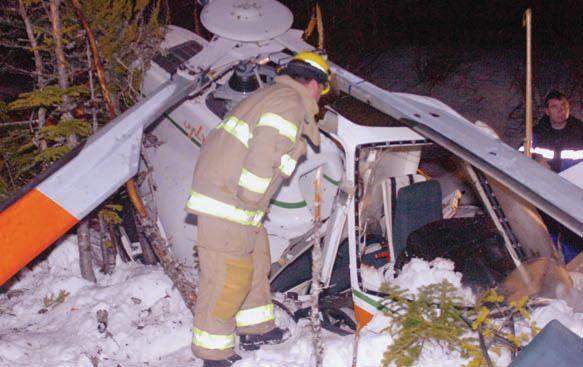
ORILLIA ONT – Acting Capt Glenn Higgins is used to saving lives but he may be the only firefighter in Orilla who has saved the same life twice
Higgins and his crew responded in late January to a report that a man in a coffee shop had collapsed and stopped breathing. The 64-year-old man had no vital signs but his heart started beating after Higgins used a defibrillator.
Higgins thought he recognized the victim’s name Ten years earlier, Higgins had done exactly the same thing when the man collapsed in front of a hardware store
“It’s a bizarre coincidence,” Higgins told the Orilla Packet & Times.
The fire department has three defibrillators and the city has installed units at arenas and in the lobby at city hall.
TORONTO – A deaf hotel guest has struck a rights deal that calls for a Toronto hotel to install fire alarms that can be seen
Under the agreement, the hotel will install a strobe-light fire-alarm system in parts of the hotel, including public washrooms and four guest rooms
Those rooms will be reser ved for people identifying themselves as deaf or hard of hearing
The arrangement between Barbara Dodd and the Days Hotel – brokered by the Ontario Human Rights Commission –
should ser ve as a model across the province
The hotel will also develop and implement policies and procedures for safely accommodating visitors who are deaf or hard of hearing, in consultation with the Ontario Human Rights Commission, Dodd and expert advisors Dodd was staying at the hotel when the fire alarm went off in the early hours, but she couldn't hear it.
Industr y associations have lauded the settlement.
-The Canadian Press
t s
JEFF FALLOW has been appointed full-time fire chief for the City of Cold Lake, Alta A longtime resident and a 19-year veteran of Cold Lake FireRescue, including the amalgamated Town of Grand Centre Fire Department, Jeff recently served as deputy fire chieftraining and operations The City of Cold Lake is in North Eastern Alberta and has a population of about 13,000 It operates two active fire stations with about 50 part-time members Cold Lake
Fire-Rescue responds to more than 200 calls a year including vehicle and ice rescue
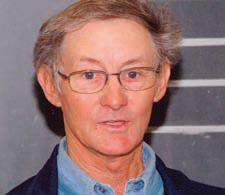
CLARE KELLAM, who never missed a practice in his 37 years as a volunteer with the Airport Fire Department in Brantford, Ont , retired on Oct 28
MONTREAL – The Quebec workers’ health and safety commission is blaming the Montreal fire department for the death of one its firefighters
The commission says the department should have ensured a firefighter was wearing a mask when he battled a blaze in Januar y 2006
A commission report released in Februar y says Capt Marcel Marleau, 47, ignited accumulated gasses near the ceiling when he tried to toss a flaming couch out of an apartment window The result was a flash-over that ignited all flammable material simultaneously and struck Marleau in the face, killing him.
The commission fined the department for poor super vision and violating policy
Following its own inquir y into the fire, the Montreal department
ordered in June 2006 that firefighters working near flames must wear a mask at all times
The safety board said Marleau’s employer, the city of Montreal, was negligent in its super vision, as it had an obligation to make sure its employees were wearing their breathing masks in dangerous conditions
At press time, the Montreal fire department was withholding official comment until it has studied the report by the Commission de la santé et de la sécurité du travail, Quebec’s workplace health and safety board
The union representing Montreal firefighters issued a statement questioning the leadership of fire department director Serge Tremblay and demanding he comment publicly on the report
-The Canadian Press
SASKATOON – The Saskatchewan Association of Fire Chiefs says the of fice of the fire commissioner doesn’t have enough money to do its job
Vice-president Gar th Palmer said the of fice can’t carr y out its mandate and suppor t modernday fire ser vices with its current funding and small staf f.
He said that one per cent of all fire insurance premiums are sent
to the provincial government to suppor t fire ser vice initiatives
Palmer said that money, which amounts to $3 5 million, would go a long way toward funding fire prevention
But he said the cash goes into the general revenue fund instead
Palmer said municipalities should also have to suppor t fire protection ser vices.
-The Canadian Press
KAMLOOPS – Kamloops will become the centre for wildfire control in B C beginning in 2010 when Victoria-based operations are fully transferred Premier Gordon Campbell made the announcement in Febr uar y at the Kamloops fire centre, which houses regional operations for much of the Interior In addition to putting the provincial centre at the centre of the action, Campbell said a central reason for the move is retention and recr uitment of staf f He said many people attracted to the fire ser vice would like to be in a more r ural
setting. An estimated 15 to 20 jobs will move to Kamloops when the transfer is complete in 2010
Staf f at the provincial centre are responsible for allocating resources among regional centres Campbell, who last stood in the Kamloops fire centre during what was dubbed Firestorm 2003, said the agency under the B C Forest Ser vice has a worldwide reputation for excellence The move will also complement the provincial air tanker centre already headquar tered in Kamloops
- The Canadian Press
WINNIPEG – The Manitoba government has agreed to change building codes for homes in the province after a repor t into a blaze that killed two Winnipeg fire captains
As of Oct 1, all new homes will be required to have a fireresistant wall between an attached garage and a home
Labour Minister Nancy Allan says Manitoba is the first jurisdiction in the countr y to institute the requirement It’s been more than a year since captains Harold Lessard and Tom Nichols were killed and four other firefighters were
injured after getting in caught in an intense fire
An investigation determined careless disposal of cigarettes star ted the fire in the home's attached garage
Last October, the fire commissioner and the Winnipeg Fire Paramedic Ser vice released 22 recommendations, including changing home building codes to require fireguard dr ywall instead of plywood between an attached garage and a home
The amended building code changes also require garages to contain heat detectors that are connected to a home’s smoke detector system.
HENRY “HANK” BOYLE retired in September from the Montreal Fire Department where he was chief of operations, handling special assignments Previously, he was assistant director of the Hampstead Fire Department
CAPT GEORGE EGERTON, a volunteer firefighter with the East Gwillimbury Emergency
Services, died Jan 26 of a heart attack several hours after responding to a threevehicle collision Egerton retired from the Toronto Fire Service in June 1997 He had joined the TFS on March 8, 1968
JACK CREIGHTON, 66, a retired firefighter with the Geraldton Fire Department in Ontario, died Dec 28 He was a master pumper operator with the department and had
recently retired after 35 years of service His passing was sudden and unexpected, the loss deeply felt by all members of the Geraldton Fire Department
ALEX MACMILLAN, former deputy chief of the Hartington Township Fire Department in Quebec, died in July after a battle with cancer He was 75 and was a charter member of the department, having served as deputy chief for 20 years
Departments are encouraged to send news and photos of promotions, awards and retirements for The Brass Pole, and Last Alarm announcements, to Fire Fighting in Canada at firefighcan@annexweb com
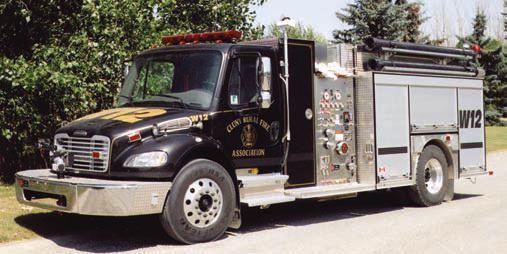
THE CLUNY, ALBERTA, RURAL FIRE SERVICE took deliver y of this uniquely coloured 840-gpm pumper on a Freightliner M2 106 chassis from Fort Garr y Industries It carried 1,000 gallons of water and 24 gallons of foam, has pre-connect lines and a front-mounted bumper nozzle
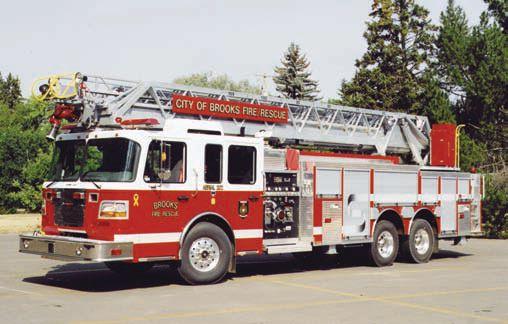
THE BROOKS, ALBERTA, FIRE/RESCUE SERVICE has taken deliver y of a 108-foot RK aerial on a custom Sp D chassis from Rosenbauer with a 1,500-gpm pump, 400 gallons of water and pre-connected lines
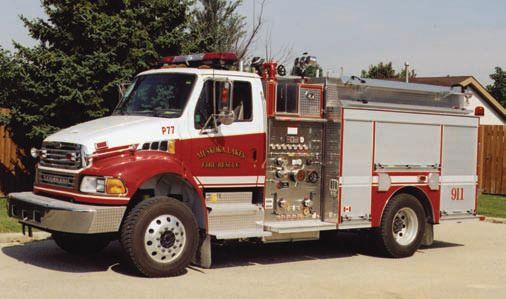
THE MUSKOKA LAKES FIRE RESCUE in Ontario has a new 1,050-gpm pumper on a Sterling chassis with 500 gallons of water and 25 gallons of foam with pre-connect lines and a deck gun The apparatus was built by For t Garr y industries
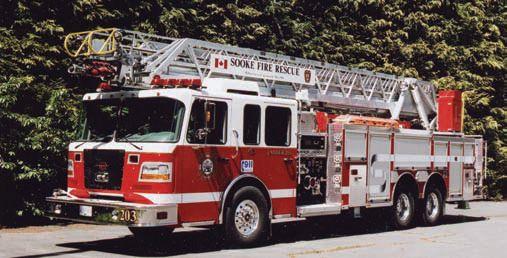
THE SOOKE FIRE DEPARTMENT IN B C took deliver y in May of a 2007 Spar tan-Rosenbauer 109-foot aerial with wireless remote (ladder and turntable by R K Manufacturing), a 1,750 Hale pump, 400 gallon tank and a Foam-Pro 2001 foam system It has a hydraulic generator and a 400 hp Caterpillar diesel engine
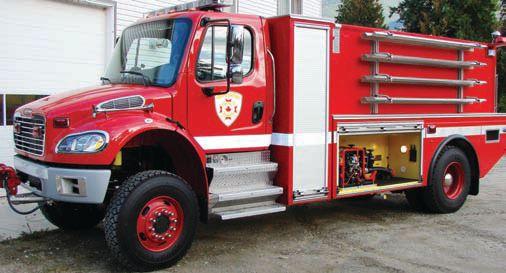
THE BALFOUR HAROOP VOLUNTEER FIRE DEPARTMENT IN B C under Chief George Matheson received in September a HUB Fire Engines-built apparatus built on a 2007 Freightliner M2 4x4 chassis with a 330-hp Caterpillar engine, an Allison 3,000 EVS transmission, a Hale HPW400 por table pump, a HUB enclosed tender body, Amdor roll-up shutters a Whelen lighting package, a Newton 10-inch electric dump valve, a HUB custom swing-down por t-atank rack and an Akron FireFox electric monitor
THE STEWIACKE & DISTRICT VOLUNTEER DEPARTMENT IN NOVA SCOTIA, under the direction of Chief John Frizell, received in December a HUB-built rescue vehicle on a Ford F550 4x4 chassis with a 6 4 litre diesel engine, a Half MG75 mid-ship pump, a Foam-Pro 1600 foam system, Amdor shutters, a Whelen lighting package, Havis Shields push-up lights and a Hannay hose reel
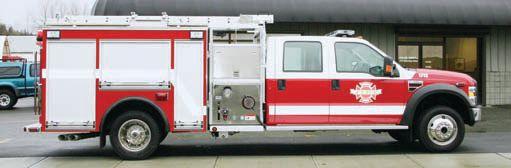

Firefighter and personal trainer Brad Lawrence’s monthly columns on fitness and training can be used as handouts in your depar tments FitSmar t is updated monthly. Check it out under web exclusives.
L yle Quan finds the needles in the haystack Each month in Fire Fighting in Canada, the deputy chief sor ts through the mountains of leadership resources available in depar tments, libraries and online and presents a clear and concise summar y of the best of the lot His March CornerStone column is online at www.firefightingincanada.com and features two solid resources on training, communication and teamwork – a DVD titled Teamwork in Crisis, the Miracle of Flight 232 and a book by Dr. Chris Bar t, A Tale of Two Employees, on communicating your expectations to your staf f

Steve Kraft’s new Your Call column demands reader feedback and we hope you’ll oblige, either through letters, emails or comments you can post our website Each month, Steve will pose a dilemma or scenario that challenges managers to make the right decision We’re anxious to hear how you would handle things or how you did handle a similar crisis or situation.
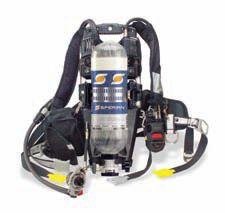
The latest in gas detectors, thermal imagers, SCBAs and more
Click on New Products
Visit www firefightingincanada com to sign up for your free digital issue
Have your say in our fire-ser vice related polls.
Recent poll results:
Should unions allow firefighters to work in one jurisdiction and volunteer in another?
• Yes 83 2 per cent
• No 13 4 per cent
• Undecided 3 4 per cent
Check out our editor’s blog and District Chief Peter Sells’ opinions Click on Blog or Web Exclusives
Fire Fighting in Canada’s annual buyers guide is posted on our website for quick and easy reference to suppliers and manufacturers. Click on Buyers Guide.
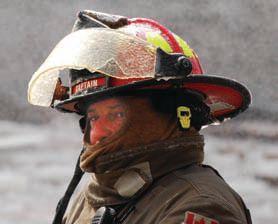
Check out our galler y of photos of recent fires, training exercises and more
Submit your event and have it posted on our comprehensive, Nor th America-wide list of conferences, workshops, association meetings.








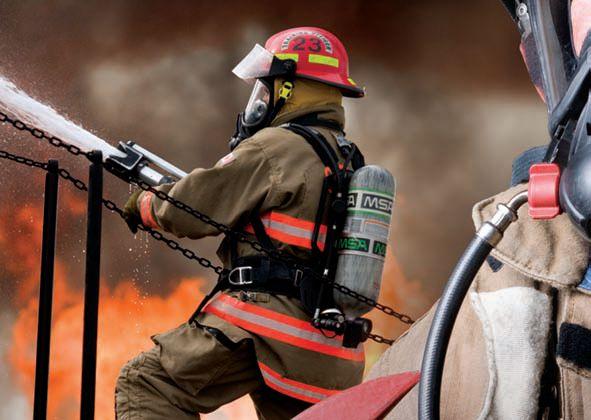

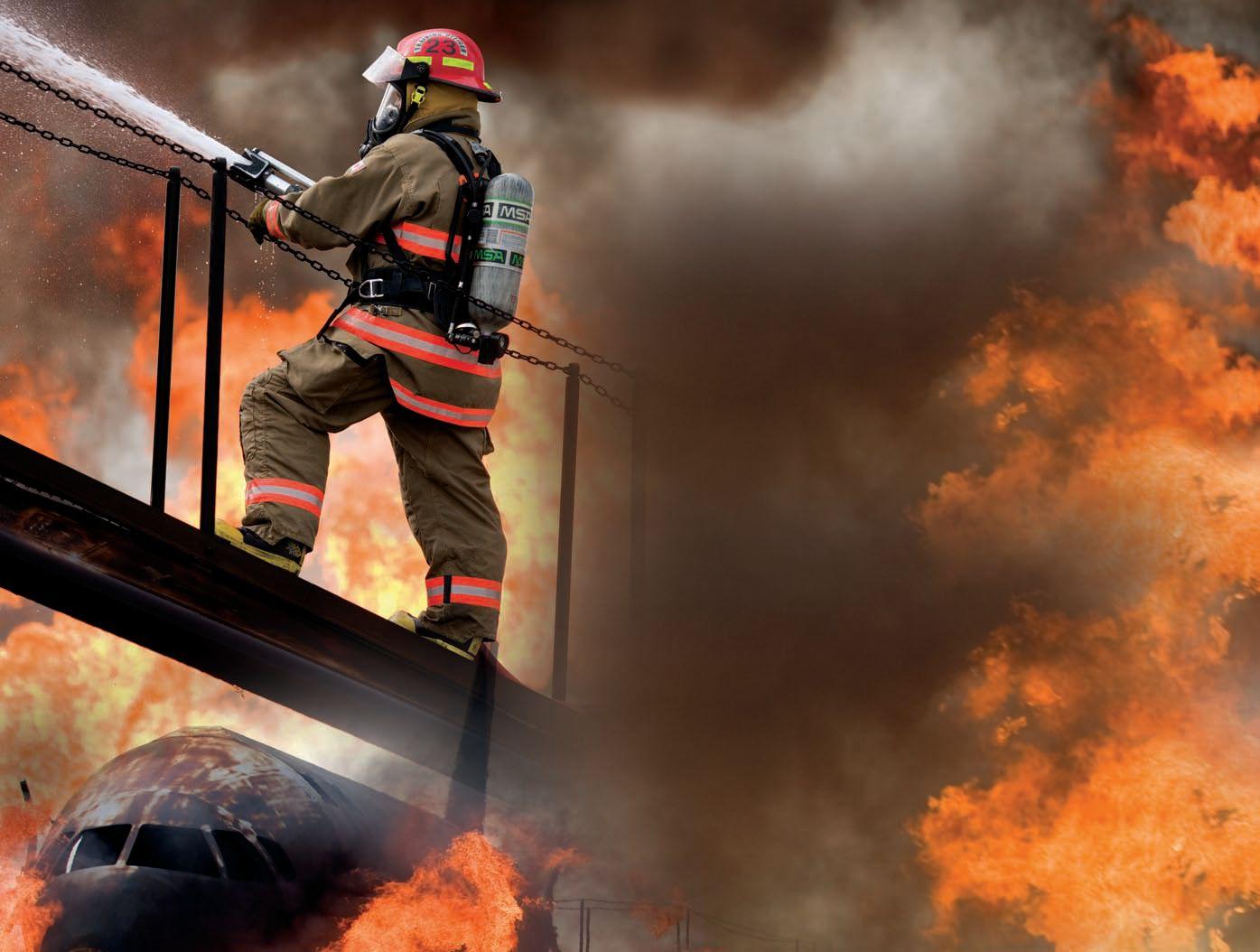
Find out by enrolling today and train where firefighters learn from the best. The Greater Toronto Airports Authority’s state-of-the-art Fire and Emergency Services Training Institute (FESTI) offers hands-on courses ranging from NFPA programs to Aircraft Rescue Firefighting programs to Confined Space Training. Clients from across the globe in search of top quality instruction make FESTI their first choice for their emergency response training needs.
By JAMES CARELESS
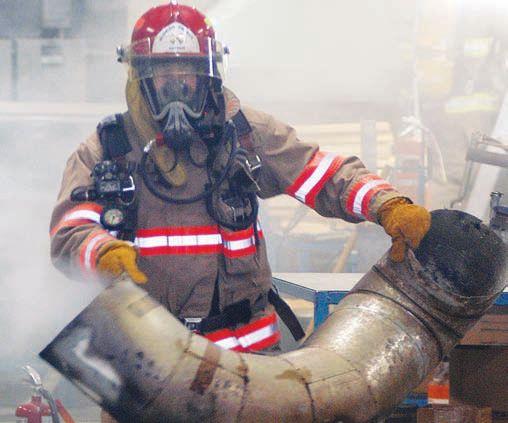
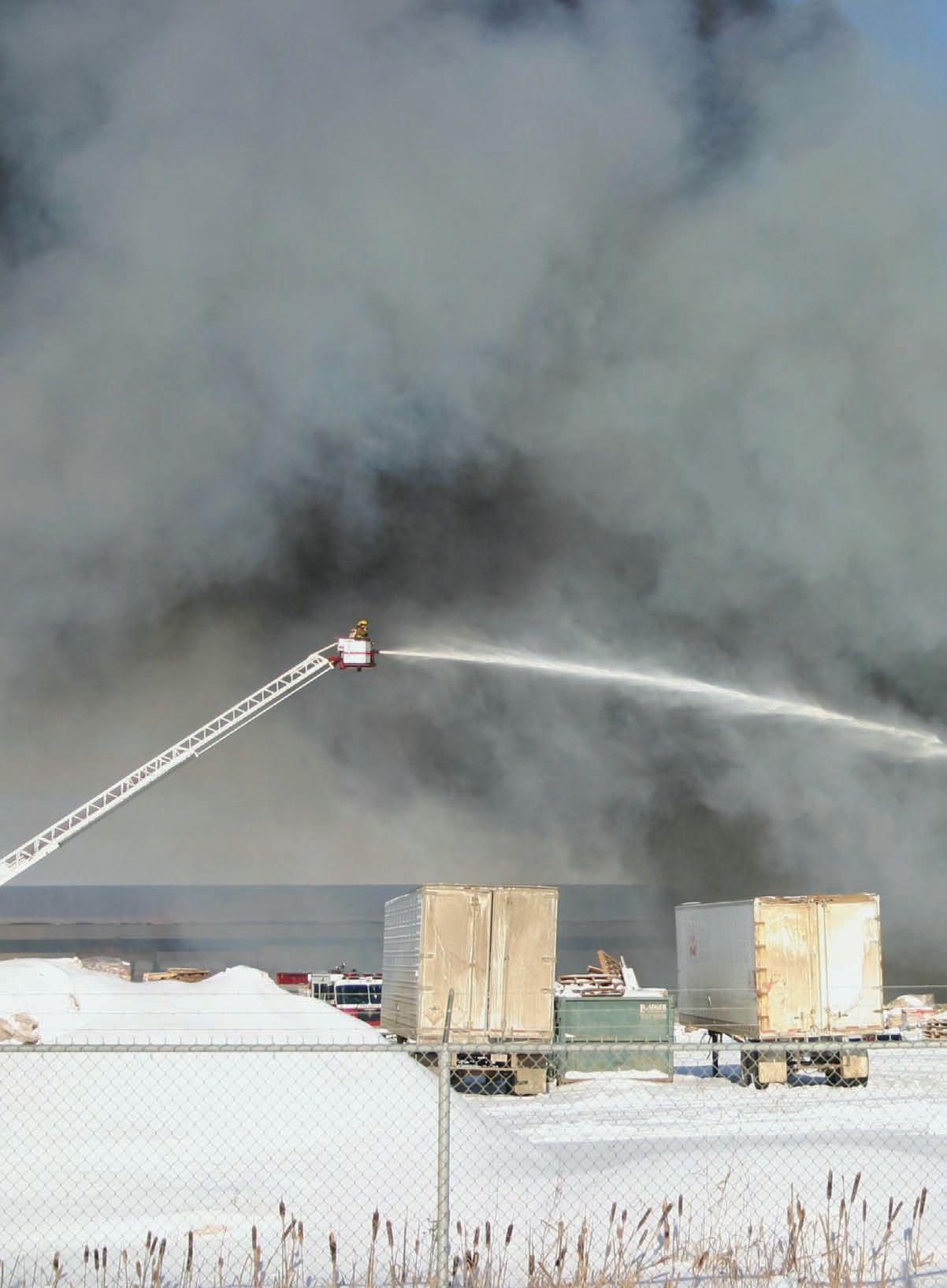
ndustrial fires can be a firefighter’s worst nightmare The reason: “The frequency of these events is low in comparison to other fires but the risk to firefighter life safety is higher,” says Jim Bond, deputy fire chief and manager of training at the Surrey Fire Ser vice in B C
“For example, air-management r ules that might work well in small str uctures are not suitable for large str uctures due to the time required to move within the str ucture, and if an air alarm is sounding in the middle of a large str ucture, the firefighter may not have suf ficient time to get out safely ”
Industrial fires also usually require dif ferent suppression techniques and equipment, he notes
“Industrial str uctures tend to be made of dif ferent materials and will behave dif ferently under fire conditions. Steel-frame buildings, for example, may af ford less time before str uctural collapse.”
There are ways to mitigate the risks associated with industrial firefighting. Deputy Chief Bond, Stephen McDonald, deputy fire chief (emergency management) for the Regional Municipality of Wood Buf falo in Alber ta, and George Quick, assistant director for programs and operations at the University of Nevada, Reno Fire Science Academy, have provided some exper t advice on the topic
“The most impor tant thing you can do is pre-plan the hazards in your jurisdiction,” says Bond “Work with the industries to identify the dangers and the proper way to handle them The fire depar tment must have a working relationship with the industries in their jurisdiction ”
Adds Quick: “It is absolutely essential to do pre-planning and to work with the industries The fire depar tment must rely on the individual industries to provide exper tise on the hazards present Prior to an incident, the roles for both the fire depar tment and the industr y must be defined, so all par ties know what they are expected to do ”
To do all of this successfully, each fire company needs to contact the industries in its jurisdiction to find out what they do, what materials they have on site and where they are stored. “It is the neighbourhood fire company that should be aggressively involved with tactical walk-about exercises at those industrial proper ties on a regular basis,” says Bond
“This proactively af fords an oppor tunity to establish relationships before an emergency, and provides owner/operators to provide specific information that would not be acquired during a regular fire safety inspection Some facilities may have specialists, possibly chemists or specialty fire brigades This is an oppor tunity to make these essential contacts ”
Prioritize risks
Once a fire company knows the nature of the industries within its territor y, “the fire depar tment should consider r ules to prioritize those industries that represent the greatest risk to responders or neighbouring populations, and consider also what safety systems have been installed under code provisions to manage those risks,” says Chief Bond

For instance, “A facility such as a lithiumbatter y plant might at first be perceived to be at higher risk but dr y rooms and strict storage regulations and special extinguishing s y s t e m s s a f e t y m a n a g e t h o s e r i s k s . Alternatively, a vehicle tire recycling facility may have large stockpiles of r ubber with little fire protection for outdoor storage ”
OK, the risks have been assessed and priorities assigned The next stage is to plan the depar tment’s best response to likely incidents, in tandem with the industries and their own fire-suppression crews Site attack, personnel protection and population evacuation tactics should be worked out at this stage and co-ordinated with the necessar y agencies, as should “a well-known ICS system for command and control,” says Bond “This system should be known by all emergency response ser vices due to their likely involvement.”
Once the plans are in place, industrial fire training must begin “Tabletop, on-site drills and exercises ensure that depar tment members know the hazards and the proper actions to take at individual facilities,” says Quick This par ticularly applies to hazmat teams “Like any specialty team, they must have a regular training program to maintain their skills,” he says “This training will be based on the actions they will be expected to take at a scene In large scale industrial incidents this usually involves research and planning more than mitigation Do not forget the basics: containment, damming and diking ” “Train them, test them and train them again,” adds Deputy Chief McDonald Among the skills he ranks as most impor tant are big water deliver y, live fire training (hydr ocarbon), tank far m setup and mutual aid.
Wor th noting: If your industrial firefighting plans call on multi-agency par ticipation then these agencies must take par t in your training and drills
What tools should you have at hand to fight industrial fires? “This depends on the hazards that ar e identified in the pr e-planning phase,” replies Quick “Some common items are high-volume foam propor tioning equipment and foam concentrate (preferably in totes) mounted on a trailer to allow a single person to bring it to the scene using a p i c k - u p t r u c k T h e f o a m n e e d s t o be appropriate to the hazards but typically an alcohol resistant AFFF is the best all-around foam
McDonald endorses Quick’s advice, but adds that two other impor tant industrial firefighting tools are “large diameter hoses and
water deliver y devices.”
Quick recommends a high-capacity por table monitor while Bond says a thermalimaging camera is a must. “This tool can help the responders determine the extent of the problem under heavy smoke conditions and provides initial impor tant size-up information ”
The risk has become reality: Your depar tment is on scene at an industrial fire Should you go in and attack? No, says Quick “Industrial fires should be fought in a defensive manner until all the hazards are identified ”
“The priority has to be life safety and then containing the incident, which includes run-of f,” he explains “Only once all the hazards are identified and a plan is developed to address these hazards the depar tment can begin of fensive operations. But if the results will be the same whether of fensive or defensive operations are selected, then put responders at the lowest risk by remaining in a defensive mode.”
Adds McDonald, “Take the time to assess the situation prior to committing resources ”
When it comes to keeping personnel safe while fighting an industrial fire the most ef fective protective option is to use distance, says Quick This is why “the use of high flow monitors which allow firefighters to remain as far away from the actual fire as possible is recommended in many cases ”
In a typical residential fire, of ficers do their best to douse the flames But this tactic is not necessarily appropriate in industrial situations In fact, “The best way to fight most industrial fires is to protect exposure, shut of f the flow of fuel or remove unburned material from the fire area and allow the fire to selfextinguish,” says Quick. In other words, contain and then star ve an industrial fire; don’t risk your staf f in unnecessar y heroics
Our exper ts have covered many aspects of industrial firefighting So what is the one point that they consider to be most important?
“The best advice is to work with the industries in your area and develop comprehensive pre-plans,” says Quick “Do not assume they have the specialized equipment necessar y to handle an incident at their facility Look outside your jurisdiction for exper tise, equipment and assistance; do not tr y to do it all by yourself ”
Adds Bond: “Know the characteristics of the product and str ucture under fire conditions and do not risk firefighter lives to save proper ty alone.”


By KARIN MARK
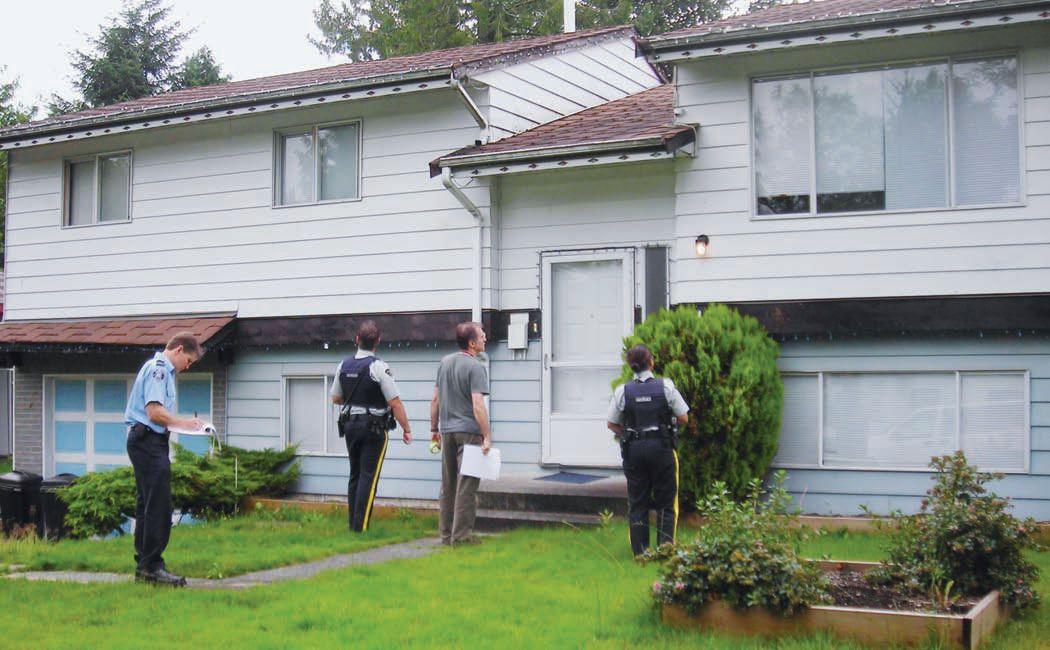
It was a classic case of: “Be careful what you wish for ” In 2006, the City of Surrey in B C successfully lobbied the provincial government to provide legislation giving cities access to hydro consumption data to help them identify potential marijuana grow operations
The result was huge volumes of data that threatened to over whelm Surrey’s Electrical and Fire Safety Inspection (EFSI) initiative, an innovative public-safety program that targets residential grow operations However, the development of new software to process the data has made the EFSI program more ef fective – and more adoptable by other communities.
“The high volume of the data made us realize we needed a more three-dimensional
way of tracking what we were doing, instead of one dimensional, like a spreadsheet,” Surrey Fire Chief Len Garis explained “Because the software processes the data on so many levels, it makes us instantly intelligent about what’s going on out there ”
Surrey implemented its first EFSI team in 2005 and doubled its size in early 2007
The program uses the city’s powers to conduct electrical and fire safety inspections as an oppor tunity to reduce the safety hazards associated with indoor grow operations –primarily fire and electrocution – but also health risks, str uctural issues and crime It’s an administrative appr oach that helps address large numbers of low-level grow operations while freeing up police to target the larger crime organizations.
Prior to the new legislation, the team
worked from RCMP tips on addresses that were later verified by BC Hydro as having unusually high electricity consumption. Data was manually entered into a series of spreadsheets
After new provincial legislation was adopted in May 2006, BC Hydro star ted sending Surrey large batches of addresses with highconsumption data after each two-month billing cycle The first batch had 1,600 addresses The next had 1,300 Now, it’s the EFSI team’s job to sift through the files and then r un them by the RCMP to ensure the inspections won’t conflict with an existing police investigation, or that the site doesn’t pose a personal safety threat to the inspectors
What would have been time-consuming and tedious to do manually is a simple process using the new Electrical & Fir e Safety Inspection Application developed by B.C.’s Data Accent.
The software analyzes the electricity consumption data, flagging addresses based on the team’s criteria. It has also automated a variety of EFSI data-collection processes, such as the recording of obser vations and information from proper ty visits, as well as research and correspondence The inspectors’ data can be entered into laptops in the field and synchronized with the master database at the end of each day
“It takes the data that, if it was in the raw material format, would be dif ficult to disseminate and make decisions from,” said Surrey Fire Ser vice Capt Cal McKibbon, the EFSI team co-ordinator “Without a doubt, it’s made the process faster and easier Without it, we’d be working from a big data sheet spread out across the table ”
In anticipation of the onslaught of electricity consumption data, Chief Garis approached Data Accent’s Suzanne Landr y in the spring of 2006. In the months that followed, Landr y worked closely with the team to develop a custom application reflecting its requirements for data input, storage, analysis and repor ting
“We were looking for an integrated system that would populate multiple fields and r emove the multi-step pr ocess we had before,” said Carol Richardson, a City of Surrey clerk who provides administrative suppor t for the EFSI team “It’s cer tainly allowed us to deal with a higher volume We really have a fine handle now on where we are with our stats, and we’ve been able to fine-tune other administrative areas and look fur ther into our stats to apply the information ”
For example, the team can now easily target potential repeat of fenders In an estimated 10 per cent of the cases, proper ties made safe through the EFSI process later rever t to grow operations. Now, the ability to easily compare new electricity consumption data to
• Suspects do not appear to regularly attend jobs but drive expensive vehicles
• Dark coverings over windows
• Rooms seem to be illuminated all the time
• Heavy condensation on the windows and an absence of frost or snow on the roof when other houses have frost or snow
• Unusual number of roof vents or unusual amounts of steam coming from vents.
From the City of Whiterock, B C , website
existing files means repeat addresses are instantly flagged and a team can be dispatched in a timely manner.
The software has also standardized how data is collected for individual addresses, making it easier to compare and analyze Instead of entering information into spreadsheets in var ying formats, inspectors now complete a series of standard fields – such as a list of check boxes reflecting more than 80 potential indicators for a grow operation, such as condensation on windows, an untidy exterior, sporadic occupation, odours and guard-dog signs Like other aspects of the software, the indicators were developed with team input and are easily amended
After the master database is updated with the field data, ever yone on the team has access to the spectr um of information available on a par ticular address, including its histor y, electricity consumption records, grow operation indicators, inspector notes, city proper ty information and RCMP file number.
“Basically, the greatest benefit is allowing the of fice and the guys in the field to link together and provide each other with the information they need,” said Surrey Fire Ser vice Deputy Chief Dan Barnscher, who oversees the EFSI team “Before that, the paper trail was really immense And it was really based on your organization in a file folder ”
Barnscher also noted that the software is able to evolve as conditions change, “We’re so dynamic out in the field, and the people r unning the grow operations change week to week in their methods, and we have to make changes to keep pace with that,” he said “This program changes from week to week because new problems and issues pop up I can foresee the software being added to constantly and totally evolving over time.”
Landr y, whose company specializes in helping organizations make the most of their
data, said the organization and embodiment of the team’s guidelines and procedures makes the EFSI program more sustainable for Surrey and also provides a str ucture that can be easily duplicated by other communities
“What we’ve really done is institutionalize the information,” she said “Surrey has spent three years getting its team r unning For other communities, the bulk of the work has been done – it’s just a matter of refining it and customizing it ”
Landr y also noted that the software brings a valuable big-picture perspective to the EFSI data that was lacking in the previous spreadsheet-based format
Chief Garis agreed The software allows Surrey to take a step back and assess the data in a more comprehensive way, he said, helping the city to pinpoint trends and changes in the marijuana production industr y “As the industr y changes or adapts – par ticularly in terms of some of the visible indicators – we should be able to identify ver y subtle changes because we’re tracking that stuf f statistically.”
To Garis, the new software was a necessar y next step for a program that has attracted national interest, is in various stages of adoption in a number of other communities in Greater Vancouver, and has cer tainly proved its wor th in Surrey
The EFSI team rendered safe 178 grow operations in 2005 and 127 in 2006 – in both years r oughly matching the number of RCMP warrants for grow operations In addition, the program has contributed to a significant drop in fires caused by grow operations From 2003 to 2005, grow operation-related fires in Surrey had climbed to about 15 per year (6 12 per cent of all fires) But in 2006, the first full year of the EFSI program, grow operations caused nine fires (3 77 per cent of all fires) – a 40 per cent decrease from 2005.
The bottom line, Chief Garis said, is that the grow-operation problem is widespread and cities need a cost-ef fective way to deal with the associated public safety threats.
“What we’re tr ying to do is interr upt their business in the most ef ficient and ef fective way possible – and it seems to be working,” he said “This software is a tool that you’ve pretty much got to have to manage this kind of volume and the dynamics that are in play here It’s allowing us to look at what’s on the ground in front of us, while also looking upstream so we can change and adapt as necessar y ”
Based near Vancouver, B C , Karin Mark writes for publications and corporate clients and of fers a range of contract communications ser vices She previously worked as a newspaper repor ter for 13 years, earning multiple provincial and federal awards for her news and feature writing.
c o n t i n u e t o b e a m a z e d b y t h e a c t i o n s o f s e e m i n g l y
i n t e l l i g e n t p e o p l e w h o d o u n b e l i e v a b l y d u m b t h i n g s I a m t a l k i n g
a b o u t a c c o m p l i s h e d p u b l i c - a n d p r i v a t e - s e c t o r o f f i c i a l s w h o a r e
c o n s i d e r e d t o b e t a l e n t e d l e a d e r s y e t f o r s o m e s t r a n g e r e a s o n t h e y
d o s o m e t h i n g t h a t i s t o t a l l y e m b a r r a s s i n g a n d / o r d i s h o n e s t . A s a
r e s u l t , t h e i r c a r e e r a n d r e p u t a t i o n e n d s u p i n t h e t a n k .
C o n s i d e r i n g t h e n u m b e r o f w a c k y r e a l i t y T V s h o w s o u t t h e r e ,
h e r e ’ s m y i d e a f o r a s h o w : I w o u l d c a l l i t : L e a d e r s a n d t h e D u m b
T h i n g s T h e y D o . T h e p r o g r a m c o n t e s t a n t s w o u l d b e a g r o u p o f
r e c e n t l y “ f a l l e n ” l e a d e r s c o m p e t i n g f o r t h e g r a n d p r i z e o f Wi n
B a c k Yo u r C a re e r a n d R e p u t a t i o n L i k e t h e p o p u l a r T V s h o w,
A m e r i c a ’ s F u n n i e s t H o m e Vi d e o s , t h e a u d i e n c e w o u l d p i c k t h e
w i n n e r ( t h e d u m b e s t t h i n g a l e a d e r h a s d o n e ) b a s e d o n t h e m a j o r -
i t y o f v o t e s D o y o u t h i n k t h e r e w o u l d b e a s u f f i c i e n t n u m b e r o f
i n d i v i d u a l s t o r u n t h i s s h o w w e e k l y ? C h a n c e s a r e , a s y o u ’ r e r e a di n g t h i s , s o m e w h e r e t h e r e i s a p e r s o n i n a l e a d e r s h i p p o s i t i o n
d o i n g s o m e t h i n g s t u p i d A n d a s F o r e s t G u m p s a i d , “ S t u p i d i s a s
s t u p i d d o e s ”
B a s e d o n t h e n u m b e r o f i l l e g a l a n d i m p r o p e r i n c i d e n t s t h a t a r e
r o u t i n e l y e x p o s e d i n v o l v i n g b o t h p u b l i c a n d n o t - s o - p u b l i c i n d i -
v i d u a l s , i t w o u l d a p p e a r t h a t i n a p p r o p r i a t e
b e h a v i o u r i s q u i t e c o m m o n W h a t c a u s e s l e a d e r s
t o g o a s t r a y ? I s i t a c h a r a c t e r f l a w i n h e r e n t i n a
c e r t a i n p e r c e n t a g e o f t h e p o p u l a t i o n g e n e r a l l y
a n d t h e l e a d e r s h i p p o p u l a t i o n d i r e c t l y ? D o e s t h e
p o w e r a n d i n f l u e n c e t h a t c o m e s w i t h l e a d e r s h i p
g o t o t h e b o s s ’ s h e a d ? O r i s i t j u s t g r e e d ? A n d
w h a t a b o u t t h e s t u p i d t h i n g s o f f i c i a l s d o i n t h e
p u r s u i t o f r o m a n c e ?
H e r e a r e a f e w e x a m p l e s o f d u m b t h i n g s l e a d -
e r s h a v e b e e n c a u g h t d o i n g r e c e n t l y : u s i n g t h e
c o r p o r a t e c r e d i t c a r d f o r p e r s o n a l p u r c h a s e s f o r
e v e n s m a l l s t u f f l i k e c i g a r s ; c h a r g i n g e x p e n s e s f o r a b u s i n e s s t r i p ,
w h e n n o b u s i n e s s w a s c o n d u c t e d ; c l a i m i n g m e a l s w h i l e a t t e n d i n g
a c o n f e r e n c e o r s e m i n a r w h e n m e a l s w e r e p r o v i d e d a n d p a i d f o r
a s p a r t o f t h e r e g i s t r a t i o n f e e ; n o t f o l l o w i n g c o r p o r a t e c o n t r a c ti n g p o l i c i e s o r p r o c e d u r e s i n p r o v i d i n g w o r k t o a f r i e n d o r f a m i l y
m e m b e r ; c i r c u m v e n t i n g r e c r u i t m e n t p o l i c i e s t o h i r e f r i e n d s o r f a m i l y m e m b e r s ; u s i n g o n e ’ s p o s i t i o n t o i n f l u e n c e a c a r s a l e s -
p e r s o n t o g i v e a s p e c i a l d i s c o u n t a n d a l l o w i n g t h e s a l e s p e r s o n t o
t e l l p r o s p e c t i v e c u s t o m e r s t h a t p u r c h a s i n g f r o m t h e m i s t h e r i g h t
t h i n g t o d o b e c a u s e y o u ( p i c k a b i g t i t l e ) b o u g h t f r o m t h e m ;
u s i n g c o r p o r a t e a s s e t s f o r p e r s o n a l g a i n ( t h e f i r e c a p t a i n u s e s t h e
f i r e t r u c k t o p u r c h a s e s o m e h o m e r e n o v a t i o n i t e m s a t t h e h a r d -
w a r e s t o r e ) ; s h o p l i f t i n g w h i l e o n d u t y o r i n u n i f o r m ( y e s , t h e r e
have been occur rences of senior of ficers fr om emergency ser vices
d i s c i p l i n e s b e i n g c h a r g e d w i t h t h i e v e r y ) .
H e r e a r e s o m e o f t h e r e a s o n s t h a t a r e o f f e r e d :
• T h e s y s t e m o w e s m e ;
• T h e y w o n ’ t c a t c h m e ;
• I n e e d t o g e t e v e n t o r i g h t a p e r c e i v e d w r o n g a g a i n s t m e ;
• T h a t w i l l t e a c h t h e m t o m e s s w i t h m e ;
• I n e e d t o m a k e i t l o o k l i k e a b u s i n e s s t r i p s o t h a t h e / s h e w i l l
n o t f i n d o u t w h a t I a m r e a l l y u p t o ;
• T h e o r g a n i z a t i o n w i l l n o t g i v e m e a r a i s e s o I w i l l c o m p e n s a t e i n o t h e r w a y s ;
• I h i r e f a m i l y m e m b e r s w h i l e i g n o r i n g t h e p o l i c y b e c a u s e
f a m i l y c o m e s f i r s t ;
• M y b o s s d o e s i t , s o i t ’ s O K f o r m e t o d o i t ; I c a n g e t a w a y
w i t h i t b e c a u s e I a m i n u n i f o r m ;
• T i m e s h a v e c h a n g e d a n d i t ’ s O K t o d o t h i s g i v e n t o d a y ’ s
p e r m i s s i v e s o c i e t y
David Hodgins is the managing director, Alber ta Emergency Management Agency He is a former assistant deputy minister and fire commissioner for British Columbia. A 30-year veteran of the fire service, he is a graduate of the University of Alber ta’s public administration program and a cer tified emergency and disaster manager. E-mail: David.Hodgins@gov.ab.ca ... a fundamental principle of leadership is to have others follow – that means they will copy the leader’s behaviour
R e m e m b e r, a f u n d a m e n t a l p r i n c i p l e o f l e a d e r s h i p i s t o h a v e
o t h e r s f o l l o w – t h a t m e a n s t h e y w i l l c o p y t h e l e a d e r ’ s b e h a v i o u r
W h a t b e h a v i o u r s w o u l d y o u h a v e y o u r d i r e c t r e p o r t s a n d o t h e r s
f o l l o w ?
A s a l e a d e r – a n d r e m e m b e r, e v e r y o n e , r e g a r d l e s s o f r a n k f i t s i n t o t h i s c a t e g o r y – y o u h a v e a n o p p o r t u n i t y t o i n f l u e n c e t h e
w o r k e n v i r o n m e n t i n a p o s i t i v e w a y J u s t a s a j o u r n e y o f 1 , 0 0 0
m i l e s b e g i n s w i t h o n e s m a l l s t e p , y o u r s t e p s i n t h e r i g h t d i r e c -
t i o n w i l l h a v e a d i r e c t i n f l u e n c e o n t h e a c t i o n o f o t h e r s
W h e n i n d o u b t , a s k y o u r s e l f , “ W h a t w o u l d m y m o t h e r t e l l
m e t o d o ? ” a n d t h

By ED BROUWER
As I was researching this column on electrical safety I came across some exciting news – BC Hydro is in consultation with the B C Fire Training Of ficers Association to develop a trainthe-trainers course on electrical hazards for firefighters
BC Hydro has given us permission to reproduce a por tion of its Electricty Take Care book, a guide to electrical hazards facing firefighters We hope the information will benefit your depar tment
According to the BC Hydro publication, about 80 per cent of the human body is water, which is one of the best conductors of electricity. Electricity will go through the body to reach the ground about as easily as it goes through a power line. The body’s tolerance to electric shock depends on the amount of current and how long it lasts.
We have an electrically powered brain, which is so ef ficient that it operates on currents so tiny that they can barely be detected Our brains use these tiny signals to operate our hear t and other muscles by remote control Unfor tunately, there’s no fuse box
The closest thing we have to a fuse is the sensation known as pain, which is the body’s way of warning us to stop doing whatever it is that’s causing it But pain is no defence against a stif f shot of electricity, because even a small amount of electricity can over whelm the signals the brain puts out
Since our muscles obey the strongest current, they clench up and twitch in an almost unbelievable case of cramps when they are exposed to an electrical current Current that’s just strong enough to r un a five-
or 10-watt lightbulb can kill; current strong enough to r un a 100-watt bulb is more than 10 times what it could take to kill a human being
If an object such as a tree or ladder comes in contact with a high-voltage power line, and then a person touches the object, electricity will flow through the object, then through the person, to the ground This may easily result in serious injur y or worse.
Electricity seeks all paths to the ground. When it reaches ground, it spreads out like ripples in a pool of water. At the point where it reaches ground, voltage (pressure) is at full force That’s a danger Picture yourself standing next to a downed wire that’s pumping electricity into the ground With both feet together, you’re fairly safe; there’s no reason for the electricity to flow up one of your legs and down the other because the pressure is the same under both feet If you step away from the wire, you can create a dif ference in pressure and become par t of the electrical circuit If possible, stand still until someone cuts the power If not, shuf fle away without moving your feet more than a cou-




For more information, call your local Globe dealer or Safedesign.
For more information, call your or

BRITISH COLUMBIA AND ALBERTA
Coquitlam, British Columbia 800-667-3362
Calgary, Alberta 800-661-9227
Edmonton, Alberta 800-222-6473
Kamloops, British Columbia 250-374-0044
Nanaimo, British Columbia 250-758-3362
Prince George, British Columbia 250-960-4300
QUEBEC
LaSalle, Quebec 800-905-0821
ATLANTIC PROVINCES
St. John's, Newfoundland 800-563-9595
Dartmouth, Nova Scotia 800-567-1955
Saint John, New Brunswick 800-567-1955
MANITOBA AND SASKATCHEWAN
Thompson, Manitoba 204-778-7123
ple of inches at a time. Or, if you must, hop, but take ver y small hops to ensure that you keep your balance
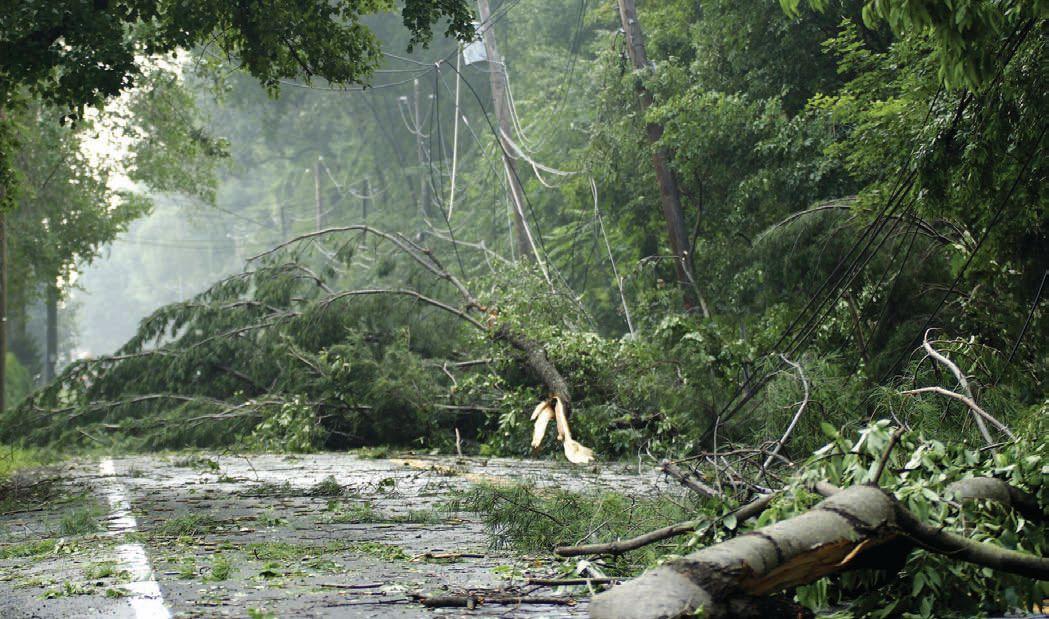
Emergency personnel should be aware of the potential for electrical shock involving trees and tree limbs on and near power lines This the single biggest cause of fatalities among rescue workers
Power lines are programmed to shut down if an object like a tree limb touches them but this doesn’t always happen During storms, for example, some lines may remain live and power will continue to flow through the object to the ground, making it dangerous to be in the the area around the object Even if a line does “kick out” or shut down, it can quickly be re-energized by remote equipment
Firefighters called to a fire or rescue should first size up the situation and determine if trees, branches or any other objects are contacting the lines or are in danger of contacting them. If this is the case, do not approach until a representative from the local electric utility authority has made the area safe
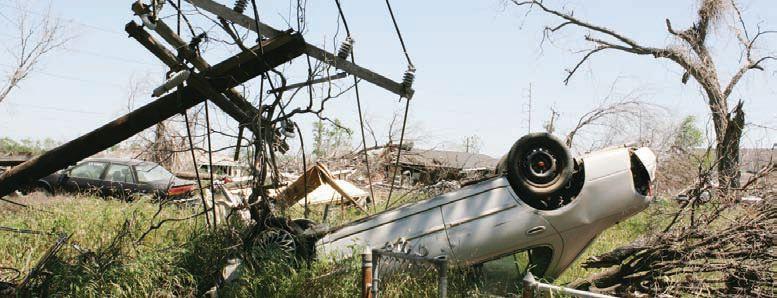
Your main role is to stop people from getting hur t Downed power lines are one of the most common emergency situations firefighters face because lines can be brought down by a storms, ice, trees or vehicles hitting power poles
Park well away from fallen lines At night, use a flashlight through the windows and make sure there are no power lines nearby before you step out of the vehicle
Live wires seldom leap about and give of f sparks like they do in the movies What’s more, a line that’s not energized can come to life at any moment because automatic switching equipment is designed to restore power to subscribers when there’s a fault. Don’t become a victim.
No matter how badly someone is injured, firefighters can’t help if they get electrocuted So, never touch anything that’s in contact with a downed line – not a car, not a victim, not a puddle of water, not a tree
Unapproved r ubber gloves will not protect rescue personnel nor will a dr y stick, r ubber hose or piece of rope Call the local electrical utility authority immediately Secure the area and keep ever yone at least 10 metres back from any hazard
If a live line falls on a metal object such as a fence, electricity may be conducted to other points The ground surrounding a downed wire will be energized A live wire may burn through when in contact with something on the ground. One end may then curl up and roll along the ground, causing injur y.
If the driver is able and if the vehicle is operable, instr uct the driver to slowly drive 10 to 15 meters clear of the wires and any pools of water (these could be energized by the wire) Keep onlookers well back as a wire can spring in any direction when it’s released by the vehicle
If the driver is injured and/or the vehicle cannot move, instr uct ever yone in the vehicle to stay put until hydro crews arrive
If the vehicle is on fire, use the following as a last resor t if you can’t extinguish the fire: if the occupants are uninjured, instr uct them to get out with a standing jump or by taking large steps away from the vehicle but make sure they understand the danger of touching the vehicle and the ground at the same time.
Tell the occupants to keep their feet together as they jump. Then, make them aware that the safest way to move away from the vehicle is to shuf fle their feet, if the terrain permits, or keep both feet together and take small hops away from the vehicle This is necessar y to avoid becoming a victim of step potential
If fire control is necessar y at any incident involving the electrical system, apply water with a wide fog spray The water pressure must be a minimum of 100 psi with a minimum 30degree fog pattern The use of a straight stream could result in electricity passing through the stream and back to the nozzle The fog spray should be applied from a distance of at least 10 metres Electricity can be conducted through the ground, especially wet ground at a fire scene
Do not use foam as it is a ver y good conductor.
The information here represents a small par t of BC Hydro’s training manual and associated firefighter training program and was developed to provide guidance to British Columba firefighters Readers should speak with their local power utility regarding firefighter safety within the context of the electrical system in their area Thanks to BC Hydro for its contribution to firefighter safety
Ed Brouwer is the chief instructor for Canwest Fire in Osoyoos, B C , and the training of ficer for West Boundar y Highway Rescue The 18-year veteran of the fire ser vice is also a fire warden with the B.C. Ministr y of Forests, a first responder, level III, instructor/evaluator and fire-ser vice chaplan. E-mail: ed@thefire.ca
















By Andrew Sanojca
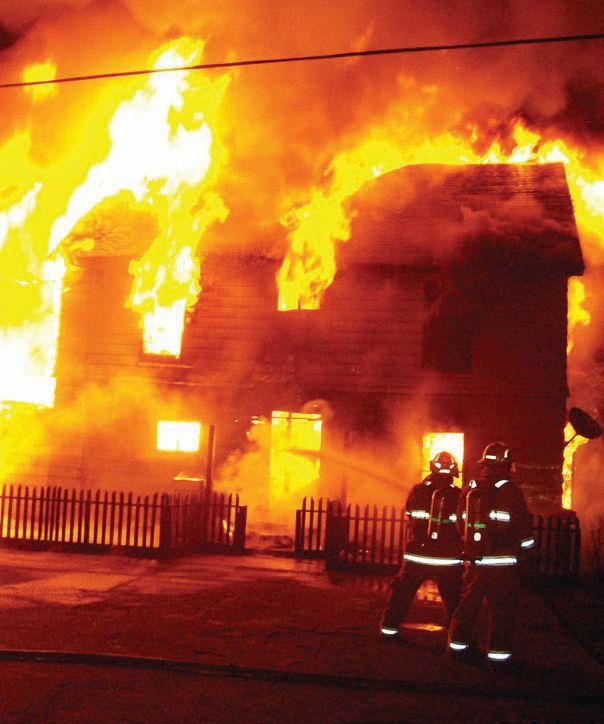
Volunteer firefighters with the Musquash Fire Department in New Brunswick responded to a report of a structure fire at 11 Little Lepreau Rd. on Sunday, May 27, 2007.
The call was paged out at 2:03 a.m. A captain, while en route to Station 2, was monitoring radio traffic, and, knowing that there were enough firefighters responding to the station to get the trucks rolling, went directly to the scene
A firefighter who lives near the scene arrived at the station as Engine 2 was leaving at 2:13 a m and told the two firefighters on board the back end that the house was fully involved
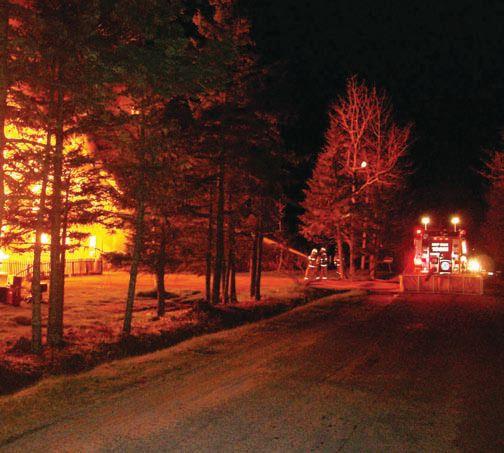
The captain arrived on scene a couple minutes later and conducted a scene sur vey He radioed his on-scene report to responding firefighters and indicated that the two-storey wooden house was heavily involved in fire in the B-C corner, that all occupants were out and that conditions would not allow an interior attack Efforts were to be concentrated on saving an attached garage The house was a two-stor y wood frame single family home with attached garage It was built in 1911
On arrival at 2:18 a m , Engine 2 was positioned on the road in front of the house A 1 75-inch pre-connect attack line with class-A foam was advanced toward the house and an exterior attack was made to keep the flames from the garage, using water from the onboard 1,200-gallon tank. This line was manned by the two firefighters who arrived on Engine 2, with the captain taking control of the pump panel. Fire was visible on the bottom floor and the front door appeared to have been left open. The flames had already blown out several windows.
On arrival of Engine 3 and Rescue 3 with four more firefighters, the portable tank from Engine 2 was placed behind the pumper and Engine 3 dumped its load of water Firefighters were unable to slow the fire, which had taken hold of the 96-year-old building A second 1 75-inch pre-connect was advanced to the back side of the house In order to reach the seat of the fire at the back of the house, firefighters would have had to operate in the collapse zone, so this line was repositioned to the front of the now fully involved structure
Enroute to the call, a request was made to dispatch for mutual aid from the nearby Pennfield Fire Department This fire occurred in a rural area and water was shuttled to the scene by a tanker from Pennfield and by Musquash Engines 1 and 3, both capable of carr ying 1,350 gallons The RCMP and local ambulance ser vice were also on scene
The three tr ucks shuttled water from the Point Lepreau Generating Station, located about six kilometres away, which is equipped with a hydrant system. The fire chief assumed command when he arrived on scene and defensive operations continued. Staging, rehab and accountability were set up at Rescue 1, which was
also parked on the roadway
Within 10 minutes of the first truck arriving on scene, the fire totally consumed the house, with the roof beginning to cave in The garage was also heavily involved and all efforts to stop the flames were in vain Fortunately, the only exposures to the original fire building were trees and a hydro pole Firefighters continued to wet down the remains for several hours
The cause of the fire remains undetermined Two adult occupants were able to flee the house but two of their three dogs perished. There were no injuries to the occupants or firefighters.
Although the house was a total loss, ongoing training within the depar tment ensured this incident ran smoothly and safely The incident-command system is used on all calls, so it is second nature when required at major incidents Firefighters responding had the benefit of an on-scene report from an experienced firefighter equipped with a portable radio
Responding firefighters were aware all occupants were out of the house, a good thing to know given the time of the call, and that this was going to be a defensive operation Mutual aid was requested early, and dispatch had already requested the ambulance to stand by
Firefighters in this department face many residential challenges, from old and new mini-homes, new bungalows to older two-storey wooden homes dating 100 years or older, which have often been renovated or had additions built on. Pre-planning and touring the response area helps firefighters to prepare for emergencies.

According to the most r ecent and most thor ough snapshot of fir e ser vice personnel acr oss the countr y, ther e ar e just 400 industrial fir e brigade members in Canada and they’r e all in British Columbia
Clearly the statistics ar e wr ong as there ar e considerably more personnel assigned these tasks but because industrial brigades do not come under the authority of pr ovincial fir e marshals or fir e ser vices, their numbers ar e not r epor ted and their training and standards are not monitored.
Generally, it is only after a serious incident that the ser vices of industrial fire brigades come into the limelight
Several major fires in 2005 highlighted issues that can arise when public and industrial brigades inter face The first was the BP r efiner y in Texas City, Texas, on March 23, 2005 Explosions and fires killed 15 people and injured another 180, resulted in financial losses exceeding $1 5 billion and forced 43,000 people into shelters The second was the Buncefield oil depot fir e in Her tfordshire, U K , on Dec 11, 2005 It was the largest fir e in Eur ope since the Second World War and took four days to contr ol Both cases highlight the r equir ements for industrial fir e brigades to be trained and competent as well as able to work har moniously with their public counterpar ts
Industries r ecognize the need for trained, onsite personnel because of the unique risks associated with their facilities They understand that the detailed skills needed to handle an incident at their facilities and the necessar y familiarity with their plants and r esources are not available thr ough the municipal fir e ser vice. In addition, the r esponse time of a municipal ser vice may not be adequate, so these industries for m and train their own fir e brigades for initial r esponse Municipal fir e depar tments may be called in to augment their r esources
Response (NRCAER) network in the Alber ta Industrial Hear tland and the Chemical Valley Emergency Co-ordinating Organization (CVECO) in southwester n Ontario Both ar e excellent examples of industr y training, liaising, planning and co-operating with municipal r esponse as well as having ef fective community awareness and notification systems.
W ith the lack of federal or provincial regulations or standards, industrial brigades need to follow industr y best practices. The only standard available in Nor th America can be found in NFPA. NFPA 600 Standard for Industrial Fire Brigades 2005 Edition should be the overall requirement should a plant or facility for m a fir e brigade It covers the need for a site-specific evaluation of the hazards and the development of an organizational statement of r esponse duties It r equires that ther e be a balanced application of the principles found within NFPA 1500 to pr otect brigade members It also r equir es the establishment of an incident-management system as per NFPA 1581 This helps to ensur e a common level of understanding among responders Additionally, all personnel with firefighting tasks should be car r ying out their duties to NFPA 1081 Standard on Industrial Fir e Brigade Member Professional Qualifications 2007 Edition The rest of the equipment apparatus standards ar e all
Generally, it is only after a serious incident that the services of industrial fire brigades come into the limelight. ‘‘
’’
When incidents occur it is the industrial fir e brigade’s r ole to perfor m the initial fir e attack and then to co-ordinate r esponders fr om outside The community r esponse is to the gate and the industrial brigade r etains incident command In some larger industrial r egions, ther e ar e mutual-aid agreements among industrial brigades This is an ef fective use of these valuable r esources but it r equir es ver y close communication among outside municipal fir e depar tments and the industrial brigades and a better understanding by all par ties of industrial fir efighting standards Two unique and notewor thy examples of these municipal-industrial co-operation ar rangements in Canada are the Nor thwest Region Community Awar eness and Emergency
Sean Tracey, P.Eng., MIFireE, is the Canadian regional manager of the National Fire Protection Association International and formerly the Canadian Ar med Forces Fire Marshal. Contact him at stracey@nfpa.org.
to NFPA or other industr y standards that are familiar to municipal r esponders It is impor tant that all municipal fire ser vices r esponding to suppor t industrial brigades understand these standards (All NFPA standards are available for free public viewing online at www nfpa org )
Just three jurisdictions in Canada are training and cer tifying industrial brigades to NFPA 1081 These are Fir e Etc , the Justice Institute of British Columbia and the College of the Rockies Other colleges may of fer training to NFPA 1081 and NFPA 600 but the provincial bodies are not accrediting these training programs This is a separate issue that highlights the fact that many provinces ar e looking only at municipal-ser vice needs Nonetheless, these nonaccredited training programs ar e essential for those agencies taking par t as these programs and those developed and implemented in house would be compared to the benchmark of NFPA 1081 should there be an incident.

By DON HENRY
The majority of transmissions used in the fire ser vice are automatic and the Allison automatic has been the transmission of choice for many years This transmission is reliable, easy to operate and is ver y adaptable to the needs of the fire ser vice It has some maintenance concerns that are dif ferent from a standard gear transmission We will concentrate on maintenance pr oblems of the older mechanical transmissions and look at the newer electronic transmissions in a futur e issue.
We often ask new fir efighters to inspect the tr uck; par t of this daily or weekly routine would include a check of the transmission oil level. Unfor tunately, we do not always tell fir efighters what to look for, how to check the oil or under what conditions
Your depar tment may ask that the transmission oil be checked when the engine oil is checked The engine oil is almost always checked when the engine is not r unning but the transmission is checked with the engine r unning So, why would a depar tment want the transmission oil checked when the engine is stopped? The simple answer is to make sur e that you should even star t the engine Let me explain; when the engine has not been r unning for a while, the transmission oil level will be ver y high on the transmissions dipstick – you ar e looking not for the cor r ect level at this time but to ensur e that the oil is not bur ned (overheated) or contaminated with coolant If engine coolant has leaked into the transmission, serious transmission damage can occur if the transmission is put into ser vice If the transmission oil is a milky white or pink, this is a sign that it has been contaminated; do not drive the apparatus Any amount of engine glycol will cause serious transmission damage. If this condition is found check the engine for a lowcoolant level. War ning: never r emove a radiator cap fr om a hot engine as you can be seriously bur ned.
If the engine coolant is low you can r easonably suspect the transmission oil cooler. The cooler uses engine coolant to r emove heat fr om the transmission oil Ther e have been numer ous cases of inter nal leaks with these coolers If you have been r eading Tr uck Checks then you know how str ongly I believe in oil and fluid analysis Let me say this again: even a ver y small amount of engine coolant will cause transmission failure
If the transmission oil has been overheated it will have an of fensive, bur nt odour and ther efor e the transmission should not be placed into ser vice When you have deter mined that the transmission oil is not defective, then star t the engine
(See photo 1) W ith the engine r unning at idle, the oil should be at or near the Cold Full line Allison considers an oil temperatur e of below 160 F (71 C) to be cold The final check must be done with the engine level and idling and the oil near the 160F (71 C) to 220F (104 C) temperatur e range It may be necessar y to drive the apparatus to r each theses temperatures The oil level should now be between the Hot Add and the Hot Full marks It takes only a small amount of oil to make a big change on the dipstick; do not over fill. Over filling of the transmission can cause shifting pr oblems and transmission component damage. Use only a clean funnel to
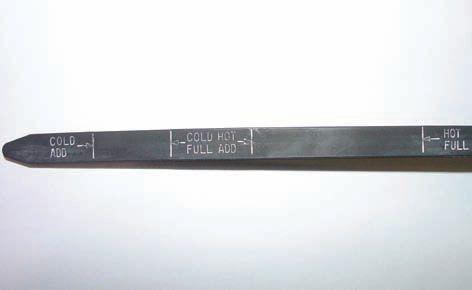
add oil and never use a funnel that has been used for engine antifreeze (glycol) Even a small amount of engine glycol will cause transmission clutch damage Make sure the dipstick is clean and don’t inser t a dir ty dipstick back into the transmission
■
Most depar tments use a General Motors product called Dexr on or TranSynd The cur rent Dexron is called Dexron III If your depar tment wer e to use Dexr on you could change transmission oil at or befor e the 12,000 mile mark (19,300 kilometres) or 500 hours. If your older units were specified for Dexr on I or II, don’t wor r y, the new Dexr on III is backward compatible.
You may be wondering if you should use the synthetic oil called TranSynd The Allison Operators Manual recommends this oil be changed at 50,000 miles (80,400 kilometr es) or 2000 hours These numbers are only possible if you drain all the conventional Dexron out and replace it with the TranSynd My recommendation is to r eplace the Dexron oil with TranSynd at the next oil and filter change Before TranSynd became available, many depar tments in hilly ter rain used oil called C-4 Many highquality diesel-engine motor oils meet the requirements of a C-4 transmission oil These oils will resist br eakdown at high temperatures This would allow a depar tment to stock only one oil for both the engine and transmission Many C-4 oils are good motor oils; not all motors oils are good C-4 oils Check the label on the oil container
■ TRANSMISSION IDENTIFICATION
Ther e are basically thr ee models of the no-electronic transmission that you ar e most likely to encounter. They are AT, MT or HT transmissions. You will need to know which transmission you have to obtain the cor rect par ts, such as oil filters.
Meets t the n new 2007 N NFPA S Standards, 1 1981 & 1 1982
A P PASS A Alarm t that c can T Take t the H Heat “Bullet-Proof” e electronics
Straight-talk c communications
Fireground m management c capabilities
Extended p protection
Lightweight a and e easy t to u use
Platform f for t the f future


The AT transmission is used in lightweight units and is common in the ambulance market and in fast-attack units with a gross vehicle weight of 26,000 to 30,000 pounds These single r ear-axle units can be gasolineor diesel-engine driven The AT came out only as a four-speed transmission and a retarder was even available on cer tain models
The MT is common in single rear-axle fir e apparatus units It was a ver y popular transmission and it could be used on gasoline- or diesel-power ed unit This transmission could have four or five for ward speeds. Units with four speeds wer e designated as MT600 with the second number being a four, such as a 640 or 643. The five-speed units used the second digit to indicate their for ward speeds such as MT 650 or 653 The five-speed models could be either a close-ratio transmission (CR) or a deep-r eduction transmission (DR) This extra speed was obtained by the addition on an extra planetar y-gear set installed on the r ear of the four-speed transmission This ar rangement, with the cor rect valve body, could give the transmission a deepreduction speed used mostly for of f-road use or a transmission with a close-ratio patter n This close ratio was most useful with engines that did not have as wide a torque cur ve as some gasoline engines The low gear in the deep-ratio transmission is not meant to be used as a star ting gear Instead, drivers wer e instr ucted to stop the tr uck, place the transmission in this ver y low gear and proceed. When the need for such a low gear has passed, the driver should come to complete stop, select drive or second gear and then continue automatic up shifts as nor mal.
Do not shift out of or into these low speeds while moving; this will cause extr eme str ess on driveline components with this model of transmission It is easy to tell these transmissions apar t (DR from CR) Place the transmission in r everse; if you can go faster in r everse than in the lowest for ward gear then you have a DR model If you can go faster in the lowest for ward speeds than in reverse then you have a CR model A r etarder was available on all models of the MT 600 This transmission used an inter nal transmission oil filter; if r equested, an exter nal oil filter could be added
The HT 700 model was used in aerials, heavy fir e pumpers and most tandem-axle units. These units were ver y similar in design to the
MT 600 series but they wer e larger, able to withstand more engine input power and had a larger GVW These units did not use an inter nal filter; rather they used a small screen inside the oil pan and a large exter nal oil filter They were available as four- or five-speed models and the option was for a CR or DR model was available The HT could have a r etarder and dif ferent power take of f (PTO) options were available These options wer e most useful when used with aerial fire tucks as you could r un hydraulic pumps, foam systems or high-pressure, low-volume water pumps of f of this options When installing these PTOs, use only Allison-appr oved gaskets; never use the older style gaskets made of cork because these can leak and may r equir e the use of a gasket sealant. The use of these sealants is not recommended. If even a small amount of sealant were to get into the transmission fluid it could cause er ratic shifting and valve sticking, with disastrous ef fects
On the left-hand side of the transmission there is an identification plate This plate is also called the SAM plate, for serial, model and assembly numbers (See photo 2 ) The plate shown here identifies this model as a MT 643; the assembly number is 6884350; and the serial number is 0101818 Ther e are thousands of dif fer ent variations of the AT, MT and HT models The assembly number, together with the use of the par ts manual, give you this ver y impor tant infor mation: the g o v e r n o r n u m b e r ; t h e t o r q u e c o n v e r t e r ratio; and the engine RPM that the transmission was made to work with.
I cannot stress enough that you should write down the SAM numbers before the plate falls of f as it is almost impossible to do any maintenance, repair or diagnostic work without this infor mation Store these numbers in a safe place
We’ll complete our look at transmissions in the May issue of Fir e Fighting in Canada
Don Henr y teaches in the Automotive Ser vice Technician and Heavy Equipment Technician programs at Lakeland College in Vermilion, Alta , where he has been a faculty member for more than 17 years He has co-developed and delivers Canada’s only post-secondar y level fireapparatus maintenance program and has completed a textbook on fire apparatus.


Editor’s note: Steve Kraft’s inaugural Your Call column appeared in the Februar y issue of Fire Fighting in Canada and on our website, www firefightingincanada com Due to publication deadlines, we were unable to put replies to the first column into this issue but they are on the website The dilemma posed in the Februar y issue is below, along with Steve’s response.
February scenario: One of your firefighters approaches you and asks for a few minutes of your time. He star ts explaining that ever y time there is work to be done around the fire hall, firefighter Lansing is nowhere to be found. Ever yone recognizes that Lansing is a good firefighter but people are becoming frustrated with his lack of par ticipation How would you handle this situation?
There aren’t many officers who haven’t had to deal with a firefighter who doesn’t appear to be doing his share of the work In the scenario outlined above and in Februar y, a firefighter has approached you and told you about the situation
Unfortunately, in this case, it looks like a firefighter has been able to consistently “hide” from work It has been my experience that at some point, ever y fire house faces this challenge This kind of work avoidance can be the result of several factors but in many instances the firefighter might not even be aware that his lack of action is disrupting the team
Although this may seem simple to some, one of the reasons people often don’t do better is because they don’t know better If nobody has actually told this guy that he isn’t pulling his weight then we shouldn’t be surprised when behaviour continues – we have silently encouraged it or, in the ver y least, condoned it.
If the officer doesn’t sit down with the firefighter to discuss the unacceptable behaviour, it isn’t likely to change. Sure, it’s easier to sweep the problem under the carpet but this is a temporar y solution. If this issue isn’t dealt with early and appropriately it will fester and then it will become a much bigger issue
something like “Dave, I have noticed that ever y time the crew gets up to roll hose you don’t participate Is there a reason for this? Are you aware that you’re doing this?”
In situations like this, it is important to be a good listener For the most part, you will probably hear a reason why the firefighter isn’t participating with the crew. It could be a problem at home, in which a reminder about an employee assistance program would be recommended. You will probably hear that the firefighter feels that he does other activities – for example, he always does the dishes – and nobody helps. There might even be a personality conflict among the crew. Whatever the reason, the behaviour needs to be nipped in the bud
These are the types of issues that good officers handle at their level Too many times, inappropriate behaviour goes unchallenged and a firefighter is permitted to avoid work, which is disruptive to the team and may be blown out of proportion
It is always important to end the discussion on a positive note and let the firefighter know that you understand his concerns But it is equally important that he understand your expectations and the consequences, should the behaviour continue If the firefighter has legitimate concerns about other firefighters on the crew or at the station then it might be time to talk to ever yone This would indicate there are bigger issues that need to be flushed out
If the officer doesn’t sit down with the firefighter to discuss the unacceptable behaviour, it isn’t likely to change. ‘‘
’’
The officer needs to have a private meeting with the firefighter as soon as possible During the meeting, the firefighter needs to be told why the meeting is happening I don’t recommend an officer say “a firefighter has come to see me to complain about you ” It would be more effective to say: “I have noticed ” You are the officer and you are responsible for the crew Make sure the firefighter understands why you are having the conversation Don’t be vague; outline exactly what behaviour needs to be corrected Tell the firefighter how his efforts (or lack thereof) are being perceived For example, I would say
Steve Kraft is the deputy chief and a 19-year member of the Richmond Hill Fire Depar tment He has completed the cer tificate in fire ser vice leadership though Dalhousie University and is a graduate of the fire protection technologist course at the Ontario Fire College. He is a cer tified Community Emergency Management co-ordinator and is enrolled in Western University, where he is completing his diploma in public administration.
Ever y situation is going to be different but one thing that is consistent is that issues need to be addressed Officers are responsible for the crew and must deal with issues promptly If dealt with properly, the officer will have a group of firefighters who not only respect him, they will enjoy coming to work
Here’s the next scenario:
On the way back from a call you notice that one of your firefighters isn’t wearing a seatbelt You ask the firefighter to buckle up and he does Several shifts later, on a dif ferent r un, you notice that he isn’t wearing his seatbelt again What should you do?
Please e-mail your r eply to skraft@richmondhill.ca. Include your name, rank and depar tment . Please remember to keep your reply to 250 words.

By LORNE ULLEY
This in-house innovation comes from a fire depar tment that was featured in this space in September for the bobsled-like push bars it installed on its rescue boat to help it slide over ice and snow
This time, the St -Paul-de-l’Ile-aux-Noix depar tment in Quebec has designed storage compar tments for its por t-a-ponds Like so many depar tments, these firefighters had been carr ying the por t-aponds on the sides of its tankers, making it dif ficult to get the ponds of f the apparatus and risking back and shoulder strain.
St.-Paul-de-l’Ile-aux-Noix is a 36-member, paid on-call operation working out of two stations. It has two 1,050-gpm pumpers, one with 1,000 gallons and the other with 1,500 gallons, plus a 625-gpm pumper, two 3,000-gallon tankers with 450-gpm pumpers, a 1,050gpm quint with a 1,000-foot ladder and 400 gallons of water, a rescue command unit and first-responder medical unit, along with a water rescue boat
The depar tment is involved in two mutual aid systems; one in New York and Vermont as par t of the Clinton County mutual-aid systems; the other in Quebec
There are four large marinas in this depar tment’s jurisdiction that are home to more than 3,000 large boats Historic For t Lennox, a tourist attraction on île aux Noix, is also in its jurisdiction and on summer weekends there can be upwards of 12,000 people from Quebec and par ts of the U S in the village, as the community is about kilometres from the New York border
The first step to this por t-a-pond storage innovation was to get rid of two large fold-a-tanks that had heavy, metal-tube framing These were replaced with two new self-inflating ponds that could be stored in carr ying bags in a side compar tment. The bags with the por t-aponds in them weigh about 100 pounds and are manageable for two firefighters to handle at an incident.
It took time, however, to remove the por t-a-ponds from the storage bags and several of the depar tment’s members thought that there must be a better storage system
Coming up with a solution became a depar tment project with each firefighter putting for ward an idea or at least contributing some thoughts to someone else’s idea
Since the tankers are similarly designed, the plan was to have one solution for both tankers, with few modifications of the storage compar tment
The firefighters quickly settled on the best solution for the pond and the firefighters who use it, agreeing that they would have a compar tment fabricated by an outside firm that would fit low on the rear of each tanker and that the depar tment would install the compar tments on the tankers
The compar tments are eight feet wide, 16 inches high and 24 inches deep and are made of diamond-plate aluminum The pumpers’ back-up lights and tail lights are mounted on the storage compar tments The contracted firm made a pan door with two large, heavyduty hinges and two flat latches, common on all apparatus.
The compar tments work well – they’re just 18 inches of f the
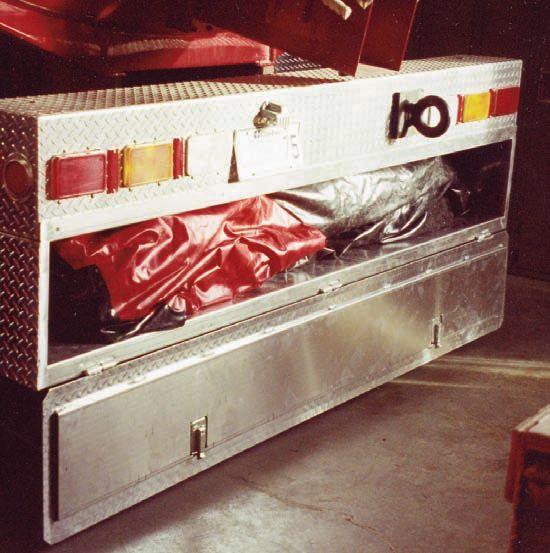
ground so there’s little or no arm or back strain required to remove the ponds – and the ponds are stored with just a few folds, an improvement over the storage bags
Maintenance wise, proper lubrication of the hinges and latches it all it takes
The compar tments cost $1,500
For more details, contact Asst Chief Gilles Bastien, St -Paul-del’Ile-aux-Noix Fire Depar tment, 959 Rue Principal, St -Paul-de-l’Ileaux-Noix, Quebec, J0J 1G0
If you or your department has an innovative idea that helps you do your job easier, why not share it with fellow firefighters? Please send the details to Lorne Ulley, Fire Fighting in Canada, 379 Beatty Ave , Verdun, QC H4H 1X7 or email firefightercan@annexweb com, attention L Ulley


It was one of those typical, damp, westcoast fall evenings that was interrupted when the Sooke Fire Department in B C was toned out for a propane leak at a Payless gas station
This ser vice station is in the centre of the business district on busy Highway 14
With a crew already in Station One for a training session, the response time to the Oct. 14, 2005, incident was less than five minutes.
First arriving Engine 205, a 1250/1000 pumper, along with the fire chief and duty officer were met with a large gas cloud emanating from a 2,000-gallon vertical propanestorage tank
The vapour cloud was about 7 5 metres high and was starting to drift across Highway 14, directly into the parking lot of a large shopping mall
RCMP quickly set up a road block at either end of the town centre to divert traffic away from the scene
While the engine crew hooked up to a nearby hydrant and began to deploy hose lines, the chief quickly began evacuating shoppers from the mall
By now, the vapour cloud had crossed the highway and began enveloping the vehicles in the mall parking lot.
Several shoppers had to be convinced not to get into their vehicles and drive away, but to quickly vacate the area on foot. (One woman managed to drive around the police roadblock, then stopped in the vapour cloud to ask firefighters what was going on )
With the cloud rapidly growing, additional fire apparatus and personnel began arriving on scene
Engine 201, another 1250/1000 pumper, pulled into another mall parking lot adjacent to the leaking tank
Taking the hydrant in the parking lot, the crew deployed its 1,000-gpm deck gun and an additional 2 5-inch line on the gas cloud
Additional firefighters assisted the first-in engine by deploying more lines in and around the escalating incident
At this stage, the gas cloud had completely covered the highway, the mall parking lot across the highway and was entering the stores located at the south end of the mall.
By STEVE SORENSEN
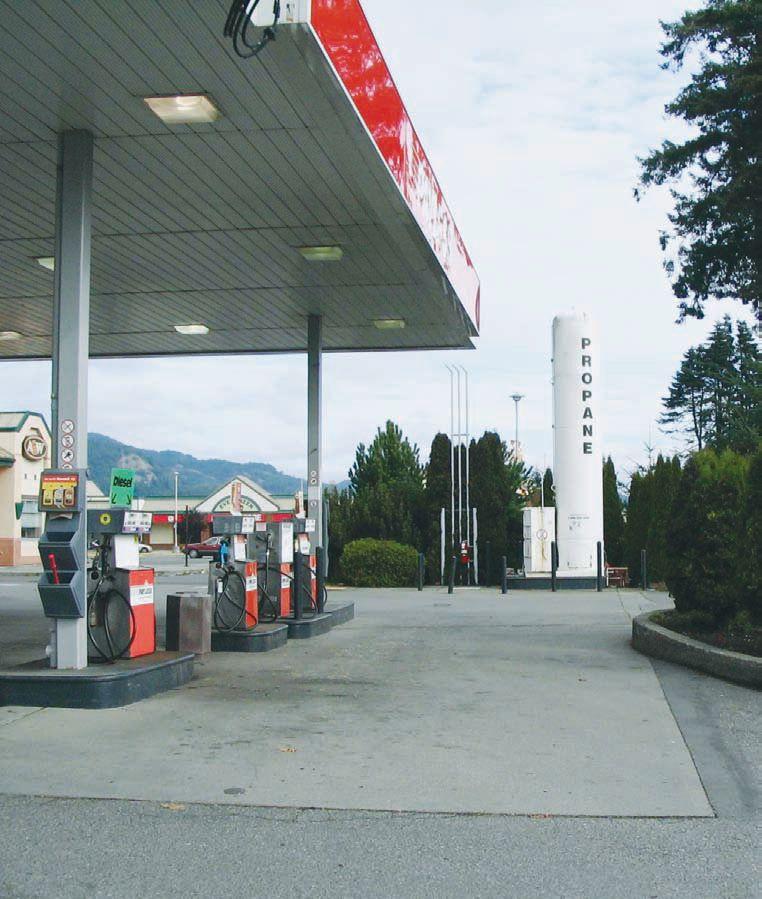
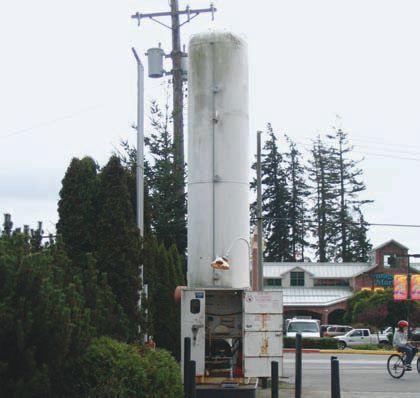
Dalhousie University College of Continuing Education
Are you looking to take on more responsibility in your Department? Trying to round out your technical ability with leadership skills? Preparing to advance your career?
At Dalhousie University we offer a three course program, the “Certificate in Fire Service Leadership” to career and volunteer fire officers.The 3 courses Station Officer: Dealing with People,Station Officer:Dealing with New Operations and The Environment of the Fire Station are all offered in each of our 3 terms, September (fall term), January (winter term) and April (spring term). The program can be completed in one year if a course is taken in each of the 3 terms.
For more information and a program brochure please contact:
Gwen Doary,Program Manager
Dalhousie University Fire Management Certificate Programs 201-1535 Dresden Row,Halifax,Nova Scotia B3J 3T1 Tel:(902) 494-8838 • Fax:(902) 494-2598 • E-mail:Gwen.Doar y@Dal.Ca
You will also find the information in our brochures or at the following internet address:Web site:http://www.collegeofcontinuinged.dal.ca


Since the 1st edition of Essentials of Fire Fighting was released in 1978, more than 2 million firefighters have been trained by this manual. That is why this manual is commonly referred to as “the Bible” on basic firefighter skills, and its information is commonly accepted as the standard for fire fighting knowledge and skills in North America and beyond.
This 5th edition represents a complete revision of this text to include the latest information on safe and proper basic fire fighting techniques. This manual includes all of the information needed to meet the fire fighting requirements for National Fire Protection Association (NFPA) 1001, (2008 edition), . All photographs and illustrations are in full-color. This manual includes key terms, definitions, and other important features located throughout each chapter. Case histories are used to illustrate the concepts of each chapter. Skill sheets are included to cover psychomotor learning objectives. Review questions are given at the end of each chapter. Each manual includes a bonus CD-ROM that provides additional learning materials, case studies, animations, and learning activities. Item#: 36538


This included a McDonalds restaurant where staf f luckily remembered to shut of f the cooking appliances before evacuating the area.
With one master stream, one 2.5-inch hose line and four 1 75-inch hose lines, firefighters were desperately str uggling to keep the vapour cloud down on the ground as much as possible
After a quick conference between the chief and senior firefighters, it was decided that one attempt would be made to locate and secure the source of the leak
If this failed, crews would set up unmanned master-stream devices and evacuate the area
In full protective gear and under the protection of several hose streams, two firefighters entered the cloud to locate the source of the leak
As they neared the tank, they could hear that the discharge pump used for the retail sale of propane was operating.
With zero visibility, the two firefighters began feeling their way around the tank controls for the disconnect switch. It was quickly located and the power to the pump was shut of f
The flow of propane immediately slowed and then stopped With all the water sprayed on the scene, crews were now faced with a large block of ice containing frozen propane in the control cabinet
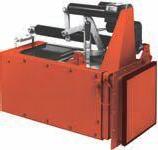
Over the next 90 minutes, the ice block began to shrink, releasing propane vapours as it melted.
With the cloud now dissipating, fire crews began taking gas readings in all of the manholes and shops within the hazard area
Areas showing strong readings were ventilated and people were allowed back into the area about 2 5 hours after the incident began
It was later determined that about 530 litres of liquid propane had leaked from the tank At an expansion ratio of 270 to one from liquid to vapour, the resulting cloud grew and spread ver y rapidly
Cause of the leak was found to be a discharge valve in the control cabinet, left open by an employee who had earlier filled a propane barbeque tank
After filling the tank, the employee shut of f the power to the pump but left the discharge valve open.
When a vehicle later came in to fuel up at the auto propane fuel pump, propane began leaking from this open valve as soon as the pump was turned on.
Because the bottle-fill station and the auto-fuel pump shared the same pumping system, propane began flowing once the power was turned on With the valve left open, propane immediately began leaking at the control cabinet
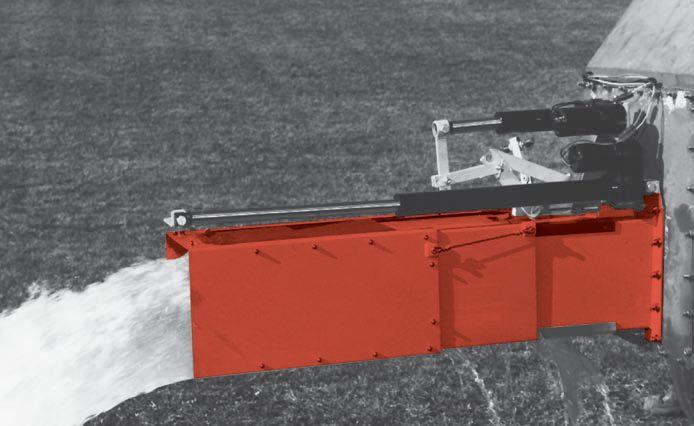
According to the Propane Gas Association of Canada
• Propane Is a three-carbon alkane – its molecular formula is C3H8
• Propane is an odourless gas to which an odourant has been added to detect leaks
• Liquid propane boils (from liquid to vapour) at -44F (-42 2C)
• At one and a half times the weight of air, propane will settle in low areas.
• In a liquid form, propane is half the weight of water.
• About 23.5 cubic feet of air is required to burn one cubic foot of propane.
Spotting the vapour discharging from the cabinet area, the attendant quickly shut of f the auto pump and ran over to the tank.
As residual propane was still leaking out the open hose, and thinking the power was still on to the pump, she turned the power switch As it was already of f, this actually turned it back on and the leak star ted all over again
The emergency shut-of f device was then activated but this did not work and propane continued to flow
Thinking something was broken at the tank or control valves, she quickly ran back into the station of fice and hit the emergency shut-of f switch
After investigation, it was determined that this switch only worked on the gasoline and diesel pumps
The auto propane pump that was installed several years after the ser vice station had been opened was not connected to the emergency system. It was also found that the emergency switch at the propane tank did not function due to the leaking propane As this switch works on a spring and cable system, the resulting leak of liquid propane had frozen all of the controls into the open position and could not operate until the propane ice block melted These deficiencies have since been corrected
At the District of Sooke’s annual firefighter appreciation banquet later that year, Mayor Janet Evans presented all 18 attending firefighters and two RCMP of ficers with a cer tificate of valour for their heroic action in preventing what could have been a major disaster for the community
Steven Sorensen is deputy chief of the Sooke Fire Depar tment. He can be reached at ssorensen@sooke.ca.
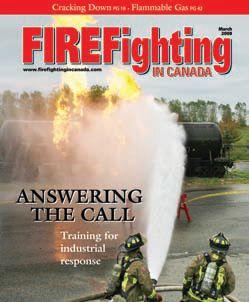
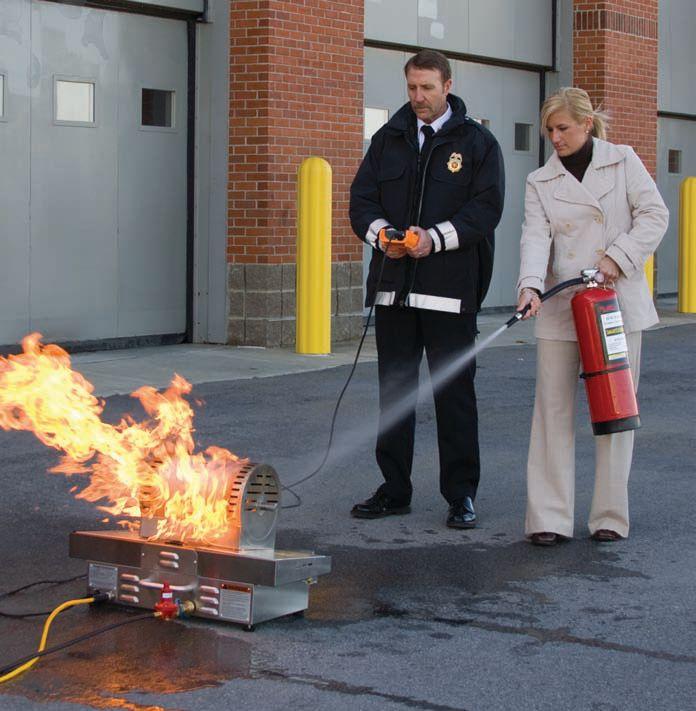



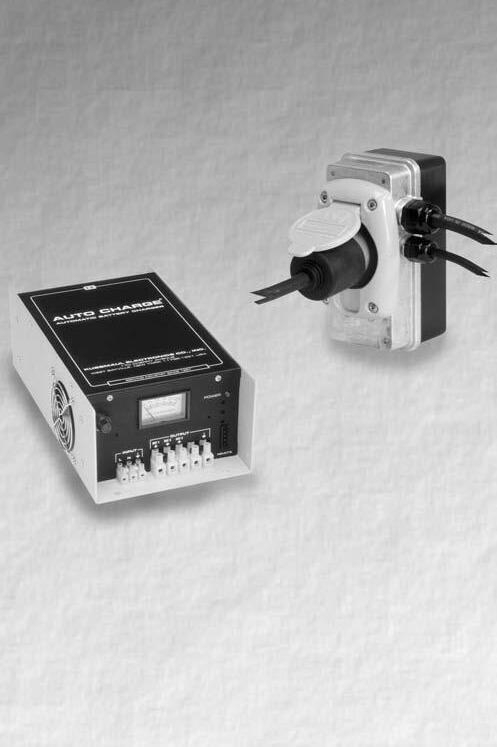
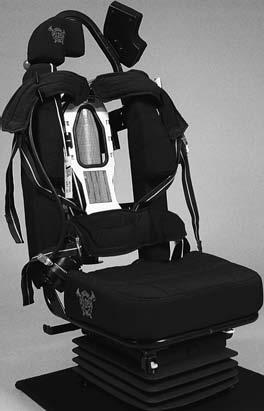


Updated to reflect the 2008 edition of , this dynamic, full-color training text from NFPA and the International Association of Fire Chiefs (IAFC) prepares students for the jobs of Fire Fighter Level I and Level II. The 2nd edition of thoroughly addresses the entire spectrum of job performance requirements as well as the latest knowledge and skill objectives. The success-oriented format includes features that reinforce and expand on essential information to make teaching and learning easier.
Major changes in the 2008 edition of Fundamentals include:
• A new Fire Fighter Safety chapter which focuses on the issues, trends, and concerns specifically related to fire fighter safety--including coverage of the National Fallen Firefighters Foundation’s “Everyone Goes Home” initiatives
• New feature relating to National Fire Fighters “Near-Miss Reporting System” that uses real incident data to showcase lessons learned
• Updated case studies, expert tips, and end-of-chapter wrap-ups
• 72 new pictorial skill drills
• Expanded and updated text bank to help prepare fire fighters for today’s field
• Reorganized instructor resource materials that allows instructors to access teaching resources by level


As in the previous edition, a variety of web-based learning tools such as online chapter pre-tests, interactivities and simulations, vocabulary builders, web links, and review material let trainees work at their own pace and on their own
RES19308
CUSTOM TRAINING PROGRAMS: MESC will provide custom design training programs. Other courses available include: Building standards, Rescue program, Emergency Medical, Management Program, Fire Prevention, Public Safety and Hazardous Material. Manitoba Emergency Services College, Brandon, Manitoba, phone: (204) 726-6855.
FIREFIGHTER CAREER TRAINING: Fire services career preparation Certificate recruit training program. Business leadership for the fire services. Courses available: Fire Prevention, Fire Suppression, HazMat, Emergency First Responder, Search and Rescue. For more details call Durham College, Whitby, Ontario or call Don Murdock at (905) 721-3111 ext. 4069.
LIVE FIRE FIGHTING EXPERIENCE: Short and long term courses available, Municipal and Industrial fire fighting. Incident Command System, Emergency Response/HazMat, three year Fire Science Technology Diploma program. Lambton College, Sarnia, Ontario, call 1-800-791-7887 or www.lambton.on. ca/p_c/technology/fire_emerg_resp.htm. Enroll today!




lmost anyone who has taken a management course r ecently has been exposed to the concept of emotional intelligence (EI) Is this a trait or competency that is of value to the fir e ser vice or just the latest buzzwor d? I am keeping an open mind on this one, because, as a r elatively new ar ea of psychological r esear ch, the definition of EI is constantly changing. I see gr eat r elevance as EI r elates to pr ofessionalism and team membership. At the same time, I wonder if it is r eally a new concept or just a r epackaging of some basic human social skills.
Accor ding to the website www selfgr owth com emotional intelligence describes an ability, capacity, or skill to per ceive, assess and manage the emotions of one’s self, of others and of gr oups Clearly, a fir efighter, especially in a command r ole, would benefit fr om the ability to manage emotions in an inher ently chaotic situation But if EI is a capacity, as opposed to an ability or a skill, then you would either have it to some degr ee or not have it at all If it is tr uly a for m of intelligence, then it is an innate and unchangeable personal trait If you buy into the concept that some leaders ar e bor n gr eat, some achieve gr eatness and some have gr eatness thr ust upon them (to paraphrase Shakespear e), and that the ability to keep your cool in a crisis is a valuable component of fir e ser vice leadership, it would be nice to think that those of us who wer e not bor n coolheaded could achieve coolheadedness befor e being thr ust into an emergency scene
As a young fir efighter, I obser ved my superiors and my mor e experienced peers intently. On one end wer e the guys you wanted to emulate: calm; rational; the kind of leaders and decision makers who made you confident and kept you focused. On the opposite end wer e those who inspir ed the verse “When in tr ouble, when in doubt, r un in cir cles, scr eam and shout ” Experience in ter ms of years on the job did not seem to be an indication of which type of behaviour would be exhibited
per ceive and assess emotions in one’s self or others and act accor dingly
Emergency r esponse is a bizar r e field compar ed to most occupations In the of fice, fir ehall or classr oom we expect the personal r espect and dignity that ar e af for ded to sales r epr esentatives or a bank tellers. But at an emergency scene, we must suspend that expectation and focus on the task at hand. I am not implying that we should accept being mistr eated or humiliated by our teammates or superiors; quite the contrar y. Team cohesiveness is critical to success and safety Rather, as fir efighters, we must be pr epar ed to take a cer tain amount of crap fr om people I tell this to r ecr uits and I mean it literally and figuratively Literally, because if you can imagine a bodily secr etion – somebody else’s – you should next imagine yourself cover ed in it Figuratively, because when we ar e at a “r outine” scene it is ver y often the worst day of someone’s life In such cir cumstances, sick, dr ugged or distraught people may lash out at us with abuse, insults, racist or sexist invective or other behaviour that would other wise be unacceptable Our objective is to bring rationality to a chaotic situation, to be par t of the solution by avoiding becoming par t of the pr oblem
So, by taking the figurative crap in the pr oper context and not
The difference between knowing how to behave and actually behaving that way under stress is a matter of maturity. ‘‘
So maybe EI, or at least the ability to manage one’s emotions, was some type of inher ent trait Or maybe the when-in-doubt , scr eam-and-shout types had not been pr operly developed and mentor ed I think what was lacking in those who did not stay focused was not the capacity to do so but the practised skill of doing so The dif fer ence between knowing how to behave and actually behaving that way under str ess is a matter of maturity So is EI a measur e of maturity? That would cer tainly cover the ability to
District Chief Peter Sells writes, speaks and consults on fire ser vice management and professional development across Nor th America and internationally. He holds a B.Sc. from the University of Toronto and an MBA from the University of Windsor. He sits on the advisor y councils of the Ontario Fire College and the Institution of Fire Engineers Canada Branch.
’’
letting it drive our behaviour, ar e we exhibiting EI? I believe a behavioural skill set can be developed that could be identified as fir efighting pr ofessionalism: taking the crap without giving it back Not complaining that this emergency r esponse is taking you away fr om dinner or the hockey game Not taking your fr ustrations out on the homeless man sleeping in the bus shelter Not pr otesting that you had to wait for hours for tr eatment in the emergency r oom, just like ever yone else Not demanding a fir efighters’ discount in a busy r estaurant during the lunch r ush If EI wer e pur ely an inher ent trait, some of us would feel these fr ustrations and some of us wouldn’t, and we would each behave in r esponse to our emotions But we ar e rational human beings We all have the ability to develop pr ofessional behaviours
I see EI as a behavioural skill set rather than an innate trait. Be not afraid of gr eatness. We can all matur e and develop pr ofessionalism, r egar dless of what is going on in our minds.