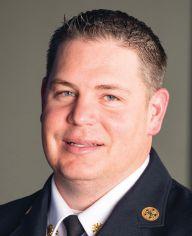
BY LAURA AIKEN Editor laiken@annexbusinessmedia.com
TCOMMENT
The value of a friend
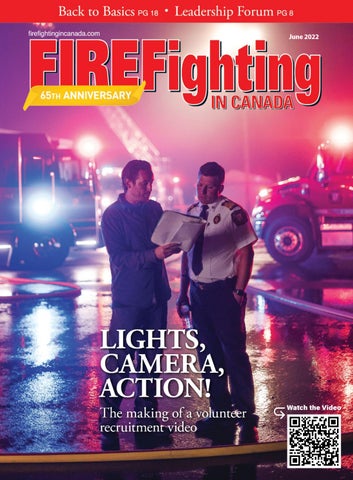
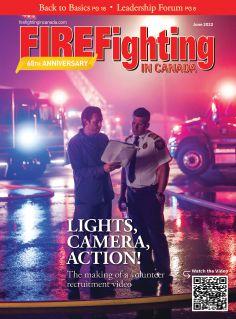
his edition’s cover story showcases a great collaborative effort by 12 fire departments in the Niagara region of Ontario through the creation of a volunteer firefighter recruitment video. Spearheaded by the Niagara Regional Fire Chiefs Association, the story of how this video was created is an inspiring tale of quick cooperation and can-do spirits. The project required a vast web of communication, team work and time, and serves as an example for how many other regions in Canada could band together to strengthen their volunteer recruitment strategies. For fire chiefs, working alongside other fire chiefs has benefits beyond a shared recruitment strategy, agreements to help each other during certain incidents, training together, or sharing information (although these are all very worthwhile endeavours). It’s possible you’ll be lucky enough to make a new friend. Many adults in their busy work and life-filled lives are hard pressed to prioritize adding a new friend to the mix, and as obvious as the essential presence of friends are to our lives, socializing can take a back seat.
interactions in early life can predict well-being outcomes 30 years later. Despite it being wellknown how important friends are, the study found Americans spent just 41 minutes a day socializing, which was one third of the time spent watching TV or commuting (pre-COVID times). The study results estimated it took about 50 hours of contact to go from acquaintances to casual friends, and more than 200 hours to develop a close friendship. As many of you have likely experienced, people can feel like friends much faster with the right cocktail of mutual admiration and appreciation shaken up with a good dose of fun.
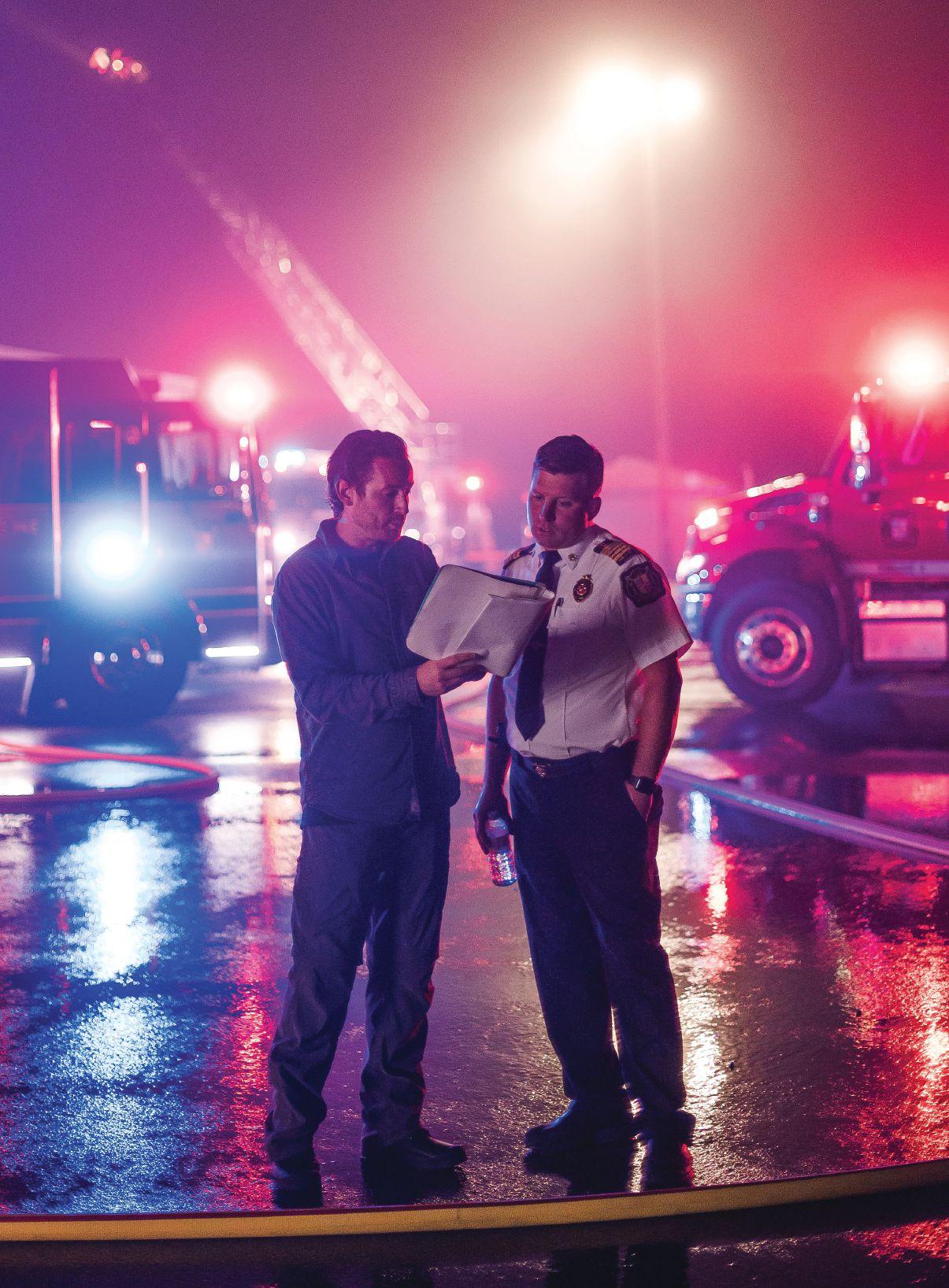
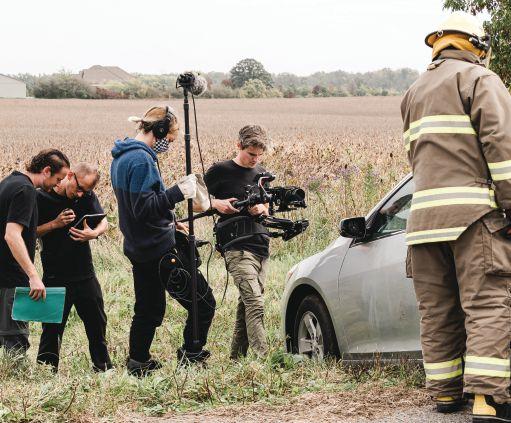
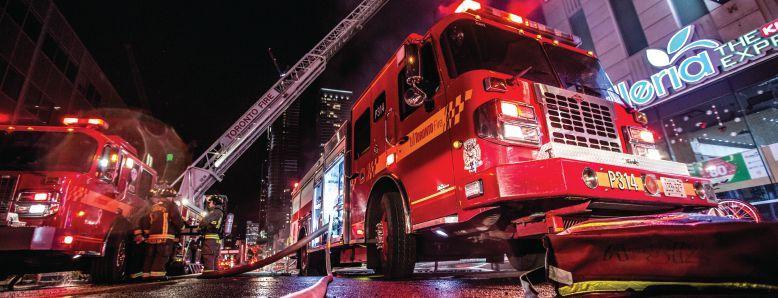
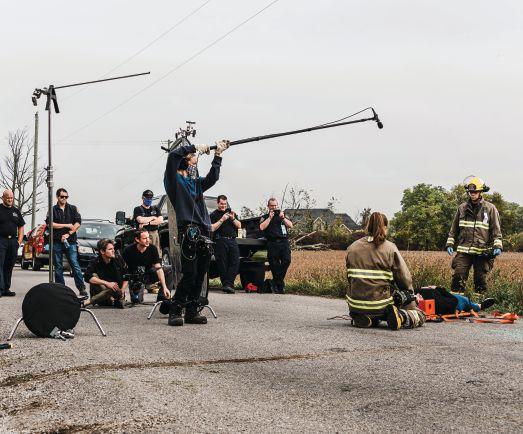
Producing a professional volunteer recruitment video is a lot like making a movie, story boards and all. See story on page 10.
Working on a project together bonds people, and if two people have sized one another up as potential friends, enough hours together will foster an acquaintanceship, a casual friendship and if it’s meant to be, a best friendship. An American study by Jeffrey Hall in the Journal of Social and Personal Relationships called “How many hours does it take to make a friend?” was published in 2018. Aside from noting that having friends was a key predictor of happiness, the number and quality of social
Acquaintances, casual friends, close friends and family all enrich our lives with their unique perspectives, characters and histories that bring us out of our sometimes siloed existence. Remembering how much more we can do when we lean on one another in a reciprocal fashion is good for everyone in the department. One great reason to become a volunteer firefighter is simply the opportunity to become part of an organization where you can make new friends, and that opportunity will give as much back to the individual as the volunteer will give to their community. •
ESTABLISHED 1957
JUNE 2022
VOL. 66 NO. 4
Reader Service
Print and digital subscription inquiries or changes, please contact Beata Olechnowicz, Audience Development Manager
Tel: (416) 510-5182
Fax: (416) 510-6875
Email: bolechnowicz@annexbusinessmedia.com
Mail: 111 Gordon Baker Rd., Suite 400, Toronto, ON M2H 3R1
EDITOR LAURA AIKEN laiken@annexbusinessmedia.com 416-522-1595
Occasionally, Fire Fighting in Canada will mail information on behalf of industry-related groups whose products and services we believe may be of interest to you. If you prefer not to receive this information, please contact our circulation department in any of the four ways listed above.
All advertising is subject to the publisher’s approval. Such approval does not imply any endorsement of the products or services advertised. Publisher reserves the right to refuse advertising that does not meet the standards of the publication. www.firefightingincanada.com
PHOTO BY AMI HOLMES
STATIONtoSTATION
ACROSS CANADA: Regional news briefs
Recent research does a scoping review of firefighter injuries
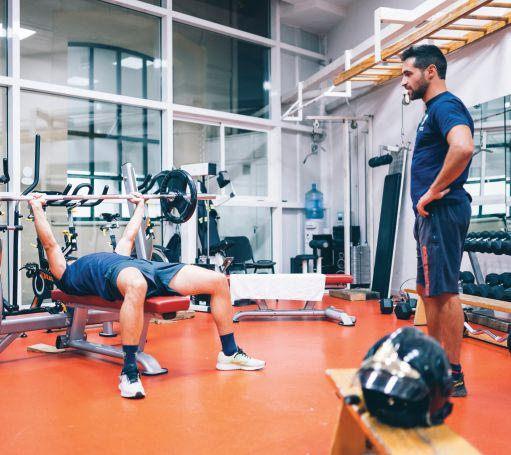
Firewell researchers recently summarized current studies on the occurrence of firefighter exercise and training injuries. Their scoping review aimed to find how and why firefighters are getting injured during these activities and what the most common/ frequent injuries are.
“Our team decided to look into training and exercise injury because it isn’t an area that has been heavily studied,” said Shannon Killip, corresponding author of the study.
The researchers found 23 relevant studies to analyze. Their inclusion criteria included all peer-reviewed studies, academic dissertations and injury and safety reports produced by fire fighting organizations. The chosen studies had to include prevalence rate and frequency or number of injuries. Studies that evaluated changes in exercise or training regiments as intervention were excluded.
The studies analyzed found that a range of eight per to 55 per cent
THE FIRE HALL BULLETIN
Promotions & appointments
FRANK MACDONALD was promoted from interim deputy fire chief to chief of B.C.’s Oak Bay fire department. Prior to this role, he served as deputy chief with the District of Saanich Fire Department. He contributed to the development and implementation of Fire Service Reviews in Saanich.
BRYAN ERWIN is the new fire chief for Colwood Fire Rescue in B.C. Erwin began his fire career in 2005 as a volunteer with Colwood Fire Rescue, and was hired as a career member in 2007. He has worked in the areas of operations, prevention, training and is a member of the regional CRD hazmat team.
of injuries occurred during exercise and training. Six of the studies reported training specific injuries with sprains and muscular pain, accounting for 32 to 73 per cent of injuries, and wounds accounting for 16 to 20 per cent being the most common.
Killip was surprised by two findings during their analysis. The first was discovering a majority of injuries happened during exercise and training, rather than “while in dangerous or high-paced work environments.” The second was the lack of detail provided about workplace injuries.
“We were able to find that training injuries occurred, but details like what part of the body was injured and what tasks were being performed when the injury was sustained were quite limited,” said Killip.
Despite these limitations, the group of Firewell researchers hopes that this study will have a positive impact on the fire service.
“We think it’s important that the fire departments themselves see the gaps in reporting and begin to collect specific data,” said Killip. “Filling these gaps would help to enhance safety guidelines to help prevent common injuries that occur when training or exercising.”
The research analysis conducted was part one of three for Firewell researchers. Killip said the next step included collecting qualitative data by interviewing firefighters and asking their opinions on training and exercise protocol. The team is now in the process of analyzing the collected data. The third and final step will involve a larger survey on training injuries of firefighters across Canada.
“The third step will be a quantitative survey, asking more specific questions and details about injuries sustained during exercise and training practices,” said Killip. “Broadening the scope of available information will help firefighters and their departments make more informed decisions about training and safety protocols.”
The Municipality of Brighton, Ont., appointed GENE THOMPSON fire chief for Brighton Fire and Emergency Services. Thompson has 35 years of experience in the fire service. He joins the department after serving as deputy chief and later as acting chief for Cobourg Fire Department.
Retirements
In B.C., LEN MACCHARLES, retired from his role as fire chief and director of emergency management with Nelson Fire & Rescue Services in May. MacCharles began his career with the Calgary Fire Department in 1981. He took on the role of fire chief at Nelson Fire & Rescue Services in 2014, and held the role for nearly eight years.
Firewell researchers wanted to know how and why firefighters are getting injured.
Preparing Canada for extreme heat
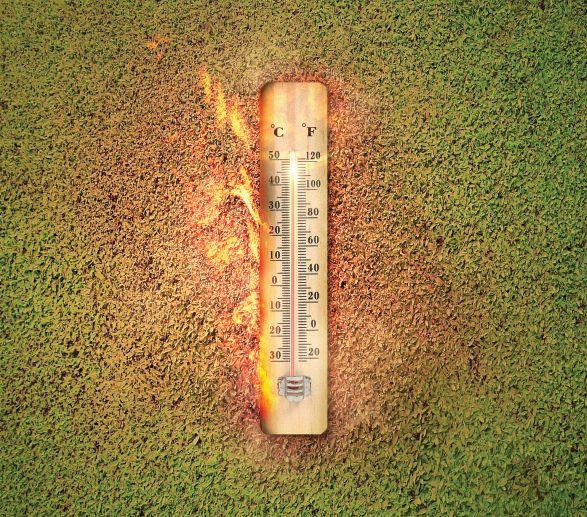
A new report warns that extreme heat is set to cause devastating suffering in Canada, and if left unchecked, will surpass the 595 heat-related fatalities reported by British Columbia’s coroner in 2021, and the 86 lives lost in Quebec in 2018.
New guidance to address irreversible extreme heat, developed by the University of Waterloo’s Intact Centre on Climate Adaptation in consultation with over 60 national experts, profiles steps to protect Canadians who may otherwise fall victim to lethal heat.
While urban areas are hotspots of global warming, the report highlights three red zones in Canada that will be hardest hit by extreme heat: valleys between the West Coast and the Rocky Mountains in B.C., prairie communities bordering the U.S, and north of Lake Erie through the St. Lawrence River Valley in Ontario and Quebec.
“Warming and more intense extreme heat will be present for decades to come,” said study co-author Joanna Eyquem, managing director of Climate Resilient Infrastructure. “If an extreme-heat event coincided with an extended electricity outage — with no fans or airconditioning running — loss
After more than 30 years with B.C.’s Richmond Fire-Rescue, TIM WILKINSON retired from his role as fire chief at the end of April. Wilkinson joined Richmond Fire-Rescue in 1986. Throughout his career, he received several 911 awards from the City of Richmond for his dedication and commitment to community safety.
of life could easily jump to the thousands.”
The new guidance outlines 35 practical actions to reduce risks from extreme heat, categorized into three types:
• Behavioural: support changes that include watching over the most vulnerable, such as regular checks on the elderly and those with pre-existing respiratory illnesses, and facilitating access to cooling shelters
• Nature based: use nature to help us stay cool, such as expanding the tree canopy and natural habitats within urban areas
• Buildings and infrastructure: design and retrofit buildings to include passive cooling – that does not require electricity – alongside traditional airconditioning.
Individuals, property owners and managers, and communities all have a role to play by taking action themselves and supporting and encouraging others to act.
Vulnerable groups, such as the elderly, those who live alone, and those with fewer financial resources, will require targeted support. Heat is also an inequality issue — marginalized or racialized communities are
New guidance to address irreversible extreme heat profiles steps to protect Canadians who may otherwise fall victim to lethal heat.
even more vulnerable.
“I see extreme heat in a different category than all other climate perils,” said study co-author Blair Feltmate. “Extreme heat is more than inconvenient, it’s potentially lethal. If we don’t prepare for extreme heat, those who are vulnerable may die.”
To help accelerate Canada’s progress in preparing for a hotter future, the report asks decisionmakers to:
• Recognize extreme-heat events as natural disasters.
• Provide Canadians with more information on how to reduce
heat-related risks before a heat event.
• Harness public and private climate finance to maximize win-win situations. For example, targeting treeplanting programs designed to reduce urban-heat-island effects while simultaneously storing carbon.
• Build heat resilience into home inspections and valuation appraisals
Originally published by the University of Waterloo and the University of Waterloo’s Intact Centre on Climate Adaptation.
ROSS PARR is set to retire from the Collingwood Fire Department in Ontario after 38 years in the service. Parr started his career in Orillia in 1984 and came to the Collingwood Fire Department as deputy chief in 2009. He became chief in 2017.
Last alarm
Retired Deputy Fire Chief WALTER JOSEPH MACNEIL
passed away on April 4. He served with Ontario’s Cambridge Fire Department for 32 years, retiring in 2017.
DAVID JOHN SKEA, retired fire chief for the Paipoonge Volunteer Fire Department, passed away on March 15. Skea played a key role in the establishing of the vol-
unteer department in Paipoonge, Ont., where he became its first fire chief in 1973. He was also a member of the Ontario Association of Fire Chiefs and the Thunder Bay District Mutual Fire Aide Association.
BY CHRIS HARROW Director of Fire Services
Town
of Minto and Township of Wellington North, Ontario
WLEADERSHIPFORUM
Micromanagers and the path to empowerment
e have all heard the term micromanaging before. What does that mean to you? A boss that makes you check in every day to make sure you are completing your work properly? A leader that gives you all their ideas and thoughts and makes you implement them exactly how they want it? Or is it a supervisor who doesn’t say a word, but continually looks over your shoulder to ensure you work is satisfactory? Many have have worked with people who over-scrutinize their work. It can be extremely frustrating to endure the constant questioning and review. The implied lack of trust is demoralizing. A superior who micromanages is sending the message that they don’t believe the worker is good enough to complete the task.
A competent leader would see this as a failure on their part. If you don’t believe you have trained the employee well enough to be trusted to complete the task sufficiently, shame on the leader for not providing the employee with the tools to be successful. Also, shame on that leader for promoting an environment where trust is not relevant in the workplace. Working in an environment of distrust is not a very fun place to go to work every day.
Empowerment in the workplace is a very uplifting, morale boosting exercise. It allows the people you are empowering to spread their wings and complete a project they have control over and lets everyone around them see what they can strive for. Empowerment allows other employees to work towards taking on projects themselves or expanding their knowledge so they can be prepared to take on more responsibility in the future. Empowerment is also extremely fulfilling to the leader in witnessing their employees’ success.
envisioned. The time the firefighters have available to complete the project may not be during your office hours, limiting the ability to oversee or be briefed. The need for trust is tested throughout the entire process. Not falling into the trap of micromanaging becomes even more difficult, but a successful project completion with minimal interjections can do wonders for the firefighters at your department.
When it comes to volunteer firefighters, allowing them to complete projects on their own can be very rewarding and contribute significantly to their retention. Word will travel fast amongst the firefighters about the successful completion of a project and how the organization allows these to happen. It has been said many times that volunteers are not there for the money, so we need other ways to reward them and make them want to stay. Empowerment without micromanaging can provide these rewards.
As a leader, don’t fear failure or the outcome of a project being something other than what you envisioned. Know that it will not follow the precise plan you want it to. Preparing for this makes the process much easier. In fact, watching the process someone else uses can be a very good learning experience for the leader.
A superior who micromanages is sending the message that they don’t believe the worker is good enough to complete the task. ‘‘ ’’
When you allow people to expand their knowledge, they learn part of a job that may be above them. For example, a captain may work on a project that normally would be a platoon chief’s job. This encourages the captain to expand their horizons and prepare for a promotion. A leader looks at this as succession planning and part of preparing their organization for the future. The employee can experience this as a trial run to see if they like the idea of competing for a promotion to that role in the future.
In a composite department with only one or two full-time employees, falling into a habit of micromanaging can be very easy to do. You want to be sure the projects you have started are getting done the way they were
Chris Harrow is the director of fire services for the Town of Minto and Township of Wellington North in Ontario. He is a graduate from fire programs at Lakeland College and Dalhousie University and holds a graduate certificate in Advanced Care Paramedics from Conestoga College. He can be reached at c.harrow@mintofiredept.on.ca.
Volunteer captains and chiefs should run their own calls, not be pushed aside when a chief officer arrives. This is a perfect example of empowerment. Many departments deploy this and can see the benefits in their membership. The same idea can be deployed in public education or training. Give the firefighter the ability to take an idea and run with it. Every leader can go back and look at projects they have empowered employees to complete. Remember the sense of accomplishment the group felt. The leader’s role is to support and ensure the group is setup for success. Stay out of micromanaging the process and watch the development employees occur. Remember this and your life as a leader will grow. Enjoy the development, because it is these firefighters that will replace you someday, a day you can walk away proud you had a part in the change. •
LIGHTS, CAMERA, ACTION!
Niagara region firefighters unite for a recruitment video.
By JULIE FITZ-GERALD
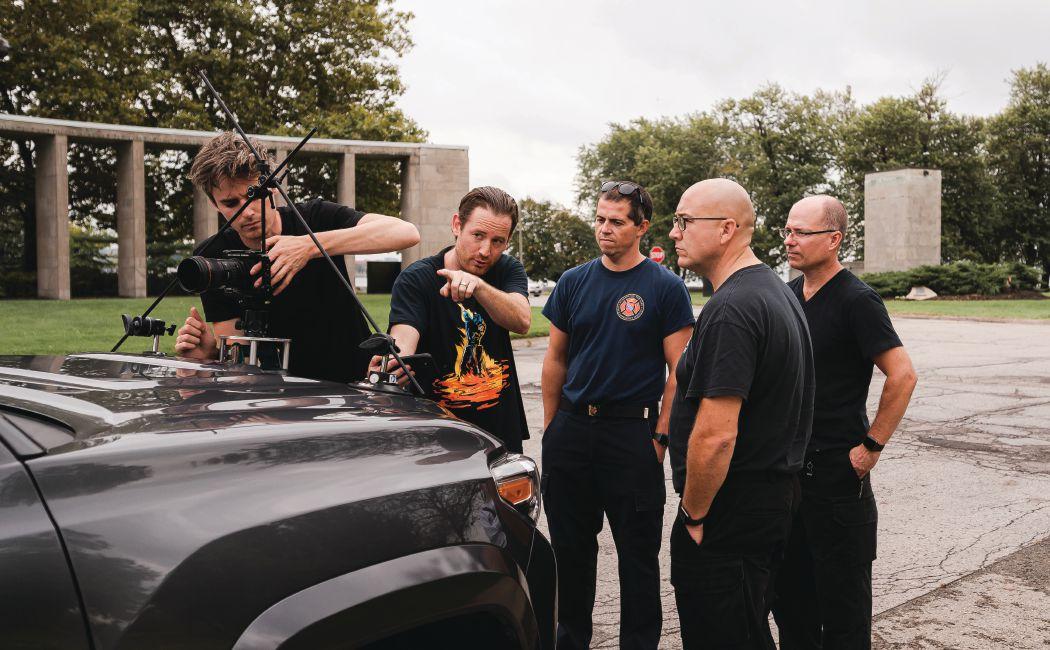
Captivate owner Adam Stephenson talks to Niagara-onthe-Lake Deputy Chief Jay Plato during a scene shoot.
With recruitment for volunteer firefighters an ongoing challenge in many areas across Canada, 12 Niagararegion fire departments recently banded together to produce a recruitment video that they hope will inspire and motivate new volunteers in the area to sign up.
The video runs just under three minutes, cinematically showcasing the Niagara region’s volunteer firefighters working their day jobs as chiropractors, farmers and teachers (just to name a few). Cut to a call coming in on the pager and the scene suddenly shifts. The chiropractor is now
donning fire gear and is on-scene expertly strapping an accident victim to a board. The farmer climbs down from his green tractor to join a crew of first responders as they saw the top off a mangled car. Firefighters rush from a pumper truck with hoses in hand to a save a country farmhouse. The scenes play out across familiar landscape, from water rescues on the Niagara River to traversing the Niagara escarpment to reach a fallen hiker. The pulse-quickening, action-packed footage expertly woven together is enough to make viewers consider, “Should I be a volunteer firefighter?”
And that’s exactly what they were hoping for. In the spring of 2021, Jay Plato,
deputy chief — community risk reduction — for Niagara-on-the-Lake Fire and Emergency Services, began envisioning a unique way to reach potential new volunteer firefighters. With a majority of new residents to the region coming from the Greater Toronto Area (GTA), where career firefighters are the norm, many simply are not aware that 11 out of 12 departments in the Niagara area use volunteer firefighters in some capacity. At the region’s monthly fire chiefs meeting, Plato raised the issues he was having with recruitment, something the other chiefs were also experiencing. They discussed what a recruitment video could look like if they put their resources together and worked collectively as a team to produce it. All 12 fire chiefs were immediately on board.
“Everyone has a full-time job outside of being a volunteer firefighter. When the pager goes off, you may be working in a kitchen, coaching soccer, or working as a gas technician. Whatever it may be, the pager goes off and you go and help your community,” said Plato.
The vision was to produce something eye-catching, diverse, and inclusive that could be used on social media as well as at community events, presentations, open houses, educational events, and as promotional material within the community.
After a tendering process with various production companies, the committee chose Captivate Photo+Cinema based in St. Catharines, Ont., to produce the video. Their services included scripting, filming, and editing through to the final cut.
“We know the fire world and they know the production world, so we worked together to keep the video realistic,” said Plato. “We didn’t want it to be too glamourized and show something that it’s not. We needed it to be realistic, showing what it’s really like to be a firefighter in our region.”
The timeline from concept to completion took just under a year. Scripts were finalized over the summer of 2021, filming occurred in October of that same year and editing followed with tweaks being made after each rough cut until the final version of the video was delivered this March. Coming up with filming locations and enlisting volunteer firefighters for the variety of scenes became an exciting team effort.
“The region itself really came together,” Plato said. “Every department was throwing out the names of their local parks or dead-end roads where we could film. Everybody was more than willing to immediately
The recruitment video pulled together over 60 volunteer firefighters and 12 fire departments.
provide anything we needed to make this video the best that it could be.”
He estimates that by the end of filming, between 60 and 70 firefighters had volunteered to be in the video. The various municipal departments were quick to offer apparatus for background shots to ensure the scenes were as accurate as possible. Footage showing firefighters in their alternate places of work meant opening up private office spaces and worksites to film crews – something the firefighters did with speed and grace. Plato said the team effort of everyone involved was foundational to the success of the project.
The overall budget was approximately $10,000, which allowed for high-quality footage using drones and professional cameras over seven full days of filming – and of course, the months of editing required to put it all together. The sizable budget, which is actually not that sizable in the film production world, was only possible because of the collaboration between the region’s fire departments.
“You can’t just find an extra $10,000 lying around. So, we took it to the association
to see if there were funds available to help produce the video, which will ultimately better fire departments across the region. Everyone’s going to own it, utilize it and better their recruitment, so that made it much more palatable,” said Plato.
It’s a model that could be easily replicated by other fire departments across Canada who are interested in producing a recruitment video for their particular regions. After going through the process, Plato offered this advice: “It’s all about the team effort. Everybody chipping in was huge. If you don’t have the buy-in from everybody, you won’t have the product you’re looking to achieve. The minute we said, ‘Let’s do this,’ all 12 municipalities were in and wanted to provide whatever was needed to make it happen.”
While the team effort was clearly on full display for this project, Plato says that one of the most important steps they took was to establish the three-person committee to lead the project, something that proved vital in maintaining timely decision-making during the production process. Fewer trusted hands to manage the many day-to-day details meant
the team could quickly pivot as needed, making speedy decisions which resulted in keeping to the timeline.
And, his final piece of advice: Consider the weather when you put your production schedule together. Droves of mosquitos dive-bombing the crew during a scene can cause some major irritation, while rainy days will quickly push back filming, and ultimately push back final delivery.
The goal for the recruitment video was to allow citizens to see themselves in the footage; to pique their interest and show that they can serve their community by becoming a volunteer firefighter.
“At the end of the day, it’s about recruitment and trying to maintain our volunteer fire departments. From the chiropractor working on a patient’s neck to the soccer coach wrapping an ankle, the things you do in your everyday life can be transferrable skills.”
By using the video to raise awareness about how the surrounding community fills these crucial volunteer fire fighting positions, Niagara’s fire chiefs hope they’ll see an uptick in new recruits. •
Suicide: Part 1
Assessing and recognizing suicide risk in individuals
By PETER COLLINS
I’ve spent the majority of my adult life speaking with individuals who want to die. These conversations can take place with patients in the Emergency Department at the hospital where I’m on staff but are more likely to occur when I’m on-scene with police crisis negotiators. My role as an operational forensic psychiatrist with the police is to advise the negotiators and critical incident command, but sometimes I’m asked to be the primary negotiator.
Suicide is a conscious act of self-induced annihilation in an individual who sees it as the best possible solution to a defined problem.
The World Health Organization estimates that globally over 800,000 individuals died by suicide each year. For each suicide, as many as 20 more individuals have attempted to kill themselves. Suicide rates vary in different countries, based on a number of factors. In Canada, the suicide rate is approximately 11 per 100,000 population, meaning that more than 10 Canadians die by suicide every day. That adds up to approximately 100,000 individuals over a 30-year period. Overall, suicide is the ninth leading cause of death in the country. In the United States, the rate is approximately 13.9 per 100,000 and there is every indication that the rate is increasing.
Some populations are at higher risk than others for suicide, such as those who suffer from a major mental illness and/ or addictions, Indigenous populations, the socio-economically disadvantaged, being a veteran and members of the LGBTQ community.
Each suicide is an individual idiosyncratic event. There are no universals, absolutes or “alls” but there can be several common factors:
• A common stressor is frustrated psychological needs. Frequently there has been a recent painful loss. This could be a loss of a relationship, employment, status in the community or good health.
The loss is perceived as unbearable.
• A common stimulus is unendurable or intolerable psychological pain or anguish. The individual seeks to escape from this pain/anguish, believing that they cannot or don’t want to live with it.
• A common purpose of suicide is a solution to extinguish the experience of psychological pain. The person believes it is better to die than to live with the pain. Suicide is seen as a way out of a problem, a dilemma, a bind, a difficulty, a crisis or an unbearable situation. It is a permanent solution to a temporary problem.
• A common goal is the cessation of consciousness and relief of ambivalence. Ambivalence involves the wish to live but the belief that to live means to suffer. Many suicidal individuals are more ambivalent about living than they are intent on dying.
• Common feelings include a sense of being alone; a fear of losing control and overwhelming helplessness and hopelessness.
• A common thinking style is constricted thinking. The suicidal individual can see only two options. Focusing on the
The assessment of risk for suicide is usually based on more than one factor.
pain, they believe they can either live with the pain or die, ending the pain.
The assessment of risk for suicide is usually based on more than one factor. Many individuals are suffering from a major depressive disorder or anxiety. As noted above, they experience the sense of helplessness and hopelessness. Insomnia, fatigue, poor concentration and poor memory can be evident. There may be a loss of interest in activities that used to be enjoyed, coupled with the decreased ability to feel pleasure (anhedonia) and may include withdrawal from previous relationships. Additionally, there may be reduced emotional abilities, including having less verbal or nonverbal expressions.
Observable behaviours can include crying, emotional outbursts, reckless behaviour and putting one’s affairs in order, including saying goodbye to individuals and perhaps giving away belongings.
Listen for comments regarding a preoccupation with death, escape, having no future, feeling alone, wishing they had never been born or hoping to go to sleep and never wake up.
Physical health complaints are associated with depression and many suicidal individuals have visited their primary care physician within a month of harming themselves.
Some individuals who are at risk for suicide will not use the term as there still is a stigma associated with suicide, making it a taboo topic. Asking an individual about thoughts of suicide does not cause a person to consider suicide if they were not previously thinking about it nor to consider it more seriously if they were already having thoughts of suicide. Always be sensitive but be clear and specific. Ask a direct question about suicide, such as “Are you thinking about suicide?” or “Are you having any thoughts of suicide?” Some individuals who are at risk later stated that an open discussion of their suicidal thoughts was helpful and contributed to their healing process.
A good proportion of individuals who are suicidal have had a previous attempt, and this should be explored. Also be aware that there is often a family history of suicide, and this has to be addressed as well.
The FBI developed an acronym as an aide memoire—IS PATH WARM—for developing an intervention strategy:
Suicidal I deation
Substance Abuse
Purposelessness
Anger
Trapped
Hopelessness
Withdrawing
Anxiety
Recklessness
Mood Changes
In the next issue of Fire Fighting in Canada, I will address strategies for communicating and negotiating with the suicidal individual.
Help is available. If in distress, please go to your nearest emergency room. The Canada Suicide Prevention Service is also available 24/7/365, in English and French, at 1-833-456-4566. •
Peter Collins is the operational forensic psychiatrist with the Ontario Provincial Police’s Criminal Behaviour Analysis Section. He is also a member of the crisis/hostage negotiation team of the Toronto Police Service Emergency Task Force. Dr. Collins’ opinions are his own. Contact him at peter.collins@utoronto.ca
manufacturer of fire apparatus built on Spartan Fire Chassis—with expertise in aerials and steel ladders. Spartan ER intentionally engineers and builds on the legacies that firefighters trust. With their ergonomic innovations and interdisciplinary collaboration, Spartan ER offers fire crews only the best of the best.
Discover how Spartan ER puts first responders first. Visit spartaner.com
BACKtoBASICS
Which aerial to use?
BY MARK VAN DER FEYST
There are many different types of aerial trucks in the fire service. All of them have an intended purpose and are designed for certain operational benefits. Within the fire service, aerial trucks are usually the biggest truck in the fleet and are admired and loved by most firefighters. Not every fire department will have a need for an aerial truck in their fleet, but they certainly can benefit from the use of one and can use mutual aid for assistance.
What makes these types of aerial trucks different, and which one do you choose to use? Let’s explore the basics of the different types and what they are used for. An aerial truck is designed for some basic operations. Elevated access is one, for when you need to access an elevated place such as the roof of a building or remove people from a high location. Another basic operation is elevated water stream application. This is needed when water must be applied on top of a building or where application to the building/fire is best from above.
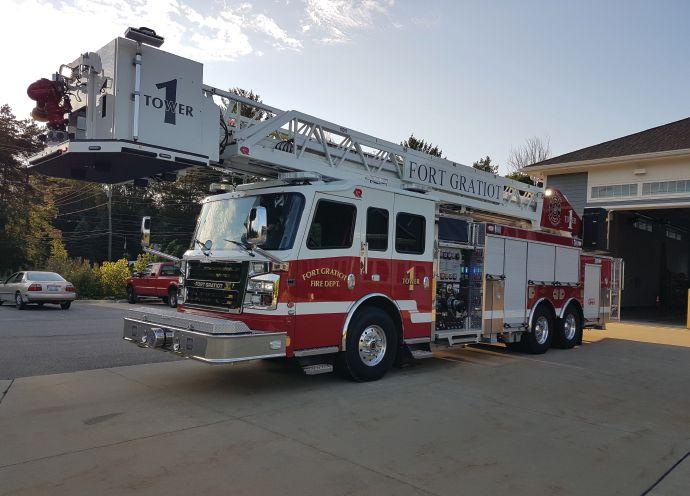
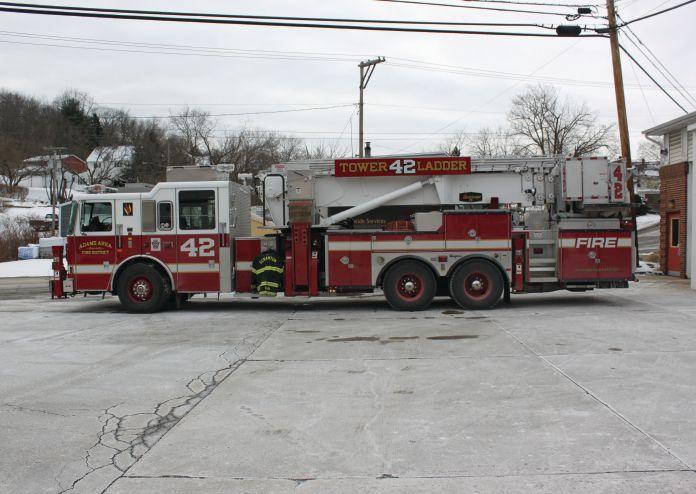
An aerial device can be mounted either as a rear-mount or mid-mount position. This refers to the location of the turntable on top of the truck chassis where the aerial device rotates and operates from. There are reasons to choose either type as it relates to or benefits operational capabilities. Photo 1 is an example of a rear-mount aerial device. Photo 2 is an example of a mid-mount aerial.
There are advantages and disadvantages to each type of mount, operationally. Depending upon how the truck is positioned at the structure on location, access to the building can be limited to only two sides or one side. With a rear-mount aerial device, it can access two sides of the building better if the rear portion of the truck is located at the corner of the building. If the front cab of the rear-mount is facing the building, the amount of access to the two or one side of the building will be limited by the body of the truck. With a midmount aerial device, the cab of the truck will be the major obstruction preventing the aerial
Photo 1: A platform aerial with a rear-mount aerial device.
Photo 2: A mid-mount aerial.
device from full access to the building.
Straight stick is a term given to an aerial device that is a straight ladder. As shown in Photo 3, a straight stick can be extended to give access up to 100 feet or more depending upon the manufacturer. At the end of a straight stick will be a single monitor. It will be fed by a water way that runs up the underside of the aerial ladder. The primary purpose of the straight stick is to deliver water and access to elevated positions. Rescues can be achieved using a straight stick but will be limited to a single person at a time. Multiple people can climb down the ladder if they are able to but if they need to be lowered to the ground, then single riders only. A straight stick will be a rear-mount aerial device.
Platform is a type of aerial device that has a basket or working platform at the end of the ladder device, as seen in Photo 1. A platform aerial can be either rear-mount or mid-mount. With a rearmount, the platform will hang over the front cab of the truck, as in Photo 1. This will cause an obstruction to sight when driving, as well as an obstruction in front to avoid hitting other stationary or moving items with. The platform can be used as a multi-purpose aerial to deliver water as well as perform rescues. A platform will accommodate one to two people, or sometimes three at the same time. A platform will allow a person to step onto the platform from a roof or from a building window.
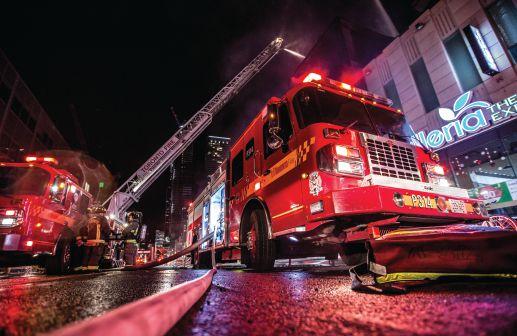
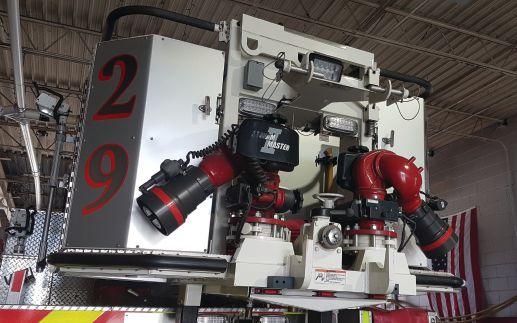
In Photo 4, you will see two monitors on the end of the platform that can be used to deliver large volumes of water as needed. Sometimes the platform will only have one monitor. Regardless of the number of monitors, water supply will be the issue to keep them flowing as needed. When there is water flowing, the aerial’s capacity to flow water and also to rescue a person is greatly reduced. It is usually one or the other.
Another operational advantage is for technical rope rescue. The platform can be used as an anchor point or as a redirect for a rope system for low or high angle rescues.
Articulating boom is a special type of aerial device that is used for different types of access. With this device, the aerial portion does not extend or retract, but rather articulates up or down with large aerial arms. Some versions will have an extending boom with an articulating arm at the end. On the end of the arm will be a platform bucket to deliver water or for rescue purposes. With this type of device, access to sub level areas can be achieved as well as narrow alleyways or limited aerial room; the boom arms can elevate straight up and then rotate as needed in a vertical position. Depending upon the manufacturer of the truck, an articulating boom can reach as high as 150 feet.
Departments that only need to have one aerial device will usually select a straight stick type for the ease of use and simplicity. Regardless of the type chosen or needed, be sure to know how each works and what advantages you can gain from them. •
Mark van der Feyst has been in the fire service since 1999 and is currently a firefighter with the FGFD. Mark is an international instructor teaching in Canada, U.S. FDIC and India. He is the lead author of Fire Engineering’s Residential Fire Rescue & Tactical Firefighter books. Contact him at Mark@FireStarTraining.com
Photo 3: A straight stick can be extended to give access up to 100 feet or more depending upon the manufacturer.
Photo 4: Two monitors on the end of the platform that can be used to deliver large volumes of water as needed. Sometimes the platform will only have one monitor.
PHOTO CREDIT: MARK VAN DER FEYST
The Tactical Firefighter
# 1593705732 $79.00
The Tactical Firefighter is the culmination of the knowledge and experience of leaders who have contributed effective and efficient techniques and tactics to the development of the fire service. This book presents a thorough study of engine company, truck company and rescue company operations as well as quintes, training and more.
Drawn by Fire 4
Item #: 1593705084 $52.00
Paul Combs has returned with a brand new hardcover collection of his fire service editorials. Contents: Death, taxes, and bad leaders; Let’s get serious...Sort of; Humor is good medicine; Mind, body, soul, and fuzzy slippers
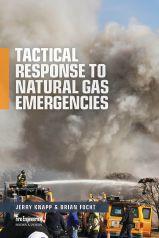
Tactical Response to Natural Gas Emergencies Item #: 1593705749 $66.15
This book explains the proper and rapid size-up of gas emergencies, the uses and limitations of air monitors, new laser-based gas detectors, how to improve your standard operating procedures, all in service of making effective strategic and tactical decisions. Learn what aggressive, effective, sensible, and manageable risks you should take to meet our mission of life safety for civilians and firefighters.
BY TOM DESORCY Fire Chief Hope, B.C.
CVOLUNTEERVISION
Communicating your message
an you easily tell when a person is confident? Can you detect by their actions or demeanor that they have everything under control? How about your confidence? Does it show? Speaking before a crowd, it’s easy to see when someone is controlled and confident in their delivery. I find that when you know what you’re talking about or are passionate about the topic, it’s easier to give your message.
As a young broadcaster in my early days of radio, I was taught about presenting. Being on the air isn’t just about reading what’s in front of you. It was invoking the ‘theatre of the mind’ where you had to paint a picture with the spoken word. Sometimes, you didn’t have a lot of time, or the listener wasn’t in it for the long haul and wanted the information quickly and concisely. They’re not always there for a story. They want to know what’s happening and even without seeing you, they can tell you are delivering concise and accurate information.
Can you see a fire connection here yet? Public speaking is standing before a group and presenting or announcing in person. Radio, on the other hand, is not really public speaking. Announcers are trained to speak to only one person, even though many more are actually listening. This technique allows you to be more conversational and make the listener feel that they are being spoken to personally.
On the fire ground, these same principals apply when giving direction, not only in person, but over the air. My inspiration for this topic comes from always trying to maintain situational awareness. In my area, I monitor the channels of my neighbouring fire departments along with emergency health services. I’m able to gain an awareness of what’s going on around us.
How important is the “air check” in the fire department? Obviously, we are not requiring people to perform on the air, nor should they be worried about how they sound. They are not doing a radio show, but many of the same principles apply.
Have you ever done an “air check”? I have in the past. Not for every call, but certain ones that I may not have attended and were able to listen to. In particular, I compare the picture that was painted for my mind to the way it was conveyed over the radio. I’ve taken audio files from our dispatch that included not only the sound of the person on the air, but the dispatcher and the call taker to give the firefighters a sense of just what is going on at the other end as they receive multiple calls for the incident that they attended.
Quite often I’ve seen, or heard, volunteer departments become frustrated when their calls of acknowledgement to a page out, for example, aren’t answered right away. However, once they realize that their dispatcher is working feverishly to gather information about the call they’re being sent to, they soon realize that they are part of much larger response behind the scenes.
Radio training for first responders is usually a standard about pro-
There is nothing more powerful than the spoken word. Remember this and use it to your advantage. ‘‘ ’’
Radio announcers are constantly critiqued as part of their job. In a radio station, the program director is responsible for the announce staff. Back in the day, there would be a cassette recorder in the studio that was connected to record only when the microphone was turned on. This delivered a synopsis of your performance for you and the program director to review. This is known as an “air check”; it was an “after action review” of sorts.
On the fire ground, I’m personally particular of the message I send over the air. This is most important when you’re first on scene. The dispatcher and incoming units should get an idea of what you’re facing.
Tom DeSorcy became the first paid firefighter in his hometown of Hope, B.C., when he became fire chief in 2000. Originally a radio broadcaster, Tom’s voice could be heard in the early 1990s across Canada as one of the hosts of Country Coast to Coast. Tom is very active with the Fire Chiefs’ Association of British Columbia as communications director and conference committee chair. Contact Tom at TDeSorcy@hope.ca
tocol and procedure which is important, but giving people a chance to hear themselves and understand what their delivery and messaging sounds like is worthwhile training as well. Quite often you don’t need to know what’s happening on scene as you can often tell by the tone of voice and delivery of the message. Your confidence and demeanor will resonate with the crew that’s monitoring in the background or is on route to the call.
Give some consideration to how you sound. I’m sure you do this all the time when it comes to addressing the local media at a call. Your body language together with your tone of voice can combine to paint a picture of concern and confidence in your team all the while delivering a lesson or message of safety.
There is nothing more powerful than the spoken word. Remember this and use it to your advantage. •