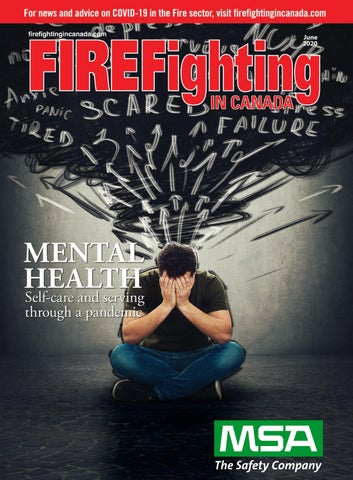
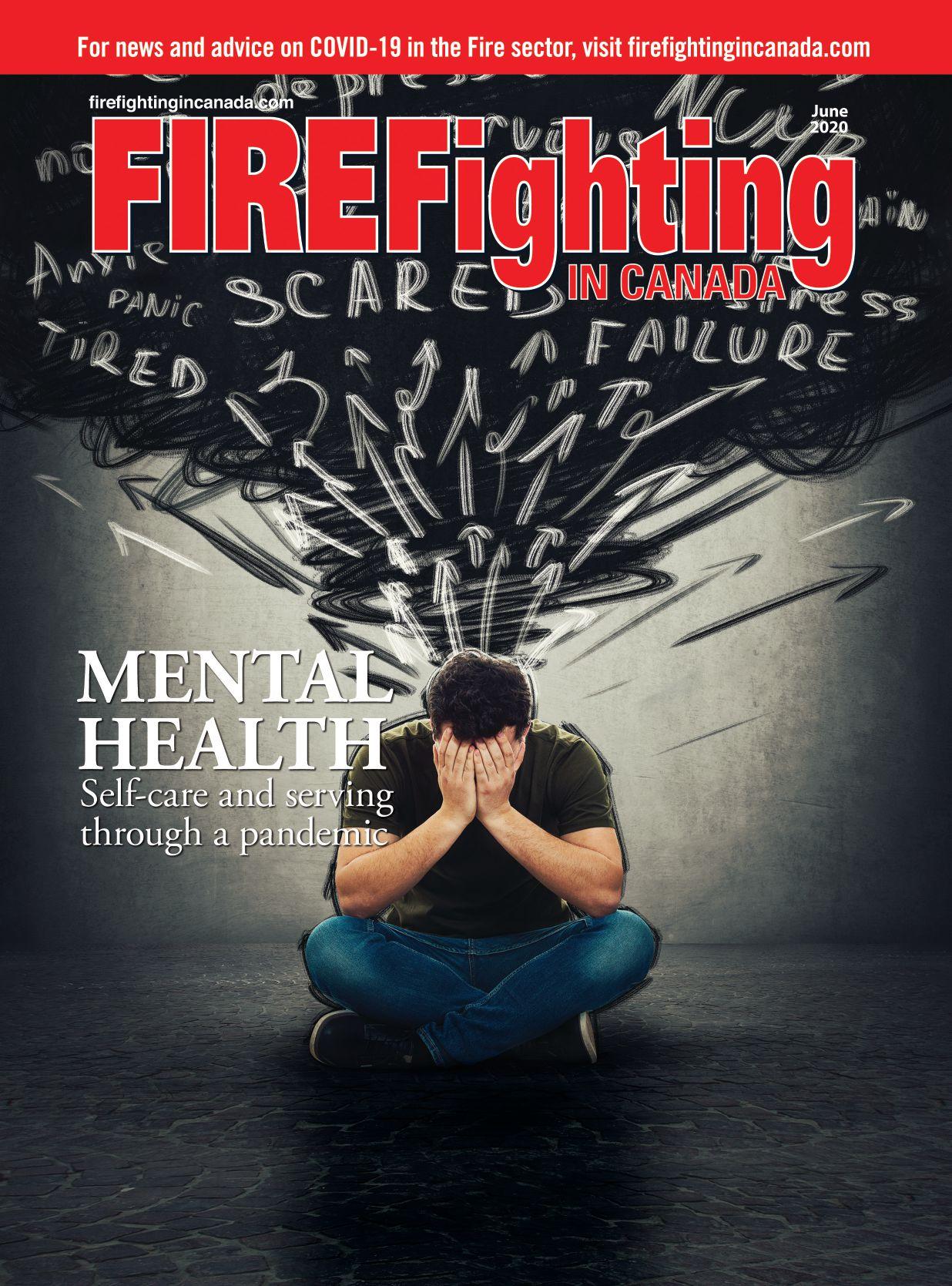
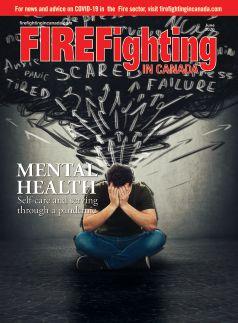
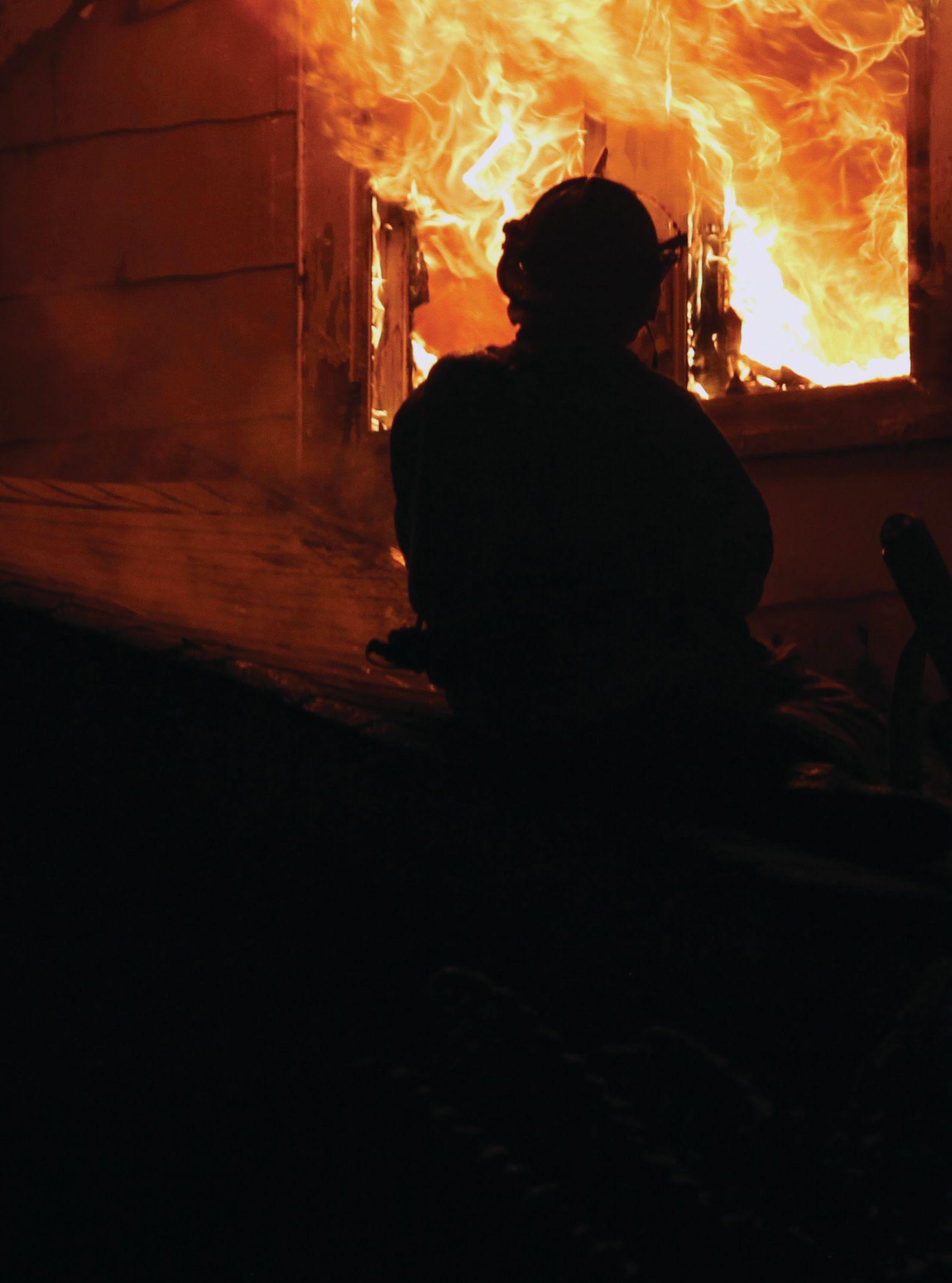
Firefighters, already at an increased risk for disorders of the mind, will be impacted uniquely by the stressors of the pandemic and their individual circumstances. Here are ways for first responders to protect themselves and stay mentally fit while persevering through the crisis and beyond.
By Laura Aiken
17
MANAGING TRAFFIC FLOW AT ACCIDENT SCENES
It’s long been known that civilians are not the safest drivers when it comes to passing incidents and emergency vehicles. This can pose a serious risk to all involved. There are a number of ways to curtail the chance of injury, death or vehicle damage while building cooperative inter-agency relationships in the process.
By Kirk Hughes
20 IS TALLER ACTUALLY SAFER?
Is building height the biggest factor in fire and life safety for its residents? The answer might surprise you.
By Len Garis and Joe Clare
BY LAURA AIKEN Editor laiken@annexbusinessmedia.com
COMMENT
The case for kindness
Dear pandemic diary:
It’s day I’m-not-sure — time has taken on a strange and surreal monotony. Perhaps time in the clock of physical distancing ticks at the pace of my wilting patience. I am growing weary of an enemy I cannot see, hear or smell. The odds are stacked against me such that I must put layers of space and hightech equipment between me and all my interactions with the world outside my home. I am exhausting my reserves of vigilance, but am quite aware this is no time to shed defenses. Oh SARS-CoV-2, it’s been a crisis knowing you and we are all looking forward to your (not near imminent enough) end. Signed, The People.
and a deep humbling as the pandemic, magnifying glass poised, exposes the inequalities of our collective.
Perhaps this sentiment resonates with you — or perhaps not. COVID-19 has created a paradox in solidarity, where we are collectively united but distinct in our experience, seperated by circumstance. Whether you are young, middle-aged, old, wealthy, fairto-middling or poor; whether you are single or married, have children or not, suffer from any pre-existing ailments; whether you are in the fire service, a grocery clerk, unemployed, employed at home or work in a hospital; where you live — all of these descriptors tell individual narratives. While we are all in this together, we are not living the same story — we are a library. If this is an unprecedented time, let it also be an unprecedented awakening of empathy and kindness, of non-judgmental approach,
ON THE COVER
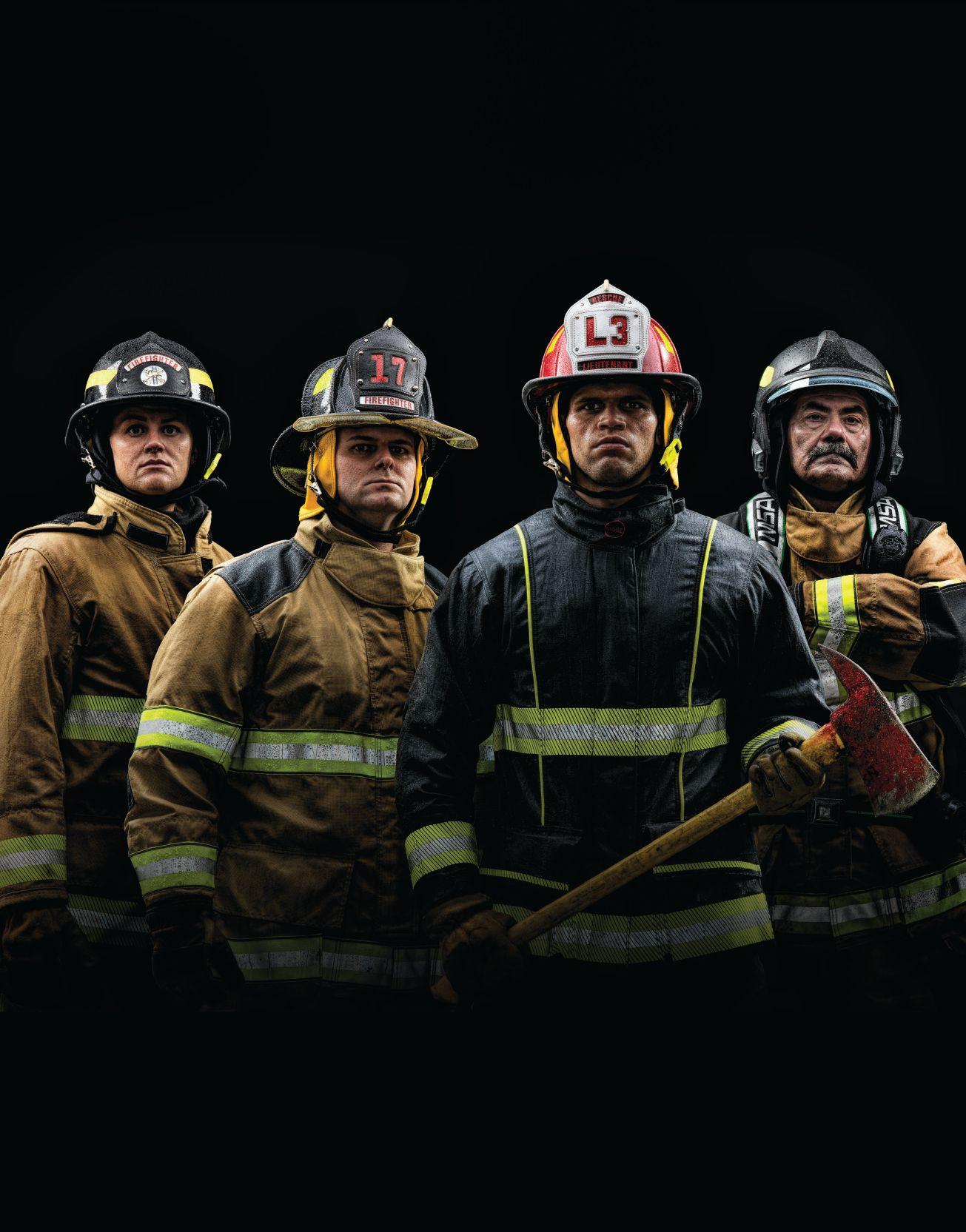
COVID-19 is a challenge on a whole new level. Here are some ways to help keep your mind safe. See story on page 10.
I have always been fond of the saying “everyone has a story” as a reminder to practice kindness and respect because you don’t know what difficulties someone may be facing. For every adult that walks past, so also walks a childhood. Reactions to this pandemic will be as personal as pain is subjective. Some people are doing pretty peachy, stitching together silver linings like an elaborate quilt. And others are becoming sick by the very act of avoiding the sickness, by the stress and isolation. Fears of an impending tsunami of mental illness abound, but so do stories of positivity and levity. Humans are very resilient creatures. Now is the time for alliances and sensitivity. Self-care. Peer-care. I have seen countless acts of kindness from fire departments, individuals, companies...this pandemic has brought out the kindness in so many. Witnessing that generosity helps us remember we are part of the library, not a story cast aside. Be kinder than you have ever been in your life. Someone you know needs it, and that someone could be you.
ESTABLISHED 1957 JUNE 2020 VOL. 64 NO. 4
EDITOR LAURA AIKEN laiken@annexbusinessmedia.com 416-522-1595
MEDIA DESIGNER BROOKE SHAW esun@annexbusinessmedia.com
GROUP PUBLISHER/VP SALES MARTIN MCANULTY fire@annexbusinessmedia.com
COO SCOTT JAMIESON sjamieson@annexbusinessmedia.com
PUBLICATION MAIL AGREEMENT #40065710
RETURN UNDELIVERABLE CANADIAN ADDRESSES TO CIRCULATION DEPT.
P.O. Box 530, SIMCOE, ON N3Y 4N5 e-mail: subscribe@firefightingincanada.com
Printed in Canada ISSN 0015–2595
CIRCULATION e-mail: bolechnowicz@annexbusinessmedia.com Tel: 416-510-5182 Fax: 416-510-6875 or 416-442-2191 Mail: 111 Gordon Baker Rd., Suite 400, Toronto, ON M2H 3R1
Occasionally, Fire Fighting in Canada will mail information on behalf of industry-related groups whose products and services we believe may be of interest to you. If you prefer not to receive this information, please contact our circulation department in any of the four ways listed above.
All advertising is subject to the publisher’s approval. Such approval does not imply any endorsement of the products or services advertised. Publisher reserves the right to refuse advertising that does not meet the standards of the publication. www.firefightingincanada.com
STATIONtoSTATION
ACROSS CANADA: Regional news briefs
COVID-19 round-up
The COVID-19 pandemic posed new challenges for fire departments across the country when it was declared in March. By mid-April, many adjustments had been made and fire departments entered what is being hailed as a “new normal”, but in reality, continues to evolve with new information reported regularly.
For many fire departments, this meant changing the way they responded to calls, implementing rigorous sanitation and distancing measures, screening firefighters when they arrive to the firehall and adjusting PPE protocols. On April 10, for instance, the City of Winnipeg said its firefighters and paramedics would be wearing reusable respirator masks while on call instead of
THE BRASS POLE
Promotions & appointments
DAVE ELLOWAY became fire chief of Guelph Fire Services in Ontario in February. Prior to accepting the position, Elloway held the title of deputy chief of administration and emergency preparedness and was the City’s emergency management
coordinator. Elloway began his career with the City of Guelph as a police constable in 1988 before joining the Guelph fire department in November 2015. He has a master’s degree from Royal Roads University in Disaster and Emergency Management. He took his new place at the helm on March 1.
The Saskatoon Fire Department promoted
disposable ones; switching from N95 respirator masks to MSA Advantage 200 SL respirator masks, which are often used at fire scenes or hazardous material incidents.
Governments also introduced regulations to help first responders. On April 6, Ontario enacted an emergency order to allow firefighters, police and paramedics to obtain COVID19 positive status information regarding individuals they come in contact with while on duty. In March, British Columbia firefighters were told to stop responding to most medical emergency calls (including many overdoses) by provincial health officer Bonnie Henry. After pushback from departments and several B.C. mayors (as seen by a letter written by 14 mayors to Health Minister Stephen Brown outlining concerns) the province issued an amendment allowing for departments to respond to overdose calls but should do so by wearing the appropriate PPE and limiting the number of people responding. There was no change announced regarding non-overdose calls.
Meanwhile, in attempt to boost morale, several departments decided to take other approaches. For example, in Canora, Sask., the fire department began a community engagement initiative celebrating birthdays by surprising locals by driving their truck to the person’s residence (complete with flashing lights and sirens) to deliver a birthday gift — but this isn’t isolated. Fire department efforts to make birthdays extra special for children have been widely reported during the pandemic and mark just one of many positive initiatives by fire departments.
Attentions now are tuned as always to what is ahead and what changes will be needed next.
YVONNE RAYMER as the first female assistant chief in March. She has worked with the department since 1995. In her new role, Raymer will lead the department’s fire prevention team, communicating with the public and providing supports where needed.
CHRIS GEIGER was elected to the position of fire chief in Ladysmith, B.C., taking over
the role from longtime fire chief Ray Delcourt. Geiger was born and raised in Ladysmith and has served with the Ladysmith Fire Rescue since February 2007. Throughout that time, he served as lieutenant, captain and, most recently, as chief training officer. His new appointment as fire chief came into effect April 1.
Ontario: Increase in fires, fire fatalities, during COVID-19
Toronto and Ottawa reported an increase in residential fires this spring.
Toronto Fire Chief Matthew Pegg, who also heads up the city’s emergency COVID-19 operations centre, said the city was seeing a 17 per cent increase in fires in mid-April. He cited unattended cooking and careless smoking as leading causes.
This is in direct contrast, Pegg noted, to the decrease in paramedic and police call volumes.
In response to these statistics, the fire department began running daily public service announcements and education campaigns with the goal of minimizing the number of fires caused by carelessness.
The Office of the Fire Marshal of Ontario said there were a total of 51 fire fatalities
across the province in the first four months of 2020. There were 17 people who died in
Banding together
Fire departments across Nova Scotia stepped up after a firehall was burned down in a rural town in late April.
Shinimicas, N.S., is a rural community located in Cumberland County, about
Retirements
After a 30 year career in public service in Ontario, Brantford Fire Chief SHANE
CASKANETTE retired in April. Caskanette began as a firefighter and was soon promoted to captain of the fire training division, then to deputy fire chief at the City of Woodstock. He then served as deputy fire chief for the Town of
27 km northeast of Amherst, N.S. The fire department’s building was destroyed in a fire that took place on the evening of April 23. The fire, which reportedly began in the engine of a fire truck before
Richmond Hill, Ont., and fire chief and executive director of community emergency management for the City of Oshawa, Ont.
Last Alarm
Retired deputy chief of the Hanover, Ont., fire department NORMAN (DEMPSEY)
YOST passed away on Jan. 29 at the age of 91. Yost was a
and May 4 of this year when compared to last.
By the end of April, the Ottawa Fire Department said it had seen more fatal fires in the first four months of 2020 than in any of the past three years. The three years previous saw a total of three fatal fires each year during that timeframe. In 2020, four fatal fires took place and resulted in a total of six deaths.
March alone. The fire fatalities across Ontario increased by 65 per cent between January
The Ottawa Fire Service has also launched social media campaigns to promote awareness of fire safety during the pandemic. Fire chiefs across the province are using similar tactics by bringing community outreach and public education online to promote fire safety and maintain communication with their residents during these unprecedented times.
spreading, damaged all of the department’s fire equipment, including all three fire trucks.
Shinimicas firefighters were back in action and responding to fires the next day thanks to their neighbouring
decorated fire service member who served with the Hanover Fire Department from 1960 to 1992. He began his 32-year career with the department as a volunteer firefighter, moving up the ranks to captain before taking on the role of deputy chief.
Former Terrace, B.C., Fire Chief CLIFFORD BEST passed away in April. Best, 89, joined the
department in Tidnish Bridge, who had lent them a 28-yearold fire truck. Soon, other departments in Cape Breton, Mahone Bay and Hants County began lending trucks and gear to the department.
Terrace Volunteer Fire Department in February 1952. He retired in 1990 after 16 years as a chief and a total of three decades fighting fires in the Terrace area. He also received the B.C. Government Service Medal for Years of Service and the Fire Service Exemplary Service Medal for 30 years of service to Canada from the Governor General of Canada.
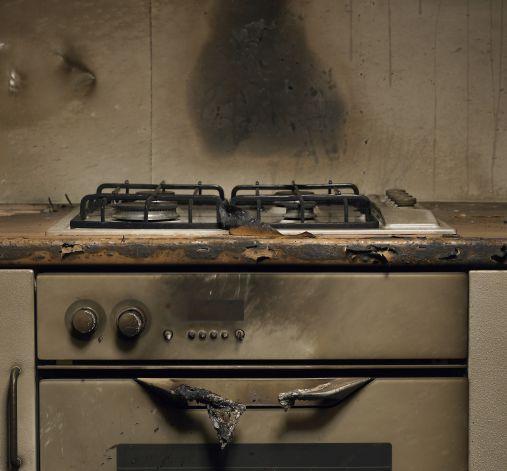
People are at home and cooking more, which is a signficant factor in the rise in residential fires.
PHOTO: MICHAEL BLANN / GETTY IMAGES
STATIONtoSTATION
BRIGADE NEWS: From departments across Canada
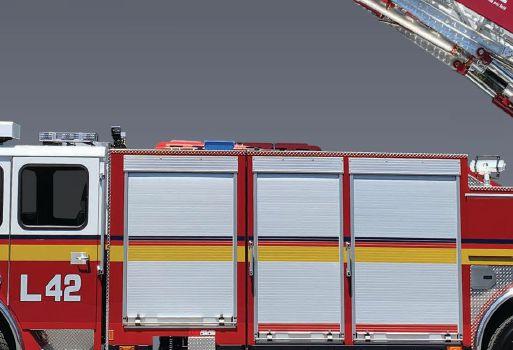
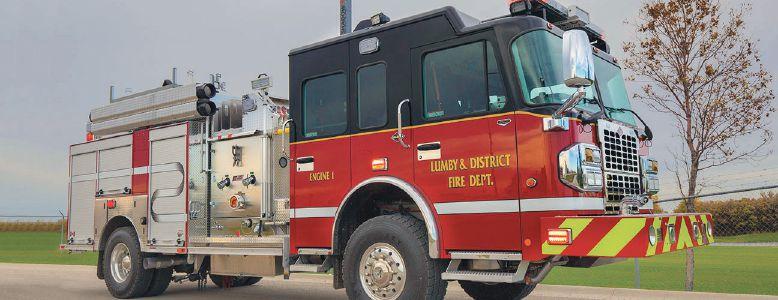
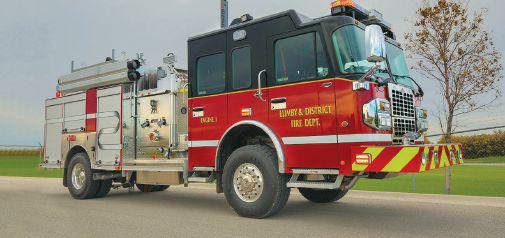
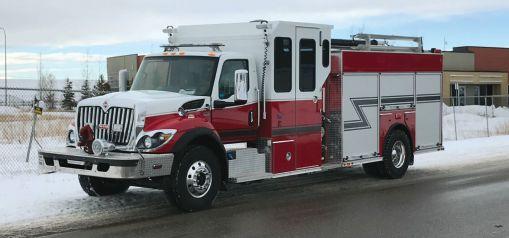
The Lumby, B.C., Volunteer Fire Department took delivery of custom traverse control pumper from Fort Garry Fire Trucks. Running on a Cummins L9 engine with 450 hp, this apparatus has an Allison EVS 3000 transmission. It sits on Spartan Metro Star 10” 4X4 chassis. It’s also set up with a Foam Pro 2001 system.
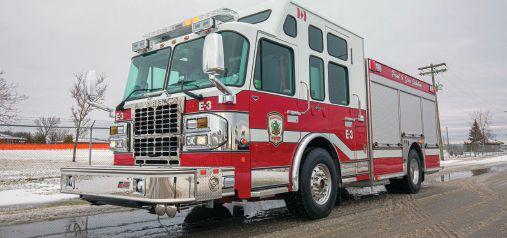
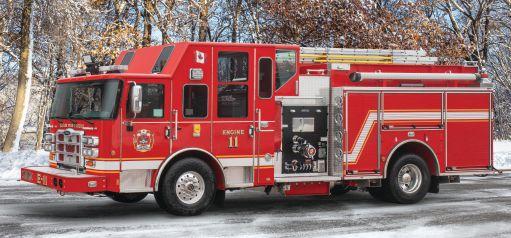
The City of Saskatoon received a custom aluminum Emergency Rescue Pumper from Fort Garry Fire Trucks. The apparatus sits on a Spartan Metro Star ELFD 24” RR and runs on an Allison EVS 3000 transmission and a Cummins ISL9 engine with 380 hp. It is equipped with a Hale QMAX XS1750 US GPM pump and a class A Foam Pro 2002 system.
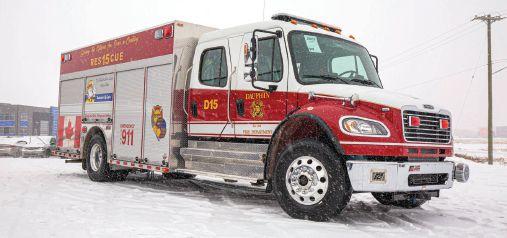
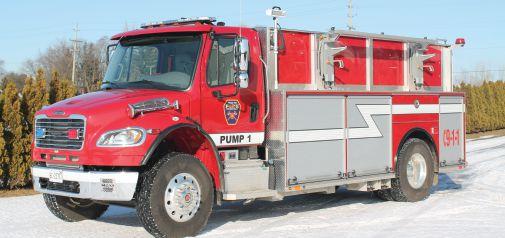
The Dauphin Fire Department in Manitoba received an ES 18 Rescue pumper from by Fort Garry Fire Trucks. Made of 5083 salt water marine grade aluminum, this 4-door apparatus sits on a Freightliner M2-106 chassis and runs on a Cummins L9 engine with a Allison EVS 3000 transmission.
The Brooks Fire Department in Alberta took delivery of a MaxiMetal TME pumper from Commercial Truck Equipment. This unit runs on a Cummins L9 engine with 450 hp and sits on an International chassis. It is equipped with a Foam Pro 1600 system and a HALE RSD-J-150 pump that holds up to 1,000 IG.
The District of Taylor Fire and Rescue in British Columbia received a Pierce pumper from Commercial Truck Equipment. This apparatus is equipped with a Detroit Diesel DD13 engine with 525 hp and sits on a single axle Enforcer chassis. It is equipped with a Husky 3, single agent foam system and a Waterous 2,000 GPM pump which holds 850 gallons of water.
Prince Township in Ontario took delivery of a MaxiMetal PIC Tanker from Commercial Truck Equipment. This apparatus sits on a Freightliner M2-106 chassis and runs on a Cummins L9 engine with 350 hp. It is also equipped with a Darley PSP1250, 1,250 GPM pump that holds 2,000 gallons of water.
CITY OF SASKATOON
LUMBY VOLUNTEER FIRE DEPARTMENT
DAUPHIN FIRE DEPARTMENT
BROOKS FIRE DEPARTMENT
THE DISTRICT OF TAYLOR FIRE AND RESCUE
PRINCE TOWNSHIP
Mental HEALTH
Mental health could be one of the biggest casualties of the COVID-19 pandemic, but the story is not finished yet. There are chapters left to write. There is time, in fact no time like the present to prioritize self-care. The risks of a distressed state of mind are acute, and for firefighters all the more so.
Data on the prevalence of mental health injuries amongst first responders in Canada was studied in 2017 by the Canadian Institute for Public Safety and Treatment (CIPSRT). The paper – Mental Disorder Symptoms among Public Safety Personnel in Canada (R. N. Carleton, et al) – culminated the findings of self-reported surveys that showed 44.5 per cent of participants had clinically significant symptoms consistent with one or more mental disorders. Estimates of prevalence in the general public are 10.5 per cent.
Looking at the current climate and the public at large, American research in JAMA Psychiatry looked at the potential consequences of our current circumstances on suicide in April. The study – Suicide Mortality and Coronavirus Disease 2019 – the Perfect Storm? (M. Rheger, et al) –noted several risk factors for suicide caused by the coronavirus, including economic woes, social isolation, less access to community and religious support, problems accessing treatment such as a lack of childcare, existing health problems, a surge in firearm sales, and the fact that suicide rates tend to peak in spring and early summer in the northern hemisphere. The study’s authors also noted: “It is possible that the 24/7 news coverage of these unprecedented events could serve as an additional stressor, especially for individuals with preexisting mental health problems. The outcomes of national anxiety on an individual’s depression, anxiety, and substance
Self-care and serving through the pandemic
By LAURA AIKEN
LEFT Clinicians are available for online sessions, with video providing many benefits such as discretion and the connection of being able to see body language and expressions.
RIGHT Engaging in simple acts of family connection is a great form of protection for your mental wellbeing.
use deserve additional study.”
However, there are reasons to be optimistic, the authors wrote — “There may be a silver lining to the current situation. Suicide rates have declined in the period after past national disasters (eg, the September 11, 2001, terrorist attacks). One hypothesis is the so-called pulling-together effect, whereby individuals undergoing a shared experience might support one another, thus strengthening social connectedness.
Recent advancements in technology (eg, video conferencing) might facilitate pulling together. Epidemics and pandemics may also alter one’s views on health and mortality, making life more precious, death more fearsome, and suicide less likely.”
Crisis Services Canada, a suicide prevention organization has been reporting a rise in reach-out, with 26 per cent of calls and text messages received since March 26 attributed to COVID-19, reported Global
News. In America, the Disaster Distress Helpline saw an 891 per cent rise in call volume when compared to last March, reported CNN. Tragically, reports of doctors and nurses dying by suicide are also making headlines.
Suicide is the worst-case outcome of mental illness, but one that happens far too frequently. An average of 10 people die by suicide daily, reports the Government of Canada, making it the ninth leading cause of death. For every suicide, there are 25 to 30 attempts. The Centre for Suicide Prevention documents 27 first responder deaths by suicide between April and December of 2014, and approximates that first responders experience PTSD at twice the rate of the general public. These are tragic consequences. Below this horror exist a range of disorders causing all sorts of disorders and serious malaise.
The mental wellness of frontline workers and the general public is of high concern as we face the valid fear of widespread crisis of the mind now and post-pandemic. Coronavirus has and will surely continue to inflict damage beyond its hosts.
But all is far from lost – the ways to protect oneself are many, and many people are thriving despite the anything but normal “new normal”. We can start by looking at the scope of contributing factors.
■ THE INVISIBLE ENEMY AND THE HOME FRONT
One of the biggest stressors for firefighters may be the fear of bringing the unseen pathogen home to their loved ones, says Matthew Johnston, a clinician at First Responder Health and firefighter in lower mainland British Columbia. Johnston also serves on the mental health task force for the BC Professional Fire Fighters Association. Firefighters are used to stressors they can see and the trauma of this hidden enemy could be profound, he says. Johnston is seeing some trepidation towards firefighters from people in the community not used to seeing them donning so much PPE. In addition, neighbours may fear that you, as a firefighter, pose an increased risk and that can turn into “social distancing times three,” he says. It can be a disheartening time, depending on what you are experiencing. Circumstances are localized across Canada and experience will be subject to that. But no matter your specifics, you are affected for better or worse. This is a test we all have to write.
“In coming years, I see more of an injury to our intellect and our heart,” says Johnston. “This shifts things holistically, as a perception of you as a frontline worker in the community and throws traditional value systems [in the fire service] upside down: engage at all costs, function over feeling, show up to work without excuses…there will be a focus on people showing up to work sick after this pandemic. This changes the fire service’s mentality of our limitations. It will be interesting to see how these medical call protocols evolve over time – do we go to routine only, or to all, and what universal precautions are we going to take?”
In the lower mainland, Johnston says showing up to any medical call without an N95 mask is a thing of the past, and even once a vaccine is created, he questions whether PPE protocols put in place will be rolled back, a move he has rarely seen. This covert thug has heightened the awareness of contaminates on just about everything in our environment everywhere. This increases hyper-vigilance not only on the job, but at home. And if domestic challenges were simmering prior to COVID-19, they may be at a full boil now, adding to distress.
Firefighters train for hyper-vigilance through situational awareness and elimination of stress responses that would cause most people to run from the danger, rather than towards it. He says this baseline is unhealthy and needs to be managed to begin with. When you add other stressors like sleep debt or domestic challenges, and now COVID-19, it’s a whole other level. A hallmark of this pandemic is how many worries in can incite at once – it’s not only are we safe, it’s are our families safe? What will happen to the economy? The questions are numerous, endless really.
■ POSITIVE INTERVENTIONS AND SETTING INTENTIONS
At Ornge, an air ambulance and medical transport provider in Ontario, Tom Walker serves as human factors specialist, where one of his key responsibilities is providing therapeutic interventions for paramedics and staff. He is focused on getting people to worry about just what they need to worry about in the moment. This is a particularly difficult time for those already struggling with compassion fatigue or PTSD. From a clinical perspective, the sympathetic nervous system fires up in the face of a perceived threat and when that happens for an extended time period, damage can result.
This highly wound state also creates reactions from the primitive mind rather than the executive logician — our pre-frontal cortex — which can lead to bad decisions and ongoing anxiety. One key element to support people with is how they view stress.
“If you see it [stress] as the enemy, it’s going to hurt you. If you see it as something that’s helping you stay safe and moving you along and making you more energized and focused, you’re a lot more likely to benefit from it and not develop health or psychological problems as a result.”
What Walker recommends people do is totally counterintuitive but clearly wise: Relax. And, get super Type-A about selfcare. Be the best you can be at taking care of yourself, whether that’s exercise or talking to someone, he says. Be intentional about this self-care. When you are stressed, don’t ignore it and hope it goes away. Instead, do some sensory grounding — “I’m safe, I’m here at home” — do some breath work. Find your form of meditation, whatever it may be. Walker, a former pro boxer, hits his heavy bag. Prioritize connecting with your partner at home. Have faith that your PPE, used correctly, will keep you safe and you’ll keep your family safe too. Do what you can to relax that nervous system and calm the hyper-vigilant state. You don’t want to be in a state of arousal where you get up six times during a television show because your nervous system is too keyed up to sit still, he cautions.
Another important facet that Walker addresses is unconscious empathy. When we witness the trauma of others, seeing someone die and hearing the families crying, or seeing people struggling to breathe, can get us locked into their nervous systems through our mirror neurons. He tells his paramedics to be empathetic, but don’t imagine what the patients and families are going through. In his words: Like their shoes, know their shoes, but stay out of their shoes. Be compassionate, but don’t get locked in.
Since avoiding this fate is easier said than done, it’s particularly important for organizations to support its members and the members support each other. At Ornge, virtual “town halls” have been created for staff that address a range of issues, including how to talk to kids about the virus and not take stressors home.
“It’s a huge responsibility of organi-
This highly wound state also creates reactions from the primitive mind rather than the executive logician — our pre-frontal cortex— which can lead to bad decisions and ongoing anxiety. ‘‘ ’’
zations, to take care of their people and families. If they have a healthier outlook at home, they’ll be healthier at work,” says Walker.
With the right supports, there are positives and in the longview, Johnston at First Responder Health sees a chance for post-traumatic growth that could arise from this pandemic.
There is an opportunity to emphasize self-care and reconnect with your family; to be more mindful of planning your day. This is a time to be reminded of simple things like taking a family bike ride, which, Johnston says, is just the type of humble community and family engagement that psychologists have been recommending first responders do to protect themselves for years.
“I think that the COVID pandemic has put this under the spotlight for a group of people that may have had their check engine light on for a while and not had their car serviced, so to speak.”
And perhaps the unpreceded nature of the event will help further break down stigmas around mental health. Johnston sees the chance for more meaningful conversations that normalize exchanges about everyday domestic issues. He also sees an opportunity for renewed solidarity between labour associations and management; a chance to come together on what’s really important – that everyone is healthy, happy and thriving. Peer support is also a critical form of protection.
At Orgne, Walker is working towards getting people engaged in a way that they can still be supported by setting up forums where people can have some connection, but have it be confidential and safe.
“We heal together and we co-regulate together,” he says, of the importance in forging these connections.
■ RESOURCES
To increase the resources available to first responders, Johnston created a new YouTube Channel in collaboration with BC Professional Fire Fighters Association. The video series features a variety of psychologists presenting or being interviewed on strategies to cope through COVID-19 and beyond. There is a message being repeated often within them and elsewhere: Put intentionality into your day. There is much to be said for being purposeful in an era where so much is out of our control.
Both Walker and Johnston emphasize the value in online counselling. Clinicians are available to do sessions by video through the pandemic, and both say it is effective and offers many benefits like discretion and not needing to travel (fight traffic in usual times). First Responder Health is a conduit for training clinicians to work with first responders specifically, equipping them to better build a rapport with fire service members. First Responder Health has a directory of occupationally aware clinicians.
Connecting by video is especially key on many fronts, says Walker, because you can very much clue into people’s energy and thus be more connected when you can see them. So much of communication – 93 per cent - has nothing to do with the actual words you choose and all to do with the nonverbal and auditory signals you send. In person is irreplaceable, but online is still a very high quality and effective experience.
And of course, as a form of protection, gratitude begets good feelings and helps avoid ruminating over what you can’t control, an act that is likely to make people more ill or get ill, Walker says. While he says it’s hard to see how there wouldn’t be a rise in mental health struggles throughout and in the aftermath of this pandemic, hopefully support strategies and resources can mitigate this. It’s key for first responders to remember all the good they are doing in the world, and just how good that can feel.
BY CHRIS HARROW Fire Chief Minto Fire Department Ontario
TLEADERSHIPFORUM
Pandemic leadership
o say the current pandemic has changed the world is probably the understatement of the year. All of us are dealing with issues we never thought we’d encounter. “Isolation”, “social distancing” and “COVID-19” are all terms never used in the fire service until now. The pandemic is a massive test of leadership skills for any leader in the fire service and beyond.
Now, more than ever, it is very important for all leaders to stay within their skillset. All members of the fire service are desperately trying to stay up-to-date on information, which is often changing daily as the pandemic evolves. We are reading each new update and altering response protocols quickly to match the latest recommendations from the experts in the field.
Leaders need to ensure they are willing to change and evolve as a fast as COVID-19 crisis. Throughout the pandemic, it’s extremely important to maintain the leadership skills you have developed throughout the course of your career. Do not try to be something you are not or attempt to emulate someone who you will never be. In a time where each leader needs to be in constant communication with their staff and co-workers, trying to be everything to everyone will cause communication breakdowns. This is especially true in the world of social media, the mechanism many of us use to get our messages out to the people we serve. We should communicate with residents of our communities, firefighters and allied resources on a regular basis during times of crisis. Social media is, at times, our only way to communicate with the outside world. This is especially true during the COVID-19 pandemic with social distancing and isolation.
tion style — particularly their social media use — is working to educate and inform their citizens. Not staying on point and emphasizing the proper messaging can do a large amount of damage.
Each leader must set parameters, either written or understood, documenting their main goal for social media use. If the main goal is to educate the public and disseminate important information, stay in that mindset. It is okay to insert humour into your feeds once in a while as a way to keep people entertained and interested. This is also a fine line to walk. The wrong post, tone or topic may compromise your authority or cause you to lose followers.
I do not pass myself off as a social media expert. My feeds are pretty boring and not well used. I do, however, understand their purposes and the value that can be had in using social media. A great example of remaining on message is my partner in this column: Chief Matthew Pegg. His leadership for the city of Toronto throughout this pandemic is exemplary. He continues to push out excellent information and motivational posts to keep Toronto residents informed. He has also injected a slice of humour at the proper time but his retweets stay within the lines of the messaging he is trying to get
Each leader must set parameters, either written or understood, documenting thier main goal for social media use ‘‘ ’’
Every leader should have their own guidelines for posting on social media. When using a personal account, you should have a personal framework and tone but also must set limitations. This is, again, especially true in times of crisis when people turn to the leaders to educate them. This is a time for leaders to rise to the occasion, but also provides a prime time to fall from grace.
For reference, take a look at various world leaders and how they are dealing with the crisis facing their respective countries. While I’ll refrain from providing specific examples or getting political, you only need to select a few countries to see how their leader’s communica-
Chris Harrow is the fire chief in Minto, Ont. He is a graduate from fire programs at Lakeland College and Dalhousie University and holds a graduate certificate in Advanced Care Paramedics from Conestoga College. He can be reached at c.harrow@mintofiredept.on.ca
across. Kudos to Chief Pegg and the job he has done in one of the toughest environments.
During the ongoing pandemic, people are spending more time on social media and residents are consistently looking to us for relevant information. There is an abundance of incorrect information circulating so it is up to leaders to ensure they are posting relevant, truthful information. Stay on topic and continue to send out the proper information.
We are all in this together. Now more than ever, our residents need to see leadership. They want to be reassured we are on top of the situation and we have not hit the panic button. Continue to display the leadership tactics that have made you successful in your position. Stay safe and hopefully we can all resume some sort of new normal soon.
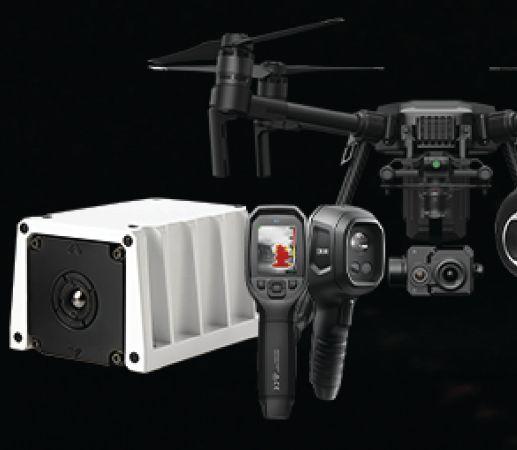
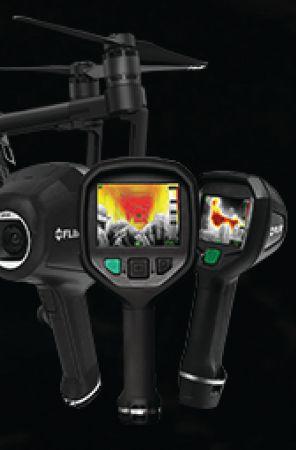
SEE THE HEAT FROM EVERY VANTAGE POINT
Give your crew FLIR thermal vision — a clear, 360° view of the scene — from the air, ground and by hand in the thick of the smoke. Plan your attack faster, see re as it spreads and make rescues safer for victims and re ghters. FLIR has a TIC solution for any budget.
To learn more or request a demonstration, visit flir.ca/fire
BY DAVE BALDING Instructor
Beyond
Hoses & Helmets
AFIRELINES
Resilience and firefighter culture
vital personal quality, within our personal and fire fighting lives, is resilience. I personally learned its value through a recent period of challenge, change and growth. Resilience has proven to be a quality that does not simply appear in one’s life without hard work. The Oxford dictionary defines resilience as the ability to “withstand or recover quickly from difficult conditions.”
While resilience is now a popular buzz word, it was always part of a formula for enduring difficulties. Personal resilience is formed through a blend of positive attitude, optimism, emotional stability, and an innate ability to learn from setbacks.
Personal resilience can be grown. Much as we derive lessons and coping strategies from drills, build muscle memory and become stronger in our profession, we also have the capacity to transfer these skills into personal life experiences. Akin to great training, we cannot simply cheerlead ourselves through such events. A good training session has support for the learner as do life’s exercises. No firefighter (at any level) is expected to self-teach critical skills or even reinforce existing ones. On the contrary, the team environment within the fire service has provided the necessary support and guidance to cultivate success for new learners and accomplished members alike. Similarly, navigating life’s experiences need not (nor should be done) solo.
We continue to gain awareness around the importance of self-care in all aspects. Clearly diet, exercise and lifestyle have a short and long-term impacts on our wellbeing and consequently on our role within our department. Mental health awareness and care, thankfully, are now gaining that same recognition. As healthy members of our organizations, we are better able to contribute to their effectiveness and group health — resilience being a component of that.
challenges, while seldom welcome and invariably uncomfortable, have an upside in terms of learning new efficiencies. Singular events such as significant responses and ‘near misses’ present opportunities for learning and team growth, ultimately contributing to our collective resilience.
I would be remiss not to mention the current climate every one of us is living, working and responding in with respect to the pervasive virus taking the world by storm. While incredibly challenging, we as a fire service continue to draw upon previous lessons learned, while innovating new solutions and navigating this extraordinary experience. Over time, a sense of pride and growth — vital to the resilience and progress of our members and departments — will be fostered. For example, I often reflect on British Columbia’s unprecedented wildfire season of 2003 from which many lessons were learned, which, as a provincial service, better prepared us for the more prolific wildfire seasons of 2017 and 2018.
A key quality in leaders, also a component of resilience, is a posi-
A seemingly everyday event, such as member attrition, may take a toll on an organization but provide opportunities for growth as well. ‘‘ ’’
Fire service organizations traverse many types of challenges; some small, others significant. These opportunities for learning may be ongoing or single events. A seemingly everyday event, such as member attrition, may take a toll on an organization but provide opportunities for growth as well.
The value of succession planning quickly shines through, as does the opportunity for advancement by deserving members. Budgetary
Dave Balding has been a member of the fire service since 1985, spending 26 years as a volunteer on Vancouver Island. He is an instructor for the Beyond Hoses & Helmets leadership course and most recently served as fire chief for Golden Fire Rescue. Contact Dave at fireguydave6@gmail.com and follow him on Twitter at @FireChiefDaveB
tive outlook. This optimism is contagious within our departments and contributes to our team’s resilience. A ‘can do’ attitude must also be tempered with reality.
Can we as leaders easily control or manipulate firefighter culture? In a word, my humble offering is no. The comedic adage “meetings will continue until morale improves” is testament to that. As leaders, it’s incumbent on us to encourage and grow the positive aspects of culture within our teams and do what we can to limit or modify behaviours that may detract from a healthy culture. This is largely accomplished through adopting those components of personal resilience: a positive attitude, optimism, emotional stability, and an innate ability to learn from setbacks. These individual contributions to resilience have an inherent effect on the very reason for our profession. Resilience helps us personally and collectively survive, but more importantly, move beyond the status quo and thrive.
MANAGING TRAFFIC FLOW AT ACCIDENT SCENES
A motor vehicle incident provides inherent dangers to first responders on the scene, but there are ways to mitigate these at the scene.
By KIRK HUGHES
Drivers today face several distractions behind the wheel: high speeds, road construction, and weather, to name a few. Increased technology and in-vehicle cellular devices make drivers more easily distracted. Even with a perfect blend of responsibility and care, most drivers have not lost the one thing that is seldom to be controlled: curiosity.
Attempting to capture the attention of the motorist without overloading their senses is one of the most difficult parts of highway rescue work. It seems every passerby has to look at the scene, even when travelling at high speeds. The government has tried addressing this by promoting speed limit reductions near collision zones and adding hefty fines for violators. These programs have urged drivers to move a lane over and decrease speed in the hopes of gaining the drivers attention.
Sadly, no amount of regulations can replace common sense so it ultimately falls on the responding agency to protect their crews and work space. Increasing visibility of fire on-scene resources, giving ample warning of traffic management measures and promoting partnerships with assisting agencies are all ways to combat unnecessary hazardous conditions caused by the public during roadway calls.
Preparing to respond to roadway calls begins long before the tones sound. With a majority of calls for service involving motor vehicle collisions, having equipment ready before arriving on-scene makes tactical sense. Logically, a priority should be the increased visibility of the responding apparatus. It was not that long ago that fire trucks lacked
everything from adequate emergency lighting (think the one cherry light on the roof) to sporting any reflective decals at all.
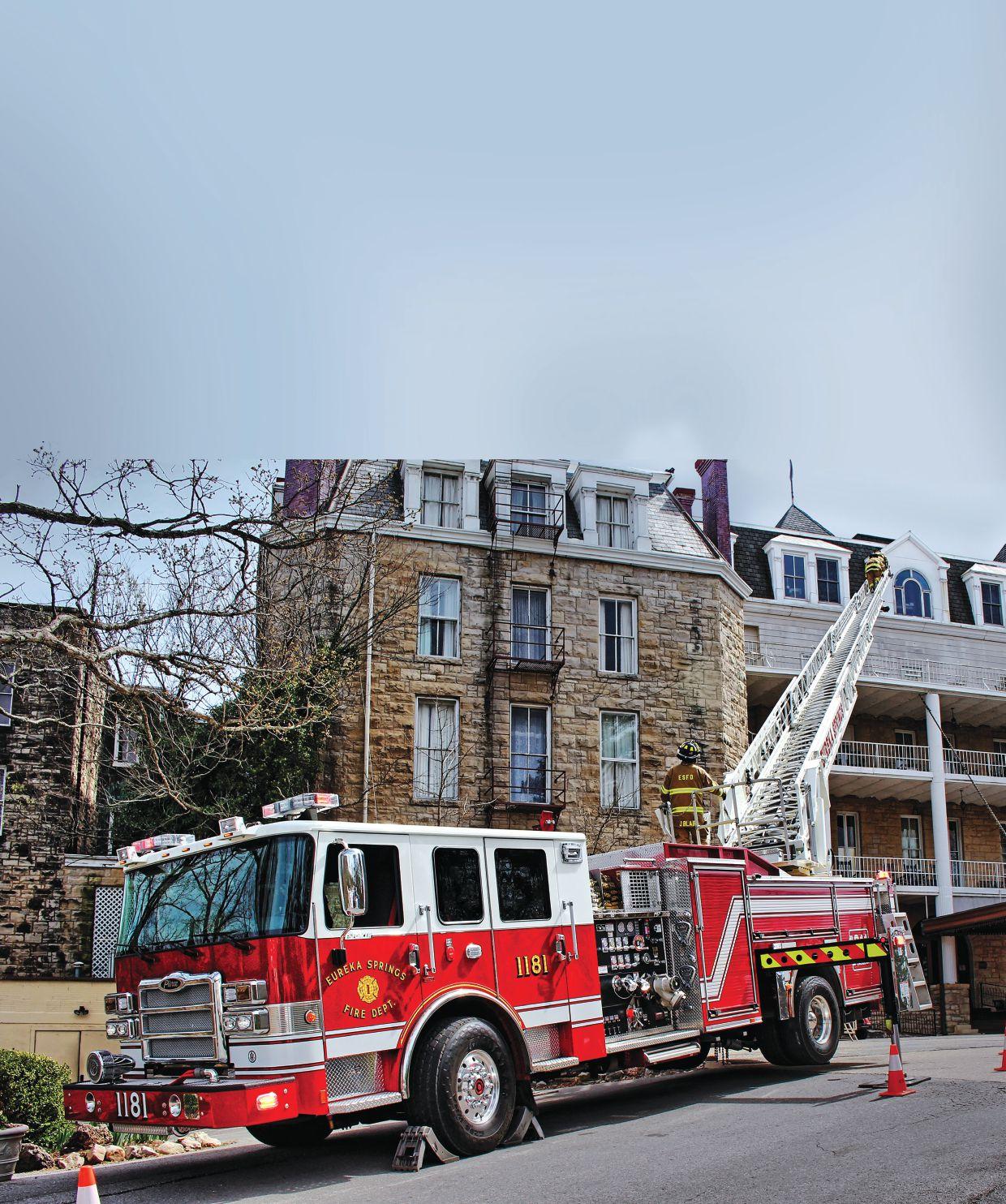
Thankfully, times have changed. Gone are the days of grey tailboards with no directional markings. Today’s fire apparatus, especially those dedicated to highway response, should have full decaling on the rear of apparatus to increase day and night visibility. Daytime colour schemes of red and yellow are popular and appear to have the most dramatic affect on drivers, while nighttime reflective chevrons enhance the outline of vehicles allowing drivers to better see the dimensions of trucks parked at accident scenes.
Some departments have taken the contrasting colour scheme chevrons and placed them on the front of apparatus, ensuring that, whichever way the truck is parked on-scene, the outline of the vehicle remains
highlighted catching the attention of the passing motorist. Side reflective tape, alternating paint schemes (such as red bottom and white top - sometimes called the FDNY paint pattern) have added a staggering look to fire trucks causing them to stand out amongst other highway vehicles increasing their visibility.
Lighting is another component that has changed over the last few decades. The one rotating red light has now yielded way to sharp and bright LED lights with differing colours and sequences. Different colours, such as red, white, and even amber in some provinces, serves to draw attention to emergency responders. That said, drivers almost display a type of “eye fatigue” when constantly being bombarded by too many lights. Care given to the proper placement of scene lighting, curtailing of unneeded emergency
PHOTO:KIRK HUGHES
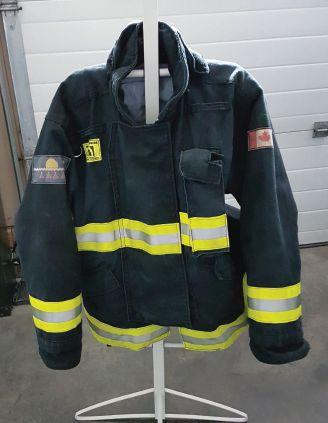
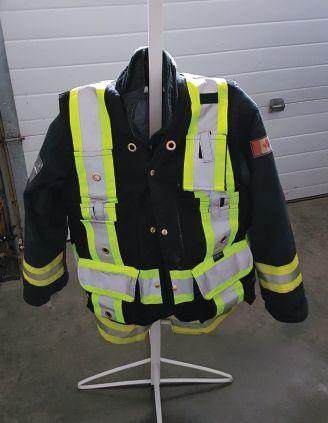
These photos show just how much difference a traffic vest makes in increasing the visibility of a firefighter.
lights, is essential. This is especially true at night when flashing lights potentially blind oncoming drivers.
A well decaled apparatus does wonders for visibility but the most important part of any response is the firefighters themselves. New standards have stressed the importance of adding traffic vests to turn out gear on roadway calls. By adding a flag vest to the reflective trimming of bunker gear, a firefighter becomes more visible overall. The next step is ensuring crews actually use them.
The difference reflective vests make to firefighter apparel cannot be understated. Chiefs should purchase the rugged, thicker type of vest, often called a surveyor’s vest, which is made of canvass and maintains shape even in adverse weather conditions such as sleet, rain and wind. Although much costlier than the vinyl ones, firefighters will wear them because they will not impede movement like poor quality vest often do. Safety starts with the individual crew member and emphasis on wearing your vest must occur.
A critical factor in dozens of firefighter fatalities due to secondary collisions is the placement of the apparatus and firefighters mounting and dismounting on the unblocked side. A skilled driver knows to angle the truck in a way to close the lane without projecting too far into on-coming traffic, but just enough to cover the scene and allow rescuers to disembark without being blind against traffic. A good responding practice is setting up advanced warning signs a good distance from before arriving on-scene. This gives motorist lots of time and space to reduce speed move over.
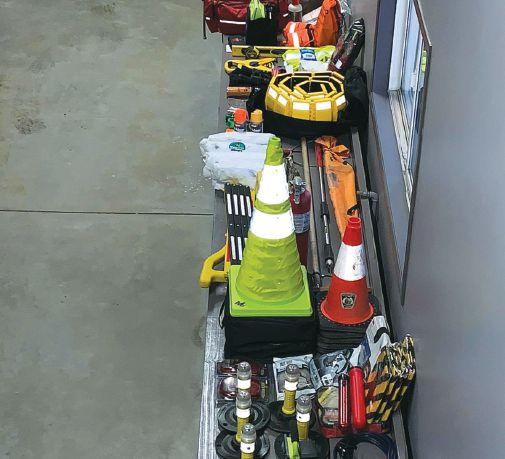
With enough notice given to drivers, focus should shift to establishing the “work zone”. Utilizing a vast array of kit, the rescuers are not only protecting themselves, they are also aiming to provide as much direction to drivers as possible under the circumstances.
The initial traffic plan consists of cordoning off the area and establishing a perimeter with lots of cones. The trick is to keep the perimeter as tight as possible, preventing confused driver’s from thinking any gap in the cones is an invitation to drive through them. Pulsating electronic flares, directional flashers and temporary barriers all contribute to directing traffic away from the work zone and maintaining that safety “pocket” for rescue workers and victims alike.
The final line of defense when working roadway calls is the flagger. Managing traffic flow is an art. Personnel assigned to flagging duties must have designated training — this is not a spot for new members. Flaggers must be established a reasonable distance away from the scene, again, giving as much advanced warning to on-coming traffic as possible. Ideally, they should be in pairs. A flagger should also be equipped with a hand held sign/wand (reading Slow or Stop), adequate background light, noise emitting device and a working radio. Flaggers are the “canaries in the coal mine” and should know how to raise the alarm if a vehicle poses a danger.
A solid practice is to incorporate the use of law enforcement officers with flaggers when controlling the scene. Police presence makes a significant statement to the motoring public and violating this law has consequences. These officers have unique powers to deal with absent-minded drivers. Fostering these types of relationships is a mark of a strong professional organization that places a priority on safety. By involving agencies that have the authority to enforce traffic laws (something firefighters do not have), interagency co-operation is born.
Some of the most dangerous scenarios faced by emergency responders are operations on busy highways, intersections and roadways. There are numerous challenges to working in these conditions but by being proactive, trained and equipped to deal with these factors, departments can reduce the risk for responders and victims alike.
Is taller SAFER?
The presence of sprinklers and working smoke alarms play a larger role in building fire safety than height, suggests a study of 13 years of fire data in British Columbia.
A 2019 report from the University of the Fraser Valley in British Columbia (UFV) – Structure Fires in British Columbia: Exploring Variations in Outcomes as a Function of Building Height and Life Safety Systems – examined 31,582 structure fires in B.C. between January 2006 and August 2018 to explore the effects of building height and life safety systems.
The results may surprise those who equate taller buildings with increased fire safety risk. Not only did buildings with one to four storeys experience more and deadlier fires than taller buildings over the 13-year study period, but the damage and need for fire department intervention tended to decline the higher up in a building the fires started.
Similarly, fires in buildings of any height with working smoke alarms and complete sprinkler protection tended to have relatively low rates of casualties, required less fire department intervention and were largely contained to the room of origin than fires in buildings without those systems.
“When we first looked at the data, the annual rate of fires per building initially seemed to be higher for taller buildings,” noted Chris Biantoro, one of the report’s authors and the strategic planning analyst for the City of Surrey Fire Service in British Columbia.
“We realized we were considering all buildings – from single-family homes to high-rise condo buildings – as a single street address rather than considering the number of residential units inside. When you more accurately count each unit as a home, the relative risk in taller buildings is actually much less because they have better fire pro-
A closer look at the impact of building height and life safety systems
By LEN GARIS AND JOE CLARE
Regardless of building height, the presence of sprinklers and working smoke alarms has a heavyweight role in safety.
tection systems.”
The report was written by Len Garis, an adjunct professor at UFV, associate scientist emeritus for the BC Injury Research and Prevention Unit and retired Surrey Fire Chief; Dr. Joseph Clare, a senior lecturer with the University of Western Australia and former Surrey Fire Service strategic planning analyst; and Biantoro, who has a
doctorate degree in operations engineering.
Data for the analysis came from the British Columbia Office of the Fire Commissioner (BCOFC) and BC Assessment (BCA).
The number of structure fires (from the BCOFC) was cross-referenced with the number of buildings of a certain height across the province (from the BCA).
To determine the impact of building
height, the researchers examined the frequency of fires grouped by the number of storeys – one to four, five to six, seven to 12, and 13 and up – compared with the relative frequency of fire-related casualties.
The data revealed that 92.5 per cent of fires occur in buildings no taller than four storeys in height, and that those fires also resulted in 94 per cent of injuries and 97 per cent of deaths. This is concerning when considering that, according to BCA data, almost all of B.C.’s building stock (99.8 per cent) is one to four storeys in height. Of note:
• Units in two-storey buildings have the greatest frequency of fire (0.33 per cent per year), followed by units in three-storey and four-storey buildings (both 0.16 per cent), and in five-tosix or seven-to-12 storey buildings (both 0.11 per cent).
• Units in buildings 13 storeys or highest had the lowest frequency of fires (0.04 per cent) – even less than those in one-storey buildings (0.09 per cent).
While the figures are estimates, they demonstrate the importance of considering both height and number of units when considering the relative risk of a building, as opposed to simply equating risk to the frequency of fire calls to a single street address. (For the purposes of the analysis, it was assumed that buildings of two storeys or less contained a single residential unit, and that taller residential buildings had eight units per storey.)
The authors also delved into the data to seek patterns in the heights that fires were more likely to occur in a building. Among the 31,582 fires analyzed:
• In buildings with up to four storeys, 94 per cent of fires started
on the second storey or below.
• In buildings with five to six storeys and with seven to 12 storeys, 53 per cent of fires started on the third storey or higher.
• In the tallest buildings, 35 per cent of fires started in the first three storeys, 35 per cent of fires started at four to 12 storeys, and 30 per cent started at 13 storeys or higher.
To bring additional clarity and context, the authors also considered the relative rates of fire protection, extent of fire spread, fire department involvement in controlling fires, and fire-related casualties as a function of building height and level of fire origin. This analysis more clearly showed the trends related to the effects of building height and fire safety protections. Highlights included:
• As the level of fire origin increases, the percentage of fires that occurred in the presence of working smoke alarms and complete sprinkler protection also increases. Fires that occurred on the ground floor had working smoke alarms 27 per cent of the time and sprinkler protection 11 per cent of the time. By comparison, fires that started on the 13th floor or higher had working smoke alarms 71 per cent of the time and sprinkler protection 67 per cent of the time.
• Related to the increased presence of life safety systems at higher levels, the extent of fire spread also reduces as fires originate higher in buildings. Two-thirds of fires starting on the first floor are contained to the room of origin, compared to 96 per cent of fires that start on the 13th floor or higher.
• The likelihood of the fire department being required to control the fire also declined with building height. For fires starting on the first floor, 48 per cent were controlled by fire department
intervention, compared to 16 per cent on fires starting on the 13th storey or higher.
• There was also no indication in the data that fire-related casualties increase with building height.
When the researchers turned their attention to the type of fire protection provided in a building, they found the following trends in buildings of all heights:
• Injury rates are significantly higher in buildings with working smoke alarms but no sprinkler protection – likely because residents attempted to control the fire themselves when the alarms activated.
• The presence of working smoke alarms and/or sprinklers significantly reduced both the fire spread and the dependence on the fire department to control fires.
In addition, death rates in buildings with up to four storeys were significantly lower in buildings with working smoke alarms. Death rates were not considered for taller buildings because of the limited sample size.
The researchers also wanted to determine how fire departments across British Columbia responded to fires based on their height and sprinkler status. Surrey Fire Service initiated a self-report survey that received responses from 25 departments of varying size.
For the larger departments, the first-in response typically included an average of 15 firefighters, three engines, one ladder and one rescue. By and large, the departments reported that the presence of sprinkler protection at a building did not change their policy for first-in response to first alarms. Most also indicated that building height did not change their policy for first-in response to first
alarms, with the exception of some departments that sent in larger first-in teams for very tall buildings.
In general, the patterns identified in the study were consistent with previous research the authors had conducted – although may not be widely known across the fire service.
“The results underscore the importance of life safety systems in all buildings, regardless of height,” Biantoro said. “We hope this will encourage the fire service to continue to push for complete coverage of life safety systems – ideally both alarms and sprinkler systems – in buildings of all heights, and also to consider historical fire outcomes as they shape their response policies, to make the best use of their resources.”
The study can be viewed at http://cjr.ufv.ca.
Len Garis: Fire Chief (ret) for the City of Surrey, British Columbia, Associate Scientist Emeritus for the BC Injury Research and Prevention Unit , an Adjunct Professor in the School of Criminology and Criminal Justice & Associate to the Centre for Social Research at the University of the Fraser Valley (UFV), a member of the Affiliated Research Faculty at John Jay College of Criminal Justice in New York, and a faculty member of the Institute of Canadian Urban Research Studies at Simon Fraser University. Contact him at len.garis@ufv.ca.
Dr Joseph Clare, Ph.D., formerly of the Surrey Fire Service, is a Senior Lecturer in Criminology at The University of Western Australia University, and an international member of the Institute of Canadian Urban Research Studies, Simon Fraser University. Contact him at joe.clare@uwa.edu.au.
BY SUE DAWSON Deputy Fire Chief Barrie Fire and Emergency Service, Ontario
ACOMMSCENTRE
Changing and adapting
s I prepare for retirement after almost 37 years in the fire service, I can’t help but reflect on changes I’ve witnessed throughout my career. Current changes, in light of the coronavirus pandemic, are no different. The restrictions have challenged us to look to different methods of training. We have new policies, new procedures and safe work practices to implement into our communications centres.
In Ontario, we are completing the update to the certification process for NFPA 1061 to the 2018 edition of the standard. The written and practical tests will be ready to go soon. The challenge may be how to complete the practical tests while physical distancing.
The pandemic has certainly changed the implementation of NG 9-1-1 and the milestones are being moved back by almost one year. This is yet another huge shift in our communications world.
As we all celebrated 9-1-1 Communicator Week in April with videos instead of recognition events (due to physical distancing regulations), I was reminded of one thing that has not changed: the amazing work that communicators do each and every day, no matter what event comes their way.
While we were not able to have an actual awards event, I could not help but reflect on some of the great work that I reviewed in our communications centre. We experienced calls that started off as a “routine motor vehicle collision” but quickly turned into a widespread hydro emergency where the 9-1-1 line lights up with reports of meters blowing off the side of homes.
them in safely exiting a hazardous environment due to a fire, while the rest of the team dispatched trucks to the scene.
These are just a few examples of what communicators in our communications centre deal with in the usual calm, efficient, professional manner. They always say, “I am just doing my job, but what an important job it is.”
As I look back to when I started dispatching fire vehicles with pen and paper and very little training, through the process of bringing all this technology to dispatch centres as well as operations divisions, it makes me wonder what is next. Technology has been one foundation within a communications centre that has assisted us in being able to meet the expectations of dispatching multiple departments, of meeting the guidelines and best practices for service levels and trying to keep pace with the public perception of a quick fire response. Years ago, the thought of adding a computer or tablet to a fire vehicle was met with resistance. Now, if one of these devices are not working, it is quickly reported as a
The world has changed so much since I started in the 1980s but never as much or as quickly as we’ve seen this year. ‘‘ ’’
We experienced a weather event that was featured on the TV show Heavy Rescue 401 that included a 70-car pile-up on a 400 series highway. Calls for help came from the huge wreckage of vehicles, resulting in the challenge of matching up callers within the multi-kilometre event to responding fire crews who had to travel a distance on foot to reach their location.
We had an amazing example of teamwork with a call taker on the line assisting a family of four for over 20 minutes to aiding
Sue Dawson has been with Barrie Fire and Emergency Service in Ontario in the communications field for more than 30 years. She is the deputy chief of communications and business services. Contact Sue at sue.dawson@barrie.ca.
malfunction and is fixed as soon as possible. The reliance on data, mapping, routing trucks to events and continuous updated call information has become a must-have.
I am trying to shift my brain into what retirement will be like and continue to be optimistic that my next steps will be as rewarding as my many years in the fire service. The world has changed so much since I started in the 1980s but never as much or as quickly as we’ve seen this year. While I look forward to whatever my next chapter may be, I will fondly remember my career in the fire service as an amazing journey; one that will be hard to walk away from.
BY GORD SCHREINER Fire Chief
Comox Fire Rescue British Columbia
WAdapting to changing times
hile the fire service has always been known for its ability to adapt to various circumstances, no one would have expected the rapid onset of change propelled by a global health crisis. I am writing this article on April 1, and for the past few weeks the fire service (and every other sector) has been making many changes daily, sometimes hourly.
Everything we do has changed. Fire departments everywhere are adapting to these changes in their own way to meet the needs of the citizens, while ensuring they keep their firefighters safe. For example, my department is a medium sized department serving about 22,000 citizens and we have developed some very creative ways to adapt.
While it may seem strange to have a firefighter work from home, one staff member is doing just that. This member takes a staff vehicle and their PPE home and responds to all incidents, meeting two other crew members on scene. The crew responding from the station use our rapid response vehicle (1-ton mini). If any of these firefighters were to have contact with COVID-19 at the incident, they and their equipment would return to the station in the staff vehicle, leaving the rapid response vehicle uncontaminated and ready for another response. Once back at the station, all staff, equipment and vehicles would be thoroughly cleaned.
We are doing similar protocols with our full-sized engines. They respond with a smaller crew with two additional firefighters following in a staff pick-up truck. They use all appropriate PPE, including SCBA, as soon as possible. This way, we get the same amount of firefighters to the incident while improving our physical distancing. Our work from home firefighters can access their fire station computer desktop and have been reviewing and updating operational guidelines, policies, lesson plans, training documents and pre-plans.
Like most departments, our station has been closed to the public. Before you are allowed entry, we ask a series of questions to determine if it is appropriate. Once inside, without touching anything, you head straight to a sink and wash your hands. This protocol is put in place for everybody, including all firefighters.
Our fire station, vehicles and equipment have never been so clean. While we have always kept things pretty clean, we are now relentless in our efforts. We have a good supply of cleaning products, masks and gloves and have developed some very robust procedures to ensure optimal sanitation. We were fortunate to have
Gord Schreiner joined the fire service in 1975 and is the full-time fire chief in Comox, B.C., where he also manages the Comox Fire Training Centre. Contact him at firehall@comox.ca and follow him on Twitter at @comoxfire.
STOPBAD
ordered extra cleaning supplies and PPE in January, when it seemed apparent that Canada would be affected by COVID-19.
One of the simple things we are doing is placing “Cleaned” stickers on the gap of vehicle, washroom and office doors, indicating the area has been thoroughly cleaned. If the sticker is intact we know the area is still cleaned. When the sticker is broken by a user (including the Chief), the individual is responsible to re-clean the area and put a new sticker on the door. Date, time and initials can be written on the sticker. This has provided our members with a level comfort as they know the space in which they are working, has been properly cleaned.
We, like many other paid on call/volunteer fire departments have cancelled our weekly scheduled training sessions. This has been one of our most difficult challenges as we love to train. In fact, we offer three different weekly training sessions to our members. Like many of you, we have been scrambling to fill this important need. We recently did our first virtual training session. Thirty-six of our members virtually attended and participated in a power point presentation, video and group discussion. We found this session to be very useful and a good chance for us to reconnect with some members. While we won’t be using this format every week, we believe it is very useful as long as it is not over used (just like other training).
Over the past few years, we had been developing a lot of our own training videos, posted to our website. We have recently accelerated our online efforts and are currently producing about two new videos per week. Now, many are designed around training related to the crisis and we encourage our members to view these videos. After viewing, our firefighters then answer a few questions related to the video and we document their efforts in our training files. We are also encouraging our members to visit other training websites for relevant online training. Many of these sites allow students to view the training, answer questions and print a certificate which can also be added to our training files.
We are also working on several training solutions in an effort to maintain and improve our practical skills. We are asking our firefighters to organize themselves in groups of three, to come into the station, don their PPE, including SCBA, and complete two or three of our very popular Seconds Count drills. Seconds Count drills are short, timed evolutions covering a variety of skills using 24 different drills. Once the drills are completed, PPE, vehicles and equipment are thoroughly cleaned and put back into service. These training sessions are recorded in our training files.
The fire service has always been great at sharing but this current worldwide crisis has brought us even closer together. In the fire service, we will continue to be leaders in our communities and adapt to change so we can continue to answer the bell.
BACKtoBASICS
Ladder Dating: Part 3
BY MARK VAN DER FEYST
Today, every fire truck in service is equipped with two ground ladders: a roof ladder and an extension ladder.
Usually the combo set is a 14-foot roof ladder and a 24-foot extension ladder, though this can vary depending upon the specific requirements of the department and truck. Every ladder, regardless of length, has reach limitations so firefighters must know how to work within them.
First, let’s look at the various ladder lengths on firetrucks. For the roof ladder or single section ground ladder, we have access to 14-feet, 16-feet and 18-feet. A roof ladder longer than 18-feet will require a very long fire truck to house it – it’s best to go with a two-section ground ladder than to have an extremely long roof ladder.
Two ground ladders staged side by side (roof and the extension ladder) will be the same length when they are bedded. A 14-foot roof ladder is 14-feet in length. A 24-foot extension ladder is 14 feet in length bedded — when the extension ladder is extended, it then becomes a 24-foot ground ladder. The same is true with the 16-foot roof ladder and the 18-foot roof ladder combinations: a
two section 28-foot extension ladder is 16-feet bedded and a two section 35-foot extension ladder is 18-feet bedded.
But why is it important for us to know the bedded lengths of extension ladders?
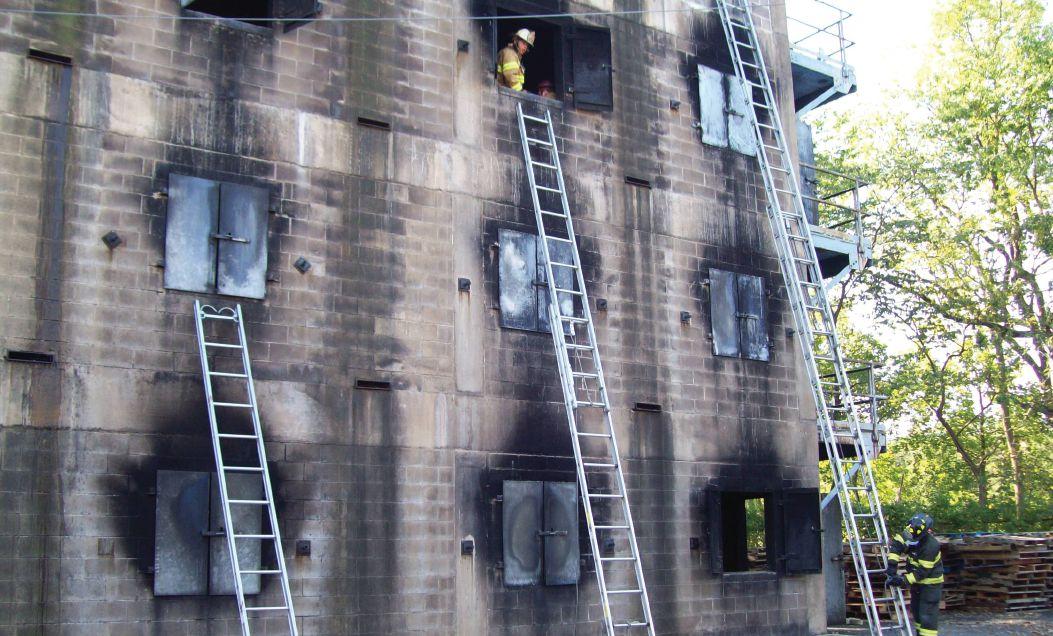
Every firefighter needs to know ladder math. We can use each ladder to its fullest potential when laddering windows at structures. See photo 1: a burn building with three different ground ladders staged under three windows. All three ground ladders are different: a 14-foot roof ladder going to the second-floor windowsill, the third story window sill ladder with a 24-foot ladder and the fourth story window sill shows a two section 35-foot ladder. Here are some numbers to keep in mind:
• Average height between two floors in a residential building is 10-feet
• Average height from floor to windowsill is 3-feet
• The ladder tip drops 1 foot for every four feet the butt is pulled away from the building
• This means a 14-foot roof ladder can be used to ladder a second story window
PHOTOS BY MARK VAN DER FEYST
Photo 1: Burned building with three different ground ladders staged under three windows.
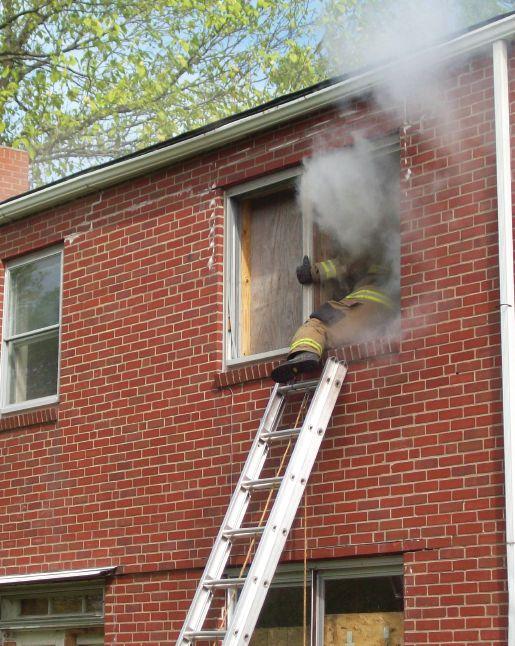
If this seems too good to be true, then let’s look at photo 2: a ground ladder resting below the windowsill ledge. If you look closely at the image, you will notice that it is a 24-foot, two section ground ladder which, when bedded, is only 14-feet in length. The ladder at the window is bedded so it was able to reach the second story window without being extended.
Most firefighters, when asked to ladder a window, will automatically grab the two-section ground ladder thinking they will need to extend it when all they need is the roof ladder. This means, every fire truck arriving on scene has the ability to ladder two windows on each side of a structure using only their roof and extension ladder.
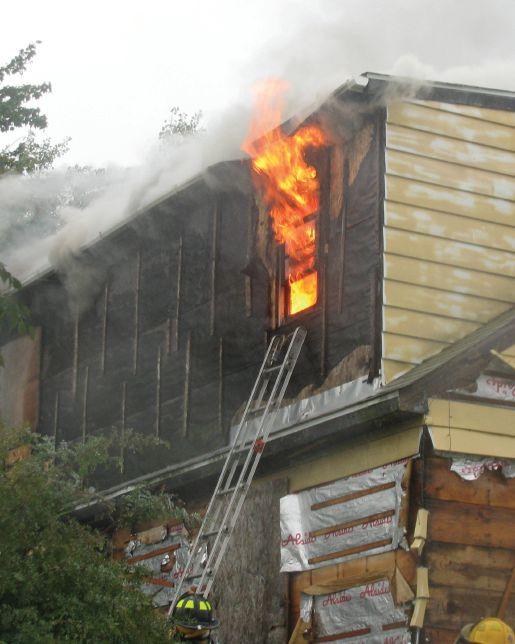
In photo 3, we see another example of a roof ladder reaching a second story window, only this time, it’s a 16-foot roof ladder. Here, the firefighter needs to size up what they need to ladder first then grab the right ladder for the job. In this example, a 24-foot ground ladder to a second story window without extending the ladder is a waste. If there is a need to go to the roof, or even ladder a third story window, that ladder is committed and new one must be sought out.
Ladder math involvers numbers that individuals must memorize. If it is not done on a regular basis, it will be forgotten about very quickly. So, there is another way that we can use to help determine what ladder is needed for various window heights.
A 24-foot ground ladder has the numbers “2” and “4” and in between those two numbers is the number “3”. So, that means a 24-foot ground ladder will reach a third story window. A 35-foot two section ground ladder has the numbers “3” and “5” with the number “4” in between them. That means a 35-foot two section ground ladder with reach a fourth story window. The 28-foot ground ladder is your hybrid ground ladder which will definitely reach the second and third windows.
A factor to consider when looking at a structure, and sizing it for laddering, is terrain. If there is any sloping land near the wall of the window, you need to factor that into your overall height. A walkout basement, for example, will have a sloping grade at the back of the house – if we need to ladder the second story window, we will need a 24-foot ladder to compensate for the drop in the grade.
It is possible to ladder first-floor windows depending on how high they are from the land. Sloping grades will have a determining factor as well, as the length of your attic ladder available. The attic ladder can be used to ladder the first-floor window along with the roof ladder. Using the roof ladder will have a horizontal angle to it, but will still work and support the weight of the firefighter. Some departments equip their trucks with small A-frame ladders; perfect for this type of application.
The only way to know the ladder’s reach limitations is to practice laddering on a building to see it’s reach. But, don’t take my word for it. Prove it to yourself.
Mark van der Feyst has been in the fire service since 1999 and is currently a full-time firefighter with the WFD. He is an international instructor teaching in Canada, the United States, FDIC and India. He is a local level suppression instructor for the Pennsylvania State Fire Academy and the lead Author of Pennwell’s Residential Fire Rescue book. He can be contacted at Mark@FireStarTraining.com.
Photo 3: A 16-foot roof ladder to a second story window.
Photo 2: Ground ladder resting below the windowsill ledge.
BY TOM DESORCY Fire Chief
Hope Fire Department
British Columbia
CVOLUNTEERVISION
A collective voice
OVID-19 has added yet another notch in our tool belt. It has hit hard and, as always, the fire service was there to take it on. As part of the emergency response framework in our communities, this required a full response. Granted, nothing was burning but this speaks to the all-hazards approach we use today. Though, historically, we’ve had other pandemics, this one is different. Ask yourself: Was there ever a time you considered you’d be on the same call as every other fire chief in Canada?
During events like SARS and H1N1, did the fire service have as big an involvement as they do today? Were fire departments as embedded in medical response as most are today? I know locally, we didn’t. This event has prompted our provincial and national associations to remind government bodies that fire departments are valuable members of the healthcare system in Canada.
Emergencies and disasters will always put a strain on any fire department, however the volunteer service stands to be hit even harder at times like these. Concerns around retention and recruitment will now be even stronger moving forward. As communities strain economically, it stands to reason that volunteer fire departments will also struggle. How many have had or will have members not want to be involved anymore or simply not be able to continue for various reasons? Will recruitment suffer or did you have recruits in the stream when training was suspended?
From the beginning I considered staffing concerns. I was quick to realize, in the volunteer service, we’re always concerned about staffing. There are times, under normal circumstances, when it’s tough to put a crew together. But, especially in times like these, mutual aid can be your best friend.
change the way you respond or will you simply have to respond to change? The smart money says we’ll do both.
During this worldwide pandemic, I realized I’ve never felt closer to our fire family. Interestingly, I realized, this is likely because we were apart. We took the fabric that binds our organization and tore it apart. We didn’t train, we didn’t hang out, we connected only by electronic means. It was very difficult. Ironically, calls slowed down as well and it was something that the volunteers began to look forward to more than normal.
As mentioned earlier, we took part in a hospital salutes with other emergency services. The first salute was also the first time we had seen each other in a while. Of course, with minimum staffing on trucks, we couldn’t have everyone there but there was no shortage of those wanting to take part. Not only was it awesome to be a part of it and show our support for all our healthcare workers, it was good for our souls as we regained the feeling of pride. These visits were the psychological boost we all needed.
That brings me to another outcome of all of this: the mental
‘‘ ’’
This time will live on in history and the legacy we take away from this year, this event, will serve to guide each and every one of us from here on.
What we learn from any incident — and this should be no exception —defines us as a department. Namely, the way we responded amid the chaos and uncertainty. The feeling of pride that we instilled in each of our members as we joined other emergency responders shows our support to healthcare workers; the way we soldiered on without question. There is always something to be said for the “take-aways” after any incident. COVID-19 is no exception. Will this
Tom DeSorcy became the first paid firefighter in his hometown of Hope, B.C., when he became fire chief in 2000. Originally a radio broadcaster, Tom’s voice could be heard in the early 1990s across Canada as one of the hosts of Country Coast to Coast. Tom is very active with the Fire Chiefs’ Association of British Columbia as communications director and conference committee chair. Contact Tom at TDeSorcy@hope.ca and follow him on Twitter at @HopeFireDept
fatigue we all went through, and some may still be going through. Was it the feeling of uncertainty? Maybe the fact that this wasn’t a fire in that we had full control but when you think of it, the response was so “fire-like”.
Was the volunteer fire service well suited to deal with COVID-19? I think we were and I think we are. We are strongly supported by our provincial and national associations who, not only gave us the tools and information we all needed, spoke loud and clear as a collective voice for all fire departments across Canada. I urge departments to keep connected to these associations and keep asking questions.
This year, 2020, marks my 20th year as a career fire chief and when you take in my time as a volunteer firefighter, more than half my life has been spent in this service. Needless to say, this time will live on in history and the legacy we take away from this year, this event, will serve to guide each and every one of us from here on.
A true game-changer. The eDRAULIC® Watertight Extrication Tools (EWXT) are the first of their kind. They allow rescuers to operate submerged in fresh water up to 11 feet, unencumbered by hoses or power units. And they’ve been thoroughly tested and proven, because trouble doesn’t just stay above water. THE EWXT, PROVEN FOR UNDERWATER RESCUES
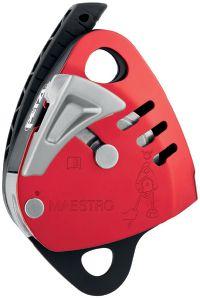
MAESTRO® L
Descender for technical rescue with built-in progress capture pulley, facilitates manipulation of heavy loads, and may be used as a primary system or as a back-up belay. www.petzl.com
PETZL RESCUE SOLUTIONS
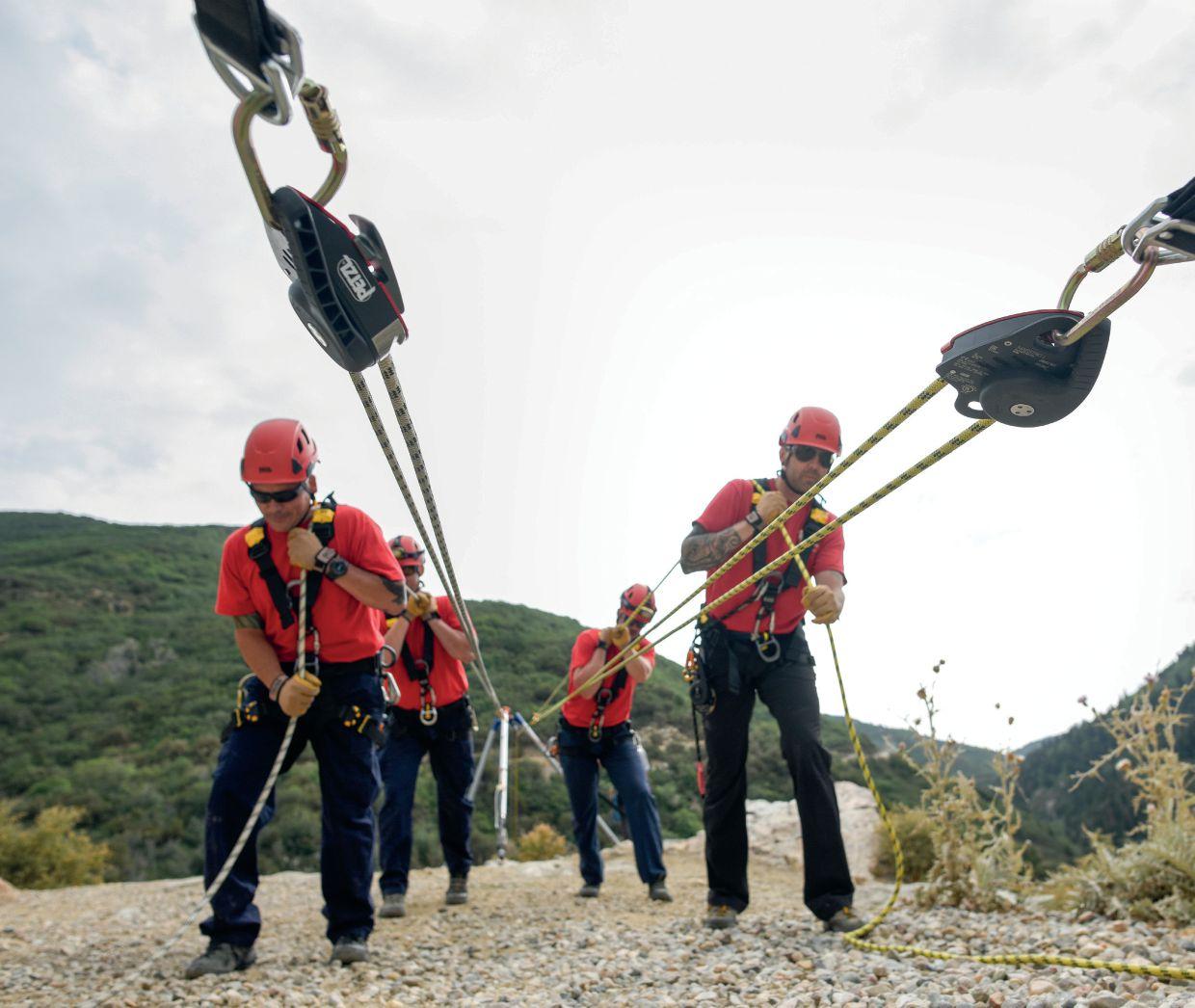
The challenge of the rescue professional is their ability to adapt, facing the unexpected in every situation. In order to always be prepared, this American team trains on a daily basis, for example here, in a ravine near Salt Lake City, Utah, USA.