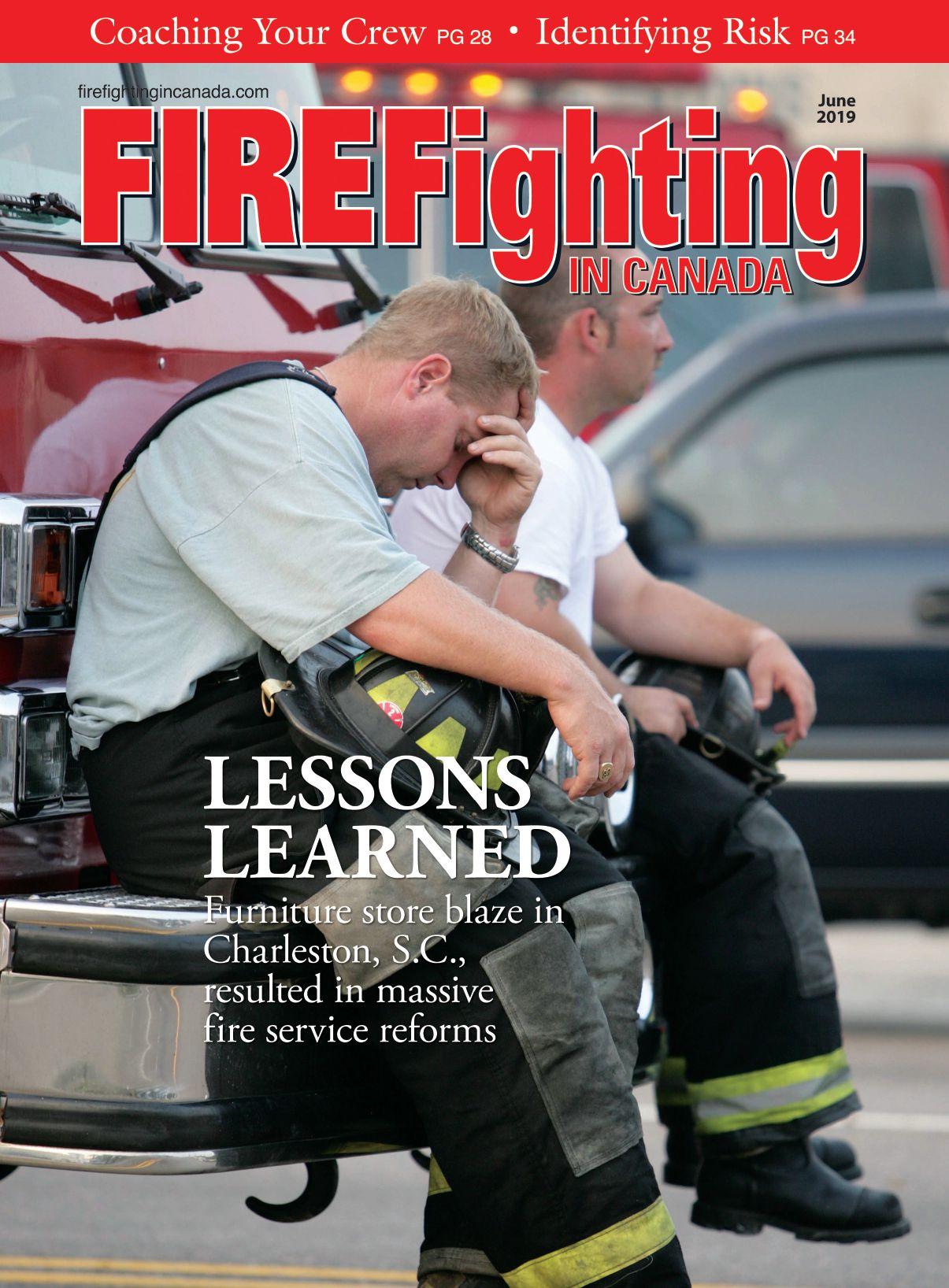
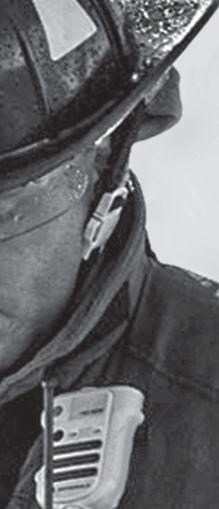
Optional all wheel drive with high approach / departure angles and short 427 cm (168”) wheelbase provide excellent maneuverability. 30 cm (12”) galvanized powder coated frame rails are rugged and corrosion resistant.
ENGINEERED CHASSIS FOR OFF-ROAD CAPABILTY
Equipped with a 6000 LPM (1500 GPM) midship pump, 2000-4850 L (530 to 1280 gallon) tank and optional Class A foam system, eMAX rescue pumpers are extremely versatile. The enclosed pump panel and low pre-connected handlines are standard features.
FIREFIGHTING CAPABILITIES
Optional joystick controlled bumper turret and 600 LPM (150 GPM) hydraulic driven pump provide simple easy to use pump and roll capability.
BUMPER TURRET
Keep your crew safe with the cab that withstands over 5x the roof load and over 2x the frontal impact required by NFPA.
STRONGEST CAB IN THE INDUSTRY
The eMAX rescue pumper features full depth compartments providing over 8.5 cubic meters (300 cubic feet) of storage. Upper compartments are available for additional enclosed storage.
STORAGE
SOLUTIONS
REVOLUTIONARY PERFORMANCE See more at www.e-one.com /product/emax
10
REDUCING RISK
The City of Surrey, B.C., launched a program that forces property owners to either secure their property or pay the city to do it for them. The initiative has reduced related fires by up to two-thirds and recouped more than $853,000 from property owners.
16 LESSONS LEARNED
David Griffin, who was a firefighter at a furniture store fire in Charleston, South Carolina, in 2007 that resulted in the deaths of nine firefighters, told an Ontario fire chiefs conference that a series of mistakes were unknowingly made at the scene.
30 AT THE READY
Sean Freeman, a senior firefighter and acting deputy chief of prevention and inspection at Strathmore Fire Department in Alberta, has been deployed several times to disaster-stricken areas overseas with the Red Cross.
BY GRANT CAMERON Editor gcameron@annexbusinessmedia.com
ICOMMENT
Sprinkler systems save lives
shouldn’t have to write this really, but I will because it’s worth repeating. Sprinklers save lives. Period. End of story.
That’s why I’m astounded that automatic sprinkler systems are not yet compulsory in all new home builds.
The Canadian Commission on Building and Fire Codes recently rejected requests to mandate the practice – for now at least, as members were not convinced sprinklers were really needed.
Currently, the National Building Code does not require new residential structures to have automatic sprinkler systems. Provincial codes reflect the standards that are set at the national level. In Canada, only some parts of British Columbia and a few other areas in other provinces require sprinklers in new homes.
ditions in as quickly as two minutes from the first signal of a smoke alarm. However, it often takes firefighters up to 10 minutes to arrive on scene. By that time, fires can spread and kill.
The Canadian Automatic Sprinkler Association notes that home fire sprinklers can extinguish a fire in less time than it would take the fire department to arrive on scene. Nationwide, the association estimates that more than 300 people die in fires each year and that installing both smoke alarms and a fire sprinkler system reduces the risk of death in a home fire by 82 per cent.
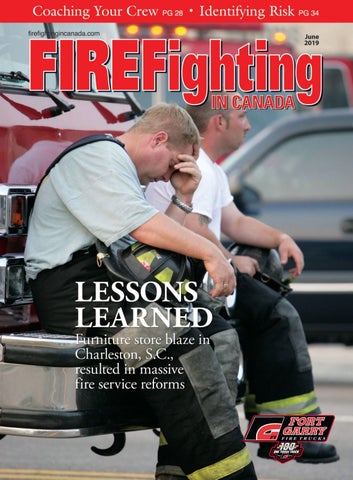
ON THE COVER
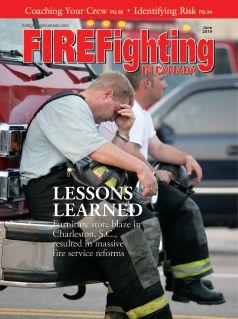
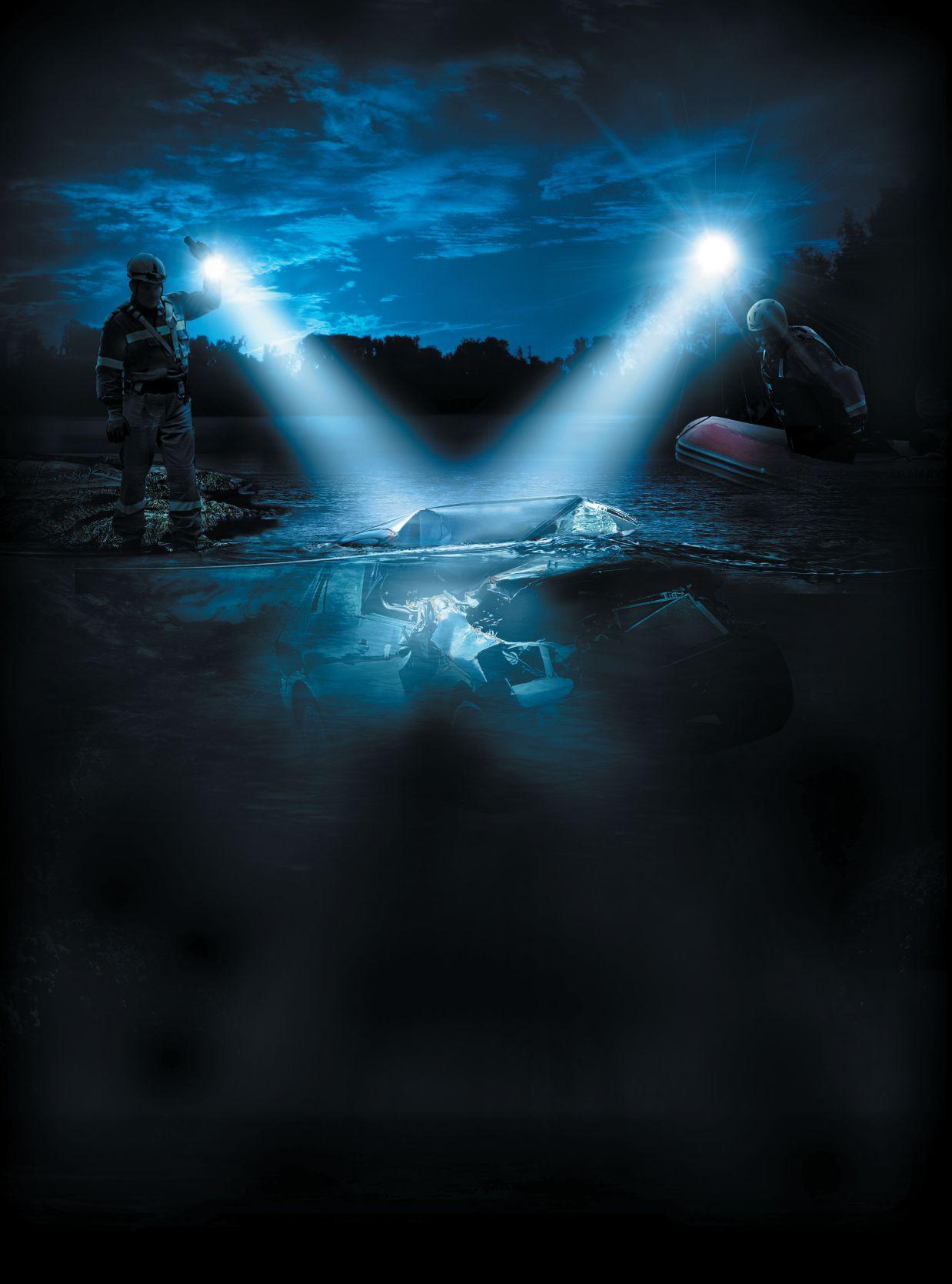
Ontario fire chiefs were told about lessons that were learned from a fire in Charleston, S.C., in 2007 that resulted in the deaths of nine firefighters.
See story on Page 16.
The deaths of seven children in a house fire in Halifax in February certainly underscores the need for sprinklers in all new homes. Duncan Rydall, chief fire prevention officer for the Town of The Blue Mountains, Ont., rightly told The Toronto Star that the deaths are undeniable reasons that the Building Code must be changed, as fire sprinklers in the home potentially could have saved the children.
Rydall figures the cost of sprinkler installation at the time of a home’s construction is about $1.50 per square foot, or $3,000 on a 2,000-square-foot home.
Modern homes are more toxic and combustible than ever and contents burn hotter and faster. This can create fatal con-
Similarly, a study by the University of the Fraser Valley in British Columbia found that having a residential sprinkler system can reduce your chance of dying in a home fire by 79 per cent.
The Canadian Association of Fire Chiefs, for one, has been working at the national level to encourage changes to the Building Code to include fire sprinklers. A number of other organizations have also recommended residential sprinklers in all new construction.
To me, mandating residential sprinklers in new home builds is a no-brainer.
Strengthening the federal code, and making it law to have sprinklers installed in new homes, and encouraging provinces to adopt these public safety standards, just seems the right thing to do.
ESTABLISHED 1957
JUNE 2019 VOL. 63 NO. 4
EDITOR GRANT CAMERON gcameron@annexbusinessmedia.com 416-522-1595
Occasionally, Fire Fighting in Canada will mail information on behalf of industry-related groups whose products and services we believe may be of interest to you. If you prefer not to receive this information, please contact our circulation department in any of the four ways listed above.
All advertising is subject to the publisher’s approval. Such approval does not imply any endorsement of the products or services advertised. Publisher reserves the right to refuse advertising that does not meet the standards of the publication. www.firefightingincanada.com
STATIONtoSTATION
ACROSS CANADA: Regional news briefs
Ontario auto extrication team will compete at worlds
The auto extrication team at Oakville Fire Department in Ontario has been chosen to represent Canada and the U.S. at the World Rescue Organization Challenge in France in September.
Chad Roberts, captain of the team and acting captain at the fire department, said crew members are looking forward to the competition.
“This is a great opportunity for our extrication team to compete against some of the best in the world. It will also provide a learning experience for team members as it will enable them to pick up valuable tips and techniques from other departments.”
The extrication team was started in 2003 and is comprised of professional firefighters.
THE BRASS POLE
Promotions & appointments
JEREMY BECKER is the Municipality of South Huron’s new fire chief. Becker started with the Dashwood Fire Department in Ontario in 1994 as a dispatcher and firefighter and for the last nine years was the district fire chief with the
Dashwood Station of the South Huron Fire Department. Becker also worked as an emergency services dispatcher for the last 20 years in southwestern Ontario. South Huron has stations in Dashwood, Exeter and Huron Park.
CARRIE CLARK was recently promoted to assistant deputy chief/man-
The competition is being held in La Rochelle, on the western shore of France.
Roberts said it’s an honour for the team and department to be chosen to compete in the event.
It will be the first international challenge for the team since it was formed 16 years ago.
Roberts said the competition will enable team members to gain new knowledge from some of the leading experts in the field of extrication.
“This will not only benefit the team members, but will be something we can bring back to our department and the citizens and visitors of Oakville that we serve,” he said.
Approximately 20 teams from all over North America and Europe compete at the event.
The Oakville team will be comprised of six members – a captain, medic and four rescuers.
The competition consists of two 20-minute events and one 10-minute event. The events are Unlimited Pit (all tools permitted) and Limited Pit (no powered hydraulics permitted. i.e. Jaws of Life) and the Rapid Pit (a 10-minute event to simulate a patient crashing and needing immediate removal).
Last year, the Oakville team competed at the 2018 North American Vehicle Rescue Challenge in Long Island, N.Y., and placed first in Rapid Pit, third in Limited Pit, and first for the Medic Award.
The team is raising money to attend the competition in France. For more information on sponsorship opportunities, visit the team’s Facebook page by searching for Oakville Fire Extrication Team.
– Grant Cameron
ager of fire prevention and public education for Barrie Fire and Emergency Services. She began her career in the fire and agricultural world in 1994 when she moved to Simcoe County. She moved through the ranks in her previous role in the AdjalaTosorontio Fire Department, culminating as interim fire chief in 2010. Since joining BFES she excelled in her role as communications operator for three years
and was promoted into the fire prevention and public education branch in 2013. In the last five years she has worked to excel at applying the Fire Code within the community.
The newest fire chief in Thorold, Ont., is no stranger to the city. TERRY DIXON has been appointed chief of the Thorold Fire Department, taking over for Interim Chief Vince Giovannini,
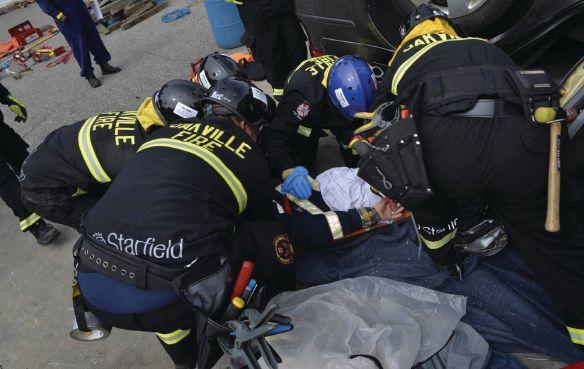
Firefighters from Oakville Fire Department in action at the 2018 North American Vehicle Rescue Challenge in Long Island, N.Y.
PHOTO
B.C. extending coverage for wildland firefighters
Legislative amendments have been introduced in B.C. that will allow wildland firefighters, fire investigators and firefighters working for First Nations and other Indigenous organizations to gain easier access to job-related health compensation and support services.
The government tabled amendments to the Workers Compensation Act that will extend occupational disease and mental health benefits to those in the fire service who work around wildfires.
The proposed changes will expand the cancer, heart disease and mental-healthdisorder presumptions to include wildfire and Indigenous firefighters, as well as fire investigators who deal with the aftermaths of oftentraumatic fires.
This is being done by replacing the definitions of firefighters with a new one that is broader and captures these other groups. The presumptions will be available to paid and volunteer firefighters.
With a presumptive condition, there is no longer a need to prove that a claimant’s diagnosis is workrelated. This means that
presumptive illnesses faced by firefighters will be recognized as conditions caused by the nature of the work and they won’t have to prove their issue is job-related to get benefits.
Gord Ditchburn, president of the B.C. Professional Fire Fighters Association, said in a statement that the organization is grateful to the government for its belief and support of firefighters.
“This is great news for firefighters who battle fires day in and day out, protecting communities around the province. It will provide them with easier access to supports they need for work-related physical and mental health injuries.
“Being able to receive timely supports is incredibly important, and in fact critical to keeping our firefighters healthy, both physically and mentally.”
B.C. Labour Minister Harry Bains said the changes are about fairness and support for firefighters – regardless of where they work.
“Whether battling wildfires, structural blazes in First Nations communities or investigating the causes of devastating fires – the work can have serious impacts on a
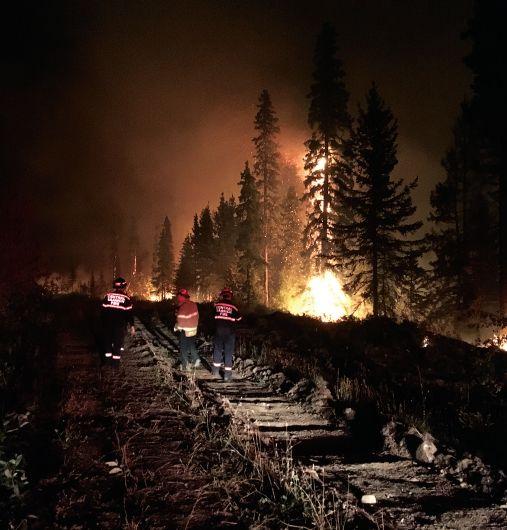
Wildland firefighters in B.C. will have easier access to job-related compensation and support services.
person’s physical and mental health.”
Stephanie Smith, president of the B.C. Government and Service Employees’ Union, said the amendments are good news for wildfire firefighters.
“Our wildfire fighters are renowned across the country and around the world for doing a technically challenging and critically important job that involves regular and ongoing exposure to
conditions that threaten their physical and mental health.
“That’s why ever since presumptions were expanded a year ago, we’ve been working hard to get wildfire fighters included in the coverage.”
“These changes are excellent news for wildfire fighters who put their health and safety on the line to save lives and property, just like their urban counterparts do every day.”
– Grant Cameron
who filled in after Brian Dickson left the organization late last year. Dixon brings nearly 35 years of experience to the position, split almost evenly as a volunteer and full-time firefighter
Timmins, Ont., Mayor George Pirie says the city’s new fire chief is bringing three things to the job: leadership, leadership, leadership. Council appointed TOM LAUGHREN as the new Timmins
Fire Department chief at its meeting in April. He has also been appointed as the community emergency management co-ordinator for the City of Timmins. He is replacing Norm Beauchamp, who started in October 2017 and resigned a month earlier.
Retirements
KENNETH RADER retired from the South Huron Fire Department
Dashwood Station in Ontario in January 2019 after serving for 50 years. Rader started his career as a firefighter with the Dashwood Fire Department and then the South Huron Fire Department and held positions as firefighter, dispatcher and deputy chief before returning to the rank of firefighter until his retirement in January.
Deputy Fire Chief NEVILLE MURPHY retired from the City of
Kingston, Ont., on March 31, 2019. Neville joined the City of Kingston in 1984 and served the community for more than 34 years in fire services. He progressed through the ranks and held various portfolios, including fire suppression (career and volunteer), communications, fire prevention, training, and mechanical division.
BY DAVE BALDING Fire Chief, Golden, B.C.
WFIRELINES
Fire leaders must evolve in order to be effective
hile scrambling to meet deadlines and comply with regulations, it’s easy to lose sight of why we got into this business in the first place.
For me, it was an opportunity to help others and work in the best profession anywhere. Assuredly, it wasn’t to complete and deliver reports along with the many other administrative challenges we as managers and leaders strive to deal with.
Make no mistake, I enjoy this aspect of my fabulous career tremendously, but it can become consuming. Occasionally I find it worthwhile to pause and press the reset button, if you will.
What’s it all about? I say it’s about people. It starts with our fire ground strategies. We put our responders’ safety first. The British Columbia Emergency Management System, one of the creeds that guides how we do business here, says so. Beyond that, we consider occupants as our first priority – most importantly so. Yes, we will take some risk to make a save but that must always be a very carefully considered risk.
People matter in a huge way when we’re at the fire hall as well. I’ve come to realize the best investment in time I can make is connecting with my members.
Phil Eastwood, who recently presented on leadership in Golden, B.C., said “talk is work.” He went on to explain that connecting with your members is a valid and critical part of a leader’s day.
We’re long past the days of simply barking orders and expecting performance. I contend our leader/follower dynamic has evolved considerably. Creating that interpersonal bond feels like the right thing to do – because it is.
off Golden Fire Rescue and brag about our members.
Residents passing by our station commonly drop by and enjoy the apparatus with children or grandchildren. Once again, it’s all about people.
Returning to our own members, growing and nurturing their professional development is so essential. It’s more than calculated succession planning. If your folks are like ours they thrive on growth and ongoing training.
How many of you engage in annual performance reviews for your members? Do your department a favour and begin. Providing the opportunity for self-improvement of our firefighters may well be one of the most constructive things we can do for them.
It’s commonly known that happy, satisfied, challenged members perform better. Is there a silver bullet? In a word, no. But one of the best things we can do is provide relevant, meaningful and vibrant training to them.
A lacklustre training regime is a common death knell for morale, and eventually member retention. As leaders we must continually evolve. That entails our leadership style, continually updating on
If we want our members to bring value to the fire department, I believe we must offer them value.
’’
The fire service is unique with its integral social component. It fosters camaraderie and allows for some diffusing. I believe enjoying that environment with fellow members is another essential art of building relations.
Naturally, the most important folks are our own, but there are others. We see many tourists at our fire hall from all over the world. They are always welcome and appreciative of the opportunity to spend time with us. The immense pleasure of visiting with our international brothers and sisters also affords an opportunity to shown
Dave Balding joined the fire service in 1985 and is now fire chief in Golden, B.C. Contact Dave at david.balding@golden.ca and follow him on Twitter at @FireChiefDaveB.
technology, strategies, tactics and more. This makes us more effective. It also creates an environment within the department that fosters learning and change – always healthy.
How do we square all this positive stuff with the day-to-day realities of a fire department?
Discipline can be a challenge. Discipline is an essential part of dealing with our people. Remember, it’s all about them. An organization comprised of well-disciplined members will run more smoothly and safely. Disallowing inappropriate or unacceptable habits sends a statement, not only to the subject, but the balance of the members that only the correct behaviours will be tolerated and encouraged.
If we want our members to bring value to the fire department, I believe we must offer them value. What do you do to create a positive environment for your firefighters?
Reducing risk
Distressed property initiative forces owners to pay
By LEN GARIS & KARIN MARK
TOP The Surrey Fire Department is part of an initiative in the B.C. city to secure distressed properties to make them safer.
Surrey took action on distressed properties after seeing an increase in fires in abandoned homes.
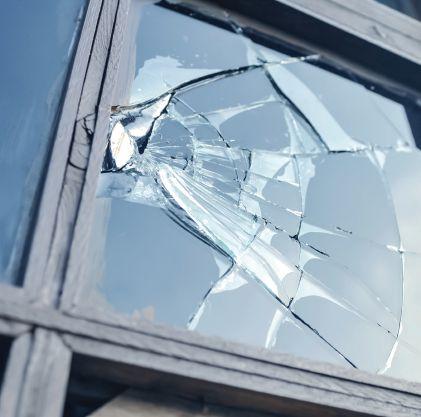
Broken windows. Overgrown grass. Mail piled up on the doorstep. Canadian fire departments know that if they ignore these signs for long, fires and crime will eventually follow.
Distressed properties create costly safety and enforcement problems in communities across the country, while also contributing to long-term neighbourhood decline. Making the absentee owners take responsibility can be difficult and time-consuming – but one city in British Columbia has developed an approach that works.
The City of Surrey, a community of about 550,000 in Metro Vancouver, has to date secured more than 420 distressed properties, reduced related fires by up
to two-thirds, and recouped more than $853,000 from property owners through its Distressed Properties Initiative.
Launched in January 2018, the program forces property owners to either secure their property or pay the city to do it for them. Cost-recovery is 100 per cent.
“The concept of owner responsibility is at the heart of the initiative,” said Surrey Deputy Fire Chief Mark Griffioen, who manages the program.
“We’re leveraging tools that are available to all cities – such as provincial fire codes and the development of bylaws – to make sure taxpayers at large don’t pay the cost when owners ignore their responsibilities. And by doing so, we’re making our community safer for everyone.”
Surrey took action on distressed properties after seeing an increase in fires
RIGHT
in abandoned homes, which also become targets for vandalism, drug use, squatting, drug production, prostitution and other illegal activities. In the years leading up to the program, abandoned homes were causing hundreds of visits each year by bylaw and fire personnel, and an average of two to three fires per month.
The city’s program was based on the 2016 study Distressed Properties: Pathways of Decline and the Emergence of Public Safety Risk from the University of the Fraser Valley (UFV) in B.C. by authors Len Garis, Larry Thomas and Alex Tyakoff.
Based on recommendations from the study, Surrey developed a method to identify properties heading towards a distressed state, and created bylaws to force owners to secure their properties (initially fencing, boarding and barriers, escalating to a security system).
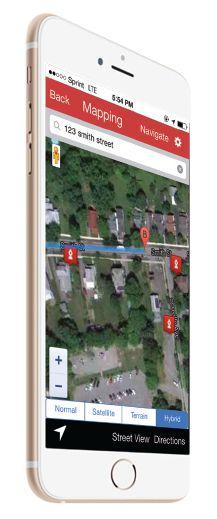
The city also created a Community Property Safety Team (CPST) that follows established operational guidelines, addresses emerging issues and develops long-range strategies. The CPST includes a clerk and two full-time firefighters from the Electrical and Fire Safety Team. Tools to assist the team include a map of hotspots for abandoned homes and a mobile app with a property assessment checklist.
During 2018, the first full year of the program, the city identified 424 abandoned properties:
• 133 were secured at the cost of the owner;
• 203 were demolished at the cost of the owner;
abandoned homes in 2018 – a 65-percent reduction from 2017 and a 130-percent reduction from 2016. There was also a declining trend over the course of the year, with only one fire in the last six months of 2018.
■ HOW IT WORKS
The CPST is alerted of possible abandoned homes by fire and city personnel as they go about their work, as well as by members of the public following a community outreach program.
The team has four stages of response:
• Identified properties receive a visual inspection from the street. Based on their current condition and history of fires, the properties are assigned to one of four categories – stable, vulnerable, stressed or distressed – for the appropriate action. Vulnerable properties are flagged for monitoring.
• Owners of stressed and distressed properties are sent a Notice of Inspection by registered mail. The property’s condition is then formally evaluated and, if necessary, an Order to Remedy Conditions is issued, including a date for compliance and a detailed package outlining the required security measures (such as boarding of windows, perimeter fencing and driveway barriers).
• A re-inspection of the property is conducted. If the owner did not comply, the city hires a contractor to install the security measures and bills the owner.
We’re leveraging tools that are available to all cities – such as provincial fire codes and the development of bylaws, - Surrey Deputy Fire Chief Mark Griffioen
• 52 properties were remediated and returned to the housing market; and
• The remaining 36 were still in the process of being addressed at the end of the year.
During that time period, property owners were charged $106,000 in city inspection fees, $55,000 in administration fees and $692,000 for the city to secure their properties.
At the same time, related fires dropped significantly. Thirteen fires took place in
• Ongoing monthly re-inspections are conducted until the structure is demolished or renovated, or until further enforcement is required. If the site has been breached, the owner is required to install a security system with a security guard runner.
■
NEXT STEPS
The city continues to hone its process to enable a faster and more proactive response. Presentations have been made to all other city departments to increase the
number of “eyes” in the community. As well, based on a recommendation from the UFV study, a tool is being developed to help the city more accurately predict which properties are at risk of decline, rather than relying solely on public and staff reporting and monitoring.
The machine-learning model identifies at-risk properties by assessing data based on known predictors such as building age, property water consumption, and high land value but low building value.
Other indicators of property and neighbourhood decline include past crimes and bylaw violations, a history of unpaid property taxes or abandonment of properties, and neighbourhood demographic changes.
Preliminary results showed that up to 85 per cent of distressed homes may be identified through this proactive approach, compared to about 50 per cent through the reactive methods of reporting and monitoring.
Targeted monitoring of identified properties is now taking place to further test and fine-tune the model.
These enhancements will build on a successful program that has reduced the number of high-risk properties in Surrey, improved safety and helped to restore neighbourhoods, while ensuring that owners take responsibility for their properties.
“It’s been an exciting journey. In addition to reducing risks and recovering costs, we’ve been pleased to see so many former distressed properties return to the housing market,” Griffioen noted. “That’s the best possible solution for the community. It’s a win-win.”
The study can be downloaded for free from the UFV public safety and criminal justice research database at https://cjr.ufv.ca. Interested departments may also contact Deputy Chief Griffioen at MEGriffioen@surrey.ca with questions.
Len Garis is fire chief for the City of Surrey, B.C., an Adjunct Professor in the School of Criminology and Criminal Justice & Associate to the Centre for Social Research at the University of the Fraser Valley, and a faculty member of the Institute of Canadian Urban Research Studies at Simon Fraser University. Contact him at Len.Garis@ufv.ca. Karin Mark is a former newspaper reporter who writes for publications and provides communications and design services in Metro Vancouver, B.C.
BY GORD SCHREINER Fire Chief, Comox, B.C.
FSTOPBAD
A few bad apples can spoil the barrel
orty-three years in the fire service (so far) and I am very proud in so many ways. The fire service has impacted, and continues to impact, my life and so many other lives in a very positive way.
I have made many lifelong friends and I am pleased with what I have accomplished. I love the fire service.
On the other hand, I am also embarrassed by the very few “bad apples” that are out there in the fire service. There continues to be numerous stories about members of the fire service behaving badly. These stories surface on a regular basis. I feel hurt just hearing the bad stories, as I know we can do better.
I strongly believe that good leadership is vital to any good organization. If leaders of the organization are acting badly, or not correcting the bad acting, the negative effect ripples throughout the entire organization.
There have been so many stories lately about members of the fire service behaving badly that I think we could start a reality series titled, “Firefighters Gone BAD!” Unfortunately, there would be a lot of content.
I should also note that some of these firefighters were “bad” to start with and should have never been hired or promoted in the first place.
With this in mind, we need to ensure that we are hiring the right people (careers and volunteers) and teaching them right. We need to let them know that inappropriate behaviour will not be accepted in our organizations.
I believe the problem has been around for a while, but with social media the stories get shared much easier and faster than they did in the past. We need to hold each other accountible. We need to call the bad actors out.
When you accept a position as a firefighter you have an obligation to be honest and ethical.
I know that 99 per cent of firefighters out there are doing the right things right, but that small per cent of “bad actors” is sure making us all look bad.
One of the most important things in your life should be your reputation and the reputation of the organization you represent. Good or bad, your reputation is known by the people around you. You are accountable for you. No one else is.
Do what is right and you should have no worries. Do wrong and you could lose your job and your reputation very quickly.
I believe we in the fire service need to continue being part of the solution by letting others know if their behaviour is unacceptable. It would be nice if they could figure this out themselves, but sadly many can’t. Their bad behaviour and bad reputation hurts us all.
When you accept a position as a firefighter you have an obligation to be honest and ethical. Nothing less is acceptable. ‘‘ ’’
The reality series would include stories of firefighters making racist remarks, drinking and driving, drinking in public vehicles or at the fire stations, using drugs. bullying, misuse of public vehicles, misuse of public funds, receiving gifts for spending public funds, inappropriate relationships, conflicts of interest, firefighters with fake certificates/degrees, and chief officers with little to no formal training. Need I go on … ?
This type of behaviour is totally unacceptable, shameful and gives the entire fire service a black eye. If this is our best, we had better get a handle on this quickly before it is too late and the entire fire service suffers.
Gord Schreiner joined the fire service in 1975 and is a full-time fire chief in Comox, B.C., where he also manages the Comox Fire Training Centre. Contact him at firehall@comox.ca and follow him on Twitter at @comoxfire.
Annual surveys show that the fire service is one of the most trusted professions. This will surely change if we do not take the necessary steps to address this problem.
It is time to clean house. There are a lot of great people out there who are ready to step up and make a positive difference. Let’s call these bad apples out and let them know that their bad behaviour is unacceptable. By doing so, you might help them correct their careers before it is too late and you will help us all to continue to make the fire service better. You may even help save lives.
I have a reputation of speaking up and saying what is on my mind and I plan on continuing this until I retire in a few years. If I think it is wrong, I’ll say so. I would ask that you do the same. Let’s get these bad examples out of here.
And, a big thank-you to all the great firefighters out there.
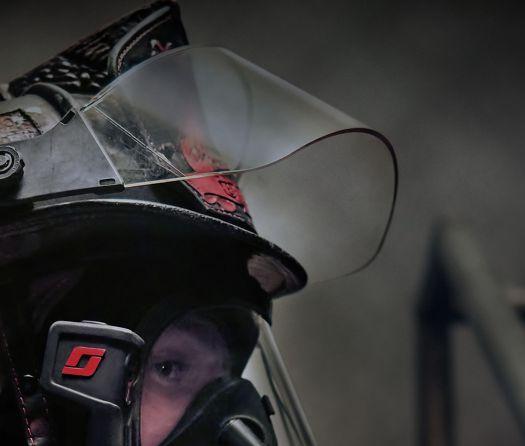
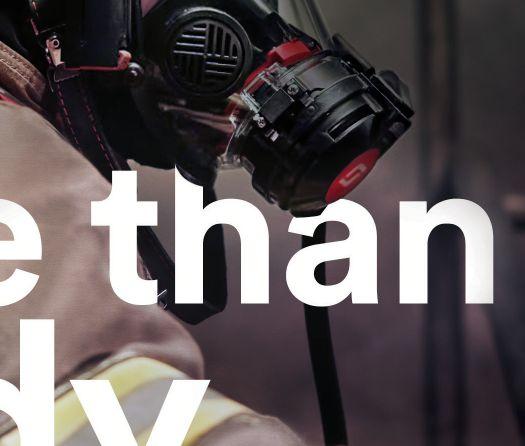
It’s the feeling you have when you can trust your protective equipment to perform day in and day out—and it’s what you can expect from 3M™ Scott™ Fire & Safety Products. We are improving and innovating new ways to help protect you, so you can get the job done and help get everyone home safely.
Be more than ready.
STATIONtoSTATION
BRIGADE NEWS: From departments across Canada
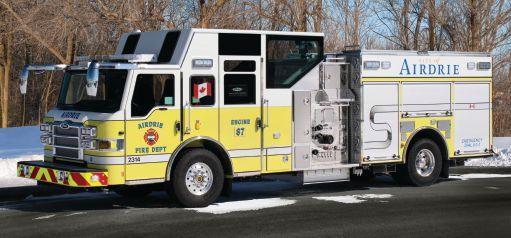
The Airdrie Fire Department in Alberta took delivery of a new aluminum pumper from Commercial Truck Equipment Co. The pumper sits on a Velocity chassis and has a Cummins L9 450-hp engine and uses a Husky 12 single agent foam system. The pump is Waterous 2000 gpm and is single stage.
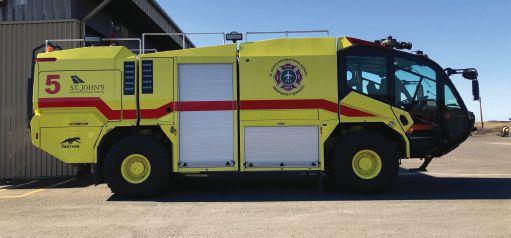
The St. John’s International Airport Authority fire department in Newfoundland and Labrador has taken delivery of the first of three Rosenbauer Panther ARFF vehicles. The Panther is equipped with dual agent roof and bumper turrets, a dual agent hose reel, and a structural firefighting package. It carries 6200 L of water, 750 L of AFFF foam, and 225 K of dry chemical agent.
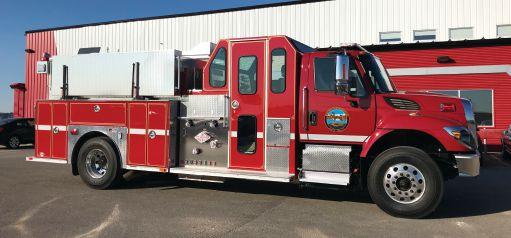
The hamlet of Arviat and municipality of Pangnirtung in Nunavut received new Fort Garry Fire Trucks 3-Man Crown pumpers. The pumpers sit on an International 7400 SBA chassis and have a Cummins L9 300-hp engine with an Allison EVS 3000 transmission. The pumpers are made of 508 aluminum. Other features include: Extreme Insulation Package; Diesel Fired Coolant Heater; SCBA Rack; Honda 5K Generator; Whelen Emergency Light Package; Porta Tank Rack; and more.
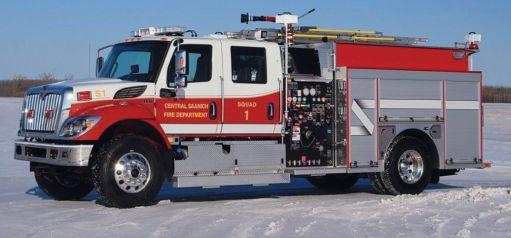
The fire department in Central Saanich, B.C., received new Fort Garry Fire Trucks apparatus in January. It has an International chassis and is an HV607 4-door model with a body made of 5083 aluminum. The truck also features: Hale DSD1250 with electric Master Intake Valves; Akron ball valves; Foam Pro 2001; TFT Protector monitor; Whelen Emergency lighting package; and more.
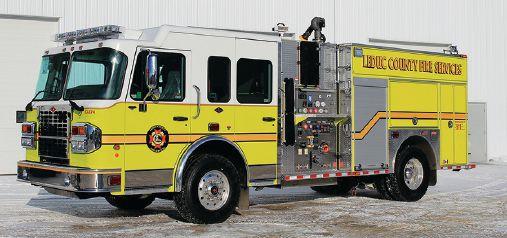
The Leduc County fire department in Alberta received a new Fort Garry Fire Trucks pumper in February. The pumper sits on a Spartan Metro Star chassis and has a Cummins L9 380-hp engine with an Allison EVS 3000 transmission. It is made of 5083 aluminum and has a Darley PSP 1250 USGPM/1050 IGPM pump.
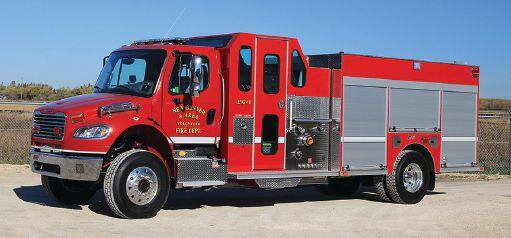
New Denver Fire Rescue in British Columbia received a new Fort Garry Fire Trucks 3-Man Crown pumper in December 2018. The pumper sits on a Freightliner M2-106 4X4 chassis and has a Cummins L9 330-hp engine with an Allison EVS 3000 transmission. The body is made of 5083 aluminum and has a Hale DSD 1250 USGPM/1050 IGPM pump. The pumper features: a Firecom intercom system; Kussmaul charger and compressor; FRC pressure governor; Whelen emergency light package; and more.
ST. JOHN’S INTERNATIONAL AIRPORT AUTHORITY
AIRDRIE FIRE DEPARTMENT
NUNAVUT FIRE DEPARTMENTS
CENTRAL SAANICH FIRE DEPARTMENT
LEDUC COUNTY FIRE DEPARTMENT
NEW DENVER FIRE RESCUE
LESSONS LEARNED
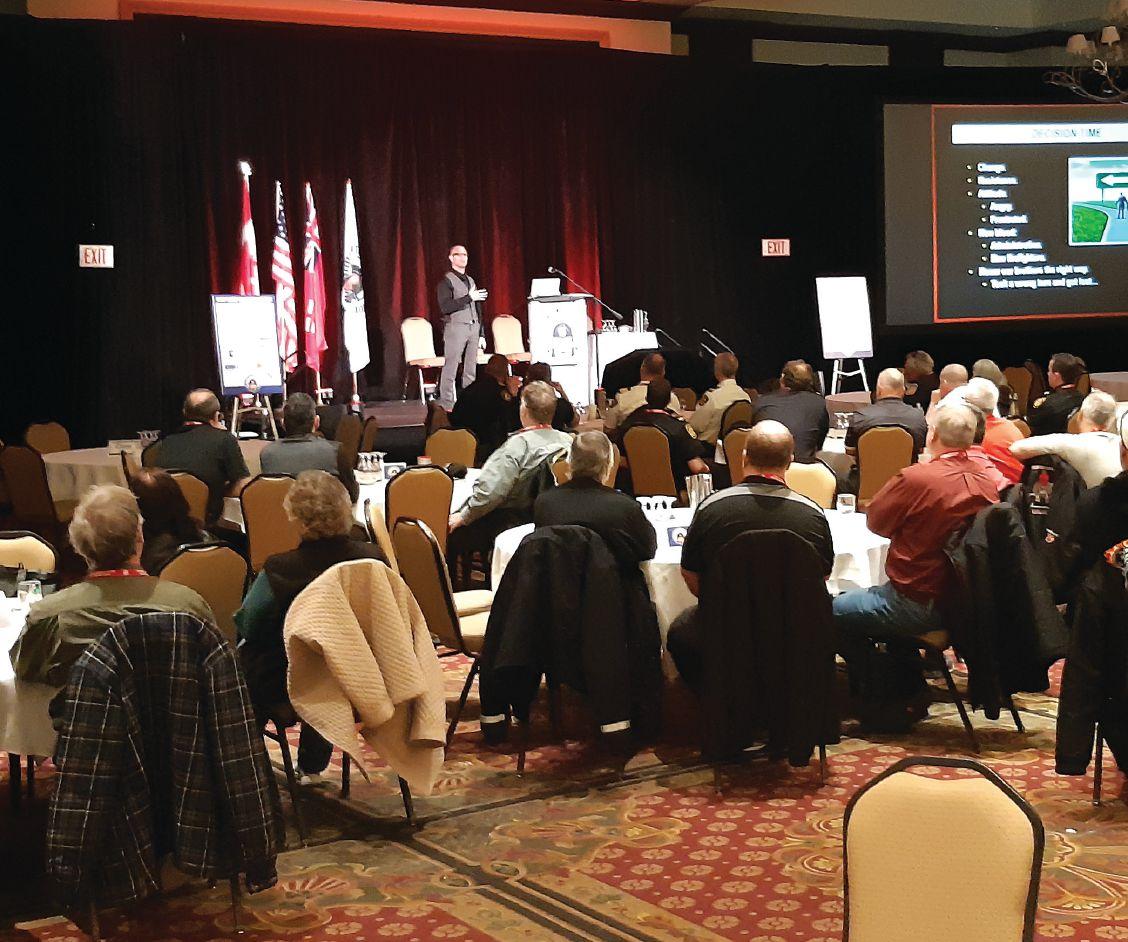
David Griffin tells Ontario fire chiefs conference that a series of mistakes were made at a tragic furniture store fire in Charleston, S.C., in 2007.
By GRANT CAMERON
Firefighters at Station 11 in Charleston, South Carolina, were just finishing their evening meal around seven o’clock on Monday, June 18, 2007, when the alarm sounded. Someone had reported a fire at the back of a Sofa Super Store just down the road on the Savannah Highway.
It seemed like a routine call. Firefighters grabbed their gear and jumped on the truck. Little did they know, it would be a history-making call-out that ended up taking the lives of nine firefighters, becoming the deadliest firefighter disaster in the U.S. since the 9/11 terrorist attacks.
One of the firefighters who responded was David Griffin. He was 27 at the time. It was his first fire as a pump operator. He was on Engine 11, the first engine to respond.
“I had not pumped a fire yet,” he recalls. “This was my first chance.”
Griffin, now 39, recalled the devastating fire and the trauma that his fellow firefighters faced, at an Ontario Association of Fire Chiefs Northeastern Fire Education Conference and Trade Show at Deerhurst Resort and Conference Centre in Huntsville, Ont., on March 29.
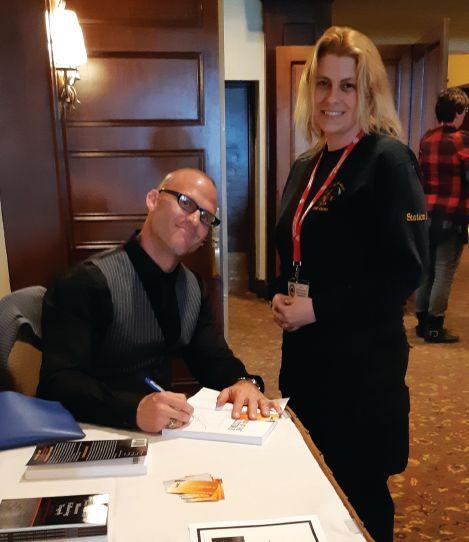
ABOVE David Griffin signing a copy of his book for firefighter Laura Morrell of Station 1 at Sables-Spanish Rivers Fire Department.
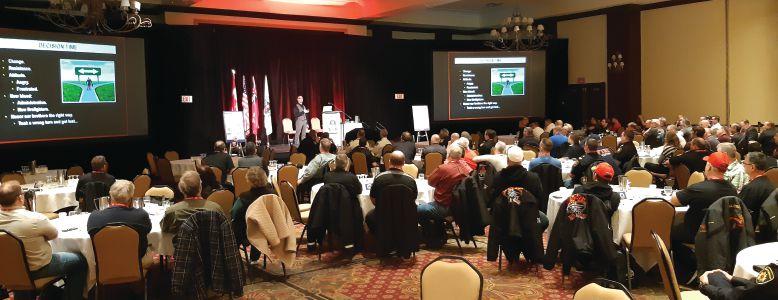
During a morning session, and in an interview afterwards, he spoke about the firefighters – now known as the Charleston 9 – and mistakes made at the scene.
“Teaching on this so much and living through it has been difficult,” he says. “But I’ve tried to do something good and teach people because if I don’t teach on it then I feel there are a lot of lessons that will die and I can’t let that happen.”
Griffin became a battalion chief and deputy director of training in Charleston and is now chief fire officer with the Center for Public Safety Excellence in the U.S. He authored a book on the tragedy, titled In Honor of The Charleston 9: A Study of Change Following Tragedy He took the audience on an emotional
ride, describing in detail what happened at the scene and how mistakes were made, to today where the organization is a national model for change. He presented a series of video footage, photographs and radio traffic from the scene in an effort to personalize the incident and drive his message home to the audience.
The radio traffic from the scene was disturbing and tragic. Over a 10-minute period, there were a lot of urgent radio transmissions from firefighters calling for help from inside the building. Eventually, a voice says, “Everybody abandon the building,” and “Everybody out of the building.”
“Many times, when you hear about line of duty deaths, you don’t have a personal connection,” said Griffin. “Many people read it and say, ‘This will never happen to us.’ But it can happen to you.”
Within 28 minutes, the fire destroyed the building and killed nine firefighters trapped inside.
Griffin had been on the job just over two years when the fire struck.
He talked about a series of mistakes that were made on the day of the fire. For example, he’d been cleaning the truck and had taken everything off the rig, so when the call came in he had to throw everything back on the truck. Upon arrival at the fire, firefighters didn’t have a sufficient water source and had to run a line across a busy highway.
There also wasn’t a proper accountability system in place so they didn’t know who was missing. A firefighter’s wife was told her husband was okay, but it was later determined he’d died.
The building itself also hadn’t been inspected in nine years because the municipality had stopped inspecting them on an annual basis.
And, when firefighters inside the building were calling for help, Griffin ended up “walking over” their transmissions because “I didn’t have the discipline.”
Firefighters dumped water on the fire for two hours and didn’t know who was missing. Off-duty firefighters came to help. Some were wearing the gear of others, so it was confusing.
Griffin talked about each of the firefighters who died that day. One was a barber who cut the hair of his crew, another was known for being calm at every fire, and yet another was engaged.
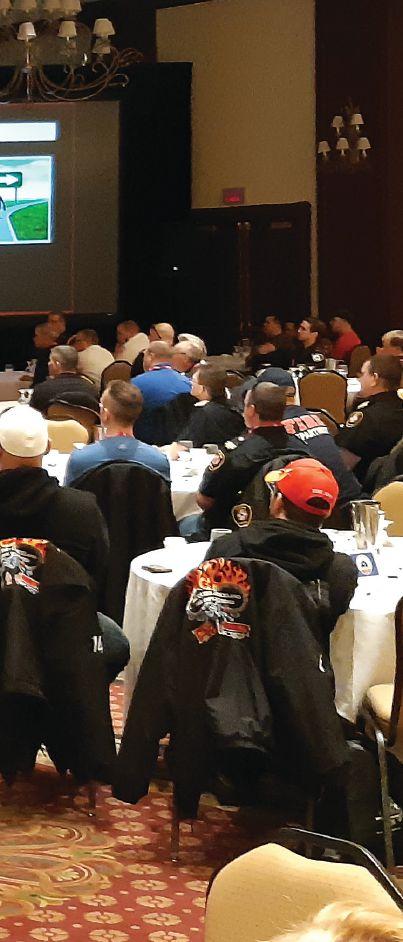
LEFT David Griffin speaks to senior fire service leaders at an Ontario Association of Fire Chiefs Northeastern Fire Education Conference and Trade Show in Huntsville, Ont.
Afterwards, he said, the bodies of the firefighters were found in the charred ashes.
“That’s when it got real very, very quickly,” he says. “From 10:30 to 4:30 that’s all we did – body recovery.”
After the fire, Griffin made his way home, ate and went to bed. He went back for a shift at the fire hall the following week. People in the area were calling the firefighters heroes.
“We walked around for a week, thinking we did something special.”
In the weeks that followed, though, the firefighters were heavily criticized in the media. Griffin read reports that indicated more than 200 errors were made.
During his presentation, Griffin discussed The Routley Report which determined that the Charleston fire was predictable and the outcome preventable, that firefighting operations did not comply with regulations and the culture of the department exposed firefighters to unnecessary risks. The report also determined firefighters had insufficient training and equipment. A report by the National Institute of Standards and Technology also identified a number of issues.
The fire, and the horrendous number of line-of-duty deaths, resulted in changes and the beginning of change for both the City of Charleston and the fire service as a whole.
“We didn’t understand we made mistakes because you don’t know what you don’t know,” Griffin says.
The trauma of that night eventually took an emotional toll on Griffin. He turned to drugs and alcohol to deal with it.
He also competed in mixed martial arts competitions, but one night took a beating and, afterwards, spent three days reflecting.
“I realized what I was doing wasn’t helping anything,” he told the audience.
So, he did something about it. He got a doctorate of education and now speaks about the event in an effort to make sure such a tragedy doesn’t happen again.
Griffin believes the fire service must change the way it operates and adopt new methods in order to keep pace with the times. He also believes attitudes towards the job must change.
“We don’t feel we have to make progress until something happens and then it’s too late,” he says. “Like many organizations we were built on ego and bravado.”
For example, Griffin says that when he was a rookie an older firefighter told him to soak a sponge and put it in his mouth when he went to a fire instead of using an air pack. So, he tried it at a fire, but got only about 30 feet into the building and found the sponge didn’t work.
At the same fire, he had his helmet knocked off because his chin strap was around the back of his head because it looked cool.
He learned his lesson and warned the audience, “Remember you don’t have a duty to die. You have a duty to serve and go home to your family.”
Griffin says firefighters always need to be ready for action.
“We work in a dangerous profession,” he says, “but there are things we can do to prepare.”
When firefighters cross the threshold by jumping on a truck to head to a fire scene, they have to be ready, he says.
“That’s how we’re going to fix this.”
If firefighters don’t, he says, “eventually you’ll be going to a funeral.”
INTRODUCING THE eDRAULIC ® WATERTIGHT E X TRICATION TOOLS
These EWXT rescue tools are the first of their kind. They allow you to operate submerged in fresh water, unencumbered by hoses or power units. And despite this unique skill, they’re still the fastest, most powerful tools in the business.
BY SUE DAWSON Deputy chief of communications and business services
Barrie, On
COMMSCENTRE
Communicators are the voice of calm
The public may take 911 for granted today, but it was just over 50 years ago when 911 began in the United States. As we quickly move forward and are on the cusp of next generation 911, what is the expectation for the men and women who work in emergency communications centres?
They are called the 1st, first responders. They are the first contact with the caller and they will make a lasting impression on that person. Over the years, we have taught them to be the voice of calm within the chaos, take control of the call and be forceful when necessary.
We have introduced concepts such as customer service into our emergency communications centres. Providing customer service is important, but difficult to apply during emergency call-taking in all situations.
We analyze what each communicator does. How did they meet the standards that apply to them?
The National Fire Protection Association (NFPA) 1221 Standard, for example, states that 95 per cent of alarms shall be answered in 15 seconds, and emergency alarm processing shall be completed within 60 seconds 80 per cent of the time.
Whether it is this standard or others, we review the performance of communicators for quality assurance. We prepare and analyze data to determine our successes and where we can improve. What technology, procedures or training will gain the emergency response process a few precious seconds?
answers, at least the ones to get the job. Truth is, you honestly don’t know how you will react to the real version of these events.
You may need to convince a family member to stay outside when others remain in a burning building or are involved in a tragic situation. You don’t really know feelings you will have when someone you know very well is the one needing assistance. Hopefully your training will kick in and carry you through the actual responsibilities of an emergency communicator for that event, but then what?
We try to prepare communicators for the different stressful situations they may encounter. These are not the normal stressors of everyday life.
Compassion is one reason why people get into emergency communications, but it can also be a heavy weight they carry. When do they hit the wall with compassion? Will it appear at work or with family?
There are those more obvious critical incident stress situations – those emergency calls that have a profound effect on everyone in an organization or a communications centre. We work on diffusing them and debriefing staff when these events happen.
We know that this job is not for everyone and those that have
As managers we need to rely on the officers and teams within the communications centres to recognize when a team member is just not himself or herself.
Makes you wonder who would apply for this position if the job posting included the potential to encounter upset callers on a regular basis, 12-hour shifts, working overtime as an essential, and monitoring your calls regularly. There will be lots of stressors throughout your career.
I would suggest to you that many communicators enter the field to help people – both the callers and their fellow emergency service workers.
You may be asked in an interview, “How would you handle a stressful situation?” or, “What would you do if you answered a call from a close family member and they were the ones needing your assistance?”
Before you begin your career, you think you have the required
Sue Dawson has been with Barrie Fire & Emergency Service in Ontario in the communications field for more than 30 years. She is the deputy chief of communications and business services. Contact Sue at sue.dawson@barrie.ca
’’
many years of service have a lot of calls rolling around in their minds. Cumulative stress may be harder to recognize.
We are getting better at taking a proactive approach to our mental health, talking about better self-care and being aware of the different types of stress. As managers we need to rely on the officers and teams within the communications centres to recognize when a team member is just not himself or herself. Sometimes starting with a simple conversation and a thank you for the job the individuals do truly matters.
All year long, we can start with a visit or a conversation to say thank you to the communicators who work with, or for, your organization.
Thank these people who dedicate their lives to help to create a better, safer community. Thank them for the part they play in that vital link with first responders. Then keep the conversation going.
From your Cairns® helmet to your Globe boots, no one is as committed to your health and safety as we are. msafire.com
BACKtoBASICS
SCBA provides high level of personal protection
BY MARK VAN DER FEYST
In our last issue, we looked at the PASS alarm and the important role that it plays on the fire ground and to the user. We examined the common occurrences for PASS alarms to go off on the fire ground and why they are a danger to the user and those that hear it.
The PASS alarm is attached to, and a part of the SCBA, which is what we are going to examine in this issue – the dangers of not wearing or using the SCBA, or self-contained breathing apparatus.
The SCBA is the most advanced and intricate piece of personal protective equipment that we have and use to protect ourselves against the environment that we face. Our job takes us to many playgrounds with varying types of environments, such as inside structures where there is fire and toxic products of combustion and elevated temperatures, inside structures for non-structure fire calls where the environment is toxic for other reasons, outside at vehicle accidents, vehicle fires, hazmat calls, certain industrial facilities and so on.
The environment that we need protection from is toxic and not adequate to support life – it is immediate danger to life and health. The SCBA came into existence after the Second World War based upon aviation systems used for the protection of pilots when they were flying. After the war, the system was adapted to protect firefighters from the dangers of smoke and elevated temperatures. From that time until
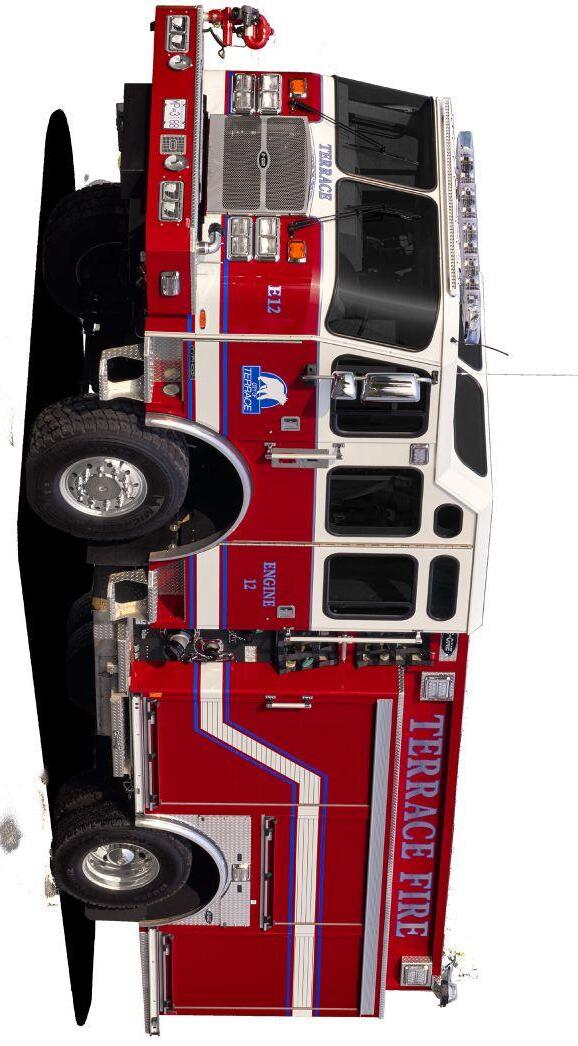
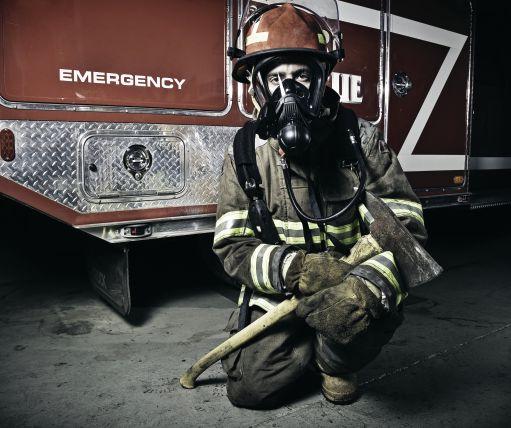
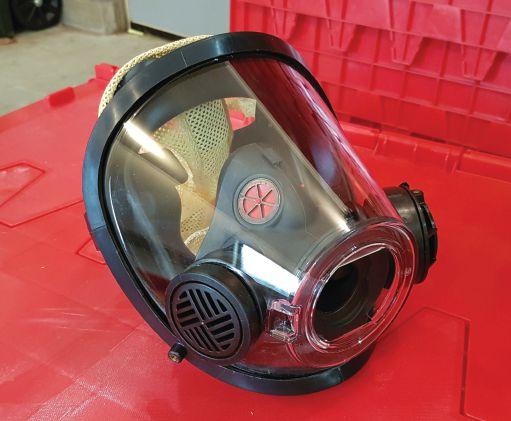
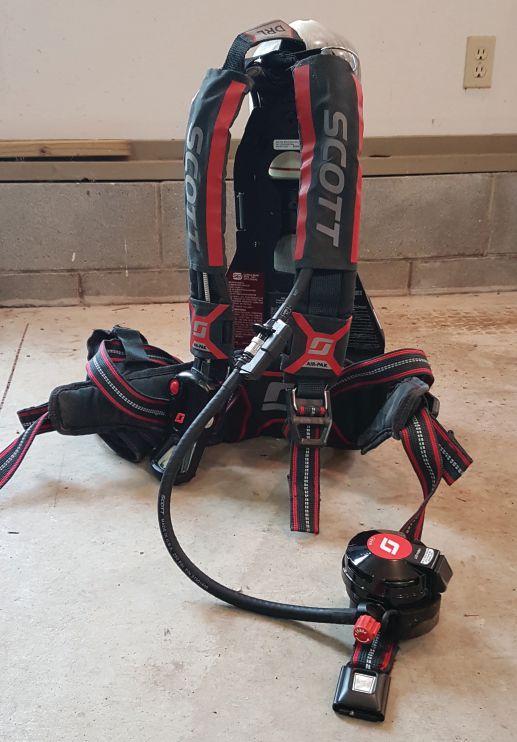
The facepiece protects the user’s face and mouth, and doubles as a connection point for the regulator as well as provide impact protection for the face with the lens.
today, the SCBA has been transformed into a technological marvel, offering the highest respiratory protection any one person can receive.
So how exactly does the SCBA protect us? It protects the biggest and easiest-compromised system in our body; the respiratory system. Just think about it, one breath from a toxic environment can kill us and we can not even see what we are breathing in. Therefore, every firefighter needs to wear and use his or her SCBA at all times when he or she is exposed to any abnormal working environment. There is no excuse good enough to justify not wearing the SCBA – even though some firefighters still try to excuse themselves from doing so.
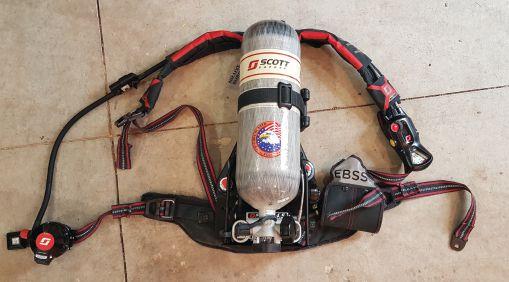
The SCBA is comprised of four parts: regulator; cylinder; backplate and harness; and facepiece. No matter what brand of SCBA you are using, they all have these four basic components. Let’s look at each one to detail how well they will protect you when wearing it.
The facepiece protects the user’s face and mouth and doubles as a connection point for the regulator as well as impact protection for the face with the lens.
With the current NFPA standard (2013) for SCBA, the lens of the facepiece has to be able to withstand higher heat temperatures (above 500 degrees F) when exposed to them. The previous versions of the facepieces had a lower temperature rating (under 500 degrees F) which
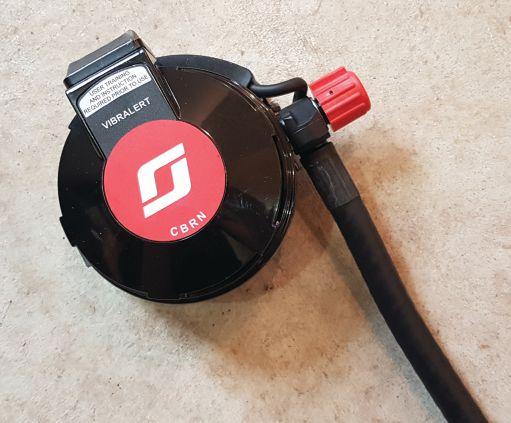
A unique feature of the regulator is the emergency bypass valve. This is the user’s protection feature when the regulator fails to
PHOTOS BY MARK VAN DER FEYST
made it the weakest link or piece of the SCBA and PPE ensemble.
The special coatings on the lens allows for more heat absorption and heat sink which protects the user from the facepiece failing too quickly when exposed to elevated temperatures – but this can also be a detriment to the user because the heat absorbed is not able to dissipate quickly enough, causing the special coatings on the lens to break down. This is evident when inspecting the lens of the mask and noticing the marble looking cracks and waves on the lens.
The regulator is where the closed system comes into play because it attaches to the facepiece and provides a continuous flow of air to the user from the cylinder. The air flow in the regulator has been stepped down from the cylinder pressure of either 2,216 pounds per square inch (psi) or 4,500 psi to about 100 psi or less. This is a breathable amount of pressure for the user and enough to expel unwanted environmental contaminants from entering into the facepiece from a broken seal.
The regulator under the current NFPA 2013 edition has to be CBRN compliant, meaning that it will still work and function when exposed to limited amounts of radiation, chemical, biological and nuclear types of contamination.
The unique feature of the regulator is the emergency bypass valve. This is the user’s protection feature when the regulator fails to work. The user can manually open the bypass valve and still have a free flow of air provided to them for the express purpose of getting out and staying alive. This function can be either opened fully with free-flowing air occurring or it can be opened and closed intermittently to allow for more air consumption time for getting out and staying alive.
The backplate and harness is where the electronic brains of the SCBA are usually located as well as the reducing block for the cylinder air to be processed and stepped down for the regulator.
Within the backplate will be the hoses for both high- and low-pressure systems running up and supplying the different aspects of the SCBA. These hoses will be buried within the backplate to protect them as much as possible from any entanglement hazards and cutting hazards. The previous versions of SCBA had these hoses all exposed which exposed the user to potential snag and cutting hazards.
The straps of the SCBA are also designed to provide protection for the user. They are made from a Kevlar-type of material for abrasion and cut resistance which allows the user to not have to worry about the straps coming apart from the backplate when exposed to those hazards. Most straps will also have reflective material added to the front of them to provide more visibility at nighttime or when a light is shone upon them.
The cylinder sits in the backplate and harness. Most SCBA cylinders being used now are carbon fiber, except for some departments still using aluminum. Regardless of the type of cylinder being used, it is designed to keep the air that is inside the cylinder inside the cylinder. The cylinder is under extreme pressure: 2,216; 4,500; or 5,500 psi and has to be released through a small air tube inside the cylinder which then goes into the SCBA system (reducing block). The valve on the cylinder and the walls of the cylinder are constructed to withstand our working environment – which includes elevated temperatures, decreased temperatures such as freezing, coming into contact with hard objects, being dropped, and so on.
The working environment of the firefighter is harsh and the SCBA has been designed and constructed to meet those harsh demands so that it can function and provide a high level of safety and protection for the user. So, why are you not wearing it when you need to wear it?
Mark teaches in Canada, United States and India, and is a FDIC instructor. He is the lead author of the Residential Fire Rescue book.
Contact Mark at Mark@FireStarTraining.com.
Mark van der Feyst has been a member of the fire service since 1999 and is a full-time firefighter in Ontario.
The backplate and harness is where the electronic brains of the SCBA are usually located.
Most SCBA cylinders used nowadays are carbon fiber except for some departments still using aluminum.
The three Ds of core skill training
By ED BROUWER
There are times after practice when a few of the members linger in the training room. Inevitably the coffee pot gets brought over to the desk and we attempt to fix all the wrongs in the world.
I value those times. Sometimes we even talk about fire-related subjects, no real surprise there.
Several weeks ago, we got to talking about our practices. Our members have completed all the courses and subject matter required by our city’s mandate for fire service. As we spoke about what was next, I glanced over at our Certification Wall. Ninety-percent of the training certificates had all the subjects adorned with a red sticker (signifying successful completion).
Then I heard one of our young guns ask, “So now what? Do we do it all again with blue stickers?”
I laughed, but realized he had a good point. Our members had studied all the topics diligently, and they successfully completed both the written exams and skill tests for each core skill.
Over the past two years, they completed all our province’s requirements and were now in full compliance with B.C.’s Firefighter Playbook as Exterior Operations Level Firefighter.
I looked at my young friend and asked, “What do you want to do?” He answered by telling me that he was dreading having to do the same courses over and over again.
He went on to say it was exciting when we first set the training goals to achieve this certification. He told me he could hardly wait for practice night then because he was going to learn something new. But now to do it all over again, he admitted, is boring. I admit, I agreed with him.
I think the biggest hurdle for today’s training officer is not the subject matter, but rather keeping our members engaged in the training. It is one thing to have an in-house training certification program, but once it is completed where do you go next?
I would love to hear from some of you who’ve dealt with this issue. As well, if you have discovered a way to keep your members engaged in ongoing training please drop me a line. Perhaps we can share those ideas in a future column.
I tried something at our last practice that seemed to work. I divided the members into three groups. After I assigned a different topic to each group, I described the “three Ds” of core skill training, which are demonstrate, describe and do.
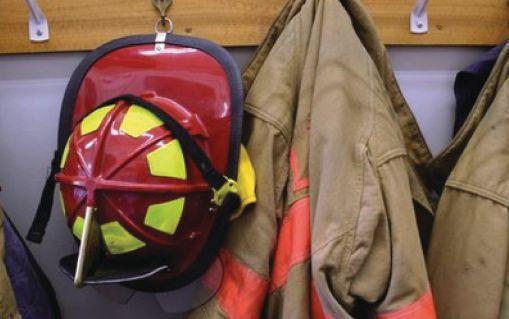
The demonstrate part is simply demonstrating to the students the particular core skill you are teaching. For example, if your objective is to get each member to properly don their PPE, you would (after getting their attention) simply don your PPE. You don’t speak, you simply don your gear. When you are done, you doff your gear and set it aside.
The describe part is the very same thing. However, while you
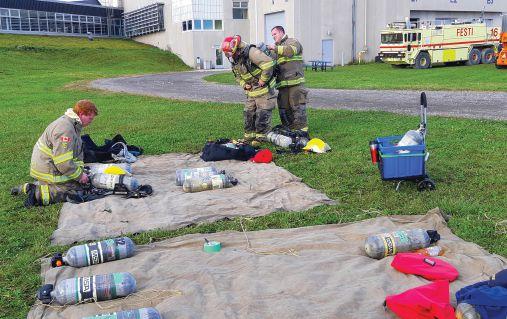
Keeping members engaged in training is a challenge for training officers.
The “three Ds” of core skill training are demonstrate, describe and do.
The training officer is the highest calling in the fire service.
are donning your gear you are describing each step as you are doing it. Each step is verbalized, by yourself or an assistant.
Once your gear has been donned and doffed, you now get each of your members to do. In this example, each member dons and doffs their own gear.
If you have been a trainer for any length of time at all, you will have certainly heard the saying, “I hear – I forget, I see – I remember, I do – I understand.” This statement is perfect in this scenario.
Getting back to our practice night, as I said I established three groups and assigned one topic to each. We were bringing some rookies up into the ranks, so I kept the subjects along the lines of rookie training. But you can use any subjects you want, keeping in mind you want to give each group about 15 to 20 minutes to prepare their subject. Each session should be roughly 20 minutes in length. With three groups it works out to a 90-minute practice night.
The three topics I used were, donning and doffing SCBA, deploying and loading a minuteman hose lay, and using a handheld radio on the fire ground.
The groups were given 20 minutes to get set to use the three Ds in teaching their subject. When all the groups were ready, group one taught groups two and three their core skill. When all the members had completed the “do” part we moved on to group two’s core skill. Now groups one and three were the students.
Again, when the “do” part was successfully completed, group three presented its core skill. This left group one and two as the students.
It was a full night to be sure. But no one was bored. Each and every member participated in the practice. (Well I didn’t do too much – I had a coffee while I watched). I tried not to interfere with any part of the three Ds, unless it was an obvious safety issue. All in all, it was a productive practice with 100-per-cent engagement.
This worked so well I tried it three weeks later. The core skill topics this time were SCBA bottle change, two hose rolls (their choice), and arrival reports. The latter was demonstrated as a skit.
The thing I think you will like about these core skill sessions is that there is virtually no prep time on your part, and you are guaranteed membership engagement. A win-win.
Now, just in case no one has told you lately – your commitment to the Canadian fire services as a trainer is very much appreciated. I am proud to be named among you.
I have said it before, but it bears to be repeated – in my humble opinion the training officer is the highest calling in the fire service. Keep up the excellent work and please remember to train like lives depend on it, because they most certainly do.
Ed Brouwer is the chief instructor for Canwest Fire in Osoyoos, B.C., deputy chief training officer for Greenwood Fire and Rescue, a fire warden, wildland urban interface fire-suppression instructor and ordained disaster-response chaplain. Contact Ed at aka-opa@hotmail.com.
BY CHRIS HARROW Fire Chief, Minto, Ont
HLEADERSHIPFORUM
Listening is a skill that needs to be learned
ave you ever heard or said the phrase, “We have two ears and one mouth so that we can listen twice as much as we speak?”
I know I have given that quote to many new recruits who are trying to fit into a station. How many leaders abide by this advice as well?
I am sure we all know many leaders who have forgotten this advice and need to go back to listening like they were a recruit.
I truly believe the art of listening has become lost in, not only the fire service, but in society in general. The need for people to one-up someone or be the first to get information out has taken away the ability for people to listen to others around them.
Social media has compounded the entire issue with not only the ability to get information out quickly, but also the lack of face-to-face interactions. This lack of interactions is a topic of another article.
A good leader needs to be exceptional at listening. You will never pick up on problems present in your department unless you are actively listening for them.
There is a lot of material and courses available to leaders dealing with various techniques and theories on listening skills. Sometimes though, simpler is better. Going back to basic communication techniques, especially listening, can be the most effective method to use.
We can all think of someone we know who is not a good listener. It is that person who is constantly interrupting when you are speaking. They don’t even allow you to finish a thought before they are talking over you about something they have done. Or, they are that person who always has a story to try and outdo the story you just told.
the individual you are hearing what he or she says demonstrates you have given it some thought.
Another huge mistake leaders make is not giving firefighters their undivided attention. How many people do you know who are on their phone or answering emails when they are speaking with you? You know there is no way they are listening to what was communicated.
Nothing is more demeaning to a firefighter who takes the large step of coming to you as his or her leader and you not giving them your undivided attention. A firefighter will definitely think twice about coming in to speak with you if he or she did not feel heard.
In the fast-paced life we all lead, listening has been pushed aside. We are so focused on our email and electronics, we forget about the old-fashioned ability to converse and listen.
When someone comes into my office, I always try and show them respect and place my phone off to the side of my desk and close my computer. It also takes away the temptation for me to be distracted by a message or phone call when the conversation is taking place.
As leaders, we can’t underestimate the strength it takes for a firefighter to bring a problem or issue to our attention. Word will spread
I truly believe the art of listening has become lost in, not only the fire service, but in society in general.
’’
When these acts come from a leader, it diminishes the faith firefighters have in their leadership.
Personally, nothing irks me more than when I am talking to a person who constantly interrupts or who can’t wait for me to finish a sentence to be able to get to his or her point.
As a leader, you need to take the time to actively listen to what is being told to you. I believe this is so important for any fire service leader. Even if you don’t agree with what was delivered to you, showing
Chris Harrow is the fire chief in Minto, Ont. He is a graduate from fire programs at Lakeland College and Dalhousie University and holds a graduate certificate in Advanced Care Paramedics from Conestoga College. He can be reached at c.harrow@mintofiredept.on.ca.
pretty quickly amongst the rank how engaged you are when discussing a problem. It won’t be long until you are bypassed when issues arise.
As a leader, that is the last thing I want.
There is no special training that needs to be taken to be a better listener. As a leader, you need to make a concerted effort to be a good listener. Demonstrating your commitment daily to being an effective listener will constantly show your firefighters your genuine interest in their issues.
Always try to put yourself in their shoes. It really stinks when you are trying to speak at the front of a group of firefighters and not one of them is paying any attention to you.
The simple art of listening is one of the sincerest forms of respect. Remember to not listen with the intent to reply, but with the intent to understand.
COACHING YOUR CREW
Fire chief shares his thoughts on how to lead a department
By JAYSON KOBLUN
Fire Chief Vince MacKenzie made it clear at a recent fire education conference that part of the job of fire chief requires you to be a coach. Not just any coach – a coachable coach.
At the 2019 Northeastern Fire Education Conference and Trade Show held in Huntsville, Ont., on March 29, MacKenzie gave a talk on how to lead and coach the members of an ever-changing department.
“Can we all agree that the fire service is changing?” said MacKenzie, as he addressed several of the changes he has seen over his long career in the fire service. “Our responsibilities have changed. Our accountability has changed. Expectations have changed. Fires burn faster and more toxic. Our duties have changed. And even our people have changed.”
He explained it’s important to recognize in the volunteer and career service that people have simply become busier. Whether it’s home life, varying time commitments, or even a generational gap among peers – things are changing. And with an ever-changing group of firefighters, fire chiefs are required to know how to coach all of them differently.
MacKenzie has been fire chief of the Grand Falls Windsor Fire Department in Newfoundland and Labrador since 2003 and is an executive member of the Canadian Association of Fire Chiefs, so he has witnessed and learned from many different leaders and mentors, shaping how he leads the people on his team now.
“Each generation brings their own view of the world,” MacKenzie said as he listed off today’s generationally named groups starting with Traditionalists, followed by Baby Boomers, Generation X, Millennials or Generation Y and finishing off with Gen Z – also referred to as iGen.
He spent time sharing some general characteristics of each group and different coaching methods other fire chiefs can use if they find themselves facing a similar situation in their own departments. He also made comparisons between several of the groups.
“Millennials are very self-aware and they make great team players who like to be good – together,” he said. “The iGen are much more pessimistic. They are less confident, need much more reassurance and encouragement.”
MacKenzie didn’t say that either group is better or worse than another at fighting fires, but when it comes to following their leader, getting along with one another at the fire hall, or communicating together well at the scene of a fire – different leadership styles make a big difference.
“Everyone here today is a leader and different leaders have different styles of leadership,” said MacKenzie, listing off four styles he uses that help.
■ LEADERSHIP STYLES
Supporting
Relationship orientated. You’re listening. You’re praising. Asking for input. Give feedback and give subordinates control. You’re there to support.
Delegating
Offers little in the way of social support. Agrees on goals and lets subordinates get the job done. Giving tasks to your team and trusting they can get the job done without dictating and following.
Directing
This is where you’re being the director. Focused on the goal and being the authoritative voice in a department controversary or at the scene of a fire.
Coaching
You’re their cheerleader and letting them know you’re on their team and have their back. You’re encouraging and you are doing everything you can to build your team’s career and further your department.
MacKenzie reminded chiefs that being a good coach is not about being everybody’s friend, as sometimes tough decisions have to be made that some team members won’t agree with, but it comes down to letting your team know you are there for them.
Part of the job of leading a fire department involves being a good coach.
Par l’entremise de l’ initiative de formation en matières dangereuses et CBRNE de l’Association internationale des
Votre ser vice de protection incendie peut recevoir de la formation à un niveau reconnu en matières dangereuses et CBRNE grâce au curriculum de l’Association internationale des pompiers et un financement du gouvernement du Canada
AT THE READY
When people think about international aid workers, many picture doctors, nurses and other healthcare professionals. But, firefighters are often also an important part of relief teams.
Many firefighters volunteer with humanitarian organizations, using their unique skills to help vulnerable people around the world recover from disasters.
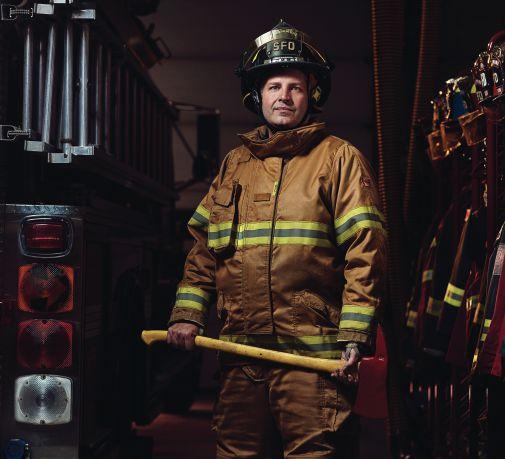
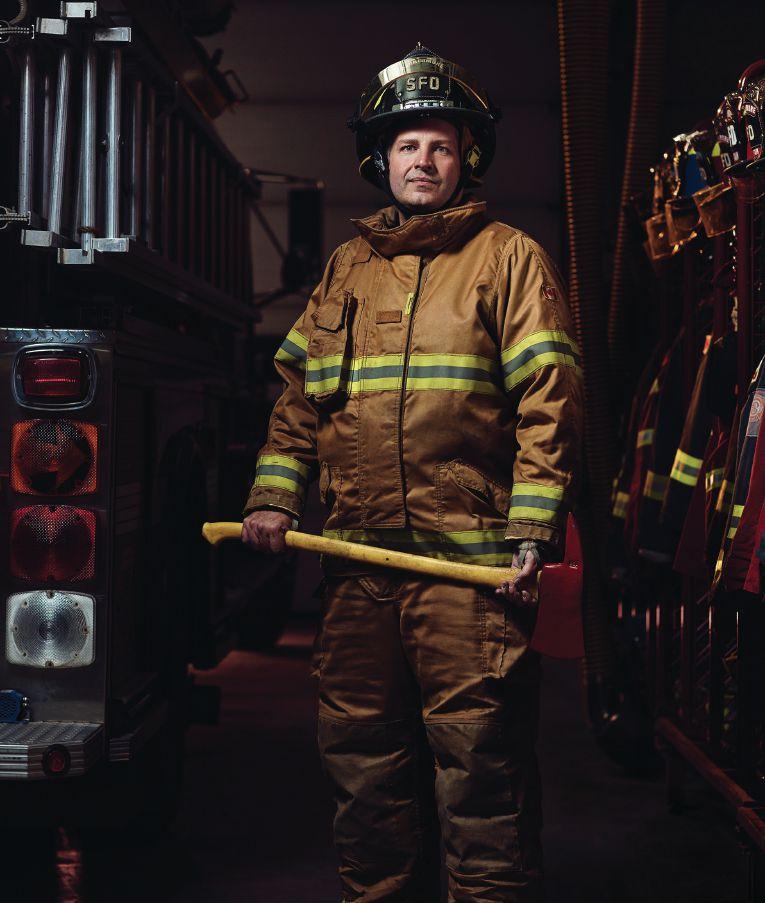
Sean Freeman, a senior firefighter and acting deputy chief of prevention and inspection at Strathmore Fire Department in Alberta, is one of those firefighters. He’s been deployed several times as an overseas aid worker to help relief teams co-ordinated by the Canadian Red Cross.
“We get paged out much the same as a fire department,” explains the 48-year-old father of one. “We get an email, phone call or text when there’s an emergency and for the initial response you’ve got less than 24 hours to get ready to go. It’s exactly the same as the fire department.”
Freeman, who joined the fire service in 1995, has responded to five such disasters in the Caribbean and around the world, sometimes for a couple of weeks, other times for more than a month.
On his first call-out, he flew to Ottawa and went through the briefings and preparation for a mission, but it changed and he was stood down. He was disappointed, as it was to be his first deployment but, as a firefighter he’s used to false alarms, so he remained at the ready.
Patience paid off. He was deployed to the Ebola crisis in Sierra Leone in 2014, to the Philippines when it was hit by a typhoon in spring 2015, and to Nepal later that same year when an earthquake struck. He also responded when a hurricane swept across Dominica and the Dominican Republic in fall 2017.
He’s primarily been involved in work known as “capacity building,” which is
Alberta acting deputy chief is a volunteer aid worker
By GRANT CAMERON
Acting Deputy Chief Sean Freeman has been deployed several times overseas as an aid worker to help in relief efforts co-ordinated by the Canadian Red Cross.
ABOVE Strathmore Fire Department
RIGHT The crest of the Strathmore Fire Department in Alberta.
essentially transferring knowledge to help locals deliver services to those in need. He’s built field hospitals and treatment centres, installed generators and done infection control and prevention.
During his deployments, he’s worked alongside firefighters from Canada, the U.S. and Europe.
In Sierra Leone, Freeman, a licenced master electrician, went to Kenema, the country’s second largest city, for a month and helped out by working on generators and building structures.
“We made things a little bit better by installing the generators with the contractors,” he says. “Everybody chipped in and helped get it done.”
Freeman also did some nursing and infection control duties, which required him to be in protective gear, and spent some time with the Kenema Fire Department to see how it operated.
He says his medical, hazmat training and electrical experience were all important on that mission, as it’s particularly useful to have individuals that can do more than one
type of work.
In the Philippines, he went as a master trainer for a field hospital program and worked with the local Red Cross and ministry of health personnel.
“The really awesome thing about it was that the Red Cross had a really beautiful facility for warehousing and training.”
At the centre, Freeman participated in realistic mass casualty and simulated water rescue scenarios.
“We went right from assessment and treatment of patients to transporting them to our field hospital unit and giving care,” he says.
“It was really good. It was really comprehensive.
“We did all the actions from initial emergency response to assessment right up to being in the field hospital giving hospital care.”
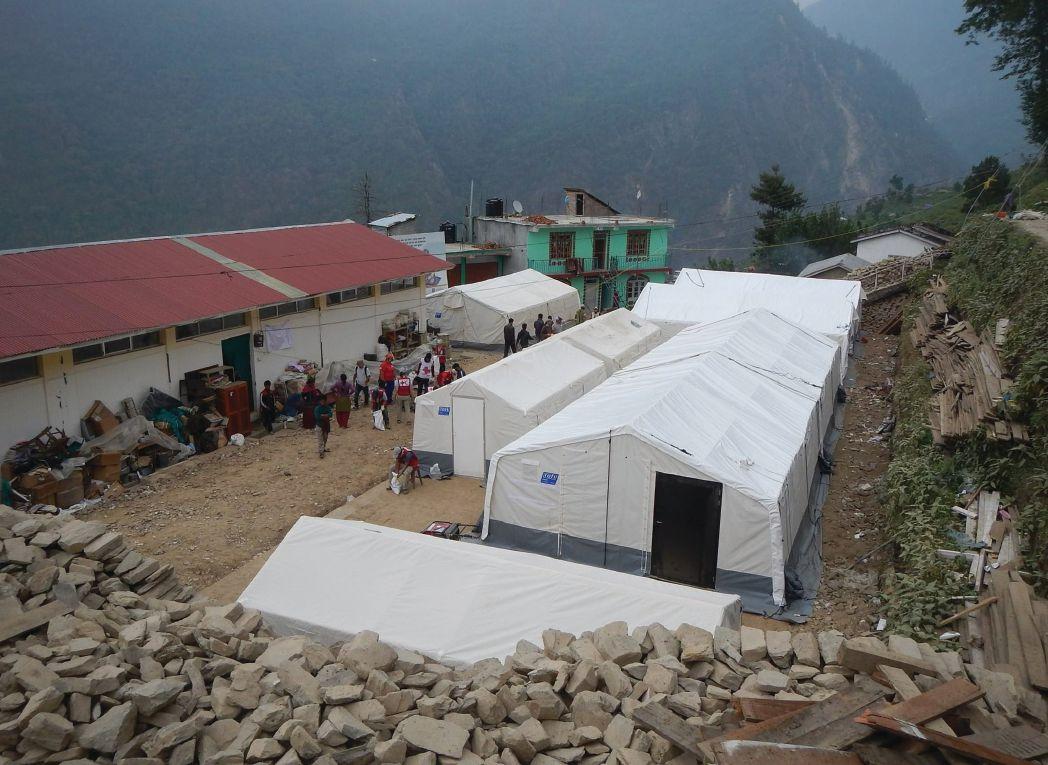
In Nepal, he spent six weeks helping out after a devastating earthquake. He assisted the Red Cross in setting up a field hospital in Dhunche, a town of 2,500 people at an altitude of 2,030 metres.
He also traveled to Katmandu and a warehouse in the south part of Nepal near the Indian border.
“We were winding down emergency field hospital operations and handing it over to the Nepal Red Cross and the ministry of health and also working towards setting up some of their long-term programs and building up capacity.”
In Dominica, he was dispatched to a base camp for a week and a half as part of an initial response and assessment team after a hurricane struck and tore a path from the south of the Caribbean right up to the U.S., causing widespread damage and flooding.
“We went down with basic equipment and set it all up for our people to assist the Dominica Red Cross and their response and enable them to provide help to the people on the island.”
Immediately after completing that mission, he went to the Dominican Republic to do the same type of work for a couple of weeks before returning home.
“They had a pretty good response and
In 2015, Sean Freeman spent six weeks in Nepal helping to set up a Red Cross field hospital in Dhunche after a devastating earthquake hit the country. PHOTO
the flooding was starting to subside and some of the damage was getting mitigated, so we worked on building capacity for their field hospital and base camp program.
“They had a lot of resources and their own ambulances and all that kind of stuff, so they just needed a response base camp to go to some of these places and have a mobile operation.”
Freeman began working with the Red Cross as a result of a stint he did in Kandahar, Afghanistan, as an electrician and life safety and fire alarm technician.
“When I came back, I found that I enjoyed doing the international work so I kind of envisioned doing more of it and looked at different things I could do. I looked at the Red Cross and applied online and they got back to me and I did some initial training. I love working with the field hospital program.”
Freeman enjoys going to countries as part of an initial response team and working to get infrastructure up and running.
He says his firefighting skills have helped tremendously and prepared him for being deployed to disaster-relief situations because he’s used to working in high-pressure situations and making quick decisions under pressure.
“A lot of your training and mental processes are the same. Having that experience before you come in is immensely valuable to help you do your job much more effectively. You’re used to situations changing and them being beyond your control.”
Freeman got into the fire service as a result of his father, who was a professional firefighter in Calgary and is now retired.
“I grew up seeing fire halls and firefighter stuff and all that kind of thing,” he says.
“After I got out of college I was looking for a way to contribute to the community and the fire department seemed to be a perfect match.”
Freeman, who runs his own business, found that working in prevention and inspection was perfect considering he’s an electrician.
“It fits pretty well with that.”
Freeman has learned a lot from his deployments – and found that fire departments around the world train and operate much the same.
“It’s been really good to see the experience from other people,” he says. “We have very common training. Our command and control functions are now in the international standards, so we all kind of under-
stand what we’re doing at the same time.
“ICS is something that we all use, so when we set up we all know how things should go and we have an understanding of how things should work. It’s very useful having these backgrounds.”
The needs of people who find themselves in unfortunate situations are also the same, he notes, whether it’s a small community incident or something bigger that involves an international response.
“The way the population is affected around the world is much the same and the
way we respond as first responders is much the same. It’s the same process just on different scales.”
Freeman encourages other firefighters to check out being an aid worker, as it’s very rewarding.
“There’s lots of ways you can contribute,” he says. “I’m a first-aid instructor so I can do that, but there’s everything from that up to international response.
“You can look at that and see what the requirements are and see if it’s a fit for you or you can contribute in another way.”
IDENTIFYING RISK
Report validates building fire-prediction models
By ROBERT MCGUINNESS
In April 2018, a group from the Fire Underwriters Survey (FUS), which is operated by Opta Information Intelligence, partnered with Vancouver Fire Rescue Service (VFRS) and New Westminster Fire Rescue Service (NWFRS) in British Columbia to test building fire-risk prediction and risk assessment methods.
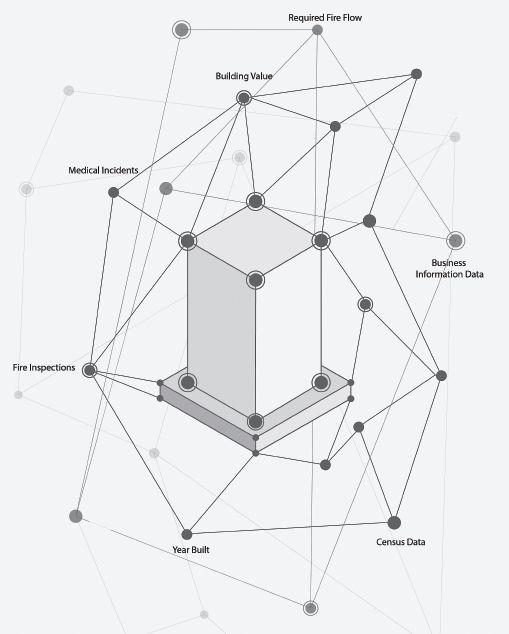
The models performed well, with approximately 70 per cent of fires identified for the 2017 period. Re-prioritizing fire inspections based on the model outputs showed that, for the City of Vancouver, the percentage of severe violations discovered increases from 15 to 47 per cent in the first 25 per cent of inspections for the year.
Similar to other building fire-risk prediction models used by the New York City Fire Department (NYFD), Atlanta Fire Rescue Department and Pittsburgh Bureau of Fire, these models can be used to better identify buildings at risk of fire and prioritize fire prevention inspections.
In Canada, similar to the United States, fire codes are enforced through fire prevention inspections conducted by fire department personnel. In certain provinces, changes are happening with fire-related legislation where a municipality will be tasked with completing a risk-based approach to providing fire-protection services.
What is the best approach to completing a risk assessment for prioritizing fire prevention inspections?
Consider an approach to a fire-risk assessment. The buildings to identify are those at most risk of fire.
Generally, an experienced firefighter can tell which buildings pose a higher risk of fire. Factors such as building age, building occupancy, type of business, previous violations and incidents, location, demographics and socio-economics, would all be expected to contribute.
Most often, these features can be found in various municipal datasets. The problem is that the municipal datasets are not readily accessible, and the data is rarely in a useable format. Other datasets related to demographics and socio-economics may be in datasets outside of the municipality such as census data. The issue becomes one of data aggregation.
Once all the data is aggregated the second issue relates to how each feature should be weighted to arrive at a final risk score.
The models we built with VFRS and NWFRS were informed by recent work in predictive modeling of building fire risk completed in New York City, the City of Atlanta and the City of Pittsburgh. In all three U.S. cities, a data-driven, risk-based approach proved to be better at targeting risks than previous practice.
We wanted to validate the results to building fire risk assessment by completing similar risk-assessment-based prediction work for two municipalities in Canada. We invited two cities to participate based on population size. Could a data-driven, building-based risk assessment better prioritize inspections in both these municipalities?
Both the VFRS and NWFRS projects took the following approach: data extraction, data cleaning and merging, feature engineering and modeling, and results.
A Building Fire Risk Validation Project was carried out by Fire Underwriters Survey/Opta Information Intelligence in partnership with Vancouver Fire Rescue Service and New Westminster Fire Rescue Service in British Columbia.
• Data extraction: The team met with both VFRS and NWFRS staff in May 2018 to discuss the datasets and other available building level information. The datasets included fire incident data, fire inspection data, property assessment data, 2016 census data (demographic and socio-economic), parcel data, 311 data (including sanitation data), crime data, as well as other available property data.
• Data cleaning and joining: As can be expected, address data from different municipal departments can be kept in various formats. Also, some datasets have block-level aggregation (or a higher level in the case of census data). We built a geo-coding service and used GIS to join the data.
• Feature engineering and modeling: Both city models used data for the period 2013-2017. The data was initially split into a training dataset (2014-2016) and a test dataset (2017). The target was to predict fire incidents (IncidentType = FIRE - Fire Department Responded Reportable – 1000) for 2017. Model parameters were tuned, and features selected by splitting the training set and using
the 2016 fire incidents for validations. The final model was generated using the best parameters and the full training set. Finally, the model was tested against the 2017 fire incident data.
• Results: Seventy per cent of fires were accurately predicted for 2017 for the City of Vancouver (with a false positive rate of 25.19 per cent). Seventy per cent of fires were accurately predicted for 2017 for the City of New Westminster (with a false positive rate of 24.45 per cent). The high prediction rates offset the low false prediction rates. Even though approximately 25 per cent of highrisk classified buildings for 2017 did not have a fire, the model still classifies these as risky buildings and should therefore be prioritized for an inspection; these false positives may still have a fire.
The influential features and weights differ for both cities.
The model provided a map of property fire predictions in inspectable properties for 2017 and where the property had a fire in 2017. The City of Vancouver has a grouping of fires and predictions in certain areas. In the City of New Westminster, the actual fires are more dispersed. There are good predictions in both cases.
Using the model results, we assign a risk score to each building in both cities and then re-order the inspections for 2017, targeting the highest risk first.
Under the current VFRS inspection program, the first 25 per cent of inspections had visited 20 per cent of buildings that had a fire in 2017. By using a risk-based approach and re-prioritizing inspections, the first 25 per cent of inspections would theoretically visit 65 per cent of inspectable buildings that had a fire incident in 2017.
As the model was trained on fire events, we expect an increase in this value. There was an increase in discovering severe violations
from 15 to 47 per cent in the first 25 per cent of inspections. This result also shows a good correlation between fire events and severe violations.
A similar impact is seen for the City of New Westminster. A subset list of severe violations was not available for the New Westminster data. However, looking at all violations the increase is from 18 to 34 per cent.
Overall, implementing a fire-risk prediction/assessment approach shows that, for the year 2017, more violations (and severe violations) would have been identified earlier in the inspection year. This is similar to the impact seen by NYFD using its risk-based inspection system.
This report further validates building fire prediction methods in a comparison study of two municipalities/fire departments in Canada. We would recommend this approach to any sizable municipality looking to create a risk-based approach and drive insights from municipal data in order to better target inspections.
We demonstrated in the report how machine learning can contribute to improving the provision of public fire services using existing municipal data and data exchange processes.
The FUS team is now looking forward to the next stage and implementing live models.
Robert McGuinness, P.Eng., PMSFPE, is technical director at the Fire Underwriters Survey in Burnaby, B.C., a national organization that provides data on public fire protection for fire insurance statistical work and underwriting processes. A summary of the recent survey can be found at www.fireunderwriters.ca. Contact Robert at robert. mcguinness@scm.ca.
Need Better Coverage, Lower Costs and Faster Dispatch?
You run an analog alerting network with old pagers that barely receive anymore. You’re tired of your pager repair and replacement budget being spent too fast. You’re frustrated with the long delay of your voice dispatch. If any of these statements apply to you, you should definitely consider the s.QUAD Voice – you will certainly be amazed. Contact us for details of our 50th anniversary Pager-Trade-In Program. www.swissphone.ca
BY TOM DESORCY Fire Chief, Hope, B.C.
FVOLUNTEERVISION
Look into the past for a glimpse of your future
unny what you find when you decide to clean the fire hall. So, picture me the other day digging through storage areas only to find a film strip projector of all things. Talk about being taken back to elementary school. Not only did I find the projector, but this came complete with the canisters of film for fire training. Have we really been doing this that long?
Not far from this relic of history was the old VCR. Of course, with the VCR came the boxes of training tapes that I remember watching on practice nights.
As a part of this collection, I pulled out an old video – some “archival” footage, if you will, of our fire department in action – and what I saw not only opened my eyes but had me nodding my head in appreciation.
Soon I was looking into, essentially, a rearview mirror back 15 years into our past. The video footage was shot in 2004. We had just joined three fire departments into one and were still going through the pains of this alignment. I still considered myself a rookie chief officer of sorts doing what we could in the face of adversity.
The memories this video rekindled made me smile for more reasons than nostalgia. Yes, the calls may have taken me back to the day, but when I looked closely I could see the dedication and determination from a team of professional volunteers that were essentially making do with the gear and equipment they had. Firefighters were wearing different brands of air packs and their gear was mismatched and in an older style, well older than the year that this was recorded.
A particular attitude I watch out for in fire departments and communities as a whole is their attitude toward tomorrow, or how they see the future ahead in comparison to their day-to-day operations. More so, do they continue to work just with what they have or are they forward thinking in terms of what tomorrow will bring? Quite simply, are you a “make do” or a “can do” fire department?
If you think you fall into the “make do” category, why do you think that is? Could it be there is simply no funding and you do the best you can? Or is there a holdover from past attitudes in the opinion that the “gear is fine, it never gets used that often,” or, “We take care of our stuff so it lasts forever.”
The “make do” attitude has actually fuelled smaller communities for years. Enter the modern fire service, one that introduced communities to standards and practices guided by the likes of NFPA, Worksafe and the Underwriters – a world where vehicles and equipment are replaced on a schedule and members are trained and properly protected and where forward thinking is, or at least should be, top of mind.
The fire service took many years to evolve over generations of tradition. But, thankfully change has come.
The gear you bought yesterday may still be good today but won’t last until tomorrow.
Essentially what I was watching was the polar opposite of where we are today, and while that made me smile it also validated our attitude toward what we currently do in our department.
I live my life following certain “guidelines,” shall we say. Philosophies, mottos, whatever terms you wish to use, there are several I lean on – from leaving people wanting more to feeding the grass instead of the moss.
Tom DeSorcy became the first paid firefighter in his hometown of Hope, B.C., when he became fire chief in 2000. Originally a radio broadcaster, Tom’s voice could be heard in the early 1990s across Canada as one of the hosts of Country Coast to Coast. Tom is very active with the Fire Chiefs’ Association of B.C as communications director and conference committee chair. Contact Tom at TDeSorcy@hope.ca and follow him on Twitter at @HopeFireDept.
In my career as a chief officer, I think back to the people I’ve met and, more importantly, learned from. They taught me the value of change and forward thinking.
The gear you bought yesterday may still be good today but won’t last until tomorrow. The time to plan replacement is right now. The same goes with trucks and other equipment.
Looking back through the mirror that was our past, I’m grateful for the lessons I’ve learned. Those that taught me that it was okay to not be perfect and, while we don’t own the best, we can be the best in what we do, the way we prepare, the way we protect our community.
Sometimes, all it takes is a look into your past to give you a glimpse of your future. More so, a validation that what you’re doing today in your department is not only on track, but that the right decisions have and are being made.
DOING OUR PART TO HELP YOU DO YOURS
Using built-in vehicle sensors, Automatic Crash Response1 can connect to an OnStar Emergency Certified Advisor2 who can provide information to first responders to assist an OnStar member if they’ve been involved in an accident. Advisors can help to identify the location, provide certain medical assistance and advise of the likelihood of serious injuries, using Injury Severity Prediction, until first responder help arrives.