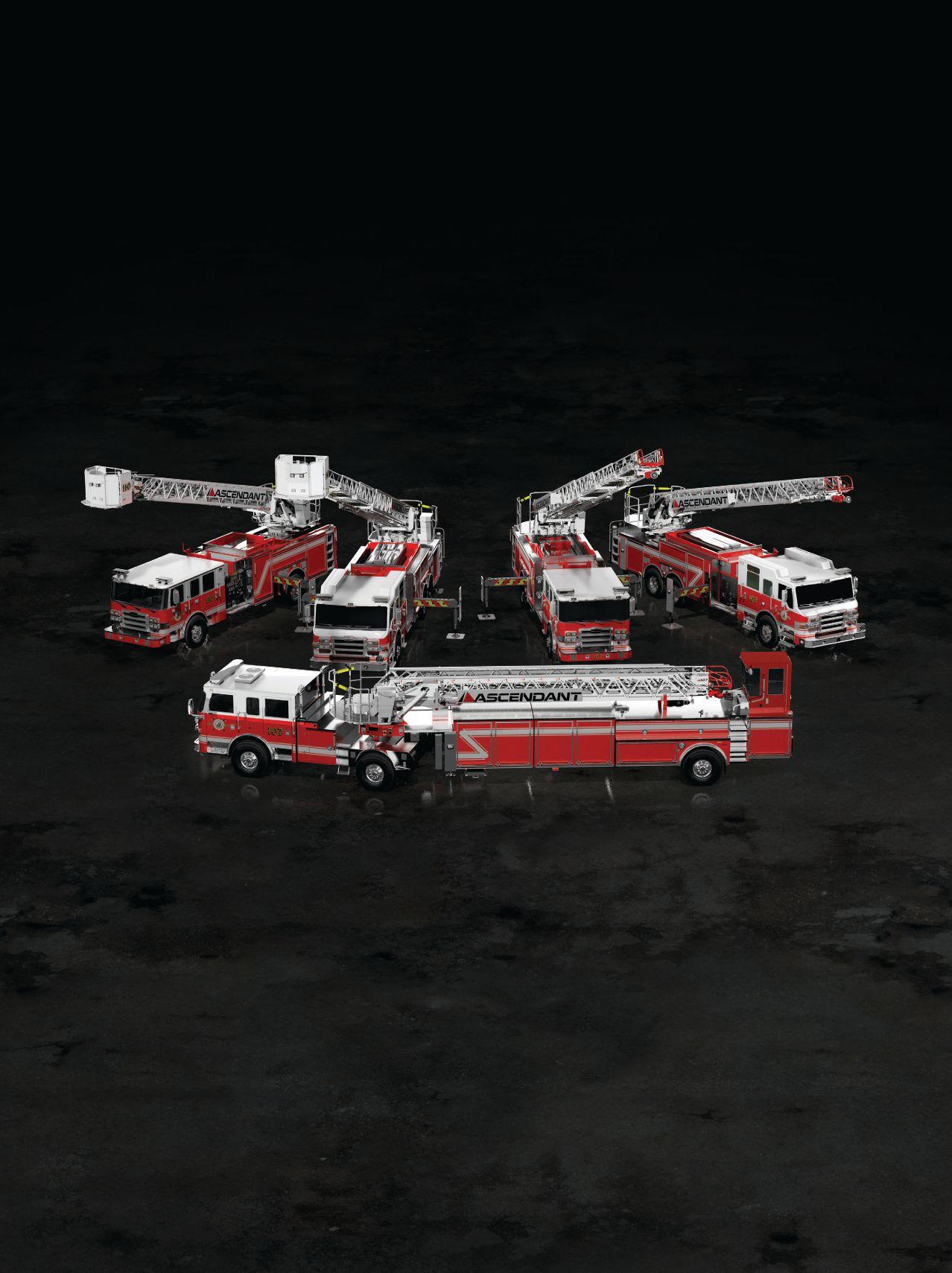
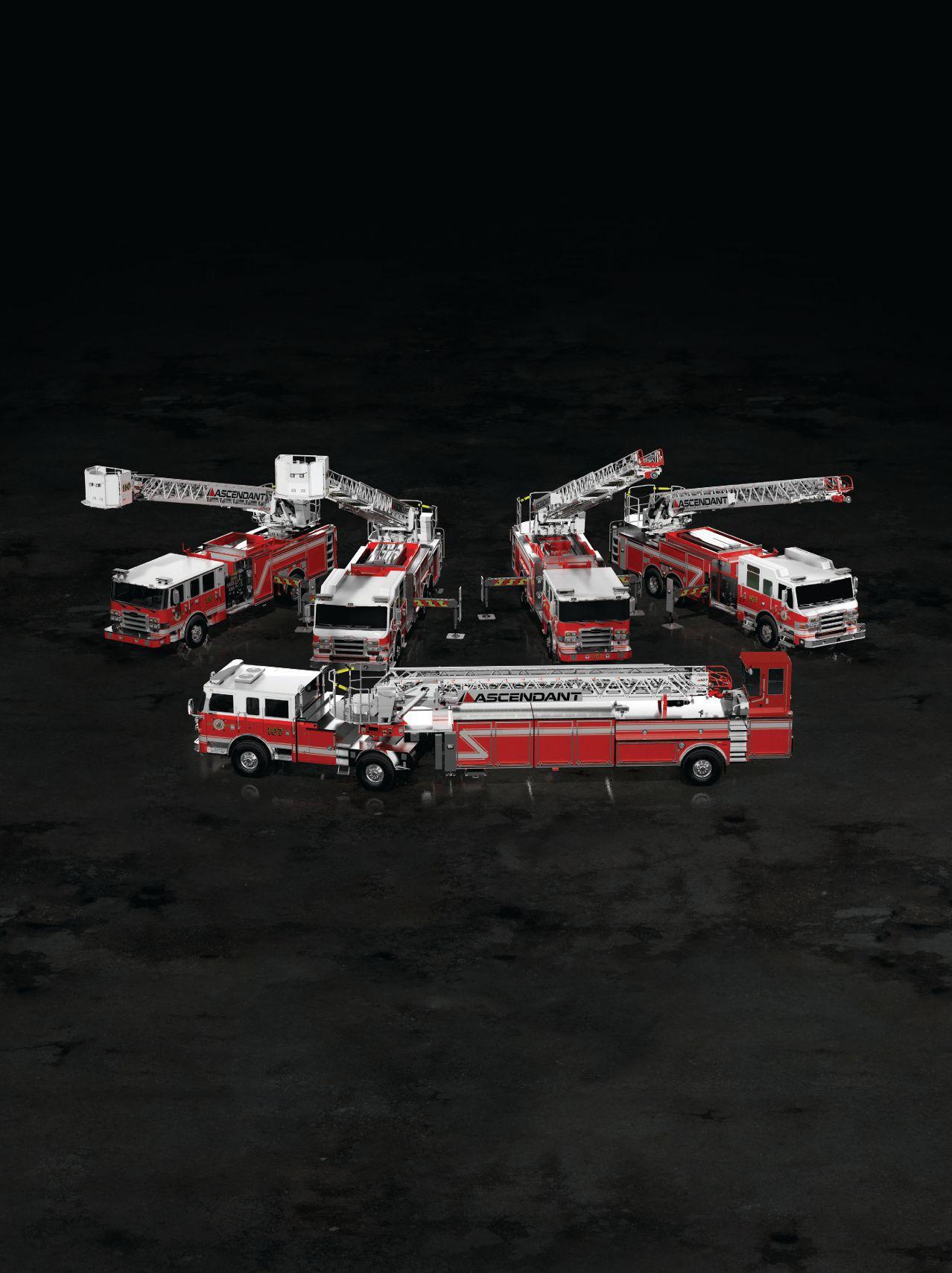
Exceeds NFPA requirements, contributing to E-ONE’s proven safety record for over 30 years.
STRONGEST CAB IN THE INDUSTRY
Keep your crew safe with the cab that withstands over 5x the static roof load and over twice the frontal impact required by NFPA and SAE.
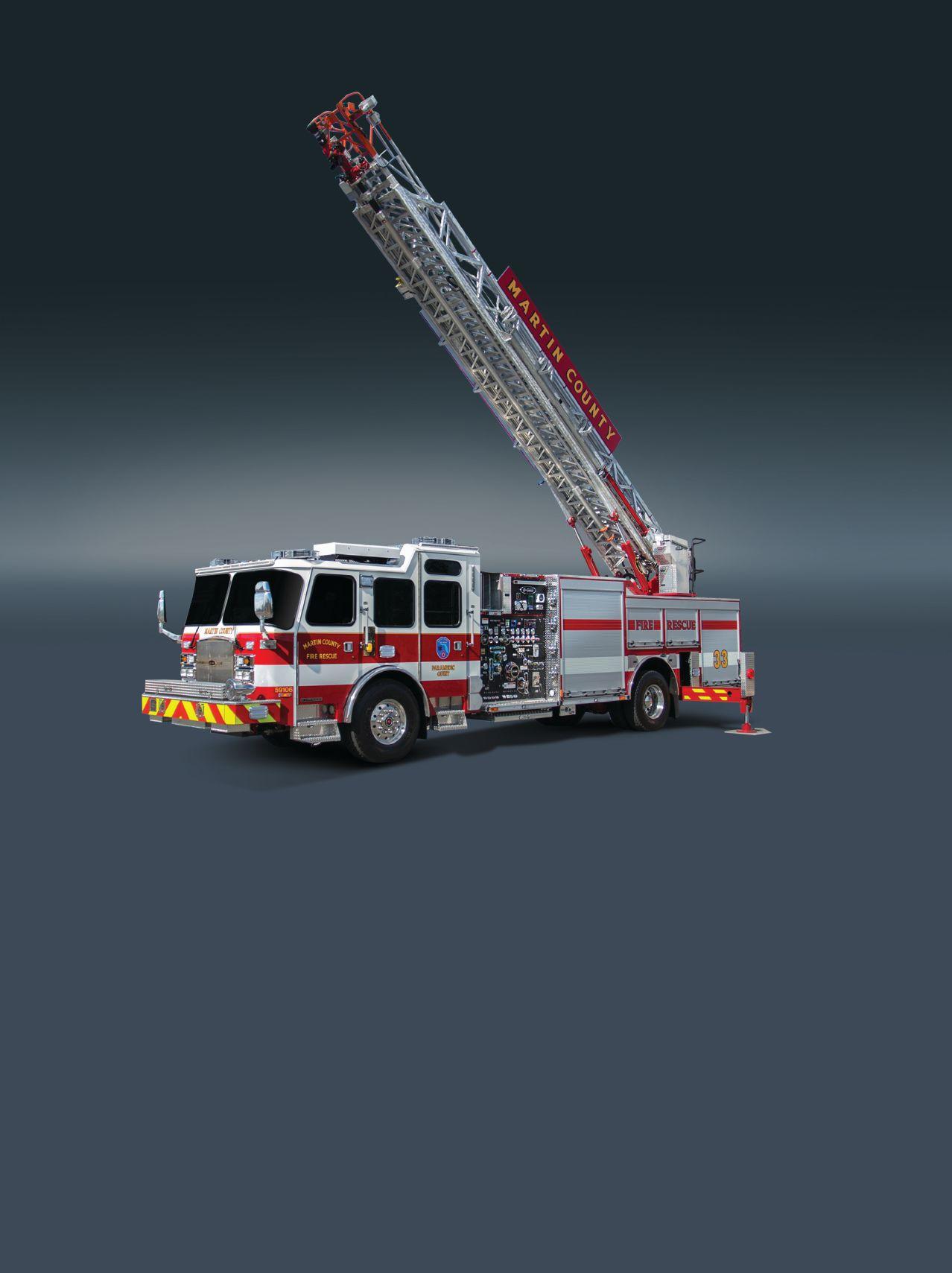
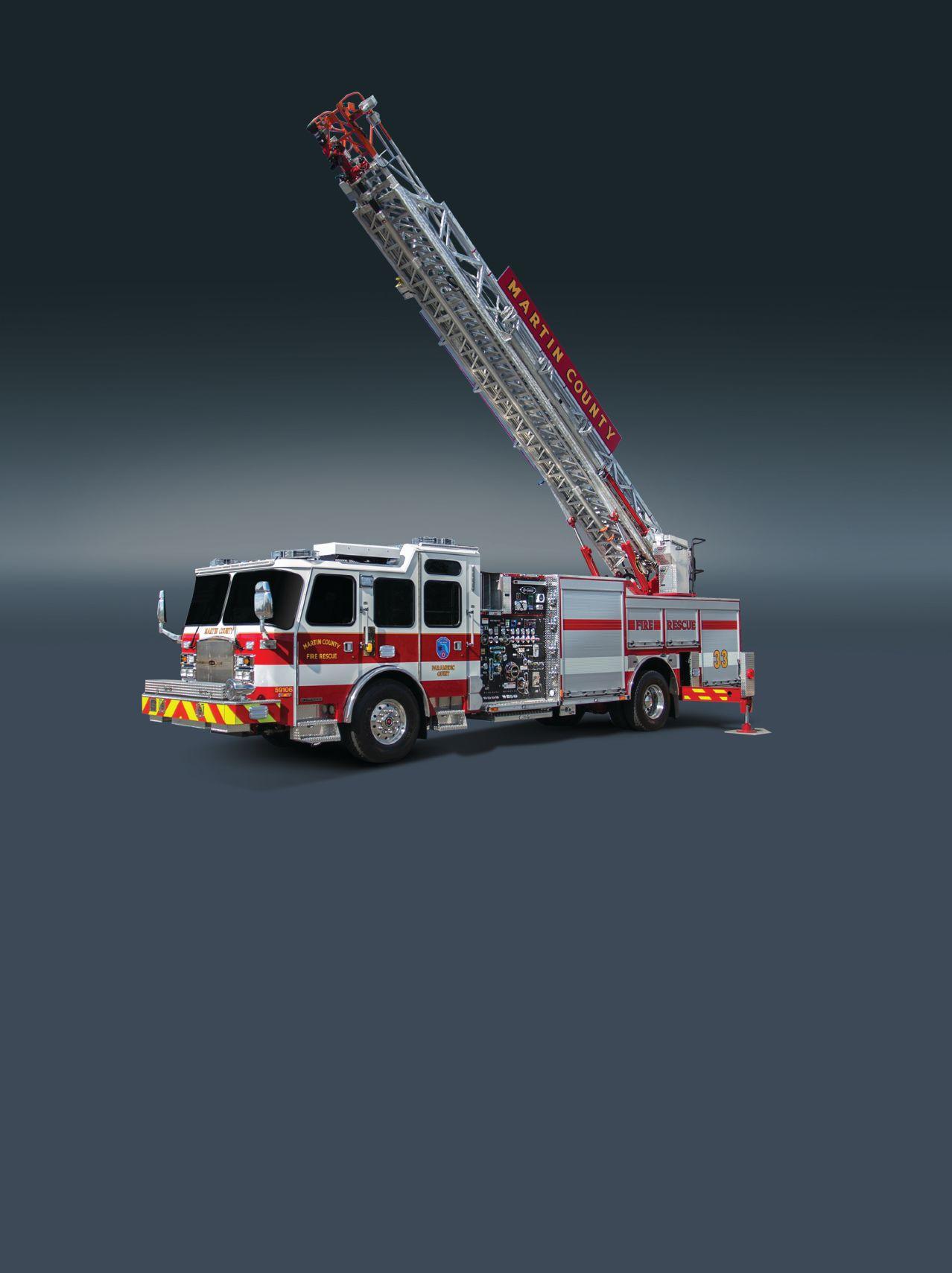
825 LB TIP LOAD RATING
The HP 78 Ladder holds 750 lbs of firefighters and 75 lbs of equipment.
WIDE LADDER SECTIONS
Clean, wide ladder sections with tall handrails for safe and secure climbing.
ADVANCED AERIAL CONTROL SYSTEM
Provides smooth ladder operation. Also available with direct hydraulic controls.
BUMPER EXTENSIONS
Severe duty front bumper extensions available with options such as hydraulic tools and low pre-connected handlines to meet department requirements.
PROTECH
Enhanced safety features such as ESC, OnGuard collision mitigation, 360° camera systems, front and side air bag options.
MORE STORAGE SPACE
Center hose bed or SideStacker ® body configurations offer up to 172 cubic feet of storage.
Our DNA is made up of revolutionary advancements. Take the E-ONE HP 78, the most popular of our aerial family. Featuring an 825-pound tip load for increased rescue capability, the HP 78 gets a crew and its gear where it needs to go. The ToughTruss™ ladder design features extruded aluminum construction with a 2.5 to 1 structural safety factor, cementing E-ONE’s legendary commitment to safety. With the combination of generous compartmentation, ground ladder storage, hose bed and tank size, the HP 78, like every aerial we make, is revolutionary.
Celebrating
Celebrating
SINGLE SET OF JACKS WITH A 16’ SPREAD
When space on the fire ground is tight, optional short jacking allows the HP 78 to set up in confined spaces
10
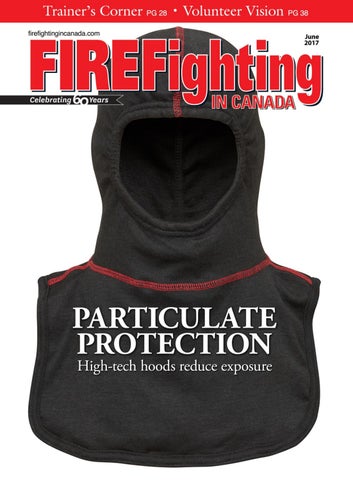
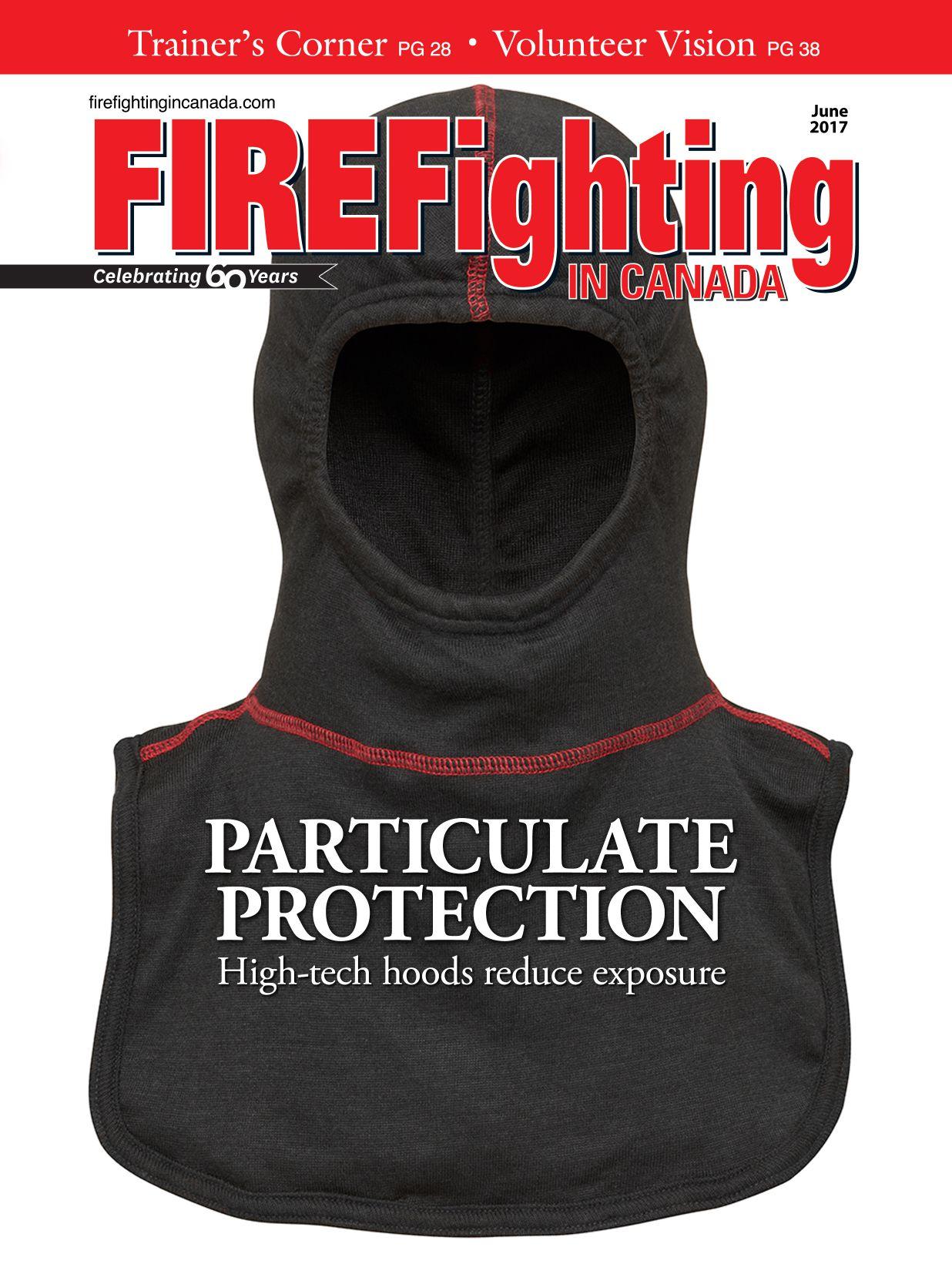
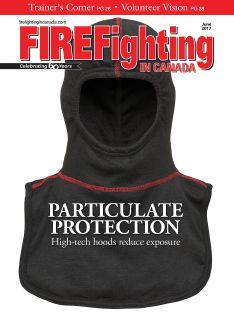
PARTICULATE PROTECTION
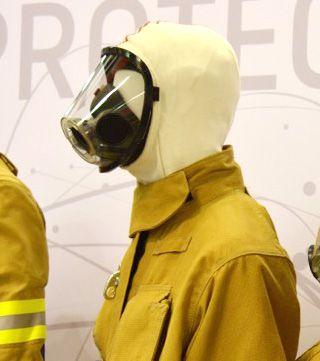
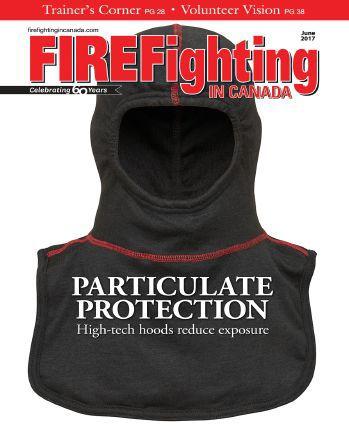
Prevention is the most important aspect of fire service, yet when it comes to cancer prevention, PPE lagged behind. As Laura King writes, most manufacturers of personal protective equipment are showing particulate-protect ing hoods at trade shows across North America; none guarantees 100 per cent protection, but all boast research that shows the volume of particulates that reach the skin is greatly reduced when firefighters wear the new hoods. By Laura King.
22
BUILDING RESILIENCE
Post-traumatic stress disorder affects people mentally and physically, changing their lives from the inside out. Since Langara College in British Columbia launched a resilience program for first responders in 2015, firefighters like David Gillis have developed daily practices to combat PTSD. By Ruth Lamb and David Gillis.
32
THE PUBLIC-ED MATRIX
For fire prevention education to be effective, it needs to factor in the risk matrix. As Tanya Bettridge writes, fire-safety messages do not effectively convey the dangers of fire; this means public educators must change their strategies. When it comes to public safety, making the risks clear will ultimately lead to reward. By Tanya Bettridge.
BY LAURA KING Editor lking@annexweb.com
I
COMMENT
Progress trumps tradition
remember being surprised –appalled, really – when I started learning about firefighting gear and SOGs, hydrogen cyanide, and cancer rates, that firefighters had been foolish enough to doff protective gear during overhaul or at car or dumpster fire, and inhale toxins.
It made no sense to me that if there was soot, dirt and smoke in the air it was OK to remove BA and carry on, coughing and spitting, and assume invincibility.
Everyone knows better now. Hygiene programs for contaminated gear are the norm, and young firefighters are setting examples for veterans – refusing to expose themselves to potentially cancer-causing elements.
Understanding the link between fire fighting and cancer, and the production of particulate-protecting gear, enables firefighters to do their jobs with less risk of developing illnesses.
fast-tracked through Queen’s Park.
The legislation has been amended several times to include volunteers, and more cancers; and most provinces now have similar laws.
The family of Hamilton, Ont., firefighter Bob Shaw spearheaded the drive for presumptive legislation. Shaw died of esophageal cancer in 2004, seven years after fighting a massive blaze at the Plastimet recycling plant in 1997; toxic smoke spewed from the scene.
Particulate-protecting hoods help firefighters fend off dangerous contaminants.
See story page 10.
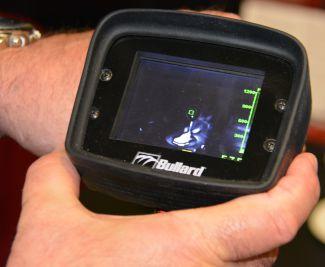
Our cover story on page 10 about particulate-protecting hoods is nicely juxtaposed with our 60th anniversary feature on pages 6, 7, and 8. We asked firefighters what they think is the most significant development in fire fighting in the last 60 years; the answers were insightful – and all relate to firefighter health and safety: thermal imaging cameras; smoke alarms; standards; incident command; accountability; better trucks; science; sharing information.
The first editorial I wrote – 10 years ago, in the June 2007 50th anniversary of Fire Fighting in Canada – explained how Bill 111, the legislation guaranteeing workers’ compensation benefits to firefighters who died from eight types of cancers, had been
PHOTO BY JOHN RIDDELL
Our cover story back in June 2007 was about hydrogen cyanide. Kitchener firefighters Carlin Riley and Steve Young wrote about the 27 firefighters in Providence, R.I., who were tested for hydrogen cyanide levels after three separate structural fires. Eight of the 27 had elevated levels of HCN and required treatment. One firefighter collapsed at the scene and was treated for HCN poisoning.
“The recognition of cyanide as a major component of fire smoke is one of the most significant discoveries over the past 25 years,” said Curtis Varone, deputy assistant chief with the Providence Fire Department.
In the last 12 months, PPE manufacturers have introduced hoods with high-tech fabric barriers that claim to prevent up to 99 per cent of particulates from passing through to the skin – a game changer.
I used to hear all the time that that tired old phrase about the fire service being all about tradition rather than progress. I beg to differ.
ESTABLISHED 1957
JUNE 2017 VOL. 61 NO. 4
EDITOR LAURA KING lking@annexweb.com 289-259-8077
ASSISTANT EDITOR LAUREN SCOTT lscott@annexweb.com 416-510-5116
NATIONAL SALES MANAGER ADAM SZPAKOWSKI aszpakowski@annexweb.com 289-221-6605
PUBLICATION MAIL AGREEMENT #40065710 RETURN UNDELIVERABLE CANADIAN ADDRESSES TO CIRCULATION DEPT. P.O. Box 530, SIMCOE, ON N3Y 4N5 e-mail: subscribe@firefightingincanada.com
Canada – 1 Year - $24.50 (with GST $25.73, with HST/QST $27.69) (GST - #867172652RT0001) USA – 1 Year $42.95 USD
We acknowledge the [financial] support of the Government of Canada.
Occasionally, Fire Fighting in Canada will mail information on behalf of industry-related groups whose products and services we believe may be of interest to you. If you prefer not to receive this information, please contact our circulation department in any of the four ways listed above.
110’ Single Rear Axle Heavy-Duty Aerial Platform 110’ Tandem Rear Axle Heavy-Duty Aerial Platform
107’ Tandem Rear Axle Heavy-Duty Aerial Ladder
107’ Single Rear Axle Heavy-Duty Aerial Ladder
107’ Tiller Heavy-Duty Aerial Ladder
Years60 Celebrating Years60 Celebrating Years60
Protection and prevention
Celebrating Years60
Fire-service personnel debate the most significant advancement in fire fighting in the last 60 years
by LAURA KING
Celebrating Years60 I
n celebration of the 60th anniversary of Fire Fighting in Canada, we asked our Facebook friends what they think has been the most significant development in fire fighting.
A clear theme emerged in the responses – protecting firefighters from injuries and from exposure to carcinogenic components through the use of technology and improved personal protective equipment.
Better gear, better tactics, increased knowledge of fire behaviour, and an understanding of the link between fire fighting and physical and mental wellness have helped to create a safer work environment.
Embracing and using the technology, wearing PPE properly, adopting and following standards, implementing best practices, and ensuring correct hygiene protocol and decontamination techniques are all likely to reduce firefighter cancers and deaths.
Putting water on fire achieves the same result it did 60 years ago; what has changed is the materials that burn, and the tools and equipment used in the response.
Fire behaviour and growth. It’s easier to slay the dragon when you understand how the dragon behaves. Where is the dragon living and what is it feeding on? Wearing the proper suit of armour to match the danger of the dragon.
- Capt. Mike St. Clair, Vaughan Fire and Rescue Service, Ontario.
Where to start? PPE – from rubber boots and coats to full bunker gear, balaclavas, suppression gloves, Kevlar, auto-ex gloves, thermal imaging cameras, CO and various gas detectors, Scott Pak improvements, Hurst hydraulics, and e-tools – to name a few things that make fire fighting much safer and faster for responders and patients and their property.
District Chief Mike Madaleano, New Tecumseth Fire Rescue, Ontario.
The understanding of the incredible impact of occupational injuries, from cancer and mental illness on firefighters. Capt. Alex Forrest, president, United Firefighters of Winnipeg, Manitoba.
The fact that it has taken almost all of those [60] years to start to make a dent in diversity in the fire service – much slower and later than any other public safety careers. We have overcome many of the false barriers and we are finally seeing a beachhead established.
Carol Lynn Chambers, principal, Ontario Fire College.
Technology and building advancements – they burn hotter and the byproducts of combustion are highly toxic, which leads to the occupational hazards and cancers we are seeing.
Tom Mehmel, customer service manager, Fort Garry Fire Trucks, Winnipeg.
PHOTOS BY LAURA KING
The most significant fire safety item that has saved more lives than anything else we could ever imagine, is the smoke alarm. Rick Browning, retired platoon chief, Town of Ajax, Ontario.
I look at the negative. Technology in fire science is amazing, yet we are now building more death traps for firefighters and civilians: lightweight trusses; synthetic furniture; hotter and faster fire development than ever. Why can’t we take our knowledge and improve life safety for both the occupants and for firefighters? Trent Lee, fire inspector, Saskatoon Fire Department, Saskatchewan.
I would say the focus on doing the job safely. It is the basis of everything that is developed – from our gear, to our training, to our tactics and every piece of equipment we use. Us old-timers are dying from the unsafe and unknown actions we did for 20 years, and we are putting in protections so that new firefighters will not have their careers or lives ended [as a result].
- Fire Chief Chuck Parsons, Kingsville Fire Department, Ontario.
Providing EMS service [with] limited budgets and personnel. Doing more with less.
Fire Chief Carrie Boshkaykin, Seine River Fire Department, British Columbia.
My list is leadership, development of better thermal imaging and accountability Training Officer John Uptegrove, Puslinch Fire and Rescue Service, Ontario.
I think worth mentioning is the networking made available due to social media. Being able to draw upon the experience and expertise of colleagues from coast to coast, at virtually any hour, has been great.
Fire Chief Rob Evans, Redwood Meadows Emergency Services, Alberta.
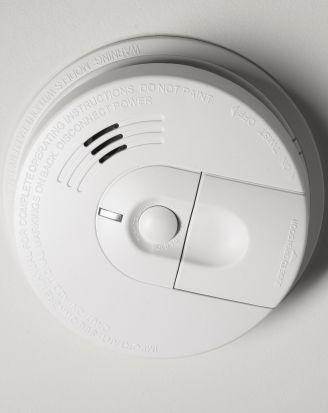
Smoke detectors, which ensure residents are evacuated and save firefighters from having to enter residence for primary search during [the] most dangerous evolution of fire.
Firefighter Joe Kelly, retired, Elmira Fire Department, Ontario.
I think the past 60 years has to be divided into two time frames. For the first 45, technology made our job much easier and safer. Advances in PPE and equipment helped to give firefighters the upper hand. The past 15 years, it has been the fire itself that has been getting the upper hand. Hotter fires and light weight construction has made a significant and scary difference in today’s firefighting.
District Chief Greg Shaw, Charlottetown Fire Department, P.E.I.
Development of incident command, introduction of thermal imaging into the fire service, vent-limited fire tactics, lightweight building construction, mandatory smoke detectors and the implementation of NFPA standards in the Ontario fire service.
- Firefighter Jamie Hiller, Centre Wellington Fire & Emergency Services, Ontario.
Celebrating Years
Celebrating Years60
When we look back at fire fighting and see what were the reasons our firefighters were not going home at the end of shift, one big reason was the lack of apparatus safety features. We know the rigs were responding to and returning from every incident. The dangers at the scene obviously were significant, however, standing on the tailboard responding to calls with only a leather strap to hold on to made for an interesting ride. Apparatus-related injuries were the [second leading cause of] line-ofduty death. The changes in apparatus due to the NFPA standards have helped some live to retirement age. There are still some that feel seatbelts are not part of their required safety equipment. For every incident you responded to, there were two rides on the truck – double the opportunity for something to go wrong. [You] can’t fight the fire and rescue those in need if you don’t get there.
Chief Ian Laing, Central York Fire Department, Ontario.
[I think] the invention of thermal imagers is one of the greatest tools a firefighter can have.
Mark Prendergast, retired volunteer firefighter, Newington, Ont., and president M&L Supply Fire and Safety.
In 60 years, the technology in our personal protective gear has had the biggest impact by far. It has both improved our protection and allowed us to perform better. Gone are the days of trench coats and long boots with no SCBA. Today we have lightweight gear with full coverage [and] SCBA that have integrated PASS alarms that transmit pressures and even thermal imaging built in. Thermal liners have breathable fabric to let heat escape, and [are] now [being improved] to help prevent cancer. I think it is by far the biggest development when you look at actual technological change.
Fire Chief Rodney Schmidt, High Level Fire Department, Alberta.
PHOTOS BY LAURA KING
Particulate protection
By LAURA KING
Inside the Gore booth at FDIC in Indianapolis, a lanky, boyish-looking firefighter – no more than 22 years old – sidled up to the counter to listen to product specialist Holly Blake explain the benefits of the company’s particulate-protecting hood.
The firefighter had two years at a Midwestern career department; he had been a volunteer before that.
He said he knows senior firefighters who are dying of cancer, and he is having no part of it.
“I want protection from the carcinogens,” he said, handling the multi-layer hood with a built-in barrier to prevent particulates from passing through the fabric and being absorbed by the skin.
Deputy Chief Shawn Sweeny was at FDIC looking for the same protection for his volunteer firefighters in New Tecumseth, Ont.
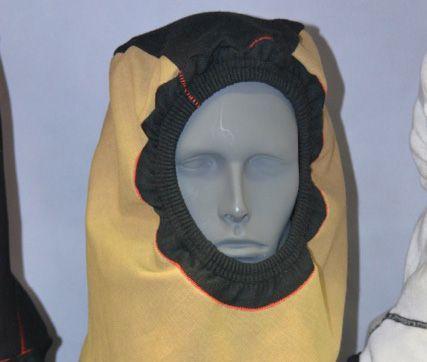
LEFT AND ABOVE Manufacturers previewed particulate-protecting hoods at trade shows in April and May. The hoods contain a barrier to restrict the passage of harmful, carcinogenic material to the skin.
“I’m down here looking at, from an operation perspective, the changes in personal protective equipment to protect our firefighters from exposure to cancers,” Sweeney said.
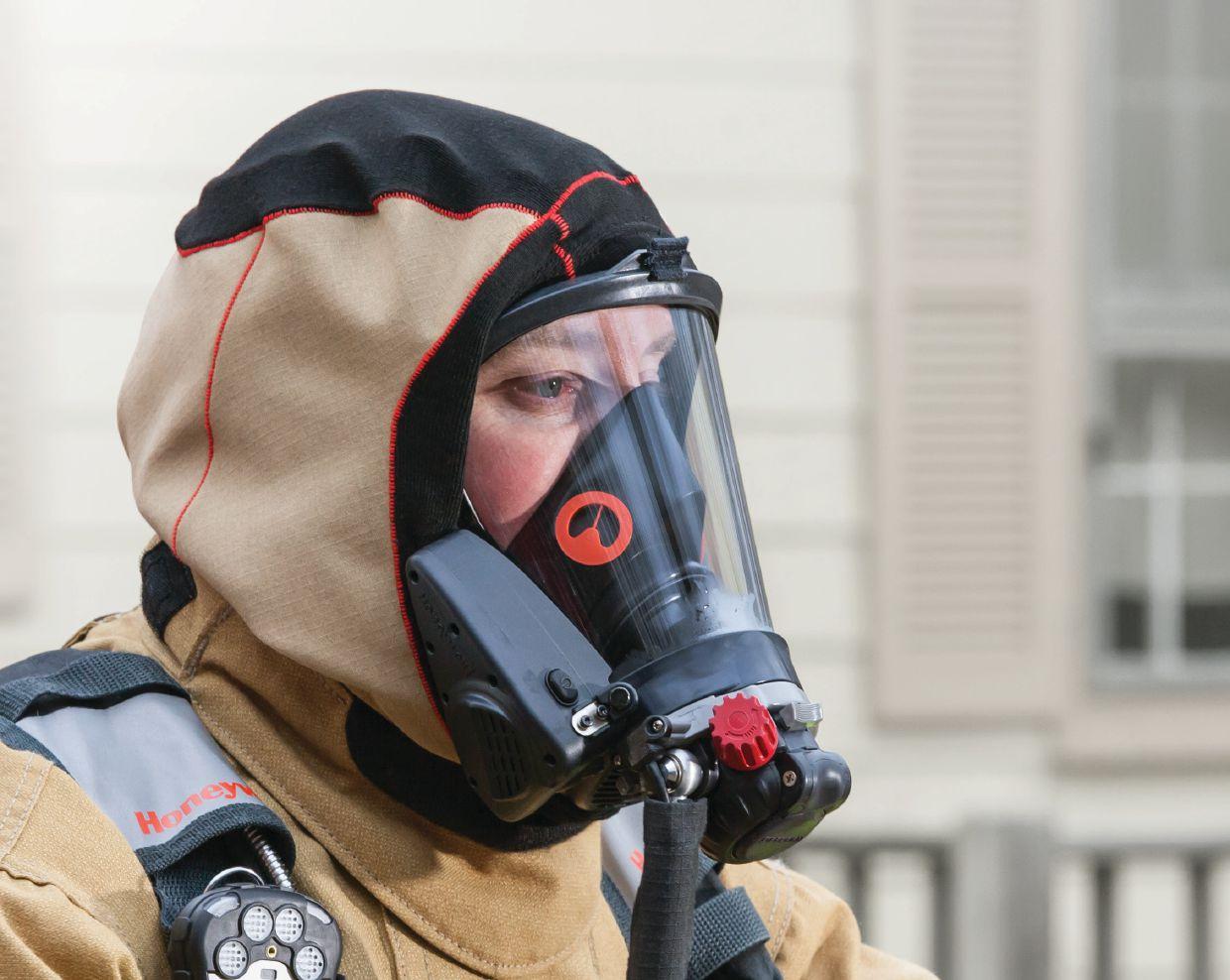
Most manufacturers of personal protective equipment – Gore, Honeywell, Innotex, PGI, and Fire-Dex, for example – are showing particulate-protecting hoods at trade shows across North America this spring and summer. All the hoods are similarly shaped, with bibs that extend well below the bunker-jacket collar. Yet each is unique.
None of the manufacturers guarantees 100 per cent particulate protection or claims cancer prevention, but all boast research and testing that show the volume of particulates that reach the skin is greatly reduced when firefighters wear the new hoods.
Most PPE manufacturers have also incorporated snowsuit-like elastic linings at bunker-gear arm and leg openings and at the waist to prevent particulates from
creeping in.
The key, says Rob Freese, the senior vice-president of marketing for Globe, is to protect firefighters from experiencing heat stress and then build in all the other necessary health and safety measures – a fine balance of comfort, functionality and particulate protection.
W.L. Gore and Associates Inc. debuted its particulate-blocking hood in Indianapolis, with much fanfare – a media event and a special pre-show unveiling at its booth.
According to Blake, who demonstrated the hood to throngs of firefighters at FDIC in early April, Gore’s barrier blocks more than 99.9 per cent of particles between 0.1 and 1.0 microns in size.
The hood, said Blake, exceeds NFPA 1971 requirements for thermal protection, retains performance after 100 wash cycles, and a slick opening at the base enables visual inspection of the protective layer for wear or tears.
The make-up of the protective barrier, in between the layers of Ultra C6 (black) and Nomex blend (white), is proprietary.
Blake said Gore’s hoods, which are manufactured and distributed by Majestic Fire Apparel, were developed based on firefighter feedback.
“Hoods can be a point of vulnerability when it comes to particulate protection,” Blake said.
“We drew on our extensive experience in barrier technology to develop a durable particulate hood. Our feedback from firefighters indicated that it was very important to maintain the natural feel of a traditional hood.”
Honeywell’s Life Guard particulate-resistant firefighting hood is different from other sock-style balaclavas; it’s a looser fit but the company’s press material says the stiffer fabric (a Nomex knit combined with Kelvar) allows for better airflow around the head and neck. The particulate liner is a moisture barrier – different again from other hoods that contain less rigid inner layers.
“It may look different,” Honeywell notes in its media handouts, “but the Life Guard Hood deploys just like a traditional hood and readily integrates with your self-contained breathing apparatus and turnout gear to ensure the highest level
PHOTOS BY LAURA KING
of protection.”
Honeywell says the looser fit also prevents wet, dirty material from rubbing on the skin.
Other manufacturers promote a tighter, more head-hugging design, similar to regular Nomex hoods that have been on the market for years.
Fire-Dex’s H41 Interceptor hood uses DuPont Nano-Flex between two layers of fabric. According to the company, the hood blocks 95 per cent of particulates at .2 microns in size or larger.
All the hype over hoods is the result of a 2015 exposure experiment – the Fluorescent Aerosol Screening Test (FAST) – conducted for the International Association of Fire Fighters. All manufacturers are working to meet the modified standard test (known as ASTM F2299) that NFPA has proposed in the next edition of the 1971 Standard on Protective Ensembles for Structural Fire Fighting.
A couple of years ago, the IAFF commissioned full-ensemble particle exposure testing at RTI International in North Carolina. The evaluation involved a used turnout clothing system and SCBA worn by a test subject in a particle-laden chamber.
Individuals were subjected to a high-level concentration of silica powder particles tagged with a fluorescent tracer having a particle size ranging from 0.1 to 10 microns. Subjects performed several movements for 30 minutes, while particles were blown through the chamber at about 15 kilometres per hour.
“Following the exposure, the garments were wiped down and the ensemble carefully removed to avoid exterior particle transfer to the interior,” the FAST report said.
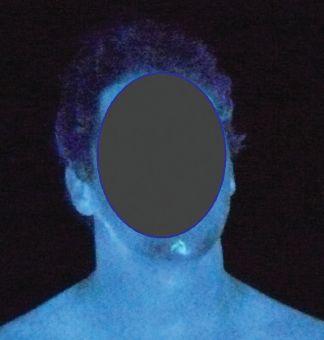
“Black-light photography of the individual without the ensemble before the chamber exposure and after the exposure provided a means for detecting where inward leaking occurred.”
Essentially, the FAST report indicated that particles at 2.5 microns penetrated standard knit hoods and left concentrated, heavy deposits on firefighters’ necks, cheeks, ears and jaws — smoke and soot particles are usually one micron or smaller.
In 2013, in Burlington, Ont., Capt. Steve Jones led a seminar for more than 125 area firefighters – the first of its kind in the province – about potentially lethal hydrogen cyanide (HCN) that clings to PPE. Balaclavas, Jones said, are the worst offenders because they come into direct contact with skin.
The Burlington Fire Department was a pioneer on HCN monitoring and was among the first to develop an SOG on the subject.
At that point, firefighters learned to wear their hoods and SCBAs during overhaul and to wash balaclavas regularly.
The FAST report, however, took particulate protection a step further, and manufacturers are now responding to firefighters’ demands for better gear.
Research and studies have clearly indicated that protective hoods are the most vulnerable pieces of PPE because they lack barriers to keep out particles.
According to PPE experts Jeffrey and Grace Stull with International Personnel Protection, Inc., the liner-less hoods coupled with research showing carcinogen buildup on firefighters’ skin, became part of the review of NFPA 1971.
When the revision process began, a group was charged to develop ways to minimize firefighter exposure to carcinogens.
Through the public input process, a proposal was made to add a new optional category of protective clothing to the standard, covering a particle barrier layer added to the hood. The group recommended that the barrier layer’s effectiveness be demonstrated through a standardized particle-filtration efficiency test with an initial target of 90 per cent effectiveness.
Fire-service experts involved with the working group recommended that installing a moisture barrier as part of the hood composite could reduce – or even eliminate – particulate matter from reaching the skin around the face and neck.
According to reports written by the Stulls, the increased layering of the hood and the further encapsulation of the firefighter’s head pose additional stress to an already physiologically challenged first responder.
“It was therefore suggested that a total heat-loss test be applied to these newly reinforced portions of the hood at levels far above those required for garment composites,” they said.
“In this way, the maximum amount of heat stress relief could be provided without compromising the particle holdout capabilities of the new hoods.”
The new hood products are more complex, use new materials and are consequently more expensive – retailing for up to $125.
The weight of the hoods, the ability to hear through the protective barrier, and the durability of the new technology are issues for consideration.
BY BILL BOYES
Fire chief, Barrie, Ont.
AAspire to recruit high-potential candidates LEADERSHIPFORUM
s chief officers retire, a void in fire leadership is expected to materialize within the next few years. However, this is entirely avoidable if we prepare the next generation to take over our positions. We need to inspire early, and this should not be limited to those in our senior ranks. Career-development planning should be an ongoing and evolving process.
Chief officer positons have changed dramatically over the years and now come with a significant and ever-increasing scope of administrative responsibilities. These positions now require us to operate as well-rounded public administration professionals. These expanded responsibilities make formal education and career-path development all the more important for aspiring chief officers.
But why would someone want to move from a front-line responder role to an administrative management position? The answer is not exactly clear for most people in our profession.
Overcoming the succession planning conundrum is no easy task due to the expectations we place on senior officers, the assigned duties, and the relatively limited financial benefit. From the macro (fire service) level and the micro (fire department) level, the identification and preparation of high-potential leadership candidates is only part of the equation. The overarching challenge that remains is our ability to develop recruiting strategies that emphasize the attractiveness of the chief officer position. Two of the primary roadblocks in the chief officer recruitment challenge (wage compression and work schedule) will not be addressed here but are an interesting topic for another column. Overcoming these impediments will be a massive challenge. However, positive, rewarding, non-monetary aspects of the chief officer position can lead to personal career satisfaction; these factors must be emphasized during recruitment and given due consideration by aspiring chief officers, as they can certainly outweigh the aforementioned impediments.
rationales often apply to chief officers, with one small caveat: we often realize these aspirations in a completely different fashion than we might have done as a responder.
Job satisfaction in the fire service is often aligned with the ability to make a difference. As a first responder, you see the direct impact of your work; the same cannot be said about managment. I had the opportunity to take on a seconded position in the fire administration branch with Brampton Fire and Emergency Services and this opened my eyes to a whole new world within the fire service that many of us do not always fully understand. I was able to work on strategic projects that would help shape the present and future of the department.
Developing a new program or introducing improvements to outdated department policies or programs can instill a certain sense of satisfaction. Moreover, a similar feeling exists when you receive corporate budget approval for a project championed by your front line staff. This is rewarding, contributes to the development of the organization and makes a difference to the overall efficiency or effectiveness of the department.
Additionally, as a chief officer, there is the potential ability to set the long-range strategic direction of your department or even the broader service, which can lead to lasting career fulfillment. The excitement of
As chief officers, we have a critical role to entice high-potential candidates into fire service and inspire them to consider management positions. ‘‘ ’’
Senior officers are often questioned about their rationale for taking the leap into the world of fire department management. Why does someone become a firefighter? Perhaps it’s a desire to serve the community. Or maybe they intend to follow in the footsteps of family member or close friend. From my personal experience, I would argue that these same
Bill Boyes is the fire chief for Barrie Fire and Emergency Service in Ontario. Boyes was recently elected to the NFPA Fire Service Section Executive Board and is a member of the IAFC Firefighter Safety Through Advanced Research (FSTAR) working group. He is working on completing his PhD at the University of Toronto. Contact him at Bill.Boyes@barrie.ca
planning these initiatives is fleeting at times, as many projects may not come to fruition within the span of your career. However, the realization that your input and hard work will contribute to the future of your community is exciting. I will acknowledge that I have completely understated the hard work, inevitable setbacks and potential uncertainty that comes with any large-scale project. Yet, this is why overcoming such a challenge can bring a strong sense of pride and accomplishment to any chief officer.
As chief officers, we have a critical role to entice high-potential candidates into the fire service and inspire them to consider management positions. We need to have honest and open conversations about the role, but we must also convey the realities of the positive and sometimes overlooked aspects of our job. If not, it will be difficult to motivate our talented workforce to move up into our positions when we retire. If we don’t start planning now, I am afraid we will face a succession planning catastrophe.
FEATURING THE SC 358E2 COMBI TOOL
UNSTOPPABLE
IT CUTS . IT SPREADS . IT’S PERFECT FOR FIRST RESPONDERS WHO NEED TO BE READY TO ACCOMPLISH ANYTHING. THE NEW SC 358E2 COMBI RESCUE TOOL BY HURST JAWS OF LIFE ® DELIVERS EVERY TIME BATTERY POWERED AND LIGHTNING FAST, START YOUR NEXT RESCUE WITH THE UNSTOPPABLE
BACKtoBASICS
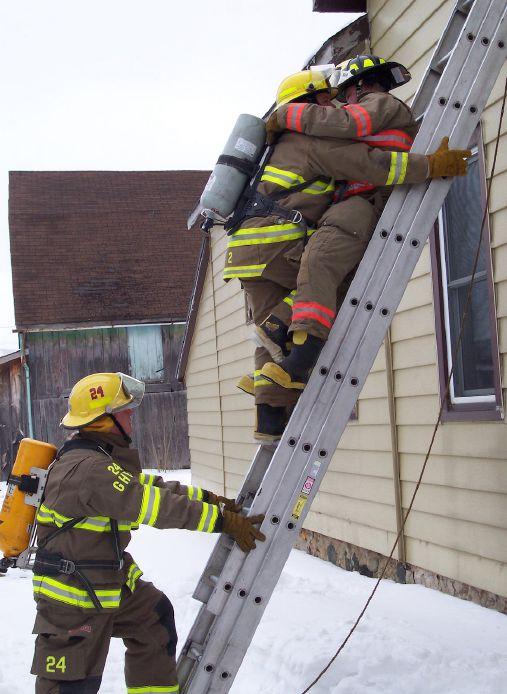
Ladder lessons: Heel from the front
BY MARK VAN DER FEYST
Learning the basics isn’t always by the book. It takes practice to get things right and a page is no match for practical application.
Textbooks help us learn and develop as firefighters, but sometimes they miss the mark when it comes to application. This is where instructors come in. Our job is to interpret textbook information and apply it to real situations.
During the ladder segment of a recruit class I was teaching, I noticed that every firefighter was heeling the ladder from behind. Why? Because this is what the textbook instructed them to do.
When I told the firefighters they should try heeling from the front instead, they were visibly surprised, responding to my suggestion with confused expressions.
Simply put, heeling the ground ladder from the front is more efficient and effective than heeling from behind.
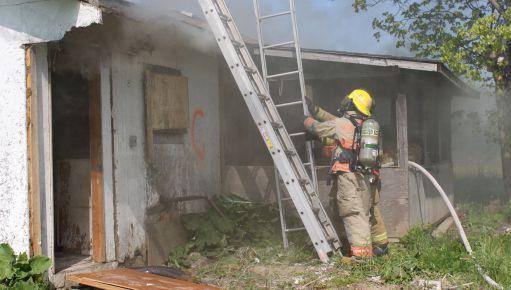
Use your foot to heel the butt of the ladder, while your hands press against the ladder beams. This practical application is not always conveyed in the most commonly used textbooks, but when applied in real life, it makes sense (see photo 1).
In most cases, firefighters work within the limitations of a small crew. Not every department has the luxury of having three or four firefighters available to put up a ground ladder. Firefighters need to learn how to work with available resources.
When firefighters heel the ground ladder from behind, it removes one of the firefighters from the team. Once they are committed to holding that position, they are unable to perform other fireground tasks.
When firefighters heel a ground ladder from behind, they aren’t able to view the entire scene, nor can they help see the operation through to the end. Their vision is drastically impaired. The heeling firefighter’s gear, SCBA and helmet can restrict his or her ability to look up the ladder while others climb. Some firefighters’ helmets hit the top of the SCBA cylinder, or the front brim blocks a part of the view. Either way, the firefighter is hindered and the operation becomes dangerous.
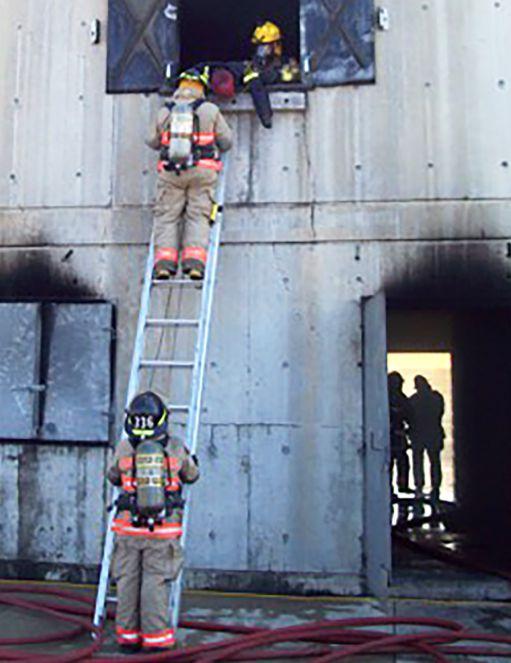
When a ladder is heeled from the front, it is possible to observe the whole side of the building, the fire, any potential hazards and keep an eye on the firefighter climbing the ladder. A firefighter who heels from the front is still able to be an active member of the team (see photo 2).
Heeling a ground ladder from behind also makes firefighters vulnerable to falling hazards. Firefighters climbing a ladder often carry hand tools and other potentially dangerous objects. These items can fall. There is a very good chance that something dropped by a climbing firefighter will hit the head of the heeling firefighter.
Photo 1: Firefighters who heel from the front are able to actively view the entire scene. The heeling firefighter can safely monitor the climbing firefighter while watching the evolution or incident unfold.
PHOTOS BY MARK VAN DER FEYST
Photo 2: Unlike a firefighter who heels from the back, the pictured firefighter can actively participate in the fire fight.
For example, when a firefighter breaks glass while atop a ground ladder, that glass could fall on the heeling firefighter.
Has an instructor ever told you to not look up while heeling a ladder from behind? This is so that you do not have falling tools, broken glass or debris hit your face. When you look up, you expose your neck, mouth and eyes to whatever may be falling on you.
What if the firefighter climbing the ladder slips or loses balance? Is it possible for the firefighter who is heeling the ladder from behind to run to the front of the ladder and catch the falling firefighter? How fast can this be done? The answer: not very quickly!
However, if the firefighter were heeling the ground ladder from the front, he or she could quickly assist the other firefighter and still be a part of the team (see photo 3).
My students learned that heeling a ladder from the front is a safer and more efficient choice. Textbooks are definitely useful tools, but sometimes the most practical application isn’t printed on paper.
Mark van der Feyst has been in the fire service since 1999 and is a full-time firefighter in Ontario. Mark teaches in Canada, the United States and India and is a local-level suppression instructor for the Pennsylvania State Fire Academy and an instructor for the Justice Institute of BC. He is also the lead author of Residential Fire Rescue. Email Mark at Mark@FireStarTraining.com
Photo 3: The heeling firefighter can easily assist a climbing team member in distress. From behind, the heeling firefighter would be forced to remain in position, unable to help.
BY GORD SCHREINER Fire chief, Comox, B.C.
SSTOPBAD
Understanding risk versus reward
ince I began this column several years ago, I have received an incredible amount of positive feedback from hundreds of readers. I must say I am humbled and honoured.
I have had several readers ask me: “Why the name Stopbad?”
“Stopbad” was the nickname I gave to a scene management program I had been delivering around the country. During presentations I would often say that we must stop bad things from happening. From there, Stopbad was born.
Over my long career (42 years and counting), I have seen and read about countless bad things happening to firefighters. Some of these bad things have even injured or killed firefighters. While some might call these “close calls,” I often find they are simply bad calls made by fire ground supervisors or firefighters. Many times, the situation could have been managed in a safer and more effective way. Sometimes a bad situation is a result of a bad training, or even worse, a lack of training.
One example of a bad call is placing firefighters on a burning roof. Operating on a roof can be challenging for firefighters, even without a fire. Add a fire and, predictably, something will go wrong.; the risk-versus-reward equation does not make sense. Operating above a fire is simply very dangerous and disregards the value of safe and effective scene management.
Those who know me know that I love fire service training. I spend many of my weekends traveling around the country delivering a variety of training presentations. By request, I have added more programs under the Stopbad banner. Stopbad now includes: safe and effective scene management,training for life, firefighter rehab, firefighter cancers, call signs for life, training props, iPads in the fire service, practice drills, and response ready training for recruits and getting the most out of your practice time. On top of all that, I have a few more programs currently in the works.
Hundreds of departments across Canada have adopted the “call signs for life” system, including Powell River Fire Rescue, B.C., (about a two hour ferry ride from my Comox base, on Vancouver Island), and all of their regional fire department partners. Each firefighter in this region now has their own individual call sign that they will continue to use throughout their entire career.
We need to train as if lives depend on it, because they do. We need to constantly evolve as our work enviroment can change rapidly from moment to moment. We can’t continue to always do what has worked in the past. That’s not how our job works, so it shouldn’t be how we work either. If you don’t like training or change, you are in the wrong business.
The very popular call signs for life program demonstrates the effectiveness of using the same call sign at every incident and training session, regardless of the task or incident. A firefighter may even use the same call sign throughout his or her entire career. A few years ago, I wrote a column that explains how call signs can greatly improve fire ground communications and safety.
We can’t continue to always do what has worked in the past. That’s not how our job works, so it shouldn’t be how we work either. ‘‘ ’’
These programs are centred around my passion for proper training, which can reduce firefighter injuries and deaths. Stopbad programs are also designed to motivate your team. They have been well received by hundreds of fire departments and thousands of firefighters.
Gord Schreiner joined the fire service in 1975 and is a full-time fire chief in Comox, B.C., where he also manages the Comox Fire Training Centre. Contact him at firehall@comox.ca and follow him on Twitter at @comoxfire
Hundreds of fire departments are using this simple program with great results. Firefighters love it too, because it makes their jobs a whole lot easier.
The Stopbad programs are intended for all members of your department, from chief officers to recruits. The program works for career, paid on-call, volunteer and industrial firefighters. Having a simple program for everyone means we can all be on the same page when it comes to firefighter safety.
My intent is to get you thinking about risk versus reward at every incident. I want members of the fire service to think first and have the proper training to make choices to increase safety. With Stopbad, my goal is that all firefighters make it home from the fire ground.
FAST Testing
A REVOLUTION IN PARTICULATE PROTECTION
The Life Guard Hood is Honeywell’s latest breakthrough in safety and comfort for first responders. It promotes the safe flow of air around your head and neck while a trusted moisture barrier blocks exposure to hazardous particulates. The protection is proven by the FAST test images.
Tough, lightweight comfort and protection you can depend on.
Download a FREE copy of Firefighter Cancer Support Network’s eBook “Taking Action Against Cancer in the Fire Service” online at Honeywellfirstresponder.com/community-support
Median particulate diameter, 150 mg/m3, 10mph wind speed, 30 minute exposure, standard motion routing, same test subject.
Note: Exposure on chin of Life Guard results due to doffing SCBA with contaminated hands rather than particulate penetration.
IAFF Jan. 2015
Traditional Hood
Honeywell 2017
Life Guard Hood
Celebrating Years60
Celebrating Years60
Years60
Core principles to overcome PTSD
By DAVID GILLIS AND RUTH LAMB
Building RESILIENCE
Firefighter David Gillis never knows when a response to a call will trigger the symptoms of post-traumatic stress disorder (PTSD). But through a program called Strategic Resilience for First Responders, Gillis is able to manage the mental and physical reactions that used to stop him in his tracks.
Resilience can be learned over time, according to program creator Ruth Lamb, a faculty member at Langara College in Vancouver.
Lamb is a former critical care nurse who experienced her own challenges as a first responder; she left critical care after 10 years, using more than 15 years of on-thejob experience working in and researching high-trauma settings to develop a program that addresses PTSD holistically.
Gillis, a volunteer firefighter in Squamish, B.C., with more than a decade in the service, now applies his resilience training at every call.
Since 2015, the program has expanded: The University of New Brunswick licensed the program in 2016 and a similar program will begins this month in the Nova Scotia Community College system.
Lamb and Gillis originally wrote about the program in March 2016 (go to www. firefightingincanada.com and click Hot topics / health and wellness).
■ GILLIS
In January I attended a call that I felt was a terrible and tragic loss of life. I understood the possibility of exposing myself to yet another traumatic situation.
The call originally came in as a rubbish fire. The report said it was just off the highway, in the bush, with no structure or exposure issues. It was late on a Saturday evening, almost midnight. It was a relatively routine call, until further updates came in. There was a tent, which was still burning,
TOP First reponders are twice as likely as other people to develop PTSD, according to Canadian mental health advocacy group First Reponders First. As awareness continues to be raised, more programs and resources are becoming available to help firefighters build personal resilience.
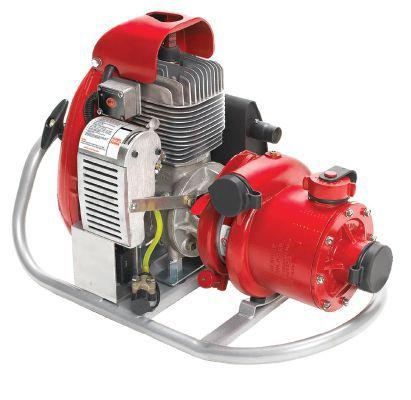
WHEN YOU’RE HERE, THERE’S NO ROOM FOR COMPROMISE. YOU CAN TRUST THE MARK-3® TO MOVE WATER
Ask for the real McCoy: the MARK-3®, recognized across the firefighting industry as the ultimate lightweight, portable pump.
with someone inside.
The fire must have been quick and intense, possibly fuelled by propane from what appeared to be a small camping stove. When we got on scene the fire was mostly out and everything within the tent area was completely burned and or melted. Everything.
We returned to the hall, put the apparatus back into service and had a short discussion about how each of was doing before heading back home. We tried to reconnect and reset our nervous systems.
I knew that some of what I experienced that evening had the potential to trigger past trauma, but as I drove back home I already felt something was different; I didn’t feel jacked-up, as I had after previous traumatic incidents. There was no residual adrenaline, no twitching, no feeling irritated or anxious, no haunting thoughts or startling images about the call.
■ LAMB
In Gillis’ early processing of this event, there is evidence that he made a conscious effort to be present. This is the initial step when providing first-aid care for trauma; in the field, it is called strategic effective enduring resilience (SEER) protocol. The following five core practices keep first responders focused on the present moment, instead of a traumatic past: breathing, grounding, centering, aligning and resourcing.
Ideally, one should implement these practices daily. This way, the practices create habitual brain pathways, like muscle memory.
• Breathing impacts our physiology and psychology. Step one is to observe your breath – and pay attention to your breath from one
I expected to be triggered and have feelings of sorrow, grief or sadness, but that didn’t happen. I stayed connected to my surroundings…’’
moment to the next. Is it ragged and short? Are you hardly breathing at all? By paying attention to your breath, you will be able to
pair the logical and analytical left-side brain with the creative right-side brain. When we can regulate our breathing and be present through grounding practices, we can be still enough to allow this centered state to unfold. And amazingly, this state helps us recalibrate a nervous system that has made a habit of stacking trauma upon trauma, call after call.
• Aligning oneself naturally follows when these SEER practices are utilized. Through these exercises, first responders build momentum towards a balanced nervous system, better emotional regulation, and a stronger sense of self. What is more, this authentic self-awareness helps us develop greater ability to read a situation or others emotions; thereby we are more effective when it comes to prevention and de-escalation.
• Resourcing refers to our ability to access our inner and outer resources. These are unique to every individual, so it is important to know what your resource are and how to use them. For example, inner resources could be these five practices and other skills we have developed to support our mental wellbeing. Outer resources could include our co-workers, family and friends, or even nature.
Working through these five wellness practices regularly makes it much easier for responders to cope with stressful experiences.
■ GILLIS
A critical incident stress debrief (CISD) session had been arranged two days after the call, but at that time, I felt that I needed to go back to the site to try and clarify the call for myself before the debriefing. I’ve never done this before; I just had a deep inner feeling that I needed to revisit the scene.
Once back on scene, I could picture the charred body among the debris (which had been removed), while remaining aware of my surroundings and of myself. I was there in that moment, not the moment of the incident. I expected to be triggered and have feelings of sorrow, grief or sadness, but that didn’t happen. I stayed connected to my surroundings: the ground beneath my feet, the evergreens and alders, the cool breeze and the smell of the forest.
■ LAMB
Gillis is forming a mental-wellness strategy that utilizes these resilience-based practices. This is as vital as any technical procedures first responders use to protect the lives of others.
Activating our inner and outer resources can lead to major changes in thinking. Resilience comes from a finely tuned, balanced and co-ordinated brain. When individuals breathe deeply, ground through the body, acknowledge emotions, observe thoughts and identify healthy habits that support wellbeing, they can begin to build healthier bodies and brains.
■ GILLIS
In the past I would ruminate over previous traumas and worry about ones that haven’t happened yet. This simply took me out of the here and now, where life really takes place. My journey of healing and recovery from PTSD has been long and slow, but the process seems to have sped up when I began to focus on living fully in the present.
I am thankful to everyone who has been supportive and understanding throughout my journey. My support system has helped me maintain a sense of worth and connection, as I continue to contribute to the community as a firefighter and first responder, a husband, a parent and a grandparent.
■ LAMB
Resilience-based practices allow us to recalibrate physically, mentally and emotionally after critical incidents, as a critical incident impacts the whole body on every level. Start these practices early, as soon as possible after the incident, perhaps even in small ways during an incident. This will make a difference. Then we can use long-term rebalancing strategies to override trauma-related patterns etched into our lives from the inside out, from the nervous and immune systems to jobs and relationships. If first responders do not take the time to learn resilience-based practises, they could face with impaired integration of the brain and body. When trauma takes hold, chaos, confusion and rigidity overtake the mind. The above SEER practices can be used to combat trauma-related reactions in first responders, allowing them to gain new levels of self-mastery. It takes time, but just look at what Gillis has been able to accomplish. He is now training recruits and is an instructor in the strategic resilience program for first responders at Langara College.
David Gillis, is a volunteer lieutenant and first responder in Squamish, B.C. Contact him at davidgillis2@gmail.com
Ruth Lamb RN, MSN, PhD, is a registered nurse and the program co-ordinator, health and human services at Langara College. Contact her at rlamb@langara.ca
BY SHAYNE MINTZ Canadian regional director, NFPA
AGrant program expands into Canada
fter several months of planning and preparation, the Home Fire Sprinkler Coalition has bridged the border. In March, the United States-based non-profit Home Fire Sprinkler Coalition announced a new Canadian website, with important educational information for a broad range of stakeholders.
HomeFireSprinklerCanada.ca provides timely resources to increase interest in the life-saving benefits of home fire sprinklers in newly constructed homes.
In partnership with The Co-operators and Canadian Automatic Sprinkler Association (CASA), this new, comprehensive website presents videos, fact sheets and answers to frequently asked questions provide key information about residential sprinkler systems and their life-saving benefits. Many of these resources will help fire departments that want to incorporate fire sprinkler information in their education programs.
In recognition of these efforts and the growing awareness, Home Fire Sprinkler Coalition Canada has announced a grant program that will provide stipends to fire departments for conducting burn-cell demonstrations at public education presentations, open houses and community events.
Ten fire departments will be selected to receive a $1,000 stipend to conduct side-by-side fire and sprinkler burn demonstrations as part of their public education program.
To be eligible, departments must become a BUILT FOR LIFE Fire Department by submitting an application and commit to incorporating home fire sprinklers into their public education and outreach activities. This could be as simple as adding information about home sprinklers to existing public education initiatives, or as comprehensive as establishing a local outreach program. Already, more than 2,500 fire departments across Canada and the United States have committed to the cause.
educational effectiveness of the event; and file an event summary and evaluation to Home Fire Sprinkler Coalition Canada.
Departments can apply for the stipend program, by visiting https://homefiresprinklercanada.ca/2017-stipend-canada. Simply complete the applications by answering a few questions and submit.
At almost every event I attend these days, there are discussions about getting involved in the residential sprinkler movement and questions arise about residential fire sprinklers, and NFPA 13D: Standard for the Installation of Sprinkler Systems in One- and Two-Family Dwellings and Manufactured Homes.
I have noticed what seems to be a growing interest in residential fire sprinklers, and not just from the fire services but also from municipal building officials and homebuilders alike. Their questions often focus on the growing awareness of the lethal effects of smoke and fire. I emphasize that home fire sprinklers can play a significant role in saving lives and preventing injuries.
The goal of Home Fire Sprinkler Coalition Canada is to enlist as many stakeholders as possible to engage with their communities and develop regional or provincial coalitions in Canada.
. . . the Home Fire Sprinkler Coalition Canada will select 10 fire departments that will receive a $1,000 stipend . . . ‘‘ ’’
There will soon be recognized Home Fire Sprinkler Coalitions in both British Columbia and Ontario. There are also very strong pockets of interest in Alberta and Saskatchewan.
To qualify, departments must, at the minimum, agree to implement a local home fire sprinkler demonstration by the end of 2017; ensure the event contains home fire sprinkler educational outreach; endeavour to extend the educational benefits beyond the actual event (such as through local media or placement of photos or video on the fire department’s website and social media outlets, if any); evaluate the
Shayne Mintz has more than 35 years of experience in the fire service, completing his career as chief of the Burlington Fire Department in Ontario. He is now the Canadian regional director for the National Fire Protection Association (NFPA). Contact Shayne at smintz@nfpa.org, and follow him on Twitter at @ShayneMintz
Home Fire Sprinkler Coalition Canada believes that with the right information and tools, more fire departments can teach their communities about residential sprinklers. The coalition has developed many resources to simplify any department’s residential fire sprinkler outreach program — and they’re all free of charge. Aside from the stipend program, every ‘BUILT FOR LIFE Fire Department’ will receive a fire and sprinkler burn demonstration kit, educational outreach materials, certificate of participation and much more.
For more information about how to get involved and participate in the program visit https://homefiresprinklercanada.ca/ 2017-stipend-canada/ or call 1-877-550-HFSC (4372)
Celebrating Years60
Celebrating Years
TRAINER’SCORNER
A standing ovation for ventilation
By ED BROUWER
Training in the fire services is not for the faint of heart. The time, energy and plain old hard work can be overwhelming at times. However, every now and then, a young firefighter looks at you and says, “I get it.”
I am pleased to say that has been happening to me more often lately. Maybe after nearly 30 years I’m finally starting to get a handle on dealing with students? As a training officer, if you can’t engage your members, you will miss the mark.
At a recent practice, something surprising happened. The subject was basic ventilation and during an airflow demonstration the members spontaneously broke into applause. That’s right, they clapped! To this point, that had happened only one other time during a training session, but under very different circumstances.
That was in 2004, when we introduced Saving Our Own training at the Oliver volunteer firefighters spring training. Our first group included members of the Clearwater Fire Department, who had just lost one of their own, 23-year-old Chad Schapansky, that March. It was in Schapansky’s honour that we demonstrated a through-thefloor rescue. As we wrapped up, the applause started, followed by a few tears and more applause. Overwhelming is an understatement. But that applause was in respect to a line-of-duty death.
I never expected I would hear applause for an airflow demonstration, perhaps one of the simplest demos I have ever done.
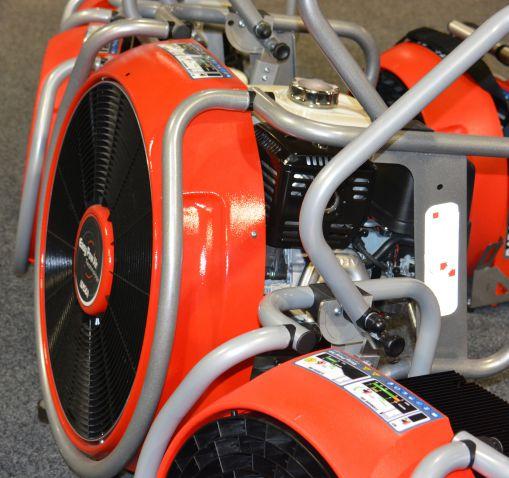
In a nutshell, ventilation is the planned, co-ordinated and systemic removal of pressure, heat, gases and smoke. This can occur as a natural result during a fire or it can be produced by mechanical means: positive pressure ventilation (PPV fans); negative pressure (ejectors/ extractors); and, when other types of ventilation are unavailable, hydraulic ventilation is an option.
Ventilation is simply the movement of air from high pressure to lower pressure. Three major reasons to perform ventilation are life safety, incident stabilization and property conservation.
There are two types of mechanical ventilation: horizontal and vertical. Both can be extremely dangerous if not preformed properly. Firefighters must have a fundamental understanding of fire behaviour, fire streams and ground ladders before they attempt to open a roof.
Most important, before you ventilate, you had better know where the seat of the fire is.
Greenwood Fire Department has decided not to do mechanical vertical ventilation. In consideration of our aging department members, the low number of structure fires per year and the structure types in our community, we no longer cut holes in the roof. In some cases, we may ventilate through gable ends.
We have learned that once we ventilate, conditions change rapidly, and not always in our favour.
For clear instruction on vertical ventilation go to www.firefightingincanada.com, click training/structural, and scroll to Mark van der Feyst’s Back To Basics series from November 2013, and
Three reasons to perform ventilation are life safety, incident stabilization and property conservation.
It is essential to run the PPV fan wide open, forcing air on the entry door and checking that you have a proper cone effect.
February and March 2014. There are also myriad demonstrations on YouTube. For that reason, I will forego my lesson plan and take you right to my demo.
All you need to demonstrate air flow is some duct tape and
PHOTO BY LAURA KING
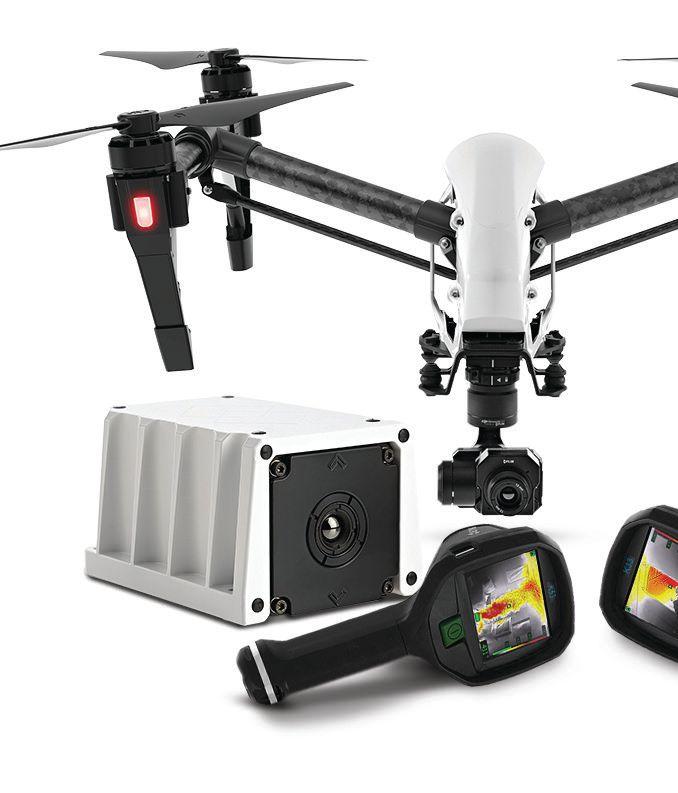
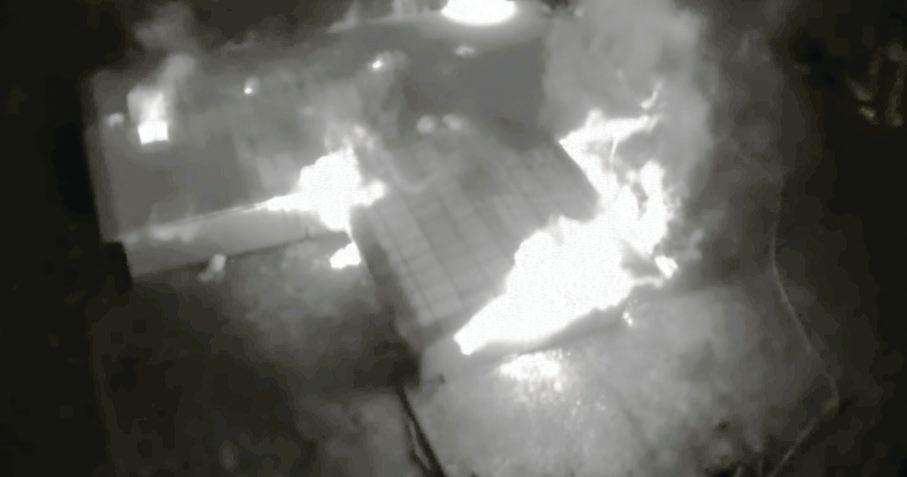
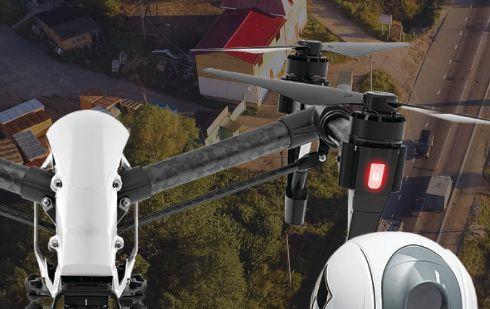
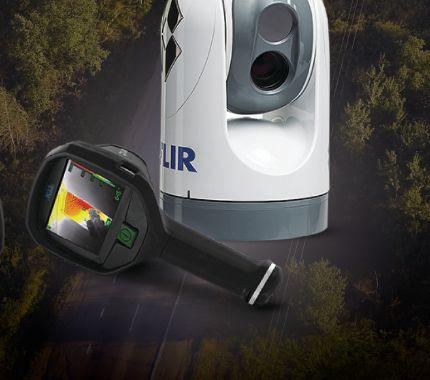
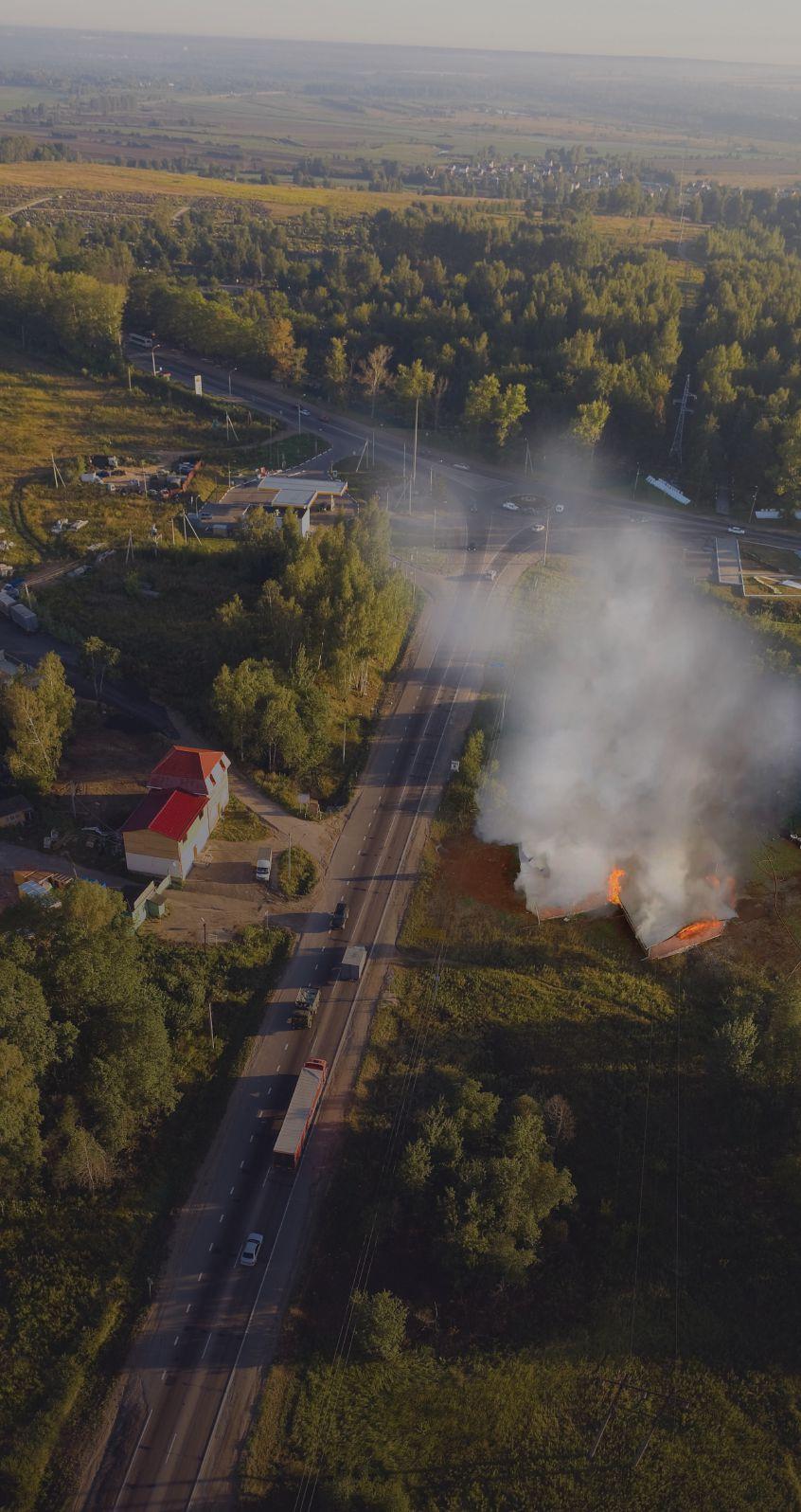
FROM BOOTS ON THE GROUND TO EYE IN THE SKY, WE’VE GOT YOUR BACK.
FLIR’s wide range of TICs can help you identify hot spots from a variety of distances – making safety the top priority. Learn more at FLIR.ca/fire
BUY ANY 4 FLIR K SERIES TICS, GET A FLIR K2 FOR FREE. A $ 1,350 VALUE!
®
FEATURED PRODUCTS:
· FLIR K2 THERMAL IMAGING CAMERA
· FLIR K33 & 53 THERMAL IMAGING CAMERA
· FLIR KF6 AERIAL APPARATUS
FIXED-MOUNTED THERMAL IMAGING CAMERAS
· FLIR M-SERIES PAN-TILT-ZOOM
TICs FOR ARFF, HAZMAT & ALL EMERGENCY VEHICLES
· FLIR AERIAL FIRST RESPONDER KITS
TRAINER’SCORNER
flagging tape. Before the practice, tear off a three-foot piece of duct tape. Cut 20 flagging tape strips into 10 three-foot and 10 fourfoot lengths. Then place one end of the flagging tape on the duct tape, pressing down so it sticks. Alternate between the three- and four-foot lengths with approximately an inch between. When you have completed that step, tear another three-foot piece of duct tape and place it sticky-side down on the first piece of duct tape.
I made up another three-foot prop with shorter flagging tape strips (one-foot and two-foot lengths).
Using your fire hall as the building to be ventilated, set up your PPV fan at one of the main doors. At this point in the demonstration, all other doors and windows should be closed. You can have a number of members start and run the PPV fan – it is always good practice.
Meanwhile, find another door inside the building, preferably far away from the first door. Tape the flagging strip to the top of the door. At our hall, we have an upper floor so I placed the second strip on an interior door to a room with a window that I could open. In our case, the window had a screen, which turned out to be a huge bonus.
Now, returning to your crew, set the PPV fan several feet from the entrance door (inlet), allowing a cone of air to seal the opening. This prevents the air from recirculating. It is imperative you run the fan wide open, forcing air on the entry door and checking that you have a proper cone effect.
Remember, on the fire ground you would not open the inlet opening until you were ready with a co-ordinated opening of the “outlet.” The careful choosing and controlling of the outlet allows the smoke, heat and combustible products to follow the path of least resistance out of the structure.
With the fan situated and running full out, open the inlet door and have your members enter the hall. They should notice that although the air is being forced into the building, there is very little, if any, airflow. The building is being pressurized. Take your group to the main floor door where you hung the flagging tape. There should be minimal movement of the tape.
Now open the door. You should feel a sudden rush of air causing the flagging tape to flutter out of the doorway.
For mechanical ventilation to be effective, there must be an inlet and an outlet. Allow firefighters the opportunity to make observations, then close that door and go to your next set up. At the interior door, the flagging tape should be hanging without movement. Proceed to the window and open it up all the way. The streamers should begin waving in the direction of that window. Try closing the window halfway and notice the reduction in air movement. If your window has a screen, remove it and then ask the firefighters to observe what happens. The difference should be drastic.
At this point, the group seemed to collectively understand ventilation. Their reaction was to applaud. For this old trainer, it doesn’t get much better than to witness that type of engagement. Until next time, remember to train like lives depend on it, because they do.
Ed Brouwer is the chief instructor for Canwest Fire in Osoyoos, B.C., and deputy chief training officer for Greenwood Fire and Rescue. Ed has written Trainer’s Corner for 16 of his 28 years in the fire service. Contact Ed at aka-opa@hotmail.com
Celebrating Years60
Celebrating Years60
The public-ed matrix
Understanding why people fail to heed fire-safety messaging
By TANYA BETTRIDGE
TOP Successful campaigns with blunt messaging, such as anti-smoking and anti-drinking and driving hit home and target people’s emotions. Focusing on fire deaths and having people listen to 911 calls or visit burn units may be more effective than traditional family friendly messaging.
RIGHT Writer and public educator Tanya Bettridge argues that in-your-face messaging is more likely than soft-sell campaigns to inspire people to change, and that fire services need to embrace a tough-love attitude to affect change.
Smoke alarms. CO alarms.
Attended cooking. Clear dryer vents. How many of these topics has your fire department covered the past few years? The answer is likely all of them, yet there goes your crew again – another fire, started in the kitchen, unattended cooking, no smoke alarm.
George Bernard Shaw said, “The single biggest problem in communication is the illusion that it has taken place.” Shaw was really on to something. The illusion is easily – and understandably – maintained. After all, if repetition is a factor in learning, the fire service has been teaching the same lessons for several decades. Think about it. The 1977 Fire Prevention Week
theme was Where There’s Smoke, There Should Be a Smoke Alarm. Forty years later, we’re still working on that. Most fire-safety communication includes a message about smoke alarms.
The messaging has not kept up with our audiences (that’s been covered in other stories and blogs) but we need to ask ourselves why people don’t seem concerned about being injured or killed by fire.
■ THE RISK MATRIX
If your fire department has ever done a risk assessment, chances are you’ve used the risk matrix: probability + impact = risk.
People don’t care as much about fire safety as they should because they underestimate the probability and the impact;
The risk-assessment matrix illustrates how people underestimate the probability and the impact of ignoring fire-safety messaging.
people are even more oblivious to the risk of a fire than they are to a vehicle collision. You are too, if you’ve ever exceeded the speed limit. Ah, got ya there, didn’t I? How many vehicle collisions occur everyday in the communities along your commute? What are the catastrophic consequences of a vehicle collision? Firefighters know the answers better than most, yet I bet you, just like other drivers, exceed 100 kilometres per hour on major highways despite all the fatal collisions you’ve witnessed. And now you know why people pull batteries out of annoying smoke alarms, or leave the kitchen while cooking – because it’s acceptable to ignore the rules. Despite best efforts to educate people about working smoke alarms and attended cooking, and despite the efforts to create laws, codes and even speed limits, the risk is underrated or ignored.
The solution is simple, but its implementation is more complex and requires acceptance by all stakeholders: we’re going to have to
set aside the family-friendly, approved-for-all audiences approach to public education in favour of a harder-hitting, more harsh, in-yourface campaign.
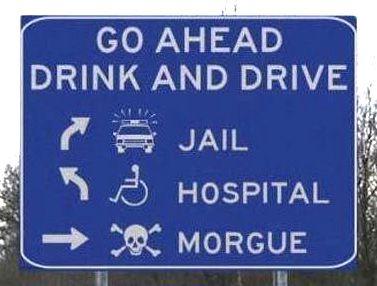
I remember, as a teenager, impaired driving emerged as a dangerous trend for young people. I recall stories of teens and twenty-somethings being taken to morgues, funerals and prisons to give them a taste of what can happen; they seemingly became different people overnight, vowing to never, ever drink and drive again.
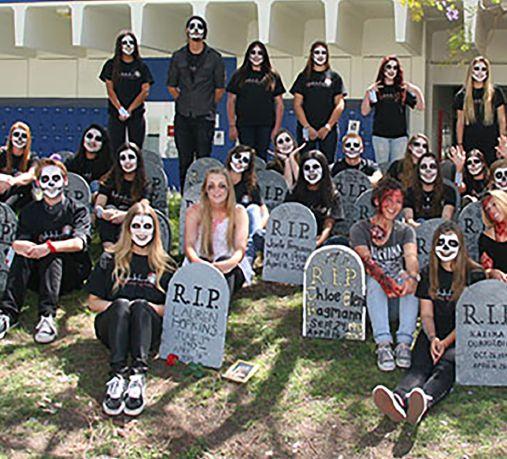
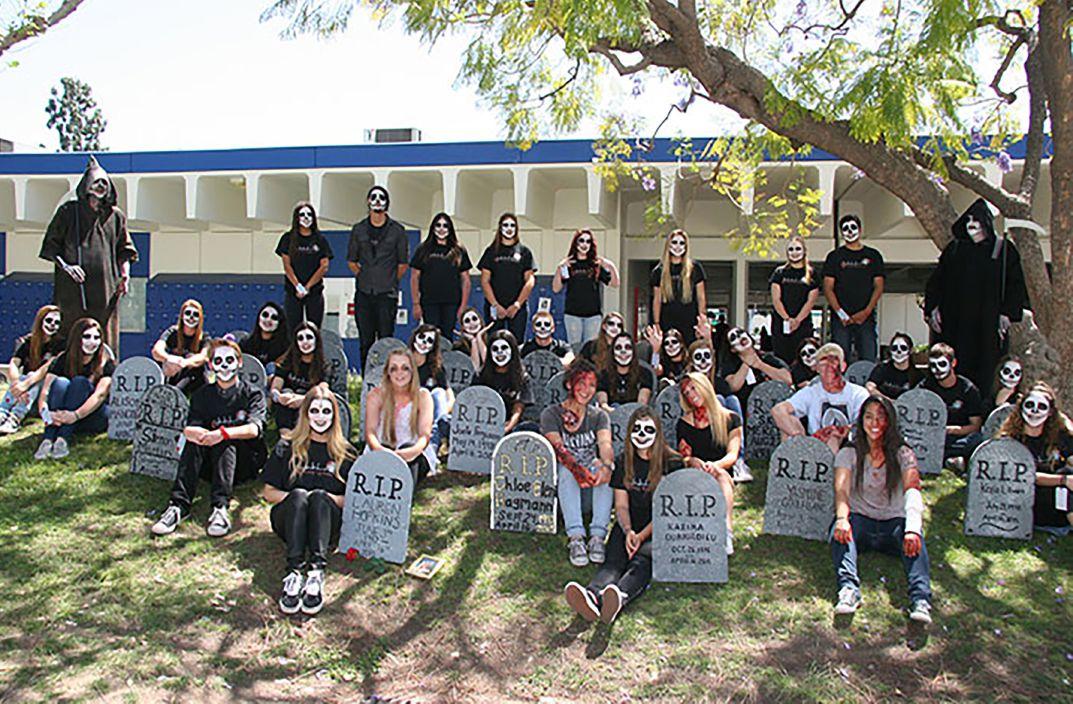
A hard-hitting, high school program in the United States called Every 15 Minutes drives home the statistic that every 15 minutes someone is killed by an impaired or distracted driver. In high schools, a student is pulled from the classroom every 15 minutes, returning as the living dead, with white face make up, a coroner’s tag, and a black Every 15 Minutes t-shirt. By the end of the program, students have written their own obituaries, received a letter from their parents, heard an audio-visualization of their own deaths, and experienced mock scenarios that involved everyone from first responders to police-station booking officers to the coroner.
The program is effective because it elevates the impact rating of the risk matrix. Every 15 Minutes elevates both probability and impact, reinforcing how often people die from impaired driving and the consequences of those incidents.
Imagine if instead of receiving a speeding ticket you had to go talk to the parents of a child who died in a speed-related collision; you have to tell those parents why you choose to speed. You have to listen to the parents talk about the loss of their child. Which do you think is more effective, being made to have that conservation or being told to pay your ticket and obey the speed limit because it’s the law?
As public educators, it’s time to brainstorm how we can create
similar programs and set aside ultra-appropriateness in favour of something that works and saves lives.
■ THE PUBLIC-ED MATRIX
Essentially, the fire service has limited the matrix tool to simply identifying risks in our communities, instead of using it to educate people about the magnitude of the risk.
What if Mr. and Mrs. Smith consider the probability of a fire occurring as the only factor in whether or not they need smoke alarms? Since fires don’t happen very often in their community, they believe the probability is unlikely. Therefore, to the Smiths, there is no real risk.
What if the Smiths had to listen to a 911 call that involved people trapped in a house fire? What if they had to listen to young people dying? Afterward, what if they were given statistics on how many people die in house fires every year? Then, what if they were told how many may people have survived because they had working smoke alarms? What if the Smiths were given a choice: paying a hefty fine or tagging along for a visit to a hospital burn unit?
Organizations like Every 15 Minutes have figured out this matrix and use it to
their advantage: probability + impact = rate of behaviour change.
• People have to understand that fires can – and will – happen
• People need to understand and assess a high value on the consequences of fire
• The higher those two factors are, the more likely people are to act
■ OUTLAWS
“It’s the law” messaging worked decades ago, when authority was unquestioned; if the fire department told people to do something, they did it. Today, people need to be motivated to want to change.
Few Canadian departments have the resources to implement programs such as Every 15 Minutes. So maybe it’s time to think big picture – literally. We could partner with people in the film industry to record one person’s journey; perhaps Hearts On Fire could be the next big Netflix documentary and affect positive change. One willing “outlaw” would tour the site of a fire, visit a burn unit, talk to a family that lost someone in a fire and end with an interview about the experience. Don’t think it’ll work? Ask SeaWorld how it felt about the documentary Blackfish.
■ BEFORE WE’RE FAMOUS
A Netflix documentary is a long way off; so what can fire departments do in the meantime? Many departments have implemented the very effective After the Fire program, through which personnel conduct door-to-door visits in the area after a house fire. Members talk to neighbours, check smoke alarms, and attract kids with the parked apparatus.
Fire departments often credit timing for the effectiveness of After the Fire. But what really happens is a shift in the public-education matrix. Essentially, the visits by fire-department personnel, who explain that the family lost everything, increase the probability factor in the minds of area residents. If your fire department has this kind of program, which uses motivational factors that affect behavioural change, bravo!
We can no longer demand change, but we can inspire it.
Tanya Bettridge is an administrative assistant and public educator for the Perth East and West Perth fire departments in Ontario. Email Tanya at tbettridge@pertheast.ca and follow her on Twitter @PEFDPubEd
BY DAVE BALDING Fire chief, Golden, B.C.
WFIRELINES
Embrace opportunities and expand horizons
hen I became a fire chief, now-retired Fire Chief Bob Claus from Cowichan Bay on Vancouver Island (a friend and colleague of mine), advised me to become engaged with chiefs associations and other organizations in the fire service. I watched Claus and other mentors participate in these organizations and it became clear to me that these leaders were passionate about the fire service, its culture and their departments. I continue to be involved with fire service organizations at several levels and I participate to the fullest in various capacities.
While writing this column, I was in Prince Albert, Sask., attending the Saskatchewan Association of Fire Chiefs (SAFC) conference. Despite being two provinces away from my home in British Columbia, I find that the issues we face in the fire service are often consistent across the country. These conferences give chief officers the opportunity to learn about different provincial perspectives, and possibly solutions. This is invaluable. If you take nothing else away from this column, please know that operating, networking, learning and promoting on a larger scale than ever before is so vital – and will continue to become more so. A second reason for attending the SAFC conference was to get a heads up on issues that may yet affect our part of the world. New challenges will continue to present themselves, so let’s share them and their solutions.
Personal gratification aside, I believe my department reaps significant rewards from my involvement in these organizations. Information, skills and perspectives I gain serve to benefit our department and its members. There are many examples, and there will be more; our associations work incredibly hard for their members on issues such as cancer awareness, mental health, and leadership strategies, chief fire officers who attend these conferences learn, gain awareness, and make changes at home. The alternative – remaining somewhat cocooned and missing the opportunity to branch out – would be a disservice to my department.
relatively isolated place; nonetheless there are numerous opportunities at our fingertips that allow our firefighters to grow their knowledge and skillsets. Electronic media is a powerful resource. YouTube has endless material to foster further interest; our department circulates a video of the week that we believe is relevant to our training. Close call sites are yet another source for learning. Trade publications are also highly encouraged.
I try to send as many of our department members to training seminars and other events as often as possible. They invariably return with expanded knowledge and an infectious energy. I also encourage representatives from the fire service industry to visit whenever they can. Sometimes this means a drop in during the day or an entire training night, which affords an opportunity for sharing in-depth product knowledge with the department and its members.
As leaders, it’s easy to fall into the trap of we’ve-always-done-itthis-way. Too often, we get caught up in the routine machinations of running our emergency organizations, but finding the time and energy to push existing boundaries and explore new territory is
We must be varied in our skills and constantly educate ourselves to keep expanding our department’s skillset. ‘‘ ’’
worth it beyond measure. I challenge you to move beyond your comfort zone. You will be well rewarded. Further, your members will see your zest for the fire service and apply it to their service. Enthusiasm is not only noticed, it is contagious.
I maintain the same is true for every one of our members; consequently I encourage them to broaden their horizons as well. It used to be good enough just to regularly attend and participate in training; I submit those days are long gone and, as leaders, we need to be varied in our efforts to educate our firefighters and officers. Instill in your members a desire to learn more. The Town of Golden is a
Dave Balding joined the fire service in 1985 and is now fire chief in Golden, B.C. Contact Dave at david.balding@golden.ca and follow him on Twitter at @FireChiefDaveB
Continue to delve into new opportunities for you and your firefighters. This, of course, includes incorporating technology. You will find that firefighters who regularly attend trade shows and training weekends, while keeping abreast of recent developments from electronic and print media, will take you to task on this. Embrace their suggestions – they will have done some homework for you.
As leaders, it is critical to evolve and expand the way we perform both on and off the fire ground. We must be varied in our skills and educate ourselves to diversify our department’s skillset. Is there any alternative for a service that is constantly changing?
BY TOM DESORCY Fire chief, Hope, B.C.
WVOLUNTEERVISION
Exceeding expectations adds new pressures
e all know that the volunteer fire service can be filled with all kinds of pressure and expectations. We have long established ourselves as the go-to service when it comes to emergency and community response. There used to be a time when our fire department responded to a fire, and that was all.
Although I’m a career chief and my firefighters are paid on-call, our department is considered to be volunteer. In our case, and countless other volunteer departments, the word volunteer doesn’t accurately describe the role we play. When people hear the title volunteer firefighter, it conjures up the image of a dedicated, community-minded individual who is always available in a time of need. However, the situation for volunteers can be much different than this widely held ideal.
Volunteer means it’s not a full-time job, that volunteer fire service members are not always available to respond when needed. We do not have the time or resources for our department to respond to every call. The reality is: we can’t be there at the drop of a helmet. But as communities are served successfully, expectations inevitably rise.
Let’s face it – we are good at what we do; we do it without complaint and will come back and do it again. As my parents would say, we have “fed the cat.”
When I was a child, a stray cat lived in our neighbourhood. My father would say, “Don’t feed the cat, we’ll never get rid of it.” Well, I fed the cat. As my father had predicted, the cat came back for more. This little feline soon became my pet, knowing exactly how to use me to its advantage.
Think about the first time you went on a medical call. For our department, it was out of necessity; we weren’t a first-responder department, but someone needed help and we answered. Today, we are part of the first responder program here in British Columbia. However, we aren’t the first on the scene, we simply provide assistance where needed. We did a good job and the cat came back.
the leader within my department, I’ve tried my best not to show too much of myself. I have largely kept my capabilities private. I do my best, but this hasn’t always worked in my favour. This is probably why I am our department’s fire chief, website manager, IT guy and the voiceover talent for the phone system at the municipal office.
If you perform a service just once, it becomes expected. This is how our service went from just responding to fires to responding to almost every call we received. It’s not necessary for us to do this, but our demonstrated ability has expanded those expectations. As a result, those expectations have expanded the nature of our work as a fire service.
Most people do not truly understand fire departments’ capabilities and what our jobs really entail. Many public perceptions are shaped by the media, which also creates unrealistic expectations that are often tough to meet.
Yes, it’s tough, but as an organization, we are very fortunate. Volunteer departments gather many skills and personalities, which brings so much to the table when we serve our communities. I’ve
Let’s face it – we are good at what we do; we do it without complaint and will come back and do it again. ‘‘ ’’
written before that citizens often don’t know who is responding until their child’s teacher shows up in turnout gear.
As a full-time chief of a volunteer department, most of my work is behind the scenes, providing the tools and equipment for our firefighters to be safe and successful, all while trying to avoid feeding that pesky cat. Still, there are times we respond to the most obscure incidents that spawn the need for new equipment and operational guidelines.
Every fire department is considered a leader in the community; as
Tom DeSorcy became the first paid firefighter in his hometown of Hope, B.C., when he was appointed fire chief in 2000. He is also very active with the Fire Chiefs’ Association of B.C. as communications director and conference committee chair. Email Tom at TDeSorcy@hope.ca and follow him on Twitter at @HopeFireDept
Fire departments will continue to evolve and but should you always add every new task to the ever-growing list of services?
Always leave them wanting more has long been my motto. While there are many people in the fire service who leave it all on the table, I’d prefer to have something left behind. After all, we can only do so much as a volunteer service. That way I’ve always got something to give and I can always contribute, instead of exhausting myself (and my department) by answering every call we receive.
Once you’ve fed the cat, you’re stuck with it. At that point, all you can do is continue to feed and nurture it, and help the community grow stronger. But remember, you are only so strong yourself.
There will always be hungry cats, but I will continue to do my best not to feed them.
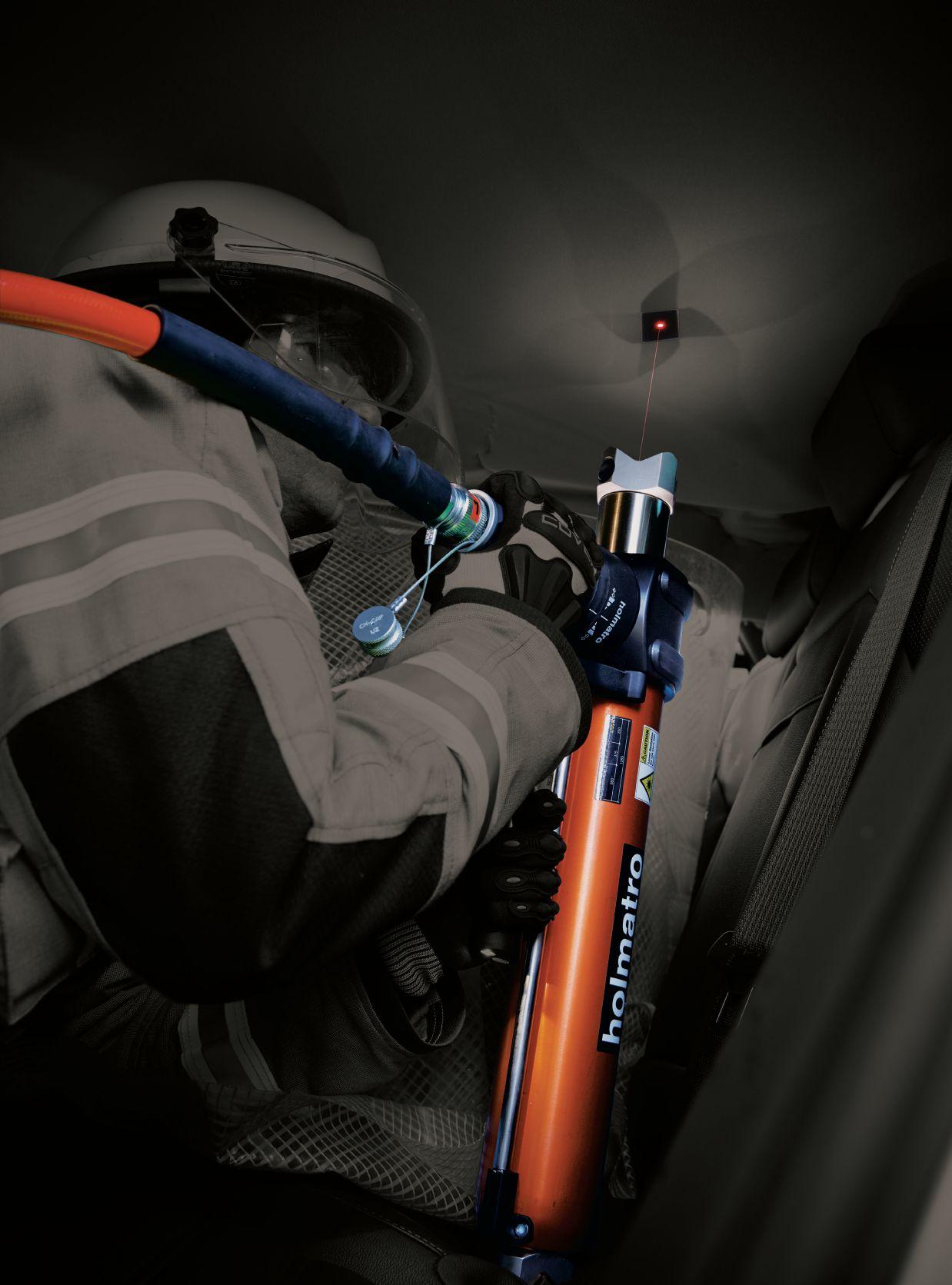
Laser Precision
Increased force and lighter than ever!
5000 Series Telescopic Rams with integrated laser pointer for “first-time-right” positioning
• Unique, integrated laser pointer in ram head
• Integrated LED lighting at both the plunger side and base side of the ram
• Ergonomic carrying handle
• New, redesigned, ergonomic control handle with improved grip