When tens of thousands of country-music fans descend on Cavendish, P.E.I., every summer, the risk of potential disaster increases – crowds, weather, traffic and over-indulgence can all turn bad quickly. As Laura King writes, that’s why emergency responders on the island decided five years ago they better be prepared to work harmonously if something were to go wrong at the Cavendish Beach Music Festival.
14
INCIDENT REPORT
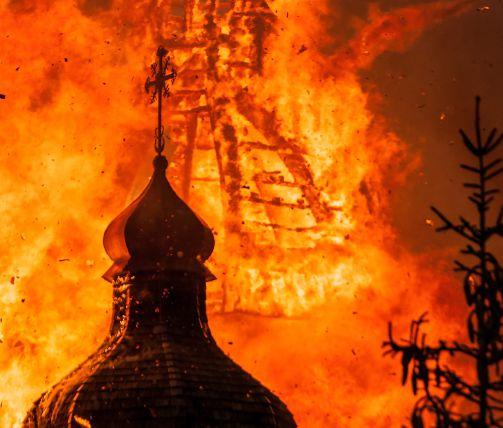
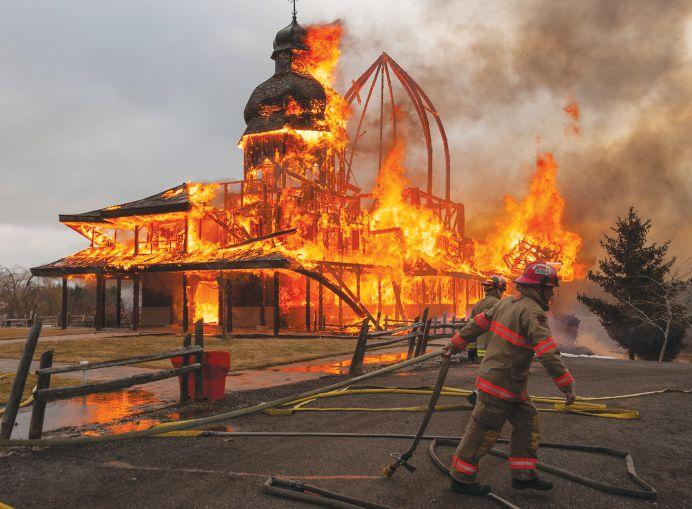
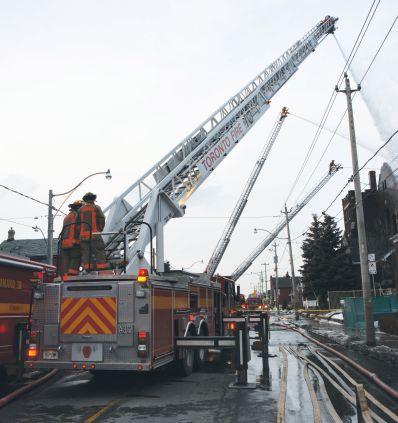
Brampton Fire and Emergency Services responded early on April 4 to a fire at a church in a rural region that is not serviced by hydrants. The structure was made of heavy Douglas fir timbers, was not sprinklered and had only two dry hydrants that were supplied by a long draft from a small frozen pond behind the building. As Deputy Chief Michael Clark writes, the incident demonstrated the value of effective pre-planning and the need for a well-developed water shuttle plan.
20 THE CASE FOR NATIONAL NUMBERS
What do Australia, France, Germany, the United Kingdom and the United States have that Canada does not? The answer: a national fire-incidents database. As Len Garis writes, the need for a national database is clear; the challenge is to find funding for the project.
By lau R a K in G Editor lking@annexweb.com
I comment
A team effort
f you do a Google search for concert stadium collapse you get the following headlines – Brazil car race 2010, Indiana State Fair 2011, Radiohead concert stage collapse Toronto 2012 – and dozens of others.
People in emergency services are paid to dream up worst-case scenarios, prepare for them, and then hope they don’t happen.
Which is why on tiny Prince Edward Island, police, fire, EMS and other agencies have instituted a multi-agency incident-command system (ICS) for the annual Cavendish Beach Music Festival.
I was invited last July by PEI Fire Marshal Dave Rossiter to tour the festival grounds and learn about incident command for mass gatherings. One of the incident commanders on site, Rossiter said, would be RCMP Cpl. Scott Stevenson, with whom I had grown up in Sydney. N.S., and who is the island’s RCMP ident specialist.
programs available to responders.
I was working on this issue of the magazine during the Ontario Association of Fire Chiefs conference in May, at which Fire Marshal Ted Wieclawek noted the confusion during the Elliot Lake inquiry over incident command programs and the provincial incident management system (IMS).
ON THE COVER
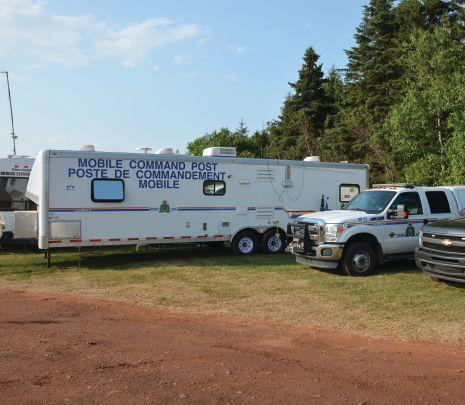
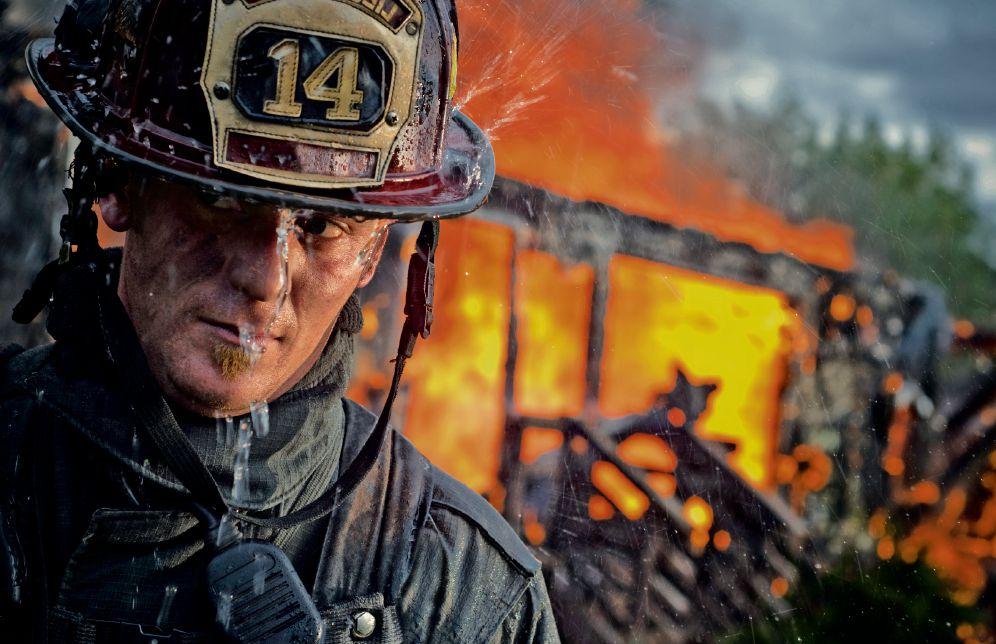
The Cavendish Beach Music Festival attracts up to 20,000 people a day. All responders are trained in the same incident command protocol. See story page 10.
Thousands of Canadian communities host summer festivals. With those events come the risk of terrorism, disease spread, fire and catastrophe.
As we all knew but heard loudly and clearly in Elliot Lake, Ont., last summer during the inquiry into the collapse of the Algo Centre mall, impeccable on-scene communication is vital to a rescue operation or any other emergency. When the emergency involves tens of thousands of people, it’s even more critical that all responding agencies speak the same language.
Stevenson and his festival counterparts use ICS (www.icscanada.com), one of several incident-command or incident-management
“It seemed,” Wieclawek said, “that anyone who got up [on the stand] had a slightly different spin to the point where the commissioner was saying, ‘Someone please explain to me what is IMS and what is incident command?’ ”
Presumably, the confusion will work itself out soon as Wieclawek is chairing a committee (with five sub-committees) to review the role of IMS and responding agencies in emergencies.
There were no emergencies at the Cavendish Beach Music Fest last summer –some minor incidents and a lot of paperwork – but had there been, all responders would have been crystal clear on their roles because they knew each other, worked and trained together. Imagine that.
–
Due to an editing error, the Understanding Flow Paths story in the May issue wrongly stated the number of firefighters who escaped the Forward Avenue fire in Ottawa in 2007; five firefighters jumped from fourth-floor windows.
Canada – 1 Year - $24.00 (with GST $25.20, with HST/QST $27.12) (GST - #867172652rT0001)
USA – 1 Year $40.00 USD
We acknowledge the financial support of the Government of Canada through the Canada Periodical Fund of the Department of Canadian Heritage.
Occasionally, Fire Fighting in Canada will mail information on behalf of industry-related groups whose products and services we believe may be of interest to you. If you prefer not to receive this information, please contact our circulation department in any of the four ways listed above.
All advertising is subject to the publisher’s approval. Such approval does not imply any endorsement of the products or services advertised. Publisher reserves the right to refuse advertising that does not meet the standards of the publication. www.firefightingincanada.com
Photo bY LAURA KING
The powerful new 2014 Ram 1500 Special Service* Vehicle is the truck Firefighters, EMS and First Responders rely on in the toughest situations. Its powerful and proven 5.7 L HEMI V8 engine offers 395 HP and 407 lb-ft of torque. With its Electronic Control System including All-Speed Traction Control, Hill Start Assist and Ready Alert Braking, Canada’s longest lasting line of pickups» are clearly what you want to be driving to every call.
statIontostatIon
across canada: Regional news briefs
Britannia Beach celebrates 110 years of service
On June 29, the Britannia Beach Volunteer Fire Department (BBVFD), located 55 kilometres north of Vancouver, celebrates its 110th anniversary with an open house and a community barbecue.
In 1904, the Britannia Beach Mining and Smelting Company in British Columbia signed up the first members of the Britannia Beach Fire Brigade – every employee of the mine was an on-call volunteer, ready to respond when the sirens atop phone poles in the village sounded. For 70 years, this company-owned fire department protected the thousands of residents who lived and worked in the town.
Fast forward to 1974, when mining operations ceased and the population of Britannia Beach dropped to fewer than 100 residents. That’s the same year George McLaren moved to Britannia Beach and joined the BBVFD. During his 40 years as a member, Deputy
Chief McLaren has responded to hundreds of calls, fought two major fires, rescued six residents from a flood and has seen many changes.
“When I joined, our turnout gear and equipment was so old that the Workers Compensation Board condemned it all,” he says. “We had two fire trucks at the time: a miserable old, one-tonne crew cab and a 1951 Bickle. I remember having to tow the old Bickle with a 966 Caterpillar loader to a fire since it was jammed in fourth gear.”
Equipment improved – sort of – in 2002 when the volunteers raised $5,000 to buy a 1970s Cabover that served the department for a decade.
Since 2011, under the leadership of Fire Chief Steve Virgint, the BBVFD has flourished, boasting a full roster of 25 committed members, and equipment that’s less than a decade old.
“The truth is that you can have the best equipment, but
the brass pole
promotions & appointments
KEn ShERidan was appointed fire chief for the Middlesex Centre Fire Department in Ontario on Feb. 3. Sheridan joined the Yellowknife Fire Division in the northwest Territories as a firefighter in 1986. He became
the assistant fire marshal for the northwest Territories in 1992, and the captain of fire prevention for the norfolk County Fire & rescue Services in Ontario in 2004.
tim SutCliffE was promoted to fire chief for the Laurentian Valley Fire Department in Ontario on Feb. 3. He has been a volunteer firefighter for more than 33 years, and has spent the last six years as the
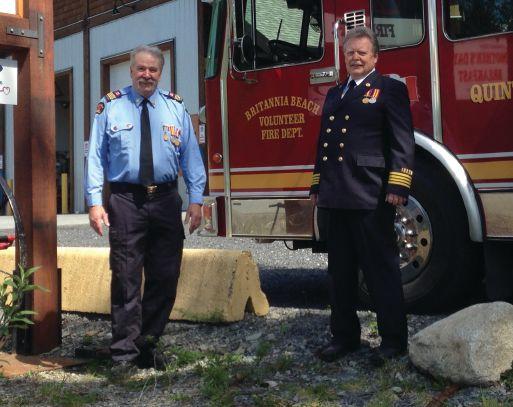
Fire Chief George McLaren (left) and Fire Chief Steve
have seen many changes in the Britannia Beach volunteer fire department, including the addition of new fire apparatus and a full, committed roster.
if you don’t have dedicated firefighters to take the calls, you don’t have a fire department,” Virgint says. “The communities of Britannia Beach, Furry Creek and Porteau Cove are very fortunate to have such well-trained volunteers. And not only do they provide top-rate fire protection service, mem-
department’s deputy fire chief.
maRK KadEn a volunteer firefighter with the Laurentian Valley Fire Department in Ontario for more than 25 years, was promoted to deputy fire chief on March 3.
John lanE was appointed fire chief for the Winnipeg Fire Paramedic Service on April 14. Lane was previously the fire
bers of the BBVFD also lead most of the community events, from the kids Christmas party to the Easter egg hunt to the Halloween fire works.”
The Britannia Beach VFD is one of the longest-operating volunteer fire departments in British Columbia.
– Donna Barker
chief in Prince George, B.C. A 32-year emergency-service veteran, Lane was hired as the deputy chief of administration in Prince George in 2005, before becoming chief in 2011. He started his career as a paramedic in Hamilton, Ont., before moving to Toronto in 1990, where he became a firefighter; he was promoted to captain in 1995, and to EMS district chief in 2000.
Deputy
Virgint
Donation brings 250 families closer to fire safety
Several families in the Township of AdelaideMetcalfe, located in Middlesex County in Ontario, are safer thanks to a donation from solar project developer Recurrent Energy, for the purchase of 250 combination smoke/carbon monoxide detectors.
Recurrent Energy recently built a solar panel farm in the municipality and was looking for a way to give back to the community. At a council meeting, Fire Chief Arend Noordhof suggested the company buy carbon monoxide alarms to be given to families that receive Ontario Works or Ontario Disability Support Program benefits, and the town agreed.
Noordhof said the initiative is important for a
number of reasons.
“First of all, is it gets carbon monoxide detectors into the homes of people who need them,” he said. “No. 2, it gets the message out that carbon monoxide detectors are very important.
“The timing is good, too,” he said.
In Ontario, legislation was passed in November that will require all homes with fuel-burning appliances or attached garages to have working carbon monoxide detectors.
“We know devices like these save lives and we don’t want the cost of them to be a barrier to any families in our community,” Noordhof said.
According to the Canada Safety Council, carbon monox-
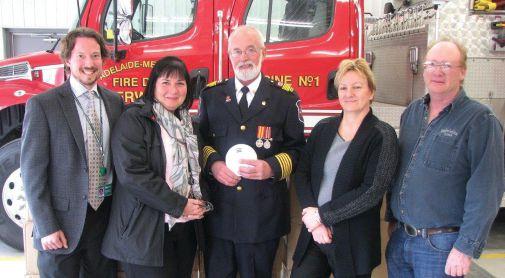
Adelaide-Metcalfe Fire Chief Arend Noordhof (centre), with Dr. Christopher Mackie, medical officer of health and CEO of the Middlesex-London Health Unit, Pat Simone, emergency preparedness manager with the Health Unit, Denise Dunbar, manager of Middlesex Social Services, and Mayor David Bolton announce the distribution of 250 free combination carbon monoxide/smoke alarms that were donated by Recurrent Energy.
ide is the leading cause of fatal poisonings in North America.
The Adelaide-Metcalfe Fire Department is working alongside the Middlesex-London
Health Unit, which will co-ordinate the distribution of the detectors with Middlesex County Social Services.
– Olivia D’Orazio
OAFC recognizes fire-service trail blazers at conference
Two fire-service leaders were honoured at the Ontario Association of Fire Chiefs conference in May for their efforts to improve their departments and their communities, and the safety of the people in them.
Jim Jessop, a former deputy chief in London and Niagara Falls who is now
deputy fire marshal, was given the Alf Stone Award for his Herculean efforts to convince government to make sprinklers mandatory in homes for seniors and other vulnerable people.
And Gary Bullock of Kingston Fire & Rescue received the Bill Williams Humanitarian Award for his
longstanding contributions to the fire service, with the mutual-aid association and as a mentor to many firefighters, and the community – the church, the humane society, the Salvation Army, minor hockey and more. Bullock joined the fire service in 1964.
The VFIS recruitment and
retention award was presented to the Lennox & Addington Mutual-Aid Association for its joint training initiatives. Greater Napanee Fire Chief Terry Gervais accepted the award on behalf of association members, who now share resources, instructors and costs.
- Laura King
retirements last alarm
Ron lamBERt retired from nanaimo Fire rescue in British Columbia on Feb. 14. Lambert, the former chief for the department, is a 44-year fire-service veteran. He joined the north Oyster Volunteer Fire Department in British Columbia in 1970 and moved to the nanaimo department in 1981. He became chief in 2000.
loRan pEnnEy retired from the Yarmouth Fire Department in nova Scotia on Jan. 14. Penney, a 42-year veteran of the fire service, joined the department as a volunteer in 1968 and became a full-time member in 1971. Penny worked at the three different stations during his career.
John pRimEau retired from the Laurentian Valley Fire Department in Ontario on March 3. He was a full-time firefighter with CFB Petawawa for more than 35 years, and was a volunteer firefighter for 37 years. He was deputy fire chief in Laurentian Valley for 20 years before being promoted to fire chief in 2008, a position he held for the last six years.
Jim o’nEill, a retired firefighter and deputy fire chief with the Fredericton Fire Department in new Brunswick, died March 10. He was 90 years old. O’neill joined the department in 1940 as an auxiliary firefighter. O’neill was appointed captain in 1948 and became a full-time member in 1950; he was promoted to deputy in 1972 and retired in 1979.
statIontostatIon
br I gade news: From stations across Canada
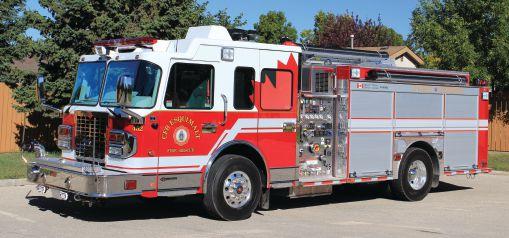
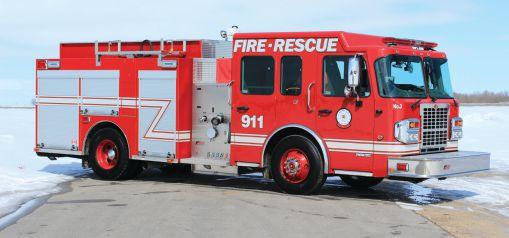
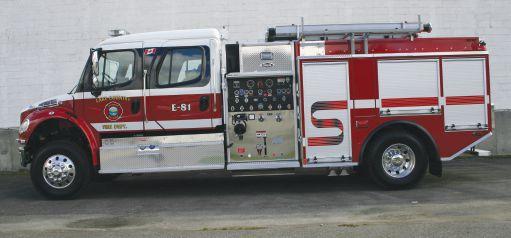
CFB Esquimalt in British Columbia, under Deputy Chief Rick LeQuense, took delivery in October of a Fort Garry Fire Trucks-built rescue pumper. Built on a Spartan Metro Star chassis and powered by an Allison 3000 EVS transmission and a Cummins ISC 380-hp engine, the truck is equipped with a Waterous CSU 2,000 IGPM pump, a 600-IG co-poly water tank, a FoamPro 2001 class A & B foam system and Setcom intercom systems.
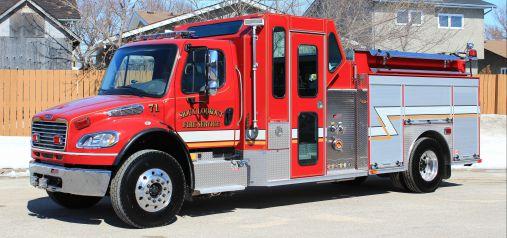
The Sioux Lookout Fire Department in Ontario, under Chief Rob Favot, took delivery in April of a Fort Garry Fire Trucks-built pumper. Built on a Freightliner M2 chassis and powered by an Allison 3000 EVS transmission and a Cummins ISL 350-hp engine, the truck is equipped with a Darley LDM 1,250 IGPM pump, a 1,000-IG co-poly water tank and a FoamPro 1600 foam system.
Abbotsford Fire Rescue in British Columbia, under fire chief Don Beer, took delivery in April of a Hub Fire Engines & Equipmentbuilt pumper. Built on a Spartan Metro Star chassis and powered by an Allison 3000 EVS transmission and a Cummins ISL 400-hp engine, the truck is equipped with a Hale RME 200 1,500 IGPM pump, a 500-IG co-poly water tank, Whelen LED light package, Zico HLAS ladder storage and a Smart Power hydraulic generator.
The Norton Fire Department in New Brunswick, under Chief Ivan Davis, took delivery in April of a Fort Garry Fire Trucksbuilt pumper. Built on a Spartan Force chassis and powered by an Allison 3000 EVS transmission and a Cummins ISC 8.3 380-hp engine, the truck is equipped with a Hale Qflo 1,250 IGPM pump, an 800-IG pro-poly water tank, FoamPro 1600 foam system, Federal Signal DTX camera system and Spectra scene lights.
The Lake Country Fire Department in British Columbia, under fire chief Dave Windsor, took delivery in March of a Hub Fire Engines & Equipment-built pumper. Built on a Freightliner M2 chassis and powered by an Allison 3000 EVS transmission and a Cummins ISC 350-hp engine, the truck is equipped with a Hale DSD 125 1,050 IGPM pump, and Zico HPTS porta tank storage.
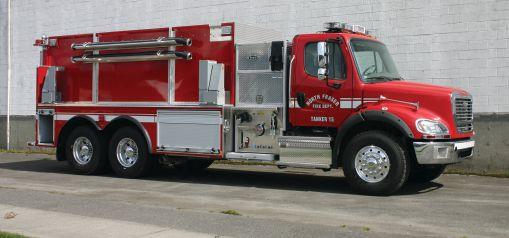
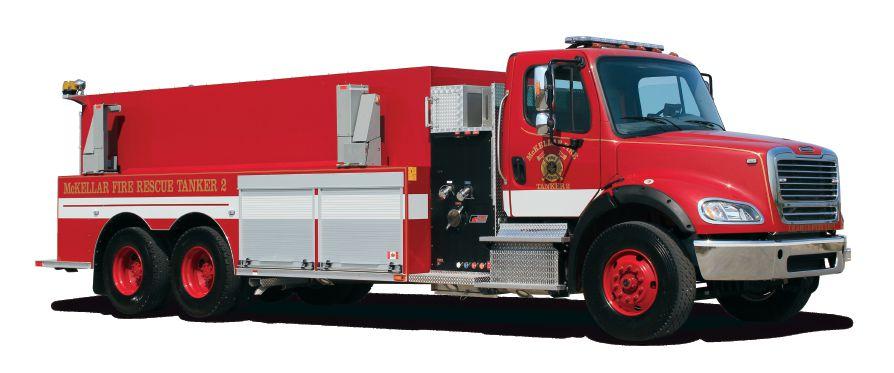
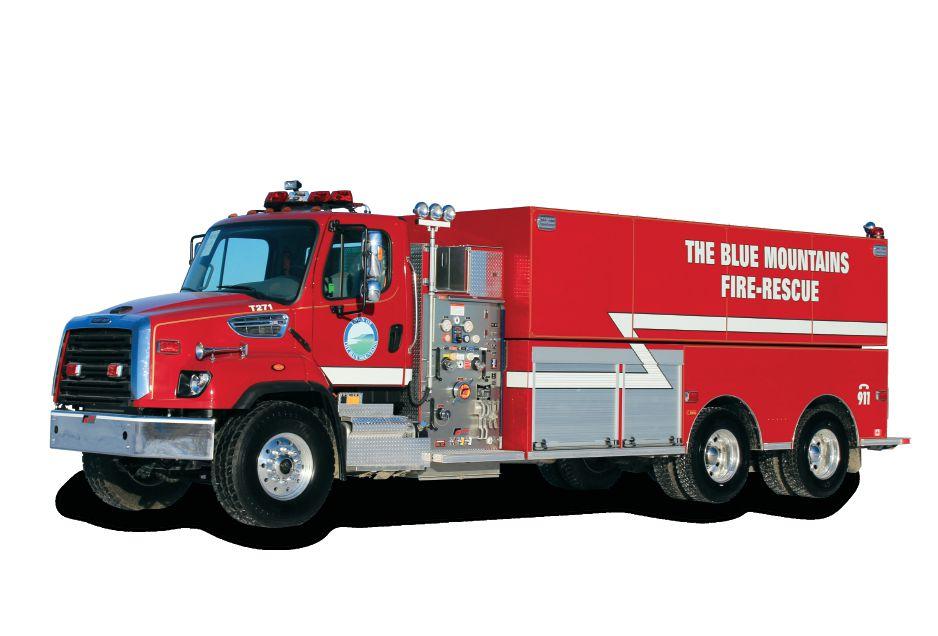
Parkland County Fire Services in Alberta, under Fire Chief Jim Phelan, took delivery in October of a Fort Garry Fire trucks-built tanker. Built on a Freightliner M2-112 chassis, and powered by an Allison 4000 EVS transmission and a Detroit DD13 410-hp engine, the truck is equipped with a Hale 1,250-igpm pump, a 3,000-imperial-gallon poly water tank, a FoamPro 2001 foam system, FRC scene lights and Zico hydraulic porta-tank lifts.
thE Sioux looKout fiRE dEpaRtmEnt
CfB ESquimalt
aBBotSfoRd fiRE RESCuE
fiRE
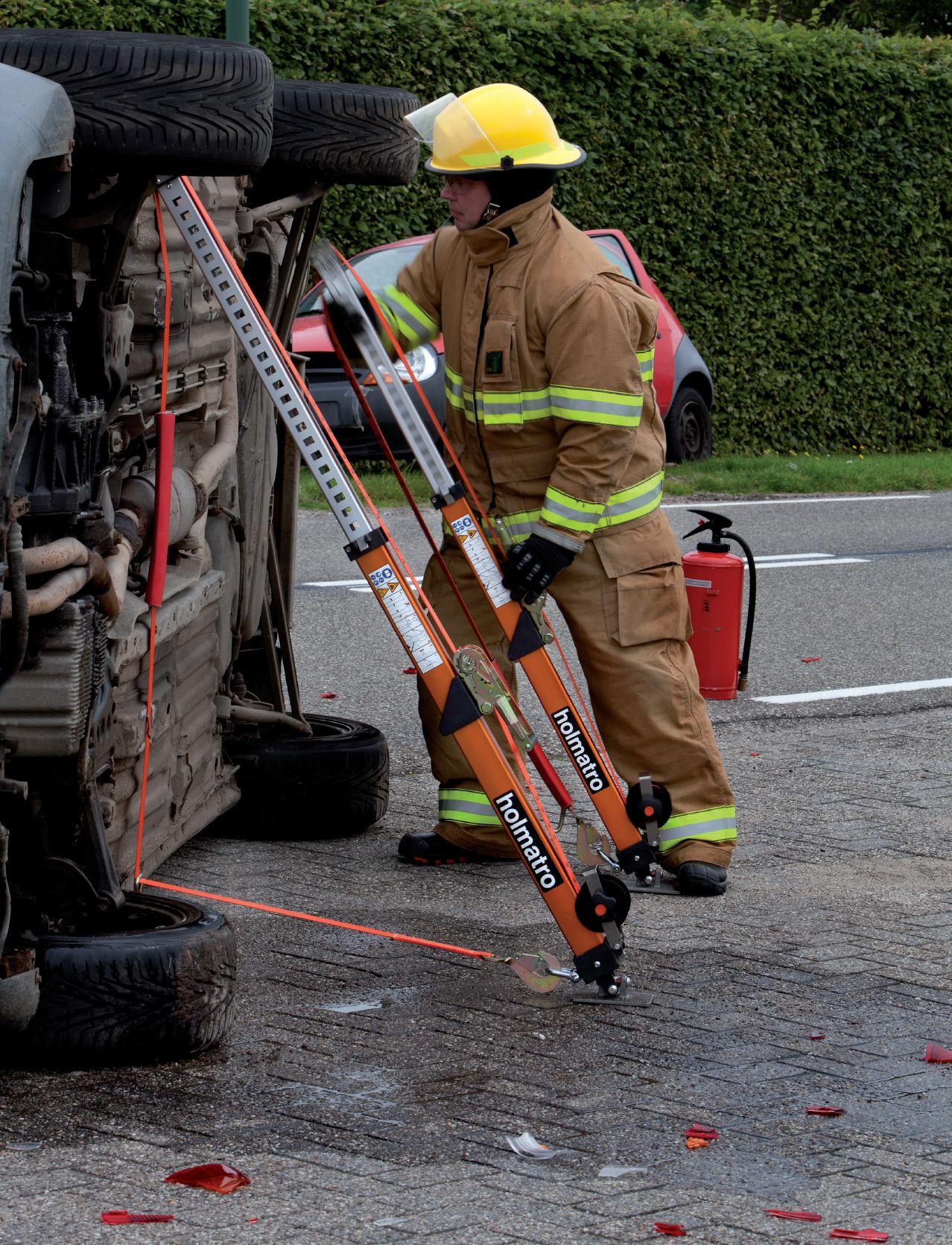
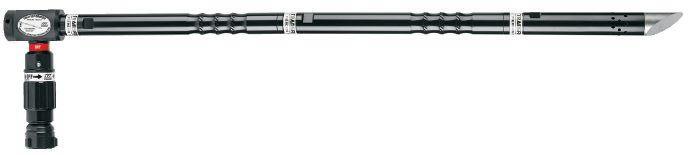
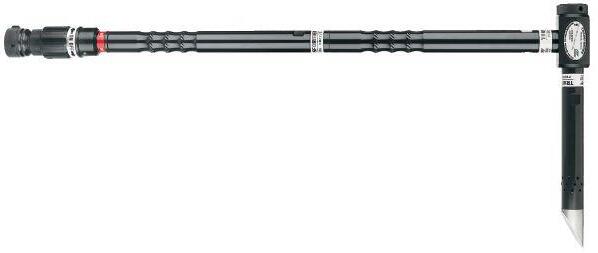
The V-strut is designed to stabilize cars quickly, easily and safely. Incorporating an integrated head, slip resistant base plate and tensioning belt with hook and ratchet mechanism, this all-in-one tool is ready for immediate use.
With a load capacity of 3597 lbf, the V-strut weighs just 15.9 lbs. This means it’s easy to carry and handle. The auto-lock system enables you to set it up quickly. Simply extend it to the required length and it locks automatically.
a sales, service and support contact:
Ics for mass gatherings
Responders at P.E.I. fest train on single system
By lauRa kIng
when tens of thousands of country-music fans descend on Cavendish, P.E.I., every summer, the risk of potential disaster increases – crowds, weather, traffic and over-indulgence can all turn bad quickly.
That’s why emergency responders on the island decided five years ago they better be prepared to work harmonously if something were to go wrong at the Cavendish Beach Music Festival (CBMF).
“We approached the district commander with the RCMP here and said we’d like to have the opportunity to run this event under the incident command system (ICS) and see how it works,” said Cpl. Scott Stevenson of the RCMP’s forensics unit.
“It was the first time anything like that was done on the island.”
Stevenson was one of two designated incident commanders at the 2013 festival, headlined by the Dixie Chicks.
“After the first year, ICS was identified as a best practice and we’ve continued to build on that,” Stevenson said in an interview in the command area next to the site where communication, medical, search and rescue and policing personnel were stationed.
Why ICS at family style event at which laid-back fans lounge in lawn chairs and are pretty well behaved?
Good question, said Stevenson, who supplied a convincing answer.
“If this was a rock show it would be totally different mentality. This is country and people are a bit more laid back. But that said, it’s not just police function.
“The way I look at it, Boston was just a marathon until the bombs went off. And then it changed. It’s no different here. Nowadays you don’t know. Somebody doesn’t like country music or whatever ...”
Not to mention big-city lessons from
the wind-driven stage collapse at the 2011 Ottawa Bluesfest that sent dozens of people to hospital, and the 2012 stage collapse at a Toronto Radiohead concert that killed a worker.
“Now we’ve got all the various partner agencies that are working on it together,” Stevenson said. “We’re all speaking common language, they all know what their respective roles are and it works really well.”
The annual music festival draws an average of 18,000 people a day to quaint Cavendish – population 300 – home of Anne of Green Gables and world-famous sand dunes.
RCMP, fire, EMS, search and rescue and myriad other personnel are all trained in incident command. Agencies plan together, train together and have honed protocols for everything from emergency exits to fire response and record keeping.
“All of the emergency responders train several times a year in multi-agency exercises,” Stevenson said. “The CBMF senior incident management team conducts a table-top exercise prior to the event to ensure roles and responsibilities of all agencies are recognized.” The table top exercise is hosted by the P.E.I. Office of Public Safety.
“We conduct an overall debriefing after the event to discuss what worked, what didn’t and where do we go from here. And several months prior to the event we begin meeting again to ensure any issues are covered off.”
A private security firm –Charlottetown-based Toursec Entertainment Life Safety – manages the festival grounds; RCMP are responsible for policing outside the concert site –which can hold up to 27,000 people.
“They do a lot of these events right around Atlantic Canada,” Stevenson said of Toursec. “They’ve said the way that we run this, you guys treat us like equals, most other places treat us like mall cops and you guys treat us really, really well; if they’re not doing their jobs we can’t do ours and if we can’t partner up together it’s not good.
‘They’ve actually come in and taken some incident command system training from us. Some of their management
PHOTO S BY LAU r A KI n G
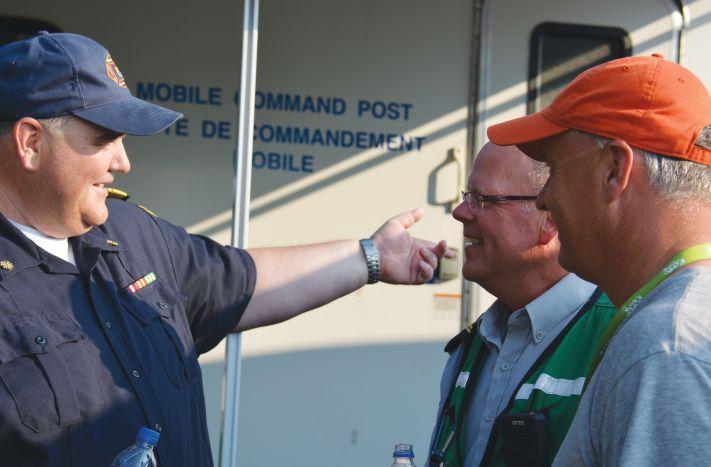
left and abo V e : The annual Cavendish Beach Music Festival draws thousands of country-music fans to Prince Edward Island every July; members of first response agencies work together using the incident command system so that everyone knows practices and protocols.
ON SOLID FOOTING FOR 25 YEARS
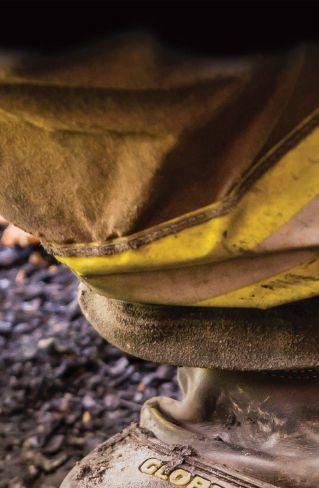
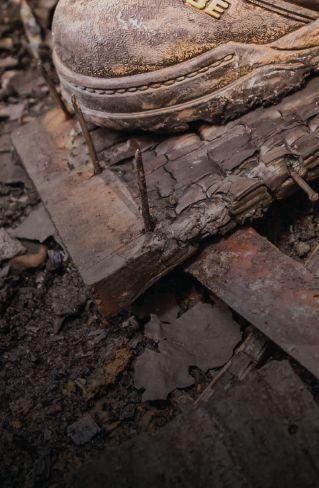
Improve your performance. Globe boots are flexible like your feet, grip like no other and feel broken in right out of the box.
Contact Safedesign to get Globe footgear. Internationally recognized PPE specialists.
people are trained up to the ICS300 level so we’re all speaking the same language. The New Glasgow Fire Department does fire support and they have ICS, the EMS people have ICS training; all the partners that work together in here are working under ICS.”
Incidentally, Toursec’s website says of entertainment life safety: “We created the category. ELS is the big picture, looking at every aspect of safety from risk management to responding in an emergency. Our integration into the response team is a first in Canada, a model that is being extensively studied.”
For P.E.I. Fire Marshal Dave Rossiter the event is a giant undertaking. Rossiter and Deputy Fire Marshal Robert Arsenault are the P.E.I. Office of the Fire Marshal – they do all the island’s inspections and investigations (except within the City of Charlottetown) – so ensuring safety is crucial.
“We go into the planning months in advance,” Rossiter said in an interview at the festival site.
“Friday morning we go in and do our final inspection along with the propane inspector and once we sign off then it’s a go. If there are issues then they get fixed; if they don’t get fixed it’s a no go . . . that’s the way it works, plain and simple.”
Food and drink vendors dot the festival site. Scantily clad festival-goers dive from an elevated platform onto a giant air mattress –for fun. (What could go wrong?) At 3 p.m., hours before the Dixie Chicks are scheduled to perform, a lineup of grandparents, teenagers, and middle-aged couples – many wearing jean shorts and cowboy boots –snakes around the main entrance
“We come in every night and we’ll do rounds,” Rossiter says. “We always check the vendors, and we check the main gate and we keep updates as far as the numbers of people who are coming in all the time.
“We’re doing that through the actual producer because he sends out an email on what tickets are sold, so if he says that he’s got 20,000 in, we go in and we look at that database . . . so last night was 18,000. If he has more and we find out about it I can pull his permit right there, which means his liquor licence and the whole nine yards.”
One of the terms of the producer’s permit is on-site fire protection with a four-person pumper crew – which is provided by the New Glasgow Fire Department – and provision of a golf cart so fire department members can get around the grounds. For Rossiter, that was a deal breaker.
“That was a condition I put onto the promoter, saying you have to do this or you don’t get a permit, simple as that. You negotiate the price for fire protection –I’m not getting into that. That’s how that works.”
If there were a fire incident, the New Glasgow Fire Department would take the lead, Rossiter said.
“Unless I see an immediate threat to life, in which case we can step in. We still keep an eye on the prevention side of things. They’ll do rounds with the cart; the blowouts [exits] that we have, they’ll make sure they’re clear and accessible. At the end of the night we can have empty this field of 20,000 in five minutes, easily.”
Rossiter also insisted that the producer build an emergency-vehicle-only access road to the concert site – it’s affectionately known as Dave’s Road – that could sustain at least a tandem 3,000-gallon tanker.
A unique feature of the festival site – a former cow pasture – is that it borders national park land, so Parks Canada is part of the ICS-trained response team.
“If we have a fire here [at the Parks Canada border] it is their responsibility,” Stevenson said. “If we have missing people go in there, it’s their responsibility.”
Stevenson said the key agencies that work closely together before and during the festival, from an emergency management perspective, are fire, police, security, EMS, liquor inspectors and the fire marshal’s office.
“Some of the smaller ones,” he said, “are the municipality, and the departments of health and environment.”
The island’s ground search and rescue teams are also on site.
“There are two hasty teams stationed at the site during the day for the whole event, every day,” Stevenson said, “just in the event that we have some missing people we can start a hasty search right away.”
Stevenson learned years ago that it’s crucial that when multiple agencies work together, everyone understands the processes and protocols.
“When I was stationed in Toronto we were doing a summit between the president and the prime minister, working with the United States Secret Service and the Toronto Police Service, and one of our guys called 10-100. All of the sudden we started to see emergency vehicles. To us, a 10-100 is a nature break; to them a 10-100 was a bomb scare!”
inCidEntreport
Training and pre-planning pay off
BY MICHAEL CLARk
In the early hours of Friday, April 4, a caretaker sleeping in his third-floor room at the St. Elias Church in Brampton, Ont., awoke to the smell of smoke. The caretaker was alone in the building at the time and when he investigated, he found smoke in the basement closet, and the alarm bells were now ringing. At 06:49, the caretaker’s phone call was received at the Peel Joint Fire Communications Centre.
At 06:50, the initial alarm of Pumper 210, Pumper 204, Pumper 212, Aerial 204, Pumper 205, Car 208 (the district chief), and Car 206 (the platoon chief) from Brampton Fire and Emergency Services were dispatched to a commercial structure fire at 10193 Heritage Rd. – St. Elias Church.
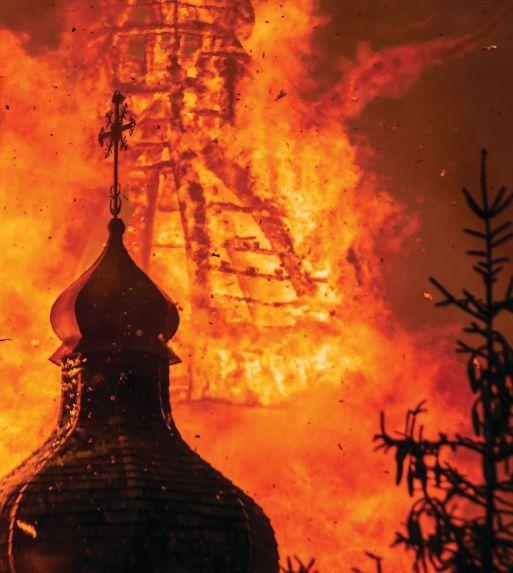
St. Elias Church was a Ukrainian church built in the countryside in the northwest area of Brampton. The church was built in 1995 of heavy Douglas fir timbers and had a footprint of about 12 metres by 24 metres (40 feet by 80 feet). The five cupolas (roof domes) were built in the 17th century Cossack Baroque style, and were sheathed in Western redcedar. The interior of the building was ornately decorated with paintings and religious objects, in keeping with Ukrainian tradition. The building was not sprinklered and had only two dry hydrants that were supplied by a long draft from a small frozen pond behind the building.
The wind was out of the west at 40 kilometres per hour (km/h) gusting to 60 km/h. The temperature was -2 C, and it was snowing.
The crews on the way – through their pre-planning – were very familiar with the challenges that this building posed. While en route, they strategized the tactics that they would shortly employ. The Pumper 210 captain recognized that the building was not serviced by a municipal hydrant and requested a tanker dispatch. At 06:53, the communications operator dispatched Pumper 209 and Tanker 209.
When Pumper 210 arrived at 06:58, the
department profIle
BrAmpTON FIrE AND EmErgENcy SErVIcES
• 12 full-time fire stations
• 18 frontline vehicles
• 464 employees
• 265 square kilometres
• Approximately 600,000 residents
• 18,110 calls in 2013
captain staged his vehicle in front of one of the dry hydrants and reported that there was nothing showing. Recognizing the inherent difficulty of achieving and maintaining a draft from the frozen pond, the captain established a back-up water supply. He ordered that Pumper 204 and Aerial 204 stage on the church property and had Pumper 212 lay in its hi-vol (100 millimetre) hose to establish a relay from the porta-tank, which would arrive
with the tanker. Pumper 205 arrived and established a rapid intervention team.
In front of the building, the Pumper 210 captain was met by the caretaker, who explained the situation. The captain updated the communications centre that there was a working fire in the basement and requested two additional tankers, employing mutual aid from Caledon Fire and Emergency Services.
The Pumper 210 crew stretched a 90 mm
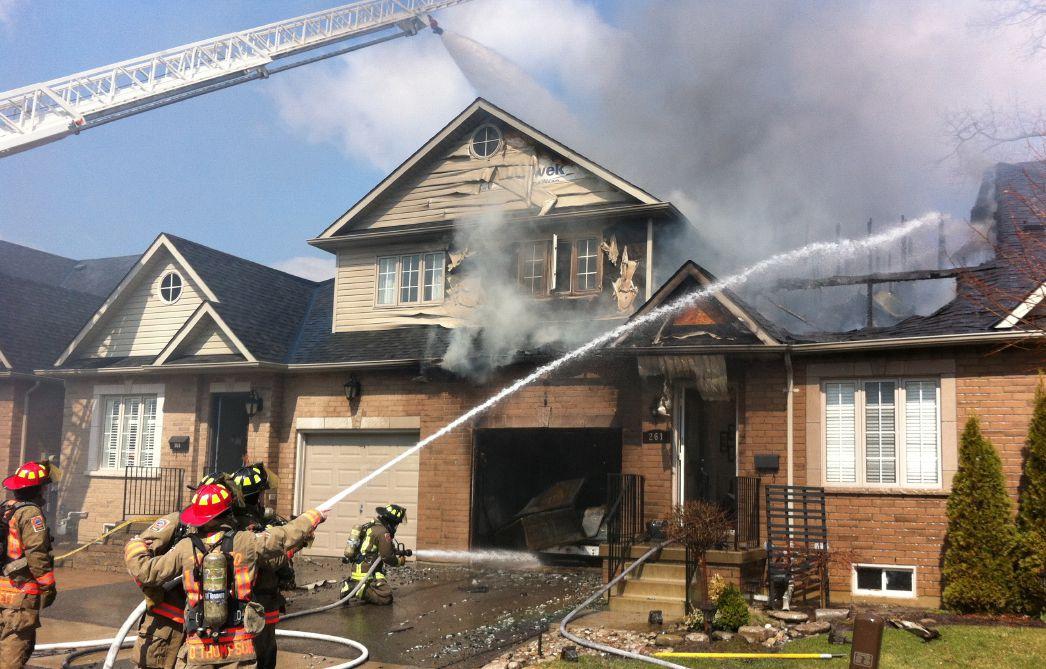
Brampton Fire and Emergency Services responded early on April 4 to a fire at a church in a rural region that is not serviced by hydrants. The structure was made of heavy Douglas fir timbers, was not sprinklered and had only two dry hydrants that were supplied by a long draft from a small frozen pond behind the building.
attack line to make the long route to the basement. The Pumper 204 crew was assigned as rescue sector. Upon entering the building, the Pumper 210 crew found no smoke. Once crew members made it to the basement closet, they found smoke but no fire; they heard a bang and debris falling, and concluded that the fire was above them. The bang was later suspected to be a flashover. The crew moved to the outside of the building and around to the Charlie side, where they found heavy fire blowing horizontally from a window and licking up the wooden cladding. A second alarm was requested. At 07:04, Squad 205, Aerial 208, Squad 201, Aerial 207, Pumper 201, Car 207 (district chief), Air/Light 201 and Rehab 201 were dispatched to the fire.
The Pumper 210 captain ordered that water be applied to the rapidly spreading fire. By 07:10, the loss of the structure became apparent, and the main concern became the safety of the firefighters. By 07:25, the fire – driven by the strong winds – had broken through the roof. At 07:29, the evacuation tones were sounded. By 08:03, the wooden structure had began to collapse. Crews continued to work on the scene for another four hours. Tragically, this large wooden structure, with its limited water supply, was doomed early into this fire to utter destruction.
This fire demonstrated the value of effective pre-planning and the need for a well-developed water shuttle plan. In this incident, the incident commander took assertive steps to lay out his action plan while still en route.
Michael Clark has been a member of Brampton Fire and Emergency Services for 32 years. He is currently a deputy chief overseeing the 398 men and women in the firefighting and training divisions.
The fire at St. Elias Church demonstrated the value of effective preplanning and the need for a well-developed water shuttle plan. The incident commander took assertive steps to lay out his action plan while still en route but the limited water supply was no match for the large, well-involved, combustible structure.
By
lEadERShipforum
Looking back at the future
It is absolutely amazing that we are in our fourth year of writing these joint columns for Fire Fighting in Canada. As such, we thought it would be interesting to look back at our first column from March 2010, titled Reframing your future. This topic still has great meaning for us and for the fire service, because no matter where you are in your career – and your life – we believe you should always be looking ahead.
In that first column, we wrote about reframing your future on both organizational and personal levels. It is easier to reframe your future on a personal level because you are in control and you decide the steps necessary to succeed. Reframing the future of the organization is more challenging as external forces – politicians, staff and the taxpaying public – can impact how and when the reframing occurs due to political mandates, and labour or community-related needs.
Reframing the future of the organization starts with hiring the right people who are passionate about being in the profession. Whether you work for a career, volunteer or composite department, the recruitment process sets the foundation upon which to build and frame the future of the department. When recruiting, it is critical to keep your standards and expectations high. If the right recruit is not available, start the recruitment process over; it is worth the extra time and effort to do so as lowering the standard simply to get a body could haunt the department in the future if that less-than-stellar recruit ends up creating a negative environment within the department.
Today there is still a tendency to overlook the importance of succession planning for these new firefighters who will become our future officers. Part of succession planning is understanding and building upon members’ intrapersonal and interpersonal skills. Intrapersonal intelligence, or self-awareness, is the ability to understand what motivates you, what makes you get up in the morning and what you truly believe in.
who have these good intrapersonal and interpersonal skills, such as good communication and problem-solving skills, and the ability to work as members of a team. Interpersonal skills enable you to work with others in a friendly and efficient manner. When it comes to recruiting, fire departments and human resources departments can easily incorporate interview questions that will help everyone understand the level of the candidates’ intrapersonal skills.
Another significant challenge for fire-service leaders is to ensure that interpersonal skills are developed in veteran staff. We make this statement because we believe senior staff already possess the technical skills required to do the job.
Sometimes, the interpersonal skills are referred to as the soft skills, but we believe these are the hard skills. Our type-A personalities make us more action-oriented than relationship-orientated and, at times, this can create problems in our stations. Let’s face it, we all know firefighters and officers who are highly skilled and are able to lead very efficiently and effectively during emergency operations and exude confidence in crisis situations, but fail at relationships and lack the skills to coach and mentor others. As such, we believe that having the people
Reframing the future . . . starts with hiring the right people who are passionate about being in the profession. ‘‘ ’’
Understanding intrapersonal intelligence leads not only to self-understanding and the ability to work effectively with others, but to a true sense of what a person is all about. We all appreciate employees who get along with people at all levels; therefore, we need to seek out recruits
Les Karpluk is the retired fire chief of the Prince Albert Fire Department in Saskatchewan. Lyle Quan is the retired fire chief of Waterloo Fire Rescue in Ontario. Both are graduates of the Lakeland College Bachelor of Business in Emergency Services program and Dalhousie University’s Fire Service Leadership and Administration program. Contact Les at l.karpluk@sasktel.net and Lyle at lyle.quan@waterloo.ca. Follow Les on twitter at @GenesisLes and Lyle at @LyleQuan
skills to deal with these non-technical situations at the station are as critical a component for officers as their technical knowledge.
Failing to develop interpersonal skills in our people will result in departments spending too much time problem solving. In fact, a lack of soft skills in people generally causes conflict situations that end up being pushed higher up the chain of command, which, in our view, is counter-productive to leadership growth. The column we wrote four years ago about reframing the future rings true today and we need to ensure that all of our people have the tools and skills required to do their jobs. In our opinion, there is a greater sense of urgency now because our communities and our staff expect more from our profession – and they deserve it. We really are in a glass house and everyone is watching; so what will they see in your actions and the actions of your department?
lES Ka R plu K and lyl E q uan
go to jawsoflife.com
the case for national numbers
Funding for database likely to be key challenge
By lEn gaRIs
top and r I ght: Canada has no data-collection system for fire incidents. Tracking incidents and patterns can help to establish best practices and help fireservice leaders better understand training needs.
what do Australia, France, Germany, the United Kingdom and the United States have that Canada does not? The answer: a national fire-incidents database. While Canadians can easily gain a national perspective on policing and court data, getting a national overview of fire incidents is difficult. Comparing crime rates in Halifax, Montreal, Winnipeg and Vancouver is a simple matter of visiting the Statistics Canada website. Comparing fire incidents from those same four cities involves approaching four different provincial jurisdictions. Furthermore, while much of the data collected by those provinces is
comparable, much is not.
Why should we be concerned with collecting national statistics? After all, we gather information on fire incidents at the local and provincial levels. There are many reasons, but here is a short list:
• Some regions are too small to provide within-region comparisons. For example, a province may have just one or two big cities, making it difficult to show trends. First Nations communities, with an average population of fewer than 400 people, are also examples of areas in which relatively few incidents occur although the rate per community is quite high.
DID YOU HEAR?
Epinephrine auto-injector
INDICATIONS: AllerjectTM 0.3 mg (0.3 mL Epinephrine Injection, USP, 1:1000) and AllerjectTM 0.15 mg (0.15 mL Epinephrine Injection, USP, 1:1000) are indicated for the emergency treatment of anaphylactic reactions in patients who are determined to be at increased risk for anaphylaxis, including individuals with a history of anaphylactic reactions. Selection of the appropriate dosage strength is determined according to patient body weight. AllerjectTM is intended for immediate self-administration for the emergency treatment of severe allergic reactions (Type I). Following treatment of anaphylaxis, the patient must seek immediate medical attention.
* Comparative clinical significance unknown.
For Your Emergency Kit
AllerjectTM 0.15 mg for patients weighing 15 kg to 30 kg (33 lb. to 66 lb.) (Consider using other forms of injectable epinephrine if doses lower than 0.15 mg are deemed necessary) Unidose 0.15 mg/0.15 mL epinephrine auto-injector [1:1000]
AllerjectTM 0.3 mg for patients weighing over 30 kg (66 lb.) Unidose 0.3 mg/0.3 mL epinephrine auto-injector [1:1000]
Available in two languages: English or French
Contraindications:
No absolute contraindications
Relevant warnings and precautions:
• Inject into the outer thigh
• Use of more than 2 sequential doses
• Use in patients with cardiogenic, traumatic, or hemorrhagic shock; cardiac dilation; cerebral arteriosclerosis; cardiac arrhythmias; coronary artery or organic heart disease; hypertension or hyperthyroidism
• Patients with organic brain damage or Parkinson’s disease
• Patients with narrow-angle glaucoma
• Use in diabetic patients
• Patients with sulfite sensitivity
• Patients with concomitant asthma
For more information:
Please consult the Prescribing Information at: products.sanofi.ca/en/allerject.pdf for important information relating to adverse reactions, drug interactions and dosing information which has not been discussed in this piece.
The Prescribing Information is also available by calling us at: 1 800 265-7927
• Certain types of incendiary incidents or fatalities may be rare events in some areas. By aggregating to produce larger numbers for analysis, it may be possible to identify causal factors and other patterns.
• National data can provide a comparison group for assessing the impact of policies, standards or programs that might be carried out in a particular jurisdiction but not in another.
• National data can provide the potential to track emerging patterns that may appear random or unique at a local level, but are systematic at a higher level of analysis. The relationship between certain types of incidents and occupational diseases, such as cancer, is an example.
• The potential to reduce costs exists, particularly in smaller jurisdictions, by reducing hardware and software duplication. Further savings might also be found by providing common training and support facilities.
• It is possible to link existing or expanded incident data with other data sets. Linking incident data with geographic and census data may better enable us to track patterns by the social and geographical characteristics of a neighbourhood. This could be done locally, but often, the expertise does not exist. Also, having it done once is more cost-effective.
Convinced of the potential value of a national database, the Canadian Association of Fire Chiefs (CAFC) presented a proposal to Public Works and Government Services Canada in December 2010 to examine the possibility of creating and maintaining a national fire-incident database. In its proposal, the CAFC suggested that it was important to identify “the ability to gather and analyze fire-incident statistics on a national basis as an important tool for optimizing effective delivery of fire services; particularly, to substantiate improvement in policy, preventive measures and operational response methodologies.” That proposal was funded and the outcome was a report that outlined how a national fire-incident database could be put together.
THE CONTExT
One difference in the organization of fire response data in Canada from many other countries is that it is highly decentralized. Canadian fire services are generally the
responsibility of local government.
From the perspective of a local department, the collection of information relating to fire and other incidents is usually necessary to provide a measure of accountability to the local municipality. It is because of the role and mandate of provincial fire marshals’ and fire commissioners’ offices that local departments are asked to submit reports of incendiary incidents to a provincial- or territorial-level agency. These reports aid the fire marshals’/commissioners’ offices in their responsibilities for fire code enforcement and for investigating the origin and cause of fires. Thus, across Canada, each marshal or commissioner maintains a record of local departments’ fire-related activities. This decentralization of record keeping is both a challenge and an opportunity for national recording.
To identify the challenges and possibilities involved in creating a national database, we conducted a detailed examination of how incendiary statistics are collected and processed across Canada. We examined the existing documentation and interviewed people involved in the process across Canada. We also looked at other locations, such as the United States, that have similar jurisdictional challenges to Canada’s. This process gave us a basic understanding of what information was available elsewhere, how it is processed and maintained, and revealed some possibilities for routinely aggregating the information nationally.
We discovered in this process that many nations have centralized systems supported by the central government. We also found that generating national databases in confederated nations where states or provinces have the primary responsibility for collecting fire-incident information is possible, although more challenging. In most places we examined, we found that those national databases not only provided data to support higher-level policy initiatives but also helped local departments and brigades with their strategic planning. In some situations, academics, fire researchers, insurance companies and others use these national databases to enhance their fundamental understanding of fire incidents.
So, where do we go from here? Ultimately, whether Canada can generate and sustain a national database is up to the provinces and other jurisdictions already involved in collecting fire-incident information. Anything involving national collaboration tends to be fraught with challenges, but our interviews
suggested that the value is recognized at the local level. We also sensed a great deal of goodwill to make something happen. The challenges seemed to fall into three categories. First, who will collect the data, store and manage it? Second, governance: who will oversee the initiative and provide strategic direction for the project? Third, who will provide the financial resources to support the project?
On the first issue, we looked at different models for setting up a co-ordinating body, from creating a new, non-profit organization to using an existing agency. In the end, we suggested that from the perspective of cost and existing expertise, we might look to Statistics Canada. StatsCan showed a willingness to fulfil the role if adequate financial support could be found; it already has the experience and capacity to handle complex data sets and to manage the subtleties involved in dealing with different jurisdictional needs, and it operates bilingually.
For governance, we suggested the creation of a national fire-incident statistics committee to provide direction and oversight for the collection, analysis and distribution of the data. The committee would hold its mandate as a subcommittee of the Council of Canadian Fire Marshals and Fire Commissioners in collaboration with the CAFC. In its oversight capacity, the committee would work to ensure that accurate, timely and strategic data are made available to operational firefighting agencies, government, and the public. The national fire statistics terms of reference were approved in September.
Funding remains the biggest challenge. Estimates from Statistics Canada suggest that creating and maintaining the national database, along with generating a series of appropriate reports, would cost about $250,000 a year. While we have identified several potential sources of one-time funding, the challenge is to find ongoing, sustainable support. As we have seen in other jurisdictions, however, various workable funding models exist.
The national fire-incident statistics committee has been struck and its first order of business is to pursue the options that are available. There is confidence that the value of national level statistics is seen as beneficial. With due diligence, a little goodwill and lot of effort, this project will succeed.
Len Garis is the fire chief for the City of Surrey, B.C., Contact him at len.garis@ufv.ca
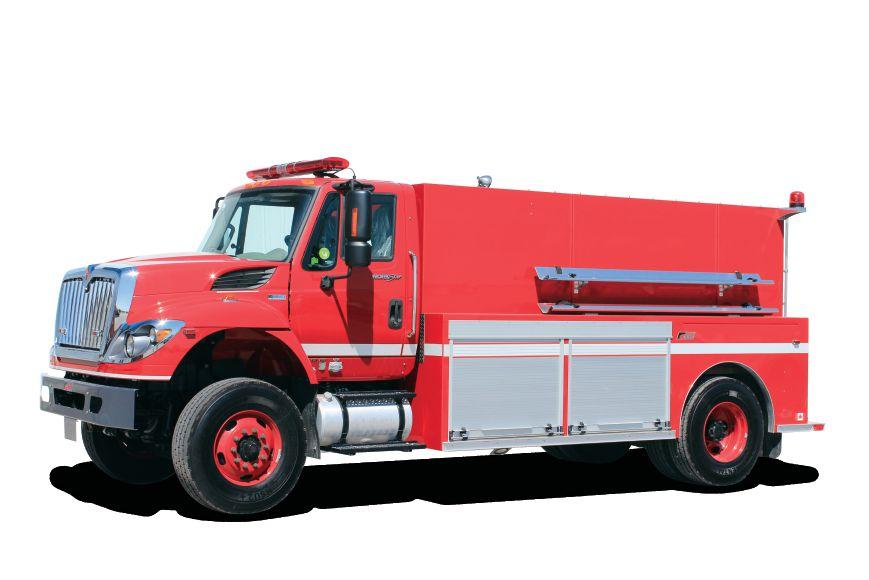
■ Side or Cross Control Pump House
■ 800/1000 IMP Gallon Water Tank
■ Folding Ladder Rack
■ International or Freightliner Chassis
Aluminum Formed
Body – 5052
Freshwater Marine
Grade
10 Year Body
Warranty w/
Low/High
Compartments
Amdor Roll Up
Doors
LED Emergency
Lighting
Custom Options
Available
■ Aluminum Formed Body – 5052
Freshwater Marine
Grade
■ 10 Year Body
Warranty w/ Undercoated Body (Optional)
■ Hale Pumps
■ Suction Hose
Storage
■ Low/Low Compartments
■ Amdor Roll Up Doors
■ LED Emergency Lighting
■ Custom Options Available
BaCKtoBaSiCS
Engine company ops –master streams
BY MARk VAN DER FEYST
the primary job function of an engine company is to suppress fire by using different-sized hoses and delivering water from its source to the fire. One such method of water delivery is master streams.
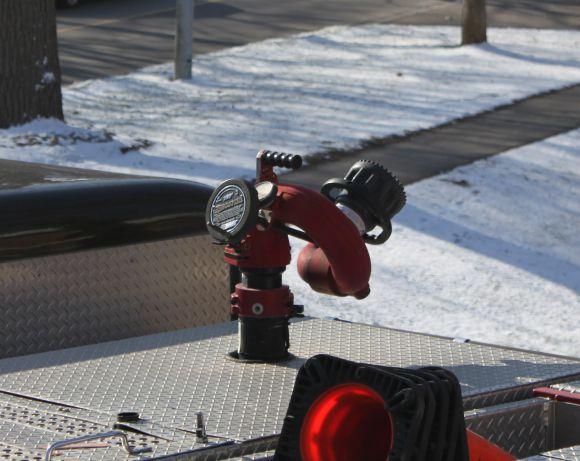
Engine companies have a few options when it comes to master streams. Most engines have a fixed master stream device on top of the apparatus (see photo 1). This device is armed with either a straight-tip nozzle or a combination nozzle. The advantage of a straight tip is its reach when flowing water. A straight tip provides a true straight stream or solid stream of water for better fire penetration and fire knockdown (see photo 2). Tip sizes can vary in diameter from 35 millimetres (1 3/8 inches) to 50 mm (two inches).
A combination nozzle provides a straight stream pattern but not a solid stream of water. Instead, the stream comprises many droplets of water in a straightstream pattern. The stream patterns can vary, from straight stream to a wide fog, which is useful to protect the apparatus when it is exposed to radiant heat.
A firefighter must be assigned to operate the master stream on top of the engine and ensure that the stream is appropriately directed for effective fire suppression. This operation takes one firefighter away from the engine crew, leaving a three- or four-person crew.
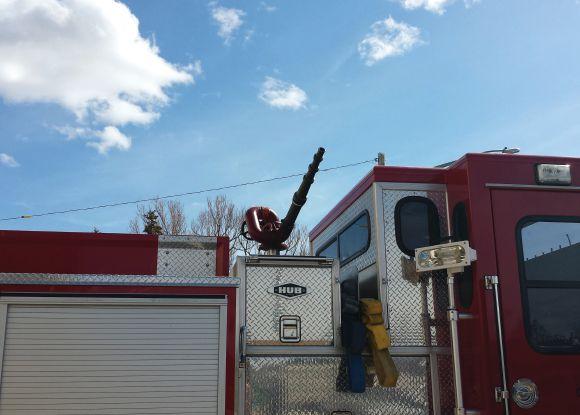
Some master streams can be extended upward by about 0.6 metres (two feet), as shown in photo 3. This offers an ergonomic work environment for the firefighter operating the master stream, removing the need to squat and preventing a sore back and bothered knees. Having an elevated nozzle also improves the ability to achieve many different angles of water flow. When the master stream is extended, it can apply water in a 360-degree rotation. With the master stream retracted, the cab of the apparatus may be in the way, preventing the complete 360-degree rotation and water application.
The master stream can also be controlled horizontally, and can be lowered or raised to either 90 degrees below the horizontal zero-degree plane, or 90 degrees above the horizontal zero-degree plane. This wide operating range is advantageous because it
Photo 2: A straight tip provides a solid and straight stream of water, making it effective for fire penetration and fire knockdown operations.
Photo 1: Many engine companies have a fixed master-stream device attached to the top of the apparatus for fire-suppression operations.
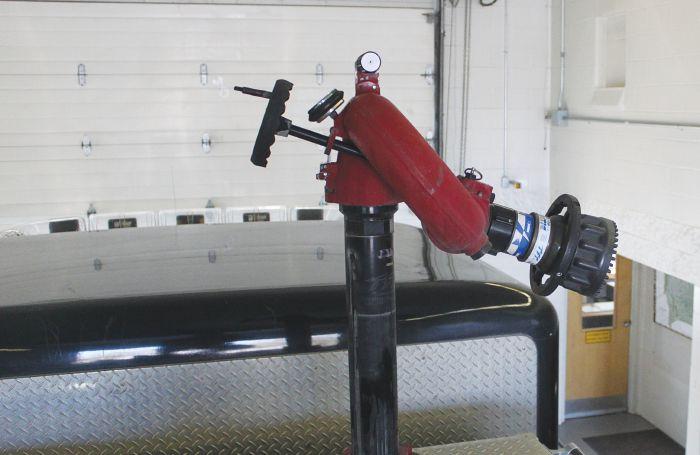
allows members of the engine company to apply water into the windows of a single-storey building, or into the sub-level portion of a building. In photo 4, the nozzle is pointed below the zero-degree horizontal plane. Knowing how the master stream operates and what it can do is the key to effective engine-company operations.
A truck-mounted master stream is often used for defensive fire operations, but this large water cannon can also be used for a quick offensive attack from the outside of a structure before crews go in
and suppress the fire with regular-sized hoselines. The amount of water that a master stream delivers is vast compared to a handline – why not use this for a quick knockdown?
A typical master stream delivers between 500 gallons and 1,250 gallons per minute (gpm) of water or up to 4,500 litres per minute. Some master streams deliver 5,000 liters per minute, or 1,325 gpm. That is a lot of water!
Fire produces energy and to combat that energy, water is needed – lots of water. A BTU – or British Thermal Unit
Photo 3: Some master streams can be raised about 0.6 metres (two feet), offering a full 360-degree rotation for water application and providing firefighters with an ergonomic work environment.
Photo 4: The master-stream nozzle can be positioned below or above the zero-degree horizontal plane, allowing the stream to combat a fire above the apparatus or in a sub-level area of the structure.
– refers to the amount of heat required to raise the temperature of one pound of water by one Fahrenheit degree. The more BTUs the fire produces, the more gpms that are needed to extinguish it.
Class A combustibles – the kinds of materials found in homes 30 years ago, such as wood, paper, fabric, plastics, and most kinds of trash – produce between 7,000 and 8,000 BTUs. Today, the plastics and composite materials in homes burn at higher BTUs –between 12,000 and 18,000 BTUs. Much more water is required to suppress fires that burn at these higher BTU measurements.
The master stream delivers a large amount of water in a very short amount of time. If an engine carries about 500 or 1,000 gallons of water on board, knockdown can be achieved within a few seconds. This may be all that is needed to control a fire before crews commence an interior attack. While the master stream works to control the fire, crews should work to secure a water source so that a continual water supply can be maintained for continual master-stream operations. For example, crew members on the first-arriving apparatus can hit the hydrant and lay in a supply line; while the master stream uses tank water, crew members secure and open the hydrant, and get water flowing to the apparatus once the operator has the other end of the supply line hooked up to the intake.
An advantage of the master stream is the safety factor it provides. Whether the master stream is truck-mounted or a ground-deluge type, it allows for distance to be placed between the firefighters and the fire or danger zone. When signs of imminent collapse are present, or there is a large fire load, the master stream will still provide water and thermal protection but from a distance that will protect firefighters.
A master stream is a great tool for first-arriving apparatuses and for minimum-staffed departments; while waiting for other resources, apply the master stream for a quick knockdown so that the fire will not spread. This involves a minimum of three firefighters: one to secure the hydrant, one to operate the pump panel and one firefighter to operate the master stream. If only two firefighters are available, then a bit more time will be needed to secure the hydrant with the one firefighter, advance the truck to the desired spot, establish the water supply, then have the hydrant firefighter make his or her way back to the fire apparatus, set up the master stream and then start flowing water.
In a rural response area where there are no hydrants, a master stream can be used with rural water operations. It may take some time to set up the water supply with the porta-tanks but once established, large volumes of water can be delivered. The concept of a tanker-engine works well in rural areas as the tanker-engine can carry up to 2,000 gallons of water, which can be used to supply a master stream for a short duration, achieving a knockdown of some type or even a temporary stop to the growth of the fire.
Practise deploying the master stream: pull up to an address and practise emptying the tank while simultaneously securing a hydrant; see how long it takes to empty, how quickly the hydrant can be secured and how effective the master stream can be.
Mark van der Feyst is a 15-year veteran of the fire service. He works for the City of Woodstock Fire Department in Ontario. Mark instructs in Canada, the United States and India and is a local-level suppression instructor for the Pennsylvania State Fire Academy and an instructor for the Justice Institute of B.C. Email Mark at Mark@FireStarTraining.com
On behalf of the Canadian Fallen Firefighters Foundation and the committee, we want to thank all our generous sponsors who donated product, all participants in the online auction and everyone who attended the event on Saturday May 3rd. And of course a big thank you to all the volunteers who helped make this a fantastic evening. Over $26,500 was raised! All of the money will go to education bursaries for children of our fallen firefighters. This was the 3rd annual event and we look forward to next year’s event being bigger and better. If you are interested in getting involved in this worthy cause, please contact Mark Prendergast at markp@mnlsupply.com or Kip Cosgrove at kcosgrove@vfiscanada.com or Catherine Connolly at cconnolly@annexweb.com. We welcome new committee members, volunteers, sponsors and donors. Once again, thank you, and we look forward to seeing you next year.
Sprinkler campaign needs advocate
It is simple to say that the underlying philosophy that one applies in determining what action to take on an issue is to do the right thing for the right reason. But what if the right reason to me is different than the right reason for you? If my reason is public safety and yours is profit, what is the right thing to do if my right thing and your right thing are in conflict?
While advocating on many matters, I have heard bureaucrats and decision makers at federal, provincial and local levels ask about the position of other stakeholders on the issue we are discussing, and whether the organization I represented was working with the others.
It was obvious that the preferred option for policy makers was to support what the stakeholders could agree to. However, they were reluctant to play referee in a dispute between or among two or more sides. It is significantly easier to reach consensus on an issue when everyone has a solid understanding of the matter. That means not only promoting your position but also learning the other viewpoints. Obviously, the underlying intent of collaborating with other stakeholders is to influence them in such a manner as to have them support your position.
One of the key approaches to successfully achieving consensus on any initiative is education. With that in mind then, for automatic fire sprinklers to be incorporated into building codes, a comprehensive, co-ordinated education campaign is fundamental to overcoming the opposition to such code revisions. Well, that’s the easy part. Now the tough part: how to do that?
to the U.K., similar in nature to Fire Prevention Week here in North America. The CFOA has made National Fire Sprinkler Week one of its priority fire-safety campaigns. In Canada, a co-ordinated national campaign may be the best approach to educating the country as a whole on the benefits of fire sprinklers; it would reach a broad audi ence, provide common messaging and resources through promotional materials, and could easily be supported by local agencies that would not be required to develop their own campaigns. Could a National Fire Sprinkler Week work here in Canada?
There is no reason to believe that a National Fire Sprinkler Week wouldn’t work; consider the safety successes that we achieve with Emergency Preparedness Week and the aforementioned Fire Prevention Week. A National Fire Sprinkler Week may represent the single biggest opportunity for fire sprinkler education. Organizers of a prominent, national campaign may be able to successfully leverage the vast network of sprinkler industry and safety partners to overcome resource, expertise and financial hurdles which, individually, most of us have not been able to surmount. It is obvious that a national cam paign needs to be spearheaded by a group with a national focus for
There is no reason to believe that a n ational Fire s prinkler Week wouldn’t work . . . ‘‘ ’’
Thankfully there are examples to build upon. The Home Fire Sprinkler Coalition stepped up its promotional campaign early this year with the new Ask for Them interactive guide on its website. Sprinkler coalitions have been successful in areas of the United States.
There was one specific campaign I was quite intrigued to learn about earlier this year. “The professional voice of the U.K. fire rescue service,” the Chief Fire Officers Association (CFOA), spearheaded a National Fire Sprinkler Week. The program is a multi-partner, co-ordinated national campaign that promotes the value of fire sprinklers
Kevin Foster is in his 27th year in the fire service, having begun as a volunteer firefighter in East Gwillimbury in 1987. For 11 years, Foster was a firefighter with the Richmond Hill Fire Department and in June 1999 he became the first full-time fire chief of the North Kawartha Fire Department. Foster was appointed chief with the Midland Fire Department in November 2001. Contact him at kfoster@midland.ca and follow him on twitter at @midlanddfsem
public fire safety. I see two such groups that fit the bill: the Council of Canadian Fire Marshals and Fire Commissioners which, as part of its mission, supports members’ efforts to minimize fire losses by promoting fire safety awareness; and the Canadian Association of Fire Chiefs, which has as one of its objectives to advance fire and life safety education across Canada. I challenge both organizations to show their leadership and take up this cause.
I understand that meaningful change takes time to achieve and perseverance is vital. If it is a priority to improve fire protection for Canadians by having all new residential construction include auto matic fire sprinklers, then there needs to be a national campaign to educate our families, friends, and neighbours; these same people are our elected and appointed officials and, just as importantly, voters and new home purchasers.
By KEV in fo S t ER f ire chief, m idland, o nt.
By Elia S m a RK ou
Embracing a new form of prevention
firefighters have a lot to think about, and until recently their health was not necessarily a top priority. Certainly the Internet and the availability of so much health news and information has brought firefighter health issues to the forefront. The adoption of the International Association of Fire Fighters Health and Wellness Initiative by some Canadian departments has also raised awareness of health issues and, in particular, prevention of health problems ranging from cancer to heart problems to stress and sleep. Firefighter health is not a new issue; what is new is that firefighters are becoming empowered about their own health. The reason for this paradigm shift is irrelevant; what’s important is that the service needs healthy firefighters.
In my 12 years of medical practice I have learned a thing or two about human patterns and behaviour. More and more firefighters are dealing with serious health concerns and many have turned to a combination of mainstream medicine and natural medicine to help to heal their injuries and overcome their health challenges. These natural approaches and treatments give firefighters more control over their own health.
Many firefighters have missed the point about prevention and are now dealing in a very reactive way with health issues such as diabetes, injuries, arthritis, cardiovascular disease, auto-immune conditions and cancers. We know from the evidence-based research on health and disease that many conditions are preventable. This brings me to prevention – which is not a new idea for the fire service. The concept of fire prevention is deeply engrained in firefighters; we need to extrapolate this thinking and apply it to firefighter health.
To my mind, the fire service needs to come up with a way to demonstrate that firefighter health awareness is as important as fire prevention. A week within the fire service to educate firefighters about the importance of firefighter-specific preventable diseases could be of tremendous benefit to all firefighters and their families.
This proposed firefighter health awareness week could target two firefighter groups – those who have serious acute or chronic diagnosed conditions that need attention immediately, and healthy firefighters who have decided to embrace prevention to address their health. There are natural treatments and strategies for both of these groups that can help them achieve optimum health.
Those in the fire service are well aware that heart disease is the No. 1 killer of firefighters. Harvard researcher Stefanos N. Kales and his colleagues analyzed firefighter deaths for the 10 years between 1994 and 2004 and discovered the vast majority of on-duty firefighter deaths were attributed to heart conditions caused by preventable physical and toxic factors. The Harvard group reported that firefighters were between 12 and 136 times
We know from the evidence-based research on health and disease that many conditions are preventable. ‘‘ ’’
The NFPA’s annual Fire Prevention Week is one of the greatest North American firefighter initiatives and is responsible for saving millions of lives over the last 100 years. Fire Prevention Week commemorates the Great Chicago Fire of 1871, which was one of the most devastating fires of its time, killing up to 300 members of Chicago’s population. Today, fire services observe the anniversary as a way to educate people about the importance of fire safety.
Dr. Elias Markou is in private practice in Mississauga, Ont., and is the chief medical officer for the Halton Hills Fire Department. Markou was a volunteer firefighter for six years and is now a firefighter health expert and blogger who is regularly featured on television and radio and in print.
more likely to die of a heart attack while putting out a fire than performing non-emergency duties. These are staggering facts about a condition that has been proven to be very preventable and in which natural medicine can play a significant role.
I have been assessing and treating firefighters for 12 years as the chief medical officer for the Halton Hills Fire Department northwest of Toronto, and I oversee the health of 160 firefighters, plus firefighters who come to my private practice. More and more, I find that firefighters are becoming curious about natural remedies and therapies to treat their conditions or prevent the onset of the health concerns most common to this demographic. We will explore some of those remedies and therapies in future columns and explain how natural medicine can change firefighter health in a positive way.
You protect the public
Let us heLp protect you
For your cleaning, decontamination, inspection, testing, repair and record keeping of your firefighter’s protective clothing... we have you covered!
• 24/7 access to Firetrack®, the online data base that provides you with complete details of your C&M Program with FSM. We do the work for you!
• ETL Verified
• ISO 9001 Registered
• Fast turnaround
• Complete Bunker Gear Rental Program – Toronto Location
(toronto) 1-888-731-7377
Learning when to call a mayday tRainER’Scorner
BY ED BROUwER
s I wrote this, our Saving Our Own Hands-On Training (SOO HOT) team was preparing for the annual volunteer firefighter training seminar, hosted this year by Oliver Fire & Rescue in British Columbia from May 2 to 4. We unveiled our new firefighter survival maze, called Firefighter’s Ghost – which is more of an evaluation prop than an instructional one. This new maze is designed in honour of our fallen brothers and sisters. It is our hope that we can learn from their sacrifices.
This year marks the tenth anniversary of the line-of-duty death of Clearwater, B.C., firefighter Chad Shapansky, who died in a structure fire on March 29, 2004. At Shapansky’s funeral, I made a conscious decision to do all I can to promote a standard mayday protocol in Canada. Unfortunately, 10 years later, we in the fire service still spend more time training firefighters to tie knots than to perform self-rescue.
Whether full time, volunteer or paid on-call, fire personnel routinely conduct operations that put them in dangerous situations. Fire fighting by its very nature places firefighters in close proximity to fire or in areas that have suffered structural damage due to the effects of fire. Falling through burned-out floors or becoming entangled in the debris of a ceiling collapse are real and constant threats.
Firefighters must practise self-rescue techniques over and over again in order for these skills to come to mind in a crisis situation. Repetitive training may be the only way to break the panic mode that robs firefighters of their ability to rationally think their way out of trouble. The more survival tools we give our firefighters, the greater their chances of going home after the call. The greatest survival tool, in my humble opinion, is to give clear instruction on calling a mayday.
The following is a basic outline and description of Canwest’s SOO HOT survivor maze. I will be glad to email you a material list and layout plan.
Firefighters wearing complete PPE including SCBA will be paired up into teams. Before teams enter the maze each firefighter will be given a single die to roll. The total of their rolls will set the time limit (one minute per point) before their low air alarm will sound. We will sound an alarm to signify the low air alert.
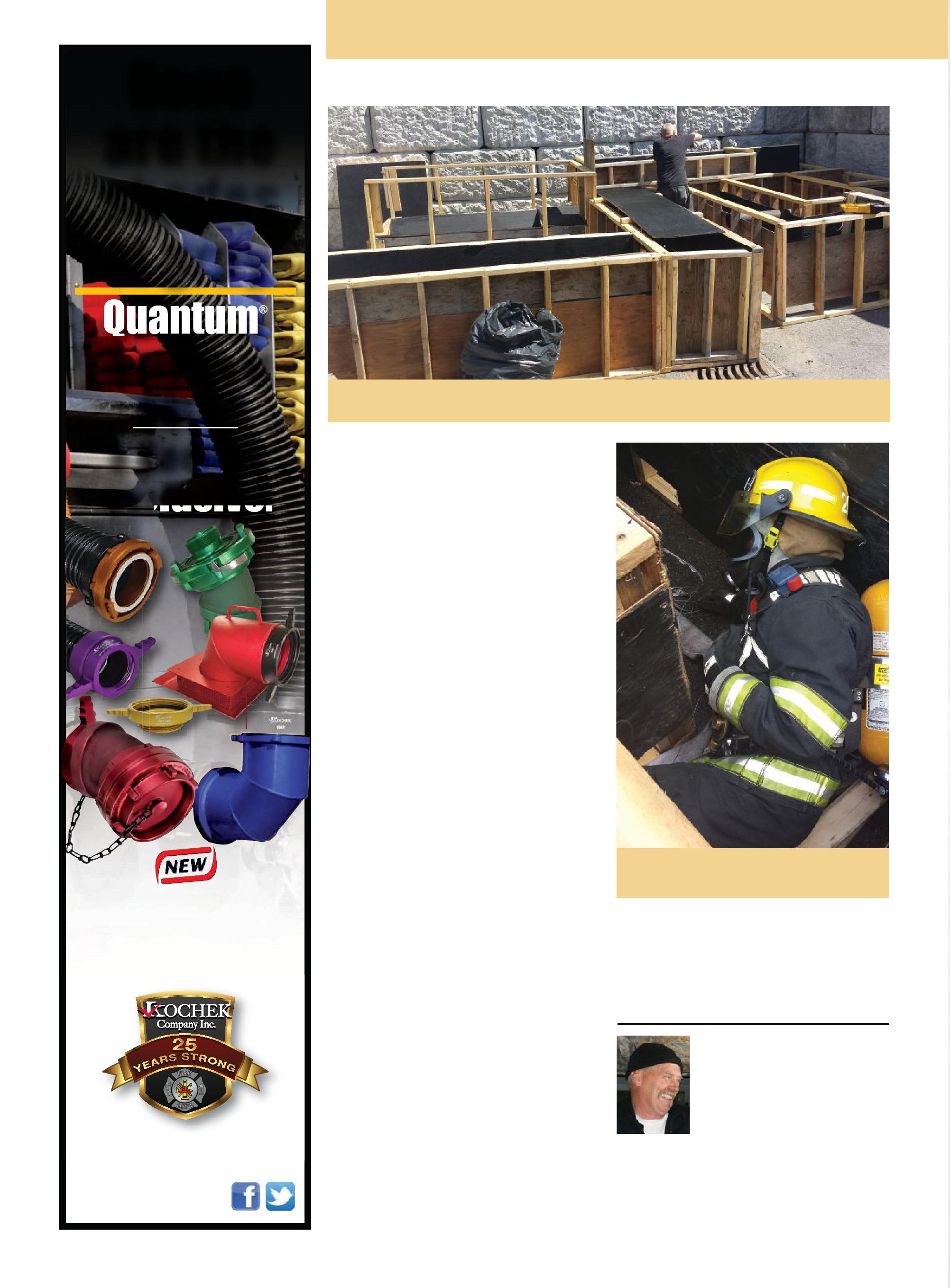
The firefighters are given radio. The instructor places a foam sheet in their BA masks, blocking 80 to 90 per cent of their vision. The firefighters are then led to the maze entrance, a 0.6-metre (two-foot) wide by one metre (three-foot) high tunnel that we constructed out of 2x4s and plywood.
At the entrance, the firefighters find a hoseline that is charged with air to simulate water. We made two end caps for the fire hose with an air valve mounted on one end. The firefighters are told to follow the hose to safety. We do not provide any other
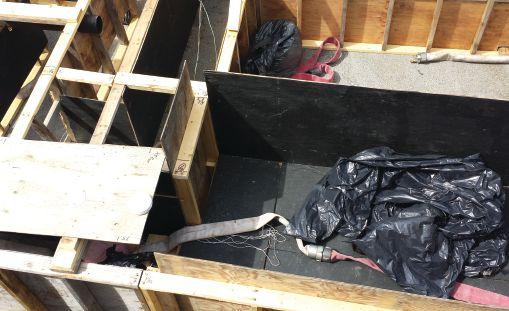
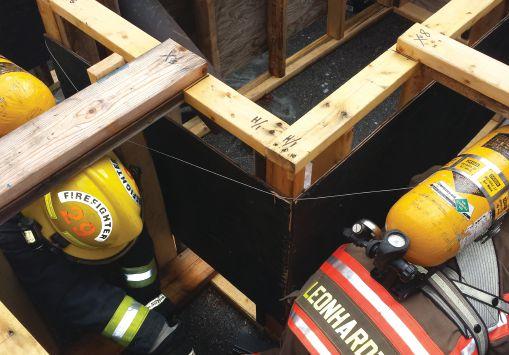
abo V e An aerial view of the the Firefighter’s Ghost maze developed by Canwest Fire to teach firefighters when to call a mayday; just five of 100 firefighters stopped before they fell through the trap-door floor. below Two firefighters make their way through the maze; note the wire caught on the lead firefighter’s pack. Neither firefighter noticed this entanglement until the lead firefighter could move no further ahead; neither had pliers to cut the wire.
instructions; we are there only as observers. The firefighters’ safe completion of this task rests squarely on the training they have received from their own departments.
I have wondered just how much instruction we can adequately provide to 20 firefighters in less than an hour during these training weekends, so we decided to evaluate what the firefighters had learned from their own department’s training.
Our instructors, armed with clipboards and evaluation sheets, follow the teams and mark a pass or fail in the appropriate spaces.
The entire maze is painted flat black. An alarm bell sounds
PHOTO
THE CIE SHOW IS CANADA’S PRE-EMINENT CONFERENCE DEDICATED TO THE EDUCATION, TRAINING AND RISK MANAGEMENT FOR THE INDUSTRIAL EMERGENCY RESPONSE SECTOR.
If your company is involved in industrial manufacturing, chemical producers, oil and gas, transportation of dangerous goods, nuclear, hazardous materials management, or any industry that could be susceptible to industrial emergencies, then you will benefit by attending.
Delegates will be able to participate in sessions including workshops, general sessions, HOT training (SCBA confidence drills), updates of government standards and panel discussions from leading experts.
The conference will address topics pertaining to railway, pipeline emergencies, fall arrest, mutual aid agreements, incident scene communications and other timely and topical sessions. For details check out our agenda on-line. PLUS, delegates will gain access to a wide variety of exhibitors that will be on hand to answer your technical questions, showcase the latest solutions, help your company be compliant and reduce risk.
Save on the early discount and register before July 30th for $299 +hst after July 31st pay $399+hst
Trade show attendees gain free access if they register prior to July 31st. After July 31st pay $30 for both days.
QUOTE PROMOTION CODE FFC2014. Do you have a product or service that would be of interest to this industry?
WE INVITE YOU TO EXHIBIT.
tRainER’Scorner
when a firefighter’s time is up, simulating the low air alarm on the SCBA.
As the firefighters follow the hose, they encounter fire-ground hazards such as entanglement debris, narrow openings, and blocked passages. We even designed the maze so that the hose the firefighters follow actually disappears in several places. Holes cut in certain side panels allow the instructor to take the hose out of the tunnel and then re-insert it further along. This simulates a firefighter losing contact with the hose. We insert several 0.6-metre (two-foot) by 0.6-metre (two-foot) panels, forcing firefighters to react to blocked passages. No obstacles in the maze require the removal of the firefighter’s SCBA – in fact, firefighters shouldn’t even have to low profile their SCBAs to navigate the maze. However, the instructor will not interfere should the firefighter choose to do either of those time-consuming and potententialy dangerous procedures.
Near the end of the maze we put in a small set of steps (2) leading into a 1.2-metre (four-foot) wide by 2.4-metre (eight-foot) long box. At this point, the 1.2-metre (four-foot) wide floor piece, on which the firefighter is kneeling, has been split down the middle and hinged on both sides. Once the lead firefighter reaches the middle of the suspended floor, the instructor pulls the pin, causing the floor to collapse in the middle. The firefighter may roll, slide or fall off the floor panel. This simulates falling through the floor. It is interesting to see how firefighters react to this hazard.
This concludes the evaluation. After a few moments of
observation, the firefighters are helped out of the maze and their SCBA is removed. All teams are then debriefed and are given a copy of their evaluation reports along with a Congratulations or a Deepest Sympathy card. Perhaps the cards are a bit dramatic, but the importance of calling a mayday must sink in.
The main objective of our survival maze is to determine if a firefighter will call a mayday. There are nine yes-or-no points that are evaluated.
1. Did the firefighter note the air supply level during the drill?
2. Did the firefighter radio incident command (IC) to inform the IC that he or she lost the hose?
3. Did the firefighter radio IC to inform the IC when he or she found the hose?
4. Did the firefighter radio IC to inform the IC that the low-air alarm had activated?
5. Did the firefighter radio a mayday after the low-air alarm activated if he or she was not able to exit within 60 seconds?
6. Did the firefighter activate his or her PASS alarm upon hearing the low-air alarm if he or she was not able to exit within 60 seconds?
7. Did the firefighter radio a mayday when he or she fell through the floor?
8. Did the firefighter activate his or her PASS alarm at any time?
9. Did the firefighter follow the hoseline in the right direction?
As instructors, we are harsh in our marking, but we have
Disaster-Proven Paging for Public Safety
tRainER’Scorner
Ed Brouwer puts the finishing touches on the Firefighter’s Ghost maze used for mayday training in an exercise with 40 departments; one of 100 participants correctly called a mayday.
decided that any more than three points marked “No” indicates that the firefighter does not understand the basic need to call a mayday.
Our hope is these firefighters will take their evaluations seriously enough to either thank their training officers for a job well done or demand some clarification as to their department’s mayday training program.
We have not devoted enough attention to rescuing ourselves, and too often the results are tragic. It is only when both instructors and firefighters have these commitments in common that we will be successful in the Canadian fire service. We must train our firefighters as if their lives depend on our training. Let no firefighter’s ghost say his training let him down.
–
An update from Oliver B.C.: The maze was a great success, but it was bittersweet for our instructors. The stats were very disappointing and it was obvious that we in the fire service are missing the mark regarding mayday training. Only one firefighter out of 100 scored a perfect – and that was Eric Phibbs of Boston Bar. There were no other succesful completions. Just two teams noted their air supply, only five teams informed the IC they had lost the hose, and only three teams notified the IC they had found the hose. Ten teams notified the IC when their low air alarms were activated, and just two teams called a mayday when they were not able to exit the building within 60 seconds after their low air-alarms activated.
We really appreciate the opportunity afforded to us by Oliver Fire Rescue to
present Firefighter’s Ghost to more than 40 British Columbia fire departments. We hope the wake-up call these departments received will lead to a greater awareness as to the need for mayday training.
Ed Brouwer is the chief instructor for Canwest Fire in Osoyoos, B.C., and Greenwood Fire and Rescue. The 25-year veteran of the fire service is also a fire warden with the B.C. Ministry of Forests, a wildland urban interface fire-suppression instructor/evaluator and an ordained disaster-response chaplain. Contact Ed at ebrouwer@canwestfire.org
A firefighter radios the incident commander before going further into the maze; a good job!
By t om dE So RC y f ire chief, h ope, B.C.
fVoluntEERVIsIon
Potholes or public safety?
irefighters strive to provide good customer service: that means treating others the way we would like to be treated – going above and beyond whenever possible and surprising people who don’t expect our do-onto-others attitude. For the most part, these customers – the ratepayers – are paying the bills, yet it appears that lately customers have come to expect even more from the fire service.
With rising costs in all municipal services, it seems to me that our customers are becoming more like consumers – a term for those who actually buy a product. Customers are the people who walk into your store – potential consumers; you greet them, serve them and answer their questions. If they leave without buying anything, you thank them and invite them to come again. The moment they see something they want and put their hard-earned money on the table is the moment their expectations change, and this is what I’m seeing among today’s ratepayers.
Maybe it’s the fact that as we age and as costs continue to rise, we pay more attention to where our money goes. Perhaps we have become victims of the buy-now-and-pay-later attitude that permeates advertising campaigns for big-ticket consumer items.
Local governments tax their citizens according to the costs of operating the municipality, and, hopefully, put money aside for maintenance and future capital expenditures. It used to be that we, as taxpayers, were happy to contribute to that war chest. I believe that members of today’s older generation are not interested in preparing for the future or making sure the next generation is well looked after. “I’ve paid my taxes, show me something in return,” they say. Fire protection and public safety? “I don’t need that service right now, but I do have a pothole on my street and I want it fixed.” That attitude doesn’t make it easy to replace a fire apparatus come budget time, now does it?
often hear how we should be charging out-of-town individuals for the service (which is indeed the case in some regions of the country); to me, this attitude goes against the grain of the fire service.
Here in British Columbia search-and-rescue organizations have been publicly criticized for not charging back-country enthusiasts who put themselves in harm’s way, ultimately resulting in spent tax dollars and risks to the responders who rescue these risk-takers when they get lost or hurt. We all know that the moment you start to put a price on the service, there may be a reluctance to call. People won’t call for help if they’ve done something wrong and will be publicly criticized for having taken foolish risks; people will die as a result and no one wants that. You call, we come. More and more, I see emergency services on the receiving end of negative public opinion – in letters to the editor or social media posts from people who don’t understand the fact that we train for their worst days and that when we aren’t running calls we are training and planning and educating; maybe it’s a vocal minority, but it’s the voice the men and women at the end of the hose hear too often.
It’s our job as chief officers to shield our crews from this criticism and help them to focus on the service they provide. The majority of the population appreciates what we do. From social media posts and
Taxpayers have also become more selective about the services for which they pay.
’’
Taxpayers have also become more selective about the services for which they pay. What is the percentage of local customers you serve? How many calls do you respond to that involve people from outside your community (for example, if you respond to MVCs and your department serves a stretch of highway)? Have you heard any uproar over cost recovery to visitors or non-residents in your community? We
Tom DeSorcy became the first paid firefighter in his hometown of Hope, B.C., when he became fire chief in 2000. Originally a radio broadcaster, Tom’s voice could be heard in the early 1990s across Canada as one of the hosts of Country Coast to Coast. DeSorcy is very active with the Fire Chiefs’ Association of B.C as communications director and conference committee chair. Email Tom at TDeSorcy@hope.ca and follow him on Twitter at @HopeFireDept
blogs, to – my favourite – the coffee-shop experts, rest assured that these detractors will never know what we do or see what we see – that we struggle every day just to make sure that enough dedicated people will actually be around town and available to respond if the those same armchair experts call.
So what’s the solution? Education. We need to continue to sell the benefits and realities of what we do – break down the stereotypes and provide good routine service, service that’s as good as we provide in emergency mode. The naysayers are the minority or, as I like to say, the moss; ignore them and feed the grass, give the silent majority all the information they need to spread positive messages on our behalf. There are people who have experienced our services, and know the importance and the value of what we do. Let’s encourage them to tell everyone else. Potholes or public safety? You can be sure that neither is important until it directly impacts the consumer.
The Canadian Association of Fire Chiefs’ 106th Annual Conference
September 14-17, 2014
Ottawa, Ontario
REGISTER TODAY! www.cafc.ca/en/conference
Fire Chief of the Year Nominations are now being accepted! Each year the Canadian Association of Fire Chiefs and Fire Underwriters Survey recognize Fire Chiefs for their outstanding contribution to the Canadian Fire Service. Know a deserving Chief? Visit www.cafc.ca/en/awards/ to nominate your Chief today!
Les candidatures pour les Prix d’année des chefs de pompiers sont maintenant acceptées! Chaque année, l’Association canadienne des chefs de pompiers et d’inspection des assureurs incendie reconnaissent chefs de pompiers pour leur contribution exceptionnelle au Service canadien des incendies. Connaissez-vous un chef digne? Visitez http://cafc.ca/fr/awards/ de nommer votre chef aujourd’hui!
Between 35 and 40 paid RCMP members work the Cavendish festival site daily, some brought in specially for the event; the RCMP has its own operational communications section on site.
“They’re monitoring fire, EMS, RCMP and security,” Stevenson said.
The agencies expect to have interoperable radios on site as soon as 2015; for now the RCMP operational communications centre (OCC) has an operator on site who dispatches for the festival. Fire and EMS are dispatched separately, as are security and site venue personal, but the OCC monitors all agencies’ communications.
The RCMP also brings in a team to install cameras around the site as a back up for the on-site security team.
“If a fight breaks out we can zoom in on that area – it’s backup for the private security guys when they’re affecting an arrest or what not; it’s a way to watch their backs, and we can also monitor the crowd around them to see if it’s getting out of hand.”
The RCMP’s Shawn MacEachern, a sergeant with the Atlantic region’s protective technical security services, says everything is recorded all the time; if something comes up, police or security or fire investigators can review the footage.
“To give you an example,” Stevenson said, “the second or third year we were here we had a child get separated from the parents and the mom came over in a panic. She had a description of the clothes she was wearing and the camera operator said, ‘I just saw her.’
It was a really bizarre shirt. He panned over to where he saw her, she was still there, we sent security and we had her back with mom in five minutes.”
Overall, says Stevenson, use of the ICS has made it easier to draw other responders into the event.
“We’re a lot more cohesive,” he said. “There’s a lot more buy-in from the partnering agencies because they’re seeing how well this is working.”
In 2013, ICS Canada paid for emergency managers and ground search-and-rescue leaders from across Canada to attend a prefestival workshop to see how an all-hazard, multi-agency event is managed under ICS.
“Although the majority of what we do here is police function,” Stevenson said, “we use a multi-agency overhead team, so we have people from Public Safety Canada, from the RCMP, Parks Canada and others sitting on the incident management team. You don’t have to be police to be on it; you have to understand ICS but that’s pretty much it.”
An arrest tent set is set up on site and prisoners are transported by van to the correctional centre; two RCMP members go with each driver to and from the centre.
With arrests and citations for underage drinking come paperwork. Previously, that work was done after the festival but the task becoming overwhelming; last summer RCMP brought its computers to the site.
This year’s festival runs July 4-6 with headliners Lady Antebellum and Blake Shelton.
P.E.I. Fire Marshal Dave Rossiter (left) and RCMP Cpl. Scott Stevenson (centre) chat with an event security leader during the 2013 Cavendish Beach Music Festival. A private security firm monitors the site; its members are trained in ICS.
By p E t ER SE ll S
Fire-service slow to warm to innovation
In May, we placed a new survey question on the firefightingincanada.com website, asking which innovation in fire protection technology has had the greatest positive impact on firefighter safety and effectiveness. The possible answers were:
• sprinklers
• bunker suits and flash hoods
• SCBAs
• thermal imaging cameras
• class-A foam and compressed-air foam systems
This question needs to be asked every decade or so because new technologies are coming down the pike at a fast and furious pace. If we understand which innovations have made us safer, allowed us to penetrate deeper into burning structures, or increased our ability to extinguish fires efficiently, we can be better prepared to evaluate the potential effectiveness of new gadgets and gear.
New technology is always expensive at first, then drops in price as the market begins to accept the value proposition. Everett Rogers, a professor of communications studies at Iowa State University, categorized consumers of innovation in his book Diffusion of Innovations, first published in 1962. Rogers called the first group to buy into a new gadget “innovators,” and estimated that they make up just 2.5 per cent of the market. Innovators would have been the first to have bought computer projectors, for example – which were the size of a carry-on suitcase – for $17,000 when they were first available. Rogers’ second group of consumers is what he calls early adopters, the next 13.5 per cent of the market, who may not have the deepest of pockets but are still willing to shell out significant money to have the latest stuff.
advances in fire protection technology? Hint – it is not fire. The military (particularly the United States and British forces), the mining/ energy industry, the insurance industry, and, to a lesser extent, law enforcement have the kind of buying power that ignites the flames of change.
Fire services are, for the most part, in the late majority and laggard groups, waiting for others to take budget risks until the new toys are tried and true with all of the bugs worked out. This wait-and-see attitude is not a bad thing when you are tasked with spending meager municipal dollars to protect lives.
Looking at the innovations that were included in the survey, in roughly historical order, the first automatic sprinkler system was installed in 1874. The progressive adoption of sprinkler technology and its inclusion in codes continues to this day. It is impossible to estimate the number of firefighters who were spared injury by not having to fight fires that were extinguished or held in check by sprinklers over the last 140 years.
SCBA, which originated in the mining industry, were in regular use in the United Kingdom fire services as early as the 1950s. SCBA were certainly present in North America at that time, but I can say
Who are the innovators and early adopters who have driven advances in fire protection technology? ‘‘ ’’
Next are the early majority and late majority, each representing 34 per cent of the market, differentiated by the resources at their disposal and how long they are willing to wait before taking the plunge.
Rogers describes the final 16 per cent as laggards.
Although Rogers’ research focused not on organizations but on individual consumer – those who might have bought or not bought a colour TV in 1962 – his description of laggards as change-averse with a traditional focus sounded eerily familiar.
Who are the innovators and early adopters who have driven
Retired District Chief Peter Sells writes, speaks and consults on fire service management and professional development across North America and internationally. Peter is president of NivoNuvo Consulting, Inc, specializing in fire-service management. Contact him at peter.nivonuvo@gmail.com and follow him on Twitter at @NivoNuvo
from personal experience that well into the 1980s, regular use at working fires was spotty. The first aerial apparatus to which I was assigned had four SCBA, and there were often five firefighters on the truck.
When bunker suits and flash hoods were being phased in, most of the older smoke-eaters were vehemently opposed to them; these firefighters were accustomed to using their senses – including the skin of their ears and the backs of their necks – to tell them when it was time to back out.
Which innovation came next depends on your department and region, but most likely you became familiar with class A foam before thermal imagers.
Go to firefightingincanada.com and take the survey. Once there are sufficient responses, I will revisit this topic online in my Flashpoint blog. Do I hear some firehall kitchen table debates?