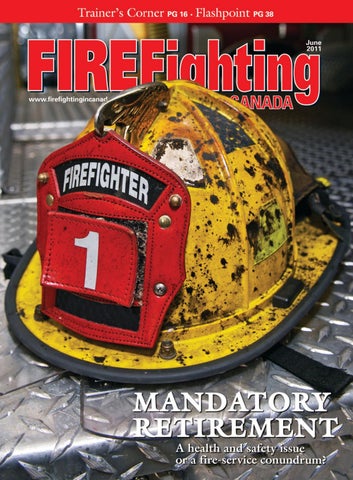
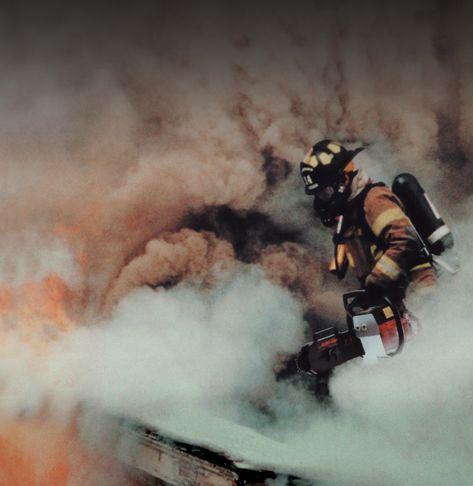
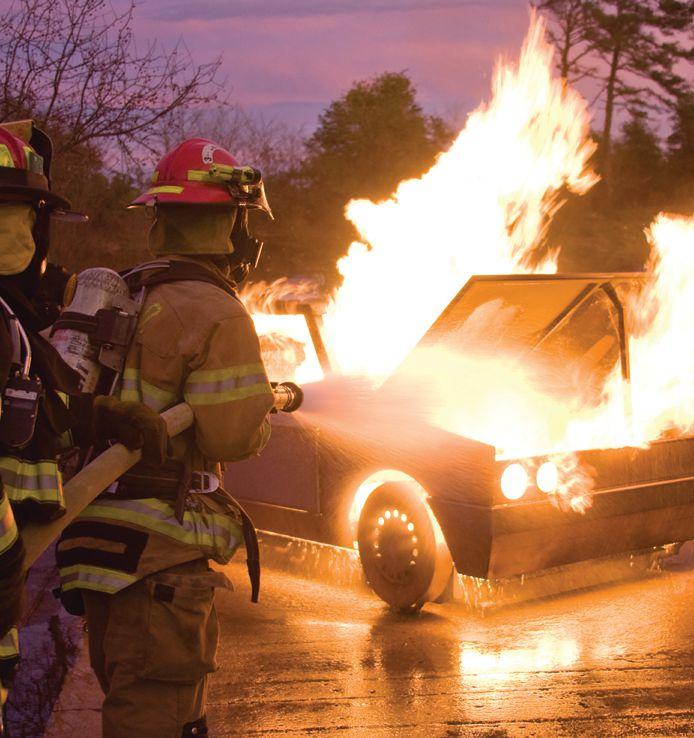
Ontario has introduced legislation that would require career firefighters who work in suppression to retire at 60. The move is causing concern among fire-service leaders who worry that there are two standards – one for career firefighters and one for volunteers (who are not covered in the proposed legislation). Laura King reports.
24
CHALLENGES AND STRATEGIES
In an exclusive question and answer session with Fire Fighting in Canada editor Laura King, Ontario Fire Marshal Ted Wieclawek explains the controversial risk-assessment document that was released in November, the soon-to-be-released companion workbook on public education and fire prevention, and the challenges and successes the OFM has experienced in recent months.
BY LAURA KING Editor
lking@annexweb.com
LCOMMENT
Small fire-service miracles
ate last year in northern Lynn Lake, Man., a 20-month-old toddler died in a house fire on a First Nations reserve. There were 13 people living in the home and everyone but the toddler got out safely, which, as you can imagine, was little consolation to anyone at the time.
The community was devastated by the loss. Lynn Lake firefighter James Lindsay, a frequent department spokesman, was one of many responders that cold day and the loss of the toddler was emotionally crippling to the department.
The department has just four volunteer firefighters and two volunteer EMT responders. It carries out its mandate to serve the people of the community with aging equipment and little opportunity for outside training, but with a passion for service that is familiar to every fire service in Canada.
the blaze to a first-floor bedroom. Two adults and six children escaped, shaken, but unharmed.
Lynn Lake is a place where I would guess that most of the time, life rolls by as a matter of routine and it’s probably easy to pick the really good days from the really bad one. And, still aching from for the tragedy before Christmas, April 21 was a stand-up-and-cheer day for the community, for Fire Chief Mark Reimer, and for the fire and police services.
ON THE COVER
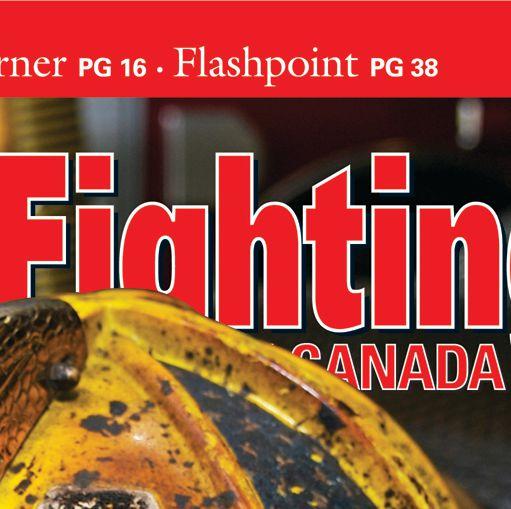
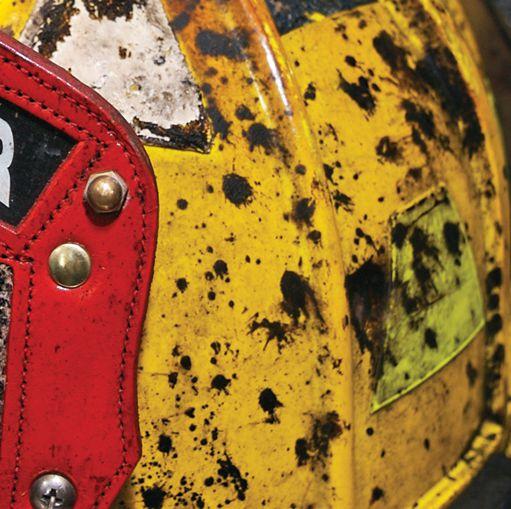
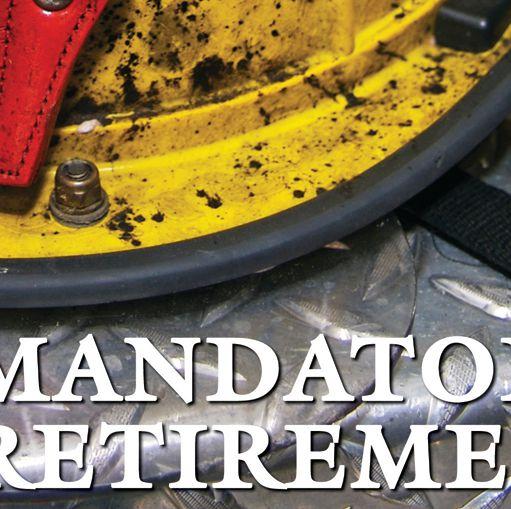
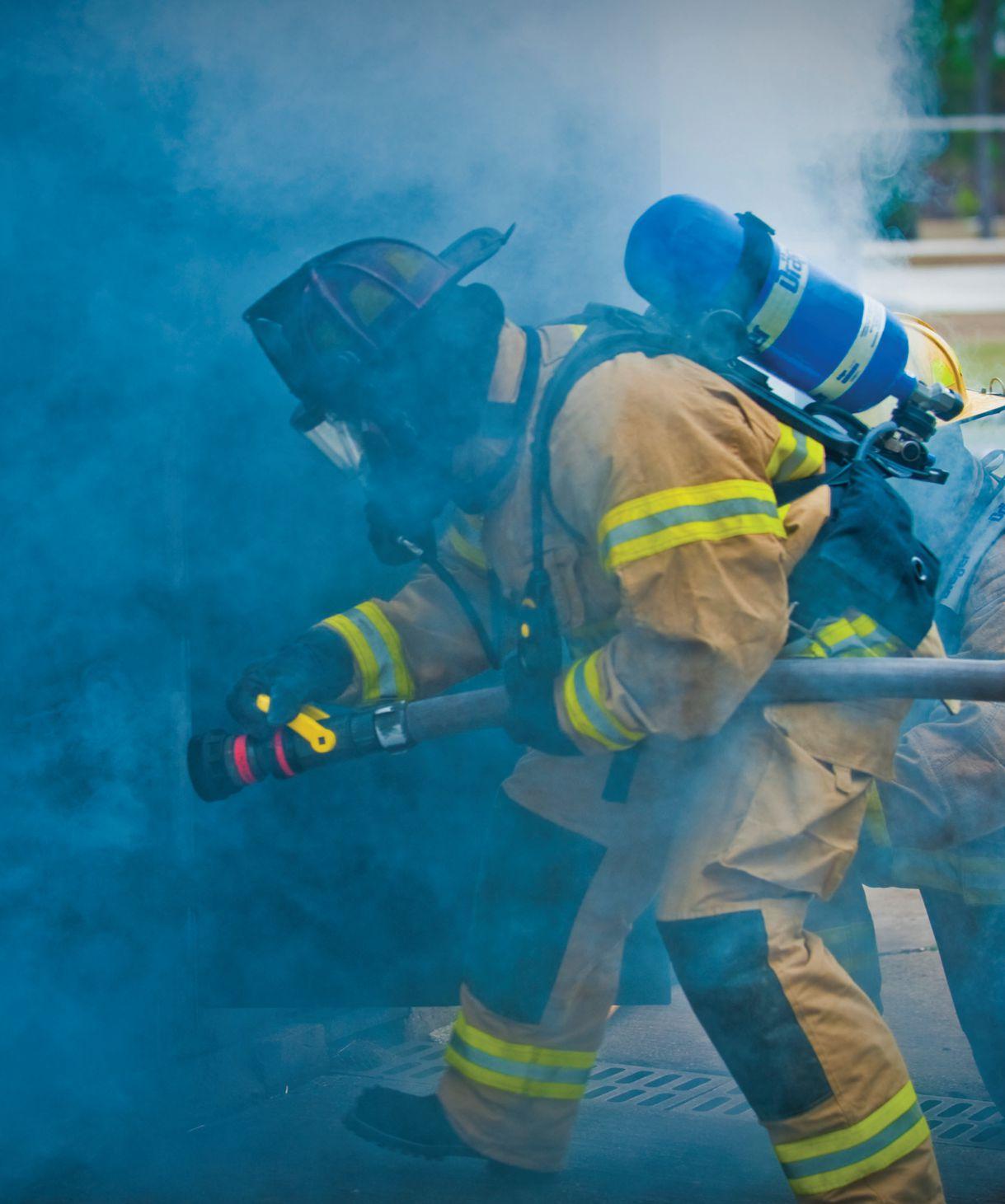
As Ontario grapples with mandatory retirement for suppression firefighters other provinces take note. See story on page 10.
In e-mail conversations after the December fire, Lindsay told me of the heartache in the community over the loss of the young toddler, and of the devastating effect on the department.
On April 21, shortly before we went to press with this issue of Fire Fighting in Canada, there was another house fire in Lynn Lake.
This time, the result inspired, motivated and revitalized the department. The community had every reason to be proud of its department, and a sharp-eyed RCMP officer. That the Mountie spotted the fire at 2 a.m. was just the first miracle that spring morning. The second miracle was that the fire department’s quick response contained
Too often, only the tragedies make headlines. The successes defined by a short sentence in a local news story – “all occupants of the dwelling escaped safely” – don’t do justice to the year-round commitment and effort of small fire departments.
And in that regard, maybe there’s nothing special about the Lynn Lake Volunteer Fire Department. But I’m guessing the residents of Lynn Lake would argue otherwise.
* * *
Our cover story on page 10 dives into the bureaucratic side of the fire service – mandatory retirement. Like so many legislative issues in the fire service, this one seems to be smouldering in Ontario, but with clear implications for the rest of the country.
The fire service, like the rest of Canadian society, is aging as boomers move toward Freedom 55. But as our story explains, the challenges facing the fire service on this topic are complex.
PRODUCTION ARTIST KELLI KRAMER kkramer@annexweb.com
GROUP PUBLISHER MARTIN MCANULTY fire@annexweb.com
PRESIDENT MIKE FREDERICKS mfredericks@annexweb.com
PUBLICATION MAIL AGREEMENT #40065710
RETURN UNDELIVERABLE CANADIAN ADDRESSES TO CIRCULATION DEPT.
P.O. Box 530, SIMCOE, ON N3Y 4N5 e-mail: lmorrison@annexweb.com
Printed in Canada ISSN 0015–2595
CIRCULATION e-mail: lmorrison@annexweb.com
Tel: 866-790-6070 ext. 206
Fax: 877-624-1940
Mail: P.O. Box 530 Simcoe, ON N3Y 4N5
SUBSCRIPTION RATES
Canada – 1 Year - $24.00 (with GST $25.20, with HST/QST $27.12) (GST - #867172652RT0001)
USA – 1 Year $40.00 USD
We acknowledge the financial support of the Government of Canada through the Canada Periodical Fund (CPF) for our publishing activities.
Occasionally, Fire Fighting in Canada will mail information on behalf of industry-related groups whose products and services we believe may be of interest to you. If you prefer not to receive this information, please contact our circulation department in any of the four ways listed above.
All advertising is subject to the publisher’s approval. Such approval does not imply any endorsement of the products or services advertised. Publisher reserves the right to refuse advertising that does not meet the standards of the publication. www.firefightingincanada.com
STATIONtoSTATION
ACROSS CANADA: Regional news briefs
New training centre serves emergency responders
A bit of ingenuity and an infrastructure stimulus fund grant along with municipal funding have transformed a public works garage in eastern Ontario into a training centre that serves emergency services personnel in the Township of Leeds and the Thousand Islands.
The Leeds 1000 Islands Emergency Services Training Centre took off in earnest in early 2010 after the municipality learned that it had been awarded a $1.3 million grant. The balance of the $2-million project was funded by the municipality.
The Township of Leeds and the Thousand Islands is in Leeds County, about 90 minutes south of Ottawa. The population of the township is about 9,500, with a seasonal increase of 25 per cent.
The project involved the conversion of a 4,000 squarefoot public works garage into a four-bay fire hall and emergency personnel training centre. A pond was constructed on site for tanker and pumper
operations and for water and ice rescue training. A twostorey, live-burn simulator unit was contracted for live fire training. The centre also includes a car-simulator unit and an internal roadway network of asphalt and gravel to simulate rural conditions.
The office space has been reworked and expanded to provide classrooms for train-
THE BRASS POLE:
Promotions & Appointments
BRANDON NORTHRUP is the new fire chief/CEMC for the Cramahe Fire Department and Emergency Management operations in Ontario. He has been with the Cramahe Fire Department for nine years and was previously deputy chief. Northrup is trained in CN Rail emergency response and terrorism/hazardous awareness, and is a certified CEMC.
Retirements
TERRY ALLEN retired March 31 after 35 years of service with the Cambridge Fire Department in Ontario, the last 19 as chief.
ing, and showers were added to the washrooms. Emphasis was placed on making the facility as energy efficient as possible; the landscaping was done so that water used in pump/tank operations is channeled back into the pond.
The facility has solid support from the Office of the Fire Marshal, which will initially provide classroom
instruction. Ultimately, the goal is to use trainer/ facilitators from within the Leeds and Grenville fire departments. Preliminary curriculum subjects include a recruit training class, legislation 101, fire-scene assessment, Module A and Module B, firefighter survival, rural water supply operations and emergency traffic control.
Allen worked on the Office of the Ontario Fire Marshal’s professional standards committees in the 1990s and was president of the Ontario Association of Fire Chiefs from 1997 to 2001. Allen received the Alf Stone Award at the OAFC’s annual conference in May for his contribution to the fire service.
TIM BOND retired May 31 after 40 years with the Kemptville Fire Department in Ontario. Bond spent the past 25 years as chief and hopes to go out with a bang,
participating in the Eastern Ontario Firefighters’ Association Games.
SCOTT GRIFFITH is retiring July 1 after 34 years with the Innisfil Fire and Rescue Service in Ontario. He joined the service in 1977 and was promoted to captain/training in 1994 before becoming fire chief in 2000.
RON CORDINGLEY has stepped away from his active duties at the Uxbridge Fire Department in Ontario after 40 years of service.
The new, $2-million Leeds 1000 Islands Emergency Services Training Centre, in a converted public-works garage, includes classrooms and a four-bay fire hall.
Three Ontario fire chiefs were recognized at the closing banquet of the OAFC’s annual conference on May 4 for their contributions to the fire service, their commitments to improvement and their initiative.
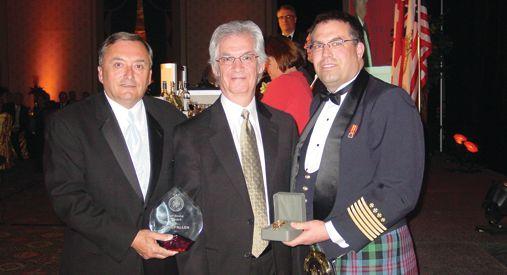
Retired Cambridge, Ont., Fire Chief Terry Allen received the Alf Stone Award from A.J. Stone President Bill Stone and OAFC President Tim Beckett.
In his lengthy and distinguished fire-service career, Allen served four terms as OAFC president, was co-chair of the Ministry of Labour’s Section 21 committee and a director for the CAFC, chaired NFPA’s fire service section and was a director of the Fire Marshal’s Public Fire Safety Council. Allen
retired on March 31 after 35 years in the fire service.
Safedesign Apparel Ltd.’s Don King and Beckett presented retired Fire Chief Bruce Little of Southhampton, Ont., with the 2011 Bill Williams Humanitarian Award. The award recognizes contribution to the community, professionalism and leadership by example. Little is president of the Fire Services Society, which raises funds for burn treatment, fire safety programs and fire- and burn-related educational programs. The society was instrumental in the institution of firefighter licence plates in Ontario.
Fire Chief Phil Eagleson, of the Saugeen Shores Fire Department in Ontario,
received the 2011 VFIS Award for volunteer firefighter recruitment and retention.
Saugeen Shores improved its volunteer retention rate to 100 per cent in 2010 after struggling to recruit and keep
Newfoundland firefighters receive certification
Cavendish, N.L. – Sixty volunteer firefighters from 10 Newfoundland communities gathered in Cavendish, Trinity Bay, in March for a two-day defensive firefighting course.
Training officer Jeff Jackson and firefighter Dean Critch of the Cavendish Volunteer Fire Department taught the course, which included sessions on fire behaviour, PPE, ventilation, protecting fire-scene evidence and several other topics.
Jackson and Critch attended a two-day train-the-trainer program offered by Fire and
Emergency Services (FES) Newfoundland-Labrador in Clarenville in 2009. The two then offered the course to members of the Cavendish department and this year branched out to neighbouring departments including Hant’s Harbour, Heart’s Delight-Islington, Whiteway, Winterton, Green’s Harbour, Harbour Grace, South Dildo, Norman’s Cove and Spaniard’s Bay.
Scenarios included vehicle fires, fuel fires, and simulated chimney fires. A local resident provided an abandoned home
so the group could conduct scenarios using smoke bombs.
The Newfoundland and Labrador Office of the Fire Commissioner (which trains and certifies members of volunteer fire departments and they, in turn, train others) provided the funding for the training.
“The firefighters are eager to learn and having the training easily accessible to them make a big difference,” said Jackson. “We are very pleased with the turn out for the two days and appreciate the inter-
firefighters. A junior firefighter program and other initiatives implemented by Chief Eagleson and his crew have improved morale and boosted interest in the department.
-Laura King
BY
Cordingley says the strong crop of firefighters makes it easier to leave, but he will still help out at the department when he can.
After serving as Quesnel, B.C.’s second-longest serving fire chief and 35 years of fire service, RIC RAYNOR passed the leadership to Sylvain Gauthier on Dec. 31. Raynor started his career as a volunteer in Squamish in 1975 and was hired full time there in 1981. He moved to Sooke, B.C., to be the fire chief in 1992 and
left there in 1998 to become the director of emergency services in Quesnel. He remains a volunteer:
“I started my career as a volunteer and I wish to end it that way too,” he says. Raynor served on many committees and the executive of both the Fire Prevention Officers Association of B.C. and the Fire Chiefs Association of B.C.
Last Alarm
BIRDSALL (BERT) MELICK, died Feb. 12, in his 89th year
after a lifetime of devotion to his community and the fire service. He was a member of the Canfield Fire Department in Ontario, where he served as fire chief for 28 years (Canfield is now Station 5 of 13 stations in Haldimand County).
JAMES (JIM) THOMAS
BANTING, of IAFF Local 2494 in Fort McMurray, Alta., died Feb. 23 at the age of 55 after complications associated with cancer. During his 35-year-career
est shown by these volunteers. Most of the firefighters work seasonally and we are finding that when the training is made available to firefighters during the off season, more will attend and the communities benefit greatly.”
Firefighters who took the course receive certification from FES. To help defray costs of running the course, FES provided refillable extinguishers, foam nozzles, and SCBA cylinders for different types of breathing apparatuses.
-Bob Lynch
with the Fort McMurray Fire Department, Banting progressed through the ranks from firstclass firefighter to lieutenant, captain, platoon captain and battalion chief.
FRANK RYAN, former chief of Mission Fire/Rescue Service in British Columbia, passed away April 4 after a battle with cancer. He joined the Mission Fire/Rescue Service in 1995 and served as chief for 14 years until he became ill in 2009.
Retired Cambridge, Ont., Chief Terry Allen (centre) receives the Alf Stone Award from A.J. Stone’s Bill Stone (left) and OAFC President Tim Beckett.
PHOTO
LAURA KING
STATIONtoSTATION
BRIGADE NEWS: From stations across Canada
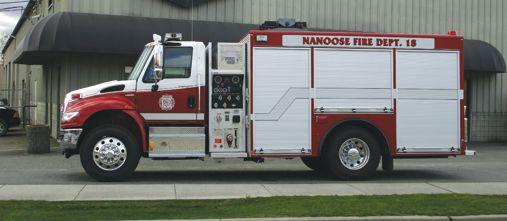
The NANOOSE FIRE DEPARTMENT in British Columbia, under Chief Doug Penny, took delivery in April of a Hub Fire Engines & Equipment-built rescue truck. Built on an International 4400 chassis and powered by an Allison 3000-EVS transmission and a Maxx Force 30-hp engine, the truck is equipped with a Hale AP50 420-IGPM pump, a 400-IG co-poly water tank, Whelen LED light package, 10-kilowatt Smart Power hydraulic generator, Command Light CL607 light tower, Holmatro front bumper and hydraulic tool connections and a Golight remote-controlled spot light.
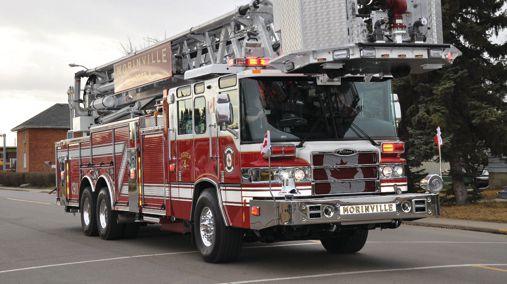
The MORINVILLE FIRE DEPARTMENT in Alberta, under Chief Ron Cust, took delivery in February of a Pierce Manufacturingbuilt 100-foot aerial platform from Wholesale Fire & Rescue. Built on a Pierce Quantum chassis, the quint features a Pierce 100-foot aerial platform, TAK-4 independent front suspension, a 2,000-IGPM pump, Husky 12 foam system with 30-IG foam cell, LED scene lights and seating for six.
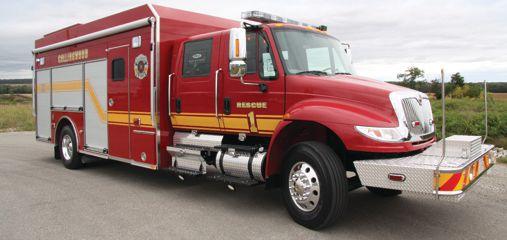
The COLLINGWOOD FIRE DEPARTMENT in Ontario, under Chief Trent Elyea, took delivery in September of a Pierce Manufacturing-built rescue apparatus from Darch Fire. Built on an International chassis and powered by an Allison transmission and a Cummins MaxxForce 9 300-hp engine, the truck is equipped with a command module, slide-out trays, back-up camera and an Onan generator.
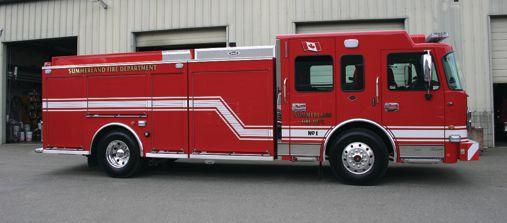
The SUMMERLAND FIRE DEPARTMENT in British Columbia, under Chief Glenn Noble, took delivery in March of a Hub Fire Engines & Equipment-built pumper. Built on a Spartan Gladiator chassis and powered by an Allison 3000 EVS transmission and a Cummins ISL 425-hp engine, the truck is equipped with a Waterous CSUC10C 1,750-IGPM pump, Foam Pro 2002 foam system, 650-IG co-poly water tank, FireCom intercom system, Command Light light tower, TFT Hurricane Monitor and Extenda-Gun and a Whelen Light package.
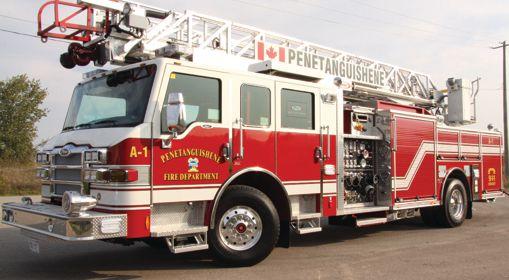
The PENETANGUISHENE FIRE DEPARTMENT in Ontario, under Chief Paul Ryan, took delivery in September 2010 of a Pierce Manufacturingbuilt aerial from Darch Fire. Built on a Pierce Impel chassis and powered by an Allison transmission and a Cummins 425-hp engine, the aerial is equipped with a 75-foot aerial ladder, a Waterous 1,750-IGPM pump, Foam Pro 1600 foam system, a 500-IG water tank, front air bags, side roll protection and tire blow-out protection.
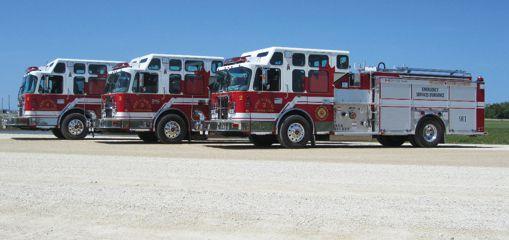
CFB BORDEN FIRE SERVICE in Ontario, under Capt. Neil Anderson, took delivery in April of three Fort Garry Fire Trucks-built rescue pumpers. Built on Spartan Metro Star chassis and powered by Allison 3000 EVS transmissions and Cummins ISC 330-hp engines, the trucks are equipped with Waterous CSU 1,500-IGPM pumps, 800-IG co-poly water tanks, Foam Pro 2001 systems, eight-kilowatt Harrison hydraulic generators, backup cameras and Amdor H20 ground lighting.
NANOOSE FIRE DEPARTMENT
PENETANGUISHENE FIRE DEPARTMENT
CFB BORDEN FIRE SERVICE
SUMMERLAND FIRE DEPARTMENT
COLLINGWOOD FIRE DEPARTMENT
MORINVILLE FIRE DEPARTMENT
Protective Fog Patterns
You Can Count On…
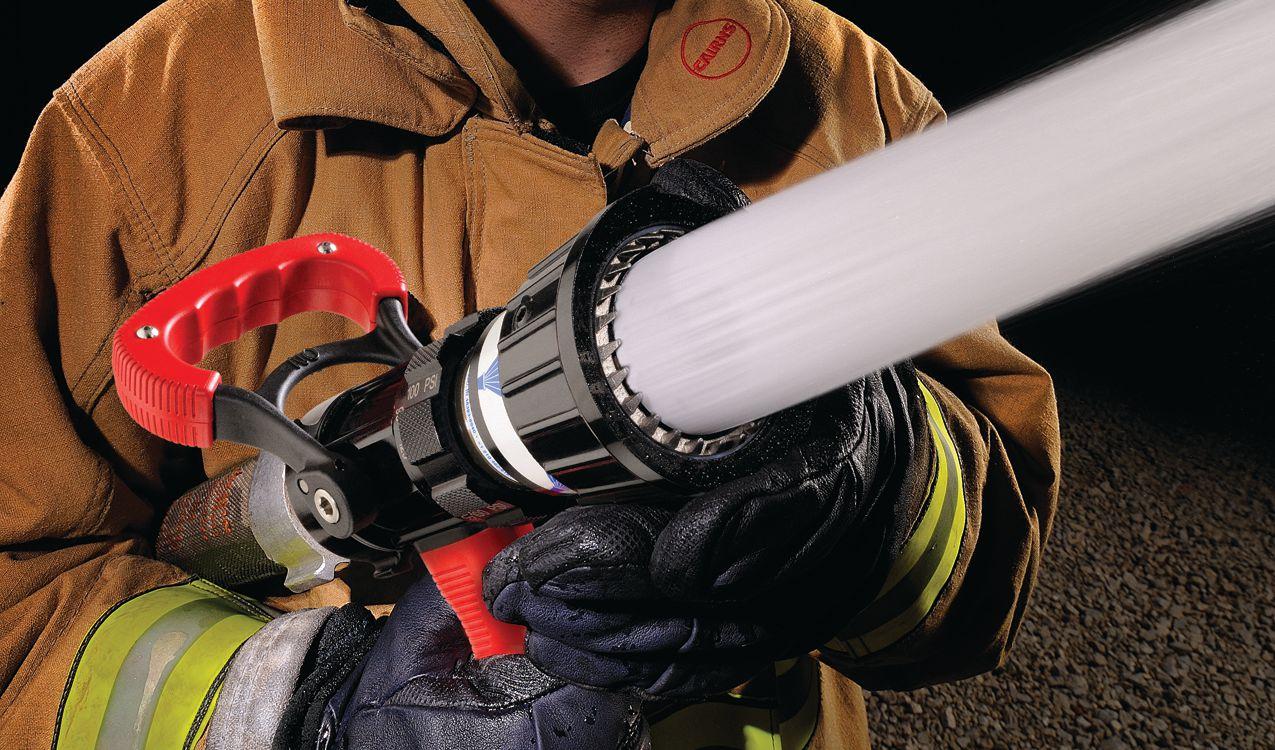
No more bent, broken, or missing plastic teeth degrading your protective fog pattern when you demand TFT’s exclusive investment cast stainless steel spinning teeth.
Whether you choose the METRO fixed, Quadrafog selectables, or Mid-Force automatics the rugged dependability and unique design offers a level of safety found in no other combination nozzle.
To learn more about how you can dramatically improve the protection of your initial attack fire crew, contact your local TFT dealer today.
ThunderFog Nozzle with Stainless Steel Teeth
MA RE
ANDATORY TIREMENT
Health and safety issue or fire-service conundrum?
By LAURA KING
It’s not exactly Freedom 55, but it’s close. Proposed mandatory retirement for suppression firefighters in Ontario is also vexing and frustrating for fire-service leaders who are struggling to understand its implications.
For most career departments, Bill 181 is, effectively, an extension of collective agreements that stipulate a retirement age of 60. According to pension plan statistics of the Ontario Professional Firefighters Association (OPFFA), most career firefighters retire well before that, at around age 57.
But the Ontario Association of Fire Chiefs is on the fence about mandatory retirement; it recognizes the rigours of the job and the impact on older members, and it supports the health and safety aspect of the proposed legislation. It says all firefighters should be treated equally in terms of health and safety, therefore, if working beyond age 60 is deemed by provincial legislation to be a health and safety risk for career firefighters, then it’s also a risk for volunteer – or paid, on-call – firefighters who comprise the bulk of the province’s fire services.
The flipside, says the OAFC, is that extending mandatory retirement to volunteers could wipe out a significant chunk of fire-service expertise and leave departments that struggle with recruitment and retention even worse off.
While the issue smoulders in Ontario, mandatory retirement, like the 24-hour shift, is likely to be closely watched by fire services in other provinces.
* * *
Municipal officials in Otonabee-South Monaghan, a township in southeastern Ontario’s Peterborough County, say extending mandatory retirement to volunteer departments would, over five years, affect 17.5 per cent of its fire service and force out the fire chief, three firefighters, two captains, one captain-fire prevention-training officer and two district chiefs.
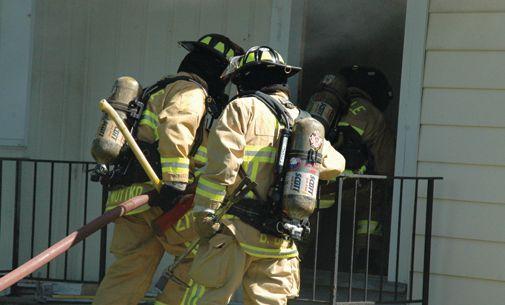
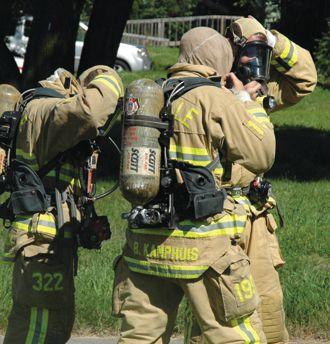
LEFT: Proposed legislation in Ontario does not affect volunteer firefighters but fire-service leaders say volunteers should be treated the same as career firefighters when it comes to health and safety issues.
While no group or association is pushing to extend mandatory retirement to volunteers until there is more clarity on the issue, there’s considerable frustration over equal treatment of firefighters by the province, or the lack thereof. The OAFC successfully lobbied the Liberal government to extend presumptive cancer legislation to volunteer firefighters in 2010 and it says the retirement bill raises a fistful of issues that need far more consideration before it becomes law.
“I can’t give you a clear-cut answer,” says OAFC executive director Barry Malmsten. “It’s a thorny issue and it’s not one that should be driven in a hurry. It has wide-ranging public-policy implications that will become even more serious in the coming years.”
Malmsten says there are several issues connected with the bill including the health and safety of volunteer firefighters, the definition of suppression firefighter, recruitment and retention for volunteer
departments, a potential knowledge gap if the legislation is eventually extended to volunteers, challenges to the retirement age of those who want to work beyond 60 and expect the municipality to fulfil its duty to accommodate them and the cost to municipalities and to the individual firefighters with normal retirement age (NRA) 65 pension plans to convert to NRA 60.
OPFFA president Fred LeBlanc, who worked extensively with the government on the bill, says the health and safety benefits of the proposed legislation are clear.
“We talked to the fire chiefs and they certainly saw some benefits of mandatory retirement,” he said. “This is a good thing for municipalities and for the fire service, and it’s good public policy. We can’t escape ageing, and along with ageing comes the increased risk of a cardiac event, and when you match that up with fire fighting – where there already is a heightened risk – this will mitigate the presumptive litigation liability risk for the municipalities by removing these older firefighters from the emergency-response component.”
The OAFC agrees that older firefighters are more susceptible to cardiac trouble and has a stack of studies to prove it, but it worries about the safety of volunteer firefighters and is in a bit of a conundrum over how best to move the issue forward.
“If it’s a health and safety issue, then a firefighter is a firefighter and it should apply to all firefighters,” Malmsten says. “If it’s a case of physical capability, there’s no difference – career, part time and volunteer firefighters are trained to the same standard, they go to the same fire college, they wear the same bunker gear. If health and safety is the premise, then it should apply to everybody.”
Municipalities and fire chiefs who run composite departments are especially concerned, Malmsten says.
“In composite departments you have career and volunteer firefighters working side by side. In Ontario, we have a strong mutualaid system, so multiple fire departments can turn up and fight the same fire, use the same incident command, talk the same language, and it works. Now, you’re saying that little cluster over there, you’re full time and you’re treated differently than these volunteer firefighters beside you.”
According to an OAFC survey, about six per cent of Ontario’s 19,100 volunteer firefighters are over the age of 60, and 11 per cent of officers are 60 or older. In small municipalities, volunteer firefighters who have retired from their regular jobs are often the only people around to respond to daytime calls, the association says. In career departments, one per cent of the 10,900 full-time firefighters are over 60. Three per cent of officers in full-time departments are older than 60.
“There’s potentially a big, negative operational impact,” Malmsten says. “Our goal is to protect public safety. If you haul 11 per cent of the leadership out, then you’re going to create big problems in some communities. We’re saying, be very careful. What sounds like a high and mighty goal may have negative public-safety impacts.”
The OAFC would prefer that retirement at 60 be permissive – in other words, give municipalities the right to establish a retirement age and entrench it in their collective agreements or their regulating bylaws.
“On the operational side, we’re saying, if it’s a health and safety issue, then you need to treat everyone the same,” Malmsten says. “But on the other hand, the operational impacts might create public safety issues, so let the municipalities decide.”
Under the proposed legislation, municipalities that do not have a retirement age for firefighters in their collective agreements have two years in which to include it. After those two years those that do not include it will be presumed to have a retirement age of 60.
* *
Equally confusing for many fire-service leaders is the definition of suppression. The legislation would apply only to career
firefighters who work in suppression but both the Association of Municipalities of Ontario (AMO) and the OAFC say they’re unsure about which firefighters are considered to be in suppression.
“What about training officers?” Malmsten says. “They’re exposed. What do you do when training officers play suppression roles – they’re incident commanders, they’re safety officers and they’re expected to chip in and do that at a big fire. It’s not that clear cut. In the real world, people cross boundaries.”
The law firm Hicks Morley, which does considerable fire-service work, notes on its website that the amendment to the FPPA specifically applies to firefighters who are “regularly assigned to suppression duties”. Lawyer John Saunders says it’s not clear whether firefighters in training divisions will be included or excluded.
“They are usually involved in the training of suppression firefighters and therefore, may arguably be considered ‘regularly assigned to fire suppression duties,’ ” he says. “It will likely also capture platoon chiefs and district chiefs in suppression divisions. However, it will likely exclude those firefighters in the communications divisions, prevention divisions, mechanical divisions and secretarial positions.”
The OPFFA says use of the word suppression is commonplace in the fire service and is found in other areas of collective agreements such as hours of work and promotions.
“This legislation is pinpointing those firefighters assigned to suppressions – it was very clear to us that we need to keep this legislation very narrow to avoid any type of challenge,” LeBlanc says.
The OPFFA said in response to an alert issued by the AMO to municipal clerks and councils about the bill, that suppression covers those assigned to a suppression division or those who, as a regular part of their duties, are assigned to suppression – for example, a training officer who also responds to emergency calls as a suppression firefighter.
“I think the legislation . . . really did a good job of reflecting the reality in Ontario’s fire service by focusing, right now, at least, on the full-time sector, pinpointing it to suppression, and supporting a collective bargaining component, so it’s allowing the parties to negotiate an age that they feel is best and make sure it matches up with what they contribute to the pension plan, so it hits all the points, and there’s really no faults at all with the legislation that I can find,” LeBlanc says. “From that point, we’re very pleased and very supportive.”
Ontario prohibited mandatory retirement clauses in collective agreements in 2005 but exempted the practice in cases where retirement would be allowed under the provincial Human Rights Code as a bona fide occupational requirement (BFOR). Mandating retirement at age 60 has been a BFOR in Ontario since the 1980s, but LeBlanc said a well-known 2008 challenge at the Human Rights Tribunal by London district chief Edwin Espey served as a catalyst for greater clarity.
Espey opposed mandatory retirement at 60 but the tribunal reaffirmed earlier decisions, noting that “the risks of cardiac events for firefighters are significant and increase with age, in particular after age 60. The risk of an on-the-job cardiac event during emergency response is particularly high.”
LeBlanc says Bill 181 may stand as a model for other provinces looking at the health and safety of firefighters.
“The abolishment of mandatory retirement happened in a lot of places before it happened in Ontario,” LeBlanc said. “It’s pretty common out there to have the bona fide occupation requirement – but doing it this way, doing it specifically under our legislation, the FPPA, is a little bit unique rather than trying to amend the Human Rights Code, where it’s specific to firefighters and specific to suppression firefighters. So, from that point I think Ontario has really taken the lead on this issue.”
BY SEAN TRACEY Canadian Regional Manager, NFPA
F
NFPAIMPACT
Finding additional funds for fire inspections
ire departments across Canada do not seem to place the necessary onus on fire-inspection activities. This may be because city officials lack funding or commitment to see these inspections carried out, or because they may not have an adequate handle on the extent of hazardous processes and facilities in their communities. The benefits of mandatory inspections are not clearly identified in our fire codes or prevention acts. This further highlights the gap between the National Fire Code of Canada and the NFPA 1 Fire Code. The NFPA 1 Fire Code has a specific section enabling local fire officials to charge for permits for most of the high fire-risk operations in their communities. Local fire chiefs should consider implementing bylaws that enable them to charge for permits that, in turn, fund fire-inspection activities in their communities. The examples found in NFPA 1 Fire Code can be a good basis for this.
In 2006, an NFPA needs assessment of the United States fire service found that 25.2 per cent of responding fire departments reported that no one conducts fire-code inspections within their communities. I believe the gap is even greater in Canada. Lack of inspection or negligent inspection practices can result in casualties and fire loss. When a fire occurs, it could be argued that the community approved the high-risk operation but did too little to safeguard or follow up on the fire-code requirements.
In its July 2008 report entitled Measuring Code Compliance Effectiveness for Fire-Related Portions of Codes, the NFPA Fire Protection Research Foundation provides an excellent summary of past research and studies that show how effective inspection programs can be at identifying risks.
The NFPA 1 Fire Code section 1.12 (Permits and Approvals) provides excellent guidance on the requirements for permits and approval of these for high-risk processes. It includes a detailed list of almost 80 hazardous processes that would require a permit, including the nature of the permit required and the reference to the code provision. A sampling of these: storage of aerosol products carnivals and fairs commercial rubbish handling operations cutting and welding operations dry-cleaning plants dust-producing operations storage of flammable and combustible liquids over specified quantities inside and outside storage of tires places of assembly
torch-applied roofing operations
In my opinion, these can be incorporated into a local fire-prevention bylaw and the corresponding fees should be adjusted according to the time and effort the department is required to commit to reviewing the application and conducting the inspection, if necessary. The section also provides excellent guidance on the implementation and management of the permitting process, which includes giving the authority having jurisdiction the right to inspect the property prior to the issuing of a permit.
The argument that these requirements represent an unfair burden on the affected industries can be countered by the fact that international code agencies have recognized that these processes are hazardous and can have a significant impact on other properties and on the community. The permit process also ensures that these hazards are adequately monitored in our communities; effectively, the permit processes can serve as the eyes and ears of the fire-operations division. The inspection process can also result in the identification and mapping of hazards in the community. This, in turn, could support larger community-wide risk reviews, such as those found in Le schéma de couverture de risques, or the latest guideline from the Ontario Office
Lack of inspection or negligent inspection practices can result in casualties and fire loss.
Sean Tracey, P.Eng., MIFireE, is the Canadian regional manager of the National Fire Protection Association International and formerly the Canadian Armed Forces fire marshal. Contact him at stracey@nfpa.org.
of the Fire Marshal, Operational Planning: An Official Guide to Matching Resource Deployment and Risk. This, in turn, would improve the pre-incident planning undertaken in the department. The permit fees would also provide the necessary revenue back to the community to offset the costs of the inspections. Thus, only high-risk users of fire-protection services pay for the enhanced risks and services in the community – not the entire population. Under the Fire Underwriters Survey grading system, all will benefit from improved grading and, thus, lower premiums.
The concept of requiring permits for high fire-risk operations needs to be implemented by the fire service at the local level. The added revenue that this generates can provide the needed funds to operate a vigorous fire-inspection program. Such a program benefits communities through reduced fire losses and minimizes the risks to firefighters.
(All NFPA codes and standards are available online at www.nfpa.org.)
TRAINER’SCORNER
Disentanglement drills
By ED BROUWER
This month we continue to focus on firefighter assist and survival tactics, specifically SCBA entanglement.
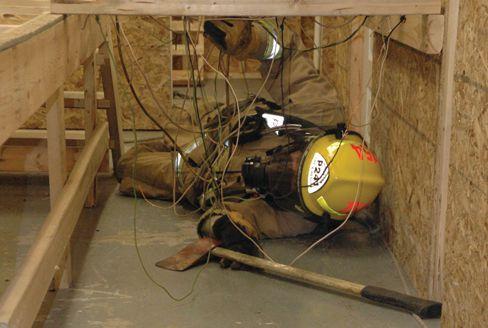
Entanglement in wires, cables or other hazards can be a major challenge for firefighters. An entanglement emergency occurs when a firefighter becomes tangled in debris that prevents his/her freedom of movement, thus creating a potentially life-threatening situation.
Suspended ceiling materials, electrical and telephone wiring, television and computer cables, HVAC flexible tube and aluminum ductwork, store fixtures (such as clothing racks and shelving), industrial machinery with handles and levers and grow-op wiring are potential entanglements for firefighters.
On April 11, 1994, a fire broke out at the Regis Towers Apartments at 750 Adams Ave. in Memphis, Tenn. William Bridges, a private assigned to Engine 7, was searching the ninth-floor hallway for a fellow firefighter when he became tangled in fallen wiring. Bridges became trapped in the wiring and was found unconscious and in respiratory arrest. He died in an open hallway, three metres from a stairwell door, entangled in what was later determined to be television cable.
Take a moment to reread that last line . . .
DEALING WITH A MINOR ENTANGLEMENT
The key to success in entanglement situations is to limit the anxiety of the trapped firefighter. Even the best techniques will fail during panic attacks; remaining calm is the key. Practising entanglement scenarios helps firefighters build confidence and control anxiety should they become tangled.
Step 1: Immediately stop forward motion. Do not keep pushing forward to break the entanglement. Moving forward could tighten the entanglement and make the situation worse.
Step 2: Back up. Making contact with the entanglement without making it worse can be a challenge. After ceasing movement, get on your hands and knees as if you were going to crawl. Gently back up a few inches, enough to relieve tension.
Step 3: Ask for help. Always be sure to notify your partner if you become tangled. Do not become separated from your partner; work together to quickly disentangle.
The Canwest swim method of disentanglement is the opposite of the traditional swim technique; however, we have found it to be very effective.
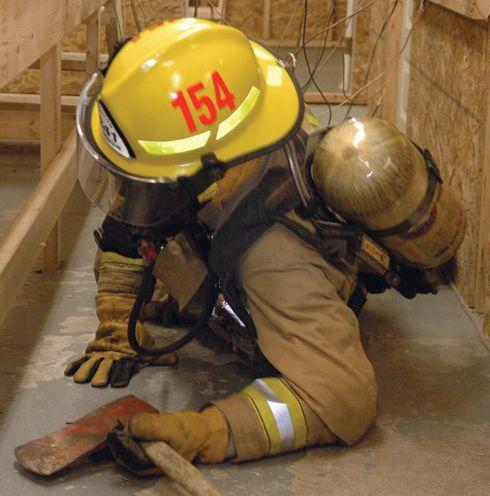
1. In most collapse situations there will be a slight void formed against the wall. Lie on the floor on your side, with your SCBA tank flat against the wall.
2. Using the wall as your guide, start your swim with your gloved hand (palm down) on your hip.
3. Slide your hand up your body, up and over your helmet.
This method deals with the blind spot found over the firefighter’s SCBA air bottle (the profile of the SCBA bottle causes many entanglements and the majority of them occur within that blind spot).
4. With the back of your hand up, sweep your arm from your head in as large an arc as possible back to your hip.
5. Slide your other arm out from underneath you, as far as possible forward, while pushing along the floor with your feet.
Firefighters need to practise moving through entanglements to know how to free themselves from potential debris such as wires, suspended ceilings and cables.
6. Push and lift up any debris out of the way. Avoid grabbing on to objects in an effort to pull yourself forward, as you may inadvertently pull more debris down on yourself, causing further problems.
7. Use the back of your hand to lift and push entanglements out of the way.
8. Repeat until you are free of the entanglement. A good swim technique will result in the stroke finishing well past your helmet.
PHOTOS BY LAURA KING
This time it’s
Flame Fighter® custom bunker gear
Designed for your unique needs
Face it, your department is one of a kind. So when it comes to bunker gear, you’re looking for a tailored solution, not an offthe-shelf compromise. That’s why so many forward thinking departments choose Flame Fighter from Starfield LION.
Flame Fighter incorporates the components you want into a core design that’s already loaded with features. We’ll even work with you to design new ones.
Buying new bunker gear? This time make it personal. Make it Flame Fighter. Call 800.473.5553 for a free brochure or visit www.starfieldlion.com
One of the most important personal survival tools we have found is a side cutter. Side cutters are 24.1-centimetres long with insulated handles. They have an incredibly powerful 5.7-centimetre bite. Almost every firefighter who goes through our entanglement maze goes out to buy the identical pliers (they work that well). The tool should be easy to get to while fully dressed in PPE with SCBA on, and while lying down and tangled. Be sure to experiment with this before you actually need it. The chances of surviving an entanglement are increased if a firefighter knows how to self-rescue.
If you have difficulty removing the entanglement, guide your partner’s hand directly onto the entanglement and have him/her try to remove it.
If you cannot free yourself in 60 seconds, call a mayday. You can always have the rapid intervention team (RIT) stand down should you get free. Try to conserve air, slow your breathing rate and practise skip breathing. Stay calm and resist struggling.
In more serious entanglements, the entangled firefighter may require one or more of the following actions to escape: assistance from partner(s); disentanglement using tools; rescue by RIT; or removal of SCBA.
RIT RESPONSIBILITIES
After locating the entangled firefighter, the RIT officer must check the condition of the victim and the SCBA air supply, keep the victim calm and breathing slowly and determine the seriousness of the entanglement. Remember to notify the incident commander of your findings.
If a firefighter cannot move forward because he is in a confined, irregular space or entanglement material, it may be necessary to reduce the SCBA profile.
1. First loosen the waist harness and then loosen (but do not remove) both shoulder harness straps.
2. Shift the SCBA frame and cylinder by pulling the waist harness.
3. Push on the appropriate shoulder harness and use some twisting momentum to slide the SCBA off to the side.
4. The SCBA can be shifted to the left or right, depending upon the confined space or entanglement situation.
Firefighters should practise shifting their SCBA in both directions while lying, kneeling or standing.
I hesitate to even mention this next procedure because of the dangers surrounding it. The removal of SCBA in order to disentangle for escape should only be considered as a last resort. The SCBA should only be removed IF:
The SCBA cannot be released from the entanglement hazard to allow the victim to escape to safety, or
The entanglement material and/or a confined space will not allow the victim to escape due to the size or profile of the SCBA.
Continued on page 33
Firefighters should practise reducing SCBA profile during training.
PHOTO BY LAURA KING
BY VINCE MACKENZIE Fire Chief, Grand FallsWindsor, N.L.
IVOLUNTEERVISION
Standards for sustainability are a reasonable goal
was honoured to be invited to a summit in Washington, D.C., this winter about the future of the volunteer fire service, hosted by the Volunteer and Composite Officers section of the International Association of Fire Chiefs. As I departed for the United States, I vowed to be as open-minded as possible and to absorb as much as I could. I knew the three-day summit would be interesting but it was also eye-opening.
The 140 participants were divided into groups to deal with nine fire-service issues: capabilities and competencies; community relationships; recruitment; retention; organizational structure; business model and priorities; legislation and regulations; reputation management; and delivery of fire and life safety services. I was delighted to be in the reputation management group. My February column was about that very issue and I was glad that many of my views were confirmed. Most of all, however, I was revitalized by the closing session, when the nine groups presented their respective reports. Some of the ideas presented offered a fresh – and mostly positive – perspective on what the future holds for the volunteer fire service.
One of the presentations in particular knocked me back in my seat. The presenter spoke of national fire service standards and quoted author and U.S. founding father Thomas Paine, who said, “A long habit of not thinking a thing wrong gives it a superficial appearance of being right.” I couldn’t help but think that the volunteer fire service has fallen victim to this habit. All through my career, I’ve understood that the fire service has been measured according to standards set by one group or another. While in my first year as a volunteer firefighter, a change was made to SCBA, switching to positive pressure regulators from demand-only regulators. Because our SCBA didn’t meet the new, safer standard, I remember my volunteer department trying to convert everything right away, because it seemed so important to do so. Yet it still took a budgeting program and a couple of years to comply. I now realize that the fire service has been playing catch-up to one standard or another for my entire career and I don’t expect this will change soon.
or sustainability of the volunteer fire service. National standards are sometimes viewed as irrelevant by volunteer fire services, especially those without the funding to do anything about the standards. It has become apparent over many decades that these measures are unattainable for most volunteer fire departments.
How many of your volunteer firefighters are certified to meet the current 1001, which has been around since 1974? These standards are not law in many jurisdictions but merely guidelines and goals. How many of you (in the volunteer fire service) have reached these goals? NFPA 1720 (Standard for the Organization and Deployment of Fire Suppression Operations by Volunteer Fire Departments) has been in place for 10 years. Do all volunteer fire services now meet this criteria? When the new standard revision comes out, will we all hurry to catch up? Is it even feasible to think we all can?
When has a new edition of a standard lowered the cost of anything? It seems that when new standards come in, costs go up and compliance goes down. Standards have helped us measure our performance and they have given us direction, but have we reached the goal?
Have organizations set these standards with the sustainability of the volunteer fire service of the future in mind? I am positive the
National standards are sometimes viewed as irrelevant by volunteer fire services, especially those without the funding to do anything about the standards. ‘‘ ’’
I am all for progress and safety, but given the context of what was said in Washington that day regarding the fire service’s relationships with standards, I saw deep into one of the fundamental issues surrounding the sustainability of the volunteer fire service.
Please don’t shoot the messenger, but it occurred to me that day that current fire-service standards have not contributed to the growth
Vince Mackenzie is the fire chief in Grand Falls-Windsor, N.L. He is the president of the Newfoundland and Labrador Association of Fire Service, the second vice president of the Maritime Fire Chiefs Association and a director of the Canadian Association of Fire Chiefs. E-mail him at firechief@grandfallswindsor.com
standards are made with the most honourable of intentions, but will we ever see all (or even a good portion) of the volunteer fire service comply. Can small-town Canada honestly be expected to keep up at meagre funding levels, declining enrolment, increased demand? I don’t have the answer; I am asking you the question. If we do aim to reach those goals, then a new source of funding, possibly from all levels of government, better be coming forthwith.
I believe standards should be in place, but I also believe that if they are used to instil change, then our ability to meet the standards should be measured to determine compliance with them. Once that is measured effectively, our respective governments can determine a course of action.
I suspect that after reading this you may be as set back in your chair as I was that day in Washington. Is it time for the fire service to revisit its thinking about standards and instead shoot for guidelines that are formulated with the sustainability of the volunteer fire service in mind?
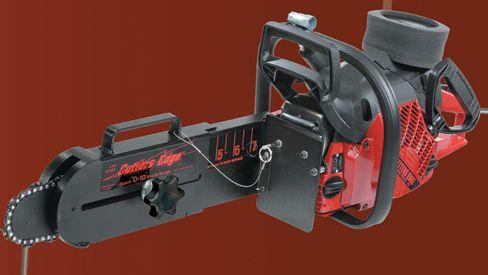
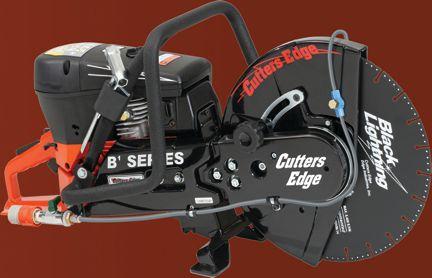
The “Next Generation” Technology of Cutters Edge Rescue Saws are here and are designed and built to deliver 100% reliable, high performance cutting in the most demanding and extreme conditions encountered by Fire and Rescue Professionals.
New 2172 MULTI-CUT® Rescue Saw
The "NEXT GENERATION" CE2172RS features a new technology engine that produces 10% more Horsepower with higher torque! It also emits fewer emissions and is more fuel efficient.
New Gas Powered Concrete Rescue Saw
New Rotary Rescue Saw
The CE807R Rotary Rescue Saw has a new, more powerful 80.7cc engine and a non-slip rubber Full-Wrap Handle for all position cutting.
A new 4-Stage Air Filtration System, incorporating a High Performance K&N Filter as its third stage assures outstanding performance in all cutting conditions. Fully-equipped Sawing Kit is available plus Black Lightning and Black Star Diamond Cutting Blades.
The New CE94CRS Gasoline Powered Concrete Cutting Chainsaw cuts reinforced concrete up to 16-inches thick and cuts it up to 40% Faster with the new CE7COI™ Diamond Chain that features diamond cutting segments on every chain link –up to 30% more diamond cutting surface area in contact with the concrete being cut.
QUEBEC
Areo-Fire 615 Guimoind Blvd.
Longueuil, Qc J4G 1L9 1-800-469-1963
E-Mail: hpicard@areo-feu.com Contact Your Local Cutters Edge DealerFully Equipped Sawing Kits are Available for All Three Models
Challenges and strategies
Ontario fire marshal explains risk-assessment document and next moves
By LAURA KING
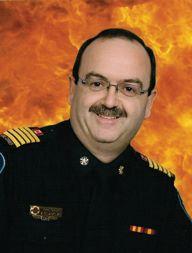
To break the ice, Ted Wieclawek’s first order of business when he spoke to delegates to the Ontario Association of Fire Chiefs (OAFC) conference in May was to clarify the pronunciation of his often-mangled surname: Vinsla-vick.
Phonetics aside, Wieclawek outlined the challenges for the Office of the Fire Marshal and the Ontario fire service. Wieclawek was appointed fire marshal on Jan. 28, 2.5 months after the release of a controversial document called Operational Planning: An Official Guide to Matching Resource Deployment and Risk. The OFM says the document, or workbook, helps municipalities meet the obligations set out in Section 2 of the Fire Protection and Prevention Act (FPPA).
Critics of the document – including the OAFC – say it’s a staffing plan for suppression that doesn’t work without additional resources, such as a forthcoming companion document that deals with fireprevention and public education, and they say the whole package needs further review.
Under section 2(1)(a) of the FPPA, fire departments must complete a risk assessment, one of the four key minimum requirements for fire-protection services. The assessment is to be reviewed and updated to support informed decision making and evaluation of program delivery.
The risk document, as it is commonly known, is a guideline rather than a policy, but the OFM, on its website, “encourages municipalities and fire departments to use it to make informed decisions regarding the delivery of fire suppression services.” (The document can be found on the OFM website at www.ofm.gov.on.ca.)
Fire Fighting in Canada editor Laura King spoke with Wieclawek about the risk document, the soon-to-be-released companion workbook that marries public education and fire prevention with the riskassessment process, and the challenges and successes the fire marshal has experienced so far.
Q: Although you have considerable experience with the OFM, you are just a few months into your new position as fire marshal. Can you talk about the challenges and successes so far?
A: One of the issues for the fire service in general is the challenging economic and fiscal situation that we continue to face, and the implications it has on our ability to maintain and sustain a high level of service.
The challenge is that the public expects the fire service to continue to provide a high level of service when these financial constraints make it increasingly difficult to do so. It will be vital for the Office of the Fire Marshal [OFM] to work positively with municipalities and other stakeholders to determine best ways to achieve this.
Our challenge going forward is to continue our efforts to integrate the three lines of defence: public education; fire safety inspections and enforcement; and emergency response. Ultimately, we want everyone in the fire service to support education, prevention and suppression activities. Ensuring these types of links among all lines of defence will enable us to prevent fires, reduce losses, injuries and deaths, and ensure firefighter health and safety.
Given that public education is the first line of defence, the OFM has developed many excellent programs and resources for the fire service to meet its legislated public-education requirements. The fire service has done a good job achieving the minimum public education requirements. As we move forward there will be greater expectation for municipalities to provide additional services that address local public education and prevention needs. The OFM will provide further guidance to municipalities so they can better determine what additional services they should and can provide.
We’re about to release a document focusing on fire prevention – Operational Planning: An Official Guide to Matching Fire-Prevention Resources and Risk – it will provide guidance to municipalities to determine what additional fire-prevention and public-education initiatives they should be involved in.
The resource has really stimulated the debate about matching your community risk with your department’s existing suppression capabilities to determine if there are sufficient resources. It’s essential for municipalities to determine whether they are providing a level of service that meets the needs and circumstances of their communities.
As fire marshal, I want to strengthen our already positive rapport with stakeholders, including the Ontario Association of Fire Chiefs [OAFC], The Firefighters Association of Ontario and the Ontario Professional Fire Fighters Association, to name a few. In order to be successful in all of our efforts, it’s imperative to work collaboratively with the entire fire service.
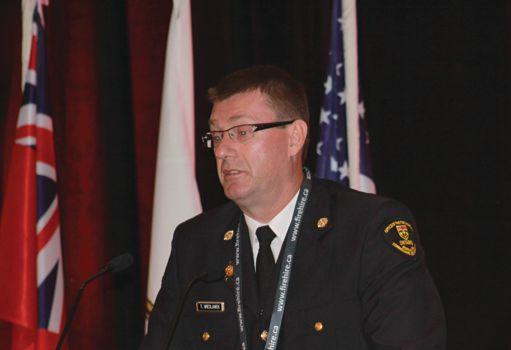
Ontario Fire Marshal Ted Wieclawek speaks to the Ontario Association of Fire Chiefs conference in May about challenges and success during his tenure so far.
KOCHEK® Rural Systems YourSingle Source ofWaterSupply
For example, the document on risk deployment has been released, I have met with OAFC and the Association of Municipalities of Ontario, and will be obtaining some additional input from them to ensure that the document addresses any concerns that they have. I will also be doing that with the companion fire-prevention guideline, and, hopefully, when we’re done, we’ll have two documents that together will achieve an integrated balance of the three lines of defence.
We’re expecting to release [the prevention document] in June for consultation and I’m hoping that municipalities will see how the guidelines can enhance fire safety in their communities.
Q. Can you explain the objective of the risk-assessment document?
Q. Was the public-education document part of the OFM’s original plan or is it the result of consultations with stakeholders who were concerned that the risk document needed additional support?
A. Absolutely we were planning to develop the document; that was under consideration. There is no doubt that the OAFC has been very supportive of its development. I believe, if I understand their position, that to really paint that picture and get a holistic view of the fire service, both workbooks should be applied at the same time to ensure that all available options are considered to come up with final strategies to address the challenges in their communities.
A. The document is based on a risk assessment – the application of a risk model that helps a fire department identify high-risk occupancies by considering factors such as building stock, building construction, and the occupants who may be living in the building. Based on this information, fire departments need to assess their existing emergency response and fire suppression capabilities.
This will also help the municipalities determine whether they need to deploy additional resources that they may have, or seek support from neighbouring municipalities in addressing identified risks.
Having said that, if the municipality determines that it cannot [handle a certain building], or that it may have some limitations, the purpose of the fire-prevention companion workbook is to provide officials with some other options related to the other two lines of defence, which may help them reduce or address that risk, rather than relying on suppression. They can use fire prevention or public education as a way of reducing that risk by using or augmenting some of the mitigating strategies that they have, which may include routine inspections of these buildings and working with building owners to ensure that they are complying with the fire code.
Also – and this goes back to a real opportunity and a challenge we have – they can take the information obtained through the fire-prevention expertise and transfer it and make that link to the suppression side, so that at least if they’re going to respond to a particular building, then the department will be intimately familiar with that building, and they know the types of risk that they’re facing – what we call pre-incident planning.
By looking at their suppression capabilities, the department may realize that they have some challenges. They may need to look to partners such as other municipalities and building owners, or develop fire-prevention strategies to help lower the risk.
A. They are guidelines but I think they raise the bar. There is no doubt that once we have the guidelines out there, and they are supported by our stakeholders, there will be an expectation within the fire service that they be considered and become an established best practice. They’re not mandatory, but certainly they will be something to help municipalities make informed decisions and to help them rationalize and explain how they have reached decisions with respect to the level of service they are providing and how they are providing it.
Q. Public consultations on sprinklers in residences for vulnerable people (i.e., seniors’ homes) ended in March. What is the OFM’s position on sprinklers and the much-discussed mandatory retrofitting of these types of buildings?
A. My position, and that of the OFM, is that we support the installation of sprinklers; we know they can control fire, reduce loss of life, injuries and property. They can limit smoke development and spread and give occupants more time to evacuate and significantly reduce the likelihood of injury and death due to smoke inhalation.
In addition – and this goes back to three lines of defence and that integration – sprinklers can reduce the risks faced by firefighters by controlling the spread of smoke and fire.
Saying that, sprinklers are a valuable component of fire safety, but there are many other things that must be done in order to ensure the safety of occupants and that includes the prevention of fire, early detection of fire, effective evacuation, and pre-fire planning, as we referred to earlier, to support an effective emergency response.
So, while I support the installation of sprinklers, a decision to require sprinklers in specific occupancies is a matter of government policy.
The consultation on fire safety in vulnerable occupancies was completed on March 26, and the expectation is that this will provide government with the information it needs to make that important decision.
Sprinklers have a role but it has to be in conjunction with the other strategies that we have in place.
In 1997, we introduced legislation demanding installation of smoke alarms but we find, 14 years later, that people are still dying in fires in homes where there were no working smoke alarms. That tells me that even though you legislate something, you must ensure that you have the proper public education for awareness, and you must have fire departments out there educating building owners on their responsibilities, conducting inspections, and making sure that smoke alarms are in buildings and working properly.
Legislation, from a broader perspective, is one significant act but you have to do all those other follow-ups and activities to make sure they have the intended impact.
I look at smoke alarms over 14 years – the fire service has done an incredible job promoting smoke alarms and they’re legislated, but it still concerns me, as the fire marshal, that we have far too many people being injured or dying in fires. The common denominator is the lack of working smoke alarms, and that tells me we have far more work to do in educating the public and using tools, such as zero tolerance and the enforcement of the fire code, to make sure that people get the message.
Q. Where does the OFM stand on enforcement of the fire code given that enforcement and the laying of charges against violators is being pushed by certain groups?
A. One of the things that the fireprevention workbook will do is help raise the bar and continue to promote that discussion beyond doing inspections on request or complaint. To meet section 2(1)(b) of Fire Protection and Prevention Act (FPPA), should you be considering other things such as routine inspections of vulnerable occupancies? Should you be considering taking an approach where you rely more on other strategies, such as enforcement and zero tolerance, when you have violations of the fire code that present an immediate threat to life and safety?
If there were a lack of a fire alarm or smoke alarm systems, or an impeded means of egress that is a threat to life safety, then I would say fire departments should be taking an aggressive enforcement approach to rectifying that violation.
I believe the fire service needs to move more towards a zero-tolerance approach to violations of the fire code that pose an immediate threat to life safety, and any of those that fall into that category should be dealt with in an expeditious manner (including prosecution if necessary).
Q. Ontario lost two volunteer firefighters in Listowel in March and there
have been several fire fatalities this year. What is the OFM doing to increase safety for volunteer firefighters and Ontarians?
A. The loss of the two firefighters on March 17 was a tragedy and I’d like to reiterate my condolences to their families, friends and colleagues. I think the answer to this question goes back to what we talked about in the beginning about achieving the optimum balance among the three lines of defence.
I think the answer lies in our investigation. Every time we investigate a fire, we learn something from it that we can use in public education: training, engineering, construction, pre-incident planning or firefighter health and safety. I think, most importantly, these investigations help us to determine how similar fires can be prevented and how we can influence different outcomes.
The investigation is ongoing, but once we get the report, we’ll be better placed to determine what considerations we need to make with respect to additional training, public education, what we can do to help enhance firefighter health and safety, construction, the need for pre-incident planning when responding to these types of fires. We’re hoping that the investigation will provide the information that we need to provide better tools and support to the fire service.
Q. Is there a final message that the OFM wants to get across to stakeholders?
A. I think we have some opportunities to revisit our already strong relationships and partnerships that we have with our stakeholder groups – and also look at nontraditional stakeholder groups. There are areas that I consider to be a challenge to the fire service, groups that may be hard to reach, such as children in the care of the Children’s Aid Society, or older adults. We must work with other ministries in the government responsible for vulnerable groups in the province to identify ways to best protect these groups,
One example is the OFM’s work with the Children’s Aid Society to provide a fire-safety guide for child-welfare professionals who visit homes. The guide includes a checklist about working smoke alarms, safe storage of fire-starting materials, and home-escape planning, and I think this is a responsive, community-based outreach program that will help the fire service provide training to child-welfare professionals. This will enable us to help these people be more aware of the things they should be doing to keep themselves safe.
I think this type of community outreach is an area where we can do some more work with our partners in the community and within government. The program is still in the draft and is expected to be launched in June.
BY IAN CROSBY
Taking cancer prevention into our own hands
hen you choose a career, you must be aware of potential risks associated with the profession. Firefighters are more likely than the general population to develop certain cancers – a risk we all accepted when we became firefighters.
But not every firefighter will get cancer. Experts believe that the higher cancer rates among firefighters are the result of a combination of exposure and genetic predisposition. Although medical progress has led to improvements in the diagnosis and treatment of cancer, prevention remains the best method for decreasing the number of cancer-related deaths. But how do you prevent cancer if your protective gear is insufficient? The answer, of course, is that you can’t. You can only minimize the risk.
Although we take measures to protect ourselves, a 2006 study by the University of Cincinnati suggests that firefighters’ protective equipment is not sufficient to protect them against cancer-causing agents. Researchers found that firefighters are twice as likely to develop testicular cancer and have significantly higher rates of nonHodgkin’s lymphoma and prostate cancer than people in other professions. Overall, the study found 10 cancers that were related to fire fighting. This research is the largest comprehensive study to date and concludes that firefighters need better protection.
But if better PPE isn’t affordable or available, what can we do to protect ourselves? Cancer prevention can be divided into primary prevention and secondary prevention. Primary prevention is aimed at stopping a cancer from developing, and includes avoidance of hazards and behavioural changes to decrease individual risk factors for cancer. The nature of our jobs means that we must accept certain risks. We can’t stop responding to emergencies but we can minimize our risk by wearing all the protective gear afforded to us.
bladder cancer, brain cancer, testicular cancer, prostate cancer, large intestine cancer and skin cancers compared to other workers. Many scientists believe that cancer rates among firefighters would be higher if it weren’t for the healthy-worker effect. Firefighters as a group may be more resistant to disease because they are often healthier than the general population. In addition, cancer may be under-reported among firefighters because many firefighters retire at 55 or 60 years of age, and there is a long latency period for several cancers. As a result, firefighters who are diagnosed with cancer after retirement may not be included in the statistics on firefighter cancer.
Still, even if you do everything you can to protect yourself, there’s always a risk. Fortunately for the fire service, the Firefighter Cancer Support Network (FCSN) is a wonderful agency designed to help department members and their families by providing support and timely assistance in the event of a cancer diagnosis. The FCSN was founded by Los Angeles county firefighter and cancer survivor Michael Dubron. It was started in the United States but extends into Canada.
The FCSN connects newly diagnosed firefighters with cancer survivors who have experienced similar types and severities of condi-
But how do you prevent cancer if your protective gear is insufficient? ‘‘ ’’
Secondary prevention includes techniques that detect early cancer or precancerous conditions so that early interventions can decrease the risk of advanced disease. Medical screening tests are examples of secondary prevention. This is a major reason fire departments need to provide comprehensive medicals for their personnel. How can you put people in harm’s way if you don’t at least provide some safeguards such as medical cancer screening?
Research has demonstrated an increased incidence among firefighters of leukemia, multiple myeloma, non-Hodgkin’s lymphoma,
Ian Crosby is in his 18th year with the Calgary Fire Department and serves as its wellness and fitness co-ordinator. Crosby developed the department’s Wellness Centre, which opened February 2005. He is a member of the IAFF/IAFC/ACE Peer Fitness Trainer (PFT) Oversight Committee and an instructor for the PFT certification program. E-mail him at Ian.Crosby@calgary.ca
tions in order to provide comfort, strength and hope through their own experiences with cancer. The FCSN sends out an information package that includes an array of resources, including a daytimer to keep track of medical appointments and Lance Armstrong’s book LIVESTRONG for inspiration. The organization even provides a list of common questions to ask the medical specialists who will inevitably be dealing with your treatment. The FCSN can also provide assistance, education and support to a firefighter’s family members to help them cope with and understand the diagnosis.
The FCSN doesn’t provide legal or medical advice but it can provide assistance and guidance for other support options such as behavioural health services, fire-service organizations, fire-service chaplains and other cancer support programs. The FCSN collaborates with the American Cancer Society and the Lance Armstrong Foundation. It is a very professional agency that is always in need of volunteers. For more information, visit www.firefightercancersupport.org.
WHERE QUALITY COMES FIRST
Offering: A 2 course certificate in incident command for experienced incident commanders. Please contact our office for more information.
Are you looking to take on more responsibility in your Department? Trying to round out your technical ability with leadership skills? Preparing to advance your career?
At Dalhousie University we offer a three course program, the “Certificate in Fire Service Leadership” to career and volunteer fire officers. The 3 courses Station Officer: Dealing with People, Station Officer: Dealing with New Operations and The Environment of the Fire Station are all offered in each of our 3 terms, September, January and April. The program can be completed in one year.
For more information and a program brochure please contact: Gwen Doary, Program Manager
Dalhousie University Fire Management Certificate Programs 1459 LeMarchant Street, Suite 2201, Halifax NS B3H
Gwen.Doary@Dal.Ca
You
LETTERS to the EDITOR
Dear editor,
Having recently returned from the Ontario Association of Fire Chiefs Annual Meetings and Educational Seminar (AMES), I sat down to read the May edition of Fire Fighting in Canada (FFIC) From the cover story on high-tech tools to the closing Flashpoint column, two themes rang out to me as I perused the magazine: change and safety.
The full spectrum – from equipment to administration to partnerships to code enforcement and organization – are covered and provide an interesting link between the two themes.
BY
MY DEPARTMENT IS: Municipal Full Time Municipal Composite Municipal Volunteer Industrial Military Government
Other (Please Specify Below)
# OF STATIONS IN YOUR DEPT. YOU ARE: Fire Chief Deputy Chief Training Officer Government Personnel Firefighter Fire Protection Officer Mfr./Dist. Libraries/Education
Other (Please Specify Below) YOU ARE: Volunteer Part-Time Paid Full-Time Paid
Date:
It was Peter Sells, in his Flashpoint column, ( FFIC May 2011, page 78) who raised the issue of health-and-safety violations, and the fact that individuals are firstly responsible for their personal health and safety. He referenced a situation in which a firefighter received a burn injury while not wearing the personal protective equipment provided by his employer; the employer was cited for a violation of provincial health-and-safety legislation.
I feel it is important to acknowledge that I am not aware of the full details of the circumstances, but, to me, there sure seems to be a contradiction in those two statements. Based on the information, it appears to me that the employer provided protective equipment that the worker failed to properly utilize – as required by the worker under that same health-andsafety legislation – yet it is the employer’s fault that the worker was injured?
Later in the column, Sells asks if anyone has a solution for eliminating “unnecessary fire ground injuries” and, if so, he asks that they show us the plan. Well, since he asked, here’s a start: Let me take you back a few pages ( FFIC , May 2011, page 58) to Jim Jessop’s piece on code enforcement. If complacency toward fire-code enforcement is leading to unnecessary fire-related injuries, deaths and property loss, then surely parallels can be drawn between failed enforcement of health-and-safety legislation and those who have the greatest control over their health and safety – the workers; this then results in unnecessary worker injuries. Therefore, this may be the place to start: enforce the legislation on workers who violate the legislation, just like it is enforced on the employer.
In cases like this, the inspector has failed by not enforcing the legislation and
Providing proper personal protective equipment is the responsibility of the employer. Wearing it is the responsibility of the employee.
by not taking action against the worker. And if there is no penalty to the worker for failing to comply with the legislation, there is, then, little incentive to comply in the future, or for any other worker to comply, for that matter.
Some will argue that the injury was the penalty. Well, the circumstances surrounding this situation are all too common and, obviously, just knowing that injuries can result from failure to wear proper PPE isn’t working. If this same person had been driving his personal vehicle in a manner that contradicted the law – let’s say 20 kilometres an hour above the posted speed limit – and then lost control of the vehicle, resulting in significant damage to the vehicle and some minor injuries to the person, but no other property damage or persons involved, would the police then say, “Oh, it’s OK, we won’t charge you because you wrecked your car and got hurt?” I don’t think so. So, why is that kind of treatment acceptable for worker healthand-safety violations?
Perhaps a “change” may help to improve “safety”.
Sincerely,
Kevin Foster, Fire chief,
Midland, Ont.
Fire Fighting in Canada welcomes letters to the editor. Letters may be edited for grammar, clarity and length. Please e-mail editor Laura King at lking@annexweb.com
PHOTO
LAURA KING
Continued from page 18
STEPS TO EMERGENCY SCBA REMOVAL:
1. Remove the SCBA unit in the easiest manner available.
2. Keep your face piece on – stay on air!
3. Collect the harness and place it on the back of the tank frame.
4. Move the unit forward and do not lose contact with the frame. Be careful not to dislodge your face piece.
5. Once through the hazard, you have the choice of either completely or partially re-donning the SCBA. Depending on the hazard, distance to safety and remaining air, you may want to simply cradle the SCBA under your right arm while quickly moving to safety.
DISENTANGLEMENT DRILL
During our SOO HOT disentanglement sessions, we often see recruits becoming stressed as they struggle in an attempt to free themselves. Anxiety builds during the entanglement, and after several unsuccessful attempts to free him/herself, the firefighter will attempt to break through the entanglement. Too often, this makes the entanglement worse. Many firefighters are reluctant to call mayday in these training situations.
The proficiency of any firefighter in using SCBA is based on the training he/she experiences. Certain SCBA training drills can improve a firefighter’s proficiency. For example: donning the SCBA while being timed donning the SCBA in darkness donning the SCBA while being timed and in darkness, while listening to orders via radio (and repeating those orders after the SCBA is completely donned)
In this drill, firefighters in full PPE negotiate the entanglement in two-person teams.
1. Setup: Fasten rope, cord or wire in such a way that firefighters, using a standard search technique, will become tangled in the loops that are hanging in their paths. Use salvage covers or shipping pallets to simulate collapse. If you have access to a burned-out box spring, lay it in the path as well.
2. Drill: Firefighters should:
a. Identify entanglement hazards by feeling resistance early.
b. Immediately stop forward motion when resistance is perceived.
c. Initiate swim technique until contact is made with entanglement.
d. Back up slightly until tension against entanglement is relieved.
e. Lift entanglement with back of the hand and proceed underneath.
f. Communicate with partner and pass entanglement to his or her hand.
g. If unsuccessful, have partner assist in disentanglement.
3. The use of tools in this drill is allowed and encouraged. If it takes the firefighter more than 60 seconds to become disentangled, call mayday.
4. When finished, participants should observe others attempting the drill.
Repetition of these types of SCBA drills will develop skills and build confidence when
dealing with entanglement emergencies. In the next issue we will look at wall breach.
Ed Brouwer is the chief instructor for Canwest Fire in Osoyoos, B.C., and the training officer for West Boundary Highway Rescue. The 19-year veteran of the fire service is also a fire warden with the B.C. Ministry of Forests, a wildland interface fire suppression instructor/ evaluator and a fire-service chaplain. Contact Ed at ed@thefire.ca
BACKtoBASICS
Horizontal ventilation
By MARK VAN DER FEYST
In the last two issues, we looked at the benefits of vertical ventilation for fire-ground operations and tactics, and we learned how to make a louvred cut. Sometimes, firefighters cannot make it to the roof because of safety concerns. When this is the case, horizontal ventilation is an option.
The purpose of horizontal ventilation is the same as vertical ventilation: to remove heat, unburned gas and smoke, and replace those elements with fresh air. There are many benefits to horizontal venting, including:
The rapid advancement of hose lines to the fire area.
The goal is for interior attack crews to get to the fire quickly to suppress it – this will eliminate the problem.
Interior crews can move more quickly if they can see better; removing smoke increases their visibility and, therefore, their mobility.
Reduction in the danger of heat and smoke around the hose line.
When water is expelled from a nozzle, it draws air from behind it and therefore draws heat and smoke closer to the hose crew.
Increased visibility on the fire floor.
As crews advance, they will be able to see if there are victims who need to be rescued and removed.
The interior search team can complete a primary search more quickly.
Advancing hose crews can see any hazards on the floor, such as holes, falling debris or stair openings.
There are different ways to ventilate horizontally. One way is to vent as you go. Interior or exterior crews can perform this tactic by taking out windows and using natural air currents. Interior search crews can open or take out windows as they perform their primary search. Exterior crews will take out the windows using pike poles, rooks and ground ladders (or aerial devices for access to upper storeys). The benefits of doing this are the same as those mentioned above, as well as helping advancing the hose line upstairs: taking out a window at the top of the stairs (in a bathroom or at the top of the landing) will allow for quick ventilation of the stairway.
The danger of venting as you go is the possibility of drawing the fire toward the newly created openings. In order to effectively and safely complete these tactics, charged hose lines need to be in place and the interior hose crew and the exterior or interior ventilation crews must co-ordinate their efforts.
Another way of ventilating horizontally is by mechanical means. This is accomplished by using either a negative-pressure or a positive-pressure fan. These devices are used to speed up the venting process inside a structure by enhancing air flow: general air flow created by newer mechanical devices ranges between 2,000 and 9,000 cubic feet per minute. When used correctly and in a timely fashion, mechanical horizontal ventilation can be very effective.
about starting a fan for positive pressure ventilation and be sure to keep dangling straps from a helmet or gear out of the way.
hand at the corners of each door to determine if the cone of air being produced by the fan is surrounding the door opening.
The traditional method of mechanical horizontal ventilation is by negative pressure using smoke ejectors. These types of fans are set up in windows and doorways and are used to draw the smoke, heat and hot gases out from the structure by creating negative pressure within the structure. To aid the process, a window can be opened on the opposite side of the fan to create a wind tunnel. The open window needs to be on the windward side of the building in to take advantage of natural air currents and make the process flow better. To create negative pressure, be sure to enclose the open area around the negative pressure fan with a canvas or
Photo 1: Firefighters need to be cautious
Photo 2: Place an ungloved
PHOTOS BY MARK VAN DER FEYST
plastic salvage cover to prevent air from going back into the structure.
Negative pressure fans can be hung up high in a doorway or in a window, or they can be located down low, resting on the ground or a window frame. Ideally, the fan should be located up high to take advantage of where the heat and smoke will be. Sometimes this is not possible, so putting the fan down low will suffice, although it will take a little more time to ventilate this way. Normally, negative pressure fans are not set
up until after the fire has been suppressed and the main concern is removing the smoke.
The other mechanical way of ventilating horizontally is by using a positive-pressure fan. These types of fans are fairly new and are powered by gasoline engines and electrical motors. The air current created is vast compared to that of a negative pressure fan. Positive pressure ventilation integrated with fire attack is used more than negative pressure.
To set up positive pressure ventilation (PPV) correctly, the fan needs to be placed
in front of a large opening, such as a door. The size of the fan dictates the distance back from the door (six to eight feet is the average). Be cautious about starting the fan; dangling straps from a helmet or gear can get caught in the blades (see photo 1, in which there are no dangling straps). Once the fan is started, make sure it is operating at full throttle. The blades in a PPV fan are designed to produce a vast current. When the current is directed toward a doorway, a cone of air surrounds the door and increases the internal pressure of the structure. Check to see if the cone of air being produced by the fan is actually surrounding the door opening. This is done by placing an ungloved hand at the corners of each door, as seen in photo 2. If you feel the cone of air at each corner, then the fan is placed at the correct distance back from the door. If you cannot feel the air cone, adjust the placement of the fan. Be careful not to jerk the fan around too quickly when moving it closer to or away from the door. The turning of the fan blade creates a lot of force on the axle. When left alone and operating, the fan will spin properly. When it is moved around too quickly, opposite forces will be exerted on the axle and the fan blade can detach from the axle. The housing around the blade is not sufficient to contain a disengaged fan blade.
Nothing Dumps Faster!
Rely on A.H. Stock Manufacturing, the original manufacturer of the
Over 40,000 in use. We’ve been in business for over sixty years, so you can depend on us. That’s why Newton Kwik-Dump Valves can be trusted to get your tanker emptied and on its way FAST. Standard length, Mild Steel and Stainless Steel are in-stock. Need special length valves? Call us and it’s as good as done! Don’t accept look-alikes. Ask for us by name. For prompt, timely delivery, call us today.
Once the PPV fan is in the correct position and is pressurizing the structure, an exit needs to be created near the seat of the fire. The exit needs to be about threequarters to 1.5 times the size of the opening. The opening allows for quick removal of smoke, unburned gases and heat from inside. Systematic removal of the same products from the rest of the structure can be achieved by opening one exit at a time to clear out other rooms. One downside to PPV is that it can intensify the fire by introducing a large amount of fresh air and pushing it in an unwanted direction. This operation needs to be co-ordinated with the interior hose crews to ensure fire growth does not happen.
Mark van der Feyst is a 12-year veteran of the fire service. He currently works for the City of Woodstock Fire Department in Ontario. Mark is an international instructor teaching in Canada, the United States and India. He is a local level suppression instructor for the Pennsylvania State Fire Academy, an instructor for the Justice Institute of British Columbia and a professor of fire science at Lambton College. E-mail him at Mark@ FireStarTraining.com.
To set up positive pressure ventilation (PPV) correctly, the fan needs to be placed in front of a large opening. The size of the fan dictates the distance back from the door.
PHOTO BY MARK VAN DER FEYST
BY PETER SELLS
Saving up for a rainy day
It’s been quite a few weeks for news: the new Conservative majority government; the killing of Osama bin Laden; and record flooding around the Assiniboine, Richelieu and Mississippi rivers. Time will tell if the new government comes through with the tax credit for volunteer firefighters that was in its pre-election budget. With the tenth anniversary of 9-11 coming up, time will also tell if the death of bin Laden makes the world a safer place. What time will tell us about the floods largely depends on how we view time.
OK, that was a bit philosophical. Let me bring it down to earth: In any given period of time, there will be a worst flood, a worst fire, a worst epidemic and a worst mass-casualty incident. If your perspective is limited to an annual budget cycle, you may look back at a dozen or so years of emergency-response costs and plan accordingly. As a council member or mayor, you may think that a three- or four-year election cycle constitutes a strategic perspective. As a fire chief or town manager, a five- or 10-year plan is typical. Chances are, most of us will get through a career or a lifetime of relatively average occurrences. Mother Nature and Murphy, however, have their own ideas about time and probability.
As I wrote this in early May, the level of the Assiniboine River was the highest in recorded history. The 20 municipalities between Montreal and the United States border were experiencing their highest floodwaters in 150 years. We know that in any period of time greater than a century, there will be a worst flood, a worst fire, etc. Now here’s the part that sometimes comes as a surprise, but really should be intuitively obvious: those worst-in-a-century (or even worst-in-a-millennium) events must take place within some 10-year, five-year or one-year time frame. Therefore, regardless of your perspective of time as it affects strategic planning, consideration must be given to preparation for the big one.
not yet suffered a major earthquake?
A similar infrastructure project is the City of Winnipeg’s 1960s-era flood-protection system. An International Joint Commission study on the performance of Winnipeg’s system during the 1997 Red River flood found that:
. . . Winnipeg flood defences worked to the limit of their capacity. Winnipeg escaped the damage that could have occurred if the capacity of the flood protection works had been exceeded, or if there had been failures in one or more of the flood protection structures. There is little margin of error if the City was to face a flood similar to the one in 1997.
If you live in a condo, you probably know that your condominium corporation is required to assign a percentage of the money from your monthly maintenance fees into contingency accounts for major repairs such as roof replacement. This is essentially the same strategy as those illustrated above – putting a little aside for a rainy day. Here’s how you can, and should, do the same, personally and professionally:
Pay yourself first. Your defined-benefit pension plan, if you have one, should not be your only nest egg. Top up your RRSPs every year.
Keep in good physical shape for your 35-year firefighting career.
Would anyone question the $52-million cost of the Dedicated Fire Protection System simply because Vancouver has not yet suffered a major earthquake? ‘‘ ’’
Politicians and emergency planners seem to understand this concept when it applies to majorleague natural disasters such as floods, earthquakes or tsunamis. The City of Vancouver protects its downtown areas with the Dedicated Fire Protection System. The system is capable of flowing saltwater from the ocean in the event that an earthquake compromises the domestic water-supply system. Vancouver’s investment is a great example of preparedness. Firefighters in Kobe, Japan, faced many difficulties during the 1995 quake that caused more than 10,000 breaks in the water system. Should a similar event occur in Vancouver, those challenges illustrate the potential cost to Vancouver had it not taken such prudent action. Would anyone question the $52-million cost of the Dedicated Fire Protection System simply because Vancouver has
Retired District Chief Peter Sells writes, speaks and consults on fire-service management and professional development across North America and internationally. He holds a B.Sc. from the University of Toronto and an MBA from the University of Windsor.
Maintain a tactical reserve of personnel, apparatus and equipment at emergency scenes. It’s better to have it and not need it, than to need it and not have it.
Have a progressive program of professional development in your organization, and use it to develop a proactive succession-planning system.
Flood protection, personal finance, incident management and the death of the man who murdered 343 firefighters: I think that covers enough ground for today. As I wrote this, almost 1,000 Canadian Forces soldiers had been deployed to help deal with flooding in Manitoba and Quebec. Since Toronto is unlikely to experience a snowstorm in the next few months, maybe our Forces can get some downtime after the waters recede. Not to minimize what is happening to Canadian farmers, homeowners and businesses this spring, but wouldn’t it be nice if we had to deploy our Canadian troops only to Brandon, Man., or Saint-Jean-sur-Richelieu, Que.?
A Foam Eductor that Flushes Itself…
With the touch of a button, TFT’s Foam Eductor Series can completely flush all residual foam concentrate ensuring successful injection during the next foam operation.
Offering injection ratios of ¼% up to 6% and flow choices from 60gpm up to 350gpm, these eductors are the ideal choice for all Class A, AFFF, or Alcohol Resistant foam concentrates.
To learn more about how you can dramatically improve and simplify your foam operations, contact your local TFT dealer today.