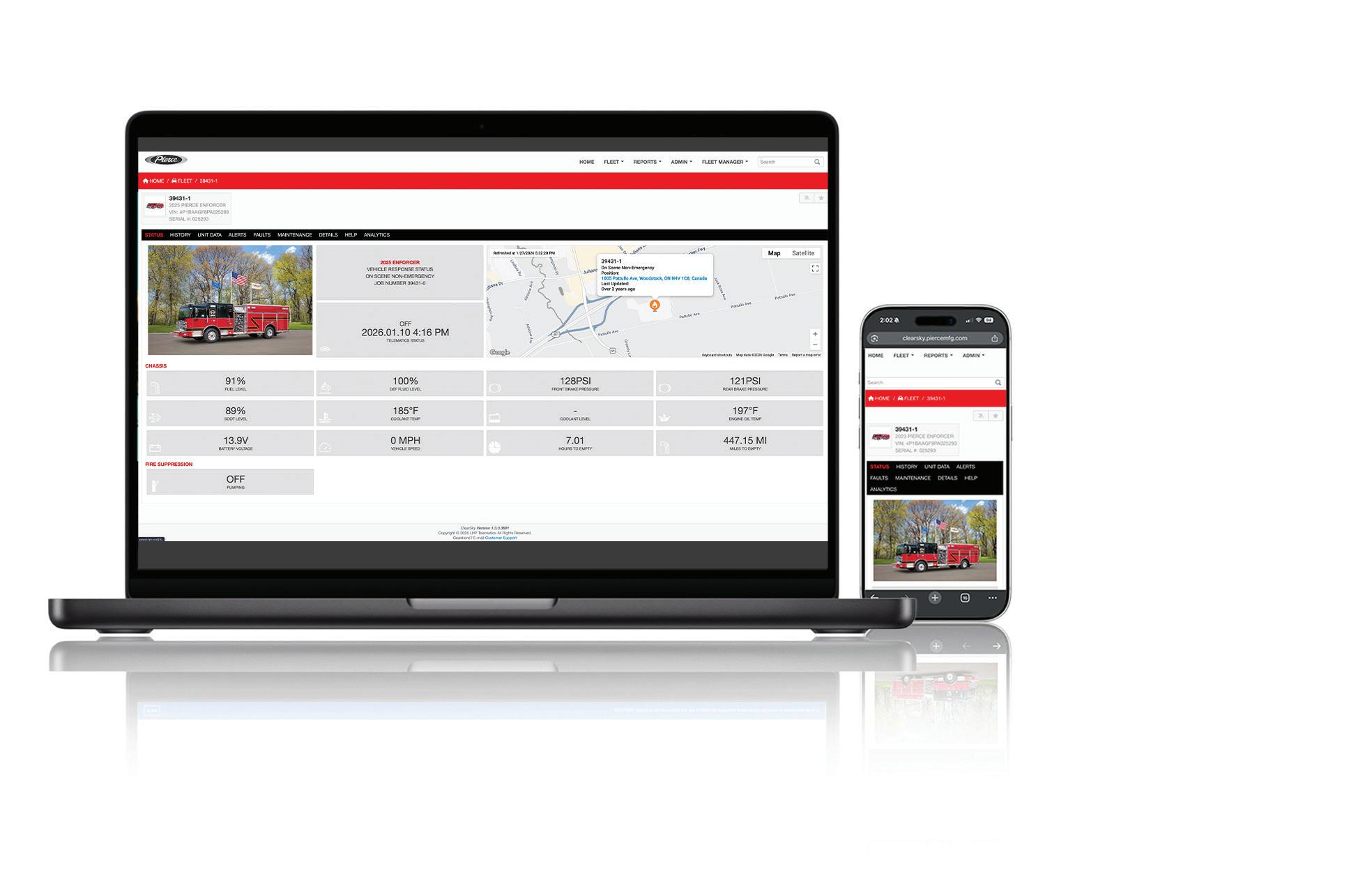
PIERCE® CLEARSKY INTELLIGENCE™ TELEMATICS
SOLUTION EMPOWERS YOU AND YOUR TEAM TO BE EFFECTIVE AND EFFICIENT.
INTEGRATED WITH OPERATIONS SOFTWARE.
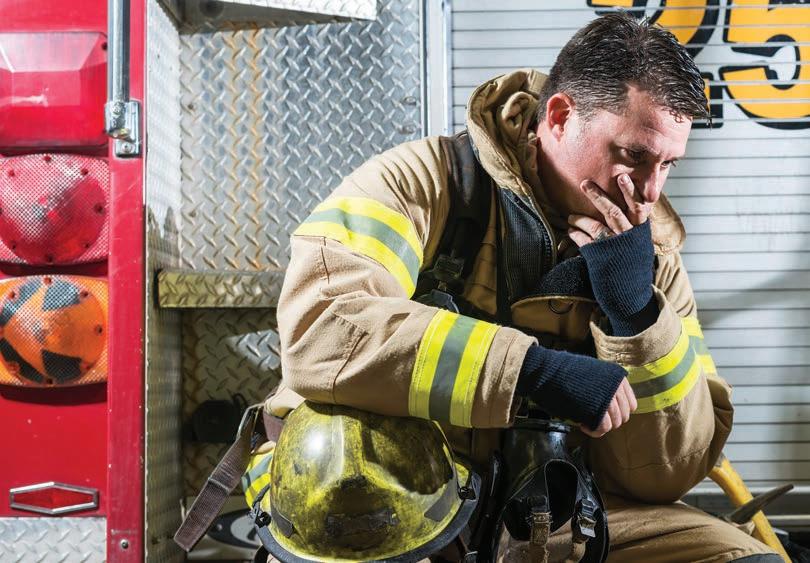
ELEVATE COMMAND ZONE™ BY CONNECTING FIREFIGHTERS WITH THEIR APPARATUS.
DELIVERS INFORMATION AND COMMUNICATION WHEN, WHERE, AND HOW IT’S MOST USEFUL.
ENHANCES DECISION-MAKING, RELIABILITY, AND RESPONSE READINESS.
Khin
A new cost-benefit tool for First Nations fire safety By Jeremy Parkin, Len Garis, Mandy Desautels
EDITOR LAURA AIKEN laiken@annexbusinessmedia.com
ASSOCIATE EDITOR JACOB MUNRO jmunro@annexbusinessmedia.com
DIGITAL EDITOR BRITTANI SCHROEDER bschroeder@ annexbusinessmedia.com
Fax: (416) 510-6875 apotal@annexbusinessmedia.com
Mail: 111 Gordon Baker Rd., Suite 400, Toronto, ON M2H 3R1
GROUP PUBLISHER ADAM SZPAKOWSKI aszpakowski@ annexbusinessmedia.com ACCOUNT COORDINATOR KRISTINE DEOKARAN kdeokaran@annexbusinessmedia.com
BRAND SALES MANAGER BRAD MILLER bmiller@annexbusinessmedia.com AUDIENCE DEVELOPMENT MANAGER
OLECHNOWICZ bolechnowicz @annexbusinessmedia.com MEDIA DESIGNER GRAHAM JEFFREY
JAMIESON
Opinions
magazine are not necessarily those of the editor or the publisher. No liability is assumed for errors or omissions. All advertising is subject to the publisher’s approval. Such approval does not imply any endorsement of the products or services advertised. Publisher reserves the right to refuse advertising that does not meet the standards of the publication. firefightingincanada.com


The survival instinct is real and the stories of human resilience countless. Why, then, do people tend to struggle when it comes to adapting the old adage that an ounce of prevention is worth a pound of cure? This phrase comes courtesy of Benjamin Franklin, circa 1736, talking about fire safety. The fire service has a long and important history in the field of prevention.
Still, sometimes it’s hard to convince others.
This edition’s cover story provides practical ideas for how to make the case with council for funding preventative cancer and mental health programs. This is critical funding. In 2025, Canada saw 52 LODDs from presumptive illness, nine who succumbed to psychological injury, and 4,899 injuries as tallied by the Canadian Association of Fire Chiefs’ annual Great Canadian Fire Census. Of the injuries, 11 per cent are attributed to mental health and four percent occupational illness. Twenty one per cent of the respondents across the nation listed prevention as the most needed investment on the frontline. Considering this, it’s worthwhile to have a conversation about the
collective psychology that may in the room at town council.
There is plenty of research into the field of why people struggle with preventative behaviours at an individual level. Research shows a tendency for us to be impatient about gratification delays, even as we say we value long-term outcomes (look no further than the me versus ice cream debate). Studies show people are more motivated to avoid loss than pursue gains, and when prevention works, its success is invisible and thus not too rewarding. There’s the “it won’t happen to me” phenomenon. Population level risks don’t always translate into personal risk assessment. Social norms and conformity contribute. Research shows it’s more difficult to engage in probabilistic reasoning than that which is certain. Emotional responses can override calculated risk. Implementation barriers, such as cost and access, play a role. In short, lots of head stuff gets in the way of valuing prevention as it needs to be vaunted.
Members of the fire service are, professionally, experts at outwitting these systems
of prevention procrastination. Being proactive saves lives, and they’ve seen the alternative far too up close and personal to ignore it.
But when it comes to council, the fire service approach of prevention requires a more evidence based approach. As Deputy Chief Dallas D’Aoust writes, it needs a case study in certainties. These certainties come from math, dollars to make sense, the backbone for justification. Making future consequences feel present is one of the strategies research has explored to counteract difficulties with proactive thinking. That can mean drawing a line between the numbers; connecting the dots. Emphasizing immediate benefits can’t hurt.
And, it may be of benefit to share with those holding the purse strings, that an “ounce of prevention is worth a pound of cure” has its roots in Fire.
75 %
of fire departments reported feeling that they must change their practices, equipment, and training due to changes in building codes, reported the CAFC’s 2025 Great Canadian Fire Census.

The Manitoba government is investing an additional $11.4 million into its municipal fire services to fund 22 provinceapproved projects

Canucks for Kids donated $1 million to Vancouver Firefighters Charities in January, the largest single contribution the organization has ever received
LAURA AIKEN Editor laiken@annexbusinessmedia.com
Canadian fire departments respond to 2 million calls per year, of which half support the healthcare system, reported the CAFC’s 2025 Great Canadian Fire Census.
CLIMATE CHANGE
Canada’s latest global mean temperature forecast indicates that 2026 will likely be among the hottest years on record

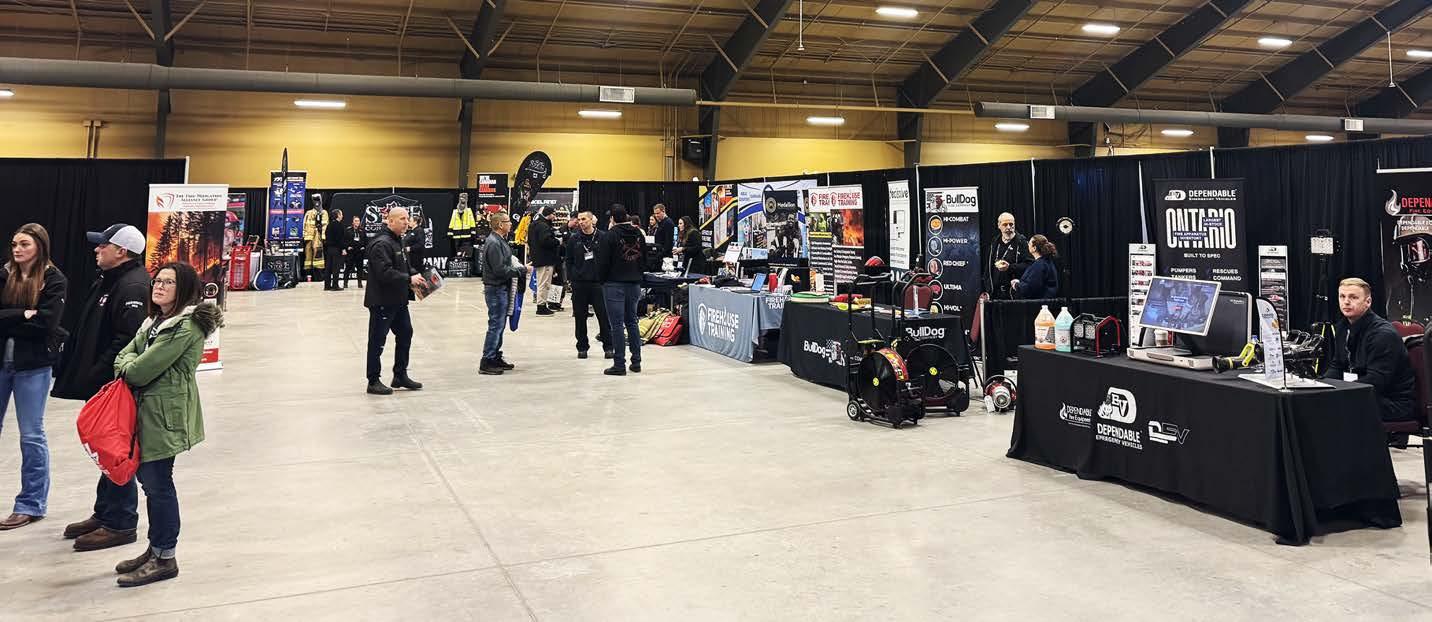
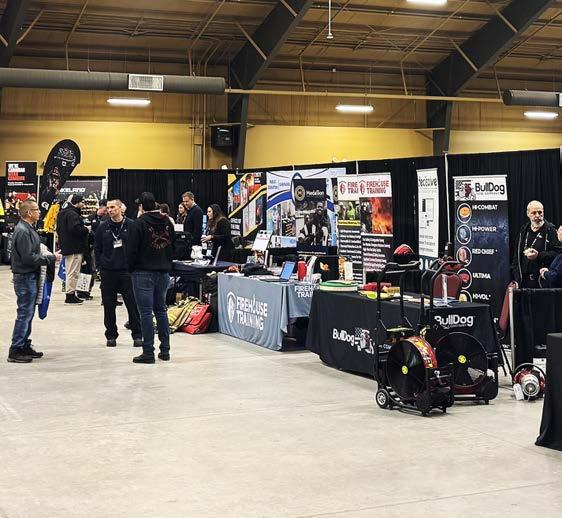
While temperatures outside were bitterly cold, the first ever South Western Ontario Trade Show and Learning Symposium marked its debut with a lively trade show and an insightful educational forum.
Formerly known as the Lambton Fire Trade Show, the revamped threeday event opened with two days of learning at Chatham’s John. D. Bradley Convention Centre. Touted as “tactical, practical, and forward-focused,” the symposium hosted several seasoned fire veterans who all brought their A-game to the speaker’s podium.
South Glengarry Fire Chief Dave Robertson opened the symposium with his “Fire Ground Mindset” talk before the wide variety of chiefs-turnededucators for the weekend provided educational lessons on lithium-ion battery response, residential fire rescue, how NFPA keeps firefighters safe, and much more.
The highlight for this writer was
Inside the John D. Bradley Convention Centre in Chatham-Kent, the new venue for the newly named South Western Ontario Trade Show and Learning Symposium
the fascinating fire chief discussion panel featuring Robertson, Chuck Parsons, Chad Kregar and James Marshall, plus moderator Rick Arnel. In front of an audience of approximately 50 firefighters and fire-industry professionals, the three chiefs discussed important issues that the fire service is facing province-wide including mental health, recruitment, and retention.
During the mental health discussion, Robertson highlighted that there is still a failing point on mental health in the fire service.
“You call the EAP [Employee Assistance Program], and they say, ‘we’ll get you a therapist in three months,’” explained Robertson. “Fire fighting is already a risky job. Part of that risk shouldn’t be suicide.”
On retention, several great ideas were discussed, including Parsons’ retiree strategy that he says is helping both recruitment and retention.
“We let retirees keep their keys and uniforms, and they’re encouraged to stop by the station, chat with the team, wash the truck, whatever,” said Parsons. “They’re obviously not responding to fires, but they often come in to pitch in on trainings. It highlights the community aspect of the job.”
After the symposium ended on Friday, attendees strolled over to the trade show floor, where they were greeted by a smattering of fire gear, including lockpicking tools, jaws of life, lighting packages, and yes, fire apparatuses.
In former smaller Lambton venue, having actual fire apparatuses on the floor would have been out of the question. Not so in Chatham, where the spacious convention centre floor had plenty of space to accommodate the flashy red trucks.
Overall, the show’s debut year was a hit said Warwick Fire Chief Brad Goodhill, a key organizer of the show.
“I am absolutely thrilled with how the first year of the expanded and new South Western Ontario Fire Trade Show and Learning Symposium went in our new venue,” said Goodhill.
“The seminars were also well attended for the first year. I always look to find topics that are directly related to day-to-day operations of the fire department, not only for the chief officers but for the firefighters too.”
The South Western Ontario Trade Show and Learning Symposium will return to Chatham’s John D. Bradley Convention Centre in 2027, when it will run from Jan. 21 to 23.
- Jacob Munro
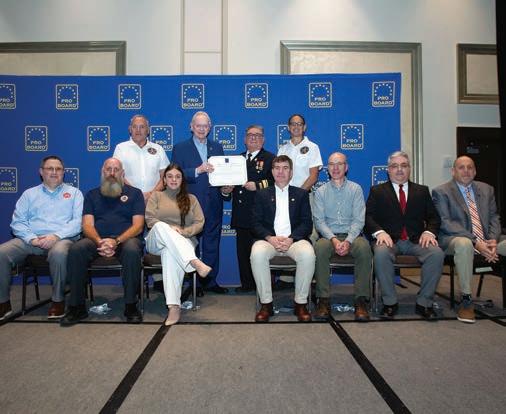
Canada’s National Indigenous Fire Safety Council (NIFSC) has made history in global emergency services in becoming the first Indigenous organization in the world to achieve ProBoard accreditation.
The result of a seven year long process, The NIFSC achieved this feat on Jan. 16 during the 2026 ProBoard conference in Orlando, Fla.
“This milestone belongs to our communities and the team that never gave up,” said Arnold Lazare, NIFSC I/CEO. “For seven years, we worked off the corners of our desks to prove that our passion and resilience could overcome a total lack of resources. This accreditation represents our transition from surviving to leading.”
As an organization that operates without traditional funding, the NIFSC says that this win proves that vision and persistence can overcome systemic barriers.
With the ProBoard accreditation now on its lapel, the NIFSC can now work directly deliver professional, certified firefighting training to tribal councils, Indigenous agencies and communities in a manner that reflects the communities’ unique needs.
“We are now ready to deliver world-class, certified training that is truly ‘for us, by us,’ focused entirely on building capacity and saving lives rather than generating profits,” said Lazare.
The NIFSC works in partnership with Indigenous communities, leadership and government agencies to improve fire safety, management and capacity.
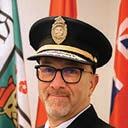
TOM RAEBURN is now at the helm of Richmond Hill Fire and Emergency Services in Ontario. Raeburn joined the department as deputy chief in 2001. He brings 30 years of experience in fire services and over 12 years of experience as a high-ranking fire officer to his promotion.

The Town of Grimsby, Ont., has appointed JIM KAY to be the municipality’s new fire chief. Kay served as deputy fire chief for the Niagara West Fire and Emergency Services, which covered Grimsby and neighbouring Lincoln, since 2022.
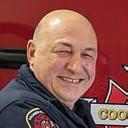
ENZO CALLA stepped into his new role as fire chief of the Coombs-Hilliers Volunteer Fire Department following the retirement of Fire Chief Ron Schildroth. Calla brings over 30 years of experience in fire and emergency management.
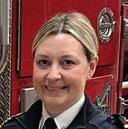
Sault Ste. Marie city council appointed NAOMI THIBAULT as the city’s next fire chief. The first woman to hold the position, Thibault replaced outgoing Fire Chief Peter Johnson, who retired at the end of January.

There’s a new deputy chief in the town of Meaford, Ont. JENNA STEWART officially stepped into the role on January 12. The new deputy fire chief brings 17 years of experience as a volunteer firefighter with her, all with the Saugeen Shores Fire Department.
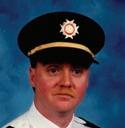
The Village of Point Edward in Ontario said farewell to Fire Chief DOUG MACKENZIE, who is retiring after 45 years of serving the
community with the volunteer fire department. Deputy Chief Rick MacGregor will take on the role of acting chief in the interim.
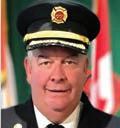
After 33 years of service, Centre Wellington Fire Chief TOM MULVEY announced his impending retirement. Mulvey has served as the municipality’s fire chief since 2021 and will officially retire March 31. Centre Wellington has not yet announced who will step up to lead their fire service once Mulvey retires.

After 25 years of service with the Calgary Fire Department, Deputy Fire Chief BRIAN MCASEY has officially hung up his helmet. His last day was Dec. 12, 2025. Under his leadership, the department graduated over 400 new firefighters – its largest ever recruit training program.
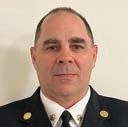
After less than two years at the helm of Thunder Bay Fire and Rescue, Fire Chief DAVE PAXTON has retired. Paxton first joined the local fire service in April 1998 and quickly moved through the ranks. In 2012, he became the duty fire chief, which he served in that role until June 2024, when he took the role of fire chief.

On Nov. 21, 2025, SCOTT DAVIS, manager of emergency management and continuity of operations at Western University, passed away peacefully following an illness, shared his wife Kim Parker on LinkedIn. Formerly, Davis was the director of emergency management and chief officer, regional emergency services, for the regional municipality of Wood Buffalo/Fort McMurray, where he oversaw the COVID19 pandemic response.
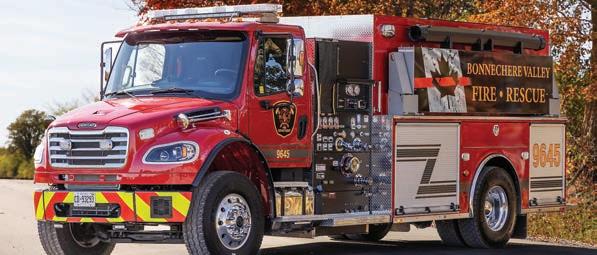
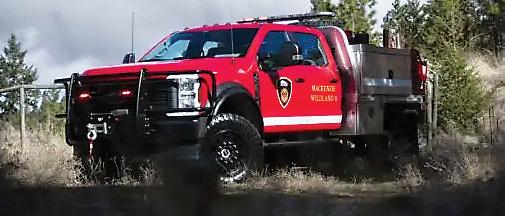
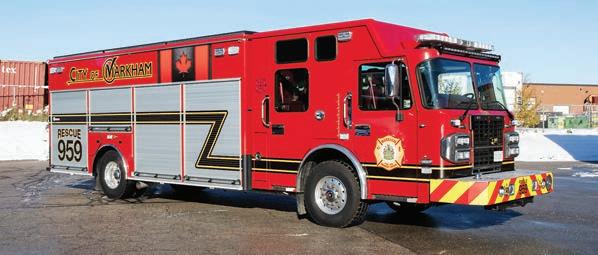
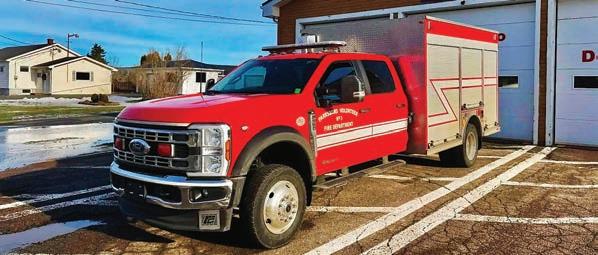
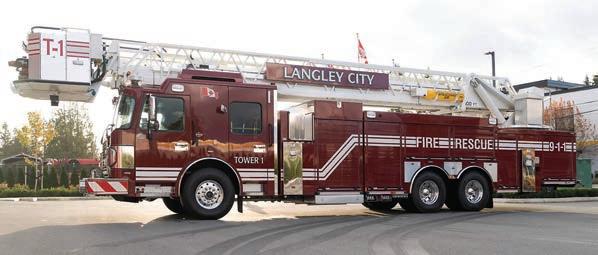
Clockwise SWOX Fire & Emergency Services, Bonnechere Valley Fire Rescue, District of Mackenzie Fire Rescue Department, Markham Fire & Emergency Services, Parrsboro Volunteer Fire Department, Langley Fire Rescue Service
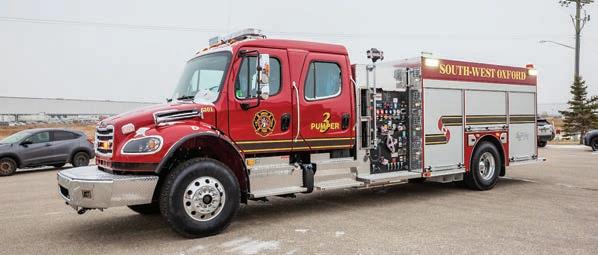
The township of South-West Oxford in Ontario officially took delivery of their new pumper built on a 2026 Freightliner M2-106 chassis from Fort Garry Fire Trucks. It boasts a 375 HP Detroit DD8 engine, Allison 3000 EVS transmission, and a Hale DSD pump rated at 1,250 GPM. Additional features include a 960 US G tank, FoamPro 2001 Type A foam system, Whelen lighting package and a side control pump panel.
The District of Mackenzie, B.C., took delivery of a CEE Work Ready Bush Truck from Commercial Emergency Equipment. The wildland truck is built on a 2024 Ford F-450 4x4 crew cab chassis and features a Ford 7.3 L gas engine, CET/Honda 2.5 inch wildland pump, 10 G cell Scotty ATG foam system, Torqshift 10-speed automatic transmission and pro upgrades to the tank size, compartments, centre console and rear deck hose reel location.
Battleshield has delivered a new pumper tanker to the Township of Bonnechere Valley in Ontario. Built on a 2025 Freightliner M2-106 chassis, this apparatus comes equipped with a 375 HP Detroit engine, Allison 3000 EVS transmission, 1,500 IG Brayneck Canapalst water tank, custom 2.5 inch to 1.5-inch chrome caps, pike pole storage, rear ladder compartment, and a Whelen Emergency light package.
Markham Fire and Emergency Services took delivery of an EVI Rescue Pumper from Safetek Profire. The vehicle is built on a Spartan Metro Star chassis and is outfitted with a 450 HP Cummins L9 engine, Allison 3000 EVS with retarder transmission, and a Hale Side Kick pump package. Additional features include a 300 USG water tank and aluminum modular body.
Fort Garry Fire Trucks delivered a Walk Around Rescue apparatus to Parrsboro Volunteer Fire Department in Cumberland County, N.S. Built on a Ford F-550 chassis and constructed of 5083 saltwater marine grade aluminum, the truck also features a Whelen warning light package, FRC push up floodlights, FMI Suzan carousel for vehicle extrication tools, and Slide Master bi-directional trays.
Safetek Profire delivered a 30M / 100’ Platform, built on a Spartan Gladiator EMFD 10” raised roof chassis, to Langley Fire Rescue Service in B.C. The apparatus boasts a 565 HP Cummins X15 engine, Allison 4000 EVS transmission, Hale QMax pump, a 20 USG foam cell and a 400 USG water tank encased in a 1/8 inch aluminum body.
If your fire department recently took delivery of an apparatus, or you’re a manufacturer or dealer with deliveries to share, please email laiken@annexbusinessmedia.com.


By Dallas D’Aoust, Deputy Fire Chief

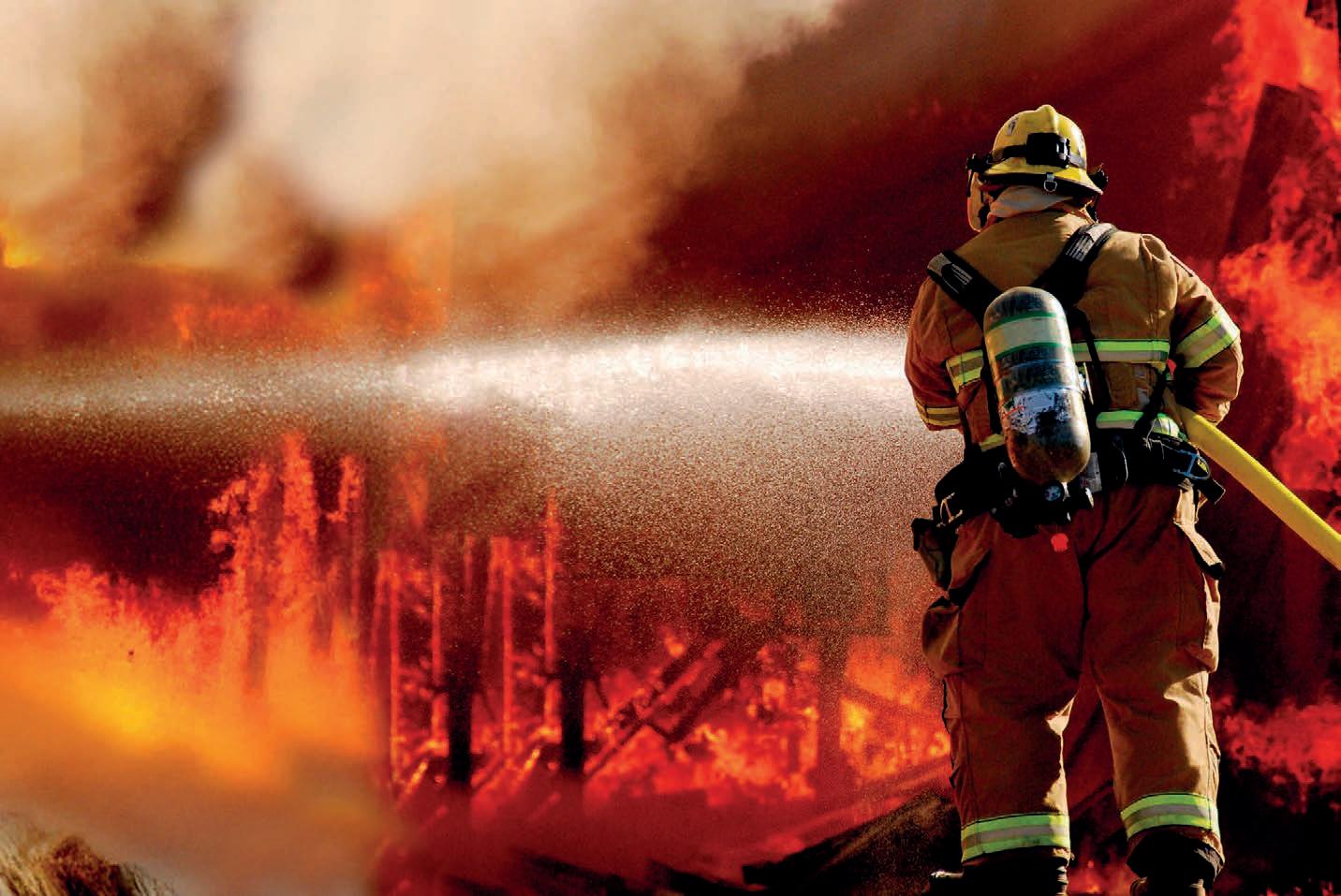
Firefighters are asked to stand between the community and catastrophe. They respond in minutes, even seconds, when the call comes in. But when firefighters need help, real, structured, funded help, municipal systems can move at the speed of spilled molasses.
In an era when psychological injuries, cancer rates, and chronic occupational stress are climbing across the fire service, the gap between what firefighters need and what municipalities are willing to fund is widening. Yet the solution isn’t mysterious. Departments that secure substantial mental health and screening funding don’t rely on luck or charm — they rely on strategy.
This article lays out the real approaches successful departments are already using to get stable funding for mental health services, the right medical screening programs, and early cancer detection initiatives. Because the research is clear: every dollar invested in mental health programming yields a $2.18 return on
investment, shows research from the Mental Health Commission of Canada. That is the kind of math municipal councils can’t afford to ignore. A
And, there’s no polite way to put this: municipal fire departments are dealing with an occupational health crisis. Rates of PTSD, depression, anxiety, and operational stress injuries remain high, and presumptive cancer legislation exists because decades of data show firefighters face significantly higher cancer risk than the general population.
The job is inherently hazardous, and even the best PPE and best tactics don’t eliminate exposure to trauma or carcinogens. Municipalities know this, but knowledge doesn’t automatically turn into action. That’s where the fire service must take a more strategic approach to problem-solving, funding requests and public advocacy.
The truth is simple and uncomfortable: reactive care costs municipalities far more than proactive care, yet many still spend most of their dollars on the aftermath rather than the prevention. If you want funding, flip that mindset before the budget is printed.
There’s an old saying in emergency services: “In God we trust; everyone else brings data.” Municipal councils operate the same way. Emotion matters, but evidence wins.
The most powerful argument at your disposal is cost avoidance. Not cost sharing. Not cost neutrality. Cost avoidance — the money the city won’t have to spend later because you invested a fraction of that amount up front.
Start every funding request with the economic backbone:
For every dollar invested in mental health programming, the return on investment is $2.18.
That return comes from reductions in lost time, long-term disability, medical benefits, workers’ compensation claims, overtime backfill, early retirements, turnover and recruitment costs and operational errors associated with \psychological strain.
When councils hear “mental health support,” they sometimes picture feel good workshops or optional wellness sessions. When they hear $2.18 ROI, suddenly it’s not a feel-good initiative, it’s a financially responsible investment. Never assume your council sees prevention as financially meaningful. You have to show them.
Municipal decision makers are allergic to ambiguity. Whether you’re asking for $20,000 or $200,000, precision and evidence make or break a budget request.
Data you should be presenting:
• current rates of mental health-related sick time in your department
• historical trends showing increases in stress injuries or cancer diagnoses
• comparisons to national or provincial averages to show your department isn’t an outlier, this is a systemic occupational issue
• projected cost avoidance if screening and mental health programming are funded
• case studies of departments that implemented prevention programs and saw reduced compensation claims


Departments that win funding don’t rely on speeches; they rely on charts.
One of the biggest game-changers for departments seeking funding is the ability to point to structured, research-backed tools, not ad hoc check-ins or informal peer support alone.
The Mental Health Monitoring (MHM) app, developed by Dr. R. Nicholas Carleton and his research team, is, from what I have seen, one of the strongest examples available today. The app provides:
• regular mental health self-checks
• long-term data tracking
• early detection of stress escalation
• anonymized daily, monthly, and annual department-level mental health reporting to inform strategic and tactical interventions
• evidence that your programming decisions are data-driven
• proactive recommendations to protect mental health, tailored to individuals and departments
• responsive recommendations to speed up access to evidence-based interventions when needed, tailored to individuals and departments
This matters because councils often wonder, “How will we know this money made a difference?”
The MHM platform gives you the answer in graphs.
The credibility of Dr. Carleton’s team, all leaders in psychological injury

research for public safety personnel, adds academic weight your department can’t replicate on its own. Using the MHM app, or an equivalent, also signals that you’re not guessing what your people need. You’re tracking, analyzing, and intervening based on measurable trends.
You don’t need to be dramatic. Simply lay out the financial math of inaction. Because that math is already dramatic enough. Imagine a firefighter develops an untreated psychological injury that could have been detected early with mental health monitoring or peer-based support programs. Now you’re looking at:
• weeks or months of lost time
• WCB/WSIB claims
• overtime to backfill every single shift
• possible long-term disability
• recruitment costs if they cannot return
• onboarding and training for the replacement
Or consider cancer. A routine early screening program may cost a department tens of thousands annually, depending on size. But a single late-stage cancer claim can cost a municipality hundreds of thousands to millions in direct and indirect costs. Cancer is expensive. PTSD is expensive. Burnout is expensive. Preventative screening programs? Comparatively cheap. Every time a firefighter receives early detection care, the municipality avoids enormous medical, compensation, and staffing costs. Councils understand liability, remind them that health is a form of liability too.
STRATEGY 5: CONNECT HEALTH OUTCOMES TO OPERATIONAL READINESS
Municipalities don’t always “get” mental health, but they do understand things like:
• minimum staffing requirements
• response times
• overtime budgets
• training currency
• recruitment shortages
• public confidence
Frame your funding request in operational terms: “If we want predictable response times, consistent staffing, reduced overtime, and fewer psychological injury claims, then we need to invest in early detection and preventive care.”
Departments that tie health to operational readiness consistently secure stronger funding because councils are forced to acknowledge the full consequences of underfunding firefighter health.
— DON’T FIGHT ALONE
A single fire chief asking for funding is a budget request.
A fire chief plus:
• the union
• HR
• local mental health clinics
• regional cancer agencies
• national fire organizations
• provincial researchers
• family advocates …becomes a political imperative.
Letters of support show that funding is not just a department wish, it’s a community level health priority. Identify allies who can validate the evidence, reinforce the savings, highlight the human impact and acknowledge the municipal responsibility.
Coalitions shift council conversations from optional to expected.
No one likes last minute surprises in municipal budgeting, not staff, not councils, not finance directors, and definitely not taxpayers.
The most successful departments start these conversations during:
• quarterly updates
• council information sessions
• annual performance reviews
• capital planning workshops
• union-management meetings
Give councils months to adjust their priorities, shape budget allocations, and understand the evidence. If you wait until the deadline, your request competes with everything else. If you start early, your request shapes the budget instead of fighting for scraps.
Think of it as fire prevention for politics: you don’t wait until the flames are visible.
STRATEGY 8: CONVERT THE INVISIBLE INTO THE VISIBLE
Mental health injuries are invisible. Early-stage cancer is invisible. Council budgets tend to favour what can be seen — new equipment, new stations, new hires.
Your task is to make the invisible impossible to ignore. Use:
• case studies
• anonymized member testimonials (with consent)
• heatmaps of stress levels from the MHM app
• financial projections
• risk indicators
• provincial cancer statistics
• operational reliability metrics
When municipal leaders see data that clearly links health indicators to organizational performance, they stop seeing mental health as an “HR issue” and start seeing it as an “operational necessity.”
STRATEGY 9: SPEAK THE LANGUAGE OF MUNICIPAL FINANCE
Council members and finance directors don’t think in terms of fire service wellness, they think in terms of:
• liability reduction
• budget stabilization
• long-term cost control
• insurance impacts
• workforce retention
• public expectations
• legislative compliance
Translate your request into their language. For example:
• Instead of “We need funding to reduce burnout,” say “We need funding to stabilize overtime costs and reduce staffing disruptions.”
• Instead of “We need mental health programming,” say “We need a cost-controlled prevention strategy that reduces psychological injury claims.”
• Instead of “We need screening clinics,” say “Early detection reduces future municipal compensation exposure.”
You’re saying the same truths, just in a way that councils understand without a glossary.
Some councils believe mental health care belongs to provincial systems or private insurance. Your job is to correct that belief, firmly but professionally.
Municipalities are the employers.
Firefighters are the workforce.
Occupational exposure is the employer’s liability.
If firefighters are exposed to traumatic events and carcinogens as part of their municipal employment, then the municipality has a duty to prevent, monitor, and treat that exposure.
This isn’t a philosophical point - it’s practical, financial, ethical, and increasingly legal.
A municipality that fails to fund prevention will pay for consequences later, one way or another. It’s cheaper and more responsible to pay early than to pay big. Prevention isn’t a luxury — it’s the only rational path forward.
Municipalities will always face competing budget priorities, but firefighter health shouldn’t be competing at all. It’s foundational to public safety, operational reliability, and municipal financial stability.
The evidence is clear: mental health programming has a $2.18 return on investment; early cancer screening saves both lives and budget; reactive care is dramatically more expensive than proactive care; apps allow departments to track early warning signs and justify continued investment and councils respond best to clear data, financial logic, and
If the fire service wants stronger health funding, we must present these facts relentlessly, strategically, and early. Because prevention isn’t the “nice to have” line item, it’s the most cost effective operational investment a municipality can make.
And if councils truly want firefighters to protect the community, then it’s time for them to invest in
protecting the firefighters.
References:
• Mental Health Commission of Canada. Making the Case for Investing in Mental Health in the Workplace. MHCC, 2013.
• ht tps://www.deloitte.com/us/en/ insights/topics/talent/workplace-mental-health-programs-worker-productivity.html
By Rob Grimwood, Fire Chief, Sudbury, Ontario
It’s not what you know, it’s who you know. We have all heard that saying, but does it have any applicability in the fire service? I think it does.
Without diminishing the importance of what you know, the reality is that if you are not effectively networking and are starting from scratch with every project, decision, and initiative, you’re working from behind.
In the fire service, we pride ourselves on training, teamwork, and tradition. We train until our muscles remember what our minds might forget under stress. We maintain our gear, study our districts, and put countless hours into mastering tactics that save lives. But there is another tool, one less visible and less discussed, one that can strengthen every department and every firefighter who embraces it: networking.
While networking might sound like a buzzword borrowed from corporate culture, in fire fighting it has always been woven into our DNA. Brotherhood and sisterhood are built on relationships, and today’s complex fire environment makes those connections more essential than ever.
No fire department, no matter how advanced, has a monopoly on good ideas. Modern challenges from lithium-ion battery fires, to encampments, to extreme weather events, evolve faster than any one agency can keep up with. Networking bridges those gaps. Whether you are swapping tactics with a neighbouring fire department at a mutual aid meeting or striking up conversation at a conference, every
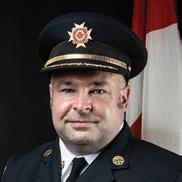
Brotherhood and sisterhood are built on relationships, and today’s complex fire environment makes those connections more essential than ever
interaction expands your understanding. Sharing knowledge saves lives.
The world is full of great leaders and great mentors. In my experience, those who have been successful leaders network effectively and utilize the strength of others. Just within the fire service, think of something as simple as creating a training program, updating a policy, developing a standard operating guideline, or modernizing a smoke alarm program, and remember that there is someone who has done exactly what you have set out to do.
It is inefficient to start projects from scratch and it is ostentatious to think that nobody could do it as well as you. Successful leaders surround themselves with others that can support their work. One of the most important things that you can do is develop a network of people that you can rely on.
In some cases that will be regional or county groups. In other cases, provincial or national associations or perhaps peers that you have trained with. Regardless, you should feel confident when reaching out to other fire service leaders for help, support and guidance.
What they will offer you is not just templates and examples of the work they have completed. They will offer experience, which is something that is so extremely valuable.
In addition to other fire service leaders, consider expanding your network beyond that. Look at other municipal and community leaders, academics, and people with success in other fields.
Networking is not just about swap-
is the fire chief for the City of Greater Sudbury. He also serves on the board of the Ontario Association of Fire Chiefs. Rob can be reached at Robert.Grimwood@greatersudbury.ca.
ping stories; it is a professional development tool. Firefighters who invest in relationships outside their station gain exposure to new opportunities, new ideas, and potentially new career paths.
Mentorship often begins with a simple conversation. A chief who remembers your initiative at a workshop, or a captain you trained beside at a regional academy, might later become the person who opens a door for you onto a specialty team, a leadership role, or even a future department.
As fire departments grapple with recruiting challenges, modernization, and evolving community expectations, innovation becomes essential. Networking accelerates that change. Exposure to different models, volunteer-retention strategies, community risk reduction programs, fire prevention outreach, or diversity initiatives can empower fire departments to adapt. When chiefs and firefighters stay connected to the larger fire service conversation, they return home with fresh ideas and renewed energy.
Fire fighting has always been a team effort, but today that team extends far beyond the walls of any single station. Networking is not a luxury; it is a force multiplier. It enriches our knowledge, strengthens our operations, builds our careers, protects our mental health, and unifies the fire service as a whole.
We fight fire together. We grow stronger together. And with every connection we make, we become better prepared for the challenges waiting behind the next set of tones.

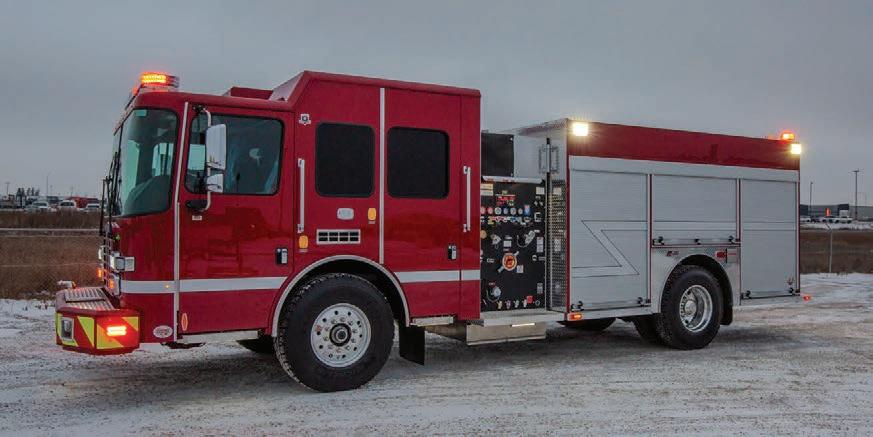
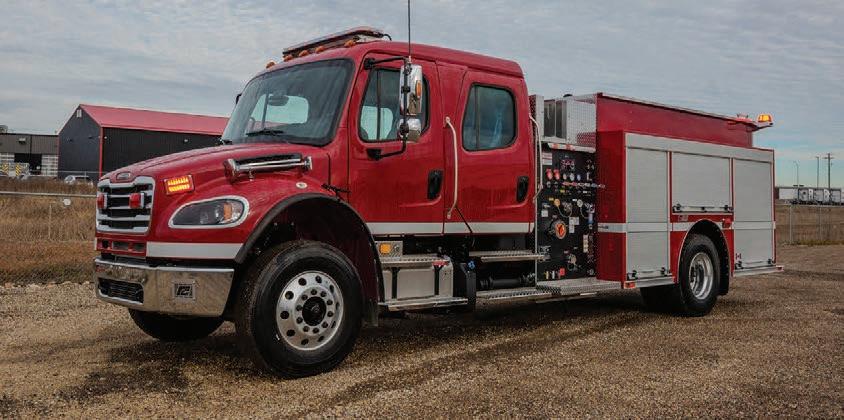
When timing matters and a ready solution is required, Fort Garry Fire Trucks currently has a selection of brand-new fire apparatus that are fully built, inspected, and available for immediate purchase and delivery. These units are complete and ready to be placed into service, offering departments a rare opportunity to secure new apparatus without extended production timelines.
This available lineup includes proven Fort Garry Fire Trucks configurations designed to support municipal, combination, and volunteer departments facing fleet transitions, operational gaps, or immediate replacement needs. Current availability includes custom-built Emergency Rescue pumpers on HME cab-over chassis with both enclosed and open pump house layouts, a
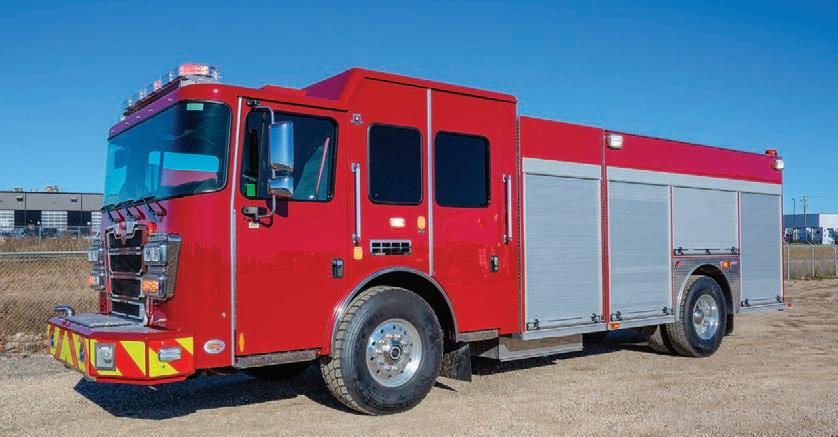
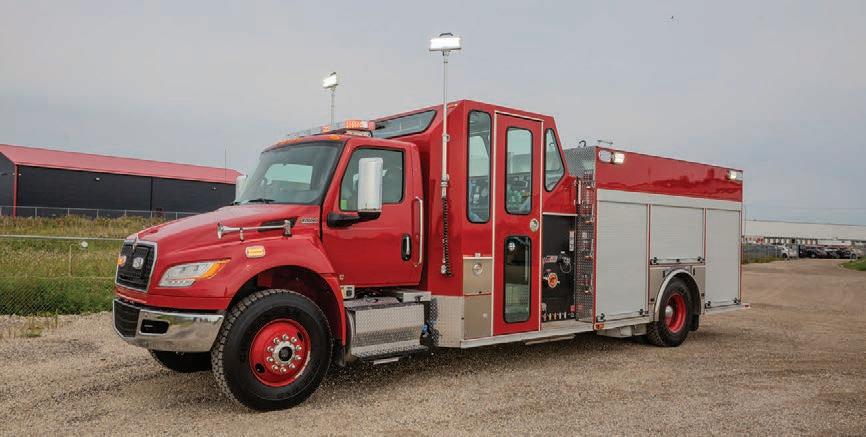

commercial Emergency Rescue pumper featuring a top-mount enclosed 4-man crown pump configuration, and a Crusader pumper built with formed aluminum body construction. Each apparatus is engineered and built with the same standards, craftsmanship, and attention to detail found in every Fort Garry Fire Trucks build.
From structural response and rescue operations to demanding frontline service, these trucks reflect practical, field-driven design using trusted chassis, pumps, and components relied on by departments across North America. Every unit is configured to balance capability, reliability, and ease of operation, allowing crews to focus on the task at hand when it matters most.

If your department requires a dependable fire truck that can be delivered now, these available units provide a practical and efficient solution. Scan the QR code to view detailed specifications, photos, and configuration information for each apparatus currently available.
For availability, pricing, or delivery details, call 1-800-565-3473 or visit the Contact Us page at www.fgft.com to connect with a Fort Garry Fire Trucks sales representative.
FORT GARRY FIRE TRUCKS — ONE TOUGH TRUCK. BUILT TO SERVE.
By Len Garis and Erik Dorff
Statistics Canada is spearheading a new initiative as part of the Government of Canada’s National Framework on Cancers linked to Firefighting in partnership with Health Canada and the fire fighting community to create a Canadian Firefighter Cancer Registry, a comprehensive database of Canada’s career and volunteer firefighters integrated with the Canadian Cancer Registry. This project is a crucial step in addressing the high rates of cancer linked to firefighting.
The Canadian firefighter cancer registry project has received funding of $3.47 million over four years, with an additional $0.2 million in ongoing funds. The primary objective is to develop and maintain a registry that could include structural, wildland, airport and military firefighters. By collaborating with various stakeholders, Statistics Canada aims to create a registry that will facilitate large-scale studies on firefighter cancer, long-term health implications, and the effectiveness of interventions. The registry also seeks to have the capacity to disaggregate data to support detailed analysis of specific groups, such as women and Indigenous firefighters.
As Canada’s national statistical agency, Statistics Canada operates under the Statistics Act, which enables it to collect data through censuses, surveys, and administrative data sources while legally protecting the confidentiality of data. Statistics Canada’s mandate is to provide high-quality statistical information to Canadians. However, it’s important to note that Statistics Canada does not create policies and programs; instead, it provides data and data-driven insights in order to support evidence based decision making.
Statistics Canada has a wealth of data that can be integrated with the firefighter registry and used to support research on firefighter health. This includes data from various sources, such as:
• Census: Both the short-form census (covering 75 per cent of the population) and the long-form census
(covering the remaining 25 per cent).
• Survey data: This includes self-report surveys such as the Canadian Community Health Survey (CCHS), as well as physical, biological, and crowdsourced surveys.
• Administrative data: This is a rich source of information, including vital statistics (births, stillbirths, and deaths), the Canadian Cancer Registry (CCR), hospital records, and income data from tax records. Data linkages, such as with the Canadian Census Health and Environment Cohort (CanCHEC), also provide integrated insights.
The Canadian Cancer Registry (CCR) serves as an excellent model for the firefighter registry. Established in 1992, the CCR is a partnership between the 13 Provincial and Territorial Cancer Registries (PTCRs) and the Centre for Population Health Data at Statistics Canada. The PTCRs collect and submit cancer case data, which Statistics Canada then cleans, analyzes, and disseminates. The objective of the CCR is to produce standardized and comparable cancer data that assists health planners, decision-makers, and researchers in identifying risk factors, planning and evaluating cancer programs, and conducting research.
The CCR’s value is enhanced by its ability to be linked with other datasets at Statistics Canada, such as census and tax data, which provides deeper insights into factors associated with cancer incidence and survival.
A powerful example of the CCR’s impact comes from a study showing that
jurisdictions offering breast cancer screening to women aged 40 to 49 had higher 10-year net survival (84.8 per cent versus 82.9 per cebt) and more favourable stage distributions than those that did not. This research has contributed to the public discourse about access to breast cancer screening in Canada, providing insights to women and health care practitioners as well as enabling discussions on risks for breast cancer and the health outcomes associated with early screening. This research has also contributed to advancing the body of evidence that has informed policy makers’ recent decisions to revise breast cancer screening guidelines in the provinces of Alberta and Ontario. These examples highlight the potential of a firefighter registry to produce impactful, data-driven insights.
Statistics Canada is committed to advancing collaborative insights, including expanding on breast cancer research, applying the same data-driven approach to other cancers like prostate cancer, and creating the firefighter registry. To ensure the registry’s success, Statistics Canada is seeking to understand the key challenges and objectives of stakeholders. They are looking to identify the problems that the registry should address, such as data gaps in occupational cancers, tracking exposures, or improving prevention strategies. To move forward, it will be essential to define the pathways to success, including identifying key players, necessary insights, data gaps, and potential contributions from different groups.
This includes considering other successful registry models from different sectors or jurisdictions and prioritizing elements to create a cohesive and effective data ecosystem.
Developing a Canadian firefighter cancer registry is a significant and necessary project. This initiative, built on a foundation of collaboration and data-driven insights, has the potential to make a profound and lasting impact on the health and safety of Canada’s firefighters. We are in the process of reaching out to stakeholders in the firefighter community. Please contact Statistics Canada (statcan.cfcr-rccp.statcan@statcan.gc.ca) with questions or to discuss further.
Erik Dorff is the chief of the Canadian Cancer Statistics Program at Statistics Canada. In this role he is a member of the executive for the Canadian Council of Cancer Registries, a delegate on the High Level Strategic Group of the North American Association of Central Cancer Registries and is the project manager in charge of delivering the firefighter cancer registry project. Contact him at Erik.Dorff@statcan.gc.ca.
Len Garis is a senior advisor at the Canadian Centre for Justice and Community Safety Statistics at Statistics Canada, retired fire chief for the city of Surrey, B.C., associate scientist emeritus with the B.C. Injury Research and Prevention Unit, and research associate – Community Heath and Social Innovations Hub, University of the Fraser Valley. Contact him at Leonard. Garis@statcan.gc.ca or lwgaris@outlook.com.



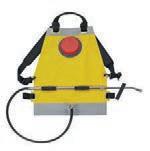
By Kirk Hughes, Director of Protective Services and Fire Chief
The glistening snow on the ground and the promise of spring may seem like a distant, but hopeful, image. But the reality is, it won’t be long before we’re back into another wildfire season.
The last few years have been extraordinarily busy for municipal fire departments across Canada with requests coming from provincial and territorial governments for additional assistance centered around the need for structural protection and trained personnel to assist with tackling wildland urban interface fires. With the rise of external assistance requests, and the utilization of assets in response to large-scale wildfire operations, now is the time to prepare for future deployments.
Once wildfire season officially winds down, and routine operations resume, the time for proactively evaluating the previous year should start with a solid debrief. Deployed crews should be asked to submit recommendations for the coming season, with rationale on what worked and what could be addressed. Interviews are not a bad idea either, allowing executive officers to engage in meaningful dialogue. Even if that is limited to discussions with the crew leaders, the feedback on both the operational and administrative side is of paramount importance if the goal is to be better prepared for the next cycle of operations.
Another key factor is to ensure that deployed apparatuses, whether that be reserve or frontline trucks, have a detailed inventory attached to them, with emphasis on needs and requirements for extended operations. For example, in the province of Alberta, it is advisable that responding personnel be “self-sufficient for a minimum of three (3) days”, which includes water, food, bedding and shelter. That means, if a truck is deployed, it best have these provisions accounted for and stored on the rig. Since this is an unusual thing for all municipal fire apparatus to place on a truck, having a deployment inventory list of items that need to be added to a departing truck is preferable.
Proactive measures must not to be overlooked either. Staging of additional wildfire equipment to be added to a
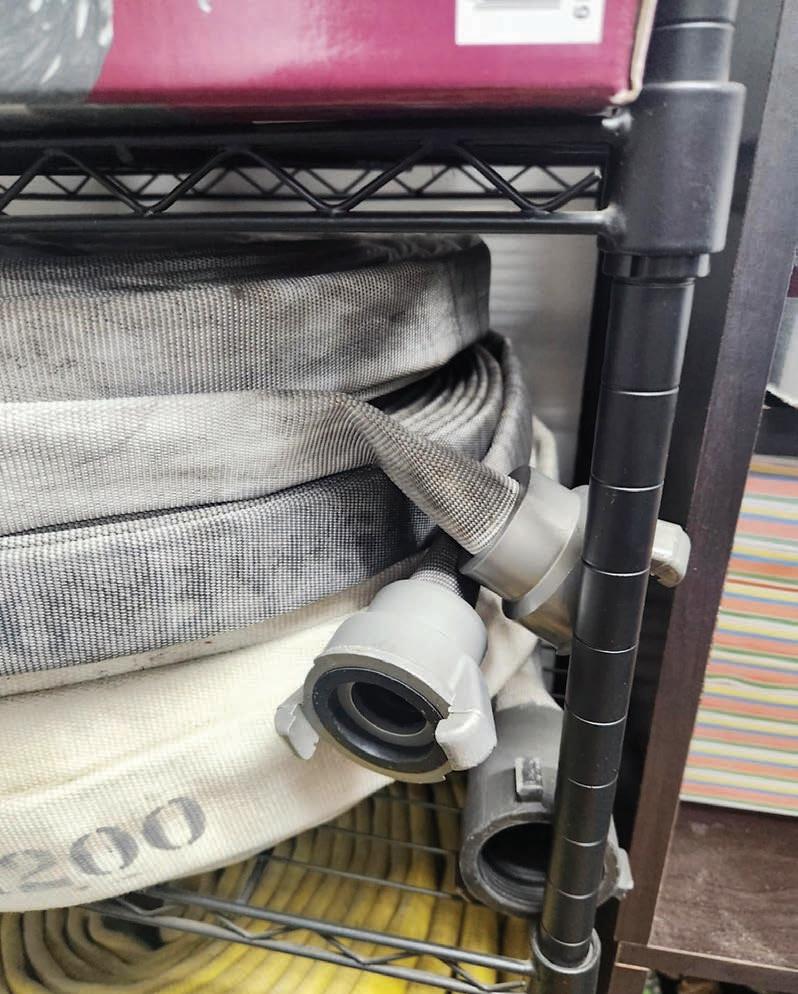
deployment is solid planning. Since most municipal firefighters are tasked with structural fire fighting, with some wildland, most of the trucks are geared up to meet structural requirements. However, in a wildland urban interface scenario, it is advisable to be prepared for more wildland fire fighting. This could mean stocking up on wildland hoses, couplings and noses, and storing them in a central location for immediate addition to any apparatus that is being deployed. Other items, such as chest rigs for radios (better suited for working in forested environments), can’t be overlooked, nor can such predator control devices like bear bangers and spray. These items are often not part of a usual truck load out. But when working in wildland interface, they become important factors that need to be considered, especially in bear and cougar country. Having these kit items ready to be placed on a truck saves time, particularly if the request is
an urgent one.
Personnel protective equipment can also be a blur between structural equipment and more adaptable wildland gear. Ensuring deployed crews have a set of each, or in the case of wildland gear, perhaps two, depending on the length of assignment, can really make a difference during extended shifts. Lighter, flexible wildland coveralls, gloves and helmet, with a proper air filter system/mask, are essential pieces of kit, especially if temperatures are extreme or crews are expected to be working in thick smoke conditions. Keeping the structural gear nearby and ready is valuable, but the importance of making sure firefighters who are not tasked with immediate structural protection, or are assigned to defensive wildfire operations, are safely suited up without overheating can’t be overstated. Another item that is sometimes forgotten is that of refillable water bottles. Most municipal firefighters do not respond to calls with a water bottle hanging from their hip, but in deployed situations this is often the norm. Making sure that extra bottles are available and ready to be added to the cache of items being put on the truck ensures that a steady source of hydration is readily available.
Lastly, it is critical that the deployed firefighters be sufficiently prepared themselves. This includes a pre-packing list that should include items like toiletries, changes of undergarments, off-duty clothing, cell phone chargers, all-weather gear and sleeping bags. Maintaining a list, with input from past deployments, should be part of the standard procedure for pre-deployment.
If preparation is a main ingredient, an equally important piece would be training and competency for those wishing to be sent out on these large-scale mobilizations. Depending on what is asked from the requesting agency, whether the role will be structural protection or wildland, it is advisable that minimal standards of training are attached to any deployment orders to crews. Obviously, if tasked with structural protection, the appropriate NFPA standard should be applied, and then, argumentatively, inclusion of additional NFPA standards for wildfire and/ or advanced incident management could be added on. In complex fire operations, having a better understanding of the different divisions and branches only enhances the usefulness of assigned crews and generally allows better flow of information back to command. Not to mention for later during the departmental debrief-
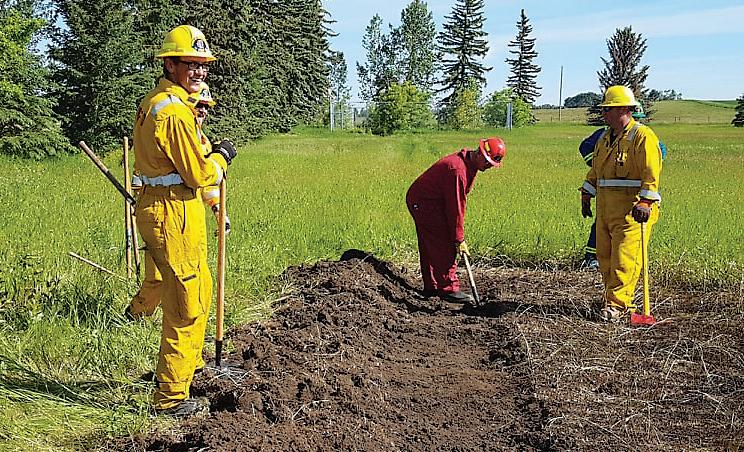
ings. It is good practice to make sure that crews sent to represent your department are qualified and competent for the task being assigned to them, as there is little margin for error on these types of fires.
Most successful deployments surprisingly aren’t centered around the operational aspects, as those are controlled by complex and large unified command. So, success often boils down to the administrative side, which is often, at least to some degree, in the realm of control of the department. Deployed crews require additional support; everything from time tracking of shifts to inventory replacement and crew rotation. Having a centralized point of contact is also a “best practice”, allowing families to relay messages to crews who may be out of normal communication range. Setting up a social media chat group for the deployed members, linked to executive staff back home, ensures that documentation and forms are completed and sent in for processing. This creates a duplication factor – if the deployed crew loses paperwork, or it gets damaged, a digital copy can be sent in. This could prove useful during demobilization, when timesheets for compensation and accountability become a factor.
Support also extends for re-supply, from crews to equipment. Eventually crews need to rotate out, and being able to coordinate a shift rotation becomes a skillset. Having a process on how crews are to be moved off the line, rested and returned home
should be standard practice when involved in assignments outside of your home jurisdictions. Replacing inventory will also be a factor. As the deployment duration extends, so too does the chance of equipment failing. Some items may be easily replaced, like hoses, but specialized pieces may be in shorter supply, and having the ability to bring up replacement items allows the truck to function at 100 per cent. Arranging replacement parts with shift rotations is the ideal way of handling these circumstances, but that relies on steady coordination between the deployed crew and the home administration. However, when it works, it works well. Administration isn’t as glamorous as the operational side, but no successful deployment works without it.
As the threat of wildfire continues to grow across Canada, the inevitable requests for assistance will continue to come into municipal fire departments. With those calls for support, it is incumbent on the department to make sure that all avenues of proactive action, training, and deployment administration are ready and prepared to support all operations when the need arises. Preparation, foresight and solid planning can make or break a deployment. In those moments of potential national coverage, knowing the crews, trucks and equipment are up to the task is worth the effort.
By Ben Macauley, Firefighter and Counselor
been feeling for a while: in the conversation about mental health, especially for men, the fire service isn’t just a group in need of help from the outside. In many ways, we’re a living example of what effective, male-friendly support can look like.
Recently, my wife was diagnosed with colon cancer. It’s the kind of sentence that steals the air from your lungs. There’s no training block for how to say it, no SOP that tells you which words to use. Suddenly your life has a “before” and “after,” and you’re standing in the doorway between the two.
The first men I told weren’t my oldest buddies from childhood. They weren’t members of my extended family.
They were the guys on my crew.
I didn’t make a formal announcement. It came out the way most important things do in this job—between calls, over coffee in the kitchen, in the easy rhythm of our usual chirps and banter.
And when I told them, I was met with something that doesn’t fit the stereotype of how men, especially firefighters, “are supposed to be.”
I got love and compassion.
I got home-cooked meals for our freezer.
I got hugs from men who usually show affection by calling each other names.
I got phone calls and texts checking in on my wife and on me. I got understanding about distraction, fatigue and the mental fog that comes with bad news.
I also got exactly what I didn’t know I needed: jokes, gentle ribbing, and a sense of normalcy that stopped me from falling through the floor. None of it was branded as “mental health support.” But that’s exactly what it was.
That experience crystallized something I’ve
BELOW For men, when mental health is positioned as part of doing the job well and looking after the team, it becomes more legitimized.
We keep importing mental health programs into fire departments. Maybe it’s time we also started exporting what the fire service already does well.
Mental health is operational, not optional
In a lot of workplaces, mental health is treated like a side project: a link to an employee assistance program, a “wellness Wednesday” email, maybe a lunch-and-learn if you’re lucky.
In the fire service, our mental state is directly tied to operations. It affects: our ability to process information and make decisions under pressure, how we read smoke, risk and each other, our patience with the public and with one another BS whether we go home safely at the end of the shift. We may not always use clinical language, but we all know if someone is checked out, angry all the time, drinking too much or clearly struggling, it’s not just “their personal problem”. It can become a safety issue.
That reality, as hard as it is, gives us a huge advantage. Mental health cannot be dismissed as a soft, optional extra. It’s part of being fit for duty.
That’s something the broader world could learn from us. When mental health is framed as optional or purely individual, men are less likely to engage. When it’s framed as part of doing the job well and looking after the team, it suddenly becomes legitimate. Men will talk — if the environment makes sense. We’ve all heard the line: “Men don’t talk about their feelings.” My experience in the fire hall says otherwise. Men do talk — when the environment fits who they are and what they value. In the fire service, that environment often looks like the kitchen table after a heavy call, the truck bay while checking rigs or a late-night conversation in the dorm when the tones have finally gone quiet
The conversation doesn’t always sound like a therapy session. Sometimes it’s a dark joke followed by a pause and a quiet, “Yeah, that one sucked.” Sometimes it’s a story about a similar call years ago that still lingers. Sometimes it’s as simple as, “You good?” When I told my crew about my wife, nobody gave a speech on resilience. Nobody tried to fix it. They just got close — physically, emotionally, practically. They fed my family, covered for my bad days, offered to fill my shifts, and kept treating me like me.
From the outside, that might not look like “mental health programming.” But for a lot of men, this is exactly the kind of support that actually lands: practical help, shared humour, being seen and checked in on and not being treated like you’re broken. If other sectors want to improve men’s mental health, they could do worse than studying how a decent crew rallies around a member in crisis.
None of this is to say we don’t need outside support. We do. Across Canada, we’ve made important strides with programs focused on firefighter cancer, critical incident stress and psychological injuries. We have peer support teams, clinicians who specialize in first responders, and resilience training initiatives. Those are vital. But when we outsource everything, we risk missing the magic.
The most effective mental health support I’ve seen in the fire service has three parts:
• Peer support that belongs to the members. Firefighters trained to listen, normalize and walk alongside their own people—not as therapists, but as trusted peers who understand the calls, the shift work and the culture.
• Clinicians who “get” the fire service. Professionals who understand dark humour, the impact of cumulative calls, and the identity tied up in the job, so members don’t have to translate every detail or feel judged for coping the way we do.
• Leaders who go first. Officers and chiefs willing to say, “I’ve talked to someone and it helped,” or “Take the time you need; we’ve got you,” instead of leaning on outdated ideas of toughness.
That inside-out model—owned by the department, supported by outside expertise— is something many other male-dominated environments are still trying to figure out. We’re further along than we think.
Our built-in rituals are protective. And another quiet strength of the fire service is our rhythm. We share meals. We train together. We sit around the same table shift after shift. We spend 10, 14 or 24 hours at a time side by side. Even without naming it, we create rituals that are good for mental health: checking in after a tough call, noticing when someone is unusually quiet or unusually loud and giving each other space while refusing to let someone isolate indefinitely
Many men outside of first responder work never experience this. They work remotely, or alone, or in environments where vulnerability is socially costly. It’s hard to build trust or spot changes when you barely see each other.
In our world, the structure of the job forces us into community. It gives us repeated
contact, shared hardship and shared purpose. Those are the very things research tells us buffer against trauma and stress as protective factors, even if we just call it “the crew” or “the guys.”
We should recognize how valuable that is and protect it.
We are far from perfect. We still lose members to suicide. We still have stigma. Silence still exists in stations and in certain generations or pockets of the culture.
But alongside those realities, my story with my wife’s diagnosis reminds me that we’re also doing a lot right.
For departments, these are the challenges: Name what’s already working. Kitchen-table conversations, peer support teams, certain officers who “get it”—these are assets, not afterthoughts. Build on culture, not against it. Any in-house mental health program will be more effective if it respects the way firefighters actually talk, process and connect. Humour isn’t the enemy; it’s often the doorway.
Invest in the right partnerships. A small, consistent group of clinicians who know your people and show up regularly may do more good than a long list of providers no one ever meets. Treat mental health as part of safety. When we frame support as a way to keep members healthy, effective and able to go home at the end of their careers, we honour the job and the people doing it.
If you’re outside the fire service and wondering what to do about men’s mental health in your workplace or community, my suggestion is simple: Come learn from us.
Visit a hall. Talk to a crew about how they look after each other after a bad call, or when someone’s marriage is falling apart, or when a member gets a diagnosis like my wife’s. Listen for the mix of practical help, dark humour, loyalty and genuine care.
You might find that the barrier isn’t that men are incapable of emotional support. The barrier is that too many environments haven’t earned the kind of trust that makes that support possible.
As I write this, my wife and I are at the beginning of a long and uncertain road—tests, treatments, side effects, waiting rooms. I’m scared. I’m hopeful. I’m tired.
But I’m not alone.
I have a crew that has seen me at my worst on calls and now sees me at my most vulnerable at home—and chooses to stand with me in both places.
So yes, let’s keep bringing sound mental health programming into the fire service. We need it.
But let’s also recognize the ways the fire service is already leading. When it comes to how men show up for each other in hard times, the world could learn a lot from a group of firefighters gathered around a kitchen table, passing a plate of food, trading jabs—and refusing to let one of their own carry the weight alone.
By Gord Schreiner, Fire Chief, Comox, B.C.
The fire service is a business like no other. Our primary purpose is to serve and protect our citizens while keeping our firefighters safe. We are not here to compete with one another — we are here to work together. By collaborating and sharing knowledge, we become stronger. That strength comes from working closely internally (within our own fire station) and externally (with the broader fire and emergency service community).
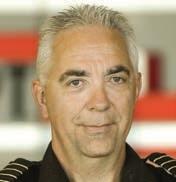
Remember, fire fighting is a team sport, not a place for individuals who put themselves ahead of others.
When all members of a fire department, including its leaders, are pulling in the same direction, the department and its firefighters thrive. The result is a better workplace and better service for our citizens. Firefighters who share knowledge and experience with one another are better prepared for their next incident. By sharing what we know and respectfully pushing each other to improve, we become safer and more effective.
I have seen firsthand how our firefighters continue to improve because of how close our team is. Great firefighters are here for the team, not for themselves, and the team exists to serve our citizens. When we function as a team, everyone wins. Working together also creates opportunities for firefighters, whether through training, fitness, career development, or supporting one another through life’s challenges. I visit many fire stations each year, and it doesn’t take long to understand a department once you meet its
firefighters. I’m proud to say that most departments “get it”. Fire fighting is a team sport, not a place for individuals who put themselves ahead of others.
The same benefits occur when fire departments collaborate with neighbouring departments and other emergency service agencies. Departments that train and share with others increase the safety and effectiveness of their firefighters and their organization. Ultimately, this enhances the level of service provided to citizens.
In my department, we regularly train with other departments, both through our training centre and during weekly training sessions. We are always looking for better ways to do things. This collaboration has helped us improve our services, increase safety, and become a stronger organization. We are always willing to share our training centre, props, lesson plans, PowerPoints, and guidelines, knowing others will do the same. When I share resources, I simply ask that if improvements are made, they share back so we can all benefit.
When asked about the most significant change in the fire service over the past several years, my answer is the internet (including AI). It allows us to share ideas quickly and learn from what others are doing, right and wrong. I have several close friends who are fire service leaders whom I have never met in person, yet we regularly exchange ideas and
Gord Schreiner is the fire chief in Comox, B.C. and also manages the Comox Fire Training Centre. He has spent 50 years in the fire service and delivers presentations all over Canada. For more info contact firehall@comox.ca.
lessons learned. I truly enjoy hosting firefighters and departments who come to train or visit with us, as it broadens everyone’s experience. Departments that work closely together thrive, and their citizens receive better value for their tax dollars.
Mutual aid agreements ensure adequate resources are available when needed. Automatic aid agreements improve response times. Both provide tremendous benefits with minimal additional cost. Communities benefit in countless ways, and fire departments become safer and more effective. Large or small, modern fire departments understand they cannot operate alone. Strategic partnerships are a win-win for everyone. Training together prepares us to work together during mutual or automatic aid incidents. Sharing resources is simply common sense and fiscally responsible.
Our department has also benefited greatly from my travels across Canada delivering the Safe and Effective Scene Management program, also known as the #STOPBAD program. Visiting dozens of departments each year has allowed me to learn a tremendous amount. I often return home with great ideas to improve our training and services. Some of the best ideas come from smaller departments that must be creative due to limited budgets — they are doing more with less. I freely share everything I learn. Departments that choose to go it alone only hurt themselves and their communities. Working closely with neighbouring departments is not only a win-win—it is expected by citizens and elected officials. We don’t need to reinvent the wheel; we can borrow one, improve it, and then share those improvements with others. Our department has been sharing with fire departments across Canada for many years, and we will continue to do so. Teamwork is our strength!










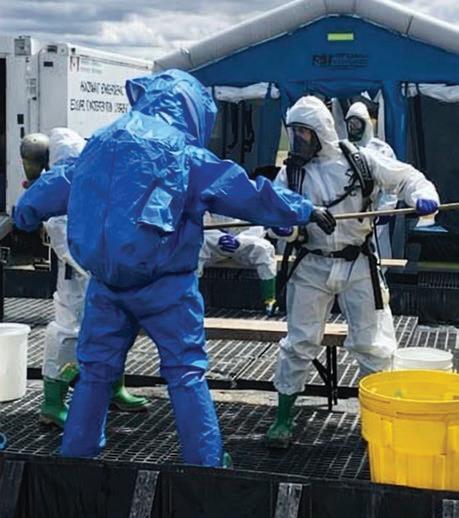
By Greg Scott, Hazmat Specialist
When my career started back in 1998, hazardous materials response was a specialized but largely reactive discipline. Hazard materials, or hazmat as they are commonly referred to, was around us all the time but due to unknown products the specialized teams relied on conservative tactics, limited detection capability, and rigid operational models. Since that time, hazmat response has undergone a significant transformation driven by technological advancement, new threat profiles, and a deeper understanding of responder health and risk management. Today’s hazmat response is data-informed, intelligence-supported, and risk-based, requiring a very different mix of equipment and responder skills than existed in the late 1990s. The hazmat response in 1998 was basic and based on the following a doctrine focused on identification, isolation, containment, and mitigation. Detection equipment was simple, often single-purpose, and provided limited realtime information. Common tools included colorimetric detector tubes, pH paper, early photoionization detectors (PID), flame ionization detectors (FID), and single-gas monitors. Detection was point-in-time rather than continuous, and cross-sensitivities were poorly understood.
All the reference materials were paper based, including the Emergency Response Guidebook (ERG), shipping papers, and the NIOSH Pocket Guide. Decision-making relied heavily on experience and conservative assumptions, often resulting in large evacuation zones and prolonged incidents. Most of the tools above have been digitized. The personal protective equipment (PPE) was heavier and less ergonomic. Chemical protective suits provided limited vapor protection and imposed significant heat stress. Physiological monitoring of responders was minimal.
Multiple events across the world have accelerated the evolution of hazmat response, including terrorist attacks, anthrax incidents, large-scale industrial disasters, rail derailments involving toxic industrial chemicals, and the
emergence of lithium-ion batteries and alternative fuels. These events exposed limitations in detection, interoperability, responder health protection, and intelligence integration. Equipment evolution in detection and monitoring means modern hazmat teams and fire departments use multi-gas detectors integrating PID, electrochemical, infrared, and catalytic sensors. Some of the larger departments use Fourier Transform Infrared (FTIR) Spectroscopy, which uses IR light to identify a chemical compound. Raman technology uses a laser to identify chemical substances. These instruments provide continuous monitoring, data logging, wireless transmission, and improved accuracy. Area monitoring
systems, drones, and remote sensors now allow hazard assessment without committing personnel to the hot zone.
References have been replaced by digital ERGs, chemical databases, real-time weather data, plume modeling, GIS mapping, and mobile command platforms. Command decisions are now dynamic rather than static. When it comes to PPE, modern chemical suits are lighter, offer improved chemical resistance, and integrate better with SCBA systems. Physiological monitoring, cooling systems, and improved ergonomics have reduced heat stress and long-term injury risks.
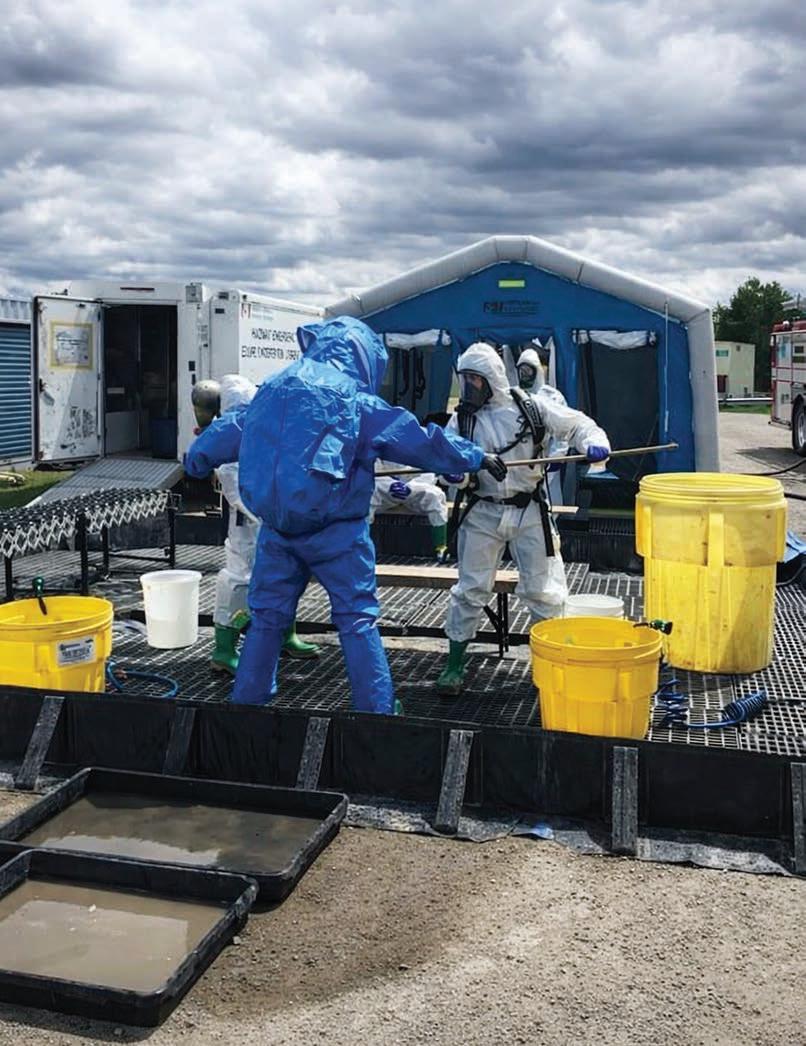
The old verbiage of “dilution is the solution” has changed. Decontamination has evolved from basic hose-line operations to structured gross and technical decontamination corridors with runoff control, dry decon options, and PPE contamination tracking alongside exposure reporting. Hazmat is also considered at most structure fires and when conducting post fire decon. This was never done back when I started my career in 1998.
Robotics and remote tools: When I started, the only tool you had was a pair of binoculars and running shoes. Now we have technology drones, robotics, remote cameras, and thermal imaging that are routinely used to reduce responder exposure and enhance situational awareness. Skills evolution: This has made us better hazmat responders has meant transitioning from task-focused technicians to risk managers and decision-makers. Understanding when to and when not to intervene is now critical. As responders, we have had to learn to understand sensor limitations, cross-sensitivities on our equipment and how this will have environmental impacts.
CBRNE and interagency integration: Hazmat response now includes chemical, biological, radiological, nuclear, and explosive + F for fire (CBRNE+ F ) preparedness. Responders work closely with law enforcement, public health, military assets and intelligence agencies. This is an evolving trend as the state of the world is always changing and hazmat responders must adapt.
Health and exposure management: In the beginning of my career, this was not really something we thought about. Now long-term responder health is a priority, including exposure tracking, contamination control, physiological monitoring, and post-incident surveillance, as well as receiving the help we need.
Emerging hazard competencies: As the world and technology evolves, responders must be able to manage lithium-ion battery fires, electric and hydrogen vehicles, battery energy storage systems, and long-duration incidents.
While the core principles of hazmat response remain unchanged, equipment, skills, and decision-making processes have evolved dramatically since 1998. Today’s hazmat response is knowledge-driven, technology-enabled, and focused on responder safety and operational efficiency.
Greg Scott has been in the fire service for 25 years, serving with municipal fire services, the Canadian Forces – Fire, CBRN Academy as a fire and hazmat training officer and as a hazmat instructor for Georgian College’s Pre-Service Firefighter program. He is the lead instructor at Summit Hazmat and Emergency Consulting in Barrie, Ont. Reach Greg at 705-730-2359.
By Luigi Davoli
In the fire service, leadership styles really matter, and whether a leader tends to be more introverted or extroverted can have an impact on how the crew and entire service operate. When we think about leadership in the fire service, we tend to picture a loud, confident, and always ready-totake-charge persona – the typical extrovert who takes charge of a chaotic scene and inspires everyone through energy and commanding presence.
But here is the thing – some of the better leaders that I have had the pleasure of working with were not that loud and boisterous. They were not the loudest person in the room. They were not the person who was doling out orders in a constant stream of sentences. Many were quieter by nature, relying less on volume and charisma, and more on listening, reflection, and deliberate action. In the same, but different, fashion, they were just as effective in bringing chaos to a close. Those folks leaned more toward introversion and brought a different kind of strength to the situation.
Both introverted and extroverted leaders can succeed in the fire service. Understanding the differences in how each operates, as well as their respective strengths and weaknesses, will enable the fire service to build well-rounded teams that allow leaders to grow more effectively into their roles.
The terms introverted and extroverted are often misunderstood. Popular culture portrays an extrovert as a “people person”, “social butterfly”, or “centre of attention”. Whereas, an introvert is seen as “shy”, “reserved”, or a “loner”. However, in reality, the words are more about where someone draws their energy. Extroverts are energized by
social attention and outward expression. In contrast, an introverted leader seeks solitude and reflection. Neither approach is right or wrong. They are simply different orientations toward the world. These leaders both have various tools at their disposal to remedy a situation. Each approach influences how a crew experiences leadership, how decisions are made, and ultimately how effective the organization becomes.
We will start with the extrovert, because honestly, they fit the image most people expect in the fire service. Extroverted leaders exude a natural command presence. On the fireground, when the pressure is high and chaos rains down, the loud, confident voice cuts through the chaos. The extrovert brings a reassurance of “Okay, I have got this! I am in charge!” Their visible confidence can help crews stay calm and focused. Extroverts are great for motivation and inspiration. Extroverted leaders thrive on outward expression. Those are the ones who look to rally their crews with passion and enthusiasm. Extroverted leaders are the ones who provide the verbal push to keep morale strong.
When it comes to networking and politics, extroverted leaders have a homefield advantage. Extroverted leaders are most comfortable speaking to groups and building relationships. They are often the ones who are willing to talk to chiefs, city council members or community leaders. They seek to advocate for the resources needed through their networking. This outward confidence can open doors that might otherwise have remained closed.
For all the strengths, there are some downfalls. An extroverted leader may unintentionally talk over others, leaving less space for the quieter ones to share valuable input. They can come across as impulsive, which can lead to decisions being made too quickly without all the options being weighed. In the fire service, where lives are on the line, decisiveness is essential, but so is reflection. While they are able to network and build connections, these connections tend to stay superficial. An extroverted leader may know everyone in the department but overlook the individual who is quietly struggling in the background.
Introverted leaders bring a different approach to overall leadership. They are often less vocal and less visible, but their style carries an equally valuable strength. Introverts bring a sense of calmness that is equally reassuring. When everything is chaotic, their steady, measured tone keeps everyone around them grounded.
The biggest strength of an introvert is being an active listener. They are not waiting for their turn to speak – they are actually hearing what people are saying. In the fire station, they will pick up on the little things, sense tension brewing amongst the crew or when a suggestion for improvement has merit. At the senior levels, an active listener brings a level of compassion and fairness to the conversation.
Introverts are thoughtful decision-makers. The introverted leader naturally reflects, thus bringing a more analytical approach to decision-making. Introverts also tend to think before they speak, which leads to more deliberate, thoughtful and respectful conversations. When they do respond, it is clear that they have been paying attention and have a solid take on what needs to be done.
Introverted leaders also tend to build deep, meaningful, trusted relationships. The introvert may not know everyone, but the relationships they build are deep and substantial. They are the ones that firefighters will seek out for private one-on-one advice and support.
Of course, there are challenges as well. The introverted leader’s quiet nature may be mistaken for hesitation or indecisiveness. On the fireground, crews may grow uncertain if direction does not come quickly. Introverted leaders tend to have lower visibility as they tend not to broadcast themselves. This can result in their leadership abilities going unnoticed by senior leaders in the fire service. Introverted leaders may struggle with addressing groups, giving speeches or networking. These can limit their effectiveness in organizational settings, hindering their ability to branch out and advocate for the fire service.
The best fire service leaders, regardless of their natural tendency, recognize the strengths and challenges of both introversion and extroversion. The best leaders are those who know their natural tendencies and also know when to step outside of them.
An introvert may need to project a more visible confidence on a chaotic fire scene. Equally, in social settings, look to engage directly to achieve positive advocacy for future endeavours for the fire service. Conversely, an extroverted leader may need to slow down when making decisions so that all factors are fully considered. As well as look to build
deeper, more connected relationships with those around them.
Fire service leadership development should stop the trap of assuming that only extroverts are the natural and best leaders for the fire service. Too often, the most boisterous person gets promoted, while the quieter yet equally capable candidate gets overlooked. Value should be placed on both leadership styles. The fire service benefits the most from diverse leadership teams where different personalities, styles, and lived experiences are represented. These diverse teams complement and enhance the overall team and enhance organizational output. The extrovert is needed to rally the group and advocate for their cause. The introvert is required in order to listen deeply and forge deep, meaningful bonds with those around them. Brought together, the fire service thrives.
Leadership in the fire service is not a one-size-fits-all solution. Extroverted leaders bring energy, visibility and motivation. Introverted leaders bring thoughtfulness, calm, and connection. Each of the styles has blind spots that need to be navigated. Each style needs to be embraced, and leaders should be encouraged to grow beyond their natural tendencies. At the heart, the fire service is about trust and authenticity. Diversity, even through leadership styles, is what makes the fire service strong and able to rise to the challenges.
Luigi Davoli has spent the last 26 years serving in the fire service, building a career defined by dedication, leadership and heart. Davoli holds a master’s degree in of public safety, a certificate of fire service leadership, and an advanced certificate of fire service administration.
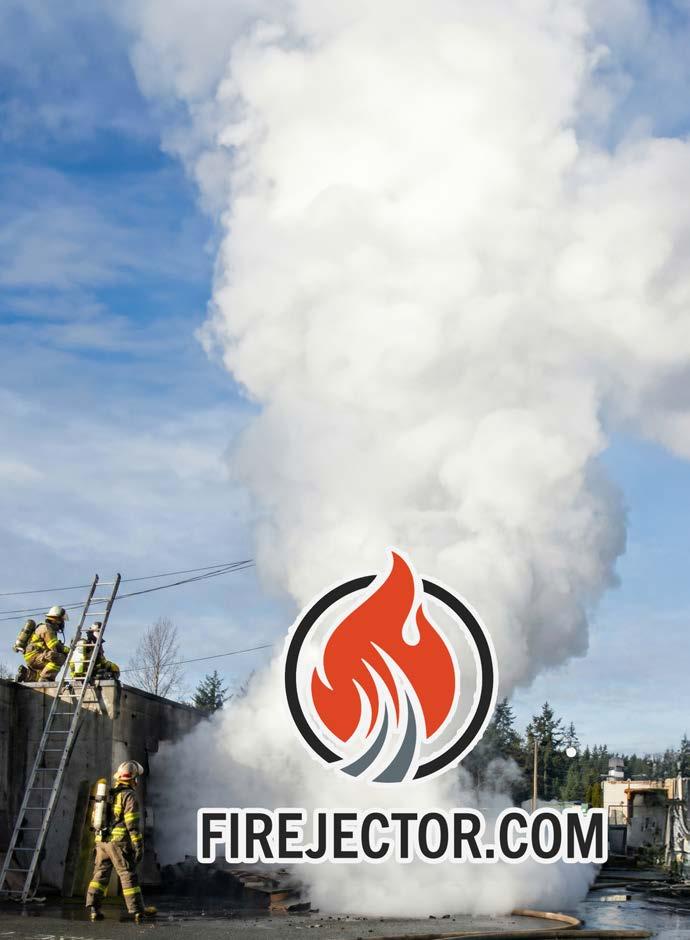
The Firejector is a fire control system that uses high-pressure fine mist entrainment to extract and direct smoke, flames, heat and gasses from a structure. This allows crews to fight fires more safely and effectively. Reducing risk, saving lives, injuries, and property losses.

1200 DEGREES ONTARIO
356 Bishopsgate Road
Burford ON N0E 1A0
Tel: 800-254-2049
Toll free: 800-254-2049
Company Email: jclimie@1200-degrees.com Web: www.1200-degrees.com
Ontario’s exclusive E-ONE fire apparatus dealer, 1200 Degrees Ontario provides new and used apparatus sales, refurbishments, accident repair, maintenance, and parts support for all makes and models across the province. We represent leading fire equipment manufacturers including Holmatro Extrication/Shoring Tools, Dräger SCBA and Gas Detection, FLIR Thermal Imaging Cameras, Niedner Hose, F500 Encapsulator, Blowhard Fans, Haix Boots, Bridgehill Fire Blankets, and Fire-Dex PPE. We are the Akron Brass master dealer for Ontario, the Hale pump factory-authorized service team, DriveOn authorized, and more. 1200 Degrees Ontario is an industry leader in Annual NFPA testing, servicing all makes and models with expert mobile and in-shop service. Following a $6 million investment, 1200 Degrees Ontario now operates from a new, purpose-built facility at 356 Bishopsgate Road, Burford (Brant County), expanding service capacity, parts inventory, and sales to support fire departments across Ontario.
A.J. STONE COMPANY LTD.
62 Bradwick Dr. Vaughan ON L4K 1K8
Tel: 416-785-3752
Toll free: 800-205-3473
Fax: 416-781-2827
Company Email: order@ajstone.com
Web: www.ajstone.com
A.J. Stone has proudly served the needs of the First Responder Services of Ontario since 1972 by featuring quality products, knowledgeable sales team, and training support.
A.J. Stone supplies equipment from MSA, Task Force Tips, LION Protects, Paratech Rescue, FireBull, Enforcer, Streamlight, Seek Thermal, Innotex Bunker Gear, ProTech Gloves, Safe-T-System, CET and much more!
We service what we sell!

251 Queen St. S., Ste. 512 Mississauga ON L5M 1L7
Tel: 905-826-6682
Toll free: 866-735-1480
Fax: 866-511-6904
Company Email: info@airmation.ca
Web: www.airmation.ca
Air Technology Solutions is dedicated to our Clients, offering updated, timely, full service Indoor Air Quality (IAQ) solutions. Air quality concerns are mitigated using a unique combination of professional indoor air quality assessment coupled with solutions. Off the shelf or customized site specific air cleaning equipment is available to resolve IAQ issues. Our technical experts review client requirements and budgetary availability. The finest appropriate air cleaning systems are provided. Air Technology Solutions is a leader in Diesel Exhaust Remediation and is the ONLY environmental tested and proven filtration system to exceed standards: NFPA, NIOSH, OSHA and ASHRAE. Building and facility managers, business owners, contractors, architects, and engineers have been working with Air Technology Solutions since 1986 to resolve IAQ needs. Employee and personnel safety and health are key issues. Breathing safe air in the workplace is of utmost importance. We provide global customized solutions to control contaminants, pollutants and odours in your facility. We look forward to servicing your requirements.
PO Box 517
Dover NH 03821
Tel: 603-743-4332
Toll free: 800-540-7264
Fax: 603-743-3111
Company Email: sales@airvacuumcorporation.com
Web: www.airvac911.com
Breathe Clean Air with AIRVAC 911®
Air Vacuum Corp.’s AIRVAC 911 engine exhaust removal system protects 100 percent of an apparatus bay area by automatically monitoring the station 24/7 to constantly remove hazardous contaminants. No hoses, vehicle attachments or tail pipe connections are required. The system’s 360-degree airflow design continuously eliminates exhaust dead spots and captures toxins. The four-stage filtration system features chemically treated carbon and activated carbon filters. A MERV-16-rated filter removes contaminant particles that are as small as 0.3 microns. No building modifications, ducting or external exhaust fans are required, and there’s no interference with daily operations or response time.
sales@airvacuumcorporation.com
Phone 603-743-4332
Toll Free 1-800-540-7264
Fax 603-743-3111
www.airvac911.com

ALCO-LITE - SAM CARBIS SOLUTIONS GROUP
1430 W Darlington St
Florence SC 29501-2124
Tel: 843-662-2595
Toll free: 800-752-2526
Company Email: sales@fireladder.com Web: www.fireladder.com
Founded by Samuel Carbis, the Aluminum Ladder Company began producing fire ladders at the request of the Oslo fire department. They were in need of a large extension ladder, which would not be too heavy for their firefighters to lift - soon an industry was born. Today, 95 years later, Sam Carbis Solutions Group is still manufacturing the ladders that firefighters depend on to protect them while they protect and serve. All Alco-Lite fire department ground ladders meet or exceed NFPA standards and are completely field repairable.
With a complete line of aluminum and fiberglass ladders, Sam Carbis Solutions Group is here to serve the fire service with ladders that stand the test of time. That is why buying your fire ladders from the people who invented them only makes sense.
ARCSHIELD- RESPONSE SOLUTIONS
110 Eglinton Ave West, Suite 303A
Toronto ON M4R 1A3
Tel: 647-460-7326
Toll free: 877-338-7145
Company Email: hello@arcshield.com
Web: www.arcshield.ca
ArcShield™ – Response Solutions
ArcShield™ – Response Solutions is a specialized division of A|N Infrastructure, focused exclusively on the mitigation, containment, and post-incident management of Lithium-Ion Battery (LIB) hazards. Our mission is to address the growing risks associated with damaged, defective, and recalled (DDR) lithium-ion batteries across emergency response, industrial, commercial, and municipal environments. Built on real-world response experience, ArcShield develops and deploys purpose-driven solutions that go beyond traditional suppression. Our product line includes PyroLock-D™, a mineral-based lithium-ion fire suppression and thermal control media, and CellContain™, a robust containment system designed to safely isolate compromised batteries following fire events, thermal runaway, or mechanical damage. Used together, these products form a comprehensive, field-tested system for post-fire stabilization and safe handling of LIBs.
BEARSPAW PROTECTAPUMP - SEPARATORS
927 Goldstream Ave
Victoria British Columbia V9B 2Y2
Tel: 778-404-7385
Company Email: info@protectapump.com
Web: protectapump.com
Since 2016 BearsPaw ProtectaPump from BC, Canada has been revolutionizing Rural & Wildland fire drafting from shallow natural water sources, even 6 inches— whether swamp or sand. SEPARATORS® shatter the restrictions of traditional strainers with their patented liquids/solids separation technology. Separators outperform strainers in both natural sources & dump tanks, serving as a perfect all-rounder for any water source. It safely drafts where strainers can’t. Finally shallow water works!
Protect your pump • Protect your crew • Protect your community
Advanced Technology for Ultimate Water Access Info, Testimonials, & Quotes: ProtectaPump.com
CANADIAN SAFETY EQUIPMENT INC.
#3 – 2865 Argentia Rd.
Mississauga ON L5N 8G6
Tel: 905-826-2740
Toll free: 800-265-0182
Fax: 905-272-1866
Company Email: info@cdnsafety.com
Web: http://www.cdnsafety.com
We supply Industrial and Fire SCBA’s, SCBA Decon Washer, Thermal Cameras, CAF Systems, Fall Protection, Bunker Gear, Fire and Rescue and Ballistic helmets, Fire Hose, Communications Equipment, Nozzles, Fittings, Hazmat Suits, Ventilation Fans, Gas Detectors, Confined Space Rescue Equipment, Water and Ice Rescue equipment, Industrial and Municipal Safety and Lone Worker Protection systems.

COINAMATIC COMMERCIAL LAUNDRY
301 Matheson Blvd West
Mississauga ON L5R 3G3
Tel: 877-755-5302
Toll free: 877-755-5302
Company Email: info@coinamatic.com Web: www.coinamatic.com
Coinamatic Commercial Laundry provides a complete range of commercial laundry equipment for your on premise laundry operations as well as cleaning cabinets for in house laundering of turn out gear. Effective cleaning and decontamination can be an important safety and cost benefit for the department. We have a complete inventory of parts for most makes and models of equipment. Coupled with our qualified service teams, Coinamatic provides end to end solutions that meet your requirements!
CSE INCENDIE ET SÉCURITÉ
5651 Chemin St-Francois
St. Laurent QC H4S 1W6
Tel: 514-737-2280
Toll free: 866-737-2280
Fax: 514-737-2751
Company Email: info@cseis.com
Web: www.cseis.com
We supply Industrial and Fire, SCBA’S, SCBA Decon Washers, Gear Extractors and Dryers, Thermal Cameras, CAF Systems, Fall Protection, Bunker Gear, Fire, Rescue and Ballistic Helmets, Fire Hose, Communications Equipment, Nozzles, Fittings, Hazmat Suits, Ventilation Fans, Gas Detectors, Confined Space Rescue Equipment, High Angle Rescue Equipment, Ice and Water rescue equipment, Boots and Gloves. Everything for Fire Fighting, EMS, Law Enforcement, Industrial and Municipal Safety and Lone Worker Protection Systems.
591 Chester Road
Delta BC V3M 6G7
Tel: 877-443-2626
Toll free: 800-665-6126
Company Email: info@comemerg.ca
Web: www.comemerg.ca
Commercial Emergency Equipment is Canada’s expert supplier of emergency equipment. Commercial is the authorized dealer for Pierce, BME Fire Trucks, MAXIMETAL, Frontline Communications, and Oshkosh Airport Products apparatus from Ontario to BC including all Canadian Territories. With a 75-year history, 350+ employees across Canada in six main branches, and 270,000+ sq. ft. of combined production and service space, Commercial has an unmatched parts, service, training, testing, and support network for emergency apparatus.
Commercial provides its customers access to industry-leading service and support including mobile EVT’s, pump testing, annual inspections and maintenance, a significant stock of on-the-shelf parts, 24/7 emergency service and more. We warehouse an extensive inventory of OEM and aftermarket parts, tools, and equipment ensuring quick delivery and reduced downtime to our customers.
DEPENDABLE EMERGENCY VEHICLES
250 Clarence Street
Brampton ON L6W 1T4
Tel: 905-453-3473
Company Email: pino@dependable.ca
Web: www.dependableemergencyvehicles.ca
Designed to Perform, Built to Last At Dependable Emergency Vehicles, we build fire trucks that exceed expectations. Our innovative designs and custom solutions ensure unmatched performance and durability, because when every second counts, reliability matters.
From our extensive In-Stock lineup, to completely custom builds. We are equipped to help your organization’s fleet match the highest levels of service that your members offer.
Contact us today to discuss your next Fire Apparatus.
the advantage of stability and brute strength. The welded extruded aluminum construction will never rust or need repainting, resulting in a lower cost of ownership. Key design features include a 2.5 to 1 structural safety factor, crisscross under-slung jacks, integral torque box chassis, and the strongest cab in the industry.
DRAEGER SAFETY CANADA LTD.
2425 Skymark Ave., Unit 1
Mississauga ON L4W 4Y6
Tel: 905-212-6600
Toll free: 877-372-4371
Fax: 905-212-6602
Company Email: susan.yu@draeger.com
Web: www.draeger.com/en-us_ca/Safety/Firefighting
With over 130 years of experience, Dräger is a trusted leader in firefighting safety equipment. Our portfolio includes SCBA, live fire training systems, fixed and mobile gas detectors, flame detectors, thermal imaging cameras, and drugs and alcohol testing equipment—all designed to keep first responders safe in the most challenging environments.
Contact us at +1 877-372-4371 or visit draeger. com to learn more. Our product services and technical training courses are available year-round at our Mississauga, Ontario, and Edmonton, Alberta locations. Schedule your SCBA and gas detector service today, and experience the quality and reliability that has been safeguarding firefighters worldwide for generations.
1601 S.W. 37th Ave.
Ocala FL 34474
Tel: 352-237-1122
Fax: 352-237-1151
Company Email: info@e-one.com
Web: www.e-one.com
E-ONE. STRENGTH THROUGH EXCELLENCE.
E-ONE, a full spectrum builder of fire apparatus, is the pioneer and recognized leader in extruded aluminum and stainless-steel construction. With their advanced engineering, fully integrated manufacturing and highly engaged dealer network, the proud customer focused E-ONE team delivers strength through excellence. E-ONE is recognized in the fire industry as the cutting-edge builder of:
• Aerial ladders and platforms
• Custom and commercial pumpers and tankers
• Rescues of all sizes
• Industrial trucks
• Aircraft rescue firefighting vehicles
50 YEARS OF INNOVATION: Founded in 1974, E-ONE celebrated a half century of designing and manufacturing fire apparatus in 2024. E-ONE introduced the first modular extruded aluminum fire truck body, launching the company’s reputation in the fire industry for pioneering innovation, still evidenced 50 years later in the fire apparatus it produces for fire departments around the world. From its first aerial in 1981 and platform in 1983 to the DND Air Transportable ARFF in 2020 and the all-electric Vector fire truck in 2022, E-ONE continues to lead the way with advanced engineering and innovative design.
E-ONE’S SUPERIOR AERIAL DNA: The DNA of E-ONE aerials consist of a unique design that gives E-ONE
SAFEST CAB IN THE INDUSTRY: Keep your crew safe with the cab that withstands over 5 times the static roof load and over twice the frontal impact required by NFPA 1901. The structural roll cage type design provides maximum protection and comfort for firefighters.
INTEGRAL TORQUE BOX CHASSIS: The integral torque box chassis is a unique design that provides a solid foundation and low center of gravity for the truck. This provides outstanding stability and strength, with the same 2.5 to 1 structural safety factor as the aerial device. For further information on E-ONE apparatus or to find an E-ONE dealer near you, visit e-one.com
Darch Fire (Member of 1200 Degrees)
9-402 Harmony Road, Ayr, Ontario N0B 1E0
800-254-2049
Territory: Ontario
SAFETEK EMERGENCY VEHICLES
2122 Peardonville Road
Abbotsford, BC V2T 6J8
Territories: Alberta, Saskatchewan, Nunavut, British Columbia, Northwest Territories www.firetrucks.ca
Keewatin Truck Service
610 Keewatin St., Winnipeg, MB R2X 2R9
Phone 204-633-2700
Territory: Manitoba

FERRARA FIRE APPARATUS, INC.
27855 James Chapel Rd., PO Box 249 Holden LA 70744
Tel: 225-567-7100
Toll free: 800-443-9006
Fax: 225-567-7675
Company Email: info@ferrarafire.com
Web: www.ferrarafire.com
Take Command with Ferrara
Ferrara Fire Apparatus is a premier manufacturer of fire trucks and emergency response vehicles offering a full line oof pumpers, aerials, industrial, wildland, and rescue apparatus. Working hands-on with both municipal and industrial fire departments, the Ferrara team thrives on understanding response needs to custom design fire apparatus that will stand the test of time.
Taking crew safety and apparatus durability very seriously, Ferrara uses a fine-tuned construction process and heavy-duty materials to build the strongest fire trucks in the industry. We offer a custom chassis product line that exceeds minimum requirements, making them the safest available. With its extra-heavy-duty construction, you can take command with Ferrara. For more information on Ferrara apparatus or to find a Ferrara dealer near you, visit ferrarafire.com
Dependable Emergency Vehicles
250 Clarence Street #2
Brampton, ON L6W 1T4
INFO@DEPENDABLEEMERGENCYVEHICLES.CA
905-453-3473
PO Box 530, 105 Donly Drive S. Simcoe ON N3Y 4N5
Tel: 877-267-3473
Fax: 877-624-1940
Company Email: info@firehallbookstore.com
Web: www.firehallbookstore.com
Firehall Bookstore is your headquarters for training & public education materials, providing resources to the Canadian Fire Service and its professionals. Products include textbooks, NFPA standards, and fire safety & prevention educational materials for community outreach. Product lines include: NFPA, IFSTA, Jones & Bartlett, Fire Engineering Books, Action Training Systems, Pearson, Exam Preps from Dr. Ben Hirst/ Performance Training Systems.

107 7th St, Garden City, NY 11530
Garden City NY 11530
Tel: 516-367-0139
Company Email: getintouch@firstdue.com
Web: www.firstdue.com
First Due is the leading provider of cloud-based, AI-powered software for Fire and Paramedicine. The end-to-end platform brings fire documentation, ePCR, prevention, inspections, training & learning management, scheduling, advanced analytics, and more into one unified solution. Built to meet provincial and territorial requirements, First Due empowers Canadian agencies to streamline operations, improve accuracy, and make data-driven decisions. Trusted across North America, First Due sets the standard for the future of emergency services.

FORT GARRY FIRE TRUCKS LTD.
53 Bergen Cutoff Rd.
Centreport MB R4B 0A6
Tel: 204-594-3473
Toll free: 800-565-3473
Fax: 204-694-3230
Company Email: brian nash, bnash@fgft.ca Web: www.fgft.com
Fort Garry Fire Trucks is Canada’s oldest and largest manufacturer of high-quality fire apparatus, offering a complete line of pumpers, tankers, rescues, aerial devices, and custom-designed and engineered specialized units. With headquarters in Winnipeg, Manitoba, Canada, our customers emanate from cities, towns, and municipalities throughout Canada, the U.S., and abroad with the harshest weather, climates, and terrain. We have one of the largest fire apparatus engineering departments among our competitors, dedicated to designing and producing equipment for the most extreme conditions in the world. We are the exclusive Canadian distributor of Sutphen Corporation aerial ladders and platforms. We truly build ‘One Tough Truck’ and boast over 105 years of quality.
COAST TO COAST SALES AND SERVICE NETWORK:
Brian Nash — Vice President – Sales – bnash@fgft.ca
Toll-Free: 1-800-565-3473 (ext. 3471) Cell: 204-9817845
Chad Kamminga — Service & Warranty – ckammin
FSI® NORTH AMERICA, A DIVISION OF FIRE SAFETY INTERNATIONAL INC.®
311 Abbe Road Sheffield Lake, OH OH 44054
Tel: 440-949-2400
Fax: 404-949-2900
Company Email: sales@fsinorth.com Web: WWW.FSINORTH.COM
FSI – Serving the Life Safety Market worldwide since 1997
FSI North America® is a Full line supplier of mobile, portable and fixed DAT® series hazmat decon shower systems that include traditional water/solution based decon from first responder to multi line mass casualty systems, electrostatic equipment only decon, and Far UVC 222nm Disinfection.
FSI® TEAS® (Temporary Emergency Air Shelters) shelter systems, offered in a broad range of size and configurations, for Command, Isolation, Drive Thru Flu/Covid Shot, Field Hospitals/Alternate Care from 10-1,000 beds, Sleeping, Fire Fighter Rehab, and Temporary Morgues.
FSI® offers a complete range of Isolation Chambers, Rooms, Shelters, and Bed/Chair systems.
FSI® also offers a complete range of sizes and configurations of Trailer Systems, Rescue Boats, and EMS supplies such as the FSI Transporter Disposable Backboards, Triage Tape Systems, FSI Medical Field Cots, Trauma Kits, and Mortuary supplies such as body bags.
505 McCormick Dr. Glen Burnie MD 21061
Tel: 410-768-9662
<Fax: 410-768-4878
Company Email: info-usa@holmatro.com
Web: www.holmatro.com
Holmatro is the world’s leading rescue equipment supplier. Our equipment is used by first responders around the world in rescue, special tactics and industrial applications. With two high-tech production plants in North America and Netherlands, we maintain the strictest quality, safety and performance standards in the market.
At Holmatro, we are dedicated to developing innovative tools using leading technology. Our Pentheon Series is the newest line of battery powered equipment that offers users the unrestrained performance, unparalleled speed and ultimate control you have never experienced before. And with battery management made easy, you are always rescue ready! To see our newest products, schedule a demo and request more information, visit holmatro.com. You can count on us, for life.
3175 McCallum Rd.
Abbotsford BC V2S 7W5
Tel: 604-859-3124
Toll free: 888-611-2896
Fax: 604-859-5821
Company Email: office@hubfire.com
Web: hubfire.com
Our ongoing mission is to build quality and drive trust. Since 1959, our commitment to delivering the highest performing fire-rescue vehicles in Canada is guided by our pursuit of firefighter safety and efficiency. Our renowned customer-centric focus is provided through an experienced and dedicated team of in-house designers, fabricators, and finishers. Everything that bears the Hub name is purpose-built to achieve the highest possible standards and deliver maximum lifecycle value.
HUSKY PORTABLE CONTAINMENT
7202 SE International Ct.
Bartlesville OK 74006
Tel: 918-798-4415
Toll free: 800-260-9950
Fax: 918-333-2004
Company Email: jay@huskyportable.com
Web: www.huskyportable.com
Husky Portable Containment offers robust solutions for firefighting and environmental safety products. Our product line features portable water tanks, secondary containment berms, durable bladder tanks, and efficient wash bays, all designed to enhance safety and efficiency. Ideal for managing water and liquid containment needs, Husky’s high-quality, portable solutions ensure reliability in critical situations, providing essential support for both environmental and emergency response operations.

610 Hanlan Road, Unit B Woodbridge ON L4L 4Y1
Tel: 416-499-9825
Toll free: 416-499-9825
Company Email: info@infinitdrones.com
Web: www.infinitdrones.com
At Infinit Drones, we specialize in drone and robotics solutions that support mission-critical operations for government and enterprise customers. We provide advanced UAV platforms, payloads, and software ecosystems for applications including wildfire management, public safety, incident response, mapping, and infrastructure assessment. Our focus on operational reliability and data quality enables agencies to enhance situational awareness, streamline decision-making, and improve safety outcomes in the field.
www.fireservicedirectory.com

INNOTEX®
275 Gouin St.
Richmond ON J0B 2H0
Tel: 819-826-5993
Toll free: 1-888-821-3121
Company Email: info@innotexprotection.com Web: www.innotexprotection.com
INNOTEX® is a Canadian-owned company and a global leader in high-performance personal protective equipment for firefighters and first responders. For more than 100 years, the company has pushed the boundaries of innovation to deliver turnout and rescue gear, along with advanced particulate-blocking solutions, designed to perform in the most demanding environments. Trusted by thousands of fire departments worldwide, INNOTEX® is known for combining cutting-edge technology, uncompromising quality, and firefighter-driven design to enhance protection, comfort, and confidence on the fireground.
With four manufacturing facilities across North America—located in Montréal, Richmond, Warwick (Québec), and Ohatchee, Alabama—INNOTEX® maintains close ties to the fire service and a strong commitment to product quality and performance. Our brands include:
•Turnout Gear: ENERGY™, ENERGY™ ELITE
•Rescue Gear: ENERGY™ Prime, ENERGY™ Tech Rescue, ENERGY™ Tech Rescue EMS
•Particulate-Blocking Solutions: GRAY™ interfaces & hoods

JORDAIR COMPRESSORS INC.
205-6901 72 St.
Delta BC V4G 0A2
Tel: 604-940-8101
Toll free: 800-940-8101
Fax: 604-940-8101
Company Email: sales@jordair.ca
Web: http://www.jordair.ca
Jordair offers a wide range of high pressure breathing air products for the filling of SCBA cylinders. Our products set the industry standard in safety and reliability, backed by over 40 years of compressor expertise. That is why Jordair-Bauer compressor systems are the number one choice for the Fire Departments, Diving, and the Military in Canada.
Jordair is CSA certified and CRN registered in all provinces across Canada.
One Industrial Complex Nesquehoning PA 18240-1499
Toll free: 800-235-3928
Company Email: kme@kmefire.com
Web: www.kmefire.com
KME is Engineered to Serve!
KME is a manufacturer of high quality, custom fire apparatus serving communities across the country. Choose from a wide range of products that includes Aerials, Pumpers, Tankers, Rescues, and Wildland vehicles. Our nationwide network of sales and service centers supports you long after the sale with the parts and service you need to continue your life-saving missions. For more information on KME Fire Apparatus or to find a KME dealer near you, visit kmefire.com
Your KME authorized dealers include:
METZ FIRE & RESCUE
3-304 Stone Road W. #325 Guelph, Ontario N1G4W4
519-763-9955
Territory: Ontario
SAFETEK EMERGECY VEHICLES
2122 Peardonville Road
Abbotsford BC V2T6J8
T. 1.604.504.4590
www.firetrucks.ca
Territory:British Columbia, Alberta, Saskatchewan, Manitoba, Yukon Territory, Northwest Territories, and Nunavut
1200 Degrees 105, route Marine-Victorin St-Francois-du-Lac, Quebec JOG 1MO 888-568-2777
Territory: Quebec and Maritimes DEPENDABLE EMERGENCY VEHICLES
275 Clarence St. Brampton, ON L8W 3R3
1-800-268-0871
Territory: ONTARIO: All areas except Haldimand, Halton, Waterloo, and Wellington regions.

KOCHEK CANADA
62 Bradwick Dr., Vaughan ON L4K 1K8
Tel: 416-602-0404
Company Email: sales@kochekcanada.com Web: www.kochek.com sales@kochekcanada.com
Robin Lewis, Customer Service
laura@kochekcanada.com
Laura Kenyon, Regional Director











KROWN CORPORATE/ KROWN RUST CONTROL
35 Magnum Drive
Schomberg ON L0G 1T0
Tel: 905-939-8750
Toll free: 800-267-5744
Fax: 905-939-8710
Company Email: paul.kirkup@krown.com
Web: http://www.krown.com
Paul A. Kirkup
National (Corporate) Fleet Manager
Cell 416-540-0157
paul.kirkup@krown.com
Krown Rust Control has been in business since 1986 (40 years) that specializes in corrosion control. Krown manufactures all their products such as penetrates, lubricants as well as cleaning products in Ontario and distributes them in North American as well as Europe. Over the past 38 years, Krown has been servicing the retail and commercial and industrial markets. We have over 325 Centers in North America as well as 40 Centers in Europe.
Krown continues to pride itself in providing excellent service to their customers.

KURI TEC
140 Roy Blvd
Brantford ON N3R7K2
Tel: 519-753-6717
Company Email: sales@kuritec.com Web: www.kuritec.com
Kuri Tec, located in Brantford, Ontario, Canada, is part of the Kuriyama Group of Companies founded in 1939. Since 1984, Kuri Tec has provided quality hoses and accessories through a strong distributor network across the Canadian market.
Kuriyama Fire Products, a division of the Kuriyama Group, has been a trusted supplier of fire hose, fire nozzles, and fire accessories to firefighters worldwide for over 50 years. We offer equipment tailored to Municipal, Industrial, and Forestry firefighting needs, all designed to meet the highest standards of safety and reliability through NFPA and ULC.
With an extensive product line that includes fire hoses, nozzles, and accessories like fire backpacks, we strive to deliver the best solutions for every firefighting situation. Whether it’s industrial, specialty, or firefighting applications, Kuri Tec provides top-quality products and exceptional service.
170 Cherry Avenue
West Sayville NY 11796
Tel: 631-567-0314
Toll free: 800-346-0857
Fax: 631-567-5826
Company Email: sales@kussmaul.com Web: www.kussmaul.com
Kussmaul Electronics has focused on servicing emergency vehicles, specialty vehicles and vans for over 50 years, always with the commitment to deliver high quality products and the best of the customer service experience. All products are proudly manufactured in the USA. Home of the Auto Eject.

9345, 25e Ave
Saint-Georges, QC G6A 1L1
Tel: 418-228-6637
Toll free: 800-510-6337
Fax: 418-228-0493
Company Email: maximetal@maximetal.ca Web: www.maximetal.com
MAXIMETAL, an Oshkosh Corporation company, is a dynamic, innovative company with 40 years’ experience designing and building optimized intervention vehicles for Fire & Emergency as well as Power & Utility customers. OUR MISSION: To support those who keep our families safe and comfortable by designing and building vehicles that stand out for their quality and ingenuity.
MAXIMETAL is represented by Canada’s most robust apparatus dealer network, coast-to-coast. Find your dealer here: maximetal.com/find-a-dealer

Montreal QC
Tel: 514-335-4337
Fax: 514-335-9633
Company Email: sales@mercedestextiles.com Web: www.mercedestextiles.com
For over 45 years, Mercedes Textiles has proudly delivered the most innovative and reliable water delivery systems to the firefighting community. From hoses & couplings to portable pumps, municipal to forestry, we put our technology where your courage is.
FIRE HOSE & COUPLINGS:
• KrakenEXO® – The most advanced UL-listed attack fire hose on the market – weighs less, kinks less, flows more water, beats the heat
• MegaFlo® Breather – Large volume attack & supply hose designed for fastest deployment, easiest recovery & best packability
• Highwater Hose Inc. – We offer of a wide range of rubber-covered lightweight, lay-flat & industrial hoses via our partner brand
• Many hoses available with iReflect® & WAYOUT® couplings and iDentify® Coding System – all manufactured under one roof, customized to your specifications, & NFPA 1961 compliant
• Best warranty on the market: 2-year All Hazards, 10-year manufacturing defects & Lifetime against delamination (2-10-L)
POWERFUL FIRE PUMPS:
We are a leading manufacturer of high pressure, lightweight, portable fire pumps for forestry & municipal fire applications. When you need water, we deliver.
OUR DISTRIBUTORS: www.indsales.ca – Labrador www.cumings.ca – NB, NL (MINUS LABRADOR), NS, PE www.larsenal.ca – QC www.municipalequipment.ca – S/S.E. ONT www.transcanadasafety.ca – N/N.C. ONT www.soucisalosafety.com – N/N.C. ONT www.realsafety.ca – MB www.wfrfire.com – BC,AB,SK,YT,NWT

NEDERMAN CANADA
5865 McLaughlin Road Unit 1 Mississauga ON L5R 1B8 Tel: 905-712-0722
Company Email: customerservice.ca@nederman.com Web: www.nederman.com
With over 80 years of experience and well over 100,000 installations, Nederman offers diesel exhaust extraction systems designed specifically for emergency and fire vehicles. From the planning and design stage to installation, commissioning and maintenance support Nederman is your clean air partner. Nederman Magna Systems reliably capture 100% of dangerous diesel exhaust emissions with source capture technology that prevents fumes from traveling throughout the station. Exhaust fumes are removed right at the tailpipe – the most efficient method. Our system design supports ergonomic attachments and
quick-release when speed is required for fast station exits. Magna Systems have no coiled hoses or loops and saves space between trucks.
Nederman’s wide variety of product solutions are trusted at thousands of fire stations around the world with high quality construction and exceptional performance that maximized protection.
NFPA
c/o Firehall Bookstore, PO Box 530, 105 Donly Dr. S. Simcoe ON N3Y 4N5
Tel: 877-267-3473
Fax: 877-624-1940
Company Email: info@firehallbookstore.com
Web: www.firehallbookstore.com
Canadian distributor for NFPA standards, Fire Prevention Week™, Sparky the Fire Dog® and other public education items.
1397 Old Hwy. 99
Dundas ON L9H 5E3
Tel: 905-628-3324
Toll free: 800-474-6698
Company Email: sales@ontariofiretruck.com
Web: www.ontariofiretruck.com
Ontario Fire Truck Inc. is Ontario’s first choice for Fire Apparatus Service & Sales. We are your first and only call for Fire Apparatus Service, Sales & Testing! We offer you the finest repairs in the industry; we offer a 24 hour, 7 days a week service. All of our service staff is fully licensed Class “A” & “T” both provincially and EVT certified. We are fully insured and have over 30 years experience combined to provide the best service at your location. Our fully stocked mobile service trucks travel all over Ontario! Why take your truck anywhere, we come to you for both Service and Testing! Our Sales staff has over 70 years combined experience in the fire industry, we offer only the finest Seagrave fire apparatus, and Our Company believes only the best will do! We are the authorized sales and Service Company for Seagrave fire apparatus and equipment companies. “The bitterness of poor quality remains, long after the sweetness of low price is forgotten”
www.fireservicedirectory.com
PO Box 2017
Appleton WI 54912-2017
Tel: 920-832-3000
Web: www.piercemfg.com
Pierce Manufacturing: Perform. Like No Other.
It’s more than a tagline. It’s a lifeline extended to every firefighter served, and the expectation of every person and product at Pierce Manufacturing Inc. Behind the design of every highly customized and engineered pumper, aerial, tanker and rescue unit is a team of professionals whose mission is to build a truck, exactly how it’s ordered. The Pierce team is committed to making sure every fire truck built is ready to perform.
Pierce heavily invests in product development and programs to advance firefighter safety, education and performance. Performance-driven design means Pierce is continually evolving to provide firefighters with industry-leading advancements and unmatched innovation. As a subsidiary of Oshkosh Corporation (NYSE: OSK), the experienced team has access to an arsenal of cutting-edge technologies and revolutionary processes which have contributed to the development of four custom chassis and best-in-class innovation.

Box 8031 RPO Hurontario Collingwood Ontario L9Y 0H1
Tel: 705-444-0321
Company Email: info@redbackboots.ca
Web: redbackboots.ca
Redback Boots are the #1 selling pull-on work boot in Australia and still hand-built in Sydney, Australia by a family of fifth-generation bootmakers. Redback Boots are CSA certified and great for fire hall use in Canada! We take a no-nonsense approach to making work boots. We look at who wears them, the jobs they do, the places they work in, then we design a boot that helps them do their work comfortably and safely. We have been making work boots this way since 1925.
Head Office: 200 Logan Road, Unit 3 Bridgewater NS B4V 3J8
Tel: 403-347-7045
Toll free: 800-494-4210
Fax: 403-347-7049
Company Email: info@rockymountainphoenix.com Web: www.rockymountainphoenix.com
Rocky Mountain Phoenix is your one-stop-shop for top-of-the-line innovative fire truck and fire equipment products and services. We offer a comprehensive line of emergency apparatus and emergency equipment, brands you know and trust; Rosenbauer, MSA, Innotex, CET Fire Pumps, HURST Jaws of Life, Akron Brass, Haix, Key Hose, MSA Cairns, Task Force Tips, Ready Rack, Firecraft and many more.
We service what we sell. We provide 24/7 service for all your emergency fire apparatus and fire equipment through our Shop Service and Mobile Service. Annual fire pump testing, fire truck and fire equipment service and repairs for British Columbia, Alberta, Saskatchewan, Manitoba, Nova Scotia, PEI and all of Canada’s Arctic.
Visit Us: rockymountainphoenix.com
BRANCHES: 103-2285 Queen St. Abbotsford, BC V2T 6T3
Tel: 604-864-7303 | Fax: 604-864-4938 | Toll Free: 1-888-815-0500
200 Logan Rd, Unit 3 Bridgewater, NS B4V 3J8
Tel: 1-844-530-4003 |
ROLLNRACK PO Box 328 Mukwonago WI 53149
Tel: 262-363-2030
Company Email: info@rollnrack.com Web: www.rollnrack.com
THE ROLLNRACK HOSE MANAGEMENT SYSTEM will streamline your hose management operations with a priority on safety and efficiency. The Power Roller can drain and roll a 100’ length of LDH in under 30 seconds and can be used on ALL hose. Heavy LDH rolls are rocked into or out of the unit. All hose is loaded with just two firefighters onto stationary rigs. Our Efficiency Package saves you money. The new Power Roller EXPRESS drains and rolls 3” diameter hose and smaller. The FASTBACK is a manual roller for attack line. The ROLLNRACK SYSTEM improves a firefighter’s quality of life immediately. MADE IN THE USA

ROSENBAUER AMERICA
5240 257th Street
Wyoming MN 55092
Tel: 651-462-1000
Company Email: info@rosenbaueramerica.com
Web: www.rosenbaueramerica.com
With over 150 years of manufacturing experience, Rosenbauer is the largest manufacturer of fire equipment worldwide. A family-owned business founded in 1866, Rosenbauer’s global partnerships and access to new technologies has enabled the company to develop the most innovative and safest firetrucks on the market (Aerials, Pumpers, Tankers, Rescues, ARFF, Wildland, Custom Chassis & the all-electric RTX). Let us partner with you and build your communities next fire apparatus.
Want to learn more! Contact your local Rosenbauer Canadian dealer.
Areo-Feu
5205 J. Armand Bombardier, Longueui, QC J3Z 1G4
Tel: 800-469-1963
- Quebec - New Brunswick - Newfoundland and Labrador
City View Specialty Vehicles
5945 Ambler Dr., Mississauga, ON L4W 2K2
Tel: 416-249-4500
- Ontario
Rocky Mountain Phoenix
6415 Golden West Ave., Red Deere, AB T4P 3X2
Tel: 800-494-4210
#103 – 2285 Queen St., Abbotsford, BC V2T 6J3 888-815-0500
320 Logan Rd., Bridgewater, NS B4V 3J8
Tel: 844-530-4003
- Alberta - British Columbia - SaskatchewanManitoba - Nova Scotia - Prince Edward IslandYukon - Northwest Territories - Nunavut
SAFETEK PROFIRE
1775 Meyerside Drive, Unit 11-12
Mississauga ON L5T 1E2
Tel: 905-564-7900
Toll free: 877-572-0040
Company Email: sales@firetrucks.ca | parts@ firetrucks.ca | service@firetrucks.ca
Web: www.firetrucks.ca
From our beginning in 1993, Safetek Profire set out to be a different kind of company. One that honoured and celebrated our customers. Get to know us and you’ll soon discover that our passion is to serve.
We are proud to represent some of the most recognized fire-rescue vehicle brands including: E-ONE, EVI, Hub Fire Engines, Iturri, KME, Ladder Tower, Smeal, Spartan, and SVI.
OUR MISSION:
Serving Those Who Keep Our Communities Safe.
* Not all brands are available in all regions.
SPARTAN EMERGENCY RESPONSE
907 7th Ave. North
Brandon SD 57005
Tel: 605-582-4000
Company Email: info@spartaner.com
Web: www.spartaner.com
Spartan Emergency Response (Spartan ER) is a leading designer, manufacturer, and distributor of custom emergency response vehicles, cabs, and chassis. Committed to excellence in quality and innovation, Spartan, along with its trusted brands Spartan Fire Chassis, Smeal, and Ladder Tower (LT), offers a comprehensive range of apparatus tailored to meet your department’s unique needs.
With over 250 years of combined experience in fire apparatus manufacturing, Spartan has built a legacy of exceptional design, development, and after-sale support. Fire truck design and manufacturing are at the core of what we do, and this dedication continues to drive us forward. At Spartan, we collaborate with you from the outset to transform your truck specifications into a design that delivers the perfect balance of safety, speed, agility, ergonomics, and serviceability—ensuring longevity and performance. Our S-180 product line exemplifies this commitment, offering a versatile and cost-effective solution that provides high-quality features and rapid delivery without compromising on the durability and reliability Spartan is known for.
SAFETEK EMERGECY VEHICLES
2122 Peardonville Road, Abbotsford, BC V2T 6J8
T. 1.604.504.4590
www.firetrucks.ca
STARFIELD LION
23 Benton Road
Toronto ON M6M 3G2
Tel: 416-789-4354
Toll free: 800-473-5553
Fax: 416-789-5475
Company Email: starfieldcustomersupport@lionprotects.com
Web: www.starfieldlion.com
Starfield Lion has a legacy and ongoing vision of introducing PPE that is designed to ensure the health, safety and performance of the first responders who serve our communities. Your safety is our top priority. Your needs drive our innovations, we listen and develop the solution.
TRIMTAG TRADING INC
15 Wertheim Court, Suite 704
Richmond Hill ON L4J 7M4
Tel: 416-452-4584
Fax: 905-889-6409
Company Email: bdlevy@trimtag.com
Web: www.trimtag.com
TrimTag supplies insignia and regalia. Our expertise

enables us to convert your brand into product. We supply product in metal; fabric, both woven and embroidered, as well as bullion finishes. Crests, Billboards, Badges, Wallets, Toques and Ballcaps are some of our product range. Please visit our website www.trimtag.com and click the subscribe button to stay connected with us.

10805 Rancho Bernardo Rd, Suite 200 San Diego CA 92127
Tel: 519-820-7751
Toll free: 877-944-6372
Fax: 858-487-8762
Company Email: judy.webb@vectorsolutions.com Web: www.vectorsolutions.com
Vector Solutions for Fire & EMS is the leading Unified Agency Readiness Platform helping fire and EMS agencies save time, streamline operations, improve performance, and achieve measurable outcomes. Our solutions help agencies improve their readiness goals through industry-leading training management systems, online training courses, live skill evaluations, policy management, truck checks and PPE/asset management, shift scheduling, critical incident and exposure tracking, academy automation, and auto-reporting to state standards and training systems. Trusted by more than 10,000 public safety agencies and 2 million first responders, Vector helps departments achieve operational excellence. Learn more at vectorsolutions.com/fire.
6635 Henri-Bourassa W.
Montreal QC H4R 1E1
Tel: 514-637-1818
Toll free: 855-616-1818
Company Email: sales@waterax.com Web: www.waterax.com
Trusted by wildland firefighters around the world, WATERAX sets the industry standard by developing innovative, portable fire pumps and water-handling equipment designed to withstand demanding applications and rugged environments. With a time-tested legacy of reliability, WATERAX carries on its mission to place powerful, precision engineered pumps into the hands of the men and women who need to move water to protect our forests and most cherished natural resources from the ravages of wildfires!
A Modern Pump for the Modern FirefighterMaintaining the tradition while moving technology forward: the MARK-3® Watson Edition plugs right into your existing MARK-3® water-moving systems. It will set a new benchmark of excellence for high-pressure fire pumps in the wildland firefighting community for generations to come. The MARK-3® Watson Edition
is an entirely new platform that boasts exciting modernized features including the first ever purpose-built engine for a wildland pump.
WATEROUS COMPANY
125 Hardman Ave. S.
South St. Paul MN 55075
Tel: 651-450-5000
Fax: 651-450-5090
Company Email: info@waterousco.com
Web: www.waterousco.com
C.H. Waterous started Waterous Engine Works Company in 1844 in Brantford, Ontario and then expanded to South St. Paul, Minnesota in 1886. Since then, Waterous has been the leader in the manufacturing of fire pumps for our everyday heroes. At Waterous, we have been and always will be firefighters.
WFR WHOLESALE FIRE & RESCUE LTD.
129-7155 57 St. SE
Calgary AB T2C 5W2
Tel: 403-279-0400
Toll free: 800-561-0400
Fax: 800-561-0400
Company Email: sales@wfrfire.com Web: www.wfrfire.com
Founded in 1986, WFR Wholesale Fire & Rescue Ltd. is a Canadian company which manufactures and distributes a full line of firefighting equipment for municipal and industrial fire departments throughout Canada.
Our extensive inventory means your most common equipment needs, such as hose, gear, coveralls, helmets, adapters, hand tools, and wildland equipment, are in stock and ready to ship. And even more products are available on our website, allowing you to browse and shop when it is convenient for you.

10 West College Ave., PO Box 337
Yardley PA 19067-8337 USA
Tel: 215-493-3618
Toll free: 1-800-711-3473
Company Email: sales@ziamatic.com Web: https://www.ziamatic.com
For over 50 years, Ziamatic Corp. has provided first responders with the tools and equipment they need to make their jobs safer, easier, and more efficient every day. If you want quality, you want ZICO.
By Ed Brouwer
Ed Brouwer is the chief instructor for Canwest Fire in Osoyoos, B.C., a retired deputy chief training officer, fire warden, WUI instructor and ordained disaster-response chaplain. Contact aka-opa@hotmail.com.
Editorial Note/Disclaimer: This article is for educational purposes only and is not intended to diagnose, treat, or replace professional medical or mental health care. Firefighters experiencing symptoms of PTSD or other stress-related conditions should seek evaluation from qualified healthcare or mental-health professionals, particularly those trained in trauma and first-responder care.
I’ve learnt both from my own struggle and from walking alongside fellow firefighters that what we carry long enough becomes normal, even when it’s killing us.
We train firefighters how to survive a Mayday event. We train them to activate their PASS, slow their breathing, transmit clearly, conserve air, find a wall, self-rescue, and survive the worst call of their career. And that training matters. But there is another call, one we almost never train for. It does not come over the radio. And it does not end when the scene is cleared.
You see, some calls follow you home. They arrive later — when the house is quiet, when the adrenaline drains, when there is no radio traffic left to distract you.
For volunteer firefighters especially, that call often arrives quietly: after the gear is put away, after the truck is backed in, after the family thinks the night is over. And unlike a Mayday, most of us were never trained for it.
Volunteer firefighters don’t get a buffer zone. One moment you are inside someone else’s worst day, the next, you are back in your own driveway expected to step seamlessly into family life, work, sleep. But the body does not recognize the shift change.
Volunteer firefighters live in two

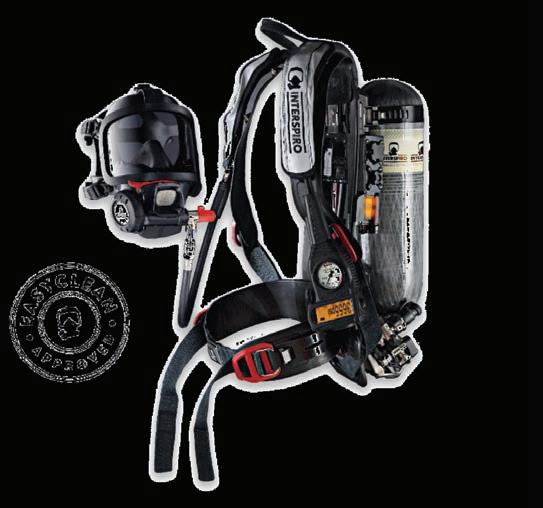
CANADIAN SAFETY EQUIPMENT IS PROUD TO BE A DISTRIBUTOR FOR THE INTERSPIRO RESPIRATORY PROTECTION LINE. THEIR STATE OF THE ART S9 INCURVE IS ONE OF THE MOST COMFORTABLE SCBAs YOU WILL EVER WEAR.
GIVE US A CALL AT 0182 OR EMAIL US AT INFO@CDNSAFETY.
No company has a richer history in respiratory protection than Interspiro. Their innovations have become industry standards, time and time again.


Themost advancedthermal imager for firefighting
Larger 3.5″ display for viewof the fire sceneand lightweightatjust830g(1.8
Extended dynamic temperature range to 1100˚C (2000 greaterscenedetail hotter fire scenarios
Enhanced feature setincluding laserpointer to aid communication, electronic compass for greaterscene awarenessandheat/coldseeker technology NFPA approved

The Solo SCBA Decon/Washing machine was designed and built for one purpose only…to protect Fire Fighters from Cancer causing agents found in the Smoke and residue left on their SCBAs. As an added bonus it can clean Gloves, Boots and Helmets. In addition, it substantially lowers the time spent decontaminating firefighter equipment. The SOLO is the only SCBA decon machine that meets both NFPA and CSA standards (both Existing and Upcoming.

ü REDUCED HEALTH RISK
ü SAVES TIME 2/PKS IN 8 MIN ü EASY TO USE
Qualified by MSA, SCOTT, DRAEGER & INTERSPIRO for cleaning their SCBAs.
Five year standard Warranty
Ten Year limited Warranty

WASH/DECON TWO SCBAs





In 8 minutes. Also cleans, boots, gloves and helmets.

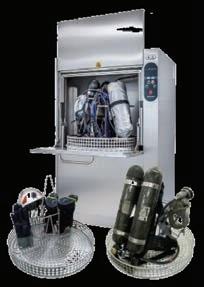





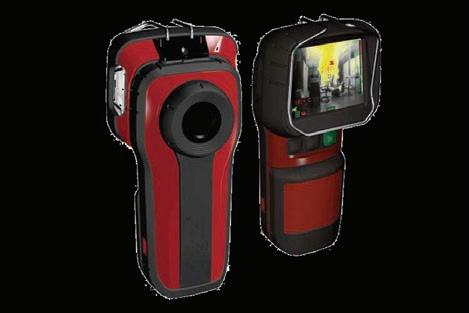

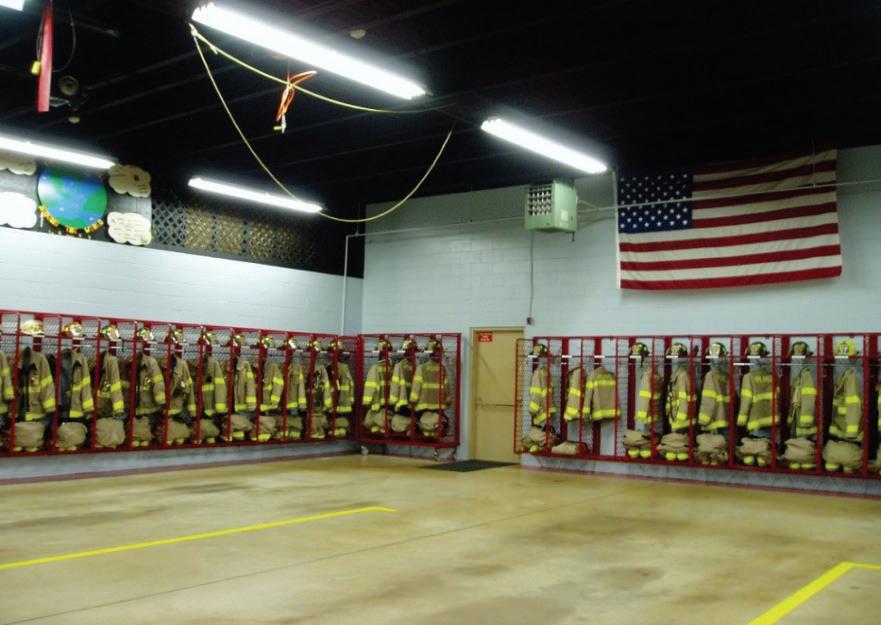
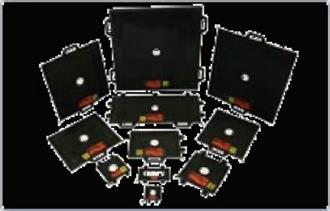
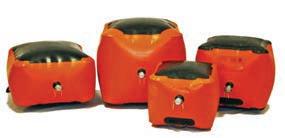
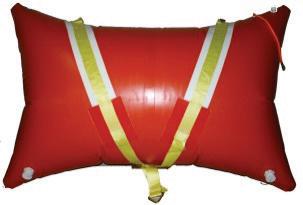






GEAR RACKS - HOSE RACKS & DRIERS- BOTTLE STORAGE – GEAR EXTRACTORS & DRIERS

CALL CANADIAN SAFETY EQUIPMENT FOR ALL YOUR WATER/ICE RESCUE NEEDS
SLED WITH ICE RUNNERS RESCUE POLE TETHER LINE WITH REEL and more…. IN HAUL / OUT
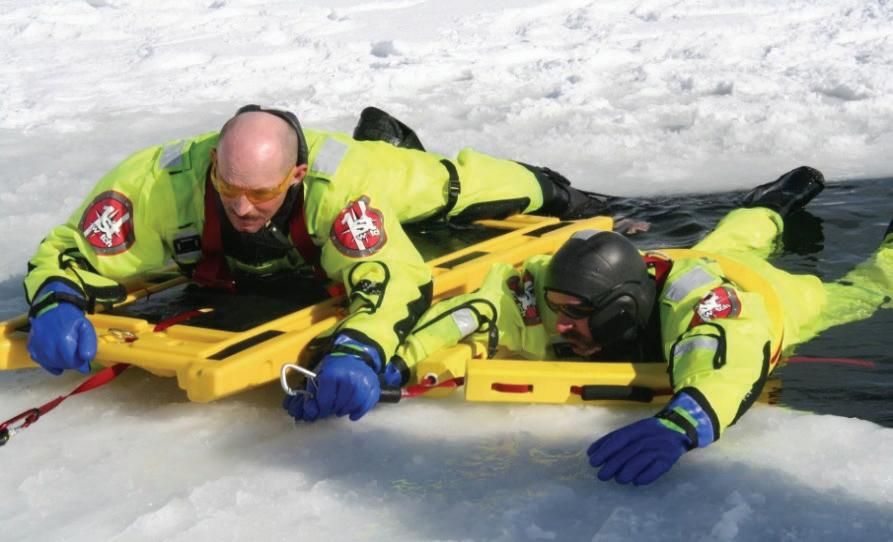

worlds. One moment you are crawling down a smoke-filled hallway or cutting someone out of twisted metal. The next, you are back in your kitchen, your shop, or your regular job—expected to switch gears like nothing happened. But the body does not flip that switch so easily.
The images don’t always stay at the scene. The nervous system does not know you are “home now.” So, the fire keeps burning. At first, it feels manageable, just heavy thoughts, restless nights, a shorter fuse. So, we tighten up and push through. But heavy burdens do not stay light.
The fire service is excellent at training for visible danger. But psychological load is different. You cannot see cumulative stress. You cannot hear it over the radio. And it does not always hit right away.
Many volunteers will say, “I was fine after the call.” And they are telling the truth. The issue is not always the call itself. It’s the stacking of calls and the lack of recovery time.
I have personally gone through a season when the gear came off but the weight did not. Back in 2012 I had the honour of writing a four-part series on PTSD for Trainer’s Corner. But it was not until I faced my own PTSD eight years later that it became real. For me, my faith in God was the turning point. Faith didn’t remove my memories. It didn’t erase exposure or ask me to pretend it never happened. What it did was tell me I was not meant to carry it alone.
I was bound under heavy burdens brought on by secondary trauma. It felt like old fashioned shackles, the ball and chain type fastened round my hands and my feet.
Those dark memories were not like slides in a projector tray, they were more like chains that kept me locked in the dark with no key, no strength, and no way out.
The nighttime was the worst when there was quiet in the room but not in my mind…I
drew strength from several scripture passages: Philippians 4:6-7 (NIV): “Do not be anxious about anything, but in every situation, by prayer and petition, with thanksgiving, present your requests to God. And the peace of God, which transcends all understanding, will guard your hearts and your minds in Christ Jesus.” And in Zephaniah 3:17 we are told God will “quiet us” with His love. That passage reminded me of the comfort a parent would give their child during a storm.
And when I responded, the chains fell off. They hit the ground hard, with a thud, because they didn’t just loosen – they broke. That sound mattered because in my way of thinking, broken chains do not get to follow you home.
My faith gave me permission to stop managing what needed to be broken. To stop tightening chains that were already cutting off circulation.
For some firefighters, the first step is faith. For others, it’s a peer. A chaplain. A counselor. A quiet conversation that finally tells the truth. Different paths, but it’s the same goal to be able to say, “these chains don’t fit me anymore.”
As firefighters we understand that what is not dealt with early never improves on its own. It only migrates into void spaces, into attics, into places you did not expect.
Psychological injury behaves the same way. Most firefighters do not fall apart on scene. They function. They perform. They finish the job. The damage does not show up immediately.
Most of us were taught that PTSD is about memories. Flashbacks. Bad dreams. Images you can’t forget.
That’s part of it but it’s not the whole story. PTSD also shows up as:
• a body that’s always on edge
• a heart that races for no clear reason
• aleep that never feels deep
• irritability or emotional shutdown
• feeling disconnected from the people you love
Over time, repeated exposure to fatal calls, medicals involving kids, structure fires, wrecks, and moral injury teaches the nervous system one thing: stay ready, danger comes fast. The problem is that it doesn’t always turn off. The problem with this quiet Mayday is that it does not sound dramatic. It doesn’t shout loud and clear “MAYDAY, MAYDAY, MAYDAY!” It sounds more like a whisper in the wind: “I can’t shut it off anymore.” “I don’t feel like myself.” “I don’t know why this one stuck.”
Firefighters are excellent managers. We manage risk. We manage scenes. We manage chaos. So, when something follows us home, we try to manage that too.
But these chains are not meant to be managed. They are meant to be broken. What isn’t broken will return. What isn’t addressed will accumulate. What stays hidden gains strength. This is why survival training must not stop at the scene. If we are serious about firefighter survival, we must expand the definition. Alongside Mayday, we should be teaching:
• how to debrief before going home
• how to recognize when stress has crossed into injury
• how to check on one another without judgment or fixing
• how to reach for help without fear of reputation loss
These aren’t “soft” skills. They are the difference between firefighters who survive and firefighters who disappear quietly.
Not one of you would say, “You should handle a Mayday alone.” Because if we have had any fireground experience we know that takes at least a dozen firefighters to rescue one entrapped firefighter. Yet many firefighters believe they should handle this “quiet Mayday” alone.
My faith showed me I was not meant to handle this alone. It gave me permission to ask for help. That wasn’t so easy in the old firefighter culture I was brought up in. Back then if I had said, “That was a hard call” the response was usually, “Shake it off” or “Suck it up buttercup… let’s go get a beer.”
In Mayday training, we teach firefighters to
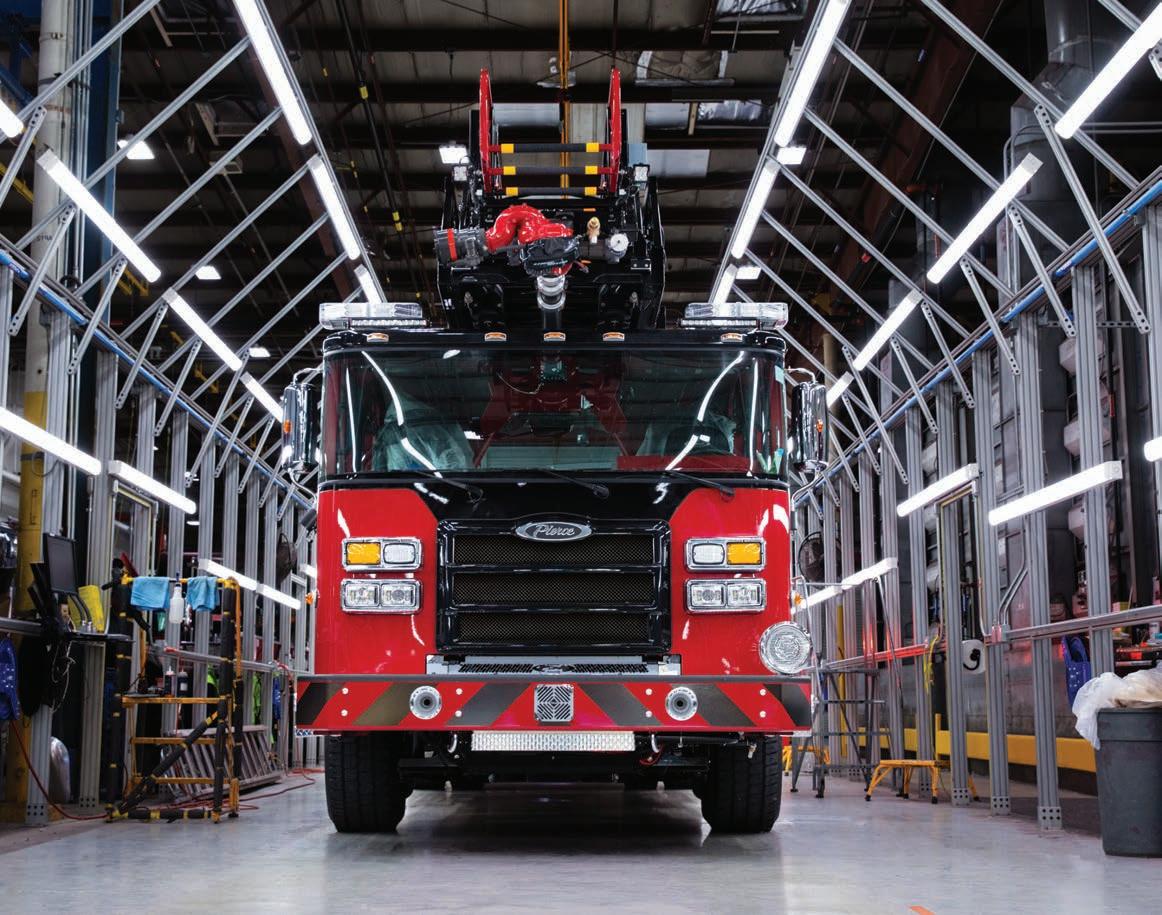
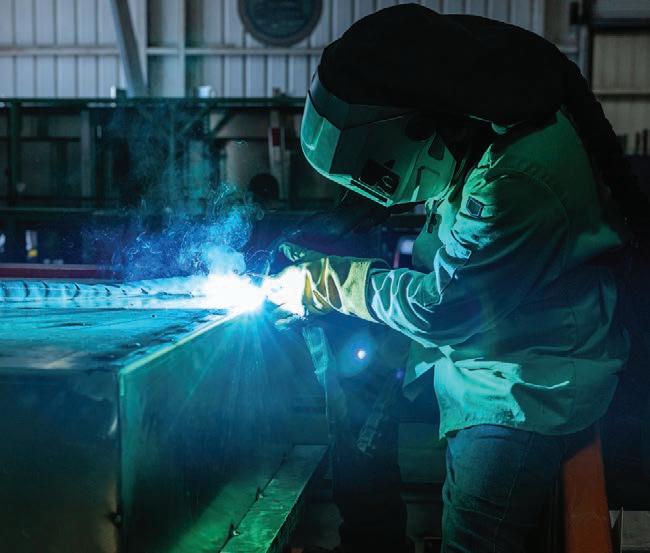
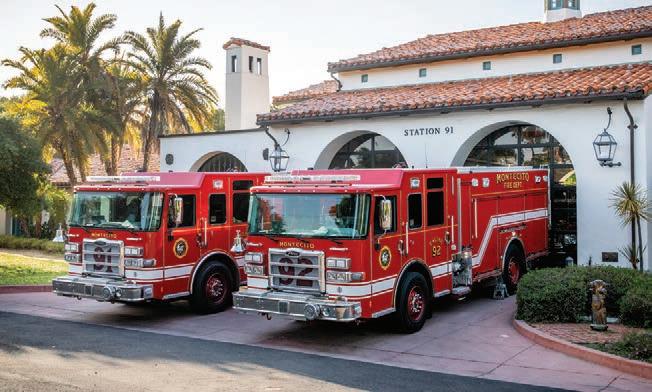
We’ve been making historic investments in our people, facilities, and future to expand capacity and capabilities so your trucks arrive sooner.
Industry-leading investments include:
• $150M for expanding production - with $60M already deployed.
• Integrated advanced manufacturing and precision automation equipment.
• 800 new jobs created in last 3 years, and we’re still hiring.
• Adding 500,000 sq. ft. to our facilities.
recognize when something is not right early before it becomes unrecoverable. Mental health is no different.
The problem is that the early warning signs do not look dramatic. They can easily be overlooked:
• a firefighter who stops showing up as often
• someone who snaps quicker than they used to
• the dependable member who suddenly goes quiet
• the one who jokes about “being fine” but is not acting like themselves
And just like on the fireground, the earlier it’s recognized, the better the outcome.
I know we have enough on our training plates already, but it would be a great value to teaching our members when to get professional help.
Sometimes rescue begins before having to deploy RIT with a simple…
• “Hey, you haven’t seemed like yourself lately”
• “That last call hit harder than most”
• “You don’t have to carry this alone”
Your members will be better equipped to support each other if they understood:
• how stress affects the brain and body
• how to decompress before going home
• how to recognize when something is following them home
• how to speak up without fear of judgment
• how to support a brother or sister without trying to fix them
When leaders acknowledge the weight of the job, firefighters breathe easier. When they dismiss it, firefighters bury it. Sometimes just acknowledging tough calls aloud gives permission for someone to approach you for help. You don’t need perfect words. You just need honesty. Sometimes the most powerful thing a leader can say is, “If this call follows you home, let me know. You don’t have to face it alone.”
And speaking of calls following a firefighter home, you may consider hosting a spouse/ partner night where they can be taught what to look out for as it’s them that would notice the changes in behaviour more readily. It’s also equally important that we as firefighters give our spouse/partner/roommates permission to reach out to someone in the department to say, “I’m noticing a change in behaviour, and I’m concerned for my spouse/ partner/roommate.”
And whether through faith, fellowship, or reaching out for help, those chains must be broken. Because loosened chains have a way of binding us again
Let me say these last six things clearly:
• If we teach firefighters how to save themselves in the worst moment of the job — but not how to carry the weight afterward — we’re only doing half the work.
• Sadly, some schoolyard bullies grew up and became firefighters. If you tolerate or participate in any form of belittling or hazing of a firefighter known to be struggling then you
become part of the problem.
• PTSD can make you feel like you should be “over it,” like the reactions mean you’re failing. But your reactions often mean you survived something that required your nervous system to become fierce.
• Healing is not pretending it didn’t happen. Healing is your body learning , little by little, that the danger has passed, the alarm can stand down, and you are allowed to live again.
• If you’re a person of faith, you don’t have to choose between science and soul. The body is not your enemy. It’s an instrument that’s been working overtime. Sometimes the most spiritual thing you can do is to practice peace in your breathing, one slow exhale at a time, until your whole system can finally believe what your heart already knows: By His grace, you are still here.
• Finally, understand that culture decides whether chains stay hidden or get dealt with. According to a 2017 Harvard study of the military found that unit cohesion (trust, safety and care) reduced PTSD risk by up to 20 per cent. That is too big of a percentage to ignore. May the chain breaking begin with you.
As always, train like lives depend on it, because your members lives certainly do. Again, thank you to all you trainers for your dedication and sacrifice. Huge respect brothers and sisters. 4-9-4 Ed
Consider printing up the following wallet size examples on cardstock to teach members when to get help.
If stress reactions:
• Last more than a few weeks
• Get worse instead of better
• Steal your sleep or your peace
• Strain your family or friendships
• Push you toward alcohol or numbing out
• Leave you angry, detached or hopeless
If the people who know you best say you’re not being yourself or you’re avoiding calls or people, these are warning signs.
Don’t wait to hit rock bottom. Getting help early isn’t weakness, it’s maintenance.
You may be walking through the valley, but you don’t have to walk alone.


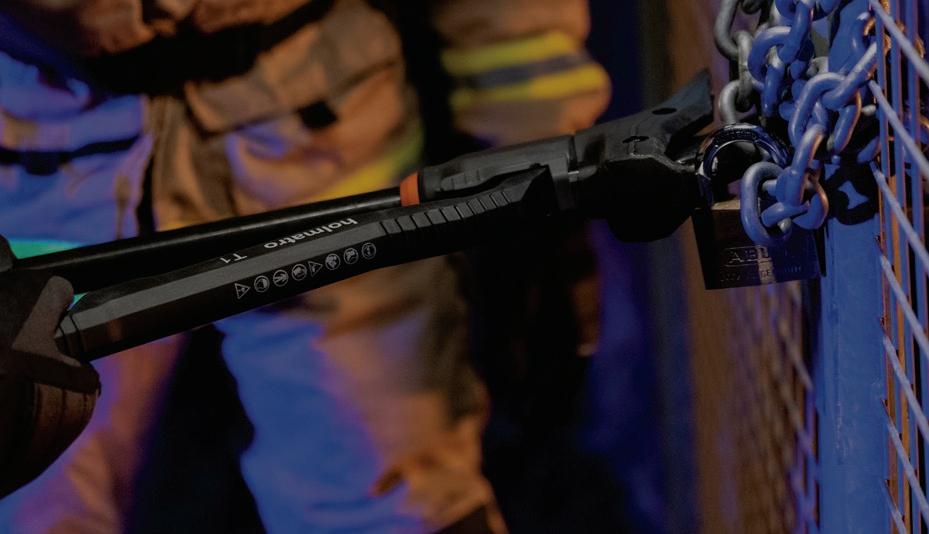






Whether it’s breaching doors, cutting locks, or lifting heavy materials; with the T1, you always have the right tool for the job.
T1 is the only tool that can hammer, cut, spread, lift, wedge and ram.
T1 can easily cut rebar, chain and padlock; easily replace the cutting blades when they are damaged.

Load-holding function makes the tool suitable for (progressive) lifting.
High power transmission gives you a maximum cutting force of 14,2 ton/31 248 lbf and a maximum spreading force of 3,4 ton/7 419 lbf.
By Manfred Kihn
I am sharing 10 helpful thermal imaging hints to help users have a better understanding of how useful this technology is to them. In my travels, I have seen pros and cons in many fire departments that can be chalked up to a lack of education.
1. Mounting of the imagers: Have the thermal imagers mounted somewhere in the apparatus accessible to all who will be using them — on the front engine doghouse for the officer and/or rear seat area for the firefighters. The days of carry cases are gone or having the imager charging in the battalion chief’s office is all wrong.
2. Carrying the imagers: All manufacturers have a carry retractable lanyard for their imagers available, make sure you have yours attached. Some firefighters prefer a longer seatbelt carry strap which works well too. This is a user preference. Where do you have it attached to your gear is another preference. Some prefer to carry on an SCBA strap, your turnout gear, or slung over your shoulder. Some like to have it attached behind them so not to interfere when crawling or climbing ladders.
3. Turn the imager on: While en route to the call, once you have the imager attached to your gear turn the imager on. Even though they boot up quickly the imager goes through a calibration process for approximately the first minute. This gives the imager time to warm up plus you can check to ensure it is 100 per cent fully operational and confirm that your battery level is full.
4. Arriving on scene: What is your assignment? What will you be using the thermal imager for? Applications such as size up, fire attack, or search and rescue? Does your imager have specific user modes and what mode will work best for your assignment? Thermal imaging view versus naked eye view gives you more detail and better command decision making information. Certain modes are there to help you distinguish between warmer areas of concern as in applications of overhaul, smells and bells types of calls or victim search and rescue.
5. Scanning with the imager: Scan with the imager slowly and methodically in order to understand the interpretation of the image that you are seeing. The refresh rates on your imager depending on the make and model could range from 9 to 15Hz for situational awareness imagers to 25 to 60Hz for advanced decision-making imagers. The smaller the number the slower the refresh rates meaning you must scan much more slowly in order not to miss any important details such as a victim or door/window for means of egress. Regardless, you still need to scan slowly enough for your brain to understand what you are looking at, as this is very important! When entering a room, conduct a seven-sided scan to get your situational awareness up of where you
are and what you are entering into. One - look across the floor for structural integrity; 2 - look straight ahead for the room layout; 3 - look up at the ceiling for high heat and structural integrity; 4 and 5 - look left and right in a “Z” pattern from floor to half way up the wall to the wall and ceiling looking for room layout, victims, fire conditions, doors and windows and elevated temperatures, 6 - look behind yourself and 7 - scan around the room.
6. Temperature measurement: Your imager has this feature which shows a digital temperature number in the lower right corner of your display screen DO NOT RELY on this. If your imager is NFPA 1801 compliant ((National Fire Protection Agency), then it will appear in BASIC PLUS mode only. No thermal imager on the market can give you a 100 per cent accurate temperature as there are too many variables which can affect it: reflectivity, angle of view, water par ticulate etc. Look at the display screen and interpret your image in black/ white/grayscale or in colour depending on what you are looking at.
7. Black/white/gray scale and colour ization: Because we see in colour, depth and definition with our naked eye plus a 180 field of view (FOV), when using our thermal imagers, we look through a small display screen we see black/white/ gray scale with a limited FOV and virtu ally no depth perception. Your imager will produce colourization depending on the make and model will be at dif ferent temperatures showing yellow, orange and red. This colourization is useful in showing the progression of the fire and high heat areas but will not last once you open the nozzle and start flowing water. I call this putting the “wet stuff on the red stuff” when this happens the colourization goes away, and we are back into black/white/gray scale. So again, the importance of understanding image interpretation applies.
igate through certain areas. By turning your imager ¼ turn changes the FOV to horizontal x vertical giving you a different FOV tactical decision-making advantage.
9. Lens wipe: I call this the “3 lens wipe”. If your vision gets diminished on your SCBA mask due to smoke and particulate or steam/condensation and you have to wipe it off, don’t forget your front Germanium lens and display screen as these will also be affected. If your display screen looks like it has whited out consider the following: steam/condensation, thermal inversion or delayed shuttering due to slow refresh rate.
10. Putting the imager back into service: Just like our PPE, we bag it at the scene and so it goes for proper cleaning to help with cancer mitigation. We should do the same with our thermal imager except bagging it (unless it is really contaminated). Clean it off at
tamination wipe cloth or soap and water if you can. Dry it off fully and conduct a full inspection to ensure of no housing damage such as deep gouges or cracks. All screws are tight and the imager is still 100 per cent fully operational through all its various modes. Insert the imager back into the vehicle mounted powerhouse charger and it is properly secured and charging. Check the spare battery if applicable to ensure that it is properly charging as well.
Time for a coffee and sit back to reflect on these 10 helpful thermal imaging hints. Did any or all of these apply to you and your fire department? If so which ones, are you doing or will you now implement? Every one of these applies to every fire department that uses thermal imagers.
Until next time, stay safe and train often.
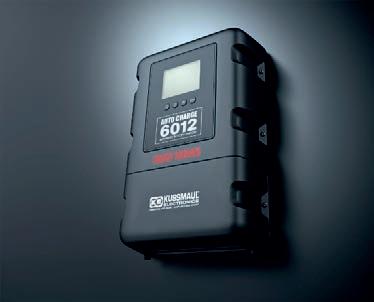

With a Touch Screen and rotating mounting feet, installation is hassle-free

Dual Battery Type Technology enables simultaneous charging of two different battery chemistries

8. Field of view: Imagers have a vertical x horizontal field of view which can be a challenge to the user as they nav-

Jaime Mann, Fire Chief, Sudbury, Ontario
and
who works with high-pressure teams to strengthen accountability, trust, and composure under stress. With a background in psychology and two decades of real-world leadership experience, she brings a research-based, no-nonsense approach to leadership development.
In his recent Leadership Forum piece in Fire Fighting in Canada, “Earning Respect,” Chris Harrow makes a grounded and timely point: a leader’s respect in the fire service is earned through action, consistency, and shared experience. Firefighters respect leaders who show up, who know the work, and who are willing to stand in the trenches with their crews.
That insight resonates deeply. And it also raises an important next question—one that matters just as much in high-pressure, high-risk environments like firefighting: What else must leaders do to keep that respect once it’s earned?
Because in reality, respect isn’t a one-time achievement. It’s evaluated constantly, especially under stress. One of the reasons that respect can be so difficult to navigate is that it doesn’t look the same to everyone. The behaviours that signal respect to one firefighter—directness, decisiveness, efficiency—may feel dismissive or abrasive to another. Some experience respect as being consulted; others experience it as being trusted to execute without micromanagement. This is where leaders can get tripped up. They believe they’re doing the “right” things, yet still feel a subtle shift in trust, tone, or engagement from their crew. That disconnect usually isn’t about intent. It’s about impact. In the fire service, leadership is always on display, not just during calls, but in training, downtime, kitchens, hallways, and after-action conversations. Crews are constantly reading signals: how you respond to pressure, how you handle mistakes, how you speak when you’re frustrated, and how you recover when things don’t go as planned. Respect is

One of the reasons that respect can be so difficult to navigate is that it doesn’t look the same to everyone.
built — or eroded — in those moments. Fire fighting demands clarity, composure, and trust under conditions that are physically and emotionally taxing. Fatigue, stress, time pressure, and risk narrow perspective. When the stakes are high, people don’t rise to their values—they default to their habits.
That’s why leadership in this profession starts long before the command call. It starts with self-leadership: the ability to regulate yourself when emotions run hot, to notice the impact you’re having on others, and to take responsibility for consistently showing up with humility and compassion—especially when it would be easier not to.
Humans notice patterns. And over time, those patterns shape whether someone is seen as credible, steady, and worth following.
Self-leadership isn’t about being soft or overly careful with words. It’s about discipline.
It’s the discipline to:
• pause before reacting
• Own mistakes without defensiveness
• stay composed when pressure mounts
• reflect on how your words, tone, and actions land on others
• commit to being curious (especially when you’re 100 per cent certain that you’re right)
This kind of accountability is often invisible—but its absence is not. Leaders don’t only lose respect because they make technical mistakes. They lose it when they deflect blame, dismiss feedback, or fail to recognize the ripple effect of their behaviour. Conversely, respect grows when leaders acknowledge missteps, course-correct openly,
and model responsibility in real time. Self-leadership doesn’t require a new title or additional authority. It requires intention and consistency. Here are three practices that matter deeply in the fire service:
1. Regulate before you react: Stress amplifies everything. Tone sharpens. Patience thins. Leaders who can steady themselves before responding set the emotional temperature for the entire crew. Calm is contagious—but so is chaos. Pausing, breathing, and choosing a measured response isn’t weakness. It’s leadership restraint, and it builds trust fast.
2. Own the impact, not just the intent: “Well, that’s not what I meant” rarely repairs trust. Respect is reinforced when leaders acknowledge impact without defending intent. A simple “That landed harder than I intended— let’s reset” signals maturity and accountability. Crews notice when leaders take responsibility without being prompted.
3. Model the behaviour you expect, especially off the call: Respect isn’t earned only in high-profile moments. It’s reinforced in training, conversations after a tough call, and everyday interactions. Firefighters pay close attention to what leaders tolerate, what they address, and what they let slide. Rank may secure compliance. Respect earns commitment. In a profession built on trust, accountability isn’t optional — it’s operational. Because in the end, respect isn’t demanded. It’s sustained one choice, one reaction, one moment of accountability at a time.


By Jeremy Parkin, Len Garis, Mandy Desautels
For decades, the statistics surrounding fire safety in Indigenous communities have been stark, persistent, and deeply troubling. The disparity between on-reserve fire outcomes and the Canadian average is not merely a gap; it is a chasm. However, a new initiative from the National Indigenous Fire Safety Council (NIFSC) is aiming to bridge that gap by equipping decision-makers with a powerful new weapon: data-driven financial foresight.
The NIFSC has released a Cost-Benefit Decision Tool, prepared by fire safety and financial experts, designed to help First Nations communities transition from reactive crisis management to proactive master planning. By quantifying
the life-saving value of smoke alarms and residential sprinklers against the costs of fire suppression, this tool offers a roadmap for community leaders to save lives and optimize budgets.
To understand the necessity of this tool, one must first confront the reality of fire risk on reserve. The disproportionately high risk of fire-related casualties in First Nations communities has been well-documented. Reports indicate that the First Nations per capita fire incidence rate is 2.4 times the national rate, the injury rate is 2.5 times greater, and the death rate is a staggering 10.4 times greater.
Compounding these human tragedies is the loss of infrastructure; fire damage per unit is roughly 2.1 times the national average. These outcomes are driven by a complex interplay of factors, including remoteness, decreased population, and limited capacity to sustain full-service fire departments or Mutual Type Service Agreements (MTSA).
In response to this situation, the Joint First Nations Fire Protection Strategy outlines four pillars of mutual collaboration (partnership for fire service, fire prevention education, community standards, and operational standards). Crucially,
the strategy sets an aggressive and clear objective: to “immediately reduce the statistical risk of death by fire in First Nations Communities to the national average with a long-term goal of being below their respective averages”.
Bridging a gap of that magnitude requires a fundamental shift in how safety is engineered into the built environment. The NIFSC CostBenefit Decision Tool serves as the essential mechanism to operationalize this mandate. It allows leadership to transform the abstract goal of reducing risk “immediately” into a concrete, budget-ready plan for resilient infrastructure. It also allows for establishing a current state and ideal state, with applicable costing for moving forward.
The theoretical framework underpinning the NIFSC’s new tool is inspired by a classic planning concept titled A Tale of Two Cities. The concept contrasts two hypothetical municipalities: “Sampleton” and “Exville”.
• Exville represents the common practice of incremental decision-making. Its leaders focus entirely on the immediate budget cycle, making short-term choices that often result in higher longterm costs and reduced safety.
• Sampleton, by contrast, commits to a long-range, proactive planning approach.
The moral of this planning fable is clear: a long-range vision for fire
prevention saves money, maximizes efficiency, and significantly enhances safety and service delivery. For First Nations communities, the goal of the tool is to aid in this policy shift, becoming more “Sampleton” than “Exville”.
The NIFSC tool is not based on guesswork; it is grounded in unequivocal Canadian evidence regarding the performance of fire protection systems. The model relies heavily on a massive national retrospective analysis which examined almost 130,000 fire incident reports across several provinces over an extensive period.
The data from this study is compelling:
• No protection: In residential fires where no functioning life safety systems (smoke alarms or sprinklers) were present, the death rate was 12.6 deaths per 1,000 fires. Almost two-thirds of the fires examined had no functioning life safety system, but they resulted in almost 80 per cent of the fatalities.
• Built-in protection: The odds of a death were 4.3 times greater than for fires in buildings with both life safety systems in-place.
• Crucially, the decision tool incorporates a difficult truth for remote communities: due to response times, fire suppression resources (fire department size/presence) are highly unlikely to impact fire-related casualties.
25_014903_Firefighting_In_CN_FEB_CN Mod: December 8, 2025 10:48 AM Print: 12/31/25 page 1 v2.5
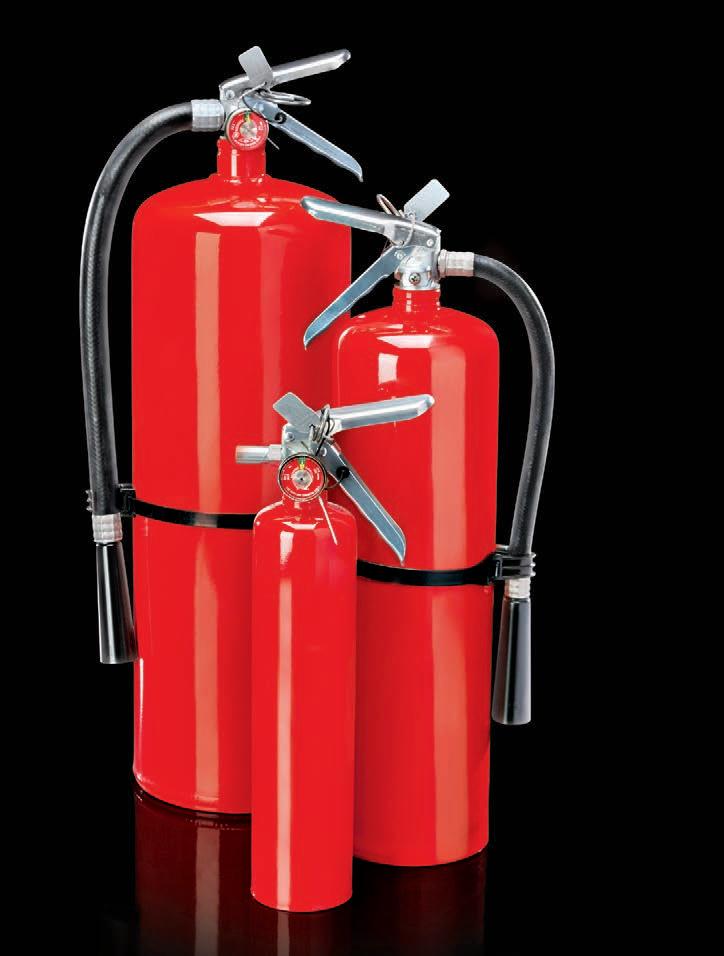
BY 6 PM FOR
Consequently, within the model:
• Suppression only influences cost (MTSAs, infrastructure size).
• Only built-in systems (smoke alarms and residential sprinklers) influence the casualty estimates (death and injury rates).
This distinction is vital for chiefs and councils weighing where to invest limited safety dollars to achieve the federal mandate of immediate risk reduction.
The Cost-Benefit Decision Tool operates as a user-friendly interface, allowing administrators to input their community’s specific parameters (population, number of homes, current protection levels) to generate “what if” scenarios.
Example Community A: The comprehensive investment:
• Starting point: Community A has 150 homes, no fire department (relying on a $50,000/year MTSA), zero sprinklers, and only 33 per cent smoke alarm coverage. This results in a predicted death rate of 11.0 per 1,000 fires.
• Decision: The community decides on a massive upgrade: establishing a small fire department, achieving 100 per cent alarm coverage, and retrofitting sprinklers in 100 per cent of homes.
• Outcome: The total purchase cost is approximately $1.4 million, with an ongoing annual commitment of almost $90,000. This investment reduces the estimated rate of fire-related deaths by 73 per cent.
Example Community B: The moderate investment:
• Starting point: Community B has the same demographics but starts with a small fire department and a cheaper MTSA ($20,000/ year). Its current protection level is slightly better, resulting in a similar predicted death rate of 11.3 per 1,000 fires.
• Decision: The community maintains the current small fire department but commits to a more moderate upgrade: 100 per cent smoke alarm coverage and retrofitting sprinklers in 50 per cent of the homes.
• Outcome: The total purchase cost is lower at $661,200, with an ongoing annual commitment of just over $81,000. This targeted approach still achieves a significant projected reduction in the death rate of 54 per cent.
These examples demonstrate the tool’s capacity to tailor solutions. It allows leadership to manipulate assumptions to find the “best fit” for their specific budgetary constraints and safety requirements.
One of the most critical insights provided in the accompanying documentation is the analogy of fire safety systems as a “vaccination” process. A vaccination is only effective if the immunity is maintained; similarly, a fire safety system is only effective if it is operational when the fire starts.
The costings in the decision-support tool explicitly include assumptions for annual maintenance and replacement costs for both prevention and suppression equipment. The document stresses that an initial hardware purchase is insufficient. For a community to commit to being “Sampleton,” they must commit to the Operating and Maintenance
(O&M) costs required to keep those systems online, ensuring the initial capital investment is not wasted.
Investments to community infrastructure can be improvements to fire safety. Community planning should be inclusive of fire safety proposals. Expansion projects, renovations or improvement plans present unique opportunities to improve fire and life safety. Sprinkler installations can be part of municipal water systems. Monitoring systems can be included in new community buildings. Code compliant materials can be part of new home construction.
When a fire department seeks to improve fire safety, cost synergies can be found in existing or planned projects. Fire stations can be designed to be shared service or shared space. Costs savings are significant when community projects include fire safety initiatives in the totality. Improving fire safety does not need to be a standalone cost.
While the tool provides a powerful mathematical model, it is limited in that it does not currently calculate the cost-benefit of public education. Research in Canadian municipalities has proven that home safety campaigns can drastically reduce the frequency and severity of fires by targeting high-risk behaviors related to cooking, heating, and smoking. This type of public awareness is consistent with one of the pillars of the Joint First Nations Fire Protection Strategy. Although these “soft” costs are not in the current mathematical model, the authors encourage communities to consider education in parallel with infrastructure, as it is a highly cost-effective way to drive down ignition rates.
The National Indigenous Fire Safety Council’s Cost-Benefit Decision Tool represents a significant step forward in the management of on-reserve fire safety. It moves the conversation away from abstract fears and toward concrete, quantifiable data.
By making the relationship between investment and survival visible, the tool empowers First Nations communities to assert control over their safety outcomes. It acknowledges the harsh economic realities of remote community management while illuminating the path toward a safer future. Whether a community chooses a full-scale sprinkler retrofit or a targeted smoke alarm campaign, they can now do so with a clear understanding of the costs involved and the lives potentially saved, empowering them to plan not just for the next budget cycle, but for the next generation.
Jeremy Parkin is the president of the National Indigenous Fire Safety Council. He is the director of emergency services for Rama First Nation overseeing fire and paramedic services and emergency management. Jeremy also serves as the president of the Ontario Association of Fire Chiefs. Contact him at Jeremy.Parkin@indigenousfiresafety.ca.
Len Garis is director of research for the National Indigenous Fire Safety Council, retired fire chief for the city of Surrey, B.C., and a research associate – University of the Fraser Valley associate scientist emeritus with the B.C. Injury Research and Prevention Unit. Contact him at lwgaris@outlook.com.
Mandy Desautels is chief administrative officer at the National Indigenous Fire Safety Council. Prior to joining NIFSC, she worked for BC Emergency Health Services and prominent NGOs. Contact her at mandy.desautels@indigenousfiresafety.ca.
Tom DeSorcy, Ret. Fire Chief, Hope, B.C.
Tom DeSorcy joined the fire service in 1983 and became the first paid firefighter in his hometown of Hope, B.C., when he became fire chief in 2000, retiring in 2023. Email Tom at tdesorcy@telus.net media.
they were keen to share.
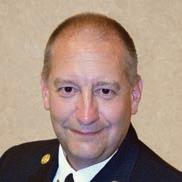
In our business volunteers cost a lot of money and we invest a lot more in each member than the old days.
I’ve spent more than 15 years contributing to Fire Fighting in Canada and Volunteer Vision has become a defining part of my career. It has connected me to a network of passionate professionals who share the same challenges and aspirations in serving their communities as I do. Times have changed in technology, demographics and expectations — and you know how we all feel about change in the fire service — but the core issues remain remarkably consistent. Through all of this, we’ve endured. That resilience it what gives me confidence in the future of Canada’s volunteer fire service. Recruitment and retention will always dominate conversations among volunteer fire chiefs. But we’re not alone in this struggle. You simply need to have a look around your community. Do you see other organizations turning volunteers away? Hardly.
The math is simple: smaller volunteer groups are aging out. Volunteering means different things to different generations. It’s not that we aren’t doing things right, or that we have a system that’s broken. A line of replacements is simply not there anymore. We lament the lack of volunteers but we must remember to focus and be proud of those that do come to us.
Let me introduce you to the Pie Club, as an example. The Pie Club is a local group that has met weekly for the past decade to share pie, coffee, and conversation. What began as three friends catching up over dessert evolved into a recognized community organization that donates regularly to charities like the food bank. Their contributions weren’t massive, but they mattered. They gave members a sense of purpose and belonging.
Eventually, one of the founding members suggested inviting new faces
or “young blood” as it were, to keep the group vibrant. Great idea, right? People were eager to join. Three new members came aboard, and that’s when things got complicated. Pie Club was, after all, about the pie. One week it was apple, the next blueberry. When a newcomer offered to help coordinate the menu, they were told, “That’s John’s job—he’s always done it.” Later, another suggested adding a different dessert, which nearly fractured the group.
Sound familiar? Many volunteer organizations crave fresh energy but resist change. The old guard clings to tradition, leaving newcomers discouraged and disengaged.
Here’s where my optimism shines through. The volunteer fire service has evolved. Recruitment isn’t a oncein-a-while exercise, it’s an ongoing process. We’ve moved from “just show up on training night” to structured applications and onboarding. And while processes have changed, one thing remains constant: the willingness of experienced firefighters to mentor the next generation.
The Pie Club is fictional but it’s not far from reality. We are fortunate that the so-called “old guard” in our fire halls doesn’t hoard responsibility. They hand over the reins, teach, and encourage newcomers. They understand that passing on knowledge is essential for survival. Across Canada, I’ve seen seasoned firefighters take pride in shaping rookies into capable responders. That culture of mentorship is one of our greatest strengths.
My story is well documented. When I first began in 1983, I was given a pager and key to the hall on the first night. Never put on a set of gear or even knew where it was. Even still, veteran members were always teaching. It wasn’t formal training back then, but
I also warn departments to be careful what they wish for. In our business volunteers cost a lot of money and we invest a lot more in each member than the old days. Estimates of $10,000 per recruit are not far off. This is why I’ve told many a department to be careful what they wish for. Could you imagine a wholesale addition of new members? There is such a thing as the perfect mix. In the case of a Pie Club, there really is no cost other than the organization’s survival.
Volunteer groups everywhere face challenges, but the volunteer fire service stands out for its adaptability and commitment to growth. Recruitment and retention will always require effort, but with a culture that values inclusion and mentorship, we’re not just surviving, we’re thriving. Face it, no matter what it is, we are good at what we do. It’s time we took credit for what we do and how we do it. We share a common goal because someone’s worst day is our every day.
This will be my last regular contribution to Volunteer Vision and I wanted to make sure I went out on a positive note. When approached back in 2009 by then editor Laura King, I immediately knew that I had something to say — but for more than 15 years? This column has really shaped me and broadened my career. It introduced me to the fire service “beyond Hope”, including Fire Chief Vince MacKenzie, my “brother from another mother”, with whom I’ve shared this space the entire time.
I will continue to enjoy the contact I have with the Canadian fire service as I respond to emails and social media messaging from those that read the magazine and listen to the podcast. In fact, I will never forget the first time someone said that one of my columns was posted on their office bulletin board. Now that’s inspiring. Thanks Canada. Editor’s Note: The big thank you is to you Tom! Thank you for all you have done and do for Fire Fighting in Canada.