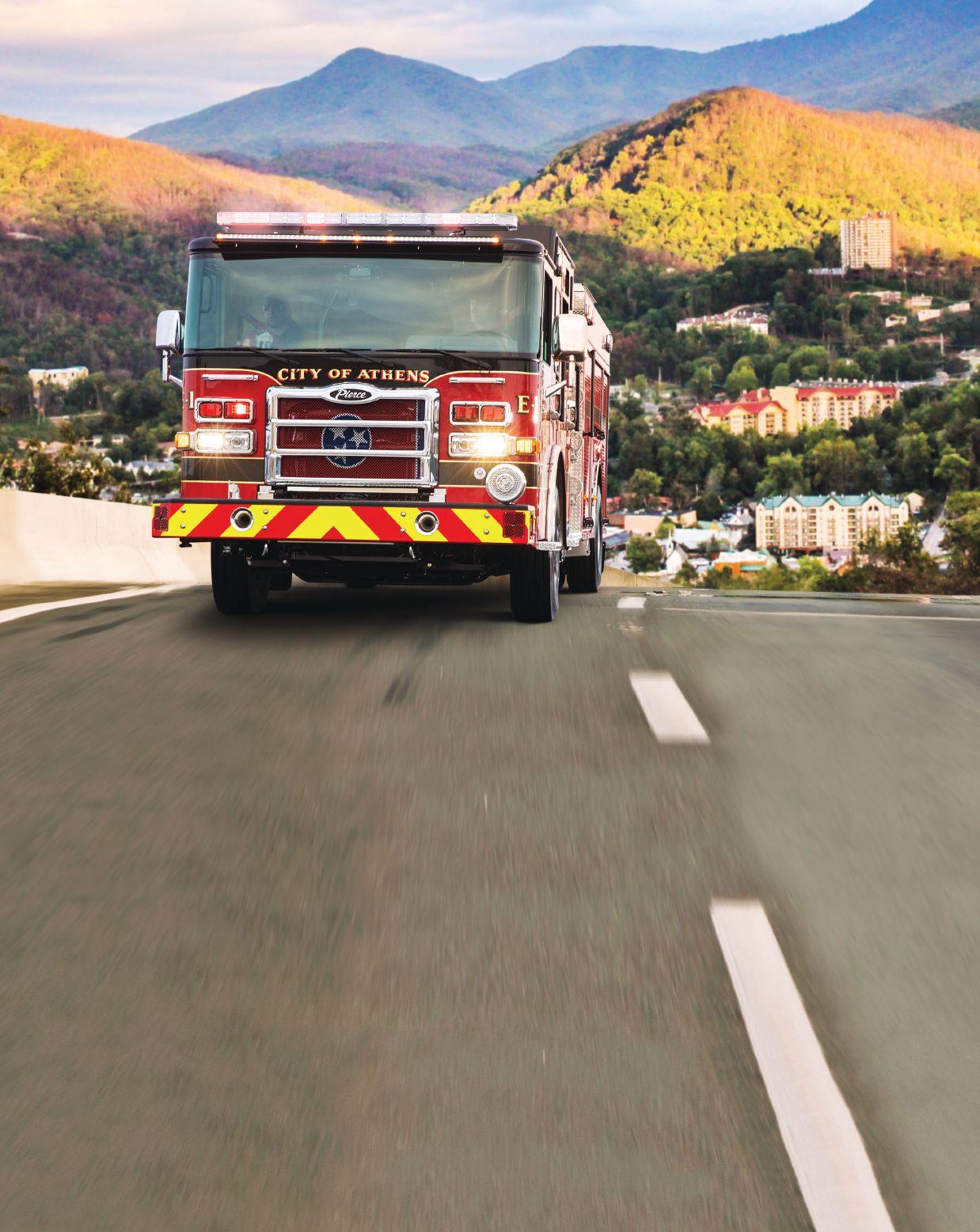
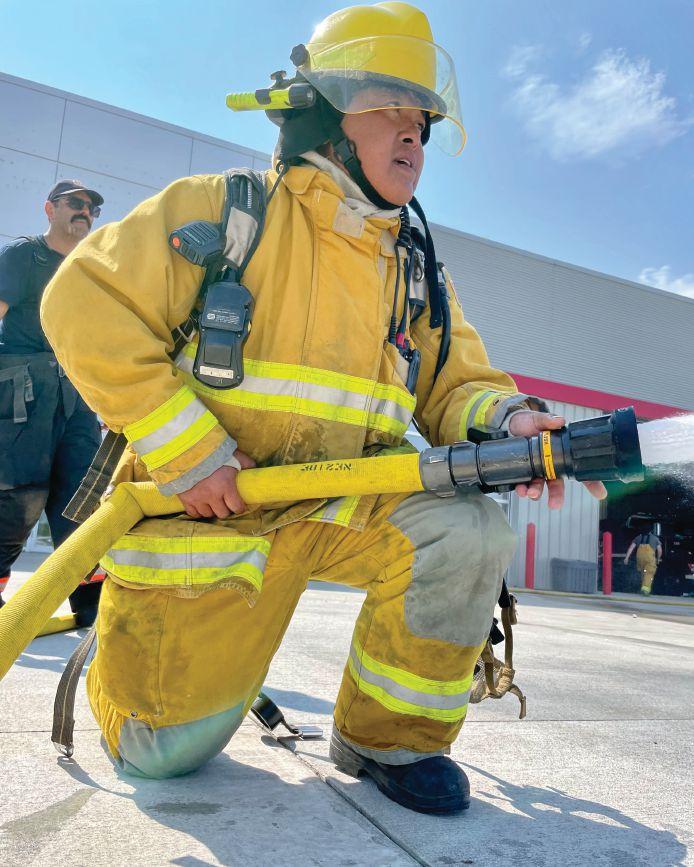
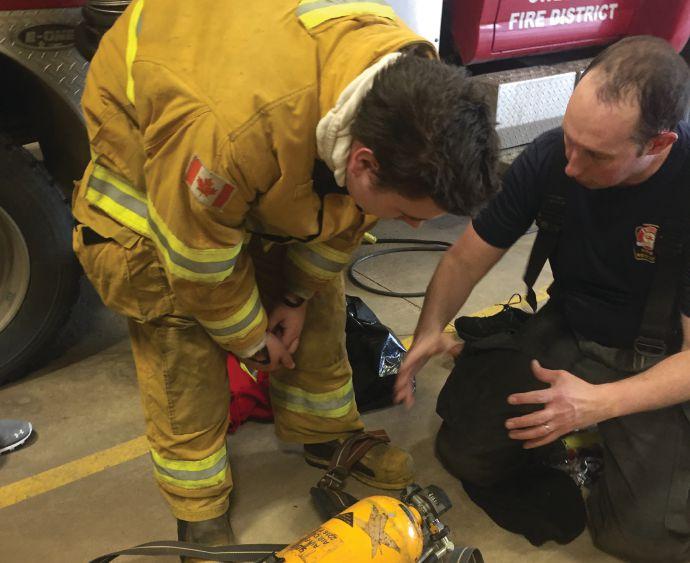
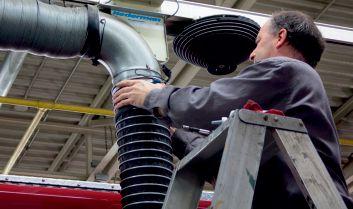
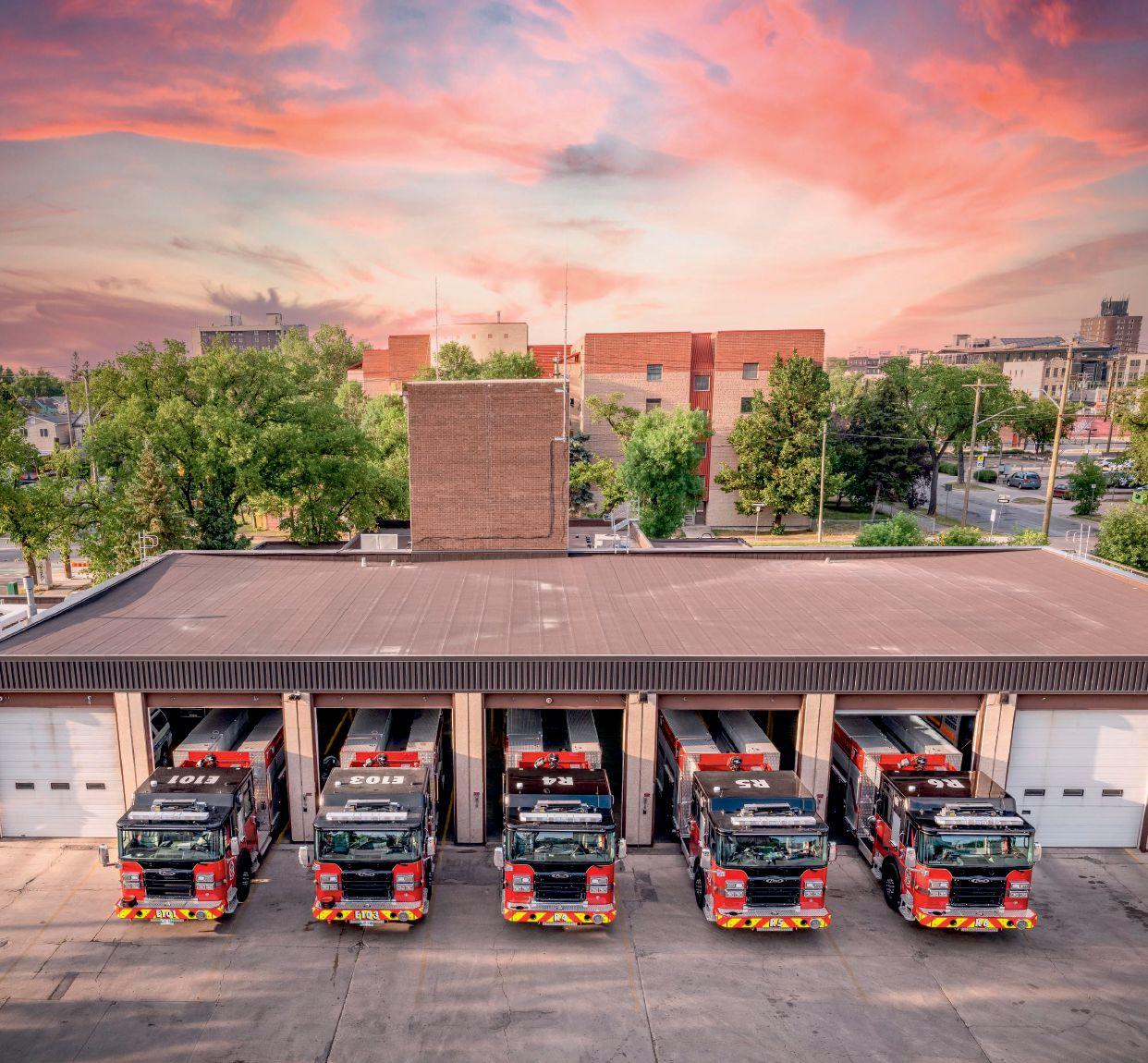
From processes to purchases, innovations are driving change in Canada’s fire service.
By Kaitlin Secord
SAVING LIVES THROUGH FIRE REPORTING
Fire personnel are encouraged to report fires for a new database aimed at reducing Indigenous fire-related death and injury. By Len Garis and Mandy Desautels 24
SUB-1001 FIRE FIGHTING
Different training options for fire departments without the resources to be fully NFPA 1001 certified. By David Moseley 34 HEALTH RISKS OF LONELINESS
Being alone does not make a person necessarily lonely. It is the perception of being alone that makes the person lonely. Research has shown that this form of isolation is unhealthy and can lead to longterm health issues.
By Peter Collins 38
FIREFIGHTER WELLNESS
The story behind the development of a new, free holistic firefighter wellness plan for departments. By Jordan Bolzon
BY LAURA AIKEN Editor laiken@annexbusinessmedia.com
TCOMMENT
The irony of old adages
he fire service has long bandied around the phrase “100 years of tradition, unimpeded by progress.” Or “150 years of tradition…” Or “200 years of tradition…” The old adage has a few incarnations when it comes to the exact number of years, but the premise is the same no matter the years. Who came up with this widespread saying? I searched the web. The phrase has no Wikipedia page I could find. There seems to be no click-trail to follow. Perhaps, when first uttered, no one thought it would really catch on.
While I have heard it invoked with lightness to capture the real challenges of change, it’s also a pretty ironic statement. Fire departments are progress machines steeped in tradition, akin to so many other facets of life I marvel at. For example, I love to golf, and golf is a sport of manners with its own culture. You have to play to intuit that you don’t step on someone’s putt line on the green. These ways of doing things might date back to golf’s origins in 15th century Scotland, but the equipment being put out sure as heck doesn’t. And it’s not just the equipment, it’s the whole science behind tackling the course, the different processes today’s pros come up with to score so sublimely sub-par. The fire service works on the same trajectory of advancement.
many of us are compelled, particularly at leadership levels, to improve.
ON THE COVER
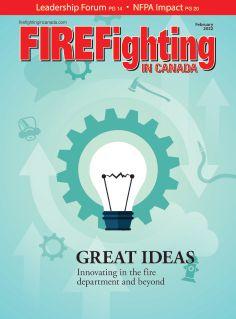
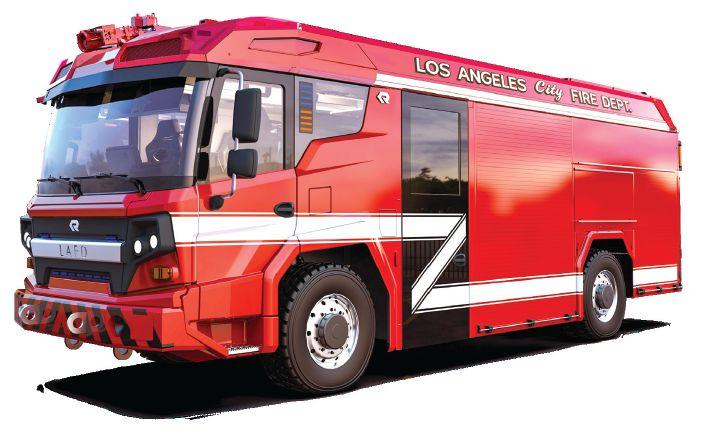
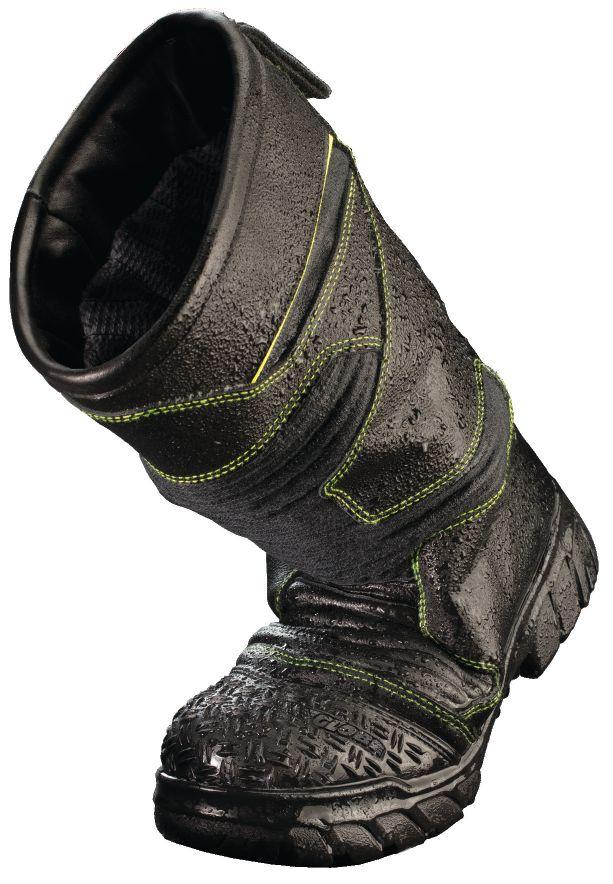
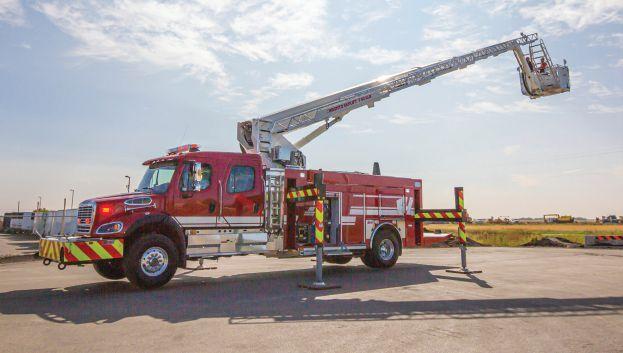
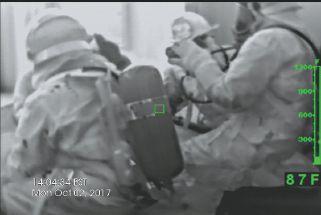
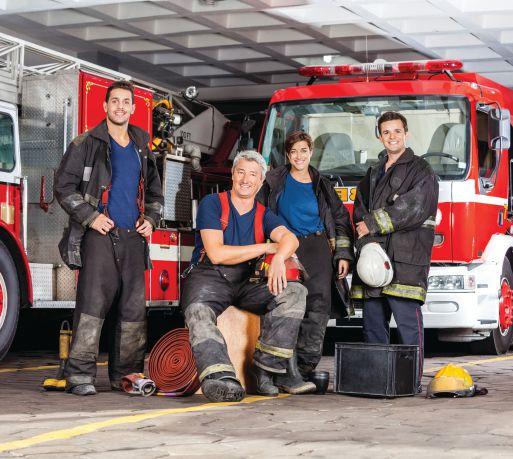
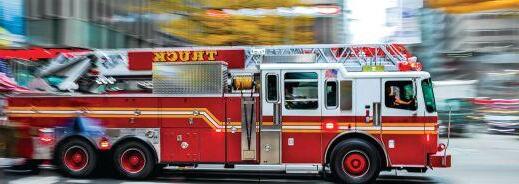
Innovations abound in the fire service, be it more efficient processes, better use of data, or state of the art technology. Read more on page 10.
I could write all day about electric fire trucks, AI applications, virtual reality and mind-blowingly high-tech fabrics, filters and all the rest intended to keep crews safer. Or, consider the casting aside of the proud soot covered firefighter image in favour of the one who does proper decon and tries to avoid getting cancer. The progress is innumerable, but less visible are the day-today innovations in operations. I received a call from a firefighter wanting to share a story of a very challenging call. During a structure fire, the crew needed to rescue a 385pound person from a basement. The difficult bariatric rescue led to the development of a new approach for next time (look for the full story in the April edition of Canadian Firefighter magazine).
I bet these stories are happening all the time in the fire service. Progress is everywhere, from the crew level to the companies that equip them. The only thing that hasn’t changed in the fire service is the mission and the generous, brave hearts carrying it out.
ESTABLISHED 1957
FEBRUARY 2022
VOL. 66 NO. 1
Reader Service
Print and digital subscription inquiries or changes, please contact Beata Olechnowicz, Audience Development Manager
Occasionally, Fire Fighting in Canada will mail information on behalf of industry-related groups whose products and services we believe may be of interest to you. If you prefer not to receive this information, please contact our circulation department in any of the four ways listed above.
All advertising is subject to the publisher’s approval. Such approval does not imply any endorsement of the products or services advertised. Publisher reserves the right to refuse advertising that does not meet the standards of the publication.
It’s almost as if progress has a mind of its own, and just shows itself through the will of its human hosts. Can humans even stop progressing? Stop innovating? Observational evidence seems to dictate
STATIONtoSTATION
ACROSS CANADA: Regional news briefs
Ontario fire chiefs gather virtually for labour relations update
Vaccine mandates provided plenty of fodder for legal challenges in 2021, and while precedents are being established, issues remain.
From Jan. 18 to 20, the Ontario Association of Fire Chiefs (OAFC) held their annual Labour Relations Seminar in partnership with Hicks Morley law firm. Over 250 chief fire officers and human resource personal from across Canada logged on to the virtual platform to hear the latest on bargaining updates, vaccination issues, workplace equity, diversity and inclusion, benefit administration, and more.
The conference also provided information on OAFC government relations priorities for 2022, which include, training and certification, NextGeneration-9-1-1, and mental health and wellness as being key areas of focus.
Deputy Fire Marshal Tim Beckett provided an update from the Office of the Fire Marshal (OFM), which shared progress on
THE FIRE HALL BULLETIN
Promotions & appointments
STEVE SERBIC is the new fire chief in Esquimalt, B.C. Serbic has over 24 years of fire fighting experience. He was previously with Surrey Fire as assistant chief of operations. Serbic is a mental health advocate, and has travelled North America as a keynote speaker.
St. Catharines Fire Services
named DAVE UPPER its new fire chief. Upper joined the department in 1991 and has been deputy chief since 2017. Upper helped spearhead the department’s mental health journey program, and contributed to its recent fire master plan.
the development of minimum training standards for Ontario’s firefighters. The OFM is also continuing to look at problems around third-party training providers following reports that some companies are issuing certificates that may be misleading in regard to what training a firefighter has received or is accredited for. The OFM is looking at options to address this and how third-party providers could be regulated. Beckett noted that it is key for fire chiefs to be diligent in vetting firefighter resumes to ensure the training they have received meets the expected standards and they are indeed safely accredited.
Solicitor General Sylvia Jones joined the conference to share that the government is investing in the construction of two new facilities to support first responder mental health and well-being in partnership with Runnymede Healthcare Centre. The Ontario government announced its initial $1 million investment for a dedicated first responder facility in Caledon, Ont., in October 2021.
The Top 10 Legal Challenges of the Year was presented on Jan. 19 and included cases that touched on whether a pregnant firefighter was fairly moved to a comparable role, vacation entitlement for a firefighter off with a long-term injury, a wrongful termination in the face of defamation and sexist allegations, privacy and the handing over of information to the bargaining unit, and a grievance around who needed to be in attendance during a disciplinary conversation (and what constituted such). Other big challenges centred on fitness testing, 24-hour shifts, personal conduct, healthcare spending accounts, discrimination in promotional considerations, and a case of bans on shift/vacation switches during a peak phase of COVID-19.
On Jan. 20, John Saunders and Rebecca Lui, of Hicks Morley delved into cases involving vaccine mandates. Saunders summarized that because the Ontario government did not enact mandatory
PHIL EAGLESON is the new fire chief for Owen Sound Fire and Emergency Services. Eagleson has worked in the fire service for the past 22 years. He began as a volunteer firefighter with the town of Saugeen Shores, Ont., in 1999, where he later became chief. Eagleson has held multiple roles with the Ontario
Association of Fire Chiefs.
GREG ADAIR started his new role as fire chief for the city Lethbridge, Alta., on Jan. 12. Adair joined Lethbridge Fire and Emergency Services in 2017, following a 20-year paramedic and firefighter career with Red Deer Emergency Services. He also has 10 years of wildland fire fighting experience.
vaccine legislation for municipalities and emergency services, but because employers have a duty to take reasonable precautions to create a safe work environment under the Ontario Health and Safety Act, the issue of vaccine mandates and policies in the fire service has largely come down to the employers and lawyers. Furthermore, the cases that have been hashed out thus far indicate a precedent being set for laws that protect group rights. Ongoing questions in this realm surround what to do with employees on unpaid leave for vaccine policy violation (need to eventually replace, have minimum complement requirements), who pays and monitors for testing, what the definition of fully vaccinated is and how that will change, who the policy applies to, medical exemptions and consequences for non-compliance.
The OAFC Labour Relations Seminar wrapped up on Jan. 20 with and plenty of takeaways from the panel “Leadership Survival 101”, featuring, Saunders, Karen Gordon, of Gordon Strategy, Fire Chief Brad Bigrigg, Puslinch Fire, A/Chief Larry Brassard, Huntsville Fire and Fire Chief Monique Belair, Bellville Fire. The panel discussed the importance leading by example at all times and always being aware and thoughtful in what you say in emails, on the phone, and at emergency scenes. They also encouraged their peers to ask experts for help and to always be mindful when using social media. Gordon cited social media as the easiest and fastest way a chief can bring about their own downfall.
The OAFC Labour Relations Seminar is popular annual event, and one chiefs will surely look forward to next year, Jan. 24 to 26, 2023.
Retirements
RON HOPE, is set to retire as fire chief for the Kindersley Fire Brigade in Saskatchewan after 41 years of service. Hope joined the department in 1981, and was fire chief for 23 years. He was awarded the Saskatchewan Protective Service Medal in 2007 and the Queen Elizabeth Diamond Jubilee Medal in 2012.
ESO identifies key fire service trends to watch in 2022
ESO, an America data and software company with an office in Canada, is predicting that staffing challenges, community engagement, provider wellness and evolving service delivery models will be the biggest fire service trends of 2022.
Staffing challenges are affecting many companies and organizations – no industry is immune. In particular, ESO predicts that volunteer departments will struggle more than career departments because keeping up with certifications and training will be a real challenge. There is also an exodus of experience across the board (including senior officers). Agencies and departments will need to re-think models of engagement, the investment in and importance of training and education, as well as an approach to scheduling that gives staff more control over their lives.
Community engagement is more important than ever and there is everincreasing pressure to deliver the right optics, showcase value, and the need to help fire service teams understand that pressure. City councils and local governments are demanding greater accountability into what publicly funded services are doing to benefit the community. Showing positive benefit to the community through both data (to tell the story) and engagement (to deliver the story) will pay dividends, reported ESO. Social media plays a key role in creating perceptions of the fire service depending on how teams engage with the community.
Staff wellness and well-being will
Fire Chief DON BARDONNEX of B.C.’s Courtenay Volunteer Fire Department is set to retire after more than 40 years in the service. He joined Courtenay in 2007 and was chief for nearly 14 years. Throughout his career, Bardonnex focused his efforts towards training and mentorship, and was involved in creating the W.A. Lane MacDonald Fire Training Centre in East Courtenay.
ESO predicts keeping focused on firefighter well-being will continue to be crucial as staffing challenges, increased shifts and a stressed out public could have a potentially dangerous impact on first responders.
continue to be a focus area with fewer responders, more shifts, and a public feeling the stresses and strains of COVID19. ESO predicts we’ll see more violence against responders from a public that is generally disillusioned with authority figures, with more responders being placed in harm’s way.
There is a push/pull dynamic between government entities and the fire service around what delivery of benefits should be. This includes services like changing overhead lights on trails for safety and providing COVID-19 vaccinations in a public health capacity. There will be greater expectation – and greater pressure – for the fire service to do more than fire fighting-related activities.
Fire Chief MARC RATHWELL is retiring from the Lethbridge fire department after two and a half years as chief. Rathwell started his career in 1996 as a paramedic and firefighter, and has moved through the ranks throughout his career.
Last alarm
Fire Chief JIM PENDERGAST passed away on Nov. 8, 2021. He served as fire chief for
the Penhold Fire Department, in Alberta, for 12 years. Pendergast had nearly 40 years of experience in the field.
STANLEY CHARLES GRAGG, former director of the Ontario Fire College, passed on Dec. 8, 2021, at the age of 91. Gragg was a leader in the modernization of specialized education in Ontario.
STATIONtoSTATION
BRIGADE NEWS: From departments across Canada
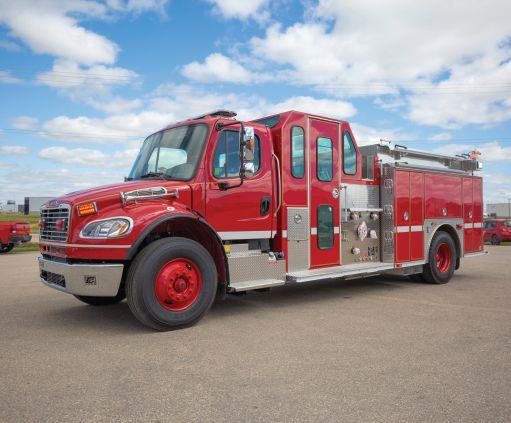
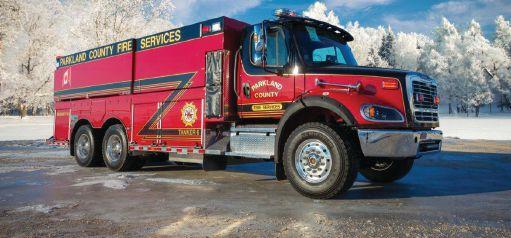
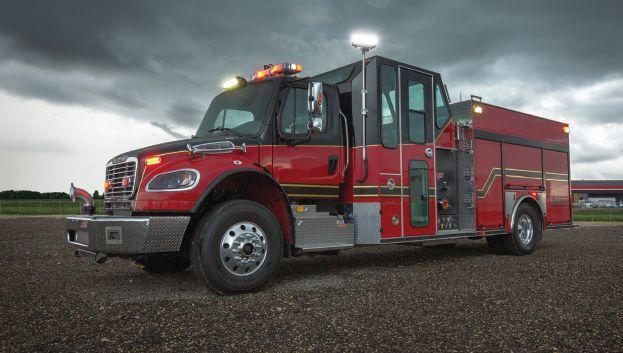
The Parkland County Fire Department in Alberta has taken delivery of a Crusader tandem tanker from Fort Garry Fire Trucks. Manufactured on a Freightliner M2-112 chassis, with Cummins 450 HP engine, this tanker is equipped with a Hale DSD PTO 1250 GPM pump, 3000 IG tank, Hale MIV 6” suction inlet, Electric Akron Ball valves with Akron 9335 pressure/flow actuators, and Foam Pro 2001.
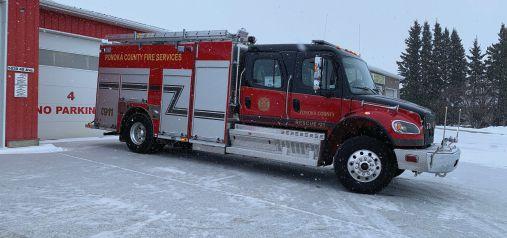
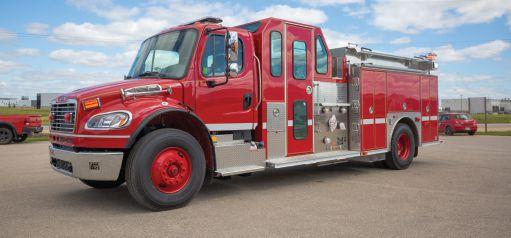
Alberta’s Ponoka County West District Fire Department – Rimbey took delivery of a 5083 salt water marine grade pumper from Fort Garry Fire Trucks. Manufactured on a Freightliner M2-106 chassis, with a Cummins L9 330 HP engine, this pumper features a Darley PTO PSP 1050 IGPM pump, CoPoly 800 IG tank, Foam Pro 2001 Class A, Onspot chains, 3” front suction and rear receiver.
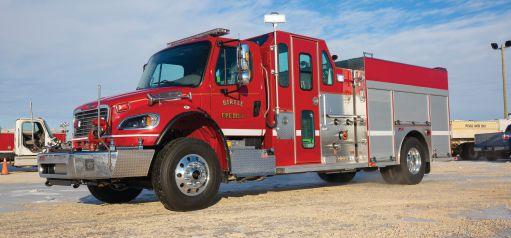
In Manitoba, Prairie View Municipality, on behalf of Birtle Fire Department, has placed a new 3 man Crown pumper in service from Fort Garry Fire Trucks. It is built on a Freightliner M6-102 chassis, and features a Waterous CSPA1000 pump, CoPoly 1000 IG tank, Foam Pro 1600 Class A and a top mount enclosed 3 man Crown pump house.
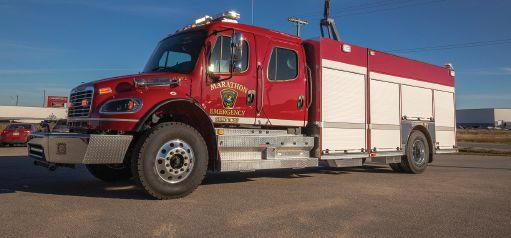
Marathon Fire Department, in Ontario, has taken delivery of an emergency rescue pumper from Fort Garry Fire Trucks. Manufactured on a Freightlinter M2-106 chassis, with a Cummins L9 350 HP engine, this pumper features a CoPoly 800 IG tank, internal ladder storage for 34’, 24, ’14’ and 10’ ladders, 4” Fireman’s Friend direct tank fill and a Waterous CSU 1500 pump with Foam Pro 1600.
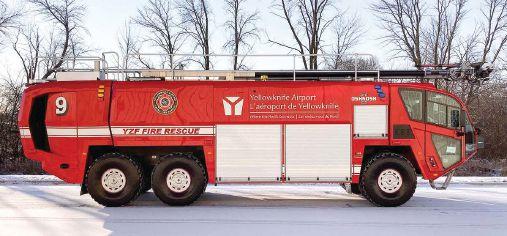
The Yellowknife Airport has taken delivery of an Oshkosh Striker 6x6 ARFF Vehicle from Commercial Emergency Equipment. Manufactured with a Duetz 2015 V8 698 HP Tier 4 final engine and 50 ft. Snozzle High Reach Extendable Turret with FLIR camera and piercing nozzle, this vehicle also features a water capacity of 3,170 G, a foam capacity of 420 G and a dry chemical capacity of 550 lbs.
The Government of Nunavut and Hanson Construction has taken delivery of a 3 man crown pumper from Fort Garry Fire Trucks. Built on a 2022 Freightliner M2-106 chassis with a Allison EVS 3000 transmission and a Cummins L9 300 HP engine, this pumper also features a Hale DSD 1050 IGPM pump, a CoPoly 1000 IG tank, a diesel fired coolant heater, Honda 5K generator and overhead ladder rack.
5083 SALT WATER MARINE GRADE PUMPER
CRUSADER TANDEM TANKER
3 MAN CROWN PUMPER
EMERGENCY RESCUE PUMPER
6 X 6 ARFF VEHICLE
3 MAN CROWN PUMPER
GREAT IDEAS
Think of innovation and it often brings to mind the latest tools and tech. Equipment and technology are crucial to the improvement of fire response and firefighter safety, but the idea of innovation can also really shine in the discovery of new and better processes.
“Innovative doesn’t always necessarily have to revolve around getting the new shiny thing or the latest tech. It can involve using what you have in new ways or ways that are different than intended” said Fire Chief Bill Hunter of Perth East and West Perth fire department in Ontario.
On the west coast, Dan Wood, the deputy fire chief in Saanich, B.C., has been in the service for over 30 years and said, “a lot has changed since I started with the service, but one thing that has stayed consistent is that firefighters are some of the most innovative people you’ll ever find. It’s in the nature of the work. They have to do things on the flip of a switch. They have to problem solve faster than most and they have to do so under extremely strenuous conditions.”
Innovation is bred into the profession, and a lot of modern innovations are happening around firefighter health and safety. Through studies and research, more information has become available about how to best support mental and physical health in the fire service. The innovation and advancement of personal protective equipment (PPE) for firefighters has “improved impressively” since Wood started in the service, he said.
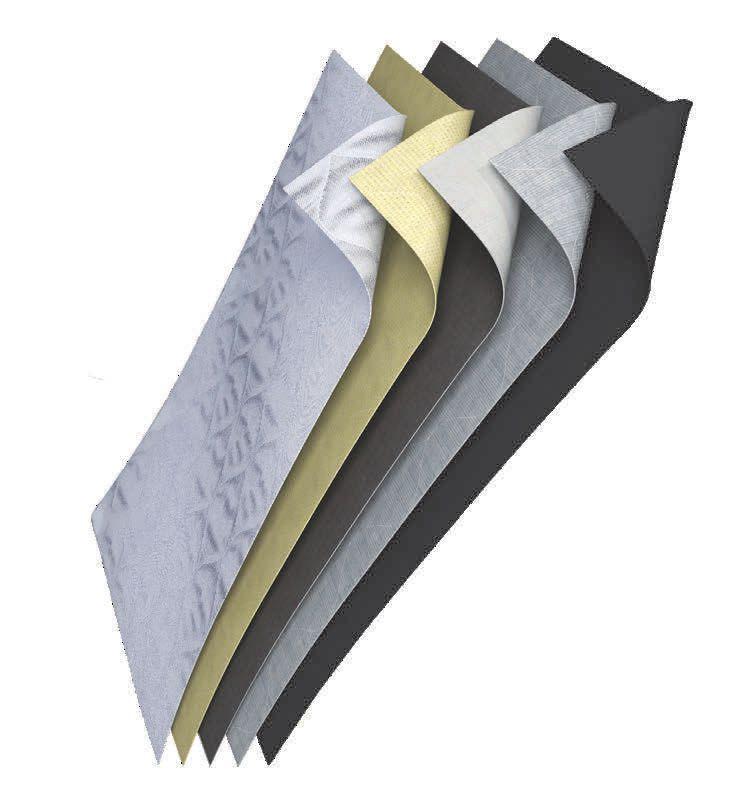
Innovations like lightweight, more fire-retardant fabrics, more functionality around SCBAs, and personal alert systems are helping protect more firefighters and making fire rescue more efficient.
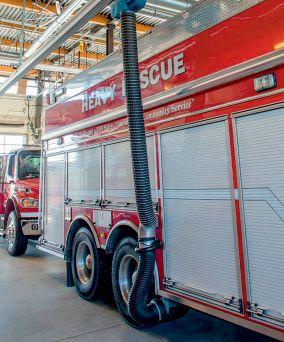
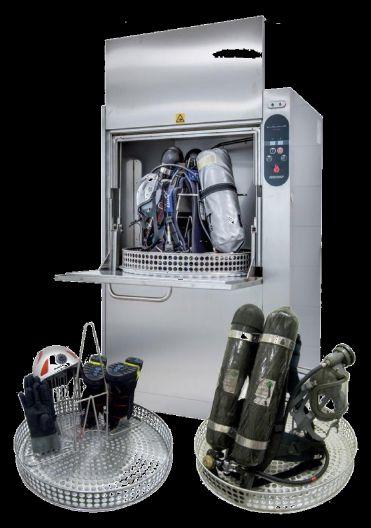
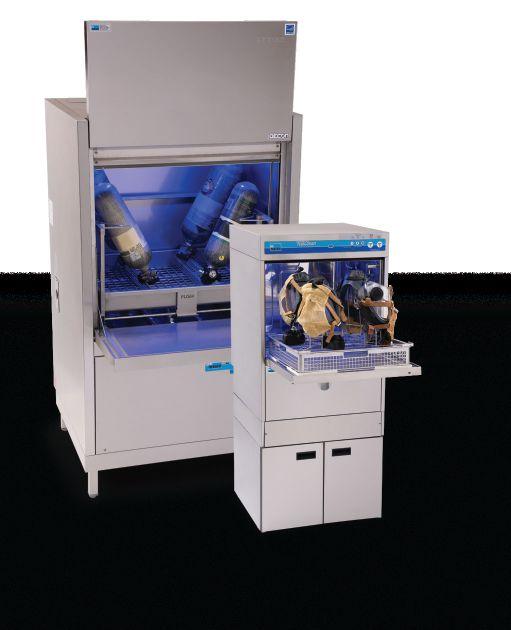
Wood noted the process of modernizing decon as a key innovativion. “Washing SCBAs and other equipment can be very time consuming and when done by hand, things are often missed. Equipment like apparatus washing stations helps to give time back to staff,
Innovation in the modern fire service.
By KAITLIN SECORD
which can be better used training, resting or preparing for the next call.”
Fire Chief Deryn Rizzi, and executive officer Tracy Martino, of Mississauga Fire and Emergency Services, shared the philosophy of innovation in Missaussagua as being any program or change in business processes that will reduce community risk, improve community safety and the safety of thier staff.
“Some of the most important tools for fighting fires include advanced protective
gear and state-of-the-art suppression equipment. But in an age of growing communities, density issues and complex urban and rural landscapes, one of the most valuable tools in fire fighting is data,” wrote Rizzi in Igniting Insight – Using Data to Drive Decision Making
Mississauga took an innovative data-collection approach when creating their comprehensive risk assessment model. With there being no comprehensive/ defined model for
risk assessment, Mississauga “looked at NFPA 1730, obviously, which is risk defines risk, we looked at NFPA 1300, which helps with risk mitigation strategies, and the five E’s, if you will, of risk mitigation, we kind of pulled all the information together to see what this would look like,” said Martino.
This innovative approach has helped Mississauga evaluate their needs, and it helps drive their decision-making process.
“This process can go from the procurement of apparatus, equipment, the necessity of resources, and then also in terms of programming, how we’re going to program going forward,” said Rizzi.
“Innovative programs are important because we are in an environment where balancing community safety with fiscal responsibility is critical,” Martino said.
Being able to establish what works best for your community, what your department can afford or develop and how these innovations can best be implemented “is almost as challenging as fighting fires.” Hunter said. Perth East and West Perth’s Farm Fire Safety Program was created to address the growing concern of farm related fires in the region.
“Seventy-three per cent of the area’s total fire losses were made up by farm-related fires.” Hunter said, “That has dropped to 31 per cent over the last three years, since we implemented the FFSC program.”
The program is an example of innovating public education to fit your community’s needs.
“A fire department is an insurance policy for municipalities, one you hope you never have to use, but when you do use it, you want to make sure you have the best one available.” Hunter said in an interview with The Beacon Herald.
Using social media has been a great advantage for the departments of Perth East and West Perth with their most recent Fire Prevention Week being a great success.
“We saw a ton of interaction, and were excited by the progress we’ve made in the public education sphere.” Hunter said.
A goal of his is getting every member of the department certified in public education.
“This will only strengthen our ability to establish what projects are working and how to get them into the community.”
The department won a Technical Safety Standards Association award in 2015 for its carbon monoxide safety program, and has since used this model to implement other safety programs.
One of the best ways to innovate public education is through accessibility. NextGeneration 9-1-1 is on the doorstep of many departments, and will address the evolving landscape of fire departments and their communities.
“The ability to know information about an incident before getting to the scene is a game-changer,” said Wood “Not only will this help in terms of response, but it will help decrease response times, and boost communication abilities between dispatchers, first responders and our communities. It’s indispensable.”
All in all, there are many concerns to be tackled when it comes to innovation. The safety and well-being of firefighter is something that is of great focus and concern. Environmental impact is a hurdle that is tricky to tackle and expensive, but also increasingly imperative. Public education is necessary, and figuring out how to best approach it takes time and dedication.
But nothing has changed the fire service more than the availability of information.
“Our colleagues worldwide enable us to, use best practice, learn from mistakes of others. It’s really changed the way we formulate
our own plans and helped us to ensure our operational guidelines are meeting rework: practices and doing what’s best to keep firefighters safe and be efficient in our jobs,” Wood said.
EQUIPMENT AND TECH: INNOVATION HIGHLIGHTS
Here are a few recent innovations in equipment and technology that caught Fire Fighting in Canada’s eye in 2021.
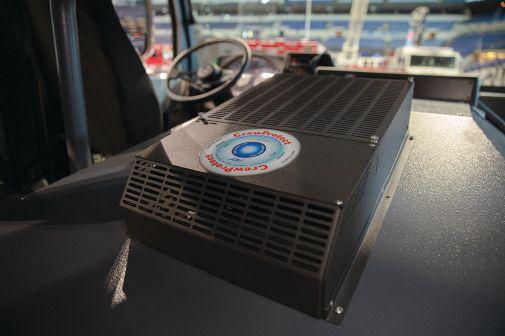
Task Force Tips (TFT) partnered with Purafil to integrate filtration technology into a new product they’ve called CrewProtect that cleans the apparatus air firefighters and EMS personnel breathe, and filters cancer causing particulate soot and volatile organic compounds, as well as a wide range of bacterial and viral threats like COVID-19.
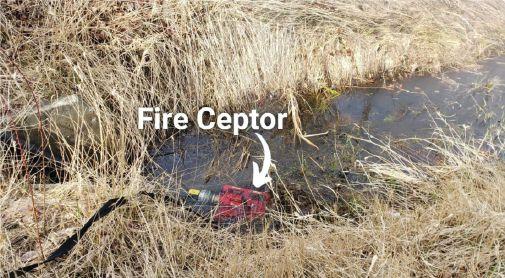
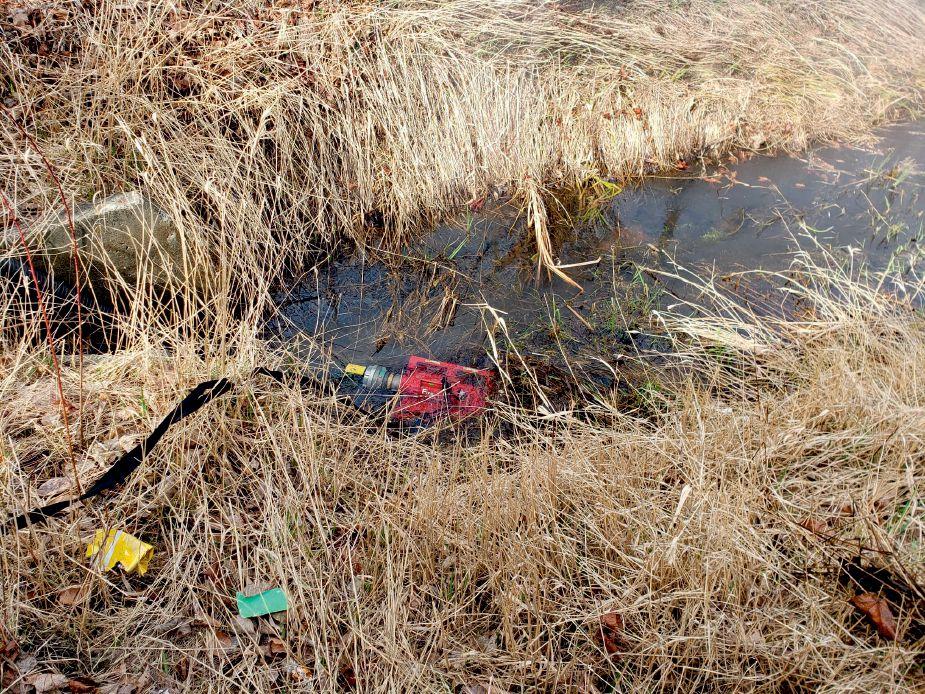
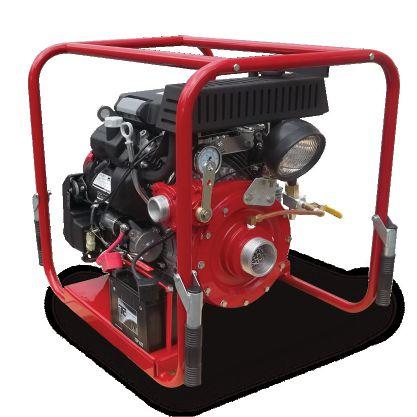
ProtectaPump launched a new, patented technology in Fire Ceptor, the Portable Drydrant. “Drydrant” is a new term derived from the traditional ‘dry hydrant’, which is permanent (i.e. not portable). Fire Ceptor, a made in Canada product, is designed to reduce downtime, repair costs, extend pump life, and increase performance flows and reliability. Being able to draft efficiently, and without pump destruction, is of utmost importance as climate change and increasing wildfire activity comes to the fore.
“Some of the most stressful times on the job for a rural or wildland firefighter is deciding on a drafting location that won’t damage the pump but at the same time will get the water they need in the fastest possible way. These don’t need to be two choices anymore. The goal of creating the Fire Ceptor [a suction separator] was to let firefighters not worry about where they draft. As soon as they find a body of water that’s at least six to 12 inches deep, they can be assured that it won’t affect their pump and thus be able to get to the fire as quickly as possible. At the end of the day it’s all about saving lives and property. Reducing stress and saving pump repair
BearsPaw
or replacement costs is also a nice benefit too,” said Chris Burke, BearsPaw Protectapump’s general manager of sales and marketing, in a press release. Fire Ceptor models range from two inches to four to six inches for truck-mounted pumps. Fire Ceptor has been found to have 30 per cent more flows when compared to traditional strainers, reported the company.
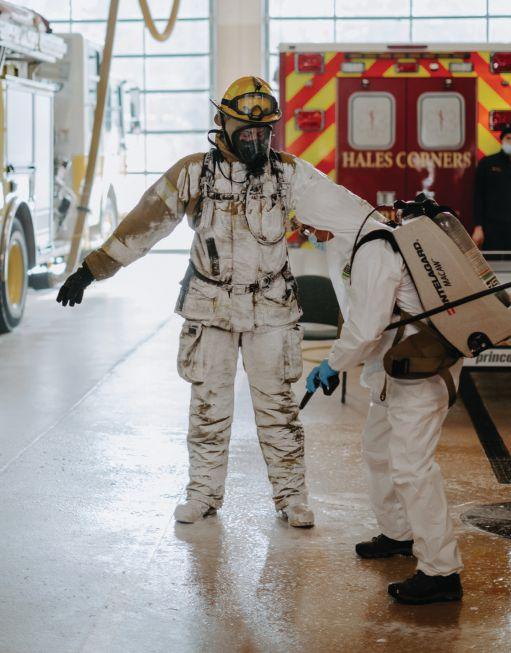
Doff ‘n DECON, a new turnout gear cleaner and decontaminate from Intelagard, aims to provide additional exposure protection from cancer. The formula neutralizes the most common carcinogens found on gear like carbon monoxide, hydrogen sulfide, and cyanide. The three-part solution uses surfactants, peroxides and a special booster to capture and lift contaminants from fabrics like Kevlar without degrading them. After mixing, the formula can immediately be applied as a foam, fog, or liquid decontaminate. Doff n’ DECON is inherently biodegradable and suitable for daily use on turnout and bunker gear, hardhats, gloves, boots, PPE tools and supplies.
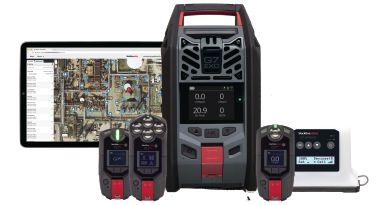
Blackline Safety rolled out its newest line of cloud-enabled G7 wearable safety devices. The configurable G7 wearables (small, wireless devices worn like a cell phone) detect gas leaks, falls and other health events in all types of business environments. They can also be used for contact tracing purposes or to determine how often workers travel through high-risk areas. The devices operate on available cellular, with optional satellite connectivity. Workers are alerted to emergency situations to facilitate evacuation and emergency response procedures, and if workers themselves are harmed or injured, their location can be pinpointed so emergency responders know exactly where to go and what conditions to expect.
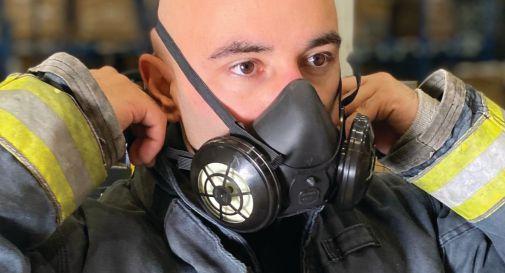
Dentec’s Comfort-Air Nx Series was developed with the aim of providing a respirator that was reusable, safer, more comfortable and more economical than disposable respirators. The reusable elastomeric rubber respirator was designed without an exhalation valve, to enhance two-way filtration protection. Its compact design reduces interference with other medical equipment. They feature eight point adjustment suspension that is intended to help users obtain a proper and comfortable fit. The Comfort-Air Nx Series is available in two sizes, with two filter options, N95 or P100. Both are designed with protection and sustainability in mind – the housings can be disinfected and reused, all while protecting the disposable filters from damage, and the reducing the user’s chance of infection. These respirators may be used in place of disposable respirators to reduce cost and waste.
OUR MISSION HAS ALWAYS BEEN SUSTAINABILITY.
Since 1866, Rosenbauer has been called to fight fire. Creating a legacy was merely a bonus. What began 150 years ago as one man’s fight with fire has grown into the largest fire truck, apparatus, and emergency response vehicle manufacturer in the world. At 900 strong, Rosenbauer America is still family-owned today. A proud family of innovators and inventors dedicated to the craft. In one united effort to continue one man’s mission.
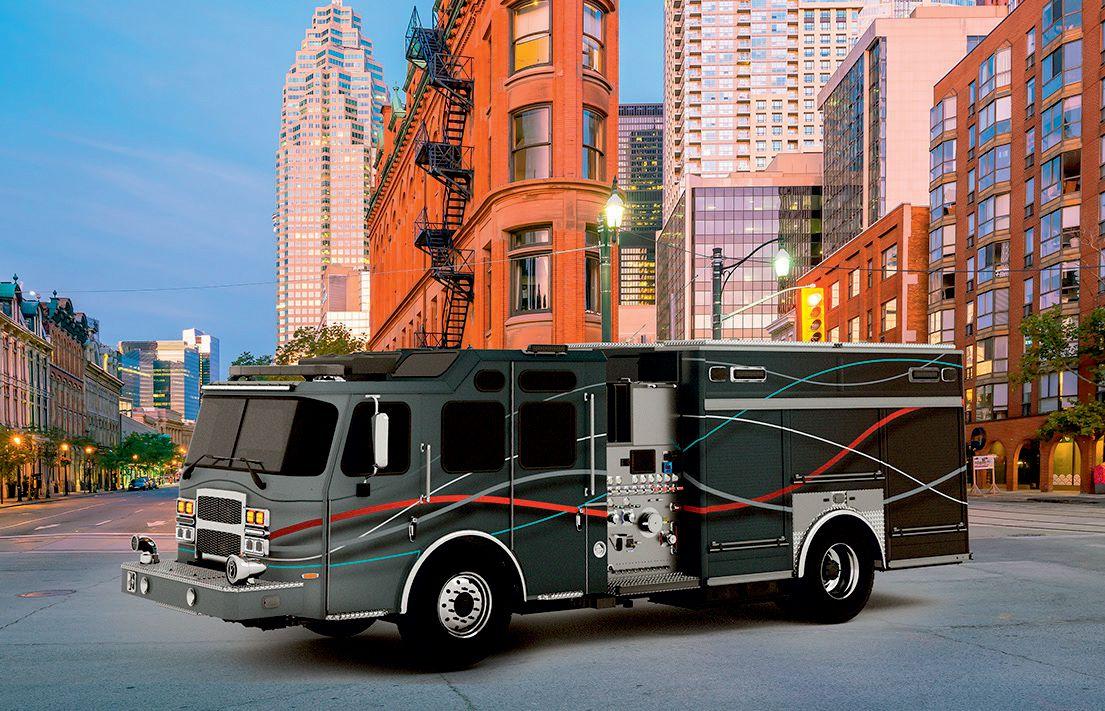
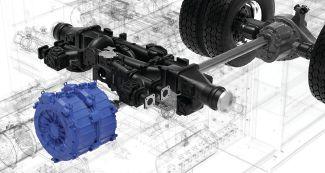
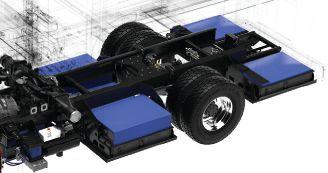
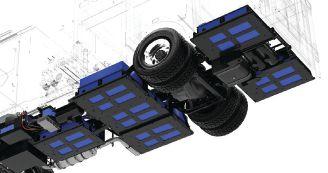
Sustainability has emerged as a new standard in how municipalities, governments, corporations and society are measured. The Rosenbauer RTX (Revolutionary Technology) electric fire truck is the answer to that call. And a standard by which we at Rosenbauer judge ourselves as we innovate and invent the future of fire fighting. Putting water to flame has always been the objective. Now, we’re putting green on red in pursuit of a cleaner and more impactful way forward. The RTX’s nearly emission-free power is only the beginning of a long list of revolutionary features, making it the most progressive and ambitious firefighting apparatus ever built. It’s the future right here, right now. Every innovation answers a need. The RTX was engineered because the planet couldn’t wait. Despite a nearly silent operation, the RTX screams intelligence and hollers efficiency. As a family-owned company, it’s personal. So if it has an “R” on it, you have our word on it. rosenbaueramerica.com.
BY MATTHEW PEGG Fire Chief, GM — Emergency Management, IC for COVID19 Response, Toronto
ILEADERSHIPFORUM
The dreaded “ums”
have always been impressed by truly talented speakers, and I recall often feeling envious of those whom I perceived as being “lucky” enough to have this talent.
The very first time I remember taking an actual class on public speaking and media management was at my first Ontario Association of Fire Chiefs conference, where Karen Gordon, of Gordon Strategy, was teaching leaders from across the North American fire service. What she taught me that day, alongside some important techniques and strategies, was that these are in fact skills that can be learned and honed through practice, coaching and seemingly ruthless critique.
When I look back on what would become the first of many such courses, lessons and critiques I would participate in, I am reminded of a quote by famous golf professional Gary Player, who calmly remarked one day, “The more I practice, the luckier I get.” Thank you, Karen, for making so many chief officers “luckier” in front of the cameras!
During times of emergency, when fear, emotion and excitement run high, those who take the stage must be able to effectively convey a palpable sense confidence and calm through their words, actions and image. Whether in a staff meeting, public forum or via the media, the reputation of an entire organization is directly influenced and impacted by the leader’s presence and public speaking performance.
This month, I would like to share six personal experience-based truths with you that help me feel more confident when I speak publicly:
1. Avoiding the dreaded “um”. There are not many things that can derail an otherwise effective and impactful speech, presentation or media scrum faster than a case of the “ums”. In my experience, “um” is what happens when your thoughts outpace your mouth. Stay in the present and don’t allow your thoughts to run ahead of what you are saying, and you will find that the dreaded “ums” will appear much less frequently.
3. Understand your objective before you step in front of the microphone. During times of emergency, our primary communications objective must be to bring a reassuring sense of calm and confidence to those we serve. Be honest and forthright. Speak to be understood and not simply heard. Be genuine and gracious.
4. Don’t embellish or dramatize the situation. Your mouth will tend to do strange, involuntary things if you attempt to embellish, stretch the truth or speak of things you don’t actually know. You will get tongue tied, stuck and flustered; the pitch and pace of your voice will increase; you will likely begin to sweat, flush and fidget. All of these are immediately visible to everyone who watches and listens to you, which will be immediately damaging to both your credibility and that of your organization.
5. “Take a deep breath and go slow.” I put this in quotation marks because I’ve listened to Karen offer these last-minute words of instruction to many people, me included, just before they approach the microphone. We all speak more quickly when we are nervous, and this is further exacerbated by being on camera. Go slower than you think you need to. In my experience,
In my experience, “um” is what happens when your thoughts outpace your mouth. ‘‘ ’’
if it feels unnaturally slow as I am saying it on camera, it likely hits the mark for the viewer.
2. Know who you are speaking to. All too often, fire service officers try to use the media in order to speak to their crews. The purpose of a media address is to speak to the public we serve. Speak directly to your intended audience and use common, easily understood words instead of industry slang, acronyms and jargon.
Matthew Pegg is the chief with Toronto Fire Services, having previously served in Georgina, Ajax and Brampton, Ont. He is currently the incident commander for Toronto’s COVID-19 response. Contact Matthew at matthew.pegg@toronto.ca and follow him on Twitter at @ ChiefPeggTFS.
6. The lump in your throat. It happens to everyone, especially when speaking at an emotionally charged and particularly tragic event. While there is nothing wrong with leaders displaying emotion, there are times when we prefer to defer that to a later time. If you feel the lump in your throat building, knowing you are about to get emotional, take a slow and quiet yet deep breath through your mouth — breathing through your nose won’t work. A deep breath through your mouth will help to diminish the lump in your throat, allowing you to continue your remarks.
As we approach the two-year mark in the fight against COVID-19, thank you for all that you continue to do in service to those whom we serve each day. Lives have been saved as a result of your tireless efforts and I am proud to serve alongside each of you.
BACKtoBASICS
Cold weather truck checks
BY MARK VAN DER FEYST
As we start a new year in the fire service, we find ourselves in the middle of winter, which requires us to be diligent in making sure our equipment is in good working order. In cold weather operations, it is imperative to make sure our trucks are running properly and safely.
It is our job to check in our fire apparatus on a routine basis. This may be on a daily, weekly, bi-weekly, or monthly schedule. By conducting a check of our fire apparatus on a regular basis, we are ensuring that the fire apparatus is ready for service in a safe manner.
When checking in any type of truck, there are four basic areas that need to be addressed: outside, inside, operations and equipment. If these four areas are checked consistently every time, then you will have completed a thorough truck check.
ON THE OUTSIDE
To check the outside of the truck, we need to have the truck running with certain apparatus functions operating. By conducting a full 360 walk around, we will inspect the entire truck. The outside of the truck includes areas such as general appearance; does the truck have any damage on the body?). Check all windows for cracks and chips. Are the windows clean? Are the mirrors attached securely, and are the wiper blades in good
condition? Check the tires. Are they inflated to the proper pressure? Is tread depth above par? What condition are the tires in? Are the lug nuts secure? Are there any rocks in between the back dual tires? To assess the lights, ask are the headlights, high beams, hazard lights, and emergency lights working? Are any bulbs, turn signal indictors, running lights or pump panel lights out? Are any lenses damaged?
For the air brakes systems, drain the air tank reservoirs and any air leaks. Check that the compartment doors open and close properly. Make sure any equipment attached to the truck on the outside is secure. Ensure current sticker is on the licence plate, both plates are on the truck if two are required, and the commercial inspection sticker is present and current.
ON THE INSIDE
The inside of the truck needs to be checked for proper operation. The driver needs to ensure that the truck is ready for them to drive. They will need to adjust the driver seat for proper distance and height, adjust the mirrors, and adjust the telescoping steering wheel as well. Other aspects of the inside include checking all gauges on the driver dashboard, fuel, air gauges, oil temp, transmission oil pressure gauge. Ensure all switches and signals are working. Are all interior lights working?
Ensure that the siren functions work along with air horn.
Conduct an air brake test to ensure that all safety features of the system are working. Check all fluids such as oil, transmission fluid, power steering fluid, windshield washer fluid, radiator levels, hydraulic fluid, brake fluid, belts for wear and tear, battery terminals for corrosion, and hoses for cracks.
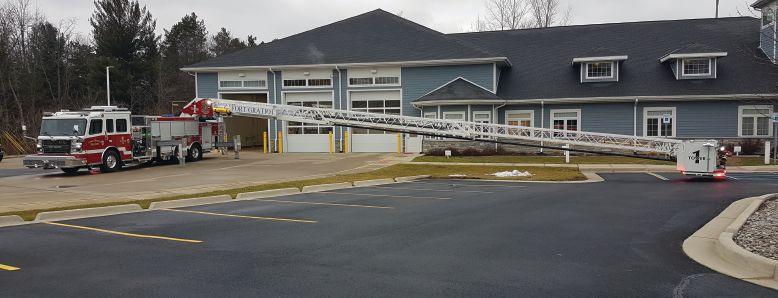
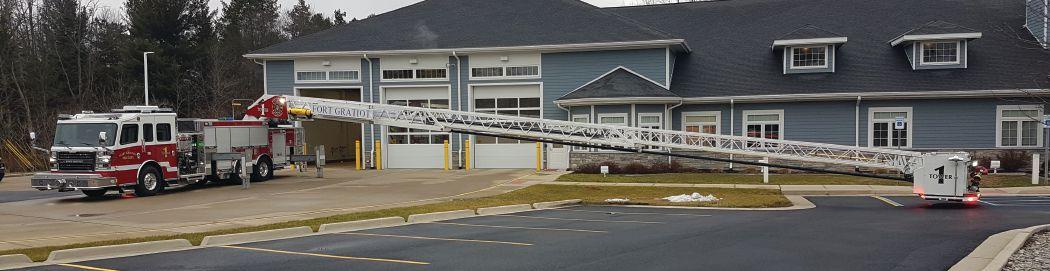
It is a good idea to fully extend the ladder and have it at 0 degrees to one side. This will allow you to walk underneath it to inspect the water pipe, the sheave wheels, the cables, and grease on the ladder rails.
Other equipment that is on the truck like hand tools, medical bag, defibrillator, SCBA bottles, nozzles, and hose will need to be checked as well.
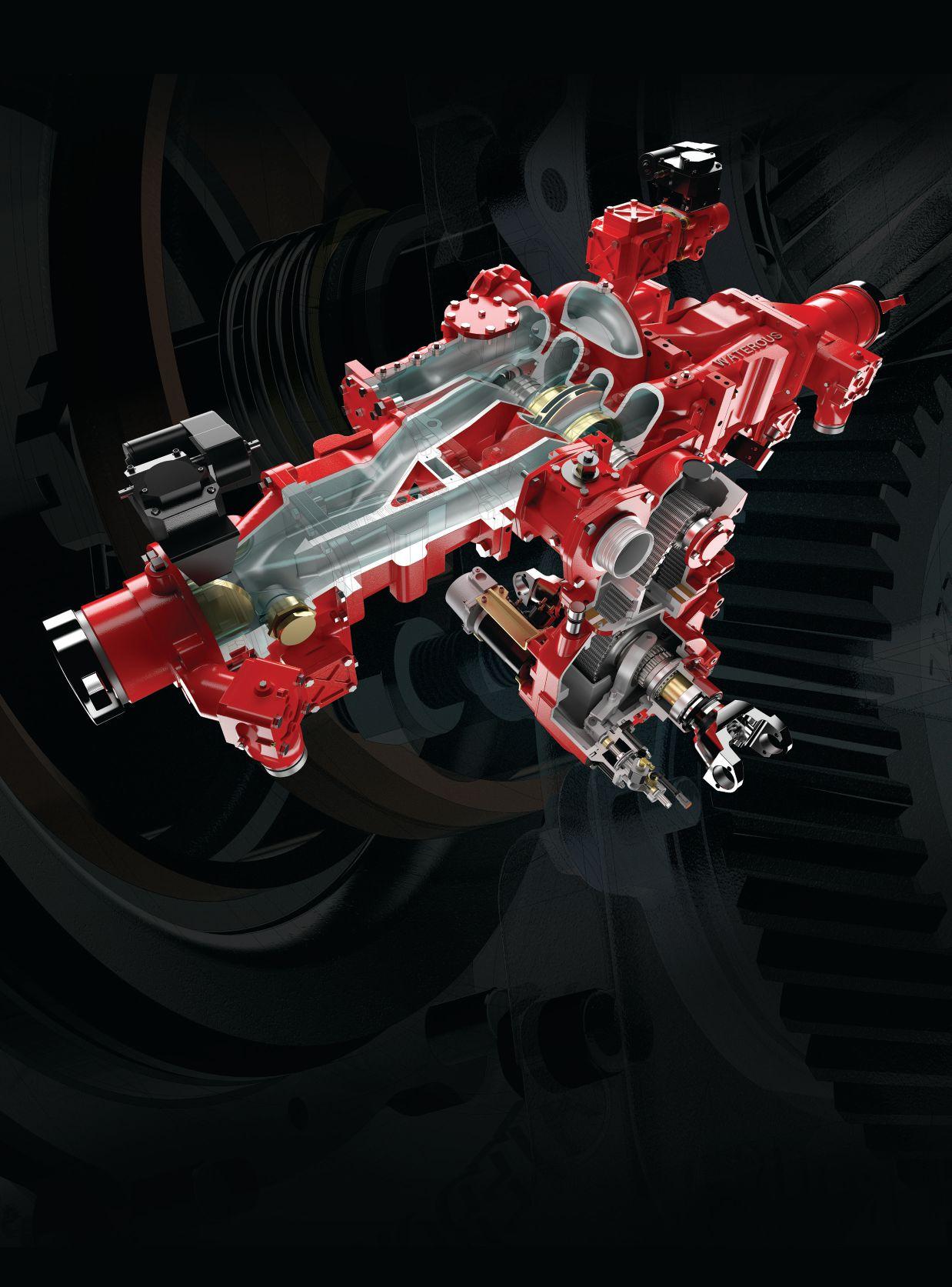
TIME-TESTED PROCESSES. ENGINEERED INNOVATIONS.
FULL-BODIED MIDSHIP PUMPS
OUR REVERSE FLOW WEAR RINGS
Restrict recirculation and improve overall efficiency and longevity of the wear ring.
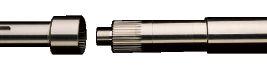
SEPARABLE IMPELLER SHAFT
Allows the pump transmission to be separated from the pump and removed from the apparatus. The pump remains mounted in the apparatus and can be easily repaired minimizing downtime.
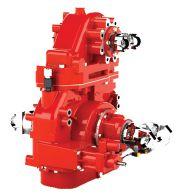
CHAIN DRIVE
TRANSMISSION – Transfers power more efficiently than gear-driven transmissions by having more points of contact between the chain and rotating sprockets.
“Silent” chain drive makes our transmission the quietest in the industry.
In the largest cities across the world, Waterous pumps never fall short. Cast and made in America, our pumps feature industry exclusive innovations. These innovations, along with the Waterous University library of support, help keep your pump running strong and your fire team serving the community.
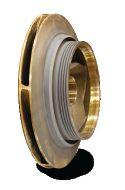
FLAME-PLATED IMPELLER
PERFORMANCE – Bronze impellers are flame-plated with tungsten carbide, creating an ultra-hard surface resistant to wear.
CS/CSU SERIES SHOWN
BACKtoBASICS
TRUCK OPERATIONS
The operations of the apparatus need to be checked. This will involve operating the pump on most trucks. Items such as the pump heater, cooling function, drains for each discharge and intake port, foam system (if so equipped) and the primer (the primer should be operated for about five to 10 seconds to ensure that it will work and get the air out of the pump).
For aerial devices, the ladder needs to be operated. Along with the operation of the ladder, the outriggers need to be operated and the devices attached to the ladder need to be operated. Each aerial truck is different with their setup procedures. Following the manufacturer’s procedures is important.
There are safety systems that are built into aerial devices when they are being set up. The safety systems allow one function to be operated at one time when setting up, or if it is not set up properly, they will prohibit certain functions. An example would be the outriggers. There will be a limiter switch on the outrigger that reads if the outrigger is fully extended or not. If it is, it will allow the aerial device to operate fully. If the outrigger is not fully extended, it will prohibit certain functions from operating. Ensuring that these safety systems work properly is an important item to check.
Operating the aerial device, whether it is a straight stick or a platform, is essential. The aerial device needs to be extended fully and rotated a full 360 degrees. It is a good idea to fully extend the ladder and have it at zero degrees to one side. This will allow you
to walk underneath it to inspect the water pipe, the sheave wheels, the cables, and grease on the ladder rails. You should operate the nozzles, any communicating devices, and auxiliary outlets. Once done, the aerial device can be bedded.
All scene lights should be operated using the on-board generator. Many rescues, engines and ladder truck have these items. For rescues, they will have other items that need to be operated, like a winch system.
TRUCK EQUIPMENT
All trucks carry equipment. The equipment they carry will depend upon the operation of the apparatus. When checking the truck, you will need to operate all mechanical equipment such as chain saws, circular saws, positive pressure fans, hydraulic auto ex tools, and thermal cameras to ensure that they are working properly. Other equipment that is on the truck like hand tools, medical bag, defibrillator, SCBA bottles, nozzles, and hose will need to be checked as well.
If you check the following four areas, outside, inside, operations and equipment, you will be ensuring that the fire apparatus is ready for service and ready for cold weather operations. •
Mark van der Feyst has been in the fire service since 1999 and is currently a firefighter with the FGFD. He is an international instructor teaching in Canada, the United States, FDIC and India. Contact him at Mark@FireStarTraining.com.
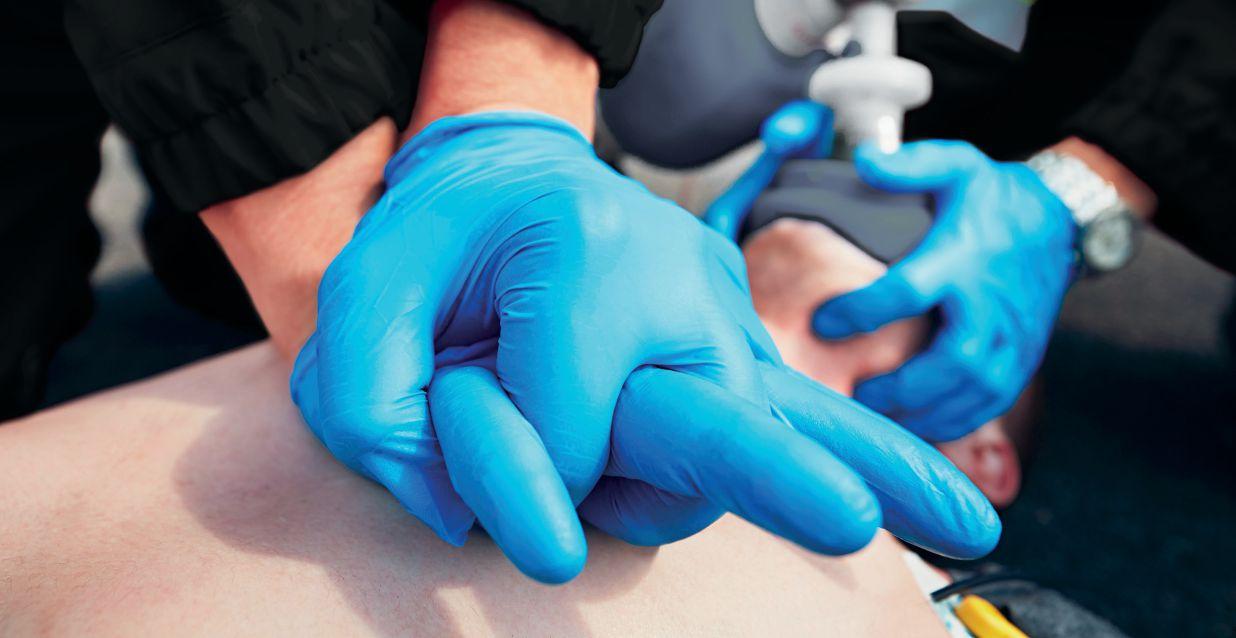
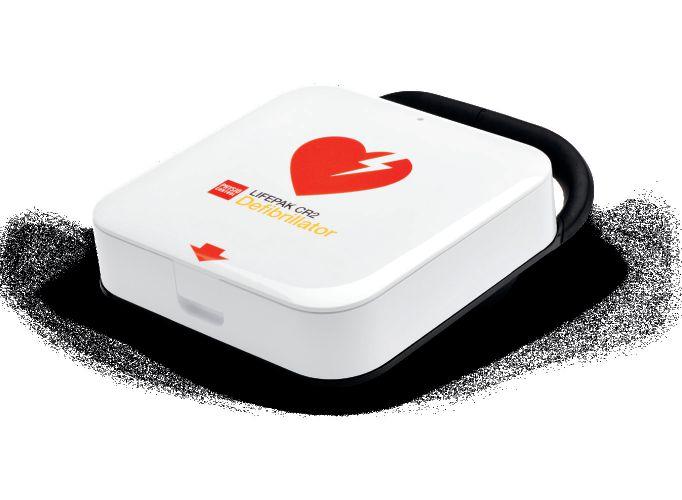
When you keep your hands on the patient, you increase compression fraction—a key factor in successful outcomes1. With cprINSIGHT™ Analysis Technology, the innovative LIFEPAK ® CR2 Defibrillator is the only AED that analyzes and makes a shock decision without interrupting chest compressions, reducing the pause between CPR and defibrillation.
Download more information about the new technology that makes this possible: strykeremergencycare.com/dontstop
1 C hristenson J, Andrusiek D, Everson-Stewart S, et al. Chest compression fraction determines survival in patients with out-of-hospital ventricular fibrillation. Circulation. 2009;120:1241-1247.
HLiNK-ing your department with codes and standards
ere I am, back writing regularly for Fire Fighting in Canada, this time as the NFPA’s regional director for Canada. After 10 years as editor of Fire Fighting in Canada, I joined the NFPA in 2017 as a public-education representative, a role I loved. With the recent retirement of my colleague Shayne Mintz, who was regional director for almost 10 years, I’m excited to have taken on the regional director position.
The NFPA has changed considerably since 2017, most notably in digitizing all assets and becoming a truly online provider of codes and standards, training, and public education.
This was a much-needed, strategic and sometimes frustrating process, as is always the case when organizations need to keep up to user demands. Priorities changed, new initiatives replaced projects already in the works, and positions were overtaken by new roles. In 2020, the NFPA hired a vice-president of marketing and technology to align the company’s strategic plan and digital future.
Part of this process was the already-in-the-works creation, development, and launch of NFPA LiNK (www.nfpa.org/LiNK), an online codes and standards platform that replaces NFCSS, the National Fire Codes Subscription Service, to which many Canadian fire departments subscribe.
At first LiNK included only the electrical code and the fire- and life-safety code, so the platform wasn’t particularly relevant to Canadians. Now, all NFPA standards have been uploaded.
It’s not my job to sell LiNK, but I’m going to anyway! LiNK is much more than a tool. Users can bookmark items, add notes, share stuff, and the content transfers when a new edition of a standard is released.
and classrooms, on trucks, or at a scene. The LiNK tagline – you can go by the book without the book – is true. There’s an offline option, so if an inspector is going to be in a remote are with no internet access, documents can be saved (for a period of time) and easily accessed.
There are subscription options for single users (less than a Netflix subscription!), teams of up to 10, and larger groups. There are no special deals for associations or mutual-aid groups because pricing is accessible for even the smallest fire department.
Users can tell what’s new in a standard, expand diagrams, activate a reference panel to see two pieces of content at once, and see enhanced content with context and background information. The search function is excellent.
Our development team indicated in January that large teams will soon be able to create sub-teams, so your fire department’s training division can keep its pro-qual and safety standards, notes and bookmarks separate from the logistics team that focuses on apparatus and/or equipment standards.
And what’s more, the whole LiNK project is ahead of schedule;
LiNK can be used on computers, tablets and phones, in offices and classrooms, on trucks, or at a scene.
LiNK costs less than the old subscription service, it’s more user friendly, it’s intuitive, and the developers have listened to the users. For example, originally, the developers did not plan to include previous versions of standards but opted to do so after learning that adopting current editions takes time, and users needed the earlier incarnations. Users can cut and paste (up to a certain number of words), so if a training officer is planning a scenario, requirements can easily be transferred from a pro-qual standard to a department form (there has been much applause for this feature!).
LiNK can be used on computers, tablets and phones, in offices
Laura King is the NFPA’s regional director for Canada. Contact her about codes and standards, and public education, at lking@nfpa.org and follow her on Twitter @LauraKingNFPA
all current NFPA standard are now in LiNK, with previous editions being added.
Anyone can sign up for a free, two-week LiNK trial. Be sure to use the email address you will use if you choose to subscribe so that favourites, bookmarks, and notes will remain.
As I said, it’s not my job to sell LiNK, but it is my job to make you aware of tools that can help your department work more efficiently and effectively. Let me know if your department would like a preview; I’d be happy to LiNK up! •
For archived editions of NFPA Impact, visit firefightingincanada.com
Saving lives through fire reporting
Fire personnel are encouraged to report fires for a new database aimed at reducing Indigenous fire-related death and injury.
By LEN GARIS AND MANDY DESAUTELS
Anation-wide system for reporting fires has been launched as a critical step toward reducing the high toll that fires take on Indigenous communities in Canada.
For many years, data from Statistics Canada and other sources has demonstrated that Indigenous people in Canada have a disproportionately higher risk of fire-related injury and death than the rest of the population, yet a lack of comprehensive data on fires in First Nation communities has prevented the development and deployment of effective interventions.
To address this gap, the National Indigenous Fire Safety Council (NIFSC) Project is building a database with the intent to identify trends, deficits, and emerging risks for Indigenous peoples in order to develop targeted fire and life safety education, programs, training and services.
To build the database, the NIFSC Project launched the National Incident Reporting System (NIRS) in summer 2021 to collect, store, and analyze data specific to fires in Indigenous communities across the country.
“We need data to fully understand why and how fires occur, so that we can direct our attention to the root causes and prevent future fires from happening,” said Blaine Wiggins, executive director for the Aboriginal Firefighters Association of Canada (AFAC), which represents regional Indigenous emergency and fire service organizations across the country and manages the NIFSC Project. “The simple act of reporting a fire will help support the long-term reduction of fire-related injuries, deaths and property damage. Simply put, it will save lives.”
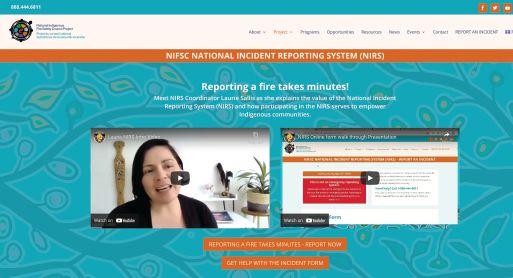
Anyone can report a fire incident, including the Band office, Chief and Council and on-site fire personnel, a nearby fire department, police or RCMP, insurance company or member of the public. This can be done through the online form available at indigenousfiresafety. ca/nirs or by calling 1-888-444-6811. A video on the NIRS webpage provides step-by-step instructions on how to submit an incident using the online reporting form.
HOW THE NIRS WORKS
After a fire incident is reported to the NIRS, the data is entered into a secure Canadian-controlled repository along with similar data from across Canada and is secured and encrypted. The collected data is then organized and analyzed.
Over time, as the data matures and more incidents are recorded, it will reveal trends and provide real-time information that can be shared back with communities and regional organizations to
Fire incident reporting can be done through the online form available at indigenousfiresafety.ca/nirs or by calling 1-888-444-6811
plan public education initiatives and identify resources required to improve training and public safety.
The expectation is that fire incident rates will decrease over time due to an increased knowledge of risks. Indigenous communities will be safer as fire and life safety practices, knowledge and public education improves.
USING DATA TO ADDRESS ESCALATED FIRE RISK
The disturbing heightened fire risk for Canada’s Indigenous people was revealed in a March 2021 Statistics Canada report entitled “Mortality and morbidity related to fire, burns and carbon monoxide poisoning among First Nations people, Métis and Inuit: Findings from the 2011 Canadian Census Health and Environment Cohort.”
Authored by Mohan B. Kumar of Statistics Canada’s Centre for Indigenous Statistics and Partnerships, the report showed that Indigenous people in Canada are five times more likely to die from a fire than the general population, and that the risk increases to 10 times if they live on reserve and 17 times if they are Inuit.
Further insight – and more troubling data – can be found in a July 2021 report from the Ontario Chief Coroner’s Table on Understanding Fire Deaths in First Nations, prompted by multiple fire-related deaths in a number of Ontario First Nation communities.
When reviewing 56 deaths in 29 fires that occurred in 20 First Nations communities from 2008 to 2017, the report found children and older adults to be at the highest risk of dying in a fire. In particular, Indigenous children up to age nine were 86 times more likely to die in a fire than non-Indigenous children.
The study identified a widespread need for smoke alarm educa-
tion and provision, along with instruction on fire escape, fire safety and facility maintenance delivered in a manner that is tailored to the community’s needs. A lack of timely fire response was observed, and further study was recommended on factors such as construction materials, socioeconomic issues (including overcrowded living conditions), and the month and time of day fatal fires occurred.
Many questions remain. As the NIFSC Project builds a robust Canada-wide database, it expects to shed light on the systemic issues and circumstances leading to the heightened Indigenous fire risk, while also opening doors and creating the relationships required for the delivery of effective and appropriate measures.
“Historically, there wasn’t a recognition of the need for retrospective fire data specific to Indigenous communities, or a vehicle for collecting it, for the development of culturally sensitive interventions,” Wiggins noted. “This meant programs or services tended to fall short because they lacked the necessary cultural perspective. Because this program is being managed and delivered by Indigenous people, we hope to elicit trust and confidence from those communities.”
DELIVERING BROAD BENEFITS
At the heart of the reporting system and database is a desire to reduce fire-related injuries, deaths and property loss among a vulnerable population in Canada. Beyond this important goal, the initiative will ensure limited resources are applied where they will have the greatest impact.
The collection and analysis of fire incident data will allow for evidence-based decision making to inform economic planning and the development and prioritization of effective fire and life safety education, infrastructure and services. The NIFSC Project, which is currently developing and delivering fire prevention and public education programs, will serve as a guide and resource in this area.
In the long-term, trends and insights emerging from the NIRS data will clarify the root causes of increased Indigenous fire risk and enable future targeted investments to support safer communities.
The initiative will also bring a valuable Canada-wide perspective. Given that there is no national jurisdiction responsible for fire services in Canada, the amount and type of information maintained by the provinces can vary widely. Having a national database focused on Indigenous fire incident data will allow Indigenous communities as well as the broader Canadian society and the fire service to benefit from lessons learned.
National Incident Reporting System details and reporting instructions can be found at indigenousfiresafety.ca/nirs. •
Len Garis is director of research for the National Indigenous Fire Safety Council, Fire Chief (ret) for the City of Surrey, B.C., associate scientist emeritus with the B.C. Injury Research and Prevention Unit, adjunct professor in the School of Criminology and Criminal Justice and associate to the Centre for Social Research at the University of the Fraser Valley (UFV), and a member of the Affiliated Research Faculty at John Jay College of Criminal Justice in New York. Contact him at Len.Garis@indigenousfiresafety.ca.
Mandy Desautels is the director of strategic initiatives at the Aboriginal Firefighters Association of Canada (AFAC). She holds a B.Sc. in global resource systems from the University of British Columbia and a master’s of healthcare administration from University of British Columbia. Prior to joining AFAC’s National Indigenous Fire Safety Council (NIFSC) project, she worked for BC Emergency Health Services and prominent NGOs. Contact her at MandyD@afac-apac.ca.
Sub-1001 fire fighting
Training approaches for departments without the resources to be fully NFPA 1001 certified
By DAVID MOSELEY
NFPA 1001 firefighter certification is unquestionably the North American standard for structural firefighters and fire departments. So, why would a fire department choose a lesser standard or no standard at all?
If you started fire fighting in the last decade in an urban setting it might seem baffling that anyone would do this. However, I expect many others will be familiar with the reasons why. While there are well funded volunteer departments with waiting lists to join, others face a constant struggle to attract and maintain members and secure funding. Quite simply these departments may not have the ability to provide 1001 level training and certification, or may be unwilling to place that demand on their members.
Perhaps you think that a little knowledge is a dangerous thing and there is no place for sub-1001 fire fighting. If we were starting from nothing that might be a valid argument. However, many departments are doing their best with very little and to expect them to achieve 1001 or fold is not realistic. Instead of criticizing or ignoring, consider what might be done to improve the situation. Possible approaches to sub1001 training are extreme triage, 1001 light, or a mixed approach.
Extreme triage is something that can seem impossible. Asking “what are the most essential skills?” may seem like asking who your favourite child is! The best approach might just be to jump in. Starting in a small department in the 1990s, we had no formal training. We were taught two skills and expected to figure out the rest by learning on the job. The two skills taught were running the pump and working in SCBA. Extremely rudimentary, but we were putting out fires. That’s two skills, add firehoses and there is a lot you can achieve. Unsafe?
A Lac La Biche County Fire Rescue recruit completes their basic training before starting active service. This training covers aspects of NFPA 1001, but not the full standard. Once in active service minimum competencies must be maintained, however NFPA 1001 certification is not mandatory.
Perhaps, but safer than continuing to fight fire without that much training. Spend a few hours studying fire behaviour and building construction, and you’re that little bit safer still. This is what extreme triage might look
like and you can see that unlike full 1001 certification, it is easily achievable for any department. One member or peer from outside the department willing to take on this training can make all the difference.
If a department manages to achieve this, the natural progression is to continue adding skills. Realistically, this may be difficult with low attendance or high turnover, though just starting often creates momentum. This can result in the triage becoming less extreme and move towards what might be described as 1001 light. In this approach, 1001 is the standard and basis for training. It might involve an effort to get as close as possible to all aspects of the standard, or involve a conscious decision to leave out certain specific components. You might reduce your forcible entry finesse to swinging a fire axe, take a pass on class B fires, use only a flat hose load, and defer vehicle extrication to the neighbouring urban department. There is a lot of room
to operate between no service at all and that delivered by fully 1001 certified firefighters.
Then there is a mixed approach. Short of a fully 1001 certified department is one with a mix of 1001 and sub-1001 firefighters. The 1001 training and certification is provided and encouraged, but not mandatory. You might use ICS terminology and type firefighters as Type 1-interior firefighters and Type 2-exterior or support firefighters. This works well for our department where our rural stations may not be able to staff a full roster of 1001 firefighters, but are quicker on scene. They can get started and put the pieces in place for a more aggressive interior attack when more resources from the urban stations arrive. With our stations well integrated, it also allows any individual
1001 firefighter from those rural stations to work at that level when the call response has been elevated. Another benefit to this approach is allowing a transition to a fully 1001 certified department while accommodating existing members unwilling or unable to meet the 1001 standard. This is not only a safe and efficient way to operate, but also respectful.
So far, we have approached this from within an operational box. What about prevention? It helps our humility to remember how much more effective a $20 smoke detector is than a 1001 certified firefighter at saving lives. Keep in mind that you can potentially deploy a much wider pool of volunteers to deliver a prevention program.
Of course, lots of volunteer departments are fully 1001 certified and this should be the goal in many instances. And if you’re reading this magazine, you know it doesn’t stop there. Look at the work done by the Fire Safety Research Institute in furthering our knowledge of fire behaviour, or the International Association of Fire Fighters on firefighter survival. This magazine is a wonderful resource for continuous learning that exceeds the 1001 standard. But at the same time, let’s not neglect those in our ranks who are more challenged to meet the enormous demands placed on our shoulders. The suggestions here can offer a realistic and immediate course to establish a safer base, and from there potentially full 1001 certification in the future. •
David Moseley is a forest officer with the Government of Alberta, and officer with Lac La Biche County Fire Rescue in Alberta, focused on operations. His other areas of interest include instructing, CISM and wildfire investigation. Contact him at david.moseley@gov.ab.ca
•
Once a Lac La Biche firefighter in active service minimum competencies must be maintained, however NFPA 1001 certification is not mandatory.
FGFT INTRODUCES
ITS LATEST SAM UNIT THE ER-X 4-MAN CROWN PUMPER
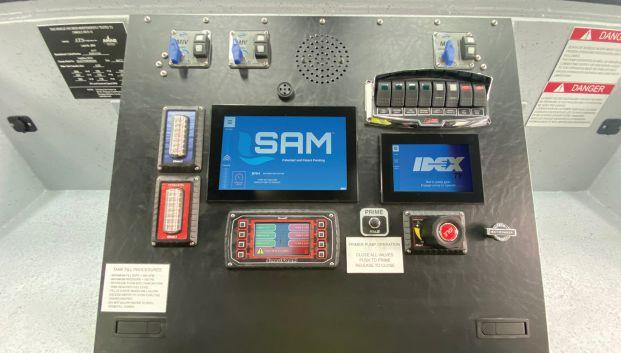
Fort Garry Fire Trucks is proud to introduce our new SAM ER-X 4-MAN Crown Pumper. SAM is an integrated total water control system that manages your truck’s pump, tank, intakes and discharges freeing up the pump operator to focus on the scene. The SAM system replaces your pressure governor and takes care of opening and closing valves based on operator settings all from a 10 inch touch screen display or by using the system’s mobile tablet.
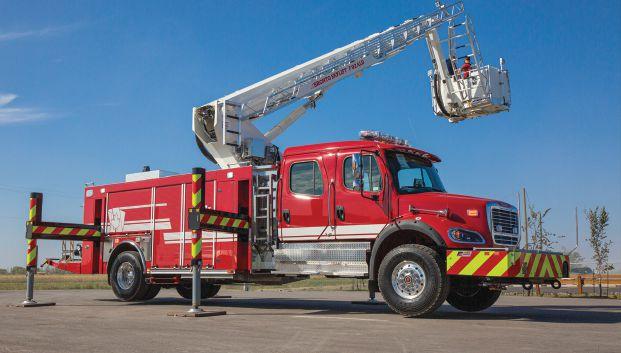
We are also a proud distributor of sales, service, and parts for the versatile Bronto aerial platforms that are designed for easy maneuvering, quick set-up, and safe and efficient operation. Last year we unveiled our Bronto All - Rounder. This resourceful apparatus features a 92-foot articulated ladder platform built on a single axle Freightliner chassis and measures exactly 12.96 feet tall, 41.66 feet long, and 8.50 feet wide and it is available for
immediate possession. Scan the QR codes above for specification details on either truck or call our sales department for pricing information.
Thermal imagers are not without risks
Know what your TI is telling you and what it’s not
By MANFRED KIHN
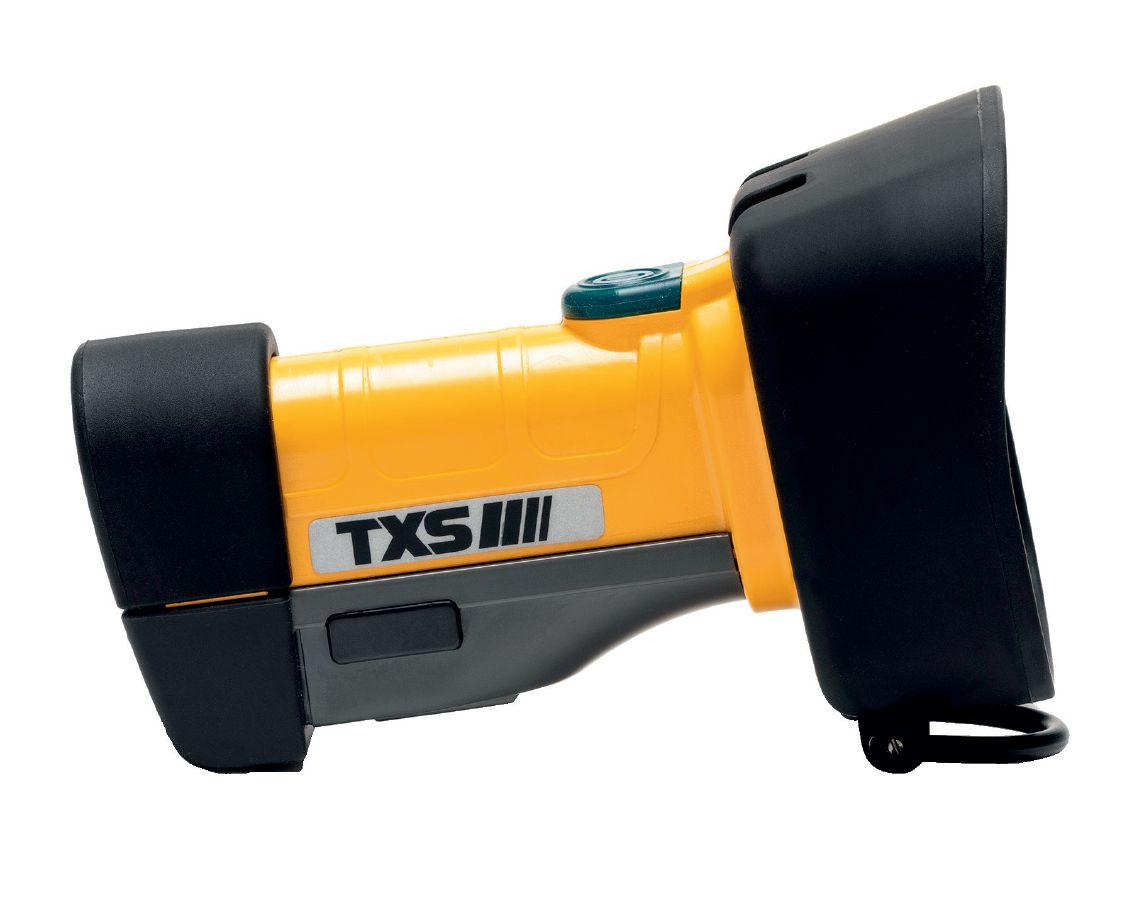
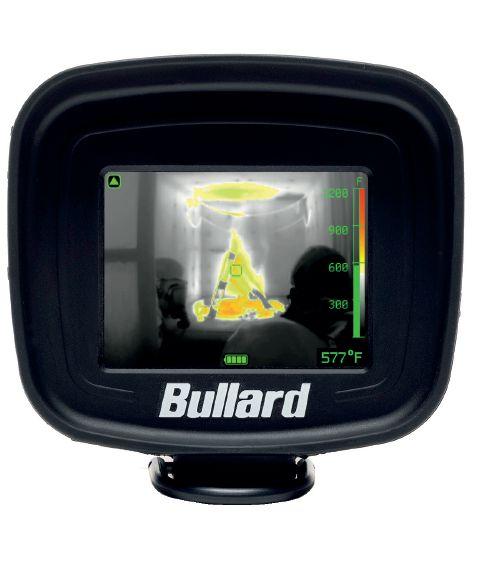
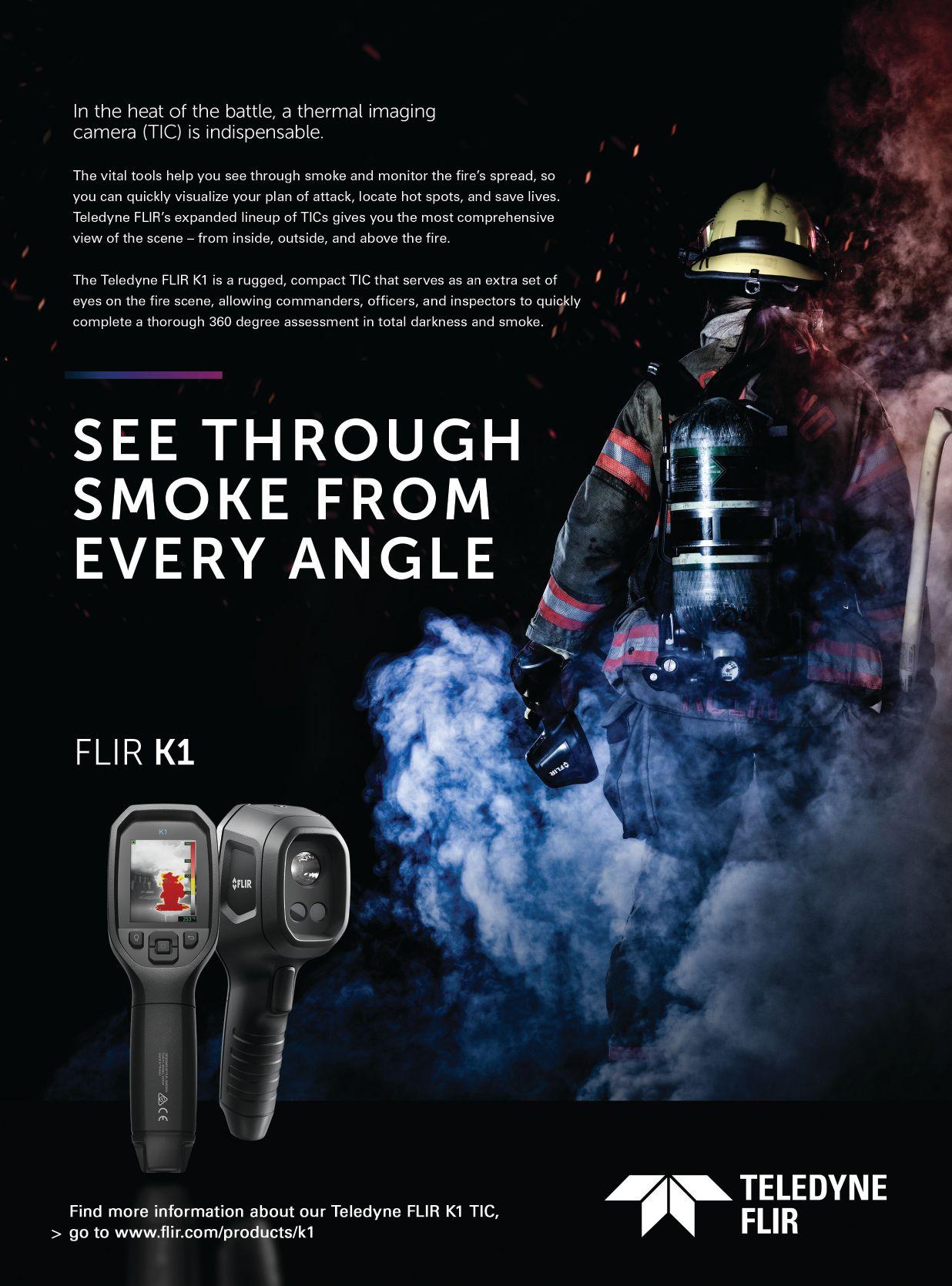
These are unprecedented times for all of us and although fire departments may not be responding to as many structural calls as they are EMS calls, it’s even more important to continue training with their thermal imager (TI) to ensure firefighters stay mentally focused. It’s critical that firefighters keep their TI skills sharp for when a structural fire call does come in because the TI tool could potentially save a life. Let’s look at training firefighters to use the TI safely and the risks that are associated with interpreting what the TI is telling you.
Firefighters using TIs must understand the general risks associated with a TI and how to avoid those risks. Misuse of a TI, as with any fire fighting tool, can have disastrous consequences. The most commonly made mistake by firefighters when using a TI is thinking it’s ok to stand or walk in an unsafe environment.
Let’s explore this behaviour in detail. When I first trained to be a firefighter many, many years ago, I was taught to stay low and crawl in hostile environments to avoid exposure to heat and dangers you could not see. We didn’t have the protective equipment firefighters have today. The materials used for firefighter turnout gear has become so advanced and durable that firefighters now feel comfortable walking or standing in hot environments. Years ago, firefighters had to stay low because their gear could not provide the respiratory or thermal protection against a fire. Think about the last training you conducted. Did you walk around the burn building while you were teaching your young student firefighters to crawl? During training exercises, trainers need to get low and crawl to show students how to successfully and safely maneuver through an aggressive fire.
Crawling helps firefighters navigate
through a structure by avoiding the usual items you encounter like furniture, debris and stairs. When you are in a smoke-filled environment and visibility is negligible, the use of a TI becomes your eyes to find the hazards. Here’s where the false sense of security comes in. The TI gives you the ability to see the environment, which makes firefighters think that a structure can be navigated by walking through it when using a TI. But this is false.
Never abandon your basic firefighter training because you are maneuvering through a structure with a high-powered, cutting-edge tool that gives you sight. Standing and walking in hazardous environments can have dangerous results. First and foremost, it’s important to remember that staying low and crawling helps firefighters limit their exposure to dangerous gases that are forming inside a structure. Secondly, some hazards are difficult to identify using a TI, such as a hole in the floor or furniture in a room with a constant temperature. When using a TI, you no longer have use of your peripheral vision that helps identify risks. A TI can only detect a potential risk when you point the imager directly at the risk. A TI essentially gives firefighters tunnel-vision.
There are ways to avoid the tunnel-vision effect when using a TI. Firefighters can overcome this restricted feature of the TI by enlarging the firefighter’s field of view using
the S-scan method. The S-scan method is a simple search exercise that shows firefighters how to scan an entire room using the TI to evaluate the fire conditions and search for victims. When using the S-scan method, the firefighter moves the TI from shoulder to shoulder, scanning near the ceiling, then across the middle of the wall, then down at the floor. The shoulder-to-shoulder, highmiddle-low scan creates an S-shaped pattern. By using this procedure, the firefighter is scanning the majority of the room using a TI and is now giving the firefighter a more complete view of the structure, room by room. Using a TI gives firefighters a false sense of security. It’s up to the trainers and senior firefighters, like me, who have been in the service for many years, to constantly remind our young students not to stand or walk through a structure fire using a TI. It’s critical that training drills with a TI are performed in the most realistic manner, which means always stay low when maneuvering through dark and smoky conditions. Repetition is key to learning when running training drills. Just like an athlete repeats the same training drills day in and day out, firefighters need to practice staying low and
CONTINUED ON PAGE 32
Manfred Kihn is a 19-year veteran of the fire service, having served as an ambulance officer, emergency services specialist, firefighter, captain, and fire chief. He has been a member of Bullard’s Emergency Responder team since 2005 and is the company’s fire training specialist for thermal imaging technology. He is certified through the Law Enforcement Thermographers’ Association (LETA) as a thermal imaging instructor and is a recipient of the Ontario Medal for Firefighters Bravery. If you have questions about thermal imaging, you can e-mail him at manfred_kihn@bullard.com.
Firefighters staying low and assessing the conditions with a TI during a training burn.
During my three decades of instructing in the fire service, I have gravitated towards hands on training. My go-to methods are: drills (the way things are done), scenarios (a description of what could possibly happen), and perhaps my favorite method, evolutions (the development of something, especially from a simple to a more complex form).
Evolutions have an added bonus in that they often develop in ways that reveal your department’s weak areas. I’m sure you will agree, it is far better to deal with those weakness at a practice than during the real thing. Be careful not to over-plan your evolution; let it play out. Ignoring this key point can derail your training objective. Use the KISS principle (KISS is an acronym for ‘Keep It Simple, Stupid’ and is a design system that emerged from the U.S. Navy in the 1960s). Or, as they say, less is more.
I could tell you that every evolution I planned went off without a hitch, but you all know I’d be lying.
In fact, I still have nightmares about some practice nights. One such night was an MVI evolution in which I had hoped to have the members rescue a patient trapped in a car via extrication. The objective was simple enough.
A local auto wrecker dropped off two wrecked vehicles for us to use. I had him place them on an old (little used) logging road just off the main highway. Once he left, I placed our ‘Rescue Randy’ dummy into the front seat of one vehicle. Then, using the forklifts on my tractor, I rolled the other vehicle upside down onto the roof of the first vehicle. Everything looked good, stable, and most importantly safe. Then, at the appropriate time, I paged out our members.
I knew it would take about 15 minutes for them to gear up and find the location. A strange thing happened while standing there waiting. I got bored, and that allowed for one of those, “hey, hold my beer” moments (yes, even non-drinkers can have those moments). I thought (well, the thinking is debatable now looking back) it would add to the realism if smoke was coming from one of the vehicles. So, when I found a couple of road flares in my truck, I naturally lit them and threw them in the trunk of the first vehicle. Awesome, little wisps of white smoke were coming up through the car. Problem was, the department reacted a lot slower than I had anticipated…. and the flares? Well, the flares ignited the junk in the trunk a lot faster than I had anticipated.
As the white wisps turned into a large plume of black smoke, two thoughts crossed my mind after my initial thought of, “Oh crap!” The first was that the responders should have no trouble finding us now, followed by, I guess we are now having a vehicle fire evolution.
I have learnt that there is no avoiding the worse case scenario. When, not if, it happens, you’ve got to just roll with it.
One of our local fire chiefs had somewhat the same problem when
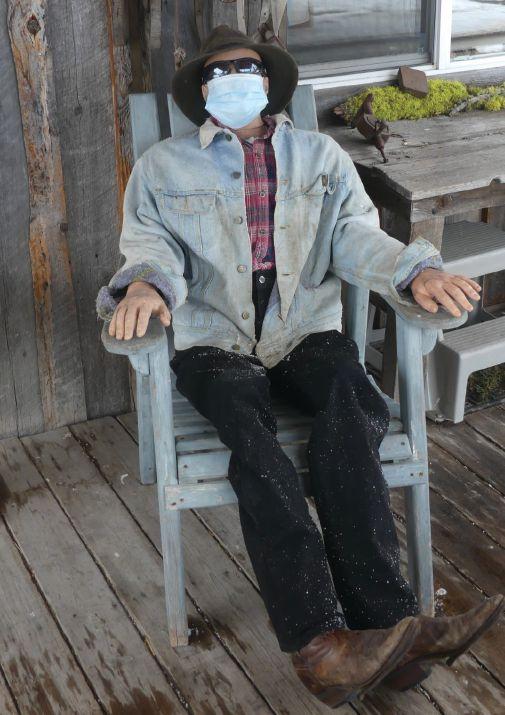
Randy has been the training manikin with Canwest Fire Services since 2004 and is now officially retired. For the last 17 years, Randy worked tirelessly promoting and training firefighter safety. He was a key player in our S.O.H.O.T (Saving Our Own Hands On Training) program, specifically in our Firefighter’s Ghost training maze. He was pulled out of over a hundred building collapses.
the fledgling volunteer department was given an old, abandoned house to burn. On practice night, without any of the department’s knowledge, he poured way too much fuel all over the two-story wooden structure. Just before lighting it, he paged out his department to a possible structure fire. The hall was eight kilometers away, and the members had gathered for practice night. Trouble began when they thought it was a real call out, there was much excitement and some confusion as to who was going to drive which apparatus. And of course, the chief wasn’t there to make those decisions for them. By the time they finally arrived on scene, the chief was furious.
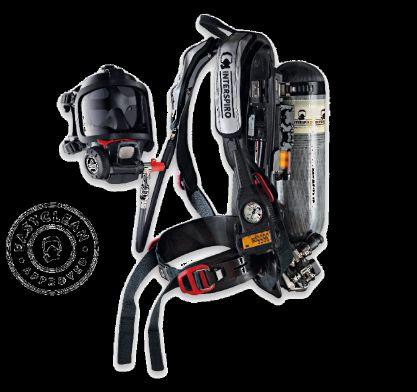
CANADIAN SAFETY EQUIPMENT IS PROUD TO BE A DISTRIBUTOR FOR THE INTERSPIRO RESPIRATORY PROTECTION LINE. THEIR STATE OF THE ART S9 INCURVE IS ONE OF THE MOST COMFORTABLE SCBAs YOU WILL EVER WEAR.
GIVE US A CALL AT 0182 OR EMAIL US AT INFO@CDNSAFETY.
No company has a richer history in respiratory protection than . Their innovations have become industry standards, time and
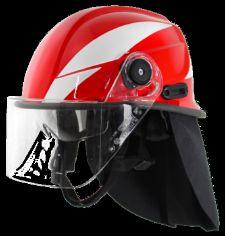
COMPACT STRUCTURAL FIRE HELMET F11 DRAGONFLY
MORE COMPACT MORE COMFORT BETTER PROTECTION
ü KEVLAR REINFORCED SHELL
ü Extremely comfortable
ü Lightweight and Compact
ü Internal drop down eye protection
ü External detachable face shield
ü Optional Earmuff clips and earmuffs
ü Custom logo available
ü Also suitable for Auto Extrication, Confined space, High
ü Angle Rescue, etc.
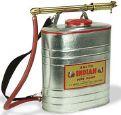
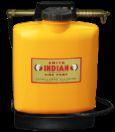
Wildland warriors have been depending on Smith Indian fire pumps on the fire line for over 80 years. Designed to help firefighters battle forest, brush, and rubbish fires, the performance of these pumps is legendary. Our Indian fire pumps offer 100% brass wands and nozzle. The dual nozzle changes quickly from stream to spray without the need for tools. The shoulder harness offers the best in comfort with a center cinch to distribute weight comfortably and the military spec shoulder straps will not rot or mildew while in service. All Smith Indian fire pump tanks are proudly MADE in the USA and approved by the U.S. Forestry Service.
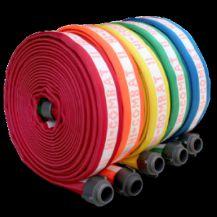
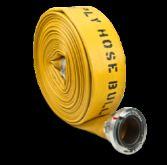
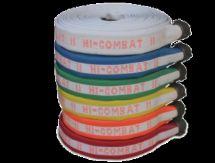
BullDog Hose Company (formerly ANGUS hose) proudly designs and manufactures industry-leading firehoses that are unmatched in quality and performance. Hundreds of North American fire departments depend on BullDog to get the job done safely and efficiently.
Using a Solo Rescue® heavy duty SCBA washing machine helps avoid exposing the crew to combustion gases, soot particles, toxins and carcinogens released in the maintenance and hand cleaning processes and also substantially lowers the time spent decontaminating firefighter equipment.
MSA and Interspiro Qualified
IN ONE HOUR YOU CAN CLEAN/DECON:
-14 SCBAs W/MASKS and CYLINDERS
THE ORIGINAL
ü REDUCED HEALTH RISK ü SAVES TIME 2/PKS IN 8 MIN
ü EASY TO USE
WASH/DECON TWO SCBAs IN 8 minutes
IN ONE HOUR YOU CAN CLEAN/DECON:
• 30 HELMETS
• 60 PAIRS OF GOVES
• 20 PAIRS OF BOOTS
• Double the above numbers with a second rack
LOW POWER USAGE MINIMAL MOVING PARTS LOW MAINTENANCE COSTS
TRAINER’SCORNER
As in my evolution, his department arrived a lot slower than anticipated, and the fire developed a lot faster than anticipated. When the department finally arrived, they found the chief standing next to the foundation of what had been a structure. Both were smouldering.
I’m sure many of you will agree with the statement, “Experience is the best teacher.” Good or bad, we learn from them. One of my rancher friends says, “Good judgment comes from experience, and a lot of that comes from bad judgment.”
The Good, the Bad and the Ugly results of a training evolution have lessons for us that cannot be taught from book learning. One evolution at my last department left an impact on everyone; an impact that I could never have expected or cultivated through a PowerPoint presentation, no matter how slick.
It was an evolution that involved the whole department responding to four different emergency calls. The first three were deliberately designed to be “non-issue” (nuisance) calls. The first three were at extreme ends of the city. All three required little, if any, attention. The department fell into the trap of our routine ‘area familiarization’ training mindset. However, I had the fourth call be a possible hazmat incident. The evolution was handled well by Engine 1, which parked safely back away from the hazard and the crew got binoculars out to see what they were dealing with. However, Engine 2, with lights flashing drove right into the toxic spill scenario. As firefighters left the apparatus, I yelled, “Drop! You are down!” I made them drop right where they were. The driver was told to slump over the steering wheel, his window was open and in direct line with the smoke and spill clearly marked three meters away. The IC was down at his open door and three firefighters not wearing BA lay unresponsive on the pavement.
A strange quiet fell over the street. It was eerie with the flashing strobes, the dark of night like a mist over the entire scene, and the unresponsive firefighters on the pavement.
I let it play out for just a moment longer then called a wrap. We had a really good debriefing. But that lesson stayed with them a long time. Like I said earlier, I’d rather have mistakes happen at a practice than in real life.
I am grateful for those evolutions that bring about unexpected results.
I was asked to do training session on ventilation for one of our local departments. Once the theory part of ventilation was completed, I had the firefighters don their PPE. Using their firehall as the building to be ventilated, I had them set up their PPV fan at one of the main doors. At this point, all the doors and windows were closed. While they did
CONTINUED FROM PAGE 28
crawling while using a TI. Don’t let your firefighters assume they are safe because the TI is allowing them to see in environments where visibility is compromised. Repetition, repetition, repetition, saves lives.
Thermal imagers are regularly touted as life-saving tools, and deservedly so. The key to training with a TI is to train regularly and
that, I hung up my flagging tape props in the building at various doors and windows. Their hall has an upper floor, so I placed flagging tape on an interior door to a room with an openable window (in our case the window had a screen). This turned out to be a huge bonus. Remember that at this point all the doors and windows are closed.
I returned to the firefighters outside at the main door. I had them fire up the fan forcing air on the entry door, checking to make sure they had a proper cone effect. Then we entered the building, and they were surprised that although the air was being forced into the building, there was very little if any air flow.
The building was just being pressurized. Taking them to the first set of flagging tape, they noted there was little if any movement. I asked one of the firefighters to open the door. As the door opened, they felt a sudden rush of air that caused the flagging tape to flutter in a horizontal motion out the exit door.
They started to understand that in order for mechanical ventilation to be effective there must be an inlet and an outlet. After closing that door, we went to an interior. At the second door the flagging tape was hanging without movement. We opened that door and stepped into the room. I asked, “Do you sense any air flow?” They answered, “No.” I had one of the firefighters open the slider on the window, and the streamers I had hung on the door began waving in the direction of the open window. I had the firefighter close the slider halfway and they noticed a marked reduction in air movement. Then I had the firefighter once again open the slider fully, then remove the screen. The difference in airflow was so drastic the firefighters were shocked. It was at that point the class collectively “got it” and their knee jerk reaction was to applaud. For this old trainer, it doesn’t get much better than to witness that type of instructional engagement.
Hope these examples have given you some, “hands-on” ideas. I would love to hear about your training experiences, “The Good, Bad or Ugly”. I am hoping to share some of your “Best and Worst” training ideas with our readers. Send me a message at akaopa@hotmail.com
Until next time remember to train like lives depend on it, because they do. •
Ed Brouwer is the chief instructor for Canwest Fire in Osoyoos, B.C., retired deputy chief training officer for Greenwood Fire and Rescue, a fire warden, wildland urban interface fire-suppression instructor and ordained disaster-response chaplain.
Contact aka-opa@hotmail.com.
most importantly, train using basic fire fighting skills while keeping in mind the limitations of thermal imaging technology. Successful and safe training can be achieved when firefighters understand the risks involved with the tools being used. The TI is a tool that needs to be with you on every call, but always remember, this tool has limitations, and no tool should ever take the place of the skills you learn in fire fighting training.
Until next time, train often and stay safe. •
Introducing the CVIS Volunteer Firefighters Group Health, Dental & Memorial (HD&M) Benefit Program
Volunteer firefighters play a vital role in small communities across Canada. And it’s a tough job. So it can be tough to find – and keep – good crew members. Providing full-time benefits can help, but traditional benefits plans are expensive.
That’s why we’ve partnered with Equitable Life of Canada® to offer the CVIS Group HD&M Program.
For more details about the HD&M Program or to get a quote, give us a call at 1-800-461-8347 or send us an email at info@cviscanada.com. Plan details
• The plan is mandatory for all members.
• No plan member census data is required to provide a quote.
• No medicals are required.
• Members are covered up to age 70.
• The plan is only available for customers who already have VFIS Accident & Sickness Coverage.
• Only active members on the fire department are eligible. Coverage terminates when members retire or leave the fire department.
• Members can choose Family Coverage to extend coverage to family members.
• Benefits for eligible dependent children terminate at age 21. Dependent children in full-time attendance at school are covered up to age 25.
Underwritten by Equitable Life of Canada
Health risks of loneliness
Defining loneliness and its threat to human health
By PETER COLLINS
Sometimes being alone can be good for a person to reflect, relax, read and recharge. Being alone does not make a person necessarily lonely. It is the perception of being alone that makes the person lonely. Research has shown that this form of isolation is unhealthy and can lead to long-term health issues. What is loneliness? There are a number of definitions that go beyond the common one of being in a state of solitude. It is the state of mind individuals will feel when disconnected and isolated, leading to an inability to find connection in one’s life.
There are many reasons why people can end up alone: death of a loved one, breakup of a relationship, changing jobs and moving to another city, living alone for the first time as an adult, the list goes on. Most individuals are resilient and eventually will, over a short period of time, be able to connect with others.
Several different types of loneliness have been identified in the psychiatric literature.
Intimate loneliness
Intimate loneliness, or what is termed emotional loneliness, is the perceived absence of a significant someone (e.g., a spouse); a person one can rely on for emotional support during crises, who provides mutual assistance, and who affirms one’s value as a person. This form of intimate connection often has considerable self-other overlap (such as that observed between close friends or spouses).
Relational/social loneliness
It refers to the perceived presence/absence of quality friendships or family connections within one’s relational space. It is a “sympathy group” that can include among 15 to 50 people and comprises core social partners whom we see regularly and from whom we
can obtain high-cost instrumental support (e.g. loans, help with projects, child care). Like intimate loneliness, social loneliness is found in women and men, though there is some evidence that this dimension may tend to play a slightly greater role in influencing loneliness in women than in men.
Situational loneliness
Environmental factors like unpleasant experiences, discrepancy between the levels of one’s needs and social contacts, interpersonal conflicts, disasters and distance from family can lead to loneliness in old age.
Developmental loneliness
The majority of individuals have an innate desire for intimacy and to be connected to others. This is essential in our development and is balanced with the need for individualism. When an individual is not able to balance individuality and intimacy, it can result in a loss of meaning in one’s life, which then leads to emptiness and loneliness in that person. Contributing factors can be personal inadequacies, significant separations, living on the margins of society, poverty, physical/psychological disabilities and developmental deficits, which can often lead to developmental loneliness.
Internal loneliness
Health Risks
Many individuals with low self-esteem and low self-worth seemingly feel lonelier than their counterparts. It has been theorized that the reasons for this type of loneliness are personality factors, feelings of guilt or worthlessness and poor coping strategies in dealing with life’s challenges.
A meta-analysis of 40 articles examining the effects of social isolation and loneliness that appeared in the journal Public Health identified a significant association between social isolation and loneliness with increased all-cause mortality and social isolation with cardiovascular disease.
A 2012 survey looked at data from a cross-section of the Swiss population. Of the over 20,000 participants ranging in age from 15 to 74, approximately 64.1 per cent reported never feeling lonely. Those who self-identified as being lonely were more often affected by physical and mental health problems, such as self-reported chronic diseases including high cholesterol levels, diabetes, moderate and high psychological distress, and depression and impaired self-perceived health. In addition, loneliness is a risk factor for cognitive decline and the
NO HYDRANTS, NO PROBLEM
CET manufactures portable pumps, skid units, brush trucks and more to allow fire departments to Adapt, Improvise & Extinguish fire in almost any scenario where hydrants are scarce and static water resources maybe all you have to work with. CET- Providing fire ground solutions since 1908.
1
Portable Pumps (PFP-20hp-HND-MR Shown)
50+ models to choose from for both fire attack & resupply operations from static water sources like lakes, rivers, ponds and pools
Arrives Completely pre-assembled, pre-plumbed, pre-wired and pre-tested ! Simply mount to your chassis, connect electrical and go fight fire!
Brush Trucks (Custom Built)
Solid/Affordable/Practical
progression of Alzheimer’s disease, recurrent strokes, obesity, elevated blood pressure, decreased sleep and premature death. Loneliness was also significantly associated with problematic lifestyle factors such as smoking and substance abuse.
In late childhood and early adolescence, loneliness results in impaired sleep, symptoms of depression and poorer general health. These same effects are seen across the lifespan, but also with increased doctor visits in adolescence and increased emergency department use in early to middle adulthood.
In terms of age, loneliness was more common in those over the age of 60. This led to the British government declaring loneliness as a “hidden killer” of the elderly. In 2018, the British government even appointed a Minister of Loneliness. This year, the government of Japan did the same.
Treating loneliness is difficult, however increasing social contact coupled with exercise, walks in nature and mindfulness therapy seems to be beneficial. The internet may give the illusion of connectedness but a 2017 study in the American Journal of Preventive Medicine found that young adults who spend more than two hours on social media daily are twice as lonely as those who spend 30 minutes. Instead of using the internet to soothe loneliness or boredom, it is recommended to reduce screen time and find ways to share your time with others in person. Face-to-face interaction reduces loneliness.
Volunteering also fights loneliness. Focusing on the needs and feelings of others provides relief from the weight of one’s own problems. Turning your attention toward someone else helps them feel valued and supported, which allows meaningful, fulfilling relationships the space to grow. Seeking out social interaction with close and
distant acquaintances bolsters well-being and reduces lonely feelings. Taking on new subjects and skills expands life experience and creates opportunities to connect with others. Educating oneself can boost self-confidence and reduce feelings of inadequacy and loneliness. Common interests can be a powerful bond in forming a community of like-minded people aspiring toward similar goals.
Loneliness in our society is increasing, as are the negative health consequences of being lonely. The COVID-19 pandemic is exacerbating this state. If you are lonely, do not feel ashamed or afraid to ask for help. See your family physician for an assessment and treatment. The emergency services community is a brotherhood and sisterhood, but we must be aware of what to look out for to help care of ourselves and our brothers and sisters, including retirees. Keep in mind you are not alone in feeling alone. •
SUGGESTED READINGS
Cacioppo, S. et al (2015) Loneliness: clinical import and interventions. Perspectives of Psychological Science Mar; 10(2): 238–249. doi: 10.1177/1745691615570616; https://www.mentalhealth.org.uk/coronavirus/loneliness-during-coronavirus https://mentalhealthweek.ca/social-connection-is-the-cure/
Peter Collins is the operational forensic psychiatrist with the Ontario Provincial Police’s Criminal Behaviour Analysis Section. He is also a member of the crisis/hostage negotiation team of the Toronto Police Service Emergency Task Force. Dr. Collins’ opinions are his own. Contact him at peter.collins@utoronto.ca.
A new firefighter wellness program
A new,
free, firefighter health
and wellness program aims to create free preventative training and tools for for the long-term.
By JORDAN BOLZON
Mental health in the fire fighting community is becoming more widely discussed and prioritized amongst departments throughout Canada. Many mental health supports are focused on reactive solutions to preventative problems, and it was from this perspective that I developed the Wellness Plan for Firefighters, a free, preventative training program that establishes a baseline and then offers opportunities for refreshers across a career.
The Wellness Plan for Firefighters is a psychoeducational, interactive training plan that focuses on mental wellness while also incorporating aspects of physical, emotional, and spiritual well-being. The program includes cognitive behavioural therapy (CBT) based activities and diagnostic assessments to establish baseline levels of wellness supports and coping strategies, as well as scores for mental health assessments. Created to provide an initial training immediately after recruitment and having the ability to provide focused refresher training specific to certain aspects of mental health, this plan can help improve a firefighter’s ability to stay in the field longer, be healthier and catch mental wellness issues early.
The development of this program included support and input from multiple mental health workers and active firefighters. Each module of the plan is rooted in research from the DSM-5 and evidence-supported practice exercises. The assessments within the plan include commonly used publicly accessible tests that are used to screen for various mental health disorders. The program started with an extensive literature review stemming from primarily Canadian studies to provide evidence-backed research into the skills and theories taught in the program.
The literature review served to identify gaps in mental health training, stigma, and education already present in fire fighting organizations, giving specific areas of focus for the program and expanding on knowledge and skills already provided in training by having information on those basics already provided, narrowing and expanding parts of the program by infusing them with research from interprovincial and international studies. The resulting paper allowed a wellness program to develop that can teach a firefighter from the time they’re hired to the time they retire (which is the ultimate goal, for a firefighter to retire on their own terms, not due to mental wellness issues) with skills that allow for self-care, mental health assessments and access to supports in their own local communities. The goal of the paper was to develop a program that focused on preventative measures to improve mental health instead of reactive measures, which is what it did.
A comprehensive firefighter wellness program begins early and works to continue developing coping skills throughout their career.
The next step to developing the program was integrating personal experience and learning from firefighters in local communities. This collaborative approach to developing the program fostered an understanding of what is needed on the ground in terms of mental health supports for firefighters, as well as explore improving upon basic mental health training for new recruits. Analyzing the connections between mental health and other aspects of wellness, as well as personal and professional supports in and out of EAP programs, and including social and community connections, are key aspects of a well-rounded program. The concept of being proactive in accessing support and retaining employment without leave is crucial and is the largest influence of this program’s creation.
The use of basic psychoeducational techniques is meant to establish a baseline of skills and resources at the beginning of the career and then further develop these skills with activities solely based on CBT skills taught in a therapeutic setting. The use of CBT activities is purposeful as it is a commonly used and evidence-backed modality of therapy for firefighters suffering from a variety of mental health issues. Learning these skills before problems arise can make it easier to practice the skills when such things happen, and mental wellness becomes an issue. This piece was added by consulting mental health professionals with expertise in trauma, depression, anxiety,
NFPA 10, Standard for Portable Fire Extinguishers Item # 1022
Guard against small fires with the newest edition of NFPA 10, Standard for Portable Fire Extinguishers, your all-in-one resource for portable fire extinguishers. The new 2022 edition includes several clarified provisions and reorganization of several sections. Fire Investigator, 3rd Ed (IFSTA) Item #36014 $112.05
Vehicle Rescue and Extrication: Principles and Practice, Rev 2nd Ed. Item #1284245622 $139.00
This textbook helps technical rescue professionals remain safe and capable by delivering the most current practical skills and information available on today’s increasingly technical vehicles.
This text has been reorganized to better meet the needs of readers and includes several new photos and illustrations. Additionally, this 2022 edition contains updated information regarding scene documentation and a heavier focus on investigation processes and the scientific method.
and professionals who were well versed in CBT as a practice model. The use of CBTbased activities was intentional based on the structure of this modality which often fits well with people who thrive in structured settings, or in other words, CBT has been proven to work well with firefighters (Johnson et al., 2020).
Incorporating the diagnostic screening tools directly into the program allows for a starting point to monitor progress and catch signs and symptoms early. These tools are not meant to be used as the only method to diagnose a mental wellness issue, but as one way to make a person aware of any symptoms they may be experiencing and then to allow them to get help earlier because of this awareness. The screening tools are simple enough to be self-administered in terms of instructions. They are also easy enough to score to be able to monitor scores progressively. All the assessments are also available online so anyone can get one and fill it out easily enough to monitor themselves regularly if needed.
The program was developed to be a tool for a firefighter throughout their career. Optimally, a new firefighter would complete
the full program, including all assessments and exercises, shortly after recruitment. The screening tools are based around specific amounts of time, for example, symptoms in the last two weeks, and intended to be completed about once a month to establish regular patterns and to notice any irregular scores quickly. The other exercises and activities throughout the program can be revisited at any time although reviewing them every few months is recommended as well. The information and educational pieces in the program are current and as research is updated and changing, looking at different evidence can also be useful as needed.
After the initial program, refresher sessions can be implemented regularly by the department or by the firefighters themselves if they feel like it is needed by a crew. These refreshers can also be done informally and alone. They can be as simple as reviewing a specific section or sections of the program as needed or reviewing the entire program as a whole. Reviewing pieces of the program regularly is recommended in both formal and informal sessions at least once a year to ensure mental wellness
is a priority among crews.
Implementing the program with notso-new firefighters is also very possible and useful. The experience brought to the table by more experienced firefighters can enhance connections and improve discussions during exercises and activities. For example, a real situation or call experienced by a firefighter or crew can be used to discuss how to improve responses to a difficult call for an entire department, by making everyone aware of differences in the effects of a call among crews or individuals. The program notes that the assessments are there to establish a baseline and to flag potential future problem areas, but they can also highlight areas that may require additional support in the moment for firefighters who have been working for a while. As previously noted, these scores are meant to make firefighters aware of their mental health, not to diagnose mental wellness issues.
The Wellness Program for Firefighters is useful to all members of a department at any stage of their career. The program is meant to be revisited regularly both in formal and informal settings allowing for individual and group exercises. The program incorporates psychoeducation, evidence-based activities, and exercises to improve mental wellness, and assessments to establish baselines and note any marked changes in scores to catch symptoms of mental wellness issues early. The whole program is backed by extensive current research and incorporates recommendations from mental wellness professionals and firefighters themselves. It offers flexibility in when to do refreshers, complete assessments and adds a level of focus to other areas of wellness beyond mental throughout the program. To access the program, please email jabolzon@lakeheadu.ca. •
References: Johnson, C. C., Vega, L., Kohalmi, A. L., Roth, J. C., Howell, B. R., & Van Hasselt, V. B. (2020), Enhancing mental health treatment for the firefighter population: Understanding fire culture, treatment barriers, practice implications, and research directions. Professional Psychology: Research and Practice, 51(3), 304–311. https://doi.org/10.1037/pro0000266.
E-ONE delivers strength through excellence with the most exciting development in the firefighting industry to date. Vector answers the call as the first North American-style fully electric fire truck that’s innovatively engineered so firefighters can drive and pump on electric power only. Energized with proven global technology and customizable to meet your needs, this fire truck is taking firefighting to an extraordinary new level. Welcome to the future of firefighting with E-ONE and Vector.
Vector arrives on the scene in 2022. Contact your E-ONE dealer to pre-order or to schedule an exclusive virtual session with REV Fire engineers.
For more information on Vector, visit e-one.com/vector
2022 FIRE SERVICES DIRECTORY
A.J. STONE COMPANY LTD.
62 Bradwick Dr. Vaughan ON L4K 1K8
Tel: 416-785-3752
Toll free: 800-205-3473
Fax: 416-781-2827
Company Email: order@ajstone.com
Web: www.ajstone.com
A.J. Stone has proudly served the needs of the First Responder Services of Ontario since 1972 by featuring quality products, knowledgeable sales team, and training support.
A.J. Stone supplies equipment from MSA, Task Force Tips, LION Protects, Paratech Rescue, FireBull, Enforcer, Genesis Rescue Systems, Streamlight, Innotex Bunker Gear, ProTech Gloves, Safe-T-System, CET and much more!
We service what we sell!
AIR TECHNOLOGY SOLUTIONS CANADA INC.
251 Queen St. S., Ste. 512 Mississauga ON L5M 1L7
Tel: 905-826-6682
Toll free: 866-735-1480
Fax: 866-511-6904
Company Email: info@airmation.ca
Web: www.airmation.ca
Air Technology Solutions is dedicated to our Clients, offering updated, timely, full service Indoor Air Quality (IAQ) solutions. Air quality concerns are mitigated using a unique combination of professional indoor air quality assessment coupled with solutions. Off the shelf or customized site specific air cleaning equipment is available to resolve IAQ issues. Our technical experts review client requirements and budgetary availability. The finest appropriate air cleaning systems are provided. Air Technology Solutions is a leader in Diesel Exhaust Remediation and is the ONLY environmental tested and proven filtration system to exceed standards: NFPA, NIOSH, OSHA and ASHRAE. Building and facility managers, business owners, contractors, architects, and engineers have been working with Air Technology Solutions since 1986 to resolve IAQ needs. Employee and personnel safety and health are key issues. Breathing safe air in the workplace is of utmost importance. We provide global customized solutions to control contaminants, pollutants and odours in your facility. We look forward to servicing your requirements.
AIR VACUUM CORPORATION
PO Box 517
Dover NH 03821
Tel: 603-743-4332
Toll free: 800-540-7264
Fax: 603-743-3111
Company Email: sales@airvacuumcorporation.com
Web: www.airvac911.com
Breathe Clean Air with AIRVAC 911®
Control the spread of hazardous contaminants in your station. The AIRVAC 911® Engine Exhaust Removal System protects 100% of the bay area by constantly monitoring and removing exhaust and particulate matter from your station without interfering with daily operations. No hoses, hook-ups or vehicle connections. No building modifications, no ducting and no outside exhausting.
AIRVAC 911® is 100% automatic.
• Address Hot Zones within your station
• Remove off-gassing of turnout gear, hoses and parked vehicles
• Counter off-gassing of secondary pollutants
• Remove engine exhaust that re-enters the building
• Half the cost of hose systems
• Energy efficient LEED/green design
• NFPA 1500/OSHA/GSA compliant
For a free quote: www.airvac911.com
sales@airvacuumcorporation.com
800-540-7264
BEARSPAW PROTECTAPUMP
A - 927 Goldstream Ave.
Langford BC V9B 2Y2
Tel: 778-404-7385
Company Email: chris@protectapump.com
Web: www.ProtectaPump.com
Home of the PORTABLE Dry Hydrant - Instantly Draft Anywhere…Safely!
BearsPaw ProtectaPump, a 100% Canadian Company focused on liquid / solids Separation and Isolation technology. Our patented Suction Separator, the Fire Ceptor ensures a consistent flow of clean water to both Truck mounted (4”, 5” & 6”) and Portable pumps (2”, 2.5” & 3” w/ foot-valve) drafting in challenging environments. The Portable Dry Hydrant drafts safely in only 6”- 12” depth, even placed in sand, gravel, or weeds! This ‘Suction Separator’ outperforms any suction ‘strainer’ in both pump protection & high flows - No flotation or suspension required! - Fire Chief used and approved - See videos at www.ProtectaPump.com
Fire Ceptor, a ‘Made in Canada’ product; reduces downtime, repair costs, extends pump life, increases performance flows and reliability when needed most for Firefighters as they risk their lives to protect people and property.
100% satisfaction guarantee & 5-year warranty.
C-MAX FIRE SOLUTIONS
3040 Sawmill Rd., PO Box 425 St. Jacobs ON N0B 2N0 Tel: 519-664-3796
Company Email: fireinfo@c-max.ca
Web: http://www.c-max.ca
Canadian family owned and operated business that offers a higher standard of service and sales for all your Fire Apparatus needs. C-Max Fire Solutions offers 24 Hour service from EVT Technicians with fully stocked service trucks. We offer Pump testing and repairs to all makes and models. We offer ground ladder testing as per NFPA 1932. We are also Ontario’s Factory Sales and Service Centre for KME Fire Apparatus. C-Max is now factory authorized service center for Will-burt Light towers.
CANADIAN SAFETY EQUIPMENT INC.
#3 – 2865 Argentia Rd.
Mississauga ON L5N 8G6
Tel: 905-826-2740
Toll free: 800-265-0182
Fax: 905-272-1866
Company Email: info@cdnsafety.com
Web: http://www.cdnsafety.com
We supply Industrial and Fire SCBA’s, SCBA Decon Washer, Thermal Cameras, CAF Systems, Fall Protection, Bunker Gear, Fire and Rescue and Ballistic helmets, Fire Hose, Communications Equipment, Nozzles, Fittings, Hazmat Suits, Ventilation Fans, Gas Detectors, Confined Space Rescue Equipment, Water and Ice Rescue equipment, Industrial and Municipal Safety and Lone Worker Protection systems.
CODE 4 FIRE & RESCUE INC.
26 Oneida St., PO Box 1297
Hagersville ON N0A 1H0
Tel: 905-768-9254
Toll free: 800-387-2286
Fax: 905-487-1517
Company Email: chris@code4.com
Web: http://www.code4.com
Call 1-800-665-4900 for all your “Hurst” Extrication needs! Service, Sales and Training. HME Fire Trucks now available - see www.firetrucks.com
Proudly Serving Those Who Serve Others
COINAMATIC COMMERCIAL LAUNDRY
COMMERCIAL EMERGENCY EQUIPMENT CO.
591 Chester Road
Delta BC V3M 6G7
Tel: 877-443-2626
Toll free: 800-665-6126
Company Email: cfeduniw@comtruck.ca, jzimmerman@ comtruck.ca
Web: www.comemerg.ca
Commercial Emergency Equipment Co is Canada’s largest dealer for Pierce Manufacturing Inc, Maxi Metal, and Oshkosh Airport Products. We provide sales, parts, and service of all makes of fire trucks, and support to our customers through our nationwide branch network. . Commercial Emergency Equipment Co. strives to exceed customer expectations in everything we deliver. With over 70 years in the truck equipment industry, we take pride in a proven track record of providing expert truck equipment solutions, top quality products, and first-class service to our customers.
We are a sole-source service provider with mobile EVT’S, on-call 24/7, throughout our nationwide branch network. We offer inspections, preventative maintenance, mobile pump testing, and foam system calibration, as well as comprehensive apparatus training on operation and maintenance.
CARL THIBAULT FIRE TRUCKS INC.
38 Thibault St., Box 1089
Pierreville QC J0G 1J0
Tel: 450-568-7020
Fax: 450-568-3049
Company Email: mthibault@thibaultfiretrucks.com
Web: www.thibaultfiretrucks.com
We are a Canadian based company and we manufacture a full line of fire apparatus which includes aerial ladders, pumpers, tankers, rescue units and vacuum tankers. We provide parts and other related products.
301 Matheson Blvd. West Mississauga ON L5R 3G3
Tel: 905-301-5256
Toll free: 877-755-5302
Company Email: sreynolds@coinamatic.com
Web: coinamatic.com
With Operations in every major City in Canada, Coinamatic stands ready to assist with all of your commercial laundry equipment requirements! We offer multiload washers and dryers, as well as homestyle single load washers and dryers, PPE Drying Cabinets as well as Ecotex Laundry Oxidation Systems. All equipment is available for purchase or on rental/service agreements! Contact us today for all of your equipment requirements!
We inventory an extensive stock of OEM and aftermarket parts, tools, and equipment ensuring quick delivery and reduced downtime to our customers. Our service technicians undergo continuous training and testing to ensure that the latest technology and innovation is applied to the service of your equipment.
When you need prompt, honest, and reliable service, you can count on us to support you.
BC, AB, SK, MB, ON, NT, NU, YT
CSE INCENDIE ET SÉCURITÉ INC.
5651 Chemin St-Francois
St. Laurent QC H4S 1W6
Tel: 514-737-2280
Toll free: 866-737-2280
Fax: 514-737-2751
Company Email: info@cseis.com Web: www.cseis.com
CET FIRE PUMPS MFG.
75, Hector, C.P. 90
Pierreville QC J0G 1J0
Tel: 450-568-2719
Toll free: 888-844-2285
Fax: 450-568-2613
Company Email: sales@fire-pump.com
Web: www.fire-pump.com
No Hydrants, No Problem!
CET Manufactures Portable Pumps, Skid Units, Brush Trucks, Glider Kits, Foam Trailers, Water Tanks, and UTV Fire Units to help you fight fire where static water sources may be your only option.
The Flow Starts Here!
We supply Industrial and Fire, SCBA’S, SCBA Decon Washers, Gear Extractors and Dryers, Thermal Cameras, CAF Systems, Fall Protection, Bunker Gear, Fire, Rescue and Ballistic Helmets, Fire Hose, Communications Equipment, Nozzles, Fittings, Hazmat Suits, Ventilation Fans, Gas Detectors, Confined Space Rescue Equipment, High Angle Rescue Equipment, Ice and Water rescue equipment, Boots and Gloves. Everything for Fire Fighting, EMS, Law Enforcement, Industrial and Municipal Safety and Lone Worker Protection Systems.
2022 FIRE SERVICESDIRECTORY
D&R ELECTRONICS CO. LTD.
8820 George Bolton Parkway
Bolton ON L7E 2Y4
Tel: 905-951-9997
Toll free: 800-538-7338
Company Email: michael@dandrelectronics.com
Web: www.dandrelectronics.com
D&R Electronics offers emergency vehicle fleets with creative equipment solutions such as complex systems using mobile phones for desktop computing in vehicles to In-Vehicle Laptop/Tablet Mounting Solutions, In-Vehicle Printers and Printer Mounts, Equipment Consoles, Interior/Exterior LED Area/Scene/Work lighting, SAE Certified/NFPA Compliant LED Emergency Lighting, LED Traffic Director Kits, Basic and Fully Programmable Siren/Light Control Systems, Programmable Power Management Systems, Battery Protection Modules, Equipment Storage Solutions
D&R Electronics is an ISO 9001:2015 Registered company that has been proudly designing and manufacturing quality emergency vehicle equipment in Canada since 1976.
DRAEGER SAFETY CANADA LTD.
2425 Skymark Ave., Unit 1
Mississauga ON L4W 4Y6
Tel: 905-212-6600
Toll free: 877-372-4371
Fax: 905-212-6602
Company Email: susan.yu@draeger.com Web: www.draeger.com/en-us_ca/Safety/Firefighting
Contact us at +1 877-372-4371 to learn more about SCBA, live fire training system, fixed gas and flame detector, mobile gas detector, thermal imaging camera, drugs and alcohol testing equipment and the rest of our portfolio.
Product services and technical training courses are offered at our Mississauga, Ontario and Edmonton, Alberta locations throughout the year. Arrange for service of your SCBA and gas detector now.
E-ONE
1601 S.W. 37th Ave.
Ocala FL 34474
DEPENDABLE EMERGENCY VEHICLES
275 Clarence Street
Brampton ON L6W 3R3
Tel: 905-453-3473
Fax: 905-456-3477
Company Email: sales@dependable.ca
Web: www.dependable.ca
Dependable Emergency Vehicles builds high-quality, cost-effective emergency vehicles that have been proven in the emergency response industry for over 45 years. Our attention to detail, and innovative design and engineering concepts, allows us to manufacture emergency vehicles to your specifications.
We manufacture pumpers, rescue-pumpers, walk-in & walk-around rescues, tankers, hazmat, command units, and other specialized fire apparatus at our production facility in Brampton, Ont. Dependable is also an Ontario dealer for KME fire apparatus.
Our 40,000 sq. ft. facility includes multiple vehicle bays, state-of-the-art sandblasting & paint facilities, indoor pump testing bays, and a full-service repair shop for body work and refurbishment, on all makes and models. Our apparatus showroom, located across the street from our production facility, provides a comfortable environment for our customers to view and get a hands-on experience with our emergency vehicles on display.
Tel: 352-237-1122
Fax: 352-237-1151
Company Email: info@e-one.com
Web: www.e-one.com
E-ONE. STRENGTH THROUGH EXCELLENCE.
E-ONE, a full spectrum builder of fire apparatus, is the pioneer and recognized leader in extruded aluminum and stainless-steel construction. With their advanced engineering, fully integrated manufacturing and highly engaged dealer network, the proud customer focused E-ONE team delivers strength through excellence. For more than 47 years, E-ONE has been the cutting-edge builder of:
• Aerial ladders and platforms
• Custom and commercial pumpers and tankers
• Rescues of all sizes
• Industrial trucks
• Aircraft rescue firefighting vehicles
INNOVATION EVERY DAY:
Leading the way with advanced engineering and innovative design, E-ONE is an industry leader in product innovations, new technologies and exceeding customer expectations. Recent product advancements include the 100” wide Cyclone Cab, HR 100 aluminum aerial ladder, Active Air Purification System, Air Transportable ARFF vehicles, AXIS Smart Truck technology, the ECO IDLETEC idle mitigation system and clean cab options.
E-ONE’S SUPERIOR AERIAL DNA:
The DNA of E-ONE aerials consist of a unique design that gives E-ONE the advantage of stability and brute strength. The welded extruded aluminum construction will never rust or need repainting, resulting in a lower cost of ownership. Key design features include a 2.5 to 1 structural safety factor, crisscross under-slung jacks, integral torque box chassis, and the strongest cab in the industry.
SAFEST CAB IN THE INDUSTRY:
Keep your crew safe with the cab that withstands over 5 times the static roof load and over twice the frontal impact required by NFPA 1901. The structural roll cage type design provides maximum protection and comfort for firefighters.
INTEGRAL TORQUE BOX CHASSIS:
The integral torque box chassis is a unique design that provides a solid foundation and low center of gravity for the truck. This provides outstanding stability and strength, with the same 2.5 to 1 structural safety factor as the aerial device.
For further information on E-ONE apparatus or to find an E-ONE dealer near you, visit e-one.com
Darch Fire (Member of 1200 Degrees)
9-402 Harmony Road, Ayr, Ontario N0B 1E0
800-254-2049
Territory: Ontario
FireTek Emergency Vehicles LTD
30686-A Matsqui Place
Abbotsford, BC V2T 6L4
Territories: Alberta, Saskatchewan, Nunavut, British Columbia, Northwest Territories
Keewatin Truck Service
610 Keewatin St., Winnipeg, MB R2X 2R9
Phone 204-633-2700
Territory: Manitoba
Techno Feu Apparatus Maintenance (Member of 1200 Degrees)
Starfield LION’s CenterCut™ Bunker Gear Liner System for Drier, Cooler, Lighter and...Safer Gear.
Starfield LION Flame Fighter™ Bunker Gear
2022 FIRE SERVICESDIRECTORY
FIREHALL BOOKSTORE
PO Box 530, 105 Donly Drive S. Simcoe ON N3Y 4N5
Tel: 877-267-3473
Fax: 877-624-1940
Company Email: info@firehallbookstore.com
Web: www.firehallbookstore.com
The Firehall Bookstore provides training & public education materials to the Canadian Fire Service industry and its professionals. A one-stop-shop for books, DVDs, codes and standards, and fire prevention and education materials for community outreach.
Product lines include NFPA, IFSTA, Jones & Bartlett, PennWell, Action Training Systems, Brady, Emergency Film Group as well as Firehall Mall section that offers gloves, lights, tools and accessories from A.J. Stone and ResQTech.
FORT
GARRY FIRE TRUCKS LTD.
RR 2, 53 Bergen Cutoff Rd.
Winnipeg MB R3C 2E6
Tel: 204-594-3473
Toll free: 800-565-3473
Fax: 204-694-3230
Company Email: brian nash, bnash@fgft.ca Web: www.fgft.com
Fort Garry Fire Trucks is Canada’s oldest and largest manufacturer of high-quality fire apparatus offering a complete line of quality pumpers, tankers, rescues, aerial devices, and custom-designed and engineered specialized units. With headquarters based in Winnipeg, Manitoba, Canada, our customers emanate from cities, towns, and municipalities throughout Canada, the U.S., and abroad with the harshest weather, climates, and terrain. We boast one of the largest fire apparatus engineering departments amongst our competitors, devoted to the design and production of equipment for the most extreme conditions in the world. We are a Bronto Skylift articulated aerial platform dealer, as well as the exclusive Canadian distributor of Sutphen Corporation aerial ladders and platforms. We truly build “One Tough Truck” and boast over 100 years of quality.
COAST TO COAST SALES AND SERVICE NETWORK:
• Brian Nash — Vice President – Sales – bnash@fgft.ca
Company Email: aszpakowski@annexbusinessmedia. com
Web: www.firehall.com
Firehall.com provides an excellent forum for exchange among firefighters and others involved in the fire service. Advertising options include banner ads and e-blasts and offer extensive exposure to the rank and file.
FIRESERVICE MANAGEMENT LTD.
34 Torlake Cres.
Toronto ON M8Z 1B3
Tel: 416-251-3552
Toll free: 888-731-7377
Fax: 416-253-0437
Company Email: brian@fireservicemanagement.com
Web: http://www.fireservicemanagement.com
We Clean, Test, Customize, Rent and Repair YOUR Gear. Canada’s premier facility dedicated exclusively to providing the best in bunkergear cleaning, decontamination, inspection and repair. We are NFPA 1851 compliant and UL verified for all cleaning and repairs to all materials including moisture barriers. We stock materials and trim for every brand. We’re a certified ISP so we can rebuild damaged components or add pockets and other features to suit your needs. We also offer our own FireTracks software to help you track your inventory and inspection history. Call us today to see how we can help your department.
• Chad Kamminga — Service Manager – ckamminga@ fgft.ca
Toll-Free: 1-800-565-3473 (ext. 3478)
• Andrew Zmiyiwsky — Part Sales - azmiyiwsky@fgft.ca
Toll-Free: 1-800-565-3473 (ext. 3112)
REGIONAL SALES REPRESENTATIVES:
• Atlantic Canada — Adam Baldwin – abaldwin@fgft.ca
Fight Fires, Not Paperwork. Hundreds of Canadian Fire Departments use FP2 to manage all aspects of their operations.
FP2 is powerful, flexible software with modular design that ensures you only buy what you need.
New features include Web-Based Incident reports, preplans from your tablet and coming soon - inspections on your phone.
Our unique Compensation Reports can even run payroll for you! Contact us for a customized consultation and estimate.
FSI® NORTH AMERICA, A DIVISION OF FIRE SAFETY INTERNATIONAL INC.®
311 Abbe Rd.
Sheffield Lake OH 44054
Tel: 440-949-2400
Fax: 440-949-2900
Company Email: sales@fsinorth.com
Web: www.fsinorth.com
FSI – Celebrating 25 years of serving the Life Safety Market worldwide 1997 – 2022
FSI North America® is a Full line supplier of mobile, portable and fixed hazmat decon shower systems. Shower Systems include traditional water/solution based decon, electrostatic equipment only decon, and Far UVC 222nm Disinfection.
FSI® TEAS® (Temporary Emergency Air Shelters) shelter systems, offered in among the world’s largest range of size and configurations, serve for Command, Isolation, Field Hospitals/Alternate Care from 10-1,000 beds, Sleeping, Fire Fighter Rehab, Temporary Morgues, and so on.
FSI® offers a complete range of Isolation Chambers, Rooms, Shelters, and Beds/Chairs systems.
FSI® also offers a complete range of sizes and configurations of Trailer Systems, Rescue Boats, Smoke Ejectors, and EMS supplies such as the FSI Transporter Disposable Backboards, Triage Tape Systems, FSI Medical Field Cots, and Mortuary supplies such as body bags.
2022 FIRE SERVICESDIRECTORY
HIGHWATER HOSE INC.
12 rue Willard
East Angus QC J0B 1R0
Tel: 888-832-4310
Toll free: 888-832-4310
Fax: 819-832-4340
Company Email: sfraser@mercedestextiles.com
Web: www.highwaterhose.com
Worldwide supplier of a wide range of rubber covered and lightweight, layflat fire and industrial hoses.
A NEW EVOLUTION IN FIRE FIGHTING:
• DelugeTM - Designed for high volume water supply where excellent friction loss, packability and cold temperature flexibility are critical.
• X-Stream® Plus - Designed for aggressive interior attack where excellent abrasion and cut resistance are essential and where color-coded attack lines are crucial.
• Available with iReflect®, WAYOUT® Couplings and iDentify® Coding System
OUR CANADIAN DISTRIBUTORS
• martinsfiresafety.com - NL
• indsales.ca - Labrador
• cumings.ca - NS, NB, PEI
• seaboardindustrial.ca - Cape Breton
• larsenal.ca - QC
• municipalequipment.ca - S./S.E. ONT
• transcanadasafety.ca - N./N.C. ONT
• soucisalosafety.com – N./N.C. ONT
• realsafety.ca - MB
• wfrfire.com - BC, AB, SK, YT, NWT
HUSKY PORTABLE CONTAINMENT
7202 SE International Ct.
Bartlesville OK 74006
Tel: 918-798-4415
Toll free: 800-260-9950
Fax: 918-333-2004
Company Email: sales@huskyportable.com
Web: www.huskyportable.com
Husky Portable Containment is a manufacturer of firefighting and environmental safety products. We specialize in portable water tanks used in water shuttle operations. We also manufacture salvage covers, hose bed covers, staging mats, strainers, decontamination pools and showers, bladder tanks and spill containment berms.
INDUSTRIES LAFLEUR INC.
2359, Boul. Fiset
Sorel-Tracy QC J3P 5K2
Tel: 450-743-3918
Fax: 450-743-3906
Company Email: pierrethibault@industrieslafleur.com
Web: www.industrieslafleur.com
Fire rescue trucks (walk-in and non walk-in rescue trucks)
Custom truck bodies
High quality since 1969
ISO 9001
CWB 47.1 & 47.2
JYD INDUSTRIES (JUNKYARD DOG INDUSTRIES)
119 Keystone Dr. Montgomeryville PA 18936
Tel: 267-803-1440
Toll free: 800-574-8228
IAMRESPONDING.COM
PO Box 93
Dewitt NY 13214
Tel: 315-701-1372
Toll free: 877-509-0381
Company Email: sales@emergencysmc.com Web: www.IamResponding.com
HOLMATRO, INC.
505 McCormick Dr. Glen Burnie MD 21061
Tel: 410-768-9662
Fax: 410-768-4878
Company Email: info-usa@holmatro.com Web: www.holmatro.com
Holmatro hydraulic equipment and system solutions are predominantly used in rescue, special tactics and industrial applications around the world. These types of applications demand reliable and safe tools under all circumstances.
IamResponding is the leading provider of mobile dispatch alerting, delivering dispatch alerts (CAD feeds and live audio) to the mobile devices of more than 400,000 emergency service providers. IaR lets your teams know immediately about the incident, shows them where to go, and lets them know what they will encounter when they get there.
Used by more than 9,000 departments and specialty teams, IamResponding includes a full suite of functions, including: supplemental dispatch notifications via push notification (including CAD and live audio notifications right to your mobile devices), text message and email; Google Mapping of incident locations, with turn by turn navigation to the scene; hydrant and water source mapping and management; mobile pre-plans, scheduling, mass messaging, records management; incident reporting; training records; and so much more!
Try a FREE 60-day trial!
Fax: 267-803-1447
Company Email: info@jydind.com
Web: http://www.jyd.esiequipment.com
Specializing in vehicle stabilization and lifting, rescuer safety, and patient protection products, Junkyard Dog IndustriesTM (JYD), a Division of ESI Equipment, Inc., prides itself in arming the emergency service community with uncommonly simple, proven, and quality Americanmade first-in equipment. Accessible nationwide through our large Dealer Network, explore what thousands of responders have discovered already about JYD Industries’ innovative product designs, resourcefulness, materials of a high standards, and dedication to equipping responders with the first-in equipment they need to face today’s new car technology challenges with ease and confidence.
KOCHEK CANADA
62 Bradwick Dr., Vaughan ON L4K 1K8
Tel: 416-602-0404
Company Email: sales@kochekcanada.com
Web: www.kochek.com
sales@kochekcanada.com
Robin Lewis, Customer Service
laura@kochekcanada.com
Laura Kenyon, Regional Director
2022 FIRE SERVICESDIRECTORY
MEIKO CLEAN SOLUTIONS CANADA
P.O. Box 21138, Meadowvale Postal Outlet
Mississauga ON L5N 6A2
Tel: 416-817-8518
Toll free: 800-556-3456
Company Email: sales@meiko.ca Web: www.meiko.ca
Contamination is real, and it’s dangerous. MEIKO has almost 100 years of professional cleaning, disinfection and warewashing experience. DECON machines combine time, temperature and chemo-mechanical action to provide exceptional cleaning and decontamination for self-contained breathing apparatus (SCBA), PPE as well as other firefighting and HAZ-MAT related equipment and gear. DECON Series equipment washers get gear clean like you’ve never seen. Clean you can see. Clean you can smell. Clean you can trust. And every DECON wash provides the same consistently high level of clean. For more information, contact sales@meiko.ca.
MERCEDES TEXTILES LTD.
Montreal QC
Tel: 514-335-4337
Fax: 514-335-9633
Company Email: sales@mercedestextiles.com Web: www.mercedestextiles.com
For over 45 years, Mercedes Textiles has proudly delivered the most innovative and reliable water delivery systems to the firefighting community. From hoses & couplings to portable pumps, municipal to forestry, we put our technology where your courage is.
FIRE HOSE & COUPLINGS:
• KrakenEXO® – The most advanced UL-listed attack fire hose on the market – weighs less, kinks less, flows more water, beats the heat
• MegaFlo® Breather – Large volume attack & supply hose designed for fastest deployment, easiest recovery & best packability
• Highwater Hose Inc. – We offer of a wide range of rubber-covered lightweight, lay-flat & industrial hoses via our partner brand
• Many hoses available with iReflect® & WAYOUT® couplings and iDentify® Coding System – all manufactured under one roof, customized to your specifications, & NFPA 1961 compliant
• Best warranty on the market: 2-year All Hazards, 10-year manufacturing defects & Lifetime against delamination (2-10-L)
POWERFUL FIRE PUMPS:
We are a leading manufacturer of high pressure, lightweight, portable fire pumps for forestry & municipal fire applications. When you need water, we deliver.
www.municipalequipment.ca – S/S.E. ONT www.transcanadasafety.ca – N/N.C. ONT www.soucisalosafety.com – N/N.C. ONT www.realsafety.ca – MB www.wfrfire.com – BC,AB,SK,YT,NWT
METZ FIRE AND RESCUE
3-304 Stone Rd. W. Guelph ON N1G 4W4
Tel: 519-829-9149
Fax: 519-763-6682
Company Email: john@metzfirerescue.com Web: www.metzfirerescue.com
Canadian dealer for KME Fire Apparatus. Specializing in custom and commercial pumpers, aerial, rescue, tankers and wildland units.
MSA – THE SAFETY COMPANY
100 Westmore Dr #23
Etobicoke ON M9V 5C3
Tel: 416-620-2533
Toll free: 1-877-672-FIRE
Fax: 416-620-9697
Company Email: fire.cs@msasafety.com Web: ca.msasafety.com/markets/fire-service
We’ve got you covered from head-to-toe, with our revolutionary MSA G1 SCBA, Connected Firefighter Platform, powered by the LUNARTM Connected Device, Cairns® fire helmets, Globe® turnout gear and boots, Altair® portable gas detection instruments, and Evolution® TICs.
At MSA, our business is safety. We’ve been the world’s leading manufacturer of high-quality fire/rescue and safety products since 1914, providing sophisticated, life saving devices and protective gear — the result of countless R&D hours, relentless testing, and an unwavering commitment to quality that saves lives and protects those men and women who protect us each and every day. Our core fire service products include the revolutionary MSA G1 SCBA, Connected Firefighter Platform, powered by the LUNARTM Connected Device, Cairns® fire helmets, Globe® turnout gear and boots, Altair® portable gas detection instruments, and Evolution® TICs. When You Go In, We Go In With You. For more information, please visit www.MSAfire.com or call 1-877-MSA-FIRE.
NATIONAL FITTINGS CANADA INC
449 Gowland Crescent
Milton ON L9T 4B9
Tel: 905-805-9611
Company Email: info@nationalfittingscanada.com Web: www.nationalfittingscanada.com
National Fittings Canada stocks and supplies Canada’s top selling Hydrant Gate Valves, Threaded Fittings & Elbows, Hydrant Diffusers, Ball Valves, Industrial Nozzles, Wrenches & Spanners, Storz Adapters, Storz Caps, Municipal & Industrial Brass Fittings, Brass Caps, Brass Plugs and Brass Wyes.
Ask us about our new line of Fire Department Hi Visibility Reflective Soft Goods. We now stock top quality Hi Vis Reflective Fire Department Duffle Bags, Backpacks, Mask Bags and Fire Department Gear Bags that have been supplied to local fire departments across the country.
We are here to provide the Municipal Fire Service with the best quality products, fast shipping lead-time at a competitive price from our 3rd party logistics warehouse located in Ontario.
Please inquire if you are interested in becoming a distributor and join Canada’s quickest growing municipal fire equipment supplier. Contact Dean Lester by email at dlester@nationalfittingscanada.com or call at 905-8059611.
NEDERMAN CANADA
5865 McLaughlin Road Unit 1 Mississauga ON L5R 1B8
Tel: 866-332-2611
Company Email: customerservice.ca@nederman.com Web: www.nederman.com
With 75+ years of experience and well over 100,000 installations, Nederman offers diesel exhaust extraction systems designed specifically for emergency and fire vehicles. From the planning and design stage to installation, commissioning and maintenance support Nederman is your clean air partner.
Nederman Magna Systems reliably capture 100% of dangerous diesel exhaust emissions with source capture technology that prevents fumes from traveling throughout the station. Exhaust fumes are removed right at the tailpipe – the most efficient method. Our system design supports ergonomic attachments and quick-release when speed is required for fast station exits. Magna Systems have no coiled hoses or loops and saves space between trucks.
Nederman’s wide variety of product solutions are trusted at thousands of fire stations around the world with high quality construction and exceptional performance that maximized protection.
2022 FIRE SERVICESDIRECTORY
PIERCE MANUFACTURING INC.
PO Box 2017
Appleton WI 54912-2017
NFPA
c/o Firehall Bookstore, PO Box 530, 105 Donly Dr. S.
Simcoe ON N3Y 4N5
Tel: 877-267-3473
Fax: 877-624-1940
Company Email: info@firehallbookstore.com
Web: www.firehallbookstore.com
Canadian distributor for NFPA standards, memberships, fire safety week and other public education items, as well as Sparky products.
ONTARIO FIRE TRUCK INC.
1397 Old Hwy 99
Dundas ON L9H5E3
Tel: 905-628-3324
Toll free: 800-474-6698
Company Email: sales@ontariofiretruck.com Web: ontariofiretruck.com
Ontario Fire Truck Inc. is Ontario’s first choice for Fire Apparatus Service & Sales. We are your first and only call for Fire Apparatus Service, Sales & Testing! We offer you the finest repairs in the industry; we offer a 24 hour, 7 days a week service. All of our service staff is fully licensed Class “A” & “T” both provincially and EVT certified. We are fully insured and have over 30 years experience to provide the best service at your location. Our fully stocked mobile service trucks travel all over Ontario! Why take your truck anywhere, we come to you for both Service and Testing!
Our Sales staff has over 60 years combined experience in the fire industry, we offer only the finest Seagrave fire apparatus, and Our Company believes only the best will do! We are the authorized sales and Service Company for Seagrave fire apparatus and equipment companies. “The bitterness of poor quality remains, long after the sweetness of low price is forgotten”
Tel: 920-832-3000
Web: www.piercemfg.com
Pierce Manufacturing: Perform. Like No Other.
It’s more than a tagline. It’s a lifeline extended to every firefighter served, and the expectation of every person and product at Pierce Manufacturing Inc. Behind the design of every highly customized and engineered pumper, aerial, tanker and rescue unit is a team of professionals whose mission is to build a truck, exactly how it’s ordered. The Pierce team pours everything they have into making sure a fire truck is ready to perform. Pierce heavily invests in product development and programs that advance firefighter safety, education and performance. Performance-driven design means that Pierce is continually evolving to provide firefighters with industry-leading advancements and unmatched innovation. As a subsidiary of Oshkosh Corporation (NYSE: OSK), the experienced team has access to an arsenal of cutting-edge technologies and revolutionary processes that have contributed to the development of six custom chassis and best-in-class innovations. Innovations include the VolterraTM platform of electric vehicles, Ascendant Class of Aerials®, Pierce Ultimate Configuration (PUCTM), Command ZoneTM, Idle Reduction Technology, TAK-4® Independent Suspension and HuskyTM Foam Systems to name a few.
Commitment to performance extends beyond Pierce’s factory walls and into the communities served. A significant part of the Pierce legacy involves giving back to the community and the fire industry. Partnerships include the Firefighter Cancer Support Network, the National Fallen Firefighters Foundation, and Volunteer & Combination Officers Section of the IAFC.
See the Pierce difference for yourself at piercemfg.com.
PLYMOVENT
5655 Kennedy Road, Unit 1
Mississauga ON L4Z 3E1
Tel: 800-465-0327
Toll free: 800-644-0911
Fax: 609-655-0569
Company Email: david.k@plymovent.com
Web: www.plymovent.com
Since 1975, we have made it our business to ensure clean air in fire stations. We provide high-quality products to protect firefighters and others from exposure to hazardous diesel exhaust. Our source capture and removal systems are the recommended method for controlling exhaust emissions at your station. Breathe clean air at work with Plymovent. #hookupthehose
RES-Q-JACK, INC.
1580 Lake St Elmira NY 14901
Tel: 607-739-1209
Toll free: 800-466-9626
Fax: 607-739-4583
Company Email: info@res-q-jack.com
Web: www.res-q-jack.com
Res-Q-Jack is the innovator in vehicle stabilization and lifting struts for extrication located in Elmira, NY. We strive to provide high quality, easy-to-use and reliable products that are always up to face any challenge. With advanced training included with any purchase of a kit, we want you to be ready and confident for any scene you might come across in the real world.
RESQTECH SYSTEMS INC.
189 Bysham Park Dr. Woodstock ON N4T 1P1
Tel: 519-539-0645
Toll free: 800-363-7370
Fax: 519-539-0646
Company Email: resqtech@resqtech.com
Web: http://www.resqtech.com
ResQtech Systems, Inc. has served the fire industry since 1985 and is dedicated to providing firefighters with innovative products and solutions. ResQtech Systems is the exclusive fire apparatus dealer for Rosenbauer emergency vehicles in Ontario and offer a full line of emergency equipment which includes the Rosenbauer Bridgehill Fire Blanket, Heros-Titan Helmet, Junkyard Dogg Struts, Interspiro SCBA, Phos-Chek Firefighting Foam, Vindicator Nozzles and much more. Resqtech also offers its products online at the Resqstore.com to support first responders 24/7.
ROCKY MOUNTAIN PHOENIX
Head Office: 6415 Golden West Ave.
Red Deer AB T4P 3X2
Tel: 403-347-7045
Toll free: 800-494-4210
Fax: 403-347-7049
Company Email: info@rockymountainphoenix.com
Web: www.rockymountainphoenix.com
Rocky Mountain Phoenix is your one-stop-shop for top-of-the-line innovative fire truck and fire equipment products and services. We offer a comprehensive line of emergency apparatus and emergency equipment, brands you know and trust; Rosenbauer, MSA, Innotex, CET Fire Pumps, HURST Jaws of Life, Akron Brass, Haix, Key Hose, MSA Cairns, Task Force Tips, Ready Rack, Firecraft and many more.
We service what we sell. We provide 24/7 service for all your emergency fire apparatus and fire equipment through our Shop Service and Mobile Service. Annual fire pump testing, fire truck and fire equipment service and repairs for British Columbia, Alberta, Saskatchewan, Manitoba, Nova Scotia, PEI and all of Canada’s Arctic. Visit Us: https://www.rockymountainphoenix.com
Specialists in Firefighters’ Protective Clothing. From Helmets to Bunkergear to Boots and Stationwear, we’ve got you covered from head to toe. Our team is knowledgeable and trained to ensure a proper and professional fit. Our brands: Globe Bunkergear, Hoods and the amazing Globe Boots, Cairns Bunkergear & Helmets, Shelby ‘Firewall’ Gloves, PGI Hoods including the BarriAire Particulate Blocking Hood, PGI Wildland clothing, Black Diamond Footwear, Workrite & Horace Small Stationwear. If you would like to hear from a rep in your area please call us today or Visit our Website at https://www.safedesign.com/
2022 FIRE SERVICESDIRECTORY
SAFETY SOURCE FIRE
121 Ilsley Avenue, Unit 4
Dartmouth NS B3B 1S4
Tel: 902-468-6060
Toll free: 800-667-3030
Fax: 902-468-9090
Company Email: sales@safetysourcefire.ca Web: safetysourcefire.ca
Safety Source Fire (formerly Micmac Fire & Safety Source Ltd.) is committed to ensuring that the right equipment is available, fairly priced, efficiently and effectively serviced and well understood by our customers. We are proud to help Atlantic Canadian firefighters understand, evaluate and acquire the equipment they need to do their jobs as safely as possible.
Safety Source Industrial (safetysourceindustrial.ca), an affiliated company, proudly provides a comprehensive range of industrial safety equipment to Atlantic Canada. Three locations to serve you: Dartmouth, NS, Fredericton, NB and Mount Pearl, NL
SEATS CANADA INC.
1800 Bonhill Road
Mississauga ON L5T 1C8
Tel: 905-364-5843
Fax: 905-364-7822
Company Email: seatsinfo@seatscanada.com
Web: www.seatscanada.com
We offer a complete line of quality Emergency Vehicle seating for driver, officer, crew, wall mount and jump seats. Engineered for comfort and safety, these seats have easy exit flip-up split headrest and are manufactured in a wide variety of covering material.
SPARKLE SOLUTIONS
100 Courtland Ave.
Concord ON L4K 3T6
Tel: 866-660-2282
Toll free: 866-660-2282
Fax: 905-660-2268
Company Email: brucem@sparklesolutions.ca
Web: www.sparklesolutions.ca
We are the industry leader in supplying Complete Laundering Solutions for personal protection equipment. Complete firefighter protection: Turn Out Gear extractors , dryers plus Gear cleaning detergents.
When our Ram ExpressDry Gear Dryers and our Continental ExpressWash Gear extractors, are combined with our ALL IN ONE gear detergent includes HYGEIO with COVID disinfectant and smart surface 10 wash or 30 day continued mechanical protection.. Also available through AJ Stone.
STARFIELD LION
23 Benton Road
Toronto ON M6M 3G2
Tel: 416-789-4354
Toll free: 800-473-5553
Fax: 416-789-5475
Company Email: infostarfield-lion@lionprotects.com
Web: www.starfieldlion.com
Starfield Lion has a legacy and ongoing vision of introducing PPE that is designed to ensure the health, safety and performance of the first responders who serve our communities. Your safety is our top priority. Your needs drive our innovations, we listen and develop the solution.
2022 FIRE SERVICESDIRECTORY
WATERAX INC.
6635 Henri-Bourassa W.
Montreal QC H4R 1E1
Tel: 514-637-1818
SUTPHEN CORPORATION
6450 Eiterman Road
Dublin OH 43016
Tel: 800-726-7030
Company Email: sutphen@sutphencorp.com
Web: www.sutphen.com
As a family-owned and operated business of over 130 years, Sutphen Corporation’s mission is to build the safest, most reliable fire apparatus in the world through innovation and customer focus.
UNISYNC GROUP LIMITED
6695 Airport Road
Mississauga ON L4V 1E5
Tel: 613-257-1701
Toll free: 800-363-1983
Company Email: pgraham@unisyncgroup.com
Web: www.unisyncgroup.com
Unisync Group Limited services include creative design,technical specification development, global sourcing, manufacturing inventory planning, program management, fully bilingual customerservice, and state-of-the-art distribution/fulfillment/on-line ordering systems. The Public Safety & Security Division has facilities in Mississauga ON and Carleton Place ON which provides work wear, dress wear, footwear, equipment and accessories to Paramedic Services, Fire Services, and Police/Security across Canada. Unisync Group Limited also operates the tacticalgearexperts.com website.
VECTOR SOLUTIONS
10805 Rancho Bernardo Rd, Suite 200
San Diego CA 92127
Tel: 519-820-7751
Toll free: 877-944-6372
Fax: 858-487-8762
Company Email: judy.smith@vectorsolutions.com
Web: www.vectorsolutions.com
Vector Solutions delivers award-winning, real-time training, operations and workforce management solutions to the fire services, emergency medical services, risk pools, cities and municipalities, law enforcement and public works industries with its record-keeping, credentials, accident tracking, ISO training, and performance support tools. Vector Solutions is a leader in eLearning and performance support, providing award-winning SaaS solutions.
Toll free: 855-616-1818
Company Email: info@waterax.com
Web: www.waterax.com
Trusted by wildland firefighters around the world, WATERAX sets the industry standard by developing innovative, portable fire pumps and water-handling equipment designed to withstand demanding applications and rugged environments. With a time-tested legacy of reliability, WATERAX carries on its mission to place powerful, precision engineered pumps into the hands of the men and women who need to move water to protect our forests and most cherished natural resources from the ravages of wildfires!
WATEROUS COMPANY
125 Hardman Ave. S.
South St. Paul MN 55075
Tel: 651-450-5000
Fax: 651-450-5090
Company Email: info@waterousco.com Web: www.waterousco.com
C.H. Waterous started Waterous Engine Works Company in 1844 in Brantford, Ontario and then expanded to South St. Paul, Minnesota in 1886. Since then, Waterous has been the leader in the manufacturing of fire pumps for our everyday heroes. At Waterous, we have been and always will be firefighters.
WFR WHOLESALE FIRE & RESCUE LTD.
240136 Frontier Cres.
Rocky View County AB T1X 0R4
Tel: 403-279-0400
Toll free: 800-561-0400
Fax: 800-561-0400
Company Email: sales@wfrfire.com
Web: www.wfrfire.com
WFR Wholesale Fire & Rescue is Canada’s equipment destination for fire & rescue equipment. This family owned and operated business has been serving firefighters since 1986 and endeavours to continue our history of supplying you our best products and unquestionable service and support.
ZIAMATIC CORP. (ZICO)
10 West College Ave., PO Box 337
Yardley PA 19067-8337
Tel: 215-493-3618
Toll free: 800-711-3473
Fax: 866-493-1401
Company Email: sales@ziamatic.com
Web: www.ziamatic.com
For over 50 years, Ziamatic Corp. has provided first responders with the tools and equipment they need to make their jobs safer, easier, and more efficient every day. If you want quality, you want ZICO.
OPERATIONAL READINESS SAVES LIVES
Your People Are Your Most Important Asset. Your Agency's Success Is Our Mission.
Enhance performance, ensure compliance and protect resources with Vector Solutions, the fire service's leading software for operational readiness.
Training Management
Efficiently deliver the training and compliance tasks your crew needs to be effective.
Workforce Management
Solve complex staffing and resource management headaches with Vector Scheduling.
www.VectorSolutions.com/fire
Asset Management Streamline mandatory inspections of apparatus, equipment and inventory with Vector Check It.
The Total Training, Workforce and Asset Management System Find
BY VINCE MACKENZIE Fire Chief Grand Falls-Windsor Newfoundland and Labrador
IVOLUNTEERVISION
Defining the volunteer firefighter
n my November column, I gave a brief snapshot of some of the data collected during the Great Canadian Volunteer Census conducted by the Canadian Association of Fire Chiefs (CAFC). During that census, a very important question was asked around the definition of a volunteer firefighter. The definition has been the focus of all things financial with respect to qualifying the eligibility for the volunteer firefighter tax credit and Canada Emergency Response Benefit (CERB) eligibility during the early stages of the pandemic.
What is the definition of a volunteer firefighter? A simple question with a plethora of interpretations over the years. The Great Canadian Volunteer Firefighter Census was conducted last April to find a national definition based on the experiences of the CAFC with these issues nationally. Almost 1150 fire departments contributed their data from across Canada.
Before the census, when fire departments were asked to define a volunteer firefighter, there were many and varied responses depending on locale, demographics, community profile, and call volume. The fire service, could not formally agree as to what constitutes a volunteer firefighter. It also caused some confusion over the years as Canada Revenue Agency applied these factors to eligibility for the tax credit and CERB.
Why does it matter? Why is the definition of a volunteer firefighter in Canada so important? Each fire department defined it differently, with the same premise but adding their own local flavour or experience. Let’s face it, some fire departments provide several services in a multitude of ways; some with remuneration and some not. Fire departments also may provide other services like medical response, hazmat, highway vehicle extrication, water rescue, and wildland fire fighting. Some are financially supported by their communities better than others and some are not supported at all. The term volunteer can take on many meanings.
remuneration (i.e. not a livable wage considering hours and/or pay) for their time, and generally have other occupations.”
So now the next question. Why does this matter? In Canada, since 2013, volunteer firefighters and ground search and rescue volunteers are eligible for a $3000 volunteer firefighter income tax credit. We need the CRA to understand and apply this to its qualifying criteria, recognizing what a volunteer firefighter is and the value they contribute to Canada financially. The value is realized by those of us close to the profession, but the definition also needs to be modernized, as does the amount of the deduction afforded to the country’s emergency volunteers. The CAFC has stated this to MPs in their lobbying for some time.
To me, this value is certainly understood in Courtenay Alberni, B.C., by MP Gord Johns, who introduced a private member’s bill C-201 to the House of Commons to raise that tax credit from $3000 to $10,000. It’s time to modernize the credit available to those who step up and volunteer to respond to our emergencies in our country. We don’t have to look very far to see the challenges every town in our country experiences when we respond to whatever threatens
Why does it matter? Why is the definition of a volunteer firefighter in Canada so important? ‘‘ ’’
To make a long story short, the census respondents overwhelmingly agreed that the following definition is what a volunteer firefighter is in our country.
“A Volunteer Firefighter is someone who is available or on-call to perform fire services, emergency services, and non-emergency duties for a jurisdiction (fire department) as needed. They may receive nominal
Vince MacKenzie is the fire chief in Grand Falls-Windsor, N.L. He is an executive member of the Canadian Association of Fire Chiefs and the past president of the Newfoundland and Labrador Association of Fire Services. Email Vince at firechief@townofgfw.com and follow him on Twitter at @FirechiefVince
Canadians. From COVID-19, to floods, wildfires, landslides, and transportation accidents, one has only to turn on any news channel to see our volunteer firefighters on the job, answering the call every day. All Canadians need to know how valuable volunteer emergency responders are to their respective communities. We are the first line of life-threatening protection for every citizen; the first call on the worst day of their lives. But our volunteer numbers are dropping, that important fact was realized in the census. We need this bill to pass help strengthen and better appreciate our fire service.
I’m sure I don’t need to explain to you the personal financial costs of being a volunteer. Ask your MP to pay close attention and support the bill C-201. Let’s also work on cleaning up the definition so that all volunteer emergency responders can avail of the credit, helping ensure our fire services stay strong for every Canadian community. •
Protect your protection.
In the cauldron of a fire, your SCBA and other gear is your lifeline. It protects you from exposure to potential toxins and carcinogens. But what about your exposed equipment? Contamination is real, and it’s dangerous.
The situation calls for more-than-clean.
Over time, your gear takes a beating. Every crevice, every surface is contaminated with life-threatening residues you can’t even see. Manual cleaning just won’t cut it anymore.
DECON equipment washers get your gear clean like you’ve never seen. Every crevice, every surface. Clean you can see. Clean you can smell. Clean you can trust.
Protect your protection, and yourself.
Supply chain slowing your fleet updates? Lost a truck in an accident? Don’t wait two years for your new fire apparatus. Commercial Emergency Equipment has Canada’s largest selection of in-stock fire apparatus with 80+ Pierce and MaxiMetal Tankers, Pumpers, and Aerials available in Canada & the US for immediate delivery. Commercial also has a complete catalog of used and lease-return trucks available. Contact an Apparatus Specialist at Commercial Emergency Equipment today to discuss your next truck.