1000 GPM pre-piped waterway at elevations up to 110’.
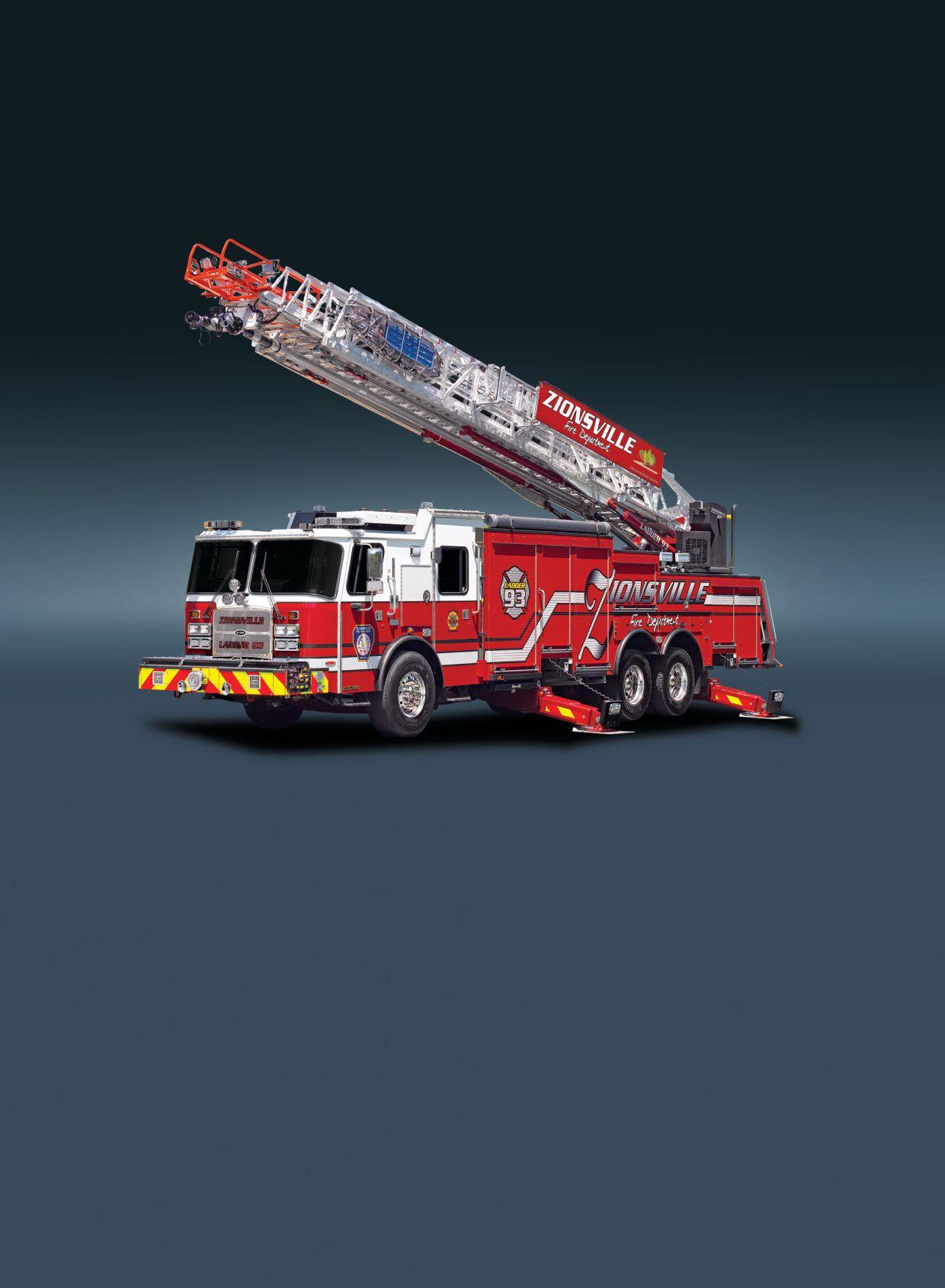
TALLEST LADDER IN NORTH
AMERICA
Constructed of welded extruded aluminum, the CR 137 can extend 137’ vertically providing access to over 13 stories. Horizontal reach is an amazing 126’.
2.5 TO 1 STRUCTURAL SAFETY FACTOR
Exceeds NFPA requirements by 25%, contributing to E-ONE’s proven safety record for over 30 years.
STRONGEST CAB IN THE INDUSTRY
Keep your crew safe with the cab that withstands over 5x the static roof load and over twice the frontal impact required by NFPA.
INTEGRAL TORQUE BOX CHASSIS
Manufactured from the ground up. A unique design that combines the chassis frame and aerial torque box to provide a solid foundation.
The tallest aerial ladder in North America, reaching more than 13 stories high, is the E-ONE CR 137. Built to meet your needs, from a severe duty bumper with pre-connect cross lays, flat or split-raised roof, pump or no pump, the CR 137 can be designed to fit your department’s requirements. The integral torque box chassis, a true feat of engineering, gives you a rock-solid foundation to battle the blaze or attack the most challenging rescues. With durability, exceptional performance and extreme reach, the E-ONE CR 137 exceeds all others.
MORE STORAGE SPACE Rescue style compartments on each side and up to 182’ of ground ladder storage with tank and pump.
ADVANCED AERIAL CONTROL SYSTEM
Provides smooth ladder operation. Also available with direct hydraulic controls.
JACK DEPLOYMENT IN UNDER 45 SECONDS
When space is limited, you can rely on the CR 137. The crisscross under-slung outrigger deploys quickly to a tight 13’8” spread.
e-one-aerials.com
FEATURES
10
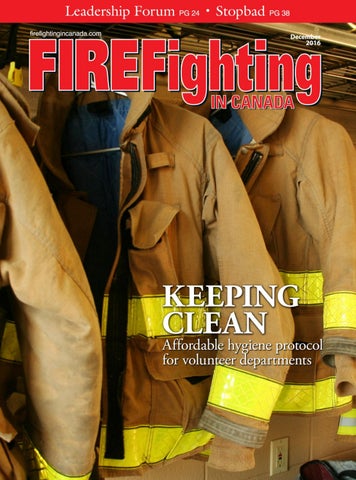
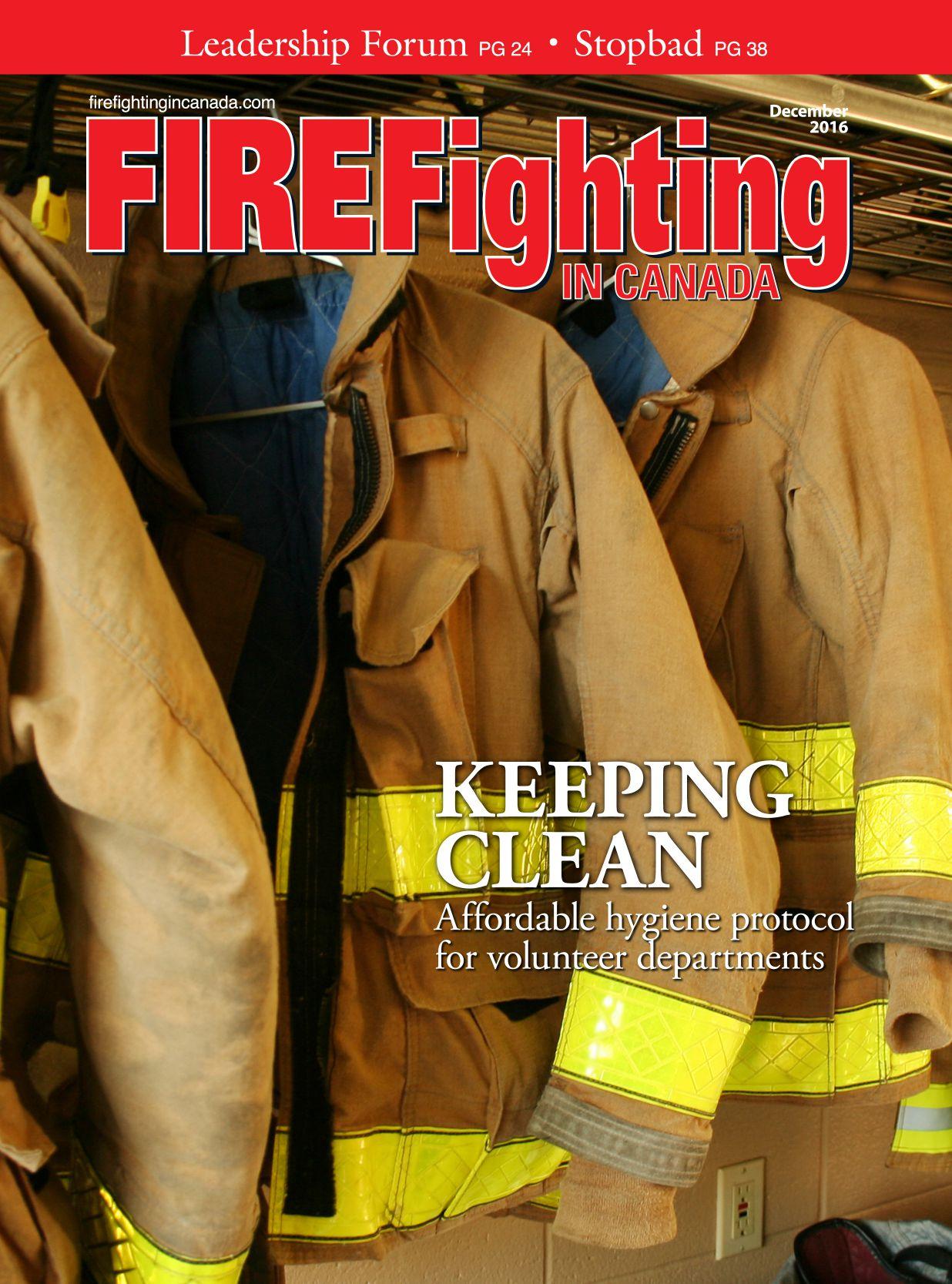
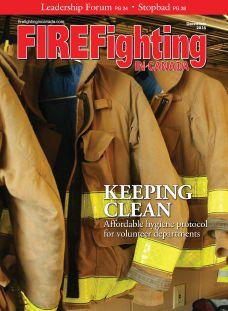
KEEPING CLEAN
Soot on your bunker gear used to be a sign of a diligent and brave firefighter, but as Chief Rob Grimwood writes, the evidence left behind on gear after fighting a fire is often slick with carcinogens. Fortunately, the next generation of firefighters is learning from today’s firefighters safe and effective methods of decontamination as departments implement best practices.
20
CULTURE SHOCK
As fire services move from old ways to new, embracing proven private-sector practices seems to make sense. Firefighter Lydia Wilcox delves into this ideal as she discusses the business-sector practice of on-boarding and how it can help fire departments achieve a paradigm shift among members, while boosting team morale and reflecting the culture, values and goals of a specific organization.
26
FINDING TOMORROW’S FIREFIGHTERS
It’s not enough anymore to just have a strong back, employers are looking for well-rounded individuals who are promising long-term investments. Chief Len Garis and Deputy Chief Larry Thomas explain that the concept of profiling for firefighters is not new, but it is crucial to understanding how screening systems have evolved and if they’re worth the cost.
BY LAURA KING Editor lking@annexweb.com
WIt’s not easy being clean
e’re often challenged here at Fire Fighting in Canada to find suitable photos for our covers. We don’t tend to be on scene with our Nikon digital cameras to take high-resolution photographs of the incidents that end up in our pages as lessons-learned pieces. Cover stories are generally chosen fairly close to deadline (we like to live on the edge!) because they’re often driven by news stories or issues we hear about at conferences, seminars and workshops.
Haldimand County Fire Chief Rob Grimwood talked about his department’s hygiene and decontamination program at the Ontario Association of Fire Chiefs health and safety seminar in September. Grimwood had written for Fire Fighting in Canada before, so, naturally, I approached him about a story.
Sure, municipal departments such as Ottawa, where Division Chief Peter McBride is doggedly driving health and safety, and St. Catharines – Chief Mark Mehlenbacher died of cancer in 2014 – are leaders in hygiene and decontamination procedures.
But as Grimwood writes, any department, with a bit of ingenuity and some basic equipment, can implement a hygiene program that reduces carcinogenic contaminants and keeps them out of the trucks and the fire halls, and away from firefighters’ homes and families.
ON THE COVER
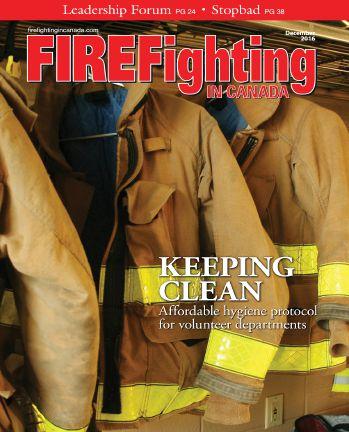
Firefighter hygiene programs can be implemented at reasonable costs. See story page 10.
The photos we received from Grimwood illustrated the story nicely, but they were low resolution – taken with an iPhone – and, therefore, unsuitable for our pages.
No problem, I figured. I tapped some nearby departments that have been longtime supporters (victims?) of our persnickety photography needs, and have, by times, offered up unsuspecting rookies as models for last-minute shoots.
Surprisingly, none of the departments I contacted had yet implemented hygiene and decontamination procedures.
What’s more, I heard from one chief that volunteers are still transporting gear in their own vehicles, and from a contact connected with another department who said firefighters don’t want to risk missing a call while their gear is being cleaned – so they don’t bother to have it laundered.
The fact that some firefighters fear they will miss a call if they relinquish their gear for cleaning is disconcerting; being exposed to carcinogens – and exposing others – for the remote possibility of getting a call for a working fire defies logic and is an issue easily resolved by fire-department management.
We tried to have a photographer friend set up a photo of a firefighter hosing down another firefighter, but the proper procedures weren’t in place in the photo (the firefighter doing the hosing down was not wearing breathing apparatus) – which illustrates the lack of understanding of the issue.
Like wearing seat belts en route to a call and breathing apparatus during overhaul, hygiene and decontamination programs are common-sense yet require standard operating procedures in order to be embraced. Chief Grimwood has done the work and he’s willing to share his program. Take him up on the offer – and send us photos!
Canada – 1 Year - $24.50 (with GST $25.73, with HST/QST $27.69) (GST - #867172652RT0001)
USA – 1 Year $42.95 USD
We acknowledge the [financial] support of the Government of Canada.
Occasionally, Fire Fighting in Canada will mail information on behalf of industry-related groups whose products and services we believe may be of interest to you. If you prefer not to receive this information, please contact our circulation department in any of the four ways listed above.
All advertising is subject to the publisher’s approval. Such approval does not imply any endorsement of the products or services advertised. Publisher reserves the right to refuse advertising that does not meet the standards of the publication. www.firefightingincanada.com
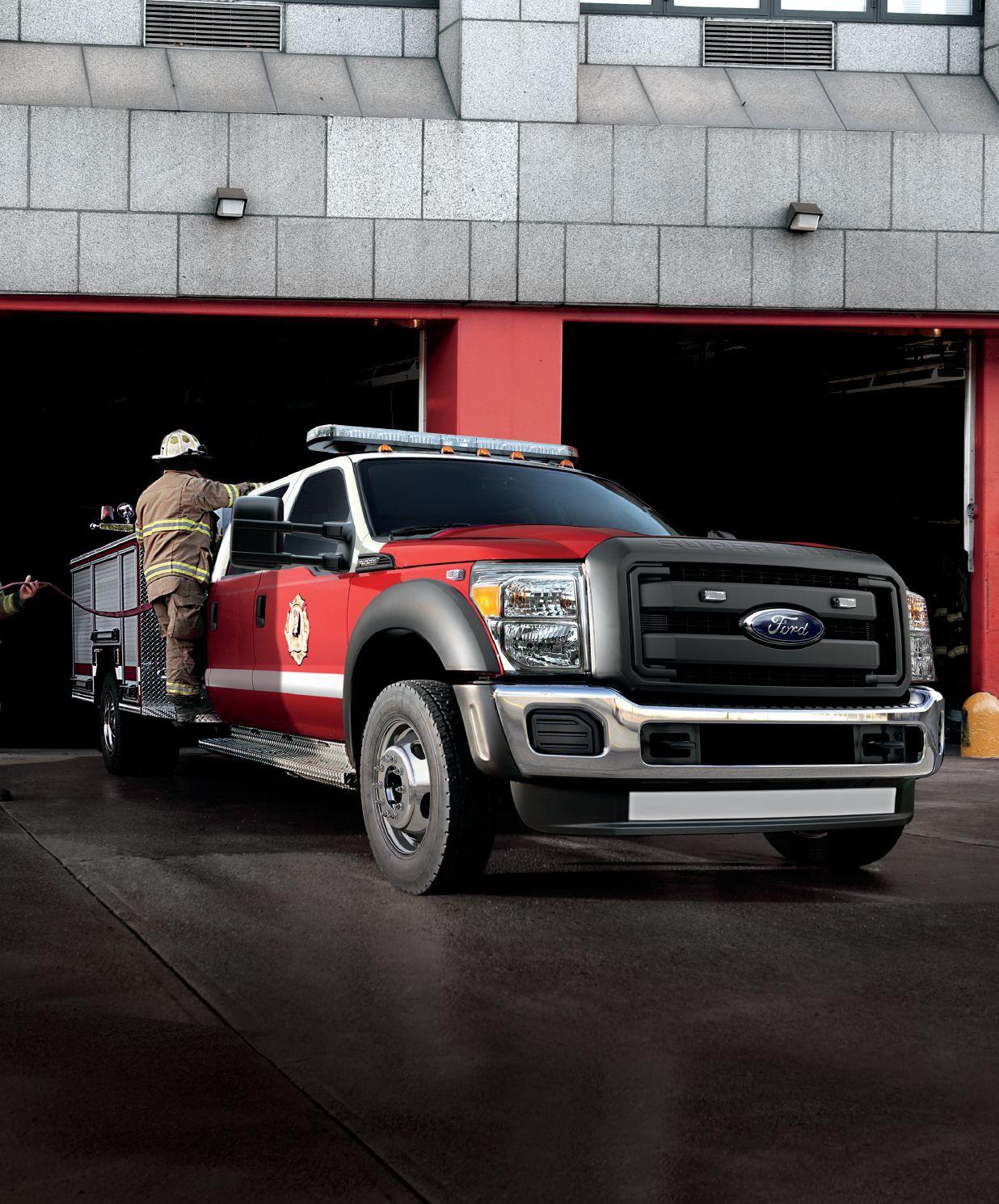
Lives depend on you every day. There’s no room for error and no time to waste. You need the same reliability and accountability from your rescue vehicles, which is why you need the undisputed Ford Class 2 through 7 trucks.
VEHICLES BUILT TO LAST.
A selection of tough and durable vehicles with GVWRs ranging from 6,010 lbs to 37,000 lbs.*
CUSTOMIZATION THAT FITS.
An extensive network of dedicated experts who offer customization to upt your emergency vehicle needs.
EXCELLENT SERVICE, AT YOUR SERVICE.
Hundreds of dealerships that offer after-sales service and repair solutions to save you time and money.
MEET THE TEAM BEHIND YOUR TEAM FORD.CA/BUILTFORBUSINESS
STATIONtoSTATION
ACROSS CANADA: Regional news briefs
Built by firefighters from the ground up
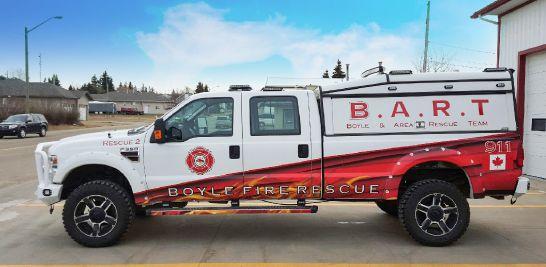
Boyle Fire Rescue, located in Boyle, Alta., has fundraised, designed and constructed a light rescue truck for its department, respectfully referring to it as the Swiss Army Knife of the fleet. The vehicle, which is built upon a used and gutted CN Rail services truck, is responsible for being first on scene in any given emergency call.
“We are a volunteer department, and at times it’s difficult to respond with all units required for different scenes. The end result is you don’t always have a full platoon,” said Robin Mikaelsson, deputy chief at Boyle Fire Rescue. “This truck gives us a single unit that can handle 90 per cent of calls, with a quicker response time.”
Mikaelsson explained that the truck is equipped with the most advanced lighting control system available and has twice the lighting capabilities of the average
vehicle. It can hold 100-gallons of water used by a high-pressure foam pump, which Mikaelsson says “is not unique to all trucks, but unique to one this size.” The truck carries all electrical requirements and has a charging bay for electric tools. Additionally, a sliding wall in the back fits extrication tools with a separate area to house breathing apparatuses. It even has its own areal reconnaissance drone.
The department did not skimp on the quality of the equipment even though funding was limited. Boyle firefighters took it upon themselves to construct a truck with a value of $170,000 with a $35,000 budget. Firefighters spent thousands of hours engineering and constructing the vehicle from the ground up. – Beth McKay
THE BRASS POLE
Promotions & appointments
JOHN DEHOOGE was appointed chief in Halton Hills, Ont., in September.
DeHooge began his career in 1979 as a firefighter with the Town of Oakville. He served five years as chief for the City of Waterloo and five years as
chief for the City of Ottawa, until retiring in 2015.
JOSEPH ZAMBITO has been appointed to deputy chief of operations for the Niagara Falls Fire Department in Ontario. Zambito was the deputy chief for the Niagara on the Lake Fire Department since 2001. He is responsible for managing and co-ordinating the municipal fire suppression and training programs.
The Boyle and Area Rescue Team’s light rescue vehicle is built from a CN Rail services truck purchased for $7,000. After gutting, refurbishing and rewiring the interior, the truck was fitted with a Bluetooth control panel that controls the truck’s lights and sirens.
First responders participate in mental-illness prevention summit
If prevention is the first line of defence for fire, it is similarly crucial in the mental-health sphere.
Which is why firefighters and chief officers from across southwestern Ontario participated Oct. 25 in a PTSD summit to examine prevention
IAN GAVET has been appointed to fire chief for Springwater Fire and Emergency Services in Ontario. Gavet has been a firefighter for more than 16 years, training throughout Canada and the United Kingdom. He has held the position of fire chief for the Northern Rockies in Fort Nelson, B.C., and in Miramichi, N.B.
JOHN FREDERICKS has been appointed chief of Yellowknife’s fire department.
programs and develop best practices to be adopted by municipalities across the province.
The day-long, Ministry of Labour-sponsored summit in Toronto aimed to reverse the cart-before-the-horse process that involves presumptive
Fredericks has been the chief of the fire department in Kirkland Lake, Ont., and was to begin his new position in early December.
Retirements
TRENT ELYEA retires from his position as fire chief in Collingwood, Ont., at the end of 2016.
Chief fire officers recognized for contributions to safety
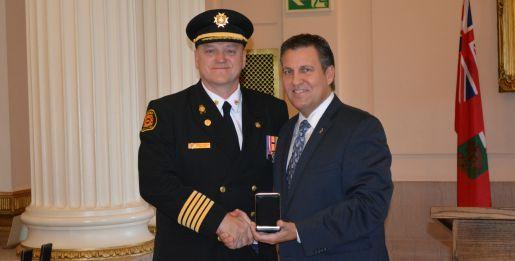
In October, three members of Manitoba’s fire service were awarded the Mary Beth Dolin Meritorious Fire Service Award. This award acknowledges outstanding contribution to enhancing the safety of Manitobans, and applicants must be nominated for the opportunity to win.
“This is so very humbling,” said award winner Andy Thiessen, fire chief of Morden Fire Department. Thiessen is being recognized for spearheading a campaign to raise money for the Manitoba Fallen Firefighter’s Memorial. He developed and helped to sell a fire service challenge coin commemorating the 10th anniversary of the Sept. 11, 2001 terrorist attacks. Additionally, he represented
Cullen, Manitoba’s minister
enterprise and trade
the Pembina Triangle Mutual Aid District as a director on the board of the Manitoba Association of Fire Chiefs and has served as the president of the association.
Thiessen explained that he was in disbelief when he received notice that he had won
and believed it was a mistake.
“I know some guys who have received this award and I thought there’s no way I’m in that company,” he said.
The other recipients of the award are Garth McIntyre, deputy fire chief of GlenboroSouth Cypress Fire Department
and Jack Robertson, captain of Winnipeg Fire Paramedic Service. McIntyre is being recognized as a dedicated teacher of fire services in the province and is an instructor and evaluator for the Manitoba Emergency Services College. He has held the role of training officer and lead instructor for the Turtle Mountain Mutual Aid District as well.
Robertson has been instrumental in program development as a member of the advisory committee of the Manitoba Emergency Services College. He has advocated for, and participated in, the development of a partnership between the Winnipeg Fire Paramedic Service and the Shaughnessy Park School in North Winnipeg.
legislation for first responders who develop mental illness but lacks prevention strategies.
When Ontario adopted the presumptive legislation in the spring, Labour Minister Kevin Flynn directed municipalities to develop prevention programs by April 23, 2017.
Many of the firefighters and chief officers who participated are also instructors for the Road
to Mental Readiness program adopted by the Ontario Association of Fire Chiefs.
Many fire departments across Canada have implemented R2MR or other programs that help firefighters and officers identify indicators for mental illness among colleagues.
Paramedics and police officers also participated in the summit. – Laura King
Elyea began his career as a volunteer in Collingwood, in 1982, and was hired on full time shortly thereafter. In 1996 he joined the Orillia Fire Department as deputy chief before taking over as chief. In 2008 he became chief in Collingwood, where he made some major changes including adding more full-time firefighters, purchasing new equipment and overseeing construction of a $5-million fire hall.
GARTH DYCK has retired as chief in Atikokan, Ont., after 24 years in that role. Dyck was an officer with the Atikokan Township Police before moving to fire in January 1992. Dyck served as the Town’s emergency measures co-ordinator and as chief building official, and has been heavily involved in regional initiatives, such as the annual FireCon training weekend and Rainy River District mutual-aid.
HARRY FLAGG has retired as chief of the Wainfleet Fire Department in Ontario. Flagg had been chief since 2012.
Last alarm
TERRY BOYKO began his career as a Toronto firefighter in 1975, and quikcly rose through the ranks, holding the positions of training officer,
captain, district chief and platoon leader. He retired in 2009 after serving 35 years with the Toronto Fire Services, 11 of which were spent as deputy fire chief. Terry was an active member on the Ontario Association of Fire Chiefs board of directors and served eight consecutive terms as vice-president. He died in October at the age of 64. Boyko continued to volunteer with the OAFC’s annual conference after his retirement.
Cliff
of growth,
presents Morden Fire Chief Andy Thiessen with the Mary Beth Dolin Meritorious Fire Service Award.
PHOTO BY CRAIG KNIGHT
STATIONtoSTATION
BRIGADE NEWS: From departments across Canada
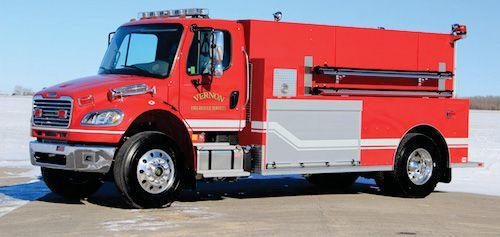
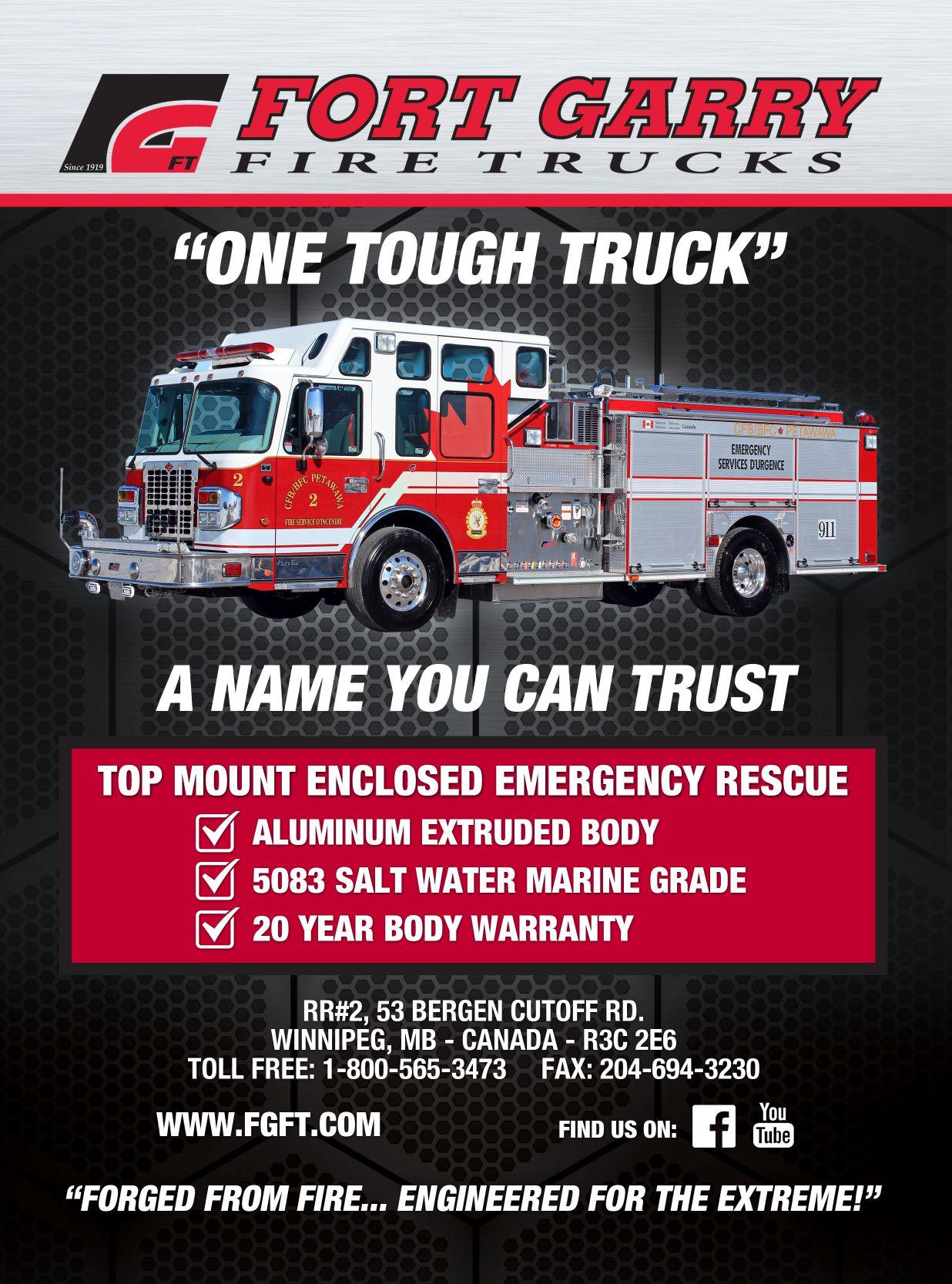
The City of Vernon/Vernon Fire Rescue in British Columbia, took delivery in March of a Fort Garry Fire Trucks tanker. This unit is built on a Freightliner M2-106 chassis and powered by a 330-hp Cummins ISL engine and an Allison EVS 3000 transmission. It features a Hankle MBP 600 IG/750 USG pump, and is an aluminum crusader tanker with on spot chain set, rear suction, Whelen emergency light package and a Husky porta tank.
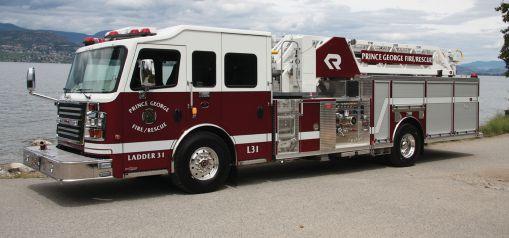
Prince George Fire Rescue in British Columbia took delivery of a Rosenbauer 75-foot mid-mount aerial quint. The unit is built on a Rosenbauer Commander 4000 four-door custom chassis and powered by a 450-hp Cummins ISL engine and Allison EVS-4000 transmission, this unit features a Hale 8FG 1500 IGPM pump and an 11-inch raised roof. It has a FoamPro 2001 foam system and a 500 Imperial gallon water tank, and cab and body collision protection.
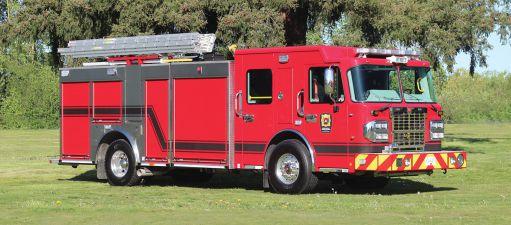
The Justice Institute of British Columbia took delivery of a Smeal custom side mount pumper. The unit is built on a Spartan Metro Star chassis and powered by a 450-hp Cummins ISL engine and an Allison 3000 transmission. This truck features a waterous CSU 2250 GPM single stage pump, and carries 500 gallons of water on board. It has an Elkhart Cobra EXM electric monitor with remote and Elkhart X-Stream 1250 GPM nozzle.
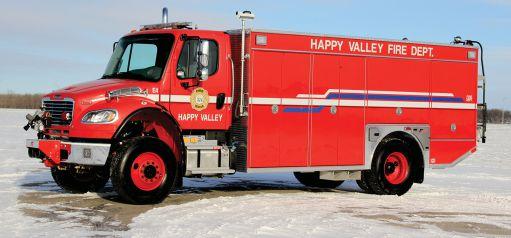
Saddle Hills County in Alberta, took delivery in February of a Fort Garry Fire Trucks terminator. This unit is built on a Freightliner M2-106 chassis and is powered by a 350-hp Cummins ISL engine and an Allison EVS 3000 transmission. It features a 1,250 Darley PSR pump, a Foam Pro 2002 foam system, a Foam Pro Power Fill, and special SCBA storage.
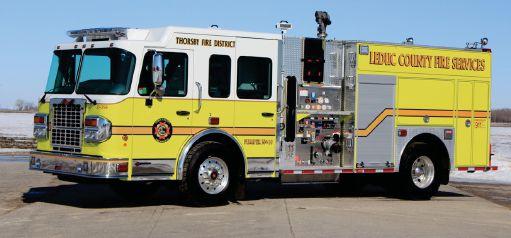
Leduc County in Alberta, under Fire Chief Darrell Fleming, took delivery in March of a Fort Garry Trucks pumper. The unit is built on a Spartan Metro Star chassis and powered by a 380-hp Cummins ISL and an Allison EVS 3000 transmission. It features a Darley PSP 1250 USG pump, an Elkhart Cobra EXM Monitor, a Federal Signal Emergency light package and side and rear control panels.
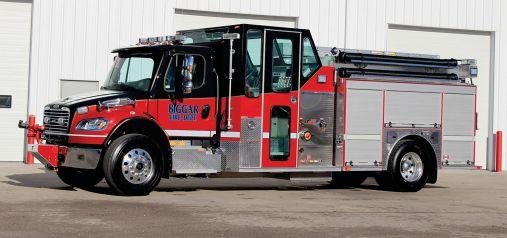
Biggar Rural District Fire Association in Saskatchewan, under Fire Chief Gerry Besse, took delivery of a Fort Garry Trucks pumper in October. The unit is built on a Freightliner M2 – 106 chassis and powered by a 350-hp Cummins ISL engine and an Allison EVS 3000 transmission. It features a 1250 Darley PSP pump, a 1000 I.G. ProPoly water tank, and a Waterous Advantus 3E class A/pick up tube for Class B Foam type.
PRINCE GEORGE FIRE RESCUE
CITY OF VERNON/VERNON FIRE RESCUE
THE JUSTICE INSTITUTE OF BRITISH COLUMBIA
SADDLE HILLS COUNTY
LEDUC COUNTY FIRE RESCUE
BIGGAR RURAL DISTRICT FIRE ASSOCIATION
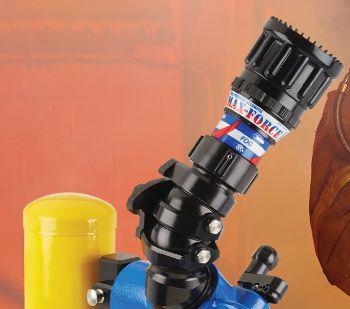
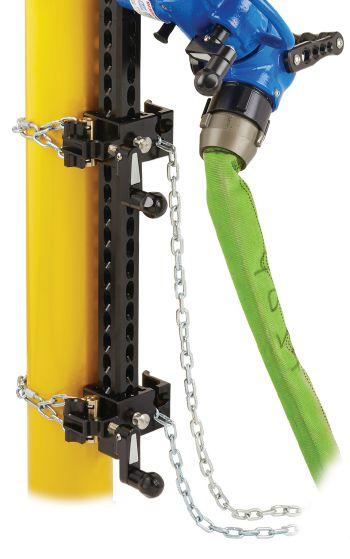
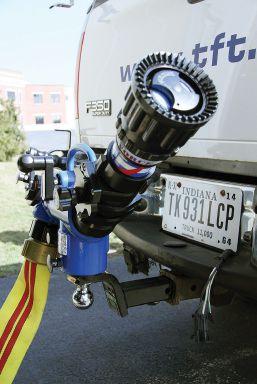
The Hemisphere is a versatile, lightweight, and quick to deploy portable monitor that gives the user the ability to quickly establish water flow in locations that ground monitors cannot.
Since the Hemisphere doesn’t rely on gravity for stability, it can be pointed horizontal and down, in addition to up.
The rotating, swiveling waterway, allows the stream to be pointed in virtually any direction, within a hemispherical range without interrupting water flow
To learn more about how you can provide maximum performance and safety to limited staff during initial attack operations, contact your local TFT dealer today.
KEEPING KEEPING
KEEPING CLEAN KEEPING CLEAN
Affordable hygiene protocol for volunteer departments
By ROB GRIMWOOD
LEFT Research has shown that soot from fires contains carcinogenic particles that can penetrate bunker gear and must be properly removed.
ABOVE The Haldimand County Fire Department in Ontario has implemented affordable procedures that involve simple steps to ensure that toxic elements are left at the scene of the fire.
For many years, firefighters took pride in the soot that covered their bunker gear, helmets and gloves; it was a sign that they had been to a good job, and evidence that they had been on the front lines of fire attack. As fire prevention efforts paid off and the number of structure fires decreased, fewer firefighters engaged in fire attack; when they did, they were sure to leave all the evidence in place.
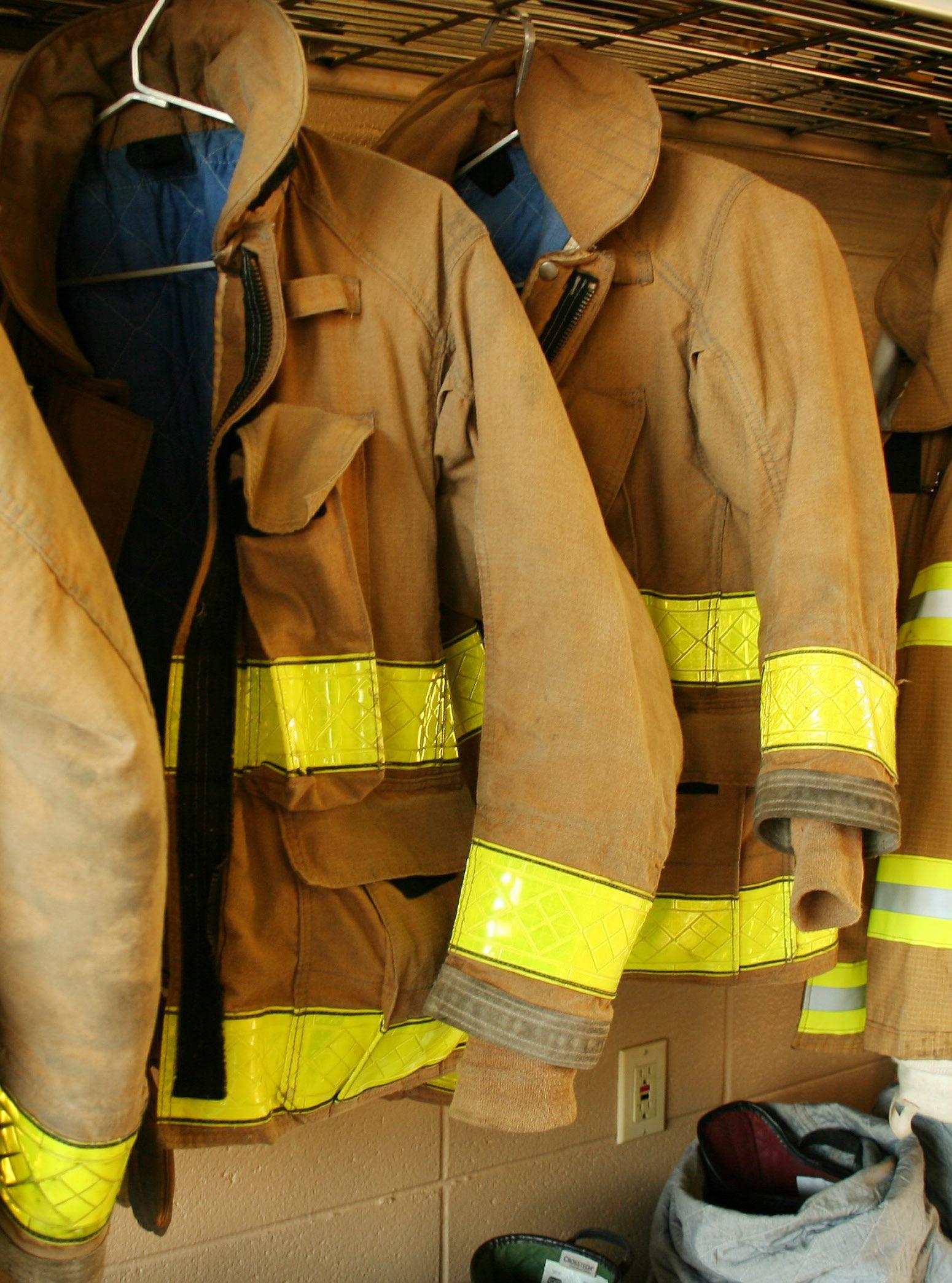
What firefighters didn’t know (or knew and looked the other way) was that the evidence of fire was full of carcinogens; of course, we didn’t think of it that way because no right-minded individuals would knowingly expose themselves to such contamination. Having learned about that soot and the associated health risks, the Haldimand County Fire Department in Ontario developed basic but effective methods to decontaminate – rinse off as quickly and safely as possible, wash bunker gear and personal protective equipment, wash the clothing underneath, and shower right away.
Fortunately, the next generation of firefighters – thanks to the work being done by current firefighters – will adopt these practices and benefit from improved health as a result. For those firefighters who rarely wash their gear and go home smelling like a fire, there is still opportunity to make changes and protect themselves.
Many Canadian fire departments are developing procedures related to firefighter decontamination and hygiene to improve firefighter health and safety. While some departments have adopted elaborate programs, smaller departments, whether staffed by volunteers, career firefighters, or both, can create simple guidelines that will pay immediate dividends.
The Haldimand County Fire Department covers 1,300 square kilometres and serves a population of about 45,000 through 11 stations, with 280 volunteer firefighters. We set out earlier this year to develop a decontamination and hygiene program which, while comprehensive, was also functional for a municipality that utilizes only volunteer firefighters. Buying a second set of gear for each firefighter was not an option, financially, so thorough decontamination procedures for the incident scene and the fire hall were developed and instituted.
A department that wants to develop a program should start where we did – by engaging other departments to find out what they are doing. We first consulted with the St. Catharine’s Fire Department, a career operation that instituted a comprehensive program earlier this year that includes second sets of bunker gear and built-in compartments on its new trucks for transporting contaminated gear. The Niagara Falls Fire Department and the Grimsby Fire Department were also consulted. There are many programs in place and they vary in cost and scope; find out what departments that are similar in size and structure to yours are doing.
The next step, once that research is complete, is to engage frontline staff. In Haldimand County, we engaged our health-and-safety committee members, who formed a small working group to provide
feedback. Committee members possess specific knowledge and training that makes their feedback valuable.
We also engaged the officers (who would co-ordinate the program) and the training officers (who would train the firefighters on the procedures). These two groups provided valuable input into the functionality of the program.
With this input, the decontamination and hygiene program focused on the four key components;
• rinse off as quickly and safely as possible;
• wash the bunker gear and personal protective equipment;
• wash the clothing that was underneath it;
• shower right away.
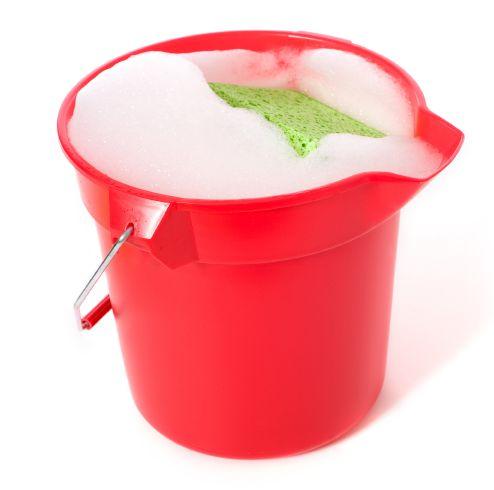
To rinse off as quickly and safely as possible, we developed on-scene decontamination procedures. The key to these procedures is to leave as much of the contamination at the scene as possible and minimize the contaminants that will enter the apparatus and station. To accomplish this, each pumper truck is equipped with a 65-millimetre-hose-to-double-garden-hose adaptor, a garden hose, and a garden-hose nozzle. Each heavy rescue truck is equipped with a decontamination kit containing buckets, soap, long-handled scrub brushes, gear bags for contaminated bunker gear, sanitary wipes, hand sanitizer, and personal protective equipment to be worn while completing the on-scene procedures.
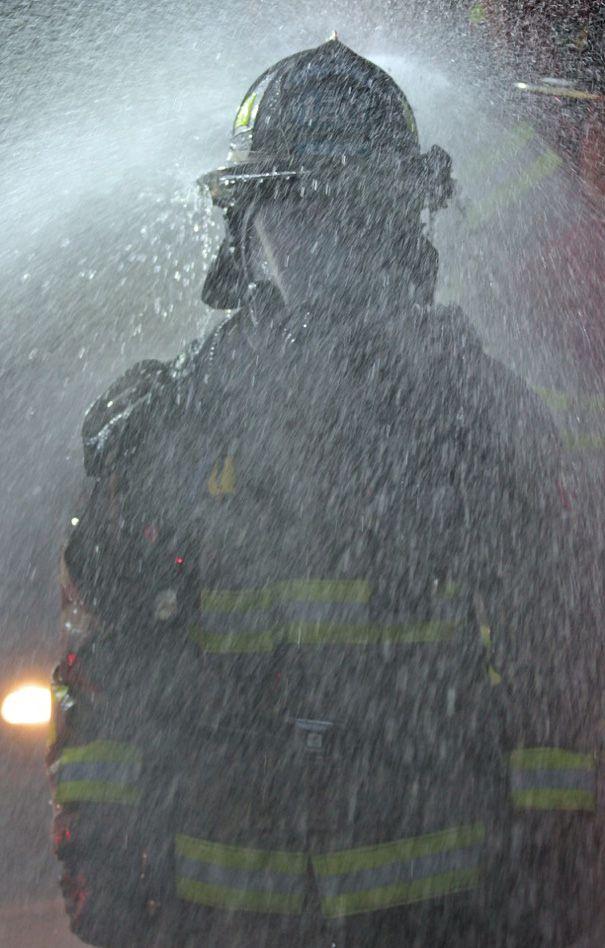
The on-scene procedures, while taking some time and effort, are not complicated and are very effective. A decontamination area is established in a safe location and the decontamination equipment set up. Once a firefighter is finished at the fire, he or she is rinsed off by another firefighter using the garden hose, scrubbed with soap and water, and rinsed off again. This simple procedure eliminates most of the visible contamination. The process is conducted by other firefighters who are wearing proper PPE (mask, gloves, bunker gear), so even though it is being done quickly, it is also being done safely.
Once the gross decontamination is complete, the firefighter begins to doff his or her SCBA, helmet, balaclava and gloves. Once the gloves have been doffed, the firefighter uses hand sanitizer to clean his or her hands, then dons nitrile gloves and uses sanitary wipes to wipe down the face and neck. The firefighter dons an N95 mask and safety glasses and removes the rest of the PPE and bunker gear, which is placed directly into a gear bag for contaminated bunker gear, and sealed.
On-scene decontamination procedures involve rinsing off then scrubbing with soap and water, packing gear in apparatus compartments, and washing and drying gear at the fire hall. Firefighters are given spare bunker gear or coveralls to wear on calls when theirs is being cleaned.
The firefighter(s) performing the on-scene decontamination then decontaminate SCBAs and any other equipment that is identified by officers as being contaminated. While this type of cleaning is usually done at the station, completing it on scene leaves most of the contamination there rather than exposing firefighters further while returning it to the station.
The contaminated bunker gear and PPE,
and any other contaminated equipment, is all transported back to the station in an apparatus compartment so as to not further expose firefighters in the cab to contaminants. If a firefighter requires clothing to return to the station after the bunker gear has been bagged, disposable coveralls with boots are available in the decontamination kits.
If firefighters are called out while returning to the station, the apparatus will stop
PHOTO BY ROB EVANS
and the firefighters will don their bunker gear. While not completely cleaned, the gear has undergone an extensive gross decontamination.
If the call does not require bunker gear, firefighters can wear Nomex coveralls if appropriate and in accordance with standard oper ating guidelines.
While the on-scene decontamination procedures are the most extensive and the biggest change for our department, they have had arguably the most positive impact, as the majority of the visible con tamination is left at the scene.
To wash the bunker gear and personal protective equipment, we developed in-station decontamination and cleaning procedures. These procedures ensure firefighters who are properly equipped with personal protective equipment (gowns, gloves, protective eyewear, and masks) remove contaminated bunker gear from the apparatus, keep it sealed until it is in a designated cleaning area, and then wash it in bunker-gear washing machines. Our procedures contain specific instructions for safely and properly washing bunker gear and other PPE.
To support this initiative, the municipality provided funding to increase the number of bunker-gear washing machines and is purchas ing forced-air gear dryers to reduce the amount of time the bunker gear is out of service.
While the bunker gear is out of service for cleaning, firefighters who are called out may use bunker gear from a pool of spares, or use coveralls and respond in a support role (in accordance with standard operating guidelines).
Initially, we looked at outfitting each firefighter with a complete
TRAINER’SCORNER Training to engage
By ED BROUWER
Look back on 2016 and ask yourself if your training program engaged your members. One of your priorities is to get your department members to actively engage which is easy to say, and much harder to put into play, especially week after week. Let’s also be honest: some of the topics we address annually are as boring as dry toast.
Over the past 15 years, Trainer’s Corner has had several mantras. I believe our latest one, experience is a great teacher, is the key to keeping firefighters engaged on practice night. Wouldn’t it be incredible if each and every practice night was a learning experience?
The following outline is of a training scavenger hunt. It has all the elements of a great practice, offering both hands-on challenges and adrenaline-producing competition.
This drill is a fun way to review radio protocols, hose lays, hydrant lays, liquefied petroleum gas (LPG) safety, hazmat protocol and driver training – but keep this information to yourself until the debrief. Members are not informed of these details beforehand so they’ll analyze the incident and respond accordingly. Firefighters will be told by you, the training officer (TO), acting as the dispatcher, as each of the three objectives comes into play.
Before the practice, type out and print copies of the following three procedures. Give a copy to each incident commander (IC) before he or she leaves the hall. Do not give any more information than this –everything else will come via radio communication.
■ PROCEDURE 1
Stage apparatus safely.
Set pump to idle.
Deploy hydrant lay and hook up to engine.
Take a photo of your crew when this objective is complete. Inform dispatch (TO) of completion and get instructions for the second objective.
■ PROCEDURE 2
Stage apparatus safely.
Set pump to idle.
Deploy one pre connect within a safe distance of objective. Charge line.Take a photo of your crew when this objective is complete. Inform dispatch (TO) of completion and get instructions for the third objective.
■ PROCEDURE 3
Do an arrival report.
Stage apparatus safely. Do a secondary size-up. Report your findings to dispatch. Inform dispatch (TO) of completion and get instructions to return to the hall.
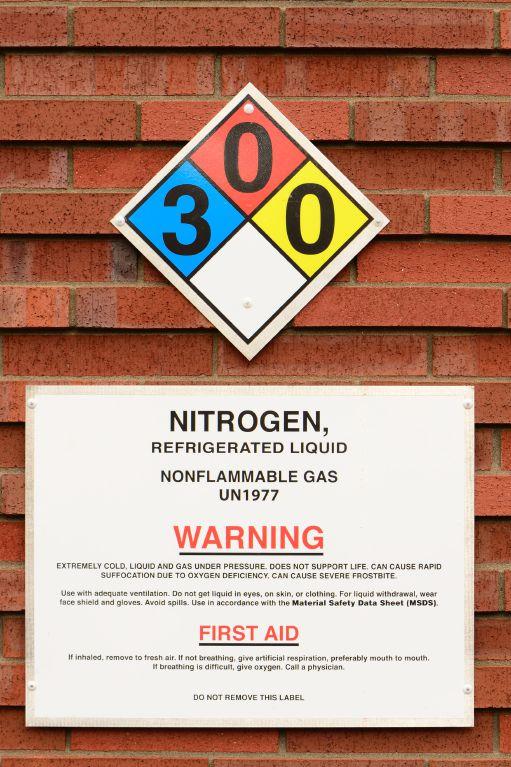
Scenarios involving hazmat placards and a simple 45-gallon drum can help teach firefighters to develop situational awareness and determine, from a safe distance, what is involved.
Choose two staging or starting areas as well, each at opposite ends of your district. We used a school parking lot in the east end for Engine 1 and a restaurant parking lot in the west end for Engine 5.
Starting procedure at the hall: Divide into two units, choose an IC and assign one apparatus to each unit. Inform the two units that they will not be working together (this is a competition) and they will not be called to the same incident location. Firefighters are to follow your department’s radio protocols, with you, the training officer, acting as dispatch.
All firefighters don their gear and board their assigned apparatuses. When a unit is ready to respond, the crew contacts the TO (dispatch). Dispatch will give an address for the designated staging area.
Cut Rescue Time
TRAINER’SCORNER
Note: The TO should have a clipboard and paper on which to mark which unit is going where, the time out, arrival times and other details.
Once on scene, each unit must provide an arrival report (from the cab) to dispatch (the TO) to get further instructions. It is at this point that the responding unit will learn its first objective.
First objective:
• First unit: proceed to the hydrant farthest away from your present location.
• Second unit: proceed to the hydrant farthest away from your present location.
Wait with further instructions until the crew provides an arrival report to dispatch (the TO). Once the arrival report has been received, instruct the crew to complete procedure 1. Each of the ICs should have been given a copy of the three procedures before they left the hall.
Once the crew contacts dispatch (the TO), their task is complete. Have the crew then respond to the second objective.
Second objective:
• First unit: largest capacity LPG tank in your district. Second unit: largest capacity LPG tank in your district (other).
Wait with further instructions until the crew provides an arrival report to dispatch (the TO). Once the arrival report has been received, instruct the crew to complete procedure 2 on the sheet provided to the IC.
Once the crew contacts dispatch (the TO), the task is complete. Have the crew respond to the third and final objective.
Third objective:
• First unit: there have been reports of a strong odor coming from (use an address in your district that is in sight for you from the fire hall).
• Second unit: there have been reports of a strong odor coming from (use an address other than the one above that is in sight for you from the fire hall).
Once crews contact dispatch (the TO), their task is complete. Have crews return to the hall.
Note: I was unable to be in two places at once, so that is why I had the crews take pictures. It is also a good habit to get into on regular call outs. Should a dispute of your actions ever occur, a picture is worth a thousand words, or in some cases, dollars.
However, for this last objective I needed eyes on. So I used two locations within eyesight of the fire halL the public works building kitty corner to our hall, and the city hall building across the street.
I set up an unknown hazmat incident at each location, and used a 45-gallon drum with a hazmat placard (you can make one on your computer). I laid the drum on its side so the placard was somewhat obscured. I then poured water around the drum to make it look like a spill. At the other site, I placed a five-gallon pail with a hazmat placard on it and a cardboard box duct taped to it. I set the drum in the shadows by the front entrance; again, the placard was somewhat obscured and water was used to indicate a spill of some kind. The intent was to have firefighters determine, from a safe distance using spotlights, binoculars and the Canutec Emergency Response Guidebook, what they were dealing with, I hope your crew does better than ours did.
Our firefighters completed the first two objectives flawlessly, but unfortunately the last objective was a crash and burn. Several firefighters in one unit got too close to the unknown spill and were told they were “down”, having been overcome by hazardous fumes. There were some choice words and red faces, but better in practice than real life.
When both units are back in the hall and firefighters have doffed their gear, gather them around for a debrief. Go over the objectives, look at the pictures and open the floor for feedback.
You can customize this training drill to meet your specific training needs or objectives, such as cold-weather pumping, chimney fires or vehicle fires. Have fun and as always train like lives depend on it, because they do.
Ed Brouwer is the chief instructor for Canwest Fire in Osoyoos, B.C., and training officer for Greenwood Fire and Rescue. He is also a fire warden with the B.C. Ministry of Forests, a wildland urban interface fire-suppression instructor/evaluator and an ordained disaster-response chaplain. Ed has written Trainer’s Corner for 15 of his 27 years in the fire service. Contact Ed at ebrouwer@ canwestfire.org
Culture SHOCK Using
For Canadian fire services to effectively transition to a fire-prevention culture from the longstanding suppression mentality, everyone from officers to recruits needs to buy in.
A business-sector best practice called on-boarding can help fire departments achieve a paradigm shift among members and, at the same time, reduce personnel challenges and boost morale throughout an organization – even though the practice is aimed at new hires.
There has been a transition in Canadian fire services to a safety culture from risk-taking: no longer are firefighters willing to give everything when there is nothing to save. Fire fighting is becoming smarter with the adoption of more science-based techniques.
As fire services move from old ways, it makes sense to embrace proven private-sector practices to entrench the idea of safety over risk.
On-boarding engages and informs new hires to help them understand the culture of the workplace. The term is self-explanatory – meaning simply to get new hires on board from the outset rather than the old when-they-have-been-here-long-enoughto-figure-it-out approach. On-boarding familiarizes new hires with the culture and the goals of the organization. A well-developed program that pairs new hires with more senior members who understand and reflect the culture, values and goals of the organization can alter the career of that firefighter.
According to a November 2015 article in the Harvard Business Review called The powerful way on-boarding can encourage authenticity, when new hires are on-boarded, they feel more valued and can be truer to those values, which leads employees to better express themselves and feel comfortable asking questions to ensure clarity about roles, tasks, policies
BY ROB EVANS
private-sector techniques to change the way firefighters think and value their jobs
By LYDIA WILCOX
MAIN/RIGHT Having senior firefighters who are on board with the department’s mission, vision and values, mentor younger firefighters during shifts and in training, can help new hires understand and embrace the workplace culture.
PHOTO
PHOTO BY LAURA KING
and procedures. The article also emphasises that an organization gets more out of employees who are comfortable speaking up – better collaboration, increased information transfer, and a broader spectrum of ideas and knowledge.
John Robertson, an Ottawa-based workplace-change expert, said in an interview that a powerful yet simple change that happens through effective on-boarding is a reduction in the top-level leadership issues.
“When new hires experience the proper culture and operations at the front end of their careers,” Robertson said, “there are fewer performance issues and conflict.”
The recognition of the benefits of good mental health, zero-tolerance policies for safety violations such as failing to wear seatbelts, and increased driver training are all shifts in the direction of safety, but some fire services have been slow to adopt these principles on the fire ground.
In 2004, at a firefighter safety summit in Tampa, the National Fallen Fire Fighters Foundation (NFFF) developed 16 firefighter life-safety initiatives, the first being: Define and advocate the need for a cultural change within the fire service relating to
safety; incorporating leadership, management, supervision, accountability, and personal responsibility (everyonegoeshome. com/16-initiatives/). This initiative is not only putting the responsibility of safety on the leaders and managers, but puts the onus on all fire-service members by stating that it is also a personal responsibility.
A 2007 report by the Fire Service Research and Training Unit at the Anglia Polytechnic University at Cambridge says fire-department recruits are moulded early on by more senior crew members. Most fire-department recruits are put through several weeks or months of rigorous training and are then assigned to their first crews. The attitudes of crew members shape the way new hires view the culture of the department and may well shape the attitude of the recruit for his or her entire career. If crew members display attitudes and behaviours that are not in line with the culture that fire service leaders have established, the recruit may eventually adopt unwanted behaviours, the report says.
An on-boarding program for recruits ensures that the new hires understand the direction of the organization and the
expectations of their roles as public servants, including prevention and education duties. When recruits are paired with more senior firefighters who exemplify the desired values of the organization, the new hires are better able to express their unique perspectives. A 2013 article in Administrative Science Quarterly called Breaking them in or eliciting their best, shows that the “individualized process of on-boarding takes advantage of skills, values, and attitudes the recruit is thought to possess already.” This research concludes that “By encouraging newcomers to consider and express their authentic best selves, organizations can positively affect their job attitudes, performance, and retention.” This helps recruits to feel valued and more engaged; also, by applying their own ideas, recruits are less likely to absorb poor examples that lead to risk-taking behaviour.
A September 2013 report by Surrey Fire Services and the University of Fraser Valley in British Columbia called Reframing situational awareness within the fire service culture notes several contributing factors to the risk-taking culture and identifies how
fire services can move more toward a culture of safety. According to authors Martha Dow, Fire Chief Len Garis, and Deputy Chief Larry Thomas, enhancing situational awareness – which is the perception of the event, comprehending what is happening, and predicting what will happen – is being explored as the most critical factor in maintaining the safety of participants in high-risk, low-frequency events. But as the report states, good situational awareness is often impeded by the fire-service culture. The report highlights hero-orientation and veteran-centric environments as key contributors to a risk-taking culture.
Hero-orientation is the perception by the media and the public that firefighters are risk takers willing to lay down their lives for strangers. Former Phoenix Fire Chief Alan Brunacini points out in a report called National Safety Culture Change Initiative on the Federal Emergency Management Agency website (www.fema.gov) that it doesn’t matter how a person dies in the line of duty, either freelancing or trying to save a life, he or she is given the same hero’s funeral. These types of influences shape fire-service practices, Brunacini says, because today’s firefighters are still hearing the words of Ben Franklin: “fast/close/ wet.” Fast/close/wet is the original motto
of the fire service: get to the fire as fast as possible; risk a lot to get close to the fire; get the fire wet putting water on it.
Garis says on-boarding programs for recruits can change fire services from within and are part of an important strategy. According to a Surrey Fire report, firefighters who identify themselves as heroes can be more likely to become risk takers with potentially serious consequences, whereas firefighters who are socialized as public servants are less likely to do so. On-boarding a recruit with safety messages will go a long way toward a career that is intelligently cautious rather than overly aggressive, Garis says.
A veteran-centric environment exists with a department that equates experience with power: the more time a person has on the job, the more decision-making power he or she has. Reframing situational awareness within the fire service culture notes that when veteran-centric mentality occurs in isolation from other inputs, it eventually undervalues knowledge. Fire fighting is a highly competitive field and
many candidates have post-secondary education, in addition to pre-service diplomas or certificates, plus considerable work and life experience. Firefighters are hired for the skills and knowledge they bring to the job, but when a veteran-centric environment exists in the fire hall, new hires can feel undervalued and forced to fit into a culture that may rely on traditions and outdated technology and techniques. According to academic research, on-boarding recruits during their initial training will compliment a fire administration’s top-down approach to changing the culture. Used in any organization, on-boarding introduces a new hire to the goals, values, assumptions, beliefs and culture of their new workplaces. On-boarding can be used to change the way a fire service functions, embracing a culture of safety rather than risk taking.
Lydia Wilcox is a career firefighter and a member of the board of Fire Service Women of Ontario. Contact her at Lydia.wilcox@ rogers.com
A 2007 report says fire-department recruits are moulded early on by more senior crew members. The attitudes of crew members shape the way new hires view the culture of the department and may well shape the attitude of the recruit for his or her entire career.
PHOTO BY ROB EVANS
BY MATT PEGG Fire chief, Toronto
Preparing for promotion LEADERSHIPFORUM
During my career in the fire service I have heard many hours of debate and discussion about what it takes to be prepared for promotion. In my inaugural column in November I discussed the fact that luck happens when relentless preparation meets opportunity. Now I will delve into the concept of preparation.
The only thing worse than not getting a senior position for which you have applied is getting a senior position for which you are not adequately prepared. In today’s fire services, expectations of officers is very high, and is steadily increasing – and rightly so. The competencies required of today’s fire chiefs more closely resemble that of a corporate CEO than a traditional fire officer.
So, how do we prepare for the duties and expectations associated with today’s fire-service officers? The recipe for preparation is the combination of education, experience and exposure.
The debate about education in the fire service is certainly not new and I don’t believe that there is a one-size-fits-all solution. The importance of being sufficiently academically prepared for the position you seek can’t be overstated. However, contrary to what some may believe, your degree alone will not get you promoted or hired. It is, however, an important ingredient in the preparation recipe. Your formal education provides you with the ability to think critically, with perspective and with foundational knowledge and skills that you will require to succeed. Choose your education carefully and ensure that it helps to prepare you for the career or position that you seek. If you don’t believe that formal post-secondary education is relevant in today’s fire services, consider this: the people with whom you will compete for the position you seek will be well educated. Do you measure up?
has taken incident-management training and a seasoned incident commander – and that difference is experience. I strongly encourage you seek out and seize opportunities to sit on committees, consider taking lateral transfers into different fire-service roles, get involved in your regional, provincial or national association, and be open to assignments and opportunities in roles outside your primary areas of competence. For those who seek deputy chief and fire-chief positions, consider moving laterally into roles that will afford you experiences that you are unable to attain through the positions you are in today. Experience builds perspective and broadens competence, and in the competitive environment of today’s fire services, it is invaluable.
Exposure is an interesting concept and one that is often overlooked by many candidates who enter promotional and recruitment processes. Allow me to use a photography analogy to define exposure: in the days of film, a picture was taken when the film inside the camera was exposed to a controlled and calculated burst of light and colour. Today, images are captured when the camera’s digital sensor is exposed to light and colour. Nothing happens in photography, regardless of the quality of the camera and lens, without exposure.
Likewise, the talents and capabilities of exceptional fire-services
Expose yourself to challenges, opportunities and situations that are outside your core competencies. ‘‘ ’’
Experience is an equally debated issue among fire-service colleagues. Experience is much more than the length of your tenure within an organization; experience is defined by dictionary.com as “the process or fact of personally observing, encountering or undergoing something.” Being prepared for a senior fire-service leadership role includes bringing demonstrated experience to the table. There is a significant difference between a fire officer who studied labour relations in school and one who has been working in that world for some time. Likewise, there is an obvious difference between a promotional candidate who
Matthew Pegg is a deputy fire chief with Toronto Fire Services, having previously served in Georgina, Ajax and Brampton, Ont. Pegg was president of the Ontario Association of Fire Chiefs from 2013 to 2016 and has served on the national advisory council to the Canadian Association of Fire Chiefs. Contact Matt at matthew.pegg@toronto.ca
leaders are never revealed until they are exposed to circumstances and opportunities that allow their expertise and potential to shine. When interviewing potential candidates for senior leadership positions, selection panels commonly assess how well-rounded an interviewee is. Seek opportunities to enhance your exposure to the broader fire service. Expose yourself to challenges that are outside your core competencies. Get involved in provincial and territorial issues. Attend council meetings and learn the processes and terminology of government. Exposure determines the quality of the finished product, and enhancing your overall exposure will help to prepare you to succeed.
Education, experience and exposure are three important factors that I encourage you to consider in your personal fire-service career plans and in your personal development plans. There will be many senior leadership opportunities in the fire services over the next few years.
Are you prepared?
BY
Finding tomorrow’s firefighters
Using research-based testing to choose the best candidates for today and the future
By LEN GARIS and LARRY THOMAS
TOP Departments are looking for well-rounded candidates who not only meet the physical and mental challenges of the job, but are also a good fit in terms of personality and leadership potential.
Hiring firefighters has changed from the days when a strong back and bravery were the most prized values of a new employee.
Today, departments look for well-rounded individuals who not only meet the physical and mental challenges of the job, but are also a good fit in terms of personality and leadership potential.
Facing ever-tighter budgets, departments would also be wise to consider long-term human resources issues that
could be costly in the future – for example, will this recruit be a likely candidate for sick leave abuse or stress leave in 10 years?
“Pretty much everyone has moved beyond the strong-back test, but not as far as you’d think,” said British Columbia corporate psychologist Bjorn Leiren, who specializes in firefighter profiling, in discussions with Surrey Fire Service in British Columbia.
“It used to be that we hired firefighters to meet the needs of today. Now we have to think about hiring for today, and tomorrow.”
PHOTO
LAURA KING
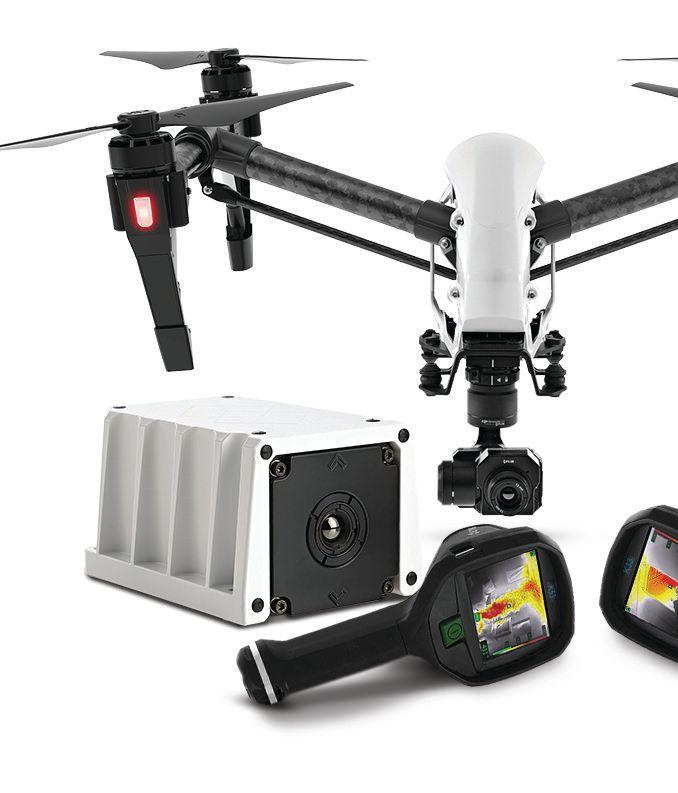
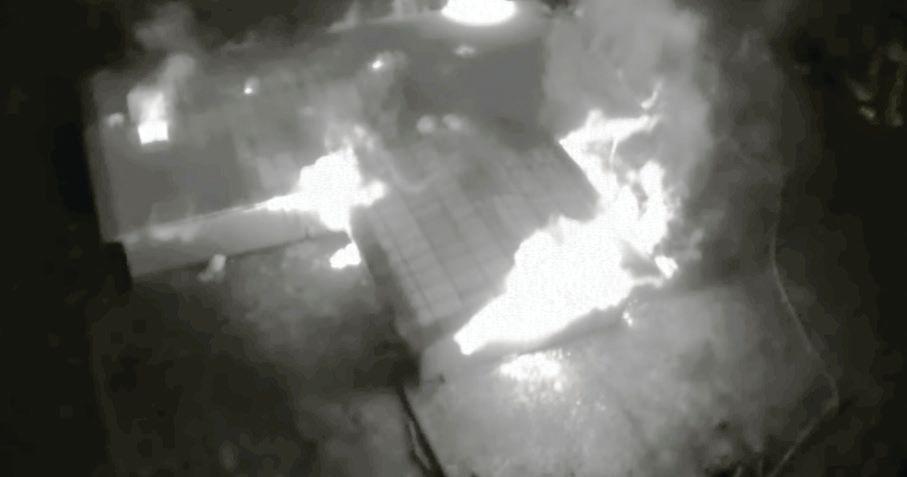
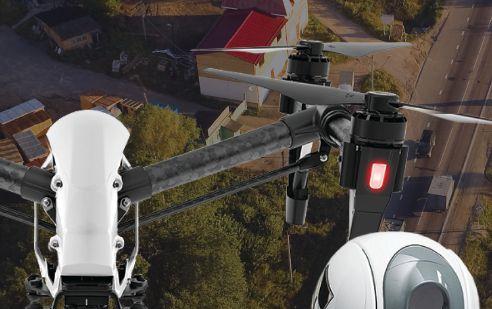
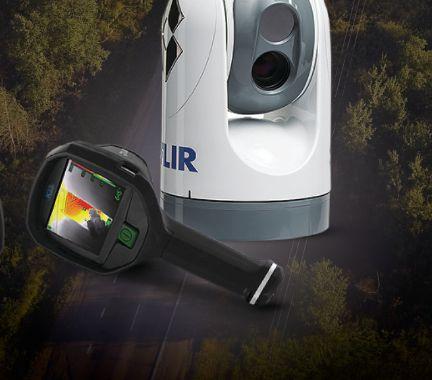
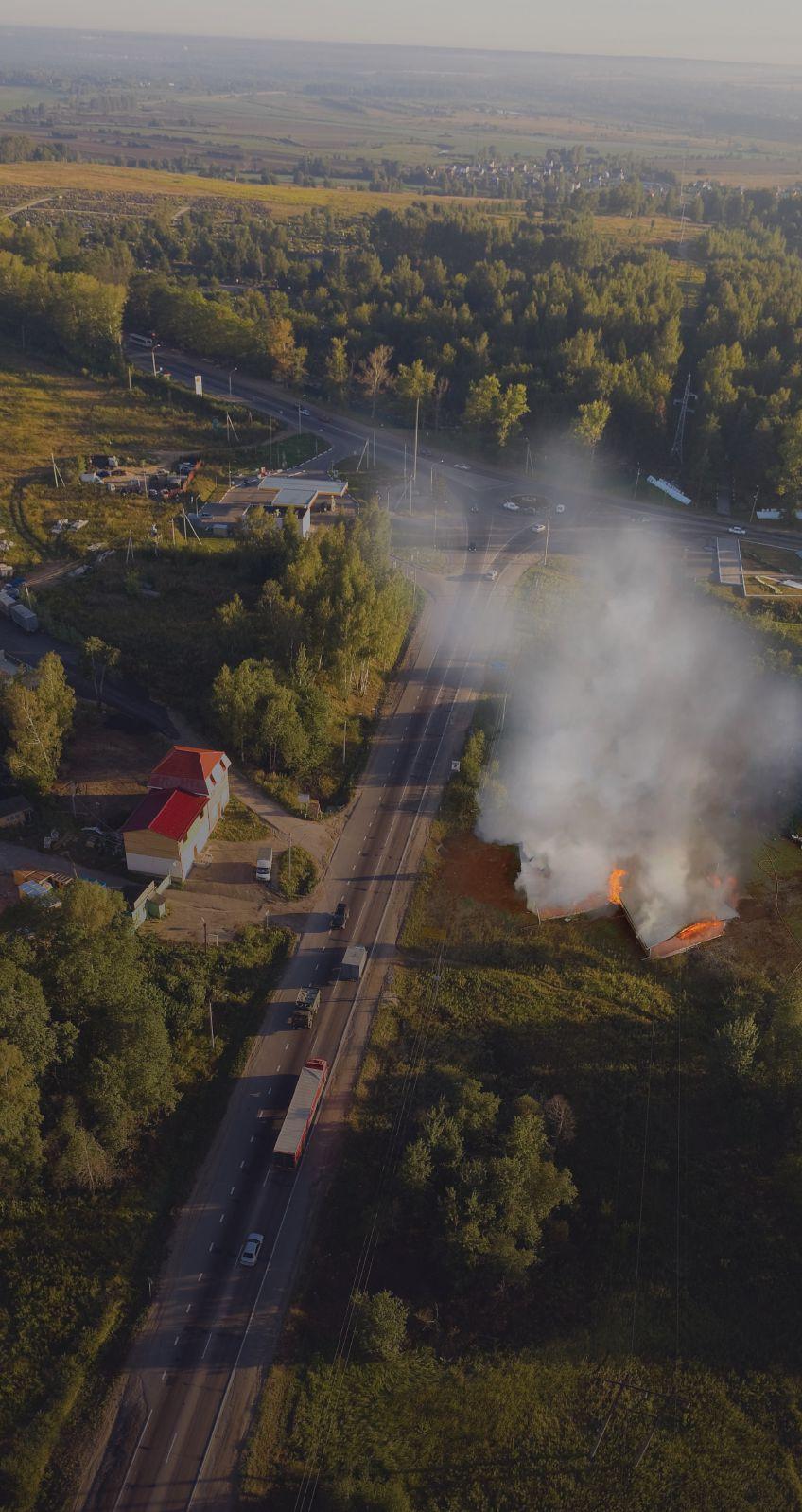
FROM BOOTS ON THE GROUND TO EYE IN THE SKY, WE’VE GOT YOUR BACK.
FLIR’s wide range of TICs can help you identify hot spots from a variety of distances – making safety the top priority. Learn more at FLIR.ca/fire
BUY ANY 4 FLIR K SERIES TICS, GET A FLIR K2 FOR FREE. A $ 1,350 VALUE!
®
FEATURED PRODUCTS:
· FLIR K2 THERMAL IMAGING CAMERA
· FLIR K33 & 53 THERMAL IMAGING CAMERA
· FLIR KF6 AERIAL APPARATUS
FIXED-MOUNTED THERMAL IMAGING CAMERAS
· FLIR M-SERIES PAN-TILT-ZOOM
TICs FOR ARFF, HAZMAT & ALL EMERGENCY VEHICLES
· FLIR AERIAL FIRST RESPONDER KITS
Profiling of firefighters is not new. In a 1976 study for the Office of Personnel Management in Washington D.C., researchers David Bownas and Robert Heckman examined 109 United States fire departments ranging from 25 to 3,000 career members and identified 20 competencies needed to perform typical firefighter duties such as performing rescue operations, forcibly opening structures or enclosures, following standard safety procedures, operating apparatuses, administering emergency care, dealing with the public, and participating in training and education.
The 20 required competencies for these duties included physical characteristics such as strength and co-ordination, cognitive abilities such as verbal communication and logical problem solving, interests such as medicine and construction, and character traits such as courage and teamwork.
Bownas and Heckman were among the first researchers to demonstrate that departments needed to look further than strength and bravery to find ideal firefighter candidates; other researchers have
since built on their work to develop more specialized firefighter profiling systems including Leiren, who developed procedures that enabled departments to weigh candidate scores based on their particular requirements.
North American fire departments
have been using Leiren’s profiling procedures since 1979.
Over the years, Leiren’s firefighter competency profile system has evolved and pushed the boundaries of profiling. Today’s version not only considers indicators for resilience (such as resistance to
External candidate-screening tool adds cost to the hiring process, but can be a worthwhile investment due to reductions in absenteeism and high productivity.
PHOTO BY ROB EVANS
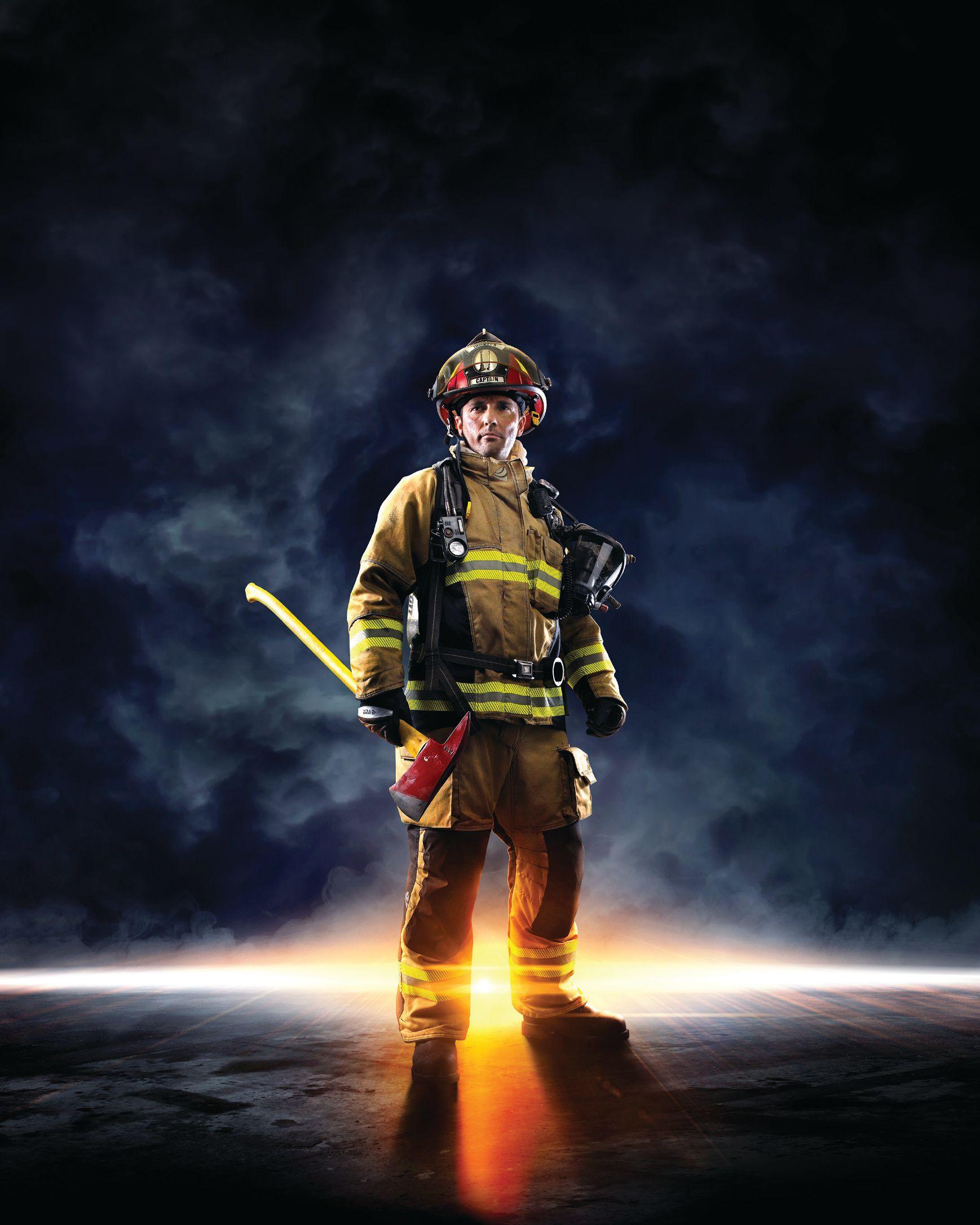
Loaded with safety, comfort and mobility features for unmatched performance, Flame Fighter® bunker gear offers a variety of custom outer shell fabric, liner system, hardware and pocket options to fit your specific needs. This hard-working gear also includes the following game-changing Starfield LION fire protection technology:
• Patented IsoDri®* moisture management reduces the water absorbtion and helps gear dry faster between runs
• Exclusive Ventilated Trim allows vapor to be released, reducing the risk of scald burns
• Thermashield™ provides an additional layer of liner material in the upper back and shoulders to protect against compression burns
• Move-N-Hance™ crotch gusset increases mobility by reducing bunching, twisting and pulling
• Flex Knee™ for easy, natural movement
• Stay Rite™ sleeve wells integrate the sleeve’s liner into a full-length wristlet so that when you reach, the entire sleeve moves with you
For more information about Flame Fighter bunker gear, contact your Starfield LION sales representative at 1.800.473.5553 or visit us online.
anxiety and stress) and socialization (such as counter-productive work behaviors), but also ranks candidates within a certain hiring pool from best to worst. Typically, profiling systems produce an overall rating for a candidate, but do not directly compare one candidate to another.
“Most times the comparison is to a minimum standard, or to the general population,” Leiren said. “They’re brave compared to the average person. That’s interesting, but how do they compare to other firefighters? We want the one who is brave, but not cocky.”
A career department whose firefighters sleep and eat together will place a high value on cleanliness and tidiness.’’ ‘‘
Leiren’s system compares not only the candidates within a certain competition, but also within a database of more than 5,000 firefighters who were previously ranked using the tool.
Each candidate’s ranking also reflects the departments’ unique needs now and in the future, based on their geography, demographics, density of development and other factors. For example, a retirement community may be interested in candidates with a medical background, while a city with numerous high-rises may want candidates who can perform high-angle rescues. A career department whose firefighters sleep and eat together will place a high value on cleanliness and tidiness. The system allows for unique profile characteristics that meet each department’s needs.
Knowing how candidates perform against others in the same competition, and other firefighters in general, helps take the guesswork out of the hiring process. Rather than a pass/fail or a generic ranking, departments that use Leiren’s system can clearly see how each candidate measures against the next, so they can choose the best of the best based on their specific needs.
■ CANDIDATE PERSONALITIES
While many departments engage in some kind of candidate profiling based on Bownas and Heckman’s early work, some still end up hiring candidates who rank high during their screening but later turn out to be problem employees; the system is not picking up on personality traits that could be indicators of future problems.
Screening for stress indicators has become common, but Leiren noted that valuable information can be obtained by looking more closely at what is happening and why. If the right questions are asked, patterns can be teased out of a candidate’s results. For example, if a candidate ranks high on emotional stability but low on self-esteem, it suggests he or she may start to experience stress-related issues over a period of time (e.g. 10 years) and so should be red flagged.
With on-the-job stress now recognized as a compensable work result in several provinces, many departments are starting to look for ways to reduce their future liability risks.
“Originally stress-resistance was just one of the general competencies, but departments were asking for more clarity around
stress resistance,” Leiren said. “It’s part of the model that we’ve expanded because of a perceived need.”
Another emerging area of study is the dark side of candidates, Leiren said – indicators that a candidate is more likely to engage in counter-productive work behaviours at some point in their careers, such as theft, drug-or-alcohol abuse, dishonesty, disruptiveness, failing to meet standards, absenteeism, tardiness and withholding effort.
Delving into this dark side may also detect traits which, when taken to the extreme, could result in problems later, such as perfectionism; usually this kind of screening takes place during the latter stages of the profiling process.
Based on psychological research, these kinds of measures can provide departments with a realistic picture of what kind of employee a candidate may be after a decade on the job. However, Leiren pointed out that personality screening is an inexact science and there are no guarantees a person will behave as expected in the future.
■ WORTH THE COST?
Using an external candidate-screening tool adds cost to the hiring process, but could also be considered a long-term investment. For example, Surrey Fire Services’ attendance records show firefighters selected through Leiren’s profiling tool are significantly more productive than those selected without the system, to the tune of about $7,000 per person per year (based on increased performance and reduced absenteeism).
Evaluations of the tool’s results against supervisors’ ratings of candidate job performance indicate a predictive validity of r = 0.5; in other words, the tool has about the same likelihood of success as the likelihood that people will weigh more as their height increases. No legal challenges have been launched since the tool was introduced in 1979, and the tool also satisfies Canadian Charter of Rights and Freedoms discrimination requirements; no statistically significant difference has been identified between the final scores of men compared to women, or of visible minorities compared to others.
The City of Surrey, B.C., which has been using Leiren’s profiling tool since 2000, estimates it saved the equivalent of 10 firefighter jobs in the first decade because of increased productivity and reduced absenteeism.
Many candidate-profiling options exist and results will vary. However, all departments seeking to lower costs without reducing staff should take a closer look at how they are selecting the firefighters who will be serving their communities in the years to come.
Len Garis is the fire chief for the City of Surrey, B.C., an adjunct professor in the School of Criminology and Criminal Justice and associate to the Center for Social Research at the University of the Fraser Valley, a member of the affiliated research faculty at John Jay College of Criminal Justice, New York, and a faculty member of the Institute of Canadian Urban Research Studies, Simon Fraser University. Contact him at LWGaris@surrey.ca
Larry Thomas is a deputy fire chief for the City of Surrey, B.C.; he is responsible for operations, training and human resources, and has 26 years of experience. Thomas has a background in science from Simon Fraser University and economics from Douglas College. Contact him at LSThomas@surrey.ca
your cleaning, decontamination, inspection, testing, repair and record keeping of your firefighter’s protective clothing... we have you covered!
24/7 access to Firetrack®, the online data base that provides you with complete details of your C&M Program with FSM. We do the work for you!
BY TOM DESORCY Fire chief, Hope, B.C.
BVOLUNTEERVISION
Managing the brand for the future
eing the chief officer in a fire department comes with its own set of challenges and rewards, which are not exactly equal in proportion. Yet when the rewards come, they often outweigh the challenges tenfold.
Meeting as many fire fighters as I do in my travels, I continue to learn that no matter the size, how many paid members or how many calls are done each year, every department has the same challenges. I was reminded of one of those challenges this summer and that’s the matter of brand management.
A fire department is like a business. We treat those we deal with as customers, although our customers don’t have much choice as consumers. We wear crests on our sleeves or t-shirts and for many, that is who we are. A brand however, is not your logo. A brand is your personality, your identity, and, in our world, the brand is firefighter. What you do represents not only your department but each and every one of us who answers the call.
The key to this discussion is how we carry ourselves both on and off duty -- is there such a thing as off duty in our world? It’s hard to believe but yes there is, and it’s these off-duty times when chiefs tend to worry. We have to be wary of how firefighters carry themselves in public because in a small community, everyone knows who the members are.
It can be a tough pill to swallow and every person I’ve brought into the department gets the same warning. I say to them, “Your life is about to change, not only will you eat, sleep and breathe fire, you will become recognized as one of us wherever you go in our community.” I also emphasize that by “us” I mean the fire service. From here on in, “you represent them, you represent me.” If that’s not pressure, I don’t know what is.
young child who enters the world, a new breed of hero worshiper is born. Kids love fire trucks and firefighters. We’re written up in books and seen on TV, not entirely with the greatest amount of accuracy, but it’s something about which we need to be reminded – so let’s not blow it by damaging our brand.
Do we have to remind our members how to behave in public, and, more specifically, on-line and on social media? I think we do. Social media is no longer new but too many people fail to associate their on-line presence with that of their public image; it’s for this reason I believe new members need reminding that what they say, what they “share” or what they “like” reflects not only on them, but also on the fire department.
The next generation of firefighters may or may not share our current ideals. When you were growing up, what was your impression of a firefighter? Now ask yourself, has that image changed? As a firefighter today, have you lived up to that preconceived notion and, are we projecting that image to the next generation? Consider as well the fact that
‘‘ ’’
We have to be wary of how firefighters carry themselves in the public eye because in a small community, everyone knows who the members are.
As I said earlier, we don’t have competition and we are not selling anything, but any inappropriate public act has the potential to thrust this organization into a bad light that will overshadow the good work we do and the services we provide. Every firefighter is in a position of trust, and that carries a huge amount of responsibility.
The fire service has been on a good run as it were, and with each
Tom DeSorcy became the first paid firefighter in his hometown of Hope, B.C., when he became fire chief in 2000. Originally a radio broadcaster, Tom’s voice could be heard in the early 1990s across Canada as one of the hosts of Country Coast to Coast. Email Tom at TDeSorcy@hope. ca and follow him on Twitter at @HopeFireDept
as a long-serving member, you are largely responsible for our image today - the way you’ve acted, the way you’ve carried yourself in the community all these years shows in the next generation of firefighters.
Let’s be sure to remind this new generation that as a brand, the fire service is not new. We’ve been well established for years and we owe it to those who came before us to protect the brand. It doesn’t matter what number you have on your helmet or the name on your turnout coat. We work for one company, one business, and one organization.
Branding has come a long way since ranchers first started putting unique marks on their cattle for identification. Today we identify ourselves with pride from a t-shirt, license plate, hat or a coin from our pocket. To everyone I say this: Keep on teaching tradition, keep instilling pride in the organization, and most of all, remind yourself that what we do is who we are. The eyes are upon us more than ever before and our members simply can’t forget this.
BACKtoBASICS
Hitting the standpipe – part 4
BY MARK VAN DER FEYST
We have been exploring the topic of standpipe-equipped buildings and highrise operations. In November, we looked at the equipment needed to conduct standpipe operations, and I mentioned that firefighters can carry only so much, which leads to the next topic: how many firefighters are needed for this type of operation?
As mentioned in part 1 in August, highrise or standpipe-equipped operations are manpower intensive, requiring more work than structure fires in one- or two-storey buildings, because of the need to travel to the fire floor or the floor below it, and also carry equipment (see photo 1).
The number of firefighters required to execute standpipe operations depends on the situation: large metro fire departments such as Toronto Fire Services or Vancouver Fire & Rescue Services deal with standpipe operations differently than smaller departments such as the St. Thomas Fire Department in Ontario or the Grande Prairie Fire Department in Alberta. Departments respond to calls that require standpipe operations based upon how many firefighters are available.
A study conducted by the National Institute of Standards and Technology (NIST) in the Washington D.C. area in 2013, entitled the Report on High-Rise Fireground Field Experiments quantified data based upon three-, four-, five- and six-person crew deployments. The study was based on 48 field experiments using a 13-storey vacant commercial building.
The study, which involved a fire on the tenth floor, determined that the bigger the crew size, the better the outcome in terms of time to complete tasks and exposure to increased fire conditions. Overall time to task completion
• Three-person crews took almost one hour to complete their first response.
• Six-person crews took just under 40 minutes to complete their first response.
• The four-person crew took about 50 minutes, and the five-person crew took about 42 minutes.
Advance attack line – 2 ½-inch (65 millimetre) handline from standpipe to fire location:
• Three-person crew took one minute and 43 seconds longer than a four-person crew;
• Three-person crew took two minutes and 47 seconds longer than a five-person crew;
• Three-person crew took four minutes and 28 seconds longer than a six-person crew.
Advance second line – 2 ½-inch (65mm) handline from standpipe to fire location:
• Three-person crew took four minutes and four seconds longer than a five-person crew;
Photo 1: A highrise building requires intensive manpower as crews have to ascend levels while carrying equipment.
PHOTOS BY MARK VAN DER FEYST
Photo 2: Advancing the attack line can take a three-person crew nearly four and a half minutes longer than a six-person crew.
BACKtoBASICS
• Four-person crew took two minutes and 43 seconds longer than a five-person crew;
• Three-person crew took five minutes and 38 seconds longer than a six-person crew. Fire out, first and second attack line in place:
• There was a two minute and 14 second difference between the three- and four-person crews;
• There was an additional one minute and 15 second difference between the fourand five-person crews;
• The five-person crew extinguished the fire three minutes and 29 seconds faster than the three-person crews;
• There was a seven minute and two second difference between the three and six person crews.
Search and rescue, tenth floor:
• The four-person crew started the search one minute and 23 seconds faster than the three-person crew – and completed it in 11 minutes and 21 seconds faster;
• The five-person crew started the search one minute and four seconds faster than the four-person crew, and two minutes and 27 seconds faster than the three-person crew;
• The five-person team finished the searchand-rescue operation 13 minutes and 34 seconds faster than the four-person crew, and 24 minutes and 55 seconds faster than the three-person crew;
• The six-person crew started the searchand-rescue operation one minute and 19 seconds faster than the five-person crew, and completed it two minutes and 57 seconds faster than the five-person crew;
• The six-person crew started the search three minutes and 46 seconds faster than the three-person crew, and finished 27 minutes and 51 seconds faster than the three-person crew.
Victim No. 1 rescued on the tenth floor:
• The five-person crew located the victim 25 minutes and 19 seconds faster than the three-person crew and 12 minutes and seven seconds faster than the four-person crew;
• The six-person crew located the victim 28 minutes and 33 seconds faster than the three-person crew, 15 minutes and 21 seconds faster than the four-person crew, and three minutes and 14 seconds faster
than the five-person crew;
• The four-person crew rescued the victim 13 minutes and 11 seconds faster than the three-person crew;
• The five-person crew rescued the victim 11 minutes and 39 seconds faster than the four-person crew;
• The six-person crew rescued the victim 14 minutes and 58 seconds faster than the three person crew.
The NIST study shows that six-person crews are more efficient and effective for highrise operations than three-person crews. For the larger, city fire departments, this is not a problem; they can join two responding crews together to form a six-person crew. But can smaller departments do this? Do they have enough responding personnel to form a four-person or a five-person or six-person crew? Or must they operate with three-person crews?
Small departments can use two approaches to ensure the necessary manpower: mutual- or automatic-aid agreements, and an automatic call-back system of off-duty personnel. A combination of these two systems works best: both systems guarantee that firefighters will respond.
Mark van der Feyst has been in the fire service since 1999 and is a full-time firefighter in Ontario. Mark teaches in Canada, the United States and India and is a local-level suppression instructor for the Pennsylvania State Fire Academy and an instructor for the Justice Institute of BC. He is also the lead author of Residential Fire Rescue. Email Mark at Mark@FireStarTraining.com
Photo 3: Conducting a search and rescue in a highrise building will be handled more efficiently by a team of six firefighters.
BY GORD SCHREINER
Fire chief, Comox, B.C.
NSTOPBAD
Doing our part to conserve water
eedless to say, I love training and am always looking for ways to improve our training programs. For several years however, I have been concerned about the amount of drinking water my department uses during our many training sessions. You may be thinking; drinking water? I am not talking about bottled water. I am talking about water coming out of our hydrants. In my community, as in most urban communities, the water we get from our municipal hydrant system is our treated domestic drinking water supply. I will be watching a master stream operate and think to myself, “Wow, that is a lot of drinking water going down the drain.” It costs a lot of money to treat and deliver this water to our homes and businesses, and it seems wrong to let it go to waste.
Not only does my department train aggressively by using a lot of water, but we also operate a fire training centre that uses a significant amount of water. I figured we should do our part to conserve our water; doing so would also save money.
My team and I put our heads together to come up with a practical solution; recycle the domestic water we use for training. In addition, we decided to capture rain water for use in our training centre. It is expected that we will save more than one million litres of drinking water per year with these methods in place. The modest project was funded by the Town of Comox and the Comox Firefighters Association, and we also received some material donations.
The system itself is very simple. We capture the run-off in our training centre and store the water in an underground 20,000 storage tank (approximately 30-feet by 10-feet by 10-feet). When needed, we pump (using a small gas-powered pump) the screened water at up to 130 pounds per square inch, directly back into fire hoses used for firefighter training or directly into a fire engine (at lower pressure). The water is constantly reused, though we lose some to evaporation, and some gets sprayed outside the training area. However by capturing rainwater from the hard surfaces in our training centre, and from a couple of the roofs of training buildings, we have more than enough to keep our tank full. Any surplus water goes back into the traditional storm drain system.
have not elimated the use of hydrants altogether in our training centre, as of course, using hydrants is a vital training component, but we have significantly minimized the water we use from them. Many times we will hit the hydrant and then convert to our recycled water system. One of many benefits to this system is that during water restriction periods (typically summer months) we do not have to dial down our training as we are simply reusing the water. We also use the stored water for washing down the training area after its use. Another benefit is that we no longer use a full-size engine to supply our fire hose during day-long live fire programs, reducing wear and tear on the engines and not tying up an engine for a full day. Furthermore, if for some reason our municipal water system is not working, we know we have a large water supply to re-fill our trucks.
Today’s successful fire departments need to constantly think outside the box and look for ways to improve their services without increasing operating costs.
Fire departments, like everyone else must do their parts to reduce, reuse and recycle. You can see more about our recycling efforts on our department website,
“I truly believe that the fire service has an obligation to do our part in reducing our impact on the environment. ‘‘ ’’
We also use this system to re-fill our fire engines when they return empty from incidents, again reducing our use of drinking water. We
Gord Schreiner joined the fire service in 1975 and is a full-time fire chief in Comox, B.C., where he also manages the Comox Fire Training Centre. Contact him at firehall@comox.ca and follow him on Twitter at @comoxfire
I truly believe that we, the fire service, have an obligation to do our part in reducing our environmental impact. In fact, I believe we should play a leadership role in our communities in this area by following good recycling practices in our stations when using water and other products. Today’s successful fire departments need to constantly think outside the box and look for ways to improve their services without increasing operating costs.
Fire departments train to save lives, let’s also train firefighters to help save our environment.
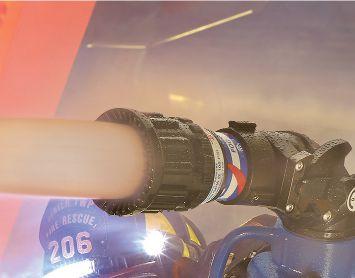
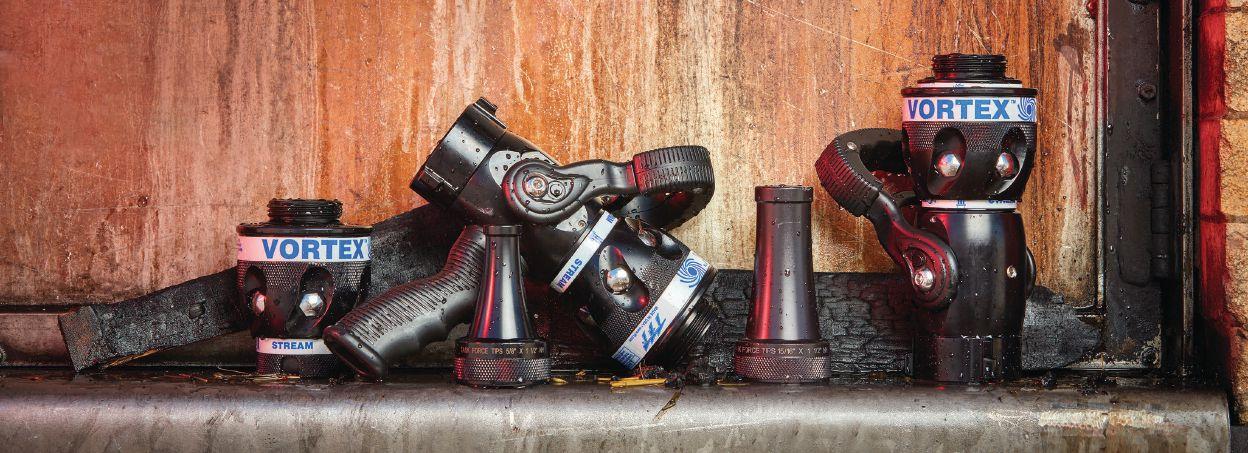
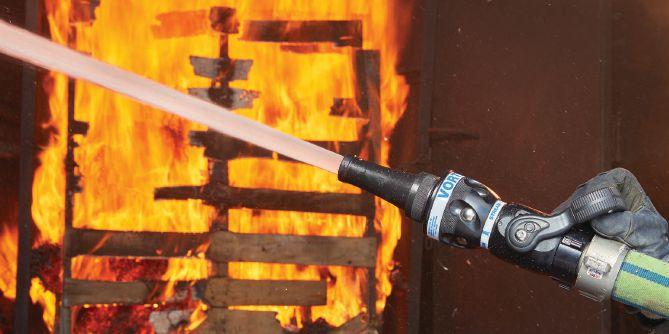
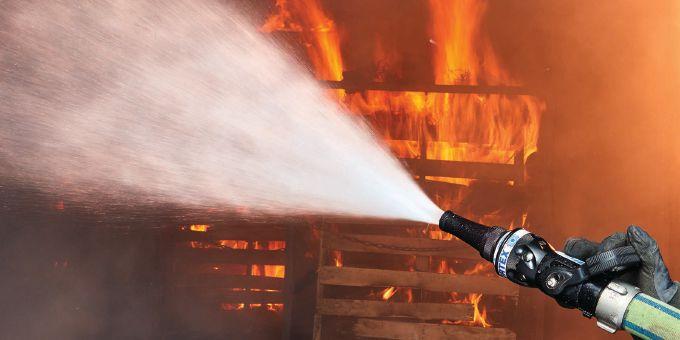
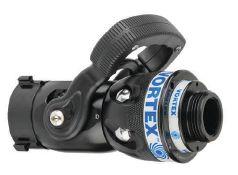
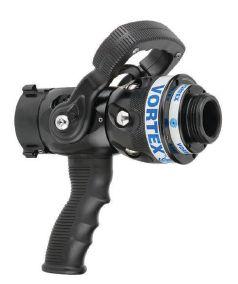
Never again, when using your favorite smoothbore tip during an initial attack, will you restrict your flow by gating the valve as you try to get some sort of a dispersed pattern. Whether it is for a little protection, coverage of fuels, or a bit of air movement as you are advancing the line or trying to clear some smoke, VORTEX offers a unique enhancement to this time tested nozzle tradition. With just a simple twist, the VORTEX moves from its amazing hard hitting straight stream to a uniformly dispersed pattern, without gating your valve and reducing your fire flow.