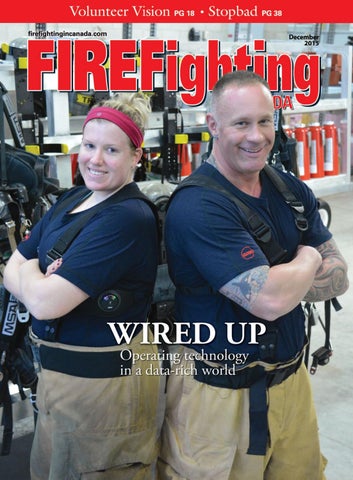
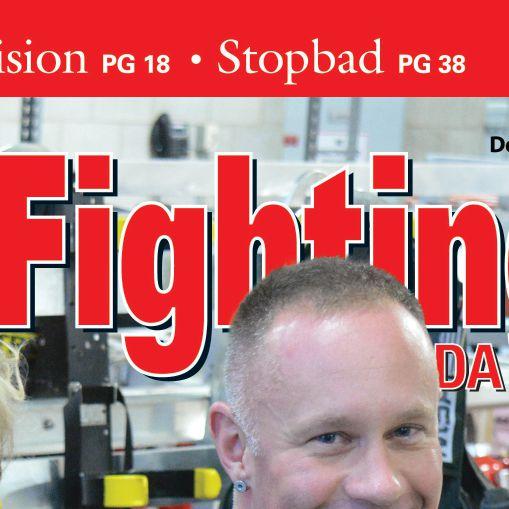
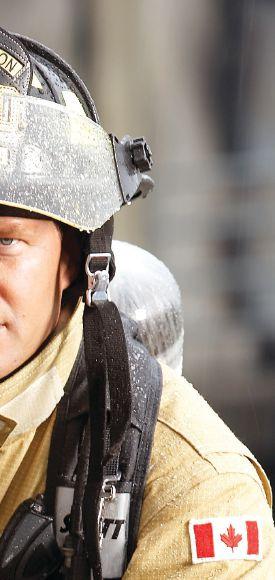
Biometrics, augmented reality and social media are just a few examples of data sources that have real potential for the fire service. Maria Church writes about the challenges associated with interconnecting technology and the real world in order for firefighters to tap into valuable data.
20 COMMUNICATION BREAKDOWN
An ordinary day for the Lesser Slave Regional Fire Service turned into a lesson in emergency management when phone and Internet service went offline in the community. As Fire Chief Jamie Coutts writes, the department was challenged to respond without cellphones, land lines or Internet.
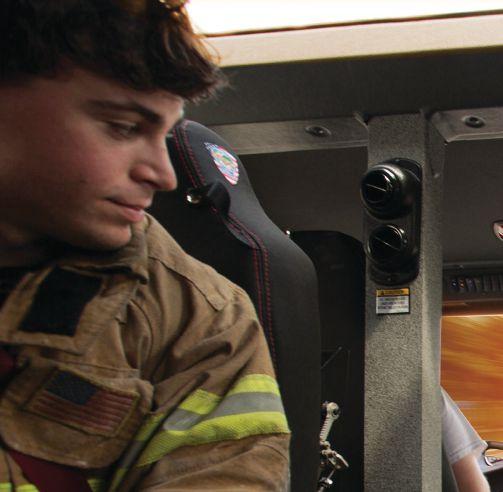
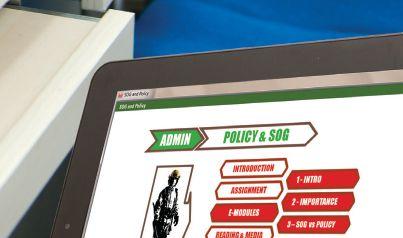
28 VIRTUAL FIRE TRAINING
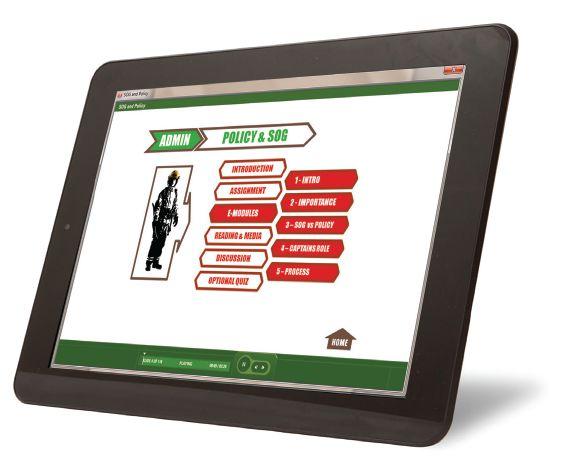
There are challenges but also many benefits to investing in an e-learning program in any fire department. As Chris DavisonVanderburg writes, a virtual program, if developed and used effectively, can reduce the hours firefighters spend in the classroom to give them more time on the training ground.
BY LAURA KING Editor lking@annexweb.com
I
COMMENT
Pros, cons of fire technology
’m at my desk, with my MacBook Pro plugged into a 24-inch flatscreen monitor and a three-terabyte back-up drive, a BlackBerry, iPhone, digital recorder, Nikon DSLR, wireless printer and all means of technology to help me do my job.
Am I doing my job better or more efficiently with these electronics than I did 25 years ago with a typewriter, land line, tape recorder and a 35-millimetre camera?
I certainly do more work with 21st-century tools than in the days of shorthand and carbon paper.
But I also do better work, as I should, given those two and a half decades of experience. Better, I believe, not because of technology, but because of skills that have been developed – millions of words written, hundreds of thousands of stories edited, along with mistakes made, lessons learned, relationships cultivated and, most importantly, practice, practice, practice. Sound familiar?
with improved PPE and a better grasp of fire dynamics, can be at greater risk than their predecessors of a generation ago because of technology – lightweight construction and materials that make buildings burn faster.
GPS tracking technology has yet to be perfected, 16 years after six firefighters died in the Worcester Cold Storage and Warehouse fire in Massachusetts.
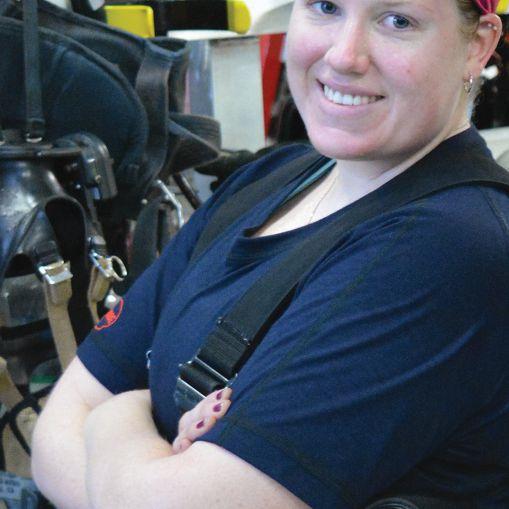
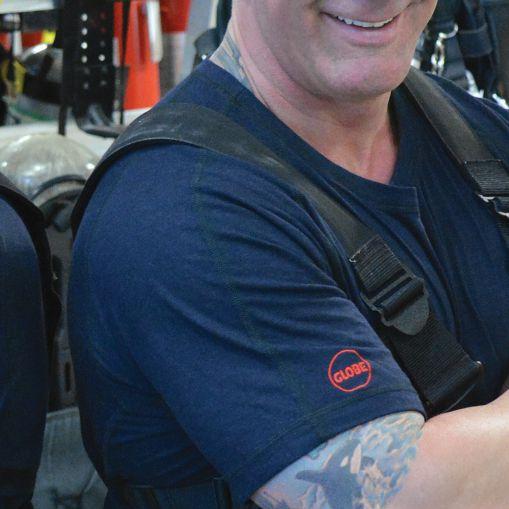
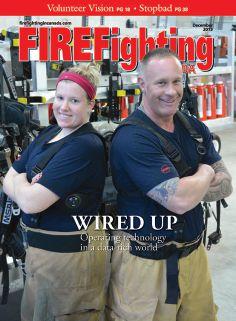
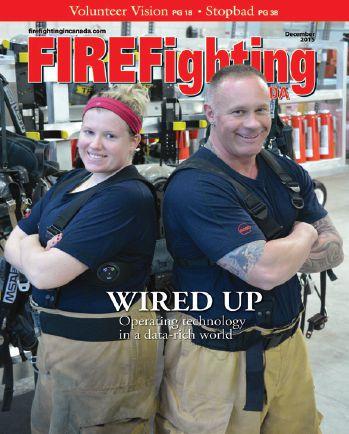
ON THE COVER Firefighters Terri Allen and Greg Reid at the Bruce Power nuclear generating station test Globe’s WASP sensor technology. See story page 10.
There have been myriad advancements in fire-service technology in the last 25 years but none is relevant without the skills necessary to read smoke, size-up an incident, give or take direction, communicate well, understand fire-ground hierarchy, complete a primary search, understand fire behaviour, rescue a victim, extricate a patient, effectively and efficiently put water on fire, and know how to do all those things by rote, without having to check a manual or app.
The difference, however, is that while reporters’ tools have changed, the environment in which we do our jobs is generally safe.
Firefighters, on the other hand, even
What’s more, as Maria Church writes in our cover story on page 10, all the technology in the world can’t save a downed firefighter or occupant if the systems can’t talk to each other; that, according to the NFPA’s Casey Grant, is today’s challenge.
In the meantime it’s crucial to make decisions based on the skills and systems we know will work, and the ability of those on the fire ground to use them properly.
I’m not suggesting a return to petch coats and open cabs, just recognition that technology is nice but basic skills are crucial.
Firefighters do inherently dangerous work in environments not even considered 20 years ago; even with all today’s technology, firefighters can never train, drill and exercise too much to prepare for a job that has killed so many.
Practice, practice, practice.
ESTABLISHED 1957 DECEMBER 2015 VOL. 59 NO. 8
EDITOR LAURA KING lking@annexweb.com 289-259-8077
ASSISTANT EDITOR MARIA CHURCH mchurch@annexweb.com 519-429-5184
NATIONAL SALES MANAGER ADAM SZPAKOWSKI aszpakowski@annexweb.com 289-221-6605
PUBLICATION MAIL AGREEMENT #40065710 Printed in Canada ISSN 0015-2595
CIRCULATION email: asingh@annexbizmedia.com
Tel: 416-510-5189
Fax: 416-510-5170
Mail: 80 Valleybrook Drive, Toronto, ON M3B 2S9
SUBSCRIPTION RATES
Canada – 1 Year - $24.00 (with GST $25.20, with HST/QST $27.12) (GST - #867172652RT0001) USA – 1 Year $40.00 USD
We acknowledge the [financial] support of the Government of Canada.
Occasionally, Fire Fighting in Canada will mail information on behalf of industry-related groups whose products and services we believe may be of interest to you. If you prefer not to receive this information, please contact our circulation department in any of the four ways listed above.
All advertising is subject to the publisher’s approval. Such approval does not imply any endorsement of the products or services advertised. Publisher reserves the right to refuse advertising that does not meet the standards of the publication. www.firefightingincanada.com
PHOTO BY LAURA KING
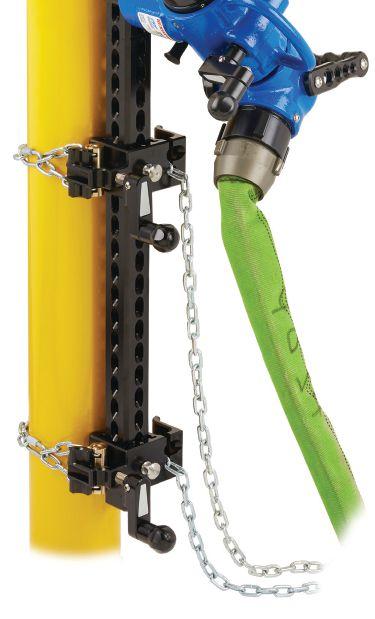
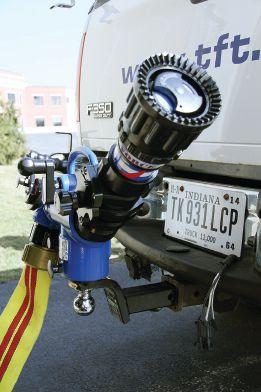
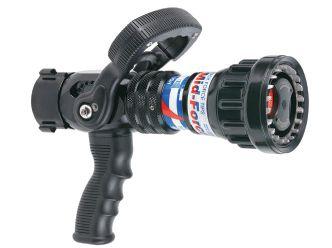
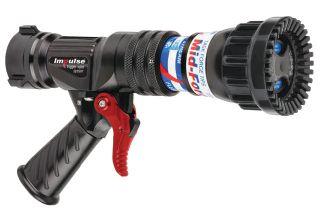
The Hemisphere is a versatile, lightweight, and quick to deploy portable monitor that gives the user the ability to quickly establish water flow in locations that ground monitors cannot.
Since the Hemisphere doesn’t rely on gravity for stability, it can be pointed horizontal and down, in addition to up
The rotating, swiveling waterway, allows the stream to be pointed in virtually any direction, within a hemispherical range without interrupting water flow.
To learn more about how you can provide maximum performance and safety to limited staff during initial attack operations, contact your local TFT dealer today.
STATIONtoSTATION
ACROSS CANADA: Regional news briefs
Firefighters train for flammable-liquids emergencies
A partnership of industry, a chiefs association and a training centre in Ontario hopes to address a gap in firefighter training for small- and largescale hydrocarbon and flammable-liquids emergencies.
About 20 firefighters from across the province took part in a trial of a hydrocarbon and flammable-liquids training program in late October.
Held at the Emergency Services Training Centre (ESTC) in Blyth – 200 kilometres west of Toronto – the program was developed by the centre in partnership with the Ontario Association of Fire Chiefs and the Canadian Propane Association’s subsidiary Emergency Response Assistance Corp. (ERAC).
David Sparling, director of fire and emergency services for the Township of North Huron and principal for the training centre, said the program fills a gap after similar programs run by Ontario’s
The Emergency Services Training Centre in Blyth, Ont., has developed a program in partnership with the OAFC and Canadian Propane Association to offer hydrocarbon and flammable-liquids training for firefighters.
Public Services Health and Safety Association were cancelled last spring.
The program, developed at the ESTC, included the creation of portable props.
The intent, Sparling said, is to deliver the program first in Ontario, then for ERAC to take it across the country in
THE BRASS POLE
Promotions & Appointments
KIM KANE was promoted to deputy chief for Brampton Fire and Emergency Services in Ontario on Oct. 21. Kane joined Brampton in 2010. She previously served 16 years in communications for Oshawa Fire and Emergency Services.
In her new role, Kane is responsible for fire prevention, fire life safety education, apparatus and maintenance and communications.
TODD SKENE, a 21-year volunteer in municipal fire services, became chief of Ontario’s Kenora Fire and Emergency Service on Oct. 20. Skene retired after 20 years with the Ontario government. He is a
the next few years.
“ERAC and the ESTC were extremely pleased with how these two courses went considering this is the first time these course have been offered,” Sparling said. “We left the program feeling pretty excited about where it is.”
The four-day program is
geared to both small- and large-scale emergencies (level 1 and 2) and covers the properties and associated risk of propane and crude oil, the basics of equipment used by industry, hands-on training on the newly developed props, and table-top exercises.
-Maria Church
provincially certified firefighter trainer and facilitator.
JASON DEJONG was appointed fire rescue services co-ordinator for the Cowichan Valley Regional District in British Columbia on Nov. 2. DeJong has a background in business management and forestry, and 17 years of fire chief experience serving the North Oyster Fire Department.
In his new role, deJong works closely with six volunteer fire rescue departments in Cowichan Valley.
STEVE DEBIENNE was appointed fire chief in Crowsnest Past, Alta., in August. Debienne has 20 years of experience in fire, and is working toward a masters degree in business administration from Algonquin College.
Chiefs humbled by provincial merit award
Humility seems to be the common factor between Manitoba fire chiefs Dan Thorsteinson and Phil Carpenter – that and the fact they are both recent recipients of the province’s prestigious Mary Beth Dolin Meritorious Fire Service Medal.
The two chiefs were honoured at an awards ceremony held at the Manitoba Legislature in early October.
Dauphin, Man., Fire Chief Cameron Abrey, first vice-president of the Manitoba Association of Fire Chiefs (MAFC), nominated the chiefs
on behalf of the association and said both are humble and “stellar examples of chief officers in the province.
“In everything that I have seen in my time (with the MAFC), sitting across the table from them, they made you feel accepted and helped guide you along the way.”
Carpenter is the fire chief for Portage la Prairie Emergency Services, and mutual aid co-ordinator for Boyne River Mutual Aid District.
Beginning in 2004, Carpenter served for 10 years
as the MAFC representative on the building standards board for the province. He also represents the MAFC on the fire code and inspection committee.
Carpenter is well known for his work organizing fundraisers for the Manitoba Firefighters Burn Fund.
Thorsteinson is a 16-year volunteer chief of the Selkirk Fire Department, and a life-long resident of the city of Selkirk. He runs a local butcher shop.
The volunteer chief sat on
the special operating advisory committee working with the Manitoba office of the fire commissioner, and chaired the MAFC’s public education committee.
Thorsteinson, 60, plans to retire by end of year and said he’s been lucky to head a department with active and engaged members.
“I like to think of us as probably the best fire department in the country, so where would you want to be besides Selkirk Fire? That’s my line!”
Departments recognized for teamwork during rescue
Three departments in southern Ontario have been commended for their seamless co-operation during a technical rescue earlier this year.
Clearview Fire & Emergency Services, Barrie Fire & Emergency Service and Toronto Fire Services responded to a technical rescue in June when a hiker became trapped in deep crevasse. The crews worked to extricate the patient over a 12-hour period.
Clearview Fire Chief Colin Shewell presented the chief and deputy from Barrie, and deputy from Toronto with
Retirements
Elliot Lake, Ont., Fire Chief PAUL OFFICER retired in September after 23 years working for the city as building inspector and chief building official, and for the Elliot Lake Fire Department as a volunteer and eventually fire chief. Officer was the incident com-
plaques of appreciation for their mutual aid during the Ontario Association of Fire Chiefs midterm meeting in Niagara Falls in November.
“From chief to firefighter to technical-rescue expert, we all worked together and there really was a positive outcome from three very different departments,” Shewell said in an interview.
“We are very diverse. We go from a big-city department to a medium-sized department in Barrie to a small, rural-urban department in Clearview, and it all came out
to a happy ending.”
Shewell was also present for a department citation ceremony for Barrie Fire on Oct. 26. Toronto Fire held a similar ceremony in October, and Clearview plans to hold one before the end of year.
Shewell, along with Barrie Deputy Chief Bill Boyes and Toronto Deputy Matt Pegg, plan to present on the rescue during the OAFC conference and trade show in May.
The presentation will focus on the importance of standardized training, unified command, and co-operation
mander during the response to the 2012 Algo Centre mall collapse, and endured a lengthy inquiry that wrapped up with a report in 2014, which praised the department’s response.
PAUL LESLIE, deputy fire chief for Central York Fire Services in Ontario, retired in early September after eight years with the department. Leslie joined the fire service as a
frontline firefighter for Toronto Fire Services. He later served as a manager of operations with the Office of the Ontario Fire Marshal before joining Central York in 2007.
Last Alarm
GERALD IVAN MOORE, a 25-year fire chief of the Freeport Fire Department in Digby County, N.S., died on Aug. 9 at age 63.
-Maria Church
among agencies, along with lessons applied from the Algo Centre mall collapse in Elliot Lake, Ont., in 2012.
“A lot of lessons that came out of Elliot Lake, at a very high level, we actually imposed at that scene,” he said.
“Everybody persevered through a long, complex rescue to affect a positive outcome,” Boyes said. “It was a proud moment to see that come together – a product of the training and resources we put into these low-frequency events.”
-Maria Church
Moore joined the department as a firefighter in 1971.
BILL FUKES, a more than 20-year member of the New Glasgow and Abercrombie fire departments in Nova Scotia, died on July 29 at 70 years old. Fukes was a student, instructor and chairman of the board at the Nova Scotia Firefighters School.
STATIONtoSTATION
BRIGADE NEWS: From departments across Canada
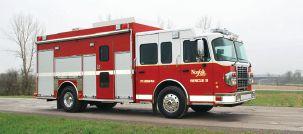
Lakeland and District Fire Department in Saskatchewan, under Fire Chief Chris McShannock, took delivery in January of a Rocky Mountain Phoenix/Rosenbauer-built light rescue. This unit is built on a Ford F550 four-door 4X4 chassis and powered by a 300-hp Powerstroke engine and automatic transmission. It features extensive compartment provisions, front and rear winch receivers with 12-V power, a Whelen lighting system, Whelen M6 LED Scene lights, a 12-V FRC Evolution brow light and pole lights.
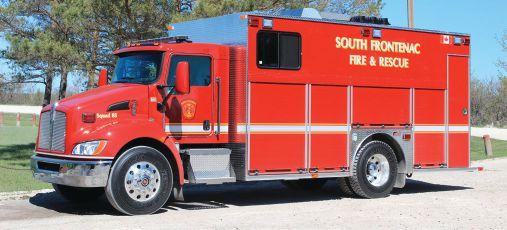
South Frontenac Fire & Rescue in Ontario, under Fire Chief Rick Chesebrough, took delivery in June of a Fort Garry Fire Trucks-built rescue. Built on a Kenworth T370 chassis and powered by a Paccar PX-9 engine and a five-speed automatic transmission, the unit is equipped with an Onan 12-kilowatt diesel generator, FRC LED lighting, Command light and refrigerator.
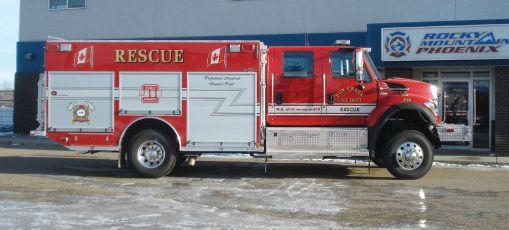
Fox Creek Fire Department in Alberta, under Fire Chief Les Paul, took delivery in January of a Rocky Mountain Phoenix/Rosenbauerbuilt wildland unit. Built on an International 7400 chassis and powered by a 330-hp Maxxforce 9 engine and a 3500 Allison EVS transmission, this unit features a 5,000-lpm Rosenbauer NH55 pump, Rosenbauer Ez Foam and Fix Mix foam systems, 550-gallon water tank and 30-gallon foam tank, Whelen lighting system, FRC LED scene lights, and full-width hosebed covers with coffin compartments.
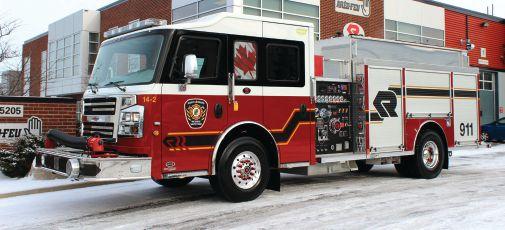
Saint-Léonard Incendie Sauvetage in New Brunswick, under Fire Chief Alain St-Laurent, took delivery in January of an Areo-Feu/ Rosenbauer-built pumper tanker. Built on a Commander 3000 chassis and powered by a 450-hp Cummins ISL engine and an Allison 3000 EVS transmission, this unit features a 1,250-gpm Rosenbauer pump, a Rosenbauer EZ-foam system, a 1,500-gallon UPF water tank, GreenStar idle reduction system, SecureALL SCBA brackets, FRC TGA 400 governor, and GreenStar hybrid system.
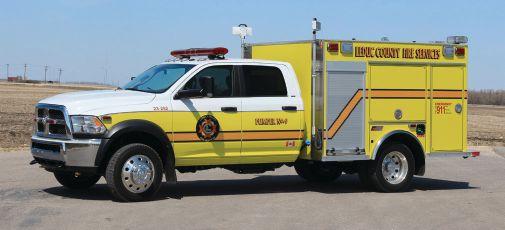
The Leduc County Fire Department in Alberta, under Fire Chief Darrell Fleming, took delivery in May of a Fort Garry Fire Trucksbuilt rapid attack. Built on a 2014 Dodge 5500 crew cab and powered by a Cummins diesel engine and a Aisin transmission, the unit features a Darley Mustang CAFS pump, a 200-gallon Propoly tank, a Foam Pro system and a Federal Signal emergency warning package.
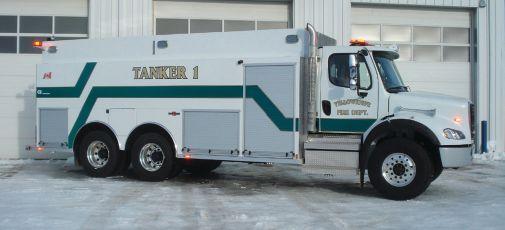
The Yellowknife Fire Department, under Fire Chief Darcy Hernblad, took delivery in February of a Rocky Mountain Phoenix/Rosenbauerbuilt tanker. Built on a Freightliner M2 112 chassis and powered by a 370-hp Detroit DD13 engine and an Allison 3000 EVS transmission, this unit is equipped with a 1,900-lip Darley HM pump, a 3,000-gallon water tank with four-inch rear direct fill, three electric-controlled dump chutes with cameras viewed in cab, a Whelen lighting system, Whelen M9 scene lights and a FRC Evolution brow light.
SOUTH FRONTENAC FIRE & RESCUE
LAKELAND AND DISTRICT FIRE DEPARTMENT
FOX CREEK FIRE DEPARTMENT
SAINT-LÉONARD INCENDIE SAUVETAGE
Loaded with safety, comfort and mobility features for unmatched performance, Flame Fighter® bunker gear offers a variety of custom outer shell fabric, liner system, hardware and pocket options to fit your specific needs. This hard-working gear also includes the following game-changing Starfield LION fire protection technology:
Patented IsoDri®* moisture management reduces the water absorbtion and helps gear dry faster between runs
Exclusive Ventilated Trim allows vapor to be released, reducing the risk of scald burns
Thermashield™ provides an additional layer of liner material in the upper back and shoulders to protect against compression burns
Move-N-Hance™ crotch gusset increases mobility by reducing bunching, twisting and pulling
Flex Knee™ for easy, natural movement
Stay Rite™ sleeve wells integrate the sleeve’s liner into a full-length wristlet so that when you reach, the entire sleeve moves with you
For more information about Flame Fighter bunker gear, contact your Starfield LION sales representative at 1.800.473.5553 or visit us online.
WIRED UP
Understanding the potential of new technology and data sources that can help keep firefighters safe
The year is 2025.
An elevated heat signature is picked up in a Collingwood, Ont., home and an emergency alert for a structure fire is sent to the communications centre in nearby Barrie. Dispatch notifies the local fire department members through their cell phones, transferring the co-ordinates and fastest route to the scene to their GPSs.
Dispatch sends out a drone to size-up the scene and forwards any relevant social-media images and videos of the fire from Twitter and Instagram to the firefighters’ phones.
The firefighters suit up, grab the necessary equipment and jump in the trucks. En route, the team accesses the building plans for the house – (this home was not built with now-enforced residential fire sprinklers) – information on the residents, and the current conditions of all occupants via motion sensors in the home and on their persons.
By MARIA CHURCH
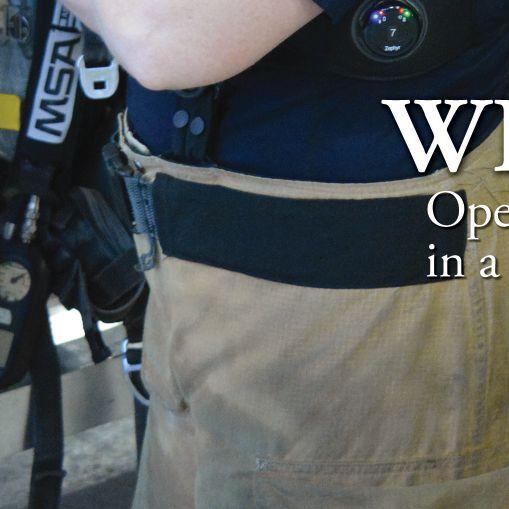
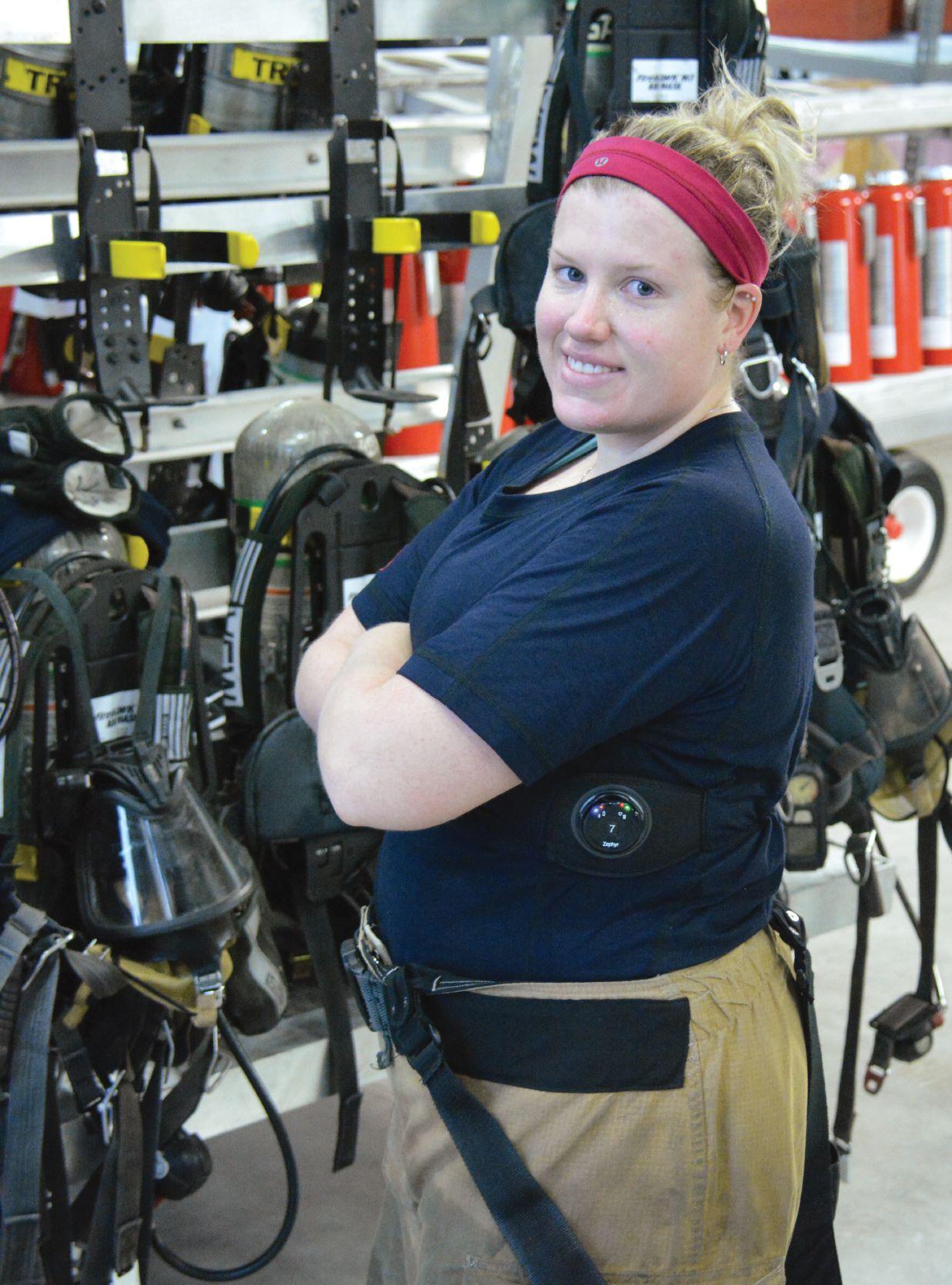
LEFT Bruce Power firefighter Terri Allen wears Globe’s WASP (wearable advanced sensor platform).
Technologies such as WASP may be slow to catch on in the fire service, but have potential to improve firefighter safety.
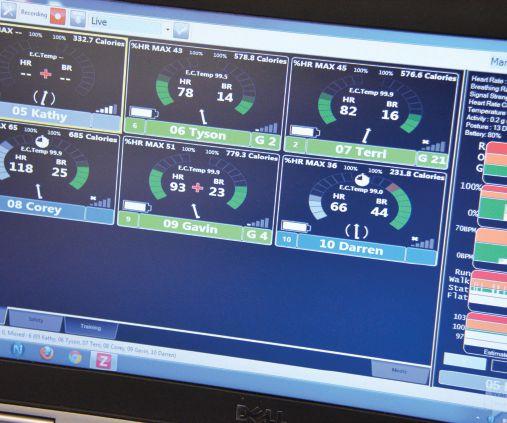
ABOVE WASP monitors, among other things, heart rate, breathing and core body temperature.
The trucks’ routes are optimized by firefighters tapping into the town’s lighting grid, stopping traffic to allow the emergency vehicles to fly through.
By now the incident commander has drone footage of the house and is planning an initial strategy for a rescue; sensors show two occupants are still inside.
Upon arrival, the team deploys with its instructions, which are relayed to members from the IC via Google Glass built into their SCBAs. A rescue team has a real-time visual of the blueprint of the home, complete with a locator for the occupants inside and a heat signature identifying the fire. Wearing sensor equipment built into their PPE that monitors heart rate, breathing rate and skin-surface temperature, the firefighters enter the house, locate the occupants and perform the rescue.
Meanwhile the IC connects with the nearby hospital for patient triage, while keeping an eye on the screen that shows the occupants’ and firefighters’ conditions. The IC informs the hospital that the occupants are in their 80s and have mobility issues.
Once the occupants are removed, the suppression team begins attacking the fire while monitoring fire growth, environmental conditions and water supply on their Google Glass.
The drone is recording the scene for future analysis and training.
Once the scene clears, the Barrie communications centre collects and stores all relevant information and updates the countrywide database.
BACK TO REALITY
Presently all of the technology mentioned above exists or is possible, but it’s not widely used or, more importantly, interconnected. An umbrella term for the interconnection of technology and the real world is cyber-physical systems (CPS).
Casey Grant is the executive director of the Fire Protection
PHOTOS BY LAURA KING
ON SOLID FOOTING FOR 26 YEARS
Improve your performance. Globe boots are flexible like your feet, grip like no other and feel broken in right out of the box.
Contact Safedesign to get Globe footgear. Internationally recognized PPE specialists.
Research Foundation – the research arm of the NFPA. He has been enthusiastically studying CPS for years and is one of the authors behind the Research Roadmap for Smart Fire Fighting, a report from the foundation and the National Institute of Standards and Technology. The project launched in 2013 and the more than 200-page roadmap came out in June.
Grant admits that even after years researching new applications of technology and data in the fire service, the roadmap is overwhelming.
“The challenge is that the sky is the limit,” he said. “As we look into the crystal ball and we see what people are doing and it’s dazzling; and the potential to do more is only as far as our minds can go.”
Technologies are continually being developed with more and more potential, but they are created as separate systems and not interconnected, which can overwhelm users.
The same can be said about data collection. There are innumerable sources of data, from cell phones to smoke alarms, but the data is not processed or delivered in ways that can be easily applied to fire services.
There have been examples of successful implementation of data systems – such as New York City Fire Department’s FireCast 2.0, a comprehensive risk-assessment database – but the municipalities are doing so from scratch, in ways that are not be easily duplicated.
Grant describes the issue as the cart before the horse.
COLLECTING, PROCESSING AND DELIVERING DATA
Collecting data, Grant said, is the easiest step to understand and is already happening to some extent with smoke detectors, visual reports and 911 dispatch.
But a wealth of other data is becoming available and is, for the most part, untapped by the fire service.
“You name it, there are sensors on everything now, including on individual people with their handheld devices,” he said. “We are in this incredibly, ever-increasing
PHOTOCOURTESY GLOBE
Zephyr’s datacollecting puck, part of Globe’s WASP system, tracks biometrics in real time and stores the information for downloading post incidents.
sensor-rich world.”
Processing the data, in most cases, Grant said, is less straightforward.
An example is fire modeling – real-time structure models that are accessed on a fire ground to display the incident, monitor and even predict the evolution. NIST has a fire-dynamics simulator program that is free to download. The latest version of the program was released in 2013, but it is continually being fine-tuned.
The third step is delivering the data. While delivery sounds simple, it is perhaps the most difficult process, Grant said.
“You cannot overload people with what they need, when they need it, how they need it and the way they need it,” he said.
On the fire ground, where plans are constantly changing and the entire command structure is built within minutes, there are dangers in giving firefighters too much information at once.
“Data has to be delivered to them for what their tasks and job duties are,” Grant said. “Whether they are an incident commander or the person with the hoseline, or they’re the fire marshal beforehand or the fire investigator after the incident, or whoever it is . . . you cannot drown them in it.”
Delivery is the task at hand for the fire service, Grant said. There’s no lack of good information, the challenge is determining what firefighters need at the moment and eliminating the excess, distracting data.
For example, almost all available firefighters’ personal equipment operates independently. Firefighters must switch their focus between items, such as their BA monitors, radios, and TICs. And each item has its own battery.
“[Firefighters] talk about the Christmas tree,” Grant said, “don’t hang another ornament on the Christmas tree.”
The roadmap recommends in its conclusion that there is a need to develop a single effective operable platform for electronic safety equipment on firefighters
TESTING WEARABLE SENSORS
The fire department at Bruce Power – a privately owned nuclear generating facility in Ontario – is testing Globe’s WASP (wearable advanced sensor platform) technology, and is the first in Canada to do so.
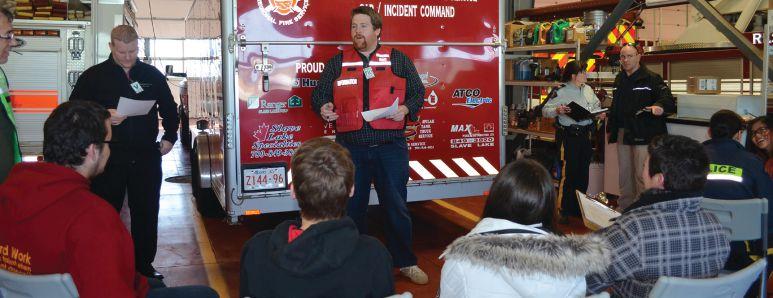
The department held a demonstration of the technology in November, led by Globe’s WASP project manager Kathy McNutt.
Seven firefighters and McNutt wore the WASP T-shirts, which include embedded data pucks that monitor biometrics, and a location-tracker belt. The firefighters took part in routine training exercises in the recently opened, state-of-the-art Bruce Power fire-training facility.
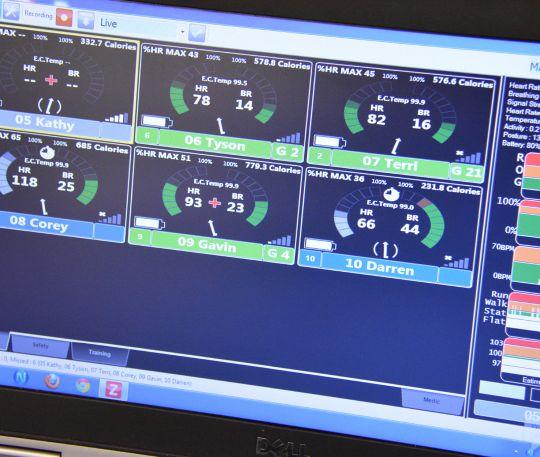
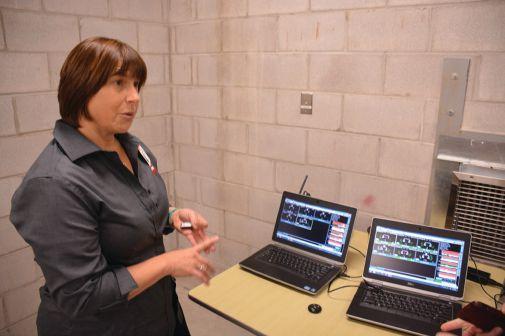
“We can look at any one person and say how they are doing at any one period of time,” McNutt said, pointing at the screen with six real-time bio gages – one per WASP wearer – illustrating heart rate, breathing rate and estimated core body temperature. The data is transmitted to a control device, and also stored on the pucks to be downloaded post-incident.
For now, McNutt said, the main value of the data is for post-incident review to adjust tactics and build up firefighter physiological strength. Real-time monitoring is possible, however, departments would need to assign a member to the task.
Bruce Power Fire Chief Brian Cumming said the WASP technology is a good fit for the department, which employs close to 120 full-time firefighters and is able to train year round with indoor live-fire props.
“Training really is a stressful situation,” Cumming said. “To be able to track the vital signs of an individual is very important and something that could be beneficial to us.”
Two years ago a Bruce Power firefighter was training off site and after a routine exercise went into cardiac arrest.
“There were absolutely no abnormalities, he looked completely normal and within seconds he collapsed,” Cumming said. “We were very fortunate and able to save the individual.”
Incorporating the WASP technology, he said, represents another layer of safety for firefighters.
“If we are able to track and maybe pick up on something that is not right, that’s prevention and that’s really what we are looking at.”
(think astronaut suit). The platform would combine PASS, thermal-imaging cameras, SCBA electronics, GPS, physiological monitoring, augmented-reality displays (e.g. Google Glass), and so on.
SENSOR ADVANCEMENTS
The wearable advanced sensor platform (WASP) technology, developed by Globe Manufacturing, Zephyr Technology Corp., TRX Systems Inc., Propel LLC and Skidmore College, has come the closest thus far to the proverbial astronaut suit for firefighters.
The WASP equipment combines location tracking with physiological monitoring in the form of a wearable T-shirt.
Clare King, president of Propel, calls the WASP technology a building block of future firefighters’ gear.
The WASP team, led by Globe, has been developing the technology for eight years, which is a common length of time for wearable technology to go from an idea to an executed product, King said.
“You had to invent new things, you had to invent new manufacturing processes, you had to solve problems that you hadn’t thought about before, like, what are you going to do with data when you create data from a wearable?” she said.
The WASP T-shirts are available for purchase and – since Fire Fighting in Canada reported on it in September 2013 – are mass-produced to help offset costs. Canada’s Bruce Power fire department is in a testing phase to purchase the technology (see sidebar for more details).
Globe’s Canadian sales representative Don King said he expects to see sensor technology such as WASP eventually become standard equipment on the fire ground.
He agrees that the future challenge for manufacturers is to produce interconnected technologies that are easy for firefighters to use on the ground.
“Learning to take all this technology and integrating it is, I don’t want to call it pie in the sky because it really has to be a target,” he said. “It comes back to what’s going to make the firefighter safer.”
BACK TO THE FUTURE
In order for the smart firefighter to be realized, Grant said, it will take a village. Everyone, including the manufactures, regulators, insurers, researchers and even the volunteer firefighter, has a role to play in the process.
Some of the best examples of organizations capitalizing on data are
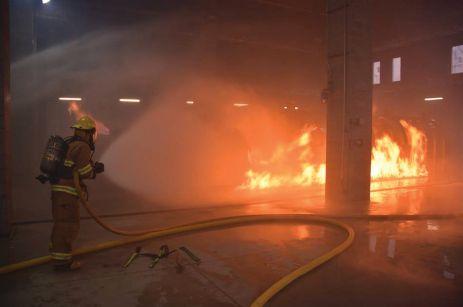
Firefighters at Bruce Power nuclear generating station train yearround with indoor live-fire props. The fire department is testing Globe’s WASP technology to use during training.
Globe’s WASP project manager Kathy McNutt ran a demo of the technology for Bruce Power firefighters in November. The combined GPS and biometrics can help firefighters understand how to build up their physiological strength.
PHOTO BY LAURA KING
It’s visionary but . . . we’re actually working in this reality already. It’s closer around the corner than one might realize.
- Clare King, Propel
during large events such as the Boston Marathon or Tour de France. Emergency organizations are forced to communicate and co-ordinate data to get a clear picture of the situation and deal with emergencies accordingly.
With extra manpower and funds, emergency crews at large-scale events can tap into rich data sources such as social media, Grant said. Those sources need to be available for firefighters on the ground.
Part of the solution, according to Grant, is standardization –such as standardizing how sensors should function and what data they should provide. That, of course, is where the NFPA comes into play.
NFPA 950: Standard for Data Development and Exchange for the Fire Service came out last December to address operable information sharing. Its companion, NFPA 951: Guide to Building and Utilizing Information, is due out soon.
“There is a lot going on with all the different aspects of this topic – smart fire fighting – and NFPA 950 is sort of a gateway document to really try to clarify how all the information is pulled together,” Grant said.
For example, a standardized date-time stamp, which is a tiny but crucial detail, Grant said, to communicate between different levels of communication.
An inevitable challenge for the NFPA is that technological advances keep leapfrogging standardization.
Canadian regional director for the NFPA Shayne Mintz has been touring North America learning more about data application in the fire service and presenting on the NFPA’s strategies. He hopes the NFPA can work with Canadian fire associations to help standardize data development, management and sharing.
On the ground level, Mintz said, NFPA 950 and 951 are a way to help communicate the scope of CPS potential for the fire service.
“It’s a matter of heightening people’s awareness of what is out there in terms of data and how it can be used,” Mintz said.
The smart fire fighting roadmap also serves to communicate direction to fire stakeholders and, unlike standards or guides, is a living document that will be reviewed and updated as technology is developed.
Representing Propel, King took part in a workshop for the roadmap held in March 2014 with representatives across industries, from researchers to educators to government.
“The dialogue in the room was really quite exciting,” she said. “You kind of got to see the edges of the future and how it can come together in a bigger picture than, say, specific smaller efforts by individual companies or an individual product.
“It’s visionary,” King said, “but honestly, at the same time, we’re actually working in this reality already. It’s closer around the corner than one might realize.”
BY TOM DESORCY Fire chief, Hope, B.C.
HVOLUNTEERVISION
Appreciate the old while ushering in the new
ave you ever heard a member of your crew say, “This is not what I signed up for”? If the commenter was a newcomer, it is probably best that this firefighter gets out before you invest too much of your time and training dollars, right?
The comment more likely came from an older member of the team and was spawned by change. I have written about change in past columns, but there are many different forms of change.
The kind of change I’m thinking about is the way in which fire services conduct our business or the way in which we have been forced to conduct our business. Those of us who have seen the fire department back in the day know that times have changed and we now operate in a totally different world. Why is this so noticeable? Many volunteer departments rely on the skills, history and experiences of older members. As we all grow older, ideas about the way it was become more and more noticeable.
I’m a huge proponent of paying respects to the past and never forgetting the way it used to be, even though we do it totally differently now. Do you encourage way-back-when stories in your department? To me, telling stories opens the window to the past. Sharing history – the stories come from the guys who were there – is a great team build. Anecdotes presented with a don’t-try-this-at-home attitude offer new firefighters glimpses into the past and can give them an appreciation for the changes that have come about in terms of training, operations and administration.
.
I’m not that old but I have stories of my own and at times I think of them just to remind me why I do what I do today. Some of those stories are cringe-worthy. Our volunteer crew in the ’80s went to a motor-vehicle incident on the highway outside of town. The driver asked the crew to keep an eye out for her cat. One of the crew members spotted the obviously deceased feline, reached into the vehicle, held it up high in the air, by the tail, and shouted: “Found it!” You can imagine the horror of the cat owner. Obviously it was not a shining moment for our crew, but
one you can’t help but look back on and smile. The recruits can’t believe something like that actually happened, but it did. That story is a teachable moment and a history lesson to boot.
These were the days before operational guidelines, codes of conduct and accountability. This was a time when a volunteer department was a group of community-minded individuals who just wanted to help out, and motor-vehicle incidents were uncommon. Firefighter’s turnout gear was limited and mismatched and honestly they almost looked out of place.
Today’s recruits want to learn, want to take the training you provide and want to help in a meaningful way as part of a dedicated, professional team and family above and beyond customer service and satisfaction. The changing face of the volunteer is the biggest challenge we face today in our communities, no matter what organization.
Have you heard someone say, “People don’t volunteer like they used to”? Years ago it was common for people to be involved with more than one organization, which often meant a full calendar from one meeting to another every night of the week. If you had kids in
. . I have stories of my own and at times I think of them just to remind me why I do what I do today. ‘‘ ’’
Tom DeSorcy became the first paid firefighter in his hometown of Hope, B.C., when he became fire chief in 2000. Originally a radio broadcaster, Tom’s voice could be heard in the early 1990s across Canada as one of the hosts of Country Coast to Coast. Tom is married with two children and enjoys curling, golf, cooking and wine tasting. He is also very active with the Fire Chiefs’ Association of B.C as communications director and conference committee chair. Email Tom at TDeSorcy@ hope.ca and follow him on Twitter at @HopeFireDept
minor sports you were always working behind the scenes. Getting involved was simply a matter of showing up and helping out – and that included the fire department. Today there are applications, criminal records checks, driver’s abstracts and training just to volunteer with a local festival society. Walking into a fire hall to help out is simply not an option anymore.
There’s a lot to be said about the way it was, but a lot more to be said about the way it is. Just because we did it that way before does not make it right, and hanging your hat on past practice can be dangerous. The volunteer fire service is not unique in the way we do business. Yes the veterans of the department didn’t sign up for this but we are very glad they signed up for that, because without them we’d be left to make up our own stories and they wouldn’t be as much fun.
Labour Relations is an annual event held in on un tion ith i s orle a leadin la r in Canada who devote their practice exclusively to representin e ployers on hu an resource law and advocacy issues Chie re o cers and hu an resource pro essionals ro across the country participate in a variety of presentations focused on current and e er in labour issues in the re service ver the course of two days a le al tea fro ic s orley and content experts will present on hot topics in bargaining, legislation, arbitration, legal responsibility and ore ttendees will have any occasions to spea candidly with their colleagues and the Hicks Morley lawyers, providing i easurable learning opportunities o where else will you get this uch legal advice for such a s all fee
LRS 101
Location: Hilton owntown, Rich ond treet est, oronto, Ontario.
Registration Open to:
Me bers of unicipal council, senior unicipal anage ent of cials, chief re of cers and HR professionals.
Registration Rate:
Me ber rate is H , non e ber rate is H . Out of province registrations receive the e ber rate.
Early Bird: Register by December 7th and save $100!
Registration Includes: peakers, breakfast, lunch and coffee breaks over the course of two days and the Hicks Morley Reception.
For more information and to register, visit our website.
s labour relations new to you re you looking for a refresh on e ploy ent law hen you need to register for our one day Labour Relations orkshop on anuary , he workshop is a great opportunity for you to learn the basics when dealing with e ploy ent law, collective agree ents, bargaining, arbitration and ore Led by Michel ennedy and ohn aunders of the Hicks Morley Law ir , attendees will walk away with the necessary aterials and infor ation to be successful in labour relations
Communication breakdown
A network service outage tests an Alberta department’s emergency plan and SOPs
By JAMIE COUTTS
Do you ever feel like the world is testing you a little harder than others?
On Thursday, Oct. 29, I firmly believed that it was.
The day started like so many others: up early for an MVC – a semi truck carrying 38,000 litres of gasoline versus a pickup truck at the intersections of highways 2 and 88. This is a disastrous intersection for us: too many lanes; too much traffic; and at 8 a.m., just a mess.
We respond with our trucks to the site and found that although the situation could have been horrible, it wasn’t so bad. The driver of the pickup had pulled out in front of the semi, the semi driver braked and tried to avoid the other vehicle. The pickup driver was treated and released and the semi was only slightly damaged, leaking antifreeze.
Our crew cleaned up the scene, returned to quarters, cleaned up the trucks and the hall and went off to re-start the day. It was quiet until we headed back to fire hall after lunch.
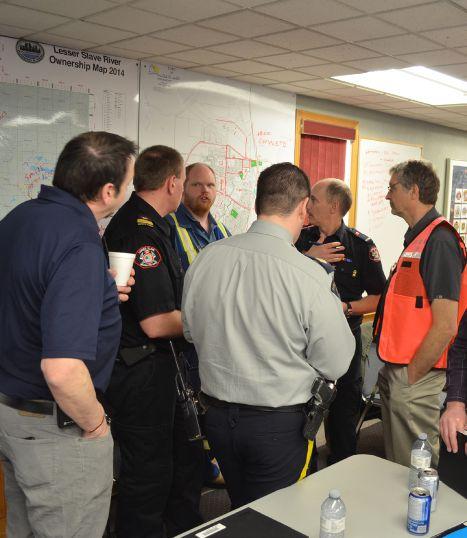
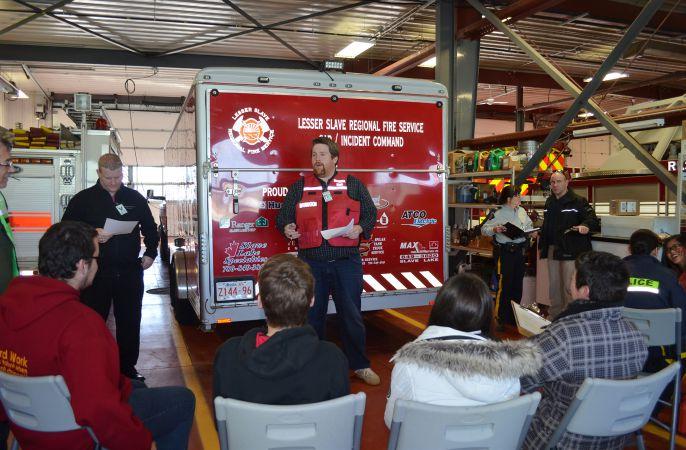
ABOVE The outage required all agencies to communicate face to face, and form a plan to connect residents with emergency responders.
No cell service, no Internet, no emails. The phone rang at the hall; it was a volunteer firefighter who said dispatch had used the call-down list and got to the Fs before reaching him (a Rogers network user). Alarm bells had been ringing at a local restaurant for 10 minutes now, he said. So we sent a responder to try to find out what was going on.
We tried our radio link to Grande Prairie dispatch; nothing. We picked up our phone and called; that worked. We had our administrative assistant relay to dispatch through this phone connection.
But now people were stopping at the fire hall. No one has cell service, land lines or Internet. We can call out, but no one answers our local calls.
“What’s our SOP for no phones?” someone asked.
“I don’t know, but we better figure out something fast.”
We put some people into trucks and sent them to the RCMP station, the hospital, EMS, forestry, the Town of Slave Lake office, the municipal district office and the nearby Sawridge First Nation.
At these sites, our people briefed staff, gave them radios for our local system and urged them to stay connected, look at their plans and help us figure out what was going on.
Our two daytime duty officers headed to the Telus office. After some searching we found a very unhappy Telus employee trying to figure out the damage to the system: a Telus contractor had hit a fibre-optic line during an underground boring attempt. Land lines, Internet and cell service would be out for between six and 12 hours.
On the way back to the hall we stopped and asked our radio people to set up a couple of satellite phones. At this point, the mayor had tracked me down and was looking for an update. I went back to the fire hall and came up with a plan to put fire trucks, police cruisers, ambulances and forestry trucks into the neighbourhoods –10 in total.
The outage was widespread – more than 65 kilometres from one end to the other. We accessed Alberta Emergency Alert using a local staff member’s cell phone through a Rogers. We briefed all agencies in person and expanded the plan so that residents could access emergency responders through direct contact with response vehicles, or come to the RCMP station, hospital or fire halls. We made sure we had people out on the streets and in the rural subdivisions. We made sure we had radios at the stop-in sites. Crews were instructed that if anyone were to stop at the sites or the vehicles to report an emergency, the closest resources were to go immediately, followed by the agency most needed.
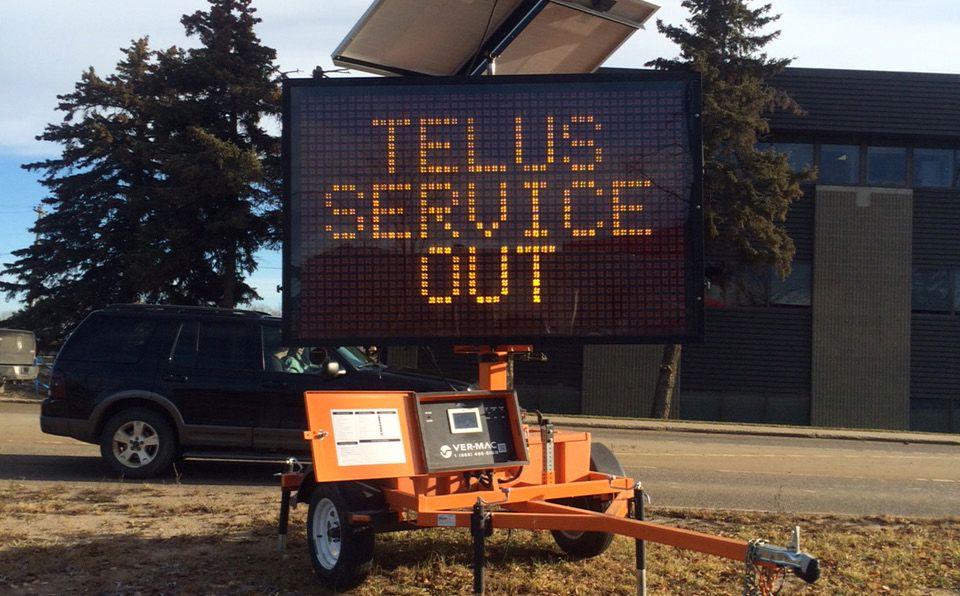
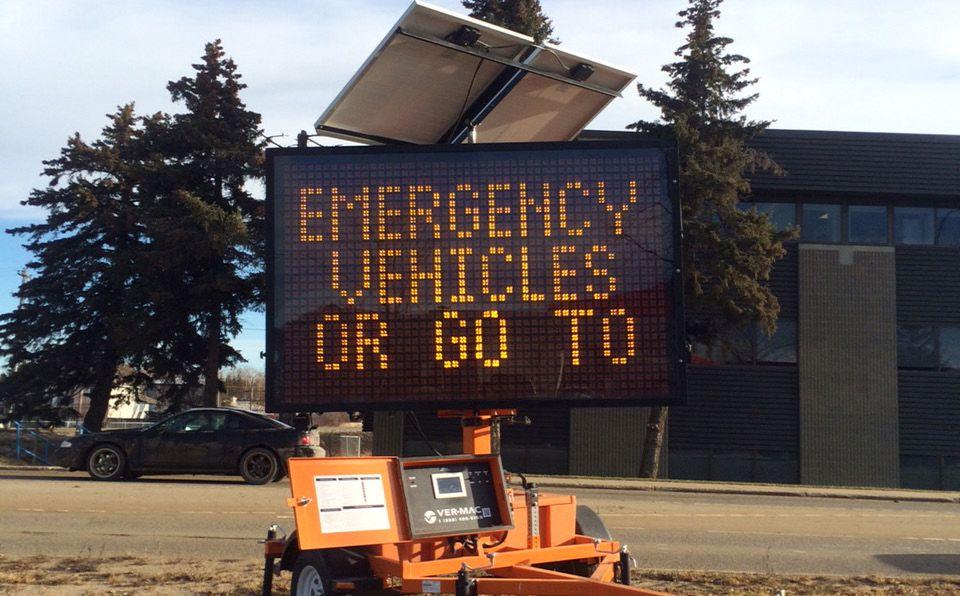
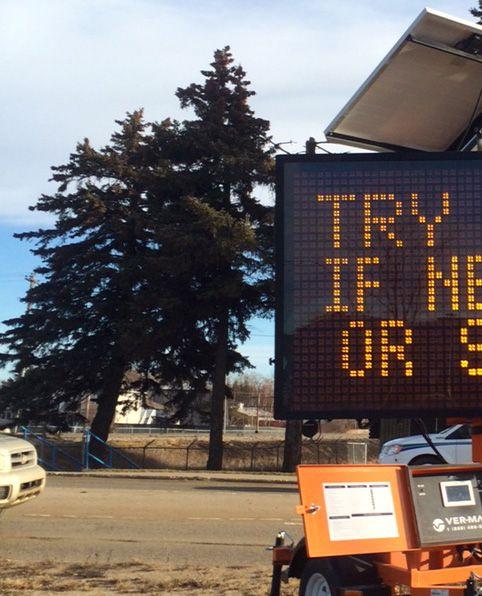
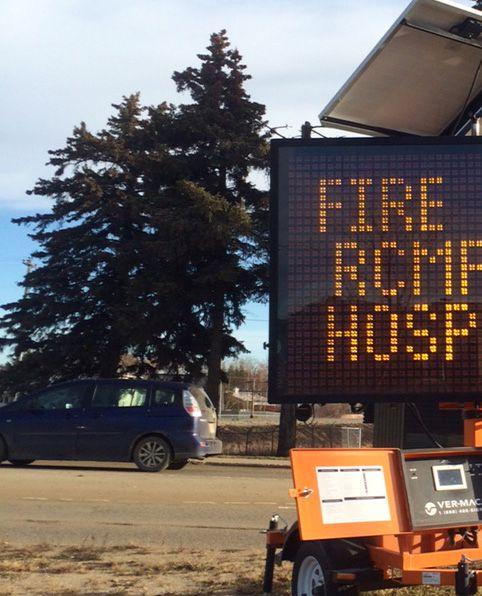
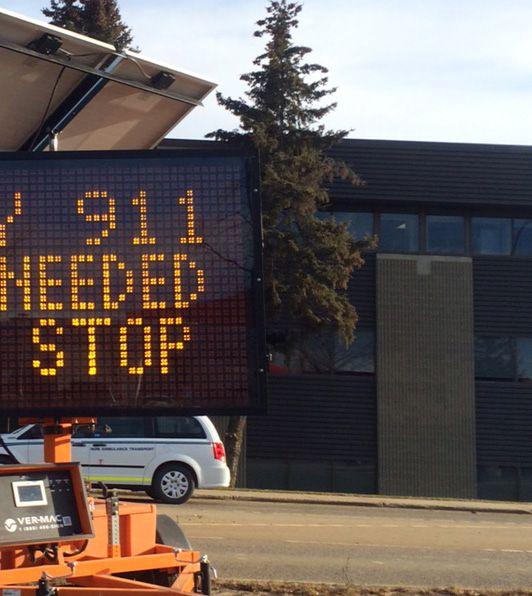
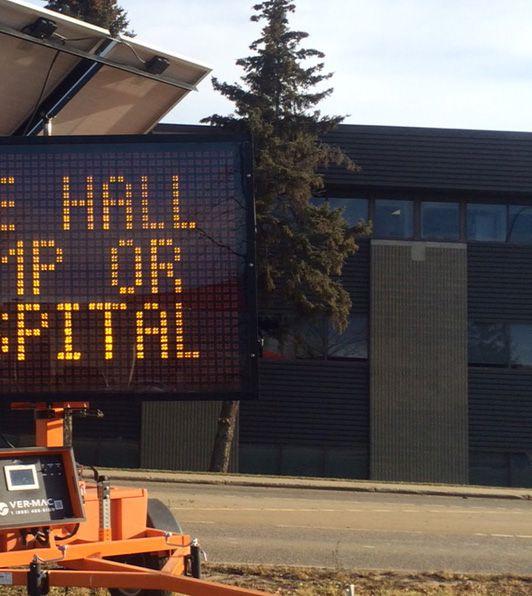
We set up our electronic signs stating the problem and the temporary solutions. These signs were purchased after the 2011 Slave Lake wildfire and we were lucky to have them. Our mobile units start talking to people on the streets and word spread about the situation. Representatives of
LEFT : A disruption to a fibre-optic line in Slave Lake, Alta., forced the fire department to operate without communications for several hours.
PHOTOS BY JAMIE COUTTS
the Town of Slave Lake and Municipal District 124 were talking face-to-face and updates were ongoing over the radios we had handed out. Alberta Emergency Alert was being broadcast over the local FM radio station and things were looking up. We looked at our Regional Emergency Management Plan but there was nothing in it for this type of event –which was sad, because this plan was new after the 2011 fire.
I can tell you that having no external communication system is like being Superman with all your superpowers stripped away. Everything you think of, everyone you want to talk to is gone; it felt like being a firefighter 25 years ago but without land lines.
After about four hours, Telus had fixed some of the lines. Later that night cell service was restored. Telus did a great job patching things together and trying to give us solid timelines, but as you can imagine, that was tough; there were 2,400 copper lines down and the best repair people can fix just 80 an hour. The company had to bring in a patch cord and people from Edmonton, which is 250 kilometres away,
to fix the fibre-optic line. We finally got to bring people in from the field at 1:30 a.m.
Slave Lake had similar issues during the 2011 fire, but everyone was evacuated so it wasn’t a direct problem, and there was still some cell service. The same problems existed during the High River flood in
TO SERVE AND PROTECT.
2013, but, again, people were gone and cell service was still available in some areas.
One accident had left an entire region without the ability to call 911. Our ability to communicate with the public and with other agencies was drastically reduced, using only FM radio, the Rogers cell network and private Internet providers.
My thoughts are simple:
• Get a written plan together and know what to do better next time.
• Let emergency responders know what could happen to them so they can be prepared.
• Debrief all agencies and Telus and look at redundancies.
By Monday, Nov. 2, service had been restored to 100 per cent of our region. I want to make sure we identify the risks, find solutions to make sure we are prepared, and congratulate emergency management and first responders for a job well done.
It’s funny to me that even during the incident emergency responders were asking me if I had set it up as a training exercise. At first I just laughed, but after a few asked the same question, I realized that for them to be that calm, to be able to make jokes, we must be ready for what comes our way.
Things have changed greatly since 2011, and I’m happy to say we are finally getting to a good place.
Jamie Coutts is the fire chief of Lesser Slave Regional Fire Service. Contact him at jamie@slavelake.ca and follow him on Twitter @chiefcoutts
Public information officer Chris Brown briefs emergency responders at the Lesser Slave Regional Fire Service department a few hours into a communications service outage in the community.
TRAINER’SCORNER
Adjust to cold-weather fire fighting
By ED BROUWER
I’m an old-school gearhead and I take pride in my tools. My standard wrenches are hung in precise order from 1/4 inch up to 1 1/4. However, inside one drawer of my toolbox you’ll find a couple of adjustable wrenches. These, admittedly, do come in handy sometimes.
The older I get, the more I see adjustability as a good thing. Adjustability defined is to move or change (something) so as to be in a more effective arrangement or desired condition; or to change so as to be suitable to or conform with something else.
In other words, being able to adapt. Nowhere is adjustablity as a trait more necessary than in fire fighting, especially cold-weather fire fighting.
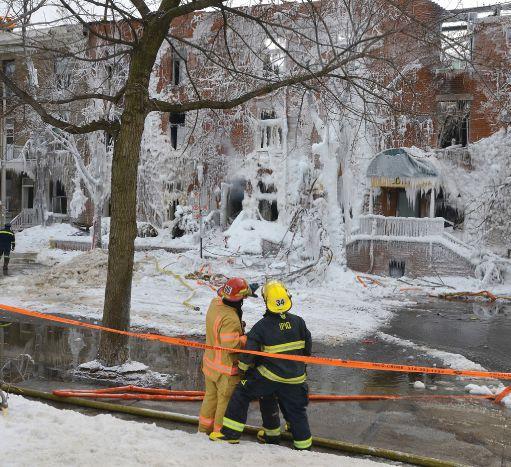
Welcome to Searing Heat and Numbing Ice; no, not a new reality show, just the winter fire ground anywhere in Canada. Cold weather makes one of our nation’s most dangerous professions even more hazardous. I love fire fighting, but fire-ground operations in below freezing weather are not fun.
Not only do the most serious fires occur during the winter months, the cold and wet days add special concerns to the fire ground. Icy, snow-packed roads can hinder access and slow down response times. Fire fighting operations must adapt to our local winter conditions.
Firefighter safety does not begin once on scene; it must become a primary consideration for incident command (IC) the moment the bay doors open.
So just how adaptable (adjustable) is your department? Consider the following questions:
• What winterizing needs to take place for your water-based extinguishers?
• Are your pumps kept wet or dry during winter conditions?
• What can you do to unthaw a frozen hose coupling?
• What should be done with charged lines and nozzles when not operating?
• What is the procedure if a hydrant is found frozen or inaccessible?
• What driving SOGs exist for operations in winter conditions? ICs must keep adaptability in mind as they make critical decisions:
• Are tactical positions attainable, or are they blocked by snow banks?
• Can personnel access all sides of the building?
• Has the snow hidden any hazards?
• Are fire hydrants visible and accessible?
The following is a collection of suggestions I have come across (not sure to whom credit belongs) regarding cold-weather fireground operations. Take what works for your department. Make sure that tire chains or other traction devices are available for all first-in units. If you have tire chains, make sure everyone is
Cold-weather fire fighting is hard on crews and can lead to frostbite or hypothermia. Ensure that extra turnout gear is available for firefighters, especially gloves.
Icy, snow-packed roads will slow down response times. Make sure that tire chains or other traction devices are available for all first-in units.
trained to install the chains and on proper driving techniques with chains. Those with insta-chains make sure they engage and disengage properly. You should also check your tandem axle differential lockups, if you have them.
Carry a supply of salt, sand or oil-dry to enhance footing and reduce the possibility of falls.
If charged hoselines are going into a long standby mode, partially open the control valves to allow water to flow and prevent freezing.
During heavy snowfalls, trucks may be forced to operate at a greater distance from the fire building. Add extra lengths of attack line to preconnects to compensate for that additional reach requirement.
Ensure that extra turnout gear is available, especially gloves. It’s a good idea for firefighters to wear layered clothing.
Bunker boots coupled with winter roof conditions can quickly add up to an accident. Some soles harden in cold weather, others are worn smooth (and really should be replaced); both cases can prevent firefighters from having good traction in the winter, especially on icy roofs. Removable traction grips are available to fit bunker boots.
Fire hydrants near roadways can quickly become covered with plowed snow. Routinely check on the accessiblity of hydrants and clear any snow from around them.
Small, handheld propane torches can help free frozen hydrant caps or hose couplings. A spray bottle full of antifreeze can also help free icy caps or couplings. Try spraying antifreeze on port cap threads ahead of time to prevent them from freezing.
Vehicles that are in marginally good mechanical condition during other seasons are almost guaranteed to fail when the weather turns
cold. Severe cold will significantly reduce battery capacity, so check all batteries as part of an overal winter maintenance.
Some departments have found some success with plug-in battery trickle chargers and engine pre-heaters to help during bitter-cold start-and-go scenarios, when heavy engine wear and poor performance can be a problem.
Finally, don’t forget to review the procedures for dealing with hypothermia and frostbite. This knowledge is not just for the public, but also for your fellow firefighters.
Remember that winter storms and frigid conditions can severely tax both your firefighters and your equipment. Please remind your members that whether working in desert heat or Arctic cold, firefighter safety is of paramount importance to you and your department.
Under pressure, you don’t rise to the occasion, you sink to the level of your training. That’s why we in the Canadian fire services train so hard.
And to you, the training officer, as this year comes to an end and a new one begins I want to personally thank you for your dedication to excellence in the Canadian fire service. Thank you for training as if lives depend on it!
Until next time – stay safe out there.
Ed Brouwer is the chief instructor for Canwest Fire in Osoyoos, B.C., and training officer for Greenwood Fire and Rescue. Ed has written Trainer’s Corner for 14 of his 27 years in the fire service. Contact Ed at ebrouwer@canwestfire.org
Virtual fire training
Improve department and personnel efficiencies with an e-learning program
By CHRIS DAVISON-VANDERBURG
My first experience in a brotherhood was when I played high school football. To this day, and much to my bride’s embarrassment, I’ll occasionally bust out the old leather bomber jacket that has my number and position on the sleeve. I wear my school colours with pride and I still love my brothers from that team.
There are lots of similarities between team sports and fire fighting: you likely wear your colours – OK, just navy blue ¬–on a T-shirt with as much pride as I do the old football jacket, and you likely love your brothers and sisters and feel honoured to be one of them.
In both sports and fire fighting, it takes hard work to be part of a championship team: effective training, mastering the physical skills, and drilling until tasks can’t be done wrong. In our departments, all three components can be improved with an effective e-learning program.
Instituting and getting firefighter buy-in to an e-learning program in your department won’t be easy. We have experienced technological and software challenges, and issues finding the right people with the right skill sets to create engaging and interactive content, (more on that in future articles). An e-learning program is not going to change the fundamentals of training and it’s certainly not going to replace drilling and practice.
Firefighters train and practise in order to get everyone working on the same page. Anyone who has ever taught a class, developed a course, or built an entire program knows just how much energy goes into preparing lesson plans and teaching them to firefighters. My football team took three years to develop into an effective and cohesive group with the skills needed to move a ball across a field. Considering the complexity of the fire service, it’s imperative that firefighters learn how to be effective
and efficient with their training, practice and drilling time.
E-learning can provide a multitude of efficiencies for your fire department, but it takes time; there is no magic formula that makes a good e-learning program, tailored to your department’s specific needs, which is engaging, interactive and easy to produce. Integrating a program takes work, creativity and line backer-sized patience.
In future articles I will detail the lessons Brampton Fire and Emergency Services has learned about developing e-learning modules. First, though, a bit more about why our organization has invested in the virtual classroom. The bottom line is that e-learning benefits both the department and the front-line crews.
BENEFITS FOR FIREFIGHTERS
The best thing about e-learning modules for end users is that they provide personalized learning experiences in a pressure-free environment.
Each of us has unique experiences and understanding of any given fire-service topic. A well-designed e-learning module allows learners to control their training experiences and tailor them to their own unique knowledge, skills and abilities. They can skip what they already know and focus on new information.
How many times have you sat through a class and listened to things that you already know in order to pick up just one or two nuggets of new information? Wouldn’t it be nice to have a directory at the beginning of the class that lets you customize your learning experience? Students can still review previously learned materials, however, the option is there to cut straight to the chase.
E-learning modules are designed to be broken down by topics, levels or specific job functions such as officers or firefighters, in order to appeal to each learner. Individuals can then personalize their learning accordingly.
If an organization wants proof that firefighters learned specific skills, the modules include assessment material and quizzes that can be set up so that when a student gets an answer wrong, it forces a review of that topic before moving to the next question.
The most significant benefit of an
ABOVE AND LEFT An e-learning program can cut down on the hours that firefighters spend in the classroom to give them more time on the training ground.
e-learning experience is the ability for firefighters to work at their own pace. With a virtual program, time constraints become less of a factor since individuals can repeat key points, rewind and re-watch videos, or start and stop as needed. Additional control allows users to do what they need to in order to fully grasp and then retain the material. Improved retention has direct benefits for both the individual and the organization.
Each time an e-learning module is used, the return on investment improves. There are minimal delivery costs and the expense of producing the module is frontloaded so the more uses, the better the return on investment. How many times have you taught the same subjects over and over again to another batch of wide-eyed recruits?
Egos are often on display in the classroom. Pride can get in the way of people showing vulnerability. As a result, most people will not let on that they don’t understand something and may not ask the instructor for clarification or to repeat what was presented. This is especially the case with senior firefighters or officers when they feel that they should already know the material.
In a virtual environment, people have the freedom to make mistakes and learn from them. The outside pressures are removed and students can focus instead on learning in the most effective, efficient and concise manner available.
BENEFITS FOR DEPARTMENTS
E-learning also compresses training time – some say by as much as 60 per cent – and allows for the efficient use of down time at the station. Night owls can do their modules once everyone has turned in, and early birds can do theirs while enjoying morning coffee. Learning is on demand; keeners can even learn from their mobile device while waiting at the doctor’s office.
LIMITS TO E-LEARNING
E-learning helps departments achieve unparalleled levels of standardized training, transcend the traditional logistical issues of face-to-face training, and offers a constantly increasing return on investment.
Think of the effort that goes into standardizing certain aspects of the fire service. How many NFPA standards are there? How many SOGs and policies does your department have? Having the team on the same page is necessary in order to win, and that is the goal of every training officer (and football coach) across the country. But what if there are different people teaching the same subject in different ways? E-learning allows training officers to instruct with unparalleled consistency. The message for each class, each station and each firefighter is identical with zero confusion or contradictions.
Logistically, e-learning puts and end to scheduling nightmares of matching up available instructors and crews. For larger departments, e-learning can reduce costly overtime and instructor wages. Smaller departments are still able to instruct when the single all-star instructor misses practice night or moves out of town.
But here is how to kick a field goal and get bonus points: the longer a department manages to use and recycle a specific e-learning module, the better the value.
E-learning will never replace what is most important: drilling the basic skills needed to do the job. I believe that the No. 1 priority for any training officer or division is to create a group of unconsciously competent people who are so well-rehearsed at the task level that they can blow past any type of defense with ease – be it a locked door, an IDLH environment or a mangled vehicle. Football games are won by running windsprints, practising tackles and catching passes with so much repetition that plays are flawlessly executed. You can’t learn how to hump hose on a computer, and you aren’t going to learn how to give compressions by watching a video. We need to get our firefighters doing these task-level skills over and over and over again. But firefighters need to spend their limited time wisely – i.e. not sitting in a classroom.
In theory, e-learning could eliminate the classroom altogether for most subjects. All of our teams are filled with winners, but a championship team gets that way by practising those psychomotor skills needed to do the job. If you spent your annual classroom time practising forcible entry, moving hoselines or cutting open car doors, how much better would your team be?
Embracing e-learning will allow firefighters to spend less of their face-to-face time talking about how to do something, and more time practising and drilling.
Chris Davison-Vanderburg is a training officer with Brampton Fire and Emergency Services. Email Chris at chris.vanderburg@brampton.ca and follow him on Twitter @CapHyphen
BACKtoBASICS
Engine company ops – the blitz attack
BY MARK VAN DER FEYST
Advancing a preconnect hand line into a structure is a common offensive attack to get water to and on the fire quickly. Another option for engine companies is the blitz attack. Essentially, the blitz attack is an offensive manoeuvre that involves sending all available water at once onto the seat of the fire. Just like in football, the defending team will blitz the offence by sending the linebackers, the cornerbacks and defensive backs in an all-out assault to sack the quarterback.
A blitz attack is an offensive attack that combines exterior-water application and an interior-offensive attack. The blitz attack is transitional because there is initial large-scale water delivery to knock down the fire, followed by the advance of an attack line to complete the rest of the job.
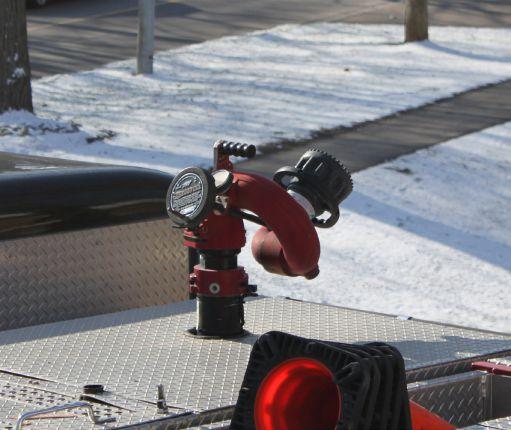
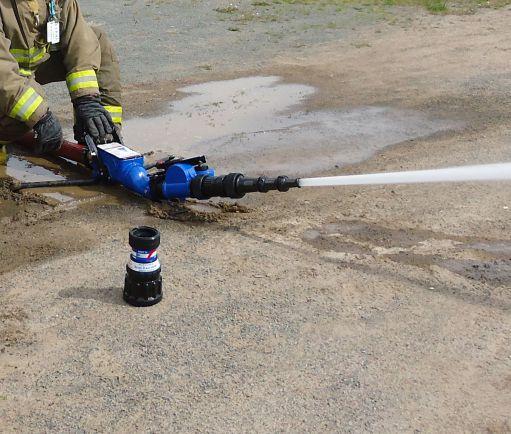
The initial blitz attack uses either the deck gun mounted on top of the engine (photo 1), a 65-millimetre (2 1/2-inch) hand line, or a ground monitor specifically designed for a blitz-type set up and delivery. Photo 2 shows a ground-monitor device that is designed for a single firefighter to easily grab and set up for quick water deployment. While many departments use ground monitors only as defensive weapons, these devices, with proper training, can also be used as fast and easy-to-operate offensive tools.
Blitzing is a great tactic that can be employed with minimal staff or arriving fire trucks. It is designed for both single-truck and multi-truck applications. A single truck arriving on scene can use the blitz attack as an offensive strategy to accomplish a rapid fire knockdown. A multitruck response can achieve the same thing with one truck focused on the initial water delivery and the second truck pulling off a hand line for an interior attack. (For videos of these strategies, find this column online at www.firefightingincanada.com/training/fire-ground)
The blitz tactic is ideal for fires that are of significant size and development in residential garages, exterior balconies, front walkways or wrap arounds, commercial fires, strip mall fires, small, low-rise apartment balconies, motels and so on. A large fire at an advanced stage requires a large quantity of water to overcome the heat-release rate, which can be delivered only through large appliances and hoselines.
In order for this tactic to work effectively, the first-arriving truck needs to have a clear shot to the location of the advanced fire, free from obstructions such as trees or parked vehicles. As shown in photo 2, there are no obstructions preventing water streams from reaching if there was fire in the garage or coming out the front door. Remember, the blitz attack is designed for large, advanced fires –not for room-and-contents fires contained to one small portion of
Photo 1: The initial blitz attack will often involve a fixed masterstream device attached to the top of the apparatus to accomplish a rapid knock down.
Photo 2: A ground-monitor device is designed for a single firefighter to easily grab and set up for quick water deployment in a blitz attack.
PHOTOS BY MARK VAN
DER FEYST
the house or for fires that are not self-venting from the structure.
Think about equipment reach and the quantity of water needed before opting for a blitz attack. Determine the average set-backs from the street to the front of the properties in your response area, which will dictate what type of nozzle you will need – smooth-bore or automatic-combination nozzle. Generally speaking, smooth-bore tips achieve a longer reach and larger quantity of water delivery.
In a worst-case scenario, a single truck arrives on scene of a fully involved garage fire with second and third units arriving a short time later. The officer instructs the driver and crew that this will be a blitz attack and communicates this across the radio as part of the initial scene size-up and report. Next, the driver positions the truck for a blitz operation by parking in direct line of sight of the fire.
One crew member exits the truck and climbs on top to ready and man the deck gun. Once readied, the pump operator/driver discharges water to the deck gun. The crew member operates the deck gun by sweeping it back and forth, up and down, to hit the seat of the fire and knock it down.
Meanwhile, another crew member secures the water supply by hitting the hydrant, if one is available, to maintain continuous water delivery to the deck gun until the initial attack line is pulled off and readied. At the same time, the officer completes his 360 walk-around to make sure that they are still in an offensive strategy.
Once the water supply is secure, the hydrant firefighter grabs the preconnect hand line, stretches it out, charges it with water, and then makes entry along with the officer to conduct interior operations.
If there is no hydrant available and rural water operations are needed, one firefighter sets up the porta-tank for the tanker operation instead of the hydrant operation.
The blitz tactic works well for a fire department only if its members have practised it over and over again to understand their water-supply duration from their booster tank in conjunction with establishing a water source. There are many variations of the attack –this is just one option on which to train. Play around with this tactic on the training ground to see which variation will work for you.
Mark van der Feyst has been in the fire service since 1999 and is a full-time firefighter in Ontario. Mark teaches in Canada, the United States and India. He is also the lead author of Residential Fire Rescue.
Email Mark at Mark@FireStarTraining.com
For your cleaning, decontamination, inspection, testing, repair and record keeping of your firefighter’s protective clothing... we have you covered!
24/7 access to FIRETRACK®, the online data base that provides you with complete details of your C&M Program with FSM. We do the work for you!
ETL Verified ISO 9001 Registered Fast turnaround Complete Bunker Gear Rental Program – Toronto Location
Photo 3: For an effective blitz attack the first-arriving truck must have a clear shot to the location of the structure, free from obstructions such as trees or parked vehicles.
BY BILL BOYES Deputy chief, Barrie, Ont.
ILEADERSHIPFORUM
Access credible, simplified research
n my past few columns I have focused on career development and the importance of post-secondary education for aspiring and current senior officers. This month I am deviating from the field of career development to discuss an important, yet relatively unknown project that is altering fire service culture and operations. The IAFC’s Firefighter Safety Through Advanced Research (FSTAR) project reviews scientific research to bridge the gap between academia and the fire service.
FSTAR is composed of fire-service stakeholders such as researchers, scientists and chief officers with ties to organizations such as NASA, the National Institute of Standards and Technology (NIST), the United States Bureau of Alcohol, Tobacco and Firearms, the United States Department of Defense, and various state agencies and local fire departments. The project has developed a repository of fireand emergency-service related research that is being broken down into manageable and easy-to-understand fact sheets and training aids.
Fire departments must ensure they are informed of and implement the newest findings in the fire-service field. Ignoring innovative research or relying on past practices will do little to progress the industry. The need for evidence-based decision making is nothing new for senior officers; however, we need to better understand the data we use and ensure it is valid, reliable, derived using a sound methodology and if possible, subject to rigorous peer-reviewed scrutiny.
Many members of the Canadian fire service are probably unaware of FSTAR given its United States roots and funding through FEMA’s Assistance to Firefighters Grant Program. As the only international member working on the project, I attended the first meeting in Philadelphia to witness some of the new NIST research and discuss the strategic direction of this new initiative.
ability and/or time to distill key takeaways from a piece of detailed scientific research and implement the findings, all the while staying current with the more recent published articles.
FSTAR realized the need to examine a wider range of the scholarly discourse on topics such as firefighter wellness and administrative leadership. While we cannot understate the importance of effective, efficient and safe fire fighting, the profession is faced with major challenges including how to educate our citizens, focus on fire prevention, proactively deal with occupational exposures and stress injuries and lead a public sector organization. Aspiring chief officers need to embrace formal post-secondary education to ensure they have the skills necessary to respond to the challenges within an environment inundated with information and change.
Two prominent examples in Houston and Boston highlight the impact of FSTAR and academic research. In Boston, two firefighters recently lost their lives and in Houston, there have been 14 line-ofduty deaths since 2000. Both departments have embraced research to affect cultural and tactical changes in their operations. Change within the fire service can be glacial at times and implementing revolutionary
Ignoring innovative research or relying on past practices will do little to progress the industry. ‘‘ ’’
The working group was created originally to help decipher the plethora of new fire-service research from NIST, Underwriters Laboratories (UL), and a number of other academic institutions. The focus was primarily on firefighting strategy and tactics along with a few health and safety topics. It quickly became apparent that while there is significant fire-service research being undertaken, the bulk of the fire service is unaware of it, or incapable of applying it, due to the method by which scientific and academic research is disseminated.
The academia-to-practitioner gap exists in many professions. It is unfair to expect frontline firefighters, officers or chiefs to have the
Bill Boyes is the deputy chief for Barrie Fire and Emergency Service in Ontario. Contact him at Bill.Boyes@barrie.ca
changes to tactics that have become ingrained over the decades is difficult. The leadership of both departments witnessed the findings of the new firefighting research and committed to educating and training all firefighters and officers on a new approach underpinned by research – not consensus, experience or opinion. When you take into account the history and tradition of these large, urban fire departments, the speed at which they changed their firefighting strategy and tactics according to NIST and UL findings is incredible.
It is not surprising that peer-reviewed research is not widely read by many of us in the fire service given its complexity; it is often difficult to interpret findings, and they may or may not be applicable to the specific situation that a department is facing. While FSTAR is in the very early stages, I encourage you all to visit the website – www. fstaresearch.org
BY MARGO TENNANT Fire and life-safety education officer, Brampton, Ont.
AFULLYENGAGED
Educators learning through teaching
s public educators we teach, but we are always learning from our audiences. To get our messages across, we need to understand our audiences and determine the best ways to reach them.
Children in kindergarten to Grade 3 are easy to reach: we go visit the school with the big red truck, tell them what it is like to be a firefighter, deliver a fire-safety message, show them the tools, and give out little red helmets or stickers. Right?
But as kids grow up tethered to technology, it’s crucial that we tap into their interests and skills (and, frankly, their knowledge and ideas!).
Brampton’s Fire/Life Safety Education Centre has leaped into the 21st century by creating fire-safety games on smart boards and smart tables. Younger kids, in Grade 1, sort hot and cold items into the appropriate boxes. If an item is placed in the wrong box, the game stalls until it is moved to right spot.
Grade 4 students arrive at our education centre with iPads and tablets in hand, taking pictures and notes, and we learned from them that communication through technology is their preference. We had to step up our game, so to speak; for those students we created a Jeopardy-style fire-safety challenge. The students are very engaged and enjoy competing with their classmates.
Pre-teens start to stay home alone with new responsibilities. We hope they have been educated by their parents about how to use the stove, microwave and other small appliances. But did the parents discuss what to do if the smoke alarm goes off? How do we reach those older teenagers and young adults? Through social media, of course. This generation seems to be tied to their cell phones – all questions, it seems, can be answered instantly by asking Suri. But how do we get people to ask questions about keeping their families and loved ones safe? If a fire or tragedy happens locally, people pay attention for a short period of time and then once media coverage fades, fall back to old habits – having outdated smoke and CO alarm or dead batteries, leaving cooking unattended. How do we keep fire safety in their minds (or on their Twitter or Instagram feeds)?
Facebook, Instagram and Snapchat to help us get fire-safety messages to various age groups and other demographics.
Selfie is now a word in the dictionary – and one we at Brampton Fire and Emergency Services have grown to love. Who hasn’t taken a selfie? In the past we have held contests asking residents to send photos of their families standing at their safe meeting places in front of their homes, another of residents testing their smoke alarms. This year, through Fire Prevention Week, we tweeted a contest to spot Sparky, take a selfie and submit it for a chance to win a prize. We had some selfies submitted, although not as many as we would have liked. But the contest was still a positive for us. People may not take that extra step and submit a photo but we reached new followers through Twitter. Not everyone actively participated by posting their own photos, but they read our messaging and shared it, and now we have more followers who will receive future-safety messages. I have started using Twitter and Instagram; at times it seems foreign to me but I know I must stay fresh by adapting to the times and technology and using the tools so widely coveted by those I want to reach.
Selfie is now a word in the dictionary – and one we at Brampton Fire and Emergency Services have grown to love.
Education is lifelong learning whether you are a firefighter, fire prevention officer or an education officer. Fire habits change, and we need to change to a modern attitude and embrace Twitter,
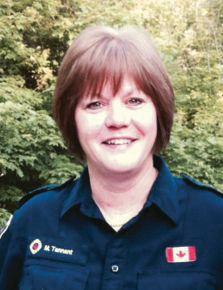
Margo Tennant is a fire and life-safety education officer with Brampton Fire and Emergency Services in Ontario. Email Margo at margo.tennant@brampton.ca and follow her on Twitter @bramptonFireES
Teaching in a diverse community such as Brampton, where Punjabi is the second-most spoken language, requires creative thinking. Our goal is build bridges and partnerships with already-established groups and attend multicultural events. We have been guest speakers on Hindi radio talk shows with the host translating to the audience. As guests on a weekly TV show that broadcast across Canada we were able to use props as visual aides as our messages were translated. We need to reach the younger generation and hope they take the message home. Brampton now provides multilingual pamphlets with fire-safety messages with pictures that match that message and we’re working on social-media messaging for this demographic.
Once you take on the role of an educator, you’re just starting to learn. Invest in your community!
BY GORD SCHREINER Fire chief, Comox, B.C.
ASTOPBAD
Fill your department with real firefighters
re you a T-shirt firefighter or a real firefighter? Are you wearing a costume or uniform? Do you take being a firefighter seriously? These are the questions that you, as a chief officer, should be asking your team.
While it might be hard to tell at first glance, it is easy to weed out the T-shirt firefighters once the tones drop or by observing their daily actions. The way they drive, the way they talk, and the way they act all demonstrate how good they are as firefighters. Real firefighters are trained, ready to respond and operate safely. Getting a T-shirt is easy, but being a real firefighter is a life-long journey that requires great dedication and hard work.
Fire crews must constantly prepare and train. There is no ceiling because they are never done training. When your team finishes one training program, there is always another one to do. Unfortunately, there are some firefighters who think that once they put on the T-shirt they know it all. This type of firefighter is dangerous.
Real firefighters are constantly studying, researching and training. Real firefighters are fit, physically and mentally. Real firefighters are honest, ethical, socially responsible and nice. They do more than is expected or required of them. Fire fighting is not a menu and firefighters cannot pick and choose their ideal traits; they should have all of these traits.
I am in my fortieth year in the fire service and am still constantly learning and improving. I am constantly taking new courses or reviewing previous courses. You should be too. As the manager of the Comox Fire Training Faculty in British Columbia, I get to see a lot of new firefighters every year. When I give them a T-shirt and watch them light up, I am excited and proud, however, I am also quick to tell them they must earn that T-shirt and earn it every day for the rest of their careers (career or volunteer).
of lack of commitment. If recruits are not excelling in small volunteer or paid-on-call fire stations, chances are very high they will not get a second look for career fire-service jobs.
To become good at anything, people need to make sacrifices, and the same goes for being a good firefighter. Firefighters do not need to sacrifice their family time, their regular jobs or their health, but they do need to sacrifice a bit of their recreational time. Firefighters may have to give up some of their social lives, some of their gaming time and some of their sports time.
Real firefighters know their jobs, know their communities and are always ready to respond. They also represent themselves and their departments well, regardless of what they are doing. Being a T-shirt or real firefighter can be contagious in your department. Do all you can to make sure your department is full of real firefighters.
One way to encourage real firefighters is to connect recruits with good fire-service mentors. Mentoring is key to the success of the new member and the department and often adds value to the existing member (mentor). New recruits need to be challenged to ensure they become great firefighters. Chief officers need to ensure that
One way to encourage real firefighters is to connect recruits with good fire-service mentors. ‘‘ ’’
Some firefighters talk the talk but can’t walk the walk. I always say to new firefighters: “Don’t tell me, show me!” Show me that you want to be here; show me that you take this commitment seriously; show me that you care. The reality is that some, especially new firefighters, can’t make the commitment that is needed.
I can tell very quickly by talking or watching firefighters train, how seriously they are about this business. Many young firefighters dream of a fire-service career but won’t back up that dream with on-going, dedicated hard work. Many struggle with passing a simple test because
Gord Schreiner joined the fire service in 1975 and is a full-time fire chief in Comox, B.C. Contact him at firehall@comox.ca and follow him on Twitter at @comoxfire
expectations are explained to new members, and should establish benchmarks along the way to ensure new members are growing.
Leaders also need to constantly assess all of their members and make necessary adjustments along the way to ensure their departments remain strong and become even stronger. Release the firefighters who are here only for the T-shirt and replace them with others who are willing to invest in themselves and their communities. If we allow T-shirt firefighters to thrive in our departments, service and safety will erode.
The fire service is full of many great people and tons of opportunities. We need to let our new firefighters know that if they do not invest time and effort into becoming real firefighters, they will miss many opportunities and may not be able to remain in our departments. Just wanting to be a firefighter is not good enough, you have to work hard to get there and work hard to stay there!
Smooth Bore Performance from a Combination Nozzle…
TFT’s Mid-Force dual pressure automatic nozzle offers you a choice of maximum flow, or maximum reach and penetration from a single nozzle
The low pressure mode provides target fire flows with greatly reduced nozzle reaction, and the integrated slide valve produces a turbulence free straight stream, even when gated.
Your choice of molded rubber or stainless steel spinning fog teeth.
To learn more about how you can dramatically improve your initial attack flow operations automatically, contact your local TFT dealer today.