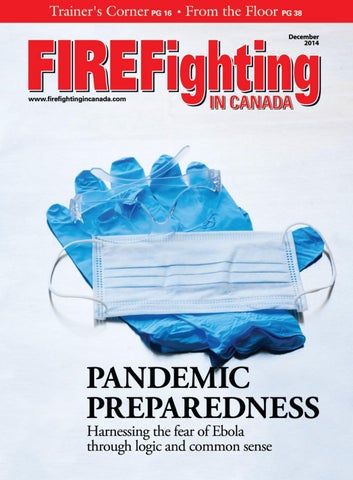
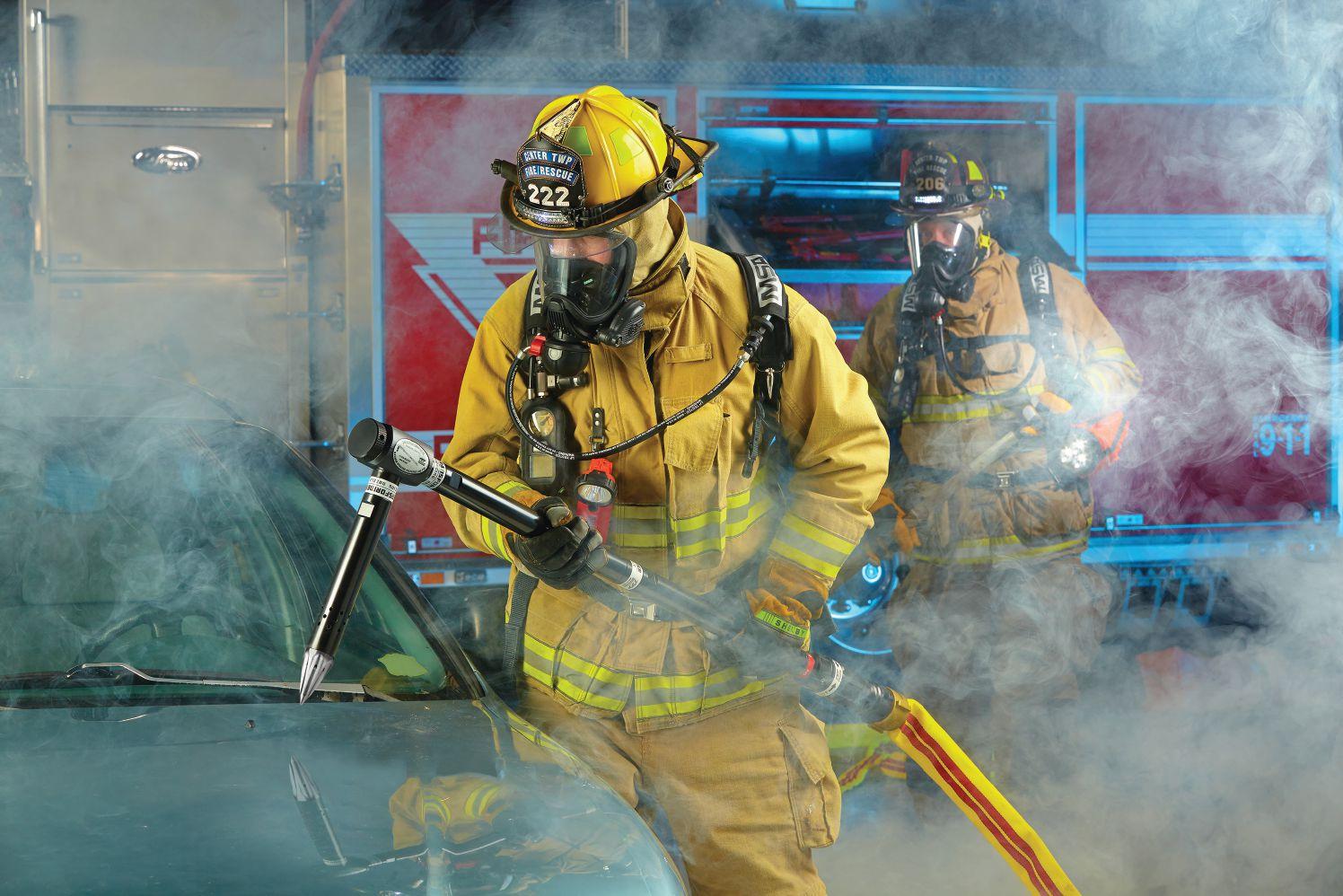
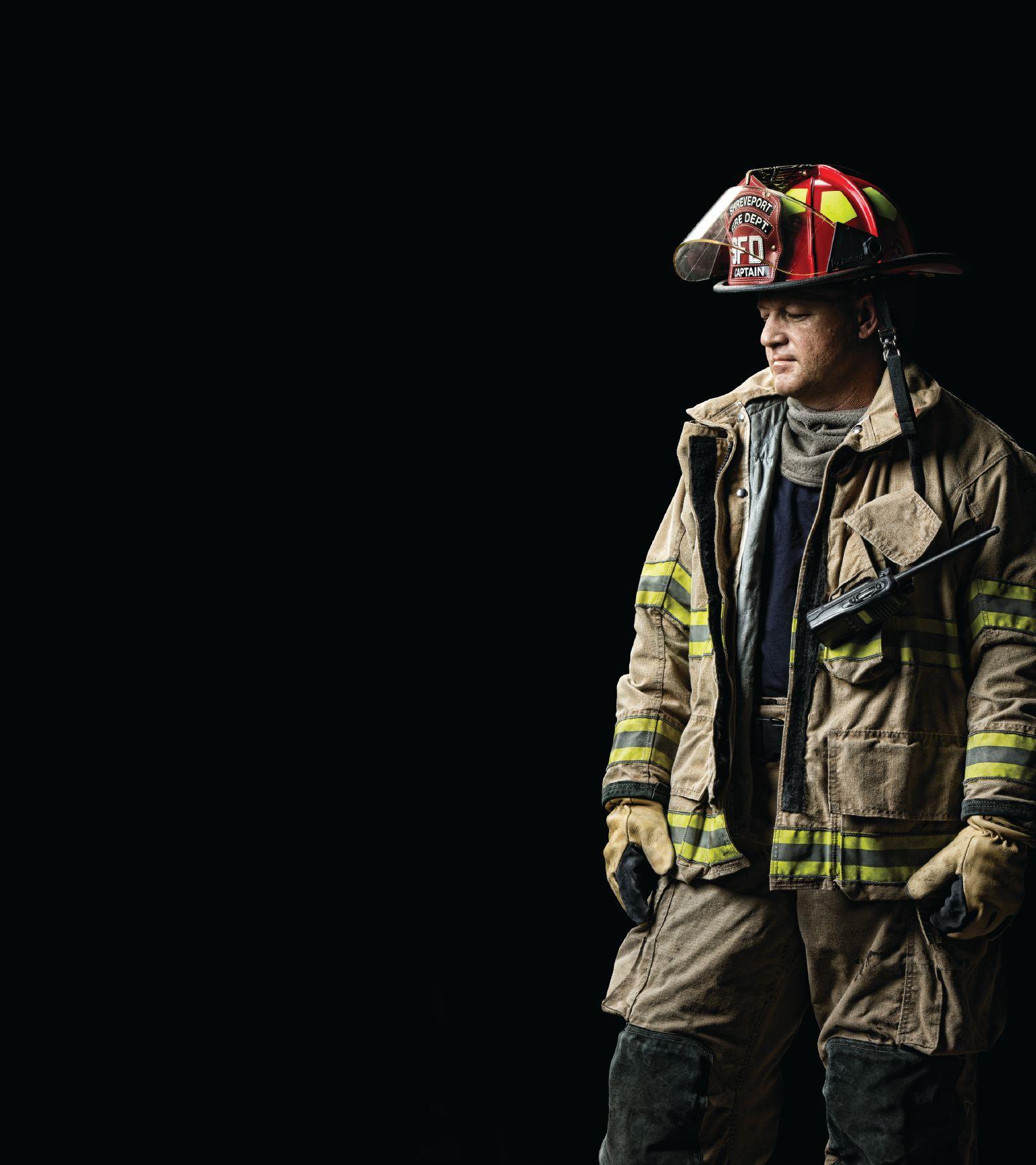
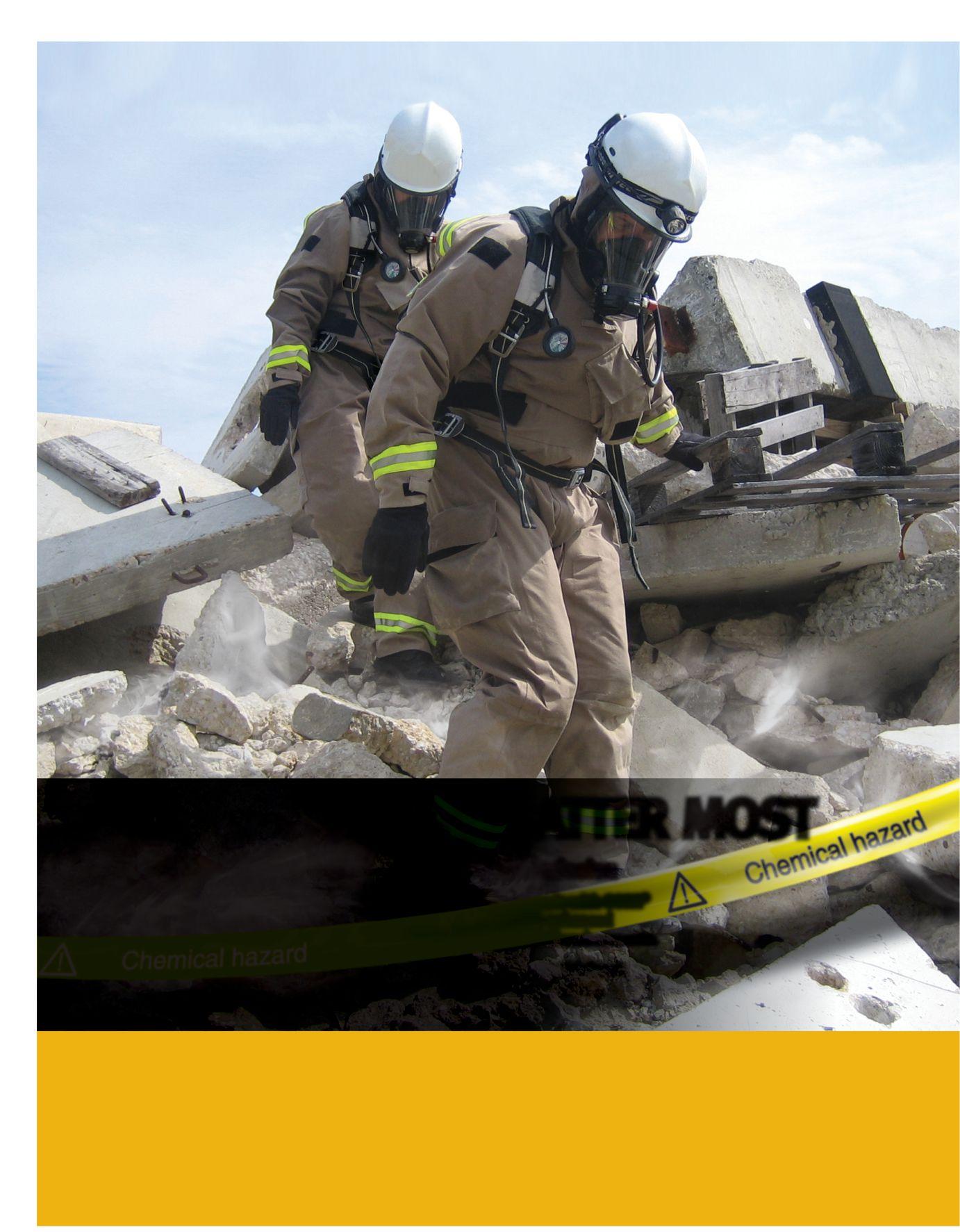
The Ebola virus has infected Canadians, including first responders, with a fear like no other. For firefighters, asking questions, wearing the proper PPE, and following standard operating guidelines is the best way to prepare for a pandemic, and the best antidote for fear. By Jay Shaw
INCIDENT REPORT
Exactly one year after members of the Sooke Fire Rescue Department in British Columbia responded to one of the community’s largest fires in recent history, another major fire tested the lessons learned 365 days earlier. As Steven Sorensen writes, the incident drew attention to the importance of common accountability tags, mediarelations personnel, and enhanced joint-training sessions.
BY LAURA KING Editor lking@annexweb.com
WKnowledge about Ebola is protection
riter Jay Shaw suggested that the headline for our cover story about Ebola preparedness be “Fear virus,” because of the seemingly over-the-top angst among first responders about a threat which, as of Nov. 6 when this issue of the magazine went into production, had yet to surface in Canada.
While we left the words virus of fear in the story on page 10, we wanted to make sure the headline on the cover was balanced and fully explained the context of Jay’s thorough report.
But Jay’s point is well taken: while Ebola is a horrible disease, it’s tough to contract and as of early November – save for three cases in Dallas and one in New York – had been contained primarily to regions that lack the adequate infrastructure to mange it.
there has been a huge and cry over a perceived lack of preparedness against a disease that does not exist here. Go figure.
Think back a few years to when responders insisted they be among the first to receive shots for H1N1. Or back to 2003 and the SARS outbreak in Ontario. These were real, but manageable threats.
On Oct. 16, after the three confirmed cases of Ebola in Dallas, IAFF president Harold Schaitberger posted a YouTube video in which he called for a safety stand down for Ebola preparedness.
ON THE COVER
While media hype is a given – pictures of doctors in full PPE and rows of suffering patients make for great TV – and fear of the unknown is human nature, failing to pay attention to credible sources and getting caught up in overblown and sometimes inaccurate details is easier than doing the necessary research to refute bad information.
North American first responders are at a higher risk of contracting influenza than Ebola. See story page 10.
As Dr. John Embril, the head of infectious diseases with Winnipeg’s Health Sciences Centre, told Jay, first responders should be more worried about the thousands of people who die in Canada every year of influenza than about the risk of Ebola.
While influenza can affect anyone, it is particularly hard on young and older people –those for whom family members are inclined to call 911. First responders are not required to be immunized against this known threat that leads to thousands of deaths annually, yet
“The IAFF made this decision because too many jurisdictions in the United States and Canada have not adequately provided the training, equipment and resources needed so you can respond appropriately to potential Ebola incidents,” Schaitberger said.
But as Embril says in Jay’s story, the risk of Ebola in North America is minuscule simply due to already-in-place protocols. The situation in West Africa, he says, where patients lie side by side, is a perfect storm of transmission.
If you really want to protect yourself from viruses of all kinds, he says, get the flu shot, pay attention, and wash your hands.
ESTABLISHED 1957
December 2014 VOL. 58 NO. 8
EDITOR LAURA KING lking@annexweb.com 289-259-8077
ASSISTANT EDITOR MARIA CHURCH mchurch@annexweb.com 519-429-5184
(with GST $25.20, with HST/QST $27.12) (GST - #867172652RT0001) USA – 1 Year $40.00 USD
We acknowledge the financial support of the Government of Canada.
Occasionally, Fire Fighting in Canada will mail information on behalf of industry-related groups whose products and services we believe may be of interest to you. If you prefer not to receive this information, please contact our circulation department in any of the four ways listed above.
All advertising is subject to the publisher’s approval. Such approval does not imply any endorsement of the products or services advertised. Publisher reserves the right to refuse advertising that does not meet the standards of the publication. www.firefightingincanada.com
The New 2015 Dodge Charger Enforcer is at the top of the list for fire and other first responder departments. Its breakthrough 292 HP 3.6L PentastarTM VVT V6 yields an ideal blend of power and fuel economy. And for even faster response, call up the legendary 5.7L HEMI® V8 delivering 370 HP. With over 70 available safety and security features, plus a 5-year/160,000 km extended service plan, it’s an investment in your team built to stay on duty for years to come.
STATIONtoSTATION
ACROSS CANADA: Regional news briefs
Exercise tests CBRNE preparedness
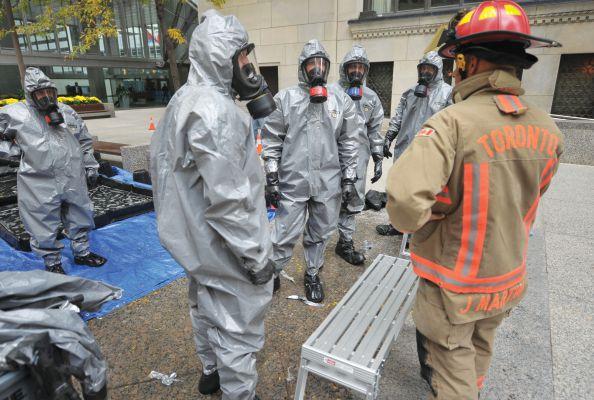
Members of the Toronto Fire Services CBRNE team prepare to enter Commerce Court, a highrise office building and concourse, during an exercise on Oct. 26; the scenario involved multiple packages – some explosive – left in the structure.
There wasn’t much detail in the press release alerting reporters to a training exercise for about 100 Toronto police officers, firefighters and paramedics on Sunday, Oct. 26. However, some early legwork had provided enough detail that we knew
THE
to send photographer John Riddell downtown to shoot members of Toronto Fire Services donning and doffing hazmat suits in response to a call for multiple packages at a downtown office tower/ shopping concourse.
“The Toronto Police
BRASS POLE
Promotions & Appointments
KAREN ROCHE is the new deputy chief of the Burlington Fire Department in Ontario. Roche began her 18-year career in the fire service as a volunteer firefighter in Burlington. In 2002, she left to work for the department in
Hamilton, Ont., where she was promoted to assistant deputy chief. Roche assumed her role in Burlington on Dec. 1.
DAVE WOOD is the new fire chief for St. Catharines Fire and Emergency Management Services in Ontario. Wood was hired by St. Catharines as a firefighter in 1991 and was promoted to junior captain and senior captain before taking
PHOTO BY JOHN RIDDELL
Service, Commercial Real Estate – Financial District Security Group and other emergency services will be participating in the exercise which is not in response to any threats and there is no danger to public safety,” Toronto police said in a news release.
“The exercise will test how emergency services and building owners respond co-operatively during a crisis.”
Riddell, an experienced photographer with TFS accreditation (meaning he gets more access to incident scenes than many mainstreammedia photographers) and a good relationship with the fire service, was at the exercise at the crack of dawn and in the media staging area by 8:15 a.m.; the exercise ran until 2 p.m. and was followed by a second response drill at the Rogers Centre that tested emergency task force protocol in the event of a shooter in the building.
on duties as one of two deputy chiefs in 2011. Wood was appointed chief on Oct. 22.
LEN MACCHARLES was appointed the new fire chief for Nelson Fire and Rescue Services in British Columbia on Nov. 17.
MacCharles has 35 years of experience with the Calgary Fire Department, where he began his career in 1981 and most recently served as the deputy chief of
The exercises happened days after a 24-year-old soldier Nathan Cirillo was shot at the War Memorial in Ottawa, on Oct. 22, and Warrant Officer Patrice Vincent, 53, was killed in Quebec, on Oct. 20. Toronto police said the exercise had been planned for months and was not in response to the incidents, although Daniel Martin, a staff sergeant with the Toronto Police Service told The Globe and Mail that the exercise took on a more urgent tone after the incidents.
“We had to be very specific with our strategic briefing after what happened in Ottawa,” he said.
Police said the exercises were meant to test the abilities of public and private responders to communicate and co-ordinate with each other in situations in which resources are overburdened.
-Laura King
operations, effectiveness, efficiently and evaluation.
WALTER MACNEIL has been promoted to deputy fire chief for the Cambridge Fire Department in Ontario. MacNeil joined the department as a firefighter in 1985 and served as captain and platoon chief before
Collingwood firefighters use sauna to detoxify
Fire Chief Trent Elyea of Collingwood Fire Department in Ontario says it’s time for departments to start focusing on “the person inside the bunker gear” – and that includes detoxifying.
Departments, he says, already prioritize getting the best gear possible and make sure that gear is treated postfire, but the firefighter inside needs to be treated, too.
“If we had a really bad fire and our guys go in, no matter how good your gear is there is still an absorption rate your body takes in from the smoke and chemicals,” Elyea said in a phone interview.
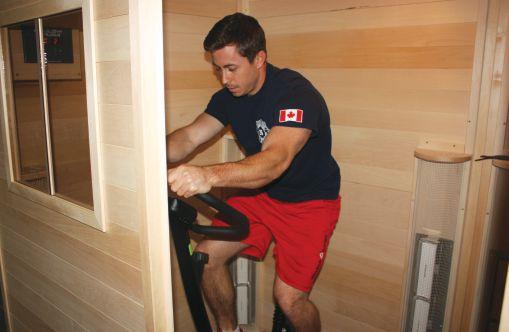
In 2013, Collingwood firefighters moved into a new station. Included in the stateof-the-art building is a Cycle Sauna from locally based SaunaRay, to help firefighters rid their bodies of cancercausing chemicals.
“This is not a leisure device; the Cycle Sauna is a detoxification tool,” Rodney Palmer, president of SaunaRay Inc., said in a phone interview.
The science that’s triggering firefighter interest in saunas is based on University of Alberta research that concludes sweating helps eliminate toxic metals 10 times better than in any other method.
The Cycle Sauna, Palmer said, is designed to accelerate sweating by combining mild activity from a stationary bicycle and low-heat, medicalgrade infrared heaters. The low heat targets a person’s subdermal layer, triggering the skin to sweat out chemicals like lead, cadmium and aluminum.
According to Palmer, about 20 chiefs across the country have Cycle Sauna units in their homes, as do three Ontario departments – in Collingwood, Trenton and Markdale.
Collingwood, Ont., firefighter Chris Heath works up a sweat in the Cycle Sauna housed in the department’s new station, which opened in 2013.
Elyea, who is not affiliated with SaunaRay, said his firefighters have embraced the Cycle Sauna because they know it’s in their best interest.
Fire-service leaders, he said, owe it to their firefighters to use every method possible to keep them healthy and alleviate the risk of
Perth County creates CO awareness video
A volunteer department in Ontario is using professional video as a tactic to spread public awareness of carbon monoxide safety.
During Ontario’s first ever CO Awareness Week in November, Perth East Fire
Department uploaded The Wake Up Call – a video shot by award-winning filmmaker Zach Patton.
Todd McKone, fire prevention officer for Perth East who led the project, said video is a great medium to
reach the public. “We wanted to be dramatic with our message and we wanted to make a point,” he said.
A project of this quality doesn’t come cheap though, says Perth East fire chief Bill Hunter. To make it happen, all
occupation-related cancer.
“If we have a tool – and it’s a simple tool – that we know works, why wouldn’t we use it?” he said.
The saunas cost between $5,000 and $7,000; they are also available for lease to fire departments. Find out more at www.saunaray.com - Maria Church
taking over the role of deputy chief on Oct. 14; he was formerly a regimental sergeant major with the Royal Highland Fusiliers and served in the Middle East for the United Nations.
more than 34 years of service.
RICHARD YOUNG retired from the Stratford Fire Department in Ontario on Sept. 30 after
Young began his fire-service career in 1980 with the Cambridge Fire Department in Ontario; he was hired by Stratford in 1990 as deputy fire chief, and then promoted to fire chief in 2005. Young is a recipient of the Queen Elizabeth II Diamond Jubilee Medal.
ROGER CLEMENT , division chief of fire prevention and life safety for Mississauga Fire and Emergency Services in Ontario, retired on Oct. 20. Clement started in the fire service as a volunteer for the Milton Fire Department in Ontario, and, over a 38-year career, held positions of captain and fire inspector before his promotion to deputy chief.
departments in Perth County contributed financially, as did as several associations and businesses.
Watch the video at www.youtube.com/ watch?v=aNOEgQBw2NM - Maria Church
KEN MCLURE, the fire chief of Golden Fire Rescue in British Columbia, died suddenly on Sept. 20. McLure was the fire chief in Cumberland, B.C., from 2004 to 2011 before becoming chief in Golden, where he played an instrumental role in increasing provincial funding for rural road and highway rescue services.
PHOTO BY TRENT ELYEA
STATIONtoSTATION
BRIGADE NEWS: From stations across Canada
The Carrot River Fire Department in Saskatchewan, under Fire
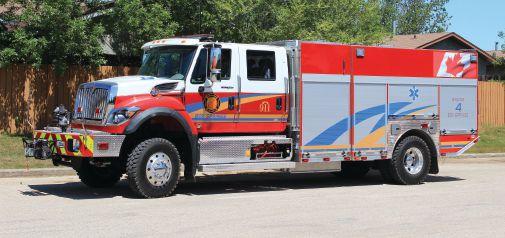
Chief Scott Debienne, took delivery in June of a Fort Garry Fire Trucks-built pumper-tanker. Built on Freightliner chassis and powered by an Allison 3000 EVS transmission and a Cummins ISL 350hp engine, the truck is equipped with a 1,000 IG copoly water tank, a Waterous CXVPA 1,250-IGPM pump, and an Aquis 2.5 One Step foam system.
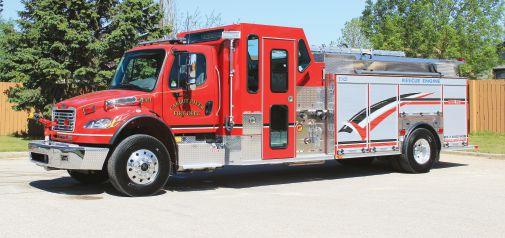
The Cypress County Emergency Services in Alberta, under Fire Chief Dennis Mann, took delivery in June of a Fort Garry Fire Trucks-built pumper. Built on a International 7,400 4X4 chassis and powered by an Allison 3,500 EVS transmission and a Maxxforce 10 350-hp engine, the truck is equipped with a 1,000 IG copoly tank, a Foam Pro 2002 system, a Waterous CXVK 1,000-IGPM pump.
The Gold River Fire Rescue in British Columbia, under Fire
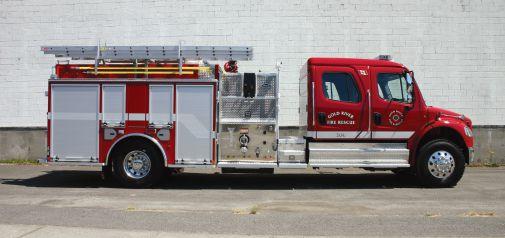
Chief Ric Begon, took delivery in July of a Hub Fire Engines & Equipment Ltd.-built pumper. Built on a Freightliner M2 chassis and powered by an Allison 3000 EVS transmission and a 350-hp Cummins ISL engine, this unit features a 1,050-gpm Waterous pump, a FoamPro 2001 system, a 1,000-gallon Copoly water tank, Zico LAS ladder storage, and a Whelen LED light package.
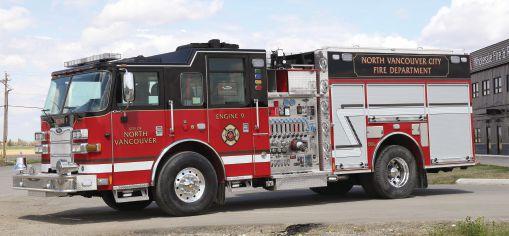
The City of North Vancouver Fire Department, the District of North Vancouver Fire Department, and the District of West Vancouver Fire Department each took delivery of a Pierce-built pumper. Built on Arrow XT chassises and powered by Detroit Diesel DD13 500-hp engines, the trucks are equipped with 2,000-gpm pumps, a 400-gallon water tanks, Husky 3 foam systems, Pierce PSV seats, Command Zone electronics.
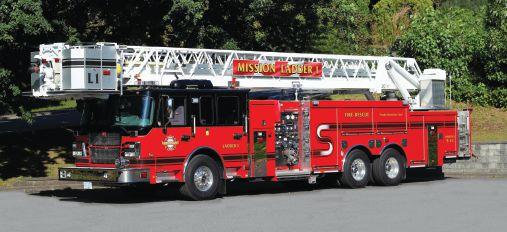
The Mission Fire Rescue Services in British Columbia, under Fire Chief Larry Watkinson, took delivery in July of a Smeal Fire Apparatus Co.-built aerial ladder platform. This unit is built on a Spartan Gladiator EMFD custom chassis, and powered by an Allison EVS 4000 transmission and a 600-hp Cummins ISX15 engine. It features a 2,000-gpm Hale Qmax pump, and a 300-gallon ProPoly water tank.
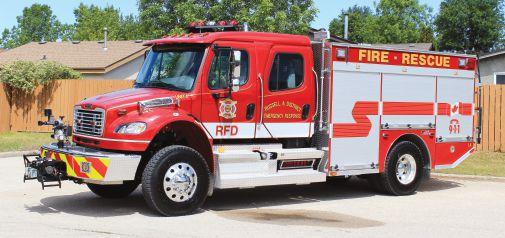
The Town of Russell Fire Department in Manitoba, under Fire Chief Marc Desaulnier, took delivery in July of a Fort Gary Fire Trucks-built pumper. Built on a Freightliner chassis and powered by an Allison 3000 EVS transmission and a Cummins ISL 350-hp engine, the Terminator truck is equipped with a 1,000 IG poly tank, a rear-mount 1,040-IG high-pressure Darley pump, TFT Tornado HP turret, and two HP Akron hose reels.
CYPRESS COUNTY EMERGENCY SERVICES
CARROT RIVER FIRE DEPARTMENT
RUSSELL FIRE DEPARTMENT
VANCOUVER FIRE DEPARTMENTS
GOLD RIVER FIRE RESCUE
MISSION FIRE RESCUE SERVICES
Pandemic preparedness
Harnessing the fear of Ebola through logic, common sense, science and best practices
By JAY SHAW
We’ve all been there. The station gong goes off and you hurry your way to the printer, the driver plots the route on the map and we take off, leaving a swinging Plymovent and four sets of shoes on the ground as the bay door closes.
En route, in the back of the engine, we look up the call details on the laptop and I start running through possible what-ifs for what will no doubt be another routine shortness-of-breath call. The run time is about 2.5 minutes and the conversation quickly changes to the weather, and whether the Jets will pull out another victory on the road.
We take the trauma bag, television, and the 02 kit and make our way up the sidewalk. I remember hearing one of the guys on the crew say we should get some fuel on the way back from this run. As I walk into this split-level house I am greeted by a young West African man sitting on the steps who says a pleasant hello. This guy is talking and breathing well, so A and B are good, I’m thinking.
As I introduce myself and reach for the patient’s wrist to take a radial pulse and start asking some questions, I turn to pull out a stethoscope from the trauma bag to start doing vitals; the man starts to cough violently. Because my body is turned down and to the right below him, I can feel his wet cough land on my left forearm.
With in seconds I start to wonder: the symptoms sound like the flu. This guy seems OK but he will need to be checked out at the hospital. The medics arrive and we load the patient onto the stretcher. The charge medic takes my report and we agree that this is not an Ebola call.
The medic starts to ask the patient some more questions, and all of the sudden the answers are different: a family member has recently travelled back home
from Guinea. The patient is coughing and trying to speak; my heart starts to race as the man coughs and tries to explain that his mother has, in fact, travelled to Guinea. My mind is racing, I feel ill to my stomach, as I am now thinking about what it will mean for my family if I have to be quarantined. This can’t be happening here, in Winnipeg.
I’m afraid, nervous, and start to guard my left arm from touching anyone or anything as I listen and stare intently while the patient forms his words and tries to speak while catching his breath from coughing. The man is pleasant and co-operative, and when he finally catches his breath and slows down his speech, he tells us his mother moved back home last month, she is in Guinea now, and everyone is safe.
Fear, if only for a few seconds, can paralyze you, make your heart pound in your chest as it solicits a powerful response of emotions, actions and thoughts. Multiply this by millions and you’ve captured the collective mindset of North America since Sept. 30 when Thomas Duncan was diagnosed with Ebola Virus Disease (EVD) in Dallas after returning on Sept. 20 from Liberia. Since Duncan’s death, three other cases were brought back to North America as known cases – all aid workers – for treatment.
Ebola has infected us with a virus of fear, like no other. The graphic images of bleeding eyes, and the descriptive stories of patients hemorrhaging, lying row after row in shelter cots waiting to die in makeshift hospitals, were strewn across televisions for weeks. North Americans have called for everything from compassionate aid to militaristic controls of air space and borders. As of Nov. 3, Canada had donated more than $95 million to assist with everything from vaccine research to humanitarian aid and personal protective equipment for health workers.
The World Health Organization (WHO) and the Centers for Disease Control (CDC) tried to assure us in September and October that they believed they have the situation under control. But for some reason, the reassurances had not quelled the constant media attention and fear that enveloped Canadian and American emergency-response agencies as
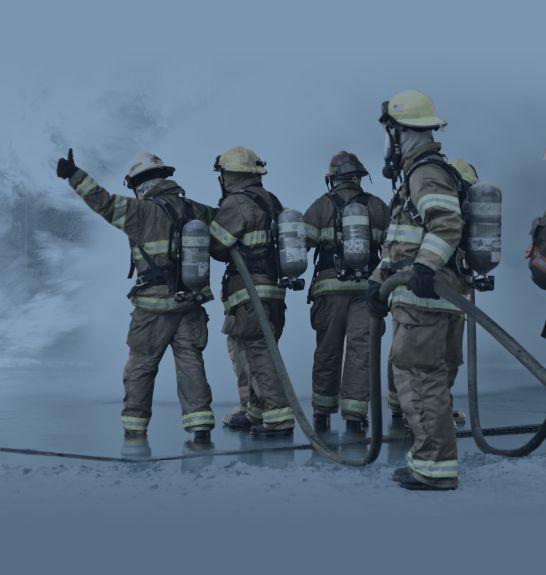
LEFT The best advice for firefighters responding to potential Ebola calls is to properly use assigned PPE, follow protocols and regularly wash their hands.
ABOVE The fear associated with the Ebola virus is overblown, say doctors with Winnipeg’s Health Sciences Centre and Winnipeg Fire Paramedic Service.
PHOTO BY LAURA KING
department after department, and city after city, rolled out their response and training plans for EVD.
When Dallas firefighters dressed in encapsulated hazmat suits and started cleaning out the apartment of Thomas Duncan live on CNN with helicopters circling the skies above, fire departments across Canada and the United States took a collective gasp and phones started to ring; you can imagine fire chiefs receiving phone calls from their municipal leaders asking how they would handle a similar situation.
Dr. John Embil, who is the head of the Infectious disease unit of Winnipeg’s Health Sciences Centre, believes the media have overplayed the story; he says people need to understand that as of early November, the risk in North America was still miniscule.
“We really should be more concerned with the thousands who will die from influenza here at home,” Embil said in an interview. “Albeit, I see how the fear perpetuates when the mortality rates in Africa are 70 to 100 per cent in certain areas. The issue is understanding that the disease process in West Africa is working in a perfect storm of transmission. The risk here, compared to there, is very different, and while there are still unknowns as in how the [Dallas] nurses got sick, from a risk point of view it is exceptionally low.”
Closer to home in Winnipeg at the National Microbiology Laboratory – Canada’s only top Level-4 containment laboratory for handing diseases such as Ebola – work to prepare for possible outbreaks on home soil has been going on since the WHO started
someone else’s problem, until it landed in Dallas, pretty much on our doorstep.
Specialists in Winnipeg have been dealing with this outbreak for months; scientists from the national lab have regularly travelled to Africa’s outbreak regions to work and study, with detailed plans in place to deal with the returning scientists who have had possible exposures to the disease.
Dr. Rob Grierson, who is the medical director for the Winnipeg Fire Paramedic Service and an emergency-room physician by trade, believes the city and most of the country is prepared well.
“We’ve had plans in place in Winnipeg since the summertime, when scientists from our national virology lab started coming back from those affected areas,” Grierson said.
“We had to make sure safeguards were in place to protect them and the citizens, as well as their families. Now that there have been confirmed cases in North America, we’ve trained and tested our policies and were confident we are doing all we can do with what we know.
“I can’t speak for the rest of the country but I know my counterparts across the nation are in meetings and briefing sessions and we’re all taking a collaborative effort to do the absolute best we can.”
Those plans are, of course, the best-case scenario, but there are so many variables that can interfere with those protocols: the subjective nature of the incubation period of EVD of two to 21 days; the upcoming flu season; and the fact that infrastructure and policy development has thus far been reactive given that the WHO does not have one universal policy for dealing with many issues such as PPE and transport of infected individuals, and jurisdictional laws that can or cannot force a person into quarantine. The what if questions that firefighters love to ask have been flying around, and the lack of answers is forcing departments to spending money on whatever they can get their hands on to protect their workers. All you have to do is look at Twitter and Facebook to see how many different ways department are training and preparing.
Grierson couldn’t quantify how low the risk really is, but he provides crystal-clear data from Winnipeg’s 911 centre. Between the time the centre started screening calls for possible EVD cases and early November, there had been 4,439 calls to 911, with 1,427 highlighted for flu-like symptoms. Of the calls for flu-like symptoms, eight patients indicated a possible travel history to West Africa, or contact with a person who had possibly been there. After further consultation, none of the calls warranted enacting EVD procedures.
“If it does happen, where a suspected EVD case is present,” Grierson said, “we believe our plan is a good one and with the infrastructure of our hospital system our mortality rates should be significantly lower due to basic medical principles of keeping patients hydrated via IV fluids, using proper isolation rooms, supportive care, and mitigating blood pressure issues.”
Winnipeg has room for 10 EVD patients; like fire departments, hospitals are charged with planning for the worst.
Grierson believes the lack of infrastructure in the affected West African countries – primarily Liberia, Sierra Leone, and Guinea – is the major factor contributing to high mortality rates there.
“The hospitals are isolating all Ebola patients in the same ward or area,” he said, “when best-case practices would have each
LEARN MORE ABOUT OUR LIVE FIRE TRAINING SYSTEMS AT WWW.DRAEGER.COM/FIRETRAINING STAY ONE STEP AHEAD OF EVERY FIRE WITH OUR LIVE FIRE TRAINING SYSTEMS.
Dräger can help you build the confidence and skills you need to fight fires safely and effectively. That’s because we offer a full range of Class A (wood-fueled) and Class B (propane-fueled) live fire training systems: from the Swede Survival system that teaches the warning signs of flashover, to portable systems that make live fire training convenient and affordable. Essential tools for essential training.
patient completely isolated.”
Dr. Renate Singh, who is the associate medical director of Manitoba Air Ambulance, says she believes EVD planning has been comprehensive and has included many stakeholders.
Singh says there are challenges associated with moving an EVD patient in a fixed-wing or rotary aircraft.
“The PPE the CDC is recommending is for exposures of approximately an hour, so flying a patient in a small, enclosed space for several hours in close proximity to responders is an issue.
“Everyone is working well together to come up with plans and processes but the reality is there is know 100-per-cent way to remove the risk, and so many scenarios that have to be planned for.”
While Canada has donated millions in relief funds, it wasn’t until EVD landed in North America that governments started to take the threat seriously.
According to The Globe and Mail, while Sierra Leone was in dire need of medical gloves and masks as the outbreak started to escalate in June, the federal government, through Health Canada, was selling these items at rock-bottom auction prices to those who then turned around and re-sold them for incredible profits to aid agencies that were trying to get the needed PPE to responders in Africa. The needed items were considered surplus in Canada and were put up for auction; eventually – once the government was made aware – the process was stopped.
Firefighters do what we do, because there is an attraction to the unknown and risks that have a chance of making a difference in someone else’s life; it does not matter what the hazard is, or how dire the situation.
The fear I felt for a mere 15 seconds was real, but it was dissolved by common sense and information. When I asked all three physicians interviewed for this story what firefighters could do to reduce their risks, they all said the same thing: follow your training and policies, learn how to use the PPE you are given, and don’t be afraid to ask questions and learn as much as you can.
Oh, and Dr. Embil says wash your hands and get the flu shot, because if we can go inside a burning building then we can certainly handle the fear of a little tiny needle.
Jay Shaw is a primary-care paramedic and firefighter with the City of Winnipeg. Contact him at jayshaw@mts.net and follow him on Twitter at @firecollege
TRAINER’SCORNER
Planning a training schedule
By ED BROUWER
As the new year approaches, training officers across our nation get out their calendars and begin their juggling act, known as planning out the year’s training schedule.
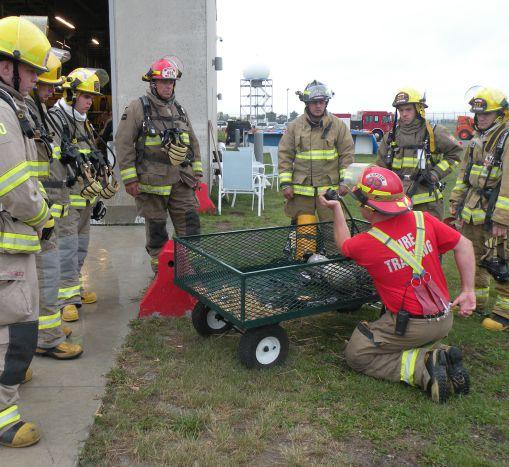
Realistically, a year boils down to 42 (on average) nights. And when you consider practice nights (volunteer departments) are usually between 1.5 and two hours, there really isn’t a lot of time (between 63 and 84 hours). Responding to MVIs (extrication), first-response medical calls and/or first response hazmat calls really impacts training requirements. Once each quarter, departments should schedule a live-fire exercise and a driver training drill.
The following are some basic topics training officers should consider as part of their scheduling: cold-weather emergencies; ropes and knots; CPR and AED; forcible entry; chimney fires; apparatus and equipment; ventilation; SCBA; hose handling; preplans; area familiarization; fire suppression; fire extinguishers; advancing hoselines; coldweather pumping; drafting; hose testing; hazmat operations; ground ladders; vehicle extrication; vehicle fires; below-grade fires; RIT; roof operations; hose streams; confined-space rescue; LPG emergencies; wildland fires; interface fires; structure fires; downed-firefighter rescue; arrival reports; size-up; ICS 100; PPE; firefighter safety; communication; alarms; water supply; nozzles and streams; building construction; fire suppression; BLEVE; salvage and overhaul; firefighter survival; mayday, disaster and large-incident response.
Once you lay out the main topics you can add specific objectives under each. I have included 13 such topics as examples. Each member should be given the opportunity to demonstrate safe knowledge of and ability to perform safely.
■ RESCUE EQUIPMENT
• The set-up of the hydraulic tools system
• The set-up of the lifting bags system
• The set-up of emergency lighting
■ BUILDING ENTRY
• The proper procedure for entering a fire building
■ LADDERS
• Proper ladder handling techniques
• Ladder the side of a building and safely secure the lanyard
• Climb the ladder and demonstrate leg lock
• Demonstrate sounding the roof
• Lower and stow the ladder
■ SMALL EQUIPMENT
Demonstrate the starting and safety procedures for:
• Chain saw / Reciprocating saw
• PPV fan
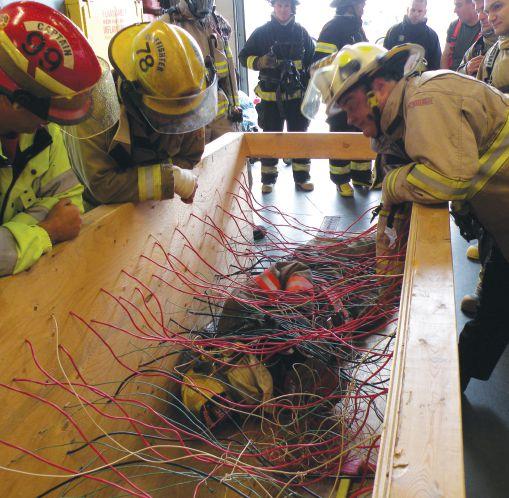
Once you lay out the main training topics, expand on the exercise by adding specific objectives for each.
Training officers should consider scheduling main training topics for the year, including a review of PPE and SCBA.
PHOTOS BY MARIA CHURCH
ON SOLID FOOTING FOR 25
YEARS
Improve your performance. Globe boots are flexible like your feet, grip like no other and feel broken in right out of the box.
Contact Safedesign to get Globe footgear. Internationally recognized PPE specialists.
TRAINER’SCORNER
• Heat detector
• Generators under load with all lights
■ RIT
• Demonstrate the steps for rescue of a downed firefighter with SCBA
■ PRE-CONNECT DEPLOYMENT AND LOADING
• Demonstrate the deployment of a 1-1/2 pre-connect
• Participate in loading a pre-connect
■ OVER THE BANK
• Perform at least three rescue knots
• Demonstrate proper life-line anchoring
■ SELF CONTAINED BREATHING APPARATUS (SCBA)
• Demonstrate knowledge of SCBA use
• Demonstrate the donning and doffing SCBA
• Demonstrate troubleshooting the SCBA
■ FOAM INDUCTION
• Demonstrate knowledge of setting up the foam inductor (E52)
• Demonstrate the proper cleanup procedures
• Demonstrate the proper application methods of foam
■ HOSE ROLLS
Demonstrate the following hose rolls
• Straight roll
• Single donut roll
• Double donut roll
• Locking donut roll
■ HOSE APPLIANCES
• Demonstrate extending a hose line using a hose clamp
• Demonstrate replacing a broken hose section
• Describe and/or demonstrate the proper use of gated wye add hose clamps
■ HOSE LAYS
• Demonstrate knowledge of a forward lay
• Demonstrate knowledge of a reverse lay
• Demonstrate knowledge of a split lay
• Demonstrate knowledge of a hydrant lay
■ FIRST RESPONDER
• Perform at least two first-responder core skills
• Demonstrate these core skills in a complete scenario
• Set up the basket stretcher in preparation for an over-the-bank rescue
• Package a patient in preparation to be rescued
Further considerations: Think through each practice objective. Follow your department’s SOGs. Use the incident command system throughout your training, and it will become automatic in your response operations. Have a stop procedure (usually a blown whistle). There should be no tolerance for horseplay. Assign safety officers for any handson drills or evolutions.
Instructors should, whenever possible, use the three Ds at their stations:
• Demonstrate: instructors demonstrate the proper steps to complete the tasks required.
• Describe: instructors demonstrate the proper steps again, only this time they describe what is being done one step at a time.
• Do: instructors will ask each member to do the task in the proper manner.
I hope this helps. The goal is to practise the basic skills until they become automatic. Two last things: your best instructional tool is preparedness, and, when possible, mix in the fun of competition. Please continue to train as if lives depend on it.
Ed Brouwer is the chief instructor for Canwest Fire in Osoyoos, B.C., and Greenwood Fire and Rescue. The 25-year veteran of the fire service is also a fire warden with the B.C. Ministry of Forests, a wildland urban interface fire-suppression instructor/evaluator and an ordained disaster-response chaplain. Contact Ed at ebrouwer@canwestfire.org
Volunteer departments typically spend between 63 and 84 hours per year training.
LEADERBOARD
BY DOUGLAS TENNANT Fire chief, Deep River, Ont.
CIt’s time to take action against PTSD
lara Hughes, Canadian Olympic cyclist and speed skater, came to my town during the summer and huge crowds came out to welcome her and listen to her speak. Hughes’ visit was a planned stop on Clara’s Big Ride, an annual bike ride across the country to encourage healthy conversations about mental illness –including post traumatic stress disorder (PTSD).
PTSD? Isn’t that a severe mental illness for which only soldiers, police officers and paramedics are at risk? Me – suffer from traumatic events? I don’t think so. After all, I’m a firefighter. Yes, I still ride in the officer seat and wear a SCBA at calls, but I am tough. Firefighters don’t suffer from mental illness and we certainly aren’t affected by what we see, smell, hear, feel and otherwise sense at emergency scenes.
PTSD is defined by the Ontario government as an anxiety disorder that develops after exposure to a traumatic event or experience. Symptoms may include flashbacks, nightmares and intense feelings of fear or horror. Yes, firefighters do suffer from mental illness generally, and are exposed to traumatic events in particular. Some even suffer from PTSD, which not only affects them, but also affects their spouses, family and friends.
Take encouragement from Clara Hughes and many other Canadians who are taking the lead by acknowledging and discussing mental illness; it’s real, it’s in our fire stations and it affects all members of our fire-service families – those in the fire station and those who love and care for us. The anxiety and suffering of firefighters is not acceptable; it’s debilitating and affects our performance on the job – both career and volunteer. It affects our relationships, our mental health and also our physical health.
not there. It’s cool to be vulnerable and let others into your private world, and not cool to put up walls and not share your inner feelings. It’s cool to talk with your spouse and children about your traumatic events or PTSD, and it’s not cool to keep your situation from those who are closest to you. It’s cool to talk to your doctor, pastor or someone you trust about your traumatic events or PTSD, and not cool to think you can handle it without professional help. It’s cool to seek medical help with your personal situation and not cool to self medicate with drugs or alcohol.
Unfortunately, the suffering of firefighters from traumatic events has become politicized. Governments, both municipal and provincial, and some vocal individuals, are concerned about the potential cost of presumptive workplace claims for PTSD by first responders, which are similar to claims made for presumptive cancer.
Let me be clear – I am not a medical professional; however, my personal experience is that PTSD in the fire service is real. Responding as a firefighter to horrific and gruesome scenes over the past 35 years has left its mark on me. The sights, feel, sounds, smells, and, indeed, the aura of an emergency scene affects me and impacts all of us. I have
All firefighters need to be leaders when it comes to talking about mental illness.
All firefighters need to be leaders when it comes to talking about mental illness. We can’t wait for others to pick up the mantle on this sensitive and growing issue. Indeed, some will deny that PTSD actually affects firefighters. People may say that firefighters signed up for it, that they are not forced to become firefighters, or that workplace claims by firefighters suffering from PTSD are simply cash grabs or even organized scams.
Firefighters need to recognize that it’s cool to seek help when they are suffering, and not cool to keep it inside and let it fester and cause pain. It’s cool to talk about a traumatic event you experienced or what triggers your PTSD, and not cool to pretend that those feelings are
suffered for almost 30 years now following an incident that involved a car colliding with a snowplow. I was the first to arrive on scene as the driver lay dying and trapped inside his vehicle. The night terrors are the worst as they impact not only me but also my family. It is normal to be affected when someone you are holding dies; it is normal to be affected by the sight and smell of a mangled, burned body; it is normal to be affected as you gather up body parts at a vehicle collision. What is not normal is to keep your feelings to yourself.
Take the lead and make yourself vulnerable. Talk about your anxiety, fears, and triggers and, just as importantly, seek support and ask for help. Talk to your spouse, your fire service critical-incident stress team, your pastor, your family doctor. You lead as you are.
For more information on PTSD and support services, visit the Canadian Mental Health Association at www.cmha.ca
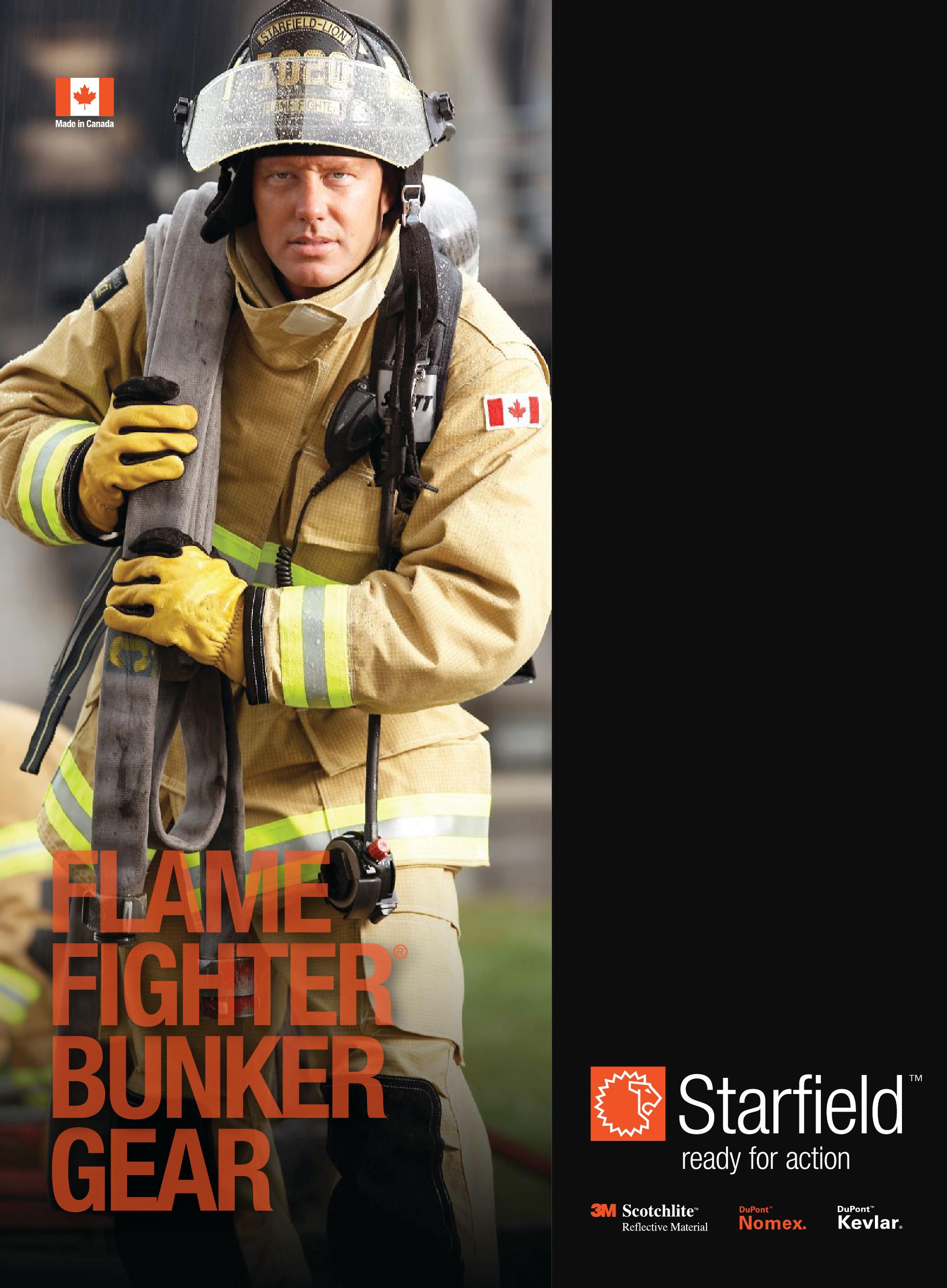
Loaded with safety, comfort and mobility features for unmatched performance, Flame Fighter® bunker gear offers a variety of custom outer shell fabric, liner system, hardware and pocket options to fit your specific needs. This hard-working gear also includes the following game-changing Starfield LION fire protection technology:
• Patented IsoDri®* moisture management reduces the water absorbtion and helps gear dry faster between runs
• Exclusive Ventilated Trim allows vapor to be released, reducing the risk of scald burns
• Thermashield™ provides an additional layer of liner material in the upper back and shoulders to protect against compression burns
• Move-N-Hance™ crotch gusset increases mobility by reducing bunching, twisting and pulling
• Flex Knee™ for easy, natural movement
• Stay Rite™ sleeve wells integrate the sleeve’s liner into a full-length wristlet so that when you reach, the entire sleeve moves with you
For more information about Flame Fighter bunker gear, contact your Starfield LION sales representative at 1.800.473.5553 or visit us online.
INCIDENTREPORT
Wind-driven fire tests department
STEVEN SORENSEN
On July 31, 2013, members of the Sooke Fire Rescue Department in British Columbia responded to one of the largest fires in their community in recent history. Evergreen Mall, a two-storey commercial strip mall was gutted by the work of an arsonist. The fire was spectacular and fighting it was a major challenge for the department. Five mutual-aid fire departments were called in to help combat the fire over a 15-hour period.
Exactly one year later, July 31, 2014, Sooke firefighters were recounting this fire at an anniversary thank-you barbeque hosted by the local Royal Bank of Canada branch, one of the businesses destroyed in the 2013 fire. Nobody imagined that just four hours later, the same six volunteer fire departments that responded to the 2013 fire would be summoned to another major fire in Sooke. This time, the fire began at a single-family home, which erupted into flames that rapidly spread to the surrounding tinder-dry forest. The fire occurred in a rural section of the community, which does not have a municipal water supply, requiring the establishment of a complex tender shuttle operation. Many of the valuable lessons learned during the 2013 fire were incorporated into this incident, resulting in a more orderly and safer operation for all personnel involved.
The fire was called in to the department at 4:36 p.m. by a man cutting firewood on the property. He reported smelling something burning and at first assumed something was wrong with his saw. After turning off the saw, the man looked around and saw dark smoke issuing from the kitchen window. Thinking that the occupant of the home –who had left about 45 minutes earlier – may have left his dogs inside, the man kicked in the front door to see if the dogs were inside, but was driven back by intense smoke and heat and could see fire “swirling in the living room.” He then ran around to the side door
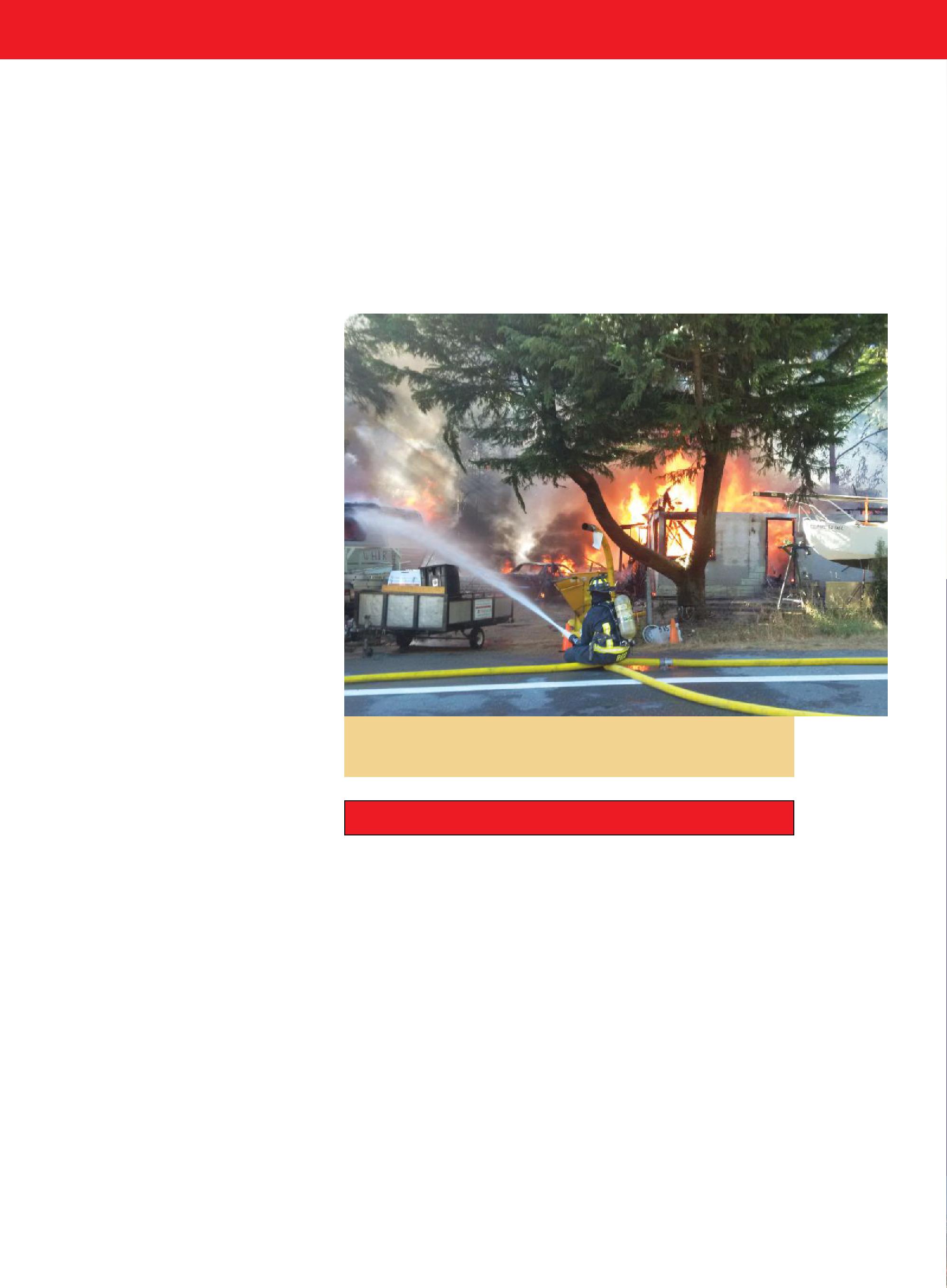
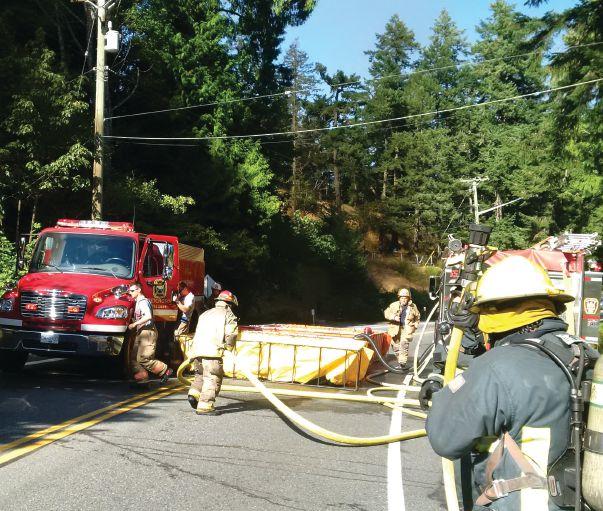
Firefighters in Sooke, B.C., along with members from five mutual-aid departments, worked for several hours on July 31 to extinguish a fire that spread to several exposures.
DEPARTMENT PROFILE
SOOKE FIRE RESCUE DEPARTMENT - ESTABLISHED 1913
Location: 40 kilometres west of Victoria
Population: 11,500
Area protected: 65 square kilometres
Equipment: Two fire stations operating with three engines, one ladder truck, one tender, one brush truck, two squads and two utility vehicles.
Average annual calls: 750
Membership: Fire chief, deputy chief of prevention, assistant chief of training and two career firefighters; 30 volunteer firefighters and 10 volunteer support services
and opened a small dog door at the bottom and tried to call the dogs heard no barking or noise. With the fire rapidly spreading, the man retreated to the road to wait for the fire department to arrive.
It was a hot, dry summer afternoon. Fortunately there were no prevailing winds that day. Given Sooke’s location on the west coast of Vancouver Island, wind off the ocean is often a daily occurrence.
Sooke Car 1 was the first to arrive with the fire chief assuming command. An older, ranch-style, wood-framed home was fully involved. Fire was visible at all the windows and through the roof, and multiple exposures were already burning or about to ignite. The exposures on fire included a detached two-car garage, a 12-metre-long travel trailer, a passenger car, several motorcycles and outboard motors, household
PHOTOS BY STEVEN SORENSEN
INCIDENT
objects, and numerous trees. Seconds after arrival, there was a large explosion, which was later thought to be a propane barbeque tank rupturing. Radiant heat caused several other objects to begin smoking or melting including a pickup truck, a fiberglass sailboat on a trailer, a second utility trailer and many other objects scattered throughout the property. The location of this fire was in hilly terrain surrounded by dense forest. Several of the surrounding 30- to 40-metre-high trees exploded into flames. Directly behind the burning house and up a steep hill, a large log home was in the path of the rapidly spreading fire.
With no available water supply, rapidly deteriorating conditions, and multiple spot fires igniting from falling embers, assistance was needed to combat the fire. While still en route, Car 1 observed a large column of smoke about four kilometers from the fire and immediately requested mutual aid. In addition to two engines, a tender, a command unit, a communications vehicle and a utility truck from Sooke, the neighbouring Otter Point Volunteer Fire Department dispatched an engine and tender, East Sooke Fire Department sent both of its tenders and the Metchosin Fire Department arrived with a tender and an engine. As the incident progressed, the Langford Fire Department was called in and supported the operation with an additional engine, bringing the total number of firefighters to 45.
The structure fire was located only metres away from Sooke Road, also provincial Hwy. 14, which closed for public safety and to allow the tenders room to safely traverse to and from various water-supply points. Two 8,000-litre porta-tanks were set up on the roadway. As Hwy. 14 is the only route into Victoria from Sooke and the fire occurred during the start of the evening commute, it did not take long for traffic to back up for kilometres.
Due to the embers being produced from the fire, several spot fires flared up in the surrounding forest. A request was made for the BC Forest Service to attend. A three-person rapid-attack team arrived shortly after by helicopter to assist, which was also very useful in locating the additional
Radiant heat caused items around the ranch-style home to catch fire or melt; nearby trees also caught fire.
You protect the public
Let us heLp protect you
For your cleaning, decontamination, inspection, testing, repair and record keeping of your firefighter’s protective clothing... we have you covered!
• 24/7 access to Firetrack®, the online data base that provides you with complete details of your C&M Program with FSM. We do the work for you!
• ETL Verified
• ISO 9001 Registered
• Fast turnaround
• Complete Bunker Gear Rental Program – Toronto Location
INCIDENTREPORT
Three porta-tank sites were set up in three separate locations to supply six tenders and four engines. The complex co-ordination apparatuses and fill sites closed a nearby highway for hours.
spot fires hidden in the dense forest. As these fires moved through the brush and grew in size, several crews were diverted to attack the rapidly growing spot fires, one of which grew to cover about 300 square metres. The escalating situation resulted in the establishment of two more porta-tank sites and a complex operation of co-ordinating six tenders using two fill sites, and supplying four engines with four portable tanks at three different drop locations. With several homes in the fire path, Sooke RCMP evacuated residents in the highest-risk areas and placed those further away on evacuation notice. The highway closure added to the problems as tender crews were forced drive with caution using only one side of the winding, two-lane road while travelling to and from the fill sites and drops sites. Adding to this were dozens of cars that gave up waiting and decided to turn around and go back in the direction from which they had come, rather than wait out the fire and the opening of the road.
The temperature was almost 30 C that day, thus dehydration and exhaustion of responders was a major concern. The BC Ambulance Service provided monitoring and rehab for all personnel and ensured that responders were hydrated and in good condition before allowing them back to the fire line.
Ontario (toronto) 1-888-731-7377
Western canada (calgary) 1-403-279-5095
Mid-West USa (Detroit, Mi) 1-866-877-6688
The fire was brought under control and contained by about 6 p.m., however many hotspots on the original property and surrounding forest still had to be dealt with. With the water-supply requirements stabilized, crews were able to remove one of the porta-tanks off the highway, which allowed single-lane traffic to begin flowing. As the incident stabilized, mutual-aid companies returned to their stations, with the last Sooke unit clearing the scene at 9:30 p.m. One crew returned around midnight when an old tree stump started burning as result of the earlier fire.
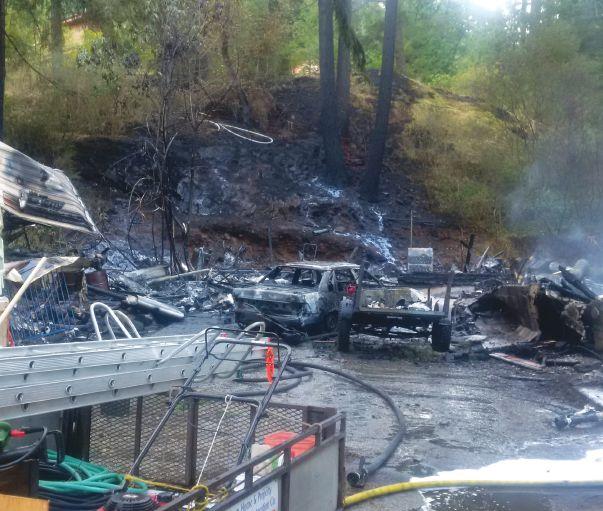
The home, contents and several exposures were totally destroyed by the fire. However, crews were able to save the sail boat and pickup truck. While the fire did not destroy any additional homes in the area, it
CAFC provides a national network where the fire and emergency services community can come together in a free exchange of information and ideas to better serve and protect the public.
Membership with the Canadian Association of Fire Chiefs (CAFC) entitles you to:
• Networking and peer support
• New career opportunities
• Access to education and professional development
• Advocacy at a national and federal level
• Best practices and professional standards
• Valuable discounts
http://cafc.ca/en/membership/join/
Already a member of CAFC? Be sure to renew your membership for 2015! Your 2014 membership expires December 31, 2014. You can renew online or download a membership form from the CAFC website: http://cafc.ca/en/membership/join/
INCIDENTREPORT
came within three metres of the neighbouring log home. The damage to the home in which the fire started was too severe to determine a definitive cause, but the fire did not appear to be suspicious. While the home was insured, the tenant was not and he lost almost all his possessions.
LESSONS LEARNED
• Accountability of large numbers of firefighters from multiple fire departments is a difficult task. In the past, several area departments used different types and colours of accountability tags for their firefighters. Following the 2013 mall fire, all area fire departments have switched to the same colour-coded accountability tag system.
• Better use of senior officers at major incidents played a key role in ensuring overall safety, accountability, and monitoring of sectors. All available senior officers from responding mutual-aid departments reported to command for sector assignments. In the past, mutual aid offi-
cers often stayed and operated only with their own fire department members. For some departments, this change required alterations to their SOGs.
• Enhanced joint training sessions in such areas as accountability, RIT, tender shuttle operations, and communication, helped to streamline efficiencies on the fire ground.
• Better use of non-suppression personnel to assist in non-hazardous areas helped to free firefighters from roles that they would normally fill. With limited daytime firefighting resources a key concern in Sooke, the department enhanced its training of volunteer public-education members to take on additional duties. These members – now known as support services – can be assigned to traffic control, crowd control, photography, as scribes for command officers, to assist the accountability officer and to fill SCBA cylinders.
• Assigning a media-relations officer played a critical role in providing accurate infor-
mation to news agencies, as on social media platforms. Messages on Twitter and Facebook at regular intervals helped to keep the public informed as the incident progressed, and provided up-tothe-minute details on the road closure and pending resumption of traffic flows.
• The protocols used in the control of this incident were reviewed in the days following to determine what areas of concern may have been noted. Nobody expected that just six weeks later, on Sept. 11, 2014, these practices would be employed at a much larger incident that would completely tax the resources of almost every volunteer fire department in the region. Watch for that story in a future issue of Fire Fighting in Canada.
Steven Sorensen is the fire chief and emergency operations co-ordinator for the Sooke Fire Rescue Service in British Columbia. Email him at ssorensen@sooke.ca
Respond faster and remain focused on the mission
Certified
L ear n m or e about pr oduc t s f eat ur ing G or e’s innov at i ve C hemB io f abr ic s at ww w.G or e C hempak .com in applications for Technical Rescue, HazMat, Reconnaissance, and Rapid Intervention Teams.
BACKtoBASICS
Truck company ops – driver duty
BY MARK VAN DER FEYST
The position of apparatus driver is not a glorious one. As with a football team, on which the quarterback or wide receiver gets all the attention from scoring or passing touchdowns, suppression firefighters tend to be in the spotlight, with their pictures in the paper or on the TV news. In both cases, however, the stars are able to do what they can only by virtue of the others doing their jobs.
What a truck driver does for the crew affects that crew’s performance. Success comes only from all of the team members working together.
Driver duty is a fitting topic considering we are now in the winter season. The driver’s primary job is to drive safely and defensively.
Fire trucks are heavy pieces of machinery that require special skills to operate. A general rule for braking distance is the heavier the vehicle, the greater the braking distance required. Normally a four- to seven-second gap between vehicles is required for a truck driver to brake effectively, depending upon how fast the apparatus is moving. Always remember to use defensive driving skills and scan the roadway ahead of you in order to anticipate problems that will require the use of brakes.
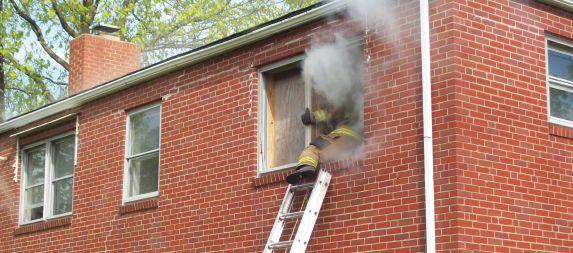
Besides driving and operating the pump, drivers can help the crew in several other ways. For starters, drivers can help to ladder the outside of the building as part of the proactive fire-ground activities. Once a pump is put into gear and water is delivered to the hoselines, the driver then monitors the pump. He or she is therefore free to place ground ladders at windows around the structure to provide a means of egress and access for the rest of the crews (see photo 1). It is possible for a single firefighter to ladder the second-storey or third-storey windows; it takes practice, but it can be done and with ease once a firefighter learns how. When there is limited manpower, the driver can help in this area.
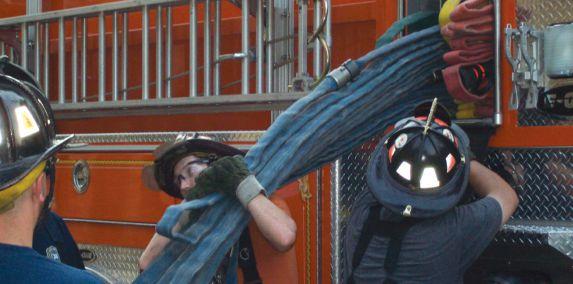
The driver can also help with hose advancement from off of the apparatus. Sometimes, the crew arriving on scene first is not dressed in appropriate PPE and SCBA for the situation. If this is the case, the driver can easily assist the team by pulling off the hand line from the hose bed and advancing it for the crew to the front door (see photo 2). Of course, the pump has already been engaged
PHOTOS BY MARK VAN DER FEYST
Photo 1: A driver can help the team by placing ground ladders at windows around the structure to provide a means of egress and access for the rest of the crew members operating on the fire ground.
Photo 2: A driver can easily help out by pulling off the hand line from the hose bed and advancing it to the front door.
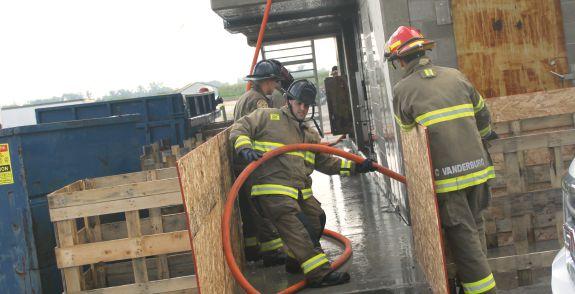
Photo 3: Standing just outside the entrance point, a driver can feed hose inside the building.
and is circulating water from the onboard water tank to the pump in the meantime. Good drivers are able to put their pumps into gear, have the pump circulating water, and pull off the line, all before the crew is fully dressed.
Drivers can also help to advance the line into the structure from the outside (see photo 3). Standing just outside the entrance point, a driver can feed hose inside the building and stage outside hose closer to the entrance. Because the hoseline is stretched off of the apparatus, there is still a good length of hose outside; by looping the hose and bringing it to the front door or entrance of the building, the interior crews can access and easily advance more hose as needed.
The driver can also listen attentively to the radio. If the driver hears that a team needs certain equipment, he or she is in the best position to retrieve it and bring it to the front door or thereabouts. In this case, the driver’s actions save valuable time that it would take for crew members to go outside to get the equipment.
On the scene of a vehicle accident requiring extrication tactics, the driver is often instrumental to the overall operation. Certain tools will be grabbed and used right away by the extrication team members, but as the incident unfolds, other items may be needed. If a driver is close enough to hear the communication among members, he or she can predict
what the team will do next. If the operation is not going well and a change in tactics requires different tools, the driver will ideally have already left to retrieve those tools (see photo 4.) The driver can also act as a substitute when a member becomes fatigued or exhausted.
If the apparatus used during an incident is an aerial device, then drivers are tasked to operate the aerial ladder for either water delivery or for access to an elevated area. Skill is required to operate an aerial device, including an awareness of the surroundings with respect to power lines.
Depending on the number of firefighters responding to the incident and the order in which the fire trucks arrive, a driver may be a part of the crew handling interior or exterior operations, or can assist another driver with various duties. Drivers can also be used by command as accountability officers or as scribes.
Mark van der Feyst has been in the fire service since 1999 and is a full-time firefighter in Ontario. Mark teaches in Canada, the United States and India. He is a local-level suppression instructor for the Pennsylvania State Fire Academy and an instructor for the Justice Institute of BC. He is also the lead author of Pennwell’s Residential Fire Rescue book. Email Mark at Mark@FireStarTraining. com
Photo 4: As tactics change on the fire ground or vehicle extrication site, a driver can learn to predict what tools will be needed for the operation and retrieve them.
BY LES KARPLUK AND LYLE QUAN
LEADERSHIPFORUM
Leaving a legacy in the fire hall
Scottish rugby player Nelson Henderson said, “The true meaning of life is to plant trees, under whose shade you do not expect to sit.” This is what leaving a legacy is all about, and since our retirements from the fire-service, we truly understand the importance of leaving a leadership legacy upon which others can build.
For fire-service leaders, legacy is all about planting leadership seeds within departments so that after the leaders have moved on, the seeds continue to grow. Remember, a leader’s legacy is not just what he or she did while in the fire department; it’s also what is left behind for others to build upon. Leadership is all about growing other leaders. Imagine how gratifying it is for leaders to look back five or 10 years after leaving a fire department to see how their leadership direction took the department to new levels of success. To us, this is the true legacy of a fire chief.
One of the key challenges to leaving a solid foundation to build up is how to ensure that all staff members are not only trained and ready to do their jobs, but are also prepared for future leadership positions. How does a leader know who to help grow and prepare for the future? The simplest and probably the best answer is that leaders need to teach, mentor and prepare everyone to meet the future; by doing so, the best will rise to the top and demonstrate that they are able to meet future challenges.
There are five steps that may help fire-service leaders prepare future leaders.
Step 1: lay out the plan. No matter what the project is, there must be a plan in place for it to be successful; building leadership capacity is no different. We all know that leadership is more than time served. The leaders of tomorrow require education and qualifications that focus on people; soft skills such as building effective teams and mentoring and coaching sell the department’s vision and make firefighters feel as if they are a part of a team. So ask yourself: what is the plan? What do you want to accomplish and in what timespan?
one a connection with the plan and will help to inspire members to see it to fruition. Remember, a leader’s legacy cannot continue if it completely depends on his or her presence. Guiding the team and allowing team members to take the reins is part of building the momentum.
Step 3: be the team. During any phase of any plan, a leader must ensure all team members know and understand that they are important. It is critical to know the difference between being a part of a team and being the team. Success occurs only if firefighters feel they are part of the team that is building the future of the fire department. One person cannot do everything, but many hands lighten the load and more efficiently complete goals and objectives.
Step 4: celebrate successes. Take the time to celebrate accomplishments. We all make an effort to acknowledge when our kids win a ribbon or get an A on a test, but leaders sometimes forget that their staff need to hear that the department has successfully met a goal or worked through a challenge. So take the time to celebrate successful course completions because without celebrating the successes, it’s too easy to feel part of cold-hearted organization.
Step 5: empower others. When it comes to leadership, it is OK to
To us, leaving a legacy is one of the greatest things fire-service leaders can do.
’’
Step 2: identify the existing leadership capacity. Every department has leadership and every department has leadership gaps. Preparing for the future means the fire chief and firefighters must communicate openly about the leadership plans for the department. Working collaboratively, which includes open and timely communication, gives every-
Les Karpluk is the retired fire chief of the Prince Albert Fire Department in Saskatchewan. Lyle Quan is the retired fire chief of Waterloo Fire Rescue in Ontario. Contact Les at Genesis2020solutions@sasktel.net and Lyle at lpqsolutions@bell.net. Follow Les on Twitter at @GenesisLes and Lyle at @LyleQuan
empower others to grow and explore how they can fit into leadership roles. Leaders may be surprised what their staff can do if they know they are supported.
Lee Iacocca said, “If you really believe in what you are doing, you’ve got to persevere even when you run into obstacles.” When you are building your team and looking to the future to predict what kind of legacy you will leave as a fire chief or chief officer, know that there will be many obstacles and many setbacks that will test you and frustrate you. Persevere and believe in yourself and your team.
To us, leaving a legacy is one of the greatest things fire-service leaders can do. Leaving a legacy demonstrates to everyone that the leader was invested in the department. For leaders, a legacy is about what’s in it for the organization, the communities they service and, most importantly, their staff.
BY TOM DESORCY Fire chief, Hope, B.C.
WVOLUNTEERVISION
The value in knowing our words resonate
hen you’re a broadcaster, whether on radio or television, you’re constantly reaching out to an audience that you presume is there. For the most part, you’re talking into a microphone or camera in a one-way conversation without any feedback from those to whom you’re speaking. How’s that for motivation? In broadcasting school we were taught to treat our audience as just one person, therefore giving listeners the impression that we were talking directly to them and them alone. This experience was enhanced when broadcasters opened the phones and took calls, thus allowing a direct connection with the audience.
Magazine columnists are in a similar situation: we know the readers are there and we get reaction to what we say via emails and personal contact, but the feedback comes only after the column is published – weeks (sometimes months) after it has been written. Which is why the summer of 2014 was special for me; along with my Volunteer Vision co-author and good friend Vince MacKenzie, we took our opinions and columns off the pages of this magazine and to the people.
Over the summer, we presented what we called Volunteer Vision LIVE – three sessions in two provinces at opposite ends of the country. Thanks to Fire Fighting in Canada editor Laura King, who moderated two of our sessions in British Columbia, and Tim Pley, president of the Fire Chiefs Association of BC, who moderated in Gander, N.L., we took readers deeper into our columns, explaining where the ideas came from, the inspiration behind our stories and expanding on the issues we had written about,
three sessions was completely different. We were unscripted and unplugged, so to speak, and if it wasn’t for the moderators, all of our sessions would have run way over. In fact, all of them spilled into the foyers during the subsequent networking sessions.
What I took away from those sessions goes far beyond meeting the readers; the experience reinforced to me that what I have to say is relevant to my peers. The fact that I have a hard time recruiting new members and staying ahead of the calendar resonates in other departments. My concerns over the future of the fire service is shared by many more; in fact, I’ve come to realize that while we tend to focus on recruitment on the front lines, we aren’t doing enough to address the need for leaders in our volunteer world. Seriously, it’s one thing to encourage new members to take on the daunting task of becoming a well-trained firefighter, but the need to step up and take on a leadership role adds a whole new wrinkle. Succession planning is vital to the health of any organization, and coming from a world that always has one foot firmly planted in the past, we need to be aware of this. We’re all not getting any younger, which is one thing I see as our biggest challenge in the future. Touching on one of Vince’s topics – the millennials in our ranks – can you actually see some
The beauty of our column is that Vince and I seem to touch on the same themes . . . ‘‘ ’’
The beauty of our column is that Vince and I seem to touch on the same themes – not necessarily on purpose. It’s just the way we connect with the issues that face the fire service from coast to coast to coast. During the presentations, we brought forward several columns from the past few years; what struck me was that while the issues weren’t new, they are still relevant today, albeit with some new ideas and opinions. To say we all learned something from this exercise would be an understatement. The questions and comments in the rooms as we explored issues from recruitment and retention to retirement opened my eyes to the number of people who read what we have to say; there was a lot of acknowledgment and there were lots of heads nodding in silent recognition – or agreement – in each session. While we maintained the same format and storyline, each of the
Tom DeSorcy became the first paid firefighter in his hometown of Hope, B.C., when he became fire chief in 2000. Email Tom at TDeSorcy@ hope.ca and follow him on Twitter at @HopeFireDept
of these people carrying your torch (and yes, I did say “your”)? As we grow older it may seem harder to realize, but it will and it has to happen.
There are times when we exist within our own little worlds, our small departments, without realizing that what’s happening in the next town – or province for that matter – has an impact on what we are doing locally. I guess we just need to be reminded of this; and, hopefully, through a column written by a couple of small-town fire chiefs, those messages are realized.
Train as if your life depends on it, because it does, and understand that you are part of a great big family. I’ve been to Newfoundland and Labrador on three occasions and when asked recently if I have family back there, my answer was yes, yes I do have family back there – a fire family that gets bigger all the time thanks in a large part to my written words and those who read them.
BY JAY SHAW
FROMTHEFLOOR
Leadership versus management in the hall
There are a lot of firefighter leaders, writers and administrators who talk about leadership versus management, the differences between them, and how each is applied to situations, problems, or issues. As a consultant who specifically assesses, creates programming and instructs on the tenants of these topics, I find it very amusing that the predominant term used by managers in the private industry in which I consult, is in fact, fire fighting or putting out fires.
These terms are used to describe dealing with problems that pop up, or people or things that seem to become difficult. You’ve probably heard these terms in the context of business, as emergent issues that always put a wrench in your plans and seem to come out of nowhere and start fires. These fires, if left unattended, seem to grow in these organizations until they consume morale and organizational culture, much the same way a structure fire consumes oxygen.
Managers tell me how they fight the fires with aggressive policies and manage the issue from a best-case scenario point of view, sometimes even taking a chance or having to move quickly on an issue to stop it from spreading. Just imagine an organization lacking in oxygen – a slow, dying, stale business with no fresh ideas goes under, and you can almost bet cash money that someone was trying to fight a fire.
Fire fighting is extremely dangerous, has unforeseen risks and is an aggressive venture to undertake at the best of times. So why do we do it? Because there may be something to save. But when it comes to business and/or fire fighting, our strategies have evolved to the point at which even firefighters question why we would do something so aggressive.
Fighting or putting out fires are horrible terms and mindsets for managers, leaders, and supervisors in any industry,– including the fire service – when it comes to dealing with people and managing resources.
And while we can argue until our face pieces suck in and were out of air, I can tell you I will never be convinced that managing people is the best way to create a successful department. Leaders lead people, and manage policy, directives and process. Managers manage people through a lens of policy, directives and process. The difference is that the leader is out in front with fire-prevention strategies and the manager is chasing fire with a small five-pound extinguisher. There is a notable difference in the approach, wouldn’t you agree?
When my lovely wife was promoted to a management position at the hospital and struggled with the new buddy-to-boss paradigm, I suggested she lead the team from a perspective of collaboration, taking in feedback and doing a lot of listening from all of her new stakeholders. Once a deep understanding of the issues was accomplished, she was able to use feedback and suggestions to help draft new policy, and she gave all the credit to her staff for coming up with the ideas. A manager might have first tried to assume what the problem was and direct the fix with no input for others. While in some cases this would be a normal strategy and a proper course of action, rarely does this approach work as well as leading your team to help draw the right conclusions
Leaders lead people, and manage policy, directives and process.
For goodness sake, the term fire fighting has the word fight in it. Why would you want to correlate any work activity to the term fight?
The new fire officer, fire chief and firefighter all learn the same conceptual ideas now that we know that interpersonal skills and communication skills are paramount to the success of the department, in the halls and on the fire ground. In fact, unless something is happening that is of imminent danger to my life, there is really never a time to yell, ever. Every organizational behavior, conflict resolution, and leadership book or course confirms this.
Jay Shaw is a primary-care paramedic and firefighter with the City of Winnipeg. Contact him at jayshaw@mts.net and follow him on Twitter at @firecollege
on their own.
One solution builds value in the team and eventually prevents similar issues from popping up as stakeholders learn the value of leading forward to find the solution, while the later may solve the problem, but offers no long- term strategy for stopping the issue from happening again; hence the comparison of fire fighting rather than fire prevention. This strategy has worked for me in the boardroom, and the fire officers I trust and respect who use this method seem to have crews and followers who would bust through brick walls for them as well.
Funny how building value in people, showing them respect and guiding them to follow policies and procedures that are collaborative in nature gets better results.
An ounce of prevention or a five-pound pound pressurized can of cure? You decide.
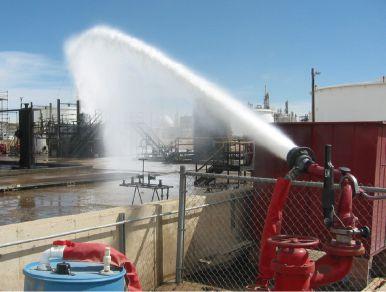
2000 GPM Where You Want It!
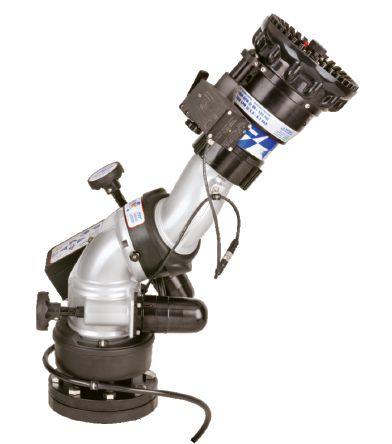
The Monsoon RC is designed for 12 or 24 VDC operation, comes with factory installed control panel mounted on the monitor for horizontal rotation, elevation, nozzle pattern, programmable PARK and Oscillate. The Monsoon RC is capable of flowing 8000 l/min while maintaining a FULL 450° horizontal rotation. Electric drives and control box are waterproof.
• Maximum Operating Pressure 200 psi
• Only 15 lbs friction loss at 2000 gpm
• Field Changeable Stops
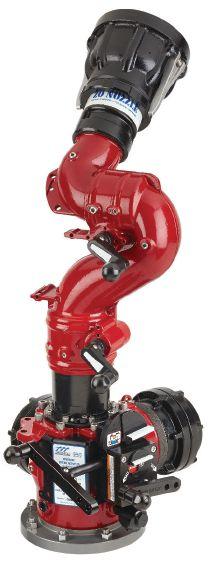
Monsoon Remote Controlled and Manual Monitor
PROTECTOR
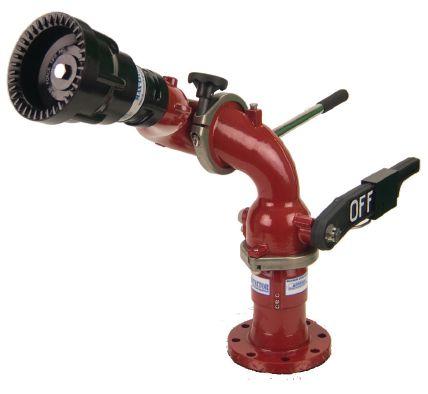
STATION MONITOR
• Full 360° Rotational Ability
• Maximum Operating Pressure Of 200 psi
• Optional ON/OFF Valve With Position Indicator
• Lever-action Rotation Lock Is Fast and Positive
• Outlet Available With Various 2.5” Male Threads
• Requires No Grease Application or Other Maintenance
Technology that saves lives
Tired of replacing batteries every year?
Tired of those late-night low battery chirps?
Look for Kidde Worry-Free Alarms
Battery never needs changing for the 10-year life of the alarm
Carbon Monoxide (CO) Alarms are now the law in Ontario
Required near all sleeping areas for every homeowner that has an attached garage, furnace, wood or gas fireplace, water heater or gas burning appliances
A CO alarm is the only way to detect deadly CO gas – you can’t see, smell or taste carbon monoxide.
When buying a CO alarm, consider an alarm with a continuous digital display that will show you if lower levels of CO are detected so you can take action before higher, more serious levels are reached.