Three trusted brands in fire safety have joined together on a new mission: work directly with firefighters to create high-performance products you know you can depend on.
Survivair,® Securitex™ and Biosystems™ are now Sperian Fire. www.sperianfire.com
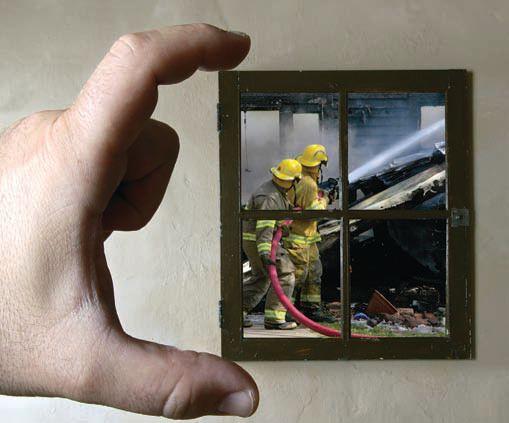
WINDOW OF OPPORTUNITY
Fire Chief Les Karpluk of Prince Albert, Sask., explains The Johari Window system of teambuilding and trust. The Johari Window is a leadership tool which, when understood and used appropriately, helps to build trust and create a new level of teamwork in the department. Developed in 1955 by psychologists Joseph Luft and Harry Ingham, (hence the name Johari) The Johari Window is a model used to improve understanding, communication and interpersonal relations among a team or group. This is an excellent model that officers can use with firefighters.
19
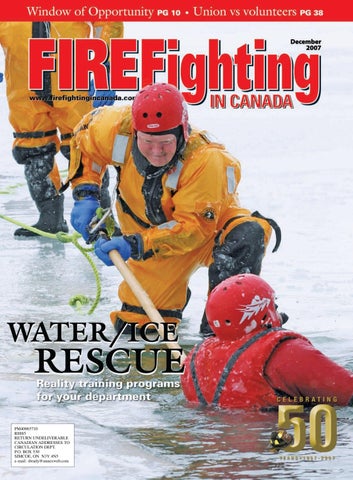
WATER/ICE RESCUE
Deputy chief Robert Rutter of the Prince Edward County Fire Department in Ontario outlines the process the department went through to train its firefighters in water and ice rescue with the help of the Ontario Fire College.
BY LAURA KING Editor firefightcan@annexweb.com
ODifferent volunteering dilemmas
n Nov.1, four volunteer firefighters in Orangeville, Ont., resigned from their positions after they were pressured by their union, the Mississauga branch of the International Association of Fire Fighters. The firefighters are so-called two hatters; they volunteer in Orangeville, where they live, and they work as professional firefighters in other municipalities.
While this issue played itself out in densely populated southwestern Ontario, Chief Phillip Publicover of the Blandford Volunteer Fire Department in Nova Scotia lamented the lack of volunteers in small towns after revealing the sorry state of his own department and others nearby.
“I can take you to fire stations and show you a wall of pictures of their active members, and you’ll think you’re looking at a seniors’ club,” he told CBC News.
By mid-November, seven Orangeville volunteer firefighters with a total of 80 years experience had resigned after receiving letters from the union.
The union says two hatters are violating the union constitution and can lose their union memberships. It argues that full-time firefighters who also volunteer might put themselves and others at risk if they end up at volunteer calls between full-time shifts and then show up to work tired and stressed out. Another concern is that volunteers could be exposed to toxins linked to cancer, and there could be jurisdictional concerns if worker’s compensation claims were filed.
THE COVER
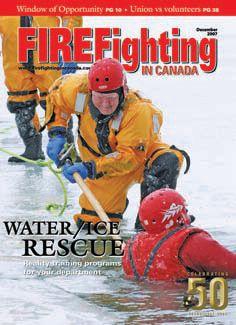
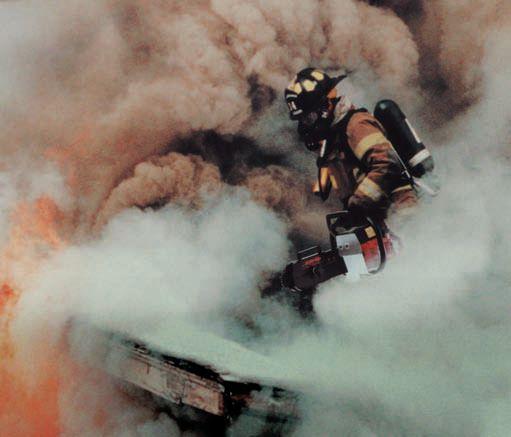
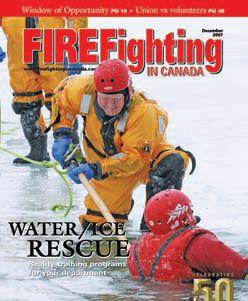
The Ontario Fire College brought its ice-water training program to the Prince Edward County Fire Department in Ontario in February.
Unbelievably, when a fire alarm went off in March in the home of an elderly couple, no one from the Blandford Volunteer Fire Department responded. And in August, a Blandford home was gutted after a fire broke out in the afternoon and just three firefighters answered their pagers.
Meanwhile, Orangeville Fire Chief Andy McIntosh, who is in the frustrating position of having plenty of available volunteers he can no longer use, called the union’s stand “absolutely disgusting.”
The Orangeville firefighters who resigned brought a wealth of training and the benefit of a professional experience to their volunteer positions.
“Not only are these unions putting the citizens of Orangeville at risk, but our own firefighters as well. In a day and a half, we lost 46 years of fire fighting experience, along with the department’s training division,” McIntosh told the Orangeville Citizen.
The Orangeville situation was nowhere close to being resolved at press time and the Ontario Fire Marshal had been asked to help settle the issue. In Nova Scotia, fire marshal Bob Cormier is trying to find solutions to the volunteer shortage. One proposal is to offer volunteer training at different times so people working outside the community might be better able to volunteer.
Meanwhile, Orangeville town council hired a lawyer to file a grievance with the local union because the town believes twohatters are allowed under a contract signed earlier this year with the Ontario Professional Fire Fighters Association.
We’ll keep you posted on both issues. Meantime, for a fiery perspective on the twohatter story, turn to Peter Sells’ FlashPoint column on page 38.
PRESIDENT MIKE FREDERICKS mfredericks@annexweb.com
PUBLICATION MAIL AGREEMENT #40065710
PAP Registration #8885
RETURN UNDELIVERABLE CANADIAN ADDRESSES TO CIRCULATION DEPT.
P.O. Box 530, SIMCOE, ON N3Y 4N5 email: sbrady@annexweb.com
Periodical Postage Paid at Buffalo NY. USPS 007-276, ISSN 0015-2595. Published eight times per year (Feb., March, May, June, Aug., Sep., Nov., Dec.) by Annex Publishing & Printing Inc. U.S. Office of Publication c/of DDM Direct.com, 1223 William St. Buffalo NY 14240. U.S. Postmaster send address change to P.O. Box Niagara Falls Ny 14304. Printed in Canada ISSN 0015–2595
CIRCULATION
e-mail: sbrady@annexweb.com
Tel: 866-790-6070 ext. 206
Fax: 877-624-1940
Mail: P.O. Box 530 Simcoe, ON N3Y 4N5
SUBSCRIPTION RATES
Canada – 1 Year - $25.44
(includes GST - #867172652RT0001)
USA – 1 Year $50.00
We acknowledge the financial support of the Government of Canada, through the Publications Assistance Program and the Canada Magazine Fund, toward our mailing and editorial cost. Nous reconnaissons l’aide financiere accordee par le gouvernement du Canada pour nos coults d’envoie postal et nos coutl redactionnels par l’entremise du Programme d’aide aux publications et du Fonds du Canda pour les magazines.
From time to time, we at Fire Fighting In Canada make our subscription list available to reputable companies and organizations whose products and services we believe may be of interest to you. If you do not want your name to be made available, contact our circulation department in any of the four ways listed above.
No part of the editorial content of this publication may be reprinted without the publisher’s written permission @2007 Annex Publishing & Printing Inc. All rights reserved. Opinions expressed in this magazine are not necessarily those of the editor or the publisher. No liability is assumed for errors or omissions.
All advertising is subject to the publisher’s approval. Such approval does not imply any endorsement of the products or services advertised. Publisher reserves the right to refuse advertising that does not meet the standards of the publication.
this must be your notebook.
Youhave enough fires to put out. Your equipment shouldn’t be one of them. That’s why you partner with a company that’sup to the challenge. Panasonic Toughbook notebooks are builtto exceed military standards, withstanding the rigors of in-vehicle mounting and in-field use.Equally important is the fact that we work closely with your team to ensurethat every Toughbook PC has the software and technological enhancements to get the job done.Lives,after all,are in your hands. It’sgood to knowthe right technology is in your vehicle.
TOUGHBOOK CF-30
■ Genuine Windows®
XP Professional
■ Intel® Core™ Duo
■ MIL-STD-810F Compliant
■ Shock-mounted HDD
■ Moisture and dust resistant
■ Magnesium alloycase
■ 13.3" screen;1000 Nit brightness
■ Optional fingerprint scanner
■ Wide Area Wireless
■ Bluetooth® v2.0
■ GPS capable
STATIONtoSTATION
ACROSS CANADA: Regional News Briefs
Department receives truck from sister city in U.S.
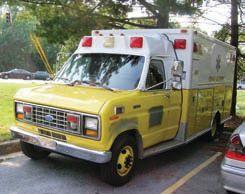
Sister communities Annapolis Royal, N.S., and Annapolis, Md., have been exchanging gifts such as badges and caps since the Canadian town celebrated the 400th anniversary of historic Port Royal in 2005. None, however, has been as extravagant as the 1991 Ford rescue vehicle that the U.S. city donated in October to the Annapolis Royal Volunteer Fire Department.
Annapolis Royal chief administrative officer Amery Boyer said delegations from the two communities have been in touch since the Nova Scotia town started preparing for the Port Royal celebrations. Those discussions led to the twinning of the municipalities in advance of the U.S. city’s 300th birthday in 2006.
Fire Chief Rick Smith says the department will decide shortly how to best use the new vehicle, which has about 206,000 kilometres on it.
Members of the Annapolis,
Md., department delivered the vehicle to Nova Scotia. The logistics were worked out by David Shelton, a Canadian who is special assistant to the state fire marshal and fire safety inspector for the City of Annapolis.
Boyer said the communities are linked by history. Sir Francis Nicholson, who led the the British forces that captured Port Royal from the French in 1710 and was governor of Nova Scotia from 1712 until 1717, had been governor of Maryland from 1694 until 1699.
The Annapolis department also donated a vehicle to the Fundy Bay Fire Department in New Brunswick last year.
Retired chiefs invite memberships
In 1993 the Ontario Association of Fire Chiefs Retired was formed by Fire Chief Jack McAllister (retired) of Barrie, Ont., and his wife, Cindy,to bring together retired members of the Ontario Association of Fire Chiefs. The association comprises former fire officers, suppliers and anyone who has been connected with the fire service.
The OAFCR invites all retirees to become member and join us at our annual meeting in June in Owen Sound. Details of the 2008 meeting will be posted soon on our website, which can be accessed through the Ontario Association of Fire Chiefs site at www.oafc.on.ca (click on links then Ontario Fire Chiefs – Retired). Meetings are held the first week ofJune.
Fire Chief John Staller (retired) of Waterloo, Ont., was elected as the first president and has been active ever since. His philosophy that
“we’re here for a good time not a hard time” has prevailed and, as a result, the association does not have formal rules or regulations. We meet to renew old friendships and to welcome recently retired members of the fire service into our association.
We meet in a different municipality every year, giving us an opportunity to enjoy the hospitality of the area. The host chief does not incur any personal costs to sponsor the reunion as all cost are paid for by the association.
The format usually includes a hospitality roomstarting on the first Sunday in June, a golf game on Monday and a business meeting on Tuesday during which the positions of president, vice president and secretary-treasurer are filled.
We pay dues of $10 a year dues ($20 a couple)
For further information contact Fire Chief (retired) Doug Lockyer or Karen Lockyerat karendoug@interpc.ca.
THE BRASS POLE: Canadian firefighters on the move
Promotions & Appointments
BILL WANAMAKER is the new fire chief in Sussex, N.B.. Wanamaker was deputy chief for the last five years and succeeds NORMAN WELSH, who stepped down in October for health reasons. Welsh became a volunteer firefighter in 1975 and became chief in 2002.
JEFF CROSS has been named new fire chief in St. Andrews,
N.B. He has served the St. Andrews department for more than 20 years, joining as a volunteer in 1986 and becoming a fulltime firefighter in 1994.
JOHN SUTTON retired in September as chief of Vaughan Fire and Rescue after working in the fire service for 40 years, including 23 years in Vaughan, Ont. Sutton started his career in Nova Scotia then moved to New Brunswick before landing with Vaughan Fire And Rescue in 1984.
Retirements
LEO VERMETTE, a volunteer firefighter in Vavenby, B.C., for 22 years and chief for the last 18 years, retired in September.
Last Alarm
PATRICK WATTERS-MICHAUD, 22, died July 22 in a helicopter crash north of Fort McMurray, Alta. Watters-Michaud was working as wildland firefighter, a seasonal job through Alberta
Sustainable Resource Development. He was part of a rapid response team on standby northeast of Fort McMurray.
ROBERT HALL, died Aug. 27 at the age of 51 after a year-long battle with colorectal cancer. The Vancouver firefighter was well known in British Columbia for his work in getting the province in 2005 to recognize certain cancers, including colorectal cancer, as line-of-duty diseases.
FEATURES
Tim Beebe, the fire chief in Upsala, Ont., looks at the lighter side of fire fighting in his new online column.
Ihold a world record in the fire service.
Here’s the story. Warm sunlight shone through the windshield of the pumper, as I cruised down Highway 17 on a routine maintenance run. The world was smiling. Truckers waved, and I waved back.
“No worries guys, Upsala Fire Department is here for you,” I mused. I stopped at the turnaround and checked my load. The hose looked good. Tools were in place. All compartments closed. The tarp was missing, but it had been gone for years.
On the return trip, I noticed one driver waving a bit more vigorously.
“He’s a friendly fellow,” I thought. “Maybe he’s heard about our crackerjack crew.” I sat up a little straighter.
When I stopped to fuel up, a rig pulled in behind me. The driver hopped out and ambled over. Maybe he wanted an autograph. . .
“Hey, buddy! Don’t you ever look in your mirrors?” he asked with a roguish grin.
“Of course I do. Why?”
“You lost a bunch of hose on the highway back there!”
Read the full column online at www.firefightingincanada.com
Firefighter Brad Lawrence with the City of Leduc Fire Services in Alberta is a former personal trainer and nutrition coach.In his exclusive online columns on fitness and nutrition, he offers guidance specific to firefighters.
In December....
Training: The Fountain of Youth, and how to use it
Today there are many supplements claiming to reduce body fat, enhance your immune system or help you build muscle mass. But what if there were something your body naturally produced that could benefit you in all these ways and more? Well, there is: The natural growth hormone (GH) is produced every day in your body. Read the full column online at www.firefightingincanada.com
Nutrition: Post-workout proteins
You just finished your workout. You know you’ve hit your muscles hard and you want those muscles to get the proper supply of nutrients to make them bigger, harder and, most importantly, stronger. Post-workout protein sources can make, or break your gains. Read the full column online at www.firefightingincanada.com
BY HAROLD HARVEY Fire Chief
South Glengarry, Ont.
I
WORKINGFIRE
Witnessing the evolution of the fire service
began writing this column in 1988 when the fire services were promoting smoke detectors for the home and replacing long rubber boots with bunker pants and fire resistive gear. I had been in the paid fire service since 1970, which followed a couple of years as a volunteer firefighter while teaching full time in order to pay the bills. I approached the editors of the magazine, who had previously used some of my photographs in various issues, including the first full-colour cover page back in 1988.
It has not been a steady run as there were a number of dry years, when for personal reasons I missed a few issues. Hopefully, the more than 100 articles that were produced have found their mark with Fire Fighting in Canada readers.
I have always felt that the subjects presented were well received and found that, on occasion, some of them provoked lively discussions in the fire hall. We have dealt with large-diameter hose, 1-inch and 2-inch attack lines, master stream devices, ventilation and basic firefighting strategy and tactics. We also discussed new items such as class-A foam and thermal image cameras before they had become popular, and dealt with basic firefighting subjects such as initial attack and ventilation.
Knowledge of the subjects written about had been gained through reading, research, attending conventions, visiting fire stations and attending various fire training schools and seminars. The knowledge also came from attending major fires as a photographer/learner, noting things that worked well and those that did not, with a view to adopting the former and avoiding the latter if ever I assumed a responsible position in the fire service.
quint to replace a 1966 pumper and, by responding with it to mutual-aid calls, soon added to our reputation and put our ladder and us in the centre of the action at major incidents.
I then went to a larger paid-on-call department where I was able to acquire an aerial ladder, and introduce class-A foam and thermal image cameras. The aerial ladder was a controversial issue as, according to some, there was no need for one because the town only had two tall buildings. This attitude changed when it was first used at a one-storey residential fire, accompanied by an explanation to a local critic that it compensated somewhat for a shortage of personnel as the structure could be laddered by one person operating the stick. The critics were silenced the following year when the aerial was used extensively during the ice storm of 1998 to clear dangerous accumulations of ice and snow from a number of rooftops.
Of course, as chief I met with some disasters, including a large warehouse fire that proceeded to cross the street and destroy another large structure and cause a small brush fire, and a major incident at a chemical site that caused the evacuation of part of a neighbouring town. Both incidents were successfully dealt with by the troops, those of my own department and the firefighters
Eventually, I was to wear the white hat and assumed charge of a small, 24-person paid-on-call department . . . ‘‘ ’’
Eventually, I was to wear the white hat and assumed charge of a small, 24-person paid-oncall department where we worked hard at honing our skills in order to impress the eight other departments in our mutual-aid system, which were all fully paid firefighters. This was done in fine fashion at incidents in our own community as well as at mutualaid fires where we quickly gained well-deserved recognition as dependable workers. We also were able to acquire a 10-year-old
Twenty years of service to FFIC
Harold Harvey is the fire chief in South Glengarry, Ont. He is a veteran fire instructor, and fire prevention technician. E-mail hkharvey@videotron.ca.
of the mutual-aid systems, both volunteer and paid. It was also pleasing to see that the work was mentioned in the third edition of Building Construction for the Fire Service authored by the late Francis L. Brannigan and another item was reprinted in an issue of the Minnesota Fire Chief.
I have been fortunate to have met numerous people involved in the fire service as well as those who support what we do, including the buffs and the salespeople.
While I retired from a full-time position at a very busy department in 2006, I have since assumed a position with a smaller service; in both I have found dedicated, competent people, devoted to helping their respective communities.
Leaving the magazine has not been an easy decision but I feel that the time has come to step aside and enjoy a semi-retirement.
Play safe!
OUR MISSION YOUR SAFETY PROTECTION
ENGINEERED FOR YOUR
THE NEW FireHawk® M7 Air Mask
Meets the new 2007 NFPA Standards, 1981 & 1982
A PASS Alarm that can Take the Heat “Bullet-Proof” electronics
Straight-talk communications
Fireground management capabilities
Extended protection
Lightweight and easy to use
Platform for the future
Window of Opportunity
Johari leadership system builds trust, fosters teamwork among department members
ByLes Karpluk
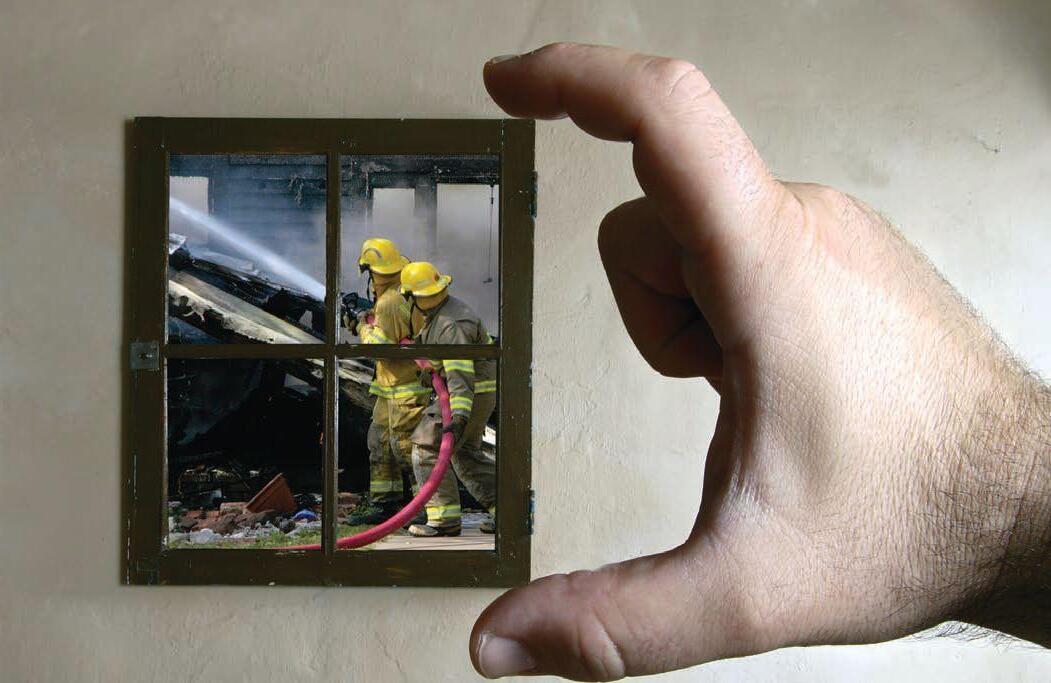
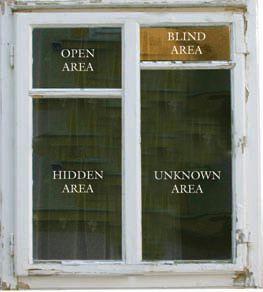
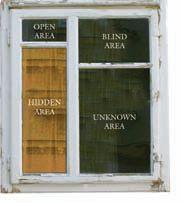
TOP The Johari Window is a communication model that can be used to improve understanding between individuals within a team or in a group setting.Based on disclosure,self-disclosure and feedback,the Johari Window can also be used to improve a group’s relationship with other groups.
Building trust in the fire department can be challenging for any fire-service leader; however challenging it may be, leaders working in high-performance fire departments must understand interpersonal relations and the steps required to foster trust in the team. Building an environment of trust in the department is beyond the scope of one individual, and, like most qualities, requires leadership from the chief and every officer in the department. When trust exists in the department, morale, motivation and employee retention is high. Take note: every officer in the department must contribute to the “trust” environment.
Noted fire-service author Chase Sargent
states in From Buddy to Boss, “It’s a game of relationships and trust – nothing more, nothing less.”
Trust and self disclosure
Webster’s online dictionary identifies trust as “believing in the honesty and reliability of others.” Without a strong sense of trust (believing in others) department members will not feel appreciated, nor will they take those extra steps in the delivery of our services to the public. When an environment of trust exists in the department the team gels and the department is able to flex in the midst of internal and external pressures. And we all know that these internal and external pressures can change the course of the department over time.
For more information, call your local Globe dealer or Safedesign.
BRITISHCOLUMBIAANDALBERTA
Coquitlam, British Columbia 800-667-3362
Calgary, Alberta 800-661-9227
Edmonton, Alberta 800-222-6473
Kamloops, British Columbia 250-374-0044
Nanaimo, British Columbia 250-758-3362
Prince George, British Columbia 250-960-4300
QUEBEC
LaSalle, Quebec
800-905-0821
ATLANTICPROVINCES
St. John's, Newfoundland 800-563-9595
Dartmouth, Nova Scotia 800-567-1955
Saint John, New Brunswick 800-567-1955
MANITOBAANDSASKATCHEWAN
Thompson, Manitoba 204-778-7123
Psychologists have been interested in how people connect and how they reveal information to each other. Self disclosure is how we reveal more of ourselves to others so we can connect and build a relationship. Self disclosure should not be viewed as simply sharing intimate information with others; rather it is about sharing our interests, favourite movies or other information that would not be normally revealed. This can be complex and information should be shared in the right way at the right time. When properly applied, self disclosure can build a solid foundation of trust among team members.
The Johari Window
The Johari Window is a leadership tool that helps to build trust and create a new level of teamwork in the department. Developed in 1955 by psychologists Joseph Luft and Harry Ingham, (hence the name Johari) The Johari Window is a model used to improve understanding, communication and interpersonal relations. This is an excellent model that officers can use with firefighters to:
•Build and foster trust among individuals by disclosing information about themselves;
•Learn about themselves and deal with personal issues
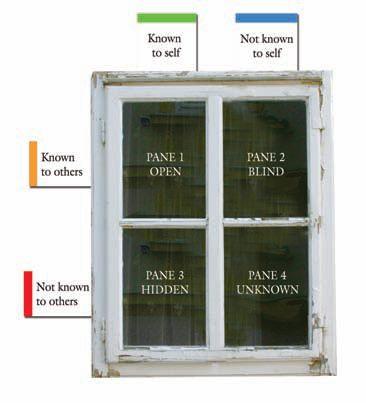
Before panicking about disclosure and receiving feedback from firefighters, a basic understanding of The Johari Window is necessary. The Johari Window is based on four aspects of our personalities:
• Areas we are open about;
• Aspects that we keep to ourselves;
• Aspects of our personalities that others see in us;
• Areas we are not aware of.
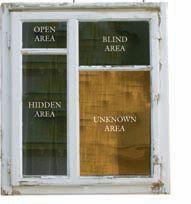
Let’s examine each pane in The Johari Window and learn how fire officers can use this model to develop trust among firefighters. Each pane in the window contains information that is known or unknown by the person (fire officer), and whether this information is known or unknown by others in the team (firefighters).
Pane 1 (Open): The attitudes, feelings, behaviours, experiences, knowledge and skills known by the person (fire officer) and known by the team (firefighters). This can be considered the most productive pane as the team is able to communicate and co-operate without mistrust or misunderstanding. The aim of the team is to develop this area and become effective in department goals and objectives.
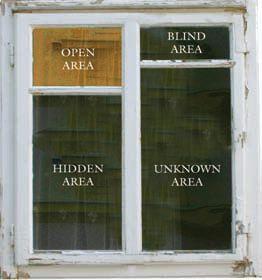
A new fire officer (person) on shift starts with small Open and Blind areas because the team (firefighters) knows little about the officer. The Hidden and Unknown areas are larger because the person is lacking in self-knowledge or belief.
The fire officer can expand vertically into the Blind area by seeking and listening to feedback from others in the team. The Hidden area can be expanded horizontally downwards by disclosing information, feelings, and expectations to the team.
The fire officer on shift has the responsibility to create a large Open area by promoting honest, open and constructive sharing of knowledge among members of the team. In researching top-performing organizations it becomes clear that the Open area is a primary leadership tool.
Pane 2 (Blind): What is known by the team (firefighters) and unknown by the person (fire officer).
If a fire officer (person) has not fostered open communication in the past, the team (firefighters) may think its officer is deliberately withholding information and, consequently, credibility issues arise.
The aim of the fire officer is to reduce the
At Globe, we never stop innovating. The new 2007 G-XTREME™ is no exception. Now certified to the NFPA 1971, 2007 Edition, the new G-XTREME™ pushes the limits of performance with a host of new and improved features.
A retailored fit in the sleeves and chest provides unrestricted mobility for even the most athletic firefighter. Lowered collar height perfects the interface between jacket and helmet and we’ve added our best-of-breed YOCCO™ Drag Rescue Device as standard yet exceptional equipment. And optional SILIZONE™ foam knees combine with our DRAGONHIDE™ reinforcement to make crawling almost heavenly. It just doesn’t get any better than G-XTREME™ . at a conference near you, visit globefiresuits.com to locate your Globe dealer, or call 800-232-8323.
BY E. DAVID HODGINS Managing Director, Alberta Emergency Management Agency
ILEADERSHIPFORUM
CFFF a fine example of leadership at its best
was invited by the Canadian Fallen Firefighters Foundation to be the keynote speaker for its fourth annual memorial service on Sept. 9 on Parliament Hill. The memorial was a resounding success in that the fallen firefighters were remembered with dignity and families and friends, as well as the several hundred firefighters, were warmly welcomed and treated hospitably. Yet the fact that there is a need for an annual memorial event represents an intolerable failure.
I firmly believe that the life safety and well-being of our firefighters is directly related to responsible leadership. One of the most effective ways to reduce fire deaths and injuries is through capable and competent leadership. The foundation’s work is an example of the effect of strong leadership, the type of leadership needed to reduce fire fatalities.
In four short years, the CFFF has accomplished what some thought was impossible. These dedicated volunteers have taken the CFFF from vision to reality while establishing financial stability. This demonstrates committed and competent leadership at its best. The objectives of the CFFF are most commendable:
• To receive and maintain funds for the establishment and maintenance of the Canadian Fallen Firefighters Memorial and other related purposes;
• To plan, direct, and manage the Canadian Fallen Firefighters memorial service and related activities in co-ordination with the federal government, fire service organizations and survivors of fallen firefighters;
• To provide financial assistance to families of fallen firefighters for transportation to and lodging during the service;
• To assist federal, provincial and local efforts to recognize firefighters who die in the line of duty;
• To provide scholarships and other financial assistance for education and job training for the spouses and children of fallen firefighters;
change. The initiatives centred on what must be done to reduce fatalities, including a change in culture, introducing personal and organizational accountability, risk-management practices, training, fitness, standards and the use of modern equipment and technology. As a result of its involvement at the grassroots level, the CFFF is a major sponsor of the “Everyone goes home” firefighter life-safety initiative. The CFFF is working to secure funding for a firefighter memorial monument in Ottawa. With the support of Public Safety Minister Stockwell Day and Heritage Canada, the federal government has provided property and is considering financial support. I encourage you to contact the CFFF and donate to this worthwhile cause.
As I refer to leadership in this forum, think about it in the context of influencing systems and initiatives beyond what’s needed in your fire station. Think about leadership in terms of influencing building and fire codes, health and safety regulations, operational guidelines and technology, as well as product standards. Most importantly, think about leadership and the need to influence attitudes and behaviours.
As I prepared for a recent speaking engagement I reviewed data on firefighter fatalities in the U.S., the United Kingdom and Canada. As I
I firmly believe that the life safety and well-being of our firefighters is directly related to responsible leadership. ‘‘ ’’
• To promote national, provincial and local initiatives to increase public fire and life-safety awareness;
• To do any such further acts or things, or execute such deeds, assurances or undertakings as will effectually assist in the furtherance of the objectives.
In the spirit of capable leadership, the activities and passion of the CFFF reaches beyond event planning. In March 2004, when the U.S. National Fallen Firefighters Foundation hosted the first firefighter lifesafety summit in Florida, the CFFF was there. The summit produced 16 initiatives to give fire-service managers and supervisors a blueprint for
David Hodgins is the managing director, Alberta Emergency Management Agency. He is a former assistant deputy minister and fire commissioner for British Columbia. A 30-year veteran of the fire service, he is a graduate of the University of Alberta’s public administration program and a certified emergency and disaster manager. E-mail: David.Hodgins@gov.ab.ca
distilled the information, it became clear that attitudes and behaviours are the key factors contributing to firefighter fatalities. In my opinion, attitudes and behaviours toward standards and practices appear to be superior in the U.K. where, coincidentally, there are fewer firefighter deaths.
In keeping with the theme of preventing fire and related deaths , I was in Ottawa on Oct. 4 as president of Fire Prevention Canada for the national launch of Fire Prevention Week. My presentation focused on the need for public and first-responder life-safety education. This event was held at the Canadian War Museum, an appropriate location for a fire-services event considering that several hundred Canadian firefighters were in England during the Second World War to fight the conflagrations in the city of London that resulted from Hitler’s bombing raids. This fact is not widely remembered today but firefighters need to know about it. For more information about the history of firefighters from Canada and their involvement in the Second World War check http://firehouse651.com/posten/index.html.
Ingleside, ON
WATER/ICE WATER/ICE
CE RESCUE CE RESCUE
Ontario Fire College brings mobile training camp to department
ByRobert Rutter
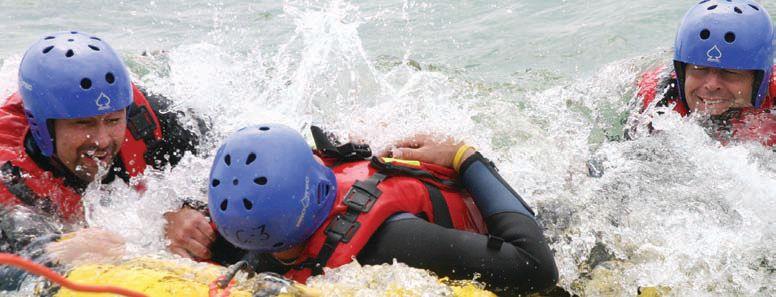
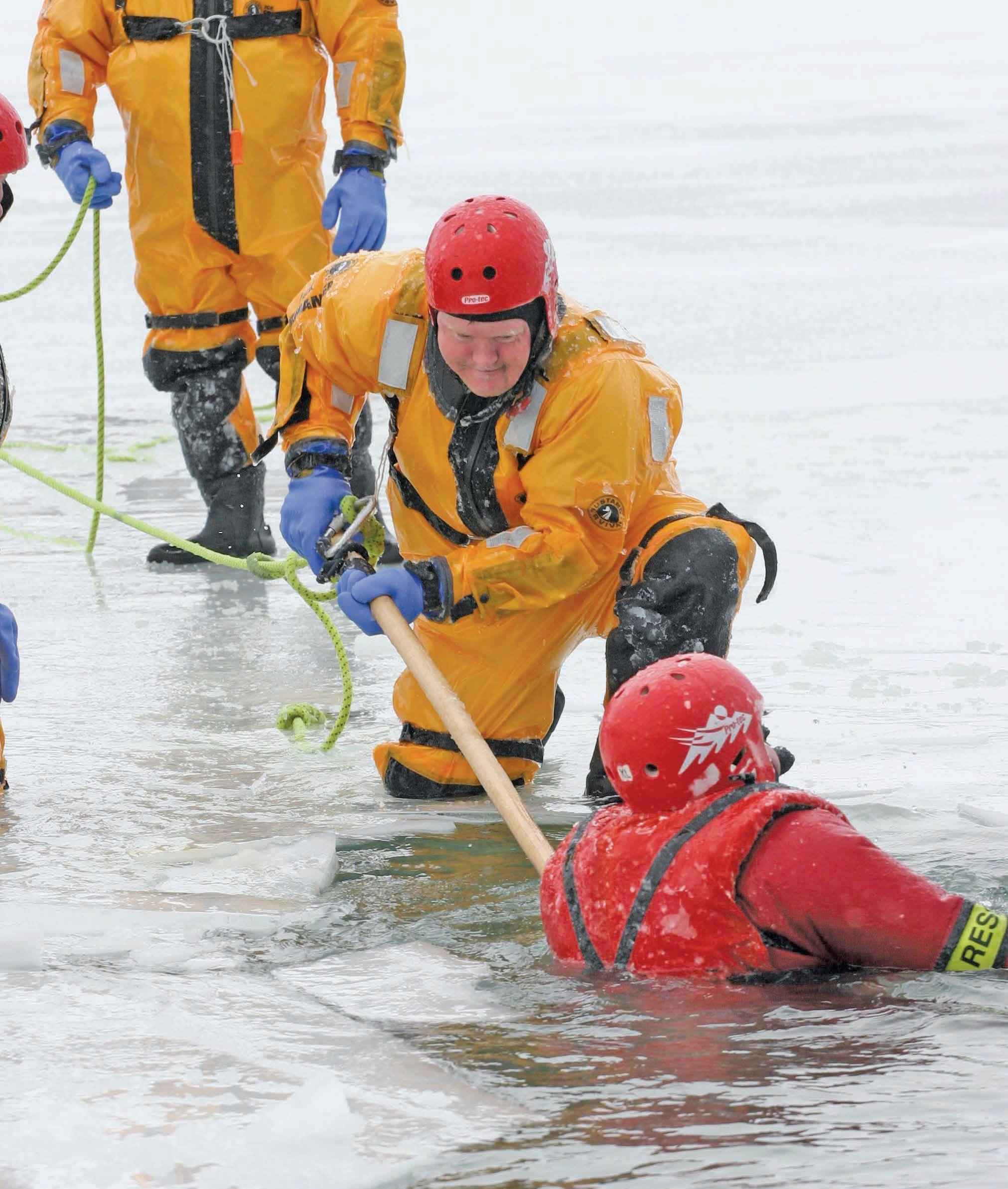
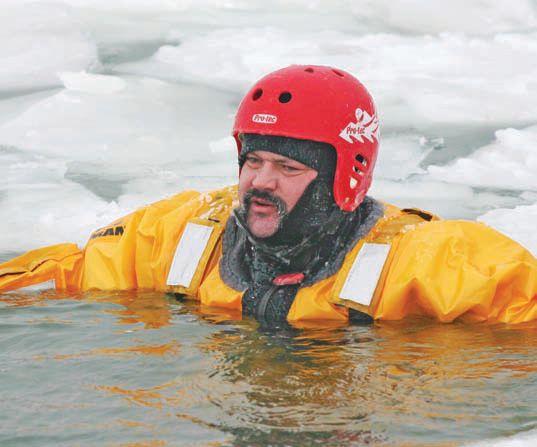
LEFT :Nineteen members of the Prince Edward County Fire Department, including (kneeling) Peter Williams and (victim) Jason Cournyea experienced ice-water training in Wellington Harbour in February. ABOVE :Jim Young plays the victim during training exercises. The second part of the water/ice training happened in July in considerably warmer water.
For more photos of the Prince Edward County Fire Department’s water/ice training and a webexclusive story on the North Hatley Volunteer Fire Department’s experiences with ice-water rescue training visit www.firefightingincanada.com
Maybe having more than 800 kilometres of shoreline had something to do with Prince Edward County council’s decision to expand its fire department into ice-water rescue. Until February, the Prince Edward County Fire Department was limited to shore-based rescue, which is not uncommon in rural Ontario today.
Prince Edward County, which is located east of Toronto and south of Belleville, is a popular summer tourist destination and, with its many beaches and campgrounds, may be best known for its famous Sandbanks Provincial Park. Fishing is also popular in “the county” but not only in warmer weather. Ice fishing is also extremely popular. For those reasons the decision to expand the department’s emergency response into ice-water rescue was an obvious one.
Prior to Fire Chief George Pettingill’s retirement in June 2006, council approved $90,000 from the Ontario government’s fire service grant to be used for the implementation of this badly needed service. This grant enabled the department to purchase its three Fortuna ice rescue boats, 15 Ice Commander water-entry suits, 48 Force Six life jackets, hundreds of metres of new rope and countless tools.
In 2007, Fire Chief Scott Manlow was charged with developing and implement a training program which, in the long run, would see his 140 volunteers and five full-time firefighters all trained to respond to ice-water rescue calls. It was decided to contact the Ontario Fire College with a request for delivery of an ice-water rescue course on site in Prince Edward County. While the OFC has an accredited course that is taught at the college in Gravenhurst, Ont., it made sense to deliver the course in the area in which the firefighters would be responding. This may have set a precedent for future training. The green light was given, the dates were set and the ice-rescue portion of this course was delivered in February to 14 volunteer firefighters, (two from each of the seven fire districts) and the five full-time firefighters.
Two months before the February course, the 19 participants were given study binders and pre-course assignments. Before being accepted into the course, they had to pass qualifying swim tests and prove their proficiency at tying several rescue knots. According to Ontario Fire College instructor Bill Hammond, the dedication and commitment of the team members was obvious as the classroom lectures got under way. “We knew the firefighters had completed their pre-course work as answers to our questions came fast and feverish,” Hammond said. Hammond was joined by instructors Terry Harrison and Jeremy Parken. This set the student/instructor ratio for this very technical course at about six to one. From the warmth of the indoor classroom, the team moved to an outdoor classroom at Wellington Harbour. As it turned out, the February training weekend was one of the most blustery of the winter. But, as Hammond told the course participants, “you may have to work in this weather, so you might better train in it.”
After suiting up, the firefighters experienced first hand the feeling of falling through the ice as one by one they dropped into the freezing water. Instructors watched closely for anyone showing any signs of duress. Over the next two days the firefighters trained in all aspects of ice-water rescue, from self rescue to single- and multi-victim rescue.
PHOTO COURTESY
They trained to perform rescues from the ice surface if the victim were conscious and to enter the water to help the victim or victims get out and to safety. They trained in the use of the Marsar sling, the Marsar rescue sled and the Stokes floating rescue basket, and in the deployment of the Fortuna rescue boats. To wind up this portion of the training, the participants were treated to the warmth of a classroom for the final hour, when they wrote their exam.
In early July, instructors Hammond, Harrison and Parken returned to Prince Edward County to deliver the warm-water portion of the course. Again, the 19 participants had to complete pre-course assignments and all were tested in the classroom on their knot-tying abilities before hitting the water. Early on the Saturday morning, the classroom moved to a large, water-filled quarry where all involved had to prove their ability to tread water and swim long distances. They also learned proper water-entry techniques, proper use of throw bags, how to deliver medical attention and how to place a victim into a Stokes basket while out in the water. Then, all the students went through several rotations of rescuing a victim and bringing him to shore. Once the basics had been delivered the training moved onto the southern shores of Prince Edward County for the balance of the weekend. Since “the county” is surrounded by Lake Ontario, the college instructors felt it was imperative that the rescuers be trained to work in the conditions that Lake Ontario is known to deliver. That summer weekend, waves more than a metre high pounded the shoreline. Training started out with one-person rescues, during which one tethered swimmer swam out and brought the victim back to shore. Later, the team was challenged to perform multiple-person rescues using the Fortuna rescue boat. While extensive training took place on what to do in the water, the team was also trained in what to do while on shore as all activities need to be carried out at the same time and in a team effort. Safety was
PROGRESSION OF RISK
The five-step progression-of-risk method for rescue.
If a person can be talked into self rescue then all rescue team members may not be required to participate in the rescue effort. Complex rescue scenes with multiple victims require additional rescue-team members.
Rescue tips
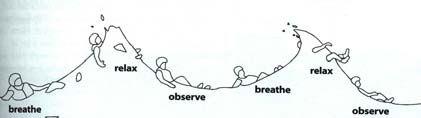
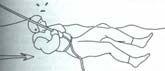
When a rescuer must perform a self rescue in waves, he must time his breathing with waves. Breathing is best done at the low point of wave, which prevents the rescuer from taking in a mouthful of water at the peak. Note: the body position in this case is a defensive position with feet at the surface, to fend off rocks or obstacles.
When throwing a throw-rope, the victim must be aware of how best to hold it. In flatwater or swiftwater, it is best for the victim to lie on his back – face up –with the rope over one shoulder. This causes the flat surface of the back to go against the current, hydroplaning, keeping the victim up at the surface.
also a key part of all the training that was delivered. Not only were the students continually reminded of the importance of safety, but the instructors demonstrated it as well. During all the hours of in-water training, never once was safety compromised. While training in the water there were always two instructors in the water watching over the exercises.
To wrap up the final portion of the training, the students had to write one last exam. Just a few short days after the completion of the course all 19 firefighters were informed that they had passed with flying colours.
Since that hot July weekend, our 19-member team has started to deliver the training to the other members of our seven fire districts. Eventually, the majority of our 145 fire fighters will be trained. “We are extremely pleased and proud of our 19 department members who completed this course,” said Fire Chief Scott Manlow. “The commitment and dedication they showed during the seven months of training was just incredible. To the Ontario Fire College, their instructors, and to the 19 members of this team, we say thanks.”
Robert Rutter is deputy chief of the Prince Edward County Fire Department. He was a volunteer firefighter for 24 years, serving six years as captain and training officer in Wellington District.
Source: Ontario Fire College
TRUCKCHECKS
Measuring a filter’s performance
ByDON HENRY
It is very important to be able to measure the amount of contamination in a fluid and to be able to specify the level of contamination acceptable for engine oil or a hydraulic fluid.
The old saying that if you cannot measure it you cannot improve it is very applicable to a fluid.
Over the years there have been a number of different means to rate or measure the degree of contamination in a fluid. The one that has become most popular is the International Standards Organization for Solid Contamination Control. For many years this system measured particles of only two sizes – particles equal to or larger than five microns, shown as > 5, or particles equal to or greater than 15 microns, shown as > 15. It has been shown that even particles as small as two microns are very destructive to a hydraulic system. (What is a micron?
To put this in perspective, the smallest particle that a human eye can see is about 40 microns. The period at the end of this sentence is larger than 70 microns.)
These very small, two-micron particles, also called silt, have been found to have an effect similar to sand blasting on close-fitting servo and proportional hydraulic valves. These valves are found on aerials and work very well with electro/electronic control systems but they will not work with dirty oil. As a result, the code has been changed to reflect particles equal to or larger than two microns along with the original five- and 15-micron particles. Chart A shows the number of particles and their relationship to a range number. For example if you received a range number of 16 that would mean that during the oil analysis it was found that the sample had between 320 and 640 particles of contamination. You will notice that to go down one range number you must reduce the number of particles by one half. (See chart A)
A typical oil-analysis report may come back with the oilrange number rated as 18/16/13/. This would mean that of the two-micron size, there were between 1,300 and 2,500 particles in every millilitre of oil. For the five-micron size or larger there were 320 to 640, and of the 15-micron or larger particles, there were at least 40 but no more than 80 particles. If you had just installed a filter that was rated as a five micron absolute filter and your next oil report came back as 18/20/13, something has gone very wrong with that filter. Your level of contamination has gone up from a range number of 16 (320-640 particles) to a range number of 20 (5,000 to 10,000 particles). (See chart B.)
Now let’s look at some common oil cleanliness requirements for typical hydraulic systems.(See chart C on page 26.)
As you can see, systems using only gear
and gear motors can have a
Continued on page 26
Firemanto FamilyMan...
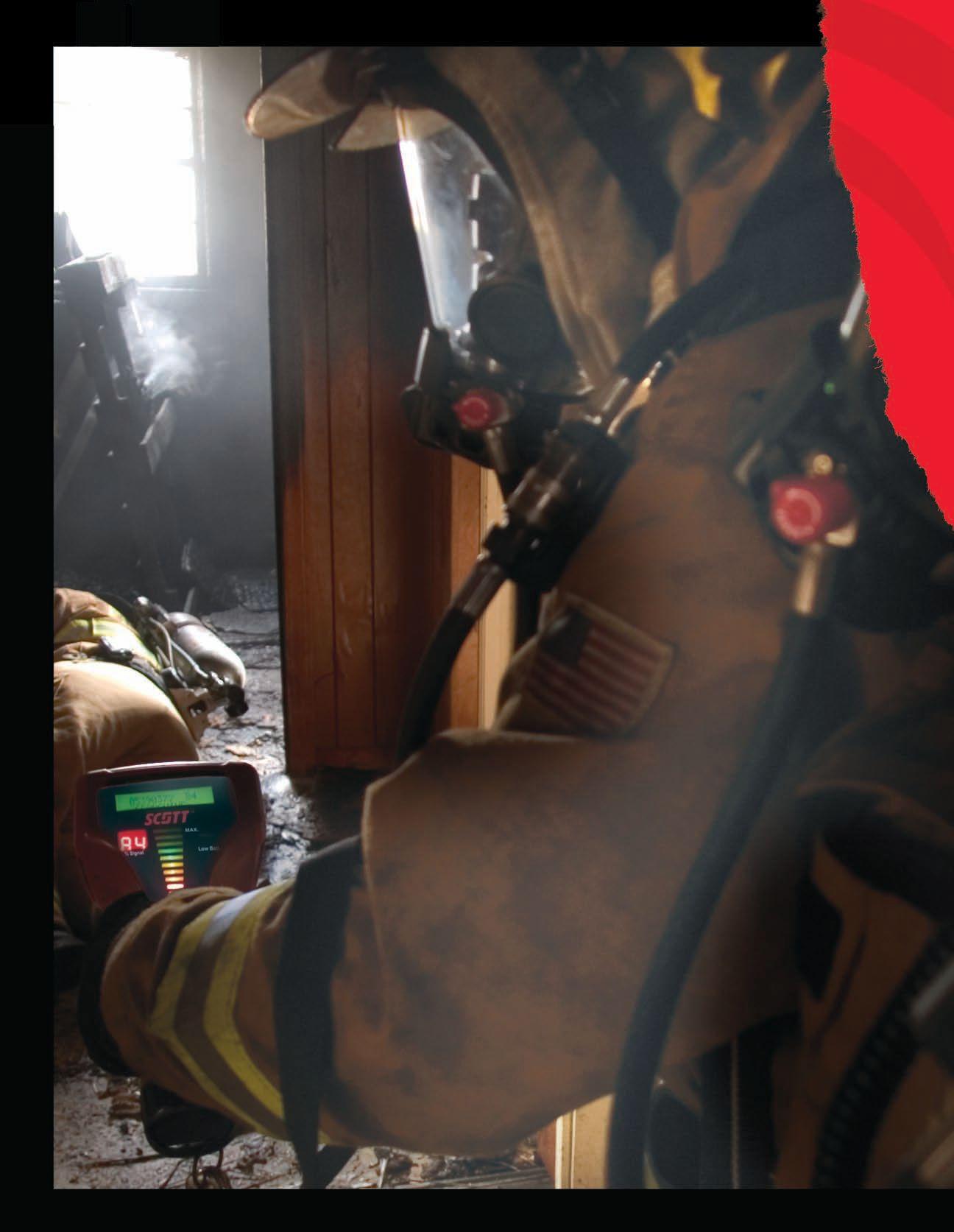
Lost in blinding smoke and searing heat…a fellow firefighter is down. But where? No time to waste. The Scott Pak-Tracker™ Firefighter Locator System, with its rugged, high frequency RF receiver, can scroll up to 36 firefighters with individual or SCBAintegrated transmitters and provide a clear directional path to the fellow firefighter in harm’s way. With a line of sight of more than 900 feet, the hand-held Pak-Tracker receiver provides both visual and audible indi catorsto quickly guide rescuerstothe down firefighter’s location. You have two families, one at each house, and they both want you home for dinner. From fireman to family man, Scott’s Pak-Tracker Firefighter Locator brings you safely home.
TRUCKCHECKS
Every second counts... Newton Kwik-Dump Valves
(19/17/14) than systems that use the far more expensive piston pumps, piston motors (18/16/13) or servo control systems (16/14/11). If you are not able to get a contamination control number from the original manufacturer, look at the hydraulic systems on the aerial and clean the oil to the component that requires the cleanest oil.
You should send even new, unused oil for analysis, as even new oil can be very dirty and may need to be filtered. Most manufacturers filter new oil before adding it to a new machine at the factory. It is not uncommon for this oil to be in the range of (20/18/15).
There are many other parameters that can be measured with oil analysis but I believe that with hydraulic and motor oils, the ISO codes are the most important. This code and its proper use will give you an excellent starting point for the selection on both the type and location of your systems filters. It can be very useful any time you find it necessary to change oil-filter suppliers or if you have a contamination problem you want to professionally clean up.
With many modern aerial devices costing in the range of $1.5 million and with upwards of 600 litres of oil to contend with, doing nothing is not an option. Remember, contamination will get into your system; it is the filter’s job to trap that contamination so it can be removed. By using the ISO codes it is possible to judge both a filter’s performance and a system’s contamination.
Excellent sources of further information can be found at http://hydraulics.eaton. com/products/filtration.htm and http:// www.fluidlife.com
In a future article we will look at oil analysis reports and all the information you can learn from them.
Don Henry teaches in the Automotive Service Tech-nician and Heavy Equipment Technician programs at Lakeland College in Vermilion, Alta., where he has been a faculty member for more than 17 years. He has co-developed and delivers Canada’s only post-secondary level fire-apparatus maintenance program and has completed a textbook on fire apparatus. Don Henry can be reached at Don.Henry@lakelandcollege.ca.
TRAINER’SCORNER
Cold-weather reminders
ByED BROUWER
For all of you veteran TOs this will be old news, however, it may prove to be a good review and a particularly useful one for volunteer departments. At first glance, cold-weather fire fighting is nothing more than regular fire fighting, the only difference being it is cold outside. However, it is not quite that simple. In most parts of our country, at this time of year, firefighters must deal with additional demands on their emergency apparatus and on themselves, physically, due to heavy snowfall and extreme temperatures.
When responding to an emergency in sub-zero temperatures firefighters need to be aware of the impact of cold-weather conditions on personal safety.
Fighting the elements and working on icy surfaces starts the moment the bay doors open. For paid on-call members, the battle begins as they respond to the hall in their personal vehicles.
Winter road conditions can adversely affect fire apparatus handling. Firefighters should be trained to deal with increased stopping distances, decreased visibility and the unpredictable actions of other motorists. Apparatus operators should consider the need for alternate routes in case of inaccessibility to the incident due to snow. Extreme winter conditions will cause longer response times. It bears repeating: first responders are of little value unless they arrive on scene safely.
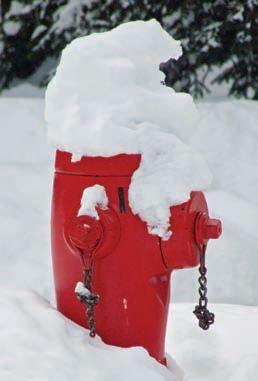
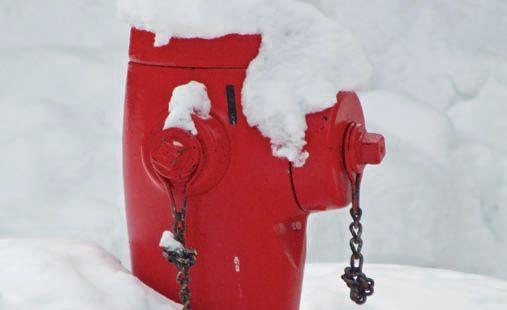
Once on scene, the IC must take into account seasonal hindrances to access and placement of apparatus. Do snow banks block access? Is there ice on the stairs? Are fire hydrants accessible? Are there hidden hazards under the snow?
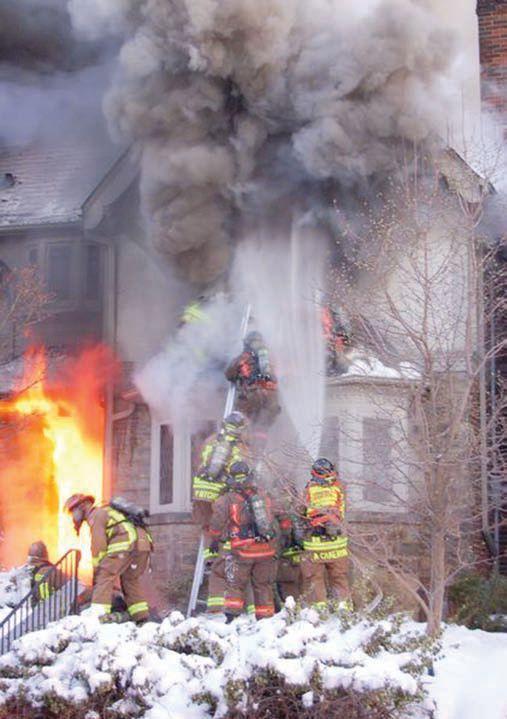
Water on the ground during cold-weather operations will create an increased potential for slips and falls. Be aware that some of the water applied to a burning structure may freeze on the building. As
Continued on page 31
COLD-WEATHER TIPS
■ Fire-ground operations must be adjusted to adapt to winter conditions;
■ Rehab during winter months includes re-warming as well as re-hydration;
■ Pre-plan for the worstcase scenario before the weather turns bad;
■ Make sure tire chains/traction devices are available for all first-in units;
■ Develop a plan with the agency responsible for road maintenance;
■ Carry a supply of salt, sand
or oil-dry to reduce the possibility of falls;
■ Add extra lengths of attack line to preconnects in case apparatus can’t get close enough to the fire building;
■ When hand lines are in standby (after knockdown), partially open control valves to allow water to flow and prevent freezing;
■ Follow the manufacturer’s recommendations regarding the cold-weather use of SCBA;
■ Review BA emergency procedures.
ABOVE: Snow and ice pose challenges for firefighters who can’t always see what’s buried underneath.
BELOW: Rehydration and rest are particularly important in extreme temperatures.
PHOTO COURTESY JOHN HANLEY
IN THEWATCHROOM
For more information on In the Watchroom products, go to www.firefightingincanada.com and click on In the Watchroom. Links to manufacturers’ websites are included on the web version of In the Watchroom, at the end of each entry.
■ COLE HERSEE RELEASES NEW SWITCH
Cole Hersee Co.’s new Low Voltage Disconnect (LVD) Switch eliminates dead batteries by automatically disconnecting noncritical loads from a battery when the battery falls below a predefined threshold. When the battery voltage is restored, the switch automatically restores the functionality of the ancillary equipment. Ideal for emergency vehicle applications, the LVD Switch prevents the loads from disconnecting during starting. The switch provides over-current, short-circuit and overtemperature protections to ensure a safe and reliable operation. Additionally, Cole Hersee’s LVD Switch is resistant to vibration and mechanical shock, as well as withstands con-
■ NEW SCOTT AIRPACKS RECEIVE APPROVAL
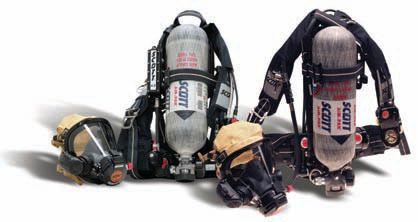
Scott Health & Safety two newest models of Air-Pak SCBAs – the Air-Pak 75 SCBA and the Air-Pak NxG7 SCBA – are fully approved for NFPA 2007 edition, 1981 and 1982 standards. Scott is now the only SCBA manufacturer with complete NFPA 2007 edition approvals on two different models of SCBA, providing firefighters with multiple purchasing options with an array of features not available on any other SCBA.
“Based on our long-standing history and relationship with, and knowledge of the fire service, we knew it was important to provide firefighters with multiple options, in both models and features, as we developed these two new SCBAs,” said Tom Korb, fire service marketing manager for Scott Health & Safety.
tamination from moisture, dust or salt spray. The LVD Switch extends battery life. The switch has a 200A at 12V DC rating, and comes with a manual override option to allow users to make or break the connection regardless of the battery voltage.
■ HAVIS-SHIELDS LAUNCHES GRAB RAIL
Havis-Shields Equipment Corp. introduces the new optional grab rail for all of its Kwik-Raze Silver Billet outer poles. The knurled design provides a non-slip grip in all directions, a clean finished look and is NFPA compliant. The solid aluminum bar leaves no open cavity, ensuring no water exposure into the grab rail. Easy height adjustability also makes the grab rail a convenient place to hang coats and gear while on the scene. This new product is perfect when mounting space is limited and is easy to install. The rail is available in 12-inch, 18-inch and 24-inch lengths. Each bar includes two mounting brackets and one grab rail bar.
array of cylinder options and CBRN approval.
The Air-Pak 75 and the Air-Pak NxG7 SCBA models are designed to meet all the new stringent performance requirements of the new standard.
As part of the new NFPA 2007 edition requirements, both models of the Air-Pak SCBA provide on-board datalogging of the most current 2,000 events, including PASS activation, low battery indication, and PASS alarms. With the Scott Pak-Link, the time/date stamped information can be easily and nonintrusively downloaded wirelessly for record keeping.
The Air-Pak 75 SCBA (named in honor of the company’s 75th anniversary) and the AirPak NxG7 SCBA were designed based on the “voice of the firefighter” and incorporate the most advanced materials and technologies available today. Both models offer the timetested legendary features the fire service has come to trust from Scott – Top-Down Convertibility, the easy breathing EZ-Flo Regulator, HUD integrated electronics, an
In addition to the new additions required by the 2007 NFPA standards, the new models of Air-Pak SCBAs feature new components unique to any other SCBA, including a drag rescue loop, carrying handles, and the integrated Pak-Tracker Locator system – an RF-based distress alarm system designed to help locate downed, trapped or lost first responders in single or multi-story structures.
Scott Health & Safety has already begun manufacturing the previously NFPAapproved Air-Pak 75 SCBA, and will begin the manufacturing process for the newly approved Air-Pak NxG7 to meet the growing demand for this model of SCBA.
TRAINER’SCORNER
Continued from page 28
more and more water is applied, ice will cause additional weight and stress on structures, increasing the potential for collapse.
Using SCBA during extreme cold-weather operations may cause some safety concerns. Although it is important in any situation that BAs are properly checked and maintained, certainly a little more care should be taken in winter months. It wouldn’t hurt to dedicate a practice night for emergency procedures in the case of BA failure.
It is imperative that BAs are properly checked and maintained. Firefighters should be thoroughly familiar with emergency procedures in the case of BA failure.
As far as on scene considerations, the IC should request additional resources as soon as possible. Firefighters may only be able to battle the elements for short time periods in extreme weather.
As well, your members – in particular your RIT – should be aware of the signs and symptoms of frostbite and hypothermia. Please don’t forget about the danger of frostbite. Fluids contained within an exposed body part can freeze, causing blood-vessel damage and necrosis or death of tissue in the affected area. Frostbite will appear as changes in skin appearance or discoloration and will be accompanied by numbness and stiffness.
Several factors contribute to the severity of frostbite:
■ The temperature to which the exposed part is exposed;
■ The length of time which the body part is exposed;
■ The condition of clothing covering the exposed area (wet or dry?).
Most often the hands, feet, ears and face of a firefighter are most prone to frostbite. The best way to prevent frostbite is to protect skin from direct exposure to cold air.
Hypothermia results when the body’s core temperature falls below normal. Firefighters suffering from hypothermia will exhibit shivering, confusion, extreme fatigue and drowsiness.
I know it sounds like a broken record, but firefighters should replace wet gloves as soon as possible. It’s also a good idea to keep a change of socks in your gear bag or on the apparatus during winter months. Try to dress in layers under your PPE.
Cold weather can definitely take a toll on firefighters and the equipment that they use. With proper pre-incident planning, training and awareness, the hazards of extreme winter-weather fire fighting can be reduced to allow safe operations on the fire ground.
In our profession, we are called upon to perform a number of important tasks, in a wide range of weather conditions. Your dedication as training officer to firefighter safety, whether through inovations or simply reviewing old, time-tested procedures, is what makes the difference every day on the fire ground.
Until next time, stay safe out there.
Ed Brouwer is the chief instructor for Canwest Fire in Osoyoos, B.C., and the training officer for West Boundary Highway Rescue. The 18-year veteran of the fire service is also a fire warden with the B.C. Ministry of Forests, a first responder, level III, instructor/evaluator and fire-service chaplan. E-mail: ed@thefire.ca
INNOVATIVE IDEAS
Display board preserves patches
ByLORNE ULLEY
Many departments across Canada collect shoulder patches and display them in their fire halls on bulletin boards or in some other makeshift fashion.
The South Glengarry Fire/Rescue Department in Ontario has a longstanding collection of shoulder patches and has come up with an innovative and simple way to display them.
The South Glengarry department was formed through the amalgamation of several communities. Five towns merged into one municipality that borders on Quebec to the east, Cornwall to the west and North Glengarry to the north. The population is 13,000.
Fire and rescue services are provided by a paid on-call department headed by Chief Harold Harvey, who has 125 firefighters operating out of five halls. Since this is mainly a rural area – mostly farming and some light commercial firms – some towns have hydrants while most of the districts rely on a tanker shuttle operation. Each hall has on its roster a pumper, tanker and rescue-command unit. Each station has a deputy chief and line officers. Part of the mandate is handling medical first-response calls with no transport; transport is looked after by a government-operated ambulance program.
South Glengarry is on Highway 401 and therefore handles its share of MVAs. It also has large farms, two rail lines and a gas pipeline along with the usual array of churches, schools and local commercial firms.
Many years back, at Station 5, which is in North Lancaster, a firefighter began a patch-collecting hobby. Over the years, the collection grew as the department’s members traded with others in Canada and the U.S. Firefighter Geoff McNaughton is responsible for gathering about 95 per cent of the station’s shoulder-patch collection, which amounts to 200-plus patches from all over Canada, the U.S. and Europe. But with the growing collection came a dilemma: how to properly and respectfully display the patches, recognizing the fact that every firefighter is proud of his department’s patches and that many patches have a history attached to them.
Over the years, the shoulder patches were pinned to the wall, put in a large frame and placed in binders in plastic sheets, much like a photo album. However, none of these methods was ideal as it was difficult to change or move the patches and add to the collection.
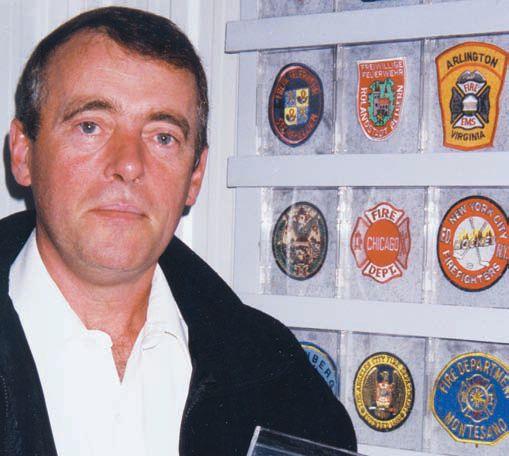
Firefighter George Cockerell came up with the solution, designing a plywood board that can handle more than 300 patches. Each patch is put in a empty CD case and the cases easily side into or out of wooden rails. This way the patches stay clean and safe and can easily be changed or moved. There are two boards on the station wall and more to come. There is little or no upkeep to this innovation, other than to paint the rails when required. Through the grapevine, Innovative Ideas heard of another department, in Dieppe, N.B., that has a similar setup for its collection of shoulder patches.
Any collector who wishes to contact Geoff can do so by e-mail: Geoffrey@glen-net.ca. South Glengarry Deputy Chief Rock Rozon can be contacted by dropping a note to: 6 Oak Street, P.O. Box 20, Lancaster, Ontario K0C 1N0.
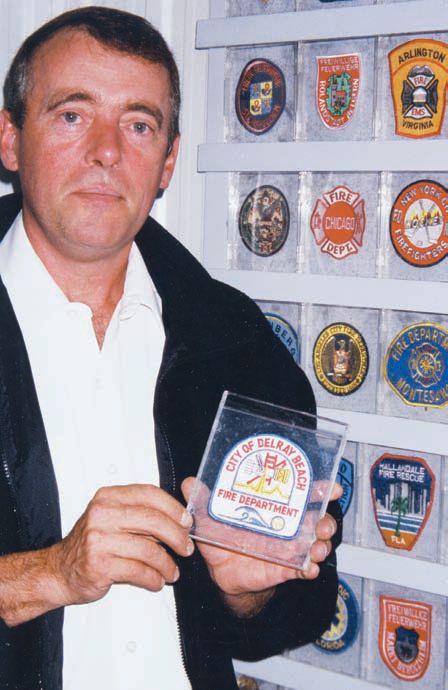
Chief Rock Rozon of the South Glengarry Fire/Rescue Service shows off the innovative shoulder-patch board at Station 5 made from wooden slats and protective,plastic CD cases.
■ HAVE AN INNOVATIVE IDEA OF YOUR OWN?
If you or your department has an innovative idea that helps you do your job easier, why not share it with fellow firefighters?
Please send the details to Lorne Ulley, Fire Fighting in Canada, 379 Beatty Ave., Verdun, QC H4H 1X7 or e-mail
firefightcan@annexweb.com, attention L. Ulley
Deputy
WALL PATCHING
PHOTO BY LORNE ULLEY
Blind area by seeking feedback from others, therefore increasing the Open area. Some members of the team may fear being open and honest with the fire officer and it is vital that the fire officer promote open and honest feedback. This takes time and the proactive fire officer will seek feedback from team members in order to build up the team.
Pane 3 (Hidden): What is known by the person (fire officer) but kept hidden or unknown to others (firefighters). In this pane the fire officer may fear vulnerability if he reveals some feelings, fears or attitudes. A large Hidden area may influence others to keep their feelings, fears or attitudes to themselves.
Reducing the Hidden area will take time, as disclosing personal feelings and information is best left to personal discretion. Again, the goal of the fire officer is to foster the environment of trust and expand the Hidden area horizontally into the Open area.
Pane 4 (Unknown): What is unknown by the person (fire officer) and also unknown by the team (firefighters).
The fire officer (person) may be unaware of the team’s (firefighters’) feelings on a topic; similarly, the team is unaware of the fire officer’s feeling on the same topic. For example, the team may want to expand its confined-space training while the fire officer feels that confined-space rescue is a service best left for an outside agency. This Unknown area becomes a barrier to effective team building. Through a disclosure process, the team may discover that the fire officer had a negative experience early in his/her career and is not
confident with confined-space training. By uncovering hidden talents the fire officer may find that a member of the team is very knowledgeable in confinedspace training and can work with the fire officer in the delivery of confined-space training.
The Hidden area can be reduced through shared discovery, self discovery and the observations of others. The goal of leaders is to encourage the development of the Open area for everyone.
Trust is built over time and through small steps. The glue that holds a team together is the trust in each other, and the team’s values and beliefs. Members in the department need to know and trust that chief officers will be truthful, even it means bad news.
Using the self-disclosure process, it takes hard work and time to change behaviours and foster an environment of trust in a department. A progressive officer using The Johari Window recognizes that self disclosure is achieved one step at a time through progressive disclosure. Over time, both the fire officer (person) and team (firefighters) are able to exchange personal and emotional information with each other, resulting in a trusting relationship.
Les Karpluk, CFO, BAppBUS: ES is chief of Prince Albert Fire and Emergency Services. He is a graduate of the Certificate in Fire Service Leadership and Fire Service Administration programs at Dalhousie University and graduate of the Bachelor of Applied Business: Emergency
Sources: Adler, R., et al (2001). Interplay: The Process of Interpersonal Communication. Oxford University Press; Sargent, C., (2006). From Buddy to Boss: Effective Fire Service Leadership. Penwell Corporation.
Dalhousie University College of Continuing Education
Are you looking to take on more responsibility in your Department? Trying to round out your technical ability with leadership skills? Preparing to advance your career?
At Dalhousie University we offer a three course program, the “Certificate in Fire Service Leadership” to career and volunteer fire officers.The 3 courses Station Officer: Dealing with People,Station Officer:Dealing with New Operations and The Environment of the Fire Station are all offered in each of our 3 terms, September (fall term), January (winter term) and April (spring term). The program can be completed in one year if a course is taken in each of the 3 terms.
For more information and a program brochure please contact:
Gwen Doary,Program Manager
Dalhousie University Fire Management Certificate Programs
You will also find the information in our brochures or at the following internet address:Web site:http://www.collegeofcontinuinged.dal.ca
BY LYLE QUAN Deputy Chief Guelph Fire Department, Ontario
OCORNERSTONE
Challenge for managers: change or recreate
ne of the more famous, tongue-in-cheek sayings in the fire service is “100 years of tradition, unaffected by progress.” Does this mean that in the fire service we hold true to our traditions and respect them or does it mean we are slow to accept change, or both?
This question, along with two useful and respected books that we’ll explore here, relates to the concepts of recreating or changing and how to deal with them. The online dictionary www.thefreedictionary.com defines recreating as “to impart fresh life to; refresh mentally or physically,” whereas change is defined as “to cause to be different; to give a completely different form or appearance.”
We all have encountered change in our lives. Our responses to change either make us stronger and more flexible or cause us to hold on tighter to that comfort zone of tradition. The first book I recommend on dealing with and managing change is Recreating the Fire Service (published by Kendall Publications, 1995). William Hewitt, who was the fire chief in Saskatoon when he wrote the book, starts off by noting that within the three years between 1992 and 1995, 29 CEOs from Fortune 500 groups such as IBM, Westinghouse and General Motors had been fired for failing to make changes quickly enough in their organizations. So what happened? Well, essentially, these managers stayed with their former success patterns too long.
Fire management is certainly more accountable now than in decades past to the needs of the community. Indeed, chiefs and officers are now responsible for creating strategic plans that are both fiscally responsible and flexible in their design. These strategic plans should prove that the fire management is looking to the future and is flexible in its strategies. Too often, many of our chief officers resist change and then fail to see the writing on the wall. These kinds of situations end in one of three ways: chiefs retire before they are totally overwhelmed by the challenges; the chief is fired by council because council is not seeing the leadership it needs to bring the fire service into the next decade; or, ideally, the fire chief understands the need to adjust and adapt and works to create a realistic future for the department.
compressed work weeks and the ability to change work days with others. Readers may not totally agree with these sacred cows but managers should at least consider these when deciding what needs to be changed or recreated – in other words, what needs to be different as opposed to what can be recreated or refreshed.
Hewitt’s book addresses topics such as: preparing for opportunity; what makes one fire department more successful than another; re-engineering and trust within the fire service; and strategic planning.
In the second book, Who Moved My Cheese (published by G.P. Putnam’s Sons, 1998), author Spencer Johnson takes us though a story about four characters in a maze who cannot find their cheese where it usually is located. The cheese is a metaphor for what you want in life, such as relationships, money or a good job, while the maze represents the organization in which you work or the community in which you live. This best-selling book describes how different people deal with change and emphasizes the need to anticipate change, enjoy it and, most importantly, be ready to quickly change again and again. As fire service managers, we owe it to our staffs and the communities to not to stand still and hope that things will eventually return to normal.
Remember the excerpt from Hewitt’s book about the CEOs who had been fired? Clearly, they decided to wait and hope that the cheese would
Fire management is certainly more accountable now than in decades past to the needs of the community. ‘‘
Hewitt’s book is a must read for those in senior positions who are looking for plain-language suggestions on how to deal with changing or recreating the fire service. Because of Hewitt’s understanding of the fire service and of the expectations of municipal councils, he takes readers through areas that can and should be changed, such as a more progressive leadermanagement style instead of the traditional boss-worker style. At the same time, he touches on those sacred cows that managers should stay away from if they want buy-in from their staff, such as established work shifts,
Lyle Quan is the deputy fire chief – administration with the Guelph Fire Department in Ontario. A 26-year veteran of emergency services, he is a graduate of Lakeland College’s Bachelor of Applied Business: Emergency Services and Dalhousie University’s Fire Service Leadership and Administration Programs. E-mail: thequans@sympatico.ca
return instead of anticipating, and embracing the need for change. I’m sure when you read Who Moved My Cheese you will identify with the four characters and how each one deals with the situation.
The question, then, is, whether, as a manager, you are going to change your organization or recreate it? Do you throw the baby out with the bath water because your fire department needs to start from scratch or do you refill the bath with some fresh water because that is what is required to take care of the baby (organization) and the situation? There’s nothing wrong with holding on to tradition. Problems occur when that grip becomes so tight that you are not able to relax and accept new ideas.
Who Moved My Cheese can be purchased through Chapters or Amazon, or you can check out www.whomovedmycheese.com. Due to the age of Recreating the Fire Service, it’s a bit difficult to locate. You’ll need to go to Amazon.ca or Kendall Publishing.
For additional information on Who Moved My Cheese and Recreating the Fire Service, go to www.firefightingincanada.com.
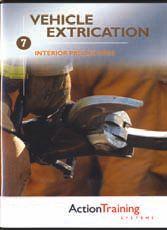
There are 7 courses included in the series. They are:
*IncidentOverview
*Stabilization
*HazardControlandSafety
*InitialProcedures
*DoorandSidewallProcedures
*RoofandTrunkProcedures
*InteriorProcedures
Item#:RVE008DVD
Price: $142200
•Specialicerescuesituations
•Iceformationandtypes
•Coldstressandhypothermia
•Thefourprocessesofheatloss
•Heatandfluidloss
•Howrepeatedexposuretocoldaffectsus
•Coldstress,immersion,andfluidloss
•Chilblains,frostnip,frostbite,andfreezing
•Drowning
•Referencesandadditionalreading
•Answerstostudyquestions
CUSTOM TRAINING PROGRAMS: MESC will provide custom design training programs.Other courses available include: Building standards, Rescue program, Emergency Medical, Management Program, Fire Prevention, Public Safety and Hazardous Material. Manitoba Emergency Services College,Brandon,Manitoba, phone:(204) 726-6855.
FIREFIGHTER CAREER TRAINING: Fire services career preparation Certificate recruit training program.Business leadership for the fire services.Courses available: Fire Prevention, Fire Suppression, HazMat, Emergency First Responder, Search and Rescue. For more details call Durham College,Whitby,Ontario or call Don Murdock at (905) 721-3111 ext.4069.
LIVE FIRE FIGHTING EXPERIENCE: Short and long term courses available, Municipal and Industrial fire fighting.Incident Command System, Emergency Response/HazMat, three year Fire Science Technology Diploma program. Lambton College,Sarnia,Ontario, call 1-800-791-7887 or www.lambton.on. ca/p_c/technology/fire_emerg_resp.htm. Enroll today!
BY PETER SELLS District Chief
Union stand on volunteers doesn’t hold water
TT he Canadian Charter of Rights and Freedoms lists several fundamental freedoms, among them the freedom of association. This freedom is a human right and a concept in constitutional law based on the premise that adults are entitled, as individuals, to choose their associates, lawfully and in good faith, for whatever purpose they see fit, without interference from other individuals or agencies. Freedom of association has been exercised many times in our history when workers sought to organize for the purpose of collective bargaining. This is a good thing and the principle is a pillar of our society. But this is not the only meaning of freedom of association. Canadians are also free to do with their time, efforts and skills as they see fit. How, then, is it right to seek to restrict full-time firefighters from the noble donation of their time and expertise to their home communities as volunteer firefighters?
International, provincial and local firefighters’ unions have done exactly that in their efforts to impede their members from volunteering in their hometowns. In some cases, these so-called two hatters have been forced to resign from their hometown fire departments. Here are some of the arguments put forward in support of the unions’ positions and brief, logical counterpoints to each argument.
Having volunteer firefighters on staff prevents municipalities from hiring career firefighters, affecting firefighter safety. Staffing a fire department is not one size fits all, rather each community has its own needs and its own budget. A fulltime department is not necessarily the best model for each community nor is it economically feasible for many towns. Let’s take a hypothetical town of 30,000 people served by 10 full-time firefighters during the day (five at a time on 12-hour shifts, when volunteers are typically less available to respond) augmented by 32 volunteers. For a fire outside the duty time of the fulltime staff, the fire ground would be staffed by as many of the 32 volunteers as are available. If we were to insist that the town would be better served by a full career model, then the town would likely be able to afford about one firefighter per thousand people, or 30 firefighters total. Let’s be generous and give it 32 firefighters, or eight per shift. Now, the daytime staffing has increased a bit but there is no backup or reserve. We now have only eight personnel available at any time, 24/7. Factor in vacations, sick time and other absences and then tell me whether we have achieved a safer fire ground staffing level than the volunteer or composite models would allow.
responding. Sure, it’s possible that firefighters who respond to volunteer calls will be tired the next day but no more tired than a firefighter with a new baby or a sick toddler. Regardless, there’s a simple solution that might appease both sides: simply restrict a volunteer’s duty in the hours leading up to a full-time shift. It is very interesting to note that arguments about sleep deprivation were dismissed or minimized by the unions in the move to 24-hour shifts. The sleep-deprivation argument would appear more genuine if there were restrictions on other activities but is a union going to tell its members they can’t play hockey between shifts, or run their own businesses. Of course not. That would be imposing on the freedom of association of the members.
Compensation claims for work-related diseases will create jurisdictional issues. This is easily resolved by pro-rating such claims based on a cumulative ratio of duty hours between the full-time and volunteer employers. This solution is not only a resolution of the argument, it’s a fair arrangement that makes the hometown department responsible for its share of the claim. This approach could also apply when a firefighter changes employers, going from one full-time department to another. If the compensation claim argument is valid, then why is it OK for a firefighter to leave one department and go to another? Perhaps it is because the union has no power to prevent such a personal career decision, or that
Staffing a fire department is not one size fits all, rather each community has its own needs and its own budget. ‘‘
Full-time firefighters who also volunteer in their hometowns will be sleep deprived or too tired for their full-time duty after
District Chief Peter Sellswrites, speaks and consults on fire service management and professional development across North America and internationally. He holds a B.Sc. from the University of Toronto and an MBA from the University of Windsor.He sits on the advisory councils of the Ontario Fire College and the Institution of Fire Engineers Canada Branch.
there is no political leverage to be wielded against a neighbouring fulltime department.
So let’s put these arguments aside, since none of them holds up to logical analyses anyway. It is the mandate of the unions to encourage fulltime employment wherever possible and safe working conditions in all cases. It is the responsibility of the municipalities to provide the best fireprotection model possible. These two mandates may not always be in synch but it is always the fundamental right of individual firefighters to make their own choice. The heart and history of the fire service is in volunteerism and service to the community.
I am certain that many readers will not agree with my position on this issue and I respect their freedom to disagree and encourage their feedback. In writing this piece, which has been brewing inside me for many years, I have exercised my fundamental freedoms of thought, belief, opinion and expression as guaranteed in the Charter. Therefore, I would expect any feedback to respect those freedoms.