

By Julie Fitz-Gerald.
MacKenzie
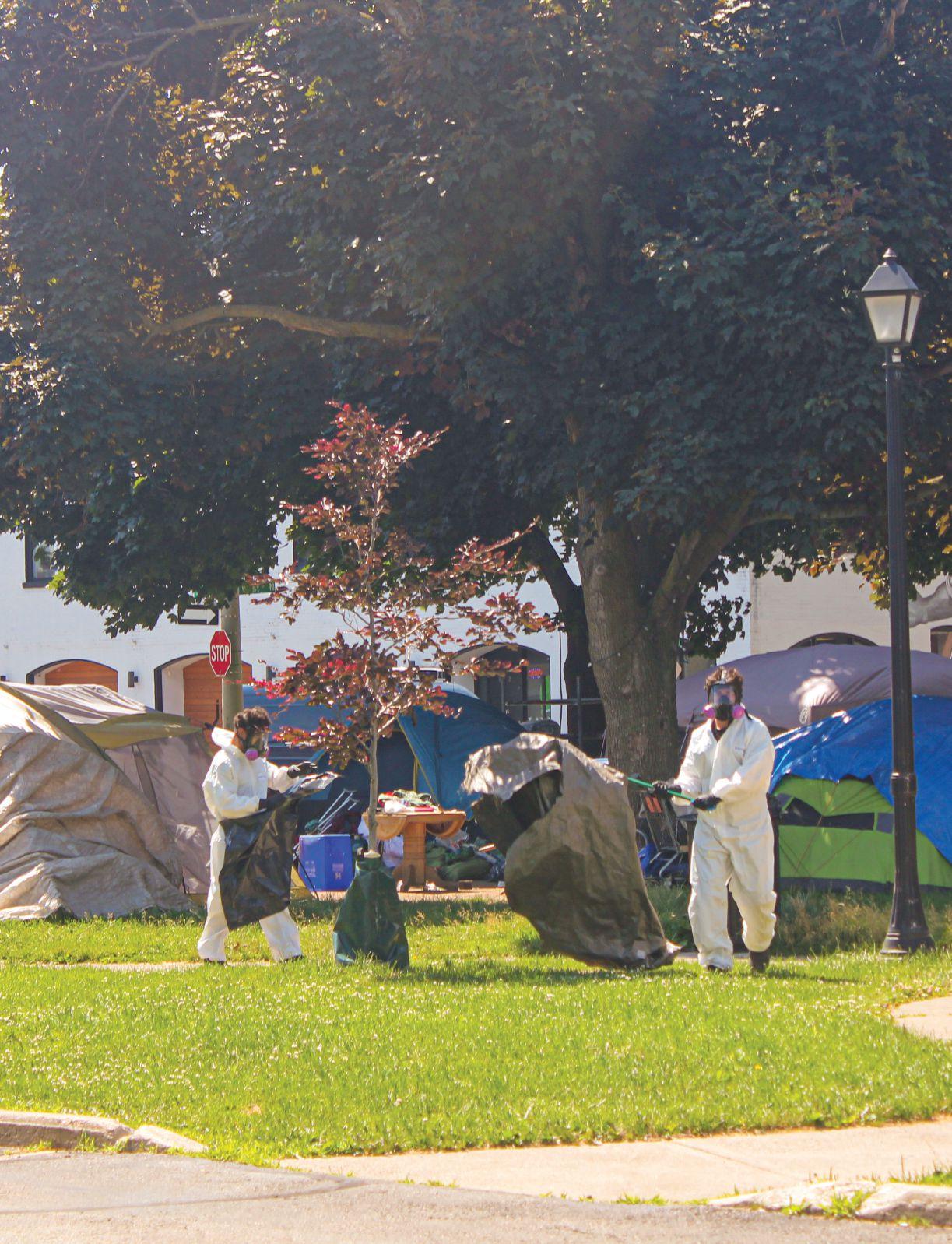
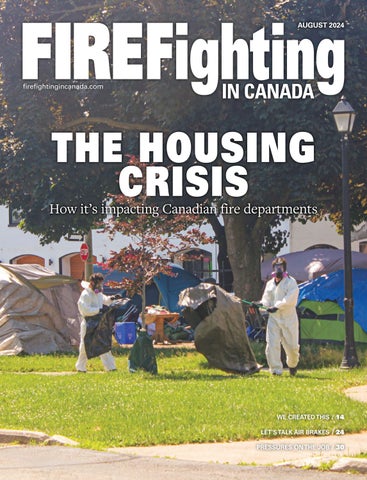
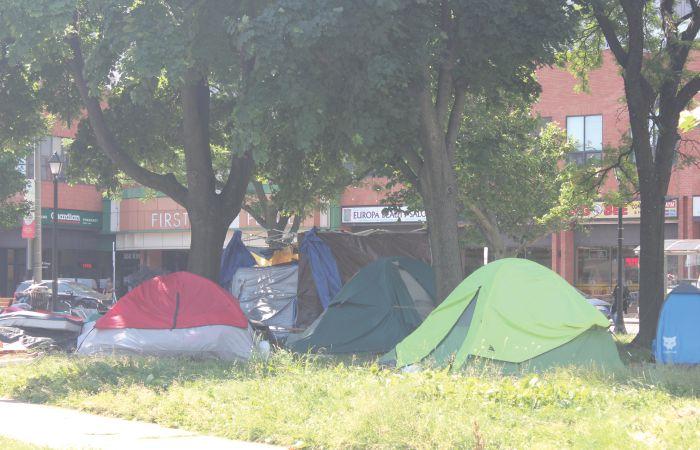
Cover photo: This encampment is in Hamilton, Ont., where a state of emergency related to homelessness, drug addiction and mental health was declared in April 2023. Photo by Laura Aiken

In the last edition, I pointed to some recent statistics around the growth in homelessness in Canada, particularly unsheltered, as part of our feature on acquiring “slash” vests to protect firefighters in situations where violence might occur. We are following that feature up with this look at encampments specifically, and the impact on fire departments.
I took the cover photo for this story. This encampment is located in Hamilton, Ont., adjacent to a funeral home, of all ironies, for I can’t help but think the lives lived here are cut short. I parked in the funeral home lot and was instinctively nervous standing outside this motley collection of human tragedy. There is an unknown X factor to the volatility, by mental illness, drugs or having been pushed to the brink that may be hiding in the hair-all-amuck older woman hunched over on her stool, head resting in her hands. But really, she looked like defeat. Like the one life beat.
As I was standing in the lot, a red truck and trailer pulled up labelled environmental response. Two young men jumped out, donned protective suits, then ventured into
the encampment and began hauling out garbage. The stark contrast between those who venture to touch the refuse and those who live amongst it seems symbolized by the bright white gear, emblematic of cleanliness itself. But the homelessness crisis isn’t about dirtiness. It’s about government and policy failure outside the fire department’s control. Firefighters don’t get to stand about like me, nervous at the edge of homeless sea. They must go in, and they must go in more often and in more places across Canada than previously experienced. This is in part because Canada, in its zeal to address other complications such as labour shortages, has simply let too many in too soon, straining housing capacity and healthcare to the hilt without having provided adequate resources for mental health and drug addiction. These exacerbations come on top of concerns about climate impacts, including record-setting wildfire years, intense flooding and ravaging storms, also intensifying. Even technology such as lithium-ion batteries has taken off so fast it’s left education and policy running to catch up. They occur in tandem
with inflation driving up the cost of everything while the need for more money continues to grow. Fire departments are responding, planning and preparing to deal with the fallout of a country that doesn’t seem to want to set a limit on the number of significant and complex issues it’s willing to carry at once.
Burgeoning complexity requires burgeoning budgets, and I scratch my head sometimes wondering where all the money will come from to fuel the infrastructure and service requirements needed. Things feel a little out of control in a country that’s sometimes been stereotyped a bastion of boring stability in the world. The strong organizational structure of the fire service and its calming here-to-help influence are critical in chaos, and if I were a government, they would be amongst the chief entities I would want to ensure were well funded.
One survey of Canadian municipalities estimates that between 20-25% of unhoused individuals in Canada now live in encampments.
%
Reported by Natural Resource Canada, 12 international partners were required to supply the personnel necessary to combat Canadian wildfires in 2023, including Australia, Brazil, New Zealand, and South Korea.
Wildfire numbers are decreasing nationally, with 2,222 fires being reported in 2024 at time of print compared to 3,617 in the same period in 2023.
LAURA AIKEN Editor laiken@annexbusinessmedia.com
9485 volunteer firefighters retired in 2023, representing 102,219 years of service, the Canadian Association of Fire Chiefs reported in its census.
A total of 55 fires in Toronto in 2023 resulted from the failure of lithium-ion batteries, stated the Canadian Fire Safety Organization
Over 10% of firefighters have experienced violence or harassment during a call, the Canadian Association of Fire Chiefs reported.
The Insurance Bureau of Canada estimates there was over $3.1 billion in insured damage caused by severe weather events in 2023. of newly registered vehicles in 2023 were zero emission models, said a report from Statistics Canada.
A study completed by the Canadian Institute for Public Safety estimated that over 20% of firefighters experienced PTSD in the wake of the Fort McMurray wildfire.


Boots on the Ground is really blossoming, and first responders needing an anonymous, trained ear to talk to are all the better for it.
Dave McLennan, a retired police officer, started this non-profit peer support service about five-and-a-half years ago. His concept, which arose as part of a goal to do something purposeful with his retirement after 30 years in the police force alongside seeing the need for the resource, progressed from seed to plant via a steering committee of fellow police officers and two years of effort (2016 to 2018) developing Boots on the Ground before it launched. He wanted to provide peer support to first responders with PTSD and offer an alternative to workplace resources, of which he said a certain segment will engage with and another may be hesitant to use for fear of impact to career in reaching out for mental health help. The stigma is still quite felt for many.
The steering committee talked to professionals, other peer supporters and first responders with PTSD in designing the program with the goal of understanding what would have helped early on in their mental health journey.
“The overwhelming consensus was ‘If I had someone I could have trusted to talk to early on it would have made
the world of difference.’ So that’s what we built our service delivery model on — this anonymous external resource to help versus monitor so they if don’t want to reach out to work, then they can reach out to us,” said McLennan.
The Ontario birthed organization has answered over 3200 calls and grown from 40 to 50 volunteers at inception to 180 volunteers and an office in Alberta.
Boots on the Ground has answered over 3200 calls and grown to a trained peer support team of 180 volunteers.
The phone number, 1-833-677-BOOT (2668) is 24/7. Volunteers are all fellow retired or active first responders, and they receive 12 days of training from Boots on the Ground on topics such as peer support, suicide prevention and mental health. Volunteers are always needed and trained for free with flexible scheduling options and a time commitment of 16 hours a month with shifts in four-to-eight-hour blocks. Volunteers are on call from wherever they are, and if their phone rings, they just need to be available to answer and find a quiet place to talk.
Boots on the Ground also provides in-person support services, including group debriefs and therapy dog visits, but attendance is not taken, and notes are kept anonymous in keeping with its core mandate of providing anonymity.
The non-profit is based in Ontario and Alberta, but they don’t turn calls away from anywhere, or from anyone, and will look to provide resource suggestions for those outside these two home-base provinces. Though Boots on the Ground is positioned as a peer support help line, not a crisis line, they have intervened on 47 actively suicidal callers, said McLennan, so those crisis calls do come in.
“It’s first responders here to help other first responders who are ready to listen. It’s trained volunteers on the phone and they get it. They’ve been in the same situations they’ve been in, they’ve walked the same walk,” said McLennan. “You’re having a normal reaction to a very abnormal situation you were put in at work and but your reaction itself is very normal. You’re being human. Let’s get you the help you need.”
The Canadian Association of Fire Chiefs (CAFC) released a 48-page report outlining their recommendations for the federal firefighter cancer framework. The report was in response to an invitation from Health Canada to help inform the framework, which will be introduced to the House of Commons in October.
The CAFC Cancer Committee hosted workshops from December 7 to 8 with members of the fire community. These discussions resulted in over 30 recommendations anchored by three core principles.
The first was to limit firefighter exposure to fire through stronger prevention methods, thus reducing cancer rates.
Second was the inclusion of multiple stakeholders and partners throughout the creation of these solutions, including firefighters, researchers, governments, and manufacturers of fire fighting gear and equipment.
Thirdly, the report emphasized the importance of continued evolution of both the framework and the International Association for Research of Cancer.
Specific framework recommendations included a harmonization of presumptive coverages across all provinces and territories as well as identifying and reducing the cost of illness to help offset the costs of portability and prevention.
In addition, the report encouraged measures to reduce the number of fires, particularly as the government continues to explore rapid housing development, electric vehicles, and other areas of innovation that will impact firefighters and their exposure to carcinogens.
To read the full report, visit the CAFC website at cafc.ca.

IAN CUMMINGS is the new fire chief for the Peachland Fire Department in B.C. Previously, he served as the fire chief for the Armstrong-Spallumcheen Fire Department in B.C. for six years after joining the service as a paid on-call firefighter in 2009.

The Town of East Gwillimbury in Ontario hired CORY MAINPRIZE as their new fire chief and as a member of the town’s senior management team. He became a firefighter in 1998 and previously led the Barrie fire department in Ontario for seven years.

DOUG WEGREN has been promoted to fire chief for the Saskatoon Fire Department. He began his career with Saskatoon in 1999 as a firefighter and EMT and has held a number of positions including fire service instructor, restorative action lead and assistant chief.

DUNCAN RYDALL is the new fire chief in St. Joseph, Ont. He brings 25 years of professional and volunteer fire fighting experience, including serving as the chief fire prevention officer for the Town of The Blue Mountains, Ont., for the past 14 years.

The Columbia-Shuswap Regional District in B.C. selected SEAN COUBROUGH as regional fire chief and manager of protective services. He has worked with the department since 2015 and was previously its deputy regional fire chief.

JEROMY GARANT has moved from deputy chief to interim fire chief for Kingsville Fire Department in Ontario. He assumed his role as deputy in 2023 and has 16 years of experience, with his other positions including volunteer firefighter, fire prevention officer, and public education officer.

Chief STEPHEN LAFORET of Windsor Fire & Rescue Services in Ontario will be retiring at the end of this year. He assumed his role in April 2017 while simultaneously serving as the Essex County mutual aid coordinator and the community emergency management coordinator. Laforet joined the fire service in 1990.

Chief KURTIS DYCK retired from the Martensville Fire Department in Saskatchewan. He joined the department as a volunteer firefighter in 1990 and held multiple positions over his three-decade career including deputy chief for five years before being promoted to chief for the last 12 years.

Chief DAVE KEIVER announced his retirement from the Malaspina Volunteer Fire Department in the Qathet Regional District of B.C. His 46-year-career was spent entirely with the department, and he became fire chief in 2005.

Ret. Langford Deputy Fire Chief PHIL GOLDIE lost his battle with cancer at the age of 85. He spent 37 years with B.C.’s Langford Fire Rescue, beginning as a volunteer firefighter and working his way to a full-time deputy chief position upon retirement.

Ret. Fire Chief BOB HADDOW passed away peacefully on April 3. He joined the Okanagan Falls Fire Department in 1962 and was appointed fire chief five years later at the age of 25. He held that role until his retirement in 2017, making him the longest-serving fire chief in North America at the time.



By Julie Fitz-Gerald
Oshawa, Ont., Mayor Dan Carter meets regularly with parents whose children have died from drug overdoses on his streets. Seated in Mayor Carter’s office, they look him in the eye and reveal the nightmare they’ve lived as they tried to save their child from addiction. “Municipalities live this day in and day out. Parents call and say, ‘My child died on your streets, Mr. Mayor.’ My job is to listen, not to defend, but to listen.”
From the streets of Vancouver to the shores of the Maritime provinces, firefighters across the country are responding to increased calls related to drug overdoses, mental health crises and encampment-related issues. Municipalities say they’re looking for innovative and collaborative solutions – but they need all levels of government at the table.
“What firefighters are seeing today is two or three crises coming together,” said Tim Richter, president and CEO of the Canadian Alliance to End Homelessness (CAEH). “You see the housing crisis, the lingering effects of the pandemic and you also see a toxic drug supply, so it’s multiple compounding crises.”
Richter noted that approximately 260,000 Canadians will experience homelessness this year, up from 235,000 cited in The State of Homelessness in Canada 2016. CAEH (caeh.ca) is a registered charity based in Calgary that works on a national level to end homelessness in Canada. Richter says they’ve partnered with about 80 cities across the country to help implement solutions.
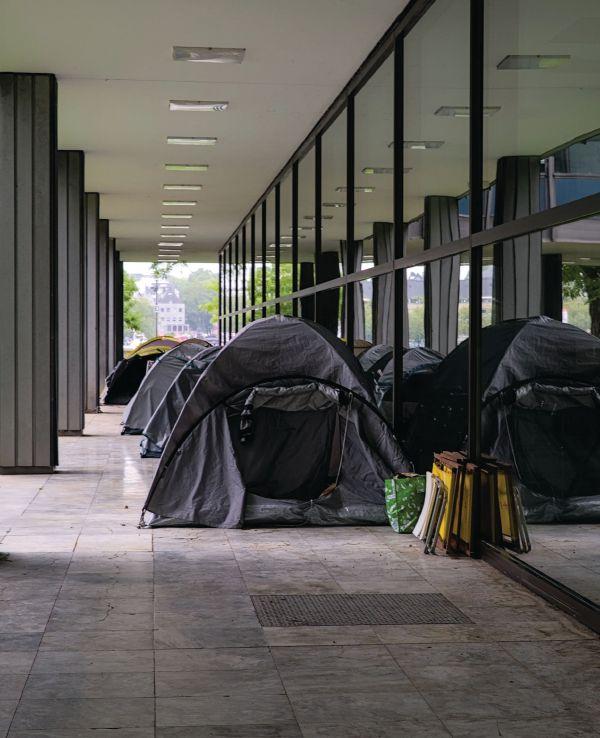
BELOW At the end of December 2022, 1,536 people were actively homeless in Hamilton.
He explains that a Canada-wide housing shortage and the rising cost of rent and groceries has forced a record number of people from stable living conditions. A study released in June by Food Banks Canada found that 25 per cent of Canadians are living in poverty, a number much higher than the 10 per cent poverty rate currently cited by Statistics Canada.
Studies show that low-income households typically spend 90 per cent of their budget on food and rent. When rent goes up by 25 per cent – as it has in many provinces since the pandemic – and food prices continue to rise, those hovering close to the poverty line can’t absorb the increase and are forced out of their homes.
Tonight alone, an estimated 40,000 Canadians will be looking for somewhere to sleep – perhaps in a shelter, on a friend’s couch, in an encampment or in a forested area that’s out of the way. The situation is always risky and fraught with peril. “Homelessness is a housing problem, not an addiction and mental health problem,” Richter says.
Yet homelessness, addiction and mental health are often intertwined, creating a cycle of despair that’s hard to escape from. Richter says that unsheltered Canadians tell him “It’s hard to do homelessness sober.”
Mayor Carter said that “98 per cent of the individuals we’re dealing with on the streets in Oshawa have both a mental health and drug issue. The drug crisis has played a significant role in regard to the severity and depth and width of those that are living unsheltered. A small portion of individuals are there for economic reasons, but we have more success
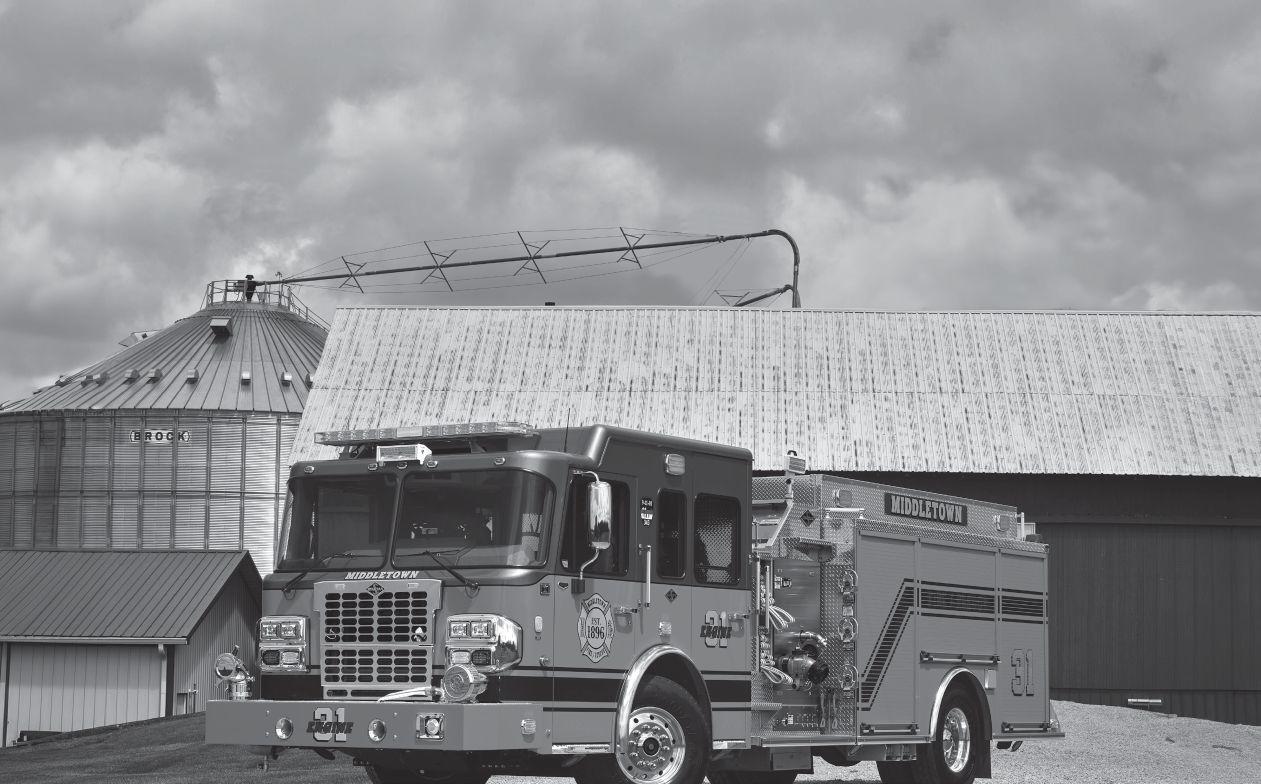




You need reliable fire apparatus that are up to the task at a moment’s notice. Look no further than the Spartan S-180 Custom Pumper. Built in half the time*, we configure it to your specifications—no compromise. It’s the industry’s fastest delivery of a custom fire apparatus. Less time, same Spartan strength and safety.
Discover how Spartan ER is helping first responders answer the call with new apparatus—IN 12 MONTHS OR LESS.
Scan for more information, contact your Spartan Emergency Response dealer or visit spartaner.com today.
with them because they will accept our help and the opportunity for assistance.”
Considering the life expectancy of a person facing long-term homelessness is 50 years old compared to 80 for the average Canadian, surviving without permanent shelter is a dangerous ordeal.
Carter said that pre-pandemic numbers of unhoused people in Oshawa, a city that sits
along the shores of Lake Ontario in the Greater Toronto Area, sat at about 40. Today that number is over 300. “The complexities we’ve been exposed to is something that I don’t think any of us could have predicted. The severity of mental health and the severity of drug addiction on our streets has been a real shock to many of us.”
In Moncton, N.B., Fire Chief Conrad Landry says homelessness in his Maritime city feels like
an uphill battle with the numbers of unsheltered people rising dramatically. “Ten years ago, we had a handful of homeless people and we knew them on a first name basis. The province has just come up with a stat that 55 per cent of homeless people in New Brunswick are in Moncton, which is alarming because we don’t have 55 per cent of the population. Unofficially, we’re thinking about 700 people are currently experiencing homelessness here, including living in shelters, encampments, on the streets or in the woods.”
Chief Landry says the Moncton Fire Department’s calls to those who are unsheltered have dramatically increased as well and can be put into two categories: drug overdose and encampment fires. “We do between four and five encampment fires a day and for a city of our size, that’s significant.”
His big concerns are: 1) advocating for yearround shelters, opening up beds that are typically closed during summer months; 2) potential delays to structure fires due to the number of encampment calls; and 3) addressing compassion fatigue among firefighters.
“How can we be compassionate on the first call of the day for overdose and then on the twelfth call of the day? Sometimes it’s the same person who has overdosed multiple times in one day. These folks went through something in their lives that brought them to this. It’s not for us to judge. We feel we have a pretty good system of support, but we need to ensure that compassion at all times and take each call seriously,” Landry said.
The issue of compassion fatigue has attracted the attention of the University of Moncton, which is set to begin a study this summer. Through one-on-one interviews with the city’s firefighters, the study aims to learn more about compassion fatigue and will report back in the fall with findings and potential strategies.
Chief Landry notes that good collaboration between the province and city has been key in brainstorming possible solutions. “The province is looking at putting a nurse in shelters, so if a nurse administers NARCAN, they may not need to call EMS and Fire.” He says that alone would be a big help for the fire department. “The province has heard us and are aware of this. We’re hoping by the end of the year it’s accomplished.”
Moncton is potentially looking to add a medical unit operating out of a small SUV in the future. With additional firefighters, the unit would respond specifically to overdose and
mental health calls. “It would alleviate the stress on the equipment and the firefighters. They wouldn’t transport patients but would arrive and give immediate care until the ambulance arrives,” notes Landry.
It’s an approach that Oshawa has already taken and Carter said is having an impact. “We invested almost a million dollars in a new Rapid Response Unit. It’s a medical unit specifically for many of our homeless and unsheltered population who are dealing with addiction and mental health. We hired 20 firefighters to man that particular truck and it gets about 75 per cent of our calls related to the unsheltered population, drug and alcohol and mental health calls. They do an extraordinary job and we’ve found it to be hugely beneficial in regard to saving lives and navigating the system to get people into the right care at the right time.”
In Hamilton, Ont., Fire Chief David Cunliffe says homelessness is a significant issue, with calls to encampments rising steadily from 2022 through 2024. “The shelter system in the city is over capacity and the number of affordable
housing is relatively non-existent,” he said.
In fact, Hamilton city council declared a state of emergency in April 2023 due to homelessness, opioid addiction and mental health. To help manage the crisis, the city created an encampment protocol strategy to develop a coordinated response. Meeting three times a week, the team includes the fire department, police department, municipal law enforcement, the housing and homeless division, a focused outreach team, parking and a city security team.
“In the background there are community outreach folks that are going into the various encampment sites all the time,” Cunliffe said. “We believe right now the number of folks living in encampments is over 300 but that number is changing constantly.”
One approach Hamilton is taking is sanctioned encampment sites on city property, allowing a certain number of tents in designated areas with each tent area measuring three metres by three metres. Separation between tents ensures fire safety protocols are met. Obviously, it’s not a permanent solution but one of simply trying
to keep people safe until they can find housing.
“Housing is the number one priority for our city council,” Chief Cunliffe explains. “They’re doing everything they can to deal with the issue, but it’s not just a municipal issue – it’s provincial and federal as well.”
Oshawa’s Mayor Carter agrees that all levels of government need to come together to solve the crises that cities are facing. “We need all partners at the table. We need municipalities who are living it day to day, we need regional government to support the right programs with funds and we need the provincial and federal governments involved because it’s a national problem. The federal government has allocated funds but have not been engaged in what I believe is the worst healthcare crisis we’ve ever faced in this country.”
When all levels of government collaborate, putting the right systems in place to affect change is possible. Carter said he’s been working with Lakeridge Health Oshawa to convert an old emergency room at the hospital into an
Continued to page 28
By Matthew Pegg, Fire Chief, Toronto
Matthew Pegg is the chief with Toronto Fire Services, having previously served in Georgina, Ajax and Brampton, Ont. Contact Matthew at matthew.pegg@toronto.ca and follow him on Twitter at @ChiefPeggTFS.
Over the course of my tenure as a leader, I have been active on several social media platforms. I have long believed that as leaders we must meet the people we serve, and those we serve with, where they are. For many, social media is where they are. Increasingly, I meet and speak with people who only use social media channels to connect with the world around them. Things like e-mail, reading newspapers, listening to news radio, and watching the news on TV are rapidly becoming ancient history for many of the people we serve and lead.
Social media has been a powerful and important tool for me, especially during my 25-month role as COVID19 Incident Commander. Focusing on the positive, social media allows me to share information, engage and connect with large numbers of people in a short period of time. I have witnessed the power of social media, and I have learned much about the realities of these platforms, and both the people and bots that use them. Unfortunately, as professor Randy Pausch explained in The Last Lecture, experience is what you get when you didn’t get what you wanted.
As leaders, I don’t think we spend enough time being candid with other current and future leaders about the realities of these things. I am, admittedly, one of the people who has regularly encouraged leaders to get active on social media, to be engaged, transparent and connected.
In this edition’s article, I want to share some of the candid, raw and real
We made this, we created this, and we are the ones that continue to fuel this engine that all too often runs on abuse and hate.
lessons that I have learned about social media, and to talk openly about the darker side of social media and those who created it.
The candid truth is this: While I absolutely have many positive and valuable experiences with social media, I have also seen the nasty, negative and even dangerous side of this world as well. Social media is quickly becoming a place where click warriors and cowardly trolls live and thrive; a place where the perception of anonymity encourages people to say and do things that they would never consider doing or saying in person or in the daylight; a place where the ability to drive dangerous and hurtful disinformation campaigns is but a few clicks away.
As I look back at the plethora of antisocial behaviour that I have both seen and been subjected to via social media, it scares me to think that this world of social media-fuelled negativity and hate was created by us, as the people that make up society. We made this, we created this, and we are the ones that continue to fuel this engine that all too often runs on abuse and hate.
It seems regrettably undeniable to me that far too many people have forgotten how to say thank you, how to be kind, how to build others up, and how to smile.
So many people, and far too many leaders, have become more focused on amassing followers than building leaders, on airing personal dislikes and grievances rather than extending a helping hand, and on finding, or
even creating, some nugget of controversy rather than being purveyors of peace and hope.
We have become a society where being seen as an influencer is more valuable than having influence; where celebrity is mistaken for competence and wisdom; where wealth has become the path to power instead of the path to generosity; where work ethic has been replaced by expectation.
Today, more than ever, we need leaders who will be voices of positivity, hope, and encouragement. We need leaders who are focused on being voices of calm and truth, against a backdrop of fear and disinformation.
If you are a leader who chooses to create and maintain an active social media presence, be prepared for the negativity and attack that will undoubtedly come your way, especially as your social media following expands. Dealing with all of this can take a toll, both on you and on those who care about you.
If you choose to be active on social media, remember to never debate or argue with a troll. There is a high probability that you are being engaged by a bot anyhow, one that has been programmed and commissioned to lure leaders into engaging, as they feel the need to defend themselves.
Thank you for being a leader who is committed to making a positive difference and who will leave it better than you found it.
Now, more then ever, we need you. Trolls, bots and click warriors need not apply.
Optimized cutting blades and jaw design to easily cut rebar, chain, and padlock

2-Stage hydraulic pump saves you energy and breathing air, compared to mechanical tools
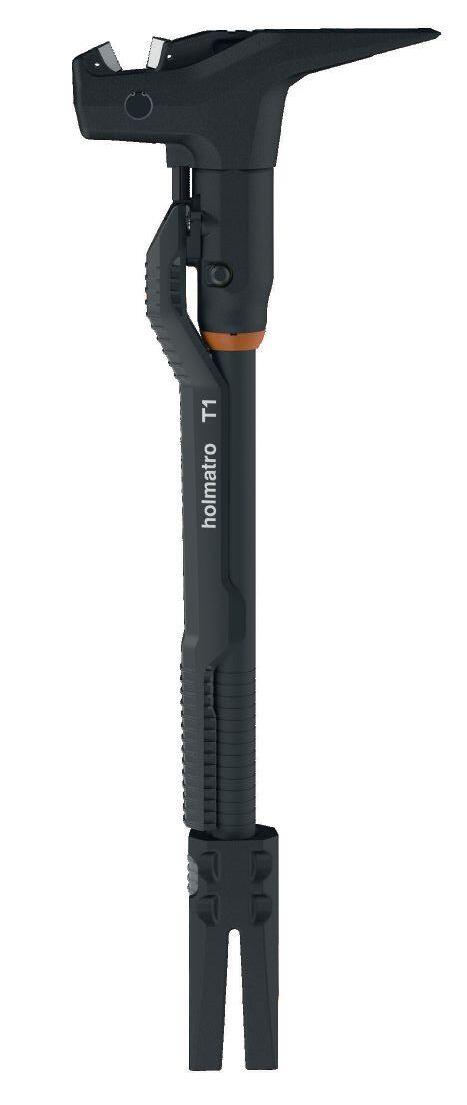
Hammer head used for opening light inward opening doors quickly
Ready to use weight of 7,7kg /17lbs
Detachable wedge can be used to create the first gap

By Mark van der Feyst
Last month we started to examine the rescue sequence as it relates to residential structures and the occupants inside them. The sequence as starts with entry into the structure and then searching the areas within. The next step of the sequence is to locate the occupants.
The key fact to remember when trying to locate occupants within the structure is to focus your attention and efforts mainly on the floor. The floor of the structure is where we will find the majority of the occupants as they fall or succumb to the effects of the smoke and heat while trying to escape the fire.
When searching the structure, the search team needs to sweep the floor as opposed to patting the wall. Wall patters are going to miss the occupants on the floor as their attention in focused elsewhere. Occupants are not going to be hanging on the walls; they will be lying on the floor.
The primary search needs to be a rapid but organized operation. How can it be both rapid and organized? Through knowing where we are going to locate our occupants. There are common areas to start your search based on statistics collected from successful rescues as well as from death investigations when occupants cannot get out of the structure.
One category is exit points, which include the doors, windows, stairs and hallways. With doors, many occupants are located just behind or at the door of the structure as they are trying to get out. Be mindful when opening the front door of the house; if there is resistance, there may be a person behind it.
With the windows, occupants are going to try and get out by any means necessary which will include windows. They may be located right below the window or just in reach of it.
Sometimes we do not think of hallways and stairs as exit points, but they are because they are the pathway leading to the exits of the structure. Occupants will succumb to the effects of smoke and heat in the hallway or on the stairs going down to the first floor. On the stairs, they may be located anywhere: top, middle, or bottom.
Another area of focus is the fire location, as sometimes the occupant was trying to put the fire out themselves but were not able to. This is more prevalent with men as opposed to women. Other times, they may have been trapped there as the fire began or are present at the fire location for reasons unknown to us at the time.
The other area will be dictated by time of day. During the daytime, we
Mark van der Feyst has been in the fire service since 1999 and is currently a firefighter with the FGFD. Contact him at Mark@FireStarTraining.com
are going to find the occupants located in the above-mentioned areas, but at nighttime we are going to locate the occupants primarily in their bedrooms and in their beds. There are going to be people who work shift work and may be in their bed during the daytime, but predominantly the populus sleeps at nighttime.
There are some key differences to be mindful of when locating this group within the structure. Parents are protective of their children and, in the case of a fire in the home, the mother or father will try their best to grab their child or children and take them out with them. With infants and toddlers, they can be carried in the arms of the parent, which means when the adult falls down to the ground due to the effects of the smoke, they will land on top of the infant or toddler. When locating the adult, take the extra second or two to look and feel under the adult to see if there is another person to be rescued, and scan around the adult in case the infant or toddler spilled out from or was lost from the arms of the parent and are lying on the floor nearby.
Photo 1
Roll the crib towards you if you locate an infant rather than raising them high into the intense heat and smoke.
Photo 2
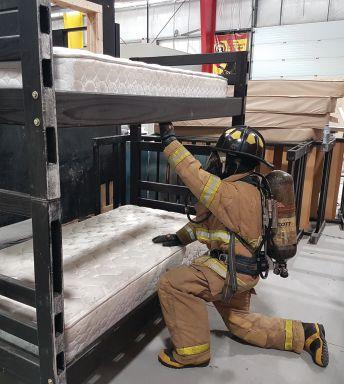
Check both the upper and lower portions of bunk beds when sweeping bedrooms for children.
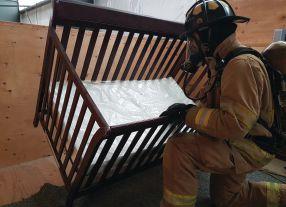
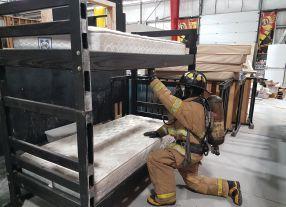
This will sometimes involve lying on top of the adult to feel around as well as sweeping your hands underneath the adult’s body. What may assist is to roll the adult’s body towards you to get better access underneath.
With infants, they are typically going to be placed into a crib of sorts when they are sleeping during the day and night. Be sure to sweep inside the crib when you locate one in a room to determine if the infant is present. If they are there, do not pick the infant up and raise them up and out of the crib. Instead, roll the crib towards you as shown in photo
1. There is going to be high heat at ceiling-level along with the nastiest smoke, and if we lift the infant up out of the crib we are placing them into that upper environment. Rolling the crib keeps the infant in the lower environment where it is cooler and more tenable.
Some babies, toddlers and small children will sleep in the same bed as with their parents, so when locating beds in the rooms, be sure to sweep the bed to locate the adult and any children that may be there. Do not pat the bed, but rather sweep it with your whole arm and hand.
Some children will have trendy bedrooms that contain bunk beds or loft beds. As shown in photo 2, we need to check the upper portion of the bunk bed as well as the lower portion. If there is only a loft bed, there will be no lower portion but there will be support posts that, hopefully, will trigger the searching firefighter to feel up above their head to locate loft bed.
The points detailed in this month’s article are good training points to practice on a regular basis. These simple drills can be conducted in any training facility with the proper props to reinforce skill mastery.
Next month we will look at the rescue portion of the rescue sequence.



By Ed Brouwer
Ed Brouwer is the chief instructor for Canwest Fire in Osoyoos, B.C., a retired deputy chief training officer, fire warden, WUI instructor and ordained disaster-response chaplain. Contact aka-opa@hotmail.com.
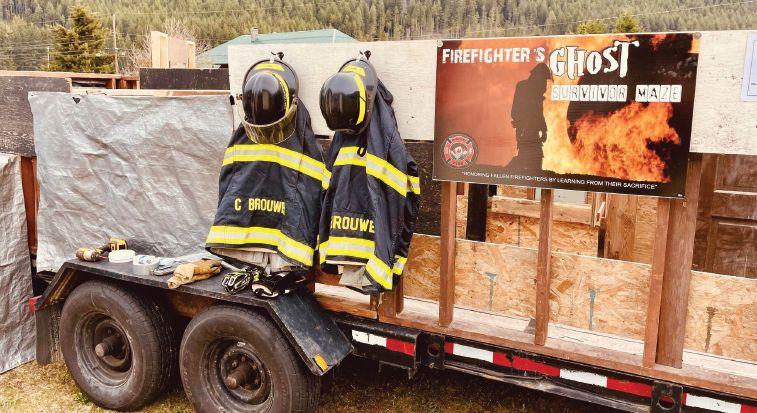
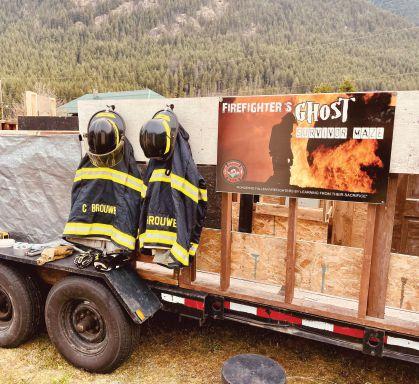
It has been 10 years since my conception of the Firefighter’s Ghost Survival Maze. It was first introduced at the 2014 Volunteer Firefighters’ Training Seminar hosted by Oliver Fire & Rescue in B.C. At that event, our SOOHOT (Saving Our Own Hands On Training) crew evaluated over 100 firefighters as to whether or not they would call a Mayday. It was a huge eye opener when only one out of 105 firefighters representing 50 departments was successful (Boston Bar Fire Chief Eric Phibbs).
Over the past few years, we have challenged over 200 firefighters representing 100 volunteer fire departments and ONLY five firefighters have survived! Firefighter’s Ghost Survival Maze is more of an evaluation prop than an instructional one. It was built in honour of our fallen brothers and sisters with the hope we would learn from their sacrifice.
This year Sunshine Valley Volunteer Fire Department hosted the Volunteer Firefighter’s Training Seminar. Chief Chris Terry called me and invited us to bring the “Mayday” training maze.
I had not spoken with him since we were both in Joe Rich Fire Rescue back in the 1990s, where I was his training officer.
I thanked him for the invite but declined. When he asked why, I found myself getting emotional; a knot was forming in my stomach and my bottom lip began to quiver. I told him I hadn’t done this type of training for five years because it triggered sometimes overwhelming emotions in me. I felt safe with him, so I shared about my battle with PTSD, which was brought on by secondary trauma.
I explained that for three decades I had used firefighter fatality reports as my training platform. I would spend multiple hours poring over firefighter fatality reports, trying to see what caused the LODD, and then I would “try and fix it” through hands-on training scenarios.
The countless hours of reviewing radio traffic containing the last words of firefighters caught in a fire building had taken its toll. Chief Terry said he understood, but that perhaps in sharing what I knew could actually help me and possibly save someone’s life.
The Firefighter’s Ghost Survival Maze was created 10 years ago to evaluate whether or not firefighters would call a Mayday.
I agreed, although reluctantly, to give it a go. However, the next week was horrible – I lost sleep, with some familiar ghosts visiting my mind in the night hours. I shared my feelings with my wife and two firefighter sons – they all encouraged me to be honest and clear with Chief Terry. I did exactly that. He again encouraged me and offered to help in any way he could. I asked for a limit of 10 firefighters per session, and rather than five or six one and a half-hour sessions, I requested three 3-hour sessions. He said he would watch out for me, and he kept his word. He and his wife Deb even brought their travel trailer over for me to stay in.
I spent three weeks re-building the maze. This time I built it on an 18-foot flat deck trailer. I prepared myself physically, mentally and spiritually.
A few weeks prior to the event, my son Casey, also a SOOHOT instructor, decided to come with me. That was a much-appreciated help.
This year we once again dedicated our Survival Maze to Clearwater, B.C., volunteer firefighter Chad Schapansky (23), who on March 29, 2004, lost his life in an abandoned structure fire.
I have no trouble remembering this date for it is my birthday. And I will never forget this young man because of what I felt as I attended his LODD funeral. The small church was filled with family and friends so the large crowd of firefighters who attended from all over B.C. stood in formation outside the church. As we stood facing the church where Chad’s body lay, I became aware of the burnt out remains of the abandoned building Chad had been trapped in. His tragic death made no sense to me.
I had so many questions. “We may




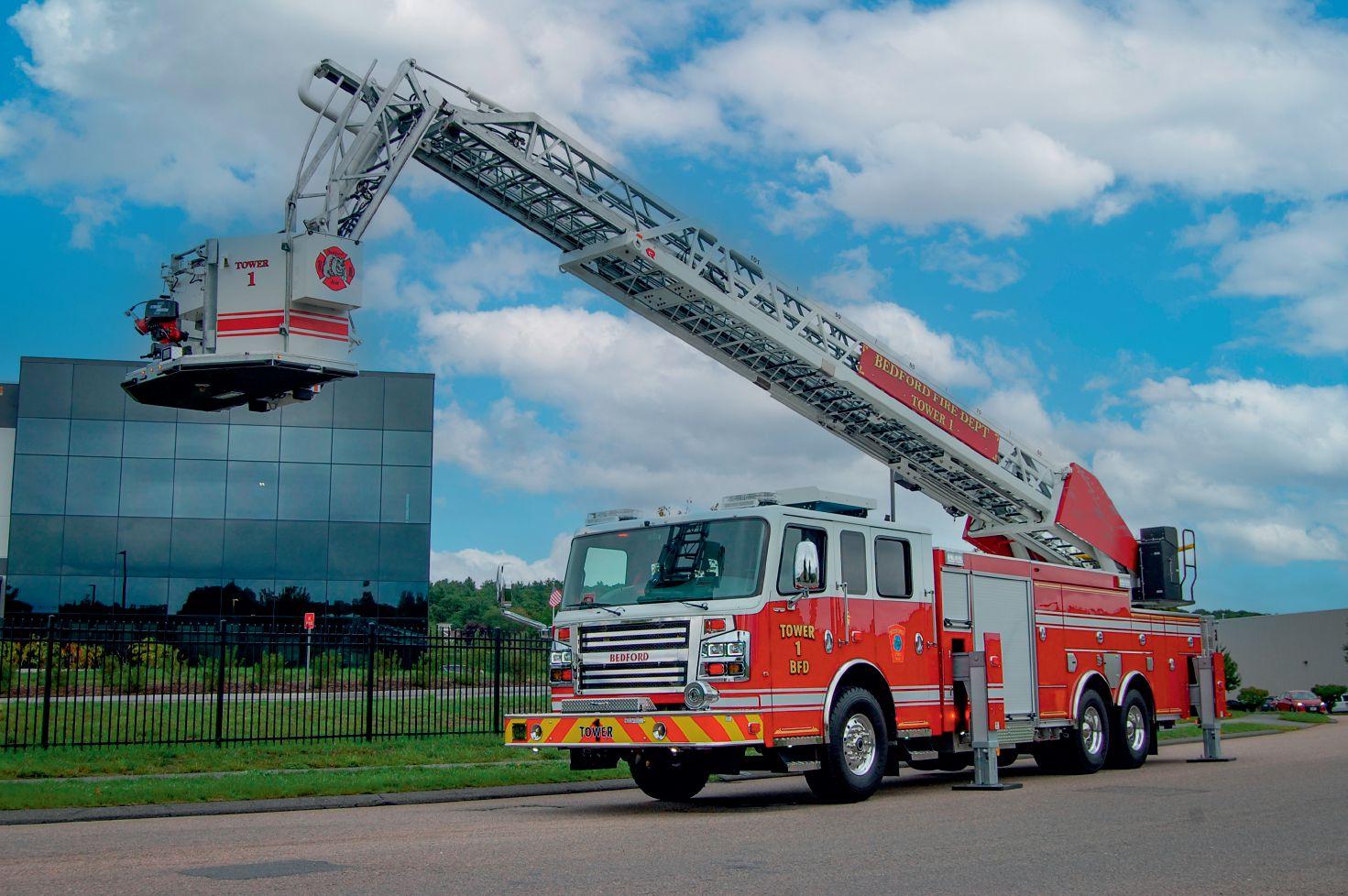
Unlike any other. The King Cobra’s 8-foot articulating jib reaches over parapet walls, allows for up to 20-foot below grade operation, and lets the crew enter the basket at the ground level.
Rosenbauer’s SMART Aerial technology creates the easiest aerial operations in the industry. Raise, rotate, and extend the ladder with a single, soft-touch joystick.
Scan the QR Code for more information.
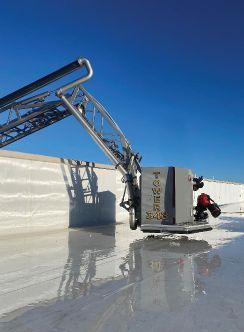

risk our lives a lot to protect savable lives…We may risk our lives a little to protect savable property...We will not risk our lives at all for lives or property that are already lost”, kept playing through my mind (Risk Management NFPA 1500).
I feel there is great value and honour in using LODD events to instruct. Whether we learn what to do or what not to do, it matters not so long as we learn something. May no firefighter’s death be in vain.
So here we were 20 years later starting our first three-hour session. As we went through the typical introductions one firefighter raised his hand, and said, “I just want to thank you guys for dedicating this training to Chad.”
I looked at him and asked, “Did you know Chad?” “No” was his reply, “but I’m in that department now and we all know of him.” We looked straight at each other, lost in thought for a moment, both of us struggling to keep our emotions in check. Twenty years later and Chad’s death still meant something. I shared a few things about Chad’s death and why we were doing this training.
And then we waited before moving on. I felt this was perhaps an open door to another type of Mayday survival tactic. So, we waited to see if anyone else had something to share.
We need to provide those times if we want our firefighters to survive both physically and mentally. We still spend more time training ropes and knots than we do teaching and promoting firefighter survival.
Think about it from the fire ground angle. The “we are the rescuers” mindset can and does keep us from calling a “Mayday” that would
save our physical body, and it keeps us from asking for critical incident stress management that could save us from mental destruction.
Strange how we see deploying the rapid intervention team as rescuing our own and hide from the critical incident response team.
The greatest resource in the Canadian fire service is the firefighter, and although every firefighter is provided with turnout gear, we give them little to protect themselves from the ravages of emotional trauma.
We must equip them to deal with death, crisis, and suicide. They must be given opportunity to talk about the pressures involved in traumatic situations, to understand what others have experienced in similar situations, and know that they are not alone in their feelings.
It has been over a month since that weekend, and it is just now as I’m typing this that I feel I have discovered the source of my mental anguish.
Although it may have a little to do with secondary trauma, it feels more like it has a lot to do with my life statement: “What man is a man who does not make the world he lives in better.”
For years this statement gave me a sense of purpose. But to be honest it had become a bit of a burden. It felt like that no matter what I did to make things better, nothing ever changed.
They say that although day by day it seems nothing changes, when you look back, everything is different. However, I don’t see that when it pertains to firefighter survival, be it physically or mental. We are still dealing with the same safety issues…and to be honest, it frustrates me to no end.
24_005327_Firefighting_In_Canada_AUG_CN Mod: May 24, 2024 3:54 PM Print: 06/17/24 page 1 v2.5










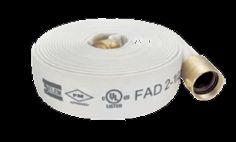
• Meets or exceeds NFPA 1961
• Within ISO-9001 quality management system
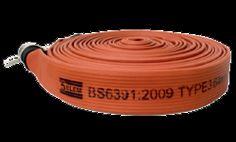
• Meets or exceeds UL 19 AND BS 6391
• Within ISO-9001 quality management system
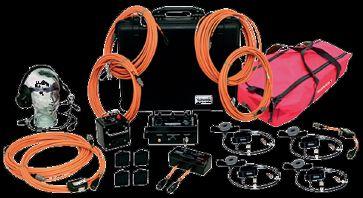

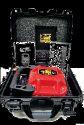
Savox Hardline Rescue Kit 1 with Power Talk Box is our best selling technical rescue confined space kit It is designed for simultaneous, twoway voice communications between the rescuers and the victim Rescuers use it where traditional radios fail or when hands-free, secured communications are required.
Attendants communicate with entrants and monitor their safety The backup team can also listen to the entrants’ rescue and be ready to relieve them
The power talk box is a portable intercom system that is dropped down the hole before entry to determine a victim’s condition
The whole system and accessories are waterproof The rugged molded fiberglass enclosures, all external knobs, and signal cables with their military connectors are impervious to a wide range of acids, alkalis, fuels, and other corrosive chemicals including Skydrol All of the above coupled with a highest level of intrinsic safe approval is why you can trust them with your life





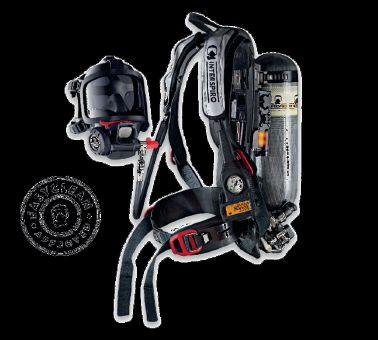
CANADIAN SAFETY EQUIPMENT IS PROUD TO BE A DISTRIBUTOR FOR THE INTERSPIRO RESPIRATORY PROTECTION LINE. STATE OF THE ART S9 INCURVE IS ONE OF THE MOST COMFORTABLE SCBAs YOU WILL EVER WEAR. THE INCURVE HAS A UNIQUE EASY TO CLEAN HARNESS FOR EASY DECON


GIVE US A CALL AT -0182 OR EMAIL US AT INFO@CDNSAFETY. COM
No company has a richer history in respiratory protection than Interspiro. Their innovations have become industry standards, time and time again.



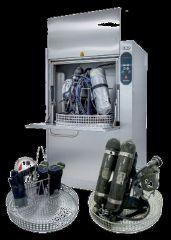
The Solo SCBA Decon/Washing machine was designed and built for one purpose only…to protect Fire Fighters from Cancer causing agents found in the Smoke and residue left on their SCBAs. As an added bonus it can clean Gloves, Boots and Helmets. In addition, it substantially lowers the time spent decontaminating firefighter equipment.
The SOLO is the only SCBA decon machine that meets both NFPA and CSA standards.
ü REDUCED HEALTH RISK
ü SAVES TIME 2/PKS IN 8 MIN ü EASY TO USE
Qualified by MSA, SCOTT, DRAEGER & INTERSPIRO for cleaning their SCBAs.






WASH/DECON TWO SCBAs In minutes. Also cleans, boots, gloves and helmets.


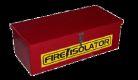
FIRE ISOLATOR is a concept for isolating and fighting EV car fires based on best practices and live testing. In general, there is not one single solution to extinguish or control EV car fires, as all firefighters who have dealt with these types of car fires will be able to confirm Effectively isolating and fighting EV car fires takes several different methods because of the lithium-ion batteries on board EV cars The EV car may need to end up submerged in water in a container, but with the FIRE ISOLATOR concept, there is a lot that can be done beforehand to minimize the damages Fighting EV car fires with the Fire Isolator concept has been thoroughly tested and proven to be effective



GEAR RACKS HOSE RACKS & DRIERS BOTTLE
& DRIERS

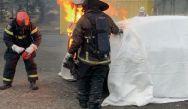
The Fire Isolator blanket, when used with the FlameGuard Fire grenade is an Excellent method of getting an EV fire under control. The blanket can be washed and reused a number of times.
Even in the writing of this column for the last 20-plus years, I need to understand and somehow be okay with the fact that I have little if any control over your situations. I am sadly aware that my circle of concern is bigger than my circle of influence.
Why is it so difficult to get a firefighter to call a Mayday? We treat speaking about Mayday to our firefighters as a young father does in talking to his children about sex. Our discomfort in talking about “it” tends to leave it up to the kids to find out from his or her street friends.
The way firefighters react to any situation is based on their former training and experience. If they do not have “Mayday calling” in their experience, calling a Mayday will not come naturally when the need arises.
Firefighters will not rise to the occasion; they will default to their training.
Look at these results from our Mayday Evaluation sessions at Spring Training 2024.
Core Skill #1: We stretched out several lengths of fire hose on the ground, looping it so both ends of the hose were together as far from the starting point (middle of loop) as possible. The hose ends were covered, one marked nozzle the other truck.
Firefighters are called one at a time while others were kept busy with a second core skill. Radios had been set out. Their BA masks were blacked out. They were informed the conditions in this scenario are immediately dangerous to life and health (IDLH), cold smoke, and zero visibility (masks blacked out). Firefighters were brought to within five feet of the simulated charged hose line. As they were spun around (to disorient them) they were informed that they were part of a twoman attack team and that they had lost connection with the hose. They were now within five feet of the hose and their objective was to get out alive. We gave no further voice instructions.
If the firefighter called out for their
crew member we would not reply.
Out of all the fighters tested, none called out for their crew member. All immediately started searching for the hose line. Only one radioed the IC to inform them about losing and finding the hose.
Upon finding the hose every firefighter began to search for the coupling. Only fifty percent followed the hose to safety.
When firefighters found the hose coupling, we simulated a “Low Air Alarm”. No firefighters radioed the IC about their low-air alarm. No discernable Maydays were called.
As to the Survival Maze: Although we did not black out any of the SCBA masks there were some disturbing similarities to past Mayday Evaluation sessions. Most of all that not one survived!
Only one of the firefighters in distress called a Mayday of sorts.
No one activated the emergency button on the radio.
If a firefighter does not have calling a Mayday in their training experience, it won’t come naturally when the need arises.
No one activated his/her PASS device.
Only one firefighter when separated from his/her partner called out to them.
No firefighter radioed for help until after their low-air alarm went off
No firefighter noted their air level during the drill.
Only a few sounded the steps. They did not sound the soft and fire weakened floor further into the building. Multiple teams went through the floor (just feet away from the exit door) with their partner following right behind them.
Only two firefighters used the swim technique to navigate the maze. Others just plowed through getting hooked, snagged and held up multiple times.
Two firefighters panicked and took their BA off at a simple doorway obstacle. They tried to complete the maze without re-donning their BA.
Although radios were provided, two teams went in without a radio. The remainder of the teams chose to take only one radio.
That last observation really disappointed me. It seems this is the habit of some departments to have one radio per team. This is a huge problem.
May I remind you who we had dedicated this Mayday Evaluation session to. If you take the time to read the Clearwater B.C. 2004 Firefighter Fatality Report, you will discover only the lead guy (Chad, who perished in the fire) had the radio. So, when Chad went through the floor his partner was unable to communicate his emergency to the IC. He had to crawl to safety and use his cell phone to call dispatch so they could inform the IC there was a man down. What a tragic event, but now 20 years later we still have this practice - are you kidding me!
So perhaps it isn’t so much the 80 or so firefighter’s ghosts that cause anguish in my heart and mind, but more so the frustration of seeing the lack of change in our fire service.
It is imperative that our fire departments develop rules for when a firefighter must call a Mayday. We must by example give our firefighters permission to call a Mayday, be it on the fire ground or in the mind.
Over the years we have noted that 90 per cent of the firefighters tested gave no discernable Mayday. Those that did call a Mayday gave unclear directions. Only two firefighters knew how to use the LUNAR acronym.
What is most disturbing, however, is that 90 per cent tried to get out on their own before calling Mayday. And that, brothers and sisters, is the same with a Mental Health Mayday.
Although Maydays were called, it was often too late in the scenario.
We all know that rapid intervention is not all that rapid. The sooner a Mayday is called the better the chance of rescue.
Trainer’s Corner closing tag line for most of these years has been, “Train like lives depend on it, because they do.” Recently I’ve added these numbers 4-9-4. In Part 2 of “Victory loves preparation”, I will explain what that means.

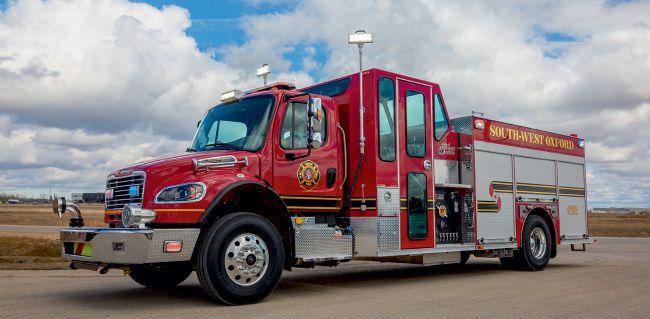
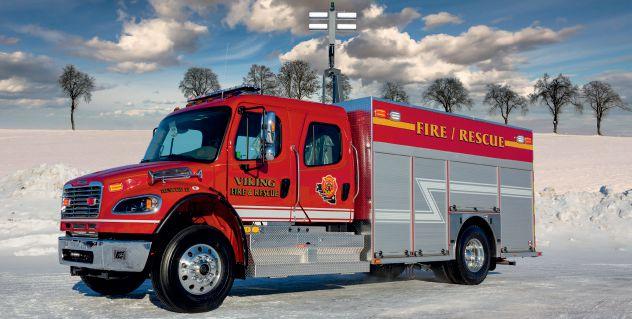
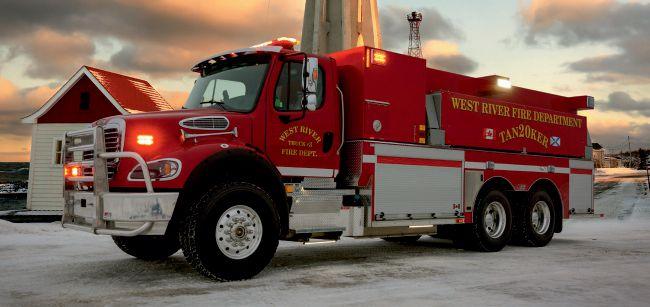

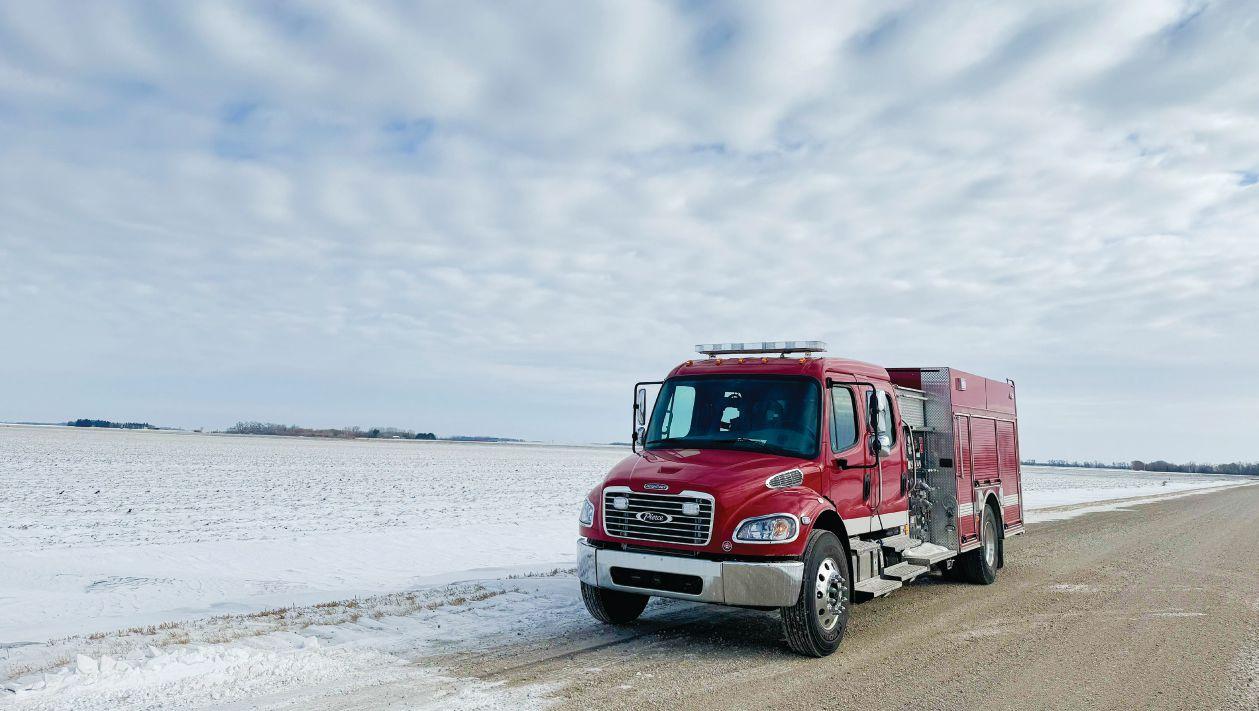
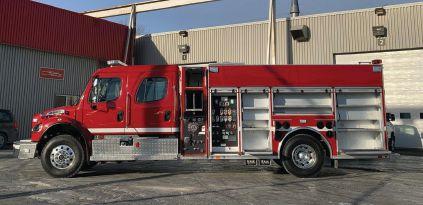
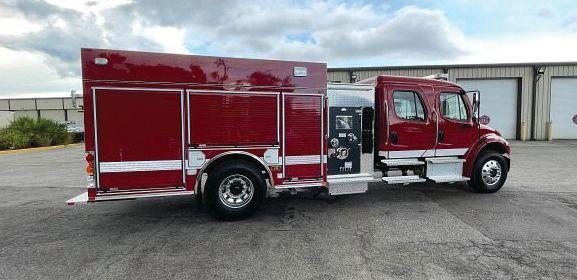
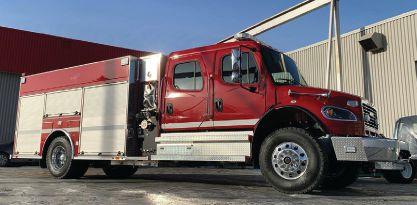
Fort Garry Fire Trucks excels in crafting robust emergency rescue-max bodies, walk-in rescues, command rescues, fire tankers/tenders, and pumper tankers/ tenders. Engineered for the toughest road conditions globally, these vehicles boast a full-framed 6061- T6 aluminum extruded sub-frame with 5083 saltwater marine-grade aluminum compartments. With over 12,000 custom options, clients can tailor their apparatus, ensuring it’s One Tough Truck that precisely meets their fire
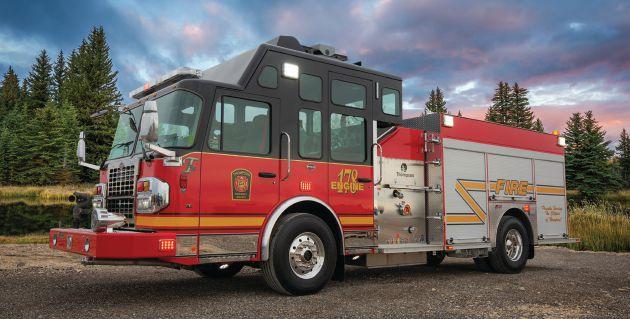

department’s unique needs.
The emergency rescue-max bodies merge pumper performance with rescue storage, providing flexibility and maximum capability. Tailored options include sidemount, top-mount, and top-mount enclosed 3-man and 4-man crown configurations. The assurance of being properly equipped for diverse situations comes from the fullframed 6061- T6 aluminum extruded subframe with 5083 saltwater marine-grade aluminum compartments.
The walk-in rescues, command rescues, and walk-around rescues share the same durable design, thriving in challenging environments. Fort Garry’s commitment is underscored by the largest fire apparatus engineering department among Canadian competitors, dedicated to designing vehicles that surpass fire department demands.
Fort Garry Fire Trucks epitomizes confidence in functionality, resilience, and customization, ensuring these vehicles serve communities for years to come.
By Chris Dennis
In Canada, unlike the U.S., if your municipality has a fleet garage it must conform to all the rules and regulations in that province. If you work in a fire department with its own apparatus division, you have a huge leg up. Not only can you have vehicles repaired by trained fire apparatus technicians, but the return to service time is also that much quicker as you’re not waiting for a salter or snow blower to be repaired first.
As for driving a city salter, plow or over the road vehicle with air brakes, both fire and town or municipal workers must have the correct credentials. These include an air brake (Z) endorsement as well as a driver’s license with the correct class required to operate the vehicle in question. In some departments, including mine in Vaughan, a must-have hiring criteria is a Z-endorsement and a Class D driver’s license. However, even with these certifications, when new firefighters are hired, they will not be driving until they meet second class status.
This requires three to four years on the trucks and on the floor assisting before they are brought back as a second class firefighter to participate in a two-week in-house driving and pump course. When instructing these courses, you may think we do not spend time on the finer details of the Z-certification. They successfully earned the credential before they applied so they should know this stuff, right? So we thought.
I have been doing this for over 30 years and it is the same every time — you have to emphasize the importance of air brake basics. Recently, I asked one firefighter who has been on the trucks for six years to advise on cut-in cut-out pressures. They responded that they had not done that since their air brake exam before they started.
I looked at the firefighter with
ABOVE
VFRS uses this replica of a fire truck air brake system to refresh drivers on “Z” endorsement and expectations here, and then on the truck.
incredulity. They have an air brake endorsement now and drive fire trucks when on duty, but they don’t know what cut-in cut-out pressure is despite being taught before they started and retrained during our driver’s course? Not good. My suggestion is a training drill for all of your certified drivers annually on what their responsibilities are as DZ drivers, AZ drivers, or any other form of licenced driver with a Z-certification.
In today’s day and age, highway traffic enforcement officers as well as your local or provincial police departments, have no problem stopping and questioning anybody behind the wheel of large class trucks, especially ones with air brakes.
Did you know that in Ontario fire departments are exempt from schedule one MTO pre-trip inspections? We are even exempt from emissions inspections and only have to register a licence plate once.
What this means is in the event of an accident, the driver better know his or her place behind the wheel. Just as if a driver is required to complete a road
test, there will be questions with correct answers, which need to be known. Brakes convert energy produced by the vehicle’s engine to move the equipment. To stop the vehicle, this kinetic energy must be converted into another form. This is called friction. Brakes convert the energy of a moving vehicle into heat through friction between a static and moving part. Once the two meet each other, friction is created, causing heat which must be absorbed. This is done first by the brake material and then by means of ventilation, allowing air to pass through the brake parts.
In most cases fire trucks only know two speeds: full speed and full stop. The amount of heat created depends on a few things, including weight, size of vehicle and road speed. Have you ever watched a Formula One or NASCAR race? If you happen to see a vehicle braking during a night race you may notice the brake parts go red, sometimes white hot, then turn black again as quick as they went red. These vehicles are not heavy, but they do go fast so a significant amount of braking is required to slow them down to a safe

speed to take a corner. This is friction in action.
Large vehicles such as fire trucks create a lot more heat than passenger cars, which in turn creates significantly more concern. The drivers of these rigs must know about brake heat and its effect.
Almost all passenger vehicles for the most part have hydraulic brakes, whereas about 80 per cent of fire or commercial trucks have air brakes depending on their class. Air brakes are used on commercial vehicles because they can transmit high mechanical forces over long distances. This keeps the cost of parts down. Fluid used in hydraulic systems cannot be compressed so the system must remain constantly full. Air brakes systems require all air lines to be full of air first before they will operate.
For fire trucks, as well as other large vehicles using air brakes, the distance to travel between each part is extensive. Minor delays happen between all of these connected components every time the brake is applied and released. The air brake manuals outline that delays may range from three-tenths of a second to six-tenths of a second depending on the type of vehicle involved and may range from a half of a second to a full second on brake release. These are regulated under the air brake safety standards.
These delays are managed by special values in the system to make sure the time needed to travel between parts is as short as it can be — virtually undetectable.



Air-over-hydraulic brakes are also common. Know what your truck is equipped with so you know how to perform a proper truck check and identify any concerns. Some commercial vehicles, such as a Class 6, can have hydraulics with an air-operated parking brake, which, depending on your province, would require an air brake endorsement. Check with your local MTO if unsure.
The air brake system is then broken down into separate systems. If your department has Z-endorsed drivers, they need to know how the dash gauges work. Which air tanks are which between the wet tank, primary, secondary and auxiliary. If unsure, you can clearly label each with colour ties and create a legend for easy identification.
Keep it simple so if you are asked by a police or MTO officer the correct answer is given. Know your cut-in and cut-out pressures and what they mean, as well as your brake chambers and what a brake adjustment looks like. Know how to mark and measure. Firefighters learn these things when they write the air brake test, but I bet if you ask them what their brake chamber is marked and measured at they will come back with “it checks out okay.” Not a good answer.
Have all of your Z-endorsed drivers complete yearly competency drills and training to review and apply the air brake manual for your province. Do some in-house testing and invite your local MTO officer to discuss what they look for. Being proactive decreases the likelihood of something going wrong.
In Ontario we did a fire department mechanical week at the fire college where we invited fire pump trainers, ladder representatives, tire specialists, and police and roadside inspection officers. These folks delivered presentations to show us what we need to know. You can do the same with driver training in the department. Remind your engineers and drivers to review air brakes and what their requirements are.
Remember my friends: Rubber side down. Enjoy a safe and healthy summer.


Continued from page 12
emergency room that deals solely with mental health and addiction calls. Working closely with the Premier of Ontario, he anticipates an official announcement in August, followed by a fivemonth conversion of the space with doors open in early 2025.
With specific stages of care in place, Carter believes those struggling with addiction can be freed from the cycle. Ensuring the right care from the beginning, followed quickly by a withdrawal management program and proper mental health supports is the goal. “The next stage is how do we support them when they’re released from the withdrawal management programs or addiction/mental health programs and into a supportive housing environment? We’re having these conversations with agencies and the region on how best to set that up. We’re also talking with developers who specialize in this type of supportive housing.”
He says that of the 505 overdose calls the Oshawa Fire Department responded to last year, the cost is estimated to be between $8,000 and $10,000 per call. This factors in EMS and police officers that wait at the hospital between eight and 13 hours to offload a patient. “This is not only a really good use of tax dollars in setting up this specialized emergency unit, but it’ll also release our paramedics and police back onto our streets within 20 minutes. Economically, we’re making the right strategic investments to see positive results.”
If all levels of government are willing to answer the call, city leaders are hopeful that the wave of homelessness and addiction in Canada can be quenched. Chief Landry in Moncton said to get there “we need better mental health programs, more affordable housing and the wraparound services to be successful. The wraparound services are important. We’re on the right track, but it’s a journey not a quick trip.”
Richter of CAEH points to the Housing First data from the Mental Health Commission of Canada which demonstrates that when shelter is
provided, there are cost savings and a reduction in emergency services. “The first priority has to be housing. It took 40 years to get to this – the homelessness we’re seeing today hasn’t always existed. It’s going to take some time to get out of this.”
He says the system CAEH is teaching to communities across the country is the same as a natural disaster response system, which firefighters are familiar with. It often involves bridge housing, an interim housing solution, until permanent housing is found. “You coordinate a response with the city. You help people get back on their feet. The only difference here is how people have lost their housing in the first place,” Richter said. “The solution is municipal, provincial and federal governments making the funding available to get the housing built. Homelessness is a policy choice, it’s not an individual choice.”
Richter ended our interview by thanking firefighters across the country. “Without them, homelessness would be exponentially more lethal. It’s important firefighters know there are people in the world who recognize the toll it takes on them.”







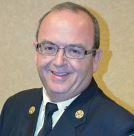
By Vince MacKenzie, Fire Chief, Grand Falls-Windsor, Newfoundland and Labrador
The pressure you experience being a firefighter in your community can be immense at times.
As I wrote this column, I reflected on the pressures I’ve experienced over the years as the chief of a composite department serving a small town of 14,000. I’ll admit that there are some days I wonder how I made it this far with my pride and love of the fire service still intact. Happily, it is still there.
Pressure is applied to you daily, and you have simply volunteered to take it on.
I constantly feel added pressure not only from my position as fire chief, but from the leadership roles that I’ve volunteered for, and been elected to, within the Canadian fire service over my career. Adding those roles to the normal challenges we all experience in our daily, family and personal lives quickly becomes a tall order to ask of a volunteer.
I love my job and I’m holding fast to the admiration and pride I’ve felt towards the fire service since I was a wee child. The amount of pressure experienced in my daily life can often go above and beyond normal levels, and I wonder what toll this will take on my mental health and wellbeing.
Your life as a member of our fire service is no different. Pressure is applied to you daily, and you have simply volunteered to take it on. We call that dedication, and it is, but it is also our motivation to do what we do. We respond to pressure.
Pressure is not always a bad thing. For a fire stream to be effective, it requires the proper amount of water pressure. Many times the required pressure is greater than what the normal
water system of a community provides. So, we become trained to use tools, pumps and techniques to get the right pressure at the nozzle and be effective in fighting the fire.
Applying too much pressure to the hose stream can cause it to become an out of control and dangerous mess, causing the stream to become ineffective or lost. Also, fire streams lacking enough pressure are inadequate and only provide the illusion that fire fighting is effective. The right amount of pressure is an important balance.
I think the same holds true for the mental pressure forced upon you when you are called to perform as a firefighter responding to an emergency. As officers, you are required to perform under added pressure to lead during an emergency and make decisions.
Going further up the chain of command, the pressures of the chief and leadership team of the fire department is even greater and come from multiple angles. Administration of a fire department is an ever-growing challenge. Politically astute, modern, well managed, and virtuous operations don’t happen by accident. It takes a solid team dealing across various levels with the increased pressures of the fire service.
Like a fire hose, pressure is a good thing. I have belief that pressure to perform to the demands of fire fighting is what motivates us. Motivation is the added pressure we need to move forward at the right speed and effectiveness. As we climb the ranks in our departments it is pressure that sharpens our minds and actions to step up and
Vince MacKenzie is the fire chief in Grand Falls-Windsor, N.L. He is an executive member of the CAFC and current president of the Maritime Fire Chiefs Association. Email Vince at firechief@townofgfw.com
perform the duties in the first place.
I’m not aware of many occupations in a community that place more pressure on individuals than operations within emergency services. Whether it is fire, law enforcement, or EMS and health care, our people are under immense and constant pressure to properly perform because lives are literally on the line.
Society is realizing that the value from emergency services is increasing as we seem to rely on our first responders now more than ever. Challenges including climate, generational and technological change have only added to the pressures impacting our profession.
Yet you still volunteer to be a firefighter.
Yet you still volunteer to accept the obligation placed on you in training.
Yet you still volunteer to remain constantly vigilant 24 hours a day.
Yet you still volunteer to respond to the community in its most vulnerable times.
Yet you still volunteer to accept rank promotions and shoulder even more pressure as an officer.
Yet you still volunteer to apply pressure to our citizens to learn fire safety through public education.
The list goes on.
I’ll admit the pressures can get overwhelming in our lives. Being a volunteer firefighter can place a tremendous burden on your family as they cope with the realities of the job, and for that we are eternally grateful. For it is them who experience pressures we might not see ourselves.
Keeping pressure at bay is not an easy task and, like a fire hose, pressure can exert itself equally in all directions. Be aware of it and be ready to turn the throttle down a little when it gets to be too much.
I even feel pressure while writing these regular columns for Fire Fighting in Canada and the deadlines we as writers are under. And now, I feel the pressure lessen. Motivation fulfilled for this edition!

MOBILE PUMP TESTING CONDUCTED AT YOUR LOCATION BY CERTIFIED
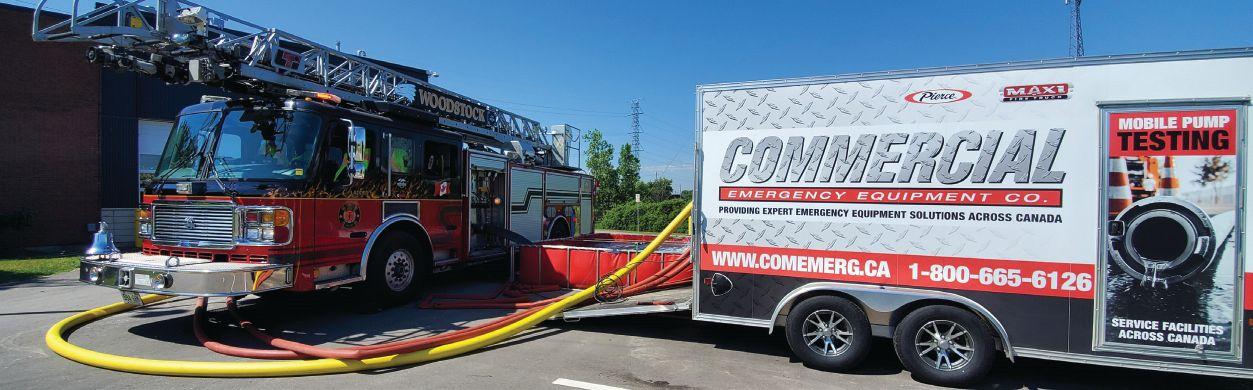
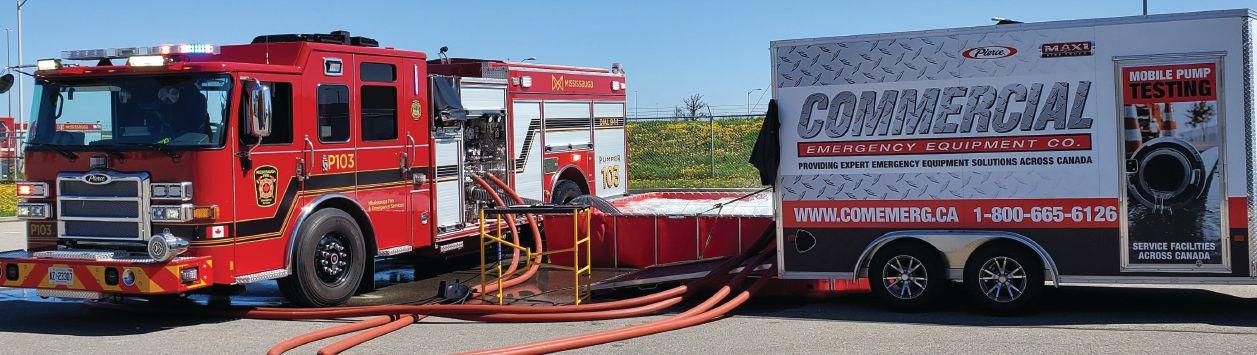
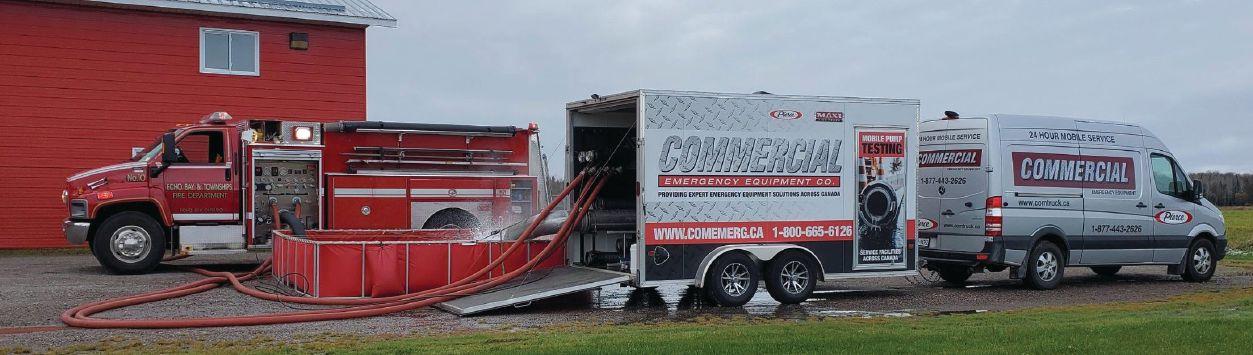
EMERGENCY VEHICLE TECHNICIANS TO NFPA 1911 AVAILABLE ACROSS CANADA. COMMERCIAL EMERGENCY EQUIPMENT
•
•
•
•
•