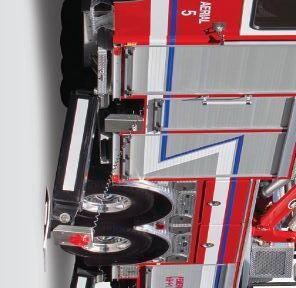
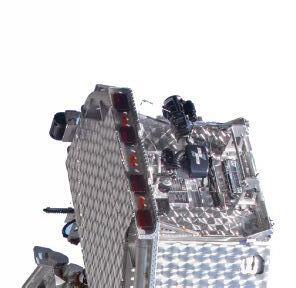
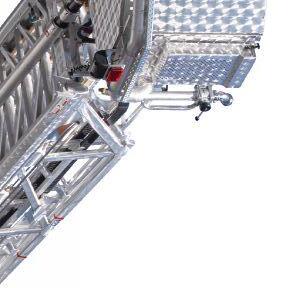
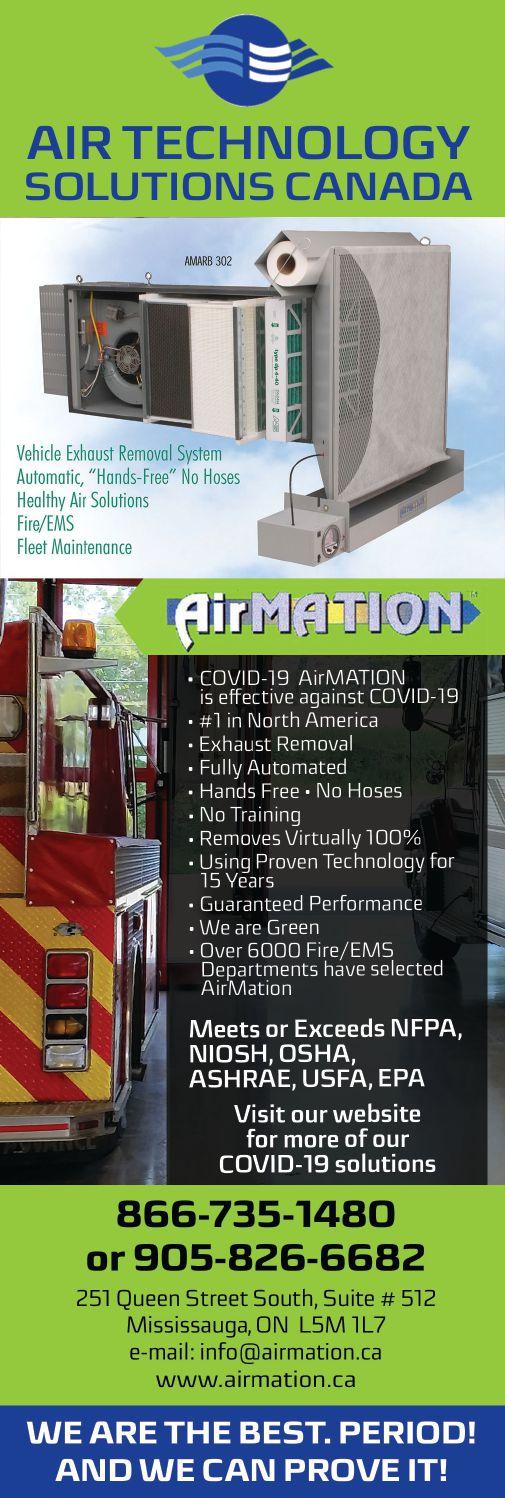
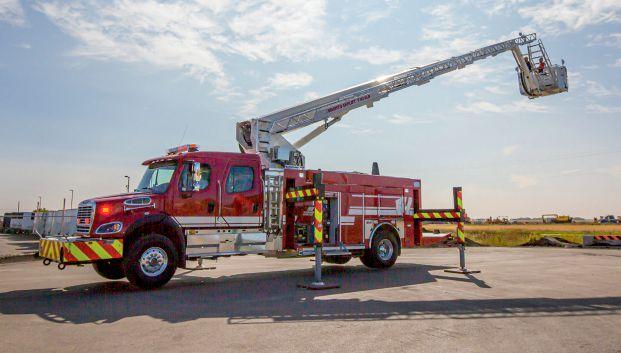
1305 LB PLATFORM CAPACITY WITH 18.9 SQ FT OF FLOOR SPACE
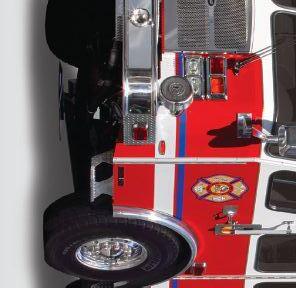
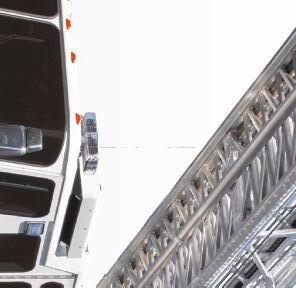
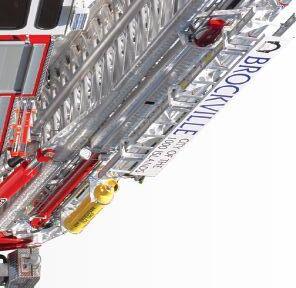
The E-ONE HP 100 Platform looks like a rock solid beast. And it acts like one too. This aerial, with a 2.5 to 1 structural safety factor is 25% stronger than NFPA requires. But this rig isn’t just a powerhouse, it’s also versatile. With crisscross under-slung outriggers that deploy to a tight 15’6” spread, the HP 100 Platform sets up unrestricted where others can’t. Whatever the job calls for, the E-ONE HP 100 Platform is up to the task! For more info, please visit e-one.com
INSTEAD OF BUILDING STANDARD AERIALS,
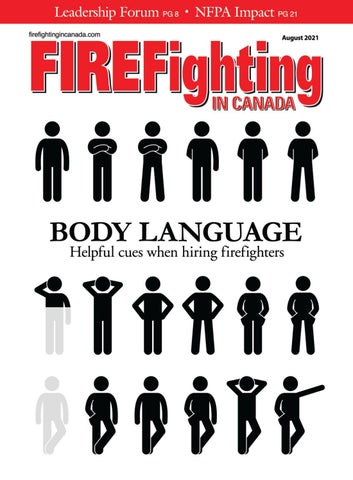
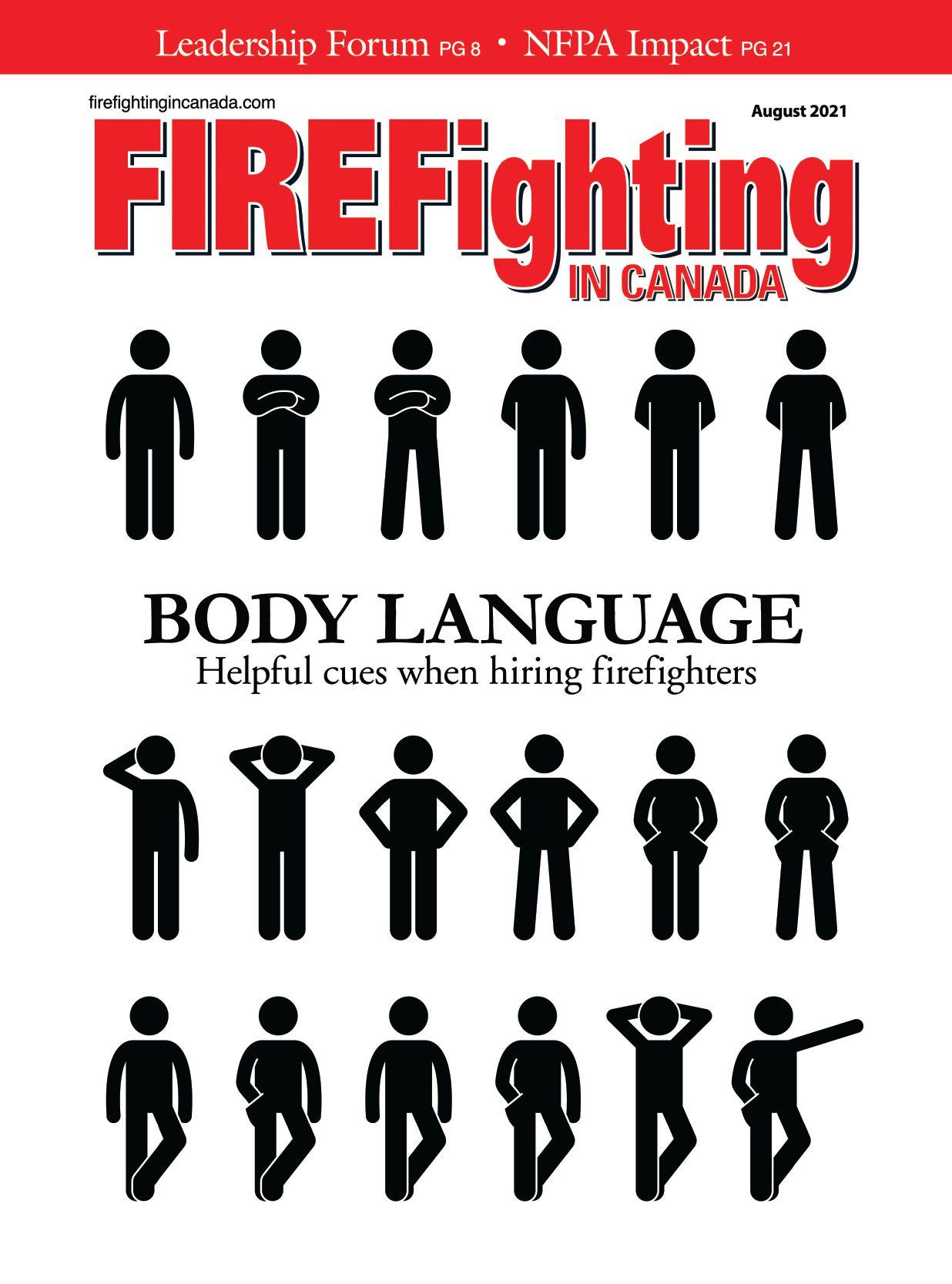
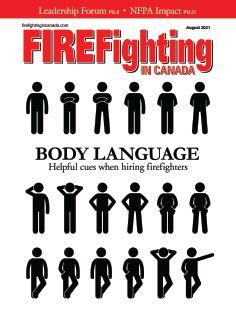
BODY LANGUAGE
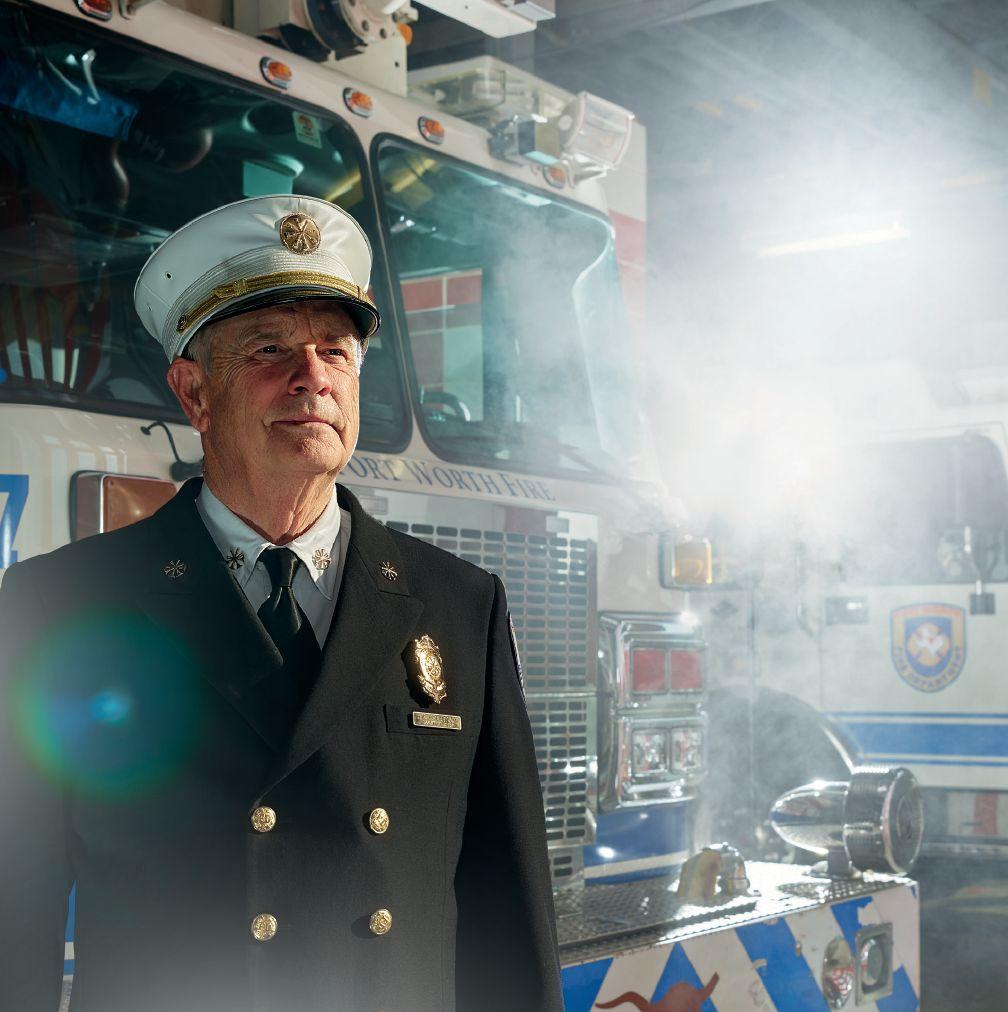
Fire chiefs share a universal goal of finding the right fit when hiring. This article shares the nonverbal cues to look for that can help you distinguish the meaning behind communication in an interview.
By Jennifer Grigg
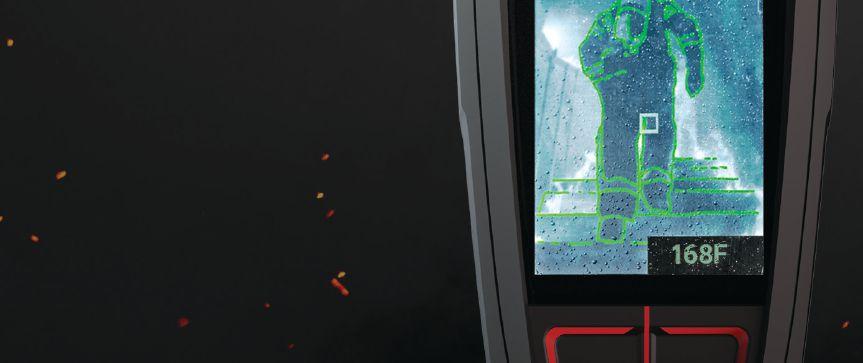
THERMAL IMAGING AND VOLUNTEERS
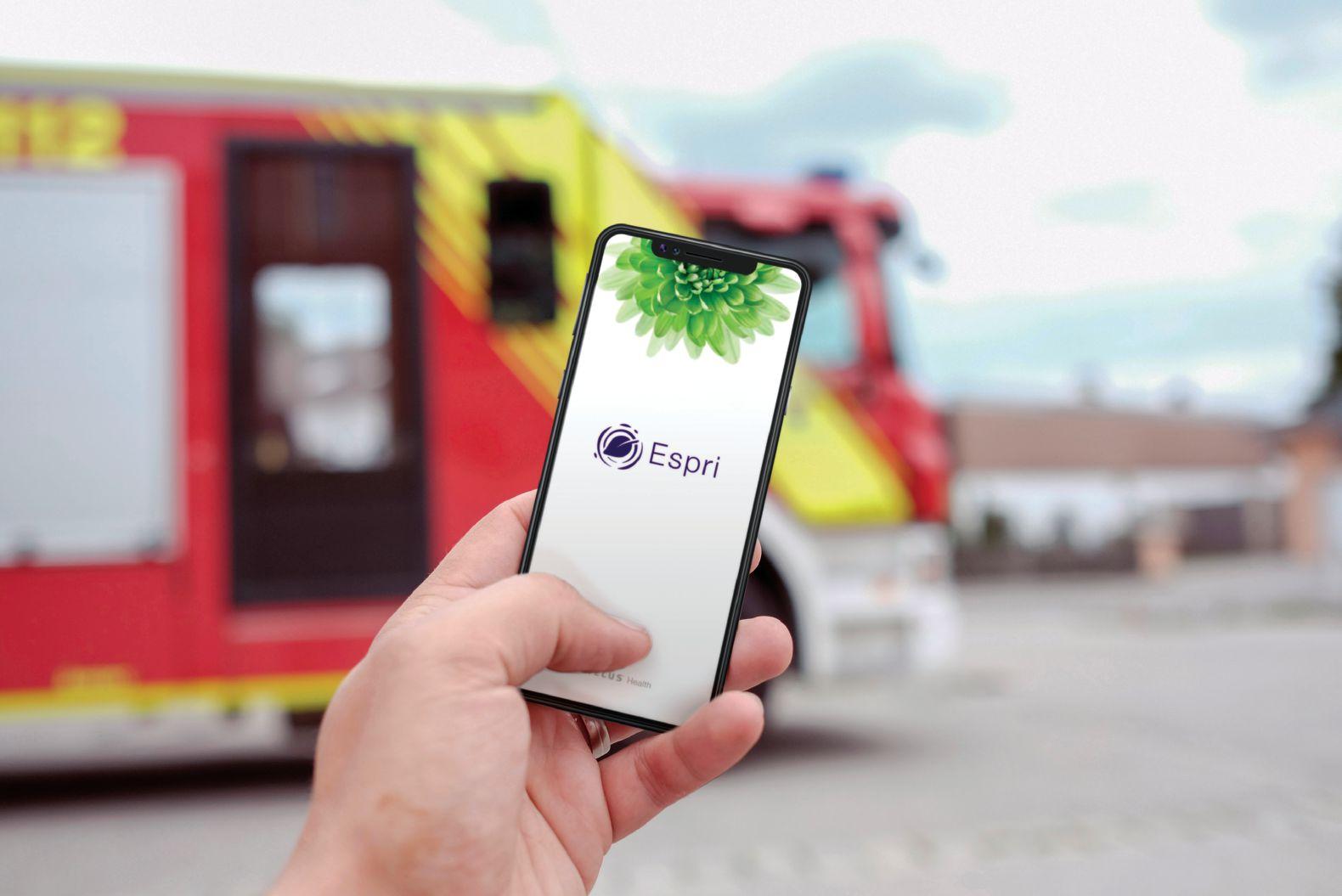
Part 5 of our thermal imaging series details training tips and special considerations for the greatest majority of Canada’s firefighters — the volunteers.
By Manfred Kihn
22 THE EMOTIONAL
Part 2 in this three-part series on developing a cognitive lifestyle dives into differentiating between feelings and thoughts in the management of human emotion.
By Nick Halmasy
BY LAURA AIKEN Editor laiken@annexbusinessmedia.com
A climate of concern
V COMMENT
accines are doing their job and hopes run high that the worst of the COVID-19 pandemic is behind us. What lies ahead appears no less urgent or menacing. The Canadian government’s recent report on climate change showed communities of all sizes across the country are being affected by global warming through wildfires, floods, heat waves, rising sea levels, melting ice and permafrost.
The recent heat dome over the Pacific Northwest was unprecedented and unusual in its intensity. A heat dome is not a climate change effect in itself, but its aggressiveness and atypical behaviour have left the a strong sense that global warming played a pivotal role in extremeness of this weather event. Climate change has become the here and now, and humanity’s penchant for procrastination has left us struggling to move fast enough.
ways in which we are not prepared. During the heat dome, grocers in Oregon and Washington reported they were forced to stop the sales of perishable goods amid malfunctioning fridges and power outages. There were rumoured runs on electrolyte drinks akin to COVID-19’s infamous run on toilet paper. In British Columbia, almost five hundred sudden deaths were reported in as little as five days. Hundreds more died south of the border. The heat dome passed, leaving behind a raging wildfire season. Heading eastward, in July, a Manitoba municipality declared an agricultrual disaster because of the heat and drought.
ON THE COVER
There are nonverbal cues that can help you avoid making a hire that is going to be a poor fit for your department. See Page 10 for more.
As all-hazards responders, fire departments are a core entity of emergency preparedness. COVID-19 showed the world what fire departments have known along: nimble, adaptive and constant communication is essential in any emergency. And all of that can still fail without proper preparation. Fire Chief Vince Mackenzie’s Volunteer Vision on page 30 points to preparation as being the real “luck” behind the successful salvage of a building or its occupants, of being there just in “time.” I couldn’t agree more. There is also nothing like an emergency to make obvious all the
The need for preparation, to build this climate change resilience, is urgent. How can we expose our own weaknesses before disaster strikes? Fire departments are masters at training for the worst and will play critical roles in preparing themselves and their communities for what unexpected crisis we may brace for next.
ESTABLISHED 1957 AUGUST 2021 VOL. 65 NO. 5
Reader Service
Print and digital subscription inquiries or changes, please contact Beata Olechnowicz, Audience Development Manager Tel: (416) 510-5182 Fax: (416) 510-6875
Email: bolechnowicz@annexbusinessmedia.com Mail: 111 Gordon Baker Rd., Suite 400, Toronto, ON M2H 3R1
EDITOR LAURA AIKEN laiken@annexbusinessmedia.com 416-522-1595
PUBLISHER ADAM SZPAKOWSKI aszpakowski@annexbusinessmedia.com 289-221-6605
Occasionally, Fire Fighting in Canada will mail information on behalf of industry-related groups whose products and services we believe may be of interest to you. If you prefer not to receive this information, please contact our circulation department in any of the four ways listed above.
All advertising is subject to the publisher’s approval. Such approval does not imply any endorsement of the products or services advertised. Publisher reserves the right to refuse advertising that does not meet the standards of the publication.
PHOTO BY ZONETEEN/ADOBE STOCK
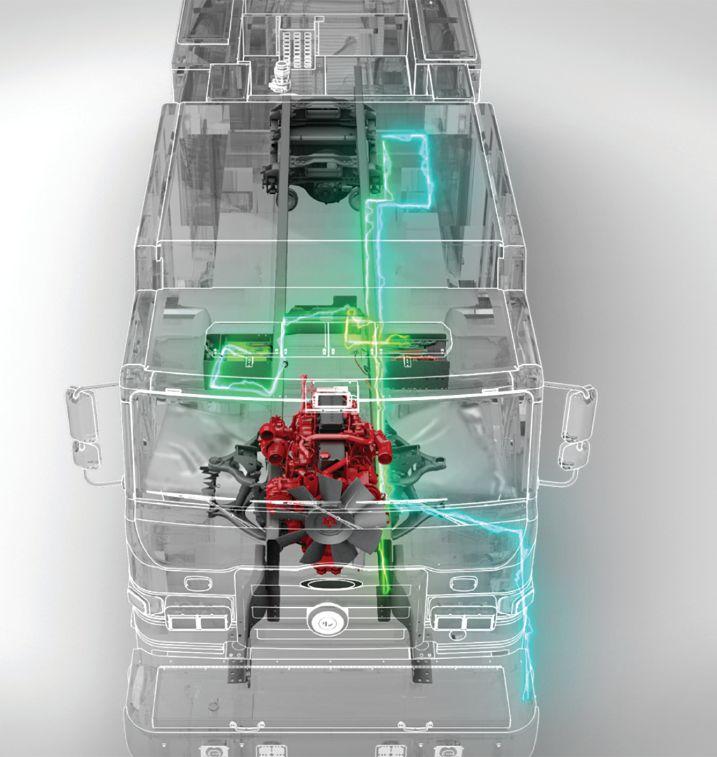
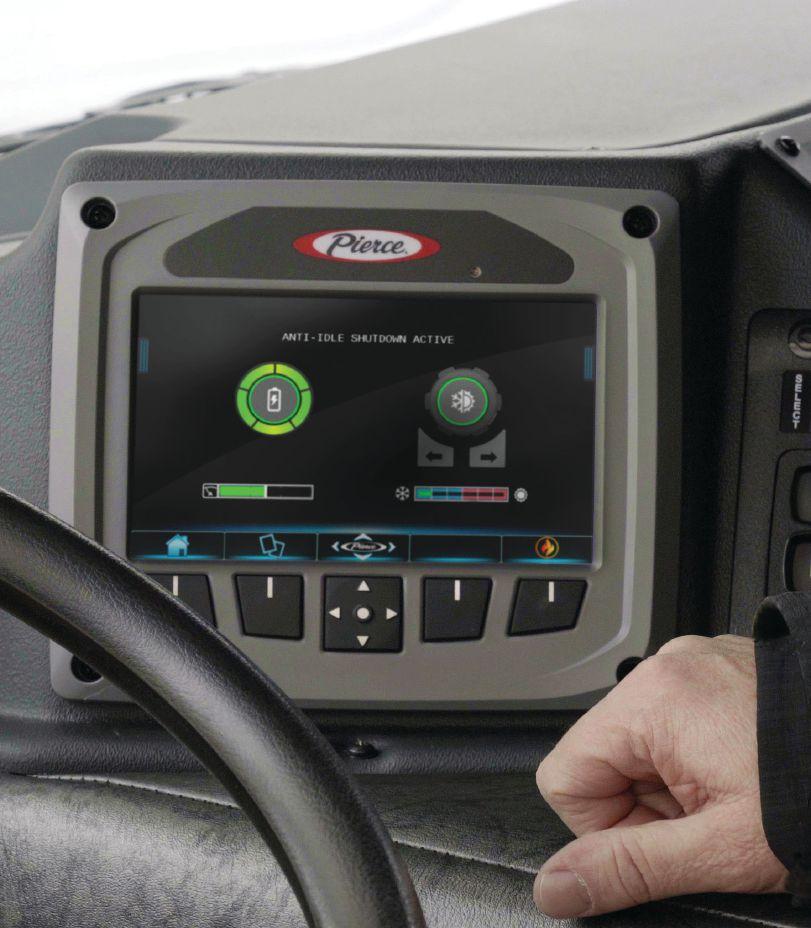
PIERCE® IDLE REDUCTION TECHNOLOGY
INNOVATION THAT NEVER SITS IDLE.
LESS FUEL. LESS ENGINE HOURS. LESS EMISSIONS. LESS NOISE.
PIERCE’S PROPRIETARY IDLE REDUCTION TECHNOLOGY SHUTS DOWN THE MAIN CHASSIS DIESEL ENGINE AND USES LITHIUM-ION BATTERIES TO POWER NFPA-REQUIRED DEVICES, MISSION-CRITICAL ON-SCENE OPERATIONS, AND HVAC CLIMATE CONTROLS.
HELP MANAGE YOUR VEHICLE’S CARBON FOOTPRINT WITHOUT INTERRUPTING THE MISSIONCRITICAL FUNCTIONALITY YOU DEPEND ON WITH PIERCE® IDLE REDUCTION TECHNOLOGY. AVAILABLE ON NEW APPARATUS AND AS AN AFTERMARKET SOLUTION.
FIND OUT MORE ABOUT IDLE REDUCTION TECHNOLOGY: piercemfg.com/irt
STATIONtoSTATION
ACROSS CANADA: Regional news briefs
Fire chiefs across Canada share experiences and post-pandemic priorities during Fire Fighting In Canada’s virtual summit
Fire Fighting in Canada’s Virtual Summit produced a variety of perspectives as eight fire chiefs across Canada shared their pandemic achievements, challenges and priorities as they look ahead. The panel included chiefs from across Canada: Cory Mainprize (Ontario), Greg Jones, (Nova Scotia), Chantal Bibeau (Quebec), Dan Derby (B.C.), Vince Mackenzie (N.L.), David Leblanc (Alberta), Brad Yochim (Manitoba) and Tom DeSorcy (B.C.), and also represented a cross section of department size and types.
The event was held on June 17 and gathered 150 people virtually to hear from two roundtables, check out product demonstrations and visit the exhibit hall.
Communication was a dominate theme of the roundtables. Mainprize, the fire chief in Barrie, Ont., said of COVID19: “As challenging as it has been, it was also one of the most collaborative incidents our teams have ever worked on together.”
With a post-pandemic world looming on the horizon, the topic of virtual tools adopted during the pandemic was much discussed. Jones, the fire chief for Amherst, N.S., said he plans to keep a hybrid training system that includes meeting in person and virtually.
“Throughout the pandemic, we’ve found out that there are many situations where we really don’t have to meet in person. We can have a 15-minute virtual meeting and get across the exact same issues that we want to have in person.”
THE FIRE HALL BULLETIN
Promotions & appointments
TOM MULVEY has been promoted to fire chief for the township of Centre Wellington in Ontario. Mulvey has been a member of the township’s fire department for over 25 years, including 18 years as a senior officer. He joined the Centre Wellington Fire Rescue Department in 1993.
KIRK HUGHES is the new director of protective services and fire chief for the county of Vermilion River in Alberta. Beginning his fire career with Burlington Fire Department before joining the RCMP, and later the M.D. of Taber in 2017.
DARRYL THOMPSON is
Overall, perspectives across the country showed that the lessons learned and the ways in which departments were forced to adapt during the pandemic have unearthed new efficiencies in communication while also underscoring the irreplacable value of face-to-face communications.
Recruitment and training was another top of mind matter. Amid high call volume in his region, Leblanc, fire chief for Northern Sunrise County Protective Services in Alberta, said he had to balance the pandemic restrictions and training of 18 new firefighters to maintain efficiency and safety on the fire ground.
DeSorcy, the fire chief in Hope, B.C., said the concept of moving forward means there’s no going back.
“Don’t ask me how I’m going back. There is no going back; there’s only going forward. The fire service is going to continue to take what we’ve learned and expand on it.”
Fire Fighting in Canada’s Virtual Summit was hosted with the generous support of its gold level sponsors — Fort Garry Fire Trucks, Telus Health, VodaSafe and Zoll — its silver sponsors — MEIKO Clean Solutions Canada, Vector Solutions, URSUIT, Wilfred Laurier University — and our partnering booth exhibitors — Air Technology Solutions, Canadian Safety Equipment Inc., Concept Controls, Fire Service Women Ontario, GINQO, Plymovent, Ranglar Manufacturing, Stryker Canada and Voyent Alert.
Laura Aiken, editor for Fire Fighting in Canada , served as the day’s host and moderator.
the new fire chief for the Plympton-Wyoming Fire and Emergency department in Ontario. Thompson spent more than 15 years in senior leadership roles with the Caledon Fire and Emergency Services.
DARCY O’RIORDAN is the new fire chief for Port Moody Fire Rescue in British Columbia. O’Riordan brings 26 years of experience after starting his
career as a fire suppression member with the Burnaby Fire Department in 1995.
MONIQUE BELAIR is the new director of fire and emergency services and fire chief for Belleville, Ont. Belair has over 30 years of experience and was most recently a deputy chief with the Town of Oakville.
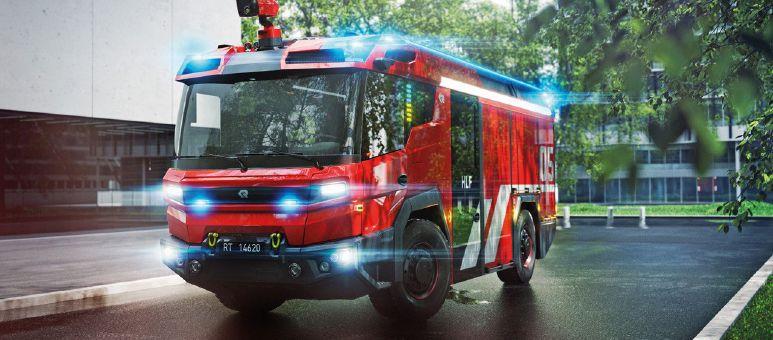
Brampton to be first municipality in Ontario to use an electric-powered fire truck
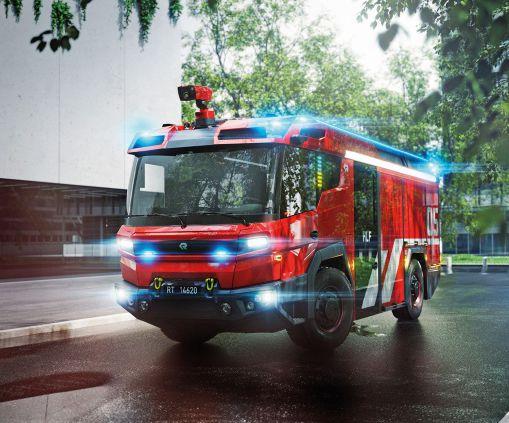
City council approved Brampton Fire and Emergency Service’s plans to replace a front-line pumper with a Rosenbauer RT, lining the department up to be the first municipality in Ontario to use a fully electric-powered front-line emergency response vehicle. Cites around the world have begun to use electric fire trucks, including Vancouver, Berlin, Amsterdam, Dubai and Los Angeles.
“At the City of Brampton, we are working to build an increasingly sustainable community in everything that we do as a Green City. I congratulate Brampton Fire and Emergency Services on their effort to secure Ontario’s first fully electric fire truck. Brampton is a world class city, and we are proud to join others who are working to increase resilience to climate change and lower emissions while keeping our communities safe,” said Patrick Brown, Brampton’s mayor, in a press statement. The truck’s technology will allow Brampton fire crews to generate zero emissions while responding to emergencies during travel and also while
The truck’s technology will allow Brampton fire crews to generate zero emissions while responding to emergencies not only during travel, but also while on site.
on site. The elimination of emissions on site is designed to protect both the environment and the health and safety of the firefighters on scene by reducing the exposure to carcinogens.
Additional features of the fully electric vehicle include the ability to raise and lower ride heights, similar to a passenger bus, allowing for ease of entry into the vehicle. This feature also reduces the reach height for firefighters to access equipment while on site. The ride height can be lowered to 6.8 inches and raised to a height of 18.5
Retirements
JOHN LANE is retiring after serving seven years as fire chief for Winnipeg Fire Paramedic Services. Lane’s retirement ends a 40-year career in emergency services. He started his career in Toronto and joined WFPS in 2014 after serving as chief for the Prince George Fire Rescue Service.
BRIAN GEORGE retired as fire chief for Strathroy-Caradoc Fire Department in Ontario. George started his career at the London Professional Fire Fighters Association, holding all positions on the executive board from 1985 through 2003.
OREST POPIL retired from his position as fire chief for the county of Vermilion River in
inches, allowing for flood response with no chance of water entering the engine. The new fire truck will help crews to maneuver more efficiently in tight locations and on narrower roads in new subdivisions, and will deploy the latest in ergonomic technologies.
The new electric fire truck will be stationed at the stateof-the-art Brampton Fire Campus, which is currently under construction. The fire department will receive the truck in late 2022.
“On behalf of the Brampton Fire and Emergency
Alberta in April.
After a career in the protective services department for over 25 years, and county fire chief for over 20 years, he has retired to farming/ranching in the Vermilion area.
Last Alarm
JIM FITZGERALD, retired fire chief for London Fire Department
Services team, I want to express our excitement over the Rosenbauer RT, a fully electric fire truck. The truck has many exciting features, from reducing carcinogens on scene, to the latest in ergonomic technologies, and will help enable us to become a leader in environmental sustainability. We look forward to using it to protect our community,” said Bill Boyes, Brampton’s fire chief, in a news release.
Brampton is located near Toronto and is home to more than 700,000 people and 75,000 businesses.
in Ontario, passed away on June 15 at the age of 86. Fitzgerald served for more than 50 years, starting as a probationary firefighter up until achieving the rank of chief.
PHOTO
BY MATTHEW PEGG Fire Chief Toronto
TLEADERSHIPFORUM
The secret ingredient
here is no shortage of literature, instruction, research nor opinion with respect to what it takes to be a successful leader.
Some of my first formal leadership education focused on learning the difference between leadership and management. I remember the simple explanation that was drilled into my head then: Leadership is doing the right thing – management is doing the right thing right.
This principle made good sense to me then, and it still does today. Management, by definition, has an industrial or even clinical feel to it. Discussions on management tend to focus on things like continuous quality improvement, quality assurance and compliance. This is not meant to criticize the importance of these functions, as every leader must also be an effective and capable manager to succeed.
Leadership, however, tends to feel more personal and people-centric to me. It conjures up visions of motivation, encouragement, passion, energy and team-building in my mind. Leadership is about setting the course, and then showing the way to the intended destination by being out front – in other words, by leading. Leadership is about doing the right thing, especially when nobody is watching. It is about helping others to succeed, and to feel valued, safe and supported.
When I think about the greatest leaders that I have ever worked with, observed and learned from, one thing stands out in them all; one thing shines in each of them like a bright and unwavering beacon, in plain view for everyone to see. Every great leader that I have ever seen, is undeniably authentic. They are the real deal. There is no need to question their intentions, motivations or objectives as their authenticity shines brightly and leaves little room for confusion or misinterpretation.
Positional power or rank will never outweigh nor compensate for a lack of leadership authenticity. Absent of authenticity, leadership fails.
Over the course of my career to date, I have had the opportunity to observe a large number of leaders in many different environments, roles and functions. Time and again, I am struck by the few who so clearly exude authenticity and it has caused me to seek to understand what produces this all too uncommon trait.
My observation is that the secret ingredient to achieving legitimate authenticity in leadership is vulnerability on the part of the leader.
Vulnerability may seem like an odd quality, skill or objective for a leader to pursue as there is often a connotation of weakness that accompanies vulnerability.
But there is actually nothing weak about it.
In the context of authentic leadership, vulnerability is someone who is willing to allow others to see them for who and what they truly are. Leadership vulnerability is about being transparent, open and honest with your team about your motivations, goals, intentions, fears, strengths, weaknesses and personal limitations.
In the context of authentic leadership, vulnerability is someone who is willing to allow other to see them for who and what they truly are ‘‘ ’’
In many ways, authenticity directly determines value. For example, an original Wayne Gretzky rookie card, verified as being authentic, is of high value, but a reproduction of the very same card is of little to no value, regardless of its condition or quality. While there may be no apparent difference between the two cards, one is authentic and the other is simply an attempt to replicate the original.
When you are in the presence of an authentic leader, you know it. Authentic leadership is unmistakable, palpable and sets true leaders apart from both imitations and replications of the real thing.
Matthew Pegg is the chief with Toronto Fire Services, having previously served in Georgina, Ajax and Brampton, Ont. He is currently the incident commander for Toronto’s COVID-19 response. Contact Matthew at matthew.pegg@toronto.ca and follow him on Twitter at @ ChiefPeggTFS.
Vulnerability builds trust, which is foundational to leadership success, regardless of what level you work at and there are few things that will erode trust faster than being fake, disingenuous or inauthentic.
In order to become truly respected and authentic leaders, we must be willing to allow our teams to see us for who we truly are. That includes being open about our plans, motivations, concerns and fears; being candid and direct when delivering difficult feedback or news and being honest and heartfelt when sharing thanks, praise and congratulations for a job well done.
True leadership is as much about being open, honest and transparent as it is about being competent, capable and effective. In other words, authentic leadership is about facilitating the success and results of the people we lead by being honest with them about who we are and what we stand for.
OUR MISSION HAS ALWAYS BEEN SUSTAINABILITY. OF PEOPLE, PROPERTY, AND PLANET.
Since 1866, Rosenbauer has been called to fight fire. Creating a legacy was merely a bonus. What began 150 years ago as one man’s fight with fire has grown into the largest fire truck, apparatus, and emergency response vehicle manufacturer in the world. At 900 strong, Rosenbauer America is still family-owned today. A proud family of innovators and inventors dedicated to the craft. In one united effort to continue one man’s mission.
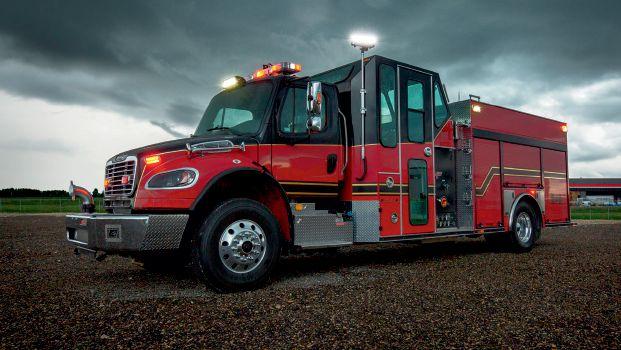
Sustainability has emerged as a new standard in how municipalities, governments, corporations and society are measured. The Rosenbauer RT (Revolutionary Technology) electric fire truck is the answer to that call. And a standard by which we at Rosenbauer judge ourselves as we innovate and invent the future of fire fighting. Putting water to flame has always been the objective. Now, we’re putting green on red in pursuit of a cleaner and more impactful way forward. The RT’s nearly emission-free power is only the beginning of a long list of revolutionary features, making it the most progressive and ambitious firefighting apparatus ever built. It’s the future right here, right now. Every innovation answers a need. The RT was engineered because the planet couldn’t wait. Despite a nearly silent operation, the RT screams intelligence and hollers efficiency. As a family-owned company, it’s personal. So if it has an “R” on it, you have our word on it. rosenbaueramerica.com.
BODY LANGUAGE
How reading nonverbal communication can help make a great hire
By JENNIFER GRIGG
Has this happened in your department? You think you’ve hired the right person and they turn out not to be a good fit. Is it something that could’ve been avoided, you wonder, and if so, what did you miss and at what point?
Resumes were submitted, entrance exams passed, fitness requirements met — all the boxes were checked. Even the interview had its checklist of ideal points to be covered by the candidates in response to the carefully curated behavioural questions.
So, what went wrong? Was it just the luck of the draw or was there something more that could have been gleaned from the interview to get a feel for how well an individual will fit into your department’s culture, mission and values.
Understanding how to interpret body language and nonverbal cues provides you with an incredibly accurate and reliable indicator of one’s true intentions because body language is universal and present in every interaction, and it accounts for 60 to 93 per cent of communication.
Body language is so accurate is because it’s controlled by the limbic brain in what can be thought of as a direct connection that bypasses cognitive thought. Your body expresses thoughts and feelings without conscious thought and largely unbeknownst to most because we’ve never been formally taught about this.
Take the face, for example. If you see eyebrows drawn close together in a furrow, a jaw clench, tightening of the face and neck muscles, a slight or pronounced lip compression, or an increase in breathing, it’s clear that the person is displaying nonverbal cues of distress and discomfort.
Self-soothing behaviours are the brain’s way of dealing with stress in real time. Touching the forehead or the neck, lips disappearing, muscles tensing, hands clenching and squinting eyes can all be observed as someone considers their response to a question or reacts involuntarily to a situation.
Repetitive behaviours are soothing and help us deal with psychological and emotional stress in our bodies. Consider foot bouncing, finger twiddling, twirling strands of hair, and fiddling with earrings, rings or watches. I often see women rub their fingers and/or finger nails on one or both hands and bite the inside of their lip.
We all understand that interviews are known to cause stress and anxiety and it’s normal to see signs of this stress in their nonverbal behaviour, but there are key indicators to be aware of in response to specific questions that can indicate inconsistencies, or at the very least, cause us to ask a follow-up question. Here is a list of negative nonverbal cues and what they indicate:
A person with their shoulders down and back, maintaining good posture, and around 60 per cent level of eye contact is transmitting strong cues of confidence.
• Furrowing of the labella (the space between the brows): troubled by something
• Narrowing of the eyes: discomfort, disagreement, confusion
• Nose scrunch: disgust (this is a very strong emotional reaction to something that’s been said, and looks as if they’ve just smelled something disgusting)
• Lip compression: holding back, distress. The more the lips disappear, the greater the discomfort.
• One sided lip compression or lip pull (like a smirk but without humour): disdain, contempt (this is another powerful indicator of deep seated feelings about a topic or person).
• Head movement of shaking their head no while saying “I’m a team player”: conflict between what they’re saying and what they’re feeling
• Hands clenched: discomfort, nervousness
Here is an example in action. Let’s say you’re interviewing a potential probationary firefighter. In your department, all firefighters are involved with fire prevention and public education initiatives. You tell the candidate that part of their duties will be to perform fire safety inspections and public education, and you ask them how they feel about that.
You notice the candidate’s nose twitch briefly as they say with a one-sided shoulder shrug, “Yeah, I’m okay with that.” They lean back slightly.
The nose twitch is a flash of disgust and the raising of one shoulder indicates that they are not committed to what they just said. (Both shoulders raise together when someone is confident in what they’re saying.)
Leaning back is a form of distancing and we automatically try to distance ourselves from seeing or hearing something we don’t like.
At this point you may wish to ask a
follow-up question such as, “I sense some hesitation, do you have mixed feelings about doing fire prevention?” It could be that their last inspection was in a disgusting rat-infested home of a hoarder (which would cause the nose scrunch as they recalled the memory) as well as the other cues, in which case you’d understand their reaction. Or, they may concede to the fact that it’s not their favourite thing to do, but they’d do it if it’s part of the job. Either way, you’d be provided with added insight.
Here’s another example. You ask, “Tell me about your last job,” and you catch a furrowing of the brow and narrowing of the eyes in response. Chances are it didn’t end on a good note, and they may go on to explain why, or what troubled them about leaving the job. Or, maybe, they’re still there and their employer doesn’t know they’re planning on leaving.
It’s equally important to recognize natural confidence in your aspiring interview candidates, which comes from their body language and the way they carry themselves and interact with others. It’s a vibe they give off. Another key indicator of confidence is a general ‘taking up of space’. Confident peo-
ple naturally take up more space than less confident people, who tend to keep arms in tight to their body, hands clasped together, legs together, body tense.
Here are some good indicators of confidence: shoulders down and back, good posture, eye contact (around 60 per cent is ideal), hand gestures while they talk, open hands (the more space between the fingers, the more confident and relaxed one is), no erratic or twitchy movement and relaxed facial muscles and body.
The important thing about body language and nonverbal communications is that context has to be considered. Yes, interviews can be nerve wracking, but if you’re getting mixed signals and/or negative nonverbal cues, asking a clarifying question may be all that’s required to put your mind at ease and it just may be what saves you from a ‘bad’ hire.
Jennifer Grigg has been a dispatcher, volunteer firefighter, inspector and instructor in her three decades in the fire service. She is also a certified body language coach and speaker. Contact Jennifer at jennifergriggcoaching.com.
AERIAL FIREFIGHTING VIRTUAL CONFERENCE
ATTENDANCE IS FREE WITH REGISTRATION
The Aerial Firefighting Virtual Conference is designed to provide rotary- and fixed-wing operators, as well as their clients and fire agencies, with critical business information about the sector.
The one-day interactive program, including both Live and On Demand Sessions, will provide expert insight on new products and services impacting training, procurement, and operational strategies, as well as sector trends, challenges and opportunities in aerial firefighting.
SPONSORSHIP AND EXHIBIT OPPORTUNITIES
Partner with our dedicated events team and industry-leading Virtual Conference platform to showcase your services and technologies to North America’s aerial firefighting sector.
Share a demo, dynamically update your exhibitor display with new products and services, and answer questions from attendees live via chat or video. Platinum, Gold and Silver packages are available with a range of cost-effective options for promotion and lead generation.
For more information about partnering with our team, contact: Mena Miu, National Account Manager, WINGS, HELICOPTERS, UAV Canada Tel: 416-510-6749 Mobile 289-221-7730 mmiu@annexbusinessmedia.com
CANADIAN SAFETY
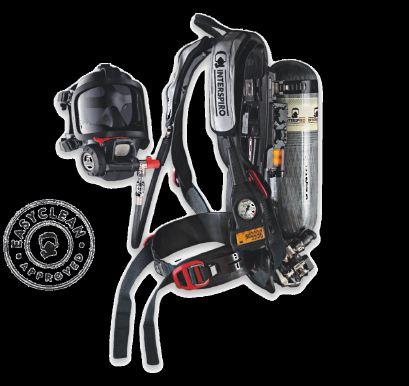
EQUIPMENT IS PROUD TO BE A DISTRIBUTOR FOR THE INTERSPIRO RESPIRATORY PROTECTION LINE. THEIR STATE OF THE ART S9 S ONE OF THE MOST COMFORTABLE SCBAs YOU WILL EVER WEAR.
GIVE US A CALL AT 0182 OR EMAIL US AT INFO@CDNSAFETY.
No company has a richer history in respiratory protection than innovations have time and
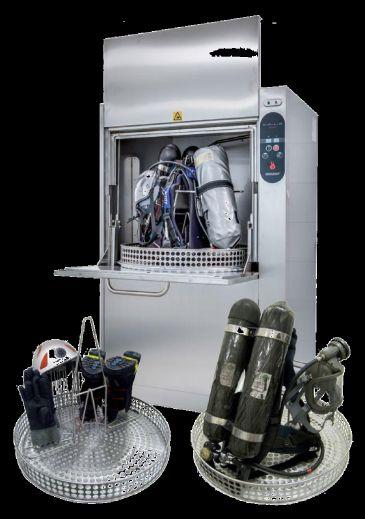
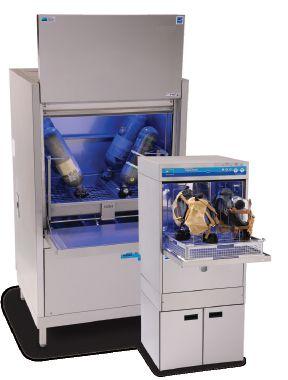
The Solo SCBA Decon/Washing machine was designed and built for one purpose only…to protect Fire Fighters from Cancer causing agents found in the Smoke and residue left on their SCBAs. As an added bonus it can clean Gloves, Boots and Helmets. As an additional benefit, it substantially lowers the time spent cleaning and decontaminating firefighter equipment.
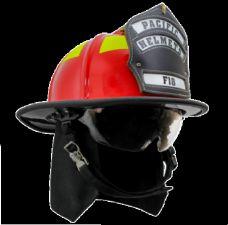
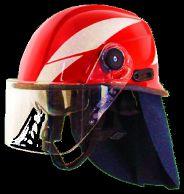
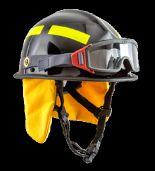
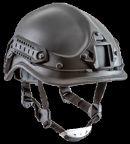
THE SAFEST, MOST COMFORTABLE STRUCTURAL FIRE FIGHTING HELMETS YOU WILL EVER WEAR.
F11
NFPA APPROVED STRUCTURAL FIRE HELMETS
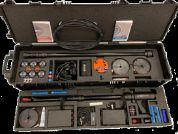
Disaster Deployment Kit
Qualified by MSA for cleaning the G1 SCBA.
IN ONE HOUR YOU CAN CLEAN/DECON:
-14 SCBAs W/MASKS and CYLINDERS
WASH/DECON TWO SCBAs IN 8 minutes
ü REDUCED HEALTH RISK ü SAVES TIME 2/PKS IN 8 MIN ü EASY TO USE
Low
Power use.
IN ONE HOUR YOU CAN CLEAN/DECON:
• 30 HELMETS
• 60 PAIRS OF GLOVES
• 20 PAIRS OF BOOTS
• Double the above numbers with a second rack
Minimal moving parts. Low maintenance costs
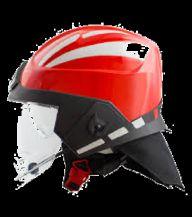
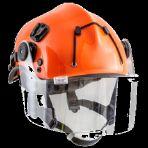
KEVLAR REINFORCEDRESCUE HELMETS FOR HIGH ANGLE, AUTO EXTRICATION,
The All in One Search and Rescue Toolbox
The kit has been specifically configured for easy procurement, deployment and storage in mind. Its a perfect choice for urban search and rescue teams, enhanced rescue squads, regional task forces, FEMA and SUSAR teams who are seeking the highest quality, easy to use, cost effective, all-in-one technical search system for their standard equipment cache. The Disaster Deployment Kit comes complete in a single storage case and is designed to be both easily transportable and rapidly deployable anywhere disaster strikes.
The kit includes the full six-sensor Delsar® LifeDetector® System that provides seismic detection of victims, and the high-end SearchCam 3000. SearchCam comes with the long tube set and the extension tube that allow for reach of up to 223 inch (566 cm). Alternatively the camera can be used without the tube set, and lowered to a cavity using the supplied rope accessory kit. The camera head is water tight up to 75 feet (23 m) depth. Delsar Victim Simulator is included for efficient training of the LifeDetector®
Thermal imaging and volunteers
Special considerations for the fire service’s largest sector
By MANFRED KIHN
The volunteer sector makes up the majority of firefighterin North America. Many volunteer firefighters receive no remuneration while others receive a small stipend for the number of hours they put in. Some volunteer fire departments train once a week, some bi-weekly and some only train once a month (only 12 times a year, if the firefighters makes all 12 training sessions taking into consideration work, vacation, sickness, and family matters).
Some FDs have a dedicated training officer while others train on what the fire chief may tell them to do. A typical training night could consist of vehicle and equipment checks, which can take a while depending on how many apparatuses the FD has and how many firefighters show up for training that night, followed by an SCBA or ladder drill and a meeting. And the IFSTA Essentials of Fire Fighting manual has only gotten larger over the years, requiring volunteers to give more.
Some FDs have municipal budgets while others rely on donations and fund raisers in the community in order to keep operations going and keep purchasing equipment. I know of a FD where one time an elderly lady walked into the fire station and ask what they were in need of. They joked with her and said they could really use a TI, explained what it was and how it could help them. She asked how much they were, then pulled out her cheque book and gave them the money for one. This scenario doesn’t happen every day. But when it did, the next question was: How do we use this, what now?
Here are some helpful hints to make training easier.
1st: Have the sales rep explain to you the basic operations of the imager, turning it on/off, battery charging, changing batteries, when to replace the batteries for in the future (all batteries do not last forever) and all the different modes that the imager may have and routine maintenance. All modern TIs have basic colourization of yellow/orange/red and temperature measurement consisting of a sliding bar scale and/or digital number. Some manufactures have optional features which can get a bit confusing, so make sure you totally understand what they do.
2nd: See if the manufacture has someone that can provide proper training besides the sales rep. If they don’t, can they recommend someone and arrange to get a training class? It is all worth it in the long run to get a full understanding of the technique in using a TI, but also all the different applications and uses besides just fire fighting.
3rd: Get everyone involved in the training and make sure everyone knows and fully understands image interpretation, and how to use it safely and effectively.
4th: Include TIs in your regular FD training curriculum and use
it as often as you can for all scenarios, including SCBA, ventilation, search and rescue, RIC, and size up, just to mention a few. The more you use it the more proficient you will become in using and understanding your new TI.
5th: Once you are comfortable using your TI, invite your generous source of funding down to the fire station and don’t forget the media, as you want to show off your new valued tool. Post on social media as, you never know, the coverage may net more donations for other equipment or perhaps another TI.
6th: Training is complete. The TI is mounted in an apparatus just waiting to be used. What calls are you going to use it on? All of them. It is there to make your job easier, so be sure to get it off the apparatus and use it.
7th: During Fire Prevention Week, show it off to the kids and parents show and take it with you when conducting fire inspections. You will be surprised at what you will see when looking at those electrical panels.
8th: Keep a log of all the responses where you used the TI and compare back to previous years responses to evaluate efficiency.
9th: Practice, practice, practice.
Since thermal imagers have been in use for so many years already and manufactures have made many vast improvements to their technology alongside lowered prices, there is no excuse for a FD not to have a TI.
Until next time, train often and stay safe.
Manfred Kihn is a 19-year veteran of the fire service, having served as an ambulance officer, emergency services specialist, firefighter, captain, and fire chief. He has been a member of Bullard’s Emergency Responder team since 2005 and is the company’s fire training specialist for thermal imaging technology. manfred_kihn@bullard.com
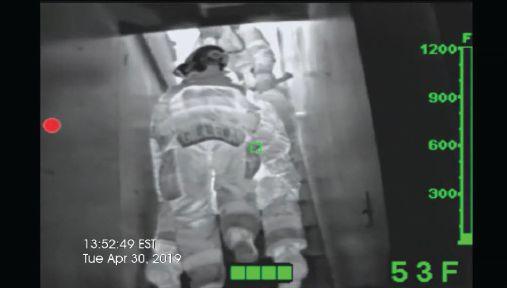
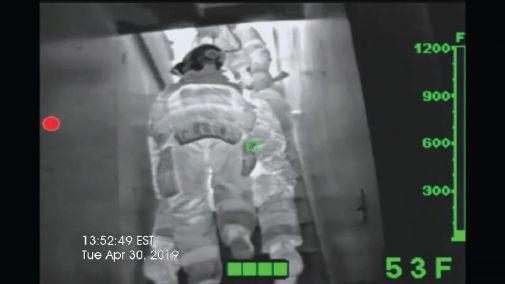
A firefighter uses a TI during a RIC training evolution
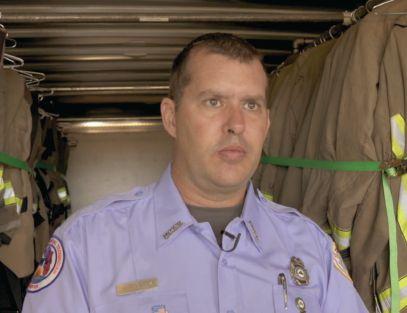
“There’s nothing but benefit. I know it’s hard to change, because you’ve always done some things the same way.
“But when you look at the mounds and mounds of research that by simply changing out your hood, changing your gear, you’re going to have a 60-70% better chance of not getting cancer by letting us do this for you.
“And can you give me a reason why not to do that? I don’t think they’d be able to.”
Safety Sounds
Fire Prevention Week
In A Box
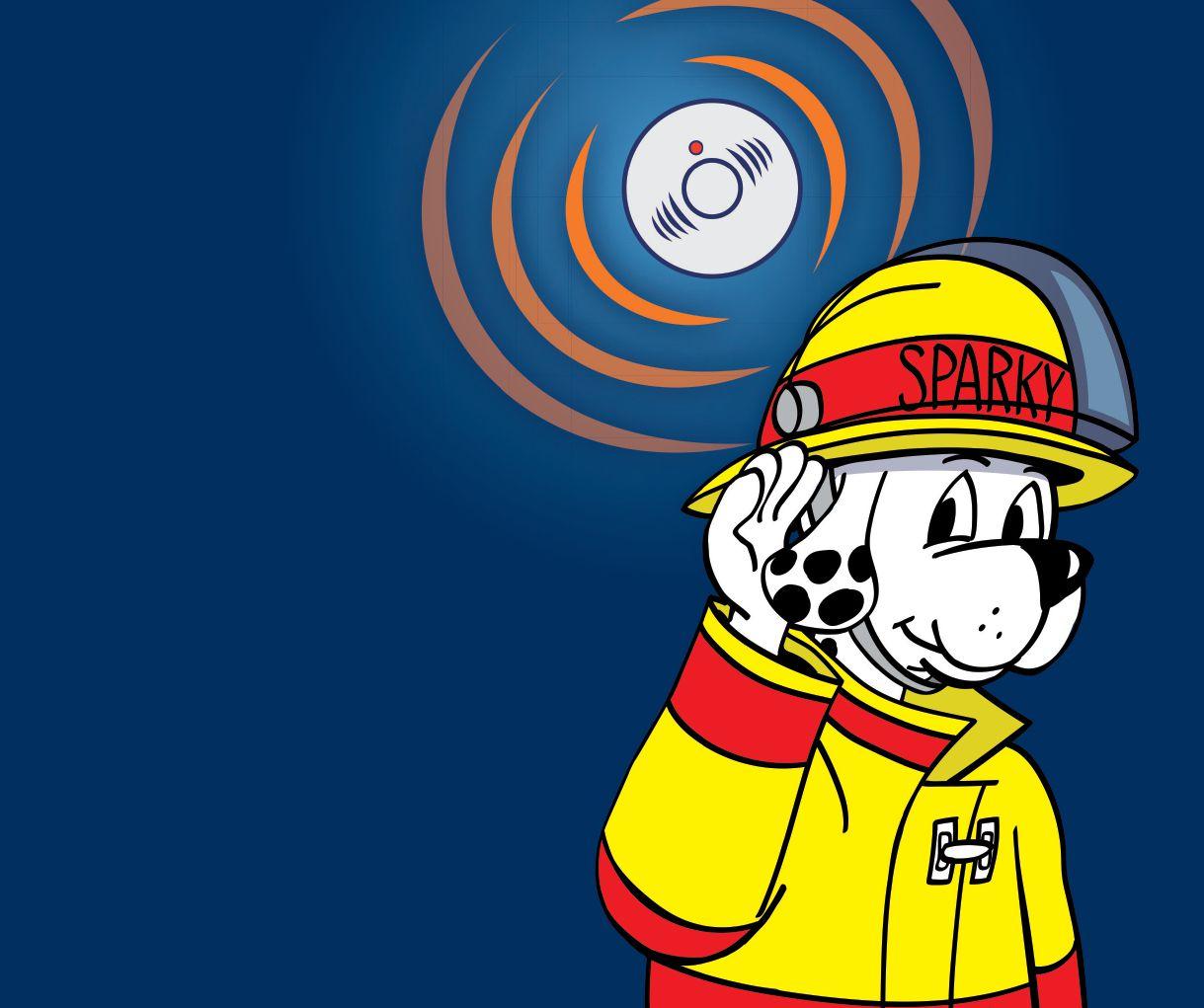
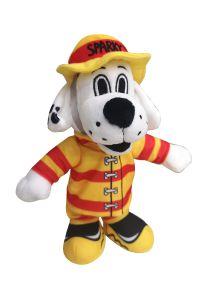
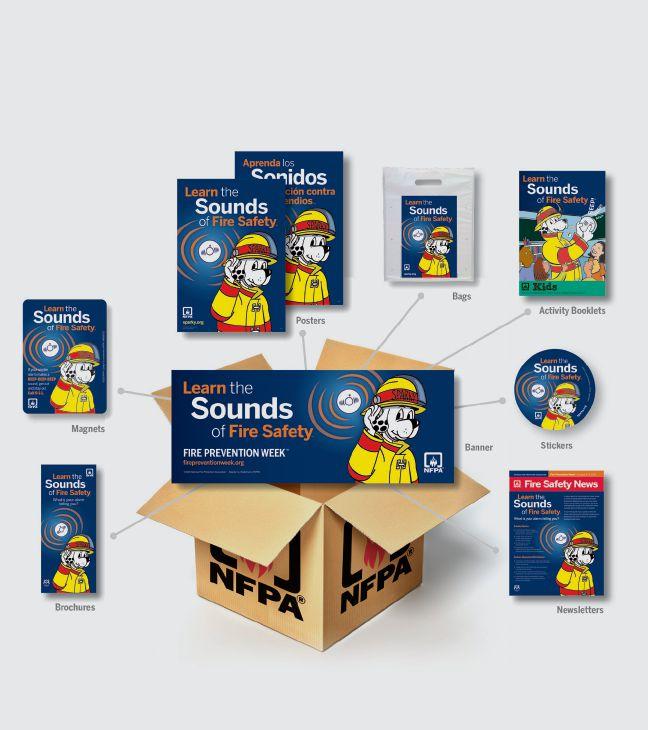
This top-selling value pack for groups of 100, 300 or 500 has everything you need to engage your community this October and throughout the year. Having the right handouts and giveaways are sure ways to increase engagement and help get your messages out far and wide. The products in the FPW in a Box™ are bright and colorful, easy to read and understand, and feature everyone’s favorite, NFPA mascot, Sparky the Fire Dog.®
BACKtoBASICS
The auto ex 360
BY MARK VAN DER FEYST
Normally there are columns written by other authors that focus just on vehicle extrication and all the tactics that go with it. We are not starting a series on this, nor trying to steal their thunder, but rather we are going to look at one basic aspect of vehicle extrication calls.
Vehicle extrication calls begin all the same – by being dispatched out to the situation by the 911 operator or dispatch centre. Once the call comes in, the vehicle extrication size-up begins. Once arrived on scene, the auto ex 360 commences. Not every responding member will conduct this, but you need to be able to and may have to depending upon the response model and who arrives on scene first. Doing the auto ex 360 provides the responding team with a plethora of information that can be used to affect the extrication operation. Let’s look at what items need to be identified or picked up when doing the auto ex 360.
The number of vehicles involved will be one item to pick up on and note. Even though dispatch information may relay information regarding the incident, they are only going off what they are being told by the caller(s). Once on scene, it is paramount to determine the number of vehicles involved so that proper and adequate resources can be requested to assist.
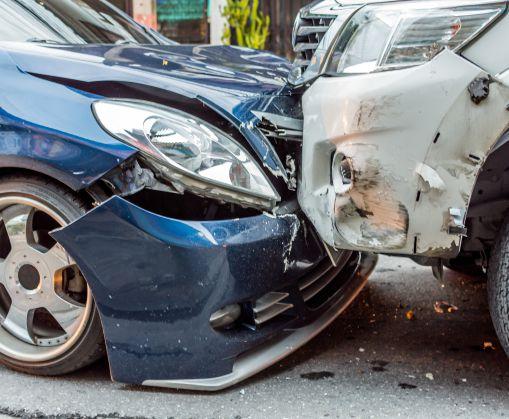
The position of the vehicles will also be important to note. Depending upon how the vehicles end up after the collision, will dictate the rescue operations and the number of personnel and equipment needed for the operation. Thoughts to access points to the vehicles and getting into the vehicles can be identified during the 360.
Along with the position of the vehicles, there will be the number of people involved. This is part of the accountability of all on scene including those involved in the collision. Once a number can be established, appropriate resources can be deployed to assist as needed based upon the extent/nature of the injuries.
Having established the count of those involved, we want to note the location of the people on the scene. Some of them may be outside of their vehicles walking around, while others may be still inside. Depending upon the extent of the collision, all the people may be still trapped inside their vehicles. Knowing the location helps to direct the help needed.
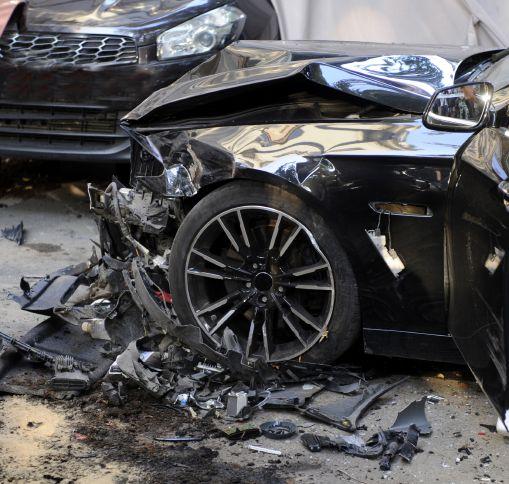
The damage of the vehicle is going to be self-evident based upon the collision. Depending upon what has occurred, the damage will either be severe or minimal. Severe damage will indicate higher speed impacts and will also require more attention to stabilizing and removing the people from the vehicle. The damage of the vehicle can be located on any part and can indicate how the collision occurred. This will give an idea of how to approach the
Confirming the number of vehicles involved and the position of the vehicles are key aspects of the auto ex 360.
The damage of the car will be self-evident, and it provides clues to the speed of impact and attention needed to stabilizing and removing people from the vehicle.
Unparalleled
Reliability, Innovation and Quality
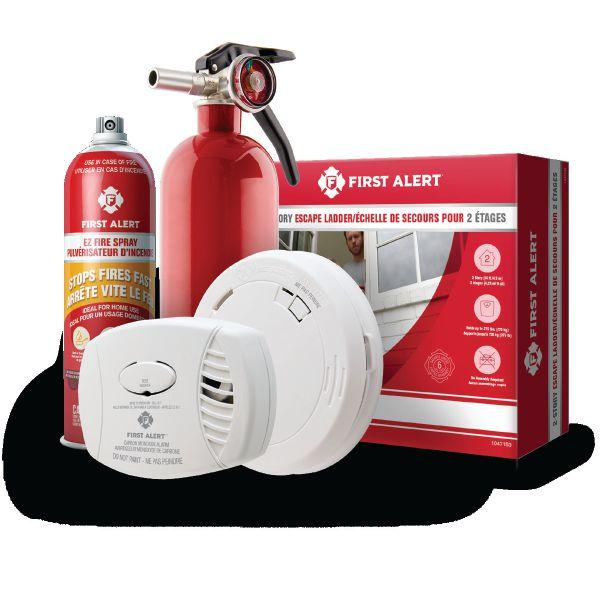
First Alert fire safety products provide reliable protection families have trusted since 1958.
BACKtoBASICS
rescue operation based upon the type of collision.
All modern vehicles on the road are going to be equipped with airbags or other supplemental restraint systems. These devices will deploy depending upon the type of collision and deacceleration of the vehicles. Deployed airbags may indicate severe injury for the occupant(s). Sometimes when all the airbag’s systems deploy in the vehicle, such as the curtain systems by the windows, it will block the view inside the vehicle when doing the 360. These will need to be pushed aside so that an accurate 360 can be completed on the inside of the vehicle as well.
Getting a charged hose line in place will be quickly needed to extinguish any fire so that extrication operations can begin.
Many vehicle collisions will cause the fluids from the vehicle to leak out and be spilled on the ground. Many fluids are present in each vehicle, and they are going to be a hazard to the rescue effort if not dealt with. Identifying the types of fluids and where they are leaking/moving to will direct efforts to mitigate this hazard. Not all vehicles will have fluids because some vehicles are completely electric – which lends into identifying the type of vehicle(s) that are involved.
Along the roadways are going to be utility services. These services sometimes get involved in the vehicle collisions and become a hazard to the operation. Electrical wires are going to be the most hazardous of the utilities due to the unknown nature of knowing if the wires are live or not. We always treat them as live no matter what to be on the safe side until we are told by utility companies that they have been de-energized. As the 360 is conducted, noting the types of utilities and where they are in relation to the incident, is going to help with deciding how to approach the situation and deal with it.
Identifying any fire is going to be paramount. Any fire present at a vehicle collision will only cause more injury to the occupants who may be still inside the vehicle as well as the responders working to fix the problem. Getting a charged hose line in place will be quickly needed to extinguish any fire so that extrication operations can begin.
To reinforce what has been mentioned in the beginning of our discussion, these items listed are just the basics of what is picked up on when doing a 360 around the incident scene. Training for this can be easily done by using video footage from social media and practicing a 360 or size up based upon what is viewed and seen.
Mark van der Feyst has been in the fire service since 1999 and is currently a firefighter with the FGFD. He is an international instructor teaching in Canada, the United States, FDIC and India. He is a local level suppression instructor for the Pennsylvania State Fire Academy and the lead author of Fire Engineering’s Residential Fire Rescue book and other DVDs. He can be contacted at Mark@ FireStarTraining.com.
BY LAURA KING NFPA PublicEducation Rep Canada
IAlarming news dictates 2021 FPW theme
t was during the first lockdown in early 2020 that NFPA’s education team started to hear from teachers who recognized the perpetual chirping of smoke alarms in students’ homes during Zoom or Google Classroom sessions.
Remarkably, the teachers told us, the chirping would continue for days, even weeks. This message was communicated to NFPA repeatedly, and teachers were astounded by the fact that folks either didn’t know what to do about the chirp, or chose to ignore it.
Teachers, of course, are NFPA’s eyes and ears in communities across Canada and the United Sates; they are well-versed in NFPA’s Learn Not to Burn program and they know, and teach students, what to do when the smoke alarm beeps or chirps.
It’s horrifying to think that people ignore a chirping alarm because they don’t have the tools to deal with it – a ladder to reach it, the ability to go to a store and buy batteries, the $80 to replace a 10-year-old combination smoke/CO alarm, a decent landlord. It’s even more horrifying to realize that for many occupants, the chirp eventually becomes white noise that no one hears anymore, leaving families unprotected from fire or CO.
Generally, at the NFPA, the process of establishing the Fire Prevention Week theme is lengthy, extensive and collaborative. For 2021, it was a no-brainer: Learn the Sounds of the Fire Safety.
As much as we like to think fire safety is simple, messaging about smoke and CO alarms, the sounds they emit, and what to do when the alarms activate, is complex.
We’ve tried to simplify the messaging for Fire Prevention Week 2021.
What’s more, technology is evolving, and it’s our job to explain to people whether they should install photoelectric or ionization alarms, combination smoke/CO alarms, talking alarms that we know are more effective than just a beeping alarm, or new multi-sensor alarms? Did you know there are new alarms that can tell the difference between burned food and smouldering upholstery? (Visit smokealarm.ul.org for great resources!)
All this is why the NFPA and fire departments across North America need to take time and be specific in our messaging and repeat, repeat, repeat. Telling people to change batteries when we spring forward and fall back is relevant only to occupants of older homes with simple smoke alarms. What are we telling people whose homes have interconnected alarms, 10-year-sealed alarms, strobes and bed shakers? We need to work at our messaging, use NFPA’s Education Messaging Desk Reference (www.nfpa.org – educational messages), be specific, and be relentless.
For FPW 2021, you can find our messages at www.firepreventionweek.org – social media cards, ideas for programs and outreach, event flyers, press releases (in English and French), plus a Home Safety Action Plan, children’s activity and colouring sheets, videos, escape plans, lesson
It’s horrifying to think that people ignore a chirping alarm because they don’t have the tools to deal with it . . . ‘‘ ’’
My favourite: Hear the beep, get on your feet! In other words, when the smoke or CO alarm sounds, occupants need to take action – get up and get out, and then call 911.
My second favourite: hear a chirp, make a change: a chirping alarm means the battery, or the entire alarm, must be replaced.
Replacing batteries or expired alarms is a challenge for many people. Consider the barriers to change: What kind of batteries are required? Where do I get them? How do I know if it’s the battery/batteries or the alarm unit? How do I read that tiny expiry date on the side of the alarm on my ceiling? How do I turn off the beeping sound that just won’t stop if I can’t reach the alarm to take it down?
Truly, we don’t make it easy.
Laura King is NFPA’s public education representative for Canada, and the former editor of Fire Fighting in Canada. Contact her at canadacrr@nfpa.org and follow her on Twitter at @LauraKingNFPA.
plans, tip sheets, and messages for people who are deaf or have hearing loss, or people with other physical challenges.
Our focus for #FPW 2021 is these messages – they’re not sexy or fun; they’re practical and potentially life-saving:
• When a smoke alarm or CO alarm sounds, immediately exit the home.
• If your alarm chirps, batteries may be low and need to be replaced. If the alarm continues to chirp after batteries are replaced, or the alarm is more than 10 years old, replace the alarm.
• Test smoke and CO alarms monthly. Press and hold the test button.
• If someone in your household is deaf or hard of hearing, install bed shaker and strobe alarms.
• Know the sounds of smoke alarm and CO alarms – three beeps for smoke alarms; four beeps for carbon monoxide alarms.
We’re grateful to the teachers who heard the chirp and took action; now, it’s up to us to make change.
THE EMOTIONAL
Part 2 in this series on a developing a cognitive lifestyle looks at handling emotions.
By NICK HALMASY
Nothing clears a room of firefighter spirit and vitality like when you say that the training at hand will be on emotions. This is one of the reasons that I love to directly address it in trainings and presentations. As an often overlooked and underappreciated component to a mental wellness program, training, and sometimes even therapy, emotional understanding and management play a key role in recovery and resilience.
You may think that you have no control over how you feel. And, in some cases, this is true enough. There are two things about this that we need to unpack. Firstly, are you sure what you feel isn’t actually a thought? Since emotions versus thoughts is a common confusion in therapy, it is likely that you get confused on this point as well. There are many things that we say we feel — I feel stupid, I feel like a failure, I feel like that went well, I feel that I need to try hard, I feel that my crew doesn’t like my haircut, etc. Each and everyone one of these statements is a thought.
As part of the three-factor understanding of a human experience (thoughts, feelings, behaviours), we need to be accurately identifying each. Thought statements often take on a feeling vibe when we are confused about how we actually feel (or lack the language to describe it), so we reach out to cognitions to try to get the point across to ourselves or others. For instance, when you think about grief, what do you feel? Did the terms heavy, empty, heart is sinking, or low, come to mind? These are common responses I get, yet each is a metaphor. Metaphor is a realm of thinking, and is useful when we don’t have the verbal chops to get our experience across. But, this also makes treatment hard at times. Commonly, I hear “I feel overwhelmed because…”. After listening, I often explain that, while I can sympathize, I just don’t have any skill or tool that I know of that will help them feel “underwhelmed”. Humour, the great pry bar, allows us to further explore this while removing some of the edge of the heaviness at hand. Overwhelmed is the experience of feeling multiple things strongly and being confused about which is most dominant. Therein lies exactly the key to feeling back in control — identify which emotion is the most dominant and exercise your tools on treating that particular emotional disruption. This is the primary emotion.
Now, the philosophy of Stoicism got a lot of flack for the misconception that it is an emotionless way of life. Of course, this is an imperative function of successful therapy. Seneca, a Stoic philosopher, discussed not ignoring or fighting an emotional response: “Let not the eyes be dry when we have lost a friend, nor let them overflow. We may weep, but we must not
wail.” This notion finds a comfortable home in modern psychotherapy. Using cognitive behavioural therapy, I help individuals identify “primary” and “secondary” emotional responses. The primary responses are automatic and uncontrollable to a point. These are the emotions the Stoics would also have suggested are part of nature; normal and common human experiences. The secondary emotional responses, however, are up to us. The Roman emperor Marcus Aurelius understood this well: “It’s not what men do that disturb us… but, your opinions (judgements) of what they do. Take away those opinions — dismiss your judgement that this is something terrible — and your anger goes away with it.”
As an exercise in emotional management, the Stoics often encouraged looking at difficult situations from the emotional standpoint of having completed this hard task in front of them 1000 times. We could also argue an effective approach may be to look at a situation as if it was weeks, months, or years in the past. If you get into a heated argument with a colleague or friend, for instance, what do you expect to feel in a week, month, or year after that argument? In all likelihood, the problem would likely be resolved regardless of the outcome and you would have mostly, if not completely, moved on. If this is a statement that you can agree with, you can almost hear the Stoic response: “Then, why wait? Practice feeling that way now.”
If what you are experiencing is a strong, negative emotional experience and the situation you are in is objectively safe, you are better to sit with it until it naturally dissipates.
What tends to happen to us during any difficult situation is that we add to the situation unknowingly and to our detriment. In Part 1 of this cognitive lifestyle series I discussed how we can behave in ways, in response to an event, that actually make things worse for us in the long-term. We can focus on the wrong parts of an event and that will make us feel worse too.
Identifying what is primary is crucial. Treating the secondary emotion is a moving target that never allows us to get much deeper in the work.
FGFT INTRODUCES
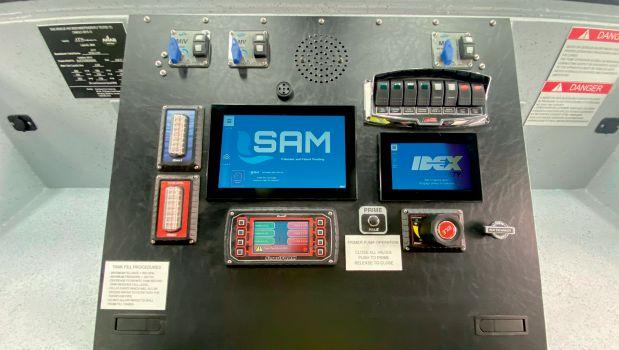
ITS LATEST SAM UNIT THE ER-X 4-MAN CROWN PUMPER
Fort Garry Fire Trucks is proud to introduce our new SAM ER-X 4-MAN Crown Pumper. SAM is an integrated total water control system that manages your truck’s pump, tank, intakes and discharges freeing up the pump operator to focus on the scene. The SAM system replaces your pressure governor and takes care of opening and closing valves based on operator settings all from a 10 inch touch screen display or by using the system’s mobile tablet.
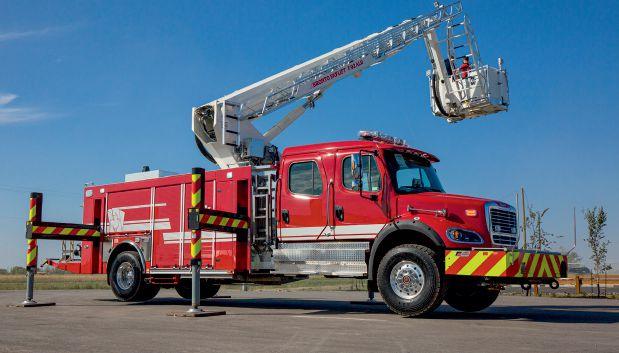
We are also a proud distributor of sales, service, and parts for the versatile Bronto aerial platforms that are designed for easy maneuvering, quick set-up, and safe and efficient operation. Last year we unveiled our Bronto All - Rounder. This resourceful apparatus features a 92-foot articulated ladder platform built on a single axle Freightliner chassis and measures exactly 12.96 feet tall, 41.66 feet long, and 8.50 feet wide and it is available for
immediate possession. Scan the QR codes above for specification details on either truck or call our sales department for pricing information.
On purpose, we’ll leave the last bit of work on the emotional topic in the realm of thoughts. Remember, often the strong emotionality that we feel can be understood as us adding to our pain through the focus on secondary emotional reactions, which simply means we judge ourselves. For instance, if I’m struggling post-call I may feel “worried” or “anxious.” Then, as we are apt to do, we may judge that reaction with thoughts such as “this clearly means you can’t take this job, or what is wrong with me?” This thought has follow up emotional reactions like worthlessness, hopelessness, sadness, guilt, shame or any number of other difficult emotions. Equally as possible may be our tendency to rely on anger (at ourselves, others, or the world) which works to actually buffer against the true, primary emotion. Anger is seldom helpful and is frequently harmful. If we are feeling anger, this is your clue to check in to see if there is anything else bubbling underneath that may explain more accurately the strong emotion you are feeling.
When we are able to remove that judgement, we remove artificially increasing your suffering. This is what CBT calls “sitting with discomfort” and it does, to validate those that may bristle at this, run contrary to our human experience. We have to learn, though, that being uncomfortable, distressed, worried or fearful is not immediately harmful. Those emotions are natural human experiences. They are alarm bells evolved to warn us of real, physical danger. Often, though, when we experience this now it is of social or perceived threats. Our brains can’t tell the difference (Robichard and Dugas, 2015).
Emotional management comes down to a few hard, but fundamental, understandings.
1. We need to identify whether this is a real or artificial emotion. This is no easy task at times, but checking in to see whether a judgement is at the heart of the emotion or whether it occurred automatically and naturally, can be a helpful start to understanding.
2. Removing judgements, regardless of where they land, mitigates the amplification of strong negative emotions. We need to understand that while judgements may come “naturally” to us, they are functioning to undermine the emotional experience at hand. Both the student of Stoicism and the modern psychotherapist would teach limiting our judgements as swiftly as possible
3. Sitting with being uncomfortable. If what you are experiencing is a strong, negative emotional experience and the situation you are in is objectively safe, you are better to sit with it until it naturally dissipates. Formally, this is considered exposure work. We need to understand that the point of this is to instill new learning about ourselves, how we cope, and the messages that we get. Properly understanding this will bolster our confidence (even when these exercises don’t necessarily make me feel better in the moment), desensitize us (making us incrementally more resilient to the next stressor), and decrease the intensity and severity of the experience over time.
Combining these ancient exercises with modern psychotherapeutic understanding and research allows us to take more control over the emotional experiences we have and simultaneously takes away the fear and worry about strong emotional experiences in the future.
Nick Halmasy is a registered psychotherapist who spent a decade in the fire service. He is the founder of After the Call, an organization that provides first responders with mental health information. Contact him at nhalmasy@afterthecall.org.
TRAINER’SCORNER Training for today
By ED BROUWER
For today’s training officer, maintaining current skill levels and developing new ones for your members during a worldwide pandemic has been, and may still be, a monumental task. Some of you have risen to the occasion by developing some “out-ofthe-box” instructional methods. It would be great to hear your ideas. Feedback regarding what did and didn’t work for you will be vital information for the year ahead, for I do not think we are quite out of the woods yet.
As a training officer you must be on the top of your game. To keep our members interested and engaged there is no room for doing things half right or half hearted. Lives certainly hang in the balance, be it those who your members are rescuing or your members themselves. You cannot come to practice night unprepared. Victory loves preparation.
Here are a few nuggets to consider for your memory bank. I’ve read people remember only 20 per cent of what a good speaker says for up to 10 days as long as they hear no other “new” information. However, if after 10 days they have not put that message into practice they forget it almost completely.
During my years as a training officer, I reminded myself often of the following statement: “I hear — I forget, I see — I remember, I do — I understand!” I hope you can see the importance of this.
There is a new word being tossed around this last year: Zoom. Last week I was scheduled to be on one of these Zoom calls, but my computer wasn’t cooperating so I joined via my land line. It is an hour of my life I’ll never get back, and at my age that is a lot. It didn’t help that the subject matter was as dry as Melba toast, but with no visuals and poor audio it was just plain awful.
Love it or hate it: trainers using video conferencing need to be aware of the pros and cons from the perspective of you, the instructor, and your members, the students.
For some of us, our rural internet services are slow. My grandkids laugh when the see my mouth moving and then seconds later the
To entrench the skills, be sure to consider different learning styles.
words come, and by that time they’ve asked another question.
To be effective, video conferencing needs a lot of bandwidth. Without it, the sound is in and out making it so that people are often asking each other to repeat themselves.
And then of course there is the “learning curve” required for both the trainers and firefighters. In some cases, it is steep. I might be the only one in the whole Canadian fire services that doesn’t have a smartphone. Besides not being able to read the small font size, I type with one finger, using the hunt and peck method. I’d just as soon talk face to face. However, there are most certainly younger tech savvy people in your department who can set you up if you are inclined towards my sentiments.
For me, a frustrating fact is the instructor cannot see the screens of their members (unless they share them with you), so you have no idea what they are doing.
I have always pushed for group interaction, hoping for that all elusive “engagement”. But without face-to-face contact, this becomes more of a challenge.
Having said all that, I believe the pros outweigh the cons when it comes to video conferencing… but the key is you, the train-
ing officer. The success of our practice nights, no matter the instructional methods, rest squarely on the shoulders of the training officer. You must be prepared! Your lesson plans must maximize student participation.
Learning is defined as the ability to gain knowledge or information by means of understanding or by experience. And a key for adult learners is relevance. Knowing why they are doing a certain task will provide positive results on the fireground.
There are certainly different styles of learners:
• I Hear-I Forget: Aural learners need to hear something so that it can be processed. They may prefer to read aloud if presented with written material.
• I See-I Remember: Visual learners are those who need to see simple, easy-to-process diagrams or text.
• I Do-I Understand: Print learners are those who process information by taking notes. Notes they may never look at again. Hands-on learners need to do something to learn it. Also in this “I Do” group are the interactive learners, who learn through discussion and those who learn through training exercises and role playing.
TRAINER’SCORNER
I hope I don’t offend you with this, but as an instructor it does not matter what you know about fire fighting or learning types if you cannot the communicate that information to your members.
Here are some methods of presenting information (in no particular order):
• Lecture: Make sure your information is relevant, use interesting visual aids; have interactive questions.
• Brainstorming: Post the question; record ideas and thoughts from the group; categorize the responses.
• Buzz groups: Divide students into small groups; assign a task or problem to the groups; set a time limit; discuss each group’s findings.
• Case studies: Write a real-life story; pose questions that require solving; discuss responses.
• Discussions: Create questions that support your teaching objectives and promote involvement from all members of the group.
Another important key is learning to read your audience. Far too many trainers talk at their members, rather than talk to them, or better yet, talk with them. Try using the three Ds of skill instruction: demonstrate, describe and do.
An effective way to instruct is to silently demonstrate the core skill in front of your members. Then describe what you are doing step by step as you demonstrate it again. Then, and only then, have the members do it.
One more key: Remember that you are dealing with adult learners.
They may have just finished eight hours of hard work, wolfed down supper and are now more ready to sleep than learn. As well, consider that many of your students may have been out of the “school system” for 20 plus years. Expecting them to study and be excited about exams may be stretching it.
Keep in mind these particular dos and don’ts. Do encourage your members with positive feedback. Do not belittle people or laugh at their questions or answers. Do not force people to take turns reading out loud (you better have more prepared than taking turns reading the training manual). I have found when asked to do this, most do not lis ten to what is being read as they are too busy reading their upcoming portion of text to ensure there are no big words they will stumble over.
Study the lesson objectives. You must know the goals for the lesson. Remember, if you aim at nothing, you’ll be sure to hit it. The most effective training officer is a prepared one. Pandemic or not, preparation is the key to success!
Train like their lives depend on it because they do. Until next time, stay safe.
Ed Brouwer is the chief instructor for Canwest Fire in Osoyoos, B.C., retired deputy chief training officer for Greenwood Fire and Rescue, a fire warden, wildland urban interface fire-suppression instructor and ordained disaster-response chaplain. Contact Ed at aka-opa@hot mail.com.
BY VINCE MACKENZIE Fire Chief
Grand Falls-Windsor Newfoundland and Labrador
LVOLUNTEERVISION
When preparation meets opportunity
uck, I have heard it said many times, is when preparation meets your opportunity.
How many times have you responded to a call and after a successful fire fighting operation have someone comment about how lucky the crew was to save the building or stop the fire when you did. These people would go on to further comment on what the negative outcomes may have been had your crew not been lucky to respond to the emergency when you did and take actions the way we do. In making complimentary conversation, they attempt to lift our spirits and acknowledge good work in their own way. They say we were lucky.
People come up with a plethora of reasons why firefighters were successful and end it with the observation that we were lucky. I go away from these conversations always thinking that luck really doesn’t have much to do with it. I’m not a large believer in luck when it comes to fire fighting. Even though I use the term many times, if we stop and think about it luck has absolutely nothing to do with outcomes, especially in fire fighting scenarios. Sure there are times when we feel luck has played a part in our success, but I view luck as one of two types of scenarios.
The first “luck” scenario is mathematical odds, and lotteries are just mathematical odds, like buying lottery tickets. Winning is the exception, not the rule.
The second so called “luck” scenario is when your good preparation meets the opportunity. This is when your training and preparation level meets the emergency call that requires the learned and practiced skills. In essence, our fire fighting teams created our own luck by ensuring our training meets the next call. So when someone comments to you that your actions were lucky to save something, rest assured that luck had little to do with it for you. Do realize that the compliment is more to acknowledge that your level of preparation enabled you to be ready for the opportunity to have a successful outcome.
ported financially to enable the members to train with good equipment. The community and organization has created its own luck for its citizens.
Most of you who are reading this are firefighters yourselves. Were you lucky to join a department or was it calculated preparation on your part meeting an opportunity to be involved that brought you into the team? Many of us are second or third generation firefighters. Therefore I think that the preparation meets opportunity order may just be a little reversed in that opportunity presented itself early. You then had the foresight to prepare yourself at a young impressionable age, perhaps experiencing your father or mother volunteer in their local fire department. Their example opened your eyes to the opportunity.
You may also feel lucky to be blessed to be working with a great crew of dedicated firefighters. Again, it is not luck, it is simply the pride and confidence that you have because the organization trains hard to be ready to meet the opportunity of the next emergency call.
I have always felt uncomfortable when praise of a successful emergency scene outcome is directed toward me personally as a fire chief. While
People come up with a plethora of reasons why firefighters were successful and end it with the observation that we were lucky ‘‘ ’’
The community should feel lucky they have you and your fire department are around. The confidence and expectations that your citizens would have in the capabilities of their fire department is created by the department’s reputation over time. Even the fact that they feel lucky to have a fire department of a high caliber usually means there has been a lot of preparation and training, a department that is solidly led, and well sup-
Vince MacKenzie is the fire chief in Grand Falls-Windsor, N.L. He is an executive member of the Canadian Association of Fire Chiefs and the past president of the Newfoundland and Labrador Association of Fire Services. Email Vince at firechief@townofgfw.com and follow him on Twitter at @FirechiefVince.
it feels good to hear the comments, I always counter with the statement that we have great people working on our team and that’s why we had the specific success. We know we are absolutely nothing without a solid team at play. While I may feel lucky to have you, I know that it took the team’s preparation to ensure you are ready and trained to serve. The luck that we feel to have you is simply the appreciation that we as chiefs have for our members and their positive attitude to constantly prepare for the next call.
I solidly believe that in the fire department you create your own luck, individually or as a team, luck doesn’t even factor into my equation. Winning a lottery would be pure luck. Constant training and development in preparation is the only way to be lucky in our business
But in fire fighting, in order to generate a win in a true emergency situation, your preparation, whether training individually or as a team, is what creates success. Train, train and train more and you will quickly see that your luck will magically increase with every call.
2021 SUPER DUTY
Best-in-class max. available payload of 7,850 lbs*
Max. available diesel towing of 37,000 lbs**
2021
Best-in-class‡ max. available payload of 3,325 lbs
Best-in-class† max. available towing of 14,000 lbs
When you’re building a business, you need the best. The 2021 Ford Super Duty is a powerful business partner. Designed with productivity in mind, the all-new Ford F-150 – with its available Tailgate Work Surface comes ready for the worksite, and its class-exclusive^ available Pro Power OnboardTM offers exportable power on demand to help keep you running until the job’s done.
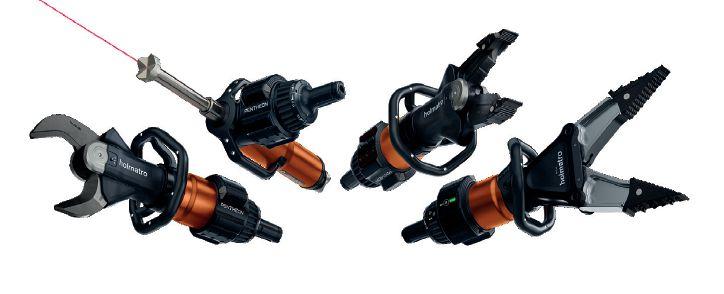
Working under pressure, in a race against the clock, first responders need equipment they can fully rely on. It is for these men and women that we have developed our new Pentheon Series: High-tech rescue tools that are miles ahead of all other equipment on the market, cordless and hose tools alike.
Only the Holmatro Pentheon Series offers you the unrestrained performance, unparalleled speed and ultimate control you’ve never experienced before.