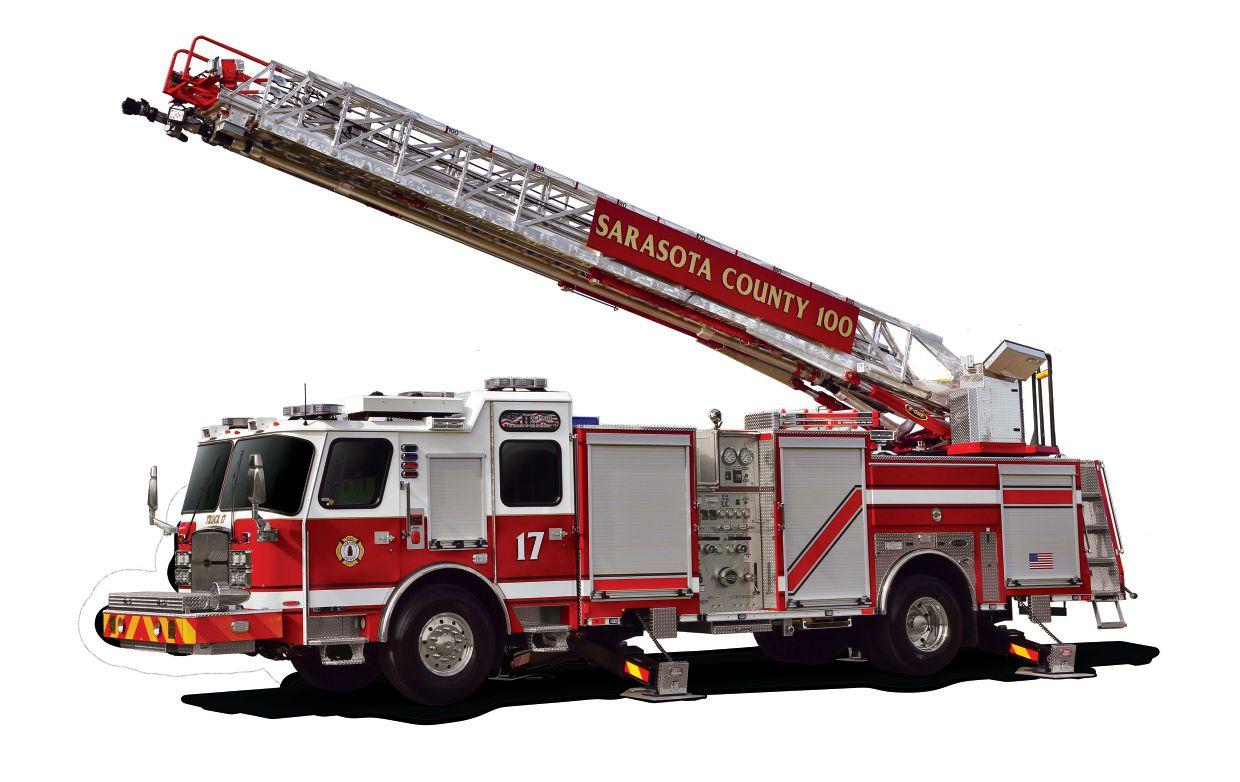
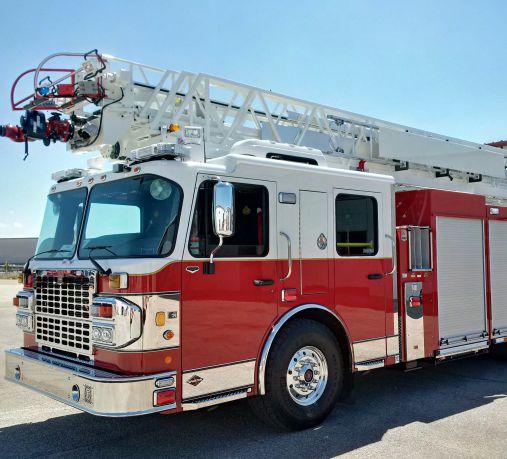
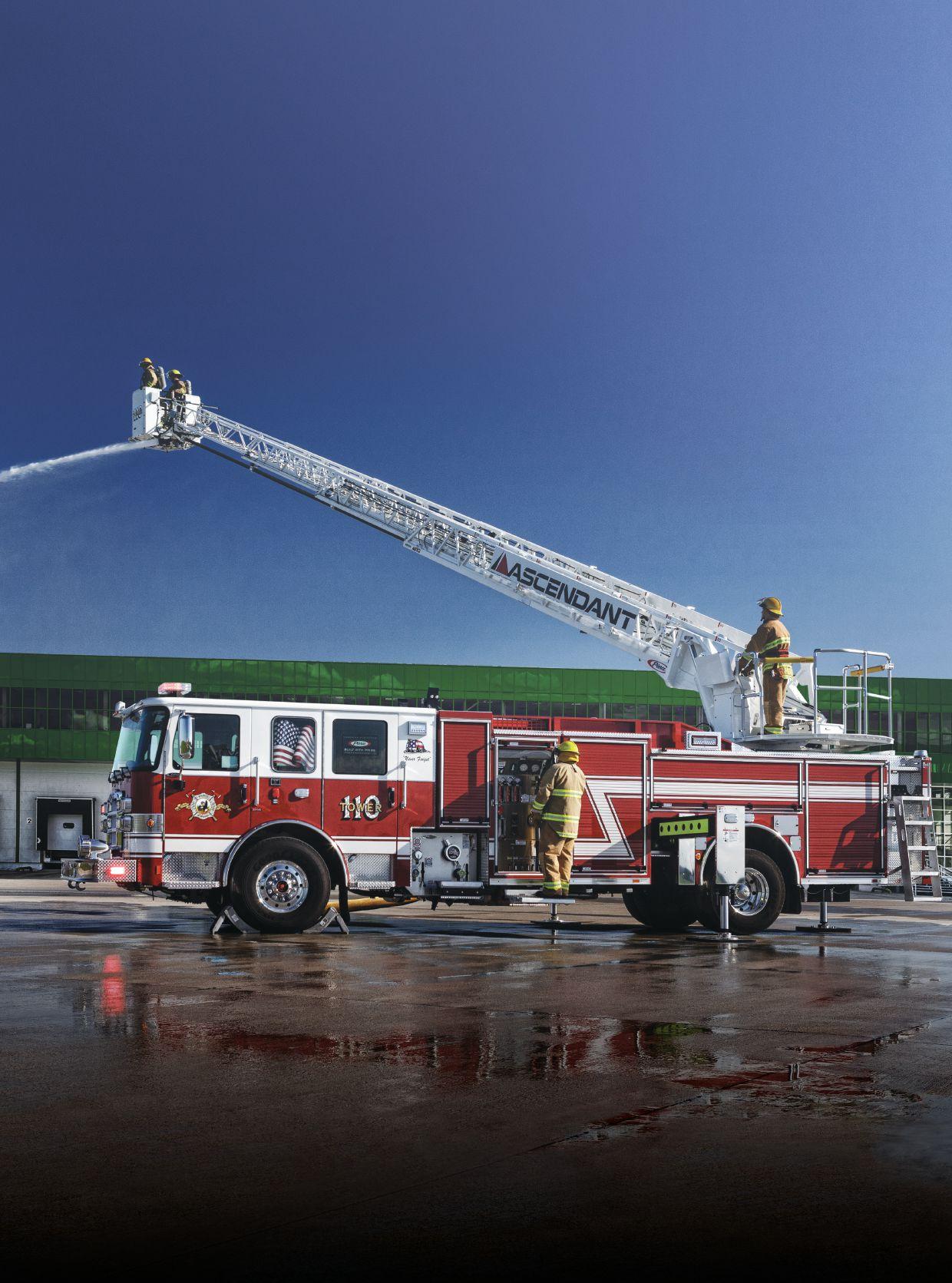
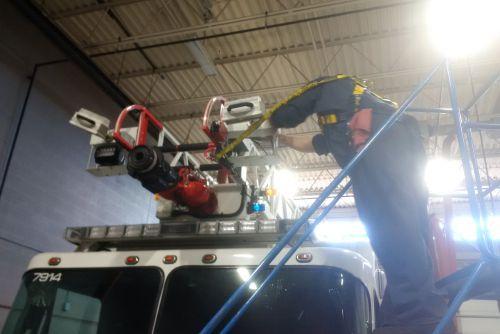
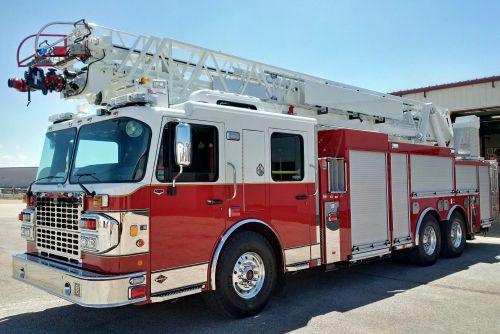
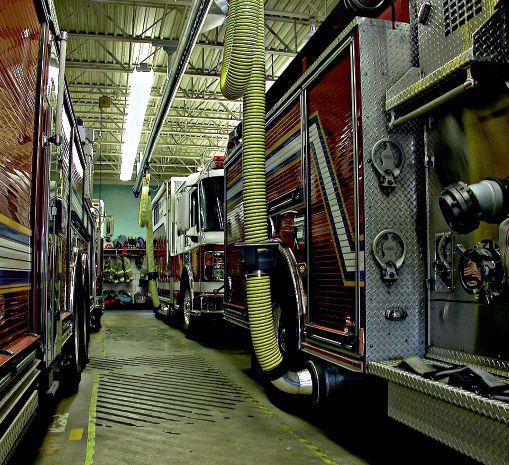
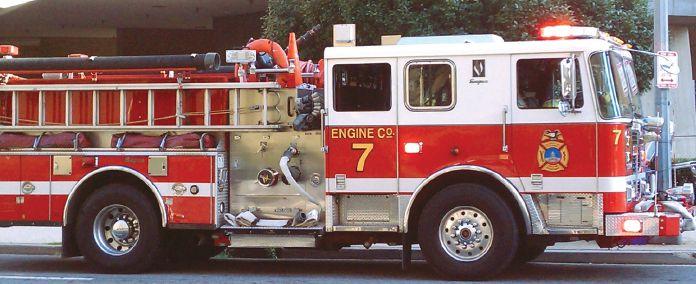
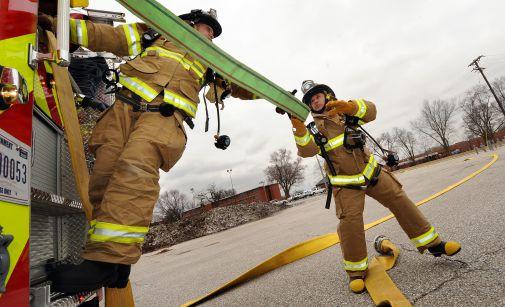
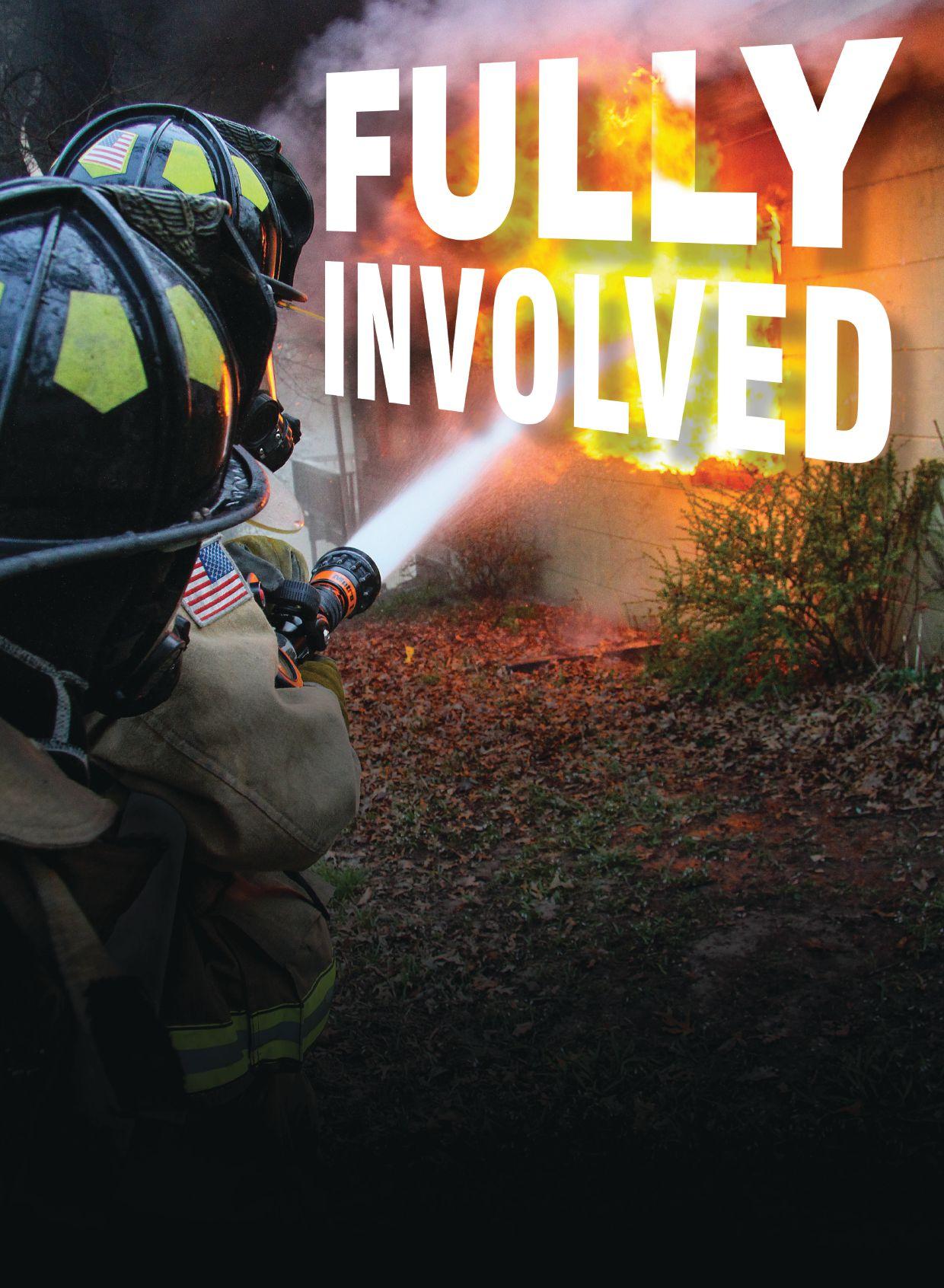
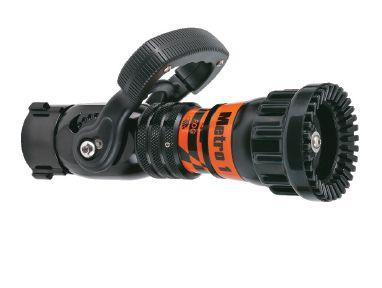
The Metro 100 Quint is a compact and maneuverable aerial perfect for tight streets and crowded environments. Available with the HM 100 or LTH 100 aerial ladder, the Metro 100 Quint features best-in-class stability, full-depth compartments, pump, tank and a SideStackerTM hosebed.
Explore every feature in full, at: e-one-aerials.com/metro-100-quint.pdf
Celebrating
Celebrating
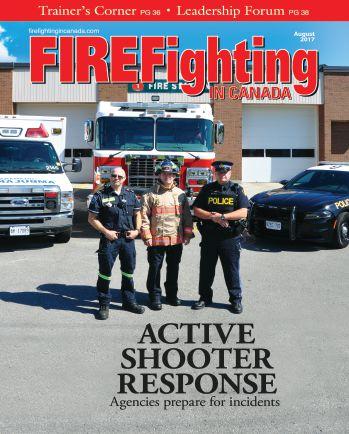
Firefighters, police and paramedics in Ontario’s York Region are working together to develop a protocol for responses to mass-casualty incidents so that viable patients can be rapidly removed from the scene. Editor Laura King spoke to emergency personnel in the region about the development of the incident-response policy and best practices.
RECRUITMENT AND RETENTION
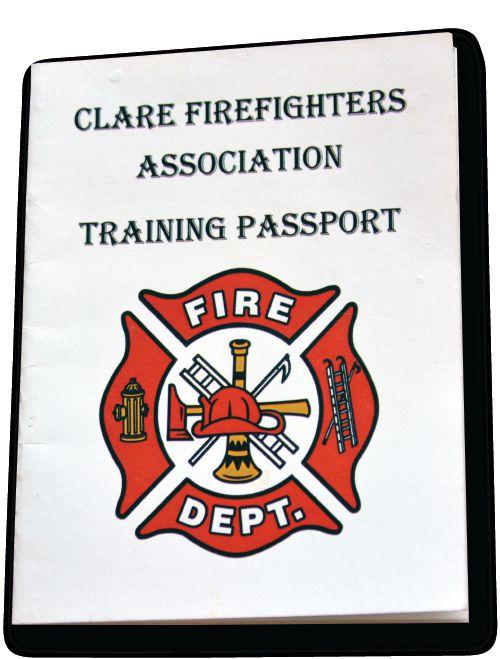
The Clare Firefighters Association in Nova Scotia has developed a passport to streamline volunteer firefighter training. Honorary Bluenoser and Battalion Chief Robert Krause explains how the program allows firefighters to train to their comfort-level.
BY LAURA KING Editor lking@annexweb.com
I
COMMENT
Necessary evil?
t strikes me that our cover story about fire departments preparing for active-shooter incidents and mass casualties is a pretty sad statement about society.
Essentially, training for active-shooter incidents is a response to the likes of the Columbine and Sandy Hook school shootings in the United States – and a couple of situations in which firefighters have been the targets of armed citizens.
Firefighters were not involved in the response to the 2014 shooting of Cpl. Nathan Cirillo at the National War Memorial in Ottawa, and the subsequent apprehension of Michael Zehaf-Bibeau in the Centre Block of Parliament Hill. Rather passersby and paramedics responded to Cirillo, while the RCMP, security and Sergeant-at-Arms Kevin Vickers handled the incident on the Hill.
Still, it’s better to be prepared.
agencies,” Dongworth said.
“We’ve seen a proliferation in North America — not so much in Canada — and in the world I guess, of these active-shooter events, which we call criminal mass-casualty incidents, and we are reacting to that.”
ESTABLISHED 1957 AUGUST 2017 VOL. 61 NO. 5
EDITOR LAURA KING lking@annexweb.com 289-259-8077
ASSISTANT EDITOR LAUREN SCOTT lscott@annexweb.com 416-510-5116
NATIONAL SALES MANAGER ADAM SZPAKOWSKI aszpakowski@annexweb.com 289-221-6605
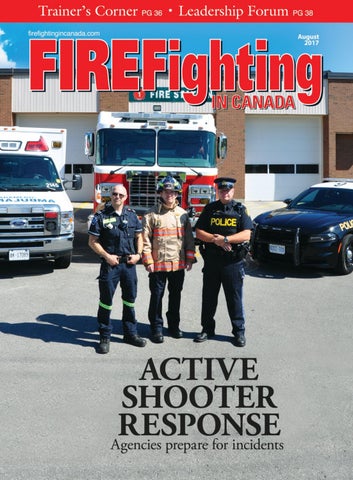
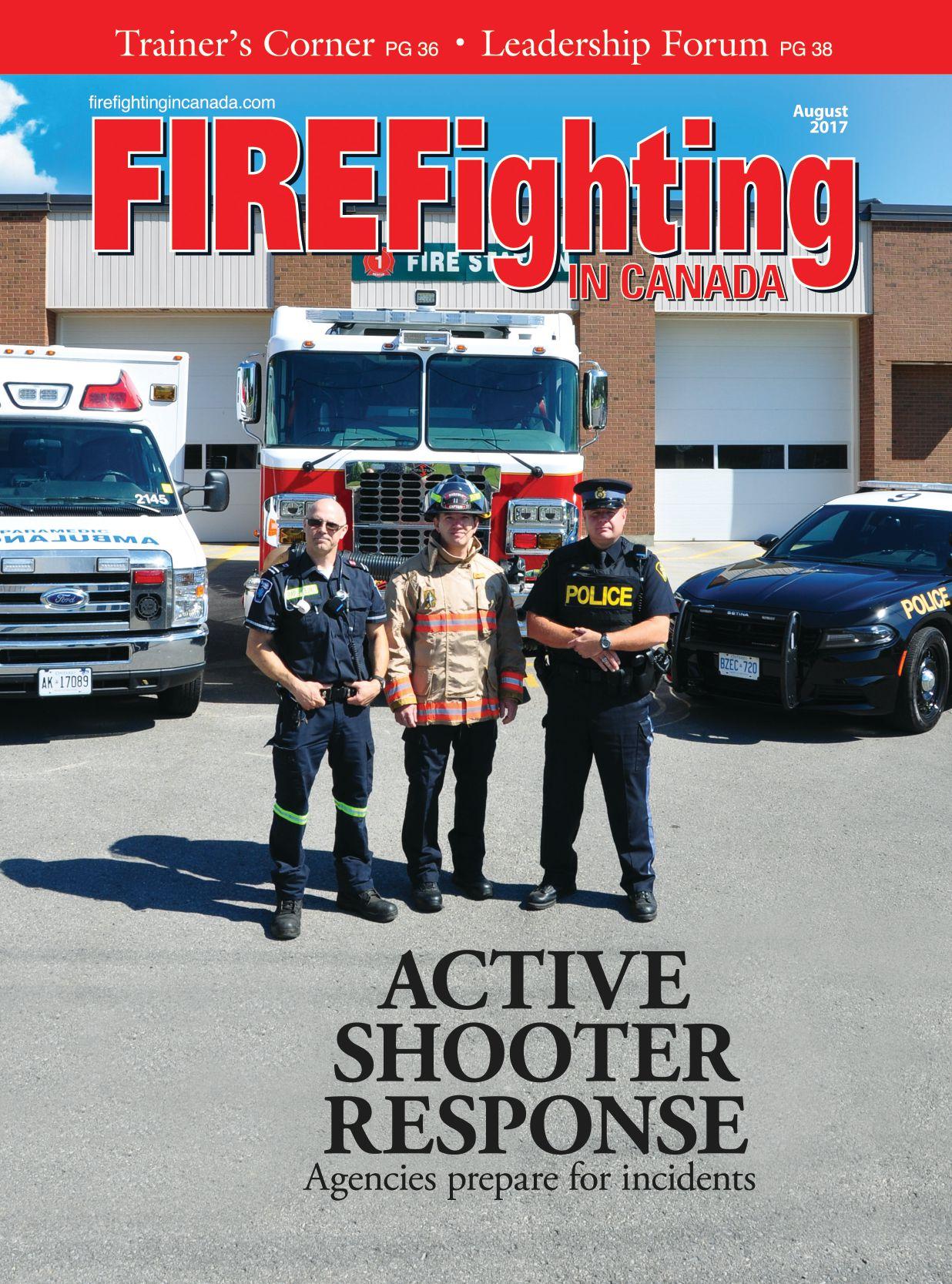
COVER Police, fire and paramedic services co-operate to develop a protocol for active-shooter response. See story page 10.
The Calgary Fire Department has ordered bullet-resistant body armour for firefighters who are called out to active-shooter incidents; and active-shooter scenarios are being discussed at chiefs conferences as departments look to implement best practices and develop SOGs.
Calgary Chief Steve Dongworth told Global News he preferred to be proactive and buy the equipment now rather than as a reaction to firefighter casualties after a response to a dangerous situation.
“As the environment changes, we have to evolve with that as well, and make sure that our people are protected to the same level as the members of the other
The purpose of the integrated-rescue concept in Ontario’s York Region – the focus of our story on page 10 – is to get to patients quicker. At Columbine, for example, some patients waited hours to be removed from the scene; the proposed York Region protocol would have police stabilize the threat, fire stabilize the scene, and paramedics stabilize the patient(s) – tasks already performed by each agency, but under unified command and a co-ordinated, practiced protocol. While responder safety is certainly a component of the integrated-response concept under development, it’s also critical that departments ensure members are mentally prepared to respond to this type of incident, and are aware of the possibility of losing one of their own. Indeed, psychological training for such an event may be as critical as the integrated-response training itself. Regardless, just as enhanced airport is a necessary evil post-9-11 – integrated-response training is the new normal, but still, to my mind, a sad one.
COO TED MARKLE tmarkle@annexweb.com
PRESIDENT & CEO MIKE FREDERICKS
PUBLICATION MAIL AGREEMENT #40065710 RETURN UNDELIVERABLE CANADIAN ADDRESSES TO CIRCULATION DEPT. P.O. Box 530, SIMCOE, ON N3Y 4N5 e-mail: subscribe@firefightingincanada.com
Printed in Canada ISSN 0015–2595
CIRCULATION
e-mail: lmalicdem@annexbizmedia.com
Tel: 416-510-5187
Fax: 416-510-6875
Mail: 80 Valleybrook Drive, Toronto, ON, M3B 2S9
SUBSCRIPTION RATES
Canada – 1 Year - $24.50 (with GST $25.73, with HST/QST $27.69) (GST - #867172652RT0001)
USA – 1 Year $42.95 USD
We acknowledge the [financial] support of the Government of Canada.
Occasionally, Fire Fighting in Canada will mail information on behalf of industry-related groups whose products and services we believe may be of interest to you. If you prefer not to receive this information, please contact our circulation department in any of the four ways listed above.
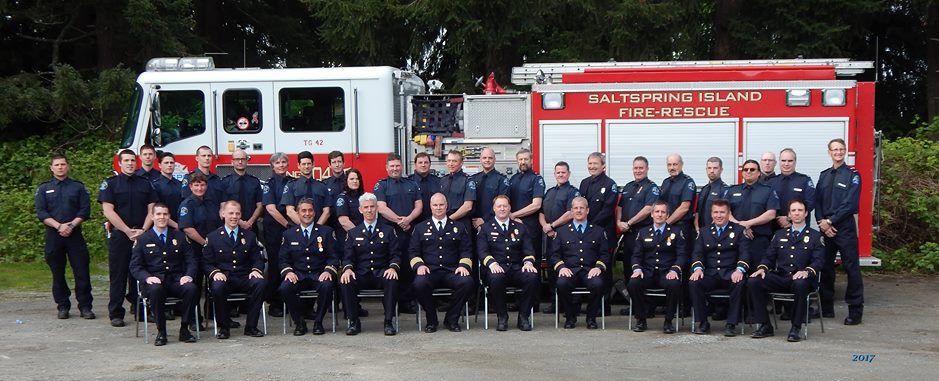
On the request of students at Gulf Islands Secondary School, members from Salt Spring Island Fire Rescue have been teaching grade nine students lifesaving first response skills since 2015. By next year, every student at GISS will know how to perform CPR and use an AED.
Celebrating Years60
Salt Spring Island Fire Rescue (SSIFR) in partnership with the Gulf Islands Secondary School (GISS) is making a real impact on students’ lives by embracing first-response skills. Three years ago, GISS students identified first-aid as a desired skill in their careers class. There has been tremendous progress since then. For the past three years, grade nine students at GISS have
been taught how to perform resuscitation on others. By 2018, SSIFR will have taught every GISS student CPR and how to use an AED.
To date, SSIFR has taught 375 students this life-saving skill.
“Learning CPR is a great stepping stone to any further medical-related endeavours, but mostly we emphasize the important of learning
THE BRASS POLE
Promotions & appointments
On June 16, the City of Kelowna, B.C., announced the promotion of TRAVIS WHITING as its new fire chief. Whiting served as deputy fire chief for the past two years, overseeing the Emergency Management and Fire Communications branch.
The Village of MerrickvilleWolford, Ont., announced the appointment of MARK URQUHART as part-time fire chief for the municipality, effective April 10. Urquhart brings 25 years of fire-service experience to the position and most recently served as deputy chief with the Merrickville Fire Department. Prior to his six years in
this life-saving skill due to the fact that statistically they are most likely to use these skills on someone they know” says paid-on call firefighter and instructor Chantelle Pohl. According to statistics from the Heart and Stroke Foundation there are more than 40,000 cardiac arrests per year in Canada.
“This partnership allows the students to acquire
lifesaving skills for their own future career as well as getting exposure to the career of first responders and building community relationships” says GISS history teacher David Collombin. This training has even helped some students find part-time employment because having certification on their resumes is an asset.
A recent viral video of highschool volleyball player in the United States collapsing from a cardiac arrest on the court drove home the importance of CPR training among teens. Those first few minutes after a cardiac event are the most critical. A program like this improves safety because more bystanders are trained in CPR/AED; this is essential to vastly improving survival rates.
“We hope that these skills are never needed, but if they are, this community is ready,” Collombin said.
– Fire Chief Arjuna George
Merrickville, Urquhart was a firefighter and lieutenant with the Leeds and 1000 Islands Fire Service for 19 years.
In early April JEFF AUCOIN was appointed fire chief for the Reserve Mines Volunteer Fire Department in Nova Scotia. Aucoin joined the fire department nine years ago at age 21.
PAUL SEE started in a new position as the fire chief for the City of Melfort in Saskatchewan on June 5. Prior to Melfort, See was chief of the Waskesiu Fire Department in Prince Albert National Park.
Retirements
After 36 years of service, Fire Chief TERRY MARTIN of Kootenay Boundary Regional Fire Rescue
Firefighter celebrates 56 years of service
At 75 years old, Selwyn, Ont., volunteer firefighter Norm Kyle is just like any other member of his department. He’s fit, committed to public service and has a passion for fire safety; but he also has a few years on his department colleagues. This year Kyle, the oldest of 86 volunteer firefighters, celebrates 56 years of service.
“He’s fit as a fiddle,” Selwyn Township Fire Chief Gord Jopling says of Kyle. “He doesn’t miss practices. The only time he ever misses calls or practices, he’s either gone hunting, fishing, or snowmobiling.”
Kyle began his career at 19 years old with the Ennismore Fire Department
(which amalgamated with surrounding towns to create Selwyn Township) in 1961 –the year it was founded. Kyle was at the hall the day the department got its first fire truck. His family helped to build the department, which was located across the street from their home.
Kyle, his father and four of his brothers have served at the volunteer department. His father was the chief and served into his 80s, retiring after 29 years. Kyle’s brother Bob spent 32 years on the force.
“I was at it from day 1,” Kyle said in an interview.
According to Jopling, Kyle has one of the fastest response times of anyone in
the department: he can be out of his door and in the fire hall within a few minutes, because he lives next door, with his wife of 52 years.
“My biggest move in life was right across the road,” Kyle said. “ Now I’m right beside the fire hall.”
Kyle says he never thought he would serve for 56 years, but he also wouldn’t have had it any other way. He has a passion for public service, which continued long after he retired from his 37-year career in local government.
“As long as I’ve got my health, and I’ve got good health, I probably will continue to serve for a while yet,” Kyle said. “I enjoy helping people, I’ve done that
NFPA introduces mobile application
The National Fire Protection Association (NFPA) has introduced a free mobile application for first responders to be used in the field. The app was launched June 15; it features NFPA fire service and first responder content, access to codes and standards, interactive tools, educational videos and NFPA news and events.
In the last year, the NFPA
in southern British Columbia, retired on April 29. Martin was 21 years old when he began as a volunteer in Rossland, B.C., in 1981. In 2004, he became deputy, then fire chief in 2010. Martin has taken a role as an on-call community coroner for the B.C. Coroners Service.
Melfort, Ont., Chief JOHN MCDONALD retired March 31 after
conducted focus groups in the United States to find out how first responders access and consume information. NFPA Canadian Regional Director Shayne Mintz said the app was developed to serve an increasingly mobile service.
“More and more, we are not behind out desks and we are in a very fluid and mobile, dynamic environment,” Mintz said in an
interview. “Having this material available for them on a tablet or in a mobile application on a cell phone . . . it’s about [providing] information to people on the devices they are familiar with using.”
Mintz said when he was a fire chief, he had to walk down the hall to a small department library that housed bookshelves filled with NFPA codes and standards;
Volunteer firefighter Norm Kyle has spent over five decades with the fire service in Selwyn, Ontario.
all my life. When you’re able to assist your family friends and neighbours, you’ve got to take a bit of enjoyment in that. That’s the payment as far as I’m concerned.”
– Lauren Scott
this made finding information difficult and time consuming, something that the app will remedy.
“The application was basically developed for getting first responders more information in a way that they can use it.”
The NFPA 1st Responder Connection App is available for Apple and Android devices.
– Lauren Scott
40 years of service. McDonald became chief driver in 1988. He became assistant chief in 1998 and chief in 2003; he was made fulltime chief in 2008.
Last Alarm
Former Victoria Fire Chief DOUG ANGROVE died of brain cancer on May 12. Angrove worked in the fire service for nearly 35 years, serving as the
chief in Victoria between 2006 and 2011. Angrove’s name will be engraved in a memorial for firefighters who died in the line of duty.
After almost a month-long search, the body of Cache Creek, B.C., Fire Chief CLAYTON CASSIDY was discovered by firefighters from the Ashcroft Fire Department on
May 27. Cassidy disappeared on May 5, after checking water levels after heavy rain. Cassidy was with the Cache Creek Volunteer Fire Department for three decades. He received the Medal of Good Citizenship in 2016 for helping residents after severe flooding in 2015. About 1,500 people, including more than 400 firefighters, attended a memorial service honoring Cassidy on June 3.
STATIONtoSTATION
BRIGADE NEWS: From departments across Canada
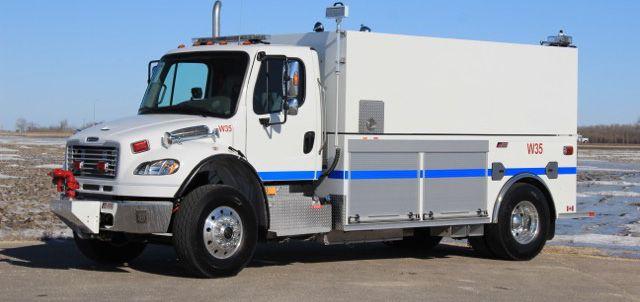
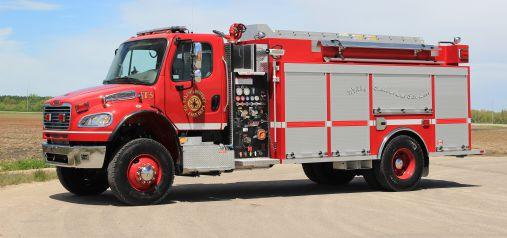
The Gliechen Fire Department in southeastern Alberta took delivery of a Fort Garry Fire Trucks-built Crusader Tanker in early April. The tanker is a 2017 M2-106 Freightliner model made with 5052 marine-grade aluminum. It has a regular two-door cab and runs on a 350-hp Cummins ISL engine. The truck comes complete with a Hale Sidekick pump, which has a 2,000-imperial-gallon Copoly Tank, and an Allison 3000 EVS transmission.
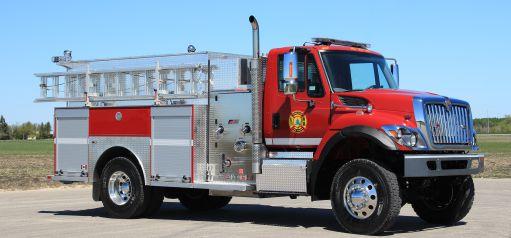
The Conne River Fire Department in Newfoundland received a delivery of a new Fort Garry-built pumper on May 28. The red vehicle is constructed on an International 7400 chassis with a Cummins ISL 9 300-hp engine and Allison 3000 EVS transmission. It has side-control MXV pump panels, which control a 1,000-imperial-gallon Darley PSP1250 pump made of Pro-Poly.
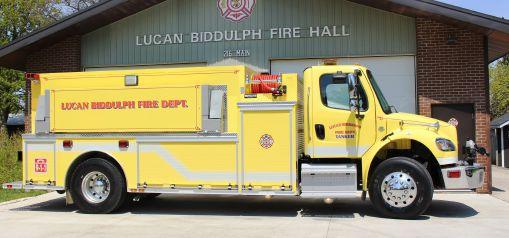
The fire department in Lucan Biddulph, Ont., recently purchased a Melfab pumper built on a two-door Freightliner chassis. The truck has an extruded aluminum body construction and a Hale PTO pump with an 1,800-gallon water tank. It is finished with a rear swivel dump, dual hose reels complete with 60 metres of hose each, a TFT Tornado monitor with controls in the cab, a Zico hydraulic portable tank rack and a Federal Signal warning-light package.
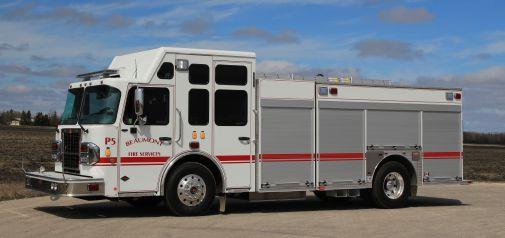
The Beaumont Fire Department in the Edmonton Capital Region was delivered a new Spartan Metro-Star pumper on May 3. The white truck, built by Fort Garry Fire Trucks, has a 380-hp Cummins ISL9 engine and Allison EVS 3000 transmission. It has side control panels and a 600-imperial-gallon Hale DSD 1250 pump made of Pro-Poly. Its custom features include: a power ladder rack, power hosebed covers, and a Setcom six-person headset system.
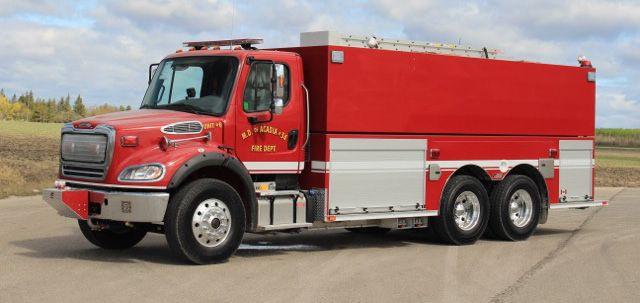
The Acadia Valley Fire Department in southeastern Alberta added a new tanker to its fleet on May 10. The department took delivery of a Crusader Tanker on a Freightliner M2 chassis from Fort Garry Fire Trucks. The truck has a 450-hp Cummins ISL engine and Allison 3000 EVS transmission. The Pro-Poly Hale Sidekick 750 pump has side control panels and a capacity of 3,000 imperial gallons.
Comox Fire Rescue on Vancouver Island received a black and white pumper from Fort Garry Fire Trucks on June 11. The truck is constructed on a Freightliner M2 106 chassis and has an emergency rescue body. It runs on a 350-hp Cummins L9 engine and an Allison 3000 EVS transmission. The 2,000-imperial-gallon Hale QMAX pump, made of 5083 saltwater marine-grade aluminum, is controlled by side-control panels.
ACADIA VALLEY FIRE DEPARTMENT
GLIECHEN FIRE DEPARTMENT
LUCAN BIDDULPH FIRE DEPARTMENT
BEAUMONT FIRE DEPARTMENT
CONNE RIVER FIRE DEPARTMENT
NAKUSP VOLUNTEER FIRE DEPARTMENT
RC Monitors for Safe and Rapid Operation Anywhere on the Fire Ground
BETTER STREAM REACH
Unique design offers the industry’s lowest friction loss and best stream quality when matched with a xed, selectable or adjustable automatic nozzle.
EASY CONTROLS
24/7 SUPPORT
The only manufacturer to offer 5 year warranties and live 24/7 customer support.
Easy to install (only 4 wires) with remote, tethered and panel controls for maximum re scene visibility and control.
RAPID ATTACK
450 degrees of horizontal travel for rapid response to ever changing re scene demands.
Active shooter response
Tri-service agencies prepare for mass-casualty incidents
By LAURA KING
Police, fire and paramedic services in Ontario’s York Region are implementing new protocols to enable a faster response to patients injured in mass-casualty incidents.
The integrated-rescue ideology stems from school shootings in the United States, after which some viable victims waited hours to be transported from the scene and receive treatment.
“We identified some opportunities that would better incorporate our fire service in triaging and evacuating those people who might be victims,” said Sgt. Douglas Ritchie, a member of the York Regional Police emergency management team. “Whether that’s an active shooter or another technical disaster.”
“Building from that, we had conversations with East Gwillimbury Fire Chief Phil Dawson, and said hey, how can we consider using our fire resources differently; you may not always be putting fires out so how can
we use you?”
To develop best practices, policies and protocols for an integrated-rescue system, senior representatives of the three services participated in an exercise last fall to test unified command and the effectiveness of the proposal.
The mass-casualty scenario involved a person with a weapon on a bus – a former employee of the transportation service. The bus crashed and injured other drivers and passengers.
“Because this person wouldn’t get off the bus, we had to contain the bus, which is what our police officers did,” Ritchie said, “and we later apprehended him.
During that time, we used integrated-response team members to go in and extract some of the victims.”
East Gwillimbury Deputy Chief Ryan Jagoe said none of the tri services that participated in the exercise did anything outside the scope of regular duties, rather the response was simply better managed to ensure the best possible patient and first responder outcomes.
“As this team migrates into a scene, the function is to deal with the patient,” Jagoe said. “This isn’t anything outside what the fire service or paramedics do every day, this is bringing it together in a co-ordinated, unified way, so it doesn’t matter how big or how small [the incident] is, this team can operate efficiently and effectively.”
Over time, all police, fire and paramedic personnel in York Region will be trained to respond to mass-casualty incidents using unified command. Although the term integrated-response team has been tossed around, leaders of all three services agree it’s more of an ideology or concept than a team; anyone on shift at any time will be trained to participate in such an incident.
“It’s an across-the-board approach to deliver the service,” said Tate Mitchell, superintendent for York Regional Paramedic Services, “regardless of who’s on duty. We have to be able to consistently deliver the product.”
While York Region’s 1.9 million residents are protected by single police and paramedic services, there are nine fire departments in the area north of Toronto. The region was created in 1971 when 14 municipalities amalgamated into nine new areas; Aurora, East Gwillimbury, Georgina, King City, Lake Simcoe, Markham, Newmarket, Richmond Hill, Schomberg, Unionville Vaughan, and Whitchurch-Stoufville,.
“Our next steps are to bring all our partners to the table to discuss how this is going to look moving forward,” Mitchell said. “The idea is there, the concept is there, the framework is there – we just need to put ourselves together, align what looks like the best practices, and then roll that out to our respective services.”
Police training in York Region includes mass-casualty response; in 2014, that led to a discussion about how to better prepare for and react to such incidents, Mitchell said.
“So whether that was applied to an inci-
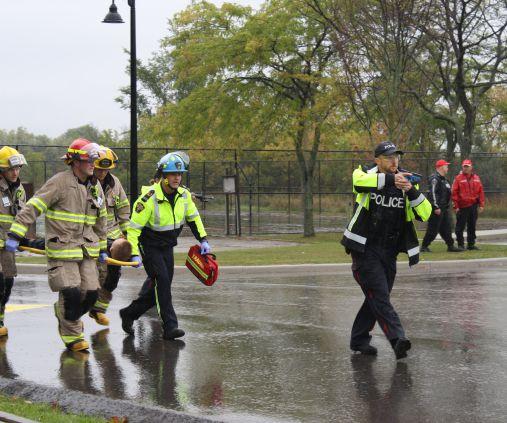
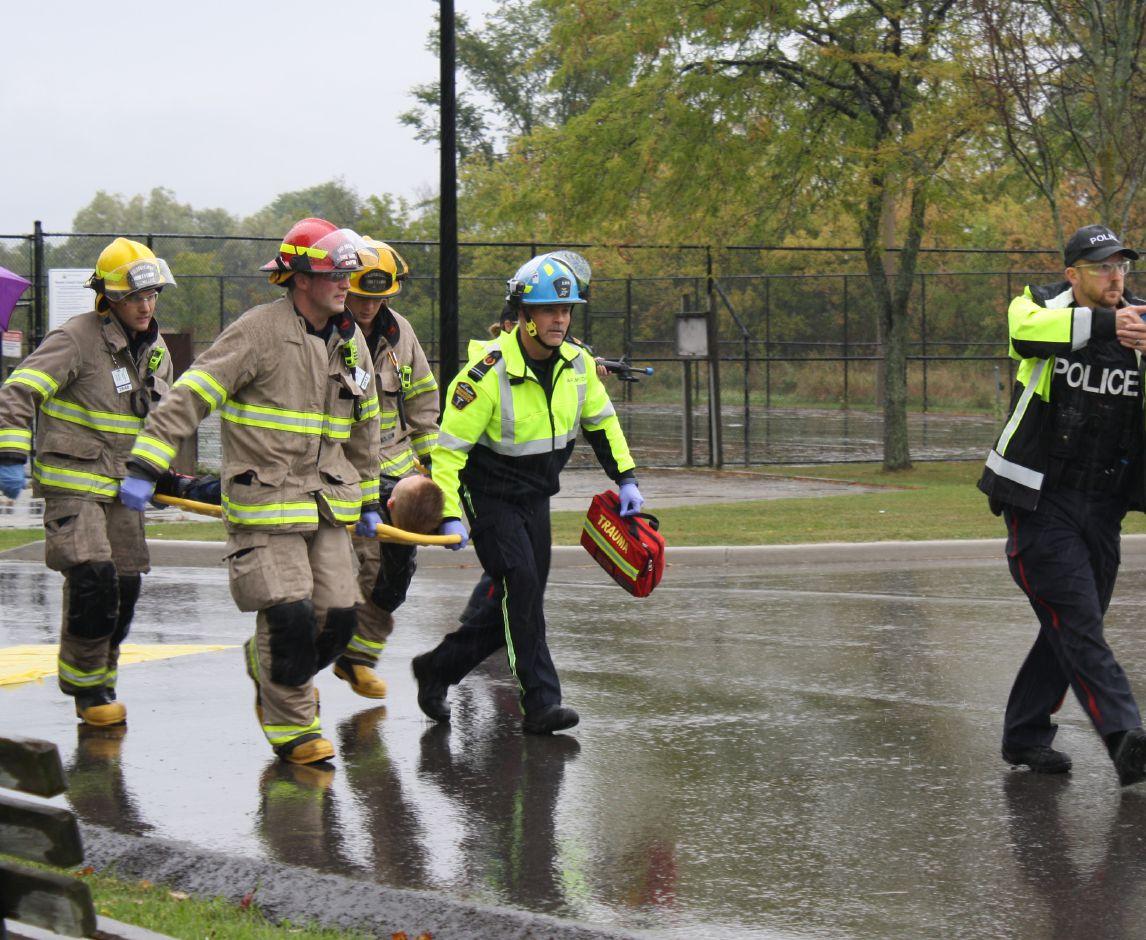
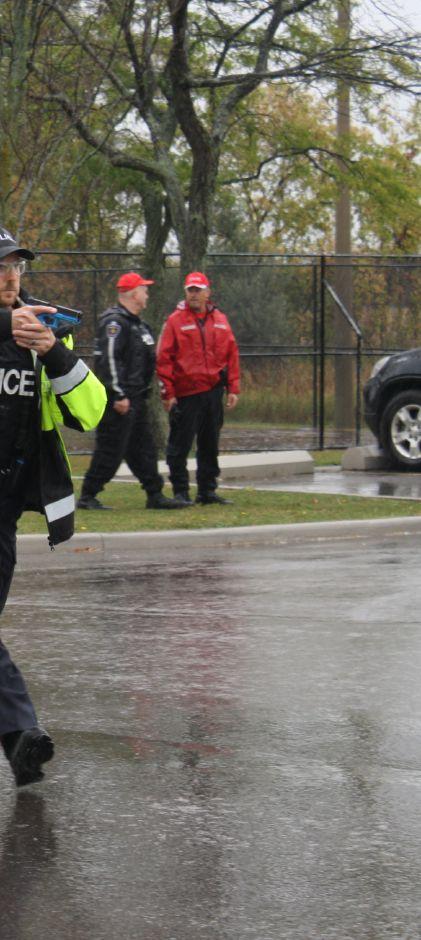
LEFT Police, fire and paramedic services in Ontario’s York Region staged an exercise to help develop protocols for integrated rescue.
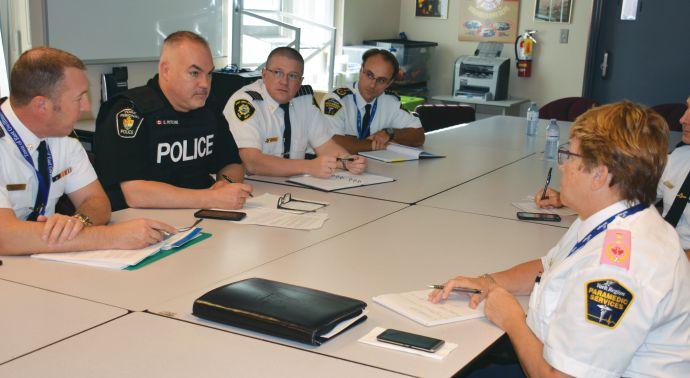
ABOVE The three services are working to ensure all members receive training and understand each other’s roles.
PHOTOS BY LAURA KING
dent that occurred at a school or a shopping mall . . . traditionally, we would operate, if there was a major incident – let’s say it was a police-related scene – police would take control of that scene, and once that scene was determined to be safe and secure, then we would let everyone else in – EMS and fire.
“Prior to that, they stayed on the outside. So what we’re able to do now is create an area within that scene that is relatively safe and secure – then these teams could come in to these scenes and be able to triage these people and bring them back out.
“We can’t really rely on our best assets –our tactical resources, whether that’s police, EMS or fire; we have to utilize what we have available right there, and if we’re able to create a team that’s able to be deployed under the direction of a unified command to go in, then we will be able to save these people instead of leaving them there to bleed out. The holy grail of trauma outcomes is eliminating preventable death; that’s what we’re trying to do.”
The integrated response concept was white-boarded first, then tested. “We tried out the concept in a garage to see if it would work,” Sgt. Ritchie said, “and then we put it into a live exercise.”
East Gwillimbury Chief Dawson says the on-scene process is simply an extension of regular duties.
“From a fire-management point of view, what I like about it is the elegant simplicity of it; the cops still look after the bad guys, and stabilize the bad guys; fire still does what they always do – just stabilize the scene, whether it’s extrication or fire control. And the paramedics do what they do best, which is stabilization and patient care.”
What’s different? Unified command, and a set of to-be-developed protocols and practices to ensure a seamless flow on scene.
“That’s the beautiful thing,” said Dawson, “we’re just bringing these teams together. I’ll speak for myself – this is a first it’s breaking down those services and operations.”
Critical to the operation, said Mitchell, is communication.
“You don’t want the various emergency service providers to be operating in silos,” he said. “You need to have communication going into these things; we need to have an understanding of each other’s roles; we need to have the established protocols that we’re trained to and tested to, so when you’ve got the front-line officer, paramedic, firefighter on scene, they understand each other’s
services and are able to work together to provide the best possible service in the most timely fashion that is going to save lives. You don’t want to be figuring it out for the first time when you arrive on a critical scene and you don’t know the person standing next to you; you need to know what they’re capable of, and then you rely on your protocol.”
Usually, a threat to responders means fire and paramedic services would stage away from the hot zone, and leave patients waiting for transport and medical care.
“So that sets the scene for this concept to move forward,” Mitchell said. “If we believe that we’ve isolated the threat that exists to responders, and it’s reasonable for responders to quickly grab the victims and treat whatever needs to be treated, then extricate them from the scene – that’s what we’re trying to get at.
“Traditionally, if there’s an event it can take hours and hours to secure a scene and by that time it’s all but over. We’re not going to get there in two minutes but we’re certainly going to get there much sooner than traditionally would have been the case. With this approach, the tri-service are going to come together and those three commanding officers on site, and in the best interests of staff safety and public safety, are going to decide yay or nay, are we going in our are we not; and once the risk has been assessed and it’s determined that the risk is reasonable, we will go in and extricate the people.”
Essentially, there needs to be a change in the way responses to mass-casualty incidents are handled so patients are reached quickly.
“With Columbine, and Sandy Hook, why did it take three, four hours, to get to viable patients? The fire service generally has been stand by and stages a couple of blocks back,” said Chief Dawson. “We’re critical thinkers, so is that really effective in today’s world? Is that ever effective? We’ve got firefighters who are trained but [due to being staged] have no idea what’s going on.
“To me that’s the paradigm shift: we want to stress that everyone is operating in their respective zones – cops stabilize the bad guy, fire stabilizes the scene, paramedics stabilize the patient. So we’re not putting firefighters or paramedics in the hot zone with the bad guy. It’s elegant simplicity. But it is a paradigm shift . . . that it’s no longer acceptable to stand back. The public expects a level of service, they expect their emergency services – all three of the partners – to deal with this.”
BY BLAINE WIGGINS AND JEREMY PARKIN
GUESTCOLUMN
Progress with Ottawa but challenges persist
In early May, Indigenous and Northern Affairs Minister Carolyn Bennett announced an agreement in principle for the formation of an Indigenous federal fire marshal’s office, based on a report submitted by the Aboriginal Firefighters Association of Canada (AFAC).
AFAC officials have been asked why we worked tirelessly to reach this objective, and how the office will help First Nations communities. Simple questions can be addressed with simple answers. But fire prevention and protection in First Nations communities is a complex issue, and understanding the myriad nuances requires the willingness to learn all the relevant factors.
Charles Dickens captured portions of the answer in his famous quote from A Tale of Two Cities: “It was the best of times, it was the worst of times …” As the AFAC and our national fire partners have made steps to improve Indigenous fire services, we are realizing how far we still have to go. The two cities analogy is also applicable when comparing levels of fire service between Indigenous and non-Indigenous communities. Indigenous and Northern Affairs uses the term “comparable service” as a benchmark to identify service levels and measure gaps.
For example, territorial fire marshals have the responsibility to support service delivery to all communities – Indigenous and non-Indigenous – but provincial fire marshals and commissioners have no obligation to provide services to Indigenous communities. Fire marshals and fire commissioners indicated to the AFAC that they readily provide ad hoc support to Indigenous communities, but without the adequate resources and associated authorities, this support does not help to create or support comparable fire services.
and national co-ordination of Indigenous fire and emergency services. These priorities were adopted by Indigenous and Northern Affairs (INAC) to form the joint AFAC-INAC national fire protection strategy. While the Indigenous federal fire marshal’s office fits well into the fourth pillar, it supports other key elements including fire prevention, standards for smoke alarms, national incident data reporting, and enhancing INAC policy for level-of-service standards.
The implementation of a national Indigenous Fire Protection Act will provide key support to the office. AFAC has committed to working with Indigenous political leaders to improve understanding, seek input, and garner support for this initiative. Unlike the provinces, there is no requirement on reserves to meet building or fire safety codes. As we move to comparable levels of service, we recognize that there is a range of department types: from small, rural, Indigenous fire departments that struggle with budgets and volunteer levels; to urban, paid departments in First Nations communities that have sustainable local economies and support robust fire services.
The next phase is to work with Ottawa to design programs to be delivered through the Indigenous fire marshal’s office that will fill
The . . . role of the office is to be a stable . . . resource to support the evolution and enhanced capacity for Indigenous communities. ‘‘ ’’
AFAC conducted research over the last year with the Canadian Council of Fire Marshals and Fire Commissioners, the Canadian Association of Fire Chiefs, and the National Fire Prevention Association. In-person interviews were conducted with fire marshals and commissioners from each province and territory to develop a report that would help define programs and services for an Indigenous fire marshal’s office.
This initiative is one component of four strategic pillars defined by the AFAC: fire prevention, legislative standards, fire-service standards
Blaine Wiggins is the president of the Aboriginal Firefighters Association of Canada. Contact him at bwiggins48@gmail.com Jeremy Parkin is a deputy chief with Rama Fire Rescue Service in Ontario. Contact him at jeremyp@bell.blackberry.net
gaps, such as national training and equipment standards, minimum levels of fire prevention services, standards for fire inspections, and new construction codes.
The most critical role of the office will be to provide stable, ongoing resource to support the evolution and enhanced capacity for Indigenous communities. Currently, regional First Nations emergency service organizations are funded year to year. This means that programs and services (including funding levels) can be influenced by each Indigenous and Northern Affairs region, creating inequities and the inability to build on long-term initiatives.
As Dickens’ famous quote goes on to say, “we had everything before us, we had nothing before us.” This mirrors the situation of fire services in Indigenous communities. However, reaching comparable service levels will make it the best of times.
RECRUITMENT and RETENTION
By ROBERT KRAUSE
Editor’s note: Bob Krause, a battalion chief in Toledo, Ohio, has become a bit of a Bluenoser, having taught workshops at FDIC Atlantic and instructing on weekends in various parts of the Maritimes. A longtime career firefighter and officer, Krause learned a little bit about himself in Clare, N.S., recently, about the Canadian volunteer fire service, its dedicated men and women and the professionalism they exhibit on the job and in their communities.
Ihad the privilege of training with members of the Clare Firefighters Association in Nova Scotia in April. The attendees to the conference came from many departments in the region; some traveled more than three hours to get to Clare. The weekend of training focused on firefighting techniques, leadership development and firefighter safety. The attendees numbered almost 300.
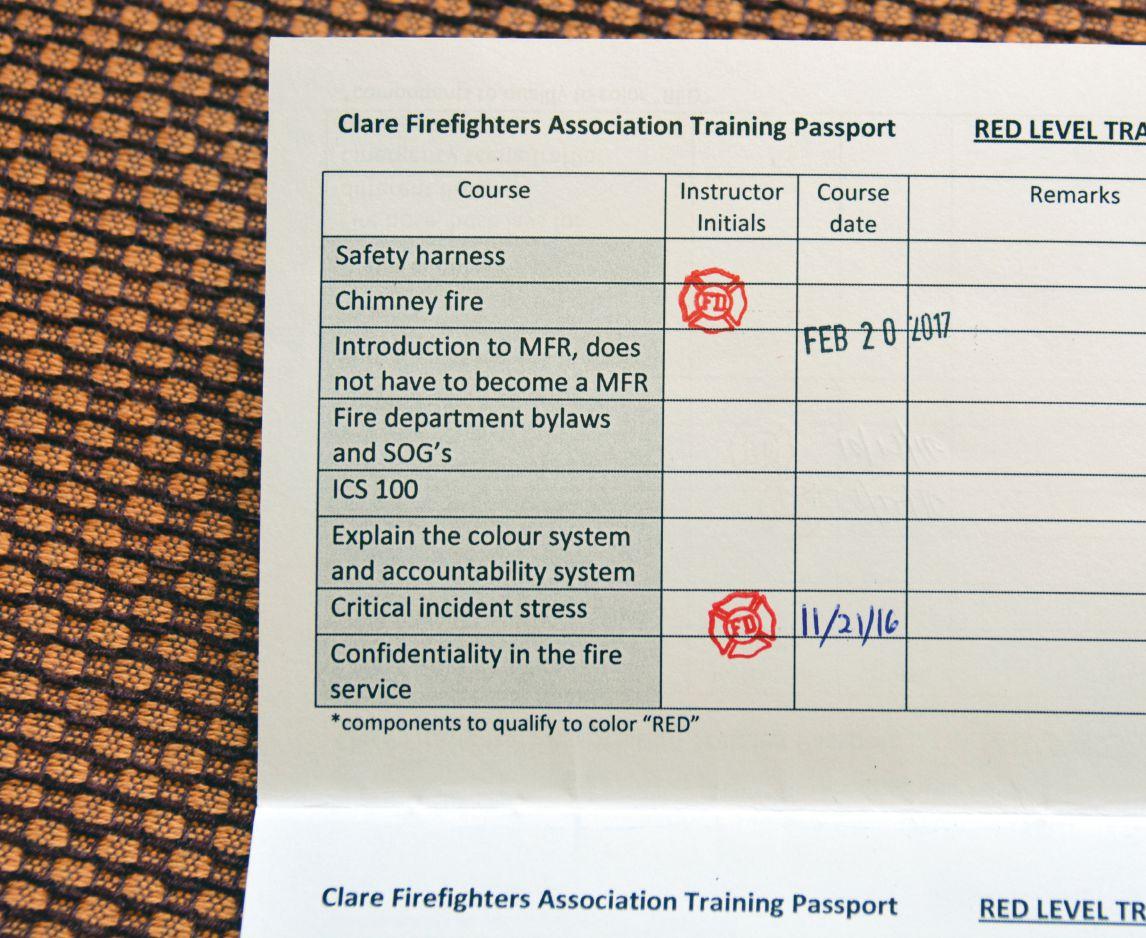
Members of the planning committee for the training conference introduced me to a training system they developed called the Clare Firefighters Association Training Passport. The committee, developed the idea of a training passport after a number of incidents were identified that could have been run more smoothly. Modeled in appearance after a traditional travel passport, the training committee was guided by the National Fire Protection Association (NFPA) training standards.
The Clare Firefighters Association in Nova Scotia has developed a system to ensure its firefighters are trained to the level to which they want to participate in fire-ground activities. The program also includes an officer training component.
The members of the committee worked for several hours and exchanged hundreds of emails to pull together a program of training to meet the needs of their region. They identified three levels of training that they felt would aid small volunteer departments attract and retain members, by allowing motivated individuals to participate in fire-ground activities based upon training they wanted to receive. With the safety and welfare of each individual volunteer at the forefront of the development process, three levels of training were established.
The red-level training focused on skills that would allow an individual to join the fire department and participate in activities
outside the hot zone of a fire, such as firstaid, equipment stockpiling, rehab sector activities, and clean-up after a fire. The red-level significantly restricts members’ exposure to the dangers of structural firefighting, while permitting them to be very supportive to interior crews.
The yellow-level training concentrates on more warm-zone activities; members are allowed to assist with exterior ventilation, establishing water supplies, scene lighting, forcible entry and exterior fire fighting. Those individuals who were interested in firefighting would be educated and trained on more than 17 topic areas, all according to NFPA guidelines. This expands the effective firefighting force by including people who want to become a part of their local fire departments but may not wish to actively participate in interior fire suppression activities.
The highest level – green – includes all elements of both red and yellow-level training, but builds on those foundations by including a number of complex training components such as interior fire attack, breathing apparatus, search and rescue, and hazmat skills. As a member’s training levels expand, color designation tags on their helmets easily identify them to the incident commander and assists in assigning appropriate fire-ground tasks.
The passport training committee went so far as to develop and include officer training into the program. In addition to leadership, officer training includes basic cause-and-origin determination, fire-protection systems, public-education and ICS-200. No one can argue against officer training, since a highly-skilled officer is better able to resolve fire-ground problems.
I was struck by the committee’s desire to develop a training program that would encourage individuals to join their departments and provide a level of training commensurate with the desires of the new members, based upon how extensively they wanted to participate. Volunteer
CLARE FIREFIGHTERS ASSOCIATION MEMBER DEPARTMENTS
• Salmon
•
•
•
departments across North America are struggling to recruit and maintain volunteers. Training programs are often lacking and provide little excitement or incentive to remain a member of their community’s fire department. I strongly believe the Clare Firefighters Association has developed a solution to that problem.
What I found most impressive about the work of the Clare Firefighters Association is their laser focus on safety and training, and their work to include as many people as possible. There are individuals who do not wish to spend many hours training to be an interior firefighter but would jump at the opportunity to participate on the fire ground in water shuttle set-up, conduct rehab operations, or assist with the advancement of hoselines for the interior suppression crews. This training passport program may well just be the ticket to increase memberships.
Please don’t think that the Clare Association has or is willing to cut corners, or allow lesser-trained firefighters to do things for which they have not received documented training. Training records are maintained by the association and stamps are recorded within each member’s individual passport. Training records can be crosschecked to ensure a member has indeed received training, is proficient in a skill, and
has been signed off by the instructor.
The true commitment to safety for firefighters and their families is also evident in this passport program. Any injury to a firefighter has wide-ranging effects. Families can suffer from an injury to their loved one, communities lose a responder, and employers lose a skilled worker. The use of this passport training program allows fire-department members to actively anticipate in a meaningful and supportive way on the fire ground. Officers can easily identify members’ training levels by the colour designation on their helmets, and assign them tasks in keeping with their skills. Not every member can be on the nozzle engaged in direct battle with the dragon inside a structure fire. Fire fighting is a team activity, always has been. This new training system and program of inclusion may very well be a real step forward in addressing the recruitment and retention of skilled volunteer firefighters in your community and across Canada.
I encourage anyone who may be interested in learning more about this passport training program to contact Daniel Gaudt of the Clare Firefighters Association at danielwg@eastlink.ca
Bob Krause is a battalion chief with the Toledo Fire Department in Ohio. Contact him at
BY ELIAS MARKOU
Strategies to boost healthy habits
Iam about to embark on a sensitive topic: obesity and weight loss. Quite often firefighters ask about their weight concerns, and express a desire to lose weight. However, there are firefighters who are in complete denial about their weight. In my opinion, they are walking the fine line between life and death.
Let’s face it, obesity is the elephant in the fire hall.
According to the International Association of Fire Fighters, heart attacks are the biggest killer of firefighters over the age of 40. The nature of the job puts firefighters at a greater risk of heart disease, and obesity increases the heart attack risk. Luckily, firefighters can make small lifestyle changes that can address weight issues.
A 2012 study in the Journal of Obesity determined that obesity is linked to an increased risk of cardiovascular disease mortality. The United States-based study said that in the group of 116 firefighters with an average age of 43, obesity was found in 51.7 per cent of the participants, while one-third of the general population is obese. The authors of the study said that improved cardiovascular disease risk identification among firefighters has important implications for both individual health and public safety.
Firefighters are in the business of safety and prevention and obesity is a preventable disease. Firefighters can protect themselves from type 2 diabetes, heart disease, high blood pressure, fatty liver, osteoarthritis, stroke and even cancer. Some of these diseases are difficult to manage; the scary part is that most of them can be fatal.
Energy imbalances involving poor food choices and lack of activity are the main cause of excess weight and obesity. This is where choice comes in; firefighters may choose to eat empty sugar calories or nourishing calories that will keep you feeling full and sustained.
One hundred calories of milk chocolate is much different then 100 calories of an organic medium-sized apple. Both are sweet, but the effects of one can be sour. Calories are not created equally. A June 2012 study in the Journal of the American Medical Association looked at participants who lost weight following a calorie-counted diet. Each group ate 2,000 calories per day; one group ate predominantly pasta and high-carb foods while the other test group stuck to a low-carb, low-glycemic index diet, which meant eating mostly vegetables and lean proteins. The results were predictable: participants in the healthy eating test group experienced between 4.5 and 18 kilograms (10 to 40 pounds) of weight loss.
Don’t get into the cycle of starvation. You still need to eat food during your weight loss process. Some will need to measure out food for the first few weeks until you get the hang of ideal portion sizes. You should have three to four small meals per day. Each meal should be small enough to fit into an average-sized cereal bowl, about 45 grams with about 400 calories per serving. Start off with small changes in your diet and lifestyle; small changes will be much more sustainable in the long run. For example, swap your slice of white
Firefighters are in the business of safety and prevention and obesity is a preventable disease. ‘‘ ’’
When the number of calories eaten is equal to the number of calories the body burns, weight will remain the same. If firefighters burn calories at a faster rate than they consume, then they will lose weight. However, when firefighters eat and drink more calories than they burn, they will gain weight and perhaps push the scales over to obesity.
Here are some fundamental dietary principles firefighters should consider when beginning a weight-loss journey.
Dr. Elias Markou is a naturopathic doctor in Mississauga, Ont. He is the chief medical officer for the Halton Hills Fire Department. Markou was a firefighter for six years; he is a firefighter health expert and blogger. Contact him at drmarkou@mypurebalance.ca
bread with slices of a beefsteak tomatoes drizzled with cold pressed olive oil and Himalayan salt. Don’t think of it as cutting stuff out of your diet, but substituting good food in.
Natural whole foods should always be your go-to. Use simple basic ingredients with no additives or preservatives. You should also try to ensure that all of your vegetables, fruit and meat are farm-totable.
Drinking water throughout the day, especially between meals, increases the feeling of fullness, resulting in eating smaller meals. Sometimes we confuse hunger with being thirsty. By drinking more water, you will find it easier to avoid idle snacking in the fire hall.
Your health is important and, for many of you, being a firefighter is your dream job. Why would you jeopardize all this for sugar? Make yourself the priority and shift your mind toward a healthier lifestyle.
BY SHAYNE MINTZ Canadian regional director, NFPA
IA shocking lack of awareness
n the heat of summer, many people are out enjoying time on the water and around marinas. This brings to mind the fact that I was asked to speak at a recent conference about NFPA 303 –Fire Protection Standard for Marinas and Boatyards. It wasn’t until I started researching presentation material that I realized the issue of electric shock drowning (ESD) has become important to the fire service. While not specifically fire related, this research interested me from a life safety and rescue perspective.
According to a list compiled by Quality Marine Services there have been 84 deaths and 49 near-deaths attributed to ESD since 1986. However, it is difficult to determine if the shock alone can kill, or if the death is a result of drowning after the initial shock. No other public authority or organization tracks these incidents, but I believe it’s very likely that the actual number of occurrences is probably higher due to incidents being misclassified as drownings.
An ESD occurs as the result of a swimmer coming in contact with an electrical current that has leaked into the water from a nearby power source.
On several occasions, I have witnessed situations at marinas during which an improper or damaged extension cord from a live power supply is laid across a dock to power electrical components on board boats. Often, we see people playing in the water near a dock or marina that has an energized power supply close by, or someone entering the water to inspect the hull of a boat at a ramp or a dock that may be connected to live electrical power.
Marine electrical shocks can have very different results depending on circumstances. It is possible that a person experiencing a marine electrical shock may feel nothing at all, perhaps a slight tingle; or the person could be seriously injured, or even killed. Energizing may come from errant or improperly stored, connected or maintained electrical cords, faulty or poor electrical shore power hook-ups, or a result of do-it-yourself work by an unqualified handyperson unfamiliar with the differences between dry land and marine electrical codes.
Marine environments are corrosive and can be hard on electrical equipment. Many marinas and boat docks may lack proper groundfault circuit interrupters; compounding the problem is a serious lack of safety inspections on several fronts by the marina owners, boat owners and the authorities having jurisdiction
Unfortunately, enforcement at marinas can be rare because many communities either don’t see enforcement as being within their range of regulatory authority, or lack the resources to commit to a strong inspection and enforcement program.
In addition, due to a lack of awareness, fire inspectors are not familiar with NFPA 303 and its inspection requirements.
The most recent revision of the NFPA 303 (2016) requires annual inspections of electrical wiring and ground fault protection at marinas, and boats plugged into the marina’s electrical power.
The NFPA’s research branch, the Fire Protection Research Foundation (FPRF) conducted a study in 2014 titled “Assessment of Hazardous Voltage/Current in Marinas, Boatyards, and Floating Buildings,” in the hope that facts about electric shock drowning will lead to better standards and a safer environment in and around marinas.
Historically, fire inspectors have not been all that familiar with NFPA 303 and its inspection requirements. ‘‘ ’’
The study recommended that all marinas have ground-fault monitors that sense when an electric current is too high and trips a circuit breaker. The study also considered the technical concerns of ensuring appropriate current levels that would trip or interrupt circuits for these facilities. The Electric Shock Drowning Prevention Association recommends that swimmers avoid areas near marinas, docks or boatyards.
There are three ocean coasts and a vast number of lakes and waterways in Canada; with that comes myriad marinas, yacht clubs and boatyards.
Shayne Mintz has more than 35 years of experience in the fire service, having completed his career as chief of the Burlington Fire Department in Ontario. He is the Canadian regional director for the National Fire Protection Association. Contact Shayne at smintz@nfpa.org, and follow him on Twitter at @ShayneMintz
NFPA 303 is intended to provide a minimum level of safety to life and property from fire and electrical hazards at marinas, boatyards, yacht clubs and docking facilities.
With a proactive approach by local fire prevention authorities, hopefully future ESDs will be prevented, but more awareness is needed: fire departments that have these types of facilities in their jurisdictions can begin to take the lead using NFPA 303 as a guide to ensure safe marinas and boatyards. This resource is available through the NFPA website under codes and standards.
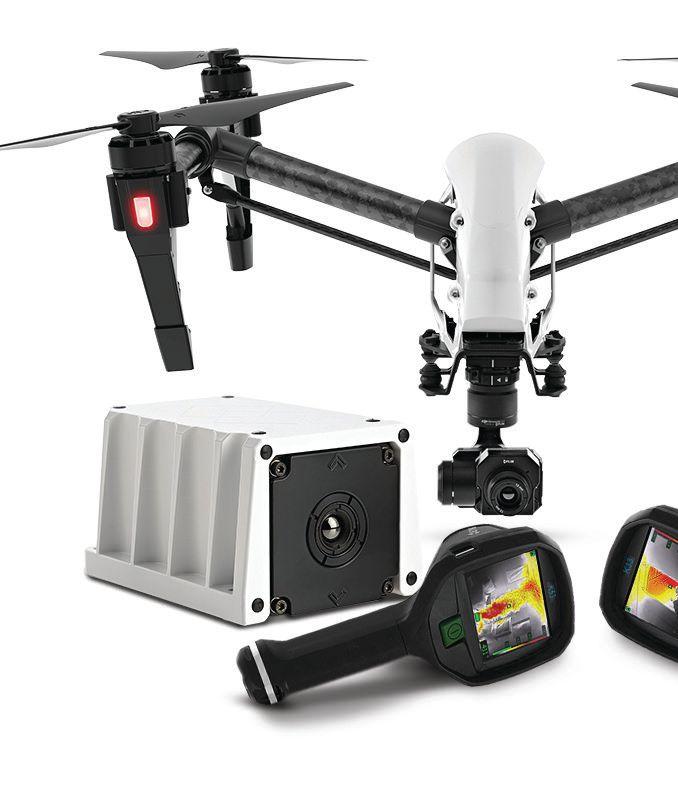
FROM BOOTS ON THE GROUND TO EYE IN THE SKY, WE’VE GOT YOUR BACK.
FLIR’s wide range of TICs can help you identify hot spots from a variety of distances – making safety the top priority. Learn more at FLIR.ca/fire
BUY ANY 4 FLIR K SERIES TICS, GET A FLIR K2 FOR FREE. A $ 1,350 VALUE!
®
FEATURED PRODUCTS:
· FLIR K2 THERMAL IMAGING CAMERA
· FLIR K33 & 53 THERMAL IMAGING CAMERA
· FLIR KF6 AERIAL APPARATUS
FIXED-MOUNTED THERMAL IMAGING CAMERAS
· FLIR M-SERIES PAN-TILT-ZOOM
TICs FOR ARFF, HAZMAT & ALL EMERGENCY VEHICLES
· FLIR AERIAL FIRST RESPONDER KITS
TRUCKTECH Preventative maintenance
By CHRIS DENNIS
All emergency services need some kind of vehicle to get the job done. But the job cannot be done if your vehicle doesn’t work when you need it. Proper vehicle maintenance is essential to ensure first responders can safely and efficiently get to calls.
Items used to extinguish fire must be inspected and kept in working order. Preventative maintenance is a regularly performed service on a piece of equipment to lower the chances of it failing. Preventative maintenance should be performed while the equipment is still working, so that it does not break down unexpectedly.
The challenge for fire departments in Canada is to ensure that the trucks and equipment are ready to assist responders. Fire department mechanics must have to have their figurative crystal balls ready, to anticipate mechanical breakdowns before they happen and plan ahead. We are expected not only to be sure that everything works but also to know what will fail next and manage issues proactively. Each department has trusted men and women who make sure that the big, shiny fire department rigs and equipment are ready, and most importantly, safe.
Preventative maintenance is essentially pre-planning, and then acting upon the pre-plan. Fleet maintenance starts with the fire chief. Ultimately, he or she is in charge. The decisions regarding the maintenance of the fleet come from the top down. I can only speak to the fire departments with which I have worked, whether as a consultant or assisting in a repair plan, but in my experience everything at the floor level goes back to the chief. The preventative maintenance program should be part of every department’s annual budget. If your fleet is older, the preventative maintenance budgets should reflect that; older vehicles require more frequent maintenance. If your department has a dedicated apparatus-maintenance division, costs can be kept down. Internal labour is a fixed rate, as the staff is already on the payroll, however parts can add up quickly. If you don’t have the luxury of an internal maintenance team or repair facility nearby, a department member will usually be tasked to reach out to trusted mechanics to make sure the work is done. The line of communication with off-site repair shops must be strict. Unfortunately, the private sector often assumes municipal or city-owned vehicles come with deep pockets, as if they have been given a signed blank cheque. At the end of the day, the fire chief will approve all repairs. The chief should have an idea, based on experience, of the maintenance needed for each apparatus. Without a regular preventative maintenance schedule, there are more challenges in keeping the fleet functioning.
Preventative maintenance includes (but is not limited to) tune-ups, oil changes, tire changes, electrical checks, ladder
FLUID LEVELS
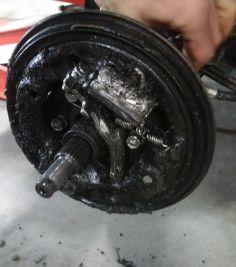
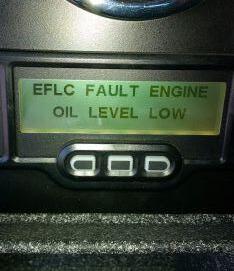
When not inspected regularly, faulty brakes can cause considerable damage to emergency vehicles. Regular brake maintenance can prevent vehicle failure and reduce repair costs. Pay attention to what your vehicle tells you. Check fluid levels regularly to to avoid preventable engine light warnings.
AERIAL TIP
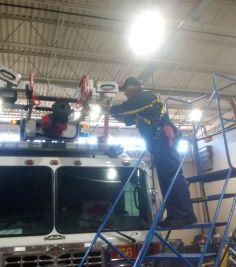
Regular aerial tip inspections can reveal corrosion that cannot be seen from the turn table. Do not overlook cleaning and greasing monitor controls.
Ensure that you check inside the pump modual. Visual inspections can prevent failures, so that the vehicle is ready to perform on the fire ground.
crafts·man·ship /kraf(t)smən’SHip/ noun
l skill in a particular craft
l the quality of design and work shown in something made by hand; artistry
Foam Trailers
Portable Pumps
CAFS
Skid Units
Brush Trucks
TRUCKTECH
checks, full operational inspections, and rope checks. Canada has a wide array of weather and climate types. Every department has to adjust and do what is in the fleet’s best interest. If your department does not do regular operational truck checks (ideally daily or weekly) you should at least check monthly, even if you are a smaller or volunteer department.
From a mechanical standpoint, the 2017 edition of NFPA 1911 is the best place to start – the Standard for the Inspection, Maintenance, Testing and Retirement of In-Service Emergency Vehicles. Chapter four covers general requirements, and is a great place for to learn which preventative maintenance services are essential.
Every manufacturer has its own suggested inspection and replacement timeline during the vehicle’s lifetime. For example, aerial inspections are based on hours in service. Most required services are based on hours, which can be monitored via the apparatus hour meter (which can be located in many places, so ask the manufacturer where to find it). I recommend that departments monitor maintenance timelines on the cab and chassis via engine hours. Because the trucks do not run lots of miles and the engine is kept running to power other parts of the vehicle during a response, maintenance intervals cannot be monitored through mileage. Engines are often running while trucks are standing still. For example, if the vehicle has power take off, it also runs a fire pump, a generator, an aerial ladder and other equipment. In some cases, the hour meter may be accessible through the dash display. If there is no hour meter, I suggest installing one on the chassis engine side. Speaking of hour meters, depending on where your department is located, there may be tax credits available on diesel fuel when in power take-off mode. Though you will need to monitor those hours as well as power take-off engage and disengage times. As you know, every bit of money back helps.
Vehicle preventative maintenance services can be broken down to include tests, measurements adjustments, parts replacement and cleaning. The benefit to staying ahead of a break down means less vehicle downtime. Preventative maintenance keeps departments on top of repairs and helps to prevent unexpected breakdown, keeping the fleet ready to respond when the call comes in.
Chris Dennis is the chief mechanical officer for Vaughan Fire & Rescue Service in Ontario. He can be reached at Chris.Dennis@ vaughan.ca
An emergency vehicle technician cleans and repairs the electrics at the ladder tip. This area is often overlooked until something fails.
Preventative maintenance will ensure a long and useful life for emergency response vehicles.
Years60
Celebrating Years60
BACKtoBASICS
Celebrating Years60
Celebrating Years60
Single firefighter tasks: high-shoulder ladder throw
BY MARK VAN DER FEYST
ICelebrating Years60
n the last few issues, we have focused on tasks that can be completed efficiently and effectively in situations with limited crews. At times, firefighters may be forced to work by themselves. The idea of single firefighter assignments or tasks may go against traditional teaching – to always work in pairs, at a minimum – but it’s wise to prepare for situations in which few members are available to respond.
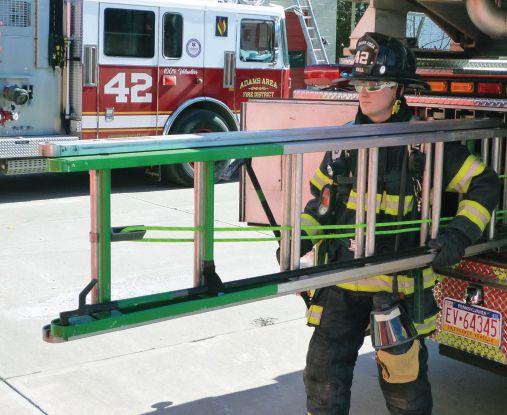
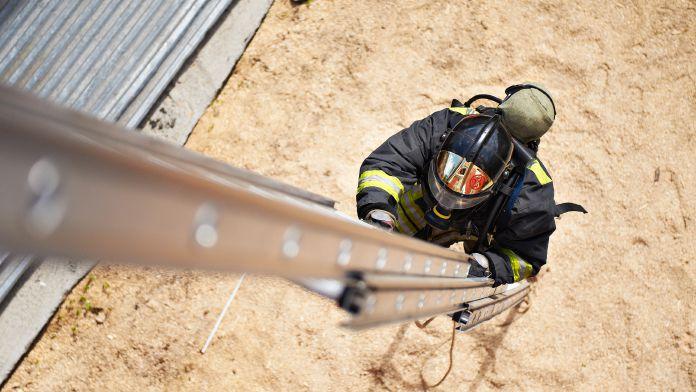
The high-shoulder ladder throw can be accomplished by one firefighter, be it the driver, the pump operator, the first firefighter of a two-person team, or even the officer.
The high-shoulder ladder throw is perfect for members riding newer fire trucks that have ladder compartments or ladder racks that fold down, or for the traditional static ladder rack positioned on the side of the truck.
The first step in making a successful ladder throw is to identify the middle of the ladder. This can be accomplished in several ways. It is a great idea to tag the ladder with useful information for firefighters; this can be used to identify the truck it belongs to and the mid-point of the ladder. Alternatively, spray paint can be used to mark the middle of the ladder. Different spray paint colours can be used to identify which ladders belong to which trucks. Marking the middle of the ladder also helps firefighters easily identify where to grab the ladder.
To ensure the high-shoulder ladder throw is effective, the halyard must be tied around the bottom rung of the bed section using a clove hitch. This ensures that one firefighter can raise the ladder and extend it without having to untie the halyard. To extend the fly section of the ladder, simply pull on the halyard and the ladder goes up.
The ladder – either in a compartment or on a ladder rack – must be orientated with the bed section facing the firefighter. This allows a single firefighter to pull the ladder out from the compartment at the mid-point of the ladder. The firefighter then places a shoulder under the bottom beam of the bed section at the mid-point, and walks the rest of the ladder away from the truck. This method also allows the firefighter to raise the ground ladder and extend the fly section easily, using one or two hands, with the halyard facing the firefighter.
To pull off the high-shoulder ladder throw, the ladder needs to rest completely on the firefighter’s shoulder. This method requires firefighters to become accustomed to balancing the ladder on one shoulder so that one hand is free to carry hand tools if necessary. One way to become accustomed to this type of carry is regular practice. I suggest practising this technique whenever you are checking in your truck. When you pull the truck out on the tarmac to check it in, pull the ladder off of the truck from the mid-point.
This method allows firefighters to keep one hand free while carrying the ladder. However, firefighters must become comfortable balancing the ladder on one shoulder to accomplish this.
On the fire ground, sometimes firefighters have to rely on a smaller crew to get the job done. The high-shoulder ladder throw can be accomplished with a single member.
Canadian Firefighter’s 2017 Training Day takes place Sept. 30 at the Fire and Emergency Services Training Institute (FESTI) in Toronto.
Online registration is open at www.cdnfirefighter.com/training-day.
BACKtoBASICS
Once pulled off the truck, try practising walking around with the ladder on your shoulder to get use to the weight and learn the balance point on your body in relation to the ladder.
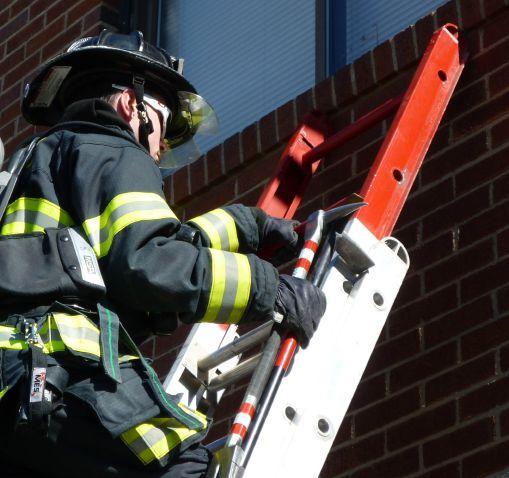
Once the firefighter has reached the destination with the ladder, direct the butt spurs of the ladder into the ground and, with a single push on the beam, raise the ladder. At this point the ground ladder will be backwards; the fly section faces the building, while the bed section faces the firefighter. At this point, the firefighter can extend the fly section of the ladder.
Once the ladder has been extended, it is placed against the building. The butt end is to be moved out (away from the building) to
allow the ladder tip to fall into place. Then, the ladder is flipped over so that it is properly oriented to the building, fly section out.
Bringing the ladder down is simply the opposite of how it went up. Visit firefightingincanada.com and click on training, then structural, to view a video demonstration of the high-shoulder ladder throw.
Mark van der Feyst has been in the fire service since 1999 and is a full-time firefighter in Ontario. Mark teaches in Canada, the United States and India and is a local-level suppression instructor for the Pennsylvania State Fire Academy. Email Mark at Mark@FireStarTraining.com
Direct the butt spurs of the ladder into the ground once stationed where the ladder is to be raised. All it takes is a simple push on the beam to raise the ladder.
BY VINCE MACKENZIE
Fire chief, Grand Falls - Windsor, N.L.
IRevamp training for peak performace VOLUNTEERVISION
believe there is no such thing as a fully trained firefighter. Firefighters are constantly training; it doesn’t matter whether you are a rookie or have had several decades on the job. Career or volunteer, this job requires a life-long learning commitment. Good or bad, our level of training becomes visible to all who observe us and our skill level of proficiency is apparent and obvious.
I recently travelled across the Atlantic provinces to present a marathon training seminar with fire chief colleague (and mentor) Jody Price of Oromocto, N.B. We spent eight days travelling and presenting our leadership program, Good, Bad and Ugly of Fire Service Leadership, to fire officers and firefighters. The program was sponsored by the Maritime Fire Chiefs Association to address challenges of keeping firefighters motivated, especially in volunteer departments.
Jody and I often discussed our own observations about challenges with fire training programs, especially regarding volunteer firefighters and the level of training across the generations.
When we arrived in my home province of Newfoundland, we noticed a few icebergs off the coasts. Icebergs are common sights for me, but my colleague had never seen one before. I remarked that only 10 per cent of an iceberg is visible above the surface, and the greater mass is hidden under water. When you actually see one of these icy monoliths up close it is hard to imagine that nine times more ice is floating directly underneath.
Like an iceberg, sometimes 90 per cent of what firefighters know lies underneath what is visible. As leaders in the fire service, we only observe about 10 per cent of what our team members know. In theory, leaders know a firefighter’s qualifications, on paper, but the training becomes apartment as more experience is gained on the fire ground. So when we evaluate our firefighter training programs, what’s visible sticks out and is easy to identify, but it’s the 90 per cent that lies underneath that we must consider.
line officers and, eventually chiefs. These positions all require different training. When a firefighter fills a position, that portion of training becomes apparent based on the tasks performed on a regular basis. The other 90 per cent lies underneath, seen only by peers.
As firefighters advance into leadership roles, they often break apart and roll over to accommodate the new jobs tasked to them. The new position will inevitably expose a completely different side of the firefighter’s abilities.
Rookies in the fire department typically focus their training on what can be seen; they study and focus on completing their level-one training, often assuming that they are ready to go and face a fire headon. Remember, that our training standards are just the minimum of what firefighters should know. As fire service experiences unfold over time, firefighters will realize that standard training is the 10 per cent; so, what will their 90 per cent consist of?
During our classes we instructed all participants to do the following:
1. Everyone should evaluate your department’s training program to ensure it is complete, allowing a firefighter to go beyond the
Like an iceberg, sometimes 90 per cent of what firefighters know lies underneath what is visible. ‘‘ ’’
Like icebergs, firefighters are shaped by and adapt to their environment as they progress through their careers in fire. Icebergs break over and roll from time to time, exposing different portions of their hidden underbellies to the public. So do firefighters, as they take on different roles in fire departments, from rookie, to firefighter, fire prevention,
Vince MacKenzie is the fire chief in Grand Falls-Windsor, N.L. He is an executive member of the Canadian Association of Fire Chiefs and the past president of the Newfoundland and Labrador Association of Fire Services. Email him at firechief@townofgfw.com and follow him on Twitter at @FirechiefVince
basics. Ask the rookie and the veteran if the sessions meet their actual needs.
2. If you are responsible for presenting training, ensure that your members think it is a worthwhile exercise. Seek out input, and more importantly, criticism so your training sessions can constantly improve.
3. Participate in training every time! That doesn’t mean just show up, that means to show up and actively participate with conviction.
Firefighter training is the most effective way to find knowledge and experience gaps to build your 90 per cent. Training has to be our core function now more than ever and we need to ensure our firefighters are trained as much as possible. We are never ever fully-trained fire fighters; we are always learning.
BY DON JOLLEY Fire chief, Pitt Meadows, B.C.
ILEADINGEDGE
Program strengthens chief, CAO relationships
n recent years, there has been a renewed focus toward strengthening the relationship between local government and the fire service in British Columbia. In order to do this, a program was created called “Working together: effective fire service administration for fire chiefs and local government chief administrative officers.”
The impetus for this program began in 2009 after the BC Fire Services Liaison Group (FSLG) published a report called Transforming the Fire/Rescue Service in British Columbia. The FSLG was composed of all the major fire service organizations in British Columbia alongside other allied organizations and agencies such as the BC Wildfire Service, the Union of BC Municipalities, the NFPA, Emergency Management BC, and the Local Government Management Association. The FSLG final report made 14 recommendations to address needs (some critical) of the fire service in the province Some of those recommendations called for action by local governments, others for action from the province.
The FSLG report was received by former fire commissioner Rebecca Denlinger. Denlinger issued a response report from the Office of the Fire Commissioner (OFC) in 2012 entitled Improving Fire Services: The Office of The Fire Commissioners Response to the FSLG Report.
Denlinger adopted several recommendations in the FSLG report to develop a program that focuses on smaller fire services and municipal jurisdictions. The OFC acknowledged the recommendations for increased training, recruitment and retention assistance, and administrative and management support for volunteer departments. The OFC also supported, the establishment of local government responsibility for fire and rescue services within their jurisdiction.
commitment. The three organizations – the OFC, the fire chiefs association and the local government group – came together to develop an interactive weekend-long training session for CAOs and fire chiefs. The initial pilot program was delivered in Prince George in 2014 and four more programs have been delivered since.
Attendance comes at a nominal cost of $250 plus GST per participant, subsidized by grant funding secured by the OFC. Commissioner Anderson has attended every session – feedback from local-government attendees has indicated that Anderson’s attendance has been highly beneficial.
Each community is encouraged to send the chief and CAO together. In the early sessions, fire chiefs outnumbered administrators at almost two to one, but at the most recent session in April attendance was almost 50/50. The program itself focuses on common and significant issues of concern for both fire chiefs and CAOs. The purpose is to facilitate dialogue and co-operation among participants. While the target audience is smaller communities and fire services, jurisdictions of all sizes can and do benefit from the program.
The principle areas of focus for the program are:
Build a network of fire service leaders and local government CAOs, to provide ongoing mutual support.
Denlinger then approached the Local Government Management Association asking for their partnership to develop and lead delivery of a unique training program providing the necessary support for the recommended by the liaison group.
The Local Government Management Association team met with the Fire Chiefs Association of BC executive and built upon its existing chief officer program. Esquimalt Chief Chris Jancowski leads the program; his knowledge of challenges faced by rural chiefs, and useful solutions, was instrumental in helping to move the cause forward.
Fire Commissioner Gord Anderson continued Denlinger’s
Don Jolley is the fire chief for the City of Pitt Meadows, and the first vice-president of the Fire Chiefs’ Association of British Columbia. Contact him at djolley@pittmeadows.bc.ca
• Roles and responsibilities of the fire chief and CAO with respect to local fire services.
• Opportunities for CAOs to learn about fire-service administration, management and operations;
• Opportinities for fire chiefs to learn about government management and administration;
• Developing fire-service delivery models and service levels;
• Building a support network of fire-service leaders and local government CAOs;
• Overview of key legislative requirements related to local fire-service delivery;
• Promoting communication between fire chiefs and CAOs
The program is an intense couple of days with a lot of material to absorb, but each participant will return home with new information to apply to their comminities.
OCTOBER 4, 2017
UNIVERSAL EVENTSPACE, VAUGHAN, ON
CONFIRMED SPEAKERS:
• Colin Giles Services, Ontario Provincial Police
• Ciara Bracken-Roche University
• David Cooke
Brought to
Celebrating 50 Years
TRAINER’SCORNER Fresh training for fresh faces
By ED BROUWER
This column will hopefully give some clarity to issues facing volunteer recruits, a.k.a rookies, newbies or probies. Across Canada, volunteer/paid on-call fire departments are required to ensure that all their members are given the highest level of training possible, and to provide each member with the needed knowledge and skills according to NFPA 1001.
Each volunteer department should have a recruit-training program that introduces the recruit to basic firefighting theory and skills. This must be done within a realistic time frame and should be taught by the training officer or his/her delegates. Note: a good training officer must have fire-ground experience, the ability to teach and time available to meet the needs of recruits.
Typically, firefighters are considered “new” in their first six to 18 months of service; there are two important criteria: length of time; and service.
Length of time speaks to the period during which recruits complete training; it should be long enough to provide the necessary introductory training but short enough so that the training can be completed in a way that does not exasperate the recruit. The training program should allow for the recruit to get out in the field and gain some experience. I recently spoke to a young man who, after four years, is still considered a recruit in his department. That, in my opinion, is way too long. Unfortunately, it is not unusual in his department to be a black helmet (their department’s way of indicating a rookie) for three to four years. This boils down to the department’s poor training policies.
It is pretty easy to feel unappreciated when your department doesn’t allow you to respond to calls. Imagine if your teenager got a learner’s permit and was not allowed to drive on any public roads for three or four years. You can’t expect young people to learn how to drive while parked in the driveway. If you are going to set a time frame, it must be consistent. Your department’s recruit training needs to be consistent and doable. You cannot have a well-what-should-wedo-tonight attitude.
We expect a lot from our newbies, but then again, we give them a lot.
The recruit-training program should be clearly outlined and executed in order to expedite the process. It must be purpose driven. Having a written course outline is the best way to ensure that each member receives the same training.
Volunteer recruitment training should include both theoretical and practical work. Recruits should be expected to attend a minimum of 80 per cent of the training and achieve 75 per cent or greater on tests and exams in order to complete the program. Set the bar high but set it fair.
Recruit training should be used as an introduction to fire fighting. Touch on all the Firefighter 1 topics: history and orientation; PPE/
should be allowed off the training ground to assist on fire calls. If new firefighters do not gain real-world experience, both the recruits and departments will be at a disadvantage.
firefighters should show a respect for the department and its equipment. As a trainer, pay attention to how recruits handle and maintain department resources.
SCBA; firefighter safety; communications; fire behaviour; fire suppression. Note: I said touch on them; get the recruits started and then send them to the fire ground. Of course, limit the recruits’ involvement; be smart about it. Get them enrolled with your firefighters in the ongoing training program as soon as possible, but remember that recruit training should be taught at an introductory level. The purpose is to prepare new firefighters to safely perform fire-ground activities and support other firefighters at incidents. Areas of support may include emergency traffic, rehab, hose lays, salvage and overhaul.
New firefighters, once enrolled in the recruit-training program, should be allowed to respond to calls. However, they must wear something that identifies them as members in training. Everyone in
Recruits
New
Fire and Rescue
the department must be aware of what new recruits are capable of, and be careful not to overstep those bounds. The safety of the recruits and department members is of paramount importance.
The bottom line is that recruits need experience that can be gained only on the fire ground. Consistently keeping newbies at the hall negatively affects them and your department. If your department can neglect to use recruits for three years, perhaps you have too many members; doing so simply sours volunteers who just want to serve their communities.
For me, fire fighting is all about honour and respect. I watch how recruits work, listen, participate and interact with other firefighters. But I can’t watch them if they are back at the hall . . . Have I driven that point home yet?
As an instructor, I look for many things besides fire knowledge. Certainly, attendance is of great importance, but I watch to see who comes early and who stays late. Sometimes I even leave an empty water bottle on the ground and watch to see who picks it up.
If I have to remind a recruit to do something which he or she is responsible for, I count it as a strike. I also give strikes to those who constantly spend time on their cell phones. I get ticked off by unnecessary tweeting, texting and talking when recruits should be listening and learning.
I certainly appreciate when rookies ask questions. But I find it disrespectful when a newbie constantly interrupts with an opinion. You don’t need to tell me how smart you are; I’ll discover that soon enough.
Yeah I’m a tough instructor, and most of what I look for has nothing to do with fire fighting. Mostly, I try to gauge the recruits’ character. Can I count on them to have my back?
Not all recruits are created equally. Every once in awhile, you meet one who makes you smile. One of our young firefighters impresses the heck out of me. Keller, at just 19, is our youngest firefighter and a real go-getter. He is always checking and cleaning equipment and gear. He looks after our SCBA, ensuring that everything is clean, organized and ready to go on the next call. I have never heard him bad-mouthing others or gossip. He is respectful to us old dogs and is ready to help with any training needs.
Treat your recruits with the respect you and your department wish to receive. Until next time, stay safe and remember: train like lives depend on it, because they do.
Ed Brouwer is the chief instructor for Canwest Fire in Osoyoos, B.C., and deputy chief training officer for Greenwood Fire and Rescue. Contact Ed at aka-opa@hotmail.com
Greenwood
recruit Keller Smith sets an example for other new firefighters with his work ethic, writes Ed Brouwer.
BY MATT
PEGG Fire chief, Toronto
ILEADERSHIPFORUM
Aim for influence over rank
am firm believer that leadership is a combination of skills, competencies and abilities that can be learned, shared, developed and honed. Over the course of my career, I have witnessed many outstanding examples of exceptional leadership. I am blessed to have a few amazing mentors who are forever helping me become a better leader. I have also witnessed numerous examples of very poor, damaging and ineffective leadership. Fortunately, we can always learn from both.
There are times when I have demonstrated effective and inspiring leadership, but there have also been times when I failed to lead effectively. This is the nature of leadership – it is not a static thing nor is it something that we magically possess the moment that we get promoted.
Leadership happens from moment to moment, person to person and issue to issue. On any given day, each of us is given opportunities to provide effective leadership, sometimes only seconds or minutes apart. It is up to each person to decide whether or not to take the opportunity to lead.
Leadership is not easy. In fact, it is downright hard at times. When the pressure mounts, emotions get involved and our personal biases and opinions cloud our ability to see the bigger picture; it is all too easy to make bad leadership decisions. In times when we are fatigued and edgy, or when we are dealing with difficult issues in our personal and professional lives, it is easy to miss an opportunity to lead.
Every officer in the fire service is expected to be a leader, so what is the goal of leadership? From my perspective, the goal of leadership is to have your influence as a leader exceed the authority of your rank.
relying upon a superior rank. A true leader will never default to “because I have more stripes than you” as the rationale for a decision. They are not dictators. They do not expect their teams to do things that they themselves would not do. They are not bullies. They are not rigid, nor closed to ideas and opinions that differ from their own.
All leaders will encounter situations in which they must make unpopular decisions or take actions that are not supported by others. Leaders must learn to make tough decisions with limited and conflicting information. In the fire services, leaders are tasked with making decisions that affect the health and safety of other first responders and community members; this responsibility must be taken seriously.
In my experience, one of the most difficult things about being a leader in the fire service, especially at the company officer or operational chief officer level, is to move between being a command officer at the scene of an emergency and a leader back in the fire station. The command-and-control environment of an emergency scene, which often requires leaders to make quick decisions and make direct orders, is drastically different than life in the fire station. The best fire-service leaders are able to move between incident com-
The goal of leadership is to have your influence within the department exceed the authority of your rank. ‘‘ ’’
I believe that the most effective leaders achieve results by way of influence and not on the basis of positional power or rank. Leaders exist at every rank and level within the fire service. Effective leaders bring a sense of calm to any room, any situation or any environment. They have the ability to see the bigger picture. They offer perspectives and advice that move discussions forward, and settle disputes through skilled mediation. Effective leaders genuinely care for others and guide team members as they develop within the fire service by rallying people around them.
Leaders do not complete tasks, nor do they achieve results by
Matthew Pegg is the chief with Toronto Fire Services, having previously served in Georgina, Ajax and Brampton, Ont. Contact Pegg at matthew.pegg@toronto.ca
mander and leader in the fire hall efficiently and effectively.
The hard reality is that, regardless of your position, you are only a leader when people willingly follow you. Simply holding a rank or position does not make a qualified leader – the ability to establish trust and achieve results is what separates leadership from rank.
A very wise mentor of mine once asked me: “If you removed all of your rank and returned to a position as a firefighter, would you still be respected?” This is a powerful question that every leader should consider introspectively.
The more bars or stripes that officers wear on their shoulders and sleeves should indicate of their ability to solve problems and influence colleagues. The very best fire chiefs with whom I work with and from whom I learn are those who don’t require a rank to achieve results.
The fire service needs exceptional leaders. Are you ready?
A Full Line of Fixed, Selectable and Automatic Nozzles with Superior Stream and Flow
TFT is recognized by emergency responders worldwide as the inventor of the “automatic” or constant pressure, variable flow firefighting nozzle. Today, we offer the widest range of fixed, selectable and automatic nozzles. Choose from thousands of configurations to meet your needs but know that every nozzle is built with unique features that help you perform better and more safely.