
Jennifer Bloemer Pierce Engineer - 18 years
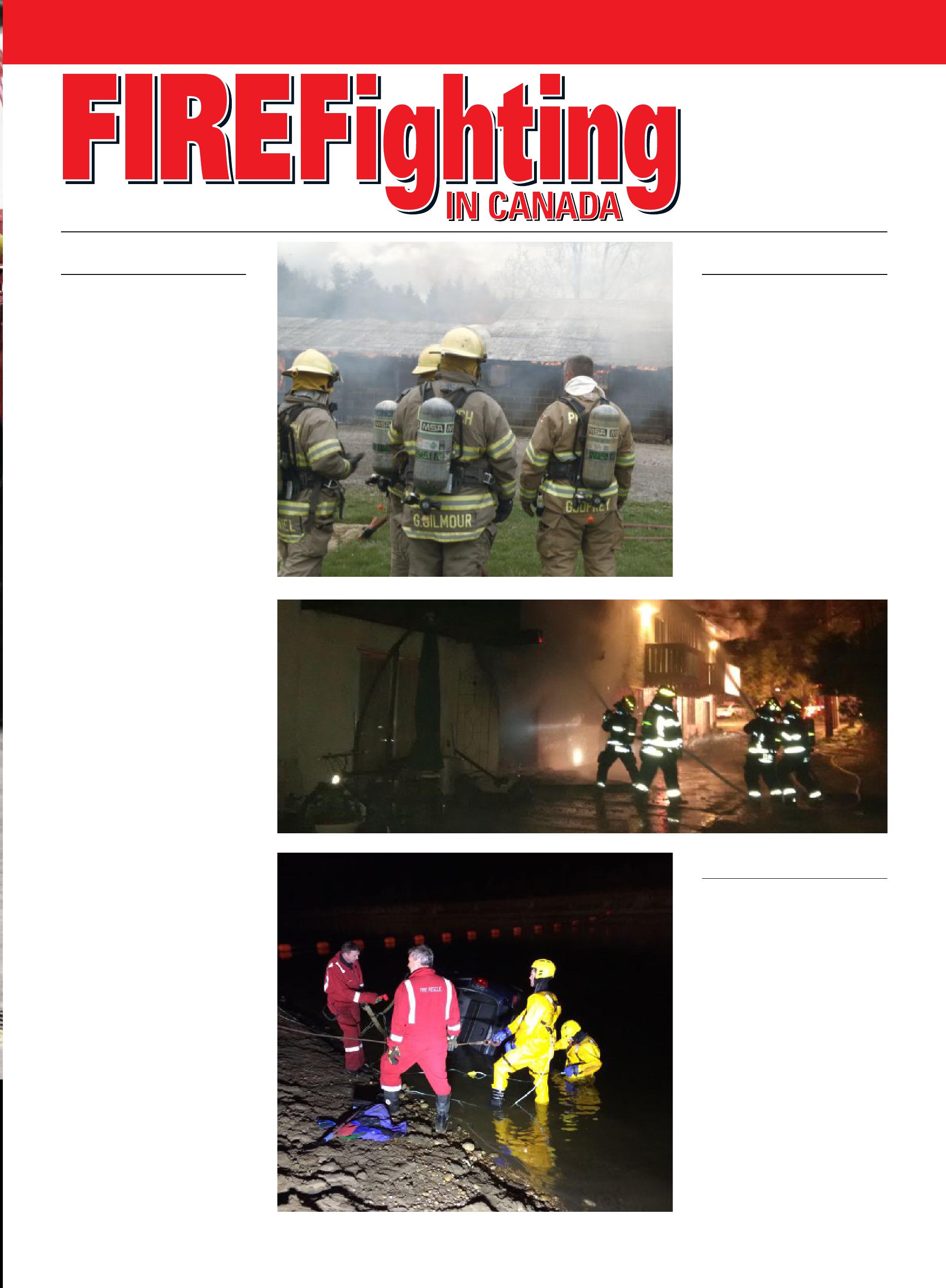
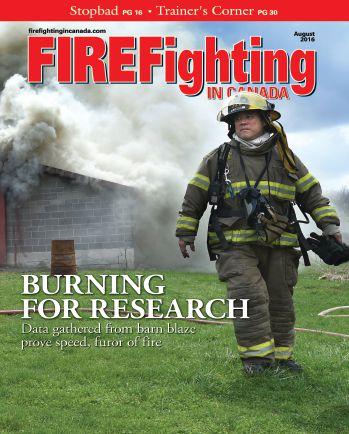
Just a few months after a devastating barn fire killed 43 racehorses in Puslinch, Ont., causing millions in damages and sending ripples of concern about barn fire safety across the country, the department that responded to the blaze conducted research to learn more about fire dynamics in barns. By Jason Benn
A massive fire at a 20-unit apartment building in Sooke, B.C., displaced 19 residents and was a wake-up call to emergency services about the need to plan for large-scale, long-term evacuations. Chief Steven Sorensen writes about the incident from two perspectives, one as fire chief and the other as emergency co-ordinator.
In the evening on April 11 an SUV entered the Lesser Slave River and one of its occupants was swept downstream. Firefighters with the Lesser Slave Regional Fire Service worked quickly in cold temperatures to locate and rescue the woman. By Chief Jamie Coutts
BY LAURA KING Editor lking@annexweb.com
he news on Jan. 5 that 43 racehorses had died in a barn fire in Puslinch Township, south of Guelph, Ont., was hard on the property owners, the animal owners, and the tight harness-racing community.
The loss was also tough on members of the volunteer Puslinch Fire Department, who responded but couldn’t save the 13-year-old structure, or the equines.
Classy Lane Stables can house 222 horses in its five barns; the 54-hectare complex includes an all-weather racetrack. Fifty firefighters from five departments fought the fire in barn 1, in -15 C conditions, employing a tanker shuttle.
“This is a multimillion-dollar fire, the highest dollar loss that we’ve experienced in our township,” Fire Chief Steve Goode said.
Classy Lane’s training facility was widely respected as top-notch. Yet its barns are unsprinklered.
Cynics might scoff that insurance coverage is a deterrent to the cost of installing sprinklers, or wonder why there was such a hullabaloo about racehorses when more than 100 people die in unsprinklered homes in Ontario every year.
As the NFPA’s Canadian regional director, Shayne Mintz, wrote in May, NFPA 150: Standard on Fire and Life Safety in Animal Housing Facilities, recognizes that installing sprinklers is one of many ways to help protect animal-housing facilities.
However, Mintz said, sprinklers are not a blanket solution because of the unique hazards and specific needs of certain animals, and are not required in barns.
ON THE COVER
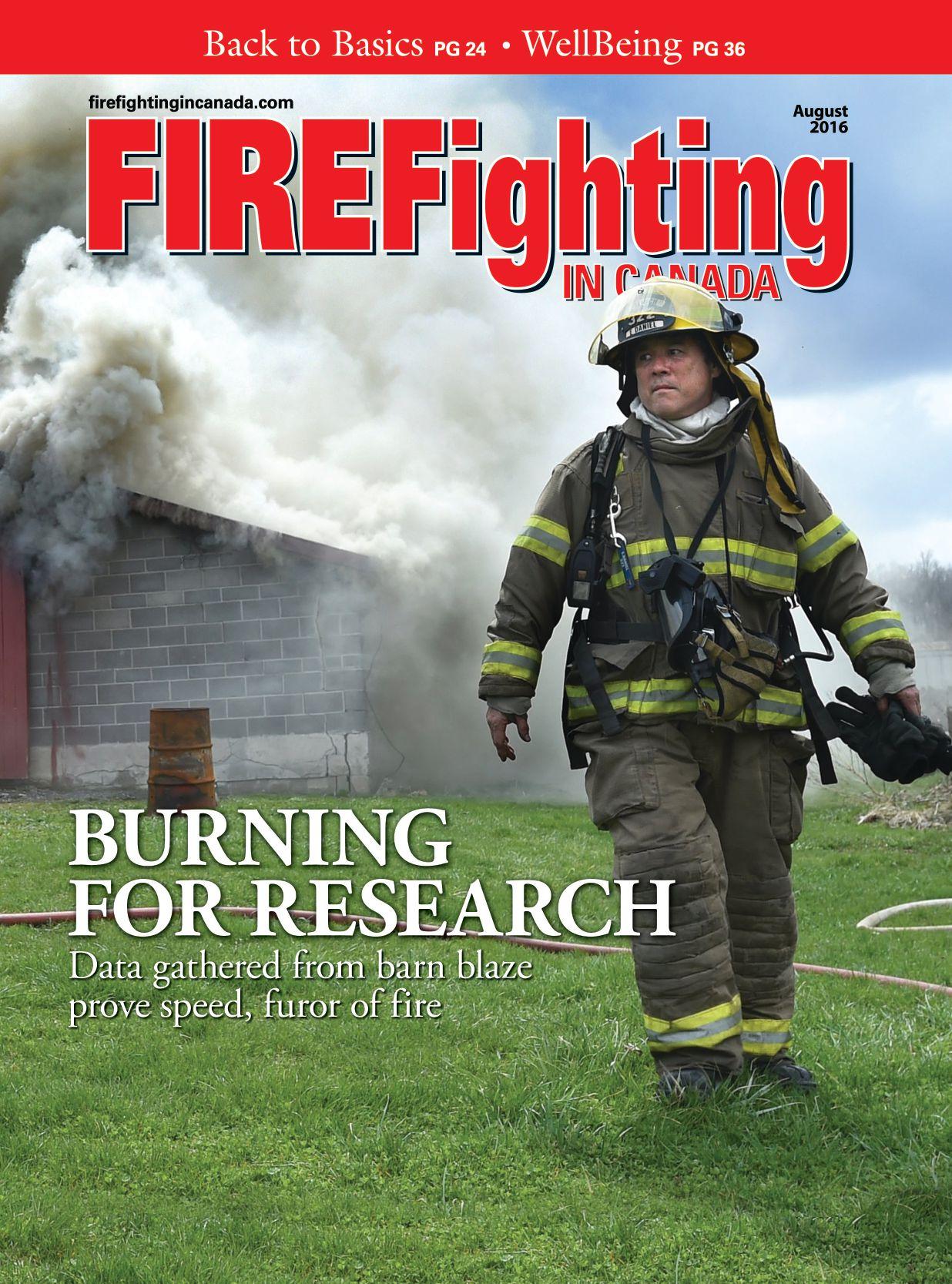
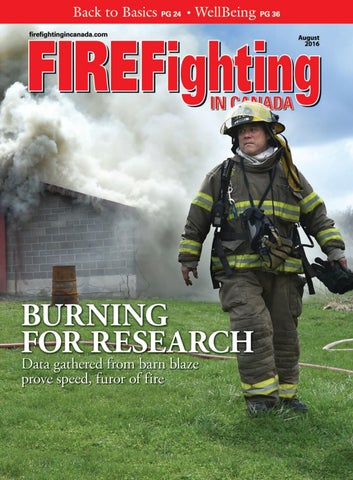
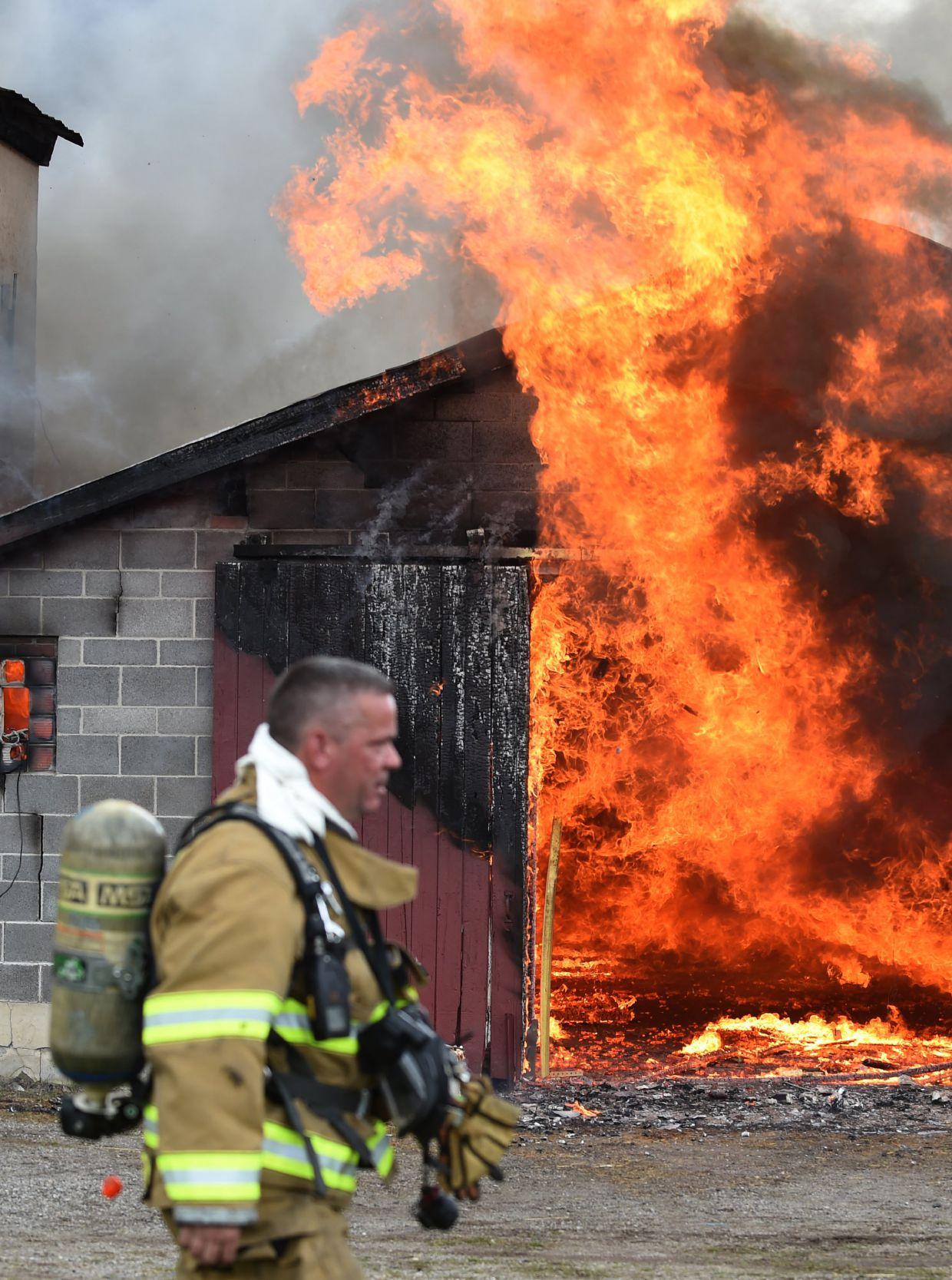
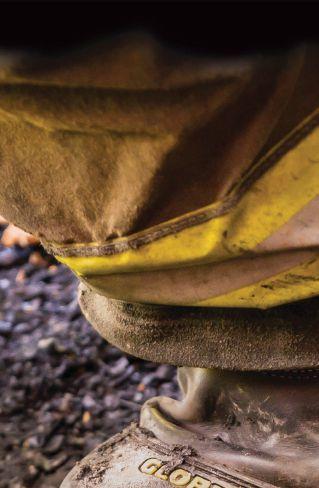
Puslinch, Ont., firefighter Eiji Daniel takes part in a barn burn to research fire dynamics. See story on page 10.
The fire was one of several in Ontario last winter that killed large numbers of animals; according to the Ministry of Agriculture, Food and Rural Affairs, more than 206 metric tonnes of animals (an interesting way to measure fatalities) died in 15 barn fires this year.
There was talk after the Classy Lane fire of sprinklers. No laws require sprinklers in most barns. No laws forbid them, either.
Credit, then, to members of the Puslinch Fire Department, who not only worked with the Classy Lane owners to rebuild a safer, better-protected stable with top-notch fire-prevention measures, but also embraced an opportunity to complete a training burn during which barn owners and media learned about fire dynamics and the need to thoroughly protect their properties.
Sprinklers are not required in most single-family dwellings either, yet afford the best protection and the best chance of survival.
Ontario’s Farm Building Code is under review.
According to The Daily Commercial News, the Canadian Farm Builders Association supports the review but is wary of sprinklers.
“Sprinklers, insulation, wall coverings, protection, mechanical systems, it goes on and on,” CFBA board member Steve Adema told the News. “And all of sudden you have doubled the cost of your building. And I can tell you, there are a lot of farmers out there, they would be screaming if we told them, by the way, your building costs are going to double.”
Maybe so.
Such is the price of doing business, or is it?
ESTABLISHED 1957 AUGUST 2016 VOL. 60 NO. 5
EDITOR LAURA KING lking@annexweb.com 289-259-8077
ASSISTANT EDITOR MARIA CHURCH mchurch@annexweb.com 519-429-5184
NATIONAL SALES MANAGER ADAM SZPAKOWSKI aszpakowski@annexweb.com 289-221-6605
SALES KORY PEARN kpearn@annexweb.com 519-902-8574
ACCOUNT COORDINATOR BARB COMER bcomer@annexweb.com 519-429-5176 888-599-2228 ext. 235
MEDIA DESIGNER BROOKE SHAW bshaw@annexweb.com
GROUP PUBLISHER MARTIN MCANULTY fire@annexweb.com
DIRECTOR OF SOUL/COO SUE FREDERICKS
PUBLICATION MAIL AGREEMENT #40065710 RETURN UNDELIVERABLE CANADIAN ADDRESSES TO CIRCULATION DEPT.
P.O. Box 530, SIMCOE, ON N3Y 4N5 e-mail: subscribe@firefightingincanada.com
Printed in Canada ISSN 0015–2595
CIRCULATION e-mail: lmalicdem@annexbizmedia.com
Tel: 416-510-5187
Fax: 416-510-6875
Mail: 80 Valleybrook Drive, Toronto, ON, M3B 2S9
SUBSCRIPTION RATES
Canada – 1 Year - $24.50 (with GST $25.73, with HST/QST $27.69) (GST - #867172652RT0001) USA – 1 Year $42.95 USD
We acknowledge the [financial] support of the Government of Canada.
Occasionally, Fire Fighting in Canada will mail information on behalf of industry-related groups whose products and services we believe may be of interest to you. If you prefer not to receive this information, please contact our circulation department in any of the four ways listed above.
No part of the editorial content of this publication may be reprinted without the publisher’s written permission ©2016 Annex Publishing and Printing Inc. All rights reserved. Opinions expressed in this magazine are not necessarily those of the editor or the publisher. No liability is assumed for errors or omissions.
All advertising is subject to the publisher’s approval. Such approval does not imply any endorsement of the products or services advertised. Publisher reserves the right to refuse advertising that does not meet the standards of the publication. www.firefightingincanada.com
WHOLESALE FIRE & RESCUE
BC, AB, SK, YT, NWT, NT (800) 561-0400
ABC FIRE & SAFETY
MB, SK (800) 665-1250
DEPENDABLE EMERGENCY VEHICLES ON (800) 268-0871
M&L FIRE & SAFETY ON (866) 445-3473
SPI HEALTH & SAFETY Northwest ON (800) 465-6822
L`ARSENAL QC (800) 266-7610
MICMAC FIRE & SAFETY SOURCE Atlantic Provinces (800) 667-3030
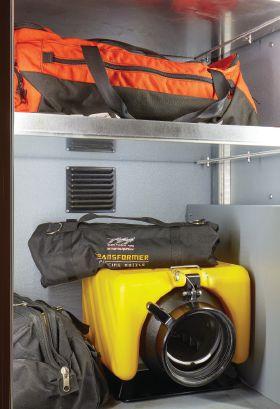





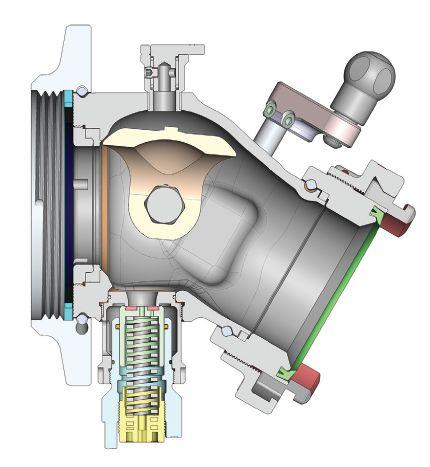
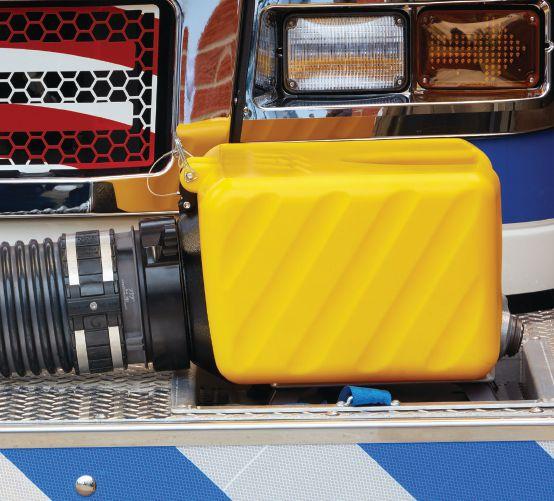
Flotation device allows TFT high volume low-level strainer to collect clean water from ponds, lakes and rivers. The strainer inlet, made of hard anodized and powder-coated aluminum, hangs 18” below water level to avoid sucking surface air and bottom debris. Capable of supporting up to 30 ft of hose, the strainer extends well beyond safety ledges of residential ponds.
The clog-resistant stainless steel filter has over twice as much flow area as a 6” hose keeping friction loss down to 0.5 psi (1” Hg) at 1500 gpm and reducing the potential for air vortexes. Oversized sealed ball pivot allows 45° range of hose angle without constricting the flow path.
WATER LEVEL 18" e allows TFT volume low-level strainer to collect clean water from
Rugged polyethylene float is yellow for high visibility and nests compactly over the strainer for minimal storage space. Float removal is not necessary for low level use, although a tethered latching hinge pin allows the float to be removed or installed instantly if desired.
• Available With or Without Jet Siphon
• Supports Up to 30 Feet of Hose
• Clog-resistant Stainless Steel Filter Keeps Friction Loss to 0.5 psi (1” Hg) at 1500 gpm
• Sealed Ball Pivot Allows 45° Range of Hose Angle
• Rugged High Visibility Polyethylene Float Nests Compactly Over Strainer
• Tethered Latching Hinge Pin Allows Float to Be Removed or Installed
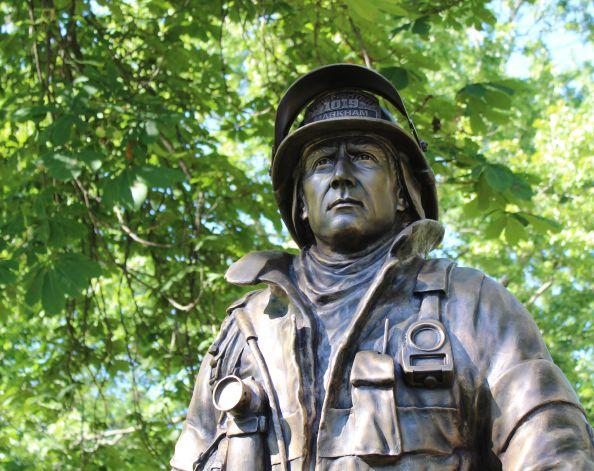
A life-size casting of Markham firefighter Jason Churchill, who died of cancer last year, stands in Toronto’s Mount Pleasant Cemetery.
Markham, Ont., firefighter Jason Edward Winston Churchill died last year on June 10 from Burkitt’s Lymphoma; his memory, however, will live on, and not just through family and friends.
A memorial bronze statue cast in Churchill’s likeness was unveiled at Toronto’s Mount Pleasant Cemetery in June to honour firefighters who die in the line of duty.
The statue, which is called Undaunted, includes the

JOHN THOMAS was promoted director of protective services for Elliot Lake, Ont., in April. Thomas, a 21-year member of the Elliot Lake Fire Department, had been serving as interim fire chief since September. In his new role, Thomas will oversee
the city’s fire, bylaw and building departments.
KEVIN DONALDSON is the new fire chief and general manager of emergency services for Greater Napanee Fire Department in Ontario. A more than 20-year member of the volunteer department, Donaldson
PHOTO BY BETHANY LEE
inscription “Brothers who stand together cannot fall alone.”
Churchill was a 29-year member of Markham Fire and Emergency Services, serving from 1986 to 2015 in various roles, including first-class firefighter and training officer. He was heavily involved in the Markham firefighters association, eventually serving as president, and was a member of the department’s Occupational Health and Safety Committee.
Markham Platoon Chief Scott Daniel, who started his career in Markham around the same time as Churchill, said the firefighter is missed by all members of the department.
“He was very impactful in a lot of different lives,” Daniel said. “He made things better for a lot of us.”
Daniel described Churchill as intelligent, proactive and always looking out for the
safety of his colleagues. The firefighter was instrumental in advocating for fitness equipment in all of Markham’s fire halls, ensuring members had the best fireresistant gear on the market, and increasing firefighter benefits and salaries.
“He thought more of helping others than helping himself, sometimes to a fault,” Daniel said. “The statue is well deserved for all the things he did to improve my life and the department.”
The statue means something different to everyone, Daniel said; for him and fellow members of the department, it represents friendship. For others, Churchill, who was a vibrant member of the gay community, is an inspiration. And for fire services across the country, Churchill’s statue stands as a tribute to those who gave their lives to the job.
– Maria Church
has served as Greater Napanee’s deputy chief since 2014; he took over as chief in the spring.
BRIAN CORNFORTH became fire chief for Parkland County Fire Services in Alberta on March 14. Cornforth has more than 30 years of experience in fire and EMS, and has held chief positions in Airdrie and Lethbridge, Alta. He most
recently served as deputy chief of planning and office of emergency management for the City of Edmonton.
RICHARD RENAUD was appointed deputy chief for WhitchurchStouffville Fire and Emergency Services in Ontario on April 4. Renaud was most recently dep-
The Canadian Association of Fire Chiefs has partnered with the Railway Association of Canada to promote a free mobile app that alerts first responders to the contents of railcars in the event of an emergency.
The AskRail app, designed by North American railways, including CP and CN, allows users to quickly search a railcar’s ID to determine its contents and view company contact information. The app also contains the national Emergency Response Guidebook.
CAFC president Paul Boissonneault, who appears in a promotional video along with Railway Association of Canada president Michael Bourque and members of Vaughan Fire and Rescue Services, said in an interview the app is just one
component of the CAFC’s mission to promote the safety of first responders who are on scene when there is an incident involving dangerous goods.
“These incidents when they take place are catastrophic in nature and first responders are inevitably the first ones who are going to be dealing with the situation; we want to make sure they are prepared,” Boissonneault said.
The CAFC was also a partner in the launch of the free online flammable-liquids tool for first responders – rail. caap.ca/en/index.html –earlier this year.
The AskRail app is free to download in English and French and available to emergency responders who have completed a railway emergency response training course. Qualified responders
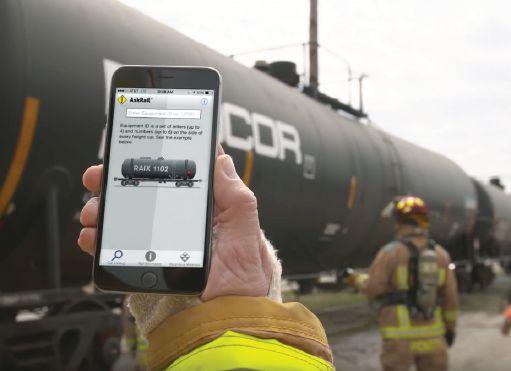
must email a request to download the app to the Class 1 railway operating in their communities.
According to the Railway Association of Canada, more than 2,000 Canadian first responders had signed up for
the app by mid-June. Learn more and find contact information for CN and CP at www.railcan.ca/safety/ dangerous_goods/askrail. Watch the video by searching AskRail Canada on YouTube.
– Maria Church
A smoke-alarm campaign that involved research from 50,000 fires in British Columbia, Alberta and Ontario over five years, has received an award from the Canadian Collaborating Centres for Injury Prevention.
The CCCIP, which represents injury prevention
centres throughout Canada, gave its 2016 Award for Collaborative Excellence to the City of Surrey, B.C., and the Fire Chiefs’ Association of British Columbia for their efforts to execute the BC Working Smoke Alarm Campaign.
The campaign launched
uty chief for Guelph-Eramosa Fire Department, and served as a member of Mississauga Fire And Emergency Services for 22 years.
TODD BINKLEY and ANDREW LILLICO were appointed deputy fire chiefs for the Brantford Fire Department on March 21. Binkley, a member of the department since 1999, served as a firefighter until
his promotion to assistant training officer and captain in 2013; he holds a bachelor’s degree in business administration emergency services from Lakeland College. Lillico began his career in fire as a volunteer with the Elmira Fire Department, and most recently served as deputy chief for Waterloo Fire Department and fire chief for the Township of Wellesley Fire department.
in 2012 and shared statistics collected by Surrey Fire Service members working with the University of the Fraser Valley, and in collaboration with the FCABC.
Researchers found that twothirds of houses that catch fire do not have working smoke alarms, fire damage is reduced
MIKE LARSSON, a member of Pitt Meadows Fire and Rescue Service in British Columbia since 2003, was promoted to assistant chief in May in charge of firefighter training, occupational health and safety and department emergency planning. Larsson has served the department as a volunteer, captain and fire-safety technician.
by 19 per cent when a working smoke alarm is present, and the death rate per 1,000 fires is 74 per cent higher when there is no working smoke alarm present.
During the campaign, 41,000 smoke alarms were installed across British Columbia, with a focus on vulnerable populations.
– Maria Church
TERRY GERVAIS, fire chief and general manager of emergency services in Napanee, Ont., retired in March after a 35-year career in fire. Gervais began in the fire service as a volunteer firefighter in the former Kingston Township, and later served in Guelph and Ottawa before joining Napanee as chief in 2011.
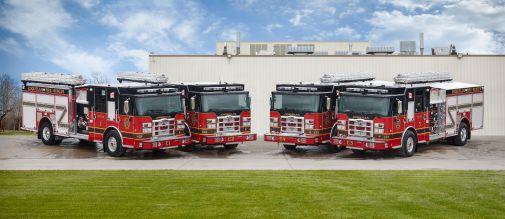
Coquitlam Fire Rescue in British Columbia, under Fire Chief Wade Pierlot, took delivery in March of four Pierce-built pumpers. Built on Enforcer chassis and powered by 450-hp Detroit Diesel DD13 engines, the units feature 2,000-gpm Waterous PTO pumps, 600-gallon water tanks, Husky 12 Hercules CAFSs, 24-volt Wilburt LED light towers, hydraulic ladder racks, and hard hose-bed covers.
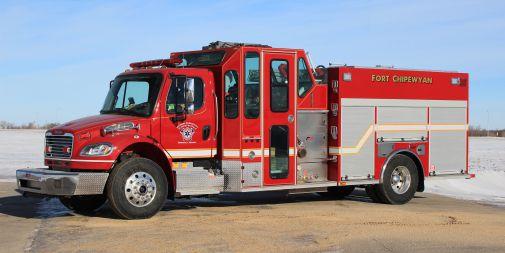
The Regional Municipality of Wood Buffalo’s Fort Chipewyan fire station in Alberta, under Fire Chief Harold Wylie, took delivery in March of a Fort Garry Fire Trucks-built pumper. This unit is built on a Freightliner M2 106 chassis and powered by a 330-hp ISL engine and a six-speed automatic transmission. It features a 1,250-gpm Darley PSP pump, a 900-igallon propoly water tank, a Foam Pro 2001 class A/B system, SL-442 Command light, Akron Deck Master monitor with 12-foot electric riser, FRC Q-70 LED 900 scene lights and PAC board lined compartments.
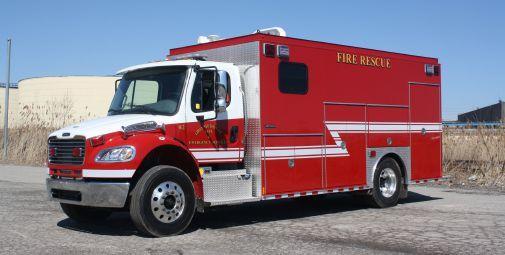
Oro–Medonte Fire Department in Ontario, under Fire Chief Hugh Murray, took delivery in May of a Dependable Emergency Vehiclesbuilt rescue. The unit is built on a Freightliner M2-106 chassis and powered by a 300-hp engine and an Allison 3000 EVS transmission. It features a walk-in body and a Whelen light package.
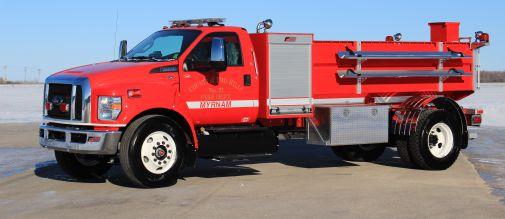
County of Two Hills Fire Department in Alberta, under Fire Chief Brad Straty, took delivery in February of a Fort Garry Fire Trucks-built tanker. The unit is built on a Ford F-650 chassis and powered by a 362-hp 6.8-litre Triton V10 engine and a six-speed automatic transmission. It is equipped with a 1,350-igallon galvanized steel tank and a 20-hp Honda pump.
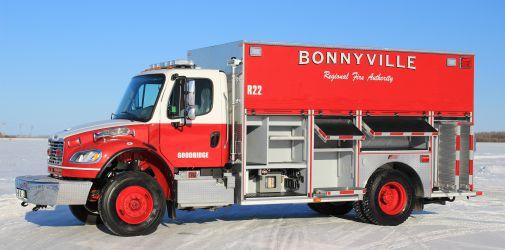
Bonnyville Regional Fire Authority in Alberta, under Regional Fire Chief Brian McEvoy, took delivery in January of a Fort Garry Fire Trucks-built 16-foot walk-in rescue. Built on a Freightliner M2 106 chassis and powered by a 350-hp Cummins ISL engine and a six-speed automatic transmission, this unit is equipped with a PTO generator, Warn winch with four receiver points, Slide Master tip-down trays with Hannay Cord reel, and FRC push-up and tripod scene lights.
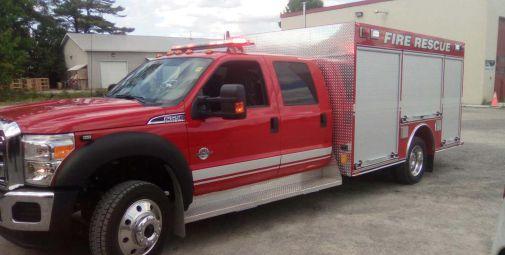
Central Frontenac Fire Department in Ontario, under Fire Chief Bill Young, took delivery in June of a Eastway Fire and Rescue Vehicles-built mini rescue. The unit is built on a Ford F550 chassis and is powered by a 300-hp 6.7 Power Stroker engine and a Torqshift six-speed select shift transmission.


By JASON BENN
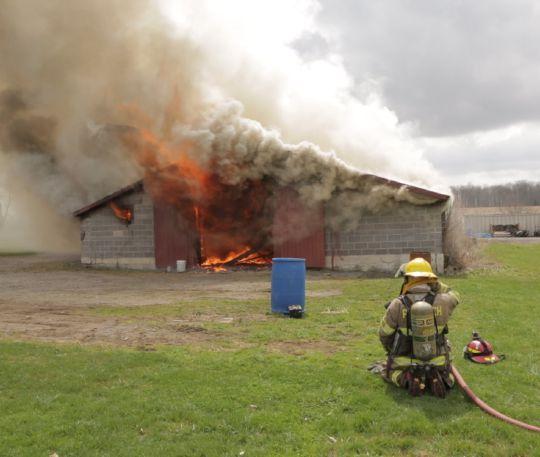
Firefighters conducted several small burn cells in the barn, simulating an electrical short, a discarded cigarette and improperly stored oily rags.
On Jan. 4, at approximately 11 p.m., Puslinch Fire and Rescue Services was dispatched to a barn fire at Classy Lane Stables boarding and training centre located on Concession 1 in Puslinch, Ont.
Responding firefighters could see an orange glow in the sky from kilometres away and knew it was going to be a long night. Upon arrival, crews found Barn 1 fully engulfed by fire. The one-storey barn made of wood and metal was 23-metres wide and 49-metres long. Aerial and pumper trucks were quickly set up and a water supply was established. A rural water tanker shuttle provided more than 600,000 litres of water to fire suppression crews throughout the night.
Four other fire services – Hamilton Fire Department, Cambridge Fire Department, Guelph-Eramosa Fire Department and Guelph Fire Department – joined Puslinch in the response to the barn fire. The incident commander and 45 firefighters did an exemplary job protecting the three other horse barns on site while dealing with the extreme-cold weather. Crews were able to prevent fire spread to barn 2, located close to barn 1, but could not save barn 1. There were 43 racehorses inside barn 1; all were killed. The fire caused $3.2 million in damages, and is the largest loss from fire in the township’s history.
The Ontario Office of the Fire Marshal and Emergency Management, with assistance from investigators with the Ontario Racing Commission and Puslinch Fire and Rescue Services, spent four days investigating the fire. Results from the high-profile investigation were expected to be released by mid-July.
This fire affected many Puslinch residents; almost everyone knows someone who worked at the barn or boarded a horse there. The trainers and owners of the horses were devastated. The fire also took a toll on the firefighters; fighting the fire was physically and emotionally exhausting, and it was heart wrenching to see the owners and trainers during the worst day of their lives. The impact of the fire spread to the horse racing community as well.
A few months after the devastating Classy Lane fire, Puslinch Fire and Rescue Services was approached by a local farmer who offered his barn for barn-fire research.
Township of Puslinch fire department staff accepted the offer to burn down the barn for training and research purposes. This was an opportunity for firefighters and others to see a barn fire in the incipient stage (when heat, fuel and oxygen result in fire ignition), rather than halfway through when crews typically arrive on scene. The live-fire training would provide an excellent opportunity for firefighters to gain new skills and experiences. Puslinch Fire and Rescue Services staff worked in partnership with the University of Waterloo Fire Research Lab, the NFPA, and local insurance agencies to organize a live-fire barn research and training event.
Puslinch firefighters receive first page
Dispatch receives 911 call
On April 22, after months of preparation, we were ready to commence the livefire research. Puslinch fire department members were very fortunate to be able to work with Beth Weckman and her team from the University of Waterloo’s Fire Research Lab. The research team set up cameras inside the barn as well as thermocouples at three different levels. The researchers recorded some amazing footage and data, including temperature measurements every minute.
Aerial 33 responding
11:19 p.m.
First arriving officer completes on scene 360 size-up
11:32 p.m.
Mutual-aid units arrive, crews begin defensive attack
Firefighters apply agent, set up rural water supply
Professional videographer Colin Smith and his team used cameras and drones to tape the burn from the outside. All the video captured will be put into two separate educational videos – one for the agricultural community to help educate barn owners, and another for fire services to provide analysis of the data.
The morning consisted of small burn cells happening inside the barn. The first cell was an electrical short and the combustibles on the floor ignited right away. The second cell was a discarded cigarette; during this test the cigarette took a while to ignite on the straw-covered floor, but eventually did so. Third test involved linseed oil rags – used to simulate oily rags discarded in a barn after use – which took the longest to ignite.
hour, although the barn continued to burn during the demolition stage. The tests were conducted successfully and from the data we will have a better understanding of the incipient stage of a fire in these types of buildings. Puslinch fire department members are still waiting for further data to be released by the university, but it takes time. The exercise proved immediately, however, that in the event of a barn fire, there is a limit to what fire services can do unless they are extremely close by, and even then the damage will be catastrophic.
Puslinch Fire and Rescue Services was very fortunate to be provided use of this barn for research. The barn’s owners, the Speers family, watched with excitement, as well as sadness; after 34 years on the farm, the family is moving. “If we can learn from this project,” Brett Speers said, “and others in the area learn from it, this is a good thing.”
1:21 a.m.
One of many personnel accountability reports (PARs) is completed, crews continue attacking the fire
Structure collapses
IC release most mutual-aid units
4:10 a.m.
crews continue to work on hot spots
Heavy equipment arrives
8 a.m.
Ontario Office of the Fire Marshal investigators arrive
Loss stop
Onlookers including area residents and media were able to view each cell until it was complete, and then were asked to leave the barn and return for the next one. After lunch, at approximately 12:37 p.m., a small flame was introduced in the barn’s west central area.
Temperatures in the barn reached almost 1,200 C in a matter of minutes. Fire crews then opened the front door of the barn for onlookers and media to witness how the fire behaves during the incipient stage. At the four-minute mark the barn was fully engulfed. As the fire grew, I announced to the crowd the common timelines in the volunteer world.
“At the five-minute mark the fire service would be getting the first page.”
“At the nine-minute mark, firefighters would be at the station getting their gear on and hopping in the trucks.”
“At the 15-minute mark, firefighters would be arriving on scene and setting up to combat the fire.”
Onlookers and media could not believe how quickly the barn went up in flames; the intensity of the heat was felt from 30 metres away. At about the 15-minute mark the roof collapsed.
The test was completed in about one
Just one week after the fire at Classy Lane Stables, owners Jamie and Barb Millier asked the department to make recommendations about how to make the barns safer. All four barns on the property are well maintained, with fire extinguishers, emergency procedures posted, first aid kits. Fire Chief Goode and I made several suggestions, including compartmenting the offices and service rooms to house the potential ignition sources; locating all appliances such as fridges in one room and placing closures on the doors to keep the room as a whole; installing detection alarms in all rooms and in the stall areas; and outfitting each barn on site with the same safety measures and zoning them in the detection system.
I also suggested the owner install sprinklers in the offices and services rooms; at Classy Lane Stables these rooms are heated so that there is no chance the sprinklers will freeze during the winter. The sprinklers would slow down if not suppress the fire should it occur in one of the sprinklered rooms.
The Milliers have since rebuilt barn 1, taking all of the suggestions to heart, and are working hard to install all the suggested measures. Classy Lane Stables will be leading the path for change once all the safety measures are installed in the new barn as well as the other barns on site, including an automatic fire suppression safety device called HAVEN (www.havenfiresafety.com) that uses dry chemicals.
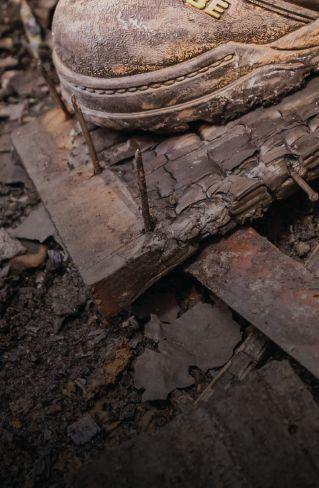

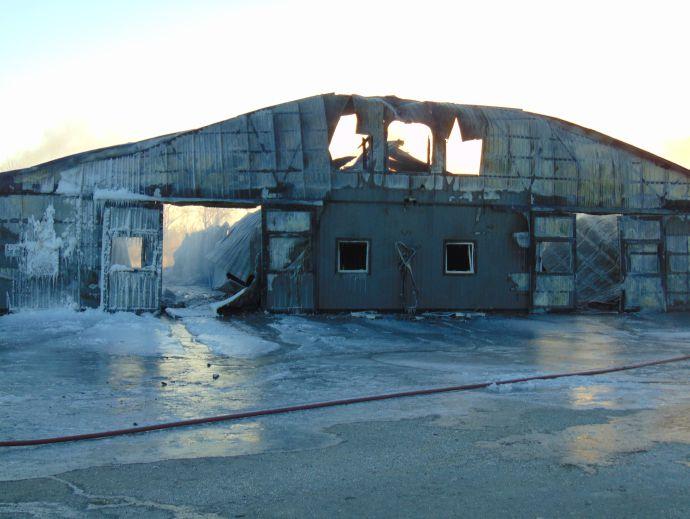
ground. The barn has since been rebuilt and outfitted with leading barn fire-safety measures, including detection systems and dry chemical fire suppression safety devices.
Puslinch Fire and Rescue Services has learned a great deal about barn fires since Jan. 4. Chief Goode said that fire departments know there is information available for barn owners, however, fire personnel often do not to promote it. “We certainly are now,” Goode said.
Puslinch Fire and Rescue Services has come up with its own education program for area residents who have agriculture buildings. Firefighters will visit each agriculture operation in the township and will promote fire safety by handing out public fire safety guidelines and offering free inspection for the owner’s peace of mind. One of the items Puslinch staff handed out is a guide from the Ontario Ministry of Agriculture, Food and Rural Affairs called Reducing the Risk of Fire on Your Farm (find it on the ministry’s website: www.omafra.gov.on.ca). We have also created a check sheet for our members to refer to when conducting inspections at properties with agricultural buildings.
So far the program has received great support from area residents, and, in fact, we regularly receive requests from owners for department members to walk through their buildings and make fire-safety suggestions.
There has been a lot of media attention this year on barn fires in Ontario, which had led to a mistaken impression that there has been a higher-than-normal number of incidents. In fact, the number of reported barn fires has been decreasing since 2008 (see
Ontario fire statistics sidebar). Bear in mind, however, that over the years many family farms have closed or transitioned to factory farms, for a lack of a better term. Because of the size of these large-scale livestock farms, more animals are likely to die during a major barn fire. Four separate barn fires in Ontario in January killed 56 horses, 500 goats, 30 cattle and approximately 2,000 pigs.
The National Research Council of Canada is behind a working group looking at making changes to National Farm Building Code of Canada, which was last updated in 1995. This is a good start to change. I have been very fortunate to have been granted the opportunity to be an observer for this working group, composed of many stakeholders in agriculture, construction, and fire services. Updates to the farm building code would be reflected in the 2020 editions of the National Building Code and National Fire Code. I strongly feel that there is a need for change, however, simple measures in place by property owners can reduce the fire numbers substantially.
Go online to www.firefightingincanada. com for more research results.
Jason Benn is the chief fire prevention officer for Puslinch Fire and Rescue Services in Ontario. Email him at jbenn@puslinch.ca and follow him on Twitter @JasonBenn2



BY MIKE VILNEFF Fire chief, Cobourg, Ont.

ernia: the protrusion of an organ or the fascia of an organ through the wall of the cavity that normally contains it.
That was the diagnosis I received. Believe it or not, I was kind of relieved – thankful it was not something more serious. The doctor then ordered me to lose 25 pounds before he would operate. My mood changed from relief to disappointment; disappointed that I had let my body go and that I would have to wait a period before the hernia could be repaired. You possibly read about my weight loss in a previous issue so I won’t bore you any more with that story.
This story is about facing my fears. Thinking back, I believe I suffered the hernia while piling firewood about six months prior. It felt like something ripped and hurt at the time. The pain subsided and I continued piling wood. I did not notice anything different for a couple of weeks. Then the slight bulge started to appear. I chalked it up to an increase in fatty tissue, but I had a nagging sensation that it was a hernia.
I did not experience any pain except when it happened, so it was kind of easy to forget about it. As the months passed and there was no change in the bulge, I was more convinced it was a hernia.
After writing my first article about detoxification and encouraging you, the reader, to try something outside your comfort zone, I felt that I was being a little hypocritical by not stepping out of my comfort zone and seeking medical advice.
So, I faced my fear and the assessment confirmed an inguinal hernia. I booked the surgery four months into the future and started losing weight.
Overall, I had a very positive experience with one little exception: if you ever find yourself in this situation, when the nurse asks you if you have a cough during the pre-surgery exam, do not lie. I had a cough but was afraid to admit this as I did not want to cancel. When I awoke from surgery, I quickly found out why they ask that question. I swear to any supreme being you pray to, the whole body is connected. When I coughed, everything from my toenails to my eyelids screamed in pain. Painkillers with codeine became my relief for a couple days until the cough left me.
I ended up taking a couple weeks off work to fully recover. Walking was the prescribed exercise and I followed the doctor’s orders diligently. The time off not only allowed me to heal physically, but it also let me clear my head and forget about work for a while. Although I could not do anything strenuous and therefore the list of household projects saw no activity, it was time off well spent.
You are probably trying to figure out the purpose of this column. There are really two reasons why I penned this. The first is to encourage you to meet your fears and deal with them head on. Your fear may or may not be a physical one like mine was. If it is, get to
. . . I felt that I was being a little hypocritical by not stepping out of my comfort zone and seeking medical advice. ‘‘ ’’
As the date drew nearer, I found myself becoming anxious and somewhat nervous. I began to talk about it with anyone who would listen and found that there are a lot of middle-aged men who have experienced this surgery. Those who went to the Shouldice Hospital in Toronto (where I booked) calmed my fears. Each spoke about their positive experiences and successful recoveries. I entered the clinic Sunday evening, had the surgery Monday and was driving myself home Wednesday afternoon.
Mike Vilneff is the fire chief for the Cobourg Fire Department in Ontario. The 36-year veteran of the fire service is also a member of the Ontario Ministry of Labour Section 21 committee and is the chair of the advisory committee for the Fleming College pre-service program. Email Mike at mvilneff@cobourg.ca and follow him on Twitter at @84supra
your doctor and get it looked after. We are blessed in this country to have access to world-class facilities and medical practitioners. Don’t be afraid to use them.
The other reason is to encourage you to talk. When I started asking about hernias, it was amazing how many people I encountered who had gone through this and kept it to themselves, as they were embarrassed to admit that they were suffering. My questions helped them see that there is no need to be embarrassed or feel shame. Thousands of people experience similar situations every day and it’s unknown how many of these suffer in silence. There is no need to.
We are now openly talking about occupational stress injuries such as post traumatic stress disorder, anxiety and depression, so why can’t we talk about physical injuries and ailments? Again, there is no reason to endure these events in silence. It’s really quite simple: let’s talk!

Chief challenged to handle both fire and emergency response
By STEVEN SORENSEN

Amassive fire at a 20-unit apartment building in Sooke, B.C., displaced 19 residents and was a wake-up call to emergency services about the need to plan for large-scale, long-term evacuations.
As is the case for many municipalities, the Sooke fire chief is also the emergency co-ordinator. Whether or not the chief having these two hats is a good idea is another conversation, but needless to say it does pose some logistical challenges during major incidents. This is a look at the incident from my role as a fire chief, as well as my role as the emergency co-ordinator.
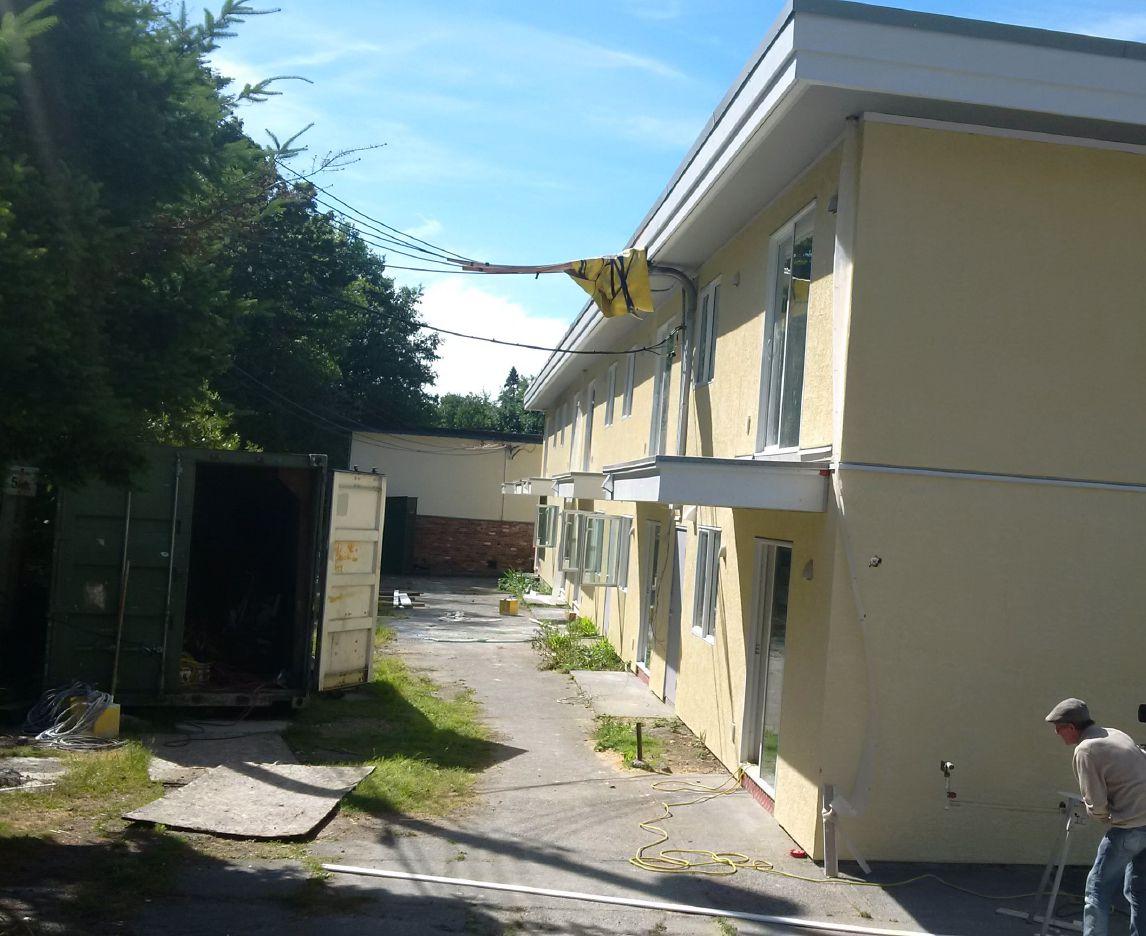
On July 4, 2015, at 12:42 a.m., Sooke firefighters and, through automatic-aid agreements, members of Otter Point and Metchosin fire departments, were awakened by the well-known but still unnerving, shrill alarm of their pagers. Dispatch was reporting a structure fire in an occupied commercial building. Arriving first on scene in Battalion 1, the Sooke duty officer reported heavy fire showing from the centre portion of a ground-floor unit in a two-storey wood-framed, 1960s vintage, 20-unit apartment building.
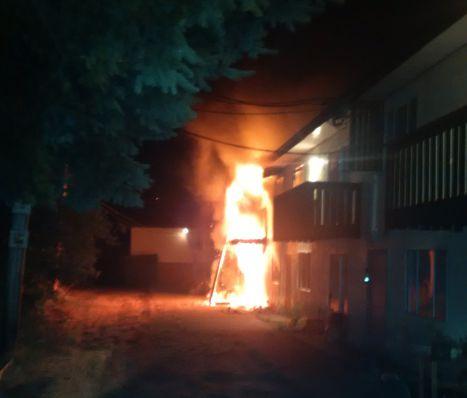
LEFT On July 4, 2015, arriving Sooke crews
fire spreading from the apartment’s ground-floor unit over the second-floor balcony, entering the second-floor suite.
Fire had already lapped up over the balcony on the unit above and entered the second-floor suite. Heavy smoke was showing from the corridor doors on both floors that led to the suites through the centre of the building.
Members of the Sooke RCMP had arrived just a few moments before the fire department and began pounding on doors and evacuating scared residents from the building. Despite the sounding alarm, some of the occupants either ignored or slept through the alarm and had to be awakened and told to leave. RCMP then confirmed with the building manager that all residents had been evacuated from the fire building as well as an adjoining apartment building. Fire trucks were quickly assigned as they arrived. Engine 1 was tasked to stretch two
preconnect compressed air foam (CAF) lines to the Bravo side and hit the fire directly. Ladder 1 was assigned to the Charlie side and was to ladder the roof and prepare for a defensive attack if required. Engine 2 arrived next and was assigned to rapid intervention team (RIT) with assistance from the Metchosin engine. Otter Point arrived with two engines and provided water supply to Ladder 1 and additional crews to assist with ventilation and begin a search of the second floor for fire spread. Ladder 1 reported that fire had broken through the roof and was spreading laterally along the width of the roof to the upper apartment on the opposite side of the fire origin.
Residents of the burning apartment building were mingling on the street, watching in obvious distress as all their possessions appeared to be going up in flames. The fire grew rapidly and immediate calls for additional mutual aid were made to bring in two additional engines, one each from the East Sooke and Langford fire departments. Due to the complexity of this fire and the fact that many residents would be displaced, the Sooke Emergency Operations Centre (EOC) was activated, which in turn notified the Emergency Social Service (ESS) volunteers to set up a reception centre and to begin arranging emergency lodging and care for the victims.
A fast exterior attack quickly knocked down the main body of fire in the two burning apartment units. Additional crews arrived from East Sooke and Langford fire departments and were tasked with ventilation and overhaul, pulling ceilings in the corridor and several suites to gain access to fire travelling within the attic spaces.
When the fire appeared to be out, crews forced entry into all remaining units to ensure that the fire had not spread into other voids. Finding no other areas burning, the fire was declared fully extinguished shortly after 4 a.m. Salvage work continued for some time and crews also searched for several missing pets. All pets were safely located and returned to their grateful owners with the exception of one cat that was discovered shortly after arrival.
While the fire itself was not overly complex to handle it did require a significant amount of equipment and personnel; the last crews returned to the station around 6 a.m.
■
• Use of compressed air foam system provided a relatively quick knockdown on the main body of fire.
• Automatic-aid agreements sped up response time for neighbouring departments.
• Quick requests for additional mutual aid meant other companies arrived before crews were at the point of exhaustion.
• Common accountability systems throughout the region made tracking and operational assignments much easier to accomplish.
Later investigation determined that the fire originated in a couch located in the lower centre suite, likely from carelessly discarded smoking material. One resident who assisted in the evacuation was taken to hospital, treated and released that night. The occupant of the suite of origin had escaped just in time, however, he suffered significant smoke inhalation that required a three-day stay in hospital.
All 20 units in the apartment building
sustained some degree of damage from heavy fire to light smoke. As well, due to the age of the structure and the use of asbestos in many of the building products, including the drywall texture material, Worksafe BC declared the building unsafe and contaminated by asbestos. This declaration meant all the exposed portions of the entire building and all its contents were considered contaminated and could not be saved unless properly cleaned. None of the residents had insurance so they lost of all their possessions, even those that were not damaged by fire. The building was fully insured, with losses estimated at $2,000,000.00, however, it would take approximately one year to decontaminate and rebuild the structure. All residents were forced to find new accommodations.
Activation of the Sooke EOC and ESS teams occurred shortly after arrival of the fire department and confirmation that many victims of the fire had nowhere to go. Fortunately, the community of Sooke has well-trained municipal staff to operate its
EOC as well as dedicated volunteers to operate ESS during these types of incidents.
A call to Emergency Management BC –the province’s co-ordinating agency for all emergency management activities – resulted in a provincial task number that provided funding to cover 72 hours of emergency care including the necessary expenses to house, feed and clothe the victims. An emergency reception centre was quickly established at the Sooke Community Hall – the designated facility for these types of operations following procedures outlined in the Sooke Emergency Plan. Approximately 15 volunteer ESS members arrived at the community hall and quickly organized how to take care of the residents, many of whom are vulnerable members of the community.
Sooke Fire Rescue Service’s Volunteer Emergency Support Service members drove victims to the community hall where their needs were assessed. July is the start of a busy summer season, so accommodations can be tough to find, especially at 2 a.m. on a Saturday. Fortunately, a local hotel had just enough rooms to take care of the displaced residents, most of whom had

left with only the clothes on their backs. However, this solution was short-term as the hotel was fully booked the following weekend.
While the first 72 hours of care were covered, thoughts now turned to the longer term. What could be done with all the victims? Fortunately the local chapter of the Canadian Red Cross stepped up and, through its resources, offered assistance and financial aid to the displaced residents. With this offer and some very generous donations and community support, residents’ expenses were covered for the first week.
In the days following the fire, countless meetings and phone calls were held. Through the Sooke Emergency Program, co-ordination among agencies became a monumental task. There were many groups and agencies involved or trying to assist including:
• The building owner
• Insurance companies
• Fire investigation
• Building inspection department
• Site safety and security
• Restoration companies
• Worksafe BC
• The Province of BC – Social service agencies and Emergency Management BC
• The Canadian Red Cross
• The Sooke Legion, Lions Club and other local service groups
• Local church groups
• Concerned residents
• Local restaurants providing meals for displaced residents
• Hotel staff (one resident damaged a room while in emergency care and was escorted from the building by RCMP.)
Co-ordination of agencies, meetings and phone calls were all handled through the Sooke Emergency Program, but the fire department had to continue its day-to-day operations and emergency response calls; this made the dual role of emergency co-ordinator and fire chief a challenge.
The Prestige Hotel in Sooke, where most of the residents initially stayed, graciously provided a meeting room for victims of the fire to meet with members of the Red Cross, representatives of some local service clubs and members of the fire department/ emergency program. In the initial days, meetings were held every other day to update residents on the situation. These
meetings proved to be a positive approach even though there was little good news. The residents appreciated being apprised of accurate information; as is often the case, inaccurate rumours were abundant.
With a limited pool of rental accommodation in Sooke and all tourist accommodations booked or available only at peak-season rates, there was nowhere for displaced residents to go in their own community. The Red Cross was able to obtain another week of accommodation for approximately half the residents in a Victoria motel 40 minutes away. The remaining victims found temporary accommodation with family or friends; some even opted to set up tents in the hopes that their apartments would be repaired before the end of summer.
Approximately 10 days after the fire, a meeting was arranged at the apartment site for all residents to ask questions about what the future held in terms of repairs to the structure, when they could move back in and the status of their personal belongings. The building owner, the restoration company, the Red Cross and a local person co-ordinating community donations attended, along with three members of the Sooke Emergency Program who were asked to assist and mediate this very emotionally charged meeting. There was little good news for the residents.
• The building owner refunded rent checks for July to all residents.
• The owner also offered to return damage deposits, however, this would end the terms of any rental agreement in place.
• Almost all residents’ possessions were sent to a landfill due to asbestos contamination throughout the building as a result of the smoke and products of combustion that were carried throughout the structure.
• The restoration company was able to remove some small, valued items such as jewelry or wallets from each apartment unit.
• Volunteer members of Sooke Fire Rescue, under the guidance of our hazardous-materials trained firefighters, spent an afternoon decontaminating the small items in order to return them to the residents. It was a tough job going through the items – some were family heirlooms or personal treasures – but it was very satisfying knowing that each person was able to keep something that had huge
personal value.
• Due to the extent of damage and concerns about asbestos contamination, it was estimated that it would take one year to remediate the building for occupancy.
• The Red Cross, working with the BC Ministry of Social Services, was unable to find any long-term local accommodation for the residents.
• The Sooke Legion indicated that it had many offers from community members to supply furniture, bedding, clothing and household items, however, without a place to go, displaced residents were reluctant to take the items. It was determined that residents who found new homes could contact the legion to arrange for delivery of donated items.
While the apartment fire was a challenging event for local fire departments, it was handled quickly and efficiently and concluded when the trucks returned to service. The human side of this incident has been far more trying and time consuming. Dealing with the 19 displaced residents required countless hours of tireless effort by a large group of people.
Residents continue to make enquiries and raise concerns about housing, possessions, health and long-term well-being. With few options and limited assistance, displaced residents continue to turn to their local government for assistance, which is often unavailable or beyond the capacity of a small municipality. It is likely this situation will continue for some time, however, the community continues to rally support for the residents with various fundraising events.
The fire and displacement of residents certainly opened our eyes to what might happen in the event a major disaster or long-term evacuation that affects hundreds or even thousands of residents. Now is the time for our community to prepare for a large-scale displacement because, as we in the emergency services know all too well, it is not a matter of if, but when, these types of incidents will take place.

Steven Sorensen is the fire chief and emergency operations co-ordinator for the Sooke Fire Rescue Service in British Columbia. Email him at ssorensen@sooke.ca
BY MARK VAN DER FEYST
Most mid-rise or high-rise buildings are equipped with standpipe systems that allow firefighters to access water. Fire crews need to consider many elements with respect to securing a standpipe system, such as the size of hoselines, types of nozzles, tools or equipment to bring, the number of firefighters needed, where to stage all of the equipment, and whether or not to use the elevator.
The question of whether firefighters should hit the standpipe on the fire floor or one floor below is the subject of intense debate among many firefighters and fire departments. The answer to that question determines a crew’s method of attack with respect to standpipe operations, from the initial attack to subsequent operations.
I can’t speak for all proponents of using the standpipe on the fire floor, but common reasons crews use this method include the length of hose in the high-rise kit and adequate hose to stretch the hand line from the standpipe to the fire room. In Ontario, many standpipes are located in the hallways of buildings and not in the stair shafts, which adds to the distance over which the hose must be advanced.
Depending on the location of the stairwell door and the distance to the building’s standpipe system, fire crews may be required to add another section of hose during the operation. If the standpipe is secured on the fire floor, 30 metres or 100 feet of hose is typically long enough to make an initial attack.
Most high-rise kits consist of 30 metres of attack hose. Departments usually use 45-millimetre (1 3/4-inch) hose, although some departments use 38 millimetre (1 1/2 inch). Very few departments use 65-millimetre (2 1/2-inch) hose for their high-rise attack lines, however, I advocate for the bigger hoseline (that’s a subject for another column).
One way to compensate for the short stretch of the hoseline is to bring more hose. Instead of bringing up just one high-rise kit with 30 metres of hose, why not bring another section or two of supply hose? The supply hose needs to be a 65-millimetre line, and will act as an extension of the standpipe so that crews can adequately supply the attack lines. Keep in mind that crews will eventually need to supply two attack lines – one for the initial attack and one for a back-up line. These two lines will be fed from the same standpipe system, which has only one outlet. A 65-millimetre supply line can facilitate a gated wye, which will feed two attack lines.
While the thought of brining up more hose does not sound like fun, it is practical. The initial team responding to a fire at a mid-rise or high-rise building usually consists of two to four people. Even two people can efficiently carry up a high-rise kit and an extra length of supply hose. The high-rise kit should be packed in a manner that is short and easy to carry, as opposed to long and floppy. The extra length of
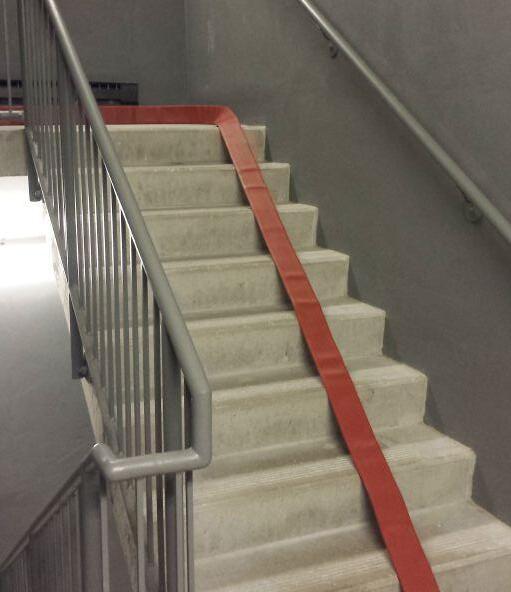
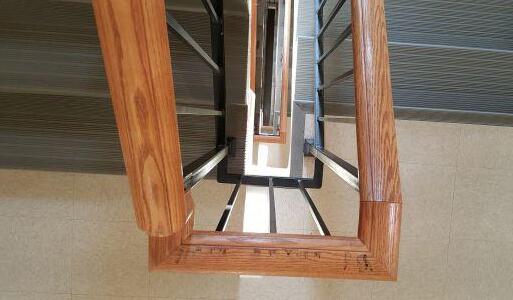

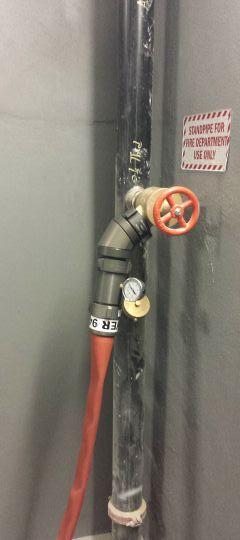
Photo 3: Depending on the location of the stairwell door and the distance to the building’s standpipe system, firefighters may need to add another section of hose. The supply hose should be a 65-millimetre line with a gated wye to feed two attack lines.
supply hose should be arranged in either a twin self-locking donut roll, or as a Denver load.
Dave McGrail, an assistant chief with the Denver Fire Department, created the Denver load as a way to fight high-rise fires more efficiently and effectively. One firefighter can easily carry the Denver load on the back of his or her SCBA or over the shoulder while carrying another tool or piece of equipment. To learn how to pack and carry the Denver load, refer to McGrail’s book Firefighting Operations in High Rise and Standpipe Equipped Buildings.
Another way to compensate for the short stretch is to use the well stretch. To accomplish the well stretch, firefighters take advantage of the stairwell and the space in between the stair
railings of both sets of stairs. Bear in mind that one length of hose is generally required to cover the distance to the fire floor from the standpipe on the floor below the fire; the hose must be flaked out to prevent kinks and to ensure the hose is out of the way of firefighter foot traffic. Photo 1 shows how the hose is deployed on the outside of the wall, ascending up the stairs. This added distance can be reduced if firefighters stretch the hoseline up the space between the stair rails. In essence, firefighters are creating a vertical standpipe with the hose; for this, crews will need to use a hose strap so that gravity does not cause the hose to fall back down.
In order for the well stretch to be effective, the space in between stair rails needs to be wide enough to facilitate both 45-millimetre and 65-millimetre hand lines without any problems (see photo 2).
To gauge the space between the stair rails, make a fist with a gloved hand and fit it in between the stair rails. If the gloved fist fits, firefighters are a go for the well stretch.
In the next issue, we will look at the main reason why crews would want to hit the standpipe on the floor below the fire and not on the fire floor – namely, firefighter safety.

Mark van der Feyst has been in the fire service since 1999 and is a full-time firefighter in Ontario. Mark teaches in Canada, the United States and India. He is a local-level suppression instructor for the Pennsylvania State Fire Academy and an instructor for the Justice Institute of BC. He is also the lead author of Pennwell’s Residential Fire Rescue book. Email him at Mark@FireStarTraining.com




BY JAMIE COUTTS
At 10:30 p.m. on Monday, April 11, just as Lesser Slave Regional Fire Service crew members were headed home from the fire hall after a long, tiring night of hazard-reduction burning and clean up, a call came through dispatch from OnStar (General Motors Canada/ Chevrolet satellite tracking communications service) about a vehicle in the Lesser Slave River just north of Slave Lake on Highway 2.
The duty officer responded in his pickup and paged for assistance from firefighters at Hall 1 in Slave Lake. Listening in on the radio, I made a couple of calls to water-rescue specialists on our team. At the GPS location, the duty officer was not able to see a vehicle or people anywhere. Fire trucks started to arrive at 10:40 p.m. and were tasked to search in other nearby water locations.
OnStar information indicated that the vehicle had gone into the river. Dispatch followed up to inform crews that one occupant had made it to the shore and the second was unaccounted for in the river. At this time, a woman who lives in a house near the river called to crews from her deck saying she could hear yelling down by the weir, downstream of where firefighters were searching.
Crews headed toward the weir and as I passed by the woman’s house, her husband filled in some blanks. An SUV entered the water downstream of the weir and floated with the current for approximately 100 metres before the front dug in to the bottom of the river, and the vehicle sank. The male passenger in his 30s got out of the vehicle and dragged himself along a line of chained buoys to shore. The female driver, also in her 30s, got out of the SUV, but was washed downstream in the current. The SUV sank nose down with the lights still on (they stayed illuminated throughout the rescue).
Two crew members immediately donned swift water-rescue suits and headed to the car to check for more occupants. The male neighbour went to the far side of the river, stopped and spoke with the male passenger, and then headed downstream on the riverbank to try to spot the woman.
As the incident commander, Deputy Chief Alex Pavcek, received more information, he quickly tasked crews. I drove with an RCMP member and two paramedics to the far side of the river (the road was terrible and we had to use our 4x4 truck to get there) to assist with the hypothermic male.
The man said he heard the woman splashing at a nearby boat launch and crews immediately converged on the area. During this search, crews discovered a very angry beaver, which was making the splashing noises.
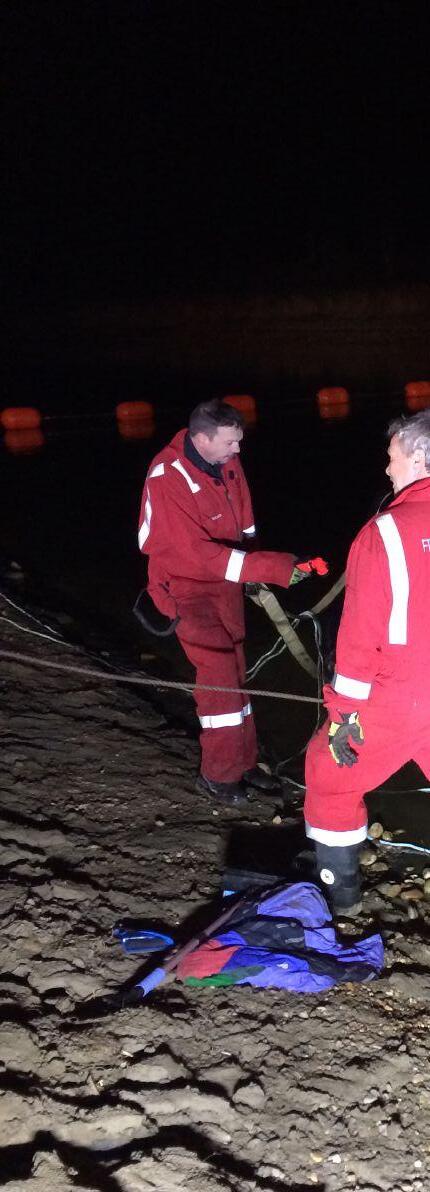
More firefighters arrived in the third and fourth trucks and were tasked with dividing into two units. Two members in the first unit donned ice-rescue suits went into the river to look for the woman, heading downstream. Two teams on both sides of the river guided the first unit downstream. The second unit made its way down the east riverbank (at best possible speed) checking the river along the way for the missing person.
The male neighbour on the west riverbank made it 500 metres downstream when he saw the woman on a sandbar in the river, and heard her yelling. Using the radio we had given him, the neighbour directed the east-side crew to her location. Once they found the woman, firefighters entered the river and retrieved her from the sandbar.
The woman was very hypothermic so crews started a warming fire, removed her wet clothes and covered her in their own jackets and called for a follow-up team with a Stokes basket and medical equipment. Once all equipment was on site, our emergency medical responders treated the
woman quickly, covered her in more blankets and loaded her on the Stokes basket.
A dozen firefighters, carrying the patient, trekked 600 metres to the staging area; it was dark, cold and the terrain was very uneven. At the staging area the patient was handed over to EMS crews and she left the scene.
Responders’ attentions turned back to the vehicle. The male SUV passenger said just he and the woman had been in the vehicle, but the woman, who was severely hypothermic, spoke with rescuers about her son. RCMP and firefighters feared that
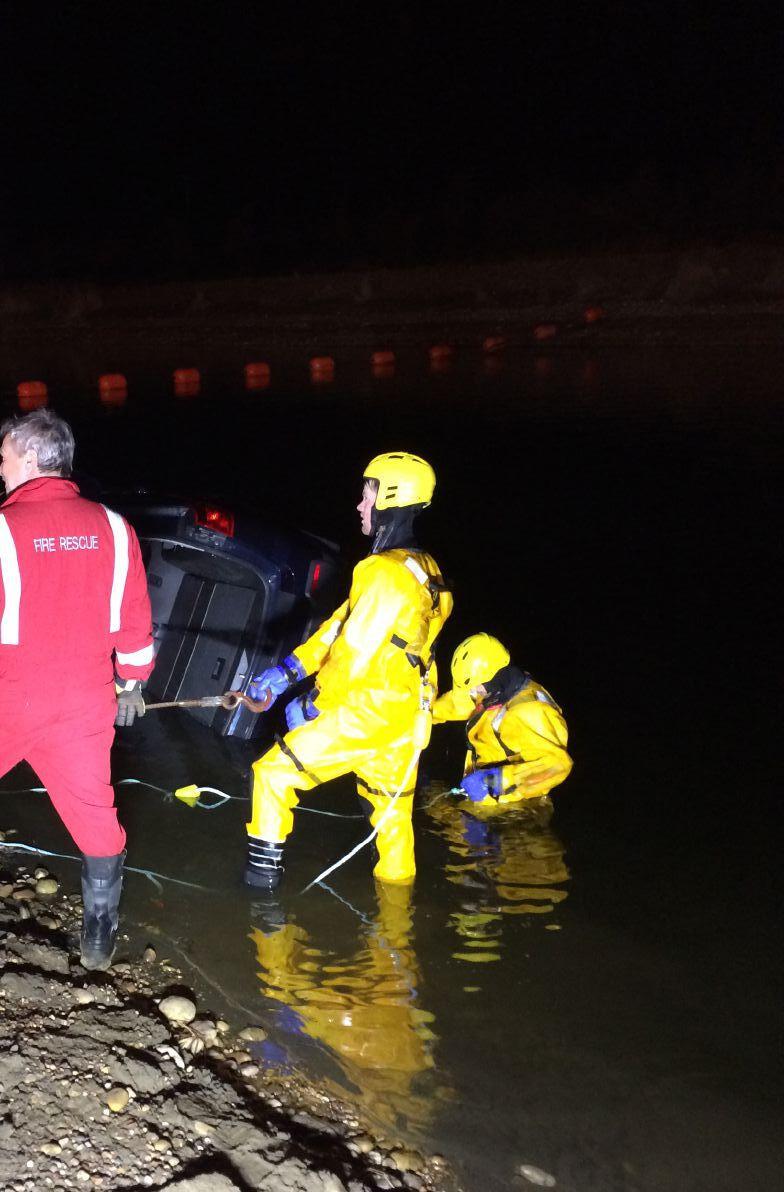
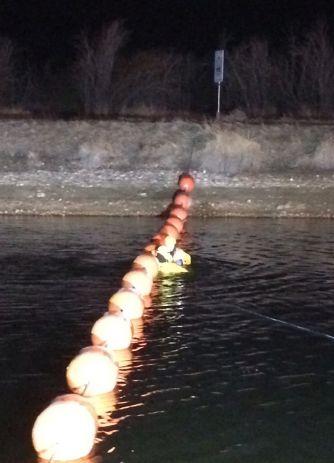
Firefighters wearing swift-water rescue suits search the river for the missing female SUV occupant.
the son had been left behind (it was unclear why the SUV was even in the river) so we decided to remove the vehicle that night.
Two firefighters entered the river in ice-rescue suits and, using a pike pole, threaded a tow strap through the SUV and back to the tow cable. The tow truck operators slowly pulled out the SUV while fire crews repositioned the cables as needed.
It was a scary moment indeed, when rescuers got their first look inside the car; we saw the car-seat base, but no car seat. It was now 1 a.m. and it had snowed, rained, and frozen while we were out so we packed
Lesser Slave Regional Fire Service rescuers work with tow-truck operators to pull the SUV out of the river.
up every piece of water-rescue gear we had and headed back to the fire hall.
I laughed the next morning as we cleaned up all that water- and ice-rescue gear while at the same time prepared for our next set of hazard-reduction burns. Spring in northern Alberta, what a treat.

Jamie Coutts is the fire chief of Lesser Slave Regional Fire Service in Alberta. Contact him at jamie@slavelake.ca and follow him on Twitter @chiefcoutts
LESSER SLAVE REGIONAL FIRE SERVICE
1 regional fire chief
1 deputy chief, rural ops
1 deputy chief, life safety and training
Maintenance officer Admin assistant
4-person FireSmart crew
110 volunteers
5 stations, plus search and rescue
5 frontline mini pumpers
4 tankers
1 heavy rescue
1 rescue pump
2 wildland trucks
7 varied support vehicles
2 ladder trucks
Tractor
Skidsteer
Command trailer
2 UTV
1 ATV
1 marine unit
10,000 population, approx.
10,490 square kilometres
350 calls per year, average
BY SHAYNE MINTZ NFPA Canadian regional director

hen will something finally be done to develop a building code for the wildland urban interface?
An insurance industry trade magazine, The Claims Journal, reported the Fort McMurray fire as being the costliest natural disaster in Canadian history. Insured losses – including physical damage and business interruption – are anticipated to be in excess of $4 billion.
The fire charred more than 580,000 hectares (1.43 million acres) of land, caused the evacuation of almost 90,000 people and destroyed at least 10 per cent of the city, including more than 2,400 homes and other structures. This fire will go in the record books as being one of the most devastating disasters this country has seen. Losses in Fort McMurray have already eclipsed those of the previous two most devastating fire events in Canada combined – 238 homes were destroyed by wildfire in Kelowna, B.C., in 2003 and 433 homes burned in Slave Lake, Alta., in 2011.
In a letter to more than 50 ministers (federal MPs and MLAs and MPPs in eight provinces whose constituencies include significant wildland fire prone areas), the Institute for Catastrophic Loss Reduction, the NFPA and FireSmart Canada strongly suggested that it’s time to fully address the lack of building codes for structures in wildfire susceptible areas.
Building codes in general are intended to ensure occupant safety and appropriate building performance in the event of structural fire. However, to this point, and with the exception of some work done in Saskatchewan last year, little to no consideration of wildland fire risk reduction has been incorporated into any national or provincial building codes.
ability. Local jurisdictions are typically the most aware of their resident wildland fire risks, and should be given authority to require distinctive wildland fire mitigation measures where appropriate.
The development and adoption of mitigation practices and codes and standards need not be a daunting task. After all, much of the work to inform code developers and government has already been done. NFPA 1144 (2013) – Standard for Reducing Structure Ignition Hazards from Wildland Fire, provides a methodology for assessing wildland fire ignition hazards around existing structures, residential developments and subdivisions. The standard also focuses on improving property or planned property developments located in a WUI area.
Ultimately the standard provides for minimum construction requirements for new construction to reduce the potential of structural fires that result from wildland fire exposure. The standard covers design, construction, and landscaping for structures in the WUI and can be used as a tool to assess fuel sources in and around communities for their potential to ignite structures, and identifies mitigation measures to reduce the chance of structural ignition.
From the experience in Fort McMurray it is clear that building codes could and should provide consideration for wildland fire vulnerability.
While responsibility for wildland fire risk reduction is frequently left to municipalities, in several provinces including Alberta local authorities have very limited ability to implement building bylaws that exceed provincial code requirements. This means that municipalities cannot be expected, nor do they have the tools, to lead the implementation of wildland fire mitigation measures. Therefore, higher levels of government and the National Model Building and Fire Code process must take action to address and facilitate the construction of safer homes in communities that are pre-disposed to wildland fire hazards or threats.
From the experience in Fort McMurray it is clear that building codes could and should provide consideration for wildland fire vulner-
Shayne Mintz is the Canadian Regional Director for the National Fire Protection Association (NFPA). Contact Shayne at smintz@nfpa. org, and follow him on Twitter at @ShayneMintz
’’
Partners in Protection and the FireSmart: Protecting your Community from Wildfire guide also focus on how individuals and communities can work together to reduce the risk of loss from interface fires in Canada. The FireSmart guide provides practical tools and information for use by WUI residents, municipal officials, land use planners, structural and wildland firefighters, and industries that work in the WUI. Primarily the FireSmart manual identifies interface issues and provides tools to evaluate WUI hazards; mitigation strategies and techniques; emergency response for agencies and individuals; training for wildland firefighters; community education programs; and, regional planning solutions.
Both the NFPA standard and the Partners in Protection FireSmart information have been in existence for many years. Now it’s just a matter of getting the regulators to recognize and heed the work that has already been done and take action.
By ED BROUWER
It has been two years since I created the firefighter survival maze, called Firefighter’s Ghost. The maze was first introduced at the 2014 annual volunteer firefighter training seminar hosted by Oliver Fire & Rescue in British Columbia. At that event, our SOOHOT (Saving Our Own Hands-On Training) crew evaluated more than 100 firefighters as to whether or not they would call a mayday. The evaluation was a huge eye opener when only one firefighter was successful (Boston Bar Fire Chief Eric Phibbs) out of 105 members representing 50 departments who took part.
This year’s training seminar was held May 14 and 15 in Osoyoos and once again we were invited to bring our maze. The results were slightly better, but not great: only four out of 95 members from 38 departments were successful. Congratulations to firefighters Tyler Bannerman from Sidney Fire Department, Darrin Massullo from Tulameen Fire Department, Steve Hoodicoff from Robson Fire Department and Tegan Burton from Armstrong Spallumcheen Fire Department – the first female firefighter to beat the maze.
The Firefighter’s Ghost survival maze is more of an evaluation prop than an instructional one; it was built in honour of our fallen brothers and sisters and it is our hope that firefighters can learn from their sacrifices.
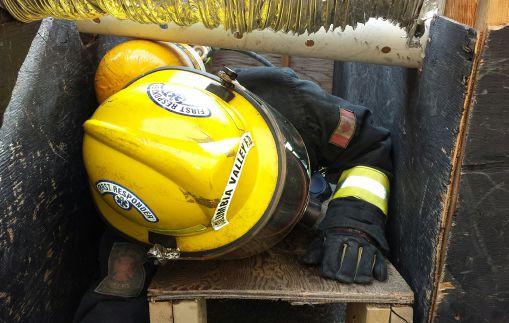
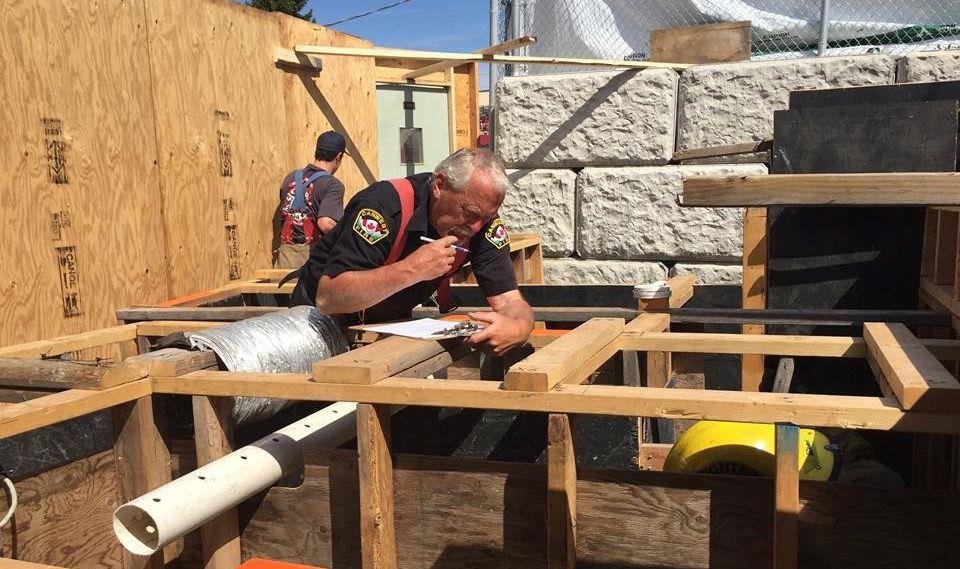
The exercise begins when teams of two firefighters wearing complete PPE including SCBA (masks are 90 per cent blacked out) are led to a staging mat. Prior to this, each firefighter pulls two playing cards from a deck and we add the numbers of their cards, divide by two and that is their air time. The times range from 4.5 to 12 minutes, but it is all a head game. The teams are asked if they want to take anything in with them, and if they ask for a radio we give them one, if they don’t, oh well. Teams are then led to the maze entrance, a 0.6-metre (two-foot) wide by one-metre (three-foot) high tunnel we constructed out of 2x4s and plywood.
At the entrance the firefighters are given the scenario: they have come this far into the building with a charged line (we charge it with air to simulate water) and they must follow their hoseline out. The firefighters are told to follow their department’s training protocols. Our instructors do not tell them what to do, we simply observe and evaluate each individual firefighter’s training.
Our instructors, armed with clipboards and evaluation sheets, follow the teams, marking a pass or fail in the appropriate spaces. The whole maze is painted flat black, and on that weekend, brother it was hot! Out of the more than 90 firefighters who attempted this evaluation, eight bailed out part way through, overheated, stressed out, disoriented and gasping for breath. Some ripped their face pieces off in full panic mode. We also had three medical extrications from the maze. This was a first for us; good thing we
have a paramedic on our crew.
I have been accused of being hard on firefighters when it comes to safety; perhaps that is why I tore a strip off of two firefighters, on two different teams, who had to bail and leave their partners because they were hungover from the previous night’s party. We lost valuable training time because we had to shut the maze down and get our paramedic in to help extricate them; their partners,
unable to complete the evaluation, were mad, and rightly so!
Firefighters owe it to their departments to disclose the fact that they shouldn’t be going into a building if they are unfit. Had this been a real fire, the firefighters jeopardized their partners’ lives and put the rest of the members at risk because they had to go in and save them. Party all you want, but don’t you dare hide the fact you are hungover from your incident commander.
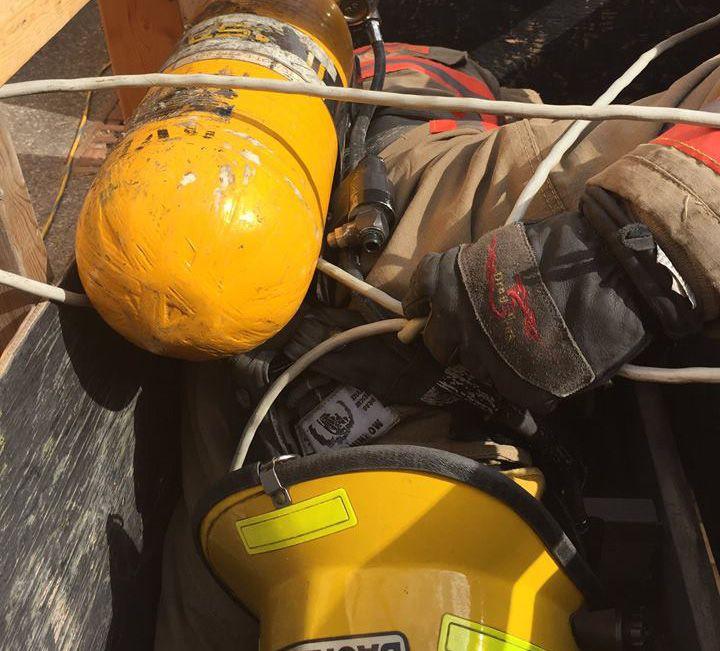
As teams begin the maze they are confronted with an entanglement section. Many firefighters get held up by a small, thin piece of wire that wraps itself tighter around their BA packs the more they pull. Teams are informed they can use any tools they might have in their pockets, yet, during the training weekend, not one firefighter carried even a simple pair of pliers (13.95 at CTC), which could have freed them within seconds. I wonder why we have pockets in our gear?
. . . I am still really concerned that we in the fire service spend more time teaching firefighters how to tie knots than how and when to call a mayday. ’’
Next in the maze we activate a smoke alarm that adds confusion and causes many firefighters to reach for their PASS alarms (unsure what they are hearing). As the teams advance, the hoseline disappears under fallen debris; far too few firefighters informed the IC they had lost connection with the hose. This is a key safety point that should be addressed during SCBA training.
The firefighters are then confronted with narrow openings and blocked passages, at which point our instructors activate an alarm bell to indicate low air on one of the firefighter’s SCBA. At this point, the IC should be informed of the low-air alarm, but few firefighters take that action. Again, informing the IC is a major safety point. If a firefighter cannot reach an exit within 60 seconds after his or her low-air alarm activates, it becomes a mayday situation.
I was encouraged during the evaluations when I witnessed several firefighters successfully deal with the low-air-alarm situation. However, the encouragement was short lived. Once the firefighters called the mayday due to low air and no exit, we informed them RIT was en route. We then asked the firefighters what they wanted to do next: wait for RIT or keep advancing (at this point they are off the hoseline). The one firefighter who chose to stay and wait for RIT passed the evaluation; the others, choosing to advance, fell through the floor later on in the maze.
Teams had a lot of trouble getting through the narrow opening (space between two 41-centimetre (16-inch) centre studs); masks were dislodged, packs hooked up, and helmets, radios and flashlights fell off. It was painful to watch. At the conclusion of the evaluations, we demonstrated our cross-over method and were thanked profusely by firefighters for that tip. If you have not tried this method, email me and I’ll send you a video clip.
In the last stage of the maze, the hose is reintroduced and leads firefighters up three small steps to a second floor. Only a few firefighters during the evaluations sounded the steps. Teams often sound the first two feet of the second floor, but we anticipate that so we locate our soft and fire-weakened floor further into the building. As the lead firefighter crawls along and reaches the soft floor, we pull the pin and the floor gives way, dropping the firefighter through. In a number of cases, the partner follows right behind them. Only a dozen of the firefighters evaluated called a mayday for their partners (who are unconscious), others just sat there not knowing what to do.
This next observation really disappointed me – made me mad, really. Some firefighters wanted to call a mayday, but couldn’t: they didn’t have a radio (the lead guy had it). I discovered that the standard practice for some departments is one radio per team; this is a huge problem. Did we learn nothing from the sacrifices of our fallen brothers and sisters? Look into the 2004 firefighter fatality in Clearwater, B.C., and you will discover the lead member (who perished in the fire) had the radio and so the second man was unable to communicate his emergency. The firefighter had to use his cell phone to call dispatch to call the fire department to get him out! What a tragic event, and yet 12 years later we still have the same practice happening.
So here is the rub, the down and dirty, the low down on how to beat this maze: quite simply, know your limits and live within them. Do not go past your level of training. If you get hung up in the first section of this maze and can’t get free within 60 seconds, call a mayday and follow the instructions of the IC and RIT that is coming for you – and you win!
If you reach a part of the maze and stop due to physical (overexertion, overheating) or mental (fear, anxiety, apprehension) reasons, radio a mayday, follow instructions, and you win!
During each debriefing we revealed that this maze is not about completing the course, it is about recognizing when you should call for help – that is the only way to beat the course.


visit firefightingincanada.com/subscribe/ to subscribe today!
At the conclusion we handed out either a congratulations card or a deepest sympathy card. One firefighter was confused and said, “So I wasn’t successful? But I completed it! The falling through the floor was the last thing and I did that!” I just looked at him and smiled. Then it dawned on him and he said, “I got it.”
After our first session, a middle-aged firefighter approached me and while giving me a firm handshake with a tear running down his cheek he stated, “Thank you, you probably saved my life.”
Although the stats were somewhat better regarding the mayday protocols, I am still really concerned that we in the fire service spend more time teaching firefighters how to tie knots than how and when to call a mayday. The odds are that you have never given your members permission to call a mayday, let alone specific rules on when to call one. After all, firefighters are trained to be the rescuers, not victims. But think about it: RIT won’t be activated unless a mayday is called. And the sooner RIT is activated, the better chance of survival.
Please train as though their lives depend on it, because they do. This statement must be a priority for your department. It is bad enough to witness firefighters doing dumb stuff – such as sounding the floor with their handheld radio, or carrying that same radio by the antenna – but when we continue to practise procedures that have proven to cause entanglement leading to entrapment, one has to wonder if we are actually getting out the message. Improper wearing of SCBA (too loose), visors in upright positions, flashlights mounted on the side of helmets, and inability to use radios while wearing gloves are all concerns that need to be addressed during training.
When we handed out 92 deepest sympathy and only four congratulations cards; it proves again that firefighters will not rise to the occasion, but instead default to their
training each and every time.
Special word of thanks to Casey Brouwer, SOOHOT instructor and Osoyoos Fire Department, Tyler Loura, junior firefighter with Osoyoos Fire Department, Rob Smith, BC Ambulance and Greenwood Fire Department, and Keller Smith, junior firefighter with Greenwood Fire Department, for giving up your weekend to help us train.
(UPDATED MAY 15, 2016)
Mayday parameters:
1. Becoming tangled, pinned, or stuck and the low-air alarm activates.
2. Falling through the roof.
3. Becoming tangled, pinned, or stuck and do not extricate yourself in 60 seconds.
4. If you are caught in a flashover.
5. If you fall through the floor.
6. If zero visibility and no contact with the hose or lifeline and unaware of the location of the exit.
7. If your primary exit is blocked by fire or collapse and you are not at the secondary exit in 30 seconds.
8. If your low-air alarm is activated and you are not at an exit door or window in 30 seconds.
9. If you cannot find the exit door or window in 60 seconds.
These nine points may be narrowed down to six:
1. Fall
2. Collapse
3. Activated (PASS/Low Air)
4. Caught
5. Lost
6. Trapped

Ed Brouwer is the chief instructor for Canwest Fire in Osoyoos, B.C., and training officer for Greenwood Fire and Rescue. He is also a fire warden with the B.C. Ministry of Forests, a wildland urban interface fire-suppression instructor/evaluator and an ordained disaster-response chaplain. Ed has written Trainer’s Corner for 15 of his 27 years in the fire service. Contact Ed at ebrouwer@canwestfire.org
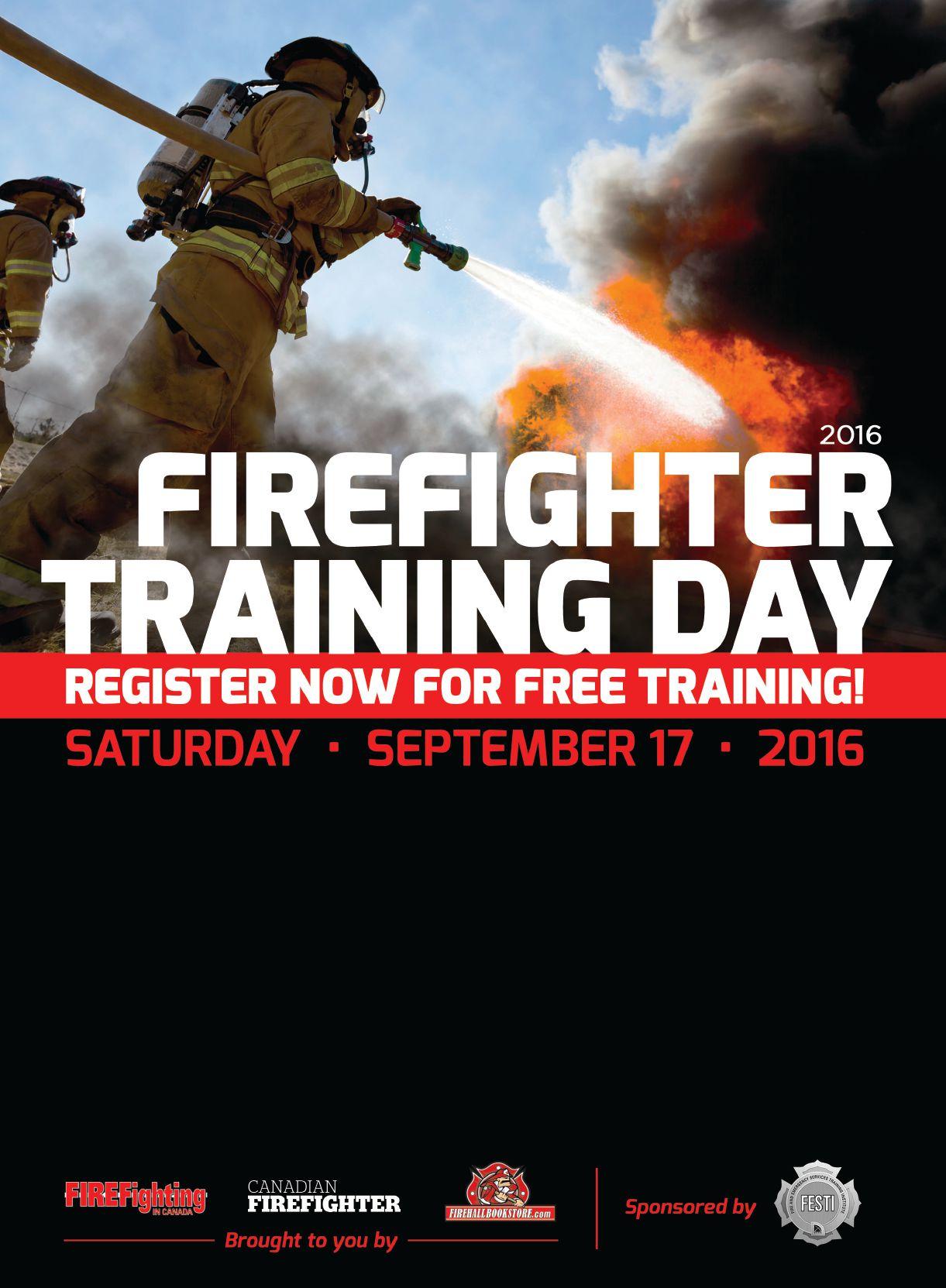
Fire Fighting in Canada’s 2016 Firefighter Training Day takes place Sept. 17 at the Fire and Emergency Services Training Institute (FESTI) in Toronto. Online registration is open at www.cdnfirefighter.com/training-day; sign up now to reserve your spot.
Firefighter survival
Auto extrication
HOT
Command and control
Live fire rescue
Aircraft rescue fire fighting
Patient packaging and triage
Forcible entry new
Leadership and succession planning new
Managing the message: media 101 new
Public education and fire prevention
programming new

BY ELIAS MARKOU
lectrolyte deficiencies and dehydration are the most common preventable occupational hazards faced by firefighters. Firefighters, similar to high-level athletes, lose water rapidly during physical exertion. Water is the carrier of electrolytes, so dehydration leads to electrolyte depletion. Almost all firefighters have experienced an intense fire with searing, radiant heat, hours of physical activity in heavy bunker gear and quick changes in core body temperatures. The body depends on sweat to cool itself, so an extreme fire situation can quickly empty its water reserve.
There are a number of risk factors that affect depletion of water and minerals in a firefighter. Firefighters, wearing layers of non-breathable clothing to protect themselves, often deal with high temperatures inside a structure or outside on a hot summer day. Extreme sweating in these conditions depletes the body of all its water and good minerals.
Research conducted by the University of Cumbria in England, in collaboration with Cumbria Fire and Rescue Service, highlights how vital proper hydration is to a firefighter’s performance. The study identified that a high percentage of firefighters arrived to a training exercise or a real fire incident already significantly or severely dehydrated.
Electrolytes are minerals that are essential for the body to function. When water with electrolytes is consumed, the minerals are dissolved in the water and they enter the blood system. These minerals have ionic electrical charges that drive the function of every cell in the body. So imagine the importance minerals such as potassium, sodium, calcium and magnesium play in holding water in the body, making your cardiovascular system function and allowing energy production in muscle, brain and vital organs. Water and electrolytes are critical for peak performance, but are by far the most important health issue often overlooked. Dehydration, in extreme cases, can cause death.
in the body is phosphorus. Phosphorus is used for protein, fat and carbohydrate synthesis in the body; these key nutrients are integrated into DNA and cellular membranes. For firefighters, this mineral is mostly used in recovery after intense firefighting activity.
Sodium is known to regulate the level of water in the body. The more water you drink, the more sodium will be removed from your body via the kidneys. Sodium is used in transmitting important but subtle information from cell to cell in the body. Finding a good balance between sodium and water intake is critical.
Magnesium is responsible for more than 400 biochemical interactions in the body; about half the magnesium is found in critical organs such as the heart, nerves, muscles and the immune system. When firefighters experience muscle cramping during or after an intense fire, they should reach for large dosages of magnesium to reverse the effects. Depleted magnesium stores in the body prevent the muscles from physiologically performing. If a muscle does not slide properly, sudden movements can damage the tissue. A muscle pull is the most common fire-scene injury for firefighters.
There are many signs associated with electrolyte and water
Water is the carrier of electrolytes, so dehydration leads to electrolyte depletion. ‘‘ ’’
Potassium is probably the most important mineral in the body. Potassium helps maintain electrical activity in the brain and the heart. Potassium deficiency, for firefighters in extreme occupational situations, can be life threatening.
The second most important and the second most abundant mineral
Elias Markou is in private practice in Mississauga, Ont., and is the chief medical officer for the Halton Hills Fire Department. Markou was a volunteer firefighter for six years and is now a firefighter health expert and blogger who is regularly featured on television and radio and in print. Contact him at dmarkou@mypurebalance.ca
deficiency and imbalance. In the rush of life and especially fire fighting, we often overlook the simple act of rehydration. Examples of symptoms associated with water and electrolyte deficiencies include muscle spasms, restlessness, insomnia, dizziness, headaches, fever, heart activity, heart palpitations and blood pressure issues. If ignored and not treated, these symptoms become chronic and sometimes life threatening.
Finding electrolytes and water in whole, complete foods is a great way to increase minerals in the body. Vegetables are an excellent source of electrolytes, especially when combined in a soup. Consider adding kale, artichoke, spinach, parsley and Swiss chard into your diet. Another way to boost mineral intake is to use salts that contain more minerals, such as Himalayan, Celtic or sea salt. Fruits can also be a great source of minerals and water, including bananas, coconuts and avocados.
As a firefighter, make sure you are properly hydrated and balanced with electrolytes to maintain an optimum performing body.

BY VINCE MACKENZIE Fire chief, Grand Falls - Windsor, N.L.
ocial interaction is vitally important to the professional atmosphere in fire stations. Morale, being a result of good social interactions, is crucial to a successful and happy workplace. If you don’t believe me, just take a look at your own department. How well would your department operate if people did not get along?
Firefighters are a unique sort, so unique that there are only about 100,000 of us in the country. I make that point tongue in cheek because I feel that as unique as most firefighters are, they are all alike in many ways.
I have had the occasion this past spring to travel this country from coast to coast attending different fire service events and sharing the room with literally hundreds of firefighters, volunteer and career, all ranks, young and old, in all different regions and sizes of communities. Interacting with so many firefighters in such a short period of time, I have made a very broad and stereotypical observation: it seems everywhere I go I run into the same type of individuals. Names change from organization to organization, but the personalities that inhabit Canada’s fire stations do not.
In my biased opinion, I think fire services get the cream of the crop in society. From what I’ve seen, almost all fire departments are composed of very caring and nurturing individuals. That care and interest in our profession is why we seem to get along so well.
Firefighters are social animals that feed off each other in so many ways. Because of the very serious nature of our work there is a certain espirit de corps that develops in fire halls. I think it is critically important that all firefighters recognize the fact that they are as important to the organizational strength of the department as any of the formal leaders.
these educational opportunities are operational and tactical firefighting courses, firefighters are learning people skills at the same time. Sometimes we learn more at a conference during social functions with colleagues than we do during the official agenda. As well, more and more conferences are including seminars on soft skills such as leadership development, conflict resolution, and sociology.
When you look at struggling departments, odds are social issues are the first evidence of a problem and slowly contaminate the culture. Unfortunately, negative social interaction can be the demise of good morale and positive work ethic of a fire department; it is an issue that needs to be constantly evaluated within the organization.
I compare morale to a large balloon: when it is fully inflated and looks great, everyone is happy. A happy atmosphere encourages committed people to do committed work, all motivated and with sense of purpose. If the balloon develops a slow leak it starts to look less appealing and people drift away from the party mood; likewise, when morale takes a dive, people are less inspired at work. If the department members experience a significant tragic or crippling event, the morale balloon can deflate or burst all together.
Sometimes we learn more at a conference during social functions with colleagues than we do during the official agenda. ‘‘ ’’
Professional development of firefighters takes many forms. Some development happens during very formal and structured sessions and other development happens in less obvious ways during the day-to-day operations of a department. While I won’t go into the social aspect of groups and the hierarchy of needs of human beings, any successful volunteer fire service has to be able to recognize the value in positive social interaction and professional development.
Many fire-service members attend courses, conferences, and seminars to sharpen their skills in a variety of topics. While most of
Vince MacKenzie is the fire chief in Grand Falls-Windsor, N.L. He is an executive member of the Canadian Association of Fire Chiefs and the past president of the Newfoundland and Labrador Association of Fire Services. Email him at firechief@townofgfw.com and follow him on Twitter at @FirechiefVince
There always seem to be a couple of people in our departments who can be difficult to manage at times. All of us go to work with some sort of agenda in mind, and I think most people at some point during their firefighter careers butt heads with the boss. But when the atmosphere in a fire station turns sour because of a negative event, a tragedy, or political decision by those who govern us, it requires the strength of committed individuals to repair that atmosphere.
Once the balloon is deflated it takes many breaths to re-inflate, which takes a lot more time and, often, a collective effort. And sometimes we have to start with a new balloon, meaning different people, to recharge the morale balloon.
So next time you are at a conference spending time with colleagues, take note of how we are all alike. Practising those soft skills will be more valuable than any conference registration fee is worth, and the returns can be priceless.
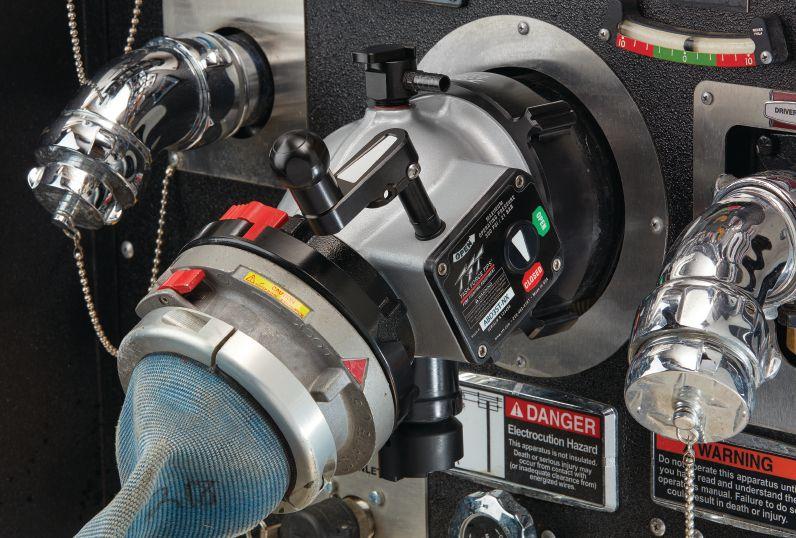

The 92.7mm Engineered High Performance Flow Path Produces Less Than 0.4bar Loss at 4732 l/min
• Compact Lightweight Design Fits Easily Into Tight Pump Panel Configurations
• 5 Year Warranty Against Corrosion
• Integrated Adjustable Pressure Relief Valve Provides Fast Reacting High Volume Protection from Water Hammers in the Hose lines
• At 272mm This Valve Has The Lowest Profile of Any Intake Valve


• At Only 7.9kg This Design is the Lightest Low Profile Intake Valve Ever Produced