AERIAL MANEUVERS
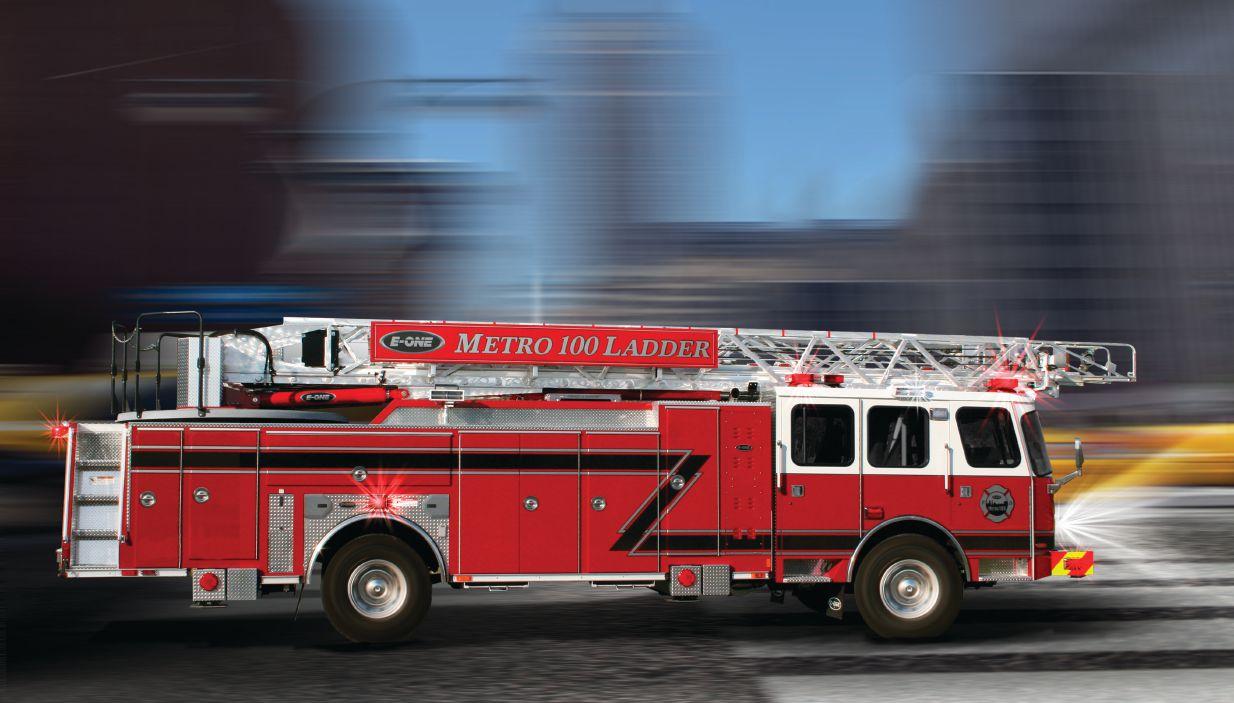
Metro 100 Ladder. Turning corners and turning heads.
Offered exclusively by E-ONE, the all-new Metro 100 is a single axle aluminum ladder with a 100’ vertical reach on a short 220” wheelbase. The 11’ jack spread allows you to easily set up in tight spaces. And, when paired with the Cyclone II aerial cab, the Metro 100 offers an impressively low 10’7” overall travel height. Designed with both the urban and suburban departments in mind, the Metro 100 is a highly maneuverable ladder that’s long on features and short on height.
Industry-leading aerial. Innovative design.


10
RAgINg RIVERs
As several southern Alberta communities were devastated by floods in June, volunteers worked tirelessly to save what they could. Fire Chief Rob Evans, from Redwood Meadows Emergency Services, explains how his department, as well as the nearby departments that provided mutual aid, risked a lot to save a lot.
18
BACK-LINE HEROEs
All firefighters want to be on the front lines. But as Foothills, Alta., Capt. Chad Sartison learned during the flooding, battles are often won or lost in the back rooms.
26
gEttINg tHE WORD Out
Several Alberta departments found social media to be a steady source of communication during the June floods. Jason Low explains how Redwood Meadows Emergency Services used Twitter and Facebook to get important information about evacuations, shelter locations and calls for volunteers, out to the community.
28
AN ABOut FACE
Capt. Chad Sartison explains how the Foothills Fire Department used Facebook to connect with residents during the floods. The result was a gracious community that, despite being displaced, remained connected.
By Lau R a K I n G Editor lking@annexweb.com
Responding to disaster?
I comment
was later than usual writing my editorial for this issue, with travel to the Maritime Fire Chiefs Association (MFCA) conference in Summerside and a bit of vacation. So before we put this special edition on the Alberta floods to bed, Canadians had witnessed the country’s worst train derailment and the subsequent disaster in LacMegantic, Que., and the record rainfall that wreaked havoc in Toronto.
We will write about the tragedy in Lac-Megantic from first-response point of view – hopefully in September – and Deputy Chief Debbie Higgins of Toronto Fire Service (TFS) is putting together a piece on the response by TFS to the more than 1,100 calls for help, plus a structural collapse, a three-alarm fire and two, two-alarm fires.
While all this was happening, first responders in Alberta were still working to bail out the areas hardest hit by floodwaters.
sidering coming to P.E.I. given the circumstances at home, and, secondly, for his role in the response: 16 days of command, analysis and excellent decision making. Unbelievably, MacCharles’s flight out of Toronto en route to Calgary Monday evening was delayed due to . . . flooding.
ESTABLISHED 1957 August 2013 VOL. 57 NO. 5
EDItoR LAuRA King lking@annexweb.com 289-259-8077
aSSIStant EDItoR OLiViA D’ORAziO odorazio@annexweb.com 905-713-4338
EDItoR EmERItuS DOn gLEnDinning
aDVERtISInG manaGER CATHERinE COnnOLLY cconnolly@annexweb.com 888-599-2228 ext. 253
SaLES aSSIStant BARB COMER bcomer@annexweb.com 519-429-5176 888-599-2228 ext. 235
mEDIa DESIGnER EMiLY Sun esun@annexweb.com
GRouP PuBLISHER MARTin MCAnuLTY fire@annexweb.com
PRESIDEnt MiKE FREDERiCKS mfredericks@annexweb.com
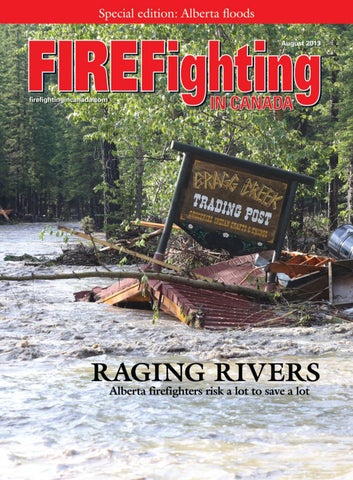
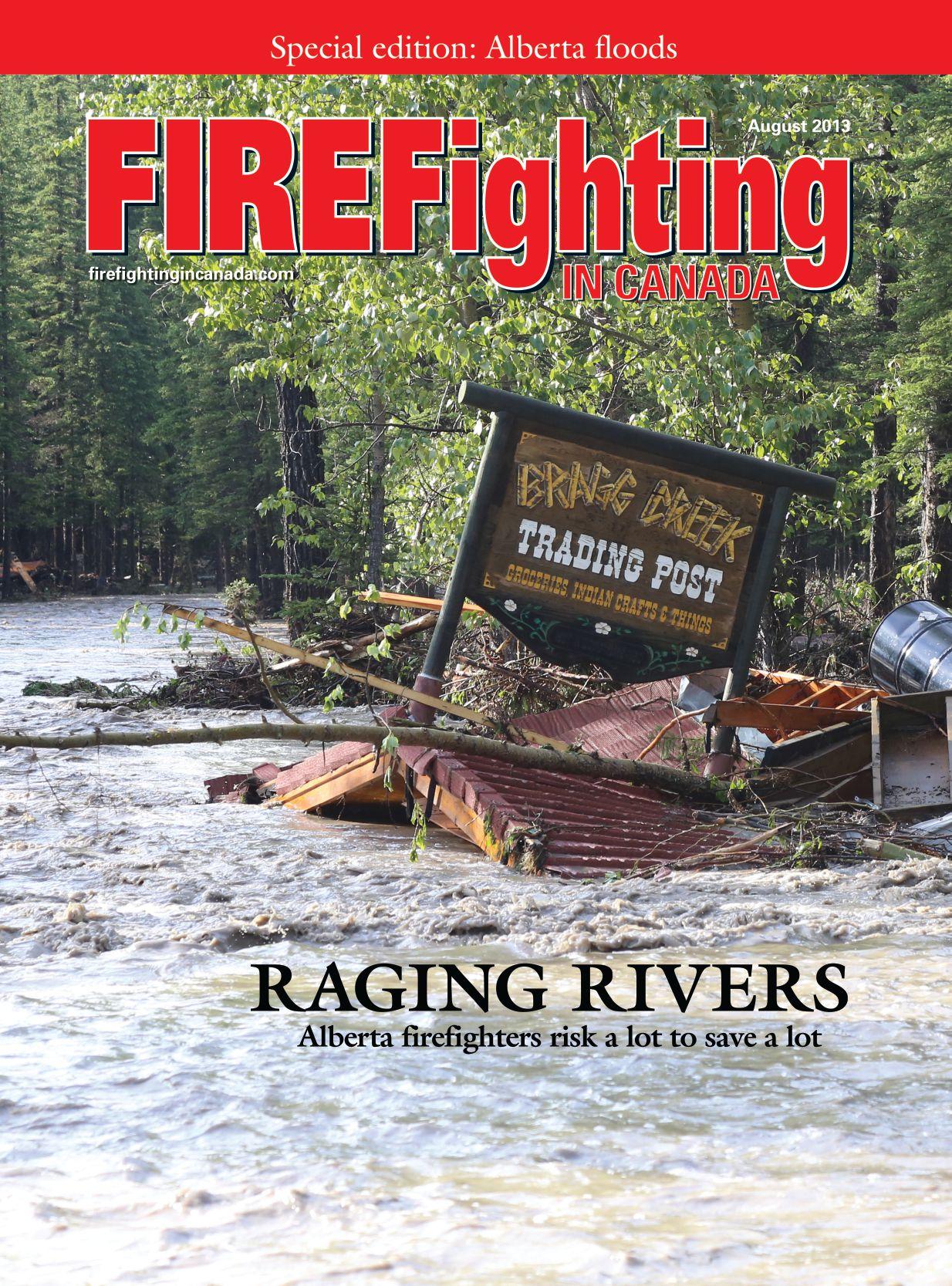
ON tHE COVER
The Trading Post, a landmark in High River, Alta., is decimated by floodwaters. See story page 8.
As an aside, Calgary Deputy Chief Len MacCharles was scheduled to speak at the MFCA conference, on firefighter health and wellness. MacCharles had spent 16 days in the EOC, yet, not wanting to renege on a commitment, flew to Prince Edward Island on Sunday, July 7, for a Monday afternoon seminar. On the flight, MacCharles threw together an impressive slide show on the floods. I’ve attended probably 40 conferences in the last 6.5 years; rarely do speakers get a standing ovation. But after witnessing MacCharles’s unscripted and often awe-inspiring chronology of events, the 200 chief officers in Summerside stood and applauded, not for a spiffy presentation, but to thank a clearly exhausted MacCharles, firstly for even con-
So, how did we get four stories in time for this issue, which was due to production two weeks after Day 1 of the Alberta floods? It was too soon to dig deeply into the responses – ICs and emergency management personnel were still up to their ears. So I asked two people I knew were up to the challenge to write pieces from their perspectives – Rob Evans, a volunteer fire chief of a volunteer department in Redwood Meadows, and Chad Sartison, a career captain in Foothills. Both are great writers, both had great stories to tell, and I knew both would appreciate our desire to print their pieces ASAP. Interestingly, both, without being asked, also submitted stories – Evans’ communications officer wrote one, Sartison wrote the other –about the value of social media in disaster response.
You may have already read here and in my blogs my take on Ottawa’s decision to cut funding for Canada’s HUSAR teams. If floods and train derailments that wipe out entire towns don’t get the attention of the policy makers, then the challenge, like the horror in Lac-Megantic, is greater than we imagined.
PuBLiCATiOn MAiL AgREEMEnT #40065710 RETuRn unDELiVERABLE CAnADiAn ADDRESSES TO CiRCuLATiOn DEPT.
P.O. Box 530, SiMCOE, On n3Y 4n5 e-mail: subscribe@firefightingincanada.com
Printed in Canada iSSn 0015–2595
CIRCuLatIon e-mail: subscribe@firefightingincanada.com
Tel: 866-790-6070 ext. 206
Fax: 877-624-1940
Mail: P.O. Box 530 Simcoe, On n3Y 4n5
SuBSCRIPtIon RatES
Canada – 1 Year - $24.00 (with gST $25.20, with HST/QST $27.12) (gST - #867172652RT0001) uSA – 1 Year $40.00 uSD
We acknowledge the financial support of the Government of Canada through the Canada Periodical Fund of the Department of Canadian Heritage.
Occasionally, Fire Fighting in Canada will mail information on behalf of industry-related groups whose products and services we believe may be of interest to you. if you prefer not to receive this information, please contact our circulation department in any of the four ways listed above.
no part of the editorial content of this publication may be reprinted without the publisher’s written permission ©2013 Annex Publishing and Printing inc. All rights reserved. Opinions expressed in this magazine are not necessarily those of the editor or the publisher. no liability is assumed for errors or omissions.
All advertising is subject to the publisher’s approval. Such approval does not imply any endorsement of the products or services advertised. Publisher reserves the right to refuse advertising that does not meet the standards of the publication.
www.firefightingincanada.com
Photo by R ob EVANS



The all-new 2013 Ram 1500 Special Service* Vehicle, built for Firefighters, EMS, and First Responders, is well equipped for duty. The 2013 Motor Trend Truck of the Year is also Canada’s longest-lasting» and most fuel efficient full-size pickup¤, making it a great addition to any department. With 395 HP, 407 lb-ft of torque, Electronic Control System including All-Speed Traction Control, Hill Start Assist and Ready Alert Breaking, it’s the perfect partner for any situation. The Motor Trend Truck Of The Year is ready for duty

2013 Ram 1500 SLT with SLT Décor Group shown.
statIontostatIon
across canada: Regional news briefs
Saugeen Shores chief chosen for Harvard program
Phil Eagleson, the fire chief in Saugeen Shores, Ont., won a fellowship to attend Harvard University’s senior executives in state and local government program, which began in June.
Eagleson is one of four fellowship recipients and the only Canadian.
The U.S. Fire Administration announced the awards on May 8. The 19-day program focused on relationships between citizens and government, analyzing policy options and examining the ethical and professional responsibilities of exercising leadership.
Eagleson was the recipient in 2011 of the Ontario Association of Fire Chiefs VFIS recruitment and retention award. Saugeen Shores improved its volunteer retention rate to 100 per cent in 2010 after struggling to recruit and keep firefighters. A junior firefighter program and other initiatives implemented by Eagleson and others had improved morale and boosted
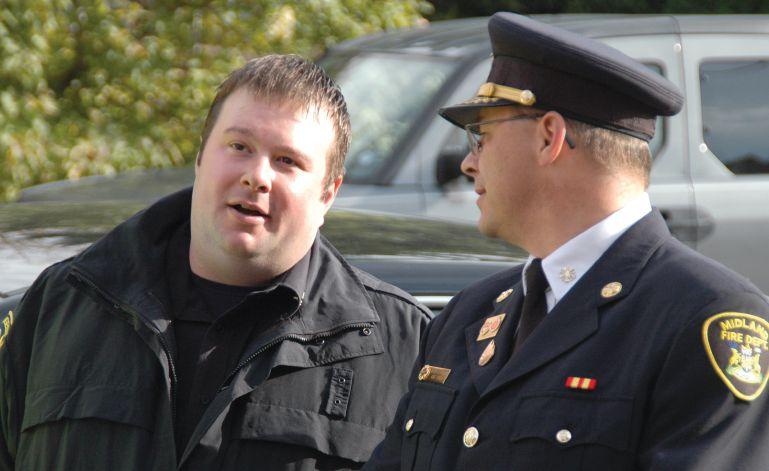
Saugeen Shores Fire Chief Phil Eagleson, left, was awarded a fellowship by the U.S. Fire Administration to study at Harvard University. Eagleson, shown here in October with OAFC past president Kevin Foster at a mock disaster exercise, received the 2011 VFIS award for recruitment and retention.
interest in the department.
Last year, Eagleson played a key role in a mock-disaster exercise involving the Bruce Power Nuclear Generating Station and numerous agencies and responders.
Other recipients of the 2013 fellowship are Deputy Chief Joel Baker of the Atlanta Fire-Rescue Department, assistant chief
the brass pole promotions & appointments
Don HooD was appointed fire chief for the Seguin Fire Services in Ontario in June. Hood was previously deputy fire chief for the McDougall Fire Department, and spent the last five years as district fire chief for the Rosseau district in Seguin Township. He has more than 30 years of experience in the fire service.
RoSS montEItH became the new deputy chief for the Burlington Fire Department in Ontario in June. Monteith began his career with the Burlington department as a volunteer firefighter in 1983. in 1987, he became a full-time member of the department. He was promoted to captain in 2000, and to platoon chief in 2010.
toDD CannInG became the first paid fire chief for the Town of Wabush Volunteer Fire
Department in Labrador in May. Canning took over as volunteer chief in 2008 after his father, who had previously held the position, retired. Canning has been a member of the fire service for more than 20 years.

PHIL RoSS was appointed deputy chief of administration for the niagara Falls Fire Department in Ontario in May. Ross previously acted as deputy chief of
Michael Romas of the Milwaukee Fire Department, and deputy commissioner Derrick Sawyer of the Philadelphia Fire Department. – Laura King
operations for the department, where he championed several innovative techniques, including survival training and positivepressure attack.
JIm BoutILIER has succeeded Phil Ross as deputy chief of operations for the niagara Falls Fire Department in Ontario. Boutilier was a paramedic for nine years before joining the fire department in 1990. He was previously promoted to director of the department’s training division in 2008.
Photo
Surrey Fire Services wins community excellence award
Surrey Fire Services in British Columbia has been awarded the 2013 Community Health and Safety Program Excellence Award for its HomeSafe program, part of the department’s evidence-based fire-reduction strategy.
The program involved onduty firefighters going door to door in the city’s highest firerisk neighbourhoods, distributing fire-prevention information, checking for working smoke alarms and installing free smoke alarms as required.
Surrey Fire Service commissioned a review of its fire data from 1988 to 2007, after recognizing that programs that target certain demographics can reduce the frequency of residential fires. An analysis of almost 5,000 structure fires concluded
that more than 75 per cent of the fires involved residential properties, that the incidence of fire increased when occupants smoked, were elderly, had a disability, or had mental-health or substance-abuse issues, and that residential structure fires tended to be clustered geographically.
With this data in hand, Surrey created HomeSafe, a custom fire-education program that targets the neighbourhoods historically associated with an increased risk of residential fires.
In its first two years, the program reduced the annual rate of residential fires in the highestrisk homes in the city by almost two-thirds, and has prevented an estimated $1.26 million in fire losses. In addition, when fires did occur after the home visits, smoke alarms activated more
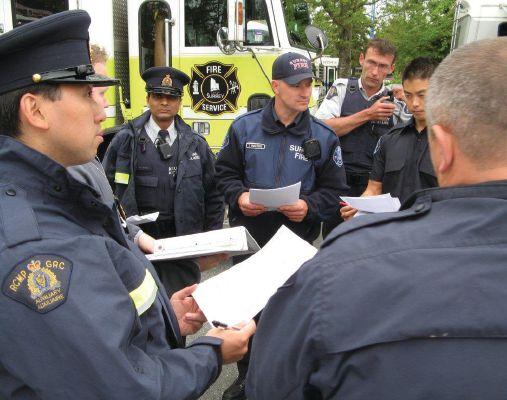
As part of the Surrey Fire Services HomeSafe program, members of the city’s fire department paired with local RCMP to go door to door in the city’s highest fire-risk neighbourhoods, distributing fire-prevention information and checking and installing smoke alarms.
frequently and fires were smaller and did less damage.
The award will be presented to Surrey Fire Services in September; it recognizes local government programs or processes that demonstrate innovation, excellence and success in the community’s safety, health
Ontario developer to build sprinklered homes
A Toronto-area developer announced June 6 that it will voluntarily install sprinklers and garage heat detectors in the new homes it builds, making it the first builder in Ontario to do so.
Townwood Homes vice-president Marcello Messersi said at the site of a new subdivision in Vaughan, Ont., that the builder will include hard-wired heat detectors and automatic sprin-
Retirements
ROD BLACK became fire chief for the Lanark Highlands Fire Service in Lanark Highlands, Ont., in January. Black, who succeeds retired fire chief Kirk Cannon, joined the fire service in 1989, with the Ocean Wave Fire Company in Carleton Place, Ont. He served on the Ocean Wave department for 23 years. He became the Ocean Wave department’s first full-time
klers in its 136 townhomes and six duplexes to better protect residents and firefighters.
Fire-service leaders said the safety measures raise the bar for other builders. The housing industry has so far opposed the installation of residential sprinklers over fears that home buyers would balk at any extra costs.
Messersi said his prices will
not change; the cost, he said, of installing sprinklers when building a subdivision are negligible.
Vaughan Fire Chief Larry Bentley said he and his fireprevention and public-education team will work to maintain the momentum generated by the announcement.
“The message is clear,” Bentley said in an interview. “Residential fire sprinklers save
and/or wellness, including enhancement in the quality of life for the disadvantaged.
For more information on Surrey’s HomeSafe program, read Fire Chief Len Garis’ article in the June 2012 issue of Fire Fighting in Canada – Len Garis
lives, reduce injuries, protect firefighters and save property.”
Bentley said 15 per cent of the 275 house fires in the City of Vaughan since 2009 started in garages; the heat detectors, which will be wired into the homes’ smoke alarms, have the potential to prevent millions of dollars in property damage, he said.
– Laura King
member in 2000, and was promoted to deputy chief in 2011.
Retirements

Fire Chief KIRK CANNON , of the Lanark Highlands Fire Service in Lanark Highlands, Ont., retired in 2012. Cannon joined the fire service in 1979, serving with depart -
Last Alarm
ments in Lavant, Ont., Dalhousie, Ont., and North Sherbrooke, Ont., which amalgamated to become Lanark Highlands. Cannon became chief in 2011.
Last Alarm

TONY LIPPERS , the deputy fire chief in Caledon, Ont., since 2006, died
May 22 of complications from esophageal cancer. Lippers, who was featured on the cover of the March 2012 issue of Fire Fighting in Canada in a story about firefighters and cancer, wanted to develop a system to help firefighters navigate the health-care, presumptive legislation, and workerscompensation processes. Lippers was honoured in a line-of-duty-death funeral on May 28.
Photo
statIontostatIon
br I gade news: From stations across Canada
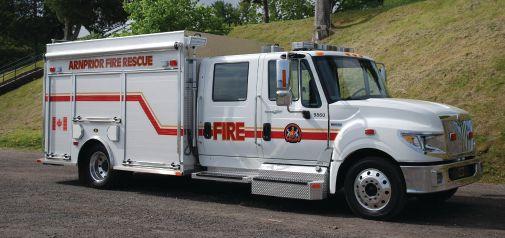
The Arnprior Fire Department in Ontario, under Chief John Okum, took delivery in May of an Arnprior Fire Trucks-built rescue unit. Built on an International TerraStar chassis, and powered by an Allison 1000 EVS transmission and a MaxxForce 300-hp engine, the truck is equipped with a CET 175-gpm pump, a CET CAFS system, a 150-gallon water tank, a custom command desk and roll-out tool boards.
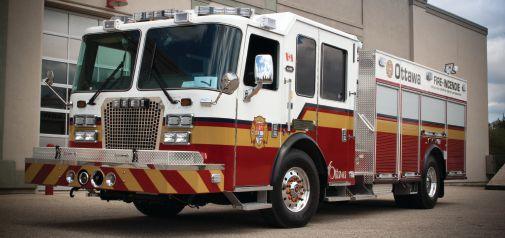
Ottawa Fire Services in Ontario, under Chief John deHooge, took delivery in May of a KME-built pumper from Metz Fire & Rescue. Built on a Predator SS 30.5-metre (100-foot) LFD chassis, and powered by an Allison 4000 EVS transmission and a Cummins ISX 400-hp engine, the truck is equipped with a Hale Qmax 1,500gpm pump, a FoamPro foam system, a 600-gallon UPF water tank, frontal and side airbag protection and a top-mount control panel with roll-up door.
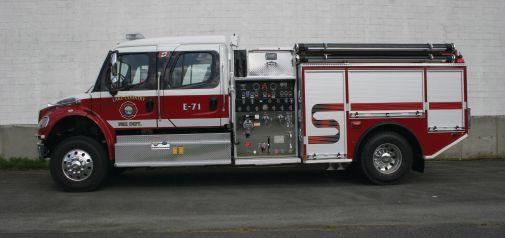
The Lake Country Fire Department in British Columbia, under Chief Steve Windsor, took delivery in May of a Hub Fire Engines & Equipment-built pumper. Built on a Freightliner M2 chassis, and powered by an Allison 3000 EVS transmission and a Cummins ISC 350-hp engine, the truck is equipped with a Hale 1,050-gallon pump, a FoamPro 1600 foam system, an 800-gallon co-poly water tank, a Whelen light package, and a Wheldon vehicle data recorder.
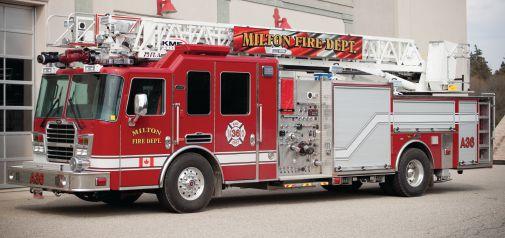
The Milton Fire Department in Ontario, under Chief Brian Ellsworth, took delivery in April from Metz Fire & Rescue of a KME-built aerial. Built on a Predator 30.5-metre (100-foot) XLFD chassis, and powered by an Allison 4000 EVS transmission and a Cummins ISX 500-hp engine, the truck is equipped with a Waterous 1,500-gpm pump and a 480-gallon UPF water tank.
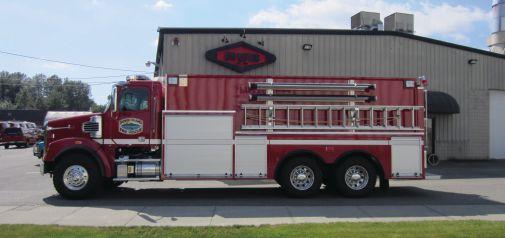
Bowen Island Fire Rescue in British Columbia, under Chief Brian Biddlecombe, took delivery in June of a Hub Fire Engines & Equipment-built pumper/tanker. Built on a Freightliner Coronado SD chassis, and powered by an Allison 4000 EVS transmission and a Cummins ISX 550-hp engine, the truck is equipped with a Hale Qpak 840-gpm pump, a 2,800-gallon co-poly water tank, a Whelen light package, Hub custom portable water tank storage and a Zico hose bed access ladder.
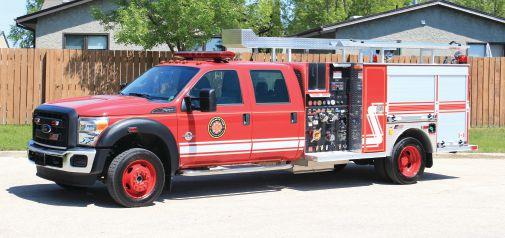
The Binscarth Fire Department in Manitoba, under Chief Jamey McLennan, took delivery in June of a Fort Garry Fire Trucks-built mini pumper. Built on a Ford F-550 chassis and powered by a sixspeed automatic transmission and a Ford 6.7-litre 300-hp engine, the truck is equipped with a Darley 1,000-gpm pump, a FoamPro 1600 foam system, a 300-gallon pro-poly water tank, a portable Honda pump and a Hannay hose reel.
ottaWa FIRE SERVICES
tHE aRnPRIoR FIRE DEPaRtmEnt
tHE LaKE CountRy FIRE DEPaRtmEnt
tHE mILton FIRE DEPaRtmEnt
BoWEn ISLanD FIRE RESCuE
A Protective Foam Blanket
in Less than 60 Seconds…
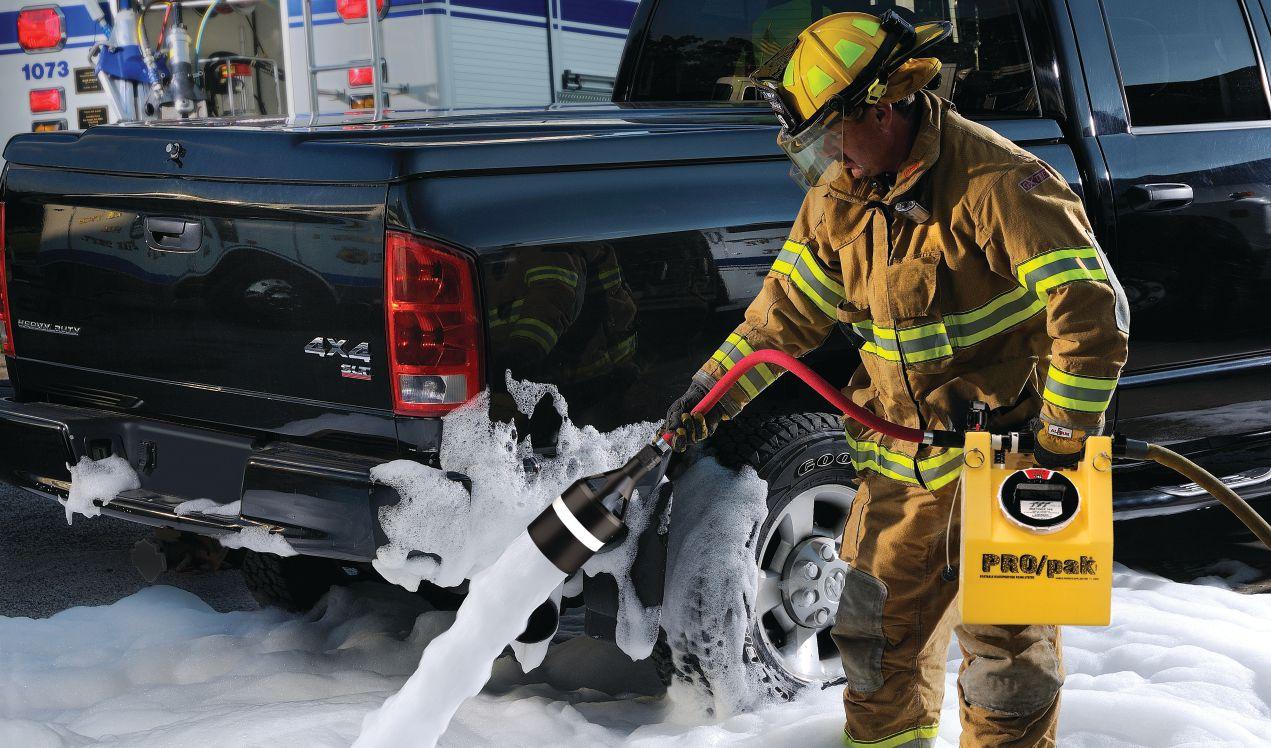
TFT’s compact PRO/pak foam injection and application system is the ideal choice for rapid vapor suppression with any Class A, AFFF or Alcohol Resistant foam concentrate.
Offering nozzle choices for low or medium expansion finished foam, the PRO/pak operates at low inlet pressures, is easily flushed, and provides injection ratios from 0.1% to 6%.
To learn more about how you can improve and simplify your foam operations, contact your local TFT dealer today.
ragIng

ALBERTA FLOODS
ng rIvers
Alberta firefighters risk a lot
to save a lot as overflowing Elbow and Bow rivers wreak havoc
By RoB EvAns
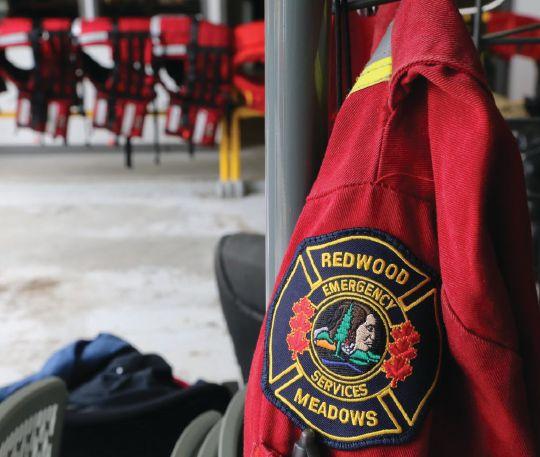
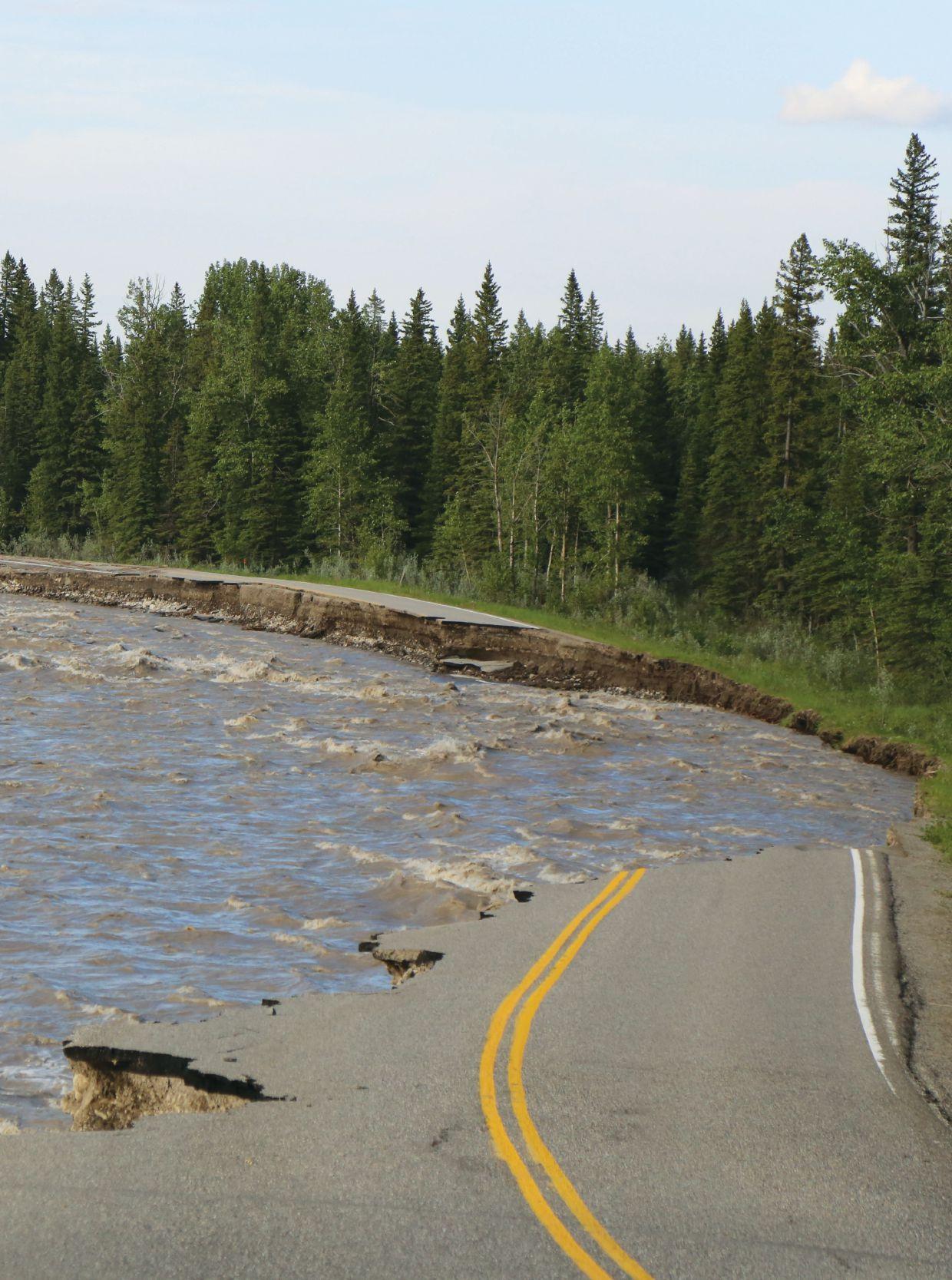
left: Part of Highway 758 in Bragg Creek, Alta., is washed out as a few days of heavy rains in June caused severe flooding throughout southern Alberta. This stretch of highway runs past the Bragg Creek Trading Post, which was devastated in the flood. above : A row of life jackets dries behind a station jacket at a fire hall in Redwood Meadows,
redwood Meadows, Alta. – As many readers know, I write a blog called Size-up for Fire Fighting in Canada’s website. My fodder for June 18 included a thank-you to Comox, B.C., Fire Chief Gord Schreiner for bringing his #Stopbad tour (see page 16) to Redwood Meadows. I wrote about the eye-opening training that Schreiner had provided in his presentation. Little did I know, I was about to be involved in a crisis during which I would close my eyes for for just six hours in three days.
After a busy weekend hosting Schreiner, my days off from the City of Calgary’s Public Safety Communications unit were scheduled to be non-stop. Wednesday afternoon I headed out to pick up a siren that had been repaired, and then started the drive to Nisku, where the next day, I was to take part in meetings with Alberta Health Services (AHS) regarding patient care reporting for medical co-responders throughout the province. I figured I would head up the night before to the city just south of Edmonton, so I would be fresh for the workshop that started on 9 a.m. the next day.
We had been warned that heavy rain was coming for our response area and while watching news, the anchors commented on just how heavy the rain was falling in southern Alberta. I decided to get in touch with one of my captains – my wife Jennifer – and ask her to take a drive and recon the Elbow River, which runs to the west of our town. It was about midnight and she reported back that although the river was high, it was not in danger of overflowing its banks. With this, I decided to get some sleep.
The sleep was restless and when I was finally in a deep sleep, my alarm went off. As always, I checked my phone for voice messages, tweets, Facebook messages, and e-mails. There was a text for a rescue call on Bracken Road, which runs along the river in Bragg Creek, immediately south of Redwood Meadows. I called Jennifer; the Elbow had started to overflow, she said, and the rain was continuing to fall, heavier than ever.
Knowing that the forecast was for the rain for another three days, I headed where I was going to be needed – home. I received updates via the @RMESfire Twitter feed, text messages and phone calls, and I listened to radio traffic via an Internet feed of our channels. An initial crew from our department, as well as automatic aid from Rocky View County Station 101, was responding to a call for help, but quickly realized that the rescue was beyond the scope of our resources on scene. Command asked for mutual-aid assistance due to high water levels and the inability of our crews to reach the people who were stranded on their property. Unfortunately, the water-rescue crews from Cochrane Fire Services were also unable to affect a rescue due to the fast-flowing floodwaters, and a front-end loader got its first piece of action for the day.
As I was still about 30 minutes away from our response area, our crews were sent to the Infusions restaurant in Bragg Creek to rescue eight people. We were now about two hours into the event that would
For more information, call your local Globe dealer or Safedesign.
British c olum B ia and a l B erta Guillevin
Coquitlam, British Columbia 800-667-3362
Calgary, Alberta 800-661-9227
Campbell River, British Columbia 250-287-2186
Edmonton, Alberta 800-222-6473
Fort St. John, British Columbia 250-785-3375
Kamloops, British Columbia 250-374-0044
Prince George, British Columbia 250-960-4300
Trail, British Columbia 250-364-2526
Que B ec
H.Q. Distribution
LaSalle, Quebec 800-905-0821
Boivin & Gauvin
Saint-Laurent, Quebec 418-872-6552
a tlantic Provinces K&D Pratt Ltd.
St. John’s, Newfoundland 800-563-9595
Dartmouth, Nova Scotia 800-567-1955
m anito B a and s askatchewan Trak Ventures 204-724-2281
take the better part of the next five days to bring under control. The water level in the restaurant was overtaking the main floor and the occupants, including a pregnant woman, an infant and a toddler, had to go to the second floor. Cochrane fire crews were only about a minute away, but they were delayed because of the Bracken Road rescue.
It is worth mentioning that almost every fire department in the area – Calgary, Priddis, Turner Valley, Black Diamond, Okotoks, High River and Foothills – was dealing with its own emergency. Mutual aid was non-existent for the most part because flash flooding was occurring everywhere.
Around this time I received a call from Rocky View County interim Fire Chief Perry Prete informing me that a unified command was going to be established at a local school, south of the Bragg Creek hamlet. After about a 10-minute drive, I pulled into our parking lot at RMES. After a quick meeting with Deputy Chief George Low and assigning him and fire communications officer (FCO) Jason Low to head to the command post at Banded Peak, I headed out in our Polaris Ranger to assess the operations along the berm protecting the Townsite of Redwood Meadows. Meeting up with Mayor John Welsh and councilor Dave Dunay, I was updated on the progress of the sandbagging and the call for heavy equipment to begin a five-day marathon of work along the 2.5-kilometre length of the berm.
ALBERTA FLOODS
of the debris being swept through the new river channel going through town.
By this time, DC Low and FCO Low had arrived at the unified command post and met with crews from Rocky View County. All calls from Public Safety Communications in Calgary were now going through FCO Low and being distributed to crews from Rocky View or RMES. It was not long after this that RMES crews were assigned to a call for two people in need of rescue from the roof of a car. The rapid response vehicle – a 4x4 Dodge 5500 – with a crew of three was dispatched. Our crew realized that they would need the loader, and it was requested through command. Much to their surprise, the crew saw two women inside a house in front of which they had stopped. The res cue of these women was relatively easy and they were placed inside the rapid-response vehicle until the loader arrived and the crew confirmed that the two people on top of the car had been secured.
877-253-9122 www.safedesign.com
Recognizing that workers had this location well under control, I focused on efforts to rescue people in Bragg Creek. By now, Cochrane crews had relocated to the opposite site of the hamlet from the Infusions restaurant. The rescue crew from RMES had tried to reach victims stranded in a house but was unable to do so due to the high water levels and fast current. Capt./ EMT Jennifer Evans, the officer on the rescue, requested that Cochrane’s crews redeploy to her location. Once Cochrane was on location, the Cochrane crew hitched a ride in the bucket of a front-end loader, and the four-person group headed toward a blind, 89-year-old woman and her daughter. The women had become trapped in their home by the torrent; they were not able to shelter in place, and the crews immediately began the rescue operation. At this point, the loader returned to dry land – well, the closest thing to dry land. I then informed all RMES crews that apparatus would no longer be permitted to drive through the rising floodwaters – the last thing we needed was firefighters in an apparatus being swept away. It was not just the rising waters that concerned me, but also the type and size
I had returned to Redwood Meadows during the rescue and was told that sand bagging along one road had been success ful, and that efforts were moving to an area along Redwood Meadows Drive. The river was substantially undermining the berm along this stretch, and heavy equipment was being moved to the location. This is where I met Richard Patton, who is in charge of air operations with Sustainable Resource Development (Forestry) for Alberta; his knowledge of the incident command system was a great resource to call upon. Patton introduced me to Gary Smolik, a civil engi neer, and from this point on, both men were assigned to work with heavy equipment operators while they shored up the berm.
More firefighters were arriving at the sta tion for duty and I asked them to respond to my location to help with sandbagging and provide safety for volunteers at the scene.
I returned to the station to make calls and check e-mails for anything to do with the flooding. While in my office, I heard an animated voice talking to one of our firefighters. I went out to see what was hap pening and discovered a resident who was upset that we were not going to go through the floodwaters to rescue some pets. I tried to explain that we could not risk the lives of our crews to rescue animals. Little did I know that RMES crews were about to risk a lot to save a lot.
Mayday, mayday, mayday.
Most dreaded by anybody on the fire ground, this message sent a feeling through me that I hope I never experience again. The
Continued on page 34








By Go RD S CHREI n ER Fire chief, Comox, B.C.
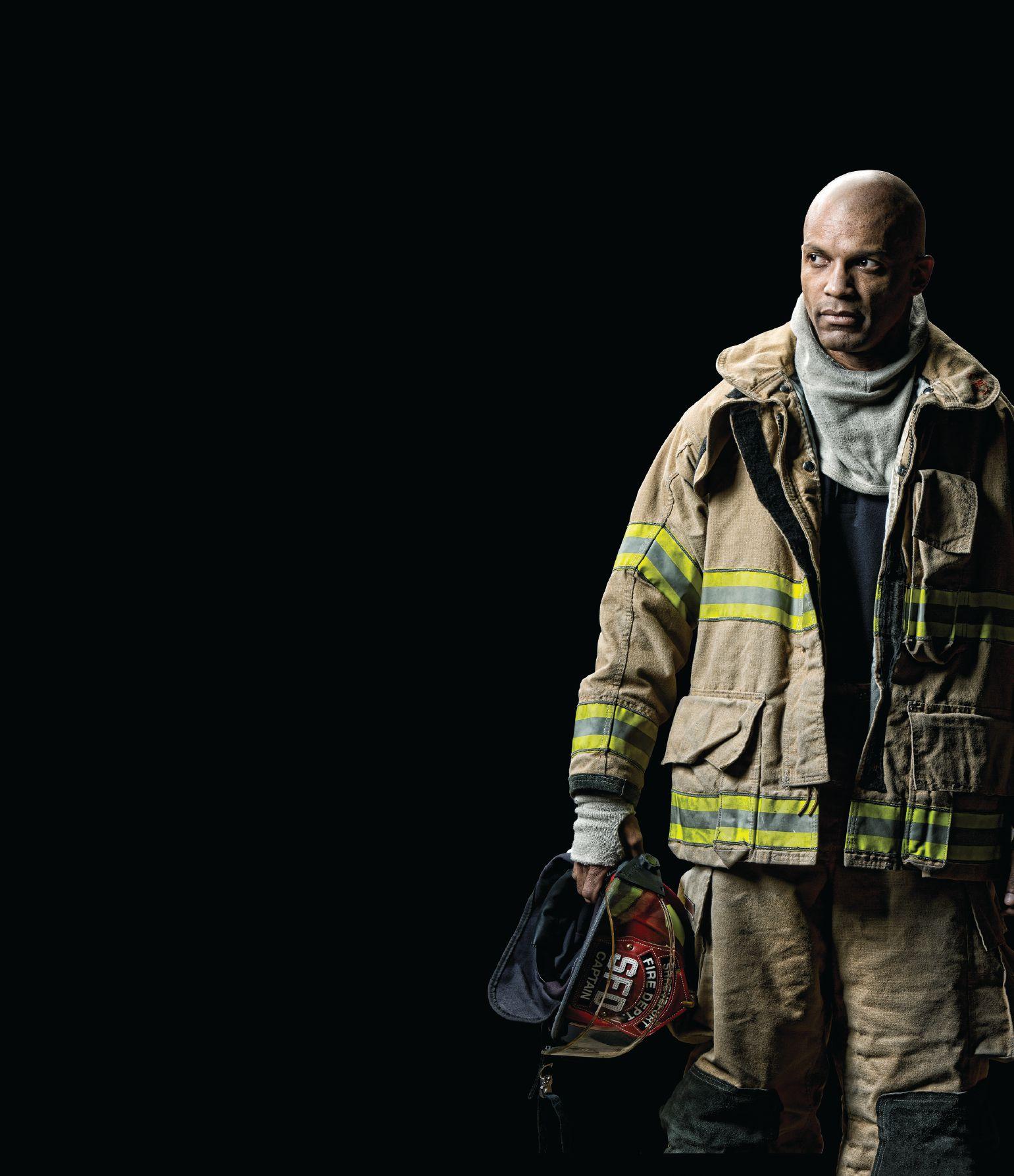
IOne chief’s quest to stop bad calls
f you don’t like training or change, you are in the wrong business: get out now!
We need to train as if lives depend on it, because they do. We need to constantly evolve because the environment we work in constantly changes.
#Stopbad is the Twitter-friendly nickname given to the one-day program (Safe and Effective Scene Management) that I have been delivering for the past couple of years. One of my many passions is taking a close look at firefighters’ injuries and deaths in the hope of never having one happen on my watch.
For several years now, I have been delivering four- and five-day scene-management courses all over British Columbia. A couple of years ago, a smaller fire department asked me if I would put together a simple one-day, no-nonsense, scene-management program. I was happy to oblige. The Safe and Effective Scene Management program was an instant hit, with several more departments asking me to deliver the same program.
I decided to take the program to the executives of the Fire Chiefs Association of British Columbia (FCABC) to see if the association had any interest in supporting it. After my presentation, the FCABC contracted me to deliver 10 sessions throughout British Columbia. These 10 sessions quickly turned into more than 20 sessions and covered almost 200 fire departments in British Columbia and Alberta.
The program received a lot of attention on social media and other platforms, and sparked the interested of the Maritime Fire Chiefs Association, which also contracted me to visit the east coast and deliver the program. In April, I taught 11 sessions in the four Atlantic provinces to more than 500 career and volunteer firefighters, representing more than 200 fire departments. Again, the response was overwhelming.
are often bad calls. Many of these so-called close calls are very predictable and could have been managed more safely and effectively.
One example of this is placing firefighters on a burning roof. It can be very challenging for firefighters to operate on a roof, even without a fire in the roof. Add a fire, and it is very likely that something will go wrong. The risk versus reward in this scenario does not make sense. Operating above a fire is simply very dangerous.
Another example is the radio call signs we use. Many departments use call signs that are task-oriented and can change during an event, making it difficult for firefighters to remember their call signs. In a future column, I will explain the very popular Call Signs for Life program that my department has been successfully using for several years. Under the Call Signs for Life format, firefighters use the same call signs for their entire careers, regardless of the task or incident. Call Signs for Life is just one of the many components of the #Stopbad program.
The #Stopbad program offers some suggestions for safely and effectively managing a fire in a single family home. The skills learned from this example can then be put to use at larger, more complex emergencies.
Many of these so-called close calls are very predictable and could have been managed more safely and effectively. ‘‘ ’’
Why #Stopbad? Over my lengthy career, I have seen and read about the same bad things happening to firefighters, over and over again. Some of these bad things injure or kill our firefighters. While some might call some of these bad things close calls, I find that they
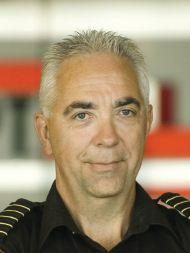
Gord Schreiner joined the fire service in 1975. He is the full-time fire chief in Comox, B.C., where he also manages the Comox Fire Training Centre. He is a structural protection specialist with the Office of the Fire Commissioner and worked at the 2010 Winter Olympics as a venue commander. Schreiner also serves as the educational chair for the Fire Chiefs Association of British Columbia. In 2010, he was named the CAFC’s career chief of the year and was also presented the award of excellence from the Justice Institute of B.C. He has a diploma in fire-service leadership and has traveled nationally and internationally delivering fire-service training. Contact Gord at firehall@comox.ca and follow him on Twitter at @comoxfire.
In future columns, I will discuss responding to the emergency, both in a fire engine and to the station in a private vehicle, in the case of a volunteer. You can also expect discussions on size-up (including victim survivability), developing an incident action plan (defensive or offensive), accountability, portable radio communications, the placing of the first hoseline, searches, venting, rapid intervention teams, a glossary of terms, back-up teams, stand-by teams, incident safety officer, staging and firefighter rehab.
The program is intended for all members of your department, from chief officers to recruits. The program also works for career, paid on-call, volunteer and industrial firefighters. Having a simple program for everyone means we can all be on the same page when it comes to firefighter safety.
My intent is to get you thinking about risk versus reward at every incident and to choose an incident action plan through which you have a very high chance of bringing all of your firefighters home.

Born bold.
If you’ve always been a fighter, only Dräger will do.
Dräger equipment isn’t for everyone. It’s for people who have expected nothing but the best of themselves from the very beginning. When expectations are this high, only optimum fire equipment can rise to the occasion. Dräger makes equipment bold achievers can have confidence in. Our integrated portfolio revolutionizes firefighting technology with streamlined components that work together as one. The result: power to perform at your personal best.
GO IN PREPARED:

back-line heroes
on June 20, at exactly 0813, I was sitting on the couch preparing to enjoy a welldeserved day off when the phone rang. I was on another call at the time but noticed it was Chief Jim Smith. Typically, the chief doesn’t call unless he has something to say, so I asked the other line to hold and I answered.
“Hello Chief,” I said in an inquisitive tone. Skipping any pleasantries, the chief asked if I could report to the High River Emergency Operations Centre (EOC) immediately and contribute where I could. Leaning over, I peered out the window at what was a beautiful sunny day. A little dramatic I thought, but hey, what the chief wants the chief gets, so off I went.
What could warrant such a call, I wondered, as I grabbed my radio and got into my car. Struggling with the guilty thoughts of wanting action but knowing the ramifications to others, I admit to being torn between being excited to use the ICS training I had acquired over the years, and being a bit apprehensive about deploying to the front lines where the movies tell us heroes are born.
The town of High River (insert irony here) was expecting higher-than-average water flows and had begun preparations for what was expected to be a repeat of the 2005 flood, during which the water ran at more than 800 cubic metres per second. Little did I know at the time that I was driving into what would soon be an unprecedented wall of water measuring more than 2,000 cubic metres per second.
I was about 10 blocks into town when I noticed some water on the streets; it was another five blocks when I realized that perhaps all was not as it seemed.
The roads began to quickly fill with fastmoving water and pandemonium began to take hold of the town. Horns were honking and cars were moving in every direction out of town. I’d better hurry up and get to the EOC, I said to myself, as I simultaneously began to regret my choice of automobiles.
I had elected to take my sports car, leaving behind my perfectly suited pickup truck. Stupid, I thought; the car was low to the
ALBERTA FLOODS
Why firefighters on the front lines need to appreciate the thinkers and planners
By ChAd sARtison
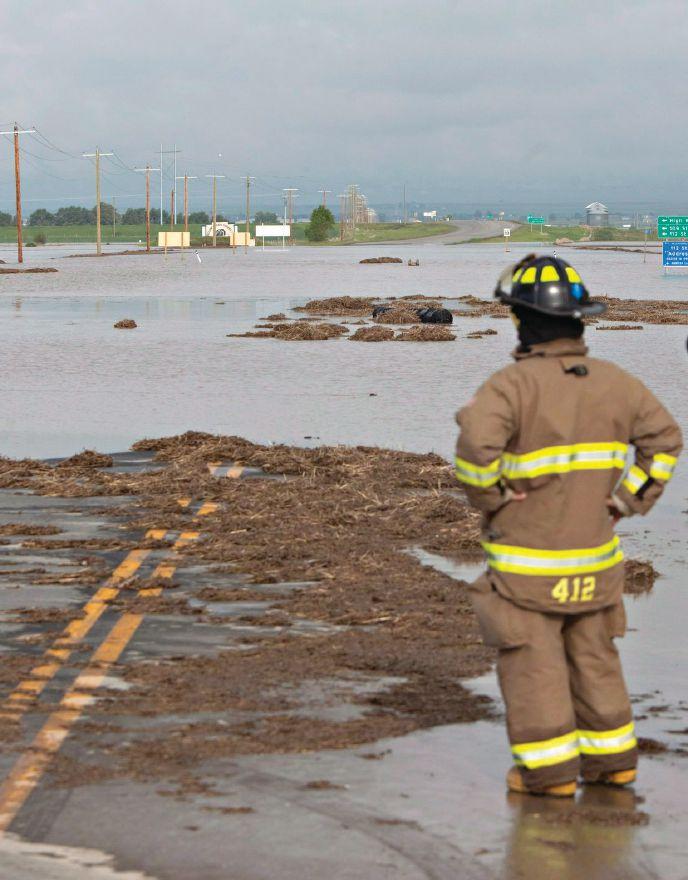
above : A firefighter surveys a washed-out road in High River, Alta. In June, floodwaters tore through the town, flowing at an unprecedented 2,000 cubic metres per second.
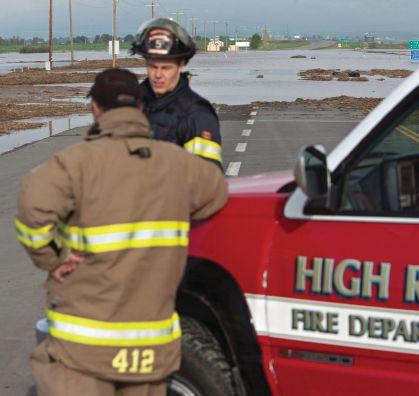
r I ght: Firefighters in High River, Alta., stand near a road washed out by floodwaters. During the first day of flooding, dispatch was inundated with emergency calls every 20 seconds.
Anhydrous Ammonia: Do You Know What To Do?
Fire ghters know better than anyone the importance of being prepared. Although a release of anhydrous ammonia is rare, safely responding to such an incident requires specialized knowledge. But for re ghters who often have irregular schedules, acquiring the necessary information and skills can be a challenge.
Fortunately, re ghters can now learn about anhydrous ammonia quickly and easily at the re hall through the Canadian Fertilizer Institute’s (CFI) online training portal, GrowZone.
The course, Anhydrous Ammonia Awareness for First Responders, was developed in consultation with rst responder partners including the Canadian Association of Fire Chiefs and Transport Canada. The course teaches students how to:
• Understand anhydrous ammonia’s basic properties
• Respond to an incident
• Perform first aid in the event of anhydrous ammonia exposure
• Establish emergency plans
“We want re ghters to understand that anhydrous ammonia is a commonly used fertilizer in Canada and how to protect themselves and the public in the event of a spill or leak,” said Roger Larson, President of CFI.
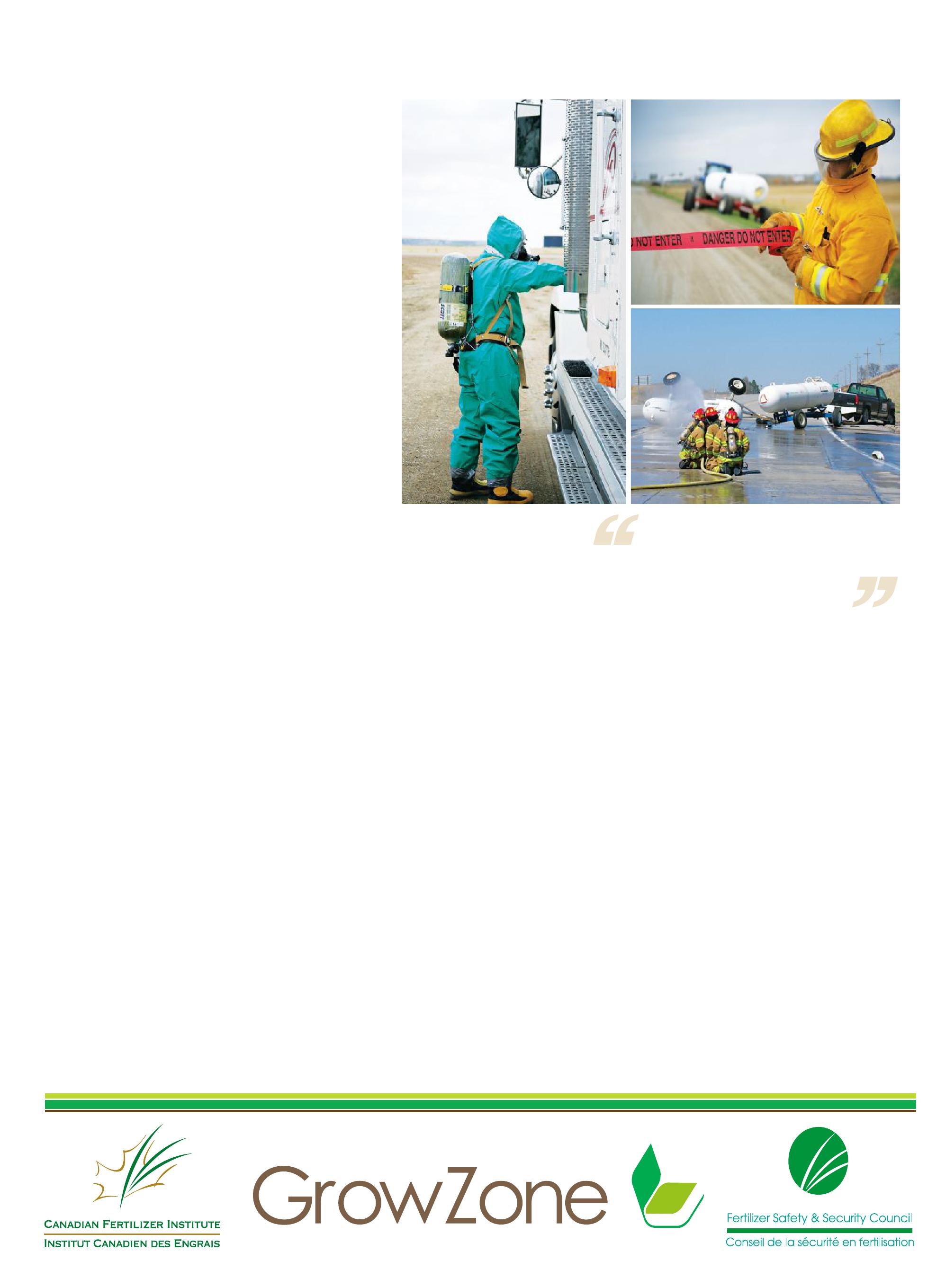
Now available online at GrowZone - Anhydrous Ammonia Awareness Training for re ghters.
Anhydrous ammonia is an important fertilizer product that is widely used to grow food. In Canada, it is used primarily in the Prairies. Although ammonia is a naturally occurring crop nutrient, it is corrosive until it binds with water in the soil. In the case of a release, it can cause serious injury upon contact or inhalation.
Because anhydrous ammonia is transported under pressure by train and truck, accidents can happen. To help prevent release incidents, CFI ‘s Fertilizer Safety & Security Council (FSSC) developed a comprehensive Ammonia Code of Practice to set a standard for safe and secure handling of anhydrous ammonia by agri-retailers. The Code has been in place since January 2011 and CFI manufacturing members will not ship anhydrous ammonia to agri-retail sites unless they are certi ed under the Code.
“This training course was developed to provide a practical way for rst responders, including re ghters, to get the information they need,” said Giulia Brutesco, Director of Scienti c & Regulatory A airs at CFI. “By o ering the course online we’re making it easier to access information needed to safely respond to an emergency involving anhydrous ammonia.”
Getting started with GrowZone is simple. The only requirement is a computer with Internet access. Registration on the site only takes a minute and users will have immediate access to the training module. Students learn at their own pace and on their own schedule. There is no charge to re ghters to access the course and upon completion, students will receive a certi cate.
Canada’s re ghters play a critical role in protecting the public, communities and the environment every day. Through the FSSC and the GrowZone online portal, the Canadian fertilizer industry is committed to helping ful ll this vital role by providing the information and training needed to safely respond to an anhydrous ammonia release incident.
Be prepared - visit GrowZone at growzone.c .ca to start your training today.


ALBERTA FLOODS

ground and built to gobble up air into its V10 engine. I was now driving in 10 inches of fastmoving water and air was quickly becoming a precious commodity.
Recalling my 1021 command training at which we discussed ongoing scene assessment and tactical change, I came to the conclusion that it is an officer’s prerogative to change his mind as long as he does so quickly! I pulled a dramatic U-turn and joined the High River residents. I immediately hit gridlock, and my patience grew thin as I could hear my muffler choke from the pressure of the rising water.
Looking ahead, I pulled into oncoming traffic and raced down the opposite side of the road. Almost immediately, law-abiding citizens began to object with their horns and shake their fists while others swerved to cut me off. They did not know that I had spotted some traffic officers desperately trying to control the chaos at the approaching lights. I squealed to a stop, jumped out of my car and informed the officers of the wall of water coming their way. I suggested that they stop all incoming traffic and double-lane the citizens out of town.
Taking advantage of the ground I had gained, I helped the officers push a stalled car with its occupant still in the driver’s seat out of the way, and I raced to the fire hall. I immediately tried to hitch a ride to the EOC. The driver of the first apparatus I asked said, “Don’t bother, brother; the EOC is under six feet of water. It’s coming to you.”
Dispatch was chaotic with emergency calls coming in every 20 seconds. I remember listening with admiration to the dispatchers keep it together. “High River Fire, respond to a 40-year-old female clinging to a tree,” with High River Chief Len Zebedee replying, “Tell her to hang on, we’ll be right there!!!”
I remember thinking that there was nowhere else on the planet I wanted to be when suddenly, Chief Smith (my chief) said, “Pack your bags, we are pulling back to Foothills EOC.”
Back at the Foothills EOC, all was calm –almost devoid of any indication of the tragedy unfolding 30 kilometres away. Then came the order, the secondary EOC at the High River fire hall was in danger of flooding and everyone was evacuating to our EOC. It was over the next couple of days that I began to realize that heroes are not born only on the front lines as Hollywood leads us to believe.
It was Day 2 when my team was deployed to relieve command at the Blackie Evacuation Centre. Oversee a bunch of evacuees? I hope I was able to hide my disappointment better than some of the younger members of my
team.
Immediately upon arriving at the evacuation centre, it became glaringly apparent that there was a tremendous amount of work to be done. It wasn’t glamorous work. We never pulled anyone that day from the precipice of an angry river. We never managed a hot loading zone or unloaded helicopter evacuees snatched from rooftops.
We did, however, give more than 250 citizens warm clothes and a compassionate ear as the reality of the day began to reveal itself in the eyes of our customers who had lost everything.
When we received that assignment, none of us particularly wanted it, including me. Yet as captain, I don’t have the luxury to choose assignments, and had no choice but to put my – and, in turn, my team’s – best foot forward. I will always think it unfortunate that some of our younger firefighters will never be able to see beyond the action that they missed that day and appreciate the incalculable contribution they made.
Too often in fire we focus on the tactical side of the job. For every trench there is a backroom hero tasking, developing, strategizing and making sure we are able to serve our communities and come home safely to our families.
The back rooms are often where our battles are won and lost, and in High River that day Chief Zebedee, his command staff and their High River firefighters combined with firefighters from all over the region to win an unwinnable battle. Sadly we lost three beautiful citizens that day but saved countless others and, amazingly, never lost an emergency responder.
It was in these EOCs that I was privileged to witness unparalleled heroics from countless individuals who worked around the clock, many of whom also lost everything but the clothes on their backs.
Even on the worst day, being a firefighter is hands down the best job in the world. In the trenches of High River that day, many firefighters put up their lives as collateral for another’s and won the bet. This article is in no way meant to diminish that contribution. I simply think it worth mentioning the countless unsung heroes who do what they do so we can shine and do what we do.
Chad Sartison is a captain with Foothills Fire Department in Alberta and the founder and president of The Fire Within. Contact him at thefirewithin1@me.com

BaCKtoBaSICS
Victim removal down ladders – part 2
By MARK VAN DER FEyst
In the June issue of Fire Fighting in Canada, we looked at how to bring a victim down a ground ladder horizontally with the victim facing the ladder. The firefighter has his arms through the victim’s legs and under the victim’s arm to secure the victim to the ladder and to maintain control while descending. There are other methods to remove a victim down a ground ladder, such as the vertical victim technique. There are two variations to the vertical victim technique: the victim facing away from firefighter; and the victim facing the firefighter.
Both of these removal techniques can be accomplished by just one firefighter. As long as control is maintained at all times, the firefighter will be able to bring the victim down the ladder and then get help at the bottom for removal to awaiting EMS crews. Much exertion will be required to descend the ground ladder with a viable victim – help will definitely be needed to drag or carry the victim to wherever EMS is set up.
The victim’s feet will have to be passed out the window first with the victim being either face up or face down. If the victim is conscious, he will face the firefighter. If the victim is unconscious, he will be facing away from the firefighter, since having an unconscious person vertically face the firefighter makes the removal very difficult and unstable.
In the technique in which the victim faces away from the firefighter, the firefighter will be positioned behind the victim, using his arms and one of his legs to support the victim’s weight. The angle of the ground ladder is important with this technique. As you can see in photo 1, the ground ladder is at a 75-degree angle. This allows the weight of the firefighter and the victim to be supported and transferred to the beams of the ladder, and then directly to the ground. With the ground ladder being on a hard surface, this is especially important to prevent the ladder from kicking out. Having another firefighter heeling the ladder will ensure that the ladder is stable.
The arms of the firefighter are right under the armpits of the victim, and his one leg is in between the victim’s legs. As seen in photo 2, the victim’s legs should be on the outside of the ladder beams. This will keep the victim’s legs clear from the firefighter’s climbing path and prevent any tripping or leg entanglements. The hard part with this technique is removing your leg from between the victim’s legs in order to step down to the next rung. To make this a little bit easier, the firefighter needs to roll his wrists upward, toward the ladder, before removing his leg. Doing this allows the weight of the victim to be somewhat relived from the firefighter’s knee, allowing the firefighter to remove his leg. Do this all the way down the ladder to the ground.
If the victim regains consciousness or starts to lose control, the firefighter can pull his body into the ladder and pin the victim in order to regain control. This is a very effective way to control the victim. Once at the bottom, the firefighter can drag the victim away from the ground ladder to awaiting EMS crews.
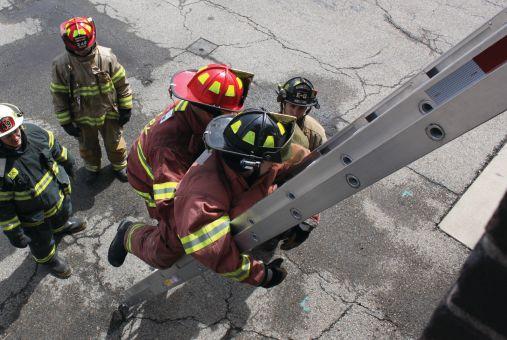
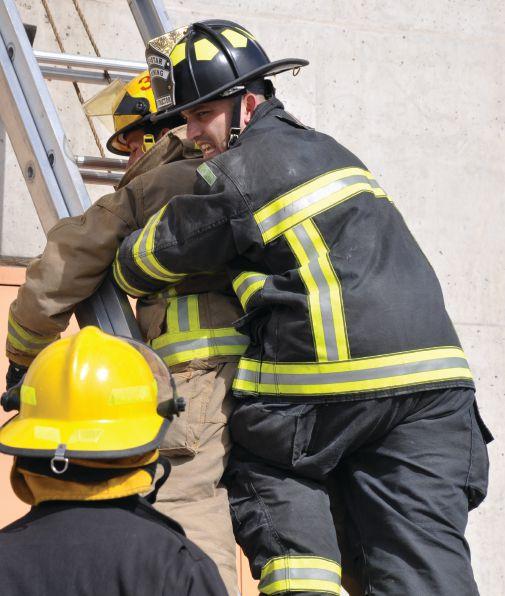
Photo 2: The victim’s legs should be on the outside of the ladder beams. This will keep his legs clear from the firefighter’s climbing path and will prevent any tripping or leg entanglements.
Photo 1: With the ground ladder at a 75-degree angle, the weight of the firefighter and the victim is supported and transferred to the beams, and then directly to the ground. This is especially important to prevent the ladder from kicking out.
5: When rescuing small children, firefighters can employ two methods for removal down ladders. The first involves holding the child horizontally as the firefighter descends the
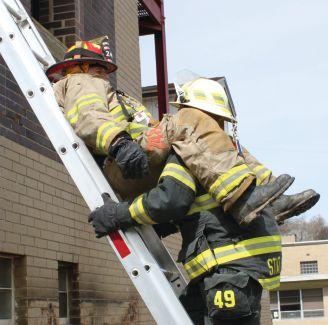
With the victim facing the firefighter, the weight of the victim will be resting on the shoulders of the firefighter, as well as on the ladder. In photo 3, you can see how the victim will sit on the ladder and his legs will be resting on top of the firefighter’s shoulders. This can be accomplished only if the victim is conscious.
The buttocks area of the victim should be close to the chest area of the firefighter. This will help with weight distribution and will reduce the strain on the firefighter’s arms. The firefighter will have his hands on the beams of the ladder, allowing him to slide his hands smoothly down as he descends. The back of the victim will slide down the rungs of the ladder. Depending on the size of the victim, part of his back will slide down the beams of the ladder. The rungs may lead to a rash on the victim’s

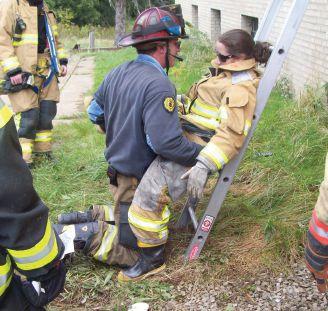
4: With the victim resting on the firefighter’s one knee, the firefighter is able to disembark from the ladder on his own or wait for assistance with the removal.
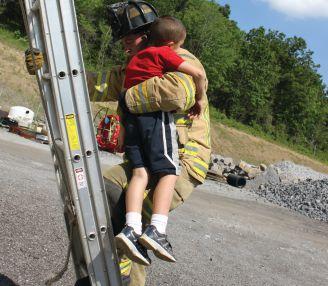
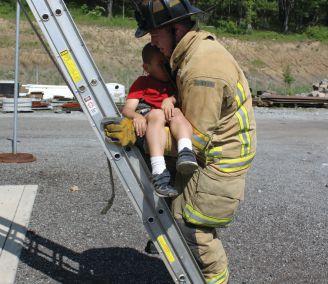
6: The second method for rescuing a small child down a ladder involves holding the child in one arm as the firefighter climbs down the ladder.
back, but the victim will be out of the building, safe and alive.
Once at the bottom of the ladder, the firefighter can let the victim rest on his one knee. In photo 4, you can see how this is set up. With the victim resting on the firefighter’s knee, the victim can disembark from the ladder on his or her own, or wait for assistance.
When dealing with small children, the removal technique varies depending on the size of the child. A child can lie horizontally across the arms of the firefighter, as in photo 5, or be carried in one arm, as in photo 6. A child can also be passed off to another firefighter below, if there is more than one child to be removed.
Practising these removal techniques for victims of any size and age will help you gain confidence.
Mark van der Feyst is a 14-year veteran of the fire service. He works for the City of Woodstock Fire Department in Ontario. Mark instructs in Canada, the United States and India and is a local-level suppression instructor for the Pennsylvania State Fire Academy and an instructor for the Justice Institute of B.C. E-mail Mark at Mark@FireStarTraining.com

Photo 3: In the case of a conscious victim, the victim’s legs will be resting on top of the firefighter’s shoulders.
Photo
ladder.
Photo
Photo

getting the ALBERTA FLOODS
getting the word out
social media becomes key source of information for residents
during June floods in Alberta
By JAson LoW
top : On Twitter, Redwood Meadows Emergency Services found its tweets were being shared, enabling the department to rapidly deliver important information to the community.
u
ntil recently, most posts on Redwood Meadows Emergency Services’ (RMES) social media pages informed our fans and followers that we were responding to a call, or showed off photos of training, incidents or fun stuff, such as when one of the probationary firefighters got his helmet caught in the air-horn lanyard on the new engine. In late June, all that changed when RMES found itself in the midst of the fourth major flood in the past 20 years.
Posts to RMES Twitter and Facebook feeds are handled by either the fire chief or the communications officer. Most posts are generic – “We are responding to a medical
emergency in Bragg Creek.” If the incident is on a road or highway, or if the location is pertinent to the public, we post that information – for example, a motor vehicle collision that blocks a highway.
News media and similar organizations (such as Alberta Motor Association Road Reports and 511 Alberta) follow our Twitter feed and retweet our information to their own followers. Many people in our area follow these organizations, and we can therefore rapidly deliver information that impacts our residents.
On June 18, before the flood that ravaged our district and other parts of southern Alberta, RMES had fewer than 150 likes, or Facebook followers. By June

KOCHEK® COMPANY

MICRALOX Micro-Crystalline
MICRALOX a patented process, will extend the life of your aluminum parts up to 10 Times compared to conventional aluminum anodic coatings; more effectively resists salt, and chemical corrosionand attack.
15,000 hrs of salt spray without any degradation to finish compared to standard anodic coatings.
Meets mill spec. 8625 type 3 class 2
QUANTUM HardcoatColor
• High quality durable hardcoat
• Vibrant anodized color
• Great for color coding
Meets mill spec. 8625 type 3 class 2
NATURAL Hardcoat
• High quality durable hardcoat
• Most often specified by design andmanufacturing engineers
Meets mill spec. 8625 type 3 class 1
26, the count was up to 332 (the numbers for Twitter are more difficult to identify, but they made a similar jump). Analytics on Facebook show that 458 people commented on, shared, or posted information relating to the department in the week of June 19 to June 25, and more than 13,000 people saw our content.
Posts during the floods included everything from incidents that were ongoing to regular updates on the status of the mitigation activities in each town – for example, repairing the river berm in Redwood Meadows, or updating road closures in the Bragg Creek area – to evacuation orders and shelter information. Posts made by
AN ABOUT FACE
ALBERTA FLOODS
other entities, such as the Townsite of Redwood Meadows, the Alberta Emergency Management Agency, the County of Rocky View, and others, were also shared. In turn, our followers reposted this information for their followers to see. The propagation of the information was profound – people as far away as the United Kingdom were aware of the situation back home by way of social media.
The first flood crisis-related post was sent out at 8:24 a.m. on June 20 via the fire department’s Facebook page (http://www. facebook.com/rmesfire); which is automatically duplicated to our Twitter account (@RMESFire): “INCIDENT ALERT –
By Chad Sartison
For those chiefs and chief officers who think Facebook and Twitter are the fodder of teenagers, think again.
The June flood in Alberta is a perfect example of how social media can be used to effectively communicate to our customers. Why did we use social media? Because the vast majority of our infrastructure was down, the entire town of High River was evacuated and away from TV, and the local newspaper office was under water. To put this in perspective, on Day 2 of the disaster, I was interviewed by two reporters who had lost their homes and were no different than the people they were interviewing. How else were we to communicate?
Fortunately for the Foothills Fire Department, eight months earlier, Fire Chief Jim Smith and Deputy Chief Gregg Schaalje had taken a leap of faith and allowed officers to start a Facebook page (www.facebook.com/foothillsfiredepartment) to communicate to the public.
On the morning of the flood – Thursday, June 20, the page had about 400 likes, with about 25 people at any one time talking about the page (yes, you can track this). Fire bans, safety tips and other such notices were disseminated through the page with relative success, and Facebook became a great vehicle through which to communicate to the community updates on the training and hard work the department’s firefighters were doing.
Fast-forward to Sunday, June 30 (10 days later) and the page had 4,664 likes, more than 350,000 interactions, and more than 12,800 people talking about it. So how did we get there?
On day one of the flood, some of the Foothills officers came to the chief with the idea of advertising the page to local residents. Chief Smith and Deputy Schaalje, anticipating the benefit, immediately approved a budget of $100. This lasted for about a day, when it immediately became apparent that the Foothills Fire Department page was quickly becoming the primary conduit for evacuation photos and information. The budget was expanded to $500.
Comments were being posted on the page at more than 200 a day. For the most part, the comments were extremely positive. With an average of 250,000 interactions a day, it never became necessary to delete a malicious comment or ban a user – all this in an atmosphere that could best be described as a pressure cooker of anxious frustration by a displaced community.
Here are a few of the more than 1,000 comments posted on the Foothills Fire Department Facebook page:
“Thank you for these updates. Staying connected to our town is the only thing keeping us sane. Info is so desperately needed.”
“Thank you so much! It’s not just your family and friends proud of you we as residents are very, very proud of you all too! Thanks for having our backs.”
“Thanks so much for all the work and energy and care you are putting into our community! You are appreciated! Thanks also for giving us a peek into our town. It helps to know what’s going on.”
Many fire departments and their municipalities avoid social media because of potential ramifications from inappropriate comments, when they should consider the ramifications of not being involved in the conversation in the first place.

ALTA. FLOODS

Redwood Meadows is recommending a voluntary evacuation of all residents north of the “short berm” north of Manyhorses Circle. Water levels in the area are rising to dangerous levels. Watch this page for more information.”
At 3:24 p.m., RMES sent out: “Roads in the Bragg Creek area are impassable. RMES recommends sheltering in place where possible.” A follower responded on Facebook asking for clarification as the media and other official entities had claimed earlier that there was a mandatory evacuation in place. We responded: “RMES recommends that people stay put at this time as it is unsafe to travel through Bragg Creek hamlet.”
At 10:19 p.m., to provide some kind of update for people to take comfort in, we posted: “Crews continue to work at RMES throughout the night. If you are safe and out of danger, please shelter in place. If you have any concerns at all about your safety, do call 911.”
At 3:44 a.m. on June 21, during our own evacuation from the fire station, we posted this message via the Facebook Pages Manager smartphone app, which, again, posted to both Facebook and Twitter: “Redwood may experience a total berm failure near the playground on Redwood Meadows Drive within the hour. RMES crews have relocated to Banded Peak School. If you are still in Redwood Meadows, you must leave. Residents should go to Springbank Park For All Seasons.”
A reply to that post later in the morning asked: “Would really like to hear some updates on this as well. Any news? Either way, everyone really can’t thank you all enough for all your work.” Our response: “The berm has held so far. Actions to reinforce it are underway now.”
In addition to all these posts, information provided on the Redwood Meadows townsite Facebook page, as well as by other agencies/entities and our own members on their personal Facebook pages – were reposted and/or retweeted in order to pass on the information. Even though fans and followers of our own page were potentially already seeing such information, sharing it encouraged them to share it with their own Facebook friends.
When a call was put out for volunteers to help fill and place sandbags in Redwood Meadows to reinforce the berm, the volunteer response was so overwhelming that we eventually had to turn people away.
Even after most of a crisis has passed, there is still benefit to ongoing communication. On June 24, when almost all urgent responses and reactions had subsided,

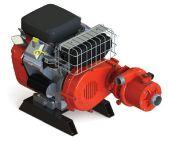
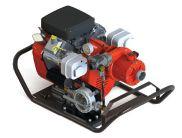
The WATERAX BB-4 series is a full line of high pressure centrifugal pumps that has been used by forest agencies for more than 40 years. It has become the weapon of choice in wildland operations. The BB-4 comes in portable & vehicle mounted configurations and is powered by Briggs & Stratton Vanguard 18HP or 23HP engines to deliver pressures up to 440 PSI and 106 GPM . All BB-4 models feature a unique greaseless sealed bearing and a blister-resistant mechanical rotary seal. These latest improvements significantly reduce field maintenance and protect the pump-end against seizure under dry-run conditions.
YOU PROTECT THE PUBLIC
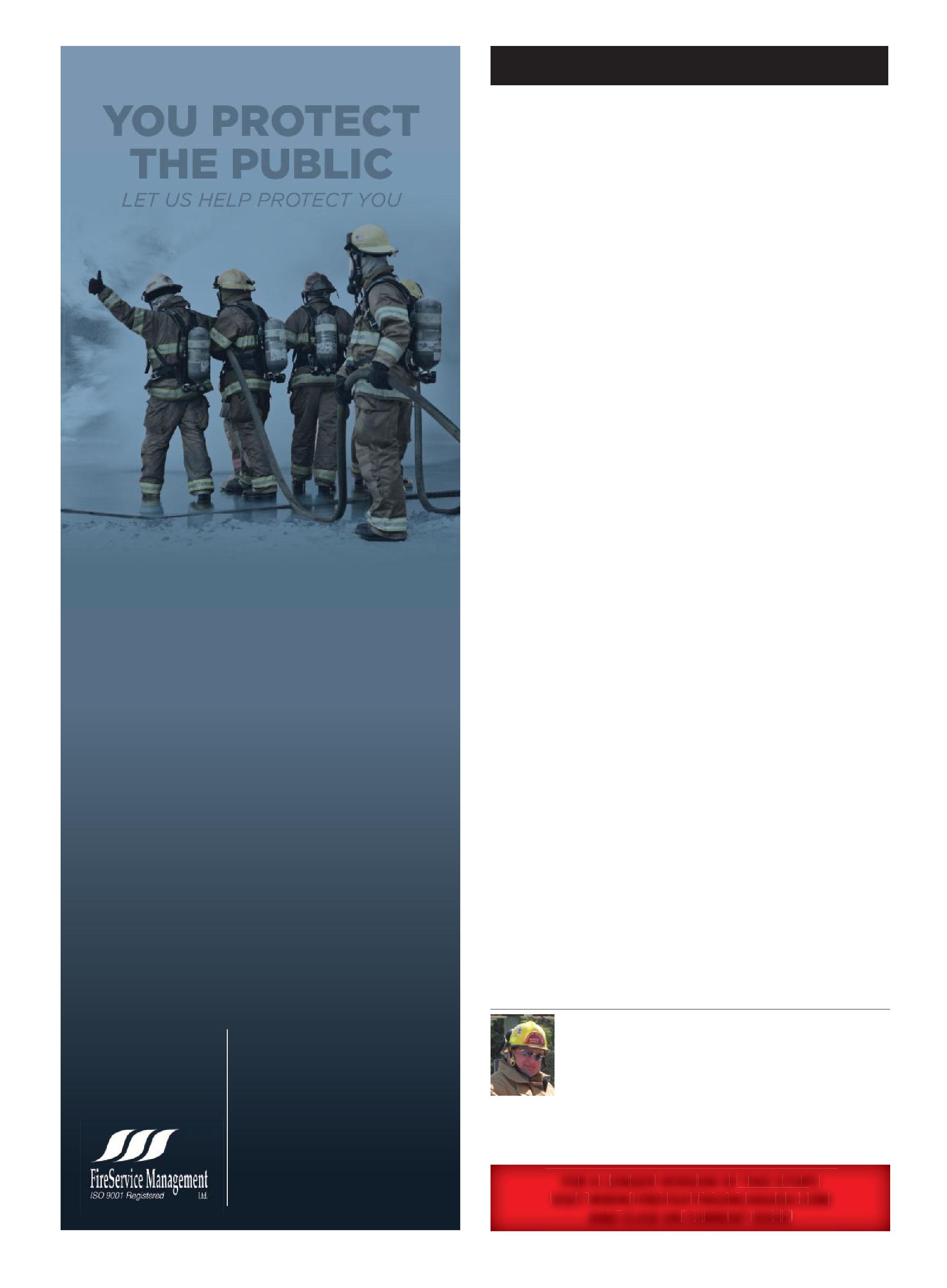
For your cleaning, decontamination, inspection, testing, repair and record keeping of your firefighter’s protective clothing... we have you covered! 24/7 access to FIRETRACK®, the online data base that provides you with complete details of your C&M Program with FSM. We do the work for you! ETL Verified ISO 9001 Registered Fast turnaround
Bunker Gear Rental Program – Toronto Location
ALBERTA FLOODS
people were being allowed back home, and the water-treatment plant had been restarted, we posted: “Morning folks. The water plant in Redwood is functional again. Please remember to use only what you need as it will take time to build up a reserve, and there is a boil-water advisory in place until the quality can be confirmed.”
The unique benefit to social media is that it is a two-way street; you can deliver information to your residents and customers, but at the same time, your residents, and in fact anyone, can provide intelligence that you can exploit in any number of ways.
Another element to remember in tweets (and, now, Facebook posts too) is that you can use hash tags to allow your posts to be easily searched or referenced by your audience (not only your followers but also anyone on the social media networks). For example, incidents on a highway or affecting travel in Alberta are commonly tagged with the hash tag #ABroads. Entities such as the Alberta Motor Association, 511 Alberta (which is the provincial government’s group helping to aggregate and alert on traffic issues), and the media outlets that have traffic reports will watch for this tag and report on posts using it. So, when responding to, or clearing from, a motor vehicle collision, for example, we try to use the #ABroads hash tag. Hash tags can be made up on the spot, simply by typing the pound (or hash) sign and then a string of characters of your choosing. Some might be humorous reflections by the poster, such as #whydidIcometoworktoday, while others serve the purpose of identifying important posts, such as #abflood.
We learned, after the crisis was over, that there is a term for using social media in disaster and similar situations: social media in emergency management, or SMEM. Quite a few agencies are learning about this quickly, and stumbling over hurdles as they go. For example, Calgary Police’s Twitter feed was automatically curtailed by Twitter when the number of tweets in a given period was reached (ironically, this is known in social media circles as a “flood”).
As for lessons learned, the use of social media in an emergency situation has the potential to consume one person’s focus entirely. If your agency intends to use social media during a protracted, large-scale incident, consider detailing a person, perhaps your public information officer’s aide if you are rich enough in personnel to have one, to attend to this alone. Also, it would beneficial to install a program such as TweetDeck or HootSuite, or a similar social media dashboard, on your computer that allows you to post to and monitor many social media sites or feeds at once.
The inclusion of social media in your department’s operational plans should not be restricted to 140 characters. Communicating about other events – such as your training or what your members do off the clock – is just as important for building a rapport with the public. While the time has not yet come when we will respond to 911 calls from Twitter, we can still obtain a tremendous amount of valuable information by monitoring our customers’ tweets and Facebook posts in times of crisis.
Jason Low is a 22-year veteran of Redwood Meadows Emergency Services, currently serving as the communications officer. He is an avid amateur radio operator and radio communications hobbyist and a computer enthusiast. When Low is not tweeting about RMES activities, he works for the City of Calgary’s Public Safety Communications division as an emergency dispatcher.


Continued from page 12
firefighters from Cochrane who were in the process of evacuating the two women ran into trouble when their inflatable Zodiac they were using to transport the evacuees flipped and tossed the women into the water. These guys are not just firefighters from another department. They’re colleagues, friends, brothers and family. The firefighters wasted no time broadcasting their mayday call, something that no doubt contributed to the successful outcome. When the distress call was made, a crew immediately went looking for the loader while the rescue and rapid response crews from RMES responded to the flooded four-way stop in Bragg Creek that had become a raging river. RMES crews donned PFDs and grabbed throw bags while waiting for the loader, and as soon as it arrived they were on their way down the street. Radio silence was declared during the rescue operation. With the help of the loader, RMES crews reached their Cochrane counterparts and were able to throw rope to them so they could affect their self-rescue and the rescue of the original flood victims. Backup crews from Cochrane had arrived during the operation and were staged should the RMES crews require more assistance. Also at staging was conservation officer Bill O’Connor, who was prepared to hook into a long line from a circling helicopter to be taken in and perform a rescue, if necessary. Once everyone returned to the staging area, Alberta Health Services paramedics assessed the victims and both women were transported to hospital in stable condition. All Cochrane crews were released from the scene soon after.
RMES crews were able to return to the station and take a short breather before being called out again, this time for a big rescue – 15 people. The Kiwanis Club of Calgary operates a camp just north of Redwood Meadows, and there were people on the property who required evacuation. The rapid-response vehicle headed to the location to determine what would be required. The crew was thankful that once again, a front-end loader was available for use. The rescue truck, which had responded east – almost to Calgary’s city limits – for another evacuation of people, joined the rapid-response crew after they were cancelled by Rocky View County’s 102 Engine. It took more than an hour to successfully evacuate everyone from the camp. Luckily, nobody required medical attention and everyone went on their way.
Our engine was also sent to a residence east of Redwood Meadows for an elderly couple trapped in their house by the river. After consultation with loader operator Chris Buchanan, it was determined that only a helicopter and a long-line operation would make this rescue. Buchanan, who had been instrumental in rescues throughout the day, including that of the Cochrane firefighters, was truly devastated that he was unable to help. We, as firefighters, were doing what we all signed up for – being there for our community and neighbours. Buchanan was the real hero of the day – a loader operator who just happened to be driving by when we needed him. In fact, he was around most of the weekend, helping with the berm fortification. We later found out that Buchanan’s wife was due with their first child on that day. Buchanan worked for four more days non-stop while his wife waited to go into labour. One week after the flooding began – on Thursday, June 27 – Buchanan became the father of a little boy.
We all got back to the station. I was busy tweeting updates to our MLA and MP. I thought I sent a direct message to MP Ted Menzies to phone me; it turns out that I mixed up my contacts and had inadvertently messaged close friend and Grand Falls-Windsor, N.L., Fire Chief Vince MacKenzie. I was a little bit surprised when Vince called the station at 1:30 a.m. Newfoundland time. I loved it, though. Hearing Vince’s voice, I immediately knew what I had done. I asked him for a dory. I was told I might need something more than a dory. Vince made me laugh – a nice release during a stressful period. Little
ALBERTA FLOODS
did I know that I hadn’t been introduced to real stress yet. After hanging up the phone, I sent the tweet to the proper person and then headed out to check on the progress of the berm reinforcement; heavy equipment was working and managing to stay just ahead of the river. It was pouring rain and the forecast was not for anything better. I stayed at this location for a couple of hours, then returned to the station. By then, some guys were bunked down, others were in the office talking. I changed radios out and told the guys I was heading home for a rest; it lasted two and a half hours. There’s nothing like getting woken up from a sound sleep and being told the berm has been breached. I raced to the station while Jennifer got our kids and pets ready to bolt. By the time I had reached the station, crews had already started filling trucks with equipment and, within half an hour, we were, for the most part, evacuated to the school south of Bragg Creek. We used our lock-box key and entered the school, basically taking over the facility as our new station. The only truck left out was going through the town, using the loudspeaker to announce that everyone who remained was to leave the area immediately. I stopped at our house to pick up a couple of things and just sat in the driveway; it was the emptiest feeling I have ever had. I didn’t know if I would ever see our home again. I drove away and headed for the school. There was no sleep that night – between being a parent and looking after our children, and being a fire chief and doing interviews with Global, CTV and CBC, I just could not fall asleep.
I was scheduled to call in to Global Calgary’s morning show at 7 a.m. so I got up from the gym mat and hopped into our bush buggy to investigate what was happening in Redwood Meadows. Much to my surprise I found that the berm was indeed holding and the heavyequipment operators were hard at it, making sure the river was not going to win. Much of the morning Friday was spent at the site of the potential berm failure, making sure the equipment operators had everything they needed. That morning, we were fortunate to have crews from Environment and Sustainable Resources Development available to us for manpower. We put them to work, assisting with more sandbagging and some groundwater pumping duties. As the day wore on, the clouds started to clear, and the steady rain slowed and eventually stopped. The river began to recede and we were able to get into Bragg Creek to further investigate the damage. During the height of the flooding the previous day, the one and only bridge into the West Bragg Creek area had been closed due to considerable undermining of the structure, as well as the amount of large debris that had collided with the bridge while coming down the river, including one house. On Friday, engineers concluded that the bridge was sound and that vehicles could once again cross back and forth. Crews were kept running steadily on Friday, retrieving pets, dealing with gas leaks, and responding to general public-safety calls. By dinnertime, we were convinced that we had won this battle. The river level was going down, by now, quite visibly.
Overnight, a schedule of berm recon in Redwood Meadows had been set up for every hour, as there were still a couple of spots that were worrisome. During a check of the berm during the 5 a.m. hour, Capt./EMR Mike Norman noticed there was some erosion of the berm in an area that had previously been OK. The problem was that the river channel had now changed and was running directly into this spot on the north side of Redwood Meadows. An hour later I got the urgent call on the radio to attend this north end of the berm. While driving to the site along the top of the berm, I stopped dead in my tracks – and good thing! There was no berm left. In that hour between checks the river had eaten away at the berm substantially, taking as much as 30.5 metres (100 feet) of material with it, and it was not slowing down. A quick call to the mayor had supervisors









for the equipment operators and dump truck drivers on scene within minutes. I also requested that our crews who were still stationed at the school respond, and start going door to door to make sure people were out of their homes.
It was not long before our call out on social media had volunteers on scene to begin sandbagging. We decided, with help from former RMES member Sean Connaboy, that staging for this part of the operation would be at the south end of town in the parking lot of the Redwood Meadows Golf & Country Club. This worked well, as truckloads of sand could be dumped there, people could fill the bags, and there was an area for pickup trucks to park, fill up their boxes with completed sandbags, and then drive straight out. We had to delay having the volunteers come to the scene because of the heavy equipment operating. About 10 pickups were filled with sandbags and ready to go when we needed them. We told the volunteers to go and rest and, when required, we would put the call out on social media. A couple of hours later that call went out and it was amazing to see how quickly volunteers were back at it, on scene and placing sandbags along the predetermined line around two homes. More than 100 people were around those houses and emptied about 20 truckloads of bags in about half an hour. It was great to see the volunteers work so smoothly together. Once again, they were returned to the staging area at the golf course, and once again they were told that when we needed their help, we would put the call out on social media. That call never had to go out, thankfully. Heavy equipment and dump trucks worked throughout the night and by Sunday morning the fight had been won.
As the sun rose Sunday morning, it was clear that our town had been saved, thanks to the hard work of equipment operators, volunteers and emergency responders. It was a beautiful day and with the water out of the streets, crews were able to start assessing more of Bragg Creek. Many of the homes in the hamlet had been heavily damaged as the river powered its way through. One building, the Bragg Creek Trading Post, had been devastated. An anchor of the town, the building included an old store and gas station, complete with an antique gravity-fed pump with a newer log-style home built onto the back side. It was difficult to look while I walked around the building to find the owners and see how they were doing. There was a very obvious answer to that question, but they have been
ALBERTA FLOODS
longtime friends of RMES and it was important to let them know we would be there for them going forward. After talking with them for about an hour, DC Low and I continued on to assess the rest of the community.
RMES and Rocky View fire departments continued to operate from the school until the end of Monday afternoon, although we had begun to move equipment back to Redwood Meadows on Sunday. Public hazard and gasleak calls continued until Wednesday, June 26. On our regular training night on Tuesday, June 25, we decided to let the crews unwind and had a big barbecue at the station, a thankyou for all the great work RMES crews had done during the previous five days.
Physically, we have recuperated; emotionally, the flood of 2013 will stick with some of us for a while. Lessons learned will be gathered. Some things will change, some will remain the same, particularly the brotherhood of the fire service. We had help from fire crews from Rocky View – including the Elbow Valley, Springbank, Madden, Langdon and Irricana stations – and from the Cochrane and Crossfield departments. And, during the crisis, Deputy Chief Brad Lorne from Calgary kept in constant contact to make sure we were doing OK. Departments in Rocky Mountain House and Strathmore offered assistance as required. No words can express how much we appreciated the help and offers from departments all over Alberta. In Redwood Meadows, we got lucky. There’s no question that hundreds of people worked hard to protect our town, but when you are dealing with Mother Nature in this context, we were, indeed, lucky.

Rob Evans is the chief fire officer for Redwood Meadows Emergency Services, 25 kilometres west of Calgary. Evans attended the Southern Alberta Institute of Technology in 1989 and studied photojournalism. In 1992, he joined RMES after taking pictures of an interface fire and making prints for the department. He has his NFPA 1001 level II certification, NFPA 472 Operations and Awareness (hazmat), NFPA 1041 level I (fire service instructor), Dalhousie University Certificate in Fire Service Leadership and Certificate in Fire Service Administration and is a registered emergency medical responder with the Alberta College of Paramedics. He lives in Redwood Meadows with his wife, a firefighter/EMT with RMES, and three children. Follow him on Twitter at @redwoodwoof.













By PE t ER SELLS
In the hands of professional amateurs
In the last week of June, the City of Toronto released a consultant’s report, A Service and Organizational Study of Toronto’s Emergency Medical Services and Fire Services, which had been tendered 16 months earlier. Included as background and context for the study were excerpts from a previous core service review of all city departments. The core service review was intended to identify opportunities for service efficiencies, through changes to services and/or service levels, while ensuring that all mandated or essential standard service levels would continue to be met. The opportunities identified for Toronto Fire Services (TFS):
• Consider integrating EMS and fire organizationally and developing new models to shift more resources to EMS response and fewer to fire response over time.
• Consider the opportunities to improve fire response times and decrease equipment requirements through dynamic staging.
I will deal with dynamic staging in a future column, but I want to point to that first bullet item as evidence that the study was conceived under the assumption that operational fire resources could be decommissioned in favour of ambulance without any reduction in fire protection. Further, neither the core service review nor the terms of the study made any mention of including a comprehensive risk analysis for the city.
The core service review was completed, and the study tendered, just as former fire chief Bill Stewart was set to retire. When Stewart was originally appointed, he had been given a clear mandate to repair what were, at the time, very contentious labour relations, and he met that challenge, along with the intelligent leadership of Scott Marks, the former president of the Toronto Professional Fire Fighters Association. The two leaders settled issues dating back to the 1998 amalgamation of the City of Toronto (the largest municipal reorganization in Canadian history), achieving along the way two unprecedented collective agreements, totalling in the billions of dollars.
Station 424, which had previously been recommended for closure in 1987, 1999 and 2007. When it came time to put those reductions into action, council backed away.
In my consulting work, I have had the privilege to meet and work with municipal council members from various Canadian communities, mostly smaller towns. I have found a major difference between those councillors and their big-city counterparts. The small-town councillors are, at most, paid a modest stipend for their work. They otherwise are employed within the community, often as business owners. Big-city councillors are career politicians, whose substantial livelihoods depend on the will of the electorate every four years. The result is a vastly different pattern of decision-making.
It is my opinion that small-town volunteer councillors exhibit greater concern and put deeper thought into the financial implications of their decisions, and show greater commitment to building political consensus and delivering clear direction to their civil servants, compared to their professional, big-city cousins. Small-town councillors have less money to waste, and less cash to toss around for patronage or to buy votes in the next election. There is no room to vacillate on strategic decisions.
In The Art of War, Sun Tsu wrote, “In war, the general receives his
‘‘ ’’
s mall-town councillors have less money to waste, and less cash to toss around . . . t here is no room to vacillate on strategic decisions.
After Stewart’s retirement, and with the study already underway, Fire Chief Jim Sales was appointed with a mandate to reduce costs. In relatively short order, Sales delivered a plan to decrease TFS staffing by more than 100 full-time equivalent positions, including the elimination of firefighter positions that had been vacant for several years, and to close
Retired District Chief Peter Sells writes, speaks and consults on fire service management and professional development across North America and internationally. He holds a B.Sc. from the University of Toronto and an MBA from the University of Windsor. He sits on the advisory council of the Institution of Fire Engineers, Canada branch. Peter is president of NivoNuvo Consulting, Inc, specializing in fire-service management. Contact him at peter.nivonuvo@gmail.com and follow him on Twitter at @NivoNuvo.
commands from the sovereign, collects his army and concentrates his forces.” In our context, the fire chief receives a mandate upon appointment by the council, takes stock of the department’s resources, and applies them accordingly. Sun Tsu also wrote, “He will win who has military capacity and is not interfered with by the sovereign.” In other words, give the chief appropriate political marching orders, provide the needed resources, and then stay out of the way.
Well, the ball is now back in Toronto council’s court. The study has included the closure of Station 424 in its recommendations, along with an increase in TFS staffing of 100 full-time-equivalent positions in fire prevention and public education. EMS is recommended to increase by the equivalent of 25.5 staffed ambulance units, but not at the expense of fire staffing. A citywide, comprehensive fire-risk analysis is recommended, correcting the glaring omission from the core service review.
In the meantime, let’s watch and see if Toronto’s professional councillors can actually make a decision or two.

The New blitzfire HE