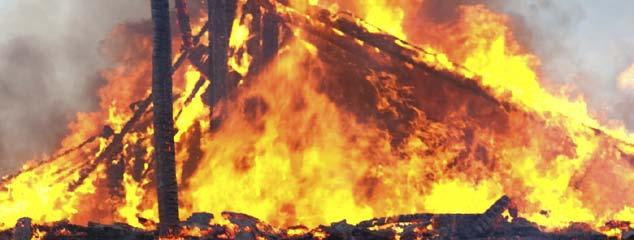
As municipalities across Canada struggle to fund their fire departments and other municipal operations, fire-service leaders are looking at ways for departments to co-operate and share resources and strengths, while working with government to ensure the needs of the public are met. Laura King reports on the movement from Newfoundland and Labrador to Ontario and west to find new strategies for an effective and efficient fire service.
26
TOOLS OF THE TRADE Extrication expert Randy Schmitz examines innovations in safety and equipment to guide departments in their purchasing decisions.
ON HIATUS
Back to Basics and Trainer’s Corner will be back in September. Meantime, previous editions of these columns/departments are available online at www.firefightingincanada.com.
Helping ourselves
It’s frustrating, by times, to read about turf wars between fire and EMS (see page 34), or demands for a 24-hour shift, when volunteer departments are gratefully accepting donations of used equipment (see Station to Station, page 6) and selling calendars or tickets on ride-on mowers and barbecues to buy PPE.
Yes, much of Canada’s fire service has to make do; perhaps we can blame a mentality of acceptance that has promoted a status quo of insufficient funding for volunteer departments. Sure, many large, municipal departments are well funded and have the gear they need. And yes, many rural departments struggle; but they’re not the ones complaining.
As I write this in beautiful Ben Eoin, N.S., a few days before the Maritime Association of Fire Chiefs conference, a few weeks after the Newfoundland and Labrador Association of Fire Services conference and a month or so after FDIC Atlantic – and where my family has, for years, bought $100 tickets for the East Bay Volunteer Fire Department’s lawn-mower draw – I’m struck by the differences I’ve encountered at chiefs’ conferences and training weekends and by the attitudes of the volunteers compared to the urban folks.
A recent e-mail exchange with a firefighter in Winnipeg about this funding problem got me thinking. His argument: urban firefighters who enjoy well-funded departments and top-notch equipment need to start pounding their fists and hounding their MPs about the lack of funding for volunteer departments. The rank and file, he says, need to kick up a stink and get Ottawa and the provinces to listen. Fair enough.
pRODuCTION ARTIST KELLi KRAMER kkramer@annexweb.com
GROup puBLISHER MARTiN MCANuLTY fire@annexweb.com
pRESIDENT MiKE FREDERiCKS mfredericks@annexweb.com
PuBLiCATiON MAiL AgREEMENT #40065710
RETuRN uNDELiVERABLE CANADiAN ADDRESSES TO CiRCuLATiON DEPT.
P.O. Box 530, SiMCOE, ON N3Y 4N5
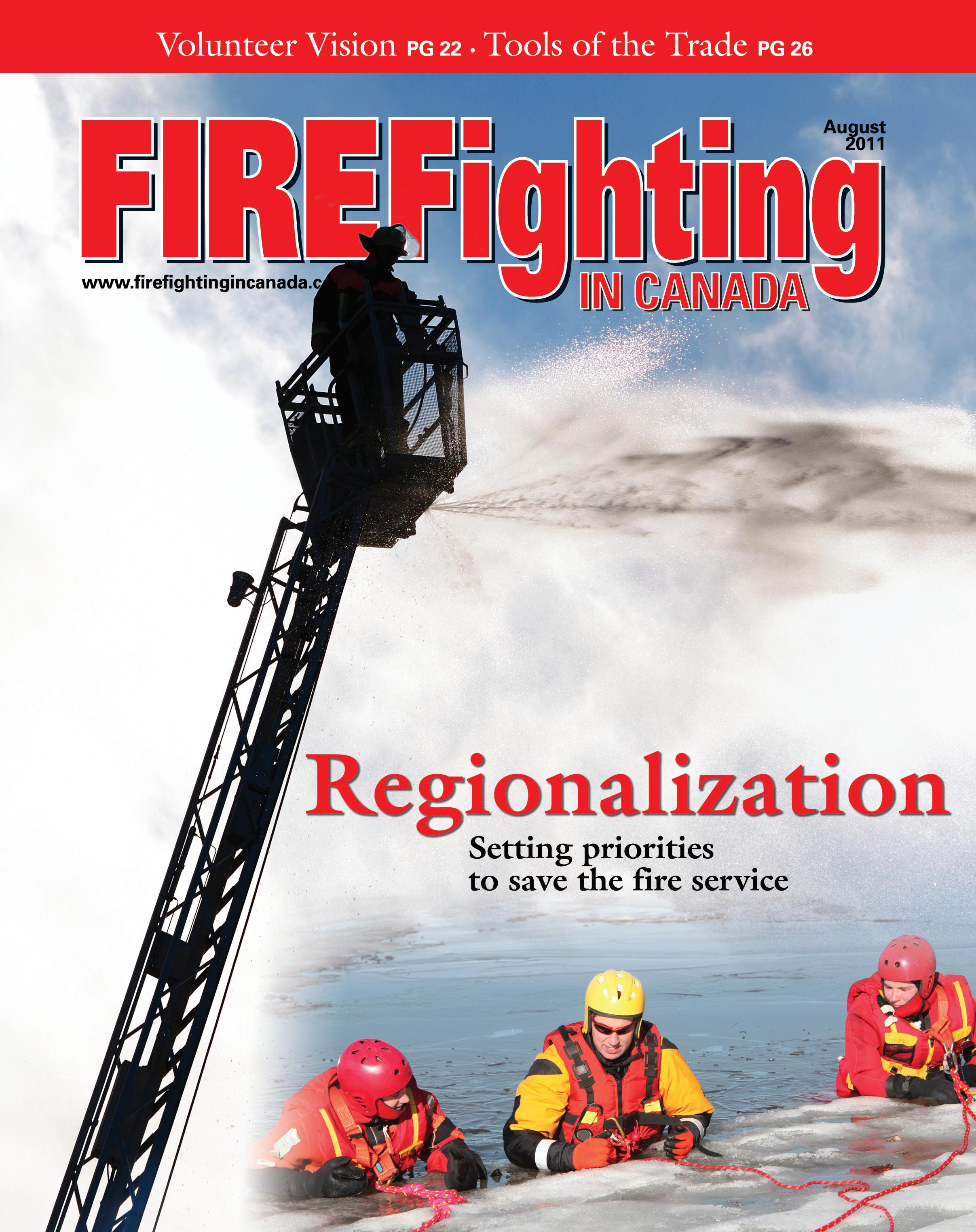
ON THE cOvER
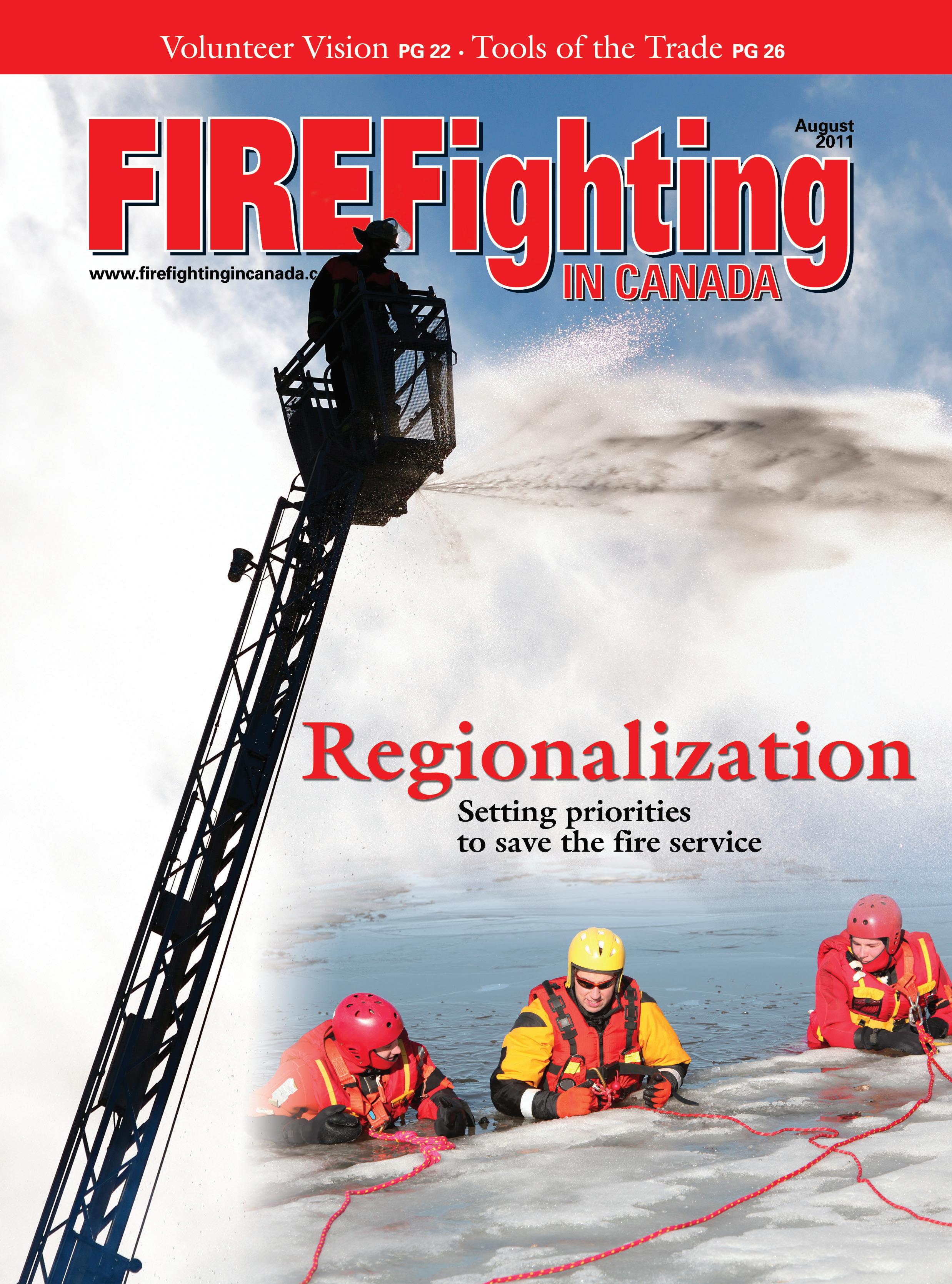
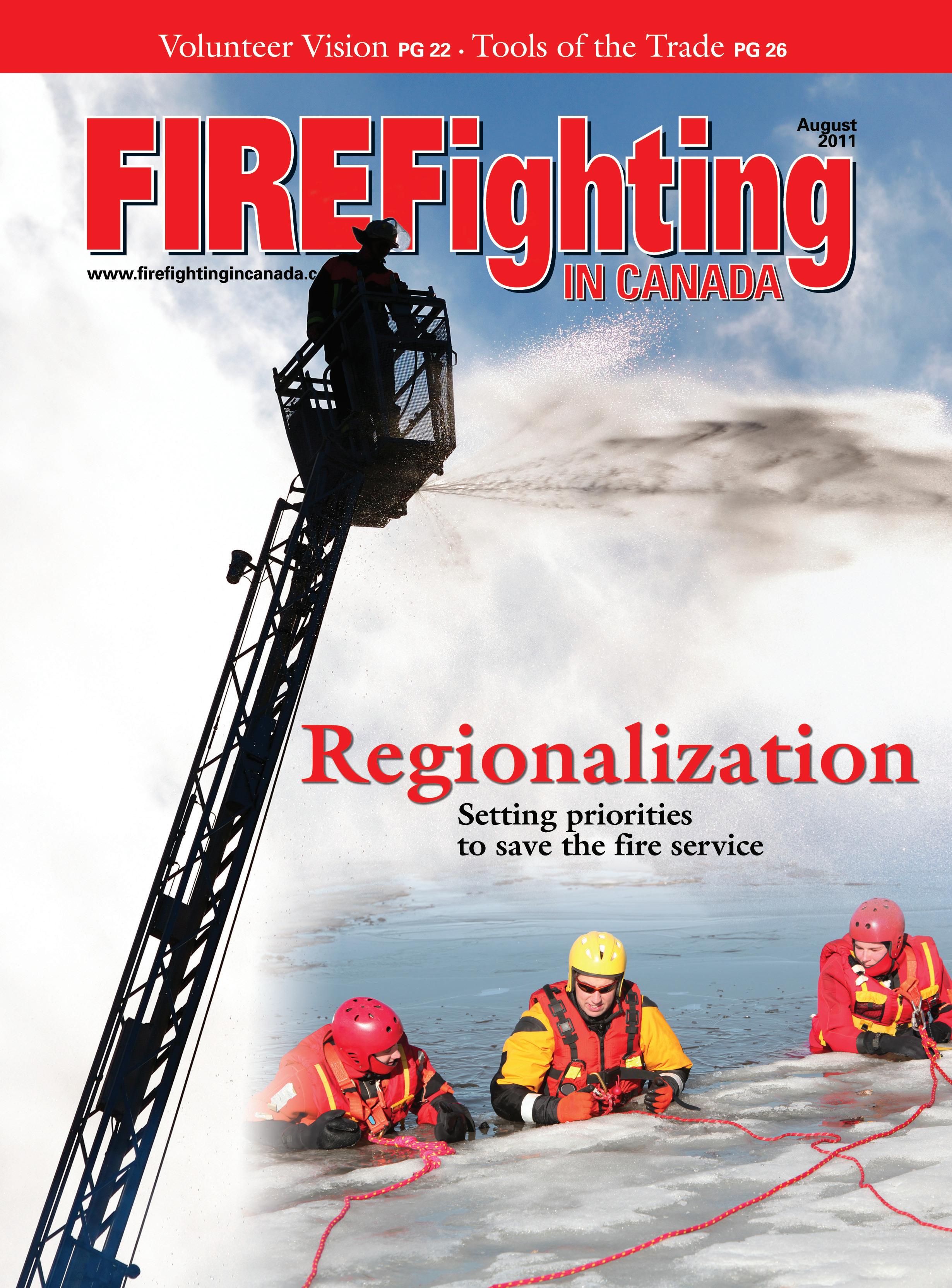
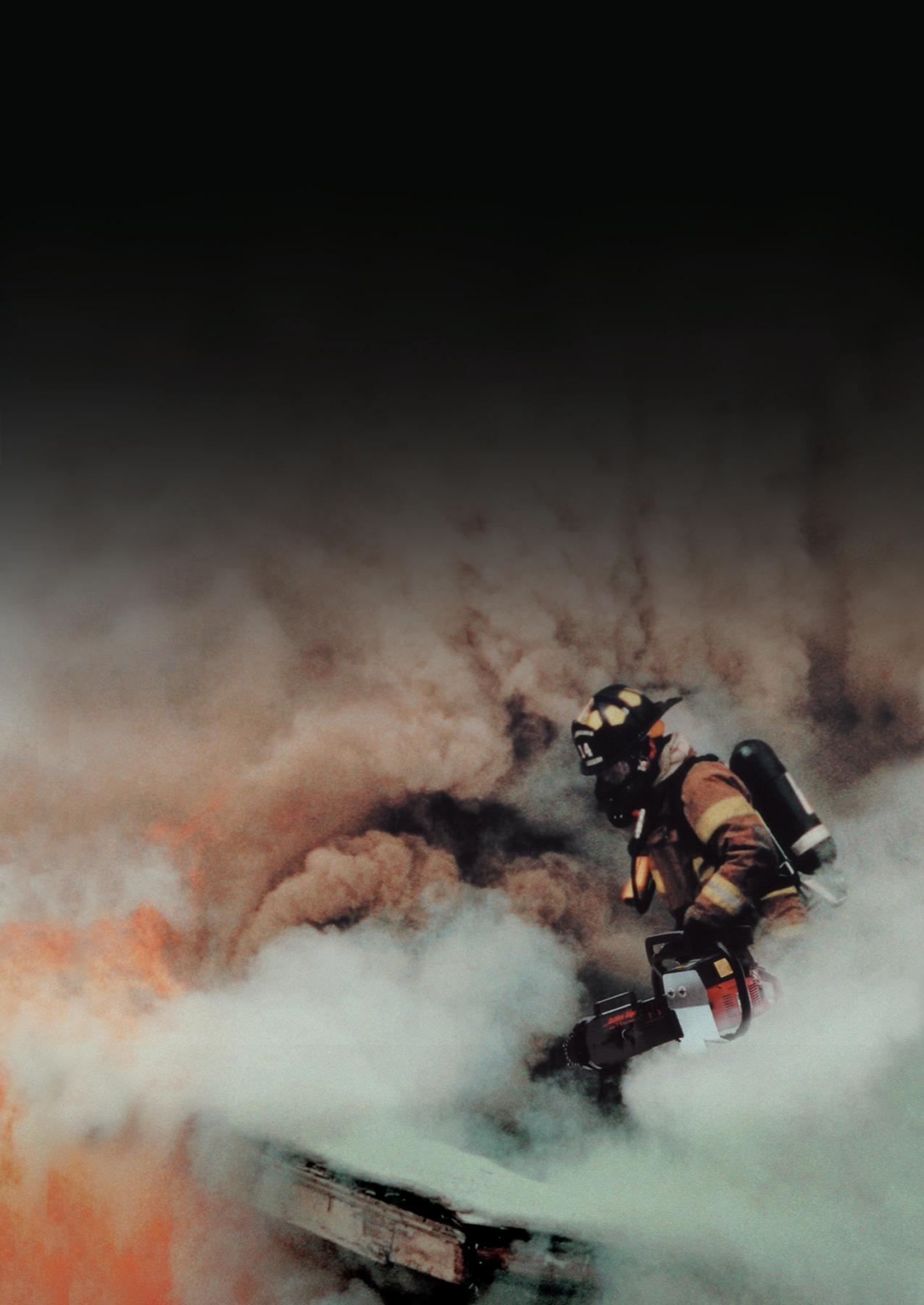
Pooling resources to meet public need may be the new direction of the Canadian fire service.
See story on page 10.
As Tim Beckett points out in his Straight Talk column on page 14, urban departments tend to take adequate funding and staffing for granted while those in rural areas scrape by. I’ve been in fire halls in rural Ontario that used to be car dealerships and where rescue trucks have been built from spare parts. But these volunteers are as good as the folks in Vancouver or Halifax at pulling people out of wrecked cars or putting out fires – even if their gear doesn’t match or they don’t have the newest tools.
My thinking: The CAFC, the Canadian Governmental Committee, provincial chiefs associations, lobbyists and others are already beating these drums. Ambushing government and launching piecemeal campaigns to target MPs (especially when firefighting is a municipal responsibility and Ottawa has just agreed to a tax credit for volunteer firefighters) might not be the most effective strategy.
Ultimately, I think my Winnipeg friend and I are on the same page. His passion is, perhaps, a welcome counter to the slow but strategic methodology of Canada’s fire-service leaders. Maybe some combination of rank-and-file revolution and management manoeuvrings is the trick.
For now, it’s worth focusing on what’s actually happening – regionalization. A buzzword, sure, but with few options to help under-funded volunteers, it’s also an effective solution, and as our cover story on page 10 explains, it’s a way for the fire service to help itself rather than waiting for government to do so. And maybe that’s the answer.
e-mail: lmorrison@annexweb.com
Printed in Canada iSSN 0015–2595
CIRCuLATION
e-mail: lmorrison@annexweb.com
Tel: 866-790-6070 ext. 206
Fax: 877-624-1940
Mail: P.O. Box 530 Simcoe, ON N3Y 4N5
SuBSCRIpTION RATES
Canada – 1 Year - $24.00 (with gST $25.20, with HST/QST $27.12) (gST - #867172652RT0001) uSA – 1 Year $40.00 uSD
We acknowledge the financial support of the Government of Canada through the Canada Periodical Fund (CPF) for our publishing activities.
Occasionally, Fire Fighting in Canada will mail information on behalf of industry-related groups whose products and services we believe may be of interest to you. if you prefer not to receive this information, please contact our circulation department in any of the four ways listed above.
All advertising is subject to the publisher’s approval. Such approval does not imply any endorsement of the products or services advertised. Publisher reserves the right to refuse advertising that does not meet the standards of the publication. www.firefightingincanada.com
statIontostatIon
across canada: Regional news briefs
Ontario departments donate equipment to Newfoundland
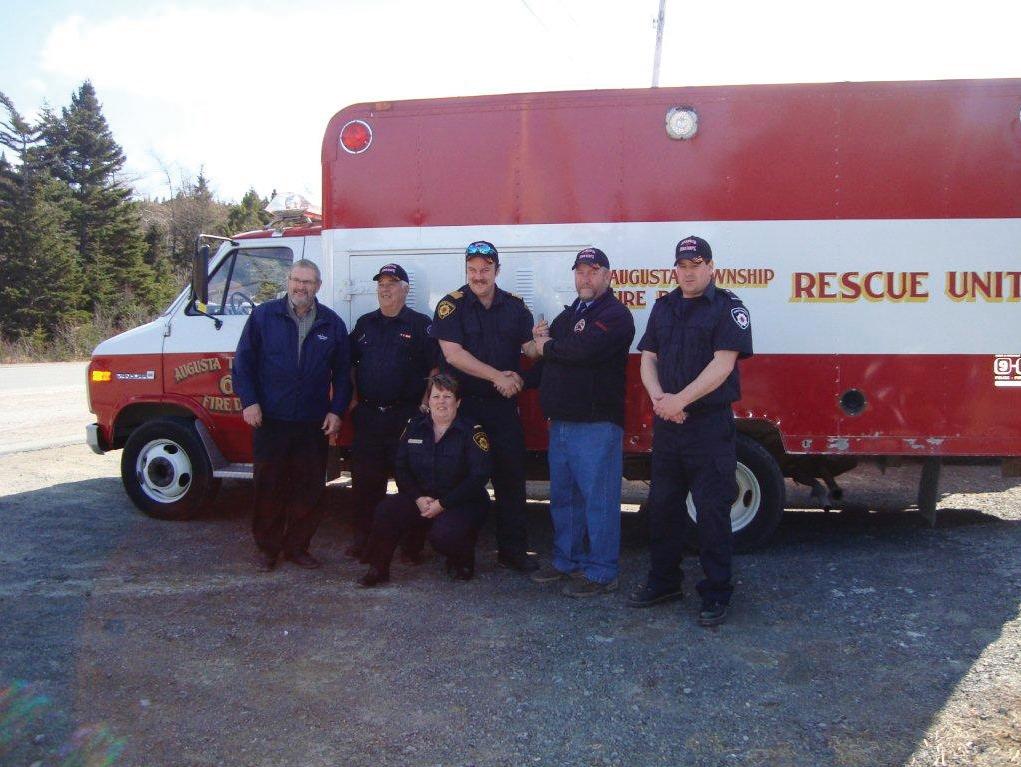
South Dildo, N.L. – Take a community in rural Newfoundland in need of firefighting equipment, add a township in Ontario upgrading its inventory of apparatuses and protective gear, plus a friendship established 12 years ago, and the result is a better-equipped fire department better able to protect its residents.
The Augusta Fire Department in eastern Ontario made its first donation to the Seaside Volunteer Fire Department in Newfoundland and Labardor in 1999; since then it has donated more than $60,000 worth of equipment.
In March, the Augusta Fire Department made its largest donation – a 1989 emergency van. The van was driven to Montreal from Augusta. From there, it was transported by MV Oceanx to St John’s, from where Stan Smith, the former chief of the Seaside Volunteer Fire Department, and other department members, hap -
pily drove it to South Dildo, N.L., and its new home.
“Once we were sure that we were donating our rescue, I asked at one of the Leeds and Grenville Mutual-Aid Association meetings (to which the Augusta fire department belongs) if any fire departments had any working equipment that they were upgrading or replacing, that could be part of the donation and be sent down to Newfoundland with our rescue,” explained Augusta Chief Rob Bowman.
“I also sent an e-mail to all fire departments in our mutual-aid association asking the same. Three other departments also donated to the venture: the Prescott Fire Department, the Gananoque Fire Department and the Leeds Thousand Islands Fire Department.
“The e-mail I sent must have been forwarded, because when we were getting off the plane in Newfoundland, when we
the brass pole
promotions & appointments
RuSSELL STRICKLER has been appointed district chief for the Wilmot Fire Department, New Hamburg station, in Ontario. He has served as a volunteer firefighter for 19 years and has worked his way up through the ranks. He replaces Mark Murray, who retired in January after serving the department for 28 years.
MARK pANKHuRST assumed the position of fire chief for the City of Kawartha Lakes in Ontario on April 26. An assistant fire chief with Kawartha Lakes Fire Rescue since 2009, Pankhurst
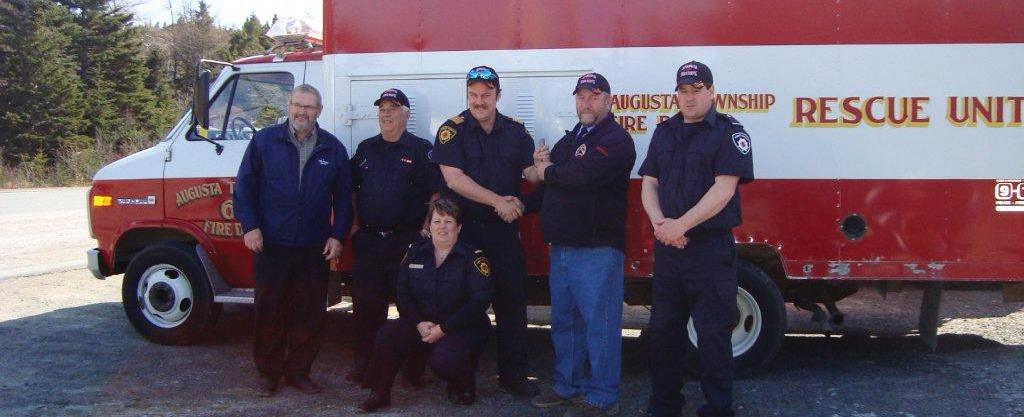
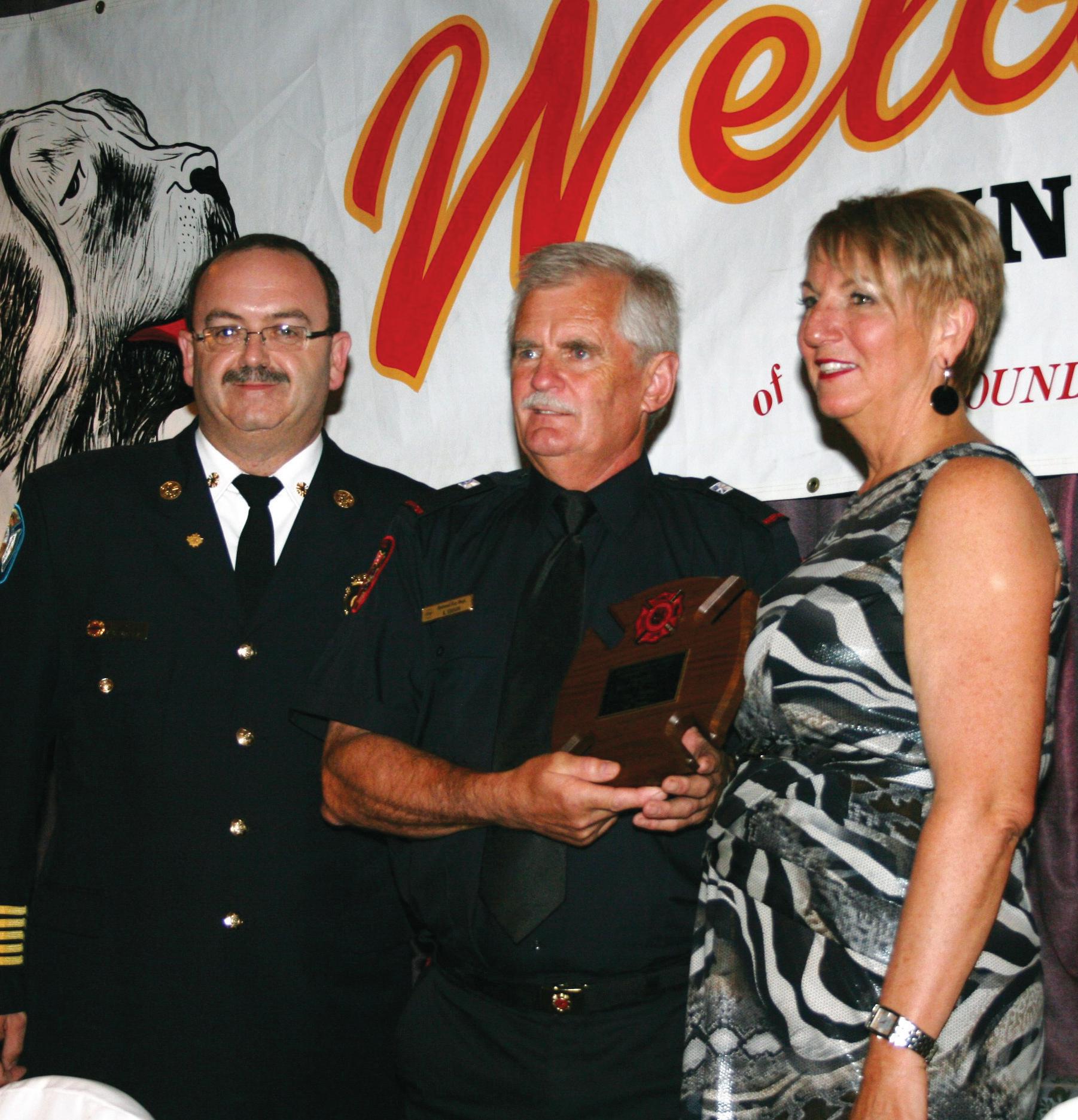
A 12-year relationship between the Augusta Fire Department in Ontario and the Seaside Volunteer Fire Department in Newfoundland and Labrador has resulted in the donation of $60,000 worth of equipment. Celebrating the latest donation to Seaside – a rescue van – are (left to right) Calvin Peach, MHA for the District of Bellevue, N.L., Augusta firefighter Glen Kirkland, Augusta fire prevention officer Michele Bowman, Augusta Chief Rob Bowman, Seaside Chief Stan Smith and Augusta firefighter Jeff Stewart.
went down to Dildo, I received an e-mail from another fire department just outside our mutual-aid area, and they had a pumper they wanted to donate. I put this fire department in touch
was formerly fire chief of the Rama Fire Rescue Service and was chief with Mariposa Township Fire Department before amalgamation in 2001.
KEITH GREEN has taken up duties as administrator of the Vernon Fire Department in British Columbia. He has been with the Vernon department as a volunteer and career firefighter for 12 years and became training officer in 2009.
with Stan Smith of the Seaside department, and I believe another department around the Trinity Bay, N.L., area is in talks to get that truck as well.”
- Robert Lynch
BILL CHESNEY has been appointed fire chief for the City of Cambridge in Ontario. Chesney was born and raised in Cambridge and started with the fire department in 1976. Chesney has held a number of positions, including captain of fire suppression, platoon chief and deputy fire chief-administration.
retirements
DALLAS KING, a captain with Whitby Fire and Emergency
Photo
Happy Valley-Goose Bay celebrates 50 years
Happy Valley-Goose Bay, N.L.
– The Happy Valley-Goose Bay Volunteer Fire Department celebrated its 50th anniversary late last year with a slew of long-service awards, greetings from dignitaries and a supper and dance.
The Oct. 30, 2010, event, at the Royal Canadian Legion, was a community highlight, with about 130 guests marking the half-century mark for the department.
The composite department has four full-time firefighters (who work the 24-hour shift and volunteer on their time off) and 28 volunteers. It serves a population of 7,500, with one 2001 1050 pumper, one 1978 840 pumper and one 2008 rescue truck, which carries the Jaws of Life. The department responds to vehicle accidents across 150 kilometres in two directions from the town.
Labrador MP Todd Russell and Labrador MHA John Hickey presented medals from the Government of Canada
and the Government of Newfoundland and Labrador to firefighters in honour of their long commitment.
District Chief John Lorimer received a Government of Canada Exemplary Service Medal and a Government of Newfoundland and Labrador Long Service Medal for 20 years of service. Howard
Michelin, Chief Carl Oldford, George Way, Alan Durno and District Chief Robert Hinks each received Government of Canada Exemplary Service Medals and Government of Newfoundland and Labrador Long Service Medals for 30 years of service, and Maxwell Duffett and Edgar Hawkins each received Government of Newfoundland and Labrador Long Service Medals for 35 years of service.
Councillor William Mackey (representing Mayor Leo Abbass and town council), presented town service pins:
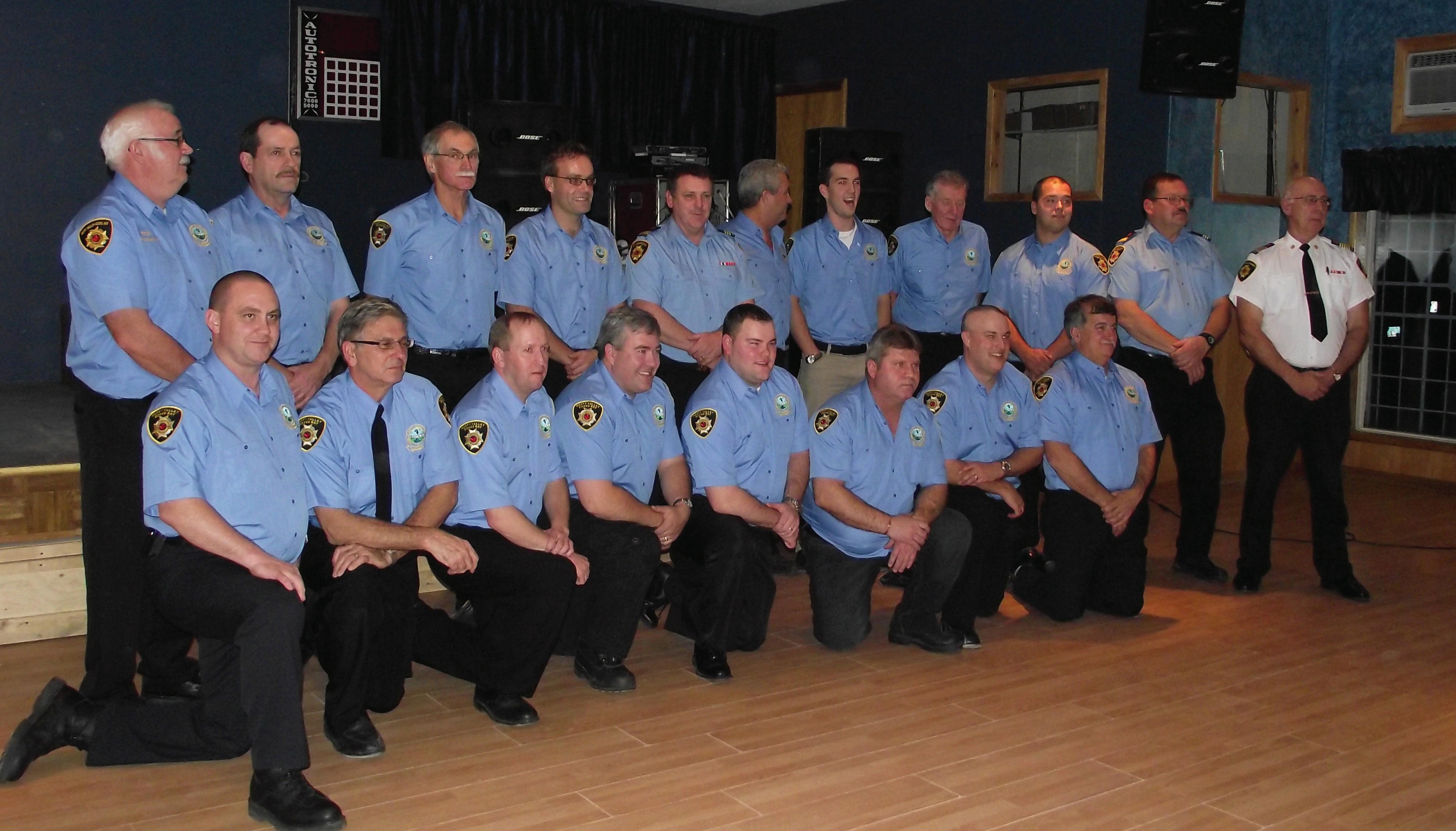
Members of the Happy Valley-Goose Bay Volunteer Fire Department celebrated the department’s 50-year anniversary late last year. Members are: (front, left to right) Vincent Rowe, George Way, Michael Bessey, Brian Brown, Chris Edmunds, Scott Lyall, Bradley Butler, John Chaisson; (back, left to right)
Edgar Hawkins, Robert Nippard, Max Duffett, Detlef Mester, District Chief John Lorimer, Rick Harvey, Michael Battcock, Maurice Thevenet, Blair McLean, District Chief Robert Hinks, Chief Carl Oldford.
firefighters Patrick Adams, Bradley Butler, John Chaisson, Bradley Keats, Ramsey White and Jim Saunders received the five-year pin; firefighters Rick Harvey, Scott Lyall and Don Webber received 10-year pins; firefighter Vincent Rowe received the 15-year pin; District Chief John Lorimer, Thomas Anthony, Robert Nippard and Darrell Wiseman
were recognized for 20 years of service; Chief Carl Oldford, District Chief Robert Hinks and firefighters Alan Durno, Howard Michelin and George Way received 30-year pins; Maxwell Duffett and Edgar Hawkins were honoured for 35 years with the department; and Maurice Thevenet received a 45-year pin.
Picton, Ont. – Ten Prince Edward County firefighters passed their Ontario Firefighter Curriculum Component 1 exams in December, a challenging but rewarding test of their firefighting knowledge.
Component 1 covers 30
Services in Ontario, retired on April 30. King joined the department as a volunteer in 1976 and was hired full time in 1978. He served the citizens of the Town of Whitby for more than 34
topic sections of the Ontario Firefighter Curriculum, including fire suppression, chemistry of combustion, self-contained breathing apparatus, pre-incident planning and 26 other areas. Jason Young, Jeremy Prinzen, Bryan Markland, Wes Manlow,
Tim Kraemer, Timothy Jones, Steve Everall, Steve Dawson, Bob Downey and James Young trained in their respective fire districts and participated in the 40-hour Module A and 40-hour Module B courses at the Hastings-Prince Edward Training
Complex to qualify to write the exam in September. Both the Module A and B courses required more than 30 hours of pre-course home study to prepare the firefighters for their courses.
- Robert Rutter
years. King was a captain with the department for almost 15 years.
GARTH DIX, fire chief in Brantford, Ont., retired June 30. Dix spent more than 30 years with the fire department, including more than nine as chief.
ROBERT pHILLIpS (Moose) retired July 30 after 40 years of service with Norfolk Fire and EMS, Station 5, Delhi (former Township of Delhi), in Ontario.
He joined in 1971 and was promoted to district chief in 1991.
last alarm
GEOFF YELLOW, a firefighter with the grimsby Fire Department in Ontario, was killed on May 13 in a motorcycle accident in West Lincoln. He served with the grimsby Fire Department since 1998, and was a T-T-T pump operator and a member of the regional hazmat team.
JIM BLuE, former fire chief in Paisley, Ont., died May 28 at the age of 69. He started his career in the fire service in Paisley in 1968 and served as fire chief from 1977 to 1988, retiring in 1989. He served as the fire co-ordinator in Bruce County until 1988.
Retired fire chief TOM O’HARA of Waubaushene, Ont., died June 22 in his 77th year. He was a volunteer firefighter in Tay Township for 35 years and was chief for 14 years.
statIontostatIon
br I gade news: From stations across Canada
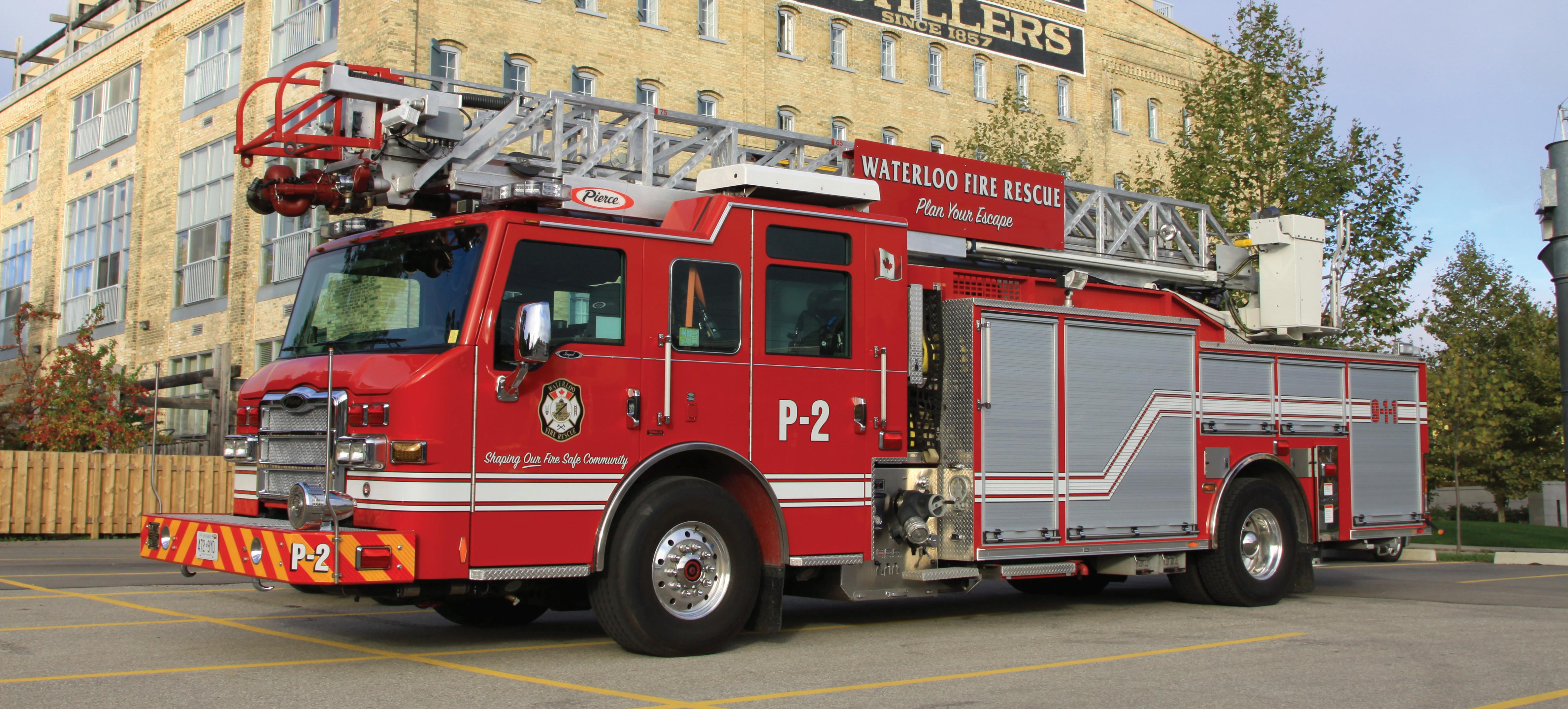
WATERLOO FIRE RESCuE in Ontario, under Chief Larry Brassard, took delivery in March of a Pierce Manufacturing-built 75-foot aerial ladder unit from Darch Fire. Built on a Pierce Impel chassis and powered by an Allison 3000 EVS transmission and a Cummins ISL 425-hp engine, the truck is equipped with a Pierce 1,500-IGPM pump, a Husky 12 foam system and a 75-foot aerial ladder.
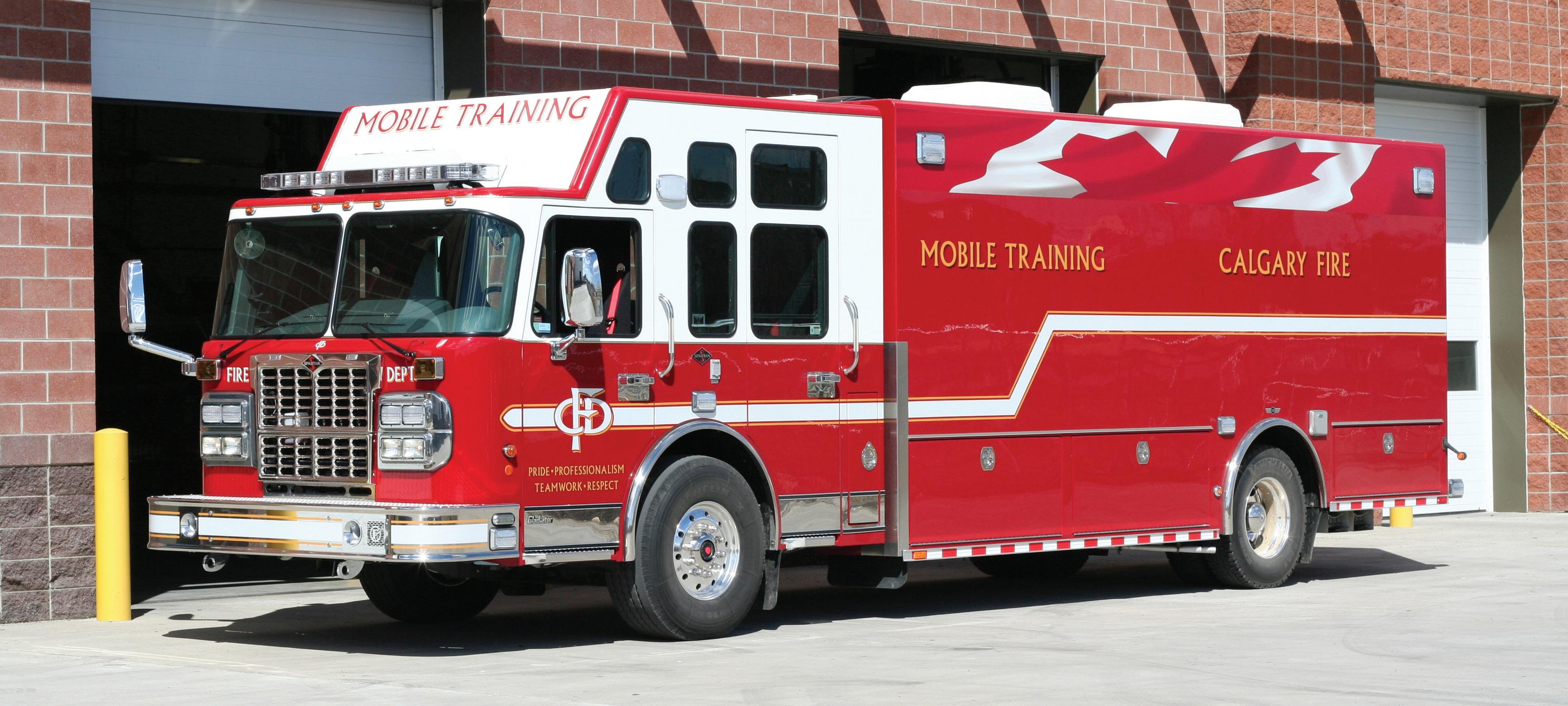
THE CALGARY FIRE DEpARTMENT in Alberta, under Chief Bruce Burrell, took delivery in April of an SVI-built mobile driver training unit from Safetek Emergency Vehicles. Built on a Spartan Gladiator LFD chassis and powered by an Allison 3000 EVS transmission and a Cummins ISL 425-hp engine, the truck is equipped with an aluminum 22-foot walk-in rescue body, two Doron Precision 460 driving simulation units, two Onan eight-kilowatt diesel generators and unique flat floor entry via pull-out steps mounted in the pull-down compartment.
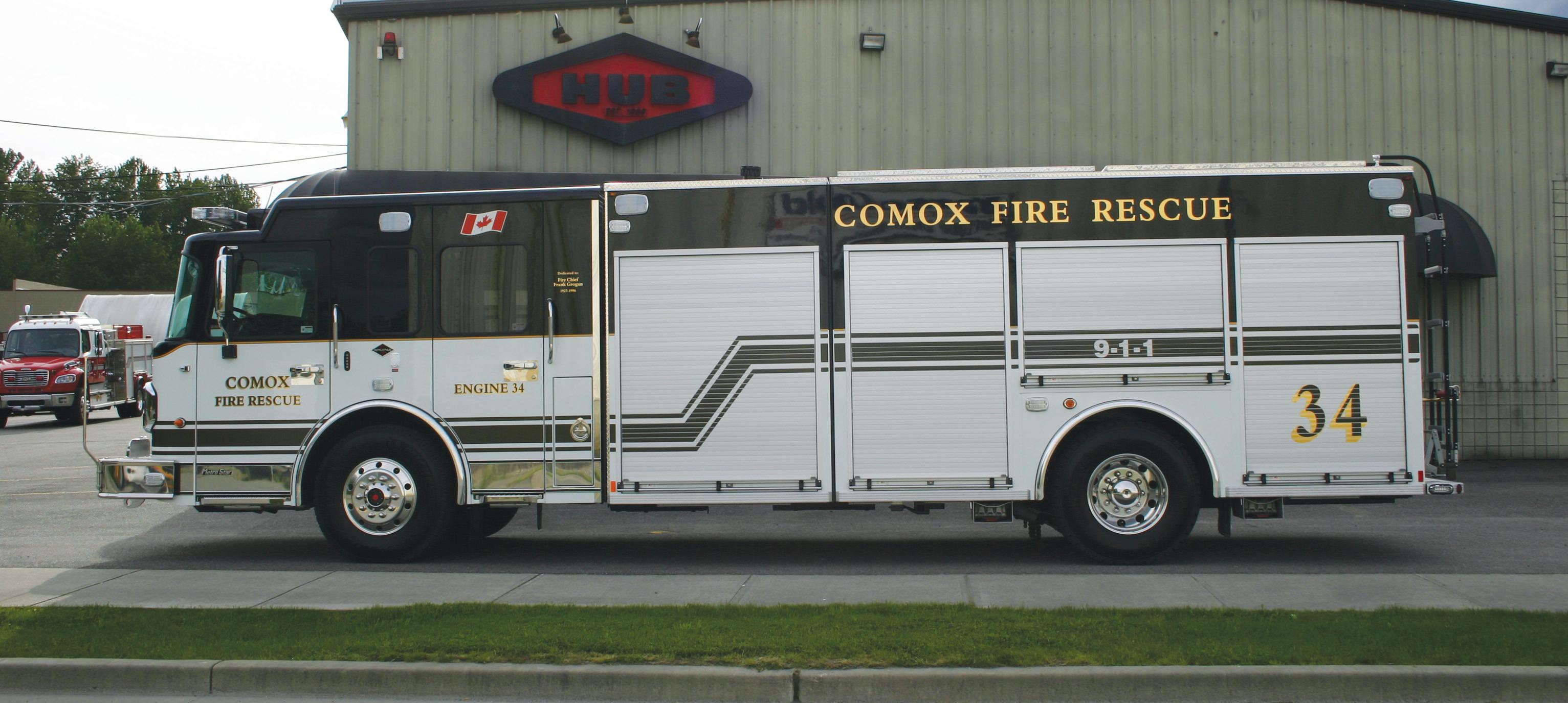
COMOX FIRE RESCuE in British Columbia, under Chief Gord Schreiner, took delivery in June of a Hub Fire Engines & Equipment-built pumper. Built on a Spartan Metro Star chassis and powered by an Allison 3000 EVS transmission and a Cummins ISL 9 400-hp engine, the pumper is equipped with a Hale QMax 1,750-IGPM pump, Foam Pro 2001 foam system, 700-IG co-poly water tank, TFT Extend-A-Gun and Hurricane Monitor, Whelen M-series LED light package, Havis Magnafire tripod lights, Honda EM5000 generator and Hub SCBA storage.
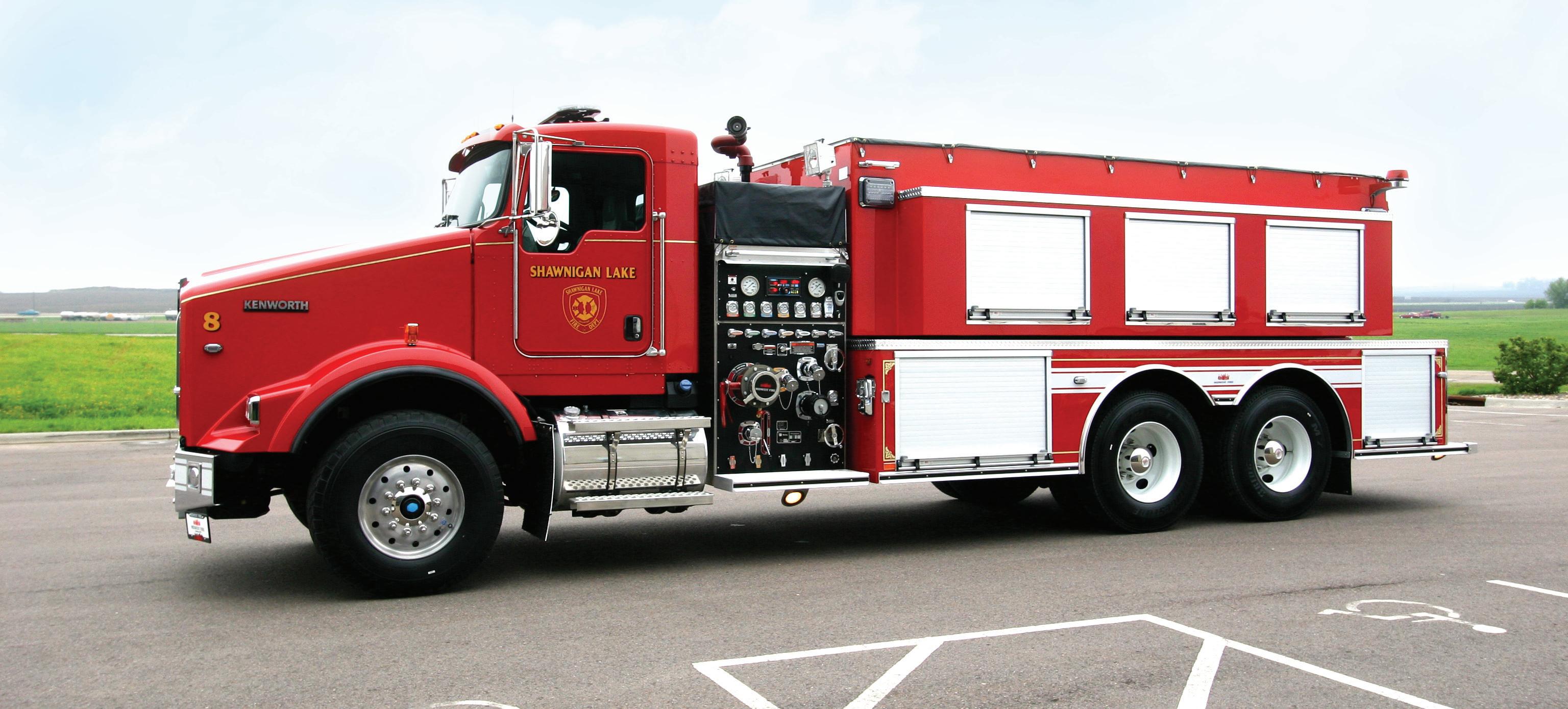
The SHAWNIGAN LAKE VOLuNTEER FIRE DEpARTMENT in British Columbia, under Chief Dan Fries, took delivery in May of a Midwest Fire-built pumper. Built on a Kenworth T-800 chassis and powered by an Allison 4500 EVS transmission and a Paccar ISX 15 500-hp engine, the truck is equipped with a Darley 1,500-IGPM pump, 3,000-IG polypropylene water tank, Darley portable pump, rear 10-inch Newton stainless steel swivel dump and LED warning lights.
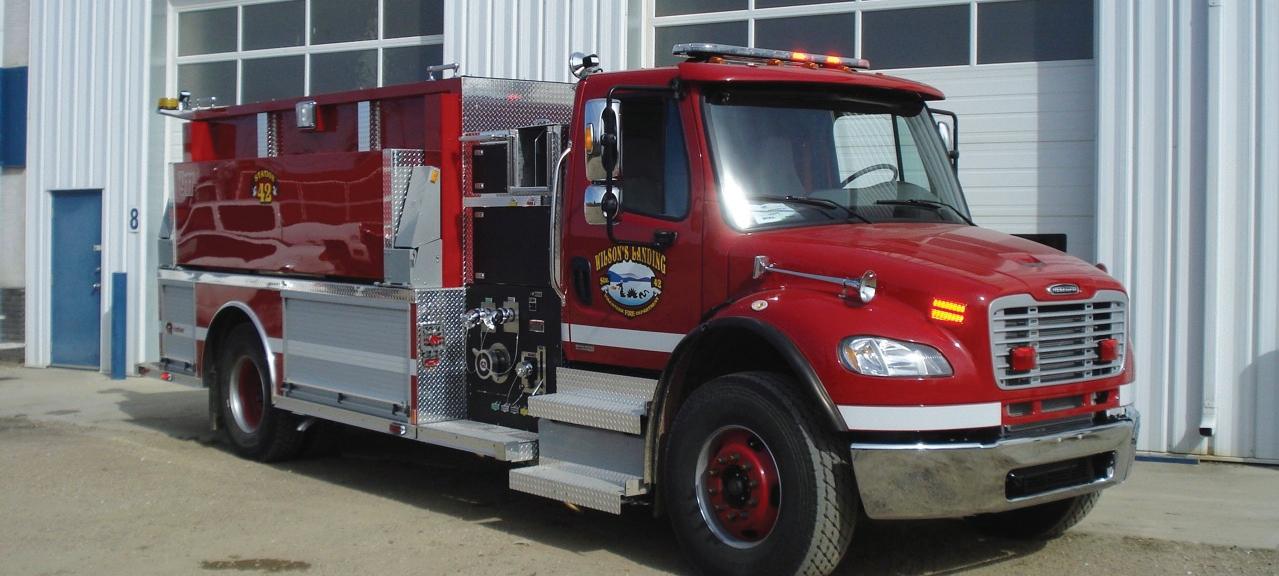
WILSON’S LANDING FIRE DEpARTMENT in British Columbia, under Chief Derrick Fletcher, took delivery in May of a Rosenbauer-built pumper from Rocky Mountain Phoenix. Built on a Freightliner M2-106 chassis and powered by an Allison 3000 EVS transmission and a Cummins ISC 330-hp engine, the pumper is equipped with a Hale QPAKJ 850-IGPM pump, Hale Foam Logix 2.1A foam system, 1,665-IG UPF poly-tank, Zico Quic Lift electric operated dump tank storage, eight wheel well SCBA cylinder storage, FireCom intercom system and Whelen LED emergency light package and siren.
u.S.
–
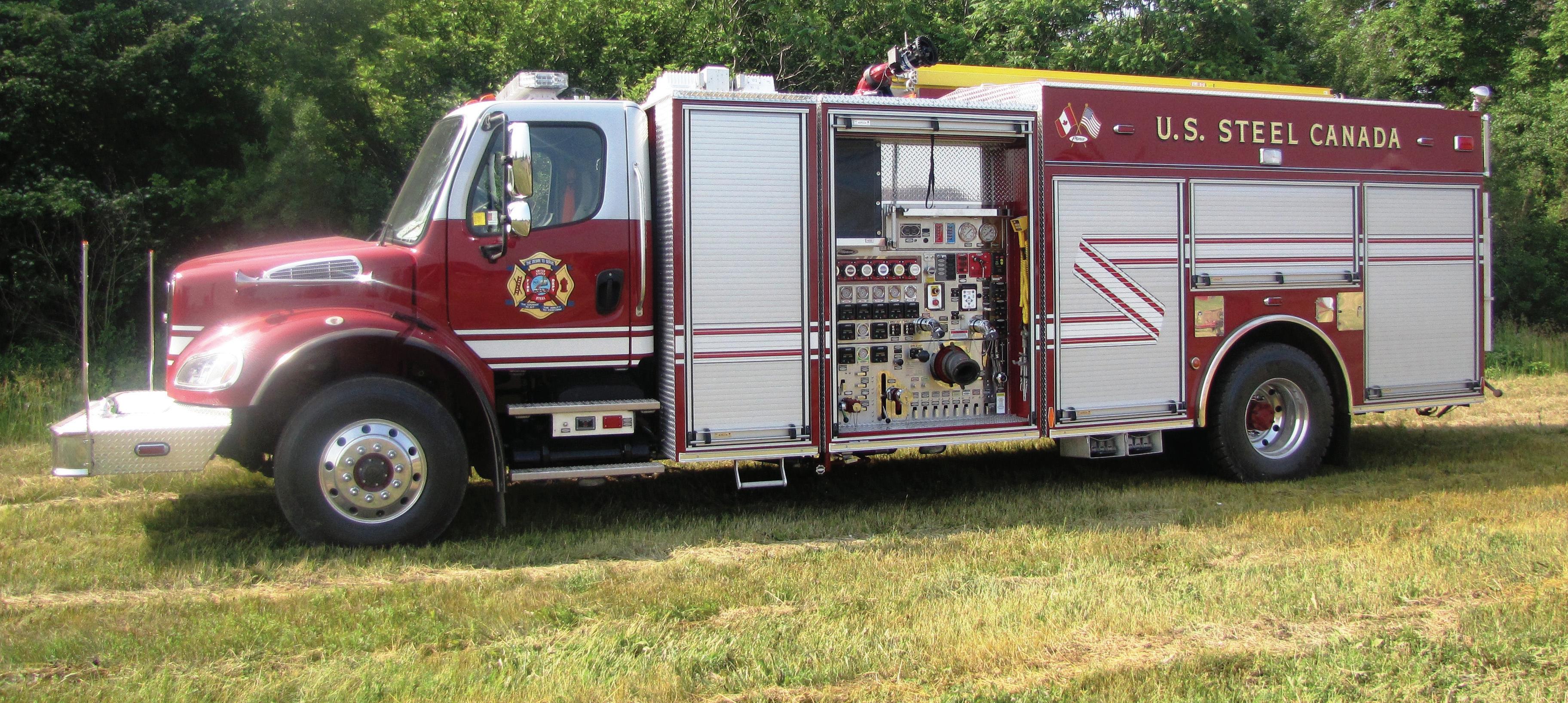
ERIE WORKS in Nanticoke, Ont., under Chief Chris Houwer, took delivery in June of a Pierce Manufacturing-built pumper-rescue truck. Built on a Freightliner M2 chassis and powered by an Allison 4000 EVS transmission and a Cat C13 425-hp engine, the truck is equipped with a Hale QMAX 1,750-IGPM pump, 750-IG co-poly water tank, and a Husky 30 foam system with 200-IG foam cell, Harrison 10,000watt hydraulic generator, Will Burt night scan tower and Whelen light package.
STEEL CANADA
LAKE
WATERLOO FIRE RESCuE
COMOX FIRE RESCuE
u.S. STEEL CANADA – LAKE ERIE WORKS
CALGARY FIRE DEpARTMENT
WILSON’S LANDING FIRE DEpARTMENT
SHAWNIGAN LAKE VOLuNTEER FIRE DEpARTMENT
Pump Capacity Through a Low Level Strainer…
Pump Capacity Through a Low Level Strainer…
regionalization
Setting priorities to save the fire service
By Laura King
when Premier Kathy Dunderdale of Newfoundland and Labrador addressed a convention of provincial fire chiefs and officers in June, her message was simple and blunt: regionalization and co-operation.
“We do need to look at the most efficient, effective ways of delivering vital services to our residents, and this is true among the fire service,” she said.
Dunderdale, a feisty leader whose relationship with the provincial fire services association is likely among the best in the country – she presented two government cheques to the group – pulled no punches, tackling both fiscal reality and the sacred ground of fire-service tradition.
“I know we are surrounded this evening by numerous departments steeped in history, but the current reality and the future of the fire service rests in our ability to join forces in times of emergency,” she told the 200-plus members of the Newfoundland and Labrador Association of Fire Services (NLAFS) at their annual conference.
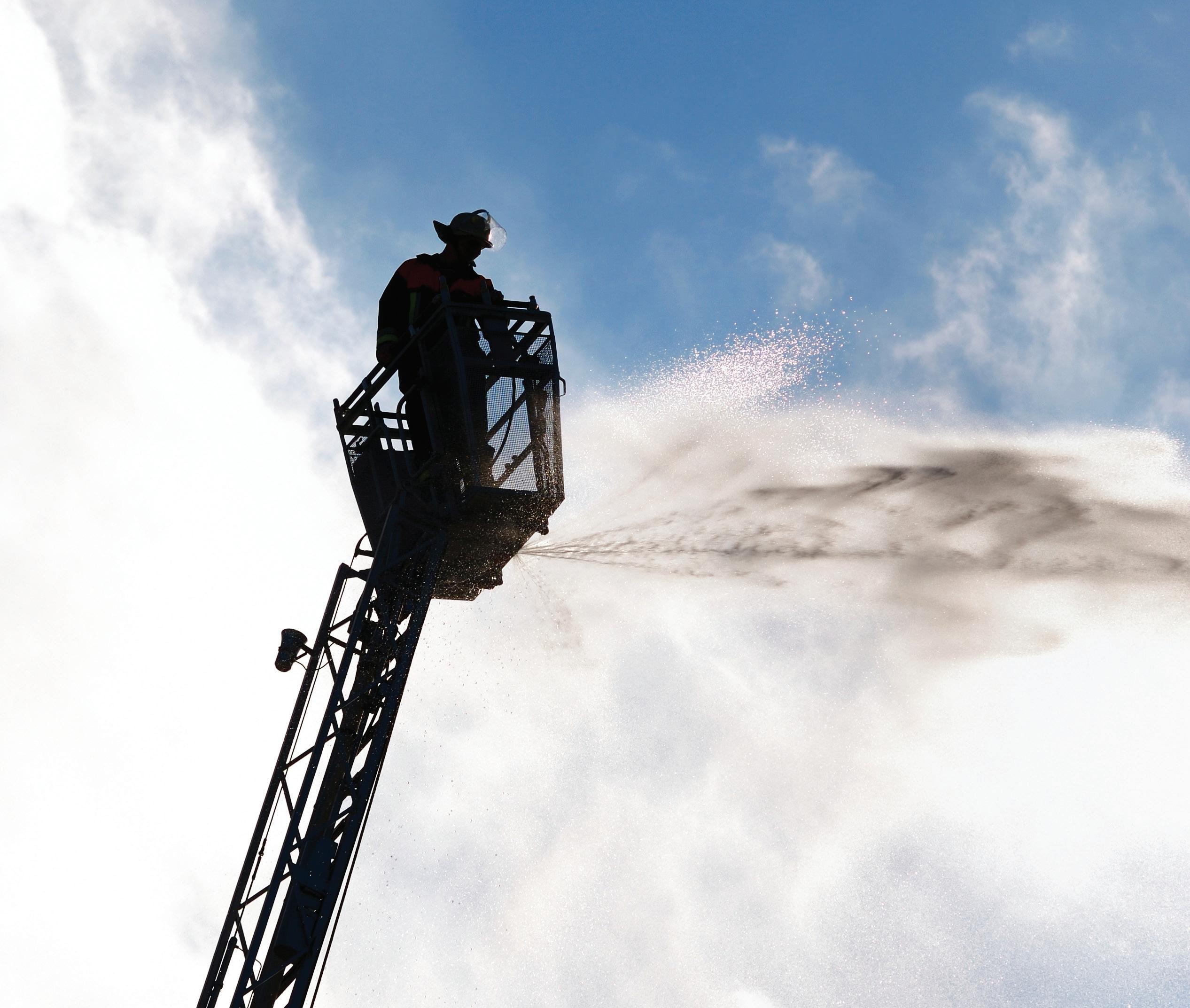
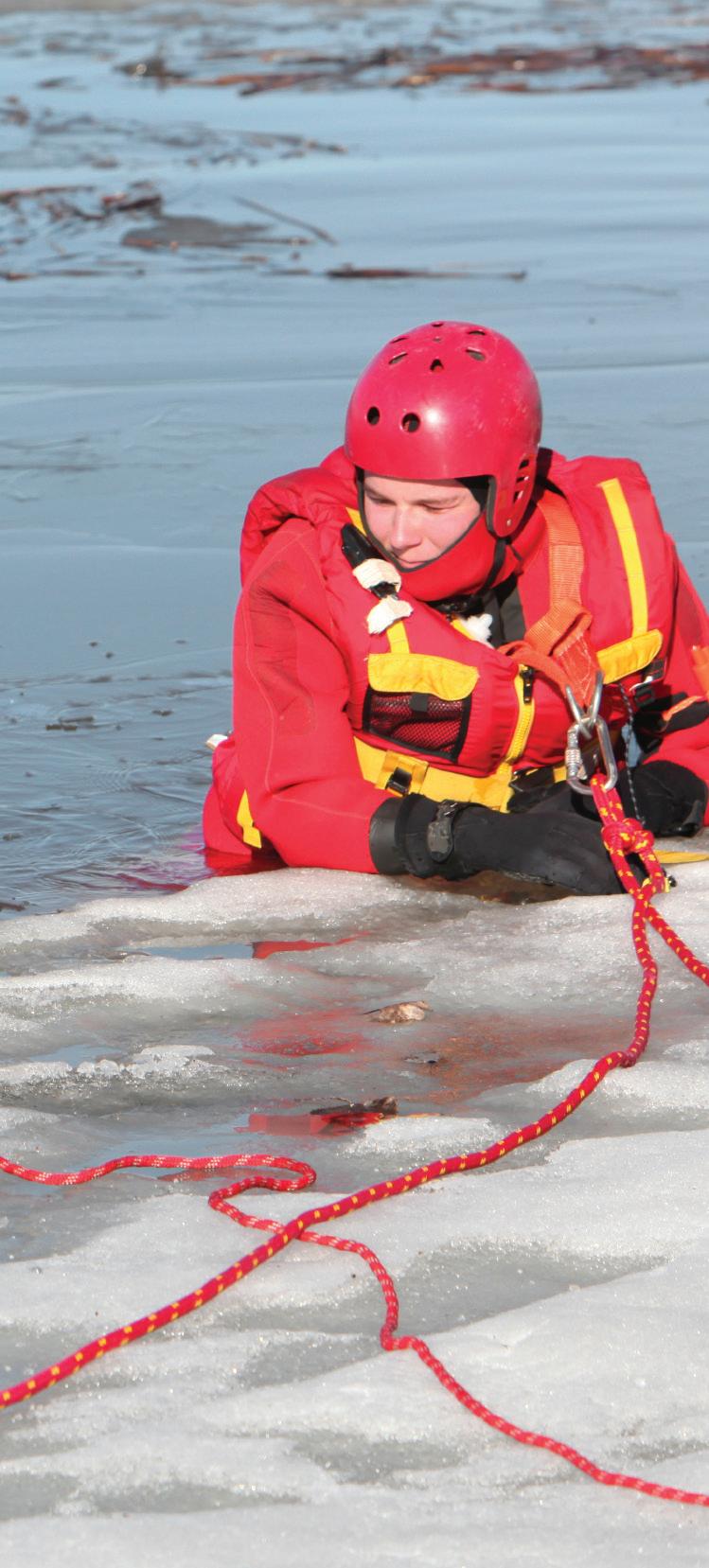
l eft: Fire services are being encouraged to regionalize resources, including specialized services such as water-ice rescue (which is already being done in some areas), and to make better use of response capabilities, particularly in rural areas.
above : Newfoundland and Labrador Premier Kathy Dunderdale (above right) is a proponent of regionalization for the fire service and encouraged fire-service leaders to embrace the notion at the Newfoundland and Labrador Association of Fire Services conference in June.
“No matter what issues we may have with each other from community to community, when an emergency strikes, public safety is the top priority for us all. Each and every community needs to examine the assets within their own region and look to the possibility of joining together . . .
”
Supporters say that’s the core of regionalization: nixing the egos and he-who-has-the-mosttoys-wins attitude among fire-service leaders, and figuring out which departments really need which equipment to adequately respond to calls.
Newfoundland and Labrador is leading the regionalization trend out of necessity: the province is mired in $8.7 billion of debt left over from years of deficit budgeting before offshore oil revenues offset the collapse of the cod fishery. But some fireservice leaders in other provinces recognize that unless they embrace regionalization and create new systems of co-operation, cashstrapped councils will do so for them, with little or no fire-service input. And, they say, nothing good will come of that.
* * *
Regionalization is common in municipal services such as policing, garbage collection, recycling and water management. Proponents note that regional police forces – such as the Halton, Peel and York forces in Ontario – work well, and they wonder why there are no regional fire- and emergency-service strategies.
Tim Beckett, president of the Ontario Association of Fire Chiefs, said in a recent Straight Talk column in Fire Fighting in Canada that regional fire services will eliminate duplication, strengthen service delivery and save money for municipalities.
What’s more, he said, fire prevention and public education will be standardized, training will be consistent, and fire stations can be properly positioned and not hampered by boundaries.
“So, why can’t we embrace regional fire services – fire services responding to public need regardless of boundaries and politics, regional departments that share resources to meet the demands of their communities, without duplication?”
Beckett went further, exposing some potentially vulnerable areas in the longstanding argument for more fire-service funding.
“How many hazmat teams, rescue boats or aerials are needed in a region, when the reality is that they are not often used?” he asked.
For supporters, regionalization seems like a common-sense approach to financial challenges, such as those created by standards requiring up-to-date apparatuses (even in remote, volunteer departments in which the trucks are rarely used), or the battle in some parts of rural Canada to recruit and retain volunteers, and then to properly train them.
* * *
A different sort of regionalization is happening in Centre Wellington, a mostly rural regional township in south central Ontario, northeast of Kitchener, where Chief Brad Patton recently posted a job for a regional training officer.
As is the case in most volunteer departments, training is a challenge in Centre Wellington, where there are seven departments, 13 stations, 344 volunteer firefighters and 26,000 residents. Like all training officers, those in all seven Centre Wellington departments were tasked with time-consuming and sometimes overwhelming paperwork ranging from lesson plans to accountability sheets for their weekly two-hour training sessions.
Photo by l aura King
And with Ontario’s Ministry of Labour paying closer attention to firefighter training and accountability after two line-of-duty deaths in Listowel in March, a fatal water-ice rescue exercise in January, and a 2009 fire in Meaford at which two firefighters were injured, Patton and the other Centre Wellington chiefs were worried about additional pressure on the volunteer training officers and recognized that senior managers needed to think differently.
In an initiative that is expected to be a model for other Canadian departments, Centre Wellington’s chiefs devised the plan for a regional training officer who will create the lesson plans and site plans for the seven departments, ensure that safety standards are met, and deal with the stacks of paperwork. The volunteer training officers will still run the training sessions, but with a lot less stress and a lot more support.
“Everyone agreed that training was the top priority for the fire department but getting the training is the difficult part,” says Patton. “So we came up with the idea, well, can we share one? And we agreed that something could be worked out.”
The full-time training officer job, which was posted in June and was expected to be filled by mid-July, is funded by the region.
“All seven councils unanimously approved it – there was very little hesitation,” Patton said.
“This could easily be done by seven fire departments, or five, or three fire departments that are like-minded, understand the need, and what the goal is, to get together to fund a position. They don’t even have to be from the same county or region; they just have to be a group that says, this is what we’re going to do, and we’re going to split the cost. It’s far easier for a council to pay a third or a fifth of the cost of a training officer and get good-quality training material.”
* * *
So, with seemingly common-sense solutions to fiscal and resource challenges, why the resistance to regionalization? Is there resistance? Or is there a lack of will to shift the fire-service paradigm that all departments should be all things to all people? Is that cultural aboutface simply too overwhelming for fire chiefs’ associations to handle? And who needs to be convinced – the fire service or the public?
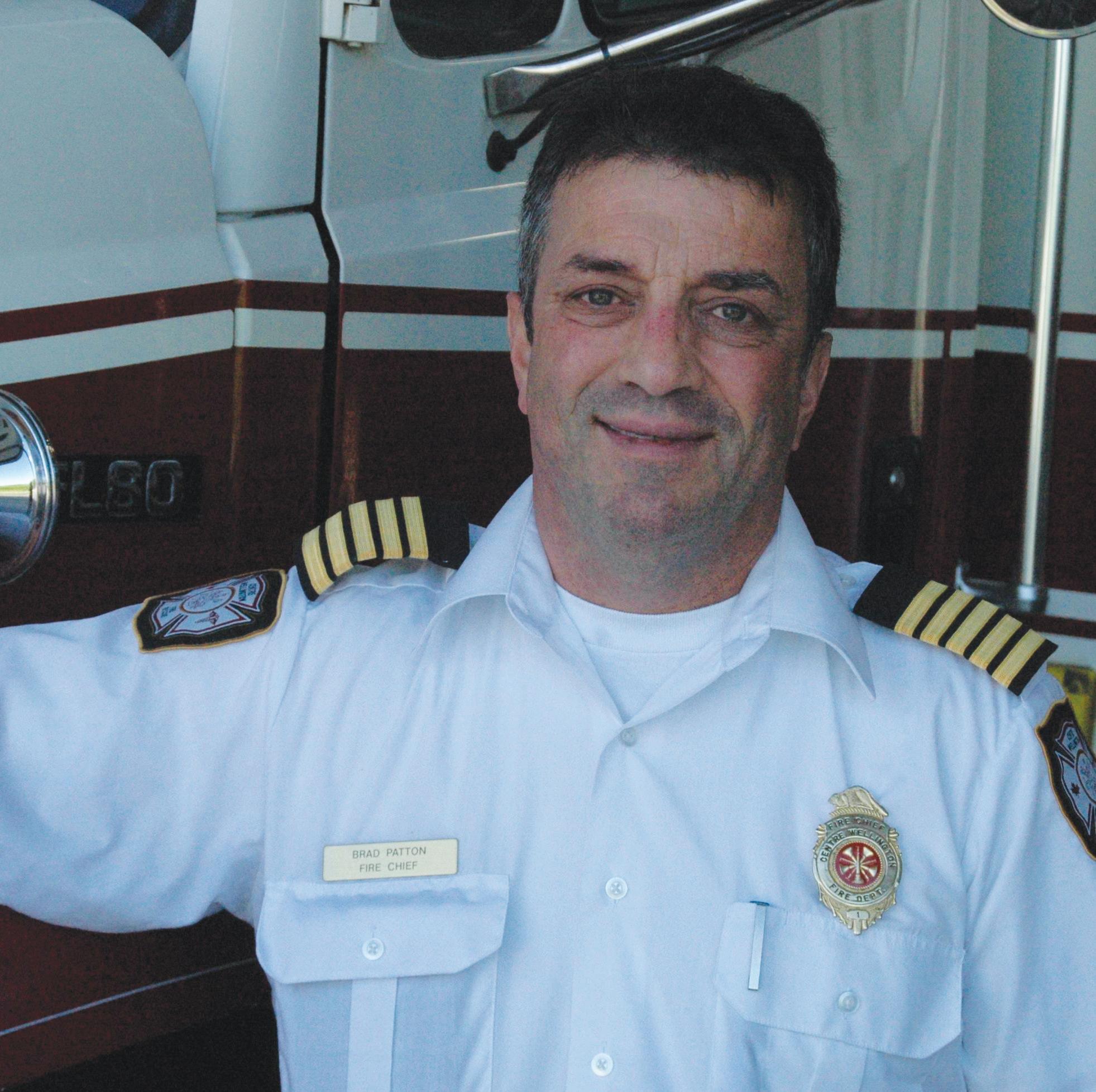
Centre Wellington Fire Chief Brad Patton spearheaded the drive for a regional training officer to work with the seven departments and 13 stations in the district.
Photo by l aura King
B Y T IM B ECKETT Fire Chief Kitchener, Ont.
aRethinking our priorities
s I wrote this column, I had just returned from a trip to Gander, N.L., where I attended the Newfoundland and Labrador Association of Fire Services annual convention.
Newfoundland brought me down to a very relaxing reality, and the realization that, from where I sit as a fire chief in an urban municipality, we take a lot for granted: adequate budgets, staffing, new equipment purchases, modern stations and training opportunities. Things are much different outside of urban Canada. Many Newfoundland and Labrador chiefs and firefighters talked about older apparatuses and the need to explore community fundraising opportunities to buy new equipment, or to just operate existing equipment. Training is done in whatever fashion these departments can manage, and many do not receive a cent (a few receive a minimal honorarium for the work they do). This reminded me of a trip to FireCon, a training weekend in northern Ontario, where members of a volunteer fire department talked about the need to travel along the ditches of the Trans-Canada Highway picking up beer bottles and cans to raise enough money to fuel their vehicles. These are things that urban municipalities would never fathom.
What was unexpected, given the conditions in Newfoundland and Labrador, was the pride and dedication of these individuals. Very few were complaining about what they didn’t have. Newfoundland and Labrador Premier Kathy Dunderdale felt it an honour to attend the annual convention to speak of the outstanding work that the fire service does for the province. She brought a cheque to assist with funding the association so it can continue its work to better the fire service. She reaffirmed her government’s commitment to put 22 new fire trucks in communities across the province. A representative from the Municipalities of Newfoundland and Labrador (MNL) was also on hand and made a presentation about the potential for regionalization within the province.
STRAIGHTtalk
the membership: “We have asked a lot of government and they have delivered; we must now meet government halfway,” he said, speaking of the need to further examine and work with government on the regionalization issue.
Chief MacKenzie’s statement has stuck in my mind ever since the conference and it became the basis for my message in this column. The fire service needs to consider rethinking our priorities (the theme for the NLAFS convention). We need to go back to some basic fundamentals of the service and remember why we do what we do. We chose this profession to serve the public and to make our communities better. I recall sitting in my first hiring interview and the chief asked why I wanted to be a firefighter: “Because I want to serve the public, the community and make a difference,” I said. I have heard similar answers given during recruitments in which I have been involved. Think about your hiring interview. What was your answer?
When did money, perfect working conditions and the what-is-thedepartment-going-to-do-for-me attitude start to become the focus of the fire service? I understand that remuneration and working conditions are very important, but are they really the No. 1 priority in our profession? Looking around the country, I would say, not to every-
What was unexpected, given the conditions in n ewfoundland and Labrador, was the pride and dedication of these individuals. ‘‘ ’’
So what is the point, you may ask? It was great to see the relationships and partnerships that have been established in order to accomplish a positive outcome for the public and for the fire service. The MNL was seeking a ground-up solution to regionalization, and to better understand the important role a fire department plays in a municipality. The provincial government looked at the importance of fire departments in its communities, and supported the needs financially. The president of the NLAFS, Fire Chief Vince MacKenzie from Grand Falls-Windsor, and his board, have worked hard to establish these relationships. The NLAFS has become a trusted advisor to government. It is easy to see that hard work, long hours, periods of disagreement and lots of talking has made this happen. Chief MacKenzie spoke to
Tim Beckett is the fire chief in Kitchener, Ont., and the president of the Ontario Association of Fire Chiefs. Contact him at Tim.Beckett@ Kitchener.ca
one. Just ask those firefighters in Newfoundland and Labrador. We, in certain parts of the country, continue to ask and ask for more; many of us have great jobs and work in great departments. Rethinking our priorities means we need to give back to our communities, to ensure a sense of pride and commitment to the profession, to work within the means of the communities we represent, and to guarantee that our top priority is ensuring the fire and life safety of our residents. We need to start to make reasonable concessions with government when it supports the work we do.
Newfoundland and Labrador should be the envy of the country – not for its high-priced, well-equipped fire services, but for its dedicated men and women who serve, for the strong relationships among the fire services, for the government and the municipal associations, and for the deep commitment that everyone has for fire and life safety in their communities.
Now a shout out to my friends in Fogo: “Whadya at buys!”
REGIONALIZATION
Continued from page 12
In Ontario, the firefighters’ union says it is willing to look at the issue. Fred LeBlanc, president of the Ontario Professional Fire Fighters Association, says that while there’s no formal position on regionalization, the OPFFA believes all parties should consider the issue with open minds.
“While there will always be immediate and expected resistance to such a change, as it is human nature, for the fire service and our members it is a discussion that should be explored as it can have long-term benefits for everyone involved, including the citizens we respond to.”
Clearly, regionalization won’t work everywhere. Major centres need fully equipped fire departments. And as Len Garis, newly minted president of the Fire Chiefs Association of B.C., said, governments that support such initiatives are often around for a lot less time than the fire departments that adopt them. “I’d approach it cautiously,” he said of a regional approach to fire fighting, noting, however, that a regional hazmat program on B.C.’s lower mainland has been quite successful.
Regardless, in Newfoundland and Labrador, like everywhere else, money is tight and Premier Dunderdale wants to support fire services across the large, sparsely populated island. And although the province has anted up for new apparatuses to replace some sorely aging fire trucks, Dunderdale is not about to put shiny new kit in every fire bay from St. Anthony to St. John’s. She wants the fire service to get its act together and help to extend the benefit of strategic provincial investments by sharing resources regionally – which could be a challenge if every chief in a particular region wants the shiny new truck in his department, not to mention that the politicians who approved the funding will want the trucks in the communities that elected them.
Proponents of regionalization roll their eyes at such ego-driven turf wars; all stakeholders will need to put some water in their wine to make co-operative fire fighting work for the safety of all communities.
In Newfoundland and Labrador, where there are 300 fire stations and 6,000 firefighters – mostly volunteers – they’re willing to do just that.
“The idea that provincial government must provide everything to everybody has
spilled over into a culture, because municipalities don’t have the tax base,” NLAFS president Vince MacKenzie told the Gander Beacon in early July. “We as a fire service, cannot always go with our hand out, unless we commit to running our fire services more effectively and efficiently. We need to meet government halfway.”
Gander Fire Chief Dave Brett told The Beacon, after Premier Dunderdale spoke at the conference, that regionalization might be the key to staffing problems affecting plenty of Newfoundland and Labrador departments.
“There’s a change in the fire service, where the majority of fire departments realize they’re having trouble with membership, so they’re trying to marry this up with the provincial government reducing costs, and sharing resources with neighbouring towns.”
The events of mid-May in Slave Lake, Alta., were an extreme example of regionalization, when firefighters from across Alberta responded to the wildfires that ravaged the town. But the co-operative effort illustrates the point that Premier Dunderdale made on the other side of the country a few weeks later: shared responses and shared solutions are effective and should be economical.
FootGear
For more information, call your local Globe dealer or Safedesign
British Colum B ia and a l B erta Guillevin
Coquitlam, British Columbia 800-667-3362
Calgary, Alberta 800-661-9227
Campbell River, British Columbia 250-287-2186
Edmonton, Alberta 800-222-6473
Fort St. John, British Columbia 250-785-3375
Kamloops, British Columbia 250-374-0044
Nanaimo, British Columbia 250-758-3362
Prince George, British Columbia 250-960-4300
Trail, British Columbia 250-364-2526
Que B e C H.Q. Distribution LaSalle, Quebec 800-905-0821
atlanti C provin C es K & D Pratt Ltd. St. John's, Newfoundland 800-563-9595
Dartmouth, Nova Scotia 800-567-1955
Saint John, New Brunswick 800-567-1955
m anito B a and s askatC hewan Trak Ventures 204-724-2281
BY L ES K AR p L u K Fire Chief, p rince Albert, Sask. AND LYLE Qu AN Fire Chief, Waterloo, Ont.
tLeadership tips for the new fire chief
here are times in people’s careers when they wonder if they are making a difference in their professions. Excellent speakers such as those heard at a recent leadership conference in Toronto remind us we all encounter the same self-doubt. These presenters touched on many of the concepts that we have been writing about. This was refreshing and reassuring, as it confirmed to us that many of us share the same vision and focus – to make the fire service the best it can be when it comes to serving our citizens, our municipal governments and our staff.
We couldn’t help but nod our heads in agreement with many of the situations that the conference speakers talked about, such as open communication, working with the union executive and collaborating with volunteers, and doing what needs to be done. One of the points discussed was how frightening things can be when you take on the role of fire chief. Both of us have worked our way up the ladder from firefighter, to officer, then to deputy chief and fire chief. As such, we appreciate how the climb to chief can help to build the foundation you will draw upon when you become chief. That said, there will be gaps in your skills, knowledge and abilities. When you become chief, even though you thought you were totally prepared, you now understand that the department’s vision and values rest on your shoulders, and you realize that the buck stops with you. In past positions, you had someone above you to shoulder the responsibility or blame. But now you are in charge and problems and challenges are landing squarely in your lap. So what will you do?
All the leadership books in the world will not help you if you haven’t built a foundation of self-confidence and competence, including confidence in your staff. You got to this position because you were the best candidate. Your staff are where they are because they have earned their positions and ranks (at least you hope so). Don’t forget the lessons you have learned during this upward journey. Open and honest communication goes a long way, so apply it and be confident in what you are doing.
Secondly, you need to understand that the
learning curve you are embarking upon at this point in your career is the steepest ever, similar to the training for a black belt in taekwondo. Upon receiving the black belt, the individual realizes just how much he or she doesn’t know and how much more learning and responsibility is required at that level. So, buckle up and get ready for an exciting ride. This is not a ride that you must take alone; confide in your deputies and other senior staff. Trust them and use them as a support mechanism. After all, you reap what you sow. Allow you and your new team to grow together.
Thirdly, all of us make mistakes. Remember that it’s better to make a bad decision than no decision at all. You can always learn from mistakes and improve your ability to act upon issues. But if you fail to make any decisions, then you demonstrate that dreaded paralysis through analysis, and you will eventually find your staff making decisions for you. Don’t let this happen. If it does, your staff will lose confidence in your ability to lead.
Finally, reflect on your leadership journey and how it got you to your position. Unless it was a matter of outliving all of the other candidates, you’ve already done a lot of things correctly, and many key people have noticed this, so have confidence in yourself. Sometimes you may not be sure which path to follow, but rely on your gut feeling; chances are good that your decision will be the right one.
We have all heard the axiom that too many cooks can spoil the broth. Yet all great kitchens have a lot of talented sous-chefs who make the teams excel. We have these people in our organizations, whether in management, in the union or in volunteer positions, and they bring experience, education and competence to the table. Communicate with them and use them to your advantage.
Give yourself time to acclimatize to the position and, likewise, give the department time to acclimatize to you. If you were with the department before you became chief, use this familiarity to your advantage. You know what needs to change and whether staff want to admit it or not, they know what needs to
Continued on page 24
B Y T OM D E S ORCY Fire Chief, Hope, B.C.
aA test of mettle for the crew in Hope
s a chief fire officer, I’m constantly being tested, but never as much as I was during an incident this year that put our department on the national stage. I speak of one of our worst fears: responding to a structure fire with confirmed persons trapped, only to find that we aren’t able to go inside and affect a rescue. In our case, the person was an 18-month-old child, and if you are familiar with the story, you will likely know some of the details and the circumstances surrounding them. I’d like to comment on how a test like this can affect you, your department and its place in the community.
First off, we arrived at about 1:30 that morning of May 5 to organized chaos: a two-storey, multi-family structure, fully involved in fire, in one of two units on the second floor. There were multiple agencies arriving and neighbours were starting to come out of their homes; in other words, it was a typical fire scene. Add to that the cries and screams of a terrified parent whose child was inside the burning building. How would you react? How would your volunteers react in this situation?
Thinking back, as I responded to this question from the media, I said, “It’s what we train for – or at least what we try to train for,” and that’s exactly the way it was handled. Not once, on scene or after the fact, was I questioned about our actions from inside my department. In fact, I experienced just the opposite, as all our firefighters knew they would face certain death should they try to enter the structure, and they all fully understood the command decision to remain external in our initial attack.
after daybreak, while my phone interviews turned into press conferences.
I was encouraged and somewhat intrigued by what came next: the reaction of our community. No matter where I went, everyone knew the story. People approached me, shaking my hand and asking, “How are your guys?” I saw a true outpouring of care and concern for our firefighters; that was very gratifying, yet I couldn’t help but realize that it seemed as if the community suddenly had a newfound appreciation for its fire department. Not that our community didn’t appreciate us before, but it was almost a shock to realize that we actually have to face situations such as this – so much so that I wanted to say, “Yes people, it’s true, this is what we do.”
Fire burns in Hope, B.C., just as it does in other communities, and tragedies do happen; in fact, more often than most people know. Come to think of it, when I did most of my media stuff that day, I was quite adamant about making the point that our volunteers still had lives to lead. They were off to open their stores, go to their offices or head home to their families; I said this as much for the public to hear as I did for
Yes, we lost one that day, and, as you well know, we don’t like to lose. ‘‘ ’’
While a call such as this is a major test of what we are prepared for, it’s the post-incident activities that take us to a whole new level. I began to do my share of news interviews by phone, starting with a TV hit at 6:30 a.m., then another, and another after that. I wrote here once that you can judge the size of your incident by the number of satellite trucks that show up: we had two by the six o’clock news, and considering we are just two hours from Vancouver, it wasn’t a surprise to see the initial wave of reporters shortly
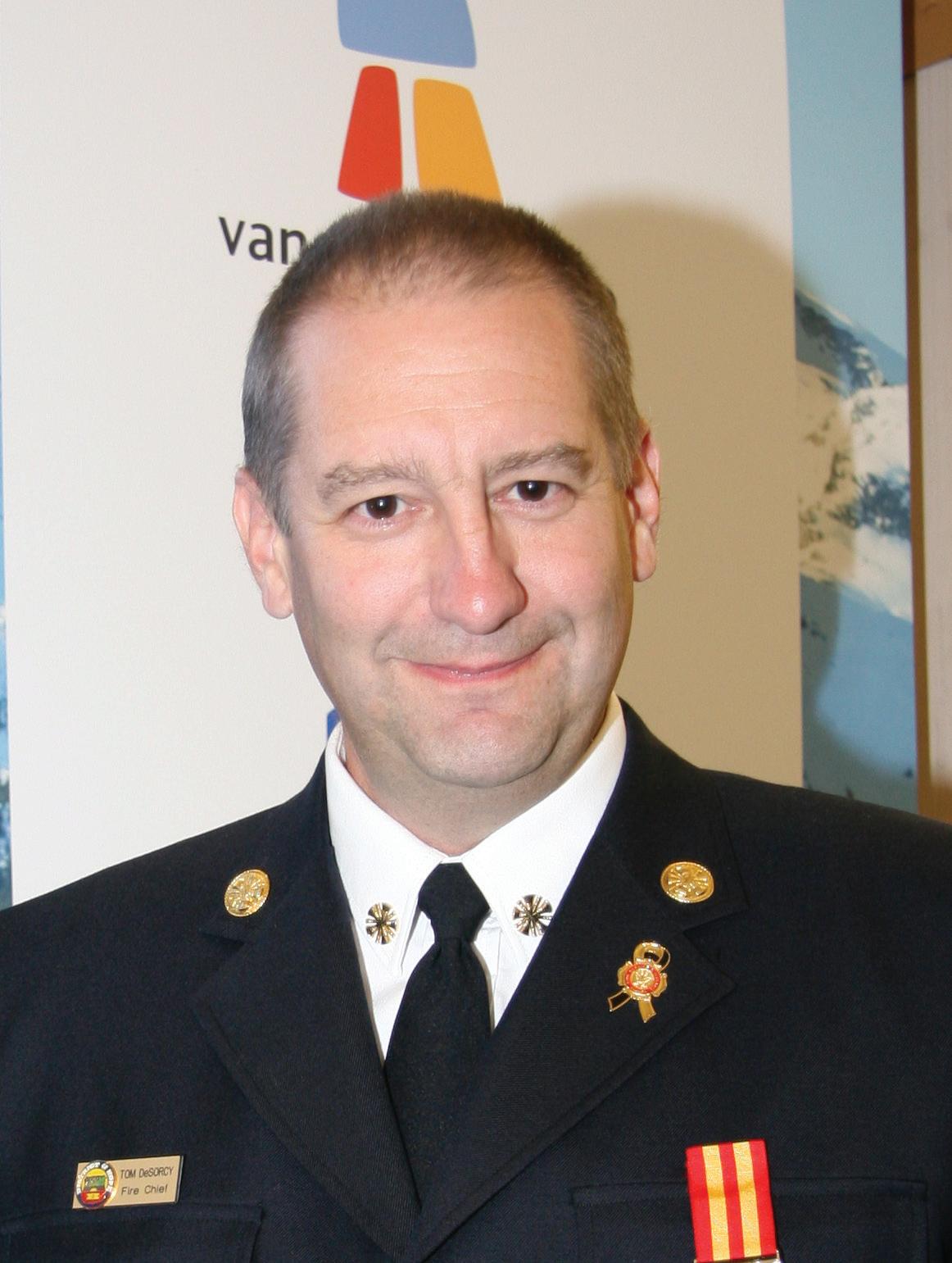
Tom DeSorcy became the first paid firefighter in his hometown of Hope, B.C., when he became fire chief in 2000. Originally a radio broadcaster, Tom’s voice could be heard in the early 1990s across Canada as one of the hosts of Country Coast to Coast. DeSorcy is married with two children, aged 27 and 19, and enjoys curling and golf. He is also very active with the Fire Chiefs’ Association of B.C., and chairs the communications and conference committees.
the volunteers. You see, sports coaches don’t just compliment or challenge their players in front of the media for the fans to hear – it’s a way to send a message to their people, and it was important for my firefighters to hear how I speak about them publicly.
This test was a hard one, but thanks in large part to our families – both here at home and across Canada – it’s one that we will pass. We are truly thankful for the uplifting e-mails and calls from colleagues and the comments made personally and through social media. Yes, we lost one that day, and, as you well know, we don’t like to lose. We’re all parents too, yet I can take a great deal of solace in the fact that I was able to send all of my firefighters home safely to their families, and I hope most people understand that. I saw another side of my department and the fire service on that day in May and, because of it, I’m more proud now than ever of what I do.
The “Next Generation” Technology of Cutters Edge Rescue Saws are here and are designed and built to deliver 100% reliable, high performance cutting in the most demanding and extreme conditions encountered by Fire and Rescue Professionals.
New 2172 MULTI-CUT® Rescue Saw
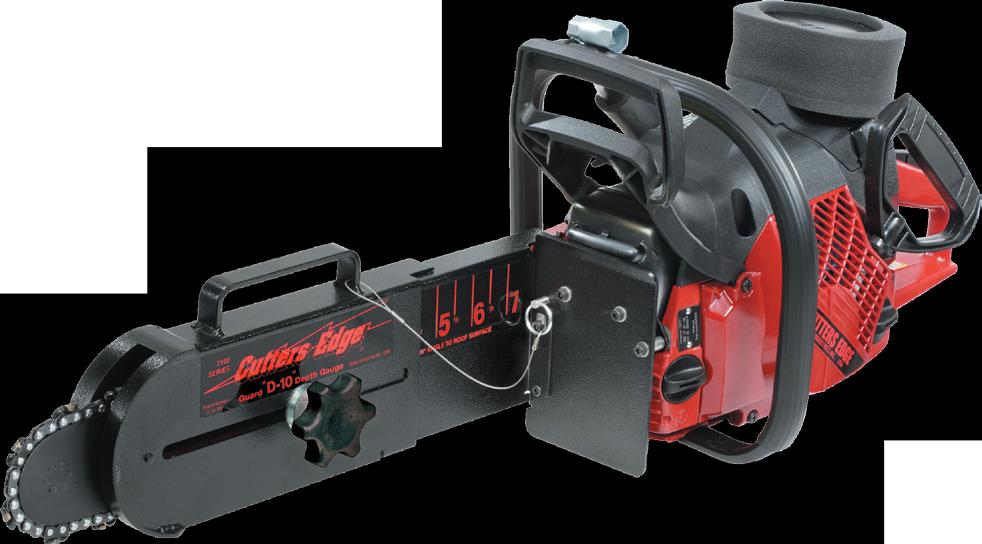
The "NEXT GENERATION" CE2172RS features a new technology engine that produces 10% more Horsepower with higher torque! It also emits fewer emissions and is more fuel efficient.
New Gas Powered Concrete Rescue Saw
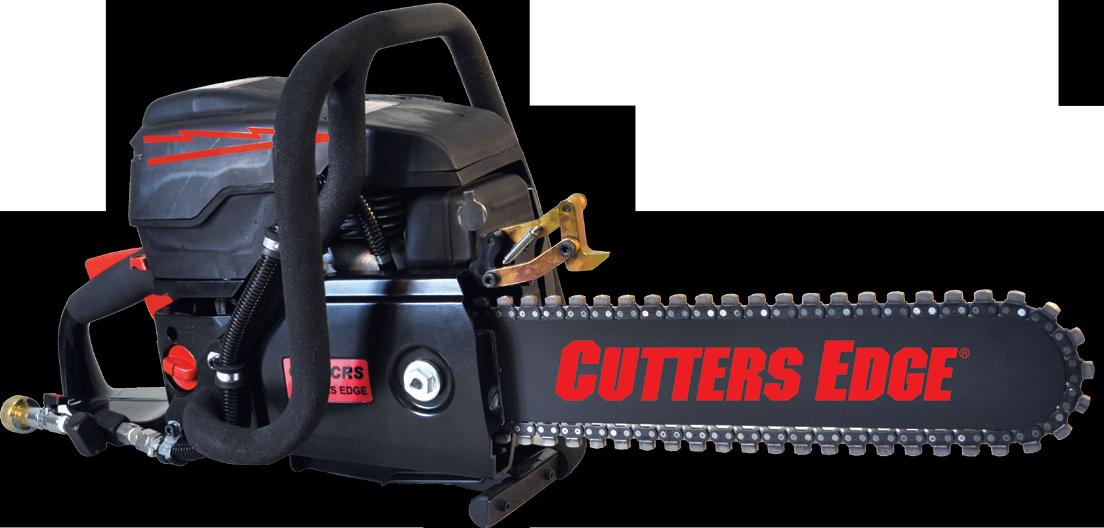
The New CE94CRS Gasoline Powered Concrete Cutting Chainsaw cuts reinforced concrete up to 16-inches thick and cuts it up to 40% Faster with the new CE7COI™ Diamond Chain that features diamond cut ting segments on every chain link –up to 30% more diamond c utting surface area in contact with the concrete being cut.
New Rotary Rescue Saw
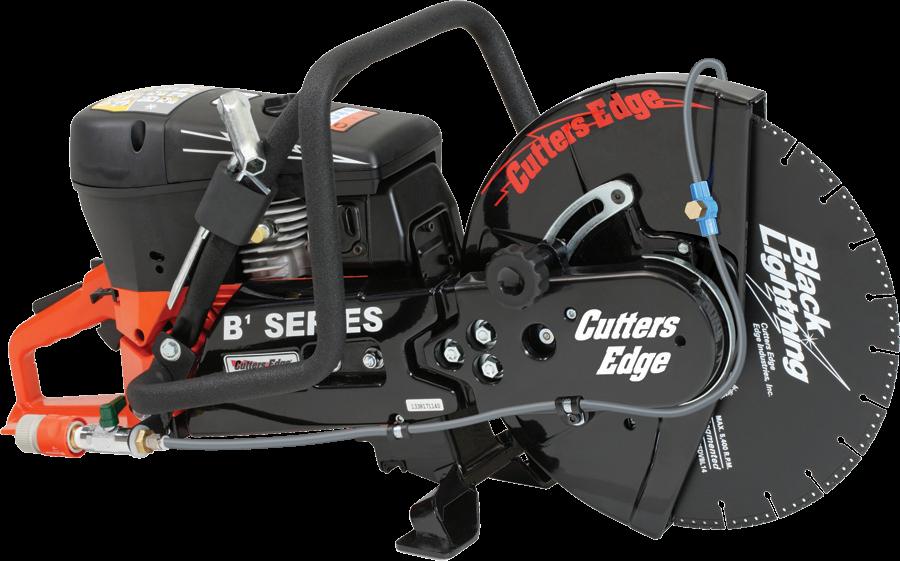
The CE807R Rotary Rescue Saw has a new, more powerful 80.7cc engine and a non-slip rubber Full-Wrap Handle for all position cutting. A new 4-Stage Air Filtration System, incorporating a High Performance K&N Filter as its third stage assures outstanding performance in all cutting conditions. Fully-equipped Sawing Kit is available plus Black Lightning and Black Star Diamond Cutting Blades.
Web: www.wfrfire.com
LETTERS to the edItor
Dear editor,
Re: Tim Beckett’s May 2011 article (Embracing regionalization for a sustainable fire service)
I couldn’t agree more with Chief Beckett’s article and, specifically, the need for us to embrace regional fire services.
Obviously Mr. Beckett comes from a forward-thinking department in this regard. I think specifically of the recruitment that occurs between Cambridge/Kitchener/Guelph/Waterloo [Ontario]. How many taxpayer dollars are being saved by pooling resources and doing a joint recruitment? How much time and effort would be saved in recruitments across the country if hiring was done at a provincial level? And this is only one small aspect of our business.
What about recruit training? What if that were done centrally? Like the police model that Chief Beckett refers to, I think of the centralized training of the RCMP. Certainly each community has specific needs and standard operational guidelines, but is raising a ladder all that different in British Columbia than it is in Nova Scotia? Fundamentals could be agreed upon and specifics could still be learned on the floor of individual fire halls. I think a regional fire service would be good for Canadians and I have often wondered if a fire service based at the provincial or even national level would be the ideal. Think about vehicle and equipment purchasing. We could substantially reduce costs simply based on economies of scale.
It wouldn’t be easy to change, and there would certainly be many challenges to overcome, however I am reminded of a quote from Tom Hopkins, motivational speaker: “The pain of change is forgotten when the benefits of that change are realized.”
Financial and administrative benefits aside, could you imagine the freedom of being able to request a transfer to any department in the country and not have to lose seniority or be re-trained? Younger firefighters could move to larger centres and enjoy the excitement and energy of the city. Firefighters with families could move to smaller communities that better suit their lifestyles. Men and women of the service could relocate closer to their children, ailing parents, or whichever way their loved ones pull them. Think of being able to enjoy your favourite hobbies because you could move to a fire hall that is closer to better hunting and fishing, better golf courses, on the ocean, or in the mountains. I think that Chief Beckett is on to something great and the discussion should turn towards how we could make this happen.
Captain Chris Davison-Vanderburg
Big White Fire Department, British Columbia fpochrisdv@bigwhitefire.com
LEADERSHIp
FORUm
Continued from page 18 change. If you are new to the department then you are starting with a clean slate and you can use the opportunity to build a strong reputation as a good communicator, someone who believes in the strength of his or her people and who can be trusted. Either way, your firefighters and other teammates will be watching you and waiting to help you when you need them.
Our profession is at a crossroads. We can turn left and fall on our faces, or we can turn right and together move the fire service to the next level. We know where we want to go. Do you?
Les Karpluk is the fire chief of the Prince Albert Fire Department in Saskatchewan. Lyle Quan is the fire chief of the Waterloo Fire Department in Ontario. Both are graduates of the Lakeland College Bachelor of Business in Emergency Services program and Dalhousie University’s Fire Administration program. E-mail Les at l.karpluk@sasktel.net or Lyle at thequans@sympatico.ca
The Conference portion of the event will take place October 25 – 26 in Ottawa, Canada and will be the first Canadian event to incorporate multiple symbiotic
Booth: N5-120
Booth: 8317
tools of the
trade
advances in extrication and safety help responders and patients
By randY Schmitz
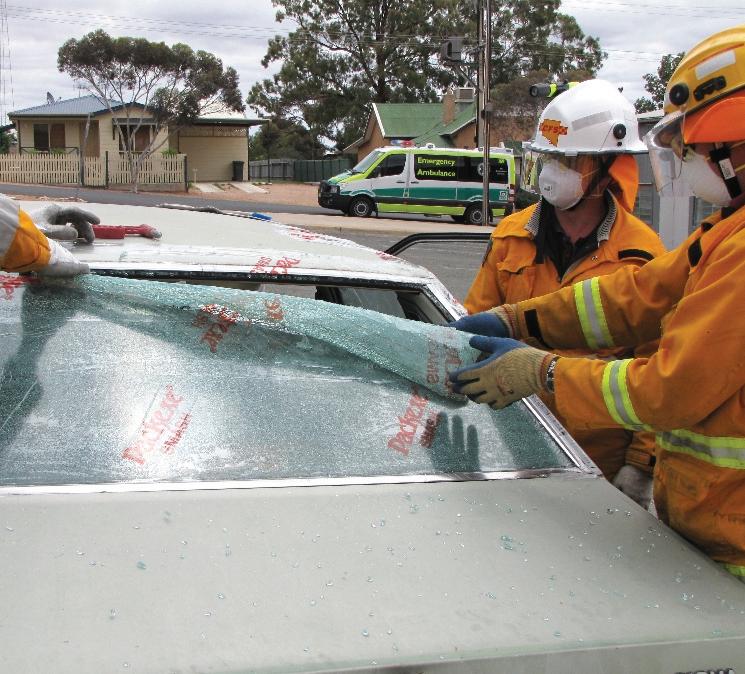
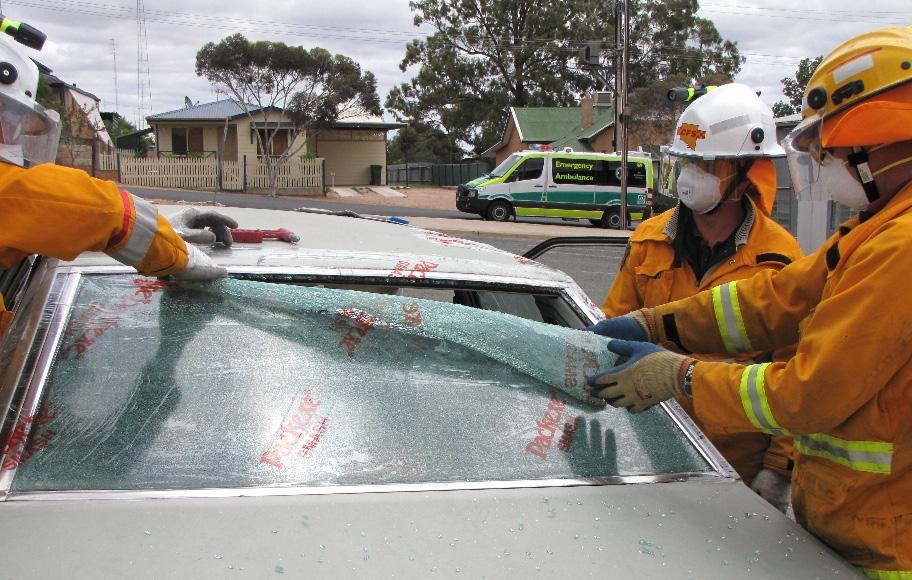
above : Packexe Smash is an adhesive product that can be applied to tempered glass to keep it intact and packaged so it can easily be removed from the vehicle, protecting rescuers and victims.
being a part of the extrication community allows me to attend trade shows and seminars and keep abreast of what’s happening in the industry. I am often asked to test equipment and products and give my opinions to the manufacturers. Although there are lots of great products that enter the market every year, there are a few that stick out in my mind. In my opinion, anything that will reduce the time it takes to remove a patient from a motor vehicle within the golden hour is a clear benefit to the goal of increasing the survival rate of crash victims. Here are a few of the items I had the chance to test.
I would first like to mention a product I wrote about in the August 2009 edition of Fire Fighting in Canada called the Crash Recovery software program by Modi-Tech Rescue Solutions. Modi-Tech is based in the Netherlands and has been in operation since 2004. It has developed a program to assist rescuers with vital information regarding vehicle safety systems, high-strength steel locations, 12-volt batteries, airbag locations, fuel systems, specific shut-down procedures for hybrid/ electric vehicles, magnesium locations for vehicle fires, Xexon headlights, and other factors, applicable to more than 28,000 vehicles in North America and Europe. Until recently, the program was available
Photo courtesy Pac K exe
only on laptops, but information is now available via iPhone and iPad applications in the IOS Apple platform. These applications offer instant access to shut-down procedures for every hybrid vehicle that has been produced. In the next two months, according to Jan Mooij, the managing director for Modi-Tech Rescue Solutions, the rest of the crash-recovery program will be made available in the application. The material is displayed in high-resolution quality and the prices will be equivalent to the current laptop editions, but the hybrid app is presently available free of charge through iTunes. Visit www.moditech.com
for more information and visit www.apple. com/itunes to download the application.
* * *
The First Responder Jack by Hi-Lift, designed by firefighters, is easy to use and versatile. Its applications include lifting, winching, spreading and ramming. It requires no fuel or power, just a little muscle.
Having a rated load capacity of 4,660 pounds (2,113 kilograms) the jack comes in three sizes: 36 inches, 48 inches and 60 inches (90, 120 and 152 centimetres) and weighs between 27 and 33 pounds (12 to 15 kilograms). A removable clamp-clevis at
the top of the jack, rated at 5,000 pounds (2,267 kilograms) is great for winching. Every jack comes with a shear bolt to prevent the jack from lifting a capacity of more than 7,000 pounds (3,175 kilograms). One unique feature that I believe makes a huge difference is the detachable rotating base plate. With 36 square inches of surface area, it will accommodate cribbing, chain and straps for many rescue applications. Some of the evolutions I have performed with great success are a door removal by inverting the jack in the window space, steering column displacement for lower extremely entrapment, roof tenting for rapid extrication out the rear of a vehicle, seat lowering for reducing interior obstruction and brake-pedal removal. Keep an eye out for a more in-depth training article for this product in my Extrication Tips column in Canadian Firefighter and EMS Quarterly in the near future. In the meantime, check out www.firstresponder.hi-lift.com for more information.
* * *
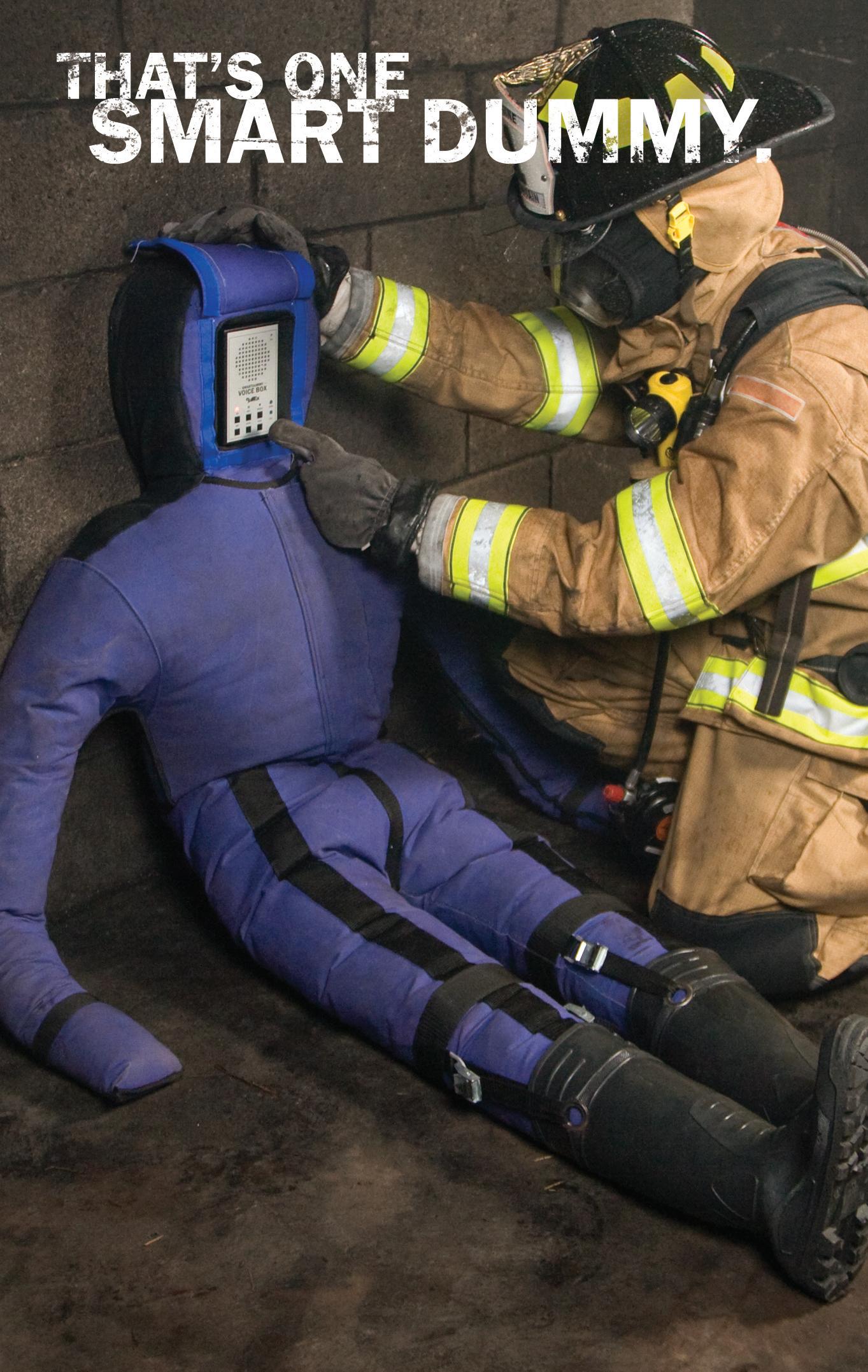
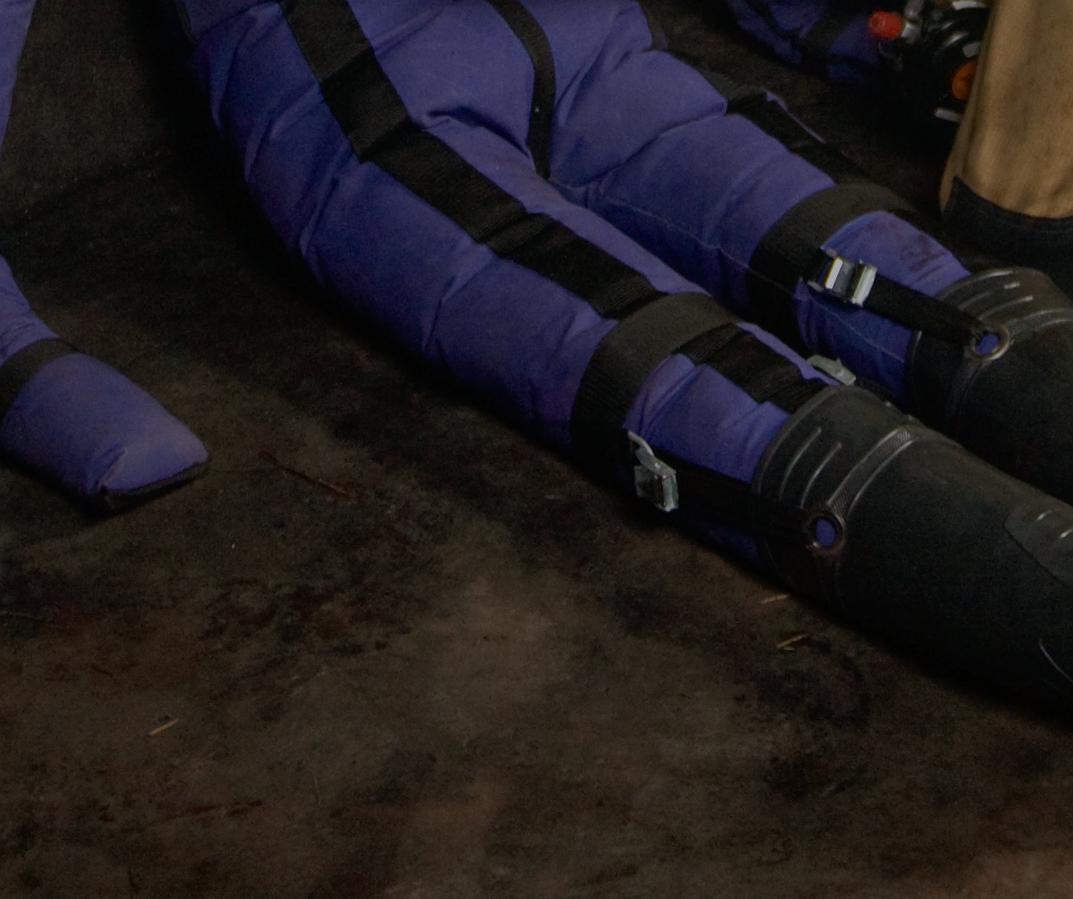
WITH AN INTEGRATED VOICEBOX, THE SMARTDUMMY ™ RESCUE MANIKIN CAN CALL OUT FOR HELP AND INTERACT WITH RESCUERS.
Record custom messages with a built-in microphone for continuous or sound activated playback.
• Search and Rescue: Train rescuers to call out and listen for victims during search exercises.
• Extrication: Record a panicked victim response to train firefighters how to stay calm in high-pressure situations.
• Triage/Scene Response: The SmartDummy can tell responders where it hurts. Rescuers can prioritize extrication based on victim feedback. For more training opportunities and to see the SmartDummies in action, check out our videos at www.bullexsafety.com
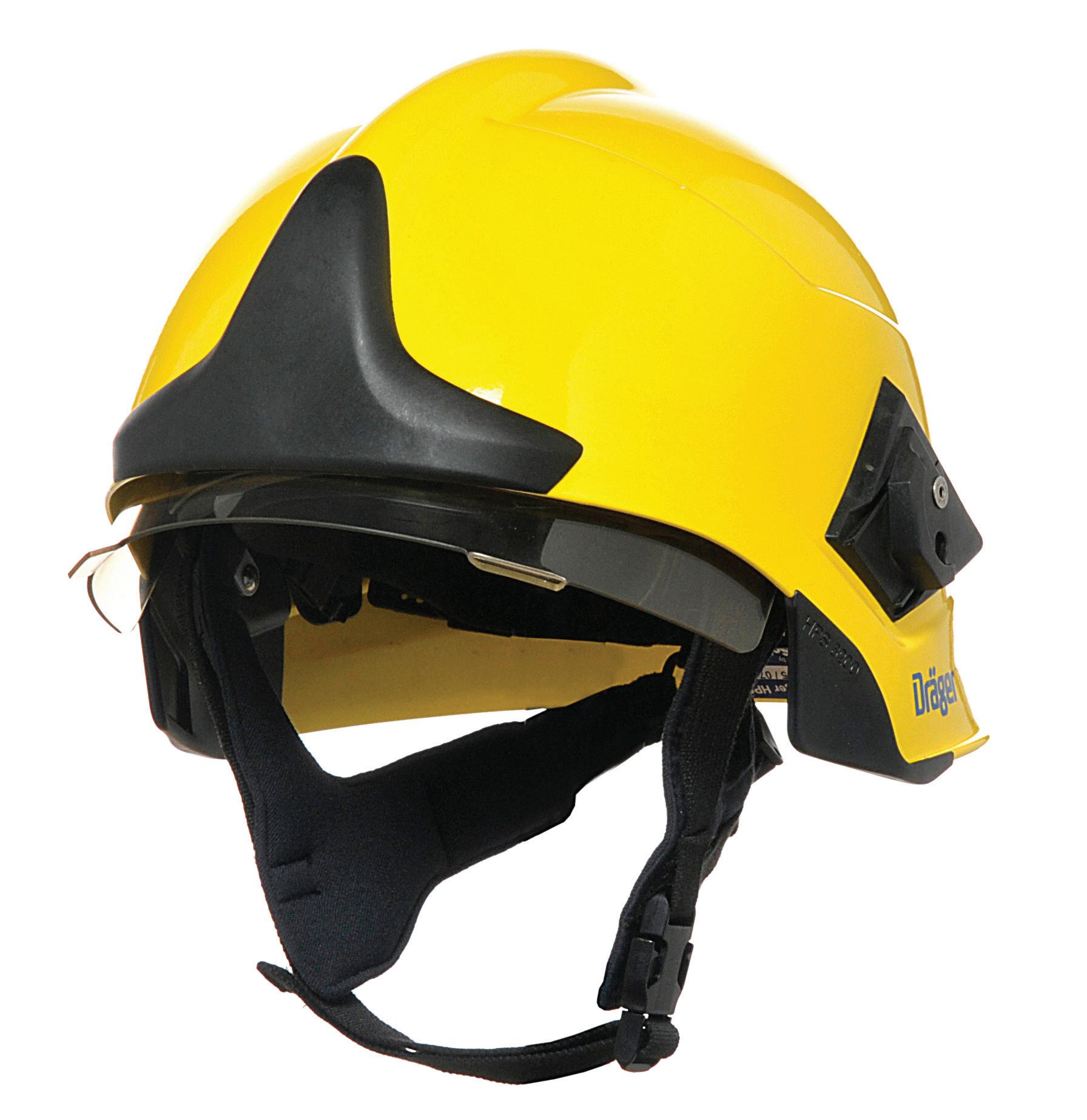
The new HPS 3100 extrication/ HUSAR helmet from Draeger is designed to allow first responders to enter a vehicle to access patients and provide medical care without having to worry about catching the helmet while climbing through a tight space such as a rear window. Most fire helmets have large brims that surround the perimeter of the helmet to keep embers at bay, but the brim can be a hindrance while working in tight spaces. The Draeger HPS 3100 helmet has no brim and therefore does not inhibit rescuers from working in confined areas. Also, sealable holes with a metal mesh covering to stop debris are built in to allow for adequate ventilation in humid atmospheres, such as the inside of a vehicle on a hot day. The head strap is easily adjustable by an easy-grip, rotating hand wheel at the rear. A comfortable chinstrap keeps the helmet secure when looking up or down. At 115 grams, the weight of the helmet is not a factor, even if you have to wear it all day (I wore this helmet for four straight eight-hour days with no issues). Of particular note is the detachable, slip-down, anti-fog/antiscratch, flameproof goggle attachment. The interior of the helmet is a four-point harness made of skin-friendly material that is anti-allergen, anti-sweat and anti-mould. An adaptation pin located on the right side of the outer shell will secure a flashlight if needed. Other accessories can be added, such as multiple visor designs and ear protection adapter ports. Not only is this a great product for vehicle rescue situations, but also it is suitable for all technical
B Y SE AN TRACEY Canadian Regional Manager, NF pA
IAnother take on standards for a sustainable service
n his Volunteer Vision column in Fire Fighting in Canada in June, my friend, Chief Vince MacKenzie, asked if it is time for the fire service to revisit its thinking about standards and instead shoot for guidelines that are formulated with the sustainability of the volunteer fire service in mind.
I would like to offer a counter opinion to Chief MacKenzie’s view, for I fear that taking such an approach would result in weaker requirements for already hazardous tasks, and would do little in the long run to improve fire coverage in our communities.
Standards provide reasonable expectations of safety and uniformity for the fire service. They are products of cumulative fire-ground experience. When not adopted into regulations, standards become industry best practices or benchmarks. Standards are developed by fire-service committees, with full opportunity for fire-service members to comment. Yes, the requirements set out in the standards are a challenge for volunteer firefighters and departments (and, in some case, the career end of the spectrum) to meet, but they drive change in our profession. In the absence of federal and provincial funding, do we lower the standards in order to create a false reality of compliance? Or do we need to do a better job of identifying the deficiencies and concerns of fire services or departments that can’t meet these international benchmarks?
The NFPA has just released the third edition of its Fire Service Needs Assessment (the earlier editions were produced in 2001 and 2005). This document is available on the NFPA website at www.nfpa.org. It provides a good snapshot of the fire service in the United States and how far it has progressed in key areas in the past decade. Here are some notable observations from the document:
• Needs have declined considerably in a number of areas – particularly personal protective and firefighting equipment, two resources that received the largest shares of funding from the U.S. Assistance to Firefighters Grant Program.
These points add some interesting context to Chief MacKenzie’s comments. Many of the gains in the United States fire service can be attributed to the federal grants – in other words, funding from outside of municipal budgets. If similar funding had been available to Canadian fire departments over the last several years, it is likely that we would have experienced similar changes with respect to equipment. But, as Chief MacKenzie pointed out, in Canada, there has been little or no gain in the areas of apparatuses, training, stations and staffing – areas that are funded by municipalities.
Having access to outside funding might solve equipment issues but it does little to solve training and staffing issues. The fire service needs to re-evaluate how these service levels are identified in communities. Probably the most substantive changes in the fire service in training and manpower in North America occurred in Quebec since 2001. This is due to the introduction of the risk management in cover planning concept under Quebec’s Schémas de couverture de risques, under which communities evaluated their risks, determined their service levels and then identified the training and resource deficiencies. In this case, NFPA standards 1001, 1710 and 1720 were retained as the benchmarks for these services – Quebec did not
Status quo – a lack of provincially required fire-risk coverage plans –is not working.
• Declines in needs have been more modest in other important areas, including training, that have received much smaller shares of AFG funds.
• Still other areas of need, such as apparatuses, stations and the staffing required to support the stations, have seen either limited reductions in need (e.g., apparatus needs in rural areas) or no reductions at all (e.g., adequacy of stations and personnel to meet standards and other guidance on speed and size of response).
Sean Tracey, P.Eng., MIFireE, is the Canadian regional manager of the National Fire Protection Association International and formerly the Canadian Armed Forces fire marshal. Contact him at stracey@nfpa.org
lower these standards. Similar exercises in other provinces would do wonders in identifying the services needed in communities and the need for public funding; it would also mean buy-in from the communities in support of the service standards. Therefore, in my opinion, the solution is not to amend the standards, but to heighten the awareness of the gaps in fire coverage and determination of service levels.
Currently, each community determines its service level and whether it can meet established standards. This status quo – a lack of provincially required fire-risk coverage plans – is not working. We need to rethink the way that services are being provided and not assume that lowering the standards is the best solution. We need to follow Quebec’s lead and look at regional fire-risk plans as provincial requirements. This is the best way to ensure sustainable fire services across Canada.
Continued from page 28
Draeger’s brimless HPS 3100 extrication helmet is designed to help first responders easily work in tight areas without the hindrance of a helmet brim.
support operations and comes in eight colours. Visit www.draeger.com for more information.
Packexe Smash is a glass management system for vehicle rescue. Side window glass, also known as tempered glass, often needs to be removed prior to forcibly removing doors by mechanical means (for example, forcing open a jammed door with hydraulic spreaders). If this is not done, the side glass window will be put under great stress to the point at which it will fragment, break, and shower patients and rescuers with glass fragments. Even breaking the glass out with specialized tools, such as a glass master saw or spring-loaded centre punch, will result in a fair amount of glass falling in and around the vehicle and causing problems. Packexe Smash is an adhesive product that is applied to the tempered glass prior to extrication to keep the glass intact and packaged in a nice, clean protective sheet. The glass is easily managed when removing it from the vehicle, or it can be left intact if warranted. A dispenser with double foam rollers that follow the vehicle contours allows smooth coverage and easy application of the product, and the protective film gives the glass a 42-per-cent increase in strength. The adhesive film works on dry or wet surfaces and has perforations every four inches (10 centimetres). This product has been accepted as standard procedure for glass management in extrication competitions worldwide for the past three years and has started to take hold in the fire service with very promising results. Other areas of potential use are being explored, for example, securing broken glass from highrise buildings for the safety of the public below, and minimizing the time and effort that high-angle rescuers spend suspended on ropes over the edge to collect glass pieces out of the frame. Visit www.packexe.com for more details.
* * *
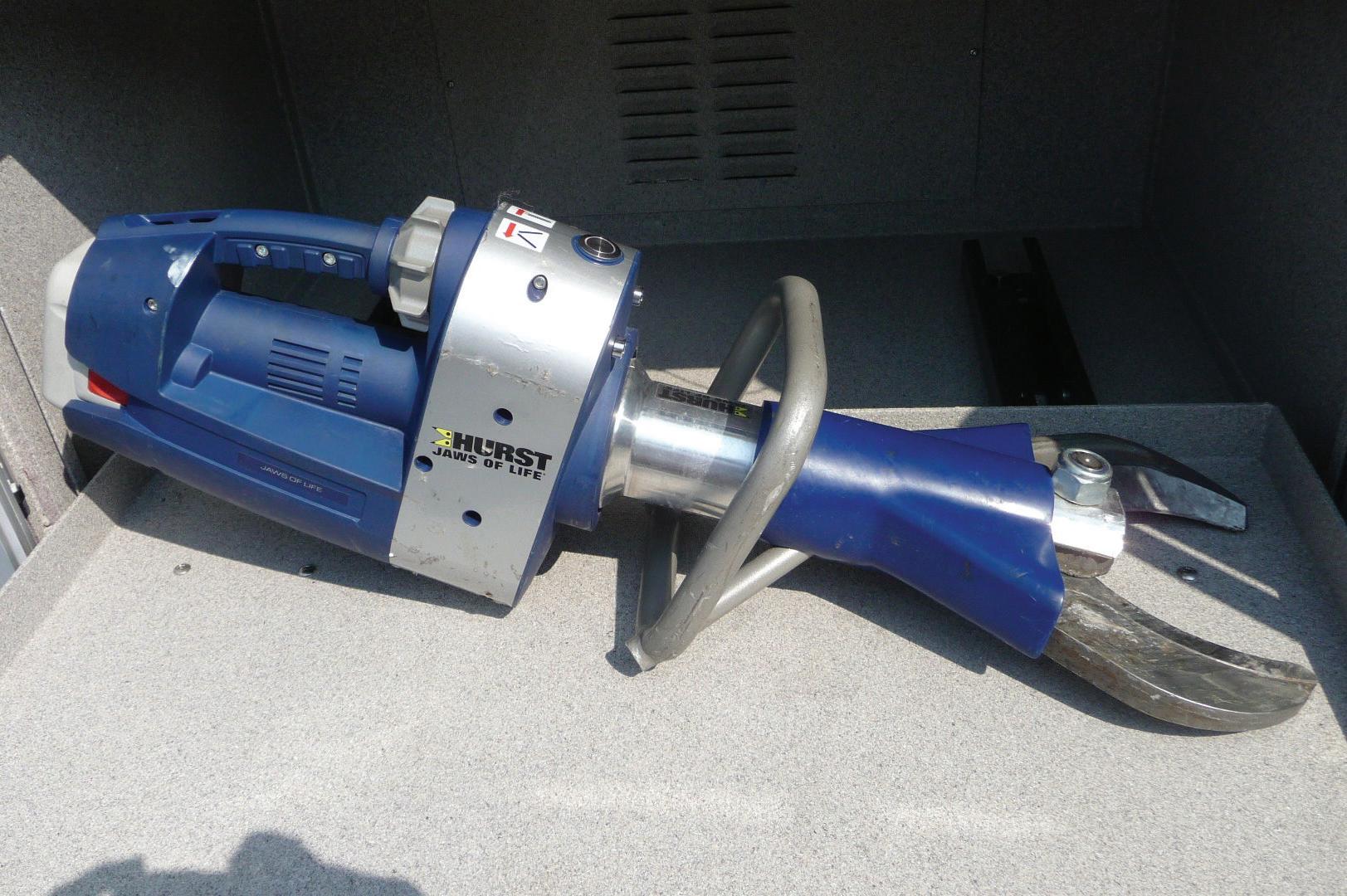
Hurst Rescue Tools, which branded the term Jaws of Life back in the 1970s, was the first manufacturer of hydraulic tools for the purpose of
Photo courtesy Draeger
KOCHEK® LDH Systems Your Single Source of Water Supply
Couplings that work seamlessly ever y time, the most reliable in the industr y STAN DAR D - Forged 6 0 61-T6, low profile aluminum Storz heads with stainless steel locking trigger Meets and e xceeds all N F PA standards and is proudly made in the U S A
Durable Rubber Covered LDH Hose 4” or 5”, Meets N F PA 1961 C all: 800-420-4673 or on the web @ Kochek com
Edraulics is a new rescue-tool system from Hurst Jaws of Life that enables rescuers to be free of hoses and power units. This lithium-ion battery-powered rescue set is strong enough to overcome vehicle construction that is resistant to cutting and spreading.
rescue. George Hurst, the man behind the concept, pioneered the project and put it into play first on the racetrack. The Jaws of Life became the tool of choice for rescuing drivers in bad wrecks. This evolved into the rescue of trapped victims in motor vehicle accidents, and the rescue-tool industry was born. Hurst has come up with an interesting design, called Edraulics, which enables rescuers to be free of hoses and power units. Essentially, this new rescue-tool system is a lithium-ion battery-powered rescue set that is powerful enough to overcome vehicle construction that is resistant to cutting and spreading. Available to operate in either battery mode or a 110-volt plugin option, Edraulics has set a new benchmark in rescue-tool innovation. Hurst offers a spreader, a cutter, a ram, and a combi-tool. The S700 Cutter has a 7.3-inch (18.5-centimetre) blade opening to take on the larger B-posts on newer vehicles and draw it deep into the centre notch for increased cutting ability. It is certified to cut at A8/B9/ C8/D9/E9 ranges. The SP300E spreader has a spreading force of 25,000 pounds (11,339 kilograms) and a spreading distance of 23.8 inches (60.5 centimetres). The tool weighs 45 pounds (20 kilograms). The R411E ram is a compact unit that has 47.2 inches (120 centimetres) of extended length with extension accessory attachment and 23,154 pounds (10,502 kilograms) of pushing force at 32 pounds (15 kilograms). The combination spreader/cutter SC350E spreading force is 24,500 pounds (11,113 kilograms) with a weight of 43.7 pounds (20 kilograms), a spreading distance of more than 14 inches (35.5 centimetres) and a cutter classification of A6/B7/C7/ D7/E7. Check out www.jawsoflife.com.
Randy Schmitz is a Calgary firefighter who has been extensively involved in the extrication field for 19 years. He is an extrication instructor and has competed internationally. He is the education chair for Transport Emergency Rescue Committee (T.E.R.C.) in Canada, a T.E.R.C. International extrication judge and a tester and evaluator for manufactured prototype products for extrication equipment. He can be reached at rwschmitz@shaw.ca
Storz Elbows
Forged Storz Couplings and Hose
Valves
Storz Wrenches
Hydrant Converters
Storz Adapters
Photo by r an D y s chmitz
B Y F RED L E B LANC
p resident, O p FFA
The conundrum over simultaneous response
there has been a lot of focus lately in Canada on the role of the fire service in emergency medical responses. It is interesting that the focus has been so great lately in Ontario, given that the fire service has historically played a significant role in responses to life-and-limb threatening emergencies. While the level of response has varied, the Ontario Pre-hospital Advance Life Support (OPALS) study conducted in the mid-1990s set the course for the involvement of Ontario’s fire service in emergency medical responses.
Today, it is common for professional firefighters to be trained in advance emergency first aid, CPR, and defibrillation. This training, combined with the ability to respond quickly to emergencies, makes the fire service a logical choice to augment paramedics in the delivery of EMS.
In Ontario, the fire service has played largely a supportive
role in the pre-hospital emergency-response system. During the OPALS study (and since that time) many fire services adopted defibrillation as part of their service delivery; this works well and supplements the response of advanced-life paramedics to these life-threatening emergencies. Recently, there has been a lot of focus in Ontario on EMS response time – this has nothing to do with the front-line paramedics, rather the concern relates more to a larger, systemic problem. But with more ambulances and EMS personnel spending more time waiting in emergency rooms, the fire service has been relied upon to an even greater extent to respond to life-threatening emergencies. For the OPFFA, it seems like a natural fit for the fire service to be involved in the broader delivery of emergency medical response.
So why all the fuss from the EMS community? The OPFFA has for years sought the simultaneous dispatch of fire and EMS to medical emergencies to ensure the best of the system can be delivered to the patient. Three years ago, the Ontario Association of Fire Chiefs (OAFC) approached the OPFFA to work jointly on this initiative. As I write this column, the McGuinty government has supported simultaneous notification and a pilot project is in the final planning stages. The simultaneous-notification technology could be a turning point for the way emergency medical services are delivered and the role of the fire service in this type of response. It is disappointing that when the fire service is finally receiving critical government support for simultaneous-notification technology, there are still some in the fire service and in municipal administrations who are pushing back.
Both the OPFFA and the OAFC expected some turf protection from the EMS community, which may view simultaneous response as a potential encroachment on its territory. However, both associations have advocated sending fire to the life-andlimb threatening calls to which it already responds, but doing so simultaneously. To have some fire chiefs support a reduction in the type of life-threatening medical emergencies to which their fire services respond (which has happened in a number of Ontario municipalities, and which the OPFFA equates to a reduction in public service) is disappointing. And, for municipal councils to play the budget card as justification for reducing this type of service is laughable: taking trained emergency responders out of the mix for minimal savings on fuel and wear and tear on vehicles just doesn’t make sense and, ultimately, the taxpayer will pay more dearly through longer response times.
EMS chiefs have been very good to convince some Ontario fire chiefs to amend local tiered-response agreements based on new ambulance dispatch protocols and patient outcome – a term I have heard more recently than during my entire career. Essentially, their argument is that there are many responses to which the fire service simply doesn’t make a difference to patient
LIVE FIRE FIGHTING EXPERIENCE: Short and long term courses available, Municipal and Industrial fire fighting. Incident Command System, Emergency Response/HazMat, three year Fire Science Technology Diploma program. Lambton College, Sarnia, Ontario, call 1-800-791-7887 or www.lambton.on. ca/p_c/technology/fire_emerg_resp.htm. Enrol today!
• Reduce
• Simple bolt-on replacement for stock Honda muffler.
Courage, conviction and respect for the fallen
In June, Chris Brennan, a reporter in Brantford, Ont., was prompted to write an editorial after noticing that the death of two miners in Sudbury on June 8 had not received adequate media coverage. Perhaps Brennan had a legitimate issue to put forward; however, the editorial went on to say: “Now just imagine if it had been two police officers or firefighters who had been killed. It would have been front-page news across the country.”
Brennan is correct in saying that line-of-duty deaths of firefighters or police officers are almost always the lead news story across Canada. As for the coverage of the Sudbury miners’ deaths, I was able to find, within seconds, articles not only from local media in Sudbury, but also from CTV, CBC, the Toronto Sun, the Montreal Gazette, the Hamilton Spectator, other newspapers across Canada, Reuters and the Wall Street Journal. So what exactly was Brennan’s point? He continued: “So why is it when a logger or miner or fisher or farmer dies it rarely makes the news, but there’s a big hullabaloo when it’s a cop or firefighter?”
Workers in all fields deserve a safe, professional environment, and the death of any worker in any industry is a loss to Canadian society as a whole. If media coverage of a worker’s death is lacking, the fault lies with the media, not with emergency service personnel. If the families and colleagues of fallen workers in any industry choose to mourn publicly or privately, that is their right. There was no story of substance in Brennan’s editorial, only disparaging and divisive vitriol that deserves to be called out for what it is.
I think it was the word hullabaloo that turned the tide for me. My mind flashed back to riding in the front seat of the pumper carrying the casket of a good friend as we drove through the streets of the neighbourhood in which he died, and the men, women and children along the route who stopped and stood at attention. Some saluted; some took off their hats to cover their hearts; many were visibly in tears. Hullabaloo, indeed.
This argument is not worthy of a high school debating team, let alone a professional journalist. Such a misapplication of the hierarchy of needs would have Abraham Maslow turning in his grave. Imagine for a second that your house is on fire and you have taken shelter in an upstairs bedroom. When the firefighters reach you and are leading you to safety, do you: a) co-operate fully and get yourself out of immediate danger, or b) say “Wait, let me get the asparagus tips and tilapia fillets from the fridge first!”?
“Cops and firefighters are happy to propagate the myth, especially at contract time, that their jobs are exceedingly dangerous. It’s self-serving but disingenuous.”
That comment crossed all lines of respect and journalistic professionalism, and I defy Chris Brennan to provide any justification for what is essentially an insult to the integrity of those who bargain on our behalf.
“The massive funeral processions for fallen comrades is [sic] getting a little stale and self-indulgent.”
I didn’t do you the favour of correcting your grammar, Chris, because, frankly, how we mourn our fallen is none of your concern. I can assure you that the motives in play and the emotions being experienced as one stands honour guard, marches in a funeral procession or
i f media coverage of a worker’s death is lacking, the fault lies with the media . . .
’’
Brennan attempted to bolster his position by calling into question the relative importance of firefighters and police officers versus the farmers, loggers, fishery workers and construction labourers on whom we depend for food and shelter.
“Funny thing is, on the grand scale of things, our foremost priorities are food and shelter. Without them we would literally starve or freeze to death.”
Retired District Chief Peter Sells writes, speaks and consults on fire-service management and professional development across North America and internationally. He holds a B.Sc. from the University of Toronto and an MBA from the University of Windsor. E-mail Peter at peter.nivonuvo@gmail.com
carries a casket are not as you described. Your description of our funerals as public spectacles that serve to highlight how relatively rare it is when one of us dies doing our job, do a disgusting disservice to the firefighters who die each year as a result of occupation-related cancers and other diseases. Many of those funerals are private and away from the public eye. You didn’t do your homework before writing your editorial.
If not any journalistic skill, Brennan at least showed some courage of conviction in publishing his opinions. He noted that a particular uniform or occupation doesn’t entitle one to de facto hero status, and yet he did not make mention of the funerals or Highway of Heroes processions for our military members who have made the ultimate sacrifice. Can you imagine the reader backlash if Brennan had grouped soldiers in with firefighters and police officers, and labelled military mourners as self-serving or disingenuous?
I wonder if that was an oversight, or if Brennan’s courage or conviction had reached their limit.
B Y p ETER SELLS
High Volume Fire Flows Done Safely…
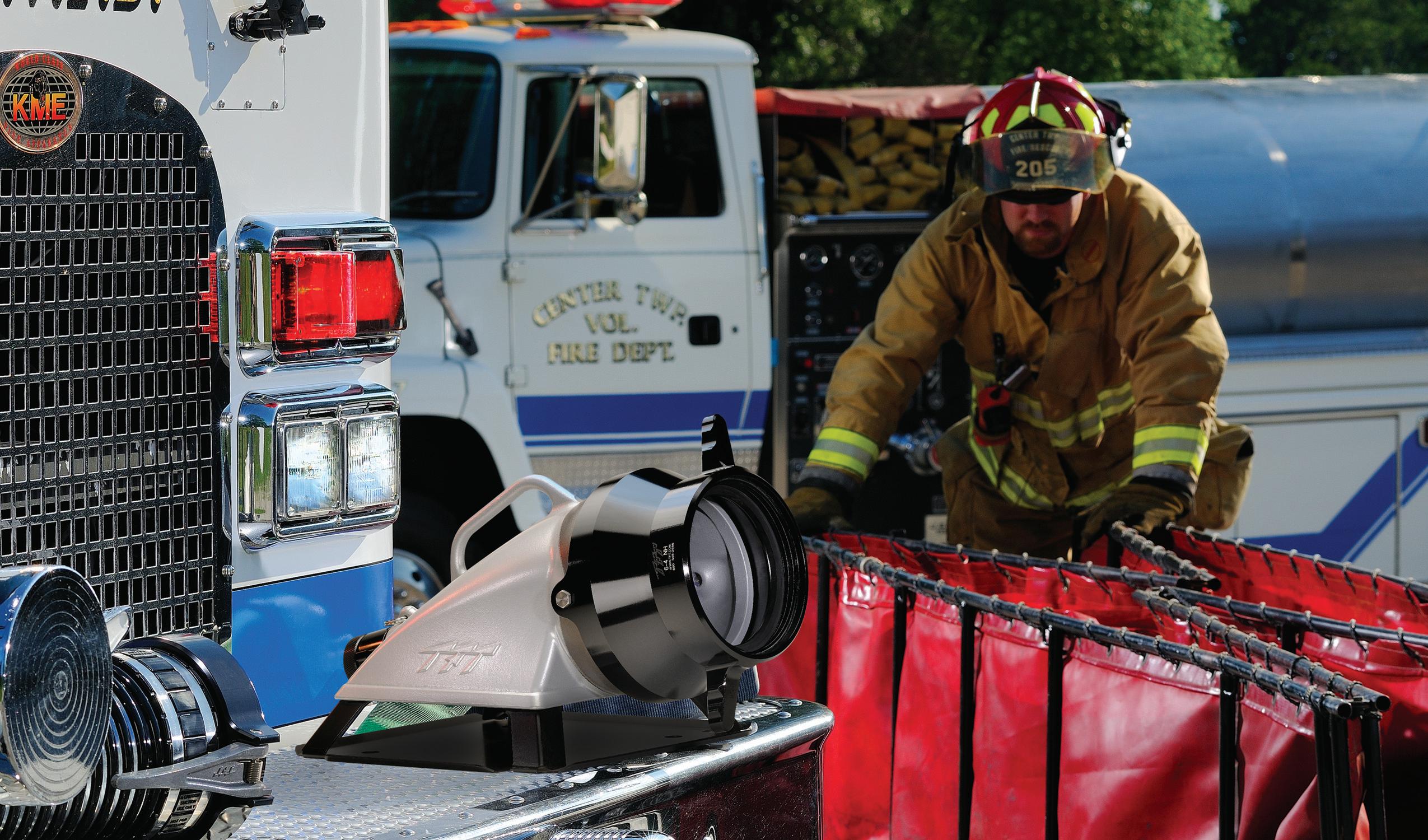
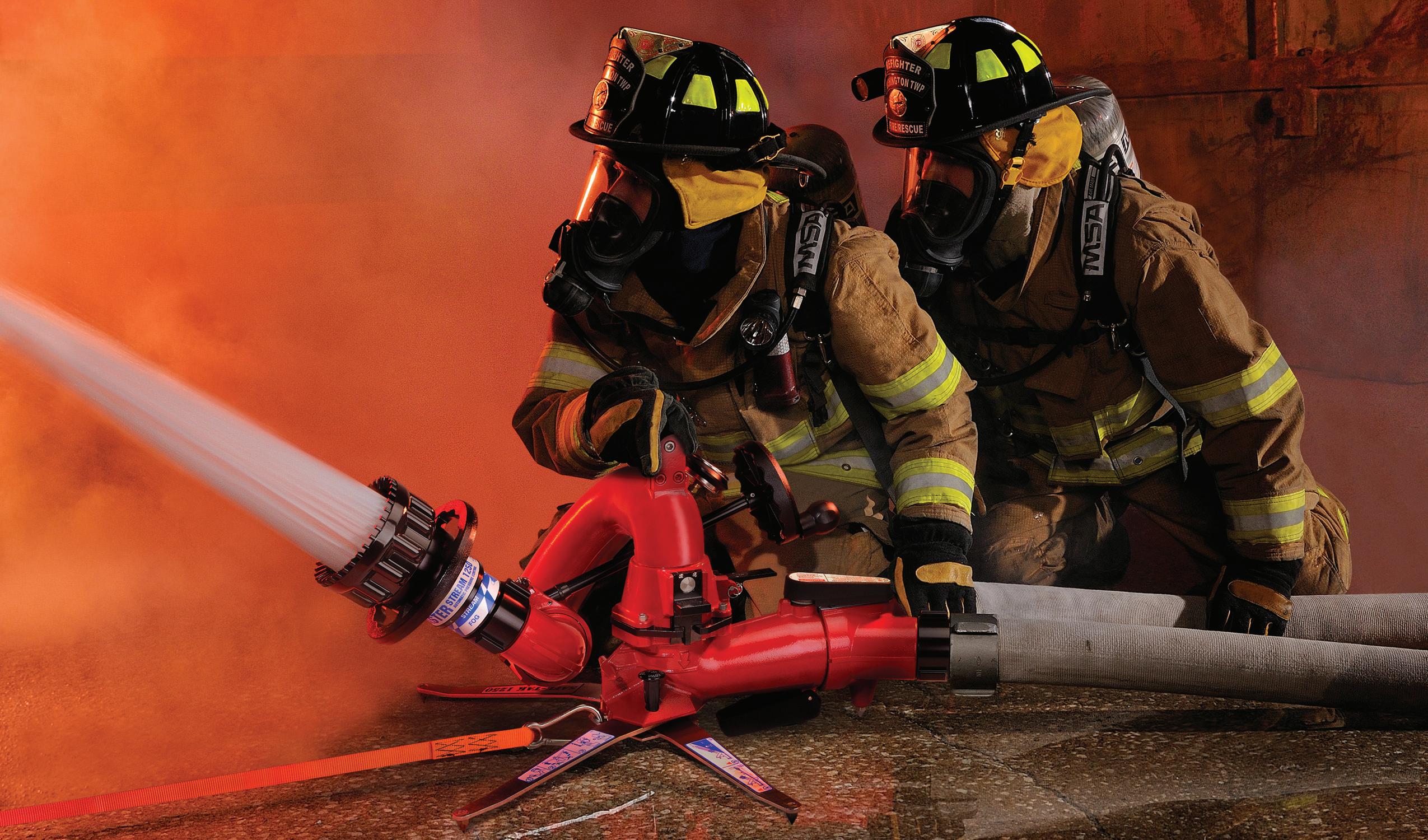
With a flow rating of 1250 gpm in portable operation, the TFT Crossfire monitor integrates the exclusive Safe-Tak safety shutoff system to prevent unintentional movement.
The monitor’s compact and lightweight design includes stainless spring steel legs with carbide tips for maximum stability, and a visual attachment indicator for additional security.
To learn more about how you can provide maximum flows and improved crew safety during initial attack operations, contact your local TFT dealer today.