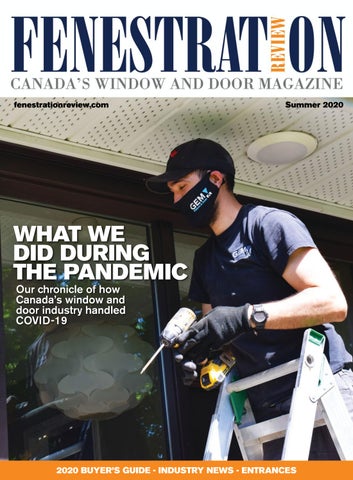
Our chronicle of how Canada’s window and door industry handled COVID-19
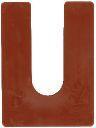
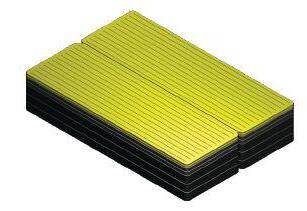
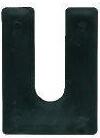
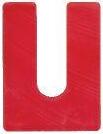
Grove Shims™ has the perfect shim for all your shimming needs. With color-coded shims and solid thicknesses, the right shim can be easily applied for perfect alignment. No guesswork or realigning. Our shims save you time and money.
* Contact us about eligible tariff fee reimbursements on the purchase of Grove’s shims only. “This ad applies to U.S. and Canada only. Offer expires 12/31/20.”
Need help? Just ask! We’re here to help.
978-534-5188
Visit us online to see all of our available solid 3x4 Shims.
www.groveshims.com
Free Samples are Available Upon Request.
Grove Shims™ is the leading producer of plastic structural shims. We have been in business since 1962, making shims since 1975, our family-owned business provides prompt, personalized attention to each order. In addition to our large line of in-stock shims, we will custom fabricate parts to meet your unique requirements. Unlike many competitors, our shims are solid and do not have hollow voids, so you can depend on them in crucial, load-bearing conditions.
Fenestration Review 2020 Vol. 9 • Issue 2
Annex Business Media
P.O. Box 530, Simcoe, Ontario N3Y 4N5
EDITOR | Patrick FLANNERY pflannery@annexbusinessmedia.com 226.931.0545
ASSOCIATE EDITOR | Sukanya RAY GHOSH srayghosh@annexbusinessmedia.com 647.203.7031
AUDIENCE DEVELOPMENT MANAGER | Urszula GRZYB ugrzyb@annexbusinessmeda.com 416.510.5180
MEDIA DESIGNER | Curtis MARTIN GROUP PUBLISHER, VP SALES | Martin MCANULTY mmcanulty@annexbusinessmedia.com
COO | Scott JAMIESON
Publication Mail Agreement #40065710. RETURN UNDELIVERABLE CANADIAN ADDRESS TO CIRCULATION DEPARTMENT, P.O. 111 Gordon Baker Rd., Suite 400, Toronto, ON M2H 3R1
email: subscribe@glasscanadamag.com
Printed in Canada, All rights reserved. Editorial material is copyrighted. Permission to reprint may be granted on request. ISSN 0843-7041
CIRCULATION
ugrzyb@annexbusinessmedia.com 416-510-5180
Fax: 416-510-6875 or 416-510-5180 Mail: 111 Gordon Baker Rd., Suite 400, Toronto, ON M2H 3R1
SUBSCRIPTION RATES
Canada - 1 Year $22.00 (plus applicable taxes)
U.S.A. - 1 Year $50.50 (in CDN dollars)
Foreign – 1 Year $58.00 (in CDN dollars)
ANNEX PRIVACY OFFICER
Privacy@annexbusinessmedia.com
Tel: 800.668.2374
Occasionally, Fenestration Review will mail information on behalf of industry-related groups whose products and services we believe may be of interest to you. If you prefer not to receive this information, please contact our circulation department in any of the four ways listed above. www.fenestrationreview.com
CANADA’S WINDOW AND DOOR MAGAZINE
Our reaction to the pandemic was something to be proud of.
Marketplace by WinDoor… Sharma joins Everlast… market studies report from FGIA…
Our annual focus on the door industry
Reaching out to peers can comfort you in these trying times. by Chris
Meiorin
Updates from Fenestration Canada and Fenestration and Glazing Industry Alliance.
8 WHAT WE DID IN THE PANDEMIC Industry stakeholders come together to share their stories.
Material standards or performance standards. What should you apply? by Phil Lewin 24 2020 BUYER’S GUIDE
THAT’S RICH Can project management tools make businesses more efficient? by Rich Porayko
In search of silver linings
by Patrick Flannery
Overall, I’m proud of how we’ve reacted to the pandemic.
Future generations are going to come up with a name for this summer and it’s hard to know which of the great calamities facing the world will take top billing. Coronavirus Summer? The Great Pancession? The Season of Protest? The Trumpocalypse? (OK, I stole that last one from David Frum).
Like 2008, Canada seems to be getting a milder strain of the American flu. Our death rate from the virus hasn’t been as high and our more generous and evenly applied relief funds seem to be keeping most people from penury. The protests here have been largely smaller, peaceful and with less violence and property destruction. Our leaders have come off mostly OK most of the time, with only normal levels of fecklessness and duplicity, and nothing beyond the ordinary efforts to skirt the institutions of democracy and undermine rule of law. Business as usual, really.
Obviously, the economic toll has been devastating and we haven’t even seen the end of the beginning of that...but at least our sector has been able to keep operating at some level. Some fenestration folks in some areas have reported virtually no impact, in fact. The concern, though, is what happens when the overall slowdown starts to bite and the orders that were in the pipeline prior to the pandemic run out. It is to be fervently hoped that there is no major second wave and that we can continue on the slow path to reopening that has started around the country. I remain optimistic, even in the face of some experts who know more than me, that our economy can achieve a sharp recovery by the end of the year. I’ve just seen it too many times before. When I graduated university in 1993 you couldn’t find a job. Five years later the North American economy had celebrated its longest, strongest streak of growth ever. The wars following 9/11 were supposed to cripple
economies for decades. Instead the markets were at unheard-of highs before the 2008 crash. The following Great Recession was supposed to be the end of western civilization as we know it. Instead, we went into another long stretch of growth that took us well beyond the old levels. I don’t want to downplay the experiences of anyone who has had to make painful decisions about their staff or their business, but I think overall things will ultimately be fine.
For some evidence in support of that, see our cover story. We collected stories from window and door companies around the country and their resilience and innovation in the face of these crazy circumstances is inspiring.
There’s no question that change and upheaval are in the air everywhere, and not all of it is bad. Sometimes chaotic circumstances create opportunity. Fenestration Canada inked a partnership arrangement with the Canadian Federation of Independent Businesses, giving all members a complementary membership in the CFIB. I’ve been impressed with how the CFIB has stepped forward as a resource and voice for Canadian business during the pandemic, and I think this alliance will serve FenCan members well. Another change has been the creation of a light construction media group at our publisher, Annex Business Media, with me guiding the editorial and Danielle Labrie bossing us all around. That group comprises this magazine, Glass Canada, Canadian Rental Service and Canadian Contractor. We’ve welcomed a new associate editor, Sukanya Ray Ghosh, to the group, and acquired Renovation Contractor magazine to fold into the Canadian Contractor brand. So now we can help you reach not only each other, but also one of your main customer markets: renovation contractors and custom homebuilders.
It’s a wild time, for sure, but it’s not all bad.
INDUSTRY NEWS
FenCan announces Marketplace by WinDoor
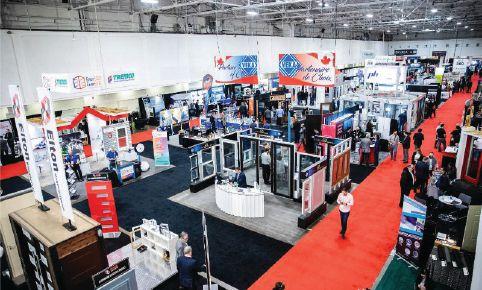
Fenestration Canada president Terry Adamson has announced that WinDoor 2020. which was scheduled to take place on Nov. 18 to 19 at Olympic Stadium in Montreal, will no longer be a face-to-face event. The announcement follows on the heels of a successful online Spring Conference with great turnout. It saw double the attendance and more. The decision to move WinDoor online was not made lightly. With Covid-19 expected to be a part of everyone’s lives for the forseeable future, it would be difficult to guarantee regular attendance and good return on investment for exhibitors. Replicating the success of the Spring Conference, FenCan expects more participation for the online WinDoor event, if not double the live tradeshow. Marketplace by WinDoor will be replacing the regular live event this year. With no travel costs, exhibitors will have the opportunity to redistribute the money they planned to spend for the live event. The funds could be used for promotional materials such as videos and brochures. FenCan shared the outline for Marketplace by WinDoor and the opportunities for sponsorship and promotion it has to offer. The landing page of Marketplace is the proposed entry-point for all attendees of the event. This page comes with the opportunity for sponsorships. Attendees will then move on to the “lobby” page of the online venue. This page will also allow exhibitors and sponsors to advertise and put up their promotional material. As with any live trade show, the online event platform will feature an “exhibit hall.” All exhibitor booths will be stationed here. Webinars and panel discussions will be hosted in the virtual rooms of the “hall.” Attendees can simply click on the booths of their choice and browse through. With no physical limitations on space, every exhibitor will have the opportunity to explore and exploit the platform to their greatest advantage. They can opt for live and/or pre-recorded sessions. The booths may be used to display brochures, video content and even for product showcases. Visitors will be able to connect to the exhibitors through live video
chats and live text chats. In case the exhibitor is not online during the event or the attendee wishes to connect at a later date, the booths will have email addresses and the option to book an appointment. FenCan has envisioned Marketplace as an ongoing opportunity instead of a weeklong event. The association expects heightened traffic during the week-long event in November. However, the online platform with the exhibitor booths will remain in place for a year. During this period, exhibitors can modify and add content as and when they choose to. To keep a continuous inflow to this platform, FenCan plans on hosting live events once or twice a month throughout the year. Booths can be customized to the exhibitors specifications. FenCan will help early adopters to not only build the booths but update them throughout the year as well. Exhibitors can also stay in touch with attendees in addition to their event presence with a social media takeover for promotions and interactions with FenCan members. Social events, trivia night and awards night will have the scope for additional sponsorships. FenCan plans on having further discussions with exhibitors who wish to have an even bigger presence at the event. Registrants at fenestrationcanada.ca will receive a link that will connect them to the event using freely available web-based software. Registration is open to FenCan members and non-members alike.
Heritage opens huge showroom
Owners James Baker and Shannon Ruffel welcomed London, Ont., to the grand opening of Heritage Renovation’s impressive 25,000-square-foot warehouse and showroom in late February. Housed in a completely renovated former Princess Auto warehouse on Exeter Road, the replacement window dealer now boasts one of the largest distribution and retail facilities in Ontario. It’s an upgrade from Heritage’s previous location, which was only 5,000 square feet. “We’re so excited,” Ruffel said. “People
can see things here they can’t see anywhere else. I think they are starving in this area to actually see the product. Looking in brochures is awesome of course, but being able to come in an see it and see people actually change their minds in front of you – say ‘Oh my goodness, I never thought it would look like that–that’s the game changer.”
“There are so many options now, especially with the doors, that people really need to be able to touch, feel see, rather than just look at the brochures,” Baker added.
Heritage Renovations owners James Baker and Shannon Ruffel believe that their new facility will allow them to offer superior customer service.
INDUSTRY NEWS
National Glass Association cancels GlassBuild America 2020
The National Glass Association announced that GlassBuild America, slated for Sept. 15 to 17, 2020, in Las Vegas, has been cancelled. The event will return in 2021, Sept. 13 to 15 in Atlanta. Nevada currently prohibits public gatherings of more than 50 individuals in any indoor or outdoor areas. The Las Vegas Convention and Visitors Authority does not anticipate that this limitation will be increased in a manner to allow large groups to gather in exhibit halls and meeting rooms in time for NGA’s September event.
“We are deeply disappointed by the COVID-19 impact on our trade show,” said NGA president and CEO, Nicole Harris. “This loss will not only be felt by the buyers and sellers who look forward to coming together each year to do business at GlassBuild but has a significant financial impact on NGA – a nonprofit trade association.
“GlassBuild America funds everything NGA does
Sharma joins Everlast west team
on behalf of the glass, glazing and fenestration industry,” continued Harris. “It’s what enables NGA to advocate for building codes and legislation; educate our industry and stakeholders; and promote glass and fenestration to all. NGA’s board of directors remains committed to our mission, purpose and vision as we pivot resources to ensure we continue to protect, preserve and grow our industry and our member companies.”
In anticipation of this outcome, NGA has worked behind the scenes to produce an online marketplace called GlassBuild Connect: The Glass and Fenestration Online Experience. GlassBuild Connect will showcase exhibitors’ products and services for buyers and prospects to explore online during the entire month of September. Online attendees will also have access to educational events; economic and trends forecast presentations; product demonstrations; and other informative programming.
The Everlast Group of Companies announced a new sales partnership with Ron Sharma who has stepped in to help grow its business in the Calgary area. Sharma, an experienced window and door professional, spent nearly 15 years at Gienow and Ply Gem prior to taking up an ownership stake in Lift Renovations–a successful exteriors
installation company with operations across Alberta. The Everlast team notes that Sharma’s expertise will help bring Everlast’s product lines to the market in Calgary. A dedicated and detail-oriented sales professional, he will be on the lookout for new opportunities among the Calgary building community.
FGIA releases 2019/2020 market studies
The Fenestration and Glazing Industry Alliance has released its study of the U.S. market for windows, doors and skylights. This bi-annual report delivers timely information on residential and non-residential market trends and product relationships for both residential and non-residential fenestration products. Forecasts are based on projections of construction activity as of May 2020.
Total housing starts continued their growth curve in 2019 but with more modest gains in the single-family segment of one percent. Going forward, the overall new housing market is expected to continue to contract in 2020 due to the COVID-19 crisis, with a total decline of 16 percent currently forecasted for 2020. Speaking specifically to residential fenestration, the demand for prime windows fell by 1.1 percent in 2019. The demand for windows in new housing decreased by just under two percent in 2019, with a decrease of 10 percent forecasted for 2020 before a recovery with growth of eight and six
percent over the following two years. Meanwhile, remodeling and replacement window demand fell in 2019 by 0.5 percent and is expected to decline in 2020 by five percent, before a recovery with growth of two and four percent in 2021 and 2022. In the residential market, 2019 new construction demand for entry doors grew by 2.3 percent. Meanwhile, entry door remodeling and replacement demand, which continues to represent a significantly larger share of total demand, declined at 4.3 percent. The total market shrank by two percent versus 2018 and is expected to have a steep drop off in 2020 followed by strong growth in 2021 and 2022. In 2019, the market for residential-type skylights grew four percent in overall unit shipments compared to 2018 and saw an eight percent increase compared to 2017. The increase in 2019 was driven primarily by strong replacement and remodeling activity with new construction positive but growing at a slightly lower rate.
SAWDAC Newsletter
The impact of the coronavirus is being felt by all businesses throughout Canada and around the world. Businesses are navigating a broad range of issues that span from keeping their employees and customers safe, shoring-up cash and liquidity, adjusting operations and traversing complicated government support programs.
At SAWDAC, we have been working with Business Development Canada and some of our financial partners to help our members get answers to questions they have had on these programs and tough circumstances. We hosted several webinar sessions where our members could ask BDC for guidance to navigate these trying times. Many members sent personal notes of thanks for helping them with this process and we are glad to be able to help.
The economic impact of the COVID pandemic is expected to be worse than the 2008 financial crisis. This will require our members to take decisive actions immediately to protect themselves and staff, ensure business stability and improve financial security. Previous economic crises, however, have shown us that these effects will be felt for years to come and could lead to major changes in the construction business. How can our members prepare for and change to a post-
COVID world, and remain focused on the here and now at the same time?
Next to the immediate actions to safeguard dayto-day business operations, SAWDAC recommends members take into consideration various steps to prepare for and adjust to a post-COVID reality and strengthen their long-term competitiveness. Put emphasis on the longterm competitiveness of the company.
At SAWDAC, we have been thinking of the long-term success of our members and have been working to see an electoral promise come to fruition. In September 2019, the Justin Trudeau federal government pledged to make available interest-free loans of up to $40,000 (over a 10-year term) to help homeowners and landlords pay for retrofits that would make their homes more energy-
efficient, with the three main areas of focus being windows and doors, insulation and HVAC. The loans would be paid back over 10 years through Canadian Mortgage and Housing Corporationinsured mortgage, a bank loan or in partnership with a utility company through savings on monthly bills. We want to see this happen as it would be a real boost for our industry.
We conducted a small survey at the start of June, two weeks after construction was allowed to start again. Ninety four percent of respondents said they are open for business. We also asked whether their lead levels were the same as 2019 and what was holding their business back? The responses are displayed in the charts here.
Some great takeaways from these answers and we always hear from members asking
about installers, we are working on something to help with this through a couple of local colleges. More to come about this in the next issue or give us a call at the office to discuss. As always thanks for reading this and check out our social media for updates on the industry
PETITIONING THE PM
Earlier this year, SAWDAC petitioned the federal government to follow through with its promise to launch a $40,000 interest-free home improvement loan program to make homes more energyefficient.
Addressed to Prime Minister Justin Trudeau, the petition letter discussed how the program could be budget positive. Nearly 1.5 million Canadians work in the construction industry. This program can create jobs and help avoid another recession.
WHAT WE DID IN THE PANDEMIC
Industry experts discuss challenges and strategies.
Never before have Canadian companies across all sectors had to face the challenges of a pandemic like they do today. Companies have been forced to lay off employees in numbers that this generation and previous generations have never experienced before.
by ANDREW SNOOK
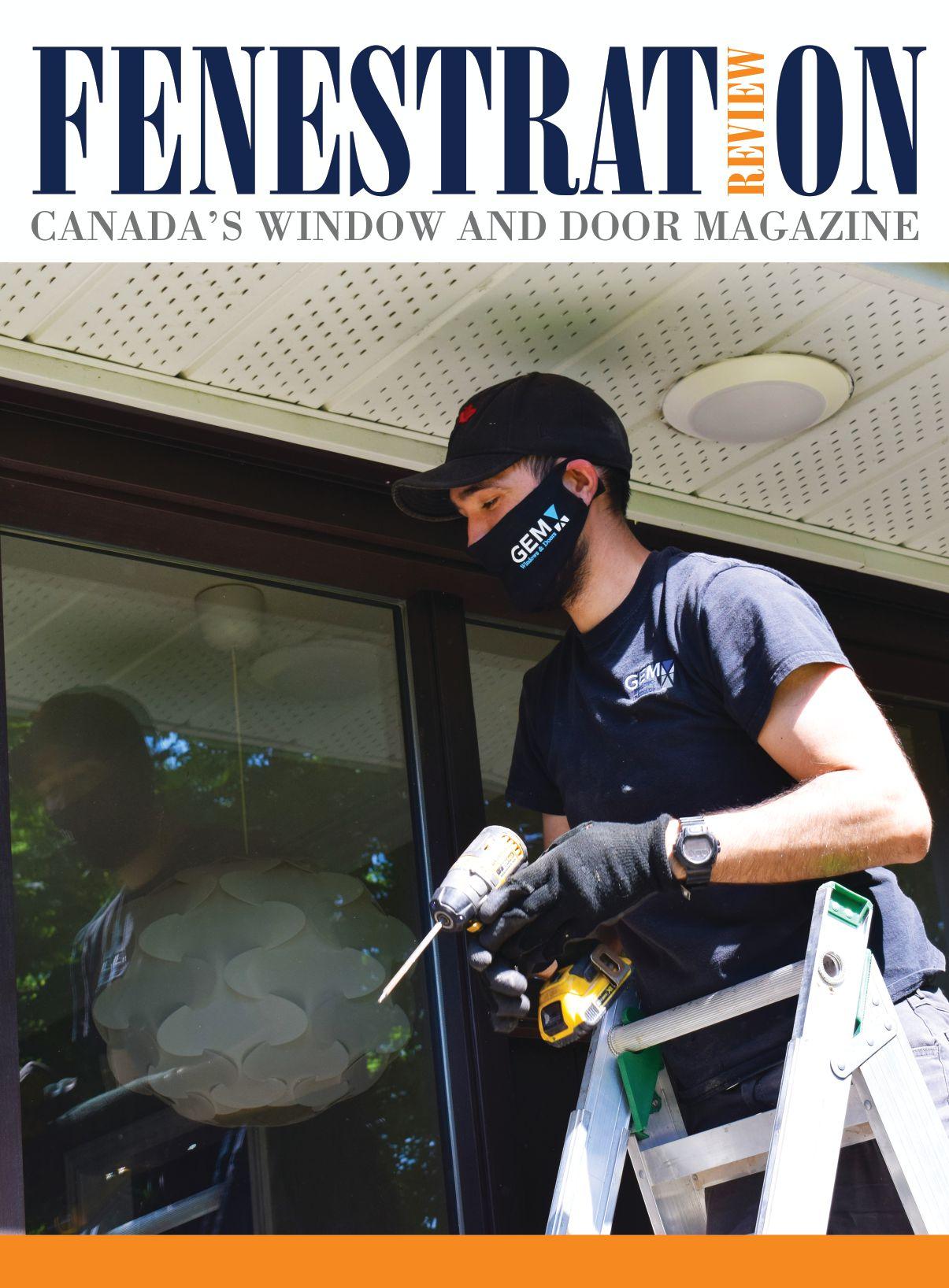
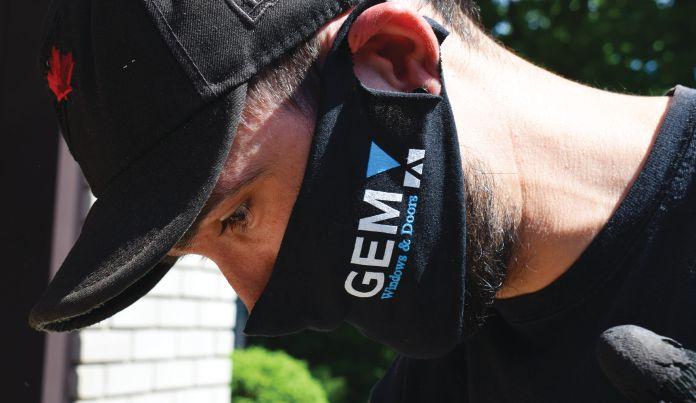
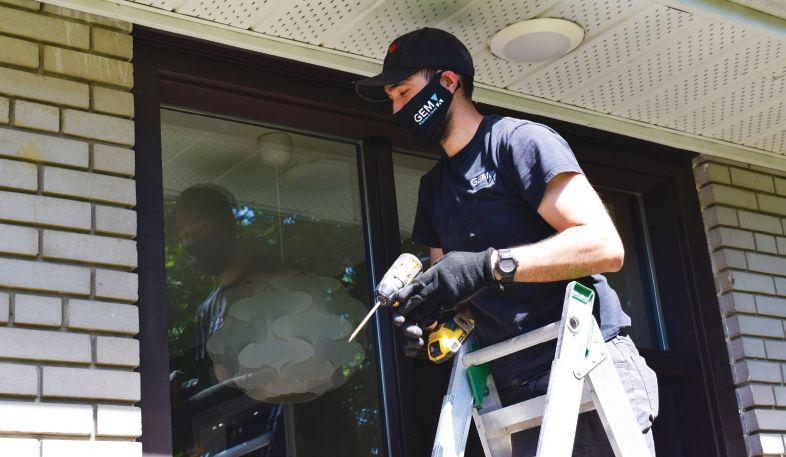
All Gem Windows and Doors installers visit jobsites equipped with all the necessary PPE gear. Getting PPE that fits right was an early challenge.
Businesses are expected to go bankrupt at an unprecedented rate. This time in history is certainly going to go down as one of the toughest the Canadian industry has seen in its young history, and the fenestration market is not exempt from these challenges.
Operating within the pandemic, for those that have been allowed to operate, has been extremely challenging for a variety of reasons. One of the biggest issues that have come up regularly in almost every industry is major disruption within the supply chains – thanks largely to the globalization of the supply chain and the closed borders that the pandemic has created.
In the fenestration market, companies like Heritage Renovations in London, Ont., have been trying to keep ahead of any potential shortages by taking advantage of its significant warehouse footprint.
“We pulled together to expedite our orders with manufacturers and secure extra deliveries. We really pushed and leveraged our strong relationships with manufacturing to get as much product made and delivered as much as possible so that we can be self-sufficient and not reliant on future deliveries to continue our operations,” explains Shannon Ruffell, vicepresident of Heritage Renovations. “We are preparing for anything and everything as an outbreak could occur with a supplier and interfere with our product pipeline. Since we have a 25,000-square-foot facility, we have the flexibility to stockpile as much product as possible
in case there is a second wave.”
In addition to planning for potential supply chain disruptions, Heritage Renovations has also been focused on making sure management has clear communications with its team to make sure new safety protocols are understood and followed.
James Baker, vice-president at Heritage Renovations, says the company is working with its clients to ensure they understand and feel comfortable with the new processes, and with business partners and manufacturers to make sure the company can, “effectively coordinate, communicate and work toward the same successful result as prior to COVID-19.”
Strong crisis management was key for the Screenco Group of Companies.
“There was a lot of uncertainty. Could we work? Could my plant staff work? Could they not work?” says Jennifer Small, president and CEO of Screenco. “We were lucky that new construction was deemed an essential service.”
The company has plants in Alberta, Ontario, Quebec, and Wisconsin in the U.S., so it had to navigate each jurisdiction’s different rules and orders.
“Managing that was a bit of a challenge,” Small says. “We were able to operate everywhere except in Quebec. Quebec was shut down and we were forced to close our plants for a few weeks, and then we had to sort of petition the Quebec government to say, ‘Hey, we’ve got new construction customers in Ontario that are expecting products and you’re not letting us make their products,’ so we did get permission to reopen earlier than the Quebec government deemed construction an essential service.”
To make sure some of those customers in Ontario continued to be serviced when Quebec shut down operations across the province, the company responded by moving equipment to its active plant in Concord, Ont.
“When we had five days of notice that Quebec was getting shut down, we made the decision to bring one of our patio screen lines to Toronto, so we could continue to service some of our Ontario customers,” Small says. “So, we literally organized the movement of material and equipment in 48 hours. We got the notice on Friday night and we moved everything on Monday.”
After getting the manufacturing side of things sorted out, the company focused on immediate communication with its internal staff and teams, setting up safety guidelines and protocols, and staying on top of them.
Laura Weil of Euro Vinyl Windows and Doors says trying to decipher whether her company was considered an essential service was a big challenge. The other big hurdle is the absolute uncertainty on the timeline of the shutdown.
“We’re a dealer-based business. Once showrooms were shut down and people were going home and closing their doors, and the dealers didn’t have a showroom and couldn’t go into a home, they were definitely closed. At that point, we closed down for a few weeks and the big part was the uncertainty.
How long is this going to happen? Can we weather it? What kind of resources are going to be available?” Weil says.
The company ended up shutting down in mid-March then re-opening in early April with a scaling down of the number of people at the shop.
“But as we started to get busy again, and we were seeing more orders coming through, getting everybody back has been a challenge,” Weil says. “A lot of people that work in our shop live with large families – younger kids, older parents – and they just don’t want to put people at risk. We’ve given some incentives. We’ve given gift cards, we’ve got people to carpool. We’re trying to make it as comfortable and convenient to get people in as safely as we can.”
Gem Windows and Doors in
For Laura Weil of Euro Vinyl Windows, the uncertainty on the timeline of the shutdown was a big challenge.
Etobicoke, Ont. was never completely shut down from operating and didn’t want to lay off its staff, so management looked for ways to keep everyone busy.
“We kept 90 percent of our staff through this, and it wasn’t forced. We did what we could to keep our employees safe and employed by choice,” says Vito Ferrone from Gem Windows and Doors. “We found that all of our employees were happy to continue working. One of the things we decided to do to keep them working was that we renovated and updated our showroom. We made good use of the time we had. We did a lot of research on new products, local products. We also upgraded our knowledge and skillset during this pandemic to come back stronger to provide better solutions and better offerings to our customers.”
PROTECTING STAFF AND CLIENTS
The protection of employees is obviously a top priority for the majority of companies across the country. Businesses have had to be extremely agile to adapt to constantly changing regulations related to occupational health and safety requirements.
Heritage Renovations went to great lengths to ensure the protection of its staff and clients.
“We are practicing social distancing and employees that can work from home are doing so without coming into the facility,” Ruffell says.
“We have staggered interactions between our administrative and operational resources, as well as modified our high frequency delivery schedules, to ensure we are limiting person to person contact as much as possible,” Baker adds.
Heritage Renovations employees are all wearing personal protective equipment in client-facing positions, when receiving deliveries, or when in-house staff interact with out-of-house staff.
“We will continue to do this until it is safe to return to regular practices,” says Baker. “At our installation sites we limit one team member to the inside of the home, and the point of contact for the customer during installation.”
Heritage Renovations’ showroom is by appointment only with only one person permitted inside at a time with employees wearing masks and gloves.
“We continue to act with an abundance of caution to ensure that social distancing is maintained and extra cleaning and PPE protocols are in place,” Baker says. “We continue to navigate the optimal way to best serve our clients while maximizing the health and safety aspects of our operations.”
The company has also adopted a new system for handling
Businesses have put additional cleaning and PPE protocols in place to keep operating safely during the pandemic.
paperwork that is nearly paperless.
“We are doing electronic sign-offs and e-transfers as much as possible,” Ruffell says. “This is something we intend to continue after the pandemic.”
Gem Windows and Doors had existing installations on the books, as well as emergency replacements that came in. So, the company made sure that all of its installers came equipped to a jobsite with all the necessary PPE gear.
“It’s becoming a little bit more difficult, but we are operating,” Ferrone says. “Our installation and service department employees have been given kits and strict instructions in
writing. They’re reminded every time they leave our premises to go onto a job, about social distancing, wearing masks and wearing gloves. We advise our clients that they have hand sanitizer, sanitation wipes –they are all there in the kits that each of them has. Our clients are very appreciative because once the installation is complete, our employees wipe everything down with sanitizer cloths. When they leave the customer’s home, everything has been sanitized as if it just came off the assembly line.”
ASSOCIATION ASSISTANCE
Fenestration Canada has been very active since the World Health Organization (WHO) declared COVID-19 a global pandemic.
“The first thing we did was make sure awareness was really high. We invested in seminars and webinars. A bit of education to make sure everyone was following the social distancing rules. Then after that we decided to provide services,” says Stéphane Labelle, executive director at Fenestration Canada.
With news of the virus flooding websites and televisions with information (and disinformation) related to COVID19, Fenestration Canada decided to take up the role of filter for its members.
“There were tons of websites, news stations telling you what to do, what not to do, so we created a COVID-19 hub where we gathered every piece of news we could find that was relevant,” Labelle says, adding that the hub drew several thousand visitors a day.
In addition to creating the news hub, the association actively pursued additional information from the various levels of government across the country.
“We also participated in a lot of discussions with different levels of government,” Labelle says, adding it was necessary since the rules for businesses changed from province to province. “Ontario had shut down, while other provinces didn’t shut everything down.”
During this time, Fenestration Canada put together a guide offering best practices for working in a pandemic.
“We just used the pandemic to provide more education, so every day there was new content, mostly about the technical side of the industry,” Labelle says.
The association also cancelled its
A HELPING HAND… SANITIZER
When the pandemic first hit Canada, one of the biggest supply chain disruptions felt throughout all industries was related to getting proper PPE, hand sanitizer and other sanitation products. Many frontline workers were left with an increased risk of contracting COVID-19 due to shortages of PPE, but some companies responded by stepping up and producing their own versions of these much-needed products. One of those companies was Adfast in Montreal.
The company, which specializes in assembly, sealing, insulation and protection solutions, began producing its own hand sanitizer line – AdClean Sprayable Disinfectant – to help address shortages across the country and restore the market to fairer and lower prices.
The company has helped eliminate the shortage of hydroalcoholic disinfectants in Canada with its production of 32,000 litres per day. The sanitizer is a medicalgrade disinfectant created according to World Health Organization recommendations and Health Canada specifications.
To turn this idea into a reality, the company had to modify some of its mixers, but the bigger challenge was the timeline for certain orders.
“In April, we needed to sell 104,000 bottles to hospitals,” says Yves Dandurand, CEO of Adfast. “Everything was easy to do, but the time frame was the difficult part. Because we basically did something in a month and a half that would normally take two to three months. We needed to be creative, we needed to put more people in place, but we succeeded.”
Adfast also got involved in the production of face shields – AdShield protective face shields. These products were more difficult to produce due to raw material shortages.
“Every component being used to do a face shield was in a shortage, so we had to manufacture everything,” Dandurand says, adding that he was blown away by the energy and commitment of his employees to help do their part to battle the pandemic and help protect frontline workers. “The extent that people are willing to give themselves to fight the cause was amazing… when a group of people start to work together and believe in a cause, incredible things happen.”
annual spring conference this year and moved it to an online conference for a full week.
“I was really surprised because we had more or similar attendance than at an in-person one, so that’s pretty good,” Labelle says. “We would have preferred to see everyone in person, but that’s the next best thing.”
LESSONS LEARNED
Without a doubt, most companies that make it through the pandemic will be much wiser when the next emergency comes around. But what have members of the fenestration industry learned?
“The experience has truly highlighted how dedicated our team is,” Ruffell says. “Our strategy was to make the business as strong as possible coming out of this and create the best possible situation for our employees and clients. We demonstrated a flexible approach and we were quick to react to the ever-evolving situation. Our aggressiveness throughout the
pandemic resulted in the need to hire several additional team members to support our clients. We have learned that anything is possible and that the ability to strategize and act quickly is a key factor in success in any crisis.”
“In these quickly changing times business and leadership have to be ready, willing, and able to act not only quickly but effectively to ensure success,” Baker adds. “We at Heritage Renovations are prepared and focused on the current challenges, but also navigating the road ahead to ensure we can properly satisfy the needs of our team, our clients, and our community.”
For more news, podcasts and other great content from the fenestration industry, please visit fenestrationreview.com
FIT & FINISH
Lean on me
by Chris Meiorin
“Lean on me, when you’re not strong And I’ll be your friend I’ll help you carry on”
Involuntary Musical Imagery is a song that continually repeats through a person’s mind, and although the Bill Withers 1972 classic is almost 50 years old, never before has a song been so relevant.
I knew, in sitting down to write this column, that it would have to be about the pandemic we have all come to know as COVID-19 – and quite frankly I was dreading it. We have all been inundated with the news stories. The case counts. The toll on the economy. The deaths. The uncertainty of it all. And with that, I could not bear to push before you yet another piece about how this pandemic, like the virus itself, spread through our industry and our personal lives. We have all suffered through this. Financially, emotionally and, for some, physically. We all know someone who
“I started by asking industry peers about their plans and shared resources with them.”
knew someone that this pandemic took the ultimate toll on, and there is no silver lining to any of it. Yet, I feel compelled, at some level, to write what good may have come from all of this.
Late in March, we were forced to temporarily shutter our business. It came with little notice and the planning for it took place over a threehour meeting in the foyer of our office. The next day, we were closed and that’s when the grave severity of this situation began to set in. The staff were scared. Our customers were uncertain, and suddenly the only thing that really mattered was keeping our families safe. As a business owner, I knew I had to lead, but unsure what I was leading into. I was scared and worried and beat
myself up every day for feeling this as I was certain I was the only one feeling this emotion. But slowly, I began to realize we were all scared, worried and concerned for the health and wellbeing of those we love and care for.
Like the lyrics to the song suggest, “If you need a friend – call me,” I did just that. It started with some industry peers I was comfortable with. I asked about their plans and shared resources. We spoke about the potential impact that the pandemic might have on our respective businesses and the industry as a whole. We listened to the daily news briefings and called each other to discuss and better understand what it all meant. We spoke of the incentives available to our businesses and those we employ. We spoke about how long all of this might last and how long our businesses would last in this environment. Yet, with all of this talk, I did not dare to ask the question “are you scared?” This leap of faith came almost two weeks into the shutdown phase. I didn’t even know how to ask the question as I was sure I would be laughed at – maybe even mocked – but I had to know if I was the only one struggling with the uncertainty. I may have even practiced how to ask the question so that I could redeem myself should my confidant have all their ducks in a row. Finally, I asked the question, I had to know, “are you scared?” and the answer allowed me to move forward with some reassurance, “Dude, I’m fucking terrified.”
I didn’t ask this question often but it allowed me to reach out to other industry peers with a certain level of confidence, many of whom I have known of for many years but really had no reason to ever reach out. Interestingly enough, even direct competitors seemed as appreciative of the call as I was for the opportunity. I shared information that I might typically guard and was surprised by the level of information that was shared in return. In short, I had what seemed an entire industry to lean on, and for that, I shall remain grateful.
Chris Meiorin is president of EuroVinyl Windows and Doors in Woodbridge, Ont.
Weathering stormy times
York Aluminum discusses keys to its 50-plus years of success
These are the things that have allowed York Aluminum Storms (York Aluminum) to grow from its humble beginnings in 1969 as a 2,000-squarefoot shop in Etobicoke, Ont., to a 35,000-square-foot manufacturing facility that has been building custom and standard-sized aluminum storm doors, screen doors, porch enclosures, entrance enclosures and storm windows for more than 50 years.
Building relationships has been key to the success of the business. Just ask Ed Weidner, owner of York Aluminum.
“From small beginnings to 50 years of success, it’s been about customer service, relationships, honesty and quality,” he says. “It’s hand-inhand with how we are today.”
The family-owned and -operated business was started by Ernie Weidner, Ed’s father, who initially started up a window and door business with his brother a few years earlier before venturing off on his own in 1969.
“In the early years, he worked a lot. He worked hard to keep it growing and growing,” Ed recalls. “As time went on and he grew, he hired more and more people.”
Ed says putting in those long days is a key to building any business, especially during the first few years of operation.
“You have to put the time in if you want to be successful,” he says. “There’s not too many people I know who got filthy rich sitting on their duff working two hours a day.”
Ed followed in his father’s footsteps, joining the company in 1982. He started out working in the assembly plant, learning the manufacturing process for a few years before moving into the office in a sales role as the company expanded.
“It wasn’t leaps and bounds, it was slow and steady, and that’s how we grew,” Ed explains. “And that’s my business philosophy – slow and steady.”
In the early years, York Aluminum’s growth stemmed from word of mouth from satisfied customers, which was largely comprised of contractors.
“For years we never had a salesperson on the road,” Ed says. “Customer service is key. Quality is key. You tell a guy something is going to be ready on Friday, you make sure it’s ready on Friday.”
Things changed and business picked up dramatically when the company signed on with a national distributor.
“That was quite a big leap, which gave us access nationwide,” Ed says.
MANAGING COVID-19
During its busy season, York Aluminum typically employs about 40 people. But due to the current pandemic and Ontario’s non-essential businesses being shut down for months, the company wasn’t working at full capacity as of early June.
“Right now, we’re still on our winter schedule which is skewed to the pandemic. It is because we have to be careful and we have to be mindful of that,” Ed says. “We should have everyone back and we don’t. Window and door people are just starting back up.”
That said, there has still been enough work to keep the winter staff busy in alternating shifts.
“We cut and punch one day and assemble the next day, so we don’t have too many in the plant at one time,” Ed explains. “Eventually we do have to get back to everyone here.”
Thankfully, outside of Ontario some of York Aluminum’s customers have been operating business as usual. Particularly, its customers in Atlantic Canada.
“The guys out east are busy,” Ed says. “New Brunswick hardly had any cases to begin with, so it’s pretty much back to normal. They can go out for dinner and a beer, but they have to social distance.”
OVERCOMING HURDLES
When a company operates for
“From small beginnings to 50 years of success, it’s been about customer service, relationships, honesty and quality. It’s hand-inhand with how we are today.”
more than half a century, it deals with its fair share of obstacles to overcome. For York Aluminum, finding the right people is always a challenge.
Up until the late 90s, the company was being run by Ernie, Ed and his sister Marnie. But when Ernie fell ill, Ed’s leadership role changed dramatically.
“That’s when I sat my rear end on the big desk and took over the reins, and that was a challenge,” Ed recalls, adding that not having his father’s wealth of knowledge there on a daily basis made transitioning into the role more difficult. “Then it was a matter of getting people. Finding a good plant manager, good office people.”
Fortunately for York Aluminum, it has had several long-term employees over the years.
“We still have one employee that started with my dad in the early 70s. I have maybe a half-dozen guys that have been here for 20 years,” Ed says, adding that relationships between employers and employees can’t be one-sided. “You want them to want to come here. It’s getting harder to get young people into these industries. We really have to focus on turnover – not that I’m kicking anybody out, but they’re going to retire eventually.”
Changes in the supply chain have been another major hurdle to overcome for York Aluminum.
“It’s a lot harder for the small guy,” Ed
says, adding that you can’t just go out and buy 100 hardware kits anymore due to price constraints for smaller orders.
He says that overseas suppliers have significantly affected the local market.
“Locally, flexibility is always greater. But there’s a cost to that,” Ed says, adding that York Aluminum typically buys based on its recent manufacturing history, but one big order can always throw a wrench into things, especially when you’re not buying parts locally.
PEOPLE PERSON
When asked what his favourite part of running the business has been over the years, Ed says its all the social aspects of operation.
“I’m a people person. When we weren’t the size we are, I did everything – sales, production. I miss sitting at the front desk dealing with guys, solving problems, looking at drawings – the social aspects. I still have it in a different way, but the day-to-day stuff, I kind of miss that,” he says.
The company supplies a wide array of contractors and window and door distributors, big and small. But when it comes to working with customers, Ed especially misses helping out small companies.
“I miss dealing with the little guy. Sitting down, solving a project with the little guy. That was a lot of our growth over the years. To me, a customer is a customer,” Ed says.
that’s key,” Ed says. “I’m excited to have York Aluminum keep going as a family business.”
After Ernie recovered from an illness, he stepped back from his leadership role in the business and worked shorter hours looking after inventory and other aspects well into his 70s. Ed would like to have a similar transition one day.
“In a perfect world, that’s what I’m going to do,” he says. “Maybe I’ll golf twice a week, which I always say I want to. That’s sort of the plan. In a perfect world, I’ll have a place to go to when I’m 65 or 70 years old. It gives me something to do. I’ll be able to share my knowledge with my son from over the years.”
What does Kurtis think of Ed’s plan to stick around part-time and share his knowledge of the industry?
“I’ll need it,” he says.
Ed, Marnie, Ernie and Kurtis have all been a part of York Aluminum’s succesful business operations.
THE COMMDOOR FOLDING DOOR SYSTEMS
THE NEW 1782 SERIES IS COMING SOON
REIMAGINE THE POSSIBILITIES: NEW HEIGHTS AND HIGHER ELEVATIONS
Designed for spectacular year-round enjoyment. Connect your outdoor oasis with the indoors: private residences, restaurants, cottages, patios, event centres, entertainment complexes and, now, multi-storey condominium residences. We are proud to announce that the new 1782 Series is coming soon. Experience the full potential of your space.
COMMDOORALUMINUM.COM
Letting Everyone in
Demand for doors allowing disabled access is growing. Here’s what you need to know.
By Treena Hein
With our population aging and people living longer, demand for accessible doors in personal residences (doors which are at least 38 inches wide) is growing in Canada. Larger doors, at least in entryways, along with easyto-use lever handle hardware are also in demand for other reasons. Before we delve into that, let’s take a quick big-picture look at accessibility across the country.
On the commercial and institutional building front, only three provinces so far – Ontario, Manitoba and Nova Scotia–have passed accessibility legislation. Public consultations on similar legislation have begun in at least one other, Newfoundland and Labrador. To speed things along and also create consistency, Canada’s disabled community (which in 2017 was found by Statistics Canada to be 22 percent of those 15 years and over, about 6.2 million) has called for comprehensive federal oversight. While the present federal government did pass the Accessible Canada Act a few years ago, it has been sharply criticized as it only applies to federal government agencies and organizations within federal purview, such as the military and banks.
In the residential sphere, while demand is growing for larger doors, people with disabilities are more at risk for poverty, and this affects their financial ability to renovate their homes. Recognizing that many disabled people rent and do not own their homes, Statistics Canada has found that of the 1.5 million disabled Canadians at least 15 years old who have an unmet need for a support such as a widened doorway for whatever reason, two-thirds have that unmet need because of the cost. And while there are various provincial and federal tax credits that apply to home accessibility modifications, some can only be claimed by those of senior age.
residences.
DEMAND GROWING
At companies such as SRS Windows and Doors in Thunder Bay Ont., installation of doors for physically challenged people is quite frequent these days, and “more commonplace than one might think,” notes CEO Tamara Sheedy. Although residential requests haven’t increased a huge amount for SRS over the last five to 10 years, commercial demand has gone up quite a bit due to the changes in the Ontario Building Code stemming from the passing of the Accessibility for Ontarians with Disabilities Act (AODA) a few years ago. At the time it was passed, the Act was touted as one of the first pieces of legislation in the world that established a timeframe for greater accessibility.
This experience is echoed at PM Windows and Doors in Kitchener, Ont. Co-owner Paul Censner says their extent of accessible door business these days is “huge” compared to 20 years ago and has stayed at a steady high level since AODA was
In recent years, installers are seeing a growing demand for accessible doors at
Sheedy firmly believes that lever-style handles should be mandatory on accessible residential doors and in general on all doors as they are easier to manipulate.
introduced. Censner adds that it’s becoming more common for new houses to be built as accessible, and as part of that trend, there is also interest in using sliding doors in interior doorways instead of swinging doors. They save “quite a bit of room,” he says, and are easier to open for people who use wheelchairs, walkers, canes and so on.
“We also sell a lot of lever-style handles in windows and doors these days,” Censner adds, and this is not only because they’re easier to use. “People [without disabilities] like them because they’re new and different,” he explains. “When people find out they have that option, they want it.”
Indeed, for her part, Sheedy firmly believes that lever-style handles should be mandatory on accessible residential doors and in general on all doors as they are easier to manipulate for children, elderly people and everyone else. And while she notes that most architects still design homes without having at least one exterior door accessible (officially in Ontario, 38 by 82 inches with a flat sill), she feels the OBC should require this.
“Although you may not need it now, if you put it in when building the house, it will cost you only a couple of hundred dollars more on average than potentially thousands if you have to replace the door and the structure around it later on,” she explains. “For instance, if anything happens to you and you need a wheelchair or walker, or someone in a wheelchair comes to visit or live with you. Having that enhanced entrance also makes it easier on our essential services to get you out if you’re ever in distress.”
Demand for even larger entrance doors – 42 inches wide – has gone up a great deal in the last five years and continues to increase, at least at TruBilt Door Systems in Woodbridge Ont., although not for reasons of accessibility.
“It’s a look people want,” says sales manager Carlo Ianni. He says. “About two years ago we started expanding our line of 42-inch doors and there will be a further expansion in our new catalogue this year.”
Colours like dark red (Iron Ore), dark brown (Expresso) and black are most popular, along with more contemporary windows. These doors can be installed, Ianni notes, by removing one of the entryway side panels and using normal hinges.
INSTALLATION
In retrofitting an existing doorway with an accessible door in Ontario (in compliance with AODA), Sheedy notes that if you do not have the room to increase the overall slab width to a 38-by-82, then swing-clear hinges or accessibility offset hinges will be required “to get that door to sit on the frame when open to gain that all-important two inches of space.” She adds, “Regardless, whichever way you do it, make sure the door swings clear of the opening 100 percent and you check with your local bylaws to make sure of what is allowed in your area. There should not be much difference among municipalities and it’s the OBC that matters, but still, check with your city’s building office.”
Ianni adds that in some installations, to keep the sill flat, sometimes the existing standard sill is kept and lowered so that it sits at floor level, rather than having an ‘accessible’ sill put in place. This is done, he says, to better prevent water infiltration.
RETROFITS GONE WRONG
The situation of replacing a standard-sized door with a larger one to make a home more accessible is one that can unfortunately involve people who aren’t qualified. Sheedy believes that to circumvent the risks associated with these situations–and mistakes that might occur in the installation of any window or door by untrained individuals–installation of windows and doors should be regulated. Censner agrees that in his area of the province, there are still a few fly-by-night operations that install accessible doors and other items improperly and sometimes PM Windows and Doors is called on to fix their mistakes.
This means, says Sheedy, that all window and door installers should be required to go through a rigorous skilled trades certification program specific to the fenestration industry. “They will gain valuable education about the building code and AODA compliance,” she says, as well as proper installation techniques. To ensure accessible doors (and any door or window) are installed properly into a home, Sheedy encourages homeowners to make sure they hire reputable contractors who are SAWDAC members, to get several quotes and make sure to get references. “Go visit locations to actually see their work before allowing them to alter your most expensive possession,” she says.
FENESTRATION CANADA
To a brighter future
by Terry Adamson, Fenestration Canada president
Ithink it’s fair to say none of us thought 2020 would look like this. If you’re at all like me you’ve had your fill, so I’m not going to mention it. Business for Fenestration Canada has had to morph in order to continue to provide value to our members. To say that I am pleased with our year so far is an understatement. Our staff and our volunteers have gone above and beyond when it comes to thinking outside the box.
Personally, for me, as I already work from my home there has not been significant modifications to my daily routine. Actually, I have experienced an increase in the connections with my staff and with all those involved with FenCan. With many more working from home and spending more time at their desks, and the explosion of online meetings, the ability to connect quickly and easily has improved administrative productivity. I will likely experience increased frustration as people get back to whatever normal we will see, and it will be
“We remain strong financially; we can weather this storm.”
more difficult to reach and connect quickly. I think we all look forward to that time.
Like so many others we have had to cancel and re-arrange our events. We have increased our online presence and activities. Our weekly Tech Talks with Al Jaugelis and Stephane Labelle has experienced a growing audience, and fantastic participation. We plan to continue this for the foreseeable future, and plan to add many new and worthy topics. As always, if you have a request for a topic, send it along to Steph or Al. Stephane and Laine are also working on new online events and guests to add to our virtual catalogue.
When we realized there was not going to be any possibility of holding our Spring Conference
and AGM, booked for Charlottetown, P.E.I., in June, there were a lot of sad faces online. That did not last long, as our events committee and others realized we could get creative and hold the event anyway, online. Truth be told we all were a little worried. Could we pull it together quickly? Would people “attend”? Would it be of the quality we know our members deserve? Wow, as the event came together, we all were feeling like we had something to be proud of. The lineup, and participation from members, speakers and of course our great sponsors came together what apparently seamlessly. Education sessions had attendance that we were thrilled with, as well as fantastic interactive participation. The suppliers showcase had great products and speakers, with lots of attendance and great questions. And as we wrapped it up with the online trivia contest won by Adam Hess of Van isle Windows, we all breathed a sigh of relief knowing we had pulled off an event that our members valued. It went so well we are planning to enhance other in-person events with an online presence for the future.
We delivered our AGM to a well-attended group of members. Al Doyle provided a review of our financials and budget information. We remain strong financially and are confident we can weather this storm, and look forward to several initiatives while keeping costs in check. With the current situation it was decided to keep the current board in place for another year. We felt the stability that provides during this time was a good move. The board remains in place as is until the June 2021 Spring Conference in Kelowna, B.C. Thanks to all the board members for their commitment. And don’t worry, we plan to get to PEI for 2022.
So many challenges and so many new difficulties our industry is facing at this time. It’s early June and there is a lot of optimism for getting back to regular business soon. My hope for the industry is your business gets through this very difficult time with as little pain as possible. And whatever follows brings more stability and we all prosper. Remember we are only here for a short time. Be kind to one another.
by Jason Seals, FGIA certification services manager, fenestration
Field testing for quality control
Many associate the practice of field testing with commercial projects such as mid-rise and high-rise buildings. However, field testing of single and multifamily residential buildings is just as important. AAMA 502, Voluntary Specification for Field Testing of Newly Installed Fenestration Products, helps to evaluate newly installed fenestration products. These products are designed to fill punched openings, leaving the factory fully assembled, glazed and ready to install and are rated for performance per the North American Fenestration Standard A440.
Laboratory testing of these products to NAFS is performed under tightly controlled conditions rarely seen in the field. Products are installed into a perfectly square, level and plumb opening and tested for air leakage and water penetration as well as resistance to structural loading. Ratings generated from NAFS testing are used to help manufacturers, installers, and project specifiers provide fenestration products for residential projects that are suitable for the building and its intended use.
Testing a product for air leakage and resistance to water penetration in the field provides feedback about how installation, environmental factors and integration of the product into the building envelope can all affect its performance. This information offers essential feedback on the overall quality of the fenestration product as a component of the building envelope.
Pretest planning is an essential and often overlooked step when using AAMA 502 – a Fenestration and Glazing Industry Alliance document. (All AAMA standards fall under FGIA’s purview.) The number and types of products to be tested, milestones for when testing should occur, test pressures and pass/ fail criteria should be identified in the project specifications and communicated as soon as possible. For AAMA 502 to be used as an effective risk management tool, it is recommended that testing happen at regular intervals, typically at five percent, 50 percent and 90 percent of completion of installation. A minimum of three specimens are tested at each interval, and
testing should commence as soon as possible after the product is installed.
Selected specimens should be inspected by both the test agency and the manufacturer prior to testing to confirm that the product is plumb, level and square and operates correctly. Inspection also includes an examination of the exterior perimeter joint and surrounding wall materials. Test specimens should be clean and free from all construction debris.
Once suitable specimens have been selected, a test chamber is constructed. Typically, the test chamber is built on the interior of the building, but in some cases may be attached to the exterior. The field test agency then simulates wind loading by applying a differential pressure across the entire product, allowing for an evaluation of both the product’s and surrounding installation’s resistance to air leakage and water penetration at the specified test pressure.
The test most frequently specified is resistance to water penetration using the procedures found in ASTM E1105. The test area is observed for water penetration through the product, through the surrounding wall conditions and through the perimeter joint.
Air leakage testing per ASTM E783 can be useful when confirming that a product is properly installed and performing correctly. Typically, the allowable air leakage rate for field testing is one and a half times the laboratory standard for the product type.
Because of all the variables encountered on an active construction site, field testing of installed fenestration products can be incredibly complex. To ensure that these test results are accurate, AAMA 502 mandates that an AAMA-accredited field test agency must perform the test. In August 2017, the Field Test Agency Accreditation Program was created to validate independent field test agencies’ ability to test fenestration products in the field using AAMA performance standards. Agencies must pass periodic proficiency testing, undergo equipment inspections and use an approved quality management system to maintain their accreditation.
Material versus performance
by Phil Lewin
Many years ago I called fenestration guru Jeff Baker and asked him, “What is the technical definition of a warm edge spacer?” First, the context of this question was that we were at the dawn of the technologies that would ultimately displace the box aluminum spacer. Jeff chuckled as he explained to me that the term had been created by a spacer company to define and promote their products. But he did offer the following: “A warm edge spacer is one that is not aluminum.” Was he serious? I thought so at the time. The situation was that there was a new spacer in town and it was made of – you guessed it – silicone foam. So, the “not aluminum” did a pretty good job of differentiating the products on the market.
Idid begin to see specifications for projects that specified that they required a spacer to not be metal as a method of guaranteeing a warm edge spacer. As time passed, companies began to develop methods of making spacers with metal that had similar (not exact, I know) thermal properties as the non-metal spacer. In fact, it was argued that given that a spacer also provided structure to a sealed unit, overall one could argue (and many did) that they were better products. We’ll leave that fraught debate for another day.
I was providing marketing for a company with one of these, dare I say it, “warm edge, metal spacers.” By now the marketing of the non-metal product in Canada had been incredibly successful and offering a metal spacer was often met with a blank stare. It got to a point where we created a one-page piece based on the anthropological poster showing the evolution of man from an apelike creature through Neandertal and finally to Homo Sapien. We had a conversation between the Neanderthal and the Homo Sapien that went as follows:
Homo Sapien: “Have you heard about the new metal spacer?
Neandertal: “Metal bad!”
HS: “Why do you say that? It is virtually as warm edge as foam and has many other desirable properties.”
Neandertal: (Thinks deeply) “Metal bad!”
My Neandertal friend means well, but he has been caught up in an interesting specification problem that our friends who write standards are keenly aware of and go to great lengths to avoid. The problem is, material versus performance standards. Writing a specification that includes a passage that completely disallows a particular material such as metal can have a negative effect on research and development and progress. It discourages a researcher from developing a superior or equivalent product made of the banned material. After all, who wants to fight city hall (or in this case ornery specifiers). Standard writers go to great lengths to develop the specifications we need to follow based on performance. In my spacer example, a performance based standard would turn a blind eye to how a performance target is achieved and focus on the outcome. If it turns out that in 2046 a spacer made of hardened bubble gum achieves the required performance for a specific category, perhaps with superior results to other spacers, then, so be it, bubble gum it shall be! My little story is not simply a fable to be read to young, eager future fenestration industry participants to scare them before going to sleep. It can be a regular occurrence, as both manufacturers and installation companies will find examples of the issue in those often reproduced documents from would be customers. How many of you who deal with specifications have run into that little phrase, “or equivalent” only to have to move mountains to overcome resistance to an alternate material to the one embedded in the purchase documents? Everybody raise your hands if I’m writing about you!
Fenestration Canada’s new technical advisor, Al Jaugelis, is presently working on resolving a situation where inspectors are applying a material standard and the industry has a performance standard. Happily, I’m sure Al is up to the challenge. Welcome to Al in his new position.
Phil Lewin is now a semi-retired consultant who intends to continue his quest to point out when the emperors of the fenestration world are not wearing clothes.
One of Canada’s leading door manufacturers, Dorplex is the only door company in Canada that offers a Lifetime Warranty on all its products. Yes, that includes a lifetime warranty on paint.
Manufacturer of door lite frames, venting door lites, executive panels, door and window components and profile wrapping.
EURO VINYL WINDOWS & DOORS INC.
167 Caster Avenue, Unit 3
Woodbridge ON L7L 5V8
905-851-9711
info@evw.ca www.evw.ca
FENESTRATIO
159 King St. Suite 304
Peterborough ON K9J 2R8
705-743-4999
Toll-Free: 888-853-0011
info@fenestratio.com www.fenestratio.com
FENESTRATION COMPONENTS INTERNATIONAL
PO Box 1544
Okotoks AB T1S 1B5
403-938-1064
Toll-Free: 877-938-1064
info@fci-inc.ca www.fci-inc.ca
FENETECH INC.
260 Campus Dr. Aurora OH 44202
330-995-2830
info@fenetech.com www.fenetech.com
FENEWOOD LIMITED
380 Four Valley Road
Vaughan ON L4K 5Z1
905-669-5001
brian@fenewood.com www.fenewood.com
FENPLAST
160 Boulevard de l’Industrie Candiac QC J5R 1J3
514-990-0012
info@fenplast.com www.fenplast.com
FENTRO TECHNOLOGIES INC.
150 Grant St.
Morden MB R6M 1Y4
204-822-1405
info@fentro.com www.fentro.com
FERCO ARCHITECTURAL HARDWARE
2000, rue Berlier
Laval QC H7L 4S4
450-973-1437
Toll-Free: 800-355-8810
ferco@ferco.ca www.ferco.ca
FUSION GLASS WORKS INC.
50 Irondale Drive
Toronto ON M9L 1R8
416-739-7794
Toll-Free: 877-213-4855
office@fusion-glass.com fusion-glass.com
Fusion Glass Works Inc. is a proud Canadian producer of hand-crafted decorative glass and Wrought Iron Doorglass. The Fusion Glassworks team has worked tirelessly to create a wide range of iron arrangements featuring our unique Sandblast cutout technique that allows us to provide a myriad of gorgeous custom solutions. With over 25 years experience, Fusion is dedicated to giving our clients an entryway that makes a statement.
FUX MASCHINENBAU UND KUNSTSTOFFTECHNIK GMBH PO Box 3101
Elida OH 45807
540-550-4596
marco.patermann@gapser.com www.fux.at
GLOBAL ARCHITECTURAL PRODUCTS AND SERVICES LLC
PO Box 3101
Elida OH 45807
540-550-4596
marco.patermann@gapser.com www.gapser.com
GOLDEN WINDOWS LIMITED
888 Guelph Street
Kitchener ON N2H5Z6
519-579-3810
Toll-Free: 800-265-2290
sales@goldenwindows.com www.goldenwindows.com
INDUSTRYSUPPLIERS
GROVE SHIMS
P.O.Box 240
Leominster MA 01453
978-534-5188
Toll-Free: 1-800-Grove
sales@groveshims.com www.groveshims.com
Rugged, inexpensive, and convenient leveling and alignment aids for the glass and construction industry.
Grove Shims™, the leading producer of color-coded plastic shims, is a family-owned business founded in 1962 in the USA that began manufacturing shims in 1974. Depend on Grove Shims™ because the Braune family and our staff pay extra attention to the details so you can handle bigger problems without having to worry about your plastic shims. Since we only make shims, we have to be the best in the business and make sure your order gets shipped quickly and accurately.
HASEDA HOLDING LTD (AKFIX)
300 Bloor St. East,. Suite 2202
Toronto ON M4W 3Y2
416-624-5721
hakanonce@haseda,ca www.akfix.ca
HIGH PEFORMANCE GLAZING INC.
177 Drumlin Circle
Concord ON L4K 3E7
905-482-2144
info@hpglazing.com www.hpglazing.com
HOPPE NORTH AMERICA, INC.
205 E. Blackhawk Drive Fort Atkinson WI 53538
920-563-2626
Toll-Free: 888-485-4885
info.us@hoppe.com www.hoppe.com
IGP INTERNATIONAL GLASS PRODUCTS INC.
9150 Maurice-Duplessis Blvd
Montreal QC H1E 7C2
514-354-5277
Toll-Free: 866-448-5277
info@igpglass.com www.igpglass.com
KITS GLASS LTD.
#170 - 2800 Viking Way
Richmond BC V6V 1N5
604-231-0878
Toll-Free: 888-594-5277
LAURELWOOD WINDOWS & DOORS LTD.
1509 Snow Valley Road, R.R. #3
Minesing ON L9X-1K3
705-737-5315
info@laurelwoodwindows.ca laurelwoodwindows.ca
LITEZONE GLASS INC.
6203 Roper Road NW Edmonton AB T6B 3G6
587-597-5483
greg@litezone.ca www.litezone.ca
LiteZone® is a next generation, award winning, ultra energy efficient insulating glass unit which makes possible the world’s most energy efficient and longest lasting windows. LiteZone®also provides excellent sound insulation.
Manufacturer of industrial machinery since 1996 - for windows, entry doors, garage doors. PVC, fiberglass, light alloys, wood. We are known for our ability to adapt to your needs. A complete solution!