GROUP PUBLISHER | Danielle LABRIE dlabrie@annexbusinessmedia.com 226.931.0375
President/COO | Scott JAMIESON sjamieson@annexbusinessmedia.com
Publication Mail Agreement #40065710. RETURN UNDELIVERABLE CANADIAN ADDRESS TO CIRCULATION DEPARTMENT, P.O. 111 Gordon Baker Rd., Suite 400, Toronto, ON M2H 3R1
Printed in Canada, All rights reserved. Editorial material is copyrighted. Permission to reprint may be granted on request. ISSN 0843-7041
SUBSCRIPTION RATES
Canada - 1 Year $22.00 (plus applicable taxes)
U.S.A. - 1 Year $50.50 (in CDN dollars) Foreign – 1 Year $58.00 (in CDN dollars)
Occasionally, Fenestration Review will mail information on behalf of industry-related groups whose products and services we believe may be of interest to you. If you prefer not to receive this information, please contact our circulation department in any of the four ways listed above.
1214
www.fenestrationreview.com
4 EDITORIAL
Our content connects to things going on in our world.
12 THE WINDOW GEEK
To discover how standards affect business, ask how they affect specifiers. by Anton Van Dyk
Headaches from testing mulled products can be avoided. by Phil Lewin 8
7 SIDING AND WINDOW DEALERS ASSOCIATION OF CANADA
8 WINDOWS TO THE NORTH Making windows in Whitehorse is not like making windows anywhere else.
18 2023 FENESTRATION CANADA MEMBERS DIRECTORY
13 FENESTRATION AND GLAZING INDUSTRY ALLIANCE
14 ENFORCE IT
We check in across the country to see how (if?) window standards are being enforced.
26 PHILIBUSTER
17 FENESTRATION CANADA
Connecting dots
Your editor needs to get a life.
Afun game I like to play is to look through the content in the magazine and think about what it says about the state of the industry. I realize this would not be considered a fun game by most other people. Or any other people. I guess that’s why I’m the editor.
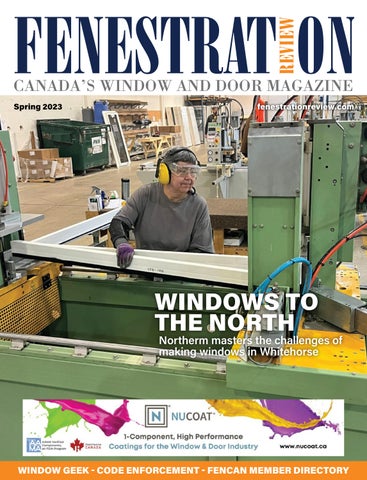
I couldn’t have been more thrilled to encounter Brian Wareham at Fenestra’s excellent Advantage event in Montreal and invite his company, Northerm Windows and Doors, to be our cover profile this spring. We’ve never profiled a fenestration manufacturer from the Far North before and it was on my bucket list to get someone from up there before I keel over dead on my keyboard (this is known as The Editor Retirement Plan). Well, mission accomplished. Carroll McCormick’s article is full of fascinating details about getting this business done in a place where you have to barge in your supplies and drive your product out over frozen lakes.
There’s two things about Northerm that connect to some broader industry topics. The first is that building highly insulating windows – a thing many southern companies don’t feel they can do – is old hat for them. They’ve been making quad-pane windows for decades. Interestingly, they also have to build windows that are more resilient in the heat because summer days in their market are 19 hours long. “Resilience” is something of a buzz word in the building engineering community right now, so we could probably all learn something from a company that has been shipping windows in the Arctic.
The other neat thing about Northerm is that it is First Nations-owned. Are there any other window fabricators in Canada owned by First Nations groups? Drop me a line if there are, because I’m not aware of any. We’re at a time in history where we’re becoming more conscious of the injustices faced by our First Nations people,
by Patrick Flannery
and it’s great to see a flourishing enterprise like Northerm benefiting its community with jobs and economic development.
In this issue we welcome Anton Van Dyk, vice-president of product development and innovation for Centra Windows, as our newest regular columnist. We are all now smarter. Anton brings the deep thinking to the window business, so pour a coffee and read The Window Geek slowly. You’ll find some useful insights there to help you grapple with one of the biggest challenges facing us all right now: how to specify windows in an environment of shifting, overlapping and even contradictory standards.
I think my short report on last November’s WinDoor (see it online at fenestrationreview. com) touches another big topic: the end of the anti-COVID measures and a return to business as usual following the bizarre circumstances of the last three years. I’ve had a normal, pre-pandemic schedule of events this spring and I can report that people are still visibly thrilled to be back together in person, shaking hands and hugging. You can see a photo in the article of the lineup to get into WinDoor...not what we always saw in the Before Times. If I were to look back and assess the impact of the pandemic, I’d say it hit us in ways we didn’t expect. Following the initial layoffs, it’s proven harder to get our workforce back than we thought it would be. I know I thought our supply chains were more resilient than they turned out to be, and the resulting inflation (and consequent interest rate hikes) has come as a surprise. The surge in market demand during the pandemic was equally surprising. I think that and the fact that everyone who wants a job has one will carry us through a fairly soft landing from the little slowdown happening now. People at WinDoor were smiling.
I hope you had as much fun with this column as I did, but I doubt it.
IG FABRICATORS
WORKSHOP VIDEO SERIES
FGIA brings industry leaders together to improve home and building performance through better glass, window, door and skylight technologies and standards.
FGIA’s Insulating Glass (IG) Fabricators Workshop Video Series offers:
• Knowledge expansion on insulating glass best practices
• Virtual instruction from industry experts
• Ten 20 to 30-minute training segments
Unlimited on-demand access for six months
Invest in your professional growth today at FGIAonline.org/IGWorkshop.
INDUSTRY NEWS
G8 Group receives protection from creditors
The Manitoba-based G8 group of companies including such brands as Polar, Alweather, Accurate Dorwin, Allsco and National Interiors, has received protection from its creditors and entered into a court-supervised restructuring according to public documents posted by Deloitte. The application for CCAA protection lists as contributing factors “the delay of projects due to the COVID-19 pandemic, which resulted in higher supply costs and reduced margins at the time of actual project delivery; supply chain issues in raw material delivery resulting in higher prices and less or insufficient raw materials required for contracted projects resulting in less completed jobs over the same period; hardening supplier terms alongside longer accounts receivable periods; and issues with staff retention, turn over and recruitment.” According to the application documents, G8 had 950 ongoing customer projects across seven provinces and in the U.S. and operates out of 14 leased premises in nine Canadian cities. The directors of G8 are Stephen Segal, Tim Morris and Brant Enderle.
“This is not a situation where it is necessary to be sad,” commented Segal. “While it is not an ideal situation, the CCAA process will give our group the necessary time to develop and execute a restructuring plan and emerge in a manner to the ultimate benefit of all stakeholders. We remain focused on our employees, our suppliers, our customers and all stakeholders. It is business as usual and we continue to deliver on the work we have in our backlog as well as winning new orders. As a general comment and attesting to the positive nature of our industry, our suppliers are extremely supportive of our restructuring efforts and I cannot thank them enough for their continued support.”
Proposal to add embodied carbon to NBC Coming events
The Canadian Board for Harmonized Construction Codes has released a set of draft proposals that would see future editions of the National Building Code and the National Energy Code of Canada for Buildings include requirements limiting the greenhouse gases emitted by providing power and heat to the building, and limiting the greenhouse gases emitted as a matter of embodied carbon in the manufacture, transportation, maintenance and disposal of its building materials. The draft proposes to include operational emissions limits in the 2025 code update and embodied emissions limits in the 2030 update. The proposed limits would represent an expansion in scope for the NBC’s and NECB’s environmental regulations, which presently only govern the amount of energy a building requires in its operation without regard for the source of that energy. Under the draft proposals, new requirements would consider the energy source the building uses and also the ultimate source of its electrical energy. That could mean buildings in regions with less-emitting
Nov. 15 - 16 WinDoor Toronto fenestrationcanada.ca
energy supplies (hydroelectric, nuclear, solar, wind) could have different requirements from buildings in areas that burn fossil fuels for electricity generation. Including embodied carbon in the building’s compliance path would represent another major addition to the requirements it has to meet and another significant shift in the compliance requirements themselves. It is possible that present energy-efficient designs would not prove as desirable as less-efficient designs when the embodied carbon of their materials is taken into account. The draft proposals also set out some general options for metrics that could be used to measure these factors. The CBHCC will be collecting input on whether to use a reference metric that measures performance versus a reference building; an intensity metric that measures emissions per square meter; or an absolute metric that measures emissions per building. That last one raises the interesting possibility of an architect simply reducing a building’s size in order to hit its emissions targets.
SAWDAC Newsletter
Well it’s been a super busy last quarter and start to the year here at SAWDAC. It’s hard to know where to start.
JUICY MEMBER BENEFITS
SAWDAC has partnered up with Score Promotions to be able to offer the best pricing available for any type of promotional items including apparel, pens, stationary items and trade show items branded with your company name and logo. We’ve been able to secure the best pricing possible with our size of membership. If you buy any type of these materials, please reach out to us and we can help you secure the best products, pricing and customer service for all these needs.
We’ve also partnered with Somerville Auto to secure the best pricing possible for any need you might have from commercial trucking to EV stations to any type of car you might need for your business needs. When you’re deciding where to find your next business or luxury vehicle, look to who Canadian companies have been trusting for over 65 years. At Somerville, they provide vehicle solutions by giving our members the complete services of an independent leasing company. They have experienced fleet advisors to help make the right
selection for your commercial vehicles. Looking to modify your work vehicle to prepare it for supporting window and door installations? Somerville provides upfitting services to build the perfect vehicle for any of your needs.
We’re just in the midst of rolling out a health care benefits plan in the second quarter. We will have lots of information once all the Ts are crossed and Is are dotted. We went ahead with this from our survey that we sent out to our membership. There was an overwhelming need and want for health benefits from current employees and to onboard new employees. We are extremely excited to be able to bring this to our membership and look forward to working with you on this. If you have any questions about this, please reach out to us and we will put you on the list to contact first.
And, lastly, one of the other huge benefits that we’ve been working on for our membership, which will roll out early second quarter, is health and safety training. We sent out a survey on this and found there was a huge need and want for this to be able to satisfy the government legislation in the workplace. Again, please reach out to us if you’d like to be first on the list for WHMIS training, workplace violence
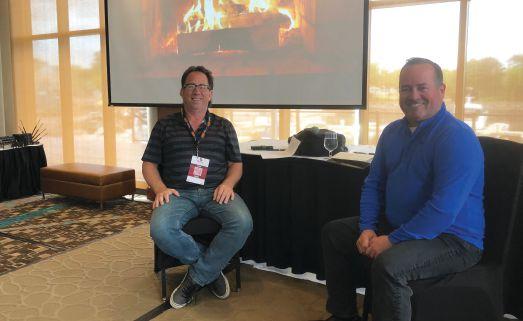
SAWDAC executive director, Json Neal, took the stage at the last Fenestration Canada Spring Conference for a “fireside chat” with Terry Adamson, FenCan technical director. Everyone learned something.
and harassment training and workplace disability training as these are all mandated by governments.
RENOPLAN ROCKETS
A couple of items to close out 2022. There were some great accomplishments. One was that our Renoplan Plan program was up substantially. This was caused by many different factors including our outreach to our partners. The consumers want it. It has just been a win-win for everyone involved in the program.
WINDOW WISE REPORT
Lastly, the Window Wise program. Window Wise was up 38 percent last year. Training was up and the registrations were up, which went hand-in-hand with the substantial increase.
We have brought on some key Window Wise members in key locations in Canada. It has been so successful in one area that they have decided to open up two more locations on the east coast. Congratulations to all those involved in Window Wise and using those marketing tools and resources that help you and the consumers.
We just want to leave you with thoughts on 2023. Last year was a successful one for many members in our programs and we look forward to being able to continue our successes as best as possible with a challenging economy ahead of us. If you have any questions about any of the information here please reach out to us. We’d love to be able to help you accomplish your goals and your customers’ goals.
by CARROLL MCCORMICK
WINDOWS TO THE NORTH
Northerm has a unique Arctic flavour.
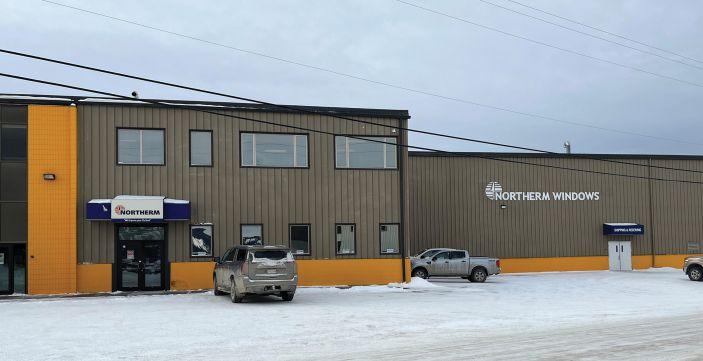
A2,400-kilometre drive north from Vancouver delivers weary travelers to the doorstep of Whitehorse, the Yukon’s capital city. There, amongst the bustle of this fast-growing city, in a 55,000 square-foot plant, Northerm Windows and Doors manufactures its windows and doors. It builds them for single dwellings, multi-housing units, condos, hotels and commercial business – both for renovations and new constructionthroughout the Yukon, the Northwest Territories and Alaska.
Founded in 1983, Northerm has grown to employ 60 people. Half of them work in its production plant where they manufacture exterior residential and light commercial windows and residential doors. The other half work in the commercial division and BUD’s Industrial Installations - Whitehorse’s local overhead garage door company, as they modestly put it. (BUD’s stocks a variety of doors and what it doesn’t stock it will order for residential, commercial, industrial and aviation uses.)
A sister company in Anchorage, Ala., called Capitol Glass Windows and Doors, distributes Northerm products in Alaska. Another company, Arctic Rim, in Inuvik, located not far inland from the Beaufort Sea, purchases Northerm products
for distribution in the high Arctic.
Northerm, BUD’s and Capitol Glass are owned by RAB Energy Group Inc., a Yukon First Nationowned, for-profit corporation. Dakwakada Capital Investments LP is RAB’s majority shareholder, with six other First Nations development corporations also owning shares. First Nations ownership, says Brian Wareham, Northerm’s production manager, “is a great way to conduct business in the north. First Nations investment and development is driving the northern economy and it provides excellent opportunities for First Nations citizens in the Yukon.”
While Northerm manufactures residential doors in off-the-shelf dimensions, it makes its windows to order. “On the PVC side we have software for
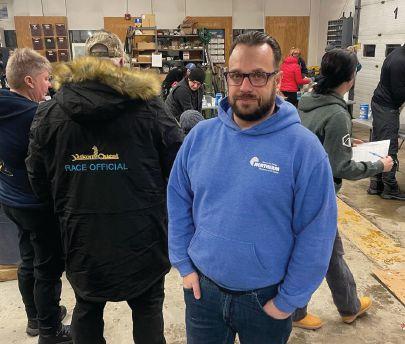
LEFT: Brian Wareham is Northerm’s production manager. He’s a retired veteran of the Royal Canadian Airforce.
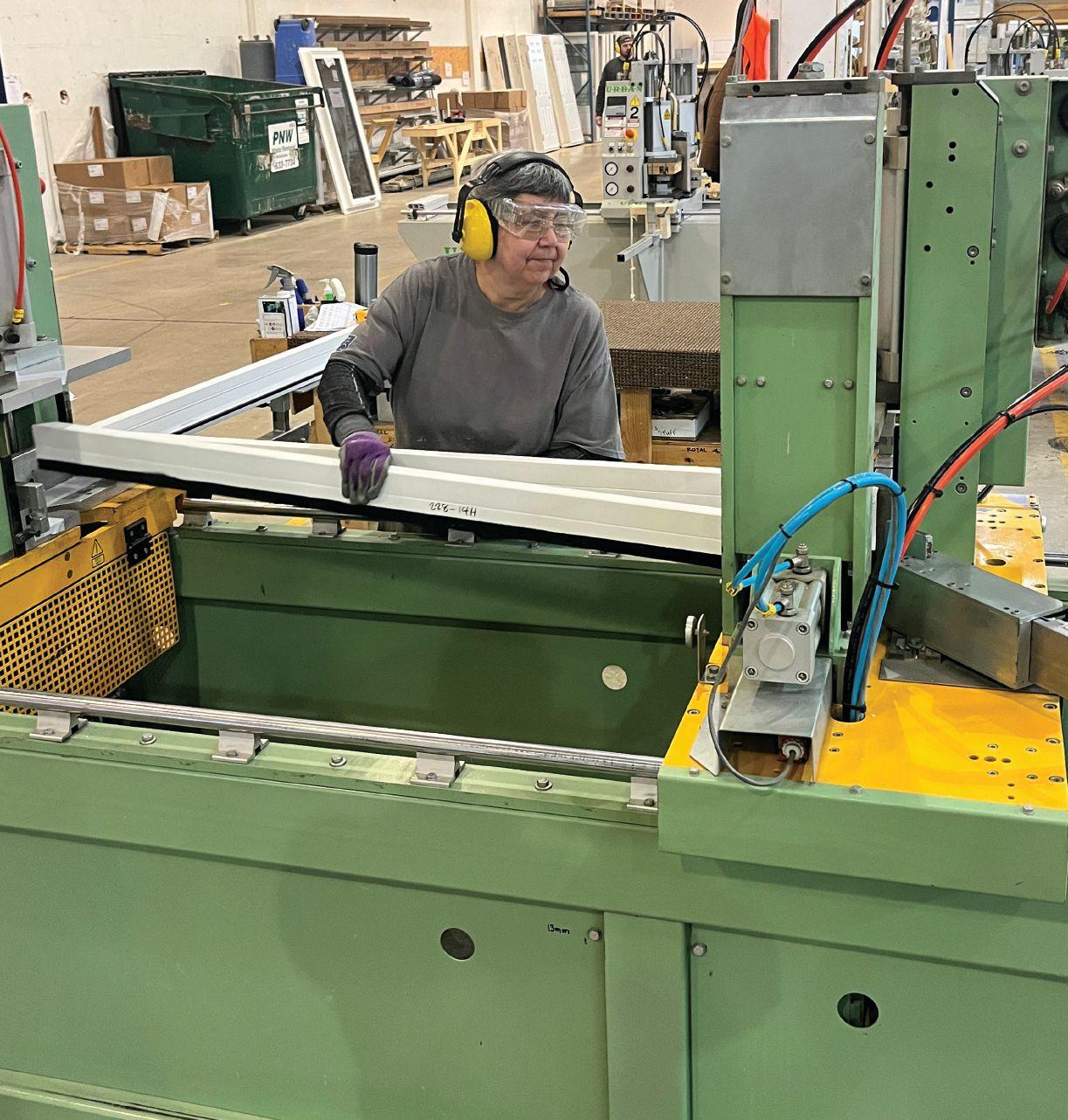
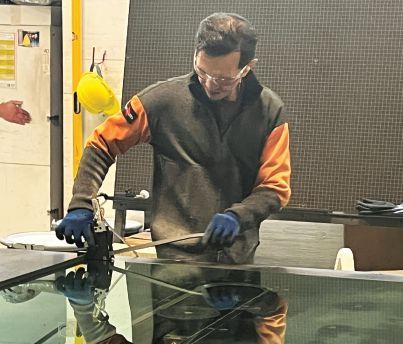
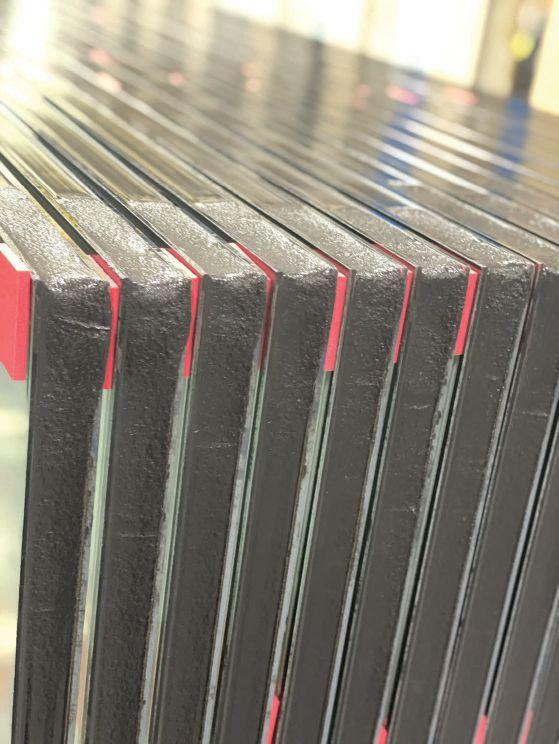
RIGHT: Jonathan Munez doing “shuttle work” - applying a window spacer between panes of Northerm windows.
Fenestration Canada's Annual Spring Conference includes education, supplier showcases, evening receptions, o site dinners and more.
For the first time, we will be hosting an extra day called the Extended Kelowna Experience. Stay to experience beautiful wineries in the Kelowna region for the day, soaking in the sights and networking with your peers. You do not want to miss this, just select the add on with your conference registration!
The conference will take place at our host hotel, the Delta Hotels by Marriott Grand Okanagan Resort.
Book your room now to get the optimal experience. A special rate of $289/night has been negotiated for you.
Registration & Schedule of events:
www.fenestrationcanada.ca/spring2023
PROFILE
turning customers’ wish lists into data for manufacturing the custom windows,” Wareham says. The commercial side of the business works out the custom details somewhat differently, producing engineered drawings for each project.
Testing the PVC windows for their adherence to various standards is carried out externally. The Cold Climate Housing Research Center (“Pioneers in Extreme Environments,” its website announces) in Fairbanks, Ala., which carries out quality testing for Northerm, has certified the company’s windows as “Alaska Tough.”
“We regularly have our residential windows tested to make sure they meet current EnergyStar and other performance ratings and standards,” Wareham says.
Understanding that the concept of “standard” should include something a little extra in the often-frigid North, Northerm adds more beef to its windows. “The main difference between our windows and most other windows is the thickness of the profile. Our profile is more robust than the vast majority of windows found elsewhere. When you get 18 to 20 hours of sunlight a day it can have a large effect on lumber and other materials. It is not only the cold but the heat from the sunlight that affects the window’s profile. It’s solid. And it’s tough,” Wareham says.
Not only does Northerm offer triplepane windows, it also manufactures a four-paned window it calls the Quad. “The Quad has an improved energy rating over three-paned windows and improved sound dampening qualities,” Wareham says.
Might the Quad be the future of energyefficient windows? “Whether it is the window of the future, we don’t know,” Wareham says. But, he adds, “We are looking at opportunities to push the Quad into new markets.”
Before Wareham joined Northerm in 2021, he was an aircraft technician with the Royal Canadian Airforce, retiring with the rank of master warrant officer. His military career included working as an aircraft structures technician and substantial experience in production and manufacturing – skills he applies on the plant floor.
“We are constantly working to improve our manufacturing processes and pur-
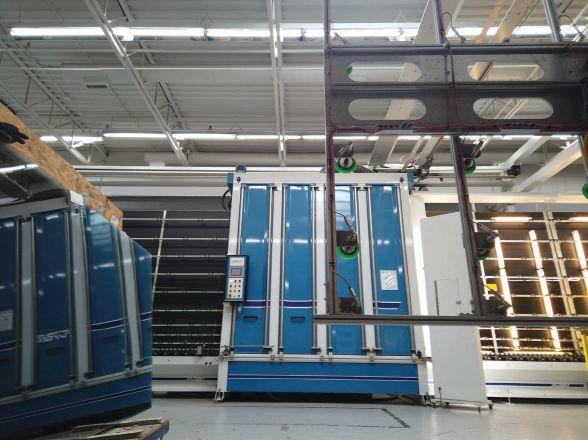
chasing new equipment. Probably our Erdmann 6000 secondary sealer, which we purchased in 2017 for sealing our windows and inserting argon gas between the panes, has had the largest positive impact. That is probably one of the largest pieces we have purchased here. It automates and makes the manufacture of sealed units more efficient and accurate,” he says.
Northerm’s PVC profile supplier, Vision Extrusions Group in Everett, Wash., has been helping improve its profiles. “Vision assists us to make them more efficient,” Wareham notes. Northerm ships its waste PVC to a recycling plant in British Columbia’s Lower Mainland.
Northerm has several Canadian suppliers but getting stock from its two Washington suppliers - Vision in Everett, and Cardinal Glass in Tumwater, Wash., from which Northerm purchases most of its glass – illustrate the challenges in shipping anything to northern destinations. The geography and climate challenge production schedules and the concept of “just in time” deliveries is nothing like what southern manufacturers enjoy.
An example: stock from Vision and
Cardinal is loaded onto barges at the Port of Everett. They motor up the coast to Skagway, Ala., which is a mere two-hour hop from Whitehorse - on a good day. Wareham explains, “In the winter we get into avalanche season coming over the White Pass Summit [the 2,865-foot-high mountain pass that is the official border between the U.S. and Canada]. There can be washouts, floods, and forest fires – all of which we got last spring. They cause delays getting materials to our plant.
“Residing so far north has its unique challenges. We have supplies that arrive by sea barge, which requires ordering well in advance of need, and by truck and, at times, air. We keep more inventory on hand than companies down south to help alleviate these unpredictable events,” Wareham says.
Challenges abound as well on the outbound journeys to customers. Where barges are used, a missed departure during the short shipping season can mean the product goes nowhere until the following year. And as for those famous ice roads that provide such hysterical television, climate change is taking a toll. “More and more, it
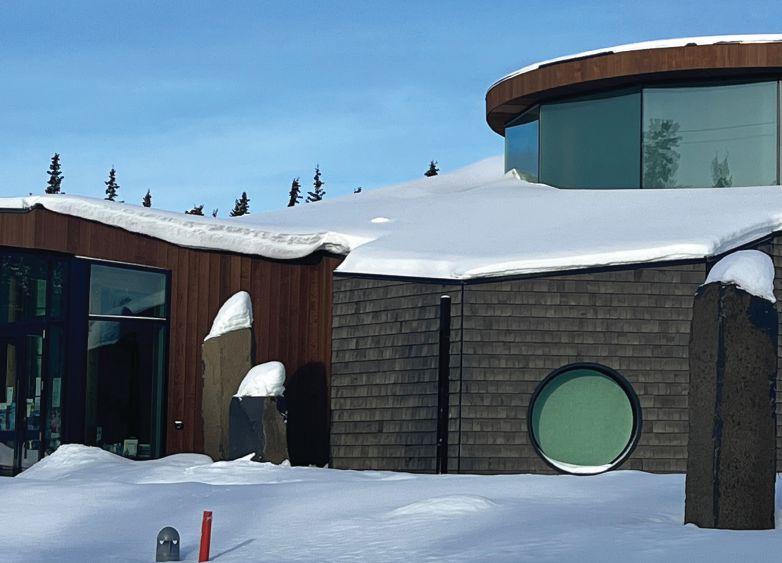
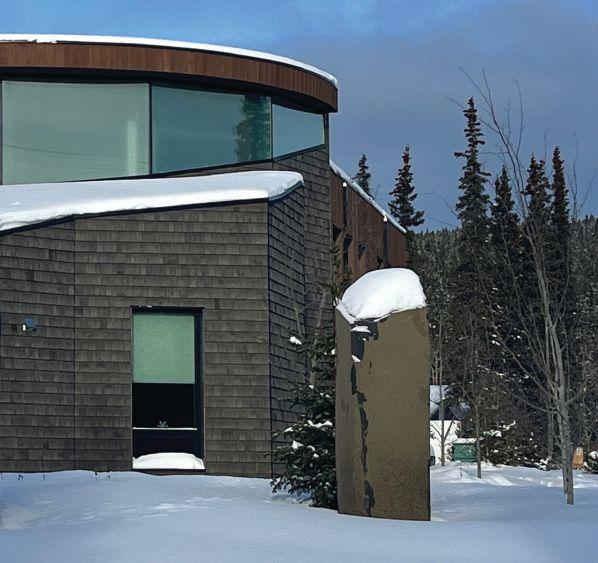
Light floods the atrium of the recently completed Kwanlin Dun First Nation administration building through Notherm-supplied windows.
seems to take longer for the rivers to freeze. We work around the seasonal challenges and adjust our manufacturing schedule. This is just some of the enjoyment and challenges of our business,” Wareham says.
Northerm does not like to disappoint. “As long as someone wants a window, we’ll make it for them. We don’t take this lightly, either. One of the reasons we have lasted so long is our customer service, from contractors to residential owners. We find the solution. What we do for customers and clients up here is huge,” Wareham explains.
Wareham is doubtlessly well-versed in the military concept of “hurry up and wait,” but the Northern spin on this could easily be “hurry up and hurry up.” Like farmers making hay when the sun shines, contractors get positively hyperactive during the summer season when the sun gets up early and goes to bed very late - for a nearly 19-hour day on the summer solstice.
“Our building season is shorter, but the summer season days are longer,” Wareham says. “December, January and February are slow months. It picks up in March and April, and we get a better outlook on the schedule.” All these environmental constraints mean constantly adjusting the production schedules, something that Northerm is working to improve and make more efficient.
Northerm installs window and door systems on the commercial side, but a lack of hands means the company currently does not offer this service on the residential side. “We are one of the fastest growing cities in the country. There is a shortage of workers in Whitehorse, a shortage of younger workers in their early twenties,” Wareham explains. “An outflow of people is also part of the problem.”
Northerm takes great pride in its ability to provide employment and contribute to the community through sponsored
programs. Its website lists 44 groups and organisations it has sponsored, as well as its Northerm Innovation Scholarship. “We are keen on giving back to youth and the community. The youth demographic has the most potential. The Yukon is a tight-knit territory that supports each other. Northerm would not be here if not for the support of our communities,” Wareham says.
A lack of experience or a home situation, say, are not necessarily impediments to employment at Northerm, Wareham says. “If a person is keen and wants to learn – or they are a single mom or someone who can only work three days a week – we will work with them on a flexible work schedule,” Wareham says. “This is the way I think society is going: get good employees and be flexible to keep them.
“Northerm is a family-oriented company – we really support our employees. We have great benefits. Even the vacation time is exceptional. The attitude, the way we treat people on the plant floor…if there is a problem everyone pitches in to solve it. Everyone pitches in to meet the demand. It is a fun and enjoyable place to work. Let’s put it that way.”
Northerm’s community activities include sponsoring and donating its facility for the vet check for the Yukon Quest Dog Sled Race.
THE WINDOW GEEK
The impact of code changes
by Anton Van Dyk
Evaluating the impact of codes starts with the impact on specifiers.
I’m often asked by specifiers how the new energy codes in B.C. are impacting the window industry. My response is, how is it impacting window specifiers? Bottom line, if you are a specifier and are not aware of the impact energy codes are having on the window industry, you are likely going to discover this when your project goes to tender. By that time, it is hard to make design changes.
I’ve created a proposal that creates awareness of conflict. It’s simple. Write a list of all the compliance measures that a window is required to meet and then rank them in order of importance. Usually, I start with life safety, then what can impact occupancy and then the nice-to-have features. By doing this you can start a framework for decision-making when conflicts arise and when two conflicting items prevent you from being 100 percent compliant.
For most buildings in B.C., especially multifamily buildings, there are four main items that come up all the time. These are guard load, energy, air/water tightness and acoustics. When working with these four design requirements it is important to look at them as a whole system as opposed to individual items. In the past, it was common to design around each one separately but as requirements have become more stringent it is important to look at them together.
So how does a specifier combine these requirements into one specification and potentially one product? The challenge a specifier might have is that each item generally has its own specialized designer who is required to design and approve the final result. This can cause a bit of conflict especially when the specialized designers don’t coordinate their designs. Think of how an architect and structural engineer work together. We now need to combine, structural engineers, energy advisors, building envelope consultants and acoustical
consultants into the coordinating process.
Recently, I had to deal with two projects where the acoustical requirements were dictating a glass type, thickness and air space that impacted both the ability to meet a life safety requirement and the energy code requirement. The glass thickness needed for acoustics was not available with the low-E coating needed to meet the energy code requirements. The laminated glass needed for acoustics did not meet the guard load requirements to meet the life safety load calculations required by code. The air space specified for acoustics, in combination with the glass thickness required for wind load, resulted in the overall IGU width not fitting in a standard window frame.
As you can see, building acoustics is a common issue that is causing other code conflicts to not be met. A compromise needs to be made somewhere and someone needs to be capable of making this decision. So I recommend a designer who oversees all aspects of a building take time to consider how to evaluate each one in order of importance.
I spend one week every two years reading the building code front to back in order for me to know what is actually in the code and more important to use parts of the code to help navigate conflicts like this. For example, the acoustic requirements that impact a window are not actually in the B.C. Building Code and are required through the development process as higher densification occurs and buildings are being built closer together and on busy corridors. Not to say it is not important, it is just less important than other aspects that are required to meet life safety and/or occupancy.
Anton Van Dyk is vice-president of product development and innovation for Centra Construction Group.
Let’s talk employment
Governments are making efforts to boost skilled trades participation.
by Amy Roberts
Labour challenges continue to create concerns in Canada. Unemployment rates remain at record lows with strong competition for available workers. The construction and manufacturing industries are among the most challenged to fill vacant positions.
The Canadian government announced new country-wide initiatives in 2022 and they appear to be helping alleviate the shortage, especially in construction. The government of Canada has designated more than $308 million dollars to help meet the labour market needs and better support residential construction. Three federal initiatives were introduced in 2022.
The Temporary Foreign Worker (TFW) program allows Canadian employers to hire foreign workers to fill temporary jobs when qualified Canadians are not available. Five key policy changes have been implemented to the TFW program to facilitate employment. It has made the seasonal cap exemption permanent and added longer validity for labour market impact assessments. The employment duration for high-wage stream and global talent stream workers has been raised to three years from two years. Certain sectors will be able to have up to 30 percent of their workforce in the low-wage program with a 20 percent cap for all low-wage employers. Finally, the automatic refusal to process applications in areas with less than six percent unemployment, and in certain Alberta sectors, has been ended.
More than $33 million will help fund the Skilled Trade Awareness and Readiness (STAR) program over five years. An additional $2.8 million will fund Get Ready in Trades (GRiT), a project of the Selections Career Support Services. Programs like STAR and GRiT encourage Canadians, particularly those facing barriers, to explore and prepare for careers in the skilled trades.
Nearly $247 million will fund 13 projects enabling small- and medium-sized employers to
offer apprenticeship training opportunities. To help marginalized Canadians, the incentives are doubled for small and medium-sized businesses who hire from equity-deserving groups.
Overall, the size of the Canadian labour force has continued to grow, and the participation rate has recovered to its pre-pandemic level. In January, an additional 153,000 (up 0.7 percent) people joined the Canadian labour force, boosting the participation rate to 65.7 percent (up 0.3 percent). Construction employment reflects one of the fastest-growing industries over the previous 12 months. In January, construction employment grew by 16,000 (one percent) and is up 114,000 (7.6 percent) on a year-over-year basis.
During the third quarter of 2022, Canada’s population grew at the fastest rate in more than 50 years, mainly driven by an increase in non-permanent residents. On a year-over-year basis, employment for those who were not born in Canada and have never been a landed immigrant was up 13.3 percent (79,000 people) in January, compared with growth in total employment of 2.8 percent (536,000 individuals). As of January, this group accounted for 3.4 percent of total employment, up slightly from 3.1 percent a year earlier.
Among women, ages 25 to 54, employment rose by 51,000, or 0.8 percent, in January. For women whose youngest child was under six, employment rose markedly over the previous 12 months, from 72.9 to 76.6 percent. Also of note, 59.6 percent of women aged 55 to 64 were employed in January, the highest rate since 1976. As more near retirement, more new entrants will be needed.
Let’s continue to boost construction employment in Canada by welcoming everyone who wants to work into our industry.
Amy Roberts is FGIA director of Canadian and technical glass operations
ENFORCE IT
Enforcement of fenestration standards in Canada is uneven, but one provincial solution might be working.
If
you could magically look at all the new residential builds happening right now across Canada, there’s a good chance that, at some sites, windows and doors are being installed that are non-compliant for structural code, air-water tightness or energy performance (and maybe all three).
by TREENA HEIN
Where’s a cop when you need one? Consistent enforcement is a critical part of seeing product standards and building codes actually implemented in the market, industry sources say. When standards aren’t enforced, compliant manufacturers are punished and cheaters are rewarded.
In addition, there may even be false/unproven energy performance claims on products being installed and customers successfully getting rebates based on these labels. When this happens, it creates ongoing frustration for manufacturers and dealers who invest considerable time and money making their products and installations compliant but are forced to compete with those who do not, and are therefore able to cut costs and win projects.
In broad strokes, it’s a problem that no one in the industry knows what percentage of windows and doors being installed in Canada are currently non-compliant and how much this differs regionally. And no one can answer the even bigger question, either: How many of these poor products and/or installations are being caught through inspection?
Of course, these questions – which apply to
new builds and also renovations – are not possible to answer without a huge monetary and time investment. It’s therefore perhaps best to focus on solutions.
Is it simply a matter of boosting enforcement with more and/or better-educated building inspectors? Do we need a national mandatory labeling/ product certification system too? First, let’s look at what’s happening across Canada.
A FOCUS CHANGE IN B.C.
Looking back at B.C.’s recent enforcement history, Fenestration Canada technical director, Terry Adamson, explains that, about 10 years ago, there was an increase in enforcement on labelling in new construction when the window standards changed in 2012.
“That’s trailed off, though,” he says. “The focus of manufacturers currently has moved primar-
ily to energy performance in B.C., and structural criteria has taken a back seat to that. The focus is very much on meeting the energy targets. All across western Canada, the majority of manufacturers are testing and labeling, but not for everything. The air-water testing in windows does not receive the same scrutiny as energy performance, allowing wider non-compliance of products.”
This is what’s been observed for years at Van Isle Windows on Vancouver Island. Although the firm mostly does window and door replacement, “our company does have a ‘supply only’ component and these windows are inspected, but only to confirm that they meet the current energy ratings required by the building codes,” says installation manager, Marc Georg.
OTHER ISSUES
A wide range of enforcement...that’s what those at Centra Construction Group in B.C. have noted in Alberta since the firm acquired a manufacturer in Calgary. Anton
Van Dyk, vice president of product development and innovation, also explains that they are seeing even consulting firms with offices in Vancouver and Calgary have different methods of code enforcement.
Adamson lists another problem: the fact that enforcement is hit and miss because there aren’t enough building inspectors or energy advisors in some jurisdictions across the country. He notes, “Some officials are strict with enforcement while others may not have the resources to focus on fenestration. In B.C., the Step Code is being overseen by energy advisors on new builds, but that industry is stretched with many new advisors learning the intricacies of fenestration and it’s really up to manufacturers to insure their products meet all the codes.”
There’s also a fundamental problem with inspectors in that inspection of windows and doors is not strictly required. “In B.C. – and I’ll assume this is similar across the country – inspectors have the power to enforce but are not required to
enforce,” says Adamson. This means, says Allan Doyle, vice-president of engineering at Global Windows in Richibucto, N.B., that there is no legal liability for inspectors if the code isn’t enforced. Furthermore, he says, enforcement in most provinces is carried out at the municipal level with every municipality having its own set of rules.
For its part, the Siding and Window Dealers Association of Canada (along with other groups) is also concerned that building inspectors often are not fully trained and up-to-date on window and door code requirements. “In fairness to hard-working inspectors who have every aspect of the construction to review, windows are not at the same level of priority as electrics or other aspects of construction that can cause a significant danger if not correct,” says SAWDAC technical director, Phil Lewin. “We believe that, in many cases, as long as an inspector sees a piece of paper
FEATURE
aspects of the build and doesn’t look at the label. Once again, this doesn’t mean that the products are not up to code but that there is relatively little strict enforcement. One situation where it is strict is where there is a government grant and all the proper documentation is required.”
REACHING OUT TO INSPECTORS
Doyle reports that over the last couple of months FenCan has started trying to bring inspectors into the fold by give them free membership and educating them on windows and doors to a greater extent. “Every region in Canada has a Fenestration Canada chapter now and it’s very positive that we already have a building inspector on the committee in the Atlantic Canada chapter,” he says. “We know we need to demystify windows and doors for them, giving them the confidence to enforce the code knowing they have the support of the industry.” This inspector has been working with the window industry for more than 10 years, says Steve Alward, product manager at Atlantic Windows in Port Elgin, N.B. “He’s helped other inspectors in New Brunswick and manufacturers that sell in this province become more aware of both energy and structural requirements.”
On a related note, Doyle says that, during the last year or so, more businesses are reaching out to FenCan about energy ratings and labelling because of the Canada Greener Homes Initiative. “We’re interacting with companies about this all the time,” he
says. “If we can somehow go back to the government and just make sure the NAFS number is on the label also, the right one for whichever municipality or geographical area, that would be a start. It wouldn’t be for all products – this initiative is just about the energy- focused ones – but at least these high-end products would get recognition of meeting structural code.”
PARTIAL SOLUTIONENFORCEMENT BEFORE BUILD
In some areas of Atlantic Canada, some enforcement is currently happening at the permitting process level. “We support this as a manufacturing association,” Doyle says. “With this system, manufacturers submit their quotes with all the window and door products listed – energy ratings and so on – and the inspector says yea or nay at that point. Even for renovations, that would work reasonably well.” Doyle believes however, that there needs to be another inspection after installation to make sure the same products quoted have actually been installed and that the installation is also done correctly.
Alward adds that Atlantic Canada is unique, from what he’s gathered during discussions with colleagues across the country. “With the exception of some national brands, manufacturers in other regions have a very small distribution base and a great number of manufacturers are supply and install as well,” he explains. “Compliance is therefore really narrowed to a handful of individual inspectors in perhaps a single jurisdiction. Atlantic Canada has very few supply and install manufacturers. The majority of companies are wholesale distribution to a dealer base. That dealer base is typically spread over four provinces.” This means the industry connection to the homeowner, and even to builders, can be hands-off – and building inspectors are another step away.
SUCCESS IN QUEBEC
Similar to B.C., enforcement levels have decreased in Quebec over time. To solve this issue, a partnership was formed among the provincial government and a construction industry association called the Régie du Bâtiment du Québec (RBQ), according to Jean-Francois Kogovsek, FenCan director and fenestration industry consultant in St-Bruno, Que.
The partnership resulted in GCR (Garantie de Construction Résidentielle) being put in place by RBQ in 2014, a non-profit accreditation for new residential construction. “It’s now mandatory since January 2023 but has been very popular before that,” says Kogovsek. “People want it, and builders pretty much needed to be part of the program to get any business.”
Builders have to pay to be part of the program and correct anything that is found out of order by the GCR inspector. “The inspectors are educated all the time, to make sure they understand the window and door part of things and everything else,” says Kogovsek. “It’s insurance that the residential building is built as per the Building Code and the CSA A440.4 Standard requirements.”
For their part, Adamson and Doyle had not heard of this initiative and are keen to take a closer look. “If it’s working in Quebec,” says Adamson, “maybe we can take it into other regions.”
by Terry Adamson
FENESTRATION CANADA
Expanding activities
We’re doing more and different things for the industry than ever before.
Fenestration Canada came out of the gate on a tear for 2023. The level of activity is unmatched by any previous year. The launch of our Commercial Chapter to provide support to the commercial glazier’s sector has shown significant interest as this industry checks us out. We have held a couple of meetings already with Rich Porayko and Jeff Makimoto leading the offerings FenCan is pulling together. With a handful of new members charting the course it appears this new chapter will be an active group.
We’ve also welcomed Ron Edger, of Centennial Windows and Doors to the Fenestration Canada board of directors as second vice-president. Ron has been in the industry for over 30 years and says he considers joining the board an honour and a personal milestone. Also re-joining the association is Jean-Francois Kogovsek who will be helping out with business development on the residential side of the industry. J.F. will be a familiar face to anyone attending WinDoor education sessions in the last decade. He brings a wealth of technical knowledge and deep connections across Canada to the role.
While the commercial folks get their footing the residential sector remains on high alert as the provinces work on the adoption of the 2020 National Building Code, to be in place countrywide by March 2024. There are several new items in the NBC that are raising questions for our industry. One of particular interest is the details around fall protection. From the session in P.E.I. last spring by Al Jaugelis a task group was created with support from the U.S. Window and Door Manufacturers Association and the Fenestration and Glazing Industry Alliance’s FenBC Region. The group drafted a document outlining the issues with the NBC language and restrictions around
what fall-protection devices can be used. Our letter has been provided to all provinces (except Quebec which had already addressed this item in previous code versions) in an effort to clarify the new language issues and support the use of ASTM F2090 window-opening control devices. We continue to follow up with these code developers.
We also saw changes to the requirements for products containing formaldehyde in their adhesive materials, such as fiberboards and plywood. The U.S. has regulated formaldehyde for some time and the new Canadian rules are designed to align with those laws. WDMA and FenCan presented a joint letter to Health Canada to find some clarity in the new labeling for products coming into Canada. We will be following up and providing members with updated information as we receive it. The details from Health Canada are on the Health Canada website: search for “guidance document on the formaldehyde emissions from composite wood products.”
In-person activities are well underway for 2023. We have held lunches in B.C. and education sessions in Edmonton, St-Louis de Blandford and Moncton happened April 6. Interest was high and members were eager to attend in-person activities to reconnect and pick up some new information. As we approach Fenestration Canada’s Spring Conference and AGM in Kelowna, B.C., May 23 to 26, anticipation is running hot with an informative schedule of education, plenty of good food and maybe a glass of wine or two. Spring in the Okanagan should be on everyone’s bucket list. Hope to see you there.
Terry Adamson is technical director for Fenestration Canada