Canada - 1 Year $36.75 (includes GST) $39.55 includes HST/QST
U.S.A. - 1 Year $50.00 (in US dollars)
Occasionally, Fenestration Review will mail information on behalf of industryrelated groups whose products and services we believe may be of interest to you. If you prefer not to receive this information, please contact our circulation department in any of the four ways listed above.
www.fenestrationreview.com
Review 2014 Vol. 3, No. 1
12
Looking for accountability in codes and standards.
16 FENESTRATION CANADA AGM 2014
You might be surprised by what Winnipeg has to offer.
10
PRESIDE NT’S MESSAGE
Fenestration Canada has a full slate for 2014. by Skip Maclean
EFFICIE NT INNOVATION
A look inside Elton Manufacturing..
22
ROCK SOLID
New vinyl door frame technology takes the product up market.
20 FIT AND FINISH
There is such a thing as too much technical sophistication. by Chris Meiorin
24
STORMING BACK
The forgotten product of fenestration may be making a comeback.
29 FENESTRATION CANADA MEMBERS DIRECTORY
Your guide to Canada’s window and door industry.
38 THAT’S RICH Dragons and drones and troublemakers, oh my! by Rich Porayko
Guard dog or fox?
by Patrick Flannery
Some feel test labs are over-represented on technical committees.
In my previous life as the editor of a magazine about woodworking I was at a trade show in Las Vegas where I struck up a conversation with a bored-looking person at a booth advertising emissions testing for volatile organic chemicals (VOC). Manufacturers of wood products have to prove their products emit less than the permitted threshold levels of VOCs before they are allowed to sell them in various jurisdictions, and the VOC limits imposed by the California Air Resources Board (CARB) are North America’s strictest.
My conversation with the bored young woman revealed that her boss, the owner of said emissions-testing company, sat on the CARB. In fact, she proudly pointed out, he was instrumental in writing one of the newer and more controversial standards that my readers - makers of wood cabinets - were struggling to find ways to meet. “So,” I asked, feeling I must be misunderstanding something, “your boss writes the standards, then charges people to certify whether they meet them.” She agreed to this without a hint of irony. “Sounds like a good business,” I half-joked. “If things ever get slow, he can just write a tougher standard.” I think it was around this point she decided she didn’t like me very much, even as a temporary cure for boredom.
I was puzzled at the time to find that such an obvious conflict was tolerated, but it wasn’t long before I discovered, in the role I have now, that conflicts of this nature are by no means restricted to the wood industry. Test lab experts are common on most technical committees concerning the fenestration and architectural glass industries. Sometimes they are the sole representatives of the industry in the group. And the companies they work for (or own) are
the very companies that will later certify your product as passing or failing the standards they write. Superficially, it looks like someone has handed the fox the keys to the henhouse.
Of course, there is a good reason for this state of affairs. Test lab engineers have the most knowledge both of the arcane standards documents and the testing protocols they demand. Frequently, they are involved in designing the tests themselves from basic principles of physics and chemistry. And they are motivated to donate the huge tracts of volunteer time needed for the committee work because such work pads their resumes and improves their value offering to clients by giving them inside knowledge of the standard. Even if we might agree it would be better to have a fabricator or two on these committees, few business owners or plant managers can find the time. In any event, there is little evidence that test lab engineers have been anything other than loyal guardians of the industry, working to create standards that improve windows and doors in Canada in a number of important ways.
Yet some dissatisfaction simmers. Mike Bruno of Everlast got up at Fenestration Canada’s last AGM to make an impassioned speech about the need for more fabricator involvement in the association’s technical activities. As if by magic, Fenestration Canada announced the creation of its Fabricator’s Council later that year. The association is reporting a strong start for the group and progress on a number of issues, of which technical review of codes and standards is only one. Let’s hope this group’s good work suffices to satisfy everyone that the keys to the henhouse are in good paws...er, hands.
Window Shape Specialist
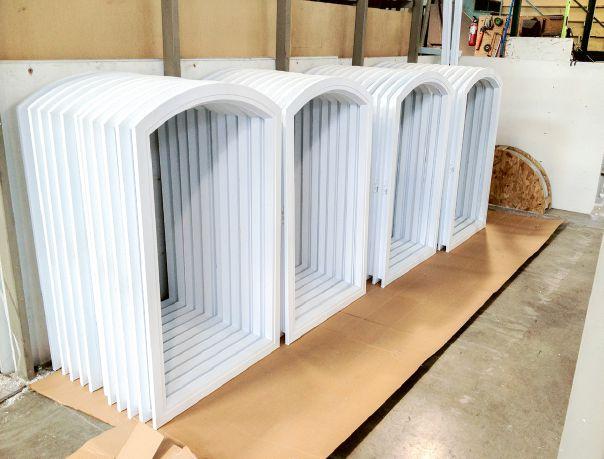
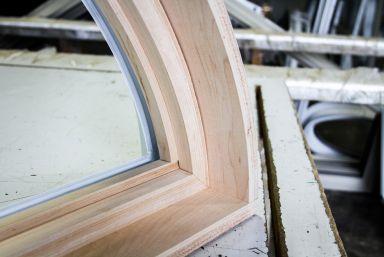
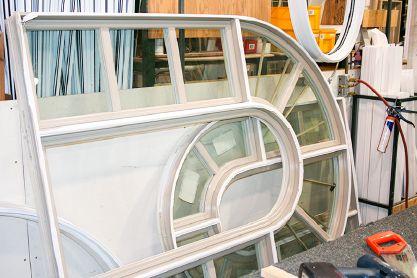
We do it all: Vinyl windows, wood windows, aluminum windows, wood jamb extension, curved wood trim and more. The customer service is one of our priorities. At PVC Architectural, you will enjoy fast delivery, high-quality products and courteous service.
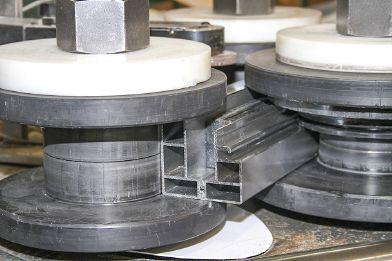
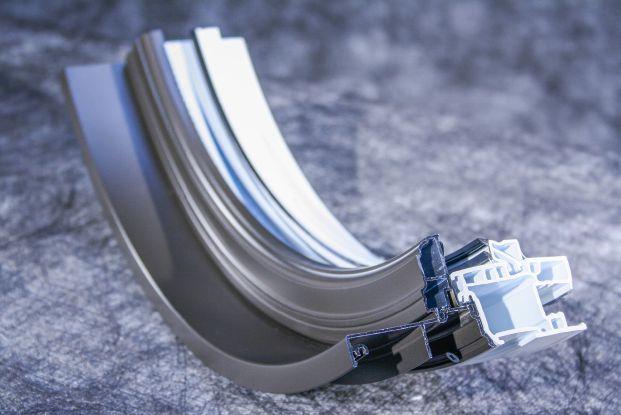
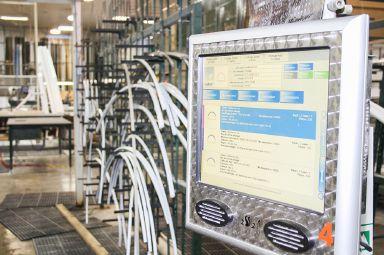
We can shape more than 500 extrusions and we have them in stock. Our computerized workstations allow us to track your order at all times, which provides us with great flexibility and superior precision PVC Architectural has a remarkable production capacity, thanks to its in-house equipment and outstanding team.
Contact us and see by yourself why PVC Architectural is the greatest leader in window shaping 1 888 404-2286 or
INDUSTRY NEWS
Great conversations at Windoor
Windoor 2013 attracted new and old faces from the window and door industry to its three-day expo in downtown Toronto. Slightly fewer exhibitors but slightly larger booths added up to a small overall increase in floor space. Registration was about the same as in 2012, with traffic showing its usual pattern of crowds the first day and relative quiet the second. Exhibitors expressed overall satisfaction, saying the quality of attendees was quite high and they signed many deals. The education sessions featured the usual excellent information from top experts, wth Jeff Baker and J.F. Kogovsek drawing the largest crowd and most comment with their presentation on the upcoming inclusion of NAFS air/water ingress standards into the Ontario building code. Pre-hangers are concerned about the impact of the change, and feel it is unfair that they should bear the risks and costs of ensuring entry doors meet the standard. Estimates of the cost of testing all of a pre-hangers door/sill/lite options ran as high as $320,000. Many in the audience want more accountability for
installers. “If one of my sills is installed right, you can drill a two-inch hole through it and there will still be no water inside because it drains to the outside,” Bob Hamilton of Hamilton Windows and Doors explained. “We have brought electrians and plumbers back into homebuilding - it is time we brought carpenters back in, too.” Notable exhibits included Jim Parker Best Booth award-winner, Mennie Canada, with its lovely piano player setting a sophisticated mood. Runner-up Performance M&T featured a futuristic white “virtual booth” with a huge screen and viewing lounge. JRC Machinery brought an impressive amount of heavy equipment, including a automated four-point welder and a multi-axis door cutter, all powered up and processing material. Perhaps not coincidentally, the staff on the JRC booth were the happiest at the show, reporting dozens of new leads including many from customers they had not worked with before. The Walk It Off Clinic and Partners Promoting Window and Balconey Safety presented a joint booth with a putting game rewarding accurate golfers with a chance to win putters and a full set of clubs. Screenco and Mennie Canada hosted a gala fundraiser for Nellie’s Women’s Shelter following the second day of the show. Over 300 attendees raised over $4,600 for the cause. Windoor will be back at the Metro Toronto Convention Centre, Nov. 11 - 13 2014. This will be the 20th edition of the show, and organizers are hoping to mark the milestone with a very special event. The Fenestration Canada general meeting heard that the association recorded a small financial surplus for 2012. Important developments over the past year included hiring Robert Rivard as full-time executive director and forming the Fabricators Council to ensure good communication with the association’s manufacturer members. Al and Aynsley Dueck were just about everywhere at the show enthusiastically promoting the 2014 Annual General Meeting in Winnipeg. If half the effort goes into executing the event that Dueck has put in to promoting it, it should be a good one.
Dudeck appointed president of Fenestration Manitoba
At a November meeting, Ryan Dudeck of Paramount Windows and Doors was appointed president of Fenestration Manitoba, with Al Dueck taking the position of past president. Dudeck thanked Dueck for the invaluable role he has played in the past few years in founding Fenestration Manitoba and serving as its first president. During his term, Fenestration Manitoba was incorporated, a board was formed, and a bank account was opened. Dudeck joins Aurele Robin (Dominion Windows), Gary Blad (Loewen Windows), Dan Friesen (Berdick Windows), and Al Dueck (Duxton Windows) on the executive team.
In other Fenestration Manitoba news, the executive team announced the next stage in the development of its industry association with the appointment of Ethero Events and Management as association managers. Ethero’s partners, Monica Derksen and Cameron Derksen, have built a reputation for providing customized suites of management and event services to not-forprofit organizations. The Manitoba born-andraised siblings have coordinated and managed conferences, festivals, fundraising galas, and specialize in unique event experiences.
Baker elected chairman of NFRC
The National Fenestration Rating Council has announced that Jeff Baker of WestLab has been elected its new chairman of the organization at their meeting in Dallas Texas on Jan. 8. “I am honoured to accept the position of NFRC board chair and look forward to the challenges of the year ahead,” said Baker. “As NFRC enters its 25th anniversary, I am grateful to celebrate its history and plan for the future.” This marks the first time a Canadian has been elected chairperson. Baker works for Westlab and is Fenestration Canada’s technical consultant.
Mastergrain moves to Midland
Weber Manufacturing Technologies has announced it is expanding its MasterGrain premium fiberglass residential entry door product line and moving production to Midland, Ont. President Chris Edwards said the move means long-term stability and new local jobs at the company. It also opens the door to significant market opportunities for the innovative, fully integrated world class mold maker that already supplies a broad customer base in the aerospace, automotive, and home and building industries. MasterGrain was first born in 2007 when Weber’s new ownership restructured and pushed to diversify the company originally founded in 1962. At first, with the low volume of a start-up it made economic sense to source door production from a plant in Mexico but that has changed. “With rising production and logistical costs it’s the right time to bring it home to Midland,” Edwards said. “We are confident we can produce a higher quality product, equally cost effective and support the Canadian economy instead of looking for low cost country alternatives.” Ken Kussen, business manager for MasterGrain explained, “The advantage of the MasterGrain product is the fiberglass panel used to build the components look, feel, and stain like real wood. We’ve accurately captured the warmth of wood and its natural variation of grain characteristics in much sought after woods like cherry, fir, mahogany, and knotty alder.” Industry experts are predicting fiberglass could reach 50 per cent of US entry door installations and see phenomenal global growth in both the renovation and new home markets. While doors may initially appear outside Weber’s traditional precision plastics and composite tooling work, Edwards explained it’s really a natural progression using technology pioneered at the plant in the 1990s. “We couldn’t do it without utilizing our core mold making knowledge and unique nickel vapour disposition or NVD technology.” Weber is home to the world’s largest NVD facility and the only one in the world producing tooling. Edwards said the patented tool making technology lets them replicate fine surface detail using pure nickel to build a shell, molecule by molecule, capturing fine grains and texturing details. The door tooling starts by building a wood door, a poured silicone casting picks up the fine grain detail which is then transferred to the door mold using NVD technology. The mold is then used to produce
skins at the Weber facility for the MasterGrain program. With over $4.6 million in investment to support MasterGrain’s leading edge technology, Most importantly the move to Midland gives Weber ultimate control over molding quality while shortening delivery time and enabling them to quickly respond to special requests. “We want to build a brand,” Edwards said. “This is a new industry and has great potential for growth.” It also provides a much-needed boost to the local economy as Weber is renting 22,000 square feet of space for production and will need to fill a number of skilled and semi-skilled positions. Edwards said, “It’s bringing new opportunities to this area in an exciting and innovative new industry for us.” Since the start of the year, 14 new positions have been added and as Weber moves into stage two of the development, Edwards estimates there will be five to 10 jobs created shortly and over 30 new positions in the next two to three years.
Weber Manufacturing Technologies is a fully integrated mould manufacturer in automotive interiors and exteriors, aerospace, and home and building products. Founded in 1962, Weber builds tooling for spray, slush, compression, injection, RTM, infusion, and autoclave processes. Its in-house model shop develops master models made from leather wrap or select wood grains, and can also provide low cost models in silicone, epoxy, and urethane tooling board. Weber also operates the world’s largest nickel vapour deposition facility.
fiberglass
INDUSTRY NEWS
Intertek acquires ATI
Intertek, a leading provider of quality and safety solutions serving a wide range of industries worldwide has completed its acquisition of Architectural Testing, Inc. (ATI), one of the largest building products testing and certification companies in North America. The acquisition recently gained regulatory approval and the transaction was finalized on December 24, 2013. The merger positions Intertek as one of the most comprehensive building products testing and certification agencies in the world. The addition of ATI’s expanded service capabilities provides Intertek with a stronger platform for continued growth both domestically and internationally, allowing for more diverse and comprehensive service offering to its customers. “The purchase of ATI will provide a huge benefit to the industries we collectively serve and the customers within them,” says Gavin Campbell, Intertek’s senior global vice-president of building products. “ATI is one of the most respected names in the market and has a long-standing history of serving their customers well through instilling confidence and providing exceptional levels of customer service.
Now, as our companies become one, we can leverage our complementary services, regional offices and testing labs, as well as our laboratory and engineering network, to provide a more complete and comprehensive solution for the customer.”
ATI president, Richard Biscoe, shares his excitement: “As a person fully ingrained in ATI, our employees, and our customers, I am as energized by this acquisition as I am proud. The ATI team takes great pride in the leadership position we have achieved in the market as well as the partnership we have with our customers. This feels less like an acquisition and more like we’re joining a family of like-minded individuals with the goal of providing better services to our customers as well as the building products and construction industry.”
Headquartered in York, Penn., ATI was established in 1975 to verify the performance of residential window systems. The company employs 303 highly specialized technicians, engineers, and support professionals across 20 locations in the United States and Canada.
Graby named CEO of Truth and Amesbury
Tyman, the parent company of both Amesbury and Truth Hardware, has announced senior management changes as part of the integration of the businesses post the acquisition of Truth in July 2013. Jeff Graby, already president of Truth Hardware assumed the role of president and CEO for the combined Amesbury and Truth organisations. Jeff joined Truth in 2012 and oversaw the divestment of the business from Melrose to Tyman. Prior to that he held a number of senior management positions within Interface Solutions, RAM Industries and FES Systems Inc. Jonathan Petromelis, former CEO of Amesbury, made the decision to further his career outside of the Tyman Group. Following a period of handover he will advise on integration initiatives before leaving the business. In addition, Mike McCann joined the company to oversee sales activity across both Amesbury and Truth brands, as senior vice president of sales, from Jan. 13. McCann brings to the business extensive sales and marketing experience from senior roles with Toshiba, Xerox and most recently Guardian Industries were he was vice-president of global sales. Louis Eperjesi, CEO of Tyman commented that “the enlarged business of Amesbury and Truth is making good progress with its integration projects . I am confident that Jeff Graby and Mike McCann will continue to successfully develop our business within the North American market and I wish them both well in their new positions.”
Here comes the blitz
April
12 marked All Weather Window’s 4th Factory Blitz Build for Habitat for Humanity, both in its Edmonton and Mississauga, Ont., facilities. The window and door fabricator built windows for 35 new Habitat homes in a 24-hour initiative.
All Weather senior vice-presidents Henry Banman and Robert Gilles attended the Mississauga event, assisting Habitat
Canada’s CEO Kevin Marshman to serve breakfast to the employees volunteering their weekend time. “We are grateful for everyone who came out to be a part of this great event,” said Andrew Thornicroft, Habitat for Humanity national corporate partnership manager. “Many AWW employees donated their time for the fourth year and it’s a really special way for them to participate in what Habitat does.”
AAMA accredited as ANSI standards developer
The American Architectural Manufacturers Association (AAMA) has been accredited by the American National Standards Institute (ANSI) as a Standards Developer. This accreditation includes review and approval of AAMA’s document creation and maintenance program, notably AAMA balloting procedure.
“AAMA has been developing technical standards since its inception in 1936. Since that time, the association has maintained an open consensus process that takes into account all views and aspects of the industry equally. Now, we have the proof to back that up,” says Andrea Rhodes, AAMA technical operations supervisor, who was instrumental in working with ANSI to secure the accreditation.
In order to maintain ANSI accreditation, standards developers are required to consistently adhere to a set of requirements or procedures known as the ANSI Essential Requirements: Due process requirements for American National Standards that govern the consensus development process. Due process is the key to ensuring that ANSs [American National Standards] are developed
in an environment that is equitable, accessible and responsive to the requirements of various stakeholders. The open and fair ANS process ensures that all interested and affected parties have an opportunity to participate in a standard’s development. It also serves and protects the public interest since standards developers accredited by ANSI must meet the Institute’s requirements for openness, balance, consensus and other due process safeguards.
Peace Of Mind...
SafeGard™ Window Opening Control Device (WOCD)
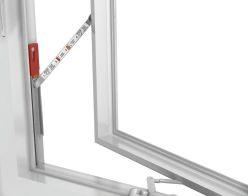
Safety and security are of utmost importance for homeowners, especially those with small children. Truth Hardware has developed an engineered solution which meets ASTM F2090-10, the new industry guideline enacted to address the issues of accidental falls and egress opening.
SafeGard™ meets the following ASTM F2090-10 guidelines:
• Window Opening Control Device limits casement sash opening to 4" or less
• Easy two-step operation to release Window Opening Control Device
• Window Opening Control Device automatically reattaches itself when the window is closed
FENESTRATION CANADA
A FULL PLATE
We have big plans for 2014, from new committees to Windoor’s 20th birthday.
by SKIP MACLEAN, FENESTRATION CANADA PRESIDENT
This year arrives with a full agenda for Fenestration Canada and its members: code implementation, extreme weather from coast to coast, webinars and website improvements and additions, planning for both our AGM this spring in Winnipeg and for Windoor’s 20th anniversary this fall. The year has barely started and we have several committee sessions under our belts.
The creation of the Fabricators Council (chaired by Lisa Bergeron of Jeld-Wen) has spurred a movement to effectively engage the manufacturing side of our membership by providing a platform to voice concerns and a vehicle to influence issues that may impact us all in the future. A further subcommittee (led by Greg Dickie of Atlantic Windows) has been formed to determine the minimum compliance requirements for windows and doors. To this end, a list of certifying agencies or test labs will be compiled and a survey developed to answer any pertinent questions, concerns and/or clarifications companies may have for certifying agencies or test labs. The objective is to seek consistency and uniform interpretation of compliance requirements under the North American Fenestration Standard (NAFS). A call for volunteers was completed shortly after the New Year.
Webinars introducing two powerful tools integrated on our website were held in both English and French in January and were generally well attended. In an effort to promote the benefits of membership these webinars were open to all stakeholders of the industry. The most significant of these tools is the “Fenestration Performance Calculator.” By simply entering basic details concerning a building project (province, city, product height and terrain type) this calculator provides clear, concise details regarding performance grade requirements. Over 600 Canadian cities have been listed from all provinces and territories. Results can be emailed or printed and used to help determine project needs. Code implementation and interpretation continues to dominate the landscape of window and door manufacturing with many fabricators looking for answers and solutions. The second of these tools is labeling guidelines for windows and doors. These guidelines can be downloaded from the website and further work is being undertaken to complete the information required to label all types of fenestration products.
Skip Maclean is president of Fenestration Canada. He is business development manager for Tru-Tech Doors and has over 40 years’ experience in the window and door industry.
Our AGM this year will be held June 12 though 14 in one of Canada’s truly unique cities, Winnipeg. Winnipeg is not only steeped in both cultural and historical significance in the making of Canada, it is also home to a significant number of window and door manufacturers. The Fort Garry Hotel, the Exchange District and the ever progressing Canadian Museum of Human Rights are just a few of the growing list of attractions waiting for you. Chief organizer, Al Dueck of Duxton Windows is working hard to ensure all visitors will be welcome and a good time had by all.
It is hard to believe that Canada’s premier window and door show is no longer a teenagertwenty years strong and still a vibrant, integral part of the Canadian window and door industry. Fenestration Canada is proud of its showcase and several plans are in the works to celebrate this wonderful achievement. Pioneers like Jim Parker envisioned this show as a testament to Canadian window and door ingenuity and creativity and current chair Matt Kottke of Truth Hardware is determined to continue this legacy.
We are also pleased to announce the release of our web-based North American Fenestration Standard (NAFS) performance calculator tool for the Canadian window and door industry. The new tool calculates the NAFS minimum performance grade (PG), minimum positive and negative design pressure (DP), minimum water penetration resistance test pressure and minimum Canadian air infiltration and exfiltration requirement to comply with any provincial building code referencing NAFS-08 and A440S1-09. Membership does have its rewards, active membership even more so. Fenestration Canada is a volunteer organization led by passionate people and fueled by the common goal of furthering the interests of our great industry.
by PATRICK FLANNERY
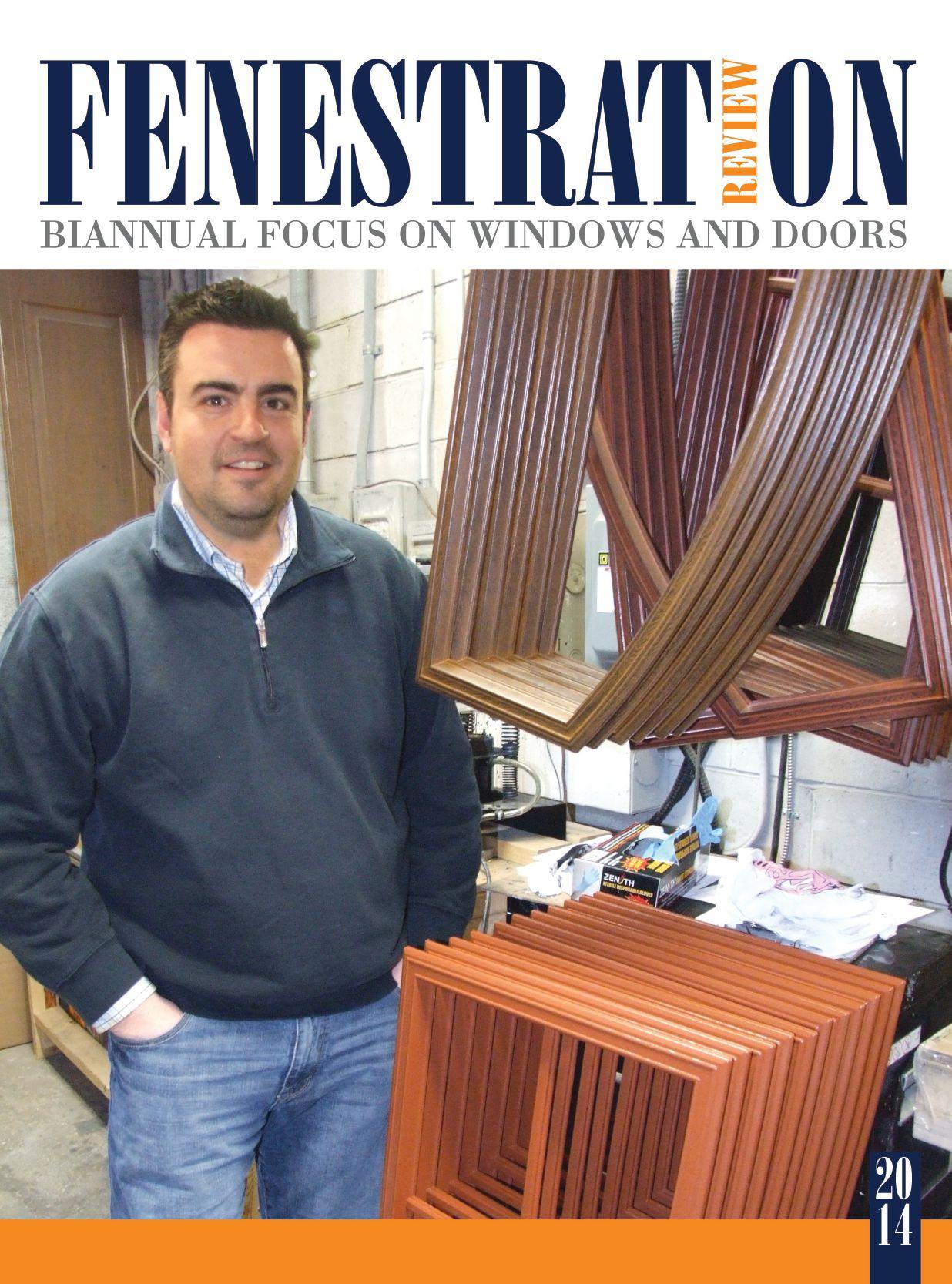
EFFICIENT INNOVATION
Elton Manufacturing finds new ways to get better.
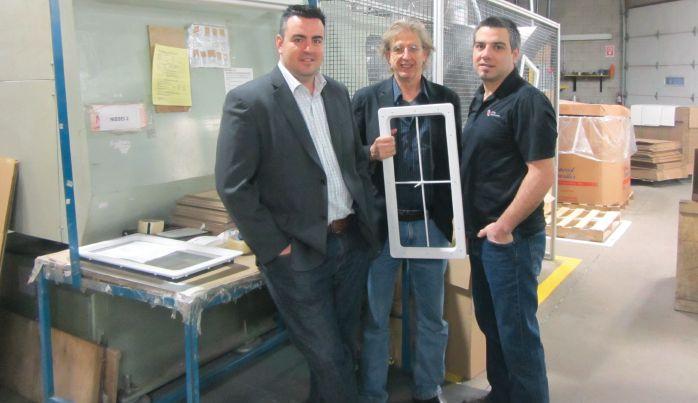
Milton, Ont., is home to a quiet powerhouse of the fenestration industry: Elton Manufacturing, one of Canada’s largest producers of plastic frames for entry doors. Inside Elton, managers Andrew Beavan and Sandro Pigliarolo are hard at work leveraging automated production technology and investment in R&D into any new area he sees opportunity. Watch out for these guys.
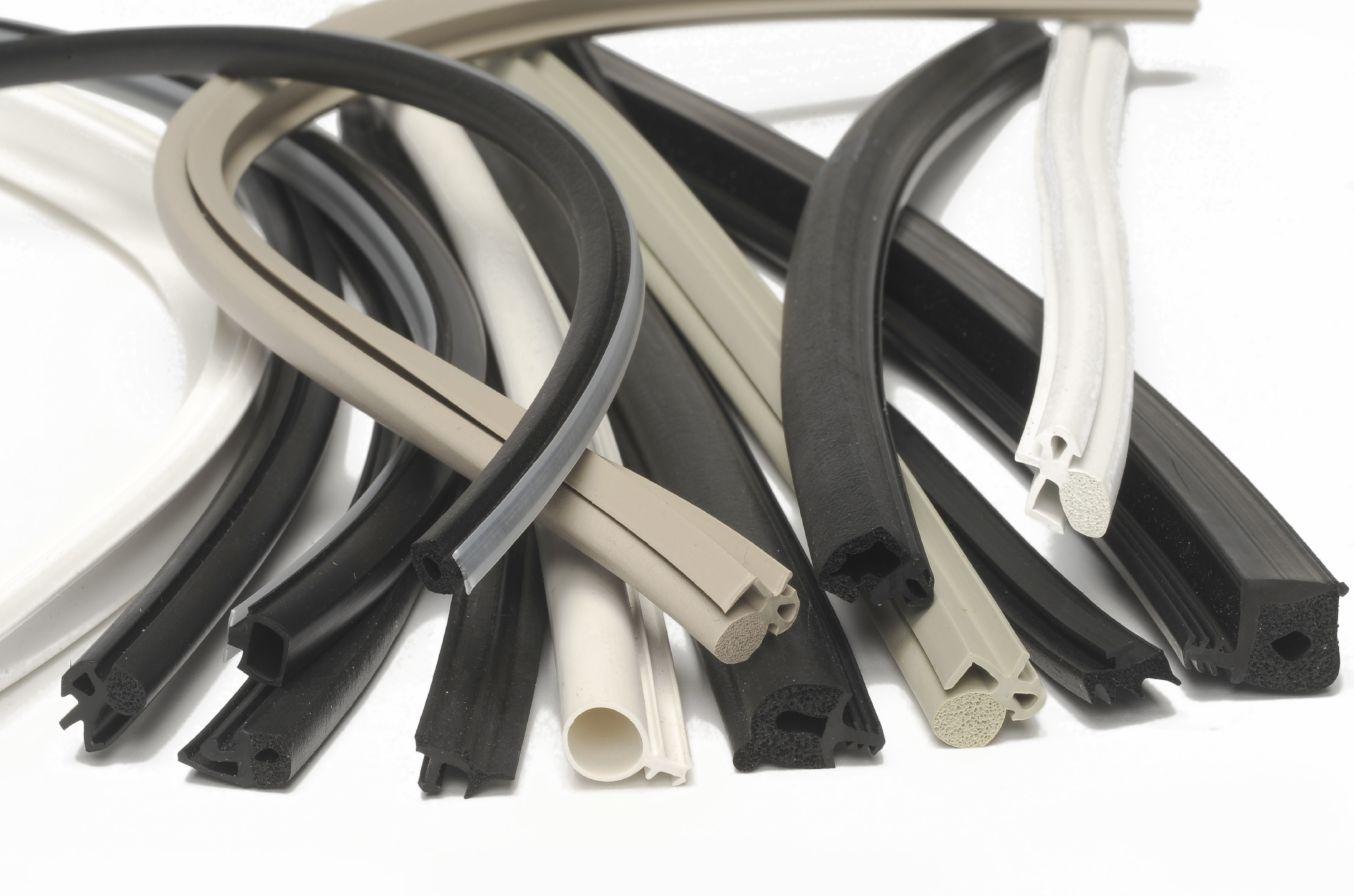
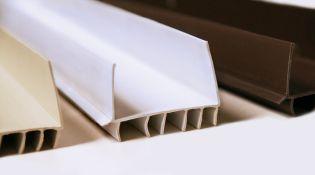
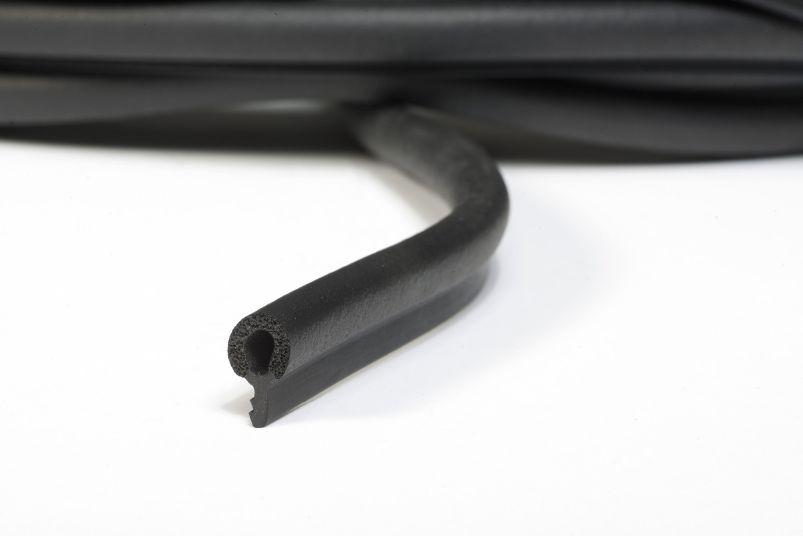
Elton Manufacturing was started in 1981 by Tom Boer, a Dutch immigrant who got fed up with farming. He is still majority owner of the company today, though Beavan and third partner Pigliarolo take care of most of the day-to-day oversight. There are two manufacturing plants: an extrusion plant, an injection molding plant, plus a warehouse and a tool and die shop. Elton started out extruding weather stripping for garage doors, and to this day its weather stripping remains a market leader and revenue bedrock for the company. But things have grown and diversified over the years. Today, Elton also produces entry door window frames, garage door windows, extruded profiles for windows and doors, laminated products for windows and doors and extrusions for the furniture industry.
Elton’s injection moulding shop consists of 14 injection moulding machines producing moulded plastic window frames for residential and commercial garage and entry doors. The machines work by melting solid plastic pellets into a liquid, then “injecting” the plastic into huge steel moulds where the plastic sets into its final shape. The moulds then separate, releasing the part inside to a waiting robot arm that places it lovingly on a table to be trimmed and packed by a worker. It is the same process that makes bumpers and side panels for cars. Elton’s injection moulders range from 80 to 1,000ton models, capable of accepting up to 10,000 pound moulds, which can produce a plastic part up to 24 by 66 inches. Injection moulding makes very solid, internally homogeneous parts
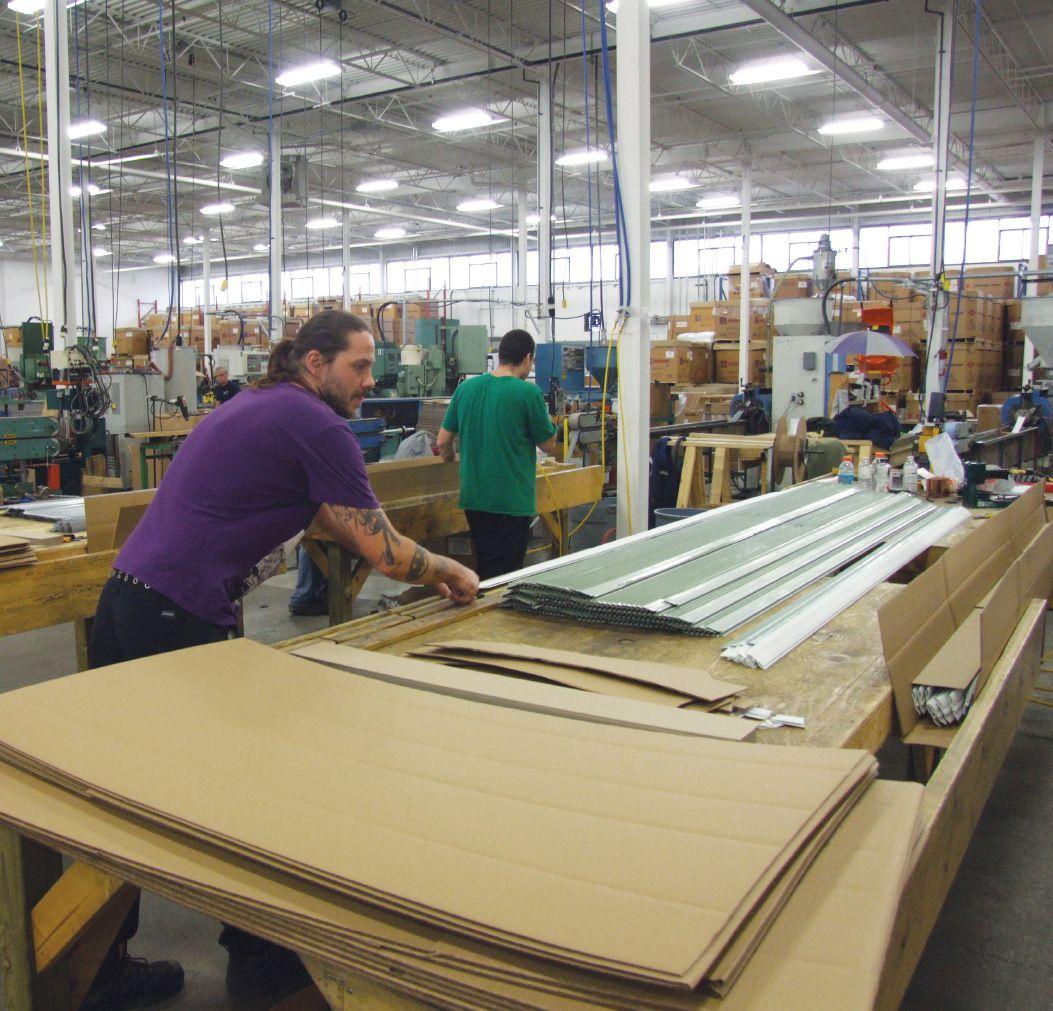
with no joins or seams. It has the advantage of producing the parts quickly without any need for fasteners or assembly. Designs are limited only by what can be cut by CNC machine tools into the mould, which in this day of CAD/CAM design software is almost anything the designer can imagine. Elton has produced plastic decorative pieces with a finish that resembles wrought iron and crescent-shaped frames that would be nightmares to duplicate with extrusions and cost much more if fabricated with iron. Beavan says his typical window frame contains up to 50 per cent more material than industry standard. As large and impressive as the injection moulding facility is, it still represents only part of what the company does. Elton paints its products in-house in a large paint room, but Beavan says they need more capacity and will be adding on soon. Garage door window frames are molded with through colour or fully painted; entry door frames are usually only primed as customers almost always want custom looks matched to existing exterior colours. Elton also runs a lamination line to wrap wood, vinyl and aluminum profiles at 40 feet per minute. The fully automated process wraps and glues the vinyl coating to the profile, then shapes and presses it with rollers. The original Elton Manufacturing business is still going strong with 12 extrusion lines running 24 hours staffed by 20 workers producing garage door weatherstripping and other profiles including window and door accessories, sweeps and furniture products on these lines. The vinyl
extrusion is pulled as it exits the cooling bath, fitted into the aluminum, steel or plastic retainer and cut to length by the workers.
When Boer had had enough of farming (after, he told Canadian Plastics, “three straight years of no rain”) he went to work for a door plant in Moosejaw, Sask., then moved to Ontario and began installing garage doors and aluminum storm doors which he purchased from Frank Bruno, founder of Alumitex in Toronto, Ont. Boer discovered that no one was producing weather stripping for garage doors, so he bought an extrusion line and started making aluminum strip,
selling it to Canadian Tire and Stanley in 1985). It wasn’t long before this product was doing well enough for him to close down the renovation business to concentrate entirely on manufacturing.
In the mid-’90s, Boer spotted another opportunity. Garage door windows were becoming more popular in Europe, but North American builders were only starting to offer them. He jumped into that market, creating the 1224 window, which is still one of Elton’s best sellers for commercial garage doors. The frame of the garage door window was easier to make and assemble as a one-piece, injection-moulded part than as an extrusion,
so Boer began designing tooling and buying it from the former Global Tooling in Waterloo, Ont. He also had the frames moulded by third parties at first, often sending the same job to more than one moulding shop in order to keep quality and prices in check. Elton would get the moulded frames back and assemble them with glass to make the finished product. The commercial garage door window product evolved into five different sizes, then windows for residential garage doors began to gain popularity. So Boer began to manufacture windows and weather stripping for that market.
In 2004, Elton made the jump to
You do not want this job. The strip-pulling team walks from Toronto to Vancouver and back to Edmonton every year pulling weatherstripping on the extrusion line..
doing its own injection moulding. Not a move to be taken lightly, and the learning curve was steep. To cover the cost of the machinery, which was considerable, Boer had to find ways to keep it working constantly. This drove the search for new products and markets, which took Elton into plastic window frames for entry doors. Not content to put just a toe in this market, Boer started making moves to expand what Elton does in the window and door market. He bought into Ace Extrusions in Mississauga, Ont. - a company with a very high degree of technical proficiency in vinyl extrusion. Ace was already doing a lot of work for a variety of fenestration and furniture companies, so Elton gained access to that list. Before long Boer had bought the rest of Ace and absorbed it into Elton’s operations.
Beavan came to Elton from a transportation company called Quik X in Mississauga, Ont. He studied business at the University of Windsor, had a wifeto-be and was looking around for better opportunities when he got talking to one of Elton’s drivers. The driver told him what a great place Elton was to work, and took him to meet Boer. Two days later, he was working for the company.
Beavan’s introduction to the weather stripping extrusion industry was an eye opener. He was initially put on the production line pulling strip with Kevin McTrach, a veteran worker with an apparently supernatural store of energy. Pulling weatherstripping involves pulling the hot strip of vinyl as it leaves the extruder down a long table as fast as you can, using just the right amount of force to seat it properly in the aluminum or steel retainer, then cutting it to length.
Essentially, you are running up and down beside a 20-foot long table all day - the extrusion pullers cover up to 18 thousand feet per day and cover a distance from Toronto to Vancouver and back to Edmonton each year. Beavan lasted two days. “I broke him,” McTrach says. Boer took pity on him and tasked him with learning plant operations. Beavan spent some time in shipping, then worked on plant layout and inventory, eventually becoming “kind of a production coordinator.” Contact with customers quickly led to sales. “People trusted me because I was the guy getting product for them,” Beavan remembers. A year after being hired, he was managing the business.
One of Elton’s key innovations is injection moulded window frames. As with many new initiatives, Elton started looking into doing the work themselves when vendors’ quality and reliability started to slide. Elton was using a local tool and die shop to produce tooling whenever they changed or updated their design, but that shop also had two moulding machines so they could prove out the moulds before shipping. Beavan was asking his tool and die maker to do longer and longer production runs instead of just prototyping because the product he was getting there was better than what he was getting from his contract shop. Eventually, Elton simply bought the injection moulding side of the tool and die shop’s business and took his knowledgeable, trained staff with it. As garage windows in single family homes became more popular, Elton began to add other moulded products. Beavan grew his staff by having Toronto’s Humber College come in and train unskilled workers to hang tools and work the machines. Beavan took one of the courses himself.
Elton has benefitted from some government help on research and development, Beavan says. Elton has been relatively successful with the SRED program even though standards have tightened lately. “You know what? They are fair,” Beavan says. “Talking about China - these are the types of programs Canadian manufacturers need to be able to survive and export.” Elton’s commitment to R&D has paid off in the form of a constant flow of new products and ideas. Beavan estimates in the last year the company has launched 20 new products on the injection moulding side, eight products on the vacuumforming side and around two dozen in the extrusion division.
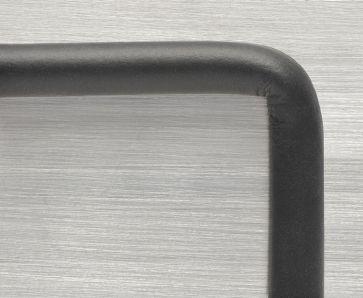
“Once we had started setting up our own equipment and actually running everything in-house, we were much more confident to attack the market,” Beavan says. He started travelling widely in the U.S., advertising the moulded window frames and the fact that Elton keeps extensive stock of everything it produces. Not a fan of just-in-time manufacturing, Beavan believes in having ample product on hand before taking orders. And the orders did flow, because Elton’s moulded frame addressed all the major issues with the corner-welded frames that were out there. “The corners can break if not handled properly and they can be very difficult to assemble,” Beavan says. “So we came out with this injection moulded frame which they had seen but had not been readily available. So now it is available and they start using it and all of a sudden they see their sales go through the roof. The stability of the product enabled the sales guys to focus on selling.”
Beavan says while just-in-time inventory management might work in automotive and some other industries, it is not a good strategy for the fenestration world. “There is just not enough reliable data coming from the customer and from their customers to make justin-time possible,” he asserts. Elton’s strategy, instead, is to maintain a massive, 100,000-square-foot warehouse stacked to the rafters with inventory. Beavan says he can fill most orders in a week, even without advance notice. The advantage in service is worth the impact at tax time, he feels, though even that is relatively minor as Elton
turns over its inventory quickly and ends up maintaining very little obsolete product.
When all you have is a hammer, everything looks like a nail. Beavan started casting around for new areas in fenestration to apply his injection moulding expertise. Door vents popped up as another opportunity. The market was undergoing a major shift at the time away from extruded, welded vents that were time-consuming to manufacture. Beavan actually found that once the tooling was developed, he could make a moulded vent system that was faster to produce than an extruded system because the assembly practically snaps together. Then they went farther when customers gave feedback indicating the handles on the vents were too hard to operate. This was not unique to Elton’s vents - door vents have been notoriously hard to operate since the dawn of fenestration. So Elton developed a new, larger handle and tested it on their receptionist and various other people around the plant. Beavan likes this kind of focus group, because his
staff understands what the company is trying to accomplish. “They are going to tell you what they think honestly rather than a customer being nervous to tell you ‘No,’” he opines.
Beavan says a benefit of injection moulding is being able to make heavier parts with more material in them without sacrificing production speed. He has always found that installers and end-users alike prefer the more robust frames. But the injection moulding machines are not cheap and at first it was a struggle to keep them busy enough to justify themselves. Now, however, there is a steady flow of business. “We have a nice consistent pattern. Entry door starts getting busy around March, slows down around October or November,” Beavan explains. “Garage doors start getting busy in the summer and go incredibly strong right into December with some overflow into January.”
Beavan is quick to credit the whole team at Elton for the company’s remarkable success. “It is a cliche but it must be said again,” he says. “None of this would
Next Generation Lock & Tilt Latch System
Designed for Ease of Installation and Operation.
HARMONY™ LOCK AND TILT LATCH SYSTEM WORKS ON A WIDE VARIETY OF PROFILES.
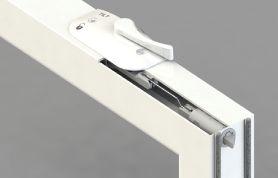
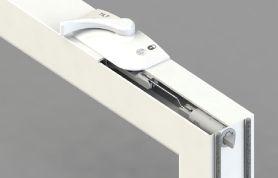
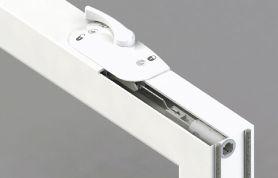
The next generation combination lock and tilt latch system named the Harmony™ System — integrates the check rail lock and tilt latch together in a manner which creates a new level of installation ease. This integrated system has been designed to allow the homeowner to activate the lock and tilt latches from the same device.
scan this Qr code with your smart phone to learn more about the Harmony™ system.
be possible without the dedication and hard work our team. No matter what we develop, it is the team that carries it through to completion.” Pigliarolo was a managing owner of Ace Extrusions before Elton purchased it. He brings extensive technical and mechanical knowledge that has enabled us to sharpen our processes by removing a lot of the uncertainty around what is possible with plastics extrusion. Damian Sunter is plant manager of the injection moulding division. His strength is problem solving the plastic injection moulding process. Sunter has overseen much of the growth of Elton’s plastic injection moulding business including the integration of eight fully automated injection moulding machines with related expansions to the plant and auxiliary equipment.
Elton’s entry door products are now being shipped everywhere in North America and its garage door products are shipped globally. Elton is living proof that Canadians can still be competitive serving a global market through mass production. It just takes intelligence and a lot of willingness to try new things.
FENESTRATION CANADA 2014 AGM
WELCOME TO FENESTRATION VALLEY
Winnipeg meeting set to educate and entertain.
The Canadian fenestration industry has enjoyed productive times in many locations around the country over the years, but none to match this summer at Fenestration Valley in Winnipeg.
by AL DUECK, PRESIDENT, DUXTON WINDOWS AND DOORS
Fenestration Canada’s Annual General Meeting, taking place June 11 to 14 in Manitoba’s Fenestration Valley will showcase unique technological breakthroughs such as high-performance insulating glass and window frames. Attendees will be able to keep involved with the exciting progressions of the window and door manufacturing industry between important meetings about technical details, code discussions and new products. Members will be invigorated working in committees such as the Fabricators’ Council, Technical and Marketing on issues that are critical to the health of our industry. In this mix of suppliers and fabricators attendees will advance their businesses and learn about what’s on the horizon.
This year, much more intensive involvement by Fenestration Manitoba, Fenestration B.C. and the AVFQ will add to the mix, bringing insights into key developments, such as varying energy codes, in other parts of Canada.
It all starts with arrival at the new James Armstrong Richardson International Airport, recognized as one of the top 10 airports in the world. Renowned architect César Pelli (who designed the Petronas Towers in Malaysia and the International Financial Centre in Hong Kong) drew his inspiration from the vast prairies and sky when he conceived this, the first freestanding airport building in Canada that is LEED-certified. Skylights, an atrium and large windows bring the big brilliant
sky indoors, filling the space with light and working with smart mechanical systems to reduce energy consumption.
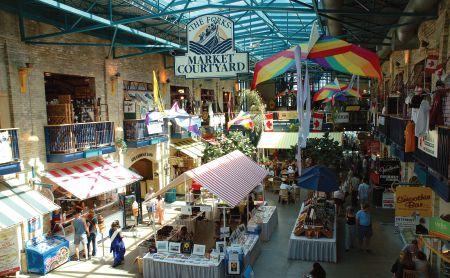
Attendees should reserve early enough to take a place in the historic Fort Garry Hotel, which has been upgraded to incorporate a superb spa and conference centre while maintaining all of its original grace and grandeur. The Fort Garry Hotel is just across the street from The Forks, Winnipeg’s bustling bazaar and entertainment centre and site of the Canadian Museum for Human Rights. A short walk across the famous Esplande Riel Pedestrian Bridge is St. Boniface, Winnipeg’s French Quarter and a Canadian mustsee. Also just a few blocks away, the Exchange District is a hub of Winnipeg’s famously robust arts and entertainment industry.
AGM 2014 has a lineup of activities that will ensure the entire event is one to remember. Extracurricular activity kicks off with a first-ever joint golf event at the Rossmere Golf and Country Club, pitting Fenestration Manitoba against AGM registered attendees. Rossmere welcomes players of all abilities with its 6,400 yards of rolling fairways, lush greens and wide-open beauty. The first hole is one of the best in Winnipeg, while the 11th hole is generally considered the toughest par four in all of Manitoba.
National and local suppliers are encouraged to “triple up” on networking within Fenestration
Valley and spend time with delegates while taking the opportunity to visit nearby manufacturing facilities. FenMan will also host the Leading Edge product and service display and interaction centre.
Executive director Robert Rivard has arranged a dinner outing at historic Fort Gibraltar in St. Boniface, with the challenge to vie for prizes in the infamous ax-throwing contest. Fort Gibraltar will take you back 200 years, to the voyageurs and the fur trade, with its living history museum and interactive guided tours. Costumed interpreters relive the daily life of 1815 as you visit significant buildings in the fort such as the blacksmith shop, the
winterer’s cabin and the trading post.
Plan to keep your energy up to travel to the real Gateway to the West, the Exchange District, an atmospheric scene of nightspots where the camaraderie of the AGM will certainly carry on well into the night. Nightlife ranges from the youthful Whiskey Dix on Main Street to the more relaxed Sensi Wine Lounge above Tre Visi restaurant and the Exchange-centered Peasant Cookery bar with its late night snack of tourtière.
While you are busy with meetings, your companion will have a number of active and intriguing choices for fun. FenMan has plans for jogging or cycling on the
leafy trails and streets along the river, or a combination of spa luxuries and yoga at the hotel.
Winnipeg is a quiet gem of outstanding architecture. Your companion will be able to sneak a peek at the iconic Canadian Museum for Human Rights, just before its grand opening later in the summer. Architect Antoine Preddock describes his vision as “rooted in humanity, making visible in the architecture the fundamental commonality of humankind – a symbolic apparition of ice, clouds and stone set in a field of sweet grass. Carved into the earth and dissolving into the sky on the Winnipeg horizon, the abstract ephemeral
The iconic Exchange District, with its rows of pubs, bars, nightclubs and restaurants, will present a number of entertaining diversions to Fenestration Canada members.
wings of a white dove embrace a mythic stone mountain of 450 million year old Tyndall limestone in the creation of a unifying and timeless landmark for all nations and cultures of the world.”
Yet another option is the unique Hermetic Tour of the Manitoba Legislative Building, which unravels some of the mystical secrets encoded in the building’s grand architecture including hidden hieroglyphic inscriptions, numerological codes and Freemasonic symbols so intelligently masked they have escaped historians and visitors for nearly 100 years. You and your companion will also be given a chance to see the Exchange District by day, with a highly informative guide to the unique architectural details of one of North America’s largest warehouse districts.
Consider, as well, the exceptional opportunity to enjoy the Winnipeg International Jazz Festival, just beginning mid-week in the Exchange District. This year marks the 25th anniversary of the festival, when the world’s best jazz, blues and urban artists converge on downtown Winnipeg. The creative work of Winnipeg’s vibrant design community is on display in the midst of this event at
the Cube, the kind of innovative outdoor stage that flourishes so well in Winnipeg. All of the AGM conference program, online registration and room reservations are available on the main Fenestration Canada website at fenestrationcanada.ca
Think previous Fenestration Canada AGMs have been fun and worthwhile? You ain’t seen nothin’ yet!
2:30 pm – 4:30 pm Board of Directors Meeting LA VERENDRYE
4:00 pm – 6:00 pm Registration Desk Open LOBBY
Sponsored by: Screenco Manufacturing Ltd
6:00 pm – 10:15 pm Group Activity & Dinner MEET/GREET IN THE LOBBY
-Transportation sponsored by: Fenzi North America
-Reception sponsored by: Quanex Building Products
EVENING AT FORT GIBRALTAR
At 6:00 pm you depart the Hotel Fort Garry by motor coach on a short drive to the French Quarter of Winnipeg and historic Fort Gibraltar.
FRIDAY, JUNE 13, 2014
7:30 am – 9:00 am Delegate’s / Companion’s Breakfast CONCERT HALL
Sponsored by: Caldwell Manufacturing NA LLC
10:00 am – 2:30 pm Companion’s Program (Space is limited) MEET/GREET IN THE LOBBY
WORLD WAR II SPY AND HERMETIC CODE TOUR AND LUNCH
This tour on its own is listed by TripAdvisor as Winnipeg’s # 1 tour and by the Canadian Tourism Commission as a Signature Experience Collection that they use to promote Winnipeg to International visitors.
8:30 am – 4:00 pm Technical & Issues Session LAVERENDRYE
8:00 am – 8:45 am Breakfast for Delegates and Companions CONCERT HALL
9:00 am – 10:15 am (SPEAKER TBD) LAVERENDRYE
10:25 am - 11:30 am Fenestration Canada Annual Meeting LAVERENDRYE
Sponsored by: Amesbury & Truth Hardware
11:45 am – 12:30 pm Delegate’s/Companion’s Farewell Luncheon GATEWAY/TACHE
FIT AND FINISH
But what if it fails?
by Chris Meiorin
Sophistication can be a double-edged sword in fabrication machinery.
Much has changed in the past 25 years since the purchase of our first fenestration machinery package. The vinyl window industry was just emerging in North America, as was the industry that served it. Fabrication equipment was well made and predominantly of German origin. Profile specific tooling was, for the most part, nonexistent and we were left to our own resources to figure it out, often outfitting the machines with wooden jigs and fixtures to accommodate the various profiles. The machines were basic, robust and relatively simple to service, with many of our original machines still providing some level of functionality as part of the existing fabrication process.
Contrast this early model to some of the equipment on display by JRC Machinery of Quebec at the past Win-Door show. Most notable in their product showcase was the Integra Q2 four-point welder by Italian-based machinery manufacturer, Emmegi, which was nothing short of an engineering marvel wrapped in a skin that would not look out of place in a Porsche showroom. Watching this impressive piece of equipment run through its demonstration cycle, I could not help but wonder what one would do when it fails on the shop floor. Much like the sophistication that goes into today’s high performance automobiles, servicing the current offering of advanced fabrication equipment requires service technicians that are well versed not only in mechanics and electrical, but experts in robotics, computer controls and related software. In short, it has become a daunting task for the service departments of even the largest window and door manufactures, leaving most small to medium sized companies scratching their head at the first sign of “ERROR.”
This concern is echoed not only in the level of sophistication that a company like Emmegi incorporates into their machinery, but in some of the price sensitive equipment that is
emerging from the crossroads of Europe and Asia. One such company, Turkish based Setino, offers a line of very functional equipment by Artikon. Having first discovered the Setino offerings at Fensterbau, I have witnessed a steady progression by this company to break into the North American market. Its priceconscious offerings appeal to both large and medium-sized companies alike due to not only its cost, but the possibility for existing staff or contract technicians to service this relatively low-tech equipment. This route, however, does present a set of challenges not too different from that of the ultra-sophisticated equipment: what to do when it fails? Further to this, factor in logistics, duties, certification and Pre-Start Health & Safety Reviews (PSR), the cost saving is diminished.
A recent conversation with Gary Parr, maintenance manager at Milgard Windows and Doors, brought to light the fact that even large companies with significant resources at both the maintenance and engineering levels struggle with the same challenges that face the smaller companies when making the sometimes gut-wrenching decision to invest in new fabrication equipment. Return on investment and equipment reliability remain significant factors when looking to partner with an machinery vendor, but the commitment to after-sale service remains, in my eyes, one of the key criteria when looking to upgrade the shop floor. With this philosophy in mind, much effort is placed in developing a solid partnership with key vendors. This is a philosophy that I often speak passionately about and practice wherever and whenever possible including choosing a machinery manufacturer that can best represent the significant investment required to succeed in today’s fenestration industry.
Chris Meiorin is the owner of Euro Vinyl Windows and Doors in Woodbridge, Ont.
Celebrate 20 YEARS Of Success!
EASY ONLINE REGISTRATION OPENS JULY 1, 2014
❖ Window / Door / Overhead Door Manufacturer / Distributor / RetailerFREE OR $25 at the door
❖ Glazing & Fenestration Commercial ContractorFREE OR $25 at the door
❖ Non-Exhibiting Component / Equipment / Service Provider / Sales Rep: Fenestration Canada member–$50 in advance, $75 at the door Non-member–$100 in advance, $200 at the door
❖ Registration Includes FREE Daily Seminars
❖ Learn The New Codes and New Standards
❖ Discover The Latest Technologies
❖ Annual Economic Forecast
❖ See All The New Products
FREE MTCC Parking ❖ FREE Lunch On The Show Floor
INNOVATIONS
FRAME ADVANCE
Vinyl door frames are giving wood a run for its money.
The wood door frame has been under attack from a plethora of new materials, with the goal of creating a more durable, prefinished, maintenance-free product. But wood still remains the standard door-framing product out there because of its unbeatable price point. That may be about to change.
by EDDY ROCHMAN, PRESIDENT, ROCSOLID DOORS
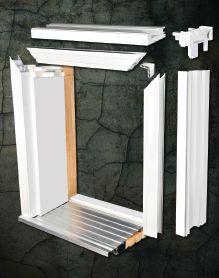
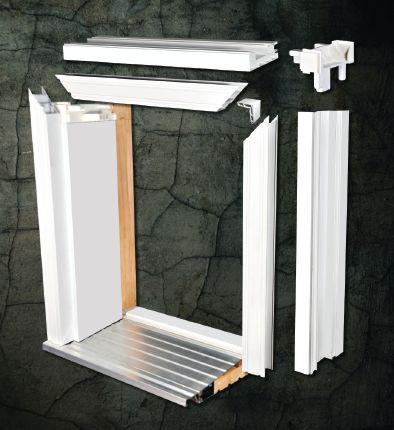
Vinyl door frames are designed to assemble easily using interlocking corner keys and a few screws. Quick installation and durability are making them a popular option for many builders.
In the early ‘80s, vinyl windows were starting to make their way into the market. The established manufacturers of wood and aluminum window products asked who would buy plastic windows. The answer, as we all know today, is everyone. When vinyl was introduced to window fabricators, it provided them the opportunity to build a maintenance-free, long-term durable product at about the same cost as wood. Vinyl quickly became the market standard for residential window products. Today vinyl is used in the majority of residential windows manufactured.
Door frames never made the same leap. Wood has remained the primary framing material for the door industry. But innovations in vinyl frame design are addressing the issues that have kept vinyl off
door frames until now and bringing prices in line with wood. In this article, we will take a look at one such PVC door-frame system manufactured by Toronto, Ont.’s RocSolid Door Components. Rocsolid has designed and engineered a system of connectable PVC components that can be assembled by pre-hangers to create any system they can imagine. The Rocsolid system actually retains the strength and esthetics of wood, but puts it in its place: on the inside of the home.
The outer frame is a PVC extrusion that is assembled using a strong, glass-filled, nylon corner key. The inner frame is pre-painted wood, making the frame easy to hinge, latch and install while creating excellent rigidity. The patented corner key is critical to this system. It joins the head and leg extrusions at the top corners and is screwed to both. This creates great strength and rigidity, while not allowing any separation of the connection. The frame won’t rack or collapse like end-work prepped frames.
With the corner key addressing the structural concerns associated with PVC frames, pre-hangers are free to exploit the benefits vinyl offers as a building material. A PVC outer frame and wood inner frame has many advantages over a purely wood frame. It is maintenance-free, durable over the long term and weatherproof and strong on the outside while maintaining the rigidity, ease of use and familiarity of wood where the installer places hinges and latches on the inside.
The best part is, it is very close in price to ordinary lumber.
The Rocsolid system allows for box or mullion
Continued on page 27
FEATURE
STORM DOORS GALORE
The forgotten product of fenestration is gaining strength.
Customers are storming the doors at George Warren’s showrooms. “We’re busy, busy, busy; our growth projections are getting blown away,” says the president of family owned and operated Centennial Windows and Doors from his London, Ont., plant, referring to some of the strongest sales ever of storm doors at his 11 satellite showrooms across Western Ontario. Centennial sells almost exclusively to the residential market, focusing on the renovations sector.
by JACK KOHANE
Weather helped drive demand. “It was a brutal winter, the worst I recall in our 34 years of business,” notes Warren. People wanted that added layer of protection against the harsh elements. If they felt air leaks around their doors, they thought about adding storm doors.” And even though a door is a relatively small area as compared to an entire wall of a house, just one door can lose a significant amount of energy. “Saving money on energy costs is a big factor in the increasing popularity of storm doors,” he adds. “The quality of the storm door construction is important for a nice appearance, long life and security. And because it must withstand a lot of abuse, most consumers know they shouldn’t pick the cheapest one. Our most popular storm doors are up to $1,000 with all the bells and whistles.”
It’s also a style thing, notes Kevin Pelley, president of Kohltech, a leading windows and doors manufacturer in Atlantic Canada. His view is that a generation ago, homeowners were looking for just a solid wood front door with nice aesthetics. A storm door didn’t cut it then. But tastes have swung back. “Today’s storm doors come in all styles and sizes that complement the front door and a cost effective way to add curb appeal,” Pelley points out. “They’re no longer just a piece of glass inside a hunk of aluminum. They’ve become an integral part of the home’s exterior character.”
Innovation is another market driver and it’s
key to Kohltech’s business plan. Pelley is proud that from the start of the company’s founding 30 years ago through to today, the customer’s name is put on every product from order intake, to production line, to delivery. “Kohltech products are custom-made. We invest heavily in R&D to maintain a constant stream of product options and cutting-edge manufacturing processes. Continuous improvement and leadership in product innovation is in our lifeblood. Being abreast with the latest technology not only improves the quality of our products, it also improves production efficiencies, thereby keeping prices competitive.”
Warren echoes that theme. “We’re known for our craftsmanship and commitment to innovation,” he touts. “Inside and out, our storm doors combine the best qualities of durable vinyl and aluminum construction and exceptional fit and finish.”
Recognized for its pioneering work in developing and promoting energy efficient products, Centennial Windows and Doors has snared several Energy Star awards, including the Manufacturer and Retailer of the Year Awards.
As Warren explains, some doors have selfstoring pockets for the glass in summer, and an insect screen for the winter. “Some storm windows have fixed, full-length screens and glass panels that slide out of the way for ventilation. People want to have the option of cross-ventilation in their homes. Others are half screen,
has made a
some offering screens on top to avoid damage from pets, and half glass. Some are easily removed for cleaning, others are not. All of these features add some convenience and higher costs.”
But it’s what’s behind storm doors that really intrigues Mike Bruno, president of Toronto-based Everlast. Crafting doors since 1961, Everlast’s array of aluminum, vinyl and PVC and fibreglass storm doors (exclusive to dealers across Canada) has evolved from a sideline to a main component of its business model. “It’s 25 per cent of what we produce today,” says Bruno. “That’s reflected in our sales in storm doors, trending up about 10 per cent annually.” Each year, the 47,000-square-foot facility, which now houses its other divisions (Alumitex Windows and Doors, Inc., Air-Tite Insulating Glass, Inc., and Napa Valley Doors) produces about 16,000 aluminum storm doors; and about 1,200 vinyl
storm doors. The company generated over $10 million in sales last year and is projected to exceed $11 million in 2014.
“You don’t stay in business this long without doing something right in building doors that homeowners want,” adds Vince Porcelli, Everlast’s vice-president of sales. In the high-tech world of mass manufacturing, Everlast has held true to the tried and tested methods of making quality window and door products.” He says that although some automation has been introduced into the manufacturing process at Everlast, “many of the functions used to produce our products, the art and touch of human hands still plays a significant role in the daily production of our doors.” Technology and the simple task of listening to what customers want and looking at the trends the marketplace presents is what drives the innovation of Everlast’s products, he continues.
One of the company’s latest offering
is the Modern Storm door. “We realized that most storm doors have not seen a change in decades. And because today’s consumers are more discerning than ever before we needed to update the look of our storm doors - clean lines, simple elegance, energy efficiency and safety.” To that end, the Everlast team has come up with a design it calls “not your parents’ storm door,” engineered with simple, clean lines for modern tastes. The process started by simply removing the extrusion lines of the classic style creating a smooth face and then adding a bevel that will hide the sash and give the illusion of more glass. “The consumer with a high-end entry system can now add a layer of safety, and efficiency without hiding the beauty of the entrance door,” says Procelli. And we made it available in a nine-colour pallet from black to earth tones and down to white.” Everlast’s push to contemporize its
Toronto fabricator Everlast
significant commitment to developing and supplying storm doors based on its market analysis.
based on the individual customers’ specifications. The glass is also sourced from a reliable supplier and is cut in-house along with the sealed units that are produced for windows as well. Materials such as PVC and fibreglass offer the most corrosion resistance of all when used in a storm door. They can also be moulded in such a way as to realistically mimic wood grain to provide the appearance of a wooden storm door.
“Custom work tends to be the bulk of Everlast’s orders which is also another reason that the care and craftsmanship of human hands is an asset and keeps customers coming back over and over,” says Porcelli. “The definition of the process at Everlast could be defined as one of semi automation with the added care of human craftsmanship. One might say that the latest technologically advanced machines is what keeps a company at the forefront of its industry, but Everlast begs to differ,” argues Bruno. “It’s our belief that an atmosphere of continuous improvement and being able to come up with new and fresh ideas that customers want, and producing them with consistent quality and efficiency is what keeps a company at the forefront of its industry…and when it comes to storm doors and windows that is exactly where Everlast is today.”
Tomorrow, Everlast is set to penetrate the Maritimes. The company recently partnered with Kohltech to sell doors and storm doors in Atlantic Canada. “We’ve had customer ask specifically for it,” says Pelley. “These products are being well received in this region.”
storm door line began with the selection of strong partners for the base materials starting with both the aluminum and vinyl extrusions. Companies were selected with a proven history and longevity to supply those essential parts. The aluminum extrusions used to manufacture Everlast’s modern storm door have a significant 0.055-inch wall thickness and the frame has a beefy overall thickness of 2-1/4 inches creating a substantial door unlike most now available on the mass market. The aluminum extrusions come
in pre-painted in nine colours using a Duracron baked finish and arrive in massive quantities to help keep pricing competitive.
The vinyl extrusions come in a white base and then applied in-house with Everlast’s Euro Finish paint. “We aren’t afraid of colour,” boasts Bruno. “On occasion you will walk through our plant and be struck with a canary yellow vinyl storm door or rose-coloured vinyl windows.” The extrusions are then passed through the various assembly stations
Increasingly, homeowners view adding a storm door as a good investment. In addition to adding another layer of security to a home’s entryways, the biggest reason to install these doors is to save money, because they perform yeoman’s duty in trapping heat—or at least allowing less of it to escape. And the less often a home’s heating system has to work, the less money is spent to keep one’s home warm and comfortable.
What does Warren see as the main trends in storm doors? “Consumers want to reduce their home’s carbon footprint. When it comes to storm doors, that means quality components, proven technologies, and environmentally-friendly products offering longevity. Today’s storm doors answer those must-haves.”
Fabricators who have not abandoned their storm door products are reporting increased sales. Customers are missing the ability to get a breeze through the storm door without letting in bugs.
DOOR FRAMES LEAP FORWARD
Continued from page 22
post construction assembling with a solid and clean finish. Frame sizes currently available are 4-9/16 and 6-9/16 inches with brick mould choices of a 5/8-inch, two-flute pattern and a two-inch step-down profile. The brick mould is designed to accept a storm door installation without needing reinforcement, and the specially designed brick mould corner key helps create a perfect miter joint. Mullions can be covered with a one 1/8-inch standard mullion cover or a low-profile burlap mullion cover that allows for screen movement.
The Rocsolid one-piece posts are designed to offer the most cost-efficient and quickest assembly in the industry. The jamb and header are assembled simply by inserting corner keys and pushing the parts together then securing with screws and staples. The sill screws into place at the bottom, and with a little caulking, it’s done. The brick mould attaches to the jamb with simple tongue-and-groove connections that also engage with the corner keys to make
the whole frame one solid unit. Drive a few screws, caulk, and the brick mould is attached.
A critical part of the system is the hard PVC filler strips. These allow for bottommounting of the sills up into the filler strip screw ports and for the mounting of posts. The filler strips are inserted into the jamb cavities to enable the pre-hanger to screw the sill onto the jamb from the bottom. The mullion connector base is also simply screwed onto the jambs and covered with the pre-hanger’s method of choice. If extra stability is desired, the pre-hanger can insert filler strips into the jamb cavities. The filler strips allow for a solid durable connection with any sill. If required, the Rocsolid system is available with cavities designed to accept steel reinforcement.
Another key consideration is the requirement under the North American Fenestration Standard for all exposed wood in door systems to be preserved or sealed against water penetration. NAFS is
becoming part of building codes around the country. Soon, pre-hangers will not be able to deliver systems with exposed, untreated wood. But how many wood systems do you know come pre-treated or sealed? PVC door frames remove this problem, and in the Rocsolid system, all the wood components are on the interior and not exposed to the elements. Since Rocsolid supplies only the framing components (no slab, sill, sweep, etc.), the system cannot be tested by itself for NAFS compliance, but the frame should have no bearing on the result one way or the other. The key to passing NAFS-08 is the sill and sweep combination. That said, the Rocsolid frame, or almost any other on the market today, will meet the standard if the system it is used with can pass.
For more on innovative window and door technology, visit fenestrationreview.com > Lite