supply management: mature Discussion needed a george morris Centre report says it’s time to set aside clashing ideologies By
Jim Knisley
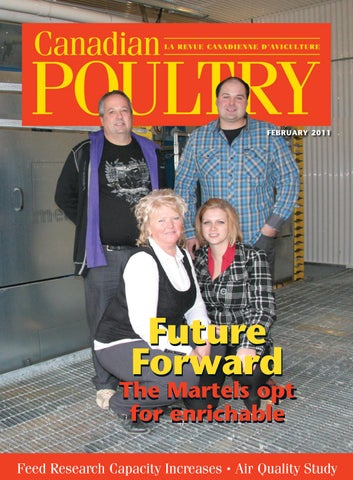
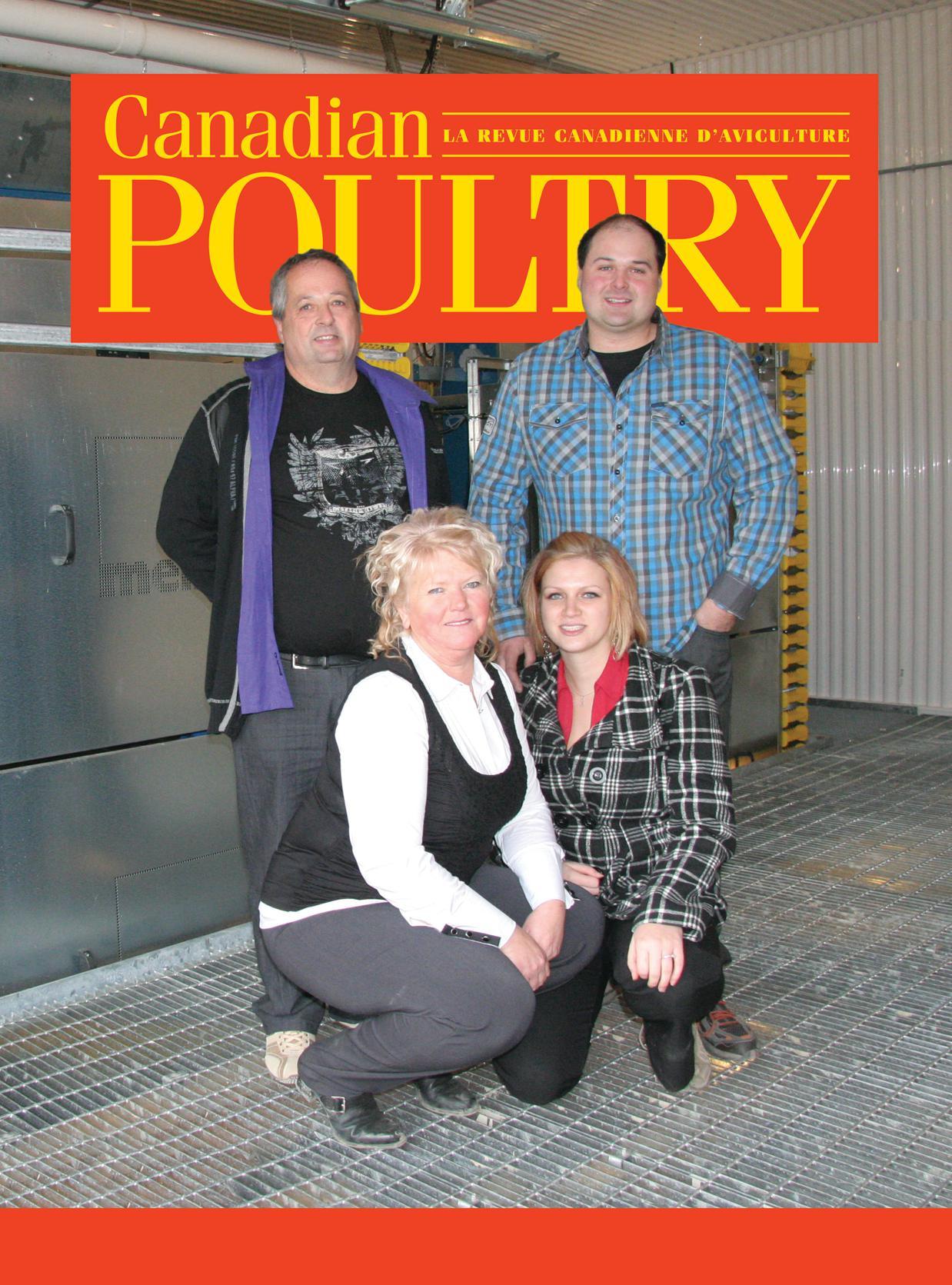
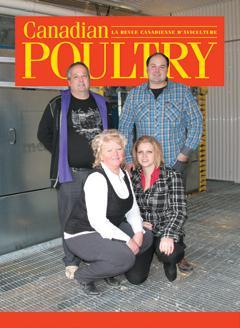
new Barn: Future Forward the martels opt for enrichable cages for their new layer barn, making it Quebec’s largest By
André Dumont
pIC upDate: tracking Down Disease pathways By
Joey Sabljic
24
aIr QualIty: a silent threat research into harmful emissions from farms is focusing on the interrelationships among different air contaminants By Treena Hein
researCh: Coming home to roost and research
Dr. tom scott is conducting exciting feed research
By Treena Hein
Air quality
researCh: new Vaccine
Developed for newcastle Disease
Developed by the usDa, the vaccine reduces mortality, severity of symptoms, as well as virus spread
By Sharon Durham
nouVelle grange: les cages enrichissables font une percée au Québec
la Ferme avicole ste-Croix, au lac-saint-Jean, a inauguré un pondoir d’une capacité de 70 000 pondeuses
Par André Dumont
Cover photo by andré Dumont
FROM THE EDITOR
BY KRIsTY nUdds
a Partner in health
Normally, during the first week or so of the new year we are bombarded with television, radio and Internet advertisements and media articles with helpful hints on how to stick to those new year’s resolutions that many of us make each Dec. 31.
But by mid-January the diet and exercise commercials become less frequent, and the majority of resolution-makers feel less guilty and go into hibernation mode for the winter. or, they just simply give up, and momentum wanes.
But with north america and the u.K. experiencing “obesity epidemics,” the focus so far in 2011 seems to be on keeping the “healthy living” momentum going. In addition to promoting exercise, the primary focus is on food – more specifically, on food choices.
although common sense still applies –encouraging consumers to eat more fruits and vegetables and less fat – where the food comes from and how it is produced is receiving increasing emphasis. the “eat local” movement of recent years has been very influential, and has been of benefit to many agricultural commodities.
But the newest food trend quickly gaining ground is the reduction in the consumption of ready-to-eat and processed foods. this is due in part to negative health consequences such as increased sodium content, the presence of chemicals used as preservatives and within the plastic lining of canned goods, and the perceived food safety risk resulting from crises such as the listeria outbreak of 2008.
But this trend is largely the result of economics. we are currently experiencing the deepest recession since the great Depression, and consumers are hesitant to spend more than they have to, or are able to. In addition to the desire to eat more healthily, reduced food budgets
have fuelled the increasing trend of preparing more meals at home, rather than consuming meals in restaurants or other foodservice outlets.
this presents many opportunities for the poultry industry. poultry products are a local, affordable source of lean protein, and they are easily prepared. Both the national and provincial marketing boards for chicken, turkey and eggs have been doing a great job of offering consumers easy recipes and creative meal ideas, and they must continue to emphasize healthy choices.
offering more value to consumers is also key. Continued research and development of value-added products and functional foods such as eggs and chicken with increased omega-3 fatty acids and cholesterol-free liquid egg products give health-conscious consumers more bang for their buck.
social media can also help poultry organizations add value for consumers. In addition to recipe ideas, links to useful food and health blogs, and advice from experts or chefs can be provided to consumers quickly and easily using a Facebook page, a twitter account and even youtube. It’s a win-win situation – consumers see your organization as interested in their wellbeing, and you draw them to your website where they can learn more about poultry production and poultry farmers.
Being seen as a partner in the journey towards healthier living is just one more way the poultry industry, and agriculture in general, can engage and educate consumers. It’s an additional opportunity to tell our stories, to educate them about food production, and to learn more about how we can continue to provide their families with high-quality products. n
February 2011 Vol. 98, No. 2
Editor Kristy Nudds – knudds@annexweb.com
888-599-2228 ext. 266
Associate Editor
Jim Knisley – jknisley@kwic.com
Publisher/Sales Manager
Marilyn White – mwhite@annexweb.com
519-429-5193
888-599-2228 ext 237 • fax: 888-404-1129
Sales Assistant
Mary Burnie – mburnie@annexweb.com 519-429-5175 • 888-599-2228 ext 234
Production Artist
Emily Sun
Group Publisher
Diane Kleer – dkleer@annexweb.com
President Mike Fredericks – mfredericks@annexweb.com
Mailing Address
P.O. Box 530, 105 Donly Dr. S., Simcoe, ON N3Y 4N5
Publication Mail Agreement #40065710
PAP Registration #9850
REtuRN uNDEliVERABlE CANADiAN ADDRESSES tO CiRCulAtiON DEPt., P.O. BOx 530, SiMCOE, ON N3Y 4N5. e-mail: cnowe@annexweb.com.
Canada – 1 Year $ 25.20 (includes GSt – #867172652Rt0001) $27.12 (includes QSt/HSt) uSA – 1 Year $ 60.00
Occasionally, Canadian Poultry Magazine will mail information on behalf of industry-related groups whose products and services we believe may be of interest to you. if you prefer not to receive this information, please contact our circulation department in any of the four ways listed above.
[ spek-tak-yuh-ler ] Of the nature of a spectacle; impressive or sensational.
Nothing says specktacular like OptiGROW!
Lubing's all-new Opti GROW Nipple is designed to work in today's challenging broiler environment. Because the nipple has been optimized for growth, you will be amazed by the first-week performance and explosive bird growth. OptiGROW offers:
Large body and pin
Acid resistant design
Easy triggering for day-old birds
Low mortality
Increased side-action flow
Larger flow range for jumbo birds
Increased weight gains
Improved feed conversions
To find out more about this specktacular new product, please contact your local Lubing representative.
Glass-Pac Canada
St. Jacobs, Ontario
Tel: (519) 664.3811
Fax: (519) 664.3003
Carstairs, Alberta
Tel: (403) 337-3767
Fax: (403) 337-3590
J. Dean Williamson Ltd.
London, Ontario
Tel: (519) 657.5231
Fax: (519) 657.4092
Les Equipments Avipor
Cowansville , Quebec
Tel: (450) 263.6222
Fax: (450) 263.9021
Specht-Canada Inc.
Stony Plain, Alberta
Tel: (780) 963.4795
Fax: (780) 963.5034
GM Chickens Developed That Can’t Spread AI C WhAT’S HATCHING HATCHING
hickens genetically modified (gm) to prevent them spreading bird flu have been produced by researchers at the universities of Cambridge and edinburgh.
the scientists have successfully developed transgenic chickens that do not transmit avian influenza (aI) virus to other chickens with which they are in contact. this genetic modification has the potential to stop bird flu outbreaks spreading within poultry flocks. this would not only protect the health of domestic poultry but could also reduce the risk of bird flu epidemics leading to new flu virus epidemics in the human population.
researchers say that this development is a significant first step along the path to developing chickens that are
completely resistant to avian flu.
to produce these chickens, the Cambridge and edinburgh scientists introduced a new gene that manufactures a small “decoy” molecule that mimics an important control element of the bird flu virus. the replication machinery of the virus is tricked into recognizing the decoy molecule instead of the viral genome and this interferes with the replication cycle of the virus. when the transgenic chickens were infected with avian flu, they became sick but did not transmit the infection on to other chickens kept in the same pen with them. this was the case even if the other chickens were normal (nongm) birds.
Dr. laurence tiley, senior lecturer in molecular virology at
the university of Cambridge, said in a release, “the decoy mimics an essential part of the flu virus genome that is identical for all strains of influenza a. we expect the decoy to work against all strains of avian influenza and that the virus will find it difficult to evolve to escape the effects of the decoy. this is quite different from conventional flu vaccines, which need to be updated in the face of virus evolution as they tend only to protect against closely matching strains of virus and do not always prevent spread within a flock.” the study was published on Jan. 14 in the journal science, and was funded by the Biotechnology and Biological sciences research Council (BBsrC).
Joint Traceability Project
The federal government has invested in a joint traceability system in the province of Quebec. the honourable Jean-pierre Blackburn, minister of Veterans affairs and minister of state (agriculture), recently announced a contribution of up to $969,920 to agritracabilite Quebec.
the financing will support the automation of the
agritrace system and the adaptation and integration of new system validation applications in order to achieve joint traceability of animals, either individually or by lot. this will be beneficial in the event of an animal health emergency. since 2001, agritracabilite Quebec’s mission has been to develop, implement and operate a system of permanent identification and traceability for agricultural and agri-food products.
Co-op atlantic announced the construction of a new feed mill, replacing an existing facility in moncton, which has been in operation since 1946. the new mill will be located on a parcel of land adjacent to the existing structure. the construction project, estimated at $7.5 million, is expected to be completed by october of this year the new facility will result in an increase in feed production efficiency and capacity. John harvie, Ceo for Co-op atlantic, says the new mill
sunnymel, the partnership formed by olymel and groupe westco, announced plans to hold public meetings in late January to discuss the
this investment is being made under growing Forward through the Canadian Integrated Food safety Initiative (CIFsI) of agriculture and agriFood Canada. through the Canadian Industry traceability Infrastructure Component of CIFsI, the government of Canada supports national organizations in the development and implementation of traceability processes and systems. to learn more about this initiative, visit: www.agr. gc.ca/cifsi
will help Co-op atlantic serve livestock producers in new Brunswick in a much more efficient manner and better serve it’s growing retail Country store business in all of the atlantic provinces.
environmental impact of a proposed $40 million chicken slaughtering facility in northwestern new Brunswick.
sunnymel will release the environmental impact assessment it performed for the provincial government and take questions from the public. sunnymel’s proposed facility will be located in the industrial park in the village of Clair. the purpose of the meet-
FEBRUARY
February 28 – March 1, 2011
Alberta Poultry Industry Conference, Capri hotel, trade & Convention Centre, red Deer, alta.
MARCH
March 15-17, 2011
40th Midwest Poultry Federation Convention, saint paul rivercentre, saint paul, minn. For more information, visit: www.midwestpoultry.com, or contact lara Durben, e-mail: lara@ midwestpoultry.com
March 20-23, 2011
60th Western Disease Poultry Conference and ACPV Workshop, holiday Inn Capitol plaza, sacramento, Calif. For more information, visit: www.cevs. ucdavis.edu
ApRIL
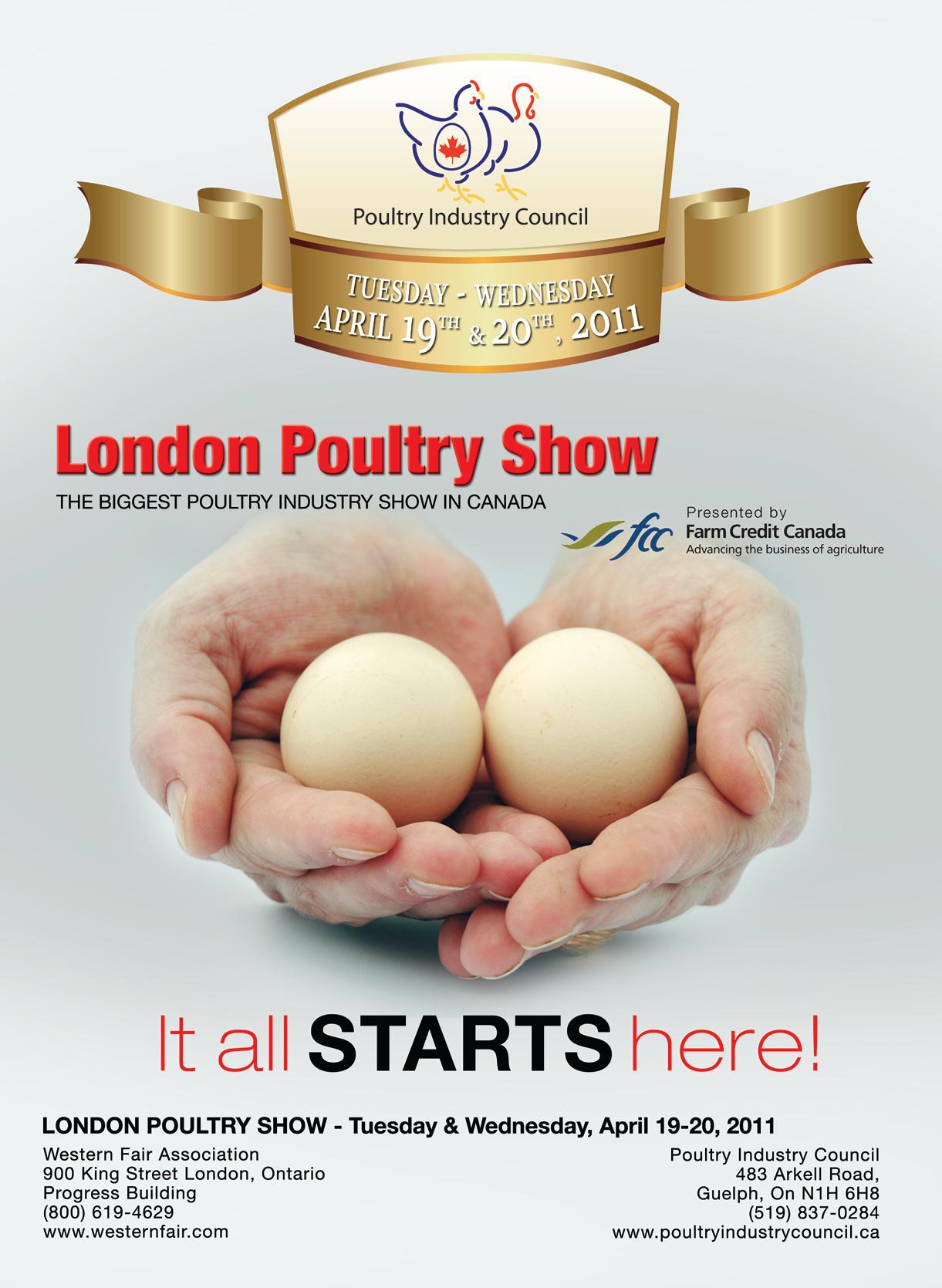
April 19-20, 2011
the new mill will have a capacity to produce more than 40,000 tons of animal feed per year, and will have the technology required to meet on and off farm production and food safety requirements.
ings is to allow locals to see what impact the plant will have in the area, such as wastewater treatment, air quality, and truck traffic. the proposed facility would process 450,000 birds per week and create close to 250 jobs. the proposed facility was first announced in December 2007, when groupe westco announced it was joining forces with Quebec-based olymel.
Poultry Industry Conference and Exhibition (London Poultry Show), progress Building, western Fairgrounds, london, ont. For exhibitor and registration information, please visit: www.westernfair.com or call: (800) 619-4629.
MAY
May 10, 2011
PIC Research Day, Victoria east golf Club, guelph, ont. For more information, visit: www.poultryindustrycouncil. ca or call: (519) 837-0284
JUnE
June 12-14, 2011
CPEPC Convention, Delta hotel, st. John’s, n l. For more information, visit: www.cpepc.ca or call: (613) 724-6605
HATCHING HATCHING
Former Tyson Chairman Passes
donald “Don” John tyson, the former Chairman of the Board and Ceo of tyson Foods, Inc., a company he led through phenomenal growth in the 1970s and 1980s died January 6, at the age of 80, after a brief illness.
Don was the son of tyson Foods Inc. founder John w tyson and father of current Chairman John h. tyson. through most of the 1950s Don worked with his father to grow the family business, then known as tyson Feed and
hatchery, supplying feed and chicks to local poultry producers in northwest arkansas. as the business became vertically integrated and grew, Don moved up progressively in the company leadership, becoming Chairman and Ceo after the death of his father in 1968.
Don also created and led the tyson Family Foundation, which provides scholarships for post secondary students from communities where tyson Foods has operations.
Egg Farm Suing State and hSUS over Proposition 2
he J.s. west Company of modesto, California has filed a lawsuit against the state of California aimed at clarifying the egg laying housing standards for proposition 2. also named in the lawsuit are the humane society of the united states (hsus) and attorney general Jerry Brown in his role as chief law enforcement officer of the state. proposition 2 did not identify what type of housing was required to meet prop 2, nor did the law identify any required floor space per bird. this has left California egg farmers with uncertainty about what will
be acceptable when the law becomes effective in 2015. the J.s west Company believes that the enriched colony housing systems provide more enrichment than the law requires but at the very least meets the intent of the law. the hsus, however, disagrees and says they look forward to presenting their case that confirms the public voted for a ban on cages. the hsus says the law requires cage-free production and 216 square inches per bird. again, prop 2 language that voters voted upon said nothing about cage-free or any space.
AUGUsT
August 8-11, 2011
5th International Workshop on the Assessment of Animal Welfare at Farm and Group Level (WAFL), university of guelph, guelph, ont. hosted by the Campbell Centre for the study of animal welfare and the ontario Veterinary College. For more information, e-mail: CCsaw@uoguelph. ca or visit: http://www. uoguelph.ca/csaw/events
sEpTEMBER
Sept. 13-15, 2011
Canada’s Outdoor Farm Show, woodstock, ont. For more information, please visit: www.outdoorfarmshow. com/
OCTOBER
october 4-6, 2011
Poultry Service Industry Workshop, the Banff Centre, Banff, alta. For more information, visit: www.poultryworkshop.com or e-mail: info@poultryworkshop.com
We welcome additions to our Coming Events section. To ensure publication at least one month prior to the event, please send your event information at least eight to 12 weeks in advance to: Canadian Poultry, Annex Publishing, P.O. Box 530, 105 Donly Dr. S., Simcoe, Ont. N3Y 4N5; e-mail knudds@annexweb.com; or fax 519-429-3094.
Your business needs are unique. Your livelihood depends on weather conditions, market changes and production cycles.
Managing and expanding your agricultural business requires the expertise of a business advisor intimately familiar with your challenges and opportunities.
You need the trusted, one-on-one relationship of a CIBC business advisor, backed by a team of dedicated CIBC Agricultural Banking Specialists.
You need solutions that are as unique as you are.
To speak to a CIBC business advisor, visit any CIBC branch, go to cibc.com/agriculture or call 1-888-493-2422.
Hendrix, Grelier May ‘Join Forces’
dutch poultry and swine breeder hendrix genetics
B.V. and French poultry breeder Financiere grelier holdings
s.a.s. have announced that they are exploring “the possibility to join forces” in the breeding and distribution of poultry. If the companies
reach an agreement, it’s expected that the deal would be finalized in mid-2011.
grelier is involved in chicken, turkey and guineafowl genetics. the company has genetic operations in France, hungary and poland and sales in more than 38
countries. It employs more than 1,000 people.
hendrix is involved in layer and turkey genetics and poultry distribution, with operations and partnerships in 22 countries and sales in more than 100 countries. It has more than 1,500 employees.
NEwS Colony 60 Certified by American Humane
Tecno poultry equipment’s enriched “Colony 60” has been Certified by the american humane association. the Certifications includes the 3, 4, 3+3, 4+4, 3+3+3, and the
4+4+4 tier tecno “Colony 60” enriched systems. the american humane Certified Farm animal program is the original national monitoring and labeling program to ensure that farm animals are raised humanely in the u.s. tecno currently has over 20 million layers producing eggs in their enriched systems throughout europe.
Positive Perceptions of Canadian Farming on the Rise: Survey
Memo to farmers: Canadians really, really like you – a lot.
Canada’s love affair with food and farming is intensifying, a new survey shows. according to results from an online study by Ipsos reid, more than half – 57 per cent – of Canadians surveyed have a positive impression of agriculture in this country, a figure that has risen 16 per cent since the survey was first conducted four years ago. In 2006, only 41 per cent of Canadians had a positive impression of Canadian agriculture and 52 per cent
reported a positive impression in 2009.
“Farmers have really been going the extra mile to open their proverbial barn doors these past few years to talk about what they do and why. these poll results reflect those efforts and demonstrates that the Canadian public appreciates having conversations with the people who grow their food,” says Crystal mackay, executive Director of the ontario Farm animal Council and agCare, which commissioned the study. although nearly all provinces showed an increase in the overall positive impression of Canadian agriculture, the strongest gains were found in ontario. positive perceptions in this province jumped 10 per cent from 56 per cent in 2009 to 66 per cent in 2010. only nine per cent of ontarians reported a negative image of Canadian farming in 2010, compared to 21 per cent in 2006. Interest and
investment in farm tours, farmers markets and agricultural awareness and education efforts is also at an all time high in ontario.
the survey also showed that farmers enjoy a high rate of public credibility on issues related to food and farming, such as animal welfare. ranked second only to veterinarians, farmers jumped eight points to 67 per cent from 59 per cent a year earlier.
“this study shows there’s a real opportunity for farmers to keep the open and honest dialogue going about how their food is grown with everyone who eats, so we can continue to build that sense of trust and pride in Canadian farming,” says macKay.
the survey was conducted as part of the Ipsos reid online express omnibus with Canadians aged 18 and over from nov. 26 to nov. 28, 2010. results are considered to be representative of the Canadian population.
Industry-Government Food Processing Action Plan Manitoba Joins
The honourable Jean-pierre Blackburn, minister of Veterans affairs and minister of state (agriculture), recently launched the Industrygovernment Food processing action plan and kicked off a pilot project to actively promote the high-quality foods that Canadian farmers and food processors produce. the action plan is designed to improve the competitiveness and growth potential of the Canadian food processing industry, which employs nearly 300,000 Canadians. the “growing the Canadian Food processing sector – an Industrygovernment action plan” was developed jointly by government and industry through roundtables with the processing industry held in 2009 and 2010 by minister Blackburn to identify the challenges facing the sector and find solutions to enable it to grow and strengthen its competitive capacity. the actions in the plan target four key areas of economics, market access, innovation and the regulatory environment. Far from
static, most of the actions recommended in the plan are expected to be completed over the next 12 months. the actions are wide ranging, including research studies, policy and program reviews, and the development of new initiatives to improve the competitiveness of the sector.
In response to one of the recommendations to promote Canadian products, minister Blackburn announced the launch of a pilot project at stong’s market in Vancouver highlighting Canadian food products. throughout the store, Canadian foods are identified through banners, signs,
DuPont to Acquire Danisco
Dupont recently announced it has entered into a definitive agreement for the acquisition of Danisco, a global enzyme and specialty food ingredients company, for $5.8 billion in cash and assumption of $500 million of Danisco’s net debt.
Danisco is a long-time successful partner of Dupont. the two companies are already joint venture partners in the development of cellulosic ethanol technology.
Dupont Chair and Ceo ellen Kullman said in a corporate release that the transaction is a perfect strategic fit with Dupont’s growth opportunities and will help it solve global challenges presented by dramatic population growth in the decades to come, specifically related to food and energy. “In addition, biotechnology and specialty food ingredients have the potential to change the landscape of industries, such as substituting renewable
on-shelf displays, in-store and online retail flyers. the initiative’s goal is to help consumers identify Canadian food products and encourage them to buy and Eat Canadian a similar in-store pilot was recently held in ottawa, and the next one will be in newfoundland in the coming weeks.
the information learned from these pilots, as well as from an online simulated shopping study, will help determine how to better promote Canadian products in stores and will inform other initiatives to support Canadian agriculture.
National Pilot Project On Meat Hygiene
Agriculture, Food and rural Initiatives minister stan struthers encouraged manitoba meat processors to take part in a new federal-provincialterritorial meat hygiene pilot project that is intended to improve interprovincial trade of meat.
“the interprovincial sale of meat is inhibited by standards that vary between the provinces and territories and we want to change that,” said struthers.
all meat-processing facilities follow exceptionally high hygiene standards based on the federal Food and Drug act.
materials for fossil fuel processes and addressing food needs in developing economies, that will generate more sustainable solutions and create growth for the company,” said Kullman. the acquisition is expected to be financed with about $3 billion in existing cash and the remainder in debt. the transaction is expected to close early in the second quarter and be cash and earnings accretive in 2012, the first full year of the combined entity.
each province and territory has meat-inspection legislation setting standards for meat products traded within their own jurisdictions. In meetings held last summer, federal, provincial and territorial governments discussed ways of eliminating barriers to interprovincial trade caused by differences in meat-processing regulations.
Beginning in February 2011, the national meat hygiene pilot project will evaluate the standards of meat processors that choose to participate in the program to determine what would be required to meet federal meat-hygiene requirements for interprovincial trade. the next step would be to help processors achieve the national standard.
Dimmable LED Broiler Lamp
GNEW
PRODUCTS PRODUCTS
lo lighting recently launched the agrilamp™ 30w Dimmable Broiler lamp designed specifically for the broiler segment of the poultry industry. the agrilamp 30w Dimmable Broiler lamp delivers a controllable, evenly distributed light that completely removes dark areas, providing a uniform distribution for rearing day-olds to market birds. It has been designed specifically to provide wavelength and intensity for broilers in all broiler houses. the Broiler lamp dramatically reduces lightingrelated energy consumption by up to 90 per cent.
poultry farmers have the additional reassurance that the agrilamp has an expected lifespan in excess of 35,000 hours to 75 per cent of its original output (10 times longer than incandescent light bulbs), bringing with it long-term cost savings. Furthermore, the
agrilamp has the lowest Co2 emissions of any lighting technology on the market, is nontoxic, and can be safely and easily recycled.
ongoing testing shows that the agrilamp incorporates important animal welfare benefits. It is fully dimmable, creating a true dusk-to-dawn environment, which is shown to produce a better feedconversion rate. additionally, levels of infrared, which can lead to aggressive bird behaviour, have been significantly reduced compared with incandescent light bulbs and CFls.
For more information, visit www.gloagrilamp.com, or contact Vencomatic north america through the website at www.vencomatic.ca.
Swifty HFFS Bagger
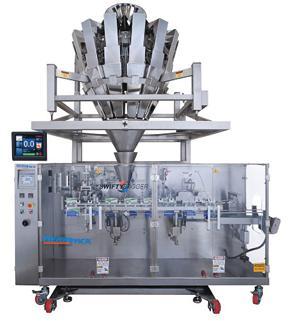
The swifty Bagger is designed to handle a broad range of pre-made bags including: stand-up, gusset, and flat-bottom bags, with or without zipper closures. using pre-made bags, the swifty Bagger automatically grabs, opens, fills and seals the bag. with a straight flowthrough design, the operator can see all stations from the touchscreen controls making the swifty Bagger very userfriendly, easy to operate and effortless to clean. supplied with an allen Bradley plC, operating parameters are simple to access and quick to adjust, which assures consistent movement with no risk of de-synchronization.
NBC54 Fan for Poultry Buildings
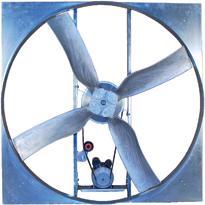
American Coolair is producing a 54-inch version of its nBC fan for farm buildings that provides more airflow and is energy efficient.
the american Coolair nBC54 provides maximum airflow needed to ventilate poultry buildings. the nBC54 features all-galvanized steel construction for the ideal blend of strength and corrosion resistance. the sturdy cross-frame drive support design insures years of trouble-free operation.
the swifty Bagger features Festo cylinders and valves, panelView colour touchscreen, variable speed control, no-bag / no-fill sensor, heavy-duty mechanical cam shaft drive, and an integrated exit conveyor. the swifty Bagger is ideal for many product applications. Cycle 45 bags per minute with 1-up, 2-up, or 3-up bags per cycle; depending on the model it can produce up to 100 bags per minute and easily interfaces with auxiliary equipment such as augers, scales, piston fillers, and more. an extensive choice of options are available.
For more information, visit www.weighpack.com or call 1-888-934-4472.
according to american Coolar, the nBC54 is its most energy-efficient fan ever developed, having been engineered to meet large-volume ventilation needs while keeping energy costs at a minimum.
the nBC54 also features american Coolair’s unique captured bearing arrangement, which allows the blade hub to also serve as the driven sheave. placing the belt load directly over the bearings greatly extends the life of the bearings.
For more information, call 1-904-389-3646 or e-mail: agfans@coolair.com.
Mature Discussion Needed Supply Management
a george Morris centre report says it’s time to set aside clashing ideologies
BY J IM K NISLEY
The debate over supply management has become stale generating bursts of heat, but shedding little light, according to a recently released discussion paper.
al mussell, senior research associate at the george morris Centre, says in a paper released late in 2010 (which focuses on the dairy industry) that a more mature discussion is needed.
“the economic and political significance of what is at stake, combined with challenges and implications of managing a regulated system – both in a diverse dairy product market, and in international trade discussions – make it a critical issue in Canadian agriculture. It deserves to be engaged with a more mature discussion, appropriate to its significance. the dialogue could be greatly improved by toning down the emotion and economic ideology, recognizing the supply management system’s benefits and faults, and getting to work on a more pragmatic discussion of how milk supply management can be improved and allowed to evolve,” the report says.
In the introduction to the paper mussell says most of the base information presented by supply management’s critics “is essentially correct. however, the difficulty is that the arguments are simplistic and lack critical context, and, as a consequence, contribute little in moving any discussion forward.”
In response “supply management agencies have, in turn, issued defensive and similarly simplistic rebuttals to critics. thus, discussions on supply management have been mired in a static debate that is unlikely to further the interests of any of the parties involved or allow this critical element of Canadian agriculture to evolve. It is unfortunate that in such an important discussion, the dialogue has been allowed to become so heavily weighted toward clashing ideologies, at the expense of pragmatic solutions that would encourage an innovative sector.” to move the discussion forward mussell proposes that some basic facts or concepts be acknowledged. the first
is that there will be marketing boards as long as producers want marketing boards.
“the idea that government will unilaterally lead a process to remove marketing boards is not practical,” he writes. whether farmers have marketing boards organized to market on their behalf is of little significance to most Canadians, but of great significance to farmers. “thus, the politics of an initiative to remove marketing boards will not pencil out, unless dairy farmers suddenly turn against them.”
the second point is: “there will be supply management as long as the producers want supply management.”
“the political calculus of unilaterally
it’s time for less ideology and more pragmatic discussions on how supply management can be improved and evolve.
TIME To TAlk
Supply Management
dismantling the supply management system does not add up. It is of huge significance to dairy farmers and, in principle, of little significance to the Canadian population,” the report says.
mussell observes that supply management was initiated to discipline markets in terms of market access and market power and “it is unclear that the latent market access and market power concerns of the past are gone.”
however, if a multinational trade agreement is reached Canada will be a signatory. Despite the strong opposition of supply managed industries “the reality is that the broader Canadian interest overwhelmingly favours liberalized trade, so Canada will ultimately be a signatory to an eventual agreement. even without factoring in Canada’s trade interest in manufacturing, services, natural resources, intellectual property, etc., with almost 80% of Canadian farm cash receipts coming from products that are not supply managed and thus interested in liberalized trade, the ultimate Canadian interest is clear – in favour of liberalized international trade,” the report says.
the dynamics of maintaining marketing boards and supply management and signing on to new trade agreements requires moving beyond “the simplistic analysis that is the subject of much of the current dialogue.”
“If the reality is that we will have marketing boards and supply management, then the practical problem is how to improve the workings and faults of the system, not simply how to build a better case to eliminate the system. this puts the responsibility on the critics to deal with the relevant questions of how to make supply management more market-oriented and flexible, and better prepare it for reductions in trade protection under new trade agreements.” supply-managed industries must also recognize that if Canada becomes part of an eventual trade deal its aggressive stance puts it in a precarious position. “as it stands, if trade agreements are reached, Canada’s ability to participate will have been limited by supply
management’s strong stance, Canada will sign a deal they had little role in crafting, and the result in terms of whatever protection remains for supply management will simply have to be accepted. By taking a more liberal, engaged stance, the dairy industry could have more input into the ultimate provisions
enabling supply management.” the current approach assumes that the dairy and poultry industries have sufficient political clout to prevent Canada from entering trade agreements, or simply that there will be no major trade agreements concluded for other reasons, the report says. n
ANIMAL HEALTH STARTS ON THE FARM
As partners in biosecurity, farm visitors are an important part of keeping Canada’s animals healthy. Animal diseases are easily transferred by people, equipment, and vehicles—making biosecurity a team effort between agricultural producers and service personnel.
Here are some helpful suggestions to share with farm visitors:
SHARE YOUR BIOSECURITY PLAN.
Stress how important it is to understand, respect and enforce these risk-reducing practices.
ASK VISITORS TO PLAN AHEAD.
Explain that contacting producers before arriving ensures visits are appropriately scheduled.
PROMOTE AWARENESS.
Explain the importance of avoiding contact with animals, housing areas, and feed and water, when possible. Ask them to work from clean areas towards dirty ones.
ASK VISITORS TO MAKE A COMMITMENT TO BIOSECURITY.
Before visiting, they should ask themselves:
• Is this visit necessary?
• Where do I park and sign in?
• Do I have everything I need to perform my service?
• Do I know how to enter production zones?
• Am I following effective cleaning measures for equipment and personal wear?
New Barn Future Forward
the Martels opt for enrichable cages for their new layer barn, making it Quebec’s largest
B Y A NDR é D UMONT
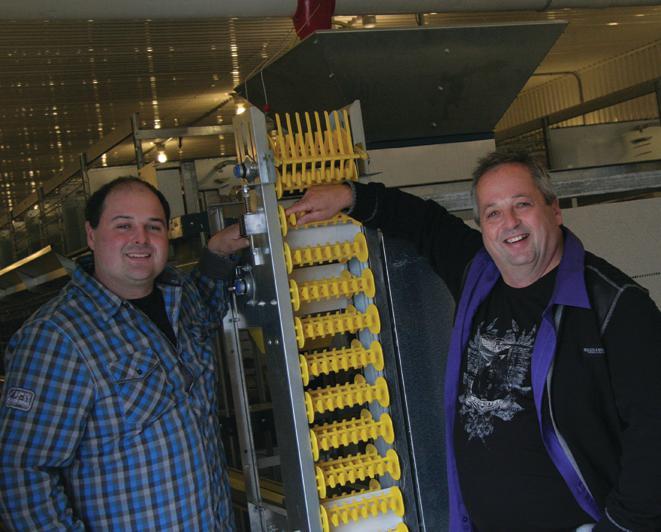
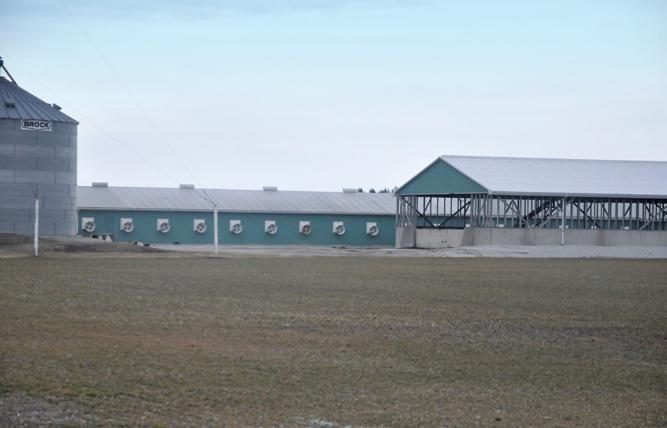
At Ferme avicole steCroix, when it’s time to go forward, nothing is done halfway. last october, Daniel martel and his son stéphane inaugurated Quebec’s largest layer barn equipped with enrichable cages.
the open house was an amazing success. more than 350 people came to admire the new construction in metabetchouan-lac-à-la-Croix, in the distant lac-saint-Jean region, 200 kilometres northeast of Quebec City.
“this is the second largest layer barn in Quebec,” co-owner stéphane martel told Canadian Poultry magazine, with a hint of pride in his voice. since last november, the barn houses 60,000 layers under a single roof.
For the martels, the pride of the moment also came with a feeling of relief. During construction, the unexpected struck, nearly claiming the lives of workers on the site.
on a windy summer day, a strong gust of wind entered near one of the ends of the barn that had not yet been closed. the wind tore the structure apart from the foundations and lifted it about four feet in the air. Inside, workers ran for their lives.
the barn came down four feet away from its original location, damaging parked vehicles. luckily, no one was injured. everything had to be rebuilt from scratch, except for the foundations.
PlANNING FoR ThE FUTURE
stéphane and daniel Martel chose enrichable cages, in order to be ready to comply should animal welfare regulations one day be tightened to address the concerns of animal rights groups.
TWo IN oNE
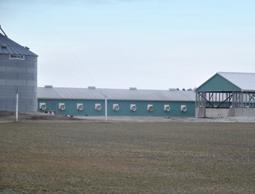
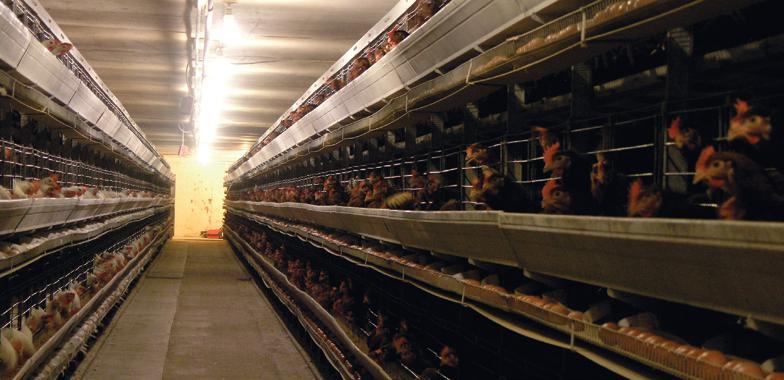
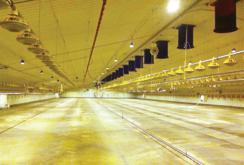
the barn is divided by a solid central partition, separating the flock into two groups of 30,000. the total size of the barn is 46 by 446 feet, along with a 50by 150-feet manure storage shed, big enough to hold a full year’s manure. each of the four rows of cages is six tiers high. a metal catwalk was added between tier 3 and tier 4, for easier bird observation and maintenance.
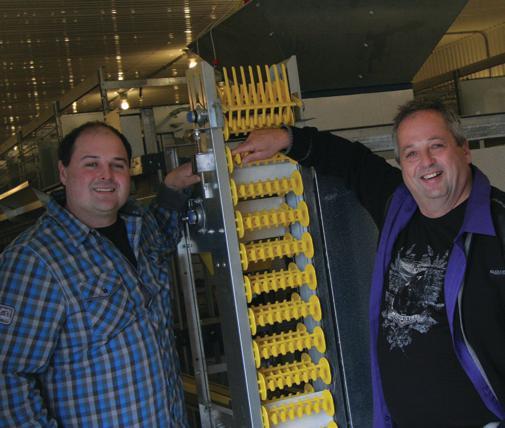
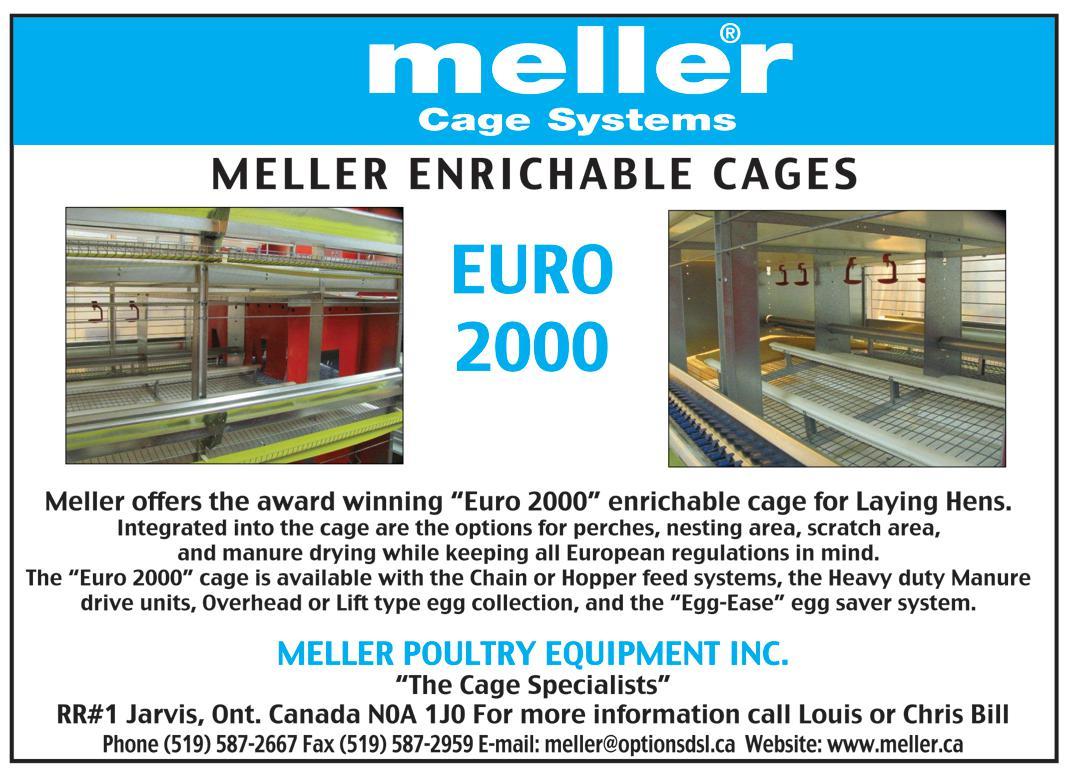
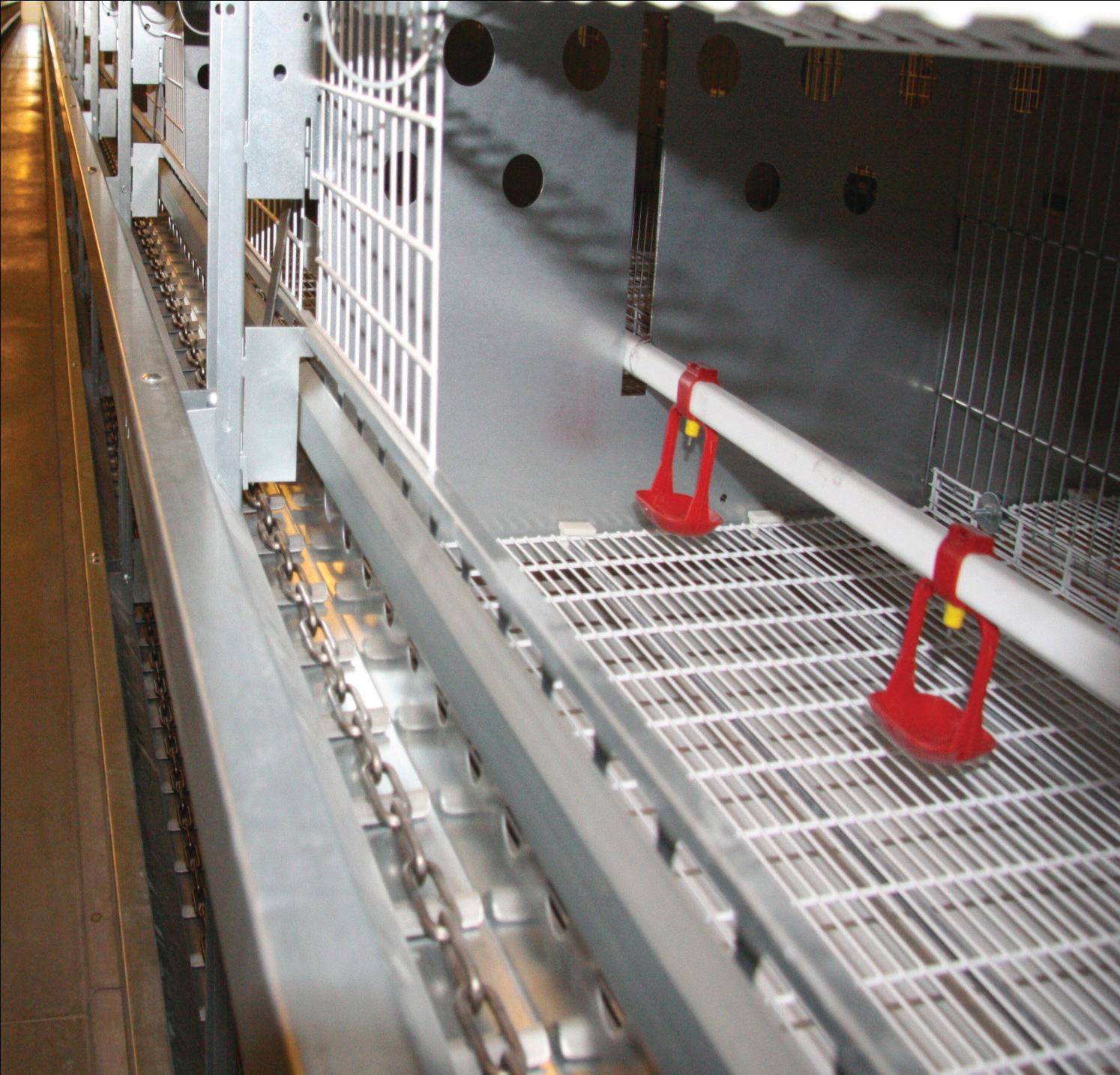
the cages are the euro 2010 model from german manufacturer meller. the system is “enrichable”: the cages are ready to be modified and to receive the additional parts that will turn them into “enriched” cages.
“should regulations change, we will be ready,” says stéphane martel. “within a week’s time, we could install all the required parts for an enriched system.”
Ferme avicole ste-Croix is the largest poultry operation in Quebec to use enrichable cages and only the second one to have them installed.
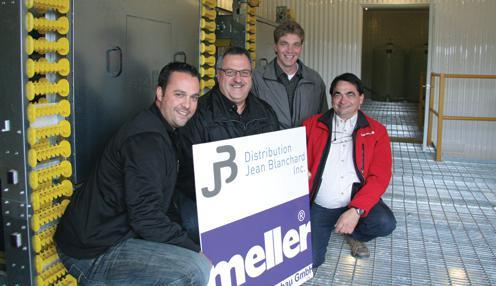
the meller cages were purchased from Distribution Jean Blanchard, of sherbrooke. according to Chris Bill, of meller Canada, enrichable cages are not really more expensive than conventional cages. “the extra cost will only come when one decides to enrich them.”
For about $2 per bird, the cages can have the following added: a perch, an auger for scratch grain, an artificial
Photos by André Dumont
New Barn
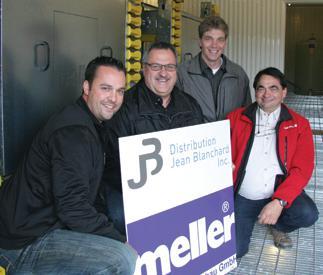
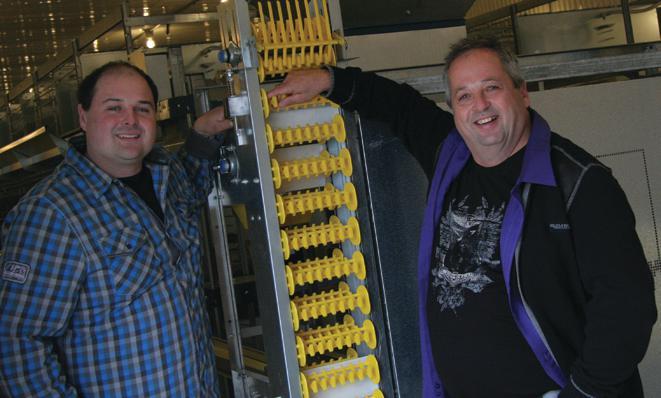
MEllER CAGES, AS WEll AS EGG AND MANURE CollECTIoN EQUIPMENT, WERE PRoVIDED BY DISTRIBUTIoN JEAN BlANChARD, oF ShERBRookE. FRoM lEFT
To RIGhT: STEVEN BlANChARD, PIERRE BlANChARD, ChRIS BIll (MEllER PoUlTRY EQUIPMENT, JARVIS, oNT.) AND NoRMAND FoRGET
grass matting the birds can scratch in and a nest box. the transition also involves removing three galvanized steel partitions, in order to join four cages into one.
m eller enrichable cages are each 81 inches long. at Ferme avicole steCroix, they will each host eight layers, even though current regulation would allow nine. Cages are 30 inches high, about four or five inches higher than regular cages.
“For the next decade, I think the regulations will keep allowing standard cages. But after the next 10 years, it’s anybody’s guess,” Chris Bill says.
ThE MoTIVATIoN
at Ferme avicole ste-Croix, a new layer barn had become necessary in order to comply with current animal welfare regulation and to allow for future growth. since last november, the new layer barn holds just above 60,000 hens. according to stéphane martel, capacity will allow up to 70,000 layers. the old barn will soon be converted into a pullet-breeding barn. the building was previously so cramped that the martels
Continued on page 21
• White polyethylene flush mount housing (black available in some sizes)
• Standard design – self draining
• Designed to meet the rigorous demands of farm/agricultural ventilation
• Energy efficient Multifan or Performa+ Leeson motors
• 10" - 60" sizes available
• Available in 24" Variable Speed and 36" Single Speed
• One piece polyethylene housing creates the most efficient venturi, resulting in incredible C.F.M.performance. (24" =10,200 C.F.M. @ 18 cfm/watt and 36" = 15,300 C.F.M. @ 26 cfm/watt.)
• A multi-position bracketallows youto tilt and lock the fan angle and air flow direction
“AIRCOOL” Centrifugal Cooling System
• A cooling system without using nozzles
• Adjustable water volume
• Mobile or stationary unit available
• Use for cooling air, humidity, recirculation, dust and odor control
RECIRCULATION FANS
Circular Recirculation Unit
• 16" and 20" diameters
• 3600 coverage using directional wind vanes
• Superb alternative to race tracking
• With Multifan or Performa+ Leeson motors
Circulating Fan
• 12" – 24" diameters • Polyethelyne housing
• with Multifan or Performa+ Leeson motors
The ‘Wave’Environmental Control
• Large 2.75" X 5" LCD Display Screen and 12 Quick Key Pads (to grouped settings) allows easy and precise Temperature, Humidity, Heating, Lighting and Airflow Management
• The Wave ' manages 4 variable stages and 8 or 16off/on relays for cooling, up to 8heaters, 4 clock outputs and up to 8 inlet zones
• Humidity control by increasing ventilation and heat activation
• History of water consumption, temperature, humidity and birdcount
Poultryhouse Fan
• High quality material and aerodynamic air inlet
• Variable speed Performa+ motor
• Dual voltage, fully enclosed motor
• Low energy consumption and noise level
• 16" and 20" modelsproducing 2792 and 4770 cfm
• Includes hanging hardware
A SMARTER OPTION FOR ADMINISTERING SOLUTIONS INTO WATER SYSTEMS
• Select Doser performance yields highly accurate dosages all the time.
• Accuracy is 95+ percent, superior to water or electric powered pumps.
• Longer lasting with less maintenance than water powered dosers.
• A diagnostic tool for your watering system.
PSI
Unvented Unit Heater
• Total stainless steel construction
• Hi-Low switch
• Watertight enclosures
• Propane and natural gas
• Available in 20,000 to 225,000 BTU units
Totally Controlled Heat from
' The Ultimate Brooder '
• Maximum radiant surface area
• Reliable spark ignition
• Dual safety pressure switches
• Easy, unobstructed access to control components
• Various models for multiple applications (Farms, Garages, Workshops etc.)
Varifan®
• LX-641, LX-642 and LX-644 with optional SVM-1 (Smart Ventilation Inlet Module)
• DIP-1 digital Inlet Positioner
• ECS"M" Series 1, 2, 3, 4 and 5 stage controls
• IC-610 Programmable Logic Computer controls
• Plus numerous ‘Special Application’controls
• 2 yr.warranty
• Material polypropylene
• Will not harbour bacteria
• Easily cleaned
• Large 2' x 4' panels
• Reduces floor problems and breast blisters
• Keeps birds warmer, dryer, more productive
• Durable - minimal maintenance
• Easily installed
• Will not rust or corrode
LIGHT TRAP/ DARK OUT
• High light reduction
• Low resistance to air flow
• Simple Installation
• Easy to clean
• Uses P.V.C.snap release spacers
PIC Update
Tracking Down Disease Pathways
u of g computer scientists are developing software designed to track the numerous paths diseases can take so that the appropriate response can be initiated
B Y J OEY S ABLJIC
Tracking down the different ways disease can enter the food production system is not as clear cut as it may seem – especially when there are many steps along the way from farm gate to dinner plate. speedy analysis would make a difference not only to animal and human health, but also to the environment and economy.
prof. Deborah stacey, Director of the Department of Computing and Information science at the university of guelph, is looking for a better way for administrators and researchers to plan for and respond to the spread of animal diseases, based on the numerous paths diseases can take.
and to her, the answer is the shared h ierarchical a cademmic r esearch Computing network (sharCnet), a network of high performance supercomputers linked across universities in southern ontario.
stacey and her research team are developing free, open-source software that can be modified to suit individual situations when problems arise. their new software is designed using a “scale-free” network of “hubs” (instead of a random network) to simulate possible distributions of flocks along the food supply chain.
PIC’s Picks
Y T IM N ELSON , Ex ECUTI v E D IRECTOR
As deliberations over the Elora 2050 project continue, it’s very important for us to remember why we do scientific research.
the majority of the research funded through Pic will hit the farm sector a good 10 to 15 years after the work is completed. this means that for the work to be relevant into the future it needs to be developed with a mindset that the results will be implemented 20-30 years from now. “guessing” what the market will want and what the industry will look like 30 years from now is quite a challenge, as we try to decide what resources, both human and physical, we will need to utilize for the research that will be implemented 20 years after its completion. this is an imprecise process; however, it’s an important one. the feather boards are currently undertaking this process and we’ll report on their thoughts in the March issue of Canadian Poultry magazine. in the meantime, for you poultry
a hub might be a large chicken operation or meat processing plant that distributes poultry to several supermarket chains. the idea is to illustrate the possible distribution paths poultry could take. In a simulated disease outbreak, epidemiologists can study the fdifferences in disease spread that are caused by various distributions or contact networks. the software also allows researchers to account for many variable elements, such as farm location, the method of transportation, and whether a related disease is airborne. all of these elements can either
sages out there: if you have opinions of our industry’s future science needs, as always, we’d appreciate your opinions.
this year has started with a bang. the first science in the Pub was held in early January, examining the role of science in farm safety. at the beginning of this month, the Producer updates were held in Belleville and st. catharines, ont. also this month are additional growing forward meetings. there are more growing forward meetings in february wherein producers can take the one-day workshop to be eligible for up to $10,000 in government funds to enhance their biosecurity system(s). there’s still time to register for these events; please see our website at www. poultryindustrycouncil.ca.
We’ll keep you posted throughout the year as other events unfold and look forward to another positive and busy year of research and education delivery for the poultry industry in ontario.
influence or trigger the spread of a disease.
stacey says that being able to model the wide variety of these possible paths a disease may take with the help of their new software program will allow government health agencies to study different scenarios and plan for an emergency. the information will help determine the best course of action – quarantine, vaccination or culling an infected flock – and the possible effect on the plan’s effectiveness and economic viability.
“the models can’t predict where the infections are going to go, but what we
B
Breathe easy!
NEW INNOVAX®-ILT VACCINE HELPS PROTECT YOUR BIRDS AGAINST BOTH MAREK’S DISEASE AND INFECTIOUS LARYNGOTRACHEITIS WITH NO RISK OF SPREADING ILT.
Innovax-ILT is a brand new kind of vaccine that protects your flocks from both Marek’s Disease and Infectious Laryngotracheitis (ILT). Applied at the hatchery, it makes field vaccination unnecessary. As well, since Innovax-ILT does not induce ILT, potential reactions or house to house spread that may be associated with some other classic live ILT vaccines are virtually non-existent1
Talk to your veterinarian or hatchery today about making Innovax-ILT the cornerstone of a new vaccination program that can improve the overall respiratory health of your flock.
can do is help inform epidemiologists and ministry officials so that they can develop policies if there is an infection,” says stacey. Joey Sabljic is a student writer with the University of Guelph’s Student Promoting Academic Research Knowledge (SPARK). Also involved in this study are computer science masters students Joel Francis and Sarah Ahmad. Stacey’s research is supported by OMAFRA, the Canadian Food Inspection Agency and the Chemical, Biological RadiologicalNuclear Research and Technology. This article was originally published in the University of Guelph’s Research magazine, 2010 Agri-Food Yearbook Edition.
PIC Update
Featured Researcher
deborah s tacey has been with the school of computer science at the university of guelph since 1988. she has been the director of the school since 2006. her areas of research are ontologies for software composition, simulation of disease spread in animals and the application
of artificial neural networks and genetic algorithms for data analysis. her area of teaching expertise is software design and software engineering. she has collaborated with the canadian food inspection agency, the Public health agency of canada and the united states department of agriculture.
Efficient evaluation for profitability
Body conformation is important in the turkey industry, as a substantial proportion of total production is further processed. Breast meat is the highest value component of the further processed carcass. as a result, breast meat yield has a significant effect on profitability, such that conformation and breast meat size has been a selection objective for many years. together with substantial increases in growth rate and body size, moderate breast meat yield improvements have been achieved.
selection for conformation has traditionally been on subjective breast conformation score (taking into account size, distribution, chest shape and spread
of muscle). using subjective measures is inherently difficult – there may be differences within and between scorers, and one scorer’s measures may change over time. objective measures have also been used as selection criteria (including chest width, breast circumference, indentation height from keel to breast and ultrasound muscle depth).
In practice, selection criteria depend on the accuracy, speed and cost of measurements taken. In order to optimally use this type of information, the poultry industry needs a strategy that accounts for ease of measurement, cost and genetic response. steve miller, Ben wood (hybrid turkeys) and phD stu-
Something’s in the air
dent lindsay Case, and their research team at the university of guelph, have been studying the use of ultrasound as a non-invasive measure of breast meat yield. their aim is to increase the accuracy of the information used to select for breast meat yield, thereby increasing the selection response within a breeding program.
measurements were taken on 719 hens from a female breeding line and on 657 hens from a male breeding line. the research team developed a technique in which they took two ultrasound images of each bird (lengthwise and widthwise). Conformation of each bird was measured by a trained scorer, and both methods were compared for accuracy in estimating breast meat yield. heritability of traits was also calculated.
their findings? ultrasound traits showed increased heritability compared to conformation score – meaning the use of this technique should enable more rapid genetic progress. overall, the research team has shown that ultrasound technology can be useful in increasing the efficiency of breast meat yield measurement in the live turkey. the results of this study can ultimately be used to increase profitability of turkey production with downstream value benefits for the consumer.
New Barn
Continued from page 17
had to rent out their new quota allocations to other producers.
expansion projects began in 2002, when the martels understood that should they want to grow, they would need land to spread their hens’ manure. From an initial 47 acres, a series of purchases has made them owners of 800 acres.
Fields are used to grow part of the grain that enters into the feed. But selfsufficiency is not the first objective. “our priorities are to be able to dispose of our manure and to make our land as profitable as we can,” says stéphane martel.
Corn is tough to grow in lac-saintJean, unless it’s for silage. the martels purchase the corn they need for their feed, and grow barley, soybeans and canola. last summer, they successfully produced brewery-quality barley.
In this far-away region, land is less expensive, stéphane martel admits. however, transportation costs can be higher, due to long distances. even though there are only three other layer operations in the whole region, all services are available.
“we are far from everything, but we are used to this,” he says. “there are transportation services just like everywhere else and we don’t feel like we’re so
STéPhANE MARTEl (RIGhT) AND ThEIR SPoUSES, MIChèlE RéGNIER AND CINDY GAGNoN.
CPRC Update Understanding Avian Influenza
Although avian influenza (aI) has not received much media attention recently, it remains a threat to the poultry industry and is the focus of many research programs in Canada and abroad. scientists worldwide are contributing to a multi-pronged effort to understand how aI virus works and find better ways to keep it in check. the Canadian poultry research Council (CprC) supports a number of research programs as part of this effort. the november 2010 edition of the CprC update described technology being developed at the university of guelph that could interrupt the replication cycle of aI virus in the cell, thereby preventing spread of infection within or among poultry flocks. another aI research program, also in guelph, led by Dr. shayan sharif at the ontario Veterinary College has been investigating how the chicken’s immune system reacts to exposure to aI virus. with a thorough understanding of the immune response, the scientific community will be able to work with industry in developing rational approaches to controlling aI infection in commercial poultry. Dr. sharif’s group has already revealed important information on aI immunity and is building on past success to develop a comprehensive research program.
A CollABoRATIVE APPRoACh
as part of the recently announced poultry science cluster, this research program has evolved to a highly collaborative effort to better understand how aI virus causes disease, how the disease is spread and how the chicken’s immune system reacts to it. the overall goal of the program is to develop strategies to manage aI. the effort involves researchers at the national Centre
for Foreign animal Disease (nCFaD); the Canadian Food Inspection agency (CFIa), winnipeg, Biologics evaluation laboratory; CFIa-ottawa; Vaccine and Infectious Disease organization (VIDo), university of saskatchewan; and university of guelph. the scientists have divided the work into subprojects designed to answer the following questions:
hoW
DoES
AI VIRUS ADAPT?
the overall goal of this subproject is to determine the molecular basis of aI virus adaptation from its natural reservoir to domestic poultry. using molecular techniques, the researchers will generate viruses that contain a mixture of genes from domestic poultry and wild birds, to be used as tools to study the role of gene combinations on viruses’ ability to infect poultry.
hoW IS IT TRANSMITTED?
this subproject will study airborne transmission of aI virus. the objectives are to develop a system that closely simulates aerosols in the poultry farm environment and to determine the minimum infectious dose of aI virus. this information will be integrated into risk assessment models to define restricted access zones during outbreaks.
hoW
DoES
ThE ChICkEN REACT?
as part of this subproject, researchers will study immune responses elicited by aI virus with the objective of determining if the response can me modulated to improve the efficacy of aI vaccines. Immune responses will be compared
when chickens are exposed to aI virus via various routes (such as the respiratory tract) and evaluate elicitation of immune response by aIV vaccines.
IS VACCINATIoN A VIABlE STRATEGY?
the overall goal of this subproject is to develop vaccine platforms against aI virus. the researchers will build on information gained from previous work, including that mentioned above, to develop safe and efficient delivery systems for aI vaccines. the plan is to develop rational vaccines and test their efficacy against aI virus in chickens.
there has been a lot of research effort in recent years towards a better understanding of aI virus, yet there remain many questions about its biology. the collaborative approach taken by the researchers involved in the poultry science cluster is deemed the best way to answer these questions. CprC will help bring these answers to the industry as they become available.
For more details on any CprC activities, please contact gord speksnijder at the Canadian poultry research Council, 483 arkell road, r.r. #2, guelph, ontario, n1h 6h8. For more information, phone (289-251-2990), fax (519837-3584), e-mail (info@cp-rc.ca) or visit us at www.cp-rc.ca. n
The membership of the CPRC consists of the Chicken Farmers of Canada, the Canadian Hatching Egg Producers, the Turkey Farmers of Canada, the Egg Farmers of Canada and the Canadian Poultry and Egg Processors’ Council. The CPRC’s mission is to address its members’ needs through dynamic leadership in the creation and implementation of programs for poultry research in Canada, which may also include societal concerns.
Air Quality A Silent Threat
research into harmful emissions from farms is focusing on the interrelationships among different air contaminants
B Y TREENA HEIN
There is good reason that poultry farmers should be interested in improving air quality in and around their operations for the health of their birds – as well as for themselves and their neighbours. “Fine particulate matter is a pollutant linked to increased cardiac and pulmonary disease and premature human death,” says Dr. Bill Van heyst, a professor in the school of engineering at the university of guelph. “It should be a serious concern for those in Canadian agriculture since it’s estimated that this sector accounts for upwards of 85 per cent of all human-made emissions of ammonia, a precursor gas for fine particulate aerosols, across this country.”
kNoW YoUR EMISSIoNS
at the same time that simple steps such as planting trees can reduce odour and some fine particulate matter coming from a farm (see “the Buffer Zone” in the February 2010 issue of Canadian Poultry), a thorough understanding of all atmospheric emissions is key to developing the best ways to curb them substantially. “emissions can occur at all stages in the farm operation including animal housing, manure storage, and subsequent field application of manure,” explains Van heyst. “poultry producers need to know which emissions and how
IMPRoVING AIR QUAlITY
dr. Bill van heyst and his research team have been investigating the whole emissions picture at broiler operations, quantifying the source strength and the interrelationships between air contaminants such as ammonia, greenhouse gases, inorganic aerosol concentrations, and size-fractionated particulate matter.
much are created at all stages of production. technologies and best management practices also need to be assessed.”
INVESTIGATE EVERYThING
Van heyst and his research team have been investigating the whole emissions picture at broiler operations, quantifying the source strength and the interrelationships between air contaminants such as ammonia, greenhouse gases (methane and nitrous oxide), inorganic aerosol concentrations, and size-fractionated particulate matter. these are measured in two sizes – those 10 micrometres in diameter (pm10) and those 2.5 micrometres and less in diameter (pm2.5). Van heyst says that although the larger particles can be troublesome to the human
respiratory tract, they at least can mostly be expelled through coughing; the smaller particles cannot and are therefore much more dangerous.
“we studied emissions from a broiler house over four production cycles in order to measure changes in emissions during the seasons,” notes Van heyst. From a barn containing 45,000 broilers raised over a 35-day growth cycle, there was an average of 170 kg of ammonia, 6.8 kg of pm10, 1.3 kg of pm2.5 and 260 kg of methane emitted per cycle. “typically, the emissions increased as the broilers increased in size,” says Van heyst. “we found that fine inorganic aerosols, composed mainly of chloride, nitrate, sulphate, ammonia and sodium, were being formed within the barn environment and could contribute significantly
to small particulate emissions.”
From the litter storage bunker, he and his team measured an estimated daily average release of 1.8 kg of methane and 0.45 kg of nitrous oxide. upon land application, broiler litter typically lost 22 per cent of the ammonium within the first 72 hours of surface application. Van heyst says incorporating litter into the soil immediately following surface application reduced emissions of ammonia from the field.
oThER INVESTIGATIoNS
his experiments have also covered the atmospheric emissions generated from composting dead chickens. Because the composting experiments demonstrated that piles with higher ph (more basic) emit more ammonia – and because broiler litter tends to be more basic than fresh wood chips or mature compost – broiler litter may not be the best carbon bulking material for mortality composting. Instead, fresh wood chips or even spent compost should be considered, as they generate lower ammonia emissions over the composting cycle.
Van heyst and his team have now moved their measuring devices to a layer facility near mooretown to see if or how layer and broiler operations differ in terms of emission during 2011. “after we’ve collected data this summer, we’ll start planning to test air pollution control equipment and how management practices can improve air quality both within and exiting poultry barns.” this will likely include litter additives that reduce ammonia to some extent, water misting equipment purported to reduce dust, and ionization dust control systems.
DUST CoNTRol SYSTEM TESTS CoNTINUE IN B.C.
over the last two years, the B.C. sustainable poultry Farming group (BC spFg) has been testing a Baumgartner environics Inc. electrostatic particulate Ionization (epI) dust control system. It’s composed of a power supply of 30,000
Air Quality
volts x 2 mamps with an ionization discharge line that negatively charges the dust in the air. Dust is then deposited on the grounded surfaces of the barn, such as the walls, floor and ceiling. testing has occurred in three broiler barns and one turkey barn, and the BC spFg recently reached an agreement with the B.C. ministry of agriculture to extend testing to september 2011.
“the results so far have shown a 50 to 70 per cent decrease in amount of dust in the air in the barns,” says michael willcock, BC spFg’s new manager. the organization’s analysis over more than 10 cycles shows the cost for an installed system in a broiler barn is about $0.85 per square foot, with a return –on investment of about $0.045 per bird per production cycle. other valuable but limited results suggest that the system can potentially be effective in reducing disease-producing microbial populations.
Dr. Karen Bartlett from the university of British Columbia and Dr. shabtai Bittman from agriculture and agri-Food Canada (aaFC) are serving as research partners, and funding sources include the B.C. Investment agriculture Foundation, the B.C. poultry industry, agriculture environment Initiatives, provincial and federal departments of agriculture and the B.C. agriculture Council.
For more, visit BC SPFG at www.sustainablepoultry.com or Baumgartner Environics Inc. at www.beiagsolutions.com. (Note: The EPI system is distributed by Paradigm AgriSolutions in provinces outside B.C. – visit www.paradigmag.ca) n
RESEARCh IS UNDERWAY IN B.C. AND oNTARIo To ClEAR ThE AIR IN PoUlTRY BARNS
BY MILT CARR And AssOCIATEs
Carr’s Capital critical illness insurance Worth considering
There was once a lawyer who asked me, “if my client gets sick, what happens?”
then a certified financial planner said to me, “as analysts we spend time thinking about how to grow a person’s capital.” then he asked, “who is looking after the man on the tractor – what planning is being done that reaches further than growing capital?”
I reflected on what the analyst and the lawyer had said and realized that critical illness is a key area that one should think about on the farm. often farm families focus on doing what they need to do in order to operate the farm business. not much time is spent thinking about what might happen if the farmer becomes sick and cannot work the farm. usually, when someone becomes ill it is for a short period of time (a day or two).
If an unfortunate accident does occur, it may involve muscle damage or broken bones, and may result in longer recovery time of a few weeks or a few months. But what happens when a critical illness such as a heart attack, stroke, cancer or severe diabetes strikes? Is the farm family prepared for something like this and, if so, how will it cope, and how will the farm business survive?
If a farmer becomes critically ill, there are additional costs associated with being critically ill, such as cost of treatment, medications and travel-related expenses. there might be additional equipment needed for the home such as an elevator, a van with a lift, perhaps even a nurse who comes to the house. on top of all of this, the family may need to hire additional help in order to look after the farm business. experience has shown that there is an emotional cost to the ill and his or her family that is due to the inability to work. the cost of illness is real, measurable and damaging. the critically ill person should be spending time getting well instead of worrying about the day-to-day operations of the farm.
provided you do not get sick during the period of time covered by the plan.
For example, if you pay for critical illness insurance for 15 years and you don’t become critically ill in that time, you can request all of your premiums that you paid during that time to be returned to you without interest. this return of premium is guaranteed as long as you do not become ill. In order to receive your premiums back at the end of the term, you would pay extra for the return of premium rider.
If you become critically ill, as soon as you receive the diagnosis and your doctor and insurance company agree on the diagnosis, you will be paid the full critical illness benefit. the insurance benefit is paid in full, regardless of the amount of time the farmer is away from working the farm. the insurance covers the illness, not the amount of time away from work.
the critical illness insurance covers the risk of becoming sick from the first day the monthly premiums are paid. as a farmer, you are probably wondering if critical illness insurance is worth the cost of the premium.
Critical illness coverage is rather uncommon for farmers, but given what is at stake, it might make sense to manage the risk.
here are the facts. the farmer who pays $2,000 a month for 15 years (for $1,000,000 in coverage) would have paid out $360,000 dollars. that sounds like a lot of money paid out for something that you don’t end up needing. well, there are two pieces of good news: one – the farmer didn’t get sick – and two – the farmer can receive the full amount of his premiums should he or she wish to exercise this option. with a product like this available, you need to ask yourself if it is wise to leave the family farm at risk for something that may or may not occur, especially when the premiums can be returned if there is no illness?
Critical illness coverage is a risk-management strategy that could make sense to you. a critical illness benefit is a lumpsum payment in the amount you apply for. you can also add to the coverage a rider that gives you a return on your premiums,
there are options available and different things that can be done; it’s just a matter of how much risk are you prepared to take. Critical illness coverage is rather uncommon for farmers, but given what is at stake, it might make sense to manage the risk.
If you would like more information about the topic, feel free to drop us an e-mail at mcarr@carrassociates.ca or knudds@ annexweb.com. n
dr. tom scott returns to saskatchewan to continue exciting feed research
B Y TREENA HEIN
Dr. tom scott’s return to Canada created a lot of excitement in agricultural circles in mid-2010, and it’s no wonder why. after building decades of expertise in the area of livestock (mostly poultry) feed, he is now installed as the university of saskatchewan’s first research Chair in Feed processing technology.
tim nelson, executive director of the poultry Industry Council, welcomes the creation of the position. “with increasing population and a growing global middle class, demand for animal feed will continue to grow at the same time ingredients become more expensive,” he notes. “we need to ask ourselves how we’ll cost-effectively satisfy the future nutritional needs of the Canadian poultry industry. Clearly, we will need to rely on being able to more efficiently and effectively extract nutrients from feed ingredients, process feed in a way that makes it more digestible, develop better balanced rations and still keep it palatable – and this is where the recently appointed research Chair in Feed processing technology comes in. we welcome Dr. scott’s appointment and congratulate the university of saskatchewan on its foresight in creating such an opportunity for industry.”
EMPhASIS oN FEED RESEARCh
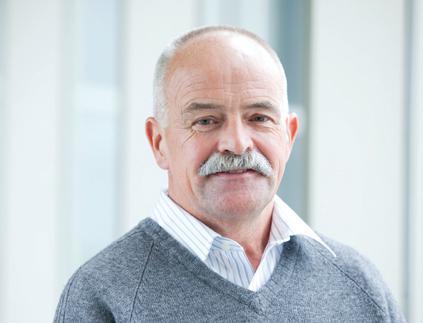
dr. tom scott is the university of saskatchewan’s first research chair in feed Processing technology. he is also involved in the brand new canadian feed research centre in north Battleford.
A SASkATChEWAN GloBETRoTTER
scott received a bachelor’s degree in agriculture from the university of saskatchewan (u of s), followed by a master’s in genetics at mcgill in montreal. he then took a few different job positions, including extension work for poultry farmers in saskatchewan. “I then did my phD at the university of
sydney in australia, returning to Canada to the university of alberta for postdoctoral work,” says scott. more globetrotting followed – back to australia for a research associate position, on to nova scotia and British Columbia with agriculture and agri-Food Canada, back again to australia to take a professorship, and finally to holland, for a stint in private industry.
he had served as the research director
for provimi in Brussels for four years when the research chair position was created. “It’s very exciting – it’s a unique opportunity to work with industry partners and understand how different aspects of processing can influence the added-value for feed for all livestock species,” scott says. “Feed makes up most of the cost of livestock production, and so small changes in feed efficiency or usability have the potential for huge global economic impact.”
FEED RESEARCh CENTRE
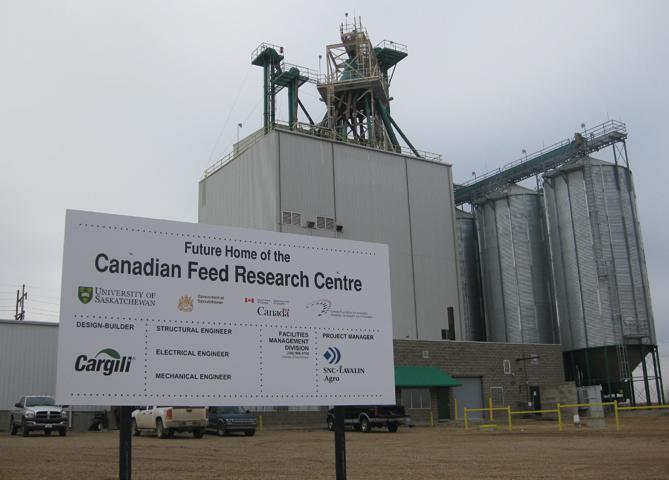
the research Chair in Feed processing technology (created by the government of saskatchewan) is a position through which feed for all species of livestock will be studied. a new Canadian Feed research Centre is also being created. the plan to build it on campus was changed when the newest feedmill in
Research
the province (built in north Battleford in 1998) went bankrupt; u of s bought it and will create the Centre there instead. using $13.3 million in federal, provincial and industry money, it will include a pilot feed production line and a pilot plant lab.
the main commercial part of the mill, licensed to Cargill, is currently up and running, and Cargill will contribute towards the Centre’s operating costs. “what we will be able to do at the Centre is thrilling,” says scott. there will be several grinders feeding into several mixer options, and then the feed will be placed into a conditioner, where moisture, temperature and time can all be adjusted. Being able to control these three factors will be critical in scott’s continuing quest to create consistency in feed. after conditioning, the feed will then be pelleted or extruded, after which it will be crumbled or placed into a vacuum
mixer. “this mixer takes pellets, puts them under vacuum pressure and then as the vacuum is released, things like fat, vitamins, minerals, enzymes and other bio-actives can be added. the objective is to protect the feed from losses in activity during storage or enable the additives to reach the animal’s gut in a more active state,” he says.
tweaking temperature, moisture level and time at the feed conditioning stage may not sound terribly critical, but the capacity to do this is very significant. “we will be able to understand what combination of factors, what process, will create much more consistent feed from different types of and grades of
Continued on page 36
BETTER USE oF WhEAT AND oThER GRAINS
New Vaccine Developed for Newcastle Disease Research
developed by the usda, the vaccine reduces mortality, severity of symptoms, as well as virus spread
BY SHARON DURHAM, AGRICULTURAL RESEARCH SERvICE
(ARS)
Newcastle disease virus (nDV) is an important pathogen that causes disease and death not only in domestic and commercial poultry, but also in wild bird populations around the world. Current newcastle disease (nD) vaccines are used widely in commercial poultry and protect the vaccinated birds from disease but do not prevent them from becoming infected and carrying the virulent virus or shedding it in their feces. therefore, the current vaccines do not eliminate virulent virus transmission from infected to healthy birds.
a vaccine that reduces virulent virus shed and transmission is sorely needed by the poultry industry.
REVERSE GENETICS
using reverse genetics technology, researchers in the endemic poultry Viral Disease research unit and the exotic and emerging Viral Diseases research unit of the southeast poultry research laboratory in athens, ga., have developed a new vaccine from parts of a virus that is similar to the wild-type nDV circulating in the environment today. this new vaccine not only reduces mortality and severity of nD symptoms in poultry,
but it also decreases the amount of virulent virus shed from vaccinated birds.
“Currently, most vaccines used in the united states are formulated with nDV isolated in the 1940s, which is similar to the virulent nDV circulating at that time,” says poultry unit microbiologist Qingzhong yu. “unfortunately, with time, new nDV strains have emerged that are genetically very different from commonly used vaccine strains.
“reverse genetics technology enabled us to generate a new vaccine by exchanging a gene from the original vaccine with a similar gene of the current circulating virus. we found that when the new vaccine, containing gene sequences similar to the wild-type virus, was used in vaccination studies, the vaccinated birds were
protected from disease and shed less of the wild-type virus after challenge,” says yu.
yu, Daniel King (retired ars researcher), David suarez, patti miller, and former ars researcher Carlos estevez (now with texas a&m) submitted a patent application for the vaccine in 2009. licensing by the usDa animal and plant health Inspection service’s Center for Veterinary Biologics would have to follow before the vaccine could be used.
nDV causes disease in more than 250 species of birds and typically affects the respiratory, gastrointestinal, and/or nervous system. symptoms may include gasping, coughing, lack of appetite, drooping wings and diarrhea. nD is clinically similar to avian influenza, and
Photo by Peggy Grebb
VACCINE DESIGN
the two diseases may be confused, which impairs the rapid diagnosis of a disease outbreak.
MoRTAlITY CAN ToP 90%
the most severe form of nD can result in disease and mortality rates exceeding 90 per cent in susceptible chickens. the most recent u.s. outbreak – which occurred in 2002-2003 in California, nevada, arizona, and texas – illustrates the devastation and financial cost that can result: more than 3.4 million birds were destroyed, and the cost of controlling the outbreak in California alone was more than $160 million.
“newcastle disease continues to be a danger to the commercial poultry industry because it can spread rapidly and can exact a heavy toll,” says yu. “Vaccines for nD have been used for more than 50 years to control the disease and are successful in reducing mor-
tality and the severity of symptoms. our goal is to create a vaccine to decrease virus spread as well.”
This research is part of Animal Health, an ARS national program (#103) described at www.nps.ars.usda.gov. n
R.R.
NDV CAUSES DISEASE IN MoRE ThAN 250 SPECIES oF BIRDS AND AFFECTS ThE RESPIRAToRY, GASTRoINTESTINAl, AND/oR NERVoUS SYSTEM
Nouvelle Grange
les cages enrichissables font une percée au Québec
la ferme avicole stecroix, au lac-saint-Jean, a inauguré un pondoir d’une capacité de 70 000 pondeuses
PAR A NDR é D UMONT
Àla Ferme avicole s te-Croix, quand on décide d’aller de l’avant, on ne fait rien à moitié. le 28 octobre dernier, Daniel et stéphane martel et leur famille inauguraient le plus grand poulailler équipé de cages enrichissables au Québec. la journée porte ouverte fut un succès monstre. au-delà de 350 personnes sont venues admirer le nouveau bâtiment à metabetchouan-lac-à-la-Croix, au lac-saint-Jean.
« C’est le deuxième plus grand bâtiment abritant des pondeuses au Québec », a déclaré stéphane martel, un brin de fierté dans la voix. Depuis novembre dernier, le pondoir abrite un peu plus de 60 000 pondeuses sous un même toit. pour stéphane martel et son père Daniel, à la fierté du moment s’ajoutait un sentiment de soulagement. la construction du poulailler a été frappée d’une dure épreuve, qui a failli coûter la vie aux travailleurs.
par une journée particulièrement venteuse, une bourrasque s’est infiltrée par les extrémités encore ouvertes du
stéphane et daniel Martel ont choisi d’installer un système de cages enrichissables, en prévision de normes de bien-être animal qui pourraient un jour se resserrer, en réponse aux groupes de défense des droits des animaux.
poulailler. le vent a détaché la structure de la dalle de béton, pour la soulever d’environ quatre pieds. À l’intérieur, le mot d’ordre était : « sauve qui peut! » la structure s’est déposée quatre pieds plus loin, endommageant des véhicules. heureusement, personne n’a été blessé. tout a dû être reconstruit, à l’exception de la dalle de béton.
DEUx EN UN
Divisé par une partition étanche permettant de traiter les pondeuses en deux groupes de 30 000, le bâtiment fait 46 par 446 pieds. À lui seul, l’entrepôt à
fumier fait 50 par 150 pieds, de quoi conserver le fumier d’une année complète. À l’intérieur, on compte quatre rangées de six étages de cages. pour faciliter l’observation des poules et l’entretien des équipements, une passerelle métallique a été installée entre les troisièmes et quatrièmes étages.
les cages sont du modèle euro 2010 du fabriquant allemand meller. Il s’agit d’un système « enrichissable » : tout est en place pour réaliser les modifications et accueillir les pièces requises pour les transformer en cages « enrichies ».
« si les normes changent, nous serons prêts. en une semaine, nous pourrons
PlANIFIER PoUR l’AVENIR
Photos par
André Dumont
Nouvelle Grange
lES CAGES MEllER AINSI QUE lES éQUIPEMENTS DE CollECTE DES œUFS ET DU FUMIER PRoVIENNENT DE DISTRIBUTIoN JEAN BlANChARD, À ShERBRookE. DE GAUChE À DRoITE : STEVEN BlANChARD, PIERRE BlANChARD, ChRIS BIll (MEllER PoUlTRY EQUIPMENT, JARVIS, oNT.) ET NoRMAND FoRGET.
installer les pièces nécessaires à un système enrichi », explique stéphane martel, copropriétaire de l’entreprise avec son père Daniel.
la Ferme avicole ste-Croix est la plus grande au Québec à disposer d’un système de cages enrichissables et seulement la seconde à en installer.
les cages meller proviennent de Distribution Jean Blanchard, à sherbrooke. selon Chris Bill, de meller Canada, le fait qu’elles soient enrichissables ne les rend pas nécessairement plus chères. « le coût supplémentaire se présente seulement au moment de les enrichir », explique-t-il.
moyennant environ deux dollars par pondeuse, on pourra y ajouter un perchoir, un fond matelassé que les poules peuvent gratter, un nid à ponte, une mangeoire spéciale pour récompenser la poule qui vient de pondre et un grattoir pour le dos. la transition au format enrichi se fait aussi en retirant trois parois en acier galvanisé, de sorte que les poules de quatre cages se retrouvent ensemble.
les cages enrichissables sont chacune d’une longueur 81 pouces. Chez les martel, elles hébergeront huit pondeuses, alors qu’à neuf pondeuses, elles répondraient aux normes canadiennes. Ces cages sont d’une hauteur de 30 pouces, un bon quatre à cinq pouces de plus que les cages conventionnelles.
« pour les dix prochaines années, je crois que les normes continueront de permettre les cages conventionnelles, affirme Chris Bill. mais dans dix ans, qui sait ce qui va se passer? »
À la Ferme avicole ste-Croix, un nouveau pondoir était devenu nécessaire pour répondre aux normes de bien-être animal déjà en vigueur et pour faire de la place pour la croissance. Depuis novembre dernier, le nouveau pondoir accueille un peu plus de 60 000 pondeuses. selon stéphane martel, il a la capacité d’héberger jusqu’à 70 000 pondeuses. l’ancien pondoir, qui sera converti en élevage de poulettes, était si à l’étroit que les martel devaient louer à d’autres producteurs les
allocations émises régulièrement pour suivre la croissance de la consommation canadienne d’oeufs.
les projets d’expansion ont débuté en 2002, quand les martel ont compris que s’ils voulaient voir grand, ils devaient disposer de terres pour épandre le fumier de leurs poules. De 47 acres, l’entreprise en compte maintenant 800.
les champs servent à cultiver une partie des grains qui servent à fabriquer la moulée. toutefois, l’autosuffisance alimentaire n’est pas l’objectif premier. « notre priorité, c’est de disposer des fumiers et de rentabiliser nos terres le plus possible », explique stéphane martel.
Difficile, au lac-saint-Jean, de cultiver du maïs-grain. Vaut mieux l’acheter pour l’ajouter à la moulée et cultiver plutôt de l’orge, du soya ou du canola. les martel ont notamment produit de l’orge de brasserie.
Dans cette région, les terres sont moins chères, reconnaît stéphane martel. mais en contrepartie, les coûts de transport peuvent être plus élevés en raison des distances. et même s’il n’y a que quatre fermes de poules pondeuses au lac-saintJean, tous les services y sont disponibles. « on est loin de tout, mais j’ai toujours connu ça. Il y a du transport et on n’a pas l’impression d’être si éloigné que ça. n
feed ingredients,” scott says. “we know what’s most suitable for different livestock species at specific ages, but created feed that consistently meets these criteria is the challenge.” there is basically only one process used at present to turn wheat into feed, and this creates inconsistent feed quality because wheat varieties and qualities are very different from each other. In western Canada in 2010, less than 40 per cent of harvested wheat was food-quality grade, with the rest, having been frozen or having gotten wet and dried, used for feed.
more specifically, scott points out that there is 25 per cent difference in how quickly feed made from different wheat sources can be digested by poultry. “Digestibility and absorption have a lot to do with the feed going into solution in the chicken gut,” he says. “there are
Research
traits in the wheat that affect how well it mixes with water and goes into solution in the gut, and through studying different processing methods we will be able to adjust for these traits and make feed with consistently high digestibility.” Feed consistency is a large concern with broilers in particular. “If we can consistently provide feed that allows the producer to consistently obtain the desired market weight at the expected market age, it would be a huge boon to the industry,” scott asserts.
once he and his colleagues figure out what conditions (heat, moisture and time) are best to use on different wheats, scott is very interested in using near Infrared reflectance (nIr) technology to predict what level of protein and other ingredients must be added after conditioning to achieve a higher quality feed, again, with consistency, an important
goal. nIr is currently used for grading grain in Canada.
another application for nIr was developed by Bomill a swedish company to sort individual seeds for traits such as protein, hardness, moisture and starch. “It analyses and sorts individual seeds at a rate of 20,000 to 30,000 seeds every second,” says scott. “that’s about 30 tonnes per hour, which is the speed a mid-sized feed mill runs at.” the technology could sort wheat entering a mill into categories for different types of processing and additions, but could also sort out any higher-quality grain for food consumption, which is sold at a much higher price. scott says the cost of $10 a tonne to do this (including equipment and time) may seem high, “But it would facilitate sorting feed grain into high-quality grades at higher prices and produce feed fractions that may more consistently be improved by designed feed processing applications.”
PoUlTRY’S PlACE
the poultry industry has been a leader in using processed feed, he observes, and his long involvement in it means he has much to contribute in this research Chair position. “at the same time, I am learning about feed for other animals,” he says. “we have the full gamut of researchers in the department who specialize in different livestock species, and I will be working with them closely.” In addition, scott will work with industry to answer feed questions, will liaise with suppliers of feed grains and will also work on converting byproducts such as canola meal into feed.
scott will split his time between u of s in saskatoon and the Canadian Feed research Centre, once it’s up and running in north Battleford, 1.5 hours’ drive away. while the research Chair position was an obvious draw, he was also longing to return to saskatchewan. “I like the space of the prairies,” he says. “I’m a country boy. this unique opportunity also allows me to see my family much more often. this was the first Christmas I spent with them in over 25 years.” n
AB • Taber, AB
Info Market Group Lacombe Independently Owned and Operated
BROILER QUOTA NEEDED
CHICKEN FARM
Full 1/4 section of land in good location. 2 chicken barns, first is a double decker of approx. 5000 sq. ft., second is 40 x 228 single storey with dirt floor & metal siding. Both have Cumberland feeders, Ziggity water lines & Fancom controls hooked up to cell phone alarm system. Coal burning unit with gas furnace backup heats both barns.
Other out buildings include 40 x 80 quonset, 50 x 88 shop, hip roof barn,10,000 bushel grain bin, fuel tank on stand in main yard, 2 water wells & older garage with work bench. Residence is a 1000 sq. ft. bungalow with attached garage. Yard is nicely landscaped. 5000 units of quota available to purchase with farm.
Call Andries Steegstra
Phone (403) 782-2114
4916 50 Avenue
Lacombe, AB T4L 1Y1 realty@telusplanet.net www.centralalbertafarms.com
Feed Manufacturers, Feed Additives, Distributors and their Salespeople
ALL THINGS CONSIDERED
BY JIM KnIsLEY
an Evolving forecast
The man at the front of the lecture theatre was cool, relaxed, self-assured and very funny. he was also taking a jackhammer to the foundation of many economists’ stock in trade – economic models.
speaking to two dozen experienced business and finance reporters he, as I recall, said: “the one thing you should know is that all models are flawed.” some are worse than others, but none produces results you would want to take to the bank, he said.
the man in question wasn’t an economist; he was a statistician who made a living dissecting economic and other models for governments, industry and the military. he looked for margins of error in data and calculations; he tested assumptions and their implications. In an intense two-week program designed to bring reporters up to speed on economic thought he was the heretic brought in to caution against treating theory as truth and projections generated by economic models as fact.
unfortunately, that is what happens. a study commissioned by the european Commission and the Canadian government predicts $12 billion in annual economic gains for Canada from a free trade agreement with europe and that figure is repeated as fact in virtually every news report on the negotiations.
For supply-managed industries this may be a problem.
It would be helpful if that $12 billion were not treated as fact but as the statistician said, merely an inevitably flawed projection.
only one assumption in ways which were totally plausible had drastic consequences,” he wrote.
Jim stanford, an economist with the Canadian auto workers, has taken a look at the economic arguments behind the proposed Canada-eu trade agreement and found them wanting.
In his study “out of equilibrium: the Impact of eu-Canada Free trade on the real economy,” which has been published by the Canadian Centre for policy alternatives, he writes: “this finding (of $12 billion in economic gain) relies upon extreme and far-fetched assumptions regarding the self-adjusting nature of all markets, and the manner in which free trade would be implemented and experienced.”
In effect, he says, the assumptions in the model determine the outcome it will produce. “the findings of the eu-Canada study amount to an assertion that free trade will produce mutual economic gains, not a demonstration that this will be the case,” he writes.
stanford then presents three alternative scenarios: one in which tariffs are mutually eliminated (which ought to scare the heck out of supply-managed industries); one in which eu-Canada trade expands in line with the historical experience of Canada’s previous Ftas; and one in which tariff elimination is combined with the appreciation of Canada’s currency (versus the euro), which has already happened.
“The one thing you should know is that all models are flawed.”
he pointed out that models are often based on imperfect data with margins of error. even if the errors are tiny, if you pile tiny error on top of tiny error it may all come out in the wash or they may cascade into chaos. lately, the world has seen what that chaos can look like. none of the mainstream economic models forecast what is now called the great recession. even worse are erroneous assumptions. Joseph stiglitz, the 2001 nobel prize winner in economics, took on one assumption common to many, if not most, economic models – the assumption of perfect information. perfect information is assumed in models because (a) it fits the theory and (b) you have to assume it or the models don’t work.
“I only varied one assumption – the assumption concerning perfect information – and in ways which seemed highly plausible,” he wrote in his nobel presentation. “Changing
“In every case, the bilateral trade balance worsens significantly (and in the third scenario, it worsens dramatically – since the higher Canadian dollar reduces Canadian exports, even as imports from the eu are surging).”
“the simulations suggest an incremental loss of between 28,000 jobs (in the first scenario) and 150,000 jobs (in the third). Direct losses in Canadian gDp range between 0.56 percent in the first scenario, and almost three percent in the third,” he writes.
the scenarios presented by stanford are unlikely to evolve as forecast. the assumptions may be flawed; the data may contain errors. But they may contain fewer flaws and errors than the government study. at a minimum they are a counterpoint to the assertion that the proposed trade deal is win-win. If nothing else, stanford’s work should raise questions.
Jim Stanford’s complete report can be found at: www.policyalternatives.ca. n