You’re behind Canadian agriculture and we’re behind you
We’re FCC, the only lender 100% invested in Canadian agriculture and food, serving diverse people, projects and passions with financing and knowledge.
Let’s talk about what’s next for your operation.
FCC.CA DREAM. GROW. THRIVE.
by Brett Ruffell
Movement to vaccinate gains momentum
Well, that didn’t take look. Just one week into 2023, Canada recorded its initial cases of highly pathogenic avian influenza (HPAI) in commercial flocks. A cluster of farms in B.C. were the first to report infections in the new year. Since then, a handful of barns in Quebec have reported outbreaks as well.
But just as experts long anticipated the arrival of the H5N1 strain in North America after watching it plague Asia and Europe for a few years, they are also unsurprised that it’s still lingering here based on what’s transpired on other continents.
“I think we have to prepare that this virus is going to be around a long period of time through the spring,” says David Swayne, a poultry scientist with the U.S. Department of Agriculture and a respected expert in avian influenza. “And we don’t know, is this virus ever going to disappear or is it something we’ll be living with for the foreseeable future?”
While he stresses there’s no magic bullet to rein in the virus, he says the industry’s best line of defence is good biosecurity along with reporting, resting and eliminating infected flocks.
“Right now is the time for everybody to review their bios-
ecurity plan,” Swayne stresses. He says every such blueprint should outline how birds are handled, how people and equipment are moved in and out of the barn and a no visitor policy. He also recommends producers scan their facilities for any weak points where the virus could enter and then take steps to address those gaps.
“It would take a lot more virus for a vaccinated flock to be infected.”
Longer term, experts around the world are increasingly contemplating vaccinating poultry against the virus. In fact, Mexico started vaccinating flocks late last year. “It’s always been a controversial thing,” says Tim Lambert, CEO of Egg Farmers of Canada. “But I think, logically, that’s where this needs to head.”
At the International Production & Processing Expo in Atlanta, Ga., this past January, Dr. Louise Dufour-Zavala, a Canadian who’s now executive director of the Georgia Poultry Laboratory Network, outlined the pros and cons of vaccinating flocks again avian influenza.
The main advantage is that it would make it more difficult for a flock to get infected. “It would take a lot more virus for a vaccinated flock to be infected,” she said. “So, we’d have fewer cases, less shedding, less
spread and it would help eradicate the virus.”
The main disadvantage is vaccination is incompatible with trade, the rules around which are governed through the World Animal Health Organization (Canada is a member). But there are experts working on addressing some of the concerns member countries have. For example, Swayne says groups are looking to establish a surveillance program so that trading partners can be confident there is no virus in either the poultry meat, eggs or by-products they import.
Vaccinating against avian influenza would also be labour-intensive. That’s because there’s no mass vaccination available. Thus, it would have to be administered one bird at a time at either the hatchery or pullet farm. The vaccine would also have to be updated each year to match what’s circulating, the same as we do with flu shots for humans.
Despite these obstacles, with so many countries experiencing outbreaks, with the persistence of the H5N1 strain, and with an increasing number of cases of it spreading to mammals, the tide is turning in favour of vaccinating.
Dufour-Zavala advocates for a middle ground where we vaccinate to reduce spread, maintain good biosecurity and continue to stamp out all infected birds, even in vaccinated flocks. “It’s a very complicated issue. We don’t have an answer for this yet. But a lot of people are working on this.”
canadianpoultrymag.com
Reader Service
Print and digital subscription inquiries or changes, please contact Angelita Potal, Customer Service Rep. Tel: (416) 510-5113
Email: apotal@annexbusinessmedia.com
Mail: 111 Gordon Baker Rd., Suite 400, Toronto, ON M2H 3R1
Ross Anderson randerson@annexbusinessmedia.com Cell: 289-925-7565
Account Coordinator
Alice Chen achen@annexbusinessmedia.com 416-510-5217
Media Designer Alison Keba
Group Publisher Michelle Bertholet mbertholet@annexbusinessmedia.com
Audience Development Manager Anita Madden amadden@annexbusinessmedia.com 416-510-5183
President/COO Scott Jamieson sjamieson@annexbusinessmedia.com
PUBLICATION MAIL AGREEMENT #40065710
Printed in Canada ISSN 1703-2911
Subscription Rates Canada – 1 Year $32.50 (plus applicable taxes) USA – 1 Year $91.50 CDN Foreign – 1 Year $103.50 CDN GST - #867172652RT0001
Occasionally, Canadian Poultry Magazine will mail information on behalf of industry-related groups whose products and services we believe may be of interest to you. If you prefer not to receive this information, please contact our circulation department in any of the four ways listed above.
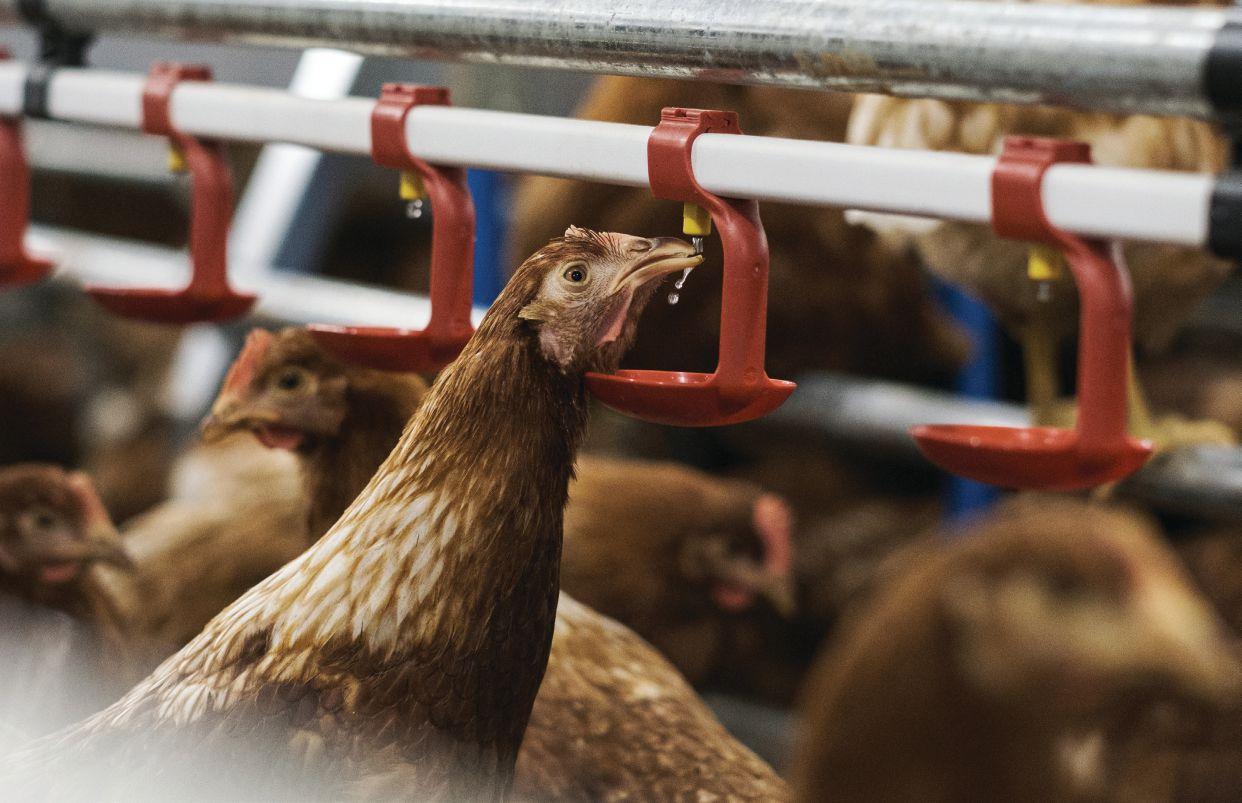
Farmers around the world trust our drinking systems to deliver a consistent flow of fresh water to their flocks for the best laying performance, and with our littergard cup your litter will remain dry and your birds healthy.
Glass-Pac Canada
St. Jacobs, Ontario
Tel: (519) 664-3811
Fax: (519) 664-3003
Carstairs, Alberta
Tel: (403) 337-3767
Fax: (403) 337-3590
Les Equipments Avipor Cowansville, Quebec
Tel: (450) 263-6222
Fax: (450) 263-9021
Specht-Canada Inc.
Stony Plain, Alberta
Tel: (780) 963-4795
Fax: (780) 963-5034
What’s Hatching
First avian influenza case of 2023 confirmed in B.C.
The first case of highly pathogenic avian influenza (HPAI) in a Canadian commercial poultry flock in 2023 was confirmed in early January. According to the Canadian Food Inspection Agency (CFIA), the case was confirmed in the city of Chilliwack, B.C. CFIA did not offer information regarding the type of birds involved or the number of birds in the most recently affected flock.
Avian influenza has jumped to small mammals
Early last autumn, dead seagulls and gannets began to wash up on the coast of Galicia, northwestern Spain. They were victims of the ongoing H5N1 bird flu pandemic that has killed millions of wild and farmed birds across the globe. Then in October, at a fur farm just a few miles inland from the coast, thousands of minks started to die from the same avian virus. Some experts are concerned these spillover events could spark the next pandemic.
Clark’s Poultry sells amid 75th anniversary
A longtime Brandon, Man., business has been sold. Clark’s Poultry, a day-old chick distribution company selling Lohmann Breeders brand layer chicks in Manitoba, Saskatchewan and Alberta, was sold last month. International Layer Distribution GmbH (ILD), a subsidiary of the German based EW Group, and Trouw Nutrition Canada Inc., a Nutreco Company, jointly purchased Clark’s Poultry. Details of the agreement weren’t revealed.
Dr. Tom Baker retires from FBCC
After 10 years, Dr. Tom Baker has made the decision to retire from his position as incident commander with the Feather Board Command Centre (FBCC), effective December 31, 2022.
“We owe Tom a huge debt of gratitude for all of his work, especially during this past year, which has not been easy. We will miss him,” says Ingrid DeVisser, FBCC chair.
With this decision, the FBCC Recruitment Committee faced the task of finding the right individual to step into the leadership role left vacant by Baker.
As a result, Dr. Harold Kloeze will join FBCC as executive director on a part-time basis and Maggy Watson will transition to operations lead on a full-time basis.
Kloeze and Watson will work together to make certain that all requirements of the FBCC are met.
Kloeze joins FBCC after 20 years in CFIA in various roles related to animal health, disease management and emergency preparedness.
“The Feather Board Command Centre looks forward to working under the expertise of Dr. Kloeze and we are confident that his knowledge will guide us in the right direction,” DeVisser says. “We are certain that his experience will be of great benefit to the poultry sector.”
FBCC was founded in 2011 with funding support from the federal and provincial governments, Egg Farmers of Ontario, Chicken Farmers of Ontario, Turkey Farmers of Ontario and Ontario Broiler Hatching Egg and Chick Commission. It was developed to coordinate the Ontario poultry industry’s emergency response to targeted diseases through promoting preparedness, prevention, response and recovery.
Dr. Tom Baker (left) retired from his position as incident commander with the FBCC. Dr. Harold Kloeze (right) replaced him on a part-time basis.
is how many years Baker served in the role.
On Aviaries
By Erika Prewitt
Keys to a successful pullet release
The most labour-intensive part of rearing cage-free pullets is release and training. Let’s first discuss why pullet release training is important.
Almost everything we do in the pullet barn is to train the pullets to be better hens once they enter the layer barn. The paycheck in the layer barn comes from the eggs. Therefore, egg quality is of upmost importance to an egg producer. We know better egg quality is achieved when the hen lays her egg in the nest compared to in the system or on the floor. Therefore, we strive for nest acceptance. If hens are not trained to return to the system at dim down time, the hen may decide to sleep on the floor. When the hen sleeps on the floor, she has a greater chance of waking up and laying her egg on the floor instead of moving up into system to the nest.
By training the pullets to go back into the system at night, you are helping to prevent floor eggs. That said, here are five key aspects producers should consider before a pullet release.
1.
Age of release
Depending on the design of the pullet system, release can happen anywhere from two to seven weeks. There are a few factors that can determine the age of release. The height of the system, use of bridges and ramps, as well as running out
of room within the system all play key roles.
There are some advantages to waiting to a little later in age though. For example, a fourweek pullet is bigger and stronger than a three-week pullet. This gives the older pullet an advantage when it comes to the ability to jump back into the system at night.
2. Time of release
It is best to release the pullets in the morning. This gives them time to explore the floor and to practice going back into the system on their own before the dim down period begins. If you wait until afternoon to release, the pullet doesn’t have time to become accustomed to the system and using the ramps and bridges. This leads to a high number of pullets out on the floor when lights turn off.
3. Preparing for release
I like for the feed to be ran
twice, if possible, before releasing. For many pullets once they are first released from the system they will not eat or drink until the following morning. So, make sure they have time to consume plenty of water and feed before you open the doors.
4. Help with pick ups
Make sure to have plenty help available to pick up pullets after lights turn off. Smothering can occur in large piles and you want to make sure you get to each pile as soon as you can. Also, be sure to use dim red headlamps. Bright headlamps can cause birds to stir and they may jump out of the system or be harder to catch.
5. Practice dim downs
Establishing a dim down routine early is my last key to success for pullet release. Beginning the very first few days that they are housed, you want
to start your dim down process at the same duration and time that it will be when they are released.
If you make changes to the time of the dim down, make sure you do it in small amounts. Try to add or remove the majority of the time from the morning dim up time.
I recommend that you try to keep your dim down duration between 30 to 45 minutes. You don’t want it to be too quick or too drawn out that the pullets don’t respond correctly.
Once released, the pullets will anticipate the time of dim down based on the routine that they are used to. They will know when to expect the lights to start dimming. You will see many hens move into the system before lights start dimming because they know internally that’s it coming. Changing this last minute can cause chaos and not as many birds to go back into the system.
Erika Prewitt is aviary systems specialist with Big Dutchman. In this column, she shares cage-free management tips for egg producers.
Release and training are the most labour-intensive parts of rearing cage-free pullets. PHOTO: BIG DUTCHMAN
You can enhance your farm’s sustainability journey
The National Environmental Sustainability Tool is a first-of-its-kind system that egg farmers can use to track, assess and benchmark the environmental impact of their farm.
How the tool can help you
You can use the tool to:
Understand the environmental impact of your farm
Compare your results to other egg farms
Improve your operations with tailored recommendations
Access the latest on-farm sustainability resources for egg farmers
How to access the tool
By using the tool, you’re supporting the broader movement of egg farmers who are collaborating and innovating for a more sustainable future.
All you need to get started is your Farm Registration ID! Visit eggsustainability.ca today to sign up.
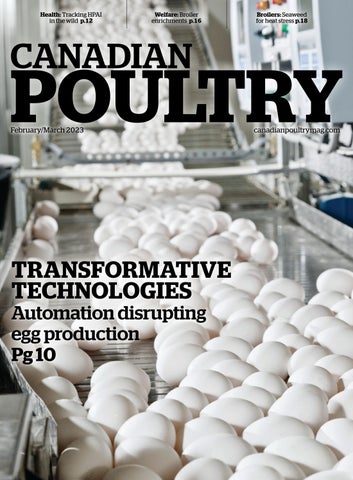
Transformative technologies
How automation is disrupting egg production, cutting down on labour-intensive tasks and improving operations.
By Melanie Epp
Canada’s egg industry has seen significant advancements in automation.
Driven largely by labour shortages and the transition to cage-free production, automation is boosting efficiency on egg farms. Here’s a look at which advancements offer the greatest return.
Packing and palletizing automation
When Andrew Penner, 37, of Nest Egg Poultry in Abbotsford, B.C., took over the family farm in 2019, he decided to replace the aging conventional housing system with a free-run system. It meant an entire rebuild that gave Penner an opportunity to adopt brand-new technology.
For the most part, Penner works alone on the farm. He has one part-time employee he can rely on to relieve him when he needs a day off. But other than that, he manages the day-to-day farm operations alone. To do this more efficiently, he invested in automated packing technology.
Nest Egg Poultry’s new barn, built in 2020, has the capacity to house 30,000 layers, but currently Penner houses 20,000. Switching to free-run meant adopting a new lighting system. Lighting in the conventional system had a simple on/off function. In the new barn, however,
the lighting system is meant to mimic a natural day. The lighting program helps usher birds to nesting boxes in the morning, roosting areas in the evening, and to feed and water. The success of this system comes down to proper management and bringing in pullets that have already been trained in an open aviary system.
“It’s a big transition going from conventional,” Penner says. “Automation helps.”
Even the nest boxes are equipped with automatic tilting floors. “After a certain period, they actually tilt up and kind of kick all the birds out, so they don’t sleep in the nest box overnight,” Penner explains. “It keeps the nest boxes a bit cleaner.”
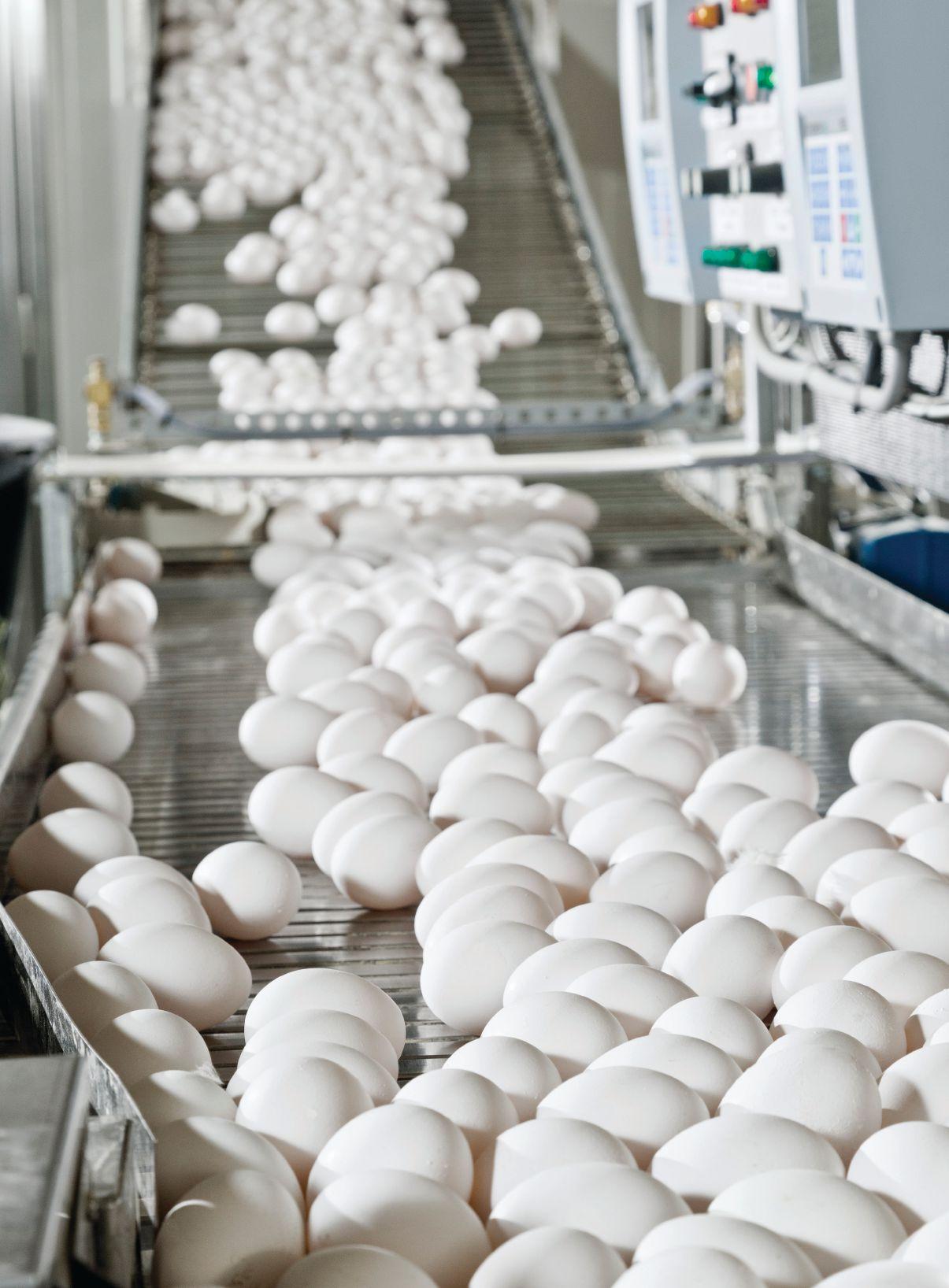
Eggs are collected via a central belt that runs down the middle of the aviary system. The belt is programmed to run more frequently at times throughout the day when the hens are laying most. From there, eggs are automatically transported to the packing area once collection begins. Penner has installed cameras in the packing room so he can watch the birds while working.
Tyler de Boer of AgPro West Supply distributes automated equipment for B.C.’s
egg sector. de Boer travelled throughout Europe looking for cutting edge equipment manufacturers who develop technology he felt were a good fit for B.C.’s rapidly changing egg industry. He chose to work with two companies, Damtech and Farmtec, both out of the Netherlands.
Damtech is a packing and grading equipment manufacturer. Farmtec manufactures egg conveying technology. He chose to work with the two companies for three reasons: the opportunity to represent them was there, they offer quality products, and they provide excellent support.
“We are seeing smaller farms investing in automation,” de Boer says.
“If you have a small farm, and maybe it’s not your only income, automation can be important,” he adds. “Because you need to streamline your operation as best possible so that you can have time for other things and supplemental income.”
De Boer helped Penner choose innovative technology that best fit his farm’s needs. Penner opted for a Damtech automated packer and stacker, as it made running the farm alone more manageable. Not
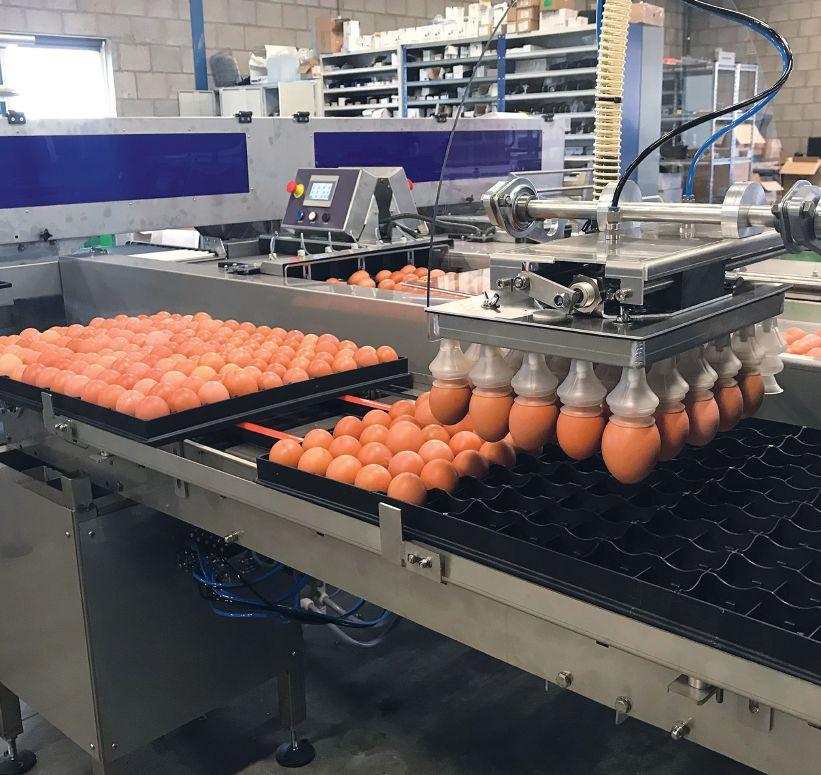
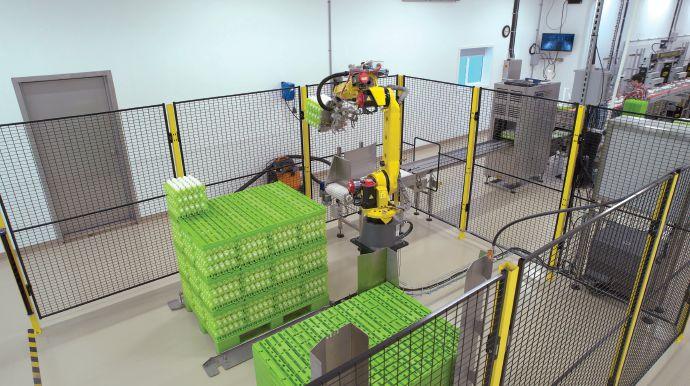
Rose Valley Colony’s new barn features this Ovoconcept palletizing robot, the first of its kind in Canada.
only does it pack eggs onto the flat itself, but it also stacks them up for palletization.
“The labour is just so much more if you’re trying to hand pack eggs, especially with a free run system,” Penner says.
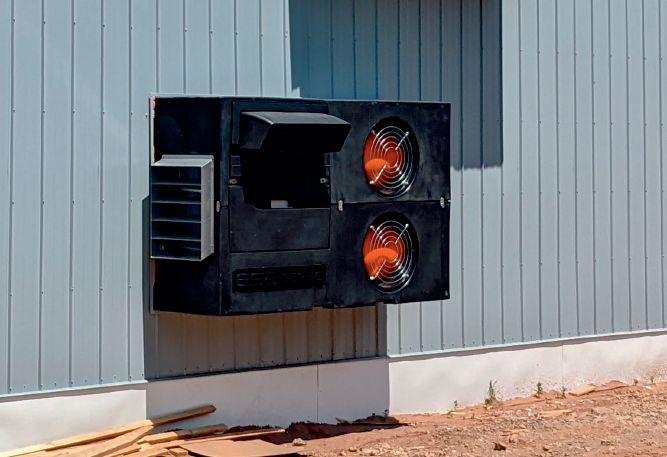
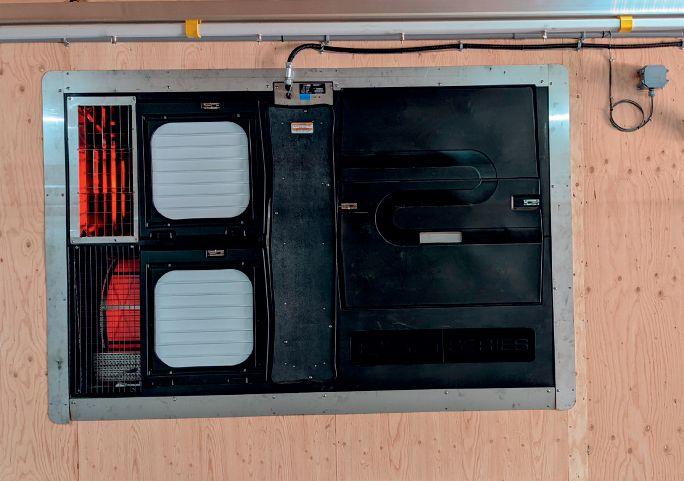
Penner also adopted a SKOV automatic ventilation and control system with chimney fans and side inlets for minimum ventilation, and tunnel ventilation and cooling pads for days when high ventilation is needed.
The system uses an algorithm to calculate when and how long it needs to run in order to meet pre-set parameters. Penner can control the entire environmental system from his phone.
“They did an amazing job with designing the ventilation,” Penner says. “It gives you a lot of peace of mind having something that’s going to preserve your flock through those hot times.”
Improved quality and cleanliness
Rose Valley Colony runs a 32,000-bird, split-flock operation in Verwood, Sask. In 2020, the colony built a new facility, upgrading their conventional operation to an enriched housing system. Their aim was to design a facility that had more capacity for growth but required less labour.
Ben Kaiser of Kaiser Ag Solutions helped the colony choose the right equipment for the rebuild. The new barn features Kaiser’s KPS enriched system, a Völker stacker and packer, and an Ovoconcept palletizing robot, the first of its kind in Canada.
“The reason we went with automation mainly is for reliability,” Rose Valley’s David Kleinsasser says. “We don’t have to wait for anybody to show up to help gather eggs, and the eggs get handled the same every day. [We have] less cracks and a lot less broken eggs in the gathering area,” he adds.
826 Nanticoke Creek Parkway, Jarvis, Ontario, N0A 1J0 Call us on: 519-587-2667 www.meller.ca • mellerpoultry@gmail.com
Most barns today are equipped with automatic packing and stacking equipment. The next step, Kaiser says, is automatic palletization. A palletizer, like the Ovoconcept robot Rose Valley Colony installed, can easily replace one person’s worth of manpower in the barn. Considering labour costs, the return on investment for a $200,000 piece of equipment could be just four to five years, he says.
The robot can palletize 10,000 eggs in approximately 30 minutes. If, during that half hour, an employee can walk the barn and spend that time managing the flock, the result is a better environment for the birds, potentially higher production, and a more efficient farming operation overall.
“My ROI isn’t just on the labour savings, but also I have the added bonus of having a better managed barn, which could pay dividends exponentially,” Kaiser says.
a
of
Meller Poultry Equipment Inc.
Authorized dealer VDL Jansen VDL Agrotech
The LayMaxx nest with its tilting floor makes nest inspection easy. Moreover, the nest offers a secluded and comfortable environment in which the hen can lay eggs undisturbed. When the nest floor is tilted, the nest flaps roll up, fully exposing the nest mats. A moveable nest floor that tilts upwards ensures that the hens leave their nests at the end of the day. This simplifies the task of inspection. The open structure of the nest mats ensures clean eggs. Eggs roll onto the egg belt with a precise rolling speed and short rolling distance, which preserves the quality of the egg.
LAYMAXX® LAYING NEST
Provides
perfect overview
the birds and nests, and stimulates an optimal production of high quality eggs. Integrated walk ways are easy accessible and make inspection of the upper nests easy.
Offers ample space for 8 to 10 males to get feed from each pan in broiler breeder houses. Extra ridge ensures that the dosed feed doesn’t spread further into the bottom pan while dosing the feed.
AVIAVIEW® EGG TRANSPORT SYSTEM
MALE PAN FEEDING SYSTEM
HPAI in the wild
Updates on research and surveillance of avian influenza in wild bird populations. By Treena Hein
As everyone in the Canadian poultry industry knows, it’s critical for commercial poultry producers and backyard flock owners to follow all biosecurity procedures to their flocks from the highly-pathogenic avian influenza strain (HPAI) that arrived in North America about a year ago – in addition to other strains that may exist.
On that note, monitoring the virus in the environment as best we can is critical, in order to detect and monitor which strains are appearing and how they may change over time. Different strains can vary in virulence, contagiousness and other characteristics.
In Ontario, surveillance continues, using samples taken from dead wildlife that the public have found and brought to the attention of the Canadian Wildlife Health Cooperative (CWHC). “We are currently seeing cases of HPAI in many species of wild birds and mammals,” reports Dr. Brian Stevens, a veterinarian and CWHC wildlife pathologist.
“The most common birds affected recently have been Canada geese and turkey vultures,” he says. “We have also had one fox and one skunk die from this disease this fall. This is very similar to what we saw in the spring, with the only difference being that we saw the disease commonly in bald eagles as well. We have diagnosed it in many species of wild birds, but most are in the general categories of waterfowl, shorebirds, raptors and corvids.”
U.S. insights
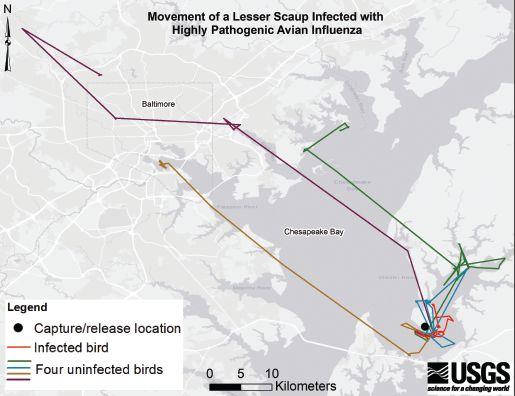
Meanwhile, scientists at the U.S. Geological Survey have published the first study in North America involving the tracking of a wild bird known to have HPAI. This team is collaborating on other AI research projects with colleagues at the University of Delaware, Maryland Department of Natural Resources, U.S. Fish and Wildlife Service, University of Georgia and Ducks Unlimited.
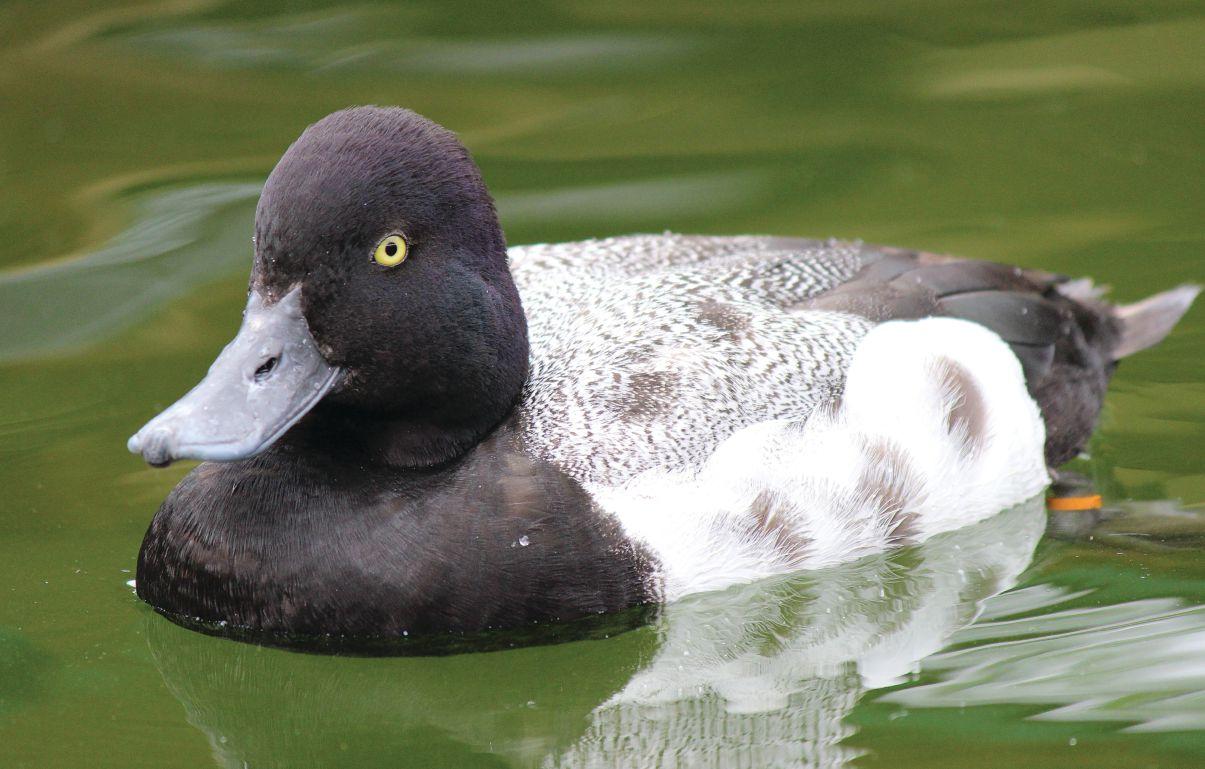
This study came about by chance. The scientists were not aware that the bird – a lesser scaup duck found in the Chesapeake Bay area of Maryland – was infected with HPAI when they released it back into the wild. They had captured it for another research project and had observed no signs of infection. However, results a week later from a swab test taken as a part of the research came back positive.
In knowing this bird’s movements and comparing it to 24 other birds in the study that were not infected, the research team noted it had moved shorter distances in similar timeframes. That is, the infected bird was, as would be expected, less active compared to non-infected birds.
However as expected, during the time the team tracked this group of birds, the non-infected bird was in close contact with non-infected birds and there were opportunities for potential transmission. Transmission of HPAI or AI can happen from bird to bird or from bird to environment to bird (typically through fecal-contaminated water).
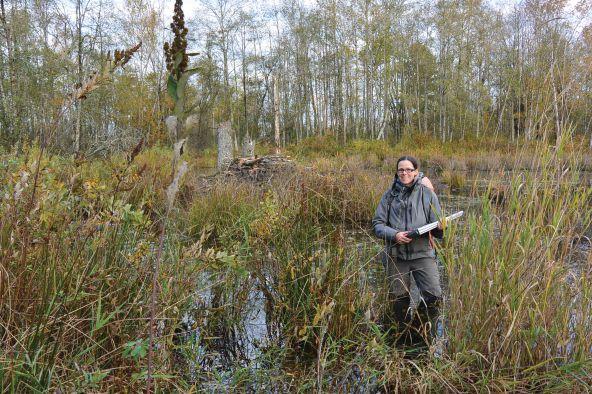
U.S. scientists have published the first study in North America involving the tracking of a wild bird – a lesser scaup – known to have HPAI.
PHOTO: JEFFREY SULLIVAN
When asked if other bird species are likely similar in that infected individuals move around less than non-infected, team member Dr. Diann Prosser says that’s difficult to answer.
“There is still relatively little data on which to base these assumptions, and many aspects of AI pathobiology vary by species,” she says. “Thus, we should be cautious when attempting to extrapolate based on limited data.
“We are actively working to obtain additional disease samples from other telemetry projects that include different waterfowl species in an effort to grow our dataset.”
The extent of the presence of this strain in the environment is not discernable by the research team currently. “It’s not known where the virus is in the environment, nor the survivability of this strain of viral material once it’s shed into the environment,” Prosser says. “However, understanding how the wild bird reservoirs move once they become infected is important for modeling disease spread following both initial introductions but also across seasons, and the annual cycle of wild waterfowl.”
However, as readers of this magazine will recall, environmental surveillance of AI has been happening in B.C. for several years.
Wetland sediment surveillance
AI surveillance involving collecting samples from wild birds killed by hunters or found dead is difficult. Live capture and release on a large scale is not feasible due to costs, stress on the birds, ecological disruption and so on.
In 2015, after the major AI outbreak in B.C., the provincial government sought the development of a novel AI surveillance approach. Scientists at the B.C. Centre for Disease Control (BCCDC), CWHC and other partners began a pilot study to test wetland sediments (where wild bird feces accumulates) for virus presence.
Note that the methods being used did not and do not distinguish between live (potentially infective virus in the environment) and dead virus but look at sediment as an alternative or complementary method for detecting viruses circulating in wild birds instead of looking at sediment as part of the bird-environment-bird transmission cycle.
The results of the pilot tests were very promising, with a 20 per cent rate of virus detection compared to less than a one per cent rate of detection through wild bird swab sampling. This is not surprising, because in each wetland sediment sample, the feces of potentially several birds can be present, making the chances of getting a viral RNA sample much higher.
In the pilot study, the team used sampling technology from a B.C. firm called Fusion Genomics. However, because the firm’s probes are proprietary and limit the ability to add new probes as new AIV variants emerge, the team has developed its own probes.
The plan, says PhD student Kevin Kuchinski (UBC and BCCDC), was to make an open-source probe system and release a research manual for others around the world to use, covering from how to best sample to how to make the probes to how to best do data analysis. There is great interest from various teams
in the EU and the U.S. about this system.
This was supposed to be achieved by 2021, but with the pandemic having gotten in the way, the system should be ready for other research teams in the coming year.
“This new probe technique directly characterizes the virus as it exists in the sediment and bird swabs,” Kuchinski says. “Using conventional sampling and analysis, which involves culturing of the virus, viruses can mutate.”
Current testing
The team generally does not do sampling in the summer because
A team of B.C. scientists attained a 20 per cent rate of virus detection by testing wetland sediments.
warmer temperatures and stronger sunlight speed up the destruction of viral RNA. So, the last time they did surveillance sampling was last fall/winter, before the arrival of this HPAI had made it to B.C. after landing on Canada’s Atlantic coast.
The team has started up sampling again now, as always in the Fraser Valley area, in several wetlands that span an area that’s about 125 km long. Sediment samples are also coming in from agencies in other parts of Canada.
“The surveillance this winter will give us more information about what’s going on in the environment around chicken farms,” says PhD student Michelle Coombe (UBC and B.C. Ministry of Ag).
“This may assist the chicken boards and public health agencies in setting biosecurity alerts for the poultry industry in lower mainland B.C. and beyond. There’s obviously a high biosecurity risk right now from this virus, but it’s important to be very aware of what strains are in the environment that are circulating and to better understand the ecology of the virus as well.”
Kuchinski says, “I think one of the big questions is whether this variant lineage will be endemic here, as it has become endemic in Europe and Asia. We hope to see how widespread the lineage is and how it may have mutated.”
He adds that the arrival of this strain in Atlantic Canada last winter has really highlighted the fact that surveillance needs to be everywhere to be more effective.
“The system is getting to the point where we can roll it out in the near future,” he says. “This will hopefully really help poultry farmers prevent outbreaks because they have that early warning. It’s hard to get that if you’re blind to what strains are out there, where they are moving and how they may be mutating. Wetlands are the key.”
KEEPING CHICKENS
Providing a practical and easy to follow guide, this is an ideal book for people beginning with keeping chickens, covering the basics of poultry husbandry. The authors are experienced smallholders and share their advice with the aim of keeping healthy, happy chickens.
Providing a practical and easy to follow guide, this is an ideal book for people beginning with keeping chickens, covering the basics of poultry husbandry. The authors are experienced smallholders and share their advice with the aim of keeping healthy, happy chickens.
This illustration shows the movement of a lesser scaup infected with highly patogenic avian influenza that researchers monitored.
Enrichments in broiler production
A close-up look at new trials at Maple Leaf Foods.
By Treena Hein
Do the levels of bird activity and comfort behaviours increase when enrichments are placed in broiler barns? Which enrichments do broilers prefer to interact with? Does providing enrichments result in improved health outcomes or impact on production parameters?
These are some of the main questions that Maple Leaf Foods is seeking to answer, and share with industry, in its quest to improve broiler welfare.
In various published studies, enrichments have already been shown to provide birds with the opportunity to express natural behaviour. They also encourage increased activity, reduce fearfulnesss and improve leg health.
The enrichment trials initiated at Maple Leaf began in 2019 and two major studies have now been completed. “After the first trials, we changed the enrichment object design based on what we had learned,” explains poultry veterinarian Dr. Kathleen Long, who is vice president of animal care at Maple Leaf Foods. “We are working toward publishing all our trial results in a peer-reviewed journal.”
Why enrichments matter
The broiler industry is in general agreement that enrichments are one of four farm-level broiler welfare parameters that are of most interest to all stakeholders, some of which require more study, consensus and/or broader implementation. The others are lighting, stocking density and
slow-growth breeds.
“The National Farm Animal Care Council Code of Practice for broilers is behind the laying hen and pig Codes in terms of enrichments, and we are keen to help inform the next update,” Long says. “I, our technical team and our farmers are seeing a lot of benefit to enrichments for the birds, and our farmers really enjoy seeing the birds interact with them.”
Maple Leaf Foods has already released to the public a large amount of detailed information about its broiler welfare practices, in both its annual Sustainability Report and Animal Care Performance Report. This year, across 150 companies in 25 countries, the Business Benchmark on Farm Animal Welfare ranked Maple Leaf Foods and 11 other firms in Tier 2, with only four in Tier 1.
Enrichment power
Broiler enrichments can include hanging
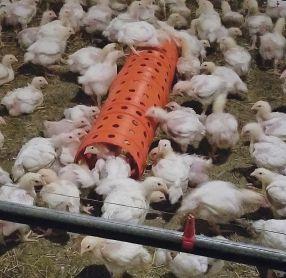
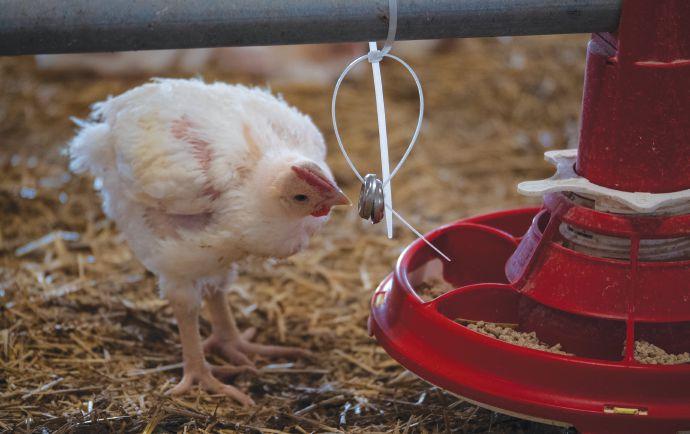
peck objects (e.g., washers tied to water lines with plastic ties), ramps, tunnels, perches, straw bales and pecking block products. Indeed, enrichments can be defined as any safe materials or objects added to the environment which engage the brain and encourage the expression of natural behaviour and exercise.
Maple Leaf made sure its selection of enrichments to study are best suited to commercial production, Long says. “In addition to the welfare benefits they offer birds, they were chosen to promote biosecurity and ease of cleaning,” she says. “They were also chosen for durability and cost.”
Trial details
Trials were conducted on volunteer commercial broiler barns with average flock sizes of 27.000 birds, notes technical team member Jessica Walsh. “The first flock was used as a control flock adding no enrichments,” she says. “But taking behaviour
Broiler enrichments can be as simple as hanging peck objects like the one pictured here from Maple Leaf Foods’ study.
and health measurements for comparison to flocks later provided with enrichments.”
In the first experiment of the first trial, a flock was given one pecking object and one perching object. These enrichments were placed in the barns at bird age of seven to 10 days (after the brood guard was down to avoid influencing chick start-up). However, impact on chicks was found not to be an issue. So, in subsequent trials, enrichments are added as soon as possible after chick placement. And Maple Leaf now recommends placing enrichments before chicks arrive.
In trial two, flocks were given three hiding objects (e.g., tunnels), one perching object and one pecking object. Trial three involved three pecking objects.
Observation areas of the barns were established and six sets of behavioural observations were made every day. In addition, after each flock cycle was complete, scoring for any footpad or hock dermatitis was done, along with analysis of leg bone composition and comparison of leg weight relative to body weight. Production parameters (mortality, leg culls, feed conversion and condemns) were also measured.
Results
Overall, the broilers performed more active behaviour when provided enrichments. They also displayed more comfort behaviour (e.g., pecking, flapping).
Most interactions happened with the four-inch perches, followed by the slatted ramps and, thirdly, with the two-inch perches. “Interaction means did they climb or jump up on the objects using their wings, did they perch on it, sit next to it, hide underneath it or peck at it,” explains Long. “We found that they liked to perch most on the slatted ramp.”
In terms of pecking, the broilers liked the pecking blocks and straw bales most but also pecked objects not intended for pecking such as the tunnels.
In most treatments compared to no enrichments, there were fewer footpad and hock dermatitis incidences among the groups and better leg bone strength as well. There was no difference in food pad and hock health in the treatment with tunnels,
grid ramp and hanging pecking objects compared to no enrichments. The same result was observed with the treatment with straw bales and a rung ramp, and the treatment with pecking blocks and twoinch perches.
Enrichment use also improved the relationship between leg bone composition and leg weight relative to body weight. There was no obvious trend in whether providing enrichments impacted any production parameters, such as mortality, condemns and feed conversion.
Recommendations
At this point, based on their findings, Long and her team recommend enriching barns with the aluminum grid ramps (one-inch square grid) for perching behaviour and providing straw bales or tied washers to
stimulate more pecking.
“We recommend the aluminum grid ramp over wooden objects due to it being lightweight, easy to clean and durable over multiple flocks,” she says. “We also recommend tunnels, with holes for visibility, for birds to hide and rest in, which we have redesigned into stackable hiding huts.”
The enrichments used in these trials were designed by Long and her team in collaboration with two companies in southern Ontario. Bridgeview Metal in West Montrose, Ont., manufactured the aluminum grid ramps, and Bluewater Pipe in Huron Park, Ont., designed and manufactured the trapezoid huts and tunnels.
Looking forward, Long says, “We’re excited about our results, but we also view this as one step on our animal welfare journey.”
Handling heat stress
Seaweed shows potential as additive to broiler diet.
By Jane Robinson
Healthy birds handle stressors better, including those associated with rising temperatures from climate change. And as the industry reduces the use of antibiotics in poultry production, researchers continue to develop alternatives to help reduce bird stress including the use of novel ingredients with known properties related to improving bird health.
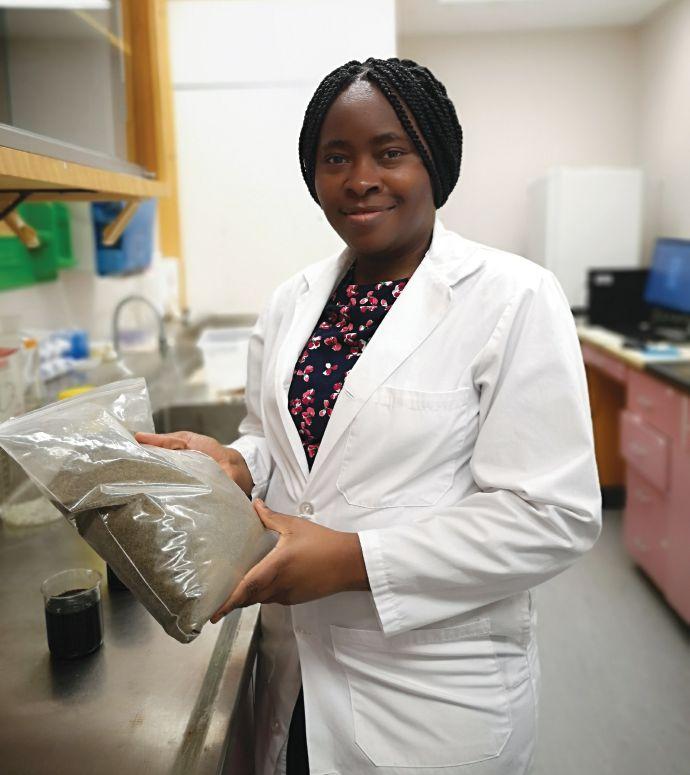
Dr. Deborah Adewole and her PhD student Fisayo Akinyemi are researching the potential for brown seaweed to combat the negative effects of heat stress in broilers. Adewole is an Assistant Professor and holds the Industry Research Chair, Poultry in the Department of Animal Science and Aquaculture at Dalhousie University.
“One of the reasons we singled out brown seaweed is because we know it has good antioxidant properties that help birds build a stronger immune system to withstand many types of stress,” Adewole says. “We wanted to see how we could use it as a feed ingredient to help birds cope with heat stress.”
Seaweed is already used as a feed ingredient in animal diets, and a local seaweed producer that first approached Adewole about adding it to poultry diets – in one of the first studies to look at brown seaweed in broiler diets for heat stress.
Testing two forms
A group of day-old broilers were divided into two rooms and raised for a total of 28 days at the Atlantic Poultry Research Cen-
tre. From days 21 to 27, birds in one room were subject to heat stress for eight hours a day. Birds in the other acted as a control group. Birds in both rooms were also divided into four treatment groups – a control group, a group with one mL per litre brown seaweed extract liquid added to the drinking water, one with two mL per litre brown seaweed extract in the drinking water, and a group with two per cent brown seaweed
meal added to the feed.
Data was collected on growth performance of the birds including weight gain, feed intake and feed conversion ratio. Blood samples were tested for antioxidant status between the various diets, as well as indicators of immune status and stress.
The research yielded some surprising and expected results, depending on the form of seaweed included in the broiler diet.
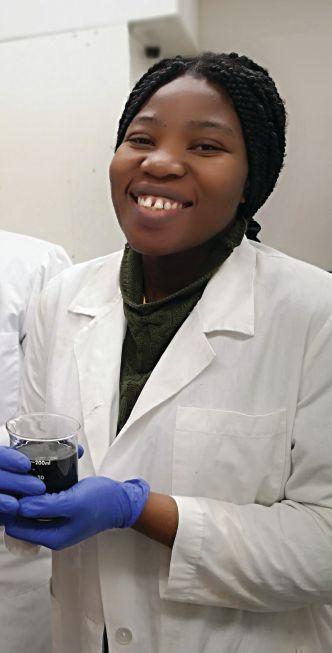
Dr. Deborah Adewole, pictured here, and her PhD student Fisayo Akinyemi are researching the potential for brown seaweed to combat the negative effects of heat stress in broilers.
We’re looking for six women making a difference in Canadian agriculture. Whether actively farming, providing agronomy or animal health services, or leading research, marketing or sales teams, we want to honour women who are driving Canada’s agriculture industry.
Platinum Sponsor:
Gold Sponsors:
Bronze Sponsor:
and submit your nomination.
MARCH 31, 2023
Meal boosts growth performance
Birds fed brown seaweed meal in the feed had better growth performance that those given the extract in the drinking water but didn’t deliver antioxidative effects. “We saw a significant increased in weight gain and feed intake for the broilers fed two per cent brown seaweed meal, compared to the control diet that had no significant difference in these measures,” Akinyemi says.
The growth improvements were the same for the birds fed the meal whether they were subjected to heat stress or not. “When we analyzed the diet with two per cent brown seaweed meal, there was more fibre in this diet and that is what boosted the birds’ growth performance,” Akinyemi says.
This wasn’t really a surprise result for the researchers as they expected the additional fibre in the diet from seaweed meal would be beneficial. “The added fibre
contributed to overall gut health that helped birds deal with stresses, including from heat,” Adewole says.
Improving gut function with added fibre acts to improve feed efficiency. “More fibre in the diet improves the function of the gizzard to break down fibre, and in turn help birds use feed more efficiently for growth,” Adewole says.
But what they didn’t see was any bump in antioxidant activity or reduction in heat stress by adding the seaweed meal to the feed. “This may be a factor of the amount of seaweed included in the diet,” Adewole says.
Extract helps reduce heat stress
Adding the extract in a liquid form to drinking water showed promise for helping mitigate the negative impact of heat stress. One of the benefits was in reducing liver enzyme levels in the blood. “We found that enzymes indicating liver damage due to exposure to heat stress were lower in the broilers fed the extract,” Akinyemi says. “This would indicate the extract may help reduce the negative impact of heat stress.” There was some improvement in growth performance with extract but not as much as feeding the seaweed in meal form.
A good start on seaweed
With these results, Adewole is confident that seaweed has a role in mitigating heat stress in broilers, but there is more work to be done. “This is a preliminary study and it shows the potential benefits for adding brown seaweed,” Adewole says. “I would like to see another study to conduct this work on a larger scale before we could make any concrete recommendations for producers to add this ingredient to broiler diets.”
Looking at gut health
Adewole and Akinyemi are continuing their work on seaweed in the second part of this project. “We are looking at the effect of brown seaweed on the gut health of broiler chickens,” Adewole says. “We are still working on this project and hope to find that feeding the seaweed meal, especially, improves the gut development and helps the birds absorb nutrients better.” Results from this part of their research is expected later this year.
PhD student Fisayo Akinyemi with brown seaweed extract.
Barn Spotlight
Greenfield Farms
Location
Hagersville, Ont.
Sector Broilers
The business
Gerry and Cathy Greenfield entered the broiler business in 1988. Gerry originally had an off-farm job at Stelco but in 2006 he retired to focus solely on chicken production and cash cropping. The producers own quota for about 25,000 units, which they grow in two barns.
The need
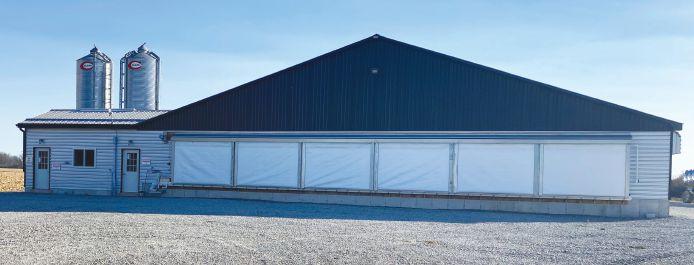
The Greenfields built their first single-storey barn about 20 years ago, long before it became the standard for new barn builds in Ontario to accommodate modular loading. They did so at the time to make barn cleanouts simpler, since Gerry does most of the barn work himself. “Everybody laughed at me because it was more money then,” Gerry says. “And now it’s the norm, right?” A few years ago, the Greenfields decided their two-storey barn was becoming obselete and the time had come to replace it. They did so with a new single-storey facility.
The barn
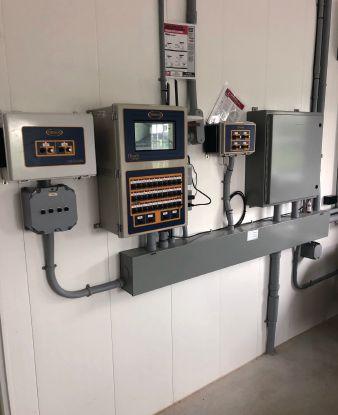
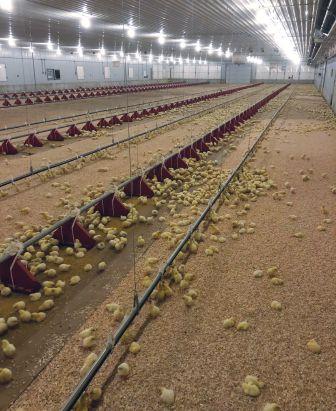
The producers worked with Clark Ag Systems on the new barn, which includes tunnel ventilation and cool cells. In contrast, their older barn has 36 smaller fans. They also have a new Genius controller. The producers went with Butterfly feeders. Now, after they ship their chickens out they can empty their feeders simply by cranking them open. The biggest time-saver, Gerry says, is having to only worry about one level in either facility. “The other day, we cleaned out both barns in about four hours, removed the manure and blew them down.”
and
Do you know of a good candidate to be featured? Let us know at
Barn Spotlight highlights new and renovated barns
hatcheries.
poultry@annexweb.com.
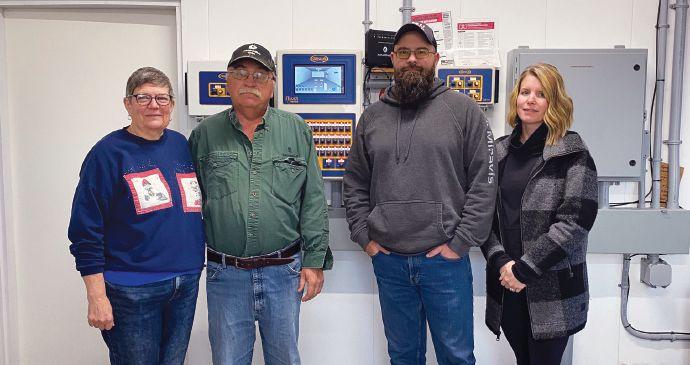
Cathy and Gerry Greenfield with their eldest son Steven and his wife Karaline. Not included in this photo is Cathy and Gerry’s other son Jim, who helps clean out and wash the barns
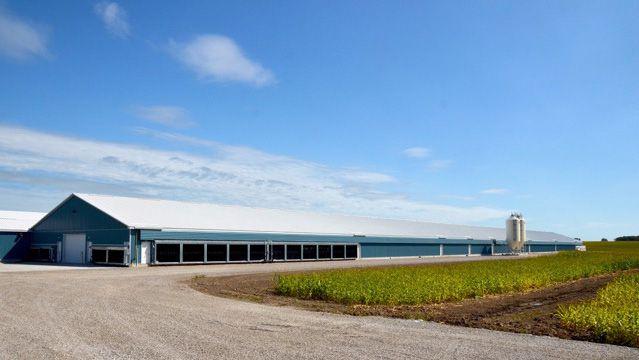
The Greenfields replaced and aging two-storey barn with the single-storey facility pictured here both to make barn cleanouts quicker and to accommodate modular loading.
Their new Genius computer system simplifies both barn management and audits. They liked it so much they had one installed in their older barn as well.
The producers went with Butterfly feeders. Now, after they ship their chickens out they can empty their feeders simply by cranking them open.