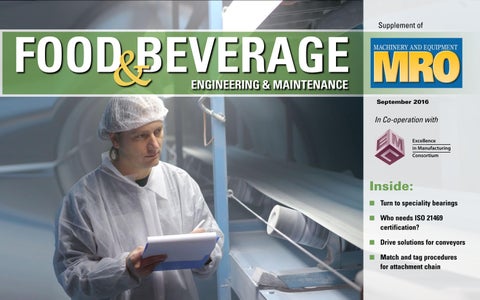
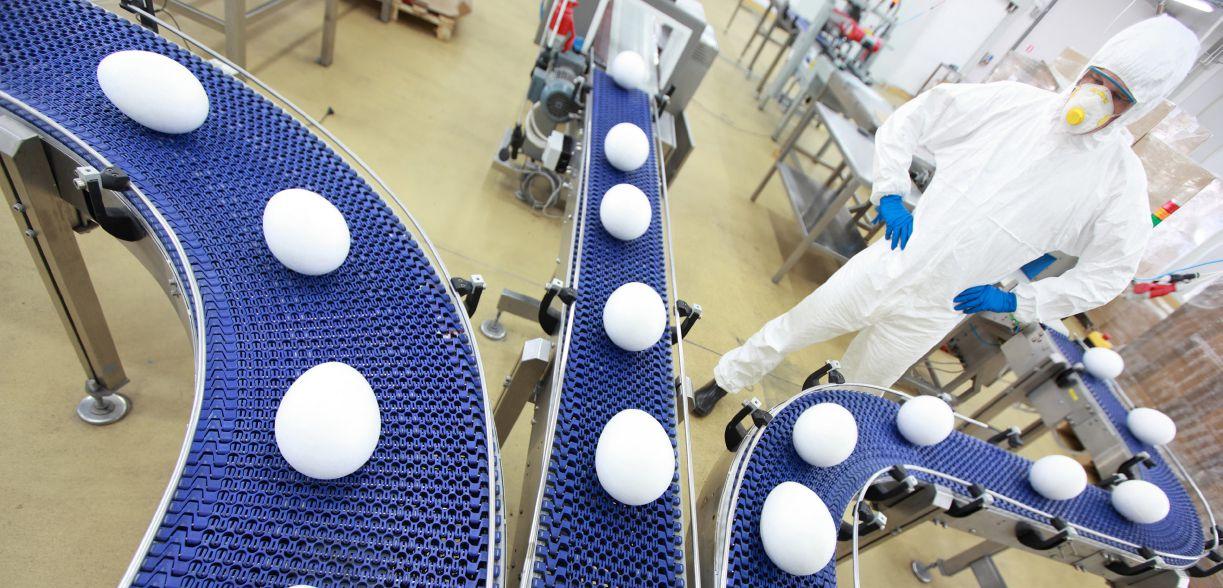
The list of prosecution bulletins and food recalls posted on the Canadian Food Inspection Agency website makes it apparent that enforcing standards can be onerous.
In the first two weeks of September alone, there were at least seven recall warnings and allergy alert notifications triggered by either the company or by the consumer. The recall list includes a popular brand of strained prunes that may be unsafe due to the potential presence of pieces of rubber; one brand of almond butter may have salmonella contamination; and a thirst-quenching beer-based blend of blood orange juice is recalled from the marketplace due to swelling and bursting cans.
While these infractions are a mere sampling of a comprehensive list, they reinforce the need for auditing the compliance of food products and the importance of having specifications for equipment and components to help prevent major catastrophes. I am reminded of the impact of mad cow disease, which reported almost 1,000 new cases per week at its peak in January 1993. Since 1996, when an association between mad cow disease and Variant Creutzfeldt-Jakob disease (a rare and fatal human neurodegenerative condition) in humans was
discovered, the World Health Organization reported 175 cases of vCJD in the United Kingdom, and 49 cases in other countries from October 1996 to March 2011. earlier this year, the U.S. Centers for Disease Control reported three confirmed cases.
The risks associated with mad cows disease has dissipated but not disappeared. In July Taiwan lifted its temporary ban on Canadian beef after imposing a ban following an outbreak in Alberta last year. Before the ban, some $12 million of Canada’s $2 billion in total annual beef exports went to Taiwan, Canada’s seventh largest beef market. The knock-on effects can be catastrophic considering Canada’s beef industry contributes $33 billion worth of sales of goods and services either directly or indirectly to the economy.
Downtime costs and operating conditions in the food and beverage industry can potentially be amongst the highest in a plant because bacteria can be found in almost any handling scenario. Equipment must operate at top capacity in spite of high-pressure washdowns, vibrations and temperature fluctuations.
In this issue, our contributors deepen the discussion that we need strict regulation, along with food inspection and prevention programs.
“Drive Solution” (submitted by Bauer Gear Motor), focuses on selecting suitable and reliable motors and high-performance gearboxes for equipment that can withstand the rigours of regular washdowns. Then, click on “High Standards” (submitted by Petro-Canada Lubricants) for a discussion on selecting lubricants with ISO 21469 certification; this guideline prompts plants to look at the entire lubricant product lifecycle, from formulating to production and packaging.
Keeping pace with best-in-class solutions and tapping into current standards will not only provide a measure of confidence, but will mitigate potential health scares and other vulnerabilities.
Realizing new efficiciencies through bearing upgrades.
Innovation is alive and well in the world of rolling element bearings, which serve as precision components in all rotating machinery throughout an industrial plant. In particular, specialty bearings for applications where standard “off-the-shelf” versions may not be the best match to represent unique advances in engineering and technology. We asked Laurie Olson, Specialty Sales & Marketing Manager, SKF USA Inc., how and why specialty bearings exemplify innovation in action.
What are the circumstances in which industrial plants might require a specialty bearing?
OLSON: In some instances, a bearing supplied with original equipment may not be performing as intended due to unanticipated operating conditions or other application factors. In other cases, certain bearing properties and/or characteristics may be required in the face of extremely challenging technical demands in an application. Or, it may be determined that a bearing upgrade in design and/or properties would be beneficial in realizing new efficiencies, extended service life, and/ or increased output for a machine. New market and/or application opportunities represent yet another rationale. Ultimately, every aspect of a bearing – from geometries and materials to sealing and lubrication
REHANA BEGG A bearing upgrade can increase machine output.
INNOVATION
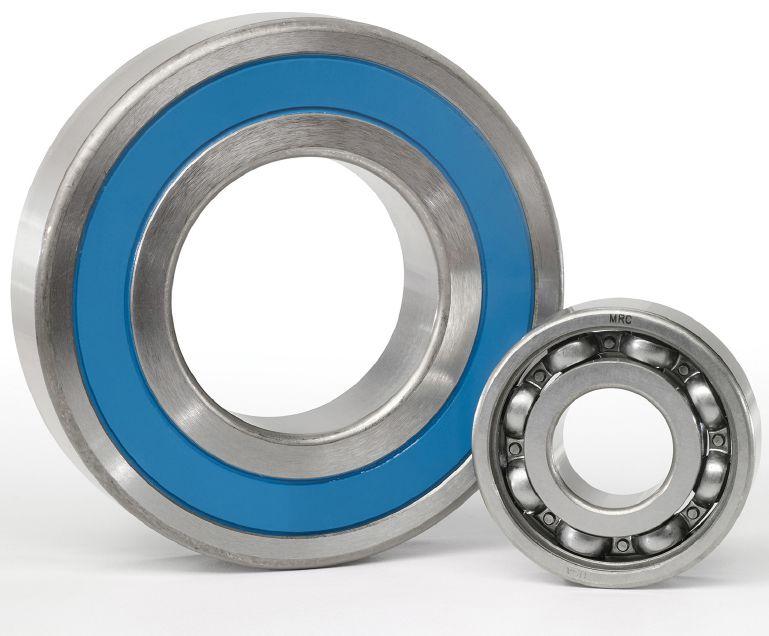
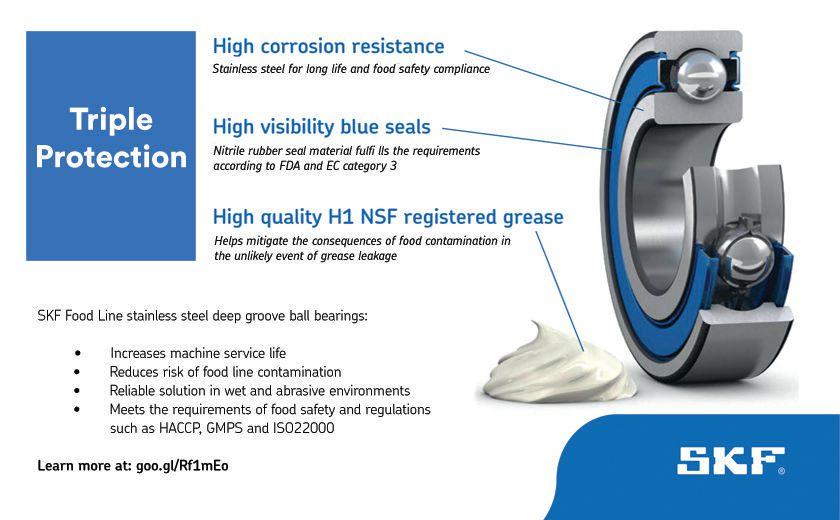
– will contribute to application success or failure. Specialty bearings can deliver ideally tailored design and engineering where needed. As an example, let’s say that a bearing will be routinely exposed to highly corrosive elements and/or repeated chemical washdowns, typical in the food and beverage industry. If the existing bearing is made from standard bearing steel and designed without proper sealing or shielding, will it perform appropriately over time? Not likely. In such cases, a specialty bearing manufactured from steel that will be able to withstand constant attack from corrosive media and the addition of properly specified sealing would be a practical way to go in this environment.
What types of applications can benefit from specialty bearings?
OLSON: Suitable applications will exist wherever operating challenges arise. Examples where specialty bearings have made a mark include pumps, turbines and compressors, conveyors, electric motors, paper
Specialty bearings made from steel that can withstand corrosion are suitable for repeated chemical washdowns.
INNOVATION
mill rolls, steelmaking equipment, and many others across industries.
What are the circumstances in which plants might require a customized bearing design?
OLSON: In many cases, but not all, the need for customized bearing designs as a subset of specialty bearings will be identified by original equipment manufacturers (OEMs) introducing equipment requiring a bearing design and properties currently unavailable in the marketplace. In the industrial aftermarket, customized bearings may also be considered to resolve performance issues with existing “catalog” bearings or to integrate into machinery that will be repurposed or otherwise tasked with new capabilities. In our lexicon, the process of developing such custom product solutions is called “Blank Sheet Engineering.”
How does the process of “Blank Sheet Engineering” unfold, whether for OEM or industrial aftermarket applications?
OLSON: Our team begins by reviewing and analyzing basic design envelope and application data for the system or machine. Relevant data typically will cover speed requirements, load information and environmental concerns, among other information. Then, appropriate modelling software is applied and desired design options are added to select an ideal bearing size, type, materials and characteristics. Testing completes the process.
Illustrating the process in action, a steel mill was dissatisfied with a “catalog” bearing in the gearbox of a high-speed, wire mill-sizing stand – and for good reasons. The bearing was failing every five or six months –raising production and maintenance issues – and the sizing stand further would not run at very high speeds due to the particular bearing’s speed limitations. These issues were obviously hurting production and unduly extending promised delivery times. There had to be a better way.
Our comprehensive approach solved the problems. The issues of speed limitations and failure
were mitigated by maximizing the internal geometries of the bearing, redesigning the bearing’s cage with a different material (ceramic instead of steel) to reduce weight and friction, and elevating the bearing’s ABEC rating, or grade, which fine-tuned bearing tolerances and precision levels to promote longer service life.
As a result at this mill, the newly engineered bearings have been able to run at much higher speeds and bearing service life has increased six times to more than three years and counting. Production and maintenance issues have fallen by the wayside.
Do potentially higher costs compared with standard product ever get in the way?
OLSON: Not when plant operators understand that they will realize substantial ROI (return on investment) in the long run from increased availability of machinery and less time and money spent on maintenance due to problematic performance.
With innovation being challenged in today’s hyper-competitive environment, where do you see product innovation heading?
OLSON: All bearings were new at one point and today’s innovative specialty bearing can become tomorrow’s widely available solution. What succeeds in one plant can succeed in another one, even in other industries, dealing with similar challenges.
We found this with the breakthrough development of highly corrosion-resistant steel – shown to outperform conventional grades of stainless steel. This High Nitrogen Corrosion Resistant (HNCR) steel exhibits superior corrosion and wear resistance compared with 440C Series stainless steel and superior corrosion resistance and equal wear characteristics compared with 52100 Series stainless.
And HNCR bearings have already entered the marketplace. For one of our food and beverage industry customers, standard bearings originally supplied in an ice-cream hardening
INNOVATION
tunnel faced extreme corrosion, cold temperature issues adversely impacting lubricant and ineffective sealing.
Our engineered fixes included upgrading bearing materials with HNCR steel for the bearing rings, replacing steel rolling elements with ceramic material, and specifying low-temperature “solid oil” to replace standard lubricant ineffective in this application. The bearing seals, too, were upgraded with an FDAcompliant machined polymer and improved flinger-type seal lip to prevent the ingress of harmful contaminants into the system that were causing problems.
Following successful experience by this and other customers with this next generation HNCR bearing steel, SKF has now rolled out a line of HNCR bearings as a product offering. Q. Have there been other
products originating as specialty bearings that have since been added to the SKF portfolio?
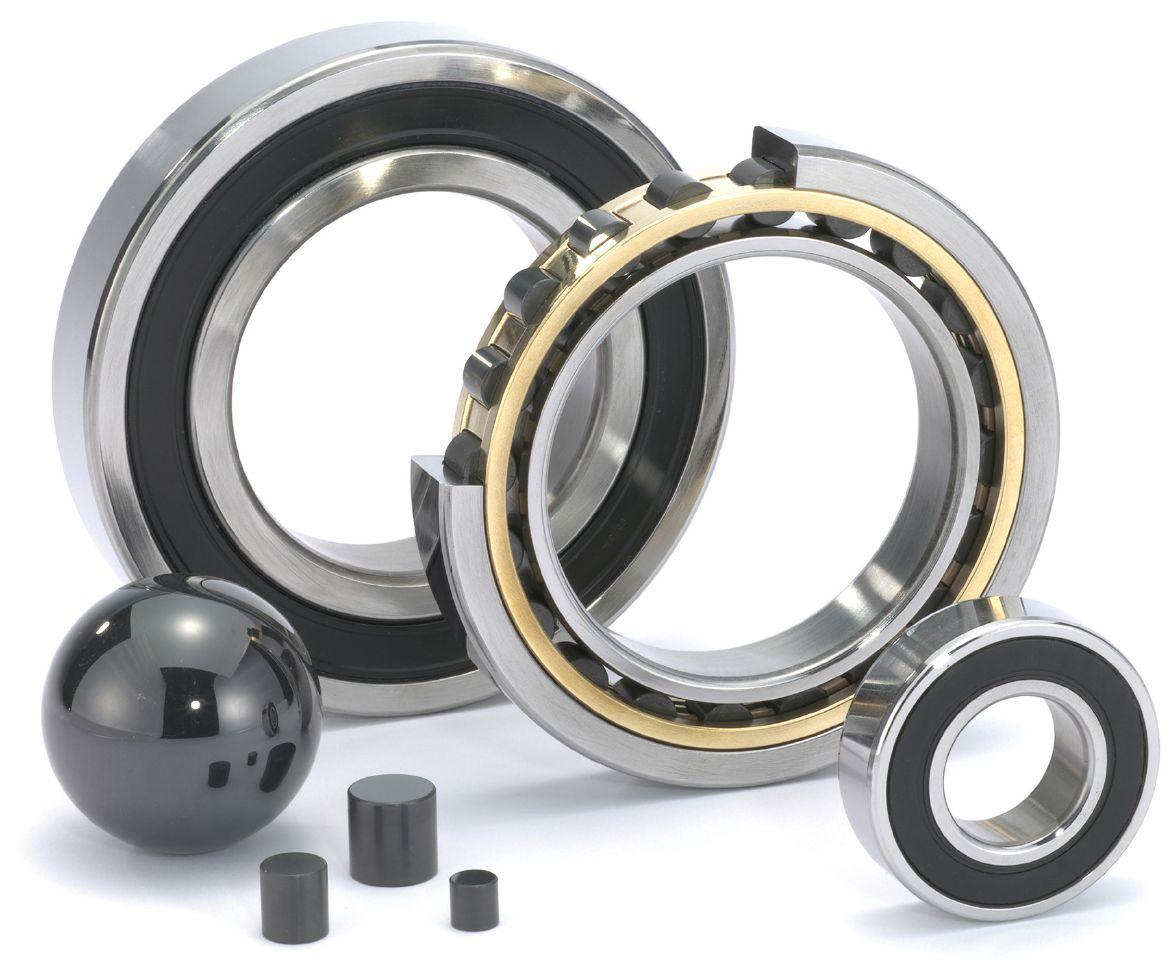
OLSON: For one, bearing grade silicon nitride, an engineered ceramic material, offers a uniform and clean microstructure, which is extremely hard and 40 per cent less dense than bearing steel. As a result, rolling elements weigh less and exhibit lower inertia, which reduces stresses on a bearing’s cage during rapid starts and stops and significantly lowers friction at high speeds. Lower friction translates to cooler running and longer lubricant service life. Virtually any application experiencing such conditions can benefit – and hybrid bearings using these materials (steel rings and ceramic elements) can now be engineered in quantity.
Other upgrades originating from our efforts include specialty coatings to achieve
critical characteristics and properties. Designed to overcome several common causes of bearing failures, a bearing can be equipped with a low friction, wearresistant carbon coating applied to the bearing’s rolling elements and innerring raceways. Coated bearings will withstand a variety of severe operating conditions, including risks of smearing, insufficient lubrication film, sudden
load variations, light loads, rapid speed changes, vibration and oscillations and high operating temperatures.
Of course, there will always be day-today operating and productivity challenges for plants striving to maximize output of machinery and gain a competitive edge. Specialty bearings and their tailored capabilities can make all the difference between success and failure.
HIGH STANDARDS
Understanding ISO 21469 and the importance of lubricant quality assurance standards.
Never before has the food industry been under such close watch. With end consumers, special interest groups and regulatory bodies alike weighing in on food safety from farm to fork, it’s more important than ever for food processing companies to stay on top of the regulatory environment –especially as it relates to the use of food-grade lubricants. Global food safety standards are also becoming increasingly popular, along with the modernization of Food Safety Legislation globally. Petro-Canada Lubricants has recently seen an increased interest from operators and site managers seeking clarification about ISO 21469
certification and what it means for their food manufacturing plants, products and customers.
ISO 21469
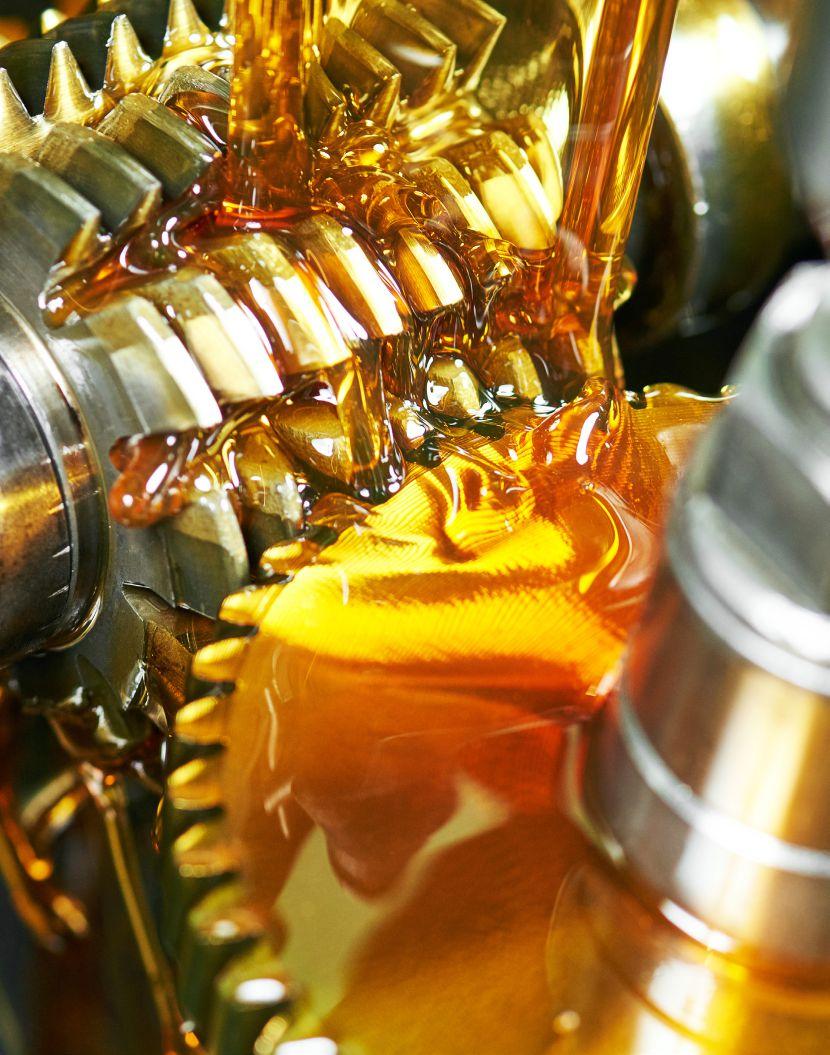
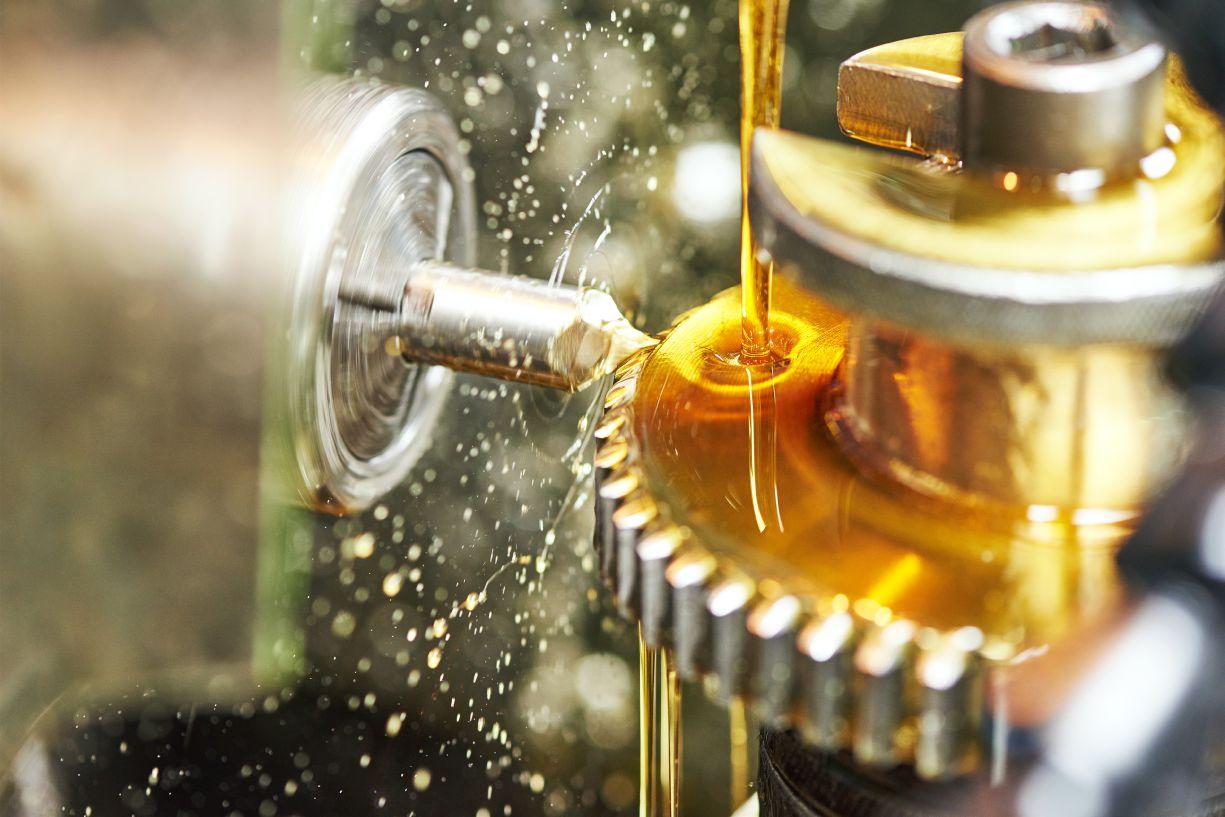
Simply put, the ISO 21469 certification looks at the entire lubricant product lifecycle from formulating to production and packaging. It specifies the hygiene requirements for the formulation, manufacture, use and handling of lubricants that could come into incidental contact with food at any processing stage. The certification requires a full risk assessment of each lubricant to ensure all procedures, requirements and criteria are met. The lubricant manufacturing facility is audited by an independent third party to
ensure compliance with the standard. An ISO 21469 certification demonstrates an ongoing commitment to quality and hygiene, with annual sampling and testing on certified products and an annual audit of the lubricant production facility. This process verifies that the food grade lubricants continue to use U.S. FDA listed ingredients as specified in the registered formulation. This is a significant point of difference for lubricant suppliers and an important consideration when managers are selecting food-grade lubricants for their facility.
Why should this matter for today’s operations? The ISO 21469 certification provides operations managers and even concerned customers with the confidence and peace of mind in knowing that there are controls in place to protect their products from the dangers of potential lubricant contamination. For operations, this also means less risk of product recalls and related reputational vulnerabilities. Petro-Canada Lubricants has taken these certification
requirements into consideration with the development of its Purity FG lubricants line.
It is important that plant managers understand that ISO 21469 certification is a valuable addition to the NSF H1 registration of lubricants for incidental food contact, but does not replace this key credential. As part of a complete food safety plan, managers should also have a robust Hazard Analysis and Critical Control Point (HACCP) plan as another tool to increase contamination controls and safety at their plant.
CONTROLLING RISK WITH INVENTORY CONSOLIDATION
Beyond selecting a lubricant with ISO 21469 certification, the best way to ensure that your plant does not suffer from non-H1 lubricant contamination is to use H1 lubricants across the entire facility. Although guidelines are in place for the use of NSF H2 registration for lubricants for no food contact, it is impossible to completely alleviate the fear of contamination caused by simple
human error – pulling the wrong lubricant from the shelf or using unclean transfer equipment that is contaminated with non-H1 lubricant. It is also important to note that although H2 lubricants have restrictions on the use of compounds such as heavy metals and carcinogens, they do not have a defined list of acceptable ingredients. So, the potential implications of H2 lubricant contamination are not completely known. All Purity FG lubricants are NSF H1 registered and provide outstanding performance across the board, giving managers every reason to consolidate their inventory with confidence, while decreasing the risk of contamination in their plant.
All Petro-Canada’s Purity FG lubricants can be easily integrated into HACCP plans and GMP (Good Manufacturing Practice) programs. Select products of Purity FG are ISO 21469 certified. Certifications on Purity FG lubricants also include Kosher Pareve and Halal, for added customer assurance. On top of achieving
industry leading standards, Purity FG products protect equipment in even the most extreme conditions, including severe temperature swings and intensive cleaning. Purity FG lubricants help reduce downtime, streamline inventory and, ultimately, can help save today’s operations time and money while addressing challenges in machinery lubrication
and food safety needs. This article was submitted by Petro-Canada Lubricants. For more information, visit http://lubricants.petro-canada.ca.
DRIVE SOLUTIONS
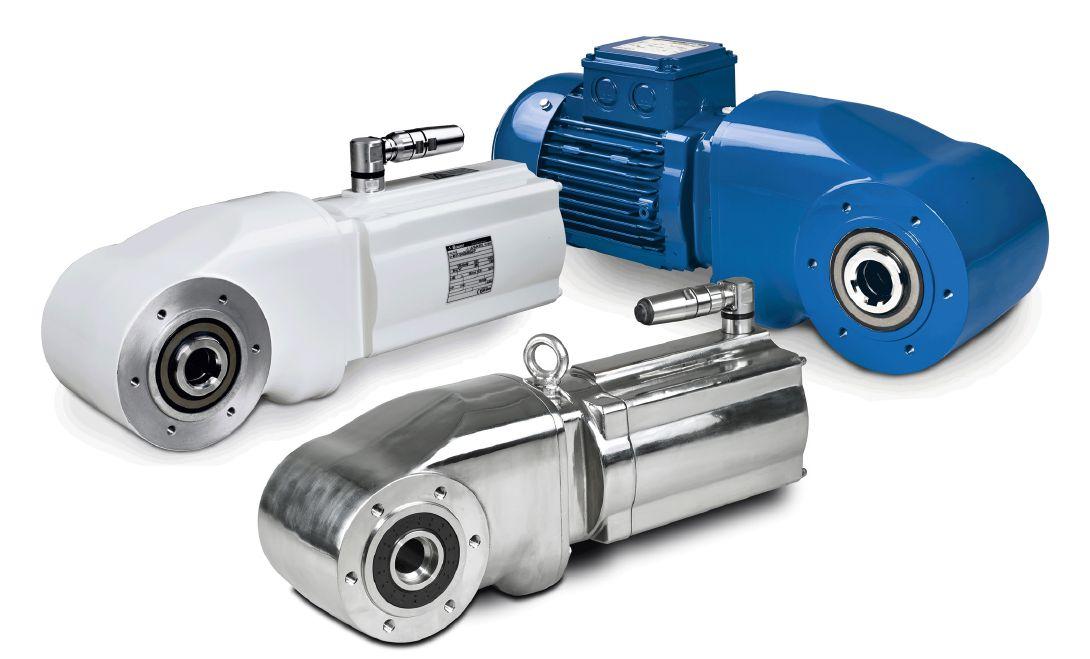
This high-efficiency geared solution has an aseptic design that is ideal for regular washdowns.
Bauer Gear Motor offers high efficiency geared solutions that can operate reliably in hygienic environments, where regular washdowns are a necessity. Bauer’s latest offering, the HiflexDRIVE range, offers a modular system that combines the efficiency of the IE4 permanent magnet synchronous motor (PMSM) with the compact dimensions of the BK17 gearbox. The package is available in a standard, painted configuration for conventional applications, or in aseptic and stainless steel versions that are specifically designed to operate in hygienic environments. Ideally suited to conveyor applications, the HiflexDRIVE solution offers many advantages, including performance, reliability and flexibility. However, the special hygiene demands of industries, such as food & beverage and pharmaceuticals, demand specialist components that typically have to
The HiflexDRIVE range from Bauer is available in a standard, painted configuration or in aseptic and stainless steel versions.
be specified to withstand the regular cleaning regimes and provide clean operation without risk of contamination.
HYGIENIC QUALITY
The aseptic design caters specifically for applications where regular washdowns involving cleaning chemicals are required to maintain a hygienic environment. The motor is designed so that a fan and cooling ribs are not required, thereby allowing for a completely smooth outer casing with a sealed, non-drive end. This eliminates any dirt traps on the motor casing and also prevents reinfection of the local environment caused by air movement from a cooling fan.
In addition, the aseptic drive is painted using an acid- and alkaliresistant formula, which can withstand chemicals with a pH range of 2 – 12. As a result, the new drive system can withstand the cleansing solutions and disinfectants that are used within the food industry without affecting its performance.
The stainless steel variant is designed for similar hygienic applications, which run the additional risk of mechanical damage. The
motor design has a similarly sealed non-drive end and smooth casing to prevent any accumulation of dirt.
Both designs have a very high level of ingress protection, up to IP69K, which is a special designation for washdown applications involving high pressure, high temperature water.
As a result the new drive system can withstand the cleansing
solutions and disinfectants that are commonly used without affecting its performance.
MOTOR PERFORMANCE
Bauer, which is part of Altra Industrial Motion, has invested a considerable amount of design and development time into ensuring that its PMSM and drive packages deliver high-efficiency performance
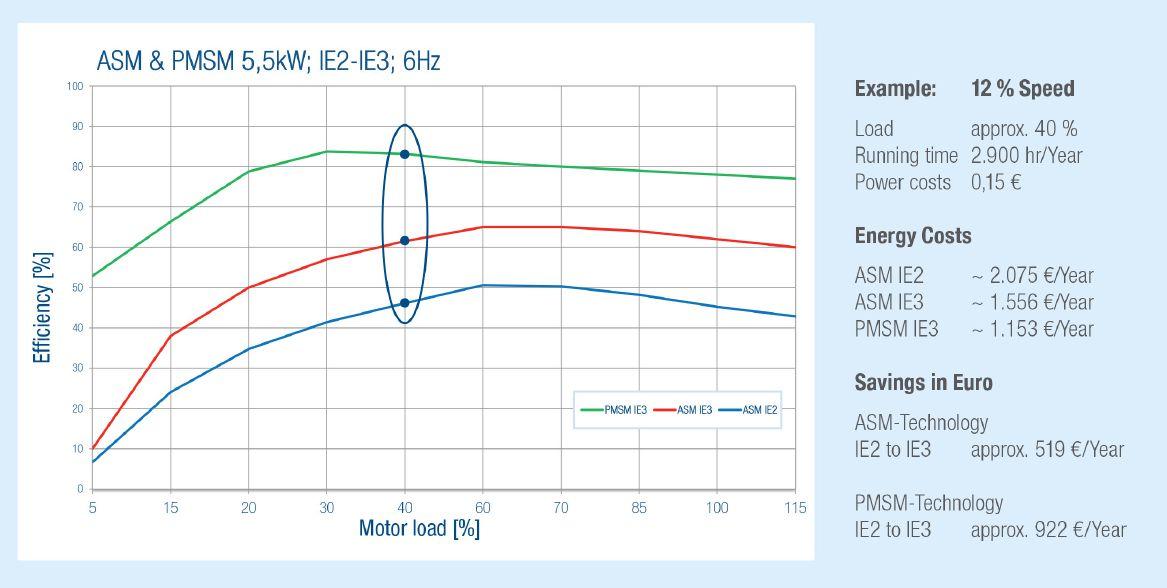
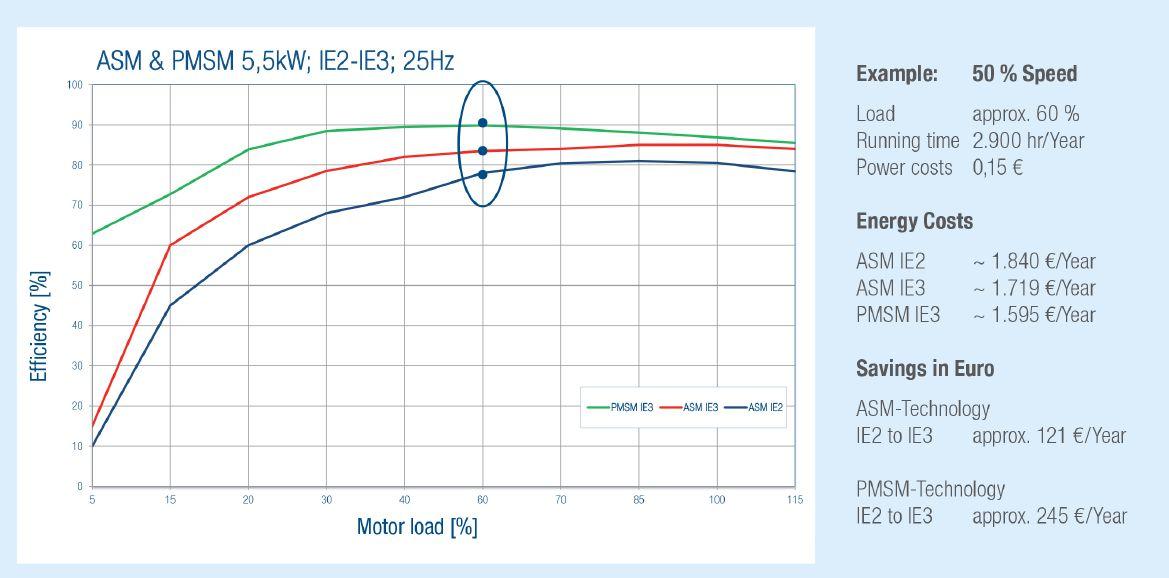
on partial loads, a criticism that has been levelled at other high-efficiency motor designs as the efficiency can drop-off sharply outside the ideal operating speed and load. Bauer’s PMSMs maintain high-efficiency levels within a wide partial load range, up to a load factor of 1:5. PMSMs offer considerably improved efficiency when compared to induction motors, especially
under partial load conditions and have the added benefit of maintaining constant speed, independent of the load. This means that the motor speed does not vary – despite overload variations or cases of voltage drop – as long as the main’s frequency is kept constant.
In order to save energy, permanent magnet motors are the most suitable drives in the following circumstances:
• Where a genuine need exists for speed control.
• Where there is considerable potential for reducing electricity consumption through lengthy operating times of motors, especially under partial load operation.
• Where the saved energy quickly offsets the investments for speed regulation mechanisms.
• Where a standard asynchronous motor also requires an inverter (and thus results in additional costs) for speed regulation.
Bauer Gear Motor’s range of PMSMs already fulfill the requirements of the
This is evidenced by their potential to achieve energy savings of up to 40 per cent compared to an IE2 inverter-driven squirrel cage motor.
The PMSM series is an environmentally friendly range of motors, employing a highly efficient design of rotor that offers a number of key benefits. It reduces heat losses from the rotor by 100 per cent,
total losses by approximately 25 per cent, and increases total efficiency by 10 per cent or more – a significant advantage for stainless steel drives, which dissipate heat less efficiently than aluminum or cast iron. For the PMSM user, this improved performance translates into lower total cost of ownership, a reduction in CO2 emissions, and ongoing savings that buffer against future increases in energy costs.
The HiflexDRIVE range brings together Bauer’s design and manufacturing expertise in both IE4 motors and high-performance gearboxes to deliver a highly efficient, constant speed drive capable of performing in a wide range of commercial environments.
This article was submitted by Bauer Gear Motor. For more information, visit www.bauergears.com.
MATCH & TAG CHAIN STRANDS
Small differences in chain length can cause trouble in conveyor and drive systems.
BY RICHARD W. NEUHENGENIN
In the food and beverage industry, customers are requesting more products at lower prices, and companies are turning to automation to increase volumes while reducing cost per unit. For instance, can filling and seaming machines used to process up to 1,200 cans per minute, yet there are now machines that can process as many as 3,000 cans.
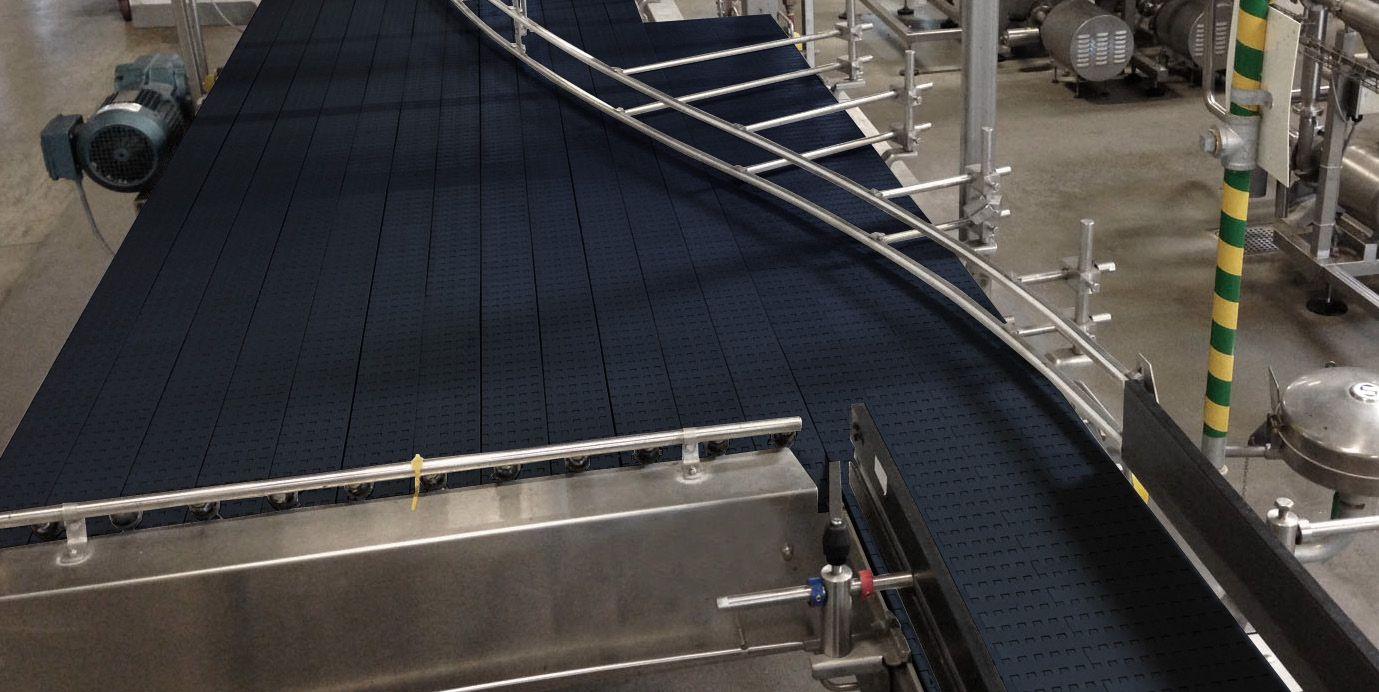
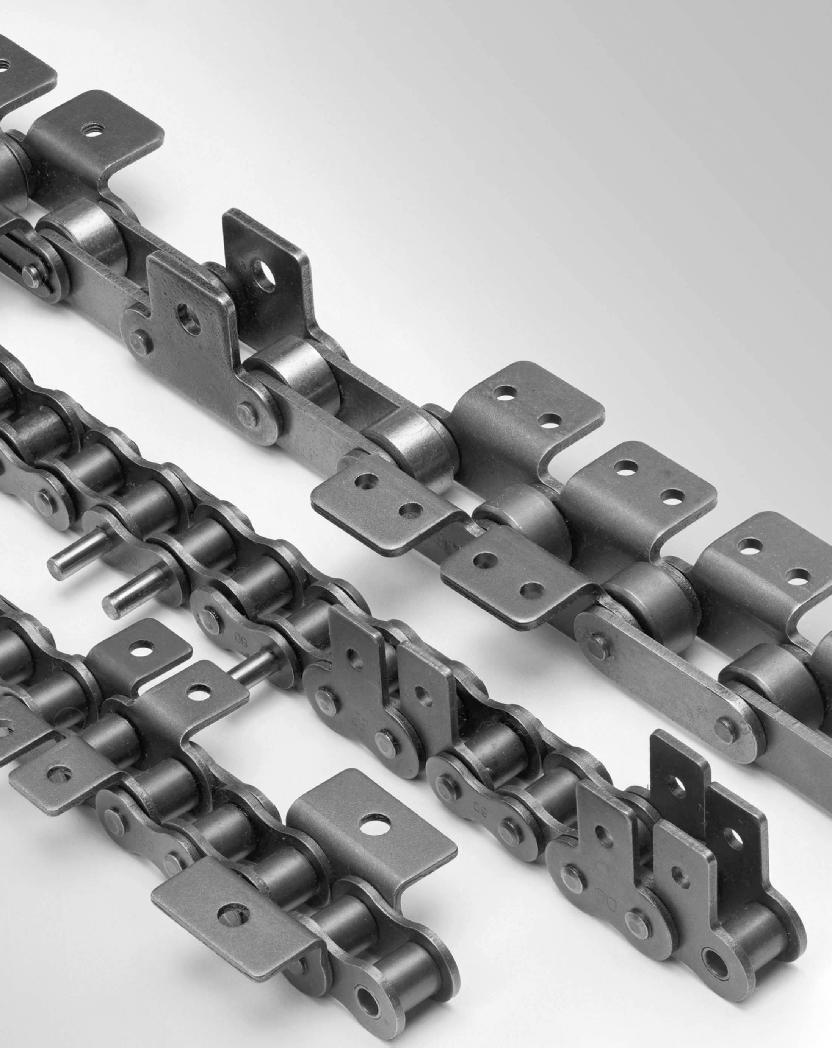
Automated equipment requires timing and precision, and conveying product through process and packaging lines at faster speeds requires properly specified attachment chain. In particular, it is critical that the strands of chain be matched and tagged.
Attachment chains are commonly used in the conveying and drive systems in food and beverage plants
that produce everything from fruit, yogurt, pudding cups and pasta to beer, soda, soup, dog food, potato chips and more. In many applications, these processes require a positive movement of the conveyor system to move product from one station to another. Often, the systems have two or more strands of roller chain with attachments running parallel to each other and joined together with slats or fixtures. It is important to match and tag strands of parallel chain because chains can vary in length, depending on their size, from 0.030 to 0.044 inches per foot. Over long strands, this accumulated difference can amount to much bigger problems. In other words, if you try to fasten a slat or fixture to an unmatched set of chains, it is quite possible the slats or fixtures will no longer be parallel (given the accumulated differential in length). This can cause timing issues in the equipment, premature wear on the chain and sprockets, or possible jams resulting in downtime.
STANDARD MATCHING AND TAGGING
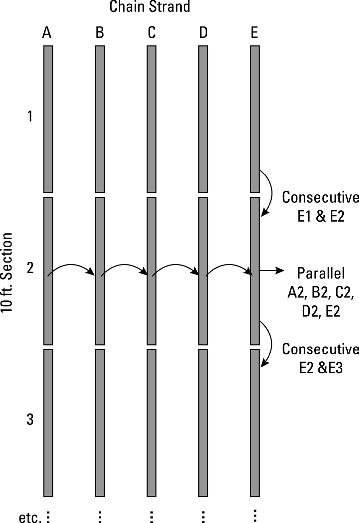
In standard matching and tagging, all chain strands are assembled as multiple sections of 10 feet or less, then measured and tagged with that measurement. As illustrated in Figure 1, these sections are arranged to incorporate a parallel and consecutive match:
• Parallel – sections are assembled such that sections directly across from each other have a difference of less than 0.030 inches
• Consecutive – sections are assembled so that the overall length difference between the strands will be less than 0.030 inches
Standard matching and tagging is a sound approach in many food and beverage plant applications including process lines, packaging lines and palletizers:
must be parallel so that when the chain is indexed through a minimum of five stations, the cups get filled and sealed properly.
PACKAGING LINE
In an automatic carton machine like those used to package beer or soda, there could be as many as nine different types of chain all operating in unison to open the box, then slide the product into the box and seal it. Careful matching and tagging is essential in packaging lines so that all chains can operate in a seamless and harmonious fashion.
PALLETIZER
For equipment operators and technicians, there are typically two levels of matching and tagging to consider: standard and special. It is also important to know what to specify when ordering chain.
PROCESS LINE
Many food makers have equipment that fill plastic cups with product before it is indexed through a variety of operations. Chain strands
This equipment takes the boxed product and stacks it onto a pallet, then shrink wraps or bands the product for shipment to stores. In palletizers there tend to be four strands of chain – one on each corner that raises and lowers the deck. These four strands need to be matched and tagged so that the deck will be raised and lowered evenly each time. Failure to do so can result in premature wear of some of the strands,
Figure 1 – Standard matching and tagging method for roller chain
and in certain cases complete failure of the chain.
HIGHER LEVEL MATCHING AND TAGGING
In a higher level matching and tagging procedure, all chain strands are again assembled as multiple sections of 10 feet or less, then measured and tagged with that measurement. However, these sections are arranged to incorporate a parallel and consecutive match that is less than standard:
• Parallel – sections are assembled such that sections directly across from each other have a difference that is less than a standard match and tagging
• Consecutive – sections are assembled so the overall length difference between the strands is less than a standard match and tagging
Higher level matching and tagging applies where tighter specifications are required or
specified by the customer. This can include supplying certification of the matching and gauging of the attachment holes in the chain.
HOW TO ORDER CHAIN
When chains are required for multiple-strand operation, it is important to specify to the chain manufacturer “matched and tagged chain” together with the number of strands required. The chains will then be measured at the factory and a number tag attached to each strand. Each matching group of strands is tagged with the same number and, whenever possible, will be wired and shipped together. Furthermore, do not remove the tags until the chain is assembled. The strands must be coupled so that those with the same number are installed side by side. Matching the strands ensures that sections of chain with lengths at opposite ends of the tolerance range are not placed together.
In addition, chains should be ordered preloaded from the factory. Preloading will seat the chain components and minimize the initial stretch of the chains. This will help in maintaining the match tolerances of the strands during initial operation. Chains should also be lubricated on a strict schedule to optimize useful life.
Adhering to a matching and tagging procedure for attachment chain can reduce the
risk of unexpected issues in your operation. In fact, many problems can be avoided by specifying the right chain from the start. If you are unsure, seek out a local expert who can make specific recommendations about your particular application.
Richard W. Neuhengen, product manager, The Timken Company, can be reached at timken.com.
A LOW PRESSURE— ENERGY EFFICIENT SOLUTION FOR ANY DEMAND!
Schools across Canada are about to open their doors and millions of students will embark on an educational journey that will take them far beyond the learnings we once had as pupils. Glancing back to those days spent sitting behind a desk, we can now assuredly appreciate and understand that although we may not be in a classroom setting anymore, education never truly ends. “Growth” continues through every experience that unfolds before us.
It seems rather timely that an invitation is before me from Brescia College with a request to celebrate my 30-year graduation from the University of Western Ontario. It certainly gives cause for reflection on my own education, my career path, our industry, and what we can
all do to bolster career awareness, including sharing experiences with students now who could very well be our talent of tomorrow.
There are over 125,000 jobs in the Food and Beverage Industry in Ontario today and that number will continue to escalate. The opportunities for an exciting, dynamic, leading-edge and ongoing educational career are endless. In manufacturing, the journey will always be one that leaves us with a thirst to learn more! With this thought in mind, how can we inspire tomorrow’s talent to look for opportunities to grow in an industry we have enjoyed and appreciated involvement in?
Think back to when you were first in school and that age-old question was posed : “What do you want to be when you graduate?” For some it was easy and for others, a tough decision. As we recognize future growth, ongoing recruitment needs, and the challenges of increasing retirements, it’s a perfect time to lighten those “tough decisions,” if you will, and help students discover
the buffet of careers available in our sector and in manufacturing in general. There are so many ways to continue those growth experiences!
When our youngest daughter (now an entrepreneurial baker) graduated from secondary school almost a decade ago, the principal mentioned that the average student would not
have just one or two career changes but several over their lifetime and, further to that, they would graduate and have occupations in fields that did not even exist right then or right now for that matter. The principal’s comments continue to resonate with me today and underscore how fast the world is changing and, in turn,
highlighting how adaptable students will be.
Industry, through any number of influences – from global competition to rising costs, expedience of production to attracting and retaining talent – has already embraced the need to be every bit as flexible, nimble and quick-thinking to
remain viable in a constantly changing environment. Industry needs people who are adaptable, creative, innovative, engaging and team-oriented so we can meet the challenges above.
It also stands to reason that with ever increasing innovative technology opening the doors for companies to produce the products of tomorrow, it is even more imperative that industry take whatever steps they can to showcase the incredible array of career opportunities available in the Food and Beverage Industry or in Manufacturing in general.
25-OCT-16
26-OCT-16
10-NOV-16
28-NOV-16 TO 29-NOV-16
EMC GF2 FOOD, BEVERAGE & BIO SECTOR NETWORKING EVENT MALABAR SUPER SPICE CO. – BURLINGTON, ON Striving for Excellence in Food Safety
&
–
ON www.FoodRegulationCanada.com An interactive Summit hosted by the Strategy Institute that provides insight from CFIA, FDA and Industry Leaders on Government Regulations, Legislation and Compliances
EMC GF2 PRODUCTIVITY WORKSHOP BONDUELLE NORTH AMERICA – TECUMSEH, ON Introduction to Value Stream Mapping Leadership and Culture for Productivity Improvement
EMC GF2 PRODUCTIVITY WORKSHOP – GUELPH, ON Introduction to Lean Management System Leadership and Culture
EMC GF2 FOOD, BEVERAGE & BIO SECTOR NETWORKING EVENT TMF FOODS LTD. – STONEY CREEK, ON Business Growth Through Encouraging Learning and Empowering Your People
5TH ANNUAL CANADIAN FOOD AND DRINK SUMMIT – TORONTO, ON
For the past few years, various groups have worked tirelessly with manufacturers, local school boards and community partners in their respective regions to heighten awareness. EMC (Excellence In Manufacturing Consortium) has partnered and continues to partner on many of these sessions. Linking manufacturers and educators together, providing plant tours, and arranging training on principles of lean management methodologies to unearth occupation potential and 13-SEP-16 EMC GF2 FOOD, BEVERAGE & BIO SECTOR NETWORKING EVENT CAMPBELL COMPANY OF CANADA – TORONTO, ON A Journey in Energy Management Best Practices and Plant Tour
www.conferenceboard.ca/conf/foodsummit/ This special event is designed to explore the future of Canada’s food sector, and leverage new opportunities to enhance the food sector’s performance—both provincially and globally.
dispel old manufacturing myths and ideals from the past. These workshops were designed to showcase innovative equipment, advanced technology, dynamic computer programs, potential research and product development, and most importantly expose any number of job functions and requirements. The goal was simple – to educate the educators and instill in them the excitement we have for manufacturing in Canada so that they may, in turn, share this knowledge with their students.
EMC is also pleased to be working with regions across Ontario this fall as we plan, raise awareness and celebrate activities relating to Manufacturing Day which typically takes place on the first Friday in October. Some communities are even taking that concept one step further and planning fabulous events throughout the month that celebrate and share jobs available in manufacturing, highlighting our plant capabilities, methodologies and innovative products produced! High schools, colleges and universities together with community partners
and local manufacturers are putting final touches on tours, overviews and mini-summits for students, parents, and career-seeking individuals interested in learning more about the world of manufacturing!
From a food sector perspective, it particularly excites me to see a new initiative through Food Beverage Ontario called “Taste Your Future” underway. Recognizing the need to engage youth in industry careers, they have set a target of 60,000 new jobs by 2020. Working with colleges, universities, industry representatives and community partners, they are raising awareness of the potential in our industry. An interesting fact: did you know that there are 177 programs at 29 universities and colleges across Ontario?
Please check out their website at www.tasteyourfuture.ca and follow them on Facebook and Twitter, too.
There are many great organizations out there inspiring not only students but those with work experience and a desire to become engaged in industry not unlike our
daughter did. For similar entrepreneurial spirits, Food Starter (www. foodstarter.ca) is an amazing organization that helps companies explore the fundamentals of starting and sustaining a business.
Regardless of the role we play in industry, we can take pride in the growth experience through these jobs and take heart in the fact that our contributions make a significant impact for our companies, for manufacturing in general, and our country at large. Consider how you or your organization might raise awareness of the occupations available in your company, in your sector, in your region, in industry:
• Perhaps engaging your company and your peers to host a plant tour for students, parents and teachers?
• Volunteering to speak to a class about your company, products, markets, position?
• Getting involved on Manufacturing Day Committees to build industry awareness?
• Engaging in mentorship opportunities that allow you to share your experiences?
Taking the time to share your thoughts on the breadth, depth and wonders of the manufacturing world may be just the thing to inspire tomorrow’s student to follow an exciting career path in industry. Sharing, mentoring, engaging with the youth of today, is a growing experience and hopefully our journeys can create excitement with students, teachers and parents about career possibilities in today’s ever growing Food and Beverage Sector! With the spirit of education in mind and of sharing best practice experiences with peers, we welcome you to consider joining some of our upcoming EMC Food & Beverage Sector Peer Networking Events. How do you get involved? If you are interested in learning more about EMC (Excellence in Manufacturing Consortium) and the Food Sector Initiative, please feel free to touch base with Bren de Leeuw, Director - Field Operations Canada and EMC Food, Beverage and Bio Sector Program (bdeleeuw@emccanada.org) anytime!