eNerAl MANAGer Al Diggins • adiggins@emccanada.org
DIreCTor oF STrATeGIC plANNING & CoMMUNICATIoNS Scott McNeil-Smith • smcneilsmith@emccanada.org
SeNIor CoMMUNITY DeVelopMeNT MANAGer bren de leeuw • bdeleeuw@emccanada.org
The survey says…
Every year, PEM magazine conducts a reader survey that gauges industry trends and reader preferences. The nifty part about the survey is that it provides a feedback loop so readers can tell us what they expect from a publication dedicated to maintenance and reliability. We are able to isolate 12 respondents from the food and beverage industry. Following are some of their findings:
•When asked to choose from a list of 22 job challenges, respondents listed energy management, budget restrictions, equipment downtime and management responsibilities. These challenges were trailed by health and safety, hiring skilled/ new workers, promoting maintenance projects to staff and promoting maintenance to management.
• Four respondents said that their company’s executive leadership has a clear vision for physical asset performance that is shared with the entire company; four respondents were not sure and two answered “no” to the question.
• Half of the respondents said that their strategy for equipment reliability & maintenance programs is set at the plant/facility level. But for the rest, strategic plans stem from various
six respondents said that their plants never experience plant shutdowns, while five cited that their conveyor/production line systems never shut down for scheduled maintenance.
parts of the organization, including corporate, business unit or supervisory levels.
• When asked which maintenance strategies apply to their plants, reactive maintenance was cited most frequently (50 per cent), followed by planned maintenance (40 per cent), reliability centered maintenance (20 per cent) and predictive maintenance (20 per cent).
• Six respondents said that their plants never experience complete plant shutdowns, while five cited that their conveyor/production line systems never shut down for scheduled maintenance.
• The leading cause of unscheduled downtime was aging equipment.
• Seven respondents said that their plants/ facilities plan to use preventive maintenance to address downtime next year.
Given the sample size, it is obvious these findings are not intended to have decision-making utility. But aside from serving as a reminder of how useful benchmarking can be, those who take the time to plow through the questions come away with a sense of what needs attention. With fresh dialogue sparked, we’re encouraged that readers can skim the information for new perspectives and – fingers crossed – find ways to better equip their facilities to make informed decisions.
Few industrial environments can match the difficult operating conditions encountered in the food and beverage processing industries. Equipment often will be exposed to contaminants, frequent washdowns can degrade machinery and cause lubricant leakage, and a variety of other adverse influences will combine to impact an operation’s lines and productivity. As a first line of defence, proper maintenance practices supported by technologies designed to minimize maintenance requirements can go a long way toward keeping operations up and running on schedule. Here are five maintenance-related strategies to consider for optimized outcomes:
1. PRE l UBRICATED BEARING s
Applications involving washing, sorting, grading, peeling, separating and blending typically
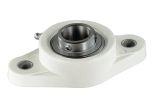
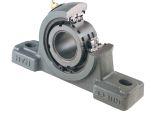
will make preparation areas and equipment wet and contaminated. Large amounts of water or other liquids can create high humidity levels, while process materials, water and caustic agents used during washdowns can inflict damage. Bearings in rotating equipment represent ripe targets in such harsh conditions. These critical components support shaft loads, reduce friction with rolling elements and provide shaft location and system rigidity. Their lubricant potentially can degrade and/or leak in harsh conditions and, when the lubricant is compromised, the performance of bearings and the machinery in which they operate will be jeopardized, leading to disruptive downtime for maintenance. In addition, manual over- or under-greasing by maintenance staff can potentially cause considerable harm. Prelubricated mounted bearing units –designed for maintenance-free operation
A proactive approach to maintenance includes linking to the culture and goals of the enterprise.
– eliminate any need for regreasing over their lifetime. These bearing units are equipped with integral seals and their USDA H1-approved high-quality synthetic grease prepacked inside is odourless, tasteless and approved for use in all food processing and beverage industry applications. The grease imparts excellent internal and external bearing protection, high aging resistance for extended lubricant life and high load-carrying capacity, which will help to prevent premature bearing wear and reduce the need for maintenance staff to replace components.
2. h IG h -EFFICIENC y sh AFT s EA ls
Wherever there are bearings in rotating machinery, there are shaft seals for protection – and for good reason. About 14 per cent of bearings fail due to the ingress of contaminants (solid or liquid) into the bearing enclosure and, when seals become damaged or otherwise compromised, contaminants can find openings to invade bearings and lubricant. This can lead to dire consequences impacting
the cleanliness and integrity of lubricant and the service life of a bearing, while also potentially jeopardizing food safety (resulting in possible liability issues) and raising wastewater-disposal problems. An immediate fix becomes necessary.
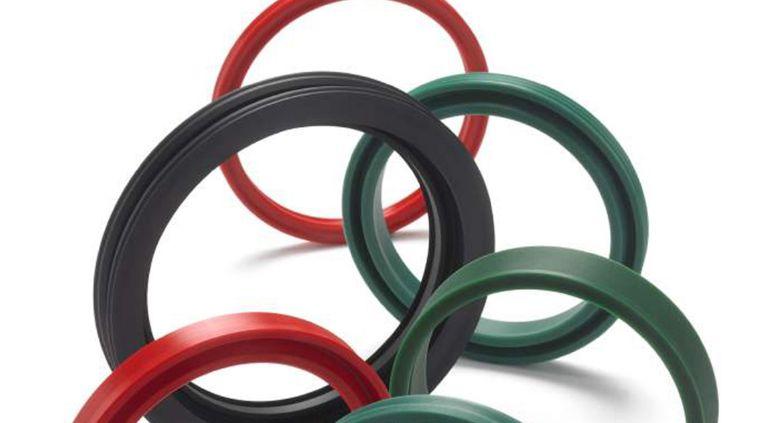
Good seals make good sense with high-efficiency versions exhibiting excellent resistance to wear, abrasion and chemicals. In general, a seal should be appropriate for the given operating conditions (including shaft speed, shaft material, temperature, pressure differential across the seal and other factors) and should be designed to prevent entry of all types of contaminants. For food and beverage processing operations, in particular, FDAcompliant sealing systems have been engineered to accommodate all the expected conditions. Typical materials making the grade include fluorocarbon, PTFE and advanced food-grade quality elastomers. Proper seals can help promote more uptime and less downtime for maintenance.
Once seals have been compromised, contaminants will invade the components they were designed to protect.
3. AUTOMATIC CENTRA l I z ED l UBRICATION sys TEM s
Every moving part on a machine will benefit from timely and effective lubrication to help reduce wear, minimize lubricant consumption, maximize efficiency and reduce the need for maintenance. Experiencing unplanned downtime and maintenance fixes due to inadequate lubrication of bearings, gears or linear motion assets? Automatic
centralized lubrication systems can turn the tide.
An automatic centralized lubrication system can simplify maintenance and, in the process, improve asset reliability and productivity, while promoting worker safety, especially when lubrication points are out of reach or otherwise inaccessible. They ultimately deliver the right lubricant at the right time in the right quantity to
the right point of use. In the end, less time spent on lubrication tasks means more time to devote to other maintenance areas.
Automatic centralized systems typically will include a pump unit (with optional control unit) and distributors/feeders to deliver the lubricant amounts in sequential intervals, enabling maintenance staff to turn their attention toward more pressing maintenance tasks.
4. UPGRADING CONVE y OR C h AIN s
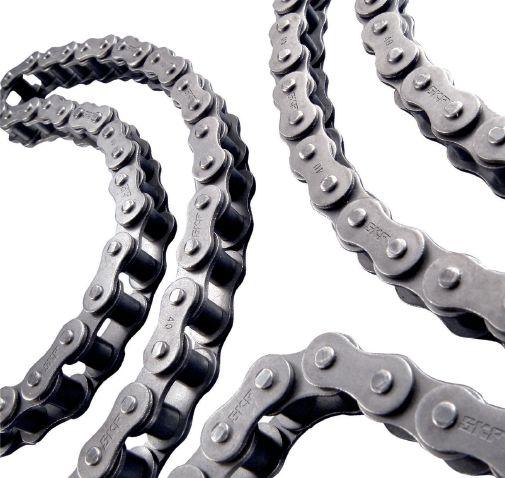
With all the different types of conveyors and chain applications in food and beverage machinery, these power transmission components can make or break an operation –and can be linked upon failure to recurring maintenance headaches. Properly engineered chain systems ultimately can reduce maintenancerelated time and money. Typical standard chain materials for food and beverage applications range from stainless steel in highgrade or high-strength composition to long-life material either in hardened or cast steel form. Attachments
can be added specifically to suit a process and custom designs are always an option.
Chains that repeatedly fail for one reason or another especially deserve a close look. An upgrade solution: extra-strength versions benefiting from materials, tolerances and improved heat treatment to withstand higher shock loads and lower operating speeds than standard styles. The result: extended service life, decreased downtime and reduced maintenance.
5. A PROACTIVE APPROAC h
In all too many cases, an organization’s “culture” may be stacked against maintenance. Sometimes, senior management may tend to view maintenance as a function that adds cost to the organization, while production adds value. A culture of “blame” may be present among production management, who would readily point fingers at poor quality maintenance (and resulting equipment downtime) as prime reasons for their missing manufacturing targets. This scenario does not bode
well for food and beverage operations striving toward world-class production targets and profitability.
Our best practices recommendation – and perhaps the most all-encompassing consideration of all – is to digest the value of a proactive maintenance approach for assets and then implement activities that support both the culture and goals.
Proactive maintenance initiatives can be as simple or comprehensive as an organization can manage. Avenues include empowering machinery operators to look and listen routinely for abnormalities in operating machinery, introducing handheld or wireless/networked data collectors to detect and analyze problems before they can escalate into maintenance concerns, or implementing a full-blown and enterprise-wide Predictive Maintenance endeavour with the objective to predict the need for specific and targeted maintenance activities. This can allow for maintenance staff to order parts in advance, schedule manpower and plan multiple
repairs in a timely manner. A proactive approach toward maintenance can take any one of many forms. Management can move toward proactive maintenance by first determining “what makes sense” (in terms of resources and capabilities) and then committing to the next step(s).
Studies have shown that maintenance typically accounts for between 15 per cent and 40 per cent of manufacturing costs. In some cases, as much as 50 per cent of the maintenance being carried out is unnecessary, while corrective maintenance can account for between 20 per cent and 70 per cent of total maintenance costs. These numbers underscore that any positive movement toward improving maintenance practices can pay measurable dividends and optimize the maintenance function.
John E. Fowler is the Food and Beverage Team Leader at SKF USA Inc. Contact him at John.E.Fowler@skf.com or visit www.skf.com/us/industry-solutions/ food-and-beverage/index.html
lINE E FFICIENC y
Increasing production uptime and throughput in packaging applications
By ChrIS GraFF
Profitability in food and beverage production and packaging is strongly tied to line efficiency and maximized uptime. Downtime, both planned and unplanned, has a significant impact on food and beverage packing throughput. This downtime, caused by film roll changes, registration errors, catastrophic film failures, bottlenecks, and more, is costly, and may seem impossible to avoid. Taking appropriate steps to streamline processes wherever possible can help
to mitigate the repercussions of downtime, improving your overall food or beverage line efficiency and therefore profitability.
C OMMON CAU s E s OF DOWNTIME IN PAC k AGING l INE s
The single greatest cause of downtime in food and beverage packaging lines according to line efficiency studies is the time it takes to change over rolls of packaging film as they expire. Operators often estimate that each packaging web roll changeover and splice to the
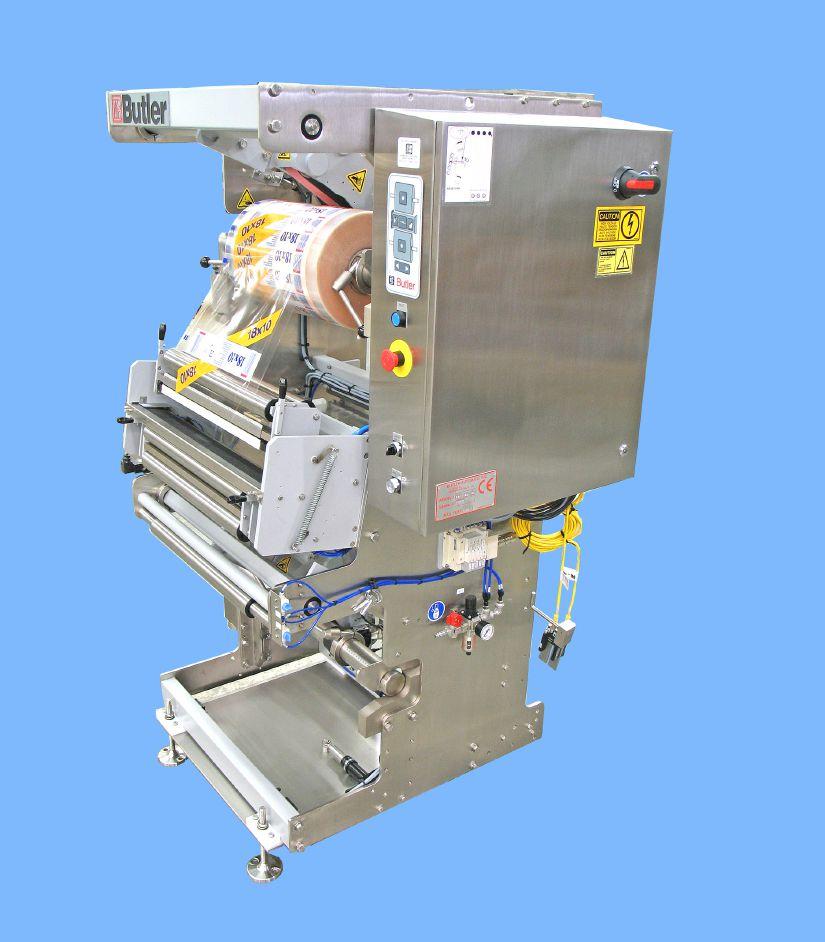
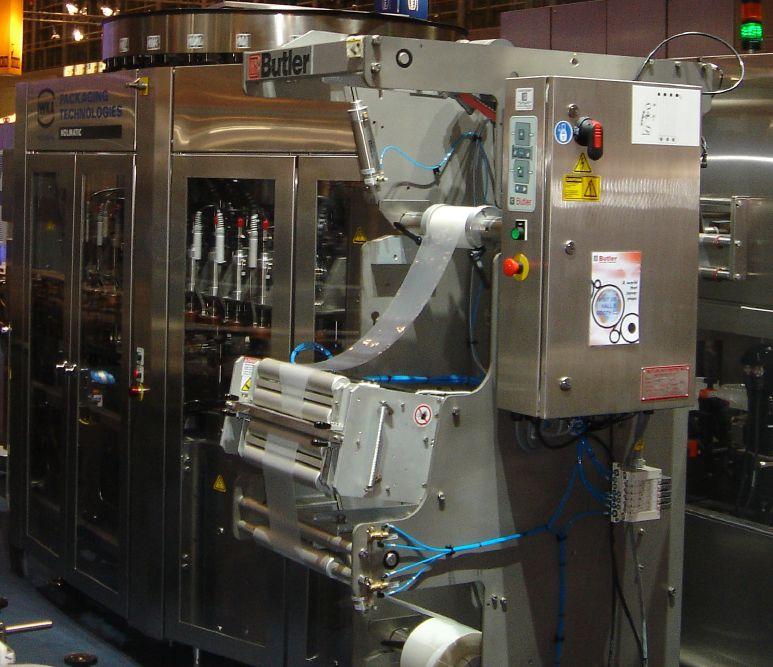
Zero-speed automatic splicers, invented by Butler Automatic, are relatively small capital investments that lead to increased line efficiency and profitability.
previous roll takes about 1-2 minutes, which is itself a great deal of time when the number of roll changes per day are accounted for. These estimates are quite low, however; measured downtime runs closer to an average of 3-5 minutes per roll change. If, in a conservative estimate, a company continuously running a single packaging line must change film rolls 10 times per day, the line loses an average of at least 30 minutes of production per day, or more than 8,000 minutes each year. Taking into account a similarly conservative estimate of 80 packages per minute and a $0.50 profit per item, the decreased throughput accounts for hundreds of thousands of dollars in potential profits lost per year.
Downtime, both planned and unplanned, can have pronounced impact on packing line efficiency and throughput. This downtime, caused by film roll changes, registration errors, catastrophic film failures, bottlenecks, and more, is costly, and may seem impossible to avoid. Taking appropriate
For packaging line operators and managers looking to increase efficiency and throughput by minimizing downtime, gathering accurate information about their packaging line is the first step.
steps to streamline processes wherever possible can help to mitigate the repercussions of downtime, improving your overall line efficiency and therefore profitability. Other causes of downtime in packaging lines also relate to film splicing. Improperly spliced film, for example, can lead to weak splices and splice failure during production. When the splice separates, or a weak spot in the film itself causes it to fail, the line must be shut down until the web path is rethreaded. This can take anywhere from 20 minutes to an hour in most applications, or two hours or more in aseptic applications
From farm to table...
Whether your equipment is in the field or factory, you need the right bearings to keep things moving
NTN has the perfect bearing for every application in agriculture and food processing
Rittal. Remarkable Protection!
Faster — Our range of modular solutions guarantees time-sensitive planning, assembly, conversion and commissioning.
Better — We are quick to translate market trends into innovative, best-in-class products.
Everywhere — With a global presence, including 11 production facilities on 3 continents, wherever you are located, we’re nearby and easy to find!
Learn more about our remarkable protection at www.rittal.ca
where operators must re-sterilize machinery before restarting the line. Most packaging lines experience these kinds of critical failures about once every week.
Maximized throughput is critical to line efficiency and to maximizing profits, and so identifying and reducing bottlenecks are critical as well.
Poor splices can also lead to registration errors in the film, where the film is improperly aligned and defective packages result. The registration error may result in barcoding issues, faulty seals, and/or package aesthetics that are simply unacceptable for consumer goods. These errors don’t cause downtime, but they can cause a great deal of waste and rework, thereby significantly decreasing line throughput and efficiency.
Bottlenecks are the final main cause of line downtime and inefficiency to be highlighted here. Bottlenecks represent a significant loss of potential throughput, given that the throughput of a packaging line is only maximized when there are no slow spots in the line that have to be compensated for by slowing or stopping the upstream parts of the line. If one stage of a packaging line can handle 1,000 packages per minute, but the following stage can only handle 800, packages will accumulate between the two until the maximum accumulation is reached, at which point the first stage will have to be stopped or slowed until the excess packages are processed. Maximized throughput is critical to line efficiency and to maximizing profits, and so identifying and reducing bottlenecks are critical as well.
kE y TEC h NI q UE s FOR INCREA s ING EFFICIENC y
Since throughput of a packaging line is maximized when there are no slow spots in the line, reducing bottlenecks are critical.
For packaging line operators and managers looking to increase line efficiency and throughput by minimizing downtime, gathering accurate information about their packaging line is the first step. By committing to the measurement of the numerical performance of the line, operators can fully analyze the performance of the line and note where improvements can occur. Measuring and tracking performance can on its own help to improve performance, especially when people on the factory floor are
engaged in the process. Employees who are encouraged to benchmark and objectively analyze their performance, as well as that of the line, become energized to find ways to create efficiencies. In this way, a culture of measuring and gauging emerges, to the benefit of the entire operation.
Given that three major causes of downtime in packaging lines relate to film splicing, it is clear that utilizing a system that more efficiently carries out high-quality, accurate splices will significantly reduce downtime and increase profitability.
Measurement is also the best way to find efficiencies where bottlenecks are concerned. With accurate data about processing speeds at each stage and accumulation point sizes, plant operators can determine
where bottlenecks occur, and how strategic changes or investments can reduce these bottlenecks and increase throughput.
Beyond measuring, specific changes to manufacturing practices can create efficiencies and increase throughput. Given that three major causes of downtime in packaging lines relate to film splicing, it is clear that utilizing a system that more efficiently carries out high-quality, accurate splices will significantly reduce downtime and increase profitability. Automatic splicing technology, invented by Butler Automatic and in use around the world, addresses these concerns and significantly reduces downtime. With this technology, the amount of time it takes to make a splice is greatly reduced and the accuracy of that splice is improved. Most importantly, however, the machines store a length of packaging film to use during the execution of the splice, so the production line runs continuously during splicing.
The above example of potential profits lost due to roll change
Minimize bottlenecks with accurate data about processing speeds at every stage of the production line.
downtime is no longer relevant when roll change downtime is eliminated, and those potential profits can be realized. Catastrophic film failures become much less likely when automatic splicing is used due to the greater accuracy and quality of splices, as do registration errors. In addition, the reduced time spent on each splice often means that fewer operators can manage the
task, thereby reducing labour costs. Film waste and the associated cost of lost packages on each roll is also reduced, as the machines are able to automatically sense the expiring roll, which leads to splices far closer to the end of the roll.
I MPACT s OF EFFICIENT OPERATION
By increasing productivity and efficiency with these above techniques, plant operators are increasing the profitability of the business. When line efficiency is maximized, each package is able to absorb more of the plant overhead. The existing capital structure can be utilized to fulfill more customer orders at what is ultimately a lower unit cost. Relatively small but highly strategic capital investments, such as automatic splicing machines or machinery to eliminate a single bottleneck point in the line, can be returned quickly and ultimately lead to even greater line profitability.
Chris Graff is VP of Sales/Marketing at Butler Automatic. For more information, visit www.butlerautomatic.com.
Research shows that some roof insulations have the potential to lose 15% of their claimed thermal performance when it gets hot and in excess of 25% when it gets cold. That reduces your building’s efficiency and can cost you money. To see how ROXUL® stone wool roofing products provide increased stable thermal performance, visit us at roxul.com/buildingowners
See what Building Science Researcher Graham Finch has to say about the effectiveness of ROXUL roofing insulation.
lOADING zONE
A reinforced docking system makes all the difference.
By walt SwIEtlIk
safety, efficiency and reliability are the name of the game when it comes to loading dock environments. This is particularly true in the food and beverage industry, where the materials being handled are often perishable, frequently require temperature control and always demand the utmost care.
Spurred by the Safe Food for Canadians Act, many companies are upgrading their loading dock operations and equipment to address supply chain reliability challenges ranging from cold chain
When it comes to dock doorways, protecting food and beverage quality means effective sealing on all four sides of the dock opening.
integrity and contamination to employee wellness and safety. In almost all cases, these upgrades also provide the important secondary benefits of improved safety, increased durability, and reduced maintenance time.
E PICENTRE OF ACTIVIT y
The focal point of all dock activity is the interface between trailer and warehouse. That interface – which relies on equipment such as dock levellers, dock enclosures and trailer restraints – is the source of many maintenance and reliability
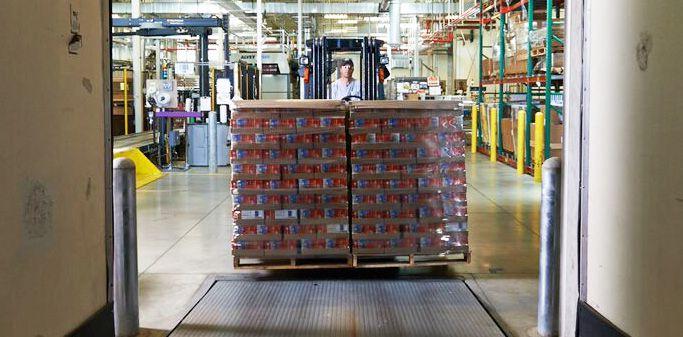
headaches. In busy food industry warehouses, 5,000-kilogram forklifts may enter and exit a trailer several hundred times in a given day.
Travel across the dock-to-trailer
transition areas – where the leveller lip meets the trailer, the leading edge of the lip, and the edge where the dock meets the warehouse floor – can cause significant vibration. These vibrations often lead to equipment breakdowns, product damage and neck/spine problems for forklift drivers.
Outdated restraints securing
the trailer to the dock wall can exacerbate this problem. In some cases, they will allow the trailer to “bounce” excessively when forklifts go in and out. The vibration (or “dock shock”) can also cause vehicle restraints to wear down and require more and more frequent repair. This scenario was all too real for Bruce Clark, the facility/project manager of New Belgium Brewing.
“We were experiencing a lot of problems – and repair costs – with our locks and levellers,” he notes.
“The components weren’t holding up. We were getting cracks in the
lOGIsTICs
leveller and separation on a lot of the welds and springs were breaking. It was a constant problem.”
Repairing equipment was just part of Clark’s problem, however. “Quite a bit of product was being lost to damage as lift trucks entered the trailer,” he says. “And, we were getting complaints from employees [about] back, leg and shoulder issues just from the rough approach from the leveller to the truck.”
lEVE ll ING T h E FIE l D
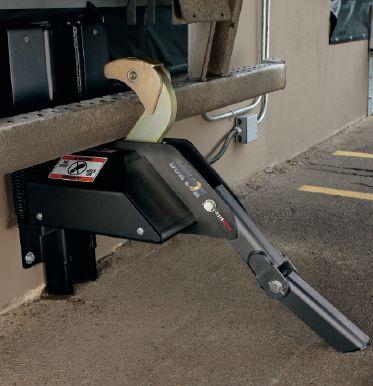
Fortunately, Clark was able to address the problem with an acrossthe-dock equipment upgrade, including state-of-the-art hydraulic dock levellers and automatic vehicle restraints. On the outside, heavyduty automatic trailer restraints were added.
The restraints featured a number of maintenance reducing features, including a corrosionresistant finish and a water- and dust-protected IP-66 rated motor. Additionally, the units store above ground – keeping them clear of ice,
snow and other debris that might damage them or compromise their operation.
Inside the dock, new shockminimizing levellers were installed.
The levellers were designed with a shorter crown height (which minimizes the bump between the dock and lip), a longer leading edge on the lip and a constantradius rear hinge that eliminates the gap between the floor and the leveller.
“The transition from the finish floor to the leveller to the trailer is just much smoother all around,” says Clark. Damage and repairs to equipment have dropped to normal maintenance levels and physical problems have also decreased.
“We’ve had less downtime due to dock equipment,” he notes.
Also, because forklifts are less subject to jostling as they enter the trailer, they are not hitting cases as often. “There’s been less product damage, so there, again, that’s less downtime for cleanup or restocking,” says Clark.
Restraints keep the vehicle trailer firmly against the dock for safer access and to reduce air loss from the building.
A N ATTAC k ON T h E PERIMETER
Another frequent problem area in the warehouse-to-trailer interface zone can be found around the perimeters of the dock door opening. A poorly designed, poorly sealed loading dock opening can create gaping holes in a building. Cracks of daylight visible from inside a closed dock indicate gaps
that can allow dust, wind, snow and other contaminants into a building – not to mention steamy (or frigid) outside air. These holes are also entry points for unwanted insects, rodents and other pests.
Obviously, this is a maintenance nightmare, and a major challenge to supply chain integrity and reliability. According to guidelines from the Canadian Food Inspection Agency (CFIA), “Where loading docks are used, it is important that carriers (trailers) are properly sealed to the building. Alternately, other means are used when loading or unloading to prevent outside contaminants/pests from entering the establishment.”
Th E RO l E OF DOC k ENC l O s URE s
Quality dock enclosures can be one of a maintenance manager’s strongest weapons in the perimeter penetration battle. A dock shelter or dock seal creates an environmental barrier between the back end of the semi-trailer and the inside of the loading dock, keeping external
contaminants outside and valuable energy in.
For most facilities, this can be done with foam compression dock seals, or dock shelters that seal trailer door hinge gaps, together with an under-leveller pit sealing system. Special attention is often needed at the top and corners of the trailer where frequent gaps remain;
Improvements to loading dock equipment help prevent damage to the company’s product.
in these cases, look for a dock shelter that features a weighted header seal. Today’s leading seal and shelter designs provide effective sealing on all four sides of the dock opening. Quality sealing products are made of durable, friction-resistant fabric and impactable foam side frames that are reinforced with a high molecular weight polyethylene layer. They also offer protection against burning from the heat of trailer marker lights and are custom-designed.
Some dock shelter designs have been developed specifically for the food industry – like those that work with vertical levellers to provide “drive-through” applications. In this set-up, a trailer’s doors can be opened inside the building –providing the utmost in security, environmental control and cold chain integrity.
Drive-through applications are also easy for maintenance and cleaning, since the pit area below the leveller is easily accessible and generally remains free from outdoor debris. Special design
lOGIsTICs
features ensure tight sealing against trailer sides, across the full width of the trailer top and at the corners, without interfering with trailer doors being opened and closed after the trailer has been locked to the dock.
R E l IABI l IT y C h A ll ENGE s IN s IDE
T h E P l ANT: FREE z ER DOOR s
Some of the biggest maintenance headaches can be found in refrigerator and freezer door areas.
Traditionally, freezer and cooler openings have used heavy, insulated, rigid doors with a high R-value. While these side-acting doors do a good job of keeping the cold in (fighting conduction), they are typically slow moving, resulting in longer door cycle times and thus, higher rates of air infiltration, which hampers inside temperature control. Additionally, their slower speed means workers must either wait for the door to open or leave it open for extended periods. Furthermore, traditional hard-core doors are susceptible to forklift damage.
Unless a damaged cooler/freezer door is quickly fixed, there can be substantial energy losses and the potential for product contamination. Thus, for high-traffic openings, energy losses due to the door being open or sealing poorly (infiltration) can represent a significantly larger cost component than energy losses due to conduction.
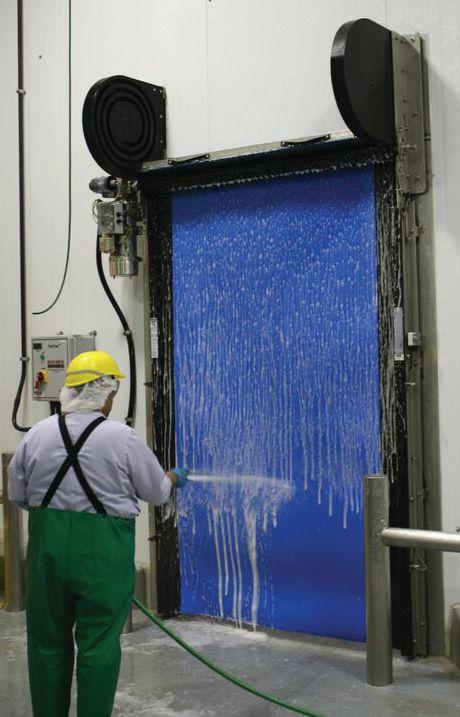
Recent improvements in door technology combine fast cycling with high-efficiency insulation and sealing. These advances have focused on insulated upward-acting doors.
The fastest roll-up doors can operate at 254 centimetres per second, a rate that minimizes air infiltration and ensures optimal productivity. Newer upward-acting doors also incorporate a perimeter thermal air seal for added energy savings through a tighter closure. Additionally, some impactable doors offer higher R-values, reducing the need for heated panel defrost systems.
High-speed doors are ideal for food processing/handling environments that demand fast traffic flow and sanitation.
Another advanced feature is torque-sensing reversing capability, which eliminates safety and maintenance concerns with doors that use pneumatic or electrical reversing edges for the same
purpose. Perhaps most intriguingly, some technically advanced freezer doors now have the ability to withstand forklift impact, instantly snapping back onto their tracks after being hit.
A sys TEMATIC APPROAC h TO INCREA s ED RE l IABI l IT y
In most instances, a systematic approach that incorporates automatic vehicle restraints, vertical dock levellers, appropriate seals/shelters, and high-speed doors are the best ways to ensure an uninterrupted and reliable food logistics operation. These solutions protect products, reduce contamination, simplify maintenance and improve environmental conditions within a building and throughout a given supply chain.
Walt Swietlik is director of customer relations and sales support for RiteHite, a leading manufacturer of loading dock equipment. For more information, visit www.rite-hite.com.
Fall is the perfect time of the year – harvest time – a time to gather ideas, hone our thoughts, and to learn from the environment that surrounds us. It also conjures up images of storage, maintenance and preparedness for the future!
Excellence In Manufacturing Consortium (www.emccanada.org) embraces the fall each year with a robust schedule of events across the provinces – providing those entrepreneurial spirits from small to large – interactive forums with which to engage peers. Just as the season predicates, we look at ways we can continuously improve our operations, harvest those ideas, store the concepts we learn from discussions, roundtable networking and plant tours, and look at ways to implement and maintain them for
the future.
As we endeavour to bring likeminded companies together, our platter is full of some tantalizing offers including an excellent session on Energy Management and Sustainability Best Practices with Bonduelle North America. On September 23 anyone interested in learning more about mitigating costs and initializing practices that will strengthen companies’ commitments to both energy management and sustainability, will enjoy the visit. We will begin at the Strathroy facility and for those interested, a second tour will be offered at their Tecumseh plant. Without a doubt, there will be lots to learn, and lots to see, and, in keeping with our theme, our host will be at the height of their canning season taking in the fall harvest. Complementing our
session, Provision Coalition will be showcasing the fruits of their Online Sustainability Portal. Mark your calendars and take a moment to enjoy the beauty of the fall colours when you visit with us for this excellent session in Southwestern Ontario.
Later this year, we will be looking at topics that focus on the people side of business specifically –“Assessing Employee Performance” and “Change Management.” We are pleased to be visiting with Food for Tots in Markham and Chapman’s Ice Cream in Markdale. Our session on Performance Assessments will involve current issues, latest trends and strategies for implementing these practices in the workplace. And, when it comes to Change Management, we are particularly pleased to have a best practice presentation that speaks to the
importance of developing and maintaining a positive culture. Both sessions will be opportunities to gather ideas from peers, join in on relevant discussion and share experiences that enable us to grow, develop, retain and attract members to our workforces.
Our next set of GF2 EMC Food Sector Networking Events and Conferences are listed in the table below. A Food Sector Calendar is also available on the EMC Website (www.emccanada.org) and has the latest in event information as activities are always being added. Please watch as well for our free EMC GF2 Productivity Workshops featuring introductory courses on Lean Productivity (Lean 101), Lean Management Systems, Value Stream Mapping and Productivity/Lean Tools and Leadership and Culture for
Productivity Improvement. These events are scheduled across Ontario and taking place in September and October. Without a doubt, we have a hearty fall platter of excellent networking activities lined up and hope that you are able to join us!
For more information on the Excellence in Manufacturing Consortium and the Food Sector Initiative, please feel free to touch base with Bren de Leeuw, Director – Field Operations Canada and EMC Food, Beverage and Bio Sector Program (bdeleeuw@emccanada.org) anytime.
05-Nov-15
05-Nov-15
Food for Tots Markham, ON
10-Nov-15
NSF-GFTC State of the Industry 2015
Best Practice and Plant Tour: Change Management Developing a Positive Culture
Unique perspectives and advice for increased prosperity throughout the Canadian food and beverage processing, supply and service industry
Chapman’s Ice Cream Markdale, ON Assessing Employee Performance
10-Nov-15
4th Annual Food Regulatory & Quality Assurance Summit Toronto, ON An interactive Summit hosted by the Strategy Institute that hosts a number of speakers on issues such as: CFIA Complaints & Appeals, GMO Labelling, FSMA Updates, GFSI Compliance, Export Excellence, etc.
Everyday, thousands of Canadian manufacturers are connecting through EMC ... to skills and training, vital programs and resources, & EACH OTHER Reduce costs | Connect to Peers and SME’s | Access resources | Grow your business Join the conversation