Every major food processing plant follows the regulatory requirements of their national and provincial governing bodies, including the Canada-United States Regulatory Cooperation Council, which advances regulatory co-operation between the Canadian Food Inspection Agency (CFIA) and United States Food and Drug Administration (FDA). These compliance demands are necessary to galvanize industry to embrace the trend towards preventive maintenance from their reactive, break-fix or monitoring mode.
For some facilities, the added constraint on achieving higher standards and levels of productivity through preventive maintenance is an ongoing challenge. But for those that have ERP systems and have invested in a CMMS, the foundation for operational excellence has been laid. Their challenges are less about achieving a level of compliance and more a question of how to achieve excellence.
We’ve heard countless consultants drone on about the importance of using a “holistic” approach and that greater success will be found in using a tool such as reliability centered maintenance to achieve reliability and asset performance goals. Behind the push for tools such as RCM is a drive for big-picture thinking.
If we already know from industry case studies that 85 per cent of lifecycle costs are determined in the design and installation phase, then the suggestion that the emphasis should be on a deeper understanding of how physical assets affect the bottom line in the long haul makes sense.
Supporting a cohesive maintenance and reliability program by modernizing and automating manual processes through electronic management and cloudbased technology is a surefire tactic for improving operations and maintenance goals.
With this approach in mind, maintenance software – computerized maintenance management systems (CMMS), enterprise asset management systems (AEM) and enterprise resource systems (ERP) – will do wonders to support day-to-day tasks. A CMMS is designed to streamline activities, generate work orders, manage spare parts and control inventory, prevent unplanned downtimes, predict critical events…
One objective of the maintenance department is to manage the lifecycle health of machinery and equipment along with other assets. With a modern CMMS, plants can gain greater insights into the health of equipment in real time, while also preparing personnel for compliance audits and keeping them in check
with regular inspections.
I have two pieces of advice to plants considering ways to improve maintenance performance. The first is to embrace a comprehensive maintenance and reliability process that starts with the organizational goals.
The second should be a no-brainer: strive for improved visibility; this is achieved by involving the whole team – from upper-level management to technicians on the plant floor.
If the plant’s maintenance program is neither efficient nor effective, operations and productivity suffers. But an interconnected program that takes advantage of digital convenience translates into lower costs, greater productivity and higher employee efficiencies.
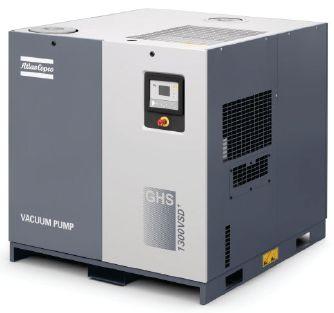
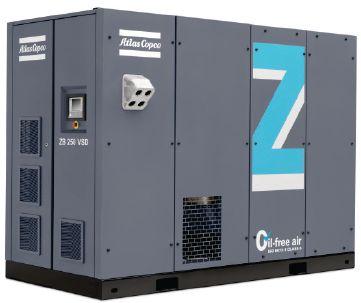
VACUUM PUMPS WITH
VSD TECHNOLOGY
TRACK & TRACE
Building efficiency and scalability into the maintenance platform improves traceability.
BY REHANA BEGG
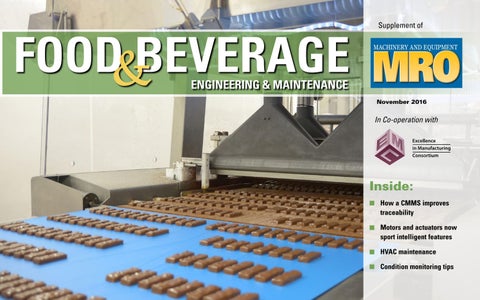
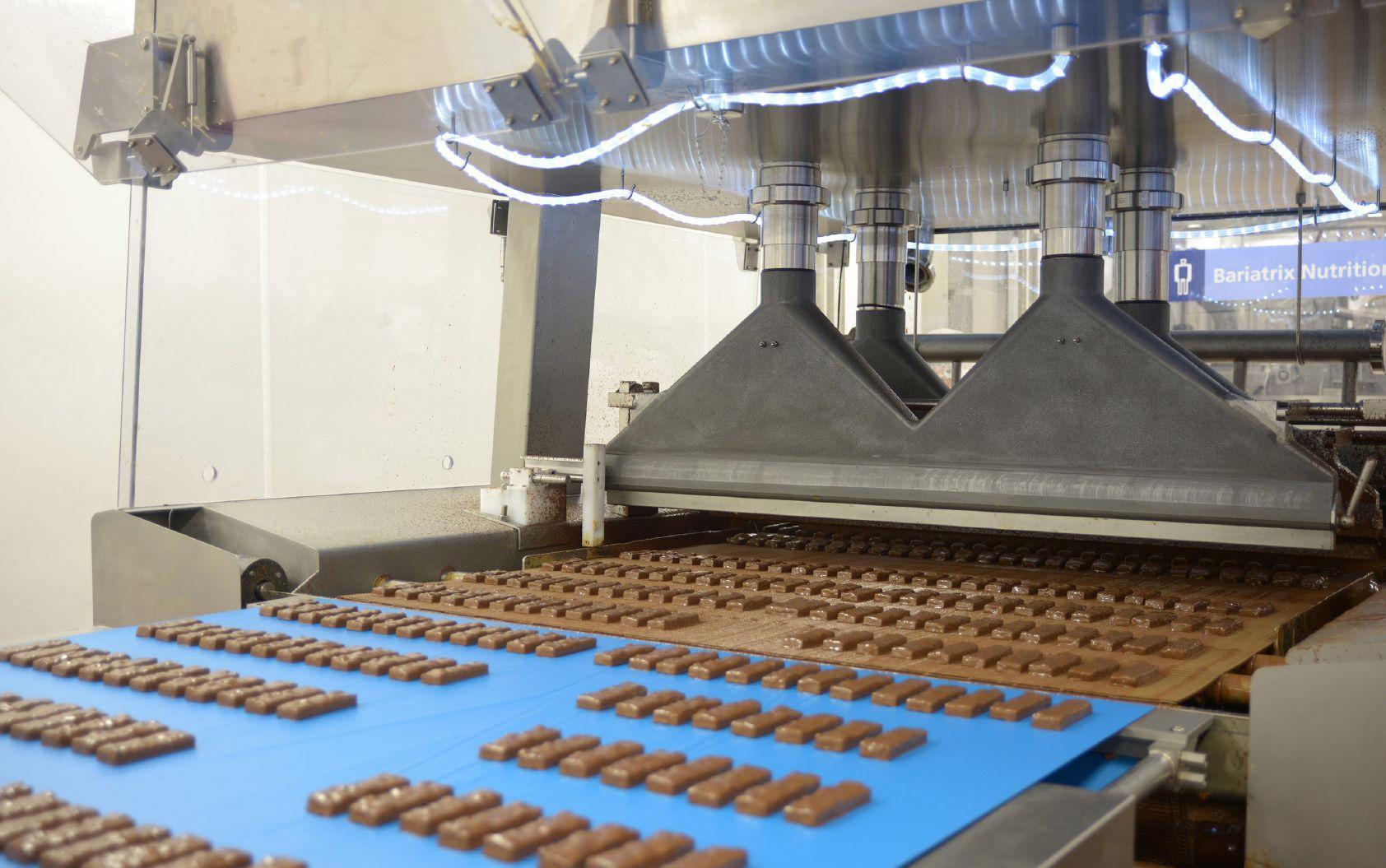
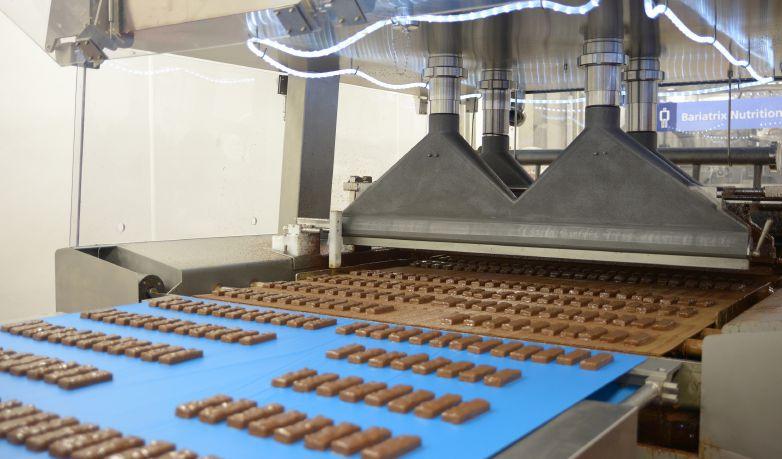
When Bariatrix Nutrition reopened its newly renovated production and warehousing operation in Montreal in 2012, the protein-rich foods and supplements producer understood that the maintenance of its production lines would need an overhaul, too.
The food production facility, which is equipped with multiple production stations, had identified inefficiencies in its management process whereby operations and maintenance personnel had no structure for creating work orders and personnel had no formal way of knowing what work needed to be completed.
“We have one bar line where we
make our chocolate bars. We have a two other production lines for powdered goods – for drinks – and we have another production line for soy chips,” explains Christian Ledouceur, System Administrator, Bariatrix Nutrition. “We had spares lists that were neither interactive nor integrated with the ERP system. No one knew what to do and neither was work checked.”
But in January 2013, after the plant’s executive management and IT department had installed an enterprise management and accounting applications solution (SAGE ERP X3), the decision was made to augment the ERP system with a computerized maintenance management system (CMMS).
Bariatrix Nutrition installed a CMMS that provides control over many aspects of the facility, including costs, spares and work orders.
The ERP system would help Bariatrix achieve operational excellence by integrating production, sales and logistics. Further, to enhance reliability and efficiency through better maintenance practises, the company enlisted the services of DIMO Maint, a CMMS solutions provider. Their MiniMaint solution would not only seamlessly integrate with the Sage ERP solution but would also help prevent personnel from re-entering data and eliminate potential sources of error between the commercial management and the CMMS.
While the application is used mainly by the mechanics department (maintenance personnel) to plan and schedule maintenance tasks, the system’s requestor function is used across departments, including the production, quality control and shipping departments, for tracking the health of the machinery.
The CMMS includes all of the standard functions, says Adeline
Implement a CMMS that is not only modular and scalable, but that can also be seamlessly adopted in any future expansions.
Perrudin, Business Developer North America, DIMO Maint. This includes the inventory and classification of equipment, the management of contracts, the management of work requests (WR), the automatic management of preventive maintenance (PM), the management of work orders (WO), stocks of spare parts ordered and budgets, as well as a
graphical schedule of maintenance tasks, and the production of analyses and dashboards.
BENEFITS OF A CMMS
The CMMS brought immediate benefits to the maintenance function, says Ledouceur. It was easy to use and scalable. The system allows maintenance mechanics – the primary users
of the CMMS – to create work orders, schedule tasks, identify and describe the problem with equipment, assign a specific mechanic to do the work and ensure that the requisite spare parts are available to complete the work.
Once the work has been completed, finance and inventory management are simultaneously updated on the status of the work. The CMMS is also useful to the finance department, as the CMMS system tracks every action and maintains the history (“a single version of the truth”) for auditing purposes, says Ledouceur.
“The integration of the CMMS with the ERP application is where we get the most value,” says Ledouceur. Everything we buy through a Purchase Order is going to be added to our inventory and everything we consume in our inventory is taken out through a Work Order transaction so that the finance department can know where we’ve used this part.”
The ERP manages inventory in a way that gives the finance department
access to information on such things as the valuation of the spare parts. When plants use disparate systems, it makes it much more difficult to know what is maintained or what the real value of inventory is. But an integrated system makes auditing easier when the audit is due. “It tells us how much we spend on spare parts in a year and cuts down on work orders while giving us visibility in our ERP,” says Ledouceur. “Nothing is forgotten.”
One success factor since implementing the CMMS is that it provides control, says Ledouceur. “We wanted control over what was happening in our business, over costs, spares, work orders … everything. That was the goal of the project.”
SYSTEMS INTEGRATION
The number of employees has grown to 150 from 65 since Ledouceur started in his role in Bariatrix Nutrition’s Montreal plant four years ago. In addition, the company is undergoing growth at its distribution and logistics site in Vermont,
New England, where it employs 20 people. The facility is currently being converted into a production and manufacturing plant, which means that the number of employees is expected to increase substantially once manufacturing, production and support roles are created, says Ledouceur, who is tasked with expanding the ERP system across the organization.
Fortunately, the Vermont site uses the same ERP system as the Montreal plant. “They’re using it from our facility over a VPN connection. So for me, implementing the CMMS in the new site means buying a site licence,” he says.
Bariatrix has purchased an additional module from DIMOMaint that includes an application for segregating data from one site to another. Bariatrix will also need to decide which data they want any department to see, says Adeline Perrudin, Business Developer North America, DIMOMaint.
“Bariatrix already had the basic option – rights management – but
now, adding the segregation option will allow a manager to say, ‘I want my maintenance team in Vermont to see equipment and spares that are in Vermont; I don’t want them to see what’s happening in Montreal,’” explains Perrudin.
The ERP manages inventory in a way that gives the finance department access to information on such things as the valuation of spare parts. When plants use disparate systems, it makes it much more difficult to know what is maintained or what the real value of inventory is. But an integrated system makes auditing easier when the audit is due.
Ledouceur says that the system enables Bariatrix to transfer parts between buildings through the ERP.
“And I will have traceability of where my equipment went.” While Ledouceur is unable to share
data on cost savings, he says that Bariatrix has realized operational, logistics and maintenance efficiencies. “It’s been very efficient to the bottom line, which is a cost saving for us.”
BUILDING ON THE SYSTEM
As a next step, Bariatrix is simplifying and facilitating entry of field data. Maintenance mechanics currently use iPads to fill in requests on their Web page, but Bariatrix has purchased MiniMaint’s latest upgrade (version 7) in order to take advantage of its mobile application, says Ledouceur.
“Maintenance will be able to open and close work orders from the machine and won’t need to go back to the workstation to do that kind of transaction.” says Ledouceur. “This is going to be another big step for us to save time.”
Rehana Begg is the editor of Machinery and Equipment MRO magazine. Reach her at rbegg@annexweb.com.
INTELLIGENT MOTORS AND ACTUATORS
Precision, control and the ability to work in harsh environments comes to motors and actuators.
BY TOM VENETIS
Mechanical power transmission technologies are getting smaller and coming with new safety features and intelligence, making them indispensable in such market segments as the food and beverage industry.
Jeff Moore, vice-president of marketing, mechanical, with Baldor Electric Co., says makers of motors and other mechanical power transmission technologies are finding a growing market for their wares in
the food and beverage industry, but only if the technologies meet certain conditions.
“Safety is a primary focus in specific industries, such as the food and beverage industry,” Moore says. “We have all seen companies have recalls, such a Blue Bell Ice Cream, which recently had the issue of listeria. So, what we are seeing are companies looking at technologies that use stainless steel and moving to the use of synthetic lubricants.”
The food and beverage industry
Another feature companies are looking for with actuators is for the actuators to be “smarter.”
Many actuators are what might be termed “dumb,” meaning they only do one thing and have no means by which they can be managed and operated in more subtle ways.
needs a wide array of motors and mechanical power transmission technologies, products that can perform with a high degree of reliability but can also work safely in processing environments where risks of contamination to food or beverages need to be eliminated. Motors, as one example, need to meet certain safety and contamination prevention requirements. These include being able to withstand the daily wash-downs that happen in food processing and
MECHANICAL POWER GENERATION
Mounted Ball Bearings
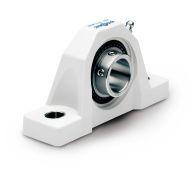
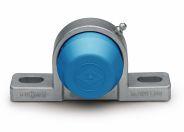
Baldor’s Dodge Ultra Kleen mounted ball bearings are ideal for wash-down applications. The stainless-steel set screw insert is deployed in either a polymer or stainless steel housing. The QuadGuard triple lip seal with rubberized flinger provides protection against contaminants while the MaxLife cage retains lubricant. Stainless steel housings feature a solid base, with no cavities or fillings to trap contaminants. The product comes with H1 registered food grade lubricant. Food-grade lubrication is standard.
www.baldor.com
Metal-Detectable
End Covers
Baldor Dodge Metal
Detectable End
Covers are designed to provide a safe solution for food processing facilities. Food safety end covers are constructed of a durable, highdensity polyethylene (HDPE) material containing stainless steel particles. This material allows the end covers to be detected by X-ray equipment and metal detectors used in the food and beverage industry, ensuring that if it falls into the food, it will be found. Snap on style providing easy installation and rigid performance in wash-down applications and fit all Baldor Dodge E-Z Kleen and Ultra Kleen mounted ball bearings. Includes a drain hole to prevent moisture from collecting inside the cover. www.baldor.com
beverage-making operations. These wash-downs happen frequently with high-pressure hoses and the use of special cleaning agents to destroy potentially harmful bacteria. Motors and other systems need to have an IP65 and above rating for wash-down protection. The Ingress Protection (IP) rating system is a classification system showing the degrees of protection from solid objects and liquids. Motors should also have high efficiency gearing and couplings and sheaves, and bushings that operate in both wet and dry applications. A stainless-steel design is now expected to further reduce the chances of bacterial contamination.
“When it comes to food producers and mechanical power transmission products, they have specific questions and needs,” Moore explains. “They will ask, ‘How do I know that these products coming into my plant are designed to withstand CleanIn-Place processes? Are the products water-tights and can
they be used during high-pressure wash-down procedures involving high pressures and high temperatures, and done at close range? We also see that covers are important in the food industry and we introduced a metal-detectable end-cover specific to the food industry.”
These end-covers that Baldor makes available are constructed from a high-density polyethylene (HDPE) material that is embedded with stainless steel particles. This
allows the end covers to be detected by X-ray equipment and metal detectors used in the food and beverage industry to detect metal materials that may have fallen into the foods or beverages being prepared. The metal in the end covers will ensure that if one falls into the food preparation process it will be found by the detectors and removed.
Niklas Sjostrum, the product line manager for Thomson Industries says that his company’s liner motion
systems and precision linear actuators are made to work in food and beverage processing and packaging plants, and are rated at IP65 so as to meet the wash-down requirements needed for such environments.
“Not only with water, but with detergents as well,” adds Sjostrum. “Material selection is key as is the ability to clean it down without too many pockets that can let bacteria hide away and which can cause bacterial growth later. That is a major challenge for technologies to work in these kinds of environments.”
Sjostrum gives the example of the company’s PC-Series Precision Linear Actuators: “The outer design is sleek and clean with no slots for other peripheral attachments. The components are made from stainless steel and the rod is completely stainless steel, and there are seals between each compartment, such as the bearing house, so nothing can come out of the unit and nothing can come into the unit. We also added a sophisticated motor mounting system with the sealing
seal going all the way back to the motor. We seal off every different compartment so there is no chance for leakage or for anything to penetrate the unit.”
Another feature companies are looking for with actuators is for the actuators to be “smarter.” Many actuators are what might be termed “dumb,” meaning they only do one thing and have no means by which they can be managed and operated in more subtle ways. Think of such “dumb” systems as a light switch that only has one function, to turn a light “On” or “Off.” Such switches offer no means to control the electrical flow to a light so it may be dimmed, for example. These switches can only turn the light “On” or “Off” and the light stays at one level of brightness as all times. “Smart” actuators can be likened to switches that allow a user to dim that light to the level of brightness desired.
“Our customers are asking for a little bit more intelligence in the actuator, such as position feedback, low-level switching, the ability to use
low-power wires to plug into a PLC for greater control, as opposed to a double-pole, double-throw switch and BUS technology as well, mainly on the J1939 CAN BUS and LIN BUS,” says Chard Carlberg, product line manager, industrial linear actuators with Thomson Industries.
“Intelligence allows people to use the actuators in environments where they would not have been able to use them before,” adds Travis Gilmer, product line manager with Thomson Industries. “With intelligence, it allows you to have [the actuator] move to an exact point and to tell you when it has reached that point, for example. With basic actuators, you don’t have that ability. The people who are using these kinds of actuators are using them in machines where it will be communicating with other moving parts in a system that the actuator has to interface with.”
Tom Venetis is a Toronto-based freelance writer. Reach him at venetis@rogers. com.
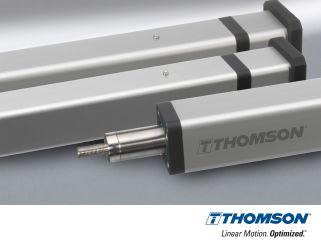
Thomson Linear’s PC-Series Precision Linear electric actuators are made to deliver high repeatability and positioning accuracy in a design is the energy efficient, smooth and quiet. It is customizable offering operations some of the longest stroke lengths available in the industry, and utilize a plug and play mounting solution that accommodates more than 600 motor types and sizes. Features include high side load capability, built-in antirotational rod end and is suitable for heavy loads and harsh environments. It is ideal for food and beverage manufacturing and packaging environments as the actuators have no collection points, making them ideal for wash-down environments and come with an IP65 rating. www.thomsonlinear.com
Linear Actuator
COMFORT & CONTROL
Maintaining prescribed temperature levels and humidity are critical factors for safe food and beverage production. But there are many common beliefs about industrial HVAC that aren’t valid.
BY NIKKI HEINKEL
Industrial facilities are responsible for the lion’s share of energy use.
In the United States, approximately 69 billion kilowatt-hours (kWh) of electricity went to industrial HVAC in 2010, the latest year for which statistics were published. At 6.77 cents per kWh, the average cost in 2010, that amounts to more than $4.6 billion. The price of electricity has since risen. Clearly, industrial heating and cooling are costly. Many companies believe they have no choice but to continue paying these costs. However, U.S. Environmental Protection Agency (EPA) data
indicates that 30 per cent of energy used in commercial and industrial sectors is wasted. Following are some common beliefs about HVAC – and the surprising realities that can be used as tips to improve comfort and control costs in any jurisdiction.
BELIEF: Installing a high-efficiency HVAC unit will automatically maximize heating and cooling savings.
REALITY: It’s true that switching to energy-efficient equipment will nearly always result in savings. However, your furnace, boiler and A/C units
on their own make up only a portion of your HVAC system. Other factors include your building envelope, ventilation system and thermostatic controls. It’s also important to consider your building design and the airflow within, as well as occupant behaviour. Something as simple as installing fans
to facilitate proper airflow can make a huge difference in energy use.
BELIEF: Temperature control is a matter of setting the thermostat.
REALITY: Cranking the HVAC up or down in response to the outside
temperature is not the only way to control comfort in a facility, and programmable thermostats can do only so much. Where comfort is concerned, it’s important to distinguish between actual and perceived temperature. Factors such as humidity and airflow can dramatically change the way any given temperature feels to occupants. For example, HVLS (high-volume, low-speed) fans actually can make the air in an area feel up to 10 degrees cooler by means of evaporative cooling. In both warm and cool weather, fans moderate perceived temperature by directing heated or cooled air down toward the level of the occupants, where it is most effective. An HVLS fan can also help alleviate hot, cold and dead spots, providing a more even temperature throughout. Greater comfort and reduced costs are the results.
BELIEF: High humidity is inevitable where air conditioning is not used.
REALITY: Air conditioning is often too expensive for large industrial areas.
However, forgoing air conditioning has hidden costs. As temperatures and humidity rise, productivity drops. The incidence of industrial accidents grows. In addition, high moisture levels can lead to the growth of toxic mold, resulting in substandard air quality. One solution is to run a dehumidifying unit, but these can use nearly as much energy as air conditioning. A cost-effective solution is to use and/ or install windows and vents to take advantage of passive ventilation. Fans are another good option. Newer fans have specially designed vanes that return the conditioned air to occupied areas so humidity and temperature stay in the comfort range at a lower cost. These fans can be installed as standalone devices or incorporated into existing HVAC systems for greater overall efficiency.
BELIEF: Running HVAC is optimal for eliminating fumes.
REALITY: Industrial processes often produce fumes or chemical odours that
can irritate or endanger employees. Many companies run their HVAC at full volume to help eliminate fumes, but unless the system can access an abundance of clean outside air and has high-volume external venting, it does little or nothing to really clear the air.
Fans, on the other hand, create enough airflow to remove the unhealthy substances and refresh the inside air at rates that equal or exceed OSHA, EPA and other regulatory guidelines for indoor air quality (IAQ).
BELIEF: Proper HVAC maintenance protocols ensure compliance with indoor air quality (IAQ) standards.
REALITY: All HVAC systems require periodic maintenance, but even a properly designed, sized and maintained HVAC system might not deliver even temperatures if walls, doors, vents or equipment are blocked or relocated. HVAC systems may require adjustments such as installing supplemental air cleaners, HVLS fans and/or other humidity control measures to keep industrial spaces
clear of fumes, deter mold growth, and ensure even temperatures and clean air throughout the facility. Following poor HVAC practices keeps many companies on the treadmill of high costs and ineffectiveness. Careful analysis of the building and implementing potential solutions could help them reduce energy costs while also improving the comfort, safety and health of workers.
Nikki Heinkel is Marketing Manager at Go Fan Yourself, a manufacturer of patent-pending, industrial, high-volume, low-speed fans for spaces such as warehousing, manufacturing, agricultural and commercial facilities that are in need of an energy-efficient air-movement solution.
ENGRAINING LEAN INTO YOUR CULTURE
Improve process and function by using simple management tools.
BY DAVID WELSH
As a plant and operations manager, cutting costs and improving efficiency should already be top of mind and it’s no surprise that many facilities have been implementing lean maintenance processes over the last several years. More than just a way of working, lean is a management philosophy with a seemingly simple goal: eliminating waste to improve workplace functionality, customer service and/ or product performance.
A typical manufacturing facility without lean practices in place may run in siloes – with each person responsible for their own job and
with very little collaboration. To start moving toward a more collective workplace environment, it’s normal to want to dictate exactly how the floor is running, but it’s important to understand that to ensure success, the whole team has to embrace it. While changing employee habits may prove daunting, it’s not impossible. You just have to sell them on the future – draw a credible picture of what’s in it for them.
CREATING THE CULTURAL SHIFT:
STANDARDIZATION IS KEY
Where do you start? Well, the first tool of lean is 5S: Sort. Set in order. Shine.
Standardize. Sustain. It’s your job to decide who’s going to lead the implementation process and to put together a team that will drive it forward.
And while all five pieces of this tool are vital, perhaps the most important “s” in this set is standardize. By creating standard practices, you not only improve employee efficiency and productivity, but also maintain reliable product quality by consistently applying the same tools in the same way.
For example, standardizing the tools you use on the factory floor – such as disposable wipers and dispensers can ultimately result in less time spent looking for the right tool.
We saw this in our Drummondville, Que. facility. Martin Croteau, Quality Systems Co-ordinator at the SCA plant recalled that having each tool in the right place helped them gain speed and efficiency – important improvements for everyone. Croteau and his colleague, Luc Simard, worked together to implement 5S in the factory back in 2010. During the first 6-12 months they faced several challenges, including shifting employees’ mindsets, ensuring everyone was aligned on strategy and maintaining the new way of working. But 18 months later, the process seemed seamless. Employees saw the
benefits firsthand and realized that not only did the facility cut costs and increase productivity, but it improved safety. Ensuring the floor stays clear of clutter through standardized and streamlined processes results in fewer spills and reduces the risk of accidents. When you can show instead of tell employees that the improvements are worthwhile, you go a long way in instilling that cultural shift.
SUSTAINING THE SHIFT
Once employees start to realize that lean is the best path for improved efficiency and safety, it’s important to ensure that their new mindset is sustained, so that they don’t revert to old ways of working.
For example, during the initial implementation, you evaluate which equipment is obsolete and get rid of tools that are no longer used. Similarly, to sustain, you must continuously make the same evaluations to maintain efficient use of space and time. Equipment needs and options evolve, and so should your assessment of the factory floor. Even in Drummondville,
more than five years into a successful implementation, managers still make modifications and relocate equipment during regular maintenance.
As with many new initiatives, sustaining can be a challenge. However, regular audits can be a great way to make sure the team stays on track.
Be adaptable, and continuously evaluate the work environment and where improvements can be made. Ultimately, when employees feel comfortable in their workspace, they’re more likely to be productive, resulting in more sustainable work practices and overall greater job security.
And, as with initial implementation, allowing employees to have a voice in determining shifts in standards is critical. When employees feel like they’re contributing to the lean efforts, coming up with the best practices for completing a task and collaborating to keep the momentum, they feel like they’re part of a team – making them more likely to want to sustain the transition to lean.
WITNESS THE DIFFERENCE
Ultimately, the greatest challenge faced in any organization’s effort to shift their culture and work practices is going from a top-down approach to moving toward a more collaborative environment – where all workers are involved in creating the path to success. It’s important to understand that it takes time, clear communication and full team effort,
but in the end, it’s worth it. Don’t believe me? Walk into a facility that has lean successfully implemented, such as Drummondville, and you’ll see the difference from the moment you step in.
David Welsh is the manufacturing excellence manager at SCA Hygiene Products
COMO CHEAT SHEET
Seven simple condition monitoring questions and answers
BY DOUGLAS MARTIN
Condition monitoring is the practice of monitoring the changing of a machine or asset conditions to provide some insight into its health. The conditions monitored are typically vibration levels, temperature, ultrasonic noise and oil condition, which do not require the machine to be stopped. Other conditions could be shaft play, bearing clearance or component clearance. Although these measures are focused on prevention of failure, you can also measure such things as current draw, head pressure, or flow, which monitors whether the machine, such as a pump or motor is functioning efficiently.
WHAT IS THE RIGHT BEARING TEMPERATURE?
For the most part, the “right” bearing temperature is not about the bearing. Instead, it is about the other components in the system and most importantly, the lubricant and seals. Buna N (nitrile) seals are typically limited to 100°C and a typical lithium grease is limited to 120°C. The critical issue with the lubricant is whether the lubricant will deliver an appropriate lubricant film (viscosity) at the operating temperature. However, what is of most importance, is the change in temperature, not the absolute temperature. For instance, if the machine was running along at 40°C
COMO CHEAT SHEET
Seven simple condition monitoring questions and answers
BY DOUGLAS MARTIN
A LOW PRESSURE— ENERGY EFFICIENT SOLUTION FOR ANY DEMAND! Eliminating Any Risk
for a year, then the temperature rises to 80°C in the span of a week, then there is a problem that needs to be investigated despite meeting the criteria above.
WHAT DOES VIBRATION TELL ME?
Vibration can be broken into two general measures, velocity and acceleration. ISO 10816-3 describes typical machine limits for running in both velocity and acceleration. A high velocity level is generally about an overall mechanical issue like unbalance or misalignment, whereas a high acceleration reading is about a problem with a component such as a bearing or gear. As with temperature, the change in condition is more important than the actual magnitude. That being said, one would expect that the machine should start at a smooth running level as per the ISO standard and have no apparent component damage, such a bearing race damage.
WHAT ABOUT ULTRASONICS?
Much like the acceleration level of a vibration, ultrasonics provide information on the condition of higher speed components such as bearings.
WHAT CAN OIL CONDITION TELL ME?
Oil analysis can tell one the level of contamination
(both particle and fluid) in the oil, the level of wear on the mechanical components, as well as the health of the oil.
The level of particulate contamination can indicate the effectiveness of the seals in the machine. Moisture contamination will also indicate the effectiveness of the seals but could also indicate the effectiveness of the breathers in the machine.
By analysing the elements of the wear particles in the oil, the amount of wear of specific components can be measured and would give warning of a future failure.
By monitoring the acid level of the oil, the aging of the oil can be monitored and measured.
SHOULD ALL ASSETS HAVE COMO?
Although condition monitoring of assets is a high maturity level for a maintenance program, condition monitoring is most important with the most critical assets. Many assets are fine with a “run to failure” strategy. A proper criticality analysis should be done on a facility to determine, based on resources, which assets should have condition monitoring and when it is not necessary. In addition, that criticality analysis should also give direction to the condition monitoring technique, either singly or
in combination with other methods.
HOW IS THE DATA COLLECTED?
The condition of the machine can be collected manually, on a route-based program or continuously. There is a fair number of tools that can be used in the collection of condition data. In terms of manual data collection, the data can be collected by dedicated technicians or by operators. In fact, an operator driven reliability (ODR) program integrates the daily routine of an operator with the condition-based monitoring program. This is a natural fit as operators are generally the closest to a machine condition.
WHAT ABOUT ALL THAT DATA?
As more assets are monitored, more data is generated. Often, there is too much data for a typical human to manage. Today, there are computer applications that help the decisionmaking process in deciding what data is important to take action on and what data is not.
Douglas Martin is a heavy-duty machinery engineer based in Vancouver. He specializes in the design of rotating equipment, failure analysis and lubrication. Reach him by email at mro.whats.up.doug@gmail.com.
When you stop to think about it, there truly is an incredible amount of knowledge that passes through our organizations each and every day. Ultimately these “informational” opportunities contribute significantly to business growth whether from lessons learned, direct experiences, special projects, peer connections, web research, training, conferences or tradeshows – the list is endless! These interactions are designed to help us be as effective and efficient as we can as a company, team member and in our own particular roles. Learning strengthens our organization’s ability to be forward thinking, strategic, compliant and customercentric. Our companies are eager to embrace ideas that may help them become more flexible and adaptable to change, creative, innovative and
competitive to ensure that we deliver a quality product on time – every time – to customers wherever they may be. This is the time of year that affords us the perfect opportunity to reflect on our “informational or knowledge journey.” We can finally take a moment to step back and appreciate accomplishments both corporately and within our teams, including those personal goals we set, actively considering lessons learned from peers, customers, suppliers, other companies and those special golden nuggets offered up in training sessions and conferences attended over these past 12 months.
For many companies, it’s also a time for strategizing and planning, of forecasting and budgeting, and scrutinizing short-term and long-term goals. With learning in mind and the New Year around the corner, what kinds of things might you explore to enhance
your team’s capabilities to grow your business in 2017?
Continuous improvement opportunities provide one of the best means by which to stretch our minds, challenging us to solve a problem or make things better, to think outside the proverbial box and, best of all, they exist in every layer of our businesses. So, with those year-end activities in mind, perhaps it’s also the perfect time to start drafting ideas for those New Year CI Resolutions in your department and in your company. And what a great means in which to grow that knowledge repository by involving people from other parts of your organization in finding a solution, gaining different perspectives, fresh insights and cultivating ideas that might bode well with the task at hand!
As EMC endeavours to look back over the past year and plan for 2017,
we feel truly honoured to have facilitated some incredible EMC GF2 Food & Beverage Sector Networking Events throughout the province. Each peer-networking session has enabled manufacturers of all sizes and sectors to connect and learn from each other, building those knowledge pools to enhance business competitiveness, broaden our perspectives and excite companies far and wide on potential continuous improvement opportunities in all corners of our businesses. With labour productivity in mind, we have examined, discussed and shared best practices on everything from food safety to culture development, explored the latest in innovation and automation, set sights on the possibilities of exporting our goods around the world, discussed energy management and sustainability initiatives and leveraged perspectives on leadership in
manufacturing. We have seen automation at its best, a co-gen facility up close, and toured world-class processors. It’s been full of plant tours, of down-to-earth networking opportunities, and roundtable conversations. Nothing excites us more than a group of manufacturers deep in discussion trading business cards and offering to visit each other long after our session has ended!
We are extremely grateful to our hosts past and present and to those who join us at these special activities. In most instances we are there to share best practices. Sometimes, a host is presented with a challenge or continuous improvement opportunity of their own and they want to build on what they have in place or hear from someone who has successfully made progress in the same situation. With our network of processors, we can bring companies together to
help – sharing their stories of success and similar experiences and offering suggestions on next steps. We also strive to provide knowledge through subject matter experts who can share expertise on aspects of business such as legislative issues, compliance, food safety, funding, support and services and exploring new markets. The objective is simple: to enable growth and development for all participants.
As we begin our own strategizing and planning for networking sessions in 2017, we are eager to hear from company representatives regarding issues of interest and from those who would enjoy having peers visit their facilities. We already have some wonderful topics lined up and look forward to exploring innovative packaging trends, energy management and sustainability initiatives, best
practices, continuous improvement opportunities and our very valued First Steps in Exporting Workshop once again. It is sure to be another exciting year ahead!
Following our peer networking endeavours, our EMC GF2
Productivity Workshops have brought delegates together to learn more about lean practices. In 2016 we continued to offer these free GF2 training events to Food, Beverage, Bio and Ag processors across Ontario. Sessions were held in Stratford, Belleville, Markham,
Tecumseh and Guelph, along with two follow-up Productivity Action Plan Webinars. Participants focused on elements such as Leadership and Culture for Productivity Improvement, and Introductory courses on Lean Productivity (Lean 101), Lean Management Systems, and Value Stream Mapping. Next Spring, dynamic new Workshops will be offered on: Leadership and Management of Change, Standard Work for Leadership and Accountability, Root Cause Problem Solving and an Introduction to the Kaizen Process for Implementing Change. Finally, with the theme of learning still in mind, our new EMC GF2 Productivity Self-Diagnostic Tool, which launched earlier this year, is ready for you to explore and utilize. This wonderful continuous improvement tool is based on 16 sector KPIs and allows you to better understand and benchmark your current productive capabilities not only internally within your company but against the sector as a whole. It is an easy survey that takes about only 20 minutes to complete and real-time reports and feedback is generated from industry subject matter experts. For more information, visit www.
emccanada.org/fbddiagnostic.
As we reflect on the past and look forward to 2017, we cannot wait to embark on another fabulous year of learning, growing and connecting peers interested in strengthening our knowledge to become stronger, better, more efficient and successful Canadian companies. We sincerely hope our EMC GF2 Food & Beverage Networking Events, Productivity Workshops and our Self-Diagnostic Tool provide you and your team with the perfect means to build knowledge and experience for the remainder of the year and throughout 2017, too!
With the spirit of “building knowledge” in mind and of sharing best practice experiences with peers, we welcome you to consider joining in on
How do you get involved? If you are interested in learning more about EMC (Excellence in Manufacturing Consortium) and the Food Sector Initiative, please feel free to touch base with Bren de Leeuw, Director – Field Operations Canada and EMC Food, Beverage and Bio Sector Program (bdeleeuw@emccanada.org) anytime!