PreSIDeNT & GeNerAl MANAGer Al Diggins adiggins@emccanada.org
DIreCTOr OF MArKeTING & DeVelOPMeNT Scott McNeil-Smith smcneilsmith@emccanada.org
SeNIOr COMMuNITY DeVelOPMeNT MANAGer bren de leeuw bdeleeuw@emccanada.org
Safety First
There’s never been greater demand for highquality products. A quick Internet search for Canadian food trends will garner a mix bag of articles ranging from valid research to take-it-witha-grain-of-salt opinions on what consumers want. A common thread is that consumers are well informed, want to try something different and are generally less brand loyal than past generations. Not only do consumers want choice, they also want the best of the best.
And that’s tough on industry. Being the best in a food or beverage category invariably means offering high-quality products in a timely and costeffective manner. Fulfilling customers’ demand for high quality while staying competitive can be a formidable challenge during tough economic times. To stay profitable, any production process requires continuous operations of the production line equipment. It is why facilities are challenged to bolster their asset management systems. Proper maintenance and reliability programs are crucial to overall performance and optimization, and are a vital part of a facility’s total quality management approach.
The lead story in this issue of Food & Beverage Engineering & Maintenance examines trends that lead to improvements in the organization’s bottom
line. Contributor David Payton (“Ahead of the Curve,” page 5) references Conference Board of Canada research, which shows that Canada ranks first, followed by Ireland and France, as the top three countries (in a list of 17 participating Organization for Economic Co-operation and Development countries) in food safety. The ranking can be attributed to stellar safety performance metrics that are based on 10 food safety indicators organized in three food safety risk governance domains. Analysts say that Canada’s ranking is due to the consistency of the number of cases of food-borne illnesses and recalls that were reported. However, transparency in reporting and consumer perceptions also factor into the results. Enough proof exists to back up the assertion that
To stay profitable, any production process requires continuous operations of the production line equipment. It is why facilities are challenged to bolster their asset management systems.
a total productive maintenance approach improves business performance in aspects such as safety and cleanliness, customer satisfaction and operations performance. Therefore, it’s safe to say that those facilities contributing to the overall success in Canada’s safety scorecard are striving to follow best practices.
We’re thrilled that Canadian food and beverage operations are serious about their commitment to public safety. And it motivates us to continue the dialogue on making improvements.
Food and beverage manufacturers have been leaders in product quality through good times and bad. These five strategies will help them keep it that way.
By DavID Payton
Food manufacturers become leaders in their industry by winning consumer confidence in their quality and safety. Canadian food manufacturers win top marks in both those categories thanks to their investments in talent and technology. According to the “2014 World Ranking on Food Safety Performance,” a report from the Conference Board of Canada’s Centre for Food in Canada, in collaboration with the
innovations while cost-effectively producing high-quality products.
Following are the five most important industry strategies food and beverage manufacturers can use to achieve an ROI from technology – and maintain their competitive advantage.
1. E NSURE A UTOMATION ’ S
Fl E x IBI l ITY
When a plant scales past a certain size, automation becomes necessary for the facility to remain competitive in the market. An automated plant leverages numerous advantages, mainly low cost of operation.
recent compact version is designed specifically to fit into tighter spaces for conventional mechanical conveyors.
University of Guelph’s Food Institute, Canada earned top grades in most food safety performance metrics. In fact, Canada maintained this high ranking even during the height of the recession between 2008 and 2010, when companies in many industries were cutting back on technology improvements.
To keep a competitive edge in a tough economy, food and beverage processors know they must stay on top of the latest automation
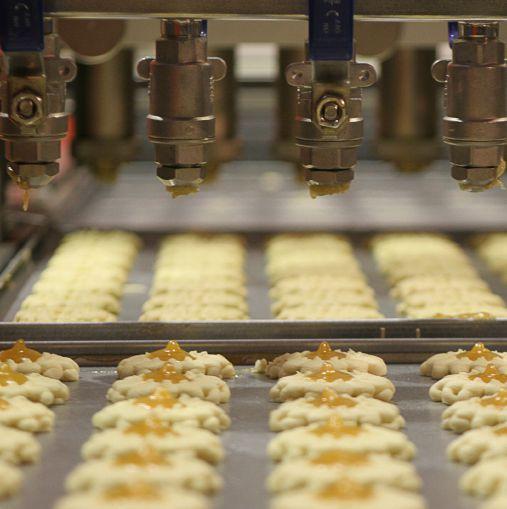
A notable trend here is the increasing rise of automation technologies that are more flexible and efficient than in the past.
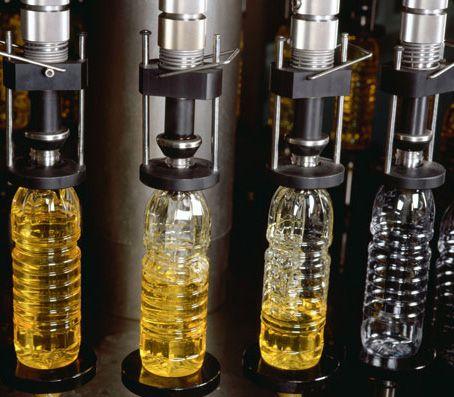
Consider, for example, the Anysize technology, an innovative passive, pneumatic-based positioning system for Polyethylene Terephthalate (PET) conveyor lines. The system frees food and beverage plants from having to make timeconsuming manual adjustments when changing over a packaging line to accommodate different bottle, package or case sizes. A
In the past, dedicated beverage packaging lines handled just one or two products with either fixed guide rails or two-position pneumatic cylinders attached at three- to fourfoot intervals along the conveyor for changing the guide rail width to a second size. When the number of available bottle sizes increased, bottlers continued adding more cylinders until they ran out of space on the machine to add any more. The arrangement made it costly, Automated plants may take advantage of low cost of operation.
difficult and time-consuming to package new beverage products and was typically limited to four bottle sizes. In contrast, system users need only input a desired guide rail width, and the technology automatically makes a thousand or more positioner adjustments, to tolerances of a few millimeters from each other, down the entire length of the line.
In building the more efficient system, the developer first considered using electronic technology to make what’s typically called an “infinite positioning” system that can accommodate any bottle, package or case size within a certain size range. But systems that used traditional electronic linear actuators and stepper motors were prohibitively expensive for packaging or conveying lines that required multiple positions.
The pneumatic-based solution provides a simpler and more cost-effective approach because it is based purely on the pressure of the plant’s compressed air system. The pneumatic system has but one moving part per positioner and quickly pays for itself by providing faster changeovers while reducing labour and maintenance costs.
2. M ANAGE E NERGY C OSTS
The high cost of energy has made it critical for food production facilities everywhere to cut the energy consumption of their plant equipment.
When it comes to energy consumption, managing costs is a priority.
And while Canadian food producers are noted for the quality and safety of their products, the energy efficiency of their processing equipment remains a top concern. According to “Energy Prices and Business Decision-Making in Canada: Preparing for the Energy Future,” a report from The Council of Canadian Academies, a survey of more than 1,000 Canadian firms chosen to reflect
sectors exposed to energy prices, two-thirds of the firms surveyed reported that energy costs were very important or extremely important to their competitiveness, with concern greatest among those industries that use oil-based products. However, firms in other sectors also expressed concern that they would suffer significant adverse effects from energy price increases. Furthermore, the impact of higher costs through direct purchase of energy has been felt by 72 per cent of firms. In response to the volatility in oil prices in 2008, 42 per cent of firms changed strategy; and to manage energy costs, 59 per cent of firms invested in more efficient equipment over the past few years.
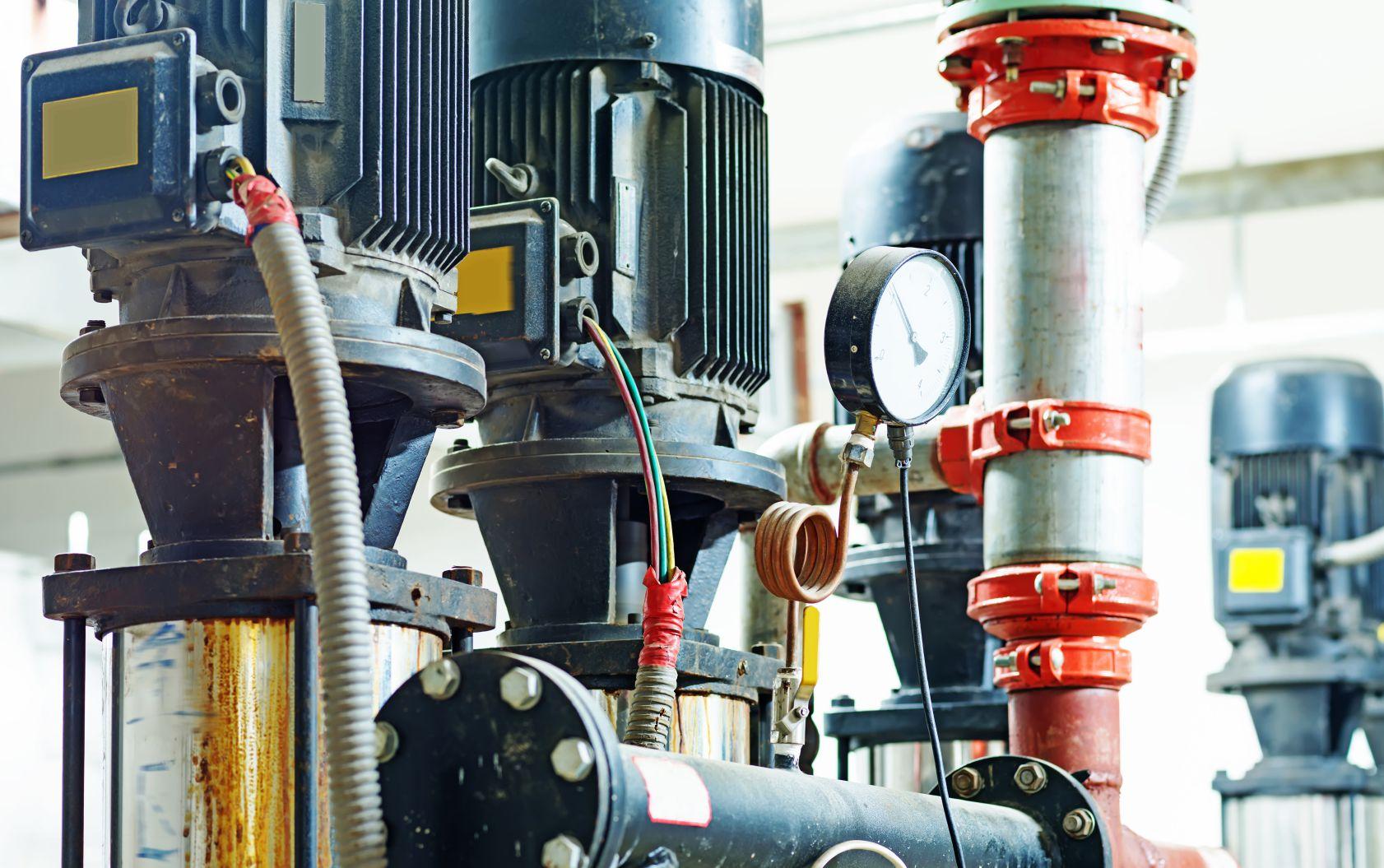
Electric motor-driven systems represent a huge area of savings. They consume more than one half of all electricity in the U.S. and more than 70 per cent of all electricity in food manufacturing applications.
To help improve the energy efficiency of your operation, an effective approach is to first evaluate the motors. The initial purchase of a motor represents only about two per cent of its total lifetime cost, with power usage making up the remaining 98 per cent. Typically, upgrading a plant’s electric motors to more energy efficient models can result in a 13 per cent energy saving. One example, which is suited to clean-in place,
high-pressure, highly caustic washdown settings found in food and beverage and packaging applications, comes from Parker’s MPW stainless steel servo motor. The motor features segmented core technology, which can yield 40 per cent higher torque per unit size than conventionally wound servo motors.
Some motor manufacturers take an aluminum housed motor and insert it into a steel can to protect it from process and washdown fluids, and to give it the dimensional features required for easy cleaning. However, this causes the motor to operate inefficiently because of the heat build-up within the steel can. Parker’s motor winding is potted directly to its stainless steel housing, allowing for a more efficient motor that can provide more power from a smaller frame size. In addition, many motor manufacturers use a separate bolt-on front flange, which creates an extra seam that might allow the ingress of fluids from the product being processed or the solutions that are being used for high pressure cleaning of the equipment. One solution from Parker is its MPW motor, designed with a front flange that is single piece construction with the main housing. This eliminates the seam and the potential for motor failure from this type of contamination. In addition the motors are sealed to IP69K test specifications. Further supporting the capability
typically less than a year. In most food-processing plants, the motors that operate pumps and fans on equipment such as packaging machines run at constant speeds, with flow rates often adjusted via automated mechanical valves. However, this approach wastes energy. Motors running at constant speed always consume the maximum amount of energy, even during the times when lower speed operation would be sufficient. Using the right kind of drive with the motors makes them more versatile and efficient for applications that might not always need as much speed and torque. VFDs let equipment operate more efficiently because the drives regulate the speed of the motors — and therefore fan and pump flow rates — electronically and in response to operating conditions, thereby reducing energy consumption and extending the mechanical life of motors, pumps, and fans and even ancillary equipment such as ducting and pipework.
to drive your plant’s ROI, the motor also features connectors that allow for easy plug and play with all widely used drive technology.
When it comes to drives, another automation technology in the form of Variable Frequency
Drives (VFD) saves energy, especially in centrifuge, pump and fan applications. Some studies have shown that the payback period is
For example, in a relatively complex application, replacing outdated components with a Parker AC890 VFD and other devices helped a major bottling contractor boost productivity by eliminating the problem of cans on a can warmer line getting too hot, deforming, and, as a result, jamming the line. A jam could cost the company up to $6,000 per incident. The company wanted to upgrade the existing 20-year-old control system
Aluminum-housed motors inserted into steel protect motors from contamination.
that used fixed speed “across the line” starters for pump control. But the physical mounting space would not permit installing the estimated 80-inch wide cabinet needed for conventional drives and peripheral devices. Here, the AC890 VFD supported the matching of motor speed in what amounted to an eightaxes-of-motion application. The drive is compact, so it required much less mounting space than conventional drives. Additionally, a common bus eliminated the need for eight individual line reactors and circuit breakers. The complete system fit on a 36 x 60 inch panel installed in an existing stainless steel enclosure, eliminating the expense of a new cabinet. To cool the drives, the can warmer’s makeup water was used in an air-to-liquid heat exchanger, which needed far less energy than an air conditioner. The solution completely eliminated line jams due to cans deforming, making for a fast ROI.
3. N ET w OR k w IT h O T h ERS FOR B ETTER
D ECISION -M A k ING
Even before Internet technology started to enter the industrial arena, many food and beverage manufacturers wanted to collect data off the plant floor. In addition to wanting to collect data about various processes, companies wanted the capability to login to a database, retrieve
The capacity to deliver information in real-time is a game changer for plants.
production information, and then run reports against the data to improve their operations. The reality was that in the past, data resided in isolated siloes with very little of it being turned into information. In addition when data did show up on reports, it typically lagged what was happening on the floor in real time. There was no way for plant personnel to find out – right now and
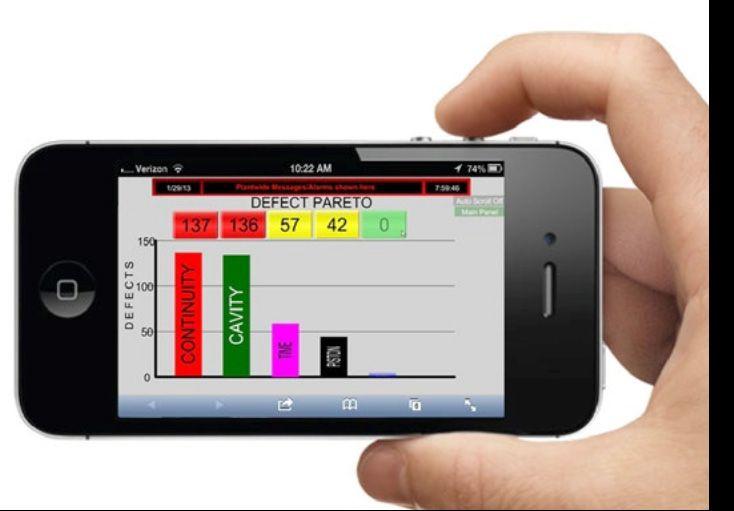
right where they were – exactly what was going wrong on line number three, for example. Fortunately, current tools allow capturing data and making it available as information in realtime. For example, Human Machine Interface (HMI) software and hardware lets facilities display data on the plant floor to inspire operators to up their production, or customize the data for other audiences such as a manager who may want to see only plant production data. Current HMI products let facilities create a private solution that lets them view their process data internally on their Intranet or externally on the Internet. The approach lets users see information, such as errors on a particular machine, on any browser. Plant personnel can see current production relative to target production, adjust settings on the machine remotely, and provide Key Performance Indicators (KPIs).
The capability to deliver information in real-time has significantly changed the whole data-collection model. The capacity to access data in real-time on the HMI screen or remotely on a mobile device, such as a smart phone or a tablet, gives personnel information that lets them make adjustments mid-shift. In other words, timely information is being delivered across standard web technologies, letting facilities adjust processes in real-time.
In a recent scenario, a typical manufacturer in the food and beverage industry became an early adopter of the Parker Factory Display (PFD) HMI product because it wanted to display production efficiencies on each production line. According to a plant engineer, the company first deployed PFDs on the worst-performing lines in the facility. The use of the large visual format has since made those lines among the most efficient in the plant. This is largely because employees know that their output is being measured, which encourages a friendly competitive spirit. Efficiency improvements were a direct result of data that the displays uncovered.
4. pUT F OOD S AFETY AT T h E F OREFRONT
Manufacturers must adhere to standards and constantly changing regulations that influence the design of the machinery used in food processing settings. For example, products such as pneumatic components must be made of corrosion-resistant material and they must use food grade lubricant. Because the food and beverage industry is evolving towards pharma-type processing environments, facilities must ensure their processes perform clean and sterile operations.
Recently, Safe Quality Foods (SQF) released a 7th edition amendment in section 11.5.7 stating
microorganisms can result in product recalls. Fortunately, the use of sterile air filters can eliminate this problem, thereby helping your plant garner quick returns on its ROI. For example, some filters provide a 6-log reduction of microbial contamination from compressed air and other gases, remove all viable organisms, are USDA/FSIS accepted for use in federally inspected meat and poultry plants, and comply with FDA regulations.
that compressed air used in the manufacturing process must be clean and present no risk to food safety. This came about because compressed air is often in direct or indirect contact with food products and impurities in the compressed air can contaminate the food product, resulting in change of colour and taste, and reduced shelf life. Worse yet, having food exposed to bacteria and other
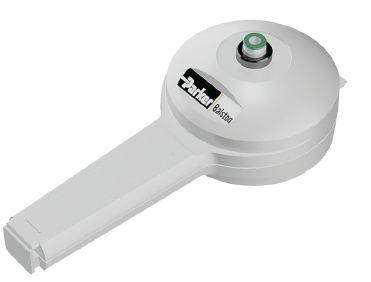
To be even further on the safety side, easyto-use compressed air microbial detection devices are available that let food safety personnel quickly test for microbial contamination in compressed air that comes into contact with food and food contact surfaces. Until now, the only devices capable of sampling compressed air systems for microbes were expensive, cumbersome and required lengthy sample times and extensive training. In contrast, the new device is portable, weighs less than one pound, and comes with connection tubing, shut off valve, pressure regulator and metering orifice. To obtain a sample, personnel need only plug the unit into the compressed air system, expose the petri dish for 20 seconds and then incubate the dish for 24 to 48 hours. The device assists users with identifying Hazard Analysis and Critical Control Point (HACCP) risks.
Microbial detection devices make quick work of testing for contamination.
The drying of electrical cabinets is also critical. The meat and dairy industry demands absolute cleanliness and sanitation in their food preparation areas, which are therefore washed down nightly. Every square inch of equipment is sprayed with hot (140 degrees F), high-pressure sanitizers. These sanitizers are caustic or acidic, depending on the food product. Much of the equipment is pneumatically operated, but the industry is increasingly moving to electronic controls that are housed in “watertight” NEMA 4x cabinets. However, these electrical cabinets eventually develop leaks, allowing moisture build up on electronic components. This leads to premature component failure, which results in a need for emergency services and causes production downtime. In this case, special cabinet dryers provide great ROI by purging the inside of the cabinets with very dry air that eliminates moisture. The cabinet air dryers are designed specifically for washdown areas and require no electricity, so they have low operating costs. An added benefit is that the positive pressure they produce also keeps dust out of cabinets.
5. CUlTIVATE hUMAN RESOURCES
According to the national management Issues survey conducted by Canadian Manufacturers & Exporters (CME) in spring 2012, nearly half of
• The Conference Board of Canada
H
E lp F ul links:
• Canadian Manufacturers & Exporters (CME)
• The Council of Canadian Academies
• The Food Processing Suppliers Association (FPSA)
• International Dairy Foods Association (IDFA)
• Canadian Food Inspection Agency (CFIA)
companies indicated they face labour shortages across a wide range of occupations, and the situation is expected to worsen over the next five years. Production and engineering were among the most affected disciplines.
U.S. Bureau of Labor Statistics Employment
Projections echo those concerns. The number of workers in food manufacturing is expected to decline from about 148,000 in 2012 to about 143,000 in 2022. That means companies in Canada and the U.S. will have to start developing their own talent through internship programs in partnerships with colleges and universities. To support that talent they’ll need to make best use of the engineering expertise of their technology vendors.
ThE ROAD AhEAD
Future developments will continue to include
products for automation that are flexible, efficient and innovative. Food and beverage manufacturers will increasingly need to ensure that their plants are more energy and talent efficient. Additionally, as the world goes increasingly digital, the capability to access production information anywhere will be a big competitive advantage. The quality and longevity of these technologies, supported by knowledgeable and skilled people, must go handin-hand. This will ultimately reduce maintenance costs and increase production – thereby boosting their ROI.
David Payton is assigned account manager – Automation, Parker Canada Division, Parker Hannifin Corporation. For more information, visit www.parker.com.
hOT OIl
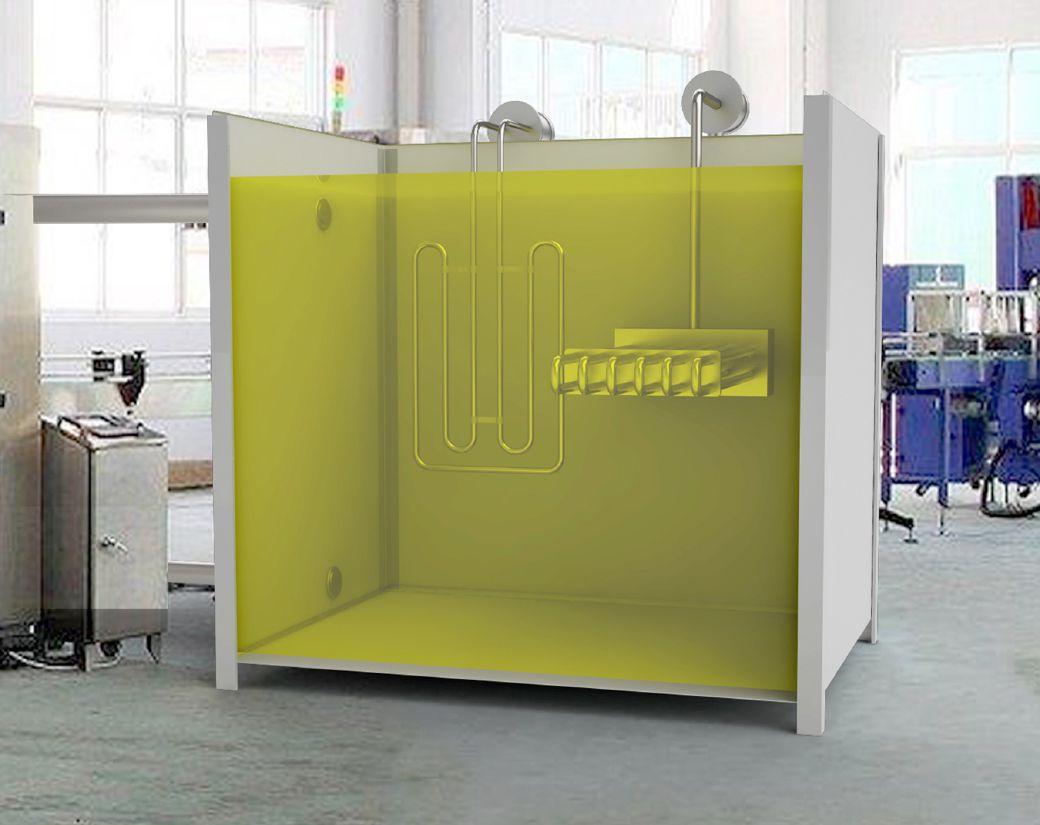
heating the oil appropriately will ensure proper flow and optimize processing.
By Ilan toleDano
Oil heaters keep the viscosity of the oil at the correct value.
When it comes to the processing involved in food industries, viscosity of liquids are of paramount importance. The proper texture of numerous liquids is dependent upon the right viscosity. This requires food manufacturing plants to utilize sophisticated techniques and methods to ensure correct viscosity of the fluids being processed.
For those plants that process vegetable oil, proper viscosity is crucial to keep the oil flowing through containers and pipes efficiently. Proper flow minimizes
the required maintenance, reduces downtime, and ensures optimal processing.
hEATING OF V EGETAB l E O I l
Food manufacturers that process vegetable oil typically use flanged heaters to heat up the oil to its ideal temperature. In order to make sure that the vegetable oil is of a correct viscosity and flows smoothly, oil heaters are employed that allow precise control of temperature. Besides selecting the ideal type of heater, a correct thermal housing box also needs to be selected. When electric heaters are used in
food processing industries, special measures have to be taken to maximize safety during chemical processes. NEMA 4 & NEMA 7 are the types of thermal enclosures utilized for the processing of vegetable oils.
NEMA 4 thermal enclosures provide added protection from accumulation of moisture. On the other hand, NEMA 7 thermal enclosures provide protection from any possible explosions as a result of high-volatile gases.
M AINTAINING C ORRECT V ISCOSITY
The sole purpose of using oil heaters
in the food processing industry is to keep the viscosity at the correct value. As mentioned previously, this requires precise temperature control of heaters. By controlling varying levels of heat input, the viscosity of a wide variety and type of oils can be maintained as required.
A thermocouple is often incorporated into these heaters, which switches the heater ON or OFF depending on the set temperature.
Digitally thermocouples provide a wide operating range of between 0 to 255 F or 55 F to 550 F.
In addition to that, the tanks and pipes have to be properly insulated to reduce heat loss, which would otherwise reduce the efficiency of the heating system. The loss of heat energy will set up a fluctuation in the oil’s viscosity levels, thereby upsetting the smooth flow of the vegetable oil. While a properly installed heater will bring the oil to its required viscosity for smooth flow, any loss of heat energy through improper insulation will lead to a reduction in the efficiency.
T Y p ES OF h EATERS USED FOR h EATING OI l
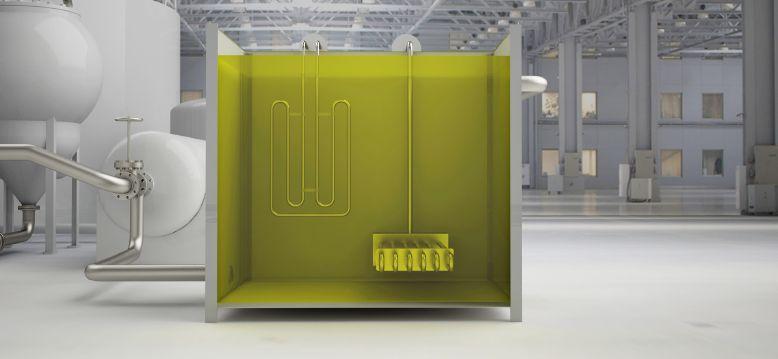
Industrial immersion heaters are the most commonly used heaters used in the food processing industry. The most frequently used types are circulation heaters and inline heaters. Nevertheless, there are some other types that are also used to do the job, and these include over-theside heaters, which are designed to eliminate the problems associated with installing the heater on the sides of a tank.
Over-the-side heaters can be conveniently installed from the top, with the heated parts near the bottom of the tank. Also, it is important to point out that steel or stainless steel are the preferred materials for the flange.
Ilan Toledano is the vice president of Marketing and Sales, North America, at Wattco – a maker of electric heating elements and controls. To learn more from Wattco, call (800) 492-8826 or visit www.wattco.com.
industrial immersion heaters are most commonly used in food processing.
AVOID CONTAMINATION
A quality filtration program’s role in machine reliability.
It makes economic sense: the better you maintain your equipment, the longer it will last. It’s always been true, but many companies are only recently seeing the light. They are now going to great lengths to protect their major industrial investments while keeping an eye on potential opportunities to improve efficiency.
Filtration is becoming more of an industry standard than ever before, as businesses recognize the benefits. Machines perform more reliably and for longer periods of time – not to mention the added benefit of energy efficiency resulting from better performance. The benefits of quality filtration and the important role it plays in overall maintenance of your facility’s equipment should not be underestimated.
C OMMERCIA l F I lTRATION IN A N UTS h E ll
Virtually all major machinery requires clean water or other fluids at some point – including various coolants, oil for lubrication and hydraulics in general. Because those fluids are rarely stationary, everything that comes in contact with them is at risk of contamination and corrosion. That’s where a filtration system comes in. The more you can reduce the amount of particles and contaminants present in fluids, the better you can protect the machinery itself.
That’s why a quality filtration system is crucial. Bag filters and cartridge filters are among the most common options for capturing harmful materials so they can be contained and removed. When properly installed and maintained, a
filtration system will give your machinery the purest environment in which to perform.
hO w C ONTAMINANTS C AN D AMAGE Y OUR Eq UI p MENT
It doesn’t have to happen all at once. In fact, long-term equipment failures are very common and can be the direct result of impure fluids. Below are ways that impurities can disrupt the flow of your machinery.
- Uncleanliness. General cleanliness is the cornerstone of a well-maintained machine. A machine exposed to contaminants and residues will inevitably stick, grind or malfunction. The cleaner the fluid that runs through your machine, the cleaner the machine itself will be and the better it will operate.
- Corrosion. Machines are subject to corrosion. As fluids make their way through your machinery, even microscopic contaminants can take a toll. Surface degradation is largely seen as one of the biggest factors in industrial equipment damage, with
general wear and abrasion being one cause and actual chemical corrosion being another. As moving sand can wear away at a rock surface over time, particles can slowly rip into your expensive machinery. The specific risks can range from bits of material breaking loose and causing damage elsewhere, or the machinery itself being eroded to the point of collapsing.
A company can end up hemorrhaging money over the long term if machines are not properly maintained. A filtration system is one of the most reliable ways to prevent damage before it happens
w h AT IS AT R IS k IN Y OUR M AC h INERY
As sturdy as a machine can seem, its inner workings are fragile. Every gear, piston and pump is at risk
of serious complications that can result from fluids that have not been properly filtered. Here are just a few components that can be damaged by impurities.
- Bearings. These require constant lubrication, and as such are at a high risk of abuse from solid particles. Left unchecked, solid particles in lubricating oil will wear away at the smooth surface of your bearings, eventually carving out notches that then will be more prone to damage. Only by getting ahead of that type of bearing corrosion can you prevent potentially significant malfunctions. A quality filtration system can help to ensure that lubricants are properly purified before being put to use.
- Gears. Similarly, gears must be regularly lubricated and kept free of any particles that will grind away surface matter or obstruct functionality.
- Pumps. Pumps are in constant motion. In addition to corrosion, pumps can become clogged by debris over time, significantly
impacting pressure. In this case, a machinery malfunction is only one risk. Even a functioning pump, if functioning only slightly below where it should, can result in longterm efficiency problems.
- Engines. It almost goes without saying that your machine’s engine must be kept pure. With bearings, pistons, valves, gears and cylinders all operating at once, exposure to contaminants in a fluid can be a showstopper.
ThE pOTENTIAl FOR COST-SAVINGS
At the end of the day, maintenance and reliability are what prevent your business from collapsing – literally and figuratively. Maintenance today is more than a wipe-down, a quick inspection and a correction after the fact. Companies are recognizing the potential cost of under-maintained equipment, and are being increasingly proactive. Filtration systems are just one way – albeit a significant way –to reduce the costs associated with unexpected repairs. Here are three
ways that a quality filtration system can help your bottom line.
- Fewer replacements and repairs. The costs associated with repairs and replacements builds. A company can end up hemorrhaging money over the long term if machines are not properly maintained. A filtration system is one of the most reliable ways to prevent damage before it happens, significantly reducing the need for regular part replacements that result from wear and erosion.
- Fewer malfunctions. Even if you don’t end up having to replace a part or send in the repairman, a machine malfunction disrupts workflow and eats into your company’s profits. Filtration systems will catch debris before it can clog a filter or gum up an engine.
- Better efficiency. Any car owner can tell you that a well-lubed machine gets better mileage. The same is true for industrial machinery. Resistance of any kind, especially in fluids, will slow your machine and result in expensive inefficiencies. Then there’s the pressure factor. When your equipment relies on consistent pressure levels, a quality filtration system is essential to maintain the flow. This is where quality comes in, because a poorly functioning filtration will make a pressure problem worse – negating any potential efficiencies.
Ultimately, your machinery is one of the biggest investments you will make as a business, and a quality filtration system is one way to protect it. The steps you take now will spare you from huge unexpected expenses, as well as those incremental ones that will affect your business over the long term.
Jeff Maree is the Product Specialist at Eaton Filtration Online (www. eatonfiltrationonline.com), a leading online supplier of Eaton filtration products for a wide range of liquid handling and filtration needs. Jeff assists plant managers and makes sure they are getting the correct product to keep their machines in working orders.
Excellence in Manufacturing Consortium (EMC) has been actively engaging manufacturers in peer networking forums, best practice sharing and plant tour opportunities for almost 30 years. When it comes to the concept of networking, Dictionary.com has a wonderful definition that simply states it’s a “supportive system of sharing information and services among individuals and groups having a common interest.” EMC’s interest has always been to enable growth and development in manufacturing through peer-to-peer learning experiences and value-added services.
Without a doubt, many things have changed since the mid-1980s when the first original 18 manufacturers met in Owen Sound, Ont. The need at
that time was training related and it would be the beginning of a journey that would unfold 1,000 other things that simple networking (a rather novel idea at the time, in an age where sharing was not common) would ultimately lend to building better teams, products and opportunities. Companies have come a long way in appreciating the value that sharing, learning, touring and collaboration can bring. Connecting with others who are on similar journeys or dealing with common challenges or discussing new systems and processes can truly enhance business competitiveness, engage employees and instill company pride.
With almost 60 active consortiums and thousands of members across Canada, EMC continues to embody and promote the principles of networking through every initiative
undertaken. Our team remains closely connected to industry and is always willing to ensure topics of greatest need and interest are discussed at Food & Beverage Sector Specific Events or SIG (Strategic Interest Group) roundtable networking events across the provinces, and that connections are made when needed with those facing similar challenges.
Long-standing programs such as EMC’s “Member Needs Help” provides networking on a different level from a growing database of over 2,000 topics full of policies, procedures, ideas, thoughts and perspectives. This all began many years ago by sourcing peer solutions to help resolve a particular member challenge – thousands of questions later, this program continues to demonstrate the true power of collaboration!
Beyond our walls, EMC works closely with a variety of community partners including various levels of Government, Economic Development, Chambers of Commerce, Sectoral groups, and organizations who support business growth within the manufacturing sector across Canada. These relationships offer our organization the opportunity to stay abreast of industry issues through meetings, conference participation, collaborative projects, newsletters, special introductions and so forth. All of this in turn enables EMC to act as a conduit, if you will, connecting manufacturers to those who can best support their individual or larger industry needs. From a networking standpoint, it is every bit as important for those who lend assistance or provide services to
industry to also look at means to collaborate, to learn and to stay abreast of the latest information relevant to their business.
In the spirit of peer networking and roundtable best practice sharing, it is definitely safe to say that 2015 has already been a very busy year for those involved in the food sector and without a doubt it’s sure to remain that way until the end! We have had an interesting array of both Regional and GF2 food sector specific sessions which featured:
• A special regional session hosted by Lambton Conveyor involving a “Safety Walk Interchange” and discussion on keeping Environmental Safety Programs fresh and exciting;
• Guest speakers on Mental Health and Stress were welcomed by attendees at Hobart Food Equipment;
• Kisko Products hosted a dynamic best practices event and tour on implementing technology on the plant floor in an effort to eliminate paper use;
• Miller Thomson LLP joined us for a wonderful Legislative Update at the CRIFPT (Craig Richardson Institute of Food Processing Technology) followed by a guided tour of our host facility and pilot plant;
• OFEX (Ontario Food Exports) and COEF (Canada Ontario Export Forum) joined us at Kerry Canada, at our Food Export Workshop; and finally,
• At the request of several of our members, Hartmann Canada will be hosting an event in the latter part of March focusing on Maintenance Issues.
As spring unfolds, we have two wonderful GF2 funded Food, Beverage and Bio Sector Initiative Networking Events taking place. These networking events are open to all Food and Beverage sector companies, including those directly supplying manufactured product to the industry.
with almost 60 active consortiums and thousands of members across Canada, EMC continues to embody and promote the principles of networking through every initiative undertaken.
Sleeman Breweries Ltd. will be hosting a special event on Food Safety and Traceability on April 2, 2015. The team at Sleeman will be sharing their journey around adopting food safety and traceability initiatives into their environment and, in the spirit of true networking, they are looking forward to feedback on their processes to help streamline or improve the systems they now have in place. We’ll be learning about some of those “challenging” areas and brainstorming solutions.
Our next event will explore Energy Management and Sustainability Best Practices with Beau’s Brewery and Provision Coalition. HFS – Healthcare Food Services in Ottawa has kindly offered to host this special session on June 11, 2015. Beau’s is a proud environmental steward and leader in sustainable craft brewing. In 2014 Beau’s became the first craft brewery in Canada to choose 100 per cent green
energy for both electricity and natural gas needs. Provision is a coalition of 11 member associations representing the sustainability interests of food and beverage manufacturing and input supply sectors across Canada. Providing valuable resources, programming and advocacy, Provision is the industry’s leading voice on sustainability.
Later in the year we will be exploring Environmental Issues and Human Resource Management related topics as well as another wonderful Food Export Workshop. Please watch our Food and Beverage Calendar on our website at www.emccanada. org and subscribe to our Food Sector News to stay abreast of upcoming activity.
Complementing these great peer-networking opportunities, EMC, through GF2 Funding, is also pleased to provide a series of Productivity Training courses across Ontario embracing lean and lean methodologies. These Workshops are available to all food, beverage, bio and ag sector manufacturers and those who directly support the industry. These are NO COST events that include the Workshop, manual and materials!
Topics range from:
- Introduction to Lean Productivity (Lean 101)
- Introduction to Lean Management Systems
- Productivity Action Plan Development
- Introduction to Value Stream Mapping
- Leadership and Culture for Productivity Improvement
- Productivity Lean Tools
Networking can take you and your team on a remarkable journey – whether through peer experiences, community partnerships, supplier or customer relationships! On behalf of our members and hosts, we invite you to join us at an upcoming best practice session, plant tour or workshop.
For more information on the Excellence in Manufacturing Consortium and the Food Sector Initiative, please feel free to touch base with Bren de Leeuw, Director - Field Operations Canada and EMC Food, Beverage and Bio Sector Program (bdeleeuw@emccanada.org) anytime!
02-Apr-15
Sleeman Breweries Guelph, ON
11-Jun-15
24-Sep-15
Beau’s Brewery Hosted by HFS –Healthcare Food Services Ottawa, ON
Bonduelle North America Strathroy and Tecumseh, ON
Continuous Improvement“Building a Culture of Food Safety and Traceability” Best Practices
Energy Management
“The Road to Net Zero Waste – Sustainability, Energy Management, Culture Development and Lean Opportunities” Best Practices
Energy Management
“The Road to Net Zero Waste – Sustainability, Energy Management, Culture Development and Lean Opportunities” Best Practices
22-Oct-15
10-Nov-15
Simcoe Unilever Ice Cream Simcoe, ON Environmental Issues