FOOD BEVERAGE




EMC is launching Year Two of the successful Lean Management System Training and Productivity Cluster Initiative, supported by FedNor, a government service that provides economic development for Northern Ontario.
Building on the success of our first round participants, this is an opportunity for firms to provide their industry leaders with enhanced productivity system skills training and support. Participants will learn to implement, manage, measure and adjust their own company’s strategic lean planning, while at the same time achieving positive ROI impact while they learn.
Whether you are interested in training additional managers/supervisors within your organization or are new to the program, now is the time to register!
Don’t miss this chance to enrol.
Module 1 for 2016 is scheduled for:
Sault Ste. Marie - January 19, 2016 Sudbury - January 20, 2016 north Bay - January 21, 2016
Download the complete program details, or for more information, contact Kevin Lenko at 289-442-0871 or klenko@emccanada.org.
of December 2015
GroUP PUblISHer John MacPherson jmacpherson@annexweb.com (905) 713-4335
ACCoUNT MANAGer Peter Helston phelston@annexweb.com (905) 726-4666
DIreCTor oF SoUl/Coo Sue Fredericks
eDITor
rehana begg rbegg@annexweb.com (905) 726-4655
ArT DIreCTor Svetlana Avrutin savrutin@annexweb.com
ACCoUNT CoorDINATor Kathryn Nyenhuis knyenhuis@annexweb.com (905) 713-4334
CIrCUlATIoN Urszula Grzyb ugrzybn@annexbizmedia.com (519) 376-0470 (866) 323-4362
PreSIDeNT & GeNerAl MANAGer Al Diggins • adiggins@emccanada.org
DIreCTor oF STrATeGIC PlANNING & CoMMUNICATIoNS Scott McNeil-Smith • smcneilsmith@emccanada.org
SeNIor CoMMUNITY DeVeloPMeNT MANAGer bren de leeuw • bdeleeuw@emccanada.org
The grades reflected in The Conference Board of Canada’s Annual Report Card on Food , underscore the need for change in key areas and remind us why benchmarking is critical to the success of the entire food supply and value chain. The report card is an assessment of Canada’s national food performance compared to 16 leading OECD countries and measures 43 food performance metrics tied to the five areas of focus outlined in the Canadian Food Strategy, including industry prosperity, healthy food, food safety, food security and environmental sustainability.
While Canada earned an “A” grade for food safety, and a “B” for food security and healthy foods and diets, it demonstrated the need for significant improvement when it comes to industry prosperity (“B-”) and environmental sustainability (“C+”). Food industry performance metrics are necessary for egging on stakeholders and to spur action for sustainable practices. An “A” grade in any category is not a license for complacency. For instance, The Conference Board says that work is needed to improve chemical risks in food consumption, as well as traceability and radionuclide standards. Similarly, a “B” grade for food security points to a distressing
Food industry performance metrics are necessary for egging on stakeholders and to spur action for sustainable practices.
An “A” grade in any category is not a
license for complacency.
reality that while overall food availability is not at issue, access to safe, nutritious and affordable food is a concern. The report highlights a concern that at least four million Canadians are affected by food insecurity due to economic constraints, natural hazards such as floods and droughts, rising animal feed and other food costs.
Canada’s “C+” grade on environmental sustainability is alarming. It takes into consideration impacts such as food waste, water withdrawals, air quality, soil health and seafood sustainability, but also considers rising rates of greenhouse gas and ammonia emissions. (Canada ranks last in these last two measures.)
Any call to action from these rankings is undoubtedly to spur stakeholders to act, and to

make better management and program decisions that foster the improvement of our production and consumption choices. Every plant has the means to make a contribution in some way. But it takes effort.
As a first step, look at what others are doing well. Then, emulate this by overhauling existing practices and finding sustainable efficiencies (read “Souped Up,” page 6) and become innovative by collaborating with industry partners to solve common problems (read “Full Steam Ahead,” page 14).
While you’re at it, ensure that the change effected is not only good for your plant, but that it’s also for the good of the planet.
Rehana Begg Editor, Plant Engineering & Maintenance rbegg@annexweb.com
www.pem-mag.com


ability


Adaptability




Dependability


Accountability


Commandability


Maintainability

Find more abilities
Protect ability at AddMoreAbility.com
At ContiTech, we’re taking technology next level, with over 2,000 exclusive rubber compounds designed to exceed the requirements of distilleries and food processing manufacturers around the globe. As an innovator of rubber and plastic engineering, we are first to market with products using Microban®, and o er best-in-class innovations, services and technologies that aid in the creation of custom solutions that meet the unique needs of our customers in the food and beverage industries. More ability is here with ContiTech.



How implementing a heat and power cogeneration solution unlocks savings.
By ChrIs Graff
The Campbell Company’s plant in the west-end of Toronto opened in August 1931 and produces more than 12.5 million cases of soup annually. Two-thirds of Campbell Canada’s ingredients (fresh carrots, potatoes and mushrooms) come from within three hours’ drive of the plant and is the first Campbell Plant in North America producing an aseptic carton product.
Douglas Dittburner, chief engineer and power services manager at the Campbell Company of Canada presented his company’s Combined
Heat and Power (CHP) journey at a recent Emerson CHP symposium. Along the way, explains Dittburner, the company has been able to take advantage of government incentives to implement a CHP solution that will help facilitate cost savings.
F&B: Can you describe Campbell’s culture around sustainability?
D ITTB u RNER : Here at Campbell’s we have a laser-focused vision to drive corporate sustainability. We intend to cut our environmental footprint in half as measured by
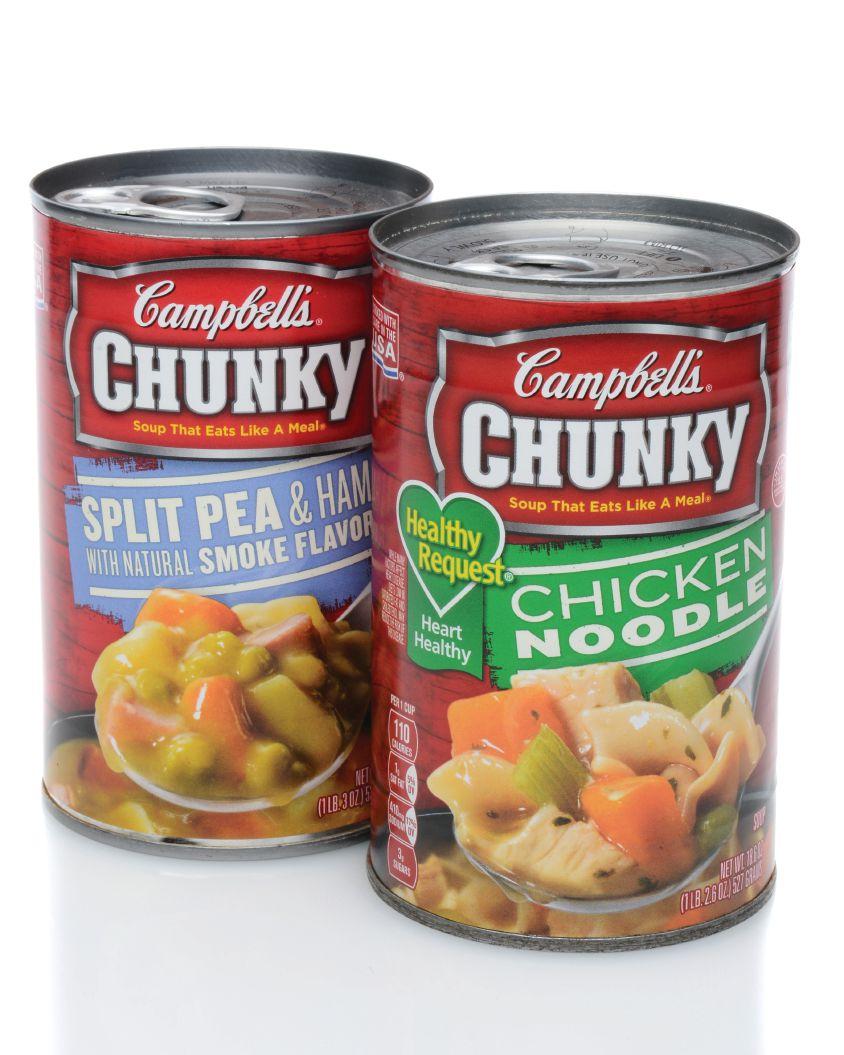
The rationale for Campbell’s switching to a CHP system includes productivity and cost savings in terms of “conversion cost per case” of soup.
water use and greenhouse gas (GHG) emissions per tonne of product produced; and reduce energy use by 35 per cent per tonne of product produced and source 40 per cent of the energy used by the company from renewable or alternative energy sources by 2020. The vision extends to recycle 95 per cent of waste generated (on a global basis), deliver 100 per cent of global packaging from sustainable materials (renewable, recyclable or from recycled content), and reduce water use by 20 per cent and reduce the carbon footprint for tomatoes and vegetables by 20 per cent.
Internally, we have an “Ideas Database” – employees are encouraged to suggest environmentally positive initiatives to help Campbell’s achieve our vision. Currently the database has over 219 ideas. We’ve retrofitted lights, installed solar panels, minimized compressed process air leaks, among many other opportunities. As you guessed: I recommended Combined Heat and Power cogeneration.
F&B: How has Campbell’s CHP journey unfolded?
D ITTB u RNER : Campbell’s journey began almost 20 years ago. The first time we looked at CHP, it was structured as a public-private partnership, but ultimately did not go through due to the high level of complexity involved. The second time, a boiler change consumed a lot of the available capital. The third time was the charm! The benefits were undeniable; the economics looked good and the environmental benefits aligned with our corporate mission. Our direct competitors include Campbell’s sister plants, co-packagers, and competing soup companies; a CHP system makes us more competitive as a manufacturer in Ontario in terms of “conversion cost per case” of soup. This large productivity and cost savings keeps this location more competitive in the years to come. Other benefits include improved plant reliability as the CHP system produce the required steam, and the boiler can

remain as a redundant backup.
Campbell’s was not alone in this undertaking. We retained the help of CEM Engineering in St. Catharines, Ont., who performed the detailed engineering study, and is guiding us through procurement and project execution.
F&B: How has the availability of government incentives impacted Campbell’s?
D ITTB u RNER : Our modest CHP system is expected to start up in December 2015. This will produce the majority of the facility’s electricity and steam, and save us a material amount of money annually. The government incentives allowed Campbell’s to purchase a new, and larger, turbine. Without the funding, we would have purchased a smaller, secondhand unit that would produce noticeably less savings.
F&B: w hat advice do you have for other end-users considering a CHP system?
D ITTB u RNER : The most critical step is to ensure that you have the right buy-in from all stakeholders across the company – this project would not have gone through without the full support of management and the senior executive team at World Headquarters. We are very fortunate to have a culture that proactively seeks to reduce our environmental footprint, and team members who are equally engaged. As you put together your business case, ensure you have prepared for all questions that could derail your plan, and do a worst-case scenario analysis (such as building out best and worst case for fuel costs and electrical costs for 20+ years). Then ask: does the proposal still hold? Getting in touch with your local electrical distribution company (LDC) and natural gas provider is an important action item. If you plan to operate in an anti-islanding mode (that is, you feed power to
the grid, and/or receive power to supplement your CHP system), you need to work with the LDC to determine the fault capacity and tolerance in your local grid – the LDC reserves the right to limit or restrict your interconnection capacity if it poses any risk to the existing grid or the LDC’s existing customers. Speak with your gas utility to ensure there is an adequate supply, and pressure, of gas available to your facility in anticipation of your future demand. Campbell’s CHP system incorporates a turbine, so we installed an Emerson Fuel Gas Booster to feed pressurized natural gas into the turbine to generate power.
F&B: Closing Thoughts?
D ITTB u RNER : It’s always great to meet your new president [Ana Dominguez] for the first time and be able to hand her a million-dollar cheque. For more information, visit http:// www.emerson.com/en-us.


Faster — Our range of modular solutions guarantees time-sensitive planning, assembly, conversion and commissioning.
Better — We are quick to translate market trends into innovative, best-in-class products.
Everywhere — With a global presence, including 11 production facilities on 3 continents, wherever you are located, we’re nearby and easy to find!
Learn more about our remarkable protection at www.rittal.ca
necessary to maximize overall equipment effectiveness.
The need to reduce costs and optimize productivity in supply chains has never been greater for food and beverage manufacturers. While manufacturing once depended on line workers executing transferable or non-skilled tasks, a vast range of industries currently rely on automation and computerization. Consequently, technical employees hold greater control over assembly assets and make more decisions concerning how to deploy, manage and maintain equipment. Food and beverage manufacturers require multi-skilled technical employees who can adjust, repair and troubleshoot various types of equipment. Finding and retaining highly talented technical staff is a constant burden for plant leaders, maintenance managers and HR.
In theory, manufacturing executives recognize the value of investing in training,
but they often lack incentive to do so because of pressure to deliver immediate profits. Training employees is an upfront cost; meanwhile, the return on training is mid- to long-term. As a result, executives tend to postpone approving potential training programs.
One solution for hiring and retaining highly technical staff is to identify employees with high-performance potential prior to hiring. Major food & beverage manufacturers are now applying this strategy. Technical employees with high performance potential bring effectiveness on two fronts: they bring productivity gains and reduce downtime of equipment, but, moreover, their natural logic and instinct makes them faster learners, an ability that in turn reduces company costs involving investment in development and training programs. Having a human capital plan for hiring high performance
Food and beverage sectors are turning to job simulation testing to help make better hiring decisions. Assessments confirm that employees are equipped for the production floor.
technical employees meets the needs of three sectors in a company. HR departments like to have standardized hiring processes; maintenance and operation leaders benefit from improvements on the production floor; and the finance and CFO suite embrace hiring top employees due to the impact it has on the bottom line.
Mechanical and technical skills, manual dexterity, the repair and installation of equipment, and an understanding of mechanical and electrical principles are the most common skills required for maintenance and asset performance. Accordingly, many companies have strengthened their hiring plans by requiring specific licenses, written assessment tests, minimum years of experience, and tough interviews with pertinent maintenance leaders. However, with all these important steps in place, many companies still receive a “nasty surprise”: they are disappointed with the performance of technical employees once they are
on the production floor.
Relying on an impressive resume, work history, and academic background is not enough. Astute employers realize that they must go beyond these basic hiring requirements and are now searching for employees with troubleshooting skills, strong spatial perception and an understanding of the interactions between equipment parts. These individuals possess a natural technical aptitude, something that written and other theoretical assessments simply cannot evaluate.
Jerry Dover, director of engineering at Give & Go Prepared Foods, Etobicoke, Ont., describes what they have found over the years: “Due to a variety of reasons, 95 per cent of our skilled trades hiring in the last 10 years have been people trained in other countries.
Despite the good work done by regulators to assess the equivalency of their skills, we have discovered that resumes and interviews are not an
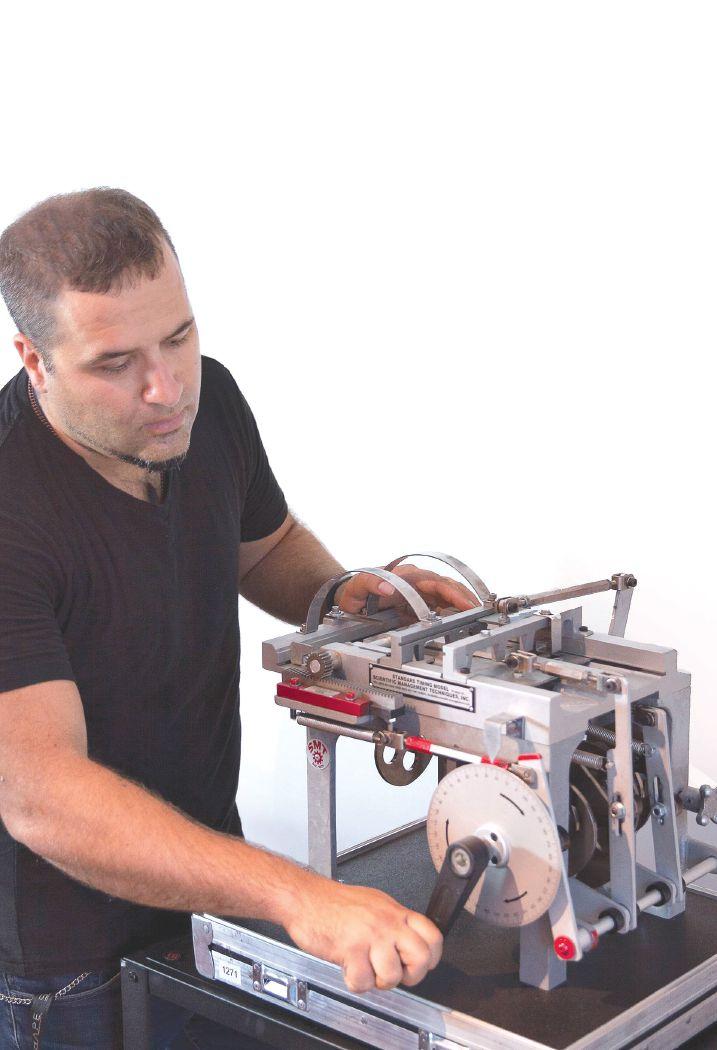
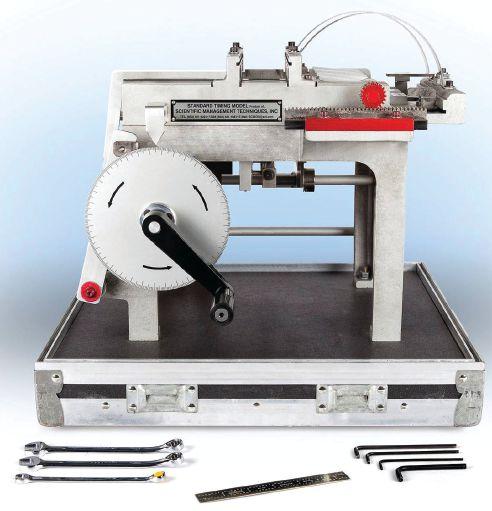
OptiTest simulators are used to evaluate employee performance.
accurate assessment of skilled workers’ abilities. We are a high-volume manufacturer and have invested significant capital in automated production lines. As a result, we need fewer traditional electricians or millwright mechanics to run wire and fabricate parts. We have a greater need for electro-mechanical
troubleshooters who can follow a logical thought process to diagnose and quickly correct line stoppages.”
Manufacturers cannot benefit from employees who are capable in theory, book smart, or experts at writing tests, but who cannot perform properly in the workplace. Competitive food and beverage manufacturers have realized the importance of hiring technical employees who “have it all.”
OptiTest is a testing service used to administer technical assessments on simulators to evaluate the performance potential of technical employees including operators, adjusters, mechanics, millwrights, maintenance, electricians, electro-technicians and supervisors. Assessments are based on the most universally used, the most accurate and the most predictive of the technical performance potential of production and maintenance job candidates. Each assessment takes about 90
minutes to complete and identifies skills such as troubleshooting ability, spatial perception, quality differentiation, hand-eye co-ordination, qualitative and quantitative reasoning ability, the understanding of different mechanical components, and the understanding of mechanical stroke, timing and position.
“The candidates and employees are assessed on simulators that replicate conditions found in manufacturing facilities,” says Philippe Mercure, general manager at OptiTest, Toronto. “During a series of standardized and timed tasks, they have to resolve malfunctions that our certified testing administrators have included in the simulators in the most logical way and shortest time possible. This hands-on assessment identifies the skills required to operate, maintain and troubleshoot a modern manufacturing facility.” In addition, the assessments can be used to evaluate incumbents for internal advancement and to benchmark the skill sets of their existing workforce. Through reports from the assessments, organizations can,
for instance, mutate the workforce on new assembly line equipment or determine which incumbent needs specific training. Assessments are designed to provide data for making smart hiring decisions that are backed up by proven success factors.
Before OptiTest testing was used at Canadian snacks food manufacturer
Dare Foods, 50 per cent of selected candidates based on length of service for key positions on production lines were not able to succeed in their apprenticeships for those positions and were relegated to their previous positions,” says Pierre-Philippe Plante, production manager at Dare Foods. “Today, in order to acquire those key positions, the candidates must pass the OptiTest testing at various performance percentiles, according to the position complexities to be followed by training. Over the last four years, only one candidate who passed the tests was returned to his previous job position because he failed his apprenticeship. Moreover, all our reference operators have successfully passed their test, which accurately reflects what is put into practice.”

Jerry Dover at Give & Go Prepared Foods says that the assessment service has helped to identify employees who lack the requisite skills. “OptiTest’s testing methods offer us the perfect combination of assessing both physical trades skills (use of tools) and thinking skills (troubleshooting approach). By testing potential hires, we were able to avoid hiring people with impressive-looking ‘paper credentials.’ The testing also led us to hire someone whom we now consider to be our best electrical and controls
technician. The impact of this one good hire, and cost avoidance of the others, has easily paid for the testing. Furthermore, within our existing skilled labour pool, using the OptiTest results allowed us to move from a time-based pay structure, to an incentive-based system where trades people are compensated for their demonstrated skill level. As we increasingly automate our manufacturing lines, I can see the OptiTest assessments being used to establish the minimum acceptable skill level to be allowed to hold a line maintenance position.”
More than 100 manufacturers in Quebec currently use OptiTest on a regular basis to assist with their assessment of future employees and incumbents. The demand for technical assessments is growing, says Mercure, and the system is now being introduced into the Ontario market.
This article was submitted by OptiTest. For more information, contact Philippe Mercure at philippe.mercure@optitest. ca or visit www.optitest.ca.

Equipment manufacturers co-develop products to eliminate ongoing HACCP issues such as reducing the risk of contamination.
Responsibility for ensuring the safety of processed foods ultimately rests with food processors. HACCP (Hazard Analysis and Critical Control Point) principles state that food processors must follow a systematic way of identifying food safety hazards and make sure that they are being controlled day-in, day-out.
While this principle has been willingly accepted and practiced by food processors, one of the primary challenges is in maintaining sanitary secondary operations in the production line, after a protein (beef, poultry or seafood) is cooked. For example, slicing, slitting, washing, conveying and packaging.
When a protein leaves an oven it is free of pathogen and bacteria –the processing of high-temperature cooking takes care of that. However, risks of contamination begin to rise after the product begins to cool or, in some cases, after it has been chilled.
Many processing lines run for 16 consecutive hours, which creates an opportunity for bacteria growth throughout the day. Unless secondary equipment is sanitized properly at necessary intervals, pathogens and other bacteria can build up on this equipment and contaminate product as it moves down the line. Pathogens can lead to final products that present a public health risk and bacteria can dramatically reduce shelf life.
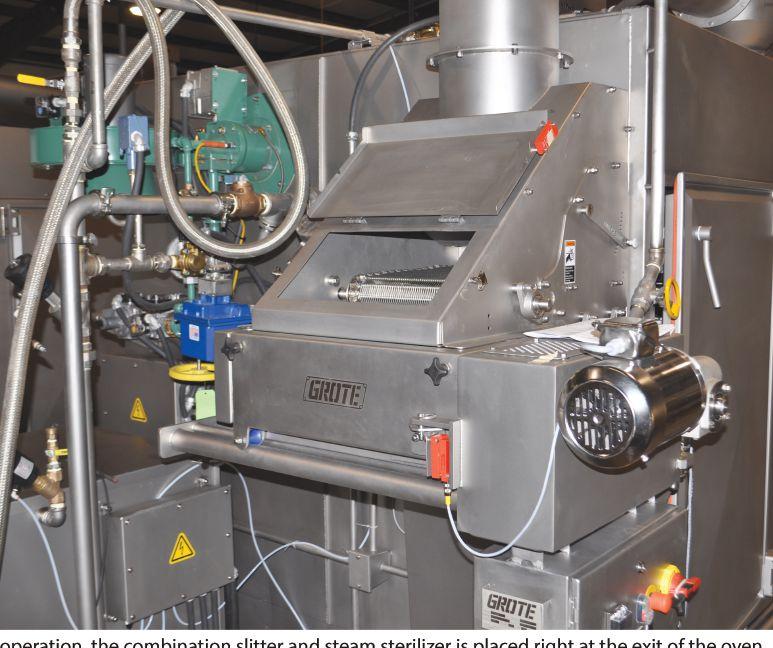
Pathogens and bacteria will build up on processing lines unless they are properly sanitized at regular intervals.
In meeting these food safety challenges post cooking, it is critical to understand the relationship between food processing equipment manufacturers and food processors.
As a global manufacturer of thermal food processing equipment, customers look to Unitherm Food Systems (unithermfoodsystems. com) for solutions to all kinds of thermal processing challenges including grilling, roasting, cooking, pasteurizing, and chilling. Sometimes those solutions include collaboration with manufacturers of other specialized equipment.
Unitherm recently faced such a challenge when founder and chairman David Howard mapped out an innovative solution that could prevent the growth of pathogens and bacteria that occurs on slitting equipment used to cut cooked beef and chicken strips for products such as fajitas. The issue of potential contamination post-cooking first came to Howard’s attention three years earlier when he was invited, as an expert
in food safety, to identify and help solve an E. coli problem in a new processing plant.
While he was there, he noted that the critical exposure time that occurred to proteins after the cooking process and through to the final packaging potentially created some serious food safety issues. There were surfaces where bacteria could grow throughout the day, and the meat travelled over those surfaces.

After the cooking process and before final packaging, proteins may be exposed to surfaces where bacteria could grow. This leads to food safety issues.
“At the point where the meat exits the oven it is pathogen-free,” explains Howard. “Then it goes through the slitting blades, and all of the product becomes intermingled. If there is a pathogen or high bacteria count present on the blades, every single piece of meat that goes through there could have the opportunity to be contaminated.”
To solve the problem, Howard envisioned a system in which the meat would come out of the oven and fall directly in the meat slitters
and that this and other items (such as the conveyor belt) could be designed to be self-sterilizing during the production process. At the end of that line, the product could then be immediately packaged.
The concept was unique because it used steam instead of conventional chemical cleaning techniques.
The conventional method to prevent bacteria growth is to clean the equipment with appropriate
chemicals. This method calls for frequent checking of the bacterial load by swabbing the equipment and measuring the growth, then treating it with chemicals as required. Pathogens are another matter. Pathogens on surfaces that come in contact with the product can grow a biofilm that can mutate and become resistant to chemicals.
Steam, on the other hand, utilizes energy – not chemicals – to instantaneously kill pathogens and/or bacteria.
“Steam is superior to chemical cleaning because pathogens can mutate and become resistant to chemicals,” Howard says. “Because the slitter is placed at the exit of the oven and does not touch any other surface it remains pathogen-free. At that point you could proceed directly to final packaging.”
Trouble is that although Unitherm offers a variety of thermal processing, chilling, pasteurizing, and even hygiene equipment, they are not in
the business of manufacturing slitters or supplying conveyors.
“You know there’s a solution that will make the process safer, but you can’t necessarily just do it because it is outside of the scope of what your company offers, says Howard. ”
To realize his vision of a self-sterilizing slicer/slitter using steam, Howard needed to find a manufacturer willing to enter a partnership in developing the new concept.
Howard contacted Bob Grote of the Grote Company, whom he has known for 30 years. The Grote Company is a leader in automated slitter/ slicer/applicator systems for food processors.
Grote was open to the idea of a strategic alliance. “A few years ago I recognized that we had to begin doing business a little differently to truly optimize what we have to offer our customers,” explains Bob Grote, vice president. “Not having expertise in every field that is associated with our company, I came to the conclusion that strategic alignments would
be very beneficial to not only us but to the food processors.”
The design concept Howard outlined, which is now patent pending, was to build a machine that could be attached to the end of Unitherm’s spiral ovens. The slitter could be used inline and then rotated out of the way when not required. Based on the actual bacterial counts measured, steam would then be applied to the blades at specific time intervals to sterilize them.
Grote engineers provided the initial equipment design within only a few weeks. Unitherm then made additional suggestions and tweaks so the equipment would meet specific production requirements.
“We make a variety of sliders and slitters, but haven’t incorporated steam sterilization into any of our equipment before,” Grote says. “The trick with this slitter was to modify it to accommodate and trap the steam and add a jacket or shroud around it to contain the steam. We also had to make adjustments to the materials we
used in the slitter itself to allow for the higher operating temperatures.”
In operation, the combination slitter and steam sterilizer is placed right at the exit of the oven. A steam shroud encloses the slitter, and steam is pulsed into the shroud in order to maintain the desired temperature range. The enclosed steam keeps the temperature at a level that will kill any pathogens or bacteria.
Grote says that this self-sterilizing slitting system still requires periodic cleaning, but those intervals will result in much less downtime than is normally required for conventional chemical sterilization.
By agreement, Unitherm can sell the product for use on its spiral ovens and Grote is free to sell the product on Unitherm or any other oven manufacturer’s equipment.
According to Howard, Unitherm already has several self-sterilizing slitters in operation at several food processing plants. He says that partnerships with companies such as Grote will continue to enable the offering of innovative products to the marketplace.
Howard is already working on another improvement related to packaging of the beef and chicken fajita meat. One option that would eliminate any additional contamination in the post-cooking and slicing process would be to have it drop into a bag that is immediately vacuumsealed. This hot-fill technique would extend the product’s shelf life and eliminate the need to freeze it. Only chilling would be required. Most food safety issues that exist in food processing have an engineering solution,” says Howard. “And if that solution requires expertise that is outside of a manufacturer’s business model or product offerings, then by entering into a strategic relationship with the right partner, the solution is attainable. That stimulates revenue for those involved in the solution, but more importantly benefits many food processors as well.”
This is an edited version of an article submitted by Unitherm Food Systems. For more information, visit www. unithermfoodsystems.com or email unitherm@unithermfoodsystems.com.

As the end of the year approaches, it has to be one of the most favoured times of our business cycles. Favoured because it affords us the opportunity to consider the growth of our organizations. Where has our journey brought us to date, what kind of goals have we accomplished, and what do we need to do to improve?
EMC (Excellence In Manufacturing Consortium) is all about “the journey” – helping companies where we can find success in their paths to create sought-after products, to develop and foster positive cultures within their businesses, to embrace lean methodologies, to enhance partnerships and supply chain management, to look at ways to make Canada a better place through responsible resource, energy and sustainability management. There are many more elements
to our grassroots organization but the fundamental piece is sharing experiences, talking about our journeys – the good and not so good.
After decades of connecting with manufacturers, we understand that everything we undertake is to enable business growth. Whether we are exploring the concept of product development, examining new markets, finding and hiring people, looking at innovative technologies, or adapting more efficient and effective means of production, it’s about growth.
Taking part in networking activity allows us to broaden our perspectives and as the old adage goes, to “look beyond our four walls.” When I sat down to examine the topics of discussion over the past year – Food Safety and Traceability, Performance Management, Fostering Positive Cultures, Connecting with Community
Partners and Business Leaders, Exploring New Markets, Formulating Plans for Growth, Managing Energy and Embracing Sustainability Initiatives – there was certainly considerable pride in knowing that processors across the province are reaching out and connecting on all types of issues that are ultimately helping to aid competitiveness in all aspects of our businesses and subsequently ensuring Canadian products are sourced the world over.
What does 2016 look like? What can we do together to continue improvement, discussion, networking, learning and growth? We can tell you already that we will be further exploring the concept of energy management and sustainability practices. We will be looking at how to get our people motivated and enthused about tackling projects in this regard.
We will be welcoming best practice presentations that examine elements of labour productivity, hiring and retention issues, leadership and culture development and process elements such as lean implementation. We are also interested in exploring elements of Supply Chain Management, Technology, and Food Safety Certifications. With interest from communities across the province, more sessions on “Business Growth” and “Exporting” are planned. Highlighting our academic institutions, such as IFPT in Cambridge, Ont., is also very important to us.
What does 2016 look like? It looks absolutely dynamic! If you have some ideas that you would like to share or if you are interested in hosting an upcoming session, we would welcome hearing from you.
The final GF2 EMC Food Sector
Networking Events for 2015 are listed below, together with two excellent summit opportunities. A Food Sector Calendar is also available on the EMC website (www.emccanada. org), which has the latest in event information.
With the New Year in mind, please watch as well for our free 2016 EMC GF2 Productivity Workshops featuring introductory courses on Lean Productivity (Lean 101), Lean Management Systems, Value Stream Mapping and Productivity/Lean Tools and Leadership and Culture for Productivity Improvement.
03-Nov-15
For more information on the Excellence in Manufacturing Consortium and the Food Sector Initiative, please feel free to touch base with Bren de Leeuw, Director – Field Operations Canada and EMC Food, Beverage and Bio Sector Program (bdeleeuw@emccanada.org) anytime.
05-Nov-15
Food for Tots Markham, ON Change Management – Developing a Positive Culture
10-Nov-15
NSF-GFTC State of the Industry 2015 Unique perspectives and advice for increased prosperity throughout the Canadian food and beverage processing, supply and service industry
Chapman’s Ice Cream Markdale, ON HR Management
17-Nov-15 to 18-Nov-15
4th Annual Food Regulatory & Quality Assurance Summit Toronto, ON An interactive Summit hosted by the Strategy Institute that hosts a number of speakers on issues such as: CFIA Complaints & Appeals, GMO Labelling, FSMA Updates, GFSI Compliance, Export Excellence, etc.
Everyday, thousands of Canadian manufacturers are connecting through EMC ... to skills and training, vital programs and resources, & EACH OTHER
Reduce costs | Connect to Peers and SME’s | Access resources | Grow your business