FOOD BEVERAGE
up lower maintenance costs A lean manufacturing solution provides real-time visibility
– a tried-and-true method for managing risk EMC’s Spring events listing




up lower maintenance costs A lean manufacturing solution provides real-time visibility
– a tried-and-true method for managing risk EMC’s Spring events listing
The Government of Canada has launched a public consultation on new rules to strengthen food safety. The draft regulations were published in the Canada Gazette, Part I for public comment until April 21, 2017.
According to the Canadian Food Inspection Agency, the proposed Safe Food for Canadians Regulations is intended to better protect Canadians by consolidating 13 existing regulations and the food labelling provisions of the Consumer Packaging and Labelling Act. The overhaul places a greater emphasis on preventing food safety risks for all imported foods, food sold across provinces, as well as foods prepared for export.
The proposed regulations represent a major milestone in bringing the Safe Food for Canadians Act (SC 2012, c 24) into force. The Government of Canada passed the Safe Food for Canadians Act back in 2012, and it has taken all this time to be realized.
For consumers it will raise the stakes on two fronts. Firstly, it will mean making sure that preventive controls are in place to manage food safety risks before products reach consumers. And secondly, the regulations reduce the time it takes to remove unsafe foods from the marketplace.
Once implemented, all food subject to CFIA


oversight will be regulated under the Safe Food for Canadians Act and the Food and Drugs Act. The rules will impact food businesses in a way that provides a more consistent inspection process across the food supply chain, as well as issue tougher penalties for infractions. It also means that there may be shifting of resources and new conditions imposed when some food processors and importers can expect to receive visits.
Canada is aligning its quest to better manage food safety risks with its major trading partners, reports the CFIA. The United States, the European Union, Australia and New Zealand are also moving toward preventive and outcome-based systems.
As the window of opportunity for providing feedback on the regulations closes, the CFIA is hosting
a series of webinars and information sessions for last-minute comments. Click on the links below for information and guidance on the proposed changes.
• Pre-publication of the proposed regulations in the Canada Gazette, Part I
• Backgrounder: Proposed Safe Food for Canadians Regulations
• Safe Food for Canadians Act
• Video: What Food Businesses Need to Know
• Video: Importing Food
• Learn more and have your say at inspection.gc.ca/ safefood.
The process of making the Act a reality is slow and, should issues of concern arise from the final call for public comment, there is a good chance further consultation will follow. But a finalized Act should be worth the wait.
Rehana
Begg Editor, Food & Beverage Engineering & Maintenance rbegg@annexweb.com

BY JAMES REYES-PICKNELL
You want to do more with less. But how will you handle that newly installed system and technology without training, make up for a loss of skilled older workers with lower cost and lower skilled workers who need training you can’t afford to deliver, keep things running with no time to do proactive work? This is a big challenge and a battle that many in maintenance simply lose. It reveals a self-destructive corporate mindset driven by inaccurate perceptions. Cost cutting helps when you are in a hole and you can’t produce more to get out of it – it’s a survival tactic.

Cost-cutting is a survival tactic. Use effective planning and scheduling techniques to ensure you’re making the right maintenance cutbacks.

Accountants understand costs and cost cutting very well – they are taught about it. But they’re professional score keepers not producers. They don’t know production techniques, equipment or maintenance. They need to learn from you. You know that making money won’t come from cutting maintenance budgets arbitrarily, that you must be proactive, that your crews need training to remain current, and that planners must plan and schedules must be followed. No successful company ever got there just by cutting costs. They invested. Companies add physical assets with various projects

and expansions, often expecting maintenance costs to increase by only a small amount or not at all. They relentlessly ask maintenance managers to cut budgets. But their perception of maintenance as a cost is all wrong. They ask for a cut in budget when they should ask for a cut in maintenance spend per unit of production output. That leads to an increase in productivity.
Reducing budget will not expand production. You can’t keep adding
Reducing the maintenance spend per unit of production leads to an increase in productivity.
physical assets and complexity and expect that it won’t require maintenance at some point.
Maintenance managers tend to be practical and pretty thick-skinned people. They know that they can put whatever they want in a budget, get it approved and then ignore it for the rest of the year, so they play the game, never winning but fooling themselves that they do.
You spend money on two things –labour and materials – whether it is
provided through internal resources or from contractors. The amount of each depends on the type of maintenance you do. You can be proactive or reactive. If you are reactive, your ability to predict what spares and materials are needed will be low. Materials inventories will be high and material costs rise. Labour will be high because of the lack of planning and proactive work. Ancillary costs of buying rushed parts also rise.
Proactive approaches result in a greater proportion of budget that is discretionary spending. You can turn it on or off at will.
Maintenance is about sustaining capability and only occasionally restoring it. Reactive approaches are all about restoration or replacement – both costly.
If you choose to operate that way, then get rid of your maintenance managers and supervisors and allow operations/production to direct maintenance activities. All you need are technicians (lots of them), so don’t waste money on maintenance overheads. Of course, your production will be unstable and incapable of being sustained at high levels and maintenance costs will be high but buried in your operational budgets. This is not a successful business practice in any industry.
To lower costs and increase production you must be proactive in your approach to maintenance. Take charge, actively manage it and convert more of your budget from reactive (fixed) costs to proactive

A proactive maintenance approach includes converting the budget from reactive costs to proactive activity spending.
activity spending. More should be discretionary (where you decide what gets spent on what activity) than non-discretionary (where you are forced to spend by failures that occur). Consciously choose to spend more on PMs and predictive
maintenance, then follow up on what you find wrong. In the short term – very short term – your costs will rise, but quickly come back down. Bite that bullet!
Absolute maintenance cost is not so important if you want to
be productive. Focus on what you spend relative to the output, that is, the cost per unit of production. Profitability comes from producing a lot of what someone else wants to buy so you make money on each unit sold. Average cost per unit sold goes down as the units go up. Your production must increase more in proportion to your maintenance costs for this to happen so you need to choose the right maintenance activities.
You can do it. Others have. It requires a shift in mindset allowing you to see the damage done by old perceptions and the behaviours they encourage.
James Reyes-Picknell of Barrie, Ont.based Conscious Asset Management is the co-author of Reliability Centered Maintenance – Reengineered: Practical Optimization of the RCM Process with RCM-R (Productivity Press, 2017). Visit his website at www.consciousasset. com, reach him by phone at 705-719-4945 or email at james@consciousasset.com.
A lean manufacturing solution helps a food manufacturer serve up reductions in maintenance costs.
The cloud-based lean manufacturing solution provider Leading2Lean helped save West Liberty Foods US$2 million in maintenance costs over the past two years with its implementation of Leading2Lean at three of its plants. Because of that success, Leading2Lean awarded West Liberty Foods with an Operational Excellence Award for creating an operational and cultural transformation of the company’s plants.
West Liberty Foods, based in West Liberty, Iowa, saved $2 million in maintenance costs through greater visibility to where money is being spent on materials and employee time. The company has also reduced employee turnover by 50 per cent,

Iowa-based West Liberty Foods, a producer of sliced deli meats, achieved real-time visibility with the installation of a cloud-based software tool.
achieved 89 per cent utilization of its maintenance workforce and improved operational availability in at least one of the plants to 96 per cent – an increase of nearly 10 per cent.
“Leading2Lean helps maintenance teams maintain our world-class standard,” said Chad Williams, corporate maintenance manager at West Liberty Foods. “Everyone has real-time visibility into what’s happening at our plant. If we have a problem, we can quickly get to the root cause of it. Leading2Lean has not only saved us money, but it has also improved our processes and made us more productive with the resources we have.”
Because of greater transparency
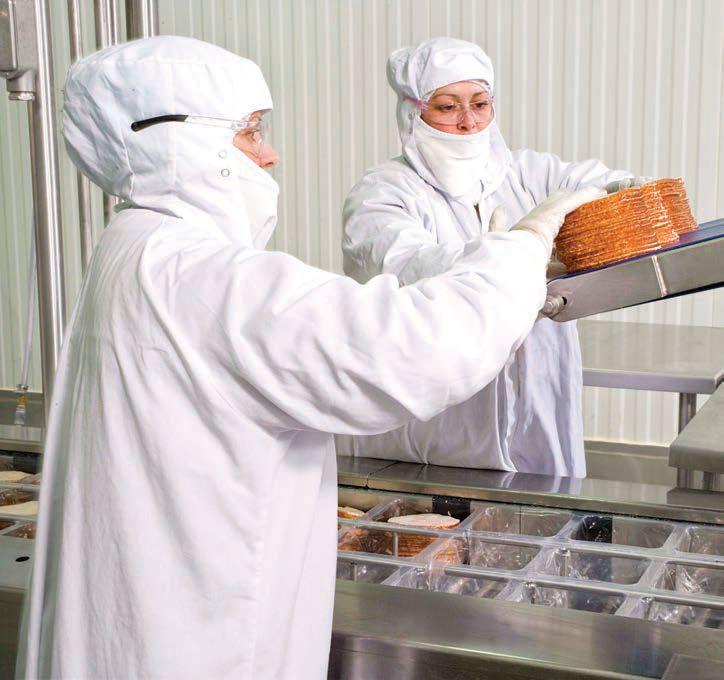
At first intimidated by the new system, employees are now adept at analyzing tasks that will lead to financial improvements.
culture – one of greater transparency, accountability and engagement. With Leading2Lean, along with other corporate training, employee turnover at West Liberty Foods has been reduced by 50 per cent.
“At first, some of our employees were wary of the new system,” Williams said. “But now, those employees are some of the best at analyzing their tasks and making changes that save money and improve profitability.” Real-time access to information allows any Leading2Lean user to analyze reports that matter most to their job function and recommend changes to operations based on those reports. Before West Liberty Foods implemented Leading2Lean, the company would need to ask the IT department for the information they needed. The software allows anyone and accountability with Leading2Lean, a cloud-based system that provides critical real-time information, companies that implement the solution see an improvement in company
to quickly generate and view the report they need right from a web browser. “Before, I’d have to run 10 to 15 individual reports to get the same information I can get with one report out of Leading2Lean,” Williams said.
The real-time reporting system helps West Liberty Foods measure its workforce utilization. With Leading2Lean, the company has been able to move its utilization into the 88 to 90 per cent range. With that improved utilization, the company can also determine the most optimal time to perform preventative maintenance,
keeping production lines running at peak efficiency.
process and the ability to drill down to issues,” Williams said.
“Our solution enables manufacturing and production teams to align and focus on the right priorities to improve their businesses.”
“Companies such as West Liberty Foods are seeing significant increases in production output and manufacturing efficiency by implementing Leading2Lean,” said Keith Barr, president and CEO of Leading2Lean. “Our solution enables manufacturing and production teams to align and focus on the right priorities to improve their businesses. In addition to the food processing industry, Leading2Lean is helping customers in many other industries, such as automotive, awards, nuclear and defense. Any business that has a production line can see immediate impact with our solution.”
Within two years of implementing Leading2Lean in its first facility, West Liberty Foods improved operational availability to 96 per cent – a 10 per cent improvement. “The key driver to that success was the visibility we had into our manufacturing
Because the company is handling high-quality perishable food items, West Liberty Foods has strict company guidelines and procedures, along with clearly defined regulations required by the USDA. “Leading2Lean allows for easy and clear visibility into this process, which has been instrumental in ensuring the best and safest product
for our customers and documenting compliance with the USDA,” Williams said.
This article was submitted by Northern Nevada-based Leading2Lean. Its cloudbased systems provide critical real-time information to help rank-and-file workers do their jobs better and to achieve operational excellence solutions. For more information, visit www.leading2lean.com.


Plants can use RCM to mitigate risk and better manage equipment failure.
BY KEN BANNISTER
Question: “Our maintenance department is embarking on major change as we transition toward a best practice approach to maintenance and prepare for an ISO 55000 certification audit in the near future. Part of that process is putting in place a risk mitigation strategy. Any help in this area would be very useful.”
Sometimes known as a risk reduction strategy, a maintenance risk mitigation strategy is about the methodical identification, categorization and evaluation of risk exposure consequences due to maintenance activity, combined with a strategic approach to control, manage, and diligently track our mitigation efforts.
We are fortunate in the maintenance community in having at our disposal the world-class Reliability
Centered Maintenance (RCM) methodology developed specifically for risk mitigation when maintaining complex equipment and systems that have a high consequence to their failure. RCM instructs the maintenance department to review each asset and assess how it is


expected to perform in its operating context, to determine how it can fail, establish the cause of each potential failure, and most importantly, define the consequence of each failure. Failure consequence is assessed according to how it will affect an asset, facility, or person’s health, security, or safety; how it will affect the environment; how it will affect the product or service delivery and quality, and if there are any associated economic losses.
RCM can be an arduous process and the level of implementation will depend on the type of industry going through the process. For example, food & beverage plants inherently have huge public safety, environmental, health and economic risks and consequences associated with equipment failure. Their operation can invoke any or all of the failure consequences mentioned on the previous paragraph requiring them to adopt a rigorous approach to understand, control and manage their failure/
risk/prevention relationship.
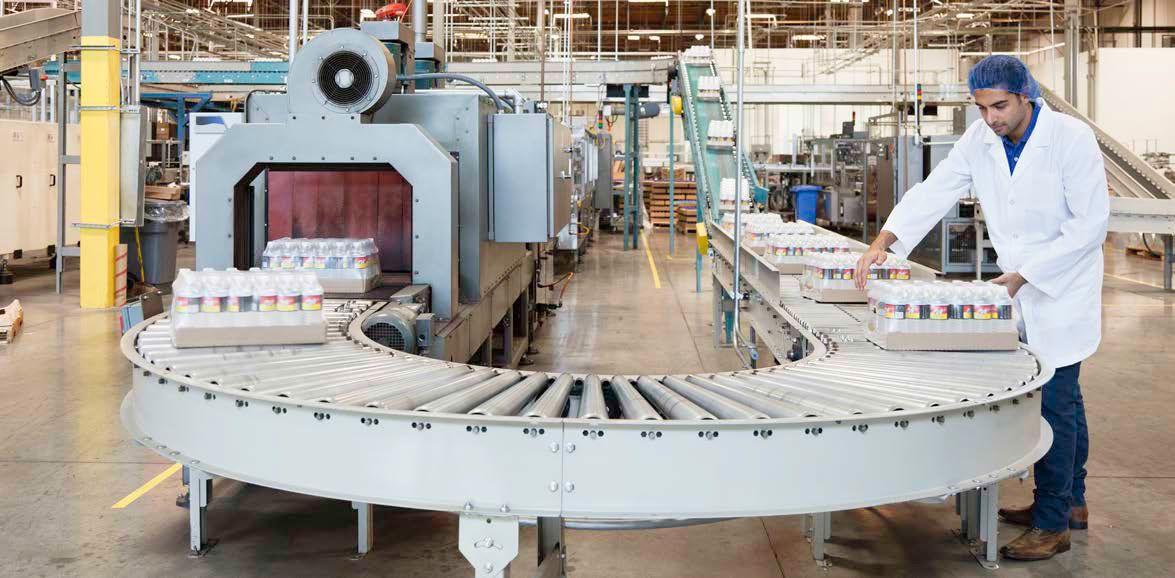
In food and beverage plants, the conveyance system and the compressed air supply system (supplying compressed air to the production line air tools) would make an excellent starting point due to their economic and potential safety consequences.
In a facility, elevators and automatic entrance/exit doors would likely top the critical list due to high-service loss and safety consequences.
Once high-risk equipment and their associated failure methods, causes and consequence are determined, they can then be prioritized against the significance and likelihood of each potential failure to determine how to treat and mitigate the risk. RCM teaches us to adopt a condition-based maintenance approach wherever possible, developing a series of condition checks using preventive and predictive techniques, along with visual management systems, to identify when the asset is in a “go” or “no go” state to tell us when to carry out a preordained appropriate maintenance action, calibration or replacement. These conditional checks are backed up by auditable standard operating procedures and workflows to ensure quality and consistency in how the maintenance is performed and tracked within the maintenance management system.
Another aspect of the risk management strategy involves managing the maintainers’ behavioural safety. In this case we can adopt a lean
manufacturing technique known as SMED (Single Minute Exchange of Die) in which a group performing a series of specified activities is filmed performing their regular work tasks. The group then convenes and watches their performance critically assessing how they interact with their teammates, tools
and equipment. The group then collectively brainstorms how to perform their activities more efficiently and, more importantly, more safely. Observing maintenance activity for efficiency and safety is key to mitigating associated maintainer risk down to a manageable and acceptable level.
Ken Bannister is the co-author of Practical Lubrication for Industrial Facilities (Third Edition, Fairmont Press, 2016). For more information on implementing best practices, contact Ken Bannister by telephone at 519 469 9173, or email him at kbannister@engtechindustries.com.

There is something about the thought of spring being just a hop, skip and jump away – when enthusiasm and inspiration suddenly takes hold of us and a natural impetus to plan begins, preventative maintenance opportunities are revealed, and growth and development in all key function areas is warmly encouraged and embraced!
In my humble opinion, our greatest creative urges seem to surface when something “new” is about to happen, but perhaps that is just a mindset because, really, anytime is a good time for growth, to get creative, look at things differently, explore improvements and innovate.

EMC (Excellence in Manufacturing Consortium) provides considerable exposure to creative possibilities through ongoing networking activity, benchmarking and best practice sharing events. The key is to keep
an open mind and learn from the experience – there is always something new to take away from the
discussion and plant tour.
My grandson, Everett, recently demonstrated innocently enough, how keeping that open mind is important and that an issue or opportunity can certainly have multiple solutions. I watched him play with his John Deere combine, tractors and supplementary equipment all the while recognizing that this smart little boy will no doubt follow in the family footsteps to become one of our future dairy farmers. Enchanted, I observed his methodical automotive checks.
When Everett parked his entire fleet neatly side by side by side under the hangover of the kitchen cupboards, I asked what he was doing. He said, “Oma, just putting tractors in the barn to keep everything dry.”
How could I not know that? A billion times I have been by these

cupboards. But my grandson saw an entirely different landscape – a different opportunity and a means in which to house his farm equipment. Why hadn’t I seen this?
This left me thinking how many times we walk by things in our manufacturing facility, missing those possibilities by seeing equipment, processes, products, etc., the same way day in and day out? How many times do we just accept that this is the way things are and never question that there might be other means in which to fertilize our ideas? How many times have we simply thought that things can never change? What kind of preventative maintenance plan can we put in place to ensure our equipment, processes and people are ready for the next challenge? Perhaps Spring is the perfect time to embrace the
chance to connect with others and join us in engaging conversation, best practice sharing and benchmarking with your peers.
This Spring, our EMC GF2 Networking Events starts with a look at “Food Safety Traceability and KPI Tracking” hosted by Siemens Canada Ltd. in Concord. We’re taking a look at the current system, what is to come, and, along with peers, are considering what the best program should look like.
In May, IFPT (Institute of Food Processing Technology), Conestoga College invites processors from across the province to join us as we look at “Packaging, Labelling and Innovation.” This is a topic of interest to many companies and we are delighted to have NSF International’s Senior Project Manager, Food and Label Compliance, joining
us to share the latest in regulations. Complementing our theme, our host will be elaborating on Conestoga College’s Packaging and Apprenticeship Programs complete with a tour of their amazing facility. We also have a whole new slate of topics for our EMC GF2 Productivity Workshops again challenging us to think beyond the norm – cultivating and generating ideas for growth and business enhancement – through interactive events on Root Cause Problem Solving, An Introduction to the Kaizen Process for Implementing Change, and Leadership & Management of Change. This Spring, there are four dates of training – April 4 in London, May 9 in Ottawa, May 10 in the GTA and May 11 in Guelph. And, finally, furthering the development of your creative potential, please take a moment to consider
completing the EMC GF2 Self-Productivity Diagnostic Tool. This is a wonderful Continuous Improvement dynamic that looks at 16 sector-based KPIs. The questions are relatively easy to answer and in turn can provide you with insights on your company’s growth from a personal, corporate and sectoral perspective.
How do you get involved? If you are interested in learning more about EMC (Excellence in Manufacturing Consortium) and the Food Sector Initiative, please feel free to touch base with Bren de Leeuw, Director - Field Operations Canada and EMC Food, Beverage and Bio Sector Program (bdeleeuw@emccanada.org) anytime!




26-Apr-17 To 27-Apr-17
09-May-17
13th Annual North American Food Safety Summit Toronto, ON www.foodsafetycanada.com
An interactive Summit hosted by the Strategy Institute that examines a variety of topics including: Government Regulations, Contamination Prevention, Audit Preparation, Risk Management Improvement, Supply Chain Management and Traceability, Pathogen Detection and Microbiology.
EMC GF2 Food, Beverage & Bio Sector Productivity Workshop Ottawa, ON Root Cause Problem Solving & Leadership and Management of Change
10-May-17
EMC GF2 Food, Beverage & Bio Sector Productivity Workshop Toronto, ON Root Cause Problem Solving & Introduction to the Kaizen Process for Implementing Change
11-May-17
EMC GF2 Food, Beverage & Bio Sector Productivity Workshop Guelph, ON Leadership and Management of Change & Introduction to the Kaizen Process for Implementing Change
EMC GF2 Food, Beverage & Bio Sector Networking Event
25-May-17
IFPT – Institute of Food Processing Technology – Cambridge, ON Packaging & Labelling Innovation Institute of Food Processing Technology Trades and Apprenticeship Programs