
The Hon. Todd Smith,





Reliability and Resilience
Defined…
From a Certain Point of View
Reliability and resilience are two core concepts vital to the health of Ontario’s electricity distribution system. But these ideas can mean different things to different people.
In the context of our sector, reliability can be described as the capacity of a power system to deliver electricity in the quantity, and the quality, demanded by our customers. Typical threats to reliability include the loss of generation, transmission, or a drop in consumer demand. As anyone in the sector could tell you, these disruptive events occur more regularly than you might expect. As a result, our grid needs to withstand system shocks and recoup as quickly as possible with minimal disruption. That’s where resilience comes in.
Though similar and linked in significance, reliability and resilience are not one and the same. Resilience, by definition, is the ability to recover. Both are critical elements, but reliability can be viewed as the fundamental goal of a power grid, with resilience being a necessary component of reliability. Traditional threats to resilience can include downed power lines, equipment damage, or failure due to age.
However, these traditional threats are evolving. The increase in frequency and severity of major weather events over the past year has served to underscore the devastating impacts of climate change and tested the mettle of our power system. I’m proud of our sector’s work to maintain our grid and keep Ontario’s lights on. Still, there is work to be done with our partners in government to enable the introduction of modernized and flexible regulations to support the changes required. I am encouraged by the words of Minister Smith contained on Page 8 and his recognition of our mutual goals to improve our sector’s resilience, responsiveness, and cost efficiency.
It’s important to note that the reliability of our electricity system is more than just physical infrastructure; we also need to consider other perspectives, such as operations and human resources. Throughout the pages of this issue, we explore the efforts of EDA members beyond poles and wires to incorporate innovations in fiscal efficiency and the well-being supports our employees need to ‘bounce back’ after the hard work of responding to these major disruption events. It is imperative that we ensure our teams remain safe and effective in their work because you can’t be reliable only when it’s convenient.
I read a quote recently that said, ‘resilience is the art of caring for the right things,’ and despite the dictionary definition I cited earlier, that’s a sentiment Ontario’s LDCs can definitely get behind. Just look to the EDA Award nominees on page 24 as proof positive when it comes to supporting our customers, their communities, and our staff teams; there is no confusion over the definition of success. Ontario’s local hydro utilities are on the front lines of power, working to ensure that our province’s electricity grid is reliable and resilient no matter how you define it.

Sincerely,
Bryce Conrad President & CEO, Hydro Ottawa Chair, Electricity Distributors Association
The Electricity Distributors Association (EDA) publishes The Distributor for its members and stakeholders. All rights to editorial content are reserved by the EDA. No article can be reproduced in whole or in part without the permission of the EDA.
PUBLISHED SPRING 2023 FOR:
Electricity Distributors Association
3700 Steeles Avenue West, Suite 1100 Vaughan, ON L4L 8K8 www.eda-on.ca
EDA STAFF CEO’S OFFICE
Teresa Sarkesian, President and CEO
Natasha Galati, Executive & Administrative Assistant
POLICY, GOVERNMENT AND CORPORATE AFFAIRS
Ted Wigdor, VP, Policy, Government & Corporate Affairs
Derek Nardone, Director, Corporate, Government & Public Affairs
Brittany Ashby, Senior Regulatory Affairs Advisor
Antonio Brieva, Advisor, Government & Stakeholder Relations
Tina Wong, Senior Policy Advisor
MARKETING, COMMUNICATIONS AND MEMBER RELATIONS
Mike Chopowick, VP, Marketing, Communication & Member Relations
Marica Macura, Director, Member Relations
Gibb McGugan, Senior Manager, Communications & Marketing
Lesia Kostecki, Member Marketing Specialist
Sari Maritzer, Communications Specialist
FINANCE AND ADMINISTRATION
Tamara Orlova, Chief Financial Officer
Arlene Klemmer, Accounting Clerk
Matthews Joseph, Senior IT Analyst
Chrissan Pascal, Office Services Assistant
PUBLISHED AND PRINTED BY ANNEX BUSINESS MEDIA, 111 Gordon Baker Road, Suite 400, Toronto, ON M2H 3R1 (416) 442-5600
annexbusinessmedia.com
Agreement #: 43526108
ADVERTISING SALES titus/one mediasales@eda-on.ca

Enova Power Corp.’s E-Billing campaign brightened the 2022 holiday season for local families in its community by donating more than 10,000 meals to The Food Bank of Waterloo Region. Enova donated six meals on behalf of each customer that registered for eBilling. The utility then extended the campaign and doubled its donations to 12 meals per customer during its Week of Giving.

ENWIN’s Community Support program donated
$5,000 to help ensure isolated seniors who are unable to shop or cook for themselves receive a hot meal this holiday season.
Enova Power Corp. co-CEOs Rene Gatien and Jerry Van Ooteghem present Kim Wilhelm, CEO of the Foodbank of Waterloo Region, with a ceremonial cheque representing 10,092 meals donated.
Alectra Utilities donated $6,000 to the Stevenson Memorial Hospital to fund a second Dialysis Ultrasound device that helps nurses and doctors find patients’ veins. This helps nurses support three more dialysis patients simultaneously and eliminates wait times.
Burlington Hydro launched an E-Billing Campaign in support of Burlington Food Bank. Burlington Hydro is looking to reduce the use of paper bills; in support of its community, for each new paperless customer registration, a $5 donation was made to Burlington’s food bank to help families during these challenging economic times.

ENWIN’s donation assisted seniors in its community
Elexicon Energy raised $32,620 for Grandview Kids Dream Big, Dream Brighter. The proceeds will help support thousands of vulnerable children and youth who live in the Durham Region, with programs made available to help inspire, empower, and enrich the lives of families among their diverse communities.
Oshawa Power supports the Back Door Mission in Oshawa, donating more than 350 pairs of socks to be distributed to individuals. Access to adequate footwear is an essential factor in maintaining foot and ankle health, a serious but often overlooked challenge for individuals experiencing housing uncertainty in their local community.

David Lebeter has been appointed as President and CEO of Hydro One. Lebeter is a highly regarded leader with a proven record of building strong teams and improving safety, reliability, customer experience and productivity. He brings more than 18 years of experience in all facets of the electricity sector and was most recently the Chief Operating Officer of Hydro One, a role he assumed in January 2020, with responsibility for transmission and distribution, including construction, maintenance, vegetation management as well as system operations, asset planning and engineering. Under his leadership, the company has improved safety, productivity, reliability, and customer experience. The EDA congratulates him on his appointment.



The EDA will formally thank its outgoing board of directors at its AGM on March 27. The Association would like to acknowledge and thank those directors who will not be returning for their dedication and service to the industry during their soon-to-be complete terms: They are left to right:
• Glen McAllister, CFO and Treasurer, InnPower
• Wilf Meston, Vice President, Operations, Enova Power
• Bill Sheffield, Interim President and CEO, Hydro One.
The EDA congratulates Alectra Inc, IESO, KPMG LLP for leading the way in shaping the post-pandemic workplace.
EPCOR’s Go EV program will provide greater access to EV charging stations in South Georgian Bay and beyond. These charging stations will help meet growing demand, as more consumers switch to electric vehicles (EVs) in the coming years.

Brian Bentz,
President
and
CEO
Alectra,
of
and Mayor Bonnie Crombie of Mississauga, pose with new AlectraDrive @work EV charging station.
Alectra’s multi-year pilot program, AlectraDrive @Work, is designed to understand how managed smart charging can reduce customer bills and the need to invest in upgrading infrastructure. In the first phase of the project, chargers were installed at the Markham Civic Centre and at Alectra’s Head Office in Mississauga. Ten additional EV chargers were recent installed at Mississauga Central Library.
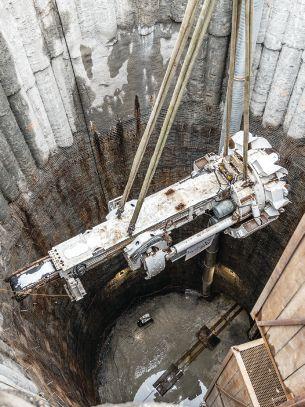
Construction has begun on a new Hydro One tunnel below ground in downtown Toronto. The 68 tonne ‘Celtic Tiger’ Tunnel Boring Machine was lowered into the ground to carve out a tunnel that will house new transmission cables under the city core. The new tunnel, which will be about 2.5 kilometres long and located 85 feet below ground, will house upgraded powerlines to provide reliability for customers and allow workers easy access to the critical infrastructure they require.


The EDA recently received an AVA Digital Award for outstanding digital content marketing in the “digital publications” category. The EDA received a gold award for its 2022 winter interactive edition of The Distributor.
The EDA also received a Viddy Award for its short marketing video promotion in the “web video” category. The EDA received a gold award for its EDIST 2023 promotional video.

METER DATA MANAGEMENT (MDM)
C&I Data Collection | Web Presentment | Aggregation | Data Exporting | Operational Data Store
METER & FIELD SERVICES
Meter Reading | In-field Collections | Meter Services | Mass Meter Installation | Site Services
DAMAGE AND PREVENTION SERVICES
Underground Utility Locating | Pole Testing/Audits | Leak Detection (Water/Gas) | Utility Asset Inspection & Mapping | System Route Patrol | Maintenance
Olameter provides communications and network monitoring needs for electric, water, gas, and telecommunication utilities, energy retailers, and management entities Our specialty is generating cost savings and operational efficiencies for our clients by integrating services, technology, and personnel across multiple clients
IT/OT SERVICES
IOT Communications Services | Network Operations | Spatial Data Infrastructure | System Hosting | Workforce Management | AI Development Services
UTILITY IT & ADMINISTRATIVE SOLUTIONS
AMI Network Management | Utility Field Services Technology Equipment | Call Centre, Document Fulfillment | Consulting

At a time when the resiliency of energy and electricity systems around the world has come into sharp focus, Ontario is fortunate to have a strong, reliable grid that is recognised as one of the cleanest in the world. That reliable, affordable and clean energy advantage has played an important role in attracting new investments and new jobs to Ontario.
But the true strength of Ontario’s electricity system is the skilled and dedicated front-line power workers, hydro crews and staff who keep it running. The significant winter storm this past Christmas especially was a reminder that hydro crews are regularly asked to take time away from their families to keep the rest of us safe during severe storms and power outages. As Minister of Energy I know our government can count on your hard work to maintain the grid.
This allows us to focus on new and innovative options that can benefit consumers, including increasing customer choice through the introduction of new pricing options for Ontario’s electricity consumers.
Two years ago, our government gave Ontarians the ability to

choose the rate plan that made the most sense for them for the first time, between time-of-use (TOU) pricing or tiered pricing.
Today, more than 368,000 families, small businesses and farms have taken advantage of that choice and switched their pricing plan to one that better fits their lifestyle and energy usage.
Building on this progress, Ontario’s new Ultra-Low Overnight Price Plan will continue to expand customer choice for even more residential, small business and farm electricity consumers. Electricity distributors across the province will begin offering this new price plan as early as May 1, 2023, to be fully implemented by November 1, 2023.
This new price plan will support electric vehicle adoption – and the province’s
growing electric vehicle manufacturing industry – by decreasing overnight charging costs when province-wide electricity demand is lower and the province has excess supply - supply that previous governments sold at a loss to competing jurisdictions.
However, as the electric vehicle industry grows, alongside broader electrification, population growth and new investments, so will demand for more clean energy. We know the most important tasks ahead will be meeting this rising demand for clean energy, and ensuring we are enabling Ontario’s economy to electrify and continue growing.
And as we transform the sector to meet these evolving needs, we know that distributors will be a key partner whose work will unlock the full potential of our grid.
With the opportunities that lie ahead – along with the challenges of extreme weather – we must continue working together to ensure distributors and consumers are well positioned for the future.
That’s why I’ve asked the Ontario Energy Board (OEB) to provide its best advice on how we can improve the resiliency, responsiveness and cost efficiency of the sector, and I look forward to receiving its report by June 30 of this year.
We owe it to consumers to ensure we are all ready for the task ahead.
I encourage all distributors to provide their input, including through the OEB-led workshops, so we can continue to drive
Ontario’s economic development and competitiveness.
In the coming months, I will also receive key advice from the Electrification and Energy Transition Panel, chaired by David Collie, and with input from Dr. Monica Gattinger and Chief Emeritus Emily Whetung, former Chief of Curve Lake First Nation. The Panel will advise me on how integrated energy planning can best support the transformation of the energy sector and capture the full potential of the energy transition for Ontario.
This advice will help inform future long-term energy planning decisions by the province, including any legislative and regulatory changes that may be needed.
It’s going to take all of us as we strengthen the province’s energy sector and advance innovative solutions that support electrification, economic growth and prosperity for all in Ontario. I look forward to our continued collaboration as this work progresses.

When you need a team with deep industry understanding, we’re there.
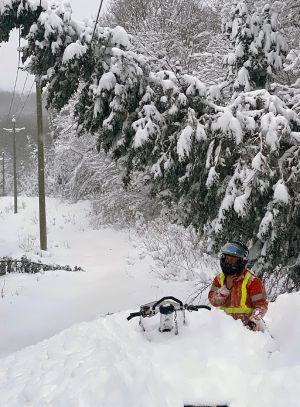
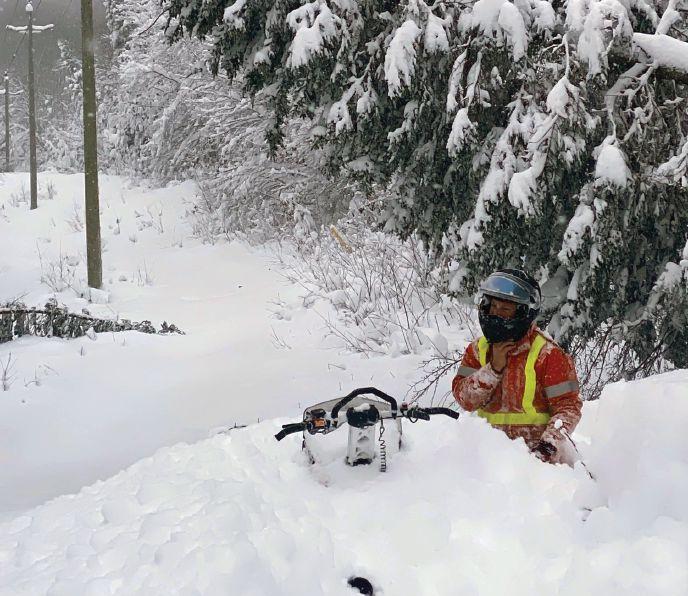
In May, Hydro One crews responded to a devastating storm that left more than 890,000 customers without power across Ontario. The damage – which included a record 2,000 broken poles, 500 damaged transformers and five downed transmission towers – was unprecedented.
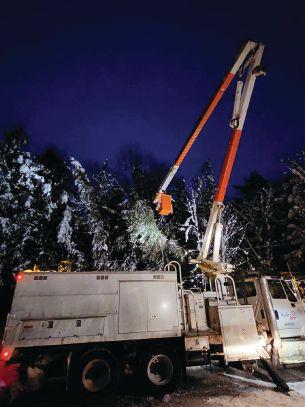
In December, another storm brought high winds and a significant amount of snow, leaving hundreds of thousands of Ontarians without power with crews working over the holidays to repair damage. As power workers worked tirelessly to make repairs and rebuild local electricity infrastructure, it is a stark reminder that storms are getting worse and investments are needed to strengthen the grid and prepare for climate change.
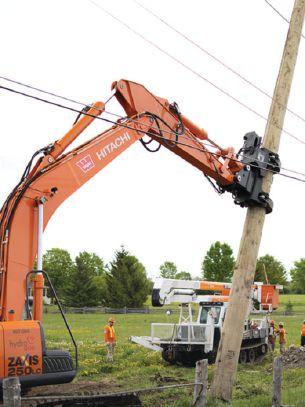
Hydro One is making proactive investments to improve the resilience of the electricity system through innovative solutions, such as increasing automation on our distribution system and investing in taller and stronger poles to withstand more severe weather.
Informed by customer feedback, the 2023-2027 Investment Plan will reduce the impacts of power outages, renew and replace critical transmission and distribution infrastructure, enable economic growth and prepare the grid for climate change. The Ontario Energy Board approved the settlement agreement for Hydro One’s Joint Rate Application, which includes the Investment Plan, in November. Climate change has increased the frequency and severity of significant weather events across the calendar year.
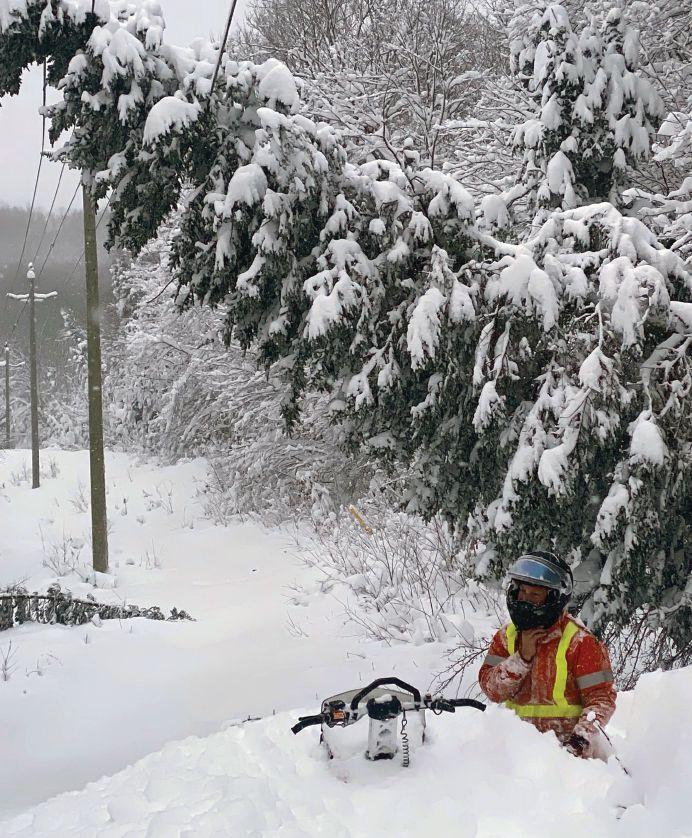
“Our five-year Investment Plan will allow us to make strategic investments in our aging electricity system, improving reliability and hardening the grid,” said Chong Kiat (CK) Ng, VP Distribution, Hydro One. “It is critical that we invest in the electricity system to renew critical infrastructure and ensure clean energy is available when and where it’s needed across Ontario.”
The Investment Plan will allow Hydro One to undertake projects such as refurbishing or replacing wooden poles across the province, making them stronger and more able to withstand severe weather. The Plan will also support economic growth and enable communities to flourish.
In addition to renewing and replacing existing infrastructure, the Investment Plan will enable Hydro One to invest in new infrastructure to accommodate community and industrial growth. It will support housing growth by connecting close to 18,000 new distribution customers every year – the equivalent to powering a city the size of Orillia – and help communities attract new investments across industries.
“We will use this opportunity to implement automation and other innovative solutions to reduce the impact of power outages on customers and prepare the grid for the shift towards electrification,” said Ng. “As Ontarians begin to look towards the future, we are committed to upgrading the grid and ensuring it’s ready to support net-zero targets.”

Waterloo North Hydro Inc. and Kitchener-Wilmot Hydro Inc. and their shareholders, the City of Kitchener, the City of Waterloo, the Township of Woolwich, the Township of Wilmot and the Township of Wellesley, on the merger to form
Power
the 7th largest distribution utility in Ontario (by customer count).
Ron Clark rclark@airdberlis.com
T 416.865.7701

Over the last ten years, InnPower Corporation’s (InnPower) customer count has seen significant growth. Currently serving over 20,000 customers in Innisfil and South Barrie with a 292 square kilometre service area, it is one of the fastest-growing local distribution companies (LDCs) in Ontario.
This growth has put tremendous pressure on all areas of the utility operations, including the finance department, where a solution to address increasingly ineffective workflows and cumbersome approval processes was needed.
“Our budgeting process had increased in complexity and required input from a growing number of stakeholders,” said Lisa McCaskie, Finance Manager of InnPower. “Up until then we had been using Excel for our budgeting and financial processes, but it was no longer serving our business needs.”
When using Excel, InnPower had struggled with multiple versions of files and accessing data from various sources, sometimes with broken links and hardcoded values. Many manual processes resulted in an increased risk of human error, and a significant amount of time and effort were required to build and maintain models and correct errors. Further, a large resourcing effort was needed to collect, compile, review, and report on the budget and other projects. The team needed a solution that could serve a growing utility and be versatile enough to achieve its priorities of improving the
corporate workflows through reduced costs, time and errors while increasing productivity, collaboration and reporting in real-time.
“We had to rethink our budgeting process while trying to innovate and save costs.” said McCaskie. “Instead of trying to better what was already being done within Excel, we had to create efficiencies and leverage the functionalities of Prophix.”
InnPower decided to leverage an existing and highly underutilized platform called Prophix. Prophix is a versatile, web-based business intelligence software used for budgeting, forecasting, planning, and real-time reporting. It is designed for mid-market companies and offers cloud-based solutions based on a Microsoft platform functionality. The finance team worked with the vendor BDO, that was responsible for the project management, implementation of design, building of the solution, testing and user training.
“Given that our budget process had been tedious, complicated and confusing at times, it was not difficult to get buy-in from staff,” said McCaskie, who has been with InnPower for over five years. “Our staff were already familiar with the Microsoft functionality; the interface is very user friendly, and there was very little training required for staff.” Their approach was to build out the cubes
(or modules) in stages with the initial phase taking two months from planning to implementation. The cubes house specific data sets that emulate pivot tables and can be updated in real-time through integrations with Microsoft Great Plains (GP) financial software and Harris Northstar Customer Information System (CIS), as well as manual entry from users. The financial cube was the first to be implemented and each consecutive year, the InnPower finance team has developed new cubes and reports based on the needs of the business.
Today, an extensive amount of ability exists where data can be pulled from one or more cubes for on-demand report creation including but not limited to Work-inProgress, Capital, Fixed Assets, Loans, Payroll, Regulatory OEB Scorecard, and Demand Data. Prophix has become a centralized and dynamic business intelligence system that includes all facets of financial planning.
“In the project’s initial phase, we could not implement the entire budget process within Prophix since it was being rolled out in stages. For the first couple of years, we had to leverage some of the data from Excel and some of the data from Prophix. It has been quite a journey, and we are very proud of our accomplishment on this project.”
Prophix allows for the sequential and ordered flow of information through


workflows. This allows staff to seamlessly assign budgeting tasks and templates to the appropriate department and include deadlines and email reminders to the user. Since financial statements and reports are updated in real-time, InnPower’s management team can review financial impacts and potential areas of concern the moment data is submitted to make timely decisions. The ability to create multiple versions of a budget allows management to make informed decisions by performing sensitivity analysis or modifying variables.
“Given the ever-changing economic landscape, it is important that InnPower has an agile tool to plan and forecast. Prophix has enabled InnPower to update prices, inflation rates and interest hikes with ease and in real-time. As the future remains uncertain, InnPower has the ability to configure multiple scenarios to address volatility and make informed financial decisions.”
The benefits of the new system have been widespread across the organization.
By far, the most significant benefit to the organization has been the creation of ‘one source of financial truth’. Data is in one central location and is updated in real-time so that management and staff can be sure they are
making decisions on the most up-to-date and comprehensive data without having to put in a request to the finance department.
Increased accuracy has been achieved through the elimination of version control issues and a substantial decrease in the amount of manual input of data. The workflow manager has improved collaboration by deploying tasks directly within Prophix and managing the approval sequence. A streamlined budgeting process and the automation of a substantial number of functions have reduced time and increased efficiency.
Management now has in-depth insights through the easy access and manipulation of data and expanded access to up-to-date, real-time data across the organization. Engineering and Operations can track projects for capital planning and project completion. Regulatory can track scorecard metrics and RRR Reporting, and the software facilitates easy reporting to the Board of Directors.
“We are continually seeking ways to innovate and increase productivity without the need for additional capital investments,” said McCaskie. “Prophix is a great example of how we harnessed the power of automation to create benefits across the company, while saving our customers money.”

By Ashley Trgachef
Due to increased customer demand and growth, Alectra Utilities’ grid is facing significant pressures. Through an extensive capital program, Alectra is strategically investing to strengthen and modernize its distribution grid to make it more resilient, reliable, and secure. Year over year Alectra invests approximately $300 million in capital improvements to renew aging equipment and install new infrastructure to accommodate this growing demand.
Fact: Some of the leading causes of power outages are aging infrastructure, equipment failures, the impact of adverse weather, and equipment damaged by vehicle accidents and animal contacts. To address these issues, Alectra increased its system renewal investment by incorporating advanced technologies necessary to integrate distributed energy resources. Additionally, Alectra combats these outages by constructing additional feeders, and accelerated feeder automation deployment to enable faster power outage restoration.
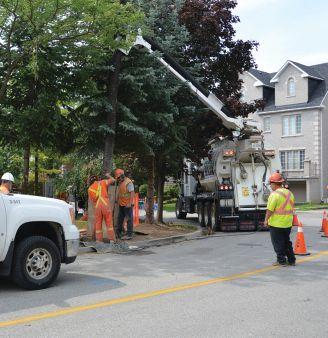
Continued capital investments in grid modernization are essential to maintaining system reliability, and to make the changes necessary to build a modern grid. Alectra is investing in the grid by introducing new technologies to increase efficiencies and reduce costs. One of those technologies is an innovative and cost-effective process called cable rejuvenation, which repairs, protects, and extends the life of underground cables -- without digging them up.
Underground cables generally cost less to maintain and have a much longer lifespan than overhead wires. However, over time, underground cables can start to deteriorate from being exposed to moisture in the ground. Cable rejuvenation technology can extend the life of an aging cable by up to 20 years through the injection of a silicone-based fluid



Meter Services Peterborough, a Division of Peterborough Utilities Inc. is a provider of revenue meter related services in Ontario. We are IESO registered as MSP #1002 and provide meter installation services; Meter Data Management (MDMA) functions, Web posting of data and bill reconciliation (MDS Web); Settlement Services (WSS Web) and Conservation and Demand Management to Wholesale Market Participants, Local Distribution Companies, Energy Services Companies and Generators. Please contact us at 705-748-9301 ext. 1279 for more information on our suite of service offerings.
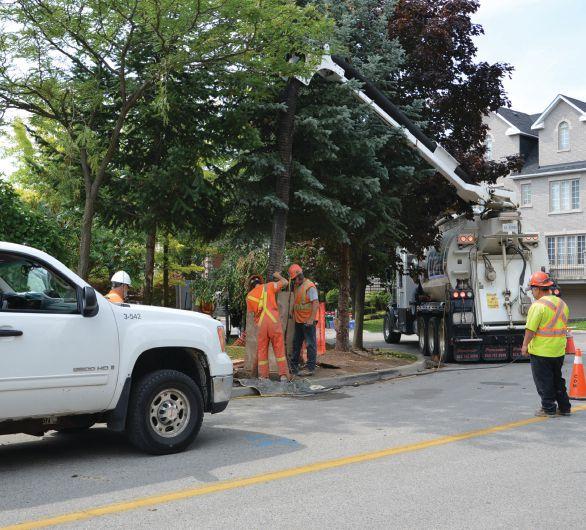
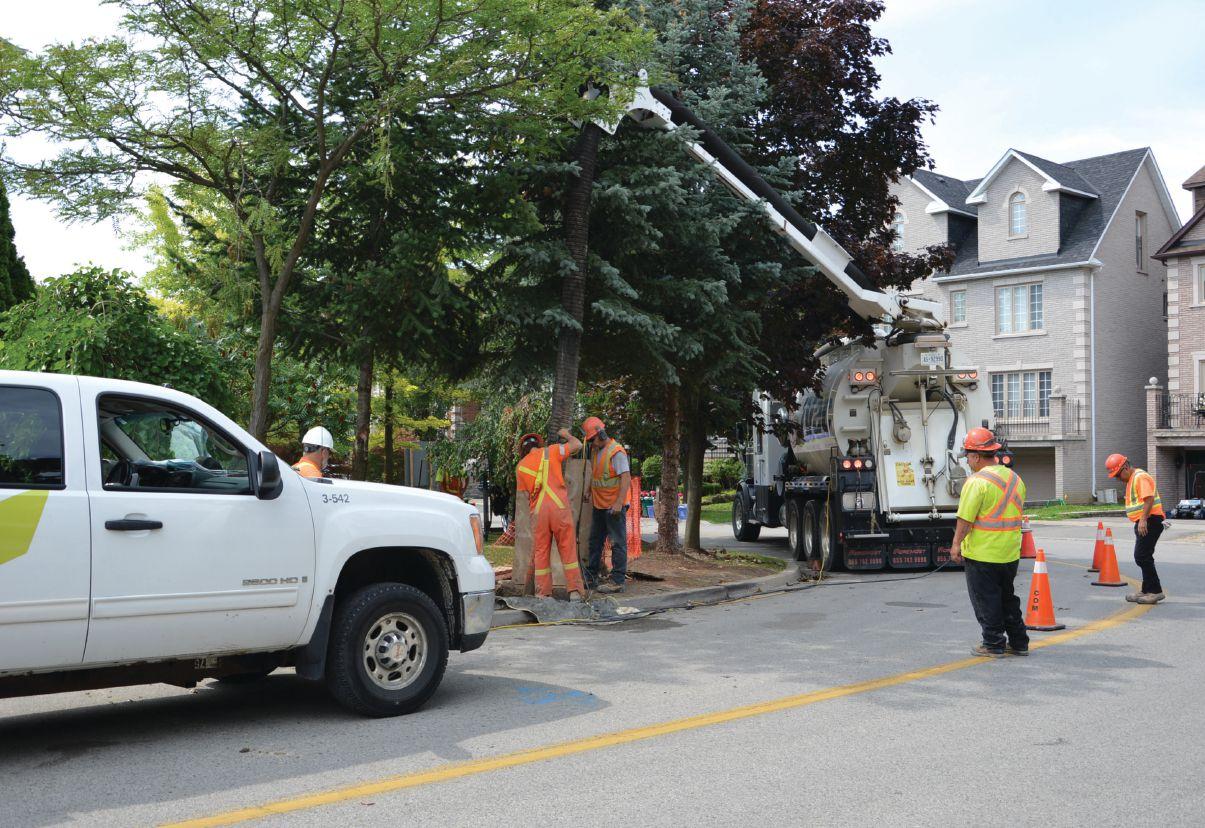
Alectra crews inject siliconebased fluid to rejuvenate underground cables extending the life span by up to two decades.
into the cable. The silicone forces out the moisture, fills in the weak spots, and hardens to repair the cable and help prevent power outages.
The cable injection process is much less disruptive – and a fraction of the cost of replacing old cables – because there is no need to dig up large areas to access the conductors. Moreover, for every kilometre of cable injected, Alectra avoids about 13 tonnes of greenhouse gas (GHG) emissions that would have been caused by its complete replacement.
To date, Alectra has rejuvenated 946 km of underground cable, mitigating 12,302 tonnes of CO2. Alectra aims to achieve net-zero CO2 emissions by 2050, and sustainable technologies like rejuvenation are important
contributors to achieving that goal.
In November 2022, Alectra was recognized by Novinium, a full-service underground power expert, with the 2021 ‘Underground Environmental Stewardship Award’. For the third time in a row, Alectra earned the Award for its industry-leading implementation of this process.
Delivering safe and reliable electricity to its more than 1 million homes and businesses is a top priority. The commitment to investing in new technologies will not only help reduce power outages but will also minimize environmental impacts, while offering a lower-cost alternative to its capital program.
With parts of Alectra’s distribution system reaching their end of life, replacing underground cables, and extending feeder lines along major arterial streets, will improve the electricity supply and reliability in the community.
Another key element of Alectra’s drive to build a more sustainable grid is installing automated switching systems. In recent years, Alectra doubled the annual number of newly installed automated high voltage switching devices from 45 to 90 (in 2021). Automated switching systems offer an important boost to reliability because they allow system control operators to isolate and bypass problems in a matter of minutes, a fraction of the time it takes to send field crews to perform the same switching operations. It means customers get power back much faster.
As Alectra builds for the future, automated switching will also offer greater flexibility, making it easier to connect renewable power sources to the electrical grid.
Alectra Utilities is investing in the electricity grid across all 17 communities it serves to support local economic growth and provide safe and reliable service. More information is available at alectrautilities.com/improvingreliability.
In 2022, Alectra completed the following underground capital projects across its service territories including, approximately:
• $9.5M in Aurora replacing underground cable
• $3.3M in Barrie replacing underground cable and extending feeder
• $1.2M In Brampton replacing underground cable
• $500k in Guelph renewing infrastructure and extending feeder lines
• $5.5M in Mississauga replacing underground cable
• $18.6M in Hamilton renewing infrastructure and extending feeder lines
• $9M in St. Catharines replacing underground cable and extending feeder lines
• $22M in Vaughan replacing underground cable
• $5.5M in Markham replacing underground cable


Over the past few months, several member LDCs have achieved a significant service milestone with the launch of their Green Button initiatives. Through these innovative programs, local hydro utilities are helping customers better manage their electricity bills in the many communities they operate.
EDA members have been serving their customers for more than one hundred years, and we continue to have our fingers on the pulse of what Ontarians need from their electricity system. That is why we understand and support Green Button’s enormous potential to transform how we engage with our customers – by empowering them with more choice and control over their energy usage.
Increasingly, households and businesses are embracing new ways to manage their power use… while at the same time exploring electric vehicles, renewable generation, battery storage, and cost-saving technology that helps reduce energy waste. The Green Button standard allows you to download the data about your usage, which you can then share with third-party apps for advice on reducing your electricity consumption.
‘Knowledge is power,’ and local distribution companies want to and are working with the government on Green Button and other initiatives to educate and assist customers in exploring their options safely and cost-effectively; while ensuring that we deliver on our responsibility to maintain the system’s reliability.
The EDA would like to acknowledge Minister Smith’s leadership and all our members and commercial partners who are forging a new path forward in supporting the implementation of Green Button. Thank you all for championing this important initiative.



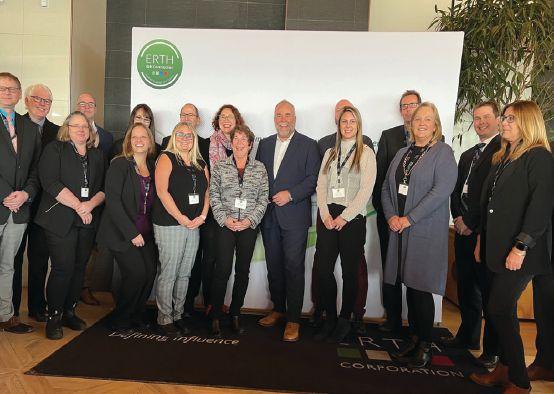
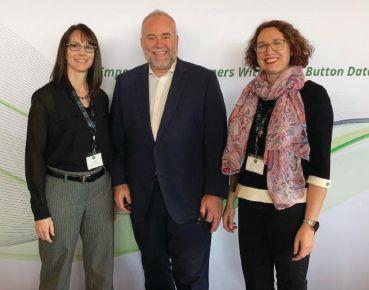
TOP TO BOTTOM:
December 5, 2022 – (L to R) Robert Spagnuolo, Director of Customer Service, ENWIN; Councillor Jo-Anne Gignac; The Hon. Todd Smith, Minister of Energy; Andrew Dowie, MPP for Windsor–Tecumseh; Helga Reidel, Former President and CEO, ENWIN; and Teresa Sarkesian, President & CEO, EDA.
December 5, 2022 – ERTH Corporation Board Members, Staff, and LDC partners join Minister Smith at the ERTH Corporation Green Button launch.
December 6, 2022 - Sharon Shipston, Customer Service Manager, Lakeland Power; The Hon. Todd Smith, Minister of Energy; Simona Rogers, Billing and Special Projects, Lakeland Power.
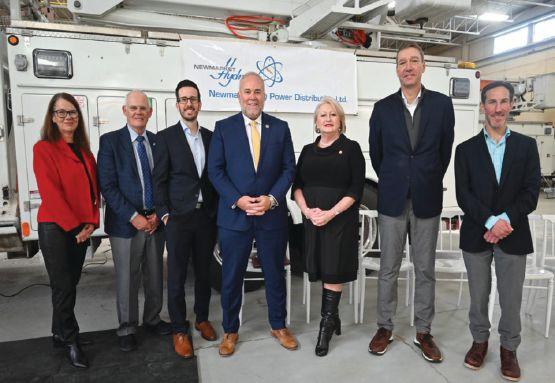
January 26, 2023 – (L to R) Christine Prattas; Mayor Ted Walker, Tay Township; Ysni Semsedini, CEO, NT Power; The Hon. Todd Smith, Minister of Energy; Dawn Gallagher Murphy MPP for NewmarketAurora, Mayor John Taylor, Newmarket; Ted Wigdor, Vice President, Policy, Government and Corporate Affairs, EDA.
In November 2022, the Ontario government released its economic outlook and fiscal review, Ontario’s Plan to Build: A Progress Update. The update provides an overview of the progress against its plan to build the economy, work for workers, build highways and critical infrastructure and help to keep costs down. As a next step, the government engaged in pre-budget consultations with the public and key stakeholders to gather ideas and input on its priorities for the 2023 Budget.
The EDA’s 2023 Pre-Budget submission puts forward recommendations that support greater capacity for local utilities to meet the changing expectations around issues such as electrification, climate change resiliency, and cybersecurity.
Specifically, the EDA contends that capacity could be enabled by pursuing efficiencies through enhanced shared services, adoption of innovative technologies and processes, collaboration, and changes to the utility remuneration and incentive structure to ensure utilities make suitable investments for their customers.
Greater Capacity by Addressing Barriers to Voluntary Consolidation
1. Eliminating the transfer tax and departure tax to support investment in local utilities or forego the departure tax for a period to encourage mergers/acquisitions and private sector participation.
2. If the transfer and departure taxes remain, the EDA recommends:
• Expanding the scope of transfer tax exemptions to include other tax-exempt entities such as a pension or investment fund.
• Amending appropriate regulations to clarify that if an investor invests in a partnership where one or more municipal utilities are partners, the transfer tax only applies if the value of the investment held
“In line with Minster Smith’s direction to the OEB, the EDA has tabled sensible and straightforward recommendations on the relevant issues affecting Ontario’s electricity distribution sector...”

Ysni Semsedini, President and CEO of Newmarket-Tay Power Distribution.
by the municipal utility decreases because of the investment, thereby losing its municipal exempt status.
• Amending legislation to provide certainty that payments in lieu of tax credits can be carried over. The EDA also recommends that the government address any unintended tax consequences following a merger and/or acquisition; and
• Increasing the 10% threshold that triggers the departure tax. The EDA recommends allowing utilities to remain tax-exempt with as much as 49% private sector ownership.
3. Explore the greater potential for enabling multi-utility services, including opportunities for local hydro utilities to expand further into water and waste-water activities across Ontario.
Greater Capacity by Enabling Cross-Industry Communication & Collaboration
4. Acknowledge Ontario’s local hydro utilities as a key component of the “Electric Vehicle Supply Chain.”
Check out the full version of the EDA’s 2023 PreBudget Submission for complete details and full consideration underpinning our recommendations.
• Fund a coordinated, sustained public education campaign around EVs with involvement from auto manufacturers, auto dealerships, government agencies, and local hydro utilities
Greater Capacity by Eliminating Red Tape
5. Facilitate data-driven solutions across the government to support electrification.
• Allow the Ministry of Transportation to provide local hydro utilities with updated Green Vehicle registration postal codes to allow utilities to adapt, plan and invest in the infrastructure required to support the growing number of EVs expected on Ontario’s roads.
Greater Capacity through STEM, Skilled Trades Development & Immigration
6. Review existing initiatives and expand programs’ eligibility to allow access by local hydro utilities.
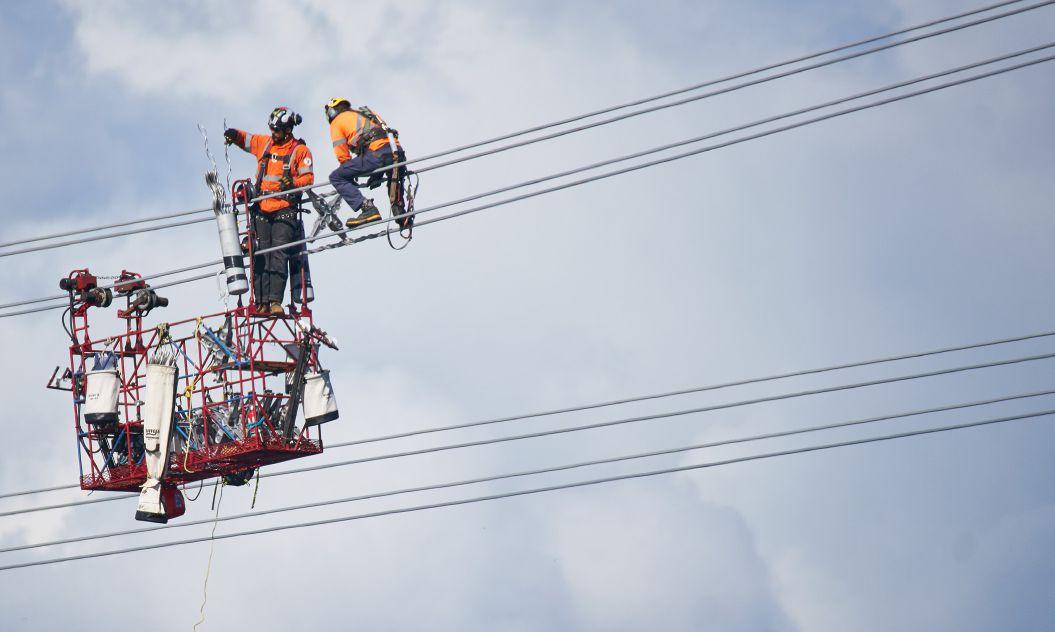
Over 35 electric power and telecommunications infrastructure services, performed by
Carey Kostyk Valard President
We work with expert partners to seamlessly produce turnkey solutions for our clients.
Through a single contract and point of contact, we can, collectively, put together a full service team to successfully deliver every aspect of a project.
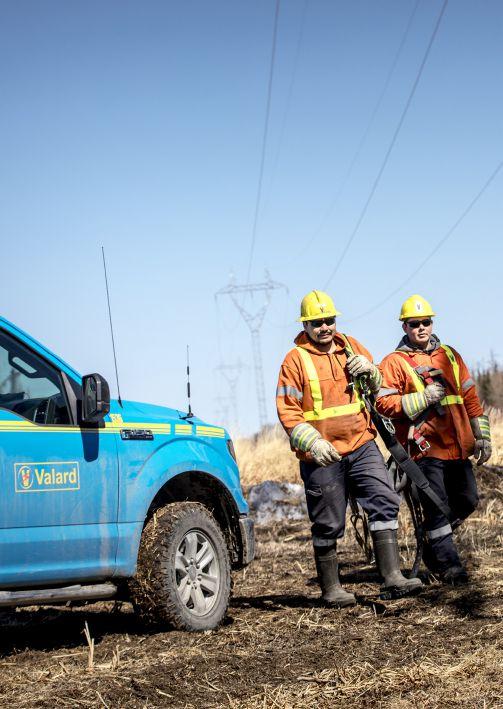
Valard has decades of history building strong partnerships and relationships with diverse communities across the country. Our employees are part of the communities in which they work – supporting sustainability, local businesses and causes, as well as showing respect for project-related concerns and acting on them.
Resilient organizations don’t just bounce back from misfortune or change— they bounce forward. They absorb shocks and turn them into opportunities to capture sustainable, inclusive growth. When challenges arise, leaders and teams quickly assess the situation, double down on what’s working, and walk away from what’s not. But without resilient employees, there can’t be resilient organizations.
Cultivating such organizational resilience
is difficult—especially today, when you’re faced with increased demand, high energy prices, and record levels of energy production requiring employment increases yet there aren’t enough people to fill necessary roles. As an energy employer, you’re competing for the best and brightest while the labour market continues to shrink. Without action, you could face a prolonged or even deepened skills shortage with a tighter labour market ahead.
Being resilient holds a clear advantage. The labour shortage is your opportunity to make lasting, substantive, positive changes to business as usual— maximizing your employees’ potential to grow, innovate, and feel engaged. After all, it’s much easier and less expensive to train, develop, and empower your current employees than it is to continually hire new people.
Focusing on resilience is a powerful strategy to support productivity and performance in your workforce while building long-term resources to adapt and thrive tomorrow.
Employees are more likely to practice resilience in a culture that nurtures it. For example, an important part of personal resilience is being proactive, which happens if your employees feel they have a measure of ownership and control over their work on the team.
Two other key components are seeking support and learning from challenges. Employees are more likely to seek support from others if their manager encourages personal connections among team members, and they are more likely to learn from challenges when their manager emphasises growth and learning as a team norm. Investing in building your team’s resilience will produce short-term payoffs, but the biggest long-term payoffs will be expanded capabilities and increased engagement. Small actions can make a big difference over time—you don’t have to do everything all at once. Instead, resolve today to do at least one thing that will build greater resilience in your team.
Here’s how you can get started:
Look for opportunities to give your employees more autonomy. When possible, let them choose their own schedules, and whether to work from home or the office. Let them make their own decisions about how to allocate their time, who to collaborate with, and how to approach getting their work done. This kind of flexibility considers people’s individual needs, working styles, and is quickly becoming the norm in modern workplaces as we emerge from the pandemic.
Empower individuals and teams by giving them ownership over their work. This means allotting trust and latitude for employees to make their own decisions and accomplish tasks in the way they think is best. It boosts confidence, competence, and resilience, helping your employees to feel more in control, and have a more positive outlook on change and their ability to cope.
Whatever an employee’s role, encourage
When challenges arise, leaders and teams quickly assess the situation, double down on what’s working, and walk away from what’s not. But without resilient employees, there can’t be resilient organizations.
their ideas on how they can make their work more meaningful. Ask for their input on goals and strategies, and give them a voice in how decisions are made. This will improve ownership, buy-in, and agility in response to change. Everyone wants to feel like they’re part of their organization—that they matter and belong. When they do, they’re more committed to the organization, more resilient in response to stressors, and less prone to burnout.
Finally, set your employees up for success by ensuring they have what they need to get their work done, understand expectations, and have the support and encouragement to grow and develop in their roles. When employees feel their manager and organization have their back, they’re more willing to go above and beyond—and feel good doing it.

Contact Jillian Tonet, Consulting Manager, Grant Thornton LLP at Jillian.Tonet@ ca.gt.com
Managers are uniquely positioned to improve employee well-being and resilience through support. When managers build authentic relationships with their team members by genuinely asking about how their day is going or how they can help manage their workload, there can be collaborative conversations about how to adjust when challenges arise before stress overwhelms.
Organizations that want to foster resilience need to ensure their managers and leaders at all levels have the conditions they need to be resilient themselves so they, in turn, can support others to be resilient.
A culture of autonomy, inclusion, and support goes a long way in creating the environment for employees to be resilient. When employees feel empowered, to use their voice and the support they need to thrive, they can handle many workplace challenges.



Event Date
May 30 - June 1, 2023
Location
Hilton Toronto/Markham Suites
8500 Warden Ave., Markham, ON L6G 1A5
25+ Sessions
Delivered by over 50 expert speakers and panelists
80+ Exhibitors
Plus networking opportunities with over 1,200 attendees
Earlybird Attendee Pricing Until March 31st
EDA Members - $1,210 +HST
Non-members - $1,580 +HST
Regular Attendee Pricing
EDA Members - $1,380 +HST
Non-members - $1,810 +HST
Watch our EDIST 2022 highlights video here.

Over the past year, EDA members have demonstrated a relentless commitment to their customers and the communities they serve. Now is the time to share those success stories! The EDA Awards, an exclusive member benefit, recognize the full spectrum of our sector, with categories encompassing work across various core functions. No other awards program more meaningfully or prominently showcases the electricity distribution sector’s accomplishments and the Power of Local Hydro.
Award nominations for all categories are invited annually from the EDA’s local distribution company (LDC) membership. Congratulations to all our deserving nominees; the EDA is privileged to share the 2022 award nominees, please see the full listing below. This year’s award winners will be announced at the EDA’s Award Gala on March 27, 2023.
LDC PERFORMANCE EXCELLENCE AWARD
Sponsored by

Burlington Hydro
Elexicon Energy
ENWIN Utilities
Hydro One
Oakville Hydro
COMMUNICATIONS EXCELLENCE AWARD
Alectra Utilities
Elexicon Energy
Enova Power
ENWIN Utilities
Essex Powerlines
North Bay Hydro
Oakville Hydro

INNOVATION EXCELLENCE AWARD
Sponsored by

Alectra Utilities
ENWIN Utilities
ERTH Power
Hydro One
InnPower
London Hydro
Milton Hydro
Oakville Hydro
SYNERGY North
CUSTOMER SERVICE EXCELLENCE AWARD
Essex Powerlines
Hydro One
London Hydro
Oakville Hydro
PUBLIC ELECTRICAL SAFETY EXCELLENCE AWARD
Sponsored by
Elexicon Energy
Hydro One
Niagara Peninsula Energy
PUBLIC RELATIONS EXCELLENCE AWARD
Alectra Utilities
Bluewater Power
Elexicon Energy
Enova Power
Essex Powerlines
Festival Power
PUC Distribution
ENVIRONMENTAL EXCELLENCE AWARD
Alectra Utilities
Hydro One
Oakville Hydro

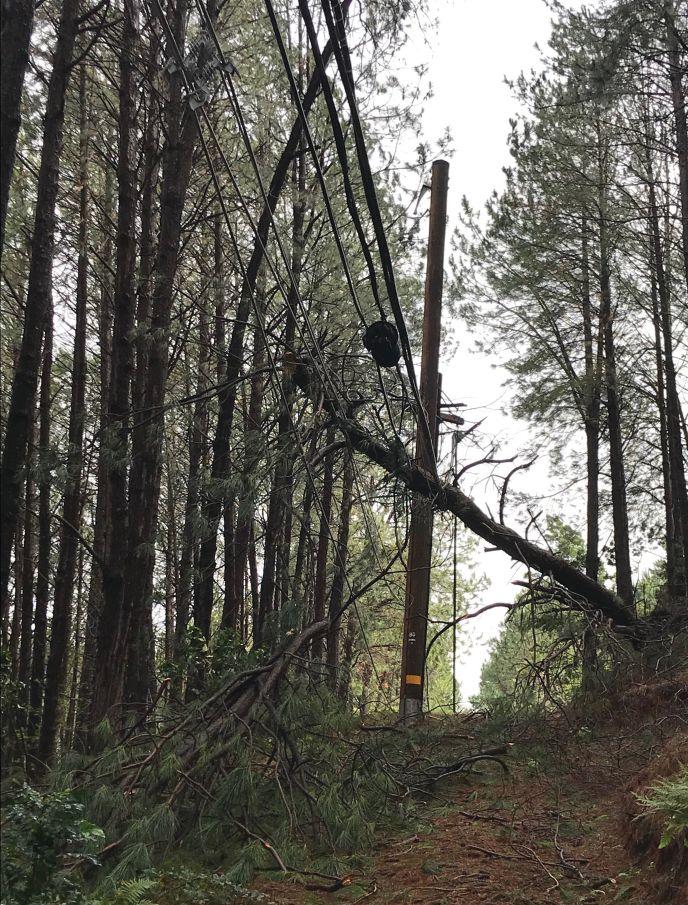
Powerful storms are a fact of life. Hendrix Aerial Spacer Cable Systems can handle the challenge of keeping distribution lines up and residential lights on. No matter the size or complexity of your job, Hendrix has the experience and engineering expertise to provide you with a customized solution. For utility leaders, Hendrix delivers:
• Fewer Outages- High strength messenger wire structurally supports the system and helps it withstand environmental damage.
• Environmental Respect- Spacer Cable Systems coexist with trees and offer wildlife protection.
• Reduced Tree Trimming- Compact design utilizing only one side of the pole minimizes trimming costs.
• Aesthetics- Integrated design.
• Public Trust and Dependable Service- Better reliability all around.
We keep your lights on.



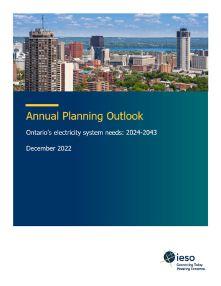

December 2022 saw the release of three highly anticipated reports from the Independent Electricity System Operator (IESO). The 2022 Annual Planning Outlook forecasted that electricity demand will increase by almost two percent annually over the next two decades, driven by economic growth and electrification. The report reaffirms the IESO’s efforts to secure new supply (including non-emitting supply) into the grid to close the capacity shortfall. However, as the report acknowledges, procuring new supply alone will not be enough. Sustaining and expanding conservation programs in Ontario will need to work in tandem to address the forecasted supply shortfalls. Although the Conservation & Demand Management (CDM) Mid-Term Review reported that the CDM Framework is on track to achieve its original energy and demand savings target, more must be done to prepare for the demand needed to facilitate Ontario’s electrification and larger energy transition and zero-emission objectives. The EDA is pleased that the report explicitly acknowledges the need for the IESO to engage LDCs on opportunities to build CDM programs that provide local system benefits. The Pathways to Decarbonization report, originally requested by the Minister of Energy, stated that Ontario can move toward a decarbonized grid starting with a moratorium on new gas generation in 2027 if sufficient non-emitting supply is in place to meet growing electricity demand. To discuss these reports and their impact on our sector in detail, representatives from the EDA met with Chuck Farmer, IESO’s Vice-president of Planning, Conservation and Resource Adequacy. The Association continues to be engaged in dialogue with the Government and IESO on our CDM paper, The Power of Local Conservation.
The Association has kept a watchful eye on the status of the Better Municipal Governance Act, 2022, which received royal assent on December 8, 2022. Ontario’s Minister of Municipal Affairs and Housing, Steve Clark, tabled the bill in mid-November, which enables the appointment of regional heads of council in Niagara, Peel and York Regions for the 2022-2026 council term. Additionally, the province will appoint facilitators to assess the regional governments of Durham, Halton, Niagara, Peel, Waterloo, and York. Given our LDC members’ relationships with their municipal partners, this issue is of principal concern to the EDA, and we continue to keep members informed on all relevant updates.
Q4 2022 saw the release of the Federal and Provincial Fall Economic Statement (FES). The EDA is pleased to see the Federal Government announce measures to help achieve a net-zero electricity grid by 2035 and will continue to advocate to all levels of government the vital role our members play in achieving this goal. The Ontario FES updated Ontario’s economic and fiscal outlook, highlighting how the province plans to manage uncertainty and risk during a time of global inflation and emerging economic challenges. The government is now projecting a $12.9 billion deficit in 2022–23, nearly $7 billion lower than the outlook published in the 2022 Budget. Ontario’s real GDP is projected to rise 2.6% in 2022, 0.5% in 2023, and 1.6% in 2024.
Representatives of the EDA recently met with both the Hon. Kaleed Rasheed, Ontario’s Minister of Public and Business Service Delivery, and Jim Keech, CEO of Ontario One Call, to express our concerns about the pending regulations impacting the Ontario One Call system. We have put forward phased-in implementation options for the government to address our concerns around labour availability, implementation timing, and prioritizing key infrastructure projects while supporting the overall objective of removing barriers to the timely development of critical infrastructure projects and housing development. To provide further context to the government, the EDA also raised these issues with Parliamentary Assistants to the Ministry of Labour, Deepak Anand, MPP for Mississauga-Malton, and David Smith, MPP for Scarborough Centre.
Over the last few months, the Association continued to be actively engaged with key Government stakeholders on your behalf, including Ontario’s new Deputy Minister of Energy, Jason Fitzsimmons, Parliamentary Assistants to the Minister of Energy, Jess Dixon and Stephane Sarrazin, and Liberal Energy Critic Ted Hsu. These introductory meetings continue using the EDA’s Power of Local Hydro messaging as a basis to raise the profile of the EDA, highlight sector priorities, and promote the excellent work and value of LDCs in communities across Ontario. Additionally, the EDA has recently connected for conversations with the Hon. Charmaine Williams, Associate Minister of Women’s Social and Economic Opportunity; Andrew Dowie, MPP for Windsor-Tecumseh; and Hardeep Grewal, MPP for Brampton East.
R to L: Dr. Monica Gattinger, Chief Emeritus Emily Whetung and Panel Chair David Collie.



The Collie (Electrification and Energy Transition) Panel’s full complement was announced, with the addition of Dr. Monica Gattinger and Chief Emeritus Emily Whetung, former Chief of Curve Lake First Nation. The Panel will meet with the EDA Board of Directors on April 4 to begin formal consultations with our sector, with written submissions to follow. It is important to note that the Panel’s scope now includes the “business model of the LDC of the future.” As this is of major importance to our members, the EDA continues to advocate for additional opportunities to ensure the Panel hears from Ontario’s local hydro utilities and fully contemplates our sector’s perspective. The Panel will be presenting its final report to Minister Smith in September.



The EDA’s networking and professional development offerings continue to provide members with valuable opportunities to connect with each other and to relevant learnings. We look forward to delivering compelling events with creative ways to network and come together to discuss innovative ideas and perspectives.
We look forward to connecting in 2023! Be sure to save the date(s) for the following 2023 events:

The EDA’s Annual General Meeting & Conference will be hosted at the Fairmont Royal York in Toronto. In addition to the Association’s annual business meeting, this event provides an unparalleled networking opportunity to connect with industry colleagues from the province’s four corners and a chance to hear from sector experts who dive into industry best practices, timely subject matter, and much more.

The EDA Awards Gala is the electricity sector’s most recognized event that celebrates our members’ achievements and their relentless commitment to excellence over the past year. No other awards program more meaningfully or prominently showcases our sector’s accomplishments. Together, let’s celebrate, acknowledge, and be inspired by the best in our sector.

The Directors Summit offers directors, corporate secretaries, and staff with governance responsibilities an opportunity to hear from recognized governance experts and thought leaders on innovative practices and strategies to improve board performance. Gain new perspectives and insight on how to deal most effectively with the current challenges of board leadership.

DISTRIBUTION, INFORMATION SYSTEMS & TECHNOLOGY CONFERENCE & EXHIBITION)
EDIST is the premier educational conference and exhibition addressing critical engineering, operational, IT and management issues faced by Ontario’s LDCs. This year’s theme is Transformation: Elevating the Electricity Sector to New Heights – Local hydro utilities are enabling the transformation of the entire energy ecosystem through emerging technologies, innovations in smart grids and evolving DERs. Join us as suppliers, manufacturers, and service providers network and showcase their products and services. EDIST will take place at the Hilton Toronto/Markham Suites Conference Centre.

DEI (Diversity, Equity & Inclusion) Conference is an annual exploration of advancing diversity, equity and inclusion in our connected workplaces and the electricity sector. Join us as we unpack this crucial topic at our fall event, now celebrating its 11th year! DEI provides members and other energy partners a forum to share learnings aimed at influencing corporate social responsibility, broadening cross-cultural learning, and improving employee satisfaction.

This preeminent distribution-sector event combines insights on emerging trends and technical issues and will continue with a speaker series in 2023.
Stay tuned for more details on our 2023 forums and webinars with noted experts who will deliver actionable insights on current issues, research and best practices relevant to the sector.
For more information on our networking and professional development opportunities, please contact Marica Macura, the EDA’s Director, Member Relations at mmacura@ eda-on.ca.






We’re committed to partnering with organizations and communities by funding projects that focus on the physical, psychological and emotional safety of Ontarians. By supporting organizations who energize life for so many, we’re building a safer and more resilient Ontario.
Learn more about the 2023 Energizing Life grant recipients at HydroOne.com/EnergizingLife
The Electricity Distributors Association (EDA) represents local hydro utilities, the part of our electricity system closest to customers. The EDA draws together a broad community of local distribution companies (LDCs), associations, affiliate companies, and commercial enterprises that do business with utilities, providing unparalleled information sharing, networking, and collaboration opportunities across the sector.
Join the EDA today and increase your company’s profile and brand recognition with key decision-makers in Ontario’s electricity distribution sector. Cultivate or improve high-value leads with Ontario’s LDCs and improve your ROI on marketing costs.
To learn more about the value of the EDA, contact: Marica Macura, Director, Member Relations & Events mmacura@eda-on.ca










Are you looking to gain more value from your assets? Our turnkey asset management solution enables you to do just that.
Our teams support the entire asset lifecycle from concept to implementation. From planning, engineering design, construction, GIS application services, asset inspection and field services, we provide the data you need to make the right decisions.
If you’re looking to achieve long-term asset value, we want to hear from you!
Contact us at info@oecorp.ca.