


Indy Butany-DeSouza Alyson Conrad Falguni Shah
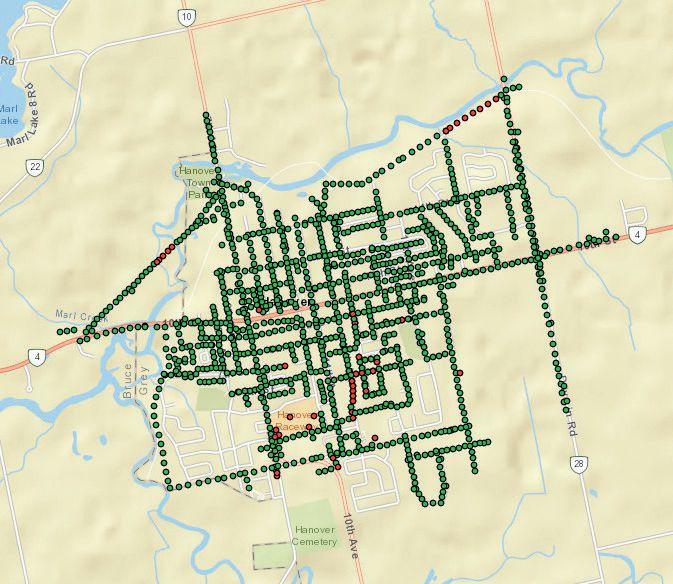






The way assets are inspected and managed has changed. Project tracking, image capture, GPS coordinates and GIS integration are all in the palm of your hand. Look to OEC’s companies to take your organization’s asset data into the future.
Integrated infrastructure solutions from damage prevention, asset management, engineering design, GIS system management, construction, metering and more.




It’s been my pleasure to aid in these and other advocacy efforts in my role as EDA chair for 2020/21.
Local hydro utilities in Ontario – and energy utilities across the country –are tightly regulated businesses. This simply comes with the territory of being stewards of important public infrastructure and of having exclusive responsibility to provide one of society’s most essential services.
But as with all things, balance is crucial. So, increasingly, is innovation. As we explore in this issue of The Distributor, the current regulatory framework for local distribution companies (LDCs) is not achieving what it needs to in either of these respects.
EDA LDC members fully embrace the need to rigorously justify even modest increases in the rates they charge, and the value of the investments they intend to make – just glance at the public record for any single rate application on the Ontario Energy Board (OEB) website if you doubt the scope of this effort.
But every requirement and step in a rate-application review has a cost associated with it, which is ultimately paid by ratepayers. So, while customers need the protection of effective oversight, they also have a direct interest in seeing that balanced with regulatory efficiency and minimized compliance costs.
Increasingly, we are also confronted with the challenge of regulatory processes that do not effectively enable innovation; and of regulation that is out of step with the realities of an industry and a broader energy system that is rapidly transforming.
To cite one example: Rate application processes are well designed to assess investments in trucks, powerlines and bricks-and-mortar facilities, but they have not yet been adapted to properly assess less tangible investments such as cloud computing.
Pilot projects and “sandboxes” are great starting points for innovation in our sector, but we lack clear regulatory pathways towards the financing of and broader implementation of things like virtual net metering. Too often, regulatory decisions tip in favour of moderating short-term costs, rather than maximizing long-term value – even when LDCs are attempting to respond to specific customer needs.
Features in this edition suggest some of the ways we can achieve a better regulatory balance for our sector – ones that effectively safeguards customer interests, while at the same time prioritizing regulatory efficiency, flexibility and innovation.
The EDA has mapped out more detailed solutions, through our regulatory reform white paper and our ongoing advocacy efforts, and we have been encouraged by recent signals from the new OEB leadership.
It’s been my pleasure to aid in these and other advocacy efforts in my role as EDA chair for 2020/21. With my term about to end, I’d like to thank my fellow directors, staff and members for their engagement this year. There’s a lot of work ahead and I look forward to the further progress that the EDA and its members will bring about.

Sincerely,
Ysni Semsedini President & CEO, Newmarket-Tay Power Chair, Electricity Distributors Association
The Electricity Distributors Association (EDA) publishes The Distributor for its members and stakeholders. All rights to editorial content are reserved by the EDA. No article can be reproduced in whole or in part without the permission of the EDA.
PUBLISHED SPRING 2021 FOR:
Electricity Distributors Association
3700 Steeles Avenue West, Suite 1100 Vaughan, ON L4L 8K8 www.eda-on.ca
EDA STAFF
CEO’S OFFICE
Teresa Sarkesian, President and CEO
Natasha Galati, Executive & Administrative Assistant
POLICY, GOVERNMENT AND CORPORATE AFFAIRS
Ted Wigdor, VP, Policy, Government & Corporate Affairs
Derek Nardone, Manager, Corporate & Government Affairs
Kathi Farmer, Senior Regulatory Affairs Advisor
Abdul Muktadir, Senior Policy Advisor
Brendan McClughan, Policy & Government Affairs Specialist
MARKETING, COMMUNICATIONS AND MEMBER RELATIONS
Andrew Temes, VP, Marketing, Communications & Member Relations
Marica Macura, Director, Member Relations & Events
Lynne Cunningham, Manager, Communications & Marketing
Lesia Kostecki, Marketing & Member Relations Specialist
Sari Maritzer, Communications Specialist
FINANCE AND ADMINISTRATION
Tamara Orlova, Chief Financial Officer
Arlene Klemmer, Accounting Clerk
Matthews Joseph, Senior IT Analyst
Chrissan Pascal, Office Services Assistant

PUBLISHED AND PRINTED BY ANNEX BUSINESS MEDIA, 111 Gordon Baker Road, Suite 400, Toronto, ON M2H 3R1 (416) 442-5600
annexbusinessmedia.com
Agreement #: 43526108
ADVERTISING SALES
titus/one mediasales@eda-on.ca
The not-for-profit health and social service agencies that support our communities are doing their best to help those in need.
We provide funding to a wide range of community support organizations to help foster good health, diversity and sustainability wherever we can.
Learn more about our commitment at alectrautilities.com/AlectraCARES



The EDA will formally thank its outgoing board of directors at AGM 2021 on February 25. But the association would like to especially acknowledge and thank those directors who are not returning, for their dedication and service to the industry during their soon-to-be-completed terms. They are:
• Art Skidmore, President & CEO, Halton Hills Hydro, Upper Canada District Director
• Jerry Van Ooteghem, President & CEO, Kitchener-Wilmot Hydro, Niagara Grand District Director
• Peter McMullen, Board Director, Greater Sudbury Utilities, Northeastern District Director

With the retirement of Max Cananzi from Alectra Utilities, the EDA welcomed Mike Matthews, Senior Vice President, Network Services as the board’s LDC2 director in December 2020. Mike has volunteered his time with the EDA since 2007 when he joined our EDIST Committee, which he now chairs. Among many other EDA initiatives, he has also dedicated his time to participate on and chair the Upper Canada District executive. The EDA welcomes Mike and looks forward to his contributions.
ERTH POWER organized a successful spirit-of-giving fundraising effort among its employees, by donating $1,000 to the local Salvation Army to help brighten the holiday season for families in the Mitchell community.
The community of 1000 Islands Gananoque lit up the town for the holiday season with decorations with help from HYDRO ONE EMPLOYEES. Twenty employees showed up with four bucket trucks to help make the holidays extra special in this community.
WATERLOO NORTH HYDRO organized a week-of-giving campaign and donated over 4,200 meals to its local food bank, to help support local families in need over the holiday season. Twelve meals were donated for every customer that signed up for the utility’s eBilling program.
And congratulations to ENERGY+ EMPLOYEES for helping fundraise $95,000 to support those who continued to struggle due to COVID-19 during the holiday season. Their donations were generously shared with frontline agencies within their community.
HYDRO OTTAWA donated $2,750 in support of Ottawa’s Help Santa Campaign. Donations were generously made directly to the Ottawa Salvation Army to help get toys to kids in need for the holiday season.
NORTH BAY HYDRO employees volunteered at the North Bay Food Bank and helped organize a drive-thru drop-off centre for community members to donate non-perishable food to families in need during the holiday season.
LONDON HYDRO employees donated $2,000 to its local Salvation Army Christmas Hamper Program to help purchase toys for local families for the holidays. London Hydro employees step up every year to help families within their community.
The start of the 2021/22 term for the EDA board of directors will be marked with a virtual AGM this year, taking place on February 25, rather than the usual large in-person meeting and accompanying conference and gala. But it remains no less important a milestone.
The EDA welcomes incoming Chair Chris White – who together with incoming Vice Chair and Hydro Ottawa President and CEO Bryce Conrad – will assume office at the close of the AGM. White is President and CEO of ERTH Corporation, based in Ingersoll, and is entering the second year of his term as an EDA board member representing the Western District.
“I’m proud of the value that EDA delivers to its members and excited to be taking on this important leadership role,” White says. “The EDA has built up solid credibility and influence with government and stakeholders, as our sector’s united advocacy voice. That enables us to influence policy for the benefit of our customers and communities – and we saw during the pandemic just how important that can be.”
White began his career as an apprentice powerline technician at what was then Ingersoll PUC, and went on to hold various supervisory, management, senior management and executive positions. In 2010 he became president of ERTH Power Corporation, the regulated (LDC) arm of ERTH Corporation. He later took on the chief operating officer role at ERTH Corporation and in 2016 became its chief executive.
White played a major role in the creation of ERTH Power through the merger of 10 Ontario electricity utilities, and led ERTH’s subsequent merger with Goderich Hydro. Today, ERTH Corporation’s activities span the regulated and competitive realms, including distribution, utility maintenance, infrastructure, renewables, and developing and refining software intelligence for resource and asset management.
“All of us on the incoming board – and I think everyone in the


Incoming EDA Chair, Chris White
membership – will miss launching the new board year with our usual annual gathering,” says Chris. “I very much hope we can resume in-person meetings and events sooner rather than later in my term.”
“In the meantime, we’re of course ready to continue building on our considerable momentum on many policy files, and to continue to deliver great networking and professional development opportunities virtually for the duration of the pandemic,” he adds.
Watch the EDA web site and other communications channels for an introduction to the full 2021/22 board later in February, after it formally assumes office.
THANK YOU TO THE ‘MOSAIC’ OF EDIST PARTICIPANTS
The virtual version of EDIST 2021 attracted nearly 400 participants. There was strong engagement in the sessions and the hundreds of networking opportunities, and event feedback has been very positive. Participants also enjoyed a full 30 days of on-demand access to all program content. The EDA thanks the event sponsors and everyone who took part, and in particular the volunteer members of the EDIST Committee.
See page 29 for information on upcoming EDA events.

Electricity is clearly going to fuel a great deal more of our economy and day-to-day lifestyles moving forward. This makes good economic sense in many respects – as those who have calculated the long-term payback on an electric car know – and is essential to achieving our climate change objectives.
LDCs are both suppliers of this moreimportant-than-ever commodity, and have expertise and relationships that will be crucial to broadening its use. They are trusted by customers and have detailed insights into complex supply and demand conditions; they own the infrastructure via which growing electricity demand will be met; and they are natural partners to the municipalities who are often driving electrification in contexts such as transportation.
Electricity is set to become a much bigger driver of the ways in which we move around.
It’s a good position to be in. But for LDCs to fully seize this opportunity – and for them to effectively manage the daunting challenges associated with large-scale electrification – regulatory frameworks urgently need to be better aligned with current realities and fast-emerging needs.
That realization is the motivation behind the first in what is likely to be a series of EDA position papers on various aspects of electrification. Released at the end of 2020, Charging Ahead outlines the role that LDCs can play in electrifying transportation, and some of the barriers they currently face as they work to maximize the benefits for Ontarians.
As the paper states, “Incorporating electrified transportation infrastructure should be viewed with the same [regulatory] lens as poles, wires and transformers,” and it stakes out three broad positions aimed at shifting the existing lens in that direction.
LDCs, as noted, are ideally situated to play a key role in electrification and to ensure it delivers a range of benefits to Ontarians. Beyond carbon reductions, this could include affordability improvement, through better utilization of what is

currently surplus energy. Yet LDCs do not yet have either a regulatory mandate or support from the Ontario Energy Board to engage in initiatives supporting electrification.
Limited charging infrastructure is a major brake on electrification. And while many LDCs are eager to build such
"As EV and other electrified transportation adoption grow, LDCs, transmitters, and generators will need to forecast when, where, and over what intervals of time that electricity will be needed."
– Charging Ahead
Electric vehicles are an increasingly common sight on our roads, and according to the International Energy Agency’s Global EV Outlook 2020, global sales were up 40 per cent yearover-year in 2019. In Canada, some provinces have already mandated timelines to phase out sales of gas-powered cars, with hints in the most recent federal climatepolicy announcement of possible future movement in the same direction. Meanwhile, the Ontario government is partnering with private industry and others to capture EV-related manufacturing opportunities. Electrification of transit systems is another important action area that multiple EDA members have been and will continue to be actively engaged in. Large-scale electrification of fleet and even heavier-duty vehicles is also expected to take place over time.
infrastructure they face barriers today in getting it included in their rate bases. That in turn is a crucial factor in enabling them to justify and amortize the significant upfront investment required. The same challenge applies to investments needed to support transit and fleet electrification.
Current rate classes are ill-suited to fast-charging requirements, and this is a disincentive to strategic infrastructure investment in the context of transit and fleet ownership in particular. Overnight or other rate classes designed to accommodate and equitably price fleet EV charging have already been implemented elsewhere and are needed in Ontario.
Charging Ahead was produced with the engagement of the EDA’s Conservation and Sustainability Issues Council and its Electric Vehicle Sub-Committee. Future position papers are likely to address electrification of buildings and of industrial processes. For more information, please contact Ted Wigdor, Vice President Policy, Government and Corporate Affairs at twigdor@eda-on.ca.
In December, The Distributor sat down virtually with the chairs of the EDA’s Regulatory, Finance & Corporate Issues, and Operations & Engineering Councils for a conversation on the state of LDC regulation in Ontario and opportunities for customer-benefitting improvements.
Our panellists were Indy Butany-DeSouza, Vice President Regulatory Affairs & Privacy at Alectra Utilities; Alyson Conrad, Manager of Finance & Regulatory Affairs at Waterloo North Hydro; and Falguni Shah, Vice President of Technology & Innovation at Elexicon Energy. The following is an edited-for-length transcript of the discussion.
DISTRIBUTOR: CUSTOMERS NEED PRICING AND OTHER SAFEGUARDS, BUT ALSO BENEFIT IF THEIR UTILITIES CAN BE INNOVATIVE AND ADAPTIVE. DO WE HAVE THE RIGHT BALANCE IN ONTARIO TODAY?
ALYSON: I think the straight answer is no. I think the current framework limits our innovation because there’s a lack of allowance for failure. In order for us to be truly innovative we need to be able to try new things, make errors, adjust and improve in order to assist the industry as a whole.
There’s a difficult balance because, who should finance taking these risks? Right now the risk is almost solely on the shareholder and on subsidiary companies. If maybe we were able to access centralized funding that would help; and then making sure that those results are freely shared within the industry.
INDY: The regulatory process, I would suggest, is out of balance. It needs to be value focused and not just cost focused. And we need to recognize that there is a distinct transformation underway which speaks to the need for innovation.
It’s the 4Ds: decarbonization, decentralization, digitization, and democratization. And we need to make investments. Customers are asking for change. They’re
asking for transition. But the regime is so heavily weighted on trying to reduce costs that it’s to the detriment of advancing the needs that we’re trying to serve – and that is the needs of our customers. And so efficiency is super important of course, but we need to be effective as well.
FALGUNI: I certainly agree. We need to be more strategic and find a balance in terms of the regulatory side, as well as from the technological-advancement side, to meet customers’ needs. We need to think more about the vision for the future. We all know that digitization is disrupting traditional areas of business, but on the other side it will bring new areas of opportunity too. So, we need to find a balance in a very calculative way, thinking about what customers will require and what utility business models are going to be in future.
Even with a very restrictive regulatory approval process, Ontario utilities have shown great potential in efficiently managing the balance between rate-based innovation projects and proven customer benefits. In fact, further regulatory changes will certainly bring rate benefits to customers with the implementation of innovative projects. Some of the projects that Elexicon Energy is working on are community virtual net-metering and a transactive energy platform.
These types of projects cannot be widely implemented without significant changes in regulatory approvals.
DISTRIBUTOR:
ALYSON: So I think, yes, we need to be allowed to test new technologies through proof-of-concept and pilot approaches, which would allow us to try things out on a small scale and see if they can be tested and implemented –determine what those failures could be – and then see what the results are and tweak and improve them. In order to do this we need to have some financial and timing certainty, which I don’t believe we have right now. The current process


also moves too slowly. If customers want something that we can offer relatively easily we should be able to move on those things.
INDY: I think this is really about enablement as opposed to empowerment. We need an environment in which we are enabled to take more risks. And if we can take more risks then there’s certainly more opportunities for us to provide benefits. Those benefits come to our customers first. Obviously subsequently to our shareholders.
It’s a great idea to make the pilot investment but then how do you bring forward the big application for the real project, or the expansive project that responds to many more customers? We’re not talking dribs and drabs now. It’s not a science project. It’s now the real project.
And that is challenging. We’re not enabled because we don’t have the right timing. We don’t have a source of funding. And we don’t have policy certainty. And those three things taken together really destabilize the opportunities for utilities to make riskier investments and for them to be innovative.
DISTRIBUTOR: HOW BIG A COST DRIVER IS REGULATORY COMPLIANCE AND DO YOU THINK CUSTOMERS HAVE A SENSE OF ITS MAGNITUDE?
ALYSON: I think customers in general want to know that utilities have checks and balances. But I do believe that they’d be surprised by the extent of that cost. If you were to tell them what the cost of a rate application was and how many lawyers and consultants are getting paid, I think that they would be surprised by that.
I also think, from a different perspective, customers get frustrated when we aren’t able to do something that they want. When they have a plan or they have a project that they want to implement because they’re trying to be innovative and we end up being the roadblock in a lot of ways. I live in Waterloo where there’s high-tech industries and they want innovation and we, at times, hold them back. I think the cost of not doing something should be recognized as well.
INDY: Our customers expect us to be compliant. I think that’s a fair and entirely reasonable starting point. That being said, I think there are areas of compliance where things are off the rails. The first area is the ongoing compliance and reporting. It seems like the need for and the constant requests for new reporting, more reporting, have exponentially increased.
Secondly, ‘where’s the quid pro quo’? Where is the efficiency in constantly evaluating those compliance requirements – and we’ve

said this before and the EDA has espoused it – where’s the one-in, one-out? Or one-in, two-out?
It’s very costly to file those rate applications. And to adjudicate those rate applications, and our customers are paying for it ultimately through their rates. Are they getting value for that cost?
DISTRIBUTOR: HOW IMPORTANT IS THE INTERVENOR PROCESS AND HOW COULD IT BE IMPROVED?
INDY: I firmly believe that a good debate is healthy for customers. We are a regulated monopoly. And so to have that healthy debate and to challenge what is being brought forward is entirely reasonable. And intervenors serve an important role in fulfilling that process.
And I really want to give the OEB a bit of a high-five here. I think that the OEB has listened and is continuing to try and evolve its processes. And it’s trying to be the fair arbiter.
But despite those great efforts of our regulator, there is absolutely an ongoing frustration for distributors. And so it begs the question, should we be looking at other jurisdictions where there is a consumer advocate? Is that the better mechanism? Because right now our process is certainly – it’s not even duplicative. It’s more than that, whatever the right adjective is, we are seeing the same questions repeatedly.
FALGUNI: I certainly agree that the intervenor process is very much necessary and it helps provide balance and value to the ratepayers. And that’s the main intent. But whenever intervenors are
Regulation is so heavily weighted on trying to reduce costs that it's to the detriment of advancing the needs that we're trying to serve.
- Indy Butany-DeSouza
responding to a rate application, they need to think from a different mindset as well. They need to understand that utilities are trying to implement innovative projects to better deliver future customer benefits.
I can give a few examples of rate-based spending on ADMS [advanced distribution management systems], DERMS [distributed energy resources management systems] or improved communication infrastructure that will give more visibility and control to utilities, so that they can better manage dispersed distributed energy resources. So I think there’s a little bit of work for the OEB to do as well. They need to provide a bigger picture and future utility models to intervenors, so that the process can be more relevant and more impactful for utilities and customers.
DISTRIBUTOR: WHY DO THESE REGULATORY DEFICIENCIES MATTER? WHAT BENEFITS ARE THEY HOLDING YOU BACK FROM DELIVERING?
FALGUNI: So, one good example is from an IT perspective. Everybody is struggling with whether cloud computing can be capitalized or whether it is an operational expense. Right now based on our rate structure it’s an operational expense. And using cloud infrastructure is the best thing to do from a system and technology perspective, but our current rate model is a barrier to that.
So, a million-dollar expense for purchasing a bucket truck can be easily justified under the current rate model but half-a-million-dollar expense for cloud technology or any similar innovative

technology can meet a number of hurdles to get regulatory approval. This regulatory barrier needs to be overcome by implementing some forward-thinking strategies. This will help utilities to implement projects that build towards “Utility 2.0”.
ALYSON: LDC revenues are decreasing as new technologies are being promoted by third parties. And when our revenues decrease, because we’re a monopoly, this increases rates to customers. Customers are asking us to provide these services or products and we just can’t. For example, one service that we’ve been working on here at Waterloo North Hydro, is virtual net metering. Many of our customers are asking for this. We were recently allowed to put comments forward on community net metering, but the narrow framework we had to work within would not satisfy most of the customers that are asking for it.
DISTRIBUTOR: WE’VE IDENTIFIED A NUMBER OF CHALLENGES THAT YOU FACE. WHAT MAKES YOU OPTIMISTIC? ARE YOU SEEING SOME HOPEFUL DIRECTIONS OR RECENT IMPROVEMENTS?
There’s a lack of allowance for failure. In order for us to be truly innovative we need to be able to try new things, make errors, adjust and improve in order to assist the industry as a whole. - Alyson Conrad
FALGUNI: I can see that the OEB is actively working on some major regulatory changes, like a virtual net-metering model, energy storage for reliability improvement, etcetera. But the changes need to be implemented much faster than they are right now. I would like to see some project-customization flexibility for utilities, because from an innovation perspective, every utility’s customers have different needs and choices. Rural-area customers may need microgrids, or they may need more storage, solar, or distributed local generation. Whereas urban-area customers may need better electric vehicle infrastructure with vehicle-to-grid capabilities.
So rather than one-size-fits-all methodology, I would like to see some flexibility for utilities on innovation spending – or let’s say a
So, a million-dollar expense for purchasing a bucket truck can be easily justified under the current rate model but half-amillion-dollar expense for cloud technology or any similar innovative technology can meet a number of hurdles.
- Falguni Shah
certain percentage of total budget on innovation spending – and let the utility offer tailor-made innovative solutions to its customers to help them become prosumers.
ALYSON: The next step is this innovation piece, and I think that there is promise in the fact that regulators seem to want to open that door. But I really believe that they’re scared of what’s on the other side of that door. And so it’s opening at such a slow pace that we’re not

really doing anything.
From the OEB’s perspective – filing digitally, I mean it seems like such a small change, but it changed so much for us. And I thought this should have been done years ago. I think that they’re being held to timelines a lot more aggressively at the OEB and this is excellent.
I’m definitely intrigued by some of the new changes that could come. Having a new tone at the top hopefully will make some positive change. I think that a thing that they need to work on is becoming a partner to LDCs and building that relationship back up. They need to get to know us, they need to get to know our issues, and they need to help fix the problems that are in play. We want to be a partner.
INDY: On the innovation piece I’m optimistic because the recent budget includes changes to the OEB Act. Innovation got added as part of the OEB’s mandate.
And I think it goes back to the notion of the tone from the top. That kind of leadership must start with the regulator and our government. So, I’m optimistic that that change and that new focus on innovation will lend itself to movement. And I think that the revamping of the senior leadership at the regulator is certainly going to help.
So I’m encouraged by that renewed focus on their performance, not just on our performance. Because performance needs to be accountable the whole way around for it to work. The missing link is still the intervenor, but those are some areas that make me feel cautiously optimistic.

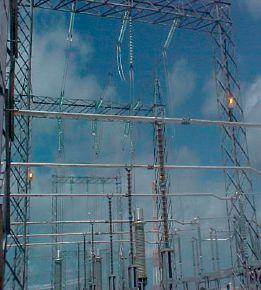


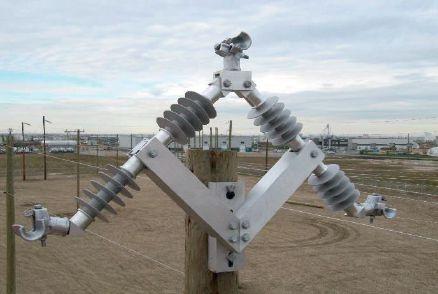
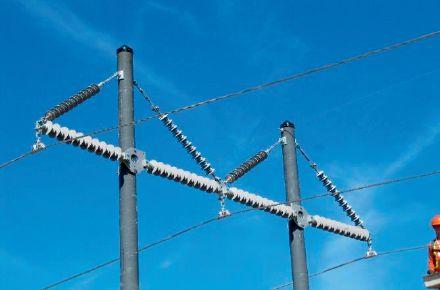


Hydro One distributes electricity to 1.4 million customers across a 960,000km² service territory –encompassing about 90 per cent of the entire province. Many customers are connected through single, radial lines and therefore vulnerable to outages. Crews work quickly and safely to restore power when outages occur, by making repairs or by rerouting power through nearby lines. But in hard-to-reach areas along radial power
lines, it may take longer for crews to identify and correct the cause of an outage.
While Hydro One is installing equipment to better pinpoint the location of outages and to decrease response time, some customers in remote locations still experience a disproportionate number of outages. Hydro One is therefore leveraging innovations in homebattery technology and launching a pilot to improve reliability for such customers. This is part of Hydro One’s plan to build a grid for the future and to make improved reliability a reality for more Ontarians.
“Customers should have safe and reliable power regardless of where they live,” says Spencer Gill, Vice President, Customer
Hydro One’s service territory encompasses most of the province and many remote areas.
Service, Hydro One. “By advocating for our customers and exploring innovative solutions, we can energize life for people and communities.”
In August 2020, Hydro One received regulatory approval as part of the Ontario Energy Board’s (OEB) Innovation Sandbox to begin a pilot project, aimed at enhancing local reliability through behind the meter (BTM) battery storage. This decision opened the door for Hydro One to fund BTM energy storage through distribution rates to increase reliability and allowed for a pilot project for up to 100 customers.
The results will help determine the effectiveness of battery storage as a solution for customers experiencing excessive power outages. By working with the OEB, Hydro One successfully advocated for more flexibility and for the ability to leverage new technology to meet the needs of its customers.
Other solutions, such as investing in new wires, were explored and proven to be more expensive. Front of the meter (FTM) storage options were also assessed, but would have required customized sheds to house the battery units, which are then susceptible to water leakage, animal interference and weather-related failures. An FTM solution would also likely require installation of additional grid-side automation equipment to ensure efficient operation. By exploring all options, Hydro One was able to demonstrate to the OEB that a BTM battery storage solution would provide the most value for its customers.
Battery storage is not only the most cost-effective solution but also the most environmentally friendly. Unlike diesel generators, a common means of providing electricity in remote areas, batteries do not generate greenhouse gas emissions while operating.
Hydro One has reached out to more than 1,800 customers in remote areas to find 100 participants for the pilot. Each participant will have two battery storage units installed in their home, providing approximately 10-12 hours of electricity, and decreasing outage durations by approximately 30-60 per cent.
Hydro One will document the efficacy of the pilot. Key indicators will include
reliability improvement, cost effectiveness and customer satisfaction. Hydro One will then determine how to approach an expanded continuation of the project for customers experiencing excessive outages.
“We owe it to our customers to think
outside the box and bring new solutions to improve reliability to the forefront,” says Gill. “As we monitor the success of this pilot, we can’t wait to see how it can be replicated to enhance our service offerings across the province.”
Hydro One is Ontario’s largest electricity transmission and distribution service provider. We distribute electricity across Ontario to nearly 1.4 million predominantly rural customers, or approximately 26% of the total number of customers in Ontario. In November 2015, we became a publicly traded company on the Toronto Stock Exchange (H). @HydroOne

with Utilities to Innovate Collaborate Transform Provide Software Support for DERs Initiatives Integrate AMI MDM/R GIS SCADA OMS
Call to learn about our Suite Metering Software

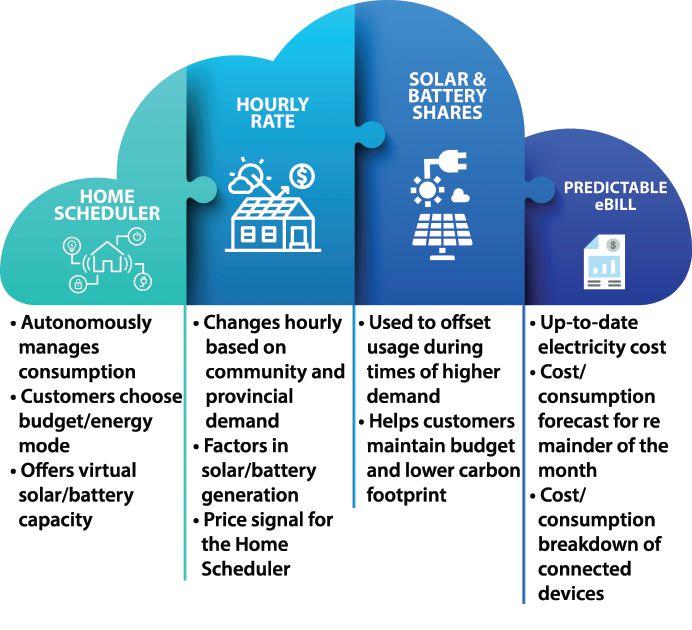
Customers get a home scheduler, new hourly rate plan, predictable bill and access to clean energy
As the demand for customer choice and convenience grows within the energy sector, London Hydro continues to pursue regulatory innovation and explore new energy management solutions that meet customers’ evolving needs while managing their costs. In collaboration with Sidewalk Labs, an urban innovation company and leader in affordable electrification, London Hydro developed a pilot project to test a new energy management solution that helps customers gain more control of their energy consumption and carbon footprint using digital energy tools.
In January 2021, the Plus Pilot launched, providing 100 customers with smart home devices to help them stay within an energy budget and comfort profile they select while lowering their homes’ carbon footprint. The Plus Pilot explores a new approach to reducing electricity demand during peak periods, when utility costs and greenhouse gas emissions are higher, while keeping utility bills affordable for customers. To achieve this, the pilot uses four distinct elements, presented to the pilot community through a specially developed mobile app:
1THE HOME SCHEDULER – As a part of the Plus Pilot, London Hydro and Sidewalk Labs collaborated to create the Home Scheduler. This tool feeds the autopilot function that manages participants’ connected devices autonomously when there is a higher
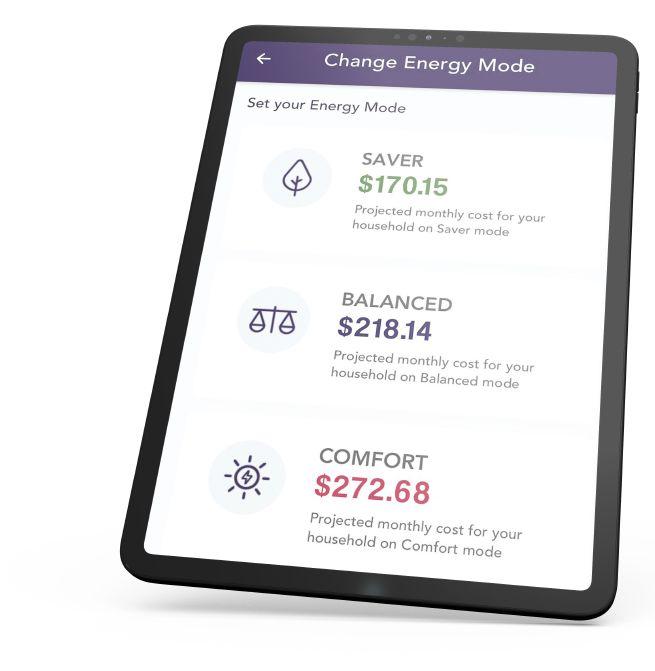
electricity rate. To set the scope for the autonomous management of devices, customers select a monthly budget based on an energy mode: saver, balanced or comfort. Each budget is based on the customer’s historical consumption from the previous year.
The customer can decide whether they want to spend a bit less this year (saver), about the same (balanced), or a bit more (comfort). The lower the budget selected, the more actions the autopilot will take to keep the customer on track to meet their goal. Participants will receive a notification when connected devices are being turned off or delayed to avoid a higher electricity rate. Participants can override these actions and will see the effects on their eBill.
– The Plus Pilot tests a simulated electricity rate that changes hourly based on the pilot community’s predicted usage and the forecasted daily demand for electricity in the province. Participants can see the hourly electricity cost in the pilot’s mobile app. When the electricity cost and climate impact are higher, the autopilot will reduce consumption by managing the connected devices.
The hourly rate gives customers flexibility on when they can use electricity throughout the day while still prioritizing grid efficiency. The hourly rate is being used for the pilot to inform device management and is only being reflected in the eBill available in the pilot’s mobile app. Participants will still receive their usual electricity bill from London Hydro which will reflect provincial electricity rates.
Participants can view their up-to-date electricity costs and the effects of allowing and overriding autopilot actions within the pilot mobile app via a new virtual eBill. They can see how much of their monthly budget they have left and will receive a notification if their current electricity demands exceed their budget so they can try to reduce their consumption. The eBill will also provide an in-depth look into connected devices so participants can understand which items are using the most energy, therefore costing them more.
SHARES
– The Home Scheduler recommends an amount of solar and battery for each household to offset usage during higher demand periods. Access to clean power options allows participants to run appliances and other devices during times when rates and climate impact are higher while maintaining their budget and lowering their carbon footprint.
While the pilot will not deploy actual batteries and solar, the pilot will offer participants virtual shares of both to get a sense of whether or not households are willing to take advantage of access to clean power resources. Through the pilot mobile app, participants will see the impact solar and battery can have on their electricity costs.
“Neighbourhoods of the future will require renewable energy resources, energy storage options, and demand management
tools all working together to shift our energy use to times when there is less impact on the electrical grid and environment. We believe this pilot will help demonstrate a path to this more sustainable future,” says Rebecca Craft, Director of Sustainability - Electrification, Sidewalk Labs.
As part of the Plus Pilot, select participants will receive Smart Home appliances from LG Canada that will integrate with the Home Scheduler. This integration will automatically shift larger loads to hours when community electricity demand and the simulated hourly rate is lower, increasing their opportunity for a predictable bill and lower carbon footprint.
“Projects like this help London Hydro transition from reporting on consumption and carbon footprint to enabling customers to control their consumption and carbon footprint,” says Syed Mir, VP Corporate Services and CIO, London Hydro. “Based on the results of our pilot with Sidewalk Labs, London Hydro will utilize the OEB Innovation Sandbox for any regulatory adjustments required to enable deployment of the solution to a broader selection of our customers.”
The Plus Pilot builds on the success of London Hydro’s Green Button initiative and recent smart home pilots. This project highlights London Hydro’s commitment to continue working with its customers to test drive innovation while exploring renewable energy sources.
London Hydro Inc. delivers safe and reliable electricity to over 159,000 customers. We are committed to being a trusted energy source provider through innovation, customer focus and operational excellence. @LondonHydro
The following article summarizes one of the breakout sessions at the EDA’s recent EDIST conference, presented virtually and attended by specialists in electricity, distribution, information systems and technology. For more information contact Jacob Weninger of Entegrus Powerlines or Trevor L. Grant of Power Solution Resources. You can read the full technical version at www.entegrus.com/SGI
Flatlining typically signals bad news, but it’s a big success when it’s a project aimed at reducing voltage variation on an end-of-line feeder. Entegrus achieved just such an outcome through a 2016 grid-edge technology demonstration project involving a feeder in the community of Erieau.
Located on a narrow peninsula jutting out into Lake Erie, Erieau is among the 17 urban communities that Entegrus serves. These communities are scattered among rural areas in a service territory extending 150 km end-to-end. Some parts of this territory are also embedded within areas served by Hydro One.
This geographic dispersal creates significant challenges in terms of voltage visibility and management, and in terms of response times to diagnose and resolve system issues. The Entegrus demonstration project, supported by the Ontario Smart Grid Fund and Natural Resources Canada, aimed to address these challenges by deploying Edge of Network Grid Optimization (ENGO) devices on the secondary side of distribution transformers. Through fast injection of reactive power
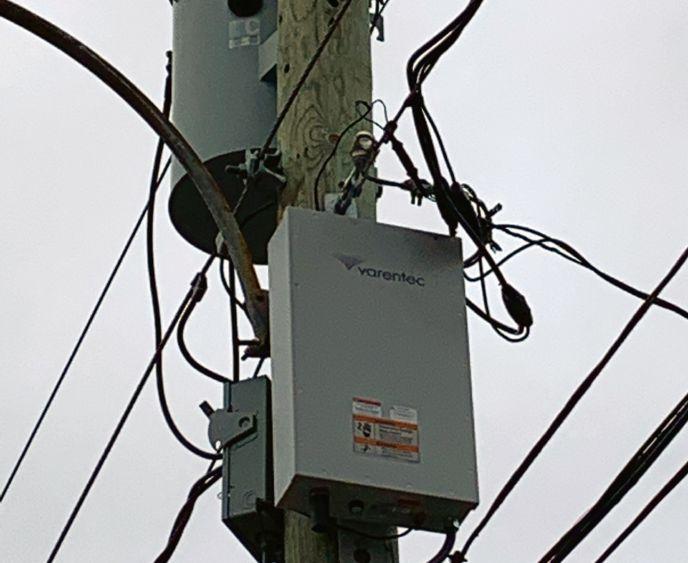
– based on local control, system analytics and set-points provided by a cloud-based Grid Edge Management System (GEMS) – the ENGO devices were able to achieve a 75 per cent reduction in the voltage variation band along the entire feeder, and a reduction in voltage unbalance of two per cent (i.e. from three to one per cent).
More recently, Entegrus has replicated and expanded upon these benefits in the community of Thamesville. While only a half-hour away from the Entegrus Control Centre, Thamesville has the complicating factor of being within an embedded pocket of Hydro One’s service territory.
In this case, an upstream regulator was integrated with the grid-edge technology. It complemented improved voltage visibility and management with the additional value stream of Conservation Voltage Reduction (CVR) functionality. This entailed lowering the supply
voltage to reduce both electricity demand and energy usage, with important associated reductions in greenhouse gas (GHG) generation.
Significantly, the regulatory pathway towards implementation of this project was paved by the earlier work in Erieau, which satisfied a requirement to demonstrate the safety of equipment deployment on distribution feeders.
This follow-on project was co-funded by Natural Resources
Canada, through its Green Infrastructure Phase II Smart Grid Fund Program, and by the Ontario Smart Grid Fund. This stream of NRCan funding is directed to projects with the potential to demonstrate the capacity of local distribution companies to reduce GHGs.
ENGO devices were placed on 11 of 64 Thamesville transformers, based on a detailed analysis of the feeder model and historical voltage profiles. The devices provide local diagnostics of the hardware and communications, while the GEMS platform provides system analytics, diagnostics and presentment. An Operator Control and Visualization Dashboard, in turn, provides a sightline on feeder status and various specific data points.
The effectiveness of both the ENGO devices and the regulators that provide the CVR functionality has been tested, and annual demand reductions and energy savings estimated, based on feeder load. The project has demonstrated the potential for an optimized system – where voltage set points are dynamically managed to maximize voltage reduction while remaining within a CSAcompliant range – to achieve meaningful conservation benefits.
Entegrus operates and maintains electricity distribution systems for over 58,000 customers in Southwestern Ontario. We are committed to operating with local values in mind, while delivering safe, reliable and exceptional service to our customers, partners and communities. @Entegrus


We believe in distributed, carbon-free energy systems & sustainable financing mechanisms. Ameresco’s experts develop distributed energy resources and deploy community-based programs – often attainable without upfront capital. Together we can create a more dynamic, resilient, carbon-neutral future.
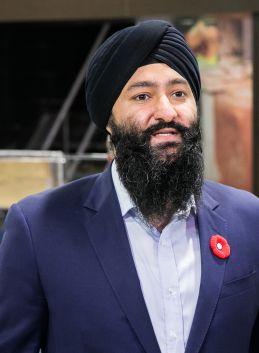
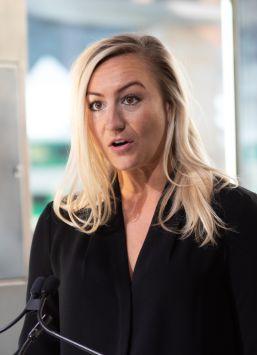
Associate Ministers Prabmeet Sarkaria and Kinga Surma.
The EDA continued its advocacy with MPPs of all parties into winter 2020/21. Since the first wave of the COVID-19 pandemic, the association has prioritized engaging with Ontario’s decision-makers directly to speak to the role of the utilities during the crisis, as well as to better inform them on the multiple programs and initiatives available to support customers.
As part of recent outreach with key decision-makers around the cabinet table, Teresa Sarkesian, the EDA’s President and CEO, held two meetings with ministers ahead of winter break at Queen’s Park.
This included Kinga Surma, whose portfolio as Associate Minister of Transportation for the GTA plugs her into the electrification of transportation file, as the government prioritizes a comprehensive plan for new subway expansion in Toronto and adjoining regions.
With the focus on the need for a “Main Street” recovery in communities across the province, the EDA also prioritized a meeting with Prabmeet Sarkaria, Associate Minister of Small Business and Red Tape Reduction. The utility role in supporting small businesses was on the agenda, as well as ways to reduce the burden of red tape in some key areas for the distribution sector. Senior-level engagement at the cabinet table remains an EDA priority in 2021.
Earlier in the winter, the EDA released Connecting Devices: A Best Practice Guide for Standardized DER Connections Version Two. The experience of customers and utility experts alike were tapped to inform this updated document that supports interactions between utilities and distributed energy resources (DER) proponents.
The guide reviews current practices of local hydro utilities when connecting DERs. The recommendations within the guide deal with:
• enhancing communication with DER proponents and customers;
• the need for clear documentation; and
• regular conferences that will promote information sharing.
The recommendations are aimed at improving both customers’ and proponents’ experiences and are practical, timely, and readily implementable. The EDA anticipates that operationalizing the guide's recommendations will support the continuing evolution of the grid and enable further growth in DERs in Ontario. You can access the guide at: www.eda-on.ca/Advocacy/Research-and-Reports.
With the COVID-19 Energy Assistance Programs, the Government of Ontario has made funding available to support residential, small business and charitableorganization customers that are struggling to pay their energy bills. This program, offered through Ontario’s local hydro utilities, struggled with lower-than-expected uptake. The EDA encouraged MPPs to promote the program to their constituents and to refer calls from customers to their local utility.
On customer choice, or electricity payment plan flexibility, Progressive Conservative MPPs in particular took note of the initial high volume of customer interest in the new options offered by utilities. These MPPs were also appreciative of the sector’s facilitation of this program by the November 2020 deadline.
These meetings continue to be a great way to engage MPPs on how Ontario’s local hydro utilities are on the frontlines, and to showcase the Power of Local Hydro. MPPs met in winter 2020/21 include:
• Toby Barrett (Haldimand - Norfolk)
• Michael Parsa (Aurora - Oak Ridges - Richmond Hill)
• Catherine Fife (Waterloo)
• Mitzie Hunter (ScarboroughGuildwood)
• Christine Hogarth (EtobicokeLakeshore)
• Nina Tangri (MississaugaStreetsville)
• Randy Pettapiece (Perth - Wellington)
• Sara Singh (Brampton Centre)
Distribution Utility Consolidation in Ontario

For decades now, the Ontario electricity distribution market has seen significant consolidation. While this is aligned with government policy, the drivers have tended to be commercial. As the government continues to consider ways to incentivize consolidation, management teams, shareholders and customers continue to weigh their options. In this ask-the-expert feature Brent Jackson, a director in Grant Thornton’s Power & Utilities group, provides insights based on his extensive M&A experience.
1. WHAT HAVE BEEN THE MAIN REASONS FOR UTILITIES TO MERGE?
At the outset of any transaction, whether it be a merger or a divestiture/acquisition, the first exercise with the deal team,
management, board of directors and shareholders is to understand why they are looking at a transaction, and to build alignment. For the most part, their strategic rationale would typically include some or all of these considerations:
INDUSTRY CHANGE – As true power consumption (per capita demand growth) becomes stagnant and customers continue to weigh their power options, LDCs are looking for increased scale to allocate resources towards innovation and diversification into non-regulated lines of business.
VALUE FOR CUSTOMERS – Greater scale can help realize operating efficiencies passed down to customers, ensure rate stability through the initial regulatory “sit out” period, and provide an opportunity to improve the overall customer experience.
VALUE FOR SHAREHOLDERS – The generation of operating and capital efficiencies provides shareholders with a steady or improved dividend stream, while ensuring growth in a viable and profitable regulated utility.
CREATING A REGIONAL PLATFORM
– The combination of neighbouring utilities can better deal with the increasing complexities and demands of the industry, while maintaining a local focus and relationships.
SHARING OF BEST PRACTICES/ SKILLED LABOUR FORCE – Utilities, like all companies, can always look to competitors or colleagues to improve upon their operating practices and share valuable resources (i.e., skilled labour). A merger or acquisition provides unfettered access to those practices and resources.
2. WHAT ARE SOME OF THE MOST IMPORTANT STEPS TOWARDS ENSURING A SUCCESSFUL MERGER?
The primary goal should be for all major stakeholders (the LDCs, their employees, shareholders and customers) to benefit equally. From the perspective of the deal team, this should, if possible, be done by controlling deal time and costs. In order to do this, it is important to ensure the following:
STRONG PROJECT MANAGEMENT FROM THE OUTSET. Arrange a deal team (including advisors and key managers) that will hold the primary project management role and create a steering committee (directors) as a conduit to the respective boards. The project management team is responsible for timelines and milestones, meetings, communication, key presentations and financial analysis. Provide clearly defined roles for each team member to avoid duplication of work and increased costs.
MAINTAIN CONSTANT COMMUNICATION AMONGST THE KEY STAKEHOLDERS. This should be a focus from the outset and should include boards, shareholders, employees, unions and the public. The frequency of communication will vary among interested parties.
NEGOTIATE/DISCUSS THE MOST CONTENTIOUS ISSUES FIRST. These include governance, valuation, rate impact and succession, and dealing with them upfront will ensure both sides are serious about a merger before they have spent too much time and money.
ASSESS EACH COMPANY’S CULTURE. Ensure the merged entity is a cultural fit across all operational levels.
For decades now, the Ontario electricity distribution market has seen significant consolidation.
3. HOW HAVE MERGERS CHANGED OVER THE YEARS, IF AT ALL, AND HOW DO YOU EXPECT THEM TO CHANGE IN THE FUTURE?
Based on our experience over the last decade, the key aspects (rationale, deal process, documentation) of an LDC merger



Troy MacDonald, Partner, Transactions, National Leader –Advisory Services Troy.MacDonald@ca.gt.com
have not changed drastically. However, we have noticed a shift in the following:
PRIORITIES - There is equal emphasis on innovation, customer impact and future proofing the entire organization, whereas in the past, the priority was solely financial gain.
REGULATORY IMPACT - As a result of the changing OEB regulations and the downward pressure on rates and return on equity, there has been an increased requirement for additional financial analysis to ensure no harm to the ratepayers as well as an increased rationale towards diversification.
DIVERSIFICATION - Many merger partners are looking for non-regulated capabilities, and/or increased financing capacity to be used for non-regulated opportunities/innovation. This has shifted a significant portion of the business plan focus towards other investment types and opportunities while still looking for synergies and rate compliance in the regulated business.
MERGER AS THE PREFERRED TRANSACTION – Although mergers are typically more complex and costly, many municipal shareholders are trying to avoid both the loss of control over their communities’ power distribution as well as the higher transaction multiples associated with a straightforward acquisition. Looking ahead, there is a favourable deal making outlook for LDCs in Ontario, both from a commercial and a regulatory perspective. We expect management teams and shareholders to continue to investigate the merits of a transaction, given the potential benefits for each of their
stakeholders, while we also expect the government to continue to look for ways to incentivize consolidation. Should you want to discuss this topic further, please reach out to Brent or other members of the Power & Utilities group at Grant Thornton:
• Brent Jackson; Director, Transactions

Brent.Jackson@ca.gt.com
• Nathan Snowie; Partner, Transactions Nathan.Snowie@ca.gt.com
• Troy MacDonald; Partner, Transactions; National Leader –Advisory Services Troy.MacDonald@ca.gt.com


Council and Commitee
Participants
What’s left to say about a year as unexpected and dramatic as 2020 turned out to be?
At the EDA, we’re able to say that – on behalf of our membership – we both rose to the challenges of the pandemic and continued to deliver a strong value proposition across all the core activities of policy and advocacy; networking and professional development; and communication, insight and analysis.
In October, the EDA released a 2020 Year in Review Video and Digital Guide,
quantifying year-to-date performance results, along with commentary from our President & CEO, Board Chair, and select LDC members. Key among the highlights is a quantification by one of the leading global accounting firms, which pegs the return the EDA delivers on member fees paid at a 9:1 value proposition.
We’re pleased to have updated these materials – which collectively serve as the EDA annual report to members for 2020 –with full year data. You can review them at www.eda-on.ca/About-US/Year-in-Review or via the QR code you see here.

“ Looking forward, we will continue to be the collective voice of our LDC members, on key objectives including pandemic cost recovery, OEB modernization, and broader objectives such as beneficial electrification and distributed energy resources.”
– Teresa Sarkesian, President & CEO,
EDA
Curated Industry News Items Provided to Members
“ I'd like to personally thank the board, staff and volunteers on our many EDA councils and committees for your extraordinary efforts this year. It's because of all of you that the EDA was able to adapt to the realities of 2020 and focus our offerings on the areas that matter most to our members: policy and advocacy; networking and professional development; and member communications, insights and analysis.”
- Ysni Semsedini, Chair, EDA


DISCOVER THE NEXT GENERATION SOFTWARE SOLUTIONS TO TRANSFORM YOUR UTILITY OPERATIONS. Utilismart digital utility solutions accelerate digital transformation by enabling and reducing distribution system management costs related to: - Regulatory Accounting and Reporting - Work Order Management - Outage Management - Engineering Analysis
- Grid Visualization - Meter Data Management - Consumer Engagement - Meter-to-Cash Process Automation

In this occasional feature, The Distributor profiles EDA staff members and the expertise they put to work for members.
As the pandemic worsened last spring, and EDA staff started working from home, the events program needed to be wholly re-designed, and fast. This was a daunting challenge for an organization whose offering until then had been entirely in-person.
An M&A Forum was deferred to the fall, buying a small window for a big research effort, through which Marica and her team identified the right virtual partners and platforms. They expanded the scope of what became a COVID-focused 2020 events program, delivering seven member webinars over a 10-week period in the spring alone, while building toward more multi-faceted offerings later in the year.
Marica offers these key learnings to her

Marica is one of the longest-service staffers at the EDA, having joined in 1999 – back in the early days of the major restructuring that gave Ontario’s distribution sector the shape we know today. She’s held roles across all the main association functions, and currently leads the member relations and events team.
fellow event managers in the membership:
Venues are as diverse and distracting as the hundreds of locations participants may log in from, so engagement is crucial. The EDA is deploying gamification and speed networking; making events shorter, faster paced and more frequent; and leveraging advantages such as lack of geographic constraints.
Speakers are remote too, so there’s no longer a single point-oforigin for content, but possibly dozens. Organizers need to doubledown on comprehensive rehearsals and technical checks, to keep the risk of a dreaded blank screen or silent audio to an absolute minimum.
With participants no longer needing to book travel and hotels, you can make more last-minute sales – but you’re also sure to have fewer participants committing as far ahead as they used to. This adds to planning and budgetary uncertainties, and creates a challenging new event-marketing dynamic.
Originally from Thunder Bay, Marica has a passionate interest in diversity and inclusion issues. An avid and accomplished chef, she has been missing her usual range of entertaining activities during the COVID era. 2020, however, brought her the considerable compensation of the arrival of her first grandchild.
Members and prospective members can reach Marica at mmacura@eda-on.ca, 905-265-5346.
There’s been a lot of consolidation and scaling-up in the distribution sector over many years now. Why has it made sense for Hearst Power Distribution to continue to chart its own course?
Hearst Power is located in the very “North” of Ontario on TransCanada Highway 11, where it is surrounded by Hydro One territory. Hearst Power has a track record of high efficiency, low cost of operation, excellent electricity reliability, exceptional power interruption response time, and is ranked in the top 10 for lowest electricity distribution rates in the province. Also, being a small LDC in a small town in Northern Ontario, Hearst Power offers a bilingual personal edge to its customers. The support received from its customers is what drives this continuation and the desire to innovate in order to offer the community the best possible service overall.
What role do shared services and other collaboration with fellow EDA members play for you in ensuring efficient operations?
The sharing of services, expertise, knowledge, past experience and current practice helps Hearst Power reduce costs and develop standards similar to most LDCs so that a uniformity amongst Ontario ratepayers is achieved. Hearst Power strives to form strategic alliances with like-minded LDCs to realize greater efficiencies and integrate new ideas that improve operations and ensure sustainability in an evolving energy sector.
You probably know a lot of your customers by name – does that affect how you do business in any way?
As our employees live in this close-knit

community, the relationships and engagements with customers are not always done at the office, but sometimes done while waiting in line at the grocery store, bank or the post office. Hearst Power considers this bond an advantage over larger LDCs.
Does your utility play an important role as part of your local business community?
Hearst Power believes it has built a strong presence in the community. Based on our latest customer survey, to which 19 per cent of our customers responded, 100 per cent of the respondents stated that Hearst Power is a well-respected company in the community.
You’re part of an association where some of your fellow members are vastly larger than you – where do you find common ground?
The industry assumption is that small utilities should adopt the same management principles as large utilities, only on a smaller scale. This assumption is true to some extent, although impacts generated by changes in the industry or the regulator don’t easily translate to a smaller scale, which may be especially overwhelming to smaller LDCs. Nonetheless, common ground can be found on almost every LDC aspect from regulatory requirements, customer billing, third-party attachments, accounting, outside operations to material purchase.
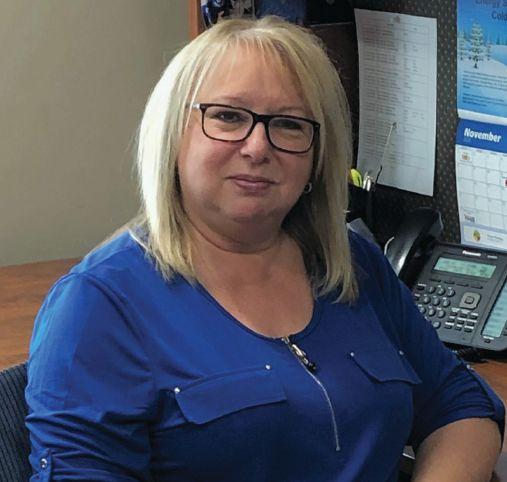
1Your title recently changed. Why combine “human capital” with “innovation” and how does that inform how you approach your job?
Our organization recently adopted a Creativity and Innovation Policy. Human capital is an intangible asset on a balance sheet, but it’s one of the most important. Corporate creativity and innovation contribute to an organization’s viability and competitive advantage. Combining these two concepts just makes sense. I approach my job by encouraging staff to bring forward ideas, by including a creativity and innovation competency when recruiting, by providing on-going training, and by promoting a culture that empowers staff.
2Innisfil seems to be a hub for innovation. Why do you think that is?
The Town of Innisfil's CAO is always striving for innovative ideas and then pushes to get those ideas to fruition. The town is primarily rural, with some urban centres, which brings a host of opportunities. Town staff have had to become creative to provide solutions that best meet the requirements of all its residents. So instead of investing in traditional busses that take on static routes, the Town of Innisfil and Uber have come together in Canada’s first ridesharing and transit partnership. A complete cutting edge community called The Orbit is being designed around the new GO station, which will highlight sustainability in how people will travel, interact, play and work. InnPower and its affiliates are leading the charge with regards to district energy systems and smart grid technologies for The Orbit, using innovation to leap-frog over existing applications.
3InnPower describes its employees as “local energy experts” – how do you equip and empower them to play that role?
InnPower is committed to providing the tools, training and incentives necessary for its employees to be the best they can be. We are constantly researching new opportunities that support our employees, and we provide training opportunities so that they can maintain and update their skills, or learn new ones! We listen to our employees to learn what they need to be the expert.
4InnPower has a predominantly rural but very fast-growing customer base, what distinctive challenges and opportunities come along with that? Ensuring we have the infrastructure in place to support the fast-growing customer base is a challenge. But one we are meeting by maintaining
open channels of communication between municipal planners, consultants, developers and builders. And we are lowering our rates through economies of scale while meeting new demands. InnPower and its employees can shine as we continue to meet the needs of our current customers and prepare for our future ones.
5What’s something interesting you’ve recently read, watched or listened to that you’re applying in your job?
We listen to our employees to learn what they need to be the expert.
There isn’t one thing in particular. But I have been researching the best way to position the Human Capital and Innovation Department, so that we can create corporate innovation activities, endorse the organization’s mission and vision, and encourage staff to not accept the status quo and to promote a corporate culture that will tolerate early failure and reward long-term performance.
The Power of Resiliency was the theme of the EDA’s EDIST Conference, offered virtually in January, which once again provided a strong launch for our annual events program.
Resiliency is in fact now built into our events program as a whole. While we look forward to returning to in-person events when that becomes advisable, we have proven our ability to pivot and to deliver compelling virtual events of various scales.
The following confirmed 2021 events will provide members with access to relevant learning and engagement opportunities, when they need them and wherever they may be:
Virtual – Feb. 25
LDC members should have already received meeting materials and voting instructions.
Virtual – Mar. 23
Noted experts will deliver actionable insights on current issues, research and best practices relevant to one of the most important priorities and performance metrics for LDCs.
Virtual – May 4
This half-day virtual session on construction and infrastructure will include a mix of legal, regulatory and sector perspectives, with leading experts speaking to unique constraints and considerations. Content will be designed to benefit both regulated and non-regulated businesses.
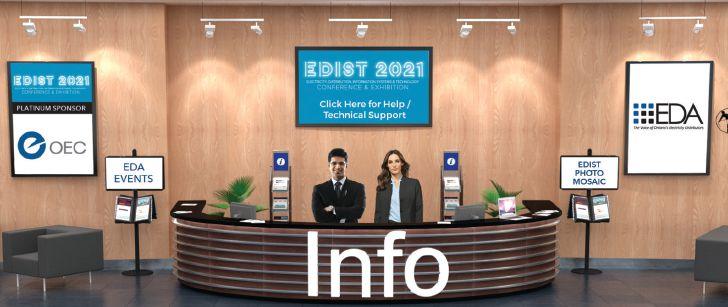
Participants in EDA’s virtual event offerings get an immersive and multi-faceted experience.
Virtual – May 20
In a year unlike any other, demonstrations of excellence abound in the distribution sector. Stay tuned for more details on this widely attended celebration of excellence within our industry.
BUYER’S CATALOGUE
Virtual – Launching Jun. 8
The Canadian Utility Engineering & Equipment Trade Show will be transformed to a newly adapted interactive virtual platform this year, retaining the connectivity and vendor exposure this event is known for. Participants will showcase their products leveraging a variety of multimedia that will be accessible throughout the year.
Virtual – Aug. 24
The preeminent annual distribution-sector event combines insights on emerging trends and technical issues, and will continue in 2021 with a full day webinar featuring engaging global speakers.
Virtual - Nov. 25
This ninth annual event addresses the unique contributions of women in our diverse and connected industry and world.
Please watch www.eda-on.ca/EVENTS throughout the year for agenda and registration details on these events, and for additional forums and webinars that we are continuing to develop. We also welcome member input on our events program anytime, which can be directed to: mmacura@eda-on.ca.
Utility regulatory frameworks are extremely complex, and striking the right balance – between effective safeguards and a manageable regulatory burden – is always going to be challenging.
While that challenge is very much outstanding in Ontario, new direction to and leadership at the Ontario Energy Board signals a renewed commitment to regulatory reform and efficiency.
The following “priorities for a modernized OEB” were identified in a ministerial mandate letter issued to Chair Richard Dicerni last fall. Aimed at achieving certainty, efficiency and effectiveness, they align well with longstanding EDA advocacy objectives. CLEAR GUIDELINES FOR ADMINISTERING EFFICIENT HEARINGS
REDUCE NUMBER OF REPORTING REQUIREMENTS
CONSIDER COST/ BENEFIT APPROACHES

Join the EDA and increase your company’s profile and brand recognition with key decision makers in the electricity utility sector. Improve high value leads with local distribution companies and improve your ROI on marketing costs.
To learn more, contact: Marica Macura
Director, Member Relations & Events mmacura@eda-on.ca