Just about anyone reading this magazine already knows that the electrical trades offer rewarding careers. And, as we transition to a fully electrified society in the coming decades, we’re going to need a lot more electrical pros.
In fact, one of the top issues negatively impacting construction contractors right now—and into the foreseeable future—is a shortage of skilled labour.
What if we could double the size of that talent pool by attracting and retaining the other half of the population?
“Women, too, have found solid, rewarding careers in the electricity sector,” says Michelle Branigan, CEO of Electricity Human Resources Canada (EHRC). “But, like anyone else,
“Women, too, have found solid, rewarding careers in the electricity sector.”
they need to know these careers exist, and they also want to feel welcome.”
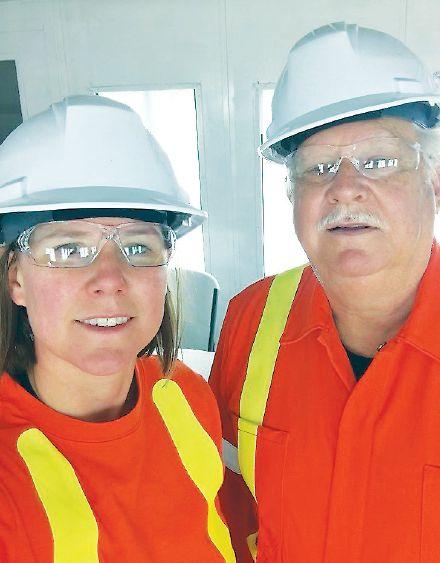
Erin Pollard worked in various administrative roles and “sales and stuff”, but felt unfulfilled until she started walking the electrical path.
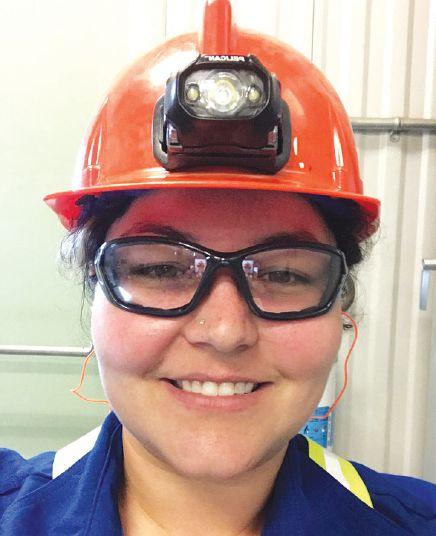
In Lora Cardinal’s town of Fort McMurray, “any trade is very popular”, but she, too, found her niche in electrical.
“It’s only natural to feel like a fish out of water in what is still a male-dominated industry,” Michelle admits. “When Erin joined the union, female members accounted for just 1% of the membership.”
“And when Lora entered the Registered Apprenticeship Program,” Michelle continues, “she was among the first aboriginal students—and a female, no
less—to take that path.”
In those early days, Erin knew nothing about bending conduit and Lora didn’t know how to read a measuring tape. Yet both women persevered.
Today, one is a Project Manager with a prominent electrical contractor, and the other a Trainer-Electrical HV with a leading energy producer.
“I love how I have grown into the field electrician I am,” Lora beams.
This is why Electrical Business Magazine—along with our partner, EHRC—highlights women in electrical: to show both employers and future female apprentices that anyone with the right attitude and a fundamental aptitude can succeed in the industry when given the chance— regardless of who they are.
LORA CARDINAL
Trainer-Electrical HV Suncor Energy, Transmission & Distribution Operations Complex
If anything galvanized Lora Cardinal’s interest in pursuing the skilled trades, it was when her family moved to Fort McMurray, Alta., where—because of the oil industry—“any trade is very popular”.
While still in high school, she broached her Native Liaison, Irene Loutit, about the Registered Apprenticeship Program (RAP), who excitedly encouraged her to go for it, “because I would be one of the first aboriginal students to start something like that”.
Lora’s mom agreed, suggesting she pursue Instrumentation as a first choice, then Electrical. “I started out doing my first year of Instrumentation in the RAP program, completing my hours in a Semester during Grades 11 and 12,” Lora recounts.
“After I graduated, I started in the Aboriginal Apprenticeship Program, and that’s where I switched over to Electrical.”
Why the switch? As it turns out, Lora is very practical, and there simply was not enough Instrumentation work to go around at the time. “So I began working for a small service company in Fort McMurray as a first-year electrical apprentice.”
Lora’s journey was not an easy one, and not necessarily just because she is female. “When I started out in the trade, I was shy and scared to speak up when needed to. I lacked confidence... but I also didn’t how to read a measuring tape, so I guess it was normal to feel that way,” she admits.
She realized she had to gain knowledge and work experience
to prove her worth and find her voice. “Working in a man’s world was a little intimidating for a 19-year-old girl! I had to work alongside men and pull my own weight. But, as I progressed, I gained more confidence. Everything takes time.”
“Never stop asking until you get the answer you’re seeking, because there’s more than one way to learn.”
“There was a time in my career when I felt so small, so defeated and overwhelmed; I had to learn something complex but, with the way I was being taught, I just couldn’t grasp it,” Lora remembers.
“I disliked coming to work, but I was afraid to speak up because I did not want people to think I wasn’t smart enough.”
Things changed significantly after Lora got her ticket but, if she could do it all over again, she would have asked for different guidance because she learned differently.
To that she advises “Never stop asking until you get the answer you’re seeking, because there’s more than one way to learn.”
“I would have been a better apprentice,” Lora muses, adding that “All these trials and
tribulations have built me up to be the electrical tradeswoman I am today. I am grateful for every lesson—good and bad—because they helped me grow!”
By now an electrical journeyman, Lora was recruited by Syncrude Canada (now Suncor) to join a team in Utilities called the “Steam Team”, which is where she met Rebecca Kragnes. “Rebecca was one of my first journeymen. She mentored me and taught me a lot in the beginning of my career.”
(Rebecca is the keynote speaker at our Women in Construction virtual event on March 8. See page 21 for more information. – Ed.)
A lifelong learner, Lora also pursued a Power Systems Electrician ticket at NAIT. “I completed the schooling and became a journeyman PSE by 2014. I worked with Syncrude’s Power Distribution Team for a short while, before going back to being a maintenance electrician at Aurora.”
“I love how I have grown into the field electrician I am today,” Lora smiles. “I learned early on that, like many of us, I learn differently than others. I might not have understood how to do something right away, but I never said no to a job and always tried my best.”
There were times when Lora questioned her choice of vocation. “I wasn’t sure if this was the career for me, but I kept going and persevered. As time went on, I gained more experience and knowledge, and I grew to love my job because I became good at it.”
As a testament to her persistence, Lora now pulls prints, schematics, single-line drawings for her tasks, creates and edits procedures for the guys on the floor, coordinates shutdowns and turnarounds, and more. But she is quick to point out that there is no “I” in “Team”.
WOMEN IN POWER
“It was my team that collaborated and worked with me to help us all shine,” she says. “I love the team I’m working with—my work family who mentored me and helped me unlock my full potential,” Lora enthuses.
She feels that women can
ERIN POLLARD
Project Manager Black & McDonald
Erin’s dad “was extremely proud when I became an electrician”, says Black & McDonald’s Erin Pollard, smiling. “He’ll tell everybody that his daughter’s an electrician. He’s always prepared to brag.”
Erin did not come to the electrical trade by the traditional means. That is, no one in her family is an electrician—or in a construction trade, for that matter—nor was she inspired by a high school teacher or the like. Instead, she decided one day she would just do it.
“I was in different types of administrative roles with the Toronto District School Board, and then I moved on to sales and stuff... but I was not feeling fulfilled,” she recounts.
“My dad—a police officer— will tell you that I got the inspiration from him after I helped him install a ceiling fan,” Erin laughs. “But, looking back, I was always sort of hands-on in high school; I took shop classes and enjoyed seeing what I could make.”
After making the decision to pursue electrical, Erin took it upon herself to start phoning electrical contractors to see if she could get hired as an apprentice.
“They all said, ‘Yeah, we’re looking for apprentices’ and they always sounded very excited,” Erin says. “And then they would ask ‘So, do you know how to
declare We’ve made it when “we complete our education in what we are pursuing and turn it into a career”.
“ I know I’ve made it, and I am proof that it can be done. There will be hard days, but do it even if it’s hard,” Lora insists.
bend conduit?’ Well, no... that’s why I’m trying to become an apprentice electrician.”
“My dad was extremely proud when I became an electrician. He’s always prepared to brag.”
Erin felt discouraged after failing to get her foot in the door. Then, a unionized electrical contractor directed her to the IBEW, where she finally found out what was required to become an apprentice.
She was hoping that things would have started right away, but the union route took a few steps. Erin indicates, “I went ahead and did the application, and then the exam, and I did quite well.”
“After completing the mechanical aptitude test, I waited two years before I got called to work on my first job as a pre-ap-
“I am proud of the work I have done across many different projects in my career, and I love this trade for all of the learning and knowledge it has given me.”
“ Like my dad always told me, there is no such thing as ‘I can’t’. Never give up!”
prentice,” Erin recounts. “I held odd jobs in between, like dog walking, landscaping and stuff like that... anything to fill in the gaps because I was just so bored at my job.”
It was roughly 20 years ago when Erin became an electrical pre-apprentice, then apprentice until, finally, she achieved journeyman status. As an electrician, she loved being able to use both her mind and body to complete most tasks.
She couldn’t help but notice a complete lack of women in the trades.
“There were no other females on any of the jobsites I went to—except once I saw a female painter,” Erin remembers. “Other than that, I hadn’t seen any females in the trades, regardless of electrical, mechanical, or whatever.”
In fact, Erin remembers when she joined the union that she was the 100th woman in a membership of 10,000, meaning all the female members accounted for just 1% of the membership.
Perhaps not surprisingly, Erin felt she needed to prove herself— doubly so, in fact—when she showed up on jobsites “because the other workers don’t usually see anybody like you”.
“You show up onsite, and feel everyone’s eyes on you.You know they’re thinking ‘Is she going to be able to do the work?’, so you have to prove yourself and exceed their expectations,” she says.
“I’m not the tallest, and I don’t look the strongest... but I have a deceptive physique,” Erin grins.
“The journeys would shove me in the smallest spaces... and they were always surprised by how much I could lift. At the same time, why should it come as a surprise? I’m here to work.”
Erin still doesn’t see many women on the jobsite, but acknowledges there are incentives to attract more.
“There’s a special committee through the union to attract more women, which is great,” she says, adding that she would like to see more attention paid to attracting women to the tools—“at the ground level”—alongside project coordinators, managers, etc.
In terms of her own journey and the present day, “I did learn how to bend
conduit, and I got really good at rigid pipe,” Erin says proudly.
“It’s a puzzle, right? Bending and figuring out how it all goes together, especially when you can twist it all on without hitting the ceiling or wherever... I’ve had ‘Aha!’ moments where I wake up in the middle of the night having figured out how to run that conduit.”
She sees herself as a lifelong learner. “I enjoy a challenge, and always feel there is something I don’t yet know.”
Outside the work of electrical, Erin is also pleased to have gained skills in communicating with people and managing personalities.
“Every person is different, so I end up having ‘Aha!’ moments with each of them when I figure out how they communicate. Then I can adjust the way I communicate with them.”
Today, Erin doesn’t feel like an anomaly. With her crew, “I am accepted for who I am. They’re my crew; we work very well together and I feel respected. They see me as capable in my role”.
In that regard, Erin feels women will be able to say We’ve made it only when “we no longer need to have organizations identifying our difference. We are people doing a job, and we want to be successful—same as everyone else”.
EHRC IS EMPOWERING FUTURES FOR APPRENTICES
Taking on an apprentice may be simple, but it is by no means easy, so hire smarter with work-integrated learning (WIL) opportunities, wage subsidies, and financial incentives for students and apprentices through Electricity Human Resources Canada.
The Empowering Futures Program is Canada’s Student Work Placement Program for the electricity industry. Aimed at preparing students for the future of work, the program will create new work-integrated learning opportunities in electricity by providing subsidies of up to $5000 per student position to the organizations who create these new opportunities.
Financial incentives for new first-year apprentices in one of the eligible Red Seal trades include the standard $5000 per placement, or $10,000 per placement involving women, Indigenous people, newcomers, and more.
Employer organizations are eligible if they meet the following criteria:
• Firms whose primary activity is the generation, transmission and distribution of electricity.
• Sector support, including renewables, in any of the following areas: R&D, business development, energy efficiency.
• Firms engaged in the manufacture of equipment and the provision of services necessary to generation,
transmission or distribution.
• Firms that are small- or mediumsized enterprises (business establishments with 499 employees or fewer at the time that it receives funding).
Participants, meantime, are eligible if they meet the following criteria:
• They are registered as a firstyear apprentices in one of the construction or manufacturing Red Seal trades identified on the website.
• They are a Canadian citizen, permanent resident, or person with refugee protection in Canada.
• They are legally able to work in Canada according to the laws and regulations of the province or territory where they live.
To learn more, visit electricityhr.ca, click on “Workplace Solutions”, followed by “Wage Subsidy Programs”, or follow this direct link: tinyurl.com/ztcfxbh7.
REGISTER NOW
Session 1 – Attracting Women to your Construction Business
Moderated by Melissa Young, CEO and registrar, Skilled Trades Ontario
Session 2 – Tackling Harassment in the Workplace
Moderated by MJ MacDonald, CEO, Construction Safety Nova Scotia
Session 3 – Retaining Women in your Construction Business
Moderated by Rebecca Kragnes, director, Indigenous Relations and Community Engagement, Bird Construction
Attend Women in Construction on March 8 to learn successful strategies from our expert panelists for both recruiting women and retaining them in your construction business.
BRITISH COLUMBIA NEEDS ECABC MEMBERS
A conversation with Matt MacInnis
/ BY ANTHONY CAPKUN
If you’ve not yet met Matt MacInnis , consider this your official introduction to the new president of the Electrical Contractors Association of BC.
We caught up with MacInnis to learn about the state of things in British Columbia (electrically, of course), and ECABC’s priorities in the coming years.
EBMAG: Matt, upon being named ECABC president, you were quoted: “I believe it’s important that we recognize the critical role of electrical contractors in supporting key priorities of British Columbians”. Tell me about some of those priorities, and electrical contractors’ critical role.
MACINNIS: When it comes to British Columbia, two of the biggest topics are housing and climate change, and the work of electrical contractors is really fundamental to both.
Without being overly simplistic, there isn’t a single home that will be built in British Columbia without the assistance of electrical contractors.
The world is changing, trying to increase its use of electricity over fossil fuels, and British Columbia is leading the way. A new home being built today may have an electric vehicle charger, which was unheard of 10 years ago.We’re seeing a bigger switch, particularly in the Lower Mainland and the larger municipalities, with regard to heating systems based on electricity rather than fossil fuels. And smart homes are more energy-efficient than ever before, incorporating elements that didn’t exist five, 10, 15 years ago.
“There’s a very big need to align the ‘big picture’ goals of government in British Columbia [...] and the number of electrical workers.”
When it comes to climate change, British Columbia’s strategy is based almost entirely on electrification, whether for transportation, heavy industry, or our buildings; and all of these new technologies are going to require an electrical contractor. On the electric vehicles side alone, the work of installing and maintaining that EV infrastructure comes down to electrical contractors... not to mention all the electricity generation and transmission work that’s needed to ensure we can achieve our climate goals.
Again, this involves ECABC members and their skilled workers, who will be enhancing grid capacity, dealing with EV supply equipment, bolstering BC’s overall electric capabilities,
and generally ensuring that our buildings and infrastructure can handle this increased load.
EBMAG: British Columbia is moving ahead with skilled trades certification. To quote you again: “BC’s electrical contractors believe that all electrical work should be completed by appropriately trained electrical journeypersons and apprentices. The important next steps are to increase the number of apprentices being trained to meet current and future demand, and ensure we are supporting electrical apprentices through to completion”. Tell us about this.
MACINNIS: There’s a very big need to align the “big picture” goals of government in British Columbia—climate change, availability and affordability of housing—and the number of electrical workers. I worry a little that there may be a bit of a gap between their top-line ambitions and what’s actually needed in terms of boots on the ground to get it done. Between now and the near- to medium-term future, we want to see increased investment in the trades training system, with a really strong focus and emphasis on enhancing the number of electrical apprentices, while simultaneously better supporting apprentices who are currently in the system.
EBMAG: What are ECABC’s top priorities in the coming years?
MACINNIS: The really big policy piece for us is prompt payment legislation. When I speak to people outside of our
industry about it, they tend to look at me in confusion; they can’t understand how this could possibly still be an issue in 2023.
Ontario has had prompt payment legislation for a number of years, and Alberta recently passed it. Here in BC, however, contractors of all sizes are essentially financing significant portions of their projects. That’s not fair. It’s not right.
T here’s no logical reason why a contractor in BC should have to wait 60, 90, 120 days to get paid for work that’s been completed. We’d like the government to take action soon to provide fairness and protection for BC workers.
We’re working alongside other construction associations—like the BC Construction Association and the Mechanical Contractors Association of BC to
“Our voice is stronger when electrical contractors stand together.”
encourage government to pass prompt payment legislation as soon as possible.
EBMAG: Now, I believe you wanted to mention something about an apprenticeship program?
MACINNIS: Yes, thanks. BCCA has received funding from the Government of Canada to provide financial incentives to construction employers for hiring and registering first-year apprentices in 39 Red Seal trades, which includes Electrical (construction and industrial, and also powerline technician).
I encourage contractors who are thinking about taking on apprentices to check out BCCA’s program.
EBMAG: In closing, Matt, tell me why an electrical contractor
should be an ECABC member.
MACINNIS: Being a member provides you with many benefits, including the opportunity to network with industry leaders at our events, discounts on industry publications, industry and government updates and more.
I think there is real value is in our education and training programs, and gaining the ability to contribute to the voice of the electrical industry through the association’s advocacy effort.
Our voice is stronger when electrical contractors stand together, and that helps tremendously when we’re working with government to create an environment that supports the long-term health and viability of electrical contractors, as well as British Columbia’s overall construction sector.
ESTABLISHING RELIABLE COMMUNICATIONS FOR EV CHARGING SYSTEMS
A case for CAN-to-fiber converters
BY ALVIS CHEN
An electric vehicle charging station (officially referred to as “electric vehicle supply equipment”, EVSE), is an electrical device that, as the name implies, recharges the batteries of electric vehicles... and their numbers are growing rapidly across North America.
In general, there are two types of EV charging stations: standalone and networked. Of the two, networked stations offer more benefits.
Multiple, connected charging stations helps build an EV charging system that enables operators to manage energy usage (and more) remotely. These systems collect information such as charging status and energy usage from each individual EV, and provide billing information to vehicle owners based on when they recharged, and how much electricity was used.
In addition, charging systems can exchange information with the grid and an energy storage system (ESS) to improve the stability and reliability of power supplied from the ESS to the EV charging stations. For example, when sudden demand peaks on the grid, the charging system can inform the ESS, which then
opens the flow of energy it has been storing for just such an occasion.
But to truly reap the rewards of a networked system, there must be a reliable communications infrastructure.
Challenges
for EV charging systems
E V charging systems rely on smooth and reliable communications to collect information and optimize charging efficiency. Whenever an EV plugs into a charger, the charging station, grid, and energy storage system exchange a variety of operational data (e.g. battery charging status, electricity capacity, energy usage) through either a wireless or wired network.
The information is also sent to the system’s control centre for analysis, helping operators draw insights on exactly how much power may be required at certain times of the day.
CAN communication protocols limitation
T he controller area network (CAN) bus protocol has been widely adopted across electric vehicles and charging stations for communications; thus, for a charging system to be operation-
al, it must be able to communicate in CAN bus.
However, baud rates can limit the transmission distance of a CAN system (as stated in ISO 11898-1:2015 “Controller area network [CAN]”.The faster the baud rate, the shorter the maximum transmission distance. In other words, the maximum transmission length of a CAN system for a given baud rate cannot be extended.
To overcome this limitation and enable greater flexibility with charging station deployments, a networking solution is needed to deliver the expected baud rates over extended communication distances.
Finding suitable communication interfaces
Quite often, EV charging stations that are run by a single operator are located far apart from each other, making it difficult to connect them. For example, EV charging stations can be separately deployed between buildings or in suburbs, requiring a networking solution that can achieve long-distance communications.
Some stations adopt wireless connectivity to share or transmit battery/electricity data, thereby lowering the wiring deployment cost. However, many EV char-
S&P Global projects 7.8 million electric vehicles in operation by 2025, globally. And, by 2030, that number is expected to reach 28.3 million.
ger manufacturers and system integrators experience wireless signal coverage that is well below expectations, often due to environmental conditions. As such, they prefer wired data connections for increased reliability and a better user experience.
To achieve reliable wired connections, fiber optic cables should be adopted to provide isolation and protection against electromagnetic interferences, and for their ability to transmit over long distances.
Reliable
CAN-to-fiber
solutions
C AN-to-fiber converters help provide reliable communications for EV charging systems because they break the limit of CAN bus communication, and are able to transmit up to 1 Mbps in CAN interfaces, or up to 5 Mbps in CAN FD interfaces, thereby extending communications distances up to 40 kilometres.
A s networking devices are usually deployed inside
To truly reap the rewards of a networked EV charging system, there must be a reliable communications infrastructure.
space-limited cabinets in outdoor environments, the ideal CAN-to-fiber converter would come with 2-kV isolation and 2-kV surge protection for the CAN port, and be able to operate across a wide temperature range across a variety of outdoor environments.
Connecting many EV charging stations to a control centre will require multiple CAN-to-fiber converters to achieve long-distance communication. To make multiple device configurations easier, CAN-to-fiber converters should have DIP switch-toswitch interfaces between CAN and CAN FD (flexible datarate). In addition, CAN-to-fiber converters should feature an automatic baud rate setting function for the CAN interface to eliminate the need to perform complicated configurations.
Another handy feature would be LED indicators that can help quickly identify whether an error occurred in the CAN or fiber connection.
Opportunities keep growing
The transition to electric vehicles—and fully electrified transport—will take many years to fully develop and mature, but it is very much underway. S&P Global projects 7.8 million electric vehicles in operation by 2025, globally. And, by 2030, that number is expected to reach 28.3 million. With this transition comes a critical need to evolve our EV charging network, since the present infrastructure is clearly insufficient to support a drastic increase in the number of electric vehicles.
CAN-to-fiber converters can help in the successful expansion of charging stations by providing more reliable communications and, ultimately, making them profitable and manageable for operators.
Alvis Chen is the global marketing, integrated marketing project manager at Moxa. He has a Master’s degree in electrical and electronics engineering from National Chung Cheng University.
Keen CSA Abitibi II work boot
Source: Keen Utility
Keen Utility’s new men’s work boot resists electrical shock (omega badge) and features asymmetrical carbon-fibre toes that are 15% lighter than steel and a KonnectFit heel retention system for a “more secure wearing experience”. Other features include a Keen. Dry waterproof, breathable membrane and ESR-rated, oil- and slip-resistant rubber outsole for protection in a variety of conditions (keenfootwear.com).
Procore continues to address construction challenges
Source: Procore
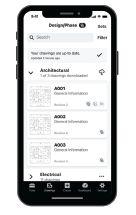
Procore’s latest construction software solutions address payments, labour, preconstruction, communication, and more. A new service launching this year, Procore Pay promises to expedite invoice review and provide payment options. In preconstruction, Procore Connect on Drawings will enable teams to connect to projects in other stakeholder accounts and synchronize data to reflect up-to-date drawings. Also of note, Quick Capture’s voice-enabled input technology helps field teams cut
down the time it takes to log items (procore.com).
Cementex arc-rated face shield with hard hat
Source: Cementex
Cementex’s 17 cal/cm2
AFS-180 is designed with a moulded shape to provide minimal distortion “with exceptional visible light transfer (VLT)”. The company says all of its arc-rated face shields are made of durable polycarbonate with anti-fog and scratch-resistant coatings. The long length, chin cup, and sides promise “superior coverage and protection”, while the brow shield deflects the impact of an arc blast. The translucent sides and chin cup also promise improved peripheral vision. The face shield meets CSA Z462 and CSA Z94.1 requirements (cementexusa.com).
Carlo
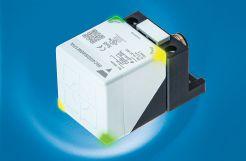
Gavazzi IRC40 inductive proximity sensors
Source: Carlo Gavazzi
The IRC40 series has been designed “as a durable solution” for indoor/outdoor applications requiring the accurate detection of actuating parts, such as skid conveyor positioning, step detection on escalators, and material positioning on conveyor systems. The IRC40’s sensors resist extreme operating condi-
tions e.g. wide temperature range and washdown cycles. The series offers flexible adjustment and adaptability due to its 5-position sensing face, and install quickly thanks to the mounting bracket’s push-lock system (gavazzionline.com).
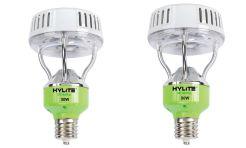
Hylite NexGen LED post-top Intigo lamps
These industrial-grade lamps are designed for easy installation in both new and existing fixtures, and are suitable for damp locations and fully enclosed fixtures. The NexGen Intigo lamps come in 30W and 50W to replace 100W to 250W of HID lighting, and promise up to 60,000 hours of light. Input voltages are 100-277V or 120-347V. Boasting a 360-deg beam angle, Hylite says the lamps are shatterproof and highly resistant to shock and vibration (hyliteledlighting.com).
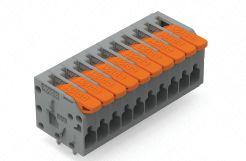
Wago 2601 Series terminal block
Source: Wago
Wago says its new 2601 series is the first “super-compact” tool-free PCB terminal block with lever technology, allowing quick and easy wiring for cross-sections from 0.14 to 1.5 mm2 (26 to 16 AWG).
The terminal blocks take up minimal space, as they can be connected both vertically and horizontally to the PCB, with a pin spacing of 3.5 mm. Wago’s push-in Cage Clamp connection technology provides quick, tight connections for solid and ferruled conductors (wago.us).
Rittal hygienicdesign enclosures and accessories
Source: Rittal Rittal offers pushbutton enclosures and accessories designed specifically for food and beverage facilities. The enclosure line includes five sizes that fit standard 22.5-mm pushbuttons and switches. The hygienic-design (HD) pushbutton enclosures feature 3-deg slope on all sides, 304 brushed grain stainless steel, zinc-plated sheet steel mounting bracket, and IP66, IP69 and UL Type 4X ratings. Rittal’s line of HD accessories include a viewing window, pressure release plug, new alternative cam-lock option, and key lockable T-handle (rittal.ca).
Delta EVE series transformers
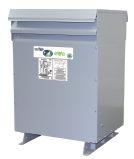
Source: Delta Transformers These transformers are purpose-built for EV charging applications, offering voltage adjustments between the utility service and the station for both single- and 3-phase systems. EVE transformers are available in ventilated enclosures and epoxy-potted versions (delta.xfo.com).
Source: Hylite LED
Online Safety Guide for Electrical Product Purchases
Product certification = a trusted stamp for safety
Most electrical products that are advertised, displayed and sold online must be approved by an accredited certification body. These certification bodies evaluate and certify a broad range of products, including electrical, plumbing, personal protective equipment and others. Once evaluated to safety standards, a trusted certification mark is affixed to the product to provide consumers with confidence in knowing the product is safe*.
Visit EFC’s web portal to learn more about electrical product safety marks and download the safety checklist to keep it on-hand before you place your next online order of electrical products. electrofed.com/online-safety-guide-for-electrical-products
products and solutions
Milwaukee M12 green cross line and 4-points laser
Source: Milwaukee Tool
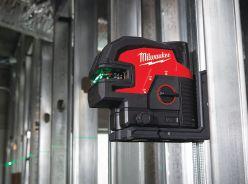
Milwaukee says its latest layout solution is engineered to provide all-day run-time (at least 9 hours with M12 RedLithium CP 3.0 battery), while the high-intensity laser offers visibility for applications up to 125 feet. The vertical and horizontal lines help with alignment and levelling applications, while the plumb points help with floor-to-ceiling point transfer; the horizontal dots squaring points give you the option for quick and accurate squaring alignment. The tool is rated IP54 and drops up to 1 m (milwaukeetool.ca).
BOLT memorizes vehicle ignition key
Source: BOLT
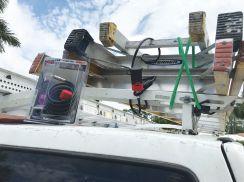
Conveniently secure your ladders to a rooftop rack with BOLT’s one-key cable locks, which use special tumblers that “memorize” your vehicle’s ignition key the first time it is inserted to a lock. The cable lock is a 6-ft long, coil wire coated with 1/4-in. thick black vinyl. The weatherproof lock has a double ball bearing lock mechanism, and is designed with a stainless steel lock
shutter to keep out dirt and moisture (boltlock.com).
Satco/Nuvo Starfish security floodlight camera
Source: Satco
Don’t worry about subscription fees with Satco’s new security floodlight camera. When motion is detected, the 1080p HD camera records events and stores them directly to the included 32GB microSD card. Events can be instantly viewed on any mobile device using the Starfish app. With two-way talk function, infrared night vision, IP65 environmental rating, die-cast construction and 20W flood (producing 1900 lumens), the fixture is suitable for both residential and commercial settings (satco.com).
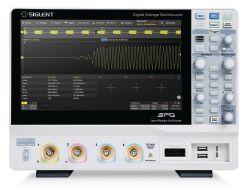
self-contained tests (saelig.com).
Universal Douglas Value Series Gen 2 drivers
Source: Universal Douglas
Universal Douglas’ Value Series Gen 2 LED drivers are a Gen 1 upgrade, offering three wattage levels (26W, 836W and 46W) with four selectable output currents, including 0-10V dimming with 10% minimum dim. With Gen 2, the switches have been moved to the label side of the driver to allow for luminaires to be DLC field-adjustable. The company has also published an iOS version of the Touch to Tune app (universaldouglas.com).
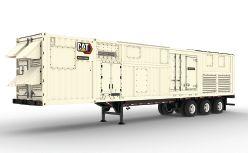
Cat XQ2280 EPA Tier 4 power module
Siglent SDS2000X HD 350MHz oscilloscopes
Source: Saelig Company Inc.
Saelig’s high-resolution digital storage oscilloscopes feature 2GSa/s 12-bit A/D converters with 70 uVrms noise floor front end to provide a signal analysis tool that promises over 16x the resolution of 8-bit oscilloscopes. The series includes 100, 200, and 350 MHz versions, with optional 16 digital channels for mixed signal analysis capability and a 25 MHz waveform generator for
Source: Caterpillar
Caterpillar claims its new Cat XQ2280 power module is the industry’s first single-engine mobile power solution above 560 kW that complies with U.S. EPA Tier 4 Final emission standards. Available for 60-Hz applications, the module provides up to 2 MW of standby power or 1825 kW of prime power. Its essential components are all packaged in a weather-resistant, 48-ft container. Applications include data centres, healthcare facilities, municipal infrastructure, wastewater treatment plants, mining and quarry sites, etc. (caterpillar.com).
Appleton
Areamaster Gen 2 LED industrial floods
Emerson Automation Solutions
Emerson says that retrofitting HID floodlights with Appleton’s new industrial floodlights will save companies upward of 75% on energy costs while “virtually eliminating maintenance burdens, and improving worker productivity by providing uniform, high-quality light”. The luminaire is offered in a variety of beam patterns, colour temperatures, and lumen outputs (9000 to 38,000 lumens), enabling them to replace existing HID floods from 250W to 1500W. The units also use the same slip fitters and pole brackets as older Appleton HID floods (appleton.emerson.com).
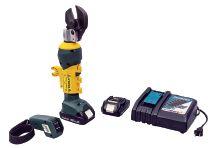
Greenlee overhead remote cable cutter
Source: Greenlee
The ES20LXR weighs under 5 lb (with battery), has a 350-deg rotating head and is designed to help users cut hard metals in utility distribution environments. Visual indicators provide tool status, with forward-stop-reverse at any point. The trigger jacket helps secure the tool with universal spline connection to the hot stick. The 2.0-Ah battery charges in under 25 min., and the universal remote—with hand-held and usage settings—is compatible with all Greenlee remote tools (greenlee.com).
The EstimatOR
DAN BERESFORD AND JOHN F. WIESEL
Estimating software: what to look for
The purchase of electrical estimating software is a big decision, but it can pay dividends. First, you need to know how much time and money estimating is costing you; then can you determine whether dedicated software can help you on those fronts.
(And, on a personal level, how much time do you spend away from your family on evenings and weekends because you’re doing estimates?)
We’ve seen one electrical contracting firm go from six estimators and an assistant to just three estimators after purchasing their first software. In addition, they went from estimating $30 million a year to over $40 million during a tough economic period.
Consider the following when evaluating software:
• Does the developer have a good reputation in the construction industry? Do they charge for technical support? Do they offer training?
• What are the licensing fees, and are there add-on costs for additional desired features?
• Can you share estimates across multiple users, and can they work on the same estimate simultaneously?
• Does the system incorporate drawings? Can you do your own drafting, then export the drawings along with your quote?
• Does the software feature pricing and labour units that extend into costs (not just the count of items)?
• If the software has item pricing, how easily is it updated, and is there a cost to do so?
• Can labour units be adjusted to your own preferences, by job difficulty, or by the number of identical installations?
• Are assemblies included, or can you create them and save for future jobs? How smart are the assemblies and can you use formulas with them? Can you set templates for the type of work you do?
• Is there an integrated closeout or do you have to use a spreadsheet? In an integrated closeout, how easy is it to add quoted “A” materials, taxes, labour costs (journeymen, apprentices), job expenses, overhead and profit margins?
Remember: the right software will accelerate your estimating time and accuracy, but only when you take the time to review the drawings and specs, complete layouts and add missing information, takeoff the job and input information correctly into the software.
John F. Wiesel is the president of Suderman Estimating Systems Inc., and has been estimating and teaching estimating since the early 1980s. Dan Beresford served as an electrician in the Canadian Navy, then worked in various roles in the electrical sector before joining Suderman.
CODE conundrum
RAY YOUSEF
Ray is a code engineer with Ontario’s Electrical Safety Authority
TACKLE THE CODE CONUNDRUM IF YOU DARE! Welcome to the newest round of questions that test your knowledge of the CE Code-Part I. Answers will appear in the April 2023 edition of Electrical Business Magazine, and online at EBMag.com under Features.
QUESTION 1
It is permitted to use electrical non-metallic tubing (ENT) underground and in concealed locations; however, it is not permitted in exposed locations.
a) True b) False
QUESTION 2
Which of the following CSA receptacle configurations is required for an electric range, having a calculated demand of 50A or less, in a dwelling unit?
a) L7-15R c) 14-50R
b) 14-20R d) 15-50R
QUESTION 3
For a mobile home, the minimum length of #6AWG power supply cord measured from the attachment plug to the point of entrance to the unit is:
a) 4.0 m c) 6.0 m
b) 5.0 m d) 7.5 m
ANSWERS
Electrical Business, December 2022 ed.
Q-1: Overload protection shall not be required for a manually started motor rated at ___ hp or less that is continuously attended while in operation, and that is on a branch circuit having overcurrent protection rated or set at not more than 15 A, or on an individual branch circuit having overcurrent protection as required by Table 29 when it may be readily determined from the starting location that the motor is running.
b) 1 hp. Rule 28-308.
Q-2: The interior of a storage tank that is vented to atmosphere, and contains flammable liquids stored above their flash point, is typically classified as:
a) Zone 0. Rule 18-006 and Appendix B Note.
Q-3: Class H fuses are permitted to be used for overcurrent protection where circuit overload protection is provided by other means.
b) False. Rule 14-212.
How did YOU do?
3 • Seasoned journeyman 1
Apprentice
2 • Need refresher training 0 • Just here for fun!
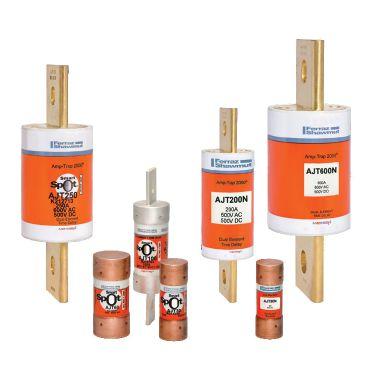
MERSEN 700VAC CLASS J
TIME DELAY
AJT FUSES
Mersen’s Class J AJT fuses are compact fuses that offer big protection. Recent improvements to the AJT series have enabled an increase in AC operating voltage from 600VAC to 700VAC. This change better accommodates power transmission networks at 585V or 600V, especially common in Northeast Canada and the Midwest US.
The most current-limiting UL-class fuse, Mersen’s AJT series provides optimal performance and saves valuable panel space. The AJT series time-delay characteristic allows for use in a wide range of applications. AJT fuses are available in indicating and non-indicating versions.
Mersen is the only fuse manufacturer to offer Class J fuses with the 700VAC specification.
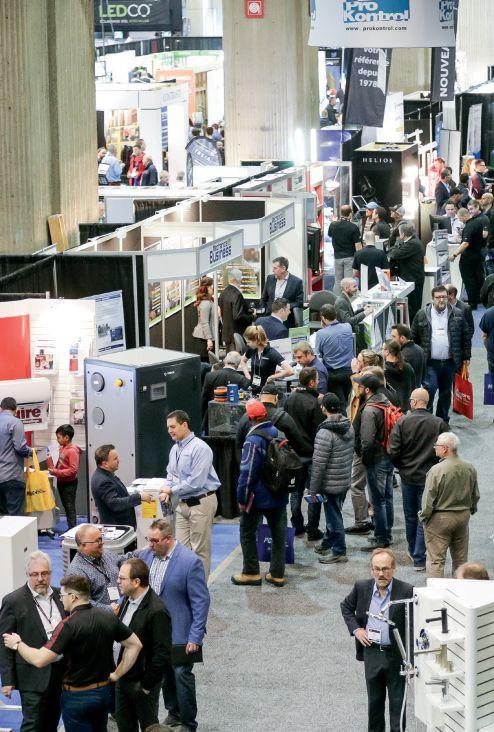
Join us on April 19 and 20, 2023
New location: Palais des congrès de Montréal
The most important trade show for the building, electrical and lighting services industry in Canada is back.
Discover:
Free seminars to meet continuing education requirements.
Close to 400 exhibitors from Québec, Canada and the United States showcasing thousand of products.
About 100 new products highlighting the ingenuity of the industry.
New ideas and solutions on sustainable development, energy use of water.