The Electrical Contractors Association of Ontario’s R. Hugh Carroll Safety Awards demonstrate the ECAO’s commitment “to promoting and fostering a positive, safety-first culture amongst its membership, and the electrical industry”.
This year’s honorees were recognized during the association’s 2024 annual general meeting at the Woodbine Trackside Clubhouse.
“Every year it gets harder to pick the winner, because the applications are just getting better and better,” said Tom MacKay, director, Health, Safety & Environment, adding that two
of this year’s honorees became COR-certified just this year.
The R. Hugh Carroll Safety Award categories were restructured this year according to company size, resulting in four categories rather than the previous eight.
“For the third year, we looked at both leading and lagging indicators,” MacKay explained, adding that about 90% of the questions focused on leading indicators, “which you can change in real time.”
Next year, MacKay says ECAO will recognize all members who have achieved a certain level of achievement in occupational health & safety.
Fox
Photos:
A. Capkun
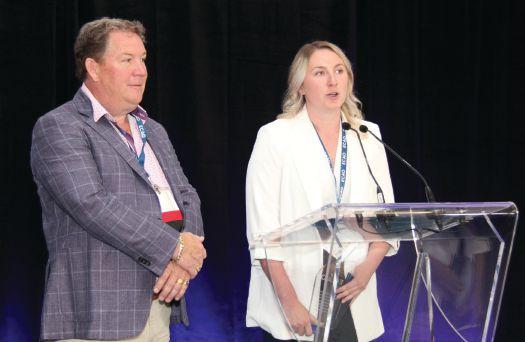
C&M Electric accepts their R. Hugh Carroll Safety Award for employers between 20 and 100 workers.
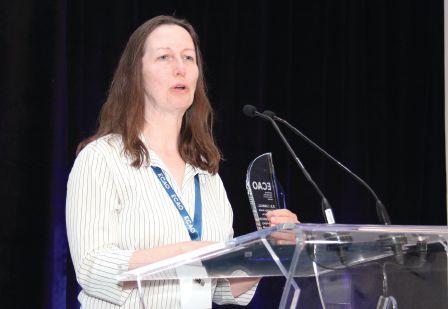
Mellon Inc. accepts their R. Hugh Carroll Safety Award for employers between 100 and 250 workers.
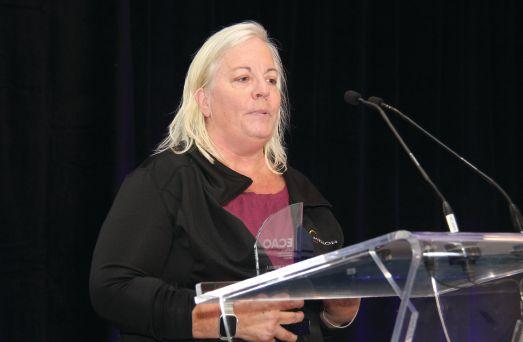
E.S.
accepts their R. Hugh Carroll Safety Award for employers over 250 workers.
Rogol Electric Co. Ltd. accepts their R. Hugh Carroll Safety Award for employers up to 20 workers.
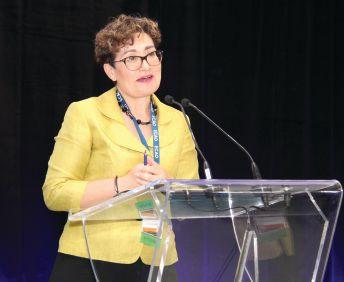
Soussanna Karas, director, Licensing & Training, at Electrical Safety Authority, discusses ESA initiatives and the Ontario Electrical Safety Report.
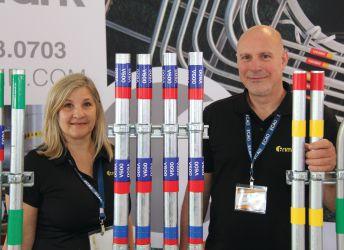
Reps from Primark identification products.
Staff welcome guests to ECAO’s annual general meeting, safety awards, and Night at the Races.
ECAO’s Graeme Aitken (centre) with visiting delegation from Mexico’s Unión Nacional de Constructores Electromecánicos.
LARGE-SCALE DATA CENTRES NEED PROTECTION
Fuses play a critical role in DC overcurrent protection /
BY TONY KOVAC
Driven by big data analytics, cloud computing, the internet of things, and other technologies, the global data centre (DC) market is expected to expand at a compound annual growth rate of 13.5%% from 2022 to 2030. In 2021, the market was valued at $7.8 billion US (Grandview Research).
Furthermore, DCs are massive power consumers, drawing anywhere from a few kilowatts for a rack of servers in a closet to several tens of megawatts for large facilities. Some facilities have power densities more than 100 times that of a typical office building.
Not surprisingly, electricity costs are a dominant operating expense for high power-density facilities, accounting for over 10% of the total cost of ownership (Wikipedia).
As if they weren’t already complex enough, large-scale DCs may also turn to alternative sources of electricity—like onsite solar photovoltaic generation and battery energy storage systems coupled with a robust microgrid—to alleviate energy demand/cost, provide backup power, and reduce the installation’s carbon footprint.
An ill-conceived electrical system could lead to any number of possible harmful outcomes: electrical fires, equipment damage,
power outages, shock hazards, arcing and damage to electrical infrastructure, and catastrophic cascading failures. In the interest of safeguarding both people and equipment, it is absolutely vital to properly protect all of these electrical systems.
Overcurrent protection
This is where overcurrent protection solutions, like fuses, play such a pivotal role.
“When you look at the whole system—data centre, utility grid, solar PV installation, energy storage system, microgrid, etc.— fuses play such a critical role in an overall overcurrent protection strategy,” explains Mersen’s JT Sheehan, senior product manager, UL/CSA Fuse Products.
As data centres evolve and grow so, too, does their power consumption. “Fuses are ideal for applications in which high fault currents are available,” says Sheehan. They protect the main bus and drop downs/feeds against any type of overcurrent event. “They open quickly and eliminate damaging overcurrents while protecting people and equipment.”
Not to mention that, overall, fuses are an exceedingly low-maintenance product. “In an ideal scenario, fuses last the life of the equipment they are protecting,” Sheehan says. “However, overcurrents are unpredict-
Data centres are massive power consumers, drawing anywhere from a few kilowatts for a rack of servers in a closet to several tens of megawatts for large facilities. Google’s Council Bluffs data centre in Iowa provides over 115,000 square feet of space.
able. We generally recommend changing fuses wherever the equipment they are protecting is being serviced.”
Not all fuses created equal
When it comes to fuses, it is by no means a “one size fits all” situation, especially when it comes to complex facilities such as data centres.
“Many types of fuses are available in the market, each providing different electrical performance characteristics for the application at hand,” Sheehan continues. “Without getting into every possible type, you have CSA/UL low-voltage general purpose fuses, semiconductor fuses, specialty fuses for solar photovoltaic, electrical energy storage, electric vehicle charging, and more.”
Sheehan explains that fuses are generally “the last resort” within an electrical system, protecting against two primary overcurrent events: faults/short-circuits and overloads.
“For a fault/short-circuit— Source:
which is a high-magnitude, short-duration event—you generally want the fuse installed as close as possible to the piece of equipment it is intended to protect,” Sheehan says. “For overloads, the fuse is generally protecting any type of cabling and/or busbar from a long-duration, low-magnitude overcurrent event. In both cases, we are trying to prevent a fire and or catastrophic event.”
Overcurrent protection device (OCPD) coordination
Despite being a last resort, fuses are nonetheless part of an overall overcurrent protection strategy; meaning that, wherever possible, they should be coordinated with all others overcurrent protection devices.
“Granted, it is not always possible to coordinate all OCPDs under all conditions,” Sheehan notes. “That said, there are some applications
where it is absolutely vital that OCPDs coordinate.”
He points to the example of an electrical energy storage system where, in every battery rack/stack, there are multiple battery modules in series. In some cases, the battery module has an internal fuse. Those modules typically have a lower voltage rating than the system’s maximum voltage.
“If we’re looking at an 800VDC energy storage system, some battery modules may have a maximum voltage rating of 80VDC. Meantime, the internal fuse may only have a maximum voltage rating of 80-120VDC. The internal fuse is only there to protect the battery from faulting out during shipping and or handling. Then, once installed within the rack, those internal fuses are typically left behind.”
Each rack/stack has its own primary fuse, also referred to as a rack fuse. It is vital, Sheehan says, that the
battery module’s internal fuse operates slower than the rack fuse, thereby ensuring it never opens before the rack fuse to interrupt an overcurrent at 800VDC. “If it did, there could be catastrophic consequences!” Sheehan warns.
Considerations for renewables, storage, microgrids
Sheehan feels today’s codes and standards do a good job detailing how to size fuses for solar PV installations.
“For these systems, fuses are typically used to protect each solar array—each string—and can be found inside most combiner boxes or an inline over-moulded holder,” he explains. “Fuses are also used within most recombiners, which combine all of the arrays ahead of the inverter... still some inverters will employ fuse protection on both the AC and DC sides.”
While they might still be considered new technology, microgrid installations—and OCPD requirements—do not differ significantly from known solutions. They typically require the same types of OCPDs as large-scale utilities, just on a smaller scale.
Direct current microgrids, specifically, are becoming more prevalent due to the proliferation of battery energy storage systems. However, unlike solar arrays/ PV fields, DC microgrids and electrical energy storage systems can produce much higher fault currents.
“These types of systems require fuses that are capable of safely interrupting higher fault currents that, in some cases, PV fuses cannot,” Sheehan explains.
Additional data centre considerations
Large-scale
data centres may also turn to alternative sources of electricity— like onsite solar PV—to alleviate energy demand/ cost, provide backup power, and reduce the installation’s carbon footprint. These solar panels are paired up with Google’s data centre in St. Ghislain, Belgium.
With all of these disparate yet unified systems in an environment as complex as a data centre, Sheehan says some of the main factors influencing the selection and rating of fuses are maximum system voltage, continuous current, and the current levels at which the fuse must safely open.
“It is also very important to understand what the fuse is protecting,” Sheehan reminds. “Over the years, I have come across a lot of misunderstanding and misapplication when it comes to fuses.”
A perfect example, Sheehan says, is when a semiconductor protection fuse is being used to protect cabling and/or busbar from a low overcurrent.
“In most applications, it’s not high fault currents we’re worried about, but rather lower fault currents,” Sheehan says. “At lower fault currents, there are application considerations that should be reviewed with the fuse manufacturer.”
Fuses are asked to open when required, but also to do so safely.
“A fuse may be 1500VDC, 500A-rated, but it doesn’t mean it will protect the system under all overcurrent conditions safely,” Sheehan says.
It is not uncommon to see PV-listed fuses used in electrical energy storage applications, but the fault currents involved could exceed those which a PV fuse is expected to meet. “This could create a misapplication leading to a safety concern,” he points out.
Sheehan has also seen semiconductor protection/fast-acting fuses used to protect cabling and busbar in electric vehicle charging applications, but they are not capable of opening safely at lower current levels.
Large-scale data centres— especially those incorporating onsite renewables, battery storage, microgrid—clearly demand a well-conceived electrical system to avoid any number of possible negative outcomes. That plan, in turn, must involve careful and deliberate fuse selection for the overall overcurrent protection strategy.
“When in doubt, always contact the fuse manufacturer for recommendations specific to your application,” Sheehan advises.
At Google’s data centre in Mayes County, Okla., each server rack has four switches connected by a differently coloured cable. This colour-coding is kept consistent throughout so they know which one to replace in case of failure.
Written contracts and the Statute of Frauds
My column “Does my contract need to be in writing, and signed?” (October 2021) explains the basics of contract formation in Canadian common law jurisdictions, and the test for determining whether a contract—written, verbal, or otherwise—is legally enforceable (i.e. offer, acceptance, consideration).
One legal doctrine that complicates this matter is the Statute of Frauds which, despite its name, has little to do with actual fraud. Originating in English law, it has been adopted in various forms across Canada to require certain types of contracts to be in writing to be enforceable.
Among others, this includes agreements that cannot be completed within one year. In the context of construction, contracts involving work that will take more than one year would likely need to be in writing. (Other types of contracts—such as those for services or materials—might not fall under the Statute of Frauds, and could be enforceable even when not in writing.)
While not always legally required, the construction industry overwhelmingly favours written contracts, for several reasons:
Clarity: With the myriad specs, timelines, payment schedules, and responsibilities involved in a project, written contracts provide clarity as to what the parties have agreed upon.
Given the complexities and potential risks, a written contract is always best practice—even if it’s just a 1-page Purchase Order.
CALENDAR
Mini Learning Expos Alberta Electrical Alliance Oct. 1, Calgary, Oct. 3, Red Deer albertaelectricalalliance.com
Safety Codes Council Summit October 2-4, Nisku, Alta. safetycodes.ab.ca
Canadian Utility Energy Expo (CUEE) October 8-9, Toronto eda-on.ca
Energy Storage Canada Conference October 8-9, Toronto energystoragecanada.org
Electricity Transformation Canada Canadian Renewable Energy Association October 21-23, Calgary electricity-transformation.ca
AD Electrical North American Meeting October 28-30, Chicago, Ill. adhq.com
Skilled Trades Ontario Apprenticeship Summit November 6, Toronto skilledtradesontario.ca
EDIST
Risk management: Written contracts often include clauses that address potential risks, such as delays, cost overruns, and unforeseen circumstances, thereby protecting both parties and helping manage expectations.
Legal protection: In the event of a dispute, the courts generally look to the written contract as the best evidence of the parties’ intentions and the terms to which they agreed.
Compliance with regulations: Depending on the jurisdiction, failure to have a written contract could result in fines or legal challenges.
Given the complexities and potential risks, a written contract is always best practice—even if it’s just a 1-page Purchase Order. Even for smaller projects, a written contract provides a solid foundation for the business relationship, ensuring all parties are on the same page.
In an industry where disputes can lead to significant financial losses and project delays, a written contract is essential for protecting everyone’s interests.
Dan Leduc is a partner at Soloway Wright LLP, and specializes in construction law. He is always happy to take on new clients from anywhere in Canada, and can be reached at dleduc@solowaywright.com. This column is not legal advice, nor should it be taken as such.
Electricity Distributors Association January 14-16, Markham, Ont. eda-on.ca/events/edist
Electrical Safety Workshop
IEEE Industry Applications Society March 3-7, Jacksonville, Fla. electricalsafetyworkshop.com
Work Truck Week
March 4-7, Indianapolis, Ind. worktruckweek.com
MCEE
April 24-25, Montreal mcee.ca
LightFair May 4-8,Las Vegas lightfair.us.messefrankfurt.com
Got an event to share? Email the editor at acapkun@ebmag.com. Meantime, scroll through Electrical Business Magazine’s online industry calendar at ebmag.com/events for direct links to these events (and others).
AGING IN PLACE: A TREND WITH GROWING OPPORTUNITIES
Electrical contractors can help Canadians stay in their homes longer /
BY TREENA HEIN
The population of Canada is aging, with older adults— those aged 65 or above— being the fastest-growing demographic. Statistics Canada estimates this cohort will represent 25% of Canada’s population by 2050.
Furthermore, recent research shows that if given the choice, over 85% of us would prefer to age in place, within our own homes and communities (National Institute on Ageing, Toronto Metropolitan University).
“As Canadians enter their golden years, their housing priorities often change, but no one size fits all,” says Caroline Baile, a real estate broker with Royal LePage Sussex, and Accredited Seniors Agent. “[They] are thinking about their long-term needs much earlier than previous generations. Even before retirement, many buyers are thinking about the features of a home that will help them transition into old age with ease.”
In fact, Baile says that many middle-aged clients have seen their elderly parents go through this transition, which has encouraged them to consider their own future needs.
Two important factors play a role in our decision to age in place:
10.4 million Canadians will be 65 or older by 2037, with the overwhelming majority wishing
to live in their own homes for as long as possible
financial security, and overall health and well-being.
The Royal LePage survey “Canadians aging in place” reveals that 74% of respondents are increasingly interested in aging in place due to the cost of living in a senior care facility. (According to Canada Mortgage and Housing Corp.’s “Senior housing survey [2021], the average rent for a “standard space” in seniors’ housing is $3,075 per month.)
Meantime, 59% of are concerned about the overall safety of senior care facilities (which made the headlines more than once during the pandemic).
A need for savvy contractors
“More and more, Canadians are choosing to right-size rather than downsize as they age,” Baile adds, noting that some will opt “to renovate their existing properties to accommodate their changing needs”.
The Canadian Home Builders’ Association (CHBA) rightly points out that our mobility and physical abilities change as we age, making it increasingly challenging to navigate our own homes. However, there are adaptations owners can undertake to make their homes safer and more accessible.
Two important factors play a role in our decision to age in place: financial security, and overall health and well-being.
All this represents a huge opportunity for electrical professionals to provide forward-thinking homeowners with the supports they need now (or down the road), but only if they understand how support systems related to mobility, cognitive challenges, and medical conditions can make aging in place a reality.
Just a few common renovation solutions that could directly or indirectly involve electricians include:
• Upgraded electrical service and backup power.
• Snow-melt system for driveway and walkway.
• Vertical platform lift at the front porch or steps.
• Good lighting, especially hallways and stairways, coupled with motion/occupancy sensors.
• Additional outlets to avoid excessive use of power bars
and extension cords.
• Elevator or stair lift inside, for homes with multiple levels.
• Smart home system for controlling various features (lighting, temperature, security) using voice commands or an app.
Contractors should to be able to talk knowledgeably about these solutions with both “mature” and “older” customers (and caregivers) so they can recommend and install the appropriate products and systems to enable aging in place.
Of course, back-up power is also very important for various critical systems, such as charging cellular devices, notes Jim Closs, national director at a Toronto-based firm called Age Safe Canada and owner of a consulting firm called Live Easy. He has 30 years of experience in accessible design and will be using emerging technologies
Ultimate Application Flexibility - Offering Task, General, and Accent Lighting from the Same Product
in some upcoming aging in place projects.
Closs notes that “if you’re looking to add an accessibility product like a stairlift or home elevator—even if they are battery-operated—it’s also important to have these devices on their own circuit based on the manufacturer’s specification,” so that they are charged and ready at all times.
Ark Tsisserev, principal at Vancouver-based AES Engineering, adds the important note that if the electrical equipment in a home is upgraded or added upon, then “the size of the service—including the rating of the service box and ampacity of the consumer’s service conductors—might have to increase”.
And, because electrical installations are guided by codes and standards, are there any documents that apply to aging in place?
CSA Group says it is collaborating with industry partners, interested parties and persons with lived experiences to create “world-class standards and guidelines” to help meet the needs of Canadians who choose to age in place... whether in their homes or within their communities.
The standards CSA B651 “Accessible design for the built environment”, CSA/ASC B652 “Accessible dwellings”, and CSA B651.2 “Accessible design for self-service interactive devices including automated banking machines” have been developed to help improve the lives of those living with disabilities, including the elderly.
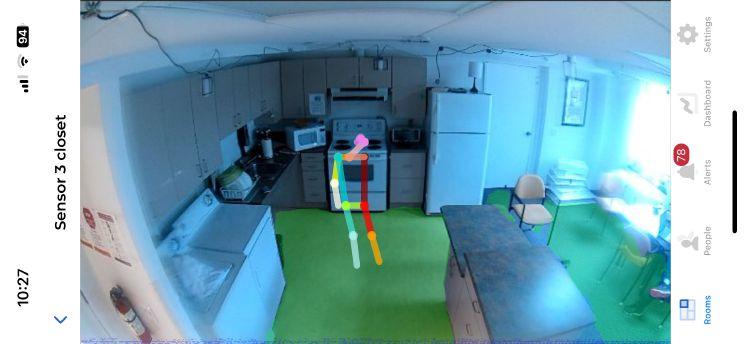
Mobility assessment with privacy-respecting cameras by Altumview in British Columbia.
The supportive home: going above and beyond
“We’re bringing together emerging technology, aging adults, industry partners and clinical expertise,” says Bruce Wallace, executive director of the Sensors and Analytics for Monitoring Mobility and Memory (SAM3)
AGE-WELL National Innovation Hub. “It’s time to get this technology out of the laboratory and into the community.”
This team of Carleton University researchers, in partnership with the Bruyère Research Institute and AGE-WELL Network of Centres of Excellence, is developing “supportive smart home systems to help older adults age
in place safely and with dignity”, writes Carleton’s Dan Rubinstein.
So what does a supportive smart home system looks like?
Wallace stresses that “ambient sensing”—sensors placed strategically throughout the dwelling—is key to aging in place. “If you look at sensors that are worn [on the body], people forget to wear them, so it can be hard to know if they are functioning properly,” he explains. “With ambient sensing, you just live your life as always.”
Looking at power, Wallace says you could have wireless, battery-based sensors (similar to today’s home security systems) but that would involve a rather large battery count, making it just one more thing for seniors and caregivers to worry about.
“Instead, we’re seeing companies using the wiring harness of the house but with USB power—USB outlets—in house wall plugs,” he explains. “Also, there are now sensor units that are placed directly within the outlet. That is, a licensed electrician swaps out an existing light switch/ outlet for a one of these units. It’s still a switch/outlet but can have motion and temperature and odor sensors, powered directly off 120V. Control of the switch is achieved by the switch itself, preset settings and/or a motion sensor and/or voice activation.”
For years, electrical contractors have been involved in running power for stair lifts, automated doors and additional lighting. (Lighting is especially important on stairs to prevent injury, says Wallace, but also in every room.) In addition, open/closed sensors on exterior doors are also already being installed in the homes of those with dementia.
In terms of what’s new to support aging in place, Wallace points to bed sensing, not just for ongoing data on the health and well-being of seniors, but to support their caregivers. Typically
Source: Bruce Wallace.
USB-powered, these sensors are placed between the mattress and box spring, or under a bed foot. They detect bed exits, and movement that could indicate restless sleep (due to pain) or whether the person is moving enough to prevent bedsores. Some even detect vital signs.
For caregivers, these sensors—when paired with other supportive home automation—can literally make all the difference for an individual to successfully age in place.
It’s very important for caregivers to get adequate sleep, says Wallace. He’s conducted trials where the detection of a bed exit is paired with the automatic switch-on of lights in the bedroom, hallway and washroom, thereby enabling a person with mobility issues or dementia to handle washroom trips alone.
“Our experiments show that this set-up can help the caregiver get eight hours of continuous sleep,” he reports, adding that backup power for this system should be installed once it’s established to maintain the routine.
Night wandering can also be a part of dementia, and Wallace explains that one root cause is the fact that those losing cognitive function generally spend a great deal of time indoors and are, therefore, much less exposed to changes in the daily natural light wavelength spectrum. This can be mitigated by using light bulbs that create a “solar day” inside the house by changing the light wavelengths emitted (via an app).
Other noteworthy sensors include in-socket sensors that detect current at the outlet. “If we can measure current use everywhere, we can see if
something has been left on,” explains Wallace. “A stove element is the most common occurrence. We can also have heat sensors at the stove.”
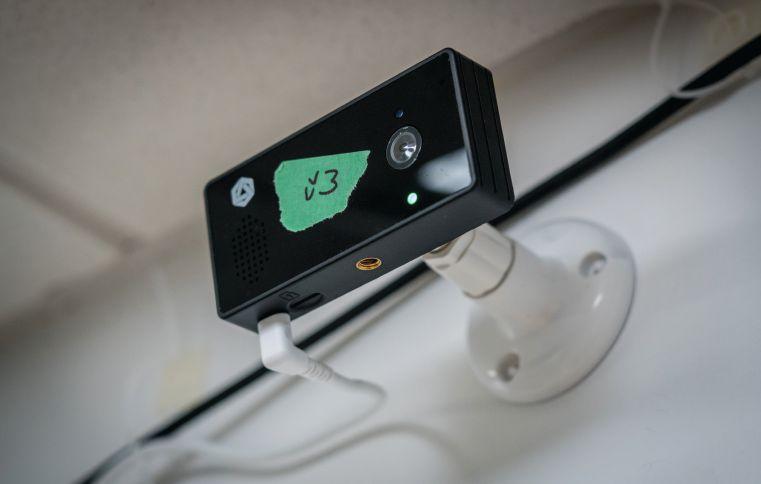
For overall activity sensing, technologies are being created that can perform monitoring while also safeguarding the occupant’s privacy. For example, Altumview of British Columbia builds a system that, yes, has cameras, but its software renders occupants as stick-figures (and they are not actually filmed).
Wallace adds that light detection and ranging technology is also being flexed for supportive smart homes. LIDAR is a remote sensing method that works by emitting a laser beam and measuring the time it takes for the light to return after reflecting off a surface. It is used on autonomous cars for object detection and monitoring.
“It now comes in a very inexpensive chip form,” Wallace notes. “It’s a whole new mechanism for monitoring activity in the home, like a 3D motion sensor, but also for health. Walking speed, for example, is a vital indicator of health and well-being.”
Whatever sensors are installed in the supportive home, they should be able to send notifications. “How are the messages sent and who do they go to?” Wallace urges us to ask. “Notification goes to people in the house first through an alarm and/ or a text, but you could also choose to add a text alert to a person living nearby.” This would be especially important for things like door exits for those with dementia.
The wave is coming
An estimated 10.4 million Canadians will be 65 or older by 2037 (Rubinstein), with the overwhelming majority
wishing to live in their own homes for as long as possible, despite becoming less independent.
Professionals who want to learn more about the aging in place market and related growing business opportunities could consider enrolling in CHBA’s Adaptiv Home Renovation Course. The emphasis of this course is on improving design by addressing safety, security, ease of use, comfort, accessibility, and occupant health.
Another option may be the How-To course on home safety assessments for seniors, offered by an Ontario company called Age Safe Canada.
If you’d like to know more, but are not ready to commit to a formal course, then simply google “universal
design”, which is defined as “the design and composition of an environment so that it can be accessed, understood and used to the greatest extent possible by all people regardless of their age, size, ability or disability” (Centre for Excellence in Universal Design).
The primary tenets of universal design do not just apply to libraries, courthouses, public transit, etc., but to someone’s home, too.
The aging in place movement signals significant opportunities: not just for electrical contractors, but for everyone involved in the coming surge of home renovations and retrofits that accompany it.
Treena Hein is an award-winning Canadian science, technology and industry business trends writer.
LEVERAGING DEI TO ADDRESS THE LABOUR SHORTAGE
Summit shares insights on becoming an Employer of Choice for underrepresented groups / BY
Source: Procore Technologies Inc.
“Canadian construction companies missed out on $9.6 billion in revenue opportunities because of the labour shortage,” said Rubiena Duarte.
Thousands of jobs are going unfilled in Canada’s construction sector, and even more will open in the coming years. To help address this labour shortage, we must consider casting a wider net to include non-traditional pools of talent.
With that goal in mind, Onsite, HPAC, and Electrical Business magazines partnered to host the Pursuing DEI summit, which put a spotlight on the sector’s labour challenges while providing practical advice for attracting and retaining workers from underrepresented populations.
Sponsored by Procore Technologies, Jacques Cartier + Champlain Bridges, Electricity Human Resources Canada, and EMCO Corp., the summit’s speakers shared their insights for building diverse, equitable, and inclusive
workplaces, with the aim of helping construction companies become an Employer of Choice for talent.
The summit opened with a keynote address by Rubiena Duarte, vice-president of global diversity and inclusion at Procore, and was followed by three panels that discussed:
• How do you establish (and maintain) an inclusive culture?
• What are non-traditional pools of talent?
• How do you market your inclusive workplace?
Becoming self-aware about bias
“Last year, it was reported that Canadian construction companies missed out on $9.6 billion in revenue opportunities because of the labour shortage,” said Duarte.
Given the massive number of job openings, she said
ADAM FREILL
companies need to think about how to entice the next generation of workers to the sector, including Gen Zs, newcomers, women, and Indigenous communities.
Contributing to the low levels of diversity in the sector’s labour pool are unconscious biases, which refers to “assumptions, stereotypes, and reactions about a person or group of people that are formed by our experiences, our upbringing, and societal influences”.
Duarte highlighted various types of unconscious biases, stressing that—for a sector desperately in need of workers—we cannot allow these biases to cause us to ignore, dismiss, or overlook any viable pool of talent.
Building a culture of inclusion
“It’s inclusivity that actually matters,” insisted Kenny Leon, vice-president of the Canadian Construction Association, and moderator of the panel “Building and maintaining your culture of inclusion”.
This discussion featured Brandi Ferenc of Fair-Trades Toolbox, Graeme Aitken of
The establishment of a DEI committee is not a guarantee of success. “A committee is not enough... [not] unless you simply want to check a box,” said Graeme Aitken.
Source: ECAO
Electrical Contractors Association of Ontario, Maraika De Groot of Maven Consulting Limited, and Luanne Whitecrow with the Canadian Council for Aboriginal Business.
And the inclusivity movement must start at the very top, Leon added. “We need a set of company expectations to take it forward. We need to communicate those expectations.”
While there is no single recipe for creating such an environment, De Groot said being self-aware—both individually and as a company— factors into developing policies and practices that lead to a healthy corporate culture. The panelists warned that company policy cannot be a “one-and-done” effort, and that establishing a DEI committee is by no means a guarantee of success. As Aitken put it, “A committee is not enough... [not] unless you simply want to check a box”.
Whitecrow agreed. “Is having a committee enough? No. It’s all about getting executive leadership buy-in and reflecting on the intent in developing an inclusive
culture for the long term.”
When creating a cultural shift inside an organization, Whitecrow said it is crucial to establish that policy commitment, along with the associated work plans, for long-term success.
Part of that long-term success should include management-supported employee resource groups (a.k.a. affinity groups). “20 years ago, we didn’t have social media. My affinity group was one other woman that was working in the trades,” said Ferenc. “And without that, I probably wouldn’t be sitting here today.”
Encouragement helps create and maintain the desired inclusive workplace; sometimes, penalties, too, must come into the picture.
“We need to be ready to enforce the rules of our roads if we are going to be viewed as progressive employers who value all workers,” Leon said.
Leaving no (labour) stone unturned
Moderated by Martin Luymes of the Heating, Refrigeration and Air Conditioning Institute of Canada, Session 2 stressed how an inclusive workplace is a powerful tool for attracting and retaining the best talent.
The session featured Bill Ferreira of BuildForce Canada, Kim Rutherford from Emco Corporation, Viktoriya Syromyatova of Boralex, and Craig Swanberg from PCL Construction.
“Employment demand is growing dramatically,” explained Ferreira. “We estimate that we’re going to need about 88,000 additional workers over the next 10 years just to keep pace... When we factor in the retirement of 263,000 individuals during that period, the industry is
Source: Buildforce Canada
going to need to hire about 350,000 individuals.”
To fill this void, human resources teams and hiring organizations will need to broaden their search parameters, and provide mentorship and career advancement opportunities for underrepresented jobseekers/employees.
“When partnering with a recruiting organization, I like to look at their commitment to diversity and inclusion,” said Rutherford. “[Are they] casting a wide enough net that we’re getting the best possible candidate—not just for my industry—but broadly throughout the community so that we represent the community we serve?”
While DEI efforts in hiring have generated some gains within certain groups—including attracting more women to the construction sector—much more needs to be done. On the newcomer front, for example, Ferreira has not seen any significant progress.
“We’ve actually been seeing that number slightly declining when we look at the overall number of newcomers involved in the trades,” he said.
Becoming an Employer of Choice
Moderated by Michelle Branigan, CEO of Electricity Human Resources Canada, the final panel focused on becoming an Employer of Choice through the application of DEI-driven policies and principles.
“We estimate that we’re going to need about 88,000 additional workers over the next 10 years just to keep pace,” said Bill Ferreira.
Panel members Meg Mathes, RSE, with Modern Niagara, Elaine Carelse with Orion Construction, and Hatch’s Lindsay Janca shared insights about what jobseekers want from their employers.
“Jobseekers are looking at employers’ annual reports, senior leadership team and, if they don’t see themselves represented there, that’s going to make a difference to your ability to attract and retain,” Branigan said.
“Organizations that can build truly inclusive workplaces are going to have the edge when it comes to both the recruitment and retention of that workforce, and really position themselves as employers of choice,” she added.
The panelists emphasized the need for organizations to take ownership of creating inclusive workplaces, avoiding labelling and stereotyping underrepresented groups, and using practical actions to promote diversity and inclusion.
In essence—and in agreement with the previous panels—an inclusive workplace is something you create, foster, and champion every day, with
“Organizations that can build truly inclusive workplaces are going to have the edge when it comes to both the recruitment and retention of that workforce,” said Michelle Branigan.
Source: EHRC
every action. To that end, any company DEI initiative should take a process-oriented approach, focusing on setting measurable goals and regular check-ins to ensure those goals are being achieved.
Assuming that all the above efforts are paying dividends, next comes the question of outreach... letting underrepresented jobseekers know about the inclusive workplace you’ve created. And here is where your existing employees become your greatest HR marketing asset.
There was a real groundswell of support for DEI at Hatch, Janca explained, where employees—through their own social media engagements—became de facto ambassadors for the company and its inclusive culture.
Win the race for top talent
It’s important to remember that the construction sector is not only facing talent competition from within, but from outside the sector, too. All the more reason to flex any HR tool available to bolster your chances at long-term success.
You can watch or listen to all of these sessions on Electrical Business Magazine’s YouTube channel: youtube.com/c/EBmag.
Adam Freill is the editor of Onsite Magazine, a member of Annex Business Media’s Construction Group, which includes Electrical Business and HPAC magazines.
AMAZING THINGS CAN HAPPEN WHEN PEOPLE SHOW UP
A conversation with OEL president Beatrice Sharkey
BY ANTHONY CAPKUN
Beatrice Sharkey is dedicated to helping volunteer-led organizations thrive. Prior to joining the Ontario Electrical League as president in 2023, she spent many years helping small and large boards to succeed, developing local and provincial-level programs, working at various levels of government, and helping non-profit organizations be sector leaders.
“What I loved about coming to OEL is that it feels like all of those pieces—positive government relations, strong staff, engaged volunteers, grassroots advocacy—are already at the core of the association,” Beatrice says.
OEL has an impressive 100year history and Beatrice was excited about the opportunity to join such a well-established organization.
“Small contractors often struggle to find and manage qualified staff, keep up with changing codes and regulations, and advocate for themselves at the provincial level.”
Looking over the past year “When you come into a new role, you look at everything. We’ve been updating many of our practices and the way we work,” she says, “Most of what we do needs to focus on the fact that, for Ontario’s independent contractors, the biggest pressure is time.”
“Small contractors often struggle to find and manage qualified staff, keep up with changing codes and regulations, and advocate for themselves at the provincial level. There just isn’t enough time.”
“Helping them with these challenges is a major focus for us,” Beatrice explains. “One of our initiatives is a new, phone-friendly OEL website designed to give them convenient access to the tools and information they need while on the go.”
She says OEL has been working hard for the past few months to get that website just right.It’s due to launch in September.
“We also continue to be very grateful for the ongoing support of Minister David Piccini and the Ministry of Labour, Immigration, Training and Skills Development through the Skills Development Fund. This year we received $3 million, which gives us the capacity to provide wage subsidies, extensive tools/resources, and small business expertise directly to contractors and the electrical sector across Ontario.”
And while various supports have been accessed by electrical contractors with first-year ap-
prentices (e.g. wage subsidies, equipment, training), Beatrice says a huge hurdle is finding supports for Years 2 to 5. “Our intel across the province showed significant strain on contractors to provide these longer-term supports, so we expanded our request and secured funding for Years 2 to 5.”
“There many other smaller but really important components to our work too. For example, we heard that safety harnesses for females tend to be about three times the price of a regular harness. We put that into our funding request, too, so that female apprentices can feel absolutely safe as they work.”
Mental health
Mental health is a high priority for both Beatrice and those involved in OEL’s Employer Engagement Program (EEP). Last year, research dove deep into understanding and assessing the mental health and wellness of individuals working in Ontario’s electrical sector.
The resulting report, “Examining burnout in the electrical sector in Ontario, Canada: A cross-sectional study”, was conducted by the Restore Lab, Department of Occupational Science and Occupational Therapy, Temerty Faculty of Medicine, University of Toronto, and published November 14, 2023.
From the study authors’ abstract:
Workers in the trades sectors often experience mental health issues and decreased work ability due to occupational stress, workplace hazards and living in danger or constant fear of injury.
There is a need to focus on improvement and allocation of mental health resources [...].
“With the support of the SDF funding for this study and our partnership with the University of Toronto, we are thrilled to be developing and piloting both individual and community-level support strategies and self-assessment tools this Fall to address these mental health concerns,” Beatrice says.
“This work,” Beatrice says, “has attracted international attention with organizations from other countries reaching out to OEL for insights.” She extends her deep gratitude to Minister Piccini for the crucial funding that made this important work possible.
The people who show
up
“From the first time I read OEL’s background and spoke with the board volunteers, I knew this would be exciting... that there are so many OEL volunteers across Ontario contributing toward making the small business electrical contractor successful. From North Bay to Ottawa and right down to Windsor— that’s what gets me up the in morning and excited to get
to work,” she says. “Amazing things can happen when so many people show up.”
Her mention of “showing up” segued perfectly into my next question; something brand new that the OEL is doing for 2024: the OEL Roadshow.
“Apparently, OEL used to have some kind of road show 40 years ago, and we thought it was the perfect time to bring it back [...]”
OEL staff—along with board members, the Member Services team, and local chapter leaders —will visit 10 communities across Ontario in September to talk about all the new and exciting things in the sector and the association, “and to also just spend some time together and have fun”.
“We are so lucky at OEL to have both a rich legacy of long-standing members and a fresh wave of younger members just starting their small businesses who can benefit from the advice and support coming from these connections.”
Above all else, Beatrice says OEL’s greatest ability is staying relevant by focusing on and keeping connected to Ontario’s independent contractors.
“We’ve got hundreds of local people stepping up to volunteer with us, sit on provincial boards to advocate, pass on their knowledge to new business owners, and share issues and solutions.” Beatrice beams. “It’s exciting... we’re going great places!”
VarianHome Bundle: smart controller and Level 2 charger
This bundle from Variablegrid consists of the VarianHome controller paired with the VarianR40 Level 2 smart charger. Tailored for single-family residences, the package leverages the company’s EV energy management system (EVEMS) to dynamically manage a home’s energy and ensure the home’s electrical system is never overwhelmed (variablegrid.com).
Source: Variablegrid
HPS Centurion S sine wave filter
Hammond Power’s HPS Centurion S sine wave filter serves as a low-pass filter, eliminating high-frequency components in the VFD output. This approach
safeguards motors and feeder cables by reducing voltage reflection, harmonic distortion, bearing current, insulation stress, and motor noise (hammondpowersolutions.com).
Source: Hammond Power Solutions
BloomBox for uniform light and greater spacing
Signify says it has applied “transformative concepts” from its U.S. DoE L-Prize-winning luminaire prototype to develop the Ledalite BloomBox recessed LED lighting solution. A 2 x 2-ft troffer with a small, housing-agnostic lighting module, the BloomBox promises high efficacy (170 lumens/W) and a CRI >93. The solution’s optics deliver uniform light distribution with low glare, and allows for up to 14-ft spacing (signify.com).
Source: Signify
Hubbell 50A generator hookup kit
Hubbell Canada’s generator hookup kit (#58505KIT) groups various components that are individually CSA or cULus certified for the
Canadian market: from Hubbell’s 50A 125/250V 3-pole 4-wire grounding inlet and its watertight adapter to Bell’s deep weatherproof box and extension ring (hubbell.ca).
Source: Hubbell Canada
Eaton Green Motion DC chargers
Designed for private fleets, Green Motion DC chargers promise fast charge times for high-powered light- and medium-duty electric vehicles. Designed for interoperability with a variety of charge management platforms, the 50-kW to 150-kW chargers can charge two connected vehicles simultaneously, reducing installation cost per port and maximizing space (eaton.com).
Source: Eaton
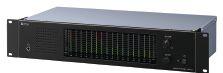
MP-16 professional audio monitor panel
TOA Canada’s MP-16 is a professional audio monitor panel, capable of handling up to 16 channels at a time. The product promises both ease of use and configurability, including system installation, daily services operations, periodical maintenance services, and troubleshooting (toacanada.com).
Source: TOA Canada
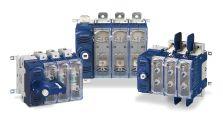
Littelfuse Class J fuse disconnect switch
This solution combines a switch and multiple fuses into a single product offering, promising a simpler way to manually open and close a circuit. When the switch detects an overload or short circuit, the fuse blows automatically to open or break the circuit—both upstream and downstream— and shut off the equipment. The 600V switch is available in 30A, 60A, 100A, and 200A (littelfuse.com).
Source: Littelfuse
Rittal Blue e+ fanand-filter units
Rittal’s
tion and “innovative, smart climate control features”. The emergency cooling function actively responds to temperature rises, preventing component overheating and possible costly system shutdowns. They are available in five sizes and eight output classes (rittal.com).
Source: Rittal
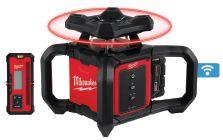
Milwaukee M18 rotary lasers, and accessories
The M18 Red exterior rotary laser promises accurate results when levelling on the jobsite, and features manual masking shutters. The laser is precise at 3/32-in. at 100 feet, and one-button setup helps make it easy to use. The Red dual-slope rotary laser is suitable for levelling, aligning, and squaring applications, and is 1/16-in. accurate at 100 feet (milwaukeetool.ca).
Source: Milwaukee Tool
Pull Connect for synchronized cable pulls
Designed to communicate through walls, floors, and other obstructions, Pull Connect is an accessory
that pairs with existing Greenlee pulling equipment to wirelessly synchronize both sides of a cable pull. It is controlled by a foot switch for hands-free operation, and provides visual cues to ensure noise is not a factor during pulls (greenlee.com).
Source: Greenlee
Reno LED expands to EV chargers
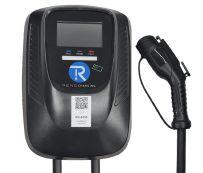
Reno LED Lighting Inc. has entered the electric vehicle space with the Reno EVC line of EV supply equipment. It offers Level 2 chargers that are pre-installed with ChargeLab’s networked software. Features/ capabilities include power management, monitoring and maintenance, pricing rules and schedules, managed user payments, and real-time support (renoevc.com).
Source: Reno Lighting
TE Raychem compact elbow
connectors
Switchgear units used in the power industry require space-efficient connectivity solutions. The ELBA asymmetric compact elbow connector promises to reduce stacking length by 40% thanks to its flexible, streamlined design (te.com/usa-en/home).
Source: TE Connectivity
We’re limited by space here, but have plenty of room online! Check out more products and solutions at EBMag.com, under “Products”.
CODE conundrum
RAY YOUSEF
Ray is a code engineer with Ontario’s Electrical Safety Authority
TACKLE THE CODE CONUNDRUM... IF YOU DARE!
Welcome to the newest round of questions that test your knowledge of the CE Code-Part I. Answers will appear in the November 2024 edition of Electrical Business Magazine, and online at EBMag.com under Features.
QUESTION
1
Conductors for equipotential bonding shall be permitted to be installed as open wiring, provided that they are adequately secured.
a) True b) False
QUESTION 2
What is the maximum mounting height of the overcurrent device handle on a panelboard in a dwelling unit?
a) 1.5 m c) 1.7 m b) 1.6 m d) 1.8 m
QUESTION 3
For a mobile home, the minimum permitted size conductor for the power supply cord is:
a) #10 AWG c) #6 AWG
b) #8 AWG d) #4 AWG
ANSWERS
Electrical Business, June 2024 ed.
Question 1
At least one duplex receptacle shall be provided in a porch of a house.
a) True. Rule 26-722(b).
Question 2
Single-phase inverters for an interactive solar photovoltaic system are not permitted to be connected to 3-phase systems, unless they are:
d) All of the above. Rule 64-110(1).
Question 3
Receptacles located between ___ m and ___ m of the inside walls of a pool shall be protected by a Class A type GFCI.
d) 1.5 m, 3.0 m. Rule 68-064(2).
How did YOU do?
3 • Seasoned journeyman 1 • Apprentice
2 • Need refresher training 0 • Just here for fun!
Personalities
Source: Sonepar Canada
After a career in Canada’s electrical distribution scene spanning roughly five decades, William (Bill) C. Smith of Electrozad Supply Co. Ltd. announced his retirement. He started working full-time with Electrozad in 1975 and, in 2022, was appointed chair and CEO. After Electrozad was acquired by Sonepar earlier this year, Smith was assigned the position of director, Transitional Business. He served in numerous other roles, including director and chair of multiple Electro-Federation Canada committees, and chair of the board (Canadian Division) for Affiliated Distributors for eight years. In 2017, Smith received EFC’s Industry Recognition Award for his influence on the “Canadian electrical industry”.
Source: Techspan
Techspan Industries welcomed Taso Dalakoudis in the role of territory account manager, Greater Toronto Area (GTA) and Eastern Ontario.
Electrical wire and cable player Northern Cables Inc. (Brockville, Ont.) has promoted Chad Rossetti to the position of territory manager, Atlantic Canada. Based in Prince Edward Island, he possesses 19 years of experience in wire and cable manufacturing, along with six years of logistics expertise. He began his career with Northern Cables in 2005, where he established himself “as a reliable and practical individual known for delivering results”.
Source: Stanpro
Gary Pounder has been promoted to vice-president, Sales and Marketing, at Stanpro, where he leads a team that includes Adam Silverman, Adrienne Cadloff and Roxanne Gélinas, alongside market channel manager team members Sharon Fahey, Dana Cairns, and Phil Pearcey. Pounder joined Stanpro last year as
vice-president, Market Strategy. Silverman reclaims responsibility over the Greater Toronto Area market, continuing his oversight of nationwide sales.
Source: Leviton Canada
Leviton Canada has promoted Nick Foster to the position of sales director, Atlantic Region. As sales director, he will “undoubtedly play a pivotal role in shaping the future of Leviton’s success in the Atlantic region”, says the company. Leviton serves commercial, industrial, and residential customers with solutions ranging from electrical and lighting to networks and energy management.
After serving 24 years as CSA Group’s project manager for the Canadian Electrical Code-Part I, Timothy (Tim) Pope is retiring. He is a certified engineering technologist and Red Seal electrician. He began his career in Electrical in 78 as a construction electrician. In 1987, he joined the City of Winnipeg as electrical inspector/plan examiner. During this period, he became a voting member of the CE Code-Part I Technical Committee, and a member of the Canadian Advisory Council on Electrical Safety. Just over a decade later, he joined CSA Group to manage the development of the CE CodePart I, and other electrical safety standards.
Source: Mersen Electrical Power
Paulina Chmielowska has joined Mersen Electrical Power as customer service supervisor for distribution in Canada where, according to Ferran Sacrest, VP Sales and Customer Service-Americas, Electrical Power, she will serve “as an interface with customers, sales, and operations, streamline our processes, and simplify our customer journey”. Chmielowska reports to Naomi Towns, director, Customer Service for North America.
Source: Nexans
Timothy King has joined Nexans as vice-president of the North America business unit for the company’s Distribution & Usage AMEA business. He most recently served as president of Southwire Canada. Nexans is organized around four main business areas: Power Generation & Transmission; Distribution; Usage; and Industry & Solutions.
Source: A. Capkun
Jody Sikham has been appointed marketing communications leader for Genlyte Solutions (a Signify business) for Canada and the United States, where she will lead marcom functions as well as continue to lead Canada’s professional marketing for specification and select distribution partners.
Source: Delta Transformers
Delta Transformers has appointed Jason Bouchard to the position of regional sales manager, Eastern Canada. Bouchard has nine years of experience in the electrical industry, and 14 in sales. His work experience includes positions such as sales director and business development director.
Source: Eaton
Shelly Vaz is the new business unit manager for Eaton’s CPDI (Critical Power and Digital Infrastructure) business in Canada. She has been with Eaton for 24 years, holding various roles of increasing responsibility across the Marketing, EatonCare, and Operations functions.
Eaton Canada has appointed Rahul Duggal to the position of director, Ontario District Sales, where he is responsible for strategic planning and leading the sales team. he has been with the company since 2010, also serving in positions of increasing responsibility, such as sales engineer, product line manager, and market segment manager.
TOA Canada has promoted regional sales manager Warren Strem to the position of national sales manager. In other company news, TOA’s technical support team is now CTS certified, demonstrating their audio-visual knowledge and/or skills.
Eglo Canada has merged with its counterpart south of the border to create Eglo North America, and Kevin Wallace has returned to the fold to lead the new organization as executive vice-president and chief sales officer. He possesses 32 years of experience in the lighting industry, 10 of those with Eglo Canada.
The Electrical Apparatus Service Association (EASA) announced its new officers and executive committee for the 2024-2025 administrative year: Paul Rossiter (chair), Barry Bullard (vice-chair), Mathis Menzel (secretary/ treasurer), Sean McNamara (immediate past-chair), Kevin Krupp, and Christopher Culver of Ainsworth Inc.
Manufacturer representative Mac’s II Agencies strengthened its Power Quality team in British Columbia and Yukon. Leading the team is Mark C. Oliver, who possesses over 30 years of electrical industry experience. Joining him are Adam Romano, who possesses engineering firm experience, and Hanna Waite in sales and support.
Aaron Engen has assumed the role of president & CEO of the Alberta Electric System Operator (AESO) following the departure of Michael Law. Engen co-headed BMO’s Energy Transition group, which focused on sectors such as hydrogen, carbon capture and sequestration, renewable natural gas, renewable power generation, energy storage, and small modular reactors.
Nidec’s U.S. Motors division promoted Cory Kniepp to director, Strategic Planning & Marketing Operations, and Patrick Hogg to senior marketing director, Industrial OEMs and Distribution. Kniepp joined Nidec in 2017, most recently serving as director, Marketing Operations. Hogg has been with Nidec for over 16 years, most recently serving as director, Marketing, for the industrial markets.
Allan Danroth has been named as president and CEO of Manitoba Hydro. He succeeds Hal Turner, who served as interim head following the departure of Jay Grewal in February. Danroth joins Manitoba Hydro from Alberta-Pacific Forest Industries, where he served as vice-president, Operations. He holds an MBA from Athabasca University and a First-Class Power Engineering designation.
We’re limited by space here, but have plenty of room online! Read the news behind the news Visit EBMag.com and click “News”.
Source: EASA
Adam Romano (left) and Mark Oliver. Source: Mac’s II Agencies
Source: Nidec Corp./U.S. Motors
Source: Manitoba Hydro
NANSY HANNA, P.ENG
Rule 2-014 tackles unplanned project delays and costs
Nothing is more frustrating to everyone involved in a large project than finding a deficiency at the 11th hour that could cause unplanned delays and costs.
Because proper planning and scheduling are so important, Canadian Electrical Code-Part I, Rule 2-014 requires that owners (or their representatives) submit plans and specifications for approval to the relevant Authority Having Jurisdiction prior to commencing work on large electrical power installations in buildings, industrial establishments, factories, and other facilities where public safety is paramount.
This work could include the installation of generators, transformers, switchboards, large storage batteries, etc., or other installations as prescribed by the local AHJ. In fact, every AHJ publishes detailed expectations as to when to apply Rule 2-014. For example:
• Nova Scotia Power Electrical Inspection Bulletin B-2-014 (tinyurl.com/bdfz8x6d)
The purpose of Rule 2-014 is simple: to ensure that non-compliant portions of the design are identified early so that any necessary changes for achieving compliance can be made, thereby avoiding unplanned delays and costs.
This is especially useful when large equipment with a long lead time is involved; defects found at the time of installation could have a disastrous effect on the project’s completion.
So while it is vital to include all the required information when submitting project plans to your AHJ, some essential documents continue to be
overlooked. In their last fiscal year (2024), the Electrical Safety Authority’s Plan Review team completed 2300 reviews! The team lists the following as the most commonly missed items (depending on the type of occupancy and scope of work):
• Single-line diagram(s).
• Electrical equipment room layout drawings.
• Electrical equipment specifications.
• Proper documentation from the relevant supply authority indicating that it is aware of the connection of a distributed energy resource (DER) installation that runs in parallel with the supply authority, or is capable of doing so.
Some common non-compliant items that ESA’s Plan Review team finds on submitted drawings include:
In their last fiscal year (2024), the Electrical Safety Authority’s Plan Review team completed 2300 reviews!
• Underground conductor ampacity must consider the termination temperature requirements of Rule 4-006.
• D Table ampacities may only be used when the trench details match the conductor configuration and dimensions of the related Diagram.
• Rules 10-210 and 10-212 require a single system bonding jumper for all solidly grounded systems. For services, the connection between the grounded conductor (neutral) and bonding terminal must be made at the consumer’s service equipment. For separately derived
systems, the system bonding jumper is permitted at either the source or the first switch controlling the system. Where separately derived systems are interconnected (e.g. a customer-owned transformer and standby generator via a 3-pole transfer switch), Rule 10-212 requires the system bonding jumper to be located at the tie point.
• Complex ground fault protection (GFP) schemes for interconnected separately derived systems must consider the location of the single system bonding jumper (above) when selecting the type of GFP and sensor location. GFP systems that require a system bonding jumper to be located at each of the interconnected sources creates non-compliance with Rule 10-212.
All of these situations truly demonstrate the value of submitting plans and specs to your AHJ during the early stages of project development, as they can cause considerable delay and are very costly to correct when discovered in the late construction phases.
Canada’s energy transition is underway; we are in a very important time of change, with more projects on the go, tight timelines, and tight budgets. Let’s seize every opportunity that supports a smooth project implementation. We must continue to adapt our workflow, remain connected and engaged, and leverage innovative approaches to achieve our collective goals.
Consult your Authority Having Jurisdiction for more specific interpretations
Nansy Hanna, P.Eng., is senior director, Engineering & Regulations, at Ontario’s Electrical Safety Authority (ESA). She is also chair of the Canadian Advisory Council on Electrical Safety (CACES) and a member of the ULC Advisory Council and CSA Technical Committee on CE Code-Part I. She can be reached at nansy.hanna@electricalsafety.on.ca.
Looking for Top Talent? Post open roles on Electro-Federation Canada’s Job Board
Backed with a paid media campaign, EFC is committed to supporting the electrical industry in attracting and retaining a qualified workforce to power Canada’s electrical and automation industry.
Leveraging Talent Nest, job postings are distributed to 15 recruitment sites and supported with an applicant tracking system. Check out our website for pricing and how to get started!