By how much have you increased your rates since last year?
you include your
Do you have a minimum service charge?
Do you have a minimum emergency service charge?
Business confidence
Like last year, we have included questions that explore the confidence (or pessimism) of electrical contractors regarding revenues, productivity, etc.
What is the approximate annual revenue for your business (pre-COVID)?
Do you have a different charge-out rate for apprentices?
Thinking back since the time the pandemic began (March 2020), how much expected revenue did you lose?
The cost and availability of some products have been unpredictable. Have you experienced shipping delays, limited quantities, unexpected price increases, etc.?
Last year, about 5% of respondents said they lost 100% of revenues due to Covid. While 4/5 of respondents report losing revenues (to varying degrees), at least no one reported 100% loss of revenues.
Have you started limiting the hold on your own
to much shorter periods than, say, the
60 days?
* Due to rounding, not all results may add up to exactly 100%.
How have safety protocols (e.g. sanitizer, wipes, no shared tools, etc.) added to your direct costs since last year?
How have safety protocols (e.g. sanitization, physical distancing) negatively impacted your productivity since pre-Covid?
The cost of safety protocols remains largely unchanged since last year’s survey, and persists as an important line item on the balance sheet.
When do you think bidding, productivity, revenues, etc., will get back to pre-pandemic levels?
Within the next 3 MONTHS
Within the next 6 MONTHS
Within the next 12 MONTHS
Within the next 24 MONTHS
Possibly longer OR NEVER
This year’s survey definitely displays a little more pessimism than last year. A curious result, considering Covid restrictions have been significantly lifted across the country. Or does this suggest deeper worries or anxieties that may not be connected to the pandemic?
Thanks to the following...
If you did not participate this year, but would like to next year (and we truly hope you do!), we will put out the call again in the pages of Electrical Business in June 2022, as well as on our website (ebmag.com) and our weekly newsletters.
The more responses we get, the better the data... all of which help better answer the question “Are you charging enough as an electrical contractor?”.
Remember... the survey is anonymous—utterly and completely. Your information is shared with absolutely no one.
Who is bearing the cost of construction site Covid safety protocols for the Electrical portion?
Compared to last year’s survey, both electrical contractors and generals are shouldering more of the cost of safety protocols, while the Other category drops from 15.00% to 10.00%.
What is your primary business concern right now? (1st – the most important, 4th – the least important)
Congratulations to SL—our randomly selected recipient of $250.00 in Visa gift cards.
A special Thank You to our National Survey sponsor, Procore, for helping us bring you this information. We rely on our industry partners to bring you news and information, year after year, so please give them a look and check out the solutions they provide.
And, of course, the Biggest Thanks go to all of you who took 5 minutes out of your day to answer our completely anonymous survey. We wish you the best of luck in the year ahead, and hope to glean new insights in next year’s annual national survey.
COMBATTING HEALTHCAREASSOCIATED INFECTIONS
Visible light that’s safe and effective for disinfection
BY DR. CLIFF YAHNKE
The World Health Organization defines healthcare-associated infections (HAIs) as “infections occurring in a patient during the process of care in a hospital or other healthcare facility, which were not present or incubating at the time of admission”. Approximately 20% to 40% of HAIs result from the transmission of pathogens by a healthcare worker after touching another patient or a contaminated surface.1
The consequences of HAIs are significant. According to the Canadian organization Coalition for Healthcare Acquired Infection Reduction (CHAIR):
• One out of 10 Canadian patients acquires an infection from the hospital—that’s 200,000 people each year.
• 10,000 Canadians (5%) who acquire infection from a hospital will die.
• It costs Canadians $4 to $5 billion annually to treat HAIs.
The Canadian Committee on Antibiotic Resistance
estimates that at least 30% of healthcare-associated infections can be prevented. Attention to cleanliness and disinfection of surfaces plays a large role in reducing HAIs. Cleaning, laundry, and other support services are a vital element of infection prevention and control strategies.
However, the efficacy of manual cleaning procedures can vary considerably among hospitals. Pathogens such as C. difficile, VRE, MRSA, norovirus, influenza, and severe acute respiratory syndrome (SARS) -associated coronavirus can survive in the healthcare environment for extended periods—even months.
Hand-washing is important, but if bacteria and viruses are not eliminated from the environment, hands will repeatedly become contaminated.2 There is a clear need for technology to help mitigate HAIs.
Germicidal ultraviolet light
Evidence demonstrating the persistent contamination of environmental surfaces despite traditional cleaning and disinfection methods
has led to the widespread acceptance that there is both a need for reassessing traditional cleaning protocols and for using secondary disinfection technologies.3
Ultraviolet (UV) disinfection is one type of no-touch technology shown to be a successful adjunct to manual cleaning in reducing environmental bioburden. This technology is designed for use in operating rooms, patient rooms, and other healthcare settings.
Essentially, UV light kills bacteria and viruses by damaging their nucleic acid, thus destroying their ability to replicate and cause disease. UV wavelengths, which are less than 400 nm, are beyond the range of visible light, and can kill pathogenic microorganisms.
Most experts agree that the C bandwidth (approx. 100 nm to 280 nm) is the most germicidal, and that UV-C light can remove approximately 99% of microbial contamination in the air and on surfaces. The energy required to kill microorganisms is a product of the UV light’s intensity and exposure time, meas -
ured in microwatt seconds per square centimetre.4 Short wavelengths can kill pathogens through a variety of pathways, depending on the wavelength, duration and amount of optical radiation. 5 The advantage of UV-C technologies for minimizing HAIs is that an effective dosage can be achieved with short time durations (less than one hour).6 There are, however, disadvantages to this technology.
The disadvantage of UV-C is that the radiation must be applied when the hospital room is unoccupied, as it is inherently toxic to humans. Additionally, as a tool for disinfection, UV has other drawbacks:
• Portable devices require specialized staff and training to operate.
• Episodic: once UV disinfects the room, pathogens immediately begin to re-enter the space: in the air, on patients and staff, and on surfaces.
• UV requires line of sight to work. If a surface is in shadow, it will not be disinfected.
Photo: Photographe corporatif Montréal, courtesy Kenall Manufacturing Co. Used with permission.
• UV light sources degrade. According to one manufacturer’s specs, replacement may be required in as little as four months when operated continuously.
• UV causes material degradation, damaging plastics and fading fabrics/finishes.
A visible light alternative
Scientists and engineers have developed technology that utilizes 405 nanometre Indigo visible light to provide disinfection around the clock, even when people are present. These luminaires automatically kill viruses, bacteria, molds, yeasts and fungi in the air and on surfaces without requiring specially trained staff. Unlike UV, 405-nm visible light is both direct and indirect. Reflecting off walls and other surfaces, it kills pathogens in shadowed areas UV lighting cannot reach.
Rather than relying solely on staff to clean surfaces, or HVAC systems to purify the air, this technology combines the benefits of both. Using the visible light spectrum, the
When the rooms are occupied (left), they produce a blend of White and 405-nm light. When unoccupied (right), the lights switch to 405-nm Indigo-only for maximum disinfection.
A primary driver in the selection of the technology was that the lights are controlled automatically: when the rooms are occupied, they produce a blend of White and 405-nm light. When the rooms are unoccupied, the lights switch to 405-nm Indigo-only for maximum disinfection.
GBi Experts-Conseils Inc.—a Quebec engineering firm retained by the hospital—learned about this technology at an Illuminating Engineering Society conference, and knew it would be beneficial to CHRDL.
the human factor and the techniques used limit the effectiveness of the application of the procedures,” said Grégoire Tremblay, GBi Experts-Conseils. “The addition of an external agent that operates continuously using cutting-edge technology becomes an asset to improve the effectiveness of disinfection in more sensitive places.”
References
All references supporting this article can be found at EBMag.com.
technology is safe at all times— even when performing at its highest level of disinfection. No room downtime, and no worries about safety.
Case Study: 405-nm visible light in action
Knowing the seriousness of HAI issues even before Covid, the Centre Hospitalier Regional de Lanaudiere (CHRDL) in Joliette, Que., installed germicidal luminaires in the facility’s 1000-m endoscopy unit and adjacent support areas, including a medical device reprocessing unit.
The luminaires use 405-nm visible light to continuously disinfect the air and surfaces. The lights can reduce high-risk bacterial transmission events involving coagulase-negative staphylococci, and are clinically proven to reduce transmission of S. aureus— the number one cause of surgical-site infections.7
Although the hospital had cleaning protocols in place, staff were concerned about the human factor and the techniques used that limit the effectiveness of the application of the procedures.
“Despite the current protocols and procedures established for disinfection in health facilities,
Dr. Cliff Yahnke is chief scientist and head of clinical affairs for Indigo-Clean and Kenall Manufacturing Co., a Legrand company. This article was originally published October 2021 at EBMag.com.
Terry Milot and Robin Bobocel discuss the ATCC, prompt payment, and education reform / BY STAFF
Earlier this year, representatives from the 11 association members of the Alberta Trade Contractors Council held their first meeting as a “council” board of directors. This is significant because, operating under a Memorandum of Agreement since January 2014, the group had been operating as a “coalition”.
Now, the relationship is formalized as a not-for-profit society. Also, an additional member has joined the group, bringing the total ATCC membership to 11 construction industry associations.
“Since we signed the original [Memorandum of Agreement] in 2014, we have been writing the preface to what has the potential to be a great story,” said Terry Milot (vice-president, Chemco Electric Ltd.), who was elected as the council’s first chair. “We are now at the beginning of Chapter 1, where the ATCC expects to deliver an exciting opening scene.”
Milot—who represents the Electrical Contractors Association of Alberta (ECAA) at the ATCC—went on to say that while there is still much work and dedication needed to achieve the council’s immediate priorities for prompt payment legislation and new structure under the Skilled Trades and Apprenticeship Education Act, “we are confident that trade contractors can deliver on these projects”.
Electrical Business Magazine chatted with both Terry Milot and ECAA’s executive director, Robin Bobocel, with the aim
The associations that make up the ATCC really bring all their strengths and abilities to the table.
EBMAG: Let’s dive right into the Alberta Trade Contractors Council [ATCC]. Robin, from the perspective of your electrical contractor members, what are your priorities and hopes that could be realized through the ATCC?
This is an opportunity to clean up some of the bad habits that have been developed over the last 100 years.
of learning more about the council’s priorities, and how they tie in with ECAA member priorities.
ROBIN: I think the biggest thing for us is being able to “triangulate information”. It’s really valuable for us—as electrical contractors—to be able to understand what the related construction trades are hearing, and in which direction they are going. This way, we can work together; whether it’s long-term planning, responding to government policy or, quite frankly, just improving the construction industry as a whole. The 11 associations that make up the ATCC really bring all their strengths and abilities to the table. So far, I am really encouraged... I’m learning from my colleagues at the other associations, and this will help us better serve ECAA members, and help us improve the electrical trades in Alberta.
EBMAG: Getting to one of ATCC’s priorities, where are we at with prompt payment in Alberta?
TERRY: There have been some formal meetings with government, and there are still some things they are working through. We’re very confident that the process we are putting together will work, and hope for an implementation date this August. One
Terry Milot
Robin Bobocel
of the things that we’re working on—and it’s actually really important—is a “proper invoice”. So we’re working with some legal firms and conducting education sessions for ATCC contractors so they can learn what constitutes a “proper invoice”. So when the general says “you need to do this, that and the other thing [before I pay you]”, they will have the knowledge and confidence to say, “No, that’s not a legal requirement. We’re not doing that”.
ROBIN: The term “proper invoice” is so pivotal because it will be used in the legislation. There are certain requirements that need to be met to help ensure contractors get paid on time, as per the intent of the legislation.
TERRY: Right, so we have to prepare our own people. ATCC represents some very small contractors all the way up to some very large ones, but everybody needs education. So we’ve been hosting webinars and, believe it or not, we’ve had people come up with questions that nobody’s even thought of. And we’ve been working on this thing for seven years! But, we address them and, hopefully, we get it right. This is an opportunity to clean up some of the bad habits that have been developed over the last 100 years.
EBMAG: Let’s move on to reforming the Skilled Trades and Apprenticeship Education Act. Where do you hope this will end up?
TERRY: One of the main things is to have equal representation on the boards and a strong voice with government so that, as an industry, we can help inform their decisions, rather than contractors being on one side and educators on another. We have to look at apprenticeship holistically; what’s good for some may not be good for all. Again, that’s the benefit of having all these
Apprenticeship and education are important to us all, but each trade has its own issues.
associations under the ATCC umbrella. Apprenticeship and education are important to us all, but each trade has its own issues.
TERRY: Educators want to get people into the classroom, but maybe some industry sectors don’t need any more apprentices. I had read a pan-Canadian report that identifies the number of electricians across different provinces. When you look at Alberta, the numbers are staggering! We have way more apprentices than we can employ. But until you have that information and sit with government and our educators, you can’t move forward with a framework that reflects industry realities. And it can be difficult at times, because one ministry or department may have different views from another.
same page. From our standpoint as one of the ATCC association members, we’ve learned a heck of a lot by listening to other people’s trials and tribulations.
EBMAG: Speaking of changing technologies, I would be remiss if I didn’t ask about the “energy transition” and how it is playing out in Alberta. Electrical Business Magazine regularly reports on new solar or wind projects, and it sounds like Alberta is the land of milk and honey for renewable energies. But you guys are there, at Ground Zero. Are electrical contractors excited by all these renewables projects? Do they miss the oil & gas megaprojects?
To learn more about the Alberta Trade Contractors Council, email Terry at tmilot@ chemco.com. To learn more about Electrical Contractors Association of Alberta, visit ecaa.ab.ca
This article was first published at EBMag.com on July 21, 2022. We have since learned from ECAA’s “The Spark” newsletter that the Prompt Payment and Construction Lien Act came into effect August 29. ECAA has posted some FAQs here: ecaa.ab.ca/ goa-news
ROBIN: Terry’s right in that it can be difficult at times, but I don’t think it’s intentional or malicious. The government has so many things on the go right now, and they have a very small amount of time in which to get all of these important pieces of legislation done. I would go so far as to say they may even appreciate that we are being proactive with our consultations, because it helps them focus and get stuff done.
TERRY: Robin makes a good point. Government really is working at breakneck speeds and, based on countless conversations, emails, and so on, they are very much an open book. But, we’ve discovered that “book” has many chapters. Take Electrical, where technology is changing so fast; some of the things we used to teach may not even exist any more, so you need to have a relationship with all of these parties and get everybody on the
TERRY: Despite all the misconceptions out there, tradespeople in Alberta really care about the environment, and really care about the province. We are not anti-solar, anti-wind... we embrace them! In fact, the Electrical Contractors Association of Alberta is a member and sits on the board of the Alberta Energy Efficiency Alliance. We welcome renewables, and we want to show the world that we care. That said, energy security is a real issue these days. Realistically, we are not going to be off fossil fuels next week, next month, or next year, so we want to extract them responsibly. We continue to be more effective at how we extract energy from our non-renewable resources. Alberta is a leader on that front.
ROBIN: Any new opportunities for job creation are welcomed, but there is always some concern around ensuring that we have all the necessary skills and enough qualified tradespeople to deliver these projects, and that the work is not being done by someone with, say, a “micro-credential”. So we’re being vigilant and ensuring qualified trades are doing the work—and that’s just good for everyone.
TWO FUNDAMENTAL PRINCIPLES FOR MAKING INDUSTRIAL CYBERSECURITY DECISIONS
Embracing defence-in-depth and secure-by-design / BY FELIPE SABINO COSTA
To accelerate their digitalization journeys, manufacturers are implementing innovative networking technologies to capture, transmit and, ultimately, transform industrial data into meaningful insights.
Unfortunately, all this connected equipment poses new cybersecurity risks to industrial control systems and, therefore, requires security features at the component level to mitigate these risks.
On the plant floor, this responsibility is increasingly falling to the in-house electrician who must specify, install and maintain the sensors, actuators,
and other communications devices that enable machines to talk to each other.
How did we get here?
Until the 1990s, manufacturing largely occupied two separate universes: Information Technology (IT) and Operational Technology (OT). The OT universe was composed of heavy machinery, electrical devices, processing systems, and other industrial equipment. Born out of the information age, the IT universe relies on servers, storage, networking and PCs running applications and processing data.
Like two ships passing in the night, IT and OT occupied separate silos, shared little data or control, and relied on oversight from staff with divergent skill sets and agendas.
With the advent of the Industrial Internet of Things (IIoT), these two worlds have converged, resulting in productivity gains on a scale never seen before. Data gathered from sensors and actuators throughout a plant collect equipment and environment data for analysis, leading to improved decision-making and employee safety, streamlined supply chains, cost-saving predictive maintenance, and reduced waste.
Amidst all this excitement, however, an old problem has grown into a new danger posing far higher stakes: cyberattacks.
With all its connectivity and devices, the IIoT makes an appealing target for hackers. The expanded attack surface gives bad actors the opportunity to move laterally across a network, jumping across IT and OT systems to conduct industrial espionage, intellectual property theft, or even production sabotage.
Any point in an IIoT infrastructure that a hacker can use to gain unauthorized access is an attack vector, and this includes devices, software, machines, input touchpoints, displays, sensors— even people. Hackers only need identify the weakest link in the system.
In this article, I will introduce specific action items based on well-defined frameworks and standards when building a cybersecurity management system (CSMS) for your own industrial control system (ICS).Taking a defence-in-depth approach to network construction and choosing secure-by-design solutions
from trusted vendors can help simplify the ICS cybersecurity decision-making process.
Key elements of the cybersecurity management system
To understand the key elements of the CSMS, let’s take an in-depth look at the ISA/IEC 62443 series of standards, which provide a holistic and wide-ranging approach to securing ICSs. These standards are holistic because they embrace the different structural aspects of security strategy, defined by the International Electrotechnical Commission (IEC) as People, Processes, and Technologies.
In addition, these standards cover a lot of ground because they provide internal and external recommendations to asset owners, supply chain management, and product development teams. Although the IEC 62443 series
provides a wealth of information in an ever-expanding spectrum of field applications, it can be difficult to distil concrete action items for building your own industrial control system’s CSMS. So I will identify the main elements in the CSMS development process proposed by the IEC 62443 series (see Figure 1). Asset owners, system integrators, and product suppliers play key roles in the whole cybersecurity management system as suggested in ISA/IEC 62443 (see Chart 1). In particular, IEC 62443 recommends that asset owners analyze, address, monitor, and improve the CSMS’s ability to defend itself against risks in accordance with the company’s risk appetite. In addition, IEC 62443 recommends security development throughout the product life cycle so as to maintain an acceptable level of security in the products and systems the solution providers or system integrators offer.
that can help reach the required security level. They may be technical (e.g. firewall), administrative (e.g. policy), or physical (e.g. locked door).
Not every zone, conduit, or device requires Level 4 security. Asset owners or system integrators need to conduct a detailed risk analysis to determine the appropriate level of risk for each zone and conduit in their system. In other words, there is an inherent balancing of risk and cost to consider.
Choose hardened components
The concept of security levels also applies to the components that go into building the system. In fact, IEC 62443-4-2 specifically defines the security requirements for four types of components:
1. Software applications
2. Embedded devices
3. Host devices
4. Network devices
TIE REBAR
FASTER AND EASIER WITH
For each type of component, the standard also defines seven foundational requirements:
1. Identification and authentication control
2. Use control
3. System integrity
4. Data confidentiality
5. Restricted data flow
6. Timely response to events
7. Resource availability
Luckily, several laboratories (such as Bureau Veritas and ISA Secure) can certify products to ensure they adhere to IEC 62443-4-2 requirements. These labs can simplify the selection process for asset owners. All you need to do is determine the level of security required and select a certified product meeting that requirement. This component-level security assurance, also known as hardening, adds another layer of protection to the system as part of a defence-in-depth strategy.
Select secure-by-design suppliers with after-sales support
Besides selecting security-hardened devices, asset owners also need to pay careful attention to supply chain management practices. In fact, after-sales support and response to vulnerabilities are just as important as how the devices are designed and built. The components that go into building a cybersecurity management system often come from separate vendors; should one vendor’s device become compromised, the remaining devices in your entire system could be, too.
So, besides device-level security, you should choose suppliers that provide security over the entire product life cycle, including support, quality control, validation of performance, and vulnerability responses, among others.
In other words, the product’s entire life cycle needs to be secure-by-design. IEC 62443 even has a dedicated
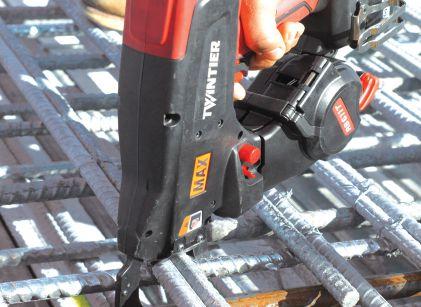
MAX developed the World’s First battery powered rebar tying tool in 1993 and has a history of manufacturing durable and reliable industrial tools for 80 years. Since then, MAX rebar tying tools have revolutionized rebar tying work in precast plants and a variety of other jobsites all around the world.
All MAX products are engineered to perform on professional contractors jobsites and with MAX’s 200 R&D engineers we have continued to improve upon MAX proprietary technology, which led to the invention of the TWINTIER® rebar tying tools. TWINTIER® technology allows the tools to tie 4,000 ties per charge while delivering just the right amount of wire for greater productivity and cost savings. These unique innovative features make the TWINTIER® the most efficient rebar tiers in the industry. Today, MAX manufactures a full line of rebar tying tools that can tie between mesh up to #9 x #10 rebar.
subsection (62443-4-1) specifying the requirements for ensuring “secure-by-design” throughout the product life cycle (building, maintaining, discontinuing). These requirements are generally associated with the support needed for patch management, policies, procedures, and security communications about known vulnerabilities.
Similar to the IEC standard for product certification, a solutions provider can be certified as following good security management practices, and adhering to tangible criteria in IEC 62443-4-1. This simplifies the asset owner’s decision-making process.
Moreover, selecting a trusted vendor that takes a proactive approach to protecting their products from security vulnerabilities and helping customers manage those risks through a dedicated response team can also help ensure your supply chain is protected, even as new vulnerabilities and threats emerge.
Follow the principles
Protecting the industrial control systems that keep critical infrastructure around the world up and running is a daunting task. Although many guidelines and standards are available for developing a holistic cybersecurity management system for industrial networks, asset owners, system integrators, and product suppliers need to work together when building their own systems and applications.
Adopting a defence-in-depth approach to network construction and selecting secure-by-design suppliers that provide proactive responses to vulnerabilities can help simplify the inherent complexity of building your own cybersecurity management system.
Felipe Sabino Costa is an electrical and electronics engineer and an official ISA/IEC-62443 industrial cybersecurity instructor for the International Society of Automation. He is also a LATAM industrial cybersecurity (IACS) expert, an international speaker, and an author of books and white papers. Felipe holds cybersecurity certifications from the US Department of Homeland Security, MIT and Stanford, and is working on an M.Sc. in Cybersecurity. This article was originally published July 2022 at EBMag.com.
DAN LEDUC
What are you working to?
Some construction documents (e.g. minutes of meetings, transmittals, or timesheets) are not contract documents, and it is important to remember this distinction when reviewing your own contract documents as an electrical contractor.
Consider this relatively standard subcontract wording:
1.2 The Subcontractor shall perform the Subcontract Work as required by the Subcontract Documents.
Then, the equally standard expanded definition of subcontract documents:
ARTICLE 3A – SUBCONTRACT DOCUMENTS
The following are the Subcontract Documents referred to in Article [...]
• Prime Contract Agreement between Owner and Contractor
• Definitions of the Prime Contract
• The General Conditions of the Prime Contract
• Subcontract Agreement between Contractor and Subcontractor
• Definitions of the Subcontract
• The Subcontract Conditions of the Subcontract
Then, more words providing further Subcontract Documents:
• CCA I 2008 Suplemental Conditions Rev-November 5, 2012
• Letter of Intent, dated May 5, 2014
• Minutes of Bid Review Meeting, dated March 17, 2014
• Completed Post-Tender Amendment Form, dated March 27, 2014
• Completed Bid Form, dated March 7, 2014
• Completed MBII Supplemental Bid Form, dated March 7, 2014
• Bulletin TP2-01 dated, February 21, 2014; Bulletin TP-02 dated February 27, 2014 [...]
• Instructions to Bidders, dated
February 10, 2014
• Appendix “A” Scope of Work, dated February 10, 2014
• Appendix “B” List of Drawings, Package #03, dated February 10, 2014
• Appendix “C” List of Specifications, Package #03, dated February 10, 2014
— Construction Schedule E.01, dated July 29, 2014
We can see that this particular subcontractor is to perform work pursuant to the Subcontract Documents listed above, yet there is no reference to Issued for Construction (IFC) Drawings, which come as standard practice after the close of tenders or (sometimes) the formal Subcontract.
Here’s the risk: if you work to the IFC Drawings, you may be working to a different scope of work. (The saving grace is that IFC Drawings are not usually too dissimilar to the Tender set but, in some cases, there can be material or significant changes that impact your execution plan.)
We need to get those IFC Drawings added the list of Subcontract Documents so that there’s no confusion over your scope of work. Typically, a Change Order is requisitioned (and agreed upon) to have the IFC Drawings added.
If the scope changes (including any addenda) are not significant, then you may end up with a zero-value Change Order. Still, the IFC Drawings are now incorporated into the Subcontract Documents, and your scope of work is clear and agreed-upon.
This column is not legal advice, nor should it be taken as such
Dan Leduc is a partner in the law firm of Norton Rose Fulbright LLP, and practices exclusively in the area of construction law. He is always happy to take on new clients from anywhere in Canada. Contact Dan at dan.leduc@nortonrosefulbright.com.
CODE conundrum
RAY YOUSEF
Ray is a code engineer with Ontario’s Electrical Safety Authority
TACKLE THE CODE CONUNDRUM IF YOU DARE!
Welcome to the newest round of questions that test your knowledge of the CE Code-Part I. Answers will appear in the October 2022 edition of Electrical Business Magazine, and online at EBMag.com under Features.
QUESTION 1
A totally enclosed, non-ventilated Class B motor requires conductors rated at 38A. The minimum size copper multiconductor cable that can be used is:
a) No. 10 AWG TECK90
b) No. 8 AWG TECK90
c) No. 8 AWG TW75
d) No. 6 AWG TW75
QUESTION 2
Rapid shutdown is required for PV systems on or in buildings where the PV source or output conductors are:
a) More than 1.5 m from the array, with shutdown within 10 s.
b) More than 1.5 m from the array with shutdown within 30 s.
c) More than 1 m from the array, with shutdown within 10 s.
d) More than 1 m from the array, with shutdown within 30 s.
e) Rapid shutdown not required.
QUESTION 3
Equipment marked Ex ia Gb is suitable for installation in a Zone 0 location.
a) True b) False
ANSWERS
Electrical Business, June 2022 ed.
Question 1
When Type CFC system wiring is used, it shall be covered with abrasionresistant tape and secured to the
floor so that all cables, corners, and bare conductor ends are completely covered.
a) True. Rule 60-328.
Question 2
What is the maximum length of 12 trade-size, liquid-tight flexible conduit permitted for the connection of equipment?
d) 1.5 m. Rule 12-1302(2).
Question 3
The maximum rating for a circuit breaker protecting exposed wiring for permanent outdoor lighting circuit is:
c) 30 A. Rule 30-1120(1).
How did YOU do?
3 • Seasoned journeyman
2 • Need refresher training
1 • Apprentice
0 • Just here for fun!
Solid bidding is the core of your business
Learn the skills, methods and practices of accurate electrical estimating from Suderman Estimating Systems Inc., Canada’s leading electrical estimating course provider.
Scan code to learn more
The Suderman Estimating Courses would be an asset to people in the apprenticeship program
NANSY HANNA, P.ENG
Electric vehicles as energy-production source
Popular new acronyms such as V2G, V2H, V2B, etc., refer to changing electric vehicles (EVs) from a means of transportation into energy storage facilities, capable of exchanging energy with the grid, home, load or building.
Before we explore any CE Code installation requirements, let us agree on an important concept: during the discharge of energy from the vehicle, it is considered an energy-production source. This is true regardless of whether that energy is consumed by the building/home, or whether there is a balance of energy going back to the grid. The moment energy starts flowing away from the vehicle, it is considered an energy-production source.
With that concept established, here are the main CE Code requirements:
• Rule 86-308 requires that EV supply equipment (EVSE) be marked when it is an electric power production source (bi-directional power).
• Rule 86-308(1) requires that other parts of a system—either on or offboard of the vehicle—that are identified for and intended to be interconnected to a vehicle, and also serve as an optional standby system or an electric power production source, be marked accordingly.
• When an EV is used as energy-production source, Rule 86-308(2) stipulates that the requirements of Section 84 apply.
Marking equipment as per Rule 86308(1) is important, as it identifies equip-
ADVERTISER INDEX
ment with the capability for bi-directional power, and that it has been certified and tested accordingly. The application of Section 84 ensures that the vehicle’s interconnectivity with the building’s electrical system and the grid is safe.
One of the critical requirements of Section 84 is found in Rule 84-008 “Loss of supply authority voltage”. This rule requires that, upon loss of power, any electricity production source—including the EVSE in our discussion—is automatically disconnected from the grid. This is very important for safety, regardless of the capacity of the EVSE and whether that capacity is already consumed by the building loads under normal operating conditions.
Any system that produces even small amounts of electricity can be potentially dangerous. Improperly installed systems can create serious safety hazards to property owners, employees, visitors, supply authority workers, etc. For example, as supply authority workers perform repairs during an outage, even a small amount of power flowing back to the grid through a vehicle could lead to electrocution.
The requirement in Rule 84-008 can be met with the use of an inverter that is suitable for interconnection with electric power production sources and designed to serve as a disconnection device. These inverters and/or power production units are marked as “utility interactive inverter” or “grid-support utility interactive inverter”. So, you could connect the EV through a certified inverter or power production unit to ensure compliance.
Another option is to use EVSE that is marked and specifically certified for that purpose. (UL 9741 “Outline of investigation for electric vehicle power export equipment [EVPE]” is currently the only standard in North America for certifying bi-directional EVSE.)
Other important Section 84 requirements include:
• Ensuring the interconnection arrangement is in accordance with the supply authority (Rule 84-004).
• Disconnecting means for EVSE, Rule 84-020.
• Disconnecting means readily accessible to the supply authority, Rule 84-024.
• Warning notice and single-line diagram indicating there is an interconnected system at the premises. These need to in a conspicuous place, visible to first responders and the supply authority.
Where an electrical installation includes energy storage systems and/or bi-directional EVSE operating in parallel with the supply authority—and the aggregate rating of the system(s) installed at the same time is in excess of 10 kW—some AHJs (e.g. Ontario’s Electrical Safety Authority) require the electrical design to be submitted for review prior to commencement of work.
We are already seeing vehicle-to-grid installations in Canada; they help support renewable energy sources and balance consumption by charging off-peak and using stored energy during peak demand. They also enable our EVs to serve as emergency back-up power. Let us ensure they are installed in a Code-compliant manner so we can reap their benefits safely.
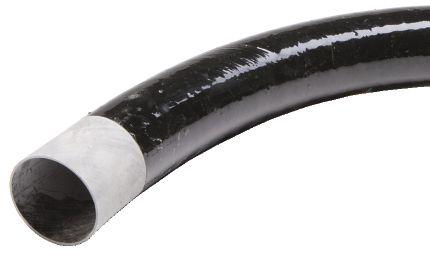
KEEP THE POWER FLOWING WITH NO BURN-THROUGH ELBOWS
Our electrical conduit helps utilities keep the power flowing.
> No burn-through eliminates elbow repairs
> Low coefficient of friction allows for smooth pulls
> Fault resistance makes repairing cable easy
> Mechanical strength protects cable
> Light weight and gasket connections facilitate speedy installation
> Lower prices keep projects on budget
Learn how utility projects benefit from no burn-through fiberglass elbows.
WE’RE TAKING REWARDS TO THE NEXT LEVEL.
With more ways to earn loyalty points and redeem great prizes, the new and improved AD Rewards program allows you to capitalize on the power of your purchases from AD distributors like never before.
With over 6,000 valuable merchandise and travel rewards, your relationship with your AD distributor has never been more powerful…or lucrative. Join today at any of these participating AD distributors.