Les petites et moyennes entreprises admissibles peuvent présenter une demande d’aide au Service d’apprentissage du Canada. En plus de la subvention, vous pouvez recruter votre future main-d’œuvre grâce à :
• un accès gratuit aux services de jumelage employeur-apprenti;
• un accès gratuit aux programmes de mentorat; et
• un accès gratuit à de la formation sur la diversité et l’inclusion.
Faites votre demande de subvention à : RechercheApprentis.com/CAS
*SEO, certaines conditions s’appliquent. Consultez le site Web pour plus de détails.
CANADIAN CONSTRUCTION SECTOR IS OVERALL OPTIMISTIC
Majority of Canadian construction firms expect increase in number/ value of projects
Anew report reveals 9 out of 10 of construction firms in Canada express confidence (44% Very Confident) about industry conditions over the next 12 months, with 7 out of 10 expecting an increase in the number or value of projects over the same timeframe.
The information comes from Procore’s construction industry benchmark report “How we build now” (2023), which examines the general sentiment of the industry, the digital maturity and adoption of construction technologies, as well as the challenges and opportunities that businesses face. Some of the report’s highlights include...
Residential expectations
The report shows that 43% of those who work in the residential sector expect to build more housing units in 2023 compared to 2022.
Over half of respondents from British Columbia (51%) and Alberta (55%) who work in the residential sector, however, expect to build and deliver fewer housing units in 2023 compared to 2022.
This is a stark contrast to Ontario, where 60% of respondents expect to build and deliver more housing units this year.
Labour shortages and supply chain problems
Respondents consider the hiring and retention of skilled labour as one of the top challenges they face over the next 12 months.
• 29% report they have been unable to take on more projects in the past three to six months due to a labour shortage.
• 27% agree it is hard for construction to compete with other industries for good employees.
• 27% agree there is too much competition in construction for talent.
• 32% of respondents fear that some of their most experienced people will retire within the next few years.
Despite these challenges, respondents are optimistic; roughly 8 in 10 are confident they will have enough people to meet their organizational needs (79%), and the necessary skills to meet demand (80%) over the next 12 months.
Supply chain problems are impacting respondents to varying degrees across the country. Quebec-based respondents report the highest impact, with 41% reporting significant delays due to supply chain issues, compared to 35% of respondents from Ontario and just a 1/4 of respondents from BC.
Digital transformation is critical
Construction firms in Canada understand that digital transformation is required to overcome the labour shortage: 22% of construction businesses consider themselves a digital-first business, while and 51% believe they are well on their way to adopting digital formats and workflows.
The survey shows 27% of the total time spent on a project is spent on rework or rectifying issues. Respondents also indicated:
• Almost half of all projects go over budget (50%) and over schedule (49%).
• Over 30% need new technology to improve operational efficiency and cost controls amid economic volatility.
• Paper remains a common medium for Canadian construction decision-makers. About a 1/4 of respondents (23% to 28%, depending on the workflow) still use paper-based records or non-digital processes as part of their workflows.
Data as a competitive difference
Industry realizes the value of data, yet they feel they are unable to leverage data to its fullest. 41% of respondents feel they would be able to make better decisions had they better access to both real-time and historic information on project performance.
• Respondents believe they could save up to 12% of their total spending on projects if they could capture, integrate and standardize data more efficiently.
• Respondents report spending 17% of their time on a typical project searching for data or information.
• Half of the respondents say they have a foundation in place to begin learning from their data, but don’t
Over 30% need new technology to improve operational efficiency and cost controls amid economic volatility.
necessarily have a dedicated data team in place. 1 in 5 say much of their data exists in spreadsheets or on paper, and they do not leverage data to drive business outcomes.
Respondents rate construction management platforms, clean technologies involving green, sustainable or innovative materials, and next generation BIM as the top technologies that will drive change in the construction industry over the next three years.
Sustainable construction
Industry appears keen to adopt environmentally conscious and sustainable building practices. Half of the respondents have started to focus on strategies like prefab and improved material selection to reduce the carbon footprint of their projects. 4 in 10 are either currently tracking or plan to start tracking carbon emissions on their projects.
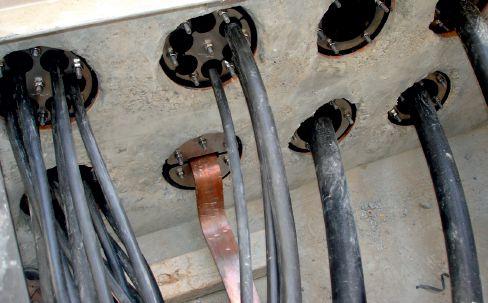
• Holds 22 ft. (6.7 m) of water head pressure and up to 90 ft. (27m) surges.
• Can seal conduits of all sizes and is re-enterable.
• Use with a wide range of cable jacket and conduit materials.
• Meets Canadian Electrical Code requirements.
With files from “How we build now: technology and industry trends shaping Canadian construction in 2023”, Procore June 2023.
FUEL-SWITCHING AN ENTIRE GLOBAL FLEET
ABB is switching its global fleet of over 10,000 vehicles to electric
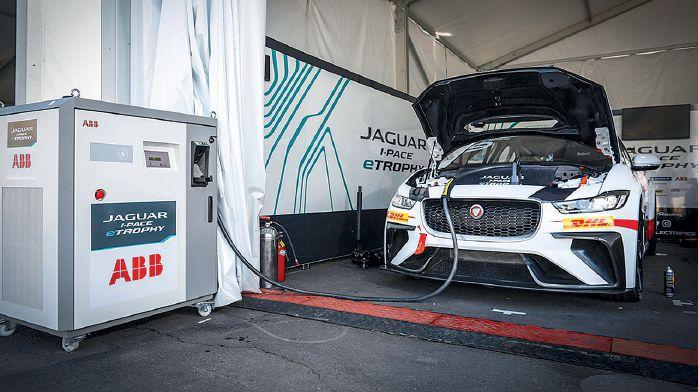
A custom-made compact Terra DC fast-charger was used in the ABB Formula E-supporting Jaguar I-Pace eTrophy from 2018-2020.
As part of its 2030 sustainability strategy, ABB has embarked on a mission to replace its existing global fleet of conventionally powered vehicles with electric vehicles—that’s over 10,000 vehicles spread across 62 countries, with an associated annual expenditure of about $100 million.
ABB has already begun working on this initiative, with a focus on the 24 countries that represent more than 80% of its fleet. The goal is have the company’s entire global vehicle fleet electrified by 2030.
The fleet conversion project includes the installation of AC Terra chargers and charging infrastructure at ABB locations. In many cases, a battery charger is also installed at the drivers’ homes.
Obstacles to full electrification
One of the challenges that ABB has come across was discovering that—as a company—it can sometimes move faster than conventional drivers (who
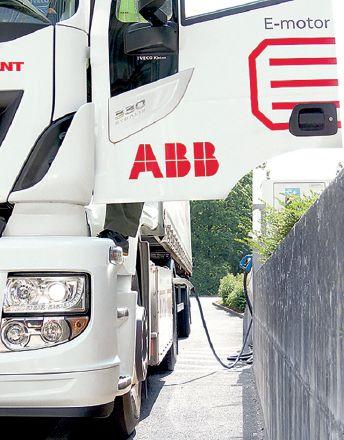
ABB is replacing its global fleet of gasoline- and diesel-driven vehicles with electric alternatives.
experience range anxiety, in some cases) when it comes to EV acceptance. Further challenges include:
• Potential semiconductor shortages
• The reluctance of governments to offer incentives
• The immaturity of public charging infrastructure in some regions
And, given that electric vehicle popularity is rising in all transportation segments, vehicle availability can also be an issue.
The United Kingdom experience
The company’s fleet conversion project started in 2019, with three pilot countries launching in 2020. Total cost of ownership analysis was carried out, and supplier management and procurement strategy elements were considered.
The company published an EV policy document in September 2020, followed by a stakeholder communication plan to support the policy launch, transition, and go-live.
Priority locations for EV infrastructure investment were identified, and an implementation plan was developed to adapt to the potential impact of the global Covid-19 pandemic on the availability of both ABB products and electric vehicles.
The United Kingdom was selected to host the first pilot project, not only because of the high CO2 footprint of ABB’s UK fleet, but also because of the growing availability of vehicles and charging infrastructure in the country. Currently, 383 EVs have been ordered, and only 26 ICE (internal combustion engine) vehicles for this market.
Lessons from Sweden and Spain
EV charging infrastructure varies by country, and strategies for switching to an electric fleet must be adapted accordingly.
In Sweden, ABB says it is making significant strides in converting its fleet to EVs. Although Sweden was not one of the original pilot countries for this initiative, the local policy for company cars was changed in March 2021. Since then, ABB has ordered 427 EVs and 11 plug-in hybrid vehicles (PHEVs) and only 5 ICE vehicles.
The company is taking a different approach in Spain, where charging infrastructure is still developing. In December 2020, ABB decided to replace the Spanish service and sales fleet with PHEVs. While not fully electric, PHEVs nonetheless offer improvements over ICE vehicles in terms of emissions and fuel efficiency.
Unfortunately, the semiconductors shortage upset the transition plans. After taking delivery of just over 90 PHEVs in 2021, ABB had to make the decision to take an intermediate step in which the planned PHEVs are replaced by “mild hybrid vehicles in the short term”.
A mild hybrid has a small electric generator that replaces the traditional
starter motor and alternator, explains ABB, plus a small lithium-ion battery. This variant reduces the fuel consumption and CO2 emissions of ICE vehicles. That said, the company still aims to have a fully electric fleet in Spain by 2030.
(Incidentally, the company aims to have an all-electric fleet in neighbouring Portugal by the end of this year.)
Driving drives sustainability
ABB says its efforts to convert its global vehicle fleet to EVs and PHEVs are an important step toward achieving its sustainability efforts, and feels it is “setting an example for other companies to follow”.
With files from Ricardo Koevoet, ABB Fleet Global (Rotterdam, The Netherlands).
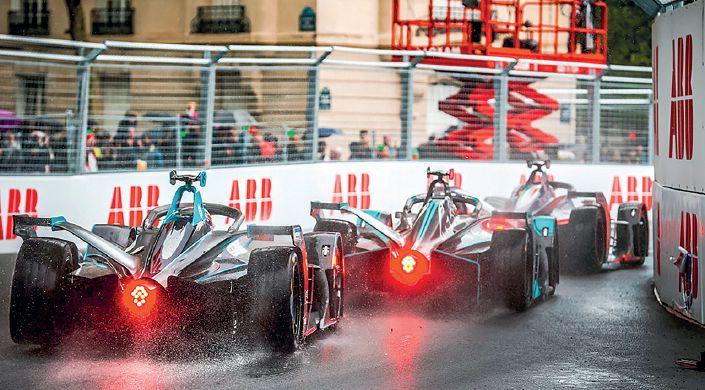
ABB is title partner of the ABB FIA Formula E World Championship.
ILLUMINATING A HERITAGE BUILDING IN KINGSTON
Exterior lighting project raises the tenant’s profile while showcasing the building’s historic aspects / BY
The area that forms present-day Kingston, Ont., began to be settled by Europeans in the 17th century. In 1841, it became the first capital of a United Canada. In short, there’s a lot of history here.
The Market Square Heritage Conservation District in the Limestone City forms a trapezoid in the heart of downtown. This area is bounded on three sides by a collection of commercial and institutional properties dating back to the early 19th century.
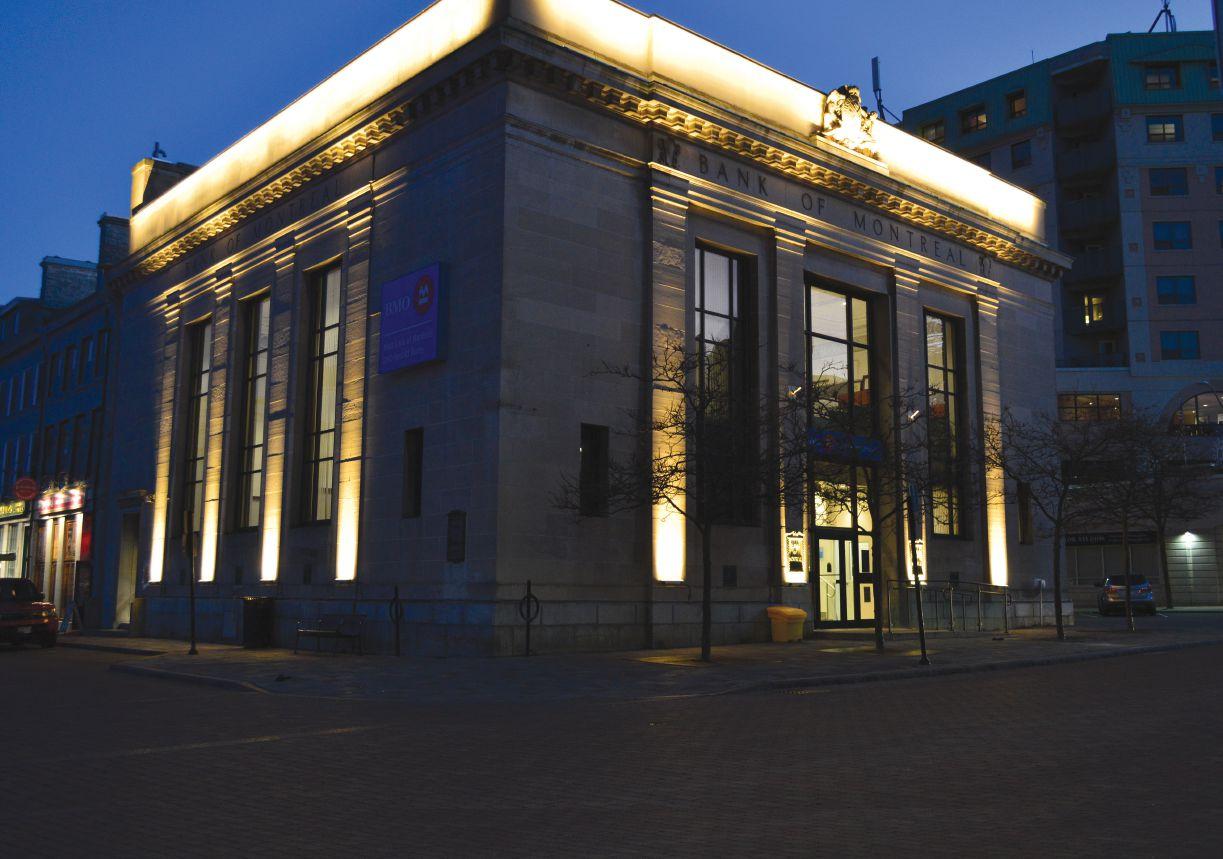
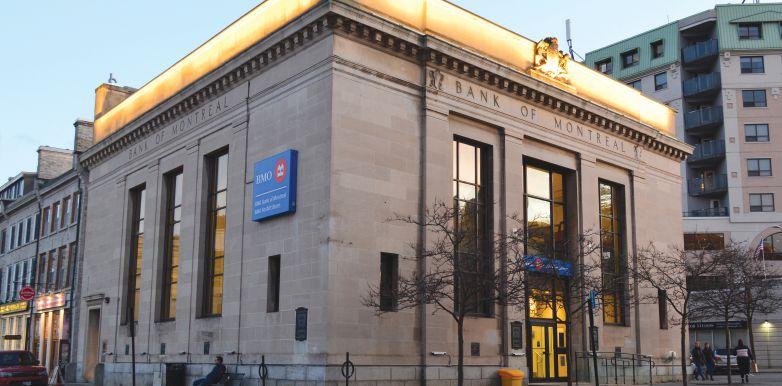
One of those heritage properties is the 100-year-old Bank of Montreal: a tall single-storey building (at a three-storey height) located at 297 King Street East. Constructed between 1923 and 1924 by the Montreal architecture firm of Lawson & Little, the flat-roofed building:
is symmetrical with a decorative roof cornice, rectilinear bays, large openings
and a temple-influenced design at a monumental scale. Typical of the Beaux-Arts style—which was popularized by architects trained at the Ecole des Beaux Arts—this building has a smooth-faced limestone exterior with stylized Ionic detailing. This style was a popular choice for banks of the period.
Because of the historic nature of both this building and the district in which it resides, any changes to the structure require rigorous planning, discussion, and permission. For example, when it comes to the exterior lighting scheme of any structure located in the heritage district, the Market Square Heritage Conservation District Plan dictates:
The intensity, colour and type of lighting shall be carefully selected in order to “wash” the façade of the building with light. If needed, assistance should
TONY KOVAC
be sought from a lighting consultant to develop a lighting plan that addresses the quality of light appropriate for older buildings.
Over the years, the building’s owner took steps to preserve the iconic structure. In 2009, repairs to the chimney were made and a new roof was added.
A new accessible public entrance was added in 2010. The owner also undertook an interior LED lighting retrofit to enhance light levels and achieve greater energy efficiency.
“The interior was lit with old metal-halide technology that was, actually, an upgrade from the incandescents that had been installed in the early 1940s,” explains Eric Tordjman of Mercury Lighting, the lighting designer who oversaw the interior lighting retrofit.
“The challenge indoors was designing the lighting such that it would fit into a
3-ft deep ceiling structure while maintaining the historic look of the building. Keep in mind, this building was built prior to the availability of electricity!” Tordjman adds.
With the interior successfully completed, the owner then turned its attention to the building’s exterior lighting... or lack thereof.
“At night, the bank was practically invisible, blending into the darkness of the square,” notes Tordjman. As such, the bank wanted an exterior lighting design that would preserve and feature the historic aspect of the impressive building while raising its profile to complement the heritage district.
“After our proven performance on relighting the interior, the client was comfortable engaging us for the exterior,” Tordjman says.
From zero to hero lighting
Perhaps not-so surprisingly, the building’s exterior had never been lit because of its heritage status, so attempting any additions or alterations posed unique challenges for the tenant (Bank of Montreal), lighting designer (Mercury Lighting), and architect (Conor Sampson, DesignCS).
The team started the process by seeking out designers who were well-versed in the field of historic buildings.
“We then had to specify lighting material that was going to achieve the overall design, while withstanding cold weather, vandalism, etc., as well as fit within the requirements of the Kingston Heritage Properties Committee,” Tordjman says.
“After quite a few lighting layouts and revisions, we were ready to submit to a plan to the committee for review.”
Conversations with the heritage committee started early on, as they needed to assign a contact person who was familiar with the scope of work, says Tordjman. “Then there was a series of presentations—all done during Covid, via Zoom—to explain our intent, the material that we were considering using, and so on. These were followed by the heritage committee’s questions and concerns.”
The next six to eight months saw more presentations, questions, and responses.
“The process of receiving approvals from both the heritage committee and city council proved the most challenging aspect of the project, forcing the design
team to deeply evaluate the design and effect they wanted to achieve,” Tordjman says.
“Once we satisfied the committee’s concerns, we were allowed to complete a temporary, sample installation where we could show them how the exterior would look on the actual building at night,” he says.
All the hard work paid off. “We were pleased to hear that both the heritage committee and City Council eventually passed our proposal for the exterior lighting project. We celebrated a bit, knowing that the hard work was about to begin.”
Work gets underway
“The heritage committee was very specific in the manner in which we lit the building, and just as specific when it came to how we attached any lighting to the limestone façade,” Tordjman remembers. To get over this hurdle, the team engaged a limestone specialist to undertake a complete building review. “We specified very specific drill bits and masonry screws to ensure that anything we attached to the building would not cause any further damage.”
Electrical contractor McClement Electric was given the task of executing the team’s project vision.
The exterior scheme involved luminaires from Color Kinetics/Signify. Mounted on a lower ledge and spaced 12 feet apart, eW Graze QLX Powercore fixtures graze light 25 feet up the lower portion of the façade’s columnar features, lighting the architectural detail at the top of the columns.
At the top of the building, the fixtures connect in a line and are placed on an upper ledge around the three sides of the building, illuminating 200 feet of linear roof line.
“We needed to be keenly aware of being Dark Sky-compliant all while
aiming light upward next to a main thoroughfare,” Tordjman says.
Due to the project’s proximity to the street, the team also engaged an arborist to ensure none of the trees were harmed. Re-routing street traffic was equally an important part of the project, as large pieces of equipment were moved around the building.
Advice for heritage properties
Heritage properties are perhaps the furthest thing from a “cookie-cutter” job, as each presents its own distinct challenges; so what has Mercury Lighting learned from this experience?
“Hire people and consultants who are familiar with the process,” Tordjman says without hesitation. “Get to know the local experts and consult with them prior to going for approval. They can guide you when preparing your presentation, helping you address the heritage department’s concerns.”
He points to the limestone masonry expert they had retained: Edgewater Stone Masons. “The process moved along much quicker once they joined our team, and the heritage committee indicated it was pleased that we hired a local expert familiar with their concerns.”
Even then, it took 18 months later— from initial meetings with the client to completed installation and commissioning—for the exterior lighting work at 297 King Street East to be completed... but the results speak for themselves.
“Our intent was to pay homage to the bank and its stature in the community by bringing the heritage building to the forefront of the town square,” Tordjman concludes. “We achieved this in the most eloquent of manners.” References 1.
DESIGNING FOR DIVERSITY AND INCLUSION
A look at Hatch’s “Diverse & Inclusive Design” initiative
/
BY ANTHONY CAPKUN
Afew years ago, I interviewed then-head of the Canadian Renewable Energy Association, Robert Hornung, and asked him for some clarification: What do we mean when we say energy is “renewable” versus “green”?
(In case you’re wondering, Hornung answered that renewable energy relies on resources that are naturally replenished on a human timescale.)
To my mind, proper definitions lead to clarity; when everyone speaks the same language then,
Designing for inclusion is a focused effort rather than something left to chance.
“Right now, we’re really focused on rolling this out throughout the company, and our colleagues are asking amazing questions.”
by default, we should be able to better understand one another.
Earlier this year, Hatch’s Beth Buckmaster—director, Client and Stakeholder Relations (Power)— told me about a new initiative at her company called “Diverse & Inclusive Design”. Like the CanREA example above, I wanted to delve into this concept further. What does it mean to design an inclusive space?
Defining the approach Laura Twigge-Molecey, Hatch’s managing director, Transportation, explains it is an approach to design that, ultimately, speaks directly to the diversity of the client and its workforce, and the communities in which they operate.
“A lot of the research has been done on making things like office spaces, scissors, cars and so on more inclusive, but what about when we design a power plant, or a steel plant or a bridge? There really aren’t any regulations about accommodations that should be made, and so we want our project teams to think about inclusion for those applications, too,” explains Twigge-Molecey.
Designing for inclusion is a focused effort rather than something left to chance. It starts with a lot of questions and fact-finding to help clients prioritize elements of the design.
For example, a client may have a goal of achieving a 40% female workforce over the next 10 years.
Inclusive design is an approach to design “that, ultimately, speaks directly to the diversity of the client and its workforce, and the communities in which they operate”.
In the design stages of a new facility, however, that same client may not have considered actually having enough restrooms to account for 40% females.
“And that’s a very cheap modification to make before it’s built,” Twigge-Molecey confirms.
Buckmaster raises another example.
“Think about a jobsite... a tool crib. One element that could make things more inclusive—not just for women, but also for an aging workforce—is to suspend tools from the ceiling,” Buckmaster says. “People wouldn’t have to pick up heavy tools from the floor. Because they’re hanging from the ceiling, it’s easy for workers to just reach up, grab the tool they need, and get the job done.”
Social
and cultural practices
What about social or cultural aspects, like religion or traditional practices?
That, too, is covered under Hatch’s D&I design.
“We use a guide that helps us think of all the possible considerations,” Twigge-Molecey says. “For example, we carried out a design for a First Nation community that incorporated their need for a specific kitchen where they could cook their traditional meals, accommodating for their hunting practices.”
That guide lists 16 overarching workforce considerations, ranging from age and gender to neurodiversity.
“Let’s say age is an important consideration for the design,” Buckmaster says. “Our engineers can check the list and conclude ‘Okay, we’re designing for age, so here are a number of things that we can design to make it more inclusive and should consider’.”
“The main factor is to identify all the right stakeholders and engage them early,” TwiggeMolecey says.
Facilities all over the world are often designed around a 6-ft man as the default occupant, but should they be?
“While designing a plant in Latin America, the client told us that the workforce is not 6-feet tall—neither male nor female— so why design to a default that doesn’t make sense in that location?” Twigge-Molecey asks.
So Hatch designed the plant based on people’s sizes in that region, rather than some arbitrary default, making sure that ceilings were high enough so no one was going to bang their head, but low enough that they could still reach everything.
The idea is conceived
But when did Hatch’s mindset turn into a stated mission?
“It started a few years ago when a client asked me about how we approach diversity and inclusion in our design,” Twigge-Molecey recounts. “I was on Hatch’s D&I
steering committee at that time and, truth be told, the question stumped me.”
“So I started thinking about it. Then I put together some ideas and a task force, and presented it to our board. And they all said, ‘Yes, we’re going to do this’,” she concludes.
It takes time to roll out such a massive initiative across a company of 10,000, but “we’re really getting going”.
One of the directions in which they are going is providing consultation/auditing of an existing facility with inclusion in mind.
“We come and look at your facility and make recommendations on how you can easily make some modifications to create a more inclusive space,” says TwiggeMolecey proudly.
“Right now, we’re really focused on rolling this out throughout the company, and our colleagues are asking important and relevant questions,” she continues. “But it’s a journey. It’s easy to put together a bunch of documents and tell everyone they have to use them, but changing people’s habits... that takes time.”
“The main factor is to identify all the right stakeholders and engage them early.”
Twigge-Molecey likens this mindset transformation to that of safety considerations. “Whenever we design anything, we automatically consider ‘Is this safe?’ Similarly, we want to get everyone automatically thinking ‘Is this inclusive?’.”
Subtrades, too, can show leadership in the D&I realm.
“As an electrical contractor, you’re following a set of drawings and specs. But give some thought to the people who will be using that space. Are any among them colour-blind, or perhaps using a wheelchair? If so, and the design doesn’t take them into consideration, bring it up. Ask the question.”
To learn more about Hatch’s Diverse and Inclusive Design service, visit tinyurl. com/HatchDandI (direct link).
“All the modelling that Laura and her team undertook shows a positive ROI for inclusive design,” Buckmaster says. “So not only are we making spaces more inclusive, it’s just good business.”
4 WAYS SUSTAINABLE INFRASTRUCTURE CAN BOLSTER BUSINESS GOALS
Energy efficiency provides an attractive, low-risk return on investment
/
BY HASSAAN KHAN
With buildings being responsible for almost 40% of annual global CO2 emissions (tinyurl. com/5bsu25v2) building owners and operators are beginning to understand the critical role they will play in the coming years to ensure a thriving future for their communities. Improving the efficiency of these buildings is the first step on the road to decarbonization because—unlike many other sustainability-driven investments—energy efficiency provides an attractive, low-risk return on investment.
However, reducing emissions and waste while generating financial benefits aren’t the only reasons for investing in sustainable infrastructure projects. These endeavours can also benefit business operations across organizations; and
smart business leaders know it. From improved comfort and reliability to better patient care and student success, the benefits of these projects can be far reaching and materially impact the strategic goals of the organization.
The Johnson Controls Energy Efficiency Indicator Survey recently found that 62% of organizations around the world expect to increase investments in energy efficiency, renewable energy, or smart building technology in 2022 (tinyurl. com/2pz89n25). These organizations understand that making investments in infrastructure upgrades—like updated lighting, heating and cooling, water and connected communications systems—drives energy efficiency, productivity, economic growth, streamlined operations and cost-savings across industries.
The business benefits of sustainable projects
1. Energy efficiency
For many, energy efficiency is being driven by greenhouse gas emissions reductions—but energy-efficient infrastructure is far-reaching. It includes water conservation, energy use reductions, and energy production within facilities—all of which can boost business operations in addition to helping the environment.
The Canadian Department of National Defence (DND) addressed its energy consumption to meet regulations and improve its operations. In 2021 alone, the DND completed four projects centred on increasing energy efficiency to reduce long-term utility spending within the department.The most recent of these—a multiphase project to be completed at CFB Halifax—aims to reduce GHG emissions by 23%, or 15,000 tons, and generate $3 million in yearly savings (tinyurl.com/y3uvfrhk).
DND will achieve this goal by reducing the operating times of existing equipment through controls optimization. These upgrades include variable frequency drives (VFDs) and occupancy sensor integrations, operational schedules, setpoint adjustments, CO2 sensors and control point additions across over 100 facilities.
In addition to driving energy efficiency and GHG reductions, the modernized infrastructure will improve comfort for DND team members—both military and civilian—and deliver long-term cost efficiencies.
2. Modernized infrastructure
Building methods and technologies have come a long way in recent years, and facility managers are beginning to understand that the physical environment in which a company operates can directly impact its technological and logistical capabilities. By investing in state-of-the-art connected systems, building owners are investing in the health of their building infrastructure and the comfort of their occupants for years to come.
Take, for example, the latest in healthcare technology: hospitals are going digital, and both patients and doctors will reap the benefits (tinyurl.com/2wu4p3ds). The next generation of hospitals will run on connected, sustainable solutions that improve occupant health, comfort and satisfaction to provide better healthcare experiences. Hospital managers are investing in advanced information technology to provide highly visible, easy-to-navigate, interactive patient care.
Connected building solutions offer real-time information on energy efficiency, maintenance operations and space performance to improve asset performance, lighten the load on staff, and streamline patients’ experiences.
3. Savings, savings, savings
The savings that come with consuming less energy, water, and other resources are significant. With the rising cost of energy, facility operators and owners know just how much they’re spending on powering buildings each year, and those bills can be staggering. Even relatively modest upgrades can save organizations tens of thousands of dollars in energy spending each year.
For example, the Brandon School Division in Manitoba recently undertook a sustainability project that aimed to save
62% of organizations around the world expect to increase investments in energy efficiency, renewable energy, or smart building technology.
the district money by reducing energy consumption (tinyurl. com/2p963ccw). After performing a detailed audit of existing fixtures, the district opted to install LED lighting in its facilities. This one change—a retrofit of the lighting fixtures in two key areas—is estimated to generate more than $50,000 in savings annually while reducing energy consumption by more than 876,000 kWh per year.
The school district can take these savings and put them into school resources to provide students and staff with the tools they need to succeed.
4. Reliable, resilient physical environments
Efficiency-focused improvements and retrofits that replace out-of-date infrastructure elements with newer, more reliable models extend equipment life and increase resiliency within facilities. An initial investment in equipment that will stand the test of time can relieve pressure on budgets down the line, allowing businesses to focus their efforts on generating revenue rather than performing maintenance.
Simple installation for new or installed cables/pipes
Unique stainless steel, split design, single-piece construction
Holds 36 PSI of water head pressure and gas tight
Trusted CSA listed and meets CEC Codes
A multiphase project to be completed at CFB Halifax aims to reduce GHG emissions by 23%, and generate $3 million in yearly energy savings.
Furthermore, updating business-critical electrical infrastructure to modern, smart solutions helps businesses safeguard operations against grid failures that are out of their hands—especially in provincial utility markets where there are significant peak-demand savings or opportunities to monetize any excess energy their microgrid generates. Businesses that invest in onsite generating assets are taking a proactive approach to mitigate the negative effects of future disasters, putting success in their own hands.
Funding the upgrades
As is often the case, the price tag on sustainable infrastructure upgrades can be prohibitive to organizations looking to embark upon or improve their sustainability initiatives. It’s no secret that construction projects are expensive and can require a significant upfront investment.
However, partnering with experts in sustainable infrastructure can make innovative funding mechanisms available to organizations of any kind. These mechanisms provide businesses across a range of industries with the freedom to pursue infrastructure upgrades despite budgetary constraints.
Meantime, guaranteed savings and performance contracts protect organizations from risk when undertaking upgrades by passing the costs to a third party who has the experience designing and operating energy-efficient buildings. Under these contracts, the construction and consultancy partner assumes the upfront costs of the upgrades and guarantees a baseline level of savings that can be used to pay for the work over time.
Should the buildings underperform during the project period, the third party is responsible for the shortfall—not the organization itself.
Canadian companies can also look to public and private organizations offering grants to businesses interested in sustainable upgrades. In 2022, the Canada Infrastructure Bank worked with several energy services companies to commit more than $125 million to accelerate private sector decarbonization retrofit projects across the country (tinyurl.com/3yt6mzy7).
Buildings across Canada—whether commercial, industrial, manufacturing or multi-residential—can leverage these low-cost funds to make facilities smarter, safer and healthier for occupants without impacting their existing budgets or balance sheets.
All of the above options can allow businesses to invest in their futures while alleviating any risk that may come with investing in a more sustainable model. Regardless of the funding model a business chooses, the benefits of the investment will be the same: modernized operations that cost less. The fact of the matter is that businesses that want the benefits of sustainable infrastructure really have nothing to lose by pursuing them—and they have a lot to gain.
Hassaan Khan is the area general manager, Sustainable Infrastructure–Canada, for Johnson Controls.
products and solutions
Ledvance TapTronic LED drivers
Source: Ledvance
Fully field-programmable TapTronic LED drivers come with the latest interface data transfer communication, and cover various wattages within each of the compact, linear and outdoor model series. Near Field Communication (NFC) converts your phone to a personal programming tool via a free app that is available for iOS and Android (ledvanceus.com).
Hubbell 4- and
5-wire
plugs and inlets
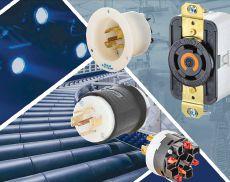
Source: Hubbell Canada Hubbell Canada offers 4- and 5-wire Twist-Lock Edge plugs and flanged inlets boasting a “screwless termination” method. The standard screw termination method is replaced with a new design that incorporates a steel spring attached to a lever mechanism. When the lever (or plunger) is activated, strong spring tension applies pressure on the conductor to create a strong termination, allowing you to terminate up to 80% faster (hubbell-canada.com).
Satco/Nuvo adjustable post top area lights
Milwaukee Tool M-Spector inspection cameras
Source: Milwaukee Tool The M12 M-Spector 360 and M-Spector inspection cameras are designed for easy inspections and clear images. The 10-mm camera head on the M12 M-Spector fits within a 3/8-in. hole; the smaller camera head improves navigation while 360-deg image rotation allows for easy adjustment by physically rotating the screen or using the all-new digital rotation at the push of a button (milwaukeetool.ca).
Hammond ABS 1556 general purpose enclosures
Source: Hammond Manufacturing Ltd. Hammond Manufacturing’s flame-retardant, IP54-rated ABS 1556 family is rated UL94-V0 and suitable for general-purpose indoor use.
This new LED adjustable post top area light is suitable for general area lighting applications. The locking articulating head allows adjustments from 0 deg to 90 deg. Colour choices include 3000 K, 4000 K, and 5000 K with 120V-347V input voltage options. These luminaries are offered in four wattages and feature an integrated NEMA photocell (satco.com).
Personalities
Ontario’s Independent Electricity System Operator welcomed Fiona Blondin to its board of directors. A member of the Yellowknives Dene First Nation in Northwest Territories, Blondin serves as vice-president, Indigenous Strategy, at Cormorant Utility Services. This follows her appointment to the board of another prominent organization: VIA HFR.
Source: VIA HFR - VIA TGF Inc.
David Bemoras (top photo) has been tapped to helm OmniCable’s new communications business unit. He recently served as president of Wesco’s Data Communications/Low-Voltage Division. Greg Lampert has retired from his role as CEO. Company vice-chair Jeff Siegfried has stepped in as interim CEO. Siegfried co-founded the company, and previously served as CEO and chair. Another retiree is chief commercial officer, Greg Donato, (bottom photo) whose last 30 years were with OmniCable and Houston Wire & Cable (photo). Source: OmniCable LLC
Among the 10 leaders named as Women in Manufacturing Education Foundation’s (2023) Hall of Fame inductees are Laura Lyke of ICC International (awarded posthumously) and Nancy Richards Farese of Southwire Company. Nominated by their colleagues and industry peers, the inductees were chosen based on their lifetime contributions to the advancement of women in manufacturing.
Support Ontario Youth announced Melanie Winter will serve as interim executive director. SOY says Winter has made great strides in the effort to help more apprentices, employers and industry partners, “with an emphasis on bringing stakeholders together to find creative solutions to alleviate the skilled trades shortage”. Source: Support Ontario Youth
Cara Herzog has been named chief DEI officer at Southwire, reporting directly to president and CEO, Rich Stinson. Meantime, Norman Adkins, president of Wire & Cable and COO, has assumed responsibility for the company’s Tools, Components and Assembled Solutions (TCAS) business. Peter Lugo, senior vice-president, Product Management, will lead the TCAS business, and report to Adkins. Source: Southwire Co. LLC
Intralec Electrical Products—an Ontario-based electrical manufacturer rep—has promoted Robert Doherty to CSR supervisor. Doherty started in the industry as a part-time employee during school; after graduating, he began his career full-time as a member of the inside sales/customer service rep team. He then moved to outside sales, and managed the Golden Horseshoe territory.
Tonya Holmes has joined Westburne in the role of marketing and communications specialist for the Ontario Division, where she will lead, support, and execute all marketing campaigns. She reports to Natacha Auvert, national marketing manager. Source: Westburne
The BC Electrical Association introduced its 2023-2024 board of directors, who were voted in at the last annual general meeting: Adam Carnwell (Mac’s II Agencies), Justine Geboers (Westburne), Steve Faltas (City of New Westminster), Curtis Friesen (Adanac Sales), Kelly Hanson (Cascadia Sales), Sean Pacey (BL Lighting), Tanya Perewernycky (BC Hydro), Brad Ratel (Code Electric Mfg.), Sumeet Sodhi (E.B. Horsman & Son), Jo-Lynne Stein (Eaton), and James Whitelaw (Nedco).
Manufacturer rep Roney Marketing welcomed Ana Peric to the team, where she will perform inside sales and customer service duties for the Venmar, Ledvance, CSC lines, among others. The agency has also moved to a new location: Unit C – 7429 Ninth Line, Mississauga
We’re limited by space here, but have plenty of room online! Read the news behind the news Visit EBMag.com and click “News”.
products and solutions
Self-tapping screws secure the lid to the base, making it ideal for set-and-forget installations. There are four square plan sizes, ranging from 80 x 80 mm to 200 x 200 mm, and three rectangular ones, ranging from 120 x 80 mm to 200 x 160 mm (hammfg.com).
Helly Hansen BRZ workwear
Source: Helly Hansen
Helly Hansen says its new product construction—BRZ— is built on the concept of “Climate Regulating Comfort”. When pants are still a jobsite requirement in warmer months, these products promise breathability and temperature regulation (hhworkwear.com).
Flo Ultra EV charger
Source: Flo
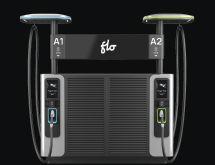
Expected in 2024, the Flo Ultra EV charger will feature two high-powered charging ports in one aluminum enclosure. It will charge most EVs to 80% in 15 minutes with up to 320 kW available, and up to 500 kW with multiple EV charging stations connected together (depending on the vehicles, configuration, and number of cars charging). Ultra will have a motorized cable management system that keeps cables off the ground while providing drivers extended reach (flo.com).
Fulham CCT- and power-selectable retrofit kits
Source: Fulham
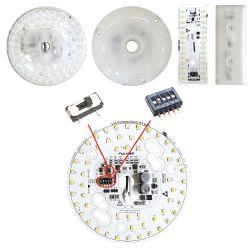
Fulham introduced cULusclassified “on-PCB” options for its latest VividHorse brand dedicated 120V DirectAC LED light engines and retrofit kits. Four Energy Star 2.2-listed models (3 rounds and 1 linear) are suitable for open or fully enclosed luminaires with plastic or glass lenses. All four have the ability to be field-set to either 2700 K, 3000 K, 3500 K, 4000 K or 5000 K via a toggle switch (fulham.com).
Mersen MDC series
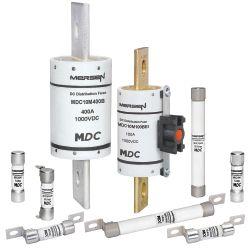
Source: Mersen Mersen’s MDC direct current distribution fuses help customers achieve ultimate protection, says the company, and let system integrators and OEMs easily select fuses for a variety of DC applications, such as cabling, bus, auxiliary circuits, electrical energy storage, battery module protection, EV charging, and more (ep-ca.mersen.com).
CODE conundrum
RAY YOUSEF
Ray is a code engineer with Ontario’s Electrical Safety Authority
TACKLE THE CODE CONUNDRUM IF YOU DARE!
Welcome to the newest round of questions that test your knowledge of the CE Code-Part I. Answers will appear in the December 2023 edition of Electrical Business Magazine, and online at EBMag.com under Features.
QUESTION 1
In dwelling units, the CE Code requires no point along the floor line of any usable wall space to be more than ___ horizontally from a receptacle in that space.
a) 1.0 metre c) 1.8 metres
b) 1.2 metres d) 3.6 metres
QUESTION 2
The CE Code allows the use of non-metallic sheathed cable in a building of combustible construction.
a) True
b) False
QUESTION 3
The minimum size conduit (rigid PVC) required to contain six #6 AWG T90 nylon, twelve (12) #14 AWG TWU75, and seven #12 AWG TW75 is:
a) 35 mm c) 53 mm
b) 41 mm d) 78 mm
ANSWERS
Electrical Business, Summer 2023 ed.
Question 1
What is the maximum mounting height to the overcurrent device handle of a panelboard in a dwelling unit?
c) 1.7 m. Rule 26-600(2).
Question 2
Conductors for equipotential bonding shall be permitted to be installed as open wiring, provided they are adequately secured.
a) True. Rule 10-702(1).
Question 3
The maximum rating for a circuit breaker protecting exposed wiring for permanent outdoor lighting circuit is:
c) 30 A. Rule 30-1120(1).
How did YOU do?
3 • Seasoned journeyman 1 • Apprentice
2 • Need refresher training 0 • Just here for fun!
The EstimatOR
DAN BERESFORD AND JOHN F. WIESEL
Estimating interior and exterior lighting retrofits
When you do an accurate estimate, renovations— especially interior and exterior lighting retrofits—can be profitable. But to achieve an accurate estimate and submit a good bid, you must perform a thorough investigation of the site and ask questions! Not every retrofit is the same, yet some contractors feel it is a waste of time to do a site visit (even mandatory ones!).
We’ve seen instances where the electrical drawings referenced work that had to be done, but the work was only shown as notes on the civil or mechanical drawings. A site visit is therefore imperative for making sure you know what the electrical work involves.
On a lighting retrofit, you must understand the scope of the job and the specs:
• Is the customer buying the fixtures from the manufacturer, or are you supplying them? (It is favourable to do a complete supply and installation.)
• If the customer is buying direct, was a survey of fixtures conducted?
• Are all the fixtures specified correctly?
• Who is responsible for the warranty? (If there’s a problem, the manufacturer will blame it on the installation, the installer will blame it on the manufacturer, and so on).
To verify all this information, you must visit the site. Take a fixture survey, and verify the count and location of each type of fixture. Visually inspect and, if necessary, test each fixture to see if it is working.
Is the existing installation up to code? If not, are you responsible for replacing the conduit and wire? When the project involves parking lot lighting, will boring, trenching, or paving work be required? Determine who is responsible for this work. If you, then you will likely require special equipment. Will it be provided for you or form part of your obligation? Try to get a history of any previous re-
pairs or problems during your site visit. For example, if the existing fixtures require frequent maintenance or replacement, it could suggest the presence of a bigger, underlying problem that goes beyond the fixtures themselves. If you can’t get answers, make a note, and submit an RFI.
Take lots of photos, as they will be valuable when putting together your proposal. And, if your bid is accepted, those same photos can be used to verify the installation.
Some of the potential problems that you may encounter during the installation can only be uncovered on a site visit. For exterior and interior lighting retrofits, consider:
• When the fixtures are high up on a wall, is there room to use a lift?
• In the case of wall-mounted fixtures, who is responsible for repairing and sealing any penetrations into the building?
• If reusing existing lamp poles, are they the right size and in good condition?
• In the case of parking lot lighting, how will you keep cars away from your workers and equipment?
• Are you working in a functioning office? Will the work be carried out during regular business hours, or at night? On weekends?
• Who is responsible for hazardous waste removal, bins, disposal, and recycling? Are disposal certificates required?
For LED lighting retrofits (which is the norm, nowadays), are the existing switches, controls, contactors, etc., compatible with the new installation? If a new control system is not specified, are you responsible for updating the existing one or installing a new one?
Furthermore, it is critical to verify the voltage and amperage ratings. The existing lighting scheme may not match the specified options of 120V, 208V, 277V, 347V, etc., and the emergency lighting could be on another voltage. Has the designer/engineer addressed this?
Finally, the new lighting system will require commissioning and likely some level of training for the customer. If these responsibilities fall to you, then make sure you include them in your estimate. Profitable jobs start with accurate estimates, so do your due diligence. By visiting the site and asking questions, you will significantly reduce errors and omissions, and eliminate the unexpected from your estimate and bid.
John F. Wiesel is the president of Suderman Estimating Systems Inc., and has been estimating and teaching estimating since the early 1980s. Dan Beresford served as an electrician in the Canadian Navy, then worked in various roles in the electrical sector before joining Suderman.
DAVID PILON
Circuit loading and protection versus conductor protection
What is the difference between circuit loading and conductor protection?
What is meant by the continuous rating of overcurrent (OC) devices, and does that change the ampacity of the circuit?
CE Code Rule 8-104(1) has a lot to say on the matter! The ampere rating of a consumer’s service, feeder or branch circuit shall be the ampere rating of the OC device protecting the circuit, or the ampacity of the conductors—whichever is less.
Regardless of the continuous operation rating of the OC device, however, the circuit rating is based on the ampere rating, so an 80%-rated 600A breaker has an ampere rating of 600A (just as a 100%-rated 600A breaker also has an ampere rating of 600A).
Rule 8-104(2) then states, “the calculated load in a circuit shall not exceed the ampere rating of the circuit”. Now we get into the realm of circuit loading of overcurrent protection, where the per cent rating of the OC protection is used to determine the maximum continuous load the OC device can sustain.
The first step is to perform a service calculation using CE Code Section 8 to ensure we design a service with sufficient capacity to operate the facility. Next, we determine whether the load is continuous or non-continuous.
As a best practice, you should always read all the relevant rules every time you use the CE Code-Part I.
At this point, we move over to Section 4 to figure out how the conductors are to be installed (e.g. conduit, free air), and to identify and apply any relevant correction factors to maintain the ampere rating of our conductors. (This information is required in the Section 8 calculations for making our final determination, as per CE Code 8-104[5] or [6].)
We now have our load calculation, which is considered continuous unless it meets Rules 8-104(3), 8-202(3) or 8-202(2), and we know how our conductors are being installed (Rule 4-004) and their ampere rating... but we haven’t yet looked at how to protect them.
The OC device’s ampacity is supposed to protect our conductors, but the second part of Rule 8-104(1) alludes to the ampere rating of the conductor as being circuit ampacity.
(As a best practice, you should always read all the relevant rules every time you use the CE Code-Part I and, yes, this often involves flipping back and forth throughout your code book to find them all.)
In our case, Rule 8-104 is only about circuit loading, not circuit protection. That’s the job of Section 14, but for Section 14 to do its job, we need to know our circuit limits.
We’ve already determined our load and conductor requirements. Now, do we need 100%-rated OC devices, or are standard 80%-rated breakers or fuses sufficient? Also, how do we determine which of the two—the OC device or the conductor—is going to define the circuit?
Ask yourself: is this a maximum calculated or known load? If so, we can look at Rule 14-104 to size the OC device. Rule 14-104(1) states that the rating or setting of the overcurrent device shall not exceed the allowable ampacity of the conductors it protects except where a fuse or circuit breaker having a rating or setting of the same value as the ampacity of the conductor is not available.
(The words “not available” above do not mean “hard to find” or “delayed in shipping”. Instead, not available refers to non-existent equipment and often leads to requests for exemptions— which are not an automatic “gimme”.)
Also, when the maximum calculated load or known load is in accordance with the rules of Section 8, the ratings or settings given in Table 13 shall be permitted to be used within the maximum value of 800A.
Finally, in accordance with Rule 2-100, you are also required to mark the maximum calculated load, and that no other loading may be added without first re-evaluating system calculations.
Consult your Authority
Having Jurisdiction for more specific interpretations
David Pilon is manager, Electrical Inspections, at Technical Safety Authority, Saskatchewan (TSASK). He also serves as vice-chair of the Canadian Certified Electrical Inspector (CCEI) committee of the International Association of Electrical Inspectors (IAEI), Canadian Section. He can be reached at david.pilon@tsask.ca.
Create an employer profile, post jobs, and connect with skilled trades job seekers.
Participate in skilled trades programs and events for young people in the trades
Connect with our experienced team for support in finding and shortlisting qualified candidates.
Up to $20,000 available to employers hiring level 1 apprentices, through the Canada Apprenticeship Service (CAS)
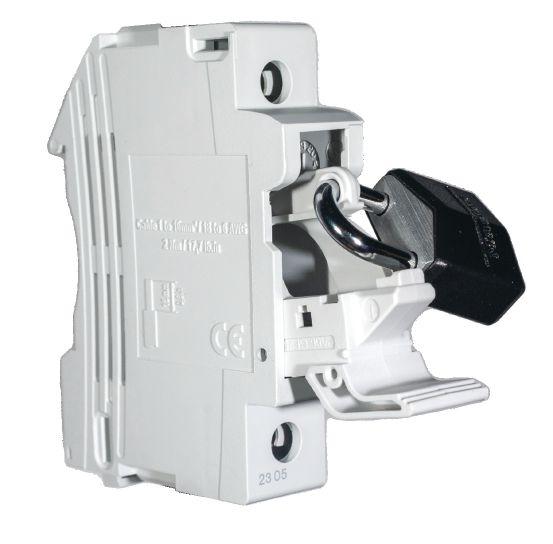
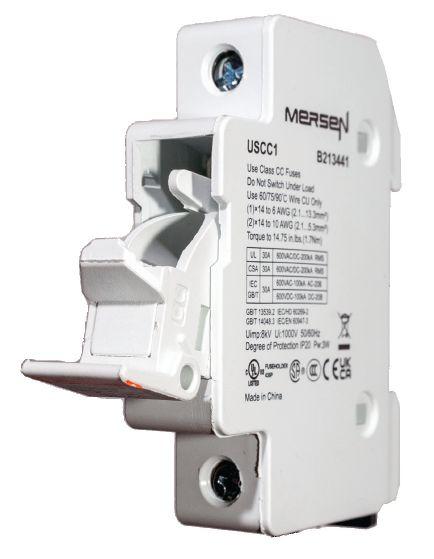
MERSEN
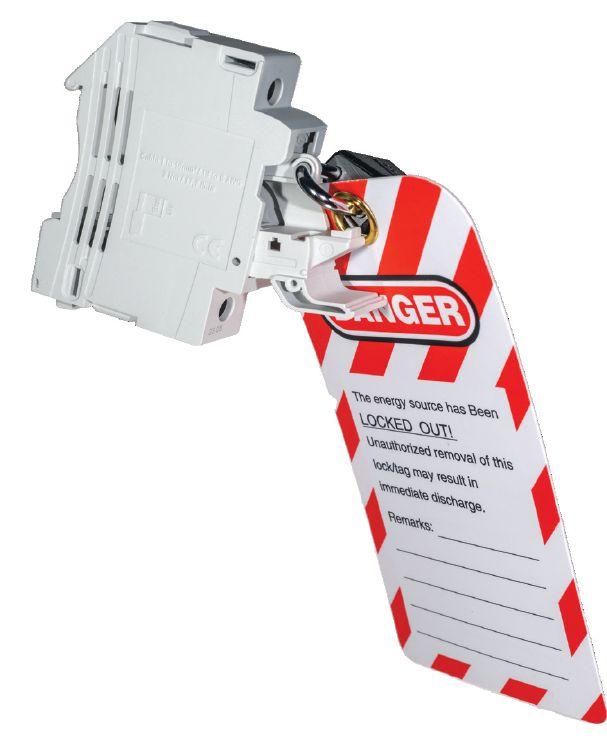
Find out more about the enhanced safety features of Mersen Modulostar fuses. CAN YOU SPOT THE DIFFERENCE?
MODULOSTAR® FUSE HOLDERS IMPROVE ELECTRICAL SAFETY — AT NO ADDITIONAL COST
If you are a Mersen UltraSafeTM Fuse Holder customer, you know the superior performance that comes with Mersen products. Mersen’s new Modulostar fuse holders have the same performance that you expect from UltraSafe, with enhanced safety features. Modulostar fuse power losses.