Years later, as a service rep, I returned to the base to investigate a piece of equipment that kept blowing power supplies. I checked the voltage at the equipment, and it sat at 256V instead of 220V. My equipment’s power supply boards, meantime, were rated for between 220-235V.
The base’s power maintenance crew subsequently changed the taps on the base’s transformers to lower the voltage to 220V.
Load balancing
Improper load balancing at the breaker panel can create unintended consequences. I was once called in to troubleshoot a front reception desk that was experiencing regular brownouts that, in turn, would cause the computer and debit machine to reset, sometimes causing data corruption, loss of invoices, and lost payments.
I set up a monitor at the front breaker panel to check the power going to the reception area, and patiently waited for the next brownout. After about 2 hours, it occurred. I quickly started probing circuits, but the load imbalance would be there for only a split second, then disappear.
That got me thinking: someone must be turning a piece of equipment On or Off. I went for a walk to the back work area where I found someone doing some welding. There it was!
I added a disconnect for the welder and balanced the power at the breaker panel.
“The loss of earthground can present a very serious safety concern.”
Loss of earth-ground
The loss of earth-ground can present a very serious safety concern. One time, I was called to the refuelling site for heavy-duty diesel construction equipment because there was a spark every time they pulled the nozzle out of the vehicle after refuelling.
That spark informed me the site had either a static-bonding problem or loss of ground—or both. I ran a ground/static-bonding wire from the outside dispenser to the pump and tank inside. This line also continued to the water pipes coming into the building.
I measured the resistance from the fuel nozzle all the way back to the pump, and that’s where I lost the static-bond/ground. I discovered that vibrations from the pump had weakened the 7-strand copper wire to the point where it just broke away from the connector. I reconnected the wire and all was fine afterward.
Another earth-ground case involved a chemical distribution centre (DC) in Winnipeg, and this one proved trickier to solve.
In this situation, the DC was experiencing multiple problems with its equipment—everything from computers and telephones to the self-checking static-bonding equipment.
To narrow things down and, hopefully, find some kind of commonality to these events, I interviewed the staff. I learned the problems would usually start in late summer and get worse
during winter months, especially during dry spells.
Summers in Winnipeg have gotten hotter and dryer, causing the ground to be dryer. This company was on the edge of a new development area, so it had some connections to old iron water pipes, but it was also in an area of sandy soil, so the ground tended to dry out in late summer and get even drier over the winter.
I measured the resistance to ground, and found the resistance was, at times, approaching 50 ohm. A really good ground should be at or less than 1 ohm between the ground at the breaker panel to an earth-ground test point about 20 feet from the building. (Anything less than 10 ohm is acceptable.)
In the end, we drove two 10ft copper rods 30 feet into the ground (water pipes here are generally 15 feet in the ground). Afterward, the ghosts were gone and everything worked properly.
Go back to the basics
Utility power is getting worse. With summers and winters in most of the country getting drier, combined with the use of plastic water mains and utilities trying to save money on wiring, our power problems are also getting worse.
That said, a return to the basics—understanding utility power, load balancing, earth-grounding, and so on—will aid your troubleshooting endeavours as you confront those ghosts in the machinery.
Now semi-retired, Ray C. Richter started working part-time at an automotive repair garage at 16. After high school, he worked on heavy-duty diesel equipment, mostly highway tractors. While in the military, he became a navigational aid tech, working on radar and any ground-based equipment used by pilots or air traffic controllers. Ray then worked as a repair tech for a reprographics equipment vendor before moving to CP Rail, where he got his electrician’s licence. He started his own business in 1998, “working on anything from service entrances to production lines, and everything in between”.
CALENDAR
AD Electrical North American Meeting
October 25-27, Dallas, Texas Visit adhq.com
LightFair
October 25-29, New York, N.Y. Visit www.lightfair.com
BCEA Annual Conference
British Columbia Electrical Association
November 9-10, Burnaby, B.C. (online) Visit www.bceaconference2021.ca
Electricity Transformation Canada Canadian Renewable Energy Association
November 17-19, Toronto Visit electricitytransformation.ca
The Buildings Show
December 1-3, Toronto Visit www.thebuildingsshow.com
Extravaganza Day #1 – EBPowerCon
Electrical Business Magazine January 17, Toronto (online) Visit EBPowerCon.ca
EDIST
Electricity Distributors Association January 19-21, Markham, Ont. Visit eda-on.ca/EVENTS/EDIST
Extravaganza Day #2 – EBPowerCon
Electrical Business Magazine January 31, Toronto (online) Visit EBPowerCon.ca
Extravaganza Day #3 – EBPowerCon
Electrical Business Magazine February 14, Toronto (online) Visit EBPowerCon.ca
IEEE Industry Applications Society March 20-23, Edmonton
Visit site.ieee.org/estmp
N.B.These events and dates were accurate at the time of publishing, but details can change at a moment’s notice due to Covid restrictions. We encourage you to visit the event’s website or reach out to organizers directly to get the most up-to-date information.
LESSONS FROM THE BACK OF THE PACK
Breaking with status quo to take the lead / ANTHONY CAPKUN
An overarching goal of Electrical Business Magazine is to shed light on innovative technologies and solutions, and new opportunities in existing and emerging sectors that will, hopefully, lead to better business outcomes for electrical contractors.
Part of realizing a better outcome is to consider doing something different from everyone else; offering something that separates you from the pack.
Craig Baxter is the president of Techtronic Industries Canada, the parent company of Milwaukee Tool. By his own admission, he eats and breathes power tools. “The whole reason I got into the industry was my love of power tools. It’s a dream job. I love every minute of it.”
He oversaw Milwaukee’s jugger -
naut expansion into the cordless tool space—a market in which the toolmaker was largely absent at the time.
“Back in 2007, Milwaukee had virtually zero share of the cordless market,” Craig says, then adds jokingly, “I mean, we were in 8th place in a 7-horse race.”
Today, Milwaukee is a dominant force in the cordless power tool segment. So how did they go from zero to hero in such a short period? Are there takeaways from Craig’s story that we can apply to our own businesses?
This is not a story about cordless power tools, per se, but rather a story about taking chances; about going with your gut and being willing to gamble on something new; about the patience to see through that which you believe in, and doing everything you can to keep your customers loyal.
Going with your gut
Craig remembers when cordless power tools first launched in the 1980s. “They could drive a small fastener, and that was pretty much it.”
Nonetheless, it was a market with potential, yet Milwaukee was positioned very solidly in last place.
The ruling battery technology at the time was nickel-cadmium. Rather than play catch-up, Milwaukee decided to go against the grain: they switched to a completely different battery chemistry.
“We started with a completely lithiumion-based battery line-up, which we believed was superior in every way, shape and form to Ni-Cad,” Craig recalls.
And being the 8th horse in that 7-horse race meant they weren’t tied to an old technology.
“Our competitors had innovator’s dilemma: they had massive market share, but they were also tied to an antiquated technology. We weren’t going to upset anybody when we decided to go with lithium-ion!”
Still, it’s a massive departure from the status quo! Was Craig anxious about making the switch?
“Trust me, I didn’t lose one minute of sleep when we made that change. In fact, it made for a better night’s sleep, because I knew we were moving to a completely superior technology relative to Ni-Cad right from the get-go.”
And this gave users a reason to convert to Milwaukee’s cordless solutions “right then and there”, says Craig. “And that’s exactly what began to happen”.
Don’t give them a reason to leave
Regardless of how it’s powered, a tool has to get the job done. “When you put a battery into a tool that was formerly powered another way, you have to ensure the performance is at least as good as the previous source of energy; otherwise, it’s not a reasonable solution for the user.”
“So, over the last 25 years, the batteries and the technology within the tools have gotten to the point where we absolutely can cut cords off of tools, and users have not been disappointed. And that has really revolutionized the way that users are able to perform the tasks they have in the field—to the point where you can use one battery to run some 200 different solutions.”
While cordless tool batteries have gotten better over time—becoming more powerful, holding a charge longer—Milwaukee has purposely avoided changing the interface between tools and batteries.
“This is critical, because the second you change that interface, you give someone the opportunity to switch brands; after all, you’ve just rendered a bunch of their tools useless!” Craig notes. “This is why every current and future Milwaukee tool is compatible with every battery we’ve ever had, and vice versa. That interface is a really critical consideration in the cordless game.”
Unlike a wall socket, everyone’s cordless power tool battery is a proprietary design. “So when you bring a user into your family, you’ve locked them in, because the cost to convert to another platform can be prohibitive.”
Clearly, this is a competitive advantage, “but only as long as we can keep delighting our users with solutions they need and want”.
“I mean, we were in 8th place in a 7-horse race.”
Sometimes, a solution comes along that’s immediately understood and snapped up by the market. Other times, a little more patience is required.
“When a user is used to doing something a certain way, you have to spend time with them and let them get comfortable with a new way to do something,” Craig says. “So we’re willing to bring forward a solution that will change the life of an electrician and support it until it grabs hold and becomes successful. We don’t need to hit it out of the park.”
To that end, Craig feels they’ve done an extraordinary job of engaging with their core users. “We just don’t give them a reason to go elsewhere. That’s the truth.”
Delight the customer
“Our users don’t necessarily treat their tools with kid gloves, so our solutions
have to withstand incredibly challenging environments: temperature, water, flat-out abuse... whatever.”
But the total solution goes beyond the tool, and even the battery. “You need to optimize the performance of the tool with the right accessories, which is why we spend a lot of time, effort, and money making sure our accessories are delighting the user every bit as much as our cordless tools.”
And then there is service, into which Milwaukee has also been investing, “Because service is what prevents downtime”. The company will even customize its service solutions, depending on the user’s needs, and is also willing to come to you with its service vehicles.
“It’s an arms race, right?,” Craig says. “If we continue to obsess over the user like we do, we will never fail to provide them with solutions that improve the way they perform their tasks each and every day.”
IMPROVE SAFETY AND REDUCE MOTOR CHANGEOUT DOWNTIME
MELTRIC Switch-Rated devices provide:
• Plug-and-play simplicity
• NEC line-of-sight disconnect switch
• DECONTACTOR™ Technology that protects workers from live parts and arcing
• Optional motor temperature monitoring contacts to avoid motor failure
Maximize your safety, reliability and cost efficiency with Switch-Rated devices today!
Personalities
After 31 years, Sheri McLean, executive director for the Electrical Contractors Association of Alberta (ecaa.ab.ca), is retiring. Replacing her is Robin Bobocel, who most recently served as a strategy consultant to a variety of clients in the areas of economic development and government relations. (Sheri, we’ll miss seeing you at ECAA events. Best wishes in your retirement!)
Want to meet Robin?
Watch our interview, youtu.be/uh25ojOYRt0.
Photos courtesy ECAA
Ali Julazadeh has joined Mersen PTT (Power Transfer Technologies) North America as sales manager, and is based out of the Toronto facility (mersen.us). Prior to joining this group, he held various positions within Mersen’s Electrical Protection segment.
Eaton Canada’s Electrical Engineering Services & Systems Division has appointed Jeff Bouchey to the position of field service rep for the Northwestern Ontario region. Jeff is both a Red Seal 309A Electrician and Master Electrician (eatoncanada.ca). He is also Level 1 certified in Infrared Thermography.
Jean-Francois Gravel has been appointed sales director for Quebec and Atlantic for Leviton Canada. He has been in the electrical industry—both distribution and manufacturing—for his entire career, which started as a summer job in the warehouse (leviton.com).
Stanpro’s Kevin Romagosa has been named specification director for Quebec. He joined Stanpro in July 2016 as an inside sales coordinator, then worked his way to the spec team (standardpro.com). Through to the end of 2021, Kevin will work with current spec director, Germain Gauthier, who is retiring.
Photo courtesy Stanpro
Service Wire’s regional sales manager for Canada—Kerith Richards—has been selected as one of tED Magazine’s “30 Under 35” honorees (servicewire.com). In addition to her sales responsibilities, she is instrumental in onboarding new hires, says the company, and continues to serve as a mentor for new members.
Photo courtesy Service Wire Co.
Schneider Electric Canada’s president, Adrian Thomas, was elected president of the European Union Chamber of Commerce in Canada. In this role, he is “entrusted with continuing the growth of EUCCAN by reinforcing transatlantic cooperation between the European and Canadian business communities” (se.com/ca).
Photo: CNW Group/Schneider Electric Canada Inc.
Sumeet Sodhi has been named E.B. Horsman & Son’s (ebhorsman.com) new Lower Mainland (LML) district manager, where he will oversee Surrey, Langley, Burnaby and Richmond branches. He also assumes the responsibilities of Mark Murray, who has retired. Established in 1900, EBH & Son is a member of North American buying group AD
Photo courtesy EBH & Son
Hammond Power Solutions has appointed Richard Vollering as chief financial officer and corporate secretary, replacing Chris Huether, who is retiring after a 35-year career with HPS. Huether will remain with the company until the end of the year (hammondpowersolutions.com).
Photo courtesy Hammond Power Solutions
Megan Dungan has joined SurgePure (surgepure.com) in business development. She will reach out to electrical contractors in Canada and the U.S., with a focus on building brand recognition and simplifying customer service.
Photo courtesy SurgePure
Tony Capel of Comgate Engineering Ltd. is the first Canadian to receive the International Electrotechnical Commission’s (iec.ch) highest honour—the Lord Kelvin Award—which recognizes “exceptional and long-term individual contributions to standardization to the electrotechnical industry, globally” (comgate.com).
Photo courtesy Standards Council of Canada
Banvil2000 (banvil2000.com) CEO and founder, Everret Wills, passed away in August. Born in May 1946, in Vanguard, Sask., Wills founded Banvil2000 in 1997. “He was a vibrant and charismatic man who always saw the best in people,” says the company.
Lorne Gara of Shermco Industries (shermco.com) has been appointed chair of the committee for CSA Z463 “Maintenance of electrical systems”. The NAIT graduate is an electrical engineering technologist, Red Seal electrician, journeyman power systems electrician, and a NETA Level 4 Tech.
We’re limited by space here, but have plenty of room online! Learn more about these individuals by visiting EBMag.com. Click “News”, then click “Personalities”.
Photo courtesy Mersen
Photo courtesy Eaton Canada
Photo courtesy Leviton Canada
William (Bill) Ewart Hetherington passed away Stratford, Ont., in December 2020 at age 89. His memorial, however, occurred last month. Bill was the president & CEO of Allen-Bradley Canada, Rockwell Canada, and chair of Rockwell Int’l of Canada Ltd. He also held positions on the boards of numerous associations, including EEMAC and CMA
Hydrostor has appointed Dean Comand as chief operating officer and Guy Bentinck as chief financial officer. Comand has 25 years of experience as an executive, and previously served as president & CEO of Hamilton Utilities Corp. Bentinck, meantime, has more than 25 years of experience across the natural
resource and power generation sectors (hydrostor.ca).
Photos courtesy Hydrostor
Previously vice-president of Operations, Sean Dunnigan was appointed president of Techspan Industries Inc. (techspan.ca).
Over the past 10 years, Sean helped set up the western warehouse operations in B.C., and facilitated Techspan’s acquisition of Fusetek.
Photo: CNW Group/Elexicon Energy Inc.
Catalyst Sales & Marketing recently welcomed two new employees to their team: Andrew Smardon as renewable energy specialist, and Jill Foley as director of marketing (catalystsales.ca).
Indy Butany-DeSouza is the new president & CEO of Elexicon Energy Inc., which is owned by five Ontario municipalities: the cities of Pickering and Belleville, the towns of Ajax and Whitby, and the Municipality of Clarington (elexiconenergy.com).
Photo courtesy Techspan
POE LIGHTING IS HERE
Time to get acquainted
CAROL EVERETT OLIVER
From commercial office and data centre employees to retail shoppers and hospital patients, building occupants are demanding a more customizable, comfortable, and smart building experience. Smart and connected LED-based lighting (PoE, power-over-Ethernet) is a key part of the picture.
Powering light through the data IP network using Category cable instead of 120V electrical wiring is creating a superspreader of PoE technology throughout all buildings and outdoor applications. Building owners and managers are realizing that the implementation of a PoE lighting system provides several inherent benefits:
• Installation savings through low-voltage cabling, versus electrical products and installation.
• On average, LEDs promise 70% greater savings than fluorescent or HID lamps.
• Ability to be monitored and scheduled through an integrated management system.
Without line-voltage connections, PoE light fixtures and sensors can be more easily added, reconfigured and upgraded.
Safety ratings & architecture
With the ratification of IEEE P802.3bt, which recognizes 60W (Type 3) and 90W (Type 4) of power to run over twisted-pair cabling, there is growing concern of excessive heat build-up due to the additional current running through the cable. UL created a certification for limited power (LP) circuit cables, which includes a test procedure for determining the number of amps a conductor can safely accommodate. Ultimately, it is best to refer to the CE Code and/or consult your authority having jurisdiction for more specific interpretations.
PoE lighting systems contain multiple components connected through Ethernet cabling:
• The power supply for the lighting system (the PoE switch) provides the required voltage.
• LED luminaires (e.g. troffers).
• Wall controllers and ceiling sensors. The wall controllers are switches, and are usually directly connected to the sensors, which sense occupancy, daylight or ambient temperature.
Two industry standards provide well-defined guidelines for the design, planning and installation of PoE
LED lighting systems as an integral part of an intelligent building infrastructure: TIA-862-B-2016 and ANSI/ BICSI-007-2020.
These two documents complement each other in the IP cable installation planning of intelligent building applications. Specific content in the TIA standard provides guidelines for cabling types, topology, design and installation best practices and test procedures.
The BICSI standard leverages TIA requirements, but gets granular with best practices for planning spaces, topology and media selection for the specific building applications—including a detailed chapter on LED lighting. It also recognizes that, in many instances, the cabling infrastructure and selection of the horizontal cabling may vary, as it may encompass other building systems running over IP. In addition, it recognizes that some systems may require cabling other than balanced twisted-pair or optical fiber.
Depending on the cabling requirements of the lighting manufacturer, the horizontal cable can run in a star topology from the telecom room (TR) directly to the lighting (a.k.a. point-to-point) However, some lighting manufacturers incorporate a node (or a gateway device) where the Ethernet cable runs from the switch (either an endspan in the TR or a midspan within the horizontal run or housed in a zone enclosure) to the node to maximize the usage of each port.
From the node, the cable can either be a twisted-pair construction or even a multi-conductor cable, such as an 18-ga, 2-conductor cable (18/2), which can be daisy-chained (a.k.a. tree topology).
Spreading the light
According to a report by Fortune Business Insights, the global PoE LED lighting market will rise from a value of 192.3 million units in 2018 to 544.8 million units by the end of 2026. This presents great opportunity for those who embrace a new way of powering our lights.
Carol Everett Oliver, RCDD, DCDC, ESS, is the principal of CEO Communications, an ICT consulting firm focused on marketing, industry training and presentations. She is the first female president-elect for BICSI (2020-2022), and will serve as president in 2022. She possesses over 25 years of experience in the industry, and has worked for various cable and connectivity manufacturers. She also chairs the BICSI Intelligent Building standards subcommittee.
FLIR
VS290-32 thermal and visible videoscope
FLIR’s VS290-32 videoscope combines thermal imaging and a visible camera, which are specifically designed for inspections of hardto-reach underground utility vaults. The tool is Cat IV 600V rated, as well as IP67 (camera tip) and IP54 (base unit) rated to protect against dust and water. The device features Multi-Spectral Dynamic Imaging (MSX) for image clarity, and offers the option of hot/cold colour alarms (isotherms) across a range from -10 C to 400 C (flir.ca).
Schneider MPPT 100 600 solar charge controller
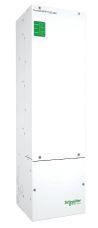
Schneider Electric Solar’s Conext MPPT 100A 600vdc solar charge controller allows homeowners to optimize battery charging from solar and maximize “energy resiliency”. The MPPT 100 allows for 7kW solar power arrays, but is scalable for larger installations. With 2 PV strings per charge controller, the MPPT 100 600 offers 50% less wiring than low-voltage charge controllers (solar.schneider-electric.com).
drivers for common electrical applications. The tool sports a swivelling lanyard hole and a cushion grip, and replacement reamer blades and bits are available (milwaukeetool.ca).
RECALL
Klein non-contact voltage tester NCTV-1
Milwaukee 7-in-1 reaming screwdriver
Milwaukee has expanded its hand tool line-up with the new 7-in-1 conduit reaming screwdriver (48-22-2870), which provides reaming capability for 0.5-in. to 1-in. conduit. The screwdriver comes with four bits and two nut
Klein Tools Inc. is recalling its non-contact voltage tester (NCVT-1). When the On/Off button is depressed and not released, the tool will falsely indicate that it is ready to detect voltage; however, it will not detect the presence of voltage until the On/Off button is released. Visit EBMag.com, click “Safety” then “Recalls” for more info.
• Comfortable, tool-free lever operation
• Test port located on the front and back for convenience
• 2-, 3-, and 5-wire versions for all wire types
• 12 AWG family: 24 - 12 AWG; 20 A / 600 V
• 10 AWG family: 20 - 10 AWG; 30 A / 600 V
products and solutions
Simple, scalable smarts with Starfish
Satco’s Starfish smart lighting line-up is enabled through a Wi-Fi network, and integrates with Alexa, Hey Google, Siri and SmartThings for smart home applications. The line-up offers a variety of products, from general service bulbs that fit standard fixtures to downlights and decorative products, such as colour-changing tape lights and string lights (satcostarfish.com).
Megger clamp meter for PV systems
Megger’s DCM1500S clamp meter can measure up to 2000 vdc and 1500 vac during installation, maintenance, monitoring and testing of solar PV systems, as well as standard AC or
DC electrical equipment. The tool comes with 4-mm leads, as well as new PVHV1 (4-mm) and PVHV2 with MC4PV plugs HV lead sets. The unit features a tactile barrier below the jaw to ensure a safe working distance (ca. megger.com).
RECALL
Generac and DR portable generators
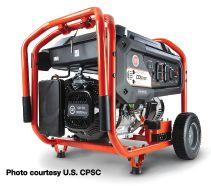
Generac Power Systems Inc. is recalling DR 6500W and 8000W portable generators. The folding handle on these generators can pinch a user’s fingers, posing an amputation and crush hazard, unless the locking pin has been properly inserted to secure the handle in place
before and after moving the generator. Visit EBMag.com, click “Safety” then “Recalls” for more info.
Husqvarna Madsaw dielectric gas-powered pole saw
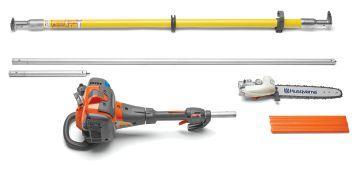
Husqvarna’s 525DEPS Madsaw is insulated to prevent electrical conductivity, comes in two lengths, and can be separated into pieces for easier storage. Included with the saw is Husqvarna’s 525 powerhead: a 25cc 2-stroke engine with 1.34 hp and X-Torq. Meantime, the saw’s aluminum couples with shaft seals and sealed bearings make it suitable for all-weather use (husqvarna.com).
21_2003_Electrical_Business_OCT_CN Mod: September 7, 2021 2:11 PM Print: 09/17/21 11:21:48 AM page 1 v7
DAN LEDUC
Does my contract need to be in writing, and signed?
The pandemic has accelerated our move to a fully electronic commercial system, which raises the question: Do I need a signed, hard copy contract to have a contract?
While the typically legal response would be “It depends”, we have some guidance from a recent Ontario Superior Court of Justice decision in the case of Ruparell v. J.H. Cochrane Investments Inc. et al.
In this case, the court had to determine whether a non-binding Letter of Intent and ongoing discussions—including text messages—would result in an enforceable agreement for the sale of a Volkswagen dealership to the plaintiff, Ruparell.
“Every case turns on its facts and an analysis of the parties’ intentions”
The parties exchanged terms via text and phone calls, and an informal terms sheet. Between April 26 and 28, Ruparell’s lawyers revised a share purchase agreement to reflect the latest negotiated terms but, before the parties could sign, the proposed vendor got a better offer from another dealer, and refused to sell to Ruparell.
Reassuringly, the judge focused on the course of conduct between the parties: “Every case turns on its facts and an analysis of the parties’ intentions”. After a detailed summary of the evidence, the judge found a binding and enforceable agreement for the sale of the dealership to Ruparell.
The takeaways
First, a contractor
be made through verbal, text or email exchanges,
documents, the conduct of the parties—or any combination thereof.
Second, there is a long-held tradition in common law jurisdictions called the “Statute of Frauds”, which generally maintains that any transactions involving answering for the debt of a third party, lands and premises, and wills and estates must be in writing. But even here we can find exceptions in the case law and, in Ontario, the requirements for written agreements have been largely tempered over the last 21 years by the Ontario Electronic Commerce Act.
Third, there must be an offer, acceptance of that offer, and consideration of that offer. The Ruparell case displayed all of these.
Fourth, in tender law, Canadian courts have applied a Contract A/Contract B formula whereby a bidder can have certain contractual rights pursuant to Contract A without a formally signed contract.
Fifth, the following three elements need to be met for an enforceable agreement:
1. an intention to be bound; 2. drafting of a formal contract is not a condition precedent; and 3. all essential terms have been agreed upon.
Let’s say you have agreement on the scope of work, a general price, timing... these are enough to suggest you are in an enforceable contract.
CODE conundrum
RAY YOUSEF
Ray is a code engineer with Ontario’s Electrical Safety Authority
TACKLE THE CODE CONUNDRUM IF YOU DARE!
Welcome to the newest round of questions that test your knowledge of the CE Code-Part I. Answers will appear in the December 2021 edition of Electrical Business Magazine, and online at EBMag.com under Features.
QUESTION 1
The CE Code allows the use of non-metallic sheathed cable in a building of combustible construction. a) True b) False
QUESTION 2
Where conductors are used in exposed wiring and are subject to corrosive liquids or vapours in a Category 2 location, they shall be of a type with corrosion-resistant protection, and be located more than horizontally from floors, decks or stairs. a) 1.0 m c) 2.0 m b) 1.5 m d) 2.5 m
QUESTION 3
In a dwelling unit, what is the maximum allowable height of the handle of a panelboard’s overcurrent device?
a) 1.5 m c) 1.7 m
b) 1.6 m d) 1.8 m
ANSWERS
Electrical Business, June 2021 ed.
Looking for June’s answers? We published those in last month’s edition, and also online. Visit EBMag.com, click on “Features”, then click “Code Conundrum”.
NANSY HANNA, P.ENG
Energy storage system installations
Energy storage can facilitate the integration and adoption of renewable energies, distributed generation and electric vehicles, and can also be used as backup power—keeping the lights on when the power goes out.
The falling costs of storage—as well as the falling costs of renewables, especially solar—are introducing opportunities for greater storage adoption. This, plus the drive toward net zero, has contributed to the need for energy storage systems (ESSs).
To assure ESS project success, it is imperative that installations are done in a safe manner.To that end, ESSs were added to Section 64 of the CE Code (2021 ed.). The new Subsection 64-900 aims to provide clear installation requirements for these systems, and to harmonize with other codes and standards.
Although they are not a renewable energy, ESSs introduce the same challenges when discharging energy to an interconnected supply authority system. The loading on the electrical system when charging is also addressed in the new Subsection.
Some important additions include:
• Definitions of the different types of ESSs.
• Marking requirements for buildings with ESSs.
• Requirements for disconnecting means.
• Restrictions on where ESSs may be located, and required separations from structures and/or equipment.
In addition to the Rules in 64-900, the general Rules in Section 64 apply to energy storage systems. Additionally, Section 84 requirements concerning any power production sources intended to be interconnected with the utility are applicable, including the need to comply with utility requirements.
Rule 64-002 definitions clarify that all types of ESSs are required to conform to the joint Canada-U.S. standard
ANSI/CAN/UL 9540 “Energy storage systems and equipment” (except for those that are field-assembled and have a storage capacity of less than 1 kWh).
Rule 64-918 allows ESSs to be installed in garages of dwellings, directly mounted to the building surface, installed in or on a detached garage, storage building, or free-standing structure, for up to 20 kWh for single ESSs and 40 kWh (aggregate) for multiple systems (when spaced 1 metre apart). The limitation on the capacity is waived when the ESS meets the cell level test from ANSI/CAN/UL9540A “Standard for test method for evaluating thermal runaway fire propagation in battery energy storage systems”. Additionally, Rule 64-918 does not permit systems greater than 1 kWh storage capacity to be installed in dwellings or living spaces of residential occupancies.
This limitation has sparked some debate, as well as a desire to compare against other North American standards. Let’s explore the relevant sections in some of these standards:
ANSI/CAN/UL9540 is used to approve ESSs
• Clause 23.2.2 requires that ESSs intended for use in the living space of dwelling units meet the performance/ cell level test requirements in ANSI/ CAN/UL 9540A. It then requires systems complying with these requirements to be marked “Suitable for residential use where permitted”. This marking could cause confusion, as it suggests that only ESSs marked “for residential use” are permitted in dwelling units. However, Clause 23.2.2 clearly states ESSs intended for use in the living space of dwelling units are required to meet the test and be marked.
• Table E.1 “Residential use ESS” further clarifies this issue by showing the capacity of ESSs permitted indoor within utility closets, attached garages or utility and storage spaces. Note B in the Table reaffirms that ESSs tested
in accordance with the 9540A cell test method can be installed in living spaces of dwelling units.
• However, no energy storage system has been certified to meet the UL9540A cell level test, as yet.
NFPA 855 “Standard for the installation of energy storage systems”
• This standard does not permit ESSs to be installed in living areas of dwelling units or in sleeping units; however, it does permit ESSs within utility closets and storage or utility spaces.
The International Residential Code (IRC 2021), Section R328
• This standard permits ESSs in enclosed utility closets, basements, and storage or utility spaces within dwelling units with finished or non-combustible walls and ceilings.
As energy storage systems continue to evolve so, too, will the CE Code. As with every new technology, there is a need to balance innovation against safety.
On the one hand, safety considerations should not be so restrictive that they stifle innovation. On the other hand, when there are not enough safety measures in place, the increased risk to people and property can disrupt of the adoption of new technologies.
This is why the CE Code is updated every few years, as it provides regulators and industry the opportunity to recalibrate and maintain this balance.
Consult your Authority Having Jurisdiction for more specific interpretations
Nansy Hanna, P.Eng., is senior director, Engineering & Regulations, at Ontario’s Electrical Safety Authority (ESA). She is also chair of the Canadian Advisory Council on Electrical Safety (CACES) and a member of the ULC Advisory Council, CSA Technical Committee on Industrial, Consumer and Commercial Products and CSA CE Code-Part I, Sections 24, 32, and 46. She can be reached at nansy.hanna@electricalsafety.on.ca.
WE’RE TAKING REWARDS TO THE NEXT LEVEL.
With more ways to earn loyalty points and redeem great prizes, the new and improved AD Rewards program allows you to capitalize on the power of your purchases from AD distributors like never before.
With over 6,000 valuable merchandise and travel rewards, your relationship with your AD distributor has never been more powerful…or lucrative. Join today at any of these participating AD distributors.