DEEP on track to establish Canada’s first geothermal baseload power facility
DEEP (Deep Earth Energy Production) Corp. is not only developing a Made-in-Saskatchewan geothermal power facility but, according to DEEP, will “establish the first geothermal power facility in Canada”.
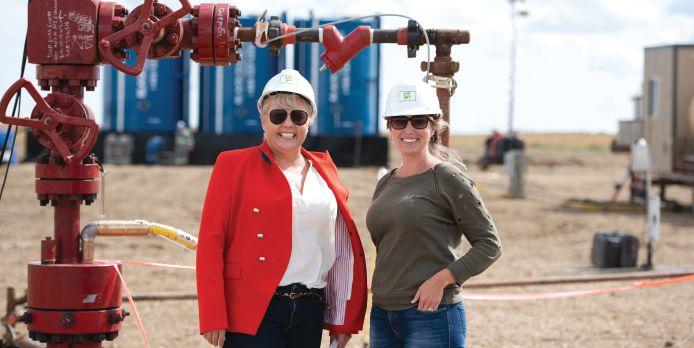
Under development near Torquay, the project involves drilling the deepest well in Saskatchewan, at 3530 m, to tap into an aquifer that is hot enough to generate power (deepcorp.ca).
Using conventional drilling and power generation technologies, “We’ll harvest the heat from the water, and convert it to clean, baseload power,” explained Kirsten Marcia, DEEP’s president & CEO.
Hot brine (122 C) is brought to the surface from a vertical depth of about 3500 metres using an electric submersible pump (ESP), which is installed at a depth of 2800 m. At surface, the brine flows through containment tanks before being re-injected back into the same formation.
The initial horizontal well will be the first step in constructing the 20-MW geothermal power facility. Final commissioning for the first facility is expected by early 2021.
DEEP’s long-term goal is to develop hundreds of megawatts of baseload power facilities from small, scalable and repeatable 5-20 MW power plants, each of which could power 5000 to 20,000 households.
Fisher River Cree Nation unveils Manitoba’s biggest solar farm
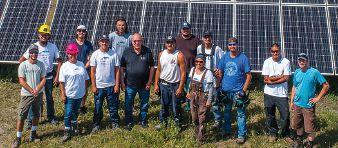
Fisher River Cree Nation has launched Manitoba’s biggest solar project, reports Bullfrog Power Inc.; the 1-MW facility has almost 3000 solar panels and was built entirely by Indigenous employees.
“This solar project is a source of empowerment and pride for our community,” said Fisher River Cree Nation Chief David Crate. “In addition to generating revenue and training local workers in solar installation, we’re also starting a conversation about large-scale green energy.”
The Fisher River community funded the nearly $2.4-million project with its own money, along with $1 million in support from Western Economic Diversification Canada. Fisher River Cree Nation also thanked its partners W Dusk Energy, Bullfrog Power, Solvest and the Royal Bank of Canada.
W Dusk Energy Group Inc.—an Indigenous-owned renewable energy firm—helped design and manage the Fisher River solar project. Owner David Isaac says the solar farm could become a blueprint for other First Nations looking to generate power from renewables.
Editor-Publisher
Anthony Capkun acapkun@ebmag.com
Account Manager Jennifer Dilorio jdiiorio@ebmag.com
Occasionally, Electrical Business will mail information on behalf of industry related groups whose products and services we believe may be of interest to you. If you prefer not to receive this information, please contact our circulation department in any of the four ways listed above.
Sean Atkinson (formerly of Reptech Enterprises), has launched a new agency, Resilient Sales Corp., serving Northern Ontario (resilientsales.ca).
Karl Johannson has been appointed chair of the Alberta Electric System Operator (aeso.ca) board of directors. (AESO is responsible for the dayto-day operation of the province’s electricity grid.) Johannson was appointed to the AESO board in April 2020, and is a former executive of TransCanada Pipelines. Derek Olmstead has been reappointed as market surveillance administrator (MSA) for a period of five years. The MSA is an independent enforcement agency that exists under the Alberta Utilities Commission Act.
Steven Wright has joined Imark (Electrical) as vice-president of Supplier Relations & Development. He will report to Jerry Knight, who is transitioning to president in November. Wright possesses a varied background in wholesale distribution, with stints at Vallen/Sonepar and WESCO (imarkgroup.com).
The Electrical Apparatus Service Association (EASA, easa.com) announced its new international officers
for the 2020-2021 administrative year. Among them, Sid Seymour of Seymour-Smith Electric Motor & Pump Service (Burlington, Ont.), serving as secretary/treasurer (seymoursmith. com). Serving alongside Seymour on the executive committee is immediate past chair—and fellow Canadian— Brian Larry of Larry Electric Motor Services Ltd. (Peterborough, Ont.).
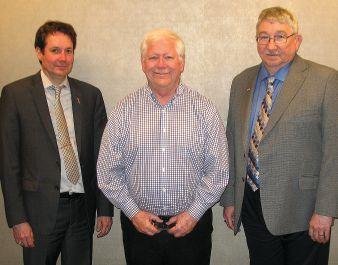
Photo: Left to right: Sid Seymour (secretary/treasurer), Jerry Gray (chair) and Tim Bieber (vice-chair).
Eaton (eaton.com) has named Andrew Agan vice-president of global marketing for its Crouse-Hinds and B-Line organization. He will also lead marketing for Oil & Gas solutions across Eaton’s electrical business. Agan most recently served as director of International Electrotechnical Commission (IEC) marketing at Eaton. Prior to that, he was a global product manager for Eaton’s industrial lighting and fittings technologies.
ai15997657005_2020 social distancing 1_3 ad.pdf 1 2020-09-10 3:21:42 PM
Congratulations to all of this year’s CSA Group Award of Merit recipients, but especially those involved in Electrical standards: Dr. Constantin Pitis, P.Eng., CEM, Pr. Eng., MIEEE, of ElenMech Consulting Ltd.; Doug Drysdale of Nexans Canada Inc.; and Jacques Côté, ingénieur, M.Sc.A., of HydroQuebec. To learn more about them and their contributions, visit EBMag.com, direct link tinyurl.com/yywsp9av.
Jean Belhumeur, president & COO of Leviton Canada, will retire at the end of this year (top left). He has held several roles throughout his 26 years with Leviton, starting as controller and, later, VP, Finance & Administration. In 1998, Belhumeur accepted the role of president. Taking his place is Jason Prevost (bottom left) effective January 1, who joined Leviton in April 2019 as vice-president, Distribution Sales (leviton.com). Previously, he worked at Standard Products for 15 years, where his final position was that of VP marketing and executive vice-president.
Forma SD Ottica SD
Bruno SD
Guida SD
Stella SD
Verde SD
Micra SD
RISKS AND MITIGATION STRATEGIES FOR ABSENCE OF VOLTAGE TESTING
CSA Z462 and permanently mounted testers/accessories
BHANU SRILLA
Absence of voltage testing is the most vital step in the process of verifying and establishing a deenergized state of any electrical system. According to Clause 4.2.5, CSA Z462 (2018), it is a process-oriented approach that takes various steps to establish a deenergized state and is not accomplished with any single device. Verifying a deenergized state is further a risky task which requires strict adherence to policies and procedures to establish a safe environment to work.
Because it is a high-risk task, verifying a deenergized state requires strict adherence to policies and procedures.
Additionally, it is also a regulatory requirement per OHS guideline Part 19 (WorkSafeBC), OHS Code 2018, Alberta, Rule 4-086, and Subsection 215.1(3) (d). Historical data suggests high incident rates of both shock and electrocution because of performing the task of “absence of voltage testing” inside electrical cabinets. The data further points out that the incidents are primarily caused due to workers’ inadvertent contact with electrical circuit parts inside the panel,
wrong application of test instruments, human error, production pressures, and complacency.
Many safety-centric organizations and product innovators have devised a variety of methods to minimize the risk of exposure to workers from the hazards of presence and absence of voltage testing over the past several decades.
In CSA Z462’s 2018 edition, a Supplemental Method in Notes No. 1 allows an alternative method through a new exception for the same task under clause 4.2.5(g). This document delineates the differences between presence and
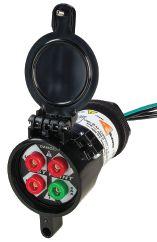
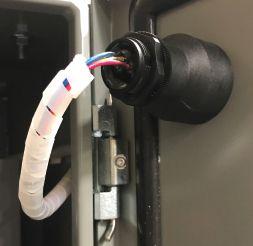
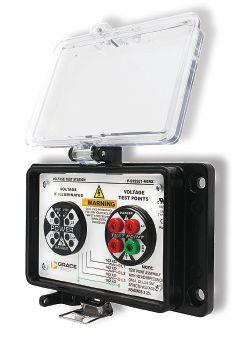
This permanently mounted accessory has high impedance protection, and is used in conjunction with a portable test instrument for absence of voltage testing. Internal view of an installed permanently mounted accessory (wiring included).
absence of voltage testing from the application standpoint of lockout/ tagout and compares the pros and cons of these devices, and their limitations of use.
Products discussed include, voltage indicators, test portals, permanently mounted accessories, portable test instruments, and absence of voltage testers. Given the process-centric approach, additional clarification is placed on worker qualification, installation conditions, training requirements, procedures, and failure modes of these risk control methods and their effect on both the task and the worker.
Permanently mounted accessory
An accessory that is used in conjunction with a portable test instrument for absence of voltage testing. Meets clause 4.2.5(g), CSA Z462 (2018), listed to cUL 61010. This standard defines the requirements for accessible parts to be non-hazardous.
Permanently mounted tester
A standalone device that is used for absence of voltage testing (a tester) meeting the Supplemental Method as outlined in Notes No. 1 for Clause 4.2.5(g).
What are test portals?
Conductive versus non-conductive
Test portals are permanently mounted accessories and are classified into two categories based on the application of use:
• Portals that are non-conductive and use non-contact voltage detector pen (NCVD) for voltage detection.
• Portals with conductive test points that use portable test instruments and test probes for absence voltage testing and troubleshooting.
Permanently mounted accessories that are cUL 61010 listed devices are meant for voltage testing using an adequately rated portable test instrument. The cUL classification further terms this product as “panel-mounted test point meter”. These devices can be used for both troubleshooting the equipment, and to verify the absence of voltage from the source to which they are connected.
Why use test portals with test points?
Test portals with test points greatly reduce the risk of exposure to
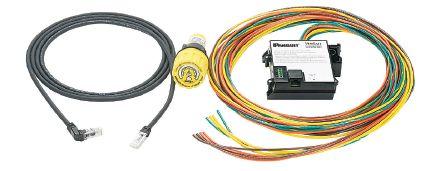
This absence of voltage tester confirms voltage absence with the push of a button.
qualified electrical workers, as they use built-in high impedance protected circuitry. Further, when it comes to electrical safety, there is no such thing as absolute zero risk failure modes associated with any type of risk control method. Hence, there is no shock or arc flash hazard for the worker performing the task. Compared to the conventional method of absence of voltage testing inside an electrical cabinet—assuming the system is still energized—these devices provide a much safer alternative to verify the absence of voltage as outlined in the both clause 4.2.5(g), CSA Z462 (2018) and OHS Guideline Part 19 (WorkSafeBC), OHS Code 2018, Alberta, Rule 4-086, and Subsection 215.1(3)(d).
CSA Z462 shows six risk control methods that are required to be implemented per Annex F.3, Table F.1. The hierarchy of risk control methods (RCH) classifies risk controls across six categories:
• Elimination
• Substitution
• Engineering controls
• Awareness
• Administrative controls
• Personal protective equipment
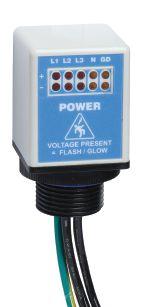
This voltage presence indicator, typically installed on local disconnect switches with an M20 or 30-mm conduit knockout, is used to verify presence in the event of a stuck blade or other malfunction.
Because it is a highrisk task, verifying a deenergized state requires strict adherence to policies and procedures.
This voltage test station, with LED voltage presence indicator and permanently mounted accessory, is an all-in-one voltage presence and absence detection combination unit.
They range from more effective (at the top) to less effective (at the bottom).
The purpose behind the RCH chart is to identify and apply a single or combination of risk control methods that are suitable for the specific application and the task being performed.
Permanently mounted electrical safety devices fall under the engineering controls category.
cUL 61010 Listed permanently mounted devices
Permanently mounted devices that are listed and labeled to cUL 61010 are not allowed to have plug ends. These devices are not meant to be connected using a corded supply; they are only intended for permanent connection.
Poor workmanship, installation failures and device malfunctions are all potential failure modes that can lead to a zero-voltage indication/no indication when the conductor may still be energized. Typical absence of voltage tester (AVT) potential failure modes:
1. Missing battery or wrong battery in the indicator module.
2. Accidental disconnection of leads and contacting low-impedance ground path leads to false indication of absence.
3. Loose/disconnection of AVT system cable connecting from the isolation module to the door module.
4. Miswiring of leads by connecting one set to the line side and second set to the load side on the connections.
5. Wrong application of device in Cat IV, 600V environments when the device is only rated for Cat IV, 300V.
6. Misinterpretation of the fault codes by the operator.
All of which make a stronger case for permanently mounted devices.
Know your clauses
When you cannot verify the absence of voltage from outside the door, then verify a deenergized state inside the panel with an adequately rated portable test instrument.
Per CSA Z462 (2018), Clause 4.1.9.1, only qualified persons shall perform the absence of voltage testing. The qualified person is the one who knows what steps must be taken when the absence of voltage cannot be verified from outside an electrical cabinet.
Clause 4.1.9.5 “Operation verification” explains that when test instruments are used to verify the absence voltage on conductors or circuit parts operating at greater than 30 V, the operation of the test instrument itself shall be verified to a known voltage source before and after an absence of voltage test is performed.
Z462 Clause 5.2.1 “Qualified persons” specifies only qualified persons shall perform tasks such as testing, troubleshooting and voltage measurements on electrical equipment operating at voltages greater than 30 V. This clause also specifies the rating of instruments, equipment and their accessories:
• Rated for circuits and equipment where they are utilized
• Approved for the purpose
• Used in accordance with the instructions provided by manufacturer
The informational note further clarifies the use of cUL 61010-1 listed products for the equipment used in systems 1000 V and below.
Sorting out the puzzle
CSA Z462 provides broad language that allows users to customize their safety programs to meet their precise needs. As such, many manufacturers have devised methods and new types of devices to reduce worker risk that are not even mentioned in Z462 (e.g. a dual-interlocked disconnect switch).
Safety is a condition in which one is being protected from the risk of injury or hazard and is not something that can be attained by just installing a device at the door. It is simply one more piece of the electrical safety puzzle that helps ensure our qualified workers can execute their daily tasks and go home, uninjured, at the end of the day.
With over two decades of experience in the power generation and distribution industry, Bhanu Srilla, MS, CESCP, CMRP, CRL, is director of technical marketing with Grace Technologies. He is an IEEE member, and a member of Standards Technical Panel STP for UL 1436, UL 61010, UL 508 and 508A. He is a certified electrical safety compliance professional (CESCP) by NFPA, certified maintenance and reliability professional (CMRP) by SMRP, certified reliability leader (CRL) by Reliability Web, and holds advanced degrees in Electrical Engineering, Manufacturing Systems, and Technology Management.
CE Code Heavy Duty liquidtight conduit and marking
JOHN RICHARDSON
The 2018 version of CE Code-Part II introduced a new product rating (and related marking) for liquidtight conduits—Heavy Duty (HD)—which is now required for use in any hazardous location that allows the use of liquidtight flexible metal conduit.
(This requirement did not exist in previous versions of CE Code-Part II, where any CSA-approved liquidtight was permitted.)
This new product approval is supported by CSA C22.2 No. 56-17, which spells out the additional testing required to achieve the Heavy Duty rating, and related marking requirement.
HD-rated liquidtight flexible metal conduits boast increased crush resistance and can withstand higher pull-out forces. They are permitted in Zones 2, 21 and 22 per CE Code Section 18, and Class I, Division 2, Class II, Division 1 & 2 per Appendix J.
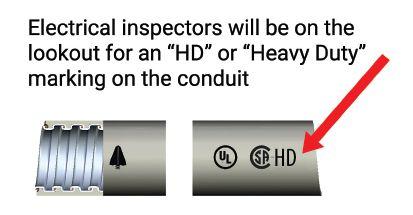
Now that conduit manufacturers have product approved to this standard, electrical inspectors will be looking for the “Heavy Duty” or “HD” marking on the jacket.
Distributors and contractors will need to be clear when specifying liquidtight conduit, as there are now two (2) grades available: Regular CSA-approved liquidtight conduit remains the primary solution for applications outside of hazardous locations. When dealing with hazloc installations, check that the Zone allows for the use of HD liquidtight, and is marked accordingly.
(The CSA standard covering liquidtight fittings, C22.2 No. 18.3, has also been recently updated to include requirements for Heavy Duty fittings, and those manufacturers are working on getting their fittings approved.)
John Richardson is vice-president, Sales, with Anamet Canada. He can be reached at jrichardson@anametcanada.com.
Leviton wallbox sensors for room dimming control
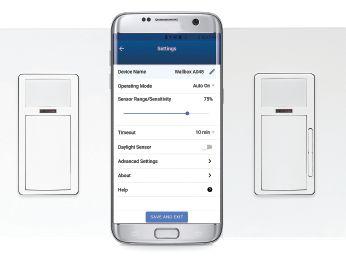
Leviton’s new line of smart, touchless wallbox occupancy sensors are designed for “easy, out-of-the-box operation, minimizing contact, and simplifying installation”. The flagship product is the smart PIR dimming wallbox sensor, which includes a 24V model. The sensors combine occupancy/vacancy sensing with dimming and daylight response, as well as adjustable partial-On/-Off capabilities. To simplify setup, pushbutton access to eight of the most popular operational settings is available by simply removing the interchangeable cover. (leviton.com)
Appleton Contender retrofits legacy HID
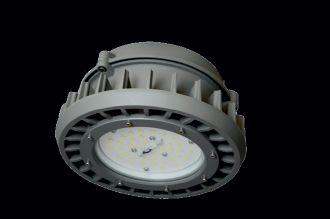
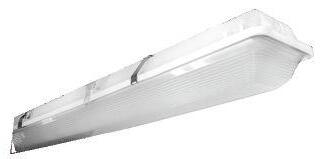
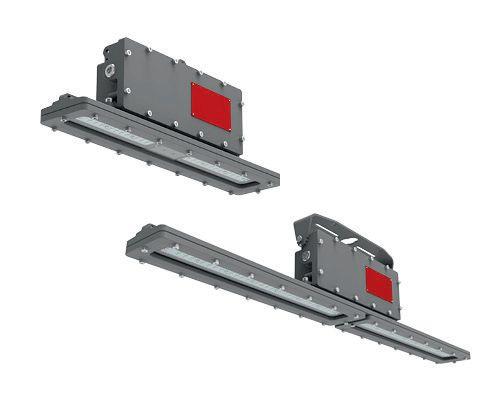
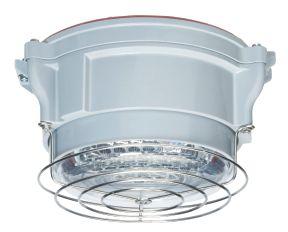
Emerson says its Appleton Contender low-profile luminaire is a safe, economical solution for retrofitting a plant’s legacy HID lighting to LEDs for hazardous locations, especially in low-clearance areas. Delivering the lighting equivalent of 70W to 175W HID luminaires, the Contender LED directly retrofits to legacy mounting hoods without an adapter. It offers three lumen output options and four interchangeable and field-replaceable globes options, and promises energy and maintenance savings of up to 65% over HIDs (emerson.com).
RECALL
Lithonia CFMK surfacemount fixture brackets
Lithonia is recalling metal CFMK H-brackets that are screwed into the ceiling and used to surface-mount CPANL LED fixtures, as they can fail to securely mount the fixture, thereby allowing it to fall unexpectedly. The CFMK bracket was included as an optional mounting accessory with 1x4, 2x4 and 2x2 CPANLs. As of August 13, the company received two (2) reports of failing brackets in Canada, and no reports of injury. If you’re affected, stop using the product and contact Lithonia: 855-307-2454.
RECALL
River of Goods ceiling fans
A number of River of Goods ceiling fans are being recalled because of an injury hazard due to the lack of the required secondary support cable. As of July 9, 2020, the company has received no reports of incidents or injuries in Canada. Roughly 2435 affected units were sold here between April 2019 to March 2020. If you have one of the affected units, stop using it and contact River of Goods:888-647-4990 or email quality@riverofgoods.com. For a full list of affected UPC and manufacturer model numbers, visit EBMag.com (direct link tinyurl.com/y6faqlfb).
Cat GC diesel gensets for standby power
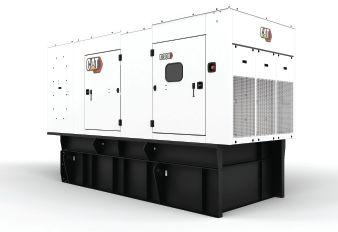
Caterpillar’s Cat GC diesel gensets are part of a new line of standby power solutions that includes eight new models, with ratings from 250kW to 600kW. Available for 60Hz operating environments, the gensets include a 2-year warranty for standby power solutions, with a suite of available
extended service coverage options. Caterpillar supplies matching enclosures for applications requiring noise attenuation or protection from the elements. The equipment can also be equipped with Cat Connect Remote Asset Monitoring (cat.com).
Air purification for ceiling lighting systems
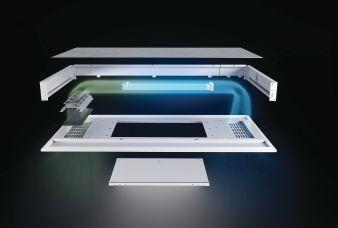
The UV Angel Air uses integrated UV-C light air purification technology to reduce levels of viruses, bacteria and fungi by automatically and continuously treating the air. The system installs into existing or new construction in-ceiling lighting. Air is drawn into a sealed air chamber with a series of fans and filters, where it is treated with an enclosed high intensity UV-C light. The treated air is then returned to the room (uvangel.com).
Irwin Command Lock measuring tapes
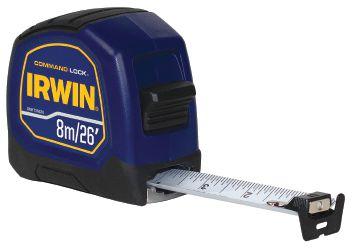
Irwin’s Command Lock tape measures are built with an impact-resistant case and touch-button finger brake. All tapes feature a reach of 14 ft with a white blade for better visibility, plus a Mylar coating. The tapes also boast a multi-catch hook (and a few magnetic hook options) for working with metal studs, EMT conduit, black oxide pipe and other ferrous metals (irwin.com).
Hilti EXO-01 jobsite exoskeleton
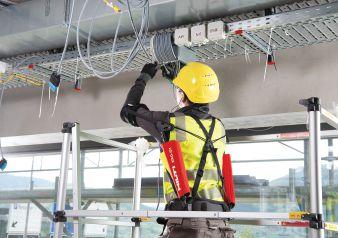
Hilti’s Johannes Wilfried Huber says the company is bringing to market an exoskeleton to “provide relief for physically demanding tasks, such as those performed on construction sites every day”. The EXO-01 is expected to hit the market this fall, with full roll-out expected January 2021. The exoskeleton is a passive unit; there are no motors, no batteries. The weight of the wearer’s arms is transferred to the hips via the forearm supports using mechanical cable pulling technology (hilti.com).
FLIR TG165-X thermal camera with MSX
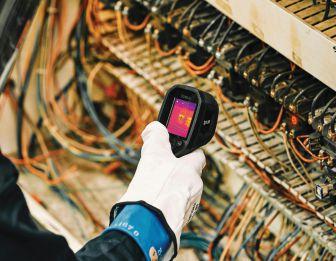
FLIR Systems’ TG165-X MSX thermal camera is purpose-built for electrical contractors and other pros. This upgrade to the TG165 provides an all-in-one diagnostics tool with a spot temperature gun and thermal imager, enhanced by FLIR’s patented Multi-spectral Dynamic Imaging (MSX), which offers improved identification of hot spots that indicate electrical or mechanical failures. FLIR MSX’s two-camera technology makes images easier to understand by adding visual details to full thermal images and making them sharper to recognize physical features (flir.com/tg165-x).
Wago Pro2 power supplies
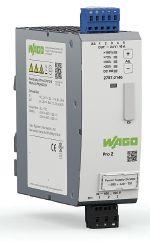
Wago’s Pro2 power supplies include six units ranging from 120W to 960W, and an energy conversion efficiency up to 96%. The power supplies incorporate an interface allowing them to be tailored to any application requirement, says Wago, and offer monitoring functions to provide continuous power supply data information and signal errors for application monitoring. The power supplies also boast easy fieldbus connection with snap-ontype communication modules (with Wago’s TopBoost and PowerBoost capabilities, wago.com).
RECALL
Ushio Indiglow LED T8s
Ushio America is voluntarily recalling Indiglow LED T8 black light lamps (Item #3000677) with a 4-ft tube because they can overheat, causing the glass tube to fall and strike those standing nearby. The name USHIO and brand name Indiglow are on the lamp. The manufacturing date code is imprinted on the silver aluminum end cap of the lamp, indicated by 16xx or 17xx. If you are affected by this recall, stop using the product and contact Ushio: customerservice@ushio.com, 800-838-7446, or visit Ushio’s recall page for more information (tinyurl.com/y24pu2sd).
Milwaukee MX Fuel core drill
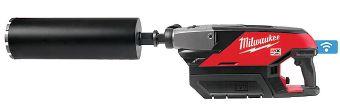
Part of Milwaukee’s MX Fuel battery-powered equipment system, the new One Key-compatible hand-held core drill (MXF301-1CP) can tackle up to 6-in. holes in reinforced concrete. A patented clutch and Autostop technology deliver a safer coring experience by promising “maximum control” and a reduction in kick-back. Features like the performance gauge guides users on the optimized drilling
speed so they can drill faster, while the LED level helps them maintain accuracy throughout the application (milwaukeetool.com).
Sylvania Natural Series
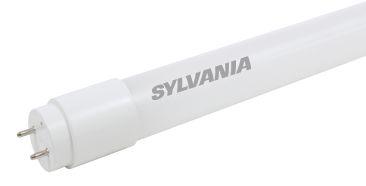
Sylvania’s Natural Series of LED light ing products with TruWave promise the best alternative to natural light by mimicking the natural light spectrum, all while saving energy. The Natural Series is suitable for a variety of applications, and will include numerous lighting profiles (T8s, troffers, retrofit doorkits, high-bays, etc.).
Meantime, the SubstiTube IPS Natural LED T8s and LEDlescent Natural LED ballast-free T8s continue the promise of “best alternative to natural light” by mimicking the natural light spectrum—again, thanks to TruWave (sylvania.com/truwave).
HPS Sentinel solar duty transformers
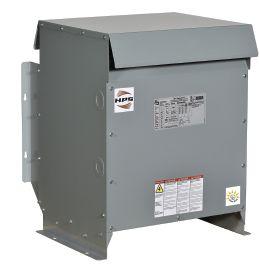
Hammond Power Solutions Inc. has extended its line of 3-phase general purpose and k-rated transformers for solar applications. They meet the latest Canadian Energy Efficiency Regulations SOR/2018-201 efficiencies (NRCan 2019), and all low-voltage solar-duty transformers are available in a type 3R heavy-duty enclosure and feature enhanced BIL ratings for increased reliability. Standard integral floor and wall mounting brackets are on units up to 45 kVA, and have voltage ratings from 15 kVA to 1000 kVA (hammondpowersolutions.com).
Continued from page 13
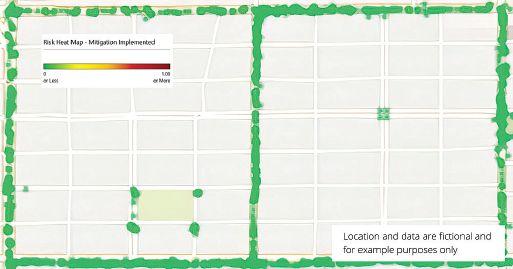
FIGURE 3: Risk heat map when poles are running for an entire day with risk mitigation strategy implemented.
Source: Hedgehog Tech.
This is known as having high diagnostic coverage, which can be improved by installing a fault monitoring system at each distribution panel (which distributes up to 10 light fixtures). When a fault is discovered, the offending circuit is removed from service by means of an automated disconnect, and the maintenance crew can be notified by means of an automated email or SMS with a description of the location and severity of the event.
With high diagnostic coverage, the poles can be repaired in the order in which the hazards are detected. Meanwhile, the order in which the monitoring equipment can be installed is determined by the relative risk assessed from the existing database. Combining risk detection with isolation measures can lead to both cost-effective assessment of risk while avoiding excessive maintenance on non-hazardous systems.
Figure 3 shows the heap map presented in Figure 2 after applying risk reduction through operational procedures and response time method. In this example, the response time of three hours is considered for the monitoring system for notifying the maintenance crew, the crew arriving at the panel location, and manually testing the poles of the circuits. Once the abnormal pole is identified, the crew isolates the hazard and reduces the public risk. By implementing this risk mitigation strategy, the risk of contact voltage hazards associated with streetlight infrastructure can be reduced up to 99.97%.
Communication is key: data visualization for risk mitigation
A heat map is a potent tool for presenting contact voltage hazards, their severity and location. By combining this tool with advanced diagnostic coverage, municipalities can prioritize their resources and efforts toward strategically mitigating the risk of contact voltage in public infrastructure. This solution also enables the streetlighting poles to remain energized 24/7 to facilitate smart city requirements. Risk reduction through advanced diagnostic coverage and order of upgrades can significantly reduce the risk of public exposure while eliminating the need to completely upgrade the system.
Younes Rashidi is the director of engineering at Hedgehog Technologies (hedgehogtech.com), a Burnaby, B.C.-based electrical engineering consulting firm specializing in risk management. Rashidi possesses over 20 years of experience in safety-rated controls, embedded systems, and project leadership.
CODE conundrum
BY RAY YOUSEF, CODE ENGINEER
Ontario’s Electrical Safety Authority esasafe.com
TACKLE THE CODE CONUNDRUM IF YOU DARE! Welcome to a new round of Code Conundrum questions! Answers to come in our December 2020 edition.
QUESTION 1
Which of the following is an acceptable location for the installation of HDPE conduit?
a) Underground, encased in concrete
b) Underground, direct-buried
c) Above-ground when encased in concrete
d) All of the above
e) B and C
QUESTION 2
A 75-kVA transformer hanged from a ceiling structure in an office building is required to have a minimum 1 m of working space:
a) only on the sides to provide access to conductor connections
b) on all sides
c) with secure footing
d) A and C
e) none of the above, working space only applies to floor-mounted transformers
QUESTION 3
Where the DC arc fault protection is not located at the photovoltaic module, mechanical protection is required for PV source circuit conductors installed on or above buildings to protect against rodent damage.
a) True b) False
ANSWERS
In case you missed the answers from our June 2020 edition (which appeared last month, in the September ed.)
Question 1
A consumer’s service conductors entering a service box that is not equipped with a barrier between the line and load sides shall:
e) A and C. Rule 6-212 3).
Question 2
Non-locking 15A receptacles in a hospital shall be “hospitalgrade” in:
c) Basic, Intermediate and Critical Care areas. Rules 24-106, 24-114.
Question 3
Solid-state devices are permitted to be used as isolating switches, but not as disconnecting means.
b) False. Rule 14-700.
How did YOU do?
3 • Seasoned journeyman
1 • Apprentice
2 • Need refresher training
0 • Just here for fun!
NANSY HANNA, P.ENG
Electrical industry adjusts to Covid-19
The pandemic has tested the electrical industry’s agility and responsiveness in a crisis. Acting as a team—made up of contractors, regulators, certification agencies, manufacturers and distributors—we’ve pulled together to tackle the challenges posed by Covid with professionalism and care, and an unwavering commitment to electrical safety for Canadians.
Our industry kept pace with a rapidly changing environment by implementing measured and tailored response strategies in a variety of areas, and it’s worth highlighting some of them.
Emergency healthcare facilities and shelters
Some regulators published guidance documents to support the expedited construction of Temporary Emergency Healthcare Facilities and Temporary Residential Facilities. With safety as a core pillar, the guidelines were developed and published to provide direction on CE Code requirements for such facilities.
It would have been an obstacle and unnecessary burden, for example, to apply the full requirements of Section 24 for Patient Care Areas to these temporary structures. The regulators leveraged their authority to allow deviations to the code while requiring an acceptable level of electrical safety. Swift direction—in tandem with government announcements—was provided to support industry, municipalities and government to expand the capacity of these facilities.
Industry, meantime, mobilized and started construction in a timely, safe and effective manner.
ADVERTISER INDEX
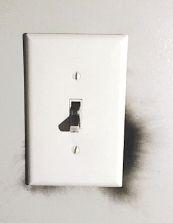
Damage due to arcing.
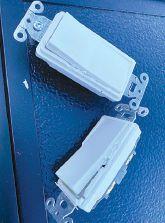
Deterioration to indoor switch caused by cleaning agents.
Essential medical equipment
Canadian manufacturers of essential medical equipment experienced a substantial increase in demand as the national healthcare system responded to the pandemic.
In early April, for example, Prime Minister Justin Trudeau announced a commitment to work with Canadian companies to manufacture 30,000 ventilators. To expedite the approval of this equipment, AHJs across Canada worked with the Standards Council of Canada and Health Canada to review approval requirements.
Two bulletins were issued under the Canadian Advisory Council on Electrical Safety (CACES) to inspection bodies and field evaluation agencies to facilitate the production of this equipment while maintaining safety and the need for approval. Over 10,000 ventilators have been produced, and Innovation, Science & Economic Development Canada released a video acknowledging the national efforts to produce these ventilators (youtu.be/hFjZg3gPyEg).
Cleaning products and electrical devices
As businesses and individuals work to keep high-touch areas clean and disinfected, there were reports of light switch failures which, ultimately, were caused by the spraying of cleaning or sanitizing liquids directly onto them.
Electrical equipment such as light switches and receptacles installed indoors are not designed to be subjected to direct streams of liquid. Additionally, the chemicals in cleaning agents—when applied in significant quantities—can lead to the failure of these devices, which may result in arcing or other deterioration, leading to the potential for electrical fires or shock.
Guidance was published in Ontario to caution the public about the use of cleaning or sanitization liquids on electrical devices installed indoors. Direction was also provided for repairing or replacing electrical devices when any signs of arcing or deterioration are found.
We also asked the public to consider replacing their existing switches with touch-free devices as a way to reduce these occurrences.
Moving forward, together
We have all adapted to a new reality since March 2020, which may change yet again as we brace for the second wave. As a community and as an industry, we must continue to adapt our work flow, remain connected and engaged, and continue to leverage different and innovative approaches for achieving our collective goals.
As each industry and individual remain committed and focused on everyone’s well-being, we will not only get through this together, but also advance and learn new ways of working together and enhancing safety.
Nansy Hanna, P.Eng., is senior director, Engineering & Regulations, at Ontario’s Electrical Safety Authority (ESA). She is also chair of the Canadian Advisory Council on Electrical Safety (CACES) and a member of the ULC Advisory Council, CSA Technical Committee on Industrial, Consumer and Commercial Products and CSA CE Code-Part I, Sections 24, 32, and 46. She can be reached at nansy.hanna@electricalsafety.on.ca.
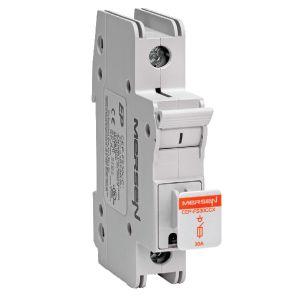
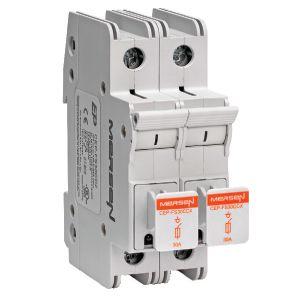
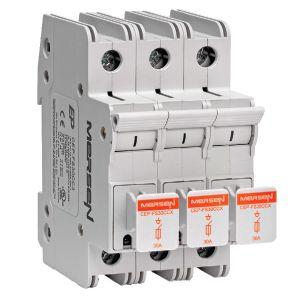
MERSEN COMPACT FUSED SWITCH
SPACE SAVINGS IN PANELS
Mersen’s Compact Fused Disconnect incorporates switch functionality with the high protection level of a fuse. The switch accepts class CC fuses, is UL 98 listed and suitable for branch circuit disconnect and protection. It has a smaller footprint compared to a traditional Class CC disconnect with an interrupt rating of 200kA.
The compact form factor and ease of installation make it a great choice for panel builders. The easy lockout/tagout feature and IP20 rating ensures additional safety along with the built in switch capability.
WE’RE TAKING REWARDS TO THE NEXT LEVEL.
With more ways to earn loyalty points and redeem great prizes, the new and improved AD Rewards program allows you to capitalize on the power of your purchases from AD distributors like never before.
With over 6,000 valuable merchandise and travel rewards, your relationship with your AD distributor has never been more powerful…or lucrative.
Join today at any of these participating AD distributors.