ANTHONY: I love that subway map analogy! It could be why I’ve never really understood the system myself. As the process becomes simpler to understand and navigate, the greater the chance we’ll keep people in the system until they become certified, skilled tradespeople.
I imagine both Skilled Trades Ontario—and you, as its CEO & Registrar—have a mandate to fulfil and some immediate priorities in mind.
MELISSA: As you noted, I’ve worked in this field for many years. Based on my experience, I have three key priorities that I brought to the table when accepting the role of CEO and Registrar.
The first involves mobility—getting Ontario harmonized with the rest of the country. We know there’s a labour shortage in Ontario, but there are other provinces where there isn’t so much of a shortage, or they have apprentices who are looking to complete their trade. So, let’s get them into Ontario.
I’m from the East Coast—a very transient workforce—and a flight to Ontario is a lot easier than a flight to, say, Fort McMurray.
Right now, there is a bit of a barrier for apprentices who want to work in Ontario. So STO will work to eliminate that; to bring Ontario and the Red Seal trades in line with the rest of the country so that apprentices can work seamlessly through their apprenticeship between provinces.
My second priority is around that one-stop shop so that, right from the day you register to the day of completion, Skilled Trades Ontario is working with you.You’re not jumping around all over the place trying to guess where to go, what to do, and who to speak with.
The third priority is around accessibility. There’s a lot of promotion and marketing of the skilled trades—tons of it, actually, and that’s great. We need to promote these good-paying, rewarding jobs. The problem that arises is figuring out how to get started... figuring out the pathways that take you from apprentice to journeyperson.
There are, in fact, several different routes you could take. You could contact a local union office and go through the labour route; you could take a program in college, then go
“We need employers at the table, working with us [...]”
How do we convince employers to [...] register apprentices and participate in the apprenticeship program and see its value?
into employment; or you could knock on employers’ doors and pursue direct employment.
So there are many pathways, but we don’t do a good enough job promoting these pathways. Let’s say I’m a young person or a newcomer, and I’ve decided to get into a trade... how would I know any of this?
If you were to google “How do I become a carpenter in Ontario?”, you’re not going to get a simple answer. Sure, you’ll get search results for every college that offers a Carpentry program, but you’re not going to come up with something succinct that explains “Here are the jobs, here’s how you apply along one of these pathways”, and so on. Quite frankly, we don’t make it very easy for people to get into apprenticeship. Simplifying this process to make the trades more accessible is a key priority for me.
ANTHONY: You raise an excellent point. There has been a lot of promotion and marketing for the trades but, if a person can’t identify or navigate these pathways, we risk not getting new apprentices in the first place, never mind losing them before they complete their apprenticeship.
MELISSA: And that’s also where employer engagement comes in. We need employers at the table, working with us, and saying “We’ve got X number of jobs in these occupations, help us fill them”.
That piece of the puzzle—employer engagement—is huge. Of the 144 trades, only 22 are compulsory. So how do we convince employers to get engaged; to register apprentices and participate in the apprenticeship program and see its value?
ANTHONY: I imagine there is a mechanism for industry stakeholders to reach out to Skilled Trades Ontario so they can work more collaboratively with you?
MELISSA: Sure, they can visit the website and email us, and it will be triaged to the right individual. We have a fantastic team of folks who are very good at getting back to people.
In fact, we will be embarking on a campaign involving apprenticeship, and part of it will specifically target employers that don’t participate... they are a big focus for us.
If you’re an employer, reach out to us, because that’s what we’re here for. We’re here to help.
ANTHONY:Thanks again for meeting with me, Melissa, and best of luck to you and your team. For our readers, please visit skilledtradesontario.ca to learn more.
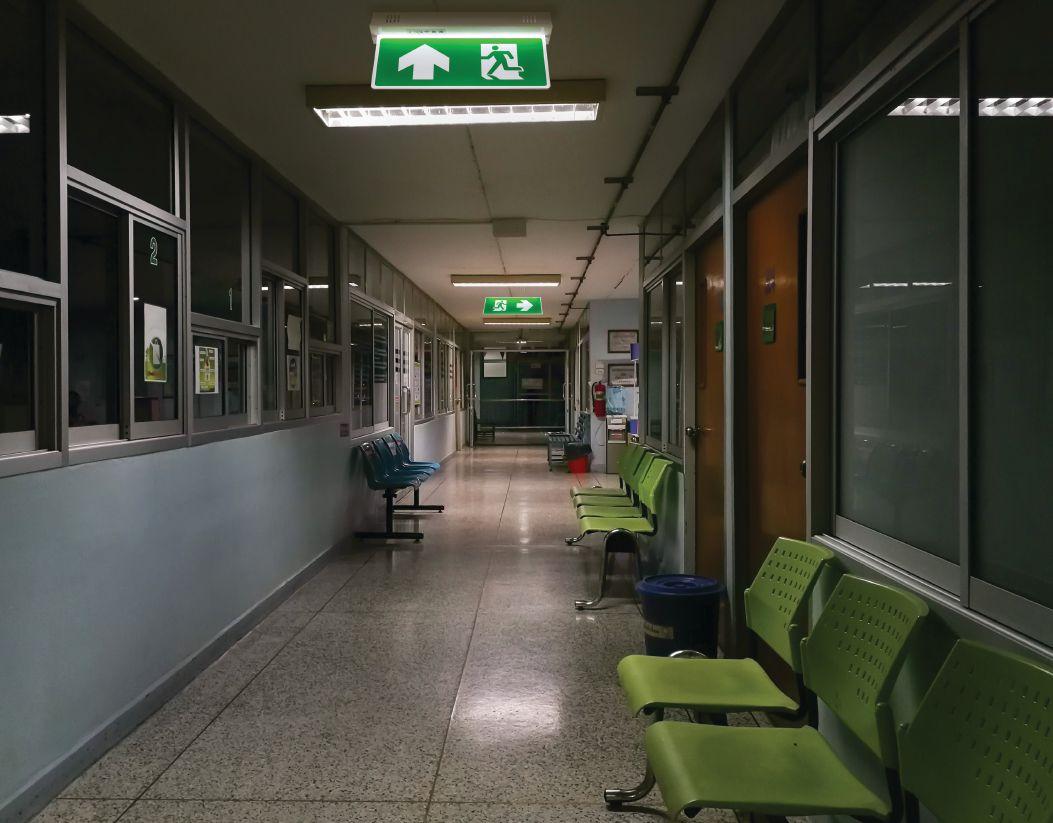
Exit signs, exit lighting, emergency lighting... not to be used interchangeably.
EXIT AND EMERGENCY LIGHTING AND SIGNAGE
A primer for these continually-evolving life safety solutions
BY JIM BURNS
Exit lighting and signs, emergency lighting... all are imperative for the timely evacuation of facility occupants in an emergency or power failure.
Adequate ambient lighting is required so that occupants can avoid trips or falls and safely navigate the egress route. Exit signs identify exit routes and doors, while exit and emergency lighting provides the required illumination for those paths of travel.
Requirements for the maintenance of these crucial items has continuously evolved over the years. The 1990 edition of the National Fire Code of Canada (NFC) included several new additions, including: the requirement to install exit lighting and exit signs per the National Building Code of Canada (NBC); the inclusion of exit lighting illumination while the building is occupied; and the requirement to maintain emergency lighting.
These requirements remained unchanged until the 2015 edition of the NFC. The latest revisions included provisions for the inspection, testing and maintenance of exit signs, which was not explicitly stated in previous editions.
Let’s review the requirements related to exit signs and exit lighting, explore some of the challenges with changes in exit signage, and look forward to where new requirements may go next.
Exit lighting?
I’ve already used the term exit lighting a few times, but you may never have heard this term before. It does not appear in the NBC, and only appears in Subsection 2.7.3 of the NFC. So what is it?
When you google “exit lighting”, you’ll get results for exit signs, emergency lighting and exit lights. The term exit light seems to be synonymous with exit sign. In fact, I often see the term exit light referencing an exit sign when reviewing building plans. But an exit sign/exit light are not the same as exit lighting, which refers to the ambient lighting within a means of egress under normal power conditions.
Note A-2.7.3.1(1) of the NFC states:
Subsections 3.2.7 and 3.4.5 of Division B of the NBC describe the requirements for the placement of exit signs and for emergency and non-emergency lighting.
The requirements in Article 3.2.7.1 of the NBC provide the minimum lighting requirements. Specifically, that
an exit, a public corridor, or a corridor providing access to exit for the public or serving patients’ sleeping rooms or classrooms shall be equipped to provide illumination to an average level not less than 50 lx at floor or tread level and at angles and intersections at changes of level where there are stairs or ramps.
In addition, the minimum value of the illumination required shall be not less than 10 lx. This is exit lighting.These values are the minimum lux required to provide illumination along the path of egress travel under normal power conditions i.e. not on emergency power. These sentences confirm that the intent is to limit the probability that egress routes and exits will have inadequate illumination, which could lead to safety hazards.
Exit signs
Exit signs help occupants identify the means of egress so they can find their way out of a building. The NFC requires exit signs to be:
• installed in buildings in conformance with the NBC
• illuminated when the building is occupied, and
• maintained in operating condition in conformance with Section 6.5
The 2015 edition of the NFC included a new article 6.5.1.8 “Inspection of exit signs”. New requirements for exit signs included monthly inspections to ensure the signs are visible, identifiable and unobstructed.
In addition, exit signs must be tested annually to ensure they remain illuminated for the same duration as the emergency power supply requirement e.g. 30 minutes, 1 hour or 2 hours.
MORE CEILING FIXTURES NOW CCT SELECTABLE
ADAPT THE COLOR TEMPERATURE TO YOUR NEEDS!
TRADITIONAL LED CEILING LUMINAIRE
CIRKA LED CEILING LUMINAIRE COMING SOON!
Green pictogram a.k.a. Running Man signs
The 2010 edition of the NBC introduced requirements for the internationally recognized green pictogram sign (the Running Man). While the requirements were straightforward for the installation of these signs in new builds, it wasn’t so easy for existing buildings.
Industry had questions about individual exit sign replacements, multiple exit sign replacements in a single floor area, and the replacement of signs across multiple floors. At the same time, others were not asking questions before installing new signs.
As a result, we observed every possible scenario, including the replacement of multiple signs within a single floor area. This led to red EXIT signs being installed within the same area as the new green pictogram signs.
There seemed to be a lot of confusion from both industry and authorities having jurisdiction (AHJs). Various jurisdictions provided interpretations on the how these new requirements were to be applied to existing facilities. Those interpretations were released based on when new code provisions were adopted. Interpretations were issued by several AHJs, including the cities of Winnipeg and Calgary, and the Province of Saskatchewan.
The consensus, as stated in “Winnipeg policy on exit signs installations in existing buildings” was that generally speaking, mixing and matching of red EXIT signs and green pictogram signs in the same floor area will not be permitted.
The requirements were similar throughout each document, with the exception that Winnipeg and Saskatchewan include a retroactive requirement to replace the red EXIT signs.
In buildings where an addition is 15% or greater of the existing building area, the red EXIT signs are required to be replaced. If a building addition is less than 15% of the existing building area, the red EXIT signs can remain if new red EXIT signs are installed, otherwise green pictogram signs are required throughout.
The Bulletin from Calgary did not specify a specific size addition that requires the retroactive upgrading of the exit signs.
The moral of the story: always check with your local AHJ for specific requirements to avoid possible costly changes later.
Where do we go from here?
Earlier I wrote that exit signs are meant to identify egress routes and exit doors. Currently, exit signs are designed and installed with little regard for accessible design. I won’t delve into that now, but
A note on photoluminescence
it opens the door to potential future changes that will incorporate inclusive requirements.
Dynamic exit signage, meantime, has been discussed and studied for several years. These exit signs receive signals from the building fire alarm system, or potentially other systems, and flash a Green arrow or Red X on the exit sign to dynamically direct occupants toward a safe exit. Again, this is not something I will get into here but, for a deeper dive, check out the Fire Safety Engineering Group at of the University of Greenwich, direct link tinyurl.com/rnnxjcb2 . Exit signs, exit lighting and emergency lighting will no doubt continue to evolve and change in the coming years. This may include more inclusive signage and/or designs, or maybe dynamic signage providing up-to-date building information to occupants during an evacuation. Or it may include smart sensors and devices to provide updates to occupants during an evacuation. These new designs will require a detailed and thorough design approach, as I expect exit signage will play a larger and a more integral role in a facility’s egress and exiting strategy. The design objectives and intent will need to be documented to ensure that not only the specific devices are maintained, but also that the egress and exiting strategy is maintained. As with all new technologies and change, there will be challenges and opportunities, but this is also what makes fire protection and life safety so interesting!
Jim Burns, CFPS, has been in the fire and life safety industry since 2002, working in both the public and private sectors. He serves as a voting member on the Standing Committee for Fire Protection for the CCBFC, and is a regular contributor to the Kilo Lima construction code community. Jim currently works as a building code consultant with Celerity Engineering.
Photoluminescent or self-luminous signs are required to conform to CAN/ULC-S572 “Photoluminescent and self-luminous exit signs and path marking systems”.
They are permitted to be installed as per the National Building Code, provided they meet the requirements of the noted standard and are installed in conformance with the manufacturer’s instructions.
Unfortunately, many of these types of signs have not been installed in conformance with the manufacturer’s instructions, or there have been changes to lighting systems or other alterations, thereby rendering these installations non-compliant.
There seemed to be a lot of confusion from both industry and AHJs when the Running Man arrived in 2010.
letters Both letters to the editor and online comments may be edited for clarity, length, etc., and do not necessarily reflect the views of
Ratio rules are costing us potential apprentices
I came across the news “Who wants to be an electrician? We’ll pay! – says Ontario” at EBMag.com, and wondered: What good is it to pay for apprenticeships when would-be apprentices can’t get sponsored in the first place?
I know kids who want to do an apprenticeship, but companies aren’t allowed to hire them because they don’t have enough journeys to support their onboarding.
As a licenced journey electrician since 1993, I find Ontario’s ratio rule ridiculous.
When I started my apprenticeship back in 1988, I was fortunate that we didn’t have any highly functional computer networks tracking my movements; meaning, I could move through my apprenticeship without the government getting tipped off
TIE REBAR
whenever I changed to a company that may have exceeded their ratio. Back then, I had to hide like a thief in the night and work the system, so to speak, just to advocate for my own progress in the trade. If I didn’t advocate for my own growth in the trade, I would have been left behind or, worse, I wouldn’t have seen it through to completion.
It was a 3:1 ratio back then. While the ratio has changed and almost workable in a small outfit (say, 1-3 people), any electrical contractor with five or more journeys won’t have a 1:1 ratio—and this is absurd.
This ratio of journey to apprentice must end. It doesn’t take a licensed journeyman hovering over an apprentice like a babysitter to foster good workmanship. That comes with pride of work and of self. Without a little empowerment, how is an apprentice supposed to get there—assuming they get sponsored in the first place.
We have a huge shortage in the trades right now. With all the expected growth, the pressure to create more housing, and so on, we need more skilled tradespeople. Is anyone pushing for this ratio business to change? Can our policymakers see the forest through the trees?
Filtsos, president & CEO, EcoGrid Tech. Inc.
MAX developed the World’s First battery powered rebar tying tool in 1993 and has a history of manufacturing durable and reliable industrial tools for 80 years. Since then, MAX rebar tying tools have revolutionized rebar tying work in precast plants and a variety of other jobsites all around the world.
All MAX products are engineered to perform on professional contractors jobsites and with MAX’s 200 R&D engineers we have continued to improve upon MAX proprietary technology, which led to the invention of the TWINTIER® rebar tying tools. TWINTIER® technology allows the tools to tie 4,000 ties per charge while delivering just the right amount of wire for greater productivity and cost savings. These unique innovative features make the TWINTIER® the most efficient rebar tiers in the industry. Today, MAX manufactures a full line of rebar tying tools that can tie between mesh up to #9 x #10 rebar.
WHO BETTER TO SERVICE INDUSTRIAL IOT THAN ELECTRICAL DESIGNERS AND ELECTRICIANS?
BY LUKE YOUNG
If you are among those in the electrical, instrumentation, and controls realm who are considering how the 4th Industrial Revolution (a.k.a. Industry 4.0) will reshape your business, your career—your world—you are not alone.
And, if you’re not, I suggest you consider the potential.
The shift is driving significant change in every sector of industry, worldwide. Truly intelligent buildings will not only use IP devices (and their data) for enhancing efficiencies, safety, and user experience with building services (e.g. lighting, HVAC, security, access control), but will also settle on IP as the preferred platform for operations.
Similar to the commercial business and consumer worlds, the interoperability and proven performance of the IP communication protocol is opening the
It is not uncommon for a client to require third-party safety compliance assurance before a contractor is approved to perform work.
door to significantly improved vision and efficiency for industries of all shapes and sizes.
(This article will not delve into the actual design of an industrial facility’s communications infrastructure. To learn how to design such systems, I highly recommend training through an industry association like BICSI [bicsi.org].Their flagship credential—Registered Communications Distribution Designer [RCDD]—is granted to those who have demonstrated their knowledge in the creation, planning, integration, execution and/or detailed-oriented project management of telecom and datacom technology.)
For electrical/I&C infrastructure installers working in industrial settings, this requires understanding the unique characteristics of these challenging environments well enough to design and install robust and re-
liable IP infrastructure systems to support IIoT (Industrial Internet of Things).
Installer considerations: health & safety
Some of you may be familiar with common practices for installing Ethernet communications infrastructure in commercial and institutional spaces but, for many, the factory floor is foreign territory.
And with good reason, because there can be a myriad of differences, such as: workplace safety, food safety (and other industry-specific work protocols); physical topologies that deviate from the standard hierarchical star; different connector types to terminate and test; different materials used for pathways; hazardous areas; and unique grounding and bonding challenges.
And let’s not forget the most important aspect: workplace safety which, in production and manufacturing facilities, is extensive and stringent. In fact, it is not uncommon for a client to require third-party safety compliance assurance before a contractor is approved to perform work. Additional training may also be required to ensure installers
For many, the factory floor is foreign territory due to a myriad of considerations, such as
food safety protocols.
understand how to recognize, assess, and mitigate the safety risks in these varied environments.
When considering safety, one primary difference for installers is the physical location of a device outlet. Most outlets are required within enclosures that also contain open electrical apparatus, which are typically only accessible to qualified electrical personnel.
This aspect directly opens opportunities for electrical contractors, as most Ethernet communications infrastructure contractors do not employ electricians. They generally have no need of them in commercial or institutional applications. The low-voltage contractor’s default option is to power down and lock out power to these enclosures, but many industrial facilities do not have this luxury due to the significant impact it would have on production.
Again, this represents a prime opportunity for electricians who are willing to engage in the training required to install, terminate, label, test, and troubleshoot an industrial Ethernet infrastructure.
Next, it is almost inevitable that an industrial installation will require working at heights. Per-
Devices may be connected in a ring or linear topology, depending on equipment layout and the criticality of the connected devices to the machine or process.
sonnel must be formally trained and provided with the necessary PPE (personal protective equipment). The training components often include, but are not limited to: fall protection (how to properly select and use the PPE); how to create an appropriate fall rescue plan; aerial lift training for each type of lift a worker is required to use; and ladder safety.
Several other considerations come into play when working at heights in industrial settings. Overhead gantry-style cranes are common, and can be overlooked when identifying safety hazards. Make sure you know the travel extent of these cranes and, when work needs to be performed in that area, make arrangements to work when the crane is locked out.
Especially when working at heights, look for (and ask operations personnel) if there are any pieces of moving equipment in the areas in which you plan to work, as well as traffic from fork lifts and pedestrians—not to mention operator work areas.
Food, beverage, and pharmaceutical operations have strict guidelines for any type of construction or maintenance work due to safety regulations. As an
installer, you will need to become familiar with these regulations, and adapt your work methods accordingly.
Performing the work
Drilling, cutting, and grinding— plus the use of any non-food grade lubricants—are generally prohibited within certain areas of the plant. The commonly used framing channel (i.e. Unistrut) is generally prohibited since it cannot be easily cleaned. Conduits are normally spaced away from the surfaces along which they run to facilitate cleaning. Stainless steel pathways and support systems may be required.
Consult the client’s project manager, operations, and/or maintenance staff to ensure your installation plan meets their standards.
Within the industrial space, there is a need to employ plug/ connector terminations and physical topologies that are unique to this environment. For example, a technician will need to know how to install, terminate, and test an M12-style connector, which is often used when connecting end devices in harsh environments.
The M12 D-style uses only two wire pairs and, therefore, a typical permanent link or channel test cannot be used, since it is looking for four pairs. Special test adapters/cables are also required to facilitate testing of the M12 connectors.
Devices may be connected in a ring or linear topology, depending on equipment layout and the criticality of the connected devices to the machine or process. Since each installed cable is not home run to a common rack/switch enclosure (as in a traditional star topology), it is imperative that a standards-compliant and easy-to-follow labelling scheme is employed to properly support these topologies.
It is common for industrial clients to have their own unique specs for various pathway types throughout their facility. As an
A substandard communications infrastructure may lead to machine or process malfunctions and downtime, product spoilage, and possibly endanger someone’s life.
installer, you will need to know how to properly install several types of conduit: Schedule 40 galvanized steel, aluminum, stainless, and non-metallic (PVC) conduits; thin wall (EMT) conduit; and several types of tray, including basket, ladder, and channel.
Outside of client standards or preferences, there are applications where the electrical code will denote material type and methodology. Hazardous or classified areas, as defined in CE Code-Part I, exist throughout industry. It is important for an installer to be aware of these areas and understand code requirements for installing pathways through these spaces and, potentially, work area outlets.
The designer will likely specify the components, but the installer is responsible for ensuring they are assembled properly. Review the code, and check with your authority having jurisdiction.
Some industrial spaces may contain areas that are deemed “outside plant”. Although these areas may be technically “inside”, they are not environmentally controlled, and are subject to temperature and humidity extremes. Any interconnect medium needs to be capable of withstanding the transition from outside plant to indoor ambient.
Challenges with grounding/bonding
Challenges abound when grounding/ bonding a system within an industrial environment because of its dynamic nature. In other market segments, the electrical distribution system is generally pretty static, and designed accordingly. The infrastructure—right down to powering the equipment and user devices—is built to support the needs of the occupants for the duration of the building’s life. Large, power-hungry equipment is installed once and, generally, remains in place.
In contrast, large power users (machines and supporting systems) in industrial spaces might be moved, replaced, or have something added to them. Machines and equipment may have their own transformer(s) for voltage adjustment and/ or isolation protection. As these power components migrate around the facility, it is common to see differences in ground potential between pieces of equipment and, possibly, the base building’s power distribution system.
The voltage potential difference across the grounding/bonding planes, our data enclosures and every connected end device must be considered. The differences
in potential can result in the introduction of harmful “noise” into our system.
A shielded copper media can create yet another significant design challenge: a phenomenon often referred to as a “ground loop”, in which current flows through the cable shield as it tries to equalize the voltage potential difference. This, too, introduces a significant level of noise to the media.
The problem is exacerbated in industrial environments, since there are multiple voltage sources stemming from various transformers and types (both on and off machine) combined with the basic power distribution system XFMRs that power the building’s regular infrastructure.
These differences in potential move and change along with the equipment, and can quickly introduce harmful levels of electrical noise into the communications infrastructure. In a perfect scenario, all grounding and bonding would be sufficient and remain intact such that this situation would not be a concern, but history tells us otherwise.
In light of this, installers must be keenly aware of this scenario when installing the infrastructure, and may need to consult the designer throughout a project to achieve a reliable communication system.
So much relies on the communications infrastructure When we consider that the communications infrastructure on a factory floor controls both the production equipment and its inherent safety components, it reminds us of the importance of getting it right. A substandard infrastructure may lead to machine or process malfunctions and downtime, product spoilage, and possibly endanger someone’s life.
The key to rolling out a successful industrial IP infrastructure project is to ensure both the design and installation teams have sufficient knowledge and experience to identify and mitigate the incumbent risks to the infrastructure within these varied environments. Choose to learn and grow together.
Luke Young is manager, Automation Services & Solutions, at Gerrie Electric Wholesale Ltd., an independent electrical distributor with 22 branches and two distribution centres in south-central Ontario. Luke is also a Master Electrician and Registered Communications Distribution Designer (RCDD).
EDUCATING THE NEXT GENERATION OF SUSTAINABILITY-FOCUSED TECHNICIANS
BY CHARLES MCGINNIS
Facilities across industries and around the globe are rushing to install more sustainable and energy-efficient infrastructure to meet aggressive sustainability goals and foster healthier spaces for people and the planet. In fact, 72% of global senior sustainability leaders identify sustainability as an increasing priority over the past two years.1
Amid this drive to meet sustainability goals, it is important to pay attention to education programs that provide technicians with the knowledge and skills they need to install and maintain the solutions that support sustainability and net zero initiatives.
Workforce development programs play a critical role to closing the workforce gap that currently exists in the technical field. Currently, 4 million manufacturing jobs will need to be filled by 2030, and there is a high risk that more than half of those positions will go unfilled due to lack of workforce training.2
Moreover, in a world where organizations are focused on sustainable infrastructure and net zero initiatives, technical training programs allow future technicians to work hands-on with new and innovative technologies. Meaning, they will be better prepared to seamlessly install and integrate sustainable solutions with existing building technologies.
For their part, workforce development programs must work toward supplying the field with sustainability-focused technicians.
While the author uses examples from the mechanical trade, we feel the discussion applies just as easily to the electrical trades. — Editor
It starts with K-12 students
Not only does the installation of smart building technologies in K-12 environments facilitate healthier and more productive learning and teaching environments, but it also presents an opportunity to educate students about the technologies and solutions that keep them safe and healthy behindthe-scenes.3
Offering an engaging learning program for grades K-12 that introduces students to energy conservation and energy-saving technologies can encourage them to consider a career in the trades, while simultaneously installing clean air and sustainability-focused solutions in classrooms.
The curriculum can involve grade-specific lessons on energy, ranging from the basics to advanced. There is also an opportunity to engage students in lessons around HVACR technology, including the physical equipment, energy management systems, water infrastructure and conservation meth-
ods, and digital control systems.
By facilitating interaction with industry professionals at an early age, students are taught to look at energy challenges with actionable solutions. These types of programs also help older students explore opportunities for apprenticeships, internships, jobs, and other potential career options in the energy services field.
Benjamin Ratcliffe is an energy manager with the Peel District School Board, and a recipient of an Energy Manager of the Year award. He launched an initiative called “Energy Revealed”, which puts meters in the hands of students to provide them with an understanding of the importance of energy efficiency, and to inspire them to take action to reduce energy use.
His vision was for the schools in his board to “have mini-energy managers, who will bring this home and influence their families with what they learn about energy use”.4
Another example is the Johnson Controls Pathways program, which provides
a full curriculum and dedicated HVAC labs to help prepare high school students for a career in HVAC.5
Supporting and investing in trade education
As people spend more time indoors, especially in the winter months, building administrators seek to enhance building health with clean air, touchless access controls, sustainable practices and more-efficient, data-centric operations. And they will be looking for guidance from technical experts more than ever. The key to offsetting the current workforce gap is by increasing awareness and interest in trade education programs.
A 4-year university program may not be a good fit for everyone and, quite frankly, is becoming more unattainable as the cost of higher education continues to trend upward. Apprenticing in a trade education program offers the benefits of an accelerated timeline (many programs take one to two years to complete) and the ability to earn while you learn.
This is a viable and desirable path to a stable and fulfilling career.
Many HVAC suppliers and contractors work in collaboration with technical colleges and other academic institutions to develop curricula or programs in energy efficiency or sustainability. Through these programs, future technicians are equipped with in-depth knowledge on technologies that improve building efficiencies and drive sustainability.
When students complete their program, the industry welcomes a new generation of sustainability-focused and environmentally conscious technicians who are well-positioned for green jobs. With this training, HVAC contractors are better-positioned to make tailored recommendations to organizations for energy-efficient and sustainable building and manufacturing technologies.
Providing technicians with the knowledge to install sustainable technologies and solutions is just one element of a successful trade education program. Once those technologies are installed, technicians need to be able to maintain and upgrade existing building solutions. Since previously siloed solutions are being integrated with additional building technologies, technicians need to understand how to maintain all aspects of the modern building.
Providing ongoing opportunities
Given the increased demand for sustainability technologies while facing a limited workforce, facility and trade program managers are always looking for creative ways to close the workforce gap.
Correctional facilities
Correctional facilities leaders can work with HVAC suppliers to achieve two goals at once: improve facility health and sustainability while preparing inmates for release by providing them with onsite vocational training. These workforce development programs directly impact inmate and officer welfare, as energy-efficiency and clean air improvements are made to the facility through hands-on learning. Moreover, these programs equip inmates with highly marketable skills to help them achieve employment after release and reduce recidivism rates.
The Green HVACR Career Development Partnership Program provides training and opportunities to inmates and former inmates as they look to successfully re-enter society. Participants receive training from experienced instructors in state-of-the-art learning labs, equipped with both commercial and residential HVACR equipment, as well as building automation controls. As a result, the program reduced recidivism rates to 4% (U.S. national average is 77% within 5 years).6
Military organizations
Canada’s Department of National Defence (DND) recently installed infrastructure improvements to advance the Government of Canada’s energy efficiency, net zero and sustainability goals at Canadian Forces Bases in Kingston and Halifax.
In addition to these improvements, the projects include a sustainability awareness program. Base personnel learn about energy-saving best practices, while the surrounding community is provided educational tools and resources about DND’s sustainability strategy.
This is a great example of how community-focused education programs can increase awareness of the types of sustainable infrastructure improvements that drive occupant wellness and comfort, as well as better outcomes for the planet (e.g. reduced GHG emissions). Sustainable infrastructure improvements can also reduce long-term utility and maintenance costs through increased energy efficiency, the savings from which can then be used for other initiatives.
Foster technician development... we need them
With the demand for sustainable infrastructure steadily increasing as organizations set bold net zero and energy efficiency goals, there is an increased demand for technicians who understand cutting-edge, sustainability-focused technologies.
Organizations need technicians who can recommend and seamlessly install these technologies, plus integrate them with additional building systems with minimal disruptions to the organization’s operations. In short, workforce development is the key to a more sustainable future.
Charles McGinnis is vice-president of Sales for Performance Infrastructure-North America at Johnson Controls, where he is responsible for leading and executing strategies to profitably advance business in North America. With more than 30 years of sales and leadership experience, Charles is passionate about building high-performance teams that can help solve complex engineering and financial problems.
References
1. tinyurl.com/34h9u5x2
2. tinyurl.com/y673wrrm
3. tinyurl.com/2a9srpkx
4. tinyurl.com/2nvuu4wc
5. tinyurl.com/mthpfhjr
6. tinyurl.com/fjp78b2p
DAN LEDUC
Miscommunication... a construction lawyer’s best friend?
Something’s been gnawing at me, and I need to get it off my chest. My standing mandate with this excellent magazine is to write informative columns related to the legal aspects of construction and, in particular, electrical contracting. My personal opinions are perhaps best set aside.
That said... I’ve been practising construction law for 30 years and—at the risk of oversimplifying things—I have been essentially making my living off of miscommunication.
It usually starts with a design that is miscommunicated to a bidder who, in turn, miscommunicates the cost associated with constructing that design in a contract with a general contractor who, in turn, miscommunicates the schedules for that work.
The pandemic has made the situation worse. There are fewer in-person meetings and less contact between construction proponents, and I have noticed a corresponding increase in miscommunication.
All these miscommunications result in assumptions that make it hard to find a true meeting of minds—notwithstanding what the contract language might say.
So, even though I make a living off of miscommunication, I suggest we all get comfortable with overcommunicating with each other, and try some of the following:
1. Introductions. If the size of your meeting or presentation can manage it, make sure to introduce everyone to one another. This makes it easier for people to ask questions of each other, and truly engage in the meeting.
2. Manage expectations. Right at the outset, discuss the purpose of the meeting and what every person hopes to get out of it.
3. Repetition is good! I’ve noticed a growing impatience with—and intolerance of—those who may wish to hear some comment or instruction repeated, or wish to ask additional questions. The
result is that people, understandably, will hesitate to ask those questions, or confirm instructions and information, and we don’t get to our desired meeting of minds. So feel free to repeat a comment, instruction or question. I will not chastise you for repeating yourself, and please don’t chastise me or others. We should all be more tolerant, and actively invite people to ask or confirm whatever is needed for all of us to get onto the same page.
4. Invite questions regularly. Do not assume the people you are addressing fully understand what you are trying to communicate, so make sure you invite questions at different intervals throughout your meeting or discussion. This helps confirm whether your audience actually understands what you are trying to communicate. Do so in sufficient short intervals so that your audience doesn’t have to make extensive notes about all the questions they have.
5. Other than words? Consider different means and platforms by which to communicate your message. For example, logic charts, photos, slides and diagrams really help me understand what is being communicated.
6. Avoid acronyms. Not everyone will know what each and every acronym truly means. It you still find yourself compelled to use acronyms, make sure everyone understands what the acronym stands for.
7. Summarizing. At the end of the discussion, summarize what was discussed and repeat the action items, next steps, etc... all with the goal of achieving a meeting of minds. Dan Leduc is a partner in the law firm of Norton Rose Fulbright LLP, and practices exclusively in the area of construction law. He is always happy to take on new clients from anywhere in Canada. Contact Dan at dan.leduc@nortonrosefulbright.com.
ECAA Annual General Meeting, Technical Training Day
Electrical Contractors Association of Alberta
May 26-28, Edmonton Visit ecaa.ab.ca
NETCO Training Conference
National Electrical Trade Council
May 27-28, Halifax Visit netco.org
CAF National Apprenticeship Conference
Canadian Apprenticeship Forum
May 29-31, Halifax Visit caf-fca.org
EFC Annual Conference
Electro-Federation Canada
May 31-June 2, Whistler, B.C. Visit electrofed.com
Supporting Women in Trades Conference
Canadian Apprenticeship Forum
June 2-3, St. John’s Visit caf-fca.org
LightFair
International Association of Lighting Designers (IALD), Illuminating Engineering Society (IES)
June 19-23, Las Vegas Visit lightfair.com
EASA Convention & Solutions Expo
Electrical Apparatus Service Association
June 26-28, St. Louis, Mo. Visit easa.com
EFC Federation Cup Golf Tournament
Electro-Federation Canada
August 24, Ajax, Ont. Visit electrofed.com
CANEW – Canadian Airports National Electrical Workshop
Canadian Airports Electrical Association
September 25-30, Victoria Visit canew.ca
This column is not legal advice, nor should it be taken as such
N.B. These events and dates were accurate at the time of publishing. Visit the event’s website or reach out to organizers directly to get the most up-to-date information.
products and solutions
Juno Contractor
Select Podz LED
Canada
Juno’s new Contractor
Select version of Juno Podz canless downlight is easier than ever to order, stock and install, says Acuity, as both the trim and remodel junction box ship together in one carton. Available in 4-in. and 6-in. sizes, Podz feature a switch that allows you toggle between a variety of colour temperatures, ranging from 2700K to 5000K. Another toggle allows you to choose between 700, 1000 or 1200 lumens. (acuitybrands.ca).
Blackline Safety G7 wearable safety devices
Blackline’s cloud-enabled G7 devices are worn like a smartphone and used to detect gas leaks, falls and other worker health events. They can also be used for contact tracing purposes, or to determine how often workers travel through high-risk areas. The devices operate on available cellular, with optional satellite connectivity. Workers are alerted to emergency situations to facilitate evacuation and emergency response procedures; if a worker is harmed or injured, their location is pinpointed for emergency responders. Optional add-on
services include 24/7 live monitoring and data science consulting services (blacklinesafety.com).
NETA standard for certification of electrical testing technicians
Photo: InterNational Electrical Testing Association
NETA has published ANSI/ NETA ETT-2022 “Standard for certification of electrical testing technicians”, which establishes minimum requirements for qualifying and certifying an electrical testing technician, detailing the minimum training and experience required for competency. It also provides criteria for documenting qualifications and certification (netaworld.org).
Dewalt 20V Max brushless stud and joist drill
Dewalt’s 20V Max brushless compact stud and joist drill with Flexvolt Advantage technology drills up to 495 7/8-in. holes per charge (2-in. SPF wood using 7/8-in. auger bit when used with DCB609 Flexvolt battery, sold separately). The drill has a hex quick-change chuck for simple bit changes, and is available with a 7/16-in. chuck or 1/2-in. chuck. The brushless motor produces up to 1800 UWO (unit watts out), and the tool’s E-Clutch system shuts down the tool when it binds up (dewalt.ca).
CODE conundrum
RAY YOUSEF
Ray is a code engineer with Ontario’s Electrical Safety Authority
TACKLE
THE CODE CONUNDRUM IF YOU DARE!
Welcome to the newest round of questions that test your knowledge of the CE Code-Part I. Answers will appear in the June 2022 edition of Electrical Business Magazine, and online at EBMag.com under Features.
QUESTION 1
Where receptacles of type 14-50R are installed on recreational vehicle lots, the CE Code requires them to be protected by Class A-type GFCIs.
a) True
b) False
QUESTION
2
What is the maximum distance for spacing between supports for electrical non-metallic tubing?
a) 300 mm
b) 600 mm
c) 1.0 m
d) 1.5 m
QUESTION 3
The maximum voltage for a class 2 circuit is:
a) 30 V
b) 48 V
c) 115 V
d) 150 V
ANSWERS
Electrical Business, April 2022 ed.
Question 1
Does the CE Code allow two supply services of the same voltage from the same system of any supply authority to enter a building if one will only be used for supplying a fire pump?
a) Yes. Rule 6-102(1).
Question 2
For a mobile home, the minimum permitted conductor size for the power supply cord is:
c) #6 AWG. Rule 70-108(4)(a).
Question 3
Which of the following insulated wire can be marked permanently in green to be used as a bonding wire?
d) #1 AWG. Rule 4-032(1).
How did YOU do?
Photo: Acuity Brands Lighting
Photo: Blackline Safety
Photo: Dewalt
NANSY HANNA, P.ENG
High-voltage primary wye-grounded transformers
Utilities typically provide high-voltage (HV) supply services to manufacturing facilities, hospitals and other heavy electricity users. Some Ontario utilities have requested their customers use a wye primary winding, customer-owned transformer (XFMR) for 27.6/16-kV supply services, in addition to other various specifications.
Historically, delta primary XFMRs were the norm for these scenarios so, when the HV wye primary XFMR is not utility-owned, questions arise about CE Code requirements for the primary-side connection.
The code does not explicitly address wye-grounded primary XFMR connections; however, we can apply rules from Section 10 (unless amended by the grounding and bonding requirements of Section 36).
The primary neutral point (HO terminal) on the XFMR is required to be connected to the incoming utility neutral, which is also required to be grounded and connected to the equipment bonding terminal with a system bonding jumper at the service box (Rule 10-210). The primary neutral of the XFMR is also required to be grounded to the station ground electrode (Rule 36-308 6a).
CE Code Rule 10-210 also prohibits any connection between the neutral and bonding system on the line or load side of the system bonding jumper installed at the service entrance equipment. This supports the requirements of Rules 10-100 and 10-500, which prohibit objectionable current over the grounding and bonding paths.
The magnetizing current of the primary windings—as well as any imbalance of line to neutral loads on
the secondary—may result in primary neutral current. Where the neutral also grounded at the XFMR rather than at the service switch only, we could possibly get current over grounding and bonding paths.
These requirements raise several valid questions:
• Is the feeder supplying a customer-owned XFMR that has a wye-grounded 3-phase primary winding, required to be a 4-wire feeder that includes a neutral conductor and a separate bond conductor?
• Is the neutral supplying the primary neutral terminal (HO) of a wye-grounded 3-phase XFMR required to be isolated from non-current-carrying conductive parts (grounded metal) of electrical equipment on the load side of the service, or where the grounding connection is made? After all, Rules 10210 and 10-212 do not permit a neutral connection to non-current-carrying conductive parts of electrical equipment on either side of the system bonding jumper. Meantime, Rules 10-100 and 10-500 do not permit objectionable current over grounding or bonding conductors.
• Can the HV primary neutral of a wye-grounded XFMR instead be connected to the station ground electrode via the primary feeder neutral conductor that is grounded at the service box or other source equipment? Knowing that the station ground electrode can be at the HV service box (or remote from it), HV XFMRs within a building are seldom located in proximity to a local station ground electrode.
• Is distribution equipment (e.g. main service or switchgear) on the supply side of a grounded wye primary transformer
required to be 4-wire equipment with a separate neutral and ground bus?
One of the biggest challenges when considering the above questions is finding HV switchgear that includes a neutral bus. After speaking with different manufacturers, it would seem that the higher the voltage class, the more challenging it is to find equipment marked as 4-wire with a separate neutral bus—mainly because the clearances may be hard to keep when adding an additional bar inside the switchgear. The space taken by the neutral bar could also decrease cable conduit space availability.
Another important factor is the heat rise limitation, as required by relevant product standards. Having a distributed neutral could introduce additional heat inside the switchgear, possibly resulting in the need to de-rate the equipment.
To consider the above questions, one needs to weigh the safety risk with the added burden of providing the fourth wire and having HV equipment that includes a neutral bar. There two viable options here: avoid the use of HV wye primary XFMRs and use HV delta primary XFMRs; or, in cases where it is critical for the utility that the customer use an HV wye primary XFMR, permit 3-wire equipment and multi-grounding of the neutral after the service box.
Another issue to consider: HV distribution is typically owned by the utilities, where they have a multi-grounded neutral and attempt to keep its potential as close to zero as possible. Therefore, moving the demarcation point and having the XFMR owned by the customer should not introduce such a huge increase to cost (with negligible increase to safety).
Nansy Hanna, P.Eng., is senior director, Engineering & Regulations, at Ontario’s Electrical Safety Authority (ESA). She is also chair of the Canadian Advisory Council on Electrical Safety (CACES) and a member of the ULC Advisory Council, CSA Technical Committee on Industrial, Consumer and Commercial Products and CSA CE Code-Part I, Sections 24, 32, and 46. She can be reached at nansy.hanna@electricalsafety.on.ca.
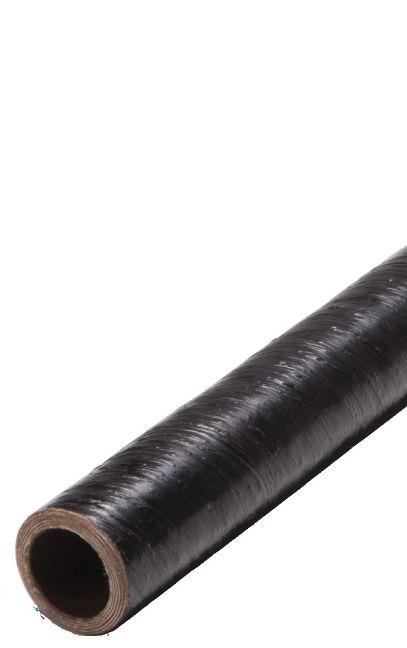
> Withstands temperatures up to 18500F for two hours
> Meets NFPA 130, NFPA 502, ASTM E84, ASTM E136, ASTM E162, ASTM E662, and Flammability Classification UL94 VO
> No smoke, toxic halogens, chlorine or formaldehyde are released when burning
> UL 2515-A Listed for phenolic XW conduit
Most recently, we’ve achieved UL 2196 FHIT28E for RHH Dry Applications with our partner Radix.
Explore outcomes and results. BIM models available at championfiberglass.com/BIM
WE’RE TAKING REWARDS TO THE NEXT LEVEL.
With more ways to earn loyalty points and redeem great prizes, the new and improved AD Rewards program allows you to capitalize on the power of your purchases from AD distributors like never before.
With over 6,000 valuable merchandise and travel rewards, your relationship with your AD distributor has never been more powerful…or lucrative. Join today at any of these participating AD distributors.